Sunday, November 29, 2015

اسفندیارولي خان : پاکستان دې د افغانستان د خپلواکۍ احترام وکړي


ترمنځ د خبرو د بندو دروازو د پرانیستلو لپاره یې افغانستان ته  د پښتنو د یو شمېر نورو مشرانو سره په بدرګه سفر وکړ. نوموړي له کابل نه په راستنېدو مشال راډیو ته په یوه ځانګړې مرکه کې وویل دا د سرتاج عزیز له وس نه پورته خبره ده چې د کابل او اسلام اباد خړې شوې اوبه پاکې کړي.
 اسفند یار ولي خان وايي په کابل کې یې افغان ولسمشر محمد اشرف غني نه غوښتنه وکړه چې د مذاکراتو لړۍ دې نه بندوي ځکه چې خبرې به په خبرو حل کیږي او په اسلام اباد کې یې پاکستاني وزیر اعظم ته وویل دا ضمانت درڅخه غواړو چې په ډاګه به دا خبره کوئ چې د افغانستان د خپلواکۍ احترام لرئ. 
پوښتنې په ځواب کې وویل : 

​« ما ورته وویل چې دواړه خواوې بدګمانۍ لري ، بې باوري ده ، نو دا بې باوري خو د دواړو خواوو ذمه واره کسان لرې کولی شي. د دواړو خواوو ترمنځ مشکل جوړونکي عناصر موجود دي، خنډونه نشته. ما ورته وویل که تر راراوان اپریل میاشتې پورې دواړه خواوې د حالاتو سمون لوري ته هڅې ونکړي نو دلته به هم د شام په شان حالات مخې ته راشي. » 
اسفندیار ولي خان دا هم وویل چې د خپلې خاورې حق ورباندې و چې د کابل او اسلام اباد ترمنځ د خبرو بندې دریڅې پرانیزي ، وړاندې د دواړو حکومتونو خوښه ده چې خبرې څنګه پرمخ وړي، خو دده په وینا دوی خپل مسولیت ادا کړ او افغان ولسمشر اشرف غني یې دې خبرې ته راضي کړ چې په پاریس کې د پاکستان له وزیراعظم سره د سولې خبرو ته کیني. 
http://www.mashaalradio.com/content/article/27396540.html

Owner of Christian channel lodges blasphemy complaint in Pakistan

The owner of a Christian web-based television channel has got a blasphemy case registered against unidentified persons after his office here was gutted in a fire.
The two-room office of the "Gawahi" web television channel, which preached Christianity, was located in Akhtar Colony which has a large minority population mostly belonging to the lower income group.
The channel's office was destroyed in a mysterious fire earlier this week.
Sarfraz Williams who owns the 'Gawahi' channel told PTI that after much efforts the police registered a blasphemy case yesterday, four days after the office was burnt down.
"We have been getting threatening phone calls and messages and we suspect the office was set on fire by some people who didn't want the channel to continue working," Williams said.
He said chemicals were used to start the fire and destroy all equipment and religious books in the office.
The SHO of Mahmoodabad police station Sarwar Commando said the case has been registered under sections of mischief by fire or explosive substance with intent to destroy a house and injuring or defiling place of worship with intent to insult the religion of any class on William's complaint.
He said that Section 295 was invoked as religious books had been damaged and it involved blasphemy.
The registering of the blasphemy case by a Christian is significant as usually the blasphemy law has been used in several cases against Christians.
Civil and human rights groups argue that the blasphemy law in Pakistan is often misused by individuals to settle personal enmities or for land grabbing. 

Pakistan - Jhelum — insult to human dignity


The mob, we are told, was calling for them to be burnt alive. Thousands of people broke open the gates to enter their home and did their best to kill the parents of my friend. The couple managed by the skin of their teeth to make it out alive. A business built up over decades and providing many families a source of income was also torched.
This was Jhelum, till last week a place of happy memories but now a painful reminder of the bigtory that plagues this society.
The mob acted after allegations of blasphemy were made. As is usually the case, the allegations were vague with no initial evidentiary backing. But mobs don’t care about that. How dare a bunch of Ahmadi citizens prosper in Pakistan? Something had to be done. A lesson needed to be taught to the community. Hence, a home, a factory and a mosque was vandalised and reclaimed in the name of purity.
Keep in mind that the mob didn’t just act out of blind rage. It first looted the properties in question: taking away even children’s clothes from the cupboards. Once the assets of the enemy had been secured, it was time to burn the structures to the ground.
I will never forget my friend’s words over the phone: “they burnt our home”. Say that to yourself a few times — Humara ghar jala diya.
We the constitutionally privileged Sunni Muslims of this country will never know such fear — a debilitating fear that only a persecuted minority will know. We can claim not to care about identity since we wield the power to define and exclude others. We can demand that Pakistan should be ‘united’, even as we carve out violent divisions. We can tell ‘them’ who is the boss here. Through language and actions we further an apartheid that secures our existence.
Burning “the other” alive, hearing shrieks of fear does not offend us since they are coming from the wrong quarter. But a couple of Arabs being removed off a plane in the US reminds us of Islamophobia and stands out as an affront to human dignity. How can a human being who is offended by a Hindu mob killing a Muslim man for eating beef not be offended when a Muslim mob destroys lives and property?
What is the more important issue here? Religious identity or actions that insult and offend human dignity? Does a ‘universal’ religion only care about suffering of those who fit a description based on our prejudices?
Related article: Manufacturing consent
Instead of condemning violence, a large number of people asked, “what are the true facts regarding Jhelum?” — suggesting, most repulsively, that a given set of facts could explain or justify attempted murder, arson against residential and industrial premises. The violence didn’t end there — as a mosque of the Ahmadi community was attacked the next day, journalists called it “a place of worship”. Language of exclusion.
Police and even the army stood by as the mob wreaked havoc. National papers reported two days later that “normalcy was returning to Jhelum”. Sure, normalcy could return, except if your home and property had been destroyed. What kind of citizenship do we expect from a community when its children grow up under the shadow of such hatred? When people die in accidents in Makkah, we mourn deaths but not if ‘our’ mob deliberately attacks with murderous intent.
We rationalise creation of terrorists in Islamic countries citing oppressive foreign policies of other states but would we ever stand for an argument that terrorism by Pakistan’s minorities would be a rational response to the humiliation we subject them to? What version of humanity, if any, do we believe in?
The videos of the incident display revolting apathy towards human suffering. You can see people torching things then taking out their smart phones to film it all. That’s not rage, that is taking pleasure after destroying another’s world and dreams. Why is it that videos of abuse of power by armies of other states offend us but lacerating bodies in our country in the name of religion makes us look for explanations of violence?
The truth is that very few people actually care about human rights or human dignity. Most are just using it to further an agenda in this country. We proclaim to be followers of a religion that promotes humanity, yet our children are taught not to mix too much with Ahmadis. All the Ahmadi community friends I’ve had will testify to this. Do we think we are doing Allah a service by letting people live at our pleasure?
The next time you protest any supposed human rights violation against a Muslim anywhere else in the world, just imagine that the party discriminating was Muslim/Pakistani while the victim of discrimination a religious minority. Would your reaction change?
I never imagined that I’d live in a country where my friends’ homes and property would be burnt down by mobs drunk on bigotry. I never realised as a kid that faith would determine whether you live, die or are afforded legal protection. All of that naivety has been destroyed. I’ve never been more ashamed to be Pakistani.
How do you look your friends in the eye after such incidents? And this isn’t a line that you and I cannot cross — or even be on the wrong side of. People like you and me aid and abet such violence through our silence and our language. Apparently, all it takes is one unsubstantiated allegation of blasphemy before we destroy lives and livelihoods.
There is no explanation for this violence. It must be called out for what it is: absolute bigotry. And shame on the government if it refuses to take a stand against this while citing the excuse that they don’t want a law and order problem. This isn’t a law and order problem, it is an existential disaster — an insult to everything that makes us human.
I can’t shed enough tears or mourn enough for what this country has come to. We, ourselves, have burnt our home. Apna ghar jala diya.

The pariahs of Pakistan


By Farrukh Khan Pitafi

Ishtiaq Ahmed, author of hundreds of children’s books, died this month. What struck me after hearing the news was the sheer number of admirers I came across on social media that day, some of them hyper-conservative and some ultra-liberal. I didn’t know so many people even knew his works. I came across his novels in the late 1980s when I was trying to improve my written Urdu. A schoolmate, in a small town where my father was then stationed, gave me two of his books in exchange for the first few volumes of The Hardy Boys series. The late author had some interesting plot devices, which usually helped him in maintaining a loyal readership. But then he also laced his works with an unhealthy dose of paranoia, pseudo-history and geography, and a remarkable disdain for religious minorities. Chief among those who were at the receiving end of his disdain was the Ahmadi community, which in his infinite wisdom he preferred to call Jabani. In his world of intricate conspiracies, all non-Muslim countries, including America, Israel, Britain, Soviet Union, India, were all out to get us and Jabanis were their most useful tools.
While many of our good friends have probed school and madrassa curricula to understand the evolution of paranoia and intolerance in this country, I am sure nobody paid heed to missing links like this one. Children in this age of the internet, ebook readers and easily available audiobooks will perhaps not understand how difficult it was to find books back then that were considered appropriate for kids. Wary of romance and adult language in books, parents considered anything without it age-appropriate for their children. Nobody bothered to check what religious or political prejudices their children were being taught through these books.
Recently in a plush conference room in Islamabad, I was attending a workshop on minority rights. During the discussion, it struck me that we were all focusing on difficulties faced by Hindus, Christians, even Zoroastrians, and yet nobody had even spared a thought for Ahmadis. After a stunned silence caused by the sudden rush of self-awareness, all participants agreed with me that the matter was considered such a taboo in our media and society that we had stopped even thinking about it.
I distinctly recall how segregated the children from this community were during our childhood. As soon as it became public knowledge that there was an Ahmadi child in our school or class, we were explicitly forbidden to play or even socialise with him/her. We grew up studying with children from Christian, Hindu and other minority communities. Yet the Ahmadis were the only ones we were forbidden to interact with. I have strong reason to believe that the motives behind it were not religious but social and political as Ziaul Haq’s legacy compelled people to steer clear of such stigmas.
Recently, when the community came under attack in Jhelum, I could not help notice the lukewarm media response. One reason would be the ease with which clergymen can declare anyone a closet Ahmadi. A few might have feared a violent backlash. But the majority, I suspect, either don’t care or else think that the community deserves the treatment it is being meted out. I recall a show hosted by a leading televangelist in which a cleric not only refused to believe that Muslims had anything to do with suicide bombings, but went on to claim that this was an Ahmadi conspiracy. That is the kind of mindset we are talking about.
No one likes an underdog. In societies like ours, if not checked in time, political expediency makes persecution of underdogs a cultural norm, if not public sport. I am a firm believer in the separation of the church and state, but even I don’t think that any change in the constitutional status of the community is politically possible. But to turn a blind eye or a deaf ear to a community’s plight is no more an option.
And let me be honest. My intentions are far from altruistic. It is a fact that hate, denial and paranoia change you profoundly. They changed us because we were raised with some very telling prejudices. As a selfish parent, I want to shelter my children from such negative programming. It took me a lifetime to break my programme and undo such a negative code. Perhaps, talking more openly about the matter would be a good start.

Video - Ta Bibi Shirena Ye by Sardar Ali Takar for Malala Yousafzai in Nobel Prize Award Ceremony 2014

In review - Films - He Named Me Malala

By Sarah Sikandar


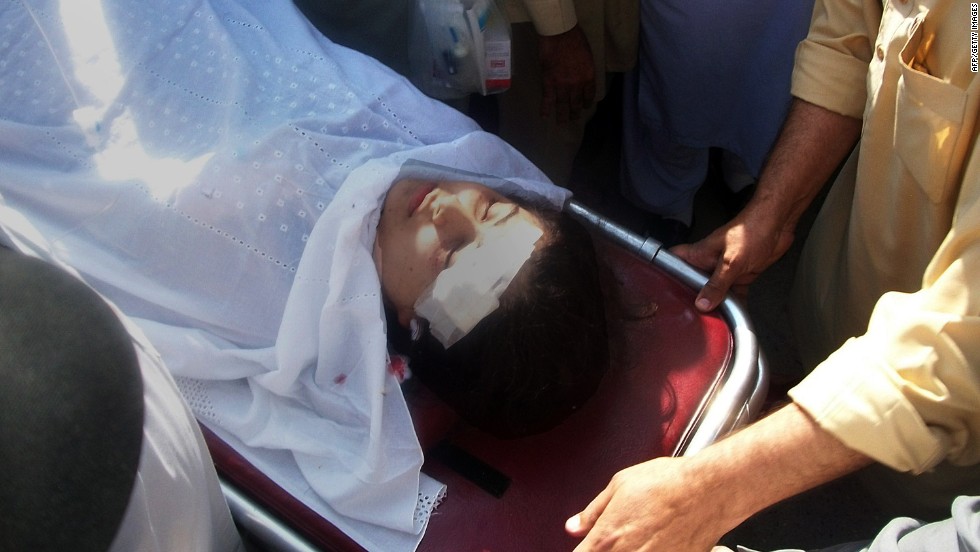
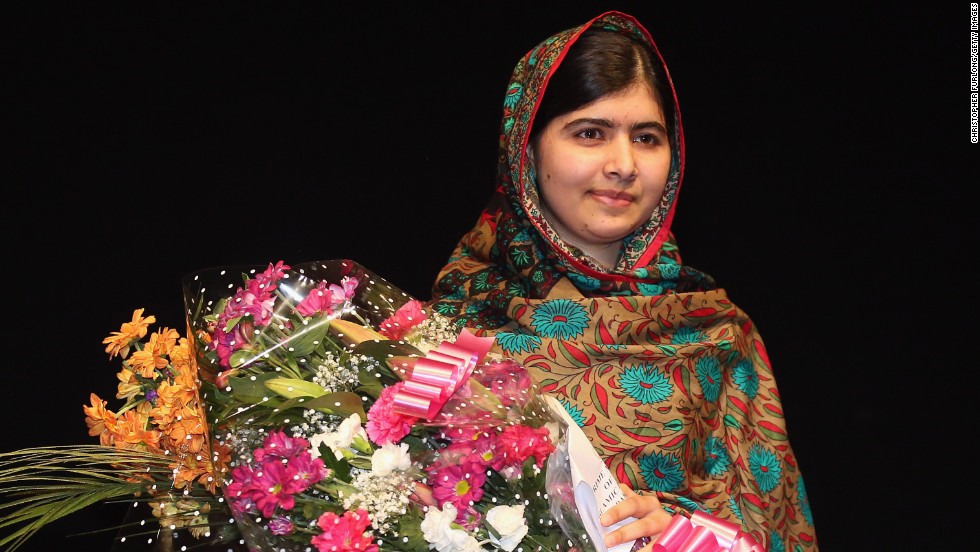
The three bullets shot point-blank on the morning of October 9, 2012 gave resistance a new face: the cherubic yet determined face of a 15-year-old girl from the war-torn valley of Swat. The bullets thrust into her brain certainly backfired, as this girl with a gifted mind has moved from being a local hero to becoming an international symbol of resilience. Malala Yousafzai has transcended geopolitical boundaries to achieve global recognition and appreciation, overshadowing the nefarious agenda of her opponents.


But being Malala is not easy. Taking responsibility for the attack on her, the Taliban had claimed to have targeted her “because of her pioneer role in teaching secularism…she was pro-West; she was speaking against the Taliban; she was calling president Obama her idol”. She was an anomaly in her home region.
The documentary He Named Me Malala traces Malala’s footprints from rural Swat to a Birmingham flat which she now shares with her parents and brothers. The documentary takes the audience beyond the girl in the public eye to the shy sister of two naughty brothers and the obedient daughter to doting parents.
The documentary tells us that the youngest ever Nobel laureate is named after a heroic character in Pakhtun folklore. Malalai, the legend goes, was a teenage girl who climbed to a mountaintop and addressed the Afghans fighting the mighty British invaders during the Battle of Maiwand. “It is better to live one day as a lion than to live a hundred as a slave,” she declared to raise their dwindling confidence.
Malala’s story becomes the epitome of the message of freedom and honour delivered by her namesake in the folklore. The twin ideals are cornerstones of her struggle to rise above the submissive role that tradition allocates to her gender in Swat. Her fight is so huge and her effort so Herculean that her mother still seems to be traumatised by its effects and aftershocks. This is how the documentary introduces us to our hero, Malala.
He Named Me Malala is remarkably apolitical. Apart from showing the Taliban’s violently radicalised reign in Swat, it doesn’t so much as attempt to point out the role the government or the army might have had in the valley’s deteriorating social and political climate. Even the 2009 security operation in Swat that forced hundreds of thousands to flee their homes is not mentioned (Malala herself has repeatedly touched upon that operation and the consequent displacement in her book, I Am Malala).
Anyone remotely familiar with Davis Guggenheim’s previous work knows that this shunning the political issues is unlike him. He is the Oscar-winning director of such politically charged documentaries as An Inconvenient Truth and Waiting for ‘Superman’. In those documentaries, Guggenheim took strong political positions on burning issues such as global warming and the failure of the American public education system. In He Named Me Malala, Guggenheim seems to have taken a break from his signature style and instead relates a story plain and simple — a little too plain and simple, perhaps.
Containing a collage of family interviews, snippets from Malala’s life in Swat and Birmingham, and vignettes from her international tours and her appearances at conferences and seminars, the documentary constantly shifts between now and the time before she was shot. While the present is the Birmingham flat or her school in the same city or some public event, the past is almost always shown through animated images. Yes, animated images.
 Animation – blurred and surreal – is one of the major highlights of the documentary and the way it is incorporated within the narrative makes it the most effective technique employed by the director. It allows the younger audiences an easier access into Malala’s reminisces of her past and adds a peculiar rhythm to an otherwise prosaic storytelling.
Explaining his decision to use animation, Guggenheim said in an interview: “There are these incredibly important epic moments that had to be in the movie and I didn’t know how to do it.” It was especially challenging to bring on the screen the paradise-like place that Malala’s family calls home”, he said.
In any case, the constant movement between the animated past and the realistically shown present allows the film-maker to highlight all the various aspects of Malala’s life and present them as a whole. This shifting between then and now is also helpful in highlighting her attachment to her roots in Swat and her attempts at assimilation into her new life in England. The binaries of home and migration are well-knitted into the documentary, especially through repeated references to Malala’s shawl-clad mother, who gradually recedes into the background in every scene she is in.
Malala has understandably enchanted the world, particularly the West, with her story. It’s not every day that a girl from Swat ends up standing next to world leaders at the United Nations. The film is very clearly directed at the kind of audience that is likely to be impressed by such transformation; a life of relative obscurity in the rural hinterland of a Third World country to international stardom. It is the same kind of attention that Slumdog Millionaire, a feature film, had received and for the same reason — a protagonist in a wretched South Asian milieu making it big through sheer grit.
In many ways, the film comes across as a slacked version of Malala’s autobiography,I Am Malala, which became a 2013 bestseller. In fact, at times, the documentary appears as too literal a rendition of the book and does not offer any fresh perspective into the life of Malala, the person and the legend.
So, expect hero worship as you would in a biographical documentary but don’t expect it to be about Malala only. The attention is shared by her father Ziauddin Yousafzai. His story is intertwined with Malala’s. The courage he showed and the opposition he faced while rebelling against the centuries-old traditions of his homeland by leading his daughter into a public life and, moreover, being proud of her achievements are portrayed in as much detail as Malala’s own story.
A dominant influence in his daughter’s life, it is understandable that Ziauddin Yousafzai is shown as a major character in her narrative of rebellion. Guggenheim is vey obviously intrigued by this father-daughter relationship. The father calls it “one soul, two bodies” and the daughter believes that her achievements would not be possible if it were not for him. Their relationship is, therefore, shown both as a catalyst and a support for her to be able to break free from the patriarchal traditions of Swat. Yet, it is apparent that whatever Malala represents is what her father has told and taught her. His predominance in her life raises an uneasy question: is this not a new type of patriarchy?
The documentary also does not address the criticism that Ziauddin Yousafzai might have put his daughter’s life in danger because of his own ambition. “It it is my fault that she suffered,” he says, as he is shown in one of the earlier scenes pondering over his role in Malala’s ordeal. The director, however, leaves it at that and does not explore the reasons for Ziauddin’s readiness to push his daughter into a territory that he knew was full of dangerous possibilities.
He Named Me Malala has received rave reviews for its inspirational subject but has been criticised for its facile approach towards that subject. The documentary tells the audience almost nothing about Malala that they already did not know. For the most part, interviews and events seem rehearsed and staged. The daughter’s head on the father’s shoulder is an oft-repeated image, as if the director ran out of ways to illustrate their closeness. Thomas Newman’s music score also seems to be a waste and mostly fades in the background, unless your ears are well-trained to catch it.
All said, in a world of arrogant teenage celebrities and pompous politicians, Malala’s simplicity and innocence are nothing less than a treat to watch.

Pakistan - People of Lyari rejected deceptive call from IK Niazi


The Pakistan People’s party (PPP) Parliamentary Leader in the Senate of Pakistan Senator Saeed Ghani has expressed his gratitude to the people of Lyari for rejecting Burger BB Imran Khan Niazi’s invitation to attend a gathering of the Pakistan Tehreek-e Insaf (PTI) at Kakri Ground in Lyari.
On such a humiliating rejection from the people of Lyari, who always proved to be die-hard Jiayalas of the PPP, the PTI Chairman Imran Khan on returning to his base kept on changing his dresses and vehicles. Lastly, as usual, he asked his party men to bring people from other areas so as to make a show, which was an utter manifest of failure.
Senator Ghani while commenting on the so-called threats to the PTI Chairman said it was strange to hear if Imran Khan claims he has threats from the groups he lives with.
He also questioned about the assets of Imran Khan and asked him to clarify as what in the name of assets he had prior to entering the politics and today.
He did not have any piece of land in Islamabad in past but today he owns a palace there, which is spread on 350 canals and he has to clarify about sources for owning such a huge and luxurious palace in country’s capital, said Senator Ghani.
He said it was beyond senses as why Imran Khan is making appeals to the people of the country for donations for Shaukat Khanum Cancer Hospital while he is a billionaire as he owns a palace in Islamabad. In this situation, he should not bother the masses for donations. On the other hand, Imran Niazi has a strong mafia in his company and that mafia is capable of donating millions instead.
The PPP Parliamentary Leader in the Senate Senator Saeed Ghani said the epicentre of Imran Niazi’s politics is to conduct character assassination of country’s politicians and to gather wealth by hook or crook.
https://mediacellppp.wordpress.com/2015/11/29/people-of-lyari-rejected-deceptive-call-from-ik-niazi-sen-saeed-ghani/

Video - Benazir Bhutto's "Karachi Arrival"

Documentary - Zulfiqar Ali Bhutto


Kal Bhi Bhutto Zinda Tha,Ajj

#PPP Song - dila teer bija

#PPP Song - kitne maqbool hain Bhutto


Pakistan - پی پی قائدین کی زیرقیادت انتخابی ریلی


کراچی میں  پیپلز پارٹی کے یوم تاسیس کے موقع پر پی پی قائدین کے زیر قیادت بلاول چورنگی سے اسپارکو تک انتخابی ریلی نکالی گئی۔
پیپلز پارٹی کی سینئر رہنما شیری رحمان کی قیادت میں نکالی گئی ریلی میں پی پی کے جیالوں کی بڑی تعداد شریک ہوئی۔ ریلی کے شرکا سے خطاب  کرتے ہوئے شیری رحمان نے کہا کہ ہم ترقی پسند لوگ ہیں،  کبھی کسی  انتہا پسند سے ہاتھ نہیں ملایا۔ پیپلز پارٹی کے رہنما سعید غنی نے کہا  کہ آج کی ریلی یوم تاسیس کے سلسلے میں نکالی  گئی ہے۔ کل بلاول بھٹو زرداری ملیر میں جلسہ سےخطاب کریں گے۔ ریلی سے خطاب کرتے ہوئے پیپلز پارٹی کے رہنماؤں نے کہا کہ کراچی سمیت کسی بھی مقام پر عوامی طاقت کا مظاہرہ انکی جماعت کے لئے کوئی بڑی بات نہیں

Pakistan - PPP WILL CELEBRATE THE FOUNDATION DAY TOMORROW


PPP will hold a function in connection with its 48th Foundation Day here tomorrow near Bhatta Chowk, Airport Road, where Mian Manzoor Ahmed Wattoo will be the chief guest and Samin Gurkhi will preside over the ceremony.
Mian Manzoor Ahmed Wattoo in his address is expected to project the arduous struggle that the PPP waged for the realization of the rights of the poor segments of the society including the restoration of democracy in the country. He is also expected to shed light in detail on the ultimate sacrifices rendered by the leaders to nurture democracy considering it with conviction as an article of faith.
Workers and office bearers will gather at the PPP Model Town Party Secretariat to depart for the venue of the function, Dera Ashraf Bhatti, Khuda Bux Colony, Airport Road, Lahore, in a procession in the afternoon.
The other speakers in their speeches will focus on the struggle that the Party launched for the empowerment of the common people who refused to cave in to fear, torture, lashing and hanging for the cause of PPP ideals, to build the country as a liberal, democratic and progressive country as per the vision of Shaheed Zulfiqar Ali Bhutto which was the vision of the founder of the nation as well.
میاں منظور احمد وٹو، صدر پیپلز پارٹی پنجاب کل بروز (سوموار) دوپہر 2 بجے پیپلز پارٹی کے 48ویں یوم تاسیس کی تقریب میں مہمان خصوصی ہونگے جبکہ ثمینہ خالد گھرکی اس تقریب کی صدارت کریں گی جسکا اہتمام محمد اشرف بھٹی، پارٹی ٹکٹ ہولڈر، این اے129 کے ڈیرہ واقع خدا بخش کالونی، اےئرپورٹ روڈ (نزد بھٹہ چوک) میں کیا گیا ہے جہاں پر کارکنوں، عہدیداروں اور مقامی پارٹی قائدین کی بڑی تعداد شرکت کرے گی۔ میاں منظور احمد وٹو اپنے خطاب میں پارٹی قیادت اور شہداء کی قربانیوں کا خاص طور پر ذکر کریں گے جنہوں نے جمہوریت کی آبیاری اپنے خون سے کی اور ملک میں جمہوریت کو بحال کیا۔اسکے باوجود کہ اُس وقت کے حکمرانوں نے سیاسی انتقام اور خوف کا لرزہ خیز ماحول پیدا کر رکھا تھا۔ میاں منظور احمد وٹو کے ہمراہ پارٹی عہدیداروں اور کارکنوں کی ایک بڑی تعداد جلوس کی شکل میں پارٹی سیکریٹریٹ ماڈل ٹاؤن سے تقریب میں شرکت کرنے کے لیے روانہ ہوگی۔ اسکے علاوہ دوسرے قائدین پارٹی کی عوامی حقوق کے حصول کی جدوجہد پر روشنی ڈالیں گے جسکے دوران پارٹی قائدین اور کارکنوں نے بدترین ڈکٹیٹرشپ کا مقابلہ کیا لیکن عوامی حقوق اور جمہوریت کا الم سرنگوں نہ ہونے دیا۔ اشرف بھٹی نے بتایا کہ انہوں نے اس تقریب میں اُن پرانے کارکنوں کو خاص طور پر مدعو کیا ہے جنہوں نے پارٹی کی خاطر بے پناہ مصائب برداشت کرنے کے علاوہ کوڑے بھی کھائے۔ انہوں نے مزید کہا کہ خواتین کارکنوں اور عہدیداروں کی بھی ایک بڑی تعداد شریک ہوگی جن میں بیگم بیلم حسنین، شاہدہ جبیں، فوزیہ بتول، جہاں آراء وٹو، فائزہ ملک، ایم پی اے، بشریٰ ملک اور عظمیٰ شریک ہوں گی

CO-CHAIRMAN PPP ASIF ALI ZARDARI’S MESSAGE ON FOUNDATION DAY


In a message on the eve of the 49th founding day of the Pakistan People’s Party on Monday Co-Chairman and President Asif Ali Zardari has vowed that the Party’s struggle to build a progressive, egalitarian and democratic society will continue unabated despite odds.
“I wish to reiterate that the Party aims at making Pakistan a welfare driven state- a state in which the motivating force and rationale for state policies is the welfare of the people and nothing else”.

Bhuttoism is the name of an ideology and the founding day is an occasion to rejoice and celebrate in that ideology. It is also an occasion to renew our pledge to empower the people, emancipate women, integrate the Non Muslim minorities in the national mainstream and strengthen democratic institutions and to serve the masses, he said.

It was this ideology of Bhuttoism that the previous PPP government succeeded in restoring the unanimous Constitution of 1973, opening doors of political reforms and participation in the tribal areas, taking head on the militants, launching a massive poverty alleviation program, making the workers share holders in state rune enterprises and uplifting the lot of minorities.

The journey in the pursuit of ideology must continue. We will continue our struggle to ensure that religion based laws were not misapplied to stifle dissent or haunt non Muslim minorities or hound vulnerable and weaker sections of the Muslims in the name of faith.

Paying tributes to the political workers he said that democracy has survived and flourished on their sweat, blood and tears. It is because of their sacrifices that dictatorship has not been able to take roots in Pakistan.

On this day I wish to reiterate that the epic struggle for safeguarding democracy and democratic institutions and empowering people will continue.

https://ppppunjab.wordpress.com/2015/11/29/co-chairman-ppp-asif-ali-zardaris-on-foundation-day/

Editor quits, columnists dropped: Pakistan Army ‘has choked all dissent’

Nirupama Subramanian 

Today, the Marxist editor is at the centre of another controversy involving the establishment after resigning as editor of the Lahore-based English language newspaper Daily Times.

In the 1970s, when the Pakistan Army barrelled into Balochistan to bring the restive province under control, Rashed Rehman was among a handful of youngsters from a few elite families in Lahore who joined the rebel forces and fought against the military. Today, the Marxist editor is at the centre of another controversy involving the establishment after resigning as editor of the Lahore-based English language newspaper Daily Times.
Rehman quit 10 days ago, citing “irreconcilable differences with the management” after a four-year battle to retain two trenchant leftist, anti-military columnists, and a parallel struggle to get his staff their salary dues, backed up since 2012. But the resignation came to light only on Friday when Mohammed Taqi, one of the columnists, tweeted that his weekly column had been stopped as “such pieces are constantly being put under scrutiny” and that Rehman “has resigned too”.
On November 26, the paper carried a column by Taqi, a Florida-based Pakistani doctor, who is an unforgiving critic of the Pakistan military. Writing about the Pakistan Army chief’s visit to Washington, Taqi wrote that he may have “managed to promise the US some pie in the sky (on) the Afghan issue and talks with the Taliban”.
Taqi told The Indian Express he had received a call from the newspaper’s op-ed editor on Friday that “due to scrutiny of my content they cannot carry the column”.
Taqi claimed that the paper had long been under pressure from the military establishment to stop the weekly column. “I am just surprised that my editor Rashed Rehman could sustain it for six years,” he said.
On Thursday, the day the column was published, sources said Rehman got a call from a member of the family that owns the paper to shut down Taqi’s weekly column and another by Mir Mohammed Ali Talpur, a Baloch and Rehman’s four-decade old associate. Rehman wrote to a few friends next day that “the struggle to keep the flag flying has been going on for years. Irreconcilable differences with management have forced me to resign”.
Rehman did not answer phone calls on Saturday or respond to messages or emails from The Indian Express. However, the op-ed editor of Daily Times, Ream Wasay, answered on his behalf to say that “Mr Rashed Rehman did not resign due to the closure of (the) columns; he handed in his notice before the entire episode occurred…he wishes not to discuss the matter further as he is on notice till February 19, 2016”.
Yet, sources said that the closure of the columns has reiterated what is now an open secret: the military now fully controls the levers of power in Pakistan, and those who challenge the growing cult of Army chief General Raheel Sharif do so at their own risk.
A Marxist in a country where the conservative Nawaz Sharif is sometimes described as a liberal, Rehman had been editor of the newspaper since 2009 — it is owned by the late Salman Taseer’s family.
Before Rehman, Najam Sethi, a comrade of Rehman in the London Group — the name for the group of Punjabi students in the UK who threw themselves into the Baloch struggle — was the editor of the paper. Rehman’s son, Taimur, is among the founders of the anti-establishment Lal band.
Taseer, an industrialist-businessman who began the newspaper in the 1990s as a liberal voice in post-Zia Pakistan, was gunned down by his police bodyguard in 2011 for supporting a woman who had been accused of blasphemy. He was then the Governor of Punjab province, and was close to the Pakistan People’s Party.
“My understanding with DT editors was that I would have full independence and it was honoured except on a couple of occasions,” said Taqi. His criticism of the Army, he said, had made it difficult for him to return home to Pakistan to meet relatives — he is from Peshawar where his father was a career Urdu journalist.
Taqi, who has been writing since 2009, said he would probably not be alive today had he been in Pakistan. “The Gen Raheel Sharif phenomenon is relatively new. His junta has really choked all dissent. They have gone into overdrive not just to project Raheel Sharif as the messiah but also to take down those who say he is a false prophet,” Taqi told The Indian Express.
Talpur said he had once been told to stop writing about Balochistan in October 2013 and had then stopped writing for the paper because “I write only about Balochistan”. “I had restarted writing for the Daily Times at the end of June this year. This time, it lasted only five months. I am persona non grata,” he said.
In his last column on November 22, Talpur wrote about how the Pakistan military was taking over Gwadar, the port city in Balochistan, and disempowering the local people in order to facilitate and secure the China-Pakistan economic corridor.
A rare Baloch voice to get a platform in the national mainstream media, Talpur wrote about a system of “residence passes” that had been put in place in Gwadar and compared it with the apartheid-era dompass in South Africa.
“Militarising Gwadar and imposing apartheid measures is not something random but is part if a systematic policy to ensure that the Baloch are thoroughly disenfranchised in every way and pushed into a corner from which they find themselves unable to resist whatever indignities and injustices are heaped upon them,” he wrote.
Talpur told The Indian Express that “slowly all who express dissent are being stopped from speaking and writing. This is not the only way, they resort to harsher measures when dissenters do not relent. But I will continue to write about Balochistan, as I always have”.
Taqi said it was part of a pattern towards the “the completion of the ‘Pakistan project’ in which “a Punjabi, Sunni male identity represents nationalism and those from smaller nationalities and minority sects are treated as others”.
Taqi’s last column criticised the Army for getting a virtual “free pass” for “dispersing the hornets into the neighbour’s yard” through an anti-Taliban operation at home. He wrote that “a more stringent view is that such dispersal is by design”, and argued that what was actually required was a military crackdown on such an influx into hapless Afghanistan.
Earlier, previewing the Army chief’s Washington visit, he quoted the US Department of Defence to make the point that the General had invited himself to Washington, and recalled that the last one to do so over the heads of the civilian government was Field Marshal Ayub Khan, who later took over as the military ruler of Pakistan.
Mehmal Sarfaraz, a former Oped Editor at the newspaper, said the paper and Pakistani readers would be poorer after this. “Rehman is a bold editor who has always published brave writers,” said Sarfaraz, who left in 2012 and now freelances with the South Asian Free Media Association.
“Scrapping the columns of Dr Taqi and Talpur is a huge loss for Pakistani readers. Both of them never minced their words and were not afraid to take on the powers that be,” she said. Taqi said that the key difference between when he started writing and now was that the “Pakistan People’s Party somehow allowed the dissenters to continue”. “Nawaz Sharif’s Pakistan Muslim League government has abdicated even more than the PPP,” he alleged.
While one-off dissent might still be possible through the media, he said, “sustained columns are impossible”. “First the army choked the television media and now it’s the print’s turn. English papers were a relatively safe harbour for dissenters but the chokehold is complete now,” he said.
The television media, famous for challenging then President Gen Pervez Musharraf and contributing to his downfall, has generally toed the military line since the life-threatening attack on the well-known anchor Hamid Mir, and another TV personality Raza Rumi.
The Daily Times has been particularly vulnerable since Taseer’s killing and the 2011 kidnapping of his son Shahbaz, reportedly by the Taliban. He has not been traced yet.
In 2014 the paper published an apology to Tariq Ashrafi, one of the founding members of the extremist militant group Sipah-e-Sahaba after one of its columnists wrote that he was fanning hate against Ahmadis. The columnist, too, had to apologise in the newspaper. Daily Times insiders said the apology was published at the insistence of Salman’s other son Shehryar.
“After their double loss, the family was trying to get on the side of the government and establishment,” said a former staffer. Always a small operation, the newspaper has had no money for three or four years to even pay its staffers, despite being a lean organisation, said the former staffer, adding that many have quit since.
“Rehman was under a lot of pressure, working without proper staff, hardly any reporters, he did a lot of editing himself. He commissioned a lot of people, and they wrote for him because of his goodwill, without being paid a single rupee,” said the ex-employee. Taqi and Talpur also wrote “pro bono”.
http://indianexpress.com/article/world/world-news/editor-quits-columnists-dropped-pakistan-army-has-choked-all-dissent/

Pakistan's ISI trained students to use social media for JuD, LeT propaganda: Sources


US national security sources in Washington said they have fresh evidence of the spy agency training people to engage in a social media war on behalf of these banned terror groups on Facebook and Twitter.

Barely 26 days after Pakistan's Electronic Media Regulatory Authority asked all broadcasters to refrain from covering 72 banned groups including Lashkar-e-Tayaba (LeT), Jamaat-ud-Dawa (JuD) and FIF under UN restriction, US national security sources recently claimed that ISI is providing training to students of an elite military-run university in Pakistan to use social media sites in support of the same terrorist groups.
Sources in the national security establishment in Washington said they have fresh evidence of the spy agency training people to engage in a social media war on behalf of these banned terror groups on Facebook and Twitter.
The revealation comes less than a week after the US visit of Pakistan's army chief General Raheel Sharif who met top officials of the Obama administration including Vice President Joe Biden.
JuD chief Hafiz Saeed orchestrated the 26/11 Mumbai terror attacks in which 166 people were killed, roams around freely in Pakistan despite being a designated terrorist and has made many anti-India remarks and speeches.
Speaking on condition of anonymity, the sources shared a recently prepared document which provides such a link between the Pakistani establishment and those indulging in propaganda on social media for terror organisations like LeT and its wing JuD.
The document was prepared based on publicly available sources on the Internet.
For instance, Malik Salman Javed, director of the recently formed Stratagem magazine is a graduate of the National Defence University's (NDU) national security workshop.
Javed, who on his website writes that he is a NDU-Pakistan alumni, has been posting pro-JuD content on Twitter for the past several years.
"In addition to PKKH (Pakistan Ka Khuda Hafiz), Fortress and NDU, there is strong circumstantial evidence that at least some Stratagem members have a strong affinity for if not direct membership in Jamaat-ud-Dawa (JuD)," according to the US dossier.
Notably PKKH, a strategic policy institute, has a history of collaboration with JuD since at least 2010 when PKKH launched Mere Log - a disaster relief operation to provide food and shelter to victims of that year's deadly floods.
Mere Log was conducted under the supervision of JuD and the Pakistan Army, the brief report said.
In the first issue of Stratagem magazine, author M Zainulbedin Ameer used JuD's Maulana Hamza as an example of people working to protect Islam.
The dossier said that Ameer's Facebook page also regularly features JuD propaganda that suggests he has a close affinity if not membership of the group.
Now in existence for more than six months, Stratagem contents confirm to a right-wing Pakistani national ideology based in certain fundamental premises that "democracy is a failure" in Pakistan, India is "determined" to destroy Pakistan, its military is both faultless and invincible and that Pakistan and Islam are under attack from internal as well as external forces, the dossier said.
http://indiatoday.intoday.in/story/pakistans-isi-trained-students-to-use-social-media-for-jud-let-propaganda/1/534268.html

Saturday, November 28, 2015

Music Video - Ellie Goulding - On My Mind

Saudis failed to investigate air strikes on Yemen civilians - rights group

 An international rights group accused a Saudi-led coalition of failing to investigate air strikes that have killed hundreds of civilians in Yemen, and said Washington should look into violations of the laws of war in which it played a role.
A coalition of Arab countries, led by Saudi Arabia and allied to the United States, has been attacking Iran-allied Houthis who had seized much of Yemen in a series of military operations since September last year.
The United States is a major supplier of weapons to Saudi Arabia and U.S. officials say intelligence-sharing with Riyadh about potential targets in Yemen has been boosted since March.
Human Rights Watch, in a report received on Friday, said it had interviewed victims, witnesses and medical staff in the provinces of Ibb, Amran, Hajja, Hodaida, Taizz, and the capital, Sanaa, where air strikes had hit homes, markets, a factory, and a civilian prison.
In all of these cases, Human Rights Watch said it either found no evident military target or found that the attack failed to distinguish civilians from military objectives.
The spokesman for the Gulf Arab coalition said the organisation's report lacked expertise.
"The person who wrote the report and the witnesses quoted did not demonstrate that the attacks in question were carried out by coalition aircraft," said Brigadier-General Ahmed al-Asiri.
"The coalition welcomes any Yemeni government efforts to use experts to ensure strikes are directed precisely at military targets," he added.
Human Right Watch said it had compiled the names of 309 people - 199 men, 43 women, and 67 children - killed in the attacks, all believed to be civilians.
The New York-based organisation said Saudi officials have not responded to repeated requests by the group for information about the 10 air strikes.
The deputy Middle East director at Human Rights Watch, Joe Stork, said the coalition was unwilling to conduct "even a single investigation of numerous potentially unlawful air strikes".
"While the coalition may have sophisticated weaponry and U.S. support, its commitment to the laws of war is rudimentary at best," Stork said in the statement.
The United Nations says about 5,700 people have been killed in the fighting, including more then 2,600 civilians. The United Nations said that about two-thirds of the civilian casualties were killed by air strikes.
U.S. officials said in April that Washington was expanding its intelligence-sharing with Saudi Arabia to provide more information about potential targets in the kingdom's air campaign against Houthi militias in Yemen.

https://www.blogger.com/blogger.g?blogID=6906155786122195046#editor/target=post;postID=755365551363499417

Video Report - Saudi-led Airstrikes Kill Hundreds in Yemen

ALLIANCE BETWEEN ISRAEL, SAUDI ARABIA

The absence of diplomatic relations has not prevented unofficial contact between Israeli and Saudi representatives while Saudi Arabia claims to be one of the leaders of the Arab and Muslim world.
Saudi Arabia claims to be one of the leaders of the Arab and Muslim world prevent it from recognizing the Israel’s right to exist within its current borders, while Tel-Aviv in its turn rejects the plan for Middle East Regulation (MER) proposed by Riyadh involving a reversion to the pre-1967 status quo. As a result of various domestic and international factors neither side will change their diametrically opposite positions and maintain official contacts.
However, the absence of diplomatic relations does not prevent unofficial contact between Israeli and Saudi representatives. Recently there have been frequent media reports on meetings between representatives of the two states and there have even been claims that the Saudis are ready to provide Israel with an air corridor and air bases for rescue helicopters, tanker aircraft and drones (unmanned aircraft systems – UAS) in case Israel decides to bomb Iranian nuclear facilities. Some of these reports have been denied by officials but others have nevertheless been confirmed.
"In particular, according to information of a Jerusalem Post correspondent citing diplomatic sources of both countries, since the beginning of 2014 there have been as many as five secret meetings between the Saudis and Israelis, in India, Italy and the Czech Republic. Reports appeared in the Arab press that senior members of the Israeli security forces, including the head of Mossad, secretly visited Riyadh and held discussions there with their Saudi equivalents. Apparently there were even negotiations between the then director general of the Saudi Intelligence Agency, Prince Bandar bin Sultan, with senior officials of the Israeli secret services in Geneva."
On June 5, 2015 Director-General of the Israeli Foreign Ministry Dore Gold met Saudi met with General Anwar Majed Eshki at a conference in Washington, when the latter presented his strategic MER plan. Key highlights of this document are devoted to establishing cooperation between the Arab countries and Israel and the need for joint efforts to isolate the Iranian regime.
King Salman of Saudi Arabia commissioned prince and media magnate Al-Waleed bin Talal to start a dialogue with the Israeli intellectual community with the aim of reestablishing contact with the neighbouring country. Prince Talal called on all inhabitants of the Middle East, which were torn apart by war, to end their hatred of the Jewish people. He also declared that his visit to Jerusalem signifies the beginning of ‘peace and brotherliness’ between Israel and its Arab neighbours. Arab media reported that Saudi Minister of Petroleum and Mineral Resources Ali Al-Naimi confirmed that his country is ready to export ‘black gold’ to any place in the world, including Israel. Saudi Minister pointed out that the majority of the Arab world does not see any obstacles to trade relations. In August 2014 the head of the Saudi Foreign Ministry Prince Saud Al Faisal declared at the world assembly of Islamic scholars in Jeddah: “We must reject planting hatred towards Israel and we should normalize relations with the Jewish state.” Dore Gold, mentioned above, told the news agency Bloomberg: “Our standing today on this stage does not mean we have resolved all the differences that our countries shared over the years. But our hope is we will be able to address them fully in the years ahead and Riyadh can become a strategic partner of the Jewish state”.
It should be noted that this mobilization of contacts between representatives of Saudi Arabia and Israel has been taking place on the eve of and after the signing of the agreement between international mediators and Iran on the latter’s nuclear program. Tel-Aviv called the agreement ‘a historical mistake’ and Riyadh perceived it as a direct threat to its national interests. It is no coincidence that the Saudi King and some of his direct counterparts in the Gulf Cooperation Council (GCC) decided not to participate in the summit of this regional organization on May 14, 2015 in Camp David (in the US).
"Soon after, on June 18, 2015 at the St Petersburg Economic Forum, Russian President Vladimir Putin met with Saudi Defence Minister and son of Saudi King Mohammad bin Salman Al Saud. The King himself is expected to come to Russia on an official visit before the end of this year. In other words, Riyadh made it clear to Washington that the deal with Iran is forcing the Saudi leadership to look for new allies. Time will tell whether these steps are more to do with a genuine desire of the Saudis to diversify their foreign relations, or they are simply a lever to put pressure on the US administration."
The US had to react quickly to the aggressive declarations and actions of its strategic allies and regional partners. Washington assured both Riyadh and Tel-Aviv that the IAEA and American special services will keep a tight watch on Teheran implementing all the conditions of the agreement signed in Vienna and that the sanctions on Iran will only be lifted gradually. The GCC countries were promised to receive supplies of new modern weaponry in increasing amounts and on preferential terms. In the very near future the question of creating a common anti-missile system for the GCC as a whole will be resolved. This system will cover the Arab Peninsula with a ‘reliable shield’ from a possible attack by Teheran. The US also supported Saudi Arabia in its bombing of Shiite defense forces in Yemen. In order to support the air operation of the coalition led by Riyadh the US fueled the Saudi fighter aircraft and provided intelligence and equipment. It was even reported that Israel, at the request of Washington, also provided its intelligence data on Yemen to the Saudis.
In order to calm the Israelis following the deal with Iran, Washington promised to increase its annual financial aid to Israel for the entire 10-year duration of the implementation of the ‘Vienna Pact’ – by around one and a half billion US dollars. The US additionally accepted responsibility to finance the further development of the Iron Dome anti-missile system and to increase Israel’s missile supplies, which were depleted following last year military operation in Gaza. The Israeli air force will also get a squadron of the latest F-35 fighter-bombers on favourable terms. At the same time, in the near future joint exercises will be held with the air forces of Israel, the US and several European countries for the first time in six years. These exercises will include perfecting ‘missile attacks and bombing raids on targets located in far-off countries’.
This way, the agreement between the international mediators and Iran over its nuclear program apparently encouraged sworn enemies to look for compromises and common ground to counter the threat they both face from Iran. Neither the Israeli nor Saudi leadership believe that the Vienna agreement will help to restrict further Iranian expansion in the region. Tel-Aviv is worried that Teheran will nevertheless end up possessing nuclear weapons and will break Israel’s hegemony in the Middle East. Moreover, Israelis expect Iran to start actively aiding anti-Israeli half-military half-political groupings (Hamas, Hezbollah and others). Riyadh, in its turn, is sure that with the lifting of restrictive sanctions the Islamic Republic of Iran will make significant progress in scientific, technical, trade, economic, and other areas, and will improve its combat readiness and the fighting capacity of its armed forces.
The apparent Israeli-Saudi alliance, even though hidden from the masses for now, matches the interests of the US in the Middle East and Western Asia. Washington hopes that this will weaken anti-Israeli feelings in the Arab and Muslim world, create a reliable counterweight in the region to a possible strengthening of Iran, and isolate to the extent possible radical Sunni and Shiite groups. The US, it would seem, is happy to see several centers of power at once (Israel, Turkey, Egypt, the Gulf monarchies and Iran) jostling or in competition with each other but dependent on Washington, with Riyadh together with Tel-Aviv assigned the role of regional gendarme. The Saudis’ counterinsurgency operations in Bahrain and Yemen and the support for opposition fighters in Syria confirm this thesis; Journal-neo.org reported.
http://www.shiitenews.org/index.php/saudi-arab/item/19806-alliance-between-israel-saudi-arabia