Friday, November 20, 2015
500k+ homeless in US, numbers rise in New York, other big cities

About 565,000 people were homeless in the United States, according to a one-night federal survey. While this is a two percent drop from 2014, major cities like New York, Seattle and Los Angeles continue to battle rising homelessness.
The US Department of Housing and Urban Development's 2015 Annual Homeless Assessment Report to Congress found that of the 565,000 homeless counted during a point-in-time survey conducted in January, a quarter of them were children below the age of 18.
The total number of homeless represented a two percent decrease from 2014, and an 11 percent drop from 2007.
Point-in-time counts consider those sleeping in shelters, in subsidized transitional housing, or on the streets. Advocates say, though, that there are likely many more who are homeless but aren't accessible to the department's survey, such as those sleeping on a friend's couch.
Furthermore, advocates aren't impressed with a slight decline in national numbers given the ongoing, if not worsening, homeless crisis in large urban areas of the US. They say a sluggish recovery from the Great Recession, along with rising housing costs, stagnant or falling wages, and a political contempt for social welfare programs are reasons for high homeless rates in cities.
"I am glad it's trending downward, but a 2 percent change (nationally) is pretty much flat," Nan Roman, president of the National Alliance to End Homelessness told Reuters.
"We are 7 million units short of affordable housing for low-income people – that's a big gap," Roman added.
In New York City, Mayor Bill de Blasio announced Wednesday that the city would build 15,000 new units designed for the homeless and mentally ill over the next 15 years. The city acted without its traditional partner, the state of New York, signaling that it could not wait for the stalled negotiations with the governor's office over a new long-term housing agreement. The city has about 60,000 homeless living in shelters and on the streets, according to Capital New York.
"Despite national estimates, New York City continues to experience near record homelessness," Giselle Routhier, a spokeswoman for the Coalition for the Homeless, told Reuters.
On Thursday, Seattle Mayor Ed Murray toured one of two homeless camps that are set to open soon on city property to address a 22 percent increase in homelessness, The Stranger reported. The city council approved three encampments earlier this year, responding to the nearly 4,000 homeless in Seattle, according to KUOW. This month, Murray and the local county executive declared a state of emergency regarding homelessness.
Los Angeles, California, leads the nation in chronically homeless, with 12,536 individuals, a 55 percent increase since 2013. More than one-third of the chronically homeless in the US live in California, HUD said.
HUD's report found that 17 states, including New York and California, saw increases in homelessness this year, while 33 states and the District of Columbia had declines. Florida, Texas, Georgia, Michigan, and New Jersey had the biggest drops.
About 1.49 million people across the US used a homeless shelter in 2014, a 4.6 percent rise from 2013, according to Department of Housing and Urban Development (HUD) spokeswoman Heather Fluit.
HUD said that there has been a 26 percent decrease in the unsheltered homeless population nationally since 2010, coinciding with President Barack Obama's Opening Doors initiative to prevent and end homelessness. Since 2010, HUD said veteran homelessness has declined by 36 percent, family homelessness went down by 19 percent, and chronic homelessness decreased 22 percent.
"The Obama Administration has made an historic commitment to effectively end homelessness in this nation," said HUD Secretary Julian Castro. "Together with our partners across the federal government and communities from coast to coast, we have made tremendous progress toward our ambitious goals. But our work is far from finished. We have to continue making smart investments in the strategies that work so that everyone has a place to call home."
Hillary Clinton slams Trump over Muslim database plan
Donald Trump's comments about Muslims in the wake of the Paris terrorist attacks have drawn a sharp rebuke from Democratic front-runner Hillary Clinton.
After Trump expressed support for creation of a mandatory database to track Muslims in the United States, Clinton tweeted Friday: "This is shocking rhetoric. It should be denounced by all seeking to lead this country. "

Trump, who has talked about required registration for Muslims, warrantless searches, and possibly closing mosques, told NBC News on Thursday when asked about a database: "I would certainly implement that. Absolutely."
The exchange reflects the escalating American political rhetoric a week after the attacks in Paris.
In an interview with Yahoo News earlier this week, Trump said: "We're going to have to — we're going to have to look at a lot of things very closely."
Reports The Associated Press:
The Council on American-Islamic Relations issued a statement Thursday condemning Trump for what the group described as "Islamophobic and unconstitutional" comments targeting American Muslims and Syrian refugees.
They also criticized Trump rival Ben Carson, who on Thursday compared blocking potential terrorists posing as Syrian refugees from entering the U.S. to handling a rabid dog.
"If there's a rabid dog running around in your neighborhood, you're probably not going to assume something good about that dog," Carson told reporters at a campaign stops in Alabama. "It doesn't mean you hate all dogs, but you're putting your intellect into motion"
http://www.firstcoastnews.com/story/news/politics/2015/11/20/hillary-clinton-slams-donald-trump-over-muslim-database-plan/76100768/
Student Tells President Obama He Is 'Aging Toward a Very Senior Life'

President Obama is just 54 years old, but on Friday he found himself on his heels in front of an auditorium of laughing students when one accidentally jabbed him about his aging appearance.
Obama was meeting with students at Taylor's University in Kuala Lumpur, Malaysia. One of the students was trying to ask the president about how to bridge differences between older and younger generations. His question, however, got off to a rocky start.
“So the question that I want to ask you is, that since yourself is aging toward a very senior life,” the student said, pausing after roars of laughter erupted around him.
After letting the student finish the rest of his question, Obama said, “The first thing I want from young people is to stop calling me old! Come on. You hurt my feelings!”
Obama, who is on the final leg of a seven-day trip overseas, wound up explaining to the students that "we all get old," and acknowledged he was noticeably more gray than when he entered office in 2008.
"Although I will tell you that I don’t dye my hair and a lot of my fellow leaders do," Obama said. "I’m just saying. I won’t say who, but their barbers know, their hairdressers.”
Pakistani film on Manto to be released in India
I have not tried to project a two-dimensional image of him or attempted to glamourise him, says Khoosat who plays the great Urdu writer
One of the most talked about films at the ongoing 21st Kolkata International Film Festival is Manto, directed by Pakistani filmmaker Sarmad Sultan Khoosat.
The film, according to Mr. Khoosat, is an attempt to take Saadat Hasan Manto — the great Urdu writer — beyond the halls of academia, to a larger audience. It presents the internal conflicts of the genius and how, despite all his troubles, he never forsook his writing. Manto will be screened at the Goa International Film Festival and later at a film festival in New Delhi. It will also be released commercially in India.
In an exclusive interview with The Hindu, the director of the film talks about his project, the persona of Manto and his legacy of tolerance in an increasingly intolerant world.
How did the idea of making a film on Manto come to you?
It is really a case of something finding you rather than you finding it.
This film is actually a derivative of a television series I had made “Main Manto” which we wanted to air on the 100th birth anniversary of Saadat Hasan Manto in 2012. The series was finally aired in 2013. Our producers got interested in the idea of the film and the screenplay was written by Shahid Nadeem. We started working on the film late in 2013 and the post production started in 2014. Right now, it is being shown at various international festivals, following which we plan a global release.
What made you decide to play the lead role of Manto?
It is a period film and I did not want it to appear as just another film with a lot of emphasis on accuracy and research. I wanted there to be a connection with the subject at an emotional and intellectual level. I asked myself whether I have the time which I can give to another actor to develop that connection. Finally, considering the fascination and understanding I have for the figure of Manto, I took the selfish decision of playing the lead role myself.
In the film there are a lot of instances where the characters of Manto’s stories make their appearance on screen. What was it about Manto which you wanted to portray through his characters.
The art and the artist cannot be separated. A writer or an artist has a physical presence and at the intellectual level he is always negotiating with his art. This film is my subjective interpretation of Manto and the characters from stories like Toba Tek Singh, and Thandha Ghosh come to haunt him. There is a lot of conflict in his head and pain in his heart, particularly in the context of the horrors of the Partition.
So the film addresses the more human side of Manto?
Yes. The film is not just about the controversies that surrounded him — his alcoholism, his rebellious nature etc. I have not tried to project a two-dimensional image of him or attempted to glamourise him. He is a genius but at the same time a human being with his own flaws.
In the film, there is a reference to Mirza Ghalib and some of his verses are used at critical junctures.
Manto was also somebody who was very arrogant and sparing in his admiration for other writers. The nearest example, I felt, was Ghalib himself. In fact in the film there is a reference to Manto writing the screenplay of the film Mirza Ghalib in 1954. It was a very conscious decision to use Ghalib’s verse.
http://www.thehindu.com/entertainment/pakistani-film-on-manto-to-be-released-in-india/article7900830.ece
Pakistan's 'most radical mosque' back in spotlight

Pakistani cleric Aziz Ghazi has re-launched his campaign for the implementation of the Shariah law in the country. Analysts downplay the importance of Aziz's movement, but say the cleric should be dealt with seriously.
Pro-Taliban Pakistani cleric Maulana Abdul Aziz Ghazi has re-launched his campaign for the implementation of the Shariah law in the country. Pakistani authorities have beefed up security around Lal Masjid (the Red Mosque) in the capital Islamabad following a call for protest by firebrand Islamic cleric Ghazi.
Ghazi says he wants his supporters to come out and demand that the government implement Shariah in the country. The authorities, however, say they won't allow any such protest to take place.
Ghazi leads prayers at the Red Mosque, which was the site of a violent confrontation in July 2007 between Islamists and the security forces, which claimed at least 154 lives. Ghazi was the central figure during the siege of the mosque along with his brother Abdul Rashid Ghazi, who was killed during the raid. Ghazi was arrested, but was released by the Supreme Court in 2009.
"Pakistan was created for the implementation of the Islamic system, but it is still far from it," Ghazi said in a video message on Sunday, November 15.
Not a serious threat
Analysts say that although Ghazi's Shariah movement should be taken seriously, it doesn't pose any real threat. Kamal Siddiqi, a Pakistani journalist, says he doesn't expect things to get out of control this time around.
"Ghazi is trying to re-establish his authority after staying out of the public eye for quite some time. This has more to do with his personal objectives than anything else," Siddiqi told DW.
But the journalist also points out that Ghazi's Islamist rhetoric is part of a bigger extremist discourse in the country. "The government usually doesn't like to confront religious groups. Ghazi's case is similar."
Government inaction
Pakistani rights activists and civil society organizations have long demanded that the government crack down on Ghazi's madrassa (Islamic seminary) and prevent his students from promoting hate speech.
Earlier this year, Jibran Nasir, a lawyer and activist, held demonstrations against Ghazi in many Pakistani cities. The campaign against Ghazi, however, ran out of steam after few weeks.
Shaan Taseer, who was part of the anti-Ghazi campaign, says the organizers of the campaign wanted to set a precedent. "Ghazi, who was considered untouchable by many, was confronted directly by the civil society," Taseer told DW.
Experts say the reason why clerics like Ghazi are free to undertake their activities, and openly support militant groups like the Taliban and "Islamic State," is because of the government's inaction.
"The attack on a Peshawar school in December should have been an eye-opener, but the government hasn't done anything to punish the culprits and their supporters," Taseer underlined.
In the wake of IS’s deadly attacks on Paris and Beirut, Pakistan must rethink its position on the Middle East for the sake of its own stability.

BY
For decades, Pakistan’s approach to the Middle East has been shaped by two competing heritages: religious and post-colonial. But the rise of new power poles in the Middle East, together with the international response to Paris after last week’s deadly attack, will likely heighten the need for a hard Middle East policy review in Islamabad in the coming days.
This year, Pakistan’s ties to the Middle East have weathered increasing geopolitical uncertainty. While Iran came out of the cold, Yemen went under. With the Islamic State (IS) drawing strength and potency from fatal western policy miscalculations in Iraq, it has become clear that the absence of any real P5 consensus on solving the crisis in the Middle East will only hasten the region’s unraveling and the diffusion of terrorist cells as far east as South Asia. New drivers of tension in the Israel-Palestine conflict, meanwhile, require proactive policy decisions in Islamabad to mitigate any political fallout on the Pakistani street.
After Beirut and Paris, Islamabad will also have to define its security interests and cultivate partners in the Middle East beyond a Riyadh-Tehran binary. Pakistan shares a 560 mile desert border with Iran but also shares maritime waters with Gulf countries. Pakistan’s status as the second-largest member of the Organisation of Islamic Cooperation (OIC), together with its lead role in Combined Task Force 151, a multinational naval task force set up to respond to pirate attacks in the Gulf of Aden, puts it in a position to steer multilateral security conversations in the region. In addition, Pakistan’s ambitious plans to develop the Gwadar port into South Asia’s newest gateway to the Arab Peninsula make it a consequential if subsidiary player in an increasingly unstable Gulf Cooperation Council region. To the west, Qatar’s role in facilitating an intra-Afghan reconciliation process and hosting a de-facto Taliban office makes it an increasingly important stakeholder for Pakistan to engage with smartly. On the commercial side, Islamabad hopes a deal to import Qatari liquefied natural gas for the next 15 years will supplement a separate, Russian-sponsored, $2 billion Karachi-Lahore gas pipeline that will feed Pakistan’s energy-starved industries.
In the wake of IS’s deadly attacks on Paris and Beirut, it is all the more imperative that Pakistan temper its position in a U.S.-Russia standoff in the Levant with an eye on preserving South Asia’s own precarious stability. Moscow’s play for primacy in the Middle East via military action in Syria may foreshadow interventionist ambitions in Afghanistan and Pakistan as Vladimir Putin looks to remodel his neighborhood. A contract for the sale offour Mi-35 transport and attack helicopters from Russia to Pakistan was finalized in August and President Ashraf Ghani in Kabul is increasingly looking to the Kremlin for military hardware. Now as Russian support for the Assad regime drives up the international community’s stakes in the Middle East — a region where both neutrality and non-intervention carry a price-tag — Pakistan must tread cautiously.
Under Saudi pressure in 2014, Pakistan came precipitously close to abdicating its non-partisan policy in Syria. With China now adding its name to a list of global powers calling for a political solution in Syria, pressure is likely to mount on Pakistan to clarify its position at the United Nations. And while Pakistan may be on the periphery of Syria’s killing fields, the diffusion of IS and its splinter cells to ‘Khorasan’ training camps in Afghanistan has given rise to considerable strategic anxiety in Islamabad. Of particular concern to Pakistan will be the long-term viability of any prospective anti-IS coalition, in the absence of real and meaningful plans to stabilize an Afghan regime that is already under attack. The eastern hillsides of Achin, Kot, Haska Mina, and Pachir Agam in Nangarhar province — a stone’s throw away from an embattled Pakistani border — have become strategic IS footholds, where locals are now forced to carry ‘Khorasan’ residency cards. The Islamic State is presently recruiting in as many as 25 out of 34 Afghan provinces, as suggested by a recent U.N. report.
As warfare and migrations fracture twentieth century nation-state boundaries across the Middle East and North Africa, Islamabad may have to rethink its partnerships within the region, beginning with its longtime partner, Saudi Arabia. Pakistani pilots flew Royal Saudi Air Force planes against South Yemen in 1969 and Pakistani troops were deployed in the kingdom at the height of the first Iraq War. In return, the Saudis have bailed Pakistan out financially and diplomatically in times of trouble. But there is growing parliamentary pushback in Islamabad to Saudi Arabia’s perceived stewardship of Pakistan’s Middle East policy. Last year Pakistan rejected a request by its “most allied” ally in the Middle East to deploy troops againstBahrain and displayed the same reluctance to join Saudi Arabia’s fight in Yemen this spring.
The number of madrassas in Pakistan fed by Saudi funding and operated with minimal federal oversight is also giving rise to increasing skepticism in Islamabad. This summer, Saudi Arabia suffered major attacks, claimed by IS, on Shiite mosques and gatherings. In the coming decade, increasing instability in the oil kingdom is likely to up the geopolitical ante. Unstable oil prices, a resistance to internal reform, wars in Syria and Yemen, andsimmering discontent in Bahrain (which recruits Pakistanis for its law enforcement and paramilitary forces) all mean that Riyadh may seek to strengthen its relationship with Pakistan at the same time that Pakistan tries to diversify its regional alliances.
If Saudi Arabia comes knocking, Islamabad’s lawmakers insist that Pakistan’s answer be rooted in a broader strategic objective: cracking down on terrorist financing from the Gulf, reining in rogue madrassas as part of its now year-old National Action Plan, worrying less about Saudi rebuke, and building partnerships across the Gulf with public transparency as their baseline.
One such partner may be found in Iran. Geographic contiguity and greater cooperation between Islamabad and Tehran could lead to progress on tough issues related to drug trafficking, cross-border terrorism, and transnational security. An anti-IS alliance running from Tehran to Torkham on the Pakistani border could fend off further terrorist intrusion into South Asia in a way that Saudi Arabian cooperation has been unable to deliver.
Such coordination on security issues could bolster good will between Iran and Pakistan on shared economic interests as well. The trust deficit that resulted between the two countries from the stalled IP gas pipeline project could be restored. Diplomatic tensions could be relieved if Iran granted Pakistani citizens the same right it applies to Indian citizens, the right to visit Iran without a travel visa. Trade between Pakistan and Iran has the potential to grow by $5 billion, but is stymied by under-utilized bilateral mechanisms — namely, a number of joint commissions on road transport, economic relations, and border management. Through progress on security issues and stronger economic ties, Pakistan’s renewed relationship with Iran could potentially benefit the entire region.
Over the next half century, Pakistan will be embroiled in the chaos spilling across the Arabian Peninsula, from sectarianism to state solvency to the growing IS influence that Chief of Army Staff General Raheel Sharif called “a bigger threat than al-Qaeda.” To meet these challenges, Pakistan will have to deploy smarter, bolder, and less parochial foreign policy choices. In her first visit to Islamabad this summer, U.S. National Security Advisor Susan Rice flagged in no uncertain terms the American desire for an Afro-Asian coalitionto counter the spread of IS. But before Islamabad joins any U.S.-proposed “Sahel to South Asia” alliances, Pakistani diplomats would be wise to first frame, and then anchor, any future anti-IS policy decisions in a national security narrative that looks beyond decades of partisan Saudi patronage.
In August, the federal interior ministry issued a notification formally outlawing IS; this must be followed by a comprehensive internal review that gives teeth to Pakistan’s National Action Plan with the aim of boosting anti-IS defenses in vulnerable Pakistani cities. The present government will also be better equipped to flex national security and foreign policy muscle if it brings parliament into the decision-making fold — which is what happened when the issue of intervention in Yemen arose — and revitalizes the offices of the National Security Committee, which has met only four times in the past two-and-a-half years.
On the diplomatic front, the Pakistani Foreign Office will have to pay much-needed attention to its MENA desks. A political appointment in Pakistan’s Tehran or Istanbul stations could significantly increase Pakistan’s diplomatic presence in this strategically vital part of the world and capitalize on the strategic as well as commercial potential of three million Pakistanis working in the Gulf.
Pakistan can also look to Indian Prime Minister Narendra Modi as an unexpected role model for strengthening engagement with the Middle East. This year, Modi became the first Indian prime minister to visit the United Arab Emirates in 30 years. In back-to-back meetings over two days, the Indian leader interacted with heads of state, business communities, and Indian expatriates. India’s historical dependence on Gulf oil, together with a growing economy, will likely spell increasing engagement with the Middle East over the next decade. Later this year, Modi is due to visit Tehran, Istanbul, and Tel Aviv (in the case of the latter, becoming the first Indian prime minister to do so).
There are lessons for Pakistan to learn in India’s smart “Link West” approach to the Middle East. But following through on change will require action and sustained commitment, in line with Pakistan’s now well-established interest in regional peace and stability. Given the Islamic State’s steady eastward advance, Pakistan will have to think seriously about rebooting, and executing, an informed Middle East strategy — one that can withstand a new generation of security and diplomatic challenges.
Pakistan-US relations: What issues does Pakistan's military face?

Pakistan army chief Gen Raheel Sharif's trip to Washington is his second in less than a year.
In 2014, he was given red carpet treatment in recognition of the Pakistani military's long-demanded ground offensive to clear militant sanctuaries in North Waziristan, on the border with Afghanistan.
This time, the significance of his trip was slightly dented when an unnamed Pentagon official revealed the visit was requested by Gen Sharif, not Washington.
But observers have not missed the fact that more doors are being opened for him in Washington than for most other military chiefs from elsewhere in the world.
Apart from nearly the entire US military leadership, Gen Sharif has also held meetings with Secretary of State John Kerry, Secretary of Defense Ashton Carter and the head of the CIA, John Brennan.
He is also likely to meet US Vice President Joe Biden and National Security Adviser Susan Rice later on Thursday.
'Tough talking'
Coming as it does on the heels of Pakistani Prime Minister Nawaz Sharif's visit, such a reception for the army chief appears to support the view that it's the military and not the politicians who control Pakistan's defence and foreign affairs.
"Given the current reality of power management in Pakistan, it is only natural that the Americans would want to talk to the military when it comes to discussing their chief concerns in this region," says Hasan Askari Rizvi, a Lahore-based defence analyst.
"The Americans would like to talk about counter-terrorism, or Pakistan's role in Afghanistan, or issues related to the transfer of military hardware and security funds - these are all areas which are controlled by the military," he says.
Pakistan depends on the US for the bulk of its military hardware and security funds. But over the last few years it has also attracted flak from some quarters in Washington for its "double-dealing" in Afghanistan.
Some tough talking was expected during Gen Sharif's stay in Washington, but many feel the Paris attacks may have eclipsed the Afghanistan issue for now.
In the absence of any detailed briefing on talks by both Pakistani and American officials, it is difficult to know what concrete proposals have been discussed or decisions made. But there is wide agreement within informed circles on which issues may have been on the table.
Taliban
The Americans want Pakistan to eliminate militant infrastructure, including the Afghanistan-focused Haqqani network, the India-focused Lashkar-e Taiba (LeT) and their various affiliates.
They have also been pushing Pakistan to use its leverage with the Taliban to open peace talks with Kabul.
The second round of an intra-Afghan dialogue facilitated by Pakistan with US and Chinese support was abandoned in July when Kabul blamed Pakistan for hiding the news of Taliban chief Mullah Omar's death.
Pakistan blamed Afghan intelligence for deliberately leaking this news to scuttle the talks.
Afghanistan, meanwhile, blames Pakistan for the surge in Taliban violence since the talks were abandoned.
Pakistan has been pushing for a power-sharing deal for the Taliban in Kabul, including the Haqqani network, and would like the Americans to "adopt" them as a lesser evil - because the Taliban have a localised agenda and if denied space, they could be gobbled up by the pan-Islamic militant group, Islamic State.
Lately, Pakistan has also been complaining about an increasingly belligerent India, which it says is putting pressure on its eastern border, thereby hampering its efforts to eliminate the "bad boys" in its tribal areas to the west.
In addition, Pakistan has accused India of using Afghan territory to foment trouble in the Pakistani regions of Balochistan and Karachi.
Analysts say Pakistan is likely to argue that in the given situation, any action against anti-India groups like LeT may turn them against Pakistan and worsen its problems with India.
Nuclear arsenal
There is also the issue of nuclear weapons, which fall in the exclusive domain of the military.
"The Americans will certainly have raised the issue of Pakistan's growing nuclear arsenal which at the current rate may become the third or even the second largest in the world by 2020," says Ayesha Siddiqa, another defence analyst based in Islamabad.
Americans have been concerned about Pakistan's short-range battlefield nuclear weapons falling into militant hands, as well as its long-range weapons that can hit targets as far away as the Nicobar Islands in the Indian Ocean where India's nuclear arsenal may have been stacked, she says.
In return, there have been suggestions by some American think-tanks that Pakistan could be offered membership of the Nuclear Suppliers Group (NSG), with legitimate access to nuclear research and technology.
But Pakistan may not be keen because it already has access to technology through China, and also because technology available through the NSG may be prohibitively expensive.
Analysts say the situation is tricky, and there is little the Pakistanis would be willing to offer in strategic terms, although they may offer some tactical support in Afghanistan.
So how is the US likely to respond to this security calculus?
There have been veiled warnings that the US may block some $300m in coalition support funds owed to Pakistan if the US Department of Defence fails to certify that Pakistanis are acting against the Haqqani network.
But analysts suspect Pakistan will stick to its guns, knowing that the Western powers have their hands full with IS at the moment and will continue to depend on Pakistan to deliver in Afghanistan.
Pakistan - Nandipur Saga Continues

The federal government has said that the Auditor General of Pakistan (AGP) has given it a clean chit on the Nandipur power project, saying that his audit report states there is no cost overrun or misappropriation in the project’s financial affairs.
Does this mean that the Nandipur plant is a success and we will see load shedding decrease? If everything is going well and within budget, why did the plant work for four days and then shut down? And if the whole point is to be transparent, why not get the financial and technical audit from an independent body, like the Asian Development Bank? Why use the government’s own organisations? The whole controversy only throws up more questions, and with the past record of the government over its energy policy, it is hard to trust the government when it says the project is financially sound.
The minister said the auditor general in his report recommended shifting of the power plant to the LNG. Exactly what the PML-N needed- a place to put its very expensively imported LNG to use, with a tick mark by an “independent” auditing body. Minister for Water and Power Khawaja Muhammad Asif has said that Sui Northern Gas Pipelines will lay down the pipeline for the purpose, and this will also enhance the capacity of the power plant to 500 megawatts. The LNG, mind you, won’t be our own, but imported. Imported LNG is expensive, and it has its own problems with regards to transport and payments. But projects like Nandipur don’t give us a choice. To make it run we have to import gas and the government has very conveniently locked us in a cycle of expensive energy generation that has been failing since the 1990s.
The whole calculation of the cost is baffling. The AGP also noted that the final cost of the project was within the approved limits of Rs58 billion.
It did not report, however, that a revised cost estimate of Rs 65 billion was submitted to the National Electric Power Regulatory Authority (Nepra) early last month for inclusion in tariff setting. What was that about?
The project speaks for itself. Billions have been spent with no real payoffs for the consumers, and they will continue to be spent. It is appalling that even a Rs58 billion project is not a sure-shot success. It is as if the government took a gamble, and success of failure, nobody can predict the outcome and no body will be held accountable. This is not how investments are done, or how energy policy should be made.
A Pakistani Christian who had converted from Islam brutally beaten with a cricket bat
A Pakistani who had converted to Christianity from Islam brutally beaten by three unknown assailants.
Nissar Hussain, who had converted to Christianity in 1996, along with his wife Kubra and brought up his five children as Christians. Despite living in the UK, the family is facing severe persecution from Muslim family members and Muslim neighbours.
Although they have been facing hostility ever since they converted but a recent episode of persecution took place on November 17, Tuesday when Nissar drove his car to a nearby police station. It has been his routine to park his car in the Police Station’ car parking area since attackers had smashed his previous cars on several occasions.
It was about 5:00 pm when he left his home for the police station. However, before he reached his car two unknown men approached him stepping out from a nearby parked car. While the third man remained in the car. When they approached Nissar; they started beating him brutally with a cricket bat.
The two attacked him from behind, also started kicking him and punched him in between. After a while a passer by spotted them, seeing the passer by they left Nissar and ran towards their car and fled. Meanwhile, Nissar had collapsed and fallen on the ground.
After violent beating, Nissar had sustained a fracture in kneecap, his left hand got fractured along with sever bruises all over his body. He was rushed to a hospital where he had to under go a surgery owing to the severity of his injuries.
Nissar and his family are facing persecution since fifteen years, which has left the family in a state of constant trauma. They are made to face verbal abuses from their neighbours who are bent on driving them away from the neighbourhood.
The persecuted family once had to face an arson attack as a result of which they had to relocate to another area. They had been intimidated, while at one occasion a mob gathered outside their house charging Nissar of fabricated accusations, Kubra and her daughters were threatened, several time attacked, people pelted stones at the windows of their house and unknown assailants smashing and damaging their cars several times.
Pakistan - Senator A. Rehman Malik visits French Embassy & condoled with French Ambassador

In the meeting with French ambassador Martine Dorance, the Senator A. Rehman Malik expressed sympathies with the people of France on the heartbreaking terror attacks.
Senator A. Rehman Malik told French Ambassador that Pakistan Peoples Party and its co-chairman Former President Asif Ali Zardari and Chairman Bilawal Bhutto Zardari strongly condemn the terror attacks and stand fully with the people of France in these difficult moments.
In a message he said that the People of Pakistan and especially the workers and leadership of Pakistan People’s Party fully share the grief and pain of the French nation and Government on this horrific terror act.
“We are deeply aggrieved over the loss of precious human lives and no words are enough to condemn this brutal and inhuman act of barbarism” Senator A. Rehman Malik told the French Ambassador.
“Terrorists have no religion and ethics as they are enemies of mankind. They are a common enemy and it is the need of the hour to stand united against it and to formulate a viable strategy to eliminate their roots” Senator A. Rehman Malik said.
I and my party condole with the French Government, rather the entire French nation but especially the victims’ families whose beloved were put to death in a very merciless way, he said.
http://www.associatedpressservice.net/senator-a-rehman-malik-visits-french-embassy-condoled-with-french-ambassador/
Pakistan - Bilawal Bhutto - Chairman PPP strongly condemned terrorist attack in Karachi

Bilawal Bhutto termed the coward terrorist attack as an attempt to demoralize the law enforcing agencies and the Police but pledged that soldiers fighting the terrorists on the front are Pakistan’s loyal sons and they will eventually wipe the terrorists and their eggs from entire country.
PPP Chairman expressed sympathies with the families of martyrs adding that he understands their pain as he himself has lost his mother to terrorism. He said terrorists are on the rampage and they won’t be spared.
https://mediacellppp.wordpress.com/2015/11/20/chairman-ppp-strongly-condemned-terrorist-attack-in-karachi/
Thursday, November 19, 2015
Hillary Clinton Presents Her Plan to Battle ISIS
Republican presidential candidates wasted no time after the terrorist attacks in Paris to put forth their ideas for fighting the Islamic State. They’ve proposed bombing oil fields in the Middle East (Donald J. Trump), allowing only Christian refugees into the United States (Senator Ted Cruz of Texas) and sending 10,000 American troops to Iraq and Syria (Senator Lindsey Graham of South Carolina). The Democratic presidential candidates, meanwhile, have been less vocal in how they would respond to the attacks that shook the French capital last Friday.On Thursday, however, Hillary Rodham Clinton said that more should be done to empower Iraqi ground forces to fight the Islamic State, also known as ISIS or ISIL.“The ground campaign in Iraq will only succeed if more Iraqi Sunnis join the fight,” she said in a speech at the Council on Foreign Relations.By Amy Chozick


No political transition in Syria until terrorists are destroyed – Assad

Syrian President Bashar Assad has said that the internationally agreed upon 18-month timeline for political transition in Syria may only begin after Islamic State and other terror groups are defeated in the country.
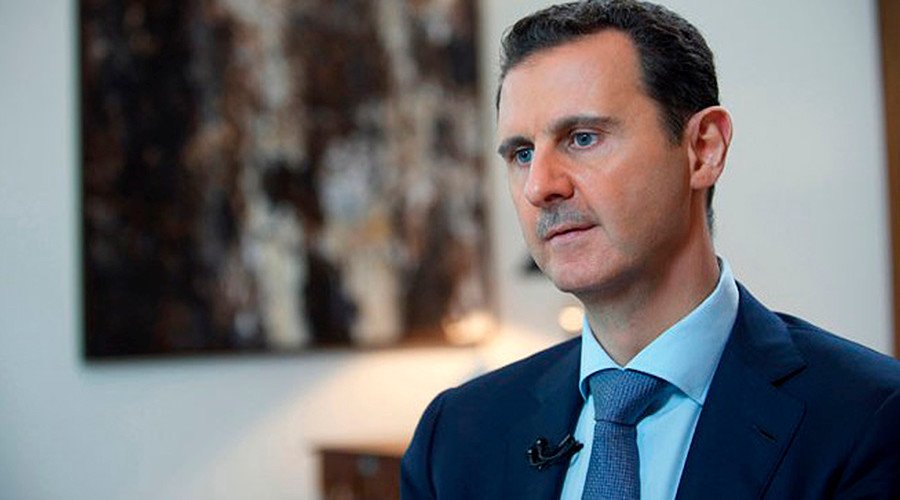


“There will be no point in deciding any timetable, because you cannot achieve anything politically while you have the terrorists taking over many areas in Syria, and they’re going to be – they are already – the main obstacle of any real political advancement,” Assad said in an interview with Italy’s RAI UNO channel.
After the terrorists are defeated, the political transition in Syria won’t require a lot of time, the president stressed.
“One year and a half (18 months) to two years is enough for any transition. It’s enough. I mean if you want to talk about first of all having a new constitution, then a referendum, then parliamentarian elections, then any kind of other procedure, whether presidential or any other thing, doesn’t matter,” he explained.
However, Assad added that the timeline for a political settlement in the country would depend “on the agreement that we can reach as Syrians.”
“If we don’t reach it in 18 months, so what?” he wondered. “The most important part is that we’re going to sit with each other; then we’re going to set our schedule and our plan as Syrians.”
During a meeting in Vienna last week, foreign ministers of nearly 20 countries agreed on a transition plan for Syria that foresees the beginning of talks between the Syrian government and opposition before January 1 and holding a UN-supervised election within 18 months.
The Syrian leader stressed the importance of parliamentary elections in Syria as it’s “going to show which power of the political powers in Syria has real weight among the Syrian people, which one has real grassroots.”
“Now, anyone can say 'I’m opposition.' What does it mean, how do you translate it?.. Opposition could be defined not through your own opinion; it could be defined only through the elections, through the ballot box,” he explained.
The president reiterated his stance that those who are fighting the Syrian government with weapons in their hands can’t be regarded as opposition.
“Whoever holds a machinegun and terrorizes people and destroys private or public properties or kills innocents and whoever is a terrorist, he’s not opposition,” he said.
When asked about the possibility of holding a presidential vote, Assad replied that “if the Syrians, in their dialogue, they wanted to have presidential elections, there’s nothing called a red line, for example, regarding this. But it’s not my decision. It should be about what the consensus is among the Syrians.”
The president also disagreed with those who claim that Syria has become a breeding ground for Islamic State (IS, Daesh) terrorists.
“Till this moment, I can tell you Daesh doesn’t have the natural incubator, social incubator, within Syria. This is something very good and very assuring, but at the same time, if it’s becoming chronic, this kind of ideology can change the society,” he said.
According to Assad, Islamic State will have the ability to remain “strong as long as they have strong support from different states, whether Middle Eastern states or Western states.”
The Syrian leader also recalled his surprise visit to Moscow in mid-October, describing talks with Vladimir Putin and Russia’s defense and foreign ministers as productive.
“It was a trip to discuss the military situation, because it happened nearly two weeks after the Russians started the airstrikes, and to discuss the political process, because it was, again, a few days before Vienna 1. It was very fruitful, because the Russians understand very well this region, because they have historical relations, they have embassies, they have all kinds of necessary relations and means to play a role,” he said.
Russia has been bombing Islamic State, Jabhat al-Nusra, and other terror groups in Syria at Assad’s request since September 30.
Commenting on the refugee crisis in Europe, Assad called every person who was forced to leave the country “a loss to Syria.”
He named three reasons why people are becoming refuges, including a “direct threat by terrorists,” “the influence of terrorists in destroying much of the infrastructure and affecting the livelihood of those people,” as well as “the Western embargo on Syria.”
Assad also expressed condolences to France for the IS attacks in Paris on November 13, calling them “a horrible crime.”
“We understand in Syria the meaning of losing a dear member of the family or a dear friend, or anyone you know, in such a horrible crime. We’ve been suffering from that for the past five years. We feel for the French as we feel for the Lebanese a few days before that, and for the Russians regarding the airplane that’s been shot down over Sinai, and for the Yemenis,” he stressed.
Subscribe to:
Posts (Atom)