Thursday, October 15, 2015

#SilkRoadConference - Third-generation Bhutto keeps faith in China

SHAFQAT ALI

The third-generation Bhutto, regarded by many as the future leader of Pakistan, who believes China is a future global leader is in Beijing, having carried with him the legacy of his family and the party’s pro-China policy. Pakistan Peoples Party Chairman Bilawal Bhutto Zardari left for China via Dubai yesterday to participate in the Asian Political Parties Special Conference on the Silk Road to be held from October 14 to October 16 in Beijing.
He is accompanied by former ambassador to the United States Senator Sherry Rehman, former National Assembly Deputy Speaker Faisal Karim Kundi and Political Secretary Jameel Soomro. The PPP delegation is likely to return by the end of the week. The Communist Party of China is holding the Asian Political Parties’ Special Conference on Silk Road in Beijing. The conference, themed New Vision of the Silk Road, Actions for Common Development, shall include three panels with their respective topics, political leadership: new consensus for political parties, people-to-people bonds: new dialogue between civilisations and economic integration: new impetus for development as well as deliberations on regional economic cooperation.
“Bilawal plans to interact with the Chinese politicians on the sidelines. The PPP chief is a strong advocate of enhancing the Pak-China ties to new levels,” a close aide of the young Bhutto told The Nation. “We will also mingle with the people coming from other countries during our stay,” he added. Another PPP leader said originally Asif Ali Zardari was thinking of visiting China, but because the top Chinese leadership will not be holding individual meetings on the sidelines, the plan was dropped.
“We decided to send Bilawal and Sherry Rehman. It is a party leaders’ meeting and Bilawal fits in as the PPP chairman,” the party leader said. Asked about the activities of the PPP chief on the sidelines, he said, “There will, of course, be meetings of the party leaders, but Bilawal would have hoped to meet the Chinese President or the Prime Minister which was not possible during this specific visit.” The members of over 50 political parties and organisations from more than 30 countries will participate in the conference. Parliamentary Committee on China-Pakistan Economic Corridor (CPEC) Chairman Senator Mushahid Hussain Sayed will represent Pakistan.
The China-Pakistan Economic Corridor is a vital part of the Silk Road Initiative – a vision and strategy of China to expand cultural and economic ties with Eurasian countries through cooperation and communication. In 2013, Chinese President Xi Jinping announced the Silk Road Economic Belt and 21st Century Maritime Silk Road Initiative to promote connectivity, cooperation and common prosperity along the ancient land and maritime Silk Road trade routes.
The belt and road routes run through Asia, Europe and Africa, connecting the vibrant East Asia economic circle at one end and the developed European economic circle on the other, and encompassing countries with huge potential for economic development, according to an official publication by the Chinese government. Also in 2013, the Pakistani-China governments agreed to launch a landmark project called China-Pakistan Economic Corridor (CPEC) which will connect Pakistan’s deep sea Gwadar Port with China’s Xinjiang region.
Both Pakistan and China are discussing a number of mega projects under the rubric of the economic corridor in several fields like energy, infrastructure and connectivity which would revitalise Pakistan’s economy. The economic corridor, with a total investment of $ 46 billion, is a new glaring example of the close friendship between Pakistan and China. Bilawal Bhutto Zardari’s grandfather, Zulfikar Ali Bhutto, laid the foundation of a strong friendship with China. As a foreign minister, he signed the Pakistan-China border agreement on March 2, 1963, followed by the Border Protocol in 1965.
These two agreements alone were instrumental in paving the way for a strong, durable, and multi-dimensional relationship in the years to come. During the period when most Western countries were in a bid to isolate China, Pakistan took the bold step of being the first non-socialist country to sign an air services agreement with China in August 1963 that linked China with other countries starting a regular air service from April 29, 1964. It was Bhutto who then provided a clear and pragmatic long-term framework for Pakistan’s relations with China. As a result, China became the principal source of military hardware and technology for Pakistan in addition to its involvement and support for important projects in the defence, heavy industries and infrastructure development.
Later, his mother Benazir Bhutto worked very hard to maintain the tradition of a special relationship with China laid down by her illustrious father, which in a way were sort of frozen during the regime of the military ruler Ziaul Haq.  She first visited China in 1972 on a state visit, accompanying her father who was President of Pakistan at that time. During that memorable visit, she had the opportunity of meeting with Premier Zhou Enlai and his wife. And even before her coming to power as prime minister on December 1, 1988, Benazir Bhutto had announced her first official foreign visit would be to China. Living up to her words, she did visit China in February 1989.
And Bilawal’s father Asif Ali Zardari, then President, appeared at a Pakistan-China renewable energy forum in Shanghai in July 2010, rekindling the vision of Benazir Bhutto who had envisaged gas pipelines, railway tracks and highways connecting Pakistan with China.

Pakistan - Bilawal Bhutto welcomes Chinese bid to reshape international finance


Bilawal Bhutto Zardari Chairman Pakistan Peoples Party told “Asian Political Parties Conference on Silk Road” in Beijing Wednesday that Pakistan was among the first to welcome – and recognize – the efforts of China in reshaping the international financial architecture with new institutions such as the Asian Infrastructure Investment Bank, the New Development Bank, and the Silk Road Fund.
Bilawal Bhutto Zardari was addressing the 3-day Conference hosted by Community Party of China.
In his speech, PPP Chairman stated, “Given its vast economic clout, China clearly has a greater role in the global economic order. The Asian Infrastructure Investment Bank, too, was conceived in pursuit of the Asian economic dream, with the objective of achieving shared prosperity on the basis of economic integration and collective development.”

He pointed out that as the Dragon stands poised to leap forward at the economic core of a vast region that houses 70 percent of the planet’s population, and the same percentage of known energy reserves, we know that competition for influence can’t be far behind. While the renminbi seeks to attain global reserve status, and Beijing mobilizes its foreign reserves to power up massive investment outlays, the world will continue to still size up this rising giant. Our own view is that no community or country should be challenged by this expanding circle of influence. This model of leadership need not be zero-sum. China’s organizational initiatives incorporate, complement, and build upon numerous existing institutions. What is important is that they do not uproot existing financial frameworks, but build on old and create new ones, he stressed.

PPP Chairman said the Silk Road, in its latest manifestation, is more than just a trade route or investment initiative that can transform regional futures; it is Beijing’s great strategic bid to spur growth and prosperity in the Eurasian landmass.

“On behalf of Pakistan, and its largest federal political party, the PPP, I rejoice at the warmth, trust and durability of our bilateral ties. When the world was busy misunderstanding China, I am proud to say that we in Pakistan, through three governments, from Zulfiqar Ali Bhutto to Benazir Bhutto, and then President Zardari, ensured that Pakistan’s ties with the Peoples Republic of China always went through a surge in confidence and cooperation.

“Today, China’s “One Belt-One Road” project aims to bring into being a new economic order in the whole region around us, and beyond. Connecting from the Pacific to the Atlantic, Beijing’s ambition to build over 8000 kilometers of high-speed railways and related infrastructure, joining itself to other regions in Asia and Europe, is understandably the centre of much international attention.

“To my mind, it is remarkable that Chinese investment abroad has exceeded $100 billion plus in 2014. As we see it, China is in the process of becoming the world’s preeminent economy.
“Carried out according to vision, this belt will literally join two continents, Asia and Europe, an area with a population of 4.4 billion, and a current economic output of $21 trillion. Chinese goals and collaborative planning for Silk Road countries are exciting to see. They hope to inspire mergers, acquisitions, and green-field investments.

Bilawal Bhutto Zardari said that as an avid student of Chinese growth, he had noted how over the last 20 years, China has poured in almost 9 percent of its GDP for the enhancement of domestic infrastructure. It can teach many of us a great deal about how to build and boost transportation and communications efficiency. In a bid for a future where the knowledge economy matters most, China has also invested in creating the world’s largest broadband network. This is no small feat, he applauded.

“President Xi Jinping’s assertive articulation of the One Belt-One Road vision makes it clear that the New Silk Road, both overland and maritime, will not be limited to the last century’s definitions of geo-politics alone. Whether it amounts to a Marshall Plan for the region it covers, or leaves a new footprint of soft power as it unfolds, a world hungry for partnering in leadership should welcome it.
“The China Pakistan Economic Corridor, that will link Kashgar in Xinjiang with the port of Gwadar in Balochistan, is just one – but a significant example – of this mutual objective. Early estimates suggest that the influx of Chinese investment will stimulate a 15 percent increase in Pakistan’s GDP by 2030. In fact, the first project to achieve financial close, in November this year, under the CPEC is a $ 2 billion joint venture to energize Thar Coal, located in the province of Sindh, where my party holds government.

“Given our history as allies and friends, Beijing has also extended support for other projects that Pakistan has been involved with under our leadership. Most notable among these is the Iran Pakistan gas pipeline, particularly as the Iran Deal opens new avenues for energy trade in the region. With China’s exclusive entry in the IP project, regional energy trade can take a critical turn.

“Beijing’s continued interest and investments in Gwadar also underscore its commitment to economic integration and collective regional development. More importantly for all of us in Pakistan, the CPEC will set a remarkable precedent as a joint infrastructural development project in the region that can significantly alter the economic landscape of developing areas in both China and Pakistan.
“It bears saying that within the region too, the Silk Route and other interfaces ensure that Pakistan and China are natural trading partners. Together, both our countries have laid a framework for trade integration that includes the elimination of tariff on goods, market access on services and promotion of investments. This is the future of free trade in the region.

“I realize that security concerns weigh heavy on all investment calculations. Please be assured that security is Pakistan’s principle focus right now, and that joint efforts are extensively underway to combat the global threat of borderless terrorism.

“Let me take this opportunity to remind my distinguished audience that today, Pakistan is fighting what can easily be termed as the biggest inland war against terrorism. We also know that Pakistan’s resolve is appreciated by our friends in Beijing who understand the complex and grave nature of this threat.

“We all know that terrorism is this century’s big emerging challenge, and it will require transboundary cooperation and global solutions. It is important to also understand that no one country can face it alone, or that all solutions will be solely military. Our non-NATO allies in Afghanistan have spent much blood and treasure there with far from optimal outcomes. They knew not what this summer would bring. This ramped up conflict and Taliban resurgence is a worry for Pakistan, since we see Afghan peace as vital to Pakistan’s hopes for prosperity in our own country and the region.
“Therefore, we are naturally heartened to see that China has joined Pakistan and the US in the search for bringing peace to a troubled Afghanistan. I truly hope that China’s new role in fostering collective security and regional peace in Kabul will open new doors for economic stability in a war-torn country.
“We all know that the New Silk Road will become the jugular vein it is meant to be if its investments in human and material capital are secure. The CPEC itself is a manifestation of Islamabad and Beijing’s joint vision to combat terrorism not only by committing military forces against it but also by applying the shared objective of expanding the circle of prosperity to underdeveloped and restive regions in many countries. Given the significance of this objective – placing strategic security within the realm of economic development and prosperity – Pakistan’s security establishment has repeatedly assured Chinese authorities that there would be no hurdles in the development of the CPEC. Beijing has also categorically brushed aside Indian apprehensions regarding the routing of the CPEC through Azad Kashmir. We are thankful for this breadth of vision.

“Before the honourable Chinese president’s visit to Islamabad this year, our Chief of Army Staff had visited Beijing, where he extended the Pakistan Army’s resolve to curb terrorism and apprised the Chinese leadership of successes notched up in Operation Zarb-e-Azb in dismantling the network of the East Turkestan Islamic Movement (ETIM). I am happy to note that last month, Pakistan and China also concluded the Joint Field Exercise Warrior – III.

Bilawal Bhutto Zardari said that the Chinese vision for human security, economic cooperation, reform, joint prosperity, lies at the heart of international solutions to the turmoil and chaos the world faces today. “It is what will drive the project of peace in a world divided by inequities, conflicts and social disorder. I am confident that Pakistan will play a key role in bending history to this transformative mutual ideal,” he concluded.

Earlier, PPP Chairman Bilawal Bhutto was warmly welcomed by the political leaders from different countries and took photographs. Political leaders from India, Bangladesh, Sri Lanka and Nepal specially walked to Bilawal Bhutto Zardari and exchanged greetings.

PPP delegation comprised of former Ambassador to the United Nations Senator Sherry Rehman, former Deputy Speaker of National Assembly Faisal Karim Kundi and Political Secretary Jameel Soomro.

Pakistan - Aseefa Bhutto takes up SMBB Medical College issue with CM

 Aseefa Bhutto Zardari held a meeting with Sindh Chief Minister Syed Qaim Ali Shah at Chief Minister’s House today to discuss the issues pertaining to Shaheed Mohtarma Benazir Bhutto Medical College, Lyari and few other matters related to Health, especially anti-Polio campaign in Sindh.


Former UN Ambassador for Polio Eradication Aseefa Bhutto Zardari had personally visited SMBB Medical College Lyari a few days back and listened to the problems of both students and faculty. She brought up the issues of SMBB Medical College to the attention of Chief Minister and sought his intervention for improvements in the College education and facilities for the students.

Aseefa Bhutto Zardari also discussed the issues being faced by the polio workers specially their salaries and security. Need of improvement of facilities at Civil Hospital, Naushero Feroz also came up for discussion during the meeting.

Chief Minister Syed Qaim Ali Shah gifted traditional Sindh Ajrak to Aseefa Bhutto Zardari on the occasion.
Those who attended the meeting including Local Government Minister Nasir Shah, Deputy Speaker Sindh Assembly Shehla Raza, Secretary Health Saeed Ahmed Mangnejo and others.


https://ppppunjab.wordpress.com/2015/10/15/aseefa-bhutto-takes-up-smbb-medical-college-issue-with-cm/

Wednesday, October 14, 2015

Music Video - Justin Bieber - What Do You Mean?

Video Report - Jupiter: NASA released high def images of the planet

Video Report - Turkish election context of power play, separatism and Syrian war

Video Report - Hillary Rodham Clinton Earns Intl. Painters Union Endorsement

Video - Syria frontline RAW: Assad's army in fierce offensive in Damascus suburb

Syrian Arab Army ground forces started a large-scale offensive against militants’ positions in Joubar and Ein Tarma in the Damascus municipality in an attempt to capture new territory around the Syrian capital.

8 questions about democratic socialism and Bernie Sanders’s vision for the United States

By Max Ehrenfreund

One of the most riveting moments of Tuesday night's Democratic primary debate came when CNN's Anderson Cooper asked Sen. Bernie Sanders (I-Vt.), who identifies as a "democratic socialist," to confirm that he is not a capitalist.
"Do I consider myself part of the casino capitalist process by which so few have so much and so many have so little by which Wall Street's greed and recklessness wrecked this economy? No, I don't," he said, with force. "I believe in a society where all people do well. Not just a handful of billionaires."
"Just let me just be clear," Cooper asked. "Is there anybody else on the stage who is not a capitalist?"
No one answered him directly. It was perhaps an indication that skepticism of or opposition to capitalism — long associated in the minds of U.S. voters with this country's Communist archrival in the Soviet Union — is again becoming viable on the political left.
Socialism, democratic socialism and other alternatives to the predominantly capitalist model in the United States used to be an important part of the American political landscape. The legacy of that era is still with us today in a number of widely popular federal programs that are socialist in design even if most Americans don't recognize them as such.
Today's elderly citizens would have been children the last time someone calling himself a socialist of any stripe was taken seriously as a national political figure. Here are answers to a few questions you might have about socialism if it's a new idea for you, as it likely is for many voters.

1. What is socialism?

It's probably impossible to answer this question with a one-size-fits-all definition. That said, here's a rough attempt to sketch what it means to be a socialist.
Socialists believe that the government should provide a wide range of basic services to its citizens free of charge or at a discount, typically including university education and health care, as well as child care, housing, telecommunications, energy and more in some countries. They believe that these services should be available to everyone, not just the neediest. In some forms of socialism, these sectors of the economy are owned and controlled by workers, as opposed to the government.
Socialists think that public or worker ownership can provide these services more cheaply and more equitably than the free market. They also hope to use these sectors of the economy to establish genuine equality of opportunity — in other words, they think that everyone should have a truly equal chance at success in life, regardless of the advantages of birth. At the same time, socialists believe in redistributing national income and wealth on the theory that being successful doesn't really mean you deserve far, far more than anyone else.
Socialism isn't just a list of economic prescriptions for government, though. Perhaps above all, socialism is a moral view. It is the idea that people share something, that we're all in this together, that we've got to help each other out.

2. Sanders calls himself a "democratic socialist." What does that mean?

This difference between socialism and democratic socialism is actually kind of important. First of all, Sanders isn't talking about using government to take over large sections of the economy. He doesn't want to make Comcast part of the government, for example. He's also not talking about putting an end to the stock market and giving workers control over their companies. Some socialist countries, such as China and the Soviet Union, have sought to nationalize services under regimes that haven't given their citizens much say in those decisions.
Sanders wants the government to pay for health care and college tuition, but those services would still be provided by a combination of public agencies and private organizations if Sanders got his way.
While Sanders thinks that changes should be made to the U.S. economy, he doesn't envision doing away with the U.S. system of representative government — Congress, the Supreme Court, elections, all that sort of stuff. He believes in democracy. That's why he calls himself a "democratic socialist." In particular, as he repeated in Tuesday night's debate, he wants to reform the U.S. democratic system to limit the influence that wealthy donors who give money to political campaigns have over the process.
In much of the world — in particular in a number of Western and northern European countries —Sanders would be regarded as a moderate. To get a sense of the way socialism works differently around the world, consider the availability of universal health insurance, conventionally a basic tenet of a "socialist" country.
There is essentially universal coverage in countries such as Canada and the United Kingdom, where socialist philosophy is embraced by many parts of government. In the United States, where socialism is often a dirty word, health insurance has become quasi-universal since the introduction of the Affordable Care Act. About 10.4 percent of Americans are without coverage. And in China, which is nominally communist, many go without access to affordable care.

3. Why aren't there more socialists in the United States?

Socialism used to be much more common in this country than it is today. A utopian science-fiction novel written in 1887 called "Looking Backward" was among the bestselling books of the 19th century. The author, Edward Bellamy, imagined a socialist future for the United States.
After the Bolshevik Revolution in Russia, though, authorities began to see socialism as a threat. President Woodrow Wilson signed the Espionage Act in 1917, which gave judges the power to imprison socialists who opposed the First World War. In the following years, the Federal Bureau of Investigationwould arrest thousands of socialists and suspected socialists. The well known anarchist and Russian immigrant Emma Goldman, among a few hundred others, was deported to her native country.
After the Second World War, Sen. Joseph McCarthy (R-Wis.) argued that communist infiltrators had secretly achieved positions of prominence in Washington, and he initiated a series of hearings to root them out. If not entirely baseless, his claims were mostly unfounded. Still, he had widespread support, and his work made it treacherous for socialists to espouse their views publicly for generations.

4. What are some socialist things that I interact with in my daily life?

Back then, though, these socialists and their ideas were widely influential. A number of basically socialist and widely popular programs created before and after the Second World War survive to the present day, including Social Security and Medicare.
Much of the U.S. agricultural sector is run on principles that could be described as socialist, too. Until a recent Supreme Court decision, for example, the federal government controlled prices for raisins. State and regional boards across most of the country regulate the price of milk. Similar controls are common for other crops as well.
Another example is the Tennessee Valley Authority, a federal agency that controls and operates electrical power generation. President Obama tried to privatize it in 2013, but Republican officials prevented him from carrying through his plan.

5. What do Americans think about socialism?

Although Americans still view theirs as a capitalist society, the opposition to socialism that characterized McCarthy's time may be waning.
Almost half of Americans say they would consider voting for a socialist as president, according to a recent Gallup survey. The organization has also found that about a third of Americans overall — but more than half of Democrats — have a favorable view of socialism.

And there appears to be a generational component. Younger people are also more likely to favor socialism. Among those 29 years of age and younger, more have a positive view of socialism than of capitalism, according to the Pew Research Center.


6. What's the difference between a democratic socialist, such as Sanders, and a Democrat, such as Clinton?

Sanders and Clinton agree on the big questions about the economy, but there are differences in their views, some of which they discussed in the debate Tuesday night. In particular, Sanders favors universal government servicesthat are available to everyone regardless of how much they make. Clinton wants to limit those benefits to the people who really need them.
So, for example, Sanders has proposed offering most Social Security recipients more generous benefits. At the debate, Clinton also said she thought that Social Security checks should be more generous, but only for retirees who are the most in need.
Likewise, Clinton opposes Sanders's proposal to pay for college tuition through the government. She has noted that many people who go to college come from affluent families. She cited the children of Republican presidential candidate Donald Trump in particular. In her view, the government has no business paying for rich kids like them to go to school.

7. What are some of the arguments against democratic socialism?

The big one — and the one that Clinton alluded to — is that reforms such as those proposed by Sanders would be costly. Limiting college tuition and other benefits to the people who need them most would be less expensive. In order to fund government services, many northern European countries imposehigher taxes on their citizens. Clinton discussed making sure that wealthy Americans pay their fair share in taxes at the debate, but she also said she wanted to reduce taxes for the middle class. It probably isn't possible to pay for the kinds of reforms that Sanders is advocating while reducing taxes for ordinary Americans.
As this chart shows, average workers in places like France and Finland pay more than 40 percent of their income as taxes, compared to closer to 30 percent in the United States.


Sanders and his supporters could respond that Americans already pay monthly bills for college tuition and health insurance, and it might not make much difference to them whether they paid for those things on Tax Day instead. For example, some economists have argued that a national, single-payer health care system such as the one Sanders is advocating would actually save money on balance.
On the other hand, many economists believe that higher tax rates can be detrimental to economic growth. They think that taxes discourage people from working and from putting their utmost into the economy, because they don't benefit as much from their hard work as they would if they didn't pay tax.

8. Could democratic socialism work in the United States?

Maybe.


As Matt Bruenig of Demos notes, socialist countries such as those in the Nordic region are far outpacing the United States in terms of productivity. In other words, the amount that each worker in those countries produces in a given amount of time has improved more in those countries than it has here, as this chart shows.
These figures suggests that contrary to economists' predictions, people aren't putting any less effort into the economy there than they are here, despite those socialist policies. There's only one way to find out, of course — but Sanders has a difficult primary campaign ahead of him if he hopes to defeat Clinton for the Democratic nomination.
http://www.washingtonpost.com/news/wonkblog/wp/2015/10/14/8-questions-you-were-too-embarrassed-to-ask-about-democratic-socialism/

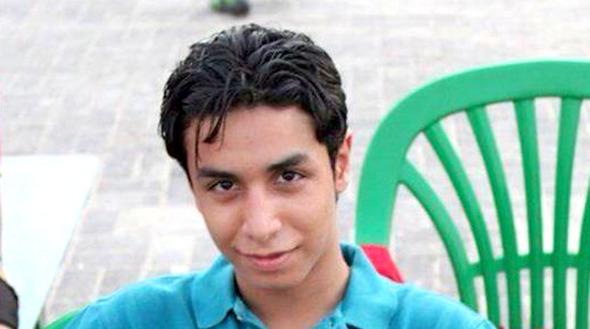
#AliMohammedAlNimr - Mother of Saudi man facing beheading urges President Obama to ‘rescue’ her son

By Peter Holley


The potential execution of Ali Mohammed al-Nimr, a Saudi protester arrested at 17 for his involvement in the Arab Spring, has been condemned far and wide.
Amnesty International, U.N. human rights experts, British Prime Minister David Cameron and even American talk show host Bill Maher have demanded a stay of execution to no avail.
If you haven't used up all your heroism on the clock kid, try hashtagging http://www.whosay.com/l/pWab2Ga 

Hillary Clinton’s ‘Smart Girl’ Triumph

BY 
With all due respect to the gentlemanly Bernie Sanders and the hardworking pundits, not much doubt remains about who the Democratic nominee will be.

Bernie Sanders glowered on her right. Martin O’Malley ground his teeth to her left like a man chained to the podium. Lincoln Chafee, looking like a scarecrow in a suit and Jim Webb waking annoyed hovered on the sidelines. Absent a charmer like Obama, Hillary Clinton glowed like a winner. Her laugh, high-wattage smile and confidence left little question that it will take a lot more than emails to knock her down.
The only remaining avenue for inquiry is how does she win the whole thing?
One answer is encapsulated in a tweet from Clinton loyalist Paul Begala early in the day: #thesmartgirlintheroom.
Clinton clearly intends to make gender a pillar of her campaign strategy. Last night in Vegas, she appealed to the vast numbers of unenthusiastic women—including many Democrats—who, unlike the majority of African-Americans in 2008, just can’t seem to get wholeheartedly behind one of their own.
In the first 15 seconds of her first remarks, she framed herself as “thegranddaughter of a factory worker and the grandmother of a wonderful 1-year-old child.” She added, “And every day, I think about what we need to do to make sure that opportunity is available not just for her, but for all of our children.” She concluded, “and, yes, finally, fathers will be able to say to theirdaughters, you, too, can grow up to be president.”
Over the course of the polite, substantive two-hour debate, Clinton delivered the memes to come: “I’m a progressive but a progressive who gets things done.”...“God-given potential”...“Even the playing field....”
But she kept returning to her gender, thrice reminding people that she is poised to become the first women in the Oval Office. When CNN’s Anderson Cooper asked why her term wouldn’t be Obama’s third, she replied, “Well, I think that's pretty obvious. I think being the first woman president would be quite a change from the presidents we’ve had up until this point, including President Obama.” Asked whether she wasn’t an insider, she parried: “Well, I can’t think of anything more of an outsider than electing the first woman president, but I’m not just running because I would be the first woman president.”
A swipe at the Republicans regarding Planned Parenthood was another appeal to women, and retweet clickbait for feminist activists this morning. “They don’t mind having big government to interfere with a woman’s right to choose and to try to take down Planned Parenthood. They’re fine with big government when it comes to that. I’m sick of it!”
If any doubt remained that Clinton was flipping the woman card, there was the over-extended break toward the end of the debate. “All the candidates are back, which I’m very happy to see,” Cooper said, after an unexpectedly long hiatus just before final remarks. Clinton, apparently the cause of the delay, smiled and said, “Well thank you. You know, it does take me a little longer. That’s all I can say.” The exchange prompted Slate to post the transcript under the headline: “Hillary Clinton Makes First Known Presidential Debate Reference to How Long it Takes Women to Pee.” Women, as they say, do get that.
The Vegas debate introduced a more relaxed woman than the nation probably expected. The new persona began to emerge during her time at State, and is on display in candid interviews she did for a 2015 film about Richard Holbrooke,The Diplomat. The debate was probably the first time most Americans had a chance to see how she’s evolved since the start of a cloistered campaign in which she appeared to have reverted to the protective crouch of the First Lady years.
There was a time everybody knew when Clinton was mad. She deployed a scary, steely look on any interlocutor—almost always a journalist, sometimes a questioning Congressional committee member—daring to ask questions manufactured by the vast right-wing conspiracy. Americans got to know that look well. But in the decades since Monica and Whitewater, Clinton has relinquished it, or at least stopped deploying it in public. There was barely a trace of it last night. She reacted to jabs and Anderson Cooper’s tougher questions with a smile and, often, a laugh.
The last laugh, apparently.
Conventional wisdom assessed her the winner. “Clinton crushes it” is the headline in Politico. Bernie Sanders got at least as much, if not more passionate applause from the audience, but with her massive war-chest, her seemingly clear path to the nomination comes with a caveat emptor for the base.
She cracked a glass ceiling last night, not, though, the Glass-Steagall test. If anything, she confirmed the suspicions of the Democratic base, now so feeling the Bern, that she is not anything other than an establishment tool, a creature of Davos, a friend of the bankers, a driven woman who has not been behind a steering wheel herself in 25 years.
Next to Sanders’s full-throated roars about the 1 percent, and O’Malley’s attacks on the banks, Clinton came off as slippery and timid. Sanders has courageously removed the stigma from socialism in American politics. Answering Cooper’s question about that issue, he said: “[W]hat Democratic socialism is about is saying that it is immoral and wrong that the top one-tenth of 1 percent in this country own almost 90 percent—almost—own almost as much wealth as the bottom 90 percent.” Cooper—apropos of Sanders’s declaration—asked everyone onstage whether they were capitalists. Clinton passed the test by pointing out that small businesses make “a good living” for American families. Thanks to Bernie, though, the audience had already been reminded that for an elite slice of Americans sitting atop an incredible proportion of the nation’s wealth, a “good living” means something very different.
Later, Bernie and O’Malley boxed Clinton into a corner, forcing an unseemly wriggle. Both O’Malley and Sanders want to reinstate Glass-Steagall—the Depression-era banking law repealed in 1999 that prevented commercial banks from engaging in investment banking and insurance activities. O’Malley turned to face her and said: “You are not for putting a firewall between this speculative, risky shadow banking behavior. I am.”
Clinton hesitated and in that split second, attentive viewers could literally see the politician making the calculation to pivot—to the weather.
“Well, you know, everybody on this stage has changed a position or two.” she said. “But I have been on the forefront of dealing with climate change, starting in 2009, when President Obama and I crashed (ph) a meeting with the Chinese and got them to sign up to the first international agreement to combat climate change that they'd ever joined. So I'm....not taking a back seat to anybody on my values.”
Anderson Cooper let Glass-Steagall die, right there, as she knew he would. The clock had run on that topic. When a Democratic candidate for president can blunt a question about banks with “climate change” and “values,” you know she’s ready for prime time.