Thursday, September 24, 2015
Israel and America After the Iran Deal
 Now that congressional Democrats have blocked a Republican effort to kill the Iran nuclear deal, attention is shifting to what America must do to reassure Israel and its American supporters that the agreement will not harm Israel’s security.
Increased cooperation between America and its regional partners, including the Arab gulf states as well as Israel, is vital to ensuring that Iran sticks to the deal, which curbs its nuclear program in return for sanctions relief. America and its partners need to find ways to keep Iran from using billions of dollars, which were frozen in overseas banks but are due to be released, to expand its use of proxies like Hezbollah to stir trouble abroad.
Now that congressional Democrats have blocked a Republican effort to kill the Iran nuclear deal, attention is shifting to what America must do to reassure Israel and its American supporters that the agreement will not harm Israel’s security.
Increased cooperation between America and its regional partners, including the Arab gulf states as well as Israel, is vital to ensuring that Iran sticks to the deal, which curbs its nuclear program in return for sanctions relief. America and its partners need to find ways to keep Iran from using billions of dollars, which were frozen in overseas banks but are due to be released, to expand its use of proxies like Hezbollah to stir trouble abroad.
These are the goals of a broad legislative package now under negotiation by the White House and Democratic lawmakers. There is a risk some parties will try to overcompensate for the bitter political tensions over the Iran deal and go too far in trying to please Israel or the Arab gulf states. Republican lawmakers and other forces opposed to the Iran agreement have made clear that they will use any new legislation to continue trying to kill it.One dubious proposal would have the United States provide Israel with a massive ordnance penetrator, or MOP, a 30,000-pound bomb that could do serious damage to Fordo, the Iranian enrichment facility built into a mountain. President Obama has already promised Israel a smaller, 4,444-pound, bunker-busting bomb. Adding MOP to the mix would be provocative and dangerous.
Some also want Congress to formally authorize the president in advance to use force in case Iran violates the deal. That may make supporters of such a proposal feel tough, but it would embolden hard-liners in Iran, undercut Iranians who want the deal to succeed and promote the illusion that threats are the best way for Washington to exert influence. Under law, presidents have wide latitude to take military action on their own; Mr. Obama has repeatedly promised he would not let Iran obtain a nuclear weapon and is prepared to use force if needed.Since 2009, the United States has provided Israel with more than $20 billion in military aid, as well as more than $3 billion for missile defense systems and $1.9 billion in precision-guided munitions. It has also promised that Israel will be the only Middle East nation to have the advanced F-35 jet fighter. To win backing for the Iran agreement, Mr. Obama pledged to further strengthen the relationship by negotiating a new security agreement and renewing assurances that Israel, the only country in the region with nuclear weapons, will always have military superiority over its neighbors. It is probably inevitable that American aid to Israel, already a top recipient, will be increased, but Congress knows those increases come at a time of strict limits on federal spending and will undoubtedly require cuts in other programs.
America has a responsibility to help ensure the security of Israel and the gulf allies and to see that Iran adheres to the deal. But this cannot be done if Congress imposes restrictions that cause the agreement to implode or prevent the administration from taking advantage of openings to cooperate with Iran. Congress can be most helpful by creating its own process for rigorously monitoring how the accord is implemented.The focus on America’s obligations often ignores the responsibility Israel and the gulf states have for regional security. Saudi Arabia shares much blame for the rise of extremist groups, while Israel undermines stability by failing to negotiate peace with the Palestinians.
In the end, what’s most important for Israel’s security is the relationship with the United States. Those ties were put at risk by Prime Minister Benjamin Netanyahu and congressional Republicans, who polarized the debate over the Iran deal. A crucial sense of trust needs to be rebuilt. It is unclear that this can happen soon, no matter how many promises of aid and cooperation America makes to Israel.
White House Says Obama and Putin Will Meet Next Week
 By
By Mr. Putin had requested the meeting, said Josh Earnest, the White House press secretary, and considering the significant issues involving Ukraine and Syria, “it makes sense for President Obama to sit down with his counterpart and see if he can get greater clarity about Russia’s intentions inside of Ukraine.”With Russia sending more military forces to Syria to prop up the autocratic government of President Bashar al-Assad in the country’s four-year civil war, Mr. Earnest said a meeting between American and Russian leaders might help determine “whether or not they’re willing to at least consider President Obama’s advice when it comes to reinforcing their military support for the Assad regime.”
Mr. Obama and Mr. Putin will sit down in New York at the annual session of the United Nations General Assembly. Administration officials had said privately on Wednesday that the president had decided to agree to a meeting with Mr. Putin if it could be arranged, but then said that it had not been finalized.The announcement ended a debate inside the administration about whether such a meeting might inadvertently serve to embolden Mr. Putin. In the end, officials indicated that Mr. Obama decided to take that risk in hopes of using the opportunity to press the Russian leader on Ukraine and Syria.
White House officials said the core message of the meeting will be Mr. Obama’s insistence that Russia live up to the terms of the cease-fire in Ukraine negotiated in Minsk, the capital of neighboring Belarus. Citing Russia’s economic problems and attributing them to American and European sanctions levied over its intervention in Ukraine, Mr. Earnest said the meeting in New York would not undermine the international community’s isolation of Moscow.“That’s not going to change because of one in-person conversation,” Mr. Earnest said.
Mr. Obama canceled a summit meeting with Mr. Putin in 2013 after Russia gave shelter to Edward J. Snowden, the former National Security Agency contractor who leaked documents. After Russia annexed Crimea and supported a pro-Russian separatist uprising in eastern Ukraine last year, Mr. Obama limited his contacts even further.The two have generally just had passing encounters over the last year. They talked in person for a short time at a D-Day anniversary event in France in June 2014, for instance, and also had brief words on the sidelines of two international economic summit meetings in November in China and Australia.
They last talked by telephone in July after Russia joined the United States, China and three European powers in negotiating a nuclear agreement with Iran. But through it all, Secretary of State John Kerry has remained in regular contact with his Russian counterpart, Foreign Minister Sergey V. Lavrov, and American officials credited the Russians with playing a mostly helpful role during the Iran talks.
Pakistani Christian asylum sekers are being “rejected” by the government of UK

Hundreds of Pakistani Christians seeking asylum in the United Kingdom are being rejected by the British government.
According to a human rights group which advocates for the Pakistani Christians who are persecuted in their own homeland and have fled to the United Kingdom and seek asylum under the British patronage are being overlooked and rejected. The group claims thousands of such Pakistani Christians are being ill-treated in the UK.
It has been two years exactly after the deadly twin suicide blasts at the All Saints Church in Peshawar, Pakistan which claimed more than 300 lives and hundreds were injured. In the wake of rising wave of persecution of Christians in Pakistan, the list housing countries; Pakistan sits at number eight.
Despite Pakistan being the eighth most worst place for Christians to live in and the Pakistani Christians looking in the face of the storm, United Kingdom’s official visa policy for these Pakistani Christians remains restrictive and not facilitating them at all.
UK officially maintains that Christians in Pakistan are not persecuted to that extent.The policy states that, “Christians in Pakistan are a religious minority who, in general, suffer discrimination but this is not sufficient to amount to a real risk of persecution.”
The Head of the British Pakistani Christian Association (BCPA), has termed this policy statement as “flatly wrong,” and fears that “it paints a picture that is utterly at odds with the truth.” He said that the problem lies in the UK’s relying on what has been relayed by Pakistani constitution and the Pakistani government’s official stance rather than “the lived reality of Christian citizens of Pakistan.” The advocacy group in anxious that there is a methodical drive of half-truths by the Pakistani government along with the Pakistani intelligence agencies repressing the reality of miserable life in Pakistan for Christians.
Nonetheless, the policy of Home Office influences various factors beyond the borders of the UK. UNHCR also keeps an eye on UK’s policy which unequivocally influences UNHCR’s approach of not prioritising Pakistani Christian asylum seekers and refugees.
Undoubtedly, the UK policy has been affecting Pakistani Christians who are seeking asylum in other nations including Thailand, Malaysia and Sri Lanka. Consequently, these countries are forcibly deporting Pakistani Christians on the authority of the UNHCR recommendation though against the international law.
- See more at: http://www.christiansinpakistan.com/pakistani-christian-asylum-sekers-are-being-rejected-by-the-government-of-uk/#sthash.FJ3u5fet.dpuf
Pakistan - In Peshawar, girls are torn away from families and sold off

On July 7, a constable at Khazana police received a call that couldn’t believe: a man was trying to sell his daughter at a market on Charsadda Road.
The police arrested the suspect, who identified himself as Wasim and claimed the girl with him was his daughter. He went to on say he was a kidney patient, recent widower and that poverty had driven him to, or at least attempt to, sell his daughter.
He further told the police he was an Afghan refugee living in Bajuar Agency but refused to share any information about his relatives.
Upon insistence, and presumably force, the police managed to get a confession out of him, which was remarkably different from his initial admission.
The man was indeed an Afghan refugee but his family was settled in the Darmangi area of the Mathra police station. His real name was Amir Shah and the girl whom he claimed was his daughter was actually a 4-year-old he kidnapped a day earlier.
Initially refusing to provide the girl’s whereabouts at the time of the kidnapping, Shah eventually revealed he abducted her from Sethi Town, following which the police was able to reach out to her neighbourhood.
Habiba is the seventh of Afghan refugee Gul Haider’s eight children. She had strayed out of her house just after iftari on July 6. However, she is one of the lucky ones to return home.
Every year dozens of minor girls are kidnapped, cases of which are hardly ever reported in the media or registered given the lax attitude of the police. In Habiba’s case, too, an entry report was registered by the Paharipura police rather than an FIR, while the police made absolutely no effort to locate the child after she was reported missing.
After Shah was caught, however, the police showed residents of the area pictures of Habiba, who was luckily identified by her neighbor, recalls Gul Haider. He goes on to say that upon contacting the police and arriving at the police station at a given time to retrieve his daughter, he was arrested and put behind bars.
“Their attitude was completely inhumane and they refused to hand me over my daughter but luckily I have a police DSP as a neighbor and I called him, who then asked the SHO and investigation team to hand her over [and release me],” he said while speaking to The Express Tribune. His daughter, he added, was lucky to return home even after being recovered by the police.
The existence of human trafficking rings in Khyber-Pakhtunkhwa that kidnap and buy girls under the guise of marriage and then sell them to rich people in Punjab and Afghanistan is common knowledge. This trade is widespread throughout the province and yet, they manage to operate without inviting any attention from concerned quarters.

Habiba was returned to her family after the police arrested her kidnapper. PHOTO: RIAZ AHMAD/EXPRESS
In June, another Afghan refugee, Kher Baz’s nine-year-old daughter Sakina went missing in the Scheme Chowk area within the jurisdiction of the Badhaber police station. Despite her entire family’s tireless efforts, she is yet to be found.
Kher Baz had to quit his job as a truck driver and take up another fulltime job: looking for his daughter.
“My daughter Sakina has gone missing and I have been searching for her for the past couple of months. How can I return to driving, leaving things in the present state?” the father of nine said, while talking to The Express Tribune.
Sakina is not the only girl who disappeared in the same vicinity.
On March 1, 10-year-old Ayesha was kidnapped just outside her house in Ahmad Khel, Badhaber, and was taken to Khost, Afghanistan, where she was sold her to a local malik for Rs200,000.
The malik bought her as a bride for his son. Fortunately, Ayesha’s kidnappers were arrested by the Jalalabad police. While in prison, they called their relatives in Peshawar. During the call, which was intercepted by intelligence agencies, one of the suspects informed his family that they had been arrested and had sold Ayesha in Khost. The information was shared with Ayesha’s family, who arrived in Afghanistan, bought her back from the local malik and brought her home after several months.![]()
Alarmingly, the police did not register any FIRs against Ayesha’s kidnappers, who continue to threaten her family.
Human rights activist Uzma Mehboob said that like so many crimes, human trafficking seems to be an established fact.
“Unfortunately in K-P, the police and even the government wish to remain silent on such issues but that is not the answer,” she said, while speaking to The Express Tribune. She pointed out that in Punjab, the media does not compromise on such issues and the government also takes appropriate action once a crime is reported.
Pakistan - Badaber and beyond

The US and ISAF forces pulling out of the border regions in 2011 did not help the situation and the possibility of a pocket or two of TTP types having survived there cannot be ruled out.
The Pakistan Air Force (PAF) base at Badaber, outside Peshawar, came under a pre-dawn terrorist attack this past Friday. The security detail comprising of airmen and buttressed quite effectively by the army’s rapid response force were quick to confine, contain and eliminate the 13 or so attackers. The Tehreek-e-Taliban Pakistan (TTP) has claimed responsibility for the brazen attack in which about 30 people — half of them offering or getting ready for the morning prayers — perished. Several airmen and an army officer, Captain Asfandyar Bokhari, were killed in the line of duty. By all accounts the fallen officer and men fought selflessly to defend the Badaber facility. Hats off to them; they almost certainly averted a much larger loss of life, which the terrorists most likely aimed for. Unlike the PAF bases in Peshawar and Kamra, which were attacked by the TTP in 2012, there is hardly any tactical or strategic value attached to the Badaber base anymore.
The Badaber base was originally founded as a listening outpost for the US air force and was the takeoff site of the CIA’s notorious U-2 high-altitude, long-range reconnaissance plane, which was shot down over the Soviet Union on May 1, 1960, within roughly a year of the base’s inauguration. The Soviet leader Nikita Khrushchev is said to have encircled Peshawar in red on the map after the U-2 was brought down and its pilot, Francis Gary Powers, captured. The PAF camp, called the ‘scheme’ by locals, has been a non-flying base since perhaps the mid-1960s but was a lively oasis of peaceful life for the PAF personnel and their families. US-built housing, movie theatre, sports complex and a school were all part of the Badaber charm. A game of cricket and ice cream socials at the base were always great fun. It started wilting after the air headquarters, once located five miles away, was moved out of Peshawar in the mid-1980s but even the rump facility has administrative offices and residential quarters. It is one of the two PAF facilities closest to the tribal areas, the other being the Kohat base to its south. The base sits a hop away from Kohat Road, Peshawar, without much of a land cushion, making it an attractive soft target for the terrorists, even without any strategic assets there. The TTP, however, remains on the run and was neither looking for nor perhaps capable of scoring any tactical or strategic victories. The attack was terrorism in its crudest form, with the aim to inflict maximum casualties, grab headlines, energise a jihadist base and perhaps take advantage of the souring ties between Pakistan and Afghanistan.
While stopping short of blaming the Afghan government, Pakistani officials were swift to claim that Afghan territory was used for the attack. The assertion seemed based on the intercepts of voice communication, i.e. mobile phone exchange between the attackers and their handlers. It is, however, well known that several Afghan mobile services also work for dozens of miles east of the Durand Line in the tribal areas. Chances are that the GPS coordinates of the handlers are either not known to the Pakistani authorities or do not lead to Afghanistan. The media reports that five terrorists were confirmed to be of Pakistani origin while the others might be foreigners took the wind out of the Pakistani claim’s sails. Regardless of the origins and location of the handlers, over a dozen attackers, clad in Frontier Constabulary (FC) uniforms, could not have made their way to Badaber from Kunar or Nuristan, Afghanistan or, for that matter, from Darra Adam Khel in Khyber Agency next door, on the morning of the attack. Just like the attacks on the PAF bases in Kamra and Peshawar and the Army Public School (APS), Peshawar, the terrorists had to have had local sanctuary and logistical support for days prior and indeed a mole inside the targeted base.
The media has reported the Badaber base authorities had been warned twice recently by the Khyber Pakhtunkhwa counterterrorism department about an imminent attack. Whether that warning was heeded and, if so, in what way, is not known. What is well known though is that almost all TTP honchos had escaped unscathed from first the Swat operation and then Zarb-e-Azb. Barring a couple of TTP men like Muslim Khan, who was arrested way after the Swat operation and allegedly died in custody, none of the jihadist linchpins are known to have been arrested or killed by the Pakistani forces. The TTP’s former emir, Hakimullah Mehsud, was killed in a US drone strike — an event memorialised by certain Pakistani leaders virtually wailing at his death — while his successor, Fazlullah, was able to escape from the Swat operation. Some of the jihadists were alleged to have set up shop across the border in Kunar and/or Nuristan, Afghanistan, in the exact same areas that have been a Pakistan-friendly jihadist hotbed for decades. The US and ISAF forces pulling out of those border regions in 2011 did not help the situation and the possibility of a pocket or two of the TTP types having survived there cannot be ruled out conclusively.
Afghan President Dr Ashraf Ghani’s categorical statement that his country “has never nor will it ever allow its territory to be used against other states” followed by a phone call to Prime Minister Nawaz Sharif offering condolences is a welcome sign. Dr Ghani has previously taken action in the border regions, including drone use, to flush out any terrorists that could potentially threaten Pakistan. More due diligence followed by action to smoke out any lingering elements may be in order. Afghanistan stands to gain little from a tit-for-tat use of jihadist proxies but has a world to lose, including the moral high ground it has held all along. Thankfully, Dr Ashraf Ghani’s policy and practice of zero tolerance for terrorism of all shades has been abundantly clear not only to the outside world but also to any potential adventurist inside Afghanistan.
The Afghan president’s calls to Pakistan “to jointly fight alongside Afghanistan all terrorist groups without discrimination so that peace and stability are ensured” will unfortunately fall on deaf ears again. Pakistan has spurned such requests in the past and indeed has wilfully squandered opportunities to become the anvil to the hammer of Afghan and US forces in the past decade and a half. It is also unlikely that, going forward, Pakistan will quit picking and choosing between the ‘good’ and ‘bad’ Taliban. For assorted expediencies, the kid-glove treatment to the known jihadist-infested religious seminaries, the Afghan Taliban and the India-oriented jihadists did not change even after the APS attack and are likely to remain the sine qua non of the Pakistani attitude to jihadist terror even beyond the Badaber attack.
Chairman PPP Bilalwal Bhutto extended Eid-ul-Azha greetings to Pakistani and entire Muslim world
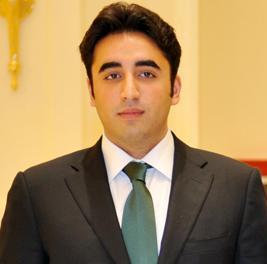
Bilalwal Bhutto Zardari, Chairman Pakistan Peoples Party has extended Eid-ul-Azha greetings to Pakistani and entire Muslim world and urged for truly following the concept of sacrifice.
Bilawal Bhutto Zardari said that Eid-ul-Azha reminds us the religious and moral duty to share our God- gifted blessings with the have-nots and poor in neighborhood.
PPP Chairman also asked the party workers to celebrate the Eid joys with their fellow countrymen to strengthen brotherhood and harmony among the people.
He also stressed upon the countrymen to keep the martyrs of Peshawar incidents and IDPs of FATA in their prayers.
https://mediacellppp.wordpress.com/2015/09/24/chairman-ppp-extended-eid-ul-azha-greetings-to-pakistani-and-entire-muslim-world/
Pakistan - PPP asks why FIA, NAB still inactive on the biggest Nandipur scam

Pakistan People’s Party (PPP) MNAs Aftab Shaban Mirani and Sardar Kamal Khan Chaang said the lack of action against those involved in massive scale corruption in Nandipur Power Project is raising fingers of impartiality of the national action plan. The political parties, both smaller and bigger and the media have all exposed the massive corruption in this power project but still they are waiting to see the FIA and NAB in action.
In a statement issued from the PPP Media Cell Sindh, they said it is not known as why the FIA and NAB are so brisk in their actions against alleged corruption in smaller provinces especially Sindh province while violating the provincial autonomy. The Nandipur Power Project has now become the biggest scam as of today but the federal agencies are reluctant on taking any action.
They said the Punjab Chief Minister Mian Shahbaz Sharif had promised to the nation that the menace of load shedding would be overcome in 6 months, 1 year and lastly in 3 years but none of his commitments are yet fulfilled.
They said the Nandipur Power Project corruption case is not just a case of corruption but it is a case of deceiving the nation, looting the public exchequer and depriving the people of their right of getting electricity despite a huge money amounting to Rs.87 billion has so far been wasted.
They said it was the public money that the PMLN has spent on Nandipur Power Project but not a single unit of electricity is yet produced. It is a clear manifest of inefficiency of PMLN’s Punjab and federal governments that they appointed blue-eyed and posted them on key posts while ignoring that they did not have any professional expertise for running power projects.
In a statement issued from the PPP Media Cell Sindh, they said it is not known as why the FIA and NAB are so brisk in their actions against alleged corruption in smaller provinces especially Sindh province while violating the provincial autonomy. The Nandipur Power Project has now become the biggest scam as of today but the federal agencies are reluctant on taking any action.
They said the Punjab Chief Minister Mian Shahbaz Sharif had promised to the nation that the menace of load shedding would be overcome in 6 months, 1 year and lastly in 3 years but none of his commitments are yet fulfilled.
They said the Nandipur Power Project corruption case is not just a case of corruption but it is a case of deceiving the nation, looting the public exchequer and depriving the people of their right of getting electricity despite a huge money amounting to Rs.87 billion has so far been wasted.
They said it was the public money that the PMLN has spent on Nandipur Power Project but not a single unit of electricity is yet produced. It is a clear manifest of inefficiency of PMLN’s Punjab and federal governments that they appointed blue-eyed and posted them on key posts while ignoring that they did not have any professional expertise for running power projects.
کراچی: پاکستان پیپلزپارٹی کے اراکین قومی اسمبلی آفتاب شعبان میرانی اور سردار کمال خان چانگ نے کہا ہے کہ نندی پور پاور پراجیکٹ میں ہونے والی اربوں روپے کی کرپشن کے خلاف تمام چھوٹی و بڑی سیاسی جماعتوں ، غیر جانبدار تجزیہ نگاروں اور میڈیا کی جانب سے بھرپور نشاندہی کے باجود تا حال کسی بھی وفاقی ایجنسی بشمول ایف آئی اے یا نیب نے کوئی کاروائی شروع نہیں کی جبکہ مذکورہ وفاقی ادارے دھڑلے اور برق رفتاری سے صوبائی خود مختاری کے خلاف چھوٹے صوبے بالخصوص سندھ میں کاروائیاں کر رہے ہیں۔ انہوں نے کہا کہ وزیر اعلیٰ پنجاب میاں شہباز شریف نے پہلے چھ ماہ پھر ایک سال اور پھر تین سال میں ملک سے لوڈ شیڈنگ ختم کرنے کا قوم سے وعدہ کیا لیکن ان کا ایک بھی وعدہ وفا نہ ہوسکا۔ پی پی پی میڈیا سیل سندھ سے جاری کردہ بیان میں انہوں نے کہا کہ نندی پور پاور پراجیکٹ صرف کرپشن کا ہی کیس نہیں ہے بلکہ یہ ملکی معیشت اور قومی خزانہ پر دن دھاڑے ڈاکہ مارے جانے کے مترادف ہے۔ اس پراجیکٹ سے 87 ارب روپے خرچ ہونے کے باوجود ایک میگاواٹ بجلی بھی پیدا نہیں کی حکومت نے ایسے من پسند افراد کو اعلیٰ عہدوں پر فائز کیا جن کا اس شعبے میں سرے سے کوئی تجربہ ہی نہیں تھا ۔ انہوں نے کہا کہ نندی پور پاور پراجیکٹ میں کی جانے والی کرپشن کے خلاف اب تک کسی کاروائی کا شروع نہ کیا جانانیشنل ایکشن پلان پر سوالیہ نشان اٹھارہا ہے
Wednesday, September 23, 2015
Why Is Saudi Arabia Heading a UN Human Rights Council Panel?

In a normal world, Saudi Arabia would be arraigned for its appalling human rights record, not appointed to head an important panel at the international human rights monitor. And yet, it was revealed Monday that over the summer Saudi Arabia was appointed to a panel at the UN Human Rights Council (UNHRC) that would interview and short-list experts, from among whom successful candidates would then be nominated to examine specific human rights challenges. These challenges may include the human rights record of a particular country or a specific theme, and those themes can include violence against women, the rights of migrants, religious freedom, or sexual orientation.

The hypocrisy behind this decision need hardly be stated. The Saudi government is unelected and run by one large family, or clan. Not only does it have the death penalty on its statute, it executes prisoners with particular relish, turning their executions into a public spectacle. Torture is routine in its prisons and offenders of certain crimes are flogged in public. The denial of the right to drive is among the least of the abuses women suffer in the country. Foreigners who live in Saudi Arabia—be they well-paid expatriates or construction workers living in slavery-like conditions—have to be on the guard constantly so that they don’t fall foul of its laws that violate the norms of free and fair trials. Its vast wealth is used to acquire weapons at home and finance fundamentalist movements abroad which cause havoc in distant societies, transforming native forms of Islam into Wahhabism which bears little relation to the universal declaration of human rights.
Hillel Neuer, executive director at UN Watch, which tracks some of the grander absurdities of the UNHRC, called Saudi Arabia’s appointment “scandalous” because it “has beheaded more people this year than ISIS.” Ensaf Haidar, whose husband Raif Badawi has been sentenced to 1,000 lashes for blogging about free speech in Saudi Arabia, said the appointment would in effect give “a green light to start flogging [Badawi] again.” Others have blamed the power of oil wealth—“oil continues to trump basic human rights principles,” Neuer added, according to reports.
Given Saudi Arabia’s record, the rage is understandable—it would get to recommend experts who may not be experts, or whose understanding of human rights is at variance with the vast majority of those who care for human rights.
But the global fury is directed at the wrong target. Agnes Callamard, director of Columbia University’s Global Freedom of Expression and Information initiative (disclosure: I am part of its team of experts), told The Daily Beast: “What has happened is that Saudi Arabia is now a member of the advisory committee that produces recommendations to the president of the Human Rights Council who makes final decisions regarding the appointing of mandate holders. The composition of the advisory group is five representatives from all regions. It is a rotation within regions, so nobody appoints anybody. The real problem is that Saudi Arabia was appointed to the Human Rights Council and its being a member of the advisory committee is just a logical consequence. And the UN is not responsible for the appointment in any way.”
What has given rise to such ire is Saudi Arabia’s appointment to the UNHRC’s consultative group. This group is made up of five members, one from each of the five regional groups recognized by the United Nations. This group interviews and recommends candidates for dozens of experts, called “special rapporteurs” or “independent experts” whose job it is to examine specific human rights challenges and make non-binding recommendations to the human rights council. The recommendations are not binding.
These appointments represent important work; the mandates help set the norms about how the world can enhance respect for, and protection and fulfillment of human rights, and how that should be at the core of every action. But changes are gradual. A special rapporteur on violence against women, for example, may produce path-breaking research and offer advice on how states can stop that, but states are under no legal obligations to implement those recommendations. If a special rapporteur criticizes a particular country’s conduct against minorities, the country can brazen it out—it can even deny the rapporteur the right to visit the country to undertake investigations. As important the mandates are, they are toothless. And that is because the member-states want it that way, just as it is the member-states which want Saudi Arabia to be in the consultative group and in the UNHRC.
Within the Council, Saudi Arabia is part of the Asian group, and as per standard UN practice, the groups nominate their representatives, usually by rotation and by consensus. According to reports, the other current members of the consultative group are Algeria, Chile, Lithuania, and Greece. These countries are drawn from 47 members of the UNHRC, who are elected according to their regions, and the regions represent Cold War-era thinking and geopolitics—13 from Africa, 13 from Asia, six from Eastern Europe, eight from Latin America and the Caribbean, and seven from Western Europe and other countries.
While the UN General Assembly is expected to consider the candidate states’ contribution towards promoting and protecting human rights as well as their commitments to uphold international human rights standards, it is clear that realpolitik prevails. Current members include countries with a poor human rights record, including China. It also includes the United States, the United Kingdom, France, the Netherlands, and Japan, but it is nobody’s case that these Western states have a perfect record on human rights, nor have they necessarily ratified most human rights instruments, such as covenants and conventions that form the body of human rights laws.
By all means the international community needs to take a long and hard look at how it elects members to the UNHRC. By all means that process needs serious reform. Indeed, countries with a poor human rights record should not be part of such a council. And, indeed, there should be clear criteria to determine whose record is worse than others’, and countries that are politically strong should not get a free pass, and countries that are convenient to dislike are not excluded. Those are far bigger issues, and far more significant concerns, than arguing whether Saudi Arabia should be the temporary chair of an advisory panel, whose recommendations would simply be that—recommendations.
The Guardian view on Yemen: remember the forgotten war

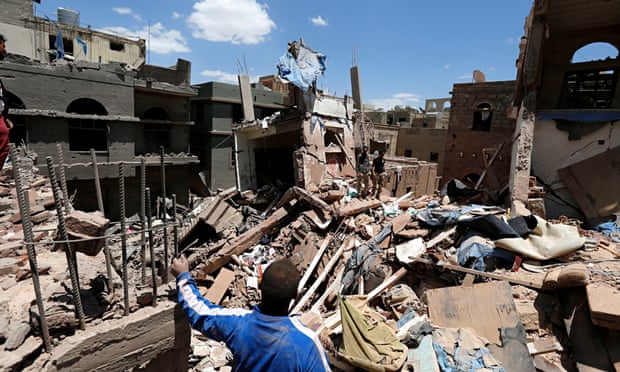
While so much international attention is again focused on Syria because of the refugee crisis in Europe, another less noticed war, less commented on, yet equally vicious, especially for the civilians who bear its brunt, continues to tear at the Middle East. Yemen’s humanitarian catastrophe shows no sign of relenting. Yet it generates only a fraction of the attention focused on Syria.
The Yemen war is a conflict in which a Saudi-led coalition of Sunni Arab states has, since March, launched an all-out air campaign against the Iranian-backed Houthi armed groups who seized the capital Sana’a a year ago. Saudi Arabia’s stated objective is to roll back the Shia Houthis and reinstate Yemen’s president, Abdu Mansour Hadi, who fled last year as the insurgency gained ground. Saudi methods have been dismally indifferent to the plight of civilians. The indiscriminate targeting of populated areas has become routine. Bombs and shells have been fired at hospitals, schools, factories and refugee camps. The death toll has reached 4,500 in six months. According to the United Nations, 80% of Yemen’s 25 million population is on the brink of famine.
Nor are there signs of improvement. Indeed the indications are that things could soon get worse, as the Sunni coalition and Hadi loyalists are preparing a ground offensive on Sana’a. This is certain to be a disaster for a population that already faces food and medicine shortages, as well as drastic water cuts. Diplomatic efforts again falteredon Sunday when the possibility of peace talks, tentatively set for this week, suddenly collapsed after factions loyal to Mr Hadi announced they would not take part until the Houthi side recognised a UN resolution in support of the deposed leader.
Yemen’s history has always been marked by tribal and religious tensions, and the Houthi insurgency has been going on for some years. However, the heart of the current chaos and misery is the larger reality that Saudi Arabia and Iran have both made Yemen a testing ground for their regional strategic rivalry, against a backdrop in which the United States, the major supplier of arms to the Saudis, is simultaneously attempting a significant thaw in relations with Iran. All the Gulf states except Oman have joined the Sunni military coalition in recent months, yet the US has largely turned a blind eye to the war crimes being committed. Its priority is to allay Sunni fears that the old alliances could be compromised after the nuclear deal was reached with Iran.
Yet America’s balancing act may fail. The security vacuum created in Yemen, and the radicalisation that the conflict has accentuated, have opened up more space for al-Qaida-affiliated groups. Recent US drone strikes underline that what is happening in Yemen is military escalation, not stabilisation. A negotiated settlement is long overdue, but it will only happen if strong international pressure, including from the US, is exerted on the Saudis. If even more instability is to be prevented on the Arabian peninsula, there must be a preparedness to name, shame and restrain those who are conducting atrocities against civilians in Yemen. Current western complacency and silence will only bring more chaos and strife.
Red Cross president: 'Yemen after 5 months looks like Syria after 5 years'

"Yemen after five months looks like Syria after five years," the head of the international Red Cross says, describing the devastation from a conflict that has left more than 1,900 people dead since March.
Peter Maurer, fresh off a trip to the war-torn country in the Arabian Peninsula, said entrenched poverty, months of intensified warfare and limits on imports because of an international embargo have contributed to "catastrophic" conditions in Yemen.
"The firepower with which this war is fought on the ground and in the air is causing more suffering than in other societies which are stronger and where infrastructures are better off and people are wealthier and have reserves and can escape," Maurer told The Associated Press at his office in the headquarters of the International Committee for the Red Cross.
"The images I have from Sanaa and Aden remind of what I have seen in Syria," the Swiss-born ICRC president said. "So Yemen after five months looks like Syria after five years."
The conflict that escalated on March 26 pits Shiite rebels known as Houthis and troops loyal to former President Ali Abdullah Saleh against southern separatists, local and tribal militias, Sunni Islamic militants and troops loyal to President Abed Rabbo Mansour Hadi, who is in exile in Saudi Arabia. The Saudis are leading a U.S.-backed Arab coalition that is carrying out airstrikes against Houthi forces.
The U.N. Office of the High Commissioner for Human Rights said Tuesday that at least 1,950 civilians have been killed in the fighting.
Backed by the Red Cross' reputation for neutrality, Maurer and his delegation had an unusual opportunity to cross front lines in the conflict and assess the aid response. Sanaa, the capital, "is quieter than it has been before" and infrastructure in the port city of Aden appeared able to take in more humanitarian assistance, he said.
"The question is whether it will come," Maurer said, adding that people he had spoken to during the trip last week indicated that recent gains by the southern resistance have "not materialized in a dramatic increase in the influx of goods."
The Red Cross now has four offices and 250 staffers in Yemen — about 50 of them from other countries, making it one of the most active humanitarian aid organizations on hand in the country.
The Soft Bigotry of Ben Carson
Charles M. Blow
The Republican presidential candidate Ben Carson said Sunday on NBC’s “Meet the Press,” “I would not advocate that we put a Muslim in charge of this nation. I absolutely would not agree with that.” At first, he stood by that outrageously prejudiced remark, but after coming under fire from not only Muslim groups but also many conservatives, he soon tried to walk it back, to cushion and to caveat it. On Monday night, he posted a message on Facebook that included this line: “I could never support a candidate for President of the United States that was Muslim and had not renounced the central tenant of Islam: Sharia Law.” Then on Tuesday, at a news conference, Carson said, “It has nothing to do with being a Muslim.” He continued: “That was the question that was specifically asked. If the question had been asked about a Christian and they said, ‘Would you support a Christian who supports establishing a theocracy?’ I would have said no.” Only his original comment was unambiguous: It had everything to do with being a Muslim. And it was bigoted.But this isn’t Carson’s first time at this rodeo. This has become his modus operandi. Carson has a way of speaking in a flat, sing-song-y tone while flashing his toothy, 100-watt smile, that can be utterly disarming, if not completely charming. His undeniable pedigree as an acclaimed pediatric neurosurgeon adds an air of gravitas to his nonsensical utterances and provides some cover for what can be poisonously harmful, over-the-line invectives. Carson says in low register what others shout in anger, and he gets a bit of a pass because of the discordant message and method of delivery. Just because a person is soft-spoken doesn’t mean that he is well-spoken. Since Carson used his 2013 speech at the National Prayer Breakfast to criticize President Obama’s policies to his face, he has been lionized in conservative quarters.Since then, Carson’s rhetoric has seemed to get only more reckless. He has called Obama a psychopath and a liar. He has compared Obama’s supporters to Nazi sympathizers. He has said that Obamacare is the “worst thing that has happened in this nation since slavery,” even worse than the terrorist attacks on 9/11. He has asserted that being gay is “absolutely” a choice as evidenced by people who “go into prison straight — and when they come out, they’re gay.” He later apologized in a statement that read in part: “I do not pretend to know how every individual came to their sexual orientation. I regret that my words to express that concept were hurtful and divisive. For that I apologize unreservedly to all that were offended.” And even when his rhetoric isn’t reckless, it can be wrongheaded. He has used the shallowness of race as a biological construct to disavow and diminish the depth of racism as a very real cultural construct.It’s not that others have not criticized the president before or since, but it was the particularity of the racial imagery of Carson’s critique — one smart, accomplished black man undressing another in public — that gave it particular power. It insulated the attack from racial characterization. He said things from the lips of a black conservative that roiled the minds of white ones. And it represented a prominent breaking of ranks, a slicing off of black solidarity from not only Democratic loyalty but also from fidelity with this president.And he makes the mistake many people do, of using his personal story of success as a societal prescription for all problems. I have always held that working hard and following the rules are their own reward, but I am not naïve enough to believe that personal behavior can completely countervail structural oppression.Carson knows that his outrageous antics in his role as the anti-Obama are a most profitable enterprise. He mixes political critique with Christian theological messaging to rake in quite a bit of money on the lecture circuit. As Politico reported in July, Carson “brought in nearly $2 million delivering inspirational speeches to faith-based groups like Christian high schools and pregnancy centers in 2014,” with speaking fees ranging “from $12,320 to $48,500.”This is a sad turn — spurred, I believe, by profit motive — for such a great legacy.I, like many other African-Americans, had come to see Carson as a hero before his foray into politics because of the resonance of his personal story — a poor inner-city child being raised by a driven single mother who valued education and instilled in him a sense of character that would allow him to become a staggering success.Carson was the embodiment of possibility. His 1990 book, “Gifted Hands,” was required reading for many young people.But as a political figure, his stature is diminished as he reveals himself to be intolerant, bordering on soft bigotry, and also reckless and needlessly inflammatory. No one can discount what Carson accomplished professionally, but those accomplishments must now stand shoulder to shoulder with this new persona: whisper-soft purveyor of hyperbolic hucksterism.
#NYT - EDITORIAL - The Republican Attack on Muslims
The Republican presidential candidate Ben Carson is drawing criticism over the bigoted comments he has been making recently about Muslims. It is well deserved, and is not a matter of “P.C. culture,” as Mr. Carson has claimed. Nor does Mr. Carson represent some minor fringe element in the Republican Party.
This latest sordid mess to arise from the G.O.P. nomination contest touches on bedrock American values, constitutional principles and American history. It reflects a pernicious habit among the leaders of the Republican Party to play with fire by pandering to an angry, disaffected and heavily white base by demonizing selected minorities. Muslims are just the current target.
Mr. Carson declared Sunday on ”Meet the Press” that Muslims are unfit to run for president because a president’s faith should be “consistent with the Constitution.” Later, he told the newspaper The Hill that Islamic Shariah law isn’t consistent with the Constitution because “Muslims feel that their religion is very much a part of your public life and what you do as a public official, and that’s inconsistent with our principles and our Constitution.”
Leave aside for a moment the unintentionally funny spectacle of a member of the current Republican Party declaring that religion should be kept out of public life, and that Mr. Carson, as an African-American, is a member of a much belittled minority. The freedom of religion embedded in the First Amendment rules out the very idea of a religious test for public office, as John F. Kennedy so eloquently argued and then proved by becoming the first Catholic president.
As for Shariah law, Catholicism has canon law and Judaism has the Halakha and nobody is painting them as threats to the republic — at least not this year.
Following Mr. Carson’s comments, some Republicans tried to suggest that anti-Muslim feelings existed only in parts of the party’s grass-roots base. Some argued that former President George W. Bush drew a line between the country’s antiterrorism efforts after 9/11 and a broader campaign against Muslims. “We’ve worked so hard to try to make it clear that that isn’t the case,” said Tony Fratto, who was a press aide to Mr. Bush. “But each time somebody does this kind of thing, it makes it harder.”
But Mr. Carson is hardly alone in his demagogy. Donald Trump has accused President Obama of being foreign born, and is continuing to stoke suspicions that Mr. Obama is a Muslim — a myth that a disturbing number of Republicans believe. Last week, Mr. Trump welcomed a question from a man who asserted “we have a problem in this country, it’s called Muslims,” that “our current president is one,” and the man asked “when can we get rid of them?” Instead of telling the truth, that Mr. Obama is an American-born Christian, Mr. Trump said, “We’re going to be looking at that and plenty of other things.”Senators Ted Cruz of Texas and Lindsey Graham of South Carolina publicly disagreed with Mr. Carson, but neither truly matters in the campaign or the party. Other Republican hopefuls — Governors Chris Christie of New Jersey and John Kasich of Ohio, and Jeb Bush at least deigned to acknowledge that Mr. Obama is American and is not Muslim. But these efforts have been tepid, at best, because the Republicans are playing to polls that show support for Muslims ranks far below other religious groups among Republicans and Republican-leaning voters. The phenomenon isn’t new. Claims that Mr. Obama was not a citizen and was a Muslim dogged him since 2008, fanned by people like Mr. Trump. Even in 2012, Republicans did not forthrightly deny the lie. Rick Santorum, for example, grudgingly said, Well, if Mr. Obama says he’s a Christian, then I have to take him at his word.” Running in 2008, Senator John McCain, at least, shook his head and said “No, Ma’am” when a voter called Mr. Obama an Arab and said he was a “decent family man, citizen. Former President Bush sometimes said the right things about fighting extremism, not Islam, but instituted a system of detention, torture and trial that applies only to Muslims. Anti-Muslim sentiment is playing out in the refugee crisis caused by hundreds of thousands of people, mostly Muslims, fleeing wars in the Middle East. The United States recently agreed to take an additional 30,000 refugees per year by 2017, but some conservatives are objecting, claiming they will provide a recruiting pool for radicals. Closing the country’s doors to Muslims would buy into Mr. Carson and Mr. Trump’s vilification and dishonor the thousands of Muslims who have joined Irish, Italians, Germans, French, Jews, Russians, Latinos, Africans and many others in becoming honorable citizens and perhaps, one day, president.
Hillary Clinton calls for Canada-U.S.-Mexico climate change plan


Hillary Clinton has released a policy paper that calls for a wide-ranging, co-ordinated Canada-U.S.-Mexico climate-change plan one day afterannouncing her opposition to the Keystone XL pipeline.
The position paper from the presidential contender added a new wrinkle Wednesday to an issue that has already inserted itself in two national elections — the current Canadian one, and the 2016 U.S. presidential race.
Clinton wants to follow up her opposition to Keystone with a more ambitious climate program that includes immediately launching negotiations toward what she's called the North American Climate Compact.
It's the first time a prominent U.S. politician has explicitly linked the pipeline issue to more action on climate change from Canada — something President Barack Obama has never done.
'I am announcing a comprehensive strategy to modernize American energy infrastructure and forge a new partnership with Canada and Mexico to combat climate change across the continent'- Hillary Rodham Clinton
It's also a significantly more aggressive plan that the current continental working group on climate change which aims to upgrade infrastructure but does not set out firm greenhouse-gas targets.
"Building a clean, secure, and affordable North American energy future is bigger than Keystone XL or any other single project. That's what I will focus on as president," said the Clinton paper.
"That's why today I am announcing a comprehensive strategy to modernize American energy infrastructure and forge a new partnership with Canada and Mexico to combat climate change across the continent...
"As president, I will immediately launch negotiations with Canada and Mexico to forge a North American Climate Compact."
Wants strong targets and accountability
Clinton says she would seek strong national targets to cut carbon pollution; ensure all three countries demonstrate a commitment to climate action; and create accountability measures to make sure each country respects its commitments.
Other parts of the paper mention speeding up ongoing safety upgrades to rail tanker cars that carry oil, new regulations for pipeline safety, and repairing older, leak-prone pipelines.
The paper comes one day after she stunned allies of the Keystone project by announcing opposition to a pipeline she'd once said she was inclined to support, and she called Canadian oil the continent's dirtiest fuel.
That announcement instantly became a 2016 U.S. election issue, as Republicans pounced on her. In Canada, the governing Conservatives issued a cautious statement defending the project while the Liberals and NDP jumped into it.
The Liberals support the Alberta-to-Texas pipeline and blame its delays on the Harper government's inaction on climate change. The NDP opposes it, on the grounds that it would ship refining jobs to the U.S.
How the U.S. Wasted Billions of Dollars Rebuilding Afghanistan

As the Obama administration plans to finally close the book on the long and tragic U.S. military presence in Afghanistan by December 2016, we’re beginning to see tallies of the amount of American blood and treasure expended there over the past 14 years.
“The plot that led to the murder of 2,977 people on Sept. 11, 2001, originated in Afghanistan,” Rep. Mac Thornberry (R-TX), the chair of the House Armed Services Committee, recently wrote in The Washington Post. “Since then, more than 2,350 U.S. service members have sacrificed their lives in Afghanistan to help ensure that no more innocent Americans are victims of such savagery.”
Thornberry was arguing that the U.S. and allied forces should keep a significant residual force in place beyond next year, to preserve hard-won gains against the Taliban and back up the new government of President Ashraf Ghani. But on Tuesday, Special Inspector General John F. Sopko, the government’s watchdog over U.S. spending in Afghanistan, provided a troubling reminder of the vast sums of taxpayer dollars wasted on reconstruction efforts during America’s longest war.
Sopko has spent years documenting waste, fraud and abuse in the U.S. military’s efforts to rebuild war-torn Afghanistan. To put it in some perspective, he said, the U.S. has spent $110 billion on reconstruction projects in Afghanistan. When adjusted for inflation, that total exceeds the value of the entire Marshall Plan effort to rebuild Western Europe after World War II.
“Even now, 14 years on and with the U.S. military presence much diminished, nearly $12 billion more in reconstruction funds wait in the financial pipeline, appropriated but not yet spent,” he said. “The United States and our allies have pledged billions more for years to come.”
Over the past four year, Sopko’s independent government organization has issued 136 reports that contained nearly 400 recommendations and identified over $1 billion of potential savings. In addition, SIGAR's investigations unit has conducted 538 investigations that resulted in 73 arrests, 69 convictions or guilty pleas, and savings of over $500 million.
But progress has been limited. And despite frequent warnings from SIGAR, officials have moved ahead with projects that led to “massive U.S.-sponsored failures,” including:
More than $8 billion in spending on counter-narcotics efforts in Afghanistan that have “failed by every conceivable metric.
The purchase of nearly $500 million worth of airplanes that never could fly and had to be turned into scrap.
Construction of a building that literally began to melt when it rained.
A $500,000 health clinic that lacked water and electricity. Newborn babies had to be washed in a nearby river.
Beyond the massive waste of U.S. funds and personnel in trying to rebuild the war-torn country, the failed U.S. efforts to try to discourage Afghanistan’s production of poppies used in the manufacture of heroin has had serious social and financial repercussions in the United States and Europe.
Last year, Sopko reported that despite $7.6 billion of counter-narcotics efforts over the past ten years, illegal opium poppy cultivation was at a record high in Afghanistan. This has helped fuel a heroin epidemic in the United States that has drawn the attention of Democratic presidential candidate Hillary Rodham Clinton and other prominent politicians.
“In past years, surges in opium poppy cultivation have been met by a coordinated response from the U.S. government and coalition partners, which has led to a temporary decline in levels of opium production,” Sopko wrote at the time. “However, the recent record-high level of poppy cultivation calls into question the long-term effectiveness and sustainability of those prior efforts.”
Sopko said Tuesday that there has been no improvement in the situation and that the heroin crisis is bedeviling Great Britain and other European countries as well as the U.S. “Afghanistan’s problems extend far beyond its borders and we ignore them at our peril,” he said. “Afghan heroin floods the streets of European cities and Afghan refugees are estimated to make up the third largest group crossing European borders.”
In conclusion, he said that the mission to reconstruct Afghanistan remains critical – for both humanitarian and national-security reasons. And with $12 billion of spending by U.S. agencies still in the pipeline, “There is both a necessity and urgency to improve the effectiveness of our efforts, and the time to finally making lasting difference in the outcome.”
“However, we should not kid ourselves about Afghanistan,” he said. “It will continue to be a long struggle. Defeating a determined insurgency, improving health and education, altering attitudes toward women, reducing corruption, and building government competence are not casual, short-term undertakings.”
Subscribe to:
Posts (Atom)