Tuesday, August 18, 2015
Chairman Pakistan Peoples Party Bilawal Bhutto has condemned the murderous attack on MQM MNA Rashid Godil in Karachi.
Chairman Pakistan Peoples Party Bilawal Bhutto Zardari, has condemned the murderous attack on MQM MNA Rashid Godil in Karachi.Bilawal Bhutto Zardari, Chairman Pakistan Peoples Party has condemned the murderous attack on MQM MNA Rashid Godil in Karachi.PPP Chairman prayed for early recovery of Rashid Godil and called upon authorities to rein in the attackers and bring them to book.
PPP leader’s abducted son recovered in tribal belt

The youngest son of former MNA and Pakistan People’s Party leader Akhundzada Chatan who was kidnapped on Monday has been recovered ,said political administration on Tuesday.
According to reports, 10-year-old Syed Hussain Shah was kidnapped when he was leaving for school in Bajaur area of the country’s tribal belt.
Hussain Shah was recovered after security forces launched a search operation with strict snap checking shortly after he was whisked away by the unknown kidnappers.
Heroin and Extremism in Pakistan

BY
Pakistan's drug addiction, which kills 700 people daily, is bankrolling terrorists. This nexus cannot be overlooked.Terrorism is often thought of as the greatest threat facing Pakistan; however, the biggest danger is something that gets much less attention yet is much more deadly: drugs.
Everyday 700 people die from drug addiction in Pakistan, an ongoing death toll much greater than terrorism, which kills 39 people a day.
And yet terrorism cannot be discounted in this sordid story.
But first, some context is in order. Afghan opium production, already the highest in the world, has recently risen to record levels and accounts for 85 percent of the world’s opium. This booming industry makes the AfPak region extremely vulnerable to illegal smuggling and crime and provides easy access to a dangerous drug, contributing to the staggering numbers of deaths in Pakistan. And perhaps worse, the Afghan Taliban has become a “drug mafia,” using opium and heroin production to finance their operation.
Yet few are aware of the deadly nexus between the illicit drug trade and terrorism in Pakistan. Pakistan’s Chief of Army Staff General Raheel Sharif highlighted this dangerous nexus just last week and vowed to break it. Interior Minister Chaudhry Nisar Khan has consistently recognized the link between drugs and terrorism in Pakistan and has stressed the need to eliminate drug-funded terrorism from the country. Despite this, many of Pakistan’s own leaders don’t believe that drugs and terrorism are connected. Some within the Anti Narcotics Force (ANF) — its anti-drug agency — and government ministries have outright denied that the Afghan drug trade funds terrorism even in the face of ample evidence. On May 6, Ghalib Bandesha of the Narcotics Control Division stated that the ANF could not find any evidence of drug-funded terrorism. In 2014, a senior ANF officialsaid that Tehrik-e-Taliban Pakistan (TTP) is not getting any financial support from the Afghan Taliban, effectively denying that Afghan Taliban drug money is funneled to Pakistan. Senator Tahir Mashadi said that it was the CIA that was using drug money to finance TTP. Even Major General Zafar Iqbal, the Director of the ANF, said that drug smuggling cannot be leveled against al Qaeda, the Taliban, or any other specific militant or terrorist group.
There should be no dispute that Pakistan has a serious drug problem. A June 2015 report by the U.N. Office on Drugs and Crime (UNODC) reveals that Pakistan faces a tremendous challenge in dealing with opiate trafficking from Afghanistan. While Pakistan has considerably developed and improved its international counter-narcotics cooperation through the commendable efforts of the ANF, it cannot escape the fact that it is in a geographically vulnerable position — next to Afghanistan. Recent statistics present a shocking picture. The UNODC report concludes that 45 percent of Afghanistan’s opiates are trafficked through Pakistan giving Pakistan’s 6.7 million drug users easy access. The rise in drug cultivation, trafficking, smuggling, and addiction signifies that the narcotics problem in Pakistan is only worsening.
“Drugs” and “terrorism” are not always readily linked, but evidence suggests an inextricable link that poses a hidden, imminent threat for an already fragile Pakistan. There has been much discussion of the Afghan Taliban using the drug trade as a source of funding. In fact, mafia and terroristsreceive $70 billion from narcotics in Afghanistan, $2 billion of which goes to TTP, the Taliban in Pakistan. Profits of that magnitude are significant considering drug busts are on the rise. Recently, 232 packages of heroin worth an estimated $92 million were seized on a Pakistani boat off the coast of India.
According to U.S. officials, there is “logical evidence” that TTP supports, and profits from, the flow of drugs through its territory. In fact, the drug trade is the Taliban’s single biggest stream of revenue. By negotiating with drug smugglers and placing taxes on narcotics at the border, the Taliban receive a part of the profit without having to manufacture or transport the drugs themselves. In 2009 alone, the Taliban’s estimated annual income from the drug trade was between $100-300 million. While the Taliban advocate for sharia law and prohibit drug use, they may justify their role in the drug trade as “narco-jihad” against the West — the opium is consumed by kafirs (non-believers) in the West and has a destructive impact on them.
And the connections that the Taliban has to criminal organizations and gangs in Karachi — Pakistan’s hub of crime — drugs and terrorism cannot be trivialized. Billions of rupees from criminal “black money” networks are used to promote terrorism.
One known narco-terrorist is Imam Bheel from Makran, Balochistan. Bheel — believed to be a key gatekeeper in the heroin supply chain — was designatedan international narcotics kingpin by President Obama in 2008. Despite his widely-known background as a drug lord and even after murdering Abdul Rehman Dashti, a prominent public servant, law enforcement has done nothing to stop him. Perhaps his lack of prosecution is due to corruption or his eldest son’s membership to the National Assembly. No matter what the reason, this is demonstrative of how the intertwined drug and crime worlds pose a threat to Pakistan. A Reuters Special Report explains the narco-terror nexus further: “The [Dashti] murder case opens a window into an insidious threat to Pakistan itself: a flood of drug money that taints politics, corrupts officials and swells a vast illicit economy.”
The links between narcotics and terrorism are quite evident in the war between the Pakistani state and Baloch separatists. In Balochistan, the province with the highest number of users and where over half of Pakistan’s heroin seizures occur, violence is a regular occurrence. Balochis accuseauthorities of using drug lords to kidnap and murder separatists; Pakistani security forces deny any connection to drug smugglers.
The stakes are high. Pakistan cannot afford to be unresponsive as the narco-terror nexus deepens. It cannot overlook its drug criminals despite the many connections they may have to the government. It would only lose the credibility it has built to counter narcotics and facilitate not only regional but also international cooperation against narco-terrorism. As drug production is increasing, drug addiction and narcotics-funded terrorism pose serious threats that are deteriorating society. And before it is too late, the government must take steps to not only reveal the link between these two deadly threats but prosecute drug criminals and end their own underlying corruption.
Pakistan Doesn't Want a Total Taliban Breakdown

As the creator, supporter and host of the Afghan Taliban, Pakistan has the leverage to prevent the Taliban's further break up and disarray due to the confirmation of the spiritual head of the movement Mullah Omar's death. While the Afghan government viewed the dissent in the Taliban's rank as good news, Pakistan is worried that the breakup will lead to the weakening of their strong card in the Afghan conflict game. Not wasting any precious time, Pakistan is busily involved in trying to reconcile the different factions of the Taliban post-Mullah Omar and rally the disenchanted under a unified leader. Needless to say, that leader will have to have close ties with the Pakistanis to insure their continued role in the ever precarious struggle for Afghanistan to become a viable nation state.
The questions surrounding the death of Mullah Omar, why it was kept a secret, and the role of the current leader Mullah Akhtar Mansoor have created a major turmoil within the rank and file Taliban. Pakistan is desperately trying to contain the situation from further deterioration. According to the Afghan government, the latest rash of bombings in Kabul was directed by the Pakistani intelligence agency the ISI. The aim, according to Hasib Sidiqi (the spokesman for the Afghan intelligence organization the National Directorate for Security (NDS) was to show that the Taliban are still capable of mounting serious security challenges for the Afghan government. Additionally, they wanted to dispel any notion that the Taliban have weakened as a result of internal divisions following the death of their leader Omar.
The Afghan government has directly accused Pakistan of being complicit in the latest bombings which hit the heart of Kabul. Hasib Sidiqi said that the type of explosivesused in the bombings were more sophisticated than usual, a type which only countries like Pakistan possess. The usual improvised explosive devices, vehicle borne or otherwise, used by the insurgency employ ammonium nitrate as the explosive material. Ammonium nitrate which is also used as fertilizer in the agriculture industry is produced in Pakistan and widely available. Although these devices are crude, they have been used with devastating effect since 2006. The majority of the victims are civilians, women and children. The United Nations just announced that the current year was especially lethal for the Afghan women and children.
The latest developments are a testimony to the complex and convoluted nature of the Afghanistan conflict with its own citizens and its neighbor to the south and east. Therefore, in my opinion, there does not seem to be an end to the carnage at least in the short term. It is particularly discouraging and embarrassing to the Afghan President Ashraf Ghani who spent considerable political capital courting Pakistan since he took office last October. It has been almost a year since he ascended to the Afghan presidency, but he does not have much to show for it. Mr. Ghani was adamant about the rapprochement with Pakistan over the objections of many Afghans including his national unity government partners who do not trust the Pakistanis based on the long history and past experience. Mr. Ghani, unlike his predecessor, Mr. Karzai, was very measured in criticizing Pakistan since coming to office last year. However, the latest bombings and lack of any tangible progress on Pakistan's part to rein in the Taliban recently pushed Mr. Ghani over the edge. In a reversal of his hitherto favorable stance, he directly blamed Pakistan for being duplicitous and a supporter of terrorism.
From Afghanistan's perspective the way forward with respect to its relationship with Pakistan is very simple. Pakistan can arrest the Taliban leadership, cut off funding to them and close down the Taliban's safe havens in Pakistan. The Taliban's spring and summer offensive culminating with the latest bombings in Kabul could have been stopped by Pakistan. The fact that these attacks have continued unabated clearly shows that Pakistan is not interested in a favorable outcome in Afghanistan. Pakistan leaders such as Prime Minister Nawaz Sharif have pronounced their interest in curbing the Taliban and other lethal groups' terror activities, but they have done nothing to back up their words. Pakistan's inaction could therefore force the Ghani regime to adopt a more critical posture relative to Pakistan similar to his predecessor, Hamid Karzai. But Pakistan thus far has not been persuaded to abandon its support for the Taliban regardless of whether the Afghan posture been critical or friendly.
The current Pakistani efforts to maintain the Taliban's cohesion, if successful, will have a considerable effect in what the new Taliban looks like and in the continued bloodshed in Afghanistan.
WHO: Pakistan, Afghanistan Must Step Up Fight Against Polio

Pakistan and Afghanistan must intensify efforts to halt spread of the crippling poliovirus, including better screening of travelers heading abroad, the World Health Organization said on Monday.
The WHO emergency committee of experts warned in a statement that vaccinations of international air travelers in Afghanistan are not being tracked "and no exit screening and restriction of unvaccinated travelers has been implemented at international airports."
"The increasing risk of international spread associated with the ongoing suspension of mass vaccination campaigns in Kandahar province was another major source of concern," the U.N. agency said, referring to Taliban factions that have halted vaccination campaigns.
Pakistan and Afghanistan - the only two countries where the poliovirus remains endemic - have reported 29 and seven cases, respectively, so far this year, against 108 and eight at this time in 2014, WHO spokeswoman Sona Bari said.
The experts, while recognizing progress in Pakistan, said that Afghan and Pakistani residents lacking documentation of recent polio vaccination should be restricted "at the point of departure," whether traveling by road, air or sea.
"The committee recommended that coordination and quality of cross-border vaccination and surveillance activities should be further strengthened to reduce the risk of this international spread. Both countries must achieve interruption of poliovirus transmission simultaneously in order to prevent such international spread from repeatedly setting back progress."
India, which had its last case in 2011, was certified polio-free three years later.
The poliomyelitis virus attacks the nervous system and can cause irreversible paralysis within hours of infection. It often spreads among young children and in areas with poor sanitation.
In Africa, no cases of wild poliovirus have been reported since Somalia on August 11, 2014, Bari said.
Nigeria marked its first year without a single case on July 24, reaching a milestone many experts had thought would elude it as internal conflict hampered the battle against the disease.
Hot spots in the Middle East, the Horn of Africa and central Africa, particularly the Lake Chad region bordering Nigeria, remain vulnerable to polio, the WHO said: "The hard-earned gains can be quickly lost if there is continued disruption of health systems."
Madagascar has had nine cases of vaccine-derived poliovirus this year, against one in 2014, Bari said.
The outbreak stems from a "very rare mutation" of the virus into a paralytic form after passing through the stool of a person who has had the oral vaccine, usually into an environment with low immunity, she said.
Monday, August 17, 2015
The tale of a forgotten hero of the Pakistan movement

The history of Pakistani Christians remains deficient without the services rendered by Singha family being mentioned.
Singha family has the honour of being the first Pakistani family whose three members consecutively became members of Punjab Assembly. S. P. Singha was member of Punjab Assembly followed by his wife Mrs. S.P. Singha and his son D.P. Singha also became members of Punjab Assembly. However, despite an illustrious history in Pakistani politics, this Christian family has completely abandoned politics.
Deewan Bahadur Seeta Parkash Singha was born on 26th April, 1893 in Pusrur, District Sialkot of Punjab. He was born to Rajan Kumar Singha of a Rajput family. S.P. Singha eyed a Pakistan where Quiad’s disciplines were implemented. D.P. Singha proudly boasted of the fact that his father S.P. Singha openly delclared Quaid-e-Azam his leader and fully supported him instead of Hindus during the Pakistan movement. S.P. Singha was one of the inner circle allies of Quaid-e-Azam Muhammad Ali Jinnah.
S.P.Singha received early education from Batala, and afterwards studied at Saint. Stephen College, Delhi. Later on, he went on to study at the F.C. College, Lahore. He acquired Master’s degrees in English and Philosophy. Afterwards he studied LLB. After completion of studies he started working in Punjab University, Lahore as Assistant Controller of Exams in 1919. In 1927, he got promoted to the office of Registrar Punjab University.
S.P. Singha was affiliated with largest political party of Christians in the Indo-Pak namely, All India Christian Association. He was several times nominated as a candidate of the All India Christian Association during elections.
From 1936 till 1949, S.P. Singha remained member of Punjab Assembly as a candidate of All India Christian Association. He has the honour of being the last Speaker of the Punjab Assembly before partition. Moreover, he was the first Speaker of the Punjab Assembly after the creation of Pakistan. However, he passed away on 22nd October, 1949. After the demise of S.P. Singha, his wife, Mrs. S.P. Singha got elected as member of Punjab Assembly in 1951.
In 1939, The British Colonial government awarded him the title of “Deewan Bahadur” as recognition of his valuable services to the Sub-continent. S.P. Singha along with another successful candidate Master Fazal Illahi allied Successful Anglo-Indian Christian member of Punjab Assembly C. Gaban and voted in favour of Pakistan in session of Punjab Assembly on 23rd June, 1947. S.P. Singha was the Speaker of this session pf Punjab Assembly.
With S.P. Singha’s vote in favour of Pakistan, the total count of votes in favour of Pakistan reached 91 against 88 votes in favour of unpartitioned India. Three votes from Christians made Pakistan movement successful and so Pakistan came into being.
On July 25, 1947, S.P. Singha attended the session of Boundary Commission as a representative of Joint Christian Board. During this session, he suggested that Christians should be included with Muslims and all Christian majority areas for example Distirct Sialkot and its suburbs, Narowal and Pasrur should be included within the confines of Pakistan.
At the time of independence, he was also a member of the Peace Council. After the creation of Pakistan, he was a member of Minorities rights committee of Pakistan’s first law-making body.
After the death of Quaid-e-Azam on 11th September 1948, S.P. Singha stated: “Today minorities in Pakistan have become orphans.” His services are seen as great contribution towards creation of Pakistan and towards the well being of Christian community.
- See more at: http://www.christiansinpakistan.com/the-tale-of-a-forgotten-hero-of-the-pakistan-movement/#sthash.xuaDR5gy.dpuf
Pakistan - PPP leaders from KPK called on Chairman Bilawal Bhutto
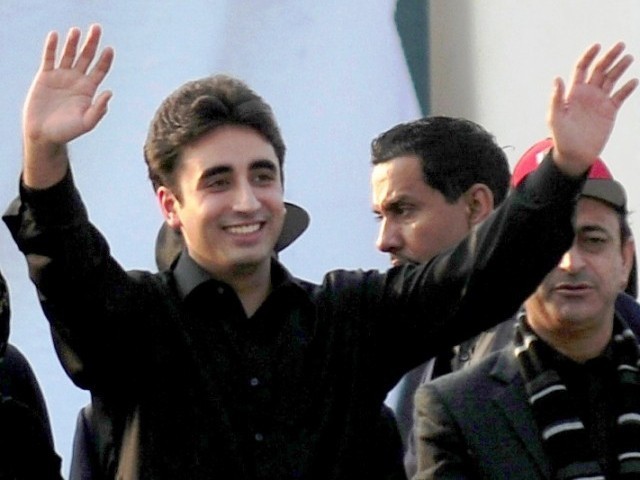
Provincial leaders of Pakistan Peoples Party from Khyber-Pakhtunkhwa called on Pakistan Peoples Party Chairman Bilawal Bhutto Zardari at Bilawal House today. Provincial President Senator Khanzada Khan, former Minister Zahir Shah, Senator Rubina Khalid, Provincial General secretory Humayoon Khan, Information Secretory Liaqat Shabab and Finance secretory Farzand Ali among these leaders.
Vice President PPPP Senator Sherry Rahman and Jameel Soomro were also present on the occasion.
Provincial Leaders from Khyber-Pakhtunkhwa briefed the Chairman about political and law and order situation in Khyber-Pakhtunkhwa and the organizational matters of the province.Bilawal Bhutto zardari inquired the delegation about party performance in recent held local bodies election in KPK.
Talking to KPK leaders, Bilawal Bhutto Zardari said incidents like Attock suicide attack, resulted 20 innocent people killed including home minister of Punjab Shuja Khanzada and kidnapping of school-going son of PPP MNA Akhundzada Chattan press for stronger action to engrave the monster of terrorism by the authorities concerned. Other hand a delegation of PPP district Multan led by President Muhammad Akram Kanhoon also called on Chairman Bilawal Bhutto Zardari at Bilawal house today.
https://mediacellppp.wordpress.com/2015/08/17/ppp-leaders-from-kpk-called-on-chairman-bbhuttozardari/
Pakistan - Chairman PPP Bilawal Bhutto condemns kidnapping of Akhunzada Chattan’s son

In a press statement, Bilawal Bhutto Zardari said that Chattan was target of attacks recently in the area for his strong resistance to the forces of darkness.
PPP Chairman pledged that entire Party stands with Akhundzada Chattan and urged the concerned authorities in the FATA to take action against the kidnappers and safe recovery of the school-going son of the PPP leader.
https://ppppunjab.wordpress.com/2015/08/17/chairman-ppp-bilawal-bhutto-zardari-condemns-the-kidnapping-the-son-of-akhunzada-chattan/
Pakistan - PPP FATA leader's nine-year-old son kidnapped in Bajaur

Pakistan People Party (PPP) central executive committee member and the party’s FATA coordinator Akhunzada Chitan’s nine-year-old son was kidnapped early Monday morning by unidentified persons from outside his home.
Political administration official and Chitan family source confirmed the kidnapping. According to them, the nine-year-old was going to school with his brother, Hasan Ali, when kidnappers came in a car and took him away.
Political administration officials have cordoned off all exit and entry points of the agency and are searching for Chitan’s son.
Former president Asif Zardari has expressed grave concern over the kidnapping and called for early and safe recovery of the boy. Condemning the incident, Zardari said he was gravely concerned about the safety of the boy and demanded Bajaur Agency administration to recover him and bring the culprits to book.
Chitan, PPP MNA from 2008 to 2013 was also a rights activist for FATA rights and outspoken against non-state actors in media.
Earlier in May, Akhunzada Chitan’s convoy came under attack in Manogi Salarzai, Bajaur agency. A former MNA from the agency, Chitan was returning from a party function to the agency headquarter in Khar on Saturday when he suffered the attack.
Bajaur agency political administration confirmed the attack and said that Chitan’s brother, Bakhtzada’s car, was damaged in the blast. After the attack, the political administration launched a search operation and rounded up 23 suspects under FCR.
Punjab law minister Sanaullah Accused

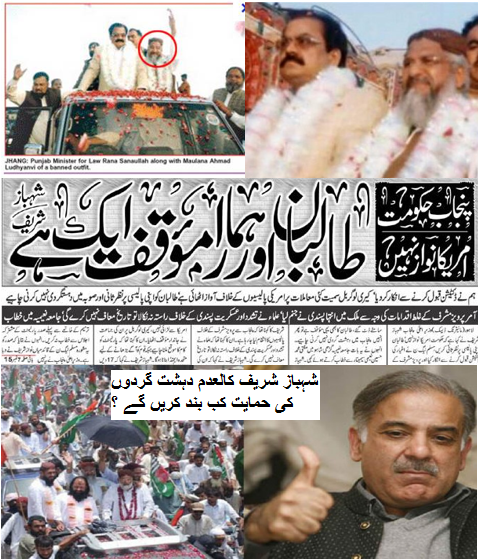 The MQM, of course, is not the only party with skeletons in their closet, but in the case of the PML-N, the skeletons are running out without law enforcement even trying to look for them. About three months after regaining the Punjab law minister’s portfolio after being sacked for the Model Town murders, Rana Sanaullah is entangled in yet another controversy. This time around, a senior leader from his own party has accused him of ‘killing 20 people’.
Chaudhry Sher Ali, father of State Minister of Water and Power Abid Sher Ali, said a man in custody had told police that he had killed 20 people at the behest of an SHO patronised by the law minister. The hit-list also allegedly included Provincial Assembly Members (MPA) Malik Nawaz, Mian Muhammad Tahir Jameel, Irfan Manan, Chaudhry Sher Ali and his Minister son.
Sanaullah in response had said that Ali’s allegations were “nothing but a bundle of lies.” One wonders when the politics of the party will move beyond intimidation and bribery.
The fact is that these are games of power, and public humiliation is an oft-used tactic by these politicians. They will probably solve it internally among themselves and the media will move on to other pressing problems. The police is a pawn in the hands of those in power - something that has been made abundantly clear in the case of the Kasur child abuse cases. It is unlikely that there will be any action or inquiry into Sanaullah’s dealings. If the accusations are true the police is probably complicit and so are many others from the PML-N.
Rana Sahib may or may not have been directly involved in killing of 20 people, as being alleged, but there is no doubt at all about one thing: he always seems to be on the wrong side of the law. His statement that the Kasur child abuse incidents were “baseless” was appalling. Why he is not being (at least) reprimanded by his party seniors? Is he so useful that despite all his misdeeds and mistakes, he cannot be made to practice restraint, in word and in deed? That he is the Punjab Law Minister in the first place is a liberty taken. That he should be so cavalier when giving statements in his position, is even more impetuous.
Sunday, August 16, 2015
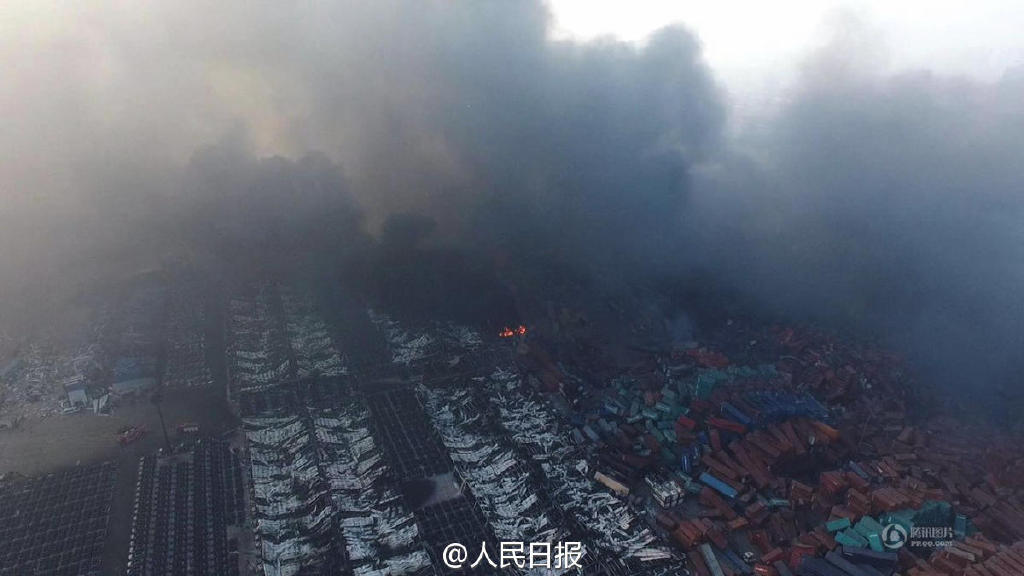
Profound lessons must be learned from Tianjin blasts: Chinese leaders

China - People's Daily slams lack of sincerity in Abe's WWII statement
Russia - Demand for Assad’s removal may bring chaos to Syria, successes to IS

Russian experts do not see any signs of Moscow’s readiness to downscale support for the regime of Syrian President Bashar al-Assad — something that commentators in the West are speculating about. The case in hand is not the salvation of Assad for Assad’s own sake and his fate should not be a top priority at talks with the Syrian opposition, they indicate.
The main thing now is to agree on the country’s future while the destiny of the Syrian leader can be decided later on in line with democratic procedures. And if the sides fail to reach agreement, Syria will be doomed to chaos and the thriving of the Islamic State terrorist grouping.

The US and Saudi Arabia did not support Russia’s proposal to set up an antiterrorist coalition embracing all the forces opposed to the terrorist grouping, including the Syrian Armed Forces, largely because they do not want to have any business with the Assad government.
On Thursday, Moscow hosted a delegation of the National Coalition for Syrian Revolutionary and Opposition Forces, which belongs to the radical wing of Syrian oppositionists. The Kremlin’s attempts to convince it to join forces with the government in fighting against a common enemy, the Islamic State, ended up in a failure again.
Khaled al-Khhodja, the coalition president said it believed Bashar al-Assad was the root-cause of the problem and there could be no solution to it.
The Syrian National Coalition is the only strain of opposition forces in Syria that Moscow is still unable to bring to an inter-Syrian dialogue with the authorities. On the face of it, Russian government officials are confident the downfall of the Assad regime will mean a change in the balance of forces in Syria and will inescapably strengthen the Islamic State’s positions.
READ ALSO
"Even if you judge from statements by Russian officials, there are no tokens of Russia’s readiness to jettison Assad anywhere in sight," believes Dr. Vladimir Sotnikov, a senior research fellow at the Institute of Oriental Studies of the Russian Academy of Sciences.
"Assad’s troops make up the main force opposing the Islamic State and if all the attempts to make an arrangement flop and if Assad is removed militarily in the final run, the feuding sections of the opposition will plunge into a struggle for power, and this means the onset of chaos, which the Islamic State surely will make a ploy of," he said.
"We’re saying there is no military solution to the conflict and political tools are needed," Dr. Irina Zvyagelskaya, a professor at the MGIMO Diplomatic University and the Vice-President of the Russian Center for Strategic and International Research.
But political instruments would imply arrangements between the opposition leaders and the Assad regime. "This in turn will bring up a question about Assad’s fate, too."
The problem is that if his fate is placed at the top of the agenda, no kind of agreements will be reached then, Dr. Zvyagelskaya said.
"Imagine any ruler ready to negotiate with the people who believe he shouldn’t exist," she went on. "The result will be his removal, his bowing out of the political arena. And who in his right mind will conduct dialogue on these conditions?"
It is obvious that the dialogue should center on the importance of integrating the opposition, on creating a government of national accord. "And when steps towards stabilization are made, a question on whether Assad will resign and on what terms could be raised in the process of electoral cycles," Dr. Zvyagelskaya said.
"I don’t think Russia can be viewed exactly as an ally of Assad because the problem is much broader," she said. "If Syria is crushed to pieces, all of us do understand what kind of forces will get an extra impetus - not only the Islamic State but a lot of other extremists, too."
"The process will spread far beyond the Middle East," Dr. Zvyagelskaya said. "It will flood not only Syria and the neighboring states but will be easily spelling over borders that will have ceased to exist. On top of all that, one should think about the plight to Syria’s religious and ethnic minorities — the Christians and the Kurds."
"It would be short-sighted to destroy the outlines of political dialogue and place Assad’s destiny at the top of the agenda," she indicated. "Talks have begun. It’s essential to make agreements and stabilize the situation."
"As for Assad, decisions on his future can be made later on in a democratic state where democratic norms will be in effect," Dr. Zvyagelskaya said.
#Yemen: “Desperation and fear for the future”

Dr Tammam Aloudat, Deputy Medical Director for MSF, just returned from an assessment in Ibb, Yemen. He describes the health and humanitarian needs in this personal account.
As we entered the nutrition department of the Mother and Child hospital, a woman sitting at the edge of a bed glanced over at us with suspicion. Strangers usually do not accompany medical staff at this time of the day. The baby was breathing fast and he seemed in pain. I asked his mother’s permission to examine him. She seemed more relaxed once I spoke to her in Arabic. I told her I worked with MSF, and that we were visiting Ibb to assess the health situation and explore ways to support healthcare facilities, which are struggling under a blockade, airstrikes and the war.
The hospital director briefed my colleagues as I continued my conversation with the mother. She told me she had come from a village two hours from Ibb. The worried mother said that her five-month-old was suffering from severe diarrhea and vomiting. As I examined the baby, the pediatrician told me that the baby was suffering from dehydration but had already improved after one day of treatment. The mother smiled as she heard the good news, but soon her face turned gloomy again. When I asked her why, she said she and her husband had had to pay 15,000 YR (around 75 USD) to reach the hospital, and they would have to pay the same to go back; an amount that very few Yemenis can afford and will leave the family in debt for a long time to come.
This is my second visit to Yemen. Since I last came in 2011 some things have not changed at all, such as the kindness and hospitality of people, but also the long power cuts. However, many things have changed for the worse. Today, long queues of cars wait in front of petrol stations, and checkpoints have increased. Yemen’s quiet nights have turned noisy, filled with the sounds of airstrikes and anti-aircraft guns. For me, the biggest difference was that the general sense of optimism had turned into desperation and fear for the future. It is sadly a justified fear, as Yemenis are today living through one of the worst armed conflicts MSF has ever seen.
Later, during a trip to one of Ibb’s schools where people have sought refuge, we met families who had come to the city fleeing areas witnessing fighting or severe bombardment. Many had come from Ta’iz and Al Dhale’, while others had made the long trip from Sana’a or even Sa’ada. Around 20 men and several curious boys gathered around us to chat. Most of the boys stood next to their fathers or older brothers, but one five-year-old boy stood next to me, his tiny hand clinging to my shirt. I was unable to fully concentrate on the discussion as I was reflecting on the inhumane conditions under which Yemen’s children are forced to live today. Most of us in the West can receivemental support after a traumatic event, but the children of Yemen are witnessing a ruthless war, have been forced from their homes and are being deprived of basic needs, healthcare, school and even food, all while their families struggle to survive. I passed my fingers through the boys’ hair in an attempt to offer him some warmth and compassion; two things that are currently in short supply for Yemeni children.
It was the voice of my colleague that brought me back to the conversation. Pointing at me, he was telling a man, “Speak to the doctor.” A tall man with a tired smile, wearing an old shirt and a traditional Yemeni Futah, (a wraparound skirt or kilt) approached me. He explained that he had a heart condition and described how his health had deteriorated since arriving in Ibb. He smiled when I asked him why it had taken him so long to come to hospital. He said that even if the consultation was free, he had no money to buy medicine.
Soon, the discussion turned to the topic of food shortages. During Ramadan, the people living in schools had been offered some food for the Iftar (the evening meal that breaks the daily fast) by their neighbours. Those donations had mostly stopped after Ramadan. International aid organisations are not providing any food aid to the people living in schools, and they cannot afford it by themselves. Yemeni children, who have already suffered from decades of malnutrition, will suffer more if the world does not provide food and medicine to them. Yet efforts in this regard are being hindered by the blockade, fighting and constant bombings.
Yemen is experiencing a ruthless war. I hope next time I visit the country, the war will be over. Until then, MSF will continue to serve the Yemeni people and to project their voices to the world, so that people everywhere else will know the reality beyond the headlines, which talks only about victories, retreats and negotiations.
Subscribe to:
Posts (Atom)