Wednesday, May 27, 2015
Z A Bhutto's Footprints on Nuclear Pakistan
By Farhatullah Babar
Bhutto was the real architect of Pakistan's nuclear program. In this respect his role may be likened to that of Nehru in India. Idealist Nehru was driven by a dream; to wipe off centuries of past humiliation and had grasped the significance of atomic energy for this purpose. Soon after independence he set up the Indian Atomic Energy Commission, placed it under his charge and presided over its first meeting that was convened within a week of independence.
Bhutto also had a dream and understood the role of atomic energy but could translate his dream into reality only after 1970 when he had acquired real political power.
But even before that and as Minister of Minerals and Natural Resources, Bhutto laid the foundation stone of PINSTECH in Islamabad in 1963. The plaque was removed during his political winter after 1967. Much later it was recovered from junk in the basement of the building and reinstalled in 1985, as it was impossible to erase his memory.
As a minister Bhutto also tried to persuade President General Ayub Khan to acquire advanced nuclear technologies. In December 1965 Ayub was on an official visit to the UK. Bhutto planned a meeting of some nuclear experts with him and persuaded Ayub Khan to meet late Munir Ahmed Khan former Chairman of the PAEC who at the time was working in the IAEA.
Late Munir Khan had recalled that when he was told that these technologies could eventually place in the hands of Pakistan a nuclear option, the General simply smiled and said that if needed, Pakistan could get it from China.
Munir Khan had also recalled that Bhutto was pacing up and down in the lobby waiting as he was meeting Ayub. When Munir came out Bhutto asked him what had happened. "The President did not agree" Munir told him. "Do not worry -
Bhutto has been associated with the nuclear programme from 1958 as minister to 1979 when he was sent to the gallows.
"When I took charge of Pakistan's Atomic Energy Commission, it was no more than a sign board of an office. It was only in name. Assiduously and with granite determination, I put my entire vitality behind the task of acquiring nuclear capability for my country", recalls Bhutto in his book If I am Assassinated.
Bhutto commissioned Edward Stone for designing PINSTECH the foundation stone of which was also laid by him. He negotiated the agreement for the 5-
Bhutto approved the construction of a research laboratory for uranium enrichment near Chaklala airport. And when the PAEC selected the Kahuta site for the uranium enrichment plant in early 1976, Bhutto promptly approved it and ordered immediate construction of civil works.
In August 1976, former Secretary of State Henry Kissinger met Bhutto at Governor House Lahore to dissuade him from the reprocessing plant deal with France. Kissinger said that it was offensive to US intelligence when Bhutto insisted that Pakistan needed the reprocessing plant for its energy needs; but Bhutto demanded that the US should also not insist that Pakistan give up the reprocessing plant.
After Bhutto's ouster, no one heard of the reprocessing plant until General Zia disclosed in a press conference in Rawalpindi on August 23,1978 that he had received a "very polite" letter from the French President suggesting modification in the reprocessing plant contract. As a matter of fact, France had refused to follow with the military government the agreement it had concluded with a constitutional, civilian government.
Bhutto pursued the nuclear program even from jail. An indelibly larger than life footprint of his is the letter addressed by him from the death cell to the French President. The letter was released by the French President's office after Bhutto's execution. While in jail he also sent several messages to late Munir Khan enquiring about how various projects were progressing.
Late Munir Khan confided to the present writer who was then working in the PAEC some of these messages. In one such message Bhutto suggested that the reprocessing plant be completed through indigenous efforts even if the French refused. He expressed his determination to step up the project once he came out of jail. I hope Thera Khan, Munir Khan's caring and assiduous wife, has preserved the private letters.
After India's nuclear explosion, Germany reneged on its contract for a heavy water plant and Canada stopped supply of fuel heavy water and spare parts for KANUPP. Bhutto asked the commission to continue with its program through indigenous efforts and instructed the finance ministry to make available all monies asked for. He abolished the inter-
In his book The Myth of Independence, he said in 1969 "If Pakistan restricts or suspends her nuclear program, it would not only enable India to blackmail Pakistan with her nuclear advantage, but would impose a crippling limitation on the development of Pakistan's science and technology… our problem in its essence, is how to obtain such a weapon in time before the crisis begins." No one individual in Pakistan has left such huge footprints on the country's nuclear program as Zulfiqar Ali Bhutto. But as one watches the foot prints with awe there is a nagging question: does the shame of the nuclear black-
http://sixhour.com/bhutto_footprints_on%20nuclear_pakistan.htm
Afghanistan’s first lady breaks taboos


Afghanistan’s first lady has broken numerous conventions in a society that traditionally sequesters women behind closed doors — speaking out on issues such as violence against women, the rule of law and the power of
religion. But perhaps Rula Ghani’s biggest taboo breaker is simply being the country’s first presidential spouse in decades to be seen and heard in public.
When her husband, President Ashraf Ghani, took the helm of the nation eight months ago, he did something unprecedented — he introduced his wife in his inaugural speech.
From that moment on, Rula Ghani has done what first ladies often do in democracies, attending public events alongside her husband and speaking before audiences on current issues. But her words have always been soft-spoken, measured and delivered away from the center stage of the Afghan political scene.
“I don’t do politics,” she said. What she does do, she says, is listen.
Since September, hundreds of people have streamed through her cool, wood-paneled meeting room to share their problems and seek the first lady’s advice. She says she sees herself as “a counselor ... a listening post” — someone fulfilling a need for a feminine presence close to the heart of the Afghan government.
The last time Afghanistan had a first lady with such a public profile was almost a century ago, but few today remember Queen Soraya, who was forced into exile in 1929 after King Amanullah abdicated. Soraya’s modern approach to women’s issues and her refusal to wear a veil shocked many Afghans, and history texts hold her partly to blame for the demise of the monarchy.
Zinat Quraishi Karzai, the wife of President Ghani’s predecessor, Hamid Karzai, was called the “invisible first lady” and in one of her rare interviews, she said Afghanistan wasn’t ready to see a first lady at her husband’s side.
Rula Ghani begs to differ and insists that Afghanistan is going through profound change. “I seem to have answered a need that was there. I think previous first ladies were not accessible,” she says. “And I am accessible.”
She is Afghan, as well as American and also Lebanese by birth — a heritage that has given her fluency in English, French, Arabic and Dari.
Born in 1948, she was brought up in a Christian family and met her future husband at the university in Beirut. After they were married, the couple moved to the United States, where they lived for 30 years. She studied journalism at Colombia Universityand had two children — daughter Mariam, who is an artist in Brooklyn, and son Tarek, an economist who also lives in the U.S.
The Ghanis returned to Kabul 12 years ago.
The Narco-Republic of Afghanistan

Abdullah Sharif
Every country on the globe would like to distinguish itself by some description of its societal achievements, natural beauty, education or other attributes. While Afghanistan can stand out with its beautiful landscapes and certain historical events such as defeating the invading USSR, for some time now it has had the dubious distinction of being by far the world's largest producer of opium, the raw material of heroin. The United Nations estimated that last year's opium harvest amounted to about 6400 tons, constituting 90% of the entire world's production, hence the 'Narco-Republic of Afghanistan.' The devastating consequences of this distinction are felt from the country of origin to Europe and even in the sleepy towns of rural America where heroin is more plentiful and cheaper than ever. In Afghanistan the number of "podaries" (users of powder) as they are called colloquially has been on the rise. According to reports by the US Department of State and the Afghan government 11% of Afghans use opium in various forms. This could be one of the highest number of addicts in the world. Teenagers and even children under the age of 10 have been afflicted by the problem. Surprisingly the percentage of Afghans using drugs in the rural areas is higher than that in the large cities. In a country which lacks any kind of social net, education or health care the problem is even more acute. Podaries are shunned by the rest of the society. The Kabul River, which bifurcates the city, runs mostly dry in the summer providing temporary shelter for the users. I have seen many podaries in Kabul taking refuge under the Kabul River bridges waiting to die.
The poppy planting season in Afghanistan begins in October and runs until the end of November depending on the region. The opium resin is harvested in late spring to early summer commensurately. So now is the high season of harvest and what kind of a bumper crop this year will yield remains to be seen. Poppy flowers are mesmerizingly beautiful, and decorate the countryside with assorted colors before the harvest season begins. The largest poppy fields are in the Helmand province in southern Afghanistan bordering Kandahar province, another fertile poppy producer. Due to the large scale of operation, the typical poppy farmer does not have enough manpower to harvest the opium. So many people such as school kids and teachers otherwise engaged in other activities pitch in. At times migrant workers from the neighboring provinces are brought in to help in the slow and laborious harvesting process. When the flower is gone and the bulb is ripe, it is time to extract the milky substance within. An incision is made on the bulb's skin similar to the tapping of a maple tree. This takes place in the evening. The thick milky sap (raw opium) begins to flow very slowly, becoming thicker and accumulating on the bulb. The harvester returns early in the next morning and scrapes off the stuff with a blade. They go from one bush to the other collecting the raw opium in tins or similar containers.
The farmer sells his harvest to a wholesaler and thus the complicated journey begins. There are many layers involved, including the Taliban who collect hefty taxes which is one lucrative way to finance the insurgency. The opium is eventually processed into heroin in labs located in lawless areas of Pakistan's Baluchistan region and elsewhere, then trafficked to the rest of the world.
Looking back at history, there is no indication that Afghanistan had been a drug exporting country prior to 1978 and the beginning of its descent into chaos. While poppy had been cultivated in the highlands for millennia, it was mostly for local use on a very small scale. Some argue that the current insurgency and instability is the result of the drug proliferation. I argue that the primary cause is insecurity which has resulted from the existence of ineffectual and corrupt Afghan governments since 2002. Many former warlords who perpetuate the culture of impunity have been directly or indirectly part of the government. Many of these warlords are also directly involved in the proliferation of poppy, especially in the southern provinces of Helmand, Kandahar and Nimroz.
It is possible for Afghanistan to rid itself of the dubious distinction of the world's largest producer of opium. But, for that to happen, there will be a need for fundamental changes in the composition of the government and the marginalization of the war/drug lords who have had much sway. The Taliban banned poppy cultivation in 2000 when they were still in charge of Afghanistan. The yield fell to 180 tons in 2001 from around 3000 tons in the year 2000. If the Taliban could do it, a competent, legitimate central Afghan government could do it too.
Pakistan - All Modern Successful States Are Secular: Intellectual

All the modern successful states are secular, said intellectual and political activist Rahat Malik, on Monday.
Rahat Malik was speaking at Talk Show held by Pak-US Alumni Network (PUAN) in Quetta Press Club (QPC) as a part of PUAN Pakistan Peace Week.
Mr. Malik further added that insecurity among citizens due to economic, social and cultural reasons result in inter-faith violence.
Other guests at the talk show included Hakeem Baloch former bureaucrat, Atta-ur-Rehman a religious scholar and Shahzada Zulfiqar President of QPC.
Hakeem Baloch said that, “When state forcefully imposes religious beliefs then religious intolerance becomes a norm.” He lamented, “Former dictator General Zia-ul-Haq is responsible for all the faith based violence in Pakistan.”
Atta-ur-Rehman radically opposed the views of earlier speakers and termed nationalism and statehood the bone of contention and cause of violence in the world. He said, “Peace can’t be achieved on the world until all nation-states are abolished.”
Shahzada Zulfiqar criticized corporate media of Pakistan for ignoring Balochistan. According to Mr. Zulfiqar, lack of interest of media in Balochistan has compounded the problems.
President of PUAN Quetta Chapter, Gul Khan Naseer Baloch, described the nature of PUAN. He stated that all the students who have studied on any U.S State department program are members of PUAN. He further added that there are 12 chapters of PUAN in Pakistan and 2 in Balochistan, Gwadar being the other.
General Secretary of PUAN Quetta Chapter, Shazia Langove, informed the participants of the meetings about the purpose of the Peace Week and importance of inter-faith harmony in society.
Jiand Sajidi, director Youth Group PUAN Quetta chapter and Behram Baloch a member also attended the program.
Pakistan's Shia Genocide - PROTEST STRIKE IN QUETTA AGAINST SHIA HAZARAS’ KILLINGS
Trade and business activities in the city remained suspended partially on Tuesday in response to a protest and strike call given by Majlis-e-Wehdatul Muslimeen (MWM) Quetta and others local Shia groups in protest the killing of three Shiite Hazara Muslims killed by Saudi-Indian funded terrorists of AhleSunnat Wal Jamaat in two separate incidents of Shia target killing the previous day.
Trade and shopping centres on the Jinnah road, Shahrah-i-Iqbal, Liaquat Bazaar, Mission Road, Prince Road, Alamdar Road, Marriabad, Kirani Road, and Hazara Town remained closed.

Meanwhile , Majlis-e-Wehdatul Muslimeen (MWM) Quetta on Tuesday evening took out a protest rally from Nechari Imam Bargah to Chief Minister House but the Frontier Constabulary (FC) and Police blocked the road and stop the marchers to move towards chief minister house Balochistan in protest against the Shia Hazara target killings in Quetta. The rally was led by MWM legislator in Balochistan Assembly Agha Raza, Maualana Hashim Moosavi, Mualana Wilayat, MWM Quetta leaders Agha Abbas, and others.
Thousands of enraged protestors attended the protest rally demanding of the Army operation in Quetta like Waziristan, the chanting the Labaik Ya Hussain (as) and Down with Terrorism of Taliban and ASWJ slogans in the rally.
Addressing the participants of the protest rally MWM MPA Agha Raza demanded of the government to initiate the Army operation in Quetta against extremist elements of Taliban and other banned outfits which involved in the killing of peaceful Shiite Hazara Muslims. They criticized the Police and Frontier Constabulary (FC) failure to protect the common people from extremist elements. These terrorists group openly issued the threats to opponents but the law enforcement agencies had not taken any action against them.
http://www.shiitenews.org/index.php/pakistan/item/16304-protest-strike-in-quetta-against-shia-hazaras-killings
Pakistan - “Textbooks That Incite Hatred Should Be Reviewed”

Many textbooks used in schools in the province of Punjab have been reviewed by National Commission for Justice and Peace (NCJP) of the Catholic Church of Pakistan. This has been done in order to stop religious extremism and eliminate biases. Promotion of peace amongst individuals should start at school.
A chapter on United Nations in a social studies book for fifth grade students reads, “Non-Muslims have always opposed Muslims and often cooperated with each other to harm them.”

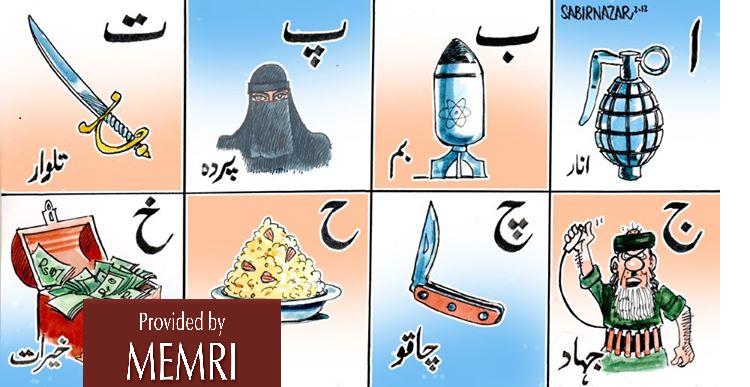
Other textbooks are full of similar references to hatred. The NCJP has called for the removal of all such text.
This step was arrived at after a major survey of the text books was conducted by the Catholic Church. The findings were then presented at a conference on 19 May. The conference was called, Uprooting Religious Intolerance through Formal Educational System in Pakistan.
Another book chapter reads, “Capitalist and democratic countries like Europe and USA have based their educational objectives on a concept of person getting attuned with society, capable of self-earning. Their teachings are favorable to capitalism and the philosophy of western democracy”.
Nevertheless, “The curriculum needs to be reviewed. The authorities should supervise private publishers and punish those that publish books that contain hatred”.
- See more at: http://www.christiansinpakistan.com/textbooks-that-incite-hatred-should-be-reviewed-says-ncjp/#sthash.21Fa5lGL.dpuf
Pakistan - Unruly lawyers

Violent protests erupted in several cities of Punjab after a clash between the police and lawyers that resulted in the killing of two lawyers in Sialkot’s Daska Tehsil. Daska Bar Association President Rana Khalid Abbas and lawyer Irfan Chauhan succumbed to injuries caused by the firing of Daska SHO Shehzad Warraich while two others were critically wounded. Mystery shrouds the actual reason for the initial scuffle between lawyers and the police. There are three different versions related to the incident. First, it was an anti-encroachment drive launched by the Town Municipal Administrator (TMA) with the help of police that was resisted by local residents and lawyers, who were seeking more time from the authorities. Second, according to the government, it was a land dispute between two parties. Third, two lawyers had come to the TMA’s office for the verification of a marriage certificate and non-cooperation of the officials led to this tragedy. Whatever the reason maybe, the subsequent incidents that followed were more worrisome.
Soon after the incident, lawyers resorted to violent agitation. Pitched battles were held between the police and lawyers in different cities of Punjab including Multan, Sialkot, Faisalabad and Lahore. In Lahore, lawyers blocked the traffic on The Mall and raised slogans against the government. They tried to barge into the Punjab Assembly building and set ablaze a shade at the entrance. Some other unfortunate incidents also occurred despite the government’s efforts to pacify the agitating lawyers. Incidents of violence were reported from other cities also. Furious lawyers vandalised government offices and damaged police vans. They resorted to attacks on police personnel and vehicles. Due to the political affiliation of murdered Rana Khalid Abbas with the Pakistan Tehreek-e-Insaaf (PTI), its chairman Imran Khan jumped into the controversy and took the government to task. The Pakistan Awami Tehreek compared this incident with the one that happened in Model Town, Lahore. In both incidents, the situation went out of control due to poor handling by the police. On its part, the Punjab government has taken a number of steps to ease tension. The Town Municipal Officer Daska has been suspended and the Assistant Commissioner Daska has been made OSD while the accused SHO has been arrested. Taking notice of the incident, Chief Minister Shahbaz Sharif has ordered a judicial inquiry into the incident.
No protest justifies straight shooting by the police. This was the failure of the law enforcement officials led by an SHO who did not enjoy a good reputation. The police should have shown some restraint. On the other hand, the reaction shown by the lawyers is not justifiable either. Despite being custodians of the law, they did not behave within the parameters of applicable law. They have adopted an impatient approach and are demanding instant justice. Instead of setting examples for others, the lawyers themselves resorted to violence and ransacked public property. They have demanded of the Chief Justice of the Lahore High Court to take suo motu notice of this case, which is unnecessary because all the necessary modalities are already being followed and the culprit is behind bars. The case is clear and there is no need for a judicial inquiry as announced by the Chief Minister. Such incidents are bound to happen unless the government brings reforms in the police department. This is just another example of blatant disregard for the laws of the land by the police. Our guardians of the law are still inept in handling such situations that cause bigger tragedies. The lawyers are also not above the law. Since 2007, there has been a change in the attitude of lawyers and there are many instances where lawyers took the law into their own hands. Lawyers need to understand that there is a course of action and the accused must be punished as per law. Smashing police vans, beating up policemen and vandalising government offices do not portray a good image of lawyers. No doubt, the incident was very tragic and the police action cannot be justified. The lawyers should abandon violence and wait for justice to take its course. No law gives the right to the lawyers to cause damage and spread violence when the accused is behind bars.
Pakistan - Remembering The IDPs

The government has displayed a measure of prudence when dealing with the IDPs. The National Database and Registration Authority have registered most of the displaced families – totalling at 103,508. The returnees have been asked to undertake security responsibilities and have been made part of the local decision-making set-up; making them more involved in statecraft. As of now only North Waziristan lags behind, repatriation in South Waziristan and Khyber Agency has been remarkably quick, with almost 20,000 families being repatriated to the latter. Yet these reports are also interspersed with reports that claim rampant corruption in the compensation and food ration schemes. On May 24, the North Waziristan IDP Qaumi Committee demanded the government release the monthly financial assistance promised to the displaced people before Ramazan starts, amongst other demands to end exploitation. In the same month, officials at Khyber Pakhtunkhwa’s (KP) National Accountability Bureau (NAB) uncovered fraud worth Rs500 million in the IDP compensation scheme of 2008 operation in Khyber. The state is more interested in ‘holding’ the tribal areas peacefully rather than truly re-compensating the IDPs; their security decisions are implemented immediately, while economic aid languishes n distant warehouses.
Tuesday, May 26, 2015
Video - Noam Chomsky: Yemen is the most extraordinary global terrorism campaign in history
Published on Apr 18, 2015
#Punjab - Law and order: ‘Shahbaz has nothing to show for 7 years in govt’

The Punjab Assembly was unable on Monday to conclude a debate on law and order after a discussion on recent incidents of violence in Lahore and Daska districts besides the report of a joint investigation team formed to probe killings of Pakistan Awami Tehrik workers in a public rally last year.
Opposition Leader Mahmood Rasheed’s resolution demanding an inquiry into the Daska Bar Association president’s killing was passed unanimously. The house also offered prayers for the deceased. Earlier, the opposition leader staged a token walkout to register protest against ‘police handedness’.
Referring to recent unrest in a Christian neighbourhood of Lahore, Shehzad Munshi speaking on a point of order lamented that yet again an entire community had been targeted following allegations of blasphemy that involved a certain individual.
He said blasphemy was a serious matter and it was condemned by Christians and Muslims alike. He said out of fear for their lives several Christian households had reportedly left the neighbourhood in Sanda. Human Rights and Minorities Affairs Minister Khalil Tahir Sindhu told the House that the chief minister had taken notice of the incident and ordered an inquiry. Home Minister Shuja Khanazada promised that investigation would be held on merit. He also asked the House to assist the government in promoting interfaith harmony in the society.
The House managed to pass just one of the three bills scheduled for the day as opposition insisted on a debate on law and order. The Fatima Jinnah Medical University Lahore Bill of 2015 was passed after the opposition withdrew all amendments it had earlier proposed to the draft. The amendments were withdrawn on the condition that the deputy speaker would postpone discussion on the University of Jhang Bill of 2015 and the University of Sahiwal Bill of 2015 and let the House proceed with debate on law and order. Treasury member Dr Farzana Nazir, who had also proposed an amendment to the bill draft, broke into tears as her protests were ignored by the deputy speaker. She later walked up to the law minister and registered her disapproval of the act.
During the law and order debate, Rasheed criticised the government saying that the JIT report on Model Town riots had not absolved it of its responsibility to bring to justice those responsible for the killings.
He said the government had failed to improve law and order in the province. “It has been seven years now that Shahbaz Sharif is the chief minister of the province. He has yet to do anything about law and order,” he said. “We demand that the inspector general of the police be given a free hand to rid the police of political influence,” he said.
As the House failed to conclude the debate, the deputy speaker prorogued the session for an indefinite period and asked the home minister to give his concluding speech at the next session. Ehsan Riaz Fatyana and Sardar Vickas Hasan Mokal had insisted that the debate be concluded on Monday.
Earlier, Mian Aslam Iqbal alleged that Rs26 million had been allocated in the upcoming budget for installation of closed circuit television (CCTV) cameras and Rs40 million for flood-lights at the Jaati Umrah residence of Prime Minister Nawaz Sharif. He claimed that he had received a message from a source in Youhannabad that the chief minister was responsible for the recent riots in the area.
During the debate, the deputy speaker and Sardar Ali Raza Dreshak over allegations against the Gorchani family. It ended after the deputy speaker directed the home minister to investigate the allegations.
Four bills, the Provincial Motor Vehicles (second amendment) Bill of 2015, the Punjab Motor Vehicle Transaction Licensees Bill of 2015, the Punjab Commission on the Status of Women (amendment) Bill of 2015 and the Punjab Protection of Women against Violence Bill of 2015 were introduced in the House and were referred to the standing committees concerned.
Pakistan - Weapons of mass instruction
The Minister’s pluck caused him public criticism by the religious ‘scholars’, decrees of excommunication from Islam and of blasphemy, accusations of being Ahmadi (yes, being Ahmadi is that bad!), public expressions of hatred through prominently placed banners etc., and a notice to explain himself to the Senate. No wonder he had to pronounce on May 24 that madrassas had no link with terrorism and militancy. On both instances the Minister used generalizations. The first one was met with strong criticism (even from his own party members), but the latter was accepted by all and sundry without even a proviso. Everyone lives happily ever since.
Just when the madrassa elite was harassing Pervez Rasheed and his own party leaders and ministers had left him alone to deal with it, Islamabad Police was hunting the people who were putting up highly inflammatory banners and posters full of hatred and incitement to violence against Pervez Rasheed. Thanks to the Interior Minister, the police quite strongly followed the case. There were few who were arrested. A few others posed resistance to the police party, who then chased them to a madrassa in F-6/4. That’s where even the Police – the key civilian law enforcing machinery – thought their jurisdiction ended. The culprits are still at large, in the protection of that madrassa.
Cases have been registered in two police stations of Islamabad, Thana Aabpara and Thana Shalimar under Sections 500 and 501 of the Pakistan Penal Code that deal with defamation, printing of defamatory material and statements conducing to public mischief. As per the media reports, it was the Islamabad chapter of Jamiat Ahl-e-Sunnat Wal Jamaat (JASWJ) that had put up the banners. When the media contacted ASWJ, the banned organization that is so far operating openly with impunity, and asked about its links to JASWJ, the former denied any kind of ties. There might not be any possible way to prove the links even if they exist. Even if proven, there is nothing that the state would choose to do.
There is no one in the government that could do anything about it. Mainly because no institution of the state is ready to trust the Prime Minister or the Chief of Army Staff who have repeatedly said in different statements post Peshawar School Attack that they are absolutely serious about crushing all kinds of terrorism and that there were no more any good or bad terrorists. Every institution wants to pass the buck to the other for one simple reason. There have been certain institutions that have created and nurtured these monsters. Why would the weaker civilian institutions like Police, trust the creators? If A has created the problem, why is B expected to clean the mess with little muscle and almost non-existent power to deal with the possible blowback?
Pakistan Rangers (Sindh), a paramilitary force, has been conducting a ‘Targeted Operation’ in Karachi since a few months. Despite this, high profile targeted killings as well as brutal terrorist attacks are still happening (the Sabeen Mehmud murder and Safoora Bus Attack are cases in point). Not only that, the way a banned organization like ASWJ is openly functioning under plain sight of the ‘Targeted Operators’ not only in Karachi but in rest of the country as well is appalling. If ASWJ would not be covered by the operation, the Federal Interior Ministry would be justified to choose the status quo in Islamabad viz a viz ASWJ operations. No wonder we are witnessing ASWJ rallies everywhere including Islamabad and Quetta recently.
This inaction, indecisiveness and wooliness around the militancy issue have been fairly old phenomenon in the Islamic Republic. It has mainly emanated from our policy of using our strategic location for rent seeking from world powers, positioning ourselves in geopolitics of the region in certain way and defining our national interest with the lens of state power rather than people’s development. Started in early 1970s – as opposed to just the Afghan Jihad in the 1980s as is perceived popularly – this policy has damaged us in more ways than we can fathom.
Gone are the days when madrassas were the only breeding grounds for extremism. Today, they remain a fountainhead of religious violent extremism, but the roots have spread in practically every societal institution. The state made a symbiotic partnership with political entities like Jamaat e Islami etc. This strategy did a great deal in popularizing certain narrative that proved to be the precursor of militant Jihadism. It had many strands like anti-West, anti-everything-non-Pakistan-and-non-Muslim, etc. With the passage of time these strands kept increasing in number. Anti-politician, anti-liberal forces, against anti-establishment resistance forces, so on and so forth.
All these strands, although emanating from the madrassas initially, were successfully brought to the popular consciousness through infiltration in academia, intelligentsia, students unions, workers’ unions, media, civil and military bureaucracy, industrialist and agricultural elite, politicians, what not. It was mainly the media, the academia, the intelligentsia and the students unions through which a lot of literature was produced and a strong popular narrative was built around all these strands of radicalism.
For example, be it Malala Yousafzai or Mukhtaran Mai, be it non-Muslim victims of the misuse of Blasphemy Laws or forced conversions of Hindu and Christian girls, be it the issue of good versus bad Taliban or Indo-Pak peace, be it civil military relations or ties with the Western countries especially USA, you would see a strong radical narrative about each of these. Any dissenting voice would be humiliated, discredited and vilified, mostly, by or with patronage of military establishment. On each of these issues, the usual proxies of the establishment would speak in symphony against the dissenters.
The practice of killing the dissent through libel and slander, supported and encouraged by the state institutions has brought public mental health to a point where any dissent or resistance or even a slightest non-conformity is considered to be treason, anti-Pakistanism or anti-Islamism. Public aggression is incited against dissenters using social media and talking heads on the TV. That has been happening quite aggressively after Peshawar School Attack, which has a strong bearing on why nothing could be done on National Action Plan.
This is also one reason why a Federal Minister was left alone to deal with the rage of madrassa elite amidst fatwas to declare him Ahmadi and murtad. This is one reason why no political government can ever take action against militancy-linked madrassas or proscribed organisations. This is one reason amongst many contributing factors why Saad Aziz was produced. This is also one reason why we will keep producing more Saads.
Pakistan - The Fate Of Abductees - Gillani & Taseer
The instinctive – and sentimental – answer is yes. It is the state’s job to protect its citizens at all cost, and wilfully rejecting the option of doing so would surely elicit a strong backlash from the public; especially the family members of the victims. Apart from this normative burden, there are several policy points, which favour such an answer. A government official or a politician whose family member has been kidnapped by militants is liable to manipulation – having a key official crippled by sentiment is damaging to the government’s efforts. Furthermore, the failure to recover high profile abductees not only damages the perception of state control – already crucially weakened in the tribal regions – and forces politicians to stay away from controversial issues and hard-line stances out of fear for their relatives. The Taliban have increasingly shown their willingness to target children of senior politicians and government officials, with the son of President Mamnoon Hussain being the latest. The state needs to counter this fear to give its officials the freedom to take bold steps.
Yet these arguments apply equally to clandestine rescue operations and ransom negotiations; and while the government has employed a flexible policy in this area, the uncertainty is also damaging. Haider Gillani can be freed if the demands of the captors are met; yet is the life of one person worth the release of several hardcore militants – which will inevitable contribute to more death and destruction? This seemingly heartless question becomes more pressing when we consider that the government would never negotiate such a transfer for a common soldier or civilian. The prisoner release not only helps the militants, it reassures them that kidnapping is a lucrative trade, prompting them to go for even bigger marks. A ‘no negotiation’ policy - like the one employed by the U.S – at least makes kidnapping redundant; albeit at the cost of a few lives. Whatever policy the Pakistan government employs, it must keep both sides in mind.
#PPPstandsWithLawyers - Asif Ali Zardari condemns violence against lawyers in Daska, says PPP will stand by the lawyers
https://ppppunjab.wordpress.com/
Former President and Co Chairman PPP Asif Ali Zardari has strongly condemned the use of brutal force against lawyers in Daska today resulting in the death of two lawyers terming it as reprehensive and unacceptable”.
Condemning the incident the former President also called for a thorough, expeditious and transparent investigation into the incident, fixation of responsibility and bringing to book those responsible for transgression of authority and the trigger happy response of law enforcing agencies.

It is most unfortunate that lawyers who protect citizens from violence and brute force should themselves be subjected to violence and brute force, he said.
The PPP Co-Chair said that the PPP will stand by the lawyers’ community in this hour. Spokesperson senator Farhatullah Babar said that former president also directed the Party to extend all support to the lawyers in their peaceful protest against the incident.
Praying for those those who lost their lives the former President also expressed his deepest condolences to the bereaved families, he said
Former President and Co Chairman PPP Asif Ali Zardari has strongly condemned the use of brutal force against lawyers in Daska today resulting in the death of two lawyers terming it as reprehensive and unacceptable”.
Condemning the incident the former President also called for a thorough, expeditious and transparent investigation into the incident, fixation of responsibility and bringing to book those responsible for transgression of authority and the trigger happy response of law enforcing agencies.
It is most unfortunate that lawyers who protect citizens from violence and brute force should themselves be subjected to violence and brute force, he said.
The PPP Co-Chair said that the PPP will stand by the lawyers’ community in this hour. Spokesperson senator Farhatullah Babar said that former president also directed the Party to extend all support to the lawyers in their peaceful protest against the incident.
Praying for those those who lost their lives the former President also expressed his deepest condolences to the bereaved families, he said
#PPPstandsWithLawyers: PPP expresses solidarity with the lawyers community

https://ppppunjab.wordpress.com/

Mian Manzoor Ahmed Wattoo, President Punjab PPP, accompanied by the local leaders and workers of PPP went to the Lahore Press Club to express solidarity with the lawyers’ community who were protesting the murder of Rana Khalid Abbas, Deska Bar President, and a lawyer by police firing.
He demanded that the government should immediately apprehend the culprits and award them exemplary punishment for the heinous crime of murdering two lawyers.
He pointed out that if the culprits of Model Town incident had been punished the abhorrent incident of Daska might have not occurred in the first place. The Punjab Government and the police consider itself above law and therefore flouting it with impunity without fear of legal consequences, he maintained.
He observed that the law and order situation in the province was deteriorating day by day and the life and property of people were not safe. They are suffering from the acute sense of insecurity and more frustrating is that they have lost hope of betterment in the state of affairs, he added.
He paid rich tributes to the lawyers’ community that had played historic role for the supremacy of the constitution, independence of judiciary and the restoration of democracy in the country. PPP and its leadership hold the community in the highest esteem, he added.
Earlier, Samina Khalid Gurkhi, President Lahore PPP, described the abhorrent incident as the worst type of provincial government’s terrorism adding the culprits must be brought to book at the earliest.
Those who were present included Tanvir Ashraf Kaira, Naveed Chaudhry, Suhail Milk, Dewan Mohyuddin, Khurram Jehangir Wattoo, Raja Amir, Advocte Supreme Court, Rana Gul Nasir, Jehan Ara Wattoo.
Egypt protests Pakistan criticism of Mursi death sentence

Egypt summoned Pakistan’s charge d’affaires to protest at Islamabad’s criticism of the death sentence handed down to ousted Islamist president Mohamed Mursi, the foreign ministry said on Tuesday.
Egypt denounces any “interference in its internal affairs which casts a shadow on relations between the two countries,” the ministry said in a statement a day after summoning Mohamed Eijaz.
Mursi, Egypt’s first freely elected president, and more than 100 other defendants were sentenced to death by a court on May 16 for their role in a mass prison break during the 2011 uprising.
The sentence was criticized by human rights groups, the United States and the European Union, as well as Pakistan.
“The dispensation of justice must be based on the principles of equity and fairness,” Pakistan’s foreign ministry said in a statement issued on May 19.
“This is all the more important when political prisoners especially a former elected president, who was ousted from office, is brought before the court of law.”
Mursi was ousted by then-army chief and now President Abdel Fattah al-Sisi in July 2013 after mass street protests against his one-year rule.
A government crackdown overseen by Sisi has left hundreds of Mursi supporters dead, thousands imprisoned and dozens sentenced to death after speedy trials, described by the United Nations as “unprecedented in recent history”.
Mursi has also been sentenced to 20 years in jail in a separate trial.
Why Pakistan is friends with everyone – and no one

Pakistan’s diplomacy has become a high-wire act.
Though Islamabad hasn’t yet ended the domestic terror that rips through its schools, mosques and markets, or sorted out its hostilities with neighboring India, it has embarked on a complicated foreign policy. Seeking to solve its many economic, political and security problems, Pakistan is trying, concurrently, to court four rich and powerful patrons: China, Saudi Arabia, Iran and the United States.
This is a tough task because these governments’ relations with one another have global politics tied in knots. Islamabad’s efforts to juggle their competing demands are quixotic enough. Trying to make them all work in Pakistan’s favor is ambitious — and could easily backfire.
Pakistan has sought foreign protection and financing since its independence almost 70 years ago. It joined Western alliances in the 1950s. Pakistan let the United States use it as a foothold in south, southwest and central Asia throughout the Cold War, the Afghan wars, Pakistan’s wars with India, Washington’s opening to China, the rise of terror politics and recent tilts toward Asia.
Both Washington and Islamabad gained, and both lost. Alliances are like that.
But Pakistan has long tied its domestic governance to its foreign-policy engagements. With its various military alliances, a security state flourished, which almost inevitably diminished its capacity to democratize. Islamabad today reflects its on-again, off-again dictatorships and intermittent elected governments: Though parliament liberalized the country’s constitution, it also sanctioned military courts to try civilian offenders accused of terrorism.
Pakistan’s recent foreign-policy forays thus offer mixed messages to its people and the world. For the first time in a long time, Pakistan is trying to align its diplomacy to its pressing domestic needs. It hopes to manage its external relationships — some toxic, some constructive — to buy time to sort out its own profound governance problems. It is a big gamble to try to balance its relationships with Saudi Arabia, Iran, China and the United States — and, of course, India and Afghanistan — in order to secure its economy and create desperately needed domestic stability.
Let’s start with Yemen. In April, Saudi Arabia asked Pakistan to contribute to its armed coalition to fight Houthi militia. Prime Minister Nawaz Sharif, no doubt out of habitual obeisance to a financially profitable (if ideologically complicated) relationship, initially agreed.

A boy at a candle-light vigil on December 17, 2014, for the 132 students killed at the military-run Army Public School in Peshawar. REUTERS/Navesh Chitrakar
In a rare show of political independence, however, Pakistan’s parliament refused to sanction military participation. It argued that Yemen’s fight was not Pakistan’s, and that Saudi Arabia should no longer assume that Pakistan would do its bidding: Despite financial recompense, Saudi Arabia’s backing of the Taliban had proved terribly costly for Pakistan, in too many ways to count.
With an eye toward its own sectarian tensions — Pakistan’s substantial Shi’ite minority has been under vicious attack for years, as have other religious minorities — parliament explicitly refused to choose between Saudi Arabia and neighboring Iran in another regional proxy war. Islamabad’s offer to help mediate was politely ignored by all sides.
Islamabad’s unexpected demurral to Saudi Arabia’s request sets it on a different diplomatic course. It is cash-poor, investment hungry and desperate for energy. Though Saudi Arabia contributed $1.5 billion to Pakistan for foreign exchange and energy projects last year (a sum probably dwarfed by the Saudis’ underwriting to Pakistan’s treasury during the Afghan Taliban years), Pakistan is also betting on its future relationship with Iran, with which it shares a long and critical border with Afghanistan.
Pakistan desperately needs Iran’s natural gas and hopes a U.S.-Iran deal will pave the way for importing fuel. A prospective pipeline from Iran to Pakistan and China has been dubbed the “peace pipeline.” Islamabad also needs to secure its western border with Iran, and restive Afghanistan to balance its restive eastern border with India.
At the same time, Pakistan is shoring up its relationship with China — again, by trading energy for diplomatic support. Beijing recently completed the construction of a major port at Gwadar, on Pakistan’s Arabian Sea coast, and has signed a deal to manage it for 40 years.
Ten days after refusing engagement in Yemen, Pakistan hosted Chinese President Xi Jinping to establish a China-Pakistan Economic Corridor that will run from the new port to Kashgar in Xinjiang province. The infusion of almost $50 billion is billed as a boon to Pakistan. In return, Islamabad has promised military protection for the Chinese construction workers. Meanwhile, China’s government and companies will no doubt make considerable profits.
China’s Asia-wide ambitions are becoming ever clearer. Indian Prime Minister Narendra Modi visited Xi last week to secure an evolving security partnership. While China cannot assume that its own diplomacy will lessen tensions between Pakistan and India, it is clear that money — and energy — talks across all populous, poverty-ridden south Asia. Pakistan’s benefits are derivative and echo a kind of colonialism: The country is essentially leasing itself to a foreign benefactor because it is too poor and inadequately governed to develop its own resources.
This potential cash boon leaves Pakistan with crucial domestic and foreign policy choices. The Chinese economic corridor’s route is already disputed in Pakistan: Sharif’s preference is to skirt the restive provinces of Baluchistan and Khyber Pakhtunkhwa in favor of his home province of Punjab. This continues a pattern of unbalanced investment that has contributed to the country’s uneven development.
What looks like a financial investment in stability is perceived as a slap in the face to Baluch insurgents. They have spent decades fighting for a voice in national politics and, ironically, a share in energy resources that originate in their home province.
Islamabad’s response has been brutal. Baluch have been intimidated, jailed, disappeared and killed since the 1970s. Most observers believe that the price of doing business with China will be to stifle the Baluch, impose a faux peace and broadly limit civil liberties.
This cost is too high — and most likely unnecessary. Pakistan has yet to contend with two issues that have slowed its development since independence. First, its refusal to provide equal citizenship rights for all has led to persistently corrosive subnational and sectarian tensions. This has soured relations among its provinces, slowed economic decision-making and reinforced a self-defeating propensity to solve political problems with state-sanctioned violence.
No amount of money will fix these difficulties. But serious, public discussions to help correct the misdeeds of the past and, most important, to organize responsibility for the future can help to craft policies that address these deep political fissures.
Second, Pakistan’s economic choices — often convenient for the rich and always devastating for the poor — have left deep holes in its budgets, financing and investment. Its energy shortfalls result from years of waste, misuse, circular debt and bad investments that now leave parts of the country without electricity for 10 to 20 hours each day.
Building roads from Pakistan to China — with Chinese labor — will not fix the poverty and absence of rights at the heart of Pakistan’s economic crises. Only better politics — starting with respect for Pakistan’s largely unorganized labor force and protection of critical rights for the entire public — can begin to ensure that China’s cash can turn into an investment for all Pakistan.
The burden of reconciling these competing demands is now Islamabad’s. Its challenges are critical: not to let foreign engagements provide cover for domestic political decisions; not to mask the political fissures that have created resource crises, and not to mistake motion for progress.
Pakistan cannot afford to fall off its high wire. Diplomacy can’t fix its governance, but even some initial improvements will be a big step toward securing its diplomacy.
Subscribe to:
Posts (Atom)