Sunday, May 10, 2015

Pakistan - PP-95 constituency ''Lower Dir'' - No woman Voters, no problem


How can the results of an election be deemed legitimate if half of the electorate is denied a right to vote? The question came back on the agenda as the polling record of the PP-95 constituency in Lower Dir became public. The fact that on Thursday the Jamaat-e-Islami won on a seat vacated by JI Ameer Sirajul Haq after a close contest with the Awami National Party candidate should be irrelevant. The fact that not one out of the 47,280 registered women voters in the constituency exercised her right to vote should be enough to invalidate this election farce in Lower Dir. In 2013, Lower Dir was part of three constituencies where written agreements were reported between all political parties barring women from voting. The last time this happened, the JI chief argued that women had been barred because suicide bombers could attack the polling booths disguised as women. This time around, Sirajul Haq produced another gem, arguing that women did not have the time to go out to vote since they are busy at home. The fact is that the Election Commission of Pakistan had given candidates and political parties a free hand to do as they wish. Elections with no women voters were validated by the ECP in 2002 and 2013, with only token statements from the ECP deemed to be enough.

But this is not enough. The ECP in its draft guidelines for the 2013 general elections had proposed that no election result should be accepted if there were less than 10 percent female voters. Why has this recommendation not been given the force of law? And even if it hasn’t, it is quite clear that the right of franchise of the women of Lower Dir has being denied them by one extra-constitutional mechanism or the other. The JI chief and ANP candidate have denied that an agreement was reached on barring women voters. However, the ANP filed a complaint with the ECP over the barring of women voters on Friday. The ECP has ordered all candidates to respond and explain why the situation arose. However, it also refused to take any action before the KP chief secretary and district returning officer of PK-95 explain what really happened. The ECP should instead have invalidated the election based on the simple fact that women did not – or more correctly were not allowed to – participate. The silence of Khyber Pakhtunkhwa’s ruling PTI government on the issue of women not being allowed to vote shows that the party remains committed to a patriarchal vision for Pakistan’s future. Civil society activists have rightly demanded a re-election. This sort of systematic disempowering of women is simply unacceptable. Re-polling is a must to so that women can exercise their right of vote in the constituency. Only drastic action can change this patriarchal status quo that has been maintained now for decades.

Pakistan - Tragedy in Naltar

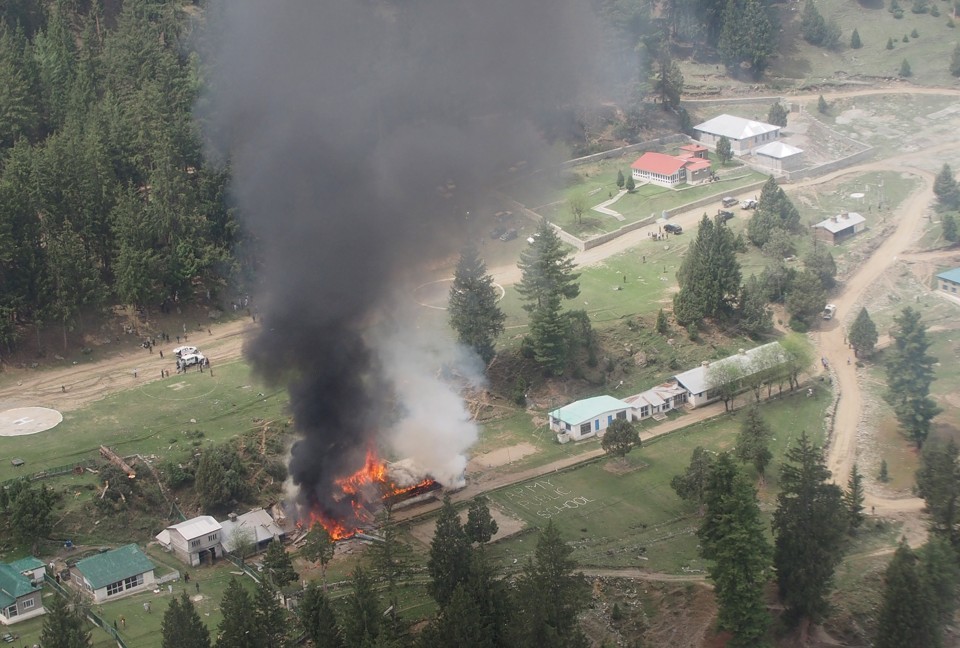
The tragic helicopter accident in Naltar Valley, Gilgit-Baltistan, is also a tragedy for the diplomatic community in Pakistan. Deaths of the Norwegian and Philippine ambassadors and the spouses of the Malaysian and Indonesian envoys are in addition to the three deaths of Pakistani armed forces personnel operating the helicopter.
Moreover, among the nearly dozen or so other passengers on board, several diplomats have suffered serious injuries. What was meant to be a confidence-building exercise — the trip was organised as part of an effort by the Foreign Office and the military to showcase the country’s scenic north and its tourism potential — turned into a horrifying event. There is though much courage in adversity.
The sombreness and dignity with which the international community, particularly those of the countries whose diplomats have been affected, have reacted to Friday’s tragedy should be noted: this beleaguered nation has many friends internationally who do wish it well, a reality sometimes lost in the noise of geopolitics.
For Pakistan, there remain a host of unanswered questions — inevitable in the wake of a tragedy, though perhaps worryingly familiar.
To begin with, however, it was reassuring to see the military and the Foreign Office cooperate smoothly with each other and in a compassionate manner with the affected foreign missions.
The authorities also worked well to quickly make public the news from the crash site, dispelling the notion that the Taliban had sought to create that the helicopter crash was an attack by the banned TTP.
In present times, high-profile accidents or deaths quickly attract speculation, so it was necessary to quell those from the outset.
Perhaps, though, in the determination to refute TTP propaganda, the authorities here overstepped the mark. As the global experience of aviation crashes suggests, it is almost impossible to immediately and authoritatively identify the cause of an accident — irrespective of how many witnesses there are on the ground or survivors on-board.
To claim a technical malfunction of some sort, as several officials did on Friday, is to prejudge the source of the accident.
Answers will only be forthcoming once the Pakistan Air Force inquiry board meets and begins the search for answers. That is the stage at which the preference for secrecy by the state ought to be resisted.
The public here deserves to know the full truth, as do the families and governments of the countries affected by the crash. A thorough investigation followed by full disclosure is extremely rare in Pakistan — but that is the only way for systems to improve, and accountability, if necessary, to be pursued.
Seven people are dead, a rare and serious incident with diplomatic repercussions has occurred, false claims of responsibility have already been made and military aviation is involved — this is precisely the incident in which the state should seek to set new standards for transparency.

Pakistan - #SabeenMahmud - Defending activists

The Human Rights Commission of Pakistan (HRCP) has decided to roll up its sleeves and wake up the authorities to the dismal state of affairs in the country as far as safeguarding all those brave men and women who pick up the torch to campaign for human rights. The HRCP organised a consultation in Lahore on Thursday to imderline the fact that human rights activists are in real danger in Pakistan and that there is a need to push for adequate legal safeguards for them. The HRCP presented an 11-point charter with recommendations and demands to put forward the plight and protection of these activists. It is about time someone stood up for them. One need not look far in our blood-smeared history to come up with examples of travesty and injustice wrought against such members of civil society and the intelligentsia. One only needs to remember the brutal gunning down in May last year of Rashid Rehman, a lawyer who went against all adversity and odds to defend a blasphemy accused, something that seems as ‘criminal’ as the charge of blasphemy itself. Rehman was also the regional coordinator of the HRCP. He believed that every defendant deserved a lawyer, especially those facing the worst allegation of all in Pakistan. His death was a huge blow to the activists’ community. Or how about the death of Sabeen Mahmud just a couple of weeks ago? The owner of the intellectual space known to Karachi’s residents as The Second Floor (T2F) was also gunned down by unknown assailants. She had reportedly been receiving death threats from extremists. Also, the fact that she dared to host a controversial talk regarding Balochistan at the T2F has sent suspicion flying towards the security agencies.

It seems human rights defenders and active dissidents are under severe threat in this country. Nothing has ever really been done to acknowledge the danger in which they stand up against wrongs in society and to protect them against these every threats. The government has, sadly, always turned a blind eye to the sorry state of safeguards for activists. It was not enough that a member of government, Governor Punjab Salmaan Taseer himself was brutally murdered in broad daylight just for standing up and campaigning for justice to be delivered to Aasia Bibi, a poor Christian woman accused of blasphemy. His murderer is still enjoying the ‘perks’ of incarceration in the land of the pure.

The 11-point charter, which urges the state to follow international treaties and the constitution for the due protection of its citizens must be taken up by the government. After all, it owes its civil society and brave activists this much at least. 

Pakistan - Ban on women voting: PPP Human Rights Cell asks ECP to declare Dir by-election void


https://ppppunjab.wordpress.com/


PPP Human Rights Cell Central Coordinator Dr Nafisa Shah has joined in the voices of rights organisations in condemning the vote ban on women in PK 95 by election in Lower Dir.
She has called upon the Election Commission of Pakistan to declare the by election void in areas were it is established that women were deprived from voting.
“It has come to the knowledge of the PPP Human Rights Cell that women were forced to stay at home during election in PK95 inLower Dir by an informal ban on their voting, which is unacceptable. Depriving women of vote violates the universality of franchise, and violates the Constitution. It makes the entire election a farce.” Says Dr Nafisa Shah
“Women comprise 50 per cent of the voters and if their voice is suppressed in this manner, it is the responsibility of the Election Commission to ensure that those responsible for this bar are charged and punished. Further, the election can no more be valid as half the population has been left out of the voting process.”

What Caused a Fatal Helicopter Crash in Pakistan?


DAVID A. GRAHAM

Two foreign ambassadors were killed, and the Pakistani Taliban promptly claimed responsibility—but there are good reasons to be skeptical of the claim.

 On August 17, 1988, just a few minutes after takeoff, an airplane carrying the president of Pakistan, General Muhammad Zia-ul-Haq, and the American ambassador to Pakistan, Arnold Raphel, suddenly crashed, killing them and 29 others. The cause of the accident has never been fully agreed upon: American investigators concluded it was a matter of mechanical failure, while the Pakistani government blamed sabotage. And there were many conspiracy theories—Zia, a military dictator, had plenty of enemies, and had killed his predecessor Zulfikar Ali Bhutto.

Pakistan is again reeling from an air crash that has killed foreign envoys. Once again, the circumstances are unclear, and there are competing explanations for what happened.
Here’s what’s known: A Pakistani Air Force helicopter crashed while close to landing in Naltar, a town in the Gilgit-Baltistan area in Pakistan’s northeast, part of the Pakistani-controlled portion of the disputed Kashmir area. Among the dead were the Norwegian and Filipino ambassadors to Pakistan; the wives of the ambassadors from Malaysia and Indonesia; and two pilots and a crew member. The Dutch, Indonesian, Malaysian and Polish ambassadors survived the crash.All of them were en route to attend the inauguration of a tourism project when the helicopter crashed. According to reports, the craft hovered briefly, then crashed into a Pakistani military school on the ground.
What caused the crash is disputed. In a mirror image of the Zia crash, the Pakistani government says it was nothing more than a tragic accident. The BBC notes there has been a series of crashes with the same chopper. But the Pakistani Taliban also quickly claimed credit for taking the helicopter down, saying it was attempting to assassinate Prime Minister Nawaz Sharif. Sharif was expected to travel to Naltar, but has now canceled his trip.
"A special group of Tehreek-e-Taliban Pakistan had prepared a special plan to target Nawaz Sharif during his visit but he survived because he was travelling in another helicopter," a spokesman told AFP, adding that a ground-to-air missile had been used to execute the attack.
In addition to the Pakistani government’s rejection of the claim, initial reports from witnesses on the ground suggested the chopper had lost control but that there had been no explosion that would suggest an attack.
It’s true that Kashmir is not the Pakistani Taliban’s traditional territory. The group’s stronghold is in the Federally Administered Tribal Areas adjacent to Afghanistan, in northwestern Pakistan. From that base, the group has launched deadly attacks across the country. As Reuters noted, Naltar isn’t a militant stronghold, and terror groups are often eager to claim credit for attacks, whether they actually had a connection or not. Earlier this year, the Asia-Pacific publication The Diplomat reported that the Pakistani Taliban was seeking to build up its presence in Gilgit-Baltistan.
Over the last year, the Pakistani Taliban’s most notable attacks haven’t been assassinations or missile launches. In June 2014, the group laid siege to the Karachi airport, leading to 21 deaths, including 10 attackers. In December, militants attacked a school in Peshawar, killing 145 people including 132 children at a military-connected school. The attack brought the group widespread condemnation throughout Pakistan, including among figures who had been accused of sympathizing with the group or its aims. While the Peshawar attack was the bloodiest, school assaults have become something of a trademark for the Pakistani Taliban. Most famously, it shot Malala Yousafzai, a 12-year-old advocate for women’s education, in 2012. Yousafzai survived the attack and won the 2014 Nobel Peace Prize.
But attacks on political leaders aren’t exactly unusual, either. The Pakistani government blamed Baitullah Mehsud, a Pakistani Taliban leader, for the 2007 assassination of Benazir Bhutto. Bhutto—a former two-time prime minister and daughter of Zulfikar Ali Bhutto, Zia’s deposed nemesis—died when an attack hit her parade as she campaigned for a return to power. Then-President Pervez Musharraf was later charged with murder for failing to provide adequate security. Musharraf himself survived several assassination attempts. So did Sharif, in a previous term as prime minister.

Being a diplomat in Pakistan is dangerous, too. Four diplomats were killed in a 1995 bombing of the Egyptian embassy. Other strikes have targeted foreign diplomats, including an assault on the U.S. consulate in Peshawar. An attack on the American consulate in Karachi killed U.S. diplomat David Foy in 2006.
Still, if it were an attack, this incident would seem to fit a different profile. It’s too soon to know what effects the crash might have on Pakistan’s foreign ties, but Islamabad is working to try to project an image of strength and stability in the region, and a tourism event like the one planned for Friday is just the sort of event to do that. In a poignant note, the late Norwegian ambassador Leif Larsen praised the opportunities for Norwegian business in Pakistan in an interview published just last month in Newsweek Pakistan. “Pakistan is doing an excellent job with its operation against extremism, and we hope to see it completed,” he said.
The battle continues, but Larsen will never have the chance to see it to its end.

Saturday, May 9, 2015

Pakistan - Internally Displaced Pashtuns


By Afrasiab Khattak

Normally the term IDP is understood as an abbreviation for an Internally Displaced Person the world over. But due to the fact that a very large number of Pashtuns are living for a very long time under conditions defined by the aforementioned term (at one stage they were three million plus) it has acquired a new connotation in FATA and Pakhtukhwa. It now stands for Internally Displaced Pashtuns. Since 100 percent of the people falling under this category in Pakistan are Pashtuns, what else could it mean? This is a comparatively milder view. 

There are other opinions that directly link this displacement (and the miseries brought by it) to the country’s flawed Afghan policy, which necessitated Talibanisation in FATA to provide geographical and demographic depth to Afghan Taliban in their fight across the Durand Line. For them the term IDP thus stands for Intentionally Displaced Pashtuns, as this phenomenon is a direct product of misguided state policies. Sensing the potential alienation that can be produced by such connotations, some smart alecks in the officialdom had come out with a deflection strategy by proposing an alternative term capable of camouflaging much of this ugly spectacle. They suggested TDP, Temporarily Displaced Persons, to describe these hapless Pastuns from FATA. But the word ‘temporary’ would not stick, as many of these people have lived in this situation for more than a decade and are still not sure about their future prospects. 
  
    Be that as it may, the semantic controversies hardly make any difference for the Pashtun IDPs, as they fail to mitigate any of their agonies and miseries. Coming from a political backyard, FATA, a periphery and not the core area of the state, tribal Pashtuns and their death and destruction are mere statistics. Ironically even complete statistics are not coming out of FATA which is a black hole and no-go area for the civil society and independent media over the last so many years. For example, there is no complete record of the innocent people, including important tribal leaders, killed by terrorists who had literally occupied the area for years. We do hear about the death of the alleged terrorists during the ongoing military operations in the official pronouncements but there is not a single word about the “collateral damage” during heavy aerial bombardment or the use of heavy artillery. Even now when the process of the repatriation of IDPs is supposed to have started we do not have any systematic record of the number of homes, business centers and public buildings destroyed during the military conflict. 

The purpose of the present analysis is not to trivialize the war on terror, which is a prime national objective to be supported by all and sundry, but it is an effort to put some focus on the humanitarian crisis faced by the Pashtun belt of the country. Efficiently handling the said crises is also vital for winning this war.
In the meanwhile, Islamabad the beautiful, is either obsessed with conflict in Yemen (with the country’s top leadership shuttling between Riyadh and Islamabad), or if that pain in the neck subsidies to some extent then “the greatest of great national issues” of the four election constituencies of Lahore is waiting in the wings to grab the full attention of the major political parties and “national” media. Yes, once upon a time, looking after the IDPs and planning their orderly repatriation and rehabilitation was an important point in the twenty points NAP for winning hearts and minds of the population. But that was a narrative to be sold at the turn of the year to national and international stake holders post PAPS tragedy and probably it is not relevant any more.  
          Now after much protest by the IDPs, and some pressure from political parties, the government has decided to start the repatriation of displaced persons to areas that have already been cleared from terrorists. But right from the start this process is facing serious challenges. Unlike the repatriation of the IDPs from Malakand Division in 2009, when elected representatives of the people, political parties and civil and military bureaucracy had planned and executed the process together, in this case the repatriation is solely handled by bureaucracy and it is characterized by irrational rigidity. For example, even after vehement protests from the IDPs and criticism by political parties and media, the officialdom is insisting on the “social contract” to be signed by IDPs that binds them to arbitrary and unfair conditions. One of the conditions, by totally reversing the role of the state and society, makes it compulsory for the local population to provide security to state installations. Adding insult to injury the tribal Pashtuns will also have to take a fresh oath of allegiance to the country as if their sacrifices in defending the country against terrorism was not a proof enough.
NDRA has registered 103,508 families of IDPs from North Waziristan. According to official statistics so far only 230 families have gone back to their villages. Out of them only 50 families have gone to Mir Ali while 180 families have returned to areas like Speen Wam etc., that were not particularly effected by Operation Zarb-e-Azb. The government authorities need to ensure the repair and reconstruction of public health, education and drinking water facilities in the effected areas to make the repatriation sustainable. Strangely enough no plan has been made public about the repatriation of about one hundred thousand IDPs who had crossed over to the Khost province of Afghanistan. We surely can’t afford to forget them in our plans. Similarly the concerned authorities have also declared plans for sending back 2500 families to South Waziristan and 20,000 families to Khyber Agency. This whole operation of repatriation is too huge a task to be left to the bureaucracy. The government should immediately create an oversight committee consisting of FATA parliamentarians and representatives of Pashtun political parties for efficient and transparent implementation of the repatriation plans.


Pakistan - Absence of women voters in by-poll

NOT one woman, not one single woman out of 47,280 registered women voters exercised her right to vote.
The apparently hugely successful boycott by the women in Lower Dir of the by-election in the PK-95 constituency on Thursday is the most significant fact that emerged from that electoral contest.
The result itself, with the Jamaat-i-Islami candidate Izazul Mulk Afkari emerging victorious, was a foregone conclusion.
The seat had fallen vacant after the JI emir, Sirajul Haq, was elected senator in March; he had won from the constituency in the 2013 election by a margin of 12,000 votes.
More instructive, however, is the fact that then too Lower Dir was among those areas where women did not exercise — either partly or wholly — their right of franchise which is protected by law.
On that occasion, agreements had been struck between local chapters of various political parties to bar women from casting their vote.
This time, however, the JI chief and the ANP candidate denied that any such pact had been made. Indeed, the district election commission officer said that announcements were made from mosque loudspeakers asking women to exercise their right of franchise.
There are two possible explanations for what transpired on Thursday. One, in the wake of a more robust response of late by civil society and the ECP to female-disenfranchisement pacts, retrogressive elements determined to preserve traditional male privilege by excluding females from decision-making processes are using more subtle methods than they did earlier.
Second, local chapters of political parties have done little to motivate women to exercise their right to vote, or to persuade men of the importance — not to mention legality — of women doing so. In fact, both hypotheses are interlinked, for the members of these local chapters, after all, belong to the same conservative social milieu.
Nevertheless, their parent parties, among whom the PPP and ANP flaunt their ‘progressive’ credentials partly on the basis of their support for women’s rights, cannot disavow responsibility for the craven surrender of those rights to reactionary pressure groups — whether in Lower Dir or elsewhere.
They must take a proactive stance against patriarchal traditions that make a virtue of disempowering women; it is precisely such an environment that gives sustenance to horrific crimes such as honour killing, vani/swara etc and perpetuates the disadvantages for females in health and education sectors.
The ECP must order a thorough inquiry into the total absence of women at the hustings in PK-95; a re-poll should be held if the indication of even indirect tactics to disenfranchise women is discerned.
In its draft bill on electoral reforms before election 2013, the ECP had included the requirement for re-polling at polling stations with less than 10pc turnout of registered women voters.
Parliament should demonstrate real commitment to half the population of Pakistan by enacting legislation along these lines.

26/11 mastermind Terrorist Lakhvi's release from jail was mistake by Pakistan: US

US ambassador to India Richard Verma on Friday said release of Zaki-ur-Rehman Lakhvi, the 26/11 Mumbai terror attack mastermind, from jail, was "a mistake" and his country has already shared its concern on issue with Pakistan. 

"We have shared our concern about this issue. We have raised it with the Pakistani government and we have been very clear that the perpetrators of those in the attacks of Mumbai have to be brought to justice," Verma said in an interview with news channel CNN-IBN. 

"The release of Lakhvi is a mistake," he said. 

On being asked that what action can the US take on the issue, specially when it has sold a billion dollars worth of weapons to Pakistan, he said terrorism of Pakistan faces is a challenge to all and so the aid that goes to Pakistan is to support democratic reforms and civic society. 

"It also provides them the tools to combat this dangerous insurgency. But we also have to communicate our differences when we have them crack down on safe havens. The president (Barack Obama) has been very impelling on that and to crack down on the perpetrators and to hold them accountable will continue to erase them," Verma said. 

Lakhvi, who is among seven people charged with planning and helping to carry out the 2008 Mumbai terror attack, was released from a jail in Rawalpindi in April this year, after the Lahore High Court suspended his detention and ordered his immediate release.


http://timesofindia.indiatimes.com/india/26/11-mastermind-Lakhvis-release-from-jail-was-mistake-by-Pakistan-US/articleshow/47213257.cms

The Taliban once ruled Pakistan’s Swat Valley. Now peace has returned.

 
Here in Pakistan’s Swat Valley, known for gorgeous sunsets and the calming sound of cresting river rapids, there has been plenty of misery over the past decade.
First, Pakistani Taliban militants swept into this conservative part of northwestern Pakistan, killing more than 2,000 people. Then Pakistan’s army showed up to battle the Taliban, forcing 1.5 million residents to flee their homes. And even after soldiers regained control and residents returned, the 2012 shooting of schoolgirl Malala Yousafzai was a reminder that life here remained cruel and unpredictable.
But now, with security finally improving, residents are releasing years of stress by flocking to new shopping and entertainment outlets that would have been unthinkable when the Taliban was executing men for shaving or women for dancing.
“Before, we were very scared of them. Our education system was totally down, because when you would go to school, every morning there would be a man lying with his head cut, thrown by the Taliban on the road,” said Arsalan Khan, 25, a resident of this medium-size city. “Now, we can just focus on how to live normally.”
Though Swat’s residents have long been more educated and wealthier than those in many other rural areas of Pakistan, the changing lifestyles here offer a glimpse into how quickly an area can start modernizing when fears of Islamist militants fade.
Even before the Taliban gained effective control over this area in 2007, the mountains that tower over this agricultural region served as a barrier to technology and social changes. But residents say that isolation is quickly being replaced with demand for new haircuts, music, movies and fashion styles.
“We now want to dress like the people of Punjab,” said Abid Ibrahim, 19, referring to the eastern province that includes Lahore, often referred to as Pakistan’s most progressive city. “We want to make ourselves look like models, and with the hairstyles from magazines like developed people.”
Ibrahim was at an amusement and gaming center called Motion Rider, which opened in Mingora in February. Life-size posters of a soldier in U.S. military combat gear and European soccer stars Lionel Messi and Cristiano Ronaldo hang on the walls, and customers play Xbox games on big-screen televisions.
The main attraction is a 3-D movie theater where seats move in sync with the action on the screen. On a recent visit, patrons were watching “Into the Forest” — a psychedelic ride in which viewers dodge neon trees, bees, butterflies and giant mushrooms.
“Everyone had been very depressed, but now people just want to have fun,” said Syad Imad, 36, who owns Motion Rider.
Several new Pakistani clothing chains from major cities have also opened in the past year. One store sells women’s jeans, even though most women in Swat still wear a burqa or cover their faces with a headscarf when they appear in public.
Still, residents say the mere presence of women out shopping, unescorted by male relatives, is a sign of progress.
“I am very optimistic about the future of Swat,” said Iffat Nasir, an activist and school principal, who added female enrollment in school is steadily increasing. “I see Swat becoming a very modern place.”
Some analysts are less certain, noting the area still lags in expanding rights for women, tempering the influence of religious madrassas and reinvigorating tourism. And they say advancements in Mingora and other population centers are not reflective of far-flung areas of the entire 3,300-square-mile valley, home to about 2 million people.
“It’s still not back to what it was pre-Taliban times,” said Zebunnisa Jilani, who founded the Swat Relief Initiative, a local aid group. But, she added, “I’ve been to a lot of Pakistan, and I now think Swat is one of the safest places.”
Tucked in the Hindu Kush and Karakoram mountain ranges, Swat has been referred to as the “Switzerland of Asia” due to its alpine forests and chilly streams.
Even after Pakistan was partitioned from India in 1947, Swat remained a semiautonomous state and was governed by a royal family for another two decades. At that time, the valley was known as a moderate, tolerant area with good schools and roads and a swift justice system.
But after Swat was incorporated into Khyber Pakhtunkhwa province in 1969, it, like many other areas of Pakistan, began feeling the pull of Islamic fundamentalism.
In the early 2000s, as a majority of Pakistani voters began supporting conservative Islamist political parties, a young radical named Maulana Fazlullah began using radio broadcasts to organize in the area. He aligned with the Pakistani Taliban in 2007.
Over the next two years, the Taliban gained effective control of much of Swat. It banned dancing, parties and music shops, and they warned barbers not to shave beards. Residents who disobeyed were often executed, including one woman who was hanged in Mingora for dancing. The Taliban also destroyed more than 400 schools.
In 2009, amid growing concern that the Taliban could sweep into the Pakistani capital of Islamabad, a four-hour drive from Swat, the Pakistani army ordered residents to leave so it could fight the militants. Most refugees were allowed to return home three months later, but the army kept tight control over movements in the area for years.
But the shooting of Yousafzai, who was 15 at the time, showed the dangers that remained despite the military presence. Yousafzai, who had publicly urged girls to return to school, survived and now lives in Great Britain. Fazlullah is now the top leader of the Pakistani Taliban, though he is believed to live in Afghanistan.
There have been about 50 murders in Swat over the past four years, according to Inamur Rehman, chief of the Swat Peace Committee. But Rehman said most attacks are directed at politicians or law enforcement officials. There hasn’t been a major bombing in the valley in about three years, according to Rehman.
As violence has lessened, cultural shifts have become easier to spot. The traditional loose-fitting tunics and pants worn by men — called shalwar kameez — are getting more colorful. More women are wearing pants under knee-high dresses, according to local retailers.
Al Khaleej Barbershop, located about a mile from where Yousafzai was shot, now uses Western models for its window advertisements.
“Fewer and fewer here are keeping beards,” said college student Hazrat Bilal, 20, who waited an hour for a spiky haircut on a recent Saturday morning. “For haircuts, mostly we are taking inspiration from [soccer star] Ronaldo and Justin Bieber.”
At a video store nearby, employee Khan Muhammad said more than 40 video and music stores had been forced to close or sell only religiously-themed movies when the Taliban was in control. Now, he said, the American “Fast & Furious” movie series starring Vin Diesel, is the top-seller.
In the evenings, Mingora residents once again flock to the banks of the Swat River to watch the sunset. As they gaze across, they see Fazlullah’s home town, Mam Dheri, on the opposite shore.
“Some people still feel the past trauma,” said taxi driver Hussain Ali, 32, as a cablecar traversed the river, carrying passengers between the two cities. “But slowly but surely, they are coming out of fear.”

Bilawal Bhutto graduates from Oxford with Master’s degree


Co-chairman  Pakistan Peoples Party, Bilawal Bhutto has graduated from Oxford University and got his Masters degree. Following the footsteps of his grandfather Zulfiqar Ali Bhutto and mother Benazir Bhutto, Bilawal also completed his undergraduate from Oxford University.

President Obama's Weekly Address: Honoring the 70th Anniversary of V-E Day

Video - Putin greets global leaders arriving for Victory Day parade on Red Square

​70 for Victory: Armata tanks, nuclear bombers, intl boots in Moscow for V-Day

On Saturday Russia is celebrating the 70th anniversary of the victory in World War II. The biggest part is the military parade in Moscow’s Red Square, a grand event involving newest hardware at the army’s disposal.
The parade opened with solemn carrying of two flags, that of Russia and the historic banner that was raised over the Reichstag building back in 1945 to declare that it was taken by the Red Army.

Troops from all arms of the service were lined up on Red Square. Those include young cadets from Suvorov military school and visiting foreign troops from 10 countries. Inspecting the ranks, Defense Minister Sergey Shoigu reported to President Vladimir Putin, who is Commander-in-Chief of the Russian armed forces, that the troops are ready for the parade to start.
“Wherever veterans of the WWII live now, they must know that here in Russia we value greatly their courage, resolve and loyalty to the frontline brotherhood,” Putin said in a congratulatory speech. Putin praised the many peoples of Soviet Union, allies from Europe, across the Atlantic and Asia, which fought on one side against the Axis powers during the war.
A minute of mourning followed to commemorate victims of the war: soldiers killed in battles, members of resistance movements, prisoners of deaths camps, civilians who perished to the hardships of sieges and wartime.
Cannon fire and Russia’s national anthem sounded just before the troops started their march across Red Square. A military band was the first unit to start the marching. Soldiers wearing historic uniforms, including cavalry on horseback marched and rode across. Following them were foreign visitors of the event.
Azerbaijan, Armenia, Belarus, Kazakhstan, Kyrgyzstan, Tajikistan, India, Mongolia, Serbia and China all sent their soldiers to participate in the Moscow parade.
Officers-in-training from various cadet schools followed. One of the units came from an all-female cadet school, which contributed to a V-Day parade for the first time. Academy officers, the high-ranking military teachers, commanders, senior technicians and defense researchers, came next.
Ceremonial unit soldiers at the military parade to mark the 70th anniversary of Victory in the 1941-1945 Great Patriotic War. (RIA Novosti/Alexander Vilf)

Representatives from the Ground Forces, the Air Forces, the Navy, the Marines, the Strategic Missile Forces, the Air and Space Defense Forces, the Air Defense Forces, the Airborne Troops marched one by one across the Red Square, standing for all regular arms and branches of the Russian armed forces.
Soldiers from one of the airborne units were wearing the Ratnik, Russia’s advanced combat uniform.
Military specialists from troops involved in railroad transportation and biochemical warfare were followed by troops not under Defense Ministry command: Interior troops, Emergencies Ministry troops and Border Service guards marched.
Ceremonial unit soldiers at the military parade to mark the 70th anniversary of Victory in the 1941-1945 Great Patriotic War. (RIA Novosti/Vladimir Pesnya)

Elite Kremlin cadets were the final troops to march across Red Square, giving way to military hardware.
Just like the march past, historic pieces of armor like legendary T-34 tanks opened the hardware demonstration.
T-34-85 medium tanks from the Great Patriotic War period at the military parade to mark the 70th anniversary of Victory in the 1941-1945 Great Patriotic War. (RIA Novosti/Anton Denisov)

Tigr and Kornet D armored vehicles were the first hardware currently in service rolled out then. Next came infantry fighting vehicles and armored personnel carriers.
A Tigr (Tiger) Russian all-terrain infantry mobility vehicle drives during the Victory Day parade at Red Square in Moscow, Russia, May 9, 2015. (Reuters/Host Photo Agency)

Advanced BMD 4M and Rakushka vehicles came next. The newest APCs, Kurganets, of the airborne troops were demonstrated for the first time during the parade.
A BMD-4M amphibious fighting crawler vehicle at the military parade to mark the 70th anniversary of Victory in the 1941-1945 Great Patriotic War. (RIA Novosti/Vladimir Fedorenko)

A BTR-MDM Rakushka (Shell) airborne armored personnel carrier at the military parade to mark the 70th anniversary of Victory in the 1941-1945 Great Patriotic War. (RIA Novosti/Alexander Vilf)

Kurganets-25 armored personnel carrier with medium-category caterpillar chassis at the military parade to mark the 70th anniversary of Victory in the 1941-1945 Great Patriotic War. (RIA Novosti/Iliya Pitalev)

Another novelty, Armata chassis-based heavy APCs, has been making headlines since the beginning of the year.
A T-14 tank with the Armata Universal Combat Platform at the military parade to mark the 70th anniversary of Victory in the 1941-1945 Great Patriotic War. (RIA Novosti/Maksim Blinov)

T90A main battle tanks, one of the newest in the Russian army, came next.
T-90A main battle tanks at the military parade to mark the 70th anniversary of Victory in the 1941-1945 Great Patriotic War. (RIA Novosti/Anton Denisov)

Their successor, Armata-based T-14 tanks, which will become the backbone of the Russian armored forces, rolled through the square.
Infantry fighting vehicles with the Armata Universal Combat Platforms at the military parade to mark the 70th anniversary of Victory in the 1941-1945 Great Patriotic War. (RIA Novosti/Anton Denisov)

Then Msta-S self-propelled artillery paraded across Red Square. Following them were the modern Koalitsia pieces.
A MSTA-S self-propelled howitzer at the military parade to mark the 70th anniversary of Victory in the 1941-1945 Great Patriotic War. (RIA Novosti/Anton Denisov)

Now it was the turn of heavy weapons. A unit armed with Iskander-M tactical ballistic missiles demonstrated their weapons followed by launchers and radar stations of the Tor-2U air defense system.
An Iskander / SS-26 Stone shorter-range missile system at the military parade to mark the 70th anniversary of Victory in the 1941-1945 Great Patriotic War. (RIA Novosti/Alexander Vilf)

Russian TOR-M2U tactical surface-to-air missile systems drive during the Victory Day parade at Red Square in Moscow, Russia, May 9, 2015. (Reuters/Sergei Karpukhin)

Pantsir-S dual cannon and missile air-defense vehicles rolled onto Red Square.
A BTR-82A armored personnel carrier and A Pantsir-S / SA-22 Greyhound self-propelled surface-to-air missile system at the military parade to mark the 70th anniversary of Victory in the 1941-1945 Great Patriotic War. (RIA Novosti/Anton Denisov)

The S-400 Triumf, Russia’s most-advanced long-range defense system, which has no equal in the world now, came next.
S-400 Triumph/SA-21 Growler medium-range and long-range surface-to-air missile systems at the military parade to mark the 70th anniversary of Victory in the 1941-1945 Great Patriotic War. (RIA Novosi/Alexander Vilf)

The ‘shield’ part progressed into the ‘sword’ component. Yars nuclear ICBM missile mobile launchers are a crucial component of Russia’s future nuclear deterrence.
RS-24 Yars/SS-27 Mod 2 solid-propellant intercontinental ballistic missiles at the military parade to mark the 70th anniversary of Victory in the 1941-1945 Great Patriotic War. (RIA Novosti/Vladimir Pesnya)

Bumerang armored vehicles, another firstcomers in the Russian armed forces were the final part of the ground demonstration.
Tu-160M, the most advanced Russian strategic bomber, zoomed over the heads. Piloting it was the commander of the Russian Air Forces, Gen. Viktor Bondarev.
Tupolev Tu-160 Blackjack strategic bombers during the military parade to mark the 70th anniversary of Victory in the 1941-1945 Great Patriotic War. (RIA Novosti/Vladimir Fedorenko)

Strategic bombers Tu-95 followed the plane.
Tupolev Tu-95 Bear strategic bombers at the final rehearsal of the military parade to mark the 70th anniversary of Victory in the 1941-1945 Great Patriotic War. (RIA Novosti/Ramil Sitdikov)

There came Mi-8 transport helicopters, Ansat-U training helicopters, Mi-35M strike helicopters, K-52 Alligator helicopters, Mi-28N Night Hunter helicopters with Berkut aerobatic pilots at helm.
Kazan Ansat-U helicopters during the military parade to mark the 70th anniversary of Victory in the 1941-1945 Great Patriotic War. (RIA Novost/Vladimir Sergeev)

A Mil Mi-35 Hind helicopter at the final rehearsal of the military parade to mark the 70th anniversary of Victory in the 1941-1945 Great Patriotic War. (RIA Novsti/Ramil Sitdikov)

A Mil Mi-26 Halo helicopter at the military parade to mark the 70th anniversary of Victory in the 1941-1945 Great Patriotic War. (RIA Novosti/Vladimir Astapkovich)

The gargantuan An 124-100 Ruslan transporter was followed shortly by three Il-76 heavy transport planes.
An Antonov An-124-100 strategic airlifter flies by during rehearsal for parade marking the 70th anniversary of the Soviet Union's victory in the Great Patriotic War of 1941-1945. (RIA Novosti/Alexander Vilf)

After the transport aircraft came the bombers. Three Tu-95 MS strategic bombers, the legendary nuclear-capable supersonic Bears, flew by.
Three Tu-22M3 long-range supersonic bombers followed.
Tupolev Tu-22M3 Backfire strategic bombers at the military parade to mark the 70th anniversary of Victory in the 1941-1945 Great Patriotic War. (RIA Novosti/Vladimir Sergeev)

Two Su-34 and two Su-24 ground attack planes did the trick simultaneously in pairs from two Il-78 ‘flying tankers’. A pair of MiG-31 fighter jets appeared.
Ilyushin Il-76 Candid strategic airlifters at the final rehearsal of the military parade to mark the 70th anniversary of Victory in the 1941-1945 Great Patriotic War. (RIA Novosti/Vladimir Vyatkin)

Advanced MiG-29SMT fighters and Su-34 fighter-bombers were followed by Su-24M ground attack planes and MiG-31 heavy interceptors. Then flew five Su-25SMs and a wing formation of Su24s, Su-27s and MiG-29s, totaling 10 aircraft.
Sukhoi Su-34 Fullback tactical bombers, Su-27 Flanker fighters and Mikoyan-Gurevich MiG-29 Fulcrum fighters at the military parade to mark the 70th anniversary of Victory in the 1941-1945 Great Patriotic War. (RIA Novosti/Konstantin Chalabov)

Sukhoi Su-25 Frogfoot ground-attack planes at the military parade to mark the 70th anniversary of Victory in the 1941-1945 Great Patriotic War. (RIA Novosti/Alexander Vilf)

Pilot groups Vityaz and Strizh demonstrated their famous diamond-shaped formation. They piloted five Su-27s and four MiG-29s flying them in a tight pack and shooting flares.
Next in the air was the number 70 formed of 15 MiG-29s and Su-25s followed by six Yak training planes in a pyramid formation.
Mikoyan-Gurevich MiG-29 Fulcrum fighters and Sukhoi Su-25 Frogfoot ground-attack planes at the military parade to mark the 70th anniversary of Victory in the 1941-1945 Great Patriotic War. (RIA Novosti/Vladimir Sergeev)

A group of six Su-27 colored the sky in white, blue and red smoke of the Russian flag to close the aerial demonstration.
Sukhoi Su-27 Flanker fighters of the Russian Knights aerobatic team and Mikoyan-Gurevich MiG-29 Fulcrum fighters of the Swifts aerobatic display team at the final rehearsal of the military parade to mark the 70th anniversary of Victory in the 1941-1945 Great Patriotic War. (RIA Novosti/Vladimir Vyatkin)

Ending the parade was another live performance by the military band. World leaders attending the event then went to lay flowers to the Tomb of the Unknown Soldier, a war monument in central Moscow. Celebration of the anniversary continued throughout Russia, with spectacular fireworks scheduled for evening.