Tuesday, February 3, 2015

As the US moves closer to India, Pakistan looks to Russia


Islamabad’s military and political leaders are seeking to warm ties with Moscow that have been frosty since the cold war.

As the US forges closer ties to India, neighbouring Pakistan is looking for some new friends. Officials hope they have found one in Russia – a budding partnership that could eventually shift historic alliances in south Asia.
In recent months, Pakistani military and political leaders have reached out to Moscow, seeking to warm ties that have been frosty since the cold war. In November, Russian defence minister Sergei Shoigu visited Islamabad and signed a military cooperation agreement with Pakistani generals. Pakistan now hopes to finalise plans to buy three dozen Russian Mi-35 helicopters and more closely coordinate efforts to counter terrorism and narcotics. Pakistan also wants Russian assistance to stabilise chronic energy shortages.
The moves come as Pakistani leaders grow increasingly nervous that their traditional alliances could erode, if not crumble, in the coming years. For much of its history, Pakistan has been an ally of the US, while Russia had stronger ties to India, even backing it during that country’s 1971 war with Pakistan. But now that most Nato troops have left next-door Afghanistan – and the Pakistani army isstraining to overcome Islamist militants on its western border – officials fear that the US’s regional interest is tilting toward India, Pakistan’s eastern neighbour and arch-rival.
“Of course we are concerned,” said one senior Pakistani military leader, who spoke on condition of anonymity. “The balance of power is being tipped towardIndia, and that is not good, and it’s been done with the help of the western world. That is why we are looking at various markets, because conventional [military] parity is the only recipe for peace and stability.”
Pakistan’s efforts to kindle ties with Moscow come as relations between the west and Russia continue to worsen, which may prompt it to look for new trading partners in Asia. Pakistanis are also worried the Indian army is moving toward dominance in the conventional arms race.
Those concerns were magnified last month, when US President Barack Obama met in Delhi with Indian prime minister Narendra Modi. Obama and Modi vowed to strengthen cooperation on defence and energy matters, and they announced a deal that they said should smooth the way for American companies to invest in Indian civilian nuclear plants.
Since Pakistan was partitioned from India in 1947, the two nuclear-armed countries have fought three major wars. So when Obama was the guest of honour at an elaborate military parade in Delhi, it was viewed with scepticism.
“To be very honest, we think Obama has gone one step too far,” said Maria Sultan, chairwoman of the Islamabad-based South Asian Strategic Stability Institute, an organisation with close links to Pakistani military and intelligence.
In another sign of the unease, Pakistan’s powerful army chief, Raheel Sharif, travelled to China last month to solidify long-standing military and economic ties between the two countries. China is Pakistan’s largest arms supplier, having sold or transferred it nearly $4bn in weapons since 2006, according to the Stockholm International Peace Research Institute (Sipri), which monitors arms sales.
The US, with about $2.5bn in arms sales to Pakistan over the past nine years, is the country’s second-largest arms supplier. In December, Congress also authorised $1bn in additional funds to Pakistan for its continued support of counter-terrorism operations. But it is unclear how much American aid will flow to Pakistan in the coming years.
Tasnim Aslam, spokeswoman for Pakistan’s ministry of foreign affairs, said Pakistan doesn’t want to “put all of its eggs in one basket”.
“It’s a multi-polar world, and it’s in our interest to engage all the poles and forge relationships,” said Aslam, who last month led a high-level Pakistani delegation to Moscow to discuss future ties.Noting secretary of state John Kerry had a productive visit to Islamabad last month, Aslam said Washington shouldn’t read too much into Pakistan’s outreach to Vladimir Putin. But some Pakistani lawmakers offered a more pointed view of Pakistan’s rapprochement with Russia.
“Pakistan’s historical mistake after its inception was to establish close ties with the United States but to ignore the Russians,” said Haji Muhammad Adeel, a lawmaker who chairs the Pakistani senate’s foreign relations committee. “We went to war with Russia in Afghanistan, and that brought us gifts of terrorism, extremism and drugs. Now Pakistan is trying to forge friendly ties with Russia to correct the mistakes of past.”Despite that outreach, it remains unclear whether Pakistan’s efforts to bolster ties with Russia will pay off.
Russian diplomats in Islamabad declined to comment on the two countries’ relations. But Russia is India’s largest arms supplier, with $18bn in sales since 2006, according to Sipri.
Yury Barmin, a Russian foreign policy expert based in the United Arab Emirates, said he doubts Russia would risk its relationship with India by also selling arms to Pakistan. He said he suspects Putin, who visited Delhi in December, is using Pakistan as leverage over the Indian government so it doesn’t get too close to the US.
“It’s the way Russian diplomacy works,” Barmin said. “They find a pressure point, but then they go to India and release the pressure and say, ‘Hey, we are not developing that relationship any more.’”
But Rifaat Hussain, an Islamabad-based defence expert, said the west should not underestimate the potential for a realignment of strategic ties in Asia.
“There is now a visible strain with Moscow’s relationship with the United States, and Moscow has moved much closer to China, which I think facilitates Pakistan’s relationship with Russia,” Hussain said.

NOTHING COMES WITHOUT CONDITIONS: CHINA’S RELATIONSHIP WITH PAKISTAN

In one of the many revealing anecdotes in Andrew Small’s new book on the relationship between China and Pakistan, a Chinese expert describes worries about the Islamization of the Pakistan Army. “We’re not worried about the generals, we’re worried the brigadiers,” the Chinese expert says. The generals were old enough to have established their habits by the time military ruler Muhammad Zia-ul-Haq seized power in a coup in 1977 and promoted a militant strain of Islam in the country and its army. “They drink, they send their children to study in the United States or Great Britain. The younger ones are sending their children to study in the Gulf.”
The comments highlight an often-overlooked ambivalence in China’s attitude to Pakistan. Though Beijing has always been willing to use Pakistan to counter India, its support is conditional. Like the United States and India, China worries about the threat posed by the rise of violent Islamism to the outside world and to Pakistan itself. That makes it a potential ally in helping to stabilize Pakistan. As Washington and New Delhi forge ever closer ties—highlighted by President Barack Obama’s visit to India—they will need careful diplomacy to avoid alienating China with talk of containing it and instead seek to enlist its help.
In The China-Pakistan Axis, Small recounts China’s role in helping Pakistan obtain nuclear weapons and nuclear-capable missiles by supplying technology and expertise—going as far as flying in supplies of highly enriched uranium—to help it keep pace with India’s nuclear weapons program. But China has never committed troops on Pakistan’s behalf, even during its many conflicts with India, and has often been more inclined to work with the United States to try to defuse a crisis than provide Pakistan with support.
As Small writes, “China would like to see the India-Pakistan relationship exist in a state of managed mistrust,” one which keeps India tied down in its own neighborhood rather than challenging China across their long land border or competing with it in the rest of Asia. But, particularly since India and Pakistan conducted nuclear tests in 1998, China has also fretted about the possibility of an all-out war between the two. Thus when Pakistan began a border conflict with India in the Kargil region of Jammu and Kashmir in 1999, China refused to provide military or diplomatic support. Significantly, Chinese officials were in regular contact with their U.S. counterparts during the Kargil crisis to ensure both Beijing and Washington delivered the same message to Pakistan about the need to pull back its troops. Those contacts would come as a surprise to many in Pakistan, which has tried to use its “all-weather friendship” with China to balance its often-antagonistic relationship with the United States, little realizing the two could also work together behind its back. Similarly, after the attack on Mumbai by the Pakistan-based Lashkar-e-Taiba (LeT) in 2008, China refused to use its veto in the United Nations Security Council to block sanctions against the Jamaat-ud-Dawa, the front organization for the LeT. It would, as Small notes, be ready to help Pakistan in the event of an unexpected Indian invasion. But there would be no blank check to underwrite Pakistani adventurism. “As with its enduring assistance to Pakistan’s nuclear program, the most significant backing that China provides does not come in the midst of the latest crisis, but from the steady, long-term commitment to ensure that Pakistan has the capabilities it needs to play the role China wants it to,” writes Small.
There is, of course, a level of trust and intimacy between China and Pakistan that comes from the sharing of military and nuclear secrets. China also worked closely with Pakistan to supply weapons, paid for by the United States and Saudi Arabia, to militants fighting the Soviet occupation of Afghanistan from 1979 to 1989. Until relatively recently, moreover, it was able to rely on Pakistan’s Inter-Services Intelligence (ISI) agency to gain access to the Afghan Taliban and other Islamist militants to ensure Chinese interests were left alone and Uighur militants from its Xinjiang region kept in check. But as Pakistan began to lose its grip on Islamist militants, China also lost some of its confidence in Pakistan. At home, China has faced increased attacks from Uighur militants; while in both Pakistan and Afghanistan, Chinese workers have been killed. Hence its worries about the Pakistan Army: it is one thing to support a national military against India and quite another to supply one being eaten away from within by a virulent strain of violent Islamism.
China’s concerns mean that while it had feared an outright U.S. victory in the Afghan war that would allow it to set up permanent military bases in the region, it also has common cause with Washington in its desire for regional stability. Indeed it was U.S. drone strikes rather than Pakistani troops that killed Uighur militant leaders wanted by China in the Federally Administered Tribal Areas (FATA) of Pakistan.
The coincidence of interests between China and the United States is perhaps best illustrated by their views of the potential threat posed by Islamist militants to Pakistan’s nuclear weapons. Their views are not the same—Small writes that efforts by Washington to draw Beijing into discussions about contingency planning to secure nuclear weapons in the event of a crisis have been routinely rebuffed. But they do overlap. “Would we accept a U.S. intervention to seize Pakistan’s nuclear weapons? No. Are we as worried as [the United States] about the security of Pakistan’s nuclear weapons? No,” Small quotes a Chinese expert as saying. “But China is willing to help Pakistan defend a Pakistani bomb. We won’t help them protect an Islamic bomb. If it’s under the control of a mullah, then everything changes. It’s not unconditional.”
China, like the United States and India, is obviously hoping it won’t come to that. It is still making plans for an economic corridor through Pakistan that would link western China with the Gulf. Those plans could anchor Pakistan into a more stable framework of rising economic growth if security is improved enough to permit it. Small’s book, however, is an important reminder that if Pakistan continues to slide into instability, China’s help will be sorely needed. It should be compulsory reading for anyone too carried away by the euphoria of warming U.S.-India ties and tempted to believe China can be nudged out of the picture.
 http://warontherocks.com/2015/02/nothing-comes-without-conditions-chinas-relationship-with-pakistan/?singlepage=1

Monday, February 2, 2015

Music Video - Eminem - No Love (Explicit Version) ft. Lil Wayne

Music Video - J. Cole - Apparently

Music Video - Taylor Swift - Blank Space

Video - Greece vs. EU standoff a greater risk to global economy than Middle East conflict – UK Chancellor

Rebels Pound Ukrainian Troops After Peace Talks Fail

Separatist rockets streaked across hills in eastern Ukraine on Monday as rebels pounded the positions of Ukrainian government troops holding a strategic rail town while both sides pressed ahead with mobilizing more forces for combat.
Kiev's military said five more Ukrainian soldiers were killed in clashes while municipal authorities in the big rebel-controlled city of Donetsk said 15 civilians were killed on the weekend by shelling in a surge of violence following the collapse of a new peace effort on Saturday.
Talks between Ukraine, Russia and rebel officials in Minsk, Belarus, had raised hopes of a new cease-fire to stem the violence in a conflict which has claimed more than 5,000 lives. But they broke up without progress with Ukraine and the separatists accusing each other of sabotaging the meeting.
Donetsk reverberated to the thud of artillery and mortar fire through the night and several homes were destroyed with at least one civilian death on Monday.
But separatists kept up attacks on Debaltseve, a strategic rail hub to the northeast of Donetsk, in an attempt to dislodge government forces there.
The outskirts of Yenakieve and Vuhlegirsk, both on the main highway to Debaltseve, were under heavy artillery fire as rebel multiple rocket launchers and artillery pummeled the positions of Ukrainian troops in the area.
At one point, a salvo of around three dozen rockets fired from rebel positions screamed across surrounding hills towards Debaltseve. It was followed 15 minutes later by incoming fire from government forces.
"The toughest situation is around Debaltseve where the illegal armed formations are continuing to storm the positions of Ukrainian military," military spokesman Andriy Lutsenko told a briefing. But he said Ukraine's forces in the town were enough to hold it and he denied government forces were encircled.

General Mobilization

The separatists, whom the West says are armed by Russia and supported by several thousand Russian troops, defiantly announced a general mobilization plan which they said would boost their fighting forces to 100,000 men.
Kiev itself is also pressing ahead with a fourth wave of military call-up aimed at raising an extra 50,000 men.
The Western powers support Kiev's view that a peace deal reached last September, which included a cease-fire and a commitment for foreign fighters and military equipment to be withdrawn from Ukraine, is the only viable roadmap to ending the conflict.
But the separatists, who have declared their own "people's republics" and have notched up several military successes since then, including taking Donetsk airport from government troops, now appear to want to negotiate a new blueprint.
German Chancellor Angela Merkel appealed for a cease-fire to be urgently restored in Ukraine, under the terms of the Minsk peace plan, and said Germany would not support Kiev's military forces through deliveries of weapons.
The New York Times reported Sunday that President Barack Obama's administration was, however, taking a new look at providing Ukrainian forces with defensive weapons and equipment in the face of the rebel offensive.
The separatist rebellion erupted last April after Russia annexed Ukraine's Crimea in response to the ousting of a Moscow-backed president by street protests in Kiev, which ushered in a government committed to integration with Europe.
Moscow denies it has any regular troops in Ukraine despite what the West and Kiev say is incontrovertible proof.
Russian President Vladimir Putin is "extremely concerned" over the situation in east Ukraine and has called on rival sides to end the fighting, the TASS news agency quoted Kremlin spokesman Dmitry Peskov as saying Monday.
In a street on Yenakieve outskirts, a shell landed directly onto a third-floor apartment of a nine-story building, instantly killing a woman and wounding her husband.
"We had to climb across the balcony to evacuate the man, and we left her lying in the rubble. She was picked up later by a sanitary team," said Anatoly Pomazanov, 42, who owns a grocery shop in the building.
"It is like this every day. The shelling is incessant. We keep children in cellars. We let them out only during lulls in shelling, for about 30 minutes at most. I want to ask President [Petro] Poroshenko: Are we also Ukrainians or simply targets?"
Several residents were seen loading bags in cars and hastily leaving the neighborhood.
Natalya, 68, who with her daughter lives in an apartment a floor below the one destroyed, was weeping. "Tell me, what do I do now? This is all I had, the soldiers are two kilometers away, there are no targets here."
Dmytro Boichuk, 78, a retired miner, said people were already immune to the shelling.
"We are numb. We go about our businesses. Someone gets killed, someone gets wounded, but we carry on."

Video - Super Bowl : What does it mean to Americans?

Video Report - President Obama Speaks on Funding for the Department of Homeland Security

Video Report - President Obama hosts the L.A. Kings and the L.A. Galaxy at the White House

Behind Obama's budget proposals, a gloomy view of the future


Beneath President Barack Obama's plan to fight income inequality lies a gloomy view of an economy that is growing slower and creating fewer rewards for its workers than it did in much of the last century.
In a budget proposal unveiled on Monday, the White House cut forecasts for an array of economic variables, depicting less growth, weaker inflation and lower interest rates than officials expected only a year ago.
This comes despite an unemployment rate that the Obama administration expects to hit the 5.2 percent level considered to be roughly in line with full employment sometime this year.
The administration's take on the economy moves it closer to the growing view among economists that the United States could be stuck in a prolonged period of stagnation.
"In the 21st century, real GDP growth in the United States is likely to be slower than it was in earlier eras," the budget proposal says.
Obama's $3.99 trillion budget plan for fiscal 2016 would mark a spending increase of about $240 billion from the current year.
The economic vision presented in the plan is all-the-more pessimistic given that it incorporates the impact of higher spending on infrastructure and education, as well as overhauls of tax and immigration laws. Many of those proposals are unlikely to pass the Republican-controlled Congress.
Even with these measures, which are aimed to counter rising income inequality, weaker growth would leave the economy about $500 billion smaller in 2020 than the administration projected a year ago. The administration expects the share of national income going to labor - as opposed to capital - to hold near historic lows for years to come.
An aging population that is less inclined to work could help limit long-run economic growth to around 2.3 percent annually, the budget says, a rate that would be roughly a percentage point lower than the average since World War Two.
In the White House view, the jobless rate could drop to as low as 4.9 percent in 2017. But even that is not expected to lead to substantial wage or price increases, suggesting officials are sympathetic to stagnation arguments made prominent by economists, such as former Treasury Secretary Lawrence Summers, who have argued the government should spend more to make up for weak private sector demand.
While the White House's estimate of potential growth was unchanged from a year ago, it now sees interest rates holding lower for years even under the assumption that the government boosts spending substantially, something that in other eras would lead lenders to jack up interest rates more.
"The administration forecast projects that interest rates will stabilize below their historical averages," while inflation is expected to remain low for years to come, according to the budget documents.
    Other developed economies are confronting a similar set of circumstances, and slowly acknowledging that their long-run potential may be constrained. The Obama administration has been pressing European nations, primarily Germany, to act accordingly and lift government spending to make up for weak household and business demand.
    In the wake of the 2007-2009 financial crisis, the administration was restrained in its own response, as it tried to control the deficits generated by stimulus programs set in motion to battle the deepest economic downturn since the Great Depression. The impact of budget cuts continued to be felt through last year.
    The latest budget document marks a turn in that debate as Obama makes the case for more government pump priming.

Obama Unveils $4T Proposed Federal Budget


U.S. President Barack Obama sent a $4 trillion spending proposal to Congress that calls for higher taxes on the wealthy in 2016, an end to mandated spending cuts, and more money to help the country's financially-strapped middle class.

The Democratic president acknowledged Monday many of his proposals will face stiff opposition from Republican's in Congress.  But he said the country has "some fundamental choices to make about the kind of country we want to be.
"Will we accept an economy where only a few of us do spectacularly well," he asked a group of Homeland Security government workers, "or are we going to build an economy where everyone who works hard has a chance to get ahead?"
With the U.S. economy, the world's largest, steadily improving, Obama is calling for a one-time 14 percent tax on overseas corporate profits.


The tax would help pay for nearly $500 billion in improvements to the nation's highways, deteriorating bridges and other key infrastructure, while the bigger bills for affluent taxpayers would fund $300 billion for low- and middle-income tax credits.
First, some good news: the federal deficit has fallen by more than 50 percent in recent years.
America’s improved finances allow for a renewed focus on domestic needs that have gone unmet in recent years, Obama said.
"First, middle-class economics means helping working families feel more secure in a world of constant change," he said. "That means helping folks afford child care, college, health care, a home, retirement, and my budget will address each of these issues, lowering the taxes of working families and putting thousands of dollars back into their pockets each year."
The president’s budget is expected to cancel automatic, across-the-board spending cuts that have impacted everything from U.S. military preparedness to the response to health crises like Ebola.
But the fiscal outlook is not all rosy. 
Any deficit, no matter how small, causes the accumulated $18 trillion national debt to rise further, a fact pointed out by Republican lawmakers, who say Obama’s budget is "dead on arrival." 
Republican Senator John Cornyn is among those troubled with the country’s rising debt.
"I am concerned that the budget will be loaded with more taxes, more spending, and more debt. And that certainly is not a sustainable path forward for the country. We are still spending money we do not have," Cornyn said.
Congressional committees will craft spending proposals that reflect Republican priorities: constraining domestic spending while providing tax incentives to further spur economic activity.
But their professed concern about fiscal imbalances ignores recent history, when deficits and debt exploded under Republican rule, according to Independent Senator Bernie Sanders.
“I am delighted that some of my Republican friends have expressed great concern about our deficit and our national debt. I would ask them where they were several years ago when we went to war in Iraq and forgot to pay for that war,” Sanders said.
The U.S. Constitution gives Congress the power of the purse: to pass laws on taxes and spending.
But the president can sign or veto budget bills, meaning that an agreement between the two branches of government will have to be hammered out if the U.S. government is to remain open beyond September, when the current budget expires.

Music Video - Gul Sanga - Yar Me Musafar Dy Warta Khat Likam

Urdu Music Video - NAHEED AKHTAR - ZINDA RAHAIN TU KYA HAI JO

Pakistanis Outraged at Saudi Prince's Arrival for Hunting Rare Birds Despite Court Ban

http://www.ibtimes.co.in/

Saudi Prince's arrival in Chagai district of Balochistan for hunting rare birds, despite a ban issued by the court, has irked many citizens of Pakistan.
As part of its diplomatic tie-ups with the Gulf state, the country's government issues special permits to members of royal families allowing them to hunt the protected houbara bustard in Chagai district.
Last year, the Saudi prince drew international condemnation after it was reported that he and his guests had killed 2,100 rare houbara bustards.
Reports found that the prince himself was responsible for the deaths of 1,977 birds, while his entourage are claimed to have killed a further 123. Conservationists warn that this species is on the brink of extinction.
Following the international outcry, the Balochistan High Court (BHC) recently cancelled all special hunting permits issued by the federal government to Prince Fahd bin Sultan bin Abdulaziz Al-Saud - the governor of Tabuk region in Saudi Arabia.
Several Pakistanis took to social media to voice their anger after learning that the Saudiprince had landed at the Dalbandin airport on Sunday. Later, the hunting party reportedly moved closer to Barthagazi area, located near a desert.

Islamic State Launches Operations in Afghanistan, Plans Expansion


Around 70 Islamic State militants are operating in the northern Afghan province of Kunduz with plans to expand, according to Kunduz Governor Mohammad Safi.


The Islamic State (IS) began operations in the northern Afghan province of Kunduz and plans to launch operations in other northern areas of the country, the Kunduz governor said Monday.
Governor Mohammad Safi said that about 70 IS militants are operating in several districts of Kunduz and plan to expand operations to neighboring provinces, Afghan news agency Khaama Press reported.
According to Khaama, the extremist group also launched operations in the south of the country, namely in the Zabul, Helmand and Ghazni provinces, where it has been battling the local Taliban militant group.


Meanwhile, Australian Foreign Minister Julie Bishop said Monday there was not “a great deal” of evidence the IS was operating in Afghanistan. Bishop, however, agreed that there was the danger of the radical group working with the Taliban.

"But there is the concern that should ISIL [IS] turn its attentions away from Iraq and Syria there is an element of the Taleban [Taliban] that would be receptive to its brutal ideology. We are aware of it,” Bishop was quoted as saying by The Straits Times.
In January, NATO confirmed that the IS was recruiting fighters in Afghanistan, in areas with Taliban presence. Despite the two groups having differing ideologies, there is a possibility of Taliban defectors working with the IS.
The IS Sunni extremist group began fighting the Syrian government in 2012, later expanding into Iraq. The militant group controls large swathes of land in both countries and declared a caliphate on the areas it controls. The Taliban, which increased its activities in 2014, also intends to establish an Islamic state in Afghanistan.


Read more: http://sputniknews.com/asia/20150202/1017658052.html#ixzz3Qd8Q1Yzc

Rise of IS disrupts prospects of potential mediation in Afghanistan


By Farman Nawaz 


The news that some of the Afghan Taliban went to Beijing late last year to show their willingness for Chinese mediation between the Afghan government and the Taliban was surprising. In the past, there was little willingness on the part of the Taliban to look to regional powers for support.


Although past Chinese ambassadors to Afghanistan have met with Afghan Taliban leader Mullah Omar, and there were some reports of Chinese endeavors to make the power sector operational in Afghanistan during the Taliban regime, American attacks on Afghanistan destroyed the regional makeover. 

Bringing the warring Taliban to table for talks will be a tremendous achievement of China. But the Afghan Taliban are the descendants of the Afghan Mujahideen who fought against the USSR and later on among themselves. 

It must be kept in mind that great powers in the beginning provided funds to these fighters against the USSR and later left them on their own. The umbrella of Talibanization was provided to reorganize fighters against the Northern Alliance. The murder of famous leader Ahmad Shah Massoud just before the 9/11 attacks was the turning point and afterward the rise of the Taliban as a whole could not provide enough impetus to unite the warring groups. Different factions of the Taliban pursued opposing objectives. 

Now the battle is on between the umbrellas of Talibanization and the Islamic State (IS) to organize the different factions of the Taliban. The real task is not to mediate between the Afghan Taliban and the Afghan government but to save the Afghan and Pakistani Taliban from becoming part of the IS movement. The IS threat to regional countries is not a rumor. 

The declining Al Qaeda is no longer able to unite the Taliban. The Pakistani Taliban were separated from the Afghan Taliban and used against Pakistan. Similarly, there is no guarantee of unity among the Afghan Taliban even if Chinese mediation is accepted by the leadership and the Afghan government. The forces which want to destabilize the region can extend the umbrella of IS to Afghanistan and Pakistan to disrupt the peace process.

IS plans for expansion in the next five years include Pakistan, Afghanistan and possibly China. IS emergence will require it to recruit from warring factions of Pakistani, Afghan and Chinese extremists. Compared to Pakistan and China, the Afghan mountains can provide a better shelter to IS. The Taliban movement will surely find safe haven under the IS umbrella.

Reports of top leaders and fighters of the Pakistani Taliban now being included in IS are an example of a tilt among warring factions toward the new top dog. The Guardian reported that "The dramatic rise of IS in Syria and Iraq is helping to tear apart the Pakistani Taliban, the beleaguered militant group beset by infighting and splits."

Al Arabiya, with Reuters, also noted that the Pakistani Taliban have declared its support to IS and ordered their fighters across the region to help the Middle Eastern extremists. Pakistani newspaper Dawn reported last year that "Leaflets calling for support for IS were seen in parts of northwest Pakistan, and at least five Pakistani Taliban commanders and three lesser cadres from the Afghan Taliban have pledged their support." 

The Chinese initiative to facilitate negotiations between the Afghan Taliban and the Afghan government can only be successful if the IS threat is handled in a timely fashion, or regional extremists will find a new patron.

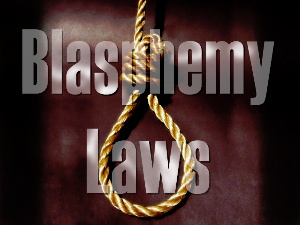
End Blasphemy Laws – a new campaign by IHEU


The International Humanist and Ethical Union (IHEU) is today among the founding partners heading a new, unified campaign for the abolition of “blasphemy” laws worldwide.


The End Blasphemy Laws campaign is being run by a new International Coalition Against Blasphemy Laws bringing together organizations that share the same goal: campaigning to repeal “blasphemy” and related laws worldwide.

The campaign has three strategic goals:


Blasphemy out of Europe, out of “western” states: We want to see the remaining laws against blasphemy and religious insult in Europe, Canada, and New Zealand repealed. Despite the clear international human rights consensus against blasphemy laws, there is an obvious double-standard at work when, for example, the European Union has taken a clear stand against blasphemy laws internationally, but some of its Members States cling on to existing anti-“blasphemy” legislation. It must be abolished, and although there’s no reason in principle that western states must repeal such laws first, there is a clear historical direction of travel, and in abolishing “blasphemy” in Europe and the “west”, promoting the international human rights consensus against “blasphemy” laws will become significantly more achievable.

Defending and promoting the international human rights consensus against “blasphemy” laws: We want to increase understanding of the already-agreed international human rights treaties and other instruments among the public, and lawmakers themselves. We are calling on international bodies and world leaders to look on “blasphemy” laws as they might look on laws restricting press freedom: as a clear restriction on free expression and an indicator of wider social harm.

A mutually supporting and robust international network: We want to see all advocates for freedom of expression against “blasphemy” laws around the world networked together, supporting each other, including secular, religious and human rights groups, human rights lawyers, and progressive lawmakers. Part of the problem of opposing “blasphemy” laws is that precisely where restrictions are most severe, advocates for free expression face the biggest challenges in speaking out. In Pakistan, calling for repeal of “blasphemy” laws has been declared “blasphemous”. In Saudi Arabia, for writing about unjust religious institutions, you can be jailed and flogged. In Mauritania, criticising the religious justification of modern slavery has earned a blogger a death sentence. Those of us in the most hard hit parts of the world need the most help. As a coalition we aim to make the most of our shared contacts and memberships to connect and support groups and individuals around the world.

There’s more about how the campaign will operate on the website as well as the campaign launch announcement and a growing list of coalition partners.

A history with blasphemy

IHEU’s work on “blasphemy” laws goes back a long way. IHEU has long-campaigned on the issue at the United Nations, in New York and Geneva. Our delegations have been at the centre of resistance to calls by the Organization of Islamic Cooperation to ban “defamation of religion”. Our Member Organizations have variously resisted and been part of successful campaigns to repeal national “blasphemy” laws for example in the UK and the Netherlands.

IHEU’s work around the accusations and exile of Taslima Nasreen, and more recently Raif Badawi in Saudi Arabia, have helped draw attention to the plight of those accused of blasphemy and similar so-called crimes. In addition, the IHEU Freedom of Thought Report has drawn international attention to issues of freedom of thought and expression especially relating to discrimination against the non-religious.

A future of unified action

IHEU’s Director of Communications Bob Churchill said today, “Last year, IHEU began planning for a joint campaign on “blasphemy” laws with our colleagues at the European Humanist Federation. Then, following the events surrounding the Charlie Hebdo killings and the carrying out of Raif Badawi’s flogging sentence in recent weeks, we brought forward our plans.

“Suddenly, the world is waking up to the fact that laws against “blasphemy” lend legitimacy to violence; whether that violence is carried out by gunmen against satirists in Paris, by mobs targeting Christians at the merest breath of a ‘blasphemy’ accusation in Islamabad, or by the state itself jailing and flogging a young writer in Jeddah, for nothing more than writing about secularism and calling for freedom.

“Many people and organizations have begun talking once again about the dangers and detriments of “blasphemy” laws, and reiterating calls for their abolition. We felt the time was right to bring forward and renew our efforts, to unite and lead a worldwide campaign. We soon found that other humanist and secular organizations had been similarly galvanized, and this new, huge coalition was born.

“The End Blasphemy Laws Campaign is a joint initiative, we are inviting all potential partner organizations to take part in the campaign. In countries with remaining “blasphemy” and “insult to religion” laws there is the most work to be done – but all humanist groups and other organizations can join the rallying cry to End Blasphemy Laws!”

The website end-blasphemy-laws.org opens today, and supporters can sign up to an “Action List” for future updates, campaign actions, news alerts and opportunities. The website will function as an ongoing hub for work by all the coalition partners on the subject of “blasphemy” laws around the world.

Bangladesh - Pakistani diplomat withdrawn - involvement in terror funding

The move comes after Dhaka contacts Islamabad as intelligence finds his involvement in terror funding, setting up fake currency network.

A Pakistani diplomat was withdrawn from Bangladesh on Saturday after intelligence dug out his involvement in terror financing and currency forgery racket.
Mohammad Mazhar Khan, attaché at the consular section of Pakistan high commission in Dhaka, was also an agent of his country's secret service ISI, foreign ministry officials said.
He had set up a wide network of producing and distributing fake Indian currency, they added.
An intelligence report said Mazhar in collaboration with some colleagues at the high commission used to channel the money earned through his currency scam to Hizb ut-Tahir, Ansarullah Bangla Team and Jamaat-e-Islami.
Mazhar left Dhaka with his family after the foreign ministry, instead of going for harsher measures like deportation, asked Islamabad to withdraw the diplomat in a week, officials said.
Contacted, a senior diplomat at the Pakistan high commission said, “We have nothing to say on the matter. Whatever response would come would be from our foreign affairs spokesperson.”
A top official at the foreign ministry yesterday confirmed that the Pak high commission notified them of Mazhar leaving Dhaka on January 31 and surrendering the diplomatic identification card.

Pakistan - The right to education


The right to a free education for all children is still only a theoretical one in Pakistan. Our constitution makes education a guaranteed right up to the age of 16 but this is a clause observed only in the breach. Other than the perennially neglected Balochistan, nowhere is the situation worse than in Sindh, especially in its rural areas. The stark numbers were recently revealed in the Annual Status of Education Report by the Sindh Education Foundation and the Idara-e-Taleem-o-Aagahi. One-third of children between the ages of six and 16 do not attend school and the figure is even worse for children between the ages of three and six, out of whom 63 percent are not receiving any schooling. The country has long had a gender divide in education too as girls, even if they receive primary schooling, are usually pulled out of school early. This is why less than 10 percent of public schools in Sindh offer secondary education. The fault lies not just in a society that is yet to understand the importance of educating women but a provincial government and bureaucracy that is content in letting things be as they are rather than making the effort to enrol more girls and provide the opportunities that would make this education financially feasible.

Equally distressing is the shift in enrolment away from public to private schools. The report says that the percentage of students now in private schools is 17 percent, a stunning increase of seven percentage points in the last year. This trend is both worrying and understandable. There is already a problem of ‘ghost’ schools which exist only on paper; on top of that the schools that are physically present are barely functional. Over 40 percent of public schools, according to the report, do not have potable water or usable bathroom facilities. The idea that a school should provide students with a hot meal, something they may not get at home, seems not to exist. This explains why parents are increasingly choosing private schools, which come with a host of problems of their own. Many private schools are solely money-making ventures that tend to charge exorbitant fees for substandard education. What the government, in Sindh and the rest of the country, needs to realise is that education cannot be treated like any other commodity which the private sector can provide in a more efficient manner. The profit motive should not be a factor when it comes to public services which will determine the future of our country. 

Pakistan - Sarwar, Punjab’s ex-governor

When Mohammad Sarwar, Punjab’s ex-governor resigned last week, it was amidst the flaring suspicions of the people of Pakistan. To imagine that no political scandal lay behind the resignation, was a laughable idea. Journalists and analysts around the country set out to find the “real reason” the governor resigned and after a few scattered conspiracies, most have had to resign to the fact that there was little more than met the eye. The ex-governor left, by his own admission, because he felt there was not enough he could do to serve Pakistan in his position. 
It is significant to see a man of his experience resign from an important post to “do more.” If the motivations really are as straightforward as the ex- governor has stated, then they are important to analyse. Most significantly perhaps, they quite simply are incorrect. As the constitutional head of the province, Sarwar enjoyed a great deal of clout and influence. Not very long ago, we did have a Punjab governor who extended his work to noble and charitable causes, like lobbying for the rights of minorities and protesting the blasphemy law. The fact is, one might not have the powers to strictly do but does have the influence to eventually get it done by getting one’s priorities out to the right people. Resigning in protest, though rather symbolic, is usually utterly useless. In this case, it might not matter to the Punjab in a strictly legislative sense, but here was a decent, well-respected man, and in a country where mere honesty is a rare political ability, his loss will be felt. It is important for our honest men in politics to realise: we do not need more Imran Khans; we need good people who are willing to work with and within the system to change it.