Saturday, December 27, 2014
In memorial: Benazir Bhutto

By Jack McGee

Steadfast in her beliefs, she vowed to put her nation first – even before her own family. Jack McGee takes a look back on the life of the former prime minister of Pakistan on the anniversary of her assassination.

She is often lambasted as having been un-Islamic, corrupt and out of touch with the people. Such criticism is all very convenient in hindsight, but there is little doubt that Benazir Bhutto represented the hopes and dreams of millions around the world. At home she vowed to represent the voice of the poor; abroad she was seen as a voice of reason in a sea of chauvinism, paving the way for women’s rights in Pakistan. Although she may not have achieved everything she is said to have set out to accomplish, her impact was legendary.
To even begin to regard Benazir as more than another politician is to acknowledge the special position she faced when entering politics. Long has she been judged by her faults, measured sharply against any gains. After all, a woman in politics is expected to be perfect and without smirch, able to express herself on behalf of her entire gender. If we cannot help judging her by her failures from the luxury of our democratic homelands, we cannot begin to imagine the milieu of entrenched bigotry that faced her when she took power.
Born in 1953, just six years after the creation of Pakistan, Benazir was the eldest of four children. Hers was a family of wealth and fame, far removed from the misery and poverty of the Pakistani masses of the day. Her grandfather was one of the highest-ranking politicians under the British Raj, and her father was foreign minister at the time of her birth.
But a level of prestige and opportunity exists for nearly all prominent politicians in the country, even more so during the time of her ascent. Money buys education, and education emboldens. To judge whether Benazir was a good servant of the people she chose to represent, we need to look beyond her faith, overseas education and lifestyle. Her choice of translucent Hermès scarves worn as dupatta (headscarf) may have been too much for some, but she never claimed to represent anything but the most moderate form of Islam.
She identified with the early heyday of Islamic culture, a period of discovery and intellectual curiosity
As a Muslim, she identified with the early heyday of Islamic culture, a period of discovery and intellectual curiosity. For Benazir, the brilliance of the accomplishments of Muslims during the Dark Ages of Europe in areas such as medicine, science, thought and art had been dimmed by the sectarian violence that has existed for centuries.
In this regard she felt that however great the achievements of the Moghul and Ottoman eras had been, Muslim pride in our times was rarely derived from economic innovation or intellectual creativity. Rather it had become, and still is, increasingly caught in a negative outlook, plagued by internal sectarian misunderstandings and a defensive attitude of repelling ‘Western assaults’.
This destructive thinking had allowed extremists to fuel the idea of a clash of civilisations between East and West, feeding an anger that detracts from the internal causes of decay. She called upon Muslims to speak out against not only assault from the West, but also Muslim-on-Muslim violence, even when it was not politically convenient. ‘It is so much easier to blame others for our problems than to accept responsibility ourselves,’ she wrote in Reconciliation, completed just days before her death.
In 1969 after completing secondary school in Pakistan, she was sent to the United States to study at Harvard. It was the height of the Vietnam War. She saw firsthand the power of the people; that they could change policy and even bring down government. Internationally, it was a major period in the development of equal rights for women. This was her first exposure to an environment in which women were starting to be treated as full participants in society. It could not help but thoroughly shape her political being. She was the first woman in her family not to wear the burqa; her father told her that it was no longer necessary.Her biggest opponents always remained the Pakistani Army. This was an increasingly conservative band of men who used their interpretation of religion to defend their chauvinism, and drew upon threats from overseas to bolster their military muscle. During her time at college, her father was elected president of Pakistan. In 1977, just after she had finished studying at Oxford, the head of the army, General Zia, staged a coup and imprisoned Benazir’s father, sentencing him to death. She would visit him in prison, and it was during that period that she had deep conversations with her father about leadership and representing the people. Her level of involvement in politics increased when her father asked her to take over. In a traditional Muslim family this responsibility would have been expected of the eldest son. Her father gave it to the eldest child, and the one in the best position.
But Benazir, and indeed her entire family, paid dearly for their political beliefs. She was convicted on trumped-up charges shortly before her father’s execution in 1979. The next five years saw her alone in sweltering prison cells or under house arrest. In 1984, mounting international pressure forced General Zia to release her into exile for medical reasons. The following year, her brother Shahnawaz was killed in France under murky circumstances. More than a decade later a police shootout, considered an assassination by many, took her brother Murtaza.
In spite of the deaths, Benazir persevered. Drawing on the popularity of her late father, she no doubt enjoyed a certain aura. Seemingly overnight another charismatic Bhutto had appeared, representing a democratic and progressive Pakistan. Everywhere she went she roused a huge crowd, each more passionate than the one before. At that time she could have rallied the masses to take down the government. But she believed in the sanctity of the vote and the power of the voice over the bullet. She echoed her father’s call that there should not be bloodshed or violence.
In 1988, an unexplained plane crash killed General Zia, allowing Benazir to stand for election. The people of Pakistan responded, electing her as prime minister. At the age of 35, she was not only the youngest PM of a majority Muslim nation, but also the first female one.
On her first day in office she freed political prisoners and removed censorship. After a decade of repression and dictatorship, things started to change. To the villages, she brought water and electricity. To her nation, she brought international news broadcasters and the cell phone. She had 48,000 primary and secondary schools built. She believed that in face of the murderers and torturers, democracy was the greatest revenge.
Her two terms in office were both interrupted by allegations of corruption. Asif Ali Zardari, her husband and current president of Pakistan, became known as ‘Mr Ten Percent’ for the allegedly corrupt deals he cut while serving in his wife’s governments. She was asked to account for money found outside the country, and she often had to spend time in exile in London and Dubai when not in power. But she never gave up on her dreams for the nation, no matter the cost.
On the night of her assassination on December 27th, 2007, she was prepared for the worst. She’d left her daughters with their father in Dubai after discussing with her family the high possibility of never seeing them again. Her fears were realised.

We cannot disassociate her from her family. She had a choice whether to enter politics, and we cannot deny her this privilege and choice simply because of her wealth. The trouble with Benazir was that everyone pinned their hopes on her as being the coming of a saviour, rather than conceding that she was only one face amidst a whole situation in need of fundamental reform. History has shown that if you create an idol, she will fall. But if you look at the intention, it can overcome all the failures.
Pakistan - The Legacy of Benazir Bhutto

By Bina Shah

Seven years have passed since Benazir Bhutto, Pakistan’s former prime minister, was assassinated in Rawalpindi, on Dec. 27, 2007. Her legacy and significance in world history continue to hold a special place in the hearts of the millions of Pakistanis who mourn her death as much as they mourn the death of the dream of what Pakistan might have been had she lived to rule the country just one more time.
As with that of many political icons, Ms. Bhutto’s sudden death left a void in both leadership and inspiration; no politician in Pakistan has been able to fill it. She also left behind a checkered past, with allegations of corruption that still linger, unproved in court for lack of evidence. The two governments she led were dismissed on corruption charges, and she was accused of amassing a large personal fortune for her own family while doing far too little to alleviate the burdens of Pakistan’s poor.
In her own life, she carved out a brilliant academic career at Harvard and Oxford, and political achievements of undeniable import as the daughter of an assassinated prime minister battling to restore democracy in Pakistan; later, she became the first woman elected to lead a Muslim country. She inhabited a marriage that puzzled people as much as it fascinated them — to a controversial man who ruled Pakistan in her name for years after her death. She raised a son and two daughters, who now strive, with mixed results, to serve the Pakistani people she claimed to have lived for.
Yet Ms. Bhutto left behind more than success or scandal. In her wake are the millions of Pakistani girls and women who look at her life, her determination, her perseverance in the face of all odds. They appropriate even the smallest part of these elements of her life and add it to the blueprint they envision for their own. And they thrill to the idea, still radical in Pakistan 40 years after Ms. Bhutto began her political career, that gender doesn’t have to stop them from achieving their dreams.
One of the more literal examples of Ms. Bhutto’s legacy that helps Pakistani women is the Benazir Income Support Program, which distributes cash, without conditions, to low-income families throughout Pakistan. These poorest of the poor, 5.5 million families in 2013, receive 1,200 Pakistani rupees — about $12 — twice monthly, most of which is spent on food. Ms. Bhutto worked on the vision, concept and design of the program with a renowned Pakistani economist, Dr. Kaiser Bengali. After her death, the initiative was enacted by Prime Minister Yousaf Raza Gilani, but named after Ms. Bhutto by her widower, President Asif Ali Zardari, as a tribute to her.
The program isn’t without flaws; critics have said that it is meant to influence voters at election time, that political influence skews which families are eligible to be recipients, and the fact that most of the assistance is nonconditional renders it ineffective (a subprogram gives families more cash if they enroll their children in primary school).
But there is also a revolutionary side to the scheme: The cash is transferred into the bank account of a woman in the family, not a man. Placing spending power directly into the hands of poor Pakistani women empowers them on many levels: They become decision makers within the family, and their respect and value increase in the community. To obtain the cash, they are required to get national identity cards and bank accounts; as a result, they achieve a level of citizenship and fiscal identity denied to previous generations, when the births and deaths of women were rarely registered in official records.
While mothers are being helped by the program, their daughters are going to school in even greater numbers than before, thanks to the many awareness campaigns and education drives underway in Pakistan. Many of these girls regard Benazir Bhutto as an inspiration for their own educational paths. Malala Yousafzai, Pakistan’s most famous schoolgirl, cites Ms. Bhutto as her personal idol, and wore Ms. Bhutto’s white shawl when she addressed the United Nations in 2013.
Young women attend classes at the Shaheed Zulfikar Ali Bhutto Institute of Science and Technology, which Ms. Bhutto established in her father’s name, in Karachi, Islamabad, Hyderabad and Larkana. There, they study law, media, computer engineering and more. Ms. Bhutto’s university-educated daughters, Asifa and Bakhtawar, today publicly encourage Pakistani girls to go to school so that they, too, may one day serve the nation as educated, empowered women.
The daughter of a privileged landowning family, Ms. Bhutto nevertheless fought against the conservative social mores of her environment, in which rich girls could go to school but grown women were expected to run a house and raise a family, no matter how educated they were. She herself returned to Pakistan after her studies, and entered politics, heading the Pakistan Peoples Party in its now-celebrated struggle in the 1980s against the dictator Gen. Mohammad Zia ul-Haq.
She endured house arrest and exile throughout her political career, overcame the powerful mullahs’ objections to a woman’s ruling an Islamic nation, and won admirers all over the world for her political skills and compassion. Even after her death, she serves as the ultimate mentor to Pakistani girls and women who want to set the course of their lives for themselves, instead of having it dictated to them.
What might have happened in Pakistan had Ms. Bhutto been elected for a third term will remain an unanswerable question. Her personal and political legacy is full of contradictions and complexities that will continue to be examined by earnest historians, mined by rapacious politicians, venerated by her supporters and picked apart by her detractors.
Yet she emboldened the heart of every girl and woman in Pakistan who was ever told that being a woman precluded her from a lifetime of accomplishment, service and worth. This was her greatest legacy.
Pakistan observes Benazir Bhutto's 7th death anniversary

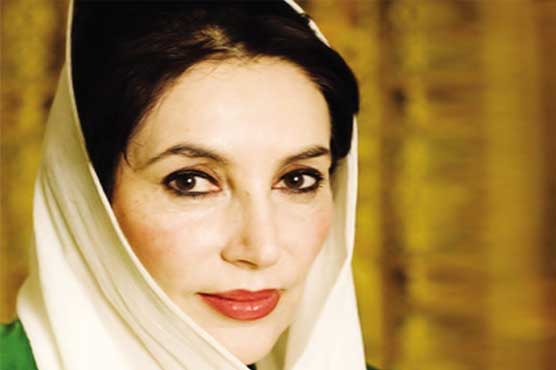
Pakistan is observing death anniversary of its two-time former prime minister Benazir Bhutto on Saturday. Pakistan People’s Party (PPP) leader was murdered on 27th of December, 2007 by terrorists in Rawalpindi while she was returning from a public meeting during 2008 general elections campaign.
PPP is going to observe the death anniversary ceremonies in Garhi Khuda Baksh on Saturday. Co-Chairman PPP Asif Ali Zardari, Benazir’s widower, visited the grave of the slain leader along with their daughter Bakhtawar Zardari on Friday.
Benazir Bhutto s murder case has not yet been resolved.
Friday, December 26, 2014
Hillary Clinton looks to shore up support on the left

By Anne Gearan
 Hillary Rodham Clinton, the Democratic front-runner for president, is working hard to shore up support among liberals in hopes of tamping down a serious challenge from the left in the battle for the 2016 nomination.
Clinton has aligned herself firmly with President Obama since the November midterms on a range of liberal-friendly issues, including immigration, climate change and opening diplomatic relations with Cuba. In an impassioned human rights speech this month, she also condemned the CIA’s use of harsh interrogation tactics and decried cases of apparent police brutality against minorities.
The recent statements suggest a concerted effort by Clinton to appeal to the Democratic Party’s most activist, liberal voters, who have often eyed her with suspicion and who would be crucial to her securing the party’s nomination.
But the positions also tie her ever more tightly to a president who remains broadly unpopular, providing new lines of attack for the many Republicans jostling to oppose her if she runs.
One Democratic strategist said the moves are “more prophylactic than anything. If she didn’t say anything, the media and the liberal groups that care about this stuff” would criticize her or nurse a grudge. Like others, he spoke on the condition of anonymity because Clinton has not yet said she is a candidate.
Strategists from both parties also said Clinton is hardly tipping her hand by remarking on matters that will be part of the coming presidential campaign.
Clinton has said she is considering a second run for president and would probably reach her decision after Jan. 1. An announcement looks likely in the spring.
There are several potential Democratic candidates who could appeal to portions of the party’s liberal base, including former senator Jim Webb (Va.), Maryland Gov. Martin O’Malley and Sen. Bernard Sanders (I-Vt.). Many progressives also are urging a bid by Sen. Elizabeth Warren (D-Mass.), whose populist anti-Wall Street message draws large crowds.
In the meantime, Clinton has been quietly meeting with potential campaign advisers and consulting a variety of people, from business leaders to sitting Democratic political figures, about issues she might address in a campaign.
She also has been making a point of addressing topical matters at speaking events and other appearances. The former secretary of state’s office has released statements in her name in support of Obama’s announcement of executive action on immigration and on the planned normalization of relations with Cuba.
Her appeals to liberals were on clear display last week at a gala award ceremony in New York named for Robert F. Kennedy, who was assassinated in 1968 during his idealistic run for the White House.
Clinton said she is proud to have been part of an administration that ended extrajudicial transfers and abusive treatment of terrorism detainees. The practices were the subject of an exhaustive Senate report this month that concluded that the CIA had engaged in torture and that the methods were ineffective in gaining useful intelligence.
The well-dressed crowd in a Manhattan hotel ballroom on Dec. 16 applauded loudly at that statement and thrilled to her broader theme of righting social wrongs.
“What would Robert Kennedy say about the fact that still, today, more than 16 million children live in poverty in the richest nation on Earth?” Clinton asked.
“What would he say about the fact that such a large portion of economic gains have gone to such a small portion of our population,” she continued, also asking about the persistent wealth gap among blacks and Hispanics and the unequal treatment of black men in the criminal justice system.
“What would Robert Kennedy say to the thousands of Americans marching in our streets demanding justice for all? To the young people with their eyes open and their hands up?”
The remarks were more in keeping with Clinton’s early career as a lawyer and human rights champion than her later work as a politically moderate senator and failed presidential candidate or as a diplomat. They also appear designed to address a populist hunger among many Democrats for a candidate attuned to economic inequality and the concerns of working people, including many who would prefer a run by Warren.
The next day came word that American Alan Gross had been released from prison in Cuba and that Obama planned a larger diplomatic opening to the island nation that looms large in U.S. politics. Clinton issued a statement that evening welcoming Gross’s release and praising the moves to engage with Cuba.
“Despite good intentions, our decades-long policy of isolation has only strengthened the Castro regime’s grip on power,” Clinton said. “As I have said, the best way to bring change to Cuba is to expose its people to the values, information and material comforts of the outside world.”
Clinton was secretary of state when Gross was detained in 2009 while distributing communications equipment to Jewish groups in Cuba under a contract with the U.S. Agency for International Development. Gross had been convicted in 2011 of crimes against the Cuban state and sentenced to 15 years.
Clinton wrote in her memoir “Hard Choices” that not getting Gross out was one of the regrets of her tenure. She also wrote that she had suggested to Obama as she left the administration in 2013 that the time might be right for an overture to Cuba.
On the environment, many activists are annoyed by Clinton’s refusal to take a stand on the proposed Keystone XL pipeline, which requires approval from the State Department, which she used to lead. She sidestepped that issue again at another New York gala this month but gave a strikingly fulsome endorsement of Obama’s recent actions on climate change.
“You pushed for and rallied behind President Obama’s use of the Clean Air Act to set the first-ever federal limits on carbon pollution from existing power plants, which are driving the most dangerous effects of climate change,” Clinton told the League of Conservation Voters. “The unprecedented action that President Obama has taken must be protected at all cost.”
Keystone may be stuck in environmentalists’ craw now, but the issue is likely to be resolved before the next president takes office. Clinton appeared to be signaling how she would address the larger and ongoing issue of climate change in the 2016 campaign.
“From the administration’s announcement last month of a $3 billion commitment to the global green-climate fund, to that new joint announcement with China [on climate change], to new rules under consideration for ozone, we continue to push forward,” she said. “But that is just the beginning of what is needed.”
Jeff Gohringer, a spokesman for the League of Conservation Voters, said Clinton’s remarks “continue to build on her record on energy and climate issues” at a time when the forthcoming Republican Congress is expected to try to short-circuit Obama’s actions.
In early December, during a Boston speech to a women’s group, Clinton took time to address the deaths of unarmed black men in Ferguson, Mo., and Staten Island, saying that many Americans think that the nation’s justice system is off-kilter. She said she supports Obama’s decision to create a new task force on policing and community relations. (She has not weighed in publicly on the killing of two New York police officers, who were slain in apparent revenge for the Staten Island death.)
On immigration, Clinton issued a lengthy statement last month supporting Obama’s controversial decision to shield millions of illegal immigrants from deportation — and blamed congressional Republicans for failing to move ahead on comprehensive reform.
“We should never forget that we’re not discussing abstract statistics — we’re talking about real families with real experiences,” she said in the statement. “We’re talking about parents lying awake at night afraid of a knock on the door that could tear their families apart, people who love this country, work hard, and want nothing more than a chance to contribute to the community and build better lives for themselves and their children.”
One benefit to highlighting areas of agreement with Obama now is that it will give Clinton the ability to distance herself from him on other issues later. She will have “a whole campaign” to make those distinctions, a senior Democrat said.
As Clinton’s every move is scrutinized, it may be too easy to see only political motives in her public statements or to analyze them only as they relate to Obama, some observers said.
“She’s a public figure, a former secretary of state, during which time I’m sure that she had a number of conversations with the president about the various issues” she is commenting on, said Nancy J. Hirschmann, a political science professor and director of the University of Pennsylvania’s gender, sexuality and women’s studies program.
“She has a clear vision of who she is, so it’s perfectly reasonable for her to express truthfully what her own views are.”
China - "Mao Zedong" train returns home of late chairman

A locomotive named after late Chinese leader Mao Zedong (1893-1976) arrived at Changsha, capital of his home province of Hunan, on Friday, the anniversary of Mao's birth.

"Mao Zedong" pulled the T1 passenger train that runs between the Chinese capital and Hunan while bearing the late leader's portrait. It left Beijing Railway Station on Thursday afternoon.
Friday is the 121st anniversary of Mao's birth.
"Mao Zedong" was assigned to run on the Beijing-Hunan Line after its fifth upgrade. The new locomotive has a maximum speed of 160 km per hour.
The locomotive was named after Mao on Oct. 30, 1946 in Harbin City in northeast China during the War of Liberation (1946-1949). It was initially a steam locomotive used to transport soldiers and military materials.
It was later upgraded to run on diesel in 1977. The new model is electric and belongs to the Beijing Railway Bureau.
"Mao Zedong" boasts 9.63 million kilometers of safe operations over the past 68 years.
Pakistan - #PeshawarAttack: When will our news channels learn to cover tragedy?

It has been nine days since the horror unfolded in Peshawar. We are still subject to wave after wave of equal parts fury and fear that takes over us when news on TV is on. It is time to talk about the pathetic way in which national tragedies are turned into masquerades by our electronic media.
When one tunes in for updates on unfortunate news like this, naturally, there are some things one is prepared for; the bloody floors, the bullet-riddled walls; footage of such an atrocity is bound to carry strong images.
But that in no way licenses that disgusting dramatisation which has become the hallmark of our news channels.
Yet, we keep seeing it on our TV sets; unnecessarily dramatic camera angles, supplemented with an unaffected telling of each gruesome death in gory detail with desolate music, inappropriate poetry and sonorous voice-overs; making viewers cringe at every horrendous moment, over and over again.
Often, right in the middle of a very strong image, a pop-up ad of the latest cell phone, beverage or an areca nut product, will be shoved in our face to be swallowed.
The message was: “Here is a tragedy, now get over it and buy our stuff”.
Companies vying for the maximum eyes on their products do it through essentially achieved it their gains through the horror-value of the worst day in the country's recent history.
One has to wonder, what kind of people run these TV businesses? As the nation descended into chaotic rage, these guys couldn't let go of their profit-maximising plans. As much as businesses like to think of themselves as machines, they are still run by humans. It makes you think, someone made the conscious choice to prioritise money over empathy at a time like this.
A journalist’s job is to bring news of a tragedy to the public. They are supposed to present this news as objectively as possible, leaving the subsequent outrage/apathy up to the viewer. But since the advent of privatisation of news, they have been dictating the audience’s emotions, and sacrificing objectivity at the altar of cash, slowly dissolving the line between journalism and sensationalism.
This brings us to the transmissions that followed December 16 2014. People wanted to know more about what happened, but the typical presentation style plummeted to new depths. Starting off in poor taste, it subsequently went from sad to sadistic.
How heart-wrenching this must have been for the victims’ families; to see their personal hell being put on loop for the whole world to see on TV. Repeatedly. Not content with one approach, they went beyond the call of duty to change music and voice-over every few hours to maintain shock value.
There were people complaining about how anchors were playing up the tragedy without a modicum of respect or emotion. The thing is, these anchors are either reading copy off a teleprompter, or following their producer through their earpieces. These producers are the ones who come up with bright ideas like speculating overly gruesome takes on the events of December 16.
That's not to say the news anchors are completely absolved of guilt either — at moments when their tone should be sombre, it's shockingly indifferent. “Jee haan, yeh afsos naak waaqeya paish aaya...” — one doesn't shout out 'afsos' like that.
Additionally, while airing footage after the heinous attack, the news slapped on a PG-18 logo on the corner and took viewers through an unfiltered look at the aftermath of the tragedy.
PG-18 implies that people under 18 should seek parental approval before watching. There has never been a campaign explaining these guidelines to the public. How much good can they achieve?
The entire world came together to grieve over December 16. Turkey declared it a day of mourning, India held a minute’s silence and our own politicians put their differences aside. Indeed, many had given up point-scoring in the face of the catastrophe. But as soon as the Christian community of Pakistan cancelled Christmas to show their solidarity, our newsmen pounced at the opportunity to point out that Christians, as a minority, are offered that luxury when one of them is attacked.
Perhaps, in their minds, they were doing the minorities a great favour. But perhaps they need to prioritise their agendas right?
These might be trivial complaints to some, but it adds up to a presentation that seems to be raising a despondent viewership. News and dread have now become synonymous. One can’t just look away and pretend everything is all right, but there has to be a middle ground between that and PTSD-inducing imagery.
Journalism is all about balancing needs, understanding the significance and sensitivity of events and their timing. Where is that balance?
On Christmas visit with troops, Obama lauds end of Afghanistan mission

One week before the U.S. combat mission inAfghanistan draws to a close, President Barack Obama and his wife, Michelle, thanked American troops on Thursday during a Christmas Day visit to Marine Corps Base Hawaii in Kanoehe Bay.

One man in the crowd yelled "Huah!", a traditional cheer of the U.S. military, and the audience applauded as Obama spoke of the United States officially ending its fighting role in Afghanistanafter 13 years of conflict.
"Because of the extraordinary service of the men and women in the American armed forces, Afghanistan has a chance to rebuild its own country," Obama said.
The Taliban were ousted by U.S.-backed Afghan forces in 2001, following the Sept. 11 attacks on America by Islamist militants using hijacked airliners, and the United States has kept a military presence there ever since.
With the end of the NATO-led combat mission in Afghanistan, the Obama administration said earlier this month it would leave a residual U.S. force of about 10,800 troops behind for at least the first few months of 2015 to help provide support to Afghan security forces.
This year has been the deadliest in the war, with more than 4,000 Afghan soldiers and police killed during the past 12 months. The conflict has claimed the lives of more than 2,000 U.S. military personnel.
Obama told a crowd of 420 people, including troops and their families, gathered in the U.S. Marine base's Anderson Hall dining facility that Afghanistan is "not going to be a source of terrorist attacks again."
Obama said the United States still has "some very difficult missions around the world," mentioning Iraq, where U.S.-led coalition forces are countering the Islamic State. In Africa, U.S. troops are helping to battle an Ebola epidemic that has killed at least 7,500 people.
The president and first lady then spent time talking to the troops individually and taking pictures with families.
Vice President Joe Biden and his wife, Jill, visited wounded troops at the Walter Reed National Military Medical Center near Washington, D.C., on Thursday.
The White House said the Obamas spent Christmas morning opening presents and singing carols and then spent the afternoon at a nearby beach.
Pakistan - WHY DOES TTP TARGET PAKISTANI STATE? – ANALYSIS

By Wilson John
Much has been written about Tehrik-e-Taliban Pakistan (TTP), which is accused of the savage attack on the Peshawar school children on December 16, 2014. But only a few of the writings have attempted to examine a critical question — Why does TTP target the Pakistani state and its army? A coherent answer to this question would call for an objective assessment of the nature and character of this group.
Such an assessment has become all the more important in view of the Peshawar attack. The TTP does pose a serious threat to the state of Pakistan, in ways not appreciated fully even after the Peshawar attack. A failure to assess the nature of the threat posed by TTP to Pakistan could have serious consequences for India and the region as a whole.
A starting point could be the genesis of TTP. Three events in essence shaped the group’s ideology, character and formation in December 2007. First and foremost was the Afghan Jihad where many of the tribal leaders and men were recruited as ‘mujahideen’, funded and armed by the Saudi-US combine and trained by Pakistan Army. The Afghan battlefield also brought the tribal leaders close to foreign fighters, notably the Arabs, many of whom later became part of al Qaeda. Second was the events following the al Qaeda attack on the US in September 2001. In the US counter-offensive launched in Afghanistan, a large number of al Qaeda and Taliban men and leaders fled to Pakistan and many of them found easy refuge in the tribal areas, thanks to their close relations with the Haqqani Network, various tribal leaders and Pakistan Army.
The third, perhaps the most relevant in the present context, was the series of military offensives launched by Pakistan Army in the tribal areas since 2002 and the launching of Drone attacks by the US in 2004.
Both the military offensives carried out by Pakistan Army and the US Drone attacks have killed several thousand in the tribal areas dominated by Pashtun communities. There is no record of the deaths in any of these offensives. Some estimates suggest that over 3000 people have died in the US Drone attacks with only a small percentage identified as terrorists. A large number of the dead, and injured, remain anonymous and a significant percentage of this anonymous figure were civilians—men, women and children.
There is no figure to match the Pakistan Army military actions in the area since 2002. What is known is the intensity of these offensives—the military used gunships, combat jets and field artillery to kill, to destroy and raze villages after villages in the area. The quantum of destruction could be gauged from the number of people displaced due to these operations. In 2008, the UN reported close to eight million displaced persons—men, women and children forced to flee their homes and take refuge in tents put up by distant places. The latest military operation, Operation Zarb-e-Azb, which began in June 2014, has already displaced close to one million people.
It would be amiss not to mention the Lal Masjid episode of July 2007 when the army launched a short but a bloody attack on the mosque in Islamabad to neutralise a group of students and clerics who were demanding an imposition of sharia in the country and had taken to the streets. A few hundred students and others had died in the offensive (the army estimated a little over a hundred while the other estimates put the figure at over 300), many of them were from the erstwhile North West Frontier Province and the tribal areas.
It is against this backdrop that several tribal groups, till then fighting against the foreign forces in Afghanistan, decided to come together under an umbrella group called Tehrik-e-Taliban Pakistan (TTP). It was not a splinter group of Afghan Taliban nor was directly associated with al Qaeda. It had no connection with the Haqqani Network either. But the evolution of violent armed groups in the region post-2001 has been so complex and opaque it would be deceptive to believe that TTP has had no association with any of these groups.
This complex nature of violence is reflected in TTP’s survival against compelling odds and Pakistan’s struggles to contain the group. TTP is not a big group with its cadre strength between 5000 and 30000 (different estimates), a large number of them have been killed in Pak military offensives and Drone attacks since 2002; much of its top leadership has been killed in Drone attacks and it gets no support from any state agency, be it in Pakistan or outside. The group not only faces the might of Pakistan Army and the state but also several terrorist groups, patronised by Pakistan Army, like Lashkar-e-Tayyeba (LeT), which have been used to counter them. The group, despite these challenges, managed to attack the Karachi airport early this year and carry out a suicide bombing at Wagah in November this year.
Pakistan Army’s struggles to contain the group could be gauged from the series of military offensives it had launched in the past to destroy TTP but with little success. Apart from occasional ceasefires, TTP has consistently attacked military assets in different provinces, including Punjab. TTP had also kidnapped soldiers from the army as well as the paramilitary force, Frontier Corps, and beheaded a few of them.
One of the key reasons for TTP’s survival has been Pakistan’s policy of using terrorist groups as instruments of state policy. In this context, Pakistan Army’s protection of the Haqqani Network and the Afghan Taliban as ‘ strategic assets’ has helped TTP to retain its sanctuary and its attack capabilities. The areas dominated by the Haqqani Network and the Afghan Taliban have provided TTP with ‘strategic depth’. Whenever the Pakistan military stepped up its offensive in the tribal areas, TTP found it convenient to move into the Taliban-controlled areas. There is substantial evidence that the Haqqani Network has also helped TTP to survive the military onslaught which, in any case, has been selective and hence ineffective. For instance, before launching the current operation, the Haqqanis were alerted and moved to safer locations.
Another important reason for TTP’s survival has been its vast network of supporters in other parts of Pakistan, particularly Karachi which is considered to be the city with the largest number of Pashtuns. TTP has drawn its cadres and much of its financial resources from Karachi where it has a stake in the booming business of kidnapping for ransom. Likewise, TTP also has a working relationship with extremist groups like Lashkar-e-Jhangvi (LJ) which are also active in the criminal world in Karachi and other major cities of Pakistan. The LJ, based in Punjab, incidentally openly campaigned for Nawaz Sharif during the 2013 general elections.
It is fairly apparent that TTP benefits in many other ways from its association with al Qaeda and the Taliban. This becomes apparent from Pakistan’s noticeable failure to persuade the Haqqani Network and the Afghan Taliban to keep TTP in check or help the army to destroy the group. This failure could also indicate the limited leverage the army has on its ‘proxy’ groups, which are emboldened by the impending departure of the foreign forces from Afghanistan. Both Haqqanis and Afghan Taliban, like TTP, are Pashtun groups.
What Pakistan today faces in TTP is a hybrid group, a mixture of virulent insurgency and terrorism, fuelled by its association with al Qaeda. The Peshawar attack has added another dimension—the brutality of Islamic State of Iraq and Syria (ISIS).
Pakistan - Jinnah’s vision distorted

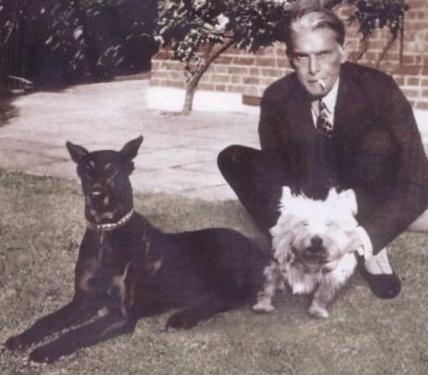
On August 11, 1947, the man who more than any other was responsible for bringing the state of Pakistan into being spoke these 52 words: “You are free; you are free to go to your temples, you are free to go to your mosques or to any other place or worship in this state of Pakistan. You may belong to any religion or caste or creed that has nothing to do with the business of the state.”” the nation celebrates the birthday of the man who uttered those historic words, Muhammed Ali Jinnah but it remains conflicted about the vision that Jinnah had for Pakistan. For much of our existence as a state, Pakistanis have been taught that Jinnah wanted to create a theocratic state, but there is another view — that he sought a country that was Muslim-majority but secular, forward-looking and progressive. The former perception is currently dominant, the latter often buried or otherwise hidden from view by those for whom such a vision is anathema.


To the shrinking liberal strata of society the August 11 speech is a touchstone. Jinnah speaks with clarity of a state that is tolerant, inclusive and above all secular, but it was a vision that quickly was deliberately clouded by those who came after him and then metamorphosed over decades into the creature that the state has become today — riven by sectarian conflict, at the mercy of terrorists who roam at will and butcher our children with seeming impunity. A state where those who carried out the attack on the Army Public School in Peshawar on December 16 spent the night before staying in a mosque close by according to the initial police report on the attack. A state that is not failed — nor is likely to despite what the Cassandra’s may say — but is deeply flawed and performs far below where it should, given the plenitude of human and natural resources at its disposal.
It is clear that those who succeeded Jinnah in the corridors of power were distinctly unimpressed by what he said in his August 11 speech, and we are the worse off for it. They were powerful religious ideologues — to say nothing of vaultingly ambitious at a time when real power was close to hand — and they did what they could to suppress the speech in newspapers and it was virtually erased from the record.
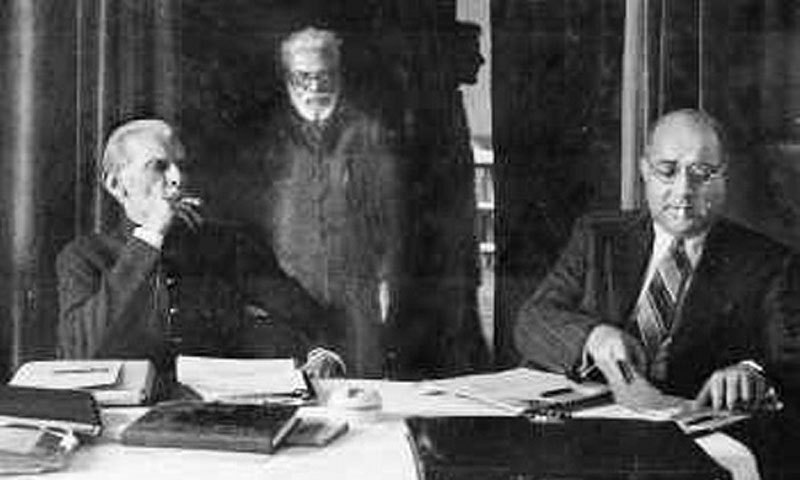
Pakistan stumbled into the late 1960s, through the 1970s and on into the early 1980s via a steady process of Islamisation and the enactment of discriminatory laws targeted at minorities. The parts of that historic speech that did not chime well with our leaders and those who educated successive generations of our children — became lost. Deliberately lost. Jinnah himself was rebranded, shaped by a distorting mirror.
The secular, Westernised man that he was for the majority of his adult life was morphed into someone he was clearly not. Jinnah was portrayed by successive ruling regimes in a manner that suited their own perverse agenda for the country and his liberal leanings were completely ignored. If he were alive today, Jinnah would have been shocked at the way he has been portrayed in our history books.
History does not come with an ‘auto-correct’ button. The Pakistan of today is what its people, and particularly several generations of politicians — have made it. Such visionaries that we have border on the delusional on occasion, and a broad streak of mediocrity runs through most of the political cadre. When a state chooses second-best to lead it, then it is no surprise that the state itself becomes second best. Jinnah may not have been perfect, but any flaws he may have had were by far outweighed by the clarity and discipline of the vision that drove him. We shall not see his like again.
Pakistan - Peshawar school massacre mastermind killed
http://www.thehindu.com/
A senior Taliban commander, believed to be a key planner in the Peshawar school massacre, has been killed by the security forces in Pakistan’s troubled Khyber Agency.
“Saddam had been killed in the Gundi area of Jamrud by the security forces in an operation yesterday. One of his accomplices has been captured alive,” Peshawar Political Agent of Khyber Agency Shahab Ali Shah told reporters.
A member of the Tariq Gedar group of Tehreek-i-Taliban Pakistan (TTP), Saddam had facilitated the seven attackers who had attacked the Army Public School in Peshawar on December 16 and killed 150 people, mostly children.
Saddam was also planner of killing of 11 security personnel and eight scouts in Khyber Pakhtunkhwa last year.
Civil society deadline for arrest of cleric ends today
shiapost.com
Civil society activists have decided to reach the Aabpara police station at 5pm on Friday as the deadline for the inclusion of terrorism sections in the FIR against Maulana Abdul Aziz expired.
If their demand to include the ATA sections in the FIR against the cleric was met by 5pm, the protesters would disperse otherwise they would take a decision for the next phase of their protest.
It may be noted that after the Peshawar tragedy, Maulana Aziz, the head of Lal Masjid, gave a controversial statement and said he would neither condemn the killing of the children nor considered them as martyrs. Because of the statement, the civil society started a protest against the cleric. For two days, the protests were held in front of the mosque during which the Maulana also reportedly threatened the protesters. As a result, cases were registered against both the sides.
On the third day of the protest on December 20, the civil society moved to the National Press Club (NPC) and held a protest there. On December 22, when the protesters gathered outside the Aabpara police station, SHO Khalid Awan assured them that after getting a legal opinion the sections of the Anti-Terrorism Act (ATA) would be included in the FIR registered against the cleric on the charge of instigating the citizens for violence and spreading sectarian hatred.
On the other hand, the civil society representatives warned that if the ATA sections were not included in the FIR and the cleric was not arrested, they would again hold a protest in front of the police station on December 26.
Human rights activist Jibran Nasir, the organiser of the protest, told Dawn that the police had sought two days for the fulfillment of the protesters’ demand.
“The police promised to include the sections in the FIR and arrest the cleric by December 24. We did not hold a protest on December 25 and celebrated Christmas with the Christian community,” he said.
“If the ATA sections are not included in the FIR and the cleric is not arrested by 5pm on Friday, we will announce our next line of action,” he said.
“Sections which have been demanded by the civil society are non-bailable, so the Maulana cannot even get bail before arrest. Police have to arrest him,” he said.
When contacted, SHO Awan said an opinion had been sought from the legal branch which was not a simple process.
“File moves from the police station to the superintendent of police (SP) office and then to the SSP office before reaching the legal branch and comes back in a similar way,” he said.
“If we got an opinion before 5pm on Friday to include the sections in the FIR, we will do it in accordance with the legal advice. Otherwise we will tell the civil society representatives that the process was lengthy,” he said.
A police official requesting not to be identified said according to the standard operating procedure, police sought a legal opinion when there was confusion about the inclusion of some sections in an FIR.
Subscribe to:
Posts (Atom)