Saturday, November 29, 2014

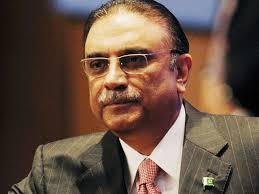
Former President Asif Ali Zardari condemned murder of Dr. Khalid Mehmood Soomro

http://mediacellppp.wordpress.com/


Former President Asif Ali Zardari condemned murder of Dr. Khalid Mehmood Soomro

Co-Chairman Pakistan Peoples Party former President Asif Ali Zardari has strongly condemned murder of Jamiat Ulema-e-Islam Sindh general secretary Dr. Khalid Mehmood Soomro on Saturday morning.
Former President in a condolence message said that he was saddened with the news of Dr. Khalid Mehmood’s murder. He said that Dr. Soomro was a senior politician and his murder is a great loss to his party in particular and democratic forces in general. He asked Sindh Government to arrest his killers and bring them to book.
He prayed to Almighty Allah for grant of eternal peace to the departed soul and courage to the bereaved family to bear this irreparable loss with equanimity.

Pakistan: Mystery surrounding Fata girls in Karachi

So far, few details have emerged about the scandalous discovery of 26 small girls aged between five and 11 from a house in a Karachi neighbourhood. According to media reports, all 26 of them from the tribal areas Bajaur Agency lived sardined into a two-room madrassah housed in a property whose owner owed some money to the madrassah proprietor. The money dispute is irrelevant to the context, though. The question that begs an answer is, who are these girls? The police say they would hand over them over only to their parents, which is fine. It is hard to believe though that any parents would hand over Pushto-speaking little girls to anyone to be taken all the way from the one end of the country to the other for religious education. Maybe they are orphans of the war going on in their part of the country. It is possible also that they were abducted and sold to someone. But who brought them to Karachi, and why? These questions may soon have answers since the seminary teacher is also in police custody. They should know or be able to provide clues as to the identity of those involved. Bajaur Agency's assistant political agent too is reported to have arrived in Karachi to help find the parents. 

It will not be enough for the police and Fata administration to find these children's parents. The federal government responsible for administrating the tribal areas as well as Sindh government within whose jurisdiction they have been staying for the last four months for whatever purpose must launch proper investigations into the case, pin responsibility, and provide necessary care and protection to the girls. Distressingly, however, it does not seem to be an isolated case, considering that once the police got active another seven girls were recovered the same day from a separate location. Those girls wore a different colour uniform, which shows that they belong to a different group. There might be still other groups of children, boys as well, plucked from the fog and confusion prevailing in the tribal areas due to the conflict situation and mass-scale population displacement. It won't be surprising if moreFata children have similarly been brought to Karachi or some other parts of the country. In fact it may well be an organised activity. In any case, it is a matter of serious concern that children should be taken from their homes to be given religious instructions in far-flung seminaries. The county is already paying a heavy price for allowing unregistered and unsupervised seminaries to indoctrinate young minds with extremist ideologies. Hopefully, the present case will serve as an eye-opener for the federal and provincial governments, and lead to effective measures aimed at stopping misuse of children for spreading extremist ideas. 

Pakistani Christians - Kot Radha Kishan lynching: Policemen tell court they witnessed burning of couple


Police authorities in Punjab acknowledged before the Supreme Court on Friday that a Christian couple was burnt alive in the presence of police officials on November 4.
In compliance with the Supreme Court’s order, DPO Kasur Jawwad Qamar through IG Punjab police submitted a report in the Supreme Court over the Kot Radha Kishan incident. The Christian couple was burnt alive in a brick kiln for allegedly desecrating pages of the Holy Quran. A copy of the report is available with The Express Tribune.
According to the report, Muhammad Ali SI, Abdul Rasheed ASI and other police officials were riding in a patrol vehicle on Adda Manga Road when they received information that a mob gathered at Yousaf Gujjar’s brick kiln in Chak No 59 were torturing a family of the Christian community.
When the police reached the spot they found 500 to 600 people gathered there. The policemen said that though they tried to stop the mob from damaging the brick kiln’s roof, they were beaten back and even tortured by the mob.
In the meantime, the mob apprehended Sajjad Masih and Saima and tortured them in the presence of police as well as Iqbal Masih, Shahbaz Masih, sons of Nazir Masih, Imran Masih, the report said.
Police officials tried to secure their release but were thwarted. Then, in the presence of police officials and witnesses, seven nominated suspects namely Yousuf Gujjar, etc, along with 8-10 other people incinerated Sajjad Masih and Saima.
The report revealed that there were also 53 accused persons (nominated in FIR) who instigated and tortured the deceased persons as well as police officials.
“The accused created panic and religious hatred in the area. Hence a case FIR No 475, dated 4.11.2014 u/s 302/436/201/148/149/353/186 PPC & 7ATA has been registered at PS Kot Radha Kashan, it adds.
Some 43 people were arrested in connection with the case. Out of them, 39 were sent to judicial lock-up whereas, physical remand of the remaining four accused namely Yousaf Gujjar, Iftikhar Mahand, Muhammad Hussain and Haris Bashir was obtained from Anti-Terrorism Court, Lahore. These accused were interrogated and sent to judicial custody on November 11.
As per the statements of the witnesses, the report said, 81 more accused have been nominated. During the course of investigation, 16 more accused have been nominated.
A Joint Investigation Team (JIT), headed by SP investigation Kasur, has been constituted to probe the matter. Other members of the JIT are also working in Kasur district.
Efforts are being made to arrest the remaining accused. Investigation is in progress and the same will be finalised at the earliest.
Meanwhile, after going through the Punjab police’s report, the chief justice has decided to fix the matter before the bench and issued notices to the DPO and RPO.

Corrupt Pakistani Elite and the Arab Bedouin - Endangered Wildlife


Pakistani officials and the Arabs have a very healthy working relationship; the officials harvest friendly contacts, enjoy the brush of the royal life and pocket a sizeable amount of cash for their troubles, and in return the Arabs are discreetly allowed to indulge in decadent pleasures to their heart’s desire. The tale of the Saudi prince who shot 2,100 endangered Houbara Bustards in a three week safari has created a few ripples in the media, but the practice of giving Arab royals special privileges and hunting rights is an established tradition; erstwhile, kept under wraps. The fact that foreigners are allowed to do acts which qualify as crimes for the common man is enough to make this a deplorable situation; the fact that this is done at the cost of precious  wildlife and in contravention to countless international conventions, to which Pakistan is signatory, makes it absolutely shameless.
The Balochistan High Court on Friday ordered for the cancelation of permits given to Arabs and other foreigners for hunting the bustard and other birds. Citing the International Wildlife Conservation Convention, Justice Jamal Mandokhail, declared the practice illegal, and also issued notices to Federal Interior Ministry, Chief Secretary of Balochistan, and the Pakistan Wild Life department. This is a welcome judgement, one that needs to be reaffirmed at a federal level and stringently upheld. It seems apparent that while the colonial masters have long left, parts of the country are still shackled in colonial frame of mind; swapping one nationality for another, operating Pakistan as these royals’ personal fiefdom, and us, their loyal servants.
Yet, more than this petty corruption what shocks the mind is the apathy towards wildlife. There is a roaring trade in the smuggling of black spotted turtles, an endangered species, to Chinese and Thai clients who use the animal products in dreamt-up ‘traditional medicines’. The Indus Dolphin, one of the world’s only fresh water dolphins, which is found only in these waters, is on the brink of extinction. Only 1,400 remain in the wild due to fishing nets, destroyed habitats and polluted waters. The examples are countless. This wildlife represents the nation’s heritage, it colours its identity and is a vibrant indicator of its diversity. The senseless, limitless murder of this is akin to destroying national monuments and needs to be prosecuted accordingly. Rare species belong to the world, and we are terrible custodians.

Pakistan - Jundullah Claims Attack, Again

Terrorist group Jundullah has claimed responsibility for the attack in Quetta on Wednesday that killed four polio workers, including three Lady Health Workers. The group is notorious for claiming attacks carried out by other organisations such as the Wagah bombing on 2nd November, 2014. Jundullah is based in Karachi, and has reorganized itself four times since its inception in 2004, having its members arrested or killed by the police and other law enforcement agencies. Its track record suggests that the group’s primary focus has always been carrying out sectarian violence; be it targeting Shia scholars or bombing Ashura processions. In any case, the relevant authorities would do well to ascertain the authenticity of Jundullah’s claim and act against it irrespective of its involvement in the attack.
The militant group also claims to have met a delegation of Islamic State (IS) militants and has pledged allegiance to the ‘caliphate’. If true, it is a troubling development. IS has demonstrated its barbarity and sectarian hatred in Iraq and Syria, and cannot be allowed to form alliances with Pakistani groups that share its fundamentally evil ideology. Reports of wall chalking and distribution of pamphlets in support of IS cannot be taken lightly. Interior Minister Nisar Ali Khan has clarified that there is no IS in Pakistan, not realising that people seldom find his assurances reassuring. The fact is that someone is carrying out a PR campaign on its behalf or impersonating it. Certain reports allege that sectarian organisations such as Lashkar-e-Jhangvi (LeJ) and Ahle Sunnat Wal Jamaat (ASWJ) are behind it. Surely, these publicists are very much present in Pakistan. What does the good minister plan to do about them? Hopefully, it is not the same plan he had proposed and attempted to implement for the Tehreek-e-Taliban Pakistan (TTP); tea and biscuits.
The government may also like to apprise the nation of the progress made so far in the investigations into the Wagah ceremony suicide bombing. TTP faction, Jamaat-ul-Ahrar, that claimed responsibility shortly after the attack, has now also released information to support its claim. While the military is taking action in FATA, there is not much to witness in Pakistan’s rural and urban centers, especially in Punjab. Efforts aimed at improving the security apparatus remain critically missing. The police are inefficient and corrupt as ever. They are usually more interested in finding alcohol or hash on citizens to extract bribes while militants easily slip through. It would appear that the kind of reform that is the need of the hour has not even been conceived by the political leadership. How many attacks during the last ten years can be attributed to gross negligence instead of inevitability?

Pakistan - Polio workers - Slaying the saviours

The intensity of the threat to polio workers is deepening as this time it was Lahore and not some far off troubled area where they came under attack. To assume that terrorists have their grip only on undeveloped areas would be a mistake. Their narrative, if not their network, is spread across the country. It was only two days ago when four health workers, three of them women, were murdered when gunmen sprayed their vehicle with bullets in Quetta. In the Lahore incident, it was the parents who, after refusing to allow their children to be vaccinated, beat up the polio team. In Quetta on the other hand, it was a targeted killing as the assailants first identified the workers before attacking them. Jundullah, a Taliban splinter group, later claimed responsibility for the attack. Since the Taliban denounced the polio immunisation campaign as a western plot against Muslims, these workers have acquired a status of no less than warriors on the health front, as their lives are constantly at risk. In the first place, it is difficult for the campaigners to reach out to the vulnerable children and where and when they do, some parents refuse to get their children immunised. How ironic and tragic for the children that despite being potential victims of this disease, their own parents, out of ignorance or under the spell of misleading propaganda, expose their own offspring to this threat.

Naturally, with the increasing number of attacks on polio teams, the number of polio victims will also rise. Governments are culpable in this matter as in spite of being aware of the threat, they have failed to provide sufficient security to these self-sacrificing people who have devoted themselves to save our future generations from being crippled. Instead of taking punitive action against the assailants and providing the vaccination workers with more security, the government appears to be inconsiderate and inept by not responding appropriately. How many wake-up calls do they need to come out of their slumber? The water has overflowed over the bridge and it is not only the terrorists we are at loggerheads with but with the terrorists’ narrative. The worsening situation vis-à-vis polio is painting Pakistan further into a corner and if the menace is not controlled on a war footing, it can very well invite more travel bans and further isolation in the world community. The ritual commissions and promises that are made by ministers and the authorities do not look remotely like they are going to be able to eradicate polio nor are they going to save health workers’ lives. If governments have indeed committed themselves to fight against polio, they need to back the campaign to the hilt. 

Pakistan: Danger to media


THERE is much to criticise in the conduct of vast sections of the media and especially the level of editorial influence many owners of media houses exercise. But let it also be clear that the prosecution of the Jang group ownership and senior employees on charges of hurting religious sentiment smacks of persecution.
Consider that the controversial content that Geo Entertainment aired earlier this year had already been dealt with by the regulators, the channel was fined and even taken off air, and the Jang/Geo group had profusely apologised for any hurt caused.
The matter should have ended there. Instead, it morphed into a witch hunt, with FIRs filed, criminal investigations launched and, finally, a conviction by an anti-terrorism court, a verdict now suspended on appeal in another jurisdiction.
There is nothing in the original mistake by Geo or its subsequent actions that justifies the kind of criminal proceedings it has been subjected to. Indeed, what the media group is being made to suffer so viciously appears to be payback for perceived Jang/Geo transgressions elsewhere. To put it more bluntly, media freedom is being curtailed and the media group is being made to pay for its belligerent views on the perennial civil-military divide.
The great rupture for the media was ostensibly triggered by the Hamid Mir assassination attempt in April, but its roots are much deeper. In the story of the national media’s shift from relatively impartial observers to hyper-partisan players in the political process in recent years, Geo is far from blameless.
The group is seen as having sacrificed the editorial independence of its professional journalists and to be thriving on the notion of its kingmaker status on the national stage. Ultimately though, there are two different sets of transgressions: the one almost invented and championed by Geo and mimicked by other media groups; and what has been done to Geo since that fateful day in April.
Even an unsympathetic view of all that the group has attempted in the name of journalism cannot come close to cancelling out the alarm at what the treatment of Geo means for journalistic independence and media freedom in the country. Once state-backed repression of sections of the media in the name of the national interest or to protect the so-called sanctity of certain national institutions begins, the road to perdition for all media has begun. The media in this country must realise this danger and put up a united front against any attempt to silence it.

Pakistan: The polio pariahs

There are more cases of polio in Balochistan than there are in Somalia and this is when that country has suffered an outbreak of the disease this year while it doesn't have a government.
It seems Balochistan does not either; at least not the sort that can protect its people, particularly its polio workers.
If further proof of this was needed, Wednesday provided it: a team of polio workers was attacked by gunmen who accosted the van they were traveling in. The crime; doing the thankless, dangerous work of weaving through the country’s narrow lanes and suffering suburbs to inoculate its millions against a disease that cripples and kills.
For this, four were killed, bringing the total of dead polio workers to 65 since the first targeted attack in December 2012.
Almost no one came to their aid even after the attack. When the team leader, bleeding and injured, managed to jump off the vehicle screaming for help for her dead and dying colleagues, her cries went unheard.
By the time a passing motorcyclist finally heard her pleas, four of her seven member team already lay dead. Citizens who died in the service of an apathetic nation; undeserving of their sacrifice, unfeeling for their loss.
Pakistan is a world leader in polio cases now. It has more of them than both Afghanistan and Nigeria, the two other countries where the disease is still active. Pakistanis, already unwelcome beyond their borders, are likely to see increasing repercussions of this.
The militant project against polio is simple; kill the vaccinators, prevent the vaccinations and transform Pakistan into the isolated petri dish of the pestilence, disconnected from the rest of the world by its vulnerability to plague.
Pakistan’s alienated millions, welcome nowhere else, will all fall happily into the darkness of militancy, the violence of extremism, making up murderous mobs that lynch and stone and bomb and kill. The slide is already visible; bloody and palpable.
In the details of Pakistan’s polio debacle there is enough blame to taint everyone.
The international community has pumped millions into the latest polio vaccination campaign underway in Waziristan and Balochistan. However, it remains stubbornly uninterested in for example, sponsoring a resolution at the United Nations censuring the United States for using the cover of a polio vaccination program to collect DNA for their operation to capture Osama bin Laden. That connection, which continues to whet conspiracy theories about the contamination of the vaccine and foment Pakistan’s public health crisis is intentionally ignored.
In this flawed global narrative, polio is Pakistan’s problem for only Pakistan to solve, the donated millions simply an example of global magnanimity against Pakistan’s plagued ineptitude, its militant scourge and its paranoid population.
Polio workers have administered nearly 450 million doses of vaccine to Pakistan’s children in the last two years, since the first polio worker was killed. They have done so without protection; traveling in rickety vans, armed only with the white boxes in which they carry the drops through darkened doorways and squalid dwellings.
Pakistanis know protection is possible for some; they have seen it made available in convoys of bulletproof cars, and the comforting cocoons of gun toting armed guards that follow this or that official around the country. Pakistan belongs to these protected people, pandering politicians and their progeny whose lives are considered worthy of such expenditures by the state.
For the rest of the country, the polio workers and the polio sufferers past, present and future there is no hope of reprieve, no protection from either paranoia or pandemic; just a perpetual listing of the brave and the dead.

Kainat Riaz and Shazia - The south Wales students who were shot by the Taliban

Kainat Riaz and Shazia Ramzan received scholarships to go to Atlantic College in 2013.


When Malala Yousafzai was shot while on her way to school for speaking up about women's education, global outrage ensued.
But little is known about her best friends, now studying in Wales, who were caught in the crossfire.
Kainat Riaz and Shazia Ramzan received scholarships to go to Atlantic College in the Vale of Glamorgan in 2013, but their journey from Pakistan to south Wales was far from easy.
Shazia said: "[In Pakistan] we were not allowed to go outside, we were not allowed to bring our book or wear our uniform to go to school."
ShaziaShazia Ramzan says Malala was unrecognisable after she was shot
They had just finished a chemistry exam when the Taliban boarded their bus in October 2012 and asked: "Who is Malala?"
"All the girls were looking at the man and then he pulled out a gun and he shot Malala in the head," Shazia said.
Kainat cannot remember the moment when shots were fired but will "never forget" looking down and seeing Malala lying on the floor "completely red".
Challenge
"Whenever I see blood I remember my story," she added.
Both girls were hit by Taliban bullets, Shazia in the neck and Kainat in the hand, but their concern was for their friend Malala.
"She was very different, her hair was cut and her face was very big," Shazia said.
Kainat Kainat Riaz saw her friend Malala lying on the floor "completely red"
Kainat and ShaziaThe girls had just finished a chemistry exam when the Taliban boarded their bus in October 2012
The girls have high hopes - both want to become doctors and fight for women's rights to education with Malala as their inspiration.
Kainat dreams of becoming a gynaecologist so she can help women in Pakistan who "can't go to a male doctor, they can't show their bodies".
They say the biggest challenge has been speaking English and struggled with the change when they first came to Wales.
'Bullets'
Shazia said: "Everything looked very big; big cars, big buses.
"It's so hard to live without your family, you don't realise the importance of your brother, your mother or your father.
"But education is here and we learn a lot of things beyond the classroom as well."
classroomThe girls hope to take International Baccalaureate exams next year
Despite the threat from the Taliban, both girls are going home for during the Christmas break.
They are still struggling to understand what happened that day.
"We were hit by bullets, why? Because we were just girls? Why, because we want just an education?" said Shazia.
Their lives may have changed forever, but Kainat and Shazia hope one day to return home.
Kainat told her father before leaving: "Don't worry, one day I will be successful and then I will come back to Pakistan."

Malala invites Kainat to Nobel award ceremony


Rights activist Malala Yousafzai has invited rape survivor Kainat Soomro with her father to the Nobel Peace Prize award ceremony scheduled to be held on Dec 10 in Oslo, Norway.
Speaking to Dawn over phone, Kainat said she was surprised to receive a call from Malala, who encouraged her to continue to pursue her studies. “Apart from that she asked me to come to Oslo when the prize distribution ceremony takes place,” Kainat added.
She quoted Malala as saying that she would be honoured to have her there.
On receiving the invitation on Oct 18, she said she informed Malala that her family could not bear the travel expenses.
She said the child activist also promised to give all logistics support to them. Subsequently, her flight was booked for Dec 8, she said, adding that she would be back by Dec 13.
Now 21 years old, Kainat was allegedly gang-raped in Mehar taluqa of Dadu district in 2007.
Undeterred by circumstances, she went ahead to pursue the case against the alleged perpetrators, proceedings of which continued till date without achieving any result, according to her. “It’ll be eight years in January 2015, since I took up this case. While I pursued the case, one of my brothers was killed and his case was forcefully shut down by some powerful elements who didn’t want me to go ahead,” she said, adding that they were working towards reopening the case with the help of their counsel.
Her family moved to Karachi eight years back and since then haven’t gone back.
Her father, Ghulam Nabi Soomro, was beside himself with happiness when asked about their upcoming trip to Oslo. “It is a great honour for my entire family to be invited by Malala Yousafzai. She could have taken any name and the organisers would have arranged for them to be there. Rather than taking any big names, she asked for my daughter, which is a moment of pride for us,” he said.
Speaking about the phone call and the ensuing conversation with the rights activist, Kainat said: “She appreciated the bravery shown by my daughter in pursuing her case. My daughter’s strength amazes me too. By pursuing the case I, as a father, want to make sure that what happened to my daughter doesn’t happen to anyone else.”
Seventeen-year-old Malala Yousafzai will be receiving the award alongside Kailash Satyarthi, Indian child rights campaigner, at a ceremony to be held in Oslo City Hall on Dec 10, the death anniversary of Alfred Nobel.

Friday, November 28, 2014

Music Video - Fifth Harmony - Sledgehammer

Analysis: Middle Eastern states struggle to maintain current order and control of territory

Divided sectarian societies with traditional tribal culture, Arab uprisings, non-state actors such as Islamic State and al-Qaida, social media and even world powers, are contributing to the weakening of states in the Middle East. All this is increasingly significant as they struggle to build fences, put down uprisings and maintain their territorial integrity.
The definition of a state is “a human community that (successfully) claims the monopoly of the legitimate use of physical force within a given territory,” according to Max Weber, in his 1918 lecture “Politics as a Vocation.”

How many Middle Eastern states can claim to meet such criteria? Not many. Perhaps Israel, Turkey, Iran, Saudi Arabia, Qatar, Jordan and some others can say that they monopolize the use of force in their states.

Others such as Syria, Lebanon, Libya, Yemen, Iraq and Egypt are wracked with internal divisions and violence from opposing groups, and it seems to have gotten worse since the “Arab Spring” began.

However, even within the states that are deemed stable for the most part, controlling the use of force in their territories, violence and disputes are still on the fringes.

For example, even Israel persistently deals with controlling its territory, building a fence on its southern border with Egypt to stem the tide of illegal immigrants and other terrorist infiltrations.

Egypt is dealing with a similar problem on its side of the border, and its battle against an Islamist insurgency in Sinai that has spread into other cities perpetually tests the state.

Saudi Arabia has increased its forces on its northern border with Iraq and is strengthening its fence system there. In addition, tensions are emanating from its Shi’ite population and Islamist groups.

Islamic State’s control of swaths of territory in Iraq and Syria, the growing independence of Iraqi Kurdistan and porous borders between Syria and all its neighbors, are just some of the recent evidence of the weakening of the Middle Eastern states.

Israel continues to consider building hi-tech guarded fences along its other borders, though it still seems vulnerable to tunnels penetrating from Hamas in Gaza and Hezbollah in the North.

Attacks and rockets by terrorist groups as well as riots by Israeli Arabs test Israel’s hold on absolute power, but do not threaten it.

Turkey is another example of a state that is largely controlling force within its territory with some exceptions in Kurdish areas and along its border with Syria, where rebels consistently cross back and forth, though perhaps with some kind of government coordination or approval.

Elijah J. Magnier, the chief international correspondent for the Kuwaiti-based Al-Rai newspaper, told The Jerusalem Post that regional players are faced with the necessity to unite their forces and put their struggles on the side to face Islamist groups such as Islamic State and al-Qaida.

Even “enemies like Iran and Saudi Arabia are united today” to defeat Islamic State, he said.

“Therefore, the war on Islamic State is strengthening rather than weakening the regional relationships,” said Magnier, pointing out that Saudi Arabia is sending an ambassador back to Baghdad after 11 years.

Middle East Quarterly editor Prof. Efraim Karsh, a Middle East scholar at King’s College in London and at Bar-Ilan University’s Begin-Sadat Center for Strategic Studies in Ramat Gan, told the Post, “The main impetus for Middle East developments is indigenous rather than external, including the delineation of the post- World War I borders, where the Hashemites played a crucial role – Jordan and Iraq were established on their behalf.”

Asked if Western policy in the region is promoting the breakdown of state borders, Karsh responded, “The West’s ability to shape the region is limited, but still there,” adding that it served as a catalyst for the disintegration of Iraq by toppling former leader Saddam Hussein.

The West’s failure in establishing a new government after the 2003 invasion of Iraq is more evidence of the West’s limitations, he said.

World powers cannot “control the scope and nature of resurgent Islam, are too timid to go all the way with Iran, restrain Turkey’s resurgent neo-Islamism or even to force the Palestinians to accept Israel’s existence.”

“So, in the final account,” according to Karsh, “the staying and/or disintegration of certain states will depend on how well these states handle their formidable challenges, not what the West does or does not do.”

As for the importance of social media in mobilizing society, Karsh commented, “I believe the impact of the social media, Internet and latest technological gadgets on the recent upheavals in the Middle East has been grossly overrated.”

“The nation-state in the Middle East is an idea that bristles with difficulties. Not only is the idea of a nation itself by no means simple and straightforward... but also the very notion of a state is quite difficult to fit into the political thought that is traditional to the Middle East, namely, Muslim political thought,” wrote the Middle East historian Elie Kedourie in an article, “The Nation-State in the Middle East,” published in 1987.

“The European state is an importation, at variance with Middle Eastern traditions,” he wrote.

And so Kedourie raises the dilemma that the region’s states have been struggling with since their creation – their own legitimacy.

It was the Sykes-Picot Agreement reached during World War I that first charted out how to partition the Ottoman Empire. The British and French carved up the region according to their interests, not paying adequate attention to ethnic groups. But it was local parties, that shaped how the modern map of the Middle East turned out.

“As I argued on numerous occasions, the contemporary Arab state system has been predicated on shaky foundations from the outset, going directly from a traditional imperial order – Ottoman – to a neo-imperial mode – pan-Arabism – without passing through the necessary stage of nation and state building, as Europe, for example, did.”

Such a process would allow Middle Eastern societies “to transcend their parochial loyalties and develop modern-day state nationalisms and civil societies.”

Instead, these societies have maintained a deeply devout existence until this very day, “refusing to substitute their millenarian supremacist identity for the imagined ‘Arab Nation.’” “The deadly combination of local patriotism and religious zeal may well lead to the disintegration of certain states,” said Karsh.

“Confronted with the first major opportunity to go ‘back to the future’ and reestablish the region’s core religious underpinnings, they did so, hence the sweeping Islamic resurgence.”

Karsh countered, “As a matter of fact, the Sykes-Picot Agreement did not shape the form of the contemporary Middle East, as even a casual glance at the map would reveal.”

“The vast Arab empire it envisaged never materialized, its designated territory being divided between the present-day states of Iraq, Saudi Arabia, Syria, Transjordan [later Jordan], Israel, as well as the Palestinian Authority,” he argued. “Conversely, Turkey emerged from the war a significantly larger country than the truncated state it was intended to be.”

“That the Sykes-Picot Agreement has come to be associated with the much maligned borders of the post-World War I Middle East, is a direct result of propaganda by the Hashemites and their Western champions, articulated most forcefully in George Antonius’s 1938 The Arab Awakening – unquestioningly adopted by generations of academics, politicians and pundits.”

And consequently the weakening of Middle Eastern states continues to be driven by local dynamics as the traditional states seek to fend off challenges from non-state actors such as Islamic State while keeping their own populations at bay

Man dies after shooting at Mexican consulate, other sites in Texas capital

A man apparently upset about U.S. immigration policy was fatally shot early on Friday after firing more than 100 rounds of ammunition at the Mexican consulate, a U.S. federal courthouse and police headquarters in the Texas capital, police said.
The suspect, whose name was not immediately released, was an Austin man in his 50s who had a criminal history, police said.
Police said they were investigating whether he died of a self-inflicted wound or from a shot fired by a mounted officer who was bringing horses into a stable near police headquarters. No one else was injured in the incident, police said.
"The sergeant was right there getting ready to put the horses away for the night," said Austin Police Chief Art Acevedo. "As he held two horses with one hand, he discharged at least one round with a single-handed shot."
The suspect also tried to set fire to the Mexican consulate, police said. In a statement, the Mexican Foreign Ministry expressed its "deep concern and condemnation of the incident."
Acevedo said the targets indicated the attack may have been over U.S. immigration policy.
"When you look at the national debate right now about immigration, that ... comes to mind. Sometimes our political discourse becomes very heated and sometimes very angry," Acevedo told reporters.
President Barack Obama this month imposed the most sweeping U.S. immigration changes in a generation, easing the threat of deportation for some 4.7 million illegal immigrants.
Police said they received a call at 2:22 a.m. about shots being fired in downtown Austin. The three buildings were hit in a shooting spree that lasted a few minutes.

No bombs were found on the suspect or in his vehicle, Acevedo told CNN. Police said they also were examining the man's home in north Austin.

Music Video - Hilary Duff - Chasing the Sun

Video Report - Black Friday shopping protest in Ferguson over Michael Brown shooting

Video - 'Many dead' in Nigeria mosque blasts

Turkish Newspaper Slams Media Ban on Corruption Inquiry

Turkish newspaper Hurriyet Daily released an official statement after media were banned from covering a parliamentary inquiry into a major corruption scandal.
Turkish newspaper Hurriyet Daily on Friday released an official statement questioning a recent media ban on covering a parliamentary inquiry into a major corruption scandal.
"Until recently, publication bans were just an unpleasant memory for senior journalists who were on duty during the era of military regimes. In 2014, however, such bans have returned as a practice of our day, not only the past the ban on reporting the parliamentary commission's work to investigate corruption allegations, given by a civilian judge, is a first in this regard," the newspaper's statement said.
The newspaper underlines that the bans make a mockery of the government's declared position of expanding freedoms and advancing democracy, continuing in this vein by stating that democracy can only exist in an atmosphere of openness, and that it is a human right to be informed.
The journalists of Hurriyet Daily urge Prime Minister Ahmet Davutoglu to resolve this issue and free Turkey of an image as a "country of bans."
On Tuesday a court in Ankara banned Turkish media organizations from reporting on an ongoing parliamentary inquiry into corruption allegations concerning four former ministers of the Turkish cabinet so as to "prevent damage to the individual rights." The decision came days before the ex-ministers began testifying before the court.
In December 2013, Turkey carried out an anti-corruption operation, as a result of which many officials, businessmen and their relatives were detained in suspicion of fraud, bribery and abuse of power. Four ministers were accused of corruption — Economy Minister Zafer Caglayan, Interior Minister Muammer Guler, EU Affairs Minister Affairs Egemen Bagıs and Environment and Urban Planning Minister Erdogan Bayraktar. All four resigned.

Ukraine Must Confront Its Corruption Problem


While the war in Ukraine's east again threatens to explode into open conflict, Kiev is simultaneously fighting an even greater impediment to Ukraine's long-term stability: endemic corruption.
According to the most recent figures from international corruption watchdog Transparency International, Ukraine was ranked 144 out of 177 countries on its Corruption Perceptions Index, placing Ukraine at the bottom of the rankings — tied with Cameroon, Papua New Guinea, Nigeria and others.
While Ukrainian government graft is widespread, public procurement corruption tops the list of challenges that the government in Kiev must confront. Ukrainian Prime Minister Arseniy Yatsenyuk has stated that Ukraine's government makes about $25 billion in purchases in state purchases yearly, 40 percent of which — or $10 billion — is lost through graft.
"Public procurement is the most problematic sector where corruption is rife. Sometimes for certain things, the level of corruption in a tender can be up to 40 to 50 percent," said Sergiy Gula, a government procurement expert at Transparency International Ukraine.
"The most common type of corruption in government tenders is either unlawful use of a single party or an associated company — a fictional competition or tender is won by a predetermined firm, even with the worst and most expensive proposal," Gula said.
Corruption in the purchase of drugs for HIV/AIDs uncovered by the Anti-Corruption Action Center in Kiev supports Gula's point. In a typical scheme, several companies controlled by one owner "compete" with each other to win millions of public funds. The end result of drug corruption procurement is that only 43 percent of HIV-infected patients obtain the drugs they need.
Another recent example of associated party procurement was the 2011 purchase by state-owned energy company Naftogaz of an offshore drilling rig for $400 million — a rig sold everywhere else on the world market for $250 million. In the Naftogaz case, the only two bidders — Highway Investment Processing LLP and Falcona Systems Ltd — were both nominally owned by two Latvian citizens.
What should Kiev do to clean up Ukrainian government procurement? A recent law passed by Ukraine's parliament creating an anti-corruption agency is a start. The law requires all Ukrainian public officials to file public declarations of their incomes and assets, which could help ferret out government employees who have benefited from procurement corruption schemes.
Although this new law is a successful step toward reform, Ukraine should implement further measures that specifically target public procurement corruption. According to Alexandra Ustinova of the Anti-Corruption Action Center, purchasing by state enterprises remains very opaque, as 90 percent of state companies still do not provide any public information on their procurements, ensuring that the process remains wide open to graft.
To increase public procurement transparency, Ukraine's new government could imitate Chile. In 2003, the Chilean government created ChileCompra, an e-commerce platform that places all government procurement information such as tenders, awards, bidding processes, and rules and regulations in a single online portal.
According to a study from the United Nations Development Program, the creation of ChileCompra has dramatically increased transparency in government procurement by ensuring that all government purchases remain arms-length transactions between buyers and sellers, thereby reducing the opportunities for corruption. Ukraine should implement its own version of ChileCompra and ensure it includes both state enterprises as well as government agencies.
Given the scale of procurement corruption in Ukraine, however, Kiev should take one more step even beyond creating a Ukrainian version of ChileCompra. Ukraine should take the radical step of outsourcing the procurement by any central government or state-owned companies of all goods and services worth more than $100,000.
An NGO, which we'll call — for the sake of argument — the Ukrainian Procurement Authority could be established. The Procurement Authority would reside entirely outside any Ukrainian government ministry and be composed of nongovernment employees. Any tender or purchase of good and services above $100,000 by any government entity would be overseen by the outside Procurement Authority.
Here's an example of how this could work. Naftogaz needs million of dollars worth of new gas pipeline equipment. Rather than leaving the tender specifications to be drawn up entirely by Naftogaz staff, Procurement Authority employees would first need to sign off on all of the language in the tender to ensure that it is not designed — or "scoped" to use typical procurement language — to favor one bidder.
Once all bids are received, Procurement Authority staff would oversee the evaluation committee to select the winning bidder. Although the evaluation committee's decision would be determined by majority vote, a Procurement Authority employee would need to provide final approval of the committee's decision — in affect giving this person a veto over any decision made by Naftogaz employees with which he or she disagreed. Finally, a contracts officer or lawyer from the Procurement Authority would need to sign off on the final contract between Naftogaz and the winning bidder.
To ensure the complete independence and incorruptibility of the new Procurement Authority, it should initially be funded in full — including staff salaries — by donors such as the International Monetary Fund, World Bank and Western governments. All staff hired would receive a minimum salary of $1,000 per month, and technical assistance would be provided by Western expatriates with expertise in government procurement from across a wide variety of economic sectors.
Based on my experience at the U.S. Agency for International Development, where I managed a portfolio of economic reform technical assistance projects in the former Soviet Union, some rough cost estimates can be made. If we assume an initial employee base of 200 Ukrainians and 20 expatriate procurement experts, the cost to fund the Procurement Authority would come to about $10 million per year.
Although Ustinova noted that Ukrainian legislation does not currently allow for the participation of NGOs such as my proposed Procurement Authority, Western donors should require this legislation to be updated as a firm condition for further aid to Ukraine. While Ukraine signed a $17 million loan agreement with the IMF last April, experts now foresee Ukraine requiring a further $19 billion in assistance in 2015, giving Western donors unprecedented leverage over Kiev.
In this context, a five-year donor commitment to underwrite the costs of the new Procurement Authority comes out to $50 million, or about 0.25 percent of the aid Kiev may need — a small price to pay if this saves Ukraine billions of dollars per year.
Does my proposal require the Ukrainian government to outsource a substantial piece of its sovereignty to a foreign-funded NGO? Absolutely, and that's the whole point. The Ukrainian state has been by far the greatest impediment to the country's success, and therefore solutions to Ukraine's problems are most likely to come from civil society organizations such as the Anti-Corruption Action Center rather than the government.
Put simply, after nearly 25 years of incompetent and predatory governance, Ukraine needs complete reform, not mere tinkering around the edges, and before making a further $19 billion commitment to Kiev — a commitment ultimately underwritten by Western taxpayers — donors should ensure that Ukraine is well and truly on the path to reform.