Former President Bill Clinton on Wednesday noted that previous U.S. presidents have issued some type of executive order on immigration, suggesting his Democratic successor was on "pretty firm legal ground." The former president spoke on the eve of President Barack Obama's scheduled announcement of executive actions to spare as many as 5 million immigrants from being deported from the U.S. Clinton said during an event honoring the magazine The New Republic that it was part of a larger debate about the nation's role around the globe. "As far as I can tell every president in the modern era has issued some executive action on immigration, so I imagine he'll be on pretty firm legal ground," Clinton said at a gala celebrating the publication's centennial. Presidents Ronald Reagan and George H.W. Bush extended amnesty to family members who were not covered by the last major overhaul of immigration law in 1986. Clinton sought to frame the debate in a larger context, saying Americans should be optimistic about the nation's future. He said the next two decades could be positive for the country if the U.S. can develop inclusive economics and inclusive politics. "In a world where borders look more like nets than walls, we are becoming more interdependent whether we like it or not, so the only thing that remains is to define the terms of our interdependence," he said. Clinton joked that nobody cares what an ex-president says unless his wife might run for office. Former Secretary of State Hillary Rodham Clinton is considering a White House campaign in 2016.By KEN THOMAS
Wednesday, November 19, 2014
Clinton says Obama on firm ground on immigration

Putin Calls for Closer Ties Between Russia and North Korea
http://www.themoscowtimes.com/Russian President Vladimir Putin called Wednesday for deeper ties with North Korea to improve regional security, a day after holding talks with a personal envoy of North Korean leader Kim Jong Un. Senior North Korean officials visit Moscow infrequently but the isolated country is trying to counter a UN resolution urging Pyongyang's referral to the International Criminal Court for alleged crimes against humanity. Russia is also one of five countries involved in talks with North Korea on its nuclear program. The others are South Korea, China, the U.S. and Japan. The Kremlin gave no details of Putin's meeting on Tuesday with Choe Ryong Hae, a close aide to Kim and a senior official from the ruling Workers' Party who is a seven-day trip to Russia. But receiving the credentials of North Korea's new ambassador to Russia, Putin said during a televised Kremlin ceremony: "We maintain friendly relations with one of our neighbors, the Democratic People's Republic of Korea. "A further deepening of political ties and trade and economic cooperation is definitely in the interests of the peoples of both countries and ensuring regional stability and security," he said. A Russian Foreign Ministry source told the Interfax news agency this week that the visit would include discussion of bilateral ties, economic developments and North Korea's nuclear program but made no mention of the UN resolution. "The subject of the denuclearization of the Korean Peninsula is constantly present on the agenda of our dialogue with North Korea," the source said. "Moreover, progress in this field is a mandatory condition of lifting the sanctions against the country which naturally impose big limits on our bilateral relations." On Tuesday, a UN Assembly committee dealing with human rights passed a resolution calling for the UN Security Council to consider referring North Korea to the International Criminal Court for alleged crimes against humanity. The vote followed a UN Commission of Inquiry report published in February detailing wide-ranging abuses in North Korea, including prison camps, systematic torture, starvation and killings comparable to Nazi-era atrocities. North Korea has dismissed the UN move as part of a U.S.-led plot to destroy its political system. Diplomats say North Korea ally China would be likely to use its Security Council veto to knock down an ICC referral and that Russia would probably support Beijing's stance.
3 in 4 UK students will be repaying loans into their 50s – study
 Three out of four of today’s UK university graduates will be paying back their student loans well into their 50s, owing an average amount of £44,000 ($74,000), a study published Thursday reveals.
A report conducted by the Institute of Fiscal Studies (IFS) for the education charity the Sutton Trust found that today’s students are leaving university crippled with huge debts averaging £44,000 ($74,000). This is double the amount before the new £9,000 ($15,100) tuition fees cap came into force after 2010.
The hike in tuition fees, which were already unpopular, led to mass protests across the country, which in London turned into rioting and saw two policemen seriously injured.
The study found that 73 percent of students will be unable to clear their debts, and many will only have managed to write them off 30 years after graduation.
An individual student will have had to repay an average of £35,446 ($59,400) by the time they’ve cleared their debts, when many by that time have to fund their own children’s education. Only a tiny 5 percent of the highest earners will manage to pay back their debts by the time they are 40.
The report comes just after the Department for Business Innovation and Skills admitted that 45 percent of student debts will never be repaid.
Last week Sir David Bell, Vice-Chancellor of Reading University and a former permanent secretary at the Department for Education, said that a second government inquiry was needed into student finance in the UK and may be set up after the 2015 general election.
It was the Browne inquiry of 2010 which convinced the government to remove a cap on tuition fees at £3,200 ($5,360) per year and hiked to almost triple the amount at £9,000 ($15,100). Browne cited poor funding for universities as the motive for recommending the increase.
The Sutton Trust study found that under the new post Browne system it was middle and higher earners that would be hardest hit. Students do not have to start repaying their loans until they earn more than £21,000 ($35,200) a year, compared to £15,000 ($25,149) under the old system.
Whereas a typical teacher would still owe around £37,000 ($62,000) at the age of 40 and would be repaying £1,700 ($2,849) to £2,500 ($4,190) through their 40s and 50s, when they are struggling to support their own kids and to pay off a mortgage.
“The new HE finance system will leave graduates with much more debt than before. Yet even with this extra charge on middle earners, there is an increasing likelihood that the government will end up failing to recoup most of its loans,” Claire Crawford, of the IFS and the University of Warwick who was co-author of the report, told the Independent.
The idea of hammering middle income earners is as unlikely to yield substantial repayments as it is unfair, explained Conor Ryan, director of research at the Sutton Trust.
“It seems middle income earners pay back a lot more but the Exchequer gains little in return. We believe that the government needs to look again at fees, loans and teaching grants to get a fairer balance,” he said.
Toni Pearce, from the National Union of Students, said that making students fork over huge amounts for their education was not the answer.
“Forcing debt on to students as a way of funding universities is an experiment that has failed our country,” she told the Independent.
The report also notes that the gap in applications between advantaged and disadvantaged young people attending university has fallen, but that it is still students from richer families who are more likely to gain places at the best universities.
Meanwhile the study found that the number of language students in the UK is continuing to drop, with a 22 percent decline in places awarded between the 2010-11 and 2012-13 academic years. The business community in the UK says they are in significant need of more young professionals who can speak foreign languages.
However, the devolved Scottish parliament, which controls all issues concerning education north of the border, has abolished all tuition fees, resulting in a large benefit for Scottish students compared to their English counterparts.
U.S. - The Constitutional Authority for Executive Orders on Immigration Is Clear
Critics of the plan the president is reported to be considering argue that the Constitution obliges him to “take care that the laws be faithfully executed,” an obligation that seems to give the lawmaker, Congress, the primary authority to set policy. They say that refusing to enforce immigration law against millions of illegal immigrants violates that constitutional duty. Executive power has always included the power to allocate resources among enforcement efforts. The power has grown over the years. Yet the Constitution also gives the president “executive power,” which has always been understood to include the discretionary power to allocate resources among enforcement efforts. The significance of this power has grown over the last century, as Congress has created vast regulatory agencies and given the president control over them. Congress typically appropriates money for regulators, gives the president some vague guidelines and enacts far more laws than he could possibly enforce, and then allows him to set enforcement priorities as he sees fit. That’s why different administrations can pursue such different policies from each other without getting Congress’s permission first. The Reagan administration came to power promising to deregulate the economy, which often meant not enforcing the law, whether it was antitrust, environmental or financial. If, under the Constitution, the president must enforce much of the law but need not enforce all of it, where should the line be drawn? It might be surprising that after two centuries of constitutional experience, we don’t know the answer. Probably the reason is that most of the time, the president’s nonenforcement decisions are not controversial. Every day, an executive branch official decides to drop an investigation, or not to prosecute a case, because resources are scarce and the harm caused by a particular legal violation does not seem serious. We don’t object because that’s a sensible thing to do. And the sensible thing to do in the area of immigration law is to bring removal proceedings against the most serious violators — typically, criminals — while leaving otherwise law-abiding noncitizens alone. Given that Congress has not appropriated nearly enough money to deport 10 million or more people, this type of priority-setting is unavoidable, and not merely wise. Indeed, the president is just following in the footsteps of his predecessors, who also focused removal efforts on dangerous aliens. Congress has acquiesced in this practice for years. The president’s discretion over immigration is deeply interwoven in our law. As the Supreme Court recognized just two years ago, in the course of summarizing the statutory scheme: “A principal feature of the removal system is the broad discretion exercised by immigration officials.” The only difference between the president and his predecessors is that the president has openly declared the de facto policy of his predecessors. We might disagree about whether this move is wise, but it’s not a constitutional violation.Eric Posner

Obama to unveil immigration plan Friday, visit Las Vegas -reports
 U.S. President Barack Obama will unveil his executive order aimed at making changes to the country's immigration system on Friday during a trip to Las Vegas, according to media reports.
The Las Vegas Review-Journal reported the president was traveling to Nevada on Friday but gave no details about the trip.
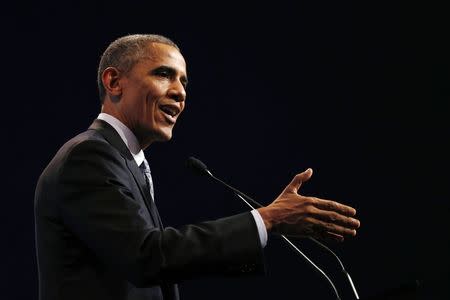 Under the executive action plan, Obama would ease immigration rules on millions of undocumented immigrants, a source familiar with White House deliberations, has told Reuters.
The order, which will set up a showdown between the White House and Republicans in Congress, would give relief from deportation to millions of undocumented immigrants who are parents of U.S. citizens or of permanent legal residents, according to the source, who asked not to be identified.
It was not yet clear which parents of citizens or permanent residents would be included, the source said, and the Obama administration had been looking at options including those parents who have been living in the United States for five years or 10 years.
The reported trip would come after a top Obama aide is scheduled to meet with Senate Democrats on Thursday. White House chief of staff Denis McDonough, who is likely to be pressed on the immigration issue in the closed-door luncheon.
Democrats, including Senate Majority Leader Harry Reid, have been urging Obama to move quickly on immigration. Some have pointed to his failure to take executive action on the issue as costing Democrats votes in this month's congressional elections and setting up a Republicans sweep of congressional election earlier this month.
Obama has warned Republicans in Congress that he would act unilaterally if they continue to block comprehensive immigration legislation.
Sources have said Obama is expected to take actions to allow some undocumented people to live here at least temporarily without the threat of deportation and to hold jobs in the United States. Obama's executive order could also include further border security steps, they said.
Obama also is expected to stress that he wants to focus efforts on deportations of illegal residents with serious criminal backgrounds.
U.S. - ‘Extreme’ Snowstorm Pummels Western New York
A powerful snowstorm swept across Western New York overnight, creating snow drifts as high as houses, trapping people in their homes and forcing hundreds of motorists to abandon their cars on roadways that were quickly buried in the blizzard-like conditions. As much of the nation was plunged into a deep freeze, the sudden rush of cold air from the north set the perfect conditions for the moisture coming off the Great Lakes to create sprawling snow bands, the most ferocious of which settled over the towns and communities just south of Buffalo on Tuesday. At least four people in that region died as a result of the weather, according to The Associated Press. Gov. Andrew Cuomo declared a state of emergency and deployed the National Guard to help find and rescue anyone stranded in the storm. The heavy snowfall and local travel bans forced Amtrak to suspend service in the region until at least Wednesday afternoon. As of late Tuesday night, more than five feet had fallen in towns like Lancaster and Gardenville and, since snow kept falling overnight, it was likely that there could be more than six feet of snow in some places. “This is a very extreme event,” said Shawn Smith, a meteorologist at the National Weather Service in Buffalo. “It basically crippled all the towns south of Buffalo.” But unlike a typical winter storm, the snow caused by the “lake effect” was not felt equally across the region. The divide was so stark that someone on a tall building in downtown Buffalo had clear skies overheard but could see a menacing gray wall of moisture and snow being swept up off the lake and driven south. On Wednesday, there was only a dusting of snow in the city. But a few miles away, in the town of Evans, they were comparing the storm to the infamous Blizzard of ’77, one of the deadliest snowfalls ever recorded in the region. Keith Dash, the town supervisor, said it began snowing around 10 p.m. Monday. By 5:30 a.m., it was clear that school needed to be canceled. “We are at anywhere from 30 to 45 inches, depending on what side of town you’re in,” Mr. Dash said Tuesday night, as the snow continued to pile up. “Plus, there’s been blowing and drifting all day long.” He said the roads were a major concern. “We have a lot of stuck vehicles,” he said. “We have over 100 people who are still stuck. I have never, ever seen this much snow at one time.” Nicole Tubiolo, 35, a web project manager at First Niagara Bank who lives in a condominium in Amherst, said she had not had much snow. But she said that her mother, in nearby Lancaster, had never seen the snow come so fast and was stuck in her home. “She said, ‘There’s no way I’m getting out in this,' ” Ms. Tubiolo said. The snow forced the closing of a 132-mile stretch of the New York State Thruway on Tuesday but highway officials said that much of the road had been reopened on Wednesday, even as they worked to remove cars abandoned on the side of the road. Residents are expected to get a brief respite from the snow on Wednesday but the forecast calls for another 12 to 24 inches of snow to fall on Thursday. As residents upstate started to dig out, the cold temperatures across the country were causing people to hunker down. In New York City, record low temperatures were recorded at the area airports and it was not expected to warm up until the weekend.

Pakistan: PTI responsible for mishandling of IDP issue
http://mediacellppp.wordpress.com/Senator Farhatullah Babar at the PPP Secretariat in Islamabad on Tuesday said that since the IDPs are in K-P, the provincial government cannot run away from its duty to work for the people who were making sacrifices to end terrorism and militancy in the country. Flanked by party leaders before dispatching winter items including clothes, blankets and other necessary goods for IDPs camped in Bannu, the PPP senator condemned the recent police raid during ration distribution. “We admire the IDPs heroic role. They are playing a frontline role in the war against militancy,” Senator Babar said. Former information minister and ambassador to the US Sherry Rehman said that and they should work together for the rehabilitation of IDPs. “We will make effort so they do not end up as refugees.” PPP leaders further demanded that all cases against IDPs should be dismissed, and the policemen responsible held accountable. Former chairman Pakistan Baitul Mal, Zamurad Khan offered to adopt all those children who have become orphans during the ongoing military conflict in the tribal belt. “I request the media and Pakistan Army to help me find such children,” he said.
Pakistan: Five point plan for Journalists’ protection
Senator Farhatullah Babar at the PPP Secretariat in Islamabad on Tuesday said that since the IDPs are in K-P, the provincial government cannot run away from its duty to work for the people who were making sacrifices to end terrorism and militancy in the country. Flanked by party leaders before dispatching winter items including clothes, blankets and other necessary goods for IDPs camped in Bannu, the PPP senator condemned the recent police raid during ration distribution. “We admire the IDPs heroic role. They are playing a frontline role in the war against militancy,” Senator Babar said. Former information minister and ambassador to the US Sherry Rehman said that and they should work together for the rehabilitation of IDPs. “We will make effort so they do not end up as refugees.” PPP leaders further demanded that all cases against IDPs should be dismissed, and the policemen responsible held accountable. Former chairman Pakistan Baitul Mal, Zamurad Khan offered to adopt all those children who have become orphans during the ongoing military conflict in the tribal belt. “I request the media and Pakistan Army to help me find such children,” he said.http://mediacellppp.wordpress.com/
Pakistan's Afghan refugees

Afghanistan: Smuggled medicine floods Afghan market, says report
http://www.southasianmedia.net/

Pakistan: PTI and the mantra of education reform
While discussing reforms liberal progressive folks, who support the PTI, are utmost fond of mentioning the party’s progressive stance on education. This, now passé, statement could not be further from the truth. If actions speak louder than words and if intentions can, however faintly, be assessed from actions, then, in regards to policies, studying actions can be an enlightening exercise. Take a look at the PTI’s 18-month track record regarding education in KPK. The province’s last government, the ANP – widely regarded to be a liberal progressive party – instituted reforms regarding the exclusion of material bearing tinges of religious hatred and intolerance. Coming from a province most ravaged by the very real demon of terrorism, the reforms were a welcome step. However, one of the first ‘changes’ that took place under the PTI-JI coalition were targeted exclusion of previous reforms under the garb of ‘objectionable material’. Since then systematic exclusion and a return to pre-ANP curriculum has been ongoing. The PTI did take a cursory stand against what is now thought to be an entirely JI venture. Nevertheless, in the recent months, the PTI has caved in on essentially every agenda point. Not only this but also the PTI education minister has said he is ready to “induct material to be proposed by Jamaat”. The question that arises here is: Is PTI really the party with an uncompromising stance on education reform? The ANP government not only removed retrogressive content, but also added contemporary, regional (more relatable) material in Social Studies. Removal of such content, as numerous statements from party spokespersons indicate, was fronted, not just acquiesced to, by the PTI. So I want to ask: Does the PTI truly have a progressive stance on education? Or is it pushing ahead in the wrong direction? The most interesting of all the nip-tucks by the PTI-JI coalition is the inclusion of religious references to the grade nine Chemistry book – Chemistry book! Yes, folks. Zia’s Pakistan is alive and thriving. A point of significance here is to note the level of intellectual and ethical bankruptcy that one would have to stoop to, were one to even suggest such a ‘change’. In a province with a sizable share of Christian, Sikh, and Hindu minorities, this step is cringingly unscrupulous. Try and imagine a human endeavour which is even infinitesimally more secular than science. Think of a subject with lesser schisms than science. Have you ever heard of Hindu Physics or Japanese Biology? There is a reason, why you have not. Science does not work that way. It does not care from which authoritative tradition a particular insight is coming. Science does not consider to what language, national, cultural, or racial identity one belongs. Learning in science is not predicated upon who did it first i.e. its history. Reading about Al-Beruni would be very little help in understanding chemical reactions. A Social Studies textbook is more suited for talking about historical contributions of scientists and these books contain plenty of such references. Any progressive, educated person would recognise that a muddling of the two (science and history) is a disservice to both. The last KPK government removed names and contributions of ‘Famous Muslim Scientists’ from Science textbooks. One would, therefore, commend ANP on such a rectification. The level of bankruptcy of scientific-literacy that one would have to plumb to even think of reforming back to old is phenomenal. Yet, the ‘visionary leaders’ did just that. So again, is PTI really the emblem of a party with an enlightened view on education? As is evident from the antics of Imran Khan and the PTI’s ill-advised criticism of financial and infrastructural reform, the party does not really seem to understand economics either. If a pattern can be descried here, it is this: The PTI ranks seem to be devoid of the academic depth required for scientific, rational and secular reforms. It is much too intellectually nascent to be expected to bring better educational reforms and not bungle them like other parties so often do. About the party’s progressive policy regarding education reform, I am still open-minded but all the evidence of their own doing – not just their ‘strategic’, real-politik, ends-justify-means moves – says otherwise. At best, the PTI is too weak in its resolve to put up a fight against retrogression. At worst, the party is too intellectually exhausted to handle reforms. In any case, this mantra of ‘change’, at least in education, is an Obama-like rhetoric which has run its course.Usman Malik
DAESH IN PAKISTAN: MQM SUBMITS CALL ATTENTION NOTICE IN SINDH ASSEMBLY
Altaf-led MQM on Wednesday submitted a call attention notice in the Sindh Assembly to discuss the presence of notorious takfiri nasbi terrorist outfit DAESH (ISIS or ISIL) in the country. The notice was submitted by MQM’s MPA Kamran Akhtar in today’s session, requesting the provincial and federal governments to take action against any DAESH activities in the country.
Last week, a leaked government memo warned that DAESH had recruited 10,000-12,000 takfiri fighters inside Pakistan, but government insisted that the group had no presence there.
Several takfiri militants said that hundreds of Pakistanis have gone to fight in Syria, but had done so through the Taliban or on their own.
MQM Chief Altaf Hussain has already alerted the government to crush DAESH instead of denying their presence in Pakistan.

http://www.shiitenews.org/index.php/pakistan/item/11927-daesh-in-pakistan-mqm-submits-call-attention-notice-in-sindh-assembly
Pakistan: Neither Imran Khan nor Ali Mohammad MNA of PTI apologize calling Christian to be Infidels

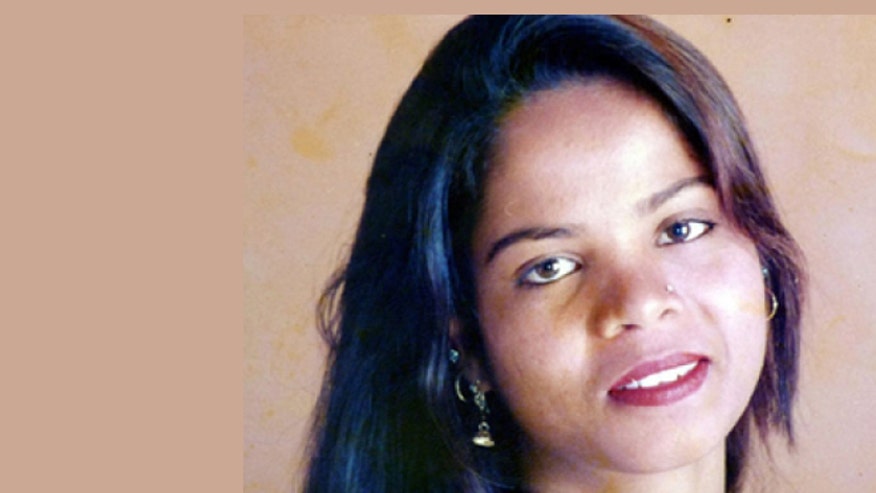
Persecuted Christian: Will Pakistan's Asia Bibi be killed for alleged blasphemy?
By Lela Gilbert

Pakistan: Christian couple killing: Kiln owner, Imam among 4 suspects presented before ATC


Pakistan: Imran adopts VIP protocol during Peshawar visit
 Pakistan Tehreek-e-Insaf (PTI) chairman Imran Khan made full use of the VIP protocol along with his convoy on his visit to Peshawar on Tuesday, Dunya News reported.
According to the details, Khan’s VIP protocol comprised dozens of lavish vehicles that accompanied him to his visit to the Chief Minister House.
It merits mentioning here that PTI chairman has been speaking against VIP protocol since the beginning of his ‘change’ movement. He even termed Rehman Malik’s offloading from Karachi plane a ‘change’ against the ‘VIP culture’.
Opponents have previously criticized Imran Khan for allegedly commuting in helicopters and private jets.
Pakistan: Seven newborns die of lack of oxygen in Sargodha hospital

Lack of oxygen for incubators allegedly led to the death of seven newborns in District Headquarters (DHQ) Teaching Hospital Sargodha, private media reported. According to the report, the families of the newborns have blamed the hospital administration for negligence. They have alleged that no arrangement of oxygen and the unavailability of senior doctors led to the babies passing away within a few hours after birth. Medical Superintendent (MS) Dr Iqbal Sami has refuted the allegations, claiming that he infants were provided with proper medical care. He added that an inquiry committee has been set up to investigate the matter.
http://www.pakistantoday.com.pk/2014/11/19/national/seven-newborns-die-of-lack-of-oxygen-in-sargodha-hospital/
Pakistan: - Sartaj Aziz’s statement - Freudian Slip?
 Adviser to the Prime Minister on National Security and Foreign Affairs, Sartaj Aziz’s statements regarding the Taliban in a BBC Urdu interview has created quite a stir amongst political commentators, local and international. Claiming that not all Taliban are a threat to the state and that Pakistan is fighting the United States’ war, he gave the impression the Tehreek-e-Taliban Pakistan (TTP) and the Afghani Taliban are two separate entities, and the foreign policy towards both of them needs to be nuanced – or to put it bluntly, different. While the Foreign Office was quick to mop up the mess Sartaj Aziz left behind, the damage had been done. More importantly, it betrayed a decadent mindset in the administration, one that everyone hoped had significantly eroded.
Pakistan in the past, has been criticized roundly for strategically maintaining a distinction between the ‘good militants’ and ‘bad militants’, the later being targeted and the former used as a foreign policy tool. There is a lot of bad blood and suspicion between Pakistan and both Afghanistan and the US, over this distinction. The state, having allowed militancy to foster under this policy, later felt a serious challenge from these forces that were getting out of control. The advent of Operation Zarb-e-Azab, and now Khyber One, hinted at the state having finally recognised its mistake and moving to rectify it. Ironically, it is when the operations are at their zenith, and the two estranged states are finally inching their way back into stronger diplomatic ties with Pakistan, that Mr Aziz decides to make these comments. Ashraf Ghani’s momentous initiative and the ongoing Pakistan-US military dialogue will be seriously undermined if such tendencies are displayed by the top administration.
Even if we buy the argument that the comments were taken out of context, which is hard sell in the first place, it still represents the presence of such rationale in the minds of the government, and is at least a highly un-diplomatic move by the elite diplomat. It is high time we shed the flawed logic that has brought this country so much hardship. The different brands of militants may have different origins but they all share one core aspect: using violence and fear to impose their own warped version of extremist religion and propagating intolerance. This fact alone condemns them. Propagating this policy is akin to shooting oneself in the foot, repeatedly.
Pakistan: Fresh polio case springs up
http://nation.com.pk/
A new case of polio has been reported in Qila Abdullah district of Baluchistan, increasing the tally of the victims of the crippling disease to 12. Baluchistan health department in a statement confirmed a new case of polio in Zaman Achakzai village of Qila Abdulllah district. The infection has been reported in 14-month son of a villager Abdul Razzaq. The parents had not vaccinated their child, leaving him to the mercy of the crippling infection. The number of polio cases in Baluchistan has reached to 12 with the new reported infection.
Pakistan: PPP sends recommendations to Bilawal for public meeting

Pakistan: Heads in the sand
With the defection of terrorist splinter group Jundullah to the Islamic State (IS), the growing IS presence presents a viable threat to Pakistan but officials continue denying a problem exists despite evidence of IS and its affiliates’ global intentions. On Monday, Jundullah spokesperson Fahad Marwat informed the press that his group had met a three-person IS delegation and decided to back IS, saying: “They are our brothers. Whatever plan they have we will support them.” Jundullah is responsible for the 2013 bombing of a church in Peshawar that killed 86 people and the massacre of eight foreign tourists and their guide at Nanga Parbat base camp last year. The group has an anti-Shia agenda and claimed responsibility for the February 2012 Kohistan massacre, in which 18 Shias were singled out and executed after their bus was stopped by the terrorists. Jundullah’s announcement throws further light on the confluence between IS and extremist groups in Pakistan that is quickly becoming an operational relationship. Pamphlets with IS literature were recently found circulating in Peshawar while on Monday police in Lahore arrested two men for spraying pro-IS graffiti on walls. The National Counter-Terrorism Authority reportedly sent a letter to law enforcement officials warning them to be wary of pro-IS messages being spread. Reports say that five of the militants killed in an attack on a Pakistan Air Force base in Quetta this August had returned from fighting with IS in Iraq. An official estimated that the group may have as many as 10-15,000 fighters in Pakistan and noted that IS’s success has attracted Pakistani sectarian organisations to its banner. Despite these obvious warning signs, Interior Minister Chaudhry Nisar insisted recently: “There is no presence of IS in the country.”
Nisar’s statement typifies the inability of the security establishment to accurately gauge the threat of global terrorism. A decade ago similar statements were made about Taliban influence in Khyber Pakhtunkhwa, which was brushed off as hooligans burning DVD stores. The perpetuation of the extremist mindset and impunity for imposing their ideology led extremist malcontents to join the Taliban in droves, eventually turning their guns on Pakistan in an ideological war. For IS, Pakistan, with a history of religious militancy and a radicalising society, presents it with a strategic opportunity and a resource-rich nation that is susceptible to the terrorist narrative. One of the differences between al Qaeda-affiliated groups and IS is the latter’s focus on a sectarian war with Shias, which was not an al Qaeda priority. IS shares this goal with Pakistani extremist groups that are categorised as sectarian but not ‘anti-state’. The question the security establishment must consider is whether so-called sectarian groups are not also inherently anti-state, as their existence challenges the state’s legal monopoly on the use of force. The much discussed Deobandi-Wahabi ideological synergy plays an important role in preparing these groups for their role in a wider global war. They have the manpower and IS, recently categorised as the richest terrorist group in the world, has the resources, strategic thinking, popularity and a claim to ideological supremacy through its ‘caliphate’. IS’s claims of divine mandate are validated in the extremist view by its expansion in Iraq and Syria. In terms of global terrorism, its territorial gains and wealth are a quantum leap in capability and ambition. IS’s success also came with bold tactical and strategic decisions that could inspire terrorists in other parts of the world. This is the danger the group presents to Pakistan, but in an interview the other day, Advisor on Foreign Affairs Sartaj Aziz went so far as to ask: “Why should action against extremist groups that do not threaten the state be undertaken?” The willingness to ignore and deny clear threats indicates that the strategy to defeat terrorism does not include the state renouncing the idea of using terrorism as strategic leverage where necessary. This in turn provides extremist groups with leverage over the state. The state must carefully weigh the distinctions it is willing to draw between different terrorist groups and sectarian organisations. As recent events show, they are becoming increasingly linked operationally and ideologically. Right now Pakistan has the time to quash this synergy in its infancy; the alternative, continuing denial, is alarming.
Pakistan: Haqqani network as much a threat as any other terrorist group: US
 The US State Department reminded Pakistan on Wednesday that the Haqqani network was as much a threat to regional security as any other terrorist group.
"We have long communicated to the Pakistani government our view that militant groups, including the Pakistani Taliban and the Haqqani Network, continue to pose a threat to Pakistan, to the region, and to the United States,” said director of the State Department’s Press Office, Jeff Rathke. “It’s vital that every effort is made to deny safe haven to any and all violent extremists.”
In this first official US reaction to National Security Advisor Sartaj Aziz’s comments that Pakistan should not target militant groups that did not “pose a direct threat to the state”, Rathke said the United States believed all terrorist groups were a threat to regional and international security.
“We will reiterate this message to Pakistan’s Chief of Army Staff General Raheel Sharif as well," said the US official.
State Department officials are expected to meet General Raheel later this week. The army chief is visiting the US and has held a series of meetings with senior US military officials.
Pakistan's Foreign Office on Tuesday said that in his interview with BBCUrdu, Aziz was referring to past developments and not the current situation and that Pakistan had already launched the biggest military operation in its history, targeting all militant groups.
However, the interview was picked up by the US media with the prevailing impression that Islamabad wanted to maintain its relations with the Haqqani network.
Some commentators also claimed that the statement reflected a growing gap between the civilian government and the country’s defence establishment over Afghanistan.
Rathke, however, said that “the highest levels of the Pakistani government” had assured the US that it was their “policy to target all militant groups without distinguishing among them”.
He noted that Pakistan had already clarified its position on Aziz’s interview and “we welcome the clarification … underscoring that Pakistan is opposed to all forms of terrorism and that military operations in North Waziristan are targeting all terrorist groups.”
Pakistan: PPP submits adjournment motion in NA on plight of IDPs
http://mediacellppp.wordpress.com/The Pakistan People’s Party on Monday submitted the adjournment motion in the National Assembly Secretariat on the appalling state of the Internally Displaced Persons (IDPs) and Khyber Pakhtunkhwa police atrocities in Bannu on them that led to the death of 2 innocent citizens. The adjournment motion was submitted by PPP legislators Dr Nafisa Shah, Ms Shazia Atta Marri, Mir Ejaz Hussain Jakhrani, Dr Azra Fazal and Syed Naveed Qamar in the National Assembly Secretariat. The adjournment motion stated that the PPP is concerned on the appalling state of the Internally Displaced Persons (IDPs), the total neglect by federal government, which has led to frustration among them and the resulting police atrocities in Bannu on November 13 which led to the death of 2 innocent citizens, which is condemnable. “The commendable action of Pak Army against terrorism in North Waziristan is not being matched with requisite support by the government of Pakistan to the vulnerable and displaced citizens,” the adjournment motion stated. The adjournment motion added that as winter sets in plight of IDPs from North Waziristan is worsening by the day. “There seems to be little effort by the federal government responsible for Fata to provide rehabilitation and relief, including winter materials, more efficient food assistance, shelter etc,” it stated.
Tuesday, November 18, 2014
9/11 terrorist Zacarias Moussaoui claims Saudi involvement
From his cell in a maximum security prison, terrorist Zacarias Moussaoui is reviving old allegations and making new ones against al Qaeda and a handful of Saudi royals. The 46-year old French national is claiming that Saudi Embassy officials were involved in a plot to shoot down Air Force One to assassinate Bill Clinton and/or Hillary Clinton during a trip to the United Kingdom. Moussaoui says he met with a Secret Service agent several months ago and told him what he knew. CNN has reached out to the Secret Service for comment. In two handwritten letters filed this month in federal court in New York and Oklahoma, Moussaoui claimed that, during the time he was taking flying lessons in Norman, Oklahoma, he met with a Saudi prince and princess and that she "gave me money," and provided funding for 9/11 hijackers. Lawyers for the Saudi government have repeatedly denied connections, maintaining Saudi Arabia was cleared by the 9/11 Commission. Moussaoui, who suffers from mental illness, is in the supermax federal prison in Florence, Colorado, and is eight years into a life sentence, having pleaded guilty to terrorism and murder conspiracy in connection with the September 11, 2001, terror hijackings. Moussaoui claims in both letters that he was attacked in prison on orders of terrorist Ramzi Yousef, who Moussaoui says tried to stop him from testifying against the Saudis. Yousef, a convicted terrorist, is considered the mastermind in the 1993 World Trade Center bombing, and is in the same supermax prison as Moussaoui. It is unclear at this time if prisoners in the Colorado federal prison are able to communicate. Moussaoui claims he is being mistreated by prison officials in what he calls a "campaign of harassment and intimidation." Citing "venue" issues, Oklahoma Magistrate Judge Shon T Erwin ruled to dismiss the case of Zacarias Moussaoui v. Federal Bureau of Prisons. The court also denied a request for appointment of counsel. A ruling is not yet available with regard to the letter he sent to a New York judge. In the letters, Moussaoui asks for new lawyers and says he wants to be moved out of the H-unit within the prison, which he calls a "Saudi stronghold." In exchange he says he would provide information against the Saudis. He also says he wants a warmer cell, not infested with rodents. He wants authorities to unblock his source to money so he can buy stamps to write to the inspector general. Attorneys interview Moussaoui Moussaoui reached out to a New York court, seeking lawyers for 9/11 victims, offering to provide what he believed to be important information pertaining to current 9/11 litigation, according to one of the four lead counsels, attorney Jerry Goldman. Lawyers interviewed Moussaoui in late October. The counsel believe the interview provided "relevant" and "critical" information pertinent to pending litigation, according to attorneys. The transcripts of the interview are being reviewed by the Department. of Justice and limited information can be shared about their contents, Goldman said. Lawyers for Saudi government deny involvement In a court document filed in September in the Southern District of New York in connection to the 9/11 terror attacks, lawyers for Saudi Arabia deny involvement, financial or otherwise, saying: "The Kingdom of Saudi Arabia had no role in the attacks of September 11, 2001." The Saudis' lawyers highlight that the National Commission on Terrorist Attacks Upon the United States, known as the 9/11 Commission, in 2004 found "no evidence" ... "the Saudi government as an institution or senior Saudi officials individually funded" either al Qaeda or the 9/11 hijackers. The original complaint, filed over 10 years ago on behalf of victims and insurance companies, targets various terrorist organizations, and alleges Saudi involvement. Lawyers want the Kingdom of Saudi Arabia to be dropped from the suit, arguing they had no involvement in 9/11 attacks. The lawyers for the 9/11 families have requested extended time to reply to the motion for dismissal. "Plaintiffs believe that Moussaoui's sworn testimony is not only relevant, but critical to their (opposition)," according to a court document submitted by the 9/11 lawyers. Moussaoui diagnosed with schizophrenia The expert who literally helped write the book on diagnosing mental illness testified during Moussaoui's 2006 trial that Moussaoui is schizophrenic. Michael First, a psychiatrist who edited the latest edition of the profession's standard diagnostic guidebook, told jurors that Moussaoui also suffers from paranoid and grandiose delusions and disorganized thinking. Both Moussaoui's sisters, who lived in France at the time of the trial, were diagnosed with forms of schizophrenia and took drugs to control their symptoms. Moussaoui's father at the time of the trial was hospitalized in France with bipolar disorder. Bin Laden distanced himself from Moussaoui 9/11 mastermind Osama Bin Laden at the time denied Moussaoui was part of the hijacking plot. In May 2006, bin Laden released an audiotape in which he refutes Moussaoui's confession by saying, "I am the one in charge of the 19 brothers and I never assigned brother Zacarias to be with them in that mission." Blacked out 28 pages The U.S. government commission report investigating the 9/11 attacks cleared the Saudi Arabian government of involvement in al Qaeda funding. The commission found that Saudi Arabia was a rich fundraising ground for al Qaeda, but said it had found no evidence that the Saudi government as an institution or senior officials within the Saudi government funded al Qaeda. The Saudi government defended its nation's record in fighting terrorism, and urged then-U.S. President George W. Bush to unseal 28 classified pages of an 800-plus-page report on intelligence surrounding the September 11 attacks to allow the Saudi government to defend itself. Bush refused the request, saying declassifying the entire report, which runs more than 800 pages, would compromise intelligence sources. Some of those still grieving the loss of family members from that horrific day are also on a mission to declassify the 28 pages from the congressional investigation into the attacks, pages specifically focused on the role of foreign governments in the al Qaeda plot. These 9/11 family members say President Barack Obama promised he would declassify those 28 pages, but now they say the White House does not even acknowledge them, or their requests.By Kristina Sgueglia and Deborah Feyerick

The Consequences of Misunderstanding the Middle East
The Obama administration is conducting a "policy review" on what to do about Syria and Iraq. But rehashing the same strategy could just make a bad situation even worse. What's worse for the United States -- Syrian President Bashar al-Assad or the Islamic State (IS)? Even before the reports this week of the beheading of a third American, Peter Kassig, my money was on IS. But recent reports suggest that there are some in the administration who may think otherwise, and a recent policy review is allegedly pushing the view that to really get at IS you need to fundamentally weaken Assad. On paper that may well be true. But in reality, trying to get getting rid of Assad right now will almost certainly make the situation in Syria worse, boosting IS's standing and recruitment capacity while embroiling Washington in further battles with Iran and Russia that it can't possibly win. Such a shift would also reflect the fact that some of U.S. President Barack Obama's advisors have learned very little about the Middle East these past several years and almost nothing about the consequences of their own actions. The fact is that the Obama administration has consistently overestimated the receptivity of this region to positive change as well as their own capacity to do much about it. Being on the right side of history doesn't always mean you're on the smart or winning side. Look at what's happened in the past several years. The Obama administration has gone down some pretty perilous paths. Hosni Mubarak's fall from power in the aftermath of Egypt's eruption in 2011 was probably inevitable and the administration had little choice but to get out of the way. But the notion that bad dictators would somehow be replaced by better governance was a fundamental misreading of the region's political landscape. Too many within the Obama administration assumed that the secular, liberal, and progressive forces would prevail against the Islamists and the military and that the United States could significantly help make this happen. n the mistaken idea that hope and change -- so effective in getting the president elected -- were somehow relevant to the world of Middle Eastern politics. It all ended with the administration alienating much of the Egyptian political spectrum. The administration's hope that the Muslim Brotherhood and Mohamed Morsi were somehow fitting partners in this new world shattered pretty quickly. As did the idea that Washington could use its leverage to get the Egyptian military and Gen. Abdel Fattah al-Sisi to create a new Egypt based on democratic values. In Libya, the administration assumed that getting rid of the "evil" and odd Col. Muammar al-Qaddafi would somehow magically make things better on the ground; in Iraq, that packing up and leaving would have few consequential results; and on the peace process the belief that Benjamin Netanyahu and Mahmoud Abbas were just waiting for an American offer they couldn't refuse. Ditto on the Iranian nuclear issue. There's a pattern here. Either through inattention, bad analysis, or both, Washington has demonstrated that there's much about this region it just doesn't understand. First and foremost is that there are no comprehensive solutions to any issue right now. There are only interim outcomes, certainly not neat Hollywood endings where clarity and finality trump uncertainty and confusion. And the choices here aren't between good and bad, but largely between bad and worse. Bad would be no democracy in Egypt; worse would be Egypt controlled by the Muslim Brotherhood or just plain unstable and out of control. All is not right in large parts of Arabdom, or, to paraphrase the Bard, something's pretty rotten there. It's a region of many failed and failing states -- with rampant dysfunction, decentralization, sectarian war, and bad governance. Our notion that we can fix things -- that we are the single driving force in seeking change at the top; the ones who create a moderate center; who can foster confessional harmony, delegitimize the jihadi narrative, get Sunnis, Shiites, and Kurds to play nicely with one another -- not only just doesn't add up, it's delusional. If these happy outcomes were to come about, they need real ownership on the part of the locals, driven by local interests and timetables, not by U.S. slogans or policies. The latest flawed assumption of the can-do enterprise -- apparently tossed about in the most recent review of Syria policy -- appears to be the notion that if we can just get rid of Bashar al-Assad, our Syria policy will be functional and the war against IS more successful. The logic here is that Assad's murderous campaign against the Sunnis just empowers IS by alienating them; gives rise to the view in the region that Washington is masterminding some kind of anti-Sunni conspiracy by leaving Assad in place and cozying up to Shiite Iran; and that our Sunni Arab coalition is fraying because we won't do more to deal with the Assad problem. The desire to take Assad and the regime out really isn't all that new. Hawks on this issue, including Secretary of State John Kerry, have long wanted a tougher approach to Bashar, not to mention the Saudis, the Turks, the Qataris, and most of the so-called moderates we're training. The logic is that unless you can end the civil war -- and making Assad disappear is the sine qua non on that one -- IS will continue to feed on sectarian hatred and bad, or nonexistent, governance. But if we think that's going to fix things, we really haven't learned much. Indeed, it will only make matters worse, much like getting rid of Qaddafi and Mubarak fixed very little, and even made things worse. And here's why. The vacuum: The notion that if we could just get Bashar out, so much of so much of the mess that is Syria could be fixed just doesn't add up. For all practical purposes Bashar is the regime, and it's highly arguable that a real "regime" even exists anymore. For all practical purposes Bashar is the regime, and it's highly arguable that a real "regime" even exists anymore. The regime is a much diluted version of what it used to be -- an extended mob family with military, economic, and intelligence assets to deploy. Some of our friends in the region (see Saudi Arabia) would like to convince Washington that there are other Alawites who can be persuaded to fill the vacuum if Bashar goes: Cut local deals and cease-fires, and somehow engineer a transition to the new Syria -- whatever that means. More likely, if the Assad regime collapses, those Alawites who remain will either flee if possible or prepare for sectarian civil war. To quote Samuel Adams on the patriots' predicament: We can either hang together or hang separately. If the last several years of watching Syria has taught us anything, it's that life out there is short, cruel, and breaks down brutishly along sectarian lines. Given the Assad regime's crimes against Sunnis, the odds favor killing, ethnic cleansing, and more killing of Alawites, not reconciliation. And this was likely the case even before IS's rise. The consequences: That of course brings us to the question of who or what would emerge if Assad were to go. It stretches credulity to the breaking point to conclude that anyone other than the Islamists, particularly IS, wouldn't take over now and for the foreseeable future. Look at the other possibilities. The Free Syrian Army? U.S.-trained rebels? Any one of the 1,000 militias that have emerged? Syria's Arab and Turkish neighbors? You're kidding, right? And then where would we be? Listen to this assessment by Joshua Landis (as he described it when I spoke to him on Nov. 15), probably America's top expert on matters Syrian: "If the militias overran Syria's regime-controlled cities, a new major wave of refugees would set out for Lebanon and Jordan to spread the conflict into the rest of the Middle East. This is exactly what the United States does not want. It hopes to contain the violence inside Syria. The regime still controls some 65 percent of the Syrian people. Many regime-controlled cities have not been involved in war directly, such as Hama, much of Damascus, Latakia, Suwayda, Jableh, Tartus, Baniyas. For hundreds of militia men to overrun them would mean wide-scale looting and revenge against those who have fought in the Syrian army or are seen to be collaborators." Caliph Ibrahim would love to take Damascus, the seat of the 8th-century Umayyad Caliphate, and claim the first truly major Arab city as his own. Sure, Assad would no longer be killing and alienating Sunnis -- but can you imagine the recruitment drive IS would launch and the success it would have? The taking of Damascus would draw thousands more Sunni jihadis to its ranks. Alawite and Christian Damascus refugee flows to Lebanon might prove overwhelming, and the United States might find itself not just with several thousand Yazidis trapped on a mountaintop but facing massive killings of Syrian minorities. Indeed, as Landis told me: "The Islamic Front is also strong in the Damascus region and its Damascene leader, Zahran Alloush, has called for the ethnic cleansing of all Shiites in order to build an Islamic state along the lines of the Umayyads. This would also mean that Syria's Christians would be subjected to the jizya (poll tax) and treated as second-class citizens. The Alawites and Druze, who are considered to be pagans in Muslim theology, could well be treated as the Yazidis were in Iraq, asked to convert or be killed." The rivals: And who exactly is going to help America in this enterprise? The Saudis and the Turks want Assad gone and would love to suck Washington into a war against the Syrian dictator. But what are they going to do when it comes to taking responsibility for building the new Syria, or more likely holding the dam against more IS gains in the old one? The only thing that will get the Saudis really motivated against IS is jihadi attacks in the kingdom. One thing is certain: A U.S. war against IS will only complicate matters. Dealing with Assad's air defenses likely won't be much of an obstacle. But Iran will react, perhaps with additional support on the ground for Assad and by making trouble for the United States in Iraq. Given our wonderful relations with Vladimir Putin, the Russians will do what they can to make trouble, too. And with the al Qaeda-linked jihadists of al-Nusra Front sitting far too close to the Golan Heights, the Israelis will be scratching their heads trying to figure out why we're creating more opportunities for these radicals to spread their influence without thinking through who will fill the vacuum if Assad goes. The options: U.S. policy toward Syria is laced with anomalies and contradictions. The folks we're training to deploy against IS see Assad as the main threat; the allies in our coalition do too. And an anti-Assad policy runs headlong into Iran's own regional objectives of promoting Shiites and Alawites throughout the region. Throughout all the noise and the cacophony of confusion and muddle, we need to keep focused on what our main interest against IS really is: It's a counterterrorism mission, not a nation-building one. It's a policy designed to pre-empt and prevent attacks on the homeland and against our interests and allies in the region. A full-court press to get rid of Assad may be morally correct and have strategic advantages at some point, but certainly not now. If we want to change anything it ought to be to intensify our attacks against IS in Syria and Iraq. The Council on Foreign Relations' Max Boot has some useful suggestions on what more we can do against IS kinetically in a recent Washington Post piece. And, as my FP colleague James Traub allows, while U.N. proposals to cut local deals and cease-fire arrangements with regime elements are dealing with the devil, that's far more sensible than plunging down a path that could turn Syria into a jihadi state. Sure, our Syria policy is a mess. But it can get a whole lot worse. Let's at least make sure that we aren't the ones who make it so.By Aaron David Miller

http://www.foreignpolicy.com/articles/2014/11/18/the_consequences_for_misunderstanding_the_middle_east_syria_assad_isis_policy
Opinion: Strategies against terrorism aren't working

The Global Terrorism Index now published in London records an alarming rise in the number of terrorist attacks worldwide. Present strategies are not working, says DW's Grahame Lucas.The terrorist attacks by al Qaeda on the World Trade Center and the Pentagon in 2001 triggered a US-led military campaign dubbed a "war on terror" by US President George W Bush. Seen from today's perspective some 13 years later, one cannot avoid the conclusion that the war on terror has not ended terror at all. Rather, as the Global Terrorism Index notes, acts of terrorism are actually increasing alarmingly. In 2013 there were nearly 10,000 terrorist attacks worldwide - an increase of 44 percent compared to 2012. Moreover, nearly 18,000 people were killed in these acts, a rise of 61 percent. If anything the war on terror has created more terror. If we take a close look at the history of terrorism we see something quite clearly. In the past 50 years, the most effective way to end a terrorist campaign has been to draw the insurgents into a political process with the object of reaching a settlement. Northern Ireland is a classic example of this. As the report notes, 80 percent of the terrorist organizations that disbanded did so because an acceptable agreement had been brokered. During this time only ten percent of terrorist organizations ended their campaign of terror because they had reached their goals. But what is really interesting is that only seven percent of terrorist campaigns were ended by military means. That is an alarmingly low figure considering the cost in human life. This suggests very strongly indeed that negotiations and participation should be at the forefront when it comes to dealing with terrorists. But in many countries military or paramilitary action remains the gut reaction of governments. The only problem is that in the age of asymmetric warfare insurgents are able to fight well organized armies with a considerable degree of success by restricting themselves to well publicized terrorist attacks and avoiding pitched battles. Nothing shows this more clearly than the failure of the Western mission in Afghanistan to stamp out the Taliban and their poisonous Islamist ideology. In other words, the military option is highly unlikely to achieve the required goals. Talk or don't talk? But the other significant finding in the report is that the countries most affected by terrorism, namely Iraq, Pakistan, Nigeria, and Syria, are for the most part plagued by Islamist terrorism. This kind of religiously inspired violence seeks to impose a strict Islamic state against the will of the majority of the respective population. It is totalitarian by nature. Thus, the dilemma is clear: negotiations will not lead anywhere because pragmatic solutions have no chance in the face of Islamist ideology. And military action is unlikely to work. At best it can contain such movements, not defeat them. Against this background one must fear the worst and expect that 2015 will see a further deterioration of the situation worldwide, while groups like Islamic State, al Qaeda, Boko Haram, and the Taliban spread their message of fear and hatred through more atrocities. Most of the victims are likely to be Muslims, as Sunni extremists slaughter Shias, and Shias for their part kill Sunnis. There can only really be one course of action. The states most affected have failed to promote the participation of ordinary people in their own societies. They must work to improve the economic situation of the disaffected, give them access to education, prevent death squads from carrying out extrajudicial killings, and strengthen democratic structures. In the long run, this is the only way run to deprive terrorists of the support they need, and to isolate them in the countries where they operate. The West can foster this process but it has to start from within.
British Depocrisy and Freedom of Speech
I wrote an article recently about the Hong Kong Occupy demonstrations and the coverage they had received in the western media. I concluded my article: Whereas if tens of thousands of Hong Kong Occupy protestors had been out with their barricades on the streets of London, they would have been dispersed within days and many of them would now be in prison... The British government could hardly wait to prove me right. Their own home-grown Occupy Protest was taking place in Parliament Square in London right at that very time, and it lasted precisely three days before the few hundred demonstrators were swept from the streets by the police. I looked in vain for any news of the events in my standard sources: the BBC, the Guardian, the Daily Telegraph. Nothing. Plenty about Hong Kong, nothing about London. Eventually I found a report on the Independent Television network website. It transpired that fifteen of the demonstrators had been arrested over the three days that the protest had lasted, and that one hardy soul had fought it out to the last, climbing onto the statue of Winston Churchill and staying there, alone, for 24 hours until he too was hauled off. In the great British traditions of free speech and liberty he has been charged with criminal damage, public order offences, theft, and offences under the Police Reform and Social Responsibility Act 2011 – presumably this last charge involves possession of a statue with intent to use it for the purposes of sleeping. I was given further cause to reflect on the issue of freedom of speech in the west by a completely different set of events that have unfolded in Britain over the past couple of weeks. I have been reading the account of Deng Xiaoping’s experiences during the Cultural Revolution, written by his daughter Deng Rong. It is a personal account of events, and because she was a child at the time, and because for much of the time she was held in confinement, Deng Rong was distanced from many of the worst physical atrocities that were carried out. Even so, it was horrifying to read how, to punish him for his father’s ‘rightist tendencies’, her older brother Dong Pufang was imprisoned, tortured, and abused so badly by his classmates that he eventually tried to commit suicide by jumping from an upper floor window of the Physics Block at Peking University where he was being held prisoner. He failed in the attempt, broke his back, and has remained a paraplegic to this day. Few westerners realise that the vanguard of the Cultural Revolution was not formed by time-served extremists in the Communist Party, workers, peasants, or soldiers, but by China’s students. They were the ones at the forefront of the ‘Red Guard’. Although relatively few in number they were loud of voice, and as is always the case with a mob, whoever holds the megaphone holds the whip hand. Equally disturbing, on a different level, were Deng Rong’s unemotional accounts of the ‘denunciations’. Those which she witnessed were largely those of senior politicians who had fallen foul of the revolution. Elderly, battle-hardened veterans of the anti-Japanese War and the Civil War were forced to publicly debase and humble themselves before howling mobs of students who were not much more than children, struggling to invent imaginary crimes to which they could confess in order to appease their accusers. It might seem odd if I say that what brought these historical events from 1960s China into such sharp focus concerned a rape case in Britain, so I should probably explain. In April 2012 Ched Evans, a relatively prominent footballer with the English club Sheffield United, was convicted of rape. A fellow footballer, Clayton McDonald, was charged with the same offence under the same set of circumstances, but acquitted. Evans served 30 months in prison, and was released on October 17. Evans has maintained his innocence from the outset, and continues to campaign vigorously to have his conviction overturned. Further details of the case can be found on his website. Part of Evans’ argument lies in the pernicious nature of the law. According to English rape law it is now the case that a woman who has got herself so drunk that she does not know what she is doing is held to be incapable of giving valid consent, and therefore any man who has sex with a woman in such a condition is guilty of rape and has no defence. The drunken woman has no responsibility for her actions; it is no defence for the man to claim that he was also too drunk to know what he was doing. The pernicious effect of this law is that a group of people, selected at random from the general public, can be required to decide precisely how drunk a complete stranger was, at a very distant place and time, and on this decison and this alone a man's whole life stands or falls. One is entitled to ask on what conceivable basis - other than some totally arbitrary criteria - any normal person could make such a decision. This is precisely what happened in the Evans case. The jury was obliged to make its ruling based solely on an asssessment of precisely how drunk the alleged victim had been, in a hotel room, a year previously. The pernicious nature of the law is thrown into sharp relief by the perverse nature of their judgement – of the two accused in the case; they found one guilty and one innocent. This means very explicitly that they came to the absurd conclusion that the same woman, in the same place, was at one and the same time too drunk to give her consent, and not too drunk to give her consent. Without even considering some of the worrying facts involved, which can be found in the court papers and on Evans’ website, one might think that the problematic legal circumstances of his conviction would incline any reasonable person to give his protestations of innocence some kind of fair hearing. In fact, the opposite has been the case. Evans has been widely condemned for his ‘arrogance’ in refusing to express contrition for a crime which he maintains he did not convict. A mob of pitchfork-wielding progressives has determined that they will have their pound of flesh. Departing from their normal principle that every criminal is a victim of society who needs a maximum of understanding and a minimum of punishment, a raft of celebrities have trumpeted the view that Evans’ crime places him beyond redemption, and in particular that he should be prevented from ever playing football again. These include Nick Clegg, the Lib-Dem leader and Deputy Prime Minister of the UK, plus a gaggle of journalists from the ‘liberal’ end of the political spectrum. Behind them is a much bigger, much uglier mob from the general public. Led by the opinion-formers, and largely ignorant of most of the salient facts and of the legal nuances of the case, they have taken advantage of the ‘freedom of speech’ offered by Britain’s media - and in particular its comment forums - to howl for blood. So far, so much to be expected. What has become more disturbing is the treatment meted out to those very few public figures who have dared to offer any alternative viewpoint. Among these are two television personalities, Judy Finnigan and Michael Buerk, television presenters on ITV and the BBC respectively. No sooner had Finnigan and Buerk spoken out, than they found that they, too, were being hounded by the progressive mob. The focus shifted ever so slightly from ‘Evans the rapist’ to ‘Evans and his friends the rape apologists’. In order to spare themselves and save their careers, both Finnigan and Buerk were forced into humiliating acts of public apology, where they confessed to their ‘wrong-thinking’, issued the proper ritual condemnations of Evans, and begged to be pardoned. This is what brought to my mind the link with Deng Rong’s book. There is an obvious lesson here about how quickly calls for ‘freedom of speech’ can be transformed into calls for ‘freedom of speech for those who agree with me’. Would I dare to write this article if I was a journalist working in Britain? Would any mainstream media outlet publish it? They are happy to talk at great length about events in Hong Kong; events in Parliament Square are swept discreetly under the carpet. ‘Freedom of speech’ is a right that requires careful management by those who control the megaphone. The Guardian newspaper went out of its way to prove the truth of this aphorism. On Sunday 16th one of its journalists, Barbara Ellen, visited the Evans story for the second time in its ‘public discussion’ section, titled “Comment is Free – but Facts are Sacred!” I attempted to post a comment on the article. The full text of the comment is here. Within minutes my comment was removed by the censors, my posting account was permanently closed, and I was banned from any further activity on “Comment is Free – but Facts are Sacred!” Truly, freedom of speech is far too precious a gift to be wasted on people who do not hold the correct opinions… But there is a second issue too, about the process by which groups are transformed into mobs. As I thought of the Hong Kong demonstrators, the Occupy Parliament Square protests, and the Evans case, I found myself reflecting on the students who were the vanguard of the Cultural Revolution, how gullible and unworldly they were, how easily they were led astray by malign and cynical manipulators, how quickly their idealism was transformed into arrogance, intolerance, hatred and then violence - violence that they ended up inflicting not only on their opponents, but on each other - and how the results were ten years of chaos, anarchy, and ruin in China. “Is it even permissible nowadays to express the view that you actually believe that Ched Evans is innocent? (I guess I'll find out in a few minutes.) Because I don't believe he raped the woman. I've seen all the evidence that was put before the jury, and I find their decisions bewildering. There are two videos that show the woman arriving at the hotel with McDonald. There is nothing at all in her conduct in either of these two videos to suggest that she was so drunk that she didn't know what she was doing. Based on the videos alone, you couldn't even say with any certainty that she was drunk at all. When she was tested the following day after her visit to the police station her blood alcohol count was zero. She never gave any evidence about what happened in the hotel room because her story all along was that she didn't remember anything between being in the kebab shop and waking up the following day. The jury's decision was completely perverse. In convicting Evans while acquitting McDonald they essentially decided that the same person, in the same place, at one and the same time, was both too drunk to give valid consent to sex, and not too drunk to give valid consent to sex.” In no way does this comment come close to contravening any of the paper’s published posting regulations. It simply expresses my view, and explains briefly why I hold that view. The Guardian newspaper is a private organisation and it is perfectly entitled to censor and ban whatever and whoever it pleases. But it should spare the rest of the world its nauseating, self-congratulatory rubbish about comment being ‘free’ and facts being ‘sacred’.By David Ferguson

Subscribe to:
Posts (Atom)