Saturday, November 15, 2014
China spearheads APEC initiatives for regional integration
 China is spearheading initiatives launched at the just-concluded annual Asia-Pacific Economic Cooperation (APEC) Economic Leaders' Meeting and calling for a more integrated Asia-Pacific region.
Transport authorities in Xinjiang Uygur Autonomous Region have signed a contract with Kyrgyzstan, vowing to resume two regular cross-border bus services linking Xinjiang with cities in the neighboring country. One bus will run between Kashgar and Jalal-Abad, and another will run between Artux and Osh. The four cities are important posts in the "Silk Road Economic Belt" that China is actively promoting.
In addition to connecting with Asia-Pacific countries by land and sea, China is also promoting regional cooperation in terms of personnel exchange and logistics.
China's Foreign Ministry announced on Monday that China and the United States will grant each other's citizens business or tourist visas with multiple entries and a maximum validity of ten years.
In the past two days, the two countries issued their first round of ten-year visas to citizens of each other's countries.
In the eastern metropolis of Shanghai, the APEC initiative known as the Asia-Pacific Model E-port Network is being built.
Shen Weihua, vice chairman of the Shanghai Municipal Commission of Commerce, said the platform will transcend time differences and digitize the customs clearance process to make foreign trade data accessible online.
Enterprises in Shanghai will be able to directly make customs declarations to Hong Kong and the United States through the Internet, and companies in other APEC economies will also be able to apply for customs clearance to Shanghai Customs via their own e-ports, he said.
In the city of Tianjin, another APEC initiative, the first pilot center for the Cooperation Network on Green Supply Chain of APEC, is under construction.
The network aims to conduct applied research on the green supply chain and establish pilot centers and information-sharing websites, said assistant general manager of Tianjin Innovative Finance Investment Company, Mu Lingling, who is in charge of the preparation work.
APEC CONSENSUS
Twenty-five years after the founding of APEC, the 21-member forum now covers a population of 2.8 billion, or 40 percent of the global total. APEC members produce 57 percent of the global gross domestic product (GDP) and contribute 48 percent of global trade.
This year's APEC meetings, which concluded in Beijing on Tuesday, adopted two important documents: "The 22nd APEC Economic Leaders' Declaration: Beijing Agenda for an Integrated, Innovative and Interconnected Asia-Pacific," and the "Statement on the 25th Anniversary of APEC: Shaping the Future through Asia-Pacific Partnership."
The APEC members made a blueprint agreeing to enhance physical, institutional and people-to-people connections by 2025. The members also agreed to start a joint strategic study on the Free Trade Area of the Asia-Pacific (FTAAP), marking the official launch of the FTAAP process.
The Chinese government has also announced a set of measures to step up cooperation with its APEC partners.
During the meetings, Chinese President Xi Jinping said China will contribute 40 billion U.S. dollars to set up a Silk Road Fund, providing investment and financing support to carry out infrastructure, resource, industrial, and financial cooperation with neighboring countries.
Xi also announced that China will donate 10 million U.S. dollars for institutional development and capacity building for APEC and provide 1,500 training places to help developing APEC members improve their ability in the fields of trade and investment in the next three years.
On Wednesday, China and the United States issued a joint statement on climate change to limit greenhouse gas emissions. According to the statement, China pledged that its carbon dioxide emissions will peak around 2030 and the country will increase the share of non-fossil fuels in its primary energy consumption to around 20 percent by 2030.
Why should China attach so much importance to building a more integrated Asia-Pacific?
Liu Chenyang, director of the APEC research center of Nankai University in Tianjin City, said that during the past three decades more of reform and opening up, China has established close connections with the rest of the world, especially the Asia-Pacific region.
"Currently, eight out of the ten most important trade partners for China are APEC members," he said. "China has been moving up the global value chain and will be acting as a connecting link between countries at both the lower and higher ends of the value chain for a certain period of time in the near future."
Liu added that a more integrated Asia-Pacific will also contribute to the global economy as a whole.
"China has a big role to play in forming the 'big family' of Asia-Pacific region. The Asia-Pacific region is vast in territory, and there are development gaps between different economies. The socialist path with Chinese characteristics has set up a new example for development," said Yu Pei, an expert with the Chinese Academy of Social Sciences.
"China will continue carrying out its obligation to guard the prosperity and stability of the Asia-Pacific region, which is also determined by the traditional Chinese culture of pursuing harmony in diversity and a win-win situation," he said.
President Xi Jinping left Beijing on Friday for the G20 Summit in Brisbane and state visits to Australia, New Zealand and Fiji. The Summit is slated for Nov. 15 and 16, while the state visits will take place from Nov. 16 to 23.
Yu said this is another trip that is expected to enhance cooperation between China and Asia-Pacific countries.
China is spearheading initiatives launched at the just-concluded annual Asia-Pacific Economic Cooperation (APEC) Economic Leaders' Meeting and calling for a more integrated Asia-Pacific region.
Transport authorities in Xinjiang Uygur Autonomous Region have signed a contract with Kyrgyzstan, vowing to resume two regular cross-border bus services linking Xinjiang with cities in the neighboring country. One bus will run between Kashgar and Jalal-Abad, and another will run between Artux and Osh. The four cities are important posts in the "Silk Road Economic Belt" that China is actively promoting.
In addition to connecting with Asia-Pacific countries by land and sea, China is also promoting regional cooperation in terms of personnel exchange and logistics.
China's Foreign Ministry announced on Monday that China and the United States will grant each other's citizens business or tourist visas with multiple entries and a maximum validity of ten years.
In the past two days, the two countries issued their first round of ten-year visas to citizens of each other's countries.
In the eastern metropolis of Shanghai, the APEC initiative known as the Asia-Pacific Model E-port Network is being built.
Shen Weihua, vice chairman of the Shanghai Municipal Commission of Commerce, said the platform will transcend time differences and digitize the customs clearance process to make foreign trade data accessible online.
Enterprises in Shanghai will be able to directly make customs declarations to Hong Kong and the United States through the Internet, and companies in other APEC economies will also be able to apply for customs clearance to Shanghai Customs via their own e-ports, he said.
In the city of Tianjin, another APEC initiative, the first pilot center for the Cooperation Network on Green Supply Chain of APEC, is under construction.
The network aims to conduct applied research on the green supply chain and establish pilot centers and information-sharing websites, said assistant general manager of Tianjin Innovative Finance Investment Company, Mu Lingling, who is in charge of the preparation work.
APEC CONSENSUS
Twenty-five years after the founding of APEC, the 21-member forum now covers a population of 2.8 billion, or 40 percent of the global total. APEC members produce 57 percent of the global gross domestic product (GDP) and contribute 48 percent of global trade.
This year's APEC meetings, which concluded in Beijing on Tuesday, adopted two important documents: "The 22nd APEC Economic Leaders' Declaration: Beijing Agenda for an Integrated, Innovative and Interconnected Asia-Pacific," and the "Statement on the 25th Anniversary of APEC: Shaping the Future through Asia-Pacific Partnership."
The APEC members made a blueprint agreeing to enhance physical, institutional and people-to-people connections by 2025. The members also agreed to start a joint strategic study on the Free Trade Area of the Asia-Pacific (FTAAP), marking the official launch of the FTAAP process.
The Chinese government has also announced a set of measures to step up cooperation with its APEC partners.
During the meetings, Chinese President Xi Jinping said China will contribute 40 billion U.S. dollars to set up a Silk Road Fund, providing investment and financing support to carry out infrastructure, resource, industrial, and financial cooperation with neighboring countries.
Xi also announced that China will donate 10 million U.S. dollars for institutional development and capacity building for APEC and provide 1,500 training places to help developing APEC members improve their ability in the fields of trade and investment in the next three years.
On Wednesday, China and the United States issued a joint statement on climate change to limit greenhouse gas emissions. According to the statement, China pledged that its carbon dioxide emissions will peak around 2030 and the country will increase the share of non-fossil fuels in its primary energy consumption to around 20 percent by 2030.
Why should China attach so much importance to building a more integrated Asia-Pacific?
Liu Chenyang, director of the APEC research center of Nankai University in Tianjin City, said that during the past three decades more of reform and opening up, China has established close connections with the rest of the world, especially the Asia-Pacific region.
"Currently, eight out of the ten most important trade partners for China are APEC members," he said. "China has been moving up the global value chain and will be acting as a connecting link between countries at both the lower and higher ends of the value chain for a certain period of time in the near future."
Liu added that a more integrated Asia-Pacific will also contribute to the global economy as a whole.
"China has a big role to play in forming the 'big family' of Asia-Pacific region. The Asia-Pacific region is vast in territory, and there are development gaps between different economies. The socialist path with Chinese characteristics has set up a new example for development," said Yu Pei, an expert with the Chinese Academy of Social Sciences.
"China will continue carrying out its obligation to guard the prosperity and stability of the Asia-Pacific region, which is also determined by the traditional Chinese culture of pursuing harmony in diversity and a win-win situation," he said.
President Xi Jinping left Beijing on Friday for the G20 Summit in Brisbane and state visits to Australia, New Zealand and Fiji. The Summit is slated for Nov. 15 and 16, while the state visits will take place from Nov. 16 to 23.
Yu said this is another trip that is expected to enhance cooperation between China and Asia-Pacific countries.
DHS chief: Obama immigration order 'in final stages'
 Homeland Security Secretary Jeh Johnson on Saturday reiterated that President Obama's expected action on immigration is in its final planning stages.
"We’re in the final stages of developing some executive actions," Johnson said. "We have a broken immigration system. The more I delve into it, the more problems I see," Reuters reported.
Speaking at the Reagan Presidential Library in California, Johnson told the crowd that the current immigration system has serious problems and to expect comprehensive changes by the end of the year as promised by the president.
Johnson provided few details but said Obama's overhaul would strengthen border security.
Republicans, who now control the Senate, have warned Obama that unilateral action on immigration would "poison the well" for bipartisan cooperation.
Homeland Security Secretary Jeh Johnson on Saturday reiterated that President Obama's expected action on immigration is in its final planning stages.
"We’re in the final stages of developing some executive actions," Johnson said. "We have a broken immigration system. The more I delve into it, the more problems I see," Reuters reported.
Speaking at the Reagan Presidential Library in California, Johnson told the crowd that the current immigration system has serious problems and to expect comprehensive changes by the end of the year as promised by the president.
Johnson provided few details but said Obama's overhaul would strengthen border security.
Republicans, who now control the Senate, have warned Obama that unilateral action on immigration would "poison the well" for bipartisan cooperation.
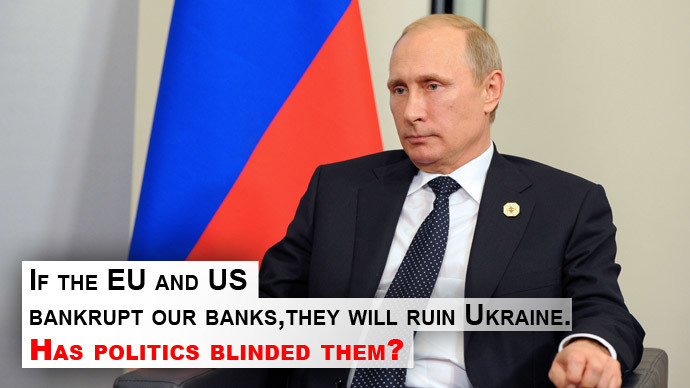
Putin says sanctions against Russia may backfire on Ukraine

China training Pakistani troops along India border' report

The Ministry of External Affairs on Saturday downplayed reports of Chinese troops training Pakistan Army personnel right across the India-Pakistan border in Jammu and Kashmir.Addressing a press conference after Prime Minister Narendra Modi attended the first day of G20 summit here, External Affairs Ministry spokesperson Syed Akbaruddin said the PM met Chinese President Xi Jinping this morning. Since the PM's attention was not drawn to any such report by National Security Advisor Ajit Doval, he had no word with Xi regarding this, Akbaruddin said. Saying that the NSA is monitoring situation, Akbaruddin added that reports may or may not be true. The MEA's comment came a day after a news agency cited a report submitted by the Border Security Force intelligence wing to the NSA as saying that the Chinese troops have been seen training Pakistani Armymen in "weapon handling" techniques bang opposite Rajouri sector of International border. The report, accessed by PTI, said these military manoeuvres were being conducted at forward defence locations of Pakistan which are usually manned by border guarding personnel-- the Pakistan Rangers. Preliminary inputs analysed by BSF also showed some Pakistan Army units have taken over paramilitary posts of Rangers opposite Sriganganagar sector. BSF also found a handful of new observation towers have also been set up by Pakistan in recent past along Abohar and Gurdaspur sectors in Punjab. The BSF intelligence reported that phone intercepts along the border indicate that Pakistan Army and Rangers are planning to deploy snipers and sharp shooters at strategic locations and posts to target Indian soldiers and assets. The Border Security Force intelligence also reported that a special squad of Pakistani Army commandos have been placed at select locations along the IB and LoC, which may attempt to carry out raids and Border Action Team (BAT)-sponsored attacks into the Indian territory. It also said a large grouping of terrorists has been detected along Sialkot area in Pakistan which may be planning to infiltrate into Jammu and Kashmir at a time when Assembly polls are scheduled in the state. It also said agencies have detected a few launch pads for terrorists to infiltrate along either the International Border (IB) or the Line of Control (LoC). The Indo-Pak border, which has been witnessing a series of ceasefire violations in the last few months is peaceful but tense, in the last few days, the report said. The BSF report said that along the Indo-Pak border in the Sir Creek area near Gujarat about 25 Indian fishing boats and 155 fishermen had been apprehended by Pakistani maritime authorities in the current fishing season. During the spate of recent ceasefire violations in October, the report said, retaliatory action by BSF killed at least 5 jawans on the other side.
ISIS Can Capture Balochistan Just Like Mosul: Warns Iranian Parliamentarian
 Iranian Member of Parliament, Hussain Ali Sheryari, has strongly warned that Islamic State of Iraq and Syria (ISIS) can capture the Sunni majority province of Sestan-Balochistan if peace is not restored there.
According to a report published in Al Arabia newspaper, Mr. Sheryari issued this warning while addressing session of Iranian parliament.
“If the Sunni-Baloch community of Sestan Balochistan is not provided due rights then the region can fall victim to ISIS,” warned Mr. Sheryari.
Iranian Parliamentarian raised concern over the increase in religious militancy in border towns of Pakistani Balochistan and mentioned the growing number of clashes between Jaesh-ul-Adl and Iranian Border Security Forces.
According to the reports, the warning of Mr. Sheryari fell on deaf ears and the commander of Iranian Armed forces, Mohammad Baqir Zada, rejected the assertion that there is any problem in Sestan-Balochistan.
The facts are however contrary to the claims made by Mr. Baqir Zada. In fact there has been a massive increase in the number of incidents in which the Iranian security forces have been targeted in Sestan-Balochistan provinces by Sunni militant organizations.
Iranian Member of Parliament, Hussain Ali Sheryari, has strongly warned that Islamic State of Iraq and Syria (ISIS) can capture the Sunni majority province of Sestan-Balochistan if peace is not restored there.
According to a report published in Al Arabia newspaper, Mr. Sheryari issued this warning while addressing session of Iranian parliament.
“If the Sunni-Baloch community of Sestan Balochistan is not provided due rights then the region can fall victim to ISIS,” warned Mr. Sheryari.
Iranian Parliamentarian raised concern over the increase in religious militancy in border towns of Pakistani Balochistan and mentioned the growing number of clashes between Jaesh-ul-Adl and Iranian Border Security Forces.
According to the reports, the warning of Mr. Sheryari fell on deaf ears and the commander of Iranian Armed forces, Mohammad Baqir Zada, rejected the assertion that there is any problem in Sestan-Balochistan.
The facts are however contrary to the claims made by Mr. Baqir Zada. In fact there has been a massive increase in the number of incidents in which the Iranian security forces have been targeted in Sestan-Balochistan provinces by Sunni militant organizations.
Afghanistan Crushes Pakistan in Friendly Cricket Match
http://www.tolonews.com/Afghanistan has crushed Pakistan by 54 runs in a 15-over friendly cricket match between the A teams of the two countries attended by the Afghan President Ashraf Ghani and Pakistan's Prime Minister Nawaz Sharif in Islamabad. Winning the toss and electing to bat first, Afghanistan set a tough target of 155 runs with its only 4 wickets lost while Pakistan could score only 100 with its 9 wickets gone. The total of 154 by Afghanistan includes some brilliant performance by Afghan batsmen in which Najibullah Zadran contributed 60 runs and Samiullah Shenwari scored 27 runs and both of them were not out. However none of the batsman from Pakistan side could help their country to at least get close to the target. Najibullah Zadran of Afghanistan won the man of the match award for his marvelous contribution of 60 runs and was presented a cheque of 100,000 PKR by Pakistan's Premiere.
Afghan President Out to Ease Relations on Visit to Pakistan
Hoping to recast an often strained relationship with a crucial neighbor, President Ashraf Ghani of Afghanistan made his first state visit to Pakistan on Friday.By SALMAN MASOOD


Pakistan: PPP delegation calls on Afghan President


Pakistan only country to spread polio virus abroad

Curb polio or face travel restrictions: WHO warns Pakistan

The World Health Organisation (WHO) has warned that screening of Pakistani passengers would be carried out at international airports if Pakistan failed to control the spread of polio virus.It has also sought complete data of Pakistanis who had traveled abroad during the last six months. Pakistan did not fully comply with the travel restrictions that were imposed in mid 2014, claimed a statement issued by WHO. It threatened that if Pakistan did not take appropriate measures immediately Pakistani passengers would be screened at international airports. Expressing its concern over the rapid spread of the crippling virus in Pakistan, the international organisation has set a six-month deadline for Pakistan to eradicate polio completely. In May this year, WHO had made mandatory for every Pakistani traveling abroad to present polio virus inoculation certificate.
Pakistan: ‘Mid-term elections not in national interest’
The Express TribuneFormer prime minister Yousaf Raza Gillani said on Friday mid-term elections would not be in the country’s interest. Talking to reporters at Multan airport, Gillani said the Pakistan Peoples Party was ready for polls whenever they were held but holding mid-term elections would not serve democratic governance. He said the PPP was playing the role of responsible opposition to avoid causing harm to the country. Responding to a question about arrest warrants issued against Pakistan Tehreek-i-Insaf (PTI) chairman Imran Khan and Pakistan Awami Tehreek (PAT) chief Tahirul Qadri, Gillani said the situation could have been contained if both leaders had not been stubborn. He said arresting the two leaders would make them look like political victims, which, he added, was exactly what they wanted. Commenting on some provocative statements by Sheikh Rashid, Gillani said no one really listened to him. He said people preaching hate and inciting violence should be ignored. Gillani said PPP chairman Bilawal Bhutto Zardari was leader of the youth, adding that leaders from other political parties were ageing. He appreciated the development projects announced by Chief Minister Shahbaz Sharif for Multan, adding that he should focus on completing projects started by the PPP government. He welcomed the announcement that Multan had been declared a big city, saying the move was long due.
Pakistan: Wattoo rules out mid-term polls
http://www.dailytimes.com.pk/Pakistan People’s Party (PPP) Punjab President Mian Manzoor Ahmed Wattoo has said that his party has always played a decisive role for salvaging democracy and that there is no chance of establishment of an undemocratic set up in the country. Talking to party workers, who called on him on Friday, Wattoo said that all constitutional institutions, including judiciary and parliament, were functional and enjoyed complete support from masses. Wattoo said that he did not foresee midterm elections in the country at the moment because neither the prime minister would resign nor was there any possibility of disqualification of the prime minister by the court. Emergence of both of these scenarios was most unlikely, he predicted. He ruled out the allegations of supporting incumbent government and clarified that the PPP was only supporting democracy as salvation in order to brighten up future of the country which hinges on continuity of democratic system. He said that the present government had been discredited by the people because it had failed to deliver which was evident from excessive load-shedding of electricity and gas; worsening law and order situation and higher rate of inflation. He urged the government to immediately undertake necessary initiatives for the constitution of judicial commission to investigation rigging allegations. “It should not miss this opportunity to diffuse the situation,” he suggested. Wattoo criticised the action of the government regarding issuing arrest warrants for Dr Tahirul Qadri and Imran Khan, adding that it was a political move; therefore, it would spoil comparatively enabling political environment in the country. Meanwhile, PTI and PML-N workers joined the PPP on Friday and expressed their full confidence in the leadership of Bilawal Bhutto Zardari, Asif Ali Zardari and Mian Manzoor Ahmed Wattoo. Wattoo also nominated Milk Asif Awan as deputy secretary general of the PPP’s Punjab chapter. PPP Punjab Secretary General Tanvir Ashraf Kaira, while addressing the corner meeting, welcomed the new workers and said that their joining would further strengthen the party in Lahore. Malik Sohail predicted that a large number of workers of other parties would join the PPP. “The PPP is destined to take off under the leadership of Bilawal,” he added. Other party leaders also spoke on the occasion.
Pakistan: Kot Radha Kishan - killing of two Christians

Recently, I have started wondering whether we as a nation have finally become completely inured to violence. It is no consolation that violence at the individual or the group level is quite prevalent all over the world. Perhaps the sort of violence that has diminished the world over is that which is perpetrated by states against other states. However, where nation states have stepped back, non-state actors have taken over. Today, the sort of violence that I am thinking of is that which led to the horrible killing of two Christians in a city near Lahore. The circumstances in which a pregnant woman — a mother of three — and her husband were burnt to death are reasonably well known. However things might have started, it was a rampaging mob of ‘ordinary’ people that eventually perpetrated this tragedy. No, it was not a group of brainwashed seminarians or members of some outlawed extremist religious group that were responsible for what happened. The perpetrators were a group of people that could well be living in any neighbourhood next to any one of us. And that is the most horrifying aspect of this tragedy. Have we as a people become so inured to violence, torture and murder that we can embark upon such an action at the slightest real or imagined provocation? Blasphemy is serious business. Any words or actions deliberately meant to hurt the sensibilities of any religious group or attempts to desecrate their scriptures are all undesirable and there are laws that adequately and perhaps excessively cover such actions. Even if blasphemy is a crime under the law, it still does not mean that ordinary people should take the law into their own hands and act as judges as well as executioners. I am sure that when all this was going on the local police and local bureaucrats were well aware of what was happening; there is no evidence that any of them — and I repeat: any of them — made any effort to stop this atrocity from being committed. Over the years I have thought quite a bit about the problem of blasphemy as it affects religious minorities in Pakistan and also as an extension of the impression all this leaves of the image of Pakistan abroad. Without being an apologist for any side, there are three important observations that are in order. The first and foremost is that even though blasphemy is a crime punishable by death, there have been no executions for this crime in Pakistan though many have been so convicted. This might seem insignificant but I think that whatever else one might have to say, the fact that nobody has ever been executed in Pakistan for blasphemy says a lot. The second observation is that, very often, the ‘safest’ place for those accused of blasphemy is in a jail. I would call it a sort of protective custody. This observation is becoming a bit dicey of late. I used to think that jail was a safe place for people accused of blasphemy but there have been two recent incidents where jail guards killed two such inmates. If this becomes more common then we will have a serious problem. As far as the question of setting the blasphemy accused free on bail or for good is concerned, that is fraught with danger because the return of such persons to their original community takes on political and religious overtones. And once the local mullah gets involved, bad things will happen inevitably. The third observation is that in a country where uttering anything in public that is even the least bit uncomplimentary about any important Muslim religious figure could well lead to serious consequences, it is unlikely that any sane and reasonably intelligent person would commit such an action. That then presumes that those actually guilty of blasphemy are either not quite sane or are at least severely mentally challenged. Other than that, most of those accused of blasphemy are members of religious minorities that do not subscribe to Islamic theology and doctrinal difference could well be claimed as blasphemy. Even in this category, an accusation of blasphemy is often used for the sake of revenge, to force people out of the community for the sake of their property or, worse, to make an example of them as probably happened in this case. There are always going to be bad people who will do bad things. What really bothers me about this latest atrocity is that like many such incidents in the past where the victims were members of a minority community, officials did not try to prevent the atrocities. Even our chief minister of Punjab, who has a penchant for firing bureaucrats and police officers at a mere whim, did not take any action against those public officials who let all this happen. Or, if he did, he must have done it so discreetly that nobody has heard anything about it. That is the real problem. Either out of fear of being branded pro-blasphemy or because of actual sympathy for the cause of anti-blasphemy rioters, members of our political and official establishment rarely try to intervene to protect the victims. Yes, much sympathy and distribution of taxpayer money follows such riots but rarely are there any dismissals of government officials who stood by and let such riots happen. And rarely, if ever, the mullah who incited the riot or the leader of the rioters who stood to receive some gain end up in jail. And if either of them does get arrested, they will be garlanded profusely by members of our legal fraternity and become ghazis (holy warriors) overnight. Of course, if ever presented in court, they will be released in short order for “lack of evidence”. Can anything be done? Essentially, what needs to be done is to make sure that the law is actually implemented and followed. Yes, the law.By Syed Mansoor HussainEither out of fear of being branded pro-blasphemy or because of actual sympathy for the cause of anti-blasphemy rioters, members of our political and official establishment rarely try to intervene to protect the victims.

Pakistan: Ghani’s visit
Afghanistan’s President Ashraf Ghani has arrived on a two-day visit on the invitation of the prime minister. The visit is aimed at improving relations between the two neighbouring countries, mired since long in continuing distrust and a confidence deficit. No one knows what will happen to Afghanistan after 2014. Commentaries on the future of Afghanistan are uncertain at best. The country is facing a myriad problems with solutions scarce insofar as Afghanistan’s indigenous capacity to deal with them is concerned. Looking beyond the immediate issue of the Taliban threat, the newly installed government headed by President Ashraf Ghani seems determined to steer the country to safer shores. Very few doubt his intention and ability to overcome this challenge. After coming to power through a controversial presidential election, President Ghani is striving to reorder Afghan’s foreign policy and in the process garner legitimacy for his rule, still in peril because of the difficulties in implementing the agreement between him and Chief Executive Abdullah Abdullah in the new unity government. The government in Afghanistan cannot afford the current power haggling between the erstwhile rivals, especially when the US is withdrawing from the region and with it the donors’ commitment to keep the Afghanistan economy stable seems fraught with uncertainty. Afghanistan is far from able to stand on its feet through its own economic and military strength. Even after 13 years of western occupation and with a total outlay of $ 100 billion on social services, the Afghan economy is incapable of providing jobs to the youth and revenue to the state. The US and NATO have promised to inject annually $ eight billion for the Afghan National Army and the economy. However, if the civil war already in the making flares up, there will be even less motivation for the donor countries to foot the bill. Ashraf Ghani has to bring Afghanistan’s warring factions, particularly the Taliban, to the negotiating table, stabilize relations with neighbouring countries and keep the channel for foreign aid open. All these challenges are dependent for their solution on a stable government in Afghanistan. President Ashraf Ghani has been unable to form his cabinet so far because of power sharing disagreements with the Abdullah camp. That may weaken his negotiation options in the upcoming donors conference in London next month.
Stability in Afghanistan is as much a challenge for its own people as for the region. Afghanistan’s conflict has been instrumental in galvanizing terrorism across the world over the last four decades by now. Unfortunately, the war on terror has provided no solution to this conundrum, sinking Afghanistan, the region and areas further abroad into more wars. In this context, Pakistan’s perceived role as a potential troublemaker meddling in the affairs of Afghanistan, informed amongst other reasons by our India-centric concerns, needs revisiting. Though Pakistan has by now also received its own share of suffering at the hands of home grown terrorists and is fighting a war against them in FATA, the success of this mission will only benefit Afghanistan if terrorism, as stated by Chief of Army Staff General Raheel Sharif during his recent visit to Kabul, becomes a common cause between the two countries. The Pakistan government’s desire to see an Afghan-led and Afghan-owned political solution to its civil war would remain unachievable unless the Pakistani military too is on board. Ashraf Ghani would like to return with this assurance from the Pakistan military and the government. Pakistan has a lot to offer to Afghanistan in trade and economic corporation. The Pakistan-Afghanistan Joint Economic Commission has agreed last January to take bilateral trade from $ 2.5 billion at present to $ five billion by 2015. The agreements made by the commission should be reviewed and implemented at the earliest. Two-way trade and Pakistani investment in Afghanistan would also provide an impetus to control cross-border smuggling, which hurts the revenues of both countries. The first visit of President Ashraf Ghani to Pakistan should be made historic by Pakistan living up to its words of letting Afghanistan settle its problems on its own without external interference and aiding the neighbouring country to emerge from the long tunnel of war and bloodshed of the last four decades.
Pakistan: - PTI's Imran - Mother of all U-turns
Imran Khan’s changing stance has disappointed his critics and followers alike. His latest somersault on the demand for the prime minister’s resignation is being seen as the mother of all U-turns.Shahzad Raza

+-.jpg)

Pakistan: Man held over blasphemy allegation
 Chakwal police have arrested a Christian man from Lahore over an alleged act of blasphemy.
According to police sources, the 40-year-old man was booked for blasphemous remarks made by him.
He holds a Masters degree in computer science and used to run a website and also wrote blogs on it. According to the sources, he used derogatory language against the Holy Prophet (PBUH) in his blogs.
Also read: 50 villagers held over burning of Christian couple to death
On July 4, 2010, a man posted a comment on the website of a private TV channel and alleged that the accused was committing blasphemy in his blogs.
On June 9, 2011, Mohammad Saeed, a resident of Talagang in Chakwal, filed an application in the City Police Station against the accused and a case was registered under Section 295C.
According to police, the accused went into hiding after the registration of the case. He was arrested from Lahore after about three and a half years.
SP Rawalpindi Range Jabbar Hussain is investigating the case.The accused will be produced before a court in Talagang on Saturday.
Chakwal police have arrested a Christian man from Lahore over an alleged act of blasphemy.
According to police sources, the 40-year-old man was booked for blasphemous remarks made by him.
He holds a Masters degree in computer science and used to run a website and also wrote blogs on it. According to the sources, he used derogatory language against the Holy Prophet (PBUH) in his blogs.
Also read: 50 villagers held over burning of Christian couple to death
On July 4, 2010, a man posted a comment on the website of a private TV channel and alleged that the accused was committing blasphemy in his blogs.
On June 9, 2011, Mohammad Saeed, a resident of Talagang in Chakwal, filed an application in the City Police Station against the accused and a case was registered under Section 295C.
According to police, the accused went into hiding after the registration of the case. He was arrested from Lahore after about three and a half years.
SP Rawalpindi Range Jabbar Hussain is investigating the case.The accused will be produced before a court in Talagang on Saturday.
Pakistan - Asfandyar takes swipe at PTI govt in KP
Asfandyar criticises PTI performance in KPK by dawn-news Awami National Party (ANP) president Asfandyar Wali Khan on Friday criticised Imran Khan and Khyber Pakhtunkhawa Chief Minister Pervez Khattak, saying that the Pakistan Tehreek-i-Insaf (PTI) have failed to fulfill their election promises, DawnNews reported. Speaking to ANP workers in Peshawar, Asfandyar said that the PTI should honour election vows they had made to the youth. He said that Imran Khan would not be allowed to escape without fulfilling the promises he made during the 2013 election. He criticised the PTI chairman and KP chief minister, accusing them of “dancing on a container in Islamabad,” while people were being killed in the province. The ANP leader said that the protests in federal capital were "an insult to dharna’s." He also said that the KP government had mishandled the internally displaced persons (IDPs) who had arrived in Bannu following the start of Operation Zarb-i-Azb. Meanwhile, Asfandyar termed Afghan President Ashraf Ghani’s visit to Pakistan a positive development. “I pray to God that talks between the two countries are successful,” said the ANP leader. He said that peace could not prevail in Pakistan without Afghanistan being stable.
Friday, November 14, 2014
Sisi will further limit civil liberties in Egypt
www.middleeastmonitor.com
Samira ShackleWhen three Al-Jazeera English journalists were jailed in Egypt, it made international headlines. Australian journalist Peter Greste, Egyptian-Canadian Mohamed Fadel Fahmy, and Egyptian producer Baher Mohamed were convicted in June of aiding the blacklisted Muslim Brotherhood and of spreading false news that portrayed Egypt as being in a state of civil war. The evidence against them included footage of a horse trotting, a documentary on Somalia, and a music video by the singer Gotye. Despite the flimsy trial, Greste and Fahmy received seven-year jail terms, while Mohamed was jailed for 10 years. International criticism and backdoor pressure from foreign governments was not enough to persuade President Abdel Fatah Al-Sisi to intervene and free the journalists. On Wednesday November 13, Al-Sisi issued a decree allowing the deportation of foreigners accused of crimes on Egyptian soil. It states that at the request of government prosecutors, and with the approval of cabinet, the president "may agree to deliver the defendants and transfer the sentenced to their own countries, either for their trial or the execution of their sentence". The announcement has fuelled hope that this could mean that Greste – an Australian citizen – could be released. The president had previously said that he did not have the legal jurisdiction to intervene in Greste's case before the legal proceedings were finished – a process that could take months because of retrials and appeals. This decree removes that delay. It is unclear whether the decree would apply to Fahmy, who is a dual citizen of Egypt and Canada. It would not apply to Mohamed, who is Egyptian. There is also a question mark over Egyptian-American prisoner Mohamed Soltan, a Muslim Brotherhood activist who is on hunger strike in jail. This question of passports and citizenship points to the wider issue of how such cases are discussed. The plight of Greste and other foreigners in jail in Egypt is horrendous and the international media attention attracted by the case has shone a valuable light on the deteriorating state of civil liberties in Egypt. However, the fact remains that - even if Greste is freed as he should be, having committed no crime – hundreds of unjustly jailed Egyptians will continue to languish in jail and political dissent in the country will continue to be crushed. On Sunday, Egypt sentenced 23 activists to three years in jail for protesting against a law that outlawed protests. These are the same protests that ousted Dictator Hosni Mubarak in the 2011 revolution, and Mohamed Morsi in 2103, before the current military-led regime took over. They join scores of other activists already in jail. Political dissent from both secular and Islamist camps has been brutally repressed. It is unsurprising that rights groups such as Human Rights Watch (HRW) have said that things in Egypt are returning to their pre-revolutionary state. At the end of October, a group of 23 Egyptian newspaper editors pledged to limit their criticism of state institutions. This followed an attack on the restive Sinai Peninsula. In a statement, the editors condemned the attack and pledged to confront the "hostile culture towards the national project and the foundations of the Egyptian state". It was a worrying step that further shut down avenues for discussion or dissent; but the statement merely formalised an existing policy among private newspaper owners to echo the state line. The same month, a satellite network replaced Mahmoud Saad, a talk-show host mildly critical of the government, saying that "freedom of expression cannot ever justify ridicule of the Egyptian army's morale". Other television programmes and channels that presented opposing views have gone off air. Al-Sisi has repeatedly spoken of "foreign plots" and big conspiracies in Egypt, raising the possibility that any critic could be accused of complicity. Wide-reaching counter-terrorism laws introduced earlier this year have also been used to crush dissenting voices. In April, when the counter-terrorism bill was passed, Gamal Eid, executive director of the Arab Network for Human Rights, warned that the law "signals a reversal of the hard-earned freedoms gained after the January 2011 uprising and will take the country back to its pre-January 25 revolutionary state." These words were echoed in October by Sarah Leah Whitson of HRW, when she said: "It's back to business as usual in Egypt. The Sisi government will clearly go to any length to crush domestic opposition, whether secular or Islamist." Regardless of the new presidential decree, and whether Greste and Fahmy are freed (something which is by no means guaranteed), this dire situation for civil liberties in Egypt looks set to continue unabated.
Video depicts Bahrain police abuse - but will inquiry lead anywhere?
Unfortunately, the police officers who commit abuse or even acts of torture are spared due to a culture of impunity. Since 2011, there have been 7 or 8 proven cases of abuse, which came to light thanks to leaked videos. Each time, it's the same scenario: the authorities announce the opening of an investigation, but the investigations go nowhere and very rarely result in sanctions. The ministry’s announcements are only intended to calm public opinion and sell a semblance of democracy abroad. In the rare cases where there is a conviction, the sentences are eventually reduced. In May 2013, a police officer sentenced to 7 years of prison for shooting an unarmed demonstrator dead saw his sentence reduced to 6 months. That same year, the court acquitted two police officers who killed a demonstrator by shooting him with buckshot pellets. The court found that the two officers had not fired with the intent to kill, and were therefore free to go [Editor’s Note: In May 2014, an unarmed 14-year-old protestor was also killed by buckshot pellets during a demonstration]. In April 2012, police officers were involved in a case involving thugs damaging a grocery store owned by Shiites. The scene was recorded by the store’s security camera, but it did not lead to an investigation, even though the faces of the police officers were clearly identifiable in the video. This situation will not change until Bahrain has effective institutions and most notably an independent judicial system. To achieve that would require genuine democratic reform, and that is still a far-off dream.The organisation Human Rights Watch issued a report last May denouncing impunity and judicial bias in the kingdom. "In Bahrain, a police officer who kills a protester in cold blood or beats a detainee to death might face a sentence of six months or maybe two years, while peacefully calling for the country to become a republic will get you life in prison,” the report states. Bahrain is a Shiite-majority country (about 75 percent of the population), ruled by an exclusively Sunni monarchy and government. Since February 2011, members of the Shiite community who feel discriminated against regularly go into the streets in protest. In May, the International Federation for Human Rights estimated that at least 89 people had been killed since the start of the protests.
UN: ISIL committing war crimes in Syria

Massacres, beheadings, torture, sexual enslavement and forced pregnancy being carried out by group, investigators say.Fighters from the Islamic State in Iraq and the Levant (ISIL) are committing war crimes and crimes against humanity on a large scale in areas under the group's control in Syria, UN investigators say. In its first report focused squarely on acts by ISIL, the UN Commission of Inquiry on Syria presented on Friday a horrifying picture of what life is like in areas controlled by the group, including massacres, beheadings, torture, sexual enslavement and forced pregnancy. "The commanders of ISIS have acted wilfully, perpetrating these war crimes and crimes against humanity with clear intent of attacking persons with awareness of their civilian or 'hors de combat' (non-combat) status," the report said, using an alternate acronym for ISIL. "They are individually criminally responsible for these crimes." The commission called on the perpetrators to be brought to justice, for instance before the International Criminal Court. Based on more than 300 interviews with people who have fled areas under the control of ISIL, as well as photographs and video footage released by ISIL itself, the report paints a picture of life under the group's rule. ISIL, which has declared an Islamic "caliphate" in an area spanning northern Iraq and eastern Syria, is seeking to "subjugate civilians under its control and dominate every aspect of their lives through terror, indoctrination", the report found. Massacres, beheading boys as young as 15, and amputations and lashings in public squares that residents, including children, are forced to watch figure on the list of crimes, as does the widespread use of child soldiers, stoning women to death for suspected adultery, and holding women as sexual slaves and forcing them to bear children for the fighters. One person who fled the group's stronghold Raqqa told investigators he had seen a man punished in a public square for looting. "Two people held the victim tightly while a third man stretched his arm over a large wooden board. A fourth man cut off the victim's hand," the witness was quoted as saying. "It took a long time. One of the people who was standing next to me vomitted and passed out due to the horrific scene."
Police, anti-austerity protesters clash across Italy
 Several Italian cities, including the capital city of Rome and northern city of Milan, have witnessed confrontations between police forces and anti-austerity protesters.
On Friday, trade unions, students, and migrants staged strikes and rallies in more than 20 cities against labor market and other reforms.
Officers were pelted with eggs and red paint in Rome. Protesters also hurled eggs at the Finance Ministry and scaled the Colosseum.
In Milan, protesters targeted the police with flares, who then responded by baton charges.
Elsewhere, thousands of public and private sector workers took part in peaceful demonstrations against government reforms.
Prime Minister Matteo Renzi wants to make it easier for firms to hire and fire workers but has also pledged more generous unemployment benefits. His government has also proposed education reforms, which according to critics are too business-oriented.
He has vowed to push ahead with labor reforms, saying, "I want the law to be in force from January 1."
Also on Friday, the Italian National Statistical Institute (Istat) announced that the country’s economy was still beset with recession in the third quarter of 2014.
According to reports, Italy’s gross domestic product (GDP) dropped by 0.1 percent during the July-September period. The country’s GDP shrank by 0.2 percent in the second quarter of 2014 while it was flat in the first quarter of the year.
Several Italian cities, including the capital city of Rome and northern city of Milan, have witnessed confrontations between police forces and anti-austerity protesters.
On Friday, trade unions, students, and migrants staged strikes and rallies in more than 20 cities against labor market and other reforms.
Officers were pelted with eggs and red paint in Rome. Protesters also hurled eggs at the Finance Ministry and scaled the Colosseum.
In Milan, protesters targeted the police with flares, who then responded by baton charges.
Elsewhere, thousands of public and private sector workers took part in peaceful demonstrations against government reforms.
Prime Minister Matteo Renzi wants to make it easier for firms to hire and fire workers but has also pledged more generous unemployment benefits. His government has also proposed education reforms, which according to critics are too business-oriented.
He has vowed to push ahead with labor reforms, saying, "I want the law to be in force from January 1."
Also on Friday, the Italian National Statistical Institute (Istat) announced that the country’s economy was still beset with recession in the third quarter of 2014.
According to reports, Italy’s gross domestic product (GDP) dropped by 0.1 percent during the July-September period. The country’s GDP shrank by 0.2 percent in the second quarter of 2014 while it was flat in the first quarter of the year.
China - New York Times should also seek answers from within
A few overseas media outlets, such as The New York Times and Bloomberg, are agitated over visa issuance for their China-based correspondents. These news organizations are well aware that some of their stories are unacceptable to China, and they have deliberately linked the suspension of visas to these stories.
An editorial in The New York Times Wednesday claimed that "it has no intention of altering its coverage to meet the demands of any government - be it that of China, the United States or any other nation."
The New York Times still wields huge influence in the global journalism profession. The editorial oozes with pride for being the top Western public opinion platform. It sends two clear messages. Since the newspaper is hard even on the US, it feels the Chinese government needs to accept its coverage and that China merits the serious and honest attention The New York Times gives to its coverage.
Conflicts between Western media and non-Western countries often occur. Recently, CNN announced it would go off-air in Russia due to changes in Russian media legislation. Under such friction, Western media outlets often proclaim their universal values and professionalism to conceal loyalty to both their own and national interests.
The US has a different system from China. The New York Times can disregard the feelings of the US government, but cannot neglect the feelings of most American people. Maintaining US interests is the boundary The New York Times must abide by.
The newspaper will not have the intention to cooperate with the Chinese government on important matters. Its coverage is often against China's interests. It shouldn't be surprised when some of its reports and opinions make Chinese people feel uncomfortable.
The New York Times will synchronize the newspaper's interests with American national interests much more than with Chinese national interests. We basically hold these practices to be normal. The New York Times needs to know its innate restrictions and weaknesses. Only then would it be willing to reflect on itself if there is conflict between it and the Chinese government.
The world is changing. If a news outlet dares to believe that it is always doing right and need not make adjustments when running into conflicts, it's certainly not something to shout about. The New York Times declares it has "no intention of altering" as if this is a directive that China should change for it. It sounds exciting, but it won't be surprising if the newspaper meets with rejection.
China is accelerating its reforms. But some Western media outlets step in to intervene in China's political process. This goes beyond their role.
As peers, we hope journalists at The New York Times can continue to work in China. When they find they cannot stay, they should also ask themselves why.
Icy Silence: The Future of U.S.-Russian Relations
In classic Russian theater, when a scene calls for the noise of a crowd, all of the actors on and off stage begin repeating the phrase "What to say when you have nothing to say?" — creating the necessary "white noise." This week's vapid media reporting struck me as an informational version of the same phenomenon. It is as if commentators are now doubling as psychologists, trying to read deeper meaning into the expressions that Russian President Vladimir Putin and U.S. President Barack Obama wore when they greeted each other in Beijing and Brisbane or the fact that they chatted for a few minutes at this or that forum. But how could they possibly have discussed anything of substance concerning Ukraine or Iran in those fleeting sessions of "speed diplomacy?" Is it even important that the two presidents spoke to each other? Of course, it is nice to know that both have enough tact to acknowledge the other's presence, but that is the most we can hope from them these days. U.S.-Russian relations have reached a point where simply talking will not change anything. Putin and Obama have limited their conversations to discussions about the weather or the cut of the complimentary coat they received from summit organizers. This is not because they hold an insuperable aversion for each other — although there is a decided lack of warmth between them. The problem is that they have nothing to talk about. More precisely, there is plenty to talk about, but they lack the motivation to try because each side knows all of the other side's stock phrases, arguments and counter-arguments in advance. A deep chasm has opened up between Russia and the U.S., but this time it stems not from differing ideologies, but from divergent perceptions of the world — past, present and future. U.S.-Russian relations were openly hostile during the Cold War, but this did not prevent the sides from agreeing on the rules of the game and acceptable behaviors. They had some sharp conflicts and dangerous tensions along the way, but they did manage to establish a mutually acceptable framework. But when their confrontation ended, that framework collapsed along with it. The U.S. alone emerged from that standoff with a sense of omnipotence — something it viewed as a natural and well-deserved outcome. After all, the U.S. believes in its exceptionalism and bases everything on that principle. Meanwhile, Russia painfully mourns the loss of its superpower status and has yet to fully come to grips with the rupture that occurred almost a quarter of a century ago. It left Moscow with a heightened sense of the fragility of not only the Russian state, but of the entire world order. The U.S. sees the modern world as the product of its own creation, a work in progress that its Cold War victory has helped bring closer to completion. And Washington considers itself entitled, even obliged, to continue sculpting that world order according to the same template it adopted as the only "right" one after the collapse of the Soviet Union. Of course, there are plenty of realists in Washington who understand that things did not go as planned and that changes are necessary, but institutional and intellectual inertia stubbornly push events toward the old approaches. Obama came to office with a new program, with the understanding that he could not run the U.S. in the same old way. But in the end, he got bogged down in the same rut as his predecessors. The difference is that he continues on reluctantly and without inspiration, achieving even less convincing results. Russia views everything happening on the world arena as evidence of the overconfidence of a global leader who assumed it has the right to decide matters for everyone. And whereas 25 years ago that leader really did stand head and shoulders above the rest, now it stumbles repeatedly, making moves that, frankly, are destructive not only to others, but even to its own interests. Russia's feeling of vulnerability as the loser in the Cold War combines with a growing fear of what that global hegemon might perpetrate in its effort to maintain dominance. And it is inevitable in such a situation that Russia would want to take revenge and prove that the U.S. was premature in dismissing it. The U.S. and Russia want to contain or stop each other, each for its own reasons. What dialogue is possible under such conditions? The only subjects left for them to discuss are the weather and the beautiful view. True, it is good they say that much to each other, but even then it is only on the sidelines of this or that international conference. It is no longer possible to hold a bilateral summit because they cannot agree on an agenda or on concrete results that they hope to achieve. That leaves only communicating "on the run," as diplomats call it. Only two forums remain where the U.S. and Russian presidents will see each other — APEC and the Group of 20. Their paths will not cross at any other venue. Something is seriously wrong when the leaders of the two largest countries in the world — both nuclear superpowers — refuse to communicate with each other. What's more, such a simmering conflict is dangerous over the long term. But that is how the situation stands today, and no immediate change is anticipated. Obama will have far more important questions than that of Russia to tackle during the final two years of his presidency. First, he must cope with a hostile Congress that already considered him weak for always giving in to Putin. Second, the remnants of his "reset" with the Kremlin no longer work and the complete lack of mutual understanding prevents the creation of a new agenda. Third, there is no urgent need to make Russia a priority in general: Washington has little need of Moscow for its current and short-range goals. Cooperation would only become necessary given large-scale movement in the international arena, but recognizing that fact requires strategy, and strategy is what's lacking. Putin also has little reason to change his approach to the U.S. First, he sincerely believes that U.S. foreign policy is destructive and completely senseless. Second, his anti-U.S. stance does more than anything else to boost his popularity at home. Third, Russia has greatly intensified its relations with the countries of the non-Western world, and that requires Moscow to position itself — at least to some extent — as an alternative to the U.S. And finally, speaking before the United Nations, Obama put Russia on a par with Ebola and the Islamic State. It would be strange for Moscow, finding itself placed in such company, to put forward proposals for the resumption of a dialogue. It is difficult to imagine that any of the presidential favorites in the U.S. would want to fundamentally change Washington's policy toward Russia, thus ruling out the possibility of a breakthrough following the change in U.S. leadership. What's more, just as the new U.S. president is taking office, Russia will be gearing up to decide who will rule this country from 2018 to 2024. It seems that in the years ahead, a couple of words exchanged on the sidelines of international forums will be the only form of communication that the presidents of Russia and the U.S. will have.By Fyodor Lukyanov

Obama, Down but Not Out, Presses Ahead
 By PETER BAKER and JULIE HIRSCHFELD DAVIS
President Obama emerged from last week’s midterm election rejected by voters, hobbled politically and doomed to a final two years in office suffering from early lame-duck syndrome. That, at least, was the consensus in both parties. No one seems to have told Mr. Obama.
By PETER BAKER and JULIE HIRSCHFELD DAVIS
President Obama emerged from last week’s midterm election rejected by voters, hobbled politically and doomed to a final two years in office suffering from early lame-duck syndrome. That, at least, was the consensus in both parties. No one seems to have told Mr. Obama.
 In the 10 days since “we got beat,” as he put it, by Republicans who captured the Senate and bolstered control over the House, Mr. Obama has flexed his muscles on immigration, climate change and the Internet, demonstrating that he still aspires to enact sweeping policies that could help define his legacy.
The timing of the three different decisions was to some extent a function of separate policy clocks, not simply a White House political strategy. Mr. Obama, for example, had been scheduled to travel to China for a summit meeting in mid-November, and American officials have been trying for most of the year to negotiate a climate agreement for him to announce while in Beijing.
Still, even if by happenstance, the back-to-back moves have reinforced Mr. Obama’s desire to assert himself in a period when his poll numbers and political capital are at their lowest ebbs. While losing Congress was a grievous blow that will further challenge his capacity to govern, advisers said that he feels liberated. He can now pursue his long-term agenda, they said, without being tethered to the short-term electoral concerns of his party’s leadership in Congress.
In the process, though, Mr. Obama has angered Republicans who accuse him of essentially defying the message sent by the electorate. All of the talk by the White House in recent days of working together with the new Congress seems belied by a president who has wasted little time advancing some of the same policies that were renounced just a week ago, Republicans said.
“The president is completely ignoring the will of the American voters, who turned out on Election Day and overwhelmingly elected people who wanted to change the direction of the country,” Senator John Barrasso of Wyoming, chairman of the Senate Republican Policy Committee, said in an interview. “Even today, the new polls show Americans would rather have Republicans make the agenda changes than the president.”
But aides said Mr. Obama has concluded that he cannot let opposition from the other party stop him from advancing his priorities, and in his postelection comments, Mr. Obama predicted he would take actions that Republicans would not like. While White House advisers interpreted the election results as a mandate to work across the aisle, they said that cannot simply be a prescription for more gridlock where the president does nothing without Republican approval.
In the 10 days since “we got beat,” as he put it, by Republicans who captured the Senate and bolstered control over the House, Mr. Obama has flexed his muscles on immigration, climate change and the Internet, demonstrating that he still aspires to enact sweeping policies that could help define his legacy.
The timing of the three different decisions was to some extent a function of separate policy clocks, not simply a White House political strategy. Mr. Obama, for example, had been scheduled to travel to China for a summit meeting in mid-November, and American officials have been trying for most of the year to negotiate a climate agreement for him to announce while in Beijing.
Still, even if by happenstance, the back-to-back moves have reinforced Mr. Obama’s desire to assert himself in a period when his poll numbers and political capital are at their lowest ebbs. While losing Congress was a grievous blow that will further challenge his capacity to govern, advisers said that he feels liberated. He can now pursue his long-term agenda, they said, without being tethered to the short-term electoral concerns of his party’s leadership in Congress.
In the process, though, Mr. Obama has angered Republicans who accuse him of essentially defying the message sent by the electorate. All of the talk by the White House in recent days of working together with the new Congress seems belied by a president who has wasted little time advancing some of the same policies that were renounced just a week ago, Republicans said.
“The president is completely ignoring the will of the American voters, who turned out on Election Day and overwhelmingly elected people who wanted to change the direction of the country,” Senator John Barrasso of Wyoming, chairman of the Senate Republican Policy Committee, said in an interview. “Even today, the new polls show Americans would rather have Republicans make the agenda changes than the president.”
But aides said Mr. Obama has concluded that he cannot let opposition from the other party stop him from advancing his priorities, and in his postelection comments, Mr. Obama predicted he would take actions that Republicans would not like. While White House advisers interpreted the election results as a mandate to work across the aisle, they said that cannot simply be a prescription for more gridlock where the president does nothing without Republican approval.
“Our bottom line is we think people want results,” said Jennifer Palmieri, the White House communications director. “They want things to improve. They want you to take action. They’re more focused on outcomes than process.”Although they do not present it this way, in some ways Mr. Obama and his aides are taking a page from President George W. Bush’s playbook after his own “thumping” in his final midterm elections. Instead of pulling out of the deteriorating war in Iraq, as Democrats interpreted Mr. Bush’s election mandate, he sent more troops. Democrats like Mr. Obama, then a senator, accused the president of defying the voters. In the end, the reinforcements and a strategy change helped turn around the war.
Like Mr. Bush, Mr. Obama will continue to have a relatively free hand on foreign policy, although he has asked Congress to fashion a new authorization for his own air war in Iraq and next-door Syria against the Islamic State militant group. But it remains less clear how far he can go toward other goals without Congress.His agreement with China to reduce carbon emissions over the next decade is not binding and ultimately will depend on his successor enacting policies to achieve those goals. Likewise, his planned immigration executive order providing work permits to millions of people in the country illegally will remain in force only as long as he is in office. Still, aides said Mr. Obama seems energized by the postelection actions. As early as the day after the voting, senior officials described him as impatient to reclaim the presidential megaphone and argue for policy initiatives after a year of hanging back in deference to Democratic operatives worried about the backlash for vulnerable candidates. It is a change in tone that has been apparent to liberal activists who have often criticized Mr. Obama for being too timid and willing to compromise. Public interest groups and technology start-up executives said they saw the new dynamic at work on Monday, when they got a heads-up to watch the White House website for an announcement that would please them. Mr. Obama’s videotaped call for a free and open Internet “completely upended the debate, and it was the kind of clear, bold statement we had been waiting for, reconnecting to that language you heard in 2008, where he came out in very stark terms in a pro-public interest way,” said Craig Aaron, the president of Free Press, an advocacy group. While there is still considerable concern among some White House allies that Mr. Obama will allow Republicans to set the terms of debate over trade, taxes and infrastructure spending, many argue that the devastating scale of the election losses may have raised pressure on the president to go big in other areas, if only to prove his relevance and agenda-setting authority. “The president has seen what happens when he doesn’t step forward and Democrats don’t inspire the public or their base — we win on the issues, but lose at the polls — so we can’t do worse,” said Anna Galland, the executive director of MoveOn.org, the progressive advocacy group. “Let’s try being bold.” Republicans did not see it as bold so much as defiant and said it may cost Mr. Obama the opportunity to make more progress collaboratively. “I’ve been very disturbed about the way the president has proceeded in the wake of the election,” said Senator Mitch McConnell of Kentucky, the incoming Republican majority leader. “I had maybe naïvely hoped the president would look at the results of the election and decide to come to the political center and do some business with us,” he added. “I still hope he does at some point but the early signs are not good.”
Obama oozes support for Myanmar's Aung San Suu Kyi
By JOSH LEDERMAN

 President Barack Obama mounted a warm show of support Friday for Myanmar's opposition leader Aung San Suu Kyi, voicing opposition to a constitutional rule that's keeping the pro-democracy icon off next year's ballot. While crediting Myanmar for progress in its transition to democracy, he offered a blunt assessment of the distressing shortcomings that have called that transition into question.
In his joint appearance with Suu Kyi, on the back porch of her lakeside home, Obama stopped short of an explicit endorsement for her potential campaign for president. But his affection and deep admiration for Suu Kyi was clear, from his praise for her efforts to liberalize the government to the ease with which he whispered in her ear as they walked arm in arm into the home where she was once confined as a political prisoner.
Although Obama was quick to caution he didn't want to dictate how Myanmar should pick its next president, he said told President Thein Sein the night before that he saw little wisdom in a rule barring the 69-year-old Suu Kyi from running next year because her children hold British citizenship.
"I don't understand a provision that would bar somebody from running for president because of who their children are," Obama said. "That doesn't make much sense to me."
Suu Kyi, a member of Parliament demure in her support for changing that provision, said it was flattering to have a constitution written with her in mind. But she said that wasn't how it should be done in a democracy, urging supporters not to get too caught up in whether she wins next year's pivotal elections.
"Of course any party wants to win the elections — I'm sure the president will tell you that," she said with a grin. What's more important, she said, is how you win. "I'd rather lose than win in the wrong way."
Obama and Suu Kyi took questions from reporters on the final day of Obama's visit to Myanmar, an impoverished country struggling to reinvent itself. Obama is heavily invested in Myanmar's progress, having made a historic trip here two years ago to signal a strong U.S. commitment to democratization in the country and the broader region.
On this visit, prompted by economic summits in the capital city of Naypyitaw, Obama faced profound concerns by Myanmar's citizens that its transition to democracy is backsliding. At a town hall meeting Friday with young Southeast Asians — itself a rarity in a country ruled by its military for half a century — Obama told an ebullient crowd their generation has more potential than any before to shape Myanmar's society.
"The future of this region — your region — is not going to be dictated by dictator or by armies," Obama said. "It's going to be determined by entrepreneurs and inventors and dreamers."
Left unaddressed by Obama during his two days in Myanmar was growing skepticism about whether Suu Kyi, his fellow Nobel Peace Prize laureate, is willing to fight as vigorously for human rights and tolerance as she is for democratic reforms. The U.S. has deep concerns about the abuse of Rohingya Muslims, a minority group deeply disdained by most in the majority-Buddhist country, but Suu Kyi has resisted calls to speak out on their behalf.
Asked by an American journalist about the plight of the Rohingya, Suu Kyi wouldn't even say their name. That's a position shared by Myanmar's government, which deems the roughly 1.3 million Rohingya to be illegal migrants from Bangladesh and says the Rohingya ethnicity does not exist.
"If you ask how do we propose to resolve all these problems of violence between communities, between ethnic groups, we've got to start with rule of law," Suu Kyi said, speaking in general terms. "People who feel threatened are not going to sit down and sort out their problems."
Obama, for his part, did use the term "Rohingya" and said discrimination against them wasn't consistent with the kind of country Myanmar wants to become. "Ultimately that is destabilizing to a democracy," he said.
Notably, Obama chose to hold his news conference in Myanmar with Suu Kyi instead of with Thein Sein, the face of Myanmar's mixed evolution away from autocratic rule. Sitting down with Thein Sein the evening before in his opulent, moat-enclosed palace, Obama credited his leadership for putting Myanmar on a democratic path, even as he pressed him on the Rohingya and on his slow walk on political reforms.
"We recognize that change is hard and it doesn't always move in a straight line," Obama said.
The setting for Obama's visit with Suu Kyi was a stark change from Naypyitaw, where Obama met with Thein Sein and attended two east Asian regional summits.
In Yangon, Myanmar's bustling and chaotic commercial capital, children in traditional dress lined the streets as Obama drove to Suu Kyi's compound. In Naypyitaw, a city built literally from scratch in the last decade, Obama's motorcade sped down empty eight-lane highways past five-star hotels and gaudy public fountains in near-silence, rarely encountering anyone on the streets. Other parts of Myanmar are very rural and very poor, dotted by refugee camps and armed ethnic groups that have been fighting with the government for decades.
President Barack Obama mounted a warm show of support Friday for Myanmar's opposition leader Aung San Suu Kyi, voicing opposition to a constitutional rule that's keeping the pro-democracy icon off next year's ballot. While crediting Myanmar for progress in its transition to democracy, he offered a blunt assessment of the distressing shortcomings that have called that transition into question.
In his joint appearance with Suu Kyi, on the back porch of her lakeside home, Obama stopped short of an explicit endorsement for her potential campaign for president. But his affection and deep admiration for Suu Kyi was clear, from his praise for her efforts to liberalize the government to the ease with which he whispered in her ear as they walked arm in arm into the home where she was once confined as a political prisoner.
Although Obama was quick to caution he didn't want to dictate how Myanmar should pick its next president, he said told President Thein Sein the night before that he saw little wisdom in a rule barring the 69-year-old Suu Kyi from running next year because her children hold British citizenship.
"I don't understand a provision that would bar somebody from running for president because of who their children are," Obama said. "That doesn't make much sense to me."
Suu Kyi, a member of Parliament demure in her support for changing that provision, said it was flattering to have a constitution written with her in mind. But she said that wasn't how it should be done in a democracy, urging supporters not to get too caught up in whether she wins next year's pivotal elections.
"Of course any party wants to win the elections — I'm sure the president will tell you that," she said with a grin. What's more important, she said, is how you win. "I'd rather lose than win in the wrong way."
Obama and Suu Kyi took questions from reporters on the final day of Obama's visit to Myanmar, an impoverished country struggling to reinvent itself. Obama is heavily invested in Myanmar's progress, having made a historic trip here two years ago to signal a strong U.S. commitment to democratization in the country and the broader region.
On this visit, prompted by economic summits in the capital city of Naypyitaw, Obama faced profound concerns by Myanmar's citizens that its transition to democracy is backsliding. At a town hall meeting Friday with young Southeast Asians — itself a rarity in a country ruled by its military for half a century — Obama told an ebullient crowd their generation has more potential than any before to shape Myanmar's society.
"The future of this region — your region — is not going to be dictated by dictator or by armies," Obama said. "It's going to be determined by entrepreneurs and inventors and dreamers."
Left unaddressed by Obama during his two days in Myanmar was growing skepticism about whether Suu Kyi, his fellow Nobel Peace Prize laureate, is willing to fight as vigorously for human rights and tolerance as she is for democratic reforms. The U.S. has deep concerns about the abuse of Rohingya Muslims, a minority group deeply disdained by most in the majority-Buddhist country, but Suu Kyi has resisted calls to speak out on their behalf.
Asked by an American journalist about the plight of the Rohingya, Suu Kyi wouldn't even say their name. That's a position shared by Myanmar's government, which deems the roughly 1.3 million Rohingya to be illegal migrants from Bangladesh and says the Rohingya ethnicity does not exist.
"If you ask how do we propose to resolve all these problems of violence between communities, between ethnic groups, we've got to start with rule of law," Suu Kyi said, speaking in general terms. "People who feel threatened are not going to sit down and sort out their problems."
Obama, for his part, did use the term "Rohingya" and said discrimination against them wasn't consistent with the kind of country Myanmar wants to become. "Ultimately that is destabilizing to a democracy," he said.
Notably, Obama chose to hold his news conference in Myanmar with Suu Kyi instead of with Thein Sein, the face of Myanmar's mixed evolution away from autocratic rule. Sitting down with Thein Sein the evening before in his opulent, moat-enclosed palace, Obama credited his leadership for putting Myanmar on a democratic path, even as he pressed him on the Rohingya and on his slow walk on political reforms.
"We recognize that change is hard and it doesn't always move in a straight line," Obama said.
The setting for Obama's visit with Suu Kyi was a stark change from Naypyitaw, where Obama met with Thein Sein and attended two east Asian regional summits.
In Yangon, Myanmar's bustling and chaotic commercial capital, children in traditional dress lined the streets as Obama drove to Suu Kyi's compound. In Naypyitaw, a city built literally from scratch in the last decade, Obama's motorcade sped down empty eight-lane highways past five-star hotels and gaudy public fountains in near-silence, rarely encountering anyone on the streets. Other parts of Myanmar are very rural and very poor, dotted by refugee camps and armed ethnic groups that have been fighting with the government for decades.
Afghan president Ashraf Ghani arrives in Islamabad to build Pakistan ties

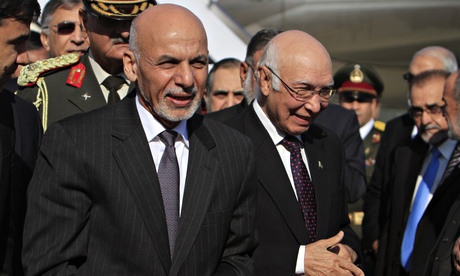 The Afghan president, Ashraf Ghani, has arrived for his first visit to neighbouring Pakistan, seeking to improve ties crucial to his hopes of reviving Taliban peace talks as US and allied troops end their 13-year war.
Ghani will hold talks with the Pakistani prime minister, Nawaz Sharif, and the pair are expected to watch a cricket match between the two countries on Saturday in a public demonstration of better relations despite fraught cross-border tensions.
Both countries accuse each other of allowing militants to shelter in the border regions and launch bloody attacks that threaten regional stability. The former Afghan president Hamid Karzai routinely accused Pakistan of continuing to fuel the Taliban insurgency to destabilise his country as a hedge against Indian influence there.
Islamabad denies the charge but its support, and that of its powerful military, are seen as important for peace in Afghanistan as Nato pulls out its combat troops.
Pakistan was one of only three countries to recognise the hardline Taliban regime that ruled Kabul from 1996 until 2001, when it was deposed by a US-led international military coalition.
Despite repeated visits to Pakistan by the former president, there was little improvement in relations during Karzai’s 13 years in power. But diplomats say Ghani’s presidency, which started in September, presents an opportunity at a time when US-led Nato troops are withdrawing from the fight against the Taliban.
Ghani arrived at Chaklala air base in Rawalpindi, Islamabad’s twin city, on Friday and was greeted by Sartaj Aziz, Sharif’s special adviser on foreign affairs.
The Afghan president, Ashraf Ghani, has arrived for his first visit to neighbouring Pakistan, seeking to improve ties crucial to his hopes of reviving Taliban peace talks as US and allied troops end their 13-year war.
Ghani will hold talks with the Pakistani prime minister, Nawaz Sharif, and the pair are expected to watch a cricket match between the two countries on Saturday in a public demonstration of better relations despite fraught cross-border tensions.
Both countries accuse each other of allowing militants to shelter in the border regions and launch bloody attacks that threaten regional stability. The former Afghan president Hamid Karzai routinely accused Pakistan of continuing to fuel the Taliban insurgency to destabilise his country as a hedge against Indian influence there.
Islamabad denies the charge but its support, and that of its powerful military, are seen as important for peace in Afghanistan as Nato pulls out its combat troops.
Pakistan was one of only three countries to recognise the hardline Taliban regime that ruled Kabul from 1996 until 2001, when it was deposed by a US-led international military coalition.
Despite repeated visits to Pakistan by the former president, there was little improvement in relations during Karzai’s 13 years in power. But diplomats say Ghani’s presidency, which started in September, presents an opportunity at a time when US-led Nato troops are withdrawing from the fight against the Taliban.
Ghani arrived at Chaklala air base in Rawalpindi, Islamabad’s twin city, on Friday and was greeted by Sartaj Aziz, Sharif’s special adviser on foreign affairs.
Subscribe to:
Posts (Atom)