Saturday, September 20, 2014
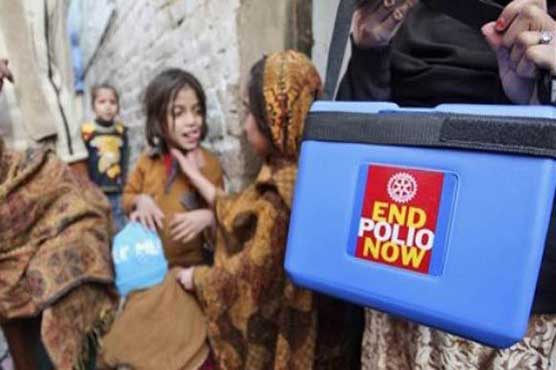
Pakistan: 2 new Polio cases surface in Peshawar, Khyber Agency

UAE citizens slam government policy of blocking websites

China ; Xi's trip to central, south Asia opens new chapter for China's neighborhood diplomacy

Medvedev: Russia to Survive Unfavorable International Market Conditions


Foreign fighter threat, Ebola outbreak to top Obama's agenda next week at United Nations
President Barack Obama will call on fellow world leaders next week to back a United Nations resolution calling on nations to stem the flow of foreign fighters joining terrorist organizations like the Islamic State, as the United States seeks to build legitimacy for its military campaign in Iraq and Syria, the White House said Friday. At the annual U.N. General Assembly, Obama will also speak at a meeting about Ebola, chaired by U.N. Secretary-General Ban Ki-moon, where individual nations and the U.N. will announce new commitments to fight the outbreak in West Africa. Obama this week ordered 3,000 U.S. military personnel to the region to deal with the outbreak, and the U.S. is expecting other countries on Thursday to offer money, equipment and personnel, plus pledges to build treatment units for Ebola victims. Topping the international community's agenda as world leaders gather in New York is the threat posed by Islamic State group extremists who have seized about one-third of Syria and Iraq. Obama is working to form a global coalition to confront the group, but many leaders in both the West and the Arab world have been reluctant to involve themselves publicly in the U.S.-led military effort. Obama's national security adviser, Susan Rice, said she expects unanimous approval in the U.N. Security Council for a resolution obligating member states to "prevent and deter" their citizens from traveling to war zones to join extremist groups. The resolution falls under Chapter 7 of the U.N. Charter, meaning it can be enforced militarily. Although the resolution doesn't authorize the U.S. military campaign against the Islamic State group, it could bolster the president's argument that there's broad international support for the effort. The White House has said it has the authority under existing U.S. law to carry out airstrikes in Syria but hasn't offered an explicit legal justification under international law. "It will move the ball down the field in terms of the international legal architecture and obligations on states to try to combat this challenge," Rice said of the resolution. While in New York, Obama on Tuesday will attend a U.N. summit on climate change aimed at building support for a global climate treaty to be finalized next year in Paris. He'll also discuss the need to strengthen civil society across the globe when he addresses the annual meeting of the Clinton Global Initiative. Obama also plans a series of bilateral meetings with foreign leaders on the sidelines of the U.N. General Assembly.Associated Press

Afghanistan: Final vote results announcement confirmed for Sunday
 The Independent Election Commission (IEC) has said that the final vote results announcement has been confirmed for Sunday, September 21st.
IEC spokesman, Noor Mohammad Noor said the final results for the runoff presidential will be released by election commission on Sunday.
Noor had earlier said that the election commission expects to release the final vote results today.
The decision to announce the final vote results comes as presidential candidates Dr. Abdullah and Dr. Ashraf Ghani finalized an agreement to form a national unity government on Friday.
Release of final vote results, share of power and authorities of the chief executive are believed to be the main reasons prohibiting the conclusion of the controversial electoral process.
In the meantime, President Hamid Karzai has once again hosted the two candidates for talks on unity government.
Speaking during the commemoration ceremony of former president Burhanuddin Rabbani’s third death anniversary, President Karzai said he expects a good news for the Afghan people following his meeting with the two candidates.
The Independent Election Commission (IEC) has said that the final vote results announcement has been confirmed for Sunday, September 21st.
IEC spokesman, Noor Mohammad Noor said the final results for the runoff presidential will be released by election commission on Sunday.
Noor had earlier said that the election commission expects to release the final vote results today.
The decision to announce the final vote results comes as presidential candidates Dr. Abdullah and Dr. Ashraf Ghani finalized an agreement to form a national unity government on Friday.
Release of final vote results, share of power and authorities of the chief executive are believed to be the main reasons prohibiting the conclusion of the controversial electoral process.
In the meantime, President Hamid Karzai has once again hosted the two candidates for talks on unity government.
Speaking during the commemoration ceremony of former president Burhanuddin Rabbani’s third death anniversary, President Karzai said he expects a good news for the Afghan people following his meeting with the two candidates.
Bilawal Bhutto pays tributes to Shaheed Mir Murtaza Bhutto
http://mediacellppp.wordpress.com/

Pakistan’s Baluchistan separatists demand Scots-style vote
Baluch separatist leaders on Friday called on Pakistan to follow in Britain’s footsteps by holding a referendum similar to Scotland’s on granting independence to the insurgency-wracked province.
Scots rejected independence in a vote that left the centuries-old United Kingdom intact despite a surge in nationalist support in the final fortnight of the campaign.
Asked whether a similar poll should be held in Baluchistan, Dr. Bashir Azeem, secretary-general of the outlawed Baloch Republican Party, told AFP: “The Baluch have been struggling against the excesses and tyranny of Punjab-dominated establishment of Pakistan for decades.”
Punjab is Pakistan’s most populous and influential province.
“If a fair referendum is conducted after creating an atmosphere for it, providing the opportunity to Baluch population for deciding their future, it is welcomed,” he added.
Resource-rich Baluchistan is the largest of Pakistan’s four provinces, but its roughly seven million inhabitants have long complained they do not receive a fair share of its gas and mineral wealth.
Rebels began their fifth insurgency against the state in 2004, with hundreds of soldiers and militants killed in the fighting.
But rights groups allege security forces are also responsible for picking up non-militant separatists, including academics and students, torturing them and dumping their bodies on the streets.
The current insurgency gained in intensity after the 2006 killing of 79-year-old Baluch leader Nawab Akbar Khan Bugti, a revered figure for many rebels.
Azeem’s son Jamil Akbar Bugti said: “I stand for a free and fair referendum in Baluchistan under the United Nations.
“Let Baluch people who are struggling for their independence decide their future whether they want to stay with (the) federation of Pakistan or break away.”
The desperately poor province is also riven by sectarian strife and Islamist violence in its northern Pashtun belt, with middle-class Baluch increasingly viewing independence as their only hope for a more liberal and secular state.
Pakistan accuses neighboring India of funding and arming the rebels — a charge analysts believe is true and payback for Pakistan’s interference in Kashmir.
Source: http://www.arabnews.com/featured/news/632581
Pakistan: TTP END GAME RAPIDLY APPROACHING, ANALYSTS SAY

Pakistan's Shia Genocide: Shia Banker Shot Martyred After Family Attacked In Karachi
shiapost.com
Pakistan : Nawaz speech - Nothing New

Pakistan: Flood warning fiasco

IT did not have to be this way. This is the fourth major flood to have hit Pakistan since 2010, and in each case the cause has been heavy rains.The first flood alert issued this year by the Pakistan Meteorological Department was on the morning of Sept 3, more than three days before the arrival of the flood peak at the Marala headworks on the Chenab, where the river enters Pakistan from India. That same evening, a meeting was convened by Punjab Chief Minister Shahbaz Sharif to discuss flood preparation plans, with almost the entire government machinery present, including the chief secretary. But the Federal Flood Commission seems to have taken its time waking up to the flood alert. Its first record of a meeting since the alert was issued is on Sept 6, by which point the flood peak of 900,000 cusecs was only hours away from the Marala headworks. Moreover, a report published in this paper detailed how the various government bodies, led by the FFC, preferred bickering over turf when they should have been coordinating their response. It appears the country has learned no major lessons from the previous three flood episodes, preferring to act only once disaster has struck. More distressing is the lack of effort going into flood forecasting. Our forecasting models are designed to anticipate the arrival of rains more for crop management than for flood warning. The Met Department did issue an advisory of a low pressure system forming over Rajasthan as early as Aug 28, but its technology and models could only warn of “scattered thundershowers with heavy to very heavy [rain]falls in isolated places in the upper catchments of rivers Ravi, Sutlej and Chenab” as late as Sept 2. The flood alert was issued the following day, which turned into a flood warning on Sept 4, only two days before the flood peak arrived. Yet today, meteorological models exist that can provide up to 10 days of flood warning with very high probability. Bangladesh has been using such a system successfully for almost a decade now, which has on two occasions given accurate forecasts of floods 10 days in advance. Yet more troubling are the things being said in some places. Describing the floods as an “Indian water bomb” plumbs the lowest depths of ignorance. Instead of pointing fingers at India, what is needed is a serious approach for sharing of meteorological and hydrological data to enable more accurate forecasting. Better coordination amongst government departments is also critical. Currently, it is not clear who has the responsibility to coordinate the response once a flood alert has been issued. The Met Department ought to take better advantage of the latest scientific knowhow to upgrade its forecasting capabilities. With this being the fourth flood in recent years, it’s a travesty that none of this has yet been done.
Pakistan : The absent writ

— D Asghar
The entire world is watching our demise as a sensible, law abiding and law obeying society at the hands of a ruthless, senseless and utterly crazy mob.Historians will not be very kind to Imran Khan and Mr Qadri for what they have done to the political culture of this Godforsaken country. In the guise of freedom and revolution, what has been exercised and glorified will come to haunt these characters, should they ever realise their dreams of occupying the Prime Minister’s House. In short, hooliganism is the order of the day and anarchy is the new face of new age democracy in the so-called ‘new Pakistan’. What lies ahead will be relatively similar to the ideology of the Taliban. Tolerance was never in the reservoirs of those warriors and these revolutionaries are following in their footsteps by demonstrating their brutal anger in a relatively similar fashion. The world has seen images of police officers being beaten by mobsters armed with sticks and uniformed, armed servicemen just standing by witnessing their ruthlessness. Perhaps I am making an argument of double standards here when it comes to obeying the writ of the state. The lens of the camera is capturing all of this for the rest of the world. These container-bound revolutionaries have even openly threatened civilian law enforcement personnel. I humbly beg both Mr Qadri and Khan to try this in front of 10 Downing Street or in front of President Obama’s official residence to witness how the writ of the state is established without fail by uniformed policemen within minutes. All this noise is to basically challenge and erode the writ of this state. Speaking of that four letter word ‘writ’, one is painfully reminded of how a former general established it not very long ago in the same capital. No one is implying that this government must take its cues from that ugly episode, though it is part of our glorious history and engraved in our collective memories. We constantly hear that our elected government is handling the current standoff with immense restraint and patience. Agreed, well and good, but it is at a very hefty cost. The entire world is watching our demise as a sensible, law abiding and law obeying society at the hands of a ruthless, senseless and utterly crazy mob. The thrust of the project being carried out by the firebrand leaders is to instil this as part of regular imagery so the rest of the world can determine that it is dealing with a weak, impotent and toothless prime minister. What irony that a prime minister who holds a comfortable majority and has his opponents in parliament watching his back, is totally backed into a corner. I hope I am seriously mistaken but I had expressed my unrestrained criticism on this farcical process of negotiations on Twitter. The government’s mouthpieces brag that five out of six demands made by Khan have been accepted and that there are modalities that are being ironed out. To confuse matters a tad, there is an opposition jirga (council) playing a facilitative role as well. I know I am a very poor and inexperienced political observer but does anyone honestly think that it takes this long to reach any sort of logical conclusion? It almost seems like both parties know what the actual conclusion is and both are trying to buy as much time as possible. One has to honestly question the state of mind of the besieged premier. Yes, it is understandable that he is a victim, yes he has sympathy and yes the people challenging him have crossed all lines of decency. His mouthpieces use all kinds of flowery language to express their dismay about how the poor prime minister has been paralysed by certain anti-democratic forces. I know I am not very bright and perhaps not so well versed in politically correct jargon but in my very humble opinion, he basically has three options. The first is to have a face to face with both his adversaries and have a heart to heart conversation. Rather than going through everyone and their mother-in-law as an interlocutor and facilitator, the premier should just break the ice himself, use an unannounced visit to offer a handshake himself and break this deadlock. If he is unable to stoop to the level of the mischievous duo, he must man up and exercise the writ of the state, not by bullets but exhibiting that there is presence of law and order in the capital. Anyone who practices violence is met with the strong arm of the law. If the revolutionaries try to turn that situation to gain political point scoring then let the media expose their duplicity. No one, whether rich or poor, should be able to raise their hand on uniformed law enforcement personnel, whether civilian or military. If this solution is too much for the prime minster to bear then he has one final option left. If he has an ounce of dignity left in him to handle matters then he should dust off his suit, come on national television and have a heart to heart talk with the nation. He should expose all the hidden hands that have tied his hands and made him a laughing stock in front of the world. The state and its writ are far more important than a challenged premier or two unreasonable bozos. If the argument of not caving under pressure because it will set a poor precedent holds any water, then our respected prime minister has set another dangerous precedent by his inaction. I repeat: the writ or its semblance is far more important than any individual.
Pakistan: Another victim of blasphemy accusation
Friday, September 19, 2014
Iran 'Happy' dancers get suspended sentences

Seven Iranians who appeared in a video singing along to US pop song handed prison terms and lashes, both suspended.Six Iranians who were accused of obscene behaviour for appearing in a video singing along to the American pop song "Happy" have been handed suspended sentences of 91 lashes and six months in prison. Another defendant, who faced heavier charges in connection to the video, was handed a suspended sentence of one year in jail and 91 lashes by the authorities. The sentences are suspended for three years, meaning that if any of the seven is found guilty of a similar offence, the punishment is then carried out, defence attorney Farshid Rofugaran told the AP news agency on Friday. The defendants, four men and three women, were detained by police in May after six of them were shown lip syncing to Pharrell Williams' hit song. They were released shortly afterwards. Rofugaran said the suspended jail term was the punishment for acting in the video and the lashes were for ignoring Islamic norms. The arrests drew condemnation from the US singer and his fans through social media, as well as indirect criticism from President Hassan Rouhani. "The way to deal with cultural issues is cultural work, not policemen and [detention] vans and strong-arm tactics," the president told a gathering of conservative clerics in the religious city of Mashhad earlier this month.

Brutal Saudi Bedouins - Crime and punishment in Saudi Arabia
THE condemned may request a painkiller. Their end is not televised, and comes with a swift sword stroke from a skilled executioner rather than from hacking with a kitchen knife by an untutored brute. Otherwise there is not much difference between a death sentence in the jihadists’ “Islamic State” and in Saudi Arabia, a country seen as a crucial Western ally in the fight against IS. Nor, indeed, is there much difference between the two entities in other applications of a particularly merciless brand of sharia, or Islamic law, including public whippings and the right for victims of crime to claim eye-for-an-eye revenge. Both follow Hanbali jurisprudence, the strictest of four schools of traditional Sunni Islamic law: when Egyptians chide someone for nitpicking, the expression is “Don’t be Hanbali”. Dissidents in Raqqa, the Syrian town that is IS’s proto-capital, say all 12 of the judges who now run its court system, adjudicating everything from property disputes to capital crimes, are Saudis. The group has also created a Saudi-style religious police, charged with rooting out vice and shooing the faithful to prayers. And as in IS-ruled zones, where churches and non-Sunni mosques have been blown up or converted to other uses, Saudi Arabia forbids non-Muslim religious practice. For instance, on September 5th Saudi police raided a house in Khafji, near the Kuwaiti border, and charged 27 Asian Christians with holding a church ceremony. In recent months IS has carried out hundreds, possibly thousands, of executions, mostly by gunfire rather than beheading and typically without a trial of any kind. Saudi Arabia is far less trigger- or sword-happy. Still, in the space of just 18 days during the month of August, the kingdom beheaded some 22 people, according to human-rights advocates. The spate of killings was surprising not only because it was so sudden—the kingdom carried out a total of 79 executions last year—but also because many of those killed were convicted of relatively minor offences, such as smuggling hashish or, strangely, “sorcery”. In one case the defendant was determined to be mentally unsound, but lost his head anyway. It was surprising, too, because the Saudi kingdom has in recent years gently relaxed some social strictures, and made efforts to rein in excesses by religious police. Some Saudi critics fear that the sudden upsurge represents a response by the religious establishment to the challenge from IS. Perhaps it is an attempt to prove to the most conservative Saudis that the kingdom remains a truer “Islamic” state than any other. Others see it as part of a broader policy to assert government control amid signs of growing discontent among the bored Saudi young, including a drift into unbelief.The other beheaders
#BahrainProtests - Mass opposition rally in Bahrain rejects royal reforms, calls for full democracy
Rori Donaghy

Activists in Bahrain said thousands of pro-democracy protesters took to the streets on Friday, rejecting a proposal made by the Gulf State’s monarchy on reforming the legislative, security and judicial sectors. The rally was organised by the island’s opposition and came a day after Crown Prince Sheikh Salman bin Hamad al-Khalifa issued a statement detailing proposed reforms with the aim of accelerating “the resumption of dialogue” with opposition groups. A national dialogue process has been stalled since January due to sharp differences of opinion over Bahrain’s three yearlong uprising and a failure to agree on a format and agenda for the talks. Thursday’s statement issued by the island’s official news agency said the crown prince had “initiated a process of wide-ranging political and economic reform”. “The delivery of the framework today by the Crown Prince is a continuation of Bahrain’s ongoing political development and reform, advancing individual rights, justice and increasing long-term stability in the Kingdom,” it read. The proposal included provisions to redefine electoral districts, increase accountability for ministers, a commitment to reform the judicial system and new codes of conduct for security forces. It included a clause allowing parliament to approve the nomination of a prime minister, which until now has been solely the king’s right. Opposition leaders have criticised the crown prince for not consulting them on the initiative and said it does not go far enough to meet their demands – authorities have been previously accused of failing to follow through on promises of reform by activists and human rights groups. Protesters on Friday rejected this offer en masse with banners showing their steadfastness in holding out for full democratic reform of the governance system. - See more at: http://www.middleeasteye.net/news/mass-opposition-rally-bahrain-rejects-royal-reforms-calls-full-democracy-2062414152#sthash.s0RclION.dpufThousands of protesters rallied in Bahrain on Friday rejecting a proposal of reform by the crown prince as not going far enough
.jpg?itok=romzKyY1)
Afghan candidates finalize agreement on unity government

President Obama unveils campaign against college campus sexual assaults
http://www.dailynews.com/President Barack Obama is unveiling new public service announcements against campus sexual assault in a campaign being supported by the NCAA and several media companies with reach among college students. The White House says athletes will appear in the campaign called “It’s On Us” that Obama and Vice President Joe Biden plan to reveal Friday at a White House event. With an estimated one in five college women assaulted, the message is particularly targeted at men. The NCAA plans to promote anti-assault messages on screens at their championship events. Video game maker Electronic Arts will encourage fans to sign up to pledge to support the campaign through its online platforms. And media giant Viacom will promote the messages on websites, including for music channels MTV, VH1, BET and CMT.
Scotland - Salmond: I quit as First Minister and SNP leader

Alex Salmond today announced his resignation in the wake of the indyref defeat.He made the announcement in a televised press conference from his official residence, Bute House in Edinburgh. Mr Salmond said it was time for a new leader who could now take the devolution process forward and said he believed party, parliament and country would "benefit from new leadership". He declined to name his successor, saying the party had conventions, but his deputy Nicola Sturgeon is bound to be the leading contender, especially after Yes's success in Glasgow on an otherwise downbeat night for the pro-indy campaign. If she succeeds him, she would become Scotland's first female First Minister. Mr Salmond said that at the age of 59, after 20 years as SNP leader and seven years as First Minister, it was time to hand over the reins. He said: "I think that's a reasonable spell of service and I think there is an aspect that you have to understand and recognise when it is time to give someone else a chance to move that forward." "I made the decision this morning," he added. "I believed there was great possibilities in the campaign and obviously I wouldn't have made the decision if there had been a Yes vote. "I believe in the circumstances the vote we have, galvanising, wonderful, empowering and massive though it is, it's my judgement that someone else in the leadership would be best-placed to take that forward to the summit." Responding to a question, Mr Salmond denied that the SNP would become more a party of Scottish affairs and interest rather than primarily a party of independence. On his possible replacement, he said: "On the question of who is to be the new leader of the Scottish National Party, and likely therefore through parliamentary process to be next First Minister, that is a matter for the membership of the SNP. There are a number of eminently qualified and very suitable candidates. We have a strong leadership team." He pointed to his two spells of 10 years as SNP leader, broken by a "slight pause". "It's not exactly fly-by night in terms of the leadership spell," he said. "At this stage, at this point, and I think this is a moment of great political opportunity, I have to make judgement as to whether I'm best placed to take that opportunity forward and I think others are. "The party, I'm sure, will make a wise choice and take party and the country forward." On the pledges on further powers made by the other parties, he said: "Commitments were made, vows were made in the last stages of the referendum campaign. A clear, explicit timetable was laid out. I think the opportunity for Scotland is two-fold. "One is to hold Westminster's feet to the fire to make sure there is no slippage from that timetable. "I'm disappointed that the idea of a second reading vote seems to have disappeared already, as well as the Labour/Conservative common front on the issue. "But the real guardians of Scotland are not political parties at Westminster, not even the political parties at Holyrood. "The real guardians of Scotland are the energised activists and tens of thousands of people who are now in the political process." The First Minister told reporters that when he asked David Cameron about the plans for a vote on March 27 that were set out Gordon Brown's timetable for the further handover of powers, he was told it was a "meaningless process" because it would be overtaken by the general election. He added: "My suspicion is, and the Prime Minister most certainly didn't tell me this aspect, that there is some doubt in the Prime Minister's mind about carrying his own backbenchers, therefore a reluctance to have a vote. "But I think people in Scotland would be astonished and outraged, particularly those who voted No on this prospectus." Mr Salmond said he sees "no sign of the divided country" that some critics claimed would be left behind as a result of the referendum. "It's the Yes campaign who obviously are disappointed that we didn't win but the Yes campaign, I declare, has accepted the result and, of course are prepared and willing to engage under the Edinburgh Agreement in terms of not just accepting that result, but moving forward in the best interests of Scotland and the United Kingdom," he said. His opponents paid tribute, if not unreservedly. Scottish Labour leader Johann Lamont said: "Alex Salmond turned a minority party into a party of opposition into a party of government and was responsible for there being a referendum on Scotland leaving the United Kingdom. "He has undoubtedly been an immense figure in Scottish political history. I do not detract from his achievements when I say that his love of Scottish independence sometimes blinded him to its consequences. "He should be proud of his career and not allow the manner of its ending to dominate his thinking. There is no question that Nicola Sturgeon and he were a formidable team." Scottish Conservative leader Ruth Davidson said: "Alex Salmond has been the dominant figure in Scottish politics for the last seven years. "No-one can dispute his political achievements, nor fail to acknowledge his political gifts. He has done the right thing in resigning. While the referendum campaign has been hugely invigorating, by its very nature it has divided too. "His decision to step down will help our country come back together again. I am pleased that the First Minister says he will continue to serve in Scottish politics. Scotland will benefit from his experience and service as we move forward." The Prime Minister said: "Alex is a politician of huge talent and passion. He has been an effective First Minister and always fights his corner. "While we disagree profoundly about his goal of a separated Scotland, and many other things, I respect and admire his huge contribution to politics and public life." Mr Darling said: "Alex Salmond is a formidable political figure. He transformed the SNP into a party of government and delivered their referendum on independence which they had craved so long. "Today he has accepted Scotland's verdict, recognising that it is for others in his party to take the SNP forward. "He has rightly said that the referendum was a once-in-a-lifetime event and that we all need to work to bring Scotland together. "He can look back with pride on being the longest-serving First Minister and to the huge contribution he has made to public life in Scotland. I wish him well in the future." Mr Wilson said: "Alex Salmond fought a brilliant referendum campaign. "It is not his fault that the Scottish people did not vote for independence on this occasion. "The winning of 45% of the vote in the Scottish independence referendum is a superlative achievement. "It is a mark of Alex's integrity that he has taken personal responsibility. He is undoubtedly the greatest Scottish politician of his generation. "He has led the SNP with distinction over a 20-year period and made a tremendous contribution. I am vexed that he has felt it necessary to offer his resignation. "From personal experience, I know just how exhausting the responsibilities of leadership are and Alex had to carry also the responsibilities of First Minister of the Scottish Government. "To form that government and win a majority is his major achievement in a formidable political career. I wish him and his wife, Moira a long and happy retirement." The full statement by Alex Salmond "I am immensely proud of the campaign which Yes Scotland fought and of the 1.6 million voters who rallied to that cause by backing an independent Scotland. "I am also proud of the 85% turnout in the referendum and the remarkable response of all of the people of Scotland who participated in this great constitutional debate and the manner in which they conducted themselves. "We now have the opportunity to hold Westminster's feet to the fire on the 'vow' that they have made to devolve further meaningful power to Scotland. This places Scotland in a very strong position. "I spoke to the Prime Minister today and, although he reiterated his intention to proceed as he has outlined, he would not commit to a second reading vote by March 27 on a Scotland Bill. That was a clear promise laid out by Gordon Brown during the campaign. The Prime Minister says such a vote would be meaningless. I suspect he cannot guarantee the support of his party. "But today the point is this. The real guardians of progress are not the politicians at Westminster, or even at Holyrood, but the energised activism of tens of thousands of people who I predict will refuse meekly to go back into the political shadows. "For me right now , therefore there is a decision as to who is best placed to lead this process forward politically. "I believe that in this new exciting situation, redolent with possibility, Party, Parliament and country would benefit from new leadership. "Therefore I have told the National Secretary of the SNP that I will not accept nomination to be a candidate for leader at the Annual Conference in Perth on November 13-15. "After the membership ballot I will stand down as First Minister to allow the new leader to be elected by due Parliamentary process. "Until then I will continue to serve as First Minister. After that I will continue to offer to serve as Member of the Scottish Parliament for Aberdeenshire East. "It has been the privilege of my life to serve Scotland as First Minister. But as I said often during the referendum campaign this is not about me or the SNP. It is much more important than that. "The position is this. We lost the referendum vote but can still carry the political initiative. More importantly Scotland can still emerge as the real winner."
Oscars: Pakistan Nominates 'Dukhtar' in Foreign-Language Category
www.hollywoodreporter.com
Last year, Pakistan re-entered the Oscar race after a more than 50-year absence in an effort to bring attention to the country’s cinematic output. Their Best Foreign-Language submission, illegal immigration comedy Zinda Bhaag, failed to earn a nomination.The country is hopeful once again, submitting Afia Nathaniel’s Dukhtar to the Foreign-Language Oscar race. The Urdu-language film is a road-trip thriller looking at issues of child marriage in the country. After her ten-year-old daughter is promised in marriage to a much older tribal chieftain, a mother flees her village, but is chased by her own husband and the intended groom’s henchman. It’s set against stunning backdrops on the road to Lahore. The film had its world premiere Sept. 5 at the Toronto International Film Festival this year in the Discovery Section and is releasing theatrically in Pakistan Thursday. The Pakistani selection committee is chaired by Academy Award winning documentary filmmaker Sharmeen Obaid-Chinoy, who said of the film, “Dukhtar has set a new precedent in filmmaking in Pakistan. The film's powerful narrative is met with equally strong visuals that collectively showcase what Pakistani talent is all about. I have no doubt that the story will resonate with people locally and internationally.”
Bilawal Bhutto visits Multan flood hit areas today


Pakistan - HEPATITIS: A CONFRONTATION WORTH CONSIDERING
 By Dr Said Ashraf, M.D -
The death rate from Hepatitis is nearly twice that of AIDS. In Pakistan, there are over 12 million people suffering from Hepatitis B and C; around 8 million suffer from Hepatitis C and 4 million from Hepatitis B.
By Dr Said Ashraf, M.D -
The death rate from Hepatitis is nearly twice that of AIDS. In Pakistan, there are over 12 million people suffering from Hepatitis B and C; around 8 million suffer from Hepatitis C and 4 million from Hepatitis B.
Pakistan’s internally-displaced population - HANDLE WITH CARE
http://newsweekpakistan.com/
BY ROSHANEH ZAFARPakistan’s internally-displaced population has disappeared from the news. With almost a million people having been forced out of the federally-administered North Waziristan tribal agency almost two months ago, the crisis is still ongoing. How this crisis is resolved will determine how the country fares in its long and halfhearted fight against extremism. The crisis can be resolved. This is evident from Pakistan’s response both to its worst ever floods, in 2010, and to the crisis of displacement from the Swat military operations in 2009. The humanitarian crisis caused by Zarb-e-Azb, the military operation against local and foreign militants in North Waziristan, presents a humanitarian challenge, a human-rights challenge, and a development challenge. These challenges have to be addressed by providing not just the basics for survival, but also by ensuring the protection of the basic rights and civil liberties of those affected, and fulfilling their rehab and livelihood requirements. During the floods, I was involved in collecting and recording stories of the displaced in order to help find durable solutions for their rehabilitation. The data showed that 71 percent of the displaced families had relied on agriculture or livestock for their livelihood, 83 percent were food-insecure, 86 percent had lost their homes and business assets, and none of them had any savings. Because the floods were “the will of God,” as most put it, these people were more tolerant of the poor administration that delayed their rescue. While the economic status of those displaced from North Waziristan is comparable to that of the flood-affected, Pakistan’s latest internally-displaced are far less patient. They neither accept nor deserve the maladministration they are presently facing and which appears to be the result of the inexcusably adversarial relationship between the federal government, which is responsible for the tribal agencies, and the Khyber-Pakhtunkhwa government, which governs the areas where most of the displaced are currently residing. The squabbling among politicians, seen as fair-weather rulers by most of the tribal population, and their blame games delay not only the immediate and continuous state response to the crisis but also further postpones the already delayed replacement of the anachronistic political-legal framework that applies to the federally-administered tribal areas with a viably modern social, political, and economic setup. The internally-displaced are not statistics or props for photo ops. They are cash-strapped and asset-poor with only rubble to reclaim where their houses once stood. Their stand in the war against extremism cannot be taken for granted; their immediate and future needs must be serviced with consistency and resolve. Many of them already question the wisdom of the military operation as some politicians maintain that the process of peace talks with the Taliban should have continued. This view will become the prevalent one should the state, and the nation, fall short in their duty to the displaced. It certainly does not help that the authorities have failed to protect the displaced from militant attacks in their camps. This will not make them any less wary of the security commitments of the state. The resultant alienation will ultimately benefit fringe Islamist groups, toward which the vulnerable displaced will be drawn out of fear or fervor. It has also been reported that militant groups have stepped in with their impressive organizational capacity to provide relief. Given the scale of the crisis, the government must, at the very least, make sure that proscribed groups are not allowed any direct access to the displaced. Unfortunately, it bears emphasizing that the displaced must be treated with dignity and compassion. The provinces of Punjab and Sindh had closed their borders to them. Some prominent Pakistanis had even urged the equivalent of internment for them. This was not the response the crisis merited. A UNHCR report from April states that an overwhelming majority of those displaced are residing outside relief camps. A similar pattern was apparent in 2009 when the majority of those who had fled Swat also preferred to live with their relatives across Pakistan. Such offsite channels prove challenging for both documentation and the provision of basic services. The National Database and Registration Authority must properly and respectfully document the displaced, especially women and children, and relief agencies need to recognize the role of local communities and put in place an outreach program for better management of the offsite population. Right now, the displaced require not merely food rations and first-aid but also effective cash transfers (the Watan Cards were useful during the floods and can work here too) and a clearly-defined path for their future. The impact of displacement is felt more intensely by women, children, and the elderly. In fact, women matter vitally to the success of any rehabilitation option, and ongoing humanitarian-aid strategies need to be inclusive of women. The UNHCR report also states that 54 percent of the displaced are male, 46 percent women; overall, 41 percent are below the age of 11 while 3 percent are over 60. Humanitarian aid provided to the displaced over the next 6 to 12 months needs to account for the differences in the needs and types of the displaced population in order to be effective while taking into account the emotional and physical trauma of displacement on different segments. At another level, this can be seen as an opportunity for improving the lot of women and demonstrating that, despite cultural norms, including women fully in managing the current crisis can lead to a process of empowerment. Since the military operation represents the war between ideologies, the Taliban’s and the state’s, it is equally critical that the basic rights, including the right to education, and civil liberties of those affected be preserved and promoted. Peace cannot be built without the full buy-in of the displaced, especially women. In 2009, several tribal agencies set up Aman Lashkars, groups of armed citizens, with the support of the state to ward off militants. These groups were successful to varying degrees and—if their role is clearly defined as supporting the local police—can help keep the peace once the operation is over. Post-operation, the civilian administration in the tribal areas has to strengthen its ability and tactical capacity to provide long-term solutions on the ground. All agencies involved in humanitarian assistance need to collaborate fully. During the floods, coordination between the National Disaster Management Authority and the provincial disaster-management agencies was a messy affair because of parallel mandates and confusion in terms of budgetary allocations. This eroded crisis responsiveness. The NDMA has now been placed under the Ministry of Provincial Coordination where it has fallen prey to the usual bureaucratic hurdles. Despite these challenges, will made a way through coordination between civilian and military agencies and the crisis from the floods was overcome. This can be achieved today as well. The war against extremism cannot be won without making sure that the displaced can return home to a secure future. This requires effective governance, establishing the writ of law, protecting fundamental rights, providing access to basic services, and bolstering the local economy through strategic infrastructure investments. Zarb-e-Azb is yet another test for the nation. Pakistanis have on previous occasions proven that they will step up and defend, through their generosity and compassion, the ideals enshrined in our Constitution. We must not tire of these tests and continue to live up to the expectations of our beleaguered countrymen. Anything less is not an option.
http://newsweekpakistan.com/handle-with-care/
$6.5M telecom towers unused in Afghanistan; watchdog wants answers
By Phillip Swarts

The top U.S. watchdog in Afghanistan wants answers on why the U.S. spent $6.5 million on six communication towers that aren’t being used and have so far led to one fatality.According to a letter from John F. Sopko, special inspector general for Afghanistan reconstruction, the State Department pressed ahead with the towers despite doubts about their usefulness to the Afghans and opposition from the Pentagon. “Concerns were raised that Afghan telecom providers would not connect to the system, and that [the Department of Defense] did not want the towers because of the high cost of fueling the towers’ generators,” said the letter, which was sent to Secretary of State John F. Kerry. “Despite these concerns, the State Department moved forward with construction,” Mr. Sopko said. One international security force soldier was killed when a helicopter hit one of the towers during nighttime operations, prompting investigators to demand answers about how the towers are being outfitted for air-traffic safety — such as equipping them with the small blinking lights that are ubiquitous on towers across America. State Department documents show that the purpose of the towers was “to expand and enhance media-provider coverage and telecommunication services to the civilian Afghan population in underserved and strategically important provinces via television, radio and telephonic mediums.” The towers were labeled one of the agency’s “highest strategic communications priorities,” but phone companies and cell-tower operators received repeated threats from the Taliban. In a response to an inquiry earlier this year, the State Department said that giving the towers to the Afghan government was considered, but ultimately rejected as the nation continues “to struggle with lacking resources and technical capacity to operate and maintain these towers.” The agency’s letter continues that “after it became clear that the towers could not be used for their originally intended purpose, the Department considered alternatives but determined that there was no available foreign assistance or other State Department use for the towers.” Now Mr. Sopko wants answers as to why the towers were built seemingly without an ultimate purpose in mind, and has asked the State Department to turn over more documents related to the planning and construction.
Pakistan's Shia Genocide : Murder Of Dr. Shakil Auj Amounts To Kill Education-Friendly Society
shiapost.comAllama Raja Nasir Abbas Jafari, secretary general of Majlis-e-Wahdat-e-Muslimeen has condemned the targeted murder of Dr. Shakil Auj, Dean of Islamic Studies at Karachi University, saying it was tantamount to kill the education-friendly society in Pakistan. “Takfiri nasbi terrorists want to push the country to the darkness of illiteracy and intolerance based on illogical and anti-Islam ideology in the guise of Islam,” he said in his reaction to the brutal assassination of Dr. Shakil Auj. He questioned the integrity of ongoing targeted operation being continued in Karachi asking how the notorious ferocious terrorists continued killing innocent people including the high-profile scholars.“We repeat our demand that a military operation on the pattern of Operation Zarb-e-Azb should be launched in Karachi to eliminate the notorious takfiri terrorists without any delay,” he urged. He further demanded that killers of martyr Dr. Shakil Auj should be arrested forthwith and be hanged in public. He said that terrorists conveyed their message that the enlightened Muslim scholars would not be tolerated but we respond to them that entire Pakistan would be illuminated with the ideas of Dr. Shakil Auj and other martyr scholars.
Balochistan : Time to end the hunting permits
 The houbara bustard
Subscribe to:
Posts (Atom)