Thursday, September 18, 2014
Bahrain activist Maryam al-Khawaja released

Al-Khawaja, arrested after arriving at Manama airport last month and accused of assaulting a police officer, was released dependent on a guarantee of her place of residence and is banned from travelling, Thursday's statement said. "The lawyer of the accused requested her release after she was arrested on charges of assaulting a female officer and a policewoman at the Bahrain International Airport on August 30," the statement said. If convicted, al-Khawaja can spend several years in prison. She denies all accustions, and confirmed upon her release that she will not stop speaking out against human rights violations in the kingdom. "Before leaving prison, I informed them that I will continue my human rights work," al-Khawaja said on her Twitter account. Al-Khawaja, a director of the Beirut-based Gulf Centre for Human Rights, also holds Danish citizenship and is a daughter of jailed Shia opposition icon Abdulhadi al-Khawaja. The family played a pivotal role in anti-government protests in 2011 and in sporadic anti-government protests that followed. The father is on a hungerstrike to protest his arrest since 2011 for his peaceful role in the upheaval. In 2011, Bahrain was caught up in the so-called "Arab Spring" and thousands of protesters from the country's Shia majority sought to topple the ruling Sunni Muslim Al-Khalifa dynasty. Earlier on Thursday, more than 150 civil society organisations from more than 60 countries called on King Hamad bin Issa al-Khalifa to immediately and unconditionally release Al-Khawaja. Life imprisonement The signatories to the letter also urged the Bahraini ruler to release imprisoned human rights defenders and prisoners of conscience and cease all undue and unwarranted restrictions on civil society activism. Since the 2011 protests, dozens of Bahraini Shia have been sentenced to lengthy prison terms after being convicted of involvement in violent protests. Before al-Khawaja's release, a Bahraini court has handed down a punishment of life inprisonment to 14 Shia protesters after they were convicted of attempted murder of policemen. The defendents were found guilty of participating in unauthorized protests, and detonating an improvised explosive device during a 2013 anti-government protest, AFP quoted an unnamed judicial source as saying. Several policemen were wounded, some seriously, at the incident. "If the international community could secure my release, that gives me hope that we can do the same for the thousands of political prisoners," al-Khawaja tweeted following her release.
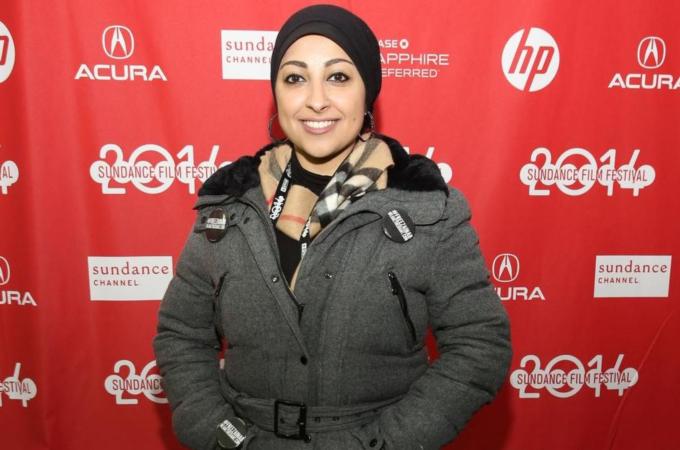
SAUDI WOMAN FINED FOR DRIVING HERSELF TO EMERGENCY ROOM
http://www.breitbart.com/
Under the unofficial rules governing Saudi Arabia’s strict fundamentalist society, women are forbidden from driving automobiles. Although the Quran, which is the basis for Saudi laws, could not possibly address such a subject, as it was written well over one thousand years ago, most Saudi clerics have determined that women driving automobiles is haram (forbidden). Saudi Arabia’s unofficial religious policemen (Haia) have taken it upon themselves to enforce this primitive custom.
This week, Aliyah Al Farid was pulled over by police and fined after driving herself to the hospital for a medical emergency. Well aware of Saudi Arabia’s mandates against women driving, she said that there was no one around the house to drive her to the ER, so she took it upon herself to get behind the wheel.
Al Farid is a human rights activist who has in the past tried to expose Saudi Arabia for its barbaric treatment against women.
She said of the incident, “I told the traffic officers that I had to drive because it was an emergency case. I didn’t do it on purpose and I’m not after fame or media hype. I was very sick and that was it.”
“We can’t leave an epileptic patient convulsing on the ground while waiting for our male driver to come and transport him to the hospital,” she added. “I have to get behind the steering wheel to do it.”
Not only are women forbidden from driving cars, they must also receive permission from a mahram (close male relative such as a son or husband) simply to be able to travel outside the boundaries of their home.
According to Saudi Arabia’s Muhammad Saalih Al-Munajjid, a well-respected cleric in the Islamic world, women should not be allowed to drive for the following reasons:
1. Driving the car necessitates that women remove the niqab, which covers the face. Women must wear the niqab in Saudi Arabia, mostly for fear of punishment should the religious police see them without full cover. The niqab is a black full-body cloth with a thin slot for the eyes.
2. Driving requires women to leave the house, “but their homes are better for them.”
3. They lose their modesty, so it protects them from “fitnah” (temptations).
4. Divorced women will be able to go wherever they want.
5. It is a means of “rebellion.”
6. She may cause an “immoral man” to “take advantage of her in return for helping her” if her car breaks down.
7. It will lead to “overcrowding in the streets.”
8. Women won’t be able to stop buying new fashion items because women“by their nature--like to make themselves look good with clothing etc,” and they will keep buying new cars “whenever a new model appears.”
Scots independence polls close, UK's future in the balance
Scotland has voted on whether to stay within the United Kingdom or declare independence to break the 307-year-old union in a finely balanced referendum with global consequences. Scotland's verdict on the union should be clear around breakfast time on Friday, but a YouGov poll of 1,828 voters previously polled indicated 54 percent of Scots would back the union while 46 percent would seek independence. "This YouGov poll indicates the union has prevailed," YouGov research manager Laurence Janta-Lipinski told Reuters of the survey carried out on Thursday which was not an exit poll. "It looks like the union will remain intact for the time being." Polling booths closed at 2100 GMT from remote highlands and islands to the tough city estates of Glasgow with surveys suggesting Scots were almost equally divided in a vote watched closely by Britain's allies, investors and restive regions at home and abroad. Recent opinion polls gave the "No" campaign - those in favor of remaining in the United Kingdom - a slight edge. But as many as 600,000 people undecided up to the last moment held the key. The final poll of polls by the non-partisan “What Scotland Thinks” website, put the No campaign on 52 percent, the Yes camp on 48. That measure has never given the independence campaign a lead despite a sharp narrowing in recent weeks. The gap is sufficiently close that if the pollsters have got it marginally wrong, Scotland could go its own way. Financial markets lodged a raft of late bets that Scots would reject independence, pushing the pound and Scottish-based stocks higher in the final hours of polling. Analysts say that means there will be a far more dramatic market reaction to a “Yes” vote than if Scotland opts to stay part of the United Kingdom. French President Francois Hollande said the vote would be decisive for Europe as well as Britain. "After half a century of building Europe, we risk entering a period of deconstruction," he said on Thursday. Those in favor say such fears are overblown. They say Scots, not politicians in London should rule Scotland and see a bright future for an independent Scotland in Europe, a fairer society and strong ties with London. Those opposed say a split would slow economic growth, diminish the United Kingdom's international standing, threaten the unity of other countries and tip the balance in favor of people who want Britain to leave the European Union. Many people see the choice, which has divided families and friends but also electrified a country of 5.3 million, as one of hearts versus heads. Tennis star Andy Murray sent a powerful last-minute message in support of the pro-independence "Yes" vote, tweeting "Let's do this". Alex Salmond, the 59-year-old nationalist leader, told hundreds of supporters in Perth at a final rally: "This is our opportunity of a lifetime and we must seize it with both hands." Salmond has said Queen Elizabeth should stay on as Queen of Scots. She has remained above the fray, in keeping with the constitution, but said on Sunday she hoped Scots would choose "carefully". Electoral officials said the result will be announced around sunrise on Friday when all regional votes have been submitted. But partial results will give a strong indication after the count of cities such as Glasgow are declared around 0400 GMT. With more than 486,000 voters, Glasgow is crucial. Edinburgh and Aberdeen, which with Glasgow make up nearly a quarter of the electorate, are also expected around about that time. Some currency traders in London prepared to stay up all night to buy or sell sterling on the result. WHAT WOULD BE LEFT? The prospect of breaking up the United Kingdom, the world's sixth-largest economy and a permanent member of the United Nations Security Council, has prompted citizens and allies alike to question what would be left, while the financiers of the City of London have warned of market turmoil. British politicians, banks and businessmen have closed ranks to warn of economic hardship, job losses and investment flight should Scots decide to go it alone. Defense would also be a big question. Britain's submarine-borne nuclear arsenal, part of NATO's defenses, is based in Scotland's Firth of Clyde and the nationalists want it gone. The United States has made clear it wants the United Kingdom, its main ally in Europe, to remain together. "The UK is an extraordinary partner for America and a force for good in an unstable world. I hope it remains strong, robust and united," U.S. President Barack Obama said. Facing the biggest internal threat to the UK since Ireland broke away nearly a century ago, Prime Minister David Cameron will inevitably face calls for his head should he lose Scotland. Salmond has employed a mix of shrewd calculation and nationalist passion to haul the "Yes" campaign from far behind to within a whisker of winning his dream of an independent Scotland. The 47-year-old Cameron has conceded his privileged English background and Conservative politics mean he is not the best person to win over Scots, although he has made emotional appeals for Scotland to stay in Britain's "family of nations". That has left the leadership of the unionist case to the opposition Labour party, the only party with the local support capable of checking the secessionist Scottish National Party. Former Labour Prime Minister Gordon Brown, a Scot who has in recent days led the battle cry for the union, warned Scots on Wednesday that Salmond was "leading us into a trap". "Say to your friends, for reasons of solidarity, sharing, pride in Scotland, the only answer is vote 'No'," an emotional Brown thundered, fists clenched, to cheers from unionist supporters. MESSY DIVORCE? In the event of a vote for independence, 18 months have been inked in to decide the terms of separation but there is no agreement on key issues such as whether Scotland could retain the pound and how to carve up North Sea oil revenues. European leaders have warned that an independent Scotland would have to apply to rejoin the European Union and could face resistance. Spain has been especially vocal, fearing it would further inspire separatists in Catalonia and the Basque Country. Scotland says it will use the pound after independence, but London has ruled out a formal currency union. Salmond has accused London of orchestrating business leaders to spook Scots after firms from oil giant BP to financial services group Standard Life cautioned about the risks of independence and banks said they would move south. To blunt Salmond's argument for breaking away, Britain's rulers promised to guarantee Scotland high levels of state funding and grant Scots greater control over finances. That pledge has angered Westminster lawmakers. British leaders accept that whichever way the vote goes, the United Kingdom's structure will have to change, as granting more powers to Scotland will provoke calls for a less centralized state from voters in England, Wales and Northern Ireland.BY GUY FAULCONBRIDGE AND ANGUS MACSWAN

Pakistan: Disaster management PML-N style
Of the seven major floods that brought large scale destruction in 1955, 1973, 1976, 1988, 1992, 2010 and 2011, one occurred when the PML-N was holding power at the centre and three when it ruled Punjab. One had expected that the government would have, by this time, prepared a proper strategy to deal with the disaster. The PML-N leadership only wakes up to a problem after the worst has happened. There was absolutely no homework or planning when the over flooded Chenab entered the plains of Punjab. The government was duly forewarned about the devastation that could take place. Hazrat Mir, Director General Met Office, recently told media that “Last month, we warned authorities of heavy rains during the first week of September and said that it would be “an extreme event”. Had they taken adequate measures in time, the devastation could have been prevented to some extent.” Strengthening the organisations related to flood control, or undertaking planning and formulating SOPs enjoy no priority with the Sharifs. When the disaster occurs, they run around helplessly and end up treating it as a God sent opportunity for self- projection. The party leadership’s kneejerk reaction after every disaster or tragic happening is to take out wads of money and distribute them among those affected under the glare of TV cameras. It thinks that by doing this it has performed its duty. The rape victims are offered money while little is done to stop the widespread incidence of the heinous crime by improving the police system or going for deterring legislation. The roof of a mosque collapses in Lahore because of substandard construction. No action is taken to enforce construction regulations. Shahbaz Sharif appears at the scene with the camera team and orders paying Rs200,000 to the immediate relatives of those killed. The compensation differs from place to place depending on the mood of the chief minister. After police brutality in Model Town that deprived 14 PAT activists of their lives, the chief minister announced compensation of Rs3 million each for the heirs of those who died. No one was meanwhile arrested for ordering the firing. The underlying assumption is that the victims or their relatives would forget the atrocity after receiving the money. Thus state exchequer must bear the burden of the government’s gross mismanagement. The PML-N leadership is again trying to make political use of the floods as it did in 1992, 2010, and 2011. When Nawaz Sharif visited Rawalakot and Forward Kahuta to meet the flood victims he made sure he was carrying the cheque book with him. He also ensured media presence when he handed over the cheques. A more judicious way to provide financial help could have been by fixing the amount of compensation for various categories of losses and send the cheques by post. Among other things this would save the recipients from the humiliation of waiting long for the prime minister and receiving the money in public. But this would have deprived Nawaz Sharif of publicity. The relief is offered by the PML-N almost as alms that must be delivered by hand. In 2010 Shahbaz Sharif would personally toss food packets from the helicopter to the marooned people while TV cameras showed the display of the philanthropy. Personal delivery not only provides projection as a leader who cares for the people but is also supposed to ensure greater reward hereafter for the virtuous act. The PML-N leaders act like emperors while dispensing relief. The chief minister visits a flood affected area where people are complaining of neglect by the government. He instantly decides what one of the flood victim deserves. Shahbaz Sharif spent 10 hours on a single day visiting Jhang, Chiniot, Wazirabad and Sargodha. He travelled by boat to selected places and personally distributed food items and relief goods. At Midh Ranjha he gave a cheque of Rs6 lakh to the father of a young man who had lost life as a result of the natural calamity. Scores of young men have died in the floods. Why this case alone deserved the particular amount while others were given far less or altogether denied compensation is known only to the emperor. The PML-N government made little preparations for dealing with the floods. Many are wondering why the present calamity was not better predicted, flood warnings were not issued with more urgency, and mitigation measures not undertaken speedily. Adhocism, the hallmark of PML-N’s style of governance, was the major reason. The water and power ministry has to take the lead in putting the flood relief agencies into action. The minister simultaneously holds two portfolios, that of water and power and of defence, each requiring a full time minister. Fourteen months in power and the prime minister has yet to appoint a water and power minister who is required solely to look after the job. Human tragedies and national losses are bound to take place due to negligence caused by adhocism. The Federal Flood Commission (FFC), under the ministry of water and power, has to play a key role in flood control. It is responsible for integrated planning for flood control at the national level and arranges financial resources for the implementation of flood management projects on countrywide basis. The flood communication cell of FFC is required to remain in operation on round-the-clock basis for the entire flood season (July-October) and a flood situation report is to be issued on daily basis to all concerned. A meeting of the flood control committee was told last week that the FFC issued a daily flood situation report early in the morning, but did not update it until the next day. In the past, a flood control centre worked round the clock and issued latest updates. Adhocism rules supreme in the FFC also. Two years back its chairman was simultaneously holding two posts. He was the chief of FFC and also chairman IRSA. Currently, besides being the chairman FCC, he also holds the office of CEO Alternate Energy Development Board. There is no shortage of competent people in the country but the top positions in over a score of federal government corporations and autonomous bodies remain without permanent chiefs. Despite the floods becoming a regular feature in the country the PML-N did not care to appoint a full time flood commissioner. The National Disaster Management Commission (NDMC), which is supposed to formulate a unified national disaster response plan, has not met since 2012. A 10-year plan formulated at the last NDMC meeting in the wake of the 2010-2011 floods, aimed at improving the country’s capacity to cope with future disasters, has yet to be ratified because the body has not met since. Also, district disaster management authorities have not been activated as yet because they are being run without permanent heads and staff. As the floods play havoc in AJK, KP and Punjab, the federal agencies supposed to jointly manage the disaster are blaming each other for whatever goes wrong. The rapid filling of Mangla Dam has been questioned, so is the poor coordination among the flood protection agencies as well as acting on ‘unreliable’ information about flood data supposedly provided by India. The exercise is bound to create the perception that there is something wrong with the working of the government, which cannot make the agencies tasked to mitigate the ravages of nature perform their duties honestly. The sole function of the PML-N government is to commiserate with tens of thousands of flood victims who have lost all that they had on account of its incompetence.BY AZIZ-UD-DIN AHMAD
Pakistan: FLOODS - A Flood Of Excuses
 In ancient times, when a war was lost, or a famine ravaged the land, the kings would blame it on the gods and their capricious favour and that would have been the end of that. Unfortunately for Mr Nawaz Sharif, times have changed; now we can scientifically analyse heaps of data and can pinpoint why something went wrong. It is becoming increasingly clear that sheer ineptitude, apathy and laziness has significantly contributed to the magnitude of the floods. The Meteorological Office of Pakistan issued warnings of medium to high level flooding in Ravi and Chenab as early as 14th August. Despite repeated warnings, neither the Ministry of Water and Power nor the Indus River System Authority felt the need to react. IRSA, up till 5th September, continued to operate the dams normally and not under flood protocol. Had the stored water been released from these dams earlier, there would not have been a massive surge that is now sweeping through the land. These are hard, cold facts; these conclusions are based on data taken from the state’s own departments, yet the Prime Minster continues to pretend that nobody in government knows what happened. The much bandied around fact that Indian Kashmir was flooded as well, does not prove that this was an unpreventable, across the board phenomena; a cursory examination proves India too is at fault.
The government needs to own up to its failings. Pakistan suffers from almost annual flooding, not having built enough dams and chronic departmental failings. If we refuse to even admit that there is a problem, how do we begin addressing it? If we continue to maintain that the floods are caused by events beyond our control, how do we generate the political impetus to build the Kalabagh dam or any other project? The government needs to care a little bit less about its own skin and perhaps a tad bit more about the people’s.
This is not the only problem; elements such as Hafiz Saeed, leader of Jamaat-ud-Dawa, are stoking hatred by pinning the blame on India. These notorious organisations are sweeping the affected areas providing relief and then filling those grateful ears with tales of how India uses its dams upstream to practice ‘water terrorism’ by releasing huge amounts of water into Pakistan. With no official explanation provided to contradict these claims, coupled with a deep seated suspicion of India, people are easily convinced, and the very real, ongoing discourse regarding Indian water aggression is damaged by dubious spokespeople. The dire circumstances the affectees are facing, along with propaganda, is a recipe for minting radicals. We need the state to own up, to officially provide an explanation. Not only because it is practically necessary but also because the state owes it to the thousands whose lives and livelihoods have been destroyed.
In ancient times, when a war was lost, or a famine ravaged the land, the kings would blame it on the gods and their capricious favour and that would have been the end of that. Unfortunately for Mr Nawaz Sharif, times have changed; now we can scientifically analyse heaps of data and can pinpoint why something went wrong. It is becoming increasingly clear that sheer ineptitude, apathy and laziness has significantly contributed to the magnitude of the floods. The Meteorological Office of Pakistan issued warnings of medium to high level flooding in Ravi and Chenab as early as 14th August. Despite repeated warnings, neither the Ministry of Water and Power nor the Indus River System Authority felt the need to react. IRSA, up till 5th September, continued to operate the dams normally and not under flood protocol. Had the stored water been released from these dams earlier, there would not have been a massive surge that is now sweeping through the land. These are hard, cold facts; these conclusions are based on data taken from the state’s own departments, yet the Prime Minster continues to pretend that nobody in government knows what happened. The much bandied around fact that Indian Kashmir was flooded as well, does not prove that this was an unpreventable, across the board phenomena; a cursory examination proves India too is at fault.
The government needs to own up to its failings. Pakistan suffers from almost annual flooding, not having built enough dams and chronic departmental failings. If we refuse to even admit that there is a problem, how do we begin addressing it? If we continue to maintain that the floods are caused by events beyond our control, how do we generate the political impetus to build the Kalabagh dam or any other project? The government needs to care a little bit less about its own skin and perhaps a tad bit more about the people’s.
This is not the only problem; elements such as Hafiz Saeed, leader of Jamaat-ud-Dawa, are stoking hatred by pinning the blame on India. These notorious organisations are sweeping the affected areas providing relief and then filling those grateful ears with tales of how India uses its dams upstream to practice ‘water terrorism’ by releasing huge amounts of water into Pakistan. With no official explanation provided to contradict these claims, coupled with a deep seated suspicion of India, people are easily convinced, and the very real, ongoing discourse regarding Indian water aggression is damaged by dubious spokespeople. The dire circumstances the affectees are facing, along with propaganda, is a recipe for minting radicals. We need the state to own up, to officially provide an explanation. Not only because it is practically necessary but also because the state owes it to the thousands whose lives and livelihoods have been destroyed.
Pakistan - Growing terrorist threat
 Cross-border attacks, denials of Pakistani involvement in terrorism in Afghanistan, and an operation against tribal area militants; these are familiar tropes in Pakistan’s news cycle. On the surface they appear ordinary by now. On Tuesday a group of militants from Afghanistan attacked a Frontier Constabulary (FC) border post in North Waziristan (NW). Reports say 11 militants were killed and one captured, while three FC men died. On the same day the military said it had killed 23 terrorists in airstrikes in Khyber Agency.
The number of terrorists killed in the operation is now over 1,000 and military losses number near 100, according to recent ISPR statements. The ten-to-one ratio again appears positive, but when one considers the bulk of militants have escaped to other Agencies or across the border, these numbers come into perspective. This fight has not been easy or less costly despite the armed forces’ critical access to airpower and overwhelming ground support when needed. At the same time apparently random incidents of terrorism continue around the country. Karachi police yesterday killed seven terrorists in Sohrab Goth, which has long been a haven for drug and weapons smuggling. Police repelled an attack on a check post in Swabi by 12 militants; no casualties were reported after the militants melted away. The nature of these and other attacks over the summer indicate militant attempts to probe defensive preparedness. They are getting ready to go on the offensive when NATO leaves. Yet the military is still trumpeting victory. Yesterday 40 militants were reportedly killed in airstrikes in NW, while the ‘turning’ of former Punjabi Taliban chief Asmatullah Muawiya is being hailed as a sign of Zarb-e-Azb’s success.
However, Muawiya’s statement that he will continue fighting in Afghanistan indicates that the policy of trying to differentiate between ‘good’ and ‘bad’ militants that infuriated the US and Afghanistan is continuing. Pakistan’s sponsorship of religious extremist proxy groups is an open secret. We have used them in Kashmir and Afghanistan in pursuit of strategic goals that would have been better served using sound diplomatic strategy. After our use of proxies was exposed, it destroyed whatever diplomatic credibility and capital the country had. Afghanistan again levelled the accusation on Tuesday, which the Foreign Office (FO) rejected with ‘dismay’. Since Muawiya’s case substantiates Afghan claims, the FO’s ‘dismay’ seems filled with rank disingenuousness. What is more troubling about Muawiya is that he, like many terrorists, has switched sides before. The Taliban too were effectively out of Pakistani control by 9/11. There is no guarantee that proxies used today will not do the same if they achieve success in Afghanistan. Unlike an elected Afghan government, they will not adhere to the system of international law. It would be far wiser to work above board with a government in Afghanistan that may become friendly if we help it, than to rely on proxies whose ideological proclivities will eventually turn them against us and towards pan-Islamic radical groups like the Islamic State.
Cross-border attacks, denials of Pakistani involvement in terrorism in Afghanistan, and an operation against tribal area militants; these are familiar tropes in Pakistan’s news cycle. On the surface they appear ordinary by now. On Tuesday a group of militants from Afghanistan attacked a Frontier Constabulary (FC) border post in North Waziristan (NW). Reports say 11 militants were killed and one captured, while three FC men died. On the same day the military said it had killed 23 terrorists in airstrikes in Khyber Agency.
The number of terrorists killed in the operation is now over 1,000 and military losses number near 100, according to recent ISPR statements. The ten-to-one ratio again appears positive, but when one considers the bulk of militants have escaped to other Agencies or across the border, these numbers come into perspective. This fight has not been easy or less costly despite the armed forces’ critical access to airpower and overwhelming ground support when needed. At the same time apparently random incidents of terrorism continue around the country. Karachi police yesterday killed seven terrorists in Sohrab Goth, which has long been a haven for drug and weapons smuggling. Police repelled an attack on a check post in Swabi by 12 militants; no casualties were reported after the militants melted away. The nature of these and other attacks over the summer indicate militant attempts to probe defensive preparedness. They are getting ready to go on the offensive when NATO leaves. Yet the military is still trumpeting victory. Yesterday 40 militants were reportedly killed in airstrikes in NW, while the ‘turning’ of former Punjabi Taliban chief Asmatullah Muawiya is being hailed as a sign of Zarb-e-Azb’s success.
However, Muawiya’s statement that he will continue fighting in Afghanistan indicates that the policy of trying to differentiate between ‘good’ and ‘bad’ militants that infuriated the US and Afghanistan is continuing. Pakistan’s sponsorship of religious extremist proxy groups is an open secret. We have used them in Kashmir and Afghanistan in pursuit of strategic goals that would have been better served using sound diplomatic strategy. After our use of proxies was exposed, it destroyed whatever diplomatic credibility and capital the country had. Afghanistan again levelled the accusation on Tuesday, which the Foreign Office (FO) rejected with ‘dismay’. Since Muawiya’s case substantiates Afghan claims, the FO’s ‘dismay’ seems filled with rank disingenuousness. What is more troubling about Muawiya is that he, like many terrorists, has switched sides before. The Taliban too were effectively out of Pakistani control by 9/11. There is no guarantee that proxies used today will not do the same if they achieve success in Afghanistan. Unlike an elected Afghan government, they will not adhere to the system of international law. It would be far wiser to work above board with a government in Afghanistan that may become friendly if we help it, than to rely on proxies whose ideological proclivities will eventually turn them against us and towards pan-Islamic radical groups like the Islamic State.
Pakistan's Shia Genocide : KU Islamic Studies Dean Dr Auj Killed After Madrassah Issued A Fatwa
shiapost.com/Pro-Taliban and pro-ISIL Takfiri terrorists today shot and killed Dean of Islamic Studies at the University of Karachi Professor Dr Shakeel Auj in Gulshan-e-Iqbal area of Karachi after after a Madrassah issued a fatwa relating to alleged blasphemy against Dr Auj. According to reports, Dr Shakeel Auj was critically injured when four takfiri terrorists assailants ambushed his car near Baitul Mukarram Mosque in Gulshan-e-Iqbal area. He was rushed to Agha Khan Hospital but succumbed to his injuries. He was accompanied by Professor Dr Tahir Masood when he was attacked and was on his way to Khana-e-Farhang to attend a ceremony organized to honor him. Fortunately, Dr Tahir Masood remained safe during the incident and shifted his injured colleague to the hospital who couldn’t survive the attack. It is pertinent to mention that the government of Pakistan had recently announced to honor both the scholars with the second highest civilian award, Hilal-e-Imtiaz. According to reports, Dr Auj was shot three times in the neck and chest. Top police official, SSP Pir Mohammad Shah told BBCUrdu that a madrassah in Karachi had issued a fatwa relating to alleged blasphemy against Dr Auj. The SSP added that following the fatwa, a message declaring the professor as ‘wajibul qatl’ (liable to be killed) was made public via SMS messages. Taking notice of the incident, Sindh Governor Dr Ishratul Ibad has ordered Inspector General of Sindh Police Ghulam Hyder Jamali to submit a report on the incident. As news of Dr Auj’s death was confirmed, it was announced that Karachi University would remain closed for three days. Dr Mohammad Shakeel Auj was an author, a professor and dean at Karachi University’s faculty of Islamic Studies. He also used to edit Al-Tafseer — an HEC-recognised research journal on Islamic Studies. He has been associated with KU for 19 years and had been heading the Islamic Studies department since February 1, 2012. According to the university’s website, Dr Auj has written 15 books.
Bangladesh empowers parliament to impeach judges
 Bangladesh s parliament now has the authority to impeach Supreme Court judges after lawmakers late Wednesday voted to approve a much-debated amendment to the constitution.
The amendment passed unanimously in a voice vote of 327-0, with support coming from the ruling Awami League.
Critics of the amendment, including senior jurists, said it was a thinly veiled way for the ruling party to keep the judiciary under control. But Law Minister Anisul Hoque, who proposed the change, said the amendment allows parliament to impeach judges on grounds of "misbehavior or incapacity."
Previously a council of senior judges led by the chief justice was assigned to deal with any case of misconduct by judges.
Bangladesh s judiciary, often riddled with corruption, enjoys relative freedom but the appointment of senior judges is often influenced by authorities. Major opposition parties opposed the government s move to amend the constitution, saying authorities will systematically influence the judiciary, especially when it comes to politically sensitive cases.
The law minister has denied the allegation and said with the changes will not undermine the judiciary s independence.
Clashes between the government and judiciary are rare in Bangladesh, although recently Prime Minister Sheikh Hasina criticized two judges for a ruling that asked authorities to arrest members of an elite law enforcement agency to face murder charges in the death of seven people in a single incident.
Sheikh Hasina s Awami League has three-fourths of the seats in the parliament. A two-thirds majority is needed to pass any bill.
Bangladesh s parliament now has the authority to impeach Supreme Court judges after lawmakers late Wednesday voted to approve a much-debated amendment to the constitution.
The amendment passed unanimously in a voice vote of 327-0, with support coming from the ruling Awami League.
Critics of the amendment, including senior jurists, said it was a thinly veiled way for the ruling party to keep the judiciary under control. But Law Minister Anisul Hoque, who proposed the change, said the amendment allows parliament to impeach judges on grounds of "misbehavior or incapacity."
Previously a council of senior judges led by the chief justice was assigned to deal with any case of misconduct by judges.
Bangladesh s judiciary, often riddled with corruption, enjoys relative freedom but the appointment of senior judges is often influenced by authorities. Major opposition parties opposed the government s move to amend the constitution, saying authorities will systematically influence the judiciary, especially when it comes to politically sensitive cases.
The law minister has denied the allegation and said with the changes will not undermine the judiciary s independence.
Clashes between the government and judiciary are rare in Bangladesh, although recently Prime Minister Sheikh Hasina criticized two judges for a ruling that asked authorities to arrest members of an elite law enforcement agency to face murder charges in the death of seven people in a single incident.
Sheikh Hasina s Awami League has three-fourths of the seats in the parliament. A two-thirds majority is needed to pass any bill.
Pakistan: Bilawal Bhutto visits Sukkur to review flood situation
 Pakistan People’s Party (PPP) chairman Bilawal Bhutto Zardari visited the embankments at Sukkur Barrage to review the flood situation on Thursday, Dunya News reported. Bilawal Bhutto was briefed about the flood risk in the province of Sindh.
Panicked at the devastation caused by massive floods in Punjab, Bilawal Bhutto reviewed the situation at the Sukkur Barrage to take precautionary measures, in case of floods. He was accompanied by Shery Rehman, CM Sindh Qaim Ali Shah, Syed Awais Muzafar, provincial ministers and Chairman National Disaster Management Authority (NDMA) Major General Said Aleem.
Pakistan People’s Party (PPP) chairman Bilawal Bhutto Zardari visited the embankments at Sukkur Barrage to review the flood situation on Thursday, Dunya News reported. Bilawal Bhutto was briefed about the flood risk in the province of Sindh.
Panicked at the devastation caused by massive floods in Punjab, Bilawal Bhutto reviewed the situation at the Sukkur Barrage to take precautionary measures, in case of floods. He was accompanied by Shery Rehman, CM Sindh Qaim Ali Shah, Syed Awais Muzafar, provincial ministers and Chairman National Disaster Management Authority (NDMA) Major General Said Aleem. Bilawal Bhutto closely assessed River Sindh and parts of the Sukkur barrage. Babur Afandi secretary Irrigation briefed Bilawal about the flood situation in Sindh. He told that the risk of a high flood in River Sindh has lessened, however, low-level flood tides are raging from both Sukkur and Guddu barrage. He informed that the precautionary measures have already been taken against floods after 75 villages have been inundated near the Kashmore-Kandhkot district.
Forty-five embankments have been termed as sensitive. The dykes in Larkana can also be considered sensitive in case a high flood hits the nearby areas. The Irrigation Secretary said that rural areas including Kashmore, Kandhkot, Shikarpur, Sukkur, Khairpur, Naushero Feroze are at a higher risk of damage caused by floods, therefore people have been asked to shift to safer places. On this occasion, Chairman NDMA Major General Aleem, talking to the media also said that currently the flood situation has been brought under control through strict protective measures in Sindh.
Bilawal Bhutto closely assessed River Sindh and parts of the Sukkur barrage. Babur Afandi secretary Irrigation briefed Bilawal about the flood situation in Sindh. He told that the risk of a high flood in River Sindh has lessened, however, low-level flood tides are raging from both Sukkur and Guddu barrage. He informed that the precautionary measures have already been taken against floods after 75 villages have been inundated near the Kashmore-Kandhkot district.
Forty-five embankments have been termed as sensitive. The dykes in Larkana can also be considered sensitive in case a high flood hits the nearby areas. The Irrigation Secretary said that rural areas including Kashmore, Kandhkot, Shikarpur, Sukkur, Khairpur, Naushero Feroze are at a higher risk of damage caused by floods, therefore people have been asked to shift to safer places. On this occasion, Chairman NDMA Major General Aleem, talking to the media also said that currently the flood situation has been brought under control through strict protective measures in Sindh.
Pakistan: Bilawal Bhutto visits Chiniot meets flood victims
Pakistan Peoples Party chairperson Bilawal Bhutto on Thursday visitedChiniot and distributed food items among flood victims.
He was accompanied by Opposition Leader in National Assembly Khurshid Shah, former information minister Qamar Zaman Qaira, Manzor Watto and others.
Addressing to politicians, Bilawal Bhutto said it is not the time to make political statements but to concentrate on flood affected people. He asked MNAs and MPAs to visited their respective constituencies and addressed their needs.
He also called on Chief Minsiter Sindh Qaim Ali Shah to make comprehensive strategy to address flood victims problems.
China - India - Xi visits Modi's home state, extends birthday wishes



#YesScotland - Tennis player Andy Murray has declared his support for the Yes campaign
 The Scot had previously remained silent on the issue, but posted a message on Twitter just hours ahead of the polls opening, to state his position.
 He tweeted: "Huge day for Scotland today! no campaign negativity last few days totally swayed my view on it. excited to see the outcome. lets do this!"
The Wimbledon champion has been quizzed on the issue previously but dodged the question, although in an interview in June he did criticise Scottish First Minister Alex Salmond for waving the country's flag at the tournament last year.
Murray will not have a vote as he is not currently resident in Scotland, but he has generally been seen as a firm Scottish nationalist - drumming up controversy in 2006 when he said he would support "anyone but England" in the World Cup.
Last month he told the Guardian that he did not think it looked likely the result would be a Yes, but he added that his preference would be to represent Scotland if the country became independent.
"If Scotland became independent, then I imagine I would be playing for Scotland," he told the newspaper.
"I haven't thought that much about that yet because I don't think it's looking too likely that it's going to happen. But if it did happen, then it would be pretty much the first time in my life that I would have ever (had the chance to play for Scotland)."
He added that he did not like making his views on politics known as previous comments had "caused me a headache ... and a lot of abuse".
He tweeted: "Huge day for Scotland today! no campaign negativity last few days totally swayed my view on it. excited to see the outcome. lets do this!"
The Wimbledon champion has been quizzed on the issue previously but dodged the question, although in an interview in June he did criticise Scottish First Minister Alex Salmond for waving the country's flag at the tournament last year.
Murray will not have a vote as he is not currently resident in Scotland, but he has generally been seen as a firm Scottish nationalist - drumming up controversy in 2006 when he said he would support "anyone but England" in the World Cup.
Last month he told the Guardian that he did not think it looked likely the result would be a Yes, but he added that his preference would be to represent Scotland if the country became independent.
"If Scotland became independent, then I imagine I would be playing for Scotland," he told the newspaper.
"I haven't thought that much about that yet because I don't think it's looking too likely that it's going to happen. But if it did happen, then it would be pretty much the first time in my life that I would have ever (had the chance to play for Scotland)."
He added that he did not like making his views on politics known as previous comments had "caused me a headache ... and a lot of abuse".
Wednesday, September 17, 2014
#VoteYes - #Scotland’s Moment of Destiny
By ALAN CUMMING

 On Thursday, my country, Scotland, decides whether to remain a part of the United Kingdom or go it alone as an independent sovereign nation. I have been a vocal advocate of the Yes campaign, and spoke at its start in Edinburgh in May 2012.
Last week, during a brief break from appearing in “Cabaret” on Broadway in New York, I flew to Glasgow to do some last-minute campaigning. The day I arrived, the Yes campaign had taken the lead in a major poll; the outcome is now too close to call. The atmosphere is extraordinary. The whole country is engaged as never before.
There has never been anything so politically important to me. I enthusiastically became an American citizen because I wanted to vote in elections here, but even that pales in comparison to my passion for Scotland’s voting to control its own future.
I wasn’t the only one who felt compelled to speak. Last weekend, Queen Elizabeth II admonished Scots to “think very carefully” about the decision we have to make.
Did you think we needed telling, ma’am?
This is unfortunately emblematic: Scots feel they’ve been patronized and disrespected for far too long, not just by the monarchy, but by other institutions like the BBC and the Westminster government.
This is not about hating the English. It is about democracy and self-determination. Scotland is weary of being ruled by governments it did not vote for. The Conservative Party has virtually no democratic mandate in Scotland, yet too often, Scotland has been ruled by a draconian Tory government from London.
In 1997, Labour held a promised referendum on whether Scotland should have its own Parliament. The country voted overwhelmingly Yes. In 1998, the Scotland Act made devolution a reality — the opportunity, though circumscribed, for Scotland to make its own decisions and define for itself what it truly valued.
Sixteen years on, the differences between the basic tenets of Scotland and those of its southern neighbors are palpable: Unlike the rest of Britain, Scots still enjoy free higher education and free medical prescriptions. Even as parts of the National Health Service south of the border have been dismantled or privatized, Scotland’s is still intact and prized. There is an exceptional commitment to the arts, too — most visibly with the formation of the National Theater of Scotland.
The most striking achievement of devolution has been the change in people’s confidence and spirit I’ve seen on visits home. We no longer feel at the mercy of a privileged elite hundreds of miles away. Now, we want to complete that process and take full charge of our nation’s destiny.
So why don’t all Scots vote Yes? Well, change is hard, and scary. Seeing the use of fear as a political tool, it becomes clear why the country is divided and the polls so close. Scots have been told that an independent Scotland may be denied membership of the European Union; the irony of hearing this from a Westminster government that is seriously considering exiting Europe has not gone unnoticed.
Being told, also, by the leaders of all three main political parties that Scotland cannot use sterling after a Yes vote, for no reason other than spite, smacks of the way many Scots felt that Westminster perceived us all along: stupid and easily bullied. Several major banks threaten to move their operations to England if we vote Yes — but Westminster has put pressure on corporations to talk up anxieties.
Why does the United Kingdom so urgently want to keep us? Obviously, nobody likes being jilted. A Yes vote would represent a crushing rejection of the Westminster political establishment.
The left has tried to emotionally blackmail Scots, telling us that our absence in future general elections would abandon the remainder of the union to indefinite Tory rule. The reality is that every Labour government for decades would have been elected even without the Scottish vote.
The Conservatives know how unpopular their policies are in Scotland, so they limit their exhortations to emotional appeals. Prime Minister David Cameron teared up when he spoke recently of a “painful divorce.” And I thought we were supposed to be the sentimental ones!
Despite all the cant to the contrary, the reality is that Scotland is an economic asset to Britain. Since the 2008 financial crisis, Scotland’s finances have been healthier than the rest of the United Kingdom’s, with relatively higher revenues, lower spending and smaller deficits. Of course, we also have oil, lots of it. And huge potential for renewable energy, besides.
Distilled, the essence of the choice is this: The Yes campaign is about hope for a fairer, more caring and prosperous society; the No campaign says only: better the devil you know. I am an optimist.
Westminster’s leaders, like the rest of the world, may have only just cottoned on, but independence is a step we Scots have been contemplating carefully for a long time. After 16 years of devolution, we don’t need training wheels any more. We can go it alone.
On Thursday, my country, Scotland, decides whether to remain a part of the United Kingdom or go it alone as an independent sovereign nation. I have been a vocal advocate of the Yes campaign, and spoke at its start in Edinburgh in May 2012.
Last week, during a brief break from appearing in “Cabaret” on Broadway in New York, I flew to Glasgow to do some last-minute campaigning. The day I arrived, the Yes campaign had taken the lead in a major poll; the outcome is now too close to call. The atmosphere is extraordinary. The whole country is engaged as never before.
There has never been anything so politically important to me. I enthusiastically became an American citizen because I wanted to vote in elections here, but even that pales in comparison to my passion for Scotland’s voting to control its own future.
I wasn’t the only one who felt compelled to speak. Last weekend, Queen Elizabeth II admonished Scots to “think very carefully” about the decision we have to make.
Did you think we needed telling, ma’am?
This is unfortunately emblematic: Scots feel they’ve been patronized and disrespected for far too long, not just by the monarchy, but by other institutions like the BBC and the Westminster government.
This is not about hating the English. It is about democracy and self-determination. Scotland is weary of being ruled by governments it did not vote for. The Conservative Party has virtually no democratic mandate in Scotland, yet too often, Scotland has been ruled by a draconian Tory government from London.
In 1997, Labour held a promised referendum on whether Scotland should have its own Parliament. The country voted overwhelmingly Yes. In 1998, the Scotland Act made devolution a reality — the opportunity, though circumscribed, for Scotland to make its own decisions and define for itself what it truly valued.
Sixteen years on, the differences between the basic tenets of Scotland and those of its southern neighbors are palpable: Unlike the rest of Britain, Scots still enjoy free higher education and free medical prescriptions. Even as parts of the National Health Service south of the border have been dismantled or privatized, Scotland’s is still intact and prized. There is an exceptional commitment to the arts, too — most visibly with the formation of the National Theater of Scotland.
The most striking achievement of devolution has been the change in people’s confidence and spirit I’ve seen on visits home. We no longer feel at the mercy of a privileged elite hundreds of miles away. Now, we want to complete that process and take full charge of our nation’s destiny.
So why don’t all Scots vote Yes? Well, change is hard, and scary. Seeing the use of fear as a political tool, it becomes clear why the country is divided and the polls so close. Scots have been told that an independent Scotland may be denied membership of the European Union; the irony of hearing this from a Westminster government that is seriously considering exiting Europe has not gone unnoticed.
Being told, also, by the leaders of all three main political parties that Scotland cannot use sterling after a Yes vote, for no reason other than spite, smacks of the way many Scots felt that Westminster perceived us all along: stupid and easily bullied. Several major banks threaten to move their operations to England if we vote Yes — but Westminster has put pressure on corporations to talk up anxieties.
Why does the United Kingdom so urgently want to keep us? Obviously, nobody likes being jilted. A Yes vote would represent a crushing rejection of the Westminster political establishment.
The left has tried to emotionally blackmail Scots, telling us that our absence in future general elections would abandon the remainder of the union to indefinite Tory rule. The reality is that every Labour government for decades would have been elected even without the Scottish vote.
The Conservatives know how unpopular their policies are in Scotland, so they limit their exhortations to emotional appeals. Prime Minister David Cameron teared up when he spoke recently of a “painful divorce.” And I thought we were supposed to be the sentimental ones!
Despite all the cant to the contrary, the reality is that Scotland is an economic asset to Britain. Since the 2008 financial crisis, Scotland’s finances have been healthier than the rest of the United Kingdom’s, with relatively higher revenues, lower spending and smaller deficits. Of course, we also have oil, lots of it. And huge potential for renewable energy, besides.
Distilled, the essence of the choice is this: The Yes campaign is about hope for a fairer, more caring and prosperous society; the No campaign says only: better the devil you know. I am an optimist.
Westminster’s leaders, like the rest of the world, may have only just cottoned on, but independence is a step we Scots have been contemplating carefully for a long time. After 16 years of devolution, we don’t need training wheels any more. We can go it alone.
@YesScotland - ‘More than 40 per cent of Labour voters back Yes’

MORE than 40 per cent of Labour voters are backing Scottish independence, Yes Scotland’s chairman Dennis Canavan told a rally in Glasgow today as the two campaigns prepare for the final push in the referendum campaign.Mr Canavan told a cheering crowd shouting “yes we can” that if the campaign can get 50 per cent of Labour voters then Scotland “will vote for independence”. He also said that ahigh turnout of voters of more than 80 per cent will ensure victory for independence. The 200 independence supporters gathered in Buchanan Street also heard from actress Elaine C. Smith that the campaign will focus on “the forgotten communities” of deprived estates Craigmiller and West Pilton in Edinburgh, Easterhouse in Glasgow and Torry in Aberdeen to win the referendum. Ms Smith said: “It [a Yes victory] will make Scotland a beacon of hope for the rest of the world. It will show that money is not the only thing that matters.” With the crowd chaning “hope not fear”, she added: “I don’t want to live in a world where Utopia is not on the map. Even if we don’t reach it let’s lift anchor and set sail.” Other celebrety backers at the event were Emma Pollock, Martin Compston, Sam Heughan and Ricky Ross. Yes Scotland chief executive Blair Jenkins praised “the biggest grassroots movement in Scottish history” but appeared to concede that Yes might lose the campaign. He said: “Even if we lose we will have changed Scotland.” Speaking to journalists after the event Mr Canavan said that “private polling” for the Yes campaign showed that they had got 42 per cent of the Labour vote. He went on: “If we get at least 50 per cent of Labour voters on our side then we will win and we are approaching that figure now.” He said that “traditional Labour voters, women voters and people of my age, senior citizens” hold the key for victory. He also claimed that “seven out of ten previously undecided voters have decided to vote Yes”.Suggesting that a Yes vote could be built in the West of Scotland, he went on: “We are getting a very good response in Glasgow. I have heard that Edinburgh is slightly more problematic.” But he said that thee key to the campaign was “the abandoned communities”. He pointed out that when he was first elected as an MP in 1970s turnouts were often more than 80 per cent but now in many constituencies have dropped to less than 50 per cent. He blamed the poll tax for leading many people to deregister and Labour under Tony Blair for “abandoning traditional Labour values”. He went on: “There are many people in deprived areas of Scotland who feel let down especially since the advent of Tony Blair. “We are finding now that many of the people in the housing schemes in Scotland are more and more coming on board with the Yes campaign.” He said he expects a “massive” turnout of “well over 80 per cent” across Scotland “with people who have never voted before”.

He added: “If we get a turnout over well over 80 per cent we will win.” Mr Jenkins was also confident that the campaign to target traditional Labour votes with a message of social justice and fears over the future of the NHS had succeeded. He said: “I am hopeful tomorrow that 50 per cent or more of people who normally vote Labour in Scotland will vote Yes.”

Scotland braces for historic independence vote
 The campaign for Scotland's independence referendum went down to the wire on Wednesday ahead of a knife-edge vote that will either see Scotland break away from the United Kingdom or gain sweeping new powers.
The "Yes" and "No" camps mobilised thousands of volunteers to take to the streets across Scotland in a final push to win over undecided voters in a heated debate that has fired up Scots on both sides.
Three new opinion polls suggested a very narrow majority against independence but showed that the undecideds could swing it either way with just hours to go before polls open on Thursday at 0600 GMT.
"I'm really optimistic that if we do have independence, we can start building a society that works for all of us," said 24-year-old Sam Hollick, a "Yes" activist from the Green Party who was campaigning at a stand in Edinburgh blaring a song by Scottish band The Proclaimers.
But at a "No" rally in Glasgow, former British prime minister Gordon Brown appealed to Scots' wartime patriotism and said voting against separation would still mean Scotland gaining much greater local power.
"We fought two world wars together," he told hundreds of supporters.
"There's not a cemetery in Europe that doesn't have a Scot, a Welshman, an Irish and an Englishman side by side. When they fought together, they never asked each other where they came from," he said.
'Cool heads'
Differences over whether to support "Yes" or "No" have divided families and lifelong friends and the Church of Scotland on Wednesday called for "a spirit of unity" and "cool heads and calm hearts".
The rise in support for the "Yes" campaign has also sent jitters through the financial markets, helping to bring down the value of the pound and dragging down the stocks of Scotland-based companies.
Scotland's pro-independence First Minister Alex Salmond has dismissed the economic arguments -- including what currency an independent Scotland would use as the Bank of England has ruled out a currency union -- as "scaremongering" by the "No" campaign.
In a letter to the people of Scotland, Salmond urged the electorate to seize its historic chance to end the 307-year-old union with England.
"Wake up on Friday morning to the first day of a better country. Wake up knowing you did this -- you made it happen," Salmond wrote.
"It's about taking your country's future into your hands. Don't let this opportunity slip through our fingers. Don't let them tell us we can't. Let's do this."
But Heather Whiteside, a 21-year-old graduate from Glasgow University who came to see Brown at a campaign event in the city said the prospect of a "Yes" victory was "very scary".
"Nationalism is a bad kind of politics, it tries to create artificial barriers between people," she said.
'Torpedo' for Europe
A "Yes" victory would not mean independence overnight but would sound the starting gun on months and possibly years of complex negotiations on separating two deeply linked economic systems.
It could lead to Prime Minister David Cameron's resignation and would embolden other separatist movements around the world.
Spanish Prime Minister Mariano Rajoy weighed in on the debate on Wednesday, branding moves for independence like Spain's Catalonia region a "torpedo" to European integration.
"Everyone in Europe thinks that these processes are hugely negative," financially and economically, Rajoy told the Spanish parliament.
All three polls in Wednesday's papers showed that going it alone would be rejected by 52 percent to 48 percent, with undecided voters excluded.
But the results were within margins of error and many commentators have said the final outcome is "too close to call" ahead of time.
Record numbers have registered for the referendum -- 97 percent of eligible voters -- and turnout is expected to be very high with officials saying it could be around 80 percent.
In Edinburgh, Fatima Somner, a 45-year-old cashier of Moroccan origin married to an Englishman, said she was hoping for a "No" victory.
"People who will vote 'no' are the ones who have money. Poorer people are going to vote 'yes'," she said.
"They hope that things will change for the better for them. But it will be the opposite, everything will become more expensive!"
But many said they were keen to make a final break with London.
"I've been ruled by Westminster governments for too long," said Frank Evans, a 62-year-old in Glasgow at a "Yes" rally filled with flags -- including one celebrating a famous Scottish victory over the English at the Battle of Bannockburn in the Wars of Independence in 1314.
"I am very confident. Yes, we'll win. I might be having a little bit of a dance in the city to celebrate," he said. Behind him a banner read: "Break the chains, Scotland".
- See more at: http://www.hindustantimes.com/world-news/scotland-braces-for-historic-independence-vote/article1-1265282.aspx#sthash.88GkLiWH.dpuf
The campaign for Scotland's independence referendum went down to the wire on Wednesday ahead of a knife-edge vote that will either see Scotland break away from the United Kingdom or gain sweeping new powers.
The "Yes" and "No" camps mobilised thousands of volunteers to take to the streets across Scotland in a final push to win over undecided voters in a heated debate that has fired up Scots on both sides.
Three new opinion polls suggested a very narrow majority against independence but showed that the undecideds could swing it either way with just hours to go before polls open on Thursday at 0600 GMT.
"I'm really optimistic that if we do have independence, we can start building a society that works for all of us," said 24-year-old Sam Hollick, a "Yes" activist from the Green Party who was campaigning at a stand in Edinburgh blaring a song by Scottish band The Proclaimers.
But at a "No" rally in Glasgow, former British prime minister Gordon Brown appealed to Scots' wartime patriotism and said voting against separation would still mean Scotland gaining much greater local power.
"We fought two world wars together," he told hundreds of supporters.
"There's not a cemetery in Europe that doesn't have a Scot, a Welshman, an Irish and an Englishman side by side. When they fought together, they never asked each other where they came from," he said.
'Cool heads'
Differences over whether to support "Yes" or "No" have divided families and lifelong friends and the Church of Scotland on Wednesday called for "a spirit of unity" and "cool heads and calm hearts".
The rise in support for the "Yes" campaign has also sent jitters through the financial markets, helping to bring down the value of the pound and dragging down the stocks of Scotland-based companies.
Scotland's pro-independence First Minister Alex Salmond has dismissed the economic arguments -- including what currency an independent Scotland would use as the Bank of England has ruled out a currency union -- as "scaremongering" by the "No" campaign.
In a letter to the people of Scotland, Salmond urged the electorate to seize its historic chance to end the 307-year-old union with England.
"Wake up on Friday morning to the first day of a better country. Wake up knowing you did this -- you made it happen," Salmond wrote.
"It's about taking your country's future into your hands. Don't let this opportunity slip through our fingers. Don't let them tell us we can't. Let's do this."
But Heather Whiteside, a 21-year-old graduate from Glasgow University who came to see Brown at a campaign event in the city said the prospect of a "Yes" victory was "very scary".
"Nationalism is a bad kind of politics, it tries to create artificial barriers between people," she said.
'Torpedo' for Europe
A "Yes" victory would not mean independence overnight but would sound the starting gun on months and possibly years of complex negotiations on separating two deeply linked economic systems.
It could lead to Prime Minister David Cameron's resignation and would embolden other separatist movements around the world.
Spanish Prime Minister Mariano Rajoy weighed in on the debate on Wednesday, branding moves for independence like Spain's Catalonia region a "torpedo" to European integration.
"Everyone in Europe thinks that these processes are hugely negative," financially and economically, Rajoy told the Spanish parliament.
All three polls in Wednesday's papers showed that going it alone would be rejected by 52 percent to 48 percent, with undecided voters excluded.
But the results were within margins of error and many commentators have said the final outcome is "too close to call" ahead of time.
Record numbers have registered for the referendum -- 97 percent of eligible voters -- and turnout is expected to be very high with officials saying it could be around 80 percent.
In Edinburgh, Fatima Somner, a 45-year-old cashier of Moroccan origin married to an Englishman, said she was hoping for a "No" victory.
"People who will vote 'no' are the ones who have money. Poorer people are going to vote 'yes'," she said.
"They hope that things will change for the better for them. But it will be the opposite, everything will become more expensive!"
But many said they were keen to make a final break with London.
"I've been ruled by Westminster governments for too long," said Frank Evans, a 62-year-old in Glasgow at a "Yes" rally filled with flags -- including one celebrating a famous Scottish victory over the English at the Battle of Bannockburn in the Wars of Independence in 1314.
"I am very confident. Yes, we'll win. I might be having a little bit of a dance in the city to celebrate," he said. Behind him a banner read: "Break the chains, Scotland".
- See more at: http://www.hindustantimes.com/world-news/scotland-braces-for-historic-independence-vote/article1-1265282.aspx#sthash.88GkLiWH.dpuf
Afghanistan : Female Journalist Killed in Balkh Province
 Female journalist Palwasha Tokhi, who worked for Bayan, a local radio in northern Balkh province, was killed inside her home on Tuesday evening.
Tokhi had just returned to Afghanistan after completing her master's degree in Thailand two months ago.
According to Palwasha's father, Mohammad Khalil Tokhi, she was stabbed by unknown men who broke into their house when he was not home. She lost her life at a hospital in Mazar-e-Sharif.
"I don't know the reason behind this incident. We don't have any personal enmity with anyone," he added.
The Northern Journalist Association in Mazar-e-Sharif has strongly condemned the incident.
"We are deeply saddened by the murder of Palwasha Tokhi who worked for Bayan radio for five years," Gulab Shah Bawar, head of Northern Journalists Association in Mazar-e-Sharif, said.
Palwasha is the second journalist killed in Mazar-e-Sharif in the past two months. No one has been arrested in relation to either case yet.
Female journalist Palwasha Tokhi, who worked for Bayan, a local radio in northern Balkh province, was killed inside her home on Tuesday evening.
Tokhi had just returned to Afghanistan after completing her master's degree in Thailand two months ago.
According to Palwasha's father, Mohammad Khalil Tokhi, she was stabbed by unknown men who broke into their house when he was not home. She lost her life at a hospital in Mazar-e-Sharif.
"I don't know the reason behind this incident. We don't have any personal enmity with anyone," he added.
The Northern Journalist Association in Mazar-e-Sharif has strongly condemned the incident.
"We are deeply saddened by the murder of Palwasha Tokhi who worked for Bayan radio for five years," Gulab Shah Bawar, head of Northern Journalists Association in Mazar-e-Sharif, said.
Palwasha is the second journalist killed in Mazar-e-Sharif in the past two months. No one has been arrested in relation to either case yet.
Bangladesh Islamist War Criminal - Sayedee's Verdict - Sentenced to imprisonment till death
http://www.thedailystar.net/The Supreme Court today commuted the death sentence of Jamaat leader Delawar Hossain Sayedee to imprisonment till death for his crimes against humanity committed during the country’s Liberation War in 1971. A five-member bench of the apex court, headed by the Chief Justice Md Muzammel Hossain, pronounced the verdict at 10:06am by majority view amid tight security. However, the chief justice did not disclose names of the judges who gave different opinions over the judgement of the 74-year-old Jamaat nayeb-e-ameer. Attorney General (AG) Mahbubey Alam, the additional, deputy and assistant AGs, prosecutors and defence counsels and a good number of journalists were present at the Supreme Court Appellate Division Court-1 where the verdict was pronounced. The International Crimes Tribunal-1 on February 28 last year sentenced Sayedee to death for killing Ibrahim Kutti and one Bisa Bali in Pirojpur in 1971, even though it had found him guilty on eight charges filed against him. On March 28 last year, Sayedee filed an appeal with the SC seeking acquittal on all charges. The same day, the government submitted a separate appeal seeking Sayedee’s punishment on all the eight charges. The other charges Sayedee was convicted of include his association with Pakistani soldiers to abduct three women and rape them, torturing people, looting and setting fire to the houses of Hindus, forcing them convert to Islam in Pirojpur, and forcing them to leave the country in 1971. After the SC verdict, Imran Siddique, a counsel for Sayedee, told The Daily Star that they will file a review petition with the apex court seeking his client’s acquittal of all the charges once they get the copy of full judgement. The SC bench on April 16 this year kept the appeals waiting for delivering judgment on them. The hearing went on for 48 days. Protesting the Tribunal-1 verdict, the activists of Jamaat and pro-Jamaat student body Islami Chhatra Shibir last year went on the rampage in many places across the country that left several people dead. The Jamaat-Shibir men in Bogra even tried to coax people into joining in by a propaganda that Sayedee's face was seen on the moon and that it was people’s holy duty to save the Jamaat nayeb-e-ameer. This is the second crimes against humanity case appeal on which the Appellate Division announced a judgment. On September 17 last year, this court had handed down the death penalty to another Jamaat leader Abdul Quader Mollah for his wartime atrocities in 1971. Mollah was executed on December 12 last year.
What’s at Stake in Xi Jinping’s Visit to India
Rishi Iyengar

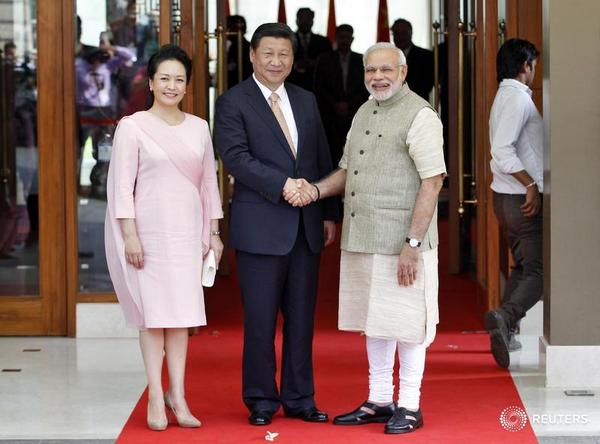 Chinese President Xi Jinping arrives in India Wednesday, making the first visit by a Chinese head of state in eight years, and underscoring the increasingly important economic and strategic partnership between the world’s two most populous nations.
China is India’s largest trading partner (although the trade deficit between the two countries has been widening), and trade and investment will undoubtedly be foremost on both leaders’ minds. Beijing has already outlined plans to build two industrial parks, with multi-billion dollar investments in both. There are also projects being discussed that will revamp India’s vast but outdated railway network.
“This visit presents a unique opportunity for Chinese industry to invest in India before Japan does,” said Swaran Singh, a professor at the Center for International Politics in Delhi’s Jawaharlal Nehru University (JNU) who specializes in India-China relations. “China will try and find a foothold for investment and technology transfer in this window.”
Modi’s recent visit to Japan was described as “successful” by the Indian media, with Japanese Prime Minister Shinzo Abe pledging $34 billion in investments to India and Indo-Japan ties receiving a significant boost. The personal warmth between Modi and Abe was also evident, and although Modi and Xi connected during the BRICS summit in Fortaleza earlier this year, it remains to be seen how that equation will progress this week.
Singh says Xi’s visit will fundamentally focus on “projecting the personal chemistry of two very popular, strong, pro-business Asian leaders.”
He adds: “Both of them see themselves at the helm for at least a decade. They will show how the relationship has progressed to the next level.”
Geo-strategic cooperation between the two countries is slightly trickier, and has been marked by contentious border disputes and maritime disagreements. While China lays claim to the Indian border state of Arunachal Pradesh, India says that the Chinese-occupied Aksai Chin region is part of Kashmir.
However, it increasingly seems that the border disputes will not occupy much of the conversation between Xi and Modi, at least not publicly.
Lt. Gen. Ata Hasnain, a former Indian army officer who was part of a recent delegation to China, said the border issue was not brought up by the Chinese at all, and was largely ignored when he brought it up himself.
“My personal take is that China wishes to continue following a dual track policy of intimidating India along the LAC [line of actual control] and promoting cooperation,” he told TIME in an email. But Hasnain also says China is “keener than ever for partnership and continued dialogue with India,” a sentiment that has been expressed by the Chinese as well.
“Politically speaking, the major objective is to try and eliminate distrust and elevate mutual trust,” said Zhao Gancheng, director of the South Asia Institute at the Shanghai Institutes for International Studies.
India is also wary of China’s growing naval prowess and unhappy about Beijing’s perceived aggression in the Indian Ocean region. New Delhi could create a hurdle to China’s desire to establish a “maritime silk route” through Asia. Xi has already received the cooperation of Sri Lanka and the Maldives, both of which he visited en route to India, but Modi’s government is still on the fence.
“Even now, there is no clear view what will happen,” said Srikanth Kodapalli, a professor at JNU’s Centre for East Asian Studies. Kodapalli added that India’s location and presence makes its cooperation essential for the route.
However, India is far more enthusiastic about the proposed Bangladesh-China-India-Burma trade corridor, commonly known as BCIM, which experts say is another issue bound to come up during the visit. “The BCIM route will play a big role, and I hope India gives a positive response to that because it would benefit all four countries,” Zhao said.
Zhao also rubbished speculation that Xi’s overtures to India, and his decision to postpone his proposed Pakistan visit, signal a shift away from the historic Chinese ally. “The political climate in Pakistan is not appropriate for a head of state to visit right now, but Pakistan is a good neighbor to China and a very important element in its South Asia strategy,” Zhao said.
Chinese President Xi Jinping arrives in India Wednesday, making the first visit by a Chinese head of state in eight years, and underscoring the increasingly important economic and strategic partnership between the world’s two most populous nations.
China is India’s largest trading partner (although the trade deficit between the two countries has been widening), and trade and investment will undoubtedly be foremost on both leaders’ minds. Beijing has already outlined plans to build two industrial parks, with multi-billion dollar investments in both. There are also projects being discussed that will revamp India’s vast but outdated railway network.
“This visit presents a unique opportunity for Chinese industry to invest in India before Japan does,” said Swaran Singh, a professor at the Center for International Politics in Delhi’s Jawaharlal Nehru University (JNU) who specializes in India-China relations. “China will try and find a foothold for investment and technology transfer in this window.”
Modi’s recent visit to Japan was described as “successful” by the Indian media, with Japanese Prime Minister Shinzo Abe pledging $34 billion in investments to India and Indo-Japan ties receiving a significant boost. The personal warmth between Modi and Abe was also evident, and although Modi and Xi connected during the BRICS summit in Fortaleza earlier this year, it remains to be seen how that equation will progress this week.
Singh says Xi’s visit will fundamentally focus on “projecting the personal chemistry of two very popular, strong, pro-business Asian leaders.”
He adds: “Both of them see themselves at the helm for at least a decade. They will show how the relationship has progressed to the next level.”
Geo-strategic cooperation between the two countries is slightly trickier, and has been marked by contentious border disputes and maritime disagreements. While China lays claim to the Indian border state of Arunachal Pradesh, India says that the Chinese-occupied Aksai Chin region is part of Kashmir.
However, it increasingly seems that the border disputes will not occupy much of the conversation between Xi and Modi, at least not publicly.
Lt. Gen. Ata Hasnain, a former Indian army officer who was part of a recent delegation to China, said the border issue was not brought up by the Chinese at all, and was largely ignored when he brought it up himself.
“My personal take is that China wishes to continue following a dual track policy of intimidating India along the LAC [line of actual control] and promoting cooperation,” he told TIME in an email. But Hasnain also says China is “keener than ever for partnership and continued dialogue with India,” a sentiment that has been expressed by the Chinese as well.
“Politically speaking, the major objective is to try and eliminate distrust and elevate mutual trust,” said Zhao Gancheng, director of the South Asia Institute at the Shanghai Institutes for International Studies.
India is also wary of China’s growing naval prowess and unhappy about Beijing’s perceived aggression in the Indian Ocean region. New Delhi could create a hurdle to China’s desire to establish a “maritime silk route” through Asia. Xi has already received the cooperation of Sri Lanka and the Maldives, both of which he visited en route to India, but Modi’s government is still on the fence.
“Even now, there is no clear view what will happen,” said Srikanth Kodapalli, a professor at JNU’s Centre for East Asian Studies. Kodapalli added that India’s location and presence makes its cooperation essential for the route.
However, India is far more enthusiastic about the proposed Bangladesh-China-India-Burma trade corridor, commonly known as BCIM, which experts say is another issue bound to come up during the visit. “The BCIM route will play a big role, and I hope India gives a positive response to that because it would benefit all four countries,” Zhao said.
Zhao also rubbished speculation that Xi’s overtures to India, and his decision to postpone his proposed Pakistan visit, signal a shift away from the historic Chinese ally. “The political climate in Pakistan is not appropriate for a head of state to visit right now, but Pakistan is a good neighbor to China and a very important element in its South Asia strategy,” Zhao said.
ISIL's attempt to spill into Pakistan sets off warning bells

By Hasan Khan
An influx of more foreign militants will lead to more violence and will further destabilise life in the region, some observers say.In the wake of news that the "Islamic State of Iraq and the Levant" (ISIL) has dumped recruiting pamphlets in parts of Pakistan and Afghanistan, observers and members of the public are urging civil society and the Pakistani government to keep ISIL from gaining a foothold in the tribal areas. "If ISIL is able to carve out even a little niche in the north-west of Pakistan and south-east Afghanistan, it will be a formidable threat to regional peace," Dr. Khadim Hussain, a Peshawar-based analyst, told Central Asia Online. ISIL pamphlets, urging Muslims to join their effort in establishing a supposed Islamic caliphate, have been spotted in parts of the border region, and stickers featuring the group's message in local languages have shown up. The move has alarmed residents and has analysts fearing that more violence and destabilisation will follow if a new wave of foreign militants comes. The region already suffers from a sizable presence of militants from the former Soviet Union and Arab states. The human and economic cost could far exceed that which Pakistan already suffered at the hands of al-Qaeda-affiliated terrorists during the past decade, Khadim said. Also of concern is the apparent intent of ISIL to want more than a platform for terrorism. "This time around, they [foreign militants] appear to intend to move toward state control," Khadim said, referring to ISIL's track record of proclaiming itself the government of Syrian and Iraqi areas under its control. ISIL could cost the country lives, money and its culture If ISIL is allowed to sink its hooks into the tribal region, Pakistan could suffer around round of immense human and economic losses, analysts warn. More than 50,000 Pakistanis ahve died and the country has lost US $102 billion (Rs. 10.4 trillion) from 2001 through 2014 so far in the war against terror, according to the Economic Survey of Pakistan. Already in Iraq and Syria, ISIL militants have shown that they have little regard for human life. ISIL has developed a reputation for, among other things, LINK mocking Islam, treating the elderly with disdain, oppressing religious minorities and recruiting children to fight. From a human standpoint, analysts predict an upsurge in sectarianism, should ISIL infiltrate the area. "If ISIL succeeds, then Pakistan shall be ready for bloody sectarian violence," Mansur Mehsud, a security analyst working for the Islamabad-based Federally Administered Tribal Areas (FATA) Research Centre, said. The terrorist group is capable of creating a civil war between Islamic sects as it has sought to do in Syria and Iraq, he said. "ISIL would definitely declare war on [the most peaceful sects] if it succeeded in establishing itself in FATA and settled areas," Mehsud said. Zahid Hussain, author of The Scorpion's Tail: The Relentless Rise of Islamic Militants in Pakistan, echoed those concerns. "The rise of ISIL ... could further fuel sectarian violence in Pakistan," he wrote in a recent news article. ISIL has also been termed a "more lethal" militant group, intolerant of anyone who does not follow its ideology, Mehsud said. With its harsh treatment of everyone it considers an infidel, "[ISIL] would be a nightmare for Pakistan," which has a mix of Islamic sects, he said. Unique parts of Pakistan's culture – such as Pakhtunwali (the Pashtun moral code) – also will be destroyed if ISIL militants encroach in the border region, others say. "ISIL means the rise of Salafist schools of thought, which will destroy our local social culture," Oun Abas Sahi, a South Punjab specialist on the militancy, said. ISIL specifically, and foreign militants in general, has no regard for local traditions, Khadim said in agreement. 'Turf war' among militants foreseen Another troubling result of any inroads by ISIL into the tribal areas will be competition with al-Qaeda (AQ) for the support of local militants, observers predict. "It [competition with AQ] might lead to a turf war between both terrorists syndicates, leading to serious security concerns," journalist and author Aqil Yusufzai said. Mehsud, though, predicted it would be difficult for ISIL to gain support in FATA or in the settled districts of Pakistan. "The chances of ISIL's success in Pakistan are limited, as local militant groups would not like to work under foreign groups like ISIL or al-Qaeda," Mansur said. Foreign militants have lost much of their former appeal in Pakistan, Anwar Ali Bangash, an Islamabad-based journalist, said. Foreign militants have a reputation for attacking vital state institutions in Pakistan and for brutally killing civilians and security officers, Bangash said, adding that such violence generates intense animosity toward the terrorists and makes it unlikely that many Pakistanis will give them the space to survive.
Pakistan: Floods: prevention is better than relief and repair

Pakistan: IDPs ignored in political standoff

Pakistan - Imran's Politics - And now threatening civil war - No end to Imran’s shenanigans
One after another, there appears to be no end to Imran’s shenanigans
Pakistan: Zarb-e-Azb: 40 militants killed in latest air strikes in NWA
Malala, Sharmeen to receive first-ever Asia Game Changer award

Bilawal Bhutto to visit flood-hit areas of Punjab soon
Pakistan People’s Party (PPP) Punjab President Manzoor Ahmed Wattoo has said that party chairman Bilawal Bhutto will soon visit the flood-hit areas of the Punjab province to express solidarity with the flood victims and also distribute the relief goods among them.Pakistan: LNG import: some questions

After almost a decade of trying, LNG imports are now closer to becoming a reality. In a recent news conference, Petroleum Minister Shahid Khaqan Abbasi said the project is “in its final stages” and even mentioned the prospect of an early commissioning.
Moreover, the government appears to have done the groundwork to develop a consensus around the allocations from the new gas, giving the vehicular CNG sector a large share of the imported gas, while diverting its allocations from domestic gas towards other sectors. In time, the minister said, all of the imported gas may end up allocated for vehicular use, freeing up domestic gas for the remaining stakeholders.Some of the numbers floated by the minister need closer scrutiny. For instance, it is not clear how the imported gas will be only 5pc to 8pc costlier than the existing price. If the minister is referring to the price at which the gas will be sold to consumers, then clearly there will be a subsidy element. But if he is referring to the landed cost of the LNG, then it needs clarification what price the government is anticipating to pay in the spot markets, where prices are almost double what they are for domestically produced gas. Likewise, the savings of $2.5bn in imports of oil that the minister claims will be realised as a result of allocating all imported gas for vehicular use needs to be explained. Is his government thinking of sharply increasing the number of vehicles running on CNG after this decision is implemented? If so, this would be adding to the folly of having encouraged the vehicular use of natural gas in the first place. The ministry should release a breakdown of the numbers behind these claims, giving details of the cost at which the gas will be sold to the CNG station operators, and what cost they will be selling it on to end consumers. If a subsidy is involved, it should also be made clear at the outset, as should data on how the $2.5bn of savings on oil import has been computed. Nevertheless, it is encouraging to note that the government has finally managed to put some momentum behind the LNG import project. The idea has languished in our political culture of recriminations for far too long now. Admittedly, all parties involved do not feel fairly treated, particularly those who believe that their bids for the project were denied due consideration on political grounds. But it is a positive sign for the country that the first consignment of imported gas may soon arrive to breathe new life into our energy-starved economy. From here on, the overriding priority is to ensure fair play in decisions on allocations, and transparency and reform in pricing matters. In the final analysis, our gas woes will only end once we learn to price the precious resource appropriately.
Pakistan: Number of polio cases reaches 158 after 13 more cases emerged
 The number of polio victims in the country during the current year has reached 158 after 13 new polio cases were confirmed by the polio virology laboratory of the national institute of health.
Out of new polio cases, seven emerged in the volatile federally administered tribal areas (FATA), three in Khyber Pakhtunkhwa and one case each in Sindh, Punjab and Balochistan.
Pakistan is among three countries where the crippling virus is endemic; the other two are Afghanistan and Nigeria.
In May, the Worth Health Organization (WHO) imposed strict travel restrictions on Pakistan due to increasing cases of polio in the country, making it mandatory for Pakistani citizens to carry a polio vaccination certificate during foreign travel.
The number of polio victims in the country during the current year has reached 158 after 13 new polio cases were confirmed by the polio virology laboratory of the national institute of health.
Out of new polio cases, seven emerged in the volatile federally administered tribal areas (FATA), three in Khyber Pakhtunkhwa and one case each in Sindh, Punjab and Balochistan.
Pakistan is among three countries where the crippling virus is endemic; the other two are Afghanistan and Nigeria.
In May, the Worth Health Organization (WHO) imposed strict travel restrictions on Pakistan due to increasing cases of polio in the country, making it mandatory for Pakistani citizens to carry a polio vaccination certificate during foreign travel.
Subscribe to:
Posts (Atom)