Sunday, May 11, 2014
Human rights organizations condemn Bahrain
http://www.presstv.ir/Human rights organizations have condemned the Bahraini government for the immoral handling of the case of a citizen killed by security forces. Sixteen rights organizations have slammed the Bahraini regime for forging Abdul-Aziz al-Abbar’s death certificate. Abbar, 27, died on April 18, after 55 days in a coma due to injuries he suffered during crackdown on a rally held in late February in Sa’ar, a residential area west of the capital Manama. According to Bahrain’s Center for Human Rights, security forces had fired tear gas canisters and birdshots at Abbar. The rights organizations say Manama has withheld information on how he died and that his corpse was held in a morgue for 22 days. “Where is the role of the National Institution of Human Rights, the General Secretariat of Plaints, the General Prosecution, the Parliamentary Human Rights Committee and other official sides concerned in helping to alleviate the suffering of the victim’s family?!,” the organizations asked. The rights organizations have also said this is not the first time Bahraini authorities forge death certificates, naming three other cases--Ahmed Ismael, Salah Abbass Habib, and Mahmud Al- Haziri-- that the regime authorities have refused to deliver a clear report about their deaths. Since mid-February 2011, thousands of protesters have held numerous demonstrations in the streets of Bahrain, calling on the Al Khalifa royal family to relinquish power. In March 2011, troops from Saudi Arabia and the United Arab Emirates were called in to help Manama quash the anti-regime protests. Scores of Bahrainis have been killed and hundreds of others injured and arrested in the ongoing crackdown on peaceful demonstrations.
India's general elections enter final phase

Israel offers to help Nigeria find abducted schoolgirls
voiceofrussia.com

Early results show landslide support in Donetsk and Lugansk regions for self-rule

Election commissions in Donetsk and Lugansk are still counting the ballots, but preliminary results show the majority of eastern Ukrainians supported self-rule, despite intensified military operation by Kiev which resulted in several deaths.
After the last polling stating closed in Lugansk and Donetsk regions at 23:00 local time (20:00 GMT), election commissions began counting the votes. According to preliminary results – based on phone call reports from local commissions – in Donetsk region 89.7% of votes were cast in favour of political independence from Kiev. In Lugansk region preliminary results have not yet been announced, but the leader of the local “people’s front” said only around 5% voted against the “Act of state self-rule of the Lugansk People's Republic.”
Central election commissions are yet to receive the official reports from the polling stations across the regions. Earlier it was said the documents would not be transported until the morning over the fear of possible attacks and provocations. Despite fears that amid Kiev’s intensified military crackdown – which killed at least two civilians on referendum day – the turnout will be low, in both of the region it was unexpectedly high. In Donetsk it reached 74.87%, while in Lugansk the central election commission says 81% of eligible voters came to the polling stations.
With such a huge turnout, the referendums have been recognized as valid by both election commissions. Kiev however, calling the regional voting on self-determination illegal, sent its recently formed paramilitary forces in an apparent move to disrupt referendums. As armored military vehicles blocked passage to polling stations, voting in four towns across Lugansk region was disrupted. In the Donetsk town of Krasnoarmeysk, the National Guard shot at a crowd and killed two civilians who were protesting their attempt to seize a polling station. The final results are expected be announced during region wide rallies on Monday.
Kissinger: Putin likely didn't plan to bring Ukraine situation to a head
 Fareed speaks with former U.S. Secretary of State Henry Kissinger about what might be behind Russia’s recent policy toward Ukraine.
Kissinger: One has to ask oneself this question: He spent $60 billion on the Olympics. They had opening and closing ceremonies, trying to show Russia as a normal progressive state. So it isn't possible that he, three days later, would voluntarily start an assault on Ukraine. There is no doubt that…
So to explain. You're saying you don't think this was a plan. You think he reacted to events that he saw as spiraling out of his control?
Kissinger: Yes. I think at all times he wanted Ukraine in a subordinate position. And at all times, every senior Russian that I've ever met, including dissidents like Solzhenitsyn and Brodsky, looked at Ukraine as part of the Russian heritage.
But I don't think he had planned to bring it to a head now. I think he had planned a more gradual situation, and this is sort of a response to what he conceived to be an emergency situation. Of course, to explain why he did it doesn't mean one approves of annexing part of another country or crossing of borders. But I think we ought to settle the Ukraine issue first, and then have a discussion about relations with Russia.
Fareed speaks with former U.S. Secretary of State Henry Kissinger about what might be behind Russia’s recent policy toward Ukraine.
Kissinger: One has to ask oneself this question: He spent $60 billion on the Olympics. They had opening and closing ceremonies, trying to show Russia as a normal progressive state. So it isn't possible that he, three days later, would voluntarily start an assault on Ukraine. There is no doubt that…
So to explain. You're saying you don't think this was a plan. You think he reacted to events that he saw as spiraling out of his control?
Kissinger: Yes. I think at all times he wanted Ukraine in a subordinate position. And at all times, every senior Russian that I've ever met, including dissidents like Solzhenitsyn and Brodsky, looked at Ukraine as part of the Russian heritage.
But I don't think he had planned to bring it to a head now. I think he had planned a more gradual situation, and this is sort of a response to what he conceived to be an emergency situation. Of course, to explain why he did it doesn't mean one approves of annexing part of another country or crossing of borders. But I think we ought to settle the Ukraine issue first, and then have a discussion about relations with Russia.
Malala to CNN: Kidnapped Nigerian girls are 'my sisters'
By Mariano Castillo


Terrorist groups such as Boko Haram prey on girls because they fear them, Malala Yousafzai told CNN's Christiane Amanpour on Wednesday, adding her voice to the outcry over the mass kidnappings of Nigerian girls. Malala, the Pakistani girl who made a miraculous recovery after being shot in the head by the Taliban, said women are targeted by those who fear a society in which women are empowered. Boko Haram has kidnapped hundreds of Nigerian schoolgirls, an act that has become the focal point of a worldwide social media campaign demanding their return. The Malala Fund is launching a Nigerian girls education campaign around the issue. The 16-year-old human rights advocate first spoke up about the kidnappings last week.
"When I heard about girls in Nigeria being abducted, I felt very sad, and I thought, 'my sisters are imprisoned now,'" Malala said. "The girls in Nigeria are my sisters and its my responsibility that I speak up for my sisters." Boko Haram are extremists who don't understand Islam, she said. The religion, she says, calls for empowerment through education, not a snuffing of it. "They should go and they should learn Islam, and I think that they should think of these girls as their own sisters. How can one imprison their own sisters and treat them in such a bad way?" she said. Everyone should speak up for the kidnapped girls, she said. In a photo released on social media, Malala holds a sign reading #BringBackOurGirls, joining the chorus of social media activity repeating the same demand. Nigerian President Goodluck Jonathan has been under fire over accusations the government initially ignored and then later downplayed the abduction of the girls. Jonathan has also accepted an offer of U.S. military support in the search for the girls.
FILM: In ‘Noor’, a transgender Pakistani searches for love and acceptance
 A member of Pakistan’s transgender community plays a lightly fictionalised version of himself in “Noor”, a moving French-Turkish film currently in French cinemas. FRANCE 24 takes a closer look.
Some true stories are so singular, so full of twists, turns, pain and hope, that their journey to the big screen seems like a foregone conclusion.
So it was with Noor, a twenty-something member of Pakistan’s transgender community who is both the eponymous subject and the lead performer in a new film currently in French cinemas and likely to make its way around the world in the coming months.
Noor was five years old when he started to dance. With his delicate features and physical grace, the young Pakistani boy quickly became a popular attraction, allowing him to financially support his family after his father died of an overdose.
But the pressure soon proved too much, and Noor ran away at the age of nine. Taken under the wing of Pakistan’s transgender community (known as Khusras), the young boy travelled the country, performing in circuses and fairs.
As the years passed, Noor began dressing as a woman, and fell in love with a fellow dancer who convinced him to undergo medical castration. But when their relationship ended, Noor left the Khusras, striking out on his own with a single goal: to become a man again. Though the surgery was irreversible, he grew a beard (with the help of hormones), got a new job and dreamed of romantic companionship with a woman. The only vestige of Noor’s past was his long hair, which he refused to cut.
A passion for Pakistan, and for an ‘extraordinary story’
After spending twelve years making documentaries and short films shot in the Middle East, Asia and Europe, Turkish-born Çagla Zencirci and her French partner Guillaume Giovanetti decided to make Noor the focus of their first feature-length film. Motivating and inspiring the project every step of the way was the directors’ shared passion for Pakistan.
Travelling through India ten years ago, Zencirci and Giovanetti decided to take a side trip to Pakistan. Fascinated by the country and its inhabitants, the duo started shooting footage for a potential documentary. “We ended up going back several times as tourists and we met several people there who made us want to make a slightly more substantial film,” Giovanetti told FRANCE 24.
One of those people was Noor. Inspired by his extraordinary story, Zencirci and Giovanetti decided to tailor their next film to his experience. “We were lucky that he immediately accepted that we would make the film,” Giovanetti said. “His desire has always been to share his story, to show what he’s been through and to listen to people’s views.”
Though Noor was raised, and never mistreated, by the Khusras, his efforts to re-integrate into mainstream Pakistani society after having belonged to the transgender community have been fraught with difficulty.
But part of what piqued his interest in the film, according to the directors, was the opportunity to show the world a different Pakistan than the country that constantly makes front-page headlines for drone strikes and terrorist attacks. Zencirci and Giovanetti, too, wanted to reveal another facet of Pakistan.
Transgender Pakistanis, ‘protected by God’
“Since the very beginning, our experience in Pakistan has not been reflective of what people read or see on TV,” Giovanetti said. “Pakistanis watch CNN. They know very well that their country has a bad image abroad, and what we liked in our film was the chance to shed light on a different aspect of the country.”
While homosexuality is still a crime in Pakistan, Khusras are a surprisingly visible, unconventionally integrated community there and throughout Central Asia. “Pakistani women are not supposed to dance in public,” Zencirci explained. “That’s why men dressed up as women replace female dancers for most public dance performances in Pakistan.”
As Giovanetti has emphasised in promotional interviews for “Noor”, Khusras are at once isolated and respected in Pakistan, particularly in the Punjab province as well as the bustling port city of Karachi in neighbouring Sindh. “It’s a very present community, because it has a specific function in society,” he told FRANCE 24. “They travel to perform at celebrations, marriages, engagement parties, ceremonies following the birth of a child. Because they’re seen as a fragile segment of society, they’re considered to be protected by God and some even believe they have magic powers.”
Playing a role based on himself in a film based on his life proved to be cathartic for Noor, who recently won the Best Actor prize at a film festival in Vancouver. “Noor used the film and the experience of shooting it to gain independence from the Khusra community,” Zencirci told FRANCE 24, adding that today Noor makes a living serving tea at a billiards club.
According to the filmmakers, Noor has gained confidence through seeing his life on the big screen. He is still looking for love, Zencirci noted, but has been talking to a young woman over the phone and hoping that something blossoms between them.
“Our fingers are crossed for him,” Zencirci said.
A member of Pakistan’s transgender community plays a lightly fictionalised version of himself in “Noor”, a moving French-Turkish film currently in French cinemas. FRANCE 24 takes a closer look.
Some true stories are so singular, so full of twists, turns, pain and hope, that their journey to the big screen seems like a foregone conclusion.
So it was with Noor, a twenty-something member of Pakistan’s transgender community who is both the eponymous subject and the lead performer in a new film currently in French cinemas and likely to make its way around the world in the coming months.
Noor was five years old when he started to dance. With his delicate features and physical grace, the young Pakistani boy quickly became a popular attraction, allowing him to financially support his family after his father died of an overdose.
But the pressure soon proved too much, and Noor ran away at the age of nine. Taken under the wing of Pakistan’s transgender community (known as Khusras), the young boy travelled the country, performing in circuses and fairs.
As the years passed, Noor began dressing as a woman, and fell in love with a fellow dancer who convinced him to undergo medical castration. But when their relationship ended, Noor left the Khusras, striking out on his own with a single goal: to become a man again. Though the surgery was irreversible, he grew a beard (with the help of hormones), got a new job and dreamed of romantic companionship with a woman. The only vestige of Noor’s past was his long hair, which he refused to cut.
A passion for Pakistan, and for an ‘extraordinary story’
After spending twelve years making documentaries and short films shot in the Middle East, Asia and Europe, Turkish-born Çagla Zencirci and her French partner Guillaume Giovanetti decided to make Noor the focus of their first feature-length film. Motivating and inspiring the project every step of the way was the directors’ shared passion for Pakistan.
Travelling through India ten years ago, Zencirci and Giovanetti decided to take a side trip to Pakistan. Fascinated by the country and its inhabitants, the duo started shooting footage for a potential documentary. “We ended up going back several times as tourists and we met several people there who made us want to make a slightly more substantial film,” Giovanetti told FRANCE 24.
One of those people was Noor. Inspired by his extraordinary story, Zencirci and Giovanetti decided to tailor their next film to his experience. “We were lucky that he immediately accepted that we would make the film,” Giovanetti said. “His desire has always been to share his story, to show what he’s been through and to listen to people’s views.”
Though Noor was raised, and never mistreated, by the Khusras, his efforts to re-integrate into mainstream Pakistani society after having belonged to the transgender community have been fraught with difficulty.
But part of what piqued his interest in the film, according to the directors, was the opportunity to show the world a different Pakistan than the country that constantly makes front-page headlines for drone strikes and terrorist attacks. Zencirci and Giovanetti, too, wanted to reveal another facet of Pakistan.
Transgender Pakistanis, ‘protected by God’
“Since the very beginning, our experience in Pakistan has not been reflective of what people read or see on TV,” Giovanetti said. “Pakistanis watch CNN. They know very well that their country has a bad image abroad, and what we liked in our film was the chance to shed light on a different aspect of the country.”
While homosexuality is still a crime in Pakistan, Khusras are a surprisingly visible, unconventionally integrated community there and throughout Central Asia. “Pakistani women are not supposed to dance in public,” Zencirci explained. “That’s why men dressed up as women replace female dancers for most public dance performances in Pakistan.”
As Giovanetti has emphasised in promotional interviews for “Noor”, Khusras are at once isolated and respected in Pakistan, particularly in the Punjab province as well as the bustling port city of Karachi in neighbouring Sindh. “It’s a very present community, because it has a specific function in society,” he told FRANCE 24. “They travel to perform at celebrations, marriages, engagement parties, ceremonies following the birth of a child. Because they’re seen as a fragile segment of society, they’re considered to be protected by God and some even believe they have magic powers.”
Playing a role based on himself in a film based on his life proved to be cathartic for Noor, who recently won the Best Actor prize at a film festival in Vancouver. “Noor used the film and the experience of shooting it to gain independence from the Khusra community,” Zencirci told FRANCE 24, adding that today Noor makes a living serving tea at a billiards club.
According to the filmmakers, Noor has gained confidence through seeing his life on the big screen. He is still looking for love, Zencirci noted, but has been talking to a young woman over the phone and hoping that something blossoms between them.
“Our fingers are crossed for him,” Zencirci said.
Pakistani Version Of Boko Haram: Deobandi Militants Want Girls Out Of Schools
shiapost.comPakistan’s Deobandi cult eulogizes the custodian of the two holy mosques who imprisons his own daughters, thereby giving the green light to Salafi-Wahabi militants of Boko Haram in Nigeria and Deobandi Taliban in Pakistan. None of the Deobandi ulema in Pakistan even raise a small voice against this tragic enslavement of women by Deobandi and Salafi-Wahabi terrorists. It may be noted that Deobandi militants in Pakistan (operating variously as Taliban TTP and Sipah-e-Sahaba ASWJ) have destroyed hundreds of schools and atacked innocent girls (including Malala Yusufzai), however, the Salafi-Wahabi and Deobandi identity of such terrorists is often obfuscated in generic terms such as Islamists or Sunni miliants hiding the fact that Deobandis and Salafi-Wahabis have killed not only Christians but also Sunni Sufis/Barelvis and Shia Muslims. QUETTA: An armed Deobandi group based in Panjgur, Balochistan’s western district, has threatened 23 English Language Learning Centers to shut down and stop imparting co-education and teaching in English, which they say is ‘Haram (prohibited) in Islam’. Masked armed men barged into one language center on Wednesday and threatened the teachers and the young male and female students. “Co-education and learning English language is Haram (forbidden in Islam),” they told the teachers, according to one instructor who spoke on the condition of anonymity. The armed men destroyed the school’s furniture and tore textbooks during the incident. Panjgur police have lodged an FIR against unidentified persons under the Anti Terrorism Act and security has been increased around the centers. “They also told girls who were on their way home from the English Language Center and threatened them, saying they should not go to the schools again,” SHO Panjgur police station Mohammed Murad told The Express Tribune . However, the girls say they are not cowed. “I am not scared and will go to school under all circumstances,” said one of the girls, speaking with The Express Tribune over the phone. She said the man who was threatening the girls spoke in Balochi, with a local Panjguri accent. The men have also distributed threatening letters across Panjgur. An organization calling itself Tanzeem-ul-Islami-ul-Furqan (a Deobandi outfit) has circulated a list of those in charge of the private schools, accusing them of corrupting the minds of local girls by imparting Western education. Station House Officer (SHO) Panjgur Mohammed Murad said the organization has emerged recently. “Private schools should stop girls’ education – both co-education and separate education,” warned the letter, adding, “We urge all van and taxi drivers to refrain from taking girls to schools. Otherwise, they will also be targeted.” “It seems there has been a spill-over of Taliban culture into Panjgur,” remarked one of the heads of the language center, who spoke on the condition of anonymity. “This development comes after the recent operation against Baloch militants. It seems someone is trying to radicalize people in Panjgur,” he felt. The English Language Learning Centers remained closed for three days after receiving the threats. Hundreds of protestors staged a sit-in in front of the Deputy Commissioner’s Office. District administration and police officials assured the protestors that they will arrange foolproof security for the centers and the schools were reopened on Tuesday. However, attendance at the schools was comparatively low. The Panjgur and Kech regions are known as centers of learning and the ‘intellectual capital of Balochistan’.
Front-Runner in Afghanistan’s Presidential Election Forms Coalition
Abdullah Abdullah, the front-runner in Afghanistan’s presidential election campaign, announced Sunday that he had won the endorsement of Zalmay Rassoul, the third-place candidate, as part of his effort to gather enough votes to win in the next round of voting. Together the two men’s tickets took about 55 percent of the vote in the first round of voting on April 5, but there is no guarantee that voters would vote the same way in a second round, tentatively set for June 14. Mr. Abdullah’s camp as well as some analysts worry that a runoff could be rife with fraud and that there is more risk that it could be disrupted by the Taliban. The insurgents’ campaign of violence failed to have much impact in the first round, but the Taliban could redouble their efforts to intimidate voters in a second. Mr. Abdullah won nearly 44 percent of the vote in the first round, followed by Ashraf Ghani with nearly 33 percent and Mr. Rassoul with 11 percent, according to the most recent count by the Independent Election Commission of Afghanistan. The final results for the first round are expected later this week, according to the election commission. Mr. Ghani, who came in second, has repeatedly said that there needs to be a runoff as mandated by the Constitution. Some commentators believe that a second round of voting would split along more ethnic lines, which could benefit Mr. Ghani, a Pashtun, since Pashtuns represent a plurality of the population. Mr. Abdullah is most closely associated with the Tajik ethnic group and the former Northern Alliance of commanders that helped overthrow the Taliban in 2001. While both candidates have tickets that include two vice presidents, each representing other ethnic groups, it is the top of the ticket that gets the most attention when it comes to factional affiliation. Mr. Rassoul, a Pashtun, was believed to be the favored candidate of President Hamid Karzai, but Mr. Karzai was careful not to endorse anyone and kept a low profile during the campaign. In an announcement to a packed news conference at the Intercontinental Hotel in Kabul, Mr. Rassoul described Mr. Abdullah as “a good colleague” whom he had known for a long time and worked well with, adding that “our commitment to the people of Afghanistan is to avoid the ethnic rift.” Wearing white shalwar kameez, Mr. Abdullah spoke fervently to the crowd, praising the first round of voting and urging them to back him. “We campaigned in a warm environment, and today we hug each other in a warm environment,” he said. “This is our joint commitment, and we are moving forward together to the point of victory or to the point of final results — either in the first round, Inshallah,” — God willing — “or the second round.” The outcome of the first round surprised many Afghans because Mr. Abdullah received votes from across the country, even in heavily Pashtun areas. Overall, the election garnered more interest from voters than the last presidential contest in 2009, with 50 percent more votes cast, and it was viewed as generally less fraud-ridden. The argument by Mr. Abdullah’s backers is that with Mr. Rassoul’s support they have 55 percent of the votes cast nationwide, well above the 50 percent threshold required by the Constitution — so there is no need for a runoff. Mr. Abdullah’s team also won the endorsement of another candidate, Gul Agha Shirzai, a former provincial governor who won just 1.6 percent of the vote. However, the Afghan Constitution specifically requires a runoff between the two top vote-getters, not between coalitions the candidates form afterward. There have been intense behind-the-scenes negotiations among the candidates since the first-round vote, with efforts focused on forming coalitions and avoiding a second round. Over the past few days, some figures who said they were from a Pashtun-dominated party, Hizb-e-Islami, said they were endorsing Mr. Ghani, the second-place candidate. Then, the leader of the political wing of the party said there had been no official endorsement yet and that those who had offered the endorsement did not represent Hizb-e-Islami’s team. As news was breaking of Mr. Abdullah and Mr. Rassoul’s allegiance, a suicide bomber attacked an Afghan security forces convoy near a clinic on the road to the main southern military base in Kandahar, killing four civilians, including a child, and injuring 22 people, according to Zia Durani, the provincial police chief. A NATO convoy was nearby delivering aid packets but was not affected by the blast, he said.By ALISSA J. RUBIN
Afghanistan: At least five dead as blood spills in Kandahar
At least five killed and dozens wounded in suicide blast in Afghanistan's Kandahar.
Pakistan: Attack on Blasphemy Accused Thwarted
 The Multan Police arrested five suspected terrorists who had intentions to attack those accused of blasphemy in central prison with the help of intelligence agencies in a special operation.
Junaid Hafeez and Asia bibi are both in Central Jail, Multan whose lawyer, Rashid Rehman, was shot dead on Wednesday.
RPO Multan Range Muhammad Amin said that five terrorists have been arrested, after a brief exchange of fire from Green Town. Out of the five, four men have been recognized as Abdul Hafeez from Azad Jammu and Kashmir, Muhammad Nasir from Muzaffargarh, Ahmed Rizwan from Toba Tek Singh, Muhammad Sarfraz from Kot Addu. They are among the suspected terrorists who have links with the Tehreek-e-Taliban Pakistan Qari Imran group.
The police also took into custody 30 detonators, five hand grenades and 10 boxes of explosives from their possession. They have been taken to a secret place for inquiries.
Amin told that the Multan police have found a thorough attack plan on the central prison other sensitive instalments in south Punjab.
The group planned to hit sectarian crisis, military instalments and other important buildings.
A police official said requesting secrecy that maps, blueprints and plans of surveillance on the cells of blasphemy accused, Junaid Hafeez and Aasia Bibi, were also recovered from the militants. The police therefore have warned the security of central jail.
Discretely, the 15 emergency police was told on a phone call that a bomb had been fixed inside the building of District and Sessions Courts, Multan. The whole building was emptied, which resulted in a huge traffic jam. Rescue 1122 personnel, the Bomb Disposal Squad, district administration, traffic police and the fire brigade hurled a search which continued for three hours, after that the building was declared safe. Furthermore, Police officials said they will soon seize the suspect.
- See more at: http://www.christiansinpakistan.com/attack-on-blasphemy-accused-thwarted/#sthash.bJrfZ2u8.dpuf
The Multan Police arrested five suspected terrorists who had intentions to attack those accused of blasphemy in central prison with the help of intelligence agencies in a special operation.
Junaid Hafeez and Asia bibi are both in Central Jail, Multan whose lawyer, Rashid Rehman, was shot dead on Wednesday.
RPO Multan Range Muhammad Amin said that five terrorists have been arrested, after a brief exchange of fire from Green Town. Out of the five, four men have been recognized as Abdul Hafeez from Azad Jammu and Kashmir, Muhammad Nasir from Muzaffargarh, Ahmed Rizwan from Toba Tek Singh, Muhammad Sarfraz from Kot Addu. They are among the suspected terrorists who have links with the Tehreek-e-Taliban Pakistan Qari Imran group.
The police also took into custody 30 detonators, five hand grenades and 10 boxes of explosives from their possession. They have been taken to a secret place for inquiries.
Amin told that the Multan police have found a thorough attack plan on the central prison other sensitive instalments in south Punjab.
The group planned to hit sectarian crisis, military instalments and other important buildings.
A police official said requesting secrecy that maps, blueprints and plans of surveillance on the cells of blasphemy accused, Junaid Hafeez and Aasia Bibi, were also recovered from the militants. The police therefore have warned the security of central jail.
Discretely, the 15 emergency police was told on a phone call that a bomb had been fixed inside the building of District and Sessions Courts, Multan. The whole building was emptied, which resulted in a huge traffic jam. Rescue 1122 personnel, the Bomb Disposal Squad, district administration, traffic police and the fire brigade hurled a search which continued for three hours, after that the building was declared safe. Furthermore, Police officials said they will soon seize the suspect.
- See more at: http://www.christiansinpakistan.com/attack-on-blasphemy-accused-thwarted/#sthash.bJrfZ2u8.dpuf
Pakistan: Qadri’s dream of Iran-like revolution can’t materialize: Wattoo
President of Pakistan People’s Party (PPP) Punjab, Mian Manzoor Ahmed Wattoo has said that the Pakistan Awami Tehreek (PAT) chief Dr Tahir-ul-Qadri’s dreams of Iran like revolution in Pakistan couldn’t be materialized. Talking to media persons after condoling the death of brother of renowned poet Masood Okarvi with the bereaved family here on Saturday, Manzoor Wattoo said the revolution in Iran was based on ‘Authoritarianism’ there but there exists a democratically elected government in Pakistan. He said if agitation of chairman Pakistan Tehreek-e-Insaf (PTI) Imran Khan failed the government will continue to govern and if thumb impressions in four constituencies were proved fake, the country will move towards mid-term elections. Wattoo admitted that a large scale rigging in previous general elections was carried out but said that PPP accepted the results of polls for the sake of continuation of democracy. He said that Imran Khan has been demanding probe in four constituencies and Election Commission should accept his justified demand.http://mediacellppp.wordpress.com/
Pakistan: Blast in Peshawar kills five, wounds 14

Five people lost their lives while eleven others were injured in an explosion at a mosque located in the Tahmas Khan Stadium near historical Shahi Bagh on Sunday here, Geo News reported. Eyewitnesses said that an armed person opened fire on the Khasadar Force personnel and later blew himself up. The injured have been shifted to the Lady reading Hospital. Security forces cordoned off the area following the attack.
Nuclear Neighbors: Pakistan Nervous About India's Likely New Leader
The Islamic Republic of Pakistan is nervously watching as its huge neighbor and fellow nuclear power India gets set to elect a party feared to harbor virulently anti-Muslim views. The Hindu nationalist Bharatiya Janata Party (BJP) and its leader Narendra Modi are widely expected to win when the results of the six-week election that ends on Monday are announced. The fear is that the BJP will take an anti-Islamic turn both within India -- the country has a Muslim population of some 176 million -- and towards its northern neighbor, according to Pakistani politician Farahnaz Ispahani.BY HENRY AUSTIN AND WAJAHAT S. KHAN
"It is very clear that if there is another attack like the one on Mumbai, we cannot expect restraint from someone like Narendra Modi,” Ispahani said, referring to the 2008 terrorist strike led by 10 Pakistani men that killed more than 160. The incident heightened tensions between the two countries, with some in India saying the attackers had counted on the support of officials in Pakistan's security services. Earlier, a 2001 attack on the Indian parliament that left a dozen dead, which New Delhi blamed on Pakistani militants, almost brought the two nations to the brink of war.There is a history of hostility between the two countries since the dissolution of the British Raj in 1947 when around a million people are estimated to have died in communal violence as Muslims, Hindus and Sikhs moved to accommodate the new national borders. The largest source of ongoing tension has been the disputed Himalayan region of Kashmir, control of which has been disputed since the partition of the two countries. India and Pakistan fought wars over the territory in 1965 and 1999. Controversial Modi Modi is already a controversial figure in Pakistan because many feel he did not do enough to stop the February 2002 Hindu-Muslim clashes in the state of Gujarat that left more than 1,000 people dead and hundreds more injured, Ispahani said. Many of the victims were Muslims. A number of independent observers believe he failed, as chief minister of the state at the time, to protect his own citizens. This was a view endorsed by the U.S., which refused to grant Modi a visa for over 10 years, although officials reversed the decision earlier this year.
“He has never come out directly and said this was a tragedy of massive proportions and that the Muslims of Gujurat deserve an apology,” Ispahani said. Modi isn't the only one that makes some in Pakistan nervous. Other prominent Hindu nationalists have whipped-up anti-Pakistani sentiment, according to Dr. Farzana Shaikh, an associate fellow at British think tank Chatham House. In April, longtime Modi ally Pravin Togadia was caught on camera making anti-Islamic comments, raising questions about how an incoming BJP government would treat the country's Muslims. Inflammatory language by politicians has been a staple on both sides of the border for those looking to score easy political points, however. “They have had a very fractured relationship,” said Dr. Simona Vittorini of SOAS, University of London. “There is always controversy over who started what, but the antipathy is there.”
But Pakistan's fears stem from more than campaign-trail rhetoric. The BJP’s manifesto -- essentially, its political blueprint -- worries Pakistan’s political and military establishment. “The suggestion that the BJP would revoke Article 370 of the Indian constitution that guarantees Kashmir’s special status would obviously raise a red flag to the Pakistani’s who believe this is restricted territory and any change in status or attempt to integrate Kashmir would spell disaster,” Shaikh said. Article 370 grants special autonomous status to Kashmir, specifying that apart from defense, foreign affairs, finance and communications, India's parliament needs the state government's permission to apply other laws in the region. Any change in this status would make Pakistan nervous because they would see it as India trying to establish a greater claim on the territory, Shaikh said. “Modi has also said his party would revoke the ‘no first use’ policy in regard to nuclear weapons and that is also causing some concern in military circles,” she added. In other words, Modi might ensure that India has the right to strike first against its neighbor.
Still, many in Pakistan play down both the BJP's manifesto and the views espoused by prominent Hindu nationalists. “Modi would have to tone himself down when faced with the strategic reality of a nuclear weaponized South Asia,” according to Pakistani political commentator Ayesha Siddiqa, who added that it will take time for both sides to feel each other out. "This gives enough time for stakeholders on both sides," she said. "Or to put it another way, we will think about it when it comes to crossing the bridge."
Disease of Pakistan’s Poor Now Worries the Affluent

PAKISTAN: Rashid Rehman - the Punjab government is conspicuously avoiding an investigation into his brutal murder
The Asian Human Rights Commission (AHRC) has received further information regarding the high profile and brutal assassination of the well known and respected human rights activist and lawyer, Rashid Rehman Khan. The government of Punjab has totally ignored the murder of a human rights defender and has not initiated any action that might lead to the arrest of the persons who threatened him. The district police of Multan have not filed a case against the killers whose names were mentioned by the deceased himself in a application to the district police officer in which he mentioned that if any harm comes to him the three persons named would be responsible. The police have not initiated any investigation into the case of the murder filed by the victim’s cousin. Nor have they contacted the three persons who threatened the victim before the judge that he would, “Not exist anymore”, if he continued to defend a university lecturer accused of blasphemy. It is alleged that the Federal Secretary of Law, Government of Pakistan, is the person who is creating hurdles for the investigation in order to save his cousin, Sajjad Chawan, a former Session Court judge, who was among the three persons who threatened the victim. The lawyers of the Multan High Court have received letters warning them they should not defend the case of any blasphemer otherwise they will face the same fate as that of Mr. Rehman.
READ MORE:http://www.humanrights.asia/news/urgent-appeals/AHRC-UAC-070-2014

Saturday, May 10, 2014
Linguist completes Pashto dictionary after 36 years
 When 78-year-old linguist Che Hongcai presented the 50,000-odd-entry, 2.5-million-word handwritten manuscript for his Chinese-Pashto dictionary to his publishing house in 2012, nobody knew quite what to say.
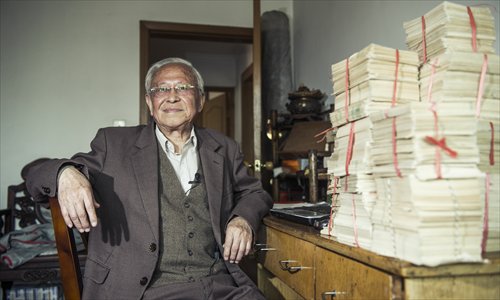 The project had been originally commissioned 36 years beforehand by the Commercial Press in 1978 when the State Council ordered 160 language dictionaries to boost China's international influence in UNESCO.
Pashto is one of the official languages of Afghanistan. It is estimated that there are 60 million people worldwide speaking Pashto. But fewer than 100 people speak the language in China, and most of them work for State-owned organizations such as news agencies and customs departments.
However, the "glorious national mission" was postponed and eventually forgotten by the authorities. Che, a foreign-language teacher in charge of editing the dictionary, was one of the few people who still keep it in mind. The dictionary will be published later this year. Che will be paid 80 yuan ($13) per thousand words.
As most of the old government-assigned tasks have long been forgotten and abandoned, Che's commitment to his task touched many people. Internet users call him the role model of today's scholar. But Che keeps a low profile.
"It is not about money or fame, this is where my passion lies," Che told the Global Times. "Hopefully it will promote Pashto education in China."
Afghan study
In the study of his Beijing apartment, some 100,000 index cards containing Chinese and Pashto terms are piled up on his desk like a mountain. Deep inside the mountain lie a magnifying glass and a laptop, a necessity to create a dictionary in the modern age but a challenge for an old man with poor eyesight like Che.
His son Che Ran remembers that when he was little, there was a huge drawer in their living room, looking like a traditional pharmaceutical cabinet. The index cards were sorted by topic and locked there for decades. No one understands what was written on it except his father.
Che Hongcai's first interaction with Pashto started in Afghanistan back in the 1950s when China started building diplomatic relationships with newly independent Asian-African-Latin countries.
As a third-year student at the Beijing Foreign Studies University, Che was sent to Kabul, Afghanistan for a four-year exchange program at the Cultural Institute of Kabul University to study Pashto in 1959.
Che remembers being extremely excited. "Most of the students were sent to Communist countries, while Afghanistan was a capitalist country back then, and chances like that were really rare."
His first teacher was an editor of a local magazine who could speak both Pashto and English. Che remembers on their first class, the teacher wrote down everything on the blackboard and asked them to write them down due to the lack of teaching materials.
Those years studying in Kabul were fun but not easy, Che recalls. "We were under close watch. The Afghan side was worried the country might 'go red' due to the influence of Chinese students." Chinese students were required to go out in pairs and report their whereabouts.
Three years later, Che went back to China and started his career teaching Pashto at the Communication University of China.
Mission that time forgot
As a special talent, Che was frequently borrowed by various State departments. Performing tasks from interpretation for the Ministry of Foreign Affairs to broadcast for China Radio International (CRI), to translating government work reports.
In 1975 the publishing house commissioned Che and his student Song Qiangmin to compile a Chinese-Pashto dictionary. Che received the mission with great confidence that they could finish it within a few years.
As there was no funding, Che borrowed a Pashto typewriter from CRI and picked up leftover papers from a printing plant to make index cards. For the next four years, the two of them buried themselves working in a five-square-meter office and sorting out 100,000 cards.
When it came to unfamiliar terms, Che consulted with some Afghan experts working for CRI and used a Pashto-Russian dictionary as a reference.
Gradually, the university authorities and his colleagues seem to have forgotten about him. Only every half a year, he would get a call from the publishing house to check the updates.
In 1981, when 70 percent of their work had finished, the university asked him to put the dictionary project away temporarily and help to design a new correspondence course.
"I thought I would have to stock the cards in the carbines for a while," Che recalls. "The next time I opened the carbines was 20 years later."
In 1988, at the age of 52, when he finished the course and thought it was time to continue his project, Che was appointed as an analyst of Middle East policy in Pakistan, and then to Afghanistan.
Che did not want to go. He hid at home for three months to ignore the offer. And then when he appeared at the Ministry of Foreign Affairs, he told them he suffered from high blood pressure and had kidney stones. But the medical staff said he was good to go.
"I felt so upset about leaving my project behind that I locked them up and didn't want to look at it," Che said.
When he returned to China in 1992, everything was changed. His student Song had moved to the US. Nobody seemed to remember his project. Che retired in the mid-1990s feeling disappointed.
"He felt the world had forgotten him. He was so upset that he kept quiet all the time," his wife Xue Ping recalled.
It was the September 11 attacks that got Che's attention back to his dictionary. The Bush administration declared a worldwide "war on terror" and started to look for Pashto-speaking bilingual talents.
The university invited Che to go back to teach Pashto again. The move triggered Che's desire to finish the dictionary. In 2003, he found software made by an Afghan on the Internet that enabled him to record Pashto on the computer.
With the help of his former classmate in Kabul University, Zhang Min, they spent four years finishing all the drafts.
When he arrived at the publishing house with his manuscript, he had only one thing to say "It's finished."
The project had been originally commissioned 36 years beforehand by the Commercial Press in 1978 when the State Council ordered 160 language dictionaries to boost China's international influence in UNESCO.
Pashto is one of the official languages of Afghanistan. It is estimated that there are 60 million people worldwide speaking Pashto. But fewer than 100 people speak the language in China, and most of them work for State-owned organizations such as news agencies and customs departments.
However, the "glorious national mission" was postponed and eventually forgotten by the authorities. Che, a foreign-language teacher in charge of editing the dictionary, was one of the few people who still keep it in mind. The dictionary will be published later this year. Che will be paid 80 yuan ($13) per thousand words.
As most of the old government-assigned tasks have long been forgotten and abandoned, Che's commitment to his task touched many people. Internet users call him the role model of today's scholar. But Che keeps a low profile.
"It is not about money or fame, this is where my passion lies," Che told the Global Times. "Hopefully it will promote Pashto education in China."
Afghan study
In the study of his Beijing apartment, some 100,000 index cards containing Chinese and Pashto terms are piled up on his desk like a mountain. Deep inside the mountain lie a magnifying glass and a laptop, a necessity to create a dictionary in the modern age but a challenge for an old man with poor eyesight like Che.
His son Che Ran remembers that when he was little, there was a huge drawer in their living room, looking like a traditional pharmaceutical cabinet. The index cards were sorted by topic and locked there for decades. No one understands what was written on it except his father.
Che Hongcai's first interaction with Pashto started in Afghanistan back in the 1950s when China started building diplomatic relationships with newly independent Asian-African-Latin countries.
As a third-year student at the Beijing Foreign Studies University, Che was sent to Kabul, Afghanistan for a four-year exchange program at the Cultural Institute of Kabul University to study Pashto in 1959.
Che remembers being extremely excited. "Most of the students were sent to Communist countries, while Afghanistan was a capitalist country back then, and chances like that were really rare."
His first teacher was an editor of a local magazine who could speak both Pashto and English. Che remembers on their first class, the teacher wrote down everything on the blackboard and asked them to write them down due to the lack of teaching materials.
Those years studying in Kabul were fun but not easy, Che recalls. "We were under close watch. The Afghan side was worried the country might 'go red' due to the influence of Chinese students." Chinese students were required to go out in pairs and report their whereabouts.
Three years later, Che went back to China and started his career teaching Pashto at the Communication University of China.
Mission that time forgot
As a special talent, Che was frequently borrowed by various State departments. Performing tasks from interpretation for the Ministry of Foreign Affairs to broadcast for China Radio International (CRI), to translating government work reports.
In 1975 the publishing house commissioned Che and his student Song Qiangmin to compile a Chinese-Pashto dictionary. Che received the mission with great confidence that they could finish it within a few years.
As there was no funding, Che borrowed a Pashto typewriter from CRI and picked up leftover papers from a printing plant to make index cards. For the next four years, the two of them buried themselves working in a five-square-meter office and sorting out 100,000 cards.
When it came to unfamiliar terms, Che consulted with some Afghan experts working for CRI and used a Pashto-Russian dictionary as a reference.
Gradually, the university authorities and his colleagues seem to have forgotten about him. Only every half a year, he would get a call from the publishing house to check the updates.
In 1981, when 70 percent of their work had finished, the university asked him to put the dictionary project away temporarily and help to design a new correspondence course.
"I thought I would have to stock the cards in the carbines for a while," Che recalls. "The next time I opened the carbines was 20 years later."
In 1988, at the age of 52, when he finished the course and thought it was time to continue his project, Che was appointed as an analyst of Middle East policy in Pakistan, and then to Afghanistan.
Che did not want to go. He hid at home for three months to ignore the offer. And then when he appeared at the Ministry of Foreign Affairs, he told them he suffered from high blood pressure and had kidney stones. But the medical staff said he was good to go.
"I felt so upset about leaving my project behind that I locked them up and didn't want to look at it," Che said.
When he returned to China in 1992, everything was changed. His student Song had moved to the US. Nobody seemed to remember his project. Che retired in the mid-1990s feeling disappointed.
"He felt the world had forgotten him. He was so upset that he kept quiet all the time," his wife Xue Ping recalled.
It was the September 11 attacks that got Che's attention back to his dictionary. The Bush administration declared a worldwide "war on terror" and started to look for Pashto-speaking bilingual talents.
The university invited Che to go back to teach Pashto again. The move triggered Che's desire to finish the dictionary. In 2003, he found software made by an Afghan on the Internet that enabled him to record Pashto on the computer.
With the help of his former classmate in Kabul University, Zhang Min, they spent four years finishing all the drafts.
When he arrived at the publishing house with his manuscript, he had only one thing to say "It's finished."
Pakistan's Bonded Laborers Trapped in Cycle of Debt
n Pakistan today, more than two million people, including children, work as bonded laborers, a system the United Nations describes as modern-day slavery. Sharon Behn reports on the life of brick-makers who use their children as collateral for debts to their employers.
Weekly Address: The First Lady Michelle Obama Marks Mother’s Day and Speaks Out on the Tragic Kidnapping in Nigeria
In this week’s address, First Lady Michelle Obama honored all mothers on this upcoming Mother’s Day and offered her thoughts, prayers and support in the wake of the unconscionable terrorist kidnapping of more than 200 Nigerian girls.
Pakistan's Women: A Pervasive Mindset
 Pakistan was the first Muslim country to have a female Prime Minister. Top cabinet ministries, including finance and foreign, have gone to women politicians. However, these landmarks achieved at the national level have not translated into political empowerment for women on the provincial level. Balochistan, for example, is heading for a local government election next month without a single woman candidate. The two main parties have dismissed the idea of a woman as mayor. Balochistan has 12 women members of the Provincial Assembly on reserved seats while one is elected, compared to 65 males on general seats. No minister or advisor to a minister is a woman.
Women quotas were introduced in Pakistan in 2002 to include more women in the legislation and policy-making process. There was plenty of cynicism regarding these reserved seats, with the major criticism being that they would be unfairly captured by the elite and not empower competent women at the grassroots level. Indeed, though women legislators have been lauded for some of their legislation and lobbying for good causes, they are still dependant on their parties for “selection.” This takes away influence from them. There is little room for initiative, questioning party politics and policies. Furthermore, the fact that more men stand on the general seats than women, the election process remains male-dominated. There are unfortunately, very few women leaders who have been voted into office. And in a province like Balochistan, traditionally marred by illiteracy, tribalism and patriarchy- things look even grimmer. The mayoral election in Balochistan next month, in which no woman has been allowed to compete for office, is just one example. The overwhelming attitude is that in the presence of so many competent men, there is simply no room for women. In other words, women are competing for intellectual superiority on an entirely different plane- one where there are no men.
How will the political scenario in Pakistan become more favorable to women? Are reserved quotas helping or feeding into the attitudes that women can’t do without affirmative action to fight on the same professional planes? If it is the latter, then what are the alternatives? At least one of the answers must lie in a fundamental upheaval of the patriarchal mindset, which can come from early education alone. And as the news goes, a militant group in Panjgur, Balochistan’s western district has recently threatened 23 English language learning centers to shut down and proclaimed them “haram.” Amidst this kind of armed oppression, how can we expect middle and lower class women to rise much further than the four walls of their homes, much less into policy-making quarters?
Pakistan was the first Muslim country to have a female Prime Minister. Top cabinet ministries, including finance and foreign, have gone to women politicians. However, these landmarks achieved at the national level have not translated into political empowerment for women on the provincial level. Balochistan, for example, is heading for a local government election next month without a single woman candidate. The two main parties have dismissed the idea of a woman as mayor. Balochistan has 12 women members of the Provincial Assembly on reserved seats while one is elected, compared to 65 males on general seats. No minister or advisor to a minister is a woman.
Women quotas were introduced in Pakistan in 2002 to include more women in the legislation and policy-making process. There was plenty of cynicism regarding these reserved seats, with the major criticism being that they would be unfairly captured by the elite and not empower competent women at the grassroots level. Indeed, though women legislators have been lauded for some of their legislation and lobbying for good causes, they are still dependant on their parties for “selection.” This takes away influence from them. There is little room for initiative, questioning party politics and policies. Furthermore, the fact that more men stand on the general seats than women, the election process remains male-dominated. There are unfortunately, very few women leaders who have been voted into office. And in a province like Balochistan, traditionally marred by illiteracy, tribalism and patriarchy- things look even grimmer. The mayoral election in Balochistan next month, in which no woman has been allowed to compete for office, is just one example. The overwhelming attitude is that in the presence of so many competent men, there is simply no room for women. In other words, women are competing for intellectual superiority on an entirely different plane- one where there are no men.
How will the political scenario in Pakistan become more favorable to women? Are reserved quotas helping or feeding into the attitudes that women can’t do without affirmative action to fight on the same professional planes? If it is the latter, then what are the alternatives? At least one of the answers must lie in a fundamental upheaval of the patriarchal mindset, which can come from early education alone. And as the news goes, a militant group in Panjgur, Balochistan’s western district has recently threatened 23 English language learning centers to shut down and proclaimed them “haram.” Amidst this kind of armed oppression, how can we expect middle and lower class women to rise much further than the four walls of their homes, much less into policy-making quarters?
Pakistan’s place in Gulf politics
www.pakistantoday.comMuch about the Arab Spring, its spillover, and mutation into a bloody sectarian orgy has simply missed Pakistan’s attention. At least the leadership could have, should have been better informed. For example, the average Egyptian would have been quite amused about a half a decade ago if told Mubarak would soon be rubbished to the dustbin of history. Yet the unprecedented series of events set in motion by the famous Tahrir square protests have stood out as an important example for all Muslim countries except, perhaps, Pakistan. The following year saw the Muslim Brotherhood, not secular and leftist groups that protested, take the polls. But soon there was little to celebrate of the new democracy as the incumbent showed how easily public mandate could be bended to suit party objectives, in this case reframing society in the Brotherhood’s own narrow, far right of centre, mould. And so we had the military back before the ink could dry on (ousted) President Morsi’s wish list. What is more, almost all strands of Egyptians, except of course the mulla lobby, welcomed back the same military they had grown to detest until very recently. Salafi hordes more radical than the Brotherhood, who have since followed the Spring every step of the way, have now been pushed largely to the fringes, into the Sinai desert, where Cairo and Tel Aviv take turns in neutering them. Pakistan was also without voice as the Spring rolled into Libya, and became practically dumbfounded when Nato partnered with the same al Qaeda groups that they were droning in Afghanistan, Pakistan and Yemen. And perhaps the Iranians and Russians were the only ones to smell a diplomatic rat when a similar effort was underway in Syria some three years ago. A horrific civil war and frantic cross-Atlantic diplomatic activity later the US was convinced that the biggest threat of the new century, fundamentalist militant Islamism, originated in the Wahabi kingdoms of the Gulf, and toned down its decades long ‘arrangement’ with their standard bearer, Saudi Arabia. But under Nawaz Sharif Pakistan made its only, and much criticised, public gesture of embracing the Saudi vision statement for the new emerging Arabia. That, of course, vindicates long standing suspicion that if the Americans ever became awkward, Pakistan would replace them as the royal family’s gate guards. In the present circumstances, of course, the gesture could also quickly expand to military hardware for Syrian rebels, complicating the Arab situation from the outside, and inviting fury from neighbours like China and Iran. It is little surprise the prime minister delivered a more politically correct position when the House became hostile, but the real purpose behind parading Saudi and Bahrani royals across Islamabad remains unexplained. The Arab street, again except the clergy, received our prime minister’s tilt with visible disgust, rejecting interference from a supposed fort of Islam that only makes news for the wrong reasons, and has hardly ever taken any real interest in the Arab world beyond Saudi Arabia, and a few words of support for the Palestinians. If only Nawaz studied the Muslim world better, he would invite less problems in his own method of governance. But so long as he remains clueless about the most important political evolution of modern times, he will have little to deliver at home except complications and self defeating positions.
Pakistan's deadly descent into polio contagion
 Pakistan was close to eradicating polio 10 years ago. But conspiracy theories, a Taliban ascendancy and drive-by shootings of polio workers have reversed the gains. The BBC's M Ilyas Khan reports from the frontline of the government's war against the virus and the militants' war against its vaccinators.
"Polio workers had been shot in the area before, but we never imagined it could happen to us."
Falak Naz, a member of the World Health Organisation's polio eradication effort in north-western Pakistan, is in a desperate situation.
"I never anticipated I would be stranded in Peshawar city with an injured wife," he tells me at the Lady Reading hospital, where he has been tending his wife, one of several family members injured in a gun and grenade attack on his home in a rural district in April.
"I don't have the resources to take up a place in this city, and going back home is not only unsafe, I don't have proper living quarters there."
That attack on him was the second in a month in which gunmen have broken with the past pattern of drive-by shootings on the streets, and have instead followed health workers into their own homes.
Conspiracy theories
Pakistan is one of three countries where polio is endemic and the WHO recently issued a grave warning about the resurgent threat of the polio virus. Part of the reason is precisely the inability of Pakistan to immunise some of its children in the most vulnerable areas.
The violence is relentless and the source is ultimately the Taliban's conspiracy theories about the polio vaccine. As the death toll of the health workers rises, so does the incidence of polio.
In the four months since January, Pakistan has reported 59 new cases of polio, an all-time high for this generally low-transmission season. Of these, 42 cases have been reported from the tribal area of North Waziristan alone.
And this is where the reason for Pakistan's failure to eradicate polio lies, says Dr Imtiaz Ali Shah, head of the provincial government's Polio Monitoring Cell in Khyber Pakhtunkhwa (KP).
"The polio virus is under control all over the country," he says. "Cases reported in the KP, and even in Karachi, are an extension of the situation in Waziristan, where non-state groups do not allow vaccination. It is a political issue, which technical people like us cannot solve."
Pakistan was close to eradicating polio virus in 2005, when only 28 new cases were reported. Dr Shah says if not for the politics, polio could be eradicated in three months.
In that year militant groups based in Swat and parts of the tribal region along the border with Afghanistan decided to oppose the polio eradication initiative.
These groups used FM radio sermons to create hostility towards polio vaccination, calling it a conspiracy by the Americans to sexually sterilise children and thereby control the population of Muslims.
During subsequent years, health workers were roughed up in communities, or even kidnapped by organised groups. Some of them turned up dead.
The defiance grew more violent after 2011 when a Pakistani doctor was accused of running a fake vaccination campaign to help the American CIA track down Osama bin Laden.
Dr Shah says the present spike in polio cases is directly linked to the July 2012 decision by the groups controlling the Waziristan tribal region to ban vaccination there.
'My sister was shot'
December 2012 was when trained snipers drew their first blood by staging a drive-by shooting of health workers conducting immunisation campaigns.
One of the first workers to fall to the assassins' bullets in Peshawar was a 16-year-old schoolgirl, Farzana Rahman.
Her sister and co-worker, Amena Rahman, 20, still remembers that day.
"We had been doing volunteer work for WHO for a couple of years to earn pocket money, and also because both of us aspired to become health professionals.
"So as usual, we were operating as a two-member team; Farzana would administer polio drops to children, and I would scrawl the markings on the doors of the houses we covered for future reference."
Farzana had just finished administering polio drops to two children at one house, and Amena was chalking on the door when she heard the shot.
"It was a dry sound, like the whack of a small cracker, or if you slap someone," she recalls.
"When I turned around, I was shocked to see Farzana sitting on the ground, leaning against the door. A man rushed away from us, jumped on a motorbike behind another man and rode away. A lady who had brought out the children for vaccination pushed the door hard to shut it from inside, and one of Farzana's fingers was caught in it. But she didn't wince."
This angered Amena. She first shouted at the lady, and then taunted her sister for being frightened by the sound of a mere cracker.
"She didn't respond, so I kneeled down before her and touched her shoulder. She fell into my lap. There was a gaping wound on the side of her head, and the blood was gushing out of it."
Shaista's polio
And so polio continues to infect the young. The illness contracted by 19-month-old Shaista Gul has come at a particularly bad time for her family.
Her father, Wahid Gul, is just 24, but already wears the look of a withered man.
A brick-kiln worker who can earn up to just about two dollars a day at the best of times, he has been unemployed for the last six months. And since he cannot afford to own or rent a house, he lives with his equally poor in-laws.
One night in late March, the family discovered that little Shaista, a vivacious child who had learned to walk and often played with her cousins on a flat grassy ground outside the house, was running a high fever.
"In the morning, her mother tried to stand her on her feet, but she collapsed. She hasn't walked since then," he says tearfully.
"She learned to walk too soon, and she was so nimble-footed. Perhaps she caught an evil eye."
The family faces uncertain times. They have no money to pay for laboratory tests and rehabilitation exercises, and no help has arrived from the government's charity funds.
At least 33 field health workers have been killed in Khyber Pakhtunkhwa province since Farzana, says Dr Shah.
"But there is little evidence of turnover among our teams, which is a sign of their resilience and courage."
Her sister Amena is a case in point. Despite having suffered the trauma of watching the murder of her sister, she plans to rejoin the campaign.
"I like this work. If I can save a life, it will make God happy. My parents agree with me."
Pakistan was close to eradicating polio 10 years ago. But conspiracy theories, a Taliban ascendancy and drive-by shootings of polio workers have reversed the gains. The BBC's M Ilyas Khan reports from the frontline of the government's war against the virus and the militants' war against its vaccinators.
"Polio workers had been shot in the area before, but we never imagined it could happen to us."
Falak Naz, a member of the World Health Organisation's polio eradication effort in north-western Pakistan, is in a desperate situation.
"I never anticipated I would be stranded in Peshawar city with an injured wife," he tells me at the Lady Reading hospital, where he has been tending his wife, one of several family members injured in a gun and grenade attack on his home in a rural district in April.
"I don't have the resources to take up a place in this city, and going back home is not only unsafe, I don't have proper living quarters there."
That attack on him was the second in a month in which gunmen have broken with the past pattern of drive-by shootings on the streets, and have instead followed health workers into their own homes.
Conspiracy theories
Pakistan is one of three countries where polio is endemic and the WHO recently issued a grave warning about the resurgent threat of the polio virus. Part of the reason is precisely the inability of Pakistan to immunise some of its children in the most vulnerable areas.
The violence is relentless and the source is ultimately the Taliban's conspiracy theories about the polio vaccine. As the death toll of the health workers rises, so does the incidence of polio.
In the four months since January, Pakistan has reported 59 new cases of polio, an all-time high for this generally low-transmission season. Of these, 42 cases have been reported from the tribal area of North Waziristan alone.
And this is where the reason for Pakistan's failure to eradicate polio lies, says Dr Imtiaz Ali Shah, head of the provincial government's Polio Monitoring Cell in Khyber Pakhtunkhwa (KP).
"The polio virus is under control all over the country," he says. "Cases reported in the KP, and even in Karachi, are an extension of the situation in Waziristan, where non-state groups do not allow vaccination. It is a political issue, which technical people like us cannot solve."
Pakistan was close to eradicating polio virus in 2005, when only 28 new cases were reported. Dr Shah says if not for the politics, polio could be eradicated in three months.
In that year militant groups based in Swat and parts of the tribal region along the border with Afghanistan decided to oppose the polio eradication initiative.
These groups used FM radio sermons to create hostility towards polio vaccination, calling it a conspiracy by the Americans to sexually sterilise children and thereby control the population of Muslims.
During subsequent years, health workers were roughed up in communities, or even kidnapped by organised groups. Some of them turned up dead.
The defiance grew more violent after 2011 when a Pakistani doctor was accused of running a fake vaccination campaign to help the American CIA track down Osama bin Laden.
Dr Shah says the present spike in polio cases is directly linked to the July 2012 decision by the groups controlling the Waziristan tribal region to ban vaccination there.
'My sister was shot'
December 2012 was when trained snipers drew their first blood by staging a drive-by shooting of health workers conducting immunisation campaigns.
One of the first workers to fall to the assassins' bullets in Peshawar was a 16-year-old schoolgirl, Farzana Rahman.
Her sister and co-worker, Amena Rahman, 20, still remembers that day.
"We had been doing volunteer work for WHO for a couple of years to earn pocket money, and also because both of us aspired to become health professionals.
"So as usual, we were operating as a two-member team; Farzana would administer polio drops to children, and I would scrawl the markings on the doors of the houses we covered for future reference."
Farzana had just finished administering polio drops to two children at one house, and Amena was chalking on the door when she heard the shot.
"It was a dry sound, like the whack of a small cracker, or if you slap someone," she recalls.
"When I turned around, I was shocked to see Farzana sitting on the ground, leaning against the door. A man rushed away from us, jumped on a motorbike behind another man and rode away. A lady who had brought out the children for vaccination pushed the door hard to shut it from inside, and one of Farzana's fingers was caught in it. But she didn't wince."
This angered Amena. She first shouted at the lady, and then taunted her sister for being frightened by the sound of a mere cracker.
"She didn't respond, so I kneeled down before her and touched her shoulder. She fell into my lap. There was a gaping wound on the side of her head, and the blood was gushing out of it."
Shaista's polio
And so polio continues to infect the young. The illness contracted by 19-month-old Shaista Gul has come at a particularly bad time for her family.
Her father, Wahid Gul, is just 24, but already wears the look of a withered man.
A brick-kiln worker who can earn up to just about two dollars a day at the best of times, he has been unemployed for the last six months. And since he cannot afford to own or rent a house, he lives with his equally poor in-laws.
One night in late March, the family discovered that little Shaista, a vivacious child who had learned to walk and often played with her cousins on a flat grassy ground outside the house, was running a high fever.
"In the morning, her mother tried to stand her on her feet, but she collapsed. She hasn't walked since then," he says tearfully.
"She learned to walk too soon, and she was so nimble-footed. Perhaps she caught an evil eye."
The family faces uncertain times. They have no money to pay for laboratory tests and rehabilitation exercises, and no help has arrived from the government's charity funds.
At least 33 field health workers have been killed in Khyber Pakhtunkhwa province since Farzana, says Dr Shah.
"But there is little evidence of turnover among our teams, which is a sign of their resilience and courage."
Her sister Amena is a case in point. Despite having suffered the trauma of watching the murder of her sister, she plans to rejoin the campaign.
"I like this work. If I can save a life, it will make God happy. My parents agree with me."
PPP stages protest over ‘still unrecovered’ Ali Haider Gilani
http://mediacellppp.wordpress.com/Pakistan Peoples Party (PPP) Human rights wing on Friday staged a demonstration at Double Phatak Chowk for safe and early recovery of Ali Haider Gilani, the son of ex-Prime Minister Yousaf Raza Gilani. Syed Ali Haider Gilani son of former Prime Minister Syed Yousaf Raza Gilani was kidnapped on May 09 last year. Saleem-ur-Rehman Mayo President of PPP( HR wing) said that present government not taking steps for the release of Syed Ali Haider Gilani, adding that 365 days have elapsed but no development in this case. His mother is waiting for him. It may be recalled that Gunmen on May 9, 2013 had kidnapped the son of a former prime minister on the last day of campaigning for elections and shot dead one of the son’s aides, police said. Ali Haider Gilani, a candidate for the Punjab provincial assembly, was seized in a hail of gunfire on the outskirts of the city of Multan in the province.
Pakistan: Thalassaemia ignored
 EVERY year on International Thalassaemia Day, observed last Thursday, we are reminded of the risks this genetic blood disorder poses to the population. Where the public sector is concerned, thalassaemia is largely ignored. However, the numbers are too worrisome to overlook. According to an official of the Thalassaemia Federation of Pakistan quoted in this paper, there are around 50,000 children in the country with beta thalassaemia. And there are said to be approximately 11 million “healthy carriers” of the thalassaemia gene, which means that if two carriers marry, there would be a 25pc chance of giving birth to a child with the disorder. Khyber Pakhtunkhwa reportedly has the highest number of children born with thalassaemia. Treatment is an expensive undertaking, as those suffering from the ailment need to have a monthly blood transfusion as well as chelation therapy. Permanent treatment through bone marrow transplant is prohibitively expensive. In the light of such facts, it is no wonder that medical experts say preventive measures are the best option to halt the spread of thalassaemia.
There are two fronts the state needs to work on to counter thalassaemia. Firstly, there needs to be a widespread public awareness campaign to warn people of the effects of the disorder and the factors that can lead to the birth of children with thalassaemia. People need to be made aware of the risks of marriage between cousins, a common cultural practice in this part of the world, while more significantly, the importance of screening couples before marriage, especially in families where there have been cases of thalassaemia, should be emphasised. Once aware of the risks, people can make an informed choice whether or not to go ahead with the union or to have children. Countries like Iran have successfully controlled thalassaemia through such measures. The second point pertains to free or low-cost treatment facilities. Many of those suffering from thalassaemia are from the lower-income bracket, and the government must do all it can to give them monetary respite.
EVERY year on International Thalassaemia Day, observed last Thursday, we are reminded of the risks this genetic blood disorder poses to the population. Where the public sector is concerned, thalassaemia is largely ignored. However, the numbers are too worrisome to overlook. According to an official of the Thalassaemia Federation of Pakistan quoted in this paper, there are around 50,000 children in the country with beta thalassaemia. And there are said to be approximately 11 million “healthy carriers” of the thalassaemia gene, which means that if two carriers marry, there would be a 25pc chance of giving birth to a child with the disorder. Khyber Pakhtunkhwa reportedly has the highest number of children born with thalassaemia. Treatment is an expensive undertaking, as those suffering from the ailment need to have a monthly blood transfusion as well as chelation therapy. Permanent treatment through bone marrow transplant is prohibitively expensive. In the light of such facts, it is no wonder that medical experts say preventive measures are the best option to halt the spread of thalassaemia.
There are two fronts the state needs to work on to counter thalassaemia. Firstly, there needs to be a widespread public awareness campaign to warn people of the effects of the disorder and the factors that can lead to the birth of children with thalassaemia. People need to be made aware of the risks of marriage between cousins, a common cultural practice in this part of the world, while more significantly, the importance of screening couples before marriage, especially in families where there have been cases of thalassaemia, should be emphasised. Once aware of the risks, people can make an informed choice whether or not to go ahead with the union or to have children. Countries like Iran have successfully controlled thalassaemia through such measures. The second point pertains to free or low-cost treatment facilities. Many of those suffering from thalassaemia are from the lower-income bracket, and the government must do all it can to give them monetary respite.
Friday, May 9, 2014
Turkey: New Mayor’s Arrest in Turkey Underscores Continuing Persecution of Kurds
http://rudaw.net/english
 Rezan Zugurli, Turkey’s youngest-ever mayor who was elected as the co-mayor of the Lice district of Diyarbakir from the pro-Kurdish Peace and Democracy Party (BDP), has been sentenced to more than four years in prison for “crimes on behalf of” the Kurdistan Workers’ Party (PKK).
Zugurli, who is 25 and a student at Dicle University, was sentenced to four years and two months in jail for “committing crimes on behalf of the PKK without being a member of that organization,” according to the Turkish Penal Code.
During campaigning for the March 30 local polls, in which she received a record 88.77 percent of the votes, Zugurli said she had decided to engage in politics and join the elections “to test the veracity of the peace and resolution process.”
On the one hand, for more than a year the Turkish government has been engaged in a peace process with the PKK. On the other hand, there has been little let-up in the persecution suffered by Kurdish activists, or by PKK members or sympathizers.
Prosecutors first launched an investigation against Zugurli in 2012, demanding up to 35 years in prison for attending three demonstrations in 2010 and 2011. When she was arrested in a house raid in May 2012, she was a freshman at Dicle University, and working at the office of women and cultural affairs of the Baglar Municipality in Diyarbakir. The only breadwinner of her family, she was released after 13 months in jail.
Zugurli is not the first in her family to face court for pro-Kurdish activities. Ten members of her family, including her grandfather, uncles and cousins were reportedly killed by the state in their struggle for Kurdish rights.
Her father, Ihsan Tanrikulu, the former president of the pro-Kurdish Peace and Democracy Party (BDP) in Diyarbakir, was forced to leave Turkey after being sentenced to prison for membership in a “terrorist organization.”
Prosecutors also summoned Zugurli’s mother, Firuze, twice to court. Pictures of family members killed by the state, confiscated from her home, were shown as evidence of PKK propaganda to push prosecutors’ demands for a 20-month jail sentence.
Firuze Zugurli reportedly said that the family had been exposed to police persecution since moving to Diyarbakir in 1984. “The mental state of my children has been ruined. Rezan was arrested in our house before the eyes of my four-year-old son, so he has had serious psychological problems ever since,” she said.
Tahir Elci, president of the Diyarbakir Bar Association, told Rudaw that some laws of the Turkish penal code give way to such unjust decisions.
“The Turkish penal code harms the freedom of expression and of association in Turkey. Even those who join demonstrations, or issue press statements, are punished within the scope of this code,” he said.
“The specially authorized courts have been abolished but unjust decisions are still made by courts because undemocratic laws have not been changed,” he added.
“The current laws evaluate unarmed acts in the same category with armed ones. Even a peaceful sit-in or a press release can be considered an armed action according to the Turkish penal code. We have called on the government to change those laws in order to pave the way for liberties, but no step has been taken yet,” Elci said.
International watchdog Human Rights Watch reported that Turkey's Anti-Terrorism Law contains a vague and overbroad definition of terrorism.
"The use of terrorism laws to prosecute sitting mayors and other BDP officials is both troubling and all too familiar," said Benjamin Ward, deputy Europe and Central Asia director at HRW. "Without compelling evidence of violent activities, it's hard to see the prosecution's effort to link this legal party with an illegal organization as anything but a clampdown on legitimate political activity."
The Human Rights Joint Platform in Turkey also issued a report criticizing the anti-terror laws of Turkey. “Designating legal and peaceful press conferences, workshops and demonstrations as offences committed upon the instructions of illegal organizations runs counter to the principle of the rule of law,” it said.
Amnesty International, meanwhile, announced its concerns over Turkey’s anti-terrorism legislation and its application.
“The definition of terrorism in this law is overly broad, vague and lacks the level of legal certainty required by international human rights law,” it said. “Persons can be found guilty of membership of a terrorist organization without being a member of the organization if found to have committed a crime ‘in the name of such an organization,’” Amnesty said.
- See more at: http://rudaw.net/english/middleeast/turkey/09052014#sthash.dfoDS7Q6.dpuf
Rezan Zugurli, Turkey’s youngest-ever mayor who was elected as the co-mayor of the Lice district of Diyarbakir from the pro-Kurdish Peace and Democracy Party (BDP), has been sentenced to more than four years in prison for “crimes on behalf of” the Kurdistan Workers’ Party (PKK).
Zugurli, who is 25 and a student at Dicle University, was sentenced to four years and two months in jail for “committing crimes on behalf of the PKK without being a member of that organization,” according to the Turkish Penal Code.
During campaigning for the March 30 local polls, in which she received a record 88.77 percent of the votes, Zugurli said she had decided to engage in politics and join the elections “to test the veracity of the peace and resolution process.”
On the one hand, for more than a year the Turkish government has been engaged in a peace process with the PKK. On the other hand, there has been little let-up in the persecution suffered by Kurdish activists, or by PKK members or sympathizers.
Prosecutors first launched an investigation against Zugurli in 2012, demanding up to 35 years in prison for attending three demonstrations in 2010 and 2011. When she was arrested in a house raid in May 2012, she was a freshman at Dicle University, and working at the office of women and cultural affairs of the Baglar Municipality in Diyarbakir. The only breadwinner of her family, she was released after 13 months in jail.
Zugurli is not the first in her family to face court for pro-Kurdish activities. Ten members of her family, including her grandfather, uncles and cousins were reportedly killed by the state in their struggle for Kurdish rights.
Her father, Ihsan Tanrikulu, the former president of the pro-Kurdish Peace and Democracy Party (BDP) in Diyarbakir, was forced to leave Turkey after being sentenced to prison for membership in a “terrorist organization.”
Prosecutors also summoned Zugurli’s mother, Firuze, twice to court. Pictures of family members killed by the state, confiscated from her home, were shown as evidence of PKK propaganda to push prosecutors’ demands for a 20-month jail sentence.
Firuze Zugurli reportedly said that the family had been exposed to police persecution since moving to Diyarbakir in 1984. “The mental state of my children has been ruined. Rezan was arrested in our house before the eyes of my four-year-old son, so he has had serious psychological problems ever since,” she said.
Tahir Elci, president of the Diyarbakir Bar Association, told Rudaw that some laws of the Turkish penal code give way to such unjust decisions.
“The Turkish penal code harms the freedom of expression and of association in Turkey. Even those who join demonstrations, or issue press statements, are punished within the scope of this code,” he said.
“The specially authorized courts have been abolished but unjust decisions are still made by courts because undemocratic laws have not been changed,” he added.
“The current laws evaluate unarmed acts in the same category with armed ones. Even a peaceful sit-in or a press release can be considered an armed action according to the Turkish penal code. We have called on the government to change those laws in order to pave the way for liberties, but no step has been taken yet,” Elci said.
International watchdog Human Rights Watch reported that Turkey's Anti-Terrorism Law contains a vague and overbroad definition of terrorism.
"The use of terrorism laws to prosecute sitting mayors and other BDP officials is both troubling and all too familiar," said Benjamin Ward, deputy Europe and Central Asia director at HRW. "Without compelling evidence of violent activities, it's hard to see the prosecution's effort to link this legal party with an illegal organization as anything but a clampdown on legitimate political activity."
The Human Rights Joint Platform in Turkey also issued a report criticizing the anti-terror laws of Turkey. “Designating legal and peaceful press conferences, workshops and demonstrations as offences committed upon the instructions of illegal organizations runs counter to the principle of the rule of law,” it said.
Amnesty International, meanwhile, announced its concerns over Turkey’s anti-terrorism legislation and its application.
“The definition of terrorism in this law is overly broad, vague and lacks the level of legal certainty required by international human rights law,” it said. “Persons can be found guilty of membership of a terrorist organization without being a member of the organization if found to have committed a crime ‘in the name of such an organization,’” Amnesty said.
- See more at: http://rudaw.net/english/middleeast/turkey/09052014#sthash.dfoDS7Q6.dpuf
 Rezan Zugurli, Turkey’s youngest-ever mayor who was elected as the co-mayor of the Lice district of Diyarbakir from the pro-Kurdish Peace and Democracy Party (BDP), has been sentenced to more than four years in prison for “crimes on behalf of” the Kurdistan Workers’ Party (PKK).
Zugurli, who is 25 and a student at Dicle University, was sentenced to four years and two months in jail for “committing crimes on behalf of the PKK without being a member of that organization,” according to the Turkish Penal Code.
During campaigning for the March 30 local polls, in which she received a record 88.77 percent of the votes, Zugurli said she had decided to engage in politics and join the elections “to test the veracity of the peace and resolution process.”
On the one hand, for more than a year the Turkish government has been engaged in a peace process with the PKK. On the other hand, there has been little let-up in the persecution suffered by Kurdish activists, or by PKK members or sympathizers.
Prosecutors first launched an investigation against Zugurli in 2012, demanding up to 35 years in prison for attending three demonstrations in 2010 and 2011. When she was arrested in a house raid in May 2012, she was a freshman at Dicle University, and working at the office of women and cultural affairs of the Baglar Municipality in Diyarbakir. The only breadwinner of her family, she was released after 13 months in jail.
Zugurli is not the first in her family to face court for pro-Kurdish activities. Ten members of her family, including her grandfather, uncles and cousins were reportedly killed by the state in their struggle for Kurdish rights.
Her father, Ihsan Tanrikulu, the former president of the pro-Kurdish Peace and Democracy Party (BDP) in Diyarbakir, was forced to leave Turkey after being sentenced to prison for membership in a “terrorist organization.”
Prosecutors also summoned Zugurli’s mother, Firuze, twice to court. Pictures of family members killed by the state, confiscated from her home, were shown as evidence of PKK propaganda to push prosecutors’ demands for a 20-month jail sentence.
Firuze Zugurli reportedly said that the family had been exposed to police persecution since moving to Diyarbakir in 1984. “The mental state of my children has been ruined. Rezan was arrested in our house before the eyes of my four-year-old son, so he has had serious psychological problems ever since,” she said.
Tahir Elci, president of the Diyarbakir Bar Association, told Rudaw that some laws of the Turkish penal code give way to such unjust decisions.
“The Turkish penal code harms the freedom of expression and of association in Turkey. Even those who join demonstrations, or issue press statements, are punished within the scope of this code,” he said.
“The specially authorized courts have been abolished but unjust decisions are still made by courts because undemocratic laws have not been changed,” he added.
“The current laws evaluate unarmed acts in the same category with armed ones. Even a peaceful sit-in or a press release can be considered an armed action according to the Turkish penal code. We have called on the government to change those laws in order to pave the way for liberties, but no step has been taken yet,” Elci said.
International watchdog Human Rights Watch reported that Turkey's Anti-Terrorism Law contains a vague and overbroad definition of terrorism.
"The use of terrorism laws to prosecute sitting mayors and other BDP officials is both troubling and all too familiar," said Benjamin Ward, deputy Europe and Central Asia director at HRW. "Without compelling evidence of violent activities, it's hard to see the prosecution's effort to link this legal party with an illegal organization as anything but a clampdown on legitimate political activity."
The Human Rights Joint Platform in Turkey also issued a report criticizing the anti-terror laws of Turkey. “Designating legal and peaceful press conferences, workshops and demonstrations as offences committed upon the instructions of illegal organizations runs counter to the principle of the rule of law,” it said.
Amnesty International, meanwhile, announced its concerns over Turkey’s anti-terrorism legislation and its application.
“The definition of terrorism in this law is overly broad, vague and lacks the level of legal certainty required by international human rights law,” it said. “Persons can be found guilty of membership of a terrorist organization without being a member of the organization if found to have committed a crime ‘in the name of such an organization,’” Amnesty said.
- See more at: http://rudaw.net/english/middleeast/turkey/09052014#sthash.dfoDS7Q6.dpuf
Rezan Zugurli, Turkey’s youngest-ever mayor who was elected as the co-mayor of the Lice district of Diyarbakir from the pro-Kurdish Peace and Democracy Party (BDP), has been sentenced to more than four years in prison for “crimes on behalf of” the Kurdistan Workers’ Party (PKK).
Zugurli, who is 25 and a student at Dicle University, was sentenced to four years and two months in jail for “committing crimes on behalf of the PKK without being a member of that organization,” according to the Turkish Penal Code.
During campaigning for the March 30 local polls, in which she received a record 88.77 percent of the votes, Zugurli said she had decided to engage in politics and join the elections “to test the veracity of the peace and resolution process.”
On the one hand, for more than a year the Turkish government has been engaged in a peace process with the PKK. On the other hand, there has been little let-up in the persecution suffered by Kurdish activists, or by PKK members or sympathizers.
Prosecutors first launched an investigation against Zugurli in 2012, demanding up to 35 years in prison for attending three demonstrations in 2010 and 2011. When she was arrested in a house raid in May 2012, she was a freshman at Dicle University, and working at the office of women and cultural affairs of the Baglar Municipality in Diyarbakir. The only breadwinner of her family, she was released after 13 months in jail.
Zugurli is not the first in her family to face court for pro-Kurdish activities. Ten members of her family, including her grandfather, uncles and cousins were reportedly killed by the state in their struggle for Kurdish rights.
Her father, Ihsan Tanrikulu, the former president of the pro-Kurdish Peace and Democracy Party (BDP) in Diyarbakir, was forced to leave Turkey after being sentenced to prison for membership in a “terrorist organization.”
Prosecutors also summoned Zugurli’s mother, Firuze, twice to court. Pictures of family members killed by the state, confiscated from her home, were shown as evidence of PKK propaganda to push prosecutors’ demands for a 20-month jail sentence.
Firuze Zugurli reportedly said that the family had been exposed to police persecution since moving to Diyarbakir in 1984. “The mental state of my children has been ruined. Rezan was arrested in our house before the eyes of my four-year-old son, so he has had serious psychological problems ever since,” she said.
Tahir Elci, president of the Diyarbakir Bar Association, told Rudaw that some laws of the Turkish penal code give way to such unjust decisions.
“The Turkish penal code harms the freedom of expression and of association in Turkey. Even those who join demonstrations, or issue press statements, are punished within the scope of this code,” he said.
“The specially authorized courts have been abolished but unjust decisions are still made by courts because undemocratic laws have not been changed,” he added.
“The current laws evaluate unarmed acts in the same category with armed ones. Even a peaceful sit-in or a press release can be considered an armed action according to the Turkish penal code. We have called on the government to change those laws in order to pave the way for liberties, but no step has been taken yet,” Elci said.
International watchdog Human Rights Watch reported that Turkey's Anti-Terrorism Law contains a vague and overbroad definition of terrorism.
"The use of terrorism laws to prosecute sitting mayors and other BDP officials is both troubling and all too familiar," said Benjamin Ward, deputy Europe and Central Asia director at HRW. "Without compelling evidence of violent activities, it's hard to see the prosecution's effort to link this legal party with an illegal organization as anything but a clampdown on legitimate political activity."
The Human Rights Joint Platform in Turkey also issued a report criticizing the anti-terror laws of Turkey. “Designating legal and peaceful press conferences, workshops and demonstrations as offences committed upon the instructions of illegal organizations runs counter to the principle of the rule of law,” it said.
Amnesty International, meanwhile, announced its concerns over Turkey’s anti-terrorism legislation and its application.
“The definition of terrorism in this law is overly broad, vague and lacks the level of legal certainty required by international human rights law,” it said. “Persons can be found guilty of membership of a terrorist organization without being a member of the organization if found to have committed a crime ‘in the name of such an organization,’” Amnesty said.
- See more at: http://rudaw.net/english/middleeast/turkey/09052014#sthash.dfoDS7Q6.dpuf
Hollywood calls for boycott of Sultan of Brunei's hotel
Protesters in the US call for a boycott of the famous Beverly Hills Hotel after its owner, the Sultan of Brunei, begins the implementation of Sharia law.
Video: Inside the White House: Solar Panels
Go inside the White House and learn about the installation of solar panels on the roof of the residence
Activists gather outside Walmart for Obama appearance
http://www.sfgate.com/
 Activists and schoolchildren gathered outside a Mountain View shopping center Friday in anticipation of President Obama's visit to a Walmart there.
Obama appeared at the store shortly before 10 a.m. to give a speech touting renewable energy initiatives. He selected Walmart because the chain has been working to boost its use of green energy.
Labor groups were angry with the president's choice, noting complaints that the company has worked to keep unions out of its stores and wages and benefits low.
As a teacher instructed a group of elementary-school students where to stand to watch the president's motorcade, a handful of demonstrators held signs across the street from the store on El Camino Real, calling for a raise in the minimum wage and better working conditions for Silicon Valley's working class.
"People think of Silicon Valley as this rich area, but there's this group of people who are contributing to the region and haven't found a way to share the wealth," said Alison Hicks, 56, of Mountain View. "Raising the minimum wage is a good start."
Elena Pacheco, a 56-year-old teacher from Mountain View, said many of her students' families can't afford the $1,800 average rent for a one-bedroom apartment in the city.
Activists and schoolchildren gathered outside a Mountain View shopping center Friday in anticipation of President Obama's visit to a Walmart there.
Obama appeared at the store shortly before 10 a.m. to give a speech touting renewable energy initiatives. He selected Walmart because the chain has been working to boost its use of green energy.
Labor groups were angry with the president's choice, noting complaints that the company has worked to keep unions out of its stores and wages and benefits low.
As a teacher instructed a group of elementary-school students where to stand to watch the president's motorcade, a handful of demonstrators held signs across the street from the store on El Camino Real, calling for a raise in the minimum wage and better working conditions for Silicon Valley's working class.
"People think of Silicon Valley as this rich area, but there's this group of people who are contributing to the region and haven't found a way to share the wealth," said Alison Hicks, 56, of Mountain View. "Raising the minimum wage is a good start."
Elena Pacheco, a 56-year-old teacher from Mountain View, said many of her students' families can't afford the $1,800 average rent for a one-bedroom apartment in the city. "Here, you have a private dog park," she said, gesturing to the neighborhood next to Walmart. "Ten minutes from here, my students are sleeping in living rooms because their parents can't afford bedrooms."
Meghan Fraley, 31, of the Raise the Wage Mountain View Coalition, said she wanted to show Obama that local residents support his call to increase the national minimum wage, an initiative that has been blocked in Congress. She said her group wants the City Council to consider raising the minimum wage in Mountain View.
"We want to make sure action is taken," Fraley said. "With all these people sleeping in their cars, we can't wait."
Dozens of other protesters gathered at the far end of the Walmart parking lot before Obama arrived, holding signs asking for him to support the chain's workers.
Mixed in among the demonstrators were activists holding signs calling for an end to drone-aircraft attacks. An activist dressed as Darth Vader held a tongue-in-cheek sign supporting government surveillance.
Maria Noel Fernandez, 31, director of organizing and civic engagement at the nonprofit Working Partnerships, expressed disappointment that Obama chose to visit Walmart instead of actively support its workers.
"Obama needs to listen to the workers and make sure all workers can live with dignity," she said. "Today's economy is really leaving people behind. The rich are getting richer and the poor are getting poorer, and it doesn't have to be like that."
"Here, you have a private dog park," she said, gesturing to the neighborhood next to Walmart. "Ten minutes from here, my students are sleeping in living rooms because their parents can't afford bedrooms."
Meghan Fraley, 31, of the Raise the Wage Mountain View Coalition, said she wanted to show Obama that local residents support his call to increase the national minimum wage, an initiative that has been blocked in Congress. She said her group wants the City Council to consider raising the minimum wage in Mountain View.
"We want to make sure action is taken," Fraley said. "With all these people sleeping in their cars, we can't wait."
Dozens of other protesters gathered at the far end of the Walmart parking lot before Obama arrived, holding signs asking for him to support the chain's workers.
Mixed in among the demonstrators were activists holding signs calling for an end to drone-aircraft attacks. An activist dressed as Darth Vader held a tongue-in-cheek sign supporting government surveillance.
Maria Noel Fernandez, 31, director of organizing and civic engagement at the nonprofit Working Partnerships, expressed disappointment that Obama chose to visit Walmart instead of actively support its workers.
"Obama needs to listen to the workers and make sure all workers can live with dignity," she said. "Today's economy is really leaving people behind. The rich are getting richer and the poor are getting poorer, and it doesn't have to be like that."
Graphic video: Blood & fire as Kiev's army storms Mariupol
Kiev re-launched its 'anti-terror' operation in eastern Ukraine, anti-government protesters tried to stop the APCs, tanks and troops from entering the city to no avail.
Russia shows its military might in Victory Day march in Moscow
Hundreds of troops march through Red Square on Victory Day in Moscow, where President Vladimir Putin fuels patriotic fervor amid an ongoing crisis with Ukraine.
Spectacular video: Russia's top aces perform stunts in Crimea's skies
Crimea celebrated the 69th anniversary of Victory over Nazi Germany in the Great Patriotic War (WWII) with some awe inspiring stunts from Russian aviation aces. Earlier Moscow celebrated May 9th on the Red Square with 11,000 troops, 149 vehicles and 69 warplanes.
Pakistan: PPP will not support PTI’s rowdyism: Zardari
 Former president Asif Ali Zardari has said that the Pakistan People’s Party (PPP) will not become part of any rowdyism as planned by the PTI since it could damage the interests and cause of democratic dispensation in the country.
Zardari said this during a meeting with Sindh Chief Minister Qaim Ali Shah at the Bilawal House on Wednesday. He said the PPP had accepted the results of the last year’s general election despite complaints of irregularities in the electoral process for the sake of continuing democracy in the country. According to him, it would be unwise to create a law and order situation on the pretext of rigging in the general elections, a year after accepting its outcome.
Meanwhile, the chief minister apprised the former president about various aspects of PPP’s relationship with the Muttahida Qaumi Movement (MQM), which has just joined the Sindh government.
The chief minister also informed the president about reservations of the MQM Coordination Committee over the “missing party activists and workers and their being subjected to violence and extrajudicial killings”.
Meanwhile, in a message to a PPP rally in lower Dir, which was read out on his behalf by his spokesperson Senator Farhatulalh Babar, the former president categorically denounced the politics of agitation that may be seen as leading to destabilising the democratic structure.
“The party has very serious reservations about the May 2013 general elections and believes that invisible hands were at play to ensure pre-determined results, but it will not join any agitation or movement to upset the democratic structure,” he said.
The event was organised by the provincial chapter of the party to mark the first martyrdom anniversary of party activists who were killed in a militants’ attack during an electioneering campaign last year.
Asif Zardari said that the militants’ attacks last year on political rallies ahead of the elections were aimed at derailing the campaign of the PPP and to force its voters to stay indoors. “This was part of a larger sinister plan by invisible elements to engineer the poll results according to their own scheme,” he said.
Despite obvious rigging and manipulation, the party will not come on the streets to protest against poll rigging, he said.Zardari reminded that elections were manipulated against the PPP and democratic forces. In at least one such case of gerrymandering, the involvement of invisible hands by doling out to anti-PPP elements monies stolen from a bank has been recently established. However, the PPP has refrained from agitation because it does not want to derail the democratic process for which it has rendered huge sacrifices. He said the PPP was the only political party whose two successive chairpersons laid down their lives for the sake of democracy and the people. It is the only party whose workers and leaders alike have made sacrifices for the cause of democracy and it will not allow derailment of the democratic process.
The PPP may feel wounded and aggrieved because of deliberate and dishonest tilting of the playing field against it in the past but it is not suffering from a defeatist mind because it believes that it cannot be defeated, he said.
The former president, on the occasion, directed the PPP provincial president Khanzada Khan to urgently complete the organisational matters of the party and hold similar events to galvanise and motivate the workers throughout the province.
The public meeting attended by a large number of workers from Malakand and Dir was also addressed by PPP provincial president Khanzada Khan, Senator Ahmed Hassan and a number of former federal and provincial ministers and members of parliament including former federal minister Najmuddin Khan, former provincial ministers Engineer Humayun Khan, Liaquat Shabab, Zahir Shah, Muhammad Anwar Khan and MPA from Chitral Salim Khan and others.
Former president Asif Ali Zardari has said that the Pakistan People’s Party (PPP) will not become part of any rowdyism as planned by the PTI since it could damage the interests and cause of democratic dispensation in the country.
Zardari said this during a meeting with Sindh Chief Minister Qaim Ali Shah at the Bilawal House on Wednesday. He said the PPP had accepted the results of the last year’s general election despite complaints of irregularities in the electoral process for the sake of continuing democracy in the country. According to him, it would be unwise to create a law and order situation on the pretext of rigging in the general elections, a year after accepting its outcome.
Meanwhile, the chief minister apprised the former president about various aspects of PPP’s relationship with the Muttahida Qaumi Movement (MQM), which has just joined the Sindh government.
The chief minister also informed the president about reservations of the MQM Coordination Committee over the “missing party activists and workers and their being subjected to violence and extrajudicial killings”.
Meanwhile, in a message to a PPP rally in lower Dir, which was read out on his behalf by his spokesperson Senator Farhatulalh Babar, the former president categorically denounced the politics of agitation that may be seen as leading to destabilising the democratic structure.
“The party has very serious reservations about the May 2013 general elections and believes that invisible hands were at play to ensure pre-determined results, but it will not join any agitation or movement to upset the democratic structure,” he said.
The event was organised by the provincial chapter of the party to mark the first martyrdom anniversary of party activists who were killed in a militants’ attack during an electioneering campaign last year.
Asif Zardari said that the militants’ attacks last year on political rallies ahead of the elections were aimed at derailing the campaign of the PPP and to force its voters to stay indoors. “This was part of a larger sinister plan by invisible elements to engineer the poll results according to their own scheme,” he said.
Despite obvious rigging and manipulation, the party will not come on the streets to protest against poll rigging, he said.Zardari reminded that elections were manipulated against the PPP and democratic forces. In at least one such case of gerrymandering, the involvement of invisible hands by doling out to anti-PPP elements monies stolen from a bank has been recently established. However, the PPP has refrained from agitation because it does not want to derail the democratic process for which it has rendered huge sacrifices. He said the PPP was the only political party whose two successive chairpersons laid down their lives for the sake of democracy and the people. It is the only party whose workers and leaders alike have made sacrifices for the cause of democracy and it will not allow derailment of the democratic process.
The PPP may feel wounded and aggrieved because of deliberate and dishonest tilting of the playing field against it in the past but it is not suffering from a defeatist mind because it believes that it cannot be defeated, he said.
The former president, on the occasion, directed the PPP provincial president Khanzada Khan to urgently complete the organisational matters of the party and hold similar events to galvanise and motivate the workers throughout the province.
The public meeting attended by a large number of workers from Malakand and Dir was also addressed by PPP provincial president Khanzada Khan, Senator Ahmed Hassan and a number of former federal and provincial ministers and members of parliament including former federal minister Najmuddin Khan, former provincial ministers Engineer Humayun Khan, Liaquat Shabab, Zahir Shah, Muhammad Anwar Khan and MPA from Chitral Salim Khan and others.
Pakistan: Shopkeeper Jailed for Life Imprisonment Under Blasphemy Law
Malik Mohammad Farooq was blamed for tearing up a banner which was emblazoned with the name of Prophet Muhammad (Peace Be Upon Him), Kalma Tayyaba, Darood Sharif and a picture of Kaaba in January 2013 in Qayyumabad. The co-accused was acquitted due to absence of evidence.
Additional District and Sessions Judge (east) Nadeem Ahmed Khan also levied a fine of Rs50,000 and in case of non-payment the prisoner would have to go through an additional six-month. imprisonment.
The court observed that three key hearing witnesses in its verdict, including accuser, firmly testified against suspected Farooq and in spite of being subjected to extensive cross-examination their proofs remained strong.
The suspect took the appeal in his defense that he was trapped in the case since he had a quarrel with the management of a mosque next to to his shop. The court, however, ruled that the suspect did not provide any proof to validate his claim.
The case of the co-accused was on a different foothold as two of the three spectators did not say anything about his involvement and the accuser stated that the area people had informed him that the co-accused fled after he committed the offence from the place at that time.
The court further said that the accuser also testified that he did not see the co-accused and was not certain about his connection in the case. The hearing therefore failed to establish its case against the co-accused, the verdict added.
According to the hearing, the key accused and accuser Syed Tahir Hussain Shah had shops next to to a mosque in Qayyumabad and the suspect along with his friend had torn up a banner and thrown it in a dustbin on Jan 16, 2013. The area people seized Farooq, beat him up and handed him over to police along with the banner while the co-accused succeeded to escape. Later he was also taken under custody, it further added.
- See more at: http://www.christiansinpakistan.com/shopkeeper-jailed-for-life-imprisonment-under-blasphemy-law/#sthash.9enpSLXT.dpuf
Pakistan: PTI Protest Politics
The violent disregard for the court shown by PTI supporters in pursuit of the party chief at the Lahore High Court, once again revealed the incoherency behind the compulsions of Imran Khan. There is little concept it seems, of thinking things carefully through. For example, a protest is being staged on Sunday, so we hear, against the same mandate that brought the party into power. All the while Javed Hashmi claims he stands firmly by his leader, Nawaz Sharif. The protest later this week is set to throw the capital into logistical turmoil and until a few days ago, there was nothing but ambiguity on what the protesters were really meant to protest.
Speculation was rife on whether it was load shedding, rigging, a means to express displeasure against Geo, or a combination of all of them. Turns out, the winner is rigging, which is comical considering that it has taken a year for Khan and his supporters to get angry enough to hold a protest. But wait, there’s more. Turns out that asking for a re-election is not the plan either. What then, is the PTI trying to achieve?
Imran Khan is of course, at the helm of the charge against all evil in society. Seen as the visionary leader, none of his supporters seem to question the practicality of all that he says. His cult of personality is centered on ‘doing’ instead of coming up with well-thought out initiatives to counter whichever problem he highlights when he sees fit. It was drones last year, and this year it is rigging. Next year, he will find something else to get the public going, a general issue, one that does not require much more to oppose than paltry slogans. Because no matter what happens, the fervor of PTI stems from Imran Khan and his heroic charge against the government, his glorified image in front of his own eyes and those of his incensed followers. There has to be a real agenda here; so far we haven’t seen it.
Pakistan: Tehreek-e-Insaf : It's just not acceptable
 Wednesday morning, the charged workers of Imran Khan's political party stormed their way into the court of Chief Justice of Lahore High Court forcing him to retire to his chamber. It was a forced entry, pushing aside the security personnel they broke open the door of the courtroom and shattered windowpanes. And all this happened right in the presence of the party chief, who never tires of espousing the cause of a just, law-abiding polity in Pakistan. His attendance was not required by the court in the scheduled hearing of a petition filed by Sardar Ayaz Sadiq against an order of the Election Commission about inspection of ballots in NA-122, Lahore. But he showed up there, in the company of a strong contingent of party, storm-troopers who all wanted to be with him wherever he was. But the courtroom couldn't accommodate all, apparently firing up those left behind to force their entry into the courtroom. The Chief Justice withdrew to his chamber while the great Khan kept sitting - proverbially, this is called 'my way or highway' - till he was ordered to leave the courtroom. This is not the Imran Khan he was when he entered electoral politics. Then he was wildly greeted both by the common man who was fed up with traditional politicians and the intelligentsia who saw in him the nation's much-awaited option for clean politics. And that really happened, as people voted his Tehreek-e-Insaf to emerge third most popular political party in the country. Now the party leadership had to prove by action what was only a promise so far - and that triggered its denouement. It brokered political deals, embraced corruption-tainted turncoats and turned its back on pledge to obtain right conditions for pressure-free democratic politics.
Today, the PTI stands for bulldozer politics and rowdy rallies. We don't know if Imran is reenacting Asghar Khan of 1977. But what we do hear him humming the Punjabi adage "Nah khydaan gey nah khaydan dian gey" (Neither will we play nor let others play). Rightly then the ugly scene created by the PTI workers at the Lahore High Court premises serves a notice on the Islamabad administration as it prepares to host Imran Khan's May 11 'I am coming' rally - accompanied by Tahirul Qadri. Remember how for three nights and four days Qadri Sahib - himself camped in an air-heated makeshift room and his thousands of men, women and children followers exposed to subzero December temperatures - paralysed the capital city, only to decamp shouting 'Chief Justice Iftikhar Chaudhry Zindabad'. This time it is going to be just the opposite of that December saga. For the Imran-Qadri rally now it would be the mid-summer with temperatures rising to 40s, and the former chief justice of Pakistan is to be blamed for all that has gone wrong with their dreamy whims and wishes. But the PTI rally is likely to conclude in no way different from Qadri's. Imran Khan would be sadly mistaken if he thinks his rally would force Nawaz Sharif government to run away, or the judiciary will come under his pressure. He needs to rethink his plan. Instead of calling thousands of workers to Islamabad he may like to go to Murree and do some hard thinking. All he wants is inspection of votes cast in four constituencies, and for that there is a legal procedure. As a political leader his best option would be to prove his worth by showing performance in the KPK province where his party is in power. Time for one-up showmanship is gone. Pakistan today is beset with enormous challenges, and they defy shortcuts and quick fixes. That the guilty of rigging elections should be tried under Article 6 is a demand that shows Imran Khan is ignorant of laws of the land.
Wednesday morning, the charged workers of Imran Khan's political party stormed their way into the court of Chief Justice of Lahore High Court forcing him to retire to his chamber. It was a forced entry, pushing aside the security personnel they broke open the door of the courtroom and shattered windowpanes. And all this happened right in the presence of the party chief, who never tires of espousing the cause of a just, law-abiding polity in Pakistan. His attendance was not required by the court in the scheduled hearing of a petition filed by Sardar Ayaz Sadiq against an order of the Election Commission about inspection of ballots in NA-122, Lahore. But he showed up there, in the company of a strong contingent of party, storm-troopers who all wanted to be with him wherever he was. But the courtroom couldn't accommodate all, apparently firing up those left behind to force their entry into the courtroom. The Chief Justice withdrew to his chamber while the great Khan kept sitting - proverbially, this is called 'my way or highway' - till he was ordered to leave the courtroom. This is not the Imran Khan he was when he entered electoral politics. Then he was wildly greeted both by the common man who was fed up with traditional politicians and the intelligentsia who saw in him the nation's much-awaited option for clean politics. And that really happened, as people voted his Tehreek-e-Insaf to emerge third most popular political party in the country. Now the party leadership had to prove by action what was only a promise so far - and that triggered its denouement. It brokered political deals, embraced corruption-tainted turncoats and turned its back on pledge to obtain right conditions for pressure-free democratic politics.
Today, the PTI stands for bulldozer politics and rowdy rallies. We don't know if Imran is reenacting Asghar Khan of 1977. But what we do hear him humming the Punjabi adage "Nah khydaan gey nah khaydan dian gey" (Neither will we play nor let others play). Rightly then the ugly scene created by the PTI workers at the Lahore High Court premises serves a notice on the Islamabad administration as it prepares to host Imran Khan's May 11 'I am coming' rally - accompanied by Tahirul Qadri. Remember how for three nights and four days Qadri Sahib - himself camped in an air-heated makeshift room and his thousands of men, women and children followers exposed to subzero December temperatures - paralysed the capital city, only to decamp shouting 'Chief Justice Iftikhar Chaudhry Zindabad'. This time it is going to be just the opposite of that December saga. For the Imran-Qadri rally now it would be the mid-summer with temperatures rising to 40s, and the former chief justice of Pakistan is to be blamed for all that has gone wrong with their dreamy whims and wishes. But the PTI rally is likely to conclude in no way different from Qadri's. Imran Khan would be sadly mistaken if he thinks his rally would force Nawaz Sharif government to run away, or the judiciary will come under his pressure. He needs to rethink his plan. Instead of calling thousands of workers to Islamabad he may like to go to Murree and do some hard thinking. All he wants is inspection of votes cast in four constituencies, and for that there is a legal procedure. As a political leader his best option would be to prove his worth by showing performance in the KPK province where his party is in power. Time for one-up showmanship is gone. Pakistan today is beset with enormous challenges, and they defy shortcuts and quick fixes. That the guilty of rigging elections should be tried under Article 6 is a demand that shows Imran Khan is ignorant of laws of the land.
Subscribe to:
Posts (Atom)