
Saturday, January 25, 2014

'A lot of talk about inequality in Davos, but very little action'

There's not much to be expected from Davos in solving the issue of inequality, while studies show that the rich and powerful use their money to dominate political processes all over the world, Max Lawson, head of advocacy at Oxfam GB, told RT. On January 20 a report entitled “Working for the Few” was released by Oxfam, an international organization searching for solutions against poverty and injustice. According to this report the world’s 85 wealthiest people have as much money as the 3.5 billion poorest people on the planet – half the Earth’s population. This signifies an extreme economic inequality, which is a serious and warring trend.
Max Lawson doesn’t think we should expect any moves to be made in Davos about it.
“We think there will be a lot of talk about inequality in Davos but very little action. We don’t expect them to do much at all,” Lawson told RT.
What the report has also concluded is that big money often opens political doors for the rich.
“Often those powerful rich people use that money to capture the political process. Our paper has case studies of that happening in countries all over the world, whether it’s Pakistan, whether it’s Tanzania. You see politicians buying politics,” Lawson says.
“The paper shows that it’s definitely a case in the rich OECD countries that politics is being increasingly influenced by rich people. We use the example of the financial deregulation and very low tax rates, where you can see these furious lobbies of the politicians by the richest people in the United States, in Europe, to push for lower taxes, which in turn increases greater inequality because if rich people are not paying tax, then it means inequality goes up,” Lawson added.
‘Tax avoidance is human rights abuse’
Lawson speaks about billionaires like Warren Buffett and Bill Gates who agreed to give away their fortunes as an example of people who are really doing an amazing job to fight global poverty. One of the main tactics, he says, should be support for progressive taxation and fighting tax dodging.
“Warren Buffett has spoken out on this issue of tax dodging and on the fact that rich people pay very low tax rates. I think some of the billionaires in Davos are definitely saying the right thing. We need to see a lot more of them agreeing to a lot more tax so that we are not having a situation that we’ve got. People have more money that they can spend in ten thousand life times, when you are have a billion people living on less than a dollar a day,” Lawson told RT.
There is a lot that can be done on the international level to tackle the issue of the growing inequality, particularly around the issue of tax, tax havens and tax avoidance, Lawson believes.
“So you are seeing hundreds of billions of dollars being hidden away in tax havens. This is money that is owned by the richest corporations, the richest people, and that should be taxed. If it was taxed fairly then that money would be spent on health, on education, on decent jobs for ordinary people. So if we saw a crackdown on tax evasion that would make a major difference to inequality.”
According to Lawson, tax dodging is not just a problem in Western countries, it’s a huge problem in Africa. Many of the mining companies, the big investors in Africa, make enormous use of tax havens, he says.
“Africa loses something like $60 billion a year in lost taxes. It’s a major problem for the poorest countries, so it’s not just about Starbucks or Google and Apple, which is important too, but it’s also about all these mining companies, companies operating in Africa that are all avoiding taxes. And every dollar in tax they avoid, that’s a dollar that could be helping put a child in school, could be building a clinic, or hospital or paying for a nurse. We think this tax avoidance is human rights abuse and it needs to stop,” Lawson concluded.

Moscow urges West not to encourage Ukrainian militants' actions

Moscow urges the West not to encourage actions of militants in Ukraine, Russian Foreign Minister Sergei Lavrov said in a televised interview on Russian television.
It is very important that there must be no calls from outside that the opposition and particularly actively operating militants take as encouragement allegedly to act relying on the European community's view, the minister noted. Sergei Lavrov in a talk with U.S. Secretary of State John Kerry noted it was important not to interfere in the process in Ukraine and refrain from statements that may only heat up the situation. The minister said about it in a televised interview on Russian television, when asked about the statements of the U.S. ambassador in Kiev.
"I hope he (Kerry) heeded," Lavrov added.

Nine protesters dead in clashes on anniversary of Egypt uprising

Nine people were killed during anti-government marches on Saturday while thousands rallied in support of the army-led authorities, underlining Egypt's volatile political fissures three years after the fall of autocrat President Hosni Mubarak.
Security forces lobbed teargas and some fired automatic weapons in the air to try to prevent demonstrators opposed to the government reaching Tahrir Square, the symbolic heart of the 2011 uprising that toppled the former air force commander. As police tried to calm Cairo's politically-charged streets, a car bomb exploded near a police camp in the Egyptian city of Suez, security sources said.
The blast, which was followed by a fierce exchange of gunfire, suggested the authorities could be locked in a long-term battle with Islamist insurgents who are gaining momentum.
But the growing violence has not dented the popularity of General Abdel Fattah al-Sisi, whose ouster of Islamist Mohamed Mursi, Egypt's first freely-elected president, plunged the country into turmoil.
Instead of commemorating Mubarak's overthrow, tens of thousand of Egyptians gathered in Tahrir to pledge their support for Sisi in an event stage-managed by the state.
Huge banners and posters displayed Sisi in his trademark dark sunglasses at Saturday's rally. Some women kissed posters.
The core demands of the 2011 revolt - freedom and social justice - could only be heard in protests outside Tahrir, which were quickly muzzled by security forces. The Sisi mania underscored the prevailing desire for a decisive military man Egyptians can count on to stabilise Egypt. But an end to street violence seemed nowhere in sight. Not far from Tahrir, police in black uniforms clutching assault rifles fired tear gas canisters in a clampdown on anti-government protesters lasting for about two hours. Six protesters were killed in different parts of the capital, where armored personnel carriers were deployed to try and keep order, and anyone entering Tahrir had to pass through metal detectors. In the southern town of Minya, two people were killed in clashes between Mursi supporters and security forces, said Brigadier General Hisham Nasr, director of criminal investigations in the regional police department.
A woman was killed in Egypt's second city of Alexandria during clashes between supporters of Mursi and security forces. The pressure prompted one alliance of liberals to call on their members to withdraw from the streets. But others gathered in central Cairo after nightfall to call for an end to the army-backed government. "Down with military rule," they chanted.
Sisi toppled Mursi of the Muslim Brotherhood in July after mass protests against what critics called his mismanagement and increasingly arbitrary rule, triggering a confrontation with the veteran Islamist movement that has hit investment hard.
SISI TIPPED TO RUN FOR, WIN PRESIDENCY
The general, who served as head of military intelligence under Mubarak, is expected to announce his candidacy for the presidency soon and likely to win by a landslide in elections, expected within six months.
Several leading politicians have indicated they would not run for president if Sisi does, highlighting his dominance and the barren political landscape that has emerged since Mubarak's fall. The most vocal critics of the new order - the Brotherhood - have been driven underground. The army congratulated Egyptians on the anniversary of the 2011 uprising and said it would help people build on the gains of what it calls the June 30 Revolution, a reference to the street unrest that prompted the army to oust Mursi. Such messages have wide appeal for people like Shadia Mohamed Ahmed, a veiled middle-aged woman holding a poster of Sisi in Tahrir. She said "criminals" who commit violent acts against Egypt should be "executed in a public square." The crowd around her called for the execution of Brotherhood members. Tensions have been smouldering anew since a wave of deadly bombings killed six people in Cairo on Friday. An al Qaeda-inspired group, based in the lawless Sinai Peninsula, claimed responsibility, according to the SITE monitoring organization. In an audio message posted on militant websites, al Qaeda leader Ayman al-Zawahri called on Egyptian Muslims to focus on fighting what he called "an Americanised coup" staged by Sisi instead of battling the country's minority Christians. The leader of the Coptic Christian church backed Sisi's military takeover. Early on Saturday a bomb exploded near a Cairo police academy. No one was hurt, said the Interior Ministry.
TEAR GAS AND BIRDSHOT
Some didn't have the chance to express their views. Police fired live rounds in the air to disperse about 1,000 anti-government protesters in Cairo's Mohandiseen district and at two other marches in downtown. Hisham Sadiq, a university student, said he was protesting against "military rule and the thugs of the Interior Ministry". At one rally, the crowd yelled "the people want the downfall of the regime!" - a common chant during the 18-day revolt that ousted Mubarak - before running from tear gas.
Dozens of anti-government protesters were arrested in Egypt's second city Alexandria, security sources said. When he removed Mursi, Sisi promised a political roadmap that would lead to free and fair elections.
But the Muslim Brotherhood says Sisi and his allies in the government have blood on their hands and accuse them of undermining democratic gains made since Mubarak's downfall. Security forces have killed up to 1,000 Muslim Brotherhood supporters and put the movement's top leaders in jail. The Brotherhood, which renounced violence in the 1970s, has been declared a terrorist group. But the tough measures have failed to pacify Egypt, which is of great strategic importance because of its peace treaty with Israel and control over the Suez Canal. Sinai-based Islamist militants have stepped up attacks against security forces since Sisi toppled Mursi. Hundreds have been killed.
The security crackdown has been extended to secular-minded liberals, including ones who played a key role in the 2011 uprising. Human rights groups have accused the Egyptian authorities of quashing dissent and using excessive force, calling state violence since Mursi's ouster unprecedented. Egypt's most prominent rights groups criticized the government for using the "purported aim of 'countering terrorism' as justification to commit arbitrary arrests and restrict freedoms." Although the Brotherhood has been nearly crushed by the state, the group has a history of rebounding.
"Their soft, non-ideological support from Egyptian society has collapsed but their most energized core remains more zealous than ever," said Michael Hanna of the Century Foundation in New York. "The Brotherhood and its supporters are not something that can be swept aside easily they have a substantial and resilient core."

Something is Wrong in the Cradle of the “Arab Spring”: Reflections on Egypt’s Revolution Three Years Later

http://www.globalresearch.ca/
By Ghada Chehade
Having followed and written [1] on the Egyptian uprisings since 2011, on the third anniversary of the (not yet realized) revolution I find myself somewhat befuddled. And I suspect I may not be alone in my confusion. The Egyptian revolution originally began with calls for “bread, freedom, social justice and human dignity.” Nowhere in this popular discourse were there demands for greater religiosity [2] or increased state force. Yet today we find a battle being waged in Egypt between religious extremism (and the supporters of the ousted Muslim Brotherhood), on the one hand, and repressive (Mubarak era) military and state forces, on the other.
Something is wrong in the cradle of the Arab Spring. What happened to the definitive issues—which were largely concerned with access to food and jobs—of the people’s revolution? How did an uprising that had nothing to do with religion or sectarian cleavages result in the very temporary coming to power of a religious political party—that was actually largely absent and silent during the initial uprising—just long enough to polarize the population and elicit the very type of extreme state force much of the population was opposed to under Mubarak; yet currently hails as heroic?
While the subject and spectacle has been focused on the battle between Brotherhood supporters and the military state, those sympathetic to the cause of the 2011 uprising may be keen to note that both sides are antithetical to the original people’s uprising and its demands and grievances. It’s as if the people’s revolution— which originally sought, in part, to undo or oppose the policies of global neo-liberalism—has gone, or been taken, down a path that increasingly distorts and undermines its initial ideals and demands while violently polarizing a previously more cohesive population.
If I was a complete cynic, I might even go as far as to say that the bizarre and temporary governing tenure of the Muslim Brotherhood ushered in just enough social turmoil and fissure to allow a once contested Mubarak-era military elite to (violently) re-emerge as the stout (and constitutionally backed) protectors of the peace and the nation. So, it seems that the more things “change,” the more they stay the same. Or in this case change for the worse; with the country growing more and more violently destabilized.
So who or what ultimately benefits from the post-revolutionary state of the country? Has the diversion and chaos since Morsi came to and was ousted from power brought the Egyptian people closer to “bread, freedom, justice and human dignity”?
Three years after the initial uprisings many are left wondering just what happened and whose interest (or interests) are served in the end. These questions are beyond the scope of an op-ed piece but I would like to note the following:
It might be argued that the highjacking of the people’s revolution by diversionary issues and divisions (over religion, etc) has channeled, misdirected, exploited and wasted the people’s energy.
Today the people are spent and, even worse, at conflict with one another; a population bewildered, drained, diverted and sometimes divided.
In an ironic twist, with their energies spent and misdirected, the Egyptian people are far less of a threat to—with a vast many applauding—Mubarak-era military elites than they were before the initial uprising.
Having suffered under the rule of the Muslim Brotherhood for a year (let us remember that Morsi used the State apparatus to increase his own powers and “private militias” to violently repress protestors), part of the population became almost inadvertently “welcoming” of and acquiescent to remnants of the old (pre-revolution, US-backed) regime, leaving fervent hopes for a new, just and less repressive Egypt still unrealized three years later.

President Obama's Weekly Address: Taking Action to End Sexual Assault, January 25, 2014

Americans free to exit Afghanistan: Karzai

President Hamid Karzai on Saturday reiterated his stance on signing the Bilateral Security Agreement (BSA) with the United States, saying substantive negotiations with the Taliban were essential for peace. A traditional Loya Jirga, attended by 2,500 delegates from across the country, endorsed the BSA in November and urged President Karzai to sign the deal before the end of 2013 -- a call shared by Washington.
But Karzai told a news conference in Kabul that if his conditions were not met the BSA would fizzle out just like Durand and Gandamak agreements with colonial Britain.
“We want to make sure that Afghanistan doesn’t come under federalism,” the president said, alleging foreigners had been pushing for a federal system by weakening the central government.
“If the Americans are unwilling to accept our conditions on BSA, they can leave anytime and Afghan will go without foreigners…Afghanistan will absolutely not accept or sign anything under pressure.”
The US and Pakistan held the key to peace in Afghanistan, he said, asking them to bring the Taliban to the negotiating table. Our main condition is the practical start of the peace process.”
About 58,000 International Security Assistance Force (ISAF) troops are scheduled to leave Afghanistan by the end of 2014.
Karzai pledged he would not let anyone play with the country’s constitution in the upcoming presidential and provincial elections.
There was no proof of America making efforts for promoting the peace talks, he said. Last week’s security incidents proved that innocent Afghans would continue to suffer casualties in NATO airstrikes if foreign military bases were allowed in the county for 10 more years, he warned. On Jan 17, many civilians were killed and wounded during a joint operation. Later, a probe team said that 14 civilians and five Taliban were killed in the NATO airstrike.
The following day, at least 21 people were killed in a suicide attack on a Lebanese hotel in Kabul. Karzai maintained: “We want to have good relations with America, but not at the cost of Afghan lives. America cannot achieve their goals at the expense of our lives.”
Former king Abdur Rahman Khan was forced in 1880s to ink Durand Line agreement, Karzai claimed, saying America was threatening his government of losing international support if the BSA not signed. Karzai urged the media to protect Afghanistan’s interest and avoid playing into the hands of foreigners. “Agreements were signed in the past under pressure. But we will no longer accept duress and threats…” He asserted his war-torn country’s strength and said it had strong security forces. Foreigners would not be allowed to interfere in Afghanistan’s election process, he concluded.

Pakistan's Shia Genocide: After the funerals

As shameful as it is that it took the government so long, and so many needless deaths, before it accepted that the Lashkar-e-Jhangvi is on a quest to eliminate Shias from Balochistan, there is a glimmer of hope that it may finally have recognised reality. The brazen attack on a bus of Hazara Shias in Mastung and the peaceful, nationwide two-day protests that followed seemed to have woken the government up. Interior Minister Nisar Ali Khan, whose response to the militant wave of terror has been tepid at best thus far, promised a targeted operation against the LeJ. That was followed by the apprehension of three suspects linked to the Mastung bombing. Only time will tell if the operation is only a PR exercise meant to appease the understandably outraged Shia community or a sincere effort to no longer tolerate the existence of such a hateful terror group. Previous attacks on Shias, especially Hazaras, have been met with state indifference. The paramilitary troops in Balochistan have preferred to go after nationalists with legitimate grievances against the centre rather than hateful terror groups. Expecting that policy to be reversed may be too optimistic but to at least treat the LeJ as a genuine threat to peace is the least we can expect from the government.
Should there be a change in tack, credit for that exclusively belongs to the Shia community, with its show of peaceful restraint. The bodies of those killed in Mastung were finally buried on Friday, but for two days before that the 27 dead showed us the outcome of decades of official patronage of militant groups that tolerate no sect other than their own. Even now – as these lines are written -- in Islamabad, Rawalpindi, Lahore, Karachi and in other cities protests over the massacre of Shias are continuing. The joining in by some mainly Sunni groups is a good omen. Perhaps some sanity can prevail. But it would be difficult to make it seep through the thickly woven mesh of hatred that has been created. The issue is that of will and how committed the government is to tackling the problem of extremism and dealing with the huge toll it has already taken on our country. The state needs to acknowledge that it let down a community before and vow not to repeat that ever again. The rest of us should realise that the crusade against Shias is part of the same war that the entire country is enduring. The different militant outfits are ideological brothers who will not hesitate to join forces in a drive of hatred. Action against one is pointless if the others are left to thrive.

Pakistan: A new wave of terror

In the last few days there has been a sudden upsurge in terrorist violence as part of what seems to be a deliberate attempt to create chaos and confusion in this country. First on Thursday, terrorists struck at the Tableeghi Jamaat's Peshawar centre during Maghreb prayers. At least 10 people died on the spot and another 60 were injured. The causalities would have been much higher had things worked as planned. Apparently, the Tableeghi people thought they could not be a target of bombings by religious extremists. Hence at first the Tableeghi Markaz administration told the provincial police chief that the cause of the explosion was a gas cylinder. But, as the bomb disposal unit was to discover later, a timed device hidden in a ghee canister had exploded. The unit also found and defused two more bombs. No one claimed responsibility for the incident. The usual suspect, the TTP, denied any involvement. Instead its spokesman issued a denial saying those who carry out such blasts want "to tarnish the image of the Mujahedeen." Still, there could be an indirect link considering that the TTP's sectarian affiliates have regularly been targeting civilians in public places - mosques, imambargahs, Muharram processions, as well as Sufi shrines - and claiming credit too. The TTP may not be directly involved in the Peshawar blast, but given the activities of its aligned sectarian outfits, it cannot point fingers at some unknown elements out to 'tarnish' its own blood-soaked image.
On Friday, terrorists struck in three different places, gunning down in Karachi three workers manning a private news channel's DSNG van. In a second incident, also in Karachi, a senior leader of JUI-S was shot dead along with two associates. The third tragic episode involved a bomb explosion aboard Peshawar-Karachi train, Khushhal Khan Khattak Express. Three passengers were killed and 18 other injured when an explosive device went off in one of the train's cars, near Rajanpur in south Punjab, derailing six coaches. Notably, of these three incidents, only one - on the news channel - was owned by the TTP, accusing the media of playing a partisan role, and spreading "venomous propaganda against the Tehreek-e-Taliban." No one claimed responsibility, at least not immediately, for the other three terrorist attacks. Nor has the government helped identify the perpetrators.
As noted earlier, the bomb explosion at the Tableeghi Markaz could be the handiwork of sectarian terrorists, who have nexus with the TTP. On the face of it, those involved in Tableeghi jobs should have no enemies considering their all inclusive approach. They normally avoid discussing questions of fiqh, telling followers to go by their respective fiqh, and focus on urging people to come to prayers. But, of course, they do discuss matters of religion at their annual gatherings at Raiwind near Lahore as well as at local Tableeghi centres, like the one in Peshawar. Press reports point out that people come from far and wide for the special Friday eve sermon delivered at the centre. Sectarian terrorists who have been killing Bralvi Sunnis accusing them of deviation from their own beliefs within the same fiqh can surely take issue with something said during the Friday eve sermons. Quite likely, the latest atrocity in Peshawar is the deed of sectarian terrorists. But who would want to target a JUI-S leader? Not the TTP, considering that the Taliban acknowledge JUI-S chief Maulana Samiul Haq as a teacher and spiritual guide. As for the train explosion, normally Baloch insurgents claim credit for such acts of violence/sabotage. As a matter of fact, perpetrators in all such cases always claim responsibility to draw attention to whatever they want to achieve. The new reign of terror raises worrying questions. Is it part of some dark forces' designs to destabilise this society for the attainment of specific goal(s)? Or is it just a consequence of governmental incompetence in confronting the challenges at hand? Someone has to answer these riddles or questions for sane reason.

Pakistan: PML-N government with regard to tackling the TTP... '' Prisoner of self-created illusions ''

While terrorists rarely let a day pass without a bloody attack on innocent people, the PML-N government fails to admit the failure of its policy of appeasement. Instead of condemning the terrorists it still calls them ‘misled people’ and blames the US for sabotaging the one-sided peace process which the TTP had never owned. One fails to understand how long the PML-N leadership will take to disabuse itself of the ill-founded notion that the TTP was serious about talks till the killing of Hakimullah Mehsud. While Nawaz Sharif calls the drone strikes a breach of Pakistan’s sovereignty he does not condemn the hosting by the Taliban of hundreds of armed Uzbeks, Chechens, Arabs and Uighurs in Waziristan despite their launching some of the deadliest attacks inside Pakistan. Despite having been spurned by the TTP, Sharif has again advocated dialogue with the terrorist network.
After more than half a year in office and the talks still nowhere in sight, Nawaz Sharif has appealed to Imran Khan, Fazlur Rehman, Samiul Haq and Munawar Hassan to help kick-start the dialogue. Does this imply that Sharif has lost confidence in his interior minister? Nisar says, the PMLN government had initiated the dialogue process in the light of the decisions taken at the APC. This requires that the government again convene the APC to report the progress made. While Sharif is planning to seek the help of the religious parties and Imran Khan, why is he hesitant to listen to the views of PPP, ANP and MQM who too were a part of the APC? Why hesitation to listen to the other view?
Seven months in power and the promised national security policy is still under consideration. What Nisar said on Thursday was a rehash of what he had said four months back: the policy will have three components i.e. covert, strategic, and operational and NACTA will be the focal point for counter-terrorism while a Joint Intelligence Directorate will be established under it for analysis and coordination among various intelligence agencies. This implies that there has been no advance in the direction during the last few months.
While the government leadership lives in a self-created world of illusions the terrorist attacks continue to rock the country. On Thursday, one of the several groups and splinters attacked a Tablighi gathering in Peshawar killing ten. The TTP spokesman has denied his group’s involvement. The interior ministry however needs to tell the people who was behind the attack and what it is doing to bring it to the book besides trying to hold talks with it.

Pakistanis Exodus from Mir Ali: Hundreds flee homes over conflict fears

Hundreds of people have fled their homes in Mir Ali, a sub division of North Waziristan Agency, in anticipation of a military operation in the area, officials said on Friday. Most of them are heading to the adjacent district of Bannu, locals and North Waziristan political administration told The Express Tribune. However, an official from the administration said, “We request the tribal families not to leave their homes and for those who have left to come back because there is no war and peace prevails in the agency.” The exodus was triggered in part by panic amongst residents following a series of targeted operations by the military against hideouts in Mir Ali. Travelling via the Miramshah-Bannu Road, locals from Mir Ali are heading to Mashko Khel, Baka Khel or on to Bannu district. Officials at the Fata Disaster Management Authority (FDMA) say they have not received official directions to deal with these internally displaced people, but a special team has been sent to Bannu to survey the numbers of IDPs arriving from North Waziristan Agency.
“Most of the families of Mir Ali Bazaar and adjacent areas have been leaving,” Abdullah Wazir, a resident of Spin Wam told The Express Tribune, adding, “women and children have been leaving with household materials, but livestock and larger items of belongings are being abandoned by these families.” “It is difficult to find shelter in Bannu,” said Janath Noor, aged 38, who travelled there with her family. “There are problems at home and here in Bannu too.” She added that the families were forced to act independently as the political administrations in North Waziristan and Bannu have not made arrangements for the fleeing families. Some families reportedly spent the night under the open sky in Bannu town, waiting for any available shelter. Some IDPs have also faced problems such as harassment at the hands of the police, requests for bribes, soaring rates of transport from Mir Ali and inflated rents for houses in Bannu. Some families, suspected of being militants, have had problems finding accommodation in Bannu district.

Pakistan: Teachers in KP refuse to partake in anti-polio drive

Over 9,000 teachers have refused to take part in an anti-polio-vaccination campaign, which was scheduled to start tomorrow, citing low wages and security concerns as the reasons, DawnNews reported.
According to President Malik Khalid Khan of the Primary Teachers' Association, teachers decided to boycott their duties in the campaign, following failure of talks with the district administration.
Khalid said it was a unanimous decision taken collectively by all the Teachers' Associations in the province of Khyber Pakhtunkhwa.
Citing low wages and security concerns as the reasons, the teachers said they could not perform their duties.
The teachers said that the government should end administering polio drops to children by going door-to-door and instead set up a camp in a school.
They said police and other security personnel were not safe from attacks, particularly in Khyber Pakhtunkhwa, then how was it possible to ensure the safety of teachers.
It is pertinent to mention that Peshawar’s administration had deputed more than 9,000 teacher for the anti-polio vaccination drive starting tomorrow.
The teachers’ refusal comes days after immunisation teams were attacked in Karachi and Punjab’s Bhakkar region and a police team delegated to provide security to immunisation workers was attacked in Khyber Pakhtunkhwa’s Charsadda district.
Pakistan is one of only three countries in the world where polio remains endemic, along with Afghanistan and Nigeria. Efforts to eradicate it have been seriously hampered by the deadly targeting of vaccination teams in recent years.
Militant groups see vaccination campaigns as a cover for espionage, and there are also long running rumours about polio drops causing infertility.
According to the WHO, Pakistan recorded 91 cases of polio last year compared with 58 in 2012. So far, four new polio cases have been recorded in 2014.

Pakistan: Anti-terrorism policy alone is not enough

Dr Haider Shah
In the media and educational institutions, sermonisers were given a free hand to spread their discourse of hatred and bigotry while progressive rationalist thinkers were actively discouraged
Just as we bid farewell to an eventful 2013, hardly did we know that much worse awaited us in the first month of the New Year. An unprecedented rise in terrorist activities has been witnessed as, from ordinary polio workers to services personnel, from political workers to worshippers belonging to various faith communities, all have fallen prey to the hounds of militant extremism. The recent surgical operations in the tribal areas might be a precursor to a full-blown operation against the militant groups but can a military operation alone remedy a situation that is the result of our choices in the past? That is the million dollar question we need to consider more dispassionately.
As calls for an anti-terrorism strategy are becoming a rising chorus, it is useful to first understand what ‘strategy’ is. A strategy answers four simple questions. One, where are we at the moment? Two, what did we do in the past that brought us here? Three, where do we want to be? And, four, how do we get there? Perhaps we can help the government devise its strategy if it is finding it hard to come up with one by answering these four questions. However, the thrust of analysis should be anti-extremism and not anti-terrorism. The latter amounts to curing symptoms and not addressing the causes as terrorism is the outcome of the choices we made in the past in various fields of public policy. In my last piece, I had argued that faith is used by different sections of society differently depending on their special needs. While the haves enjoy religion for contentment and social ritual purposes, the have-nots use communal faith for organising and motivational purposes. If the ruling classes are using religion to maximise their social control, it is very naïve to expect that the deprived classes will not use it for their own empowerment by motivational slogans of jihad and sharia.
Where we are is not hard to answer. From businessmen to sportspersons, everyone shudders at the thought of visiting the country of Buddha, Bulleh Shah and Rehman Baba. “You are free; you are free to go to your temples” was the promise of the founder of the nation and today no member of any faith community feels safe in his/her place of worship. What were our choices in the past that led us to the situation we find ourselves in is the second question. Political leaders like Imran Khan and Munawar Hasan make us believe with their ‘Amreeka ki jang’ (this is the US’s war) rhetoric that it was all rosy before 9/11 in the country. In reality, religious and provincial rights questions began rocking the boat soon after Pakistan came into being. Religious extremism demonstrated its first show of muscle when martial law had to be imposed in 1953 to quell riots spearheaded by leaders of the Khatm-e-Nabuwwat movement. We kept appeasing the religious establishment and it kept gaining more muscle.
Unfortunately, while the founder of the country was sincere in his vision of a secular and liberal state, his deeds did not always support his words. In his enthusiasm to outmanoeuvre Nehru, he played the religion card in the tribal areas and, in order to lure the tribesmen, promised them unrealistic and unwarranted terms for joining Pakistan. As an unfortunate corollary of this original sin, use of tribesmen for waging proxy wars in our neighbouring countries further sowed the seeds of the troubles that we now see mushrooming all around us. Adoption of religion-coated motivational doctrines by our military institutions further paved the way for encouragement of jihadi discourse. In the media and educational institutions, sermonisers were given a free hand to spread their discourse of hatred and bigotry while progressive rationalist thinkers were actively discouraged. This environment proved an ideal breeding place for the militants who now, like Frankenstein’s monster, are threatening the existence of their inventors.
Once the first two questions are honestly answered, finding answers to the remaining two questions is not difficult. We want to be an emerging economic tiger like India, Turkey, Brazil and Vietnam. In order to attain that desired ideal we need to have an anti-extremism policy, which should encompass all spheres of our socio-economic life. The syllabus of mainstream and religious institutions will have to be purged of any extremist content. The media and educational institutions need to discourage unbridled discourse of hate and should instead promote critical, rationalist thinking. Those who challenge the writ of the state should be summarily taken out of business. Most importantly, necessary amends need to be made to address the original sin. There is no place for tribalism and safe havens in 21st century Pakistan and hence FATA needs to be brought into the general rule of law with accompanying duties and responsibilities.
As an emergency measure, demolishing the terrorism infrastructure of extremist gangs needs to be high on the national agenda. This short-term policy needs to be supplemented by a long-term anti-extremism policy with a wider outlook. Before the elections last year, I had stressed upon Nawaz Sharif to find the missing ‘E’ of extremism in his party’s manifesto, which centred on ‘economy, energy and education’. Surgical operations can bring some temporary relief but only a comprehensive solution based on redefining our foreign policy paradigm and rationalising the use of religion in our public policy can guarantee long-term peace and progress.

Pakistan: Killing of Hazara Shias

Thousands of protesters braved chilly weather in Quetta to protest over the killings of Hazara Shias in Mustang. In sub-zero temperature, women and children spent Wednesday night mourning the killings on the road, refusing to bury the bodies of the victims until the government gets hold of the criminals. Sharing in their bereavement, members of the Shia community in Karachi and Lahore have also staged sit-ins. They have refused to disperse unless their brethren in Quetta reach an agreement with the government. Lashker-e-Jhangvi (LeJ) has claimed responsibility for the blast that killed 24 people. According to the mourners, most of the deceased were young boys between 20 to 25 years of age. A roadside blast on Tuesday hit a bus around 60 kilometres west of Quetta. It was carrying Shia pilgrims who were returning from Iran. There were similar protests last year after two devastating bomb attacks targeted the Shia Hazara, prompting Islamabad to sack the provincial government. A Human Rights Watch report this week said LeJ operated with "virtual impunity across Pakistan, as law enforcement officials either turn a blind eye or appear helpless to prevent attacks". More than 400 Shias were killed in targeted attacks across the country in 2013, the rights group said.
Prime Minister (PM) Nawaz Sharif asked Interior Minister Chaudhry Nisar and Information Minister Pervez Rashid to visit Quetta and convince the protesting families to bury their relatives. Many ministers from the provincial government tried to solve the issue but the protestors refused to end their sit-in. It is good that the PM sent a high profile delegation and ultimately the government succeeded in convincing the victims of the Hazara killings to bury their dear ones. The matter however is not that simple. Unless the government succeeds in stopping the incremental genocide of Shia Hazaras by the LeJ, any act to console the victims will remain cosmetic. The LeJ is a known, banned terrorist organisation. Their hideouts are all in the full glare of the police and security establishment. But since their presence is heavily concentrated in southern Punjab, the Punjab government previously and now is loathe to take any concerted action. This discrimination, where Punjab is being 'saved' at the cost of other provinces is giving a bad name to the government. Just as the PM said the other day, we are in an extraordinary situation, which requires extraordinary steps to tackle the situation. The same thinking is required against the terrorists’ stronghold in Punjab. It is time for some hard thinking on the part of the PML-N.

New Agony and Opportunity in Pakistan

Tim Ferguson
As the Chinese speaking world was winding down for its new year holiday (and China’s economy appeared to be winding down, spooking many others), there was a news opening for one of Beijing’s favored states: Pakistan.
Of course, much of the news from the long-suffering Islamic republic continued to be grim: Violent spasms in various parts of the country continued, with jihadists attacking not only security forces but as usual innocents as well. Aid workers are a favored target, most tragically those trying to immunize children against polio. As the Wall Street Journal (paywall) noted, this is having the double effect of killing the clinicians and worsening the toll from the disease. The city of Peshawar is now thought to be the world’s worst reservoir of the virus.
It is hard to be hopeful for this tortured land. But China keeps seeing a strategic business opportunity, with word this week that it could “sell” three nuclear plants to the power-starved nation. This follows a pattern of infrastructure development in a South Asian corridor that offers both ocean access ultimately and encirclement of unfriendly India at the same time. Of course, anything “nuclear” in Pakistan raises hackles with that part of the world that still hews to a non-proliferation policy, but…whatever.
Amid the endless reports of carnage, the economic climate under restored prime minister Nawaz Sharif has some people looking up, or at least looking out for investments. In a good year for “frontier” markets generally, the Karachi stock index, even after this week’s global jitters, is up 69% over 12 months.
This week a scholar at the Council on Foreign Relations in New York released a brief for renewed engagement by the U.S. in Pakistan. This is a tough sell on both ends after years of friction (including still-raw memories for Western journalists of Daniel Pearl) and severe fatigue among Americans with anything bordering on Afghanistan. But part of the argument is that the Paks are the way around the frustration with Kabul, Karzai and the Taliban. This was Richard Holbrooke’s endgame before his death took him out of U.S. policymaking. Admittedly, this would involve a delicate dance with India, whose enhanced trade with the bitter foes since Partition would be part of the equation. At least under the current administrations in New Delhi and Islamabad, some steps are possible.
Not much is clear ahead, but with Pakistan at least, surprises are likely to come to the up side, as current events keep expectations low.

Pakistan is in the grip of chaos

Violence is soaring to new levels in Pakistan, with militants unleashing a wave of deadly attacks - and the government is dithering about what to do, writes guest columnist Ahmed Rashid.
Tuesday 21 January was a fairly normal day in Pakistan. Twenty-nine Shia Muslims were killed by Sunni militants near Quetta in Balochistan province after a suicide bomber rammed a car filled with explosives into the bus they were travelling in. Meanwhile, in Karachi, three Shias were shot dead, in another attack claimed by Sunni extremists. And on the same day, renowned Urdu writer and professor Asghar Nadeem Syed was wounded by unknown gunmen in Lahore. Meanwhile three anti-polio vaccinators, including two women, were gunned down in Karachi by Taliban militants - the third such attack in Karachi in a week.
Meanwhile, the army claimed it had killed 40 militants in a bombing raid that was itself retaliation for a suicide attack near army headquarters in Rawalpindi the day before. That attack left 13 people, including eight soldiers, dead. A day earlier, 20 soldiers were killed in a bomb attack on an army convoy in the north-west of the country. That attempted army show of force only encouraged further attacks by the Taliban, who killed 12 security personnel in different incidents on 22 January.
The violence is unsparing, unprecedented and reaching frightening proportions. There has been a flight of capital in recent months and many of the elite are sending their children out of the country. For months, Nawaz Sharif's government has had a fruitless policy of wanting to negotiate with the militants, but that has made no headway and now lies in a shambles.
Yet Mr Sharif appears paralysed, with no sense of urgency over tackling the crisis, which would entail abandoning the false hope of talks and giving the army orders to go after the extremists. Since he came to power last June, Mr Sharif has moved very slowly on his entire promised agenda of economic reform, making peace with India, encouraging reconciliation in Afghanistan and countering militancy at home. He appears overweight and ill, and many people fear he has given up. Strains between the army and the civilian government are multiplying - with the army now extremely frustrated at the government's policy paralysis while its soldiers die in unprecedented numbers.
However, neither the army nor the government have shown any signs of adopting a zero-tolerance approach to terrorism, which would mean going after all terrorist groups, including those Punjabi groups who fight against Indian rule in Kashmir.
Yet the militants are gaining ground every day by demoralising the public and the security forces with their persistent attacks. Pakistani Taliban attacks on military personnel and civilians now include mass bombings of mosques, churches and bazaars. And in recent months the Taliban have become adept at targeted killings of politicians, bureaucrats and senior officials in the army and police, too, using suicide bombers, gunmen on motorbikes or mines laid in the road. Meanwhile the Sunni extremist group Lashkar-e-Jhangvi, whose leaders live openly in Punjab but have not been arrested, is carrying out a virtual genocidal campaign against Shias across the country. The anti-Shia campaign is now nationwide and affecting every city and province, including Punjab, which was considered safe until recently.
''Militant groups... operate with virtual impunity across Pakistan as law enforcement officials either turn a blind eye or appeal helpless to prevent attacks,'' said Human Rights Watch in its annual report released on 21 January. The report says that Taliban attacks now amount to war crimes.
So dire is the situation that Bill Gates, whose foundation is helping fund the campaign to make Pakistan polio-free, has suggested suspending that aim because of the violence, with nearly 30 polio vaccinators killed in the past 24 months by the Taliban. ''The Pakistan violence is evil,'' Mr Gates told reporters in New York on 22 January. It is clear to everyone what needs to be done. People think Mr Sharif needs to address the nation on TV and describe how dire the situation is. He then needs to rally as many opposition political parties to his side as will join him - and those which do not can be deeply embarrassed by the government and the army for supporting terrorism. Finally, he needs to order the army to clear up the main hub of militancy in North Waziristan. However, the problem has become more complicated in recent months as Islamic extremists in Karachi, Sindh, Punjab and Balochistan, who were once separate, isolated and operating independently, now appear to have come under the banner of the Movement of Pakistani Taliban. Collectively, they are aiming at toppling the system, defeating the army and imposing a caliphate in the country.
The world has seen the dramatic resurgence of al-Qaeda in Iraq and Syria, which has greatly complicated the civil war in Syria. Nobody would have thought that al-Qaeda had the power to conquer cities, but that is exactly what it has done in Iraq with the capture of Falluja and Ramadi.
Similarly, so bad is the security situation in the Pakistani border towns of Peshawar and Quetta, as well as the sea port and trading hub of Karachi, that it may not be far off when an urban area - or part of one - falls into the hands of the Pakistani Taliban.
If the present security situation worsens, the next step for the Taliban is an urban insurrection, while tensions between the military and civilians could lead to a military-led state under emergency or even martial law.

Why Afghans fear their own election

By Wahab Raofi
Free elections are touted by the West as a major component of democracy and a panacea for solving social and political problems in developing countries. Eight Middle Eastern nations have elections scheduled this year and most citizens have great expectations about exercising their right to vote. But not all Afghans share this optimism; most are apprehensive or even fearful about the April presidential election for good reason.
First, the timing is problematic. The election precedes the drawdown of coalition forces at the end of this year. President Barack Obama’s “zero option” threat (a complete withdrawal of troops) in retaliation for President Hamid Karzai’srefusal to sign the Bilateral Security Agreement has created an environment of fear and uncertainty. Since the United States’ liberation of Afghanistan from the yoke of the Taliban in 2001, most Afghans believe their country is on the right track. Despite some obvious shortcomings (particularly governmental corruption and a lack of tangible achievement), Afghans are much better off than before. They’re pragmatic in their expectations and remain painfully aware of fact that their system cannot stand on its own without foreign financial and military support.
Afghans fear that the “zero option” will end up like a mathematic formula, wherein every number multiplied by zero will equal zero. Hard-won achievements – such as women’s rights, freedom of expression, relative stability and a newly emerged middle class which can foster prosperity and maintain democratic institutions – will fray.
The presence of the U.S. bases also is seen by many Afghans as a hedge against hostile neighbors, each trying to gain influence by using proxies.
Moreover, hundreds of thousands of Afghans working with Americans will lose their jobs. They view the U.S. presence as a guarantor, though it also may be a psychological crutch. Unquestionably, when the flow of U.S. dollars ebbs, the Afghan economy will suffer.
Most Afghans want their government to sign the BSA, but Afghans who quietly decry their president’s refusal to sign the BSA are very different from Ukrainians who openly protest their president’s decision not to sign a deal with European Union. So why aren’t Afghans taking to the streets to demand the resignation of Karzai for not signing the BSA? It’s because Afghans are tired of war. They’d rather keep the status quo and not be blamed for creating an unpredictable situation that could end up worse. But, like Ukrainians, most Afghans want to join the free world and enjoy economic prosperity and political stability. And then there’s the Taliban factor. To Afghans, the withdrawal of U.S. forces means the return of the Taliban. Afghans know that their nascent security force is no match for ideologically driven Taliban fighters. The Taliban’s return looms like a Sword of Damocles over the Afghan nation’s collective head.
Afghan elites already have started moving their money out of the country. Intelligence briefs from The Soufan Group report that wealthy Afghans have found Dubai a safe haven for transferring huge amounts of cash out of country. In a telephone interview with the BBC, a Taliban spokesman who uses the name of Zabiullah Mujahid assured victory after the withdrawal of NATO force. He condemned the election as an instrument of foreign occupiers and shows no desire for participation. The election also leaves Afghans unsettled because there appears no viable alternative to Karzai, who is not eligible to run. From the list of 11 presidential candidates approved by the independent election committee, Abdullah Abdullah has risen to the top. He was a member of the Northern Alliance that toppled the Taliban with the backing of the U.S. Abdullah was appointed Minister of Foreign Affairs during the Bonn Conference but has been at odds with Karzai and was forced out in 2005.
If he wins, the country could slip into civil war. He figures to go after Karzai with a vengeance. Michael O’ Hanlon, a director with the Brookings Institution, wrote in a commentary published by USA Today that if Abdullah wins, it will trigger an array of legal actions against Karzai. As a result, the county would be divided into Karzai Pashtun supporters against Abdullah and his Tajik base. The Taliban view Abdullah as a sworn enemy, a member of the Northern Alliance. Rather than enter into negotiations with him, they will intensify their attacks on U.S.-funded Afghan security forces. No other candidate brings the charisma and public support Karzai enjoyed. Yes, he flip-flops on policy and his administration has been accused of corruption, but if the Afghan constitution allowed him a third term, he would win easily over the current candidates.
Karzai symbolizes peace and harmony. He came to power at a time when Afghanistan was basically a concentration camp under the Taliban regime. Afghans owetheir freedom to him, and many see him as a liberator. If Karzai signs the BSA before the election, it may generate a small boost of enthusiasm for the upcoming election, but if a real political solution is not found soon, the election looms as nothing more than a new chapterof uncertaintyin Afghanistan’s endless war.
And if Karzai refuses to sign the BSA and the West abandons this country, it will no longer matter who occupies the presidential palace. U.S. Gen. Stanley McChrystal’s prophecy will become a reality: Afghanistan will descend into a civil war. Afghans will vote with their feet, flee their country in large numbers and trigger yet another refugee crisis.

Friday, January 24, 2014

Anger on Cairo streets against Muslim Brotherhood after deadly blasts

Egyptian government supporters blame the Muslim Brotherhood for deadly blasts in and around Cairo but it's violence from Islamist militants based in the Sinai that authorities have been struggling to contain.

Ukraine to hold special session of parliament as unrest continues

Israel warns of growing al-Qaeda-linked jihadi threat from Syria

Threat of spillover of Islamic fighters targeting Israel after Assad is prompting Jerusalem to re-evaluate its neutrality vis-à-vis the Syrian war, senior intelligence officer says
A sharp increase in the number of al-Qaeda linked fighters joining the fight against President Bashar Assad in Syria is threatening to spill over the borders and prompting the Jewish state to re-evaluate its policy of neutrality in the civil war next door, a senior Israeli intelligence official warned on Friday
The official, who spoke on condition of anonymity because military regulations prevent him from releasing the information, claimed more than 30,000 al-Qaeda linked fighters are active in Syria, a huge increase over previous Western estimates. He did not disclose how Israel reached the figure or specify which groups were included in the count, only defining the fighters as believers in “global jihad,” which he said meant a mix of those linked to al-Qaeda or inspired by the terror network.
The Israeli official estimated that just two years ago there were only about 2,000 jihadis in Syria but claimed the number has mushroomed to more than 30,000 as the conflict has dragged on, presenting the Middle East with a far more dangerous threat. He claimed that the Islamic rebel groups in Syria currently focused on toppling Assad intend to turn their sites on Israel after dispatching the Syrian government.
“After Assad and after establishing or strengthening their foothold in Syria they are going to move and deflect their effort and attack Israel,” he told The Associated Press.
Israeli officials cite at least two cases of recent rocket fire from Lebanon they attribute to the al-Qaeda-linked groups — although independent observers widely interpreted those as an attempt by extremist groups to prompt Israeli strikes on southern Lebanon, where the Assad-allied Lebanese Hezbollah militant group has a strong presence.
Aside from a few airstrikes against what were believed to be advanced weapons shipments from Syria into Lebanon, Israel has kept a low profile since the uprising against Assad began in March 2011, hoping to avoid being dragged into the conflict. With the absence of any potential ally and any hope that a good resolution could come from the fighting, Israeli conventional wisdom has held that it was better off with it continuing and having the rival forces stay busy butchering each other rather than noticing Israel.
But that may not be the case anymore. “The longer the war in Syria continues, the more jihadists and radicals are coming to this territory,” the official said.
Israel, which borders southwestern Syria, has periodically called for Assad’s ouster, particularly after reports of his use of chemical weapons and other atrocities against civilians. But at the same time it has been wary of saying or doing anything more fearing that any group that supplants him would be a far more dangerous adversary.
“Formally it hasn’t changed,” the high-ranking officer said of Israel’s policy. But, he said, many discussions are taking place behind closed doors about the possibility of rethinking that strategy.
The jihadis currently control most of the Syrian territory that directly borders Israel, although they have not fired rockets or missiles at Israeli territory. Two al-Qaeda-linked groups are known to operate in Syria — Jabhat al-Nusra, also known as Nusra Front, and the Islamic State of Iraq and the Levant. The groups, which have both been designated terrorist organizations by the United States, have been bolstered by the influx of thousands of foreign fighters from across the Muslim world as well as Europe and North America who have flocked to Syria to take up arms against Assad.
Other rebel groups that are generally included in Israel’s definition, including Ahrar al-Sham and Jaish al-Islam, follow an ultraconservative ideology and call for the creation of an Islamic state, but have a more nationalist bent than the al-Qaeda-affiliated factions and are not proponents of so-called “global jihad.”
Aron Lund, editor of the Carnegie Endowment’s “Syria in Crisis” website, said the home-grown rebel groups such as Arhar al-Sham and Jaish al-Islam are focused on fighting in Syria and toppling Assad, not staging global attacks. Lund was also wary of any figures for al-Qaeda-linked fighters in Syria, noting the difficulty in accurately determining such numbers amid the blurry lines of the country’s chaotic conflict.
“I don’t even know how you calculate that. Who’s a fighter? Is it anyone with a gun, or is it anyone fighting at the front lines? Is it anyone helping out doing media work and medical work and organization?” he said. “I’m very skeptical of the comparisons that the uprising is X percent this and X percent that.”
To Israel, Assad is a bitter enemy, an ally of Iran and a major backer of Lebanese Hezbollah guerrilla attacks against it. But like his father whom he succeeded as president, he has faithfully observed U.S.-brokered accords that ended the 1973 war with Israel. The Golan Heights frontier has remained quiet for the past 40 years, with only recent instances of cross-border fire disturbing the peace. To this point Israel believes most of the fire against it has been accidental, spillover from internal battles.
The officer said 1,200 fighters belonging to five radical Islamic groups, including three with direct links to al-Qaeda and the Nusra Front, were already in the Gaza Strip and have fired rockets at Israel from the Palestinian territory. He said the infiltration has thus far been largely kept out of Israel and the West Bank, thanks to joint Israeli and Palestinian efforts. But dangers loom on that front too. Just this week, Israel said it had broken up an al-Qaeda plot to bomb the U.S. Embassy in Tel Aviv and major convention center in Jerusalem — the first time Israel explicitly accused the group of being behind an attempted attack. Palestinian security forces recently arrested about 20 young men who allegedly tried to set up an organization of ultraconservative Salafis.
Last November, Israeli forces killed three members of that group in a shootout in the city of Hebron. Israeli security officials say there is some cooperation with their Palestinian counterparts in the West Bank to keep the Salafis under watch.
Read more: Israel warns of growing al-Qaeda-linked jihadi threat from Syria | The Times of Israel http://www.timesofisrael.com/israel-warns-of-growing-al-qaeda-linked-jihadi-threat-from-syria/#ixzz2rNb1BtRP Follow us: @timesofisrael on Twitter | timesofisrael on Facebook

China slams Abe’s Davos implication

China Thursday refuted Japanese Prime Minister Shinzo Abe's recent appeal for more transparency in China's military budget, stating that it is Japan that should increase transparency and explain its own military buildup.
"China's defense policy is transparent and has been published in its white papers and on other occasions," foreign ministry spokesman Qin Gang on Thursday told a regular press briefing in response to Abe's speech to the World Economic Forum in Davos, Switzerland, a day earlier.
"We must ... restrain military expansion in Asia, which could otherwise go unchecked," Abe told the annual meeting of global business and political leaders, following his government's custom of not naming China in such references.
In response, Qin urged Japan to explain to Asia and the international community the real purpose of amending its pacifist constitution, which has been in existence since 1947. The Abe government has been trying to revise it so as to greenlight the expansion of Japan's military forces.
In December, Abe's cabinet approved a critical defense policy package comprising new defense program guidelines, a five-year defense buildup plan and the national security strategy. Japan vowed to seek more "proactive" roles for its military forces abroad and to set new guidelines on arms exports, signaling a major shift from its previous restrictive stance.
"Abe tends to depict China as a threat at whatever occasion he attends. His purpose is to worsen Sino-Japan relations and damage China's image in the international community, as well as tear apart economic development in the Asia-Pacific region," Lü Yaodong, a research fellow of Japanese politics at the Chinese Academy of Social Sciences, told the Global Times. During the Davos speech, Abe also called for dispute resolution through "dialogue and the rule of law, and not through force and coercion."
Qin said that Japan cannot on one hand refuse to admit mistakes and continue to denigrate China, and on the other hand indulge in empty rhetoric to advocate dialogue, as it is the Japanese leader that is shutting the door to dialogue. Liu Jiangyong, a vice director of the Institute of Modern International Relations at Tsinghua University, said it is inappropriate for Abe to cast blame for political issues at an economic forum. "Abe is trying to distract people's attention by claiming it is others' fault," Liu told the Global Times. Abe also defended his visit to the Yasukuni Shrine, saying that the shrine honors the dead of World War I and the 1868 Meiji war, not just war criminals or others who died in World War II. Chinese Foreign Minister Wang Yi, who is currently attending the international conference on Syria in Montreux, Switzerland, described Abe's argument as futile, which only serves to expose Abe's erroneous perception of history. Even today, the Yasukuni Shrine still represents the notion that the aggression of Japan in World War II was "just," the Pacific War Japan launched was "self-defense" and the trial at the Far East International Military Tribunal was "illegitimate," as well as honoring 14 Class-A war criminals, Wang noted. South Korea Thursday also said that it is a complete contradiction to talk about forging friendly ties while continuing visits to the shrine. Liu said Abe is unlikely to change his stance even though he sensed the pressure and isolation from the international community. "His explanation reveals that he doesn't think he's wrong and he would do it again," Liu said. Tensions between China and Japan have been rising since Tokyo announced in September 2012 the "nationalization" of the Diaoyu Islands in the East China Sea. Chinese air force planes have been regularly patrolling the East China Sea Air Defense Identification Zone (ADIZ), which covers the Diaoyu Islands, air force spokesman Shen Jinke said Thursday. On a recent patrol, multiple Chinese aircraft were sent to "monitor, identify, track and warn" multiple foreign military planes that had entered the ADIZ, established two months ago, Shen added.

Syria "ready" to engage in dialogue with opposition at Geneva II: FM

Syrian Foreign Minister Walid al- Moallem said Friday that the Syrian government delegation to the Geneva II conference is "serious and ready" to start the dialogue process with the opposition Syrian National Coalition (SNC). Al-Moallem made the remarks during his meeting with UN mediator Lakhdar Brahimi, who is set to meet with the delegation of the SNC later, the official SANA news agency reported. "Al-Moallem told Brahimi that the Syrian delegation is serious and ready to start (the dialogue) but apparently the other delegation (opposition) was not ready," SANA quoted an unnamed source as saying. Al-Moallem also told Brahimi that if "serious working sessions" failed to be held on Saturday, the Syrian delegation would then pull out "due to the lack of seriousness and readiness by the opposition delegation," according to report. The first session of dialogue between the delegations of the Syrian government and the SNC, which was slated to begin on Friday, may be delayed due to the division in the ranks of the SNC's delegation. The Geneva II conference on Syria opened on Wednesday in Montreux, Switzerland. The Syrian official delegation demanded that the Geneva II focus on combating terrorism, while the SNC wanted a transitional government without any role for President Bashar al-Assad.

NOOR JAHAN,NADEEM - MUNDEYA DUPATTA CHAD MERA - MUKHRA

UN: Human Trafficking Increasing in Pakistan

A new U.N. study says human trafficking from and through Pakistan has increased during the past year. It adds that the majority of Pakistani and Afghan nationals trying to illegally migrate by sea to countries like Australia are religious or ethnic minorities, such as Hazara Shi'ites escaping persecution at home.
U.N. officials reveal that trafficking networks in the country are also helping Pakistanis engage in fighting in countries like Syria and Egypt.
The United Nations Office on Drugs and Crime says in its research published Thursday that human smuggling networks in Pakistan are “more organized and sophisticated,” encouraging not only locals but people from middle eastern nations to use the country as a transit destination for illegal migration.
The study says trafficking of male Pakistanis to Europe for forced labor is an emerging concern and an increasing number of these illegal migrants are detected using legitimate, but fraudulently obtained travel documents. UNODC country chief, Cesar Guedes, says most of the migrants are from either economically depressed or violence-hit parts of Pakistan where they do not see any hope.
"We see that trend in Baluchistan, especially some religious and ethnic minorities that do not feel that they can stay further into the country. So, they either migrate within the country or those who are more adventurous try to go beyond the borders,” he said.
Pakistan’s restive southwestern Baluchistan province has witnessed an increase in sectarian violence against the minority Hazara community, who are Shi'ite Muslims. The latest attack against the population took place on Tuesday when a suicide bomber struck a bus of Shiite pilgrims returning from neighboring Iran in which at least 28 people were killed. The violence has forced the Hazaras to leave Pakistan and most of them attempt to illegally migrate to Australia by undertaking an extremely dangerous sea journey. The U.N. study says that the high level of acceptance of refugee claims by Australia demonstrates that Pakistani and Afghan irregular maritime arrivals to the country have legitimate and compelling flight reasons. Guedes says the migrants travel to South East Asian countries like Thailand and Malaysia using valid passports, before boarding small and inadequate boats to embark on the illegal sea journey to Australia.
“Many of those illegal ships, vessels just succumb to the very rough Indian Ocean waters between Indonesia and the Australian territories. So it is a very dramatic and sad story that has a human face," he said. "Those terrains and those waters are probably one of the biggest sea cemeteries of the world regarding this type of trafficked or smuggled people.”
He says the UNODC researchers also have come across information the human smuggling networks in Pakistan are engaged in exporting young Pakistani nationals to participate in conflicts abroad.
“There is definitely that element of people trying to recruit these young energetic people for the wrong reasons and eventually these young lads paying with their lives in other parts of the world in conflicts that do not belong to them,” he said.
He urged Pakistan to strengthen its laws and interdiction efforts to discourage human trafficking from the country.
The head of Pakistan’s Federal Investigation Agency, Saud Mirza, says a crackdown has recently been launched to uproot these networks and a large number of people have also been detained. But he stopped short of admitting officers in his department have links to the human smuggling groups.
“We in FIA have also aggressively targeted our own venal immigration officers. Not only we have departmentally proceeded against them, but in many cases we have registered criminal cases against them,” he said.
The FIA chief also says border controls are being tightened, particularly with Iran, which is a major route for human smugglers. The UNODC study estimates the illegal economy associated with this form of crime in Pakistan is more than $109 million a year.

Pakistan suspends Shi'ite pilgrimage route to Iran

Pakistan has suspended buses carrying Shi'ite pilgrims from travelling through its volatile Baluchistan province to neighboring Iran due to security concerns after a suicide attack killed 27 pilgrims this week, officials said on Friday. A 700 km (430 mile) highway connecting the Pakistani city of Quetta and Iran, home to many Shi'ite pilgrimage sites, has seen dozens of suicide and roadside bomb attacks claimed by radical Sunni Islamist groups. "We have temporarily suspended the movement of buses on the highway until the security situation improves," a senior official of the provincial government told Reuters. Sectarian attacks are on the rise in Pakistan, where minority Shi'ites make up about 20 percent of the 180 million people. Human Rights Watch says more than 400 Shi'ites were killed in 2013, including members of the Shi'ite Hazara minority group. On Tuesday, a suicide bomber drove his car into a bus killing 27 Shi'ite pilgrims and prompting hundreds of Hazaras to take to the streets to protest against the violence. "No place is safe for us. There is no alternate road. We have to travel through this 'bloody highway' each time we go on a pilgrimage," said Mohammad Ismail Changazi, one protester. Sunni militant group Lashkar-e-Jhangvi claimed responsibility for the latest attack. LeJ see Shi'ites as non-Muslims who should be killed.

U.S. Cuts Afghan Development Aid By Half

Following news that the U.S. would cut 50 percent of its planned development aid to Afghanistan this year, Chairman of the Afghan Chamber of Commerce & Industries (ACCI) Mohammad Qurban Haqjo on Thursday warned that the consequences for the Afghan economy could be "catastrophic".
The Afghan economy is still heavily reliant on foreign financial aid, and the U.S. remains one of the largest donors. However, when the White House requested 219 billion USD in development funds for Afghanistan in the annual budget, the U.S. Congress voted to approve only half of that amount.
"The aid reduction could be catastrophic to Afghanistan's economic growth, because the country isn't even able to meet its budget with domestic resources," ACCI Chairman Haqjo said. "So we need the U.S.' long term cooperation and the Afghan government should deal with the matter seriously."
The 50 percent aid reduction is expected to have a drastic effect on development and infrastructural programs.
Some, including Presidential candidate Abdullah Abdullah, were quick to point the blame at the current government, and the policies of President Hamid Karzai for the U.S.' belt-tightening.
"The aid reduction will have negative impacts on Afghanistan's economic growth, on administrative affairs, security, and people's lives, unfortunately, these are the outcomes of the personal decisions and policies of the President," Presidential candidate Abdullah Abdullah said.
Although the U.S. has seen budget trimming become a common theme in its fiscal policy over a number of years, the most recent cut in Afghan aid is hard to divorce entirely from the rocky relations Kabul and Washington have seen recently.
With President Karzai refusing to sign the Bilateral Security Agreement (BSA), which would provide the legal framework for a continued U.S. military presence in Afghanistan, U.S. officials have warned that America's support for Afghanistan is not unconditional. Washington has pushed Karzai to sign the deal, but he has refused citing new preconditions that U.S. officials have shown no interest in meeting.
Last week, tensions flared over a joint U.S.-Afghan forces operation in Ghorband District of Parwan province after a number of civilians were killed by an air raid called in to support ground troops pinned down by insurgents. U.S. officials and many Afghan leaders expressed remorse about the civilian deaths, but said the operation was an overall success, having lead to the deaths and capturing of a large group of militants.
Karzai, however, damned the operation, despite it being approved by his own security officials, and drove a larger wedge in relations with Washington.
Whether the U.S. Congress intended the slash in development aid to be a caution to Karzai and other Afghan leaders is up for debate, but either way it will certainly have a major impact on Kabul's plans for the coming year.

Afghanistan: Too many candidates and future of democracy

When the US decided to topple the Taliban in 2001 in punishment of sheltering America’s enemy number one, it was welcomed with open arms by the people of this ill-fated land. However, as the war has entered its 13th year, the emotional quotient is nowhere on ground. Democracy is considered to be the product of the US onslaught, but given the free spirit and nature of Afghans, it could be concluded that though democracy was not their polity but they have been world’s most democratic people for their personal freedom. However, after the passage of 13 years of the ouster of the Taliban, the democratic setup is still lagging far behind in demonstrating maturity which is quite visible from the too many presidential candidates. In matured democracies there are just a few presidential candidates so that voters are not polarized, albeit here too many candidates have jumped into the race. This unconventional multiplicity of candidates never transpires in other democratic giants like India, and people are offered a maximum of four candidates to vote for. This immaculate process avoids schism among multiple ethnicities and communities and consolidates their votes.
The Council of Understanding of Shura-e-Tafahum, aimed at reducing the number of presidential hopefuls through a consensus, on Wednesday acknowledged its failure to bring the contenders together for a discussion. The council had been busy for the past three months, but the hopefuls’ obduracy didn’t let its efforts succeed. The 14-member jirga, comprising of tribal and religious leaders from across Afghanistan, has been formed by ex-Afghan President Sibghatullah Mujaddedi. Until now, many of the people were confident that the council’s efforts will bear fruits, but its acknowledgment of its failure has left many dejected. Could the council succeed, it would have opened a new chapter in the democratic history of the country. Too many candidates will divide voters at such a critical time when the country needs national unity. The nation cannot tolerate any polarization in the name of ethnic identities and tribal affiliation as the country is passing through a critical phase where Kabul has already locked its horns with a power like the US over a crucial security deal. Moreover, in the wake of withdrawal of foreign forces by the end of this year, we will need national unity instead of polarization. Besides, a reduced number of presidential candidates means reduced elections costs as the vote wouldn’t go to a second round. Commentariats predict that polls may go to second round, because none of the contenders seem to attain the 50 percent plus one vote margin needed to cast off a runoff, but when they are persistent on their own obduracy, what will come of democracy.
We should all know that other than democracy there is no beneficial polity. But given that our political leaders demonstrate political maturity as democracy has the inborn quality to wield us all as a united nation and iron out our difference and grievances. But we must remember that democracy works when given time to develop, mature and deliver, but how our democracy will pick maturity when there is a mad race for presidential slot and there are too many hopefuls. Under democracy people must have access to information for informed debate, and government institutions should treat citizens fairly, and with dignity, while addressing their needs, without torturing their ego. However, given that our political leaders demonstrate political immaturity how they will form a mature democracy and infallible state institutions. Their immaturity shows there will be no place for intellectualism as anti-intellectualism has been a constant thread winding its way through our political and cultural life, nurtured by centuries-old notions of tribal mindset and ethnic tensions. The problem is that our collective thinking is usually short-lived and we ourselves are fickle. With poor memories and great gift of self-destruction, how we could form a lasting and promising democracy where our leaders are failing in showing maturity.

Books on Pakistan : A History of Misunderstandings, Lies and Violence

Gen.Zia,the wily military dictator who ruled Pakistan for much of the 1980s, was famous for, among other things, his gleaming teeth, which he used to dazzle visitors with a smile that left them guessing about his true intentions.
So it was in July 1982 when Gen. Vernon Walters, an envoy sent by President Ronald Reagan, delivered a stern message to Zia. The United States had “incontrovertible proof,” Walters said, that Pakistan had accelerated its nuclear bomb program, despite assurances to the contrary.
Zia, Husain Haqqani writes in “Magnificent Delusions,” reacted with feigned shock. He had “no knowledge” of such a program, he assured Walters. “Pakistan might not be a large or important country,” he declared with a straight face, but it was “an honorable one.”
Walters left the meeting nonplused, but with a sense of grudging admiration. “Either he really does not know,” he wrote later, “or he is the most superb and patriotic liar I have ever met.”
Patriotism, lies and wrenching disappointment are the interweaving coils of “Magnificent Delusions,” a sweeping survey of the tumultuous relations between Washington and Islamabad since Pakistan’s founding in 1947. Since the American commando raid that killed Osama bin Laden in Pakistan in 2011, the alliance between the two countries has been sickly, with a racing pulse but little heart. Mr. Haqqani’s scholarly history suggests that the condition is genetic, rooted in the very DNA of their relationship.
At its heart, he argues, is a set of fundamentally mismatched expectations. The United States enrolled Pakistan in its global wars against Communism, beginning in the 1950s, and against Al Qaeda after 2001. But the true interest of Pakistan’s generals lay elsewhere: in pursuing their old rivalry with India.
The result is a seesawing, frequently unhappy relationship. The Pakistanis alternate between supplication and indignation in their demands for American wheat, weapons and hard cash. And the Americans — estimated to have given the country $40 billion over the decades — grow frustrated, and fret about Pakistan’s nukes and jihadi-friendly policies.
Mr. Haqqani is eminently qualified to tell this story. He was Islamabad’s ambassador to Washington from 2008 to 2011, when he was forced to quit amid sulfurous accusations from the Pakistani military that he was kowtowing to American power. Facing potential treason charges, he cannot return to Pakistan, and is now a professor of international relations at Boston University.
Mr. Haqqani denies the military’s accusations, but his cold-eyed disdain for its corrosive policies over the decades permeates his tale. “We sought U.S. aid in return for promises we did not keep,” he concludes. “Pakistan wanted to be able to act like Hafez Assad’s Syria while demanding that the United States treat us like Israel.”
His history relies heavily on American cables and memoirs, which serves well to illuminate some episodes, like the Nixon administration’s disgraceful approach to Pakistani atrocities against civilians during the 1971 war in East Pakistan (now Bangladesh). But at other times, the lack of Pakistani voices feels one-sided, underplaying American ingratitude and prejudices. And there is a disappointing lack of detail from the recent period when Mr. Haqqani himself was a central participant in the action. We learn little new about the crisis over Raymond A. Davis, the C.I.A. contractor who killed two people in Lahore in January 2011. Instead, Mr. Haqqani settles scores with rivals while giving a soft ride to his ally President Asif Ali Zardari.
It is a reminder that Mr. Haqqani is not just a scholar of the Pakistani stage, but a player on it, too — and one who wishes to return one day.
An ill-fated return from exile, also with an American connection, forms the backdrop to “Getting Away With Murder,” Heraldo Muñoz’s book on the assassination of former Prime Minister Benazir Bhutto.
Ms. Bhutto was killed in a bombing in December 2007, 10 weeks after she returned to Pakistan with the blessing of the George W. Bush administration. In 2009, the United Nations dispatched Mr. Muñoz, a Chilean diplomat, to illuminate this murky affair.
He quickly found himself wading through a morass of manipulation and intrigue: Spies lurk around every corner; his quarters are bugged, and his email is intercepted; a former Bhutto bodyguard is shot in strange circumstances. Hospital doctors say they have been warned against discussing Bhutto’s wounds. The crime scene has been sanitized, and police officers lie to his face.
Even the government of President Zardari — Bhutto’s widower — seems to be ambivalent about his efforts.
As a diplo-sleuth, Mr. Muñoz provides some revealing detail on this important story. But, alas, he is no Agatha Christie. A dutiful rehashing of Pakistani history is insightful but sprinkled with careless errors. And, ultimately, he fails to go much further into Bhutto’s death than his well-regarded United Nations report.
Instead, he posits this poetic idea, drawn from Spanish literature: that she was killed by “the village,” a dastardly confluence of the various forces arrayed against her. But that still leaves unanswered the central question: Who ordered the hit?
Fiction offers more supple tools for plumbing the mysteries of Pakistan, and a new novel, “The Prisoner” (thus far published only in South Asia), is a welcome addition. Written by a former cop, Omar Shahid Hamid, “The Prisoner” is a racy tale about the police in Karachi, the gloriously chaotic seaside city.
“The Prisoner” is modeled on thinly disguised real-life events and people, and the story is framed by the kidnapping of an American journalist similar to Daniel Pearl, the Wall Street Journal reporter who was killed in 2002. It suffers from clunky dialogue that is used to explain the city’s byzantine politics.
But otherwise, the novel is a gripping portrayal of a casually corrupt city filled with gunslinging cops, seedy politicians, hypocritical jihadis, ruthless spies and even a hooker with a heart of gold. Although it does not aspire to high literature, “The Prisoner” offers gritty insights into how Pakistan works at ground level, and how dangerous it is: This month, a hard-boiled Karachi cop named Chaudhry Aslam, who inspired a major character, was killed by the Taliban.
It’s a reminder that, as so often in Pakistani fiction, the real world is never far.
MAGNIFICENT DELUSIONS
Pakistan, the United States, and an Epic History of Misunderstanding
By Husain Haqqani
415 pages. PublicAffairs. $28.99.
GETTING AWAY WITH MURDER
Benazir Bhutto’s Assassination and the Politics of Pakistan
By Heraldo Muñoz
Illustrated. 268 pages. W. W. Norton & Company. $26.95.

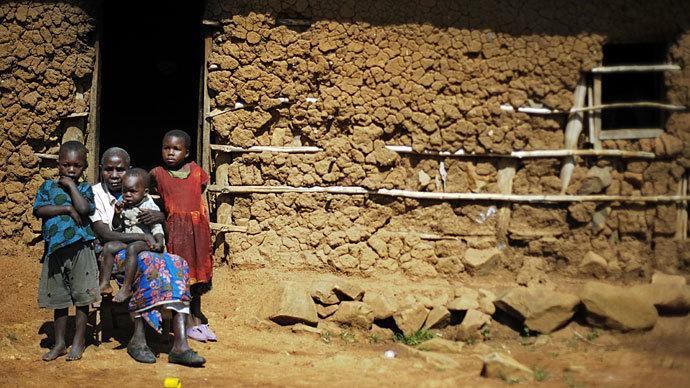
Pakistan's Musharraf trial delayed again

Treason trial was due to start December 24 but has been repeatedly delayed, mostly due to health and security scares.
The treason trial of the former Pakistani president, Pervez Musharraf, has has been delayed again after a court adjourned to consider his medical report. Lawyers representing Musharraf handed the report to the judges on Friday. Justice Faisal Arab, who is leading the three-man panel, said the court would retire until Wednesday to review the information. Musharraf, who is facing a series of criminal charges relating to his 1999-2008 rule, was taken to hospital on January 2 after suffering a heart problem on his way to a hearing.
A Pakistani newspaper, Express News, obtained a copy of the medical report. It said Musharraf was presented to the emergency department "with uneasiness in the chest, sweating and discomfort in left arm".
The document also said he had nine medical conditions including a blocked artery and "recurrent discomfort around the left shoulder joint and had suffered from frozen shoulder in the past". His legal team have asked that he be transferred to the Paris Regional Medical Centre in Paris, Texas.
Musharraf has repeatedly denounced the treason case as a "vendetta" against him.
He faces a number of charges since he returned to Pakistan in a thwarted bid to run in May's general election. These include murder charges over the assassination in late 2007 of the former prime minister, Benazir Bhutto.
The treason case was due to start on December 24 but had to be delayed after police found explosives and a detonator on Musharraf's route to court. There have been several security scares since then.