 New details of atrocities carried out by Islamist rebel fighters in the town of Adra, 20 kilometers north of Damascus, continue to pour in from survivors of the massacre there, in which reportedly at least 80 people lost their lives.
"The decapitators" is how the Adra residents, who managed to flee the violence there, now call the people who currently have the town under their control. Adra, a town with a population of 20,000, was captured by Islamist rebels from the Al-Nusra front and the Army of Islam last week, following fierce fighting with the government forces. The town’s seizure was accompanied by mass executions of civilians.
Following alarming reports of the massacre, RT contacted international rights groups including the Human Rights Watch (HRW), Amnesty International, as well as the International Committee of the Red Cross (ICRC). However, none of them were able to provide any information.
While the HRW told RT that it “cannot comment at this stage as our research is still ongoing and it has been very difficult to get accurate information about what is happening in Adra and who is responsible for the abuses,” the ICRC said they “don’t have access to this area and can neither confirm nor deny any information circulating.”
RT Arabic has managed to speak to some of the eyewitnesses of the atrocities. Most of them have fled the town, leaving their relatives and friends behind, so they asked not to be identified in the report for security reasons.
An Adra resident said he escaped from the town “under a storm of bullets.” He later contacted his colleagues, who described how the executions of civilians were carried out by the militants.
“They had lists of government employees on them,” the man told RT. “This means they had planned for it beforehand and knew who works in the governmental agencies. They went to the addresses they had on their list, forced the people out and subjected them to the so-called “Sharia trials.” I think that’s what they call it. They sentenced them to death by beheading.”
A woman, hiding her face from the camera, told RT of the beheadings she had seen.
“There was slaughter everywhere,” she said. “The eldest was only 20 years old; he was slaughtered. They were all children. I saw them with my own eyes. They killed fourteen people with a machete. I don’t know if these people were Alawites. I don’t know why they were slaughtered. They grabbed them by their heads and slaughtered them like sheep.”
It’s been reported that 80 civilians were killed in the massacre. The death toll could still grow, as currently the information coming from Adra is scarce. The town has been surrounded and isolated by the Syrian army, who have been trying to force the extremists out.
“Civilians told us that the workers of an Adra bakery were all executed and burned during the first hours of the attack. Whole families were massacred. We do not have an exact estimation of the number because we are unable to get into the town, but the number is high,” Kinda Shimat, Syria’s Social Affairs Minister, told RT.
Details of the executions are trickling out of the town as eyewitnesses tell their stories.
“They killed everyone at the Adra Ummalia police station,” another fugitive from the town told RT. “And they killed everyone at the Adra Ummalia hospital where my sister works. She stayed alive only because she didn’t show up for work that day. There are about 200 people at the police station. They are civilians. The militants are hiding among them, using them as a shield to prevent the Army from bombing the police.”
The events in Adra are a further example of the shift that has taken place within the Syrian rebel forces which has lately been dominated by Islamist extremists, according to Michel Chossudovsky, director of the Centre for Research on Globalization.
“The so-called moderate opposition forces are virtually non-existent from the military standpoint,” Chossudovsky told RT. “The only force which has funding and weapons are the Islamists, particularly Al-Nusra. And their rebel brigades are the ones committing atrocities. The divisions are occurring precisely because segments of the opposition realize that these terrorist brigades do not belong to the so-called opposition movement.”
Both the Adra massacre and the latest Aleppo bombing have signaled the escalation of violence in the war-torn country ahead of the UN-mediated continuously postponed peace talks on Syria, now set to take place in Geneva on January 22.
On Monday, UN Secretary General Ban Ki-moon called for a ceasefire ahead of the talks.
"We must have a cessation of hostilities before we begin political dialogue on Syria in Geneva," he said.
More than 100,000 people have died during the three-year-old civilian war in Syria, according to UN estimates.
Tuesday, December 17, 2013
Islamists Crimes Against Humanity: ‘Slaughtered like sheep’: Eyewitnesses recount massacre in Adra, Syria
New details of atrocities carried out by Islamist rebel fighters in the town of Adra, 20 kilometers north of Damascus, continue to pour in from survivors of the massacre there, in which reportedly at least 80 people lost their lives.
"The decapitators" is how the Adra residents, who managed to flee the violence there, now call the people who currently have the town under their control. Adra, a town with a population of 20,000, was captured by Islamist rebels from the Al-Nusra front and the Army of Islam last week, following fierce fighting with the government forces. The town’s seizure was accompanied by mass executions of civilians.
Following alarming reports of the massacre, RT contacted international rights groups including the Human Rights Watch (HRW), Amnesty International, as well as the International Committee of the Red Cross (ICRC). However, none of them were able to provide any information.
While the HRW told RT that it “cannot comment at this stage as our research is still ongoing and it has been very difficult to get accurate information about what is happening in Adra and who is responsible for the abuses,” the ICRC said they “don’t have access to this area and can neither confirm nor deny any information circulating.”
RT Arabic has managed to speak to some of the eyewitnesses of the atrocities. Most of them have fled the town, leaving their relatives and friends behind, so they asked not to be identified in the report for security reasons.
An Adra resident said he escaped from the town “under a storm of bullets.” He later contacted his colleagues, who described how the executions of civilians were carried out by the militants.
“They had lists of government employees on them,” the man told RT. “This means they had planned for it beforehand and knew who works in the governmental agencies. They went to the addresses they had on their list, forced the people out and subjected them to the so-called “Sharia trials.” I think that’s what they call it. They sentenced them to death by beheading.”
A woman, hiding her face from the camera, told RT of the beheadings she had seen.
“There was slaughter everywhere,” she said. “The eldest was only 20 years old; he was slaughtered. They were all children. I saw them with my own eyes. They killed fourteen people with a machete. I don’t know if these people were Alawites. I don’t know why they were slaughtered. They grabbed them by their heads and slaughtered them like sheep.”
It’s been reported that 80 civilians were killed in the massacre. The death toll could still grow, as currently the information coming from Adra is scarce. The town has been surrounded and isolated by the Syrian army, who have been trying to force the extremists out.
“Civilians told us that the workers of an Adra bakery were all executed and burned during the first hours of the attack. Whole families were massacred. We do not have an exact estimation of the number because we are unable to get into the town, but the number is high,” Kinda Shimat, Syria’s Social Affairs Minister, told RT.
Details of the executions are trickling out of the town as eyewitnesses tell their stories.
“They killed everyone at the Adra Ummalia police station,” another fugitive from the town told RT. “And they killed everyone at the Adra Ummalia hospital where my sister works. She stayed alive only because she didn’t show up for work that day. There are about 200 people at the police station. They are civilians. The militants are hiding among them, using them as a shield to prevent the Army from bombing the police.”
The events in Adra are a further example of the shift that has taken place within the Syrian rebel forces which has lately been dominated by Islamist extremists, according to Michel Chossudovsky, director of the Centre for Research on Globalization.
“The so-called moderate opposition forces are virtually non-existent from the military standpoint,” Chossudovsky told RT. “The only force which has funding and weapons are the Islamists, particularly Al-Nusra. And their rebel brigades are the ones committing atrocities. The divisions are occurring precisely because segments of the opposition realize that these terrorist brigades do not belong to the so-called opposition movement.”
Both the Adra massacre and the latest Aleppo bombing have signaled the escalation of violence in the war-torn country ahead of the UN-mediated continuously postponed peace talks on Syria, now set to take place in Geneva on January 22.
On Monday, UN Secretary General Ban Ki-moon called for a ceasefire ahead of the talks.
"We must have a cessation of hostilities before we begin political dialogue on Syria in Geneva," he said.
More than 100,000 people have died during the three-year-old civilian war in Syria, according to UN estimates.
Russia to bail out Ukraine for $15 billion
Bilawal Bhutto strongly condemns Rawalpindi blast
http://mediacellppp.wordpress.com/
 PPP Patron-in-Chief Bilawal Bhutto Zardari has strongly condemned the blast occurred near a Imam Bargah in Gracie Line, Rawalpindi. The Patron-in Chief of PPP expressed profound grief over the loss of precious lives of innocent people and injured in the blast.
He further expressed sympathy with the bereaved families and prayed for eternal peace for the departed souls and early recovery of injured. He also stressed that special arrangements should be made for timely treatment to all those injured in the blast.
Pakistan's Shia Genocide: Three killed, several injured in Rawalpindi blast
http://dunyanews.tv/At least three persons including a police sub-inspector died and several others injured in a blast near Imambargah in Gracy Lane here on Tuesday. According to police, the suicide blast occurred near a procession that was being taken out from the Imambargah. A number of vehicles and motorcycles were also damaged in the explosion. Law enforcement agencies cordoned off the area and rescue teams and Bomb Disposal Squad reached at the site of the incident. The injured were shifted to hospital for treatment. Police have started investigation into the incident.
Bangladesh: Pakistan asked to shut up

Information Minister Hasnanul Haq Inu has asked Pakistan to refrain from making comments on the execution of war criminal Abdul Quader Molla, terming the hanging Bangladesh’s internal matter.He communicated Bangladesh’s position a day after a resolution was passed in Pakistan’s National Assembly, expressing concern at Molla’s hanging and calling him a supporter of the ‘United Pakistan’.

Bangladesh protests Pakistan Parliament resolutions
Bangladesh has lodged ‘a strong protest’ against the resolutions Pakistan’s National Assembly adopted on Monday, summoning its High Commissioner in Dhaka, the Ministry of Foreign Affairs said.Mian Afrasiab Mehdi Hashmi Qureshi was summoned on Tuesday evening. Secretary (bilateral) Mustafa Kamal conveyed the government’s protest and handed the High Commissioner an “Aide Memoire”. According to a media release, the foreign ministry said Hashmi Qureshi was called to lodge the protest against the resolutions adopted by the Pakistan National Assembly and the Punjab Provincial Assembly. Dhaka also protested the remarks made by a senior Cabinet Minister of Pakistan on the verdict of the war crimes tribunals in Bangladesh. The Secretary conveyed in “unequivocal terms” that the war crimes trial in Bangladesh was “an internal matter” and as such “the uncalled for resolutions on the verdicts of the war crimes trial tantamount to interference in the domestic affairs of Bangladesh”. The Pakistan national and provincial assemblies adopted resolution expressing concern over the hanging of Bangladesh’s war crimes convict Abdul Quader Molla. Molla was executed last Thursday night for his crimes against humanity including mass murder during the war of independence against Pakistan. Bangladesh won independence from Pakistan in 1971 after nine months of bloody war. The Bangladesh Jamaat-e-Islami of which Molla was a leader had sided with Pakistan during the war. Pakistan Jamaat-e-Islami earlier opposed the execution saying Molla was hanged to death because “he was loyal to Pakistan and supported Pakistan army during the 1971 war”. The resolution was moved by the Pakistan Jamaat-e-Islami. Pakistan interior minister Chaudhry Nisar Ali Khan also expressed “deep grief” and concern over his execution. Newspaper ‘Dawn’ earlier reported that the minister in a statement said: “Till the very end before creation of Bangladesh, he (Molla) remained a supporter of a united Pakistan and today every Pakistani is saddened and grieved by his death”. Secretary Kamal reminded the Pakistan High Commissioner of the campaign of genocide launched against the peaceful and innocent Bangladeshi by its army and its cohorts which consisted of convicted war criminals like Abdul Quader Molla on March 25 midnight in 1971 and the reign of terror unleashed in the subsequent months. He said that the establishment of the war crimes tribunal was Prime Minister Sheikh Hasina’s 2008 election campaign pledge. “The war crimes trials are not being conducted with any specific intention to rake up memories of 1971 as misconstrued by some quarters in Pakistan but to put a legal closure to the injustice and pain suffered by the victims’ families and the Bengali nation as a whole,” he said. He also conveyed that this had been the “longstanding demand and aspiration of the people of Bangladesh”. Taking questions from the media later, Foreign Minister Abul Hassan Mahmood Ali said it was not right for Pakistan National Assembly to interfere in the war crimes trial issue which was internal affair of Bangladesh. He said Bangladesh had now reached a stage where “we are not afraid of anyone”.
Afghanistan aircraft crash kills six US soldiers
Six U.S. soldiers serving with the NATO International Security Assistance Force were killed when their Sikorsky UH-60 'Black Hawk' helicopter crashed in southern Afghanistan Tuesday, officials said. The cause of the crash is under investigation, NATO said in a statement. NATO did not disclose the nationalities of the victims but a senior U.S. defense official said they were American. There were no reports of enemy fire in the area the when helicopter went down, the NATO statement added. The helicopter crashed in the Shahjoi district of the Zabul province, according to its deputy governor Mohammad Jan Rasulyar.
Bilawal Bhutto: “Sufi culture is the answer to rising evil of extremism”
http://mediacellppp.wordpress.com/


Afghanistan: Mission accomplished is a 'dangerous' phrase

Afghanistan: How to break the BSA impasse?
Bilawal: Scion of Bhutto dynasty makes political pitch as defender of Pakistani traditions
Jon Boone

Bilawal Bhutto Zardari steps out of mother Benazir's shadow by launching festival in Pakistan People's party's Sindh heartland


Pakistan's polio workers targeted for killing
Since July 2012, 31 people have been killed in Taliban-led attacks on anti-polio campaigners in Pakistan. Most recently, two policemen providing security to polio vaccinators in Swabi were killed when gunmen on a motorbike attacked them. In a separate incident, unidentified gunmen opened fire on polio workers in Peshawar, killing one. One and a half million children are at risk of polio in Pakistan, which along with Afghanistan and Nigeria are the only three countries in the world where the virus - which spreads from person to person - remains endemic. Gulnaz Nighat, the health official in charge of the anti-polio campaign in Karachi's Gulshan-e-Buner district, vividly remembers the day her sister-in-law, Fehmida; and niece, Madiha - both health volunteers - were killed. On the morning of December 18, 2012, two men on a motorbike exchanged a quick "salaam aleikum" with the imam of a mosque in the area. Having brought their four-year-old cousin to get vaccinated, they asked for the polio workers. The imam pointed towards Fehmida and Madiha, who were administering oral polio vaccines to children at a house nearby before disappearing into the mosque. Ten minutes later, two shots were fired. The imam ran out to see Madiha fall to the ground as Fehmida ran inside the house. The two men chased her inside and gunned her down as well before escaping on their bike. Pakistani Taliban targets polio vaccination team in attack Gulnaz heard the shots but didn't make anything of it because she lived in an area where violence is rampant. A few minutes later, she heard police and ambulance sirens. "That is when I got worried. I called my niece's cell phone five times but there was no answer." Donning her abaya, she raced to the scene. "The moment I saw Fehmida and Madiha's bodies, I wanted to scream but not a sound would escape me. I kept arguing that they must have fallen asleep. I couldn't grasp the reality of what had just happened." Many expected Gulnaz to abandon the programme out of fear, but instead the killing of her relatives only emboldened her. When asked whether she feels afraid, Gulnaz told Al Jazeera, "Allah has given me strength. We are doing this for the future of this country. We need to move towards light, not disappear into darkness." After pausing for a moment, she softly stated, "Whenever I go in the field, I feel that my niece and sister-in-law are walking right beside me. It makes me stronger to know that they didn't die in vain. It is my duty to finish what we started together." Security threats In 1994, Prime Minister Benazir Bhutto launched the Lady Health Workers Programme under the auspices of the Ministry of Health in an effort to introduce essential health care facilities to vulnerable communities. Today, Pakistan has approximately 110,000 Lady Health Workers in the field. Despite running one of the largest community health-care programmes in the world, Pakistan's polio eradication efforts are troubled. Dr Elias Durry, the head of the World Health Organisation's Global Polio Eradication Initiative, told Al Jazeera that "security concerns and negotiated access are the two major problems facing polio elimination. The good news is that there have been no cases from [Pakistan's western province of] Baluchistan, and the polio epidemic is now confined to certain pockets. The bad news is the polio ban in certain areas, the killing of the workers and the lack of access that leads to missed children." This year, Pakistan has reported 75 cases of polio, with 52 cases occuring in its federally administered tribal areas. With security concerns high, polio vaccination teams lack access to the North and South Waziristan regons, meaning that close to 290,000 children have been prevented from receiving vaccinations. Nationwide, 90 percent of polio cases occur among ethnic Pashto families, many of whom live in Pakistan's northwest. Ayesha Bibi, a Lady Health Supervisor in the northwestern city of Peshawar, argues that the level of security provided by the government is severely inadequate in the country's high-risk areas. "There have been numerous killings and the girls are very scared. Volunteers have dropped out of the campaign and even the policemen are afraid," she said. Ayesha told stories of changing cars and license plates to avoid Taliban monitoring but claims that she continues to receive death threats. "This issue is very politicised," said Saira Tarrar, minister of state for national health services, regulation and coordination. "We need two policemen per team, and that would mean about 3,600 policemen. Given our security constraints, that is impossible. I also monitor the prime minister's Polio Cell. We can only provide technical support and advise on security but cannot implement it. It is not our job." Refusing the vaccine According to information obtained from the WHO, Pakistan's National Immunisation Day in November aimed to vaccinate 34 million children. But some polio workers boycotted the initiative. They earn just $2.50 a day, yet many have not been paid for the past six months. On top of that, they face tremendous risks in their day-to-day work. As a result of the boycott and the security risks, the National Immunisation Day was delayed in 70 districts across the country. Official statistics released by the WHO show that 2.34 million children were missed during this campaign - of whom 47,099 children were not immunised because their families refused the vaccine. Pakistan's polio fight faces new setback Apart from the inaccessibility of certain areas and the presence of polio "reservoirs" like Karachi, "security concerns and army operations also lead to a great movement of people. If we don't vaccinate children, they can quickly become the main carriers of the disease," said Durry. Some Pakistanis refuse to have their children vaccinated because they believe that it is "un-Islamic" or could be an American ploy to sterilise children. After news emerged that the US' Central Intelligence Agency employed a doctor to run a fake hepatitis B vaccination programme in an effort to find Osama bin Laden, conspiracy theories about health workers' activities have abounded - such as claims that vaccinators mark houses to be targeted by US drones. Polio workers have been accused of being CIA operatives, and the campaign has suffered incalculable damage. However, according to Nasir Nawaz, a district health communication support officer in Sindh province, vaccines are most often refused by Pakistanis living in very poor areas, where basic needs for water, food and electricity are unmet. In such circumstances, polio workers who bring vaccines instead of food and clothing are promptly, and aggressively, turned away. Durry told Al Jazeera, "The real heroes of this campaign are the vaccinators who keep doing their jobs in high-risk areas without fear. They are not soldiers who are trained to battle. They are just there to do the right thing. If there is anyone who deserves to receive the Nobel Prize, it is the health workers." Health workers like Ayesha refuse to leave the campaign despite the threats and the lack of pay. "We play with our lives every day, but we do this for our country. What will happen to our children if we stop? We can't give into Taliban threats." Pausing for a moment, she says proudly: "I am a woman from FATA [Pakistan's federally administered tribal areas]. I am not one of those scared ones."Thirty-one people have been killed in attacks on health workers since July 2012.
Pakistan: Twin blasts in Parachinar
Pakistan: Ahmedi doctor again denied bail on 'posing as Muslim' charge
Ahmadiyya TimesAn additional district and sessions judge on Monday dismissed the after-arrest bail petition of a doctor accused of preaching Ahmedi beliefs and distributing books containing derogatory remarks against some prophets. Dr Masood Ahmed said he had been implicated in a false case for ulterior motives. Advocate Ghulam Mustafa Chaudhry, counsel for the complainant, said Dr Ahmed had been nominated in an FIR with a specific role and the complainant had audio and video evidence to back his allegations. Chaudhry said Dr Ahmed had preached Ahmedi beliefs to a patient and given him books containing blasphemous material. Earlier, a magisterial court had previously dismissed Dr Ahmed’s post-arrest bail application. The magistrate had said that prima facie, sufficient material was on record to connect Dr Ahmed with the offence. Thus he was not entitled to bail at that stage. The FIR registered under Section 298/C at the Old Anarkali police station on behalf of Maulana Muhammad Ehsan states that when he and some friends visited Dr Ahmed’s clinic a few days back the doctor preached Ahmedi beliefs and gave them some books containing derogatory remarks against some prophets.
Pakistan: Woes of Balochistan’s coalminers
 In the vast expanse of Balochistan there is an arid area, its topography marked by low hills whose stones have been worn smooth by the millennia. Settlements are few and far between, the vegetation is sparse, and links to modernity next to non-existent — except, that is, for the dozens of trucks that ply the rough roads, billowing diesel fumes and thick black dust into the air.
This is Spin Karez, a 30-minute drive from Quetta and a hub of activity for labourers and truckers; deep under the earth lies coal. Spin Karez is where some 60 trucks a day are loaded to take to other parts of the country the coal that is increasingly in demand in a gas-starved nation.
The bustle of the loading station masks a world of inequity. In the coal mines of this area, hundreds of lives are put into daily jeopardy both by an exploitative system and the state’s silence.
One such miner is the grey-bearded Asmatullah. Face stained black, he spends his days in the dark, deep underground, digging for and then transporting coal. The working conditions for him are pitiful, severely compromising his health and quality of life. But “we earn in the day so we can eat at night,” he tells Dawn. “It is a very hard job, but poverty brought me here. What choice do I have?”
Like Asmatullah, hundreds of miners labour over 10 hours a day to earn their bread. Indeed, coal mining has become a family business: once too sick to work, the father is replaced by the son who is in due course replaced by the grandson. Most of the miners come from the Swat district, or from volatile southern Afghanistan. They start off in this line of work as young as 13 but their expected working life is only about 20 years — young miners with unpolluted lungs are always sent into the deepest part of the mines. By the age of 30, most have tuberculosis and can no longer work long or deep.
The beneficiaries are the owners of the mine; the miners themselves work for a pittance, with no safeguards in place. More than 40 miners died in a blast inside a mine on March 20, 2011, and official sources acknowledge that more than a hundred miners have died in such explosions over the past three years alone.
According to Iftikhar Ahmed, an official of the Balochistan Mines and Mineral Development Department and a former chief inspector of mines, there are about 250 coalmines employing over 12,000 people. This figure is disputed by labour leader Pir Muhammad Kakar, who puts the number at about 50,000. Other estimates put the number of mines at about 400 and the workers at over 100,000. Kakar alleges that official records show a low number of miners since most are uninsured and are not registered with employees’ old-age benefit institutions.
What there is no dispute about is that lives are risked every day even though — on paper — a supervisory system is in place. Ahmed claims that mines’ inspectors are bound to visit each mine 10 times a month. “Their job is to check the working conditions of the miners,” he says. “In case of violations, the inspector has the power to seal it.”
Nevertheless, he admits that mine-owners are influential people and the government department often faces political pressure over the closure of a mine. And the story told by the miners themselves puts into serious doubt the effectiveness of the supervisory system.
Miner Muhammad Shafi, for example, says that even over the course of a year, inspectors will not be seen at a mine. “Officials only show up if there’s a blast,” he says. Alongside the men looking aged beyond their years are children collecting and transporting coal. Ten-year-old Azizullah says that he earns Rs200 a day, and goes to a mosque in lieu of school. The same story is told by 9-year-old Sher Ali, who has been working in Spin Karez for the past two years. There are dozens like them, mostly from Afghan refugee families. What their future will be like can be gauged easily. Even leaving aside the brutal manual labour, coal mining is extremely hazardous. “The dust enters their lungs and results in several diseases, most commonly the inability to take a breath,” says chest-physician Dr Shireen Khan. The Geological Survey of Pakistan says that coal is amongst the 106 minerals found in resource-rich Balochistan. But that matters little to the miners, in whose experience officialdom is unconcerned about the violation of labour laws and the abysmal working conditions in coalmines. The trucks from Spin Karez lumber away to supply coal to industrial cities that have been badly hit by gas shortages; meanwhile, there is criminal silence over the exploitation that produced it.
Gas pipeline: Iranian firm offers to finance Pakistan’s side
The Express TribuneAn Iranian firm has expressed interest in completely financing and constructing Pakistan’s segment of a gas pipeline that will come from Iran, an offer that comes after cancellation of a $500 million loan by Tehran earlier. According to sources, Pakistan has got the offer from Jahanpars Engineering and Construction, which could undertake entire engineering, procurement and construction work and provide $1.8 billion for the Iran-Pakistan (IP) gas pipeline project. The company has expertise in engineering works and has the capacity and reputation to engage in mega infrastructure projects. However, the gas pipeline is a project between governments of the two countries, which will be implemented through their nominated entities. Therefore, Pakistan has asked the management of Jahanpars to contact government authorities in Tehran to press on with the plan. “Working groups of the two countries will consider the financing and construction offer from the company,” a source said. Earlier, the two sides had agreed to give the pipeline construction contract to Tadbir Energy of Iran, which in response would provide a $500m loan for laying the pipeline in Pakistan. However, Pakistan insisted that the contract price negotiated with Tadbir was higher and the contract could not be awarded to it. During a visit of a Pakistani delegation to Tehran last week, Iran also refused to provide the $500 million loan. When approached, former adviser to prime minister on petroleum and natural resources Dr Asim Hussain, who had pursued the project, said they had convinced the Iranian government to provide $500 million for the pipeline. “We had also left $470 million in the national exchequer to fund the project,” he said, adding now the new government should develop required infrastructure. “Although the contract price was higher, there was no other option. This is not a time to scrap the deal,” Hussain remarked. In the long term, the deal would have a positive impact on the country’s economy when compared to consumption of furnace oil, he added. According to a report prepared by the Ministry of Petroleum and Natural Resources, if furnace oil-based power generation is replaced with imported gas, it will lead to annual savings of $2.4 billion. It said IP gas would cause just 20% increase in the average gas basket price in the country if 750 million cubic feet per day (mmcfd) is imported. Under the project, Pakistan will import 750 mmcfd, which could be increased to one billion cubic feet. The Balochistan government seeks 250 mmcfd for consumption at the Gwadar Port and the Centre can go for increased supplies to meet the needs of the province.
Pakistan: Ch Nisar,The minister speaks again
Pakistan: Damning mollycoddling

Bilawal Bhutto to Organise Basant Festival in Karachi
Pakistan People's Party leader Bilawal Bhutto Zardari has made arrangements for hosting the popular festival in this port city in February.
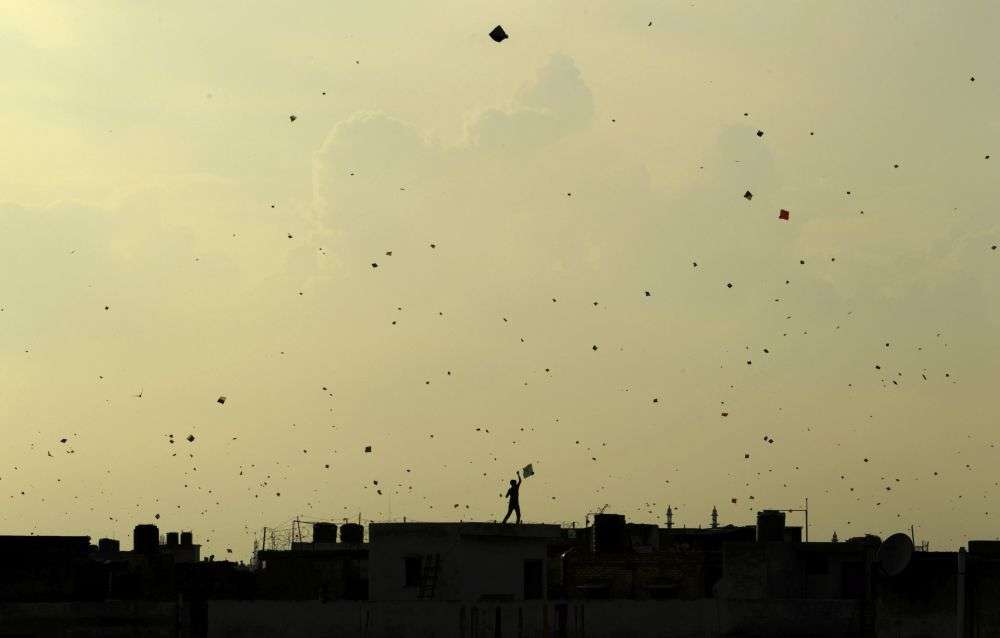
For the first time in years, Karachi will host Basant on the beach as part of a "Sindh festival" aimed at promoting, protecting and preserving the Indus Valley Civilisation.
 Speaking about his plans, Bilawal mentioned how Basant was banned by the PML-N government in Punjab.
"We are promoting the culture of peace, while terrorists want to impose their culture through the barrel of a gun," the patron-in-chief of PPP said.
"I have realised that Pakistan is gradually moving towards becoming 'banistan'. If we find someone offensive on YouTube, we ban the website. If we can't compete with the Indian cinema, we ban movies," he said at a ceremony here last night.
The PML-N banned Basant on the ground that the glass-coated twine used to fly kites during the festival had caused many deaths. Civil society groups say the ban was influenced by pressure from right-wing and extremist groups which claim the festival has "Hindu overtones".
Despite requests from civil society groups and associations representing thousands of kite-makers, the Punjab government refused to lift the ban.
Bilawal's sister Bakhtawar is also involved in planning and organising the festival.
Bilawal announced that opening ceremony of the Sindh Festival 2014 would be held in Mohenjodaro.
"Let's bask in the glory of Indus civilisation. Let's live in the Pakistan we want to see. Move away London 2012, we have Mohenjodaro 2014," he said.
Bilawal said that Pakistanis were being dragged backwards, towards "more regressive dark ages".
"We have been taught distorted history about our culture and religion by military dictators like Zia-ul-Haq, and his proteges. They want to put a gun to our heads and impose their rules on us. But we won't let them," Bilawal said.
Introducing the events to be held during the two-week festival, Bakhtawar said it would have "best of what Sindh and Pakistan has to offer".
She said the festival would have a cattle race, grand Mushaira, donkey cart race, deep sea fishing tournament, among others.
It will be held in various parts of Sindh and Karachi, Bilawal said.
"Our heritage is under threat," Bilawal said.
A 'fictionalised and imported' culture is being imposed on Pakistan "despite the fact that the country has its own rich cultural heritage", he asserted.
"Terrorists want Pakistan to have a primitive society ...It is up to us to preserve our own history and culture," he said.
"I'm proud to be a Sindhi, Muslim and Pakistani...Let's preserve, protect and promote Sindh. Let's preserve, protect and promote Pakistan's heritage," he added.
Bilawal stressed that the Sindh festival would be an 'apolitical' festival.
He said that every citizen of Pakistan, including Prime Minister Nawaz Sharif, his daughter, Imran Khan and members of all political parties are invited to the Sindh festival.

Bangladesh: Khaleda a Pakistani agent: Hanif
 The joint general secretary of the ruling Awami League, Mahbub-ul-Alam Hanif, on Monday alleged that the BNP-Jamaat coalition, under the leadership of Bangladesh Nationalist Party (BNP) chairperson Khaleda Zia, was conspiring to turn the country into a failed state. He was addressing a pre-procession rally in front of the Institution of Engineers in the city. The AL joint general secretary alleged that the Pakistani Jamaat-e-Islami staged the Gayebena Namaj-e-Janaza for the execution of Jamaat leader Abdul Quader Mollah, which makes it clear that they are still conspiring to destabilise Bangladesh and that BNP chairperson Khaleda Zia is playing the role of a Pakistani agent.
Hanif said: “The BNP is killing people, hurling bombs on them in the name of enforcing a political programme when we are observing Victory Day. So it is clear that the BNP–Jamaat alliance wants to turn the country into Pakistan.”
Referring to the war crimes trials, the AL leader said the rest of the verdicts of the war crimes trials would be executed under the leadership of Prime Minister Sheikh Hasina, to free the nation from the curse of the country’s 30 lakh martyrs.
“We promised the nation that we would try the war criminals who committed crimes against humanity during the Liberation War in 1971. We went a step ahead in fulfilling our commitment by executing war criminal and Jamaat leader Abdul Quader Mollah,” Hanif claimed.
Vowing to build up a ‘Rajakar’-free Bangladesh, the AL leader said: “We got the country after millions sacrificed their blood and we shall save the country, sacrificing our last drop of blood, if necessary.”
The AL leader said BNP-Jamaat’s anarchy would not be tolerated any more. The leaders and workers of the AL-led 14-party alliance would resist their destructive activities across the country.
Among others, Dhaka city AL acting president MA Aziz, Awami League central leaders Shahara Khatun, Jahangir Kabir Nanok, advocate Qamrul Islam, Mofazzal Hossain Chowdhury Maya, Ahmed Hossain, Khalid Mahmud Chowdhury and Asim Kumar Ukil were present at the rally.
Meanwhile, as in previous years, thousands of Awami League supporters, including many from its frontal organisations, brought out a victory procession carrying banners, festoons, placards and portraits of Prime Minister Sheikh Hasina and her father Bangabandhu Sheikh Mujibur Rahman, from the vicinity of the Institution of Engineers shouting the slogan ‘Joy Bangla… Joy Bangabandhu’, to observe the 43rd Victory Day.
With a vow to resist anti-liberation forces, the leaders and workers of the ruling Awami League marched through the city’s main streets, throwing traffic out of gear, to converge at Dhanmondi 32.
Monday, December 16, 2013
Al-Qaida militants kill over 100 Syrians near Damascus

Moscow confirms deployment of Iskander missiles on NATO borders

Russia Denies Blackmailing Ukraine Over EU Deal
 Russia has never threatened Ukraine with sanctions over a cooperation agreement with the European Union, Foreign Minister Sergei Lavrov said Monday.
But Moscow did warn Kiev in advance that Ukraine could lose its favorable status in trade relations with Russia, Lavrov said.
“We have not blackmailed anyone,” the minister told Rossiya 24 television after a meeting with his EU counterparts in Brussels. “We are not talking about sanctions, we are simply saying that we would return to normal trade relations with Ukraine or any other country that would choose this way [association with EU].”
Lavrov said that the sides agreed that Ukraine’s sovereignty should be respected and that people should have a free choice as to how they want their state to develop.
“Any decision as to how to develop its economy, how to build relations with its leading partners… must be taken without external interference, in line with the country’s national interests,” he said.
Both the EU and Moscow have accused each other of using strong-arm tactics to secure economic ties with Kiev.
But Lavrov said that the meeting in Brussels showed that a large number of EU countries believed the crisis in Ukraine should be discussed in a “tripartite format”. Russia’s views had been heard “with understanding” by EU members.
The talks focused on prospects for political dialogue between Russia and the European Union on Ukraine and other issues including the civil war in Syria.
Kiev turned its back on a widely expected Association Agreement to strengthen trade links with the EU last month, saying it would harm economic relations with Russia. President Yanukovych is expected in Moscow Tuesday for talks with President Vladimir Putin.
Ukraine’s rejection of the EU deal has prompted mass demonstrations in protest and thrown the country into a political crisis as hundreds of thousands of people attend rallies demanding the dissolution of the government and early elections.
Prime Minister Mykola Azarov said last Wednesday that Kiev would return to talks on the agreement with the EU in the spring. Brussels suspended negotiations on Sunday after the EU’s enlargement chief Stefan Fuele dismissed the Ukrainian government’s arguments as having “no grounds in reality.”
Judge: NSA’s collecting of phone records is probably unconstitutional
A federal judge ruled Monday that the National Security Agency’s daily collection of virtually all Americans’ phone records is almost certainly unconstitutional. U.S. District Judge Richard J. Leon found that a lawsuit by Larry Klayman, a conservative legal activist, has “demonstrated a substantial likelihood of success” on the basis of Fourth Amendment privacy protections against unreasonable searches. Leon granted the request for an injunction that blocks the collection of phone data for Klayman and a co-plaintiff and orders the government to destroy any of their records that have been gathered. But the judge stayed action on his ruling pending a government appeal, recognizing in his 68-page opinion the “significant national security interests at stake in this case and the novelty of the constitutional issues.” “I cannot imagine a more ‘indiscriminate’ and ‘arbitrary invasion’ than this systematic and high tech collection and retention of personal data on virtually every single citizen for purposes of querying and analyzing it without prior judicial approval,” said Leon, a judge on the U.S. District Court for the District of Columbia. “Surely, such a program infringes on ‘that degree of privacy’ that the founders enshrined in the Fourth Amendment.” The strongly worded decision stands in contrast to the secret deliberations of 15 judges on the nation’s surveillance court, which hears only the government’s side of cases and since 2006 has held in a series of classified rulings that the program is lawful. A Justice Department spokesman, Andrew Ames, said Monday that the government was reviewing Leon’s decision. “We believe the program is constitutional as previous judges have found,” he said. The challenge to the NSA’s once-classified collection of phone records is one of a series of cases filed in federal court since the program’s existence was revealed in June by former NSA contractor Edward Snowden. Snowden praised the ruling in a statement made to journalist Glenn Greenwald, who received NSA documents from Snowden and first reported on the program’s existence. “I acted on my belief that the NSA’s mass surveillance programs would not withstand a constitutional challenge, and that the American public deserved a chance to see these issues determined by open courts,” said Snowden, who has received temporary asylum in Russia, where he is seeking to avoid U.S. prosecution under the Espionage Act for leaking NSA documents. “Today, a secret program authorized by a secret court was, when exposed to the light of day, found to violate Americans’ rights. It is the first of many.” The ruling also comes as Congress is debating whether to end the NSA’s “bulk” collection of phone data or endorse it in statute. The White House, U.S. officials say, supports maintaining the program. “It will be very difficult for the administration to argue that the NSA’s call-tracking program should continue when a federal judge has found it to be unconstitutional,” said Jameel Jaffer, deputy legal director of the American Civil Liberties Union, which has also sued the government over the program’s constitutionality. But George Washington University law professor Orin Kerr said, “It gives opponents of the NSA program more fuel to add to the fire, but its legal impact is quite limited because the case now just goes to the court of appeals.” The government has stressed that the program collects only “metadata,” such as numbers dialed and the times and lengths of calls, but no phone content or subscriber names. Officials say that only numbers linked to suspected terrorists are run against the database. Leon’s opinion countered that the program is so sweeping — the database easily contains billions of records — that it amounts to a “dragnet” that intrudes on the constitutional expectation of privacy. He dismissed the government’s claim that “special needs” requiring quick access to data that could thwart a terrorist plot make a warrant impracticable. “No court has ever recognized a special need sufficient to justify continuous, daily searches of virtually every American citizen without any particularized suspicion,” he said. The government’s legal justification for the call-tracking program is based on a 1979 case, Smith v. Maryland, involving the surveillance of a criminal suspect over a two-day period. In that case, the Supreme Court said that Americans have no expectation of privacy in the telephone metadata that companies hold as business records, and that therefore a warrant is not required to obtain such information. A succession of judges on the Foreign Intelligence Surveillance Court have adopted the government’s argument based on that ruling. But Leon said the question the Supreme Court confronted in 1979 is not the same as the one he was faced with. “Indeed, the question in this case can more properly be styled as follows: When do present-day circumstances — the evolutions in the government’s surveillance capabilities, citizens’ phone habits, and the relationship between the NSA and telecom companies — become so thoroughly unlike those considered by the Supreme Court thirty-four years ago, that a precedent like Smith does not apply?” he wrote. “The answer, unfortunately for the government, is now.” Kerr said Leon is wrong to suggest that Smith no longer applies. That decision, he said, draws a clear distinction between the collection of data on numbers dialed and on call content. The metadata information the government is gathering today, Kerr said, is the same type of information the court said that law enforcement could collect more than 30 years ago. “The opinion is more valid now than it was,” Kerr said, adding that “it’s up to the Supreme Court to overturn its decision, not trial judges.” Leon, who was nominated by President George W. Bush and appointed to the bench in 2002, said the government has played down the program’s invasiveness. The “almost-Orwellian technology” that allows the government to collect, store and analyze phone metadata is “unlike anything that could have been conceived in 1979” and, “at best, the stuff of science fiction,” he said. Klayman, founder of the public interest group Freedom Watch, called Leon’s ruling “courageous.” “This is a warning to both parties that they'd better start observing the rule of law and protecting the American people or there will be severe consequences,” he said. Meanwhile, Verizon Communications, named as a defendant, filed a motion Monday asking to be dismissed from the case. The request was based in part on a certification also filed Monday by the Justice Department that the company has immunity against lawsuits since it was compelled by a court order to comply with the government’s request for data. That immunity was authorized under a 2008 law known as the FISA Amendments Act. Leon rejected the government’s argument that Klayman and a co-plaintiff — the father of an NSA cryptologist killed in Afghanistan in 2011 — lacked standing to bring the suit because they were customers of Verizon Communications subsidiary Verizon Wireless, which has not been publicly revealed as taking part in the program. “The government,” he said, says it has created a “comprehensive” database — “in which case, the NSA must have collected metadata from Verizon Wireless, the single largest wireless carrier in the United States.” Yet, at the same time, he wrote, the government asserts that the plaintiffs lack standing “based on the theoretical possibility” that the NSA has not collected Verizon’s records. “Candor of this type defies common sense and does not exactly inspire confidence!” he wrote. To draw an analogy, he wrote, omitting Verizon Wireless, AT&T or Sprint “would be like omitting John, Paul and George” and building a “Ringo-only database.”By Ellen Nakashima and Ann E. Marimow

Obama to meet with tech execs to talk NSA, health care
North Korean army stages mass rally as loyalty to Kim dynasty
The North Korean army stages a massive rally to pledge its loyalty to the Kim dynasty, as the reclusive country prepares to mark the second anniversary of the late leader Kim Jong-il's death.
Bangladesh & Hamid Mir: A rose not to be taken
Pakistani journalist Hamid Mir’s recent article in daily Jang, asking for the release of Ghulam Azam, the Bangladesh mastermind of ‘71 war crimes, appeared as a surprise gift for those who witnessed Mir’s photo session in front of Islamabad Press Club demanding Pakistan’s apology for the genocide of 1971.By Maskwaith Ahsan

Hamid Mir became a hero in Bangladesh for this photo session and a few reconciliatory articles published in daily Prothom Alo. Mir’s father Waris Mir stood up against the ‘71 killings and was hence humiliated and defamed as a traitor by the then establishment. Recently, Hamid Mir visited Dhaka to receive national recognition on behalf of his father’s heroic role in 71 as a friend of Bangladesh and humanity. With the help of his father’s credibility and standing Hamid Mir has been portraying himself as a politically correct activist in Bangladesh. However, all it took was an article in favor of Ghulam Azam to expose Hamid’s deceptive agenda. In his article he has tried to defame the Bangladesh tribunal as being a farce and a mere conduit for political witch hunting. Interestingly, it’s the same line of propaganda used by the lobbyists hired by Jamaat leaders of Bangladesh. Hamid Mir has used the same illogical argument that when Pakistan could not bring to trial the 195 army officers involved in the killings of ’71, what then is the basis if trying their Bangladeshi collaborators! Ironically for Hamid Mir, he defeated his own argument in the article by writing that had the war criminals listed in the Inquiry commission report of 1972 been punished, Pakistan and Bangladesh could have reconciled the tragedy of ‘71. Basically, he accepts that war crimes were committed but doesn’t want the Jamaat perpetrators punished. To give him credit, Hamid Mir has raised an important point: Awami League won the 1970 national elections with a clean majority and by launching an operation in the then east Pakistan, the Pakistan army committed a crime by violating the rights of the majority and by that reason violated the rules of the state, so why didn’t Pakistan try those involved with an illegitimate army operation against the legitimate majority of the then East Pakistan? Having raised this question it is now Hamid Mir and his politically correct friends’ responsibility to request the Pakistan Government to seek state apology for ‘71 and to implement the commission report by trying those Pakistanis implicated in the 1972 inquiry commission report. Bangladesh cannot take responsibility for the failure of Pakistan’s actions. At our end, the youth of Bangladesh voted Awami League into power in 2008 for bringing war criminals to justice. With that mandate Awami League formed this tribunal to try top local collaborators who were involved in the civilian killings of 1971. My observation so far has been that Hamid Mir writes secular columns in English and reactionary ones in Urdu. He knows well that the ‘burger’ crowds of Pakistan don’t/can’t read Urdu and that’s why they invite him to fashionable human rights rallies, whereas his ‘bun kabab’ fans read only Urdu and consider him an icon of right-wingism. In this manner he gets to swing both ways: by seeking apology for ‘71 in English and in the same breath by seeking pardon for Ghulam Azam’s war crimes in Urdu. This sort of blatant hypocracy earns nothing; it only unmasks the heart of darkness. Hamid Mir suffers from the dilemma of the contrast between his father’s ideology and of his own. His father’s influence inspired him to become a part of the movement for seeking apology for the 1971 crimes, while his Jamaat ties forced him to call Ghulam Azam a hero. As evident on social media, this dilemma has cost Hamid Mir his young followers in Bangladesh in a matter of minutes. Bangladeshi thinker Professor Humayun Azad once made a very generic and personal comment that he could not trust a Pakistani, not even one offering him a rose. In my case I would narrow it down to just I would say the same about Hamid Mir.

Subscribe to:
Posts (Atom)