 Over 124 million people in the European Union – or almost a quarter of its entire population - live under the threat of poverty or social exclusion, a report by EU’s statistical office has revealed.
Last year, 124.5 million people, or 24.8 percent of Europe’s population were at risk of poverty or social exclusion, compared to 24.3 percent in 2011 and 23.7 percent in 2008, the Eurostat said in a document published earlier in the week.
The data included people who were falling within at least one of the three categories: at-risk-of-poverty, severely materially deprived or living in households with very low work intensity.
Bulgaria (49 percent), Romania (42 percent) and Latvia (37 percent) top the list, followed by Greece, Lithuania and Hungary. In comparison, the Netherlands and the Czech Republic (both 15 percent), Finland (17 percent), Sweden and Luxemburg (both 18 percent) can boast the lowest number of people at risk of poverty.
However, even founding EU countries like Italy are struggling more than ever. Some 18.2 million -Italians are facing poverty – that is the highest number in the EU, even though proportionally (29.2 % of the population) the country seems to be doing not too bad.
With the Italian economy going through its longest recession since the World War II, over 12 percent of adults are unemployed, while four out of ten young people don't have a job. There are no official figures on the homeless, RT’s Egor Piskunov reports.
Marco, 46, used to work as a pizzaiolo (pizza maker) - many Italians used to call it ‘the golden skill’ which would always get you work in Rome. However, it did not hold true for Marco, who was sacked one day and has not been hired since. He has been living on the street for about four years now and says he sees little chance of fixing his life.
“When you live on the street, survival is what takes up most of your time. Simply getting a shower is a challenge. It takes so much time to take care of yourself as a normal person. You reach the end of the day and you’re exhausted and depressed,” he told RT.
With the number of those in need increasing, more Italians are beginning to turn to charity and humanitarian aid for help.
Pietro Zezza is a volunteer at Caritas Food Emporium in Rome – a place where people can get food for free.
“Two years ago we had about 55 percent of foreigners and 45 percent of Italians coming here,” he said. “Today we have about 65 percent of Italians and 35 percent of foreigners. So the figures are reversing.”
Groceries from the shelves of this “shop” are given in exchange for points allocated to low income families by the global charity network Caritas. Most of the food is near its expiration date, except for food specially labeled aid.
Caritas is raising the alarm, stressing that around one third of all Italian children are now at risk of poverty and are lacking basic essentials such as protein-rich foods, heating and clothes.
Sunday, December 8, 2013
Quarter of Europeans face poverty – Eurostat
Over 124 million people in the European Union – or almost a quarter of its entire population - live under the threat of poverty or social exclusion, a report by EU’s statistical office has revealed.
Last year, 124.5 million people, or 24.8 percent of Europe’s population were at risk of poverty or social exclusion, compared to 24.3 percent in 2011 and 23.7 percent in 2008, the Eurostat said in a document published earlier in the week.
The data included people who were falling within at least one of the three categories: at-risk-of-poverty, severely materially deprived or living in households with very low work intensity.
Bulgaria (49 percent), Romania (42 percent) and Latvia (37 percent) top the list, followed by Greece, Lithuania and Hungary. In comparison, the Netherlands and the Czech Republic (both 15 percent), Finland (17 percent), Sweden and Luxemburg (both 18 percent) can boast the lowest number of people at risk of poverty.
However, even founding EU countries like Italy are struggling more than ever. Some 18.2 million -Italians are facing poverty – that is the highest number in the EU, even though proportionally (29.2 % of the population) the country seems to be doing not too bad.
With the Italian economy going through its longest recession since the World War II, over 12 percent of adults are unemployed, while four out of ten young people don't have a job. There are no official figures on the homeless, RT’s Egor Piskunov reports.
Marco, 46, used to work as a pizzaiolo (pizza maker) - many Italians used to call it ‘the golden skill’ which would always get you work in Rome. However, it did not hold true for Marco, who was sacked one day and has not been hired since. He has been living on the street for about four years now and says he sees little chance of fixing his life.
“When you live on the street, survival is what takes up most of your time. Simply getting a shower is a challenge. It takes so much time to take care of yourself as a normal person. You reach the end of the day and you’re exhausted and depressed,” he told RT.
With the number of those in need increasing, more Italians are beginning to turn to charity and humanitarian aid for help.
Pietro Zezza is a volunteer at Caritas Food Emporium in Rome – a place where people can get food for free.
“Two years ago we had about 55 percent of foreigners and 45 percent of Italians coming here,” he said. “Today we have about 65 percent of Italians and 35 percent of foreigners. So the figures are reversing.”
Groceries from the shelves of this “shop” are given in exchange for points allocated to low income families by the global charity network Caritas. Most of the food is near its expiration date, except for food specially labeled aid.
Caritas is raising the alarm, stressing that around one third of all Italian children are now at risk of poverty and are lacking basic essentials such as protein-rich foods, heating and clothes.
In Soweto and Beyond, Mandela Still Serves as a Beacon of Hope
 By JOHN ELIGON and NICHOLAS KULISH
The walls of the Regina Mundi Catholic Church here are riddled with bullet holes from the days when it was a center of the struggle against apartheid. But on Sunday, parishioners instead focused on the traces of Nelson Mandela.
Mr. Mandela’s image is etched in a stained-glass window at the back of the church. A page from a guest book with his signature hangs in the office. And older worshipers still recall his visits to the church, not far from his former home in the township.
“I thought of the old man, when he used to say, ‘We blacks will go and will fight for our freedom,’ ” Tom Nakene, 55, a lifelong member of the parish, said after a three-hour Mass on Sunday.
“I remembered him, and I prayed for him,” Mr. Nakene said, “wherever he is.”
South Africans across the country began a week of commemorations of Mr. Mandela’s life on Sunday with what officials called a day of prayer and reflection. People gathered in houses of worship, private homes and even open fields to pay homage to the man who embodied the struggle against apartheid.
For the country’s politicians, Sunday was a day to urge unity and continuity after the death of Mr. Mandela at 95 on Thursday, and national and provincial officials, including President Jacob Zuma, appeared at churches and other places of worship across the country.
In Bryanston, near Johannesburg, Mr. Zuma attended a Methodist service, sitting alongside members of Mr. Mandela’s family and his former wife, Winnie Madikizela-Mandela. Mr. Mandela received his early education in Methodist schools.
“We should not forget the values that Madiba stood for and sacrificed his life for,” Mr. Zuma said, referring to Mr. Mandela by his clan name, as he urged South Africans to be guided by Mr. Mandela’s example as an opponent of oppression, a fighter for freedom and a model of forgiveness.
For others, the eulogies were freighted with concern about the future, adding a sharper edge to their prayers for peace in the post-Mandela era. In the vast squatter camp of Diepsloot, north of central Johannesburg, where thousands of South Africans and immigrants live in tin shacks with no plumbing and often no electricity, people gathered in tin-walled churches, under trees and in fields to offer prayers for Mr. Mandela.
“Thank you, Madiba,” a group of women from Zimbabwe sang plaintively in a meadow of wildflowers.
“Nelson Mandela was a leader chosen by God, and now God has called him home,” said Virginia Sibanda, a 40-year-old housekeeper from Harare, Zimbabwe’s capital, who has lived in Diepsloot for nearly two decades. “He was a leader not just for South Africa but for all Africans, and the world.”
Many migrants living in Diepsloot worried that Mr. Mandela’s death would leave them more vulnerable to the xenophobic attacks they have suffered in recent years. With rising crime, joblessness and deteriorating living conditions, South Africans have frequently turned on those from other countries. Mr. Mandela and his foundation had sought to reduce such violence.
“Rumors have been passing through the town that once Mandela dies, we immigrants will be attacked,” said Nkosi Nkomo, the pastor of a small church with a largely Zimbabwean congregation. He spent the weekend outdoors with a small group of followers, praying by a campfire shaded by trees.
“Lord, bring us peace in this land,” Mr. Nkomo said. “Let Mandela’s spirit live with us.”
The unease about a future without Mr. Mandela was only an undercurrent in a broader celebration of a leader whose life has become a parable for the struggle for freedom.
In other parts of the world, people also congregated to remember Mr. Mandela, whose long incarceration and subsequent election as South Africa’s first black president inspired a following far beyond the frontiers of his land. At a service in London, the Most Rev. Justin Welby, the archbishop of Canterbury, called Mr. Mandela South Africa’s “saving grace.”
At another church, this one in New York, Mayor-elect Bill de Blasio promised to bring the spirit of Mr. Mandela to his mayoralty. At the Christian Cultural Center in Brooklyn, Mr. de Blasio told about 3,000 people: “Tomorrow, we start living out the lessons of Nelson Mandela.”
On Tuesday, tens of thousands of South Africans and many foreign dignitaries are expected to gather for a national memorial in a World Cup soccer stadium just outside Soweto. Mr. Mandela’s body will then lie in state for three days in Pretoria at the Union Buildings — once the emblem of the white establishment he helped to overthrow.
Many world leaders, including President Obama, are expected to travel to South Africa this week for the formal commemorations. Ban Ki-moon, the United Nations secretary general, said through a spokesman late Saturday that he would attend Tuesday’s commemoration at the soccer stadium. The South African government said Sunday that at least 53 heads of state planned to attend.
The week of memorials will end Sunday with a state funeral in Mr. Mandela’s remote childhood village of Qunu in the Eastern Cape region. The emphasis on spirituality on Sunday recalled the role that religion played on both sides of South Africa’s epic racial and political battle.
Among the dominant white Afrikaner minority of that era, the Dutch Reformed Church was often depicted as offering scriptural justification for the policies of racial separation that became the code of power after the Afrikaner-dominated National Party was elected in 1948.
Those who dissented, including Beyers Naude, a prominent Afrikaner cleric, were shunned. Mr. Naude was eventually declared a barred person.
During years of protest, South African clerics like the Anglican archbishop Desmond M. Tutu often were embroiled in the turmoil of the country’s segregated black townships. They led calls for the end of apartheid even as they sought to temper the anger of nonwhite South Africans toward compatriots they viewed as stooges of white rule.
Some churches, most notably Regina Mundi in Soweto, became crucibles of dissent. On Sunday, the pastor, the Rev. Sebastian J. Rossouw tried to temper concerns over the future by saying Mr. Mandela could inspire others with his vision for the country.
Some people have noted, Father Rossouw told hundreds of congregants, that “we will not see another person of his caliber for ages to come.”
“I beg to differ,” he said.
There can be another Madiba, he later added, saying, “One of us sitting here can be like him.”
‘Saudi intelligence chief met with Israeli officials in Geneva’
Bahraini court jails 12 anti-regime protesters
 A court in Bahrain has sentenced 12 anti-regime protesters, including three minors, to prison terms of up to five years as the Al Khalifa regime steps up its crackdown on dissent.
On Sunday, the court sentenced the nine adults to five years in jail each. The three minors were also given three-year prison terms each.
Manama has accused the defendants of attacking a police patrol with petrol bombs.
On December 2, a Bahraini court sentenced 16 anti-regime activists to seven years in prison each for allegedly attacking a police vehicle during an anti-government demonstration.
According to Bahrain’s main opposition party, al-Wefaq, the Manama regime's harsh clampdown on pro-democracy activists has intensified over the past months.
In October, Philip Luther, Amnesty International’s director for the Middle East and North Africa, said, “The [Bahraini] authorities simply slap the label 'terrorist' on defendants and then subject them to all manner of violations to end up with a 'confession'.”
Bahrainis have been staging demonstrations since mid-February 2011, calling for political reforms and a constitutional monarchy, a demand that later changed to an outright call for the ouster of the ruling Al Khalifa family following its brutal crackdown on popular protests.
Scores have been killed, many of them under torture while in custody, and thousands more detained since the popular uprising started in the kingdom.
Physicians for Human Rights says doctors and nurses have been detained, tortured, or disappeared because they have "evidence of atrocities committed by the authorities, security forces, and riot police" in the crackdown on anti-government protesters.
Protesters say they will continue to hold anti-regime demonstrations until their demands for the establishment of a democratically-elected government and an end to rights violations are met.
Time to Leave Afghanistan: Hamid Karzai Gives Washington a Welcome Shove
The longest war in American history drags on, with Washington a captive of purposeless inertia. The Obama administration should bring all U.S. forces home from Afghanistan and turn the conflict over to the Afghans. After Afghan-based terrorists orchestrated the 9/11 terrorist attacks, Washington invaded the Central Asian nation. The Bush administration had little choice but to make an example of the Taliban regime as well as target al Qaeda. Members of any government giving sanctuary to those who attack Americans need to understand that they will no longer be members of any government. But that lesson was delivered 12 long years ago when U.S. forces aided indigenous opponents of the Taliban to capture Kabul. If nation-building in Central Asia ever was a realistic objective, the moment soon passed. The Bush administration shifted its gaze to Iraq and careened to disaster along the Euphrates. Yet President Bush continued to pursue a resource-starved counter-insurgency campaign in Afghanistan. The conflict wasn't as costly -- in lives or money -- as Iraq, but the war lacked serious strategic rationale. As 9/11 receded into the past, fewer Americans had any idea what the fighting was about. President Barack Obama took office having opposed the Iraq invasion, but twice increased the number of troops in Afghanistan. Still, he promised that U.S. forces would return home. Last year Vice President Joe Biden stated simply: "We are leaving. We are leaving in 2014. Period." But now the administration wants American troops to stick around, for years, if not forever. The newly negotiated Bilateral Security Agreement would take effect on January 15, 2015 and run until "the end of 2024 and beyond." The administration apparently hopes to keep between 8,000 and 15,000 troops on station. The president has made Afghanistan his war. Why? Back when even some Republicans began turning against the conflict, the Heritage Foundation's Baker Spring said the Afghan war was necessary to "defend the vital interests of the United States." These days "vital interests" have taken over the role of "patriotism," which Samuel Johnson famously called "the last refuge of a scoundrel." Almost any issue any where in the world is routinely elevated to "vital" status to justify extensive and expensive U.S. intervention. Afghanistan never was vital to America. Not even during the Cold War. After the Soviet invasion in December 1979 the conflict offered a convenient and inexpensive (for Washington, not the Afghan people) opportunity to bleed Moscow dry. Less then a decade later Soviet forces withdrew. The U.S. government has been criticized for then losing interest in the struggle, but there was little Washington could have done. The civil war continued. There was no peace to keep and only direct military intervention could have imposed one. America had neither cause nor ability to do so. Osama Bin Laden again focused U.S. attention on Afghanistan, but only the transitory terrorist connection made control of Kabul critical to America. With the displacement of al Qaeda and punishment of the Taliban, Afghanistan quickly receded in importance. Observed Biden: "we went there for one reason: to get those people who killed Americans, al Qaeda. We've decimated al Qaeda central. We have eliminated Osama bin Laden. That was our purpose." So what is Washington doing there today? A mix of nation-building, democracy-promotion, and humanitarian intervention. The State Department's special envoy to Afghanistan and Pakistan, James F. Dobbins, warned that if the U.S. fails to maintain its presence "you project into the upcoming electoral period a degree of instability caused by growing alarm at Afghanistan returning to the 1990s." The election could turn into "winner takes all" and "every man for himself, where losers in the election don't just go into the opposition but get killed or go into exile." However, if the Afghan political system is as fragile as Dobbins suggests despite years of allied military and financial support, the few thousand personnel the Obama administration hopes to keep in country won't make much difference. In fact, social engineering in Afghanistan has failed. Coincident with the negotiation over the BSA was the announcement that the Afghan Justice Ministry was drafting a new penal code which would punish adulterers by stoning--the same penalty imposed by the previous Taliban government. Moreover, war is a dubious humanitarian tool. Afghan civilian deaths are in the thousands. The Taliban are the greater killers, but the conflict is their occasion for doing so. Moreover, the U.S. bears responsibility for misdirected air strikes, violent home raids, and substantial other "collateral damage." Before his recall even Gen. Stanley McChrystal complained about checkpoint killings: "We've shot an amazing number of people and killed a number and, to my knowledge, none has proven to have been a real threat to the force." Hundreds of thousands of Afghans have been displaced, many fleeing into Pakistan. Why else should Washington stay in Afghanistan? The country's travails are destabilizing its neighbors, most obviously Pakistan, but the conflict is the most harmful factor. Unfortunately, American involvement exacerbates the problem. There is near-constant confrontation with Islamabad over cross-border incidents, drone strikes, supply convoys, and more. The Economist magazine worried about "a civil war that might suck in the local powers, including Iran, Pakistan, India and Russia," which would eventually "end up harming America." Yet the price of conflict without America is likely to remain far less than with America. Neither history, with three decades of war, or geography, with porous borders, gives much hope for eliminating the Taliban and stabilizing the region. Some U.S. officials want to keep troops in Afghanistan for embassy security. However, most of the projected personnel would be scattered about the country, not available to protect diplomatic posts. Washington better would reduce its vulnerability by staying out of the fighting and reducing the size of its facility alongside its ambitions. The last stand for U.S. officials is counterterrorism. When I visited Afghanistan in 2010 and 2011 I received a plethora of briefings. Allied commanders and officials routinely justified the Western presence as being necessary to prevent an al Qaeda revival. Back in America John Bolton similarly contended that the Taliban and al Qaeda had to be defeated lest they "reconquer Afghanistan and make it a base for international terrorism." Yet this scenario is highly unlikely. Global al-Qaeda is weak if not moribund, more a symbolic franchise than an ongoing operation. Three years ago CIA Director Leon Panetta concluded: "At most, we're looking at 50 to 100, maybe less" al Qaeda fighters in Afghanistan. Terrorists don't need to locate in Afghanistan when they can operate in Pakistan and many other nations. Indeed, al Qaeda affiliates seem to be far more active in Yemen, Syria, and increasingly Iraq than in Afghanistan. Moreover, even a triumphant Taliban wouldn't likely welcome back the group which brought down the wrath of America. There is evidence that top Taliban leaders were not pleased by their guest's behavior in 2001. Indeed, Washington should point out that the lesson of 9/11 still applies: aid terrorists against America and suffer the consequences. For the most part, the largely Pashtun Taliban isn't interested much in larger struggles. Its members simply don't want foreign occupation of their land. Concluded a Washington Post story on administration deliberations on a full withdrawal: "Many of the groups that U.S. forces target in Afghanistan -- most notably the Afghan Taliban -- do not appear eager to attack Americans or U.S. interests outside the country." The strongest argument against the "zero option" of no troops is that it would limit Washington's capability to strike elsewhere, most notably in Pakistan. One unnamed administration official told the Post: "The footprint of the intelligence community depends to some extent on the footprint of the military." No doubt, fewer troops would mean less reach. However, the projected 8,000 to 15,000 military personnel, servicing a complex of bases, communications facilities, airfields, and out-size embassy, look more configured to act in the civil war that is likely to continue. The draft BSA allows U.S. forces to engage in combat if "mutually agreed" and notes that "U.S. military operations to defeat al Qaeda and its affiliates may be appropriate in the common fight against terrorism." The Post cited Pentagon officials as affirming that widely dispersed bases "would allow U.S. intelligence personnel and Special Operations forces to remain within easy striking distance of insurgent groups in the tribal area that straddles the border with Pakistan." Yet insurgents against the Pakistan government are even less likely than the Afghan Taliban to attack America. Further, the larger the projected presence, even if focused on counterterrorism, the greater the target for terrorists, insurgents, and malcontents of any variety. Better a much smaller counterterrorist operation, perhaps embedded within an Afghan base to lower its profile. Better still would be moving any operations off-shore, as with Yemen. Action "would get longer, slower and harder," said Linda Robinson of RAND. Nevertheless, that would be a cost worth paying to restrain dubious American military involvement. Moreover, Washington should scale back its drone operations in Pakistan and elsewhere. It's not easy to assess the current program's costs and benefits, and especially the number of non-combatants killed -- with a consequent rise in hostility toward America. But so-called "signature" strikes, in which most anyone in proximity to suspected terrorists is viewed as a likely terrorist, undoubtedly kill locals who threaten no one. Further, the U.S. began targeting the Pakistan Taliban apparently on the rationalization that Pakistani militants might threaten Americans in Pakistan. Unfortunately, blowback was inevitable: the would-be Times Square bomber, Faisal Shahzad, was motivated by U.S. drone strikes and trained by the PT, after it found itself under attack. Nevertheless, the administration remains committed to preserving a sizeable military presence in Afghanistan. However, President Karzai unexpectedly declared that he did not want to sign the BSA until after April's presidential election. He convened a Loya Jirga, or grand council, to debate the accord, but told the meeting that "This pact should be signed when the election has already taken place, properly and with dignity." The Obama administration is insisting on immediate approval. Said National Security Adviser Susan Rice: "Without a prompt signature, the U.S would have no choice but to initiate planning for a post-2014 future in which there would be no U.S. or NATO troop presence in Afghanistan." The dispute has turned into an international game of chicken. Karzai admitted: "My trust with America is not good. I don't trust them and they don't trust me. During the past ten years I have fought with them and they have made propaganda against me." Some suspect that Karzai hopes to enhance his nationalist credentials and administration's reputation, as well as wring more benefits out of Washington. Four years ago U.S. ambassador Karl Eikenberry opined: "He and much of his circle do not want the U.S. to leave and are only too happy to see us invest further. They assume we covet their territory for a never-ending war on terror and for military bases to use against surrounding powers." Former and future Afghan presidential candidate Abdullah Abdullah said that Karzai "thinks the Americans are keen to stay in Afghanistan at any price and at any cost." In fact, Karzai told the Loya Jirga: "We want the Americans to respect our sovereignty and be an honest partner. And bring a lot of money." While Afghan support is necessary for any continued American presence, it is not enough. The U.S. presence should serve U.S. interests. American security guarantees are popular around the globe: The Europeans, Australians, Japanese, and South Koreans have subcontracted their defense to Washington since the 1950s. And none of them has tired of the subsidy. Afghanistan likely would be no different. In putting off implementation of the BSA President Karzai actually is doing America a favor. U.S. troops actually might leave Central Asia -- as they should. What would follow? It almost certainly would not be the sort of liberal, democratic society which the West favors. However, Taliban misrule and brutality have left most Afghans with little enthusiasm for a repeat of the past. In fact, the existing regime might prove to be more resilient than expected: contra expectations, Soviet client Mohammed Najibullah survived for three years on his own before the Mujahedeen triumphed. Most likely may be a fractured nation -- a tragedy, to be sure, but one beyond U.S. remedy, at least at satisfactory cost. Americans have been fighting in Afghanistan for longer than the Civil War, World War I, and World War II combined. America has overstayed its welcome. It's time to go home.Doug Bandow Doug BandowSenior Fellow, the Cato Institute

Karzai in Iran amid security deal row with US
http://www.pajhwok.com/At the head of a high-level delegation, President Hamid Karzai on Sunday landed in Tehran for a one-day state visit to hold talks with Iranian leadership on issues of mutual interest amid a row with the US over a security accord. Iran’s official news agency, IRNA reported the visiting Afghan president was warmly welcomed by Vice President Mohammad Shariatmadari upon arrival at Mehrabad airport. During his one-day stay, the Afghan president is to hold talks with his Iranian counterpart Hassan Rouhani and a number of senior Iranian officials on issues of mutual interest. Karzai will meet Rouhani for the second time in four months in Tehran, and Foreign Minister Mohammad Javad Zarif. The Presidential Palace in Kabul issued a statement saying the president left Kabul for Tehran for a one-day visit to discuss with his Iranian counterpart measures pertaining to bilateral relations in various fields. The statement, received by Pajhwok Afghan News, said the Iranian president had invited President Karzai to visit Tehran when he last travelled to the neighbouring country four months ago. Tehran strongly backs Karzai's stance in refusing to sign the security deal with the US, allowing NATO troops to operate in Afghanistan after 2014. IRNA reported the deal will be discussed during the talks. Karzai’s visit to Iran is taking place a day after US Defence Secretary Chuck Hagel arrived in Kabul for an unannounced visit and held talks with his Afghan counterpart Bismillah Khan Mohammadi, Chief of Army Staff Sher Mohammad Karimi and deputy interior minister. After the meeting, Hagel said he received assurances from Mohammadi that the deal would be signed soon. Hagel did not meet Karzai, saying that Kabul was already aware of the US position. Washington and its allies have appealed to Karzai to sign the Bilateral Security Agreement (BSA). Iran's position on the BSA is that it would not serve the interests of its eastern neighbour. "Iran does not see the signing and ratifying of this security pact to be beneficial for the long-term interests of the people and government of Afghanistan," foreign ministry spokeswoman Marzieh Afkham said Tuesday.
‘Pakistan’s strongest weapon is the weapon of denial’
 Why do you think Pakistan Prime Minister Nawaz Sharif picked Gen. Raheel Sharif to succeed Gen. Kayani as Army Chief over more senior officers?
Gen. Sharif is the younger brother of an iconic deceased military figure who happened to be a batchmate of Pervez Musharraf. When Raheel Sharif was commissioned in 1976, we learn that
Mr Musharraf took him under his wing. As such, it’s a surprise actually that PM Sharif selected an Army Chief who is a protégé of
Mr Musharraf. However, Gen. Sharif was a commander of the 11 Infantry Division in Lahore and 30 Corps in Gujranwala, which is the heart of (Pakistani) Punjab. So he must have come into very close contact with the (Nawaz) Sharif family. That is probably how he developed that comfort level with the current political dispensation in Pakistan.
Besides, Gen Sharif has neither served with the Inter-Services Intelligence nor with the Operations/ Intelligence Directorate. In his last assignment, he dealt with training and doctrinal aspects. The doctrinal study on counter-insurgency has probably been authored by him. There is a Pakistani writer who recently mentioned that Gen. Sharif does not have the personality of an Army Chief who would lead the nation into a war. I feel that Gen. Sharif in his time will mature, and find his own place among equals. I discount theories that he is not aggressive and not capable. He is an infantry officer with a good operational orientation and cerebral capability and has the right political backing.
Under Gen. Sharif do you think there can be a reversal of Gen. Kayani’s confrontationist policy on the Line of Control?
This year there have been several infringements of the ceasefire. It is very important for Pakistan to try and keep the fire of disgruntlement burning in Kashmir. There are fewer than 250 terrorists in the Kashmir Valley now. Pakistan probably thought if it does not act now, its ability to calibrate turbulence in the valley will be severely compromised.
In late 2012, Pakistan probably decided that the LoC has to be re-activated because the Indian Army had its focus on the Jammu and Kashmir hinterland and was succeeding in moulding public opinion towards itself in a positive way. Many militant leaders were eliminated in focused counter-terrorist operations. This is what was worrying the Pakistan Army. Given this, I don’t think there can be a drastic change towards J&K and towards India (as a whole). I don’t think anyone heading the Pakistan Army can take an overnight decision to suddenly switch off Kashmir. In the next six months, I don’t expect any change in policy.
The Pakistan Army has been brought up on a diet of anti-Indianism. This basic orientation of the Pakistan Army will not change.
Pakistan’s modified military doctrine warns of a disproportionate response vis-à-vis India.
India’s doctrine of Cold Start (now called Proactive Strategy) — to address the problem of our slow mobilisation — has never really been enunciated. It, of course, worried Pakistan and they permanently moved some of their formations to more appropriate locations closer to the border. Earlier, Pakistan was able to mobilise forces much faster compared to India. Pakistan then decided to bring some offensive formations south of the Chenab. It also decided to adopt a policy of “react first and mobilise later”.
This is a very major change in the doctrine of Pakistan whereby Pakistan will rely on swift and potent reaction with what is available and then supplement it with mobilisation.
Should this not succeed, as a last act of desperation, Pakistan could well resort to the use of tactical nuclear weapons, a capability it is keenly developing. And there is an assumption that in any fallout with India, the Afghan border will be downplayed. One-third of their brigades are on the Afghan border. These will be brought back. They appear to have some kind of understanding with the Taliban that in case of any conflict with India, the Taliban will switch off and allow the Pakistan Army to react to the Indian Army.
How would you react to Prime Minister Manmohan Singh’s statement — that Pakistan cannot win a war against India — which was made in response to a comment from the Pakistan Prime Minister which has since been denied?
Pakistan’s strongest weapon is the weapon of denial. We should not be naive. PM Sharif’s purported statement — that Kashmir is a flashpoint and can trigger a fourth war with India — was part of political gamesmanship. Such aggressive verbal posturing is usual when a Pakistani Prime Minister visits Pakistan-occupied Kashmir. However, it is very significant that our Prime Minister has reacted to it. His message was unambiguous — that Pakistan cannot meddle militarily with India and ever hope to succeed. I think it was required and has effectively conveyed our stance. Mr Sharif may have been testing the waters.
How do you see the current civil-military relations in Pakistan.?
The Pakistan Army’s relationship with the civilian government should pan out positively. The Pakistan Army does not want to take up governance of the country. It has too much on its hands already.
What will be the Pakistan Army’s strategy on its western border and Afghanistan ahead of the pullout of foreign troops next year?
Pakistan is looking at stability. The Pakistan Army’s strategy is to weaken the Pakistani Taliban. It is not easy to defeat such an insurgency. The strategy would be to stabilise and to prevent further radicalisation. For Pakistan, it is important to engage with Afghanistan and to ensure that no factor perceived to be hostile is allowed to germinate in its backyard.
Some say the situation in Afghanistan has to be closely monitored in the context of infiltration into Kashmir.?
I don’t think there will be any sudden and sharp influx into J&K after the pullout of foreign troops from Afghanistan. The Indian Army is alert on the LoC. However, Pakistan will continue moral and material support to separatism in J&K with the possibility of keeping the LoC active to facilitate infiltration, as it has done in the past.
Pakistan: Muslim landlords rape two Hindu women, murder one for reporting
http://www.humanrights.asia/
 Two scheduled caste Hindu women were raped by their Muslim landlords in front of their family members.
Kakoo Kohli, 24, and her elder sister, Nallan, 26, who belong to the Jane sect of the Hindu religion, were both raped by one Mohammad Khadim Shar and his brother Sirajuddin Shar, it has been alleged.
The suspects are the sons of the landlord and the owner of the village, Mr. Lalu Ilyas Shar, it has been further reported.
According to a report issued by the Asian Human Rights Commission (AHRC), one of them was girl was later murdered in revenge for making a police report.
The murder victim and her mother, the report said, were abducted in broad daylight by one of the landlords from outside the clinic of a doctor and the daughter was shot dead in front of her mother.
AHRC report said the Shadi Pali Police Station of Umer Kot district, Sindh, took time to register the First Information Report (FIR) allowing the rapists time to flee the area.
The family members of the victims are displaced from their village and are living on the roadside in the cold nights but the police and authorities have refused to help them.
"In providing protection to the rapists, the police and notables of the area forced the victims to reach to a settlement and give amnesty to the rapists," AHRC report recorded. "Once again the police have shown their efficiency to get approval from judicial magistrate so that perpetrators are freed."
read more about this horrible incident at: http://www.humanrights.asia/news/urgent-appeals/AHRC-UAC-150-2013
Pakistan's Islami Jamiat-e-Tulaba - a sardonic joke
Former President Zardari : Nelson Mandela to be remembered for great cause
http://mediacellppp.wordpress.com/

 Former President Asif Ali Zardari said that in the death of Nelson Mandela the world has lost a great son whose passing away will be mourned not only in South Africa but also throughout the world.
Even in a distant age, he will be remembered as an icon of peace and reconciliation in a world torn by strife and conflict, this has been stated by the former president in a condolence message on the death of Nelson Mandela.
“Personally, Mandela suffered hugely for the cause and for the unification of his country but bore ill will towards none,” he said adding that he forgave his worst enemies but did not forget. That trait of his enabled him to achieve the most elusive of things namely, truth and reconciliation.
Many medals have been conferred on Mandela in recognition of his humanism and ceaseless political struggle that brought enemies together without violence. But no medal on his chest will shine as brightly as the scars he bore on his soul in the course of this epic struggle, he added.
Nelson Mandela brought together the forces of humanity and his death will be mourned by humanity, not just the people of South Africa. May Allah rest the soul of this great man in eternal peace, prayed the former President.
Karachi: Iranian stall at book fair closed after ASWJ protest
 A stall set up by the Iranian consulate at the Karachi International Book Fair in the Expo Centre has been closed after a religious organisation held a protest against the display of what it alleged controversial books.
The Iranian consulate rejected the allegation.
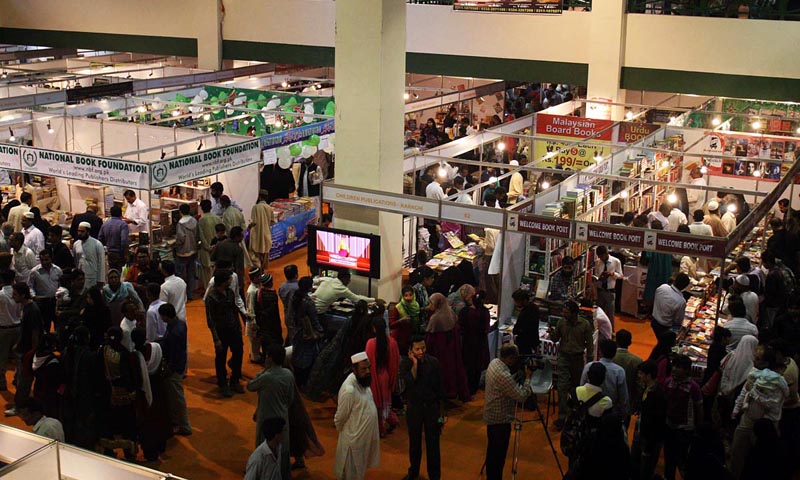 Activists of Ahle Sunnat Wal Jamaat staged the demonstration outside the Expo Centre in protest against the display of “sectarian” books at the stall.
The protest continued for a considerable time and ended only after police removed those books from the stall, police and ASWJ officials said.
An ASWJ spokesman accused the Iranian consulate of selling controversial books at the fair and said they had submitted an application to the Aziz Bhatti police station for action into the matter.
Rejecting the ASWJ’s allegation, the consulate said in a statement that Iran had always raised voice for the unity of Muslims and “wrong statements of those organisations which are themselves illegal and involved in fuelling sectarianism and sectarian strife among Muslims can never be the standard of measurement of a reality”.
It said that noble people of Pakistan had rich Islamic culture and negative statements of “followers of a deviant ideology” could not affect friendship between Iran and Pakistan.
The smuggled Shakespeare book that inspired Nelson Mandela

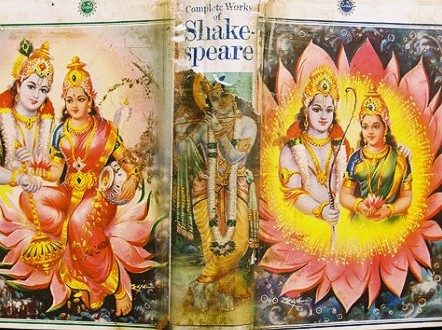 But the beatifically smiling women on the cover knew something the prison wardens didn't.
Inside was the "Complete Works of Shakespeare," and the historic text became a source of strength for Mandela and his fellow inmates during their darkest days.

 The valiant
The book was smuggled into the jail by political prisoner Sonny Venkatrathnam, who disguised it in colorful Diwali cards celebrating the Hindu festival of lights, convincing the warden it was his bible.
Between 1975 and 1978, the volume was passed between 33 of Venkatrathnam's fellow prisoners -- including Mandela.
Many of the inmates signed and dated their names beside particularly poignant passages -- words of hardship, political unrest, or injustice.
Mandela chose a passage from Julius Caesar -- just before the Roman statesman leaves for the senate on the Ides of March -- and his sweeping handwriting on the now-yellowing page is a haunting reminder of the activist's dedication to his cause.
It includes the lines: "Cowards die many times before their deaths/The valiant never taste of death but once."
"I believe when Nelson Mandela signed this passage, he recognized this book would get out and be circulated in the liberation movement -- his would be the quote people looked to," said Hahn.
"It was an incredibly powerful quote -- he lived his entire life according to these two lines."
Lasting impression
The quote is all the more poignant considering Mandela's speech during the 1960s Rivonia Trial, where he said: "If need be, it is an ideal for which I am prepared to die."
Mandela signed the passage December 16, 1977. He never could have imagined that December 16 would later be known as "Reconciliation Day" in South Africa -- a public holiday which only came into effect after the fall of apartheid.
While Hahn believes the "Robben Island Bible" began as an attempt by Venkatrathnam to gain the autographs of the most famous political activists at the time, it has now become a powerful memento of their many years -- and sources of inspiration -- behind bars.
"It was amazing to see visitors from all over the world drawn to this book like a magnet," said Jonathan Bate, Professor of English Literature at Oxford University, who helped curate the British Museum's Shakespeare exhibition last year.
"It was a coming together of one of the greatest writers of humanity, and one of the greatest humans of the 20th century. With Mandela's death comes a particular poignancy in a passage referring to the death of the valiant."
Saturday, December 7, 2013
In Nation Remade by Mandela, Social Equality Remains Elusive
By LYDIA POLGREEN and MARCUS MABRY
When Freddy Kenny started his business selling vegetables out of a battered pickup truck in the 1970s, a siren used to sound over this city, his hometown, every night at 9, signaling to him and every other black person that they must leave the city limits immediately or face arrest. These days, the only thing looming is a 20-foot statue of Nelson Mandela, the man who led South Africa out of apartheid and into an era of democracy, his fist raised in a black power salute. Mr. Kenny, now a supermarket magnate, donated the bronze likeness of Mr. Mandela, South Africa’s first black president, and had it erected atop the city’s highest point, Naval Hill.
“Madiba always watched over us when he lived,” he said Saturday, referring to Mr. Mandela by his clan name. “Now he will watch over us for eternity.”
Mr. Kenny’s new life, with the perks of privilege of his white counterparts, is a testament to the commitment Mr. Mandela, who died Thursday and whose funeral is next Sunday, placed on making racial reconciliation the centerpiece of his presidency.
He led a party that had fought an armed insurgency against the apartheid government, yet when he emerged from prison he preached forgiveness and harmony. Stripped of bitterness, Mr. Mandela negotiated a peaceful end to white rule, giving birth to the rainbow nation.
But racial equality at the ballot box has proved much easier to achieve than social and economic equality. While Mr. Kenny, a regular at the bar of the Schoeman Park Golf Club, a formerly all-white watering hole for the city’s elite, has caught up with and surpassed many white South Africans, he is an exception to a rule of lopsided opportunity and advancement that remains one of the most daunting challenges facing the nation today.
Since the end of apartheid, the government has built well over two million homes, brought electricity to millions of households and vastly increased the number of poor people with access to potable water. The average annual incomes of black-led households almost tripled from 2001 to 2011, according to census figures released late last year, and a growing percentage of the adult black population has gone to high school, with an increasing sliver going to college.
But black South Africans are still very far behind whites, and by some measures falling further back. In 2001, white-led households typically earned close to $17,000 more than their black counterparts, at current exchange rates. By 2011, that disparity had grown to nearly $30,000. And while the nation has made headway in reducing the number of black people with no education or only a few years of primary school, very few whites have that barrier to overcome; to the contrary, they have advanced to college and beyond at higher rates since apartheid ended.
The nation remains deeply divided in social spheres as well. According to the SA Reconciliation Barometer, a survey of racial and social attitudes, less than 40 percent of South Africans socialize with people of another race. Just 22 percent of white South Africans and a fifth of black South Africans live in racially integrated neighborhoods. Schools remain heavily segregated, too: Only 11 percent of white children go to integrated schools, and just 15 percent of black children do.
During his presidency, Mr. Mandela helped keep decades of oppression and imbalances from boiling over. He encouraged blacks to be patient about acquiring the material goods and services that even lower-class whites took for granted. He asked whites to have faith in multiracial democracy and not flee the country.
But through the long years of his declining health, many asked what would become of South Africa’s relative racial comity once he was gone.
Both through his words and his actions, Mr. Mandela gave South Africans “something to live up to,” Chanter Jacobs, 19, a white fashion student in Johannesburg, said before Mr. Mandela’s death. “He’s like a beacon, and you want to make him proud because he’s done a lot for our country.”
Without Mr. Mandela’s living example, Ms. Jacobs worried that South Africans would not try as hard to live up to his ideals. She feared relations between the races could worsen, leading the economy to decline, too.
“I think something might change,” she said. “I just don’t know how or what.”
Others were more sanguine.
“I have a 9-year-old, a 3-year-old and a 1-year-old, and I’m very happy to stay in this country,” said Debbie Angus, a white property manager in the upscale Johannesburg suburb of Sandton. She credited Mr. Mandela with uniting multiracial South Africa into one people and said: “I think things are going to just carry forward like they are at the moment. I think he’s laid the groundwork for future generations.”
In few places is the legacy of racial separation in South Africa more bitter than in the city of Bloemfontein. In the second half of the 19th century, it was the capital of the Orange Free State, an independent Afrikaner republic that was in some ways a prototype of what would become apartheid. It was the city where a group of Afrikaner elites gathered at the all-white Ramblers Hall in 1914 to form the National Party, which would win power in 1948 and entrench racial separation and white supremacy as official government policy.
But it is also a city with a rich history of black activism. It was in a church school here that a group of black community leaders met in 1912 to form the precursor to the African National Congress.
In a speech delivered on a visit to the city in 1997 while he was president, Mr. Mandela hailed Bloemfontein as a symbol of the country’s extraordinary transformation.
“Here the forces and the peoples who make us what we are today interacted and clashed,” he said.
He continued: “Bloemfontein has come full circle. Once an outpost of an invading colonial force and then the capital of a republic that excluded the majority, today it is the seat of a democratically elected nonracial provincial government.”
Yet deep fissures remain, and long-held prejudices are not easily papered over. A crude video made by residents of an all-white dorm at the University of the Free State in Bloemfontein in 2008 showed the students berating and humiliating black domestic workers in their dorm, forcing them to eat stew into which one student appeared to have urinated. The students in the video, which was apparently made to protest the planned integration of the residence hall, were expelled and faced criminal charges.
“Racism is never very far below the surface in Bloemfontein,” said David Muthavhatsindi, a retired insurance broker who now runs a computer training school. “It is always with us, waiting to pounce.”
But even once all-white institutions, like the wood-paneled Ramblers Hall are eager for black members as membership has declined and a new black elite has arisen.
“It isn’t like the old days,” Johan Van Standen, the club’s manager, said recently as he restocked the beer fridges in a bar lined with dusty, sepia-toned photographs of rugby teams from decades long past. “We need everyone to survive. This is a place for anyone in the community to come together.”
Men like Mr. Kenny, with their wealth and status, live easily in a multiracial world. But for most black South Africans, race remains a formidable obstacle. Like many young, poor blacks, Mamello Tlakeli, 27, said she had no meaningful contact with white people.
In her last job, as a waitress at a chain seafood restaurant, she said racial prejudice from whites was a constant irritant. Afrikaans-speaking customers would sometimes demand that she speak Afrikaans, even when they could clearly speak English, she said. Most young black South Africans do not speak the language, though many of their parents were forced to learn it in school, a policy that became a rallying point in the anti-apartheid movement.
“Even ice they would order in Afrikaans,” she said.
During staff meals, white and black employees would sit separately, not by force but by habit.
“It was always very uncomfortable with white colleagues,” she said.
Recently unemployed and working as a volunteer at a charity in the hope of getting some professional experience, Ms. Tlakeli said white people in South Africa continued to prosper as they did before apartheid, but blacks remained in the rear.
“There is a huge gap between black and white,” she said. “The rainbow nation is a dream, not a reality.”
US security deal with Afghan govt to be signed in timely manner, Hagel reassured
Afghanistan’s defense minister has reassured the US that their security deal will be signed without delays. That’s according to US defense secretary Chuck Hagel while making an unannounced visit to the country Saturday.
Defense minister Bismillah Khan Mohammadi, “assured me the Bilateral Security Agreement would be signed in a timely manner”, Hagel said.
Hagel added that he didn’t believe that trying to exert US pressure on President Hamid Karzai to sign the agreement would be helpful. However, Hagel said meeting with Karzai himself was not on his agenda as he came primarily to thank US soldiers for serving in Afghanistan.
Hagel’s trip comes as US and Afghan officials are deadlocked over a security pact, which Afghan President Hamid Karzai has so far refused to sign. Karzai favors signing the deal after next year’s presidential election.
Without a pact, all US troops stationed in the country would be required to leave next year, along with all foreign forces. At the moment some 46,000 US troops and 27,000 soldiers from other countries are based in the country.
“In some weeks, I expect we'll start to plan for something other than 'Resolute Support',” NATO commander in Afghanistan, General Joseph Dunford, told reporters. He was referring to NATO's current post-2014 plan.
Former drafts of the deal have indicated that troops could be allowed to remain in the country until 2024 for training and counterterrorism missions. Karzai has cautiously endorsed the agreement, and the Loya Jirga – Afghanistan’s council of tribal elders – has stated that it should be signed by the end of this year. Roughly 12,000 troops would remain in the country under current plans.
Washington is also pushing for the deal to be signed soon, threatening a swift troop withdrawal unless Kabul agrees to guarantee legal immunity for US troops.
While Washington and NATO officials have stated that they would like a quick decision to be reached in order to coordinate post-2014 forces, Karzai has stated repeatedly that he won’t sign an agreement that sanctions raids on Afghan homes.
Earlier reports suggested that Karzai rejected a provision granting the United States authority to unilaterally carry out military operations within the country, including the search of civilian homes.
However, the draft security deal published by Karzai’s government on November 20 confronts a number of much-debated articles.
Under the pact, US forces would be allowed to enter Afghan homes in “exceptional” circumstances, and US forces remaining in Afghanistan after 2014 would be under US military jurisdiction, and not subject to Afghan law.
Without US aid in the country, Afghanistan would risk a potential Taliban resurgence and could lose out on billions of dollars of international aid.
Iran: Rouhani swaps turban for baseball cap

Iran's president shows his sporty side by hiking in the mountains outside Tehran and having pictures published online.The Iranian president's personal website has published pictures of Hassan Rouhani hiking in the mountains outside Tehran with his traditional clothing replaced by a sporty outfit.
 The photos, published on Friday, show the mid-level cleric in a black baseball cap and matching ski jacket walking along a dirt road and using hiking poles.Rouhani, who is usually seen in the turban and robes favoured by Iran's clerics, appeared to be mingling and chatting with other hikers, including a group of women.
The pictures come as the recently-elected leader seeks to present a friendlier and more moderate image of the Islamic republic, which reached a landmark nuclear deal with the West last month.
The website said that Rouhani, who defeated a pool of conservatives in a June presidential election after vowing to engage with the West, goes hiking once or twice a week.
Iran's supreme leader Ayatollah Ali Khamenei, who must approve all major decisions and who is seen as more distrustful of the West, is also fond of hiking.
State media have published similar pictures of Khamenei in the past.
Iran and a group of world powers broke through a decade of gridlock last month to agree on an interim deal that would freeze parts of Tehran's controversial nuclear programme while easing some of the crippling international sanctions against the country.
Obama defends interim Iran deal, seeks to assure Israel
Pakistan: Imran Khan is at the wrong end of the stick
By Mina Sohail

 Ahmed Rashid is a journalist who has authored several books about Afghanistan and Pakistan. He has covered Central Asia as a correspondent for The Telegraph for more than 20 years and has also been named as the Foreign Policy Magazine’s Top 100 thinkers. In an exclusive interview with PIQUE, Ahmed Rashid talks about Imran Khan’s politics, Taliban insurgency and the emerging geo-political scenario of the region.
Imran Khan’s philosophy is that Pakistan has been fighting with Taliban for years but terrorism has only increased so we must try to have negotiations. Why do you think he is being criticized for this?
The problem is that talks with the Taliban is a tactic, not a strategy. Counter terrorism should be a comprehensive strategy that includes elements of talks and use of force. To implement that strategy we need a national security council, which should include the military, civil government and civilian experts who deal with terrorism on a daily basis, write about it and understand the nuances. We can’t wipe these terrorists out in a one-day operation or through a one day dialogue. The mistake being made here is that a tactic is being made a strategy, which in my opinion is completely wrong.
Americans tried to have a counter terrorism strategy in Afghanistan and on paper what they were planning to do in 2007 and 2008 was a very sound strategy but like Pakistan they completely failed to implement it. They did not have enough troops, did not put enough emphasis on the reconciliation on the talks aspect and emphasized on the war aspect. We are doing completely the opposite by deemphasizing other aspects and emphasizing the talks. This is where I think Imran Khan is coming from and why I think he is at the wrong end of the stick. It is unfortunate that a man as worldly wise as Imran is accusing anyone who is criticizing his policies as being pro west, liberal or an agent of the CIA. He is using the same jargon as extremists do or as elements in the intelligence services do.
Do you think Imran Khan’s supporters have been disillusioned because of his talks with Taliban stance?
His vote bank has definitely been affected. We saw that in the bi-elections too as Bilour came back in Peshawar. Imran faces a mass decline of morale in the police and bureaucracy in KPK. He does not have the support of the local administration because they are confused as to why they should be laying down their lives for suicide bombers when Imran wants to talk to the same bombers. He has created confusion in the minds of the federal government and the army. The danger of insurrection in Peshawar by these extremists is quite possible despite the huge army presence there. Unless Imran will deal with these issues more firmly than he has so far, he may lose the province. We may see governor’s rule there in a few months time so he has to understand the situation is critical.
What did you think of his statement on letting Taliban open an office in the country?
Imran has been trying for a long time to equate the Afghan Taliban to the Pakistani Taliban. Afghan Taliban in my opinion have a peace lobby that has matured in the last few years of fighting because they believe that after 2014 withdrawal of US forces, they have to come to terms with other Afghans and want some kind of power sharing deal. There is no such lobby in the Pakistani Taliban and nobody who is talking about compromising with the state. Their mantra is still that we want to over throw the state and want sharia. Imran is talking about opening an office when there is no Taliban to man this office or interested in a peace dialogue. Because of his prejudices and his preconceived notions he is not able to differentiate between Afghan Taliban and Pakistani Taliban and the real tragedy is he thinks he knows it all.
IK recently said Taliban’s demand to stop the drone strikes was a legitimate one and should be supported by all. Do you agree?
Drone strikes should stop but not on the basis of what the Taliban want. The strikes should stop because it is creating enormous anti Americanism in Pakistan and complicates the war on terror strategy that Pakistan would like to have. It allows for propaganda by the extremists and the Taliban, which is anti American and anti Western and that tends to become anti democratic also.
Now that General Kayani has retired, what do you foresee in the post Kayani period?
It is too early to say. Kayani’s legacy is that he has strengthened democracy and allowed elections to continue unlike earlier military leaders. However, on the other hand, he has left a terrible legacy of a much worse security situation, expansion of suicide bombings, the continuing insurgency in Balochistan and a worsening situation in Karachi.
Do you think Pakistani army is capable of fighting a prolonged war?
Yes, it is capable and we have no choice if we are to survive as a nation. Any counter terrorism strategy will take years. It won’t be resolved in six months or one year and will be beyond the life of even this government. We should be prepared for a long war and so should the army. The failure of the government and the army has been to confuse people’s minds with this idea that there are quick solutions. This extremism has taken years to be fostered and expand. We can go back 40 years to Zia’s period to the growth of this kind of extremism, not to speak of the fact that the state and the army sponsored a lot of these groups at one point including the groups fighting in Kashmir and those fighting with Taliban in Afghanistan.
What is your assessment of the civilian leadership. How do you think they will tackle the issue?
I am glad that we have had two successive governments. What has been lacking in both these governments is a comprehensive reform agenda, whether we are talking economic reforms or combating terrorism, social reform or need for education, there was a lot of expectancy with Nawaz Sharif coming in but we haven’t seen those policies emerge. I think there is a growing disillusionment even within the Sharif camp about the failure to carry out reforms on any front. Even the promise of economic reforms and the austerity measures that were needed to get international confidence have not occured.
Americans say they will leave Afghanistan by 2014 and the elections are approaching, what would be the fall out of this on Pakistan?
We do not know yet if the Americans will even leave bases in Afghanistan as that is still being negotiated with the Karzai government. But the uncertainty in Afghanistan, the uncertainty surrounding those elections, the withdrawal, the capacity of Afghan army to hold back the Taliban, all these uncertainties have a hugely negative effect in Pakistan. If we don’t know what will happen in our neighboring country, we can’t really say with any confidence that we will be safe from any fallout because obviously we won’t.
IK said if negotiations fail he would reluctantly support military options against the Pakistani Taliban. What do you think of this?
The debate in the country has been put as either war or talks. This is not a strategy for counter terrorism. You have to combine both these elements. IK is framing the debate as every other politician and extremist, that there is a choice between talks and war.
What is the future of Pakistani Taliban?
The situation will get much worse before it gets better. We saw an attack on 4 provincial capitals, which was unheard of before. With the kind of bomb attacks we have seen in Peshawar and before that the campaign in Quetta against the Hazaras and the jailbreaks, the state seems unable to combat any of this. Because of the politicians attitude there is a loss of morale in security forces, in believing this political leadership will provide the answers. It is clearly not providing the answers.
You mentioned in your recent book, “Pakistan on the Brink,” that you are constantly looking for a window that will open for peace to emerge in Pakistan. Will it?
The key issue is the civilian supremacy. Military has to understand they cannot continue running on their own. Their policy towards extremists has always been to favor some groups and attack other groups. The good Taliban and bad Taliban have to come to an end. In Balochistan the need for a dialogue is possible and a settlement with the separatists is possible. The state says it wants a dialogue but at the same time there have been 500 disappearances since Nawaz Sharif came into power.
If you want a dialogue there has to be some sort of a halt to violence so that talks can take place. We need to have zero tolerance policy against all forms of extremism, even against those extremists who have been trained and nurtured by the intelligence services. We need to turn this policy around otherwise we will go down as a country.
Do you think IK will be able to deliver on his promises?
He won’t deliver on his promises because of the strategies that he has. He should engage in a debate about a strategy for counter terrorism. I would like to engage with him in a debate on counter terrorism and what it means so I can try and explain to him that talks can be part of the strategy but it cannot be the whole strategy.
Nelson Mandela: Death of a statesman
EVEN the world’s most prestigious award, the Nobel Peace Prize, was too small an honour for the giant Nelson Mandela was. Perhaps a more poignant tribute came from Bishop Desmond Tutu: “God was good to us in South Africa by giving us Nelson Mandela”. He was more than good. The white supremacist regime in South Africa would sooner or later have collapsed, as happened elsewhere. But it was the way that it ended, or was made to end — without bloodshed — that showed how Mandela stood head and shoulders above other freedom fighters of his times.
The ‘white man’s burden’ manifested itself in the colonised world in many ways; signs reading “dogs and Indians not allowed” were just one of the many exhibits of the rulers. But in South Africa, the colonial approach was unprecedented in its brutality: the segregation of races — euphemistically called ‘separate development’ or apartheid — reduced native Africans to the status of animals. In the subcontinent, the British established “civil lines”, which by convention forbade the natives from being the white man’s neighbour. In South Africa, Bantus were bound by law to carry passes to move from a black zone to a white one. The cumulative effect of apartheid laws was that 80pc of South Africa’s land — which belonged rightfully to all its people — was reserved for the ruling white minority. Mandela raised his voice against this precursor to Nazism when Hitler was still in the trenches in Flanders. He was arrested in 1962 and passed 27 years in prison — only to come out victorious.
But perhaps Mandela’s greatest achievement was that he prevailed upon his people to shun revenge. The setting up of the Truth and Reconciliation Commission helped heal wounds and spared the country what could have been a slaughter of unimaginable proportions as the victims, now unfettered, suddenly found themselves in a position of strength. Mandela was a conciliator, and there is no doubt he received valuable support from F.W. de Klerk, the country’s last white president. But without Mandela, who chose to serve just one term as president, the orderly transition to a racism-free democratic dispensation would have been unthinkable. In a world dominated by leaders with either autocratic tendencies or mediocre abilities, Mandela stood apart. Freedom fighter, democrat and above all great conciliator, the African icon had in him the rare combination of leadership, courage, wisdom and foresight. Forever in history’s spotlight, he remains in his death among the 20th century’s greatest freedom fighters and statesmen.
Hagel in Kabul amid crisis over vital U.S., Afghan security pact
Veena Malik partying in Dubai
Veena has been busy for quite some time now. She was so tired of her hectic schedule that she thought of taking a break and coming back after a small hiatus. She planned a visit to Dubai to meet her family and friends.
According to reports, she was occupied with so many activities and commitments that she hardly got any time for herself. After a frenetic week of promotional campaign in Mumbai for her solo album launch, RUM, Veena was in Dubai for a short trip. Veena being a globe trotter, was recently in UK to receive an achievement award for her social contribution. She got very involved with the UK media for interactions and interviews.
Veena wanted to have a small vacation of sorts. Being caught up with work, she realized that she didn`t meet her family for quite some time now. She was in a very nostalgic state and was missing her family badly. So, she packed her bags and was off to Dubai. There, she had some quality time with her family and was very elated to eat home made food that she missed for so long. Also, she met her old buddies and had an amazing time hanging out and partying with them. Her friends were also very amused to have their vibrant friend amongst
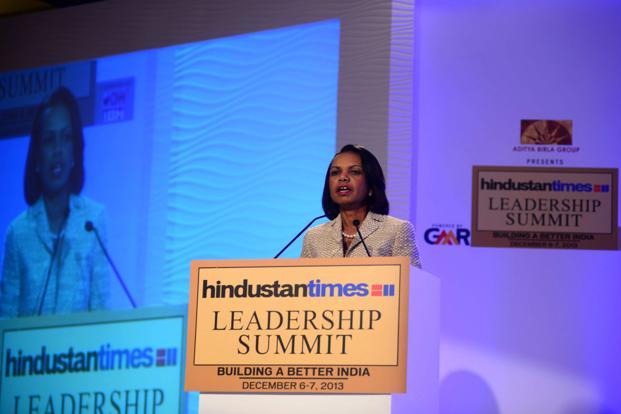
Condoleezza Rice : 'Terrorism an existential threat for Pakistan'

Afghanistan face Pakistan in historic T20 on Sunday

Subscribe to:
Posts (Atom)