Saturday, November 16, 2013

Israel said to be working with Saudi Arabia on Iran strike plan

Two old foes unite against Tehran
ONCE they were sworn enemies. Now Israel’s Mossad intelligence agency is working with Saudi officials on contingency plans for a possible attack on Iran if its nuclear programme is not significantly curbed in a deal that could be signed in Geneva this week. Riyadh reported to give Jerusalem okay to use Saudi airspace on cooperate on other tactical support, according to Sunday Times
Israel is working on coordinating plans for a possible military strike with Saudi Arabia, with Riyadh prepared to provide tactical support to Jerusalem, a British newspaper reported early Sunday.The two countries have both united in worry that the West may come to terms with Iran, easing sanctions and allowing the Islamic Republic to continue its nuclear program. According to the Sunday Times, Riyadh has agreed to let Israel use its airspace in a military strike on Iran and cooperate over the use of rescue helicopters, tanker planes and drones. “The Saudis are furious and are willing to give Israel all the help it needs,” an unnamed diplomatic source told the paper. The report comes as Prime Minister Benjamin Netanyahu is in the midst of a blitz to lobby against a deal and cobble together an international alliance opposed to an agreement that allows Iran to continue enriching uranium. On Sunday, Israel will welcome French president Francois Hollande, who a week earlier put the kibosh on a deal between six world powers and Iran that would ease sanctions in return for initial steps toward curbing enrichment. Netanyahu on Friday urged France to remain firm in its pressure on Iran ahead of a new round of talks on the Islamic Republic’s nuclear program in Geneva, kicking off Wednesday. After meeting Hollande, Netanyahu will head to Moscow on Wednesday to meet with President Vladimir Putin and lobby against the deal. Iran’s bid for the bomb “threatens directly the future of the Jewish state,” Netanyahu told CNN recently, in a short preview clip of an interview broadcast on Saturday. As the prime minister of Israel, he stressed, he had to care for “the survival of my country.” CNN reported that Netanyahu also said in the interview that he would do whatever it was necessary to do in order to protect Israel. The full interview will air Sunday morning. Should a deal be reached, according to the diplomatic source, a military option would be back on the table. Saudi tactical support, in lieu of backup from the Pentagon, would be vital for a long-range mission targeting Iran’s nuclear program. Saudi Arabia, a Sunni Muslim country across the Persian Gulf from Iran has long been at odds with Tehran, and fears a nuclear weapon would threaten Riyadh and set off a nuclear arms race in the region.

Saudis beating Ethiopian migrants

New video footage has emerged showing Saudi Arabia’s security forces beating Ethiopian migrant workers. The video posted online on Saturday shows men mercilessly beating and punching Ethiopians on the streets and other undisclosed locations. A person is also shown lying dead on the ground with a bullet mark in the chest. On Tuesday, the Ethiopian government announced the death of three of its citizens during clashes in Saudi Arabia. On Friday, Ethiopians staged a demonstration in front of the Saudi embassy in the capital Addis Ababa against the crackdown on illegal immigrants by Al Saud government. Between nine and 11 million of Saudi Arabia’s 27-million-strong population are foreign workers. On November 4, a seven-month amnesty for expatriate workers expired. Hundreds of thousands of people were forced to leave the country during the time they had to rectify their visa status without penalty. Many of the foreign workers say they could not use the amnesty due to bureaucratic difficulties or disputes with their original sponsors. Foreign workers cannot change jobs or leave Saudi Arabia without the permission of their sponsors, who are often Saudi companies or individuals providing workers to businesses for profit. Many of the country’s foreign laborers have also been arrested. In late October, rights group Amnesty International censured Saudi authorities for not addressing the “dire human rights situation” in the kingdom. The group also handed in a paper to the United Nations, which included information regarding a “new wave of repression against civil society, which has taken place over the last two years.”

China: Heated discussion over loosening of one-child policy

After China announced its decision to loosen the one-child policy, heated discussion and controversy has broken out in the country's most populous province, Henan. According to the decision approved at the Third Plenary Session of the 18th Communist Party of China Central Committee held from Nov. 9 to 12 in Beijing, the new policy will allow couples to have two children if one of them is an only child. The evening after the decision was issued, a major Chinese web portal started an online poll regarding "whether people would choose to have a second child." Thousands of people voted in less than two hours, and more than 60 percent of them said "yes."
PROS
"The adjusted birth policy did not only meet many people's expectations, but is in line with a long-term balanced development of the population in China, " said Zhang Yuanzhen, a professor at Henan Institute of Family Planning. "It could be positive for structural population problems such as the aging problem, persistent imbalance of genders and decrease of working population," Zhang said. "The new policy will help keep the birth rate stable, preventing a sharp decline in population after it reaches the peak," said Zhang. It is estimated that China's population will reach a peak of 1.5 billion around 2033. The family planning policy was introduced in the late 1970s to slow down population growth by limiting most urban couples to one child and most rural couples to two children if their first child was a girl. It is estimated that the policy has resulted in 400 million fewer people in China, and the current fertility rate is stable between 1.5 and 1.6, far lower than the population replacement level. The policy was relaxed somewhat in 2011, to reduce some social problems, and its current form stipulates that both parents must be only children if they are to have a second child.
HESITATION
The most populous province with 120 million, Henan was the last to relax the policy due to the pressure of continuing population growth. Will there be another baby boom which will worsen the difficulties of sending children to kindergarten and school? People are starting to wonder. Internet user "Huang Shan" said, "I don't want any more children. The problem is that there are not enough social resources. It would be funny if there aren't enough schools and hospitals for more babies." "Liujing__2009" said,"I am hesitant. If I have a second child I will have to be a full-time mother. Two children will require much more energy to take care of them. My husband doesn't want a second baby, he thinks taking care of one is exhausting enough." Discussion of second babies or not has already led to fights. Wei is a doctor at the Third Affiliated Hospital of Henan College of Traditional Chinese Medicine. "Both sides of the parents want us to have another baby, but my wife and I are doctors. We are too tired to have another child," Wei said.
EXPERTS' OPINION
Regarding people's concern over a baby boom, population expert Zhang Yuanzhen said, "the new policy will have a large impact on individual families, but not on the whole country." There will not be a baby boom and it will not bring huge pressure to bear on food security, health, education or employment, said Zhang. According to a survey by the National Health and Family Planning Commission, the new policy will apply to roughly 15 to 20 million people, only half of whom are actually willing to have a second child. Also, due to the decades long family planning policy, families which have only one child in rural areas are far fewer than in those in cities. Thus the new policy will apply mainly to couples in the city. With the cost of raising a child in a city relatively high, people will think it through before they make a decision, said Zhang. The new policy is seen by some as unfair. "Xiaoyuer" said, "everyone should be able to have a second child regardless of whether he or she is the only child or not. The new policy sounds encouraging at first but later on people feel it is unfair." Liu Junjie, a population expert at Henan Academy of Social Sciences, said that China is unlikely to completely loosen its one-child policy soon. "People's thoughts are understandable, but the adjustment of population structure should be gradual," Liu said.

Aid flows to typhoon survivors as Philippines struggles to rebuild

Long-delayed emergency supplies flowed into the typhoon-ravaged central Philippines on Saturday, reaching desperate families who had to fend for themselves for days, as the United Nations more than doubled its estimate of homeless to nearly two million. The aid effort was still patchy, with relief officials reporting a surge in desperate, hungry survivors trying to leave the coastal city of Ormoc, 105 km (65 miles) west of Tacloban, the worst-affected major city. More than a week after Typhoon Haiyan killed at least 3,633 with tree-snapping winds and tsunami-like waves, hundreds of international aid workers set up makeshift hospitals and trucked in supplies. Helicopters from a U.S. aircraft carrier ferried medicine and water to remote, battered areas. Residents of Tanauan, a fishing town about 15 km (9 miles) southeast of Tacloban, said they only started receiving substantial aid on Friday after being forced to survive on biscuits and dispose of dead bodies on their own for days. More than 60 people were buried behind the municipal office in the district of 50,000 people. Down the road, dozens of corpses were interred under a roundabout. "I think (the response) was quite slow. This town was isolated. Media didn't come here. We were out of circulation for three days," said Penny Tecson, the wife of the district's mayor. She was running the recovery operation while her husband, Pel Tecson, was in Tacloban to coordinate the district's first large-scale delivery of aid from the national government. In one ward of Tanauan, neighborhood chief Cecilio Yepes Jr. estimated his community lost nearly 10 percent of its 1,176 residents. Here, the storm surge has transformed an entire swampy plain into a rubbish pile of trees and debris. Locals have recovered and buried 30 bodies. Another 98 remain somewhere in the vast wasteland that stretches on either side of the road. At least 800 people died in the district of Palo, which lies between Tanauan and Tacloban, national authorities said. In Tacloban, work crews and heavy equipment cleared debris from roadsides, but side streets remained piled with the sodden, tangled remains of homes which city officials fear could reveal hundreds more bodies when they are eventually cleared. There are 1,179 people missing, according to the national count. The official death toll only rose by 12 on Saturday, giving hope that initial local estimates of 10,000 dead were overblown. In front of Tacloban's San Fernando Elementary School, government workers distributed sacks of aid to a restless crowd of hundreds who had spent the last week camped in shattered wooden classrooms or in a main school building with floors covered in wet black sand. Nearby, about a dozen body bags were neatly lined up by the roadside. Rica Mobilla, an 18-year-old mother of one, said local authorities showed up two days after the disaster, handing out four kilograms of rice and a few packs of noodles for her family of thirteen. The family stretched this out with onions and garlic bought from the market. "I'm upset. I'm not blaming anyone. If there's aid there to give out we'll receive it," she said. President Benigno Aquino, caught off guard by the scale of the disaster, is scheduled to visit typhoon-affected areas on Sunday. He has been criticized for the slow pace of aid distribution and unclear estimates of casualties, especially in Tacloban, capital of hardest-hit Leyte province. In Tacloban the death toll is written on a whiteboard at City Hall and bodies have been buried in mass graves since Thursday. Tacloban mayor Alfred Romualdez said many people may have been swept out to sea after the tsunami-like wall of seawater slammed into coastal areas.
SURVIVORS START TO REBUILD, HOMELESS RISE
The Philippines Social Welfare and Development Secretary Corazon Soliman acknowledged in a radio interview that the national relief response had been too slow to reach many areas. "We will double our efforts to distribute relief goods because we've been hearing complaints that a lot of people have yet to receive relief goods," she said. Arnaldo Arcadio, an emergency responder with the Catholic Relief Services group, said desperation over conditions in remote rural areas had led people to surge into Ormoc in hope of fleeing the city by ferry. "People are fleeing in mass numbers and coming to Ormoc, where they stand in line all day to get on a ferry only to be turned away," he said. "Ormoc is teeming with people who haven't eaten in days. They're hungry, thirsty and tired. They want to get out." Across Tacloban, survivors have begun to rebuild. The sounds of hammers ring out. Men gather in groups to fix motorbikes or drag debris off splintered homes and wrecked streets. Most have given up searching for lost loved ones. The number of people made homeless by the storm rose to 1.9 million, up from 900,000, the United Nations' humanitarian agency said. In Tacloban, at least 56,000 people face unsanitary conditions, according to the United Nations' migration agency.
U.S. HELICOPTERS AID RELIEF EFFORT
British Prime Minister David Cameron on Saturday pledged 30 million pounds ($48 million) for international aid agencies working in the Philippines. Japan plans to send 1,180 troops to the Philippines, its largest oversea deployment for disaster relief. Japanese destroyer Ise and transport vessel Osumi will leave for the Philippines in a few days carrying helicopters to deliver aid. But the patchy initial aid response highlighted the need for international agencies and local governments to prepare for more frequent, more devastating natural disasters, said Kristalina Georgieva, European Commissioner for International Cooperation, Humanitarian Aid and Crisis Response. "This is a mindset change that must happen if we want to be able to stand up to this trend," she told Reuters in Tacloban. U.S. military assistance has been pouring into the Philippines since Thursday when the USS George Washington aircraft carrier and accompanying ships arrived off eastern Samar province, carrying 5,000 crew and more than 80 aircraft. The Philippines is one of Washington's closest allies in Asia and a crucial partner in President Barack Obama's strategy of rebalancing U.S. military forces towards the region to counter the rising clout of China. The Pentagon said on Friday that U.S. Navy amphibious ships will leave Okinawa in Japan "in the coming hours" carrying an additional 1,000 marines and sailors who will provide engineering equipment, relief supplies, and medical support. The U.S. military estimates that it delivered some 623,000 pounds (283,000 kg) of U.S. relief supplies to the Philippines so far. The American military also estimated that it had moved nearly 1,200 relief workers into Tacloban and airlifted nearly 2,900 displaced people from affected areas so far.

White House optimistic Obama will bounce back from healthcare glitches

He's vented, attacked, apologized and adjusted. Now, President Obama has one move left in his attempt to salvage the rollout of his healthcare law: hope the website works soon.
The White House, knowing a functional website is needed to calm its panicky allies, has now entered the wait-and-see period of its triage after the turmoil that has followed the Oct. 1 rollout. With the latest fix to the law unveiled, a bruising House vote behind them and experts working feverishly on the broken website, administration officials believe they may have weathered the worst. Although Obama's standing in polls and support within his party have dropped sharply, much like the downward trajectory of George W. Bush's second term, White House officials believe he can still recover. That optimistic assessment depends almost entirely on the administration's ability to reboot healthcare.gov, the once-hyped online insurance marketplace now undergoing extensive repair. At stake are the future of the president's signature domestic achievement, his political standing and reelection prospects for vulnerable Democrats in Congress. If the administration meets its goal of a mostly glitch-free site by the end of November, the last two months may be remembered as just another near-death experience for a healthcare overhaul that has had many. Even though many insurance executives and congressional Democrats are angry at Obama for his handling of the healthcare law, both groups have strong incentives to help the Affordable Care Act succeed. But if the White House fails, the recent setbacks could become the beginning of years of trouble for Democrats in office, as well as those seeking to get there, officials concede. Administration officials privately acknowledge that no argument defending Obamacare will connect with Americans until they begin to see the effects of the law at work. No work-around or temporary fix will reach enough people to build a critical mass of support. The website has to function, admit edgy aides who sometimes spit the word "website" with the contempt familiar to anyone who has ever called a tech help desk. Obama revealed his own frustrations Thursday, saying at a White House news conference that he has an obligation to show Americans that the law has made health insurance more affordable and accessible — "if we can just get the darn website working and smooth this thing out." Officials said Friday they were making progress on the site's many glitches and bugs. It now takes less than one second, on average, to load a page, down from eight seconds in the weeks after the launch, said Jeffrey Zients, a former top administration official who was brought back to oversee the repairs. The site can "comfortably" handle 20,000 to 25,000 consumers at the same time and more capacity is being added, he said. Still, problems persist in the system that sends consumer information to insurers, and as experts have ticked off 200 software problems, more continue to pop up. Zients said the officials expect to make the Nov. 30 goal, but added: "Not all consumers going on the website will have a seamless experience." While the tech team works, the president must convince his allies as well as his potential adversaries that, as he said Thursday, he's a clutch player who knows how to recover from a fumble. That group includes insurance executives who were called to the White House on Friday to discuss Obama's answer to the millions of policy cancellation notices sent to surprised consumers. After announcing Thursday that he would allow insurers to rescind those cancellations and extend the policies for another year, the president sought to persuade the executives to take him up on the offer. The group also includes Democrats on Capitol Hill, many of whom have gone from disgruntled to distrustful of the White House. On Friday, 39 House Democrats voted for the GOP alternative to Obama's extension fix. That sizable number of largely swing-district lawmakers was only the most visible sign of broader dissatisfaction that makes Obama's current holding pattern a challenge. Even those who stuck with the White House on Friday's vote have expressed frustration. In the wake of Obama's announcement, lawmakers were left to figure out whether their state officials and insurers would go along with the plan. Skepticism was high. "The message from the White House is, 'OK, you can be mad, it's frustrating. But be on the program,'" said one advisor to a House Democrat, who asked for anonymity while characterizing internal discussions. "But what program is that? The program where every five minutes there's a different plan?" Polling shows the public has similar doubts. For the first time in his presidency, fewer than half of Americans polled told Gallup that Obama was a "strong and decisive leader," a 6-percentage-point drop since September. The perception of Obama as "honest and trustworthy" and public confidence in his ability to manage government took a similar tumble. A continued slide, combined with continued technical glitches, could leave the White House little choice but to make additional changes to the law — mostly likely extending the enrollment period and delaying the penalties for people who don't carry insurance. Senate Democrats already have urged such a move. But in the face of ardent Republican opposition to the law — House Speaker John A. Boehner (R-Ohio) on Friday repeated his hope to repeal "this train wreck" — the White House has resisted any fix that puts it at the mercy of House Republicans and pushes votes on the law well into an election year. "That will always be an option of extreme last resort," said Drew Altman, president and chief executive of the Kaiser Family Foundation. The White House has long argued that the popularity of the healthcare law will hinge on the popularity of its benefits — an untested theory until the public can easily access the online marketplaces that showcase most of those benefits. Still, in the pileup of bad news for Obama, there was some reason to hope that the policy now largely locked behind the broken site might have a chance of winning over the public. Though enrollment numbers in October were dismal, consumer interest was strong. Nationwide, more than 1.1 million people completed applications to get coverage; 106,000 actually selected a plan. Data from several states operating their own marketplaces suggest demand for health plans may be accelerating. In California, 35,000 people selected a health plan in October. Nearly the same number signed up in just the first two weeks of November, according to Covered California, the state's marketplace. Kentucky has seen similar growth: 5,586 people signed up in October, and nearly 4,000 did in the first two weeks of November. "We are feeling incredibly optimistic," said Gwenda Bond, a spokeswoman for the state health agency that operates Kentucky's marketplace, known as kynect. The White House may have a long wait, Altman noted, before it knows how far that optimism will spread. "In the long term, ultimately, the website will be working, this issue of cancellations will be in the rear-view mirror and the real question will be whether people who get coverage under the law like it or not," Altman said. "The real story about whether the law works or not will unfold next year and the year after that."

Video:Rawalpindi: مدرسے کے طالب علم خود مارکیٹ کو آگ لگانے میں مصروف ہیں

Bahawalnagar district: Outlawed Sipah-e-Sahaba terrorists burn Shia mosque and shops

www.shiitenews.com
Yazidi takfiri nasbi terrorists of outlawed Sipah-e-Sahaba burnt a Shia mosque in Chishtian, a city of Bahawalnagar district of Punjab province on Friday night. Shiite News Correspondent reported that Yazidi terrorist Qari Ayoob led a mob of some 2000 terrorists and fanatics and attacked Shia mosque and Imam Bargah in which several Shiites were hurt. Under the patronage of local administration, the fanatics and terrorists of outlawed Sipah-e-Sahaba staged a rally in which they raised slogans to kill Shiites on sight. Notorious terrorist Ghulam Rasool Shah was leading the rally. They put Ghazi Medical Store, Al Najaf Optical and other shops of Shia Muslims on fire. They were also plotting to set the Shiites houses on fire. Shia parties and leaders have condemned the attack on peaceful Shia Muslims and demanded of Punjab government to break off its covert deal with the outlawed Sipah-e-Sahaba (renamed as Ahl-e-Sunnat wal Jamaat). They demanded hanging in public of the terrorists involved in the attacks.

Multan: Yazidi terrorists attack on Hussainabad Mosque & Imam Bargah

www.shiitenews.com
yazidi nasbi takfiri terrorists of outlawed Sipah-e-Sahaba have attacked an Imam Bargah in Hussainabad area of Multan (Punjab province) on Saturday. Shiite News Correspondent reported that the armed terrorists stormed into Doulat Gate Hussainabad area where they began tearing the posters of mourning congregations that also had sacred material. Then, they hit the gate of Imam Bargah with batons and sticks to scare the peaceful Shiites. Latest reports had it that the Yazidi terrorists also desecrated an Islamic banner attributed to Hazrat Abbas (AS), the flag bearer of Imam Hussain (AS)’s army in Karbala. The terrorists burnt the Islamic flag (alam) at Ghanta Ghar Chowk. Shia parties and leaders have slammed the Yazidi terrorists for these provocative attacks and desecration of Islamic sanctities. They demanded immediate and stern action against the terrorists.

Death toll from Rawalpindi riots rises to nine

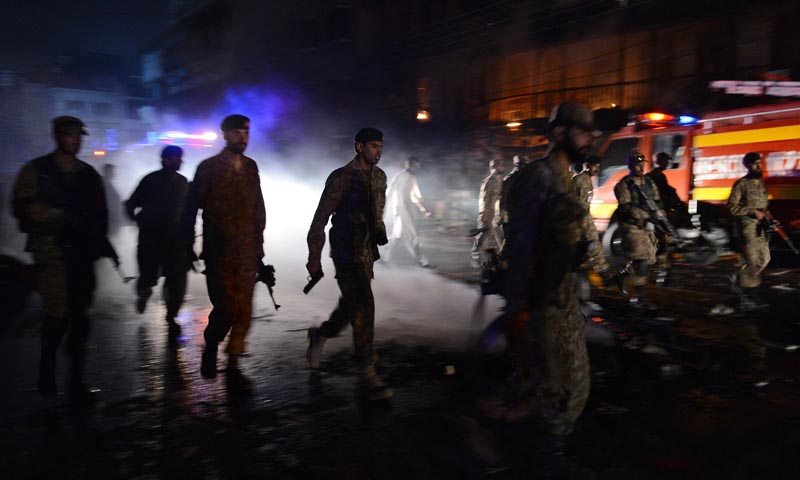
The death toll from Friday’s sectarian clashes in Rawalpindi rose to nine on Saturday, Geo News reported. AFP adds: Pakistan called in its army Saturday to quell sectarian unrest in three cities, after nine people were killed in violent attacks, according to officials. Authorities imposed a curfew in the city of Rawalpindi, where sectarian clashes on Friday left nine people dead and more than 60 injured, and spawned retaliatory violence in at least two other cities. Fighting erupted in the garrison-city, which neighbours the capital Islamabad, when a procession coincided with a sermon at a nearby mosque. "A curfew has been imposed in Rawalpindi city to avert further violence following the incidents on Friday," Waseem Ahmed, a police official told AFP. "The curfew will remain until midnight on Saturday. The whole city has been closed down," he said. Deeba Shehnaz, a spokeswoman for rescue services, told AFP: "According to the latest figures, we can now confirm the death of nine people from the sectarian violence on Friday. At least 68 others were wounded during the clashes." Angry protesters attacked the mosque and seminary, torching its building and an adjacent cloth market, where workers on Saturday were still battling to extinguish the fire completely. Rival groups then attacked each other, TV cameramen and security forces and also fired gunshots. The authorities deployed large numbers of troops in the city and later imposed a full curfew as soldiers patrolled the streets to stop protesters coming in from other cities. Violence also erupted in the southern city of Multan and Chishtian town, where civil authorities called in troops to maintain law and order. All entry points into Rawalpindi were blocked, resulting in traffic chaos on Saturday morning that choked parts of the highways leading to Islamabad.one local legislator, Sheikh Rashid Ahmed, who is a member of the lower house of the parliament from the area said that violence there was the result of local administration's failure. "I declare the local administration responsible for Friday's violent acts. They failed to control the situation," Ahmed told a news conference.

Investigative report: Shahbaz Sharif govt was aware of Deobandi ASWJ’s plan to attack Ashura procession in Rawalpindi

by Aamir
In Rawalpindi District of Punjab at least 10 people were killed and 55 were injured in clashes between Shia and Deobandis near Raja Bazar when mourning procession of 10th Muharum was passing in front of a Deobandi religious seminary Jamia Taleem-ul-Quran. Our Special Investigative Reporter talked to some officials of Security branch, special branch and intelligence bureau in Rawalpindi who revealed that their agencies were aware of a piror plan of banned terrorist outfit Sipah Sahaba that is currently working in the name of Ahle sunnat waljamat(ASWJ) Rawalpindi section. Security agencies have received solid information from their sources inside organization that Deobandi cleric head of Jamia Taleem-ul-Quran had called workers of banned outfits in seminary and plan was to attack and disperse the mourning procession when reached near seminary. Officials told me that their official reports were sent to District coordination officer Rawalpindi and District Police Officer and Home Department Punjab. Punjab Chief Minister Shahbaz Sharif was fully aware of the Deobandi plan to provoke and attack the Ashura procession of Shia and Sunni Barelvi Muslims.
In this tweet Deobandi ASWJ is planning the voilence
An Officer from Military Intelligence who was present in the Ashura mourning procession near Deoabanid seminary told that Deobandi Cleric Head of Jamia Taleem-ul-Quran was calling Shia as Infidels and their procession as non-Islamic act and violating the amplifier act but no law enforcement agency of Punjab government tried to stop or arrest him. There were many workers armed with assault rifles AK47 in compound of Deobandi seminary according to that officer of Military Intelligence. “I was surprised to see only two police men appointing in front of that seminary and police department of Rawalpindi did not take action against those persons who were gathered there with prohibited arms openly” Said an official of Special Branch of Rawalpindi district. A local senior Journalist told that Deobandi network of ASWJ had been expanded and growing since Nawaz league came in power and District administration is not interested in restricting or ban activities of banned outfits. He revealed that whenever any station police officer tried to take action against such activities faced pressure from high ranks of Police and received threats from banned outfit. In fact there is unannounced agreement between Punjab Government and ASWJ and this agreement was made due to mediation of provincial Law Minister Sanaullah who is godfather of deobandi terrorist organizations and groups.
Some insiders in Provincial Government says that cleric Zahid Muhamoud Qasmi Deobandi who is now General Secretary of Pakistan Ulema Council (actually this another mask of Deobandi takfiri clerics who have strong relations with ASWJ ,LEJ,TTP and are very close to Rana Sanaullah)is man of Sanaullah who played central role in setting up of close connection between Sanaullah and deobandi terrorists. Qari Zahid Muhmoud Qasmi is son of Late cleric Ziaullah Qasmi who was Chairman of supreme council of banned Spiah Sahabah Pakistan (SSP)and one of founding father of that organization.Qari Zahid Qasmi is running a network of land grabbers in Faisal Abad and he had tried to grab a land reserved for Bralvi sunni seminary in Faisal Abad and its goons had opened fired on Milad Procession and police administration had not taken any action against him due to pressure of Law Minister which angered Sahibzada Fazal Karim Chairman of Sunni Itehad Council and M.N.A from Muslim League.Sahibzada Fazal Karim first tried to convince Sharif Brothers to curb growing influences and control of deobandi terrorists on PMLN government in Punjab and partisan role of Sanaullah but in vain.When Sahibzada Fazal Karim realized deepened connection between Sharifs and deobandi terrorists then he parted his ways from Sharif brothers and he united Sunni bralvi organizations in the name of Sunni Itehad council which had mad an alliance with PMLQ and PPP in recent election against PMLN but he died during election and now his son Hamid Raza is Chairman of Councils. Sahibzada Hamid Raza head of Sunni Itehad Council told this reporter in his recent conversation that PMLN is supporting Deobandi terrorists in Punjab and in PMLN there are strong lobbies of deobandi and he revealed that main supporters of ASWJ in PMLN are Rana Sanaullah law ministers of Punjab,Speaker Rana Iqbal,Education Minister Rana Mashehood,Rana Hayat of Qasur District of Punjab including many M.N.As and MPAs of Pakistan Muslim League Nawaz. He said that Chief Minister Shehbaz Sharif and Prime Minister Nawaz Sharif were convinced that they and their families were being protected from deobandi terrorists due to that lobbies and they both were patronizing that lobbies. Another bad development in Punjab administration is that split along side sectarian lines in hierarchy of law enforcement agencies have been deepened and this split is creating more hurdles in handling of growing militancy and sectarianism in Punjab. There are many reports of intelligence agencies which show this deepened split in provincial administration along side of sectarian lines. Some well informed officials of intelligence agencies says that even in intelligence operatives this split is also taking shape and place which is more dangerous. LUBP, New York Times and some other reliable media outlets have been published many stories about alleged links between PMLN and Deobandi sectarian ,banned takifiri deobandi elements but still main stream Pakistani Media is censoring these fact and revelations. Most sectarian terrorist incident against Shia, Christians, Sunni Barelvis and Ahmadis were happened due to alleged connections between Deobandi terrorists and Government of PMLN and there were local law enforcement officials who supported and helped deobandi terrorists and paved way for violation against non deobandi religious communities. Recently Punjab Police had arrested Sibghatullah Muawia Deobandi, brother of head of Punjabi Taliban Ismatullah Deobandi, in ransom crime but soon he was released as Dawn news has reported on 15/11/2013. Punjab has become safe havens for Deobandi terrorists and extremist outfits. Deobandi militant group Ahl Sunnat Waljamat (ASWJ) has expanded its network at grass root level and has become a cover for terrorists acting against non Deobandi sects. This organization is spreading hate and insulting views about Shia, Sunni Barelvi, Ahmadi and other religious minorities. Strategy of this extremist organization is provoking other communities and paving way for full sectarian based civil war between Shia and deobandi school of thoughts. Its main propaganda cell is proliferating such disinformations and wrong messages about three Caliphs which can instigate Sunni Bralvis against Shia.”We are well aware of conspiracies of Deobandi Khawarijs who want to see a full civil war between Sunni and Shia” Said Sahibzada Hamid Raza head of Sunni Itehad Council while talking to this reporter. - See more at: http://lubpak.com/archives/290547#sthash.LlCeHCGr.dpuf

RAWALPINDI VIDEO: Stones Being Thrown from the Mosque

Bilawal Bhutto appreciates Sindh Govt., LEA on peaceful Ashura processions

http://mediacellppp.wordpress.com/
Bilawal Bhutto Zardari, Patron-In-Chief, Pakistan Peoples has appreciated the People’s government in Sindh for maintaining law and order situation during Ashura, which were observed peacefully with religious harmony. In a press statement issued here, Bilawal Bhutto Zardari also thanked the law enforcing agencies all over the Sindh province for vigilance and admired their coordination. “Role of each sepoy and officer is commendable for performing their national duties honestly and dedicatedly,” he added.

Bilawal Bhutto expresses grief over Rawalpindi incident

http://mediacellppp.wordpress.com/
Bilawal Bhutto Zardari, Patron-In-Chief of Pakistan Peoples Party has condemned the macabre violence in Rawalpindi and expressed grief over the loss of so many innocent human lives and the ensuing damage and destruction on Friday. In a press statement issued here, Bilawal Bhutto Zardari said while the entire nation was praying for a peaceful Ashura across the country, Punjab government lacked full attention to maintaining law and order. He said administration could have averted the sparking incident through simple pre-emptive administrative steps, but deliberately failed. Bilawal Bhutto Zardari expressed sympathies with those who lost their loved ones and the injured in Rawalpindi violence praying for their early recovery.

Multan administration calls army as clash kills one

The Multan administration has summoned the army in the wake of a clash between two groups in the city, DawnNews reported. One person was killed and two others were severely injured in the clash that took place in Multan's Nala Wali Muhammad area, following which the situation in the city became tense. Following the clash, miscreants blocked roads in the city by setting fire to tyres and other objects.

Situation remains volatile post Rawalpindi clashes, 8 arrested

Eight persons were arrested while the intermediate papers were also canceled in the city after the deadly clashes erupted on Friday afternoon, leaving seven dead and dozens injured, Geo News reported Saturday. Mobile phone services remained suspended while the curfew is also being observed with Rangers and other law enforcement agencies strictly guarding the entry and exit points of the city. Tension is still prevailing in the affected area while people are also forced to stay indoors to avoid any conflict. It is pertinent to mention that curfew was imposed in Rawalpindi after violent clashes between two groups left at least seven people dead and over 35 injured on Friday as worshippers massed to mourn the seventh century martyrdom of Imam Hussain (RA). The clashes erupted when a mourners’ procession was on its way through Fawara Chowk in the garrison city. According to a Punjab government spokesperson, the curfew was slapped to bring the situation under control following the deadly clashes and the subsequent unrest, which is feared to spark off more untoward incidents to the peril of local residents. The curfew, which was enforced at 12:00 AM, will remain imposed for 24 hours. As the troops took control of the city some of roads in the garrison city were also blocked with shipping containers and mobile phone services were suspended as a security measure. The district administration has warned the citizens to stay at homes as violation of curfew will not be tolerated. It further added that areas like Rawal Town, Potohar Town, and Cantonment were also under curfew.

Kerry, Clinton: Afghanistan Nearing Turning Point

Secretary of State John Kerry and his predecessor, Hillary Rodham Clinton, said Friday that Afghanistan is reaching a turning point in maintaining the advances made by women in Afghan society and any future security agreement needs to respect the rights of women. Kerry said Afghan women and girls have made great progress since 2001, enjoying greater access to education, health care and technology. But he said many women in Afghanistan remain concerned that the nation's society could revert back to the repressive days under Taliban control. "When Afghan women move forward, believe me, they never want to go back, not to the days when the Taliban ruled Afghanistan," Kerry said. He said the achievements of women in Afghanistan "is nothing less than remarkable" and it would be a tragedy if those gains were threatened. Under Taliban rule, girls were barred from attending school, women were forced to stay indoors and cover their heads and faces with burqas. Kerry, Clinton and former first lady Laura Bush noted during a forum at Georgetown University that Afghan women and girls have made great strides, attending school, serving in their country's legislature and owning their own businesses. Coalition combat forces are scheduled to leave Afghanistan at the end of 2014 and the U.S. and Afghan government are negotiating a security agreement that will determine whether the U.S. leaves in place a small combat force of between 8,000-12,000 troops after next year to train and advise the Afghans. Kerry expressed optimism that an agreement could be reached in the coming weeks, saying the two nations are "closer than ever" to completing a security plan that will define a new partnership with Afghanistan. Clinton said security was the "paramount issue" going forward and expressed hope that U.S. troops would be granted immunity from local arrest and prosecution under any agreement. Clinton noted that an agreement on immunity could not be reached with Iraq before U.S. forces departed and the country has been "descending into a cycle of terrible violence." "This is a big decision for the Afghan government. If you enter into a bilateral security agreement, it doesn't mean that the United States will be there in great numbers. It means that we will be available to help support the security forces of Afghanistan," Clinton said. If it is not signed, Clinton said the Afghans will be "left totally to themselves." Bush said as U.S. forces transition out of the country, it will be important for Americans to maintain a connection to Afghanistan. "I'm so worried that once our troops leave, nobody will pay attention to Afghanistan," Bush said.

Four injured in Peshawar blast

Four people including two policemen were injured when an explosion occurred near a police van in Peshawar Saturday morning, Geo News reported. According to the rescue sources, a blast occurred near a police mobile on Kohat Road in Scheme Chowk area of Peshawar today morning. Security forces cordoned off the area after the incident and started investigation. Further details about the nature of the blast are yet to be ascertained.

ایک مولوی پورے شہر کا امن برباد کر سکتا ہے

Rawalpindi goes under 24hr curfew following deadly clashes

Curfew has been imposed in Rawalpindi after violent clashes between two groups left at least seven people dead and over 40 injured on Friday as worshippers massed to mourn the seventh century martyrdom of Imam Hussain (RA). The clashes erupted when a mourners’ procession was on its way through Fawara Chowk in the garrison city. According to a Punjab government spokesperson, the curfew has been slapped to bring the situation under control following the deadly clashes and the subsequent unrest, which is feared to spark off more untoward incidents to the peril of local residents. The curfew, which was enforced at 12:00 AM, will remain imposed for 24 hours, sources told Geo News. As the troops took control of the city some of roads in the garrison city were also blocked with shipping containers and mobile phone services were suspended as a security measure. The district administration has warned the citizens to stay at homes as violation of curfew will not be tolerated. It further added that areas like Rawal Town, Potohar Town, and Cantonment were also under curfew.Earlier, a doctor at Rawalpindi's district hospital, said death toll from the clashes had reached to seven people whereas 35 more are under treatment for injuries. "Among 35 wounded people brought to our hospital, 13 had gunshot wounds," Khan said. He said five wounded people were shifted to another hospital. Police said private properties were also set on fire during the clashes. Media reports said large contingents of troops were deployed in the city following the clashes and forces used tear gas to disperse the rival groups. According to sources, violent youths attacked rival groups and also broke the cameras of reporters who arrived on scene. Video footage also showed participants of the procession beating policemen. An eyewitness saw crowds from the rival groups gathering in the hospital and chanting slogans against each other. Pakistan had deployed heavy security all across the country during Muharram to avert any terrorist attack and jammed mobile phone services, which hampered communication following the clashes.

POLIO THRIVES IN PAKISTAN

http://newsweekpakistan.com/
HEALTH OFFICIALS SAY 62 POLIO VICTIMS HAVE BEEN IDENTIFIED THIS YEAR, BLAME THREATS OF VIOLENCE FOR FAILURE TO ERADICATE DISEASE.
Polio is on the rise in Pakistan, health officials said Wednesday, as the number of infections in 2013 passed the total for the whole of 2012. Pakistan is one of only three countries in the world where the highly infectious disease, which cripples limbs, remains endemic. Opposition from militant groups has hampered efforts to vaccinate children against polio in Pakistan and officials said violence was part of the reason for the increase in cases. “Last year there were a total of 58 cases, but 62 fresh victims of polio have already been reported in 2013,” said a senior government official, who works with international donors working to eradicate polio. Six cases were in eastern Punjab province, four in Sindh in the south and nine in northwestern Khyber-Pakhtunkhwa, but by far the bulk of the infections—43—were in the tribal areas along the Afghan border. The Pakistani Taliban banned polio vaccinations in the tribal region of Waziristan last year, alleging the campaign was a cover for espionage. “The main reason for the outbreak is militancy in the northwest. Vaccination teams are unable to reach the tribal areas because of risks to their lives,” the official said. Polio cases reached a low of 28 in 2005 but have risen since, reaching a peak of 198 in 2011. In August health officials warned of a serious polio outbreak in the northwest, saying more than 240,000 children had missed vaccination because of the Taliban ban. Elsewhere in the country, health workers giving out polio drops have been attacked and killed, including in the largest city Karachi. On Monday the World Health Organization linked an outbreak of polio in Syria that has paralyzed 13 children to a strain of the virus from Pakistan.

راولپنڈی عاشورہ جلوس سانحہ کے اصلی حقائق Eyewitness account of the Ashura day violence in Rawalpindi

راولپنڈی عاشورہ جلوس سانحہ کے اصلی حقائ
شام کے وقت جب میں گھر پہنچا تو امی جی اور ابو جی کو بہت پریشان دیکھا۔ ٹی وی پر چلنے والی خبر نے مجھے بھی پریشان کر دیا۔ خبر تھی راجا بازار میں ہنگامہ، پتھراؤ ، فائرنگ اور مدینہ مارکیٹ کو آگ لگا دی گئی ہے۔ مدینہ مارکیٹ کی خبر نے تو جیسے سب کو ہی بہت پریشان کر دیا۔ پریشانی کی اہم وجہ ہمارا چھوٹا بھائی ثاقب تھا۔ جو پولیس میں ہے اور اس کی ڈیوٹی مدینہ مارکیٹ کی چھت پر لگی ہوئی تھی۔ وہاں دیوبندی مسجد بھی تھی۔ اور اسی مسجد میں ان کی ڈیوٹی لگی ہوئی تھی۔ پریشانی کی وجہ سے کچھ سمجھ نہیں آ رہی تھی کہ کیا کیا جائے۔ فیصلہ کیا گیا کہ میں خود جا کر وہاں کا جائزہ لوں اور ثاقب کو کسی طرح گھر لے کر آؤں۔ جب میں گھر سے نکلا تو میرے بعد میرا چھوٹا بھائی عمر بھی چلا گیا۔ میں نے جب وہاں جا کر دیکھا تو سپاہ صحابہ کے دیوبندیوں کا ایک ہجوم تھا کا سب لوگ شیعوں کے خلاف نارے لگا رہے تھے۔گنج منڈی والے پل سے آگے کسی کو جانے نہیں دیا جا رہا تھا۔ میں نے ثاقب کی تلاش کرنی تھی اس لیے میں نے دوسرے راستے کی طرف رخ کر لیا۔ باقی تمام طرف کوئی ہنگامہ نہیں تھا بس مدینہ مارکیٹ کی طرف جانے والے راستے پر ہی ہنگامہ تھا باقی تمام طرف اہل تشع ماتم کر رہے تھے اور پولیس نے ان کو سکیورٹی فرہام کی تھی لیکن راجا بازار اور مدینہ مارکیٹ کی طرف بہت ہنگامہ تھا وہاں لوگ دکانوں کو آگ لگا رہے تھے اور پتھراو کر رہے تھے اور اس طرف سے لوگوں کو پولیس اور آرمی آگے نہیں جانے دے رہی تھی۔ میں نے ہر طرف سے کوشش کی لیکن میرا رابطہ کسی بھی طرح ثاقب سے نا ہو سکا اور میں افسردہ خالی ہاتھ لے کر گھر کی طرف آ گیا۔ گھر آ کر میں میں والد صاحب کو تسلی دیتا رہا کہ نہیں جی کوئی ہنگامہ نہیں ہے حالات ٹھیک ہیں بس کچھ لوگ ہی پتھراو کر رہے ہیں۔ لیکن حالات خود دیکھ کر آیا تھا بہت خراب تھے۔ کچھ ہی دیر میں ثاقب کا گھر کے نمبر پر فون آ گیا کہ وہ خیریت سے ہے اور آفس پہنچ گیا ہے اور عمر بھی اس کے آفس میں ہے۔ سب کو تسلی ہوئی اور 9 بجے ثاقب گھر پہنچ گیا۔ سب سے پہلی خبر تو اس نے یہ سنائی کہ اس کا موٹرسائکل جلا دیا گیا ہے۔ پھر میں نے اس سے تفصیل پوچھی کہ ہوا کیا تھا یہ سارا مسئلہ کہاں سے شروع ہوا تو اس نے کچھ یوں تفصیل سنائی۔ مولوی صاحب جمعہ کا خطبہ دے رہے تھے۔ اور اس مسجد کے مولوی صاحب دیوبند مسلک کے تھے جو شیعوں کے خلاف بہت نفرت انگیز تقریر کر رہے تھے مسجد میں سپاہ صحابہ کے لوگ اسلحے سمیت موجود تھے اور لاؤڈ سپیکر پر کافر کافر شیعہ کافر، یزیدیت زندہ باد کے نعرے لگوا رہے تھے کچھ ہی دیر میں وہاں شیعوں کا جلوس آنا تھا اور مولوی صاحب انتہائی جوش سے شعیوں کے خلاف تقریر کر رہے تھے۔ جب جلوس وہاں پہنچا تو نفرت انگیز نعرے سن کر شیعوں نے پتھراو شروع کر دیا لیکن مولوی صاحب نے تقریر جاری رکھی تقریر میں انہوں نے میلاد اور عاشورہ کے جلوسوں میں شرکت کرنے والے سنی اور شیعہ مسلمانوں کو کافر اور مشرک قرار دے دیا جس کی وجہ سے جلوس میں شامل سنی اور شیعہ کو بھی غصہ آ گیا احتجاج کیا – اس پر دیوبندی مسجد سے پتھراو شروع ہو گیا اور سپاہ صحابہ کے راجہ بازار کے صدر اور اس کے رشتہ داروں نے جلوس پر فائرنگ شروع کردی اور انہوں نے پتھروں کے ساتھ ساتھ مارکیٹ میں کھڑے موٹر سائکلز کو آگ لگانا شروع کر دی اور جب آگ مارکیٹ میں لگنا شروع ہوئی تو سپاہ صحابہ کے مولوی حضرات نے پولیس سے اسلحہ چھیننے کی کوشش کی ۔ اسی دوران باہر شیعوں اور بریلویوں نے بھی پولیس سے اسلحہ چھین لیا اور اپنے دفاع میں فائرنگ شروع کر دی۔ ادھر ہم صرف دو پولیس والے تھے اس لیے پھر ہم بڑی مشکل سے چھتوں سے چھلانگے لگا کر وہاں سے نکلے اور آفس پہنچے” اس کے بعد کا جو ہنگامہ ہے وہ سب آپ کو سچی اور چھوٹی خبروں کے ساتھ سننے اور پڑھنے کو مل گیا ہے۔ میرے خیال میں ایک چھوٹی سی بات کی وجہ سے اتنا بڑا مسئلہ بنا ہے۔ اگر آج کے خطبہ میں دیوبند مولوی صاحب اہل تشیع اور سنی بریلویوں کے خلاف تقریر نا کرتے جب کہ وہ جانتے تھے کہ آج ان کا جلوس بھی یہاں ہی آنا ہے اور یہاں آ کر جلوس نے ختم ہونا ہے لیکن اس کے باوجود انہوں نے تقریر کی اور خالص شعوں کے خلاف تقریر کی تو پھر ایسا مسئلہ تو ہونا تھا۔ پھر اس کے بعد سپاہ صحابہ کے مسلح لوگوں نے جلوس پر پتھراو اور فائرنگ شروع کر دی اور سنی بریلوی اور شیعہ کو اغوا کر کے دوبندی مسجد میں لے آئے کچھ بے گناہ شیعہ اور سنی زندہ جلا دیا گئے اور سپاہ صحابہ والے دیوبندی بھا گ گئے ایک مسجد شہید ہوگئی۔ سو سے زیادہ دکانوں کو آگ لگا دی گئی۔ کتنے ہی انسانوں کی جانے چلی گئی اور کتنے ہی زخمی حالت میں ہسپتالوں میں موجود ہیں۔ اور اس پر یہ چھوٹی خبروں نے اور نقصان پہنچایا ہے۔ اس واقعے کی کوریج پرمامور اسلام آباد میں ایک ٹی وی کے رپورٹر نے بی بی سی کے نامہ نگار محمود جان بابر کو بتایا کہ وہ فوارہ چوک میں ڈیوٹی پرموجود ہیں اور ابھی کچھ دیر پہلے علاقے سے قریباً دیوبندی لوگوں نے ان کی گاڑیوں اورکیمروں پر ہلہ بول دیا اور انہیں زبردستی یہ کہتے ہوئے رہائشی علاقے کے اندر لے گئے کہ لاشیں اندر پڑی ہیں تباہی اندر ہوئی ہے اور میڈیا باہر سے کس چیز کی کوریج کررہا ہے - See more at: http://lubpak.com/archives/290445#sthash.cQSjfpuw.dpuf

Friday, November 15, 2013

Deadly attack on Shia procession in Pakistan

At least eight killed and 30 wounded when gunmen opened fire on a Shia Muslim procession during annual day of mourning.
Eight people were killed when gunmen opened fire on a Shia Muslim religious procession in Pakistan, hospital officials said, in what appeared to be the latest incident of spiralling sectarian violence. More than 30 others were wounded in the attack on Friday, which began when the procession passed a Sunni seminary. Rock throwing quickly degenerated into gunfire, said staff at the district hospital headquarters in the city of Rawalpindi. The Shia Muslims dragged the Sunnis out of the seminary after hearing the shouted insults and killed them, police officer Afzal Hussain told the AFP news agency. They also set dozens of shops outside the seminary on fire, he said. Police tried to stop the clash, but officers were wounded as the two sides threw stones at each other, Hussain said. An army unit based in Rawalpindi eventually reached the scene and took control. The Shia Muslims were marking Muharram, an annual Shia day of mourning to mark the death of Imam Hussein, a grandson of the Prophet Mohammad. Many join long processions where they flagellate, beat or cut themselves to show their grief. Rawalpindi is a few minutes' drive from the capital, Islamabad, and home to the headquarters of Pakistan's army. Further details of the attack were difficult to ascertain since the government suspended mobile phone services in much of Pakistan during Muharram to try to foil suicide bombers. Attacks on Pakistan's Shia, who make up about a fifth of the 180 million population, have worsened in recent years. Most of the attacks are the work of Sunni Muslim fighters, many of whom are affiliated with banned groups such as the Taliban or Lashkar-e-Jhangvi, which wants to drive all Shia Muslims out of Pakistan. Hundreds of Shia Muslims were killed in bombings and other attacks last year, including children gunned down on their way to school and doctors heading for work.

Curfew imposed in Rawalpindi as violence claims eight lives

A curfew was imposed in Rawalpindi after eight persons were killed and a market was burnt on Friday during a clash between two groups in relation to the harassment of an Ashura procession in Rawalpindi's Raja Bazar area, DawnNews reported. Spokesperson for the Punjab government was quoted by TV news channels as saying that keeping in view the tense situation in Rawalpindi a curfew was imposed in the city. Authorities also decided that cellphone services would remain suspended in the city until Sunday. The Jaffria Alliance condemned the violence in Rawalpindi and demanded from the Punjab government to bring to justice those who had resorted to gunfire. A cloth market situated in Rawalpindi's Raja Bazaar was set on fire by unknown persons while members of the rival groups resorted to stone-pelting and firing. “The clashes started when a sermon was being delivered from a Sunni mosque which was on the procession route.” Waseem Ahmed, a police official told AFP. The clash triggered a stampede in the procession which caused more casualties. “The death toll from the clashes have reached to eight people and 44 others are injured,” Qasim Khan, a doctor at Rawalpindi's district hospital, told AFP. “Among 44 wounded people brought to our hospital, 13 had gunshot wounds,” Khan said. He said five wounded people were shifted to another hospital. The violence prompted Punjab Chief Minister Mian Shahbaz Sharif to take notice of the incident and also seek a report from officials. Police officer Afzal Hussain told AP earlier that participants of a procession beat to death three men in Rawalpindi, belonging to a seminary, for insulting them as their procession passed the seminary. The procession members dragged the harassers out of the seminary after hearing the shouted insults and beat them to death, Hussain said. They also set several shops outside the seminary on fire, he said. Police tried to stop the clash, but officers were wounded as the two sides threw stones at each other, Hussain said. All fire brigades in the city were deployed to put out the fire. An army unit based in Rawalpindi was called in which eventually reached the scene and took control of the situation.

Message of PPP Patron-in-Chief Bilawal Bhutto on International Day for Tolerance – Nov 16, 2013

http://mediacellppp.wordpress.com/
Bilawal Bhutto Zardari, Patron-In-Chief, Pakistan Peoples Party (PPP) has stressed upon the people of Pakistan to increase level of tolerance in their daily life to bring happiness, peace and harmony in our society. In a message on the International Day for Tolerance being observed on Saturday, Bilawal Bhutto Zardari said that intolerance is on the rise in whole world causing violence, death, and extremism posing great challenge to the very humanity on earth. He said tolerance means extending every right to other person which we claim for ourselves. “Tolerance is the key to human values. It breeds brotherhood and the International Day for Tolerance provides us the opportunity to reaffirm our commitment to peace around us,” he added. Bilawal Bhutto Zardari said his Party and its leadership has always been a flag-bearer of tolerance and will continue the policy of tolerance and reconciliation to save the country and its people from violence, enmities and extremism.

‘Saudi Arabia funds Takfiris' distorted Islam in Syria’

Saudi Arabia has been spending its money to sponsor the Takfiris’ deviant interpretation of Islam in Syria, a political analyst tells Press TV. “Saudi Arabia is fraudulent in terms of it using its money to pervert justice, to pervert Islam, to pervert social change,” said Randy Short in a Friday interview. “It seems like they should use that money for the poor people in Saudi Arabia versus destroying Syria” he added. Touching on reports about Saudi Arabia’s plan to finance a so-called transitional government in Syria, the analyst argued that any such measure by Riyadh runs counter to all the international treaties and conventions. “It just shows that the Saudi ruling monarchy has made itself a criminal regime,” Short pointed out. Saudi Arabia has reportedly earmarked USD 300 million to finance a so-called transitional government in Syria, which is planned to be set up by the foreign-sponsored opposition. The monthly budget for the “transitional government” is estimated to be USD 50 million. The “transitional government” is planned to be set up by the so-called Syrian National Coalition. Syria has been gripped by deadly unrest since 2011. Riyadh’s plan to spend the lavish amount on the so-called transitional government in Syria comes as media reports and private estimates suggest that between two and four million native Saudis live under the poverty line. The rising cost of living is also stirring dissatisfaction among people in Saudi Arabia.

Militants kill seven, injure 34 Shia Muslims in Pakistan

Pro-Taliban militants have attacked a religious gathering in the Pakistani city of Rawalpindi, killing at least seven Shia Muslims and injuring several others, security sources say.

Peshawar Church attack: A 23 year old paralyzed girl likely to be sent abroad for treatment

A Scotland based pastor striving to transport his paralysed niece to Scotland for treatment.
Scotland’s First Minister has got involved to help bring a Grangemouth minister Rev. Aftab Gohar’s injured niece to Scotland for imperative treatment. Farah Javed has been rendered paralysed from the waist down by the terrorist attack on the All Saint’s Church in September this year. However, after few months have past she is still lying in a hospital bed in Peshawar; with slight hope of walking again if she remains there.
Rev. Aftab Gohar is an ordained minister at AbbotsgrangeParishChurch, who is do his utmost to bring his niece to Scotland in the hope she can be helped. Farah Javed 23 year old victim of the bombings, was beauty therapy student, and is one of more than a few members of Rev. Gohar’s family injured in the bombings on September 22. Moreover, Rev. Gohar’s 79 year old mother, his niece, nephew and two uncles, passed away in this terror campaign; that left more than 200 dead and countless injured. It turned out once Falkirk East MSP Angus MacDonald bring to light Farah’s case to Alex Salmond; his staff contacted Rev. Gohar. Subsequently, they arranged for Rev. Gohar to discuss Farah’s case with neurosurgery expert Eric Ballantyne, who receptively advised the best suitable option for his niece to be a referred to the national specialist spinal injuries service in Glasgow. Mr MacDonald said; “The First Minister and the other ministers I contacted about this unfortunate incident have been most supportive to the Rev. Gohar and his family, and are keen to assist in whatever way they can.” The Falkirk Herald has on the other hand appealed for funds to help bring Farah and her mother to Scotland and the MSP added: “It is heartening to know there are many very caring people in Grangemouth and elsewhere who are actively raising funds to help bring Farah to Scotland. I hope arrangements can be progressed swiftly so Farah can be treated as quickly as possible.” Rev. Gohar is confident that obstacles would no longer hinder him from bringing his injured niece to Scotland quickly. He said: “She remains in the government hospital in Pakistan. Unfortunately, they are not allowed to refer patients to overseas hospitals, but we hope that this can be sorted out quickly.”
- See more at: http://www.christiansinpakistan.com/peshawar-church-attack-a-23-year-old-paralysed-girl-likely-to-be-sent-abroad-for-treatment/#sthash.EEf3DWkw.dpuf

Pakistan: “Umeed”- Hope for the victims of Peshawar Church attack

This concerned minister from the Church of England had himself lost more than 25 members of his extended family in the deleterious suicide bombings in All Saints’ Church, Peshawar on Sep 22. Consequently, he has essentially aired weighty distress about the plight of those injured in the worst ever attack on Pakistan’s Christian community. Rev. Fayaz Adnan- Team Vicar of West Bolton, was born in Peshawar, and later was baptised, confirmed, and ordained at the All Saints’ Church. Rev. Fayaz Adnan subsequently rushed to Peshawar in the days to follow the most awful attack on a community ever chronicled in Pakistan’s history. Just the once visiting local Christian graveyards, he chalked a vague figure of no less than 200 causalities in the twin suicide bombings: “people were still dying because of those fragments in their bodies,” he figured out. Nonetheless, aside from mounting death toll, he took into consideration the helpless situation of the many injured people still in need of hospital treatment. “It is sad to share with you that the local private hospitals are charging about 30,000 to 40,000 rupees [£300 to £400] a month,” he said. “It is a fortune, there. So, after our discussion with the community members in Peshawar, we are encouraging families to go to the Taxila Mission Hospital, 60 miles away. The hospital is running in very good condition, and we are happy to take those families. We need funds. We are looking for those people to walk back and go into All Saints’ Church and worship the Lord again.” Christian Hospital Taxila was established in 1922, founded by Dr John Gregory Martin of the United Presbyterian Mission. The hospital itself was once knocked for six in August 2002; when terrorists hurled grenades at the hospital’s chapel resulting in loss of four lives. Aware of dismal condition of the sufferers of the All Saints Church bombings; Rev. Fayaz Adnan has launched a relief project named “Umeed – which means “hope” – to raise funds for treatment of those lying helpless in anticipation of financial help for treatment. “What’s more, funds are also required to repair graves of those who died in the attack,” he claimed. Extending a hand of help to the best of their potential Rev. Adnan’s wife, who is registered nurse, now prepares to travel out to Taxila to supervise the project. And so a fund-raising event was held at St Peter’s, Halliwell, and was supported by the writer Adrian Plass. The All Saints’ Church was reopened few days after the attack took place, but Mr Adnan says the congregation was “still in trauma”. Notwithstanding the doting memories of growing up there: “It is the only Anglican Church in the city; so about 20 different colonies around this city wall come to worship here, and every Sunday more than 600 people come to worship together,” he added. The attack came as a bolt from the blue, Rev. Adnan averred, since relations between Christians and Muslims in Peshawar had been good since years. Even if there had been some bias, largely blasphemy cases had been observed in the Punjab and other provinces accordingly “Christians and Muslims have been living together for ages.” In the wake of this horrendous episode of suicide bombings, however, he continues to raise calls by the British Pakistani Christian Association, maintaining that asylum should be given to Pakistani Christians. From the time when he visited the victims Rev. Adnan met the Archbishop of Canterbury, who, he said, was accommodating of his project. Moreover, LambethPalace has also confirmed that Archbishop Welby plans to visit Pakistan next year. All are therefore urged to support Rev. Adnan in facilitating the victims of the All Saints’incident. Donations to Project “Umeed” can be made by cheque, payable to “Manchester DBF”, Church House, 90 Deansgate, Manchester M3 2GH. “Peshawar” should be written on the back of the cheque. - See more at: http://www.christiansinpakistan.com/umeed-hope-for-the-victims-of-peshawar-church-attack/#sthash.V03YUiu2.dpuf

Pakistanis may face travel ban if polio not curbed

After infecting China, Egypt, Palestine and Syria, the Pakistan poliovirus now threatens Turkey and parts of Europe as the ban on anti-polio campaign in parts of the tribal areas continues to deprive thousands of children of vaccination against the crippling disease. The situation also mocks the authorities of the polio programme, who tried their level best to eradicate polio from Pakistan. After confirmation from the WHO and Unicef that the poliovirus that infected 13 children in Syria belonged to Pakistan, scientists in Europe have now put the Republic of Turkey in a state of high alert, fearing that the massive refugee movement into the country from Syria may transmit the poliovirus. Dr Martin Eichner from the University of Tubingen and Stefan Brockmann of Germany’s Reutlingen Regional Public Health Office in their joint article published in the globally famous Lancet Medical Journal said that most European countries administer anti-polio vaccine at the time of birth, rather than giving anti-polio drops repeatedly. “Since a large number of refugees are fleeing Syria and seeking refuge in neighbouring countries and Europe, there is now a chance the virus could be carried to the areas that have been polio-free for decades,” he said. A health expert requesting anonymity said the social sector minister of Syria had been claiming that the virus was transmitted from Pakistan’s militancy-affected Federally Administered Tribal Areas (Fata) into his country as he intended to prove the foreign militants’ involvement in Syria’s uprising. “According to our research, the virus that has been detected in Syria was the same that was traced in Egypt and it has been transmitted from Egypt to Syria and has nothing to do with Fata rebels,” explained an official of the WHO. Pleading anonymity, he said Pakistan may be singled out for international travel restrictions if steps were not taken to stop the transmission of poliovirus from the country. “The mistrust of parents in the anti-polio drive and increasing number of refusals by parents is the biggest challenge for the anti-polio drive in the country,” a WHO official said. He revealed that Pakistan recorded a huge number of 65,000 families that refused administering polio vaccines to their children during the recentlyconcluded polio campaign. By recording 62 polio cases this year, Pakistan has already crossed last year’s polio case count of 58. The experts believe that the country was on track to report over 70 polio cases during the current year. The Fata region remains the frontrunner in reporting polio cases as 43 children have been paralysed in the region. Khyber Pakhtunkhwa has reported nine polio cases, Punjab six whereas Sindh has reported four cases during the current year. In South and North Waziristan tribal regions, where the government signed peace accords with militant groups, the Taliban banned polio immunization two years ago as a mark of protest against US drone strikes. The government and health department authorities have been unable to vaccinate the children from Fata against the crippling disease. A fake anti-polio campaign conducted by a Pakistani physician Dr Shakil Afridi in May 2011 in Abbottabad to collect DNA samples of Osama bin Laden, which reportedly helped the CIA track him down, has caused irreversible loss to the immunization campaign in Pakistan. Many people suspect polio vaccination to be an attempt by the government and foreign-funded organizations to make male children infertile.

Pakistan's Polio & malaria: Hong Kong advises PIA to take precautionary measures

Hong Kong authorities have alleged that a malaria patient arrived in the special administrative region of China aboard a Pakistan International Airlines (PIA) aircraft and advised the airline to take precautionary measures in this regard, according to sources. The authorities also instructed the PIA officials to inform them in case any of the crew members of the flight concerned had shown any signs of the disease, the sources said.
According to the sources, on Sept 16 Dr C.K. Wong of the chief port officer’s office, department of health, the government of Hong Kong, sent a letter to the Jardine Airport Services (local handling agent of PIA at the Hong Kong airport), which said: “A passenger who arrived in Hong Kong from Pakistan on Sept 6 by PIA flight PK892 was confirmed to have contracted malaria. “Mosquitoes biting the passenger would become infective and remain so for life. This will pose a risk to other passengers and crewmembers.” The letter went on to advise the airline to disinfect the aircraft concerned and take other vector control measures, if not already taken. It also stressed the need to make the crew aware of the symptoms and dangers of malaria. PIA spokesman Mashhood Tajwar could not be contacted for comments despite repeated attempts. According to the sources, malaria is among the diseases which have been wiped out from several countries. The authorities of such countries are extremely careful about the disease and restrict the entry of malaria patients because they don’t want the disease to be reintroduced in their countries. The international community is already worried about the possibility of spread of polio from Pakistan, where the crippling disease is endemic. Reports about the possibility of transmission of yet another disease from the country may prompt the international health organisations to call for a travel ban on Pakistanis. That was why Pakistani organisations like the PIA and the CAA should take precautionary measures as soon as possible, the sources warned.

Pakistan: Has the army learned its lesson?

Ayaz Amir
Is the army happy now? When you play with fire and ride the dragon’s back it’s too much to hope that once you try to get down the fire will not scorch you. For 30 years the army has played at ‘jihad’ and held in a tight embrace elements like the Jamaat-e-Islami, considering them as knights of the faith, ghazis of Islam. Now these same elements have bitten the hand that has fed them for so long. Nations can disagree with the wars they fight. There was opposition in the United States to the Vietnam War. There was fierce opposition both in the US and the UK to the invasion of Iraq. In Pakistan there is a better appraisal of what the army did in East Pakistan in 1970-71. But no nation with any notion of self-respect or honour insults its soldiers, the way the Jamaat chief has done, and the way that other mufti of the faith, Fazlur Rehman, has done by calling the Taliban dead the righteous dead and insulting the memory of our fallen soldiers by implying that they died on the wrong side of righteousness. This is a society steeped in religiosity. People here take the concept of shahadat (martyrdom) very seriously. Our army, for the most part, is a peasant army, its strength drawn from northern Punjab and the Pakthtun belt. When our soldiers, officers and men, go into battle they are sustained by the conviction that they are fighting not only for Pakistan but for Islam. When they fall in battle they say, their families say, it is the will of God, fortitude and fatalism going hand in hand…that what will be, will be, it’s all written in the stars.
So for anyone to question their martyrdom, as Munawar Hasan of the Jamaat has done, and for anyone to bestow the title of martyr on their enemies is the greatest insult of all. This is the Jamaat and it’s getting away with it. Just imagine if such a thing had slipped from the mouth of a PPP leader. The Jamaat would have been on the warpath. Since it is the Jamaat, one of our custodians of holiness, the reaction, while strong in some quarters, has not been as intense as it would have been if a ‘secular’ leader had uttered the offending words. Look also at the crocodile tears of the ruling party, the PML-N, silent for several days after Munawar Hasan’s outburst, not a squeak from its side, and waking up from its meaningful stupor only after the army’s information wing, ISPR, came out with its statement taking the Jamaat amir to task. Only then did PM Nawaz Sharif remember that the fallen dead of the army were the nation’s ‘benefactors’. Thori der kar dee mehrban aate aate.
How well-controlled on this occasion is the anger of our trading classes, a mighty political force in today’s Islamic Republic. No streamers have gone up in Lahore denouncing the Jamaat chief. If we are not a sick society already we are fast turning into one. If a person can be shot by his own official bodyguard on the false charge of blasphemy – Salmaan Taseer uttered not a blasphemous word – and if his killer can be called a hero of Islam, and if lawyers garland that hero and religious parties hold huge demonstrations in his support, then someone coming from outer space and witnessing what we do would be hard put to testify to our sanity. But for the army to ponder is this: that much as it may be upset by the anti-shahadat babbling of the Jamaat chief, the peculiar atmosphere prevailing in Pakistan, the winds not just of intolerance but sheer stupidity blowing across the national landscape, have much to do with the army’s own policies and preoccupations. The maulvis and assorted holy fathers were nothing. They were just instruments in the army’s hands. The army showed the way, mapped out the geography of ‘jihad’, and the holy fathers, under army tutelage, became the nuisance that we now see them to be. Mustafa Kemal at the head of the Turkish army swept away the cobwebs of the past, smashed old superstitions, and created a new nation. Pakistan’s secular elites, led by the army, created new superstitions and instead of taking Pakistan into the future, pushed it back, into the hole in which we now find ourselves. The holy fathers played second fiddle to the army and the secular elites. And now, to no one’s surprise except ours, the holy fathers, and assorted Munawar Hasans, are in the ideological vanguard and the ruling elites, too scared to take a stand on anything worth fighting for, tremble and quake before the trumpet blasts of the holy right. If this is how they are against paper tigers how do we expect them to perform against the real stuff, the Taliban?
So the question is not whether their holy nuisances, lords of the pulpit and the loudspeaker – the latter once considered an invention of the devil, now first in their list of weapons – will change their stripes. Who cares about that? The question is whether the army is capable of discarding the so-lovingly nurtured shibboleths of the past and changing its thinking. Before Pakistan can emerge from the mists of obscurantist thinking, before it can put the demons of intolerance and sheer stupidity to rest, it is the army which has to change its spots. If it can’t do that we are doomed. The Republic’s sword-arm is the army. Let there be no doubt about that. Therefore, before Pakistan’s reformation – whether it takes a Luther to bring it about or an Ataturk – the army must reform itself. The task is not easy. Look even at the ISPR statement. While castigating Munawar Hasan it praises the Jamaat’s founder, Maulana Maudoodi, for “his services to Islam”. What services to Islam? Is this the army’s knowledge of Pakistan’s history? Mauduooi opposed the creation of Pakistan and denounced Jinnah. There is an extensive literature on the subject but let just one quote from Maudoodi’s ‘Muslims and the Present Political Turmoil’ suffice: “Pity! From League’s Quaid-e-Azam down to the lower cadres there is not a single person who has an Islamic outlook and whose perspective on matters is Islamic.” Al-Qaeda’s ideology has been influenced by Maududi’s writings. The seeds of intolerance and bigotry in the country created by Jinnah were sown by Maudoodi and the Jamaat-e-Islami. Indeed, the Jamaat was the inventor of danda-bardar – lathi-bearing – Islam. The Taliban have gone a crucial step further and become the Janissaries of Kalashnikov-Islam. It’s a difference of degree, not substance. And the army had a hand in these transformations. Not surprisingly, Gen Zia was a fervent admirer of the Maulana and his brand of Islam. And for Pakistan’s passage into the dark ages we know how much we owe Gen Zia. If, oblivious of all this, the ISPR can still bring itself to idolise Maudoodi’s services to Islam then perhaps the time may have come to abandon all hope. This martyrdom debate has been a good thing. It has helped clarify some matters, unless of course we have lost the ability to think clearly and are past the point of no return. The physician should have a clearer idea of the demons he helped create. But can the physician now heal himself? This is the most important question of all. Tailpiece: And I had almost forgotten about Mullah Naseeruddin Haqqani. Now what explanation will we give regarding his presence in Islamabad? The skeletons in our cupboards.

K-P government shuffle: Coalition breakup does not come as a surprise

The Express Tribune
The breakup within the Khyber-Pakhtunkhwa (K-P) coalition government does not come as a surprise for many – the boycott of assembly sessions by the Qaumi Watan Party (QWP), the absence of its members from select committees and inept silence on core issues were indications of ‘all’s not well’. However, the provincial president of the QWP and Senior Minister Sikander Sherpao says he did not expect the decision to be taken so abruptly by the PTI. “It came as surprise,” he told The Express Tribune, with a deep breath followed by a laughter “I feel … relieved now, it was never workable since the very start,” he adds. The genesis of the relation between the QWP and PTI is not just between two political parties but a relation carved out by two politically conniving minds – Pervez Khattak and Aftab Ahmad Khan Sherpao. Almost two decades ago, in 1994, governor’s rule was imposed upon K-P assembly (NWFP then) after toppling the Pakistan Muslim League – Nawaz’s (PML-N) government. There were two key players, Khattak and Sherpao senior. Sherpao senior took over as the chief minister amidst ‘horse trading’ later that year. Then government held its own special place in the province’s history with an overwhelming number of ministers. Wednesday’s decision brought back some memories of the time as the characters remained the same while their assigned roles reversed, with Pervaiz Khattak being the chief minister of the province, Aftab Sherpao’s son, a senior minister from the newly baptised in nationalism – QWP (Peoples Party Pakistan – Sherpao) and PML-N in the opposition. Sikandar Sherpao says that the PTI was skeptic of his parties’ relations with the PML-N in the centre. However, the charges are that of corruption. “I have signed letters of Imran Khan asking for favours,” he says, when reminded the reason of why two of his ministers were removed, hinting at another period of an endless blame game of corruption charges, while the province is to set up its own Accountability Commission soon. Changes within the government hint at the possibility of more changes ahead. A senior leader of the PML-N from K-P claims that one of the requests made in a recent meeting between Prime Minister Nawaz Sharif by President Karzai was to appoint Aftab Sherpao as the governor of K-P. A source privy to a meeting between provincial leadership of the PTI and JUI-F leader Maulana Fazlur Rehman said that both the parties had warmed up to each other recently. The same are claims that echo from the quarters of the Pakistan Peoples Party, whose joining the K-P government was certain had there been no resistance from its central leadership. Looking at the strength of the government which now consists of the PTI, JI, Awami Jamhori Ittehad and a number of independents it is less likely that the government feels the pain of parting its ways with the QWP. While political players watch their cards keenly to make their next move – the local government elections – the province itself is faced with a number of problems, the first and foremost being terrorism. While consensus needs to be developed amongst political parties, questions still remain such as: was this a wise decision at such a time? Only time will tell.

Thursday, November 14, 2013

PPP leader sends legal notice to JI head over ‘martyr’ remarks

http://mediacellppp.wordpress.com/
Pakistan People’s Party (PPP) leader Chaudhry Fawad Hussain has sent a legal notice to Jamaat-e-Islami (JI) leader Syed Munnawar Hassan for calling the slain Taliban leader, Hakimullah Mehsud, a “martyr”. Advocate Chaudhry Faisal Hussain sent the notice to Munnawar Hassan on behalf of Fawad Hussain, demanding that the JI leader withdraw his statement and tender an unconditional apology to the nation especially from the families of those who have been killed in terrorist attacks. Fawad also warned that if Munnawar Hassan did not tender an apology, he would take legal action against the JI leader. “You completely discounted the bloodshed of innocent Pakistani citizens including women and minor children and issued the above referred loathsome, preposterous and illegal statements with aim to ridicule and scorn the sacrifices of our great martyrs, who lost their priceless lives, to save the lives of millions of Pakistani citizens, living in the breadth and length of this country, in the monstrous and ruthless terrorist attacks carried out by the banned outfits including TTP and its allies,” the legal notice read. Fawad also believed that Munnawar Hassan’s statement was part of the “vilification propaganda campaign aimed to harm, defame and denigrate the prodigious sacrifices of the soldiers of Pakistan and with criminal object to glorify the enemies of the state, who openly defy the constitution and laws of Pakistan”. He also said that such statements had established a ridiculous impression and caused suspicion, hatred and prejudice against the armed forces and civil armed forces of Pakistan. “Your action is prejudicial to the fundamental principles enshrined in the Constitution of the Islamic Republic of Pakistan. Being a common citizen as well as the Ameer/leader of a registered political party namely Jamaat-e-Islami Pakistan, you were under a prime duty to be loyal to the state of Pakistan and also to bare inviolable obligation to show obedience to the laws and the Constitution of Pakistan. Hence you have, in letter and spirit violated Article 5 of the Constitution of Pakistan 1973.” The notice further read, “You issued/rendered the above referred statements with a criminal intention to disrupt and frustrate the public order and to create law and order situation within Pakistan by causing hatred and dislike against and in the armed forces and civil armed forces of Pakistan.”

Obama: U.S. committed to help Philippines

The President encourages Americans to support organizations assisting with typhoon recovery.

Obama: 'We fumbled the rollout' on healthcare

President Obama bowed to political pressure from his fellow Democrats and announced a plan to let insurers renew for one year the health plans for Americans whose policies would be otherwise canceled due to Obamacare.

Haqqani Leader Lived, Died In The Open In Pakistan

Haven't we been here before? The assassination of a high-profile militant living large under the noses of the authorities has rekindled suspicions that Pakistan shelters known terrorists. The November 10 killing of Nasiruddin Haqqani, considered to be the financier of the Haqqani network, drew obvious comparisons to Al-Qaeda leader Osama bin Laden's death on Pakistani soil in 2011. Both were considered masterminds of their terrorist organizations, both were wanted by the United States, and both were living in large homes among the local population. But even compared to bin Laden, who hid in a safe house within sight of a prestigious military academy in Abbottabad, Haqqani's case stands out. He appears to have been living luxuriously in Islamabad, with several homes there, and often frequented the capital's markets and restaurants.
Retired Pakistani Army Brigadier General Mehmood Shah says the circumstances of Nasiruddin Haqqani's death -- he was shot on the street as he bought bread at a bakery -- are deeply troubling for Pakistan. "The big question now is what was he doing in Islamabad?" Shah says. "We were assuming that the Haqqani network only operated in [the remote tribal region of] North Waziristan. And even there they were thought to be based close to the border with Afghanistan."
The Haqqani network, led by Nasiruddin's aging father, Jalaluddin Haqqani, and managed by his younger brother Sirajuddin Haqqani, was widely believed to operate out of northwest Pakistan and be active only in southeastern Afghanistan.
Pakistan 'Appears Guilty'
For a leading member of the group to have been living in the capital and reportedly using it as a launching pad for fund-raising trips to Arab Gulf states came as a big surprise even to close observers. Nasiruddin Haqqani's "presence in Islamabad was deeply humiliating for Pakistan," Shah says. "This will be another reason to malign Pakistan, but Pakistan appears guilty in this whole affair." Family patriarch Jalaluddin Haqqani and his network were once on the side of United States and Pakistan, fighting as proxies in the war against the Soviet occupation of Afghanistan in the 1980s. After emerging as a leading guerrilla commander in Afghanistan, Jalaluddin Haqqani sided with the Taliban in the 1990s. After the fall of the Taliban regime in 2001, the Haqqani network evolved into the most lethal Taliban faction. Afghan journalist Sami Yousafzai says Nasiruddin Haqqani was considered a guiding spirit behind the organization because he raised funds, provided strategic guidance, mediated disputes, and networked widely. In 2010, Washington designated Nasiruddin Haqqani a "global terrorist" and, later that year, he is believed to have been briefly detained in northwestern Pakistan.
Free To Roam?
Yousafzai says Nasiruddin Haqqani's presence in Islamabad showcases the freedom with which Afghan insurgent groups such as the Haqqani network operate in Pakistan. But he also notes that his death shows their safety is not assured. "This killing shows that people who are being sought by the United States and Western intelligence services are overconfident about their safety in Pakistan," Yousafzai says. "They probably think that those who declared them terrorists -- and have even announced bounties for their killing or capture -- cannot do anything against them inside Pakistan." Islamabad has been tight-lipped about Nasiruddin Haqqani's assassination. But earlier this month, Pakistani Interior Minister Chaudhry Nisar told lawmakers that his country maintains cordial relations with the Afghan Taliban. "All the warring factions inside Afghanistan have positive relations with the Pakistani Army and the government of Pakistan," Nisar said. "We have good relations with the Afghan Taliban. The state of our relations with the Afghan Taliban is improving."
'Arm' Of Pakistani Intelligence
In September 2011, a former chairman of the U.S. Joint Chiefs of Staff, Admiral Michael Mullen, described the Haqqani network as "a veritable arm" of Pakistan's Inter-Services Intelligence (ISI). The Pakistani government has repeatedly denied such accusations, but the network's lasting war-hero status and Nasiruddin Haqqani's ability to evade capture have rekindled suspicions. Journalist Yousafzai suggests that Islamabad has never gone after Afghan insurgents because it does not want to risk angering their hardline supporters in Pakistan. And, he says, there is a general view that there is no compelling reason to do so. "The thinking now inside Pakistan is that if the Americans can negotiate with the Taliban and can even establish an office in Qatar to facilitate talks with them," Yousafzai says, "then it is not necessary to move decisively against the Afghan Taliban."