Wednesday, November 6, 2013
Saudis treated immigrants like animals
An Ethiopian man has been killed by Saudi police officers as Riyadh continues its crackdown on migrants.
According to a statement released by Saudi police spokesman Nasser al-Qahtani on Wednesday, the man was killed in southern Riyadh on Tuesday.
The Saudi government launched a crackdown on “illegal” migrants including workers early this year. Riyadh offered amnesty to allow the workers to legalize their stay.
Expatriates account for around nine million of Saudi Arabia’s population of 28 million.
Meanwhile, Filipino workers deported from Saudi Arabia say they have been abused and treated “like animals” by Saudi authorities.
Thirty Filipino workers, who returned to Manila on Monday, revealed details of their ordeal during their stay in Saudi Arabia.
“They treated us like animals,” said 46-year-old domestic helper Amor Roxas.
Saudi police rounded up the workers in a crowded cell for four days before they were allowed to return home, Roxas stated.
Yvonne Montefeo, another worker, said, “Our feet were chained.”
According to Migrante International, a support group for overseas Filipino workers, the immigrants were among an estimated 6,700 Filipinos stranded in parts of Saudi Arabia for the lack of documents.
The group warned that the Filipinos “are in danger of being violently dispersed, arrested and detained by Saudi authorities.”
Bahrain must urgently reinstate nationality of 31 opposition figures
موجودہ وفاقی حکومت دہشت گردوں کی بی ٹیم بن چکی ہے،افراسیاب خٹک
http://www.dailyqudrat.com/)حزب اختلاف کے سینٹ کے ’’اوپن ایئر‘‘اجلاس میں ڈرون حملوں کے معاملے پر حکومتی پالیسی اور حکیم اللہ محسود کی ہلاکت پر وزیر داخلہ کے مبینہ واویلے اور اس کیساتھ ساتھ حکیم اللہ محسود کو شہید قرار دینے والی مذہبی سیاسی جماعتوں کے راہنماؤں کو شدید تنقید کا نشانہ بنایا گیااور وزیراعظم سے مطالبہ کیا گیا کہ وہ ڈرون حملوں پر دورہ امریکہ میں ہونیوالے سمجھوتہ پر قوم کو اعتماد میں لیں۔ بدھ کے روز حزب اختلاف کی جانب سے منعقد کئے گئے سینٹ کا علامتی اجلاس پارلیمنٹ ہاؤس کے باہر سبزہ زار میں ہوا۔ اجلاس میں سینیٹرز زمین پر بیٹھے تھے جبکہ کچھ سینیٹرز کیلئے کرسیاں فراہم کی گئی تھیں اس کے علاوہ کچھ سابق اور موجودہ ارکان قومی اسمبلی بھی اجلاس کے موقع پر موجود تھے۔ اجلاس کیلئے پہلے ایجنڈا آئیٹم جس میں حالیہ ڈرون حملوں کے معاملے پر بحث کے دوران ارکان سینٹ نے ڈرون حملوں کے معاملے پر حکومتی پالیسی‘ مختلف مذہبی جماعتوں کی طرف سے حکیم اللہ محسود کو شہید قرار دینے اور حکیم اللہ محسود کی ہلاکت پر چوہدری نثار علی خان کے واویلے کو شدید تنقید کا نشانہ بنایا اور وزیراعظم نواز شریف سے مطالبہ کیا کہ وہ اپنے دورہ امریکہ میں ڈرون حملوں کے معاملے پر صدر اوباما سے طے پانے والے معاہدے کے بارے میں عوام کو اعتماد میں لیں۔ سینیٹر افراسیاب خٹک نے کہا کہ حکومت نے آل پارٹیز کانفرنس کی جانب سے بھرپور مینڈیٹ ملنے کے باوجود طالبان کیساتھ مذاکرات کے حوالے سے کوئی پیشرفت نہ کی اور وزیراعظم نے امریکہ اور برطانیہ کے دورے کئے اور انہوں نے طالبان کیساتھ مذاکرات کیلئے کوئی پالیسی اختیار کی اور نہ ہی ان کے پاس ڈرون حملے رکوانے کیلئے کوئی حکمت عملی ہے۔ انہوں نے گذشتہ حکومت کو خراج تحسین پیش کرتے ہوئے کہاکہ سلالہ چیک پوسٹ پر حملے کے جواب میں پیپلزپارٹی کی اتحادی حکومت نے سات ماہ تک نیٹو سپلائی کو بند رکھا حتی کہ امریکہ پاکستان کیساتھ مذاکرات کیلئے مجبور ہوگیا اب وفاقی اور صوبہ خیبر پختونخواہ کی صوبائی حکومت ڈرون حملے رکوانے کیلئے نیٹو سپلائی بند کرنے کی بات کرتی ہیں لیکن دونوں حکومتیں ایسا نہیں کرسکتیں اور نہ ہی ایسا کرنا چاہتی ہیں اس لئے دونوں ایک دوسرے پر ذمہ داری ڈال رہی ہیں۔ان کا کہنا تھا کہ خیبر پختونخواہ کی صوبائی حکومت کا موقف ہے کہ ڈرون حملے اقوام متحدہ ہی رکواسکتی ہے لیکن دونوں حکومتوں کو اقوام متحدہ نہیں بلکہ پاکستانی عوام نے مینڈیٹ دیا ہے اور دونوں حکومتوں نے ڈرون حملے رکوانے پر عوام سے ووٹ لئے ہیں۔سینیٹر افراسیاب خٹک کا کہنا تھا کہ کتنی ستم ظریفی ہے کہ اگر آدمی ایک یا دو قتل کرے تو وہ قاتل ہے اور اگر وہ سینکڑوں لوگوں کو ماردے تو وہ شراکت دار بن جاتا ہے۔ یہی حال موجودہ حکومت کی پالیسیوں کی وجہ سے ہے کیونکہ اب دہشت گرد شراکت دار بن چکے ہیں۔سینٹ چاروں صوبوں کی برابر نمائندگی کا واحد وفاقی ادارہ ہے لیکن ستم ظریفی ہے کہ وزیراعظم نے ابھی تک اس ادارے کو اعتماد میں نہیں لیا اور عوام کو بھی امن عمل سے نکال دیا ہے۔ ان کا کہنا تھا کہ صوبہ خیبر پختونخواہ کی صوبائی حکومت کی پالیسی کی وجہ سے پولیس میں بڑی بے چینی پائی جاتی ہے کیونکہ پی ٹی آئی کی حکومت دہشت گردوں کو بری کردیتی ہے اور پولیس کو ہدایت کی گئی ہے کہ وہ دہشت گردوں کا احترام کرے۔انہوں نے کہا کہ چوہدری نثار علی خان حکیم اللہ محسود کی ہلاکت پر رونا پیٹنا شروع کئے ہوئے ہیں لیکن کسی نے آج تک فاٹا میں ڈرون حملوں کی وجہ سے جاں بحق ہونے والے افراد کیلئے فاتحہ خوانی نہیں کی۔ ان کا کہنا تھا کہ اگر حکومت ڈرون حملے روکنا چاہتی ہے تو وہ پاکستانی علاقوں سے غیر ملکیوں کو باہر نکال دے،ڈرون حملوں کی وجہ خودبخود ختم ہوجائے گی۔ ان کا کہنا تھا کہ موجودہ وفاقی حکومت دہشت گردوں کی بی ٹیم بن چکی ہے۔ اے این پی کے سینیٹر عبدالنبی بنگش نے تحریک پر بحث میں حصہ لیتے ہوئے کہا کہ دہشت گردی اور ڈرون حملوں میں پچاس ہزار سے زائد لوگ جاں بحق ہوچکے ہیں اور ان میں سے پینتالیس ہزار معصوم شہری تھے لیکن وفاقی وزیر داخلہ کی جانب سے سینٹ میں دئیے گئے اعدادو شمار سے پتہ چلتا ہے کہ ڈرون حملے دہشت گردوں کو نشانہ بنانے کیلئے بہت کارآمد ہیں۔ ان کا کہنا تھا کہ ایک کمانڈو جنرل نے ایک فون کال پر جہادیوں کو دہشت گرد قرار دے دیا۔ اے این پی نے ماضی میں بھی ڈالروں کے عوض جہاد کو فساد قرار دیا تھا اور کمانڈو جنرل کی طرف سے جہادیوں کو فسادی قرار دینے کی بھی مذمت کی تھی کیونکہ ڈالروں کے عوض جہاد اور جہادیوں کو دہشت گرد قرار دئیے جانے کی وجہ سے ملک آج دہشت گردی اور شدت پسندی کی لپیٹ میں ہے۔ ان کا کہنا تھا کہ چوہدری نثار علی خان آمریت کی پیداوار ہیں اور انہوں نے سینٹ میں جو اعدادو شمار دئیے ہیں وہ ڈرون حملوں کی حمایت کرتے ہیں۔ ان کا کہنا تھا کہ وزیراعظم امریکہ میں کیا ڈیل کرکے آئے ہیں اس بارے میں کسی کو کچھ پتہ نہیں کیونکہ وزیراعظم امریکہ سے واپسی کے فوری بعد برطانیہ کے دورے پر چلے گئے۔انہوں نے کہا کہ چوہدری نثار قوم کو گمراہ کررہے ہیں کیونکہ حکیم اللہ محسود اشتہاری مجرم تھا اور وفاقی حکومت نے اس کے سر کی قیمت پانچ کروڑ روپے مقرر کی ہوئی تھی۔ ان کا کہنا تھا کہ ڈرون حملے وفاقی حکومت کی مشاورت سے جاری ہیں اسلئے چوہدری نثار علی خان کا حکیم اللہ محسود کی ہلاکت پر واویلا سمجھ سے بالاتر ہے۔ عبدالنبی بنگش نے کہا کہ جو مذہبی راہنماء حکیم اللہ محسود کو شہید قرار دے رہے ہیں ان کو شرم آنی چاہئے کیونکہ حکیم اللہ محسود کے ہاتھ بے گناہ پاکستانیوں کے خون سے رنگے ہوئے ہیں تاہم سید منور حسن اور مولانا فضل الرحمن صرف طالبان کے خوف سے حکیم اللہ محسود کو شہید قرار دے رہے ہیں۔ انہوں نے کہاکہ اگر جنرل پرویز مشرف ملک سے فرار ہوتا ہے تو یہ اسی طرح ڈیل کے تحت ہوگا جس طرح نواز شریف ڈیل کے تحت ملک سے باہر گیا تھا۔ پاکستان مسلم لیگ (ق) کے سینیٹر کامل علی آغا نے کہا کہ چوہدری نثار علی خان نے موجودہ حکومت کے دور میں ہونے والے کسی بھی ڈرون حملے کی مخالفت نہیں کی اور انہوں نے صرف اس ڈرون حملے کی مخالفت کی جس میں حکیم اللہ محسود ہلاک ہوا تھا۔انہوں نے کہا کہ وفاقی حکومت عوام کو گمراہ کررہی ہے کہ حکومت نے ڈرون حملے کے معاملے پر امریکی سفیر کو طلب کیا تھا حالانکہ امریکی کہہ رہے ہیں کہ انہیں کوئی بھی احتجاجی مراسلہ نہیں دیا گیا اور نہ ہی پاکستان نے ڈرون حملے پر کوئی احتجاج کیا ہے۔انہوں نے کہا کہ وزیراعظم نوازشریف نے امریکہ سے واپسی پر لندن ایئرپورٹ پر کہا تھا کہ ہمیں سب سے پہلے اپنے گھر کو صاف کرنا ہوگا اس کا مطلب ہے کہ وزیراعظم امریکہ سے ڈرون حملوں پر ڈیل کرکے آئے تھے اور اب حکیم اللہ محسود کی ہلاکت پر چوہدری نثار علی خان قوم کو گمراہ کررہے ہیں۔ انہوں نے کہا کہ حکومتی پالیسیوں میں شفافیت ہونی چاہئے اور وزیراعظم کو عوام کو بتانا چاہئے کہ وہ اوباما سے کیا ڈیل کرکے آئے ہیں۔ یہ بہت اہم ایشو ہے اور اس معاملے کو سنجیدگی سے لیا جانا چاہئے۔ بلوچستان نیشنل پارٹی (عوامی) کی سینیٹر کلثوم پروین نے کہا کہ اس اجلاس کا مقصد عوامی اہمیت کے معاملات کو اجاگر کرنا ہے خاص طور پر وہ معاملات جن پر حکومت مصلحت کا شکار ہے اور بات کرنے سے ڈرتی ہے۔ انہوں نے کہا کہ وزیراعظم نواز شریف کو اپوزیشن سے رواء رکھے گئے روئیے کا سخت نوٹس لینا چاہئے کیونکہ میاں رضا ربانی نے اٹھارہویں ترمیم کے تحت نواز شریف کو تیسری مرتبہ وزیراعظم بننے کا موقع فراہم کیا اس کے بعد چیئرمین احمد حسن نے سینٹ کا علامتی اجلاس (آج) جمعرات کی صبح گیارہ بجے تک ملتوی کردیا - See more at: http://www.dailyqudrat.com/2013/11/06/%d9%85%d9%88%d8%ac%d9%88%d8%af%db%81-%d9%88%d9%81%d8%a7%d9%82%db%8c-%d8%ad%da%a9%d9%88%d9%85%d8%aa-%d8%af%db%81%d8%b4%d8%aa-%da%af%d8%b1%d8%af%d9%88%da%ba-%da%a9%db%8c-%d8%a8%db%8c-%d9%b9%db%8c%d9%85/news.html#sthash.dqOj7FPk.dpuf
Pakistan: No govt-TTP talks were afoot, Nisar’s claim not credible
 Interior Minister Ch Nisar Ali Khan’s claim that the US drone attack that killed Hakimullah Mehsud was carried out shortly before a three member government delegation was to meet the TTP leadership, does not seem credible keeping in view TTP spokesman’s Nov 1 statement (hardly six hours before his boss was to be droned to death), denying Prime Minister Nawaz Sharif’s Oct 31 declaration that dialogue with the Taliban has begun.
The interior minister had claimed at his Nov 2 press conference in Islamabad that the drone attack that killed Hakimullah was a deliberate attempt by the US to sabotage the peace efforts that were poised to begin by a three-member delegation which was on its way to meet the TTP representatives, carrying a letter from the government side formally setting out the dialogue offer. But the Taliban circles strongly refute Ch Nisar’s claim as a white lie, saying they were never informed about a three-member delegation; neither anyone from the government had approached them [seeking a meeting with the TTP leadership either on Nov 1 or Nov 2] nor was any such meeting ever scheduled, as claimed by Nisar.
The Taliban sources refer to the Nov 1 statement issued by TTP spokesman Shahidullah Shahid wherein he had refuted Nawaz Sharif’s statement [issued in London on Oct 31] during a meeting with British Deputy Prime Minister Nick Clegg, saying dialogue with the Taliban had begun as his government could not wait and see innocent people being killed. Shahid had stated: “We once again reiterate our previous demand that the US drone attacks should be stopped before initiation of peace dialogue. Whatever Nawaz Sharif and Ch Nisar Khan have said with regard to the initiation of the talks is not true. No one from the government has approached us for peace talks so far. We are surprised to read these misleading statements. That’s why we have called an emergency meeting of TTP Shura today (Nov 1) to check if someone [from TTP] was really negotiating with the government”.
Shahidullah Shahid’s statement also addressed the query as to why the TTP Shura was holding a meeting under Hakimullah’s chairmanship on Nov 1 in Danday Darpa Khel village of Miramshah in North Waziristan.
Interestingly, the government side has been giving an impression ever since Hakimullah’s killing as if the TTP Shura had met to chalk out the agenda of peace talks with the three-member government delegation.
On the other hand, sources in the security establishment also express lack of knowledge about any meeting having been scheduled between the government side and the TTP leadership hours before Hakimullah was killed. They reminded that the TTP had made conditional the initiation of peace parleys with the release of convicted and under trial TTP prisoners, withdrawal of the army from FATA, enforcement of Shariah in the country and the halting of the American drone attacks in Pakistani tribal areas. And the government was not in a position to entertain any of these demands which were simply rubbish.
The establishment circles referred to Ch Nisar Ali Khan’s Nov 4 statement on the floor of the National Assembly, saying: “The biggest dilemma for the government in the way of the peace talks is that the TTP is actually a lose conglomerate of at least 37 different jehadi groups based in the tribal areas. But despite being members of the TTP umbrella, each of these groups is fully independent in decision making which is a major problem. Therefore, holding peace talks with a single group would be useless”. According to the establishment circles, Nisar’s statement was self-contradictory and clearly negated his earlier claim of having struck a breakthrough [with Taliban to hold talks] shortly before Hakimullah was killed.
On the other hand, the Taliban sources pointed out that Ch Nisar has not yet named the “so-called” three-member delegation which was to hold talks with the TTP leadership. “Had there been any such delegation, its members would have come forward by now to at least condole with us the said demise of our ameer”, said a Taliban commander while requesting anonymity. While referring to Shahidullah’s latest statement, the TTP leader said there are clear indications to suggest that the Sharif government was also involved in Hakimullah’s killing. Shahid said the other day that the group’s leadership knew that the government was not sincere in peace talks but had decided to hold parleys for the sake of Pakistani people. We did not want innocent Pakistanis to suffer any more. But the government, by helping the US in the killing of Hakimullah, has proved that it was actually deceiving us”.
According to the Taliban commander, any breakthrough between the government and the TTP was out of question after the Oct 30, 2013 US drone strike in the main bazar of Miramshah in North Waziristan. “The attack was conducted hardly a couple of days after Prime Minister Nawaz Sharif’s recent meeting with American President Obama in New York after which the Pakistan government gave an impression as if the Americans had agreed to halt their drone campaign. Therefore, there were zero chances of any breakthrough between the government and the Taliban leadership after the Oct 30 drone attack. Therefore, no one could believe in Nisar’s claim that the TTP leadership was scheduled to see a government delegation to hold talks on the eve of Hakimullah Mehsud’s demise”, the TTP commander added.
In a related development, despite Ch Nisar’s recent anti-US tirade and announcement to summon the US ambassador for lodging official protest over Hakimullah’s death, the US State Department spokesperson Marie Harf declared yesterday in Washington that ‘it had no specific communication to report on a protest note from Pakistan over the killing of the TTP chief in a US drone attack’. Therefore, it is not that much difficult to ascertain as to who is actually correct.
Interior Minister Ch Nisar Ali Khan’s claim that the US drone attack that killed Hakimullah Mehsud was carried out shortly before a three member government delegation was to meet the TTP leadership, does not seem credible keeping in view TTP spokesman’s Nov 1 statement (hardly six hours before his boss was to be droned to death), denying Prime Minister Nawaz Sharif’s Oct 31 declaration that dialogue with the Taliban has begun.
The interior minister had claimed at his Nov 2 press conference in Islamabad that the drone attack that killed Hakimullah was a deliberate attempt by the US to sabotage the peace efforts that were poised to begin by a three-member delegation which was on its way to meet the TTP representatives, carrying a letter from the government side formally setting out the dialogue offer. But the Taliban circles strongly refute Ch Nisar’s claim as a white lie, saying they were never informed about a three-member delegation; neither anyone from the government had approached them [seeking a meeting with the TTP leadership either on Nov 1 or Nov 2] nor was any such meeting ever scheduled, as claimed by Nisar.
The Taliban sources refer to the Nov 1 statement issued by TTP spokesman Shahidullah Shahid wherein he had refuted Nawaz Sharif’s statement [issued in London on Oct 31] during a meeting with British Deputy Prime Minister Nick Clegg, saying dialogue with the Taliban had begun as his government could not wait and see innocent people being killed. Shahid had stated: “We once again reiterate our previous demand that the US drone attacks should be stopped before initiation of peace dialogue. Whatever Nawaz Sharif and Ch Nisar Khan have said with regard to the initiation of the talks is not true. No one from the government has approached us for peace talks so far. We are surprised to read these misleading statements. That’s why we have called an emergency meeting of TTP Shura today (Nov 1) to check if someone [from TTP] was really negotiating with the government”.
Shahidullah Shahid’s statement also addressed the query as to why the TTP Shura was holding a meeting under Hakimullah’s chairmanship on Nov 1 in Danday Darpa Khel village of Miramshah in North Waziristan.
Interestingly, the government side has been giving an impression ever since Hakimullah’s killing as if the TTP Shura had met to chalk out the agenda of peace talks with the three-member government delegation.
On the other hand, sources in the security establishment also express lack of knowledge about any meeting having been scheduled between the government side and the TTP leadership hours before Hakimullah was killed. They reminded that the TTP had made conditional the initiation of peace parleys with the release of convicted and under trial TTP prisoners, withdrawal of the army from FATA, enforcement of Shariah in the country and the halting of the American drone attacks in Pakistani tribal areas. And the government was not in a position to entertain any of these demands which were simply rubbish.
The establishment circles referred to Ch Nisar Ali Khan’s Nov 4 statement on the floor of the National Assembly, saying: “The biggest dilemma for the government in the way of the peace talks is that the TTP is actually a lose conglomerate of at least 37 different jehadi groups based in the tribal areas. But despite being members of the TTP umbrella, each of these groups is fully independent in decision making which is a major problem. Therefore, holding peace talks with a single group would be useless”. According to the establishment circles, Nisar’s statement was self-contradictory and clearly negated his earlier claim of having struck a breakthrough [with Taliban to hold talks] shortly before Hakimullah was killed.
On the other hand, the Taliban sources pointed out that Ch Nisar has not yet named the “so-called” three-member delegation which was to hold talks with the TTP leadership. “Had there been any such delegation, its members would have come forward by now to at least condole with us the said demise of our ameer”, said a Taliban commander while requesting anonymity. While referring to Shahidullah’s latest statement, the TTP leader said there are clear indications to suggest that the Sharif government was also involved in Hakimullah’s killing. Shahid said the other day that the group’s leadership knew that the government was not sincere in peace talks but had decided to hold parleys for the sake of Pakistani people. We did not want innocent Pakistanis to suffer any more. But the government, by helping the US in the killing of Hakimullah, has proved that it was actually deceiving us”.
According to the Taliban commander, any breakthrough between the government and the TTP was out of question after the Oct 30, 2013 US drone strike in the main bazar of Miramshah in North Waziristan. “The attack was conducted hardly a couple of days after Prime Minister Nawaz Sharif’s recent meeting with American President Obama in New York after which the Pakistan government gave an impression as if the Americans had agreed to halt their drone campaign. Therefore, there were zero chances of any breakthrough between the government and the Taliban leadership after the Oct 30 drone attack. Therefore, no one could believe in Nisar’s claim that the TTP leadership was scheduled to see a government delegation to hold talks on the eve of Hakimullah Mehsud’s demise”, the TTP commander added.
In a related development, despite Ch Nisar’s recent anti-US tirade and announcement to summon the US ambassador for lodging official protest over Hakimullah’s death, the US State Department spokesperson Marie Harf declared yesterday in Washington that ‘it had no specific communication to report on a protest note from Pakistan over the killing of the TTP chief in a US drone attack’. Therefore, it is not that much difficult to ascertain as to who is actually correct.
New Jersey, New York voters send a message with their ballots
 AMERICANS ARE deeply divided politically, so much so that polarization itself has become an issue that may overshadow the specific substantive disagreements among parties and candidates. After all, if partisan animosity renders the government machinery dysfunctional, then it hardly matters who the people choose to operate it. So one of the big questions hanging over Tuesday’s voting, not only in our area but also in other states, was whether voters would send a clear signal in favor of pragmatic, as opposed to ideological, governance.
New Jersey Gov. Chris Christie’s reelection suggests that the answer is at least partly “Yes.” This was not necessarily foreshadowed in the first year or two of Mr. Christie’s term, which began in 2009. The Republican governor made a national name for himself by confronting opponents, sometimes in angry language. But the issues he tackled — educational and pension reform — were genuine. And when the time came to legislate, he proved capable of working with Democrats. His embrace of President Obama when Superstorm Sandy hit his state during the waning days of the 2012 campaign may have infuriated GOP leaders, but it was in his constituents’ interest. You don’t have to be a fan of Mr. Christie to be impressed by his victory, just someone who believes that the entire two-party system would benefit if more Republicans were to follow his more inclusive brand of politics rather than the tea party variant.
Next door in New York City, Public Advocate Bill de Blasio, a Democrat, was elected mayor by a huge margin after campaigning on a rather different theme. An unabashed liberal populist, Mr. de Blasio spoke of a “tale of two cities ” and promised to focus on the plight of the 46 percent of New Yorkers who live on incomes equal to 150 percent of the federal poverty line or less. After 12 years of centrist, nonpartisan government under Mayor Michael R. Bloomberg (I), city services run more efficiently, school reform has advanced and crime has plummeted. Yet economic inequality represents the unfinished business of Bloomberg-style centrism — as, indeed, it remains a major issue nationally. Mr. de Blasio has promised to tax the rich to pay for preschool and to abandon the “stop-and-frisk” policing methods that Mr. Bloomberg credited for curbing crime — but that also alienated minority youth who bore the brunt of these tactics.
If Mr. Christie has made himself the new hero of mainstream Republican conservatives, Mr. de Blasio is the champion of those on the Democratic left who are disillusioned with President Obama and eager to implement their undiluted ideas on the Big Apple’s big stage. With unions already lining up to press for fatter contracts, the new mayor’s challenge will be to husband the city’s resources and use them to cut inequality and expand opportunity — without forfeiting the gains in safety and livability that New York made during Mr. Bloomberg’s time.
AMERICANS ARE deeply divided politically, so much so that polarization itself has become an issue that may overshadow the specific substantive disagreements among parties and candidates. After all, if partisan animosity renders the government machinery dysfunctional, then it hardly matters who the people choose to operate it. So one of the big questions hanging over Tuesday’s voting, not only in our area but also in other states, was whether voters would send a clear signal in favor of pragmatic, as opposed to ideological, governance.
New Jersey Gov. Chris Christie’s reelection suggests that the answer is at least partly “Yes.” This was not necessarily foreshadowed in the first year or two of Mr. Christie’s term, which began in 2009. The Republican governor made a national name for himself by confronting opponents, sometimes in angry language. But the issues he tackled — educational and pension reform — were genuine. And when the time came to legislate, he proved capable of working with Democrats. His embrace of President Obama when Superstorm Sandy hit his state during the waning days of the 2012 campaign may have infuriated GOP leaders, but it was in his constituents’ interest. You don’t have to be a fan of Mr. Christie to be impressed by his victory, just someone who believes that the entire two-party system would benefit if more Republicans were to follow his more inclusive brand of politics rather than the tea party variant.
Next door in New York City, Public Advocate Bill de Blasio, a Democrat, was elected mayor by a huge margin after campaigning on a rather different theme. An unabashed liberal populist, Mr. de Blasio spoke of a “tale of two cities ” and promised to focus on the plight of the 46 percent of New Yorkers who live on incomes equal to 150 percent of the federal poverty line or less. After 12 years of centrist, nonpartisan government under Mayor Michael R. Bloomberg (I), city services run more efficiently, school reform has advanced and crime has plummeted. Yet economic inequality represents the unfinished business of Bloomberg-style centrism — as, indeed, it remains a major issue nationally. Mr. de Blasio has promised to tax the rich to pay for preschool and to abandon the “stop-and-frisk” policing methods that Mr. Bloomberg credited for curbing crime — but that also alienated minority youth who bore the brunt of these tactics.
If Mr. Christie has made himself the new hero of mainstream Republican conservatives, Mr. de Blasio is the champion of those on the Democratic left who are disillusioned with President Obama and eager to implement their undiluted ideas on the Big Apple’s big stage. With unions already lining up to press for fatter contracts, the new mayor’s challenge will be to husband the city’s resources and use them to cut inequality and expand opportunity — without forfeiting the gains in safety and livability that New York made during Mr. Bloomberg’s time.
Bill de Blasio wins New York City mayoral race in landslide
http://www.cbsnews.com/Bill de Blasio will be the first Democrat in two decades to serve as the mayor of New York City, as the Associated Press estimates he will defeat Republican Joe Lhota, a longtime adviser to former mayor Rudy Giuliani, for the job. Considering his huge margin of victory -- De Blasio, the public advocate, was trouncing Lhota 73 to 24 percent in incomplete, unofficial returns reported by The Associated Press early Wednesday -- it wasn't always such a sure road for de Blasio. In the spring, de Blasio was in fourth place in a crowded Democratic primary race that included former Rep. Anthony Weiner, D-N.Y., who resigned from Congress in disgrace after it was discovered he sent lewd photos and messages to women he met online, and City Council Speaker Christine Quinn, who would have been the city's first female and lesbian mayor. Weiner led the race until late July when the news came out that Weiner had engaged in an additional three online sexual relationships since leaving Congress, which caused his poll numbers to take a hit. Quinn suffered from her ties to Mayor Michael Bloomberg, including her role in changing New York's two-term limit, which allowed both herself and Bloomberg to seek a third term.But it wasn't until August that de Blasio hit upon the winning strategy: making his mixed-race family, and in particular his children, the public face of his campaign. It started with an ad starring his teenage son Dante, who, sporting a large afro, praised his father's positions on affordable housing and New York's controversial stop-and-frisk policy. With his solidly liberal agenda, including opposition to stop-and-frisk, and pledge to raise taxes in order to pay for universal pre-kindergarten, de Blasio has promised voters a departure from the 12-year-long Bloomberg era. In particular, he stressed a desire to narrow New York's widening gap between the haves and the have-nots. "This election is a very stark contrast between two very different candidates. Mr. Lhota clearly wants to maintain the status quo in the city. I'm calling for fundamental change," de Blasio told reporters Tuesday after voting in Brooklyn. The Quinnipiac poll showed that voters are divided on whether he'll be able to keep his campaign promises. Forty-two percent say yes; 43 percent say no. Lhota, who served several positions in the Giuliani administration and was recently the head of the Metropolitan Transit Authority during superstorm Sandy, has suggested that de Blasio's policies won't be able to keep crime down and that he has insufficient experience. But his similarity to Bloomberg offered too little change for voters seeking a fresh face in Gracie Mansion.
Pakistani opposition holds own 'session' outside parliament
http://timesofindia.indiatimes.com/Pakistani opposition lawmakers on Wednesday held their own "session" outside parliament to protest a disparity in figures for civilian casualties in US drone attacks and terror strikes. Despite a request from minister of state for water Chaudhry Abid Sher Ali, the opposition refused to enter the Senate or upper house of parliament and chanted "Shame, shame, shame". The opposition lawmakers said they would discuss a 10-point agenda during their "session" outside parliament, including interior minister Chaudhry Nisar Ali Khan's "attitude", a power tariff hike, inflation and the law and order situation in the financial hub of Karachi. "The ( casualty) figures submitted by the interior minister were incorrect and were justifying the drone attacks conducted by the US," Pakistan People's Party (PPP) lawmaker Raza Rabbani said. The interior minister recently said 2,160 militants and only 67 civilians were killed in US drone strikes. However, the figures were contested by opposition parties and rights groups. Even the defence ministry told the media that these figures were wrong, Rabbani claimed. "The records should be corrected immediately and the interior minister should withdraw figures pertaining to casualties in terrorist activities that he had presented in the upper house," Rabbani demanded. He said the opposition did not have any other way but to hold a session outside parliament. Meanwhile, leader of the house Raja Zafrul Haq, a senior leader of the ruling PML-N, informed the Senate about progress being made by a parliamentary committee to reconcile with the opposition. He said the committee held two meetings with opposition members but they decided to carry on with their protest. The treasury benches are making efforts to bring the opposition back to the Senate and something positive will hopefully emerge from the meetings, he added.
Girl, 14, pregnant after Pakistan forced marriage, judge says


Karachi violence: facts versus claims

Diwali: Peshawar revels in the ‘festival of lights’
The Express TribuneHindus in Peshawar celebrated Diwali on Tuesday at the historical Balmiki temple situated in Kali Bari where a number of Hindu families reside.

Pakistan: Girl expelled from school for getting married


Pakistan : Senseless mourning ’ over Hakeemullah’s death '
Pakistan: Christian flees from law that imprisoned relatives
Ahmadiyya TimesA Pakistani Christian is in fear of his life because of a frequently misused blasphemy law. The law provides the death penalty for blaspheming Mohammed or the Koran. In the latest case, Adnan Masih, a Christian lay pastor, ran into a problem while at work. William Stark of International Christian Concern tells OneNewsNow he found a coworker's book, an extremist text against Christianity. “He wasn't offended by the book but he wanted to answer the book's questions,” he explains. “So, as he sat at his work station reading through this book, he made notes in the book questioning the points and putting counter arguments supported by biblical texts to refute the anti-Christian claims of this book.” The owner of the book found it, took it to police and filed a blasphemy charge. Adnan found out, skipped town and is now in hiding, but there is an additional twist to the story. “Adnan's brother, the Christian owner of the workplace that he was at and Adnan's cousin have all been arrested and are currently imprisoned so that the police can pressure Adnan into turning himself in.” If he does, he could be killed by extremist mobs or sentenced to death by the state. Stark is calling for prayer. Meanwhile, Asia Bibi, who was sentenced to death by hanging four years ago on a false blasphemy charge, remains in prison.
Balochistan Earthquake: Pakistan Continues to Block Foreign Aid
By Qambar Baloch
 people homeless.
The Pakistani government barred the UN relief workers as well as international aid group Doctors Without Border despite repeated offers to help in quake-hit areas. The National Disaster Management Authority (NDMA), headed by an army general, maintains it has the situation in Awaran under control.
Dr. Malik Baloch, Chief Minister Balochistan, has urged the federal government to allow foreign aid agencies in Awaran.
‘’Rehabilitation is not possible without foreign aid,” the Chief Minister said.
Pakistan army has maintained a tight control over the relief efforts amid a continuing nationalist insurgency in Balochistan.
The Baloch nationalists fighting the Pakistani government for a separate homeland fear the army may launch fresh operations against them if forces increase deployment in Awaran.
On October 20th, the Inter-services Public Relations (ISPR), the media wing of the army, insisted in a statement that its presence was only meant for relief work not for initiating an operation’’.
Hammal Haider, a London-based leader of the Baloch National Movement (BNM), ,, disputed the army’s claim
‘‘Last month, the army caused many casualties in Mashkay town by firing rockets. Forces abducted the ten-year old son and many relatives of our party’s secretary general,” he said.
“The government should allow international aid agencies to ensure impartial humanitarian assistance to the victims.’’
The army has, however, authorized banned religious groups, such as the Jash-e-Muhammad and the Jamaat-ud-Dawa to enter Awaran.
Another Baloch leader, Javid Mengal, who currently lives in Dubai, regretted what he described as the “infestation of the religious elements” in Awaran. He said it was a Pakistani ploy to counter the left-wing Baloch nationalists.
Mr. Baloch alleged that the army was using a natural calamity as an opportunity to penetrate radical Islamists in Balochistan to dilute the secular nature of the nationalist movement.
‘’The army has been intensely trying to turn Balochistan into a breeding ground for Islamic extremism,’’ he whined.
people homeless.
The Pakistani government barred the UN relief workers as well as international aid group Doctors Without Border despite repeated offers to help in quake-hit areas. The National Disaster Management Authority (NDMA), headed by an army general, maintains it has the situation in Awaran under control.
Dr. Malik Baloch, Chief Minister Balochistan, has urged the federal government to allow foreign aid agencies in Awaran.
‘’Rehabilitation is not possible without foreign aid,” the Chief Minister said.
Pakistan army has maintained a tight control over the relief efforts amid a continuing nationalist insurgency in Balochistan.
The Baloch nationalists fighting the Pakistani government for a separate homeland fear the army may launch fresh operations against them if forces increase deployment in Awaran.
On October 20th, the Inter-services Public Relations (ISPR), the media wing of the army, insisted in a statement that its presence was only meant for relief work not for initiating an operation’’.
Hammal Haider, a London-based leader of the Baloch National Movement (BNM), ,, disputed the army’s claim
‘‘Last month, the army caused many casualties in Mashkay town by firing rockets. Forces abducted the ten-year old son and many relatives of our party’s secretary general,” he said.
“The government should allow international aid agencies to ensure impartial humanitarian assistance to the victims.’’
The army has, however, authorized banned religious groups, such as the Jash-e-Muhammad and the Jamaat-ud-Dawa to enter Awaran.
Another Baloch leader, Javid Mengal, who currently lives in Dubai, regretted what he described as the “infestation of the religious elements” in Awaran. He said it was a Pakistani ploy to counter the left-wing Baloch nationalists.
Mr. Baloch alleged that the army was using a natural calamity as an opportunity to penetrate radical Islamists in Balochistan to dilute the secular nature of the nationalist movement.
‘’The army has been intensely trying to turn Balochistan into a breeding ground for Islamic extremism,’’ he whined.
The Baloch HalEarthquake victims suffer as Pakistan denies foreign aid in Awaran, a district in south-western Balochistan region that was devastated by two major earthquakes in September, claiming more than 600 lives, leaving hundreds injured and more than 100,000

Lal Masjid murder case: Bail submitted, Musharraf walks free
 An additional sessions judge submitted a written order requesting the release of former president Pervez Musharraf in the murder case of cleric Ghazi Abdul Rasheed and his mother during the Lal Masjid operation, Express News reported Wednesday.
Musharraf’s bail of two surety bonds of Rs0.1 million each was submitted to the court earlier today.
The judge said a police joint investigation had deemed the evidence insufficient, declaring Musharraf innocent.
Musharraf’s farmhouse – that had been notified as a sub jail earlier – will be de-notified and the jail staff that was guarding it will leave.
Musharraf is still on the Exit Control List (ECL) but he can freely move within the country.
His counsel, Ilyas Siddiqui, said that Musharraf was granted bail in all four cases against him and he is now an “average citizen”.
On November 4, a trial court had granted Musharraf his request for bail in connection with the murder as there was not enough evidence linking him to the crime.
Musharraf was arrested on October 10 on the order of Islamabad High Court (IHC) over the alleged murder of the deputy cleric of Lal Masjid, Abdul Rasheed Ghazi and his mother during a military operation in 2007. The ex-president had filed an application before the Additional District and Sessions Court and sought bail in this case.
During the course of hearing on October 30, attorneys from both the sides completed their arguments and judgment had been reserved till November 1. The hearing had further been delayed to November 4 to allow the prosecution more time to collect evidence.
Ilyas Siddiqui, had maintained that his client was wrongly implicated in the case as the First Information Report (FIR) was based on mala fide intentions.
Advocate Tariq Asad, representing the prosecution, termed the court’s decision unlawful, adding that they fully intend to challenge this decision.
An additional sessions judge submitted a written order requesting the release of former president Pervez Musharraf in the murder case of cleric Ghazi Abdul Rasheed and his mother during the Lal Masjid operation, Express News reported Wednesday.
Musharraf’s bail of two surety bonds of Rs0.1 million each was submitted to the court earlier today.
The judge said a police joint investigation had deemed the evidence insufficient, declaring Musharraf innocent.
Musharraf’s farmhouse – that had been notified as a sub jail earlier – will be de-notified and the jail staff that was guarding it will leave.
Musharraf is still on the Exit Control List (ECL) but he can freely move within the country.
His counsel, Ilyas Siddiqui, said that Musharraf was granted bail in all four cases against him and he is now an “average citizen”.
On November 4, a trial court had granted Musharraf his request for bail in connection with the murder as there was not enough evidence linking him to the crime.
Musharraf was arrested on October 10 on the order of Islamabad High Court (IHC) over the alleged murder of the deputy cleric of Lal Masjid, Abdul Rasheed Ghazi and his mother during a military operation in 2007. The ex-president had filed an application before the Additional District and Sessions Court and sought bail in this case.
During the course of hearing on October 30, attorneys from both the sides completed their arguments and judgment had been reserved till November 1. The hearing had further been delayed to November 4 to allow the prosecution more time to collect evidence.
Ilyas Siddiqui, had maintained that his client was wrongly implicated in the case as the First Information Report (FIR) was based on mala fide intentions.
Advocate Tariq Asad, representing the prosecution, termed the court’s decision unlawful, adding that they fully intend to challenge this decision.
Pakistan: Opposition holds Senate session on the streets

 The members of the opposition held the Senate session outside the Parliament House to protest against the behaviour of Interior Minister Chaudhry Nisar Ali Khan on Wednesday, Geo News reported.
Addressing from the session held outside the Parliament, PPP Senator Raza Rabbani said traditions were exploited in the Parliament House while it has been made hostage.
Aitzaz Ahsan and other opposition leaders were also present at the occasion. During his address at Constitution Avenue, Senator Rabbani said the state is trying to suppress them by using powers. He further said that they will continue their struggle to uphold Parliamentary traditions.
Raza Rabbani contended that giving a wrong answer in the Parliament is equivalent to exploiting the Parliament’s discretion. The opposition wanted Chaudhry Nisar to retract his statement but he made it an ego issue, although Foreign Office and Defence Ministry also termed it fallacious.
Later, Pakistan Muslim League-Nawaz (PML-N) Minister Abid Sher Ali reached at the opposition session outside the Parliament House. He tried to persuade the opposition members and said that he wanted to respond to their queries.
The opposition chanted “shame, shame” slogans following which Abid Sher Ali left the venue.
The members of the opposition held the Senate session outside the Parliament House to protest against the behaviour of Interior Minister Chaudhry Nisar Ali Khan on Wednesday, Geo News reported.
Addressing from the session held outside the Parliament, PPP Senator Raza Rabbani said traditions were exploited in the Parliament House while it has been made hostage.
Aitzaz Ahsan and other opposition leaders were also present at the occasion. During his address at Constitution Avenue, Senator Rabbani said the state is trying to suppress them by using powers. He further said that they will continue their struggle to uphold Parliamentary traditions.
Raza Rabbani contended that giving a wrong answer in the Parliament is equivalent to exploiting the Parliament’s discretion. The opposition wanted Chaudhry Nisar to retract his statement but he made it an ego issue, although Foreign Office and Defence Ministry also termed it fallacious.
Later, Pakistan Muslim League-Nawaz (PML-N) Minister Abid Sher Ali reached at the opposition session outside the Parliament House. He tried to persuade the opposition members and said that he wanted to respond to their queries.
The opposition chanted “shame, shame” slogans following which Abid Sher Ali left the venue.
Tuesday, November 5, 2013
Chris Christie re-elected as New Jersey governor
http://www.cbsnews.com/As CBS News estimates Gov. Chris Christie, R-N.J., will be re-elected as New Jersey governor by a comfortable margin, virtually no one ever thought the outcome might be different. For months, Christie held a commanding lead as his Democratic challenger, state Sen. Barbara Buono, failed to get her campaign off the ground.In the end, it was about securing a historically large landslide victory for a Republican governor in a blue state, and that he did. Christie capitalized on a seven-day, 90-stop bus tour that took him to every county in the state during the last week of his election. The real question coming out of Tuesday's election is what his margin of victory means for a potential 2016 presidential bid. This is a state that President Obama won by 17 points in the 2012 election and 15 points in 2008. Yet Christie, known for a more pragmatic brand of conservatism than many of the other potential 2016 candidates, easily bested Buono and was the first Republican to win the N.J. governor's office with more than 50 percent of the vote since 1969.The roots of Christie's victory lie in his aggressive response to Superstorm Sandy just before the 2012 election. After the storm, his approval rating jumped nearly 20 points to 67 percent among registered voters, 61 percent of whom cited his handling of the storm and its aftermath as the reason. Throughout the campaign, he didn't let voters forget that, making his hurricane response the subject of his first campaign ad in September. Early exit polls found voters gave Christie high marks for his handling of problems caused by Sandy. More than eight in 10 voters approve of his response to the storm. A quarter say they suffered severe hardship due to the storm, and those voters also approve of the way the Republican governor handled problems caused by the storm. Still, the economy was the issue most on the minds of voters today, far ahead of taxes, education, and same-sex marriage. Nearly six in 10 voters say the state's economy is in bad shape; while about 40 percent say it is good. While 29 percent of New Jersey voters think the condition of the state's economy has improved from four years ago, just as many say it has gotten worse. Four in 10 think it has stayed the same.The day before voters went to the polls, the Quinnipiac polling institute showed Christie with the same two-to-one margin lead over Buono that he has held for months. The poll put his lead at 61 to 33 percent among likely voters, including 64 to 29 percent lead among independents and 30 percent among Democrats. Because defeating Christie seemed like an insurmountable goal, outside Democratic and union-backed groups poured their money into the races for the state legislature in order to ensure that the Democratic body didn't see Christie gain any more supporters. According to the New York Times, as of last Thursday, more than $35 million in outside money had flowed into the state's races, more than twice what was spent when Christie was elected in 2009. They had reason to worry. Christie had vocal, heated battles with unions, especially the teachers' union, for power in the state, which has won him praise from conservatives. But other actions have been have been less cut-and-dry in their party leanings. He was criticized by some Republicans for appearing with President Obama in the wake of Sandy, and last month he decided to drop an appeal of the state Supreme Court's decision to allow same-sex marriages. He is distinctly different from Ken Cuccinelli, Virginia's attorney general who ran for governor in Virginia. Cuccinelli, a tea party favorite, hewed closely to conservative orthodoxy on both economics and social policy. Their styles are indicative of a larger divide about the future of the GOP, which is sure to drag out because of Christie's victory.
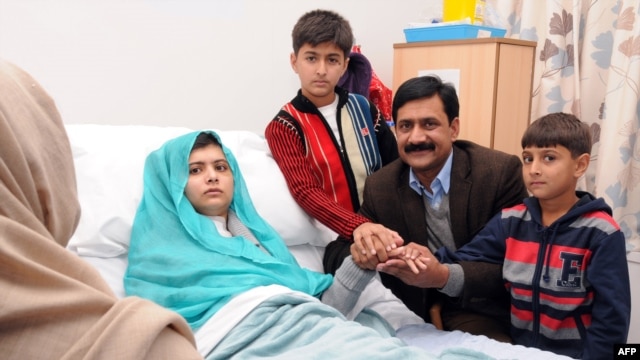
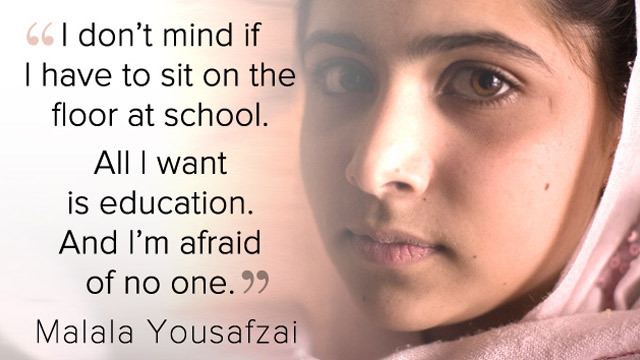
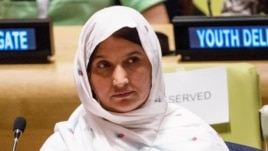
The Making Of Malala: A Look At The Family Behind The Girl
-- Abdul Hai KakarMy introduction to Malala Yousafzai through her schoolteacher father, Ziauddin Yousafzai, was somewhat accidental. It happened during the Taliban's unprecedented ban on girls' education in Pakistan's Northwestern Swat Valley in December 2008. I had been covering the story for the BBC's Urdu-language service. The ban prompted me to pitch to my editors the idea of enlisting a young schoolgirl to write a blog for our widely read website. The concept was simple -- to document life under the Taliban as seen by a schoolgirl.


Pakistan: PPP, ANP, MQM oppose closure of NATO supply
The Frontier Post
The Opposition in the National Assembly appeared divided on Tuesday over Pakistan’s response to the US missile strike that killed Taliban chief in Waziristan. The decisions emerged at a meeting attended by parliamentary leaders of opposition parties wherein the PPP, ANP and MQM leaders were of the view that the government should carry on the negotiation process without blocking the NATO supply. The Pakistan Peoples Party (PPP), a major opposition party in lower house of the Parliament, the Awami National Party (ANP) and the Muttahida Qaumi Movement (MQM) has opposed the blockage of NATO supply to Afghanistan.
Bilawal Bhutto congratulates PWU victory in PSM Referendum
http://mediacellppp.wordpress.com/

 Bilawal Bhutto Zardari, Patron-In-Chief, Pakistan Peoples Party has congratulated Peoples Workers Union (PWU) on its victory in the Pakistan Steel Mills (PSM) referendum to become CBA for next three years.
In a press statement, he pointed out that PWU defeated an alliance of all other political parties in country’s largest industrial unit. “This proves that PPP remains the only major political party having sound and undeterred support among the labour and working class across the country,” he added.
Bilawal Bhutto Zardari paid tribute to the vision of Shaheed Zulfikar Ali Bhutto who established Pakistan Steel, which gave boost to the housing sector in the country.
He said Pakistan Steel employees belong to every nook and corner of Pakistan and triumph of PPP Union was a clear sign that Party remains the largest representative of the masses.
Bilawal Bhutto Zardari, Patron-In-Chief, Pakistan Peoples Party has congratulated Peoples Workers Union (PWU) on its victory in the Pakistan Steel Mills (PSM) referendum to become CBA for next three years.
In a press statement, he pointed out that PWU defeated an alliance of all other political parties in country’s largest industrial unit. “This proves that PPP remains the only major political party having sound and undeterred support among the labour and working class across the country,” he added.
Bilawal Bhutto Zardari paid tribute to the vision of Shaheed Zulfikar Ali Bhutto who established Pakistan Steel, which gave boost to the housing sector in the country.
He said Pakistan Steel employees belong to every nook and corner of Pakistan and triumph of PPP Union was a clear sign that Party remains the largest representative of the masses.
Bane or boon: Urbanisation, displacement pushes Peshawar’s population over 2.5m
 During the last decade, 63% of all internal migrants moved to an urban area either from a rural district or from another urban district. Out of these, nearly 56% moved to the provincial or federal capital, the report stated.
It further adds that population wise, K-P is the third largest province in the country with an estimated population of 22 million. “The province has not only witnessed rapid urban growth but also large movements and displacements during the past two decades because of militancy, military operations and natural disasters in the Federally Administered Tribal Areas (Fata) and Malakand region.”
The influx of Fata’s migrant population to adjacent safer districts like Peshawar, Mardan, Kohat, Bannu, Lakki Marwat and DI Khan, combined with the influx of internally displaced persons (IDPs) has generated socio-economic problems for the cities.
Speaking to The Express Tribune, UNFPA Provincial Coordination Officer Lubna Tajik said one of the reasons behind the growing population of K-P was lack of planning. “A growing population has strong effects on the development of the economy and the society because of changes in labour supply, family structure, education and health management systems,” she said.
Limited livelihood and employment opportunities in Pakistan’s agriculture sector, rising poverty and social conflicts are causing large exodus of rural population to major urban centres, particularly the young and educated people, said Tajik.
“Therefore, the capacity of cities and towns to assimilate the migrants while providing employment, access to land, social services and basic amenities such as water, electricity and sewerage are becoming limited,” she added.
The emerging trend of concentration of migrants in urban areas and big cities is leading to regionally unbalanced urbanisation, existence of squatter settlements and environmental deterioration.
“Better employment opportunities, more knowledge and skills, access to improved education and health services are the perceived benefits from a migratory movement, but at the same time social discontent, economic insecurity and displacements by natural disasters likes earthquakes and floods are the expected costs borne by migrants,” she pointed out, adding these issues need to be properly assessed to make effective policies. According to Professor Niaz Ahmad of the University of Peshawar, growing population and urbanisation in the province has increased the crime rate and created more health problems with inadequate sanitation and poor medical facilities. “The government should carry out proper planning and policies to deal with migrant populations and its needs,” he insisted.
Changing demographic
According to the 1998 census, K-P constituted 13.4 % of the population of Pakistan with an average annual growth rate of 2.82% as compared to the national growth rate of 2.69%. The urban population of K-P was 2,994,084 or 16.9 % of the total population of the province which grew at an average rate of 3.5% during 1981-98.
The 1998 census estimates the total number of lifetime migrants in K-P were 647,356 or 3.7% of the population of the province. Out of these migrants 68.6% came from other districts of K-P, 14.9% from Sindh, Punjab, Balochistan and Islamabad, 12.8% from Fata, 0.8% from Azad Kashmir and the then Northern Areas, while the remaining 2.9% were Pakistanis who repatriated from other countries.
In 2013, K-P’s population stands at 22 million, and is rising with resources rapidly dwindling to cater to the public’s needs.
During the last decade, 63% of all internal migrants moved to an urban area either from a rural district or from another urban district. Out of these, nearly 56% moved to the provincial or federal capital, the report stated.
It further adds that population wise, K-P is the third largest province in the country with an estimated population of 22 million. “The province has not only witnessed rapid urban growth but also large movements and displacements during the past two decades because of militancy, military operations and natural disasters in the Federally Administered Tribal Areas (Fata) and Malakand region.”
The influx of Fata’s migrant population to adjacent safer districts like Peshawar, Mardan, Kohat, Bannu, Lakki Marwat and DI Khan, combined with the influx of internally displaced persons (IDPs) has generated socio-economic problems for the cities.
Speaking to The Express Tribune, UNFPA Provincial Coordination Officer Lubna Tajik said one of the reasons behind the growing population of K-P was lack of planning. “A growing population has strong effects on the development of the economy and the society because of changes in labour supply, family structure, education and health management systems,” she said.
Limited livelihood and employment opportunities in Pakistan’s agriculture sector, rising poverty and social conflicts are causing large exodus of rural population to major urban centres, particularly the young and educated people, said Tajik.
“Therefore, the capacity of cities and towns to assimilate the migrants while providing employment, access to land, social services and basic amenities such as water, electricity and sewerage are becoming limited,” she added.
The emerging trend of concentration of migrants in urban areas and big cities is leading to regionally unbalanced urbanisation, existence of squatter settlements and environmental deterioration.
“Better employment opportunities, more knowledge and skills, access to improved education and health services are the perceived benefits from a migratory movement, but at the same time social discontent, economic insecurity and displacements by natural disasters likes earthquakes and floods are the expected costs borne by migrants,” she pointed out, adding these issues need to be properly assessed to make effective policies. According to Professor Niaz Ahmad of the University of Peshawar, growing population and urbanisation in the province has increased the crime rate and created more health problems with inadequate sanitation and poor medical facilities. “The government should carry out proper planning and policies to deal with migrant populations and its needs,” he insisted.
Changing demographic
According to the 1998 census, K-P constituted 13.4 % of the population of Pakistan with an average annual growth rate of 2.82% as compared to the national growth rate of 2.69%. The urban population of K-P was 2,994,084 or 16.9 % of the total population of the province which grew at an average rate of 3.5% during 1981-98.
The 1998 census estimates the total number of lifetime migrants in K-P were 647,356 or 3.7% of the population of the province. Out of these migrants 68.6% came from other districts of K-P, 14.9% from Sindh, Punjab, Balochistan and Islamabad, 12.8% from Fata, 0.8% from Azad Kashmir and the then Northern Areas, while the remaining 2.9% were Pakistanis who repatriated from other countries.
In 2013, K-P’s population stands at 22 million, and is rising with resources rapidly dwindling to cater to the public’s needs.
Bilawal Bhutto questions how Mehsud’s death sabotaged talks
Daily Times
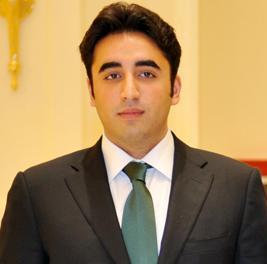
The weekend death of Tehreek-e-Taliban Pakistan leader Hakimullah Mehsud in a US drone strike and the subsequent response from the Pakistani government prompted a series of critical tweets from Pakistan People’s Party Patron-in-Chief Bilawal Bhutto Zardari over the past three days. With the governments in the Centre as well as in Khyber Pakhtunkhwa accusing the US of sabotaging Pakistan’s hopes for peace following the killing of one of Pakistan’s worst mass murderers – responsible for the deaths of thousands of civilians, soldiers and public figures – Bilawal gave up any pretence over the issue. In one of his Twitter posts, Bilawal said, “Kill our former PM, generals & soldiers we offer peace talks, one of TTP leaders are killed. Peace sabotaged.” He questioned the unconditional peace talks – on part of the government – offered to the Taliban, while the ‘terrorists’ were setting conditions. “Funny how TTP are allowed conditions 4 talks but we have to offer talks without pre-conditions,” he said in another tweet. “If there are good Taliban and bad Taliban are we allowed to say there are good drones and bad drones?” he said in another tweet, making it clear that he was not in favour of drones. “I’m anti-drone. But there’s a time and a place to be anti and now not it,” he tweeted. The son of slain PPP chairwoman Benazir Bhutto also questioned how peace talks that have not even begun could be derailed. “Day before strike, TTP said there had been no effort for talks on ground and Government of Pakistan was just talking on TV. How can one sabotage talks that haven’t started?” he said in another tweet. Bilawal also lamented over the government’s stance on Mehsud’s killing by tweeting, “The silent majority are celebrating while the cowards are in mourning on Hakimullah’s death.”
How Pakistan's Musharraf shook off legal cases
When Pakistan's former military ruler, Pervez Musharraf, ended his four-year exile and returned to the country to participate in May's elections, he took many people by surprise.
He had made many powerful enemies during his eight-year rule, and some of them had been in power or were about to be.
Besides, a slew of criminal charges had been lying dormant against him in various courts, awaiting his return.
But on Monday, a court granted him bail in the last of the four criminal cases instituted against him, paving the way for his release.
How he managed to turn what many had considered a miscalculation, into a legal triumph can be partly explained by the shifting nature of the country's political and judicial systems.
He obviously returned to Pakistan thinking he had done no wrong.
He also believed that his party could win some seats in parliament on the strength of an economic bubble his policies had created in the services sector in urban areas.
In addition, he knew that the country's powerful military, of which he had been the head until 2008, would not allow the politicians and the judges to drag him through the courts and convict him as a criminal.
Many thought he had miscalculated because the judges that he sacked in 2007 had been swept back to their positions by a wave of popular agitation that forced him out of power in 2008.
Insurgent judiciary
Since then, the judges, led by Chief Justice Iftikhar Chaudhry, have used a policy of "judicial activism" to encroach significantly on the sphere of the executive.
It is generally believed that what happened to Mr Musharraf was largely the result of an insurgent judiciary wanting to make history by arraigning a former army chief, something that no-one had done before.
The May elections also restored a political leadership that had been ousted from power by Mr Musharraf in a military coup in 1999. The expectation was that Prime Minister Nawaz Sharif's government would go the whole way to bring him down.
It mostly seemed that way in the beginning.
Days after landing in Pakistan in March, Mr Musharraf suffered the insult of having a shoe thrown at him in a crowded corridor of a court building. It narrowly missed.
A little more than a week later, the Supreme Court instituted hearings to explore if he could be put on trial for treason for suspending the constitution and imposing emergency rule in November 2007.
In April, an election tribunal, comprising high court judges, declared he could not be a candidate.
He was arrested later that month for putting nearly 60 senior judges under house arrest in November 2007, when he was president.
Over the next few months, his re-arrest was ordered in two high-profile murder cases; the 2006 killing of a rebel Baloch politician, Akbar Bugti, in a military operation, and the 2007 assassination of former Prime Minister Benazir Bhutto in a gun and bomb attack.
Public interest waning
Since April, when he was first detained, he has remained under house arrest at his residence in Islamabad.
During this period, public interest in his fate has been overtaken by other events, and the high pressure of the initial days has gradually eased.
He managed to get bail in the judges' detention case when the complainant, a lawyer, decided he did not want to pursue the matter. Whether he was persuaded by someone from the military remains a matter of speculation.
He was also granted bail in the Benazir Bhutto murder case on 20 May.
The bail came two weeks after the chief prosecutor in the case, Chaudhry Zulfiqar, was gunned down in Islamabad, ostensibly by militants with alleged links to the 2008 Mumbai attacks - another case that he had been investigating.
On 9 October, Mr Musharraf was given bail in the Akbar Bugti case, clearing him of all charges pending against him.
But before he could be set free, he was re-arrested in the case of the 2007 Red Mosque siege in Islamabad in which more than 100 people, many of them armed militants, were killed.
With the bail granted in this case as well on Monday, Mr Musharraf is now set to walk free.
Signs of retreat
Legal experts say there was no evidence linking him directly to any of the offences for which he was charged.
But there are also those who point out that if he were not a former army chief, he would have still be in the dock, given the vast powers the judiciary has arrogated to itself.
The government of Prime Minister Sharif is also showing signs of a retreat.
The only case in which Mr Musharraf could have been pinned down legally - the high treason case - failed to take off because the government, which alone can initiate a treason case under the law, has been procrastinating despite a commitment it made in the court in August.
So unless he is charged in a fresh offence, Mr Musharraf cannot be kept in detention any more or banned from travelling abroad, experts say.
The question is, will he opt to leave the country, which most elements in the government and the army would like him to do, or stay on to carve a political future for himself in Pakistan?
The situation should become clear over the next few days.
Two-Faced Allies: Pakistan and the U.S.
 By SHAHAN MUFTI
Less than a week after Pakistan’s prime minister, Nawaz Sharif, returned home from a trip to Washington, an American drone killed Hakimullah Mehsud, a man who had terrorized all Pakistan as the leader of the country’s most dangerous militant group, the Pakistani Taliban.
With any other two countries, such a sequence of events might have been followed by an official nod to the cooperation involved — or at the very least, meaningful silence. But with the United States and Pakistan it’s always more complicated. Hours after the drone strike, Pakistan’s interior minister accused the United States of the “murder of peace efforts.” He later berated “enemies dressed as friends.”
It’s an old script. Regardless of whatever cooperation is involved, both countries always find it more useful to paint the other as the villain. The Pakistani government, which in reality is playing a central role in the war on terror, gets to paint itself as the victim of a bullying superpower.
Meanwhile, American officials keep pointing to Pakistan’s “double game” for most of their failures in Afghanistan, while downplaying the fact that, without Pakistan, this war would have been impossible to wage in the first place.
The real root of the dysfunction is not so much deceit between allies as the lies both governments have told their own people. Pakistani and American leaders have systematically and purposefully misled their own publics about the nature and details of their partnership. Each country has used the other as a strategic and convenient punching bag.
As an American born to Pakistani parents, fluent in the languages of both countries, I have spent the past 12 years regularly shuttling between the two countries and I’ve seen and heard the duplicitous official narratives steadily take root on each side.
Just days after 9/11, Pervez Musharraf, the former military ruler of Pakistan, addressed his country in Urdu, telling them that America had asked Pakistan for cooperation in intelligence sharing, the use of Pakistani airspace and logistical support. Mr. Musharraf made it clear that he’d decided to cooperate.
But that’s where the openness ended. In 2005, for example, when the Pakistani government announced that a senior Al Qaeda operative had died in an accidental bomb-making explosion in Pakistan’s tribal areas, Hayatullah Khan, a Pakistani investigative journalist travelled to the scene of the blast and found fragments of an American Hellfire missile. Mr. Khan was kidnapped and soon turned up dead. Presenting evidence that America could operate in Pakistani airspace turned out to be deadly.
Seven years later, the American public still doesn’t know much about what their country does in Pakistan. For years, Washington didn’t even recognize the use of drones there. Only recently, after leaks from inside the Obama administration forced officials to begin speaking about the details of the program, have Americans been able to piece together a basic outline.
The same is true of supply lines into landlocked Afghanistan. Within months of the 2001 invasion, Mr. Musharraf signed a deal allowing the transport of American and NATO military equipment through Pakistan. But the agreement was kept secret from the Pakistani people until 2010. The American government was no more candid with its own people. Americans never truly appreciated, for example, that since President George W. Bush was denied permission to dock U.S. Navy vessels in Pakistani ports, America was forced to outsource nearly the entire American military supply chain into the hands of private contractors close to the Pakistani military.
The decision to hide and obscure such details was born of a desire to control the precarious narrative of the war at home. Insecure Pakistani leaders always feared that details of the cooperation would destabilize their already shaky regimes. Likewise, Mr. Bush and Mr. Obama likely thought that publicly acknowledging the compromises they’d made to win Pakistan’s support, might make them appear weak. Keeping their citizens in the dark, leaders in both nations seemed to think, would keep the cooperation simple.
The result has been quite the opposite. The stark disconnect between reality and rhetoric now makes both governments’ pronouncements sound absurd. There have been more than 300 American drone strikes in a remote corner of Pakistan. And while Islamabad continues to denounce these strikes, Pakistani citizens see thousands of trucks carrying huge shipping containers on the highways every day, bringing supplies to the American military in Afghanistan. Likewise, Americans have learned that billions of dollars in aid is still flowing to Pakistan, despite the fact that Osama bin Laden was living a mile away from Pakistan’s main military academy for years.
The resulting confusion is making Americans and Pakistanis hate each other. A Pew Research Center poll in July found that America is more disliked in Pakistan than anywhere else. A Gallup poll a few months earlier found that the countries most disliked by Americans are Pakistan, Iran and North Korea.
The lies that were meant to hold Pakistan and America together in a time of war, are now imperiling the alliance they were meant to protect.
The two countries have been geopolitical allies since Pakistan appeared on the map in 1947. In the interest of preserving this long-term relationship, which will remain vital to both countries long after the American troops withdraw from Afghanistan, the details of the agreements between Pakistan and America must be made public. In the end, Americans and Pakistanis want the same thing — the truth, for once, from their leaders.
By SHAHAN MUFTI
Less than a week after Pakistan’s prime minister, Nawaz Sharif, returned home from a trip to Washington, an American drone killed Hakimullah Mehsud, a man who had terrorized all Pakistan as the leader of the country’s most dangerous militant group, the Pakistani Taliban.
With any other two countries, such a sequence of events might have been followed by an official nod to the cooperation involved — or at the very least, meaningful silence. But with the United States and Pakistan it’s always more complicated. Hours after the drone strike, Pakistan’s interior minister accused the United States of the “murder of peace efforts.” He later berated “enemies dressed as friends.”
It’s an old script. Regardless of whatever cooperation is involved, both countries always find it more useful to paint the other as the villain. The Pakistani government, which in reality is playing a central role in the war on terror, gets to paint itself as the victim of a bullying superpower.
Meanwhile, American officials keep pointing to Pakistan’s “double game” for most of their failures in Afghanistan, while downplaying the fact that, without Pakistan, this war would have been impossible to wage in the first place.
The real root of the dysfunction is not so much deceit between allies as the lies both governments have told their own people. Pakistani and American leaders have systematically and purposefully misled their own publics about the nature and details of their partnership. Each country has used the other as a strategic and convenient punching bag.
As an American born to Pakistani parents, fluent in the languages of both countries, I have spent the past 12 years regularly shuttling between the two countries and I’ve seen and heard the duplicitous official narratives steadily take root on each side.
Just days after 9/11, Pervez Musharraf, the former military ruler of Pakistan, addressed his country in Urdu, telling them that America had asked Pakistan for cooperation in intelligence sharing, the use of Pakistani airspace and logistical support. Mr. Musharraf made it clear that he’d decided to cooperate.
But that’s where the openness ended. In 2005, for example, when the Pakistani government announced that a senior Al Qaeda operative had died in an accidental bomb-making explosion in Pakistan’s tribal areas, Hayatullah Khan, a Pakistani investigative journalist travelled to the scene of the blast and found fragments of an American Hellfire missile. Mr. Khan was kidnapped and soon turned up dead. Presenting evidence that America could operate in Pakistani airspace turned out to be deadly.
Seven years later, the American public still doesn’t know much about what their country does in Pakistan. For years, Washington didn’t even recognize the use of drones there. Only recently, after leaks from inside the Obama administration forced officials to begin speaking about the details of the program, have Americans been able to piece together a basic outline.
The same is true of supply lines into landlocked Afghanistan. Within months of the 2001 invasion, Mr. Musharraf signed a deal allowing the transport of American and NATO military equipment through Pakistan. But the agreement was kept secret from the Pakistani people until 2010. The American government was no more candid with its own people. Americans never truly appreciated, for example, that since President George W. Bush was denied permission to dock U.S. Navy vessels in Pakistani ports, America was forced to outsource nearly the entire American military supply chain into the hands of private contractors close to the Pakistani military.
The decision to hide and obscure such details was born of a desire to control the precarious narrative of the war at home. Insecure Pakistani leaders always feared that details of the cooperation would destabilize their already shaky regimes. Likewise, Mr. Bush and Mr. Obama likely thought that publicly acknowledging the compromises they’d made to win Pakistan’s support, might make them appear weak. Keeping their citizens in the dark, leaders in both nations seemed to think, would keep the cooperation simple.
The result has been quite the opposite. The stark disconnect between reality and rhetoric now makes both governments’ pronouncements sound absurd. There have been more than 300 American drone strikes in a remote corner of Pakistan. And while Islamabad continues to denounce these strikes, Pakistani citizens see thousands of trucks carrying huge shipping containers on the highways every day, bringing supplies to the American military in Afghanistan. Likewise, Americans have learned that billions of dollars in aid is still flowing to Pakistan, despite the fact that Osama bin Laden was living a mile away from Pakistan’s main military academy for years.
The resulting confusion is making Americans and Pakistanis hate each other. A Pew Research Center poll in July found that America is more disliked in Pakistan than anywhere else. A Gallup poll a few months earlier found that the countries most disliked by Americans are Pakistan, Iran and North Korea.
The lies that were meant to hold Pakistan and America together in a time of war, are now imperiling the alliance they were meant to protect.
The two countries have been geopolitical allies since Pakistan appeared on the map in 1947. In the interest of preserving this long-term relationship, which will remain vital to both countries long after the American troops withdraw from Afghanistan, the details of the agreements between Pakistan and America must be made public. In the end, Americans and Pakistanis want the same thing — the truth, for once, from their leaders.
India launches spacecraft to Mars
India has successfully launched a spacecraft to the Red Planet - with the aim of becoming the fourth space agency to reach Mars.
 The Mars Orbiter Mission took off at 09:08 GMT from the Satish Dhawan Space Centre on the country's east coast.
The head of India's space agency told the BBC the mission would demonstrate the technological capability to reach Mars orbit and carry out experiments.
The Mars Orbiter Mission took off at 09:08 GMT from the Satish Dhawan Space Centre on the country's east coast.
The head of India's space agency told the BBC the mission would demonstrate the technological capability to reach Mars orbit and carry out experiments.
 The spacecraft is set to travel for 300 days and reaching Mars orbit in 2014.
If the satellite orbits the Red Planet, India's space agency will become the fourth in the world after those of the US, Russia and Europe to undertake a successful Mars mission.
A 56-hour countdown to the launch began on Sunday.Some observers are viewing the launch of the MOM, also known by the informal name of Mangalyaan (Mars-craft), as the latest salvo in a burgeoning space race between the Asian powers of India, China, Japan, South Korea and others.Prof Andrew Coates, from the UK's Mullard Space Science Laboratory, told BBC News: "I think this mission really brings India to the table of international space exploration. Interplanetary exploration is certainly not trivial to do, and [India] has found some interesting scientific niches to make some measurements in."
Those niche areas include searching for the signature of methane (CH4) in the Martian atmosphere, which has previously been detected from Martian orbit and telescopes on Earth. However, Nasa's Curiosity rover recently failed to find the gas in its measurements of atmospheric gases.
CH4 has a short lifetime in the Martian atmosphere, meaning that some source on the Red Planet must replenish it. Intriguingly, some 95% of atmospheric methane on Earth is produced by microbes, which has led some to propose the possibility of a biosphere deep beneath the Martian surface. But the gas can be produced by geological processes too, most notably by volcanism.
Definitive conclusions are likely to be elusive, but the spacecraft's Methane Sensor for Mars (MSM) instrument will aim to make measurements and map any potential sources of methane "plumes".
The spacecraft will also examine the rate of loss of atmospheric gases to outer space. This could provide insights into the planet's history; billions of years ago, the envelope of gases around Mars is thought to have been more substantial.India approved the project in 2012, so mission scientists have worked around the clock to ready the craft in order to take advantage of a favourable alignment of the two planets that would allow the MOM to save on fuel during its journey to Mars.
The orbiter was lofted on an evolved version of the Indian-developed Polar Satellite Launch Vehicle, taking it into an elliptical orbit around Earth. It will then begin a series of six small engine burns to lift it to a higher orbit.
A final burn will send the craft off on an interplanetary trajectory, to begin its 300-day, 780-million km journey to the Red Planet. In order for the MOM to embark on the right trajectory, the mission must launch by 19 November and carry out its final orbital burn by 30 November.
The difficulty of visiting the Red Planet will not be lost on Indian officials; just under half the total attempts to reach Mars have failed. But Prof Coates said the planned mechanics for getting to Mars were on a sound footing, and that the probe stood a good chance as long as its engines fired correctly. Some commentators have wondered whether India should be spending $72m (£45m) on a scientific mission when the country has one of the highest rankings for childhood malnutrition in the world.
But those who defend such projects say the MOM is comparatively cheap and that the technological development required to mount this mission could indirectly benefit the country's other activities.
Nisha Agrawal, chief executive of Oxfam in India, told the BBC: "India is home to poor people but it's also an emerging economy, it's a middle-income country, it's a member of the G20. What is hard for people to get their head around is that we are home to poverty but also a global power.
"We are not really one country but two in one. And we need to do both things: contribute to global knowledge as well as take care of poor people at home."
K Radhakrishnan, chair of the Indian Space Research Organisation (Isro), told the BBC's India Business Report: "Why India has to be in the space programme is a question that has been asked over the last 50 years. The answer then, now and in the future will be: 'It is for finding solutions to the problems of man and society.'
He added: "A great revolution has taken place over these last 50 years in the country by a meagre expenditure that has been put into the space programme."
Mr Radhakrishnan played down talk of a race between China and India in space, commenting: "We are not in a race with anybody, but I would say we are in a race with ourselves. We need to excel, we need to improve, and we need to bring new services."
But a successful launch would allow India to surge ahead of regional rival China, at least in the exploration of Mars. China's Yinghuo-1 spacecraft was to have reached Martian orbit in late 2012. But it was piggybacked on the Russian Phobos Grunt spacecraft, which became stranded in low-Earth orbit shortly after launch in November 2011.
The MOM was to have been launched as early as 28 October, but rough weather in the Pacific forced officials to delay the launch.
The spacecraft is set to travel for 300 days and reaching Mars orbit in 2014.
If the satellite orbits the Red Planet, India's space agency will become the fourth in the world after those of the US, Russia and Europe to undertake a successful Mars mission.
A 56-hour countdown to the launch began on Sunday.Some observers are viewing the launch of the MOM, also known by the informal name of Mangalyaan (Mars-craft), as the latest salvo in a burgeoning space race between the Asian powers of India, China, Japan, South Korea and others.Prof Andrew Coates, from the UK's Mullard Space Science Laboratory, told BBC News: "I think this mission really brings India to the table of international space exploration. Interplanetary exploration is certainly not trivial to do, and [India] has found some interesting scientific niches to make some measurements in."
Those niche areas include searching for the signature of methane (CH4) in the Martian atmosphere, which has previously been detected from Martian orbit and telescopes on Earth. However, Nasa's Curiosity rover recently failed to find the gas in its measurements of atmospheric gases.
CH4 has a short lifetime in the Martian atmosphere, meaning that some source on the Red Planet must replenish it. Intriguingly, some 95% of atmospheric methane on Earth is produced by microbes, which has led some to propose the possibility of a biosphere deep beneath the Martian surface. But the gas can be produced by geological processes too, most notably by volcanism.
Definitive conclusions are likely to be elusive, but the spacecraft's Methane Sensor for Mars (MSM) instrument will aim to make measurements and map any potential sources of methane "plumes".
The spacecraft will also examine the rate of loss of atmospheric gases to outer space. This could provide insights into the planet's history; billions of years ago, the envelope of gases around Mars is thought to have been more substantial.India approved the project in 2012, so mission scientists have worked around the clock to ready the craft in order to take advantage of a favourable alignment of the two planets that would allow the MOM to save on fuel during its journey to Mars.
The orbiter was lofted on an evolved version of the Indian-developed Polar Satellite Launch Vehicle, taking it into an elliptical orbit around Earth. It will then begin a series of six small engine burns to lift it to a higher orbit.
A final burn will send the craft off on an interplanetary trajectory, to begin its 300-day, 780-million km journey to the Red Planet. In order for the MOM to embark on the right trajectory, the mission must launch by 19 November and carry out its final orbital burn by 30 November.
The difficulty of visiting the Red Planet will not be lost on Indian officials; just under half the total attempts to reach Mars have failed. But Prof Coates said the planned mechanics for getting to Mars were on a sound footing, and that the probe stood a good chance as long as its engines fired correctly. Some commentators have wondered whether India should be spending $72m (£45m) on a scientific mission when the country has one of the highest rankings for childhood malnutrition in the world.
But those who defend such projects say the MOM is comparatively cheap and that the technological development required to mount this mission could indirectly benefit the country's other activities.
Nisha Agrawal, chief executive of Oxfam in India, told the BBC: "India is home to poor people but it's also an emerging economy, it's a middle-income country, it's a member of the G20. What is hard for people to get their head around is that we are home to poverty but also a global power.
"We are not really one country but two in one. And we need to do both things: contribute to global knowledge as well as take care of poor people at home."
K Radhakrishnan, chair of the Indian Space Research Organisation (Isro), told the BBC's India Business Report: "Why India has to be in the space programme is a question that has been asked over the last 50 years. The answer then, now and in the future will be: 'It is for finding solutions to the problems of man and society.'
He added: "A great revolution has taken place over these last 50 years in the country by a meagre expenditure that has been put into the space programme."
Mr Radhakrishnan played down talk of a race between China and India in space, commenting: "We are not in a race with anybody, but I would say we are in a race with ourselves. We need to excel, we need to improve, and we need to bring new services."
But a successful launch would allow India to surge ahead of regional rival China, at least in the exploration of Mars. China's Yinghuo-1 spacecraft was to have reached Martian orbit in late 2012. But it was piggybacked on the Russian Phobos Grunt spacecraft, which became stranded in low-Earth orbit shortly after launch in November 2011.
The MOM was to have been launched as early as 28 October, but rough weather in the Pacific forced officials to delay the launch.
U.S. Official Says NATO Supply Routes In Pakistan 'Fully Open'
http://www.rferl.org/U.S. official says NATO supply routes to Afghanistan remain “fully open” amid news reports that Pakistani officials are considering reviewing the country’s relationship with the United States. Pakistani Taliban leader Hakimullah Mehsud was reported killed in a suspected U.S. drone strike on November 1. The Pakistani government reacted angrily to the attack, which it said would scuttle peace talks with the militants. The ruling party in Khyber Pakhtunkhwa Province passed a resolution three days later threatening to block supply routes starting November 20 unless drone strikes stop. U.S. State Department spokeswoman Marie Harf said on November 4 that there is "no disruption" in supply routes and that supplies "are moving." In 2012, Pakistan closed NATO supply routes for seven months in protest at the mistaken killing of 24 Pakistani troops in a U.S. attack.
Nawaz's Foreign Trips: Prime Minister's home away from home
There should be no problem if one has his 'second home' in another country. But it is a problem if for an elected prime minister his own country is his 'second home' - as seems to be the case of Nawaz Sharif. Since assuming office as Pakistan's chief executive and also in charge of ministries of Foreign Affairs and Defence five months ago, he has spent nearly a month or so visiting other countries. On Thursday, the prime minister was in London on the invitation of his British counterpart to meet President Karzai and attend a sort of economic forum of Muslim countries, on his third visit to London in the last fortnight or so. That his brother, Punjab Chief Minister Shahbaz Sharif too showed up in time to meet British Deputy Prime Minister Nick Clegg is no big surprise because London is Sharifs' "second home". So present there were quite a few members of the clan who too keep shuttling through London during their hectic foreign tours on government business. Before Britain sheds its autumn colours and becomes forbiddingly cold, it is worth visiting. Then many members of Pakistani elite have their businesses and families in London, requiring their frequent presence. But it would be blasphemic to suggest that the popularly-elected prime minister is whiling away his time in London when proverbial 'Rome is burning'. To remain unconcerned over his prolonged absence from the country in times as hard and critical as Pakistan faces today, would be no less blasphemic. Not waiting long enough to digest a briefing on the myriad problems Pakistan is beset with at the time he took over, he left for China in July for a five-day visit. Next month he had to go to Saudi Arabia to perform 'umra' and have an audience with King Abdullah, his host during the spell of his exile. In September Nawaz Sharif visited Turkey and then New York to attend the UN General Assembly and meet Manmohan Singh, a meeting Pakistani leadership had been wanting knowing full well it would never be more than a handshake, and in this case a 'juppha' (embrace). He had to be again in the United States in late October to meet President Obama for a meeting which was not possible during his UN visit because Washington would not like to meet the rival prime ministers in one go to prove its policy of de-hyphenating the two in its approach to South Asia. This is not to suggest that political leaders do not go abroad, they indeed do, but only when it is indispensably important in the national interest. But not in Pakistan where somehow the leaders are loose-footed and would feel caged at home. Should Nawaz Sharif undertake his scheduled visits to Sri Lanka and Thailand later this month he would be beating the enviable record set by Yousuf Raza Gilani who visited more than 40 counties during his term in office. When the prime minister is away from his office all the decisions that are to be taken at his level are not taken; the policy-direction that he as the chief executive is expected to give is not available; and the files he is supposed to clear as minister of Defence or Foreign Affairs are held up on his desk. In a way, ad hocism tends to prevail, because it is just not possible that the prime minister would be looking after his routine work during his foreign visits. Maybe, as some say, others in line of command are equally empowered to take over his routine work. But what to do when guidance-cum-action on his part is required on critical issues like rampant terrorism, scope of peace parleys with Taliban, dysfunctional parliamentary committees and appointments to high military and civilian departments and the fate of national entities like PIA and Pakistan Steels. That during nearly half a year of its existence the parliament has not been able to pass a single piece of legislation other than the Finance Bill and the government had to issue Protection of Pakistan Ordinance in order to provide adequate authority to fight terrorism and lawlessness is nothing but a pathetic state of affairs during the tenure of an elected government. If what media reported on the engagements of Prime Minister Nawaz Sharif had during some of his visits one would conclude all of it could be done, if at all it was inescapable, at a much lower level. That his visits are most economical, as his aides would say, the answer is the setbacks the government working suffers in his absence are much more costly. There should be no problem that his foreign visits enjoy high visibility and appropriate protocol; the problem is when a visit at his level is either absolutely unwarranted or can be undertaken at some lower level.
Pakistan: Mourning a villain
THE death of a man who waged war against the Pakistani state and was responsible for the slaughtering of thousands of innocent men, women and children should have come as a great relief to this strife-torn nation. Instead, our political leaders are mourning the death of Hakeemullah Mehsud in a US drone strike describing the incident as an “attack on peace”. From being public enemy No.1, the chief of the Tehreek-i-Taliban Pakistan (TTP) has virtually been turned into a hero after his inglorious death. A mass murderer who ordered the beheading of our soldiers and claimed responsibility for killing a Pakistani general just a few months ago, is now being elevated to the status of a martyr. Instead of seizing this moment of opportunity to dismantle a fragmented terrorist network, a frightened political leadership has shamelessly prostrated itself before the militants. As a result, the extremists and their allies are now dominating the public narrative despite their crimes against the people of Pakistan. It is an extremely dangerous situation for a country facing the existential threat of spiralling violent extremism. A narrow self-serving leadership is taking the entire country towards a suicidal path. With few exceptions, all political parties have joined the chorus that the fatal drone strike on Hakeemullah was a conspiracy to scuttle an illusory peace process. While the interior minister has called for reviewing relations with the US, an agitated Imran Khan has threatened to block the Nato supply line in protest. The bravado may just be public posturing, but the irresponsible rhetoric could lead to some unintentional consequences, plunging the country into more dire straits. It is a pity that even the killing of young women and children in a suicide bombing in a crowded Peshawar bazaar or the massacre of Christian worshippers in the church bombing has not shaken the great Khan as much as the death of the leader of the militant outfit that perpetrated those heinous attacks. He even refuses to accept that the Taliban were behind those bombings despite their endorsement of the attack. Seemingly, all the tumult is about the timing of the US action and the violation of Pakistan’s sovereignty once again. According to the interior minister, the attack was carried out hours before a three-member delegation was to meet the TTP leadership and extend to them a formal invitation from the government for talks. Notwithstanding the questionable legality of America’s drone strikes on Pakistani soil, it is hard to believe that the targeting of the TTP chief was part of a plan to sabotage the talks as alleged by our political leaders. One should not forget that the TTP leader was on the US’s most wanted list with a bounty of up to $5m on his head. He came on the US radar after a video showed him talking to Hummam Khalil Abu-Mulal al Balawi, a Jordanian doctor with Al Qaeda connections who blew himself up inside a CIA operating base in Afghanistan’s Khost province, killing seven intelligence operatives in 2009. The incident also confirmed his close ties with Al Qaeda. Soon after, Hakeemullah claimed to have trained Faisal Shehzad, an American of Pakistani origin who was involved in a failed attempt to detonate a car bomb in New York’s Times Square. Hakeemullah had narrowly escaped several drone strikes in the past three years. He was also reportedly injured in one of them that kept him out of action for several months. Significantly, the fatal attack on Friday came a couple of weeks after the US forces had snatched from the Afghan intelligence agencies Latif Mehsud, a close confidant of the TTP leader. It is quite plausible that the information gleaned from Latif might have led the CIA to Hakeemullah’s hideout. Interior Minister Chaudhry Nisar Ali Khan has confirmed that American officials had informed him that the TTP leader would not be spared if tracked down. For sure, the drone campaign has remained a major irritant in the troubled relations between Islamabad and Washington. Prime Minister Nawaz Sharif also raised the issue during his meeting with President Barack Obama in Washington last month. Indeed, Pakistan’s objection to the violation of the country’s sovereignty is fully justified on legal and ethical grounds. There are no two views about the negative political impact of the collateral damage caused by the drone attacks. But it is also a fact, that the drones have eliminated many high-value Pakistani militants running their terrorist operations from North Waziristan. Prominent among those killed in the last two years are Waliur Rehman, who was deputy chief of the TTP, Ilyas Kashmiri, Qari Hussain, Qari Zafar and Badar Mansoor. They were all masterminds of attacks on Pakistani security installations. Pakistan has also decided to contact the five permanent members of the UN Security Council on the killing of Hakeemullah in the latest drone strike. The move will certainly make Pakistan a laughing stock and only weaken the country’s case on the drone issue. Leave aside other countries, Islamabad cannot even convince its closest ally China on the matter. The militant sanctuaries in North Waziristan are a cause for concern to the entire international community. It is certain that the way Pakistan is dealing with the issue of terrorism will find no takers. It was questionable from the outset whether the government’s peace efforts could succeed given the uncompromising attitude of the TTP. In his last interview to the BBC, Hakeemullah had rejected any dialogue under the Pakistani Constitution, saying that it envisioned a secular democratic system. Now with his death that may lead to further fragmentation of the TTP, the possibility of any purposeful negotiations has become even more remote. But the danger is that the current state of policy disarray may provide a conducive environment in which the militants can revitalise their activities. It is perhaps, the most critical point in the country’s struggle against the rising militant threat.ZAHID HUSSAIN
Subscribe to:
Posts (Atom)