http://www.cbsnews.com/As CBS News estimates Gov. Chris Christie, R-N.J., will be re-elected as New Jersey governor by a comfortable margin, virtually no one ever thought the outcome might be different. For months, Christie held a commanding lead as his Democratic challenger, state Sen. Barbara Buono, failed to get her campaign off the ground.In the end, it was about securing a historically large landslide victory for a Republican governor in a blue state, and that he did. Christie capitalized on a seven-day, 90-stop bus tour that took him to every county in the state during the last week of his election. The real question coming out of Tuesday's election is what his margin of victory means for a potential 2016 presidential bid. This is a state that President Obama won by 17 points in the 2012 election and 15 points in 2008. Yet Christie, known for a more pragmatic brand of conservatism than many of the other potential 2016 candidates, easily bested Buono and was the first Republican to win the N.J. governor's office with more than 50 percent of the vote since 1969.The roots of Christie's victory lie in his aggressive response to Superstorm Sandy just before the 2012 election. After the storm, his approval rating jumped nearly 20 points to 67 percent among registered voters, 61 percent of whom cited his handling of the storm and its aftermath as the reason. Throughout the campaign, he didn't let voters forget that, making his hurricane response the subject of his first campaign ad in September. Early exit polls found voters gave Christie high marks for his handling of problems caused by Sandy. More than eight in 10 voters approve of his response to the storm. A quarter say they suffered severe hardship due to the storm, and those voters also approve of the way the Republican governor handled problems caused by the storm. Still, the economy was the issue most on the minds of voters today, far ahead of taxes, education, and same-sex marriage. Nearly six in 10 voters say the state's economy is in bad shape; while about 40 percent say it is good. While 29 percent of New Jersey voters think the condition of the state's economy has improved from four years ago, just as many say it has gotten worse. Four in 10 think it has stayed the same.The day before voters went to the polls, the Quinnipiac polling institute showed Christie with the same two-to-one margin lead over Buono that he has held for months. The poll put his lead at 61 to 33 percent among likely voters, including 64 to 29 percent lead among independents and 30 percent among Democrats. Because defeating Christie seemed like an insurmountable goal, outside Democratic and union-backed groups poured their money into the races for the state legislature in order to ensure that the Democratic body didn't see Christie gain any more supporters. According to the New York Times, as of last Thursday, more than $35 million in outside money had flowed into the state's races, more than twice what was spent when Christie was elected in 2009. They had reason to worry. Christie had vocal, heated battles with unions, especially the teachers' union, for power in the state, which has won him praise from conservatives. But other actions have been have been less cut-and-dry in their party leanings. He was criticized by some Republicans for appearing with President Obama in the wake of Sandy, and last month he decided to drop an appeal of the state Supreme Court's decision to allow same-sex marriages. He is distinctly different from Ken Cuccinelli, Virginia's attorney general who ran for governor in Virginia. Cuccinelli, a tea party favorite, hewed closely to conservative orthodoxy on both economics and social policy. Their styles are indicative of a larger divide about the future of the GOP, which is sure to drag out because of Christie's victory.
Tuesday, November 5, 2013
Chris Christie re-elected as New Jersey governor
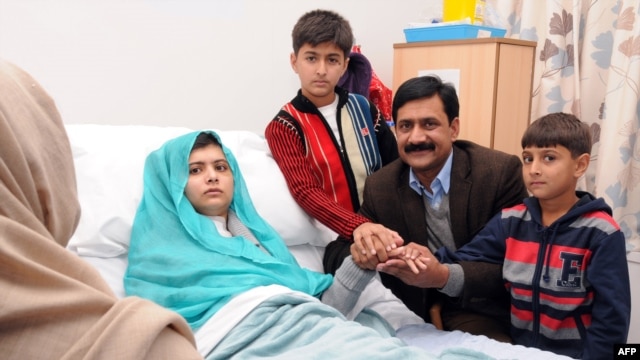
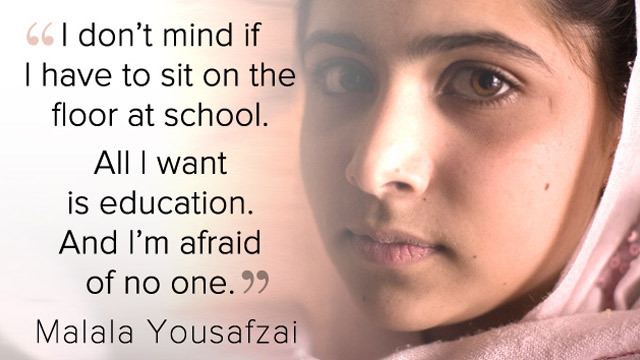
The Making Of Malala: A Look At The Family Behind The Girl
-- Abdul Hai KakarMy introduction to Malala Yousafzai through her schoolteacher father, Ziauddin Yousafzai, was somewhat accidental. It happened during the Taliban's unprecedented ban on girls' education in Pakistan's Northwestern Swat Valley in December 2008. I had been covering the story for the BBC's Urdu-language service. The ban prompted me to pitch to my editors the idea of enlisting a young schoolgirl to write a blog for our widely read website. The concept was simple -- to document life under the Taliban as seen by a schoolgirl.


Pakistan: PPP, ANP, MQM oppose closure of NATO supply
The Frontier Post
The Opposition in the National Assembly appeared divided on Tuesday over Pakistan’s response to the US missile strike that killed Taliban chief in Waziristan. The decisions emerged at a meeting attended by parliamentary leaders of opposition parties wherein the PPP, ANP and MQM leaders were of the view that the government should carry on the negotiation process without blocking the NATO supply. The Pakistan Peoples Party (PPP), a major opposition party in lower house of the Parliament, the Awami National Party (ANP) and the Muttahida Qaumi Movement (MQM) has opposed the blockage of NATO supply to Afghanistan.
Bilawal Bhutto congratulates PWU victory in PSM Referendum
http://mediacellppp.wordpress.com/

 Bilawal Bhutto Zardari, Patron-In-Chief, Pakistan Peoples Party has congratulated Peoples Workers Union (PWU) on its victory in the Pakistan Steel Mills (PSM) referendum to become CBA for next three years.
In a press statement, he pointed out that PWU defeated an alliance of all other political parties in country’s largest industrial unit. “This proves that PPP remains the only major political party having sound and undeterred support among the labour and working class across the country,” he added.
Bilawal Bhutto Zardari paid tribute to the vision of Shaheed Zulfikar Ali Bhutto who established Pakistan Steel, which gave boost to the housing sector in the country.
He said Pakistan Steel employees belong to every nook and corner of Pakistan and triumph of PPP Union was a clear sign that Party remains the largest representative of the masses.
Bilawal Bhutto Zardari, Patron-In-Chief, Pakistan Peoples Party has congratulated Peoples Workers Union (PWU) on its victory in the Pakistan Steel Mills (PSM) referendum to become CBA for next three years.
In a press statement, he pointed out that PWU defeated an alliance of all other political parties in country’s largest industrial unit. “This proves that PPP remains the only major political party having sound and undeterred support among the labour and working class across the country,” he added.
Bilawal Bhutto Zardari paid tribute to the vision of Shaheed Zulfikar Ali Bhutto who established Pakistan Steel, which gave boost to the housing sector in the country.
He said Pakistan Steel employees belong to every nook and corner of Pakistan and triumph of PPP Union was a clear sign that Party remains the largest representative of the masses.
Bane or boon: Urbanisation, displacement pushes Peshawar’s population over 2.5m
 During the last decade, 63% of all internal migrants moved to an urban area either from a rural district or from another urban district. Out of these, nearly 56% moved to the provincial or federal capital, the report stated.
It further adds that population wise, K-P is the third largest province in the country with an estimated population of 22 million. “The province has not only witnessed rapid urban growth but also large movements and displacements during the past two decades because of militancy, military operations and natural disasters in the Federally Administered Tribal Areas (Fata) and Malakand region.”
The influx of Fata’s migrant population to adjacent safer districts like Peshawar, Mardan, Kohat, Bannu, Lakki Marwat and DI Khan, combined with the influx of internally displaced persons (IDPs) has generated socio-economic problems for the cities.
Speaking to The Express Tribune, UNFPA Provincial Coordination Officer Lubna Tajik said one of the reasons behind the growing population of K-P was lack of planning. “A growing population has strong effects on the development of the economy and the society because of changes in labour supply, family structure, education and health management systems,” she said.
Limited livelihood and employment opportunities in Pakistan’s agriculture sector, rising poverty and social conflicts are causing large exodus of rural population to major urban centres, particularly the young and educated people, said Tajik.
“Therefore, the capacity of cities and towns to assimilate the migrants while providing employment, access to land, social services and basic amenities such as water, electricity and sewerage are becoming limited,” she added.
The emerging trend of concentration of migrants in urban areas and big cities is leading to regionally unbalanced urbanisation, existence of squatter settlements and environmental deterioration.
“Better employment opportunities, more knowledge and skills, access to improved education and health services are the perceived benefits from a migratory movement, but at the same time social discontent, economic insecurity and displacements by natural disasters likes earthquakes and floods are the expected costs borne by migrants,” she pointed out, adding these issues need to be properly assessed to make effective policies. According to Professor Niaz Ahmad of the University of Peshawar, growing population and urbanisation in the province has increased the crime rate and created more health problems with inadequate sanitation and poor medical facilities. “The government should carry out proper planning and policies to deal with migrant populations and its needs,” he insisted.
Changing demographic
According to the 1998 census, K-P constituted 13.4 % of the population of Pakistan with an average annual growth rate of 2.82% as compared to the national growth rate of 2.69%. The urban population of K-P was 2,994,084 or 16.9 % of the total population of the province which grew at an average rate of 3.5% during 1981-98.
The 1998 census estimates the total number of lifetime migrants in K-P were 647,356 or 3.7% of the population of the province. Out of these migrants 68.6% came from other districts of K-P, 14.9% from Sindh, Punjab, Balochistan and Islamabad, 12.8% from Fata, 0.8% from Azad Kashmir and the then Northern Areas, while the remaining 2.9% were Pakistanis who repatriated from other countries.
In 2013, K-P’s population stands at 22 million, and is rising with resources rapidly dwindling to cater to the public’s needs.
During the last decade, 63% of all internal migrants moved to an urban area either from a rural district or from another urban district. Out of these, nearly 56% moved to the provincial or federal capital, the report stated.
It further adds that population wise, K-P is the third largest province in the country with an estimated population of 22 million. “The province has not only witnessed rapid urban growth but also large movements and displacements during the past two decades because of militancy, military operations and natural disasters in the Federally Administered Tribal Areas (Fata) and Malakand region.”
The influx of Fata’s migrant population to adjacent safer districts like Peshawar, Mardan, Kohat, Bannu, Lakki Marwat and DI Khan, combined with the influx of internally displaced persons (IDPs) has generated socio-economic problems for the cities.
Speaking to The Express Tribune, UNFPA Provincial Coordination Officer Lubna Tajik said one of the reasons behind the growing population of K-P was lack of planning. “A growing population has strong effects on the development of the economy and the society because of changes in labour supply, family structure, education and health management systems,” she said.
Limited livelihood and employment opportunities in Pakistan’s agriculture sector, rising poverty and social conflicts are causing large exodus of rural population to major urban centres, particularly the young and educated people, said Tajik.
“Therefore, the capacity of cities and towns to assimilate the migrants while providing employment, access to land, social services and basic amenities such as water, electricity and sewerage are becoming limited,” she added.
The emerging trend of concentration of migrants in urban areas and big cities is leading to regionally unbalanced urbanisation, existence of squatter settlements and environmental deterioration.
“Better employment opportunities, more knowledge and skills, access to improved education and health services are the perceived benefits from a migratory movement, but at the same time social discontent, economic insecurity and displacements by natural disasters likes earthquakes and floods are the expected costs borne by migrants,” she pointed out, adding these issues need to be properly assessed to make effective policies. According to Professor Niaz Ahmad of the University of Peshawar, growing population and urbanisation in the province has increased the crime rate and created more health problems with inadequate sanitation and poor medical facilities. “The government should carry out proper planning and policies to deal with migrant populations and its needs,” he insisted.
Changing demographic
According to the 1998 census, K-P constituted 13.4 % of the population of Pakistan with an average annual growth rate of 2.82% as compared to the national growth rate of 2.69%. The urban population of K-P was 2,994,084 or 16.9 % of the total population of the province which grew at an average rate of 3.5% during 1981-98.
The 1998 census estimates the total number of lifetime migrants in K-P were 647,356 or 3.7% of the population of the province. Out of these migrants 68.6% came from other districts of K-P, 14.9% from Sindh, Punjab, Balochistan and Islamabad, 12.8% from Fata, 0.8% from Azad Kashmir and the then Northern Areas, while the remaining 2.9% were Pakistanis who repatriated from other countries.
In 2013, K-P’s population stands at 22 million, and is rising with resources rapidly dwindling to cater to the public’s needs.
Bilawal Bhutto questions how Mehsud’s death sabotaged talks
Daily Times
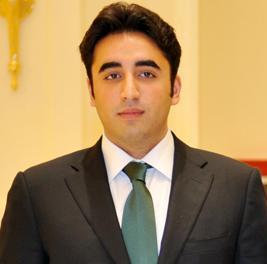
The weekend death of Tehreek-e-Taliban Pakistan leader Hakimullah Mehsud in a US drone strike and the subsequent response from the Pakistani government prompted a series of critical tweets from Pakistan People’s Party Patron-in-Chief Bilawal Bhutto Zardari over the past three days. With the governments in the Centre as well as in Khyber Pakhtunkhwa accusing the US of sabotaging Pakistan’s hopes for peace following the killing of one of Pakistan’s worst mass murderers – responsible for the deaths of thousands of civilians, soldiers and public figures – Bilawal gave up any pretence over the issue. In one of his Twitter posts, Bilawal said, “Kill our former PM, generals & soldiers we offer peace talks, one of TTP leaders are killed. Peace sabotaged.” He questioned the unconditional peace talks – on part of the government – offered to the Taliban, while the ‘terrorists’ were setting conditions. “Funny how TTP are allowed conditions 4 talks but we have to offer talks without pre-conditions,” he said in another tweet. “If there are good Taliban and bad Taliban are we allowed to say there are good drones and bad drones?” he said in another tweet, making it clear that he was not in favour of drones. “I’m anti-drone. But there’s a time and a place to be anti and now not it,” he tweeted. The son of slain PPP chairwoman Benazir Bhutto also questioned how peace talks that have not even begun could be derailed. “Day before strike, TTP said there had been no effort for talks on ground and Government of Pakistan was just talking on TV. How can one sabotage talks that haven’t started?” he said in another tweet. Bilawal also lamented over the government’s stance on Mehsud’s killing by tweeting, “The silent majority are celebrating while the cowards are in mourning on Hakimullah’s death.”
How Pakistan's Musharraf shook off legal cases
 When Pakistan's former military ruler, Pervez Musharraf, ended his four-year exile and returned to the country to participate in May's elections, he took many people by surprise.
He had made many powerful enemies during his eight-year rule, and some of them had been in power or were about to be.
Besides, a slew of criminal charges had been lying dormant against him in various courts, awaiting his return.
But on Monday, a court granted him bail in the last of the four criminal cases instituted against him, paving the way for his release.
How he managed to turn what many had considered a miscalculation, into a legal triumph can be partly explained by the shifting nature of the country's political and judicial systems.
He obviously returned to Pakistan thinking he had done no wrong.
He also believed that his party could win some seats in parliament on the strength of an economic bubble his policies had created in the services sector in urban areas.
In addition, he knew that the country's powerful military, of which he had been the head until 2008, would not allow the politicians and the judges to drag him through the courts and convict him as a criminal.
Many thought he had miscalculated because the judges that he sacked in 2007 had been swept back to their positions by a wave of popular agitation that forced him out of power in 2008.
Insurgent judiciary
Since then, the judges, led by Chief Justice Iftikhar Chaudhry, have used a policy of "judicial activism" to encroach significantly on the sphere of the executive.
It is generally believed that what happened to Mr Musharraf was largely the result of an insurgent judiciary wanting to make history by arraigning a former army chief, something that no-one had done before.
The May elections also restored a political leadership that had been ousted from power by Mr Musharraf in a military coup in 1999. The expectation was that Prime Minister Nawaz Sharif's government would go the whole way to bring him down.
It mostly seemed that way in the beginning.
Days after landing in Pakistan in March, Mr Musharraf suffered the insult of having a shoe thrown at him in a crowded corridor of a court building. It narrowly missed.
A little more than a week later, the Supreme Court instituted hearings to explore if he could be put on trial for treason for suspending the constitution and imposing emergency rule in November 2007.
In April, an election tribunal, comprising high court judges, declared he could not be a candidate.
He was arrested later that month for putting nearly 60 senior judges under house arrest in November 2007, when he was president.
Over the next few months, his re-arrest was ordered in two high-profile murder cases; the 2006 killing of a rebel Baloch politician, Akbar Bugti, in a military operation, and the 2007 assassination of former Prime Minister Benazir Bhutto in a gun and bomb attack.
Public interest waning
Since April, when he was first detained, he has remained under house arrest at his residence in Islamabad.
During this period, public interest in his fate has been overtaken by other events, and the high pressure of the initial days has gradually eased.
He managed to get bail in the judges' detention case when the complainant, a lawyer, decided he did not want to pursue the matter. Whether he was persuaded by someone from the military remains a matter of speculation.
He was also granted bail in the Benazir Bhutto murder case on 20 May.
The bail came two weeks after the chief prosecutor in the case, Chaudhry Zulfiqar, was gunned down in Islamabad, ostensibly by militants with alleged links to the 2008 Mumbai attacks - another case that he had been investigating.
On 9 October, Mr Musharraf was given bail in the Akbar Bugti case, clearing him of all charges pending against him.
But before he could be set free, he was re-arrested in the case of the 2007 Red Mosque siege in Islamabad in which more than 100 people, many of them armed militants, were killed.
With the bail granted in this case as well on Monday, Mr Musharraf is now set to walk free.
Signs of retreat
Legal experts say there was no evidence linking him directly to any of the offences for which he was charged.
But there are also those who point out that if he were not a former army chief, he would have still be in the dock, given the vast powers the judiciary has arrogated to itself.
The government of Prime Minister Sharif is also showing signs of a retreat.
The only case in which Mr Musharraf could have been pinned down legally - the high treason case - failed to take off because the government, which alone can initiate a treason case under the law, has been procrastinating despite a commitment it made in the court in August.
So unless he is charged in a fresh offence, Mr Musharraf cannot be kept in detention any more or banned from travelling abroad, experts say.
The question is, will he opt to leave the country, which most elements in the government and the army would like him to do, or stay on to carve a political future for himself in Pakistan?
The situation should become clear over the next few days.
When Pakistan's former military ruler, Pervez Musharraf, ended his four-year exile and returned to the country to participate in May's elections, he took many people by surprise.
He had made many powerful enemies during his eight-year rule, and some of them had been in power or were about to be.
Besides, a slew of criminal charges had been lying dormant against him in various courts, awaiting his return.
But on Monday, a court granted him bail in the last of the four criminal cases instituted against him, paving the way for his release.
How he managed to turn what many had considered a miscalculation, into a legal triumph can be partly explained by the shifting nature of the country's political and judicial systems.
He obviously returned to Pakistan thinking he had done no wrong.
He also believed that his party could win some seats in parliament on the strength of an economic bubble his policies had created in the services sector in urban areas.
In addition, he knew that the country's powerful military, of which he had been the head until 2008, would not allow the politicians and the judges to drag him through the courts and convict him as a criminal.
Many thought he had miscalculated because the judges that he sacked in 2007 had been swept back to their positions by a wave of popular agitation that forced him out of power in 2008.
Insurgent judiciary
Since then, the judges, led by Chief Justice Iftikhar Chaudhry, have used a policy of "judicial activism" to encroach significantly on the sphere of the executive.
It is generally believed that what happened to Mr Musharraf was largely the result of an insurgent judiciary wanting to make history by arraigning a former army chief, something that no-one had done before.
The May elections also restored a political leadership that had been ousted from power by Mr Musharraf in a military coup in 1999. The expectation was that Prime Minister Nawaz Sharif's government would go the whole way to bring him down.
It mostly seemed that way in the beginning.
Days after landing in Pakistan in March, Mr Musharraf suffered the insult of having a shoe thrown at him in a crowded corridor of a court building. It narrowly missed.
A little more than a week later, the Supreme Court instituted hearings to explore if he could be put on trial for treason for suspending the constitution and imposing emergency rule in November 2007.
In April, an election tribunal, comprising high court judges, declared he could not be a candidate.
He was arrested later that month for putting nearly 60 senior judges under house arrest in November 2007, when he was president.
Over the next few months, his re-arrest was ordered in two high-profile murder cases; the 2006 killing of a rebel Baloch politician, Akbar Bugti, in a military operation, and the 2007 assassination of former Prime Minister Benazir Bhutto in a gun and bomb attack.
Public interest waning
Since April, when he was first detained, he has remained under house arrest at his residence in Islamabad.
During this period, public interest in his fate has been overtaken by other events, and the high pressure of the initial days has gradually eased.
He managed to get bail in the judges' detention case when the complainant, a lawyer, decided he did not want to pursue the matter. Whether he was persuaded by someone from the military remains a matter of speculation.
He was also granted bail in the Benazir Bhutto murder case on 20 May.
The bail came two weeks after the chief prosecutor in the case, Chaudhry Zulfiqar, was gunned down in Islamabad, ostensibly by militants with alleged links to the 2008 Mumbai attacks - another case that he had been investigating.
On 9 October, Mr Musharraf was given bail in the Akbar Bugti case, clearing him of all charges pending against him.
But before he could be set free, he was re-arrested in the case of the 2007 Red Mosque siege in Islamabad in which more than 100 people, many of them armed militants, were killed.
With the bail granted in this case as well on Monday, Mr Musharraf is now set to walk free.
Signs of retreat
Legal experts say there was no evidence linking him directly to any of the offences for which he was charged.
But there are also those who point out that if he were not a former army chief, he would have still be in the dock, given the vast powers the judiciary has arrogated to itself.
The government of Prime Minister Sharif is also showing signs of a retreat.
The only case in which Mr Musharraf could have been pinned down legally - the high treason case - failed to take off because the government, which alone can initiate a treason case under the law, has been procrastinating despite a commitment it made in the court in August.
So unless he is charged in a fresh offence, Mr Musharraf cannot be kept in detention any more or banned from travelling abroad, experts say.
The question is, will he opt to leave the country, which most elements in the government and the army would like him to do, or stay on to carve a political future for himself in Pakistan?
The situation should become clear over the next few days.
Two-Faced Allies: Pakistan and the U.S.
 By SHAHAN MUFTI
Less than a week after Pakistan’s prime minister, Nawaz Sharif, returned home from a trip to Washington, an American drone killed Hakimullah Mehsud, a man who had terrorized all Pakistan as the leader of the country’s most dangerous militant group, the Pakistani Taliban.
With any other two countries, such a sequence of events might have been followed by an official nod to the cooperation involved — or at the very least, meaningful silence. But with the United States and Pakistan it’s always more complicated. Hours after the drone strike, Pakistan’s interior minister accused the United States of the “murder of peace efforts.” He later berated “enemies dressed as friends.”
It’s an old script. Regardless of whatever cooperation is involved, both countries always find it more useful to paint the other as the villain. The Pakistani government, which in reality is playing a central role in the war on terror, gets to paint itself as the victim of a bullying superpower.
Meanwhile, American officials keep pointing to Pakistan’s “double game” for most of their failures in Afghanistan, while downplaying the fact that, without Pakistan, this war would have been impossible to wage in the first place.
The real root of the dysfunction is not so much deceit between allies as the lies both governments have told their own people. Pakistani and American leaders have systematically and purposefully misled their own publics about the nature and details of their partnership. Each country has used the other as a strategic and convenient punching bag.
As an American born to Pakistani parents, fluent in the languages of both countries, I have spent the past 12 years regularly shuttling between the two countries and I’ve seen and heard the duplicitous official narratives steadily take root on each side.
Just days after 9/11, Pervez Musharraf, the former military ruler of Pakistan, addressed his country in Urdu, telling them that America had asked Pakistan for cooperation in intelligence sharing, the use of Pakistani airspace and logistical support. Mr. Musharraf made it clear that he’d decided to cooperate.
But that’s where the openness ended. In 2005, for example, when the Pakistani government announced that a senior Al Qaeda operative had died in an accidental bomb-making explosion in Pakistan’s tribal areas, Hayatullah Khan, a Pakistani investigative journalist travelled to the scene of the blast and found fragments of an American Hellfire missile. Mr. Khan was kidnapped and soon turned up dead. Presenting evidence that America could operate in Pakistani airspace turned out to be deadly.
Seven years later, the American public still doesn’t know much about what their country does in Pakistan. For years, Washington didn’t even recognize the use of drones there. Only recently, after leaks from inside the Obama administration forced officials to begin speaking about the details of the program, have Americans been able to piece together a basic outline.
The same is true of supply lines into landlocked Afghanistan. Within months of the 2001 invasion, Mr. Musharraf signed a deal allowing the transport of American and NATO military equipment through Pakistan. But the agreement was kept secret from the Pakistani people until 2010. The American government was no more candid with its own people. Americans never truly appreciated, for example, that since President George W. Bush was denied permission to dock U.S. Navy vessels in Pakistani ports, America was forced to outsource nearly the entire American military supply chain into the hands of private contractors close to the Pakistani military.
The decision to hide and obscure such details was born of a desire to control the precarious narrative of the war at home. Insecure Pakistani leaders always feared that details of the cooperation would destabilize their already shaky regimes. Likewise, Mr. Bush and Mr. Obama likely thought that publicly acknowledging the compromises they’d made to win Pakistan’s support, might make them appear weak. Keeping their citizens in the dark, leaders in both nations seemed to think, would keep the cooperation simple.
The result has been quite the opposite. The stark disconnect between reality and rhetoric now makes both governments’ pronouncements sound absurd. There have been more than 300 American drone strikes in a remote corner of Pakistan. And while Islamabad continues to denounce these strikes, Pakistani citizens see thousands of trucks carrying huge shipping containers on the highways every day, bringing supplies to the American military in Afghanistan. Likewise, Americans have learned that billions of dollars in aid is still flowing to Pakistan, despite the fact that Osama bin Laden was living a mile away from Pakistan’s main military academy for years.
The resulting confusion is making Americans and Pakistanis hate each other. A Pew Research Center poll in July found that America is more disliked in Pakistan than anywhere else. A Gallup poll a few months earlier found that the countries most disliked by Americans are Pakistan, Iran and North Korea.
The lies that were meant to hold Pakistan and America together in a time of war, are now imperiling the alliance they were meant to protect.
The two countries have been geopolitical allies since Pakistan appeared on the map in 1947. In the interest of preserving this long-term relationship, which will remain vital to both countries long after the American troops withdraw from Afghanistan, the details of the agreements between Pakistan and America must be made public. In the end, Americans and Pakistanis want the same thing — the truth, for once, from their leaders.
By SHAHAN MUFTI
Less than a week after Pakistan’s prime minister, Nawaz Sharif, returned home from a trip to Washington, an American drone killed Hakimullah Mehsud, a man who had terrorized all Pakistan as the leader of the country’s most dangerous militant group, the Pakistani Taliban.
With any other two countries, such a sequence of events might have been followed by an official nod to the cooperation involved — or at the very least, meaningful silence. But with the United States and Pakistan it’s always more complicated. Hours after the drone strike, Pakistan’s interior minister accused the United States of the “murder of peace efforts.” He later berated “enemies dressed as friends.”
It’s an old script. Regardless of whatever cooperation is involved, both countries always find it more useful to paint the other as the villain. The Pakistani government, which in reality is playing a central role in the war on terror, gets to paint itself as the victim of a bullying superpower.
Meanwhile, American officials keep pointing to Pakistan’s “double game” for most of their failures in Afghanistan, while downplaying the fact that, without Pakistan, this war would have been impossible to wage in the first place.
The real root of the dysfunction is not so much deceit between allies as the lies both governments have told their own people. Pakistani and American leaders have systematically and purposefully misled their own publics about the nature and details of their partnership. Each country has used the other as a strategic and convenient punching bag.
As an American born to Pakistani parents, fluent in the languages of both countries, I have spent the past 12 years regularly shuttling between the two countries and I’ve seen and heard the duplicitous official narratives steadily take root on each side.
Just days after 9/11, Pervez Musharraf, the former military ruler of Pakistan, addressed his country in Urdu, telling them that America had asked Pakistan for cooperation in intelligence sharing, the use of Pakistani airspace and logistical support. Mr. Musharraf made it clear that he’d decided to cooperate.
But that’s where the openness ended. In 2005, for example, when the Pakistani government announced that a senior Al Qaeda operative had died in an accidental bomb-making explosion in Pakistan’s tribal areas, Hayatullah Khan, a Pakistani investigative journalist travelled to the scene of the blast and found fragments of an American Hellfire missile. Mr. Khan was kidnapped and soon turned up dead. Presenting evidence that America could operate in Pakistani airspace turned out to be deadly.
Seven years later, the American public still doesn’t know much about what their country does in Pakistan. For years, Washington didn’t even recognize the use of drones there. Only recently, after leaks from inside the Obama administration forced officials to begin speaking about the details of the program, have Americans been able to piece together a basic outline.
The same is true of supply lines into landlocked Afghanistan. Within months of the 2001 invasion, Mr. Musharraf signed a deal allowing the transport of American and NATO military equipment through Pakistan. But the agreement was kept secret from the Pakistani people until 2010. The American government was no more candid with its own people. Americans never truly appreciated, for example, that since President George W. Bush was denied permission to dock U.S. Navy vessels in Pakistani ports, America was forced to outsource nearly the entire American military supply chain into the hands of private contractors close to the Pakistani military.
The decision to hide and obscure such details was born of a desire to control the precarious narrative of the war at home. Insecure Pakistani leaders always feared that details of the cooperation would destabilize their already shaky regimes. Likewise, Mr. Bush and Mr. Obama likely thought that publicly acknowledging the compromises they’d made to win Pakistan’s support, might make them appear weak. Keeping their citizens in the dark, leaders in both nations seemed to think, would keep the cooperation simple.
The result has been quite the opposite. The stark disconnect between reality and rhetoric now makes both governments’ pronouncements sound absurd. There have been more than 300 American drone strikes in a remote corner of Pakistan. And while Islamabad continues to denounce these strikes, Pakistani citizens see thousands of trucks carrying huge shipping containers on the highways every day, bringing supplies to the American military in Afghanistan. Likewise, Americans have learned that billions of dollars in aid is still flowing to Pakistan, despite the fact that Osama bin Laden was living a mile away from Pakistan’s main military academy for years.
The resulting confusion is making Americans and Pakistanis hate each other. A Pew Research Center poll in July found that America is more disliked in Pakistan than anywhere else. A Gallup poll a few months earlier found that the countries most disliked by Americans are Pakistan, Iran and North Korea.
The lies that were meant to hold Pakistan and America together in a time of war, are now imperiling the alliance they were meant to protect.
The two countries have been geopolitical allies since Pakistan appeared on the map in 1947. In the interest of preserving this long-term relationship, which will remain vital to both countries long after the American troops withdraw from Afghanistan, the details of the agreements between Pakistan and America must be made public. In the end, Americans and Pakistanis want the same thing — the truth, for once, from their leaders.
India launches spacecraft to Mars
India has successfully launched a spacecraft to the Red Planet - with the aim of becoming the fourth space agency to reach Mars.
 The Mars Orbiter Mission took off at 09:08 GMT from the Satish Dhawan Space Centre on the country's east coast.
The head of India's space agency told the BBC the mission would demonstrate the technological capability to reach Mars orbit and carry out experiments.
The Mars Orbiter Mission took off at 09:08 GMT from the Satish Dhawan Space Centre on the country's east coast.
The head of India's space agency told the BBC the mission would demonstrate the technological capability to reach Mars orbit and carry out experiments.
 The spacecraft is set to travel for 300 days and reaching Mars orbit in 2014.
If the satellite orbits the Red Planet, India's space agency will become the fourth in the world after those of the US, Russia and Europe to undertake a successful Mars mission.
A 56-hour countdown to the launch began on Sunday.Some observers are viewing the launch of the MOM, also known by the informal name of Mangalyaan (Mars-craft), as the latest salvo in a burgeoning space race between the Asian powers of India, China, Japan, South Korea and others.Prof Andrew Coates, from the UK's Mullard Space Science Laboratory, told BBC News: "I think this mission really brings India to the table of international space exploration. Interplanetary exploration is certainly not trivial to do, and [India] has found some interesting scientific niches to make some measurements in."
Those niche areas include searching for the signature of methane (CH4) in the Martian atmosphere, which has previously been detected from Martian orbit and telescopes on Earth. However, Nasa's Curiosity rover recently failed to find the gas in its measurements of atmospheric gases.
CH4 has a short lifetime in the Martian atmosphere, meaning that some source on the Red Planet must replenish it. Intriguingly, some 95% of atmospheric methane on Earth is produced by microbes, which has led some to propose the possibility of a biosphere deep beneath the Martian surface. But the gas can be produced by geological processes too, most notably by volcanism.
Definitive conclusions are likely to be elusive, but the spacecraft's Methane Sensor for Mars (MSM) instrument will aim to make measurements and map any potential sources of methane "plumes".
The spacecraft will also examine the rate of loss of atmospheric gases to outer space. This could provide insights into the planet's history; billions of years ago, the envelope of gases around Mars is thought to have been more substantial.India approved the project in 2012, so mission scientists have worked around the clock to ready the craft in order to take advantage of a favourable alignment of the two planets that would allow the MOM to save on fuel during its journey to Mars.
The orbiter was lofted on an evolved version of the Indian-developed Polar Satellite Launch Vehicle, taking it into an elliptical orbit around Earth. It will then begin a series of six small engine burns to lift it to a higher orbit.
A final burn will send the craft off on an interplanetary trajectory, to begin its 300-day, 780-million km journey to the Red Planet. In order for the MOM to embark on the right trajectory, the mission must launch by 19 November and carry out its final orbital burn by 30 November.
The difficulty of visiting the Red Planet will not be lost on Indian officials; just under half the total attempts to reach Mars have failed. But Prof Coates said the planned mechanics for getting to Mars were on a sound footing, and that the probe stood a good chance as long as its engines fired correctly. Some commentators have wondered whether India should be spending $72m (£45m) on a scientific mission when the country has one of the highest rankings for childhood malnutrition in the world.
But those who defend such projects say the MOM is comparatively cheap and that the technological development required to mount this mission could indirectly benefit the country's other activities.
Nisha Agrawal, chief executive of Oxfam in India, told the BBC: "India is home to poor people but it's also an emerging economy, it's a middle-income country, it's a member of the G20. What is hard for people to get their head around is that we are home to poverty but also a global power.
"We are not really one country but two in one. And we need to do both things: contribute to global knowledge as well as take care of poor people at home."
K Radhakrishnan, chair of the Indian Space Research Organisation (Isro), told the BBC's India Business Report: "Why India has to be in the space programme is a question that has been asked over the last 50 years. The answer then, now and in the future will be: 'It is for finding solutions to the problems of man and society.'
He added: "A great revolution has taken place over these last 50 years in the country by a meagre expenditure that has been put into the space programme."
Mr Radhakrishnan played down talk of a race between China and India in space, commenting: "We are not in a race with anybody, but I would say we are in a race with ourselves. We need to excel, we need to improve, and we need to bring new services."
But a successful launch would allow India to surge ahead of regional rival China, at least in the exploration of Mars. China's Yinghuo-1 spacecraft was to have reached Martian orbit in late 2012. But it was piggybacked on the Russian Phobos Grunt spacecraft, which became stranded in low-Earth orbit shortly after launch in November 2011.
The MOM was to have been launched as early as 28 October, but rough weather in the Pacific forced officials to delay the launch.
The spacecraft is set to travel for 300 days and reaching Mars orbit in 2014.
If the satellite orbits the Red Planet, India's space agency will become the fourth in the world after those of the US, Russia and Europe to undertake a successful Mars mission.
A 56-hour countdown to the launch began on Sunday.Some observers are viewing the launch of the MOM, also known by the informal name of Mangalyaan (Mars-craft), as the latest salvo in a burgeoning space race between the Asian powers of India, China, Japan, South Korea and others.Prof Andrew Coates, from the UK's Mullard Space Science Laboratory, told BBC News: "I think this mission really brings India to the table of international space exploration. Interplanetary exploration is certainly not trivial to do, and [India] has found some interesting scientific niches to make some measurements in."
Those niche areas include searching for the signature of methane (CH4) in the Martian atmosphere, which has previously been detected from Martian orbit and telescopes on Earth. However, Nasa's Curiosity rover recently failed to find the gas in its measurements of atmospheric gases.
CH4 has a short lifetime in the Martian atmosphere, meaning that some source on the Red Planet must replenish it. Intriguingly, some 95% of atmospheric methane on Earth is produced by microbes, which has led some to propose the possibility of a biosphere deep beneath the Martian surface. But the gas can be produced by geological processes too, most notably by volcanism.
Definitive conclusions are likely to be elusive, but the spacecraft's Methane Sensor for Mars (MSM) instrument will aim to make measurements and map any potential sources of methane "plumes".
The spacecraft will also examine the rate of loss of atmospheric gases to outer space. This could provide insights into the planet's history; billions of years ago, the envelope of gases around Mars is thought to have been more substantial.India approved the project in 2012, so mission scientists have worked around the clock to ready the craft in order to take advantage of a favourable alignment of the two planets that would allow the MOM to save on fuel during its journey to Mars.
The orbiter was lofted on an evolved version of the Indian-developed Polar Satellite Launch Vehicle, taking it into an elliptical orbit around Earth. It will then begin a series of six small engine burns to lift it to a higher orbit.
A final burn will send the craft off on an interplanetary trajectory, to begin its 300-day, 780-million km journey to the Red Planet. In order for the MOM to embark on the right trajectory, the mission must launch by 19 November and carry out its final orbital burn by 30 November.
The difficulty of visiting the Red Planet will not be lost on Indian officials; just under half the total attempts to reach Mars have failed. But Prof Coates said the planned mechanics for getting to Mars were on a sound footing, and that the probe stood a good chance as long as its engines fired correctly. Some commentators have wondered whether India should be spending $72m (£45m) on a scientific mission when the country has one of the highest rankings for childhood malnutrition in the world.
But those who defend such projects say the MOM is comparatively cheap and that the technological development required to mount this mission could indirectly benefit the country's other activities.
Nisha Agrawal, chief executive of Oxfam in India, told the BBC: "India is home to poor people but it's also an emerging economy, it's a middle-income country, it's a member of the G20. What is hard for people to get their head around is that we are home to poverty but also a global power.
"We are not really one country but two in one. And we need to do both things: contribute to global knowledge as well as take care of poor people at home."
K Radhakrishnan, chair of the Indian Space Research Organisation (Isro), told the BBC's India Business Report: "Why India has to be in the space programme is a question that has been asked over the last 50 years. The answer then, now and in the future will be: 'It is for finding solutions to the problems of man and society.'
He added: "A great revolution has taken place over these last 50 years in the country by a meagre expenditure that has been put into the space programme."
Mr Radhakrishnan played down talk of a race between China and India in space, commenting: "We are not in a race with anybody, but I would say we are in a race with ourselves. We need to excel, we need to improve, and we need to bring new services."
But a successful launch would allow India to surge ahead of regional rival China, at least in the exploration of Mars. China's Yinghuo-1 spacecraft was to have reached Martian orbit in late 2012. But it was piggybacked on the Russian Phobos Grunt spacecraft, which became stranded in low-Earth orbit shortly after launch in November 2011.
The MOM was to have been launched as early as 28 October, but rough weather in the Pacific forced officials to delay the launch.
U.S. Official Says NATO Supply Routes In Pakistan 'Fully Open'
http://www.rferl.org/U.S. official says NATO supply routes to Afghanistan remain “fully open” amid news reports that Pakistani officials are considering reviewing the country’s relationship with the United States. Pakistani Taliban leader Hakimullah Mehsud was reported killed in a suspected U.S. drone strike on November 1. The Pakistani government reacted angrily to the attack, which it said would scuttle peace talks with the militants. The ruling party in Khyber Pakhtunkhwa Province passed a resolution three days later threatening to block supply routes starting November 20 unless drone strikes stop. U.S. State Department spokeswoman Marie Harf said on November 4 that there is "no disruption" in supply routes and that supplies "are moving." In 2012, Pakistan closed NATO supply routes for seven months in protest at the mistaken killing of 24 Pakistani troops in a U.S. attack.
Nawaz's Foreign Trips: Prime Minister's home away from home
 There should be no problem if one has his 'second home' in another country. But it is a problem if for an elected prime minister his own country is his 'second home' - as seems to be the case of Nawaz Sharif. Since assuming office as Pakistan's chief executive and also in charge of ministries of Foreign Affairs and Defence five months ago, he has spent nearly a month or so visiting other countries. On Thursday, the prime minister was in London on the invitation of his British counterpart to meet President Karzai and attend a sort of economic forum of Muslim countries, on his third visit to London in the last fortnight or so. That his brother, Punjab Chief Minister Shahbaz Sharif too showed up in time to meet British Deputy Prime Minister Nick Clegg is no big surprise because London is Sharifs' "second home". So present there were quite a few members of the clan who too keep shuttling through London during their hectic foreign tours on government business. Before Britain sheds its autumn colours and becomes forbiddingly cold, it is worth visiting. Then many members of Pakistani elite have their businesses and families in London, requiring their frequent presence. But it would be blasphemic to suggest that the popularly-elected prime minister is whiling away his time in London when proverbial 'Rome is burning'. To remain unconcerned over his prolonged absence from the country in times as hard and critical as Pakistan faces today, would be no less blasphemic. Not waiting long enough to digest a briefing on the myriad problems Pakistan is beset with at the time he took over, he left for China in July for a five-day visit. Next month he had to go to Saudi Arabia to perform 'umra' and have an audience with King Abdullah, his host during the spell of his exile. In September Nawaz Sharif visited Turkey and then New York to attend the UN General Assembly and meet Manmohan Singh, a meeting Pakistani leadership had been wanting knowing full well it would never be more than a handshake, and in this case a 'juppha' (embrace). He had to be again in the United States in late October to meet President Obama for a meeting which was not possible during his UN visit because Washington would not like to meet the rival prime ministers in one go to prove its policy of de-hyphenating the two in its approach to South Asia. This is not to suggest that political leaders do not go abroad, they indeed do, but only when it is indispensably important in the national interest. But not in Pakistan where somehow the leaders are loose-footed and would feel caged at home. Should Nawaz Sharif undertake his scheduled visits to Sri Lanka and Thailand later this month he would be beating the enviable record set by Yousuf Raza Gilani who visited more than 40 counties during his term in office. When the prime minister is away from his office all the decisions that are to be taken at his level are not taken; the policy-direction that he as the chief executive is expected to give is not available; and the files he is supposed to clear as minister of Defence or Foreign Affairs are held up on his desk. In a way, ad hocism tends to prevail, because it is just not possible that the prime minister would be looking after his routine work during his foreign visits. Maybe, as some say, others in line of command are equally empowered to take over his routine work. But what to do when guidance-cum-action on his part is required on critical issues like rampant terrorism, scope of peace parleys with Taliban, dysfunctional parliamentary committees and appointments to high military and civilian departments and the fate of national entities like PIA and Pakistan Steels. That during nearly half a year of its existence the parliament has not been able to pass a single piece of legislation other than the Finance Bill and the government had to issue Protection of Pakistan Ordinance in order to provide adequate authority to fight terrorism and lawlessness is nothing but a pathetic state of affairs during the tenure of an elected government. If what media reported on the engagements of Prime Minister Nawaz Sharif had during some of his visits one would conclude all of it could be done, if at all it was inescapable, at a much lower level. That his visits are most economical, as his aides would say, the answer is the setbacks the government working suffers in his absence are much more costly. There should be no problem that his foreign visits enjoy high visibility and appropriate protocol; the problem is when a visit at his level is either absolutely unwarranted or can be undertaken at some lower level.
Pakistan: Mourning a villain
THE death of a man who waged war against the Pakistani state and was responsible for the slaughtering of thousands of innocent men, women and children should have come as a great relief to this strife-torn nation. Instead, our political leaders are mourning the death of Hakeemullah Mehsud in a US drone strike describing the incident as an “attack on peace”. From being public enemy No.1, the chief of the Tehreek-i-Taliban Pakistan (TTP) has virtually been turned into a hero after his inglorious death. A mass murderer who ordered the beheading of our soldiers and claimed responsibility for killing a Pakistani general just a few months ago, is now being elevated to the status of a martyr. Instead of seizing this moment of opportunity to dismantle a fragmented terrorist network, a frightened political leadership has shamelessly prostrated itself before the militants. As a result, the extremists and their allies are now dominating the public narrative despite their crimes against the people of Pakistan. It is an extremely dangerous situation for a country facing the existential threat of spiralling violent extremism. A narrow self-serving leadership is taking the entire country towards a suicidal path. With few exceptions, all political parties have joined the chorus that the fatal drone strike on Hakeemullah was a conspiracy to scuttle an illusory peace process. While the interior minister has called for reviewing relations with the US, an agitated Imran Khan has threatened to block the Nato supply line in protest. The bravado may just be public posturing, but the irresponsible rhetoric could lead to some unintentional consequences, plunging the country into more dire straits. It is a pity that even the killing of young women and children in a suicide bombing in a crowded Peshawar bazaar or the massacre of Christian worshippers in the church bombing has not shaken the great Khan as much as the death of the leader of the militant outfit that perpetrated those heinous attacks. He even refuses to accept that the Taliban were behind those bombings despite their endorsement of the attack. Seemingly, all the tumult is about the timing of the US action and the violation of Pakistan’s sovereignty once again. According to the interior minister, the attack was carried out hours before a three-member delegation was to meet the TTP leadership and extend to them a formal invitation from the government for talks. Notwithstanding the questionable legality of America’s drone strikes on Pakistani soil, it is hard to believe that the targeting of the TTP chief was part of a plan to sabotage the talks as alleged by our political leaders. One should not forget that the TTP leader was on the US’s most wanted list with a bounty of up to $5m on his head. He came on the US radar after a video showed him talking to Hummam Khalil Abu-Mulal al Balawi, a Jordanian doctor with Al Qaeda connections who blew himself up inside a CIA operating base in Afghanistan’s Khost province, killing seven intelligence operatives in 2009. The incident also confirmed his close ties with Al Qaeda. Soon after, Hakeemullah claimed to have trained Faisal Shehzad, an American of Pakistani origin who was involved in a failed attempt to detonate a car bomb in New York’s Times Square. Hakeemullah had narrowly escaped several drone strikes in the past three years. He was also reportedly injured in one of them that kept him out of action for several months. Significantly, the fatal attack on Friday came a couple of weeks after the US forces had snatched from the Afghan intelligence agencies Latif Mehsud, a close confidant of the TTP leader. It is quite plausible that the information gleaned from Latif might have led the CIA to Hakeemullah’s hideout. Interior Minister Chaudhry Nisar Ali Khan has confirmed that American officials had informed him that the TTP leader would not be spared if tracked down. For sure, the drone campaign has remained a major irritant in the troubled relations between Islamabad and Washington. Prime Minister Nawaz Sharif also raised the issue during his meeting with President Barack Obama in Washington last month. Indeed, Pakistan’s objection to the violation of the country’s sovereignty is fully justified on legal and ethical grounds. There are no two views about the negative political impact of the collateral damage caused by the drone attacks. But it is also a fact, that the drones have eliminated many high-value Pakistani militants running their terrorist operations from North Waziristan. Prominent among those killed in the last two years are Waliur Rehman, who was deputy chief of the TTP, Ilyas Kashmiri, Qari Hussain, Qari Zafar and Badar Mansoor. They were all masterminds of attacks on Pakistani security installations. Pakistan has also decided to contact the five permanent members of the UN Security Council on the killing of Hakeemullah in the latest drone strike. The move will certainly make Pakistan a laughing stock and only weaken the country’s case on the drone issue. Leave aside other countries, Islamabad cannot even convince its closest ally China on the matter. The militant sanctuaries in North Waziristan are a cause for concern to the entire international community. It is certain that the way Pakistan is dealing with the issue of terrorism will find no takers. It was questionable from the outset whether the government’s peace efforts could succeed given the uncompromising attitude of the TTP. In his last interview to the BBC, Hakeemullah had rejected any dialogue under the Pakistani Constitution, saying that it envisioned a secular democratic system. Now with his death that may lead to further fragmentation of the TTP, the possibility of any purposeful negotiations has become even more remote. But the danger is that the current state of policy disarray may provide a conducive environment in which the militants can revitalise their activities. It is perhaps, the most critical point in the country’s struggle against the rising militant threat.ZAHID HUSSAIN
Pakistan: Glorifying TTP killers; ignoring victims

People’s Workers Union wins Pakistan Steel CBA referendum
People’s Workers Union (PWU) has won Pakistan Steel Mills (PSM) referendum and become Collective Bargaining Agent (CBA) for next three years. The referendum was held on Monday on the directives of NIRC and witnessed about 80 percent of turnover as out of 10,179 registered voters some 8,191 workers cast their votes. Some 18 polling stations were set up at Pakistan Steel for the polling which started at 8 am and continued till 5 pm without any interruption. According to unofficial result Pakistan Steel Peoples Workers Union secured 4,264 votes, Pakistan Steel Labour Union (PASLU) 3,570 votes and a coalition of Workers League and United Workers Union (UWU) bagged only 288 votes. While, some 54 votes were declared invalid/ rejected. With this victory for the fifth consecutive period PWU has become PSM CBA, earlier PWU had won PSM referendum in 1995, 1995, 2008, and 2010. After result a large number of workers reached CBA office Pakistan Steel to celebrate the victory of PWU. While, addressing the workers gathered at CBA office, Shamshad Qureshi chairman PWU said that this victory is reward from Allah because of our efforts for the national asset. He said that PWU is against the privatisation and will make all efforts to stop the sale of Pakistan Steel. He also demanded the one go bailout package for revival of Pakistan steels and said that timely availability of raw materials will be our first priority to run this mills at maximum production capacity. Shamshad Qureshi also presented rich tribute to the Zulfiqar Ali Bhutto and Benazir Bhutto and said that the PWU historical victory was the result of unprecedented sacrifice of the PPP leaders. “Pakistan Peoples Party will oppose the privatisation agenda in the senate and in the national assembly, besides protest on the streets”, he added. Meanwhile Sindh Chief Minister Syed Qaim Ali Shah has congratulated the PWU over its historical victory in the referendum and said that PSM was the gift of Shaheed Zulfiqar Ali Bhutto to the people of Pakistan. Moreover, Waqar Mehdi, Special Media Advisor to Chief Minister also greeted the victory of PWU.http://mediacellppp.wordpress.com/
اسامہ بن لادن کی طرح حکیم الله محسود دیوبندی بھی پاکستانی فوج کی آغوش میں چھپا ہوا تھا

Pakistan's Jamaat-e-Islami: THE TREASON OF CALLING TERRORISTS MARTYRS
 Jamaat-e-Islami’s Khyber Pakhtunkhwa chapter chief, Prof. Mohammad Ibrahim, says Hakimullah Mehsud and his companions who were killed in a U.S. drone strike on Nov. 1 are martyrs. They are martyrs, he says, because “they were eliminated when they were in the process of dialogue for permanent peace [sic] in Pakistan.”
Ibrahim’s statement, which doesn’t come as a surprise, nonetheless raises many questions. But first, a word about Jamaat’s position: The party, while trying to stay in the mainstream, has made many Freudian slips on where it stands on Al Qaeda and the Taliban. Intelligence reports over the years have determined a clear connection between many Al Qaeda terrorists and Jamaat leaders at various tiers. One of its Khyber Pakhtunkhwa leaders, Siraj-ul-Haq—who was a senior minister in the Muttahida Majlis-e-Amal government and is the Jamaat’s pointman again in the coalition government in the province with Pakistan Tehreek-e-Insaf—was very close to Pakistani Taliban commanders in Bajaur, including Maulvi Faqir. Ditto for Haroon Rashid, another Jamaat leader from Bajaur.
When Osama bin Laden was taken out in a U.S. raid in Abbottabad, several Jamaat leaders publicly declared him a martyr. The party’s position is therefore clear even as it continues to present itself as a moderate political force and resorts to dissembling and lying on television programs and in the rightwing press.
The Pakistani government, and by extension the Pakistan Army, has a clear position on Al Qaeda as well as on the Tehreek-e-Taliban. Despite an ill-thought move to talk to the Taliban, that position, legally and constitutionally, remains unchanged. The Army continues to operate in the federally-administered tribal areas under Article 245 of the Constitution and has, over the years, lost thousands of soldiers in this fight. Intelligence reports also indicate activity of hostile agencies in the area and the links of various groups that are a part of the Taliban franchise with these agencies.
At the minimum, therefore, the government needs to call the Jamaat out on its position. This step can also be taken by the Army, which can petition the Supreme Court against Jamaat’s position which clearly runs contrary to that of the state and its Constitution. The Jamaat emir, Syed Munawar Hasan, unless he is in agreement with Ibrahim, needs to clarify Ibrahim’s words and remove him for taking a treasonous stance on the issue. If Hasan does not do that, Ibrahim’s statement should be deemed to be the official position of the Jamaat. In that case, the petition must also name the Jamaat emir and the party itself.
War-fighting requires a clear friend-enemy distinction. This war cannot be won until the terrorist can be dislocated from the context that strengthens him. Fighting among the people, which is what this irregular war is all about, must also understand the importance of audiences as also of communicating messages. Jamaat’s position and its agenda must therefore be seen in and through the interpretive structures that seek to influence the discourse. In this case, the discourse is being influenced in favor of a terrorist outfit and against the state. A state can afford to ignore such signaling only at its own peril.
Given the urgency of the situation and the looming threat, the state of Pakistan, represented by the Pakistan Muslim League (Nawaz) government at this point in time will have to move fast and with resolve to put down attempts by individuals or entities, political or otherwise, to muddy the waters and present terrorist groups as examples to be emulated.
Of course, the state must utilize its legal structures to do this. The Jamaat must be given the opportunity to present its viewpoint and the issue should be fairly adjudicated. What is important at this point is to signal to sundry elements who want to have their cake and eat it too. They cannot be allowed to play on both sides of the fence.
Jamaat-e-Islami’s Khyber Pakhtunkhwa chapter chief, Prof. Mohammad Ibrahim, says Hakimullah Mehsud and his companions who were killed in a U.S. drone strike on Nov. 1 are martyrs. They are martyrs, he says, because “they were eliminated when they were in the process of dialogue for permanent peace [sic] in Pakistan.”
Ibrahim’s statement, which doesn’t come as a surprise, nonetheless raises many questions. But first, a word about Jamaat’s position: The party, while trying to stay in the mainstream, has made many Freudian slips on where it stands on Al Qaeda and the Taliban. Intelligence reports over the years have determined a clear connection between many Al Qaeda terrorists and Jamaat leaders at various tiers. One of its Khyber Pakhtunkhwa leaders, Siraj-ul-Haq—who was a senior minister in the Muttahida Majlis-e-Amal government and is the Jamaat’s pointman again in the coalition government in the province with Pakistan Tehreek-e-Insaf—was very close to Pakistani Taliban commanders in Bajaur, including Maulvi Faqir. Ditto for Haroon Rashid, another Jamaat leader from Bajaur.
When Osama bin Laden was taken out in a U.S. raid in Abbottabad, several Jamaat leaders publicly declared him a martyr. The party’s position is therefore clear even as it continues to present itself as a moderate political force and resorts to dissembling and lying on television programs and in the rightwing press.
The Pakistani government, and by extension the Pakistan Army, has a clear position on Al Qaeda as well as on the Tehreek-e-Taliban. Despite an ill-thought move to talk to the Taliban, that position, legally and constitutionally, remains unchanged. The Army continues to operate in the federally-administered tribal areas under Article 245 of the Constitution and has, over the years, lost thousands of soldiers in this fight. Intelligence reports also indicate activity of hostile agencies in the area and the links of various groups that are a part of the Taliban franchise with these agencies.
At the minimum, therefore, the government needs to call the Jamaat out on its position. This step can also be taken by the Army, which can petition the Supreme Court against Jamaat’s position which clearly runs contrary to that of the state and its Constitution. The Jamaat emir, Syed Munawar Hasan, unless he is in agreement with Ibrahim, needs to clarify Ibrahim’s words and remove him for taking a treasonous stance on the issue. If Hasan does not do that, Ibrahim’s statement should be deemed to be the official position of the Jamaat. In that case, the petition must also name the Jamaat emir and the party itself.
War-fighting requires a clear friend-enemy distinction. This war cannot be won until the terrorist can be dislocated from the context that strengthens him. Fighting among the people, which is what this irregular war is all about, must also understand the importance of audiences as also of communicating messages. Jamaat’s position and its agenda must therefore be seen in and through the interpretive structures that seek to influence the discourse. In this case, the discourse is being influenced in favor of a terrorist outfit and against the state. A state can afford to ignore such signaling only at its own peril.
Given the urgency of the situation and the looming threat, the state of Pakistan, represented by the Pakistan Muslim League (Nawaz) government at this point in time will have to move fast and with resolve to put down attempts by individuals or entities, political or otherwise, to muddy the waters and present terrorist groups as examples to be emulated.
Of course, the state must utilize its legal structures to do this. The Jamaat must be given the opportunity to present its viewpoint and the issue should be fairly adjudicated. What is important at this point is to signal to sundry elements who want to have their cake and eat it too. They cannot be allowed to play on both sides of the fence.
Monday, November 4, 2013
Escalation of terrorist violence must push Beijing to address root causes
 Last week, an SUV careered along a pavement in front of the portrait of Mao Zedong to the north of Tiananmen Square, ploughed into a crowd and burst into flames, killing three occupants in the car and two pedestrians, and injuring some 40 other people.
After two days of silence, the authorities said it was a terrorist attack that had been "carefully planned, organised and premeditated" by several people from Xinjiang . The perpetrators had been identified as the three occupants of the car, Usmen Hasan, his wife and his mother. A petrol container, an iron rod, two machetes and a flag imprinted with an extremist religious message were found in the car.
Within 10 hours of the car crash, the police had caught five suspects in connection with the attack.
Although Beijing tried to play down the ethnic identity of these Xinjiang people, their distinctive names draw a clear link to China's Uygur ethnic minority.
The Tiananmen attack signals that Chinese domestic terrorism may have reached a new dimension, in terms of the devastation and impact it generates, for three reasons.First, it was the first terrorist attack in Beijing. To make things worse, the attack occurred on the verge of Tiananmen Square, the very heart of the capital city and the nation's political centre. The symbolic intent of the attack cannot be understated.
Terrorist violence had previously been confined to Xinjiang in the far west, but authorities had long been apprehensive about an attack in the heart of the nation. Now that the day has come, the Chinese government may feel a compelling need to prevent copycat actions by tightening security not only in Beijing but also in other eastern population centres.
Second, it was probably the first successful suicide attack in China. A similar case was the horrendous - albeit low-profile, for complicated reasons - suicide bombing plot targeting a Beijing-bound passenger plane in 2008. If that had not been foiled, it would have caused a catastrophe.
By any means, the Tiananmen attack can be categorised as a suicide attack, generally a phenomenon that occurs outside China, in the context of the global jihad waged by militant Islamists.
Suicide attacks are usually carried out by an individual wearing an explosive vest or driving a vehicle filled with explosives. Today, terrorist organisations around the world rely increasingly on such attacks, because they are lethal, inexpensive, accurate, secure and shocking.
Suicide bombings are terrifying; a mere rumour of an impending attack can cause great panic and paranoia. It is for these reasons that they have spread from the Middle East to Pakistan, Sri Lanka, Russia, the United States, and now to China.
Third, the suicide attack involved female bombers, whose participation signals a dangerous trend, if not a turning point, with regard to the security situation in China. The wife and mother in the Tiananmen attack, together with the 19-year-old Uygur woman plotting to bomb the Beijing-bound plane, bring to mind the female Tamil Tiger warriors in Sri Lanka and the "black widows" of Chechnya.
In an interview, Rebiya Kadeer, the exiled political leader of the Uygur community, chose to justify the Tiananmen attack, saying that the Uygurs might have done it out of desperation "because there is no channel for the Uygur people to seek redress".
In the US, State Department spokeswoman Jen Psaki declined to call the incident a terrorist attack, and reaffirmed American support for Uygur human rights.
Apparently, both women tried to avoid condemning what is believed to be a terrorist attack. Although terrorism is understandably difficult to define, there should be a minimum consensus that any deliberate attack on innocent civilians is unacceptable. Terrorism is the common enemy of all the people and the countries in the world. The UN General Assembly has stressed on many occasions its unequivocal condemnation of terrorism in all its forms and manifestations, committed by whomever, wherever and for whatever purposes. In a nutshell, nothing can justify terrorism.
Owing to the escalation of terrorist violence, Chinese citizens expect their government more than ever to protect them, but counterterrorism is not an easy job. The reality is that no society is immune from terrorism, just as nobody is immune from cancer.
As a rule, suicide attacks are not the desperate acts of lone outlaws, but are undertaken by motivated individuals in broader social conditions that breed terrorism.
For the government, the right response is not to fall victim to the psychological paralysis that suicide terrorists aim to achieve, but to take concrete measures to address the breeding conditions.
Last week, an SUV careered along a pavement in front of the portrait of Mao Zedong to the north of Tiananmen Square, ploughed into a crowd and burst into flames, killing three occupants in the car and two pedestrians, and injuring some 40 other people.
After two days of silence, the authorities said it was a terrorist attack that had been "carefully planned, organised and premeditated" by several people from Xinjiang . The perpetrators had been identified as the three occupants of the car, Usmen Hasan, his wife and his mother. A petrol container, an iron rod, two machetes and a flag imprinted with an extremist religious message were found in the car.
Within 10 hours of the car crash, the police had caught five suspects in connection with the attack.
Although Beijing tried to play down the ethnic identity of these Xinjiang people, their distinctive names draw a clear link to China's Uygur ethnic minority.
The Tiananmen attack signals that Chinese domestic terrorism may have reached a new dimension, in terms of the devastation and impact it generates, for three reasons.First, it was the first terrorist attack in Beijing. To make things worse, the attack occurred on the verge of Tiananmen Square, the very heart of the capital city and the nation's political centre. The symbolic intent of the attack cannot be understated.
Terrorist violence had previously been confined to Xinjiang in the far west, but authorities had long been apprehensive about an attack in the heart of the nation. Now that the day has come, the Chinese government may feel a compelling need to prevent copycat actions by tightening security not only in Beijing but also in other eastern population centres.
Second, it was probably the first successful suicide attack in China. A similar case was the horrendous - albeit low-profile, for complicated reasons - suicide bombing plot targeting a Beijing-bound passenger plane in 2008. If that had not been foiled, it would have caused a catastrophe.
By any means, the Tiananmen attack can be categorised as a suicide attack, generally a phenomenon that occurs outside China, in the context of the global jihad waged by militant Islamists.
Suicide attacks are usually carried out by an individual wearing an explosive vest or driving a vehicle filled with explosives. Today, terrorist organisations around the world rely increasingly on such attacks, because they are lethal, inexpensive, accurate, secure and shocking.
Suicide bombings are terrifying; a mere rumour of an impending attack can cause great panic and paranoia. It is for these reasons that they have spread from the Middle East to Pakistan, Sri Lanka, Russia, the United States, and now to China.
Third, the suicide attack involved female bombers, whose participation signals a dangerous trend, if not a turning point, with regard to the security situation in China. The wife and mother in the Tiananmen attack, together with the 19-year-old Uygur woman plotting to bomb the Beijing-bound plane, bring to mind the female Tamil Tiger warriors in Sri Lanka and the "black widows" of Chechnya.
In an interview, Rebiya Kadeer, the exiled political leader of the Uygur community, chose to justify the Tiananmen attack, saying that the Uygurs might have done it out of desperation "because there is no channel for the Uygur people to seek redress".
In the US, State Department spokeswoman Jen Psaki declined to call the incident a terrorist attack, and reaffirmed American support for Uygur human rights.
Apparently, both women tried to avoid condemning what is believed to be a terrorist attack. Although terrorism is understandably difficult to define, there should be a minimum consensus that any deliberate attack on innocent civilians is unacceptable. Terrorism is the common enemy of all the people and the countries in the world. The UN General Assembly has stressed on many occasions its unequivocal condemnation of terrorism in all its forms and manifestations, committed by whomever, wherever and for whatever purposes. In a nutshell, nothing can justify terrorism.
Owing to the escalation of terrorist violence, Chinese citizens expect their government more than ever to protect them, but counterterrorism is not an easy job. The reality is that no society is immune from terrorism, just as nobody is immune from cancer.
As a rule, suicide attacks are not the desperate acts of lone outlaws, but are undertaken by motivated individuals in broader social conditions that breed terrorism.
For the government, the right response is not to fall victim to the psychological paralysis that suicide terrorists aim to achieve, but to take concrete measures to address the breeding conditions.
Hakimullah Mehsud was hardly Pakistan's great hope for peace
US drone strikes trouble Pakistan's politicians, but peace talks with the Taliban leader may well have come to nothing

Samira ShackleHakimullah Mehsud, leader of the Taliban in Pakistan, was killed in a US drone strike on Saturday. Photograph: Ishtiaq Mehsud/AP Hakimullah Mehsud, leader of the Pakistani Taliban, was responsible for the deaths of thousands of innocent Pakistanis. Under his leadership, the Taliban targeted Pakistani soldiers and civilians, slaughtered Shia Muslims and almost derailed this year's general election by selectively targeting liberal parties. Yet the news of Mehsud's death in a US drone strike on Saturday has not been unanimously well received. The interior minister, Chaudhry Nisar Ali Khan, sounded as if he was in mourning when he said: "This is not just the killing of one person, it's the death of all peace efforts." Imran Khan, who heads the provincial government in the north-western province of Khyber Pakhtunkhwa, has reiterated a threat to block Nato vehicles from passing through his province unless drone strikes are discontinued. While journalists and others pointed out that Mehsud was terrorising the population of Pakistan, most politicians sounded ambivalent at best. This reaction is partly the result of immediate political concerns. The conservative government of Nawaz Sharif came to power in May on a platform of peace talks with the Taliban and action against drone strikes. A few weeks ago, Mehsud took the unusual step of giving an interview to the BBC in which he said that his organisation was open to talks. Politicians from both Sharif and Khan's parties are presenting Mehsud's death as a devastating blow to these efforts. Nisar and others have even suggested the US deliberately timed the strike to undermine dialogue. The Tehreek e Taliban Pakistan (TTP), which Mehsud had led since 2009, has tentatively said that talks may still go ahead, but it is likely that Mehsud's death will delay the process. Of course, the overblown rhetoric coming from politicians fails to acknowledge that talks with the Taliban were at an embryonic stage. Mehsud's outlandish conditions for dialogue included the imposition of a harsh version of Islamic law across the country. Peace talks with the TTP have taken place before, and have always ended in failure, so it perhaps an over-statement to imply that had Mehsud survived, peace in Pakistan would have prevailed. Drone strikes, however, remain politically difficult. The public is divided, but the prevailing mood – encouraged by politicians – is that their use is yet another US violation of Pakistan's sovereignty. As always in Pakistan, the real picture is complex (many people in the areas most affected by terrorism actually support drone attacks, despite civilian deaths), but anti-Americanism is also rife. Even if a common enemy has been killed, it is difficult to celebrate if it is the result of Americans intruding on Pakistani soil. In Pakistan, it can be difficult to have any political discussion without the blame eventually being pinned on America. This paranoia is the result of years of perceived – and often real – double-crossing by the Americans. The confused reaction that results is reflected in how people who deplore terrorism and hate the TTP speak admiringly of the Afghan Taliban because they are standing up to American invaders. Pakistan has taken a heavy toll in the war on terror. At least 35,000 people have died in terrorist violence since 2001, a figure that dwarfs the combined death toll in all western countries. Ultimately, the death of a single Taliban leader will make little difference to the group's campaign of terror as the power structures are decentralised enough to absorb such losses. Which begs the question: what hope is there for peace? Clearly, the leaders of Pakistan and the US have yet to find any credible options.
NATO chief urges Pakistan to keep Afghan transit lines open

As U.S. withdraws from Afghanistan, poppy trade it spent billions fighting still flourishes
 By Ernesto Londoño
The United States is withdrawing troops from Afghanistan having lost its battle against the country’s narcotics industry, marking one of the starkest failures of the 2009 strategy the Obama administration pursued in an effort to turn around the war.
Despite a U.S. investment of nearly $7 billion since 2002 to combat it, the country’s opium market is booming, propelled by steady demand and an insurgency that has assumed an increasingly hands-on role in the trade, according to law enforcement officials and counternarcotics experts. As the war economy contracts, opium poppies, which are processed into heroin, are poised to play an ever larger role in the country’s economy and politics, undercutting two key U.S. goals: fighting corruption and weakening the link between the insurgency and the drug trade.
By Ernesto Londoño
The United States is withdrawing troops from Afghanistan having lost its battle against the country’s narcotics industry, marking one of the starkest failures of the 2009 strategy the Obama administration pursued in an effort to turn around the war.
Despite a U.S. investment of nearly $7 billion since 2002 to combat it, the country’s opium market is booming, propelled by steady demand and an insurgency that has assumed an increasingly hands-on role in the trade, according to law enforcement officials and counternarcotics experts. As the war economy contracts, opium poppies, which are processed into heroin, are poised to play an ever larger role in the country’s economy and politics, undercutting two key U.S. goals: fighting corruption and weakening the link between the insurgency and the drug trade.
Baloch Liberation Party changes its name to Balochistan Independence Movement
BalochwarnaThe central organising committee of Baloch Liberation Party has unanimously decided to change the party’s name to Balochistan Independence Movement (BIM) on Saturday. “The party’s flag and aims and objectives will remain unchanged, we have only decide to change the name of the party,” The BLP said in a press release. The meeting also discussed regional and international issues.

 The BIM said that Baloch struggle for freedom has succeeded in gaining a space on international agendas and it was becoming clear on international level that Baloch have no other demand than the freedom of Balochistan.
“Provincial autonomy, fare share in power and other state narratives are contrary to Baloch demands because Balochistan is an occupied territory and Baloch sovereignty has been violated. Baloch are in a state of war from past many years and only the establishment of a free Baloch state under supervision of international guarantors can end this war,” the BIM said in its press release.
They further said China was betraying the ideology of Chairman Mao by siding with brutal state of Pakistan and giving assistance to Pakistan to crush the Baloch freedom struggle.
The meeting lauded the international community for supporting Baloch point view in relation to Iran-Pakistan gas pipeline. They said the United Nations and the rest world should pressurise China to its activities and leave Balochistan.
The Balochistan Independence Movement also announced to support the shutter down call of Baloch Salvation Front on Baloch Martyrs Day, 13 November. They appeal the Baloch nation and business owners to support the shutter-down call.
The BIM said: “This day is a day to remember the Baloch national martyrs and pay tribute to them. This is also the day to renew the resolve to continue the struggle for a free united and independent Baloch national sate.”
The BIM said that Baloch struggle for freedom has succeeded in gaining a space on international agendas and it was becoming clear on international level that Baloch have no other demand than the freedom of Balochistan.
“Provincial autonomy, fare share in power and other state narratives are contrary to Baloch demands because Balochistan is an occupied territory and Baloch sovereignty has been violated. Baloch are in a state of war from past many years and only the establishment of a free Baloch state under supervision of international guarantors can end this war,” the BIM said in its press release.
They further said China was betraying the ideology of Chairman Mao by siding with brutal state of Pakistan and giving assistance to Pakistan to crush the Baloch freedom struggle.
The meeting lauded the international community for supporting Baloch point view in relation to Iran-Pakistan gas pipeline. They said the United Nations and the rest world should pressurise China to its activities and leave Balochistan.
The Balochistan Independence Movement also announced to support the shutter down call of Baloch Salvation Front on Baloch Martyrs Day, 13 November. They appeal the Baloch nation and business owners to support the shutter-down call.
The BIM said: “This day is a day to remember the Baloch national martyrs and pay tribute to them. This is also the day to renew the resolve to continue the struggle for a free united and independent Baloch national sate.”
Balochistan: Voice for Baloch Missing Persons Long March leaves for Khuzdar
http://balochwarna.com/A large number of Baloch tribal elders and political activists greeted the protest march of Voice for Baloch Missing Persons in Surab yesterday as they visited the grave of Jalil Reki Baloch.
 The participants of the march have reached to Anjeera last night and will be walking towards Khuzdar today.
Talking to media person the vice chairman of Voice for Baloch Missing Persons, Qadeer Baloch said that many people were bothered by the popularity of the long march and they have started to pressurise families of the participants, adding that: “houses of several people have been raided for supporting the long march.”
He vowed that the march will continue till the final destination. “Those who thought we will get tired in a day or two should know that blood is gashing from feet our sisters and daughters but they are determined to continue the march at all costs,” said Qadeer Baloch.
Voice for Baloch Missing Persons Secretary General Banuk Farzana Majeed Baloch strongly condemned the print and electric media for ignoring the march. She said there are women and children participating in the peaceful protest march but media is completely turning a blind eye which shows media’s unfair attitude against Baloch people.
She further said: “The media should tell us what our fault is and why they are ignoring our march for the recovery of our loved ones. We have been marching for past eight days but the media is completely silent and by ignoring our peaceful and democratic protest the media is pushing us against the wall.”
The Voice for Baloch Missing Persons leaders have urged the Baloch youth and Baloch writers to highlight the ‘VBMP Long March’ as much as they can to let the international community know about this historical peaceful march and urge the international media to give coverage to the plight of enforced-disappeared activists in Balochistan.
The participants of the march have reached to Anjeera last night and will be walking towards Khuzdar today.
Talking to media person the vice chairman of Voice for Baloch Missing Persons, Qadeer Baloch said that many people were bothered by the popularity of the long march and they have started to pressurise families of the participants, adding that: “houses of several people have been raided for supporting the long march.”
He vowed that the march will continue till the final destination. “Those who thought we will get tired in a day or two should know that blood is gashing from feet our sisters and daughters but they are determined to continue the march at all costs,” said Qadeer Baloch.
Voice for Baloch Missing Persons Secretary General Banuk Farzana Majeed Baloch strongly condemned the print and electric media for ignoring the march. She said there are women and children participating in the peaceful protest march but media is completely turning a blind eye which shows media’s unfair attitude against Baloch people.
She further said: “The media should tell us what our fault is and why they are ignoring our march for the recovery of our loved ones. We have been marching for past eight days but the media is completely silent and by ignoring our peaceful and democratic protest the media is pushing us against the wall.”
The Voice for Baloch Missing Persons leaders have urged the Baloch youth and Baloch writers to highlight the ‘VBMP Long March’ as much as they can to let the international community know about this historical peaceful march and urge the international media to give coverage to the plight of enforced-disappeared activists in Balochistan.
U.S: Kerry backs militant's killing
Pakistan’s social media’s silence on target killing of Ahmadiyya Muslims by Deobandi terrorists

by Sarah KhanPakistani bloggers continue to ignore target killing of Ahmadiyya Muslims by Deobandi terrorists Within the last week, the third member of an Ahmadiya Muslim family in Karachi has been martyred by the Takfiri Deobandi terrorists of Sipah-e-Sahaba (ASWJ-LeJ, allied with Deobandi Taliban TTP). His killing is part of an ongoing wave of target killing of Ahmadiyya Muslims all over Pakistan and more specifically in Karachi. According to Asian Human Rights Commission’s report (4 Nov 2013): “Mr. Bashir Ahmad Kiyani (70), was murdered as a result of religious hatred in Karachi. He was shot dead while on his way to Friday Prayer Services at the nearby Mosque in Korangi, Karachi. In the last three months both Mr. Kiyani’s son and son-in-law were also killed by Muslim fundamentalists. According to the details known, Mr. Bashir Ahmad Kiyani and an Ahmadi child was going to the Ahmadiyya worship place “Baitul Hamd” when unknown assailants opened fire at both of them. Mr. Kiyani received one bullet in the temple and two in the chest while the child was struck in the leg. They were immediately shifted to the nearest hospital where Mr. Kiyani succumbed to the injuries; the child’s condition is stable. Mr. Kiyani is survived by his widow and five children. His body was brought to Rabwah where a great number of citizens attended funeral prayers” We all know that Pakistan’s corporate media is beholden to the ISI-sponsored Deobandi terrorists (aka Taliban and ASWJ-LeJ), and just as they have muffled the ongoing Shia Genocide in Pakistan, they have also been mute on the ongoing killings of the Ahmadiyya Muslim community. In this deafening silence of acquiescence, where are the voices of Pakistan’s much trumped “alternative media”? Where are the Friday Times, Kala Kawa, New Pakistan, Pak Tea House, My Bit for Change, Teeth Maestro, Bolo Bhi and Five Rupees? Where are Sharmeen Obaid-Chinoy, Sana Saleem, Raza Rumi, Ejaz Haider and Nadeem F. Paracha? Why are they silent on the identity of the target killed (Ahmadiyya Muslims) and the target killers (Deobandi terrorists)? Why don’t they write blog posts, start hash-tags, participate in national and international campaigns to highlight the identity of the target killed and the killers? Why are they hiding that more than 100 Ahmadiyya Muslims were massacred in two mosques in Lahore by none elese than Deobandi terrorists of ASWJ-LeJ sponsored by PML-N, ISI and Saudi Arabia? If Shia Genocide can be obfuscated by misrepresenting it as “Iran-Saudi” proxy war, what about the continued killings of Ahmadiyya Muslims by the same ASWJ-Taliban nexus that also has the blood of Christains, Shias and Sunni Barelvis (Sufis) on its hands? It is one thing to suck up to one another on social media and stifle debate so that no one is left out of the gravy train at the next Social Media Forum or Literary festival. It is one thing for Nadeem Paracha and Rumi to constantly praise pro-establishment pro-PMLN propagandist Najam Sethi on social media. But should this be at the cost of silence on the continued killings of Ahmadi Muslims? With his close connections to the Sharifs and with his promotion of ASWJ via The Friday Times blog (edited by Raza Rumi) and Geo TV, we all know why Najam Sethi and his cohorts will be silent against the repeated violence by ASWJ-Taliban against Ahmadi Muslims. Instead they are busy in promoting Deobandi clerics who openly spew venom against Shias, Ahmadis, Sunni Barelvis and Christians. Who has not seen the youtube clip in which a Deobandi cleric threatened Shahbaz Bhatti Shaheed, the same cleric was promoted as a prophet of peace by the TFT blog editor. But what about the rest of Pakistani bloggers, Twitterati and social media activists? Where are their voices in the explicit condemnation of Deobandi terrorists of ASWJ-LeJ. It seems that it is not fashionable to condemn Deobandi terrorists in Pakistan’s self-proclaimed “alternative media”! - See more at: http://lubpak.com/archives/288709#sthash.vDIKUGqB.dpuf
Gunmen kill four Shias in Karachi

Egypt Protests and Pakistan Religious Inequality
http://www.sharnoffsglobalviews.com/
Where is the outrage when Shias, Christians, Hazaras, and other religious groups are bombed and assassinated in the name of religion?The recent weeks witnessed wide scale protests in Pakistan in support of Muslim Brotherhood, highlighting the atrocities going on in Egypt committed by the army allegedly with the support of the West. Egypt is indeed going through a severe crisis and conflict, where both official and unofficial sources have confirmed scores of Egyptian deaths — which is condemnable and unacceptable. But again, the Muslim or Western Conspiracy theory is emanating from the protests in Pakistan, calling for the restoration of democracy in Egypt and an end to “Muslim” killings. Those who view Egypt as an Islamic State fail realize that the country has a greater influence of secularism compared many Muslim countries. Egypt’s long-term fruitful ties with Israel are a good example of that. Many Pakistani protestors ignored the fact that more than 47 Coptic Egyptian Churches have been burnt, destroyed, or looted during the conflict, making the Copts as equal victims. The attackers were not non-Muslims from the West. And thus the Muslims are not the lone victims. If protests are to be made, they should be made to support the Muslims in Egypt as well, but that is where Pakistan’s current religious and social dilemma comes into play. Pakistan also recently saw a major suicide attack on a Cathedral in Peshawar, killing more than 80 innocent Christians. Even though the attack targeted Pakistanis because of their religious background, there were no major protests by Muslims in support of their Christian compatriots. There is a general perception that only “Sunni” Muslims are the true Muslims, without giving space to other sects. This mindset plays a negative role in tolerance for non-Muslims from the ultra conservative Muslims in the country. Furthermore, amid all these developments, many protests for Egypt arranged by religious parties are calling for restoration of democracy in Egypt. Such demonstrations coming from parties, such as Jamaat e Islami and Jamiat e Ulema e Islam, which have remained avid supporters of dictatorships in the past is somehow baffling. Also, another irony in these protests is that for the same religious parties, democracy is incompatible for Pakistan, as their manifestos call for implementation of Islamic law in the country. On the other hand, these parties have also shied away from condemning their chief financiers, Saudi Arabia and United Arab Emirates, who announced support for the Egyptian dictatorship, coupled with proposing multibillion aid packages. A further saddening fact is when in Pakistan or other Muslim states, the common people – including minorities or people from other sects – are killed by militants, none of these parties, or even the people, come forward to protest against the known culprits. Nothing is wrong with protesting for a country where people are dying. What’s wrong is the discrepancy and double standards resulting in ignorance of atrocities occurring at home. The sole problem with these protests is that most of them are based on the rhetoric that “Sunni brethren” in Egypt are persecuted. Why can’t the same people protest when Shias, Christians, Hazaras, or other religious minority groups are bombed and assassinated in the name of religion? Why can’t the people be equally vocal and come forward for the Christians, and other non-Muslims whose places of worship are burnt on allegations of blasphemy? And why can’t the people protest for the inequality faced by non-Sunni Pakistanis in various ways of life. The West may have different standards for democracy when it comes to Muslims, but as Muslims do we have the same standards for humanity and human lives? For that purpose, let us leave the Egyptian uprising as a normal political process, that they would go through, and thus would need our lecturing on whether to allow a dictator or not. It’s their country to manage; let us focus on our own, and set our own house in order first.
Subscribe to:
Posts (Atom)