Saturday, October 19, 2013

MQM’s former MPA Nadia Gabol joins PPP

Muttahida Qaumi Movement’s former member Sindh Assembly Nadia Gabol, Saturday, formally joined Pakistan Peoples’ Party. The formal decision was taken during a meeting with PPP leader and provincial health minister Owais Muzzafar Tappi. Nadia had joined the MQM after her meeting with MQM chief Altaf Hussain in London in 2006. She is the daughter of Sardar Abdul Latif Gabol and niece of Nabil Gabol, the former PPP minister who joined the MQM and won the NA-246 seat in the 2013 general elections. The matter of Nadia’s quitting the MQM surfaced when she in an interview to a newspaper revealed that she is looking forward to leave her party and the leaderships of various political parties have contacted her, inviting her to join them. She said she thought the entry of Nabil Gabol in the MQM was the party’s downfall in Lyari. She expressed her trust in the leadership of Asif Ali Zardari and Chairperson Bilawal Bhutto Zardari. Bilawal Bhutto Zardari in a twitter message has welcomed Nadia Gabool into the fold of PPP.

Critics of PPP should have courage to bear criticism

http://mediacellppp.wordpress.com/
Sindh Minister for Information Sharjeel Inam Memon has said that opponents have always criticised Pakistan Peoples Party (PPP) and those who criticise, must have courage to bear criticism. In a statement issued here on Friday, Sharjeel Memon said that Chief Patron of PPP Bilawal Bhutto Zardari has announced to compete in elections 2018 and claimed his party would get complete victory in the next general election. “Right now PPP leadership is living among the masses, solving their problems and working for their welfare,” he said. “PPP is the only party which has roots and support of the people in all four provinces,” he claimed. Sharjeel Memon said that no other political party could present the example of sacrifices as PPP did. Due to sacrifices of great leaders Shaheed Zulfikar Ali Bhutto and Shaheed Benazir Bhutto there was democracy in Pakistan, he said.

Ahmadiyya Muslim Persecution Continues in Nawaz Sharif’s Pakistan

While banned Jihadi organizations continue to make a roaring business collecting hides, the Ahmadiyya Muslim communities of Pakistan continue to suffer State sponsored persecution. Media reports have emerged that the Ahmaddiya muslims were forcibly prevented from performing the sacrificial rituals associated with Eid ul Azha. Whether the sacrifice of cattle is a mandatory practice is a separate issue that merits its own free and unhindered debate. However, while the rest of Pakistan slaughtered and gorged on millions of cows and goats, the Ahmadiyya muslims were forcibly prevented from even this ritual. While Jammat Islami, LeT/JuD and MQM made a roaring business of collecting animal hides to fund their activities, the Ahmadiyya muslims were prevented from even offering sacrifice. The persecution and bigotry against the Ahmadiyya muslims in Pakistan represents the slippery slope when the State makes Religion its business and then proceeds to infringe upon the fundamental rights of its citizens to practice their religious beliefs freely. The State of Pakistan capitulated to the pressure of extremist fascists when it passed the Objectives Resolution in 1949 and when it took upon itself to play God and passed the atrocious legislation known as the 2nd Amendment. We in Pakistan need to take an honest look at our history and origins and come rapidly to the realization that religion cannot be used as a State building exercise. Before the last elections in May this year, it was a disappointing sight to see certain self proclaimed liberals fawning over Nawaz Sharif. People like Najam Sethi and his group had been actively promoting Nawaz Sharif as an “anti-establishment” icon who would “take on the army” and “make peace with India”. How is that possible given the Sharif’s close links with the Saudi ruling elite as well as the various Jihadis who are funded by them? While Ahmadis are being denied their rights to practice their religion freely, these same anti-Ahmadi Jihadi groups are working freely in Punjab, the bastion of Sharif’s political power base. Lahore: Police on Thursday stopped members of Pakistan’s minority Ahmadi community from slaughtering animals here on Eid-u-Azha after Muslim clerics complained that the ritual of animal sacrifice “is an Islamic injunction whereas Ahmadis are non-Muslims”. Jamaat-e-Ahmadiyya Pakistan Punjab spokesman Amer Mahmood told PTI that the Ahmadi community could not “sacrifice the animals” on Eid days in Krishan Nagar (old Lahore) and Sabzazar areas after local Muslim clerics made an announcement in mosques that the Ahmadis were following Muslim rituals. As the tension between Muslims and Ahmadis gripped the areas, the police were also called. The police reached there and instead of stopping the locals from intervening in the affairs of the minority community took Ahmadis into their custody. However, on the intervention of the elders of the Ahmadis the police set them free, Mahmood said. “We gave a written undertaking that the Ahmadis would not sacrifice any animal,” he added. This was the fourth such incident in Punjab, Pakistan’s most populous province. Pakistan’s Ahmadis consider themselves Muslim but were declared non-Muslims through a constitutional amendment in 1974. A decade later, they were barred from proselytising or identifying themselves as Muslims. Some 1.5 million Ahmadis live across the country. Earlier too, Ahmadis have faced police action in Lahore. On September 22, Punjab Police demolished the domes of two mosques of the minority sect in central Punjab province. They also whitewashed Quranic verses painted on the mosques in Sialkot district, Ahmadi leaders alleged. Earlier, police had demolished domes and removed plaques from graves of Ahmadis in Lahore, Kharian and Hafizabad districts at the “request” of Muslim clerics.+
http://ahmadiyyatimes.blogspot.com/2013/10/pakistan-ahmadis-prevented-from.html
- See more at: http://lubpak.com/archives/287041#sthash.muYr0CJk.dpuf

A surprising number of Pakistanis are in favor of drone strikes

NATIONAL surveys find that Pakistanis are overwhelmingly opposed to CIA drone strikes against suspected militants in the tribal badlands close to the Afghan border. The strikes are seen by many as an abuse of sovereignty, a symbol of American arrogance and the cause of civilian deaths. So when Sofia Khan, a school administrator from Islamabad, travelled with hundreds of anti-drone campaigners to a ramshackle town bordering the restive Federally Administered Tribal Areas (FATA) last October she was stunned by what some tribesmen there had to say.
One man from South Waziristan heatedly told her that he and his family approved of the remote-controlled aircraft and wanted more of them patrolling the skies above his home. Access to the tribal regions is very difficult for foreign journalists; but several specialists and researchers on the region, who did not want to be identified, say there is at least a sizeable minority in FATA who share that view. Surveys are also notoriously difficult to carry out in FATA. A 2009 poll in three of the tribal agencies found 52% of respondents believed drone strikes were accurate and 60% said they weakened militant groups. Other surveys have found much lower percentages in favour. But interviews by The Economist with twenty residents of the tribal areas confirmed that many see individual drone strikes as preferable to the artillery barrages of the Pakistani military. They also insisted that the drones do not kill many civilians—a view starkly at odds with mainstream Pakistani opinion. “No one dares tell the real picture,” says an elder from North Waziristan. “Drone attacks are killing the militants who are killing innocent people.” American claims about the accuracy of its drone attacks are hard to verify. The best estimate is provided by monitoring organisations that track drone attacks through media reports, an inexact method in a region where militants block access to strike sites. However, the most thorough survey, by the Bureau of Investigative Journalism, suggests a fall in civilian casualties, with most news sources claiming no civilians killed this year despite 22 known strikes. Though there is ample evidence that the Pakistani government has given its secret blessing to the CIA programme, it still allows anti-drone sentiment to blossom. Domestic anger over drones can be a useful negotiating chip on other issues, says one former American official. The government also fears reprisals from militants. Supporters of the drones in Pakistan’s media are even more reluctant to speak frankly. Many commentators admit to approving of drones in the absence of government moves to clear terrorist sanctuaries. But they dare not say so in print. In 2010 a group of politicians and NGOs published a “Peshawar Declaration” in support of drones. Life soon became difficult for the signatories. “If anyone speaks out they will be eliminated,” says Said Alam Mehsud, one of the organisers, who was forced to leave Pakistan for a time. As for Ms Khan, she has had a partial rethink. “I still want the drones to end,” she says. “But if my government wants to do something they should do it themselves, without foreign help.”

Has NATO's ISAF mission in Afghanistan failed?

A resilient insurgency, rampant corruption and a weak government - one year before the NATO drawdown in Afghanistan, many doubt local forces will be ready to ensure security. DW examines the success of the ISAF mission.
"On the security front, the entire NATO exercise was one that caused Afghanistan a lot of suffering, a lot of loss of life, and no gains because the country is not secure." These are the words of Afghan President Hamid Karzai, criticizing NATO in a BBC interview published on October 7 for failing to bring stability to Afghanistan in over a decade after the US-led invasion of his country. These claims, however, were sharply rejected by NATO Secretary General Anders Fogh Rasmussen who stressed in a press conference that the war-torn country has come a long way in the past decade: "The changes have been remarkable, and our investment in lives and resources has been unprecedented. Nobody can deny that. And these efforts should be respected."The primary objective of the ISAF mission has been to enable the Afghan government to provide "effective security" across the war-torn nation and develop forces to ensure that the country can "never again become a safe haven for terrorists." However, only one year before the scheduled pullout of international troops, most experts agree the results are mixed. Some argue that accomplishments such as the killing of al Qaeda leader Osama bin Laden and the denial of Afghanistan as a safe haven for his terrorist network by toppling the Taliban regime are enough to regard the mission as a success. But others point out that some of the initial successes of the mission are in danger of being reversed and that NATO will simply be handing the Afghans a "stalemated" war. "The Taliban may not be in power, yet they threaten to retake it. The insurgents already have de facto control over key areas of Afghanistan, particularly in the south and east," Michael Kugelman, a South Asia expert at the Washington-based Woodrow Wilson International Center for Scholars, told DW. And though al Qaeda no longer has a sanctuary in the country, it continues to enjoy shelter in neighboring Pakistan - in fact, much of the al Qaeda presence in Afghanistan simply gravitated into Pakistan, Kugelman added.
A high price
The international community has paid a high price for its 12-year involvement in Afghanistan. According to data collected by the Brookings Institution, more than 3,300 coalition troops have died since the invasion began in October 2001, with the US - the largest troop contributor - bearing the brunt of the casualties (2,156). Moreover, it is estimated that the war has cost Washington alone more than USD 660 billion thus far, of which more than USD 56 billion have been spent on equipping and training Afghan security forces. Both the high human and monetary cost of the NATO-led ISAF mission have led many to raise questions about the purpose and achievements of the military intervention, particularly since the security situation in Afghanistan remains volatile, with civilians increasingly bearing the brunt of the conflict. According to the UN Refugee Agency UNHCR, the Taliban and other insurgent groups have changed the focus of their attacks from international troops to locals and are now targeting civilian leaders in order to intimidate and control communities in rural areas.In the first six months of 2013, the UN registered a 23 percent increase in the number of conflict-related civilian deaths. Moreover, casualties among Afghan police officers are reported to have doubled since ISAF handed over security responsibility to local forces. The fighting has also led to 590,000 internally displaced people, a 21 percent increase since January and more than four times the number in 2006, according to UNHCR.
'One big recipe for disaster'
The escalating violence raises doubts about the ability of local security forces to deal with the insurgency and enforce the government's authority across the country. Kugelman believes a part of the Afghan forces remains deeply troubled, as they continue to be afflicted by drug abuse, illiteracy, desertions and combat-related incapacities. "These armed forces preside over one of the world's most volatile security environments. This is all one big recipe for disaster, no matter how much Afghanistan and its allies around the world try to sugarcoat the issue." Vanda Felbab-Brown, a senior fellow in the Foreign Policy program of the US-based Brookings Institution has a similar view: "Afghan troops continue to suffer from deeply inadequate logistical, sustainment, and other support capabilities and are also deeply pervaded by corruption, nepotism, and ethnic and patronage fissures," she said. The situation would "inevitably deteriorate" as NATO troops withdraw, Felbab-Brown told DW. However, the analyst indicates that in spite of the extensive casualties and logistical problems suffered by Afghan troops, they have proved strong and resilient in tactical fighting against the Taliban. “The insurgents cannot expect any quick victory after 2014, unless Washington fails to sign the crucial bilateral security agreement with Kabul and the foreign donors stop financing Afghan security forces.” Although the international community has promised to continue to support Afghanistan after the pullout through training, advisory and financial aid, many key questions remain unanswered. For instance, it is still unclear how many "residual troops" will stay in the country and what their mission will be. Furthermore, a key security agreement between Afghanistan and the US is yet to be concluded due to disagreements over the issue of jurisdiction for American forces.
A number of improvements
Despite the many shortcomings, some experts say that security improvements in some parts of the country – especially in and around Kabul – combined with financial and development aid have led to considerable progress in the living conditions of millions of Afghans. This has enabled a surge in school enrolment from 1 million to 7.8 million children. Moreover, progress has been made regarding the situation of women, with the number of girls getting an education surpassing 2.8 million and a quarter of all seats in the country's parliament being reserved for female politicians. Although Afghanistan remains one of the poorest countries in the world, its economy has experienced a rapid expansion - admittedly from a very low starting point - with real gross domestic product averaging 9.2 percent between 2003 and 2012, according to the World Bank.There have also been a number of improvements in terms of communication, transport infrastructure and health services, most of which have been achieved with the support of NATO contributing nations such as Germany which invests up to 430 million euros (around USD 580 million) a year in civilian reconstruction activities," said Rolf Tophoven, director of the German-based Institute for Terrorism Research & Security Policy (IFTUS).
Will the gains be sustained?
Just months before the scheduled withdrawal, the lack of security remains the predominant concern among Afghans. In a 2012 survey conducted by the Asia Foundation just over half of Afghans (52 percent) said their country is moving in the right direction, as they expressed deep-seated concerns over jobs, education, public services and political participation. The future of this South Asian nation post 2014 remains unpredictable. Corruption is still rampant at all levels of the state apparatus, including in the government which has suffered a legitimacy crisis after allegations of widespread fraud during the 2009 vote. "The Afghan government is seen as rapacious, abusive, exclusionary and indifferent to the plight of the people," said Felbab-Brown. Against this backdrop, the analyst believes the way the presidential elections in April unfold will be crucial, if the next government is to be perceived as legitimate by all Afghans and the reconciliation process with the Taliban is to succeed. Afghanistan continues to face enormous challenges, but the country is widely believed to be a better place now than it was before the invasion. "The ISAF mission has led to roads being built, girls' going back to school, and flourishing markets. Yet the biggest measure of success will be if these gains are sustained in the coming years, after international forces have withdrawn," said Kugelman.


Pakistani Christian in USA and EU announce protests in Washington DC on October 23, 2013 and Brussels 28th Oct

Pakistani Christians in Europe will gather with play cards, Banners and slogans to demonstrate in front of the European Parliament in Brussels (Belgium) at 1300 hours on 28th October, 2013 to raise voice for basic Rights, Honor and Justice to their religion fellows in Pakistan suffering for decades under the hanging sword of self-made Blasphemy Laws, Hate for believes, attacks of Churches and innocent Minorities as well as Terror attacks. Media Coordinator of the Action Committee, talking to our correspondent confirmed that an ocean of Pakistani Christian Peoples from many countries of Europe is expected to be together for this demonstration in Brussels and notables’ leaders of the Christian Community will address the procession on the said date and time. Action committee appealing to their Country and Religion fellows forgets all grudges of any levels have invited cordially not only to bring it event to its success but also to show their true Love and Practical support. Meanwhile, Pakistan Christian Association in North America PCA, Pakistan Christian Congress PCC and other organizations are making arrangements to protest in front of White House in Washington DC on October 23, 2013, when Pakistan Prime Minister will be meeting US President.

USCIRF to President Obama: Raise Religious Freedom Concerns with Pakistani Prime Minister

During his October 23 White House meeting with Pakistani Prime Minister Nawaz Sharif, USCIRF urges President Obama to raise concerns about the dire religious freedom situation in Pakistan, with both Muslims and religious minorities consistently confronting violence or jail. “Based on USCIRF findings, Pakistan represents one of the worst situations in the world for religious freedom,” said USCIRF Chairman Robert George. “The September attack on All Saints Church that killed close to 100 worshippers underscores Pakistan’s exceedingly poor religious freedom situation. The violence extremists perpetuate threatens all Pakistanis, including Shi’as, Christians, Ahmadis, and Hindus, as well as those members of the Sunni majority who dare to challenge extremists." “Given that President Obama and Prime Minister Sharif reportedly will be discussing how best to counter violent extremism, we urge the U.S. to incorporate concern about freedom of religion into these conversations,” said Chairman George. “To successfully counter violent extremism, Pakistan must have a holistic approach that both ensures that perpetrators of violence are jailed and addresses laws that foster vigilante violence, such as the blasphemy law and anti-Ahmadi laws. For the sake of his country, the Prime Minister should be pressed to take concrete action.” USCIRF’s 2013 Annual Report highlighted the dire state of religious freedom in Pakistan and that growing religious extremism threatens Pakistan’s security and stability, as well as the freedoms of religion and expression and other human rights. Notwithstanding this alarming situation, the U.S. government has not designated Pakistan as a “country of particular concern.” USCIRF’s Religious Violence Project found that religious freedom violations in Pakistan have risen to unprecedented levels, and the government continues to fail to protect Christians, Shi’a, Ahmadis, and Hindus. In addition, approximately 40 individuals are on death row or serving life sentences for allegedly blasphemous conduct, a statistic unmatched anywhere else in the world. - See more at: http://www.uscirf.gov/news-room/whats-new-at-uscirf/4120-press-release-uscirf-to-president-obama-raise-religious-freedom-concerns-with-pakistani-prime-minister-october-18-2013.html#sthash.0xf3texl.dpuf

Defying the Taliban: In Swat, girls are back in school

The Express Tribune
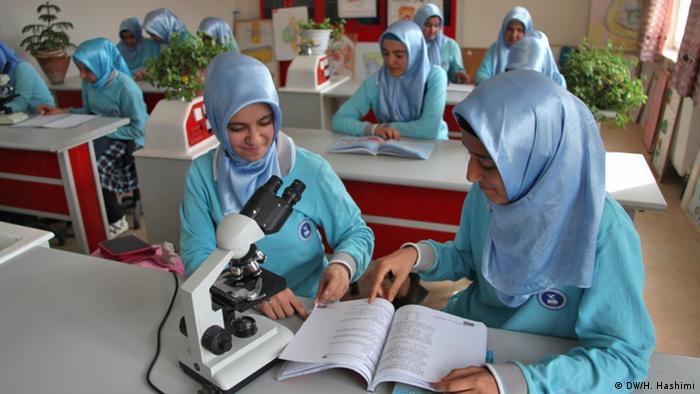
“I got hold of the terrorist who attacked Malala Yousafzai”, said a schoolgirl in Swat. The words coming from an 11-year old caught me by surprise. Musfira Khan, a fifth grader was chatting with her friend during a stroll in her school’s lush green garden. Her words grabbed my attention and my entire focus shifted towards the little girl. “How did you manage to do that?” I asked. She replied with a smile, “In my dream… I dreamt that I had arrested him.” During my visit to Swat—the city where the world’s youngest Nobel Prize nominee Malala Yousafzai opened her eyes—it was pretty evident that girls in Mingora and Swat were attending schools fearlessly and no more scared of the Taliban. In a private school near Makan-Bagh, I managed to interview some girls. I had gone to Swat on October 11, the day when the Nobel Prize winner was to be announced in Oslo. Musfira told me she was feeling very proud that Malala had been nominated for the prize. “Malala is very smart. When I used to visit her, she always advised me to concentrate hard on my studies,” she added. Answering a question if she also wanted to be Malala, her swift response was no. “I am Musfira Khan… I want to be Dr Musfira Khan,” she replied confidently. Asiya Khan, a seventh grader, appeared to be a great fan of Malala. “I like her (Malala Yousafzai) very much. Islam teaches us to get an education and we are doing so without any fear,” Another little girl, Amina Khan said she wanted to be a teacher. The five-year old had not heard of Malala but her schoolmate Muskan said she had been praying since morning for Malala to win the Nobel Prize. A fourth grader Hafsa Bibi said Malala had done nothing for them. “Malala should come back to Swat to support us, she’s enjoying a luxurious life in our name without doing anything for us,” she added. Another seventh grader, Humaima said she knew about Malala only through television programmes. Replying to another question, she said, “Most girls will tell you they have no fear of terrorists and are attending school as usual.”

Pakistan: Terrorism galore

The Law Minister of Khyber Pakhtunkhwa (KP) Israrullah Gandapur has been killed in a suicide attack while he was greeting guests at his home in Dera Ismail Khan on the first day of Eid. At least eight people died along with him. Though celebrations have become few and far between in the country, those left are also visited by terrorism. Since the state has lost the capacity to deliver a decisive blow to the enemy, it has become easy for the terrorists to target and get away with the crime. Knowing that the situation is precarious, especially in KP, the PTI government is behaving as though it is business as usual. The same slack attitude is on display as far as security arrangements throughout the country are concerned and no effort has been made to develop the national security policy on terrorism. For palpable reasons, now that the Pakistan Tehreek-e-Insaaf is getting the direct flak, its KP Chief Minister Pervez Khattak seems to be finally coming come out of the illusion that dialogue could bring the terrorists in from the cold. He has now decided to make some concrete plans to combat them. In the cabinet meeting called immediately after the suicide attack on Gandapur, the KP government has decided to create an anti-terrorist force and recall the Frontier Constabulary from the federal government. So much for the insistence of the KP government to send the army back to barracks from the area. Since it has become apparent that dialogue cannot be pursued as the lone strategy to tackle terrorism, it is time to define the modus operandi required to combat it. How many more lives and how many leaders do we wish to sacrifice before we are convinced that we are not facing any political opposition movement, but a terrorism movement, bent on enforcing its blinkered, narrow and literalist Islamic views on us. Even though the government had planned to talk things out with the enemy, still it was unprofessional and inappropriate not to have a Plan-B in case the hardline elements (as there usually are in such cases) within the Taliban do not respond. Pakistan is now portrayed as allowing its citizens to be killed and places all over the country hit any time. This is perceived as the state having lost its writ, and with that the impression gains ground that it could not do anything against its enemy. In such circumstances, it is difficult to bring the terrorists round to the viewpoint of the government through dialogue. Therefore, as Prime Minister Nawaz Sharif has rightly put it, it is time to establish the writ of the state to instil the fear of God in the enemy that they could be routed if they play dirty against the state.

Pakistan: Ostrich approach: Minister’s killing

THERE is a depressing familiarity to the chain of events in Khyber Pakhtunkhwa: the provincial PTI government talks up talks; the militants go about their business, killing and maiming, frequently targeting the PTI itself; the government responds by pressing yet more urgently for talks. This time round, after the suicide attack that killed KP Law Minister Israrullah Gandapur on Wednesday, the provincial government has tried a different tack: a special cabinet session on Thursday approved the creation of a special anti-terrorism force for the province. Part of a raft of ‘getting tough’ measures announced by the KP cabinet, a special anti-terrorism force can seem from afar as a serious measure taken at last by the PTI against terrorism. But the view from the ground in the province suggests a different reality. The province already has a rapid reaction force and an anti-terror squad and to simply sanction a new force to be drawn from various existing forces is unlikely to meaningfully address KP’s terrorism problem. The basic problem with the new measures announced to try and take on terrorists in KP is that they cast the issue as a law and order one. The security breakdown in KP is far more than just an ordinary law and order problem. There is an organised, trained and well-equipped set of militants in KP and Fata with the explicit agenda of overthrowing the Pakistani state. That is a very, very different problem — and far greater in severity — than more typical law and order issues such as mafias and criminal gangs operating in urban environments. To effectively combat terrorism, the full spectrum of the state’s power needs to be brought to bear on the problem — from direct action against the hardened core of active militancy to slowly rooting out the infrastructure of jihad that continues to radicalise and recruit parts of the population. Of course, the problem is that the PTI leadership continues to miscast the origins of militancy here, seeing the threat as essentially rooted in external factors instead of a long-running and pernicious domestic process. Until that changes, until the PTI accepts that dialogue alone will never truly roll back militancy, the threat of terrorism will never really diminish. In opting for the creation of a new anti-terrorism force, the PTI appears to at least be inching towards the realisation that the carrot of talks cannot really work in isolation. But there is a long, long way to go before the PTI arrives at a more realistic understanding of KP’s terrorism and militancy woes.

Benazir Bhutto: When I Return to Pakistan

By Benazir Bhutto Thursday, September 20, 2007
I am returning to Pakistan on Oct. 18 to bring change to my country. Pakistan's future viability, stability and security lie in empowering its people and building political institutions. My goal is to prove that the fundamental battle for the hearts and minds of a generation can be accomplished only under democracy. The central issue facing Pakistan is moderation vs. extremism. The resolution of this issue will affect the world, particularly South and Central Asia and all Muslim nations. Extremism can flourish only in an environment where basic governmental social responsibility for the welfare of the people is neglected. Political dictatorship and social hopelessness create the desperation that fuels religious extremism. Throughout Pakistan's 60-year history, weaving between dictatorship and democracy, from free elections to rigged elections to no elections, religious fundamentalists have never been a significant part of our political consciousness. We are inherently a centrist, moderate nation. Historically, the religious parties have not received more than 11 percent of the vote in national elections. The largest political party is mine, the Pakistan People's Party (PPP). Pakistan's political landscape has been molded primarily by the moderate PPP, which has demonstrated strong and continuous support from the rural masses and the urban elite. Extremism looms as a threat, but it will be contained as it has been in the past if the moderate middle can be mobilized to stand up to fanaticism. I return to lead that battle.I have led an unusual life. I have buried a father killed at age 50 and two brothers killed in the prime of their lives. I raised my children as a single mother when my husband was arrested and held for eight years without a conviction -- a hostage to my political career. I made my choice when the mantle of political leadership was thrust upon my shoulders after my father's murder. I did not shrink from responsibility then, and I will not shrink from it now. I am aware that some in Pakistan have questioned the dialogue I have engaged in with Gen. Pervez Musharraf over the past several months. I held those discussions hoping that Musharraf would resign from the army and restore democracy. My goal in that dialogue has never been personal but was always to ensure that there be fair and free elections in Pakistan, to save democracy. The fight against extremism requires a national effort that can flow only from legitimate elections. Within our intelligence and military are elements who sympathize with religious extremists. If these elements are not answerable to Parliament and the elected government, the battle against religious militancy, a battle for the survival and future of Pakistan, could be lost. The military must be part of the battle against extremism, but as the six years since Sept. 11, 2001, have shown, the military cannot do it on its own. Many issues remain unresolved in our political structure. Musharraf is precluded from seeking reelection in or out of uniform. Pakistani law requires a two-year wait before a member of the military can run for the presidency. The general can respond to the people's desire for legitimate presidential, parliamentary and ministerial elections, or he can tamper with the constitution. The latter choice would risk a fresh confrontation with the judiciary, the legal community and the political parties. Such a confrontation could lead to another declaration of martial law, civil unrest, or both. Civil unrest is what the extremists want. Anarchy and chaos suit them. The political element in Musharraf's party that presided over the rise of extremism has worked with every Pakistani administration since my government was destabilized in 1996. Its members are blocking the democratic change I have tried to achieve with Musharraf. They fear that democracy will be difficult to manipulate to the benefit of extremists and militants. My dialogue with Musharraf aims to move the country forward from a dictatorship that has failed to stop the tribal areas from becoming havens for terrorists. The extremists are even spreading their tentacles into Pakistan's cities. Last week brought a fresh challenge. Just days ago, Pakistan's election commission arbitrarily amended the constitutional provision regarding the eligibility of a person competent to contest for the office of president. As the constitution can be amended only through a two-thirds majority in Parliament, a judicial hornet's nest has been stirred. My party and I seek fair, free and impartial elections to be held by an independent election commission under an interim government of national consensus. We want a level playing field for all candidates and parties. In words commonly attributed to Joseph Stalin, "Those who cast the vote decide nothing. Those who count the vote decide everything." That's why we have stressed electoral reforms -- although our efforts have so far been in vain. President Bush has rightly noted, "The most powerful weapon in the struggle against extremism is not bullets or bombs -- it is the universal appeal of freedom. Freedom is the design of our maker, and the longing of every soul." When my flight lands in Pakistan next month, I know I will be greeted with joy by the people. I do not know what awaits me, personally or politically, once I leave the airport. I pray for the best and prepare for the worst. But in any case, I am going home to fight for the restoration of Pakistan's place in the community of democratic nations.

Friday, October 18, 2013

Saudi Women Prepared to Grab Their Future by the Wheel on Oct. 26

http://pjmedia.com/
If some countries in the Middle East are continuing their Arab Springs, Saudis are continuing their own revolution behind the wheel with a nationwide driving protest scheduled for Oct. 26. The response should be interesting, as the above video from one of Eman Al Nafjan’s test drives shows, where a family and a car with two men all give her a thumb’s up. The mother of three and PhD candidate at King Saud University in Riyadh runs the Saudiwoman blog and got behind the wheel during the last big driving campaign in 2011.Running out of excuses to decree why women can’t drive, as it’s already been established as nothing Quranic, a Saudi sheikh warned last month that driving could impact a woman’s ovaries. Driving “could have a reverse physiological impact. Physiological science and functional medicine studied this side [and found] that it automatically affects ovaries and rolls up the pelvis. This is why we find for women who continuously drive cars their children are born with clinical disorders of varying degrees,” Sheikh Saleh bin Saad al-Luhaydan, a judicial and psychological consultant to the Gulf Psychological Association, told Saudi news website sabq.org. “Islamic sharia does not have a text forbidding women driving,” the head of Saudi Arabia’s morality police, Sheikh Abdulatif Al al-Sheik, told Reuters last month. The Oct. 26 declaration, which was at nearly 16,000 signatures as of this writing, states: 1- Since there is no justification for the Saudi government to prohibit adult women citizens who are capable of driving cars from doing so, we urge the state to provide appropriate means for women seeking the issuance of permits and licenses to apply and obtain them. 2- Many claim that this is a “societal decision”. However the public discourse will not be resolved except through a firm governmental decision to implement what was proposed in point one. Here it is important to point out that women will not be forced to drive if they do not wish to do so. 3- Deferring an issue such as this until a “societal consensus”, has only increased divisions because it constitutes that some will be forced to concede. We as a Saudi people are diverse and accepting of all views that are not prohibited in the Quran or by the Prophet. 4- In case the Saudi government maintains the ban on women driving, we demand that it presents to the citizens a valid and legal justification and not simply to defer it to a societal consensus. 5- In case the government refuses to lift the ban on women driving and refuses to provide the people with a legal and valid justification, we demand that it provides “society” with a legal mechanism through which it can express what it wants. Men are encouraged to participate in the protest as well by offering driving lessons, hanging a decal of support in their own car or spreading the word on social media.

Turkey’s headscarf ban lifted in latest assault on the secular state

http://www.secularism.org.uk/
Turkey's Islamist Prime Minister, Recep Tayyip Erdogan, yesterday continued his programme of Islamisation of the country by lifting the ban on the wearing of Muslim headscarves in public offices.
It is the latest move by Mr Erdogan in dismantling the secular reforms made by the founder of the modern Turkish state, Kemal Ataturk, that have been in place since 1924. Last month tough new restrictions were introduced on the sale and advertising of alcohol, and many secular activists see this as the precursor to a total ban. Judges, prosecutors, the police and military personnel will still be banned from wearing headscarves. Analysts said the symbolism of the move was powerful. "This pretty much goes against the legacy of the Turkish nation-state project," said Ziya Meral, a London-based Turkey analyst. There is also unease among secularists in the army who regard the restrictions of Islamic dress in public offices as a strong symbol of the separation of religion from the state. The resurgence of Islam was illustrated again this month when an Istanbul court handed a 10-month suspended jail term to pianist Fazil Say over social media posts deemed "religiously offensive." The package of reforms, that include some much-needed relief for the persecuted Kurdish minority, also abolish the daily reciting in schools of a nationalist oath praising Ataturk that was introduced in 1933. Large-scale street demonstrations in Istanbul and Ankara in June showed a polarisation of feeling among secular and religious Turks about the creeping Islamisation of their nation. The ruling Islamist AKP party ruthlessly suppressed these demonstrations, further alienating and enraging the opposition. Gürsel Tekin, vice-president of the main opposition People's Republican Party, said: "The mountain has given birth to a mouse. It's a package that is meant to soothe people but it's not making anyone happy." Mr Erdogan has promised more reforms. "It is not rational to expect this package to meet all the problems of the country, although we wish we could do this." he said.

"Tibetan orphans" incident exposes Dalai Lama clique's callousness, hypocrisy

The "Tibetan orphans" incident, exposed by European media, has lifted the veil on the callous and hypocritical Dalai Lama clique, who have been masquerading as pacifist and benevolent. According to a series of stories published by Swiss newspaper Neue Zuercher Zeitung, the vast majority of the so-called "Tibetan orphans" who were brought to Switzerland in the 1960s through a privately-run campaign masterminded by a Swiss entrepreneur and the Dalai Lama had at least one parent in Tibet. In the Swiss documentary "Tibi and his mothers," directed by Ueli Meier, the bitter experiences and hard lives of the 100-plus "orphans" and other uncomfortable truths were presented. For ulterior political purposes, the Dalai Lama clique trampled on the children's individual rights and publicly violated common ethics and morality, which was labeled by the Swiss paper as "morally ridiculous." Humane people will be surprised to learn these lively Tibetan kids and their happy families could be employed by the Dalai Lama clique as political instruments and manipulated as "chess pieces." And the orphan incident was just one of their favorite tricks to deceive the international community and win undue credit for themselves. The disastrous effects produced by their dirty deeds are irreversible. With little or no command of their mother tongue, the "orphans" have difficulties in communicating with their birth parents and some of them have given up attempts at family reunion. And faced with insurmountable cultural barriers, they have found themselves estranged from local communities. The "Tibetan orphans" fabricated by the Dalai Lama clique have thus become a real human tragedy. Regardless of Swiss media's call for a sincere apology, the Dalai Lama clique feigns ignorance without the slightest remorse for their evil deeds. The orphan incident was much more than "morally ridiculous" but a despicable crime the Dalai Lama clique committed against the Tibetan people. The Dalai Lama clique must give the international community, as well as the Tibetan people, an accurate and comprehensive account of the incident.

Video: Bilawal Bhutto's Speech 18 Oct,2013.


Bilawal Speech 18 Oct by arynews

Malala Yousafzai meets Queen at Buckingham Palace reception

Pakistani schoolgirl tells monarch about importance of education and gives her copy of book I Am Malala
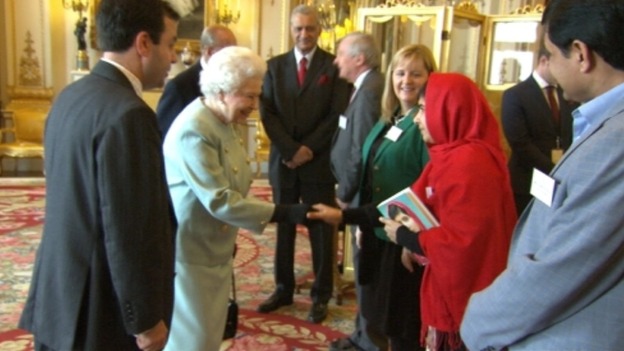
Malala Yousafzai, who survived an assassination attempt by the Taliban, spoke to the Queen about the importance of education when they met at Buckingham Palace on Friday. The 16-year-old schoolgirl was shot in the head in Pakistan last October after campaigning for the right of girls to go to school without fear in a part of the country where Islamic fundamentalists were trying to impose a strict form of sharia law. Malala was one of the guests at a reception for Commonwealth, youth and education hosted by the Queen and the Duke of Edinburgh. She was reduced to laughter by a comment from the duke, who quipped that in this country people wanted children to go to school to get them out of the house. Malala covered her face while in a fit of giggles at his joke. The teenager, accompanied by her father Ziauddin, gave the Queen a copy of her book, I Am Malala, during their meeting in the palace's White Drawing Room, telling her: "It is a great honour for me to be here, and I wanted to present you with this book." Accepting the gift, the Queen replied: "That's very kind of you." Malala told the Queen she was passionate about every child having a right to an education, everywhere around the world. She added: "Especially in this country as well. I have heard about many children that can't go to school, and I want to continue our work." Mr Yousafzai also spoke to the Queen and duke about their past visits to his home country. Malala was flown from Pakistan to the UK for emergency treatment after the attack. Surgeons who treated her said she came within inches of death when the bullet grazed her brain in the attack on a school bus. She was treated at Queen Elizabeth hospital in Birmingham and has now settled in the city with her family. Since the attack she has addressed the United Nations and been nominated for the Nobel peace prize. Princess Beatrice and the Duke and Duchess of Gloucester were also present at the reception, attended by 350 guests from academic institutions around the world. It included a performance from the Commonwealth Youth Orchestra and choir.

Pakistan: There are Many Christian Malala – One of them is “Kashmala Munawar”

Teenage girl Kashmala Munawar, a student of 1st year of High School . On 22nd Sept, 2013 she went to church with her family where she got seriously injured in the blast. She was taken to the Lady Reading Hospital for treatment and the doctors said that there are multiple pellets in her legs. They operated both of her legs and rods were fixed in her legs. Her leg got infected because of which doctors amputate her leg.
After amputating Kashmala leg doctors discharged her from hospital. She was taken to the Mission hospital (Owned by Diocese of Peshawar).
Right after knowing the situation of Kashmala, she moved her to RMI hospital [which the best Hospital in Peshawar) where Orthopedic specialists are treating her. In the first instance doctors suggested to removed her second leg as well. But now by the grace of God and endless efforts of doctors we were able to save her second leg. But the leg which has already been amputated will again be operated 9 Inches more.Kashmala is very intelligent girl she aimed to be the educationist, however she was targeted by the same Talibans who target Malala Yousaf Zai. our Christian NGOs and Churches are supporting Malala but for Kashmala everyone is silent.
There are many Christian Malala’s who lifted their voices against mediocrity, education and health but no one shares their stories on their social timelines. This is a time to lift your voice for your brothers and sisters in Pakistan. - See more at: http://www.christiansinpakistan.com/there-are-many-christian-malala-one-of-them-is-kashmala-munawar/#sthash.45j3jBey.dpuf

PAKISTAN: Persecution of Ahmadis in September 2013

Following are excerpts from the press release of the Ahmadyya Jamat Report on the Persecution of Ahmadis in Pakistan, September 2013. The full report may be seen here. In the month of September persecution against Ahmadis continued in Pakistan. In Orangi Town on September 18, Mr. Ijaz Ahmad Kiyani was shot dead by unknown assailants at 7:30 a.m. He had left home for work but had not gone far when two men coming from the opposite side on a motorcycle fired several shots at him. He was hit six times; one bullet caught him in his left hand; four hit him in the chest and one in the head. He is believed to have died instantly. Mr. Kiyani was 27 and worked as a driver in an army establishment. He is survived by his parents, a wife, five-year old daughter and a two-year old son. Spokesmen for Jamaat Ahmadiya, Mr. Saleemuddin, expressed his grief and anguish over this incident and said that despite such target-killings happening in Karachi for a long time the authorities have failed to put a stop to them. "Four Ahmadis have been killed in Karachi for their faith during the past month. We refuse to be intimidated by the killing of innocent Ahmadis because we have faith in Allah", he said. He went on to say that, ".....our adversaries are wrong to assume that their barbarous activities would make any Ahmadi lose faith. The government should be mindful of its duty and should stop the proliferation of hate literature that incites the public to kill Ahmadis". In the recent past conferences were held in the sacred name of Khatme Nabuwwat throughout the country in which hatred and violence against Ahmadis was preached and the audience were incited against Ahmadis through edicts of Wajibul Qatl (must be killed). A fortnight earlier, another Ahmadi Malik Ejaz Ahmad, was target-killed in Karachi on September 4, 2013. Mr. Kiyani's was the fourth such murder in four weeks. In Gowalmandi on September 12, Dr. Qazi Munawwar was leaving his clinic for home when he was approached by a youth who threw acid on him before escaping. Dr. Munawwar's clothes were burnt and he was injured. The nearby shop-keepers shifted him to the emergency ward in Meo Hospital. Fortunately his face escaped harm, and the injury was not grave. Dr. Munawwar is an active member of the Ahmadiyya community in Lahore. The desecration of Ahmadiyya mosques by state authorities continues. According to the Constitution of PAKISTAN: ... It is the will of the people of Pakistan to establish an order ... wherein shall be guaranteed fundamental rights, including equality of status, of opportunity and before law, social, economic and political justice, and freedom of thought, expression, belief, faith, worship and association, subject to law and public mortality Constitution of Pakistan, Preamble The right to freedom of thought, conscience, religion or faith includes the following: To worship or assemble in accordance with a religion and belief and to establish and maintain places for these purposes. Article 6 of the United Nations Resolution 365/55 of 25 November, 1981 In Sialkot the police moved into shameless compliance mode in support of extremist Mullas, against the peaceful Ahmadiyya community in this city. The daily The Express Tribune published the following detailed report on this subject in its issue of September 23, 2013: Ahmadi Persecution: Police bow to clerics to tear down minarets Group demands further demolitions at Ahmadi places of worship By Rana Tanveer -- published September 22, 2013 Lahore: Police demolished minarets at an Ahmadi place of worship in Sialkot on Saturday, after a group of protesters threatened to do so themselves, The Express Tribune has learnt. The police approached the community on Friday after a local cleric complained that three worship places for Ahmadis had features that resembled mosques, namely minarets and verses from the Quran written on the walls. The minarets and verses were covered up, apparently to the police's satisfaction, but a baying mob gathered at one worship place the next day and demanded that the minarets be torn down. The police did so. The group of protesters is now demanding that similar action be taken against two other worship places within a couple of days. The cleric whose complaint led to the action told The Express Tribune that he had approached the police after he attended a Khatm-i-Nabuwwat Conference on September 7, marking the anniversary of the passage of anti-Ahmadi laws, where a speaker said that Ahmadis were not allowed to build minarets or use verses from the Quran at their places of worship. Sections 298-B and 298-C of the Pakistan Penal Code outlaw Ahmadis from calling their place of worship a masjid, claiming to be Muslims or preaching their faith to others. The police are employed and paid to enforce the law but instead acted blatantly to violate the law they are sworn to protect. Of course the officers enjoy full support of their departmental and political superiors at the highest level who were also guilty under the provisions of the following clause of the Pakistan Penal Code: PPC-295. Injuring or defiling places of worship, with intent to insult the religion of any class. Whoever destroys, damages or defiles any place of worship or any object held sacred by any class of persons with the intention of thereby insulting the religion or any class of persons or with the knowledge that any class of persons is likely to consider such destruction, damage or defilement as an insult to their religion, shall be punished with imprisonment of either description for a term which may extend to two years, or with fine, or with both. In Chak no. 43, also in the month of September some miscreants hurled abuse at Ms. Saadia Tabassum, a teacher in Sargodha, Punjab. The shouted slogans against her and stopped her from going to the school. She is a teacher in the local Government Elementary School and was falsely accused of preaching Ahmadiyyat to students. This agitation was immediately reported to the authorities who arrived at the scene and rescued her. It is learnt that the miscreants wanted to have one of their relatives appointed in place of Ms. Tabassum. They co-opted the Mullas of the Khatme Nabuwwat faction and planned a procession. They were unable to succeed as some elders of the area intervened. The students and principal of the school refused to testify against her. The miscreants used the services of a peon of the school in their support. Ms. Tabassum has been temporarily suspended from the school under the circumstances. She has been advised not to go to the school until the situation improves.

Balochistan’s Feudal Cabinet

The Baloch Hal
The Balochistan government made history for wrong reasons by delaying the formation of a full cabinet for more than four months. Last week, the National Party-led coalition government inducted eleven new ministers in the hitherto three-member cabinet. Now, the cabinet comprises of five ministers from the Pakistan Muslim League Nawaz (P.M.L-N), four from the Pakhtunkhawa Milli Awami Party (Pk.M.A.P.) and the National Party (N.P) respectively and one from the Pakistan Muslim League-Quaid-e-Azam. The reason for the inordinate delay in the completion of the cabinet was a blend of rifts among the coalition partners and some constitutional restrictions. Differences broke out between the P.M.L-N, which has the largest number of seats (22) in the provincial assembly, and the nationalists over the distribution of ministries. For obvious reasons, the local leadership of the P.M.N-N. is displeased with the undue influence of Prime Minister Nawaz Shrif over the politics of the province. Mr. Sharif, they whine, has been “too generous” in patronizing the Baloch nationalists. For instance, he nominated Dr. Malik Baloch as the head of the provincial government although his party has only 10 seats in the legislature as compared to 22 of the P.M.L-N. and 14 of the Pk.M.A.P. As a quid pro quo, the P.M.L-N.’s local leadership has asked for a greater representation in the cabinet. The new cabinet has attracted criticism for genuine reasons because it has completely excluded women and religious minorities from the elite-decision making body. Although under the 18th Amendment the government is required to limit the number of ministers to 15, a small cabinet is still not a valid pretext for not including even a single woman and non-Muslim. In addition, the cabinet’s composition also comes as a setback for all of us who cheered the election of Dr. Malik Baloch as Balochistan’s first middle class chief minister. On the contrary, more than 90% of the ministers inducted in the cabinet come from a feudal background. They have been awarded key portfolios not based on their political credentials but tribal influence. With a middle class representative leading the provincial government, progressive circles in Balochistan have legitimate expectations that Dr. Malik will sincerely strive to weaken the tribal structure and liberalize the Baloch society. In order to empower every citizen with education and economic opportunities, the government should consistently follow a policy that overtly isolates greedy and corrupt tribal chiefs. If that is not done, it is futile to anticipate a different outcome from Dr. Baloch as compared to his predecessors. While we emphasize the need for reviewing the composition of the cabinet, one should also be mindful of the fact that the chief minister enjoys too little authority over his own government. At all times, he is expected to respect the wishes of his coalition partners. It is not very easy to persuade him to oust tribal chiefs from his cabinet. However, what he can do is to make his own party’s representation in the cabinet more democratic. The National Party of the chief minister has always flaunted its middle class credentials. But its decision to offer ministries to so many tribal notables, instead of members of the middle class, women and religious minority groups, is in stark contradiction with the party’s mission. In order to make his government truly democratic, the chief minister must immediately include at least one female and a minority minister in the cabinet and reduce the presence of feudal lords. In Balochistan, women and religious minorities and even minority sects, such as the Shias, regularly face extraordinary challenges. While a large number of Hindus has been compelled to flee the province owing to security problem, the state of women’s rights and their representation remains absolutely abysmal. Access to education and health facilities also remain underachieved goals of Balochistan’s women. By accommodating women and minorities, the chief minister will be making a much-needed commitment to protecting their rights and also encouraging them to actively participate in daily affairs of the province. A government that snubs the rights of women and minorities merely to please or patronize tribal chiefs will not be deemed sufficiently democratic or representative of all sections of the population.

The word “Taliban” will not slip from Imran's mouth!

http://lubpak.com/archives/287013
By Mahpara Qalandar
We are reproducing a news report below. It gives details of Imran Khan’s reaction to the killing by the Taliban of his own minister. We remind the LUBP readers that when Zohra Hussain was killed in Karachi on the eve of national elections in May, Imran Khan went mad blaming the MQM for her murder. Today he lost his third MP to the bullets of the Taliban. But like before, he has not uttered the word “Taliban” let alone condemn them. This shows how extremely stupid and equally dangerous he is. Even when he refused to name the Taliban, he refused to even call the murderers what they are: murderers.
What he, unbelievably, said was this: Talk to the Taliban! Yes, he still wants the state of Pakistan to negotiate with the terrorists from the position of weakness. He still refuses to condemn the Taliban who say they do not accept the constitution of Pakistan. He wants to surrender the sovereignty of the state of Pakistan to the Taliban. The fake liberals who still support this senseless man should wake up. Imran Khan is a broken reed. The people of Khyber-Pakhtoonkhwa voted him hoping that he would bring peace. But all he has done is get allied with the Jamaat-e-Islami and shout “Taliab are our brothers!” It is time to confront Im the Dim.

Bilawal Bhutto: 18th October is martyr's day

Bilawal Bhutto Zardari, co-Chairman of Pakistan Peoples Party (PPP), said on Friday that 18th October is the martyrs’ day - ARY News reports. The statement was made during an address to the party workers on account of Karsaz Incident, which claimed more than 150 lives, six years ago. While speaking to the workers, Bilawal Bhutto Zardari stated that its human nature to run away from danger but Pakistan Peoples Party has faced danger. He added that PPP has given sacrifices of their leaders and supporters. He further stated that PPP is a brave party and is a party of the supporters. Speaking on the sacrifices given by the PPP, the Joint Chairman of PPP explained that Salman Taseer and Shahbaz Bhatti sacrificed their lives while protecting the Christian Community of Pakistan. He stated that the party has given sacrifices of their leaders and supporters for Pakistan Lashing out against the PPP opponents, he claimed that the party is not "Coward Khan" who makes deals after Church attacks. He further alleged that Dr. Tahir-ul-Qadri made Islamabad hostage but it was PPP who foiled the intentions of Dr. Qadri. He also said that the supporters of terrorists are celebrating in the country today. On the 2018 general elections, Bilawal Bhutto Zardari stated that he will strengthen the Pakistan Peoples Party and Asif Ali Zardari will be the commander of the supporters. He claimed that PPP will save the people of Khyber Pakhtunkhwa (KP) from the tsunami in the province. Speaking against the Muttahida Qaumi Movement (MQM), he alleged that the party will cut the kite of Karachi. He also claimed that PPP will hunt the lion, which is feeding its stomach with the blood of the people. Earlier, CM Sindh and President of PPP Sindh Qaim Ali Shah and Raza Rabbani, gave tributes to the people killed in the incident.

Zardari will be Jiyala’s bow, me arrow in next elections

Pakistan Peoples Party (PPP) Chairman Bilawal Bhutto Zardari has said that Asif Ali Zardari would turn out to be a Jiyala's "bow" and he himself an "arrow" in next elections. Addressing the party workers on 6th anniversary of Karsaz incident, Bilawal said that the whole nation was celebrating Benazir Bhutto's return, however, the bomb explosion occurred and the party workers rendered their sacrifices for their leader. He said that the party workers sacrificed their lives for the restoration of democracy in the country. "PPP is not a political party but passion". Bilawal further said that Dr Tahir ul Qadri had made whole Islamabad hostage and in the current government one more armed person did the same. He claimed that the political parties who took shelter from the terrorists are now celebrating. Bilawal further said that Karachi is still a colony of London and pledged that his party would “rescue the people of Khyber Pakhtunkhwa from the Tsunami”.

Bilawal lays wreath at memorial of Karsaz martyrs

Pakistan Peoples Party (PPP) Chairman Bilawal Bhutto Zardari has laid floral wreath at memorial of martyrs, who lost their lives in Karsaz carnage. According to details, the PPP leader also offered Fateha for the victims of the Karsaz blast that killed over 175 people and injured 700 others. Chief Minister Syed Qaim Ali Shah and Mian Raza Rabbani among various other party leaders were also present on the occasion.

Bilawal declares war on “hijackers of faith”

Chairman of the Pakistan Peoples Party (PPP), Bilawal Bhutto-Zardari, on Friday said he was declaring jihad (holy war) against “hijackers of the faith”, DawnNews reported. Addressing his supporters at Karachi’s Karsaz on the occasion of the sixth anniversary of the Oct 18, 2007 bomb blasts that killed 176 people during a historic rally led by Benazir Bhutto, Bilawal promised supporters that he would fight for the people. The PPP chairman said that on Oct 18, the Taliban had used a child in the suicide attack on the rally led by his mother on her return from Dubai. He said the PPP was a party of jiyalas (zealots), adding that it had given numerous sacrifices on several occasions. Speaking at the site of the attack amid cheer from party supporters, Bilawal said he had "sacrificed” his childhood and his mother for the country. During the address, he said Karachi still remained “a colony of London” and pledged that his party would “rescue the people of Khyber Pakhtunkhwa from the tsunami”. He laid a floral wreath at the memorial of those killed in the Karsaz bombing and offered prayers for the victims. Sindh Chief Minister Syed Qaim Ali Shah, PPP leader Mian Raza Rabbani and various other party leaders were also present on the occasion. Bilawal then headed to the mausoleum of Abdullah Shah Ghazi to pay his respects.

Bilawal: PPP will save K-P from drowning in PTI tsunami

The Express Tribune News
In a war of words that spilled over from the online world, Pakistan Peoples Party’s (PPP) patron-in-chief Bilawal Bhutto Zardari declared his party was not like the “cowardly” Pakistan Tehreek-e-Insaf (PTI) Chairman Imran Khan. Bilawal was speaking in Karachi on the anniversary of the 2007 attack on Benazir Bhutto’s caravan on Karsaz road that had killed at least 180 people. The young Bhutto told a charged crowd of supporters that Imran Khan “stood outside the church and made excuses for the terrorists who were responsible for the attack,” after the Peshawar church bombing that killed at least 78 people and injured over 100 others on September 21. “PPP will save the people of Khyber-Pakhtunkhwa from drowning in the tsunami,” Bilawal claimed. The patron-in-chief also said that PPP is a party of “courageous and martyred” leaders, and is not afraid of terrorists. Commenting on the May 2013 general elections, he said the PPP had given a lot of sacrifices to win the 2007 elections, but in the recent elections the party gave up its seats to protect its members. “In the 2018 elections, Asif Ali Zardari will be Jiyalas’ bow and I will be the arrow,” he further stated. Bilawal also said the PPP “saved Islamabad” from Mohammad Sikander, the man who was responsible for the standoff that had been created on Constitution Avenue for almost six hours on August 15. The stand-off had ended when PPP leader Zamrud Khan had approached the gunman and tried to grab him after which the police shot and arrested Sikander. Bilawal assured the general public that he would fight for them and give his life for them. He also added that if someone had sacrificed his brother or son to acts of terrorism then from today onward, he would be their brother or son. In a veiled reference to the MQM’s hold over Karachi, Bilawal said that “although Pakistan got its independence in 1947, Karachi is still a colony of London.” He also declared “jihad” against religious extremists and further added that “Sindh will once again be PPP’s stronghold.”

Picture: Former President Asif Ali Zardari addressing an Eid Milan party at Naudero House

Naudero, Oct 17, 2013: Former President Asif Ali Zardari addressing an Eid Milan party held here at Naudero House Thursday evening. PPP Patron Bilawal Bhutto Zardari, CM Sindh Syed Qaim Ali Shah, Ms. Faryal Talpur MNA, Syed Khursheed Shah, Agha Siraj Durrani, Syed Owais Muzaffar and others were also present on the occasion.

Thursday, October 17, 2013

Crisis averted, Obama says Americans 'completely fed up' with Washington

President Barack Obama said on Thursday that Americans are "completely fed up with Washington" a day after the latest fiscal crisis was narrowly averted and called for talks with Congress on the budget, immigration and farm legislation. Hours after he signed into law a hastily arranged bill to end a 16-day government shutdown and head off a debt default, Obama said events over the past two weeks had inflicted "completely unnecessary" damage on the U.S. economy. Obama, having emerged bruised but victorious from the latest in a string of fiscal stalemates in Washington, issued an aggressive challenge to Congress, particularly the Republican-controlled House of Representatives: Get to work with him on issues critical to improving the economy. "Now that the government is re-opened and this threat to our economy is removed, all of us need to stop focusing on the lobbyists and the bloggers and the talking heads on radio and the professional activists who profit from conflict and focus on what the majority of Americans sent us here to do," he said. Declaring that "the American people are completely fed up with Washington," Obama sought to tap into American disgust with Washington to advance his agenda and argue that after more than two weeks of shutdown, people have seen that the federal government is vital to their lives. The agenda he laid out for the rest of the year appeared to presage more partisan combat. He called for House action on two major items that cleared the Democratic-controlled Senate earlier this year but collapsed in the House: an overhaul of the U.S. immigration system and passage of a $500 billion farm bill. Obama also renewed his plea for a "balanced approach" to the U.S. budget - language that means he wants to see some sources of new revenue in the budget such as closing corporate tax loopholes instead of simply enacting cuts in government spending. House Republicans have ruled out tax increases. "I understand we will not suddenly agree on everything now that the cloud of crisis has passed. Democrats and Republicans are far apart on a lot of issues," he said. "And sometimes we'll be just too far apart to forge an agreement. But that should not hold back our efforts in areas where we do agree."

U.S: The Republican Surrender

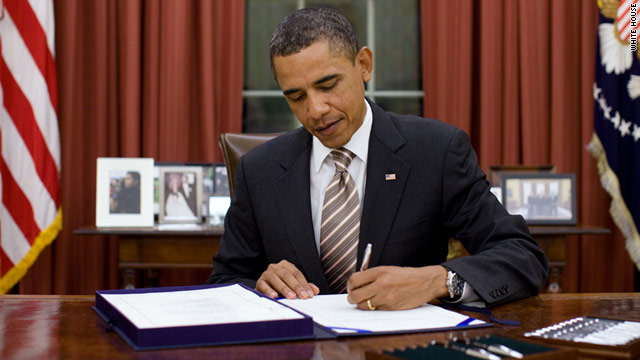
UPDATE: President Obama signed the bill reopening the government and lifting the debt ceiling early Thursday morning.
The Republican Party slunk away on Wednesday from its failed, ruinous strategy to get its way through the use of havoc. Hours away from an inevitable market crash, it approved a deal that could have been achieved months ago had a few more lawmakers set aside their animus. After President Obama signs the bill, the government will reopen after more than two weeks of shutdown, and the threat of a default will be lifted.
The health care reform law will not be defunded or delayed. No taxes will be cut, and the deal calls for no new cuts to federal spending or limits to social welfare programs. The only things Republicans achieved were billions of dollars in damage to the economy, harm to the nation’s reputation and a rock-bottom public approval rating. “We fought the good fight. We just didn’t win,” Speaker John Boehner said, utterly failing to grasp the destruction his battle caused. It has hurt federal employees and needy people dependent on government programs, and it threatened to alter Washington’s balance permanently by giving a fringe group outsize power over the executive branch and the normal functions of government. The deal, unfortunately, does include one minor health care provision that requires the administration to certify that procedures are in place to verify the incomes of those seeking insurance subsidies. (By the middle of next year, an inspector general will have to audit those procedures.) A White House official said the provision was virtually meaningless and would have no effect on the rollout of insurance exchanges, but the requirement was unnecessary and adds a tarnish to the president’s vow not to pay the slightest bit of ransom to Republicans. Nonetheless, the outcome vindicates the strong stance taken by Mr. Obama and Senate Democrats against the Republicans’ extortionate demands. Two years ago, when he was first confronted with the Republican refusal to raise the debt ceiling, Mr. Obama blinked and agreed to a budget control law that severely slashed domestic spending and will continue to do so for years through the sequester. Determined not to give in this time, he refused all of the most outrageous demands. The Republicans pushed the nation to the brink of default, and pulled back at the last minute when it was clear the White House would not capitulate. But this doesn’t mean the brinkmanship is over. The continuing resolution that pays for the government to reopen lasts only until Jan. 15. Democrats won a formal budget negotiation that Republicans had resisted for months, giving them a chance to relieve some of the sequester cuts. Republicans have already vowed to use the budget negotiations to keep up their attacks on the health law. “Our drive to stop the train wreck that is the president’s health care law will continue,” Mr. Boehner said in his surrender statement. Then, on Feb. 7, the Treasury will again hit the debt ceiling. That will be closer to the midterm political season, and the futility of trying to use default as a weapon should be a fresh memory for Republicans. But many in the party remain defiant, opposing this week’s deal and vowing to keep waging their crusade. Those who refused to submit to blackmail in Washington need to remain vigilant.
The New York Times’s Editorial Board

Pakistan:Religious discrimination at climax by Nawaz Regime:No 'Qurbani' for you: Police stop Ahmadis from ritual sacrificing in Lahore

Lahore police stopped various members of the Ahmadi community in Lahore from slaughtering animals as part of ‘Qurbani’ ritual on Eidul Azha, proclaiming that the ritual of animal sacrifice was an Islamic injunction whereas Ahmadis were not Muslims. The Express Tribune learnt that police from the Islampura Police Station directed Tahir* in Sanat Nagar not to sacrifice his bull, which he had bought and tied in front of his house a day before Eid. At the direction of police, Tahir had to remove the animal from his house. On the same night, Hanjarwal police raided the house of Ahmad* at Sabzazar and took him to the police station, where he was detained for two hours. When his family members reached the police station, officials agreed to release him, but not before he provided a a written assurance that he will not perform the sacrifice meant to remember the Prophet Ibrahim’s (AS) tradition of presenting Ismail (AS) for sacrifice, said one of Tahir’s family members.He said that the police, instead of providing security to the citizens, was meddling in sectarian issues and supporting hardliners. *Tahir and Ahmad are fabricated names to protect the identities of the victims.

Sindh CM meets Zardari to discuss shuffling Sindh cabinet

The Express Tribune
Sindh Chief Minister Qaim Ali Shah met former president Asif Ali Zardari in Larkana to discuss shuffling the Sindh Cabinet, Express News reported on Thursday. At the meeting Pakistan Peoples Party’s (PPP) Chairman Bilawal Bhutto Zardari, Member National Assembly (MNA) Faryal Talpur, Speaker Sindh Assembly Agha Siraj Durrani and Local Government Minister Owais Muzaffar were also present. The meeting focused on shuffling portfolios in the Sindh Cabinet. According to sources, the local body elections were also discussed at the meeting. The topic of Bilawal’s election to the National Assembly also came under discussion. The participants deliberated whether PPP MNA Ayaz Soomro should give up his place for the party’s patron in chief on NA-204. If a decision is arrived at, Bilawal can contest for the seat during the by-elections for the constituency. Owais Muzaffar was considered for the role of interior department minister. There was further deliberation on whether Agha Siraj Durrani should be handed his old ministry for local government. Minister for Law and Parliamentary Affairs Dr Sikandar Ali Mandhro was considered as a potential candidate to replace Durrani as the Speaker of Sindh Assembly.

India, Pakistan have highest population of slaves in the world: report

Over 16 million or half the world’s population of modern day slaves live in India and Pakistan, according to the inaugural Global Slavery Index published Thursday. An estimated 30 million people worldwide are living in modern-day slavery, of which 2.1 million are in Pakistan and a staggering 14 million are based in India. The report by the Walk Free Foundation ranks 162 countries on ‘modern slavery’ by using reports from governments and non-profit organisations as well as statistical estimates. The Walk Free Foundation’s definition of modern slavery includes slavery itself, as well as human trafficking and forced labour, and slavery-like practices such as debt bondage, forced marriage, and sale or exploitation of children. According to the index, India has the highest total number of enslaved people in the world, between 13.2 million to 14.6 million, followed by China with 2.9 million enslaved people, and Pakistan with 2.1 million enslaved people. According to estimates by the WFF report, over 1.2 per cent of the Pakistani population is enforced into in some form of slavery. In India, this percentage rests somewhere around 1.13 per cent, while in China it is about 0.22 per cent. Combined, both India and Pakistan house 54 per cent of the world’s population of enslaved people. The index also ranks countries on a slavery prevalence rating based on factors including ratio to country population. Mauritania and Haiti rank among the countries with the highest prevalence of modern slavery. An estimated 4 per cent of West African nation Mauritania’s population is living in some form of slavery. Pakistan and India follow the list, ranked third and fourth respectively on prevalence of slavery. Taken together, countries with the highest numbers of enslaved people – India, China, Pakistan, Nigeria, Ethiopia, Russia, Thailand, Democratic Republic of Congo, Myanmar and Bangladesh – account for 76 per cent of the total estimate of 30 million in modern slavery today. The Walk Free Foundation is a Perth-based anti-slavery charity founded by Australian tycoon Andrew Forrest. The index has been endorsed by popular leaders including US Secretary Hillary Clinton, former British Prime Minister Tony Blair, current Australian Prime Minister Tony Abbott, and philanthropists Richard Branson and Bill Gates. The charity hopes the annual index will help governments monitor and tackle what it calls a “hidden crime”.
AGENCIES ADD:
“A lot of people are very surprised to hear that slavery still exists,” WFF chief executive Nick Grono told news agency AFP, explaining how many people assume it ended when the Atlantic slave trade was abolished in the 1800s. “What modern slavery is is a situation that reflects all of the characteristics of slavery of past centuries,” he said. “People are controlled by violence. They are tricked or they are forced into jobs or situations where they are economically exploited. They live on no pay or base subsistence pay and they’re not free to leave.” “I think once we start pointing out the scale of the problem on a country by country basis, policy makers will react. “Slavery exists in every country in the world.”

Bilawal Bhutto strongly condemns D. I. Khan blast

http://mediacellppp.wordpress.com/
Patron-in-Chief of Pakistan People’s Party, Bilawal Bhutto Zardari has strongly condemned the blast in Kulachi, D. I. Khan, which resulted into the loss of several innocent lives including of provincial minister Israrullah Gandapur while injuring many others. Bilawal Bhutto Zardari said that shedding blood of innocent people was tantamount to playing with the stability of the country. He said that the enemies wanted to weaken the country to fulfill their nefarious designs. PPP chief Bilawal Bhutto sympathized with the families of victims who lost their lives and limbs in the attack and expressed solidarity with them. He stressed that special arrangements should be made for timely treatment to all those injured in the attacks.

Eid sacrificial animals in Pak can cost more than cars

http://timesofindia.indiatimes.com/
This year, the average price of a "qurbani" or sacrificial animal begins from 20,000 Pakistani rupees onwards and goes up to a princely sum of Rs 16 lakh - an amount that has left several appalled, considering a brand new car in Pakistan will cost only about Rs 7 lakh. It's the first time in years that the prices are so high and have nearly doubled from that of 2012. This means buying a sacrificial animal remains nothing but a dream for the salaried and middle class. No wonder then, animals are allegedly being stolen from homes. Take for example cricket player Imran Farhat. After paying Rs 1 lakh for his Eid goats, they were stolen overnight from his house in the upscale Valencia Town, Lahore. Despite police complaints and follow ups, the goats remain missing. It was "breaking news" on some channels. It is not uncommon for animals to be stolen or abducted in the days leading to Eid. In Karachi, where extortion is rampant in some areas, people who bring home sacrificial animals may even have to pay money to mafia to keep them safe. This year alone, two animals were shot dead by extortionists after their owners from Kharadar and Ranchore Lines area refused to pay them ransom. TV channels have also been showing all kind of animals that are up for sale, including a goat that "drinks sprite" and chews 'pan'. One goat showed on TV was priced at whopping Rs six lakh, while the most expensive buffalo was priced at about Rs 16 lakh. But then, if one does not feel like making his way through cattle markets crowded with buyers and animals, then help is just a click away. "Qurbani Online" is among a host of websites which promises to have the animal delivered 'at your home, at any relative's location or any charity organization'. But as of now, the service is restricted to Karachi. An official of the Livestock and Dairy Development in Khyber Pakhtunkhwa province told state-run APP news agency that sacrificial animals between Rs 70,000 to Rs 1,00,000 are being sacrificed in the province. People say rising prices of sacrificial animals have made it hard for them to afford and many joint families have decided to share the cost of sacrificial cows. Butchers are also in high demand. The current rates are about Rs 2,000 to Rs 4,500 for goat, Rs 5,000 to Rs 10,000 for cows and Rs 10,000 to 15,000 for camels. Eid-ul-Azha is an Islamic festival in which devotees mark the prophet Ibrahim's willingness to sacrifice his son when God ordered him to.

60pc Afghan children facing malnutrition: WFP

The World Food Programme on Wednesday said 60 percent children were reportedly faced with malnutrition in Afghanistan alone, with over 842 million individuals lacking adequate food around the world. “While security issues related to insurgency and foreign aggression monopolize most discourse in Afghanistan, a lesser noted form of insecurity – food and nutrition shortage – also threatens the country's prosperity,” a WFP statement said. It said the WFP worked extensively in Afghanistan along with a number of other countries in the South Asian region. "WFP works with the Ministry of Public Health and other partners to treat moderate acute malnutrition and prevent severe acute malnutrition in young children," said Claude Jibidar, WFP Country Director for Afghanistan. "We also provide specialised nutritious food to malnourished mothers and pregnant women." The statement said investment in food security by national governments and the international community as a whole was extremely limited. The WFP said if the international community invested 1.2 billion dollars annually, which is far less than what is spent by many Western governments on their militaries year-to-year, the shortage of food for kids worldwide would be completely solved.

The Role of Church – Peshawar Church Attack

The voice of the martyred of Peshawar church blast is not silent. All over the world Pakistani Christians have one voice for them.
Last day in Kasure at Ganda Singh boarder our Christian brother sisters were gather to make their voice against Peshawar Church attack on 22nd September when the believer of Lord Jesus Christ were just finished Holy Mass and two suicide bomber blast them. At that time more than 500 people including Sunday school children were present. At the spot 110 people including women, children and young boys, girls were died and 170 people were injured, some of them were major and some were minor but they were affected. The number of death were increased by night 127 when we were busy for quick funeral service ordered by Bishop Humphrey who were just away from Peshawar only for 3 hours drive in Bannu but reached at 7:30. And having meeting with Imran Khan at his own Drying room as well as controlled to media and officials. In the history of Pakistan the first time Christian faced huge life damages but the Church of Pakistan and Peshawar diocese sum up quick and fast, now the policy maker of Peshawar diocese try to close this issue and think that is normal, at other side the patient of blast are losing parts of bodies and forcibly treatment in to the private hospital because the Mission hospital of Peshawar diocese have no expert para medical and medical staff as well as that hospital is too dirty. Many girls had major operation which is alarming for the future generation, One of collage girl (Farah Irshad) still waiting for surgery now she is paralyzed due to blockage of ball barring in her back bone her brother lost his all gums and teeth. My cousin lost her eye boll. Kashmalla Munawar lost her leg. Many children and other affected were still in private hospital in shocking conditions that are taking care of WVIP, BISHOP JOHN JOSEPH TRUST. After the attacked the numbers of martyrs are now 130, 120 people still in the different hospitals in Peshawar and in PIMS Islamabad,
12 women become widows,
24 children become orphan
18 children were lost both father and mother.
But the church of Pakistan diocese of Peshawar think its normal and people should forget and started new life as they were in past also condemning those who are activist and shouting for justice. Diocese thinks that some activist getting political advantage and making hurdle in the diocese plan. It’s true that Bishop Humphrey Peter control all situations by himself, Himself made dialogue with C M KPK at his office on 23rd September. 10th October he met with Prime Mister of Pakistan without delegations of victims but in press release they issued report with affected families which are not true.
- See more at: http://www.christiansinpakistan.com/the-role-of-church-peshawar-church-attack/#sthash.WBYApqPH.dpuf

Bomb defused in Peshawar

The Bomb Disposal Squad defused a bomb in Sector F-5 of Peshawar's Hayatabad Phase 6 area on Thursday, DawnNews reported. Station House Officer (SHO) of Hayatabad Police Station, Abdul Majeed Khan, said that BDS personnel defused a roadside-planted bomb after receiving information of a suspicious package lying on the roadside. At least three kilograms of explosives were used in the making of the bomb which was also fitted with a remote-controlled detonator. The bomb was concealed in a oil-can and appeared to have been planted at the spot to target a vehicle, the police officer added.

Former President Asif Ali Zardari & PPP Patron-in-Chief Bilawal Bhutto Zardari meet Party workers in Naudero

http://mediacellppp.wordpress.com/
Naudero, October 16, 2013: Former President Asif Ali Zardari returned from Dubai to celebrate Eidul Azha today in Garhi Khuda Bakhsh, Naudero in Larkana. The former President offered Eid prayers at the mausoleum of Bhutto’s in Garhi Khuda Baksh in Larkana. He was accompanied by the Patron PPP Bilawal Bhutto Zardari, Chief Minister Sindh Syed Qaim Ali Shah, Speaker Sindh Assembly Agha Siraj Durrani and senior provincial Minister Nisar Khuro.
After Eid prayers the former President met notables of the area who called on him for Eid greetings. Later the former President also held meetings with party workers and office bearers from the Qambar Shahdadkot and Larkana at the Naudero house. Patron PPP Bilawal Bhutto Zardari and Madam Faryal Talpur MNA was also present at the party meetings.