Tuesday, August 27, 2013
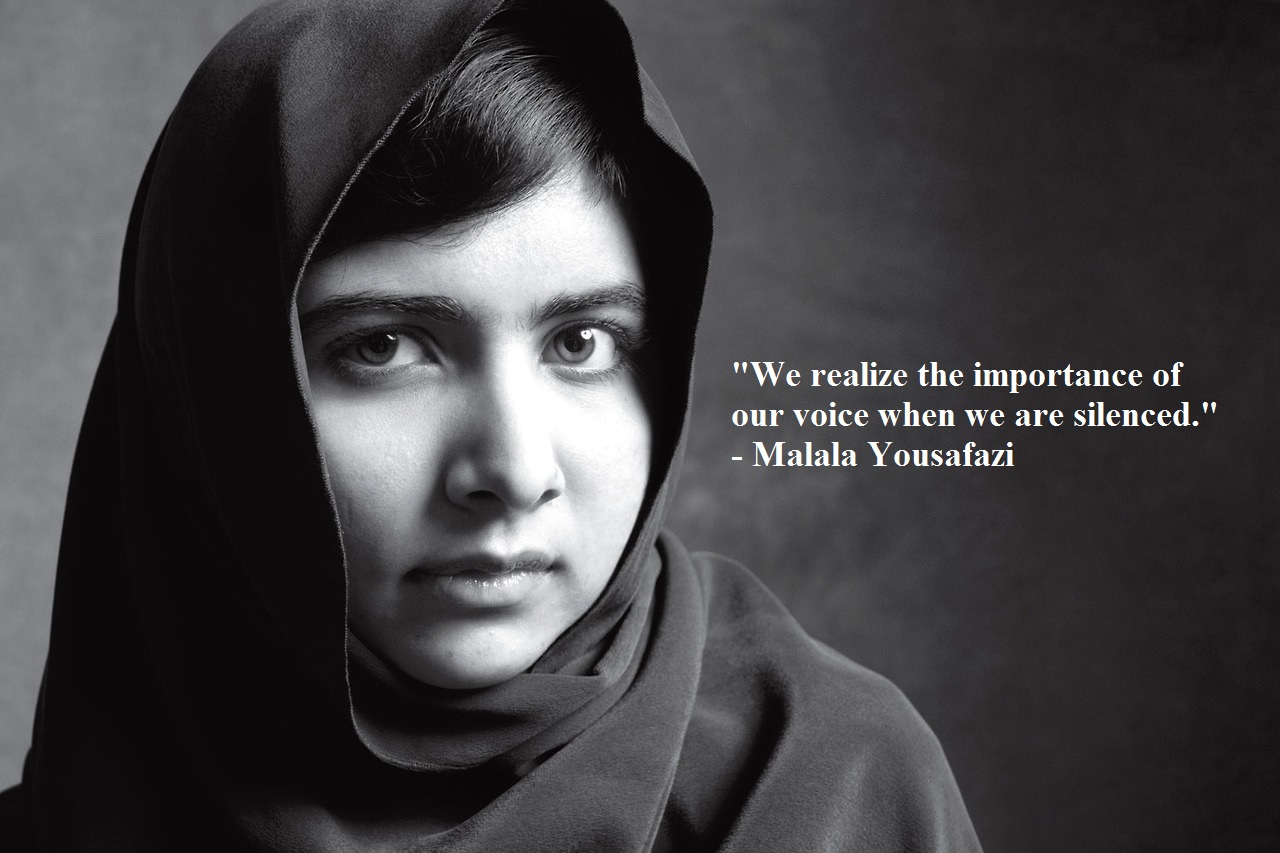
Malala honored by Dutch foundation for girls’ education activism
Karachi: Taliban, police run joint crime rackets in Karachi: report
 Secret Agencies in a report have informed the Inspector General of Sindh that Taliban and some police officers were jointly running crime centers in some areas of Karachi.
According to the report, the biggest crime center in Nazimabad is operating under the patronage of local SHO.
Some high officials of police, CID and SIU are also bribed to overlook the whole activity.
The activities of TTP have an enormous impact on life for the citizens of Karachi; criminal undertakings are their favored means for raising funds for the battle in the tribal areas.
Taliban also indulge in target killing to settle scores with the rivals or ‘business partners’.
Large swathes of Pakhtun neighborhoods in districts west and east, as well as pockets in districts Malir, central and south are reported to be under the influence of the TTP. While all 30 or so of its factions have a presence in the city, the most influence is wielded by the Hakimullah Mehsud and Mullah Fazlullah factions.
According to local police and residents of the affected areas, elements belonging to the TTP have entrenched themselves in these areas after having terrorised the local Pakhtun population into submission, and driven out the ANP from most of its traditional strongholds.
U.S: Potential military strike in Syria sparks concern in Congress
Syria denies chemical weapons claim
 Walid Moualem, the Syrian foreign minister, has 'categorically' denied that his country was using chemical weapons on its own people.
At a press conference held in Syrian capital Damascus on Tuesday, he challenged the world to provide evidence that the Syrian government was behind last week's alleged chemical weapons attack in eastern Ghouta, a suburb of the capital Damascus.
The Syrian foreign minister accused John Kerry, his American counterpart, of lying and disregarding the work of UN inspectors when he stated there was “undeniable" evidence of a large-scale chemical attack.
"We are all hearing the drums of war being beaten around us. If these countries are willing to launch an aggression or military act against Syria, I believe, the pretext of chemical weapons is false, baseless and groundless. And as I said, I challenge, I dare them to produce any single piece of evidence", Moulem said.
He also claimed that the second trip of the UN inspectors to the site of an alleged chemical weapons attack
had been postponed to Wednesday due to disputes among the rebels.
The Syrian foreign minister said the rebels in eastern Ghouta could not reach agreement about guaranteeing the team's safety.
"A comprehensive assessment determined that the visit should be postponed by one day in order to improve preparedness and safety for the team", the UN announced in a statement released just after Moualem's press conference.
The UN inspectors were due to begin a second day of investigation into last week's alleged chemical-weapons attack in the suburbs of the Syrian capital, Damascus.
The Syrian opposition says more than 1,300 people died when toxic gases were unleashed on Eastern Ghouta and Moadamiya - two neighbourhoods on the outskirts of Damascus - last Wednesday.
The UN team came under sniper fire on Monday as they tried to visit an area in western Damascus.
The convoy of six vehicles was shot in the buffer zone between rebel and government areas near Damascus as it travelled to Moadamiya and Ghouta.
US military ready to act on Syria immediately, West to strike soon
 Syria's opposition expects a Western military intervention against President Bashar al-Assad's regime within days and has been consulted over targets, one of its officials said Tuesday.
"There is no precise timing ... but one can speak of an imminent international intervention against the regime. It's a question of days and not weeks," said Ahmad Ramadan, a Syrian National Coalition political committee member.
"There have been meetings between the Coalition, the (rebel) Free Syrian Army and allied countries during which possible targets have been discussed," the official said.
Ramadan said they included airports, military bases and arms depots.
The targets cover "airports used by planes equipped with missiles and explosive barrels, command centres used by regime officers, (Iranian) Revolutionary Guards and by (Lebanese Shiite militant group) Hezbollah," he said.
Ramadan also said bases used to fire missiles and Scuds, especially the army's Brigade 155 near Damascus, were targets for Western punitive strikes following alleged chemical weapons attacks last week.
Meanwhile National Coalition's envoy in Paris also said they have been informed of a possible military strike on Syria.
"We have been informed of a strike by the world powers to punish the Syrian regime but we do not have the details," Monzer Makhous, the National Coalition's envoy in Paris, said.
"This is being left for the world powers to decide."
He adds: "We will support any move to punish such a regime, which has been killing its own people to remain in power at any expense."
Read more: http://voiceofrussia.com/news/2013_08_27/US-military-ready-to-act-on-Syria-immediately-if-asked-Hagel-7295/
Russia ‘regrets’ US decision to shelve Syria talks
 Moscow has voiced “regret” over a US decision to put off bilateral talks over Syria. Russia has sought to placate calls for military action over the alleged use of chemical weapons, saying there is no evidence of the Assad regime’s complicity.
The US government announced it was postponing bilateral talks with Russia late Monday, citing “ongoing consultations” over the Syrian government’s alleged use of chemical weapons.
Russian and American officials had been scheduled to meet in The Hague on Wednesday for bilateral talks on the Syrian conflict.
Russian Deputy Foreign Minister Gennady Gatilov tweeted a response to the move Tuesday morning, expressing concern over Washington’s decision.
“It is a pity that our western partners have decided to cancel the bilateral US-Russian meeting to discuss calls for an international conference on Syria,” Gatilov wrote on Twitter. He added in a later post that discussing terms for a political solution were needed now more than ever in the face of possible military intervention in Syria.
Russia on Tuesday warned a military intervention in Syria could have "catastrophic consequences" for the whole region and called on the international community to show "prudence."
"Attempts to bypass the Security Council, once again to create artificial groundless excuses for a military intervention in the region are fraught with new suffering in Syria and catastrophic consequences for other countries of the Middle East and North Africa," foreign ministry spokesman Alexander Lukashevich said in a statement. "We are calling on our American partners and all members of the world community to demonstrate prudence (and) strict observance of international law, especially the fundamental principles of the UN Charter," he added.
Foreign Affairs Committee chairman of the Russian Duma, Aleksey Pushkov also posted on his Twitter, alleging the US had already made the decision to strike Syria and they had gone too far.
Russia has no plans to strengthen its fleet in the region at the Mediterranean sea facility, the naval base at Tartus, a source from Russia’s Defense Ministry told Itar-Tass news agency, adding that withdrawal plans have also not been considered. However , the source did not exclude the possibility that one more military vessel might be transferred to the region from Russia’s Black Sea fleet and one nuclear submarine added from the North Sea fleet.
A number of western countries including France, the US and the UK have condemned President Bashar Assad’s government for last week’s alleged chemical weapons attack in a Damascus suburb and called for a response, hinting at possible military action. On Monday, Russian President Vladimir Putin told British Prime Minster David Cameron in a phone conversation that there was still no evidence the Assad government was behind the attack.
However, Cameron insisted that Assad’s forces were behind the “chemical weapons” attack, saying that the Syrian opposition did not have the facilities to orchestrate such an attack. Cameron also cited the Syrian government’s delay in allowing a team of UN experts to examine the site as an indication that it had something to hide.
Washington has also seen an increase in rhetoric, urging action against the Assad government. Samantha Power, the US Ambassador to the UN, decried the Assad government for the attack on her Twitter account, and demanded accountability. Meanwhile, the UN weapons inspectors are due to start their second day of investigations in the Damascus suburb of Ghouta, where the toxic attack happened last Wednesday. The team’s convoy of vehicles came under fire from unknown assailants Monday as they visited the area.
In spite of the sniper attack, the team managed to collect samples for analysis and gather witness testimonies at a local hospital. Contradicting claims from the US and UK that the probe was too late to yield accurate results, the UN stressed the mission was still valid, although almost a week has passed since the supposed attack.
The alleged attack took place last Wednesday in an eastern suburb of Syria’s capital. Media published conflicting reports on the death toll, ranging from “dozens” to over 1,300 dead. French charity Medecins sans Frontieres (Doctors without Borders) put the death toll at about 355.
Pakistan: Aitzaz praises first ever peaceful power transition in Pakistan
 Leader of the Opposition in Senate, Chaudhry Aitzaz Ahsan on Tuesday congratulated President Asif Ali Zardari and both houses of the parliament on a peaceful and democratic transition of power, the first in Pakistan’s history.
Taking part in the debate on the last presidential address to the joint sitting of parliament, he said for the first time in the country's history, the president was constitutionally completing his five-year tenure in a respectable and democratic manner.
Asif Ali Zardari is the first elected president of the country who is completing his five-year term on September 9. He also has the distinction of addressing joint sittings of parliament six times.
Senator Ahsan said despite reservations, the Pakistan People’s Party (PPP) leadership accepted results of the recently held general elections for the noble cause of continuation of democracy and peaceful transition of from one democratically elected government to the other.
The PPP government was the first in Pakistan's history to complete a full five-year term and transfer power at the ballot box. But after a rudderless campaign, the party lost badly on polling day in May.
President Zardari was credited with wheeling and dealing to keep the PPP in power for its full term – helped by the army chief of staff keeping to the sidelines and the opposition's unwillingness to force early elections.
Aitzaz Ahsan, in the upper house of parliament today, also urged the ruling Pakistan Muslim League-Nawaz (PML-N) to implement its electoral manifesto and promises made with the people, including raise in the basic salary for labourers to Rs15,000, end of power loadshedding, stoppage to drone attacks, elimination of terrorism among others.
The PPP leader said the raise in the estimated cost of Nandipour power project was not justified.
Referring to the registration of a case against a private news channel, he said the government should have shown tolerance.
Bilawal Bhutto Zardari condemns killings of PPP workers in Karachi
Patron-In-Chief of Pakistan Peoples Party Bilawal Bhutto Zardari has condemned the killings of PPP workers in Karachi’s Quaidabad area and called upon the government to go for the killers immediately and bring them before a court of law. It may be recalled that PPP City Area 128 Information Secretary Alam Khan Swati and his brother Aafreen Swati were attacked and injured with bullet wounds. Alam Khan Swati succumbed to wounds while his brother is in critical conditions. Bilawal Bhutto Zardari said that PPP workers have immensely suffered during the dictatorial regimes for democratic struggle adding that they need to be protected from the elements directly or indirectly propped up by the undemocratic regimes. He sympathized with the bereaved family and assured that the Party will not leave them alone.http://mediacellppp.wordpress.com/

Bangladesh: Reemergence of extremists
 WE compliment the law enforcing agencies for the arrest of two groups of potential terrorists from two different parts of the country. However, it should not surprise anyone with a very basic idea of terrorism to see them reemerge. We had in these very columns warned of any smugness in this regard. And we are happy to note that the agencies have so far in the last five years been able to successfully anticipate these groups. But it is their complete obliteration that we have not been able to ensure.
If we want to see the end of religious extremism and terrorism then we have to counter effectively the ideology professed by these people, who are driven by distorted motivation and convoluted and warped understanding of the scripture, to recruit new bodies in their ranks.
This is very fundamental to any counter-terror strategy, because without a dedicated rank and file no amount of money or other resources will allow the extremists to survive. Furthermore, combating religious extremism successfully depends on having a dynamic counter-terror strategy. Do we have one, and if at all, are we implementing it properly?
If anyone in our crop of policy planners and law enforcement agencies thinks that the hanging of a few of the extremist leaders belonging to HUJI (B) or JMB was the death knell of the extremists will commit an elemental but cardinal judgmental error. These groups will cease to exist as an entity only when the rationale for their existence is defeated.
Glamorous Afghan singer Aryan Sayeed wants to make a difference for women

 The 28-year-old glamorous female singer Afghanistan, Aryana Sayeed has been widely criticized for her performance, specifically after she appeared as one of the judges on TV talent show, The voice.
Despite receving angry ctitics and even death threats, Aryana Sayeed remains committed to cotninue with her efforts in bring changes to women’s lives in a strictly conservative Islamic society.
Aryana Sayeed who defies ctitics to remain a symbol of female independent in the country said, want women to have rights, to talk freely, to walk freely, to be able to go shopping when they wish.
The glamorous singer quoted by AFP said, “I’m not saying that they have to take their clothes off, or even remove their head scarfs. Freedom is being able to live as a human being.”
She said, “I have to be so careful as they’re constantly checking what you are doing, what you are saying, even how you laugh,” she said.
“I said ‘I love you’ to one contestant because he was so good. He was 15-years-old. Even that caused trouble. People asked ‘What did she say? This is not something normal in Afghanistan’,”she said.
Aryana was born in Afghanistan before moving to Pakitan as a child. She grew up travelling in many different countries and currently lives in London, England. She was the first Afghan Female Artist to break it into the International market with her smash hit song “mashallah”.
In one of her songs, Aryana sings “Because I am a woman, I am a slave” against a background of images of women in burqas.
“Women have no rights whatsoever here, so I want to be an example as somebody who is constantly fighting,” she told AFP, admitting that her beliefs mean that security concerns dominate her life.
“I have a lot of trouble online, receiving messages from people telling me that they will kill me or that they’ll put acid in my face. They tell me to stop singing.
“Kidnapping is something to keep in mind all the time. You’d rather die than be kidnapped. I don’t get out a lot.”
Army in Karachi: Khursheed Shah opposes MQM demand
The Express TribuneOpposition Leader Syed Khursheed Ahmed Shah has opposed Muttahida Qaumi Movement (MQM) chief Altaf Hussain’s demand for military administration in Karachi, Express News reported on Tuesday. He criticised the MQM by saying that the party officials usually make big demands and abruptly deny to their own statements. Shah further commented that a military administration in Karachi can consequently be a big mistake and MQM chief’s demand could be a part of a conspiracy. He further stated that army supervision in the city can undermine democracy. Earlier in the morning, MQM deputy convener Farooq Sattar also demanded military control in Karachi. He proposed his demand while addressing the National Assembly. Sattar stated that military administration apparently seems unimportant but only armed forces can control the violence in the city. MQM chief Altaf Hussain has demanded military supervision in Karachi as a result of continuing violence and target killing in the city. He has expressed his concerns on Sindh government failed protection to the residents of Karachi, especially the business community. He stated that police and rangers have failed to do their job and only armed forces can rescue the city from criminal elements.
KARACHI VIOLENCE: Four dead, 25 inujred as violence revisits Lyari


Karzai extends stay in Pakistan for another day
Afghan President Hamid Karzai has extended his stay in Pakistan for another day,so the leaders of both could continue to confer on matters of common interest in the bilateral and regional context. A high-level delegation is accompanying the Afghan President including Foreign Minister Dr. Zalmai Rassoul, National Security Adviser Dr. Rangin Dadfar Spanta, Finance Minister Dr. Hazrat Omer Zakhilwall, Commerce and Industries Minister Dr. Anwarul Haq Ahady, and Chairman of the High Peace Council Salahuddin Rabbani.
The Prime Minister will host a lunch for President Karzai today (Tuesday).
This is President Karzai’s first visit since the democratic transition in Pakistan and the formation of the new government in June 2013. The visit reflects the readiness on both sides to work together for the furtherance of shared objectives of peace, stability and prosperity in the region and beyond.
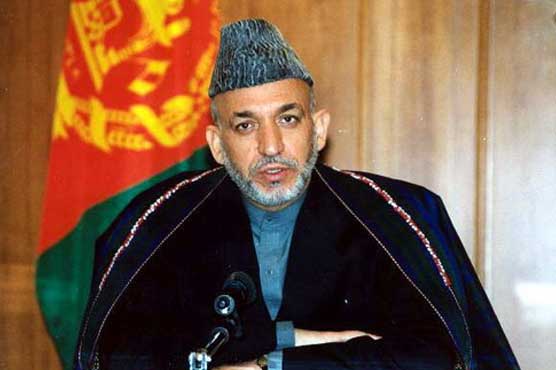
Pakistan, Taliban and the Afghan Quagmire
With American and NATO combat troops scheduled to depart Afghanistan next year, the relationship between the Afghan Taliban and Pakistan has become more important than ever. It is a complex and complicated nexus. Without doubt, Pakistan and its intelligence service, the Inter-Services Intelligence Directorate of the army (ISI), have more influence over the Taliban than any other country or intelligence service. It provides critical safe haven and sanctuary to the groups’ leadership, advice on military and diplomatic issues, and assistance with fund raising. But its influence is not complete, and whether it could persuade the Taliban to settle for a political settlement in Afghanistan, is unclear at best. Pakistan’s Support for Survival and Revival of the Taliban Pakistan has been intimately associated with the Taliban since its birth in the mid-1990s. The ISI provided support to Mullah Omar when he founded the organisation in Kandahar. It had trained Omar even earlier in the 1980s at one of its training camps for the mujahedin that fought the Soviet occupation of the country. Pakistan was one of only three countries that recognised the Taliban’s Islamic Emirate of Afghanistan as the legitimate government of Afghanistan in the late 1990s (Saudi Arabia and the United Arab Emirates were the other two). By 2001, Pakistan was providing the Taliban regime in Kabul with hundreds of advisers and experts to run its tanks, aircraft and artillery, thousands of Pakistani Pashtuns to man its infantry and small units of its Special Services Group commandoes to help in combat with the Northern Alliance. Pakistan provided the oil needed to run the Taliban’s war machine. All of this despite a half dozen United Nations Security Council resolutions calling on all countries to cease aid to the Taliban because it was hosting al-Qaeda and Osama bin Laden. According to the 9/11 Commission, the ISI had mid-wifed the alliance between Mullah Omar and bin Laden, so it was no surprise that Pakistan ignored the UN. After 9/11, American and allied forces intervened in Afghanistan with a UN mandate and toppled the Islamic Emirate of Afghanistan. The defeated Taliban fighters were ordered by Mullah Omar to scatter and avoid further direct confrontation with the enemy while they regrouped. Many just went home. The leadership and the hard core fled south from Kandahar into Pakistan. Most relocated in Baluchistan around the city of Quetta, where Omar himself settled. He began rebuilding his Taliban in exile. By 2004, it resumed the war inside Afghanistan. Pakistan gave it critical help and assistance. Without it, the Taliban would never have recovered. A NATO study published in 2012 based on the interrogations of 4000 captured Taliban, al-Qaeda and other fighters in Afghanistan in over 27,000 interrogations concluded that ISI support was critical to the survival and revival of the Taliban after 2001 just as it was critical to its conquest of Afghanistan in the 1990s. It provides sanctuary, training camps, expertise and help with fund raising. Pakistani officers have been killed on the battlefield in Afghanistan operating under cover with Taliban forces. The NATO report concluded “the ISI is thoroughly aware of Taliban activities and the whereabouts of all senior Taliban personnel.” Mullah Omar, who calls himself the Commander of the Faithful, is believed by most experts to be in Quetta and Karachi under the protection of the ISI. He has not appeared in public in years, however, and issues only occasional statements. He continues to be portrayed by the group as fully in command and the ultimate decision maker for the organisation. He has never broken publicly with Osama bin Laden and al-Qaeda, and after the American commando mission killed bin Laden in 2011, Mullah Omar and the Taliban leadership openly mourned the loss of the mastermind of 9/11. For its part, al-Qaeda continues to recognise Mullah Omar as the commander of the faithful and pledge allegiance to him. Karzai’s Ultimatum This summer, after years of indirect talks between the Taliban, Washington, Kabul and several other third parties, the Qatari government allowed the Taliban to open an office in Doha with the Taliban flag flying and signs proclaiming the office represented the Islamic Emirate of Afghanistan. For President Hamid Karzai and the Afghan government, the symbolism was unacceptable. Instead of treating the Taliban as an insurgency or a political partner or a gang of terrorists, they got the symbols of statehood. For Karzai and his government, the announcement, the flag and signs conceded the legitimacy of the Taliban’s claim to be the authentic government of Afghanistan and implied that the NATO forces are nothing more than a foreign occupation illegally backing up a rogue regime. Karzai suspended talks with Washington on a post 2014 long term security agreement until the Afghan Taliban agree to hold negotiations directly with his government. Kabul was also disturbed that the US also backed down on its longstanding demand that the Taliban break publicly with al-Qaeda. Instead the Taliban made vague statements about never letting ‘their country’ be used for terrorism against another. That echoes the Taliban’s statements before and after 9/11 that al-Qaeda was not engaged in attacks on American targets despite all the obvious evidence. al-Qaeda fighters are still on the battlefield in Afghanistan fighting with the Taliban. The Taliban’s Pakistani patrons, the army and the ISI were very pleased with the outcome. They control the lives of the leadership in Pakistan and the lives of the Taliban team in Doha. As the former head of Afghan intelligence, Amrullah Saleh, likes to point out that the Taliban negotiators fly home to Karachi from Doha whenever they want to see their boss or their families. They are not independent players. Limits to Pak Control But there are some limits to Pakistani control of the Afghan Taliban. Even when Mullah Omar was in power in Afghanistan in the late 1990s, he refused to recognise the legitimacy of the Afghan-Pakistani border demarcated by the British in the 1890s, the so called Durand line. The Afghan Taliban provides some assistance to the Pakistani Taliban, which is engaged in an insurgency against the army and ISI and is responsible for dozens of terrorist attacks inside Pakistani cities. The Pakistani Taliban recognises Mullah Omar as their emir just like al-Qaeda does. Mullah Omar has never publicly criticised the Pakistani Taliban or its attacks like the attempt to kill Malala Yousafzai. It is an open question whether Pakistan could pressure the Afghan Taliban to make a deal with Kabul on a political settlement of the war. It could certainly make life very difficult for Mullah Omar and his lieutenants if they did not agree to a Pakistani supported deal. If it chooses to shut down sanctuaries and training camps, the Taliban would be under enormous pressure to accept a Pakistani diktat. But all of that seems highly unlikely. Pakistan’s generals believe America and NATO are going to cut and run after 2014. Newspaper reports that say that the White House is actively considering the so called zero option for no American troop presence after 2014 undoubtedly have reinforced the ISI’s belief. Time is on its side and its ally the Taliban will prevail sooner rather than later in the war.By: Bruce Riedel

Pakistan and the Killings across the LoC: Tactical Offensive or a Strategic Defensive?
 By Lt. Gen. Arvinder S Lamba
Former Vice-Chief of Army Staff
The recent killing of five soldiers in Poonch has reverberated the calculated and tested strategy of the Pakistan Army once again. Pakistan’s dubious track record of such events since the killing of Captain Saurabh Kalia and five other soldiers in May 15 1999 to the killing five of our brave men on Aug O5, 2013, inside our LoC are indicative of a revival of such dehumanization.
The emotions and concerns raised by the nation each time may well be justified, but undue intensity in responses and reactions may often go to consolidate success of the perpetrators. In a contextual perspective, recurring events of this nature fall in line with the processes of authorization, routinization, and dehumanization, used by Kelman and Hamilton in studying My Lai and related events, to explain the dimension of Pakistan’s Military psychology. Pakistan military can learn from its record of atrocities in Bangladesh with larger ramifications of isolation in international relations, a possibility that Nawaz Sharif Government cannot allow.
At a tactical level, Pakistan’s military psychology may be seen focused on a sense of achievement vis a vis India within the vacuum created by enormous disparities of conventional combat power or as a moral ascendancy/supremacy in the prevailing imbalance. While the dare exhibited in this raid may certainly be a shot of Adrenaline for the Pakistani military, but this may not be without a risk of escalation.
India therefore, cannot and need not be cowed down by the hyped responses and talks of nuclear retaliation built up by Pakistani military establishment, to any action taken by the Indian Military and reiterated by every single Pakistani participant during television debates or panel discussions . Perhaps Our responses need to be fearless, timely and appropriate at the tactical level, and beyond glare of the media.
While objectives of such or similar actions identified by India’s Security and Defence Experts during recent debates and discussions are extremely relevant, the outcome intended this time may well be more subtle and strategic. It is pertinent to bring here the internal security dynamic and declining influence of the Pakistani Military in the post elections scenario.
The divergence in the civil military relationship between the Army, the PML-N and PTI on several security issues has been increasing . India’s role in Afghanistan, and cooperation between India and Pakistan towards peace and tranquility may well be the most serious differences that may threaten peace.
In its first steps towards its strategic objectives of return to constitutional hierarchy, the Government’s focus is on the place of the Military denying it its traditional space of decision making on national issues.
The federal government’s recent decision to initiate a high treason case against former military dictator Pervez Musharraf for subverting the constitution of Pakistan twice, which led to exile of Nawaz Sharif, and landing the shame/ humiliation of Kargil upon Pakistan are significant . Commencement of investigations , fully supported by the PTI and PPP’ have added to concerns of the Military , as any such prosecution would threaten many to similar fate.
Silence of the Army chief, General Kayani during the entire process of campaigning and elections, and of keeping the Taliban at bay while propagating opportunities of their conditional return to main stream, while a step in the good and orderly direction, was viewed with serious reservations from many quarters within the Army.
The implicit intent of the civil government may well be the nemesis of the Pakistan Army from a place of pre eminence and control, to a place of irrelevance or relative insignificance. The only field left where the Military can draw or perhaps redraw its significance is the LoC and issues of terrorism that may turn focus from civilian engagement to military incidents that tend to rally nations and people against each other reversing the entire process of restoring peace.
Katharine Houreld from Reuters on 20 May this year, quoted Lieutenant Talat Masood who viewed the past five years significant in this context , in that, while the military remained the most powerful force behind the scenes, it no longer wanted to take direct power, Musharraf, the last military dictator, was in detention, Generals had been hauled up before Pakistan's feisty courts and accused of vote-rigging, corruption and extrajudicial killings. The army does not have the monopoly of the power it once did.
With a judiciary supportive of the Prime Minister s and a pro government media, an Army with a reformed, pro-democracy mindset, will complement the underpinnings for change in the overall environment in both Rawalpindi and Islamabad.
Towards this, Nawaz Sharif will have to address the singular and greatest obsession of the Pakistan Military leadership and the rank and file, from its perceptions of India being the entire reason de etre of its existence to one of relevance in the national interests and internal contingencies.
The fragile peace between India and Pakistan is once again under threat, but this time, the unease and tension may not be between India and Pakistan but between Pakistan and Pakistani Military establishment.
For the latter, it may be a last strategic defensive for the Military’s relevance than a tactical victory vis a vis India.
Pakistan: Sharif in Wonderland
Farewell dinner: Zardari exiting Presidency as a ‘satisfied man’

سیاستدانوں کو تنقید برداشت کرنا سیکھنا چاہئے: صدر زرداری
(دنیا نیوز)
صدر آصف علی زرداری نے کہا ہے کہ 65 سال میں ایوان صدر سے عزت سے رخصت ہونے والا پہلا صدر ہوں ۔ جمہوریت اور معیشت کےاستحکام کے لئے نواز حکومت سے تعاون کریں گے تاہم جہاں ضرورت پڑی تنقید بھی کریں گے۔ ایوان صدر میں صحافیوں کے اعزاز میں عشائیے سے خطاب کرتے ہوئے صدر آصف علی زرداری نے کہا کہ گڑھی خدا بخش میں کہا تھا کہ ہم ہیڈ لائن نہیں تاریخ بنانے نکلے ہیں کچھ لوگوں نے اس کا غلط مطلب لیا ،پانچ سال میں جمہوریت کی جڑیں مضبوط کیں، ہو سکتا ہے ہم کئی جگہوں پر ناکام رہے ہوں۔ ان کا کہنا تھا کہ انتخابات پر تحفظات کے باوجود نتائج تسلیم کئے ، سیاستدانوں کو تنقید برداشت کرنا سیکھنا چاہیئے۔ صدر زرداری نے کہا کہ یہ جمہوریت کا تسلسل ہے کہ نواز شریف کو چینی وزیر اعظم سے ملک کے نئے وزیر اعظم کے طور پر متعارف کرایا، چین کے ساتھ معاشی تعاون کی پالیسی میں نے شروع کی۔ امید ہے نواز حکومت یہ پالیسی جاری رکھے گی۔ ان کا کہنا تھا کہ یہ جمہوریت کے ثمرات ہیں کہ آج کل زیادہ مصروف نہیں ہوں۔ ٹی وی دیکھنے اور اخبار پڑھنے کا وقت مل جاتا ہے۔
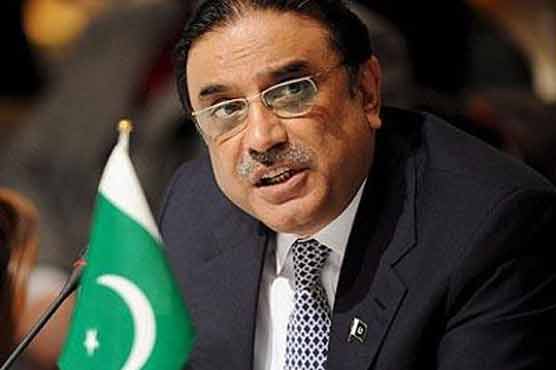
President Zardari extends full support to PML-N in fighting against extremism
http://mediacellppp.wordpress.com/

President Zardari for Pak-India talks, end to LoC violence
 Emphasising the need for resolution of all issues with India through dialogue, President Asif Zardari on Sunday asked India to stop violations at the Line of Control (LoC).
Monday, August 26, 2013
US Blames Assad Regime for Syria Chemical Weapons Attack
 US Secretary of State John Kerry on Monday blamed the regime of Syrian President Bashar Assad for the “cowardly” chemical weapons attack in a rebel stronghold near Damascus last week, and said the United States and its allies were preparing a response.
“The reported number of victims… and first-hand accounts strongly indicate that chemical weapons were used in Syria,” Kerry told a news briefing in Washington, five days after the attack in which the medical charity Doctors Without Borders said 355 people were killed.
“Moreover, we know the Syrian regime maintains custody of these weapons, has the capacity to do this with rockets, and is determined to clear the opposition from the very places where the attacks took place,” Kerry said, adding that the United States has more information about the attack that it will “provide in the days ahead.”
Kerry called the attack a “moral obscenity” and “a cowardly crime,” and accused Assad’s regime of making a “cynical attempt” to cover it up by barring immediate access to the site of the attack to a team of UN investigators.
“I made it clear to Syrian Foreign Minister Walid al-Moualem that if Syria had nothing to hide, their response would be to give unrestricted and immediate access to the UN investigators, but instead for five days, they refused access to the site of the attack that would allegedly exonerate them,” Kerry said.
“Make no mistake, President Obama believes there must be accountability for the use of the world’s most heinous weapons against the world’s most vulnerable people,” Kerry said.
Shortly after the Kerry speech, White House spokesman Jay Carney said, “What we are talking about … is a response to the clear violation of an international norm and it is profoundly in the interest of the United States and of the international community that that violation of an international norm be responded to.”
Obama is discussing “a range of options” for Syria, including military intervention, with his national security team, but has not yet made a decision on what action the United States will take, State Department spokeswoman Marie Harf told reporters after Kerry’s speech.
Obama said previously that the US would intervene in the Syrian conflict in the event of a chemical attack. British media reported the country’s forces are already preparing for a joint naval operation with the US against Assad’s forces.
Kerry’s statement came hours after a UN team in Syria came under attack from sniper fire while going to investigate the chemical weapons attack.
Assad has denied launching last week’s chemical attack.
President Zardari: Pakistan has consistently supported promotion of peace, stability in Afghanistan


Landmark Chinese copper deal with Afghanistan at risk
 A consortium of Chinese investors has demanded a review of a landmark $3 billion deal to produce copper in Afghanistan, the Ministry of Mines said on Monday, putting at risk one of Kabul's greatest hopes for economic independence.
It said China Metallurgical Group (MCC) CNMET.UL and Jiangxi Copper JXPROM.UL want new terms that would cut their royalties to the government, release them from building a power plant and copper smelter, and postpone the laying of a railway.
"The Afghan government is trying its best ... to negotiate with the company but contract conditions are clear and previously both sides have agreed about it," a spokesman for the ministry said.
An independent anti-corruption monitor, Integrity Watch Afghanistan (IWA), said the Chinese venture also wanted to delay the start of production by five years to 2019.
A spokesman in China for the consortium declined to comment immediately.
The copper deposit is among the world's largest but is situated in a dangerous province and the site has often come under attack by insurgents, who have succeed in halting work on the mine by forcing workers to flee.
Donors hope the largest foreign investment project in Afghan history will help wean it off international aid, which is expected to fall short of the amount needed to pay for its security forces and sustain economic growth.
IWA said that renegotiating the deal, which was agreed in 2007, would dramatically reduce the benefit to Afghanistan and set a bad precedent for others seeking to invest in the already unpredictable country.
"The terms of the contract they want to renegotiate were the terms that made them the winners in the bidding process," said Javed Noorani of IWA.
Noorani said the Chinese investors were seeking to cut royalty payments to the government by almost half to 10 percent as well as delay production to 2019.
The Afghan president is expected to travel to China with the minister of mines to discuss salvaging the project. The government was split between accommodating Chinese demands and cancelling the contract.
"Others for strategic reasons want it to happen... so China remains committed to helping Afghanistan when the money dries up in this country," Noorani continued.
Once production starts, the mine will generate a quarter of a billion dollars a year and create around 75,000 jobs, according to a "low-impact" scenario by the World Bank.
More violence not the answer in Syria
http://gulfnews.com/The pace with which western action on Syria has developed over the past few days has been worrying. Western states have lined up to offer military solutions to the conflict, provoking their international adversaries to issue their own warnings. The solution in Syria is not to fuel an even larger confrontation by further arming one party in the conflict or its adversary, as some in the West have suggested. It is time to stop settling international scores between major powers and focus on saving more lives from being lost in the war-ravaged country. Further arming the Syrian rebels will only lead to Bashar Al Assad’s allies to drum up their own support for his regime, further fuelling the cycle of violence. The tragic events of last week should perhaps be used as an opportunity for the international community to push the threatened and cornered Al Assad to go to the negotiating table. The international fury over the massacre in Ghouta has weakened him enough to be pressured into negotiations. His closest allies, including Iran, have said that those responsible for the alleged chemical attack should be held responsible. The advances made on the ground by the regime in the past few months were significant enough for the opposition to reject negotiations from a position of weakness. Now, the tables have turned and the regime knows it faces tough choices. Western states, instead of rubbing their hands in anticipation of invading yet another Arab country, should recognise that this is a chance to finally find a solution to the conflict that has claimed more than 100,000 lives.A call for negotiations, however, should not mean that the perpetrators of last week’s massacre should go unpunished. Under no circumstances should a negotiation process — and the subsequent concessions that may be made by the regime — be presented as the regime’s ‘way out’ from being held accountable for this massacre, if it is proven to have been responsible for it. Or indeed for its other crimes.
Lavrov urges world to wait for results of UN investigation in Syria


In the Loving Memory of Ahmed Faraz
By Mwaqar

Ahmad Faraz born Syed Ahmad Shah on 14 January 1931 in Kohat, died 25 August 2008 was a Pakistani Urdu poet. He was acclaimed one of the modern Urdu poets of the last century. 'Faraz' is his pen name, (in Urdu takhalus). He died in Islamabad on 25 August 2008. He was awarded Hilal-e-Imtiaz, Sitara-i-Imtiaz and after his death Hilal-e-Pakistan by the government.He was not only romantic but also a great revolutionary poet.


iPhone 5S to be 31 percent faster than iPhone 5, includes motion tracking chip
http://www.techradar.com/With just over two weeks until the supposed September 10 iPhone 5S launch event, rumours of what to expect from the new iPhone are flowing in thick and fast.

‘Turkey’s partiality’ adds to bloodshed in region

The main opposition leader Kılıçdaroğlu says government’s biased approach in regional foreign policy is one of the main factors behind the escalating bloodshed in the ‘Islamic world’The Turkish government’s biased approach in regional foreign policy is one of the main factors behind the escalating bloodshed in the “Islamic world,” the main opposition leader has said, while also slamming Prime Minister Recep Tayyip Erdoğan for crying in front of cameras, which he described as “pitiful.” The remarks from Republican People’s Party (CHP) leader Kemal Kılıçdaroğlu came in a speech delivered in the town of Bayat in the western Anatolian province of Afyonkarahisar, which he was visiting on the 91st anniversary of the “Great Offensive” against Greek forces during the War of Independence. Despite the government’s self-proclaimed foreign policy of “zero problem with neighbors,” Kılıçdaroğlu said Turkey was no longer friends with any of its neighboring countries, including Iran, Iraq and Syria. He described the use of chemical weapons in Syria as “a crime against humanity,” while claiming that the only place in the world that was scene of such bloodshed was the Islamic world. ‘Training in Turkey’ “Such blood is not shed anywhere else. But it is shed in the Islamic world. Why? We are taking sides,” he was quoted as saying by the Anadolu Agency. “We are training them in Turkey, sending them away to kill his sibling. Isn’t it a shame, a sin?” Kılıçdaroğlu’s words were referring to claims that Syrian rebels have been secretly given military training in Turkey, which have been constantly denied by the Turkish government. In addition to the government’s policies, Prime Minister Recep Tayyip Erdoğan himself was a personal target for Kılıçdaroğlu, who criticized Erdoğan’s shedding of tears live on television on Aug. 22. Erdoğan cried over an Egyptian father’s letter to his daughter, who was killed by the security forces in Cairo. After listening to a prerecorded video of the letter being read out, he sat speechless for a few moments with tears in his eyes. Crying in front of cameras does not suit the prime minister of the Republic of Turkey, and such crying was a sign of desperation and pitifulness, Kılıçdaroğlu said. “The Republic of Turkey is a proud state. A proud man is the man who resolves problem of his country and whom we respect, no matter who he is. Arriving at the point of deadlock, falling into a position of gradual loneliness in the world, being dressed down by everybody, and then crying on television screens, do not befit the prime minister of the Republic of Turkey,” he said, adding that “reason should prevail” while governing a state.
Afghanistan: Analysts Doubt Positive Outcome from Karzai's Pak Visit
http://tolonews.com/
 In light of Karzai's visit to Pakistan on Monday, a number of political commentators expressed doubts over Islamabad's willingness to adopt a clear policy regarding the peace process, citing the Pakistani military's tight hold on policy decisions in Islamabad.
President Karzai is on an official visit to Islamabad,where he plans to discuss a number of key issues such as Pakistan's cooperation on counterinsurgency, the expansion of bilateral relations between Afghanistan and Pakistan and the release of the Taliban prisoners to kick-start the peace negotiation process.
"Whatever talks happened between the leaders of Afghanistan and Pakistan was not encouraging at all. Pakistan did not pledge on its willingness to honestly fight terrorism," said Muhammad Nateqi, a regional political analyst.
"Pakistan's military formulates the country's foreign policy. Unfortunately, the civilian government is not allowed to shape the country's foreign policy," said Mir Ahmad Joyenda, an Afghan civil society activist.
With tensions recently mounting between Kabul and Islamabad over border disputes and suspicions of subterfuge, the trip was highly touted as a signal a positive shift in relations between the two neighbours, or at least an attempt at one.
Encouraging statements from Pakistani officials were voiced earlier this week in the lead up to President Karzai's visit. "Pakistan will honestly cooperate whether it is regarding the release of Taliban prisoners or holding a meeting of the clerics in Kabul," Mr. Chadhary said. "Pakistan is committed to working sincerely to accelerate the stalled peace process."
However, many analysts and other onlookers are not persuaded.
"I think no one in Pakistan expects anything special from Karzai's tour because Karzai is a person who changes policy day-by-day; today he says one thing and tomorrow another," commented Rahimullah Yousafzai, a famous Pakistani journalist.
At the beginning of August, President Karzai rebuffed an invitation to visit Islamabad,However, as Afghan officials have explained over the past two weeks, an agenda for the trip was eventually formulated and agreed upon by the two governments.
This trip marks the eighteenth time President Karzai has visited Pakistan during his tenure as the Afghan head of state.
PTI workers attack newsmen in Lahore
http://tribune.com.pk/
PTI workers attack newsmen in Lahore by TheExpressNews Pakistan Tehreek-i-Insaf (PTI) workers attacked reporters and cameramen during a protest in Lahore on Monday, Express News reported. The party has been protesting against alleged rigging in the August 22 by-elections and over 70 PTI leaders and workers had been baton-charged and arrested by the Punjab police on Saturday. However, they were released hours later on the orders of Punjab Chief Minister Shahbaz Sharif. PTI’s Punjab President Ejaz Chaudhary apologised and tried to control the situation. Party members also claimed that those who had attacked the newsmen were not members of the party. Witnesses said that the attackers were carrying PTI flags and used the sticks to beat up the newsmen. An injured cameraman was shifted to the hospital.
Ahmad Faraz remembered on 5th death anniversary
 The fifth death anniversary of renowned and progressive Urdu poet, Ahmed Faraz was observed across the country on Sunday.
 Syed Ahmed Shah, with pseudonym (takhallus) Faraz was considered one of the greatest modern Urdu poets of the last century who died in Islamabad on August 25, 2008.

Subscribe to:
Posts (Atom)