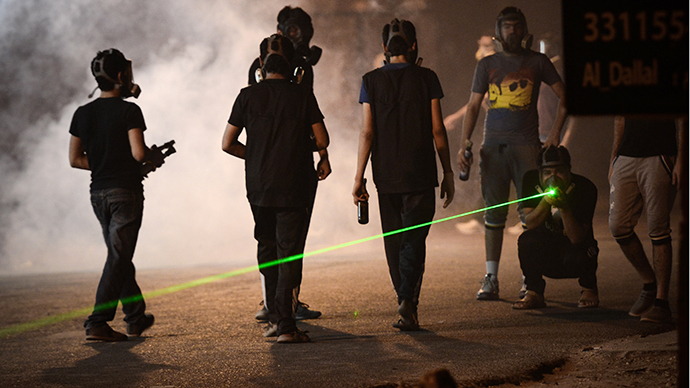
http://www.policymic.com/On February 14, 2011, thousands in Bahrain, both Shia and Sunni, took to the streets demanding democracy and reform in their country. The only Gulf country with a Shia majority governed by a Sunni ruling family, the Bahraini government responded to the protests with violence and suppression. Peaceful demonstrators, along with medics, journalists, and other citizens that came to their aid, were arrested, detained, tortured, and even killed for their involvement. In response to international pressure, King Hamad bin Isa Al Khalifa ordered the establishment of the Bahrain Independent Commission of Inquiry (BICI) to document human rights violations that occurred during the protests. The BICI report found over 500 cases of torture and 46 deaths as a result. Yet even with these documentations and a promise from King Hamad to hold accountable those responsible for human-rights abuses, the culture of impunity continues. The ruling family's suppression and intimidation tactics have included the use of arrest, detention, physical and psychological abuse, torture, and other forms of cruel, inhuman, and degrading treatment. Twitter has been frequently used during the Arab Spring as it provides immediate, and often anonymous, information. Witnesses can document abuses by security forces with photographs and inform participants where a protest is to occur. This type of instant news creates a challenge for governments that practice systematic censorship of unwanted information. In an effort to combat this, the government of Bahrain has begun to target Twitter users with harsh punishments, including torture and jail. A report released by Bahrain Watch last month found the Bahraini security forces used fake Twitter accounts to track opposition tweets and obtain IP (Internet Protocol) addresses for prosecution. In October 2012, four people were charged with defaming King Hamad on Twitter, while in May of this year, a Bahraini court sentenced six people to a year in jail for tweets it claimed were “insulting to the king.” Amnesty International called for the release of all Twitter users currently detained for their expression of freedom of speech. Below are four prominent cases involving Twitter users in Bahrain: 1. Nabeel Rajab President of the Bahrain Center for Human Rights, Nabeel Rajab was accused of fabricating images of a body showing signs of torture in the wake of the 2011 Bahrain uprising. He was arrested multiple times before being detained in July and sentenced to three years in jail in August under multiple charges, including “participating in illegal practices, inciting illegal assemblies, and organizing unlicensed demonstrations through social media websites.” An appeals court acquitted Rajab of the defamation charges in August 2012, but his sentence of three years was upheld. In December 2012, Rajab’s sentence was reduced to two years but he remains in jail to this day. 2. Said Yousif al-Muhafda Human rights activist and head of documentation at the Bahrain Center for Human Rights, Said Yousif al-Muhafda was arrested by Bahraini police on December 17, 2012 while tweeting from a protest, including a tweet with a photo of an injured protester's leg. The Bahrain government charged al-Muhafda with “disseminating false information regarding the clashes between the security forces and protesters in the Manama Souq last Monday, December 17, on his twitter account.” In March 2013, al-Muhafda was acquitted and released. Al-Muhafda continues to report on protests and human rights violations in Bahrain. 3. Ali Faisal al-Shofa Unlike al-Muhafda and Rajeeb, al-Shofa doesn’t work with an NGO or opposition group. Alshofa is a 17-year-old high school student who on June 25, 2013 was sentenced to a year in prison for “insulting the king” on Twitter. On March 25, 2013, his house was raided at dawn by police, who kept him in detention for two months. The government alleges that al-Shofa insulted the king using the twitter account, @alkawarahnews. However, he denies any relation to the account. Although Merfact Janashi, al-Shofa’s lawyer, submitted evidence showing that the account is run by someone else, al-Shofa remains behind bars. 4. Jaffar Al-Demstani After tweeting about his imprisoned father, Al-Demstani was kidnapped around 3 a.m. at his house on June 20, 2013. He was taken by “armed masked men in civilian clothes,” believed to belong to the secret police of the Interior Ministry of Bahrain. Al-Demstani tweeted details of the torture his father had received while in prison, including a statement that his father had been denied medical treatment and access to a doctor. His whereabouts are still unknown at this time.
M WAQAR..... "A man's ethical behavior should be based effectually on sympathy, education, and social ties; no religious basis is necessary.Man would indeed be in a poor way if he had to be restrained by fear of punishment and hope of reward after death." --Albert Einstein !!! NEWS,ARTICLES,EDITORIALS,MUSIC... Ze chi pe mayeen yum da agha pukhtunistan de.....(Liberal,Progressive,Secular World.)''Secularism is not against religion; it is the message of humanity.'' تل ده وی پثتونستآن
Tuesday, August 6, 2013
Bahrain's Government Has Declared War On Twitter
UN criticizes Bahrain over toughened 'anti-protest' laws
The Mass Jailing of Turkish Secularists
http://frontpagemag.com/
Obama going to G20 summit in Russia
Voice of Russia, Reuters
U.S. President Barack Obama confirmed on Tuesday that he would go to Russia this fall for a G20 summit but expressed disappointment that Russia had granted temporary asylum to former government contractor Edward Snowden. Obama did not mention whether he would attend a separate one-on-one meeting with Russian President Vladimir Putin. The White House has said it is evaluating whether that meeting makes sense. During the interview on NBC's "The Tonight Show", Obama also said the recent threat that caused the United States to close embassies throughout the Middle East was significant. Read more: http://voiceofrussia.com/news/2013_08_07/Obama-going-to-G20-summit-in-Russia-6592/
Meeting May Decide Fate of Obama-Putin Visit
UN ready to aid flood-hit Pakistan, Afghanistan
http://www.thehindu.com/The UN said that it is ready to assist Pakistan and Afghanistan if required, as monsoon rains and floods have reportedly killed at least 120 people in these two countries. “The (UN) Office for the Coordination of Humanitarian Affairs (OCHA) and its humanitarian partners are reviewing the situation and stand ready to assist if required,” reported Xinhua citing UN spokesperson Martin Nesirky. “Further monsoons are forecast later in the month.” “UN and humanitarian partners are ready to provide food, basic household items, water, sanitation and emergency health support, if required,” Nesirky added. The OCHA “has received reports indicating that heavy monsoon rains have killed more than 80 people across Pakistan, displacing hundreds, ravaging thousands of acres of crops and causing huge damage to houses and infrastructure,” the spokesperson said, while adding the Pakistani authorities have not yet requested international assistance. Meanwhile, flash floods have affected villages in Kabul in the past few days. As of Aug 4, at least 40 people were reported to have died, and homes, schools and mosques had been destroyed or badly damaged, said Nesirky.
جھوٹ اور دروغ گوئی کے شرمناک فعل کے باوجود بھی خود درخواست گزار راجہ ظفر الحق اور ان کے صدارتی امیدوار ممنون حسین تک نے عمرے کی سعادت حاصل کرنے اور اعتکاف میں بیٹھنے کی زحمت گوارا نہیں کی۔ اعجاز درانی
http://mediacellppp.wordpress.com/
27 رمضان المبارک کی مقدس شب اور پورا دن گزر گیا ۔ 24 جولائی کو ن لیگ کی جانب سے سپریم کورٹ آف پاکستان میں دائر کی جانے والی درخواست جھوٹی اور بے بنیاد ثابت ہوئی۔ ن لیگ کے اراکین پارلیمنٹ کی ایک فیصد تعداد بھی عمرے پر روانہ ہوئی اور نہ ہی کوئی کسی نے اعتکاف میں بیٹھنے کی زحمت گوارا کی اور تو اور درخواست گزار سینیٹر راجہ ظفر الحق اور مسلم لیگ ن کے صدارتی امیدوار نے بھی عمرے پر جانے اور اعتکاف میں بیٹھنے سے اجتناب کیا جو سراسر توہین عدالت کے مترادف ہے۔ بلاول ہاؤس کے ترجما ن اعجاز درانی نے کہا ہے کہ صدارتی انتخاب کی تاریخ کی تبدیلی کے لیے ن لیگ کے چیئرمین راجہ ظفر الحق کی جانب سے “عمرے اور اعتکاف” کے نام پر دائر کی جانے والی درخواست اور خودساختہ مذہبی دلائل اب 27 رمضان المبارک کا دن گزر جانے کے بعد مکمل طور پر جھوٹ اور بے بنیاد ثابت ہوچکے ہیں کیونکہ 30 جولائی کے یکطرفہ انتخابی نتائج کے حصول کے بعد ن لیگ اور ان کے اتحادیوں کے اراکین پارلیمنٹ کی 5 فیصد تعداد نے بھی عمرے کی سعادت حاصل کی اور نہ ہی وہ 20 رمضان المبارک کو اعتکاف میں بیٹھنے کے لیے مساجد میں تشریف لے گئے۔ ترجمان نے واضح کیا کہ 24 جولائی کو دائر کی جانے والی مذکورہ درخواست کے مقاصد پوری دنیا کے سامنے بے نقاب ہوجانے کے بعد نہ صرف صدارتی انتخابات کی حیثیت مزید غیر آئینی ہوگئی ہے بلکہ درخواست گزار رجہ ظفر الحق سمیت ن لیگ اور ان کے اتحادیوں کے تمام اراکین پارلیمنٹ کے عدالتی بیانات توہین عدالت کے زمرے میں داخل ہوگئے ہیں۔ جو سپریم کورٹ آف پاکستان کے لیے ایک کھلا چیلنج ہے۔ انہوں نے کہا یہ امر بھی انتہائی حیرت کا باعث ہے کہ جھوٹ اور دروغ گوئی کے شرمناک فعل کے باوجود بھی خود درخواست گزار راجہ ظفر الحق اور ان کے صدارتی امیدوار ممنون حسین تک نے عمرے کی سعادت حاصل کرنے اور اعتکاف میں بیٹھنے کی زحمت گوارا نہیں کی۔ اعجاز درانی نے کہا کہ معزز قانون دان، وکلاء برادری، قومی میڈیا اور سول سوسائٹی اس حقیقت کو بھی اپنے سامنے رکھیں کہ 30 جولائی کے صدارتی انتخاب میں ن لیگ اور ان کے اتحادیوں نے اپنے صدارتی امیدوار کے حق میں 878 ووٹ کاسٹ کیے تھے لیکن وزیر اعظم میاں نواز شریف، وزیر خزانہ اسحاق ڈار اور چند بااثر حکومتی شخصیات کے علاوہ کسی نے بھی سپریم کورٹ میں دائر کی جانے والی درخواست کی نہ صرف پاسداری نہیں کی بلکہ دنیا بھر کے لوگوں کے سامنے پاکستان اور یہاں کی اعلی عدالتوں کی جگ ہنسائی کی۔
Video:Roger Waters shows solidarity with Turkey's Gezi Park victims
Iconic musician Roger Waters gave support to the Gezi Park protests by having the names of the five Gezi Park victims screened on the wall during his Istanbul concert on the night of Aug. 4.
The former Pink Floyd member was playing the British progressive rock legend's classic record "The Wall" in its entirety in his "The Wall Live" show. A gigantic wall was built on stage during the set, and many human rights activists and victims of terror and wars were projected to the stage during the concert. Names and photographs of Gezi Park protesters, Ethem Sarısülük, Ali İsmail Korkmaz, Abdullah Cömert, Mehmet Ayvalıtaş, and police officer Mustafa Sarı, who lost their lives in Turkey rallies earlier this summer were projected to the stage.
Waters stated "for people who lost their lives because of state terror" in a speech he gave in Turkish.
The audience chanted "Everywhere is Taksim, everywhere is resistance," the main slogan used during the protests that had spread to most of the country.
Photos of prominent Turkish figures who were killed in political assassinations, including Armenian-Turkish journalist Hrant Dink, investigative journalist Uğur Mumcu and former prime minister Adnan Menderes, were also screened on the wall, though separate from the Gezi Park victims.
Pakistan's YouTube ban challenged
Musicians in Pakistan call for the YouTube ban to be lifted saying it harms their careers.
Sonia Gandhi slams Pakistan's 'blatant acts of deceit', urges govt to take action
Terrorism and the Embassies
U.S: Wishful thinking on the war on terror
Pakistani Activists Take Aim At Toy Guns
Toy guns don't kill people, people kill people.
Nevertheless, campaigners in Pakistan are aiming to get imitation Kalashnikovs and Glocks off the streets, saying they help breed a culture of violence among children.
The campaigners have targeted Eid al-Fitr celebrations marking the end of Ramadan (August 7-9) to launch their effort, knowing that children will be eager to buy new toys with the pocket money they traditionally receive during the festivities.
Nongovernmental organizations, poets, singers, and peace activists plan to fight back by staging walks, petitioning the authorities, and talking to parents and shopkeepers in the hope they minimize interest in the toy weapons that traders stock up on during Eid al-Fitr.
Sana Ijaz, a peace activist in Khyber Pakhtunkhwa Province, explains why toy guns pose a threat in the restive northwestern province.
"If we expose our children to these things from a tender age," Ijaz says, "it will not be difficult for them to fall into the hands of extremists when they are teenagers. The extremists can easily trap them into conducting a suicide bombing or being trained for other similar violent acts. Childhood exposure to toy guns can make them easily adapt to using weapons [when they grow up]."
Researchers Divided
The jury is out on whether a connection can be made between childhood war games and adult violence. Researchers around the globe are divided on the subject, with some seeing no scientific link and others arguing that there is, indeed, a causal relationship.
Countless studies have concluded that violence is a learned behavior and that violent video games, action figures, and television and films send the message that violence is acceptable. Groups have sprouted up in the United States and elsewhere that promote toy trade-ins and peaceful play.In a reversal from that line of thinking, British authorities in 2007 advised schools and nurseries not to discourage boys from playing with toy weapons, telling teachers that it could foster healthy development.Raham Zaid, a lecturer of child psychology at Abdul Wali Khan University near Peshawar, agrees. He says real guns and societal acceptance of violence should be the focus.
"The fundamental issue here is the availability, public display, and use of real weapons," he says. "In addition, society tolerates [violent] acts."
"We don't have the power to end the current violence," counters Shahzad, the singer in Peshawar. "But we can work toward preventing our future generations from burning in this inferno."
Shahzad says he plans to hold a protest in front of the national parliament and to send a letter to the Chinese Embassy in the hope that Beijing will restrict the export of toy guns to Pakistan.
Whatever the truth, Pakistani activists are pushing forward in the belief that the foundations of a peaceful society are formed at an early age.
"All buildings reflect the way they were planned and their foundations," says singer Amjad Shahzad, a leading proponent of the campaign. "If we base the rearing of our children on violent toys, their future personalities are likely to be violent and destructive toward society. We need toys for children that can help them gain knowledge and improve their educational prospects."
Misplaced Effort?
His message resonates 1,000 kilometers away in Pakistan's biggest city, Karachi.
Mohammad Arshad Khan, who heads the nongovernmental Raana Development Trust, says volunteers from his organization have put up banners and posters and are visiting schools, mosques, and community centers to get the word out.
Janan Buneree, one of the volunteers, says that even shopkeepers involved in the city's estimated $2 million toy-weapon trade have been receptive.
"At first the shopkeepers laugh us off. But on a serious note, they appreciate our efforts and tell us if we are able to convince people to ditch toy weapons, they will be happy to take them off their shelves," Buneree says.
Peshawar-based sociologist Khadim Hussain is skeptical, however. He sees little value in a campaign against violence that focuses on toy guns.
"I think they need to extend this campaign to talk about the real weapons used in this region," he says. "And more significantly, they need to target the thinking that turns this area into an arms market. If they don't move in that direction, it will mobilize people but will not fulfill the real aim [of achieving peace]."
India claims 5 soldiers killed by Pakistan
Gender disparity in Balochistan jeopardises girls’ education
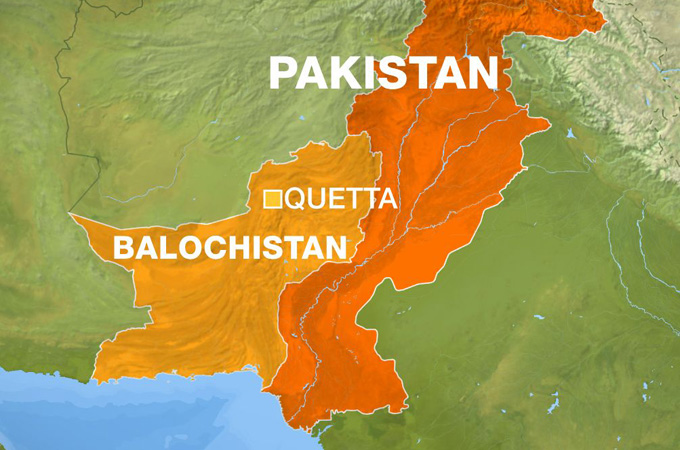
Pakistan's Balochistan hit by deadly attack
Indictment of Pakistan's Musharraf adjourned over security fear
Pakistan 18th Amendment : Evoking dangerous controversy
Imran Khan on the warpath
EDITORIALFresh from his bruising encounter with the Supreme Court, Imran Khan in a press conference on Sunday tilted against two new targets. First, he questioned the reasons for the one division of the army stationed in D I Khan not being deployed to prevent the jailbreak the other day, or in pursuit of the attackers. Imran Khan was in good company when he said it was beyond comprehension why the law enforcement agencies did not counter the terrorists. Everyone wants an answer to this conundrum. Logically the only two reasons for this debacle that suggest themselves are 1) either the jail staff was complicit; 2) they were not complicit but got cold feet and ran when the heavily armed terrorists arrived at the gates of the prison. Neither of these two propositions is contradicted by the fact that the prior intelligence warning of an imminent attack was discussed, but all to no avail when the calamity actually struck. The performance of the jail staff is one mystery, the other, the lack of help from the army, goes to the heart of the confusion surrounding our counter-terrorism operations. Under peacetime rules of engagement, the army cannot simply decide to intervene in a situation like that of the D I Khan jailbreak. The local administration and jail authorities should have called upon the army authorities if they feared they would not be able to stave off a determined attack, or informed the military of what was happening inside once the terrorists arrived (and stayed to enjoy iftar delicacies). The lack of communication underlines the lack of coordination for antiterrorist operations between the civilian and military authorities. This lack of coordination is replicated in the lack of coordination between the Centre and the provinces. Into this ‘Swiss cheese’ of our counter-terrorism edifice, the terrorist ‘mice’ can burrow through the holes with the greatest of ease. Once again, without the civilian and military, federal and provincial authorities being together under one counter-terrorist umbrella, it will remain an ‘unequal’ contest. Imran Khan’s other target was the redoubtable Maulana Fazlur Rehman. Imran Khan has threatened to take the Maulana to court over his allegation that Imran Khan is a Jewish agent. Now this kind of slander has been around ever since Imran Khan married his now divorced wife Jemima Khan. Although she is a Christian, her family is said to have Jewish ancestry. Does that suffice to label Imran Khan a ‘Jewish agent’? Apparently, in the ‘low’ narrative of the Maulana, yes. Imran Khan questioned the Maulana who after all was an agent when WikiLeaks had revealed the Maulana’s efforts to persuade the US ambassador to support Maulana for prime minister. True or not, we would advise Imran Khan not to stoop to Maulana’s level of vituperation, but indeed take him to court (and if possible to the cleaners) if he cannot substantiate his wild allegation.
PPP, PTI, ANP vow to thwart plans to modify 18th Amend
Daily TimesThe Pakistan People’s Party (PPP), Awami National Party (ANP) and Pakistan Tehreek-e-Insaf (PTI) have pledged to counter any move by the government to modify the 18th Amendment. PPP leader in Senate, Raza Rabbani, has said that the party has started making contacts with the opposition to requisition a session of parliament on the issue. Talking to the media outside the Parliament House on Monday, he said that the requisition for the session would be submitted after Eid. He said that Federal Minster for Petroleum and Natural Resources Shahid Khaqan Abbasi has threatened to roll back the 18th Amendment and talked about altering the clause 158 of 18th Amendment which pertains to distribution of natural gas. “If government would modify the 18th Amendment, it would be a hit on the face of federation and PPP would not allow it to do so,” Rabbani added. He said that the architects of 18th Amendment from the PML-N, including Ishaq Dar, Ahsan Iqbal and Mehtab Abbasi, will be contacted and asked to convince their party in this connection. The Awami National Party (ANP) also vowed to resist the moves of PML-N’s government to “usurp the rights of provinces envisaged in 18th Constitutional Amendment”. Addressing a press conference outside the Parliament House, ANP’s Vice President Haji Adeel accompanied by Information Secretary Zahid Khan took strong exception to Shahid Khaqan Abbasi’s statement over natural resources sharing formula and termed it unconstitutional. Haji Adeel said that the 1973 constitution envisaged first right of the province on a resource discovered in its territory. He said that Abbasi has given a statement totally against this stipulation and he should not be given representation in the cabinet if he holds such views. Adeel accused the PML-N federal government of snatching the rights of the provinces given through 18th Amendment and vowed to resist such moves. The ANP leader also lashed out at the Pakistan Tehreek-e-Insaf (PTI), and Imran Khan whom he accused of exerting pressure for getting results of his choice in the bye-elections in Khyber Pakhtunkhwa. About the terrorism incidents in Khyber Pakhtunkhwa, the ANP leader said that the current provincial government is hiding due to fear of terrorists. Meanwhile, Pakistan Tehreek-e-Insaf also strongly criticised the PML-N government’s intentions of revising the 18th Amendment’s natural resources’-sharing formula – specifically targeting of the gas-sharing formula and first rights. According to a statement of PTI, Central Information Secretary Dr Shireen Mazari said the PML-N was part of the 18th Amendment discussions and final agreement. At the time they accepted the strengthening of the provinces control over their natural resources but it seems they were merely playing politics rather than sharing a conviction that power needed to be devolved to the provinces.
Sindh Human Rights Commission established by PPP’s Sindh Govt
http://mediacellppp.wordpress.com/PPP’s Sindh Government has established the Sindh Human Rights Commission; a government-run body to protect people’s fundamental rights, with former judge Sindh High Court Justice (rtd) Majida Razvi as its chairperson. Speaking at a press conference here on Monday, Majida Razvi said that the Federal Government has taken steps and legislated laws that led to setting up of ‘Sindh Human Rights Commission’ under The Sindh Protection of Human Rights Act, 2011. Two members of the commission, Syed Gul Munir Shah and Rubina Brohi also accompanied her on the occasion. Razvi said the Commission’s job is to protect the fundamental human rights enshrined in the Constitution of the Islamic Republic of Pakistan, 1973, the UN Charter and the Universal Declaration of Human Rights, and to create a society ‘free of violence, extremism and have an environment of peace, interfaith and justice’. She added that the Commission would be able to inquire, take suo moto on petition by victims or any person on his/her behalf in complaint of a violation of fundamental rights or abetment, negligence in the prevention of such violation, by a public servant. It can also recommend the government to initiate measures, including action to be taken against anyone involved in violation of basic rights. The Commission can also formulate, implement and regularly update policies with a view to protect Human Rights as well as review the safeguards provided by or under the constitution. It will study treaties and other international instruments on human rights, and make recommendations for their effective implementation. An HRCC Complaint Cell will also be set up to monitor the violation of Human Rights; it will receive complaints for legal act, domestic violence, Karo-Kari, Burn Cases, etc.
CM Khattak reveals that Pakistan army was complicit in LeJ-Taliban’s attack on DI Khan jail
Monday, August 5, 2013
Saudi Wahhabi authorities arrested the Shiite human rights activist 'Abbas Al-Mazra'
http://abna.ir/On 29 July 2013, Saudi Wahhabi security forces surrounded the house of human rights activist, Abbas Ali Mohammed Al-Mazra, 28 years, from Al-Awamiya town who figured on a list of 23 Shiites wanted in the Shiite village of Al-Awamiya in Eastern Province. The citizen Al-Mazra was with his mother and brothers when the forces stormed into the house firing live-bullets. The forces searched another apartments belonged to Al-Mazra's brothers. Abbas Al-Mazra and six of his brothers, Salim, Mahdi, Mohammad, Faris, Salih and Mohsen, were being beaten by security forces as they lay handcuffed on the floor. Saudi security also arrested the citizen, Mohammad al-Thoweimer, Al-Mazra's neighbor, as he going to his work. The forces moved the prisoners to the police station with Al-Mazra's mother, his brothers' wives and children who were released later. A number of cars and houses have burnt during the operation. The Interior Ministry issued a statement, the spokesman claimed that the eight men were involved in criminal acts, including drug trafficking and the men have taken part in opening fire at members of the security forces. The committee for the Defense of Human Rights in the Arabian Peninsula is seriously concerned that Abbas Al-Mazra and his six brothers will be subjected to violations of their human rights and may be suffering torture and maltreatment. CDHRAP also calls international human rights organizations to pressure Saudi regime to release detainees and to halt harassment against Shi'a citizens in Saudi Arabia and let them to enjoy their rights to freedom of expression and peaceful assembly which is guaranteed in the article 21 of the International Covenant on Civil and Political Rights International Covenant on Civil and Political Rights which stipulates that: "The right of peaceful assembly shall be recognized. No restrictions may be placed on the exercise of this right other than those imposed in conformity with the law and which are necessary in a democratic society in the interests of national security or public safety, public order, the protection of public health or morals or the protection of the rights and freedoms of others". The Committee calls the international organizations and local human rights to put pressure on the Saudi regime to release Abbas Al-Mazra and his six brothers and addresses to the Saudi authorities responsible to maintain their safety.
How the Ergenekon Verdicts May Deepen Turkey’s Political Divide
By Pelin Turgut
A heavily guarded Turkish court on Monday handed down verdicts against 275 defendants — whose ranks include former generals, parliamentarians and journalists — on charges of plotting to overthrow the Islamist-leaning government of Prime Minister Recep Tayyip Erdogan. The landmark trial took five years, led to indictments that ran for thousands of pages and was housed in a purpose-built courthouse in Silivri, a coastal resort town outside Istanbul. In the process, it also became a bitterly contested symbol of the deepening divide between the government and its supporters, on one hand, and secularists who accuse it of trying to muzzle dissent on the other.
The defendants were charged with forming a clandestine ultra-nationalist “terrorist organization” dubbed Ergenekon, the name of a mythic valley in Central Asia where, in lore, the Turkic peoples originated. Their alleged plan was to feed social unrest by staging high-profile assassinations and bomb blasts, creating a pretext for the military to step in and take control — Turkey has a long, dark history of military involvement in civilian affairs, including three coups.
On Monday, General Ilker Basbug, retired chief of staff of the Turkish military, was sentenced to life imprisonment for his role in the Ergenekon conspiracy, along with 16 others. The court judges, announcing verdicts in the case individually, also sentenced three opposition MPs to between 12 and 35 years in prison, while 21 others were acquitted. Basbug maintains his innocence and claims the prosecutions were politically motivated.
The government and its supporters say that if unexposed, Ergenekon would have instigated another coup. Erdogan once called himself “the prosecutor of Ergenekon.” To them, the trial marked a necessary coming-of-age for Turkish democracy and an end to the military’s domination of political life. For decades, Turkey’s generals saw themselves as self-appointed guardians of Turkish secularism, a tradition dating back to the country’s Westernizing founder Mustafa Kemal Ataturk, who was also a military commander. The top brass were deeply opposed to the democratically-elected Erdogan when he first took office in 2003 — but he steadily eroded their power, passing European Union-inspired laws that diminished their role. Ergenekon marked a key round in that battle, as dozens of ex-military men were detained over a period of five years. And last September, hundreds of military officers were sentenced for their part in a separate offshoot coup plot dubbed “Sledgehamer.”
The Ergenekon investigation began in 2007 with the discovery of a stash of hand grenades in an Istanbul shantytown. But as the investigation proceeded, it became clouded by waves of mass arrests, further offshoot trials, allegations of doctored documents, dates that did not add up and witnesses who were not heard. Some defendants like Mustafa Balbay, a well-known journalist for the secularist daily Cumhuriyet, spent years in jail without a hearing. (Balbay was sentenced Monday to 34 years in jail on alleged terrorism charges.)
At first, many Turks were supportive, seeing it as an opportunity to cleanse Turkey’s alleged “deep state,” the long-used term for a shadowy network of politically-connected operatives—security officials, politicians, even businessmen—colluding beyond the reach of law to do the supposed dirty work of the state. (In 1996, the “deep state” was illustrated by a scandal surrounding a car crash in western Turkey in which a senior politician, a wanted criminal and a police chief were found to have been traveling together.)
“In its initial stages, it was a justified investigation,” says Sedat Ergin, a senior columnist at the mainstream daily Hurriyet. “But as time went on, it changed shape. It became a politically motivated trial. There were many violations of legal procedure and rights, so its credibility came into question.” The European Union, which Turkey hopes to join, said in its 2012 progress report that the case had been overshadowed by “real concerns about their wide scope and the shortcomings in judicial proceedings.” Erdogan, while a clear backer of the process, has maintained that the prosecutors have acted independently throughout.
On Monday, all main access roads to the courthouse in the coastal town of Silivri, near Istanbul, were closed, as was airspace above it. Police fired rounds of tear gas on groups of protesters attempting to cross corn fields to approach the building. The defendants’ relatives were not allowed into the courtroom. “The people will have the last word,” said former general Basbug in a statement on his website. “And it shouldn’t be forgotten that there is also divine justice.”
There is still a lengthy appeal process ahead. The defendants can appeal the verdict in higher Turkish courts and, if that fails, at the European Court of Human Rights. “The European Court of Human Rights process will take say another 4-5 years. In the meantime though, this verdict confirms the absence of rule of law here. I’m simply not convinced about some of these verdicts,” says Soli Ozel, international relations professor at Istanbul’s Kadir Has University.
At present, the Ergenekon sentences seem to have deepened the rift between Erdogan’s government and its critics. Turkey is still reeling from mass protests at the start of June which saw Taksim Square, the center of Istanbul, shut down and taken over by youthful demonstrators angered by the government’s increasing authoritarianism and its attempts to regulate issues such as alcohol and women’s reproductive health. Three people were killed and thousands wounded. Scuffles and tear gas attacks have since become a regular Saturday night occurrence. “Given the current political climate in Turkey, this verdict will no doubt sharpen that polarization,” says Ergin.
Read more: http://world.time.com/2013/08/05/how-the-ergenekon-verdicts-may-deepen-turkeys-political-divide/#ixzz2b9fgxj58
The $7 trillion problem that could sink Asia
Clashes erupt after Turkey trial verdicts
Protesters have clashed with police forces as a Turkish court handed down judgements in a conspiracy case that has exposed deep divisions in the country.
After the verdicts were announced on Monday, fierce clashes erupted between police and about 10,000 protesters near the courthouse in Silivri, a town in the outskirts of Istanbul
Demonstrators threw stones at riot police who responded with water cannon, tear gas and rubber bullets to break up the protest that was blocking traffic.
Hundreds of people also took to streets in the capital, Ankara, to protest against the court ruling, chanting: "We are soldiers of Mustafa Kemal Ataturk," a reference to the founder of modern Turkey.Former armed forces chief Ilker Basbug was sentenced to life imprisonment by the court in the case involving allegations of conspiracy to overthrow the government.
Judges also sentenced three serving parliamentarians from the opposition Republican People's Party (CHP) to between 12 and 35 years in prison.
The court acquitted 21 defendants in the controversial case. All have been accused of being members of a little known underground group called Ergenekon.
Turkey: Ergenekon trial rulings ‘illegitimate,’ says main opposition leader
Christie, Clinton top 'hot politician' list
http://www.usatoday.com/Chris Christie and Hillary Rodham Clinton are the "hottest politicians" in the nation, according to one new poll. The coldest: Congressional leaders from both parties. Christie, the New Jersey governor and potential 2016 Republican presidential candidate, rates 53.1 degrees on what Quinnipiac University calls its "thermometer of voters attitudes towards the nation's major political figures." Clinton, the former secretary of State, senator, first lady and potential Democratic presidential candidate in 2016, is second at 52.1 degrees. A surprising third place: First-year Sen. Elizabeth Warren, D-Mass., at 49.2 degrees. President Obama is in fourth at 47.6 degrees, tied with Sen. Kristen Gillibrand, D-N.Y. "Former Secretary of State Hillary Clinton's score is not surprising given her lengthy political career and especially strong support among Democrats and women," said Peter A. Brown, assistant director of the Quinnipiac University Polling Institute. He added: "But Gov. Christopher Christie's rating is impressive given that his experience -- less than four years as governor -- pales compared to Mrs. Clinton' s résumé. What is interesting is that only two of the 22 figures rate better than the absolute middle of the scale, not exactly a ringing endorsement of the nation's political establishment." The four lowest rated politicians in this survey are all congressional leaders: Democratic House Leader Nancy Pelosi (38.4); Senate GOP leader Mitch McConnell (37.5); Republican House Speaker John Boehner (36.7); and Senate Democratic leader Harry Reid (33.8).
Pakistan: Rabbani hits out at Abbasi’s remarks
Subscribe to:
Posts (Atom)