Tuesday, July 30, 2013
Obama asks Republican Senators McCain, Graham to visit Egypt
Fresh Mideast Talks Start, US Pushes Nine-Month Timetable
 Israel and Palestinians launched a fresh effort here Tuesday to hammer out a long-elusive peace deal that would result in the creation of a Palestinian state as the United States set an ambitious timetable of nine months for achieving such an agreement.
“Our objective will be to achieve a final status agreement over the next nine months,” US Secretary of State John Kerry, flanked by Israeli Justice Minister Tzipi Livni and Saeb Erekat, the chief negotiator for the Palestinian officials invited to the US-brokered talks, said in a prepared statement to reporters.
Israel and Palestinians launched a fresh effort here Tuesday to hammer out a long-elusive peace deal that would result in the creation of a Palestinian state as the United States set an ambitious timetable of nine months for achieving such an agreement.
“Our objective will be to achieve a final status agreement over the next nine months,” US Secretary of State John Kerry, flanked by Israeli Justice Minister Tzipi Livni and Saeb Erekat, the chief negotiator for the Palestinian officials invited to the US-brokered talks, said in a prepared statement to reporters.
6.8 million people need humanitarian aid in Syria: UN
 The United Nations says an estimated 6.8 million people continue to need humanitarian assistance in Syria, which has been experiencing deadly unrest since March 2011.
 "So far this year, UN agencies and humanitarian partners have organized 21 cross-line convoys and reached nearly 1.8 million people with food, water and health supplies in hard-to-reach areas,” the UN Office for the Coordination of Humanitarian Affairs (OCHA) said on Tuesday.
“The World Food Program (WFP), working with 22 local NGOs [non-governmental organizations], has reached 2.4 million people with food assistance so far this month. The World Health Organization (WHO) and partners have provided primary health care and medical supplies throughout the country,” UN spokesman Eduardo del Buey said at a daily news briefing at the UN headquarters in New York.
“More than 153,000 children have received medical check-ups through 51 UNICEF [United Nations Children’s Fund]-supported mobile medical teams in all 14 governorates,” he added.
“The UN refugee agency has provided more than 1.4 million people with essential aid, including cash assistance, across Syria this year,” the spokesman stated.
According to reports, the West and its regional allies -- especially Qatar, Saudi Arabia, and Turkey -- are supporting the militants operating inside Syria.
According to the United Nations, more than 100,000 people have been killed and a total of 7.8 million of others displaced due to the violence.
"So far this year, UN agencies and humanitarian partners have organized 21 cross-line convoys and reached nearly 1.8 million people with food, water and health supplies in hard-to-reach areas,” the UN Office for the Coordination of Humanitarian Affairs (OCHA) said on Tuesday.
“The World Food Program (WFP), working with 22 local NGOs [non-governmental organizations], has reached 2.4 million people with food assistance so far this month. The World Health Organization (WHO) and partners have provided primary health care and medical supplies throughout the country,” UN spokesman Eduardo del Buey said at a daily news briefing at the UN headquarters in New York.
“More than 153,000 children have received medical check-ups through 51 UNICEF [United Nations Children’s Fund]-supported mobile medical teams in all 14 governorates,” he added.
“The UN refugee agency has provided more than 1.4 million people with essential aid, including cash assistance, across Syria this year,” the spokesman stated.
According to reports, the West and its regional allies -- especially Qatar, Saudi Arabia, and Turkey -- are supporting the militants operating inside Syria.
According to the United Nations, more than 100,000 people have been killed and a total of 7.8 million of others displaced due to the violence.
Iran president’s inner circle has Western accent
http://www.timesofisrael.com/
Hasan Rouhani’s government is expected to include key members who hold degrees from US and European universitiesJust days after Hasan Rouhani’s election victory in Iran, his top advisers and allies gathered for a closed-door strategy session at a think tank run by the new president. The group, lugging spread sheets, notes and policy papers, also carried something new into the mix — an array of degrees from Western universities.Soon after Rouhani’s swearing-in Sunday, he is expected to unveil key members of his government and give more clarity about his behind-the-scenes brain trust. In all likelihood, the core of his team will include figures whose academic pedigrees run through places such as California, Washington and London. The Western-looking credentials of Rouhani’s inner circle are no surprise. Rouhani himself studied in Scotland. What remains unclear, however, is how much they could actually influence Iranian policies and foster potential outreach diplomacy such as direct talks with the US or possible breakthroughs in wider negotiations over Tehran’s nuclear program. “Studying in the West doesn’t mean you would make concessions to the West,” said Rasool Nafisi, an Iranian affairs analyst at Strayer University in Virginia. “What it does mean is that the level of understanding and ability to pick up nuances are much higher. The next step is seeing how much of that can translate into changes at the top with the ruling clerics, where it really counts.” On many levels, this is the fundamental question as the clock starts on Rouhani’s presidency after eight years of the hectoring style of Mahmoud Ahmadinejad. There is little doubt that Rouhani will bring a far calmer and more measured approach. That alone may help with efforts to rebuild strained ties with Europe and open new possibilities for deal-making after the expected restart of nuclear talks with world powers. But Rouhani’s Western-educated political entourage is not about to steer Iran in a completely new direction after his election victory last month. Rouhani, a cleric and former top nuclear negotiator, does not stand against the Islamic system or the firm controls at the top: Supreme Leader Ayatollah Ali Khamenei and the Revolutionary Guard. Khamenei has final say in all key matters, including Rouhani’s selections for key Cabinet posts such as the foreign and intelligence ministers. That leaves Rouhani — effectively the international face of Iran — with the task of projecting a new image of dialogue rather than diatribes on the world stage. Inside Iran, Rouhani has to adopt the role of salesman: trying to get Khamenei and the ruling clerics to buy into his views that interaction with Washington and its allies could bring dividends such as steps to ease tightening economic sanctions. Many of those being considered for Cabinet posts share Rouhani’s approach, including a former deputy foreign minister, Mahmoud Vaezi, who holds degrees in electrical engineering from California State University, Sacramento and San Jose State University. He began his doctorate in foreign relations at Louisiana State University but finished the degree in Poland. Vaezi was head of the foreign ministry’s European and American affairs section from 1990-97 under reformist President Mohammad Khatami. In recent years, Vaezi has been a senior figure at Rowhani’s Center for Strategic Research. “The potential candidates … are those who understand international relations and understand the language of the West,” said Tehran-based political analyst Behrouz Shojaei. “This shows Rouhani is serious in seeking to ease tensions with the outside world and improve Iran’s economy.” Another potential contender for foreign minister is Mohammad Javad Zarif, who did postgraduate studies at San Francisco State University and obtained a doctorate in international law and policy at the University of Denver. Zarif also raised his profile in the US as a diplomat at Iran’s UN Mission in New York during a five-year posting that ended in 2007. In one of his last public events, Zarif was a headline speaker at a conference in New Brunswick, New Jersey, on conflict resolution whose participants included the current US Defense Secretary Chuck Hagel. Meanwhile, Hossein Mousavian, currently a research scholar at Princeton’s Woodrow Wilson School of Public and International Affairs, is likely to hold a key foreign policy adviser role. Mousavian also graduated from Sacramento State. Officials with academic roots in the West are nothing new in the Middle East. Many Gulf Arab leaders and top officials studied in Europe or the US Israeli Prime Minister Benjamin Netanyahu went to high school outside Philadelphia and returned to study at the Massachusetts Institute of Technology. Jordan’s King Abdullah II attended boarding schools in England and Massachusetts and then moved on to Britain’s royal military academy Sandhurst. But Iran’s elected leadership — the presidency and top parliamentary posts — has had far fewer Western-educated figures. In the years after the 1979 Islamic Revolution, Western credentials were viewed with suspicion. Ahmadinejad, who studied in Iran, has strongly favored advisers who also have homegrown academic backgrounds. Rouhani’s administration could mark a strong break and include advisers whose connections with the West straddle before and after the Islamic Revolution. Among them is Rouhani’s younger brother, Hossein Fereidoun, who is helping the president-elect put together his Cabinet list. Fereidoun was a member of the security team when the Islamic Revolution’s leaders, Ayatollah Ruhollah Khomeini, returned from exile in France in 1979. He later served in Iran’s U.N. Mission. Rouhani previously went by the family name Fereidoun, but dropped it in an apparent attempt to hide from authorities before the Islamic Revolution. The review of potential candidates for economic roles includes Chamber of Commerce president Mohammad Nahavandian, who holds a doctorate in economics from George Washington University, and Mohammad Bagher Nobakht, who holds an economics doctorate from Paisley in Britain, and was spokesman of Rouhani’s campaign office. A possible candidate for the critical oil ministry post is Mohammad Reza Nematzadeh, a former deputy oil minister and president of Iran’s state oil company, who has an engineering degree from California State Polytechnic University. But speculation was growing that Rouhani could look to a former oil minister, Bijan Zanganeh, who was ousted when Ahmadinejad took office in 2005. Some semiofficial Iranian news agencies, including ISNA, cited sources saying that Rouhani will tap a former defense minister, Mohammed Forouzandeh, as the chief nuclear negotiator. Such a choice would bring a relative novice in international dialogue into a critical role. Rouhani’s aides have not commented on the report, and other names such as former foreign minister Ali Akbar Velayati have been raised in the Iranian media. Other noteworthy possibilities include Ali Jannati as head of the Ministry of Culture and Islamic Guidance, where the wide-ranging mandate includes oversight of foreign media in Iran. Jannati is considered a moderate, but his father, Ayatollah Ahmad Jannati, is an ultra hard-line cleric who often leads the nationally broadcast Friday prayers from Tehran University.
Hillary Clinton 2016 might look a lot like Barack Obama 2012
 That said, the lunch that launched 1,000 “will she” and “will he” stories does give us a chance to write about something that has intrigued us of late: The idea that Clinton may well be the heir to a vast majority (or at least a majority) of the campaign talent that elected and then reelected Obama.
Earlier this month, Jeremy Bird, the national field director for Obama’s reelection race, and Mitch Stewart, who ran the 10 swing state operation for the president, signed on to “Ready for Hillary,” the super PAC that is functioning as a campaign-in-waiting for Clinton should she decide to run.
While the Bird/Stewart hires drew attention when they were announced, it’s hard to overestimate what the duo’s decision to work for a Clinton vehicle (and said vehicle’s willingness to have them) means going forward.
The single most valuable commodity in the race for the Democratic presidential nomination is the staff talent that Obama cultivated during his two presidential campaigns. While some of the top names — David Plouffe, David Axelrod, Jim Messina, Dan Pfeiffer etc. — are Obama-ites through and through and won’t likely ever work on another presidential campaign, there is a whole layer of staff talent beneath them that is itching to bring what they learned in 2008 and/or 2012 to bear on another campaign. Bird and Stewart are at, or near, the top of that list — due in no small part to their expertise in building a field operation, a major weak spot of Clinton’s 2008 campaign.
Getting Bird and Stewart does not, of course, mean that the Obama campaign team — such as it is once some of the more senior people peel off to make megabucks in the private sector — will move en masse to Clinton if she runs in 2016. But, it does create at least the possibility that Clinton might have the lion’s share of those people in 2016, as opposed to their scattering to a variety of candidates in the race.
This may well be a moot point — under two scenarios. In the first, Clinton doesn’t run, leaving the Birds and Stewarts of the world in search of another candidate. In the second, she does run and, in so doing, drives all of the other serious challengers (Joe Biden and so on) out of the race. Under the latter scenario, every ambitious staffer — those tied to Obama and those not — has no choice but to sign on with Clinton.
Still, in these early days of the 2016 presidential race, staff hires are critical. Keep an eye on any other Obama campaign talent starts moving toward Clinton.
That said, the lunch that launched 1,000 “will she” and “will he” stories does give us a chance to write about something that has intrigued us of late: The idea that Clinton may well be the heir to a vast majority (or at least a majority) of the campaign talent that elected and then reelected Obama.
Earlier this month, Jeremy Bird, the national field director for Obama’s reelection race, and Mitch Stewart, who ran the 10 swing state operation for the president, signed on to “Ready for Hillary,” the super PAC that is functioning as a campaign-in-waiting for Clinton should she decide to run.
While the Bird/Stewart hires drew attention when they were announced, it’s hard to overestimate what the duo’s decision to work for a Clinton vehicle (and said vehicle’s willingness to have them) means going forward.
The single most valuable commodity in the race for the Democratic presidential nomination is the staff talent that Obama cultivated during his two presidential campaigns. While some of the top names — David Plouffe, David Axelrod, Jim Messina, Dan Pfeiffer etc. — are Obama-ites through and through and won’t likely ever work on another presidential campaign, there is a whole layer of staff talent beneath them that is itching to bring what they learned in 2008 and/or 2012 to bear on another campaign. Bird and Stewart are at, or near, the top of that list — due in no small part to their expertise in building a field operation, a major weak spot of Clinton’s 2008 campaign.
Getting Bird and Stewart does not, of course, mean that the Obama campaign team — such as it is once some of the more senior people peel off to make megabucks in the private sector — will move en masse to Clinton if she runs in 2016. But, it does create at least the possibility that Clinton might have the lion’s share of those people in 2016, as opposed to their scattering to a variety of candidates in the race.
This may well be a moot point — under two scenarios. In the first, Clinton doesn’t run, leaving the Birds and Stewarts of the world in search of another candidate. In the second, she does run and, in so doing, drives all of the other serious challengers (Joe Biden and so on) out of the race. Under the latter scenario, every ambitious staffer — those tied to Obama and those not — has no choice but to sign on with Clinton.
Still, in these early days of the 2016 presidential race, staff hires are critical. Keep an eye on any other Obama campaign talent starts moving toward Clinton.
Obama to propose 'grand bargain' on corporate tax rate, infrastructure
 President Barack Obama will propose a "grand bargain for middle-class jobs" on Tuesday that would cut the U.S. corporate tax rate and use billions of dollars in revenues generated by a business tax overhaul to fund projects aimed at creating jobs.
His goal, to be outlined in a speech at an Amazon.com Inc facility in Chattanooga, Tennessee, is to break through congressional gridlock by trying to find a formula that satisfies both Republicans and Democrats.
Efforts to reach a bipartisan "grand bargain" on deficit reduction have been at an impasse for months.
Senior administration officials said Obama is not giving up on a big deficit-cutting package, but given that no agreement appears on the horizon, he is offering a new idea to try to follow through on his 2012 campaign promises to help the middle class.
"As part of his efforts to focus Washington on the middle class, today in Tennessee the president will call on Washington to work on a grand bargain focused on middle-class jobs by pairing reform of the business tax code with a significant investment in middle-class jobs," said Obama's senior adviser Dan Pfeiffer.
A spokesman for John Boehner, the Republican speaker of the House of Representatives, criticized the idea even before the release of the plan's details, saying it further backs Obama's policies on taxes and spending "while leaving small businesses and American families behind."
Obama wants to cut the corporate tax rate of 35 percent down to 28 percent and give manufacturers a preferred rate of 25 percent. He also wants a minimum tax on foreign earnings as a tool against corporate tax evasion and increased use of tax havens.
The new twist is that in exchange for his support for a corporate tax reduction, he wants money generated by the tax overhaul to be used on a mix of proposals such as funding infrastructure projects like repairing roads and bridges, improving education at community colleges, and promoting manufacturing, senior administration officials said.
Obama's proposal would generate a one-time source of revenue, for example, by reforming depreciation or putting a fee on accumulated foreign earnings.
Officials gave no specific figure on how much money would be raised, but Obama called for $50 billion for infrastructure spending in his State of the Union speech in February.
The White House hopes the idea will gain some traction in Congress because Republicans want corporate tax reform and Democrats want spending for infrastructure, so this offers something for both sides.
Administration officials said they recognize, however, that the climate is difficult in Congress with Republicans adamantly refusing anything that is seen as increasing spending and Democrats in no mood to cut taxes and get nothing for it.
Bob Corker, a Republican from Tennessee on the Senate Banking Committee, sounded a skeptical note, but said he has yet to see the proposal's details.
"It would have to be a massive deal, I think, for any kind of Republican to look at revenues as part of this," Corker said on MSNBC. He said it would have to include "transformative structural changes" for programs such as Medicare for the elderly and the Social Security retirement system.
Obama's speech in Chattanooga is the latest in a series of speeches aimed at making good on his promises to boost the U.S. economy in ways that help the middle class. He is looking to breathe new life into his second term, which has so far found successes to be fleeting.
President Barack Obama will propose a "grand bargain for middle-class jobs" on Tuesday that would cut the U.S. corporate tax rate and use billions of dollars in revenues generated by a business tax overhaul to fund projects aimed at creating jobs.
His goal, to be outlined in a speech at an Amazon.com Inc facility in Chattanooga, Tennessee, is to break through congressional gridlock by trying to find a formula that satisfies both Republicans and Democrats.
Efforts to reach a bipartisan "grand bargain" on deficit reduction have been at an impasse for months.
Senior administration officials said Obama is not giving up on a big deficit-cutting package, but given that no agreement appears on the horizon, he is offering a new idea to try to follow through on his 2012 campaign promises to help the middle class.
"As part of his efforts to focus Washington on the middle class, today in Tennessee the president will call on Washington to work on a grand bargain focused on middle-class jobs by pairing reform of the business tax code with a significant investment in middle-class jobs," said Obama's senior adviser Dan Pfeiffer.
A spokesman for John Boehner, the Republican speaker of the House of Representatives, criticized the idea even before the release of the plan's details, saying it further backs Obama's policies on taxes and spending "while leaving small businesses and American families behind."
Obama wants to cut the corporate tax rate of 35 percent down to 28 percent and give manufacturers a preferred rate of 25 percent. He also wants a minimum tax on foreign earnings as a tool against corporate tax evasion and increased use of tax havens.
The new twist is that in exchange for his support for a corporate tax reduction, he wants money generated by the tax overhaul to be used on a mix of proposals such as funding infrastructure projects like repairing roads and bridges, improving education at community colleges, and promoting manufacturing, senior administration officials said.
Obama's proposal would generate a one-time source of revenue, for example, by reforming depreciation or putting a fee on accumulated foreign earnings.
Officials gave no specific figure on how much money would be raised, but Obama called for $50 billion for infrastructure spending in his State of the Union speech in February.
The White House hopes the idea will gain some traction in Congress because Republicans want corporate tax reform and Democrats want spending for infrastructure, so this offers something for both sides.
Administration officials said they recognize, however, that the climate is difficult in Congress with Republicans adamantly refusing anything that is seen as increasing spending and Democrats in no mood to cut taxes and get nothing for it.
Bob Corker, a Republican from Tennessee on the Senate Banking Committee, sounded a skeptical note, but said he has yet to see the proposal's details.
"It would have to be a massive deal, I think, for any kind of Republican to look at revenues as part of this," Corker said on MSNBC. He said it would have to include "transformative structural changes" for programs such as Medicare for the elderly and the Social Security retirement system.
Obama's speech in Chattanooga is the latest in a series of speeches aimed at making good on his promises to boost the U.S. economy in ways that help the middle class. He is looking to breathe new life into his second term, which has so far found successes to be fleeting.
Mass jail break in Pakistan as Taliban gunmen storm prison
Energy Fraud: Nawaz Sharif’s advisor Musaddiq Malik, Mian Mansha and Abdullah Yousuf in Power Plant Scam
Despite Gains, Leader of U.S. Forces in Afghanistan Says Troops Must Stay
 By MATTHEW ROSENBERG
Afghan forces are now leading the fight here. They managed an air assault last week, for example, and they may be winning the respect of the Afghan people. But the bottom line for Gen. Joseph F. Dunford Jr. is simple: Afghanistan still needs the United States and will for years to come.
The problem for General Dunford, the commander of American and allied forces here, is that most Americans no longer seem to believe that the United States needs the war in Afghanistan.
In an interview on Sunday that he had requested, General Dunford, 58, sought to counter an abundance of disheartening news recently about the war and to make a case for why American troops need to stay in Afghanistan after the NATO combat mission ends next year.
A central theme in his pitch: Americans will not be fighting and dying here after 2014. Afghans are already doing most of the fighting, he said, and by the end of next year “the actual fighting on a day-to-day basis will all be done by Afghans.”
Still, “Afghan forces, at the end of 2014, won’t be completely independent,” he said. “Our presence post-2014 is necessary for the gains we have made to date to be sustainable.”
American forces will be critical behind the scenes for at least another three or four years, he said, to help Afghans master the nuts-and-bolts of running a military: logistics, intelligence analysis, developing the air force. “We’re not talking about putting people on the ground, in harm’s way,” General Dunford said.
For American generals, running the war effort in Afghanistan has always been as much a diplomatic sales job as a battlefield command. Most often, that has meant managing President Hamid Karzai, whose occasional anti-American outbursts have included a threat to join the Taliban and calling Americans demons.
But a steady drumbeat of bad news has forced General Dunford to turn his attention to the home front in an effort to counter the spreading perception that the war is a failed enterprise. An ABC News/Washington Post poll released last week found that only 28 percent of Americans think the war is worth fighting.
Among the developments from Afghanistan that are fueling the disillusionment was a botched effort by the United States to open peace talks with the Taliban, which prompted Mr. Karzai to angrily suspend negotiations on a long-term security deal that would keep Americans here after 2014. Then there was the anti-American tirade by Mr. Karzai’s chief of staff, and an ugly spat over whether the United States should pay Afghanistan $70 million in fees to get its equipment out of the country.
The response within the Obama administration has been a renewed debate on the so-called zero option — pulling out all American troops when the NATO combat mission here ends next year. Congress has also jumped into the fray with a Senate measure to withhold $5 in aid for every $1 Afghanistan charges the United States to move the equipment.
The poor poll numbers “reflect the noise that’s been out there for the last 60 days,” the general said, asserting that ground realities were better than portrayed in news reports. With the summer fighting season now almost half over, he said, Afghan forces “have proven very resilient.”
He described Al Qaeda, the reason the United States came to Afghanistan, as a shell of its former self, with only about 75 members in Afghanistan, and most of them too busy trying to stay alive to plan attacks in the West.
But keeping Al Qaeda on the margins would require American Special Operations Forces to remain after 2014 alongside regular troops focused on training, General Dunford said.
As in previous interviews, his focus was narrow, on Afghan security forces. He avoided talk of the debilitating level of corruption within the government, the weakening commitment to human rights among many Afghan officials, the faltering economy and uncertainty about next year’s presidential elections.
He did concede, however, that today “investing in Afghanistan, you could argue, was a gamble.”
But, if the elections are held and Afghan forces are able to keep the vote relatively secure, “it begins to be a risk like everywhere else,” he added.
By giving the Afghan Army and the police the tools needed to take on the Taliban, the United States “is providing the Afghan people with an opportunity to decide what kind of government they want to have.”
Other American and European officials have been far less certain that the election will be a cure. Some contend the Afghan government is as big a threat to the country’s stability as the Taliban, if not a greater one.
But few disagree that the Afghan security forces have improved significantly, despite absorbing thousands of combat deaths this year and contending with a desertion rate so high that a quarter to a fifth of the 352,000 soldiers and police officers must be replaced each year.
To stay on track, the Afghans would need hands-on support from American forces through at least 2017, General Dunford said. He declined to specify how large a force should remain, undoubtedly aware that wading into a policy debate has proved treacherous for past commanders.
The Obama administration has indicated that it would probably leave no more than 9,000 troops in Afghanistan, plus a few thousand contributed by NATO allies.
General Dunford said that he asked the administration for more time to make an assessment, but added, “I don’t have reason to believe we’ll ask for more than that.”
The general has good reason to be cautious. After President Obama ordered tens of thousands of additional troops to Afghanistan in 2009, administration officials complained the president had been pressured into the decision by commanders who publicly advocated for more troops.
Since then, the White House has at times cut the military out of its deliberations on the pace of the troop drawdown and the future shape of the mission.
In the interview, General Dunford was careful not to get ahead of the administration. When asked whether American forces would use air power to aid Afghan troops in battle after 2014, or help them evacuate the wounded, he replied, “That will be a policy decision that will be made sometime next year.”
Asked if the military could handle the eventuality of the zero option, the general replied: “Absolutely.”
By MATTHEW ROSENBERG
Afghan forces are now leading the fight here. They managed an air assault last week, for example, and they may be winning the respect of the Afghan people. But the bottom line for Gen. Joseph F. Dunford Jr. is simple: Afghanistan still needs the United States and will for years to come.
The problem for General Dunford, the commander of American and allied forces here, is that most Americans no longer seem to believe that the United States needs the war in Afghanistan.
In an interview on Sunday that he had requested, General Dunford, 58, sought to counter an abundance of disheartening news recently about the war and to make a case for why American troops need to stay in Afghanistan after the NATO combat mission ends next year.
A central theme in his pitch: Americans will not be fighting and dying here after 2014. Afghans are already doing most of the fighting, he said, and by the end of next year “the actual fighting on a day-to-day basis will all be done by Afghans.”
Still, “Afghan forces, at the end of 2014, won’t be completely independent,” he said. “Our presence post-2014 is necessary for the gains we have made to date to be sustainable.”
American forces will be critical behind the scenes for at least another three or four years, he said, to help Afghans master the nuts-and-bolts of running a military: logistics, intelligence analysis, developing the air force. “We’re not talking about putting people on the ground, in harm’s way,” General Dunford said.
For American generals, running the war effort in Afghanistan has always been as much a diplomatic sales job as a battlefield command. Most often, that has meant managing President Hamid Karzai, whose occasional anti-American outbursts have included a threat to join the Taliban and calling Americans demons.
But a steady drumbeat of bad news has forced General Dunford to turn his attention to the home front in an effort to counter the spreading perception that the war is a failed enterprise. An ABC News/Washington Post poll released last week found that only 28 percent of Americans think the war is worth fighting.
Among the developments from Afghanistan that are fueling the disillusionment was a botched effort by the United States to open peace talks with the Taliban, which prompted Mr. Karzai to angrily suspend negotiations on a long-term security deal that would keep Americans here after 2014. Then there was the anti-American tirade by Mr. Karzai’s chief of staff, and an ugly spat over whether the United States should pay Afghanistan $70 million in fees to get its equipment out of the country.
The response within the Obama administration has been a renewed debate on the so-called zero option — pulling out all American troops when the NATO combat mission here ends next year. Congress has also jumped into the fray with a Senate measure to withhold $5 in aid for every $1 Afghanistan charges the United States to move the equipment.
The poor poll numbers “reflect the noise that’s been out there for the last 60 days,” the general said, asserting that ground realities were better than portrayed in news reports. With the summer fighting season now almost half over, he said, Afghan forces “have proven very resilient.”
He described Al Qaeda, the reason the United States came to Afghanistan, as a shell of its former self, with only about 75 members in Afghanistan, and most of them too busy trying to stay alive to plan attacks in the West.
But keeping Al Qaeda on the margins would require American Special Operations Forces to remain after 2014 alongside regular troops focused on training, General Dunford said.
As in previous interviews, his focus was narrow, on Afghan security forces. He avoided talk of the debilitating level of corruption within the government, the weakening commitment to human rights among many Afghan officials, the faltering economy and uncertainty about next year’s presidential elections.
He did concede, however, that today “investing in Afghanistan, you could argue, was a gamble.”
But, if the elections are held and Afghan forces are able to keep the vote relatively secure, “it begins to be a risk like everywhere else,” he added.
By giving the Afghan Army and the police the tools needed to take on the Taliban, the United States “is providing the Afghan people with an opportunity to decide what kind of government they want to have.”
Other American and European officials have been far less certain that the election will be a cure. Some contend the Afghan government is as big a threat to the country’s stability as the Taliban, if not a greater one.
But few disagree that the Afghan security forces have improved significantly, despite absorbing thousands of combat deaths this year and contending with a desertion rate so high that a quarter to a fifth of the 352,000 soldiers and police officers must be replaced each year.
To stay on track, the Afghans would need hands-on support from American forces through at least 2017, General Dunford said. He declined to specify how large a force should remain, undoubtedly aware that wading into a policy debate has proved treacherous for past commanders.
The Obama administration has indicated that it would probably leave no more than 9,000 troops in Afghanistan, plus a few thousand contributed by NATO allies.
General Dunford said that he asked the administration for more time to make an assessment, but added, “I don’t have reason to believe we’ll ask for more than that.”
The general has good reason to be cautious. After President Obama ordered tens of thousands of additional troops to Afghanistan in 2009, administration officials complained the president had been pressured into the decision by commanders who publicly advocated for more troops.
Since then, the White House has at times cut the military out of its deliberations on the pace of the troop drawdown and the future shape of the mission.
In the interview, General Dunford was careful not to get ahead of the administration. When asked whether American forces would use air power to aid Afghan troops in battle after 2014, or help them evacuate the wounded, he replied, “That will be a policy decision that will be made sometime next year.”
Asked if the military could handle the eventuality of the zero option, the general replied: “Absolutely.”
In Afghanistan, troop drawdown hems in U.S. diplomats who oversee development projects
 By Kevin Sieff
Since its troops swept into Afghanistan 12 years ago, the United States has dispatched hundreds of State Department employees to keep track of the massive American investment in developing the country. The days of such oversight are now ending.
Nearly all U.S. diplomats are confined to Kabul because of the shrinking footprint of the American military, which once protected and transported civilian officials. That leaves diplomats here with a predicament: How do they oversee billions of dollars in projects, most of which are far from the capital, when they can’t leave Kabul?
Beyond simply monitoring projects, the diplomats — often in small teams living in far-flung districts — have tried to nurture local Afghan governments in hopes of providing stability after U.S. troops withdraw from areas where the Taliban is active. Some U.S. officials say they were plucked from their regional posts as they were identifying important problems with government corruption and abuse.
The State Department is planning some unusual ways to continue monitoring U.S.-funded projects. It will hire private contractors, who will submit photos with time and location stamps to prove that they visited the sites. Firms in Kabul might call far-off provinces by phone to ask villagers about education, nutrition or confidence in the government. Contractors might assess the progress of dams or roads by flying overhead and capturing aerial images.
American officials will meet their Afghan counterparts during the local officials’ trips to Kabul.In some cases, the U.S. government may accept that its new posture has precluded any possibility of oversight.
“We have built a lot of stuff, and we do worry whether or not we, and the Afghans, can keep it together,” said a U.S. official who, like several others interviewed, was not authorized to speak on the record to the media. “The goal is to maintain our core activities or programs, and that’s what we have to concentrate on.”
In recent years, a “civilian surge” sharply increased the number of U.S. officials deployed to Afghanistan by the State Department, USAID and other agencies. They advised the national and local governments and tried to better monitor development projects, which have a history of multimillion-dollar waste, according to U.S. government investigators.
The current retrenchment is a necessary part of the war’s endgame, U.S. officials say, but it presents a challenge for a Foreign Service accustomed to performing much of its own on-the-ground oversight in countries with major American aid programs.
Some officials expressed confidence in the new process, saying Afghans are largely ready to manage U.S.-funded programs along with their own institutions. Projects that cannot be monitored may be shuttered, they said.
“It shouldn’t matter whether we are there physically,” said another U.S. official. “What should matter is that they see a future for their country, and it’s a future that is led by Afghans.”
In both Afghanistan and Iraq, State Department employees have relied heavily on the U.S. military for security. Civilian officials often have lived at Army or Marine bases, meeting regularly with local power brokers and inspecting the way aid dollars were being spent. When diplomats have taken day trips from Kabul, they typically have traveled on military aircraft, another dwindling resource here.
In March 2012, there were 423 civilian officials spread across 83 installations in Afghanistan. By January 2014, there will be fewer than 99 people in 11 locations, officials said.
“We can’t maintain that footprint, as much as we would like to, without the support from the military that goes with it,” said U.S. Ambassador James B. Cunningham. “There’s no way we could do that on our own.”
Unforeseen security problems have hastened the civilian drawdown, officials said. Last August, a USAID officer, Ragaei Abdelfattah, was killed in a suicide attack in eastern Konar province. In April, a U.S. diplomat, Anne Smedinghoff, was slain in the capital of southeastern Zabul province. Last year’s deadly attack on the U.S. compound in Benghazi, Libya, also led to more risk-averse security policies for American civilian employees overseas.
After April’s attack in Zabul, the State Department temporarily barred its employees stationed at bases outside Kabul from leaving them. Worried about “insider attacks,” it also ordered that diplomats could not travel in convoys that included Afghan soldiers.
“We joked that the embassy would prefer that we never see Afghans,” said one U.S. official.
The military’s consolidation has been lightning fast, forcing the State Department to remove employees from districts where they were once deemed critical. Some former U.S. officials in Afghanistan argue that they were withdrawn during an important stage of their missions.
“There are still local tribal conflicts that go all the way to the president’s office. . . . The police in some districts are still literally raping and pillaging,” said a third U.S. official, who was formerly based in southern Afghanistan. “But the embassy’s mentality is: ‘It’s the end. Wrap it up. Get out.’ ”
After the civilian drawdown in Iraq, the State Department looked for a private-sector solution to monitoring programs there that would be too dangerous for government employees to visit.
In 2009, USAID issued a $14 million, three-year contract to the Washington-based QED Group to provide such oversight. But an inspector general report last year found that “the program did not operate as intended and, therefore, the contract did not significantly improve program management and oversight at USAID/Iraq.”
The Special Inspector General for Afghanistan Reconstruction (SIGAR) has charged in recent reports that millions of dollars have been wasted on U.S. development efforts, including agriculture projects, hospitals that lack the staffing and operating budget to function, and a large utility where contractors were paid for work not completed.
“As U.S. and coalition forces withdraw, it will become steadily more difficult for both the implementing and oversight agencies to monitor projects,” John F. Sopko, the special inspector general, told Congress in April.
USAID officials said some of SIGAR’s allegations, including claims that projects were badly monitored, were products of poor research by the inspector general.
“I can’t say that’s not true, but it’s not universally true,” said Larry Sampler, USAID’s acting assistant to the administrator in the Office of Afghanistan and Pakistan Affairs, responding to Sopko’s critique. “We do get out” to projects, he said.
Sampler acknowledged, however, that the lack of security, particularly in southern and eastern Afghanistan, has “forced us to look for alternative mechanisms for monitoring and oversight.”
Some critics, including U.S. government officials, have questioned the effectiveness of the “civilian surge,” which began in 2010.They argue that it often failed to improve Afghan governance and effectively track development spending. U.S. diplomats forced to travel with convoys of military personnel, critics say, were often unable to get a realistic sense of progress or public opinion because the troops’ presence was so disruptive.
But with $15 billion in USAID funds invested in Afghanistan, no one doubts the importance of oversight and sustainable programs.
“Some of what we had hoped to achieve in the districts and provinces hasn’t proved out as regularly or as quickly as we wanted,” Cunningham said. “But a lot of good work has been done in trying to prepare for this, and trying to move away from projects that are heavy on oversight and [include] big commitments of personnel resources.”
By Kevin Sieff
Since its troops swept into Afghanistan 12 years ago, the United States has dispatched hundreds of State Department employees to keep track of the massive American investment in developing the country. The days of such oversight are now ending.
Nearly all U.S. diplomats are confined to Kabul because of the shrinking footprint of the American military, which once protected and transported civilian officials. That leaves diplomats here with a predicament: How do they oversee billions of dollars in projects, most of which are far from the capital, when they can’t leave Kabul?
Beyond simply monitoring projects, the diplomats — often in small teams living in far-flung districts — have tried to nurture local Afghan governments in hopes of providing stability after U.S. troops withdraw from areas where the Taliban is active. Some U.S. officials say they were plucked from their regional posts as they were identifying important problems with government corruption and abuse.
The State Department is planning some unusual ways to continue monitoring U.S.-funded projects. It will hire private contractors, who will submit photos with time and location stamps to prove that they visited the sites. Firms in Kabul might call far-off provinces by phone to ask villagers about education, nutrition or confidence in the government. Contractors might assess the progress of dams or roads by flying overhead and capturing aerial images.
American officials will meet their Afghan counterparts during the local officials’ trips to Kabul.In some cases, the U.S. government may accept that its new posture has precluded any possibility of oversight.
“We have built a lot of stuff, and we do worry whether or not we, and the Afghans, can keep it together,” said a U.S. official who, like several others interviewed, was not authorized to speak on the record to the media. “The goal is to maintain our core activities or programs, and that’s what we have to concentrate on.”
In recent years, a “civilian surge” sharply increased the number of U.S. officials deployed to Afghanistan by the State Department, USAID and other agencies. They advised the national and local governments and tried to better monitor development projects, which have a history of multimillion-dollar waste, according to U.S. government investigators.
The current retrenchment is a necessary part of the war’s endgame, U.S. officials say, but it presents a challenge for a Foreign Service accustomed to performing much of its own on-the-ground oversight in countries with major American aid programs.
Some officials expressed confidence in the new process, saying Afghans are largely ready to manage U.S.-funded programs along with their own institutions. Projects that cannot be monitored may be shuttered, they said.
“It shouldn’t matter whether we are there physically,” said another U.S. official. “What should matter is that they see a future for their country, and it’s a future that is led by Afghans.”
In both Afghanistan and Iraq, State Department employees have relied heavily on the U.S. military for security. Civilian officials often have lived at Army or Marine bases, meeting regularly with local power brokers and inspecting the way aid dollars were being spent. When diplomats have taken day trips from Kabul, they typically have traveled on military aircraft, another dwindling resource here.
In March 2012, there were 423 civilian officials spread across 83 installations in Afghanistan. By January 2014, there will be fewer than 99 people in 11 locations, officials said.
“We can’t maintain that footprint, as much as we would like to, without the support from the military that goes with it,” said U.S. Ambassador James B. Cunningham. “There’s no way we could do that on our own.”
Unforeseen security problems have hastened the civilian drawdown, officials said. Last August, a USAID officer, Ragaei Abdelfattah, was killed in a suicide attack in eastern Konar province. In April, a U.S. diplomat, Anne Smedinghoff, was slain in the capital of southeastern Zabul province. Last year’s deadly attack on the U.S. compound in Benghazi, Libya, also led to more risk-averse security policies for American civilian employees overseas.
After April’s attack in Zabul, the State Department temporarily barred its employees stationed at bases outside Kabul from leaving them. Worried about “insider attacks,” it also ordered that diplomats could not travel in convoys that included Afghan soldiers.
“We joked that the embassy would prefer that we never see Afghans,” said one U.S. official.
The military’s consolidation has been lightning fast, forcing the State Department to remove employees from districts where they were once deemed critical. Some former U.S. officials in Afghanistan argue that they were withdrawn during an important stage of their missions.
“There are still local tribal conflicts that go all the way to the president’s office. . . . The police in some districts are still literally raping and pillaging,” said a third U.S. official, who was formerly based in southern Afghanistan. “But the embassy’s mentality is: ‘It’s the end. Wrap it up. Get out.’ ”
After the civilian drawdown in Iraq, the State Department looked for a private-sector solution to monitoring programs there that would be too dangerous for government employees to visit.
In 2009, USAID issued a $14 million, three-year contract to the Washington-based QED Group to provide such oversight. But an inspector general report last year found that “the program did not operate as intended and, therefore, the contract did not significantly improve program management and oversight at USAID/Iraq.”
The Special Inspector General for Afghanistan Reconstruction (SIGAR) has charged in recent reports that millions of dollars have been wasted on U.S. development efforts, including agriculture projects, hospitals that lack the staffing and operating budget to function, and a large utility where contractors were paid for work not completed.
“As U.S. and coalition forces withdraw, it will become steadily more difficult for both the implementing and oversight agencies to monitor projects,” John F. Sopko, the special inspector general, told Congress in April.
USAID officials said some of SIGAR’s allegations, including claims that projects were badly monitored, were products of poor research by the inspector general.
“I can’t say that’s not true, but it’s not universally true,” said Larry Sampler, USAID’s acting assistant to the administrator in the Office of Afghanistan and Pakistan Affairs, responding to Sopko’s critique. “We do get out” to projects, he said.
Sampler acknowledged, however, that the lack of security, particularly in southern and eastern Afghanistan, has “forced us to look for alternative mechanisms for monitoring and oversight.”
Some critics, including U.S. government officials, have questioned the effectiveness of the “civilian surge,” which began in 2010.They argue that it often failed to improve Afghan governance and effectively track development spending. U.S. diplomats forced to travel with convoys of military personnel, critics say, were often unable to get a realistic sense of progress or public opinion because the troops’ presence was so disruptive.
But with $15 billion in USAID funds invested in Afghanistan, no one doubts the importance of oversight and sustainable programs.
“Some of what we had hoped to achieve in the districts and provinces hasn’t proved out as regularly or as quickly as we wanted,” Cunningham said. “But a lot of good work has been done in trying to prepare for this, and trying to move away from projects that are heavy on oversight and [include] big commitments of personnel resources.”
TTP claims responsibility for DI Khan prison attack
 The proscribed Tehreek-e-Taliban Pakistan (TTP) has claimed responsibility for an attack on Dera Ismail Khan’s Central Jail.
The militia said that over 100 militants, including suicide bombers took part in the attack.
A curfew was clamped in the area after the militants launched the attack.
The proscribed Tehreek-e-Taliban Pakistan (TTP) has claimed responsibility for an attack on Dera Ismail Khan’s Central Jail.
The militia said that over 100 militants, including suicide bombers took part in the attack.
A curfew was clamped in the area after the militants launched the attack.
Pakistan: Crisis around the presidential election
PPP, PTI castigate ECP, SC over presidential poll
Daily TimesThe Pakistan People’s Party (PPP) and Pakistan Tehreek-e-Insaf (PTI) on Monday accused the Election Commission of Pakistan (ECP) and Supreme Court (SC) of negligence over the rescheduling of the presidential election unilaterally on the petition of the ruling Pakistan Muslim League-Nawaz, with the former staging a walkout from the National Assembly. Announcing boycott of the presidential elections, PPP leader Makhdoom Amin Fahim, however, offered to contest the election if the presidential poll is held on August 6, earlier announced by the ECP. PTI, on the other hand, stuck to its stance of taking part in the election for president for “strengthening the democratic process”. On the onset, speaking on a point of order‚ Makhdoom Amin Fahim alleged that advancing of the polling date amounted to pre-poll rigging and said July 30 is not acceptable to PPP, ANP, PML-Q and BNP-Awami. Fahim said that the ECP is an independent body and Supreme Court does not have authority to order it. “The weakness of the ECP has pushed the matter to the Supreme Court,” he opined. He acknowledged that the PPP and its allies do not have the required strength to win the election but they fielded Raza Rabbani to strengthen the democratic process and fulfil constitutional requirements. Fahim said that the Supreme Court unilaterally gave verdict on an application submitted by PML-N leader Raja Zafarul Haq and did not hear the presidential contenders or stakeholders. He appealed to Imran Khan to “hit a six” by announcing to boycott the presidential election, saying the opposition would be powerful if it is united. Meanwhile, PTI’ deputy parliamentary leader Makhdoom Shah Mahmood Qureshi while backing the viewpoint of the PPP declared that the PTI does not agree with its strategy. He held the ECP responsible for the controversy on the presidential election and said that the Supreme Court had also committed negligence by advancing the date of the election without hearing the parties concerned. Qureshi said that the PML-N and its allies have numerical superiority and the opposition was not in a position to get its candidate elected even if there were a unanimous candidate. tanveer ahmed
Pakistan: Five policemen killed as TTP storm DI Khan prison, dozens escape
 At least six people were killed, including five policemen as the Tehreek-e-Taliban mounted a late night assault on the prison in Dera Ismail Khan late on Monday, Express News reported.
The prison, which holds as many as 5000 prisoners, including as many as 250 militants, some of them high profile commanders, was attacked from multiple sides just before midnight. Militants and suicide bombers disguised as police men reportedly stormed the main gate of the prison. Several explosions were also heard after militants launched the attack. The blasts were reported to be a mix of rocket attacks, grenades and suicide blasts.
Up to 40 gunmen wearing police uniforms launched their attack by blowing up the electricity line to the prison and detonating heavy explosions that breached the outer walls, said provincial prisons chief Khalid Abbas.
Militant group Tehreek-e-Taliban Pakistan (TTP) claimed the responsibility for the attack and claimed that they had managed to free many of their men.
The assault lasted for over five hours.
Curfew imposed
Authorities imposed a curfew in the area till the matter settles. Deputy Commissioner DI Khan Ameer Khattak appealed to the people to stay in their homes.
Prisoners escape
Reportedly, some militants also managed to escape from the prison following the deadly attack. There were conflicting reports on the number of militants who managed to escape.
DI Khan Commissioner Mushtaq Jadoon said dozens of prisoners had escaped. “The Taliban have loudspeakers and they are calling the names of their friends,” he said.
The TTP claimed that they were looking in particular for two commanders. One of them is Sufi Mohammad, the TTP commander for Swat. The other is Shaikh Abdul Hakim. It could not immediately be confirmed that these two commanders were, if at all, being held at the assaulted facility.
Security forces responding to the attack reported that six prisoners, who had earlier managed to escape, have been recaptured at on Darband road. The curfew was also expanded to Attala road.
At least two suspected terrorists were also killed in an encounter with the police. Police officials claimed that as many as six terrorists had been killed.
Express News correspondent Ramzan Seemab said that militants and security forces were engaged in fierce fighting. Additional contingents of security forces, including army troops, were also been dispatched to the area cordoned off the site.
On Sunday, at least three prisoners managed to escape from this same prison when inmates Dera Ismail Khan Central Jail attacked and took some of the guards as hostage.
Surrounding buildings under attack
Militants have also launched an attack on buildings surrounding the prison, including a radio station and a hospital. A nearby house was also reportedly attacked where the militants took the residents hostage and laid an ambush for security forces’ reinforcements.
Earlier, before launching an attack on the central prison, militants had cut off the electricity to the area.
The central jail is located in the centre of Dera Ismail Khan, surrounded by commercial, residential and government buildings.
Pakistani militants have launched successful raids on prisons several times before. Last year, nearly 400 prisoners were freed when the Taliban attacked a prison in the northern town of Bannu.
After that attack, militants told Reuters they were helped by insiders in the security services.
An inquiry later found there were far fewer guards on duty than there should have been and those who were there lacked sufficient ammunition.
At least six people were killed, including five policemen as the Tehreek-e-Taliban mounted a late night assault on the prison in Dera Ismail Khan late on Monday, Express News reported.
The prison, which holds as many as 5000 prisoners, including as many as 250 militants, some of them high profile commanders, was attacked from multiple sides just before midnight. Militants and suicide bombers disguised as police men reportedly stormed the main gate of the prison. Several explosions were also heard after militants launched the attack. The blasts were reported to be a mix of rocket attacks, grenades and suicide blasts.
Up to 40 gunmen wearing police uniforms launched their attack by blowing up the electricity line to the prison and detonating heavy explosions that breached the outer walls, said provincial prisons chief Khalid Abbas.
Militant group Tehreek-e-Taliban Pakistan (TTP) claimed the responsibility for the attack and claimed that they had managed to free many of their men.
The assault lasted for over five hours.
Curfew imposed
Authorities imposed a curfew in the area till the matter settles. Deputy Commissioner DI Khan Ameer Khattak appealed to the people to stay in their homes.
Prisoners escape
Reportedly, some militants also managed to escape from the prison following the deadly attack. There were conflicting reports on the number of militants who managed to escape.
DI Khan Commissioner Mushtaq Jadoon said dozens of prisoners had escaped. “The Taliban have loudspeakers and they are calling the names of their friends,” he said.
The TTP claimed that they were looking in particular for two commanders. One of them is Sufi Mohammad, the TTP commander for Swat. The other is Shaikh Abdul Hakim. It could not immediately be confirmed that these two commanders were, if at all, being held at the assaulted facility.
Security forces responding to the attack reported that six prisoners, who had earlier managed to escape, have been recaptured at on Darband road. The curfew was also expanded to Attala road.
At least two suspected terrorists were also killed in an encounter with the police. Police officials claimed that as many as six terrorists had been killed.
Express News correspondent Ramzan Seemab said that militants and security forces were engaged in fierce fighting. Additional contingents of security forces, including army troops, were also been dispatched to the area cordoned off the site.
On Sunday, at least three prisoners managed to escape from this same prison when inmates Dera Ismail Khan Central Jail attacked and took some of the guards as hostage.
Surrounding buildings under attack
Militants have also launched an attack on buildings surrounding the prison, including a radio station and a hospital. A nearby house was also reportedly attacked where the militants took the residents hostage and laid an ambush for security forces’ reinforcements.
Earlier, before launching an attack on the central prison, militants had cut off the electricity to the area.
The central jail is located in the centre of Dera Ismail Khan, surrounded by commercial, residential and government buildings.
Pakistani militants have launched successful raids on prisons several times before. Last year, nearly 400 prisoners were freed when the Taliban attacked a prison in the northern town of Bannu.
After that attack, militants told Reuters they were helped by insiders in the security services.
An inquiry later found there were far fewer guards on duty than there should have been and those who were there lacked sufficient ammunition.
Taliban attack Pak jail, free over 200 militants
 Taliban insurgents wearing police uniforms and armed with mortars attacked a prison holding hundreds of militants in northwest Pakistan on Monday and escaped with over 200 prisoners after a gunfight with security forces, officials said. At least six policemen were killed and seven others
wounded in the brazen attack in Dera Ismail Khan, senior city administration official Amir Khattak told AFP.
Provincial prisons chief Khalid Abbas said the attackers escaped after three-hour long gunfight with security forces.
"Security forces have entered the prison and cleared the building after which we have started counting prisoners with flashlights as there is no power in the prison and it is making our job difficult," Abbas told AFP.
"We cannot say at the moment that how many prisoners have escaped. It will take about three hours then we will be able to say something about escaped prisoners."
The violence comes hours before Pakistani lawmakers are expected to vote for the country's new president.
The attack targeted the Central Prison in Dera Ismail Khan, a city in Khyber Pakhtunkhwa province, close to the lawless tribal regions bordering Afghanistan where Taliban and Al-Qaeda-linked insurgents are active.
The jail holds up to 5,000 prisoners including some 300 militants involved in attacks on security forces and sectarian killings, he added.
The Taliban later claimed responsibility for the attack.
"Some 150 Taliban, including 60 suicide bombers, attacked the Central Prison and managed to free about 300 prisoners," Taliban spokesman Shahidullah Shahid told AFP by telephone.
However Pakistani authorities did not verify the claim.
Abbas said up to 40 militants wearing police uniforms entered the jail after bombing its outer wall.
"Attackers threw hand grenades on prison guards," Abbas said, adding that at least two prison staff were wounded in the attack.
Khattak said "some prisoners had escaped and a curfew has been imposed in the city".
Residents in Dera Ismail Khan reported hearing loud blasts and gunfire, and said the electricity supply to several parts of the city had been suspended.
A local police official said he saw militants carrying rocket launchers and firing at the jail.
"Militants were firing rockets at the jail and I also heard gunfire from inside the building," the official said, speaking on condition of anonymity.
He said security forces had cordoned off the area around the prison where intelligence agency offices and the police headquarters are located.
Shaukat Yousafzai, spokesman for the Khyber Pakhtunkhwa provincial government, confirmed the attack.
"The army has been called in to counter the militant attack," Yousafzai said.
Pakistan is battling a Taliban-led domestic insurgency that has killed thousands of civilians and security personnel since 2007.
Washington considers the border tribal areas a major hub of Taliban and Al-Qaeda militants plotting attacks on the West and in Afghanistan.
Later Tuesday, members of both houses of parliament and the four provincial assemblies in Pakistan are to elect a new head of state, replacing outgoing President Asif Ali Zardari.
Taliban insurgents wearing police uniforms and armed with mortars attacked a prison holding hundreds of militants in northwest Pakistan on Monday and escaped with over 200 prisoners after a gunfight with security forces, officials said. At least six policemen were killed and seven others
wounded in the brazen attack in Dera Ismail Khan, senior city administration official Amir Khattak told AFP.
Provincial prisons chief Khalid Abbas said the attackers escaped after three-hour long gunfight with security forces.
"Security forces have entered the prison and cleared the building after which we have started counting prisoners with flashlights as there is no power in the prison and it is making our job difficult," Abbas told AFP.
"We cannot say at the moment that how many prisoners have escaped. It will take about three hours then we will be able to say something about escaped prisoners."
The violence comes hours before Pakistani lawmakers are expected to vote for the country's new president.
The attack targeted the Central Prison in Dera Ismail Khan, a city in Khyber Pakhtunkhwa province, close to the lawless tribal regions bordering Afghanistan where Taliban and Al-Qaeda-linked insurgents are active.
The jail holds up to 5,000 prisoners including some 300 militants involved in attacks on security forces and sectarian killings, he added.
The Taliban later claimed responsibility for the attack.
"Some 150 Taliban, including 60 suicide bombers, attacked the Central Prison and managed to free about 300 prisoners," Taliban spokesman Shahidullah Shahid told AFP by telephone.
However Pakistani authorities did not verify the claim.
Abbas said up to 40 militants wearing police uniforms entered the jail after bombing its outer wall.
"Attackers threw hand grenades on prison guards," Abbas said, adding that at least two prison staff were wounded in the attack.
Khattak said "some prisoners had escaped and a curfew has been imposed in the city".
Residents in Dera Ismail Khan reported hearing loud blasts and gunfire, and said the electricity supply to several parts of the city had been suspended.
A local police official said he saw militants carrying rocket launchers and firing at the jail.
"Militants were firing rockets at the jail and I also heard gunfire from inside the building," the official said, speaking on condition of anonymity.
He said security forces had cordoned off the area around the prison where intelligence agency offices and the police headquarters are located.
Shaukat Yousafzai, spokesman for the Khyber Pakhtunkhwa provincial government, confirmed the attack.
"The army has been called in to counter the militant attack," Yousafzai said.
Pakistan is battling a Taliban-led domestic insurgency that has killed thousands of civilians and security personnel since 2007.
Washington considers the border tribal areas a major hub of Taliban and Al-Qaeda militants plotting attacks on the West and in Afghanistan.
Later Tuesday, members of both houses of parliament and the four provincial assemblies in Pakistan are to elect a new head of state, replacing outgoing President Asif Ali Zardari.
Pakistan: Mutated virus heightens polio worries
 A rare and dangerous strain of a mutated polio virus has reappeared in Pakistan to the dread of the long-time polio-free world.
Dr Alias Durray, chief of the World Health Organisation’s polio eradication programme in Pakistan, confirmed to Dawn that the strain, which has close genetic similarities with the globally eradicated P2 strain, has paralysed a baby boy in Mastung district of Balochistan.
This latest case has followed the one reported from Jafarabad district of the province in May this year. Mastung and Jafarabad district are 300 kilometres apart.
The polio virus has three types of strains termed P1, P2 or P3 strain. Immunity from any one strain does not protect a person from the other strains. The P2 virus had been eradicated globally in 1998, and only the P1 and P3 strains remain.
What is sad is that a strain similar to the mutated polio virus had been stopped after it first broke out and struck 15 children in Qila Abdullah area of Balochistan in 2011.
“This outbreak was successfully stopped with a series of campaigns,” recalled the WHO official.
“From then on, the virus was sporadically detected in Jafarabad (one case), Gadap (3 cases), North Waziristan (4 cases) and now in Mastung. On each occasion, except in North Waziristan, the response to these cases was campaigns using the oral polio vaccine (tOPV),” he said.
Dr Durray stressed that launching campaigns was the strategy for protecting children from outbreak-related cases, and strengthening routine immunisation was the foundation.
At the global level, the virus has been identified in Somalia, Nigeria and Afghanistan as well.
An official in the Prime Minister’s Polio Cell also confirmed the disturbing news, but only on the condition that he was not identified. He said that the mutated polio virus “can occur in an area with very low routine immunisation coverage”.
The response to this virus is the same as to the wild poliovirus (P1 and P3 viruses) – repeated, high-quality vaccination with oral polio vaccine.
Another high-ranking expert of the WHO, not authorised to talk to the media, told Dawn that although the latest mutated form was very close to the P2 strain of the polio virus, it could not be labeled P2.
“P2 polio virus was eradicated from the world in 1998 leaving the world with only P1 and P3” he remarked.
He explained that all the viruses were of similar types but were genetically different. However, he said all three types caused paralyses among infants.
“The tOPV is only administered to a child during routine immunisation which is held when a child is born,” said the WHO expert.
He explained that the tOPV vaccine was not used during special polio campaigns since P2 had been eradicated, and according to WHO standards in routine immunisation, tOPV was given to children only so that the P2 strain of the virus did not resurface.
Eruption of such cases from Balochistan has raised a big question mark on the overall performance of the immunisation campaigns of the federal government.
Recently, the WHO and the federal government decided to launch an emergency Supplementary Immunisation Drive (SID) throughout Balochistan, disclosed an official of the ministry of health services, regulations and coordination, not authorised to speak to the media. A round of the SIDs is planned in the province from August 19 to 21.
Once a population is fully immunised against polio, it would be protected against the spread of all strains of the poliovirus, said the official.
Sources in the PM Polio Monitoring Cell recognise that the solution is the same for all polio outbreaks: immunise every child several times, with the oral vaccine to stop polio transmission, regardless of the virus strain.
One source noted that “the lower the population immunity, the longer these viruses survive.”
In recent months, the PM Polio Cell has registered 22 polio cases in all. Most of them were reported from Fata, different parts of Khyber Pakhtunkhwa and Balochistan.
Attempts to get comments of the Federal Minister for NHSR Saira Afzal Tarar in this regard did not succeed.
Chief of the PM Polio Cell Dr Altaf Bosan was also not available for comments on the emerging dangerous situation.
A rare and dangerous strain of a mutated polio virus has reappeared in Pakistan to the dread of the long-time polio-free world.
Dr Alias Durray, chief of the World Health Organisation’s polio eradication programme in Pakistan, confirmed to Dawn that the strain, which has close genetic similarities with the globally eradicated P2 strain, has paralysed a baby boy in Mastung district of Balochistan.
This latest case has followed the one reported from Jafarabad district of the province in May this year. Mastung and Jafarabad district are 300 kilometres apart.
The polio virus has three types of strains termed P1, P2 or P3 strain. Immunity from any one strain does not protect a person from the other strains. The P2 virus had been eradicated globally in 1998, and only the P1 and P3 strains remain.
What is sad is that a strain similar to the mutated polio virus had been stopped after it first broke out and struck 15 children in Qila Abdullah area of Balochistan in 2011.
“This outbreak was successfully stopped with a series of campaigns,” recalled the WHO official.
“From then on, the virus was sporadically detected in Jafarabad (one case), Gadap (3 cases), North Waziristan (4 cases) and now in Mastung. On each occasion, except in North Waziristan, the response to these cases was campaigns using the oral polio vaccine (tOPV),” he said.
Dr Durray stressed that launching campaigns was the strategy for protecting children from outbreak-related cases, and strengthening routine immunisation was the foundation.
At the global level, the virus has been identified in Somalia, Nigeria and Afghanistan as well.
An official in the Prime Minister’s Polio Cell also confirmed the disturbing news, but only on the condition that he was not identified. He said that the mutated polio virus “can occur in an area with very low routine immunisation coverage”.
The response to this virus is the same as to the wild poliovirus (P1 and P3 viruses) – repeated, high-quality vaccination with oral polio vaccine.
Another high-ranking expert of the WHO, not authorised to talk to the media, told Dawn that although the latest mutated form was very close to the P2 strain of the polio virus, it could not be labeled P2.
“P2 polio virus was eradicated from the world in 1998 leaving the world with only P1 and P3” he remarked.
He explained that all the viruses were of similar types but were genetically different. However, he said all three types caused paralyses among infants.
“The tOPV is only administered to a child during routine immunisation which is held when a child is born,” said the WHO expert.
He explained that the tOPV vaccine was not used during special polio campaigns since P2 had been eradicated, and according to WHO standards in routine immunisation, tOPV was given to children only so that the P2 strain of the virus did not resurface.
Eruption of such cases from Balochistan has raised a big question mark on the overall performance of the immunisation campaigns of the federal government.
Recently, the WHO and the federal government decided to launch an emergency Supplementary Immunisation Drive (SID) throughout Balochistan, disclosed an official of the ministry of health services, regulations and coordination, not authorised to speak to the media. A round of the SIDs is planned in the province from August 19 to 21.
Once a population is fully immunised against polio, it would be protected against the spread of all strains of the poliovirus, said the official.
Sources in the PM Polio Monitoring Cell recognise that the solution is the same for all polio outbreaks: immunise every child several times, with the oral vaccine to stop polio transmission, regardless of the virus strain.
One source noted that “the lower the population immunity, the longer these viruses survive.”
In recent months, the PM Polio Cell has registered 22 polio cases in all. Most of them were reported from Fata, different parts of Khyber Pakhtunkhwa and Balochistan.
Attempts to get comments of the Federal Minister for NHSR Saira Afzal Tarar in this regard did not succeed.
Chief of the PM Polio Cell Dr Altaf Bosan was also not available for comments on the emerging dangerous situation.
Monday, July 29, 2013
U.S: Panel backs lung cancer screening for some smokers
 For the first time, government advisers are recommending screening for lung cancer, saying certain current and former heavy smokers should get annual scans to cut their chances of dying of the disease.
If it becomes final as expected, the advice by the U.S. Preventive Services Task Force would clear the way for insurers to cover CT scans, a type of X-ray, for those at greatest risk.
For the first time, government advisers are recommending screening for lung cancer, saying certain current and former heavy smokers should get annual scans to cut their chances of dying of the disease.
If it becomes final as expected, the advice by the U.S. Preventive Services Task Force would clear the way for insurers to cover CT scans, a type of X-ray, for those at greatest risk.

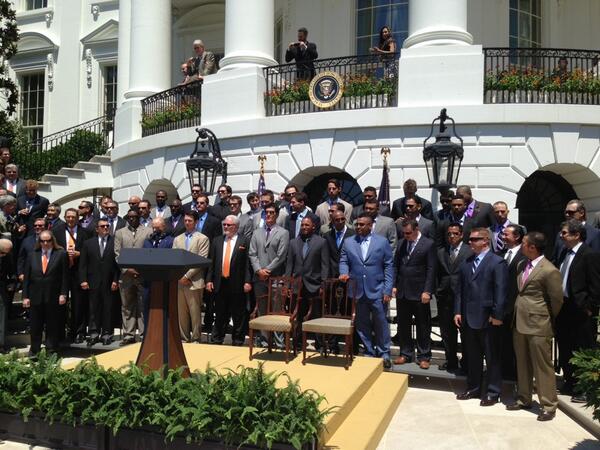
President Obama honors San Francisco Giants, counts on a comeback

Moscow Urges End to ‘International Terrorist’ Bloodshed in Syria
Moscow is calling on all responsible sides in Syria to put an end to the bloodshed unleashed by what it termed “international terrorists,” Russia’s Foreign Ministry said Monday.
Over the weekend “it became known about the atrocious killing” of some 150 people by militants from extremist groups Jabhat al-Nusra and Ansar al-Khilafah during an attack on Khan Assal, a town outside the northern city of Aleppo, the ministry said in a statement on its website.
Both militant groups, which have conducted joint operations in the past, have claimed credit for taking control of Khan Assal on July 22-23 and killing more than 100 soldiers.
The Russian ministry expressed deep condolences to the entire Syrian people and strongly condemned the acts by “terrorists and their accomplices” on Syrian soil.
“The barbarous nature of the crime has come as a shock to all Syrians: It has been condemned not only by the country’s authorities but also by leading opposition groups,” the ministry said.
According to UN data, about 100,000 people have been killed in the Syrian conflict.
Gunmen launch major attack on Pakistani prison holding militants
Altaf Hussain, the notorious MQM leader who swapped Pakistan for London

Altaf Hussain lives in London but leads Pakistan's powerful, controversial MQM party, which has millions of supporters. He has also been acccused of inciting murder and violence in his home country
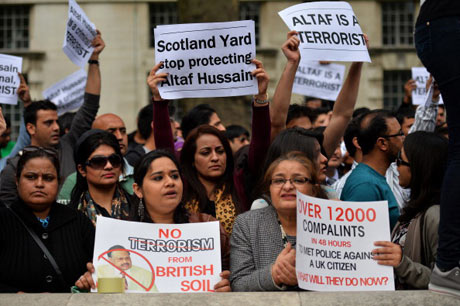
By Owen Bennett-JonesPakistan's most vibrant, vivacious and popular 24-hour news channel, Geo TV, generally has little difficulty recruiting staff. Its headquarters are in Karachi, Pakistan's so called "city of dreams" – a massive, sprawling conurbation with 20 million residents seeking a better life. And yet there was one vacancy recently that Geo TV could not fill. The channel wanted a lookalike for its popular satirical show, in which actors play the parts of the country's leading politicians. It was a job offering instant stardom and good money. And not a single person in Karachi was willing to do it. The man Geo TV sought to satirise was Altaf Hussain, the leader of the Muttahida Qaumi Movement (MQM). And the reason no one applied was the fear that if Altaf Hussain were unamused by the performance, the actor playing him would be murdered.

Housework not homework for millions of children in Malala’s Pakistan


Subscribe to:
Posts (Atom)