Monday, July 22, 2013
Turkish court gives go-ahead to demolish Gezi Park


Bahrain police raid houses of protesters


President Obama, Race and the Ku Klux Klan
 By MICHAEL WINERIP
In 1986, as the suburban columnist for The Times, I interviewed the head of the Ku Klux Klan. The man lived in Shelton, Conn., and until then, the national news stories had talked about what a social commentary it was, that the new imperial wizard came from the North — the idea being that racism wasn’t just a Southern problem.
This, of course, was true, although when I visited the wizard, I realized North versus South wasn’t the real story.
The real story was that James Farrands was awfully small potatoes, a tool and die machinist who ran the Klan from the national headquarters in his garage. The state police at the time estimated there were 15 Klan members in Connecticut — mostly Mr. Farrands’s relatives.
There was, however, one thing Mr. Farrands said during that interview that I have never forgotten and came to me again on Friday. It was while listening to President Obama’s speech on race, made after the acquittal of George Zimmerman in the killing of Trayvon Martin, a black teenager.
Mr. Farrands was the first Roman Catholic imperial wizard, which surprised me because Catholics had long been one of the targets of the Klan.
How could this be? I asked.
He said that since John F. Kennedy’s presidency, Catholics have been admitted to the Klan. “If a Catholic could be president, then he could join the Klan,” Mr. Farrands said.
I asked if this meant that if a Jew became president, Jews could join.
“A ticklish question,” Mr. Farrands said. “A very ticklish question. We don’t take Jews. They’re not Christians.”
And what if a black Christian became president? “Come on,” the imperial wizard said, rolling his eyes. “There’ll never be a black president.”
In 1986, the imperial wizard found it hilarious — inconceivable — that a black person would ever be elected president.
Few in my generation, myself included, could imagine such a thing, and yet just 22 years after my visit to the wizard, it happened.
I’ve been struck watching the demonstrations in reaction to the verdict that the protesters — while vocal, and angry — have largely been peaceful and that there have been many whites among them.
I remember the shock as a white teenager living in a white suburb, watching the race riots on the TV news after the assassination of the Rev. Dr. Martin Luther King Jr. And being a young, scared reporter in Miami in 1980, ducking behind my car as bullets flew by during riots protesting the acquittal of four white police officers in the death of an unarmed black man named Arthur McDuffie.
As I watched President Obama speak to the White House press corps, what struck me was how such strong words were delivered with such restraint. He spoke like somebody who knew that one inflammatory phrase would do him in.
On one hand, he complimented the judge and lawyers at the Zimmerman trial for being professional and noted that reasonable doubt was a factor. He pointed out that young black men are disproportionately perpetrators as well as victims and called for peaceful protests, saying violence would dishonor Trayvon Martin and his family.
But the president also spoke of black men routinely being racially profiled — shopping, crossing the street, riding in an elevator.
He questioned what the outcome would have been if circumstances had been reversed, and the black teenager was the shooter: “Do we actually think that he would have been justified in shooting Mr. Zimmerman, who had followed him in a car, because he felt threatened?”
And then there was the line that may prove the most enduring: “Trayvon Martin could have been me 35 years ago.”
Twenty-seven years ago, when I asked the imperial wizard how he responded to people who said the Klan spreads hate, he answered: “Hate? We’re trying to spread love. Love for Christians. Love for white people. Love for the holy Bible. Oh heck, I love the colored people. I love the ones in the South more than the North. Why? Because they’re farther away. Ha ha!”
As I age, I have come to believe that a lot that passes for progress is really just change. But in matters of race, I think change really has been progress. When I look at my own family, I know that I am better about race than my parents were, and my children are better about it than I am.
Which was how President Obama concluded his comments: “We should also have confidence that kids these days, I think, have more sense than we did back then, and certainly more than our parents did or our grandparents did, and that along this long, difficult journey, you know, we’re becoming a more perfect union — not a perfect union, but a more perfect union.”
By MICHAEL WINERIP
In 1986, as the suburban columnist for The Times, I interviewed the head of the Ku Klux Klan. The man lived in Shelton, Conn., and until then, the national news stories had talked about what a social commentary it was, that the new imperial wizard came from the North — the idea being that racism wasn’t just a Southern problem.
This, of course, was true, although when I visited the wizard, I realized North versus South wasn’t the real story.
The real story was that James Farrands was awfully small potatoes, a tool and die machinist who ran the Klan from the national headquarters in his garage. The state police at the time estimated there were 15 Klan members in Connecticut — mostly Mr. Farrands’s relatives.
There was, however, one thing Mr. Farrands said during that interview that I have never forgotten and came to me again on Friday. It was while listening to President Obama’s speech on race, made after the acquittal of George Zimmerman in the killing of Trayvon Martin, a black teenager.
Mr. Farrands was the first Roman Catholic imperial wizard, which surprised me because Catholics had long been one of the targets of the Klan.
How could this be? I asked.
He said that since John F. Kennedy’s presidency, Catholics have been admitted to the Klan. “If a Catholic could be president, then he could join the Klan,” Mr. Farrands said.
I asked if this meant that if a Jew became president, Jews could join.
“A ticklish question,” Mr. Farrands said. “A very ticklish question. We don’t take Jews. They’re not Christians.”
And what if a black Christian became president? “Come on,” the imperial wizard said, rolling his eyes. “There’ll never be a black president.”
In 1986, the imperial wizard found it hilarious — inconceivable — that a black person would ever be elected president.
Few in my generation, myself included, could imagine such a thing, and yet just 22 years after my visit to the wizard, it happened.
I’ve been struck watching the demonstrations in reaction to the verdict that the protesters — while vocal, and angry — have largely been peaceful and that there have been many whites among them.
I remember the shock as a white teenager living in a white suburb, watching the race riots on the TV news after the assassination of the Rev. Dr. Martin Luther King Jr. And being a young, scared reporter in Miami in 1980, ducking behind my car as bullets flew by during riots protesting the acquittal of four white police officers in the death of an unarmed black man named Arthur McDuffie.
As I watched President Obama speak to the White House press corps, what struck me was how such strong words were delivered with such restraint. He spoke like somebody who knew that one inflammatory phrase would do him in.
On one hand, he complimented the judge and lawyers at the Zimmerman trial for being professional and noted that reasonable doubt was a factor. He pointed out that young black men are disproportionately perpetrators as well as victims and called for peaceful protests, saying violence would dishonor Trayvon Martin and his family.
But the president also spoke of black men routinely being racially profiled — shopping, crossing the street, riding in an elevator.
He questioned what the outcome would have been if circumstances had been reversed, and the black teenager was the shooter: “Do we actually think that he would have been justified in shooting Mr. Zimmerman, who had followed him in a car, because he felt threatened?”
And then there was the line that may prove the most enduring: “Trayvon Martin could have been me 35 years ago.”
Twenty-seven years ago, when I asked the imperial wizard how he responded to people who said the Klan spreads hate, he answered: “Hate? We’re trying to spread love. Love for Christians. Love for white people. Love for the holy Bible. Oh heck, I love the colored people. I love the ones in the South more than the North. Why? Because they’re farther away. Ha ha!”
As I age, I have come to believe that a lot that passes for progress is really just change. But in matters of race, I think change really has been progress. When I look at my own family, I know that I am better about race than my parents were, and my children are better about it than I am.
Which was how President Obama concluded his comments: “We should also have confidence that kids these days, I think, have more sense than we did back then, and certainly more than our parents did or our grandparents did, and that along this long, difficult journey, you know, we’re becoming a more perfect union — not a perfect union, but a more perfect union.”
Obama: Helen Thomas broke barriers for women
http://www.usatoday.com/Presidents don't often comment on the deaths of reporters, but Helen Thomas wasn't your typical reporter. The first female journalist to cover the president full time, Thomas reported -- aggressively -- on 10 chief executives, from John Kennedy to Barack Obama. Thomas died Saturday at age 92. "Helen was a true pioneer, opening doors and breaking down barriers for generations of women in journalism," President Obama said in a statement. "She covered every White House since President Kennedy's, and during that time she never failed to keep presidents -- myself included -- on their toes."Obama also said: "What made Helen the 'Dean of the White House Press Corps' was not just the length of her tenure, but her fierce belief that our democracy works best when we ask tough questions and hold our leaders to account. Our thoughts are with Helen's family, her friends and the colleagues who respected her so deeply." Former president Bill Clinton and first lady Hillary Clinton also issued a statement on Thomas: "Helen was a pioneering journalist who, while adding more than her share of cracks to the glass ceiling, never failed to bring intensity and tenacity to her White House beat. Throughout her career she covered the issues and events that shaped the course of our world with perseverance and a tough-minded dedication. "Her work was extraordinary because of her intelligence, her lively spirit and great sense of humor, and most importantly her commitment to the role of a strong press in a healthy democracy." Thomas also served as the first female president of the White House Correspondents Association, which issued a statement: "Helen Thomas was a trailblazer in journalism and in the White House press corps, covering presidents from John F. Kennedy through Barack Obama. "Starting with the Kennedy administration, she was the first woman to cover the president and not just the First Lady. "At her urging in 1962, Kennedy said he would not attend the annual dinner of the White House Correspondents Association unless it was opened to women for the first time. It was. "And in 1975-76, she served as the first woman president of the association. "Women and men who've followed in the press corps all owe a debt of gratitude for the work Helen did and the doors she opened. All of our journalism is the better for it."
Karzai to Accept Pakistan's Invitation Only if the Agenda is Made Clear
Syrian government, opposition must work to expel "terrorists": Russia
 Russian Foreign Minister Sergei Lavrov issued a new call on Monday for the Syrian government and opposition to work together to expel all "terrorists and extremists from Syria", Russian news agencies reported.
At the start of talks with Syrian Deputy Prime Minister for Economic Affairs Qadri Jamil, Lavrov was quoted as saying by Interfax news agency that last month's agreement in Northern Ireland for the two sides to work together to expel the "terrorists and extremists" should "become one of the main points of the proposed international (peace) conference".
"To our regret, unlike the government of Syria, a significant part of the opposition, including the National Council, has not expressed such readiness yet."
Russian Foreign Minister Sergei Lavrov issued a new call on Monday for the Syrian government and opposition to work together to expel all "terrorists and extremists from Syria", Russian news agencies reported.
At the start of talks with Syrian Deputy Prime Minister for Economic Affairs Qadri Jamil, Lavrov was quoted as saying by Interfax news agency that last month's agreement in Northern Ireland for the two sides to work together to expel the "terrorists and extremists" should "become one of the main points of the proposed international (peace) conference".
"To our regret, unlike the government of Syria, a significant part of the opposition, including the National Council, has not expressed such readiness yet."
Right-wing hawks in US Congress pick fight with wrong general

By Clifford A. KiracofeThe top military leader of the US armed forces recently came under attack by pro-Israel forces at a US Senate confirmation hearing. Senator John McCain, exploding in anger, said he would block General Martin E. Dempsey's continuation as chairman of the US Joint Chiefs of Staff and was furious that the general would not rubber stamp a war with Syria. The chairman of the US Joint Chiefs of Staff reports directly to the president who is the commander-in-chief of the US military. Under the US constitution, Congress has the authority to declare war, not the president. In recent years, however, Congress has passed this war making power to the White House in a move some critics say is unconstitutional. The spectacle of McCain's public attack on Dempsey is not helpful to the US' global image. Rather, it demonstrates the influence of the pro-Israel lobby in Congress and the aggressiveness and irresponsibility of many US politicians. McCain was apoplectic over the issue of war with Syria. He is the ranking Republican member of the US Senate Committee on Armed Forces. The chairman of the committee, Democrat Carl Levin, is also pro-Israel and also wants war against Syria but maintained a calm demeanor. At issue was US war planning for a Syria contingency. Congress until recently wanted to step up arming the Islamic terrorist forces arrayed against the government and people of Syria. However, the recent turn in the military situation on the ground as well as revelations about the opposition's connections to Al Qaeda changed some politicians' minds. Now there is skepticism in Congress about arming the terrorists any further, not to mention real doubts about undertaking a full-scale war. Pro-war politicians like McCain want so-called no-fly zones established inside Syria's borders. Military professionals know full well that to do this is an act of war. In order to establish such no-fly zones, numerous air strikes are required to suppress an extensive target set which includes Syrian anti-aircraft capabilities, tanks, and armored personnel carriers. McCain attempted to force Dempsey to reveal in public what he would recommend to the president. The general properly reminded the senator that such recommendations were confidential between himself and his commander-in-chief, the president. A particularly disturbing feature of McCain's tirade was his hostile reference to Russia. McCain said that US military activity against Syria would be a blow to Russia and to Hezbollah, the Shia resistance movement in Lebanon. Is US support for the anti-Syria terrorist forces in fact a behind-the-scenes proxy war against Russia? Dempsey, among the most highly regarded US military figures, has warned politicians against a "Thucydides Trap" involving escalating fears which would lead to military confrontation and war with China. He has also taken a number of steps to improve military-to-military relations with China and with Russia. Politicians under the influence of the militant pro-Israel neoconservative policy network and hawkish academics have a zero-sum, or win-lose, global perspective. They recklessly seek to maintain US global supremacy rather than to adjust to the changing international correlation of forces driving the emerging multipolar world. For McCain and like-minded senators and congressmen, perpetual war may seem the appropriate national strategy for the US. Greek historian Thucydides said it is arrogance and an unlimited will to power which brings inevitable destruction to states. He said prudence and moderation are the only standards for foreign policy and national strategy. We can only hope Congress will wake up and reject bellicose extremism and fly-by-night foreign policy.
Afghan parliament dismisses interior minister over worsening security
 Afghanistan's parliament voted on Monday to dismiss one of the country's chief security ministers, impeaching the interior minister in a potential blow to stability as NATO-led international forces speed up their withdrawal.
The fractious parliament said Ghulam Mujtaba Patang, as head of a 157,000-strong police force, had presided over worsening security, including along a major highway running from the capital Kabul to Kandahar that is a crucial economic lifeline targeted by Taliban insurgents.
"Afghanistan's interior minister, with 136 votes against him, is disqualified from the ministry and I ask the president of the Islamic republic of Afghanistan to announce another person for this position," said speaker of parliament Abdul Rauf Ibrahimi.
It was unclear whether President Hamid Karzai would accept the vote as his administration tries to strengthen stability ahead of presidential elections and a pullout of NATO troops next year. Karzai has previously opted to keep ministers in their roles in acting capacity after similar votes.
Lawmakers said Patang, a former provincial police chief liked by Karzai's Western backers, had also failed to fight corruption in the force and refused a summons to parliament, which has increasingly flexed its muscle against Karzai's power.
But Patang, in a startling revelation, said 2,748 police officers, or almost two percent of the force, had been killed by insurgent gunmen in the four months since March 21, and argued it was the job of the more heavily-armed military to protect remote areas and highways.
"I'm on the threshold of NATO's withdrawal," he said.
"There will be lots of problems, there will be lots of challenges. From March 21st up to now, I swear to god, 2,748 police have been martyred. Imagine what effect it has on my mind."
The parliament last August voted to remove former Defence Minister Abdul Rahim Wardak and then Interior Minister Bismillah Mohammadi over a series of insurgent assassinations of top officials and incidents of cross-border fire with Pakistan.
Foreign troops are increasingly handing security responsibility to the 350,000-strong Afghan security forces as NATO-led forces look to withdraw from the unpopular war by the end of 2014.
Afghanistan's parliament voted on Monday to dismiss one of the country's chief security ministers, impeaching the interior minister in a potential blow to stability as NATO-led international forces speed up their withdrawal.
The fractious parliament said Ghulam Mujtaba Patang, as head of a 157,000-strong police force, had presided over worsening security, including along a major highway running from the capital Kabul to Kandahar that is a crucial economic lifeline targeted by Taliban insurgents.
"Afghanistan's interior minister, with 136 votes against him, is disqualified from the ministry and I ask the president of the Islamic republic of Afghanistan to announce another person for this position," said speaker of parliament Abdul Rauf Ibrahimi.
It was unclear whether President Hamid Karzai would accept the vote as his administration tries to strengthen stability ahead of presidential elections and a pullout of NATO troops next year. Karzai has previously opted to keep ministers in their roles in acting capacity after similar votes.
Lawmakers said Patang, a former provincial police chief liked by Karzai's Western backers, had also failed to fight corruption in the force and refused a summons to parliament, which has increasingly flexed its muscle against Karzai's power.
But Patang, in a startling revelation, said 2,748 police officers, or almost two percent of the force, had been killed by insurgent gunmen in the four months since March 21, and argued it was the job of the more heavily-armed military to protect remote areas and highways.
"I'm on the threshold of NATO's withdrawal," he said.
"There will be lots of problems, there will be lots of challenges. From March 21st up to now, I swear to god, 2,748 police have been martyred. Imagine what effect it has on my mind."
The parliament last August voted to remove former Defence Minister Abdul Rahim Wardak and then Interior Minister Bismillah Mohammadi over a series of insurgent assassinations of top officials and incidents of cross-border fire with Pakistan.
Foreign troops are increasingly handing security responsibility to the 350,000-strong Afghan security forces as NATO-led forces look to withdraw from the unpopular war by the end of 2014.
India is not to blame for the mess in Afghanistan

By MANOJ JOSHI
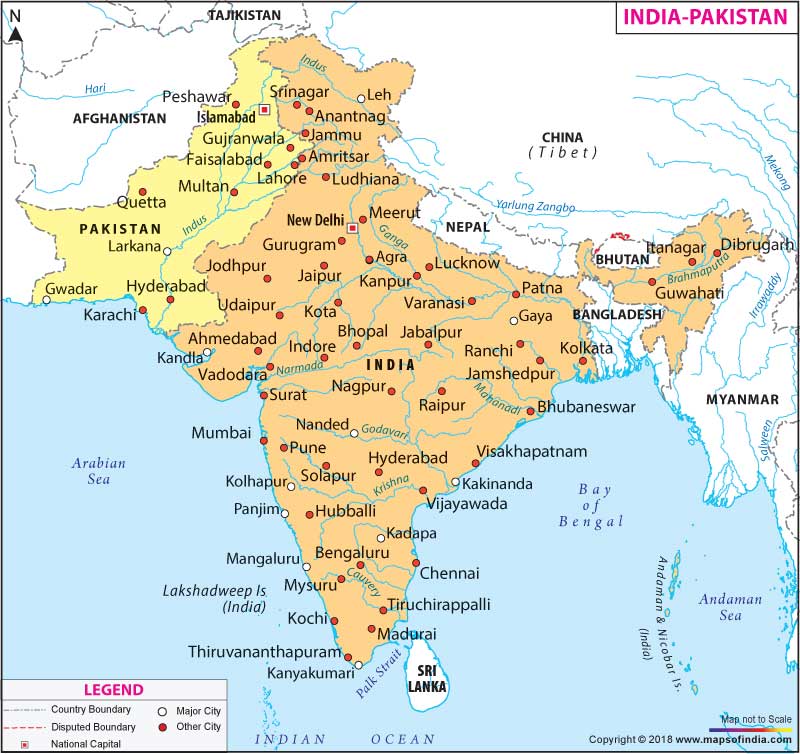 Tempers in India have been ruffled by some recent writings associated with the Brookings Institution which suggest that the road to peace in Afghanistan goes via Kashmir.
The director of the institution's intelligence project, Bruce Riedel's 2013 book Avoiding Armageddon, has said that Pakistan has created its jihadist infrastructure to fight India directly in Kashmir and indirectly in Afghanistan. Indian "flexibility" in Kashmir was therefore, the key to game change in South Asia.
Then there was the essay by our own William Dalrymple, written for the Brookings Institution, where he stated: "The hostility between India and Pakistan lies at the heart of the current war in Afghanistan."Stephen Cohen, the Brookings premier South Asia expert has taken up the India-Pakistan issue in his recent book Shooting for a Century, but takes a different tack which is not germane to this argument.
With retreat staring it in the face, the US is being offered various options by analysts and scholars. The India-Pakistan one seems convenient, but it misses its target by a mile. There is no special India-Pakistan rivalry in Afghanistan. There may be one imagined by Islamabad, but the reality is that geography prevents New Delhi from any substantive involvement in Afghan affairs.
That is why, the Indian effort which was mainly related to infrastructure and social development in the past decade was an adjunct to that of the US and ISAF's security operation, and with that security being withdrawn, India is confronted by a major dilemma.As a friend of Afghanistan and a strategic partner of its government, New Delhi remains committed to the economic and social development of the Afghan state. But that does not mean that, for the sake of keeping the US happy, it can cheerfully endorse its emerging policy of striking a deal with the Taliban, through the dubious instrumentality of the Pakistan military.
Beginning with the Bonn and Berlin conferences of 2001 and 2004 respectively, we were told that the mission of the western forces was to transform Afghanistan. The state would have a new constitution, an elected government and its policies would be in line with the best practices of democratic countries of the west.
Developments
In 2013, the democratic project is being blithely abandoned. The west says it needs to withdraw, and must do so in good order. Therefore it has changed its order of priorities - placing the need to leave Afghanistan in 2014 as number one. To that end, it is willing to sup with the Taliban devil, and forget Pakistan's betrayal. And it wants the rest of the world to applaud the move.
The problem for India is that the west's new road to Kabul is via Islamabad. The Doha talks have been facilitated by Pakistan, as indicated by the numerous meetings US Secretary of State John Kerry and the special representative for Afghanistan James Dobbins have had with Pakistan army chief Ashfaq Pervez Kayani this year.
Pakistan, as we know, virtually created the Taliban and the outfit has served as its proxy in maintaining its influence on Afghanistan. The Taliban of today is even more amenable to manipulation by Islamabad than it was before.
It is important to be familiar with a bit of history. Pakistan did not have much influence in Afghanistan till the rise of the Taliban.
Actually relations between the two countries have been quite indifferent, to use a polite word, since the creation of Pakistan.
Conventional wisdom assumed that it was the Soviet invasion of Afghanistan which triggered Islamabad's support to the mujahideen; the reality is that Zulfikar Ali Bhutto was supporting Afghan Islamists against Kabul well before that event.
Pakistan's Afghan policy, dictated as much by attitudes in Kabul, has never really been related to India. Following the defeat of the Russians, the Pakistanis had a free hand in Afghanistan. And what a mess of it they made.
The end result was the rise of the medieval Islamic Emirate of Mullah Omar and the homicidal al Qaeda.
Folly
Pakistan bears a great deal of responsibility for what Afghanistan has gone through in the last two decades. Now the US, once again, wants to hand over its destiny to Islamabad. Considering the blood and treasure that Washington has already expended in the last decade, this is foolhardiness of a high order. But that is imperial hubris for you.
Till the Soviet invasion, Indian interests in Afghanistan were essentially those of a friendly near neighbour. But following the invasion and the American-led jihad, things changed.
Designated as the lead player in that jihad, Pakistan saw it as an opportunity to get its own back on India. Parts of Afghanistan under mujahideen control were used to locate training camps for terrorists. Besides a concern for the fate of the Afghan people, New Delhi worries that with Pakistan in the driver's seat, Afghanistan will once again become a training ground for terrorists.
Responsibility
Even so, New Delhi is unlikely to play the spoiler. The ball is really in the American court and it remains to be seen just how they will pick up the one that the Taliban have dropped in Doha. In the end, what will matter is the leadership in Kabul and whether it can keep its nerve against the psychological games being played by its mentors - the US and EU - as well as the Taliban.
The Afghan National Security Forces appear to have the will to fight, and if they are supported they can give the Taliban a run for their money. The responsibility for the future lies firmly with the US and EU, who messed up the war and now seem to be determined to mess up the peace efforts as well.
No amount of analytical jugglery can shift the onus to countries like India, whose role in Afghanistan may be important, but is still secondary.
What India and other countries leery of the Taliban need to do, is to push the US and the EU to adopt a policy that will benefit Afghanistan in the long run, rather than be tailored for their immediate need to exit.
Tempers in India have been ruffled by some recent writings associated with the Brookings Institution which suggest that the road to peace in Afghanistan goes via Kashmir.
The director of the institution's intelligence project, Bruce Riedel's 2013 book Avoiding Armageddon, has said that Pakistan has created its jihadist infrastructure to fight India directly in Kashmir and indirectly in Afghanistan. Indian "flexibility" in Kashmir was therefore, the key to game change in South Asia.
Then there was the essay by our own William Dalrymple, written for the Brookings Institution, where he stated: "The hostility between India and Pakistan lies at the heart of the current war in Afghanistan."Stephen Cohen, the Brookings premier South Asia expert has taken up the India-Pakistan issue in his recent book Shooting for a Century, but takes a different tack which is not germane to this argument.
With retreat staring it in the face, the US is being offered various options by analysts and scholars. The India-Pakistan one seems convenient, but it misses its target by a mile. There is no special India-Pakistan rivalry in Afghanistan. There may be one imagined by Islamabad, but the reality is that geography prevents New Delhi from any substantive involvement in Afghan affairs.
That is why, the Indian effort which was mainly related to infrastructure and social development in the past decade was an adjunct to that of the US and ISAF's security operation, and with that security being withdrawn, India is confronted by a major dilemma.As a friend of Afghanistan and a strategic partner of its government, New Delhi remains committed to the economic and social development of the Afghan state. But that does not mean that, for the sake of keeping the US happy, it can cheerfully endorse its emerging policy of striking a deal with the Taliban, through the dubious instrumentality of the Pakistan military.
Beginning with the Bonn and Berlin conferences of 2001 and 2004 respectively, we were told that the mission of the western forces was to transform Afghanistan. The state would have a new constitution, an elected government and its policies would be in line with the best practices of democratic countries of the west.
Developments
In 2013, the democratic project is being blithely abandoned. The west says it needs to withdraw, and must do so in good order. Therefore it has changed its order of priorities - placing the need to leave Afghanistan in 2014 as number one. To that end, it is willing to sup with the Taliban devil, and forget Pakistan's betrayal. And it wants the rest of the world to applaud the move.
The problem for India is that the west's new road to Kabul is via Islamabad. The Doha talks have been facilitated by Pakistan, as indicated by the numerous meetings US Secretary of State John Kerry and the special representative for Afghanistan James Dobbins have had with Pakistan army chief Ashfaq Pervez Kayani this year.
Pakistan, as we know, virtually created the Taliban and the outfit has served as its proxy in maintaining its influence on Afghanistan. The Taliban of today is even more amenable to manipulation by Islamabad than it was before.
It is important to be familiar with a bit of history. Pakistan did not have much influence in Afghanistan till the rise of the Taliban.
Actually relations between the two countries have been quite indifferent, to use a polite word, since the creation of Pakistan.
Conventional wisdom assumed that it was the Soviet invasion of Afghanistan which triggered Islamabad's support to the mujahideen; the reality is that Zulfikar Ali Bhutto was supporting Afghan Islamists against Kabul well before that event.
Pakistan's Afghan policy, dictated as much by attitudes in Kabul, has never really been related to India. Following the defeat of the Russians, the Pakistanis had a free hand in Afghanistan. And what a mess of it they made.
The end result was the rise of the medieval Islamic Emirate of Mullah Omar and the homicidal al Qaeda.
Folly
Pakistan bears a great deal of responsibility for what Afghanistan has gone through in the last two decades. Now the US, once again, wants to hand over its destiny to Islamabad. Considering the blood and treasure that Washington has already expended in the last decade, this is foolhardiness of a high order. But that is imperial hubris for you.
Till the Soviet invasion, Indian interests in Afghanistan were essentially those of a friendly near neighbour. But following the invasion and the American-led jihad, things changed.
Designated as the lead player in that jihad, Pakistan saw it as an opportunity to get its own back on India. Parts of Afghanistan under mujahideen control were used to locate training camps for terrorists. Besides a concern for the fate of the Afghan people, New Delhi worries that with Pakistan in the driver's seat, Afghanistan will once again become a training ground for terrorists.
Responsibility
Even so, New Delhi is unlikely to play the spoiler. The ball is really in the American court and it remains to be seen just how they will pick up the one that the Taliban have dropped in Doha. In the end, what will matter is the leadership in Kabul and whether it can keep its nerve against the psychological games being played by its mentors - the US and EU - as well as the Taliban.
The Afghan National Security Forces appear to have the will to fight, and if they are supported they can give the Taliban a run for their money. The responsibility for the future lies firmly with the US and EU, who messed up the war and now seem to be determined to mess up the peace efforts as well.
No amount of analytical jugglery can shift the onus to countries like India, whose role in Afghanistan may be important, but is still secondary.
What India and other countries leery of the Taliban need to do, is to push the US and the EU to adopt a policy that will benefit Afghanistan in the long run, rather than be tailored for their immediate need to exit.
Trailblazing Afghan Female MP Forced To Take Shelter
Troubling Man in Balochistan
The Baloch HalEditorial: BY:MALIK SIRAJ AKBAR Sardar Sanaullah Zehri, the Balochistan President of the Pakistan Muslim League (P.M.L-Nawaz), has recently been featured in the media mostly for negative reasons. Previously, the media depicted him as a man who obstructed Dr. Malik Baloch’s election as the chief minister. Now, he is back in the news for more perturbing reasons. Last week, Mr. Zehri’s ‘private’ security guards assaulted Samiullah Somoro, Quetta’s Superintendent of Police (SP), outside the Balochistan Assembly when the police officer on duty prevented them from entering the building of the provincial legislature. The Policeman cited instructions from the Election Commission of Pakistan to justify the restriction of private guards inside the Assembly building. Mr. Zehri is among the three people who have so far been nominated as provincial ministers in Dr. Baloch’s cabinet. The incident took place when the P.M.L.-N leader had gone to cast his vote for the Senate elections. The incident, which included slapping of the S.P. by Mr. Zehri’s guards, drew two immediate reactions. Firstly, Capital City Police Officer (C.C.P.O.) Mir Zubair Mehmood and other Deputy Inspectors General (D.I.G.s) protested against the incident and stopped performing their duty to object to the brazen assault. Secondly, the Chief Minister, Dr. Baloch, showed absolute immaturity and poor judgment by abruptly suspending the S.P., who had actually been assaulted by Mr. Zehri’s armed men. Dr. Baloch had apparently taken the decision only to protect his own coalition government which almost entirely depends on the support of the P.M.L-N and the Pashtunkhwa Milli Awami Party (Pk.M.P). On its part, the Balochistan High Court (B.H.C.) promptly intervened and took suo moto notice of the episode. Headed by Chief Justice Qazi Faez Essa and Justice Jamal Mandokhel, the B.H.C. bench summoned Balochistan Chief Secretary Baber Yaqoob Fateh, Advocate General Shakil Baloch and the C.C.P.O. Quetta to inquire about the details of the event. The Chief Justice said, “People have immense expectations from the new provincial government; this act by the government brought down the morale of our police.” Backed by the B.H.C., the Quetta police have now registered a cases against five guards of Mr. Zehri and initiated further investigations. While no one among Mr. Zehri’s cops has been arrested, this case has distinctly pitted the executive and judiciary branches of the government, standing on one side, against the legislature, standing alone, ironically, in support of an attack on a policeman. Feeling that their mutual interests are threatened, members of the Balochistan Assembly belonging to other political parties, such as the Pakistan Muslim League (P.M.L.-Quaid-e-Azam), have begun to express support for Sardar Zehri and have suggested that the police officer who had come from the Sindh province, should be banished from Balochistan. For instance, Shiek Jaffar Khan Mandokhel, the Balochistan president of the P.M.L.-Q, addressed a rare press conference at Mr. Zehri’s residence and accused the media of “exaggerating” the episode. He argued that the media was involved in the “character assassination” of Mr. Zehri who, according to Mr. Mandokhel, faces genuine threats to his life. Seen from a democratic perspective and the realities on the ground, the Balochistan Assembly should have absolute control over the security apparatus of the province. However, legislators, mainly those belonging to the government, must not take this advantage for granted. As the Chief Justice of the Balochistan High Court rightly pointed out, people have very high expectations from the new government. It should not use democracy as a tool to empower some tribal chiefs. A true democratic government should work for social reforms and public welfare. It should rid Balochistan of archaic traditions and unreasonable practices such as tribalism and keeping of private armies. The behavior of Mr. Zehri’s guards, the dismissal of the police officer by the chief minister and Mr. Mandokhel’s press conference were all wrong. The chief minister’s goal should be to establish the rule of the law not to stand with those who violate it. While this may appear as a small matter which should be resolved by the provincial authorities, Prime Minister Nawaz Sharif should still care what his party’s chief in Balcohistan is doing. Mr. Sharif should either urge his party chief to respect the law or he should step back to pave the way for other law-abiding politicians. Otherwise, people like Mr. Zehri would continue to embarrass the prime minister with their actions. The killing of his son, brother and nephew in an election campaign was indeed tragic but that tragedy should not grant Mr. Zehri immunity from the rule of the law. As a veteran lawmaker himself, Mr. Zehri is expected to guard, not violate, the law.
Malala, Salam and Zafrullah
Daily Times
Yasser Latif Hamdani

Pakistan Battles Polio, and Its People’s Mistrust
By DONALD G. McNEIL Jr.
Usman, who limps on a leg bowed by the polio he caught as a child, made sure that his first three children were protected from the disease, but he turned away vaccinators when his youngest was born.
He was furious that the Central Intelligence Agency, in its hunt for Osama bin Laden, had staged a fake vaccination campaign, and infuriated by American drone strikes, one of which, he said, had struck the son of a man he knew, blowing off his head. He had come to see the war on polio, the longest, most expensive disease eradication effort in history, as a Western plot.
In January, his 2-year-old son, Musharaf, became the first child worldwide to be crippled by polio this year.
“I know now I made a mistake,” said Usman, 32, who, like many in his Pashtun tribe, uses only one name. “But you Americans have caused pain in my community. Americans pay for the polio campaign, and that’s good. But you abused a humanitarian mission for a military purpose.”
Anger like his over American foreign policy has led to a disastrous setback for the global effort against polio. In December, nine vaccinators were shot dead here, and two Taliban commanders banned vaccination in their areas, saying the vaccinations could resume only if drone strikes ended. In January, 10 vaccinators were killed in Nigeria’s Muslim-dominated north.
Since then, there have been isolated killings — of an activist, a police officer and vaccinators — each of which has temporarily halted the campaign.
The war on polio, which costs $1 billion a year and is expected to take at least five more years, hangs in the balance. When it began 25 years ago, 350,000 people a year, mostly children, were paralyzed. Last year, fewer than 250 were, and only three countries — Afghanistan, Nigeria and Pakistan — have never halted its spread at any point.
While some experts fear the killings will devastate the effort here, Pakistan’s government insists that they will not, and has taken steps to ensure that. Vaccinators’ pay was raised to $5 a day in the most dangerous areas, police and army escorts were increased and control rooms were created to speed crisis responses.
But the real urgency to finish the job began earlier, for a very different reason. Two years ago, India, Pakistan’s rival in everything from nuclear weapons to cricket, eliminated polio.
“Nothing wounded our pride as much as that,” said Dr. Zulfiqar A. Bhutta, a vaccine expert at Aga Khan University’s medical school.
Bill Gates, who is the campaign’s largest private donor and calls beating the disease “the big thing I spend the majority of my time on,” said that Pakistan’s desire to not be further humiliated “is our biggest asset.”
After India’s success and hints from the World Health Organization that it might issue travel warnings, Pakistan’s government went on an emergency footing. A cabinet-level “polio cell” was created. Vaccinators’ routine pay doubled to $2.50. More than 1,000 “mobilizers” were hired to visit schools and mosques to counter the ever-swirling rumors that the vaccine contained pork, birth control hormones or H.I.V., the virus that causes AIDS.
Mullahs were courted to endorse vaccination. They issued 24 fatwas, and glossy booklets of their directives were printed for vaccinators to carry.
Perhaps most important, local command was given to deputy commissioners, who have police powers that health officials lack.
Pakistan is closer than ever. Although cases will not peak until after the summer monsoons, there have been only 21 so far this year. A few years ago, 39 substrains of the polio virus circulated; now only two do. About 300,000 children live in areas too dangerous for vaccinators, but almost all the sewage samples from those areas are clear of the virus.
Ultimately, though, success will depend on more than political will and the rivalry with India. In the wake of the recent killings, it will rely most of all on individual acts of courage, like those by prominent imams who pose for pictures as they vaccinate children.
Or by Usman, who appeared with his polio-stricken son, Musharaf, in a fund-raising video asking rich Persian Gulf nations to buy vaccines for poor Muslims elsewhere.
Or by volunteers, like the women of the Bibi family, in Karachi, who formed a vaccination team. Two of them, Madiha, 18, and Fahmida, 46, were gunned down in December. Television news showed female relatives keening over their bodies. Not only are those women still vaccinating, but Madiha’s 15-year-old sister also volunteered for her spot.
“All the children of Pakistan are our children,” said Gulnaz Shirazee, 31, who leads the team. “It’s up to us to eradicate polio. We can’t stop. If we’re too afraid, then who will do it?”
A Moving Target
If there is one spot on earth where polio may make its last stand, it is a cramped slum called Shaheen Muslim Town No. 1 in Peshawar, a hotbed of anti-Western militancy. Since sampling began, its sewers have never tested negative for the virus.
It is a neighborhood of migrant Pashtun families who rent rooms briefly and move on, looking for menial jobs picking fruit or making bricks. On a recent sunny afternoon, its alleys were full of carts drawn by donkeys whose faces were decorated with the red prints of hands dipped in henna. Many women wore the full burqa popular in Afghanistan.
In this part of the world, virtually all those with polio are from the Pashtun tribe, in which resistance to vaccination is highest. It is Afghanistan’s largest ethnic group and the wellspring of the Taliban, but a minority in Pakistan. Pakistani Army sweeps and American drone strikes have driven many Pashtuns from their mountain valleys into crowded cities.
Peshawar worries even Dr. Elias Durry, a normally optimistic polio specialist with the W.H.O. “You can get 90 percent vaccine coverage, and come back a few months later, and it’s 50 percent,” he said. “People just move so quickly.”
Shaheen’s sewers are concrete trenches about a foot deep, into which wastewater, rendered milky white by dish soap, flows from pipes exiting mud-brick houses. A child reaching into one for a stick to play with showed how easily the virus, carried in fecal matter, could spread.
Though the area has clean water from a well, the steel pipe it flows through at times dips inside the sewerage trench. It has dents where trucks have banged it, and it is pierced by connectors, some attached just to rubber hoses.
“Piped water with sewage mixed in is worse than no piped water,” said Dr. Bhutta of Aga Khan. “Sometimes rural populations have it better. They carry water from the river, and they defecate in open fields, so there’s no mixing.”
Pakistani children suffer diarrhea so often that half the country’s young are stunted by it. Polio immunity is low, even in vaccinated children, because other viruses crowd the gut receptors to which the vaccine should attach.
At the clinic in Shaheen, the doctor running the polio drive, an ophthalmologist, complained that he got too little police help.
“I have 28 teams, so I requested 56 constables,” he said. “I was given 12.”
He said the underpaid officers inevitably knocked off at midday because their station house serves a hot meal.
The same problem was echoed in Gadap Town, a Karachi neighborhood where vaccinators were killed in December. As a team worked its way from house to house with a reporter, it had every reason to feel secure: because the visit was arranged by an official, six officers with AK-47s came along.
But another team passing by was guarded only by an aged sergeant with a cudgel.
“Yes, we have a security problem,” Dr. Syed Ali, a local official, said quietly on a side street. “What is a stick in front of a gun?”
The isolation and poverty of the Pashtun tribe underlie its resistance. Many of its imams are from Islam’s fundamentalist Deobandi sect, which emerged in the 19th century as a reaction to the British conquest.
Many Pashtun neighborhoods receive few government services like health clinics, paved streets or garbage pickup, but get shiny new billboards trumpeting the polio fight paid for by Western donors.
“People tell us, ‘We need schools, we need roads, we need housing, and all you bring our children is polio, polio, polio,’ ” said Madiha, a black-veiled Gadap vaccinator.
In the middle of last year, it became known that in 2011, the C.I.A. had paid a local doctor to try to get DNA samples from children inside an Abbottabad compound to prove they were related to Bin Laden.
Even though the doctor, Shakil Afridi, who is now serving a 33-year sentence for treason, was offering a hepatitis vaccine, anger turned against polio drops.
Leaders of the polio eradication effort could not have been more frustrated. They were already fighting new rumors that vaccinators were helping set drone targets because they have practices like marking homes with chalk so that follow-up teams can find them. Now, after years of reassuring nervous families that the teams were not part of a C.I.A. plot, here was proof that one was.
“It was a huge, stupid mistake,” Dr. Bhutta said.
Anger deepened when American lawmakers called Dr. Afridi a hero and threatened to cut off aid if he was not released. The W.H.O. and the Unicef, afraid of offending the United States, did not protest publicly. Unicef’s executive director, Anthony Lake, is a former White House national security adviser, which put the agency in an awkward position, an agency official said on the condition of anonymity because of the sensitivity of the issue.
But the deans of a dozen top American public health universities wrote a letter of protest to the Obama administration. Mr. Gates said he endorsed it, though he was not asked to sign. He also said he discussed the issue with Tom Donilon, the former national security adviser, though he would not give details of the conversation.
Fistfuls of Rupees
New opposition has forced the adoption of new ground tactics.
Dr. Qazi Jan Muhammad, the former deputy commissioner of Karachi East, called his approach “a mix of carrots and sticks.”
Whole apartment buildings were missed, he discovered, because Pashtun watchmen were shooing away vaccinators.
“I had the police tell them: ‘Either you let them in, or you go behind bars,’ ” he said.
He had traffic circles blocked so teams could approach each car, and he led some teams himself holding fistfuls of rupees, worth about a penny each.
“I saw a girl, about 11, carrying her 2-year-old sister,” he said. “I gave her a 10-rupee note and said, ‘Will you allow me to give drops to your sister? You can get sweets for yourself.’ ”
“She told all the children, ‘A man is giving away 10 rupees,’ and they all came rushing. I vaccinated 400 kids for only 4,000 rupees.”
The sewers of his district, which has several million inhabitants, are now virus-free.
At the Front Lines Again
The country’s new determination has also brought Rotary International back to the front lines.
The club, founded in Chicago in 1905, started the global polio eradication drive in 1988. It has had chapters in what is now Pakistan since 1927, and is now led by Aziz Memon, a hard-driving textile magnate.
Mr. Memon, 70, and other Rotary-affiliated executives have used their money and political connections to keep the pressure on. They compensated the killed vaccinators’ relatives and held news conferences at which the families urged others to continue fighting.
Rotarians also work in places that terrify government officials. In an industrial neighborhood in Karachi, where both gangs and the Taliban hold sway after dark, Abdul Waheed Khan oversaw a Rotary polio clinic in his school, Naunehal Academy. A big, gregarious man, he angered the Taliban by admitting girls to his academy and offering a liberal arts education instead of only Koran study. His only security was local teenagers who ride motorcycles beside his car to keep anyone from pulling up alongside.
In March, he hosted Dr. Robert S. Scott, the 79-year-old Canadian chairman of Rotary’s polio committee, who flew in to vaccinate children to prove that the fight would go on despite the December killings.
“I had a fatwa put on my head,” Mr. Khan said in April as he led a tour of the clinic. “They said I was Jewish. I had a friend issue a counter-fatwa saying I was a good Muslim.”
On May 13, Mr. Khan was killed by gunmen who also wounded his 1-year-old daughter.
His clinic will not close. “No one can replace Waheed, but life has to go on,” Mr. Memon said.
‘This Is Good Work’
Rotary also sponsors a tactic used to reach children from areas too dangerous for home visits: “transit point” vaccinating.
At a tollbooth on the highway into Karachi, Ghulam Jilani’s team takes advantage of an army checkpoint. As soldiers stop each bus to search for guns, Rotary vaccinators hop aboard. On a typical day, they reach 800 children.
Yes, Mr. Jilani said, the soldiers’ presence may intimidate some resistant families into complying. Also, he added brightly: “We scare them a little. We say, ‘You are entering a city with the disease. Don’t you want your children safe?’ ”
About 90 percent comply, he said, sometimes after a public argument between a father who believes the rumors and a mother, outside their home and at times backed by other women on the bus, insisting the children be protected.
Near the Afghan frontier, where thousands of children live in valleys under Taliban control, teams do the same at military roadblocks. At hospitals, which are usually guarded by soldiers, nurses will pack extra doses of the vaccine on ice for families willing to smuggle it to neighbors.
Some frontier clan chiefs have lost their government stipends for opposing vaccination, and officials have threatened to deny national identity cards to their clans. But the chiefs are in a bind; the Taliban have assassinated many for cooperating with the government.
Mr. Memon of Rotary opposes what he called “these coercive gimmicks.”
“We can’t twist arms,” he said. “We want to win them over with love and affection.”
Among hundreds of men wearing turbans and topees at Karachi’s main train station, Muhammad Arshad stood out in his blue baseball cap with Rotary’s bright yellow gearwheel.
Threading his way through the crowd squatting on Platform 1, he picked out children under age 5.
“What a nice boy,” he said to Sohail Ameer, chucking his infant, Abadur Rahann, under the chin. “May I give him drops against polio?”
Mr. Ameer agreed, and it was over in seconds. Abadur looked nervous, but he did not howl and squirm like some.
After the December killings, Mr. Arshad worried briefly, he said. “But then I thought: This is good work, and God will protect me.”
Friendly strangers came up to the Rotary table to suggest he play it safe and quit. He replied that the railroad police would protect him.
His wife tried the hardest.
“But I told her,” he said. “If a man has to die, he can die even at home. I’m going back to work.”
Secular scholars fight government control in Turkey
http://www.rsc.org/Secular members of academia in Turkey are banding together to strike back at what they portray as attempts by the government to put scientific institutions under the control of religious scholars. But they say their actions are being stifled by a new ‘climate of fear’.Growing dissatisfaction with the Turkish prime minister Recep Tayyip Erdoğan’s treatment of science surfaced on 6 June when about 2000 scholars marched across Istanbul to Taksim Square. There they joined people protesting against the destruction of Gezi Park, and more broadly against the government. Later that month the Turkish scientific community was shocked to learn that prominent chemical engineer Kemal Gürüz had attempted suicide in jail. Gürüz, 65 years old and a former president of the Turkish Council of Higher Education and the country’s main research council, TÜBITAK, has been in prison since June 2012. Outspoken secularity Last month he was indicted in connection with an alleged coup attempt. However, his supporters say that the charges are punishment for his outspoken secularity. ‘On June 14 more than 30 of the people with the same accusation were set free, waiting for the trial, but he was not: he was very depressed, and tried to cut his wrists with a broken glass out of desperation,’ explains his wife, Güniz Gürüz, a retired professor of chemical engineering at the Middle East Technical University in Ankara. The fracture between secular and religious scholars in Turkish academia opened in 2011, when nearly half of the members of the Turkish science academy TÜBA resigned in protest at government interference. In December 2011, some of these academics founded the new Bilim Akademisi. The split came after Erdoğan announced in August 2011 that new members of the academy would be appointed by governmental bodies, instead of academy members. ‘Prominent scientists are a slim minority among newly elected members [of TÜBA]: this is tragic,’ says Ersin Yurtsever, a theoretical chemist and professor at Koҫ University in Istanbul, who is one of the founders of Bilim Akademisi. ‘The new academy is not opposing anything: it just wants to be independent.’ ‘The government is trying to take control of everything by putting its people everywhere,’ says Mahir Arikol, a chemical engineer and emeritus professor at Bosphorus University. Public university rectors in Turkey are appointed by the country’s president following a vote among professors. However, in 2012 at Gezi University in Ankara the candidate who came fifth ended up being appointed, says Yurtsever. Although the move is legal, some scientists suspect political bias. Both TÜBA and TÜBITAK were given the opportunity to comment but chose not to. A new academy Bilim Akademisi has 120 members, Yurtsever says, and has set up graduate summer schools, conferences for the general public, and a programme to support young scientists. It is funded by member fees and donations, and by overheads on its activities. ‘We will send delegations to Turkey in autumn to speak with both TÜBA and Bilim,’ says Matthias Johannsen, executive secretary of All European Academies (ALLEA), an organisation of which TÜBA is a longstanding member, and to which Bilim Akademisi has applied to join. In October last year ALLEA sent a letter to the president of Turkey expressing concerns over TÜBA’s independence. ‘We are inspecting the statutes of both organisations: our general assembly will decide in April 2014,’ says Johannsen. ‘Prominent scientists don’t want to join the new academy for fear of being punished with not getting funded,’ says Yurtsever. ‘A few cases of arbitrary investigations and marginalisation of outspoken professors in universities have triggered widespread fear and self-censorship,’ he says. ‘Chemistry, as a basic science, does not feel much political pressure, but social scientists must be feeling a lot,’ says Yurtsever. This year, Turkey’s main research council refused to fund a workshop on quantitative evolutionary biology, arguing that ‘evolution is a controversial issue’. In January, books on evolution disappeared from the list of popular science reading of the agency. Yurtsever and Arikol both think the government is succeeding in scaring scientists, but not in convincing them. ‘People are speaking up more and more, but only when they are in a group, not individually,’ Yurtsever says.
Sunday, July 21, 2013
Shocking Indian school poisoning: Principal 'forced kids to eat' odd-looking food
 After 23 Indian children died from consuming poisoned school meals, it has emerged that victims refused the food before being made to eat it, according to the Times of India. Preliminary investigations indicate the cooking medium was laced with pesticide.
Police say that the latest case of poisoning, which claimed the lives of 23 children, was most probably caused by storing cooking oil in a used pesticide container. However, an anonymous HRD (Ministry of Human Resource Development) source told the Times of India that the cooking agent used for soyabean subzi may have played a role.
“Earlier it was thought oil was put in a pesticide container. But it seems that the lady cook used pesticide,” the source said.
The subzi looked black and smelt odd according to the source. “The school principal insisted the cooking medium cannot be bad since it had come from her husband's shop,” he said. “When students refused to eat, the principal scolded and forced them to eat.”
"I can accept accidents can happen anywhere. But the scale of this incident and the carelessness, the sheer callousness of the response, the delay in treating the children, is shocking," activist Dipa Sinha of the Right to Food Campaign told AFP.
The children died after eating lentils, potatoes and rice cooked with oil containing agricultural insecticide that was five times the strength sold in the market place, according to tests.
Forensic tests have shown that the oil contained a "highly toxic" form of insecticide which killed the children so quickly that some died in their parents' arms while being taken to hospital.
The principal reportedly fled the school shortly after realizing the extent of the tragedy. “A crucial one and half to two hours were lost. Had these children been rushed to hospital immediately few lives could have been saved,” he said.
There have been violent protests in the state of Bihar. Several parents who lost children in the tragedy said they had trusted the school to serve their kids their only solid meal of the day.
"We have no food at home and it was only to ensure that my children got at least some food that I sent them to the school," a mother who lost three children in the tragedy, Sanjudevi Mahatoshe, told AFP.
Tens of thousands of children in India have been reportedly been refusing to eat their meals in the aftermath of the tragedy. On top of this, there have been a number of reports of children taken to hospital , and one report of a scorpion found in the rice in a midday meal.
A recent Reuters review of audit reports and research papers showed officials have ignored warnings of the lack of oversight and accountability in the program. Checks in several states have found unhygienic conditions in which the food is prepared and served, and the poor quality of food itself. You only come and do checks when you get complaints or when there are serious cases," Rudranarayan Ram, a local education administrator for the village of Gandaman in Bihar state, where the children died, said.
Two audit reports by the state governments of Andhra Pradesh and Madhya Pradesh said the food in the scheme was often laced with stones and worms.
"If the government checks, they will find that the children who have been eating midday meals are under great physical threat," Professor Ajay Kumar Jha at the A.N. Sinha Institute of Social Studies, who led a team to monitor the programme in Bihar in April said.
Another survey by the Indian Institute of Management revealed that children in Gujarat state were instructed to wash up after meals by "rubbing the playground soil on the plates and then giving them a quick rinse". Last year over 130 students needed hospital treatment in the western Indian city of Pune after eating a school lunch, according to the Times of India. A probe later revealed that the food was contaminated with E. coli bacteria.
The nationwide free meal scheme feeds up to 120 million children every day. The tradition has long proved to be the only encouragement to parents, most of whom are struggling to make both ends meet, to send their children to school instead of condemning kids to malnutrition and illiteracy.
While the midday meal is often the only wholesome meal poor children in India may get during the day, a government survey revealed last year that 42 per cent of children under the age of five were underweight. India is home to a quarter of the world's hungry.
Tamil Nadu was the first Indian state to adopt a school feeding programme in 1982.
Other local governments gradually followed the example, and in 2001 India's Supreme Court ordered all states to provide free lunches to children in state-run primary schools.
After 23 Indian children died from consuming poisoned school meals, it has emerged that victims refused the food before being made to eat it, according to the Times of India. Preliminary investigations indicate the cooking medium was laced with pesticide.
Police say that the latest case of poisoning, which claimed the lives of 23 children, was most probably caused by storing cooking oil in a used pesticide container. However, an anonymous HRD (Ministry of Human Resource Development) source told the Times of India that the cooking agent used for soyabean subzi may have played a role.
“Earlier it was thought oil was put in a pesticide container. But it seems that the lady cook used pesticide,” the source said.
The subzi looked black and smelt odd according to the source. “The school principal insisted the cooking medium cannot be bad since it had come from her husband's shop,” he said. “When students refused to eat, the principal scolded and forced them to eat.”
"I can accept accidents can happen anywhere. But the scale of this incident and the carelessness, the sheer callousness of the response, the delay in treating the children, is shocking," activist Dipa Sinha of the Right to Food Campaign told AFP.
The children died after eating lentils, potatoes and rice cooked with oil containing agricultural insecticide that was five times the strength sold in the market place, according to tests.
Forensic tests have shown that the oil contained a "highly toxic" form of insecticide which killed the children so quickly that some died in their parents' arms while being taken to hospital.
The principal reportedly fled the school shortly after realizing the extent of the tragedy. “A crucial one and half to two hours were lost. Had these children been rushed to hospital immediately few lives could have been saved,” he said.
There have been violent protests in the state of Bihar. Several parents who lost children in the tragedy said they had trusted the school to serve their kids their only solid meal of the day.
"We have no food at home and it was only to ensure that my children got at least some food that I sent them to the school," a mother who lost three children in the tragedy, Sanjudevi Mahatoshe, told AFP.
Tens of thousands of children in India have been reportedly been refusing to eat their meals in the aftermath of the tragedy. On top of this, there have been a number of reports of children taken to hospital , and one report of a scorpion found in the rice in a midday meal.
A recent Reuters review of audit reports and research papers showed officials have ignored warnings of the lack of oversight and accountability in the program. Checks in several states have found unhygienic conditions in which the food is prepared and served, and the poor quality of food itself. You only come and do checks when you get complaints or when there are serious cases," Rudranarayan Ram, a local education administrator for the village of Gandaman in Bihar state, where the children died, said.
Two audit reports by the state governments of Andhra Pradesh and Madhya Pradesh said the food in the scheme was often laced with stones and worms.
"If the government checks, they will find that the children who have been eating midday meals are under great physical threat," Professor Ajay Kumar Jha at the A.N. Sinha Institute of Social Studies, who led a team to monitor the programme in Bihar in April said.
Another survey by the Indian Institute of Management revealed that children in Gujarat state were instructed to wash up after meals by "rubbing the playground soil on the plates and then giving them a quick rinse". Last year over 130 students needed hospital treatment in the western Indian city of Pune after eating a school lunch, according to the Times of India. A probe later revealed that the food was contaminated with E. coli bacteria.
The nationwide free meal scheme feeds up to 120 million children every day. The tradition has long proved to be the only encouragement to parents, most of whom are struggling to make both ends meet, to send their children to school instead of condemning kids to malnutrition and illiteracy.
While the midday meal is often the only wholesome meal poor children in India may get during the day, a government survey revealed last year that 42 per cent of children under the age of five were underweight. India is home to a quarter of the world's hungry.
Tamil Nadu was the first Indian state to adopt a school feeding programme in 1982.
Other local governments gradually followed the example, and in 2001 India's Supreme Court ordered all states to provide free lunches to children in state-run primary schools.
Woman jailed in Dubai after reporting rape hopes to warn others
Detroit bankruptcy shows need for economic diversity
Once the heart of the US auto industry, Detroit has filed for the biggest municipal bankruptcy the nation has ever seen.
This city has experienced rises and falls during its development path. The Ford Motor Company, founded in the early 20th century, and other automotive pioneers reinforced Detroit's status as a cradle for auto assembly lines and a symbol of industrial might.
As the auto industry and Detroit were synonymous throughout much of the 20th century, the city drew tens of thousands of new residents, creating many job opportunities. Nearly 80 percent of the locals worked in auto-related fields.
However, the economic downturn that swept all of the US and later the world in 2008 has led to a decline in the purchase of automobiles and therefore a decline in production volume. The auto industry was forced to a precipice. The drop in the employment rate and the exodus of workers meant that the city generated fewer and fewer tax revenues, exacerbating the city's financial woe.
In contrast, observe the US city of Pittsburgh. It used to be a city of smog, with steel being its primary industry. With most of the steel plants closed down and replaced by booming healthcare and tourism industries, it has successfully transformed into one of the most livable cities.
The tales of these two cities may offer some lessons for China during the transformation process of the country's industrial cities.
Since the founding of the People's Republic of China, many cities have relied on a single industry to boost the local economy and have contributed greatly to the country's overall development, such as the "steel city" Anshan, "coal city" Datong and a number of oil-producing cities across China. After decades of exploration and consumption, these resources may be used up sooner or later. These cities will eventually come to a crossroads and have to find a way out.
Those solely depending on a single resource represent a warning. The photovoltaic industry used to be pillar among local industries in places such as Jiangsu and Zhejiang provinces. As the global solar industry faces a grim outlook, Chinese photovoltaic giant Suntech Power in Wuxi, Jiangsu Province announced bankruptcy in March, impacting the prospects for development in the region.
China's urbanization is advancing at a fast pace. Many cities haven't experienced the pain of a decline. If a city simply pins its hope on a single enterprise or industry, when an economic downturn strikes, the city may risk falling behind.
Last year, Chinese Premier Li Keqiang stressed the importance for resource-dependent cities to speed up the transformation of their industries when he was the vice premier. The bankruptcy of Detroit shows that a sense of urgency is necessary.
McCain: Obama race remarks 'very impressive'
http://www.usatoday.com/President Obama on Friday made his most extensive comments on race since entering the White House, and they are generating extensive commentary. Sen. John McCain, the Arizona Republican who lost the 2008 presidential race to Obama, called the president's remarks "very impressive," and said they should help all Americans think about how to improve race relations in the wake of Trayvon Martin's death. "I think we continue to make progress," McCain told CNN's State of the Union, but recent events show "we still have a long way to go." McCain also said he wouldn't "second guess" the Florida jury's decision this month to acquit George Zimmerman for the death of the 17-year-old Trayvon. During a surprise appearance in the White House briefing room on Friday, Obama said all Americans should respect the Zimmerman verdict. Speaking personally and emotionally, the president also said white Americans should understand the pain that African-Americans feel over Trayvon's death, and the deep suspicions they harbor about the American justice system. "Trayvon Martin could have been me 35 years ago," said the nation's first African-American president, adding that "it's important to recognize that the African-American community is looking at this issue through a set of experiences and a history that doesn't go away." Obama's remarks dominated discussions on Sunday news shows, winning many compliments, but also some criticism. Rep. Cedric Richmond, D-La., also on CNN, said he appreciates how Obama reflected the frustrations of black men who are regarded with suspicion simply walking down the street. "That's me on a daily basis ... especially when I'm home in New Orleans and I'm dressed down," Richmond said, adding that only African-American males "can really sense the anger and frustration when it happens, especially when you're doing what you should be doing." Journalist Tavis Smiley told NBC's Meet The Press that Obama -- who has often avoided public discussions of race during his presidency -- had to be "pushed to that podium" after nearly a week of protest over the Zimmerman verdict. Smiley and others said Obama needs to address the economic challenges of African-American communities, as well as problems in the justice system. "On this issue, you cannot lead from behind," said Smiley, an African-American. Charles Ogletree, a law professor of Obama's at Harvard, defended his former student's efforts on race. He told NBC that Obama should not be seen as "the black president," but the leader of the nation as a whole. "He's the president who happens to be black," Ogletree said. During his White House remarks, Obama called for new and better law enforcement training to help defuse tensions with minorities, and he criticized racial profiling and Florida's "stand your ground" law. (On CNN, McCain said he hopes his state of Arizona will review its own "stand your ground" law.) The president called on Americans to do "soul searching" in the wake of the Zimmerman case. "We have to be vigilant and we have to work on these issues," Obama said. "And those of us in authority should be doing everything we can to encourage the better angels of our nature, as opposed to using these episodes to heighten divisions."
Pakistan: 40 government employees in Rawalpindi have links to banned terrorist groups

Let Us Build PakistanDespite being put on the Anti-Terrorism Act (ATA) watch list, 40 individuals having links to outlawed organisations (of Takfiri Deobandis and Wahhabis) are working in different government departments in the Rawalpindi division. This was disclosed in an intelligence report sent to the provincial government recently. After observing that the police were not making serious efforts in keeping a vigil on the activities of such individuals, the Punjab home department last week directed all the district police across the province to obtain ‘fresh surety bonds’ from members of the outlawed outfits, especially those who had been released from jails, Afghan returnees, Lal Masjid elements and others put on the watch list. The intelligence report stated that over 460 persons charged with terror activities and delivering hate speeches had been placed under section IV (Schedule IV) of ATA in the Rawalpinidi division, comprising the districts of Attock, Jhelum, Chakwal and Rawalpindi. Of these, nearly 40 were working in different government departments like education and even some sensitive institutions. Anyone put on the watch list under section IV of the Anti-Terrorism Act 1997 has to inform the respective police before leaving his hometown and upon return. Such individuals after their release from jail are also supposed to provide a surety bond to the police for good behaviour and peaceful conduct. The intelligence report sent to the Punjab government contained the names of individuals, their home addresses and the police registration numbers along with the name of the police stations where they had to report. Their latest job status along with the department names were also mentioned in the report. Of the 40 persons who were associated with government departments and who were placed on the watch list between 2004 and 2010, 19 belonged to the Rawalpindi district. Of the 19 persons, four were working in government schools and the remaining in factories and sensitive institutions. The report, however, clarified that none of them was given the government jobs after being placed under the watch list. A senior intelligence officer told Dawn on the condition of anonymity that all the 40 individuals were low-level employees in government departments. He added that they can be a security risk because low-level employees in any organisation knew each and everything on the premises compared to their senior officers. The report added that in the Attock district, 17 suspects put on the watch list were doing government jobs – five of them in the education department. The number of such persons in Chakwal was four who were placed on the watch-list in 2010. When Naseemuz Zaman, the additional inspector general of police, was contacted and asked if any individual placed on the schedule 4th of ATA could get a government job, he replied: “No person placed on the schedule 4 can get a job in any government department.” He said according to the police department, there were 425 individuals who had been placed on the schedule 4 in the Rawalpindi division. Of the 425 persons, 381 have submitted surety bonds to the police. He added that 22 individuals had left their home addresses while four were declared proclaimed offenders. The AIG was of the view that getting a surety bond from such individuals was not enough to bound them not to get involved in any an illegal activity. “In stead of the police, such individuals should be handled by the courts of law because the police have no powers to confiscate the property of the guarantor or punish the offender,” the AIG suggested. He added: “Sometimes people are wrongly placed on schedule 4 of the ATA that causes problems for them.” The AIG said as the police record showed that 80 to 85 per cent people placed on the schedule 4 obeyed the law but there were very few who did not care about. He also cited the terrorist attack on Justice Maqbool Baqar in Karachi and said the ‘prime suspect’ arrested by the police in connection with the attack allegedly belonged to a banned outfit and had been placed on the schedule 4 of ATA. Talking to Dawn, Raja Saimul Haq Satti Advocate said no individual on the terror watch list can get a government job unless he obtains clearance from the court. Waheedur Rehman Khattak, the superintendent of police Saddar division, was of the view that serious efforts were not being made by the police to monitor the activities of such persons. “If such an individual violates the law, a case should be registered against them under section 11 of the ATA,” said SP Khattak. Critics say if the government seriously wanted to get rid of the menace of terrorism, it should depoliticise the police department and ensure all postings and transfers of officers on merit. - See more at: http://lubpak.com/archives/276337#sthash.BOShIwd9.dpuf
Afghanistan – chaos is inevitable
http://www.timesca.com/The withdrawal of U.S. troops from Afghanistan, which will end in 2014, will lead to inevitable changes in the situation in the region and will force almost all major international players to reconsider their priorities and to adapt to the new reality, writes Alexander Shahnazarov in his analytical article in Knews. He says that despite the withdrawal of a large part of the military contingent of the joint anti-terrorist coalition, the backbone of which forms the U.S. military and accounts more than 130,000 people, at least 30,000 well-trained military professionals will remain on IRA territory, which will be placed in set eight bases. It means that the “withdrawal” of U.S. military contingent is some sort of conformity that doesn’t signify no foreign troop remaining in Afghanistan. Regardless the fact that Americans have transferred all rights to control the territory to Afghan government, the last two weeks shows inability of Afghanistsni force to assure security not in Afghanistan as a whole but even in its center. Three major terror attacks happened in Afghanistan for the past two weeks. The responsibility for these acts took Taliban. It is necessary to note that Tajiks, Kyrgyz, Uzbek and Khazarians live in Afghanistan. This complicates interethnic situation in IRA as nowadays, the president, government and parliament is fully represented by one ethnic group – Pashtuns. This all does not contribute to the stabilization of the internal situation in the country. Shakhnazarov brings as an example event took place in Talukan, Takhan province that is on the north of Afghanistan where clashes between Uzbeks and Tajiks happened recently. He refers to Afghan news agency Vice that informed on ethnic Uzbeks living in the area, holding meetings, complaining their poor representation in the government of Afghanistan and their province. Takhar is a home for many Tajiks too, so mass demonstrations of Uzbeks ended by the death of three and 52 wounded. According to the witnesses of the event, Afghan police preferred not to interfere and did not prevent the collision. According to Shakhnazarov, this situation illustrates quite well what will happen in Afghanistan after the withdrawal of the major part of ISAF military contingent. He believes that the country will once again plunged into chaos of ethnic violence which Afghan security won’t be able to stop. Taliban taking the power is inevitable in these circumstances. It will happen with the support of western players. Shakhnazarov assumes that this is the particular scenario United States plan to follow having started negotiations with Taliban representatives in Qatar. Afghan President’s objections remain unheard. At the end, Shakhnazarov says, Karzai would need to agree sharing power with Taliban or simply would need to leave the office. Internal situation in Afghanistan will influence neighboring countries – Tajikistan, Uzbekistan and Turkmenistan. They can expect a deterioration of situation in the border areas with Afghanistan. Shakhnazarov writes that for the part years, large number of national units, opposing the existing regime found asylum in Afghanistan. They are the Islamic Movement of Uzbekistan (IMU), and intransigent Tajik Opposition and Turkmen Islamists. Important to note that members of these groups have gone through serious military and terrorist trainings in Pakistan and Afghanistan camps. Of course, leaders of these organizations will certainly take advantage of the confusion that would arise in the IRA, to penetrate into the territory of neighboring countries, Shakhnazarov says. Today, the Central Asia countries are experiencing very difficult time. They do not have enough capacity to grade the security threat and the only guarantor of their stability has been and remains for long period of time membership in CSTO. As Nikolai Borduja, Secretary General of CSTO stated that leaders of CSTO member-states want to minimize the inevitable consequences of the U.S. troop withdrawal from Afghanistan, and inevitable deterioration of the situation in the region. Shakhnazarov says that when it comes to minimizing losses, it is understood that they are inevitable. And the leadership of the region will have to choose between "bad" or "very bad." He believes that CSTO is practically the only force able to solve serious challenges to regional security.
Across US, Thousands Protest Zimmerman Verdict
Poor quality and bad management: India ignored warnings in free meal program
The village school in India where 23 children died by poisoning last week had been providing lunch under a government-sponsored scheme without checks or monitoring by local officials to see if the food was stored carefully or cooked properly.
Although it is the first such disaster in the "midday meal" project that feeds about 120 million children every day across India, a Reuters review of audit reports and research papers shows officials have long ignored warnings of the lack of oversight and accountability in the program.
"You only come and do checks when you get complaints or when there are serious cases," said Rudranarayan Ram, the local education administrator for the village of Gandaman in Bihar state, where the children died. "This was the first time."
The poisoning, which police suspect was caused by storing cooking oil in a used pesticide container, killed the children so quickly that some died in their parents' arms while being taken to hospital.
Ram, who was tasked with monitoring the program, said the headmistress of the school, who has fled, bought the food and the oil in which it was cooked. He just doesn't know from where nor how the items were stored.
Although fatal contamination is extremely rare in the midday meal scheme, auditors in several states have described unhygienic conditions in which the food under the program is prepared and served, and the poor quality of food itself. Two audit reports by the state governments of Andhra Pradesh and Madhya Pradesh have said the food in the scheme was often laced with stones and worms.
Another survey by the Indian Institute of Management noted children in Gujarat state were made to wash up after their meals by "rubbing the playground soil on the plates and then giving a quick rinse".
"If the government checks, they will find that the children who have been eating midday meals are under great physical threat," said Ajay Kumar Jha, professor at A.N. Sinha Institute of Social Studies, who led a team to monitor the program in Bihar in April.
The midday meal scheme of giving school pupils a free lunch is the largest such program in the world. It has been widely lauded as one of the most successful welfare measures in India, home to a quarter of the world's hungry, because it also boosts school enrolments and helps children to continue studies.For millions of poor families, the lunch is the only full meal their children eat in a day. That encourages them to send them to school, and not keep them home to help with chores.
For this reason, despite being poorly managed, the scheme draws a lot of support from non-governmental organizations, rights activists and the United Nations.
"We need it. It's one of India's most well-thought of programs," said Bharathi Ghanashyam, spokeswoman of Akshaya Patra, an NGO that provides school lunches.
Still, audit reports have highlighted the continuing failings of the program, more than a decade after feeding children a cooked meal in schools was mandated by a Supreme Court order.
The problems include grain kept in decrepit condition in federal warehouses, and then often stored and cooked in poorly-equipped schools by staff with little or no training.
NO WARNING
P.K. Shahi, the education minister in Bihar state, said there were no warnings from the federal government about the program.
"There were general advisories for better hygiene. That's all," he told Reuters.
"In Bihar, the midday meal scheme covers 16-18 million children in 73,000 schools and it's run by teachers and school management committees. I can understand the issues about hygiene given the scale of operation, the number of people involved, and given the fact that the individuals who run the program are not experts in food.
"But you have to understand that (this) is a pure case of poisoning."Government guidelines for the program are strict, including requirements for every school to display delivery details for grains received from federal stores and list other ingredients purchased. Kitchens should have lockable storage to check pilferage and ingredients should be stored in proper containers, say the hygiene and safety rules.
There should be regular inspections at the local and state level, according to the rules which are laid out by the Human Resources Development Ministry.
Experts say the problem is not lack of rules but poor implementation and a lack of accountability.
"Accountability and monitoring is weak to non-existent," Suneetha Kadiyala, research fellow at the International Food Policy Research Institute in New Delhi, told Reuters in an email. "The right to food cannot be achieved (through any policy or legal instrument) unless the governance of programs and their monitoring at grass roots is strengthened."
In Bihar, a 2008 audit report showed that 563.75 metric tons of rice rotted in schools during a three-year period due to poor storage.
No "extra nutrients" such as vegetables or fruit were provided although expenditure of 598.7 million rupees (now about $10 million) was incurred by the government. Only 10 percent of the kitchens that were supposed to be constructed were complete as of March 2008, although funds were provided.
"There was complete absence of the internal controls, regular monitoring and evaluation of the Scheme as per the guidelines," the 2008 report said.
NO LIGHTS OR FANS
Part of the problem is poor infrastructure. Thousands of schools in India do not even have their own buildings, and are run from community centers with no storage facilities. Many schools are no bigger than a single room.
The school where the children were poisoned is a tiny building with only one classroom for 50-60 pupils. The room has no lights nor fans and only a black painted rectangle on the wall for a blackboard.The kitchen was a pile of bricks and charcoal in a corner outside the classroom and parents said the ingredients for lunch had to be brought in every day as there was no storage.
"These deaths could had been prevented with strict adherence to protocols for preparing the mid day meal," said the United Nations Children's Fund, after the Bihar tragedy.
Many states have faced criticism over the quality of food in the scheme and the way it is provided.
In the southern state of Andhra Pradesh, a recent pilot audit found underweight sacks of rice. In Madhya Pradesh in central India, a report in 2010 found half the schools did not serve meals regularly and cooks brought utensils from home.
In West Bengal, a 2010 report by Pratichi Trust, a research body founded by Nobel laureate Amartya Sen, called for more investments to improve the food quality.
Hygiene problems are exacerbated by a lack of fresh water and basic sanitation in some rural areas.
"We struggle to get basic clean water," said Mridul Salgame, who runs the non-profit Foundation of Food Research and Enterprise for Safety and Hygiene (FRESH). "In remote areas of Bihar and Rajasthan, they have to filter out muddy water and drink it."
Salgame wants action and emphasizes the victims of these failings are children.
"The time has come to take it up on a war footing," she said.
Subscribe to:
Posts (Atom)