The Baloch HalBy Mahvish Ahmad When the Pakistan state looks at Balochistan–from Islamabad, or Raiwind, or Lahore, or from the commercial capital, Karachi–it assumes it has the right to decide how events in the country’s largest province ought to be interpreted. Certainly, it has had the power to silence the Baloch in the mainstream national conversation. Sometimes, the muffling of Baloch voices is deliberate: last, the offices of the Balochi newspaper, Daily Tawar, was ransacked and burned, allegedly by the Inter-Services Intelligence (ISI). At other times, it is unintentional. Most observers and pundits sitting at the center in Islamabad take little time in understanding the province. The failure to accurately understand the conditions in Balochistan was reflected in the pronouncements by commentators and activists last week as they lamented attacks carried out by the Lashkar-e-Jhangvi (LeJ) and the Balochistan Liberation Army (BLA) in a way that appeared to treat both events as equal. They are not. On June 15, 2013, there were three attacks in Balochistan, Pakistan’s most resource rich, but sparsely populated, province. In the early hours of that morning, BLA separatists attacked a residence once used by Pakistan’s founder, Muhammad Ali Jinnah. Jinnah’s residency is featured on Pakistan’s 100 rupee notes, and is seen as a symbol of Pakistani nationalism in Balochistan. The attack left one police officer dead, and took place in Ziarat, 3 hours outside of the province’s capital, Quetta. Later that day, the LeJ, a Sunni sectarian organization, carried out two separate attacks. A female suicide bomber mounted a university bus carrying explosives, killing 15 students, most of them women. They followed up the attack on the bus with an offensive against a hospital complex where the wounded had been taken. When it was over, 25 were dead. It was the attack on a historical site, however, far more than the killing of the police officer at that location, or the targeted attacks on students and the wounded that drew the attention of Pakistani politicians. Pakistan’s Interior Minister Chaudhry Nisar Ali Khan, and Information Minister Pervaiz Rasheed, decided to skip the funerals of these victims, instead choosing to visit Ziarat. The integrity of this quintessential symbol of Pakistani nationalism seemed to be their highest priority. At a press conference on the attacks held by the Pakistan Muslim League-Nawaz (PML-N) after the attacks, Pakistan’s ruling party failed to mention the LeJ, or the police officer killed at Ziarat. Social media feeds swelled with laments mourning the loss of the Quaid’s, or Jinnah’s, residency, at least in equal measure as, if not more than, they mourned those who lost their lives. The attack on the residency already has a Wikipedia page with far more detail—including domestic and foreign responses—than the shorter page dedicated to the attack on the students and patients of Quetta. And, when Interior Minister Nisar appeared on the parliament floor, he insisted that a newly-formed Joint Investigation Team (JIT) probe both attacks—as if an attack on a building were the same as the loss of 25 lives. The PML-N’s coalition partner in the National Assembly, the Pakhtunkhwa Milli Awami Party (PkMAP), has been refreshingly critical of Nisar’s decision to equate the BLA and LeJ attacks. Unlike the National Party, which called a strike to mourn both attacks, the PkMAP’s secretary general, Akram Shah, pointed out that the residency was a “symbol of slavery.” Originally built by Sir Robert Groves Sandeman, the colonial British officer who ruled Balochistan until his death in 1892, the residency “reminded the Baloch and Pashtuns of the long period when they were slaves of [the] British empire.” Sandeman successfully established a colonial policy that turned the Khan of Kalat and Baloch sardars into agents of the British crown, in exchange for an allowance that covered their personal expenses. That policy persisted long after the creation of Pakistan. Balochistan did not become a full-fledged province until 1970, and the legal loophole that allows sardars to maintain a personal police force, the Levies, can be traced back to Sandeman himself. Shah made bold remarks. But, there is a more complex issue at hand than Ziarat’s historical lineage. To understand Balochistan and properly analyze the violence of these attacks, we must turn to the larger context of violence and counter-violence in the province. And, we must acknowledge that when it comes to exercising force, the state is just as bad as the militant organizations that we love to hate. In Balochistan, Jinnah is seen as a man who ordered the Pakistan Army to annex Balochistan and force it to join Pakistan in 1948. The forcible inclusion of Balochistan in Pakistan ran counter to Baloch wishes: only a group of British-appointed tribal sardars in Balochistan’s northern Pashtun belt agreed to join Pakistan in a July 1947 conference, where neither the Khan of Kalat—then the ruler of the Kalat state in present-day Balochistan—nor its sardars were included. The only body, similar to a representative assembly was the two-chamber Kalat Assembly. It declared that Kalat did not want to join the new state. Only 29-years-old, Ghaus Bux Bizenjo, the father of the National Party (NP) leader, Hasil Khan Bizenjo, clarified. “I do not propose to create hurdles for the newly created state in matters of defense, external affairs and communications. But we want an honorable relationship and not a humiliating one. We don’t want to amalgamate with Pakistan.” The Baloch narrative does not end here. In fact, the current Baloch uprising is the fifth in Pakistan’s history. This is not the first time that the Pakistani state has signaled an interest in negotiations. The Pakistan Army has, several times, promised safe passage to Baloch rebels in exchange for peace negotiations. Instead of living up to their word, however, our state’s security forces arrested and hanged Baloch rebels. One of the more circulated stories is that of 90-year old Nawab Nouroze Khan Zarakzai, the chief of the Zehri tribe, who led a strong guerilla force of 750 to 1000 men. According to the Baloch, the army had promised the abolition of the One Unit Plan, a return of the Khan of Kalat (whom they had arrested), and amnesty to the guerillas. But, when Nouroze Khan returned with his men, they were arrested and his son and five others were hanged on treason charges. The Baloch still memorialize the date of their hanging on July 15th every year. They call it Martyr’s Day. Two years after losing East Pakistan—now Bangladesh—then Prime Minister Zulfiqar Ali Bhutto was set F-14 fighter jets with Irani pilots by the Shah of Iran, Muhammad Reza Shah Pehlavi, to carry out operations in Balochistan. One brigadier, who took part in the 1973 operation in Balochistan, told me that his unit “sprayed bullets on a village to pacify the residents. We never got any trouble from them after that,” the brigadier grinned. Bhutto also dismissed the democratically elected National Awami Party (NAP) government in Balochistan on charges of treason. Some of Balochistan’s most influential leaders, including Ghaus Bux Bizenjo, Nawab Khair Bakhsh Marri, Sardar Attaullah Mengal, and Sher Muhammad Marri were tried in the Hyderabad Conspiracy Trial, which lasted from 1975 to 1979. Today, the Pakistan Army is the primary suspect in the hundreds of tortured and mutilated bodies that have turned up in Balochistan. This is why the commander of the Balochistan Liberation Front (BLF), Dr. Allah Nazar, has said he appreciates dialogue, but only under the supervision of the United Nations. “Otherwise, we are not going to sit with the state on the negotiation table,” says Dr. Nazar. The BLF had earlier demanded that Pakistan ensure the safe passage of international observers across the province for the May 11 elections. Their demands beg the question: Why are rebel groups more willing to trust international organizations than the Pakistani state? In the last few weeks almost everyone—from Pakistan’s politicians to its media organizations, and its liberal activists to its political analysts—has celebrated the coming of a new democratic dawn in Balochistan. The rise of PkMAP’s Mehmood Khan Achakzai as Balochistan’s governor, and the National Party’s (NP) Dr. Abdul Malik Baloch as its chief minister, is a significant and important step forward in the way that the center has dealt with Balochistan. Yet, the new face of the provincial government’s leaders has more to do with a shift in establishment policy than a genuine change in the situation on the ground. Although the reports are difficult to verify, up to 49 Baloch have either gone missing or turned up dead since the May 11 elections. The Pakistan media has been unwilling to accurately report on this issue in the fear that it might undermine Balochistan’s newest crop of politicians—a group, of which Pakistan’s liberal elite is particularly fond. This is particularly disconcerting given the reality of voter turnout in Balochistan in the 2013 elections. While Pashtuns in Balochistan turned out in record numbers in Quetta and the northern belt, the Baloch basically “did not vote” according to Malik Siraj Akbar, the editor of The Baloch Hal. Of the 14 provincial assembly seats that were being contested in southern Balochistan—home to the new chief minister as well as the middle-class uprising led by the Balochistan Liberation Front (BLF)—only four constituencies saw an increase in voter turnouts, bringing voter turnout numbers back to 1997 levels. One constituency went from a 43 per cent voter turnout in 2008, to a 1 per cent voter turnout in 2013. In Chief Minister Malik Baloch’s own constituency, only 12 per cent turned out to vote, an almost 30 per cent drop from the 2008 elections, when the entire crop of nationalist parties, from the NP to the Balochistan National Party-Mengal (BNP-M) and the PkMAP, had boycotted the elections. If we look at numbers from the 1988 elections onwards, this is the highest drop in voter turnout southern Balochistan has ever seen. Separatists say that the voter turnout was a direct result of their call for a complete shutter-down strike and boycott of the May 11 election. Dr. Abdul Malik Baloch says that voters felt threatened, and were too afraid to show up and cast their ballot. And, some policy analysts say that the main reason for low turnouts was simple logistics: polling booths are few and far between in the vast expanse of the Balochistan province. Whatever the real reason is, however, it is fundamentally irrelevant. What is relevant is that the voter turnout numbers among the Baloch reveal the vast gap between the people that we claim are represented by politicians in Quetta, and the new leadership in the provincial government. The fact is that the Pakistani media, politicians and activists choose to ignore clear-cut statistics, that they fail to draw obvious links between what these numbers mean for Quetta and that they continue to turn a blind eye to the dumping of mutilated-beyond-recognition bodies. For many observers, politics only exists within the confines of the nation state. As a result, only those who have a place in provincial assemblies or the parliament in Islamabad are considered legitimate representatives,. Anyone who falls outside these limits is ignored. Pakistan’s mainstream pundits have become so used to mimicking the language of the state that they either forget to include voices from beyond the halls of parliament, or deliberately fail to do so because they are afraid that bringing them into the conversation will undermine the integrity of Pakistani nationalism. Neither of these attacks occurred simply as external forces outside of the state. Army cantonments occupy around half the city’s territory, according to a source from the Frontier Corps (FC). Twenty-seven platoons, or almost 1000 soldiers, from the paramilitary force patrolled the streets alongside the police in 2012. It is near impossible to drive more than 10 minutes before being stopped by a boy in khaki asking for identification; yet, several attacks on the Hazara community have taken place less than 100 meters away from checkpoints, according to Asmatullah Niaz, the chairman of the Hazara Student Federation (HSF). There are only two possible explanations: either the security forces are incapable or complicit. Interior Minister Nisar himself, seemed to hint at the latter when he recently asked how “Quetta could be the repeated victim of terrorist attacks with police, FC, security and intelligence agencies on every corner.” Niaz says that the security establishment allows militant groups to operate with impunity because it helps divert attention from the widespread separatist uprising that has taken hold among the Baloch. The security establishment sees the LeJ as a strategic asset in an area close to the Afghan border as NATO troops plan to step down their presence next year. According to Ayesha Siddiqa, a leading security analyst, the LeJ and other militant groups were raised during the 1980s and integrated in the security agencies tactical planning as they pursued a policy of resisting India. “These jihadis will disappear the day their creators run out of uses for them,” says Siddiqa. So, the state is complicit in a form of violence aimed at creating sectarian divisions as spectacles at the expense of Pakistanis. In context and ideology, the BLA attack differs from the LeJ attack. The attack on Jinnah’s residency is the expression of a subjugated people rather than an attack by an asset of the state. The BLA issued a press release following its exploit that has received scant or no attention in the Pakistani press. That press release called on “their Pashtun brothers to build a monument in tribute to Khan Abdul Ghaffar Khan and Abdul Samad Achakzai.” Both Pashtun stalwarts are significant figures in the history of progressive Pakistan. With all of their faults and limitations, these two men are seen as the forefathers of two of Pakistan’s most secular and progressive political parties: the Awami National Party (ANP) and the PkMAP. By highlighting them, the BLA underlines a broadly left, secular and importantly anti-colonial history—one with which they associate today. Indeed, the BLA spokesman followed up with a statement that declared that the BLA can only think of negotiations after destroying “the symbols of invaders on Baloch land and regained our national geography and national identity.” The attack on the Ziarat residency, where the BLA replaced the Pakistani flag with their own, is an indirect invitation directed at us: ‘See Pakistan from our eyes.’ Any negotiation that wishes to be long-lasting needs to do just that: Seeing the history of the state within Balochistan. Indeed, that is what the Baloch recall whenever the Pakistani state approaches the Baloch and its rebels. Even those nationalist leaders that are favorites of Islamabad, like Dr, Abdul Malik Baloch, Akhtar Mengal and Mehmood Khan Achakzai, were raised with narratives of betrayal. The political response that the NP, PkMAP and the BNP-M choose to express might be vastly different from those of the rebels. But most Baloch are well-acquainted with tales of a Pakistan that goes against its own word, and continues to ignore the materiality of the corpses that pile up: parents burying their sons; sisters burying their brothers, and babies made fatherless. To equate the LeJ and BLA attacks is to see through the eyes of the Pakistani state rather than those it subjugates. When lives are at stake, we must turn that lens back where it belongs: on the state. Mahvish Ahmad is a journalist and lecturer in political science, and the co-founder of Tanqeed.
Wednesday, June 26, 2013
''(Mis)Understanding Balochistan''
Bahrainis hold anti-regime demo over death of activist
Bahraini protesters have held a demonstration to protest the death of an activist killed by regime forces.
Hussein Abdullah Abdulkarim died after an explosive device went off near his house in the village of Saar near the capital Manama. His family accused the Bahraini regime of being behind his death.
On Wednesday, a funeral procession was held at Hussein’s home village where protesters chanted slogans against the regime and called for its downfall.
Activists say the 35-year-old man was arrested on several occasions for taking part in anti-regime protests.
The Bahraini uprising began in mid-February 2011, when the people, inspired by the popular revolutions that toppled the dictators of Tunisia and Egypt, started holding massive demonstrations.
The Bahraini government promptly launched a brutal crackdown on the peaceful protests and called in Saudi-led Arab forces from neighboring states.
Dozens of people have been killed in the crackdown, and the security forces have arrested hundreds, including doctors and nurses accused of treating injured revolutionaries.
A report published by the Bahrain Independent Commission of Inquiry in November 2011 found that the Al Khalifa regime had used excessive force in the crackdown and accused Manama of torturing political activists, politicians, and protesters.
Bahrainis say they will continue holding demonstrations until their demand for the establishment of a democratically elected government is met.
UK austerity: ‘Diverting money from poor to rich under guise of economic crisis’
The UK’s austerity policy is ideologically driven and is aimed at diverting finance from the poor to the rich under the pretext of the economic crisis, writer John Wight told RT. Britain's Chancellor of the Exchequer George Osborne is announcing billions more in the government spending cuts while austerity measures are already biting for many people across the UK.
Osborne claimed that British economy is “out of intensive care.” RT asked Wight if he thinks that is really the case.
John Wight: Only in a fine world of the Tory party would that be the case. The country’s seen 1.1 percent growth in the last three years – the worst level of growth in this country’s economy over the last 100 years. That can by no means be considered a success.
RT: Who's going to be the most affected by these latest cuts?
JW: Clearly the poor are going to be hit harder as a continuation of the mass experiment in human despair, which this coalition government has cheated to describe as an economic policy. It is ideologically driven and we see economics of the madhouse. And it is done with the objective of affecting the transference of wealth from the poor to the rich under the pretext of an economic crisis – not reason, it’s a pre-text. The economic crisis which hit this country in 2007 was their economic 9/11.
RT: Official figures show the deficit has been growing last year, despite previous cuts. So is there any point to them?
JW: Well, that’s what I’ve just said: this is ideologically driven. If you are considering these policies on the basis of economics, then clearly it is completely irrational. The US economist Paul Krugman lately described it as “a medieval doctor draining a patient’s blood,” and when that doesn’t work, draining more blood from the patient. This is entirely appropriate to describe this economic policy, this austerity.
Austerity historically has been discredited. It doesn’t work in times of recession. At a time of recession the government needs to spend more to reintroduce the man which is contracted as profits stumble.
And you must place this along the fact that the Office of Financial Statistics, the government’s own body set up to monitor these things, came up with a figure in April which stated that in the final quarter of last year UK businesses, excluding banks, were sitting on 318 billion pounds of surplus. And that money is money we need in the economy. They are not investing, they spend all the inducements from the government by the way of tax subsidies and tax cuts for the rich that the government has given to the rich over the last three years.
RT: What do you think is the best way that the government can fight the deficit?
JW: It has to start investing in the real economy. It has to start directing banks to lend rather than pleading with banks, especially banks in which we own a majority share, such as RBS. The government should take over RBS’s operations and start lending in the interest of the real economy. The economy needs it. We have a housing crisis in the country, it’s the worst in the world, it’s a scandal. And we need to start investing in affordable homes.
Rather than punishing the poor for being poor we should start actually diverting money from the rich to the poor, as befitting a civilized society.
RT: Osborne announced cuts to the police budget. Do you think that will affect the crime rate?
JW: Well, not really, because based on what we know now a lot of criminals are actually in the police. They are also sitting in the boardrooms and in the House of Lords. It may have an effect. But I think they’ve consolidated the police and taken away the regional power from the police. It is yet to be seen. But as I say the cuts in the police budget are minimal compared to the cuts for the poor in terms of benefit cuts and so on.
Britain's Chancellor of the Exchequer George Osborne is announcing billions more in the government spending cuts while austerity measures are already biting for many people across the UK.
Osborne claimed that British economy is “out of intensive care.” RT asked Wight if he thinks that is really the case.
John Wight: Only in a fine world of the Tory party would that be the case. The country’s seen 1.1 percent growth in the last three years – the worst level of growth in this country’s economy over the last 100 years. That can by no means be considered a success.
RT: Who's going to be the most affected by these latest cuts?
JW: Clearly the poor are going to be hit harder as a continuation of the mass experiment in human despair, which this coalition government has cheated to describe as an economic policy. It is ideologically driven and we see economics of the madhouse. And it is done with the objective of affecting the transference of wealth from the poor to the rich under the pretext of an economic crisis – not reason, it’s a pre-text. The economic crisis which hit this country in 2007 was their economic 9/11.
RT: Official figures show the deficit has been growing last year, despite previous cuts. So is there any point to them?
JW: Well, that’s what I’ve just said: this is ideologically driven. If you are considering these policies on the basis of economics, then clearly it is completely irrational. The US economist Paul Krugman lately described it as “a medieval doctor draining a patient’s blood,” and when that doesn’t work, draining more blood from the patient. This is entirely appropriate to describe this economic policy, this austerity.
Austerity historically has been discredited. It doesn’t work in times of recession. At a time of recession the government needs to spend more to reintroduce the man which is contracted as profits stumble.
And you must place this along the fact that the Office of Financial Statistics, the government’s own body set up to monitor these things, came up with a figure in April which stated that in the final quarter of last year UK businesses, excluding banks, were sitting on 318 billion pounds of surplus. And that money is money we need in the economy. They are not investing, they spend all the inducements from the government by the way of tax subsidies and tax cuts for the rich that the government has given to the rich over the last three years.
RT: What do you think is the best way that the government can fight the deficit?
JW: It has to start investing in the real economy. It has to start directing banks to lend rather than pleading with banks, especially banks in which we own a majority share, such as RBS. The government should take over RBS’s operations and start lending in the interest of the real economy. The economy needs it. We have a housing crisis in the country, it’s the worst in the world, it’s a scandal. And we need to start investing in affordable homes.
Rather than punishing the poor for being poor we should start actually diverting money from the rich to the poor, as befitting a civilized society.
RT: Osborne announced cuts to the police budget. Do you think that will affect the crime rate?
JW: Well, not really, because based on what we know now a lot of criminals are actually in the police. They are also sitting in the boardrooms and in the House of Lords. It may have an effect. But I think they’ve consolidated the police and taken away the regional power from the police. It is yet to be seen. But as I say the cuts in the police budget are minimal compared to the cuts for the poor in terms of benefit cuts and so on.
 Britain's Chancellor of the Exchequer George Osborne is announcing billions more in the government spending cuts while austerity measures are already biting for many people across the UK.
Osborne claimed that British economy is “out of intensive care.” RT asked Wight if he thinks that is really the case.
John Wight: Only in a fine world of the Tory party would that be the case. The country’s seen 1.1 percent growth in the last three years – the worst level of growth in this country’s economy over the last 100 years. That can by no means be considered a success.
RT: Who's going to be the most affected by these latest cuts?
JW: Clearly the poor are going to be hit harder as a continuation of the mass experiment in human despair, which this coalition government has cheated to describe as an economic policy. It is ideologically driven and we see economics of the madhouse. And it is done with the objective of affecting the transference of wealth from the poor to the rich under the pretext of an economic crisis – not reason, it’s a pre-text. The economic crisis which hit this country in 2007 was their economic 9/11.
RT: Official figures show the deficit has been growing last year, despite previous cuts. So is there any point to them?
JW: Well, that’s what I’ve just said: this is ideologically driven. If you are considering these policies on the basis of economics, then clearly it is completely irrational. The US economist Paul Krugman lately described it as “a medieval doctor draining a patient’s blood,” and when that doesn’t work, draining more blood from the patient. This is entirely appropriate to describe this economic policy, this austerity.
Austerity historically has been discredited. It doesn’t work in times of recession. At a time of recession the government needs to spend more to reintroduce the man which is contracted as profits stumble.
And you must place this along the fact that the Office of Financial Statistics, the government’s own body set up to monitor these things, came up with a figure in April which stated that in the final quarter of last year UK businesses, excluding banks, were sitting on 318 billion pounds of surplus. And that money is money we need in the economy. They are not investing, they spend all the inducements from the government by the way of tax subsidies and tax cuts for the rich that the government has given to the rich over the last three years.
RT: What do you think is the best way that the government can fight the deficit?
JW: It has to start investing in the real economy. It has to start directing banks to lend rather than pleading with banks, especially banks in which we own a majority share, such as RBS. The government should take over RBS’s operations and start lending in the interest of the real economy. The economy needs it. We have a housing crisis in the country, it’s the worst in the world, it’s a scandal. And we need to start investing in affordable homes.
Rather than punishing the poor for being poor we should start actually diverting money from the rich to the poor, as befitting a civilized society.
RT: Osborne announced cuts to the police budget. Do you think that will affect the crime rate?
JW: Well, not really, because based on what we know now a lot of criminals are actually in the police. They are also sitting in the boardrooms and in the House of Lords. It may have an effect. But I think they’ve consolidated the police and taken away the regional power from the police. It is yet to be seen. But as I say the cuts in the police budget are minimal compared to the cuts for the poor in terms of benefit cuts and so on.
Britain's Chancellor of the Exchequer George Osborne is announcing billions more in the government spending cuts while austerity measures are already biting for many people across the UK.
Osborne claimed that British economy is “out of intensive care.” RT asked Wight if he thinks that is really the case.
John Wight: Only in a fine world of the Tory party would that be the case. The country’s seen 1.1 percent growth in the last three years – the worst level of growth in this country’s economy over the last 100 years. That can by no means be considered a success.
RT: Who's going to be the most affected by these latest cuts?
JW: Clearly the poor are going to be hit harder as a continuation of the mass experiment in human despair, which this coalition government has cheated to describe as an economic policy. It is ideologically driven and we see economics of the madhouse. And it is done with the objective of affecting the transference of wealth from the poor to the rich under the pretext of an economic crisis – not reason, it’s a pre-text. The economic crisis which hit this country in 2007 was their economic 9/11.
RT: Official figures show the deficit has been growing last year, despite previous cuts. So is there any point to them?
JW: Well, that’s what I’ve just said: this is ideologically driven. If you are considering these policies on the basis of economics, then clearly it is completely irrational. The US economist Paul Krugman lately described it as “a medieval doctor draining a patient’s blood,” and when that doesn’t work, draining more blood from the patient. This is entirely appropriate to describe this economic policy, this austerity.
Austerity historically has been discredited. It doesn’t work in times of recession. At a time of recession the government needs to spend more to reintroduce the man which is contracted as profits stumble.
And you must place this along the fact that the Office of Financial Statistics, the government’s own body set up to monitor these things, came up with a figure in April which stated that in the final quarter of last year UK businesses, excluding banks, were sitting on 318 billion pounds of surplus. And that money is money we need in the economy. They are not investing, they spend all the inducements from the government by the way of tax subsidies and tax cuts for the rich that the government has given to the rich over the last three years.
RT: What do you think is the best way that the government can fight the deficit?
JW: It has to start investing in the real economy. It has to start directing banks to lend rather than pleading with banks, especially banks in which we own a majority share, such as RBS. The government should take over RBS’s operations and start lending in the interest of the real economy. The economy needs it. We have a housing crisis in the country, it’s the worst in the world, it’s a scandal. And we need to start investing in affordable homes.
Rather than punishing the poor for being poor we should start actually diverting money from the rich to the poor, as befitting a civilized society.
RT: Osborne announced cuts to the police budget. Do you think that will affect the crime rate?
JW: Well, not really, because based on what we know now a lot of criminals are actually in the police. They are also sitting in the boardrooms and in the House of Lords. It may have an effect. But I think they’ve consolidated the police and taken away the regional power from the police. It is yet to be seen. But as I say the cuts in the police budget are minimal compared to the cuts for the poor in terms of benefit cuts and so on.
Russia, US should learn from history and clear air of antagonism
 The US and Russia are not on the best of terms these days. A meeting between the US President Barack Obama and Russian President Vladimir Putin on the margins of the G8 summit on June 17 did not go particularly well. The two leaders are miles apart on Syria, and remain divided over missile defense, human rights and a host of other issues.
Rudd returns as Australia PM after toppling Gillard
REUTERS.COM
Kevin Rudd returned as Australian prime minister on Wednesday, executing a stunning party room coup on Julia Gillard almost three years to the day after being ousted by his former deputy and less than three months out from a general election.
The reinstatement of Rudd was a last-ditch effort to shore up support by the governing Labor Party, which opinion polls show faces catastrophic defeat at a poll scheduled for Sept 14.
The Mandarin-speaking former diplomat draws strong popular support but has divided and destabilized his party after launching two failed leadership bids in the past 18 months.
Analysts said the leadership change could backfire.
"I don't think it will help Labor. I think they've dug themselves a deeper grave," said John Wanna, professor of politics at the Australian National University.
The return of Rudd could now see Australia go to an election in August in an effort to cash in on his greater popularity with voters and an expected honeymoon period with the electorate.
The leadership change followed a series of opinion polls showing Gillard's minority government could lose up to 35 seats, giving the conservative opposition a massive majority in the 150-member parliament.
ELECTION TIMING UNCLEAR
Rudd, who was prime minister from late 2007 until June 2010, gave no indication of whether he would call an early election, or test his support on the floor of Australia's hung parliament.
He also made no comment on when he would visit the governor-general, Australia's head of state, who will appoint him prime minister if she is confident Rudd can control a majority in parliament.
"In 2007, the Australian people elected me to be their prime minister. This is a task I resume today with humility, with honor, and with an important sense of energy and purpose," he told reporters, adding he wanted to rebuild trust with voters.
"In recent years, politics has failed the Australian people. There has just been too much negativity all round."
Gillard, Australia's first female prime minister, stuck to her promise to quit parliament if she lost the ballot.
"I am very proud of what this government has achieved which will endure for the long term," a gracious but business-like Gillard told reporters, congratulating Rudd on his victory.
Senior ministers including Treasurer and Deputy Prime Minister Wayne Swan, Education Minister Peter Garrett, Trade Minister Craig Emerson and Climate Minister Greg Combet announced their ministerial resignations in the wake of the coup. Transport Minister Anthony Albanese was named Rudd's deputy.
Gillard struggled to win public support despite economic growth, low unemployment and low interest rates at a time when other developed countries are struggling to keep out of recession.
Gillard has also pushed social reforms that pour money into schools and which help disabled people gain access to much-needed free care, but the changes have done little to shift her dwindling support in opinion polls.
Voters have also remained angry that her government, which holds a one-seat majority with support from the Greens and a clutch of independents, introduced a controversial carbon tax in a backflip from her 2010 election promise not to do so.
Two independent lawmakers and the Greens said they would continue to support a Rudd government in the hung parliament.
Nick Economou, from Melbourne's Monash University, said the only potential policy change would be on the carbon tax, and Rudd could move quickly to shift to a floating carbon price.
But the change won't help Labor survive the election.
"Australian voters don't like disunited parties, and these guys are nothing if not disunited," he said.
Financial markets were little moved by the ructions. The Australian dollar, which this week hit its lowest since Rudd was last in power on concerns about growth in China and a tapering of U.S. bond purchases, recovered from early weakness to climb above 93 U.S. cents.
Like Gillard, Rudd is a strong supporter of both Australia's military alliance with the United States and of growing ties with top trading partner China.
Opposition leader Tony Abbott, the favorite to win the coming elections, has promised to scrap the carbon tax and a 30 percent tax on iron ore and coal mine profits if he wins power.
Abbott has also promised tighter control of public spending, a speedier return to surplus budgets and stronger economic growth.
APCA stages protest outside Punjab assembly

 The clerks and teachers Wednesday staged protest over the increase in salary under the aegis of All Pakistan Clerks Association (APCA) outside the Punjab assembly here, Geo News reported.
Punjab assembly opposition leader, Mahmood-ur-Rashid expressing his solidarity with the struggling clerks also joined in the APCA demonstration outside the Punjab assembly at Chairing Cross, where a large number of agitating clerks and teachers were voicing slogans against the paltry 10 percent raise in salaries.
The clerks demanded from the government to fulfill its promise and allow increase in salaries in proportion to the inflation at least by 100 percent. Besides house rent and conveyance allowance also be raised and contract employees be made permanent, they demanded.
Opposition leader Mahmood-ur-Rashid endorsing the demands of the clerks said that denial of an appropriate increase in government employees’ salaries was a tragedy.
The clerks and teachers Wednesday staged protest over the increase in salary under the aegis of All Pakistan Clerks Association (APCA) outside the Punjab assembly here, Geo News reported.
Punjab assembly opposition leader, Mahmood-ur-Rashid expressing his solidarity with the struggling clerks also joined in the APCA demonstration outside the Punjab assembly at Chairing Cross, where a large number of agitating clerks and teachers were voicing slogans against the paltry 10 percent raise in salaries.
The clerks demanded from the government to fulfill its promise and allow increase in salaries in proportion to the inflation at least by 100 percent. Besides house rent and conveyance allowance also be raised and contract employees be made permanent, they demanded.
Opposition leader Mahmood-ur-Rashid endorsing the demands of the clerks said that denial of an appropriate increase in government employees’ salaries was a tragedy.
Afghanistan: Kandahar businesswomen call for handmade textiles market
http://www.afghanistantimes.af/
 Businesswomen in Kandahar city on Tuesday inaugurated a handmade textiles exhibition, in order to find proper market for women products and to improve women businesses in the province.
The textiles exhibition was organized by Kandahar Women Affairs Directorate that would be open for three days in the city for all businessmen and citizens. Businesswomen asked government to find proper market for their products inside the country and in international markets.
Kandahar governor, Tooryalai Wesa, while visiting the exhibition said that women have the capacity to solve their economic problems in the society, if they were provided opportunities. Wesa added currently a big percentage of the profit of textiles is being taken by businessmen, while all the hard works are being done by women. “It is right of the women to receive a big percentage of the profit of their products and we should work hard to achieve this goal”.
Those women, who participated in exhibition, said that only exhibitions can not empower women textile industry; they called on government to find proper markets for their products in the country and international markets.
One of the participants, Fariba Duranai, said that to-date there is no specific place for women and women textile products in Kandahar to sell there textile in. Duranai added that there are enough customers in through the country who like Kandahar women’s home made textiles, but women were still unable to deliver their products to all parts of the county.
Women Business activist, Mursall Ahmadzai, says that thousand of women who have the potential to produce worthy textiles, are now faced with serious economic challenges in Kandahar city, if they were provided opportunity to produce home products and to sell them in bazaars, then a big percentage of their problems would be solved. She added it is up to the government to help deprived Afghan women to step up toward self sufficiency in the country.
Businesswomen in Kandahar city on Tuesday inaugurated a handmade textiles exhibition, in order to find proper market for women products and to improve women businesses in the province.
The textiles exhibition was organized by Kandahar Women Affairs Directorate that would be open for three days in the city for all businessmen and citizens. Businesswomen asked government to find proper market for their products inside the country and in international markets.
Kandahar governor, Tooryalai Wesa, while visiting the exhibition said that women have the capacity to solve their economic problems in the society, if they were provided opportunities. Wesa added currently a big percentage of the profit of textiles is being taken by businessmen, while all the hard works are being done by women. “It is right of the women to receive a big percentage of the profit of their products and we should work hard to achieve this goal”.
Those women, who participated in exhibition, said that only exhibitions can not empower women textile industry; they called on government to find proper markets for their products in the country and international markets.
One of the participants, Fariba Duranai, said that to-date there is no specific place for women and women textile products in Kandahar to sell there textile in. Duranai added that there are enough customers in through the country who like Kandahar women’s home made textiles, but women were still unable to deliver their products to all parts of the county.
Women Business activist, Mursall Ahmadzai, says that thousand of women who have the potential to produce worthy textiles, are now faced with serious economic challenges in Kandahar city, if they were provided opportunity to produce home products and to sell them in bazaars, then a big percentage of their problems would be solved. She added it is up to the government to help deprived Afghan women to step up toward self sufficiency in the country.
Obama, Karzai reaffirm support for Taliban talks
http://www.theaustralian.com.au/BARACK Obama and Afghan leader Hamid Karzai support the idea of holding talks with the Taliban in its Qatar office, the White House has said, reviving hopes for a peace process. The announcement came despite a brazen Taliban assault on the Afghan presidential palace in the heart of Kabul, in which three security guards and all five assailants were killed in an hour-long gunbattle. In a video call, the two leaders agreed that "an Afghan-led and Afghan-owned peace and reconciliation process is the surest way to end violence and ensure lasting stability in Afghanistan and the region," the White House said. "They reiterated their support for an office in Doha for the purpose of negotiations between the (Afghan government's) High Peace Council and authorized representatives of the Taliban." Obama appeared to have persuaded Karzai to renew peace efforts after the Afghan leader's furious response to the Taliban's portrayal of its newly opened Qatar office as the headquarters of a state-in-exile.US envoy James Dobbins said Monday that Washington was also "outraged" at how the Taliban opened the office, which had been intended as a first step towards a peace deal to end the decade-long war in Afghanistan. The Taliban opened the office under the rebel group's white flag and referred to themselves as the "Islamic Emirate Of Afghanistan," the name of their hardline 1996-2001 regime. The flag and the name triggered a diplomatic bust-up that derailed an early stage of efforts to start peace talks as the US-led NATO combat mission winds down 12 years after the Taliban were ousted. The Afghan government, which has said it is still committed to the peace process, insists the Taliban's office in the Gulf state must only be used for direct talks with Karzai's appointed negotiators. The contentious sign, flag and flagpole unveiled at the opening of the office last Tuesday have now been moved. On Tuesday Dobbins arrived in Islamabad for talks with Prime Minister Nawaz Sharif and other senior officials on efforts to launch negotiations with the Taliban, which have long maintained rear bases in Pakistan. The prime minister's office said he had told Dobbins that "Pakistan had the highest stakes in the return of peace and stability to Afghanistan." Although Islamabad is at war with the Pakistani Taliban, it has long been accused of quietly sheltering the Afghan Taliban battling US forces across the border and is seen as a key player in any future peace effort. Karzai, furious over the way the Taliban office was opened, also broke off Afghan-US talks on an agreement that could allow Washington to maintain soldiers in Afghanistan after the NATO combat mission ends. The White House statement said Obama welcomed the June 18 "milestone" at which Afghan security forces took the lead for operations countrywide. It said the two leaders had discussed the negotiation of a Bilateral Security Agreement but did not say when the talks might be resumed. About 100,000 foreign combat troops, 68,000 of them American, are due to exit Afghanistan by the end of 2014. In the video call, the two leaders also discussed preparations for Afghanistan's 2014 elections. "The two presidents reaffirmed that free, fair, and credible elections would be critical to Afghanistan's future," the White House said.
Karachi Bomb Targets Pakistani Judge, Kills Others
http://www.rferl.org/A roadside bomb targeting a senior judge has killed at least seven of those guarding him in southern Pakistan. Officials say the judge, Maqbool Baqir, was critically wounded in the June 26 attack in Karachi, the capital of Sindh Province. Police say Baqir was traveling to work when a bomb attached to a motorcycle went off near his vehicle. At least nine other people were wounded in the attack. The bomb also damaged nearby shops. "This is an unfortunate incident," Sindh Province's chief secretary, Muhammad Ijaz Chaudhry, spoke to reporters in Karachi about the bombing. "Police and Mr. Baqir were injured. We are here standing at the blast site. We provided police and paramilitary soldiers as security for Baqir. According to initial information the attacker used a [motorcycle] in the blast." The Pakistani Taliban claimed responsibility for the attack against the judge, citing his "un-Islamic decisions" against militants. The group also claimed responsibility for two other separate attacks in northwestern Pakistan. Also on June 26, in Khyber Pakhtunkhwa Province, a remote control roadside bomb hit the vehicle of a local tribal chief, killing the chieftain and two of his relatives. Police and local residents told RFE/RL’s Radio Mashaal that Malik Hashim Khan was traveling in the city of Bannu when the attack occurred. Khan's son and nephew also died in the blast. Khan was the head of a former local peace committee that was disbanded because of Taliban threats. The chieftain continued to play an active role in local councils to settle disputes. Meanwhile, in Peshawar, gunmen shot dead a senior police officer and wounded three others. Local police told RFE/RL's Radio Mashaal that the gunmen opened fire on their police van in the Hayatabad area.
Lahore Police: the new pimp in town?

 Two young women and one middle aged woman are standing on the curb near a private petrol pump just before Hussain Chowk in Gulberg around 10pm. One Jehangir Ahmed* stopped his motorcycle in front of them and begins bargaining. A rate is agreed and one young woman seats herself on the motorcycle. About 500 metres later on Mahmood Kasuri Road, two policemen of the Muhafiz Squad wave Ahmed to stop. A few minutes later Ahmed hands them some notes, the girl gets off and he drives off. “I was trying to obtain the services of a prostitute. The negotiation went well and we agreed a rate of Rs 2,000 for an hour, but the police stopped me only a few metres later and she told them she was a prostitute,” Ahmad told Pakistan Today. “I paid Rs 4,000 to be let go. The police and the prostitute appeared to be in cahoots.” Gulberg SHO Sheikh Aamir admitted that a number of transgenders and prostitutes offer their services on the roadside in the wee hours of the night. Asked how many cases they had registered, Aamir said they had registered only two cases in the last two months against transgenders in the last two months. He said the low number of cases was because most of the girls and men manage to flee when the police come near. Pimping – the practice of making available prostitutes – was long considered a task for pimps, with police considered the guardian, waiting in the wings to make the arrest for any shady activity seen forthwith. The tables have now turned. The practice of pimping now has state protection. The practice of roadside pimping has reached its peak in heat-struck Lahore as prostitutes – both women and transgendered – now man set locations around the city with police complicity. Women and transgenders can be seen standing after 10pm every night on MM Alam Road, National Park near Kalma Underpass, Campus Road in Faisal Town, Main Boulevard in Iqbal Town, near Liberty Chowk, Canal Road near Thokar Niaz Baig, near Ze Grill in Johar Town and other main areas in the city. Samia, a transgender who stands at a curb, told Pakistan Today that they offer services to those who cannot afford women. “When we have to stand on any location in Lahore, we tell the police in advance and make an arrangement. They take a cut of our earnings, but it allows us to make a living,” she said. Arooj, who has been offering services as a prostitute for 15 years, said she has to work with police complicity as she has now aged. “When the high and mighty individuals who seek our services are caught by police, they pay any amount to save their respect,” she told Pakistan Today. “The police give us half the cut and let us continue our work,” she said. She said that the entire business had now moved to Defence, Johar Town, Iqbal Town, Sabzazar, Model Town and other posh localities. She said the roadside business was one of their main ways of earning. “If we do not take police support, then how will we make a living,” she said. A police official speaking on anonymity said that hundreds of such locations existed in the city in which police and prostitutes are in cahoots. He said police make an arrangement to share half the cut on every customer, or sometimes they agree that they will catch the first three clients and then let the prostitutes keep the rest. When Pakistan Today asked DHA Police Station SHO Mian Qadeer Ahmed about the situation in his area, Ahmed said such activities were rarely witnessed in Defence. He said they had registered two cases against transgenders for posing as beggars. No cases however were registered against any prostitutes or men seeking their services. The IG police’s spokesperson said while it was true that some police officials take money to let prostitutes and their clients go, they would take action if anyone gives them any specific complaint. He said that the Punjab Police now had educated officials who were doing their duty with sincerity. - See more at: http://www.pakistantoday.com.pk/2013/06/26/city/lahore/lahore-police-the-new-pimp-in-town/#sthash.0nY3tAOD.dpuf
Mexico stops contaminated rice shipment from Pakistan
http://www.globalpost.com/Mexican customs officials have quarantined 3,000 tonnes of rice from Pakistan after they discovered that the shipment was contaminated by a tiny beetle that destroys grain products, officials said Tuesday. A customs official in the Gulf of Mexico port city of Veracruz said the Khapra beetle, or Trogoderma granarium, was found during the inspection of 120 containers from the South Asian nation. The shipment is in quarantine while authorities decide whether to destroy the rice or return it to Pakistan, the president of the Veracruz customs agent union, Anibal Arturo Rosas Reyes, told AFP. Officials have been instructed to ensure that "every rice container from this origin (Pakistan) be inspected" to protect Mexican crops from the risk of contamination, he added. The brown beetle, which is between two and three millimeters long, is a destructive pest that feeds on grains and cereal products. Mexico imports 70 percent of the 100,000 tonnes of rice it consumes per year.
Pakistan: Najam Sethi’s appointment as PCB chief unconstitutional
Daily TimesNajam Sethi’s appointment as acting chairman of the Pakistan Cricket Board was unconstitutional, a top official of Transparency International Pakistan (TIP) said on Tuesday. Sethi’s appointment by Prime Minister Nawaz Sharif on Sunday was “against all norms of transparency and merit” because in the board’s constitution only board members can replace the chairman, TIP chairman Sohail Muzaffar was quoted as saying. Sharif also asked the new acting chairman to represent Pakistan in the annual board meeting of the International Cricket Council in London this week. Last month, the PCB elected Zaka Ashraf as its new chairman for a four-year tenure. However, Ashraf’s election was challenged in the Islamabad High Court by a former cricket official from Rawalpindi and the judge ordered the government to replace Ashraf and appoint an acting chairman. According to the PCB’s new constitution, which was also approved by the ICC, if the office of the chairman is vacant for any reason other than his death or resignation, “the board of governors may elect and appoint an acting chairman from amongst its members, who may only have limited powers during the absence or till the appointment of the chairman.” But Sharif ignored that when he stepped in. The ICC wants all cricket boards around the world to run their affairs on democratic lines and free from government interference. Sethi is a prominent journalist and also served as caretaker chief minister of Punjab province during the interim government before the general elections in May. He took charge on Monday and said he believed his appointment was in accordance with the new constitution. He also said he has no plans to “play a long innings” and would go home once he attends the ICC meeting, gives approval of the team for next month’s tour of West Indies, and conducts fair and transparent elections for chairman. But TIP said Sethi had no experience of cricket and also alleged he had not paid rupees 10.6 million ($100,000) to the Federal Board of Revenue on undisclosed income in 2009. Syed Adil Gilanithe, a TIP advisor, said that over the last 15 years Pakistan cricket had been “mismanaged by chairmen not having any experience of cricket, or were closely related to ministers ... at this point of time Pakistan cricket needs a person of spotless integrity.” TIP said it forwarded Lord Woolf’s report to the previous two chairmen of the PCB and asked them “to adopt its recommendations of prioritising good governance, anti-corruption and ethics in the affairs of PCB, which unfortunately were not adhered to by both of them, to enhance transparency in their tenures.” TIP also said that unless the government reviews its decision, the Supreme Court will have to step in to reverse Sethi’s appointment.
Pakistan: No end to loadshedding
 The PML-N government must not lose sight of the fact that it won the election last month because the voters thought it would be better than its predecessor at dealing with the loadshedding crisis. Prime Minister Mian Nawaz Sharif’s reluctance to give a date for the end of power loadshedding can be understood, but he and his party should remember that the public’s patience is limited, especially with people dying in the heat, with three deaths on Monday in Narang Mandi showing this. Mian Nawaz should remember that if these deaths occur during the 12 to 18 hours of loadshedding carried out in urban areas, his partymen will have a hard time explaining why their party should not be blamed. There is not enough time left for the Prime Minister to sit around chairing meetings painting a rosy view of the future, as he did on Tuesday in Islamabad, chairing a review meeting on energy policy.The policy itself will be announced by Mian Nawaz himself in a couple of weeks. It seems unconscionable, albeit a trifle conservative. It also relies on efficiency and merit in a sector where they have hitherto been absent. Apart from ending loadshedding, which the policy envisages by increasing generation capacity to 26,800 MW from the present 12,200 MW in the medium term (three to five year, or before the next election), it also wants the price of electricity brought down, which is to be done by introducing hydel, nuclear, coal-based and gas-based power plants, so as to create a cheaper energy mix, which would allow the 30 percent reduction in rates envisaged in the policy. The aims are ambitious, but if local industry can once again get what it had before, which was a guaranteed source of cheap power, not only would it be able to increase exports, it would create jobs, and thus spearhead the ‘economic explosion’ promised by Mian Nawaz during the recent election campaign.One of the key areas where the government will have to put its foot down will be on power, because not only does it represent an extension of the culture of privilege, but because it is engaged in by members of the ruling party. It will have to make absolutely clear that it can no longer afford to protect power thieves because that could lead to the failure of the energy policy to deliver. It should not need people to die of the heat to convince the government, but the latest deaths should serve as a warning that people will not spare any negligence. The government should implement the energy policy sooner rather than later, and should not delay work on something it should handle on a war footing.
Pakistan: '' Food security ''
 At a centre for treating acute malnutrition in Swat Valley, the United Nations Food Aid chief, Ertharin Cousin revealed on 23rd June, 2013 certain disturbing developments/data about the level of malnutrition in Pakistan. According to her, hunger in Pakistan was at emergency levels after years of conflict and floods but funding had dwindled as new crisis such as in Syria were grabbing donors' attention. Fighting in tribal areas bordering Afghanistan compounded problems caused by three consecutive years of floods that destroyed crops and forced millions of people to abandon their homes. Although most of them had now returned, about half of Pakistan's population still does not have secure access to enough food, up from a little over a third of a decade ago. Fifteen percent of children were severely malnourished and some 40 percent suffered from stunted growth.
While malnutrition in Pakistan was increasing, there was a growing concern that international donors would lose interest in the unstable border areas after the withdrawal next year of US-led foreign forces from Afghanistan and certain other factors. The rising cost of refugee crisis in Syria, for instance, meant it was harder to attract funds for Pakistan. North Korea was worst hit by funding shortages due to drop in donations, especially when Pyongyang threatened to launch a nuclear attack on the US.
The observations of Ertharin Cousin, in our view, need to be taken seriously and policy shortcomings at the domestic level have to be analysed and removed to ensure food security for maximum number of people in the country. Malnutrition at this level, its concentration in certain areas and assigning the responsibility for food security to UN World Food Programme (WFP) is simply unacceptable. While it could be a matter of life and death for certain people, our policymakers usually give more weightage to macroeconomic indicators like GDP growth rate, fiscal deficit and external sector accounts while formulating policies. For instance, the latest Economic Survey released by the government asserts that the availability of essential food items has been at adequate level to meet national food needs. The estimated average calories derived from cereals, pulses, sugar, milk, meat, eggs and edible oils remained above 2400 calories and protein 70gm per capita per day over the last five years. During 2012-13, food availability per capita was 2460 calories and 72.5gm protein per day. However, the real problem is unequal distribution and availability of food among various sections of society due to unaffordable prices or lack of supplies. Government boasts about National Nutrition Policy, National Zero Hunger Programme, Benazir Income Support Programme, new initiative for management of Severe Acute Malnutrition and Nutrition Surveillance but all such programmes do not seem to be making much headway. In certain areas of the country, the situation is really serious and calls for urgent attention of the policymakers. It needs to be recognised that the national cost of malnutrition is very high. It could result in high death rates, poor quality of life, decreased mental capacity and reduced worker productivity besides hatred towards the government and affluent sections of society, creating a very risky situation. The government could, of course, cannot always afford to look towards UN aid agencies for providing the needed relief because of their pressing engagements in other countries of the world and aid fatigue among the donors. It is good to see that some charitable institutions are doing a wonderful job in the country in this connection but their areas of operations are limited. UN Food Aid chief, in our view, has raised the necessary alarm and it is now up to the Pakistan government to redesign its priorities to reduce hunger and malnutrition to the maximum possible level throughout the country. The areas near the Afghan border and those hit by militancy particularly need special treatment in this respect.
At a centre for treating acute malnutrition in Swat Valley, the United Nations Food Aid chief, Ertharin Cousin revealed on 23rd June, 2013 certain disturbing developments/data about the level of malnutrition in Pakistan. According to her, hunger in Pakistan was at emergency levels after years of conflict and floods but funding had dwindled as new crisis such as in Syria were grabbing donors' attention. Fighting in tribal areas bordering Afghanistan compounded problems caused by three consecutive years of floods that destroyed crops and forced millions of people to abandon their homes. Although most of them had now returned, about half of Pakistan's population still does not have secure access to enough food, up from a little over a third of a decade ago. Fifteen percent of children were severely malnourished and some 40 percent suffered from stunted growth.
While malnutrition in Pakistan was increasing, there was a growing concern that international donors would lose interest in the unstable border areas after the withdrawal next year of US-led foreign forces from Afghanistan and certain other factors. The rising cost of refugee crisis in Syria, for instance, meant it was harder to attract funds for Pakistan. North Korea was worst hit by funding shortages due to drop in donations, especially when Pyongyang threatened to launch a nuclear attack on the US.
The observations of Ertharin Cousin, in our view, need to be taken seriously and policy shortcomings at the domestic level have to be analysed and removed to ensure food security for maximum number of people in the country. Malnutrition at this level, its concentration in certain areas and assigning the responsibility for food security to UN World Food Programme (WFP) is simply unacceptable. While it could be a matter of life and death for certain people, our policymakers usually give more weightage to macroeconomic indicators like GDP growth rate, fiscal deficit and external sector accounts while formulating policies. For instance, the latest Economic Survey released by the government asserts that the availability of essential food items has been at adequate level to meet national food needs. The estimated average calories derived from cereals, pulses, sugar, milk, meat, eggs and edible oils remained above 2400 calories and protein 70gm per capita per day over the last five years. During 2012-13, food availability per capita was 2460 calories and 72.5gm protein per day. However, the real problem is unequal distribution and availability of food among various sections of society due to unaffordable prices or lack of supplies. Government boasts about National Nutrition Policy, National Zero Hunger Programme, Benazir Income Support Programme, new initiative for management of Severe Acute Malnutrition and Nutrition Surveillance but all such programmes do not seem to be making much headway. In certain areas of the country, the situation is really serious and calls for urgent attention of the policymakers. It needs to be recognised that the national cost of malnutrition is very high. It could result in high death rates, poor quality of life, decreased mental capacity and reduced worker productivity besides hatred towards the government and affluent sections of society, creating a very risky situation. The government could, of course, cannot always afford to look towards UN aid agencies for providing the needed relief because of their pressing engagements in other countries of the world and aid fatigue among the donors. It is good to see that some charitable institutions are doing a wonderful job in the country in this connection but their areas of operations are limited. UN Food Aid chief, in our view, has raised the necessary alarm and it is now up to the Pakistan government to redesign its priorities to reduce hunger and malnutrition to the maximum possible level throughout the country. The areas near the Afghan border and those hit by militancy particularly need special treatment in this respect.
Pakistan's Punjab Police: The dark side of the law
Police use ‘private jails’ to interrogate suspected criminals and to bargain with their families
While Prime Minister Nawaz Sharif and Punjab Chief Minister Shahbaz Sharif have expressed their resolve to change the ‘Thana Culture’ in Punjab, several custodians of the law are blatantly flouting human rights by running private jails in different areas of the city where suspected criminals are not only subjected to worse forms of torture, the officials are also involved in several shady activities unbecoming of law enforcement officials, Pakistan Today has learnt on good authority.
In most cases, these illegal jails are being headed by station house officers (SHOs) of different police stations.
Not many days ago an excise official named Kashif was arrested by police from his house. Kashif was found dead the next day when his body was recovered from the canal. His family members claim they had visited Harbanspura Police Station but the officials there refused to accept that they had arrested Kashif. Following the death, his family members protested against police violence but nothing has come of it as yet.
According to police sources, private jails are used to interrogate suspected criminals and to bargain with their families.
“If we keep under-investigation criminals in lockups in police stations, their family members get them released either by approaching senior officials or through court bailiffs. So, private jails help in ‘peaceful’ interrogation of the suspects,” a police official, asking not to be named, told Pakistan Today.
He said that most of these jails are near police stations to keep a check on the detainees.
Per sources, such jails exist near police stations including IqbalTown, ModelTown, Kot Lakhpat, Ichhra, GreenTown, Lower Mall and many other places in the city.
Sources further revealed that Crime Investigation Agency (CIA) Sub-Inspector Zaheerud Din Babar, who had detained a woman and her three children at his private jail in a Faisal Town hotel for 18 days, has been suspended seven times and dismissed three times from various positions on charges of rampant corruption but he has always managed to get his job restored using his “high connections”. Similarly, a police officer named Ahsan Waqas was found to be the mastermind behind a motorbike lifting gang.
“Several police officers have managed to develop their network of informers and even put together criminal gangs through their private detention centres. Hardened criminals often find police patronage during interrogations in these private jails,” said sources.
THE JAIL EXPERIENCE
A former robber, while talking to Pakistan Today, said that the first time he and his four accomplices were nabbed, the police kept them at a secret location without showing their arrest in the daily register.
“We were brutally tortured for a month and only after our families paid Rs 500,000 for each of us, we were moved to the Model Town Police Station where we were formally charged for our crimes,” he said.
Giving a spine-chilling account of what goes inside these private jails, the former criminal said that during interrogation, a senior police official notorious for his links with the underworld came to visit their investigating officer one day.
“We had a feeling that it was going to be the last day of our lives because the two police officers started negotiating a deal. The senior official offered the investigation officer Rs 200,000 for each of us but the investigating officer demanded more. Fortunately the deal could not materialize, otherwise we would have been killed in a fake police encounter to show the officer’s ‘good performance’,” he said.
He authenticated Pakistan Today’s information that such private jails also served as forums where criminals and the police negotiated future “jobs”.
“During our incarceration in the secret location we were offered to carry out robberies with full police protection, but we rejected the offer,” he said, adding that most hardened criminals enjoyed police patronage.
PRIVATE JAILS ILLEGAL
Talking to Pakistan Today, a Punjab Inspector General (IG) spokesman said stern action is taken against police officials running private jails and making illegal arrests.
“Such officials will be dismissed from the department if found guilty. We will not tolerate torture in police stations also,” he said.
- See more at: http://www.pakistantoday.com.pk/2013/06/25/city/lahore/the-dark-side-of-the-law/#sthash.p0ngpdk7.dpuf
Tuesday, June 25, 2013
In defence of Obama's cautious Syrian policy
http://www.abc.net.au/
Obama has been right to ignore calls to commit US forces to topple the Assad regime. The national interest does not justify it. The public support for it does not exist. And the conflict itself is morally ambiguous, writes Tom Switzer. A year after the downfall of Saddam Hussein's regime, an unnamed senior Bush administration adviser (widely believed to be Karl Rove) boasted to the New York Times Magazine: "We are an empire now, and when we act, we create our own reality."
At the height of the Libyan operation in April 2011, an unnamed senior Obama administration adviser told the New Yorker magazine that America was "leading from behind," a phrase which according to the source reflected the reality that the US now lacks the relative power to impose its will and leadership across a more pluralistic world.
Perhaps no two quotes from key White House advisers demonstrate the dramatically shifting attitudes about America's place in the world in the past decade.
In the aftermath of the September 11 terrorist attacks, American outrage taken together with the mental habits of American global hegemony and American exceptionism gave US leaders a clear overriding sense of purpose and mission. The result: the Afghanistan and Iraq wars, which have cost the US dearly in blood and treasure as well as credibility and prestige.
In the aftermath of those wars as well as the global financial crisis, Americans are increasingly recognising the costs and limits of the use of force. The result: US caution and failure to try to end the Syrian civil war, which has cost more than 90,000 lives and further instability across the Arab world.
Although it is tempting to argue that America is damned if it does, and damned if it doesn't, it is worth bearing in mind that many of the same people who were gung-ho about the Iraq and Afghanistan wars have been quick to condemn Barack Obama's response to the Syrian crisis. Weak, soft, appeaser, amoral - all of these barbs have been hurled at the president for failing to intervene more assertively against the Assad forces.
For the people of Syria, the failure to resolve their crisis and end the suffering is tragic. Yet Obama has been right to ignore calls to commit US forces to topple the Assad regime. The national interest does not justify it. The public support for it does not exist. And the conflict itself is morally ambiguous.
Yes, Assad, like his father before him, is a brutal tyrant. But it is far from clear that the opponents who are clamouring for US assistance command the support or trust of a majority of the Syrian people. Indeed, some segments of the rebellion are linked to Islamist extremists.
But Obama deserves criticism for his failure to explain his policy coherently. He boxed himself into a corner last year when he called for the overthrow of Assad, warning that the regime would cross a "red line" by using chemical weapons (translation: invite US intervention).
Far from picking sides in what is a civil war, perhaps the US would have been better off to lower expectations and help enable conflict resolution while adopting a policy of neutrality.
Still, Obama's ineptitude here should not disguise the fact that, all things considered, his foreign policy marks an escape from the sweeping ambition that the US can and should lead the world globally. He is attempting to define a new US role in the world that fits America's changed circumstances and more limited resources.
One theme of his foreign policy is that it is time for the US to focus on "nation-building at home", something Obama has stressed several times in recent years. The second theme is the subtle emphasis on caution, prudence, balance, modesty and proportionality in dealing with adversaries and competitors. Still another theme is the vague acknowledgement that America's strategic dominance since World War II will not last forever.
The Obama foreign policy message is not, contrary to his critics' claims, that passivity is a foreign policy virtue. Rather, it is that, depending on the circumstances and the nature of the national interest, it is sometimes appropriate for Washington to take the lead in mobilising multilateral action and proffering credible threats, but sometimes it is not. Other times, it may make sense for the US to be not so visible during a crisis.
One of the disconcerting things about Obama's more muscular critics, from neoconservatives on the right to liberal hawks on the left, is that they seem to favour American global military interventionism as a binding principle rather than as a course to be pursued only when the effort is commensurate with the stakes, and when other measures have failed.
During his tenure, the president has jettisoned his predecessor's doctrine of preventive warfare, aggressive unilateralism and a clear division between those "with us" and "against us." Meanwhile, Washington has played down, without ever ruling out, the prospect of a pre-emptive strike on Iran's nuclear facilities.
This new strategy does not stop Obama from escalating drone strikes against terrorists, nor will it derail his administration's "pivot" of US forces toward East Asia. But it does allow him to reorder priorities in favour of discrimination and selectivity, to get a good running start on once again matching resources and aspirations.
None of this is about a new isolationism, nor does it smack of appeasement, as some Obama critics allege. It's an approach that stresses a more discriminating foreign policy, pursued with a prudent calculation of commitments and resources, while focusing on putting America's house in order.
To be sure, the US is the world's largest economy that comprises more than 20 per cent share of the global growth. It is also the most capable military power whose defence budget is larger than that of the next 10 nations combined. Add to this America's unique demographics and the shale gas revolution which promises to be an economic bonanza, and the fact that there is no other clear rival on the horizon, and it is clear that the US will remain the most powerful nation in the world for the next generation or longer.
My point, though, is that America no longer has the will, wallet or influence to impose an active and ambitious global leadership across the world. The onus is on president Obama to explain to the American people that the US has left the realm of necessity and is increasingly entering the realm of choice, where the key word is not "and" but "or", and the key question is not "how?" but "why?"
A year after the downfall of Saddam Hussein's regime, an unnamed senior Bush administration adviser (widely believed to be Karl Rove) boasted to the New York Times Magazine: "We are an empire now, and when we act, we create our own reality."
At the height of the Libyan operation in April 2011, an unnamed senior Obama administration adviser told the New Yorker magazine that America was "leading from behind," a phrase which according to the source reflected the reality that the US now lacks the relative power to impose its will and leadership across a more pluralistic world.
Perhaps no two quotes from key White House advisers demonstrate the dramatically shifting attitudes about America's place in the world in the past decade.
In the aftermath of the September 11 terrorist attacks, American outrage taken together with the mental habits of American global hegemony and American exceptionism gave US leaders a clear overriding sense of purpose and mission. The result: the Afghanistan and Iraq wars, which have cost the US dearly in blood and treasure as well as credibility and prestige.
In the aftermath of those wars as well as the global financial crisis, Americans are increasingly recognising the costs and limits of the use of force. The result: US caution and failure to try to end the Syrian civil war, which has cost more than 90,000 lives and further instability across the Arab world.
Although it is tempting to argue that America is damned if it does, and damned if it doesn't, it is worth bearing in mind that many of the same people who were gung-ho about the Iraq and Afghanistan wars have been quick to condemn Barack Obama's response to the Syrian crisis. Weak, soft, appeaser, amoral - all of these barbs have been hurled at the president for failing to intervene more assertively against the Assad forces.
For the people of Syria, the failure to resolve their crisis and end the suffering is tragic. Yet Obama has been right to ignore calls to commit US forces to topple the Assad regime. The national interest does not justify it. The public support for it does not exist. And the conflict itself is morally ambiguous.
Yes, Assad, like his father before him, is a brutal tyrant. But it is far from clear that the opponents who are clamouring for US assistance command the support or trust of a majority of the Syrian people. Indeed, some segments of the rebellion are linked to Islamist extremists.
But Obama deserves criticism for his failure to explain his policy coherently. He boxed himself into a corner last year when he called for the overthrow of Assad, warning that the regime would cross a "red line" by using chemical weapons (translation: invite US intervention).
Far from picking sides in what is a civil war, perhaps the US would have been better off to lower expectations and help enable conflict resolution while adopting a policy of neutrality.
Still, Obama's ineptitude here should not disguise the fact that, all things considered, his foreign policy marks an escape from the sweeping ambition that the US can and should lead the world globally. He is attempting to define a new US role in the world that fits America's changed circumstances and more limited resources.
One theme of his foreign policy is that it is time for the US to focus on "nation-building at home", something Obama has stressed several times in recent years. The second theme is the subtle emphasis on caution, prudence, balance, modesty and proportionality in dealing with adversaries and competitors. Still another theme is the vague acknowledgement that America's strategic dominance since World War II will not last forever.
The Obama foreign policy message is not, contrary to his critics' claims, that passivity is a foreign policy virtue. Rather, it is that, depending on the circumstances and the nature of the national interest, it is sometimes appropriate for Washington to take the lead in mobilising multilateral action and proffering credible threats, but sometimes it is not. Other times, it may make sense for the US to be not so visible during a crisis.
One of the disconcerting things about Obama's more muscular critics, from neoconservatives on the right to liberal hawks on the left, is that they seem to favour American global military interventionism as a binding principle rather than as a course to be pursued only when the effort is commensurate with the stakes, and when other measures have failed.
During his tenure, the president has jettisoned his predecessor's doctrine of preventive warfare, aggressive unilateralism and a clear division between those "with us" and "against us." Meanwhile, Washington has played down, without ever ruling out, the prospect of a pre-emptive strike on Iran's nuclear facilities.
This new strategy does not stop Obama from escalating drone strikes against terrorists, nor will it derail his administration's "pivot" of US forces toward East Asia. But it does allow him to reorder priorities in favour of discrimination and selectivity, to get a good running start on once again matching resources and aspirations.
None of this is about a new isolationism, nor does it smack of appeasement, as some Obama critics allege. It's an approach that stresses a more discriminating foreign policy, pursued with a prudent calculation of commitments and resources, while focusing on putting America's house in order.
To be sure, the US is the world's largest economy that comprises more than 20 per cent share of the global growth. It is also the most capable military power whose defence budget is larger than that of the next 10 nations combined. Add to this America's unique demographics and the shale gas revolution which promises to be an economic bonanza, and the fact that there is no other clear rival on the horizon, and it is clear that the US will remain the most powerful nation in the world for the next generation or longer.
My point, though, is that America no longer has the will, wallet or influence to impose an active and ambitious global leadership across the world. The onus is on president Obama to explain to the American people that the US has left the realm of necessity and is increasingly entering the realm of choice, where the key word is not "and" but "or", and the key question is not "how?" but "why?"

Barack Obama pledges to bypass Congress to tackle climate change

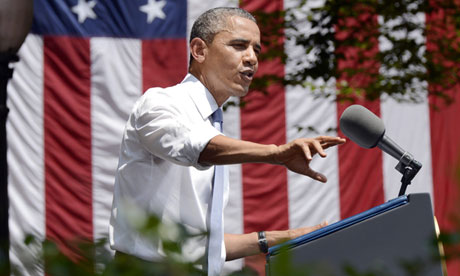
Turkish police break up demonstration in Ankara
Police in Turkey have used water cannon and smoke grenades to disperse hundreds of anti-government demonstrators in the capital, Ankara.
On Tuesday night, several people were injured in the clashes between the protesters and the police in Turkish capital.
Also in Istanbul, thousands of people, who were chanting slogans against the government, marched toward now-iconic Taksim Square to denounce a court decision that freed a police officer accused of killing an anti-government demonstrator in Ankara.
The police surrounded the square and blocked the protesters’ from reaching it.
At least 20 people were detained during the rally.
Meeting in Luxembourg earlier in the day, European Union foreign ministers supported a German proposal to delay the new round of Turkey’s membership negotiations, which had been scheduled to resume on Wednesday.
Germany, Austria and the Netherlands, among other EU member states, blocked the talks in criticism of the government of Turkish Prime Minister Recep Tayyip Erdogan for its handling of the anti-government protests.
The unrest in Turkey began on May 31 after police broke up a sit-in held at Taksim Square to protest against a proposal to redevelop Gezi Park, which is a traditional gathering point for rallies and demonstrations as well as a popular tourist destination.
The demonstrators say the park is also one of Istanbul's last green public spaces.
Four people, including a police officer, have died in the recent clashes between the Turkish protesters and security forces, and more than 5,000 protesters and 600 police officers have been injured.
Russia Can Legally Expel Snowden – White House
 The White House said Tuesday that Russia has a “clear legal basis” to expel former US intelligence contractor Edward Snowden from a Moscow airport transit zone based on the status of his travel documents and criminal charges he faces in the United States for allegedly leaking state secrets.
“While we do not have an extradition treaty with Russia, there is nonetheless a clear legal basis to expel Mr. Snowden, based on the status of his travel documents and the pending charges against him,” White House National Security Council spokeswoman Caitlin Hayden told RIA Novosti on Tuesday.
Hayden’s comments, which came hours after Russian President Vladimir Putin confirmed that Snowden was holed up in a transit area in Moscow’s Sheremetyevo Airport, suggest Washington may be banking in part on bureaucracy to bring an end to the fugitive former CIA employee’s secretive sojourn in the Russian capital.
The United States has issued a warrant for Snowden’s arrest on charges of leaking details of a US surveillance program and cancelled his US passport, which Washington says should prevent him from traveling internationally.
Passengers arriving at Sheremetyevo en route to another country, as Snowden reportedly did on Sunday aboard a flight from Hong Kong, can only stay in the airport’s transit zone for 24 hours without obtaining a transit visa, which can be issued at the airport itself, according to Sheremetyevo’s website.
Julian Assange, founder of the whistleblowing website Wikileaks, said this week that Snowden had been given “a refugee document of passage” by Ecuador, where he has requested asylum.
Douglas McNabb, a Washington-based extradition lawyer, told RIA Novosti on Tuesday that it would be up to a given airline to decide whether to allow Snowden on a plane with the document from Ecuador in lieu of a valid passport.
Putin confirmed Tuesday that Snowden had arrived in Moscow but said that because he remained in the airport’s transit area, he had not formally entered Russian territory and was free to go wherever he pleases. Putin added that Russia could only hand over foreign citizens to countries with which it has extradition treaties.
“We don’t have such a treaty with the United States,” Putin said at a press conference in Finland. “Mr. Snowden has not committed any crimes on the territory of the Russian Federation, thank god.”
Putin said that the quicker Snowden selects a final destination, “the better it will be for us and for him,” adding that he hopes the kerfuffle will not negatively impact relations with Washington, where officials have accused Russia of impeding US attempts to bring Snowden into custody.
Hayden told RIA Novosti on Tuesday that US officials “understand that Russia must consider the issues raised by Mr. Snowden’s decision to travel there” and that they agree with Putin “that we do not want this issue to negatively impact our bilateral relations.”
She said, however, that based on the status of Snowden’s travel documents and the criminal charges against him, “we are asking the Russian Government to take action to expel Mr. Snowden without delay and to build upon the strong law enforcement cooperation we have had, particularly since the Boston Marathon bombing” in April.
Secretary of State John Kerry said Tuesday that the United States is “not looking for a confrontation” with Russia but said US officials hope “Russia would not see its interests in siding with a person who is accused of breaking the law in another nation and who is a fugitive from justice according to international standards of law.”
Speaking in Saudi Arabia, Kerry on Tuesday called for reciprocity in requesting Russia’s assistance in returning Snowden to the United States, saying that US authorities had returned seven individuals to Russia over the past two years “without any clamor, without any rancor, without any argument, and according to our sense of the appropriateness of meeting their request.”
The White House said Tuesday that Russia has a “clear legal basis” to expel former US intelligence contractor Edward Snowden from a Moscow airport transit zone based on the status of his travel documents and criminal charges he faces in the United States for allegedly leaking state secrets.
“While we do not have an extradition treaty with Russia, there is nonetheless a clear legal basis to expel Mr. Snowden, based on the status of his travel documents and the pending charges against him,” White House National Security Council spokeswoman Caitlin Hayden told RIA Novosti on Tuesday.
Hayden’s comments, which came hours after Russian President Vladimir Putin confirmed that Snowden was holed up in a transit area in Moscow’s Sheremetyevo Airport, suggest Washington may be banking in part on bureaucracy to bring an end to the fugitive former CIA employee’s secretive sojourn in the Russian capital.
The United States has issued a warrant for Snowden’s arrest on charges of leaking details of a US surveillance program and cancelled his US passport, which Washington says should prevent him from traveling internationally.
Passengers arriving at Sheremetyevo en route to another country, as Snowden reportedly did on Sunday aboard a flight from Hong Kong, can only stay in the airport’s transit zone for 24 hours without obtaining a transit visa, which can be issued at the airport itself, according to Sheremetyevo’s website.
Julian Assange, founder of the whistleblowing website Wikileaks, said this week that Snowden had been given “a refugee document of passage” by Ecuador, where he has requested asylum.
Douglas McNabb, a Washington-based extradition lawyer, told RIA Novosti on Tuesday that it would be up to a given airline to decide whether to allow Snowden on a plane with the document from Ecuador in lieu of a valid passport.
Putin confirmed Tuesday that Snowden had arrived in Moscow but said that because he remained in the airport’s transit area, he had not formally entered Russian territory and was free to go wherever he pleases. Putin added that Russia could only hand over foreign citizens to countries with which it has extradition treaties.
“We don’t have such a treaty with the United States,” Putin said at a press conference in Finland. “Mr. Snowden has not committed any crimes on the territory of the Russian Federation, thank god.”
Putin said that the quicker Snowden selects a final destination, “the better it will be for us and for him,” adding that he hopes the kerfuffle will not negatively impact relations with Washington, where officials have accused Russia of impeding US attempts to bring Snowden into custody.
Hayden told RIA Novosti on Tuesday that US officials “understand that Russia must consider the issues raised by Mr. Snowden’s decision to travel there” and that they agree with Putin “that we do not want this issue to negatively impact our bilateral relations.”
She said, however, that based on the status of Snowden’s travel documents and the criminal charges against him, “we are asking the Russian Government to take action to expel Mr. Snowden without delay and to build upon the strong law enforcement cooperation we have had, particularly since the Boston Marathon bombing” in April.
Secretary of State John Kerry said Tuesday that the United States is “not looking for a confrontation” with Russia but said US officials hope “Russia would not see its interests in siding with a person who is accused of breaking the law in another nation and who is a fugitive from justice according to international standards of law.”
Speaking in Saudi Arabia, Kerry on Tuesday called for reciprocity in requesting Russia’s assistance in returning Snowden to the United States, saying that US authorities had returned seven individuals to Russia over the past two years “without any clamor, without any rancor, without any argument, and according to our sense of the appropriateness of meeting their request.”
U.S. Supreme Court guts key part of landmark Voting Rights Act
TURKEY: ''Erdoğan becomes Turkey’s new dictator''


Pakistan: Gilani demands judges to be tried with Musharraf
 Former Pakistani premier Yousuf Raza Gilani has demanded that Pakistani judges who endorsed the October 1999 coup, led by former army chief Pervez Musharraf, should also be charged with treason. Gilani, a senior leader of the Pakistan People's Party, made the demand after Prime Minister on Monday announced that his government would put Musharraf on trial for high treason for violating the Constitution twice.
In May 2000, a 12-judge bench of the Supreme Court had unanimously validated the October 1999 coup and granted Musharraf executive and legislative authority for three years.
Supreme Court Chief Justice Iftikhar Chaudhry was one of the members of this bench.
Former Pakistani premier Yousuf Raza Gilani has demanded that Pakistani judges who endorsed the October 1999 coup, led by former army chief Pervez Musharraf, should also be charged with treason. Gilani, a senior leader of the Pakistan People's Party, made the demand after Prime Minister on Monday announced that his government would put Musharraf on trial for high treason for violating the Constitution twice.
In May 2000, a 12-judge bench of the Supreme Court had unanimously validated the October 1999 coup and granted Musharraf executive and legislative authority for three years.
Supreme Court Chief Justice Iftikhar Chaudhry was one of the members of this bench.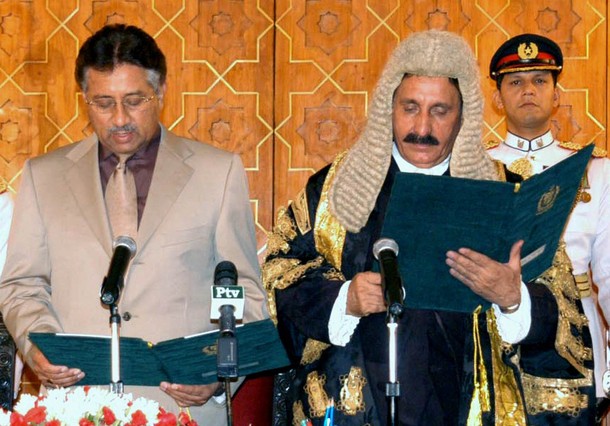
Iran and Israel are similar, after all
http://www.haaretz.com/
 Iran and Israel are more similar than either of their regimes would be willing to admit. They are similar historically, similar in their tension between religious extremism and freedom, similar in their dramatic struggles between the public’s desire for change and the opposition of calcified elements of the regime.
Those who seek to belittle what happened in the Iranian election are trying to hide the sun with their hands. Whatever happens in the future, the fact that a sweeping majority voted for change, and that the regime didn’t play games with the results, is significant. Those who try to claim there’s a formal, deterministic answer to the question of who makes the decisions don’t know what they’re talking about. In the Shas party, Rabbi Ovadia Yosef is formally the one who decides, but in reality, party chairman Aryeh Deri has often been the decision maker. In Israel, the cabinet and the prime and defense ministers are formally the ones who decide whether to go to war, but in reality, when all the heads of the security services are opposed − for instance, to attacking Iran − this matters.
In Iran, too, despite the formal structure, outgoing President Mahmoud Ahmadinejad carried weight, and he and his messianic cult even came close to taking over the entire government. It’s true that Hasan Rowhani’s election as his successor raises the chances of Iran going nuclear, but it delays the process and creates a good chance of a moderating change in the regime.
And we mustn’t get confused: The danger lies in the combination of messianic extremism and nuclear arms. An Islamic state that contains extremist elements, proliferates nuclear know-how and has dozens of nuclear bombs isn’t a future catastrophe, but something that already exists. It’s called Pakistan. And Israel didn’t attack it.
In Israel, too, the public is undergoing a deep process of change. Large-scale public protests dismantled the rightist-religious majority in the last election, despite the divisions among the non-right. And the process didn’t stop there. It’s not by chance that polls show a consistent and growing majority for the non-right among the public.
True, in the meantime, we are being ruled by the most extremist government ever. The statement that another nation − millions of human beings − is nothing but a piece of shrapnel in our behind was not accidental. It’s in line with the search for an “ant exterminator” to take on the port unions and with the brave new world that was created when a majority of first-graders defined as Jewish are studying in segregated religious or Haredi (ultra-Orthodox) schools, in which they are taught that “you are called man, and the other nations of the world aren’t called man.”
Yet this government − which is enacting racist laws, promoting a scandalous segregation of women and even threatening to take over the army and the universities, and thence the work places, all while winking at a “process” that contains no peace − is not a divine decree. Once again, it depends on three people: Hatnuah party chairwoman Tzipi Livni, Yesh Atid chairman Yair Lapid and Labor Party chairwoman Shelly Yacimovich. And especially on the two woman leaders.
If former Prime Minister Yitzhak Rabin’s party would just stop acting like a cult and act like an alternative instead, the government would change just as the public has. Labor must reserve places on its slate for Livni and three other Hatnuah MKs (Amir Peretz, Meir Sheetrit and Amram Mitzna), as well as Kadima chairman Shaul Mofaz, and stop this farce that is enabling a government of Prime Minister Benjamin Netanyahu and Habayit Hayehudi chairman Naftali Bennett.
Without Livni’s gang, Netanyahu has no real government. He has 62 seats with Lapid or 61 with the Haredi parties, but neither is enough to govern. Not when he’ll be dependent, on one hand, on the democratic MK Reuven Rivlin (Likud), and on the other on extremists like MK Moshe Feiglin (Likud) or MK Orit Strock (Habayit Hayehudi), who obeys Rabbi Dov Lior.
Rowhani’s rise to power in Iran gives Israel another year in which to put in place a new government that satisfies the public’s desire for change. Those naive types who delude themselves that, 18 years after he orchestrated protests where demonstrators chanted “With blood and fire, we’ll expel Rabin,” the milk of peace will flow from the he-goat Netanyahu, of all people, aren’t living on this planet. Netanyahu hasn’t given up on attacking Iran; on the contrary. If to accomplish that he has to pretend to conduct a diplomatic process, he may do so, but the idea that he will withdraw Israel to the 1967 lines, leave 140,000 settlers outside Israel’s borders and divide Jerusalem doesn’t even reach the level of a delusion.
The four men now finishing their post-service cooling-off periods − former Israel Defense Forces Chief of Staff Gabi Ashkenazi, former Mossad chief Meir Dagan, former Shin Bet security service chief Yuval Diskin and former head of Military Intelligence Asher Yadlin − will be legally eligible to enter politics in another half a year, and Lapid cannot survive without his base on the non-right. The public is waiting for unification and change. The government of the piece of shrapnel in the behind can go home.
Iran and Israel are more similar than either of their regimes would be willing to admit. They are similar historically, similar in their tension between religious extremism and freedom, similar in their dramatic struggles between the public’s desire for change and the opposition of calcified elements of the regime.
Those who seek to belittle what happened in the Iranian election are trying to hide the sun with their hands. Whatever happens in the future, the fact that a sweeping majority voted for change, and that the regime didn’t play games with the results, is significant. Those who try to claim there’s a formal, deterministic answer to the question of who makes the decisions don’t know what they’re talking about. In the Shas party, Rabbi Ovadia Yosef is formally the one who decides, but in reality, party chairman Aryeh Deri has often been the decision maker. In Israel, the cabinet and the prime and defense ministers are formally the ones who decide whether to go to war, but in reality, when all the heads of the security services are opposed − for instance, to attacking Iran − this matters.
In Iran, too, despite the formal structure, outgoing President Mahmoud Ahmadinejad carried weight, and he and his messianic cult even came close to taking over the entire government. It’s true that Hasan Rowhani’s election as his successor raises the chances of Iran going nuclear, but it delays the process and creates a good chance of a moderating change in the regime.
And we mustn’t get confused: The danger lies in the combination of messianic extremism and nuclear arms. An Islamic state that contains extremist elements, proliferates nuclear know-how and has dozens of nuclear bombs isn’t a future catastrophe, but something that already exists. It’s called Pakistan. And Israel didn’t attack it.
In Israel, too, the public is undergoing a deep process of change. Large-scale public protests dismantled the rightist-religious majority in the last election, despite the divisions among the non-right. And the process didn’t stop there. It’s not by chance that polls show a consistent and growing majority for the non-right among the public.
True, in the meantime, we are being ruled by the most extremist government ever. The statement that another nation − millions of human beings − is nothing but a piece of shrapnel in our behind was not accidental. It’s in line with the search for an “ant exterminator” to take on the port unions and with the brave new world that was created when a majority of first-graders defined as Jewish are studying in segregated religious or Haredi (ultra-Orthodox) schools, in which they are taught that “you are called man, and the other nations of the world aren’t called man.”
Yet this government − which is enacting racist laws, promoting a scandalous segregation of women and even threatening to take over the army and the universities, and thence the work places, all while winking at a “process” that contains no peace − is not a divine decree. Once again, it depends on three people: Hatnuah party chairwoman Tzipi Livni, Yesh Atid chairman Yair Lapid and Labor Party chairwoman Shelly Yacimovich. And especially on the two woman leaders.
If former Prime Minister Yitzhak Rabin’s party would just stop acting like a cult and act like an alternative instead, the government would change just as the public has. Labor must reserve places on its slate for Livni and three other Hatnuah MKs (Amir Peretz, Meir Sheetrit and Amram Mitzna), as well as Kadima chairman Shaul Mofaz, and stop this farce that is enabling a government of Prime Minister Benjamin Netanyahu and Habayit Hayehudi chairman Naftali Bennett.
Without Livni’s gang, Netanyahu has no real government. He has 62 seats with Lapid or 61 with the Haredi parties, but neither is enough to govern. Not when he’ll be dependent, on one hand, on the democratic MK Reuven Rivlin (Likud), and on the other on extremists like MK Moshe Feiglin (Likud) or MK Orit Strock (Habayit Hayehudi), who obeys Rabbi Dov Lior.
Rowhani’s rise to power in Iran gives Israel another year in which to put in place a new government that satisfies the public’s desire for change. Those naive types who delude themselves that, 18 years after he orchestrated protests where demonstrators chanted “With blood and fire, we’ll expel Rabin,” the milk of peace will flow from the he-goat Netanyahu, of all people, aren’t living on this planet. Netanyahu hasn’t given up on attacking Iran; on the contrary. If to accomplish that he has to pretend to conduct a diplomatic process, he may do so, but the idea that he will withdraw Israel to the 1967 lines, leave 140,000 settlers outside Israel’s borders and divide Jerusalem doesn’t even reach the level of a delusion.
The four men now finishing their post-service cooling-off periods − former Israel Defense Forces Chief of Staff Gabi Ashkenazi, former Mossad chief Meir Dagan, former Shin Bet security service chief Yuval Diskin and former head of Military Intelligence Asher Yadlin − will be legally eligible to enter politics in another half a year, and Lapid cannot survive without his base on the non-right. The public is waiting for unification and change. The government of the piece of shrapnel in the behind can go home.
The Importance of President Obama's Africa Trip
http://www.usnews.com/Late this week President Obama embarks on his first official trip solely to Africa. He and his family, along with an entourage of White House staff, at least one Cabinet member, and dozens of security personnel will travel to Senegal, South Africa and Tanzania, returning in time for July 4 festivities in the United States. While the trip will be educational for the President's two daughters, there is a great deal of business to be done by the administration and the president himself. Among the themes for this trip is the need to increase U.S. investment in and trade with Africa. The president has chosen Tanzania as the site for his principal address on this theme. While it would seem that South Africa, with its well-developed infrastructure and economy, as well as being the African base for hundreds of U.S. companies, would be the natural base for this address, Tanzania has been chosen for several reasons, not the least of which is to strengthen regional cooperation and development in Africa. The East Africa Community is the most developed regional economic community, and the one that the U.S. deems has the best chance for early success. The concept of economic integration is one that has been given considerable support verbally throughout Africa, but in reality regional integration has moved very slowly. Business wants economic integration in order to increase market size and justify investments in the region. Consumers want it in order to have access to greater product line and lower costs and local producers want it in order to get products to market easily, more efficiently and to also reach wider markets. Successful integration means road systems that match across borders, rail systems that do not stop at national boundaries and that glide upon the same rail gauges everywhere. Regional integration also means uniform customs duties and a single point of collection. As it now stands, trucks can wait for days at borders waiting to pay customs, and then be stopped throughout the next country to pay several fares, only to begin the process all over again at the next border. All this and more is needed if U.S. companies are to more easily invest in Africa. The U.S. government has moved to support regionalization, and believes that our focus should be on East Africa, because it is the smallest of the economic community units in Africa, yet as a well-developed economic base, particularly in Kenya, and the nearly all the members of the East African Community – Kenya, Tanzania, Rwanda, Burundi and Uganda – have more open societies than many nations in Africa. There are still problems of governance, but the economic base is strong and each has had elections generally deemed fair, albeit to various degrees of imperfection. The current problem between Kenya's president and the United States was part of the reason that Obama's business address and perhaps his articulation of a new economic policy towards Africa will occur in Tanzania rather than Kenya. But it is not the only reason. The U.S. is investing heavily in Tanzania as a democratic model, as well as a major player in Africa's food security. It is also a country where the development of the power supply is led by U.S. companies, especially by Symbion Power and General Electric. Obama will tour the power plant jointly developed by the two companies as part of his emphasis on the need for power generation throughout Africa. Currently, not a single African country is meeting its power needs and until power is readily accessible to all, development and investment will be challenging. In Tanzania, the president will have a closed meeting with about 25 carefully selected American and African CEOs. Following this meeting he is expected to deliver a major address on U.S. business in Africa to a larger group of East African business leaders, including a sizable contingent from Kenya, as well as the other East African Community countries. The president's words will set the tone for our future with the East Africa Community. It will be the most significant statement to Africa made by a U.S. President in East Africa. We can hope that it will form a solid foundation for our future with the region.
Subscribe to:
Posts (Atom)