''Let Us Build Pakistan'' LUBP is currently conducting a series of interviews with Pakistan Peoples Party’s long-time supporters (Jiyalas) and independent political analysts to have their views on the party’s electoral debacle in 2013. The aim of this series is to provide constructive criticism and sincere reflections to the party’s leadership in order to improve the party’s performance as well as perceptions in the future.
Interview with Humza Ikram
Brief introduction: Humza Ikram is a UAE based professional with academic qualifications from Lahore and London. Born into a Jiyala family in Lahore, Humza has served as an editor of the LUBP blog and is a founding member of the PPP Scholars Wing. He has actively supported the PPP through political circles in Lahore and UAE.

LUBP: What is your association with the PPP? Brief history or/and views please?
Humza Ikram: I am a PPP child, i.e., I was born into a pro-PPP family in Lahore.
LUBP: How do you compare PPP with other leading political parties of Pakistan?
Humza Ikram: PPP is very different from the rest of the political parties. PPP has always stood for oppressed and marginalized groups, labour unions, bar councils, fighting back against onslaught of pro-establishment benches and boots. Recently when landless and tenant Punjabi farmers were fighting for their rights, PPP was only party which fought for them.
LUBP: The Shias, Christians and Hindus amongst other numerical minority groups were considered most loyal PPP voting bank. It’s now established that PPP has lost trust and support of these communities due to its apathy, inaction and insensitivity on Shia genocide, and persecution/murder of Christians, Hindus, Ahmadis etc by Jihadist-sectarian groups. To what extent are party’s media and policy advisors responsible for this callous mismanagement?
Humza Ikram: PPP knew Shia community was hurt because of its failure to end systematic target-killing of Shias across Pakistan. The party failed to understand the gravity of their plight. Instead of reaching out to the community which is living in constant fear, the party considered it sufficient to have Shia clergy’s support during elections. Result shows it didn’t work and will not work in future too. Majority of Shia Muslims happen to be liberal, secular leaning and Shia clergy has little influence over their voting preferences.
Similarly, in case of Hindus and Christian communities, instead of empowering the lower middle class by giving election ticket to its own Christian workers the party gave election ticket to an exclusive list prepared by APMA (All Pakistan Minority Alliance).
In contrast, PML-N empowered the Christian lower middle class and also made Kamran Micheal first Christian senator, who comes from a modest background. Similarly, in case of Sindhi Hindus, the party did not empower the Dalit Hindu workers.
LUBP: Both its supporters and critics are unanimous that the PPP leadership has become disconnected from the masses. Kindly elaborate on this and identify the specific reasons for this distancing.
Humza Ikram: I don’t agree in entirety. Pakistan today is facing multiple fault lines. Unlike other parties, PPP never got the time to reach out to the people and had to face most of these problems alone. Even its coalition partners didn’t have so much responsibilities on their shoulder. The party had to face a hostile apex court which was not only after its leadership but was also striking down unanimous constitutional amendments passed by the parliament.
The PPP was left alone by all political parties in crucial times, for instance, the memogate and Kerry Lugar Bill to fight it out with the army. Ironically, all provincial governments including the Islamist Punjab government of PML-N were beneficiaries of the Kerry Lugar Bill and received funds from the USAID afterwards. Later on, when time came for election campaign, TTP (Taliban and their sectarian affiliates) made sure the PPP was deprived of a level playground to campaign for elections. Thus it was made sure that the party remains disconnected from the masses.
Apart from these constraints, another reason is that the PPP is still a party of 1980s. When you see people who were made Senator on PPP ticket and check their background, it is hard to imagine they have really made it to Upper House of the Parliament. Almas Parveen from Lyari Karachi to Surayya Amiruddin from Quetta. Faisal Abidi , Saeed Ghani , Farhatullah Babar, Nayyar Bukhari , Farhat Abbas all of these people come from modest middleclass background. Unfortunately Aslam Gill from Lahore didn’t make it to Upper House due to worst manipulation.
But somehow all these people dont’ fits in the ‘Naya Pakistan’ and sending them to parliament somehow did not give an impression that party has empowered common man. The party should now realize and accept that not targeting millions of new voters was a big mistake. It’s not just an electoral loss the party is currently facing an existential crisis in Punjab and entire Pakistan.
LUBP:
One of the major causes of PPP’s recent electoral debacle was its perceived inability to manage the energy crisis. Why was the PPP unable to communicate its tangible achievements in this regard?
Humza Ikram:
In my personal view, energy crises is not the sole reason of the electoral debacle. In my personal view, recent outcome is much more than an electoral loss. The party may face extinction.
In 1990s, the party lost ground to the rise of Muslim League and Nawaz Sharif in particular but even then we used to get 35- 50,000K votes in many of central Punjab constituencies, and today we got less than 2,000 votes in most of Lahore constituencies. In effect the party has been relegated to number three or even lower position by PML-N and PTI in the Punjab and many other areas.
LUBP :
To what extent has the policy PPP policy of appeasement damaged the party?
Humza Ikram: The policy of appeasement has damaged the party severely and created a lot of confusion in its own ranks. The Party tried to appease almost everyone out there, from mullah to military – and it didn’t stop there they had to bow down to MQM pressure and accept a draft of local bodies for which they had to face of a lot of criticism and rightly so from not only Sindhi nationalist but also Sindhi intelligentsia, writers and civil society . Moreover, indecisiveness has inflicted more damage. For example, it took central leadership more than four years to remove Aslam Raisini, CM Baluchistan. Now one can see good number of ministers of Raisani cabinet (Asim Kurd , Sanaullah Zehri etc) who won their respective seats and probably will be a part of the cabinet of N-league led coalition government of Baluchistan. But we (PPP) do not have a single member in Baluchistan assembly to represent the party.
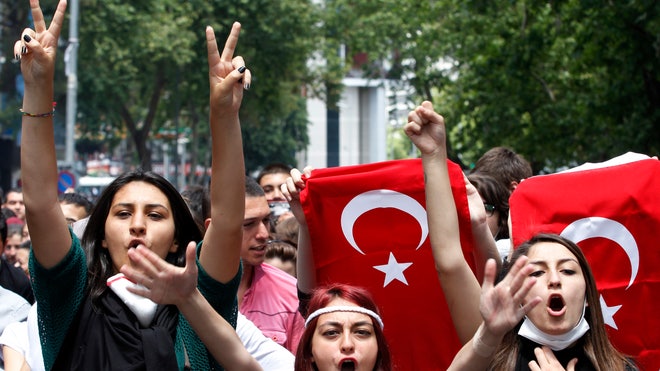
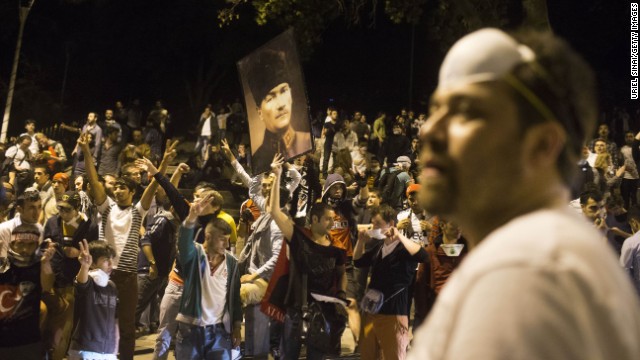
 There is something almost comic in the way the missteps of the Turkish government turned a small demonstration aimed at preserving sycamore trees in Taksim Square from the developers' bulldozers into the biggest and most widespread popular protest ever seen in Turkey. The Turkish security forces made the classic mistake of being pictured on television and social media publicly assaulting peaceable protesters with water cannon and pepper spray. Just enough violence was used to enrage and provoke while wholly failing to intimidate.
There was a time when brutality by the security forces was easier to keep off TV screens by censorship or frightening journalists and media-owners. But these mechanisms no longer work when people have a multitude of TV channels inside and outside the country to choose from. Running documentaries on penguins, as CNN Turkey notoriously did, simply creates a vacuum of information which is rapidly filled by protesters. The government's version of what is happening becomes self-marginalised and is ignored.
It is astonishing that skilled politicians such as the Prime Minister, Recep Tayyip Erdogan, and those around him should make so many mistakes in such a short time. It is easy to why Zine el-Abidine Ben Ali of Tunisia and Hosni Mubarak of Egypt should have miscalculated popular reaction to repression at the start of the Arab uprisings in 2011, because as rulers of police states their approach to public opinion was to ignore it.
But how did Erdogan fall into the same trap? An obvious explanation is simply the arrogance of those who have held power for too long. They ignore advice and demonise and underrate their critics. There is nothing very Turkish in this. The same was true of Margaret Thatcher and Tony Blair who, like Erdogan, had each won three election victories and were facing an electorate that blamed them for anything that went wrong.
The parallel should be between Turkey and Western Europe, not between Turkey and Middle East states. One of the many reasons why foreigners find Turkey so difficult to understand is that they imagine that its politics have similarities with other Muslim states in the region, which are not there. It is true that Turkey has had four military coups since 1960, which vie with anything that happened in Iraq or Argentina for the cruelty of the repression. In the 1980 military coup 450 people died under torture, 50 were executed and many others disappeared. At least 178,000 people were arrested and almost all tortured, while 64,000 were jailed.
This makes Turkish politics sound like Iraq under the Ba'ath Party or Argentina under the junta. But Turkey never ceased to have elections that, unlike in Latin American and Middle Eastern police states, mattered in the distribution of power. Even at the height of military rule, Turkey never wholly ceased to be a democratic state in which powerful parties stood for election and the outcome was not fixed from above as in Mubarak's Egypt or Saddam Hussein's Iraq.
Foreign commentary on the Taksim Square protests over the last week speaks of the competition between "secularism" and "Islam" in Turkey. But in almost all cases it is evident that the writers have not taken on board what these words mean in a Turkish context. "Secularism" in Turkey brings with it the same intensity of belief as a religious cult, attracting at one time the officer class, the professionals, the civil service, the security service and many of the well educated.
But at the heart of Kemal Ataturk's legacy is not secularism, which appealed primarily to the elite, but a super-heated nationalism that had an appeal to all Turkish social classes, though not to all ethnic communities. Hence the great difficulty Erdogan may have in bringing to an end to the 30-year guerrilla war with the Kurds of south-east Turkey despite the ceasefire agreement that was reached in March.
The Taksim Square protests and Turkey's draining entanglement in the Syrian civil war have brought to an end for the moment talk of a resurgent Turkey emulating the old Ottoman empire in terms of influence in the Middle East and even in the Balkans and around the Black Sea. This always seemed to me to exaggerate the political, military and economic strength of Erdogan's Turkey. The idea of "the new Ottomans" carried hidden dangers that Ankara was slow to understand.
First, what was the region where Turkey was going to exercise its enhanced influence? It was primarily among countries such as Lebanon, Syria, Iraq and Iran, notoriously the most dangerous places in the world for interfering foreign states. The US, at the height of its power, suffered two of its biggest defeats here: the overthrow of the Shah in 1979 and its calamitous occupation of Iraq in 2003-11. But now Turkey was confidently lurching into the same quagmire in the expectation of swift enhancement of its influence.
There is not much talk of "the new Ottomans" these days. Erdogan's gamble that Bashar al-Assad and his government would swiftly collapse has not paid off. Instead Turkey has a raging war beginning to spill across its 500-mile southern frontier with Syria. Syrian leaders have been enjoying themselves by applying Erdogan's criticisms of the Syrian regime to Turkey and demanding that he resign. Turkey has ended up acting as proxy for the US in Syria, something that is highly unpopular in Turkey.
Erdogan may feel good about his easy access to the White House, but he has made some serious enemies in Tehran and Damascus. There is no reason to suppose that they have anything to do with the current protests, but Turkey will have difficulty reaching an accommodation with its own Kurds and the Kurds in Iraq in the face of Iranian opposition.
Turkey is peculiarly ill equipped to get entangled in sectarian and ethnic conflicts now exploding in Syria and Iraq. It has been unable to resolve its own Kurdish issue at home and is unlikely to be able to deal with inter-ethnic and sectarian conflicts abroad. It may not have started out intending to be part of a Sunni Muslim offensive against the Shia or allied to the Sunni monarchs of the Gulf, but it has ended up that way. Its wooing of the Iraqi Kurds and their oil and gas will be forcefully opposed by the Shia in Baghdad and Tehran.
Erdogan's mistakes in dealing with the Taksim Square protests and the failures of Turkish foreign policy are not irretrievable ones. But the weaknesses of the Turkish state and the depth of the political divisions within Turkey are becoming more apparent. The demonstrations are also highlighting failings that had previously been masked by Turkey's economic success at a time when much of Europe is mired in recession. Such impressions are important because the flow of foreign capital into Turkey depends on a sense that the country is stable compared to its neighbours.
Nightly riots in western Turkey, bombs exploding in the south of the country and the possibility of renewed Kurdish unrest in the east is sapping the belief inside and outside Turkey that the country is still one of the world's success stories.
There is something almost comic in the way the missteps of the Turkish government turned a small demonstration aimed at preserving sycamore trees in Taksim Square from the developers' bulldozers into the biggest and most widespread popular protest ever seen in Turkey. The Turkish security forces made the classic mistake of being pictured on television and social media publicly assaulting peaceable protesters with water cannon and pepper spray. Just enough violence was used to enrage and provoke while wholly failing to intimidate.
There was a time when brutality by the security forces was easier to keep off TV screens by censorship or frightening journalists and media-owners. But these mechanisms no longer work when people have a multitude of TV channels inside and outside the country to choose from. Running documentaries on penguins, as CNN Turkey notoriously did, simply creates a vacuum of information which is rapidly filled by protesters. The government's version of what is happening becomes self-marginalised and is ignored.
It is astonishing that skilled politicians such as the Prime Minister, Recep Tayyip Erdogan, and those around him should make so many mistakes in such a short time. It is easy to why Zine el-Abidine Ben Ali of Tunisia and Hosni Mubarak of Egypt should have miscalculated popular reaction to repression at the start of the Arab uprisings in 2011, because as rulers of police states their approach to public opinion was to ignore it.
But how did Erdogan fall into the same trap? An obvious explanation is simply the arrogance of those who have held power for too long. They ignore advice and demonise and underrate their critics. There is nothing very Turkish in this. The same was true of Margaret Thatcher and Tony Blair who, like Erdogan, had each won three election victories and were facing an electorate that blamed them for anything that went wrong.
The parallel should be between Turkey and Western Europe, not between Turkey and Middle East states. One of the many reasons why foreigners find Turkey so difficult to understand is that they imagine that its politics have similarities with other Muslim states in the region, which are not there. It is true that Turkey has had four military coups since 1960, which vie with anything that happened in Iraq or Argentina for the cruelty of the repression. In the 1980 military coup 450 people died under torture, 50 were executed and many others disappeared. At least 178,000 people were arrested and almost all tortured, while 64,000 were jailed.
This makes Turkish politics sound like Iraq under the Ba'ath Party or Argentina under the junta. But Turkey never ceased to have elections that, unlike in Latin American and Middle Eastern police states, mattered in the distribution of power. Even at the height of military rule, Turkey never wholly ceased to be a democratic state in which powerful parties stood for election and the outcome was not fixed from above as in Mubarak's Egypt or Saddam Hussein's Iraq.
Foreign commentary on the Taksim Square protests over the last week speaks of the competition between "secularism" and "Islam" in Turkey. But in almost all cases it is evident that the writers have not taken on board what these words mean in a Turkish context. "Secularism" in Turkey brings with it the same intensity of belief as a religious cult, attracting at one time the officer class, the professionals, the civil service, the security service and many of the well educated.
But at the heart of Kemal Ataturk's legacy is not secularism, which appealed primarily to the elite, but a super-heated nationalism that had an appeal to all Turkish social classes, though not to all ethnic communities. Hence the great difficulty Erdogan may have in bringing to an end to the 30-year guerrilla war with the Kurds of south-east Turkey despite the ceasefire agreement that was reached in March.
The Taksim Square protests and Turkey's draining entanglement in the Syrian civil war have brought to an end for the moment talk of a resurgent Turkey emulating the old Ottoman empire in terms of influence in the Middle East and even in the Balkans and around the Black Sea. This always seemed to me to exaggerate the political, military and economic strength of Erdogan's Turkey. The idea of "the new Ottomans" carried hidden dangers that Ankara was slow to understand.
First, what was the region where Turkey was going to exercise its enhanced influence? It was primarily among countries such as Lebanon, Syria, Iraq and Iran, notoriously the most dangerous places in the world for interfering foreign states. The US, at the height of its power, suffered two of its biggest defeats here: the overthrow of the Shah in 1979 and its calamitous occupation of Iraq in 2003-11. But now Turkey was confidently lurching into the same quagmire in the expectation of swift enhancement of its influence.
There is not much talk of "the new Ottomans" these days. Erdogan's gamble that Bashar al-Assad and his government would swiftly collapse has not paid off. Instead Turkey has a raging war beginning to spill across its 500-mile southern frontier with Syria. Syrian leaders have been enjoying themselves by applying Erdogan's criticisms of the Syrian regime to Turkey and demanding that he resign. Turkey has ended up acting as proxy for the US in Syria, something that is highly unpopular in Turkey.
Erdogan may feel good about his easy access to the White House, but he has made some serious enemies in Tehran and Damascus. There is no reason to suppose that they have anything to do with the current protests, but Turkey will have difficulty reaching an accommodation with its own Kurds and the Kurds in Iraq in the face of Iranian opposition.
Turkey is peculiarly ill equipped to get entangled in sectarian and ethnic conflicts now exploding in Syria and Iraq. It has been unable to resolve its own Kurdish issue at home and is unlikely to be able to deal with inter-ethnic and sectarian conflicts abroad. It may not have started out intending to be part of a Sunni Muslim offensive against the Shia or allied to the Sunni monarchs of the Gulf, but it has ended up that way. Its wooing of the Iraqi Kurds and their oil and gas will be forcefully opposed by the Shia in Baghdad and Tehran.
Erdogan's mistakes in dealing with the Taksim Square protests and the failures of Turkish foreign policy are not irretrievable ones. But the weaknesses of the Turkish state and the depth of the political divisions within Turkey are becoming more apparent. The demonstrations are also highlighting failings that had previously been masked by Turkey's economic success at a time when much of Europe is mired in recession. Such impressions are important because the flow of foreign capital into Turkey depends on a sense that the country is stable compared to its neighbours.
Nightly riots in western Turkey, bombs exploding in the south of the country and the possibility of renewed Kurdish unrest in the east is sapping the belief inside and outside Turkey that the country is still one of the world's success stories.