 Turkish pianist Fazil Say received a suspended 10-month jail term on Monday for mocking Islam on Twitter. Secular Turks have become increasingly concerned over what they see as the creeping Islamization of society.
"Honestly, we were not expecting this ruling, and all I can say is, both legally and for the country, it's a sad decision," Say's lawyer Meltem Akyol told Reuters.
The blasphemy charges were brought against Say in June last year. In their suit, prosecutors cited several sarcastic messages about believers and Islamic concepts of Heaven. The musician, who has served as a cultural ambassador to the European Union, denied the accusations.
RT’s Maria Finoshina reported from Turkey how residents are concerned by the growing dominance of Islamic values: Censorship is imposed on TV shows, museums are turned into mosques, and attempts are even being made to introduce Ottoman-style uniforms for flight attendants.
Turkish women fear their rights are being infringed even though they are seemingly free to wear and do what they want.
“The reformed education system is split into three parts of four years each, the result - thousands of girls leave school before the end, encouraging young marriages. The state promotes having at least five kids. Only three out of ten women today go to work. It’s far from a democratic model of society,” says Şenal Sarihan, the head of the group Women of the Republic.
The Turkish opposition speaks of a dangerous tendency: nine decades after Turkey broke with the Islamic rule of the Ottoman Empire in favor of an anti-clerical, pro-Western vision, the ideas and values that were rejected appear to some to be making a comeback.
“We are very concerned because Turkey is a secular democracy. But Islam has become the only reference. It says what to do, what to wear, what to eat, what not to eat,” Faruk Logoglu, CHP party vice-chairman said.
Turkey under Erdogan has made impressive progress. Its economy is booming and its role in the region and internationally, is increasing. Now, the secular part of the Turkish society is worried all of that could be harmed by Turkey getting ultra-religious and going the Ottoman empire way.
Turkish pianist Fazil Say received a suspended 10-month jail term on Monday for mocking Islam on Twitter. Secular Turks have become increasingly concerned over what they see as the creeping Islamization of society.
"Honestly, we were not expecting this ruling, and all I can say is, both legally and for the country, it's a sad decision," Say's lawyer Meltem Akyol told Reuters.
The blasphemy charges were brought against Say in June last year. In their suit, prosecutors cited several sarcastic messages about believers and Islamic concepts of Heaven. The musician, who has served as a cultural ambassador to the European Union, denied the accusations.
RT’s Maria Finoshina reported from Turkey how residents are concerned by the growing dominance of Islamic values: Censorship is imposed on TV shows, museums are turned into mosques, and attempts are even being made to introduce Ottoman-style uniforms for flight attendants.
Turkish women fear their rights are being infringed even though they are seemingly free to wear and do what they want.
“The reformed education system is split into three parts of four years each, the result - thousands of girls leave school before the end, encouraging young marriages. The state promotes having at least five kids. Only three out of ten women today go to work. It’s far from a democratic model of society,” says Şenal Sarihan, the head of the group Women of the Republic.
The Turkish opposition speaks of a dangerous tendency: nine decades after Turkey broke with the Islamic rule of the Ottoman Empire in favor of an anti-clerical, pro-Western vision, the ideas and values that were rejected appear to some to be making a comeback.
“We are very concerned because Turkey is a secular democracy. But Islam has become the only reference. It says what to do, what to wear, what to eat, what not to eat,” Faruk Logoglu, CHP party vice-chairman said.
Turkey under Erdogan has made impressive progress. Its economy is booming and its role in the region and internationally, is increasing. Now, the secular part of the Turkish society is worried all of that could be harmed by Turkey getting ultra-religious and going the Ottoman empire way.
Saturday, June 1, 2013
Turkey fears of Islamic challenge to secular state
Turkish pianist Fazil Say received a suspended 10-month jail term on Monday for mocking Islam on Twitter. Secular Turks have become increasingly concerned over what they see as the creeping Islamization of society.
"Honestly, we were not expecting this ruling, and all I can say is, both legally and for the country, it's a sad decision," Say's lawyer Meltem Akyol told Reuters.
The blasphemy charges were brought against Say in June last year. In their suit, prosecutors cited several sarcastic messages about believers and Islamic concepts of Heaven. The musician, who has served as a cultural ambassador to the European Union, denied the accusations.
RT’s Maria Finoshina reported from Turkey how residents are concerned by the growing dominance of Islamic values: Censorship is imposed on TV shows, museums are turned into mosques, and attempts are even being made to introduce Ottoman-style uniforms for flight attendants.
Turkish women fear their rights are being infringed even though they are seemingly free to wear and do what they want.
“The reformed education system is split into three parts of four years each, the result - thousands of girls leave school before the end, encouraging young marriages. The state promotes having at least five kids. Only three out of ten women today go to work. It’s far from a democratic model of society,” says Şenal Sarihan, the head of the group Women of the Republic.
The Turkish opposition speaks of a dangerous tendency: nine decades after Turkey broke with the Islamic rule of the Ottoman Empire in favor of an anti-clerical, pro-Western vision, the ideas and values that were rejected appear to some to be making a comeback.
“We are very concerned because Turkey is a secular democracy. But Islam has become the only reference. It says what to do, what to wear, what to eat, what not to eat,” Faruk Logoglu, CHP party vice-chairman said.
Turkey under Erdogan has made impressive progress. Its economy is booming and its role in the region and internationally, is increasing. Now, the secular part of the Turkish society is worried all of that could be harmed by Turkey getting ultra-religious and going the Ottoman empire way.
Bombs, boredom threaten Pakistan's "Pashto" song-and-dance cinema
 A projectionist lies asleep in the sweltering Pakistani heat, his face covered by a cloth. A colleague rewinds a reel manually while on screen, through the hashish smoke, a woman bounces on a bed singing "hello, hello, hello" into a cellphone.
To this, her would-be lover, who is in another room and is old and apparently drunk, sings "hello, hello, hello" back to her while splashing his head and shoulders with aftershave.
Then the two of them, both fully clothed, sing it again.
Welcome to the strangely innocent and overwhelmingly seedy world of Pashto cinema, or Pollywood, which once made its home in Pakistan's wild frontier town of Peshawar, but is now confined to a handful of theatres that haven't been attacked by Islamists.
A projectionist lies asleep in the sweltering Pakistani heat, his face covered by a cloth. A colleague rewinds a reel manually while on screen, through the hashish smoke, a woman bounces on a bed singing "hello, hello, hello" into a cellphone.
To this, her would-be lover, who is in another room and is old and apparently drunk, sings "hello, hello, hello" back to her while splashing his head and shoulders with aftershave.
Then the two of them, both fully clothed, sing it again.
Welcome to the strangely innocent and overwhelmingly seedy world of Pashto cinema, or Pollywood, which once made its home in Pakistan's wild frontier town of Peshawar, but is now confined to a handful of theatres that haven't been attacked by Islamists.
 The Taliban banned cinema and music during their five-year rule in neighboring Afghanistan, deeming them un-Islamic, and insisted that women wear all-enveloping burqas.
The Pakistani Taliban are just as strict and in Pashto cinema, where there is no sex or even kissing and only a bit of midriff on show, all their rules are broken. Several cinemas have been attacked, three of them either bombed or burnt to the ground. Bombs have also gone off outside the cinemas.
But even some of those who hate the Taliban are scornful and the industry has been fading over the decades as India's higher-quality Bollywood movies have flourished.
"It's been known for families (in the largely ethnic Pashtun northwestern province of Khyber Pakhtunkhwa) to kill a daughter who becomes a singer in the movies," one resident of Peshawar said. "People love the songs, but not the singers."
The films, now mostly made in Lahore, capital of Punjab province, are crudely made stories with love, valour and Pashtun identity at their core. They feature middle-aged, heavily armed heroes with long moustaches wooing much younger women who, when not bouncing fully dressed on beds, sing a lot in the hills of northwest Pakistan.
Some say the vulgarity has been introduced by Punjabi film makers desperate to fill cinemas. And some theatres slip in blue movies between shows.
The macho interest of Pashto films is addressed with guns, swords, knives and bloodshed. In the posters advertising the films, the wild-eyed men are often pictured smoking three cigarettes at once, with one behind the ear for good measure.
FIRE EXTINGUISHERS AT THE READY
Peshawar's Arshad Cinema, complete with private boxes, is grim and dark, with dirty stone steps, crumbling walls and bare wires hanging from the ceilings. Opposite is a brand new medical centre, eight storeys high and built on the site of another Pashto cinema which was destroyed.
The projectors are decades old and noisy. At the foot of one was a can of oil and three fire extinguishers near at hand. The picture itself was out of focus and the soundtrack painfully distorted.
"People like Pashto films because they are based on stories about society," Arshad manager Khalid Khan said.
"But when there are stories in the media saying there are four or five suicide bombers in Peshawar, no one comes to the cinema. And we are suffering losses."
But another reason for the losses is the repetitive story lines and vulgarity, though by western standards, the films are too soft and restrained to be considered pornography.
"The films we used to watch in cinemas were based on stories and real issues," said Safdar Khan, 70. "But going to the cinema is considered a shame or bad thing today due to the obscenity."
Scriptwriter Nazir Bhati believes Pashto movies are on their way out because they are so monotonous.
"I gave up my job when a producer asked me to include vulgar bits," he told a newspaper.
Peshawar is the capital of Khyber Pakhtunkhwa, formerly Northwest Frontier Province. Once a majestic walled city, a centre of culture, trade, architecture and education, Peshawar is now hectic, congested and plagued by violence.
It has witnessed dozens of bomb attacks in recent years, either launched by the Pakistani Taliban seeking to bring down the government or the result of sectarian violence.
But it remains a centre of Pashtun culture which celebrates the reputation of fearless warriors, the heroes of the films, even if overweight and apparently the wrong side of 60.
The men in the pitch-black auditorium lounge around in their seats, smoking cigarettes and more powerful substances and cheering the good bits. But for an outsider, it's difficult to tell which bits are good.
"The projectors are old," Arshad manager Khan said. "And there is so much smoke. So the quality is bad."
The Taliban banned cinema and music during their five-year rule in neighboring Afghanistan, deeming them un-Islamic, and insisted that women wear all-enveloping burqas.
The Pakistani Taliban are just as strict and in Pashto cinema, where there is no sex or even kissing and only a bit of midriff on show, all their rules are broken. Several cinemas have been attacked, three of them either bombed or burnt to the ground. Bombs have also gone off outside the cinemas.
But even some of those who hate the Taliban are scornful and the industry has been fading over the decades as India's higher-quality Bollywood movies have flourished.
"It's been known for families (in the largely ethnic Pashtun northwestern province of Khyber Pakhtunkhwa) to kill a daughter who becomes a singer in the movies," one resident of Peshawar said. "People love the songs, but not the singers."
The films, now mostly made in Lahore, capital of Punjab province, are crudely made stories with love, valour and Pashtun identity at their core. They feature middle-aged, heavily armed heroes with long moustaches wooing much younger women who, when not bouncing fully dressed on beds, sing a lot in the hills of northwest Pakistan.
Some say the vulgarity has been introduced by Punjabi film makers desperate to fill cinemas. And some theatres slip in blue movies between shows.
The macho interest of Pashto films is addressed with guns, swords, knives and bloodshed. In the posters advertising the films, the wild-eyed men are often pictured smoking three cigarettes at once, with one behind the ear for good measure.
FIRE EXTINGUISHERS AT THE READY
Peshawar's Arshad Cinema, complete with private boxes, is grim and dark, with dirty stone steps, crumbling walls and bare wires hanging from the ceilings. Opposite is a brand new medical centre, eight storeys high and built on the site of another Pashto cinema which was destroyed.
The projectors are decades old and noisy. At the foot of one was a can of oil and three fire extinguishers near at hand. The picture itself was out of focus and the soundtrack painfully distorted.
"People like Pashto films because they are based on stories about society," Arshad manager Khalid Khan said.
"But when there are stories in the media saying there are four or five suicide bombers in Peshawar, no one comes to the cinema. And we are suffering losses."
But another reason for the losses is the repetitive story lines and vulgarity, though by western standards, the films are too soft and restrained to be considered pornography.
"The films we used to watch in cinemas were based on stories and real issues," said Safdar Khan, 70. "But going to the cinema is considered a shame or bad thing today due to the obscenity."
Scriptwriter Nazir Bhati believes Pashto movies are on their way out because they are so monotonous.
"I gave up my job when a producer asked me to include vulgar bits," he told a newspaper.
Peshawar is the capital of Khyber Pakhtunkhwa, formerly Northwest Frontier Province. Once a majestic walled city, a centre of culture, trade, architecture and education, Peshawar is now hectic, congested and plagued by violence.
It has witnessed dozens of bomb attacks in recent years, either launched by the Pakistani Taliban seeking to bring down the government or the result of sectarian violence.
But it remains a centre of Pashtun culture which celebrates the reputation of fearless warriors, the heroes of the films, even if overweight and apparently the wrong side of 60.
The men in the pitch-black auditorium lounge around in their seats, smoking cigarettes and more powerful substances and cheering the good bits. But for an outsider, it's difficult to tell which bits are good.
"The projectors are old," Arshad manager Khan said. "And there is so much smoke. So the quality is bad."
Syria slams Erdogan for violence against protesters
Syria gleefully turned the tables on Turkish Prime Minister Tayyip Erdogan on Saturday over his response to anti-government demonstrations, calling on him to halt the violent repression of peaceful protests or resign.Syrian state television broadcast hours of live footage from Istanbul, where thousands of protesters clashed for a second day with riot police who fired teargas and water cannons.
The unrest was triggered by government plans for a building complex in Istanbul s Taksim Square, long a venue for political protest, but widened into a show of defiance against Erdogan and his Islamist-rooted Justice and Development Party (AKP).
"The demands of the Turkish people don t deserve all this violence," Syrian television quoted Information Minister Omran Zoabi as saying. "If Erdogan is unable to pursue non-violent means, he should resign."
"Erdogan s repression of peaceful protest ... shows how detached he is from reality."
TURKEY POLICE BRUTALITY: Prostesters remain defiant on 5th day, despite police brutality on Istanbul's iconic İstiklal Avenue

 The Turkish police's crackdown targeting the demonstrators protesting the demolition of Taksim Gezi Park continued on June 1, as clashes broke out in Istanbul's symbolic Istiklal Avenue and the Beşiktaş district on the European side of the city.
Security forces used tear gas and water cannons this morning to quell protesters who had gathered on İstiklal Avenue, as well as its sidestreets. When the police fired the water and gas, protesters tried to escape from the narrow streets leading to the Cihangir neighborhood.
The Turkish police's crackdown targeting the demonstrators protesting the demolition of Taksim Gezi Park continued on June 1, as clashes broke out in Istanbul's symbolic Istiklal Avenue and the Beşiktaş district on the European side of the city.
Security forces used tear gas and water cannons this morning to quell protesters who had gathered on İstiklal Avenue, as well as its sidestreets. When the police fired the water and gas, protesters tried to escape from the narrow streets leading to the Cihangir neighborhood.
 Between 4,000 and 5,000 protesters gathered again after the police's first intervention. However police fired once again, entering the pedestrian street with a water cannon riot vehicle. Some protesters made barricades with trees and bins about 100 meters from Saint Anthony's Church, near Galatasaray Square. Around an hour later the police destroyed the barricade and protesters escaped into sidestreets.
Despite the repeated police interventions, the numbers gathered at the protests only increased. Protesters chanted slogans against the ruling Justice and Development Party (AKP) and Prime Minister Recep Tayyip Erdoğan, calling on the government to resign.Most shops did not open after the violence of the previous day, and one of the busiest streets of Istanbul looked completely paralyzed on a Saturday.
Between 4,000 and 5,000 protesters gathered again after the police's first intervention. However police fired once again, entering the pedestrian street with a water cannon riot vehicle. Some protesters made barricades with trees and bins about 100 meters from Saint Anthony's Church, near Galatasaray Square. Around an hour later the police destroyed the barricade and protesters escaped into sidestreets.
Despite the repeated police interventions, the numbers gathered at the protests only increased. Protesters chanted slogans against the ruling Justice and Development Party (AKP) and Prime Minister Recep Tayyip Erdoğan, calling on the government to resign.Most shops did not open after the violence of the previous day, and one of the busiest streets of Istanbul looked completely paralyzed on a Saturday.
 Crowds also crossed the Bosphorus Bridge to the European side in the early morning hours of June 1, seeking to reach Taksim Square. However, their route was blocked by police who again fired tear gas and water cannon near the Beşiktaş district.
The heart of Istanbul's entertainment area had turned into a battlefield during the late hours of May 31, as security forces staged a merciless crackdown on peaceful protesters who were gathered to denounce the brutal dawn raid against demonstrators occupying Gezi Park. Major connections leading to Taksim - Sıraselviler, Tarlabaşı, Harbiye and Beşiktaş - as well as İstiklal Avenue were all blocked by the riot police, who fired tear gas without making any distinction between protesters and locals. Two choppers were also circling the skies in the area, while ambulances continuously brought new patients to the hospitals. Dozens of protestors were reported injured by witnesses. Several hotels around the Taksim area provided support to the injured or those who suffered respiratory problems due to tear gas.
Crowds also crossed the Bosphorus Bridge to the European side in the early morning hours of June 1, seeking to reach Taksim Square. However, their route was blocked by police who again fired tear gas and water cannon near the Beşiktaş district.
The heart of Istanbul's entertainment area had turned into a battlefield during the late hours of May 31, as security forces staged a merciless crackdown on peaceful protesters who were gathered to denounce the brutal dawn raid against demonstrators occupying Gezi Park. Major connections leading to Taksim - Sıraselviler, Tarlabaşı, Harbiye and Beşiktaş - as well as İstiklal Avenue were all blocked by the riot police, who fired tear gas without making any distinction between protesters and locals. Two choppers were also circling the skies in the area, while ambulances continuously brought new patients to the hospitals. Dozens of protestors were reported injured by witnesses. Several hotels around the Taksim area provided support to the injured or those who suffered respiratory problems due to tear gas. The number of protesters in Istanbul taken into custody has grown to 138 on June 1, police have said.
Some residents in the area banged pots and pans from their homes to protest the government over the crackdown and express support for the protesters in the streets.
The number of protesters in Istanbul taken into custody has grown to 138 on June 1, police have said.
Some residents in the area banged pots and pans from their homes to protest the government over the crackdown and express support for the protesters in the streets. Meanwhile İbrahim Kalın, the adviser to Prime Minister Recep Tayyip Erdoğan, said in his twitter account today that İstanbul Mayor Kadir Topbaş and representatives from Taksim Gazi Park Platform and the Chamber of Architects would meet today and discuss a joint-solution.
Main opposition Republican People's Party (CHP) leader Kemal Kılıçdaroğlu said Turkey does not want to experience the Germany of 40's in 2013, while responding to journalists in Ankara, before moving to Istanbul for a scheduled public meeting in Istanbul's Kadıköy today.
Meanwhile İbrahim Kalın, the adviser to Prime Minister Recep Tayyip Erdoğan, said in his twitter account today that İstanbul Mayor Kadir Topbaş and representatives from Taksim Gazi Park Platform and the Chamber of Architects would meet today and discuss a joint-solution.
Main opposition Republican People's Party (CHP) leader Kemal Kılıçdaroğlu said Turkey does not want to experience the Germany of 40's in 2013, while responding to journalists in Ankara, before moving to Istanbul for a scheduled public meeting in Istanbul's Kadıköy today. 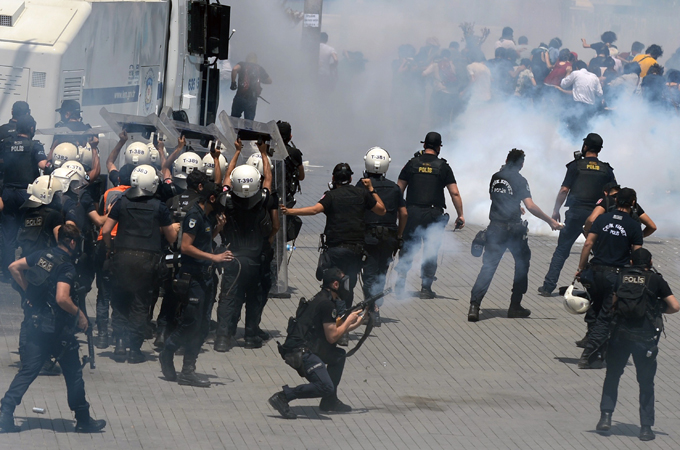 The CHP's Istanbul meeting will start at 4 p.m. Today and is expected to net a large crowd upon the party's call last week.
The protesters, who started their mobilization to raise awareness on the demolition of one of the city's last remaining green areas, started chanting for the resignation of the Turkish Prime Minister Recep Tayyip Erdoğan following the police's relentless tear gas campaign.
Twelve protesters were injured during the morning raid, according to the Istanbul's Governor's Office. However, witnesses’ accounts put the number much higher.
The CHP's Istanbul meeting will start at 4 p.m. Today and is expected to net a large crowd upon the party's call last week.
The protesters, who started their mobilization to raise awareness on the demolition of one of the city's last remaining green areas, started chanting for the resignation of the Turkish Prime Minister Recep Tayyip Erdoğan following the police's relentless tear gas campaign.
Twelve protesters were injured during the morning raid, according to the Istanbul's Governor's Office. However, witnesses’ accounts put the number much higher.
Peshawar: Anti-polio drive to resume on June 10 amid tight security
 After an intensified security plan has been chalked out for protection of teams, the authorities on Friday decided to resume the anti-polio campaign in Peshawar and other parts of Khyber Pakhtunkhwa on June 10.
The security plan was finalised at a high-level meeting of the security and Health Department officials with Peshawar Commissioner Sahibzada Mohammad Anis in the chair. At least 700,000 children under five years of age will be administered drops by the volunteers of 2000 teams that will be properly guarded by the police. Sahibzada Mohammad Anis said the volunteers would be provided adequate security during the campaign.
The anti-polio vaccination campaign was suspended on May 28 after a female volunteer Sharafata, 18, was killed and another volunteer, Sumbul, 20, was wounded when armed men attacked the team in Kaga Wala village on the outskirts of Peshawar. Sumbul is still being treated at the Lady Reading Hospital since she suffered two bullet wounds on her upper body.
The women were not being guarded by the police as promised by the government after a number of attacks on anti-polio vaccination teams during the last couple of months. The local police said the volunteers in the area had refused police security, saying it can cause more threat to the teams.
After the attack, the police launched a search operation in the area, during which 14 suspects were rounded up. A police sub-inspector Salim Khan suffered heart attack during the search operation and died.
These volunteers are hardly paid Rs500 per day for putting their lives in danger to fight the menace of polio all over the country. The anti-polio campaign had to be suspended on a number of occasions in the past due to the attacks in Peshawar, Karachi, Charsadda, Nowshera, Mardan and other parts of the country. Only male volunteers are carrying out the anti-polio vaccination campaign in many tribal areas due to the threats.
In December, at least eight anti-polio volunteers were killed and a few wounded in coordinated attacks on two consecutive days in Karachi, Peshawar, Nowshera and Charsadda, after which the authorities had to suspend the drive all over the country.
The killing spree started from Karachi on December 17, 2012 when five volunteers were killed while another woman was shot dead and her co-worker wounded in Peshawar. This was followed by killing of two more volunteers in attacks in Peshawar, Charsadda and Nowshera the very next day as authorities had decided to continue the campaign. The killings on the second consecutive day, however, led to suspension of the drive to avoid more casualties.
A proper security was ordered for the polio teams all over the country and it was decided to carry out the campaigns without much publicity. However, the killings of the volunteers as well as the cops guarding the teams continued. A cop was shot dead and another wounded in Mardan while another policeman was killed in Swabi while guarding the polio vaccinators in their respective areas in the past months.
After an intensified security plan has been chalked out for protection of teams, the authorities on Friday decided to resume the anti-polio campaign in Peshawar and other parts of Khyber Pakhtunkhwa on June 10.
The security plan was finalised at a high-level meeting of the security and Health Department officials with Peshawar Commissioner Sahibzada Mohammad Anis in the chair. At least 700,000 children under five years of age will be administered drops by the volunteers of 2000 teams that will be properly guarded by the police. Sahibzada Mohammad Anis said the volunteers would be provided adequate security during the campaign.
The anti-polio vaccination campaign was suspended on May 28 after a female volunteer Sharafata, 18, was killed and another volunteer, Sumbul, 20, was wounded when armed men attacked the team in Kaga Wala village on the outskirts of Peshawar. Sumbul is still being treated at the Lady Reading Hospital since she suffered two bullet wounds on her upper body.
The women were not being guarded by the police as promised by the government after a number of attacks on anti-polio vaccination teams during the last couple of months. The local police said the volunteers in the area had refused police security, saying it can cause more threat to the teams.
After the attack, the police launched a search operation in the area, during which 14 suspects were rounded up. A police sub-inspector Salim Khan suffered heart attack during the search operation and died.
These volunteers are hardly paid Rs500 per day for putting their lives in danger to fight the menace of polio all over the country. The anti-polio campaign had to be suspended on a number of occasions in the past due to the attacks in Peshawar, Karachi, Charsadda, Nowshera, Mardan and other parts of the country. Only male volunteers are carrying out the anti-polio vaccination campaign in many tribal areas due to the threats.
In December, at least eight anti-polio volunteers were killed and a few wounded in coordinated attacks on two consecutive days in Karachi, Peshawar, Nowshera and Charsadda, after which the authorities had to suspend the drive all over the country.
The killing spree started from Karachi on December 17, 2012 when five volunteers were killed while another woman was shot dead and her co-worker wounded in Peshawar. This was followed by killing of two more volunteers in attacks in Peshawar, Charsadda and Nowshera the very next day as authorities had decided to continue the campaign. The killings on the second consecutive day, however, led to suspension of the drive to avoid more casualties.
A proper security was ordered for the polio teams all over the country and it was decided to carry out the campaigns without much publicity. However, the killings of the volunteers as well as the cops guarding the teams continued. A cop was shot dead and another wounded in Mardan while another policeman was killed in Swabi while guarding the polio vaccinators in their respective areas in the past months.
Pakistan: Forgotten orphan
http://www.thefrontierpost.com/Even at the best of times, this orphan goes largely ignored and forgotten. And it is hardly surprising if the state-run schooling is not even distantly in view on any radar at this point in time when the polity across the spectrum is so obsessively preoccupied with the election aftermath. But the worry is that there is no sign if the poor thing state-run schooling will come to the focus when the nation is through with the pleasures and pangs of the poll and the governments settle down on their thrones. No doubt, this time round various political parties and groups had spoken of education a bit more elaborately in their manifestoes. But that talk was mostly on trite, familiar lines. State-run schooling, as such, hardly received any much mention from any of them. And this is quite disturbing, to say the least. For, nobody can dispute that state-run schooling makes up the key part of the country's educational pyramid. It indisputably stands unrivalled as far as its reach goes. It is the country's biggest and largest network for the schooling of the nation's children, and arguably the only opening available to the rural folks in our sprawling countryside to send their offspring for mainstream education. Appallingly, despite its position of primacy in the country's educational dispensation, the system has been let to rot over the years nonchalantly. So much so, a huge mess of it has become visibly, screaming for urgent remedial measures to come alive. Yet, if in spite of that, the rotting system has failed to draw the attention of the power contenders in the poll, what hope could be entertained if the incoming rulers would set about revamping this schooling system that alone caters to the education need of the huge populace of poor children even in urban areas, let alone the desolate poverty-ridden countryside? But this is not acceptable any more. The system must improve at any rate. The children of the poor have every right to education, and the state is bound by the constitution and the law to give them this right. They must have every opportunity to develop their potential and their inherent talents, with which they are endowed no lesser than their rich peers. This opportunity has not been afforded them in the past. No sincere or worthwhile government effort has ever been made over the past decades to resurrect the collapsing state-schooling system. That has to change now. Over the time, much pedantic talk has come forth from the thinking class. Quite often have the citizens been bombarded with statistics like rates of enrolments and dropouts, and percentages of male and female enrolments and dropouts, and what not. The din of demagoguery and populism have been no lesser deafening. No dearth either has been in pious vows and tall promises. But one thing has been constant all along: the state-run schooling has just been hurtling down unchecked. And that downward slide still continues, with no evident worry in the quarters that should be deeply concerned. None of the power contenders had spoken of the rotten state-run schooling all through the hustings. And as yet, none of the incoming rulers has spoken of it. This is quite unsettling. So long as the state-run schooling stays a mess, the whole of talk like Education for All and constitutional right of every child to education would remain sheer bunkum and the accomplishment of these objectives just a pipedream. Hence, the incoming rulers, even those who were saddled in power previously, must, for a change, focus first on salvaging the crumbling state-run schooling from the morass it is stuck in so ruinously and putting it on the right track. A hugely painstaking job it certainly would be, for the system having long fallen into wholesale decay and annihilation. But the effort would be worth it, and a big nation-building enterprise too. No exaggeration would it be to say that revamping of this devastated system would indeed be a step towards national enlightenment. Would any of the incomers take this plunge? Better keep the fingers crossed. At times even unimagined happening do occur, though. So you never know, even though the past has not been so eventful on this score.
PPPP wins Jacobabad PS-14 seat after recount
The Express TribunePakistan Peoples Party Parliamentarians’ (PPPP) candidate Sardar Muqeem Khoso, who earlier lost the PS-14 seat from Jacobabad, emerged victorious after recounting at polling station no.38 on Saturday. According to the May 11 election results, Pakistan Muslim League – Nawaz’s (PML-N) candidate Aslam Abro had earlier won the seat. Khoso, who was not satisfied with the results, moved the Sindh High Court which ordered recounting at polling station no.38 set up at Government Primary School Hawaldar Brohi. The recounting was done under the supervision of the District Returning Officer (DRO), District and Sessions Judge Jacobabad Amjad Hussain Bohio and Returning Officer Ramesh Lal. Khoso was declared the winner after the recounting with 15,838 votes, while Abro lost with a close margin securing 15,776 votes.
Friday, May 31, 2013
Turkey: Main opposition leader calls on PM to order withdrawal of police from Taksim
Republican People’s Party (CHP) leader Kemal Kılıçdaroğlu called on Prime Minister Recep Tayyip Erdoğan to take responsibility for instructing the withdrawal of the police from Istanbul’s Taksim area where clashes with peaceful demonstrators protesting against the demolition of Gezi Park continued late May 31.  “Don’t confront police with the people. Withdraw immediately the police from Taksim Gezi [Park] area. People are defending their city. That’s why they are resisting,” Kılıçdaroğlu said, noting that an administrative court had suspended the Artillery Barracks projects planned to replace the park.
“Show that you are the prime minister and make a public statement that you will respect the court’s ruling. This is your duty,” Kılıçdaroğlu said.
Erdoğan had previously stated that the decision on the construction of the Artillery Barracks was already taken, adding that it would not change no matter what the protesters did.
“Don’t confront police with the people. Withdraw immediately the police from Taksim Gezi [Park] area. People are defending their city. That’s why they are resisting,” Kılıçdaroğlu said, noting that an administrative court had suspended the Artillery Barracks projects planned to replace the park.
“Show that you are the prime minister and make a public statement that you will respect the court’s ruling. This is your duty,” Kılıçdaroğlu said.
Erdoğan had previously stated that the decision on the construction of the Artillery Barracks was already taken, adding that it would not change no matter what the protesters did.
At least 12 injured as police fire tear gas to break up protests in Istanbul, Ankara

 By TIM ARANGO and CEYLAN YEGINSU
Police Attack Protesters in Istanbul’s Taksim SquareISTANBUL — Police officers attacked a group of peaceful demonstrators on Friday in Istanbul’s Taksim Square with water cannons and tear gas, sending scores of people, protesters and tourists alike, scurrying into shops and luxury hotels and turning the center of this city into a battle zone at the height of tourist season. The police action was the latest violent crackdown by the government against a growing protest movement challenging plans to replace a park in Taksim Square, Istanbul’s equivalent of Cairo’s Tahrir Square, with a replica Ottoman-era army barracks that would house a shopping mall. But while the removal of the park, which is filled with sycamore trees and is the last significant green space in the center of Istanbul, set off the protests at the beginning of the week, the gatherings have broadened into a wider expression of anger against the heavy-handed tactics and urban development plans of the government and its leader, Prime Minister Recep Tayyip Erdogan. His party, now in power a decade, is increasingly viewed by many Turks as becoming authoritarian. Mr. Erdogan still has great support among Turkey’s religious masses, but secular critics cite his government’s sweeping prosecution and intimidation of journalists as evidence of its intolerance of dissent. Much of the anger also centers on the struggle over Istanbul’s public spaces. Mr. Erdogan’s government has preceded with disputed urban development plans with little public input, while his police forces have increasingly used tear gas against peaceful protesters, resulting in scores of injuries, including the hospitalization on Friday of a Kurdish lawmaker, who had become a vocal participant in the protests, after he was hit by a tear gas canister. The protest movement comes amid continued public anger at Turkey’s policy of supporting the rebels in Syria, which many Turks feel has led to a violent spillover inside Turkey, including recent car bombings in the southern city of Reyhanli, which killed dozens of people. The rising public disenchantment represents a significant political challenge to Mr. Erdogan, who is planning to run for the presidency next year and has been trying to alter the Constitution to create a more powerful presidential system. In the early afternoon Friday, as protesters gathered and began shouting antigovernment chants, police officers in riot gear began surrounding the group, positioning vehicles that resembled tanks at the edge of the square around the protesters, who were mostly sitting. “Taksim is ours, we are not giving it to the A.K.P.!” they chanted, referring to Mr. Erdogan’s Islamist-rooted Justice and Development Party, known as A.K.P. As they chanted, police officers casually put on their gas masks and the operators of the tanklike vehicles aimed their big guns, which fire a mixture of water and tear gas, at the group. Then chaos erupted. Protesters and onlookers, some of them tourists, ran down side streets where shopkeepers offered sliced lemons to soothe the burning sensation of the gas, and pharmacists doled out ointments for skin burns. “The pigs, the pigs,” said Esra Yurtnac, who was crying as she sought refuge in a bakery after being gassed. “All they know is how to use gas.” She added, “They think they can silence us with force, but they won’t.” Hours after the clashes with protesters, an Istanbul court on Friday ruled in favor of a petition by a local advocacy group and halted the project until parties submitted their legal arguments to court, the semiofficial Anatolian News Agency reported. The interior minister also pledged on Friday that claims of excessive force would be investigated. The chaos followed a dawn raid on an Occupy Wall Street-style encampment in Gezi Park, near Taksim, in which the police also used tear gas to drive away protesters and later barricaded the park. In an earlier raid on the camp, on Thursday, the police set fire to some tents. The brief occupation of the park, which began after bulldozers had started to take down trees, had taken on a festival-like atmosphere, with yoga, barbecues and musical performances, while the gathered changed, “Taksim is ours! Istanbul is ours!” The people adorned the camp with banners expressing the rising anger at the reshaping of Istanbul’s urban spaces by the government. One read, “Don’t touch our neighborhood, our squares, our trees, our water, our soil, our homes, our villages, our cities and our parks.” Another referred to Mr. Erdogan and the growing number of shopping malls being built around the city. “Let all shopping malls crumble and let Tayyip get crushed by their rubble,” the banner read. In building new mosques and emphasizing Turkey’s Islamic past over its Byzantine and Roman legacies, Mr. Erdogan has been referred to as a latter-day Ottoman sultan, with little regard for seeking public input on the projects. On Wednesday, the government held a groundbreaking ceremony for a third bridge over the Bosporus that is being named for an Ottoman sultan. “It’s all about superiority, and ruling over the people like sultans,” said one of the protesters, Seckin Barbaros, 26, a former journalist who is now unemployed. “When were we asked what we wanted? We have three times the amount of mosques as we do schools. Yet they are building new mosques. There are eight shopping malls in the vicinity of Taksim, yet they want to build another.” In a speech earlier in the week, Mr. Erdogan dismissed the protesters and said the destruction of park would go ahead, “no matter what they do.” The anger in the streets is also a rebuke to the economic policies of the government, which have relied heavily on construction and new housing in Istanbul to power economic growth. Turkey has had a resilient economy that emerged relatively unscathed from the global financial crisis, eclipsing the performance of Europe and many other nations. But some analysts worry the government’s focus on construction projects could lead to a bubble much like the one in the United States that led to the economic collapse of 2008. Ms. Barbaros said, “What about the day when all these shopping malls will be empty like in Greece and then they will wish they never constructed them.” She added: “Where are the opera houses? The theaters? The culture and youth centers? What about those? They only choose what will bring them the most profit without considering what we need.” Another demonstrator, Seyfettin Sabaz, who is training to be a dentist, said: “Many of the Turkish public think that we are here as environmentalists to save our sycamore trees. But that’s not it. We are here to stand up against those that are trying to make a profit from our land.” Around Taksim Square, the site of several other tear gas attacks on protesters this year, including one on May Day demonstrators, the chaos is taking on a sense of the familiar to shopkeepers who are becoming accustomed to offering shelter and aid to tear gas victims. “I own a decorations shop, but for the past year it has felt like I run a shelter for gas raid victims,” said Ali Yildrim, who has lived in Istanbul for 35 years. “Soon I’ll be keeping lemons and medicine behind my counter.”
Bangladeshi student Fatima Sheikh to play the role of Pakistani schoolgirl Malala Yousufzai

Indian film director Amjad Khan confirmed that 16-year-old Fatima Sheikh, from Dhaka, will play the central part in the filmA Bangladeshi student with no acting experience is to play the role of Pakistani schoolgirl Malala Yousufzai in a forthcoming movie about the work of the teenage activist who was shot and almost killed by the Taliban. Indian film director Amjad Khan confirmed that 16-year-old Fatima Sheikh, from Dhaka, will play the central part in the film, for which shooting is expected to start in the middle of July. Mr Khan said that for security reasons, no photographs showing Ms Sheikh’s face or other details about her would be released until shooting was well underway. “She is a student. She looks like Malala,” the Kolkata-based director told The Independent. “But there are security issues.” Indian media has been buzzing with speculation about who might play the role of 15-year-old Malala since Mr Khan announced his plans to make the film late last year. He said he had been inspired by her struggle for the right of girls in Pakistan’s Swat Valley to be educated, a story that had received international attention after she was shot while on her way home from school last autumn. The English-language film is to be called Gul Makai, the pseudonym used by Malala when she wrote a blog for the BBC Urdu service website in 2009 when the Swat valley was seized by Taliban gunmen. The militants issued strict edicts obliging people to follow Sharia law and burned down girls’ schools. They were eventually driven out by the Pakistani army but the security situation remains uncertain. Malala, who also appeared in a subsequent documentary about her work as campaigner, was shot in the neck after her school bus was intercepted by a Taliban gunman last October. They said they had intentionally targeted her because of her work and because of her alleged links to the West. The shooting of the 15-year-old triggered outrage across Pakistan and around the world. After emergency treatment in Pakistan she was transferred to Britain where she has undergone reconstructive surgery and received rehabilitation. She was nominated for the Nobel Peace Prize. Mr Khan said he had located Ms Sheikh through a friend in Bangladesh and that he had gone to Dhaka to carry out a screen-test. Her parents have insisted that her identity not be revealed until the second half of filming. “Filming will take place in London, Pakistan, Iran and India,” said Mr Khan. The selection of Ms Sheikh to play the role of Malala was first reported by the Times of India which used an image of the Bangladeshi student wearing a niqab, or veil, with just a narrow slit for her eyes. This is not the first time Mr Khan has selected a controversial subject for a film. Last year he reportedly received threats after completing work on Le Gaya Saddam, which looked at the issue of divorce in Muslim cultures. Malala, who was treated at the Queen Elizabeth Hospital Birmingham, is due to publish an account of her life later this year. It is to be called I am Malala. The book’s publication is to be accompanied by two interviews broadcast in the UK and US. There was no immediate reaction from Malala or her family about the film
Punjab: Measles; unstoppable
 Far from showing any retreat, the measles menace is looking almost unstoppable. It took the lives of nine more children on Monday, amid the Lahore High Court looking quite perturbed at the continued loss of life. What is to be done? A report in this paper points towards the usual procrastination in procurement and availability of vaccine as well as the shoddy conditions in the hospitals including medical staff that is incapable of stemming the disease. Broadly speaking, slackness is rather ingrained in our attitude or rather it is a way of life; we wake up when the disaster has already struck or sometimes when a suo moto notice is taken. Response towards measles is a case in point and a pathetic one. Reportedly many of the hospitals lack the vaccine, the delay in getting them has led to deaths.It appears, the authorities that ought to have arranged for the drugs and vaccines are literally hibernating. During the LHC proceedings, they were found shifting blame, which has been going on for quite some time now. In every hearing, accusations and excuses are flung as the judges watch and think to fight the scourge. Who is really in charge here? The Punjab Health Department that earned the ire of the court is headed by a bunch of officials who perhaps do not know what to do? Three more cases of children dying were also reported from Faisalabad; a total of 100 patients have died all over Punjab so far.
The epidemic is spreading like a wildfire. The Lahore High Court’s statement that the meagre measures taken by the Punjab health officials are the cause of the deaths is a damning indictment of the department. Now if heads have to roll, they must; this is necessary to get things moving in the right direction to bring in those who can save lives. The vaccines have to be procured and not only that regular surveillance of public hospitals need to be carried out where reports indicate unscrupulous staff stooping so low as to steal the medicine.
Far from showing any retreat, the measles menace is looking almost unstoppable. It took the lives of nine more children on Monday, amid the Lahore High Court looking quite perturbed at the continued loss of life. What is to be done? A report in this paper points towards the usual procrastination in procurement and availability of vaccine as well as the shoddy conditions in the hospitals including medical staff that is incapable of stemming the disease. Broadly speaking, slackness is rather ingrained in our attitude or rather it is a way of life; we wake up when the disaster has already struck or sometimes when a suo moto notice is taken. Response towards measles is a case in point and a pathetic one. Reportedly many of the hospitals lack the vaccine, the delay in getting them has led to deaths.It appears, the authorities that ought to have arranged for the drugs and vaccines are literally hibernating. During the LHC proceedings, they were found shifting blame, which has been going on for quite some time now. In every hearing, accusations and excuses are flung as the judges watch and think to fight the scourge. Who is really in charge here? The Punjab Health Department that earned the ire of the court is headed by a bunch of officials who perhaps do not know what to do? Three more cases of children dying were also reported from Faisalabad; a total of 100 patients have died all over Punjab so far.
The epidemic is spreading like a wildfire. The Lahore High Court’s statement that the meagre measures taken by the Punjab health officials are the cause of the deaths is a damning indictment of the department. Now if heads have to roll, they must; this is necessary to get things moving in the right direction to bring in those who can save lives. The vaccines have to be procured and not only that regular surveillance of public hospitals need to be carried out where reports indicate unscrupulous staff stooping so low as to steal the medicine.
Pakistan: ''Now is the time: TTP leader’s death''
 IN death, Waliur Rehman has caused almost as much controversy as he did when he was alive. The TTP second-in-command appears to have been taken out by an American drone strike, triggering consternation in public and more considered cost-benefit analyses in private. For all the cries about yet another violation of Pakistan’s sovereignty, however, one fundamental point must not be overlooked: it appears that the US knew how and where to find the militant, whereas the Pakistani security and intelligence apparatus did not.
Waliur Rehman had in the past been cast as a ‘moderate’ Taliban, someone the state here could do business with, but the truth was that he was a moderate only in that he was determined to attack inside Afghanistan too — meaning his attention was split between Pakistan and Afghanistan, unlike, say, Hakeemullah Mehsud who is known to focus most of his attention on attacks inside Pakistan. So here was a highly dangerous, highly motivated and highly effective militant leader in the form of Waliur Rehman and the Pakistani state appears to have had little clue of his whereabouts, appearing to believe that he would likely be hiding out on the border between North and South Waziristan. This is where the role of the security establishment should be questioned.
The drone argument also has the unhappy effect of deflecting attention to a far more serious issue: what the Pakistani state intends to do about North Waziristan, now the last redoubt of militants in which they can operate and plan largely unmolested. The incoming civilian leadership has talked up talks again while the military leadership has tried to indirectly warn about the futility of negotiations — but then the army high command has not shown any decisiveness when it comes to North Waziristan for years now either. Now, with the Taliban once again ‘suspending’ their offer of talks in the wake of Waliur Rehman’s killing, there is one of two ways to proceed: flounder in the face of a continuing threat or take strength from the decisiveness showed by the electorate in rejecting the Taliban path. For all the reasons for inaction, to avoid a
military operation in North Waziristan, to further delay establishing the state’s writ there, there is a simple truth: the TTP and Pakistan as imagined by its people, and endorsed in the recent elections, are incompatible. How to take on the TTP militants in North Waziristan is an important question but it is secondary to the need to take them on now not later.
IN death, Waliur Rehman has caused almost as much controversy as he did when he was alive. The TTP second-in-command appears to have been taken out by an American drone strike, triggering consternation in public and more considered cost-benefit analyses in private. For all the cries about yet another violation of Pakistan’s sovereignty, however, one fundamental point must not be overlooked: it appears that the US knew how and where to find the militant, whereas the Pakistani security and intelligence apparatus did not.
Waliur Rehman had in the past been cast as a ‘moderate’ Taliban, someone the state here could do business with, but the truth was that he was a moderate only in that he was determined to attack inside Afghanistan too — meaning his attention was split between Pakistan and Afghanistan, unlike, say, Hakeemullah Mehsud who is known to focus most of his attention on attacks inside Pakistan. So here was a highly dangerous, highly motivated and highly effective militant leader in the form of Waliur Rehman and the Pakistani state appears to have had little clue of his whereabouts, appearing to believe that he would likely be hiding out on the border between North and South Waziristan. This is where the role of the security establishment should be questioned.
The drone argument also has the unhappy effect of deflecting attention to a far more serious issue: what the Pakistani state intends to do about North Waziristan, now the last redoubt of militants in which they can operate and plan largely unmolested. The incoming civilian leadership has talked up talks again while the military leadership has tried to indirectly warn about the futility of negotiations — but then the army high command has not shown any decisiveness when it comes to North Waziristan for years now either. Now, with the Taliban once again ‘suspending’ their offer of talks in the wake of Waliur Rehman’s killing, there is one of two ways to proceed: flounder in the face of a continuing threat or take strength from the decisiveness showed by the electorate in rejecting the Taliban path. For all the reasons for inaction, to avoid a
military operation in North Waziristan, to further delay establishing the state’s writ there, there is a simple truth: the TTP and Pakistan as imagined by its people, and endorsed in the recent elections, are incompatible. How to take on the TTP militants in North Waziristan is an important question but it is secondary to the need to take them on now not later.
PPP takes reins of Sindh, again
Daily TimesThe Sindh Assembly elected PPP-Parliamentarians candidate Syed Qaim Ali Shah as chief minister of the province for the third time on Thursday. Qaim secured 86 votes, whereas MQM candidate for the slot, Syed Sardar Ahmed, got 48 votes and came in second in the contest, while the PML-F candidate, Imtiaz Sheikh, secured 18 votes. Later, speaking in the House Qaim thanked everyone for expressing confidence in him. He said that law and order in the province would be his top priority. He said that a 10-party alliance fought against the PPPP but people in Sindh again expressed confidence in the party. The chief minister said that his government would come up to the expectations of the people. Qaim was sworn in as the chief minister at a ceremony held at the Governor’s House. Sindh Governor Dr Ishratul Ebad Khan administered him oath. Qaim said that his government would try to deliver more than it did in its previous tenure. His election was held through open division of members. Some seven ministers also took oath along with the chief minister. They are Nisar Ahmed Khuhro, Mir Hazar Khan Bijarani, Makhdoom Jamiluz Zaman, Manzoor Wasan, Sharjeel Inam Memon, Raja Khan Maher and Dr Sikanadar Mandhro. Syed Murad Ali Shah has been taken as adviser. Also, the Sindh Assembly elected PPPP leader Agha Siraj Durrani as speaker, and Shehla Raza as deputy speaker of the House. Durrani secured 87 votes and Shehla 86 during separate elections at the Sindh Assembly hall. Muttahida Qaumi Movement (MQM) leader Khuwaja Izharul Hassan and Heer Sohu got second positions by securing 48 votes each in the polls for speaker and deputy speaker, respectively. Pakistan Muslim League-Nawaz’s (PML-N) Irfaullah Marwat and PML-F’s Nusrat Saher Abbasi got 18 votes each in the election for the two slots, respectively. Former speaker Nisar Ahmed Khuhro conducted the polls to select the new speaker, while the newly elected speaker, Agha Siraj Durrani supervised the deputy speaker’s election. After being elected as the speaker, Durrani said that former speaker Khuhro had performed well in the office, and he will also utilise his abilities to run the assembly affairs in a good manner. He said that he will try to run the House in a balanced way. He appealed both the treasury and opposition to extend their cooperation in this respect. Former speaker Khuhro, who is also an expected parliamentary leader of the PPPP, assured the new speaker of his full support. MQM’s leader Syed Sardar Ahmed also assured the speaker of his party’s cooperation. He hoped that Durrani will perform well in office, and said that office of the speaker was very much important as founder of the country; Quaid-e-Azam Muhammad Ali Jinnah had also assumed the seat, while remaining in office as the governor general. PPPP leader Manzoor Wasan hoped that the new speaker whose father too had held the same office will perform better than Khuhro. Another senior leader of the PPP, Hazar Khan Bijrani said that assuming office as the speaker is an honour for Durrani.
Thursday, May 30, 2013
China: Schools' eyes opened on sex education after molestations
 At a Beijing primary school, the teacher shows her fourth-grade students a cartoon video. When it portrays a male adult grabbing the bottom of a little girl, all the boys in the class utter sounds of disgust and then burst into playful laughter.
The teacher pauses the video and asks of the nine and 10 year olds gathered before her, "What kind of trouble has the girl ran into?" A boy in a yellow-striped shirt stands up, saying, "Touching her private parts, it's very bad," then raising his voice, "It is behavior beyond description."
Such "behavior beyond description" has haunted China in recent months as a string of cases involving molestations of school kids has hit the headlines. It prompted China's Supreme People's Court to vow "zero tolerance" of such acts in a statement issued on Wednesday.
But with International Children's Day falling on Saturday, focus has also been placed on how to adequately educate kids about sexual issues.
The recent molestation cases have highlighted the importance of classes like the one attended by the little boy on Tuesday at An Hui Li Central Primary School in Chaoyang District (referred to as An Hui Li School hereafter). Their tragic details reveal children's ignorance about self protection due to poor sex education.
In some of the cases in the news, the victims were reportedly too afraid or ashamed to speak up, leaving molesters unrestrained for long periods after their acts.
However, in An Hui Li School's "sex education" class, students, both boys and girls, are encouraged to talk openly about sexual assaults and scramble to express their ideas regarding protection measures.
That is why this primary school in a leafy neighborhood adjacent to Beijing's Olympic Stadium has been cited as a trailblazer in breaking a Chinese taboo of educating youngsters about sex.
"We should say NO to sexual assault loudly," a student writes on a feedback sheet after the class, spelling 'No' in capitalized English letters.
For her and many of her peers, the notion of sexual assault was a foreign one before the class, according to a questionnaire they were asked to fill in. Two students answered that their only knowledge of sexual assault was that it was "perverted behavior."
During the class, a boy volunteers to narrate his encounter with what he believed was a sexual assault. "The other day, I saw a woman in a man's arms, making very intimate moves, and I felt gross," he explains.
The teacher, Zhang Xinzhu, a 23-year-old psychology graduate, says, "Oh, dear, I feel much relieved after you told me that was your experience with sexual assault."
She then tells the 40-student class that sexual assault is dangerous, unacceptable behavior that makes one uncomfortable, including physical and verbal assaults, among other forms.
To be more specific, Zhang says, "When you put on a swimming suit, the parts of your body covered are 'private.' Never allow anyone to touch them."
The An Hui Li School has been running sex education classes since 2010,offering one or two 40-minute sessions to students of each grade annually. Their contents range from physical differences between boys and girls, how to prevent against sexual assaults, mood sexual management and birth.
Sex education among young children remains controversial in China, with many fearing that it will render kids precocious.
Besides, sex itself, historically considered taboo in confucianist culture and in the era before China's reform and opening-up from the late 1970s, still casts a pall on today's society. People often blush when sex is publicly mentioned.
As a result, parents even stonewall their children's inquiries about sex-related topics.
For instance, "Where do I come from" is a question bewildering generations of Chinese children, as the most probable answer they get from adults is a half-joking reply, "We picked you up at a garbage dump."
A fifth-grade girl, Ling Ling (pseudonym) of An Hui Li School, said when she asked her mother what is the phrase to describe births other than caesarean, her mother answered, "You will know when you grow up."
"When I was little, I always wondered where I came from. Did I fall from the sky? Was I fished from a garbage dump? Or a fairy turned into a human?" Ling said, placing her right index finger against her cheek.
Now, as a recipient of sex education from first grade and a participant in a guided tour of the school's boys' rooms as part of the class, she knows babies are conceived by "the combination of sperms and eggs, and delivered through mothers' vaginas."
Zheng Ju, vice principal of An Hui Li School, also one of the curriculum designers, believes quelling young kids' innocent curiosity is harmless and good for shaping their view of sex as something natural.
On the other hand, "evading the topic will only arouse their greater curiosity and convey a message that sex is indeed mysterious and sensitive," she says. "Besides, even if adults keep silent, children may as well learn from other sources."
She also insists on including teaching on sexual assaults prevention in the curriculum, explaining, "This is not something that can be fixed after it happens. Such knowledge is as important as earthquake survival skills."
Hao Xinying, a 36-year-old housewife and mother of a fifth-grader at An Hui Li School, said, "I am too shy to talk about this stuff with my girl, and I feel relieved the school does the job. I hope they learn this knowledge as early as possible."
In the recent child molestation cases, a 42-year-old second-grade teacher in the southern city of Shenzhen was detained on Monday under suspicion of molesting female pupils.
And a 55-year-old teacher of central China's Henan Province was arrested on May 23 for allegedly molesting multiple female students.
On May 14, a primary school headmaster and a government employee in Wanning City, Hainan Province, were also detained by police for allegedly sexually assaulting six female students.
At a Beijing primary school, the teacher shows her fourth-grade students a cartoon video. When it portrays a male adult grabbing the bottom of a little girl, all the boys in the class utter sounds of disgust and then burst into playful laughter.
The teacher pauses the video and asks of the nine and 10 year olds gathered before her, "What kind of trouble has the girl ran into?" A boy in a yellow-striped shirt stands up, saying, "Touching her private parts, it's very bad," then raising his voice, "It is behavior beyond description."
Such "behavior beyond description" has haunted China in recent months as a string of cases involving molestations of school kids has hit the headlines. It prompted China's Supreme People's Court to vow "zero tolerance" of such acts in a statement issued on Wednesday.
But with International Children's Day falling on Saturday, focus has also been placed on how to adequately educate kids about sexual issues.
The recent molestation cases have highlighted the importance of classes like the one attended by the little boy on Tuesday at An Hui Li Central Primary School in Chaoyang District (referred to as An Hui Li School hereafter). Their tragic details reveal children's ignorance about self protection due to poor sex education.
In some of the cases in the news, the victims were reportedly too afraid or ashamed to speak up, leaving molesters unrestrained for long periods after their acts.
However, in An Hui Li School's "sex education" class, students, both boys and girls, are encouraged to talk openly about sexual assaults and scramble to express their ideas regarding protection measures.
That is why this primary school in a leafy neighborhood adjacent to Beijing's Olympic Stadium has been cited as a trailblazer in breaking a Chinese taboo of educating youngsters about sex.
"We should say NO to sexual assault loudly," a student writes on a feedback sheet after the class, spelling 'No' in capitalized English letters.
For her and many of her peers, the notion of sexual assault was a foreign one before the class, according to a questionnaire they were asked to fill in. Two students answered that their only knowledge of sexual assault was that it was "perverted behavior."
During the class, a boy volunteers to narrate his encounter with what he believed was a sexual assault. "The other day, I saw a woman in a man's arms, making very intimate moves, and I felt gross," he explains.
The teacher, Zhang Xinzhu, a 23-year-old psychology graduate, says, "Oh, dear, I feel much relieved after you told me that was your experience with sexual assault."
She then tells the 40-student class that sexual assault is dangerous, unacceptable behavior that makes one uncomfortable, including physical and verbal assaults, among other forms.
To be more specific, Zhang says, "When you put on a swimming suit, the parts of your body covered are 'private.' Never allow anyone to touch them."
The An Hui Li School has been running sex education classes since 2010,offering one or two 40-minute sessions to students of each grade annually. Their contents range from physical differences between boys and girls, how to prevent against sexual assaults, mood sexual management and birth.
Sex education among young children remains controversial in China, with many fearing that it will render kids precocious.
Besides, sex itself, historically considered taboo in confucianist culture and in the era before China's reform and opening-up from the late 1970s, still casts a pall on today's society. People often blush when sex is publicly mentioned.
As a result, parents even stonewall their children's inquiries about sex-related topics.
For instance, "Where do I come from" is a question bewildering generations of Chinese children, as the most probable answer they get from adults is a half-joking reply, "We picked you up at a garbage dump."
A fifth-grade girl, Ling Ling (pseudonym) of An Hui Li School, said when she asked her mother what is the phrase to describe births other than caesarean, her mother answered, "You will know when you grow up."
"When I was little, I always wondered where I came from. Did I fall from the sky? Was I fished from a garbage dump? Or a fairy turned into a human?" Ling said, placing her right index finger against her cheek.
Now, as a recipient of sex education from first grade and a participant in a guided tour of the school's boys' rooms as part of the class, she knows babies are conceived by "the combination of sperms and eggs, and delivered through mothers' vaginas."
Zheng Ju, vice principal of An Hui Li School, also one of the curriculum designers, believes quelling young kids' innocent curiosity is harmless and good for shaping their view of sex as something natural.
On the other hand, "evading the topic will only arouse their greater curiosity and convey a message that sex is indeed mysterious and sensitive," she says. "Besides, even if adults keep silent, children may as well learn from other sources."
She also insists on including teaching on sexual assaults prevention in the curriculum, explaining, "This is not something that can be fixed after it happens. Such knowledge is as important as earthquake survival skills."
Hao Xinying, a 36-year-old housewife and mother of a fifth-grader at An Hui Li School, said, "I am too shy to talk about this stuff with my girl, and I feel relieved the school does the job. I hope they learn this knowledge as early as possible."
In the recent child molestation cases, a 42-year-old second-grade teacher in the southern city of Shenzhen was detained on Monday under suspicion of molesting female pupils.
And a 55-year-old teacher of central China's Henan Province was arrested on May 23 for allegedly molesting multiple female students.
On May 14, a primary school headmaster and a government employee in Wanning City, Hainan Province, were also detained by police for allegedly sexually assaulting six female students.
Xi, Obama look to strike up relationship at summit
Associated Press
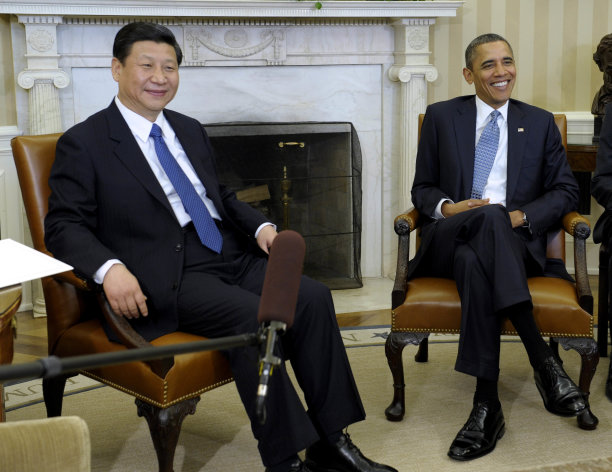 President Barack Obama and Chinese President Xi Jinping face weighty issues when they meet at a private estate in California next week, but their most important task may simply be establishing a strong rapport.
Tucked away at a mansion with a private golf course on the edge of the Mojave Desert, Obama and Xi will search for the kind of personal chemistry that has eluded their predecessors for the past several decades. With the bilateral relationship growing ever more critical and complex, how well the leaders click matters even more now.
Distrust has grown between the world's sole superpower and the rising Asian giant. Beijing sees Washington as trying to thwart China's ascendancy. The U.S. accuses China of widespread computer hacking and unfair trade. Meanwhile, there's worry their militaries might be drawn into conflict as China tries to elbow aside U.S. allies Japan and the Philippines over disputed, remote islands.
"There are a lot of problems between China and the U.S. that aren't going to be easy to solve. The hope, therefore, is that a way can be established so that at the times of crisis, dialogue will prevail based on trust and the personal relationship between the two leaders," said Zhu Feng, deputy director of the Center for International and Strategic Studies at Peking University.
The June 7-8 get-together at the private Sunnylands estate of late publishing tycoon Walter Annenberg is the first face-to-face meeting between the presidents since Obama's re-election and Xi's promotion to Communist Party chief last November. Under China's dual party-government system, Xi didn't officially assume the title of president until March.
The summit comes months before the two leaders had been originally scheduled to meet, highlighting a perception on both sides that the leaders need to refocus on the U.S.-China relationship following their political transitions and amid myriad distractions at home and abroad.
The accelerated timing constitutes "a clear message that China wants to emphasize the importance of U.S.-China relations for the future," said Cheng Li, a Chinese politics expert at the Brookings Institution in Washington, D.C.
It's not clear yet how big the two delegations will be or whether Xi and Obama will meet one-on-one, something Xi's stiff and formal predecessor, Hu Jintao, was unwilling to do, Li said.
But there are hopeful signs that the two men will gel. Xi already has a warm relationship with Vice President Joe Biden, whom he accompanied to western China on a visit in 2011. Xi also boasts a greater familiarity with the U.S. than any of his predecessors, having visited frequently and maintained his ties to families he stayed with in Muscatine, Iowa, while a visiting provincial official in 1985. He also sent his daughter to Harvard.
The two men share a love of sports: swimming and football on Xi's side, basketball and golf on Obama's. Both are married to glamorous, high-profile wives who have played a strong role in shaping their images.
Xi's wife, People's Liberation Army songstress Peng Liyuan, was for many years better known to the public than her husband. Chinese media and Internet users closely followed her activities during the couple's first formal state visits to Russia and three African countries earlier this year.
"It will be interesting to see how the chemistry will develop. It's important, because particularly in China, personal relationships always carry a lot of weight in state-to-state relations," said the Brookings Institution's Li.
Xi has already proved himself a different leader by his pragmatism. With relations edgy, he was willing to forgo the pomp of an official White House visit for the lower-key meeting in California.
Trust between the countries has dwindled over the decades. After U.S. planes bombed the Chinese Embassy in Yugoslavia in what Washington says was an accident during the Kosovo war in 1999, angry Chinese protesters nearly breached the U.S. Embassy in Beijing. In the discord, Chinese President Jiang Zemin refused a call from the White House. Two years later, when a Chinese fighter jet collided with a U.S. surveillance plane off southern China, Beijing held the American crew and waited for an acceptable apology from the U.S.
In 2009, the U.S. Navy accused Chinese sailors of harassing one of its ocean floor mapping vessels in a game of high-seas chicken.
The trust gap was further underscored by newly publicized claims Tuesday that China employed cyberattacks to access data from nearly 40 Pentagon weapons programs and almost 30 other defense technologies ranging from missile defense systems to the F-35 joint strike fighter.
The disclosure was included in a Defense Science Board report released earlier this year, meaning U.S. officials knew of it before planning for the summit began. The disclosure's public release allows U.S. officials to highlight an issue of concern without necessarily overshadowing the summit.
China's Defense Ministry on Thursday called the accusations faulty and said they underestimated both the Pentagon's ability to protect its secrets, and the capabilities of China's domestic defense industry.
"China is entirely capable of producing the weaponry needed for national defense," spokesman Geng Yansheng told reports at a monthly briefing, pointing to recent domestic technological breakthroughs such as the country's first aircraft carrier, new generation fighter jets, large transport planes and the Beidou satellite system.
China has consistently denied claims its military is engaged in hacking, including those in a report by U.S. cybersecurity firm Mandiant that traced the hacking back to a People's Liberation Army unit based in Shanghai.
Other likely agenda items include the North Korean and Iranian nuclear programs, conflict in Syria, climate change and expanding bilateral military ties. China will likely press its claims of business discrimination in the U.S. market, along with its deep discomfort over Washington's shifting of military assets to Asia and renewed emphasis on its regional alliances, moves seen by China as part of an effort to contain its rise.
The perception of U.S. decline and Chinese ascendancy forms much of the subtext to the current relationship, with Beijing seeking greater international influence commensurate with its status as the world's second-largest economy. Many in China see the U.S. as a waning power weakened by the economic crisis, partisan feuding and the conflicts in Iraq and Afghanistan.
In their latest contribution to diplomatic argot, Chinese leaders now say they are seeking a "new model of major country relations" in their dealings with Washington. Assistant Foreign Minister Zheng Zeguang defined that Wednesday as "different from the old model featuring confrontation and conflict."
"We believe a new model of major country relations between China and the United States should be based on mutual trust, equality, inclusiveness, mutual learning and win-win cooperation," Zheng said at a Wednesday briefing.
Xi and Obama first met early last year when Xi, then China's vice president, visited the White House on a trip to meet key American political players and introduce himself to the American public. The visit afforded Xi a chance to show his human side, reconnecting with his old Iowa friends, chatting with students at a school in Los Angeles and even catching part of a Lakers basketball game.
The two presidents give off different vibes but share abundant confidence and varied interests. The portly, soft-spoken Xi is known as a capable but highly cautious administrator, in contrast to the forceful and hard-charging Obama.
Known primarily for his pedigree as the son of a communist elder, Xi is seen by many observers as a strong nationalist willing to press territorial claims and what Beijing broadly proclaims as the "great rejuvenation of the Chinese nation."
Unlike former President Hu, who often seemed uncomfortable outside official settings and stuck closely to his official talking points, Xi appears at ease around foreign visitors and is known for speaking without notes and allowing sessions to run well over their scheduled time limits.
"On a personal level, he's confident, he's on top of his brief and you get a very distinct sense that he has a roadmap in his head in terms of where China needs to go. He's not only a very adroit political operator, but he's also a realist," said former U.S. Ambassador to China Jon Huntsman.
President Barack Obama and Chinese President Xi Jinping face weighty issues when they meet at a private estate in California next week, but their most important task may simply be establishing a strong rapport.
Tucked away at a mansion with a private golf course on the edge of the Mojave Desert, Obama and Xi will search for the kind of personal chemistry that has eluded their predecessors for the past several decades. With the bilateral relationship growing ever more critical and complex, how well the leaders click matters even more now.
Distrust has grown between the world's sole superpower and the rising Asian giant. Beijing sees Washington as trying to thwart China's ascendancy. The U.S. accuses China of widespread computer hacking and unfair trade. Meanwhile, there's worry their militaries might be drawn into conflict as China tries to elbow aside U.S. allies Japan and the Philippines over disputed, remote islands.
"There are a lot of problems between China and the U.S. that aren't going to be easy to solve. The hope, therefore, is that a way can be established so that at the times of crisis, dialogue will prevail based on trust and the personal relationship between the two leaders," said Zhu Feng, deputy director of the Center for International and Strategic Studies at Peking University.
The June 7-8 get-together at the private Sunnylands estate of late publishing tycoon Walter Annenberg is the first face-to-face meeting between the presidents since Obama's re-election and Xi's promotion to Communist Party chief last November. Under China's dual party-government system, Xi didn't officially assume the title of president until March.
The summit comes months before the two leaders had been originally scheduled to meet, highlighting a perception on both sides that the leaders need to refocus on the U.S.-China relationship following their political transitions and amid myriad distractions at home and abroad.
The accelerated timing constitutes "a clear message that China wants to emphasize the importance of U.S.-China relations for the future," said Cheng Li, a Chinese politics expert at the Brookings Institution in Washington, D.C.
It's not clear yet how big the two delegations will be or whether Xi and Obama will meet one-on-one, something Xi's stiff and formal predecessor, Hu Jintao, was unwilling to do, Li said.
But there are hopeful signs that the two men will gel. Xi already has a warm relationship with Vice President Joe Biden, whom he accompanied to western China on a visit in 2011. Xi also boasts a greater familiarity with the U.S. than any of his predecessors, having visited frequently and maintained his ties to families he stayed with in Muscatine, Iowa, while a visiting provincial official in 1985. He also sent his daughter to Harvard.
The two men share a love of sports: swimming and football on Xi's side, basketball and golf on Obama's. Both are married to glamorous, high-profile wives who have played a strong role in shaping their images.
Xi's wife, People's Liberation Army songstress Peng Liyuan, was for many years better known to the public than her husband. Chinese media and Internet users closely followed her activities during the couple's first formal state visits to Russia and three African countries earlier this year.
"It will be interesting to see how the chemistry will develop. It's important, because particularly in China, personal relationships always carry a lot of weight in state-to-state relations," said the Brookings Institution's Li.
Xi has already proved himself a different leader by his pragmatism. With relations edgy, he was willing to forgo the pomp of an official White House visit for the lower-key meeting in California.
Trust between the countries has dwindled over the decades. After U.S. planes bombed the Chinese Embassy in Yugoslavia in what Washington says was an accident during the Kosovo war in 1999, angry Chinese protesters nearly breached the U.S. Embassy in Beijing. In the discord, Chinese President Jiang Zemin refused a call from the White House. Two years later, when a Chinese fighter jet collided with a U.S. surveillance plane off southern China, Beijing held the American crew and waited for an acceptable apology from the U.S.
In 2009, the U.S. Navy accused Chinese sailors of harassing one of its ocean floor mapping vessels in a game of high-seas chicken.
The trust gap was further underscored by newly publicized claims Tuesday that China employed cyberattacks to access data from nearly 40 Pentagon weapons programs and almost 30 other defense technologies ranging from missile defense systems to the F-35 joint strike fighter.
The disclosure was included in a Defense Science Board report released earlier this year, meaning U.S. officials knew of it before planning for the summit began. The disclosure's public release allows U.S. officials to highlight an issue of concern without necessarily overshadowing the summit.
China's Defense Ministry on Thursday called the accusations faulty and said they underestimated both the Pentagon's ability to protect its secrets, and the capabilities of China's domestic defense industry.
"China is entirely capable of producing the weaponry needed for national defense," spokesman Geng Yansheng told reports at a monthly briefing, pointing to recent domestic technological breakthroughs such as the country's first aircraft carrier, new generation fighter jets, large transport planes and the Beidou satellite system.
China has consistently denied claims its military is engaged in hacking, including those in a report by U.S. cybersecurity firm Mandiant that traced the hacking back to a People's Liberation Army unit based in Shanghai.
Other likely agenda items include the North Korean and Iranian nuclear programs, conflict in Syria, climate change and expanding bilateral military ties. China will likely press its claims of business discrimination in the U.S. market, along with its deep discomfort over Washington's shifting of military assets to Asia and renewed emphasis on its regional alliances, moves seen by China as part of an effort to contain its rise.
The perception of U.S. decline and Chinese ascendancy forms much of the subtext to the current relationship, with Beijing seeking greater international influence commensurate with its status as the world's second-largest economy. Many in China see the U.S. as a waning power weakened by the economic crisis, partisan feuding and the conflicts in Iraq and Afghanistan.
In their latest contribution to diplomatic argot, Chinese leaders now say they are seeking a "new model of major country relations" in their dealings with Washington. Assistant Foreign Minister Zheng Zeguang defined that Wednesday as "different from the old model featuring confrontation and conflict."
"We believe a new model of major country relations between China and the United States should be based on mutual trust, equality, inclusiveness, mutual learning and win-win cooperation," Zheng said at a Wednesday briefing.
Xi and Obama first met early last year when Xi, then China's vice president, visited the White House on a trip to meet key American political players and introduce himself to the American public. The visit afforded Xi a chance to show his human side, reconnecting with his old Iowa friends, chatting with students at a school in Los Angeles and even catching part of a Lakers basketball game.
The two presidents give off different vibes but share abundant confidence and varied interests. The portly, soft-spoken Xi is known as a capable but highly cautious administrator, in contrast to the forceful and hard-charging Obama.
Known primarily for his pedigree as the son of a communist elder, Xi is seen by many observers as a strong nationalist willing to press territorial claims and what Beijing broadly proclaims as the "great rejuvenation of the Chinese nation."
Unlike former President Hu, who often seemed uncomfortable outside official settings and stuck closely to his official talking points, Xi appears at ease around foreign visitors and is known for speaking without notes and allowing sessions to run well over their scheduled time limits.
"On a personal level, he's confident, he's on top of his brief and you get a very distinct sense that he has a roadmap in his head in terms of where China needs to go. He's not only a very adroit political operator, but he's also a realist," said former U.S. Ambassador to China Jon Huntsman.
Pakistan: Another polio worker slain
What a pity that saviours who toiled in cities, towns and remote villages in an attempt to save the coming generation from crippling diseases like Polio are being ruthlessly killed. The extremists which are behind this crime against humanity seem to be enjoying a free rein. Since the past many months they have been targeting the health workers almost with impunity while the police as usual has yet to come up with any crucial arrest, evidence or anything that could prevent more attacks from occurring. In the aftermath of their recent attack on a female polio worker in Kaggawala village near Peshawar, the Polio vaccination campaign has been put on hold in Pakistan's northwest. According to a report, another female worker, who was also shot had died in the hospital. A government spokesman said the four-day campaign has been suspended there for security reasons and to express solidarity with the slain female polio workers. No group has claimed responsibility for the attack, but a police official, said that the hunt is on for the gunmen. Business as usual! Earlier, gunmen in Pakistan had killed six health workers during a nationwide polio vaccination bringing the death toll close to a dozen. Pakistan is one of the three countries where polio still remains, along with Afghanistan and Nigeria. Efforts to tackle the crippling disease have been hampered over the years by superstition. Worse still, on the other hand, the Taliban banned immunizations in the tribal region of Waziristan, condemning the campaign as a cover for espionage after the arrest of Dr Shakeel Afridi who helped the CIA find Osama bin Laden. World Health Organization, UNICEF and United Nations had already issued statements saying such attacks would deprive Pakistan’s most vulnerable section of population — especially children — of basic lifesaving health facilities. It is now that we must stand up and catch those amongst us who are our biggest enemies. Whatever it takes to get at these extremists, there should be no dithering. It is in ridding our country of this scourge that we would breathe freely and prosper.
INDIA: Send me back to my country or kill me: Pakistani woman
http://www.thehindu.com/“Send my wife back to Pakistan or release her to the family, just don’t forget her in Nirmal Chhaya (shelter home for women),’’ pleads Mohammed Gulfam, husband of the Pakistani national Nuzhat Jahan who has been living in Delhi for the past 30 years and is now awaiting her deportation to her country for overstaying in India illegally. Nuzhat, who was married at the age of 17, has stayed with her husband in India ever since in their small house in Sitaram Bazar, Old Delhi. Valid visa In 2002, she was picked up for overstaying in India without a valid visa. Earlier this month she was sentenced to six days’ imprisonment, awarded a fine and ordered to be sent back to Pakistan. After serving her punishment, she is currently lodged in Nirmal Chhaya awaiting further orders from the Central Government. ‘Worse than jail’ “My wife was taken away early this month and we haven’t had proper access to her since then. A Delhi Court has ordered her deportation; she has served her punishment and now is being kept in Nirmal Chhaya where we (her family–children and grand children) have had very little access to her. It is worse than being in Tihar Jail. We appeal to the Government to decide our fate soon. Send her back to Pakistan, if that is the only thing that can be done, but whatever is your decision just do it soon …… don’t forget this 47/48-year-old woman in a shelter home,’’ says Gulfam, looking at his wedding photos, eyes brimming with tears. “The last time I spoke to her, she said please ask the Indian Government to send me back to Pakistan or kill me….but don’t let them forget about me in Nirmal Chhaya,’’ adds Gulfam. “The wait is the worst punishment,’’ says 27-years-old Gulsher, the second of Nuzhat’s three children. Blood pressure “She is not home, she hasn’t been sent to Pakistan and she is lodged in a place where we can’t even sit down and talk to her. We are worried about her health: my mother has high blood pressure, she has ulcer, problem with her liver and is anaemic. We are worried about how she is faring in the shelter home,’’ he says. Even back in Pakistan, Nuzhat only has her old mother, besides her brother and sister who are married and have their own families. “The last time that my parents went to Pakistan was in 1992, my mother is more Indian than Pakistani she has lived her entire life here,’’ adds Gulsher. ‘The greatest law’ Unable to hold back his tears, Gulfam says: “After my wife has been taken away nothing is like before. My life seems over. What are these borders and nationalities about? Isn’t compassion the greatest law in the world. We are talking about a simple housewife here whose life has always revolved around her three children and grandchildren. She would even refuse to go shopping alone. Her home was her entire universe.’’ Speaking about his helplessness and how he finds himself alone in his fight to get his wife an Indian passport, Gulfam says: “No political party, leader or women’s group has agreed to help us despite the fact that we have been running from pillar to post appealing for help. Now I have lost all hope and the strength to take this fight forward; so if the court has ordered my wife’s deportation, send her back….just please do not forget that it is a human life and an entire family’s fate is being decided here.’’
Pakistan’s Absurdity of Negotiating With Taliban But Not the Baloch
Editorial:The Baloch HalThe B.B.C. Urdu has reported that since the general elections of May 11, at least a dozen people have become the fresh victims of Pakistan’s ‘kill and dump‘ policies in Balochistan. While the so-called “mainstream national media” often do not report these cases, Baloch human rights activists have done a remarkable job in bringing the atrocities to public attention on platforms such as C.N.N.’s Eye Report segment. There is no let up in human rights abuses in Balochistan even after the general elections. Similar to the past incidents, most of the people whose bullet-riddled dead bodies are found are young students and political activists (between the ages of 18 to 24) belonging to remote parts of Balochistan. Among the fresh incidents, the most shocking is the killing of Shahzeb and Shah Noor, two brothers from Panjgur District whose bodies were found in neighboring Kech on May 19. According to the Daily Times, the two brothers “were in their 20s and were brutally tortured and subjected to electric shocks… They were abducted on March 11 from Turbat area of Kech district.” Unfortunately, no Pakistani politician, including Nawaz Sharif, the country’s future prime minister, has condemned the fresh kill and dump incidents in Balochistan. Mr. Sharif is too excited over his victory in the province of the Punjab and at the Center but he barely realizes that the country’s security establishment is still actively implementing Musharraf’s policies in Balochistan. The Pakistani media and the newly elected political parties are aloof to the plight of the Baloch people. Mr. Sharif seems to have gotten his priorities wrong. He says Pakistan’s electricity crisis worries him so much that he cannot sleep at night whereas mothers in Balochistan, on their part, cannot sleep because their children continue to disappear and return only as corpses. The continuity of the kill and dump operations post elections is indeed very alarming. Since reports of disappearances in Balochistan emerged in the media for the first time in early 2000s, Pakistan has transitioned between three different governments. Yet, democracy means nothing for Balochistan and elections barely mitigate the Baloch sufferings. With the arrival of the third government, we have entered the third generation of a government under which enforced disappearances and brutal killings continue unabated in Balochistan. The culture of absolute impunity continues as usual and the country’s spymasters, as repeatedly blamed by credible organizations such as the Human Rights Watch and the Amnesty International, remain immune to official accountability for their brazen involvement in massive human rights violations. How much mandate do political parties such as the Pakistan Muslim League-Nawaz require to end the extrajudicial activities of the intelligence agencies? Someone on the land has to take the courageous initiative to bring these rights abusers to justice.The trauma the Baloch children go through every single day because of the fear of eventually ‘disappearing’ one day is far more intense, genuine and widespread than what the victims of the drone strikes go through in Pakistan’s northern tribal regions. Pakistan has a selective policy toward human rights and civilians’ fears which is why there is a hue and cry against the drones but no one in the military utters a word against enforced disappearances and kill and dump operations in Balochistan. While the Americans may be violating Pakistan’s ‘sovereignty’ through the drone strikes, but what armies on the earth are subjecting their own people to enforced disappearance, torture and dump? This only happens in Pakistan and it should immediately end. We do not understand why Islamabad is paying so much emphasis on negotiating with the Taliban on the one hand but intensifying its kill and dump operations against secular Baloch nationalists on the other hand. If the central government is willing to negotiate with the Taliban who are known across the globe for their terrorist activities and human rights abuses, particularly toward women, then what is wrong with talking to the Baloch who are actually the victims of Pakistani state-sponsored repression? The recent developments indicate that the upcoming P.M.L.N. government does not find itself in an urgent situation to ask the military to stop its brutal actions in Balochistan. The military is only supportive of peace with the Taliban and determined to continue operations in Balochistan. A word of caution: The P.M.L.-N is doing the right job by (reportedly) supporting Dr. Malik Baloch, a member of the Baloch middle class, to become the next chief minister of the province but it should not forget that there is also a parallel middle-class uprising in the province headed by Dr. Allah Nazar Baloch. Gone are the days when Islamabad could put out the fire in Balochistan only by covertly reaching a settlement with a handful of Baloch tribal chiefs. What should further worry Islamabad is the fact that almost all victims of the kill and dump policies belong to middle-class families. Each killing will only strengthen the middle class rebellion instead of facilitating a middle-class chief minister, provided that Dr. Baloch is appointed, to resolve or at least reduce Balochistan’s problems.
Bangladeshi whiz kid to be listed in Guinness record book
Deutsche Welle
 A seven-year-old boy is to be included in the Guinness Book of World Records as the world's youngest IT expert. "Ripley's Believe It or Not" has already called him a “wonder boy” and plans to give him an award.
Wasik Farhan Roopkotha started toying with the computer when he wasn't even a year old. Now, he is about to go down in history as the world’s youngest programmer.
Born on January 27, 2006, the child recently demonstrated his skills in front of IT experts and journalists in Bangladesh’s capital Dhaka. The event was videotaped and an unedited copy was sent to the Guinness Book of World Records as proof of the boy's talent.
"After receiving the video, the Guinness people sent me some papers which I have signed," the boy's mother, Cynthia Farheen Risha, told DW proudly.She explained her son Roopkotha, which means "fairytale" in English had started playing computer games when he was only a year old and at two he was already using MS Word.
When he was four he could change characters from one game to another using different emulators. "About a year ago, he started working with some of the programming languages including one of the most complicated languages, C++," Risha said.
Monir Hosen, the managing director of Creative IT Limited was there when Roopkotha was demonstrated his skills in Dhaka. “I am not sure about how much he knows about the computer language "C",” he told DW. “But whatever he did on that day was very unusual, considering his age. I wanted to talk to him. That such a young person was working on the computer, writing codes and solving problems, was really hard to believe."
"I heard that the Guinness authorities had sent their representatives to Dhaka after they were contacted by Roopkotha's parents. They also noted the boy's talents and asked his parents to provide them with appropriate video confirmation."Risha said her son could easily set up operating systems and fix problems and that he could touch-type as fast as a professional. She said he had never received any IT lessons but simply taught himself. "Whenever he wants to know something he goes directly to Wikipedia."
"He is thinking big," she added. “He wants to develop his own computer operating system. He already knows and can compare the features of different Windows versions."
Ripley’s Believe It or Not franchise has already informed Roopkotha's parents it will include the boy's name in its annual record book in September.
The Bangladeshi government has requested that Wasik Farhan Roopkotha's story be included in schoolbooks to serve as an inspiration to other children.
A seven-year-old boy is to be included in the Guinness Book of World Records as the world's youngest IT expert. "Ripley's Believe It or Not" has already called him a “wonder boy” and plans to give him an award.
Wasik Farhan Roopkotha started toying with the computer when he wasn't even a year old. Now, he is about to go down in history as the world’s youngest programmer.
Born on January 27, 2006, the child recently demonstrated his skills in front of IT experts and journalists in Bangladesh’s capital Dhaka. The event was videotaped and an unedited copy was sent to the Guinness Book of World Records as proof of the boy's talent.
"After receiving the video, the Guinness people sent me some papers which I have signed," the boy's mother, Cynthia Farheen Risha, told DW proudly.She explained her son Roopkotha, which means "fairytale" in English had started playing computer games when he was only a year old and at two he was already using MS Word.
When he was four he could change characters from one game to another using different emulators. "About a year ago, he started working with some of the programming languages including one of the most complicated languages, C++," Risha said.
Monir Hosen, the managing director of Creative IT Limited was there when Roopkotha was demonstrated his skills in Dhaka. “I am not sure about how much he knows about the computer language "C",” he told DW. “But whatever he did on that day was very unusual, considering his age. I wanted to talk to him. That such a young person was working on the computer, writing codes and solving problems, was really hard to believe."
"I heard that the Guinness authorities had sent their representatives to Dhaka after they were contacted by Roopkotha's parents. They also noted the boy's talents and asked his parents to provide them with appropriate video confirmation."Risha said her son could easily set up operating systems and fix problems and that he could touch-type as fast as a professional. She said he had never received any IT lessons but simply taught himself. "Whenever he wants to know something he goes directly to Wikipedia."
"He is thinking big," she added. “He wants to develop his own computer operating system. He already knows and can compare the features of different Windows versions."
Ripley’s Believe It or Not franchise has already informed Roopkotha's parents it will include the boy's name in its annual record book in September.
The Bangladeshi government has requested that Wasik Farhan Roopkotha's story be included in schoolbooks to serve as an inspiration to other children.
Pakistan's Women’s reserved seats: Top politicians’ spouses, kin strike it lucky
 The kith and kin of top political leaders have once again grabbed a lion’s share of the reserved seats for women in both the National Assembly and provincial assemblies.
Some of them managed the feat without actually winning in the recent general elections.
Wives, daughters and close relatives of seasoned politicians punched their ticket to the NA and provincial assemblies under the 33% quota reserved for women. Some of the lucky women, who lost on May 11, are now members of the assemblies via the reserved seats route.
Currently, there are 70 reserved seats in the NA, 60 for women and 10 for minorities. There are 137 seats reserved for women in the four provincial assemblies. In the Punjab Assembly, 61 seats are reserved for women, 37 seats in the Sindh Assembly, 25 in the Khyber-Pakhtunkhwa Assembly and 14 seats in the Balochistan Assembly.
Rida Khan, daughter of Pakistan Muslim League-Nawaz Senator Mushahidullah Khan, will be an MNA, according to the final list of MNAs and MPAs prepared by the Election Commission of Pakistan. The list revealed that Nafisa Shah, daughter of former Sindh chief minister Syed Qaim Ali Shah and Shaista Pervez, wife of PML-N MNA Pervez Malik, are also set to become MNAs.
Anusha Rehman of PML-N also managed to secure a reserved NA seat
Top Pakistan Tehreek-e-Insaf leaders Dr Shireen Mazari and Munaza Hassan made their way to the lower house of Parliament for the first time on the reserved seats.
Despite losing in her constituency, Marvi Memon managed to secure a reserved seat on a PML-N ticket, while Shazia Marri was elected as an MNA on a Pakistan Peoples Party Parliamentarians ticket on the reserved seat after losing in the polls.
Syeda Shehla Raza, who is set to take charge as deputy speaker of Sindh Assembly, was elected on a PPPP ticket.
However, not all political leaders are in favour of the way some politicians have made their way into the NA on the reserved seats without contesting for them. They recalled that a bill seeking reserved seats for women in the Indian Parliament was pending for the last three years.
The bill proposed to amend the Indian Constitution to reserve 33% of all seats in the Lok Sabha, the lower house of Parliament, and in all state legislative assemblies for women.
PTI Chairman Imran Khan said his party was against reserved seats for women in the assemblies. “Legislators in assemblies are representatives of the people. How can some women be representatives of other women when they haven’t even contested the elections?” Khan asked last December.
Senior politician and jurist S M Zafar said elected people should be MPs.
“Elections belong to the people and it’s their decision to elect the leaders.”
The kith and kin of top political leaders have once again grabbed a lion’s share of the reserved seats for women in both the National Assembly and provincial assemblies.
Some of them managed the feat without actually winning in the recent general elections.
Wives, daughters and close relatives of seasoned politicians punched their ticket to the NA and provincial assemblies under the 33% quota reserved for women. Some of the lucky women, who lost on May 11, are now members of the assemblies via the reserved seats route.
Currently, there are 70 reserved seats in the NA, 60 for women and 10 for minorities. There are 137 seats reserved for women in the four provincial assemblies. In the Punjab Assembly, 61 seats are reserved for women, 37 seats in the Sindh Assembly, 25 in the Khyber-Pakhtunkhwa Assembly and 14 seats in the Balochistan Assembly.
Rida Khan, daughter of Pakistan Muslim League-Nawaz Senator Mushahidullah Khan, will be an MNA, according to the final list of MNAs and MPAs prepared by the Election Commission of Pakistan. The list revealed that Nafisa Shah, daughter of former Sindh chief minister Syed Qaim Ali Shah and Shaista Pervez, wife of PML-N MNA Pervez Malik, are also set to become MNAs.
Anusha Rehman of PML-N also managed to secure a reserved NA seat
Top Pakistan Tehreek-e-Insaf leaders Dr Shireen Mazari and Munaza Hassan made their way to the lower house of Parliament for the first time on the reserved seats.
Despite losing in her constituency, Marvi Memon managed to secure a reserved seat on a PML-N ticket, while Shazia Marri was elected as an MNA on a Pakistan Peoples Party Parliamentarians ticket on the reserved seat after losing in the polls.
Syeda Shehla Raza, who is set to take charge as deputy speaker of Sindh Assembly, was elected on a PPPP ticket.
However, not all political leaders are in favour of the way some politicians have made their way into the NA on the reserved seats without contesting for them. They recalled that a bill seeking reserved seats for women in the Indian Parliament was pending for the last three years.
The bill proposed to amend the Indian Constitution to reserve 33% of all seats in the Lok Sabha, the lower house of Parliament, and in all state legislative assemblies for women.
PTI Chairman Imran Khan said his party was against reserved seats for women in the assemblies. “Legislators in assemblies are representatives of the people. How can some women be representatives of other women when they haven’t even contested the elections?” Khan asked last December.
Senior politician and jurist S M Zafar said elected people should be MPs.
“Elections belong to the people and it’s their decision to elect the leaders.”
Disenfranchising women in Pakistan
 The gender divide is systematic in Pakistan’s electoral system. Not only that women were barred from voting or contesting in parts of Pakistan, they were not even registered as voters in many other parts. In fact, Pakistan counted 11 million fewer women registered voters than men in the recent elections.
The statistics provided by Election Commission of Pakistan (ECP) paint a gloomy picture of the gender divide, which is more pronounced in some parts of Pakistan. In Khyber Pakhtunkhwa (KP), only one in three voters was a woman. The highest share of women voters was observed for Islamabad and the Federal Territories where women represented 46 per cent of all voters.Pakistan’s electoral system allows for reserved seats for women to address the gender bias in electoral outcomes. While the motivation behind the move for reserved seats is commendable, the outcome hardly meets the intent. In fact, the reserved seats have rested more power in the hands of a handful of men who appoint their favourite women to the legislature. It would have helped if the women alone elected the women candidates for the reserved seats instead of the richest and the most influential half a dozen Pakistani men.
In some parts of Khyber Pakhtunkhwa, where the share of women registered voters was already the lowest in Pakistan, political parties agreed not to allow women to vote in the elections. This is one of those odd moments of consensus in Pakistan where consensus on political matters is not only rare, but almost non-existent.
The Associated Press recently reported that in the 2008 elections, 564 polling districts recorded zero votes cast by women. This was partly a result of an understanding reached between political parties to deny women the right to vote. Similar agreements were revealed in the 2013 elections where candidates in Upper and Lower Dir, to name a few, agreed to bar women from voting in the provincial assembly elections.
Why Islamists oppose women enfranchise?
While Islamic injunctions may not prevent women from participating in the political process, Islamists certainly do. There is an obvious correlation between the degree of religiosity at a place and the women’s ability to vote in Pakistan. For instance, the religious dogma is most prevalent in FATA, Khyber Pakthunkhwa, and Balochistan. These are also the places where women voting rights are the least prevalent. In Dir, where political parties agreed to prevent women from voting, Jamaat-i-Islami’s candidates have regularly emerged victorious. Other political parties that flaunt religion to forward their political cause have also used religion or tradition to disenfranchise women.
Jamaat-i-Islami and other similar religo-political outfits take their cues from Saudi Arabia where women’s political rights are almost non-existent. The right to rule and lead is reserved exclusively for the male offspring in the Royal family. Women, in fact, are forbidden even from driving. The religiously-oriented political parties in Pakistan have not explicitly stated their misogynist ideals in their manifestos. However, since their inspiration comes from Saudi Arabia, and given an opportunity they routinely deny women the right to vote, it takes not much imagination to visualise the kind of regressive future religious parties envision for Pakistan.
In the neighbouring Iran the situation is not much better. Iranian mullahs in the Guardian Council have concluded that while a woman can be the mother, wife, and sister of a President, she however cannot be the president. The mullahs have thus denied the right to contest the presidential elections to 30-odd women who wanted to participate in the elections scheduled for mid-June. The mullahs believe that the Iranian constitution allows only men (reejal) to hold the President’s office.
Are seculars any better in Pakistan?
It is true to a large extent that secular parties in Pakistan (whose political ideology is not necessarily defined by religious doctrines) do not oppose women from participating in the electoral process, they however seldom act to enfranchise the disadvantaged lot. Consider Imran Khan’s Pakistan Tehreek-i-Insaf (PTI) who had the opportunity to nominate two women to the National Assembly against the reserved seats for women in Punjab. PTI’s choices, however, appear to favour the privileged. One of the PTI’s nominee is a resident of Islamabad’s elitist sector, E-7, and the other is the Lahore-based president of PTI’s women wing.While the Mullahs in Dir restricted women’s participation in the elections altogether, the supposedly enlightened ones did not fare much better as they rewarded power, fame, and wealth instead of promoting women from the struggling classes in Pakistan.
The gender divide is systematic in Pakistan’s electoral system. Not only that women were barred from voting or contesting in parts of Pakistan, they were not even registered as voters in many other parts. In fact, Pakistan counted 11 million fewer women registered voters than men in the recent elections.
The statistics provided by Election Commission of Pakistan (ECP) paint a gloomy picture of the gender divide, which is more pronounced in some parts of Pakistan. In Khyber Pakhtunkhwa (KP), only one in three voters was a woman. The highest share of women voters was observed for Islamabad and the Federal Territories where women represented 46 per cent of all voters.Pakistan’s electoral system allows for reserved seats for women to address the gender bias in electoral outcomes. While the motivation behind the move for reserved seats is commendable, the outcome hardly meets the intent. In fact, the reserved seats have rested more power in the hands of a handful of men who appoint their favourite women to the legislature. It would have helped if the women alone elected the women candidates for the reserved seats instead of the richest and the most influential half a dozen Pakistani men.
In some parts of Khyber Pakhtunkhwa, where the share of women registered voters was already the lowest in Pakistan, political parties agreed not to allow women to vote in the elections. This is one of those odd moments of consensus in Pakistan where consensus on political matters is not only rare, but almost non-existent.
The Associated Press recently reported that in the 2008 elections, 564 polling districts recorded zero votes cast by women. This was partly a result of an understanding reached between political parties to deny women the right to vote. Similar agreements were revealed in the 2013 elections where candidates in Upper and Lower Dir, to name a few, agreed to bar women from voting in the provincial assembly elections.
Why Islamists oppose women enfranchise?
While Islamic injunctions may not prevent women from participating in the political process, Islamists certainly do. There is an obvious correlation between the degree of religiosity at a place and the women’s ability to vote in Pakistan. For instance, the religious dogma is most prevalent in FATA, Khyber Pakthunkhwa, and Balochistan. These are also the places where women voting rights are the least prevalent. In Dir, where political parties agreed to prevent women from voting, Jamaat-i-Islami’s candidates have regularly emerged victorious. Other political parties that flaunt religion to forward their political cause have also used religion or tradition to disenfranchise women.
Jamaat-i-Islami and other similar religo-political outfits take their cues from Saudi Arabia where women’s political rights are almost non-existent. The right to rule and lead is reserved exclusively for the male offspring in the Royal family. Women, in fact, are forbidden even from driving. The religiously-oriented political parties in Pakistan have not explicitly stated their misogynist ideals in their manifestos. However, since their inspiration comes from Saudi Arabia, and given an opportunity they routinely deny women the right to vote, it takes not much imagination to visualise the kind of regressive future religious parties envision for Pakistan.
In the neighbouring Iran the situation is not much better. Iranian mullahs in the Guardian Council have concluded that while a woman can be the mother, wife, and sister of a President, she however cannot be the president. The mullahs have thus denied the right to contest the presidential elections to 30-odd women who wanted to participate in the elections scheduled for mid-June. The mullahs believe that the Iranian constitution allows only men (reejal) to hold the President’s office.
Are seculars any better in Pakistan?
It is true to a large extent that secular parties in Pakistan (whose political ideology is not necessarily defined by religious doctrines) do not oppose women from participating in the electoral process, they however seldom act to enfranchise the disadvantaged lot. Consider Imran Khan’s Pakistan Tehreek-i-Insaf (PTI) who had the opportunity to nominate two women to the National Assembly against the reserved seats for women in Punjab. PTI’s choices, however, appear to favour the privileged. One of the PTI’s nominee is a resident of Islamabad’s elitist sector, E-7, and the other is the Lahore-based president of PTI’s women wing.While the Mullahs in Dir restricted women’s participation in the elections altogether, the supposedly enlightened ones did not fare much better as they rewarded power, fame, and wealth instead of promoting women from the struggling classes in Pakistan.
Pakistan: No early end to load shedding
Editorial: Daily TimesWith load shedding in Pakistan reaching debilitating heights, the recent statement by the head of the incoming PML-N government, Nawaz Sharif, about how the energy crisis will not be solved immediately, could not have come at a more apt moment. Addressing a Youm-e-Takbeer ceremony in Lahore the other day, the incoming prime minister did offer the energy-starved masses some respite by saying that he would work to improve the situation as soon as his government steps in. Nawaz Sharif went so far as to say that it was a shame that the country has made itself a nuclear power but has been unable to provide energy to the citizens. Whilst this is an apt analogy, it speaks volumes about the priorities of our various governments, Nawaz Sharif’s included, during whose watch we tested these above mentioned nuclear weapons but are now suffering because our industries are shutting down and lives are becoming miserable due to the lack of electricity. This blunt address to the nation could not have been timelier; we are suffering record load shedding — sometimes as much as a whopping 20 hours a day even in the urban centres — during a record heat wave. The masses, who came out in droves in these landmark elections to vote and elect more maturely, have unrealistically high expectations. Frustrated and defeated by the lack of power, they would like to believe that the incoming government will step in on June 5 and load shedding will be a thing of the past on June 6. To address this misconception is wise. However, it would bode well for Nawaz Sharif to remember that the masses also have an agenda they want fulfilled by their elected leaders and they will not stand for more rhetoric and quick fixes. If there was one slogan the masses were paying close attention to it was that of each party’s policy on load shedding. Shahbaz Sharif was quite vocal during the PML-N’s campaign drive about how electricity matters would be resolved instantly or at the very least within months. Nawaz Sharif’s dose of the bitter truth is wise but it must lead to his party addressing the energy crisis on a war footing. While all sorts of measures will be introduced from short-term measures, where austerity and conservation will be practiced, it is of the utmost importance that real working be started on long term measures such as power generation and the different options that are available. The past two governments have made a mockery of the power crisis and it is vital that the PML-N government not fall into the same rut as the others, where stopgap measures were taken but no real work was done to significantly add to the national grid. The main cause must be addressed: the tightening stranglehold of circular debt. Until and unless the distribution companies manage to collect the colossal amounts of money owed to them by first and foremost government institutions, which have not paid their bills in years, to give to the power supply companies, which in turn have to pay Pakistan State Oil for fuel, there is no way the energy crisis will ever be resolved. Retiring the current circular debt through treasury bills worth Rs 500 billion is of course a welcome measure. But unless the root causes of circular debt and how it arose in the first place are addressed, the cycle of circular debt is likely to build up again. It is the government, through and through, that needs to clean up its act in every way for this massive crisis to end so that there really may be some light at the end of the tunnel.
Slain journalist: Saleem Shahzad’s case is buried, forgotten
Police have closed investigation into the murder of journalist Saleem Shahzad, taking a stance that no clue has been found, The Express Tribune has learnt.
Saleem Shahzad was the Pakistan bureau chief of Asia Times Online, Hong Kong and Italian news agency Adnkronos (AKI).
Shahzad was kidnapped on May 29, 2011 from Islamabad and his body was found floating in a canal near the Head Rasul area, in Mandi Bahauddin, about 130km from Islamabad, on May 30 with visible torture marks.
The Human Rights Watch (HRW) had pointed fingers at the Pakistani spy agency, Inter-Services Intelligence (ISI), over Shahzad’s murder and the US government officials later announced that they had ‘reliable and conclusive’ intelligence that this was the case. The ISI denied the allegations outright and called them ‘totally unfounded’.
The last supplementary statement of this case had been written by the DSP Saddar Circle, Mandi Bahuddin, Hafiz Ataur Rehman, on February 3, 2012. The case had been registered with the Saddar police station, Mandi Bahauddin, on May 30, 2011 vide FIR No192.
The current Investigation Officer (IO) of the case, Sub Inspector Mumtaz Gill, told The Express Tribune that investigation into the case of Saleem Shahzad has been closed for the time being for lack of evidence.
The then government had set up a judicial inquiry commission, headed by Supreme Court Judge Saqib Nisar, to probe the abduction and murder of Shahzad. However, the commission failed to identify the culprits.
Judicial commission’s investigation
The commission, in its report on circumstances surrounding Shahzad’s death submitted to the prime minister on January 10, 2012, recommended making the ISI and Intelligence Bureau accountable within their organisations and to the parliamentary committees concerned.
The contents of the executive summary of the commission read, “Saleem’s writings probably did, and certainly could have drawn the ire of various belligerents in the war on terror which included the Pakistani state and non-state actors such as the Taliban and al Qaeda and foreign actors.
“Any of these could have had the motive to commit the crime, as clearly, he was also in close contact with all of these,” the report stated.
The incident may also have been linked, as asserted by some of the witnesses examined, to the subsequent drone attack on Ilyas Kashmiri, it said.
The commission said it had been unable to identify the culprits despite having looked very hard for substantial evidence, direct or circumstantial, “yet such evidence has not surfaced.”
The commission urged the media to maintain a balance between secrecy and accountability in the conduct of information gathering which should be appropriately readjusted, with the aim of restoring public confidence in all institutions of the state
Family reaction
Hamza Ameer, Correspondent Iran’s Press TV and the brother-in-law of Saleem Shahzad expressed dismay at the lack of progress in the investigation. He said journalists and human rights bodies have also forgotten this issue.
He said the bank accounts and other assets have not been transferred to Shahzad’s legal heirs, who are still waiting for succession certificate. He said Quran Khawani will be held on Thursday (today) at the residence of Saleem Shahzad in Karachi to mark his second death anniversary.
Wednesday, May 29, 2013
Comey in line to become FBI director, officials say
http://www.washingtonpost.com/President Obama plans to nominate James B. Comey, a former senior Justice Department official in the George W. Bush administration, to replace Robert S. Mueller III as FBI director, according to two people with knowledge of the selection process. Comey, 52, was at the center of some of the most bruising debates over counterterrorism during the Bush administration and established a reputation as a fierce defender of the law and the integrity of the Justice Department regardless of the political pressures of the moment.The expected nomination of Comey, a Republican, was seen in some quarters as a bipartisan move by a president besieged by Republicans in Congress. But Chuck Hagel’s prior service as a Republican senator from Nebraska did not spare him from a bruising nomination battle for secretary of defense. Mueller has served 12 years as FBI director, a period of enormous transformation for the bureau in the aftermath of the Sept. 11, 2001, terrorist attacks. The director’s term is limited by law to 10 years, but Congress unanimously approved Obama’s request in 2011 that Mueller be granted another two years. Comey was famously involved in a 2004 hospital-room confrontation with White House counsel Alberto Gonzales and the president’s chief of staff, Andrew H. Card Jr. The two White House officials were attempting to persuade Attorney General John D. Ashcroft, who was recovering from emergency surgery to remove his gallbladder, to reauthorize a controversial warrantless domestic eavesdropping program. Comey, who was acting attorney general in Ashcroft’s absence, had refused to agree to extend the program. When he learned that the White House was attempting to go around him and get the ill Ashcroft to sign off on an extension, Comey rushed to George Washington University Medical Center, arriving just before Gonzales and Card. Comey explained to Ashcroft what was happening and, when the White House officials arrived, the attorney general raised himself up and said he never should have authorized the program. He gestured at Comey and said, “There is the attorney general,” according to an account by former Washington Post reporter Barton Gellman. The White House had narrowed the search in recent days to Comey and Lisa Monaco, a former assistant attorney general for national security who became Obama’s chief counterterrorism adviser this year. One law enforcement source said that a few weeks ago, the Justice Department sent both names to the White House for consideration. Monaco would have been the first woman to lead the FBI, but Comey comes with extensive law enforcement experience. He served as the U.S. attorney for the Southern District of New York in Manhattan, and he was the managing assistant U.S. attorney in charge of the Richmond division of the U.S. Attorney’s Office for the Eastern District of Virginia. While in Richmond, he was credited with reducing the homicide rate by shifting gun prosecutions from state court to federal court, where the sentences were tougher. From 2003 though 2005, he served as deputy attorney general, responsible for overseeing the operations of the Justice Department.Jim is one of the great leaders of the Justice Department,” said Jamie Gorelick, who served as a deputy attorney general in the Clinton administration. “He has worked very closely with the bureau. He knows its strengths and will be great at enhancing its capabilities.” The officials who said Comey was selected spoke on the condition of anonymity because they were not authorized to discuss a pending decision. They did not say how soon Obama would make the official announcement. News of Comey’s appointment was first reported by NPR.A White House spokesman would not confirm the appointment Wednesday night, saying he had no personnel announcements to make. Comey, who is married and has five children, could not be reached at home or work Wednesday for comment. He is a graduate of the College of William and Mary and the University of Chicago Law School. Comey’s objection to the warrantless wiretapping — he told Congress that he would have resigned had the technique continued — was not his only brush with Bush-era policies. He also opposed the approval of enhanced interrogation techniques by the CIA. He said at the time that the Justice Department would eventually be ashamed of its legal backing when the world learned about the methods, which included waterboarding. At the same time, in January 2005, he invoked the state secrets privilege in the civil case of a Syrian Canadian who was sent to Damascus in 2002 to be interrogated and was ultimately tortured. Comey’s role in that episode elicited some criticism from civil liberties groups. “James Comey’s nomination should raise serious concerns, and his role in the Bush administration needs to be examined,” said Michael Ratner, the president of the Center for Constitutional Rights. “We need to know the full story of his role in the torture memos. It does not sound like a great nomination. Recycling Bush people is not a good guarantee for the protection of civil liberties.” Comey later came under criticism from some Bush administration officials for his role in selecting Patrick Fitzgerald to lead the special investigation into the leaking of the name of CIA officer Valerie Plame, a probe that led to the conviction of Vice President Dick Cheney’s adviser Scooter Libby. Comey prosecuted numerous terrorism cases while in New York and created a specialized unit to go after international drug cartels. While in Virginia, he handled the case that arose out of the 1996 bombing of a U.S. military facility in Saudi Arabia. Comey has prosecuted a variety of other types of cases, including the 1993 racketeering and murder trial of New York mob boss John Gambino. Comey left the Justice Department in 2005 and served as a senior vice president and general counsel at the defense contractor Lockheed Martin until 2010. In June 2010, Comey joined Bridgewater Associates, a Connecticut-based hedge fund with $75 billion in investments for clients including universities and foreign governments. He left the hedge fund in January and now teaches national security law at Columbia Law School in New York. White House officials have been eager to send a nomination to Capitol Hill in order to complete the confirmation process and have the new director in place before Mueller must leave Sept. 4. Given summer recesses and the likelihood of Republican criticism, the White House is expected to formally announce Comey’s name soon. Comey, if confirmed, will lead an agency whose primary mission is now counterterrorism. And until the Boston Marathon bombing, the FBI had been praised for its success in largely preventing terrorist attacks in the United States since Sept. 11, 2001. Although Mueller has won bipartisan support on Capitol Hill through two administrations, the FBI has been criticized by civil liberties groups for its surveillance operations and aggressive sting operations, which defense lawyers say amount to entrapment.
Obama says Democrats could win back US House in 2014
 US President Barack Obama, whose agenda has been frustrated by Republicans in Washington, said on Wednesday he believed his party could reclaim control of the House of Representatives in the 2014 midterm elections but conceded it was an uphill struggle.
The party in power in the White House typically loses seats in the first midterm election after a presidential campaign, and many political analysts believe Democrats could lose seats in Congress in 2014.
But Obama, appearing at fundraisers for Democratic House candidates in his hometown of Chicago, said he believed 2014 could prove different.
US President Barack Obama, whose agenda has been frustrated by Republicans in Washington, said on Wednesday he believed his party could reclaim control of the House of Representatives in the 2014 midterm elections but conceded it was an uphill struggle.
The party in power in the White House typically loses seats in the first midterm election after a presidential campaign, and many political analysts believe Democrats could lose seats in Congress in 2014.
But Obama, appearing at fundraisers for Democratic House candidates in his hometown of Chicago, said he believed 2014 could prove different.
Over 7 Mln Egyptians Sign Anti-Morsi Petition
 More than 7 million signatures have been gathered under a petition to oust Egyptian President Mohamed Morsi, anti-Morsi movement spokesman Mahmud Badr said Wednesday.
The movement aims to collect 15 million signatures by June 30 to demand early presidential elections.
Campaign organizers urged Egyptians to join their call for a million-man march outside the presidential palace in Cairo on June 30 to protest the Muslim Brotherhood’s rule and demand snap presidential elections.
“Whoever wants the revolution to prevail must rebel; whoever wants to achieve bread, freedom and social justice must rebel. Let June 30 be a decisive day for the revolution,” Mohamed Abdel-Aziz, one of the movement’s organizers, was quoted by Ahram Online as saying.
Mahmud Badr earlier told AFP the campaign was launched “because the president is no longer able to manage the country."
Ten months into his presidency, Morsi, Egypt's first freely-elected civilian president after a revolution that ousted Mubarak two years ago, stands accused of betraying his election campaign promises by consolidating the rule of the Muslim Brotherhood and of failing to become a leader of all Egyptians.
More than 7 million signatures have been gathered under a petition to oust Egyptian President Mohamed Morsi, anti-Morsi movement spokesman Mahmud Badr said Wednesday.
The movement aims to collect 15 million signatures by June 30 to demand early presidential elections.
Campaign organizers urged Egyptians to join their call for a million-man march outside the presidential palace in Cairo on June 30 to protest the Muslim Brotherhood’s rule and demand snap presidential elections.
“Whoever wants the revolution to prevail must rebel; whoever wants to achieve bread, freedom and social justice must rebel. Let June 30 be a decisive day for the revolution,” Mohamed Abdel-Aziz, one of the movement’s organizers, was quoted by Ahram Online as saying.
Mahmud Badr earlier told AFP the campaign was launched “because the president is no longer able to manage the country."
Ten months into his presidency, Morsi, Egypt's first freely-elected civilian president after a revolution that ousted Mubarak two years ago, stands accused of betraying his election campaign promises by consolidating the rule of the Muslim Brotherhood and of failing to become a leader of all Egyptians.
Pakistan: Sharif’s Pyrrhic victory

by Lal Khan
Most of the elitist actors at the helm of the political edifice personify the social, moral, ethical, and cultural decay through which the country is passing presentlyIn an election devoid of any real ideological debates, the much-flaunted victory by Nawaz Sharif’s Pakistan Muslim League-Nawaz (PML-N) has nothing to ameliorate the sufferings of the impoverished masses. Sharif represents the national, i.e. ruling class interests and campaigned with a chauvinist rhetoric. In a situation whereby the political consciousness of the working classes had suffered a setback, such an outcome is not surprising. Most of the elitist actors at the helm of the political edifice personify the social, moral, ethical, and cultural decay through which the country is passing presently. The victory of Sharif reminds one of the comments made by Karl Marx after the spectacular victory of Louis Napoleon in the presidential elections of December 1848 in France. Marx wrote at the time: “Why had the French voted, in such overwhelming numbers, for this preposterous deadbeat — clumsily cunning, knavishly naïve, doltishly sublime, a calculated superstition, a pathetic burlesque, a cleverly stupid anachronism, a world historic piece of buffoonery and an undecipherable hieroglyphic? Simple: the very blankness of this junior Bonaparte allowed all classes and types to reinvent him in their own image...Thus it happened that the most simple minded man in France acquired the most complex significance: ‘Just because he was nothing, he could signify everything.’” The Sharifs entered the political arena under the patronage of the Zia dictatorship. Their immediate benefactor was General Jilani, the martial law administrator and governor of Punjab. General Ziaul Haq was generous to the Sharifs. Their (in)famous Ittefaq Foundry, nationalised by Zulfiqar Ali Bhutto in the early 1970s, was handed back for peanuts. There are harrowing tales of brutalities inflicted upon the workers when the Ittefaq was owned by the Sharifs before it was nationalised. Groomed by the dictatorship, Nawaz Sharif made a meteoric rise to the dizzy heights in the hierarchy of the dictatorship. As he was reaching new heights, the working class activists of the left and the Pakistan People’s Party (PPP) were being subjected to horrible atrocities by the Zia dictatorship. Ever since the Sharifs have also become lieutenants of the reactionary Saudi monarchy. They are also part of the nexus between finance capital, drug barons, sections of the religious right, organs of the deep state and the political protégés of the ruling classes. A society often goes through sudden changes and sharp turns. The demise of General Zia in a C-130 plane crash in 1988 heralded a new period with the working masses yearning for a new dawn. However, Benazir Bhutto turned her back on the PPP’s socialist tradition. Instead she looked towards US imperialism and embarked upon Thatcherite neo-liberal economic policies, rolling back Bhutto’s nationalisation thrust. She initiated the privatisation process. These pro-capitalist policies resulted in the disillusionment of the masses and enabled the Sharifs to gain politically. They returned to power with a vengeance against the working masses. Sharif became the champion of right-wing politics. His accession to power as prime minister for the third time is in large part due to further political and ideological betrayal and deterioration of the PPP leadership. Turnout and elections results were managed by the deep state like in previous cases favouring the PML-N, allocating far more seats than they even envisaged. As Maryam Nawaz commented, “It is beyond our expectations.” Six independently elected National Assembly members from the tribal areas were made to join Sharif’s party. The election of a Marxist contesting as an independent from NA-41 Wana, South Waziristan, Ali Wazir, was conveniently stolen by a margin of a mere 300 votes. The agencies were fully aware that Ali could neither be bought, nor coaxed or terrified to join this right-wing government. The PML-N candidate was declared officially the winner. But that is a bad omen for the state itself as Wazir aroused the youth of this hinterland with most advanced revolutionary ideas and has gained a mass base in the region. The raging inferno amongst these youth striving in such atrocious conditions can be well imagined. But despite the backing of imperialist media, the state, Chinese corporate elite, Saudi Arabian and Gulf monarchs, this right-wing government will not be stable or able to solve any of the burning issues afflicting society. The so-called peaceful transition will become turbulent and furious in the weeks and months ahead. In the past, as the crisis exacerbated, there were conflicts between Sharif and sections of the state that led to the dismissals of his governments. Currently, imperialist aggressors and the fundamentalist terrorists are involved in a bloody mayhem that is tearing apart the social fabric of Pakistan. Sharif’s slogan to negotiate with the Taliban is mere rhetoric. There is no united leadership or representation of these fundamentalist outfits, splintered into innumerable groups and indulging in endless feuds to gain a bigger chunk of the black money. Sharif evades the question of drone strikes, as he is well aware of his limitations and impotence in this matter. Sharif’s experts do not have a clue how to salvage the crumbling economy. The illusion of overcoming a massive deficit and preventing an economic meltdown with Saudi oil subsidies or Chinese aid is a fallacy. Sharif’s main focus is on macroeconomic stability. His policies of aggressive privatisation, restructuring, and deregulation will exasperate redundancies, cuts in social spending and price hikes devastating the already impoverished masses. The informal or the black economy cannot be brought into the tax net. If he tries to take measures such as increased taxation, etc, against sections of his own corrupt class, there will be a brisk flight of capital and assets, further bludgeoning the decaying economy. On the question of improving the toxic relations with India, Sharif is well aware of the economic interests of the military top brass, the imperialist military-industrial complex, reluctant diplomats, and shadowy lobbies fostering this conflict. At most, both sides will manage to announce some cosmetic measures while the fundamental reality of Indo-Pak relations will remain unchanged. The two countries can neither afford a full-fledged war nor can they sustain a durable peace. Since both Manmohan Singh and Sharif represent the capitalist class, they will try to maximise their profits by expanding trade, etc. But this will fail to boost the dwindling economic growth in the two countries. However, no major initiatives are likely until the 2014 general elections in India. Pakistani capitalism in a rotten state will further pauperise the already deprived masses. In the scenario of a right-wing government launching severe attacks on the working classes, this can provoke an upheaval that can become the death knell for the rule of the capitalist system and the classes that Sharif represents.
Subscribe to:
Posts (Atom)