 Thousands of anti-government protesters have rallied in Bahrain to demonstrate against a raid last week on a top cleric's home.
Shia protesters in the village of Diraz, west of the capital Manama, threw stones at hundreds of riot police who responded with tear gas and water cannons, a witness said on Friday.
The violence continued for more than an hour before the demonstrators dispersed.
The raid by security forces on the home of Ayatollah Sheikh Issa Qassim on May 17 infuriated the Shia opposition and drew condemnation from neighbouring Shia power Iran.
The Gulf Island nation, home to the US Navy's Fifth Fleet, has been at the centre of a series of pro-democracy protests over the past two years and has become a hot spot in a region-wide tussle for influence between Iran and Sunni Arab states such as Saudi Arabia.
The mass protests were crushed but smaller demonstrations continue, led by Bahrain's Shia majority, who want the Gulf Arab state's Sunni rulers to call elections and create a constitutional monarchy.
The raid on the ayatollah's house prompted main opposition group Al-Wefaq to announce on Wednesday that it would withdraw from reconciliation talks with the government for two weeks.
Thousands gathered in the cleric's village on Friday for a peaceful sit-in against their Sunni-led government.
Protesters at the sit-in, called by Al-Wefaq and authorised by the government, waved Bahraini flags and held up images of Sheikh Issa.
Police say the raid on the cleric's home was not targeted but occurred during a security operation in the same neighbourhood.
Thousands of anti-government protesters have rallied in Bahrain to demonstrate against a raid last week on a top cleric's home.
Shia protesters in the village of Diraz, west of the capital Manama, threw stones at hundreds of riot police who responded with tear gas and water cannons, a witness said on Friday.
The violence continued for more than an hour before the demonstrators dispersed.
The raid by security forces on the home of Ayatollah Sheikh Issa Qassim on May 17 infuriated the Shia opposition and drew condemnation from neighbouring Shia power Iran.
The Gulf Island nation, home to the US Navy's Fifth Fleet, has been at the centre of a series of pro-democracy protests over the past two years and has become a hot spot in a region-wide tussle for influence between Iran and Sunni Arab states such as Saudi Arabia.
The mass protests were crushed but smaller demonstrations continue, led by Bahrain's Shia majority, who want the Gulf Arab state's Sunni rulers to call elections and create a constitutional monarchy.
The raid on the ayatollah's house prompted main opposition group Al-Wefaq to announce on Wednesday that it would withdraw from reconciliation talks with the government for two weeks.
Thousands gathered in the cleric's village on Friday for a peaceful sit-in against their Sunni-led government.
Protesters at the sit-in, called by Al-Wefaq and authorised by the government, waved Bahraini flags and held up images of Sheikh Issa.
Police say the raid on the cleric's home was not targeted but occurred during a security operation in the same neighbourhood.
Friday, May 24, 2013
Bahraini protesters clash with police
Thousands of anti-government protesters have rallied in Bahrain to demonstrate against a raid last week on a top cleric's home.
Shia protesters in the village of Diraz, west of the capital Manama, threw stones at hundreds of riot police who responded with tear gas and water cannons, a witness said on Friday.
The violence continued for more than an hour before the demonstrators dispersed.
The raid by security forces on the home of Ayatollah Sheikh Issa Qassim on May 17 infuriated the Shia opposition and drew condemnation from neighbouring Shia power Iran.
The Gulf Island nation, home to the US Navy's Fifth Fleet, has been at the centre of a series of pro-democracy protests over the past two years and has become a hot spot in a region-wide tussle for influence between Iran and Sunni Arab states such as Saudi Arabia.
The mass protests were crushed but smaller demonstrations continue, led by Bahrain's Shia majority, who want the Gulf Arab state's Sunni rulers to call elections and create a constitutional monarchy.
The raid on the ayatollah's house prompted main opposition group Al-Wefaq to announce on Wednesday that it would withdraw from reconciliation talks with the government for two weeks.
Thousands gathered in the cleric's village on Friday for a peaceful sit-in against their Sunni-led government.
Protesters at the sit-in, called by Al-Wefaq and authorised by the government, waved Bahraini flags and held up images of Sheikh Issa.
Police say the raid on the cleric's home was not targeted but occurred during a security operation in the same neighbourhood.
Michelle Obama Gives High School Students Life Advice
The first lady tells graduates that there is more to life than getting good grades.
VIDEO: President Obama Speaks on the U.S. Counterterrorism Strategy
West Wing Week: 05/24/13 or “Justice for Everybody”
PPP’s soul-searching: A hard talk with the party leadership

 Pakistan People’s Party’s first meeting after its defeat in the general elections was an eventful session.
The decision made in the meeting which was held in Lahore appeared to suggest the level of concern within the party over its poor performance.
Senator Aitzaz Ahsan was tasked to head a fact-finding committee to look into the reasons for the party poor performance in Punjab where the PPP won only two seats.
Mr Ahsan, in consultation with the committee members, who are yet to be nominated, will come up with recommendations to reorganise the party.
However, it was the discussion that preceded this decision that was newsworthy.
A heated debate and a frank exchange of ideas took place as the party’s losing candidates from Punjab gave their opinion about the party’s poor performance in the province. While the PPP has retained 29 National Assembly seats in Sindh, it could only manage two from Punjab. In the 2008 elections, PPP candidates from 49 constituencies of Punjab had reached the National Assembly.
Co-chaired by President Asif Ali Zardari and former Prime Minister Yousuf Raza Gilani at the fortified Bilawal House in Lahore, the participants of the meeting spoke frankly.
A former MNA of the party from central Punjab told Dawn that participants criticised former prime ministers Mr Gilani and Raja Pervez Ashraf. They argued that the two former prime ministers only looked after their own constituencies ignoring the rest of the province, and that these two leaders were also responsible for bringing a bad name to the party because of their alleged involvement in corruption cases.
One party loyalist even went so far as to say that “a few in the party filled their pockets through corruption at the cost of the entire party.”
Another factor which was blamed equally for the party’s defeat was the failure on the part of party’s former cabinet members to effectively defend President Zardari in the media, said the former MNA.
The inadequate portrayal of the PPP in the media was also seen as a reason for the party’s thrashing in the Punjab.
However, this does not mean that only the ministers were criticized. Some went further and even questioned the president.
A party loyalist from district Layyah waxed lyrical about the political secretary to the late Benazir Bhutto and praised her for maintaining an effective communication between the party leadership and the workers. He then added that the present lot of aides to the party leaders did the opposite.
He said, “One Nahid Khan kept the party leadership abreast of the on-the- ground developments and let party workers speak to BB every now and then. Now there are a half a dozen women who are supposed to do the same job but there is zero communication between the president and the party workers.”
Nahid Khan and her husband former Senator Safdar Abbasi were sidelined from the party after Ms Bhutto’s assassination in December 2007.
After this ‘hard talk’, President Zardari agreed to the suggestion that Bilawal Bhutto and his two daughters should spend considerable time in Pakistan and reach out to the party workers.
Earlier during the meeting a former lawmaker had pointed out that the complete absence of the Bhuttos from the election campaign.
“If we want to bounce back, we need Bilawal, Bakhtawar and Asifa among us. Video messages are not enough,” said the lawmaker in his concluding remarks. During the election campaign, PPP chairman Bilawal Bhutto addressed election rallies through recorded video messages.
Apart from personalities and their acts, policies were also discussed.
There was a general consensus that the electoral defeat was closely linked to the party’s failure to address the energy crisis in the past five years. Everyone agreed that the PPP could have performed better in the elections in Punjab if the loadhsedding had been contained.
In his remarks, a former federal minister said the party needed to do some soul-searching to understand that voters could no longer be mobilised by slogans alone.
“Yes, there were incidences of rigging; however, the party has to accept the reality that the voters were unhappy with our performance and they expressed their resentment by rejecting us in the polls,” said the former minister.
Indeed, most participants of the meeting agreed that the party now had to improve its image and be seen as a party that could deliver.
This is why most people endorsed the suggestion put forwarded by a young participant who said that the PPP had one last chance to recapture its old glory by delivering in Sindh where it had the numbers to form the government.
He pointed out that with the PTI in Khyber Pakhtunkhwa, the PML-N in Punjab and the PPP in Sindh, the 2018 elections will be contested on the basis of the performance.
If the party was able to govern well in Sindh, it would be in a better position to campaign in 2018.
“The only slogan that will work in 2018 will be good governance and the party which will serve its people well will win elections,” said the young participant.
There was also a suggestion that stalwarts such as Mian Raza Rabbani should be given a say in the reorganisation of the party. A party source told Dawn that it was Raza Rabbani’s idea to hold the meeting in Lahore and listen to the grievances of the party candidates.
Though President Zardari is said to have listened to all the comments and suggestions, it remains to be seen if he will heed them. The choice the party makes in Sindh in the coming days will reveal how much he really heard.
Pakistan People’s Party’s first meeting after its defeat in the general elections was an eventful session.
The decision made in the meeting which was held in Lahore appeared to suggest the level of concern within the party over its poor performance.
Senator Aitzaz Ahsan was tasked to head a fact-finding committee to look into the reasons for the party poor performance in Punjab where the PPP won only two seats.
Mr Ahsan, in consultation with the committee members, who are yet to be nominated, will come up with recommendations to reorganise the party.
However, it was the discussion that preceded this decision that was newsworthy.
A heated debate and a frank exchange of ideas took place as the party’s losing candidates from Punjab gave their opinion about the party’s poor performance in the province. While the PPP has retained 29 National Assembly seats in Sindh, it could only manage two from Punjab. In the 2008 elections, PPP candidates from 49 constituencies of Punjab had reached the National Assembly.
Co-chaired by President Asif Ali Zardari and former Prime Minister Yousuf Raza Gilani at the fortified Bilawal House in Lahore, the participants of the meeting spoke frankly.
A former MNA of the party from central Punjab told Dawn that participants criticised former prime ministers Mr Gilani and Raja Pervez Ashraf. They argued that the two former prime ministers only looked after their own constituencies ignoring the rest of the province, and that these two leaders were also responsible for bringing a bad name to the party because of their alleged involvement in corruption cases.
One party loyalist even went so far as to say that “a few in the party filled their pockets through corruption at the cost of the entire party.”
Another factor which was blamed equally for the party’s defeat was the failure on the part of party’s former cabinet members to effectively defend President Zardari in the media, said the former MNA.
The inadequate portrayal of the PPP in the media was also seen as a reason for the party’s thrashing in the Punjab.
However, this does not mean that only the ministers were criticized. Some went further and even questioned the president.
A party loyalist from district Layyah waxed lyrical about the political secretary to the late Benazir Bhutto and praised her for maintaining an effective communication between the party leadership and the workers. He then added that the present lot of aides to the party leaders did the opposite.
He said, “One Nahid Khan kept the party leadership abreast of the on-the- ground developments and let party workers speak to BB every now and then. Now there are a half a dozen women who are supposed to do the same job but there is zero communication between the president and the party workers.”
Nahid Khan and her husband former Senator Safdar Abbasi were sidelined from the party after Ms Bhutto’s assassination in December 2007.
After this ‘hard talk’, President Zardari agreed to the suggestion that Bilawal Bhutto and his two daughters should spend considerable time in Pakistan and reach out to the party workers.
Earlier during the meeting a former lawmaker had pointed out that the complete absence of the Bhuttos from the election campaign.
“If we want to bounce back, we need Bilawal, Bakhtawar and Asifa among us. Video messages are not enough,” said the lawmaker in his concluding remarks. During the election campaign, PPP chairman Bilawal Bhutto addressed election rallies through recorded video messages.
Apart from personalities and their acts, policies were also discussed.
There was a general consensus that the electoral defeat was closely linked to the party’s failure to address the energy crisis in the past five years. Everyone agreed that the PPP could have performed better in the elections in Punjab if the loadhsedding had been contained.
In his remarks, a former federal minister said the party needed to do some soul-searching to understand that voters could no longer be mobilised by slogans alone.
“Yes, there were incidences of rigging; however, the party has to accept the reality that the voters were unhappy with our performance and they expressed their resentment by rejecting us in the polls,” said the former minister.
Indeed, most participants of the meeting agreed that the party now had to improve its image and be seen as a party that could deliver.
This is why most people endorsed the suggestion put forwarded by a young participant who said that the PPP had one last chance to recapture its old glory by delivering in Sindh where it had the numbers to form the government.
He pointed out that with the PTI in Khyber Pakhtunkhwa, the PML-N in Punjab and the PPP in Sindh, the 2018 elections will be contested on the basis of the performance.
If the party was able to govern well in Sindh, it would be in a better position to campaign in 2018.
“The only slogan that will work in 2018 will be good governance and the party which will serve its people well will win elections,” said the young participant.
There was also a suggestion that stalwarts such as Mian Raza Rabbani should be given a say in the reorganisation of the party. A party source told Dawn that it was Raza Rabbani’s idea to hold the meeting in Lahore and listen to the grievances of the party candidates.
Though President Zardari is said to have listened to all the comments and suggestions, it remains to be seen if he will heed them. The choice the party makes in Sindh in the coming days will reveal how much he really heard.
Sino-Pak ties in realm of trust
 After his visit to India, Chinese Premier Li Keqiang on Thursday praised the existing Pak-China relationship terming the friendship between the two 'unmatchable' and that had always withstood the tests of time.
He went on to say that 'our hearts beat together and if there is anything time-tested in this world, it is Pakistan-China friendship.' During his stay in Pakistan, the Chinese leader held a number of meetings with the top leadership of the country that also includes a one-on-one meeting with the prime minister in-waiting Mian Muhammad Nawaz Sharif. The two leaders held in depth discussion on matters of mutual interests. Nawaz sought Chinese cooperation in Civil Nuclear Technology to overcome the acute energy crisis that Pakistan is facing today. China has built two nuclear power plants in this country and is contracted for two more reactors. Thus Pakistan cannot find better helping hand than China especially when the country is facing a bloody fight with armed groups, sluggish economic growth, high inflation, a crumbling currency, the threat of balance of payments crisis and crippling electricity outages. Notwithstanding the worst law and order situation in Pakistan, bilateral trade between the two countries has hit a 12-month figure of $12 billion for the first time last year which recorded an increase of 18 per cent as compared to the previous year, and the two sides are committed to raise this to $15 billion in the next two to three years. Apart from that nearly 10,000 Chinese individuals and more than 120 companies are already working in Pakistan, braving the brunt of local violence. Bilateral economic relations have firmly taken roots. Despite several testing times that the relationship between the two countries remained firm. The strategic importance that China attaches to Pakistan can be gauged from the Chinese leadership thought visit to this country necessary even when it is under interim setup.. No doubt, it is welcome move on the part of China, and Pakistan must grab the opportunity with both hands to cash in on by removing the apprehensions that China had in the past. First, Pakistan should ensure provision of safe trade rout to China-of course, the Gwadar Port already contracted to Chinese is a prime interest that Beijing harbors. Through thick and thin, Pakistan must honour its commitment to this effect with an unshakable resolve, and should also uphold the ideology of China, standing guard against religious invasion. In Pakistan too the Chinese premier's visit to India has created some uneasiness amongst diplomatic circles. China and India are two big economies in the region, having bilateral trade worth billions of dollars; their contacts should not be viewed with suspicions rather Pakistan should support China's vision of maintaining harmonious ties with its neighbours. Apart from meetings with President of Pakistan Asif Ali Zardari and Prime Minister Mir Hazar Khoso, the Chinese Prime Minister Keqiang held talks with Army Chief General Ashfaq Pervez Kayani. The Chinese resolve to deepen strategic ties between China and Pakistan irrespective of the international situation especially emerging from the American pull-out from Afghanistan next year is yet another important step forward in reinforcing the strategic partnership between the two countries. Pakistan is badly exposed to terrorism which is believed to be sponsored by some foreign forces. To a certain extent, the situation emerging from the war on terror has pushed Pakistan to a diplomatic isolation; the strategic collaboration with China at this point in time will help Pakistan fight against militancy with greater success as the two states will have same stance on different international issues. On economic front, the people of Pakistan emulate the success story of China and hope for the same in the country which is only possible if Pakistan develops rock-solid relationship with economic giant like China sitting next door. Pakistan and China have unbreakable ties that should be translated into a joint partnership beneficial for the peoples of the two countries. This visit of Chinese Prime Minister will be crucial in drawing up the economic roadmap for the incoming government in Pakistan. The hallmark is that the visit has rooted the Sino-Pak ties in realm of trust.
After his visit to India, Chinese Premier Li Keqiang on Thursday praised the existing Pak-China relationship terming the friendship between the two 'unmatchable' and that had always withstood the tests of time.
He went on to say that 'our hearts beat together and if there is anything time-tested in this world, it is Pakistan-China friendship.' During his stay in Pakistan, the Chinese leader held a number of meetings with the top leadership of the country that also includes a one-on-one meeting with the prime minister in-waiting Mian Muhammad Nawaz Sharif. The two leaders held in depth discussion on matters of mutual interests. Nawaz sought Chinese cooperation in Civil Nuclear Technology to overcome the acute energy crisis that Pakistan is facing today. China has built two nuclear power plants in this country and is contracted for two more reactors. Thus Pakistan cannot find better helping hand than China especially when the country is facing a bloody fight with armed groups, sluggish economic growth, high inflation, a crumbling currency, the threat of balance of payments crisis and crippling electricity outages. Notwithstanding the worst law and order situation in Pakistan, bilateral trade between the two countries has hit a 12-month figure of $12 billion for the first time last year which recorded an increase of 18 per cent as compared to the previous year, and the two sides are committed to raise this to $15 billion in the next two to three years. Apart from that nearly 10,000 Chinese individuals and more than 120 companies are already working in Pakistan, braving the brunt of local violence. Bilateral economic relations have firmly taken roots. Despite several testing times that the relationship between the two countries remained firm. The strategic importance that China attaches to Pakistan can be gauged from the Chinese leadership thought visit to this country necessary even when it is under interim setup.. No doubt, it is welcome move on the part of China, and Pakistan must grab the opportunity with both hands to cash in on by removing the apprehensions that China had in the past. First, Pakistan should ensure provision of safe trade rout to China-of course, the Gwadar Port already contracted to Chinese is a prime interest that Beijing harbors. Through thick and thin, Pakistan must honour its commitment to this effect with an unshakable resolve, and should also uphold the ideology of China, standing guard against religious invasion. In Pakistan too the Chinese premier's visit to India has created some uneasiness amongst diplomatic circles. China and India are two big economies in the region, having bilateral trade worth billions of dollars; their contacts should not be viewed with suspicions rather Pakistan should support China's vision of maintaining harmonious ties with its neighbours. Apart from meetings with President of Pakistan Asif Ali Zardari and Prime Minister Mir Hazar Khoso, the Chinese Prime Minister Keqiang held talks with Army Chief General Ashfaq Pervez Kayani. The Chinese resolve to deepen strategic ties between China and Pakistan irrespective of the international situation especially emerging from the American pull-out from Afghanistan next year is yet another important step forward in reinforcing the strategic partnership between the two countries. Pakistan is badly exposed to terrorism which is believed to be sponsored by some foreign forces. To a certain extent, the situation emerging from the war on terror has pushed Pakistan to a diplomatic isolation; the strategic collaboration with China at this point in time will help Pakistan fight against militancy with greater success as the two states will have same stance on different international issues. On economic front, the people of Pakistan emulate the success story of China and hope for the same in the country which is only possible if Pakistan develops rock-solid relationship with economic giant like China sitting next door. Pakistan and China have unbreakable ties that should be translated into a joint partnership beneficial for the peoples of the two countries. This visit of Chinese Prime Minister will be crucial in drawing up the economic roadmap for the incoming government in Pakistan. The hallmark is that the visit has rooted the Sino-Pak ties in realm of trust.
Pakistan: Worst power outages as shortfall crosses 7,000MW
The Frontier Post
 People across the country are facing worst ever electricity load shedding this summer with power shortfall already exceeding 7,000MW and the duration of load shedding rising to 20 hours a day in most areas.
Especially, Punjab and Khyber Pakhtunkhwa (KP) have been subjected to prolonged and unscheduled electricity load shedding varying between 18 to 20 hours a day.
Lahore, Rawalpindi, Faisalabad, Multan, Gujranwala and other cities in Punjab are experiencing 18 to 20 hours of loadshedding.
Continuous power outage has affected domestic life to a great extent and caused water shortage in many areas.
Meanwhile, the traders and business outlets have also been hit hard by the load shedding.
According to officials, Gaddu power station tripped yesterday affecting up to 1300 megawatt power generation.
At present, the power supply across the country is 9,500 MW with demand around 16,500 MW.
People across the country are facing worst ever electricity load shedding this summer with power shortfall already exceeding 7,000MW and the duration of load shedding rising to 20 hours a day in most areas.
Especially, Punjab and Khyber Pakhtunkhwa (KP) have been subjected to prolonged and unscheduled electricity load shedding varying between 18 to 20 hours a day.
Lahore, Rawalpindi, Faisalabad, Multan, Gujranwala and other cities in Punjab are experiencing 18 to 20 hours of loadshedding.
Continuous power outage has affected domestic life to a great extent and caused water shortage in many areas.
Meanwhile, the traders and business outlets have also been hit hard by the load shedding.
According to officials, Gaddu power station tripped yesterday affecting up to 1300 megawatt power generation.
At present, the power supply across the country is 9,500 MW with demand around 16,500 MW.
China, Pakistan issue joint statement, vow to deepen cooperation
 China and Pakistan have agreed to cement their strategic partnership and deepen comprehensive strategic cooperation in various areas, according to a joint statement issued Thursday during Chinese Premier Li Keqiang's visit to the South Asian nation.
The statement said both sides are satisfied with their relationship, which contributed to peace and stability in the region and acquired growing strategic significance under the current complex and volatile regional and international situation.
To cement their partnership, the two countries decided to deepen practical cooperation in all sectors and strengthen coordination and cooperation on international and regional issues.
China reaffirmed that its relationship with Pakistan is always a priority in its foreign policy and appreciates Pakistan's long-term staunch support on issues concerning China's core interests.
Pakistan said it will continue to pursue this time-tested and all-weather friendship with China.
The two sides regard the terrorist East Turkestan Islamic Movement (ETIM) group as a common threat, and stand united in upholding China's sovereignty and territorial integrity, the statement said.
On economic front, the two nations agreed to link China's strategy to develop its western region with Pakistan's domestic economic development, with a view to translate their political partnership into results of pragmatic economic cooperation.
The two sides have also agreed to carry forward free trade negotiations, deepen energy cooperation, and continue the implementation of currency-swap agreement, among others.
To tap the potential of trade, logistics and flow of personnel between the two sides, China and Pakistan have agreed to enhance interconnectivity and jointly develop a long-term plan for China-Pakistan economic corridor.To strengthen maritime cooperation, China and Pakistan agreed to build and develop a joint marine research center to tackle the growing non-traditional threats to maritime security and safeguard international sea routes.
On aviation and aerospace, the two sides welcomed the signing of an agreement on cooperation on the Beidou Satellite Navigation System in Pakistan and vowed to make continuous progress in the remote-sensing satellite system project.
To build strong public support for China-Pakistan ties, the two sides agreed on a series of measures to step up people-to-people exchanges, including expanding Chinese language training in Pakistan, opening more Confucius Institutes in the country, and designating 2015 as China-Pakistan Year of Friendly Exchanges.
On defense and security ties, the two sides agreed to further cooperate on defense technology and production, and continue cooperation to jointly combat the "three evil forces" of extremism, terrorism and separatism. China also expressed its appreciation and continued willingness to help Pakistan build up counter-terrorism capacity.
On international and regional affairs, China and Pakistan agreed that all countries in the Asia-Pacific region should make united efforts to tackle global and regional issues, maintain peace and stability, resolve disputes peacefully and promote regional development.
The two sides called for the establishment of an open, transparent, equal and inclusive security and cooperation framework in the Asia-Pacific region, based on the fundamental principles of international law.
The two nations also said they are committed to strengthening the solidarity and cooperation between developing countries and safeguarding their common interests.
As both sides are concerned about the situation in Afghanistan, they agreed that political reconciliation is a key step toward peace and stability in that country, and affirmed their support for the "Afghan-owned, Afghan-led" peace and reconciliation process.
Li arrived here Wednesday for an official visit to Pakistan, the second leg of his first overseas trip as Chinese premier. He has visited India and will travel to Switzerland and Germany.
China and Pakistan have agreed to cement their strategic partnership and deepen comprehensive strategic cooperation in various areas, according to a joint statement issued Thursday during Chinese Premier Li Keqiang's visit to the South Asian nation.
The statement said both sides are satisfied with their relationship, which contributed to peace and stability in the region and acquired growing strategic significance under the current complex and volatile regional and international situation.
To cement their partnership, the two countries decided to deepen practical cooperation in all sectors and strengthen coordination and cooperation on international and regional issues.
China reaffirmed that its relationship with Pakistan is always a priority in its foreign policy and appreciates Pakistan's long-term staunch support on issues concerning China's core interests.
Pakistan said it will continue to pursue this time-tested and all-weather friendship with China.
The two sides regard the terrorist East Turkestan Islamic Movement (ETIM) group as a common threat, and stand united in upholding China's sovereignty and territorial integrity, the statement said.
On economic front, the two nations agreed to link China's strategy to develop its western region with Pakistan's domestic economic development, with a view to translate their political partnership into results of pragmatic economic cooperation.
The two sides have also agreed to carry forward free trade negotiations, deepen energy cooperation, and continue the implementation of currency-swap agreement, among others.
To tap the potential of trade, logistics and flow of personnel between the two sides, China and Pakistan have agreed to enhance interconnectivity and jointly develop a long-term plan for China-Pakistan economic corridor.To strengthen maritime cooperation, China and Pakistan agreed to build and develop a joint marine research center to tackle the growing non-traditional threats to maritime security and safeguard international sea routes.
On aviation and aerospace, the two sides welcomed the signing of an agreement on cooperation on the Beidou Satellite Navigation System in Pakistan and vowed to make continuous progress in the remote-sensing satellite system project.
To build strong public support for China-Pakistan ties, the two sides agreed on a series of measures to step up people-to-people exchanges, including expanding Chinese language training in Pakistan, opening more Confucius Institutes in the country, and designating 2015 as China-Pakistan Year of Friendly Exchanges.
On defense and security ties, the two sides agreed to further cooperate on defense technology and production, and continue cooperation to jointly combat the "three evil forces" of extremism, terrorism and separatism. China also expressed its appreciation and continued willingness to help Pakistan build up counter-terrorism capacity.
On international and regional affairs, China and Pakistan agreed that all countries in the Asia-Pacific region should make united efforts to tackle global and regional issues, maintain peace and stability, resolve disputes peacefully and promote regional development.
The two sides called for the establishment of an open, transparent, equal and inclusive security and cooperation framework in the Asia-Pacific region, based on the fundamental principles of international law.
The two nations also said they are committed to strengthening the solidarity and cooperation between developing countries and safeguarding their common interests.
As both sides are concerned about the situation in Afghanistan, they agreed that political reconciliation is a key step toward peace and stability in that country, and affirmed their support for the "Afghan-owned, Afghan-led" peace and reconciliation process.
Li arrived here Wednesday for an official visit to Pakistan, the second leg of his first overseas trip as Chinese premier. He has visited India and will travel to Switzerland and Germany.
Pak-China: ‘Unswerving support’ for Pakistan: Li
 Chinese Premier Li Keqiang met with Pakistani military leaders on Thursday as Beijing and Islamabad seek to expand their defense and anti-terror cooperation. Li reaffirmed Beijing's unswerving support for Pakistan to realize stability and improve its development.
Li spoke during a meeting with top Pakistani military leaders, saying "the military is not only an important force in maintaining security and stability in Pakistan, but also a firm supporter of the China-Pakistan friendship".
He urged the international community to help Pakistan overcome its difficulties while respecting its independence, sovereignty and territorial integrity.
Defense and anti-terror cooperation has been one of the areas that underpin China-Pakistan strategic friendship, Wang Dehua, head of Southern and Central Asian Studies Institute of the Shanghai Institute for International Strategic Studies told the Global Times.
The cooperation has gone beyond promoting peace and stability in the region and border areas of the two countries.
"China and Pakistan are also seeking closer links in maritime security, especially that of the Indian Ocean, and other international affairs at the UN," Wang said.
Li also expressed hope that the Pakistani military would continue to do its utmost to safeguard the security of Chinese agencies and staff in Pakistan.
Pakistani President Asif Ali Zardari said earlier at a joint press conference with Li that the two countries believed that "terrorism, separatism and extremism pose serious threats to regional peace, stability and security."
The two sides had reiterated their resolve to continue cooperation in "combating these evil forces", he added.
In a highlight of Li's visit to Pakistan, the two sides on Wednesday signed a series of agreements and memoranda of understanding (MoU).
Chinese Foreign Minister Wang Yi and Pakistan's Foreign Secretary Jalil Abbas Jilani signed the Agreement on Boundary Management System between Xinjiang and Gilgit-Baltistan, a MoU on maritime cooperation and an agreement on border ports and their management system. Representatives and officials from two countries also signed a MoU on building a long-term economic corridor.
Fu Xiaoqiang, a professor on South Asian affairs at the China Institutes of Contemporary International Relations, said the deal means the building of an economic corridor between China and Pakistan would gain momentum.
"There are already very good foundations for such a corridor in the border areas laid by both sides, especially infrastructure, while Pakistani regions bordering China also enjoy relatively good security," he said.
"The creation of the corridor would benefit both sides. This would improve Pakistani economy and boost its trade with China. And China would also diversify its trade links with other countries," Fu noted.
China is Pakistan's second largest trade partner. Bilateral trade last year rose to above $12 billion for the first time and both sides are aiming to reach $15 billion in the next two or three years.
A deal was also inked between China and Pakistan on the use and cooperation of the Beidou navigation system.
China's Beidou, or Compass Navigation System, already started providing public services to Asia-Pacific countries in December last year and is expected to provide global coverage by 2020. China is expected to build a network of stations in Pakistan to improve the location accuracy of the system. The network, which has military applications, currently consists of 16 operational satellites, with 30 more about to join the system and Thailand, Laos and Brunei already use the system.
Wang said the close friendship between Beijing and Islamabad will also help the development of China's relations with the Islamic world.
Pakistan has the second largest Muslim population after Indonesia.
In an address at the Pakistan's Parliament's Upper House Thursday, Li said Pakistan is significant at both regional and international levels, hailing what the role it plays in the Organization of Islamic Cooperation.
Chinese Premier Li Keqiang met with Pakistani military leaders on Thursday as Beijing and Islamabad seek to expand their defense and anti-terror cooperation. Li reaffirmed Beijing's unswerving support for Pakistan to realize stability and improve its development.
Li spoke during a meeting with top Pakistani military leaders, saying "the military is not only an important force in maintaining security and stability in Pakistan, but also a firm supporter of the China-Pakistan friendship".
He urged the international community to help Pakistan overcome its difficulties while respecting its independence, sovereignty and territorial integrity.
Defense and anti-terror cooperation has been one of the areas that underpin China-Pakistan strategic friendship, Wang Dehua, head of Southern and Central Asian Studies Institute of the Shanghai Institute for International Strategic Studies told the Global Times.
The cooperation has gone beyond promoting peace and stability in the region and border areas of the two countries.
"China and Pakistan are also seeking closer links in maritime security, especially that of the Indian Ocean, and other international affairs at the UN," Wang said.
Li also expressed hope that the Pakistani military would continue to do its utmost to safeguard the security of Chinese agencies and staff in Pakistan.
Pakistani President Asif Ali Zardari said earlier at a joint press conference with Li that the two countries believed that "terrorism, separatism and extremism pose serious threats to regional peace, stability and security."
The two sides had reiterated their resolve to continue cooperation in "combating these evil forces", he added.
In a highlight of Li's visit to Pakistan, the two sides on Wednesday signed a series of agreements and memoranda of understanding (MoU).
Chinese Foreign Minister Wang Yi and Pakistan's Foreign Secretary Jalil Abbas Jilani signed the Agreement on Boundary Management System between Xinjiang and Gilgit-Baltistan, a MoU on maritime cooperation and an agreement on border ports and their management system. Representatives and officials from two countries also signed a MoU on building a long-term economic corridor.
Fu Xiaoqiang, a professor on South Asian affairs at the China Institutes of Contemporary International Relations, said the deal means the building of an economic corridor between China and Pakistan would gain momentum.
"There are already very good foundations for such a corridor in the border areas laid by both sides, especially infrastructure, while Pakistani regions bordering China also enjoy relatively good security," he said.
"The creation of the corridor would benefit both sides. This would improve Pakistani economy and boost its trade with China. And China would also diversify its trade links with other countries," Fu noted.
China is Pakistan's second largest trade partner. Bilateral trade last year rose to above $12 billion for the first time and both sides are aiming to reach $15 billion in the next two or three years.
A deal was also inked between China and Pakistan on the use and cooperation of the Beidou navigation system.
China's Beidou, or Compass Navigation System, already started providing public services to Asia-Pacific countries in December last year and is expected to provide global coverage by 2020. China is expected to build a network of stations in Pakistan to improve the location accuracy of the system. The network, which has military applications, currently consists of 16 operational satellites, with 30 more about to join the system and Thailand, Laos and Brunei already use the system.
Wang said the close friendship between Beijing and Islamabad will also help the development of China's relations with the Islamic world.
Pakistan has the second largest Muslim population after Indonesia.
In an address at the Pakistan's Parliament's Upper House Thursday, Li said Pakistan is significant at both regional and international levels, hailing what the role it plays in the Organization of Islamic Cooperation.
Pakistan: Chronic malnutrition: Educate people, respect constitution to overcome malaise
Pakistan’s chronic malnutrition crisis has not improved over the past 40 years, costing the economy an estimated three per cent of GDP per year, making it a graver issue than the energy crisis, whose corresponding figure is two per cent. These views were expressed by World Bank Senior Nutrition Specialist Luc Laviolette at an orientation session on “Nutrition and Human Rights” at a local hotel on Thursday. The session, which was organised by the bank in collaboration with the Development Partners for Nutrition, was aimed at increasing civil society organisations’ understanding and knowledge of nutrition, thereby promoting its awareness as a basic human right. Laviolette said that currently half of Pakistan’s women and children were malnourished, terming the situation worse than in sub-Saharan Africa. He gave a presentation on ‘Malnutrition in Pakistan — A Silent Emergency’ during which some alarming statistics were shared. Comparing the findings of the National Nutrition Survey for 2001-02 and 2011, Laviolette said there had been a significant increase in various indicators. During this period, children’s wasting rate had increased from 12 to 15 per cent, the stunting rate from 31 per cent to 44 per cent, anemia from 51 per cent to 63 per cent and vitamin A deficiency from 13 per cent to 54 per cent. He said over 1.5 million children in Pakistan were currently suffering from acute malnutrition, which made them vulnerable to fatal diseases. All citizens should have access to adequate quantity and quality of food, he added. “Malnutrition makes children prone to acquiring communicable diseases like measles and reduces the effectiveness of certain vaccinations, said Laviolette. If this issue was not overcome, Pakistan risked suffering from a “demographic nightmare” — or an unskilled, economically unproductive population — rather than the “demographic dividend” which has powered its neighbour’s growing prosperity, he said. Save the Children Pakistan Advocacy and Campaigns Senior Manager Arshad Mahmood said that the Constitution under Article 38 recognised the right of access to food, mandating that “the state shall provide the basic necessities of life, namely food, clothing, housing, education and medical relief.” The mandate was not being followed by the authorities, which was a clear violation of human rights, said Mahmood. “More than 350,000 children die before their fifth birthday every year; 35 per cent of these deaths are due to malnutrition,” he added. Mahmood stressed on the need to engage parliamentarians at both the federal and provincial levels to tackle the issue. He called for sustained advocacy to implement the Protection of Breastfeeding law at both levels, and urged all media outlets to increase their coverage of nutrition. He said educating citizens on the differences between a healthy and unhealthy diet was another measure that could be taken to safeguard the country’s future generation from the malaise. Micronutrient Initiative Director Dr Tausif Akhtar Janjua lamented that nutrition was always considered as an extension of the broader category of health, and as a result was never prioritised as an issue.The Express Tribune
Thursday, May 23, 2013
President Obama outlines future of counterterrorism efforts
 By Scott Wilson and Greg Miller
 President Obama outlined the future of his counterterrorism polices Thursday in a wide-ranging speech that sought to more clearly define the American enemy, make lethal government actions more accountable to Congress, and signal that the nation’s long war against al-Qaeda will one day end.
In a lengthy speech at the National Defense University in Washington, Obama called again for Congress to help close the prison camp at Guantanamo Bay, Cuba, an early promise he has yet to fulfill. He announced that he would lift the moratorium on transferring Guantanamo’s Yemeni detainees to their home country, among other steps to help thin out the prison’s population of 166 people, many of them now on a hunger strike.
Obama also outlined for the first time the legal guidelines surrounding the use of armed drones in defined war zones and outside of them. The program, which Obama has expanded significantly since taking office, remains classified, but the president has said that he would be open to working with Congress on establishing an independent court to review future drone targets.
Obama said the country is at a crossroads in its counterterrorism fight: “We must define the nature and scope of this struggle, or else it will define us. We have to be mindful of James Madison’s warning that ‘No nation could preserve its freedom in the midst of continual warfare.’ Neither I, nor any president, can promise the total defeat of terror. We will never erase the evil that lies in the hearts of some human beings, nor stamp out every danger to our open society. What we can do — what we must do — is dismantle networks that pose a direct danger, and make it less likely for new groups to gain a foothold, all while maintaining the freedoms and ideals that we defend.”
As part of his plans, Obama signed a presidential directive that sets guidelines for when a drone strike can be used, including higher standards for setting targets and in protecting against civilian deaths.
The directive states that targets must pose a “continuing and imminent threat” to the United States and that the government must assure Obama that there is a “near certainty” that no civilians will be killed in the strike. Senior administration officials, briefing journalists before the speech, said both standards are higher than those previously used.
The change is likely to slow the already-diminished pace of the drone campaign and reduce, but not eliminate, the CIA’s role.
Obama’s guidance includes a “preference” that the Department of Defense play the lead role in lethal operations overseas. That language suggests a significant change in course for the CIA, which has carried out hundreds of drone strikes in Pakistan and Yemen, killing an estimated 3,000 militants and civilians.
But Obama stopped well short of ending the CIA’s drone program, leaving ample latitude for continued strikes in Pakistan as room for the agency to operate in other countries that allow their territory to be patrolled by U.S. military drones.
A senior administration official said the new policy reflects recognition that the Pentagon is “the appropriate agency to use force outside active war zones,” but alluding to agency operations, said, “That’s not to say the U.S. doesn’t pursue a range of counterterrorism options around the world.”
Officials also alluded to a carve-out that would enable the CIA to continue hitting targets in Pakistan that are not part of al-Qaeda but pose a threat to U.S. troops in Afghanistan, at least until the end of 2014, when most American forces will be gone.
The senior administration official placed the war in Afghanistan in a “different context” from the broader counterterrorism campaign, saying there will still be a “dual need for action against core al-Qaeda and force protection” until the drawdown is complete.
The CIA has had sole responsibility for the drone campaign in Pakistan, mainly because of terms set by the Pakistani government, which has never acknowledged that it allows the strikes.
Obama’s speech Thursday came almost exactly four years after he initially pledged to bring national security policy in the post-Sept. 11, 2001, era closer to what he described as American traditions of human rights, public transparency and the rule of law.
In that National Archives address, Obama declared that the country “went off course” during the George W. Bush administration, resorting to interrogation tactics he has called torture, the indefinite detention of terrorist suspects and the secret surveillance of private citizens.
But his efforts to set the country back on what he believes is a sounder legal course, as he ended the war in Iraq and winds down the one in Afghanistan, have met obstacles.
Obama sought Thursday to review his record and to describe how his counterterrorism policy, and several proposals to change it, responds to a far different security challenge than has faced the country during a dozen years of war.
While the threat of a large-scale attack within the United States has diminished, Obama said, small organizations affiliated with al-Qaeda are flourishing in some of the lawless parts of the Arab world, including in countries undergoing political transitions.
Weakening those groups require different policies, including a reliance more on drones and intelligence rather than a large U.S. military presence.
On Thursday, he called on Congress to help refine the Authorization for Use of Military Force, passed three days after the Sept. 11 attacks, to accommodate the U.S. focus from two large battlefields to many smaller ones.
Obama also spoke about the threat of so-called homegrown terrorism, the most recent incident being the Boston Marathon bombing last month. He pledged to work closely with local law enforcement officials and Muslim communities to reduce the threat.
Although Obama ended the practice of harsh interrogation, he has met significant resistance from Congress in trying to close Guantanamo Bay while expanding where drones can be used and against what targets.
On Wednesday, the Obama administration acknowledged that it has killed four Americans in overseas counterterrorism operations since 2009. It was the first time the administration has publicly taken responsibility for the deaths.
Although the acknowledgment, contained in a letter from Attorney General Eric H. Holder Jr. to Congress, does not say how the four were killed, three are known to have died in CIA drone strikes in Yemen in 2011.
They are Anwar al-Awlaki, an Islamic cleric affiliated with al-Qaeda in the Arabian Peninsula; his 16-year-old son; and Samir Khan. The fourth — Jude Kennan Mohammad, a Florida native indicted in North Carolina in 2009 — was killed in Pakistan, where the CIA has operated a drone campaign against terrorism suspects for nearly a decade.
President Obama outlined the future of his counterterrorism polices Thursday in a wide-ranging speech that sought to more clearly define the American enemy, make lethal government actions more accountable to Congress, and signal that the nation’s long war against al-Qaeda will one day end.
In a lengthy speech at the National Defense University in Washington, Obama called again for Congress to help close the prison camp at Guantanamo Bay, Cuba, an early promise he has yet to fulfill. He announced that he would lift the moratorium on transferring Guantanamo’s Yemeni detainees to their home country, among other steps to help thin out the prison’s population of 166 people, many of them now on a hunger strike.
Obama also outlined for the first time the legal guidelines surrounding the use of armed drones in defined war zones and outside of them. The program, which Obama has expanded significantly since taking office, remains classified, but the president has said that he would be open to working with Congress on establishing an independent court to review future drone targets.
Obama said the country is at a crossroads in its counterterrorism fight: “We must define the nature and scope of this struggle, or else it will define us. We have to be mindful of James Madison’s warning that ‘No nation could preserve its freedom in the midst of continual warfare.’ Neither I, nor any president, can promise the total defeat of terror. We will never erase the evil that lies in the hearts of some human beings, nor stamp out every danger to our open society. What we can do — what we must do — is dismantle networks that pose a direct danger, and make it less likely for new groups to gain a foothold, all while maintaining the freedoms and ideals that we defend.”
As part of his plans, Obama signed a presidential directive that sets guidelines for when a drone strike can be used, including higher standards for setting targets and in protecting against civilian deaths.
The directive states that targets must pose a “continuing and imminent threat” to the United States and that the government must assure Obama that there is a “near certainty” that no civilians will be killed in the strike. Senior administration officials, briefing journalists before the speech, said both standards are higher than those previously used.
The change is likely to slow the already-diminished pace of the drone campaign and reduce, but not eliminate, the CIA’s role.
Obama’s guidance includes a “preference” that the Department of Defense play the lead role in lethal operations overseas. That language suggests a significant change in course for the CIA, which has carried out hundreds of drone strikes in Pakistan and Yemen, killing an estimated 3,000 militants and civilians.
But Obama stopped well short of ending the CIA’s drone program, leaving ample latitude for continued strikes in Pakistan as room for the agency to operate in other countries that allow their territory to be patrolled by U.S. military drones.
A senior administration official said the new policy reflects recognition that the Pentagon is “the appropriate agency to use force outside active war zones,” but alluding to agency operations, said, “That’s not to say the U.S. doesn’t pursue a range of counterterrorism options around the world.”
Officials also alluded to a carve-out that would enable the CIA to continue hitting targets in Pakistan that are not part of al-Qaeda but pose a threat to U.S. troops in Afghanistan, at least until the end of 2014, when most American forces will be gone.
The senior administration official placed the war in Afghanistan in a “different context” from the broader counterterrorism campaign, saying there will still be a “dual need for action against core al-Qaeda and force protection” until the drawdown is complete.
The CIA has had sole responsibility for the drone campaign in Pakistan, mainly because of terms set by the Pakistani government, which has never acknowledged that it allows the strikes.
Obama’s speech Thursday came almost exactly four years after he initially pledged to bring national security policy in the post-Sept. 11, 2001, era closer to what he described as American traditions of human rights, public transparency and the rule of law.
In that National Archives address, Obama declared that the country “went off course” during the George W. Bush administration, resorting to interrogation tactics he has called torture, the indefinite detention of terrorist suspects and the secret surveillance of private citizens.
But his efforts to set the country back on what he believes is a sounder legal course, as he ended the war in Iraq and winds down the one in Afghanistan, have met obstacles.
Obama sought Thursday to review his record and to describe how his counterterrorism policy, and several proposals to change it, responds to a far different security challenge than has faced the country during a dozen years of war.
While the threat of a large-scale attack within the United States has diminished, Obama said, small organizations affiliated with al-Qaeda are flourishing in some of the lawless parts of the Arab world, including in countries undergoing political transitions.
Weakening those groups require different policies, including a reliance more on drones and intelligence rather than a large U.S. military presence.
On Thursday, he called on Congress to help refine the Authorization for Use of Military Force, passed three days after the Sept. 11 attacks, to accommodate the U.S. focus from two large battlefields to many smaller ones.
Obama also spoke about the threat of so-called homegrown terrorism, the most recent incident being the Boston Marathon bombing last month. He pledged to work closely with local law enforcement officials and Muslim communities to reduce the threat.
Although Obama ended the practice of harsh interrogation, he has met significant resistance from Congress in trying to close Guantanamo Bay while expanding where drones can be used and against what targets.
On Wednesday, the Obama administration acknowledged that it has killed four Americans in overseas counterterrorism operations since 2009. It was the first time the administration has publicly taken responsibility for the deaths.
Although the acknowledgment, contained in a letter from Attorney General Eric H. Holder Jr. to Congress, does not say how the four were killed, three are known to have died in CIA drone strikes in Yemen in 2011.
They are Anwar al-Awlaki, an Islamic cleric affiliated with al-Qaeda in the Arabian Peninsula; his 16-year-old son; and Samir Khan. The fourth — Jude Kennan Mohammad, a Florida native indicted in North Carolina in 2009 — was killed in Pakistan, where the CIA has operated a drone campaign against terrorism suspects for nearly a decade.
Prostitutes gunned down in Pakistan's violence-plagued Balochistan province
 Gunmen shot dead five people, including four prostitutes, in Pakistan's troubled Balochistan province Thursday morning, police said.
Elsewhere in the province, a car bomb blast killed 12 people, including six police officers.
Awais Ahmed, the district police officer for the town of Sibi, said four gunmen on two motorcycles opened fire at a brothel in the town.He said four prostitutes and a taxi driver were killed in the attack. Two other women were seriously wounded.
The second incident - the car bomb blast -- took place in the provincial capital of Quetta.
Deputy Inspector General Syed Ahmed Mobeen said the attackers used a remote-controlled device to trigger the bomb when a police vehicle was passing by.
The strength of the blast damaged nearby shops and houses. In addition to the deaths. the explosion wounded 21 others, Mobeen said.
No group immediately claimed responsibility for either incident. But suspicion immediately fell on Baloch insurgents operating in the area.
Militants in Balochistan, a province rich in natural gas, have been fighting Pakistani military forces for self-rule. For years, they have complained that the government has paid little attention to them and their economic needs.
Gunmen shot dead five people, including four prostitutes, in Pakistan's troubled Balochistan province Thursday morning, police said.
Elsewhere in the province, a car bomb blast killed 12 people, including six police officers.
Awais Ahmed, the district police officer for the town of Sibi, said four gunmen on two motorcycles opened fire at a brothel in the town.He said four prostitutes and a taxi driver were killed in the attack. Two other women were seriously wounded.
The second incident - the car bomb blast -- took place in the provincial capital of Quetta.
Deputy Inspector General Syed Ahmed Mobeen said the attackers used a remote-controlled device to trigger the bomb when a police vehicle was passing by.
The strength of the blast damaged nearby shops and houses. In addition to the deaths. the explosion wounded 21 others, Mobeen said.
No group immediately claimed responsibility for either incident. But suspicion immediately fell on Baloch insurgents operating in the area.
Militants in Balochistan, a province rich in natural gas, have been fighting Pakistani military forces for self-rule. For years, they have complained that the government has paid little attention to them and their economic needs.
Aziz Abro of PML-N joins PPP

 Senior PML-N office bearer from Sindh Aziz Abro announced his decision to join rival Pakistan Peoples’ Party (PPP).
He made the announcement at a press conference along with senior PPP leader Agha Siraj Durrani.
Speaking on this occasion, Durrani said that a new local body system would be introduced in Sindh with the support of MQM. “We can hold elections under the current local body system in six months.
But for this, we will have to re-promulgate local body ordinance.” He said that talks were underway with MQM.
To a question, he said that PPP did not sell any Sindh islands. “Zufliqarabad is for the betterment of people of Sindh,” he maintained.
Senior PML-N office bearer from Sindh Aziz Abro announced his decision to join rival Pakistan Peoples’ Party (PPP).
He made the announcement at a press conference along with senior PPP leader Agha Siraj Durrani.
Speaking on this occasion, Durrani said that a new local body system would be introduced in Sindh with the support of MQM. “We can hold elections under the current local body system in six months.
But for this, we will have to re-promulgate local body ordinance.” He said that talks were underway with MQM.
To a question, he said that PPP did not sell any Sindh islands. “Zufliqarabad is for the betterment of people of Sindh,” he maintained.
Who’s Afraid of Twitter? The Absolute Monarch of Saudi Arabia, That’s Who

By Diana SayedThe head of Saudi Arabia’s religious police has said anyone who uses Twitter “has lost this world and his afterlife.” Previously, the government-appointed imam of the Grand Mosque in Mecca denounced Twitter as a “threat to national unity.” You might think that social media are no match for police and petrodollars, but King Abdullah—who’s seen the Internet facilitate democratic uprisings in nearby countries—views Twitter and other platforms as a threat to his power, and with good reason. Saudi Arabia has more Twitter users per capita than any other country in the world. Between 2011 and 2012, the number of Twitter users in the Kingdom grew by 3,000 percent, with users posting an average of 50 million messages monthly, most of them in Arabic. And not coincidentally, the rise of social media has corresponded with an uptick in pro-human rights activism. Protests are largely organized through Twitter, Facebook and WhatsApp, and dissidents use Skype to communicate with foreign human rights organizations and media networks. It’s no wonder that spokesmen for the Saudi Interior Ministry have said that social media is a tool used by militants to stir social unrest. But the government’s assault on internet users is more than rhetorical. Authorities have detained and intimidated hundreds of online activists and commentators, blocked and filtered sensitive political, religious or pornographic content , and recruited online supporters to campaign against calls for protests, according to a Freedom House Report. In March, two leading activists were sentenced to 10 years in prison for a variety of offenses including “internet crimes” because they had used Twitter and other sites to criticize the government. Last year, poet and journalist Hamza Kashgari posted tweets in which he envisioned conversations with Mohammed. Thousands of Saudis, including prominent clerics, called for his death, and after a failed attempt to flee, he was imprisoned for blasphemy. His was the rare case of persecution in Saudi Arabia that attracted international attention, but the spotlight has turned away and he remains behind bars. Once government officials know who is posting what, they are unrelenting in targeting dissidents. On April 10, prominent women’s activist Iman Al-Qahtan, posted on her Twitter feed that she was closing down her account, writing “Oh dear mother I’ll stop just for you, goodbye!” Although her Twitter handle and account remain active, it is reported that Al-Qahtani has been subject to continuous harassment by members of the security forces. They have threatened her to put her jail and to target her family members if she did not stop her activism. Last month the government-sponsored Arab News daily published a cover story condemning what it deemed “abusive” tweets. The article reported that Saudi authorities are discussing a plan to link Twitter accounts with their users’ identification numbers. Analysts say such a move may decrease the number of Twitter accounts by up to 60%. On March 31, the Saudi Communications and Information Technology Commission (CITC) instructed Skype, WhatsApp and Viber to comply with local regulations or risk being shut down. This is just one example of the government violating anti-censorship laws under the guise of monitoring online activity. Last September, CITC announced that, for “national security” reasons, all pre-paid SIM card users must enter a personal identification number when recharging their accounts. Until recently, Saudi authorities have largely resisted sweeping restrictions on internet freedom for fear of igniting a political backlash, but some of their recent moves—particularly the threat to link Twitter accounts to ID numbers—may be doing just that. A few weeks ago one of Saudi Arabia’s most prominent clerics, Salman al-Awdah, who has 2.4 million followers, Tweeted against this policy, saying it might create a “spark of violence.” Prince Alwaleed bin Talal, who owns $300 million worth of Twitter shares, has said that any attempt to block social media platforms is a “losing war.” It’s widely believed that the Saudi monarchy’s grasp on power is unshakable. This would seem to be the view of the U.S. government, which gives this brutal, authoritarian regime unconditional support. But the increase in Twitter-fueled activism is clearly making the rulers nervous.
Electoral fraud in Waziristan! The real fight has only just begun!

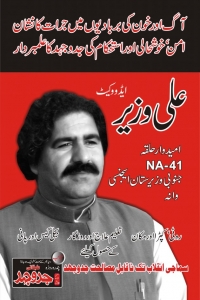 The re-polling at four polling stations in South Waziristan was blatantly rigged. Ali Wazir the Marxist candidate for Parliament had his victory stolen. But while the Parliament is the final goal for corrupt career politicians, for the Marxists the campaign was just a step in the struggle against the rotten Capitalist system.On Tuesday 21st May the re-election was held in Waziristan. The Dawn published the following report of the election results:
“PML-N candidate Ghalib Khan won the election for NA-41 tribal area-VI (South Waziristan), where re-polling was held at four polling stations. He got 7,950 votes while Ali Khan, an independent candidate, secured 7,648 and remained the runner-up.
“According to unofficial results, re-polling was held at four polling stations, including Wacha Dana, Dabkot, Khankot and Marna Ghundi. Tight security arrangements were made on the occasion. The re-polling was conducted smoothly and no untoward incident was reported from any polling station in the volatile tribal agency.
“The Election Commission of Pakistan had decided a few days ago to hold re-polling for NA-41 after receiving reports from the political agent/district returning officer of South Waziristan.”
However, first hand reports from our comrades in Waziristan clearly indicate that this was the result of fraud on a massive scale. From the very moment that the first election result was announced everything possible was done to deny victory to the Marxist candidate Ali Wazir, who has widespread support in this Taliban-infested area.As the readers of Marxist.com will already know, Ali held a big public meeting on 8th May, with the participation of around 30,000 people. This showed the real popularity he enjoys in the constituency. Actually, it understates the strength of his support, since, as a consequence of the extreme social problems, women could not attend this public meeting, although they cast their votes in big numbers on polling day.
The re-polling at four polling stations in South Waziristan was blatantly rigged. Ali Wazir the Marxist candidate for Parliament had his victory stolen. But while the Parliament is the final goal for corrupt career politicians, for the Marxists the campaign was just a step in the struggle against the rotten Capitalist system.On Tuesday 21st May the re-election was held in Waziristan. The Dawn published the following report of the election results:
“PML-N candidate Ghalib Khan won the election for NA-41 tribal area-VI (South Waziristan), where re-polling was held at four polling stations. He got 7,950 votes while Ali Khan, an independent candidate, secured 7,648 and remained the runner-up.
“According to unofficial results, re-polling was held at four polling stations, including Wacha Dana, Dabkot, Khankot and Marna Ghundi. Tight security arrangements were made on the occasion. The re-polling was conducted smoothly and no untoward incident was reported from any polling station in the volatile tribal agency.
“The Election Commission of Pakistan had decided a few days ago to hold re-polling for NA-41 after receiving reports from the political agent/district returning officer of South Waziristan.”
However, first hand reports from our comrades in Waziristan clearly indicate that this was the result of fraud on a massive scale. From the very moment that the first election result was announced everything possible was done to deny victory to the Marxist candidate Ali Wazir, who has widespread support in this Taliban-infested area.As the readers of Marxist.com will already know, Ali held a big public meeting on 8th May, with the participation of around 30,000 people. This showed the real popularity he enjoys in the constituency. Actually, it understates the strength of his support, since, as a consequence of the extreme social problems, women could not attend this public meeting, although they cast their votes in big numbers on polling day.
 The photographs of this meeting are proof of his support, and yet the official results claimed that he had received less than 8,000 votes. This immediately exposes the blatant nature of this fraud. Although some voters may have been deterred by the threats of violence (made explicitly by the Muslim League), the vast difference between the numbers of enthusiastic people who attended the rally on 8th May and the final number of votes declared speaks for itself.
Yesterday the early results from the four polling stations where re-polling was held showed that Ali was winning, and this was even reflected on the screens of Pakistan television up until about nine o’clock. Then the situation underwent a sudden and mysterious change. As a result of the most blatant rigging the results of other polling stations where polling was held on 11th May were changed and a lead was given to the Muslim League (PML-N) candidate.
Even so, the result remained in doubt right up to the eleventh hour. The Returning Officer who was put in charge of the elections by the Election Commission of Pakistan was not sure till late at night what number of votes could be squared with the announcement of a PML-N victory. This fact, in addition to the wafer-thin size of the alleged “majority”, is further evidence that Ali had won by a convincing majority, so that the fraudsters had to tread carefully.
When the result was finally announced, Ali Wazir was said to have “lost” by just 302 votes to PML(Nawaz Sharif) candidate Ghalib Khan. The “winner” was said to have received 7,950 votes while Ali as an independent candidate, secured 7,648 and was declared to be the runner-up. It has yet to be explained how it comes about that a candidate who was declared the winner with 5,000 votes could then go on to lose the election with almost 8,000 votes. Such highly creative electoral arithmetic is a graphic expression of the farcical nature of the Pakistani democracy that is being so lavishly praised by the bourgeois press internationally.
This fraudulent election was prepared by a systematic campaign of intimidation with both the threat of violence and actual violence. On 11th May numerous voters of Ali Wazir were severely beaten up by the Taliban as a punishment. In Waziristan, a hotbed of Taliban activity, the Marxist candidate was faced at every step with the threat not just of a beating but of assassination. Yet comrade Ali Wazir showed not a morsel of fear, courageously defending his revolutionary ideas at every moment.
There is not the slightest doubt that comrade Ali won the election and was prevented from taking his seat by trickery and the most shameless ballot rigging. Thousands of votes were clearly discarded or handed over to the PLM-N candidate. The fact that the “official” result was so narrow (less than 300 votes’ difference) amounts to a virtual confession that the PML-N “victory” was a sham.
This is the second time that the authorities have rigged the elections in Waziristan in order to prevent Ali Wazir from winning. They did exactly the same thing in the last elections in 2008. But this is by no means the end of the story. Ali’s election campaign was a tremendous success and prepares the ground for what must come. One chapter has ended and another, infinitely more important, chapter has just begun.
The fight will continue!
All the talk about the alleged “victory of Pakistani democracy” is cheap propaganda. This so-called democracy is as blatant a fraud as was yesterday’s rigged election in South Waziristan. The bandits and thieves are “elected” to the National Assembly, which is the biggest den of thieves in Pakistan, while the honest representatives of the working people are systematically denied what is theirs by right.
Nawaz Sharif, the new prime minister and head of the Muslim League, is Pakistan’s richest man. Foreign leaders have fallen over themselves to shower him with congratulations for his wonderful “democratic” election. Pakistan’s drug barons, mullahs, landowners, thieves, crooks and political prostitutes are already queuing up at the door of his palatial residence in Lahore jostling for jobs.
Mr Sharif lives in palaces with private cricket fields, aviaries with assorted peacocks, and the deer scampering around his parks. He has water and electricity every day of the year, and even, in the words of The Economist “rows of Victorian-style street lamps, scissor-trimmed lawns and flower beds that would put a Sussex seaside town to shame.”
Inside his enormous house, we are informed, “is all towering chandeliers, gold-trimmed velvet curtains, wall-sized mirrors the better to reflect his model of Mecca, assorted swords on the walls, cut-glass vases and a box of chocolates the size, literally, of a coffin (presumably a post-election gift). The furniture would not have been out of place in pre-revolutionary France.”
But for millions of poor people eking out a miserable existence in the stinking slums and narrow alleys of Lahore, or sweltering hell of villages without electricity throughout Pakistan, life is very different. They know that nothing can be expected from the new government but even more oppression, suffering, robbery and exploitation. Sharif invites western journalists to a table “groaning with kebabs, assorted curries, piles of biryani and steaming bread.” For millions of poor people there is nothing on the table.
Our brave comrade Ali Wazir fought his election campaign on the old revolutionary slogan of the workers and peasants of Pakistan: Roti, Kupra aur Maqan! Bread, Clothes and Shelter! Those most elementary conditions for human existence are still being denied to the majority of the people of this great country. Millions of children go to bed hungry every night while the wealthy parasites grow fat by sucking the blood of the people.
What use is this so-called democracy if it is only another name for the dictatorship of the rich over the poor? What is the point of giving people the right to vote every few years if the only choice before them if one gang of thieves or another gang of thieves? The workers and peasants will draw their own conclusions. The new gang of plunderers will soon stand exposed before the people who will demand what are their most basic rights: Bread, Clothes and Shelter. And since they will not get these things from the National Assembly, they will seek to obtain them elsewhere.
The struggle for workers’ rights does not begin and end with elections. The real fight will be fought out, not in the corridors of the National Assembly but on the streets, in the factories, in the villages and fields, in the schools and universities. Those are the places where the Pakistani Marxists will come into their own.
They may use all their tricks to cheat comrade Ali Wazir in an election, but they can never prevent him and many others like him, from putting himself at the head of the masses in struggle. That struggle is already being prepared. It is coming. It is inevitable. And the final victory will depend above all on the quality of the leadership.
The workers and peasants know very well who they can trust. They know who their real leaders are: not the slick, “clever” politicians in Islamabad, who lie, cheat and deceive, but the honest revolutionaries who put themselves on the standpoint of the working class. They, and only they, can lead the masses to victory.
The photographs of this meeting are proof of his support, and yet the official results claimed that he had received less than 8,000 votes. This immediately exposes the blatant nature of this fraud. Although some voters may have been deterred by the threats of violence (made explicitly by the Muslim League), the vast difference between the numbers of enthusiastic people who attended the rally on 8th May and the final number of votes declared speaks for itself.
Yesterday the early results from the four polling stations where re-polling was held showed that Ali was winning, and this was even reflected on the screens of Pakistan television up until about nine o’clock. Then the situation underwent a sudden and mysterious change. As a result of the most blatant rigging the results of other polling stations where polling was held on 11th May were changed and a lead was given to the Muslim League (PML-N) candidate.
Even so, the result remained in doubt right up to the eleventh hour. The Returning Officer who was put in charge of the elections by the Election Commission of Pakistan was not sure till late at night what number of votes could be squared with the announcement of a PML-N victory. This fact, in addition to the wafer-thin size of the alleged “majority”, is further evidence that Ali had won by a convincing majority, so that the fraudsters had to tread carefully.
When the result was finally announced, Ali Wazir was said to have “lost” by just 302 votes to PML(Nawaz Sharif) candidate Ghalib Khan. The “winner” was said to have received 7,950 votes while Ali as an independent candidate, secured 7,648 and was declared to be the runner-up. It has yet to be explained how it comes about that a candidate who was declared the winner with 5,000 votes could then go on to lose the election with almost 8,000 votes. Such highly creative electoral arithmetic is a graphic expression of the farcical nature of the Pakistani democracy that is being so lavishly praised by the bourgeois press internationally.
This fraudulent election was prepared by a systematic campaign of intimidation with both the threat of violence and actual violence. On 11th May numerous voters of Ali Wazir were severely beaten up by the Taliban as a punishment. In Waziristan, a hotbed of Taliban activity, the Marxist candidate was faced at every step with the threat not just of a beating but of assassination. Yet comrade Ali Wazir showed not a morsel of fear, courageously defending his revolutionary ideas at every moment.
There is not the slightest doubt that comrade Ali won the election and was prevented from taking his seat by trickery and the most shameless ballot rigging. Thousands of votes were clearly discarded or handed over to the PLM-N candidate. The fact that the “official” result was so narrow (less than 300 votes’ difference) amounts to a virtual confession that the PML-N “victory” was a sham.
This is the second time that the authorities have rigged the elections in Waziristan in order to prevent Ali Wazir from winning. They did exactly the same thing in the last elections in 2008. But this is by no means the end of the story. Ali’s election campaign was a tremendous success and prepares the ground for what must come. One chapter has ended and another, infinitely more important, chapter has just begun.
The fight will continue!
All the talk about the alleged “victory of Pakistani democracy” is cheap propaganda. This so-called democracy is as blatant a fraud as was yesterday’s rigged election in South Waziristan. The bandits and thieves are “elected” to the National Assembly, which is the biggest den of thieves in Pakistan, while the honest representatives of the working people are systematically denied what is theirs by right.
Nawaz Sharif, the new prime minister and head of the Muslim League, is Pakistan’s richest man. Foreign leaders have fallen over themselves to shower him with congratulations for his wonderful “democratic” election. Pakistan’s drug barons, mullahs, landowners, thieves, crooks and political prostitutes are already queuing up at the door of his palatial residence in Lahore jostling for jobs.
Mr Sharif lives in palaces with private cricket fields, aviaries with assorted peacocks, and the deer scampering around his parks. He has water and electricity every day of the year, and even, in the words of The Economist “rows of Victorian-style street lamps, scissor-trimmed lawns and flower beds that would put a Sussex seaside town to shame.”
Inside his enormous house, we are informed, “is all towering chandeliers, gold-trimmed velvet curtains, wall-sized mirrors the better to reflect his model of Mecca, assorted swords on the walls, cut-glass vases and a box of chocolates the size, literally, of a coffin (presumably a post-election gift). The furniture would not have been out of place in pre-revolutionary France.”
But for millions of poor people eking out a miserable existence in the stinking slums and narrow alleys of Lahore, or sweltering hell of villages without electricity throughout Pakistan, life is very different. They know that nothing can be expected from the new government but even more oppression, suffering, robbery and exploitation. Sharif invites western journalists to a table “groaning with kebabs, assorted curries, piles of biryani and steaming bread.” For millions of poor people there is nothing on the table.
Our brave comrade Ali Wazir fought his election campaign on the old revolutionary slogan of the workers and peasants of Pakistan: Roti, Kupra aur Maqan! Bread, Clothes and Shelter! Those most elementary conditions for human existence are still being denied to the majority of the people of this great country. Millions of children go to bed hungry every night while the wealthy parasites grow fat by sucking the blood of the people.
What use is this so-called democracy if it is only another name for the dictatorship of the rich over the poor? What is the point of giving people the right to vote every few years if the only choice before them if one gang of thieves or another gang of thieves? The workers and peasants will draw their own conclusions. The new gang of plunderers will soon stand exposed before the people who will demand what are their most basic rights: Bread, Clothes and Shelter. And since they will not get these things from the National Assembly, they will seek to obtain them elsewhere.
The struggle for workers’ rights does not begin and end with elections. The real fight will be fought out, not in the corridors of the National Assembly but on the streets, in the factories, in the villages and fields, in the schools and universities. Those are the places where the Pakistani Marxists will come into their own.
They may use all their tricks to cheat comrade Ali Wazir in an election, but they can never prevent him and many others like him, from putting himself at the head of the masses in struggle. That struggle is already being prepared. It is coming. It is inevitable. And the final victory will depend above all on the quality of the leadership.
The workers and peasants know very well who they can trust. They know who their real leaders are: not the slick, “clever” politicians in Islamabad, who lie, cheat and deceive, but the honest revolutionaries who put themselves on the standpoint of the working class. They, and only they, can lead the masses to victory.
Pakistan: China's premier addresses Senate, lauds progress despite challenges
DAWN.COMChinese Prime Minister Li Keqiang on Thursday (today) addressed the Senate saying the country had made tremendous progress despite facing several challenges, DawnNews reported.
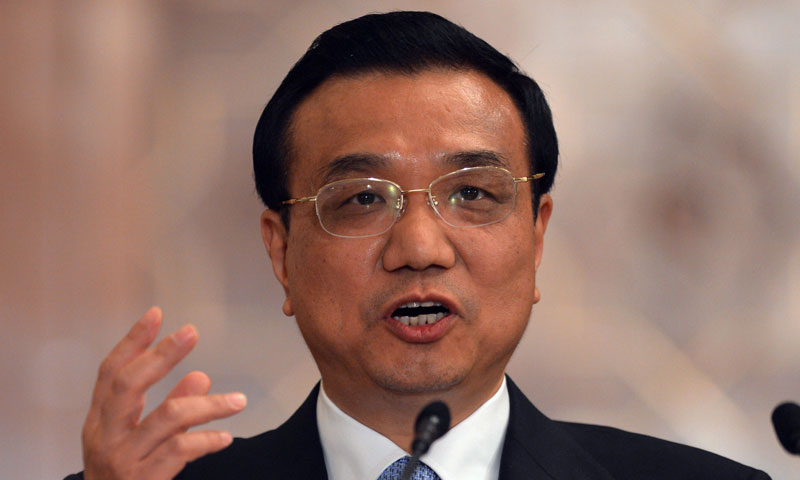 In a special session of the Senate, the Chinese premier declared his delight in addressing the Parliament’s Upper House, adding that Pakistan was the hub of ancient civilizations, like Gandhara.
Moreover, he said Pakistan enjoyed immense significance at both the regional and international levels. He also appreciated Pakistan’s strong role in the Organisation of Islamic Cooperation (OIC).
The Chinese prime minister affirmed the strong friendship between Pakistan and China in the past 62 years, adding that he was impressed by the hospitality of the Pakistani people during his visit.
“Pakistan’s role after the earthquake in China was unforgettable,” Prime Minister Keqiang said.
The Chinese prime minister vowed to support Pakistan’s sovereignty and integrity and pledged to help the country in every possible way. Moreover, he said the two countries should take greater advantage of free trade agreements.
In a special session of the Senate, the Chinese premier declared his delight in addressing the Parliament’s Upper House, adding that Pakistan was the hub of ancient civilizations, like Gandhara.
Moreover, he said Pakistan enjoyed immense significance at both the regional and international levels. He also appreciated Pakistan’s strong role in the Organisation of Islamic Cooperation (OIC).
The Chinese prime minister affirmed the strong friendship between Pakistan and China in the past 62 years, adding that he was impressed by the hospitality of the Pakistani people during his visit.
“Pakistan’s role after the earthquake in China was unforgettable,” Prime Minister Keqiang said.
The Chinese prime minister vowed to support Pakistan’s sovereignty and integrity and pledged to help the country in every possible way. Moreover, he said the two countries should take greater advantage of free trade agreements.
As the energy crisis cripples Pakistan...
EDITORIAL:DAILY TIMESAs Pakistan faces one of the worst phases of its now almost decade-long load-shedding crisis, the Supreme Court’s latest proclamation does not come as a revelation. Terming it ‘artificial’, the Court points to the inadequate generation of power from plants that are capable of producing a higher input. As the summer has finally hit in the full, with the onset of an almost 8-month long period of intense heat, the menace of load shedding has taken on a new form. While the rural areas continue to face breakdowns of 18-20 hours, and at times, the absence of electricity for two or three days, the cities, also reeling under 12-18 hours of load-shedding seem to be further in misery as the duration of power-cuts is on the rise, and the constant fluctuation ensuring no electronics work on their full capacities, thus affecting domestic and business productivity. The solution to the power crisis that has crippled the everyday lives of almost every second Pakistani, halted all tangible economic progress, and played havoc with people’s minds was on the manifesto and election promises of every party, and now it has fallen upon the majority party, the Pakistan Muslim League-Nawaz (PML-N), to devise a policy that not just gives immediate relief to the suffering of people, but also work on middle and long term plans, without which any stop-gap arrangement would be tantamount to band-aiding an open, bleeding wound. Prime minister-elect Nawaz Sharif’s announcement that load shedding would be halved in a fortnight after the formation of his party’s government has come as good news for people, notwithstanding the strength of their faith in any promise after the long chain of unkept promises by the last government , led by the PPP. One of the factors that would be taken into serious consideration by Mr Sharif’s ministry of water and power is the curbing of electricity theft. Power generated. instead of being used for productive purposes is stolen by recipients who use it without paying a rupee for the utility. The 200 billion rupee theft of electricity is not merely a great dent in the treasury of a poor country, but also a cog in the machine that has deprived Pakistan of electricity. The other very important factor that has invariably become the main reason behind the ongoing crisis is the non-payment from the consumer, be it domestic, commercial, or government employed. The arrears due by many government-controlled institutions and high-ranking personnel are so high in monetary amounts that it is baffling how no clear-cut policy to solve it exists. The other noteworthy factor is the outdated infrastructure, which results in tremendous line losses, and whereas the international percentage of such losses is estimated at 15 to 20, in Pakistan it is said to be at an alarmingly high rate of 40 percent. Something has got to give, and that too without any further ado. The new government must take into consideration all steps that could be implemented to alleviate the misery of Pakistanis on short, medium and eventually long-term basis. Solar energy, which should be a given in the cauldron that is most of the Pakistan most months of the year, must be looked into, and in this sector, assistance from China could be utilised. That would on the lines of the very positive talk regarding the generation of power with the help of China between President Asif Zardari and the visiting Chinese Premier Li Keqiang on his debut visit to Pakistan. The deferred plans to acquire cheaper oil on deferred payment basis from good friend Saudi Arabia is one other thing to seriously consider now. And the most important long-term plan would be to utilise unlimited coal reserves in Thar, the extraction of which would give Pakistan 50,000 megawatts of electricity, which is three times the required utility amount. For the PML-N government to be focused on the curtailing, if not immediate elimination, of load shedding is of the utmost importance, which would also be the test of how election slogans actually become a reality after winning the required mandate. The end of load shedding would be a befitting tribute to the PML-N’s slogan of giving Pakistanis a ‘Roshan’ (lit up) Pakistan.
Bomb attack on paramilitary forces kills 12 in Quetta
THE FRONTIER POSTA bomb planted in a rickshaw tore through a vehicle used by security forces in Quetta on Thursday, killing at least 12 people, police said. The bomb containing around 100 kilos (220 pounds) of explosives targeted a truck carrying members of a government paramilitary force helping police to maintain law and order near eastern by-pass. Initial reports said that two people were killed which later rose to 12 while more than a dozen got injured, senior police official told. Sources also told that most of those wounded were security personnel.
Wednesday, May 22, 2013
China, Pakistan to be good partners, brothers forever


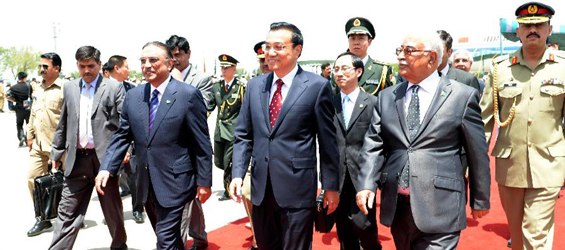 China and Pakistan will always be good partners and brothers that are reliable and sincere to each other, visiting Premier Li Keqiang said Wednesday.
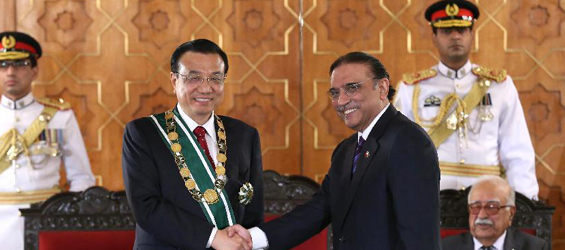 The two neighboring countries "are all-weather friends," Li said during a meeting with Pakistani President Asif Ali Zardari shortly after he landed here before noon.
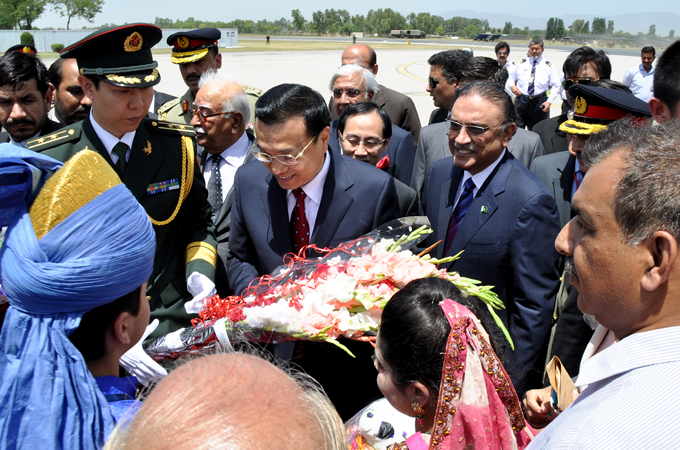 The bilateral friendship boasts a solid foundation and enjoys great prospects, said Li, noting that he fully felt the Pakistani people's deep friendship toward the Chinese people from the warm and grand welcome he received upon his arrival.
Good-neighborliness between China and Pakistan is a blessing not only for the two countries but also for Asia and the world at large, and the bilateral friendship is worth cherishing and carrying on from generation to generation, he added.
The bilateral friendship boasts a solid foundation and enjoys great prospects, said Li, noting that he fully felt the Pakistani people's deep friendship toward the Chinese people from the warm and grand welcome he received upon his arrival.
Good-neighborliness between China and Pakistan is a blessing not only for the two countries but also for Asia and the world at large, and the bilateral friendship is worth cherishing and carrying on from generation to generation, he added.
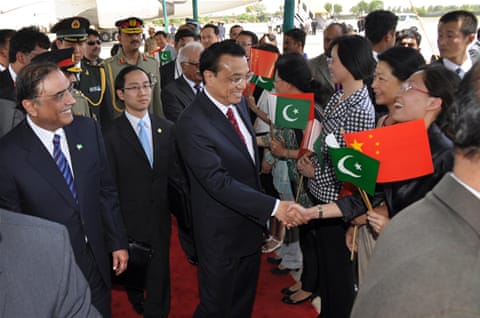 Li said the inclusion of Pakistan in his first overseas trip as premier is aimed at working with Pakistan to open a new chapter in their bilateral ties, chart a new course for practical cooperation and thus lift their traditional friendship to a new height.
China, he added, is committed to advancing the bilateral strategic cooperative partnership, and willing to be reliable partners and sincere brothers with Pakistan forever.
Noting that Zardari has paid nine visits to China during his presidency, Li said China highly appreciates his great contribution to the development of bilateral ties.
Zardari, for his part, said the itinerary of Li's first foreign trip as premier testifies to the great importance the Chinese government and people as well as Li himself attach to the bilateral relationship.
Maintaining the friendship with China is a consensus among all Pakistani political parties, he said, adding that his country is willing to work with China to further deepen their strategic cooperative partnership.
Interim Prime Minister Mir Hazar Khan Khoso and Nawaz Sharif, who is expected to become prime minister for the third time, attended the meeting.
After the meeting, Zardari held a grand ceremony to confer on the Chinese premier the Nishan-e-Pakistan, the highest award given by the Pakistani government.
The award, Li said, not only represents a personal honor, but also embodies the special friendly feelings the Pakistani people have toward the Chinese people.
The Chinese premier also attended a grand welcoming luncheon hosted by Zardari, which gathered more than 400 people from Pakistan's government, parliament, political parties and armed forces.
Li flew in from India. Six fighter jets of the Pakistani air force escorted Li's plane after it entered the country's airspace.
Li's four-nation trip will also take him to Switzerland and Germany.
Li said the inclusion of Pakistan in his first overseas trip as premier is aimed at working with Pakistan to open a new chapter in their bilateral ties, chart a new course for practical cooperation and thus lift their traditional friendship to a new height.
China, he added, is committed to advancing the bilateral strategic cooperative partnership, and willing to be reliable partners and sincere brothers with Pakistan forever.
Noting that Zardari has paid nine visits to China during his presidency, Li said China highly appreciates his great contribution to the development of bilateral ties.
Zardari, for his part, said the itinerary of Li's first foreign trip as premier testifies to the great importance the Chinese government and people as well as Li himself attach to the bilateral relationship.
Maintaining the friendship with China is a consensus among all Pakistani political parties, he said, adding that his country is willing to work with China to further deepen their strategic cooperative partnership.
Interim Prime Minister Mir Hazar Khan Khoso and Nawaz Sharif, who is expected to become prime minister for the third time, attended the meeting.
After the meeting, Zardari held a grand ceremony to confer on the Chinese premier the Nishan-e-Pakistan, the highest award given by the Pakistani government.
The award, Li said, not only represents a personal honor, but also embodies the special friendly feelings the Pakistani people have toward the Chinese people.
The Chinese premier also attended a grand welcoming luncheon hosted by Zardari, which gathered more than 400 people from Pakistan's government, parliament, political parties and armed forces.
Li flew in from India. Six fighter jets of the Pakistani air force escorted Li's plane after it entered the country's airspace.
Li's four-nation trip will also take him to Switzerland and Germany.
A Founder of the Revolution Is Barred From Office, Shocking Iranians
 By THOMAS ERDBRINK
The decision on Tuesday to bar the presidential candidacy of Ali Akbar Hashemi Rafsanjani, a founding father of the revolution and a former president, shocked Iranians, particularly among the 70 percent of the population that is under 35 and grew up when he served in many leading positions.
“They say a revolution eats its children,” said Mehdi, 27, a teacher. “But in the case of Rafsanjani the revolution has eaten its father.”
The exclusion of Mr. Rafsanjani and another thorn in the conservatives’ side, Esfandiar Rahim Mashaei, could foreshadow even greater repercussions, analysts and commentators said.
Since its founding in 1979, the Islamic republic has been characterized by opposing power centers competing constantly and often publicly, a back-and-forth that gave ordinary citizens and private business owners the ability to navigate between the groups.
Barring further surprises, the winner of the June election will now be drawn from a slate of conservative candidates in Iran’s ruling camp, a loose alliance of Shiite Muslim clerics and Revolutionary Guard commanders. That would put the last major state institution under their control — the first time since the 1979 revolution that all state institutions were under the firm control of one faction.
Analysts have long speculated — and some conservative clerics have confirmed — that the ruling faction is determined to abolish the office of president, which has served as a locus of opposition under the populist incumbent, Mahmoud Ahmadinejad, and before him the reformist Mohammad Khatami, who pushed for more personal freedoms. While by no means certain, it is now a greater possibility.
At the very least, the anti-climactic election campaign seems likely to further reinforce the alienation of the urban classes, which make up a large portion of the electorate and mostly gave up on politics after the suppression of the 2009 uprising following Mr. Ahmadinejad’s re-election, widely dismissed as fraudulent. A major boycott of the vote could further undercut the government’s already diminished legitimacy.
The remaining candidates reflect the different shades of gray that now make up Iran’s establishment, a coalition of conservative clerics and Revolutionary Guard commanders known as the traditionalists. Of the eight who were selected — out of the 700 hopefuls who signed up — only one, Hassan Rowhani, a former nuclear negotiator, has even slightly different stances from the traditionalists.
Three of the qualified candidates have direct links to the country’s supreme leader, Ayatollah Ali Khamenei: Gholam Ali Haddad Adel, a close adviser and a relative by marriage; Ali Akbar Velayati, his foreign policy adviser; and Iran’s top nuclear negotiator, Saeed Jalili.
A fourth, Tehran’s mayor, Mohammad Bagher Qalibaf, has long presented himself as a technocrat but last week boasted publicly of having beaten protesting students as a police commander.
All of them say they are ready to fix the economy by using a “revolutionary mind-set” and to solve the nuclear dispute with the Western powers by convincing them that Iran’s position is just.
If history is borne out, one of the candidates, possibly Mr. Rowhani, who is close to Mr. Rafsanjani, will try to tap into votes that would have gone to the two disqualified candidates. Indeed, Mr. Rowhani has already said that if elected he would start direct talks with the United States, a popular theme among dissatisfied urban voters.
For many, though, the elections are shaping up as a shoo-in for someone close to Ayatollah Khamenei.
“Why are they even bothering to organize these elections?” asked a retired army officer, who like others interviewed for this article spoke anonymously out of fear of reprisals. “It seems everything has already been decided.”
It remains possible that one or both of the disqualified candidates will be reinstated. While they are not allowed to appeal, Abbas-Ali Kadkhodaei, the secretary of the Guardian Council, a panel loyal to Ayatollah Khamenei that made the decision, told state news media on Tuesday that Ayatollah Khamenei could reinstate them by decree. He did that in the 2005 elections with a reformist candidate, Mostafa Moin, who came in fifth.
There was no immediate reaction from Mr. Rafsanjani. One of his daughters, Faezeh Hashemi, who was released from prison in March after spending six months there for ”anti-regime propaganda,” did not return calls seeking comment.
Mr. Mashaei said he would fight the decision.
“I consider my disqualification as unjust, and will follow it up through the supreme leader,” he told the Fars news agency.
Just a week ago, a pro-Rafsanjani columnist, Sadegh Zibakalam, predicted that the thousands of government managers, university professors and others in the middle class who once supported the former reformist president, Mohammad Khatami, would rapidly fall in line behind Mr. Rafsanjani. “The feeling of happiness, fervor and enthusiasm that Rafsanjani’s registration created will in the coming days gradually turn into a serious determination throughout the country to turn up at the ballot boxes on 14 June.”
Instead, Mr. Rafsanjani’s disqualification appeared to mark the end of their aspiration to bring change through the ballot box rather than through street protests.
For Mr. Rafsanjani himself, another shot at the presidency at the age of 78 seems not only physically, but politically, impossible. Tuesday’s disqualification also seemed like an official repudiation of his ideas of a liberal economy and more freedoms.
The question remains of what President Ahmadinejad will do now that his protégé, Mr. Mashaei, has been sidelined. His legacy has been tainted by his close relationship with Mr. Mashaei, whom traditionalists call a “deviant” for what they view as his liberal ideas on Islam. Many in his faction have charges of corruption being drawn against them, and the Revolutionary Guards have already hinted that they are ready to do whatever it takes, including the arrest of associates of Mr. Ahmadinejad, if they feel the revolution is under threat.
By THOMAS ERDBRINK
The decision on Tuesday to bar the presidential candidacy of Ali Akbar Hashemi Rafsanjani, a founding father of the revolution and a former president, shocked Iranians, particularly among the 70 percent of the population that is under 35 and grew up when he served in many leading positions.
“They say a revolution eats its children,” said Mehdi, 27, a teacher. “But in the case of Rafsanjani the revolution has eaten its father.”
The exclusion of Mr. Rafsanjani and another thorn in the conservatives’ side, Esfandiar Rahim Mashaei, could foreshadow even greater repercussions, analysts and commentators said.
Since its founding in 1979, the Islamic republic has been characterized by opposing power centers competing constantly and often publicly, a back-and-forth that gave ordinary citizens and private business owners the ability to navigate between the groups.
Barring further surprises, the winner of the June election will now be drawn from a slate of conservative candidates in Iran’s ruling camp, a loose alliance of Shiite Muslim clerics and Revolutionary Guard commanders. That would put the last major state institution under their control — the first time since the 1979 revolution that all state institutions were under the firm control of one faction.
Analysts have long speculated — and some conservative clerics have confirmed — that the ruling faction is determined to abolish the office of president, which has served as a locus of opposition under the populist incumbent, Mahmoud Ahmadinejad, and before him the reformist Mohammad Khatami, who pushed for more personal freedoms. While by no means certain, it is now a greater possibility.
At the very least, the anti-climactic election campaign seems likely to further reinforce the alienation of the urban classes, which make up a large portion of the electorate and mostly gave up on politics after the suppression of the 2009 uprising following Mr. Ahmadinejad’s re-election, widely dismissed as fraudulent. A major boycott of the vote could further undercut the government’s already diminished legitimacy.
The remaining candidates reflect the different shades of gray that now make up Iran’s establishment, a coalition of conservative clerics and Revolutionary Guard commanders known as the traditionalists. Of the eight who were selected — out of the 700 hopefuls who signed up — only one, Hassan Rowhani, a former nuclear negotiator, has even slightly different stances from the traditionalists.
Three of the qualified candidates have direct links to the country’s supreme leader, Ayatollah Ali Khamenei: Gholam Ali Haddad Adel, a close adviser and a relative by marriage; Ali Akbar Velayati, his foreign policy adviser; and Iran’s top nuclear negotiator, Saeed Jalili.
A fourth, Tehran’s mayor, Mohammad Bagher Qalibaf, has long presented himself as a technocrat but last week boasted publicly of having beaten protesting students as a police commander.
All of them say they are ready to fix the economy by using a “revolutionary mind-set” and to solve the nuclear dispute with the Western powers by convincing them that Iran’s position is just.
If history is borne out, one of the candidates, possibly Mr. Rowhani, who is close to Mr. Rafsanjani, will try to tap into votes that would have gone to the two disqualified candidates. Indeed, Mr. Rowhani has already said that if elected he would start direct talks with the United States, a popular theme among dissatisfied urban voters.
For many, though, the elections are shaping up as a shoo-in for someone close to Ayatollah Khamenei.
“Why are they even bothering to organize these elections?” asked a retired army officer, who like others interviewed for this article spoke anonymously out of fear of reprisals. “It seems everything has already been decided.”
It remains possible that one or both of the disqualified candidates will be reinstated. While they are not allowed to appeal, Abbas-Ali Kadkhodaei, the secretary of the Guardian Council, a panel loyal to Ayatollah Khamenei that made the decision, told state news media on Tuesday that Ayatollah Khamenei could reinstate them by decree. He did that in the 2005 elections with a reformist candidate, Mostafa Moin, who came in fifth.
There was no immediate reaction from Mr. Rafsanjani. One of his daughters, Faezeh Hashemi, who was released from prison in March after spending six months there for ”anti-regime propaganda,” did not return calls seeking comment.
Mr. Mashaei said he would fight the decision.
“I consider my disqualification as unjust, and will follow it up through the supreme leader,” he told the Fars news agency.
Just a week ago, a pro-Rafsanjani columnist, Sadegh Zibakalam, predicted that the thousands of government managers, university professors and others in the middle class who once supported the former reformist president, Mohammad Khatami, would rapidly fall in line behind Mr. Rafsanjani. “The feeling of happiness, fervor and enthusiasm that Rafsanjani’s registration created will in the coming days gradually turn into a serious determination throughout the country to turn up at the ballot boxes on 14 June.”
Instead, Mr. Rafsanjani’s disqualification appeared to mark the end of their aspiration to bring change through the ballot box rather than through street protests.
For Mr. Rafsanjani himself, another shot at the presidency at the age of 78 seems not only physically, but politically, impossible. Tuesday’s disqualification also seemed like an official repudiation of his ideas of a liberal economy and more freedoms.
The question remains of what President Ahmadinejad will do now that his protégé, Mr. Mashaei, has been sidelined. His legacy has been tainted by his close relationship with Mr. Mashaei, whom traditionalists call a “deviant” for what they view as his liberal ideas on Islam. Many in his faction have charges of corruption being drawn against them, and the Revolutionary Guards have already hinted that they are ready to do whatever it takes, including the arrest of associates of Mr. Ahmadinejad, if they feel the revolution is under threat.
India offers more aid for Afghanistan
India announces more training and reconstruction aid, as Afghan president seeks help ahead of withdrawal of NATO troops.India has offered to provide more training and reconstruction aid for Afghanistan as most international troops prepare to withdraw next year. President Pranab Mukherjee told visiting Afghan President Hamid Karzai that India was proud to help, a statement from Mukherjee's office said on Tuesday. "India is prepared to increase bilateral contribution to institution-building, training and equipment to the extent India can," Mukherjee said. The statement did not say whether it would include military aid. Aimal Faizi, Karzai’s spokesperson, earlier said that Afghanistan would ask for Indian help in the strengthening of its security forces ahead of the withdrawal of international forces. Karzai also held talks with Indian Prime Minister Manmohan Singh later on Tuesday. "I think we should respond positively to Afghan requests for assistance to build the Afghan security forces," former Indian Ambassador to Afghanistan, Vivek Katju, told Al Jazeera from New Delhi. "We already have a process of training the Afghan forces in India that can be stepped up, and if the Afghans require equipment to develop their capabilities... we should also have a positive response." Strategic partnership A 2011 strategic partnership agreement between the two countries includes Indian training of Afghan security forces. Small batches of Afghan soldiers are undergoing training at Indian military schools. India has invested more than $2bn in Afghan infrastructure, including highways and hospitals and rural electricity projects. It is also helping the Afghan government rebuild its police forces, judiciary and diplomatic services. New Delhi is hoping to gain some influence in the country after 2014, when Afghan forces are to become responsible for the entire country's security. As NATO troops prepare to withdraw, India fears the possibility of the country falling into the hands of a Taliban-led regime, endangering many of India's interests there. India, Afghanistan and Iran have been discussing how best to utilise the southeastern Iranian port of Chahbahar and develop road and rail links from there to Afghanistan. For India, the shortest and most economical route for sending supplies to Afghanistan would be by road through Pakistan. But Pakistan, India's bitter rival, has denied New Delhi road access to Kabul, making the route through Iran all the more significant. Karzai, who earned his college degree in India, has visited New Delhi more than a half dozen times in the past few years.
Chinese PM Li Keqiang arrives in Islamabad
 Chinese Premier Li Keqiang arrived in Pakistan Wednesday for a two-day visit, Geo News reported.
 President Asif Ali Zardari and Caretaker Prime Minister Mir Hazar Khan Khoso were present to receive the Chinese PM.
Li, on his first overseas tour as premier, will hold talks with President Asif Ali Zardari and caretaker prime minister before meeting Pakistan Muslim League-Nawaz (PML-N) chief Nawaz Sharif on Thursday.
He will meet prime minister-elect Nawaz as the long-time allies look to boost trade ties.
Trade between China and Pakistan hit a 12-month figure of $12 billion for the first time last year, according to Islamabad, up 18 percent on the previous year, and the two sides are committed to raising this to $15 billion in the next two to three years.
Strict security measures have been adopted on the arrival of Chinese Premier. Security matters have been handed over the military, while mobile service suspended in the federal capital.
President Asif Ali Zardari and Caretaker Prime Minister Mir Hazar Khan Khoso were present to receive the Chinese PM.
Li, on his first overseas tour as premier, will hold talks with President Asif Ali Zardari and caretaker prime minister before meeting Pakistan Muslim League-Nawaz (PML-N) chief Nawaz Sharif on Thursday.
He will meet prime minister-elect Nawaz as the long-time allies look to boost trade ties.
Trade between China and Pakistan hit a 12-month figure of $12 billion for the first time last year, according to Islamabad, up 18 percent on the previous year, and the two sides are committed to raising this to $15 billion in the next two to three years.
Strict security measures have been adopted on the arrival of Chinese Premier. Security matters have been handed over the military, while mobile service suspended in the federal capital.
Pakistan: A rough deal for women
 Holding separate meetings in Islamabad and Peshawar on Thursday, the National Commission on the Status of Women and some non-governmental rights groups expressed serious concern over the fact that mainstream religious and political parties colluded in various parts of Khyber Pakhtunkhwa to disenfranchise female voters. In Lower and Upper Dir they signed formal agreements, in blatant violation of the ECP's rules, to keep women from exercising the right to vote.
Pamphlets were also distributed in Lower Dir's PK-95 constituency, warning women of dire consequences if they tried to participate in the election. As a result, women voters' turnout in Upper Dir, Mardan, DI Khan, Nowshera, Battagram, Swabi and Malakand areas was dismally low, while in PK-95 no woman could get to any of the polling stations.
It has been usual practice for mainstream parties, including the PPP and PML-N, to pursue a two-faced, opportunistic policy, supporting anti-women practices in these areas in the name of local traditions and doing the opposite in the rest of the country. Yet that has not dampened women's enthusiasm to participate in the democratic process as equal citizens. As many as 55 female candidate filed nomination papers for 20 National Assembly and 35 provincial assembly seats in KP - some 20 percent of them contesting on party tickets. Even in a conservative tribal region like Bajaur Agency, a woman entered the race for a general seat. The Election Commission was expected to make special efforts to facilitate female voters as well as candidates and polling staff. It did seem to instill confidence on that score when the Chief Election Commissioner Fakhruddin G Ebrahim announced a while ago that the results will be cancelled in any constituency where the number of women's votes is less than ten percent of registered female voters. Sadly, the ECP has taken no notice of violations in at least eight KP constituencies. It must pay attention to the issue, and order fresh polling in areas where women were not allowed to vote.
Pointing to another important aspect of the May 11 mega event, the European Union Election Observer Mission said that only 3.4 percent of the candidates for general seats were women. One important reason is the existence of reserved seats; and the other a wrong assumption that the people are not ready to elect them. It is worthwhile to note that of the six women (considerably smaller number than 16 in 2008 elections) who have won National Assembly seats on PPP and PML-N tickets and eight others who have made it to the Punjab Assembly and one each to Sindh and Balochistan assemblies, all have been elected from socially conservative rural or small town constituencies. What worked for them were the two important factors of family influence and party ticket. The two women who contested NA seats on PPP ticket and one as PTI candidate from Lahore got about the same response as their male party colleagues. PTI's Dr Yasmin Rashid, who challenged the PML-N leader Nawaz Sharif lost but not without giving him a good fight. She bagged 52, 321 votes against his 91,666. The point of it all is that the same electability standards apply to women as men. The voters tend not to discriminate on gender basis. Political parties, too, need to get rid of gender prejudice. They must try and promote genuine female representation both through greater voter participation and merit based distribution of party tickets.
Holding separate meetings in Islamabad and Peshawar on Thursday, the National Commission on the Status of Women and some non-governmental rights groups expressed serious concern over the fact that mainstream religious and political parties colluded in various parts of Khyber Pakhtunkhwa to disenfranchise female voters. In Lower and Upper Dir they signed formal agreements, in blatant violation of the ECP's rules, to keep women from exercising the right to vote.
Pamphlets were also distributed in Lower Dir's PK-95 constituency, warning women of dire consequences if they tried to participate in the election. As a result, women voters' turnout in Upper Dir, Mardan, DI Khan, Nowshera, Battagram, Swabi and Malakand areas was dismally low, while in PK-95 no woman could get to any of the polling stations.
It has been usual practice for mainstream parties, including the PPP and PML-N, to pursue a two-faced, opportunistic policy, supporting anti-women practices in these areas in the name of local traditions and doing the opposite in the rest of the country. Yet that has not dampened women's enthusiasm to participate in the democratic process as equal citizens. As many as 55 female candidate filed nomination papers for 20 National Assembly and 35 provincial assembly seats in KP - some 20 percent of them contesting on party tickets. Even in a conservative tribal region like Bajaur Agency, a woman entered the race for a general seat. The Election Commission was expected to make special efforts to facilitate female voters as well as candidates and polling staff. It did seem to instill confidence on that score when the Chief Election Commissioner Fakhruddin G Ebrahim announced a while ago that the results will be cancelled in any constituency where the number of women's votes is less than ten percent of registered female voters. Sadly, the ECP has taken no notice of violations in at least eight KP constituencies. It must pay attention to the issue, and order fresh polling in areas where women were not allowed to vote.
Pointing to another important aspect of the May 11 mega event, the European Union Election Observer Mission said that only 3.4 percent of the candidates for general seats were women. One important reason is the existence of reserved seats; and the other a wrong assumption that the people are not ready to elect them. It is worthwhile to note that of the six women (considerably smaller number than 16 in 2008 elections) who have won National Assembly seats on PPP and PML-N tickets and eight others who have made it to the Punjab Assembly and one each to Sindh and Balochistan assemblies, all have been elected from socially conservative rural or small town constituencies. What worked for them were the two important factors of family influence and party ticket. The two women who contested NA seats on PPP ticket and one as PTI candidate from Lahore got about the same response as their male party colleagues. PTI's Dr Yasmin Rashid, who challenged the PML-N leader Nawaz Sharif lost but not without giving him a good fight. She bagged 52, 321 votes against his 91,666. The point of it all is that the same electability standards apply to women as men. The voters tend not to discriminate on gender basis. Political parties, too, need to get rid of gender prejudice. They must try and promote genuine female representation both through greater voter participation and merit based distribution of party tickets.
Pakistan: ECP fails to do its duty
The results of whole exercise of May 11 parliamentary polls seems to be landing in a major swamp of uncertainty upon the reported overkill in the turnout, rigging and several other irregularities and no else than the Election Commission of Pakistan is responsible for the great mess it has created.
Being the ECP chief, Chief Election Commissioner Fakharuddin G Ibrahim has to accept the responsibility. It is in this background that Pakistan Tehreek-i-Insaaf chairperson Imran Khan on Saturday pleaded that the CEC should have taken the nation into confidence on all the matters relating to the rigging of polls through the ballot box or manipulation or both.
Khan was justified saying that the continued silence of Mr Ibrahim over allegations in the conduct of the election, amounted to a immoral, if not illegal, attitude and he must explain his position.
Needless to say that all state institutions, including the country's armed forces, promptly responded to the ECP call for help before and on the polling day. Yet the people at the helm of affairs failed to deliver; they simply could not rise to the call of the people and political parties and, in fact a whole process of democratic transition.
How harmful the failure of holding fair and transparent elections can be cannot be overemphasized; these are not only a medium for transition of one democratic government to another but also tends to undermine the mandate of the people given to different political organization. No doubt the elections have brought forth a lot of elected representatives relatively better than the past.
More than 180 million people have pinned their hopes in the coming leadership which faces huge challenges ahead, more particularly the end to religious extremism and militancy and mitigating circumstances surfacing in the wake to unending energy crisis that has already taken a heavy toll of the national life.
And above all, the successful democratic transition promises the strengthening of all state institutions that is vital for the future of the country.
Evaluating the entire process on the touchstone of democratic practicability, it looks like the ECP has faltered to a degree as to be termed as a conspiracy or at least abetting in this terrible scheme of things.
The caretaker administration cannot escape the responsibility either of making a muddle of the electoral exercise. If the two still withhold such an explanation, the people would be justified holding them responsible for the biggest electoral irregularity so far. This is why voices for the removal of the CEC are being raised.
US immigration bill passes Senate panel
 A sweeping immigration bill that would offer a chance of citizenship to millions living in the US illegally has taken a stride forward in Congress.
A Senate panel voted 13-5 to back the measure, after a plan to allow people to sponsor same-sex partners for permanent legal status was withdrawn.
The full Senate will now debate the proposal next month.
The bill is widely seen as the biggest overhaul of US immigration policy in more than a quarter of a century.
Republican support
But lawmakers' last attempt at immigration reform was more recent - a bipartisan bill failed in the Senate in 2007.
After Tuesday evening's vote, immigration activists who had crowded into the Senate judiciary committee room cheered.
In a statement, US President Barack Obama congratulated the panel.
He said the bill was "largely consistent with the principles of common sense reform I have proposed and meets the challenge of fixing our broken immigration system". Mr Obama added he was "hopeful" the amendment process would "lead to further improvements".
Senate Republican Leader Mitch McConnell said he would not block the measure from coming to the floor for a full debate, but did not say how he planned to vote.
Three Republicans joined all 10 Democrats on the committee in voting for the bill.
Approval came after committee members agreed to a Republican move to ease visa restrictions on hiring skilled workers from countries such as China and India.
The Democratic chairman of the committee, Patrick Leahy, also withdrew an amendment that would have allowed people to sponsor same-sex partners, who are foreigners, for permanent legal status.
"I don't want to be the senator who asks people to choose between the love of their life and the love of their country," Sen Leahy said.
The bill's supporters had asked him to remove the proposal in order to save the legislation.
"I believe in my heart of hearts that what you're doing is the right and just thing," Democrat Senator Richard Durbin said. "But I believe this is the wrong moment, that this is the wrong bill."
At the centre of the legislation is a provision that would allow the estimated 11 million people living in the US illegally to obtain "registered provisional immigrant status", six months after the bill's enactment if certain conditions are met.
That status is the beginning of a 13-year process that would one day allow immigrants to be eligible to apply for a green card.
The bill also includes provisions to strengthen border security along the US-Mexican border, using additional agents and drones.
The president of the powerful AFL-CIO union group, Rich Trumka, attacked the last-minute deal allowing an increase in the number visas for hi-tech specialists as "anti-worker".
But he said organised labour would continue to support the larger bill.
In the other chamber of Congress, the House of Representatives, immigration legislation is due to receive a hearing in the judiciary committee on Wednesday.
The latest push for reform follows Mr Obama's announcement last June that the US would allow young undocumented workers who immigrated as children to apply for two-year, renewable visas.
Republicans have increasingly embraced the idea of immigration reform after a large majority of Hispanic voters supporters Obama in last year's election.
A sweeping immigration bill that would offer a chance of citizenship to millions living in the US illegally has taken a stride forward in Congress.
A Senate panel voted 13-5 to back the measure, after a plan to allow people to sponsor same-sex partners for permanent legal status was withdrawn.
The full Senate will now debate the proposal next month.
The bill is widely seen as the biggest overhaul of US immigration policy in more than a quarter of a century.
Republican support
But lawmakers' last attempt at immigration reform was more recent - a bipartisan bill failed in the Senate in 2007.
After Tuesday evening's vote, immigration activists who had crowded into the Senate judiciary committee room cheered.
In a statement, US President Barack Obama congratulated the panel.
He said the bill was "largely consistent with the principles of common sense reform I have proposed and meets the challenge of fixing our broken immigration system". Mr Obama added he was "hopeful" the amendment process would "lead to further improvements".
Senate Republican Leader Mitch McConnell said he would not block the measure from coming to the floor for a full debate, but did not say how he planned to vote.
Three Republicans joined all 10 Democrats on the committee in voting for the bill.
Approval came after committee members agreed to a Republican move to ease visa restrictions on hiring skilled workers from countries such as China and India.
The Democratic chairman of the committee, Patrick Leahy, also withdrew an amendment that would have allowed people to sponsor same-sex partners, who are foreigners, for permanent legal status.
"I don't want to be the senator who asks people to choose between the love of their life and the love of their country," Sen Leahy said.
The bill's supporters had asked him to remove the proposal in order to save the legislation.
"I believe in my heart of hearts that what you're doing is the right and just thing," Democrat Senator Richard Durbin said. "But I believe this is the wrong moment, that this is the wrong bill."
At the centre of the legislation is a provision that would allow the estimated 11 million people living in the US illegally to obtain "registered provisional immigrant status", six months after the bill's enactment if certain conditions are met.
That status is the beginning of a 13-year process that would one day allow immigrants to be eligible to apply for a green card.
The bill also includes provisions to strengthen border security along the US-Mexican border, using additional agents and drones.
The president of the powerful AFL-CIO union group, Rich Trumka, attacked the last-minute deal allowing an increase in the number visas for hi-tech specialists as "anti-worker".
But he said organised labour would continue to support the larger bill.
In the other chamber of Congress, the House of Representatives, immigration legislation is due to receive a hearing in the judiciary committee on Wednesday.
The latest push for reform follows Mr Obama's announcement last June that the US would allow young undocumented workers who immigrated as children to apply for two-year, renewable visas.
Republicans have increasingly embraced the idea of immigration reform after a large majority of Hispanic voters supporters Obama in last year's election.
Tuesday, May 21, 2013
Pakistan college pays tribute to Rabindranath Tagore
 In a rare mark of respect, a college in Pakistan has organised a tribute to Rabindranath Tagore marking the centenary of the poet’s winning the Nobel prize for literature.
 Participants offered renditions of Tagore’s poetry in song and recitation, web portal ibnlive reported.
The Department of History at Lahore’s Forman Christian College and the Ewing Literary Society organised the programme on Monday.
Born on May 7, 1861 in Kolkata, Rabindranath Tagore won the Nobel Prize for literature in 1913 as the first non-European and also the first South Asian.
'Gitanjali'(Song Offerings), Tagore’s collection of poems, was the main body of work that secured him the honour.
His poetry was revisited in songs and recitations. Clips from a documentary by Oscar-winning director Satyajit Ray were screened. The event included narration of a short story by the writer.
"Amar Sonar Bangla", the national anthem of Bangladesh, was recited at the end of the programme in Bengali, English and Urdu.
The versatile writer was once banned in erstwhile East Pakistan.
Department of History Chairperson Yaqoob Bangash said the poet was a “strong patriot though he was not a big supporter of nationalism”, the web portal reports.Tagore had returned his knighthood to protest the killings at Jallianwala Bagh in 1919.
He wrote matchless poetry, novels, plays, operas and philosophical tracts and even made fine paintings, Bangash was further quoted.
At the age of 17, Tagore was sent to London for formal schooling but he came back without a degree.
Waseem Anwar, Dean of Humanities Department at Forman Christian College, said the poet set up the Shantiniketan "to promote his ideas on education”. It later developed into the Visva-Bharati.
Tagore inspired generations of people, including Nobel Laureate Aung San Suu Kyi, who was inspired by the poem, "Ekla Chalo Re" (go your own way alone), he said.
China’s Prime Minister Li Keqiang, during a recent visit to India, amid broiling border tensions, said he has great respect for Tagore.
"I have read Tagore in Chinese and I find his world view amazing," the Chinese premier had said.
Translating Tagore is almost a 100-year-old tradition in China, Chitralekha Basu, who has followed the trend, said.
Now, for the first time, the poet’s complete works are being translated directly from Bengali into Chinese by a group of Chinese scholars.
The first five volumes had hit the market two years ago, coinciding with the 150th anniversary of the poet's birth, and all 24 volumes are expected to come out by 2015.
Participants offered renditions of Tagore’s poetry in song and recitation, web portal ibnlive reported.
The Department of History at Lahore’s Forman Christian College and the Ewing Literary Society organised the programme on Monday.
Born on May 7, 1861 in Kolkata, Rabindranath Tagore won the Nobel Prize for literature in 1913 as the first non-European and also the first South Asian.
'Gitanjali'(Song Offerings), Tagore’s collection of poems, was the main body of work that secured him the honour.
His poetry was revisited in songs and recitations. Clips from a documentary by Oscar-winning director Satyajit Ray were screened. The event included narration of a short story by the writer.
"Amar Sonar Bangla", the national anthem of Bangladesh, was recited at the end of the programme in Bengali, English and Urdu.
The versatile writer was once banned in erstwhile East Pakistan.
Department of History Chairperson Yaqoob Bangash said the poet was a “strong patriot though he was not a big supporter of nationalism”, the web portal reports.Tagore had returned his knighthood to protest the killings at Jallianwala Bagh in 1919.
He wrote matchless poetry, novels, plays, operas and philosophical tracts and even made fine paintings, Bangash was further quoted.
At the age of 17, Tagore was sent to London for formal schooling but he came back without a degree.
Waseem Anwar, Dean of Humanities Department at Forman Christian College, said the poet set up the Shantiniketan "to promote his ideas on education”. It later developed into the Visva-Bharati.
Tagore inspired generations of people, including Nobel Laureate Aung San Suu Kyi, who was inspired by the poem, "Ekla Chalo Re" (go your own way alone), he said.
China’s Prime Minister Li Keqiang, during a recent visit to India, amid broiling border tensions, said he has great respect for Tagore.
"I have read Tagore in Chinese and I find his world view amazing," the Chinese premier had said.
Translating Tagore is almost a 100-year-old tradition in China, Chitralekha Basu, who has followed the trend, said.
Now, for the first time, the poet’s complete works are being translated directly from Bengali into Chinese by a group of Chinese scholars.
The first five volumes had hit the market two years ago, coinciding with the 150th anniversary of the poet's birth, and all 24 volumes are expected to come out by 2015.
More Afghan women jailed for 'moral crimes', says HRW
The number of women and girls in Afghanistan imprisoned for "moral crimes" has risen by 50% in the past 18 months, a rights group says.
Human Rights Watch says many are jailed for running away from home, often from forced marriages or domestic violence.
Others are behind bars as a result of alleged adultery, in truth often involving rape, it said.
The government should "get tough on abusers of women and stop blaming women who are crime victims", said HRW.
It said 600 women and girls were now imprisoned for "moral crimes" - the highest since the US-led overthrow of the Taliban 12 years ago.
About 110 of those were girls under 18.
Virginity tests
Human Rights Watch's alert comes just three days after angry scenes in the Afghan parliament forced a halt to a debate about reinforcing a law to prevent violence against women.
The law banning violence against women, child marriages and forced marriages was passed by presidential decree in 2009, but did not gain MPs' approval.
Some women's activists had worried that by opening up the law for debate might risk it being watered down or even repealed.
Human Rights Watch says many of the protections within the Elimination of Violence Against Women law - which bans forced and underage marriage, beatings and rape - are still not being implemented on the ground.
"Four years after the adoption of a law on violence against women and 12 years after Taliban rule, women are still imprisoned for being victims of forced marriage, domestic violence, and rape," Brad Adams, HRW Asia director, was quoted as saying.
It said many of those detained for so-called moral crimes had attempted to report rapes to police only to be arrested for adultery, while others fleeing forced marriages or abuse were jailed for running away from home - even though that is not a crime according to the Afghan criminal code.
And it said that many of those accused of "moral crimes" were subjected to "virginity tests" with no medical basis which contravened international law.
"Coerced 'virginity' examinations are a form of sexual assault," Mr Adams said. "Afghan police, without any scientific basis, are routinely forcing these unspeakable examinations on women and girls."
One prisoner, Sorya, told HRW she was forced to marry at 12 and was abused by her husband. After nine years of marriage during which she had three children, he accused her of running away with another man whom she had not even met.
HRW said Sorya was serving a sentence of five-and-a-half years in prison. She was pregnant at the time of her arrest, and her baby died in prison three weeks after he was born.
'Tragedy'
HRW's Afghanistan researcher, Heather Barr, said the dramatic increase in prosecutions for "moral crimes" could be related to increased confidence among religious conservatives as international troops prepare to leave Afghanistan in 2014.
"I think it's possible that as everyone anticipates the departure of foreigners, there is a feeling that in a sense things can go back to normal, and... people will be free to ignore [women's rights] in the future,'' Ms Barr told AP news agency.
"If that's true, that's really is a tragedy, because these ideas didn't come from foreigners. These ideas came from Afghan women's rights activists,'' she said.
HRW called on Afghan President Hamid Karzai to issue a decree that running away should not be treated as a crime and instruct police to investigate possible incidents of violence against women.
It urged international donors to pressure the government to improve women's protections.
The Afghan interior ministry says it is preparing a response to Human Rights Watch's report.
Hindus living 'dangerously' in Balochistan
 Though Hindus have richly contributed in the economic prosperity and development of Pakistan's restive Balochistan province since pre-partition days, they are today faced with the dilemma of survival and living "dangerously".
Historically, it is not clear in documents to assert how and when Hindus originally settled in Balochistan. But the Balochistan-based Baloch and Hindu historians and writers agree that Hindus have been living here since time immemorial along with Buddhists, according to columnist Muhammad Akbar Notezai of the Daily Times.
He says Hindus ruled Balochistan before the invasion of the Arabs in 712 AD.
In his article, "The Balochistan Hindus' dilemma", Notezai says today "Hindus are considered low caste. They are treated unequally and as second grade citizens. They are living isolated lives in their separate localities. They do not have the right to vote. The standard of their children's education is abysmal." In Balochistan, Hindus have two ancient sacred places -- the Hinglaj Shrine in Lasbela district, and Kali Devi, dedicated to Goddess Kali, in Kalat town.
During partition, communal riots were rampant in the subcontinent but Hindus lived harmoniously and peacefully in the princely state of Balochistan, which was under Yar Muhammad Khan, the chief ruler of the Kalat state. He respected the indigenousness of Hindus while giving them economic and religious freedom. Thus, the Hindus did not leave Balochistan during partition of the subcontinent.
Though Hindus lived amicably with the Baloch and Pashtuns, many had to leave Balochistan's Pashtun belt to settle in Baloch-populated areas or migrated to India after partition. In 1941, the Hindu population was 54,000 in Balochistan's Pashtun belt which soon dwindled by as much as 93 per cent after 1947.
Notezai, quoting a prominent Hindu intellectual Sham Kumar, writes that in contemporary times "Hindus are now facing a situation worse in Baloch residing places than they had to face in the past living in Pashtun residing places".
"Because the Baloch elders, who would show great respect for their neighbourhood Hindus, are no longer living in this world, or they have become very old."
For Baolchistan's economic prosperity and development, Hindus have built schools, libraries and hospitals. Many of the educated Hindus have been offering services in health, education and other sectors.
The Daily Times article said it is profoundly shocking that Hindus are now living dangerously in Balochistan".
"They cannot even perform their religious practices freely due to the nightmarish situation where they interminably fear for their lives, faith, honour and property."
"Hindus, in spite of being Balochistan's peaceful and largest minority, are running from their old 'motherland' to escape persecution, because their lives are in a precarious and worsened condition these days."
"In Balochistan, it was the 1990s period that turned into a great conflagration for Hindus. After that, gradually the Hindus' manifold problems, whether it was abduction, religious persecution, migration or killing, all of them have been intensifying."
"Many Hindu families have migrated to India, inside Pakistan to Karachi, and interior Sindh. But they are economically living a pathetic life in these places. There are many more Hindus who still utter the words 'migration' and 'insecurity' in Balochistan."
In Balochistan, there has been mass Hindu migration from the districts of Kalat, Khuzdar, Quetta, Mastung, Lasbela, Hub, Nushki, and Dalbandin.
According to Dr Shah Muhammad Marri, a well-known Baloch historian, "This land has been burning for the last 30 years. It has become an inferno for all the castes."
"Same is the case with the Hindus, the Christians, the Hazaras, the Baloch and the Pashtuns. All of them are migrating from pillar to post to find a safe place."
Balochistan's Minority Minister Basant Lal Gulshan, a Hindu, however, denies reports of Hindus migrating from Balochistan.
The government officials, on the other hand, say majority of Hindus who have been migrating from Balochistan or the country are economically sound. They see a bright future for their children in India.
"But it is worth mentioning here that 90 per cent of the Hindus of Balochistan are unsound economically. They cannot afford to leave their indigenous places and settle somewhere else, especially India."
Notezai wrote: "... a sane person or community would never give up their connections to their place of birth until or unless circumstances compel them."
Hindus - whose exact numbers are not known - also complain that their sufferings hardly and rarely get discussed in mainstream media. They rely on private TV channels to highlight their sufferings. Nearly 35 Hindus were killed during former dictator General Pervez Musharraf's regime where he launched the fifth military operation against Nawab Akbar Khan Bugti, the former chief minister of Balochistan.
Bugti used to keep the Hindus in proximity to his legendary fort in Dera Bugti to safeguard them from criminal elements. "That is why many Hindus, mainly women and children, were killed and sustained severe injuries in the assault against Nawab Bugti on March 17, 2005."
To a lesser extent, the last government would also be held responsible for the Hindus' sufferings. "That is why the incoming government should be civilised and democratically elected so that Hindus may find a solution to their tragic dilemma," said Notezai.
Though Hindus have richly contributed in the economic prosperity and development of Pakistan's restive Balochistan province since pre-partition days, they are today faced with the dilemma of survival and living "dangerously".
Historically, it is not clear in documents to assert how and when Hindus originally settled in Balochistan. But the Balochistan-based Baloch and Hindu historians and writers agree that Hindus have been living here since time immemorial along with Buddhists, according to columnist Muhammad Akbar Notezai of the Daily Times.
He says Hindus ruled Balochistan before the invasion of the Arabs in 712 AD.
In his article, "The Balochistan Hindus' dilemma", Notezai says today "Hindus are considered low caste. They are treated unequally and as second grade citizens. They are living isolated lives in their separate localities. They do not have the right to vote. The standard of their children's education is abysmal." In Balochistan, Hindus have two ancient sacred places -- the Hinglaj Shrine in Lasbela district, and Kali Devi, dedicated to Goddess Kali, in Kalat town.
During partition, communal riots were rampant in the subcontinent but Hindus lived harmoniously and peacefully in the princely state of Balochistan, which was under Yar Muhammad Khan, the chief ruler of the Kalat state. He respected the indigenousness of Hindus while giving them economic and religious freedom. Thus, the Hindus did not leave Balochistan during partition of the subcontinent.
Though Hindus lived amicably with the Baloch and Pashtuns, many had to leave Balochistan's Pashtun belt to settle in Baloch-populated areas or migrated to India after partition. In 1941, the Hindu population was 54,000 in Balochistan's Pashtun belt which soon dwindled by as much as 93 per cent after 1947.
Notezai, quoting a prominent Hindu intellectual Sham Kumar, writes that in contemporary times "Hindus are now facing a situation worse in Baloch residing places than they had to face in the past living in Pashtun residing places".
"Because the Baloch elders, who would show great respect for their neighbourhood Hindus, are no longer living in this world, or they have become very old."
For Baolchistan's economic prosperity and development, Hindus have built schools, libraries and hospitals. Many of the educated Hindus have been offering services in health, education and other sectors.
The Daily Times article said it is profoundly shocking that Hindus are now living dangerously in Balochistan".
"They cannot even perform their religious practices freely due to the nightmarish situation where they interminably fear for their lives, faith, honour and property."
"Hindus, in spite of being Balochistan's peaceful and largest minority, are running from their old 'motherland' to escape persecution, because their lives are in a precarious and worsened condition these days."
"In Balochistan, it was the 1990s period that turned into a great conflagration for Hindus. After that, gradually the Hindus' manifold problems, whether it was abduction, religious persecution, migration or killing, all of them have been intensifying."
"Many Hindu families have migrated to India, inside Pakistan to Karachi, and interior Sindh. But they are economically living a pathetic life in these places. There are many more Hindus who still utter the words 'migration' and 'insecurity' in Balochistan."
In Balochistan, there has been mass Hindu migration from the districts of Kalat, Khuzdar, Quetta, Mastung, Lasbela, Hub, Nushki, and Dalbandin.
According to Dr Shah Muhammad Marri, a well-known Baloch historian, "This land has been burning for the last 30 years. It has become an inferno for all the castes."
"Same is the case with the Hindus, the Christians, the Hazaras, the Baloch and the Pashtuns. All of them are migrating from pillar to post to find a safe place."
Balochistan's Minority Minister Basant Lal Gulshan, a Hindu, however, denies reports of Hindus migrating from Balochistan.
The government officials, on the other hand, say majority of Hindus who have been migrating from Balochistan or the country are economically sound. They see a bright future for their children in India.
"But it is worth mentioning here that 90 per cent of the Hindus of Balochistan are unsound economically. They cannot afford to leave their indigenous places and settle somewhere else, especially India."
Notezai wrote: "... a sane person or community would never give up their connections to their place of birth until or unless circumstances compel them."
Hindus - whose exact numbers are not known - also complain that their sufferings hardly and rarely get discussed in mainstream media. They rely on private TV channels to highlight their sufferings. Nearly 35 Hindus were killed during former dictator General Pervez Musharraf's regime where he launched the fifth military operation against Nawab Akbar Khan Bugti, the former chief minister of Balochistan.
Bugti used to keep the Hindus in proximity to his legendary fort in Dera Bugti to safeguard them from criminal elements. "That is why many Hindus, mainly women and children, were killed and sustained severe injuries in the assault against Nawab Bugti on March 17, 2005."
To a lesser extent, the last government would also be held responsible for the Hindus' sufferings. "That is why the incoming government should be civilised and democratically elected so that Hindus may find a solution to their tragic dilemma," said Notezai.
Pakistan: Christian student killed by firing of Muslims in native village of Shahbaz Bhatti
 A Christian village named Khushpur in sub-district Samundari of Faisalabad district came under attack of Muslims on May 19, 2013,
killing one Christian student of 10th Grade and injuring many Christian by firing.
Father Felix, a European missionary who established a number of villages like Mariamabad in Shekhupura district, Francisabad in Shorkot, Jhang district in Pakistan. “Felix” is the Latin word for "happy". The village was thus given the name of "Khushpur" in Urdu, the "land of Fr Felix" or “land of Happiness”.
Many important Catholic public figures come from the village in government records shown as Chak Number 451/GB; people like Bishop John Joseph, Bishop Rufin Anthony, Ilama Paul Ernest, and Shahbaz Bhatti were born and raised in this remote village;
On information of Muslims attack, contingents of police reached to village and prevented further Muslim killing.
Faisal Patras, a Christian student of class 10th of High School was killed by firing of Muslims while Danish Masih who is brother of Faisal Patras and Patras Masih father of deceased was seriously injured with bullet wounds when trying to safe Faisal Patras.
After agricultural revolution in Pakistan, many Christians peasants of these Christian villages in Punjab province of Pakistan which were distributed without any cost by Catholic and other missionaries moved to cities and sold this gifted land to Muslims.
Muslim attack was on a petty dispute on a piece of land which Christian of Khushpur have sold to Muslims.
According to Samundari Social Media Network, there was killing of one Christian in other Christian village Chack Number 468/GB in this district one months ago by firing of Muslims and killers are at large, this other killing happened.
Mr. Khalid Gill, Chief Organizer of All Pakistan Minorities Alliance APMA have strongly condemned attack on village Khushpur and killing of a Christian student.
Mr. Gill have demanded immediate arrest of killers and security of the Christians which are under constant attack of Muslims in Punjab province of Pakistan.
A Christian village named Khushpur in sub-district Samundari of Faisalabad district came under attack of Muslims on May 19, 2013,
killing one Christian student of 10th Grade and injuring many Christian by firing.
Father Felix, a European missionary who established a number of villages like Mariamabad in Shekhupura district, Francisabad in Shorkot, Jhang district in Pakistan. “Felix” is the Latin word for "happy". The village was thus given the name of "Khushpur" in Urdu, the "land of Fr Felix" or “land of Happiness”.
Many important Catholic public figures come from the village in government records shown as Chak Number 451/GB; people like Bishop John Joseph, Bishop Rufin Anthony, Ilama Paul Ernest, and Shahbaz Bhatti were born and raised in this remote village;
On information of Muslims attack, contingents of police reached to village and prevented further Muslim killing.
Faisal Patras, a Christian student of class 10th of High School was killed by firing of Muslims while Danish Masih who is brother of Faisal Patras and Patras Masih father of deceased was seriously injured with bullet wounds when trying to safe Faisal Patras.
After agricultural revolution in Pakistan, many Christians peasants of these Christian villages in Punjab province of Pakistan which were distributed without any cost by Catholic and other missionaries moved to cities and sold this gifted land to Muslims.
Muslim attack was on a petty dispute on a piece of land which Christian of Khushpur have sold to Muslims.
According to Samundari Social Media Network, there was killing of one Christian in other Christian village Chack Number 468/GB in this district one months ago by firing of Muslims and killers are at large, this other killing happened.
Mr. Khalid Gill, Chief Organizer of All Pakistan Minorities Alliance APMA have strongly condemned attack on village Khushpur and killing of a Christian student.
Mr. Gill have demanded immediate arrest of killers and security of the Christians which are under constant attack of Muslims in Punjab province of Pakistan.
Pakistan's Ahmadis Face Rising Persecution, Violence
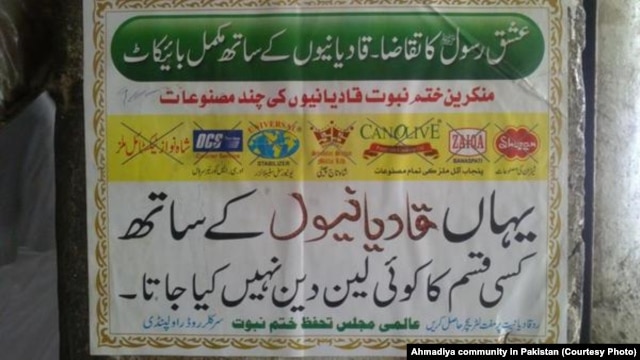 Mehmood maintains that Ahmadis have been particularly harassed by extremist religious groups. He claims such groups have issued fatwas, or religious edicts, calling for Ahmadis to be killed.
"There are both good and bad people in every society," he says. "But the tragedy is that the extremist elements, though small in number, have taken the whole Pakistani society hostage. They are spreading hate against Ahmadis in open conferences where they issue fatwas to kill Ahmadis. They ask for Pakistanis to boycott Ahmadis and thus Ahmadis cannot follow their faith or properly carry out other business related to their faith."
Even mainstream politicians have added to the marginalization of the group. On May 4 Imran Khan, the cricket star turned politician, said during a campaign rally that he did not regard Ahmadis as Muslims and would not campaign for their votes.
Mehmood suggests that Ahmadis face a stark choice in Pakistan. They can follow their faith and risk persecution and death or they can convert or leave the country. Thousands of Ahmadis from the subcontinent have left, with large communities now living in Britain and the United States.
“Of course, this is becoming a very common thing in Pakistani society," Mehmood says. "They are holding open conference and issuing threats that Ahmadis have one choice [to stop following their faith]. Then they issue statements in the Pakistani media saying Ahmadis have two choices: Either join other Muslims or leave Pakistan.”
Mehmood maintains that Ahmadis have been particularly harassed by extremist religious groups. He claims such groups have issued fatwas, or religious edicts, calling for Ahmadis to be killed.
"There are both good and bad people in every society," he says. "But the tragedy is that the extremist elements, though small in number, have taken the whole Pakistani society hostage. They are spreading hate against Ahmadis in open conferences where they issue fatwas to kill Ahmadis. They ask for Pakistanis to boycott Ahmadis and thus Ahmadis cannot follow their faith or properly carry out other business related to their faith."
Even mainstream politicians have added to the marginalization of the group. On May 4 Imran Khan, the cricket star turned politician, said during a campaign rally that he did not regard Ahmadis as Muslims and would not campaign for their votes.
Mehmood suggests that Ahmadis face a stark choice in Pakistan. They can follow their faith and risk persecution and death or they can convert or leave the country. Thousands of Ahmadis from the subcontinent have left, with large communities now living in Britain and the United States.
“Of course, this is becoming a very common thing in Pakistani society," Mehmood says. "They are holding open conference and issuing threats that Ahmadis have one choice [to stop following their faith]. Then they issue statements in the Pakistani media saying Ahmadis have two choices: Either join other Muslims or leave Pakistan.”
Subscribe to:
Posts (Atom)