http://www.rferl.org/One policeman has been shot dead and another wounded as they escorted a team conducting a polio vaccination campaign in northwestern Pakistan. Police officials said two men riding a motorbike opened fire on the two policemen on April 10 as the vaccination team visited the Parhoti neighborhood of the town of Mardan in Khyber Pakhtunkhwa Province. The police were reportedly standing outside a home as the female polio workers were inside giving polio drops to children. No one immediately claimed responsibility for the attack. In December, gunmen killed at least nine polio workers in separate attacks in different parts of Pakistan. Some Pakistani militants oppose the polio vaccination campaign, accusing health workers of acting as spies for the United States and claiming the vaccine is intended to make Muslim children sterile.
Wednesday, April 10, 2013
Fatal Attack On Pakistan Polio Team
Pakistan: Long hot summers
 It seems that acute energy shortages have become the fate of the nation and the country is rapidly slipping into the dark ages. Urban centres have endured a loadshedding of 18 hours per day and rural areas virtually remained without electricity after a series of crises hit the power sector over the past two days, with generation declining to below 7,000MW against a demand of 13,000MW. However, the ground reality was even worse than what the supply and demand data suggest.
On paper, the demand and supply gap was 60 percent, but consumers in areas covered by the government utilities were getting only 20 percent of the required supply due to various reasons. For example, out of 7,000MW, about 700MW goes to the KESC, reducing the national supply by 10 percent to other areas. Supply also dropped to 4500MW after 25 percent of the electricity was lost by way of line losses, theft and transmission inefficiency. Exemptions given to hospitals, the VVIPs including Prime Minister's House and Presidency took away another 1500MW, leaving the net available electricity to the rest of the consumers at 3,000MW only. This was not all. Act of sabotage, disruption in oil supplies and lower water releases from Tarbela and Mangla were also sometime taking their toll. According to an official, "the power sector is on a clinical support system and another contingency can lead to total collapse."
The most disturbing aspect is that while the country is facing a crisis situation, authorities seem to be least bothered by this critical condition. The previous government almost did nothing to improve the situation while the caretaker set-up apparently believes that administrative reshuffles are enough to take care of the power sector problems. The generation side is almost forgotten by all. The power sector at present appears to be in double-jeopardy. On the one hand, generation is dropping because of oil, gas and water shortages and other inefficiencies while terrorist attacks like the latest one near Peshawar are demoralising the staff and reducing its efficiency. This is in addition to power theft, line losses, etc. Iran-Pakistan gas pipeline project which could be a ray of hope is still at an initial stage and embroiled in so many controversies that one could be almost sure of a more deepening crisis. Obviously, there seems to be no relief on the horizon, irrespective of the government likely to assume power after the elections. However, a beginning could be made by the new government by declaring a kind of state of emergency and devoting almost all the development resources towards the energy sector. Programmes like road building, and laptop distribution have to be abandoned in favour of electricity generation. Electricity theft has to be removed on a war-footing and transmission lines have to be guarded at all cost. If we begin to take such steps now, their impact would only be visible after a time lag of few years. Renewed efforts for hydro energy are also a must and foreign sources of funding have to be found for the purpose. If all these measures are not taken on a war-footing, the future of the country is indeed very bleak and the wrath of the people would be very severe. The incoming government would do a great service to the country if it realises the gravity of the situation and concentrates its energies and resources to tackle the electricity crisis immediately after assuming power. We believe that if electricity is made available adequately and law and order situation is improved, most of the problems of the economy would automatically be solved. These two problems have sapped the energies of the people completely and made them so despondent that they have lost confidence in the future of the country.
It seems that acute energy shortages have become the fate of the nation and the country is rapidly slipping into the dark ages. Urban centres have endured a loadshedding of 18 hours per day and rural areas virtually remained without electricity after a series of crises hit the power sector over the past two days, with generation declining to below 7,000MW against a demand of 13,000MW. However, the ground reality was even worse than what the supply and demand data suggest.
On paper, the demand and supply gap was 60 percent, but consumers in areas covered by the government utilities were getting only 20 percent of the required supply due to various reasons. For example, out of 7,000MW, about 700MW goes to the KESC, reducing the national supply by 10 percent to other areas. Supply also dropped to 4500MW after 25 percent of the electricity was lost by way of line losses, theft and transmission inefficiency. Exemptions given to hospitals, the VVIPs including Prime Minister's House and Presidency took away another 1500MW, leaving the net available electricity to the rest of the consumers at 3,000MW only. This was not all. Act of sabotage, disruption in oil supplies and lower water releases from Tarbela and Mangla were also sometime taking their toll. According to an official, "the power sector is on a clinical support system and another contingency can lead to total collapse."
The most disturbing aspect is that while the country is facing a crisis situation, authorities seem to be least bothered by this critical condition. The previous government almost did nothing to improve the situation while the caretaker set-up apparently believes that administrative reshuffles are enough to take care of the power sector problems. The generation side is almost forgotten by all. The power sector at present appears to be in double-jeopardy. On the one hand, generation is dropping because of oil, gas and water shortages and other inefficiencies while terrorist attacks like the latest one near Peshawar are demoralising the staff and reducing its efficiency. This is in addition to power theft, line losses, etc. Iran-Pakistan gas pipeline project which could be a ray of hope is still at an initial stage and embroiled in so many controversies that one could be almost sure of a more deepening crisis. Obviously, there seems to be no relief on the horizon, irrespective of the government likely to assume power after the elections. However, a beginning could be made by the new government by declaring a kind of state of emergency and devoting almost all the development resources towards the energy sector. Programmes like road building, and laptop distribution have to be abandoned in favour of electricity generation. Electricity theft has to be removed on a war-footing and transmission lines have to be guarded at all cost. If we begin to take such steps now, their impact would only be visible after a time lag of few years. Renewed efforts for hydro energy are also a must and foreign sources of funding have to be found for the purpose. If all these measures are not taken on a war-footing, the future of the country is indeed very bleak and the wrath of the people would be very severe. The incoming government would do a great service to the country if it realises the gravity of the situation and concentrates its energies and resources to tackle the electricity crisis immediately after assuming power. We believe that if electricity is made available adequately and law and order situation is improved, most of the problems of the economy would automatically be solved. These two problems have sapped the energies of the people completely and made them so despondent that they have lost confidence in the future of the country.
President Zardari directs for ensuring transparency in elections
Radio PakistanPresident Asif Ali Zardari has expressed the hope that provincial governments will rise to the expectations of the people in regard to approaching elections. He was talking to Punjab Governor Makhdoom Ahmad Mehmood and Caretaker Chief Minister Najam Sethi in Lahore on Wednesday. The president directed to take every step to ensure free‚ fair and transparent general election in the province. The governor and chief minister apprised the president about the measures being taken to ensure holding of free‚ fair and transparent elections in the province. He was also briefed on law and order situation and overall situation in Punjab.
Monday, April 8, 2013
Pakistan: Continuing disquiet over scrutiny process
EDITORIAL:DAILY TIMESThe polity continues to express disquiet over the manner in which the scrutiny process is proceeding. Some big guns, including former prime minister Raja Pervez Ashraf have had their nomination papers for the elections rejected, although on questionable grounds. Further, the anomalies in the manner in which the Returning Officers (ROs) are accepting or rejecting nomination papers, often accepting a candidate in one constituency while rejecting him in others, speaks volumes about the chaotic and anarchic scrutiny process. To prove the point, Raja Pervez Ashraf’s papers have been rejected in his native Gujjar Khan on the grounds that there are charges and allegations against him in the Rental Power case, while General (retd) Musharraf’s have been accepted in Chitral (albeit rejected in three other constituencies) on the grounds that the charges of murder and treason against him have not yet been proved in a court of law. When we last checked, neither had Raja Pervez Ashraf been convicted in any case against him. Does the time honoured principle of ‘innocent until proved guilty’ still hold for all cases or is it to be applied selectively? So what are the criteria and principles on which the scrutiny process is supposed to be conducted, and is there any uniformity in it? The ROs have become a power unto themselves, without any guidance or training in how to conduct the scrutiny. Hence the lack of uniformly applicable principles on which the candidates are tested. As a result, absurdities such as testing candidates’ Islamic credentials and knowledge of religion, not to mention personal details, have crept into the scrutiny process with a vengeance. Unfortunately, the Election Commission of Pakistan (ECP) has chosen to distance itself from the way the process is playing out as the better part of valour. Nevertheless, the ECP cannot so easily absolve itself of responsibility for the mess. The ROs may be judicial officers in their other avatar, but in the scrutiny process they are acting as agents of the ECP. How then can the ECP turn its face away from the spreading chaos by trying to hide behind the facade of ‘no power to issue directions to the ROs’? So much for the loudly touted independence of the ECP headed by Justice (retd) Fakhruddin G Ebraheem. On the other hand the Chief Justice of Pakistan (CJP) Iftikhar Mohammad Chaudhry feels no hesitation in addressing a series of meetings of ROs up and down the country in which he continues to encourage them to do their duty without fear or favour and according to the law. Quite apart from the inappropriateness of the CJP addressing the ROs per se, and that too at this sensitive moment in the middle of the scrutiny process, his words are having the effect of the ROs relying increasingly on the provisions of Articles 62 and 63 to judge the suitability or otherwise of candidates. We have repeatedly pointed out in this space that the credentials of these articles are, to put it mildly, suspect, since they were the brainchild of dictator General Ziaul Haq, are vague, subjective and legally unsound, and therefore cannot by any stretch of the imagination be made the basis for deciding the fate of candidates, the Supreme Court’s view on these articles notwithstanding. The other day, the architect of the 18th Amendment, Senator Raza Rabbani of the PPP revealed that it was the JUI-F’s slippery Maulana Fazlur Rehman who opposed the deletion of these articles from the constitution. He might as well have added that the Maulana had plenty of support from the right wing forces in the parliamentary committee seized of the matter, not to mention some of the political ‘scions’ of the Zia dictatorship. The chaotic and anarchic scrutiny process has disappointed all the democratic forces. If some big and small guns nevertheless manage to slip through the ROs’ dragnet, it will owe more to luck and the particular RO rather than any systematic approach to what constitutes an acceptable or unacceptable candidate. Let us hope the country can be spared further angst through the process of appeals against the ROs’ decisions to the election tribunals, which appear to have their work cut out for them, given the possible volume of such appeals and the short time available for deciding them.
Flushing out the terrorism
 In a fierce fighting against militants in Tirah Valley, the Pakistan Army has lost yet another 23 troops and sustained injuries to several others. A crucial military offensive launched to recapture the restive Tirah Valley of Khyber Agency has resulted in killing of over 30 militants. The TTP captured entire Tirah Valley after a fierce gun-battle with the Ansarul Islam (AI) during the last month that forced a massive displacement of locals from war-hit area. Hence a full-fledged military offensive was planned with the help of the SSG and local Amn Lashkar volunteers to root out the strong bases of the banned outfits of the TTP from the restive valley.
Having back-up of gunship and jet planes, the forces are quite near to seize the area completely. In the most complicated hilly terrains of Tirah Valley, the support of the SSG and the local volunteers to the Army, pitched in the most difficult war, has lit up the hopes for retrieval. The hope against the hope is: the Army may well wrest back the control over the Valley that has become a stronghold for the TTP. The Army has entered into a decisive war against the militants. The Army advances in the Tirah Valley may gain new impetus if the political administration in the adjacent agencies and nearby settled areas also launches a serious hunt for the terrorists simultaneously.
The joint action will restrict the movement of the terrorists. It is generally believed that the FATA is a strong hunting ground for the extremists whereas the fact is that the TTP network has spread across the country especially the province of Punjab. To ensure success in Tirah, the security agencies should launch a joint operation to flush out extremists across Pakistan. Otherwise, the militants, over the years, having caused a sporadic devastation every now and then, may continue to do so if they are not countered with a massive force. The militants have ruthlessly killed children, women and elderly persons; the Tirah Valley had been their last merciless endeavor. Unfathomed sadness is the political parties are engaged in political knitty-gritty to reach the power-corridors ignoring the cruelties of militants, and some of them even went on to support a political peace process through negotiations with the TTP. Thus it gave the TTP, an ample time to regroup and rejuvenate to launch a massive crusade on the Tirah Valley. Now it is time for all the political parties to show no sympathy with the TTP men rather extend all-out support to the Army to continue with its decisive offensive against the self-styled Islamists to teach them a lesson to abide by the writ of the State. Any sympathy or soft corner from any quarter at this point in time with the extremists and militants in any part of the country will jeopardize the sacrifices rendered by the Army Jawans fighting war on terror and on the other hand; it will hoodwink the holding of next general elections.
The brave people of the FATA, apart from suffering massive loss of men and material, are pinning hope of their revival on forthcoming elections; and against all odds are preparing to exercise their right to vote in 190 polling stations set up to elect two members of the National Assembly. The political administration has enlisted 110 polling stations as sensitive. A comprehensive plan is afoot to provide stringent security cover to the polling stations to hold free, fair and impartial
elections.
The task is extremely difficult but not impossible. It, however, requires a firm political will to accomplish the job. There must not be any illusion that without taking the FATA in the mainstream, the peace cannot be established in the rest of the country.
The deteriorated situation in Karachi and Quetta will come alive if the security agencies managed to flush out extremism from the country in the ongoing targeted operations; the militancy and the State, under any pretext, cannot go together especially killing in the name of the nationalism or the religion is a forgone phenomenon. All those up against the ruthless terrorism deserve unconditional support and appreciation of the nation and political leadership alike.
In a fierce fighting against militants in Tirah Valley, the Pakistan Army has lost yet another 23 troops and sustained injuries to several others. A crucial military offensive launched to recapture the restive Tirah Valley of Khyber Agency has resulted in killing of over 30 militants. The TTP captured entire Tirah Valley after a fierce gun-battle with the Ansarul Islam (AI) during the last month that forced a massive displacement of locals from war-hit area. Hence a full-fledged military offensive was planned with the help of the SSG and local Amn Lashkar volunteers to root out the strong bases of the banned outfits of the TTP from the restive valley.
Having back-up of gunship and jet planes, the forces are quite near to seize the area completely. In the most complicated hilly terrains of Tirah Valley, the support of the SSG and the local volunteers to the Army, pitched in the most difficult war, has lit up the hopes for retrieval. The hope against the hope is: the Army may well wrest back the control over the Valley that has become a stronghold for the TTP. The Army has entered into a decisive war against the militants. The Army advances in the Tirah Valley may gain new impetus if the political administration in the adjacent agencies and nearby settled areas also launches a serious hunt for the terrorists simultaneously.
The joint action will restrict the movement of the terrorists. It is generally believed that the FATA is a strong hunting ground for the extremists whereas the fact is that the TTP network has spread across the country especially the province of Punjab. To ensure success in Tirah, the security agencies should launch a joint operation to flush out extremists across Pakistan. Otherwise, the militants, over the years, having caused a sporadic devastation every now and then, may continue to do so if they are not countered with a massive force. The militants have ruthlessly killed children, women and elderly persons; the Tirah Valley had been their last merciless endeavor. Unfathomed sadness is the political parties are engaged in political knitty-gritty to reach the power-corridors ignoring the cruelties of militants, and some of them even went on to support a political peace process through negotiations with the TTP. Thus it gave the TTP, an ample time to regroup and rejuvenate to launch a massive crusade on the Tirah Valley. Now it is time for all the political parties to show no sympathy with the TTP men rather extend all-out support to the Army to continue with its decisive offensive against the self-styled Islamists to teach them a lesson to abide by the writ of the State. Any sympathy or soft corner from any quarter at this point in time with the extremists and militants in any part of the country will jeopardize the sacrifices rendered by the Army Jawans fighting war on terror and on the other hand; it will hoodwink the holding of next general elections.
The brave people of the FATA, apart from suffering massive loss of men and material, are pinning hope of their revival on forthcoming elections; and against all odds are preparing to exercise their right to vote in 190 polling stations set up to elect two members of the National Assembly. The political administration has enlisted 110 polling stations as sensitive. A comprehensive plan is afoot to provide stringent security cover to the polling stations to hold free, fair and impartial
elections.
The task is extremely difficult but not impossible. It, however, requires a firm political will to accomplish the job. There must not be any illusion that without taking the FATA in the mainstream, the peace cannot be established in the rest of the country.
The deteriorated situation in Karachi and Quetta will come alive if the security agencies managed to flush out extremism from the country in the ongoing targeted operations; the militancy and the State, under any pretext, cannot go together especially killing in the name of the nationalism or the religion is a forgone phenomenon. All those up against the ruthless terrorism deserve unconditional support and appreciation of the nation and political leadership alike.
Karachi: Violence Overwhelms Pakistan's Largest City
Friday, April 5, 2013
Pakistan: Shameful conduct
Pakistan's elites are identified as the people who pay no or little taxes and still enjoy the luxuries of life without any fear of tax authorities who are themselves up to their neck in the quagmire of corruption. The number of groups and individuals who should pay taxes is around eight per cent of the population but only two per cent meet their national obligations, according to the Federal Board of Revenue.
British Prime Minister David Cameron and former US Secretary of State Hillary Clinton already mentioned about difficulties in increasing assistance to Pakistan when its own elite pays no taxes. This exactly was the perception of the British parliament's International Development Committee which reluctant in coming to the assistance of Pakistan, particularly in education and health sectors, by doubling the UK's assistance to £446 million ($675 million) in 2014-2015, making it the biggest recipient of British aid.
But UK lawmakers said it would be unfair for Britain to fund the social sector projects in Pakistan unless its new government, due to be elected in May, tackles rife corruption and tax evasion. These observations are so pungent as to make all Pakistanis hang their heads in shame, more particularly the privileged ruling classes.
Britain, the committee said, wanted to help Pakistan in its social sector, but "we cannot expect the people in the UK to pay from their taxes to improve education and health in Pakistan if the Pakistani elite is not paying income tax," . Pakistan's rich do not pay taxes and exhibit little interest in improving their socio-economic conditions and creating opportunities for the country's poor.
Citing figures from the Pakistan Board of Revenue, the committee said only 0.57 per cent of Pakistanis paid income tax last year and that no one has been prosecuted for income tax fraud for at least the last 25 years. Less than 30 per cent of Pakistan's members of parliament pay tax, it said adding that there was a "powerful case" for continuing aid to Pakistan, a country with "real poverty and serious security problems" as well as strong links to its former colonial power. But even the past donations have often failed to reach poor Pakistanis because of corruption.
The FBR's own data says that some 2.7 million people from the privileged class having big houses, two cars, two bank accounts and excessive foreign tours pay little or no taxe. The 70 per cent Pakistani lawmakers, who have long been paying no taxes, own an estimated average net wealth of $882,000, according to a news report released in December last.
Owners of huge tracks of agricultural land, industrialists and businessmen all conduct themselves in such a shameful manner. This is mainly because of their political clout as several such influential people are in politics and tax collecting agencies fear laying hand on them for political expediency. The problem starts at the top. Those who make revenue policies, run the government and collect taxes, have not been able to themselves set good examples for others and this behavior mounts pressure on authorities not to reform the tax structure and this ultimately stresses the national economy that is as fragile as decades ago.
Pakistan has one of the lowest tax-to-GDP ratios in the world, estimated at 9.2 per cent. This is mostly because of the tax evasion culture. This may be exemplified with the fact that only 260,000 out of 190 million citizens have paid tax consecutively for the last three years. Pakistan's refusal to implement sweeping tax reform was instrumental in the collapse of a $11.3 billion IMF bailout programme in November 2010. Not the IMF alone, the failure of reforming the economy, has earned a bad name for Pakistan with other donor agencies as well. What may be the gravity of tax evasion culture may be imagined from even the official perception of the affairs that even the energy crisis in the country is less disturbing issue than tax evasion. The national exchequer faces a loss of Rs1,900 billion due to tax evasion.
The state of Pakistan has a rare opportunity to add billions to the exchequer if candidates to the coming parliamentary elections are honestly quizzed about the amount he or she has paid in taxes. It is not difficult to assess any candidate's wealth because this information is mandatory to add in nomination forms. If candidates can be asked absurd and ambiguous questions about their person, they must also be asked about his or her tax obligations.
Thursday, April 4, 2013
Loan default: NAB shares data on Sharif graft references
The Express TribuneThe National Accountability Bureau (NAB) has passed on information to election authorities about three graft references against Pakistan Muslim League-Nawaz’s leadership, an official said. The references are pending in the Accountability Court, Rawalpindi. The move drew an angry response from the party, whose spokesman counselled the corruption watchdog not to do “politics”. The party intends to give a detailed response at a press conference on Friday. NAB’s reply to the Election Commission of Pakistan (ECP) is part of the scrutiny process of candidates and it has not spared PML-N chief Nawaz Sharif and ex-provincial chief minister Shahbaz Sharif. The two brothers were found accused of loan default in the Hudaibiya Paper Mills scandal by the NAB during the scrutiny of their nomination papers, sources told The Express Tribune. The record was sent to the returning officers (ROs) through the ECP. The NAB found that the Sharif brothers were accused in the case of loan default of Rs3,486 million rupees in the Hudaibiya Paper Mills case. NAB records show that the Sharif brothers had filed a petition for quashing the First Information Report (FIR) against them in the Lahore High Court (LHC) and the case was still pending. “In that respect, they [Sharifs] were still accused in the default case,” said an official. The case was filed in March 2000 with the Attock NAB Court where the Sharif brothers were accused of misusing their authority and accumulating wealth beyond their means. The other accused included their third brother Abbas Sharif, Nawaz Sharif’s son Hussain Nawaz and his daughter Maryam Nawaz, Hamza Shahbaz, and Senator Ishaq Dar. “The competent authority to decide the candidature of the Sharif brothers were the respective returning officers and not the NAB,” said a NAB spokesperson while reacting to television reports that the NAB had objected to the candidacy of the two PML-N leaders. The NAB spokesperson said that the bureau has neither raised objections on any candidate during the scrutiny of the nomination papers nor has it returned the name of any candidate with objection to election commission. NAB has received more than 18,000 nomination forms and it has only provided the information that was to be provided to the special cell of the poll body. But the PML-N directed its wrath at the anti-corruption authority. A party spokesman said NAB’s objections against Nawaz Sharif and Shahbaz Sharif were based on mala fide intentions. “NAB should not do politics but rather it should refrain from becoming a party in this regard”. The NAB’s report against the Sharif brothers is part of a well-calculated conspiracy. He said the PML-N will disclose facts at a news press conference on Friday (today). In a separate statement, PML-N’s spokesperson Senator Pervez Rasheed said there is no discrepancy in the assets declared on the nomination papers of the PML-N president.
Z.A.BHUTTO: ''Aaj bhi Bhutto zinda hai''
Daily Times
Mehr TararThe most popular leader emblazoned his name for posterity as the one man who brought into existence a party that was for the common man.
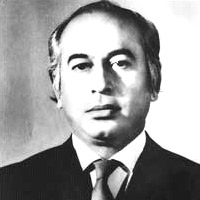 The headline was stark. The words seemed almost banal, camouflaging the enormity of what had transpired. As my mother put the paper down silently, her eyes giving away nothing, I looked at her, dreading something awful had happened. As I inched my way to Pakistan Times, as if it was the last page of a horror story, the words seemed unusually enhanced: “Z A Bhutto hanged, buried in Naudero.” My elementary-school mind went into a spin as it tried to make sense of what the text connoted. This was the man I used to see on TV speaking passionately, wearing his trademark outfit, styled with an unusual cap. This was the man who had the party that rooted for the poor, and the poor, in turn, voted it into power. This was the man who when he spoke, mesmerised, transforming into that magical character from my storybooks, the Pied Piper of Hamlin, and people followed, starry-eyed, agog with anticipation of a better tomorrow, their pale visages hued into large smiles about a dry-cleaned future, devoid of the grime of their yesterdays. This was the man who spoke with a passion, a realness, an empathy linked directly to their hearts, hearts as tired as the clichés of other politicians, and an emotion that rang loud, sparkling, throwing the age-old game of politics on its sorry head, hurrahing into a new horizon. Zulfiqar Ali Bhutto was their own, a leader they loved, idolised, and remembered even when he disappeared from their sleepy villages, dusty old towns, noisy cities, badly-printed newspapers, and grainy TV screens. On April 4, 1979, Zulfiqar Ali Bhutto was executed. In Adiala Jail, Rawalpindi, the former civilian prime minister had been executed by a general-turned-into-a-military-dictator, Ziaul Haq, on an insufficiently-proved murder charge.
Bhutto was not just another politician who ruled, enjoyed power, exercised power, and then faded into oblivion. To encapsulate the multi-tiered complexities of a personality that had the good and the not-so-good deeply intertwined, in a limited space, is like saying one comprehends the mystery of the Bermuda Triangle. The man said to be impulsive, peculiar, controlled by quirks, eccentric pronouncements, started his political life as a minister in President Iskander Mirza’s cabinet. Born on January 3, 1928 to Khursheed Begum and Shah Nawaz Bhutto, Z A had a sheltered, aristocratic childhood along with his three other siblings, Imdad, Sikandar and Mumtaz, and went on to study at Berkeley University and then Oxford. As Pakistan’s youngest foreign minister in 1963, after serving at different ministerial posts in the general-turned-president Ayub Khan’s cabinet (yes, ironically Bhutto’s principal political guru was the predecessor of the one who killed him), the Lincoln’s Inn’s-trained barrister championed Operation Gibraltar in Indian-occupied Kashmir. The result was the war with India in 1965. This kick-started a rollercoaster of events that were gigantic in their political consequences, laying the foundations of what Pakistan would come to denote.
Bhutto ended his liaison dangereuse with Ayub, and fired from the government, he formed what would become the biggest political party of Pakistan — the PPP — notwithstanding its performance in future governmental tenures. The socialist welfare manifesto spoke of the dreams the poor never dared let approach their wrinkled eyes, and the promise was of a Pakistan where roti, kapra and makaan (bread, clothing and shelter), the 101 of human existence hitherto unavailable to everyone, would become a reality. Bhutto, the aristocrat who cast aside his Saville Row suits and custom-made shoes; the dazzling orator, who conversed in English, transformed into an ‘awami’-attired messiah, as his speeches in Urdu became a sermon for a ‘New Pakistan’.
In Election 1970, Mujibur Rehman of the Awami League emerged as the winner, and the generals, along with their president General Yahya Khan — the man Bhutto called ‘Jack the Ripper — were enraged, and Bhutto played along. The tragedy of East Pakistan — secession/massacres/lootings/rapes/imprisonment — the heinousness of which formed many a volume for historians/analysts is/was the worst mark on Pakistan’s face. This was the country that on August 14, 1947 had a bloodstained carving out of India to hallelujah a nation that put the rights of Muslims at the top. Pakistan split into two and the generals and their countrymen blamed it on the Bengalis and Indians. Bhutto’s own words on East Pakistan’s secession spoke of a profound anguish despite the impression to the contrary: “On March 25, 1971 and as God is my witness, I wept. I wept and said, ‘My country is finished’” (Interview to Oriana Fallaci).
Bhutto became the new president of a sheepish yet defiant Pakistan.
Bhutto’s almost five-year reign swerved, somersaulted, and contorted into an array of constitutional and administrative contradictions. Out of the seven amendments to the constitution, the second one was not just in contradiction with Bhutto’s apparently secular demeanour, it was almost barbaric with the not-yet-envisaged horrors it was later to unleash on an entire sect: Ahmadis were declared as non-Muslims. Then came the first ministry of religious affairs in 1972. The man who had married for love, loved to entertain, enjoyed music and ballroom dancing, in his abrupt move to appease the clergy banned drinking, gambling and nightclubs in May 1977 in the middle of the PNA’s Nizam-e-Mustafa movement against his government. Nevertheless, the clergy still treated him like a pariah.
The pronouncements of Bhutto’s proud nationalism and ‘India is our staunch enemy’ were a tad loud. The Simla Accord in the wake of Bhutto’s irreverent comments about Indian prime minister Indira Gandhi (“...a diligent drudge of a schoolgirl, a woman devoid of initiative and imagination...”) was as insincere in its implementation as the ‘cordiality’ between the two leaders. The next proud step to perpetuate the narrative of what-you-do-we-do-too in response to Indian nuclear testing was Bhutto’s atomic bomb programme. For him, ‘godless’ China and ‘holy’ Saudi Arabia were the new pals, Bangladesh the new neighbour, and in the spirit of highlighting the non-existent Muslim ummah, the second OIC took place in Lahore in 1974.
Bhutto, the man who used to stare teary-eyed at the arid fields, the mud huts where the farmworkers endured a prehistoric existence, introduced land reforms. Bhutto nationalised major industries and banks. And Bhutto did it all as reform for the alleviation of poverty as he promised. The intent was sincere, the initiatives detested by the moneyed elite, the basic system remained unaltered, resentments increased, and the murmurs to remove him took the resonance of a repeated mantra. Now the foe was tri-headed: the military, the clergy and the affluent.
The game of political-military chess brought the middle-hair-parted, mustachioed, radical COAS, promoted/endorsed ironically by Bhutto, General Ziaul Haq, encouraged by the rising resentment of the masses, enabled by religious parties rallied under the PNA, whom again, in vain Bhutto had done his best to befriend, and failed. The 1977 election declared Bhutto’s PPP a winner, and the opposition did not take it smiling. The coup d’état was a midnight attack on the constitution on July 5, 1977. And Bhutto lost power.
Bhutto was detained for a month, Pakistan was promised a new election in 90 days. He was charged with the murder of Muhammad Ahmad Khan Kasuri, killed in March 1974, whose son Ahmed Raza Kasuri, who claimed that he was the actual target, later claimed to have been the target of 15 assassination attempts. The ‘kangaroo court’ and the ‘mock trial’ as termed by the former US Attorney General Ramsey Clark, who attended the trial, declared Bhutto guilty on March 18, 1978. On March 24, 1979, the Supreme Court dismissed the appeal, Zia upheld the death sentence, and Bhutto was hanged on April 4, 1979.
The grieving widow was the Iranian-born Begum Nusrat Bhutto, the pain-stricken children were Benazir, Murtaza, Sanam and Shah Nawaz. The family had had a minuscule interaction with Bhutto during the incarceration. The meetings were limited, restricted and monitored. They protested outside and people sympathised, and that is all they did for their beloved leader. The family did not get to meet him, and were not notified of his hanging. All they got was a thin, shadow of the man who was imprisoned two years ago, shoved into a nondescript coffin, handed over by men with their visages sweaty and eyes lowered. The most popular leader who changed the rules of politics, who had his intense gaze on the hearts of people, who was one leader whom the masses truly loved, who enunciated a brighter tomorrow, who did not break down despite his long, torturous ordeal, emblazoned his name for posterity as the one man who brought into existence a party that was for the common man.
The man of multiple contradictions, who sported his ‘talisman’-cap given by Chou En-lai, read biographies of Mussolini, Hitler, Napoleon, De Gaulle, Stalin and Churchill, studied Rousseau and Marx, counted Seokarno and Nasser as two of his true friends, had this to say about himself to Oriana Fallaci in 1974: “...I’m a fascist? I’m not. A fascist is...an enemy of culture, and I’m an intellectual enamored of culture. A fascist is a man of the right, and I’m a man of the left. A fascist is a petit bourgeois, and I come from the aristocracy. When you’re born rich and become a socialist, no one believes you. Neither friends in your own circle, who in fact make fun of you, nor the poor, who aren’t enlightened enough to believe in your sincerity. The hardest thing for me hasn’t been to escape the bullets and the poison, it’s been to get myself taken seriously by those who didn’t believe me... My mother was different. She came from a poor family and was haunted by other people’s poverty. She did nothing but repeat to me: ‘We must take care of the poor, we must help the poor, the poor shall the poor shall inherit the earth...’”
Rest in peace, Mr Bhutto.
The headline was stark. The words seemed almost banal, camouflaging the enormity of what had transpired. As my mother put the paper down silently, her eyes giving away nothing, I looked at her, dreading something awful had happened. As I inched my way to Pakistan Times, as if it was the last page of a horror story, the words seemed unusually enhanced: “Z A Bhutto hanged, buried in Naudero.” My elementary-school mind went into a spin as it tried to make sense of what the text connoted. This was the man I used to see on TV speaking passionately, wearing his trademark outfit, styled with an unusual cap. This was the man who had the party that rooted for the poor, and the poor, in turn, voted it into power. This was the man who when he spoke, mesmerised, transforming into that magical character from my storybooks, the Pied Piper of Hamlin, and people followed, starry-eyed, agog with anticipation of a better tomorrow, their pale visages hued into large smiles about a dry-cleaned future, devoid of the grime of their yesterdays. This was the man who spoke with a passion, a realness, an empathy linked directly to their hearts, hearts as tired as the clichés of other politicians, and an emotion that rang loud, sparkling, throwing the age-old game of politics on its sorry head, hurrahing into a new horizon. Zulfiqar Ali Bhutto was their own, a leader they loved, idolised, and remembered even when he disappeared from their sleepy villages, dusty old towns, noisy cities, badly-printed newspapers, and grainy TV screens. On April 4, 1979, Zulfiqar Ali Bhutto was executed. In Adiala Jail, Rawalpindi, the former civilian prime minister had been executed by a general-turned-into-a-military-dictator, Ziaul Haq, on an insufficiently-proved murder charge.
Bhutto was not just another politician who ruled, enjoyed power, exercised power, and then faded into oblivion. To encapsulate the multi-tiered complexities of a personality that had the good and the not-so-good deeply intertwined, in a limited space, is like saying one comprehends the mystery of the Bermuda Triangle. The man said to be impulsive, peculiar, controlled by quirks, eccentric pronouncements, started his political life as a minister in President Iskander Mirza’s cabinet. Born on January 3, 1928 to Khursheed Begum and Shah Nawaz Bhutto, Z A had a sheltered, aristocratic childhood along with his three other siblings, Imdad, Sikandar and Mumtaz, and went on to study at Berkeley University and then Oxford. As Pakistan’s youngest foreign minister in 1963, after serving at different ministerial posts in the general-turned-president Ayub Khan’s cabinet (yes, ironically Bhutto’s principal political guru was the predecessor of the one who killed him), the Lincoln’s Inn’s-trained barrister championed Operation Gibraltar in Indian-occupied Kashmir. The result was the war with India in 1965. This kick-started a rollercoaster of events that were gigantic in their political consequences, laying the foundations of what Pakistan would come to denote.
Bhutto ended his liaison dangereuse with Ayub, and fired from the government, he formed what would become the biggest political party of Pakistan — the PPP — notwithstanding its performance in future governmental tenures. The socialist welfare manifesto spoke of the dreams the poor never dared let approach their wrinkled eyes, and the promise was of a Pakistan where roti, kapra and makaan (bread, clothing and shelter), the 101 of human existence hitherto unavailable to everyone, would become a reality. Bhutto, the aristocrat who cast aside his Saville Row suits and custom-made shoes; the dazzling orator, who conversed in English, transformed into an ‘awami’-attired messiah, as his speeches in Urdu became a sermon for a ‘New Pakistan’.
In Election 1970, Mujibur Rehman of the Awami League emerged as the winner, and the generals, along with their president General Yahya Khan — the man Bhutto called ‘Jack the Ripper — were enraged, and Bhutto played along. The tragedy of East Pakistan — secession/massacres/lootings/rapes/imprisonment — the heinousness of which formed many a volume for historians/analysts is/was the worst mark on Pakistan’s face. This was the country that on August 14, 1947 had a bloodstained carving out of India to hallelujah a nation that put the rights of Muslims at the top. Pakistan split into two and the generals and their countrymen blamed it on the Bengalis and Indians. Bhutto’s own words on East Pakistan’s secession spoke of a profound anguish despite the impression to the contrary: “On March 25, 1971 and as God is my witness, I wept. I wept and said, ‘My country is finished’” (Interview to Oriana Fallaci).
Bhutto became the new president of a sheepish yet defiant Pakistan.
Bhutto’s almost five-year reign swerved, somersaulted, and contorted into an array of constitutional and administrative contradictions. Out of the seven amendments to the constitution, the second one was not just in contradiction with Bhutto’s apparently secular demeanour, it was almost barbaric with the not-yet-envisaged horrors it was later to unleash on an entire sect: Ahmadis were declared as non-Muslims. Then came the first ministry of religious affairs in 1972. The man who had married for love, loved to entertain, enjoyed music and ballroom dancing, in his abrupt move to appease the clergy banned drinking, gambling and nightclubs in May 1977 in the middle of the PNA’s Nizam-e-Mustafa movement against his government. Nevertheless, the clergy still treated him like a pariah.
The pronouncements of Bhutto’s proud nationalism and ‘India is our staunch enemy’ were a tad loud. The Simla Accord in the wake of Bhutto’s irreverent comments about Indian prime minister Indira Gandhi (“...a diligent drudge of a schoolgirl, a woman devoid of initiative and imagination...”) was as insincere in its implementation as the ‘cordiality’ between the two leaders. The next proud step to perpetuate the narrative of what-you-do-we-do-too in response to Indian nuclear testing was Bhutto’s atomic bomb programme. For him, ‘godless’ China and ‘holy’ Saudi Arabia were the new pals, Bangladesh the new neighbour, and in the spirit of highlighting the non-existent Muslim ummah, the second OIC took place in Lahore in 1974.
Bhutto, the man who used to stare teary-eyed at the arid fields, the mud huts where the farmworkers endured a prehistoric existence, introduced land reforms. Bhutto nationalised major industries and banks. And Bhutto did it all as reform for the alleviation of poverty as he promised. The intent was sincere, the initiatives detested by the moneyed elite, the basic system remained unaltered, resentments increased, and the murmurs to remove him took the resonance of a repeated mantra. Now the foe was tri-headed: the military, the clergy and the affluent.
The game of political-military chess brought the middle-hair-parted, mustachioed, radical COAS, promoted/endorsed ironically by Bhutto, General Ziaul Haq, encouraged by the rising resentment of the masses, enabled by religious parties rallied under the PNA, whom again, in vain Bhutto had done his best to befriend, and failed. The 1977 election declared Bhutto’s PPP a winner, and the opposition did not take it smiling. The coup d’état was a midnight attack on the constitution on July 5, 1977. And Bhutto lost power.
Bhutto was detained for a month, Pakistan was promised a new election in 90 days. He was charged with the murder of Muhammad Ahmad Khan Kasuri, killed in March 1974, whose son Ahmed Raza Kasuri, who claimed that he was the actual target, later claimed to have been the target of 15 assassination attempts. The ‘kangaroo court’ and the ‘mock trial’ as termed by the former US Attorney General Ramsey Clark, who attended the trial, declared Bhutto guilty on March 18, 1978. On March 24, 1979, the Supreme Court dismissed the appeal, Zia upheld the death sentence, and Bhutto was hanged on April 4, 1979.
The grieving widow was the Iranian-born Begum Nusrat Bhutto, the pain-stricken children were Benazir, Murtaza, Sanam and Shah Nawaz. The family had had a minuscule interaction with Bhutto during the incarceration. The meetings were limited, restricted and monitored. They protested outside and people sympathised, and that is all they did for their beloved leader. The family did not get to meet him, and were not notified of his hanging. All they got was a thin, shadow of the man who was imprisoned two years ago, shoved into a nondescript coffin, handed over by men with their visages sweaty and eyes lowered. The most popular leader who changed the rules of politics, who had his intense gaze on the hearts of people, who was one leader whom the masses truly loved, who enunciated a brighter tomorrow, who did not break down despite his long, torturous ordeal, emblazoned his name for posterity as the one man who brought into existence a party that was for the common man.
The man of multiple contradictions, who sported his ‘talisman’-cap given by Chou En-lai, read biographies of Mussolini, Hitler, Napoleon, De Gaulle, Stalin and Churchill, studied Rousseau and Marx, counted Seokarno and Nasser as two of his true friends, had this to say about himself to Oriana Fallaci in 1974: “...I’m a fascist? I’m not. A fascist is...an enemy of culture, and I’m an intellectual enamored of culture. A fascist is a man of the right, and I’m a man of the left. A fascist is a petit bourgeois, and I come from the aristocracy. When you’re born rich and become a socialist, no one believes you. Neither friends in your own circle, who in fact make fun of you, nor the poor, who aren’t enlightened enough to believe in your sincerity. The hardest thing for me hasn’t been to escape the bullets and the poison, it’s been to get myself taken seriously by those who didn’t believe me... My mother was different. She came from a poor family and was haunted by other people’s poverty. She did nothing but repeat to me: ‘We must take care of the poor, we must help the poor, the poor shall the poor shall inherit the earth...’”
Rest in peace, Mr Bhutto.
Wednesday, April 3, 2013
Z.A.BHUTTO !!!!!
 ON this spring day, when flowers bloom and sparrows sing, all of nature joins in celebrating creation. For the multitudes of this stricken nation, though, April 4 is a sad reminder of the day when the shadows lengthened and darkness set in forever. Z.A Bhutto was hanged by a military dictator General Zia-Ul Haq by orchestrating a judicial trial to get rid of a popular leader. When the light was put off in one of the most brilliant shining stars in the galaxy in that dark night of April 4, 1979 Bhutto had already made indelible imprints on the sand of time, which no dictator could erase.
 When Zulfikar Ali Bhutto took the reins of a truncated Pakistan in December 1971, a new state was taking shape, not through gaining liberty , it had come into being because it had been decapitated and dismembered. Unlike 1947, there was no hope, no anticipation, no dreams, only distress and dejection. In 1947, Pakistan had to be built from the physical building blocks. In 1971, it had to be rebuilt psychologically. If Jinnah got a moth-eaten Pakistan, Bhutto got a truncated and traumatized Pakistan. He had to carry his charge forward through its first steps in a mocking world. He bore the pain and the passion of a new Pakistan. It was like the first chapter of Genesis. Myriad problems and challenges confronted Pakistan, both at home and abroad. Over 5,000 square miles of territory lay under enemy occupation and 90,000 prisoners of war, 20,000 of them civilians, were languishing in Indian jails. Not a day passed without the anguished cry of thousands of sisters, mothers and relatives reverberating across the country. The humiliating vision of Pakistani soldiers surrendering to General Aurora at the Dhaka Race Course haunted our people. An empty treasury, a tottering economy, an all-pervading sense of gloom - it seemed we were set to collapse in a slow dance of death. Globally, Pakistan had become a pariah. Indira Ghandi threatened and taunted us from across the border while Mujibur Rehman ranted and raved about war trials and demanded a share from our empty coffers. There was a mountain to climb and soon the mountain would become an Everest. But ZAB moved with amazing alacrity in all directions. "We have to pick up the pieces, very small pieces," he declared in his opening address to the nation.
Brick by brick, the edifice of a shattered Pakistan was rebuilt from the debris of defeat and dismemberment. An ailing economy was nursed back to health. In line with the PPP manifesto, agricultural reforms were introduced and land distributed amongst the landless peasants. Labour unions were allowed and the minimum wage for labour was fixed. He gave Pakistan its first constitution, nuclear programme, held peace talks with India and brought 90,000 POW who were in Indian prison and were going to face war crimes.
When Zulfikar Ali Bhutto took the reins of a truncated Pakistan in December 1971, a new state was taking shape, not through gaining liberty , it had come into being because it had been decapitated and dismembered. Unlike 1947, there was no hope, no anticipation, no dreams, only distress and dejection. In 1947, Pakistan had to be built from the physical building blocks. In 1971, it had to be rebuilt psychologically. If Jinnah got a moth-eaten Pakistan, Bhutto got a truncated and traumatized Pakistan. He had to carry his charge forward through its first steps in a mocking world. He bore the pain and the passion of a new Pakistan. It was like the first chapter of Genesis. Myriad problems and challenges confronted Pakistan, both at home and abroad. Over 5,000 square miles of territory lay under enemy occupation and 90,000 prisoners of war, 20,000 of them civilians, were languishing in Indian jails. Not a day passed without the anguished cry of thousands of sisters, mothers and relatives reverberating across the country. The humiliating vision of Pakistani soldiers surrendering to General Aurora at the Dhaka Race Course haunted our people. An empty treasury, a tottering economy, an all-pervading sense of gloom - it seemed we were set to collapse in a slow dance of death. Globally, Pakistan had become a pariah. Indira Ghandi threatened and taunted us from across the border while Mujibur Rehman ranted and raved about war trials and demanded a share from our empty coffers. There was a mountain to climb and soon the mountain would become an Everest. But ZAB moved with amazing alacrity in all directions. "We have to pick up the pieces, very small pieces," he declared in his opening address to the nation.
Brick by brick, the edifice of a shattered Pakistan was rebuilt from the debris of defeat and dismemberment. An ailing economy was nursed back to health. In line with the PPP manifesto, agricultural reforms were introduced and land distributed amongst the landless peasants. Labour unions were allowed and the minimum wage for labour was fixed. He gave Pakistan its first constitution, nuclear programme, held peace talks with India and brought 90,000 POW who were in Indian prison and were going to face war crimes.  ZAB opened the doors for Pakistani labour to work in the Arab Gulf states, thus alleviating unemployment and providing the base for foreign remittances. The honor and morale of the demoralized armed forces was restored and they were equipped with some of the most sophisticated weapons the world had to offer. From the ashes of defeat was emerging a new Pakistan. In no time at all, the engines of government were rolling. "If you think FDR had an amazing first 100 days, watch us," he prophetically declared. ZAB possessed a vital magnetism which he transmitted to the people. He could touch the raw nerve of their emotion. He could tap the emotional wellsprings of the nation. He knew the pulse of the people, their heartbeat. They would laugh with him and cry with him. There was a compelling chemistry, an electrical charge that has not dulled with time. It was, in is own words, his greatest romance. He gave to the poor a future and he gave them a voice. He gave them consciousness and dignity which no tank, no dictator can take away. That bond has been frozen into doctrine. He liberated the small farmers and peasants from the repression and cruelty of big landlords and banished the jagirdari and sardari system declaring that all citizens are born equal and must live with equal rights. Z.A Bhutto was a Legend, who lived and died like a hero with courage, determination and devotion to his principles, when cruel dictator Zia was going to kill him, Z.A Bhutto could sign few papers and could live in exile but he was a real man, he was not a coward. He too could have made a deal and lived to fight another day; but only great men with principles sacrifice their life for their cause. Zulfikar Ali Bhutto earned everlasting fame in the pantheon of leaders from the Third World in the struggle against colonialism and imperialism. He had the privilege of interacting with many of those leaders who played a great role in the epic struggle for national independence in the 20th Century including Mao Tse Tung, Soekarno, Chou-en Lai, and Gamal Abdel Nasser. He belonged to a category of anti-imperialist leaders who included Jamal Nasir of Egypt and Jawahir Lal Nehru of India. Life in Pakistan has never been the same again following the judicial murder of Zulfikar Ali Bhutto by General Ziaul Haq in April 1979. Bhutto had crash-landed in Pakistan’s politics in 1958 as the youngest minister in the government of Ayub Khan. He was all together a different person in a cabinet that had generals and senior bureaucrats who had been in cahoots with each other to put their claim to power as the legal heirs to the British Raj. As opposed to them Bhutto was driven by his romance with democracy and freedom for the people as envisaged by his leader Quaid-i-Azam Mohammad Ali Jinnah. Having found a place for himself on a platform that was not favorable to politicians, Bhutto chartered himself on a course that would give a new sense of direction to the country and a fresh meaning to politics.
 In no time Bhutto had made a tremendous impact all around. As Minister for Fuel and Power, he had diverse explorers tapping into Pakistan’s underground hidden energy resources. For the first time Russians were involved in oil and gas exploration. His time as Minister for Science and Technology was well spent. He could measure the advancements made by India in the atomic field. He gave a proper sense of direction to the Pakistan Atomic Energy Commission, set it on the mission to have a sound infrastructure and to educate and train a whole army of nuclear scientists and engineers. It was he who had convinced Ayub to seek enriched uranium course for acquiring nuclear wherewithal. From his death cell he wrote to his "dearest daughter" Benazir Bhutto, "There is personal bitterness no doubt [against Zia regime] but the impersonal hurt predominates over my personal feelings. These [ruling] individuals have taken Pakistan back to 1947. In the process they have robbed the nation of the high ideals and spirit of fraternity the people shared and demonstrated in 1947". He reflects further in the letter: "It is worst than saying we are back to square one or that we are right back to where we started from. Nations do not fall back to square one, nations progress or they deteriorate explosively or decompose silently". Bhutto had believed that the country's sound defense was dependent on a solid industrial base. Pakistan owes not only its nuclear arsenal - now inching towards a fold up - to Bhutto but to him goes the credit of establishing Pakistan Steel Mills, aeronautical and heavy machine tool complexes, shipyard, Karachi Nuclear Power Plant and its automobile industry. His daughter Benazir Bhutto picked up from where her father had left and the combined efforts of the two made Pakistan cover a long way in becoming self-sufficient in missile technology and arms manufacturing including exports. For Pakistan Bhutto was the harbinger of colossal changes. He harnessed socio-economic forces for challenging the status quo, unshackling the masses and their empowerment. His sense of direction not only gave him the strength but also a popular support to consolidate the edifice of the state on an egalitarian program seeking for his people roti, kapra and makkan. Besides, he awakened the masses, making them realized they were the legitimate fountainhead of political power. He deeply cherished democracy and viewed military rule as a negation of the very genesis of the country that came into being as a result of a democratic process and a vote. Zulfikar Ali Bhutto had the courage of his conviction to decide to lay down his life rather than compromise or seek appeasement. The last chapter of his life is a glorious example of martyrdom for the cause of resurrection of democracy. At the time of his over throw, Bhutto was emerging as a spokesman of the World of Islam and the leader of the Third World. The age of Bhutto was an Age of Revolution. Although his life and career were cruelly terminated, Zulfikar Ali Bhutto will forever shine in history as one of the Great leaders who took part in the liberation of the Third World from the yoke of Imperialism and Neo Colonialism during the Twentieth Century. Zulfikar Ali Bhutto used to say that, "courage is in our blood, we are the children of a rich heritage. We shall succeed in our dream of an Islamic association since destiny demands it, political reality justifies it, posterity awaits it".
He laid the foundation for his dream fortress of Islam in Lahore's Islamic Summit in 1974. The rest is then a chapter of blood in history--the blood shed of the Quaid and of his young followers. He was hanged by his own general who once said that the amount of attention Pakistan army received from Prime Minister Bhutto had "no parallel in the history of Pakistan army prior to 1971."
Bhutto pushed politics out of the posh drawing rooms into real Pakistan-into the muddy lanes and villages of the poor. ZAB was a principled friend to the poor, downtrodden and oppressed. He was fearless in his beliefs and refused to bow before any man or power other than the Almighty. ZAB’S contributions to an impregnable Pakistan are seen in the Kamra Aeronautical factory, Heavy Mechanical Complex at Taxila, modernisation of Karachi Shipyard, creation of precision engineering works, Pakistan Steel Mills, Port Qasim, Pakistan Automobile Corporation to name a few. By signing the Simla Accord of 1972 he negotiated longest peace between India and Pakistan. His social reforms laid the foundation of an egalitarian society, his non-aligned foreign policy earned Pakistan respect in the comity of nations. He lifted the nation drowning in a sea of despair to Himalayan heights.
Bhutto's inspiring leadership filled Pakistanis with hope, energy and strength. There was a sense of purpose and direction in the country in pursuit of peace and prosperity. The economic growth rate increased and money poured in from expatriates who got the universal right to passport. The Muslim countries donated roughly $500 million annually to Pakistan, freeing it of international financial institutions. The people got jobs and opportunities. Women of the country were emancipated entering the police force, Foreign, Civil Service and subordinate judiciary for the first time in the country's history. He was a modernizer and saw nationalism as the key to unity. He rejected fanaticism. He gave pride to the poor. As leader of the Third World he spoke boldly against racism, colonialism and imperialism. He fearlessly defended the right of nations to independence. He was true to his values. When the time came he sacrificed his life but refused to compromise on his lofty ideals. He was fond of saying; "It is better to live like a lion for one day than to live like a jackal for a thousand." He lived with the courage of a lion, defying death in embracing martyrdom. He said he would show "how a leader of the people lives and dies," and he did. The world pleaded for his life wanting to save a man whose intellect and contribution to peace and progress was vital to the world community. But a frightened dictator, ignoring the unanimous call of the Supreme Court of Pakistan to spare the Quaid's life, ordered the execution in the middle of the night. He was true to his values. Prime Minister Bhutto went bravely to the gallows as the world learnt in shock that it had lost its most beloved son. There was widespread national and international condemnation. Bhutto left his world to enter the pantheon of history where he stands today with other towering personalities who shaped the course of history. His martyrdom sparked freedom movements in many countries as people gathered in capitals across the world to condemn his murder. As a student of history, he knew that eternal life remains in sacrificing oneself for a cause that is larger than an individual. And the noblest of all causes is the cause of the liberation of humanity from tyranny and oppression.. Z A BHUTTO was indeed a great leader, a leader we must salute today. Education was nationalized and made available to every child. Scores of Universities were built to turn the children of the discriminated and downtrodden into lawyers, doctors and engineers liberating them from a destiny of backwardness. Quaid-i-Awam was born in 1928. He was martyred in 1979. Yet he lives in the hearts and minds of the people still shining like a star that brightens the sky motivating those caught in the prisons of oppression. He was the one who converted that static and decayed dictatorial polity into a vibrant and dynamic democratic society; the cost of which he paid with his own life. He who gave his blood, and the blood of his sons and daughter, Shaheed Mohtarma Benazir Bhutto
In no time Bhutto had made a tremendous impact all around. As Minister for Fuel and Power, he had diverse explorers tapping into Pakistan’s underground hidden energy resources. For the first time Russians were involved in oil and gas exploration. His time as Minister for Science and Technology was well spent. He could measure the advancements made by India in the atomic field. He gave a proper sense of direction to the Pakistan Atomic Energy Commission, set it on the mission to have a sound infrastructure and to educate and train a whole army of nuclear scientists and engineers. It was he who had convinced Ayub to seek enriched uranium course for acquiring nuclear wherewithal. From his death cell he wrote to his "dearest daughter" Benazir Bhutto, "There is personal bitterness no doubt [against Zia regime] but the impersonal hurt predominates over my personal feelings. These [ruling] individuals have taken Pakistan back to 1947. In the process they have robbed the nation of the high ideals and spirit of fraternity the people shared and demonstrated in 1947". He reflects further in the letter: "It is worst than saying we are back to square one or that we are right back to where we started from. Nations do not fall back to square one, nations progress or they deteriorate explosively or decompose silently". Bhutto had believed that the country's sound defense was dependent on a solid industrial base. Pakistan owes not only its nuclear arsenal - now inching towards a fold up - to Bhutto but to him goes the credit of establishing Pakistan Steel Mills, aeronautical and heavy machine tool complexes, shipyard, Karachi Nuclear Power Plant and its automobile industry. His daughter Benazir Bhutto picked up from where her father had left and the combined efforts of the two made Pakistan cover a long way in becoming self-sufficient in missile technology and arms manufacturing including exports. For Pakistan Bhutto was the harbinger of colossal changes. He harnessed socio-economic forces for challenging the status quo, unshackling the masses and their empowerment. His sense of direction not only gave him the strength but also a popular support to consolidate the edifice of the state on an egalitarian program seeking for his people roti, kapra and makkan. Besides, he awakened the masses, making them realized they were the legitimate fountainhead of political power. He deeply cherished democracy and viewed military rule as a negation of the very genesis of the country that came into being as a result of a democratic process and a vote. Zulfikar Ali Bhutto had the courage of his conviction to decide to lay down his life rather than compromise or seek appeasement. The last chapter of his life is a glorious example of martyrdom for the cause of resurrection of democracy. At the time of his over throw, Bhutto was emerging as a spokesman of the World of Islam and the leader of the Third World. The age of Bhutto was an Age of Revolution. Although his life and career were cruelly terminated, Zulfikar Ali Bhutto will forever shine in history as one of the Great leaders who took part in the liberation of the Third World from the yoke of Imperialism and Neo Colonialism during the Twentieth Century. Zulfikar Ali Bhutto used to say that, "courage is in our blood, we are the children of a rich heritage. We shall succeed in our dream of an Islamic association since destiny demands it, political reality justifies it, posterity awaits it".
He laid the foundation for his dream fortress of Islam in Lahore's Islamic Summit in 1974. The rest is then a chapter of blood in history--the blood shed of the Quaid and of his young followers. He was hanged by his own general who once said that the amount of attention Pakistan army received from Prime Minister Bhutto had "no parallel in the history of Pakistan army prior to 1971."
Bhutto pushed politics out of the posh drawing rooms into real Pakistan-into the muddy lanes and villages of the poor. ZAB was a principled friend to the poor, downtrodden and oppressed. He was fearless in his beliefs and refused to bow before any man or power other than the Almighty. ZAB’S contributions to an impregnable Pakistan are seen in the Kamra Aeronautical factory, Heavy Mechanical Complex at Taxila, modernisation of Karachi Shipyard, creation of precision engineering works, Pakistan Steel Mills, Port Qasim, Pakistan Automobile Corporation to name a few. By signing the Simla Accord of 1972 he negotiated longest peace between India and Pakistan. His social reforms laid the foundation of an egalitarian society, his non-aligned foreign policy earned Pakistan respect in the comity of nations. He lifted the nation drowning in a sea of despair to Himalayan heights.
Bhutto's inspiring leadership filled Pakistanis with hope, energy and strength. There was a sense of purpose and direction in the country in pursuit of peace and prosperity. The economic growth rate increased and money poured in from expatriates who got the universal right to passport. The Muslim countries donated roughly $500 million annually to Pakistan, freeing it of international financial institutions. The people got jobs and opportunities. Women of the country were emancipated entering the police force, Foreign, Civil Service and subordinate judiciary for the first time in the country's history. He was a modernizer and saw nationalism as the key to unity. He rejected fanaticism. He gave pride to the poor. As leader of the Third World he spoke boldly against racism, colonialism and imperialism. He fearlessly defended the right of nations to independence. He was true to his values. When the time came he sacrificed his life but refused to compromise on his lofty ideals. He was fond of saying; "It is better to live like a lion for one day than to live like a jackal for a thousand." He lived with the courage of a lion, defying death in embracing martyrdom. He said he would show "how a leader of the people lives and dies," and he did. The world pleaded for his life wanting to save a man whose intellect and contribution to peace and progress was vital to the world community. But a frightened dictator, ignoring the unanimous call of the Supreme Court of Pakistan to spare the Quaid's life, ordered the execution in the middle of the night. He was true to his values. Prime Minister Bhutto went bravely to the gallows as the world learnt in shock that it had lost its most beloved son. There was widespread national and international condemnation. Bhutto left his world to enter the pantheon of history where he stands today with other towering personalities who shaped the course of history. His martyrdom sparked freedom movements in many countries as people gathered in capitals across the world to condemn his murder. As a student of history, he knew that eternal life remains in sacrificing oneself for a cause that is larger than an individual. And the noblest of all causes is the cause of the liberation of humanity from tyranny and oppression.. Z A BHUTTO was indeed a great leader, a leader we must salute today. Education was nationalized and made available to every child. Scores of Universities were built to turn the children of the discriminated and downtrodden into lawyers, doctors and engineers liberating them from a destiny of backwardness. Quaid-i-Awam was born in 1928. He was martyred in 1979. Yet he lives in the hearts and minds of the people still shining like a star that brightens the sky motivating those caught in the prisons of oppression. He was the one who converted that static and decayed dictatorial polity into a vibrant and dynamic democratic society; the cost of which he paid with his own life. He who gave his blood, and the blood of his sons and daughter, Shaheed Mohtarma Benazir Bhutto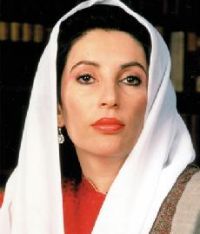 , knew that there can be no sacrifice greater than the sacrifice for the people whose respect, honor and dignity is the respect and dignity of the Nation. Quaid e Awam made the people proud of themselves and of their Nation. The 20th century has seen many great leaders, Zulfikar Ali Bhutto is one of them. Due to his glorious achievements, Mr. Bhutto rules the hearts of the Pakistani people from his grave. He was not only the leader of Pakistan, he was the leader of an Islamic world, the leader of Third World. He will forever be remembered by his countrymen as Quaid-e-Awam. ZAB's detractors have distorted history and tampered with the written word. They killed Plato's philosopher-king and filled the space with charlatans. But he has written his own history in blood and the legend has been nourished by the tears and the sweat of those who work in the fields and the factories. Bhutto belonged to the sweat and sorrow of this soil. His soul has mingled with the soul of the multitudes who cry out in their sorrow and in their pain, ZAB gave the people of Pakistan the foundation on which to build an inspired dream palace of their national thoughts. Today, we have surrendered ourselves to the momentum of mediocrity. In Plato's words, "what is honored in a country will be cultivated there." But we are not a nation given to honoring our heroes. Today, let us rise above narrow considerations and interests and acknowledge a man who was a brilliant beacon on the highway of history. As his followers say, "Zinda Hai Bhutto, Zinda Hai"--Bhutto lives, he lives. Indeed he does, in the hearts of all those who dream of a better tomorrow. Long Live Bhuttoism….
Bilawal Bhutto to lead PPP’s election campaign
The Express Tribune
 Putting an end to a guessing game about his tiff with his father, Asif Ali Zardari, Pakistan Peoples Party Chairperson Bilawal Bhutto Zardari said on Tuesday that he would lead the election campaign of his party which will kick-start on April 3 from Naudero House in Larkana.
The PPP was supposed to stage a big public rally in Garhi Khuda Bakhsh, the ancestral village of the Bhutto family, on the anniversary of the hanging of its founder Zulfikar Ali Bhutto on April 4, 1979.
The rally was, however, called off for security reasons. “We are not organising a big national-level rally this time. Meetings are being held at district level separately,” Naudero House spokesperson Ghulam Mustafa Leghari said.
Speaking to members of PPP’s provincial and federal parliamentary boards via video link from Bilawal House in Karachi, the scion of the Bhutto family directed them to finalise the allotment of party tickets without any delay.
“It is high time party workers and leadership stood up and started preparations for the upcoming election. We want a massive campaign across the country,” he said.
Senior PPP leaders dispelled the rumours that their party would not stage public rallies as part of its election campaign due to security threats.
“At least 20 massive public rallies will be held in different cities and towns, which will be addressed by Bilawal Bhutto,” Qamar Zaman Kaira told The Express Tribune. Bilawal would also address corner meetings of the party during the election campaign.
At Tuesday’s meeting seven committees were formed to monitor the election campaign, with a central committee to be supervised by Makhdoom Amin Fahim.
Punjab has been divided into three parts: former premier Raja Pervaiz Asharf is responsible for upper Punjab, former chief minister Mian Manzoor Wattoo for central Punjab and former premier Yousaf Raza Gilani for south Punjab.
Sindh’s former chief minister Qaim Ali Shah will lead PPP’s election campaign in Sindh, Anwar Saifullah in Khyber-Pakhtunkhwa and Sadiq Umrani and Sardar Fateh Muhammad Hasni in Balochistan.
Party Chairperson Bilawal directed Kaira to activate the party’s media cells and start mobilising the media about the PPP election campaign. “Bilawal Bhutto has said election cells be established at provincial and district levels,” said a PPP leader, who attended the meeting.
Meanwhile, a large number of PPP workers belonging to its minority wing protested outside Bilawal House against alleged discrimination in the award of party tickets. They claimed that the party was awarding tickets only to well-off Hindus and neglecting its jiyalas from the Christian and scheduled caste communities.
Putting an end to a guessing game about his tiff with his father, Asif Ali Zardari, Pakistan Peoples Party Chairperson Bilawal Bhutto Zardari said on Tuesday that he would lead the election campaign of his party which will kick-start on April 3 from Naudero House in Larkana.
The PPP was supposed to stage a big public rally in Garhi Khuda Bakhsh, the ancestral village of the Bhutto family, on the anniversary of the hanging of its founder Zulfikar Ali Bhutto on April 4, 1979.
The rally was, however, called off for security reasons. “We are not organising a big national-level rally this time. Meetings are being held at district level separately,” Naudero House spokesperson Ghulam Mustafa Leghari said.
Speaking to members of PPP’s provincial and federal parliamentary boards via video link from Bilawal House in Karachi, the scion of the Bhutto family directed them to finalise the allotment of party tickets without any delay.
“It is high time party workers and leadership stood up and started preparations for the upcoming election. We want a massive campaign across the country,” he said.
Senior PPP leaders dispelled the rumours that their party would not stage public rallies as part of its election campaign due to security threats.
“At least 20 massive public rallies will be held in different cities and towns, which will be addressed by Bilawal Bhutto,” Qamar Zaman Kaira told The Express Tribune. Bilawal would also address corner meetings of the party during the election campaign.
At Tuesday’s meeting seven committees were formed to monitor the election campaign, with a central committee to be supervised by Makhdoom Amin Fahim.
Punjab has been divided into three parts: former premier Raja Pervaiz Asharf is responsible for upper Punjab, former chief minister Mian Manzoor Wattoo for central Punjab and former premier Yousaf Raza Gilani for south Punjab.
Sindh’s former chief minister Qaim Ali Shah will lead PPP’s election campaign in Sindh, Anwar Saifullah in Khyber-Pakhtunkhwa and Sadiq Umrani and Sardar Fateh Muhammad Hasni in Balochistan.
Party Chairperson Bilawal directed Kaira to activate the party’s media cells and start mobilising the media about the PPP election campaign. “Bilawal Bhutto has said election cells be established at provincial and district levels,” said a PPP leader, who attended the meeting.
Meanwhile, a large number of PPP workers belonging to its minority wing protested outside Bilawal House against alleged discrimination in the award of party tickets. They claimed that the party was awarding tickets only to well-off Hindus and neglecting its jiyalas from the Christian and scheduled caste communities.
Muslim mob targets Christian locality in Gujranwala ‘for disrespecting Islam’

 In a renewed attack on minorities, a violent Muslim mob attacked a Christian locality in Gujranwala on Wednesday, damaging shops, houses and vehicles belonging to the local Christians following a clash between the youths of the two communities last night, Pakistan Today has learnt.
According to initial information, a group of Christian boys was snubbed by a local cleric for playing music on their cell phones while passing by a mosque on Tuesday evening.
“Our boys were passing the mosque when the prayer leader objected to their playing music on cell phones. The boys turned off the music at that moment but switched it on again after covering some distance. The cleric raised a clamour and accused the boys of showing disrespect to Islam. As word spread of the incident, we immediately went to the police post in our colony and shared our security concerns with them. The police told us not to worry and assured us that they would contain the situation but no measures were taken,” Pervaiz, a resident of Francis Colony in Gujranwala, told Pakistan Today.
He said that around 2pm, a Muslim mob from the nearby Naroki village attacked the neighbourhood, ransacking shops, houses and around 5-7 vehicles parked on the road. “We saw a police mobile of the area’s checkpost parked in the vicinity but they did not intervene and let the mob damage our property,” he said, adding that the mob dispersed after local Christians took out their weapons and started firing in the air to deter them.
Pakistan Today made repeated attempts to contact the police officials concerned, including Regional Police Officer Amin Waince but they did not receive the calls.
After playing the role of a silent spectator, the police took action and resorted to aerial firing and hurling stones indiscriminately at the mob to disperse it. The mob also pelted stones back at the police.
In a renewed attack on minorities, a violent Muslim mob attacked a Christian locality in Gujranwala on Wednesday, damaging shops, houses and vehicles belonging to the local Christians following a clash between the youths of the two communities last night, Pakistan Today has learnt.
According to initial information, a group of Christian boys was snubbed by a local cleric for playing music on their cell phones while passing by a mosque on Tuesday evening.
“Our boys were passing the mosque when the prayer leader objected to their playing music on cell phones. The boys turned off the music at that moment but switched it on again after covering some distance. The cleric raised a clamour and accused the boys of showing disrespect to Islam. As word spread of the incident, we immediately went to the police post in our colony and shared our security concerns with them. The police told us not to worry and assured us that they would contain the situation but no measures were taken,” Pervaiz, a resident of Francis Colony in Gujranwala, told Pakistan Today.
He said that around 2pm, a Muslim mob from the nearby Naroki village attacked the neighbourhood, ransacking shops, houses and around 5-7 vehicles parked on the road. “We saw a police mobile of the area’s checkpost parked in the vicinity but they did not intervene and let the mob damage our property,” he said, adding that the mob dispersed after local Christians took out their weapons and started firing in the air to deter them.
Pakistan Today made repeated attempts to contact the police officials concerned, including Regional Police Officer Amin Waince but they did not receive the calls.
After playing the role of a silent spectator, the police took action and resorted to aerial firing and hurling stones indiscriminately at the mob to disperse it. The mob also pelted stones back at the police.
Nazia Hassan: ''Pakistan’s queen of pop''

 Nazia Hassan was the most influential and popular female singer and probably the only real female pop singer of the 80s and 90s in both India and Pakistan.
Today marks her birth anniversary. Born in Karachi on April 3, 1965, Hassan’s first ever television appearance was in a program “Kaliyon Ke Mala (1975)” aired on Pakistan Televsion Network (PTV), where she appeared as a child artist and sang “Dosti Aisa Naata.”
Her song “Aap Jaisa Koi” which she sang at the age of 15 for the Indian film Qurbani (1980) became one of the biggest hits in Bollywood film music. Hassan was the first Pakistani to win a Filmfare Award and remains the youngest winner of the award in the category of Best Female Playback Singer to date.
After the success of “Aap Jaisa Koi”, in 1981 Hassan become the first female playback singer to release an album “Disco Deewana”, in which her brother, Zohaib Hassan also collaborated on vocals with her.
Nazia’s second album “Boom Boom” was released in 1982.The soundtrack of the album was used in another Indian film “Star”. The film did not do well at the box office but the album was successful. It was probably the first time in the history of Indian films that the record was a hit and the film was a flop. This increased the popularity of the siblings in Pakistan and India.
Another album Young Tarang (1984) followed soon after. This was the first album to feature music videos in Pakistan. Then came Hotline in 1987. Nazia’s last solo album, Camera Camera, came out in London in 1992.
Along with her brother, she also appeared in a couple of television programs. In 1988 she appeared in “Sung Sung” with music maestro Sohail Rana. They also hosted the first-ever pop-music stage show, Music ’89, produced by Shoaib Mansoor.
Although singers such as Alamgir and Mohammad Ali Shahki were already in the popular music scene, it was Hassan who really promoted the genre in Pakistan.
In an interview with Herald, July 1980, edition, she said “Yes some people don’t even consider it music; well it’s the kind of the music we dig, take it or leave it. They say classical music is the only real music. Whenever I’m attending a classical music recital, I feel like I’m attending a funeral. You have to sit grim’n still – no coughing, no talking lest people think you are being impolite”
Hassan died of lung cancer in London on August 13, 2000 at the young age of 35.
Nazia Hassan was the most influential and popular female singer and probably the only real female pop singer of the 80s and 90s in both India and Pakistan.
Today marks her birth anniversary. Born in Karachi on April 3, 1965, Hassan’s first ever television appearance was in a program “Kaliyon Ke Mala (1975)” aired on Pakistan Televsion Network (PTV), where she appeared as a child artist and sang “Dosti Aisa Naata.”
Her song “Aap Jaisa Koi” which she sang at the age of 15 for the Indian film Qurbani (1980) became one of the biggest hits in Bollywood film music. Hassan was the first Pakistani to win a Filmfare Award and remains the youngest winner of the award in the category of Best Female Playback Singer to date.
After the success of “Aap Jaisa Koi”, in 1981 Hassan become the first female playback singer to release an album “Disco Deewana”, in which her brother, Zohaib Hassan also collaborated on vocals with her.
Nazia’s second album “Boom Boom” was released in 1982.The soundtrack of the album was used in another Indian film “Star”. The film did not do well at the box office but the album was successful. It was probably the first time in the history of Indian films that the record was a hit and the film was a flop. This increased the popularity of the siblings in Pakistan and India.
Another album Young Tarang (1984) followed soon after. This was the first album to feature music videos in Pakistan. Then came Hotline in 1987. Nazia’s last solo album, Camera Camera, came out in London in 1992.
Along with her brother, she also appeared in a couple of television programs. In 1988 she appeared in “Sung Sung” with music maestro Sohail Rana. They also hosted the first-ever pop-music stage show, Music ’89, produced by Shoaib Mansoor.
Although singers such as Alamgir and Mohammad Ali Shahki were already in the popular music scene, it was Hassan who really promoted the genre in Pakistan.
In an interview with Herald, July 1980, edition, she said “Yes some people don’t even consider it music; well it’s the kind of the music we dig, take it or leave it. They say classical music is the only real music. Whenever I’m attending a classical music recital, I feel like I’m attending a funeral. You have to sit grim’n still – no coughing, no talking lest people think you are being impolite”
Hassan died of lung cancer in London on August 13, 2000 at the young age of 35.
Threats mar ANP, PPPP electioneering in FATA
Daily TimesSome of the political parties, like the Awami National Party (ANP) and Pakistan People Party-Parliamentarians (PPP-P), are finding it hard to hold big gatherings for electioneering in FATA due to serious threats. These parties are even unable to held corner meetings due to strong hold of non-state actors in FATA. Experts on FATA expressed these views while launching Democracy Reporting International’s (DRI) report on election in FATA. The speakers at the event were of the view that after extending Political Parties Order to FATA with some amendments, the local people are eager to take part in the upcoming general election. Due to militancy and poor law and order situation, the political parties are confronting some challenges in FATA. However, religious parties have more sympathies as compared to other parties. The DRI report calls for additional security for voters, candidates and polling staff and special measures for women voters to ensure credible, participatory elections in FATA. The report Electoral Conditions in FATA, which was launched on Tuesday at a conference on FATA elections, also makes longer-term recommendations to integrate the region into the country’s mainstream, including through reserved parliamentary seats for women and measures to increase the registration of women voters. The report reveals continuing failure to bring FATA’s electoral conditions in line with constitutional and international commitments and details the many challenges in the region in holding genuine elections. It was noted that barriers to voter registration present significant problems for women, who represent just over a third of FATA’s 1.7 million registered voters, and for people living in tribal areas, who face additional verification requirements to obtain the CNICs. In addition to increased security measures for women voters, other immediate improvements called for in the report include voter education by the Election Commission of Pakistan (ECP), more state radio stations, and need for civil society to emphasise voters’ rights and choices; a clear permission system for election observations and accreditation, with full support to observation activities; and special polling arrangements by the ECP for internally displaced persons (IDPs). For the long-term, the report recommends amending the constitution and the country’s legal framework to bring FATA into the national mainstream and extend the jurisdiction of superior courts to tribal areas to protect basic human rights denied under the Frontier Crimes Regulations (FCR), including freedom of assembly, association and expression. The report calls for same election laws in FATA as the rest of country and amendment in Delimitation of the Constituencies Act 1974 to ensure that constituencies in FATA are more equally divided. The DRI report welcomes the recent progress towards the political mainstreaming of FATA, including amendments to the FCR and the extension of the PPO allowing political parties to field candidates. DRI Pakistan Country Director Vladimir Pran says, “Political parties are free to act as agents of change for the first time in FATA, but we’re still faced with a situation where political agents simultaneously act as executive head, session judge, district returning officer and revenue magistrate. Such conflicts of interest must be addressed alongside other barriers to ensure fair and full participation.” The report also describes restrictions and obstacles faced by journalists and civil society organisations in FATA and recommends that an enabling environment be created for journalists and civil society observers covering elections in FATA. ANP candidate Naheed Rehman from Khyber Agency has demanded mobile polling team for FATA and appointment of judicial staff as returning officials instead of political agents. Iqbal Khattak, a journalist, informed the participants that media persons were confronting many hardships while entering tribal areas.
Pakistan: Cheaters in jails, others to follow
On Tuesday, for the first time, influential lawmakers were sent to jail for making false declaration to reach the Parliament. In Sibi, Balochistan, former federal minister Humayun Aziz Kurd was sentenced to one year jail and fined Rs 5000 for submitting fake degree to the Election Commission. Kurd was arrested from the courtroom following the sentence, and was sent to the district jail. Therein Dera Ismail Khan, Additional District and Sessions judge sentenced an ex-MPA Khalifa Abdul Qayyum, to three-year imprisonment and imposed a fine of Rs 5000 over fake degree after which the former lawmaker was immediately sent to lock up. Another lower court sentenced former MNA Javaid Iqbal Tarkai from PF-32 Swabi II over holding dual nationality. New judicial history is in the making. Curtains are falling down on those powerful and influential who had cheated on the supreme institutions to serve their personal interests.
Earlier on Monday, the Supreme Court laid down stringent rules for legislators and suggested to them to disclose everything while filing nomination papers because they would have to be chosen by electors as their representatives. The Supreme Court has provided another opportunity to 189 lawmakers to get their certificates verified by April 5 from the Higher Education Commission through the Election Commission of Pakistan. The list includes names of some of the big guns like Chaudhry Nisar Ali Khan, Afrasiab Khattak, Sardar Jamal Khan Leghari, Engineer Amir Muqam, Bushra Gohar, Attiya Inayatullah, Begum Shahnaz Sheikh, Chaudhry Naseer Ahmed Bhutta, Mahreen Anwar Raja, Mukhdoon Javed Hashmi,Syed Faisal Saleh Hayat, Mian Manzoor Ahmed Khan Wattoo, Bilal Yaseen, Ghulam Farid Khathia, Imtiaz Safdar Warriach, Samina Khalid Ghurki, Rukhsana Bangash, Sardar Arshad Khan Leghari, Shahbaz Bhatti, Sardar Sanaullah Zehri, Malik Nauman Ahmed Langriyal, Qasim Zia and Nadia Gabol. The 189 ex-legislators, perhaps think themselves above the law, are yet to submit their educational certificates to the HEC for verification despite repeated reminders. No system in the world can yield desired results if it is run by cheaters or semi-literates. Unfortunately, the Parliament of Pakistan, that completed its term for the first time, was represented by cheaters, defaulters and semi-literates thus compromised the interests of the nation whenever needed. Well over 50 per cent of the members of the outgoing Parliament cheated in their declarations submitted to the Election Commission in the previous elections. Without any discrimination and relaxation, these cheaters should be dealt in accordance with law of the land. The court has rightly directed the ECP to ask all returning officers to withhold the assessment of nomination papers of those legislators who intended to contest the elections again till the time the HEC decides about the authenticity of their certificates. Regardless of the stature and influence of any leader or representative, no one-be he is Ch Nisar Ali or any body else-should be allowed to contest the next elections if he does not fulfill the criteria under Articles 62 and 63 of the Constitution. Nothing less than true and honest representation in the Parliament is acceptable to the nation this time around. The judicial trials of all 54 legislators, holding fake degrees, will set the tune for the fair elections.
Tuesday, April 2, 2013
Pakistan's sidelined minorities: ‘The present system has turned us into second-class citizens’
 Non-Muslims in Nowshera on Monday demanded the government give them what they described as the right to elect their representatives so people subscribing to various religions can play their due role for the betterment of the country.
They also pledged to form a provincial committee to improve coordination at interfaith and intra-faith levels during the upcoming elections. The committee will act as a vehicle to highlight issues of minorities and convince upcoming elected representatives of necessary legislations.
Non-Muslims in Nowshera on Monday demanded the government give them what they described as the right to elect their representatives so people subscribing to various religions can play their due role for the betterment of the country.
They also pledged to form a provincial committee to improve coordination at interfaith and intra-faith levels during the upcoming elections. The committee will act as a vehicle to highlight issues of minorities and convince upcoming elected representatives of necessary legislations. The observations were made by participants of a focus group on minority rights and the electoral process conducted by Peace Education and Development Foundation (PEAD) in collaboration with Global Human Rights Defence (GHRD).
In the discussion – attended by a large number of adherents of different faiths – the role of non-Muslims in the politics of Pakistan was analysed. Participants examined the separate and joint electoral process, the role of non-Muslim members of parliament and whether they worked towards the betterment of minorities. Communication within and between different faiths practiced in Pakistan was also discussed.
Rehmat Lal, a senior Hindu representative and former councillor, told participants indigenous non-Muslims “fully supported the Pakistan movement and are loyal citizens of the country, but unfortunately they have always been neglected by authorities and society for the last six decades.”
“We have no permanent residential addresses and all our addresses are stated as temporary in NICs (National Identity Cards),” claimed Rehmat.
Before 1947, Hindus made up 26% of the population of Pakistan. This decreased to 15% after partition and the number continues to decrease rapidly, said Parvaiz Bhatti. “We are living in a state of insecurity. Non-Muslims have been discriminated against on the basis of religion and faith since the inception of Pakistan, but our mouths remain sealed due to certain factors.”
Bhatti added minorities in Pakistan suffer as a result of “selection” instead of “election”.
“The so-called representatives belonging to other religions in assemblies are not true and genuine representatives because they are not elected by votes; they are only selected by political parties for their own benefit. This is a clear violation of Article 226 and open discrimination,” asserted Bhatti.
Shamoon Masih criticised the claim ‘minorities are considered as equal citizens in Pakistan’ stated in the 1973 Constitution, which, he said, also maintains the president of Pakistan cannot be a non-Muslim. According to the 18th Amendment, no one belonging to a minority religion can be the prime minister of Pakistan, he added.
“Moreover the frame of selection has been set for minorities to keep them as political slaves under the major political parties; minorities have been deprived of economic and social opportunities. Nobody is there to safeguard their rights due to non-representation in the assemblies.”
Sham Lal said Hindus live under miserable conditions. “Different political parties have come into power, but none eliminated or addressed any of the major issues faced by minorities.”
“The present system has turned us into second-class citizens and the sense of inferiority is increasing by the day; we have no voice in assemblies, no voice in society and no voice in the policy making processes,” lamented Sham.
PEAD and GHRD held a similar focus group in Peshawar on March 4. Followers of other faiths analysed the current system of choosing minority representatives wherein political parties submit a list of candidates to the Election Commission of Pakistan. The commission then allocates minority seats to a party based on the number of general seats it secures in the elections.
The observations were made by participants of a focus group on minority rights and the electoral process conducted by Peace Education and Development Foundation (PEAD) in collaboration with Global Human Rights Defence (GHRD).
In the discussion – attended by a large number of adherents of different faiths – the role of non-Muslims in the politics of Pakistan was analysed. Participants examined the separate and joint electoral process, the role of non-Muslim members of parliament and whether they worked towards the betterment of minorities. Communication within and between different faiths practiced in Pakistan was also discussed.
Rehmat Lal, a senior Hindu representative and former councillor, told participants indigenous non-Muslims “fully supported the Pakistan movement and are loyal citizens of the country, but unfortunately they have always been neglected by authorities and society for the last six decades.”
“We have no permanent residential addresses and all our addresses are stated as temporary in NICs (National Identity Cards),” claimed Rehmat.
Before 1947, Hindus made up 26% of the population of Pakistan. This decreased to 15% after partition and the number continues to decrease rapidly, said Parvaiz Bhatti. “We are living in a state of insecurity. Non-Muslims have been discriminated against on the basis of religion and faith since the inception of Pakistan, but our mouths remain sealed due to certain factors.”
Bhatti added minorities in Pakistan suffer as a result of “selection” instead of “election”.
“The so-called representatives belonging to other religions in assemblies are not true and genuine representatives because they are not elected by votes; they are only selected by political parties for their own benefit. This is a clear violation of Article 226 and open discrimination,” asserted Bhatti.
Shamoon Masih criticised the claim ‘minorities are considered as equal citizens in Pakistan’ stated in the 1973 Constitution, which, he said, also maintains the president of Pakistan cannot be a non-Muslim. According to the 18th Amendment, no one belonging to a minority religion can be the prime minister of Pakistan, he added.
“Moreover the frame of selection has been set for minorities to keep them as political slaves under the major political parties; minorities have been deprived of economic and social opportunities. Nobody is there to safeguard their rights due to non-representation in the assemblies.”
Sham Lal said Hindus live under miserable conditions. “Different political parties have come into power, but none eliminated or addressed any of the major issues faced by minorities.”
“The present system has turned us into second-class citizens and the sense of inferiority is increasing by the day; we have no voice in assemblies, no voice in society and no voice in the policy making processes,” lamented Sham.
PEAD and GHRD held a similar focus group in Peshawar on March 4. Followers of other faiths analysed the current system of choosing minority representatives wherein political parties submit a list of candidates to the Election Commission of Pakistan. The commission then allocates minority seats to a party based on the number of general seats it secures in the elections.
Pakistan: Christian candidate for Selection in Election 2013 will accept Islam through nominations
 Dr. Nazir S Bhatti, President of Pakistan Christian Congress PCC said that Christian who are seeking Selection for Parliament in election 2013, will be not Christians but converted Muslim after signing nomination
papers which very first time seek to sign preserver of Islamic laws in Pakistan as oath.
Dr. Nazir Bhatti quoted comments of prominent lawyer Ghulam Mustfa Lakho "42 DAYS in Pak General Election-2013. This Election is free from the chains and/or curse of the Universal Declaration of Human Rights! It has no room for secularists and/or free thinkers. All candidates for National Assembly and Provincial Assemblies are bound to declare on oath in the Nomination Form that they "will strive to preserve the Islamic Ideology which is the basis for the creation of Pakistan.” In such situation, it would be difficult to prove that all candidates have taken false oath. In this so-called fair, free and transparent Election, all candidates are, without exception, the believers and “preservers” of the “Islamic Ideology”. Is it Pre-poll rigging? Or it is Legal Framework Order for Pre-poll rigging? Thanks to the oath taken by all the candidates, it may be safe to say that the Pak General Election-2013 is the Election OF the believers and “preservers” of the “Islamic Ideology”, BY the believers and “preservers” of the “Islamic Ideology” and FOR the believers and “preservers” of the “Islamic Ideology”. The Pak Land or the Land of the Pure is purified from the pollution of secularists and/or Free Thought forces, it is the graveyard of such forces; hence, silence, no protest on this point in Pakistan! Not only so, the Universal Declaration of Human Rights Watch Network Worldwide including United Nations is also silent on this point involved in the Pak General Election-2013"
in a letter to US Senators of Pennsylvania and US Commission on International Religious Freedom, PCC Chief Nazir Bhatti wrote:
Pakistan Christian Congress PCC Petition to Repeal Blasphemy law and Election instead of Slection on Reserved Seats for Women and Minorities in Pakistan Election of 2013.
The poor, oppressed and persecuted Pakistani Christians need urgent support of your honor, US Congress and US Adminstration to press upon government of Pakistan to end misuse of blasphemy law against religious communities in Pakistan.
I wish to bring in your notice that Pakistan Christian Congress PCC filed a lawsuit in Lahore High Court in 1998, to repeal blasphemy laws and vows to continue its leagal struggle against blasphemy laws in Pakistan.
Sir,
The violence rose on pretext to blasphemy laws after imposition of Joint Electorate which empowers Muslim parties to Select Christian representation in parliament after 2002, national general elections.
The incidents of Gojra and Korian village Muslim mob attacks and burning of Christians alive, killing of blasphemy accused Christians in court compunds and jails and rising numbers of registration after Selection of minorities representation have proved that Christians have lost voice in democratic institutions.
sir,
We appeal your honor to write to government of Pakistan to hold elections on 10 Reserved seats for minorities and 60 Reserved seats for women in National Assembly of Pakistan which are being undemocratically and unconstitutional filled through Selection by Muslim parties in parliament. The Constitution of Islamic Republic of Pakistan bar such Selection when Article 226 of it says that all seats of parliament shall be elected with secret ballot.
sir,
We invite your intervention to hold free, fair and trasparent Election 2013, in Pakistan; Its very important to note that Pakistan is heading towards Talibanization when all candidates for National Assembly and Provincial Assemblies are bound to declare on oath in the Nomination Form that they "will strive to preserve the Islamic Ideology which is the basis for the creation of Pakistan.” it means the next parliament will be of believers and preservers of Islamic Sharia law in Pakistan closing doors for interfaith harmony, religious freedom and practice of Universal Human Rights decleration. It must be warning bell for US and democratic world that Pak Land or the Land of the Pure is purified from the pollution of secularists or Free Thought forces to turn it safe heaven for Islamists, Jihadists and extremists.
Sir,
41 days are left in Pakistan Elections of 2013, and we hope that You shall take action to secure true democracy and human rights in Pakistan.
PCC have already filed a Petition to US Congress which have been signed by more than fifty US citizens to repeal blasphemy laws and election on reserved seats.
Dr. Nazir S Bhatti, President of Pakistan Christian Congress PCC said that Christian who are seeking Selection for Parliament in election 2013, will be not Christians but converted Muslim after signing nomination
papers which very first time seek to sign preserver of Islamic laws in Pakistan as oath.
Dr. Nazir Bhatti quoted comments of prominent lawyer Ghulam Mustfa Lakho "42 DAYS in Pak General Election-2013. This Election is free from the chains and/or curse of the Universal Declaration of Human Rights! It has no room for secularists and/or free thinkers. All candidates for National Assembly and Provincial Assemblies are bound to declare on oath in the Nomination Form that they "will strive to preserve the Islamic Ideology which is the basis for the creation of Pakistan.” In such situation, it would be difficult to prove that all candidates have taken false oath. In this so-called fair, free and transparent Election, all candidates are, without exception, the believers and “preservers” of the “Islamic Ideology”. Is it Pre-poll rigging? Or it is Legal Framework Order for Pre-poll rigging? Thanks to the oath taken by all the candidates, it may be safe to say that the Pak General Election-2013 is the Election OF the believers and “preservers” of the “Islamic Ideology”, BY the believers and “preservers” of the “Islamic Ideology” and FOR the believers and “preservers” of the “Islamic Ideology”. The Pak Land or the Land of the Pure is purified from the pollution of secularists and/or Free Thought forces, it is the graveyard of such forces; hence, silence, no protest on this point in Pakistan! Not only so, the Universal Declaration of Human Rights Watch Network Worldwide including United Nations is also silent on this point involved in the Pak General Election-2013"
in a letter to US Senators of Pennsylvania and US Commission on International Religious Freedom, PCC Chief Nazir Bhatti wrote:
Pakistan Christian Congress PCC Petition to Repeal Blasphemy law and Election instead of Slection on Reserved Seats for Women and Minorities in Pakistan Election of 2013.
The poor, oppressed and persecuted Pakistani Christians need urgent support of your honor, US Congress and US Adminstration to press upon government of Pakistan to end misuse of blasphemy law against religious communities in Pakistan.
I wish to bring in your notice that Pakistan Christian Congress PCC filed a lawsuit in Lahore High Court in 1998, to repeal blasphemy laws and vows to continue its leagal struggle against blasphemy laws in Pakistan.
Sir,
The violence rose on pretext to blasphemy laws after imposition of Joint Electorate which empowers Muslim parties to Select Christian representation in parliament after 2002, national general elections.
The incidents of Gojra and Korian village Muslim mob attacks and burning of Christians alive, killing of blasphemy accused Christians in court compunds and jails and rising numbers of registration after Selection of minorities representation have proved that Christians have lost voice in democratic institutions.
sir,
We appeal your honor to write to government of Pakistan to hold elections on 10 Reserved seats for minorities and 60 Reserved seats for women in National Assembly of Pakistan which are being undemocratically and unconstitutional filled through Selection by Muslim parties in parliament. The Constitution of Islamic Republic of Pakistan bar such Selection when Article 226 of it says that all seats of parliament shall be elected with secret ballot.
sir,
We invite your intervention to hold free, fair and trasparent Election 2013, in Pakistan; Its very important to note that Pakistan is heading towards Talibanization when all candidates for National Assembly and Provincial Assemblies are bound to declare on oath in the Nomination Form that they "will strive to preserve the Islamic Ideology which is the basis for the creation of Pakistan.” it means the next parliament will be of believers and preservers of Islamic Sharia law in Pakistan closing doors for interfaith harmony, religious freedom and practice of Universal Human Rights decleration. It must be warning bell for US and democratic world that Pak Land or the Land of the Pure is purified from the pollution of secularists or Free Thought forces to turn it safe heaven for Islamists, Jihadists and extremists.
Sir,
41 days are left in Pakistan Elections of 2013, and we hope that You shall take action to secure true democracy and human rights in Pakistan.
PCC have already filed a Petition to US Congress which have been signed by more than fifty US citizens to repeal blasphemy laws and election on reserved seats.
Tea’s health benefits boost its popularity
 By Laura Ungar
Obama Announces Human Brain Mapping Project
 President Barack Obama has asked Congress to spend $100m on a new project to map the human brain in hopes of eventually finding cures for disorders like Alzheimer's.
 Mr Obama said the so-called BRAIN Initiative could create jobs and eventually lead to answers to ailments including Parkinson's and autism and help reverse the effect of a stroke.
The president told scientists gathered in the White House the research has the potential to improve the lives of billions of people worldwide.
He said: "As humans we can identify galaxies light-years away. We can study particles smaller than an atom, but we still haven't unlocked the mystery of the three pounds of matter that sits between our ears."
BRAIN stands for Brain Research through Advancing Innovative Neurotechnologies.
The idea, which Mr Obama first proposed in his State of the Union address, would require the development of new technology that can record the electrical activity of individual cells and complex neural circuits in the brain "at the speed of thought", the White House said.
Mr Obama wants the initial $100m investment to support research at the National Institutes of Health (NIH), the Defence Advanced Research Projects Agency and the National Science Foundation.
He also wants private companies, universities and philanthropists to link up with federal agencies in support of the research. And he wants a study of the ethical, legal and societal implications of the research.
The goals of the work are unclear at this point. A working group at NIH, co-chaired by Cornelia Bargmann of The Rockefeller University and William Newsome of Stanford University, would work on defining the goals and develop a plan to achieve them that included cost estimates.
Mr Obama said the so-called BRAIN Initiative could create jobs and eventually lead to answers to ailments including Parkinson's and autism and help reverse the effect of a stroke.
The president told scientists gathered in the White House the research has the potential to improve the lives of billions of people worldwide.
He said: "As humans we can identify galaxies light-years away. We can study particles smaller than an atom, but we still haven't unlocked the mystery of the three pounds of matter that sits between our ears."
BRAIN stands for Brain Research through Advancing Innovative Neurotechnologies.
The idea, which Mr Obama first proposed in his State of the Union address, would require the development of new technology that can record the electrical activity of individual cells and complex neural circuits in the brain "at the speed of thought", the White House said.
Mr Obama wants the initial $100m investment to support research at the National Institutes of Health (NIH), the Defence Advanced Research Projects Agency and the National Science Foundation.
He also wants private companies, universities and philanthropists to link up with federal agencies in support of the research. And he wants a study of the ethical, legal and societal implications of the research.
The goals of the work are unclear at this point. A working group at NIH, co-chaired by Cornelia Bargmann of The Rockefeller University and William Newsome of Stanford University, would work on defining the goals and develop a plan to achieve them that included cost estimates.
Renovation, not construction: Pakistan dismisses Afghan concerns on border checkposts
The Express TribunePakistan dismissed Afghan allegations that it was constructing a new checkpost along the border, claiming that the activity in question was renovation of an old checkpost, a statement from the foreign ministry read on Tuesday. Afghanistan had on Monday expressed grave concern about what it claimed the ‘Pakistani military’s unilateral construction and physical reinforcement activities’ along the border in the eastern Ningarhar province. It had also lodged a formal protest, as diplomatic tensions between the two uneasy neighbours continue to grow. However, responding to the Afghan claims, the foreign office spokesperson said that Pakistan has an old post called Gursal well inside Pakistani territory bordering Ningarhar province of Afghanistan, which is under routine renovation. “Under the recently signed Tripartite Border SOP, both sides are supposed to inform any new construction closer to border areas,” he said before adding that despite it being routine renovation work, Pakistan had shared this information with the Afghan side and with the Afghan delegation that visited Mohmand Agency on January 24, 2013. “The renovation of the post is primarily meant to interdict terrorists and criminals as well as better management of the border area between Afghanistan and Pakistan.” About the Afghan Deputy Foreign Minister Jawed Ludin’s recent concerns about construction and physical reinforcement along the Afghan border, he said that they are “not in keeping with the spirit of the understanding on good border management and the recently signed Tripartite Border SOP.” “Better management of the border through strengthening border posts located in each other’s territory are in the interest of the two countries to have an effective check over terrorists and criminals.” Cross border attacks Responding to a query about the Afghan Deputy Foreign Minister’s concerns over rocket and artillery attacks in different areas of Kunar Province, the spokesperson said that these complaints have not been found to be correct as “no rocket or artillery shells have been fired by Pakistan Army in recent days.” The spokesperson added that Pakistan remains committed to extending all possible support and facilitation for peace, reconciliation and stability in Afghanistan.
Sweden has lowest rate of poverty in Europe
http://www.west-info.eu/One percent of Swedes live in material poverty, according to a new annual Eurostat review that lists Sweden as having the lowest poverty level in the EU. In Sweden and in the EU at large, it is the unemployed who are most at risk of living in what Eurostat dubs “serious material poverty”. Bulgarians fare the worst, as 44 percent of its population are considered materially poor. The EU average was 9 percent.
NY state sen. arrested in alleged mayor race plot
http://xfinity.comcast.net/A Democratic state lawmaker was arrested along with five other politicians Tuesday in an alleged plot to pay tens of thousands of dollars in bribes to GOP bosses to let him run for mayor of New York City as a Republican. U.S. Attorney Preet Bharara called it an "unappetizing smorgasbord of graft and greed" that reveals a New York political culture defined by a single rule: "Show me the money." Malcolm Smith, 56, who has served at times as the state Senate's majority and minority leader since becoming a senator in March 2000, was arrested along with Republican New York City Councilman Dan Halloran, 42, and four other political figures. Smith "tried to bribe his way to a shot at Gracie Mansion," Bharara said, referring to the official mayor's residence. "Smith drew up the game plan and Councilman Halloran essentially quarterbacked that drive by finding party chairmen who were wide open to receiving bribes." A criminal complaint said that in meetings with a cooperating witness and an undercover FBI agent posing as a wealthy real estate developer, Smith agreed to bribe up to five leaders of Republican Party county committees in the five boroughs of New York City so he could run for mayor as a Republican, even though he was a registered Democrat. Bharara said $80,000 in cash was promised or paid to Bronx County Republican Party Chairman Joseph Savino, 45, and Queens County Republican Party Vice Chairman Vincent Tabone, 46, who were both arrested Tuesday. The government said Halloran told the undercover agent that he wanted to get his "mortgage situation resolved" and to be named deputy police commissioner if Smith were elected mayor. Smith said in a statement that he'll be vindicated. His lawyer, Gerald L. Shargel, said his client denies wrongdoing. "Malcolm Smith is a dedicated public servant who has served both the state of New York and his constituents in an exemplary fashion," Shargel said. "He steadfastly denies the allegations that are contained in the complaint." Outside federal court in White Plains, N.Y., Shargel said the allegations in the criminal complaint "do not tell the full story." Halloran's attorney, Dennis Ring, said: "The councilman denies all allegations and looks forward to clearing his name and returning to court." Representatives for Savino and Tabone did not immediately respond to requests for comment. Running as a Republican in the New York City mayoral race is an attractive path for candidates because it is easier to get on the GOP primary ballot in a city crowded with Democratic politicians. The tactic was popularized by Mayor Michael Bloomberg, who switched from the Democratic to Republican parties shortly before his first successful run for mayor in 2001. At least three current candidates for mayor switched their party affiliation to get on the GOP ballot. In Smith's case, authorities say, he wanted to get on the Republican ballot but keep his Democratic party affiliation, a move that would require written consent of three of the city's five Republican Party county chairmen. In court papers, the FBI detailed numerous meetings over the last year among the defendants, the undercover FBI agent and the cooperating witness, who pleaded guilty to federal charges last month in a deal aimed at winning leniency at sentencing. In a Jan. 25 meeting in Smith's car in Rockland County, the cooperating witness told Smith that buying the help of Republican county committee leaders would cost "a pretty penny" and asked if it's "worth any price," the complaint said. The FBI said Smith responded: "Look, talk to me before you close it. But it's worth it. Because you know how big a deal it is." Democratic Gov. Andrew Cuomo, speaking Tuesday at an event in Buffalo, called the arrests "very, very troubling." "We have zero tolerance for any violation of the public integrity and the public trust," Cuomo said. New York Republican Chairman Ed Cox said the arrests were "deeply concerning." "The integrity of the electoral process for the voters of New York City must be preserved," Cox said in a statement. One candidate for mayor, billionaire businessman John Catsimatidis, said the arrests "point to a culture of corruption that permeates our city and state, corruption fueled by career politicians who put personal advancement before public service." Tabone is a lawyer for Catsimatidis' Red Apple Group, which owns the Gristedes supermarket chain and other businesses, and Tabone also is a consultant to the billionaire's campaign. Campaign finance records show Tabone has been paid $3,000 so far. Catsimatidis' campaign said on Tuesday that Tabone has been suspended from the business and his association with the campaign has been terminated. If convicted of conspiracy, wire fraud and violation of the Hobbs Act, Smith could face up to 45 years in prison. If convicted, Halloran faced the same potential penalty on charges of conspiracy and two counts of wire fraud. Tabone and Savino were each charged with conspiracy and wire fraud, which carry up to 25 years in prison. Jasmin and Desmaret were charged with mail fraud, which carries a potential penalty of 20 years in prison. Besides the mayoral plot, authorities said the investigation also revealed a scheme in which Halloran received $18,300 in cash bribes and $6,500 in straw donor campaign contribution checks to steer up to $80,000 in City Council money to a company he believed was controlled by those who paid him the bribes. In a third plot, prosecutors say, Spring Valley Mayor Noramie Jasmin, 49, and Spring Valley Deputy Mayor Joseph Desmaret, 55, agreed to accept financial benefits so that Smith could use his power as a senator to help obtain state funds for road work in the Rockland County village outside New York City that would benefit a real estate project that Smith believed was being built by the undercover agent's company in Spring Valley. Jasmin and Desmaret were arrested Tuesday. Representatives for Jasmin, and Desmaret did not immediately respond to comment requests. The defendants were all released Tuesday on a $250,000 bond.
Afghanistan peace deal: Taliban talks hit deadlock

Western hopes fade for agreement before 2014 pullout as negotiations in Qatar stallWestern hopes of leaving Afghanistan within reach of a peace deal when Nato troops pull out in 2014 are dimming, with planned negotiations in Qatar at a stalemate and Pakistan cutting back on support for talks. Afghans and foreigners across the political spectrum have been pushing hard for negotiations for several years, driven by concerns that the already-bloody insurgency could spiral into full-blown civil war when foreign forces have left. But as western generals and politicians who once dreamed of crushing the Taliban militarily have reconciled themselves to the idea of negotiating instead, the insurgents themselves have remained more elusive, attacking top government negotiators and refusing to publicly embrace talks. The Afghan president, Hamid Karzai, visited the Qatari capital, Doha, at the weekend, where a handful of Taliban and their families have set up base since 2011, with the blessing of Washington, as diplomats seek neutral ground for potential negotiations. The emir of the tiny state, Sheikh Hamad bin Khalifa al-Thani, pledged his support for the peace process and unveiled plans for a Qatari embassy in Kabul, helping allay some Afghan suspicions about where the Gulf nation's loyalties lie. But notably absent from the two-day trip was any meeting with some of the Qatar-based Taliban themselves, who have denounced Karzai as the head of a "stooge administration". "Nobody from the Taliban side met with Karzai," the spokesman, Zabihullah Mujahid, said bluntly after the visit, which also included a trip to an art museum to see an exhibition of Afghan handicrafts. Also looming over both Karzai's weekend travels and wider Afghan and western efforts to get around a table with the Taliban is the ambivalence of the Pakistani government, which in recent weeks appears to have backed away from support for the process. "Unfortunately Pakistan today is changing the goalposts on its support for the peace process once again," said the Afghan foreign ministry spokesman, Janan Mosazai. "Pakistan somehow decided now to put down certain preconditions for its support for the peace process which are completely unacceptable to Afghanistan and to any other independent country." The Afghan government says the demands are that ties with India be severed, that army officers be sent to Pakistan for training and that a strategic partnership deal be signed immediately. The deterioration in ties has already had an impact: one senior Afghan source said flights organised by Pakistan for militants to Doha had already been halted. Without transport for negotiators, talks are unlikely to get very far, and even if some do find a way to shuttle back and forth, the wider Taliban movement would be likely to struggle to directly oppose a government it relies on for shelter and other support. A string of initiatives including Pakistani releases of Taliban prisoners and plans for a meeting of senior clerics from both countries meant the year began in a haze of enthusiasm that now looks premature; behind the scenes, little has changed in a country determined to ensure a friendly regime across its eastern borders. "When optimism was prevailing about Pakistani attitudes, our human intelligence suggested that – on the ground – this optimism was not well-founded, and unfortunately we were proved right," the official said. Many western diplomats say they are convinced that the Pakistani military chief General Ashfaq Kayani, often seen as more powerful in security affairs than the civilian government, genuinely believes it is more important to have a stable Afghanistan than one that is compliant with Islamabad's interests. But they also questioned whether that change in attitude had made much real difference. A US source with long experience of negotiating with Pakistan said: "Part of the problem is that when Kayani gives an order, is it followed three levels down?" The Taliban in 2011 seized the chance to set up a base beyond their risky Pakistani headquarters, vulnerable to both pressure from Islamabad and cross-border raids by US forces. Qatar was attractive, not least because the movement has long looked to the Gulf for funding and, in the past, political support. Around 10 men have set up home with their families, a source with knowledge of the process said, and others come and go. But there has been no official confirmation that they plan to open an office or are willing to talk peace, despite expectations a few months ago that they would confirm their intentions with a statement welcoming peace talks. That would have been a huge step for an often fractured movement that has sworn it won't talk either to Karzai or while foreign forces are still on Afghan soil. The Taliban leadership is still smarting from rank-and-file anger over a failed prisoner exchange initiative with the US more than year ago. But the lack of any official embrace of the process is fuelling US and Afghan fears about the Taliban's true intentions in a place close to potential donors and convenient for putting out diplomatic feelers in an often sympathetic region. Karzai tacitly acknowledged the problem in a meeting with Qatari businessmen during the trip. "The Taliban peace process, when it is officially announced, the opportunities will multiply hugely," Afghanistan's Tolo TV channel quoted him telling the exclusive group. The Afghan government, which has been open about the fact that it would prefer Turkey or Saudi Arabia as a mediator, reacted badly to initial plans for an office in Doha. Karzai recalled his ambassador to Qatar and denounced the venture as scheming behind his back. He has softened his stance since then, but his government has repeatedly warned that it will tolerate the Taliban office strictly as an address for peace talks, and only if it is not used for fundraising or diplomatic activities. Western diplomats have also said their support for a Taliban presence in Qatar will be strained if the movement does not take more concrete steps towards embracing the idea of talks publicly, although they remain confident of behind-the-scenes support for negotiations. "There isn't anyone who doesn't think that a significant majority of them want to take part in the peace process," a senior western official with knowledge of the talks said. The group's dispersed, fugitive leadership made for slow decision making, the official added, but longer term there was still real hope of a peace deal, although it would be likely to come on the brink of Nato's departure or later. "It is conceivable that between 12 and 18 months from now the world could look different from a Taliban perspective," the official said. "Once Karzai has left office, with western troops vanishing, and the Afghan police and army doing a relatively decent job providing security, it might be easier for the Taliban to sell negotiations to their foot soldiers."
Subscribe to:
Posts (Atom)