Friday, March 1, 2013
Turkish PM's Zionism comments "objectionable"
REUTERS.COMU.S. Secretary of State John Kerry on Friday criticized a comment by Turkey's prime minister likening Zionism to crimes against humanity in a disagreement that cast a shadow over talks between the NATO allies. Kerry, on his first trip to a Muslim nation since taking office, met Turkish leaders for talks meant to focus on the civil war in neighboring Syria and bilateral interests from energy security and Iran's nuclear program to counter-terrorism. But the comment by Turkish Prime Minister Tayyip Erdogan at a U.N. meeting in Vienna this week, condemned by his Israeli counterpart, the White House and U.N. Secretary-General Ban Ki-moon, has clouded his visit. "We not only disagree with it, we found it objectionable," Kerry told a news conference with Turkish Foreign Minister Ahmet Davutoglu, saying he raised the issue "very directly" with Davutoglu and would do so with Erdogan. Erdogan told the U.N. Alliance of Civilizations meeting in Vienna on Wednesday: "Just as with Zionism, anti-Semitism and fascism, it has become necessary to view Islamophobia as a crime against humanity." The Turkish prime minister's caustic rhetoric on Israel has in the past won applause from conservative supporters at home but raised increasing concern among Western allies. Kerry said Turkey and Israel were both key U.S. allies and urged them to restore closer ties. "Given the many challenges that the neighborhood faces, it is essential that both Turkey and Israel find a way to take steps ... to rekindle their historic cooperation," Kerry said. "I think that's possible but obviously we have to get beyond the kind of rhetoric that we've just seen recently." After Kerry and Erdogan met, a senior U.S. State Department official said that the secretary of state "had a respectful but frank discussion of the (prime minister's) speech in Vienna, and how to move forward. The Secretary made U.S. concerns very clear." . The official said the two sides also discussed Middle East peace, Iran, Iraq, Syria, Gulf security and how to deepen their economic relations. Washington needs all the allies it can get as it navigates the political currents of the Middle East, and sees Turkey as a key player in supporting Syria's opposition and planning for the era after President Bashar al-Assad. Ties between Israel and Turkey have been frosty since 2010, when Israeli marines killed nine Turks in fighting aboard a Palestinian aid ship that tried to breach Israel's blockade of the Gaza Strip. "If we must talk about hostile acts, then Israel's attitude and its brutal killing of nine of our civilian citizens in international waters may be called hostile," Davutoglu said, adding Turkey had always stood against anti-Semitism. "No single statement carries a price higher than the blood of a person ... If Israel wants to hear positive statements from Turkey it needs to reconsider its attitude both towards us and towards the West Bank," he told the news conference. Turkey has demanded a formal apology for the 2010 incident, compensation for victims and their families and for the Gaza blockade to be lifted. Israel has voiced "regret" and has offered to pay into what it called a "humanitarian fund" through which casualties and relatives could be compensated. SUPPORT FOR SYRIAN OPPOSITION Erdogan appeared displeased when Kerry arrived late for their evening talks, remarking there was not much time left, according to a U.S. media pool reporter who attended the picture-taking session at the start of the meeting. Kerry, in turn, apologized, saying that he had a good meeting with Davutoglu, according to the pool reporter. Erdogan, speaking through an interpreter, replied that they "must have spoken about everything so there is nothing left for us to talk about." In a joking tone of voice, Kerry said: "We need you to sign off on everything." Turkey's relations with the United States have always been prickly. And Erdogan's populist rhetoric, sometimes at apparent odds with U.S. interests, is aimed partly at a domestic audience wary of Washington's influence. Ahead of Kerry's talks with Erdogan and President Abdullah Gul, officials said Syria would top the agenda, building on this week's discussions in Rome between 11 mostly European and Arab nations within the "Friends of Syria" group. After the Rome meeting, Kerry said on Thursday the United States would for the first time give non-lethal aid to the rebels and more than double support to the civilian opposition, although Western powers stopped short of pledging arms. Turkey has been one of Assad's fiercest critics, hosting a NATO Patriot missile defense system, including two U.S. batteries, to protect against a spillover of violence and leading calls for international intervention. It has spent more than $600 million sheltering refugees from the conflict that began almost two years ago, housing some 180,000 in camps near the border and tens of thousands more who are staying with relatives or in private accommodation.
Lashkar-e-Jhangvi behind 80% of terrorist attacks in Pakistan
Pakistani Interior Minister Rehman Malik says the anti-Shia terrorist group Lashkar-e-Jhangvi (LeJ) has been involved in 80 percent of terrorist incidents in the country.
He made the remarks at a press conference in the Pakistani capital Islamabad on Friday, the Pakistani television network Dawn News reported.
Malik criticized the local government of the country’s largest province, Punjab, for not taking appropriate action against the outlawed group.
He stated that all information regarding the LeJ was given to the Punjab government and that it should explain why it has not taken any action against the terrorist group.
On February 16, a bomb attack targeting Shia Muslims in the main bazaar of the southwestern Pakistani city of Quetta killed at least 90 people, including women and children, and injured more 200 others. According to the police, most of the victims were Hazara Shias.
On January 10, a twin bomb attack at a crowded billiard hall killed more than 90 people, mostly Shia Muslims, in Quetta, which is the capital of Balochistan province.
Lashkar-e-Jhangvi claimed responsibility for the two bombings in Quetta.
Following the terrorist incidents in Quetta, massive demonstrations were held across the country to denounce the violence against Shia Muslims.
The demonstrators shouted slogans against the government and criticized Pakistan’s security forces for failing to provide security to the country’s Shia Muslims.
They also denounced the Saudi Arabian policy of funding extremist groups that commit acts of violence against Muslims in Pakistan.
In addition, the protesters called on the government to take immediate action against the forces involved in the sectarian killings.
Hundreds demonstrate in Tahrir Square
Hundreds of people turned out in Tahrir Square on Friday to protest against President Mohamed Morsi and the Muslim Brotherhood.
Protesters chanted against the regime and the Brotherhood, and held placards displaying demands, including the resignation of the prosecutor general. The same sign also compared the police with the Brotherhood. Others held signs calling for civil disobedience, which has been occurring in governorates throughout the country all week.
 The Al-Dostour Party organised a march from the Sheikh Kishk Mosque to the Al-Qubba presidential palace, the demands of which were published on the party’s official Facebook page: “Bread, freedom, social justice, human dignity, and justice for the martyrs.”
Sheriff Abdul Samia, an Al-Dostour member and the coordinator of the march, said on Friday afternoon that the march would gain more momentum come the evening.
Khaled Al-Masry, the spokesperson for the 6 April Youth Movement said: “We are not marching today because there were calls for the army to intervene politically, and this goes against what we believe in.”
He confirmed that there have been calls for civil disobedience in Ismailia but said that this is not specific to the 6 April Youth Movement. He added: “We were the first organisation to call for civil disobedience, even before the revolution. Now it needs more support from the people for it to be beneficial.”
Another demonstration took place at the Al-Menassa monument in Nasr City calling for military intervention in the current political situation.
The Al-Dostour Party organised a march from the Sheikh Kishk Mosque to the Al-Qubba presidential palace, the demands of which were published on the party’s official Facebook page: “Bread, freedom, social justice, human dignity, and justice for the martyrs.”
Sheriff Abdul Samia, an Al-Dostour member and the coordinator of the march, said on Friday afternoon that the march would gain more momentum come the evening.
Khaled Al-Masry, the spokesperson for the 6 April Youth Movement said: “We are not marching today because there were calls for the army to intervene politically, and this goes against what we believe in.”
He confirmed that there have been calls for civil disobedience in Ismailia but said that this is not specific to the 6 April Youth Movement. He added: “We were the first organisation to call for civil disobedience, even before the revolution. Now it needs more support from the people for it to be beneficial.”
Another demonstration took place at the Al-Menassa monument in Nasr City calling for military intervention in the current political situation.
 Others held signs calling for civil disobedience, which has been occurring in governorates throughout the country all week.
 The Al-Dostour Party organised a march from the Sheikh Kishk Mosque to the Al-Qubba presidential palace, the demands of which were published on the party’s official Facebook page: “Bread, freedom, social justice, human dignity, and justice for the martyrs.”
Sheriff Abdul Samia, an Al-Dostour member and the coordinator of the march, said on Friday afternoon that the march would gain more momentum come the evening.
Khaled Al-Masry, the spokesperson for the 6 April Youth Movement said: “We are not marching today because there were calls for the army to intervene politically, and this goes against what we believe in.”
He confirmed that there have been calls for civil disobedience in Ismailia but said that this is not specific to the 6 April Youth Movement. He added: “We were the first organisation to call for civil disobedience, even before the revolution. Now it needs more support from the people for it to be beneficial.”
Another demonstration took place at the Al-Menassa monument in Nasr City calling for military intervention in the current political situation.
The Al-Dostour Party organised a march from the Sheikh Kishk Mosque to the Al-Qubba presidential palace, the demands of which were published on the party’s official Facebook page: “Bread, freedom, social justice, human dignity, and justice for the martyrs.”
Sheriff Abdul Samia, an Al-Dostour member and the coordinator of the march, said on Friday afternoon that the march would gain more momentum come the evening.
Khaled Al-Masry, the spokesperson for the 6 April Youth Movement said: “We are not marching today because there were calls for the army to intervene politically, and this goes against what we believe in.”
He confirmed that there have been calls for civil disobedience in Ismailia but said that this is not specific to the 6 April Youth Movement. He added: “We were the first organisation to call for civil disobedience, even before the revolution. Now it needs more support from the people for it to be beneficial.”
Another demonstration took place at the Al-Menassa monument in Nasr City calling for military intervention in the current political situation.
Obama signs order activating deep spending cuts
 Politics trumped progress on Friday as President Barack Obama and Republican leaders traded blame for $85 billion in forced spending cuts after they failed to come up with a compromise to avert the harshest impacts.
The president signed an order required by law that set in motion the automatic, government-wide cuts.
Obama and congressional leaders from both parties met for about 45 minutes at the White House, but no agreement emerged to avert the cuts that both sides oppose.
After weeks of campaign-style events intended to inspire public outrage over the cuts, Obama sought to temper his description of their impact while making clear he thinks Republican intransigence prevented a deal to avoid the economic harm they'll cause."We will get through this," he told reporters. "This is not going to be an apocalypse as some people have said. It's just dumb and it's going to hurt.Still, a White House budget office report sent to Congress and released with Obama's order said the cuts would be "deeply destructive to national security, domestic investments, and core government functions."
The action was described in the report as "a blunt and indiscriminate instrument" that was "never intended to be implemented and does not represent a responsible way" for the country to realize deficit reduction.In a sign of the potential impact, the Department of Justice sent furlough notices to employees that warned they may be forced to take days off without pay in coming months.
Similar furloughs, as well as reduced services, were expected at other agencies if the cuts don't get replaced or eliminated. Military leaders have warned of impaired readiness of U.S. forces.However, the full impact of the cuts weren't expected until April at the earliest.
The cuts amount to roughly 9% for a broad range of non-defense programs and 13% for the Pentagon over the rest of the current fiscal year, which ends on September 30.
They were included in a 2011 deal to raise the federal borrowing limit as an unacceptable outcome if Congress failed to agree on a comprehensive deficit reduction plan.
However, election-year politics stymied progress on such a deal, leading to the situation Friday in which both sides acknowledged being unable to prevent something neither wanted.
"There are smarter ways to cut spending," said House Speaker John Boehner, R-Ohio, after the meeting with Obama.
Boehner repeated his past assertion that the GOP-led House has offered proposals to replace the forced spending cuts while the Democratic-led Senate has not, as well as his party's opposition to any increased tax revenue to offset the forced spending cuts.
Others who also took part in the White House gathering were Senate Majority Leader Harry Reid, Senate Minority Leader Mitch McConnell and House Minority Leader Nancy Pelosi.
In the White House briefing room, Obama told reporters that Republicans in Congress "allowed these cuts to happen because they refuse to budge on closing a single wasteful (tax) loophole to help reduce the deficit."
"As recently as yesterday, they decided to protect special interest tax breaks for the well off and the well connected and they think that that's apparently more important than protecting our military or middle class families from the pain of these cuts," Obama said.
He was referring to a procedural vote on Thursday in which Senate Republicans blocked a Democratic proposal that called for eliminating some tax loopholes as part of a package with spending cuts.
Boehner and Republicans say the president and Democrats have yet to propose a serious plan to reduce spending, including costly entitlement programs, on a scale necessary to bring chronic federal deficits and debt under control.
Both Obama and Boehner foreshadowed the next major spending showdown - a March 27 deadline for Congress to authorize funding to keep the government running for the rest of the fiscal year.
Boehner told reporters that the House will take up a measure next week to authorize federal funding beyond that deadline.
"The president and leaders agreed legislation should be enacted this month to prevent a government shutdown while we continue to work on a solution to replace the" forced spending cuts, said a statement by Boehner's office.
Although the funding measure is unconnected to the spending cuts, Obama indicated he was open to a broader agreement that would resolve both issues.
"I do know that there are Republicans in Congress who privately, at least, say that they would rather close tax loopholes then let these cuts go through," said Obama in response to questions from reporters.
"... In the coming days and the coming weeks, I'm going to keeping on reaching out to them -- both individually and as groups of senators or members of the House -- and say to them, 'Let's fix this, not just for a month or two, but for years to come,' because the greatest nation on Earth does not conduct its business in month-to-month increments or by careening from crisis to crisis," Obama said.
Politics trumped progress on Friday as President Barack Obama and Republican leaders traded blame for $85 billion in forced spending cuts after they failed to come up with a compromise to avert the harshest impacts.
The president signed an order required by law that set in motion the automatic, government-wide cuts.
Obama and congressional leaders from both parties met for about 45 minutes at the White House, but no agreement emerged to avert the cuts that both sides oppose.
After weeks of campaign-style events intended to inspire public outrage over the cuts, Obama sought to temper his description of their impact while making clear he thinks Republican intransigence prevented a deal to avoid the economic harm they'll cause."We will get through this," he told reporters. "This is not going to be an apocalypse as some people have said. It's just dumb and it's going to hurt.Still, a White House budget office report sent to Congress and released with Obama's order said the cuts would be "deeply destructive to national security, domestic investments, and core government functions."
The action was described in the report as "a blunt and indiscriminate instrument" that was "never intended to be implemented and does not represent a responsible way" for the country to realize deficit reduction.In a sign of the potential impact, the Department of Justice sent furlough notices to employees that warned they may be forced to take days off without pay in coming months.
Similar furloughs, as well as reduced services, were expected at other agencies if the cuts don't get replaced or eliminated. Military leaders have warned of impaired readiness of U.S. forces.However, the full impact of the cuts weren't expected until April at the earliest.
The cuts amount to roughly 9% for a broad range of non-defense programs and 13% for the Pentagon over the rest of the current fiscal year, which ends on September 30.
They were included in a 2011 deal to raise the federal borrowing limit as an unacceptable outcome if Congress failed to agree on a comprehensive deficit reduction plan.
However, election-year politics stymied progress on such a deal, leading to the situation Friday in which both sides acknowledged being unable to prevent something neither wanted.
"There are smarter ways to cut spending," said House Speaker John Boehner, R-Ohio, after the meeting with Obama.
Boehner repeated his past assertion that the GOP-led House has offered proposals to replace the forced spending cuts while the Democratic-led Senate has not, as well as his party's opposition to any increased tax revenue to offset the forced spending cuts.
Others who also took part in the White House gathering were Senate Majority Leader Harry Reid, Senate Minority Leader Mitch McConnell and House Minority Leader Nancy Pelosi.
In the White House briefing room, Obama told reporters that Republicans in Congress "allowed these cuts to happen because they refuse to budge on closing a single wasteful (tax) loophole to help reduce the deficit."
"As recently as yesterday, they decided to protect special interest tax breaks for the well off and the well connected and they think that that's apparently more important than protecting our military or middle class families from the pain of these cuts," Obama said.
He was referring to a procedural vote on Thursday in which Senate Republicans blocked a Democratic proposal that called for eliminating some tax loopholes as part of a package with spending cuts.
Boehner and Republicans say the president and Democrats have yet to propose a serious plan to reduce spending, including costly entitlement programs, on a scale necessary to bring chronic federal deficits and debt under control.
Both Obama and Boehner foreshadowed the next major spending showdown - a March 27 deadline for Congress to authorize funding to keep the government running for the rest of the fiscal year.
Boehner told reporters that the House will take up a measure next week to authorize federal funding beyond that deadline.
"The president and leaders agreed legislation should be enacted this month to prevent a government shutdown while we continue to work on a solution to replace the" forced spending cuts, said a statement by Boehner's office.
Although the funding measure is unconnected to the spending cuts, Obama indicated he was open to a broader agreement that would resolve both issues.
"I do know that there are Republicans in Congress who privately, at least, say that they would rather close tax loopholes then let these cuts go through," said Obama in response to questions from reporters.
"... In the coming days and the coming weeks, I'm going to keeping on reaching out to them -- both individually and as groups of senators or members of the House -- and say to them, 'Let's fix this, not just for a month or two, but for years to come,' because the greatest nation on Earth does not conduct its business in month-to-month increments or by careening from crisis to crisis," Obama said.
Pervez accuses Shahbaz of massive corruption
 Addressing a public gathering here on Friday, Chaudhry Pervez Elahi said he had completed many mega projects for the social and economic uplift of the people during his tenure including provision of free medicines in hospitals and free books for school students.
He said that Shahbaz Sharif had nothing to do with the public issues as he spent budget of medicine on ‘jangla bus’.
Pervez further said that Shahbaz Sharif was enemy of education who closed four thousand schools in the province.
He said PML-Q would execute many development projects after coming into power.
The Deputy PM accused PML-N of committing massive corruption and looting the money in the name of sasti roti‚ jangla project‚ Danish school and Ashiana housing scheme.
Addressing a public gathering here on Friday, Chaudhry Pervez Elahi said he had completed many mega projects for the social and economic uplift of the people during his tenure including provision of free medicines in hospitals and free books for school students.
He said that Shahbaz Sharif had nothing to do with the public issues as he spent budget of medicine on ‘jangla bus’.
Pervez further said that Shahbaz Sharif was enemy of education who closed four thousand schools in the province.
He said PML-Q would execute many development projects after coming into power.
The Deputy PM accused PML-N of committing massive corruption and looting the money in the name of sasti roti‚ jangla project‚ Danish school and Ashiana housing scheme.
Senior Journalist Mahmood Afridi Gunned Down in Kalat
The Baloch Hal
 The president of the Kalat Press Club and senior reporter, Mahmood Afridi, was shot dead by unidentified people on Friday evening, officials confirmed.
According to the details, Mahmood Afridi, the Kalat correspondent of the Hub-based Urdu daily, Intekhab, was gunned down in Kalat’s Old Bazaar. He was ambushed by the attackers near the local bus station. The attackers managed to escape while authorities said they were hunting for the killers.
Mr. Afridi also worked with a private news channel, News One. He used to regularly contribute a political diary in Daily Intekhab highlighting the local political, economic and social issues. He had interviewed several top government and opposition leaders. He was ranked among some of the best district correspondents in Balochistan for the fine work he did while covering his troubled district.
No group has accepted responsibility for the killing nor could it be confirmed whether or not Mr. Afridi had previously received threats from any quarters in the recent past. In Balochistan, journalists say they face threats from the government, underground pro-government death squads, Baloch nationalists, sectarian groups and local gangs. Both sides had been accused in the past for killing journalists.
Mr. Afridi is the fourth media personnel from Balochistan to be killed this year. Earlier, on January 3, three media personnel, including a reporter, a press photographer and a cameraman, were killed in Quetta city in a massive blast that killed more than one hundred people.
The New York-based Committee to Protect Journalists (C.P.J.) has described Balochistan as the ‘epicenter of violence’ against journalists within Pakistan.
The president of the Kalat Press Club and senior reporter, Mahmood Afridi, was shot dead by unidentified people on Friday evening, officials confirmed.
According to the details, Mahmood Afridi, the Kalat correspondent of the Hub-based Urdu daily, Intekhab, was gunned down in Kalat’s Old Bazaar. He was ambushed by the attackers near the local bus station. The attackers managed to escape while authorities said they were hunting for the killers.
Mr. Afridi also worked with a private news channel, News One. He used to regularly contribute a political diary in Daily Intekhab highlighting the local political, economic and social issues. He had interviewed several top government and opposition leaders. He was ranked among some of the best district correspondents in Balochistan for the fine work he did while covering his troubled district.
No group has accepted responsibility for the killing nor could it be confirmed whether or not Mr. Afridi had previously received threats from any quarters in the recent past. In Balochistan, journalists say they face threats from the government, underground pro-government death squads, Baloch nationalists, sectarian groups and local gangs. Both sides had been accused in the past for killing journalists.
Mr. Afridi is the fourth media personnel from Balochistan to be killed this year. Earlier, on January 3, three media personnel, including a reporter, a press photographer and a cameraman, were killed in Quetta city in a massive blast that killed more than one hundred people.
The New York-based Committee to Protect Journalists (C.P.J.) has described Balochistan as the ‘epicenter of violence’ against journalists within Pakistan.
Groundbreaking of IP gas pipeline on March 11
 The groundbreaking of Iran-Pakistan (IP) gas pipeline will be performed on March 11, Petroleum Advisor Dr Asim Hussain said.
Talking to Geo news, Dr Asim said that the groundbreaking is going to be performed on March 11.
The date was announced after Pakistani President Asif Ali Zardari held talks in Tehran with Iranian counterpart Mahmoud Ahmadinejad and supreme leader Ayatollah Ali Khamenei, who urged Islamabad to press ahead with the project.
Dr Asim said the ceremony would mark the start of work by an Iranian-Pakistani consortium on the 781-kilometre pipeline earmarked for the Pakistani side of the border, which is said to cost some $1.5 billion.
- See more at: http://www.thenews.com.pk/article-90388-Groundbreaking-of-IP-gas-pipeline-on-March-11:-Dr-Asim#sthash.xXRpjpVY.dpuf
The groundbreaking of Iran-Pakistan (IP) gas pipeline will be performed on March 11, Petroleum Advisor Dr Asim Hussain said.
Talking to Geo news, Dr Asim said that the groundbreaking is going to be performed on March 11.
The date was announced after Pakistani President Asif Ali Zardari held talks in Tehran with Iranian counterpart Mahmoud Ahmadinejad and supreme leader Ayatollah Ali Khamenei, who urged Islamabad to press ahead with the project.
Dr Asim said the ceremony would mark the start of work by an Iranian-Pakistani consortium on the 781-kilometre pipeline earmarked for the Pakistani side of the border, which is said to cost some $1.5 billion.
- See more at: http://www.thenews.com.pk/article-90388-Groundbreaking-of-IP-gas-pipeline-on-March-11:-Dr-Asim#sthash.xXRpjpVY.dpuf
Bangladesh: Death for a war criminal
EDITORIAL : Daily TimesA war crimes tribunal in Bangladesh has finally closed one of the chapters in the country’s long, hard journey from the atrocities of 1971. Sentencing Delwar Hossain Sayedee, the 73-year-old vice president of the Jamaat-e-Islami (JI) to death, the tribunal has shown just how far Bangladesh has come when bringing to justice those who really deserve it. Delwar Hossain has been found guilty of heinous war crimes such as looting, kidnapping, rape and murder. He is guilty of leading a militia — Al Badar — consisting of JI recruits, on a mass campaign of murder and rape in 1971. This man has been held accountable for two murders, 100 forced conversions of Hindus to Islam and the rape of three Hindu girls over a period of one week. Militias such as this were the non-state arms of the Pakistan army doing with wanton abandon what our national army could not. Supported and endorsed by Pakistan, the amount of suffering and misery we inflicted on our brothers and sisters in what was then East Pakistan is only now being brought to light and justice by the war crimes tribunal in Bangladesh. Bangladesh has had its own tormented history full of military intervention and struggles for democracy. Now that the country has found a stable democratic footing, it is looking to bring to book those who are suspected of war crimes most foul. Delwar Hossain’s sentencing has brought his JI loyalists out onto the streets in protests that have killed more than 50 people. This is nothing but further testament to the pain and suffering this one man inflicted. Bangladesh is, meanwhile, considering a complete ban on the JI, which is a statement in itself. The wounds of 1971 are finally beginning to heal for a country that was once a part of us. Pakistan is still far from this space of accountability as it has yet to reconcile itself to the truth. We have brushed the atrocities of 1971 under the carpet — the reign of terror and outright murder has been suppressed by our power brass so much so that our collective memory has been wiped clean of the fact that the war of 1971 ever happened. Even our school curriculums and textbooks have erased all references to East Pakistan, leaving our coming generations clueless as to what actually happened. While Bangladesh is taking hard but determined decisions to open old wounds, Pakistan is still ignoring its role in these war crimes. It would do us a world of good to open our eyes to the truth the whole world has seen for too long now.
Pakistan signed agreement with Iran for import of gas despite foreign pressure
Radio PakistanInformation Minister Qamar Zaman Kaira has said that Pakistan signed agreement with Iran for import of gas despite foreign pressure as the project is in the interest of the country. He was addressing a public gathering at Lala Musa this evening (Friday) where he also inaugurated supply of gas to Islampura. The Minister said the power crisis emerges as past governments did not add electricity to the national grid but the present Government has initiated a number of projects that would change the situation. The Minister said the Government did everything for which it was given mandate by people of Pakistan. Qamar Zaman Kaira said that the whole politics of PML (N) evolves around the Punjab and they have done nothing for the welfare of the people of Southern Punjab. He said that PML (N) has a shameful record as it had made alliance with dictators‚ terrorists and separatists. He said PML (N) leaders have been sponsoring and supporting the terrorists and extremists who are massacring the innocent people.
Thursday, February 28, 2013
In US Senate, Both Parties Reject Sequester Alternatives
 Automatic U.S. government spending cuts are set to kick in amid continued political gridlock as last-ditch alternatives to the so-called "sequester" were defeated in the Senate.
“Can we not at least come to some agreement to prevent this," asked Senator John McCain (R-Ariz.), echoing fellow U.S. lawmakers who seemed stunned by their own inability to act in response to the imminent sequester.
The answer for now: no.
Democrats proposed replacing the sequester’s cuts-only approach with a mix of targeted spending reductions and higher tax revenues, but Republicans objected.
“Look, the American people simply will not accept replacing spending cuts agreed to by both parties with tax hikes," said Senate Minority Leader Mitch McConnell (R-Ky.).
Republicans proposed maintaining the total amount of spending cuts — $85 billion this year — but giving President Obama flexibility in implementing them, prompting objections from Democrats.
“Why would they — the Republicans — part of the legislative branch of government, cede more power to the White House?" asked Senate Majority Leader Harry Reid (D-Nev.) "Republicans should give Congress true flexibility. Flexibility to cut wasteful subsidies, flexibility to close unnecessary tax loopholes, and flexibility to ask the richest of the rich to contribute a little bit more.”
While blocking alternatives to the sequester, senators also took turns blasting it.
“God, if we cannot do better than that, all of us should be fired," said Republican Lindsey Graham (R-SC), decrying cuts to the military budget. "Fire the politicians, keep the soldiers."
Democrat Richard Durbin (D-Ill.) denounced the idea of implementing austerity while the economy remains weak.
“Cutting spending at this moment in time means cutting jobs at this moment in time, which means fewer people paying income taxes and more people drawing government benefits," he said. "That is not a recipe for economic expansion.”
Next up is a meeting Friday between President Barack Obama and congressional leaders. White House spokesman Jay Carney is making no prediction of a breakthrough
“There are no preconditions to a meeting like this," Carney said. "This is a meeting with the president … any topic is up for discussion if one member of the group decides he or she wants to broach it.”
Obama, who has implored Congress to act, has repeatedly warned the sequester will hobble critical government functions, causing harm, pain and inconveniences. Senator McConnell, who will be at the White House meeting, derided the president’s warnings.
“Instead of directing his secretaries to trim waste in their departments, he is going after first responders, teachers, and almost any other sympathetic constituency you can think of … all to force Americans to accept higher taxes," McConnell said. "And he will claim his hands are tied, and somehow it will be everybody’s fault but his. Nonsense.”
Once the sequester takes hold, the American people will likely weigh in on its effects — quite possibly assigning blame. Leaders on both sides of the aisle hope blame falls on the other party.
Automatic U.S. government spending cuts are set to kick in amid continued political gridlock as last-ditch alternatives to the so-called "sequester" were defeated in the Senate.
“Can we not at least come to some agreement to prevent this," asked Senator John McCain (R-Ariz.), echoing fellow U.S. lawmakers who seemed stunned by their own inability to act in response to the imminent sequester.
The answer for now: no.
Democrats proposed replacing the sequester’s cuts-only approach with a mix of targeted spending reductions and higher tax revenues, but Republicans objected.
“Look, the American people simply will not accept replacing spending cuts agreed to by both parties with tax hikes," said Senate Minority Leader Mitch McConnell (R-Ky.).
Republicans proposed maintaining the total amount of spending cuts — $85 billion this year — but giving President Obama flexibility in implementing them, prompting objections from Democrats.
“Why would they — the Republicans — part of the legislative branch of government, cede more power to the White House?" asked Senate Majority Leader Harry Reid (D-Nev.) "Republicans should give Congress true flexibility. Flexibility to cut wasteful subsidies, flexibility to close unnecessary tax loopholes, and flexibility to ask the richest of the rich to contribute a little bit more.”
While blocking alternatives to the sequester, senators also took turns blasting it.
“God, if we cannot do better than that, all of us should be fired," said Republican Lindsey Graham (R-SC), decrying cuts to the military budget. "Fire the politicians, keep the soldiers."
Democrat Richard Durbin (D-Ill.) denounced the idea of implementing austerity while the economy remains weak.
“Cutting spending at this moment in time means cutting jobs at this moment in time, which means fewer people paying income taxes and more people drawing government benefits," he said. "That is not a recipe for economic expansion.”
Next up is a meeting Friday between President Barack Obama and congressional leaders. White House spokesman Jay Carney is making no prediction of a breakthrough
“There are no preconditions to a meeting like this," Carney said. "This is a meeting with the president … any topic is up for discussion if one member of the group decides he or she wants to broach it.”
Obama, who has implored Congress to act, has repeatedly warned the sequester will hobble critical government functions, causing harm, pain and inconveniences. Senator McConnell, who will be at the White House meeting, derided the president’s warnings.
“Instead of directing his secretaries to trim waste in their departments, he is going after first responders, teachers, and almost any other sympathetic constituency you can think of … all to force Americans to accept higher taxes," McConnell said. "And he will claim his hands are tied, and somehow it will be everybody’s fault but his. Nonsense.”
Once the sequester takes hold, the American people will likely weigh in on its effects — quite possibly assigning blame. Leaders on both sides of the aisle hope blame falls on the other party.
Pakistan: Groundbreaking of gas pipeline on 11th
 After a wait of almost two decades, the groundbreaking of $7.5 billion Iran-Pakistan gas pipeline will be performed on March 11 on the Pak-Iran border by the presidents of the two countries.
Agreements for opening two more border crossings (Gabd and Pasni) and setting up an oil refinery in Gwadar will also be signed after the ceremony, a Pakistan embassy official in Tehran told Dawn.
The ceremony will be held at Gabd zero point on the border from where the Pakistan section of the gas pipeline starts.
President Asif Ali Zardari returned on Thursday after a two-day visit to Iran for finalising the gas pipeline deal and sorting out financing and technical issues. “We have successfully completed all negotiations,” the official said after the president’s trip.
The two countries had initially planned to perform the groundbreaking on March 4, but delayed it for a week because of inadequate preparations for the ceremony.
A number of foreign diplomats posted in Islamabad are being invited to the event.
The pipeline issue is likely to bring Pakistan-US ties under renewed stress as Washington has been staunchly opposing the project.
“It’s in their best interests to avoid any sanction-able activity, and we think that we provide and are providing … a better way to meet their energy needs in some of the assistance we’re providing,” deputy US State Department Spokesman Patrick Ventrell said on Wednesday.
In Tehran, President Zardari, while rejecting the US pressure, had said: “We deeply believe in boosting bilateral ties. The international and regional players have tried in vain to prevent expansion of Iran-Pakistan ties but the people have learnt how to act against the enemies of Islam.”
The project has time and again run into problems. It initially started in 1994 as Iran-Pakistan-India gas pipeline, but in 2009 India separated itself from the project to get a civil nuclear deal from the US.
All along there have also been disputes over tariff. Lately, financing the laying of the pipeline in Pakistani territory has been a major issue because of US sanctions on Iran.
The US pressure was so intense that at one stage even a Chinese-led consortium ditched the project.
Tehran has agreed to provide a $500 million loan to partially finance construction of the pipeline on the Pakistan side, which will cost $1.5 billion. Pakistan will pay the remaining cost from its own resources.
If everything else goes well the pipeline will be completed in 15 months. Iran has already completed the pipeline in its territory, while the laying of 785-km-long Pakistani section will commence now. Pakistan plans to import 21.5 million cubic metres of gas daily from Iran via the pipeline.
After a wait of almost two decades, the groundbreaking of $7.5 billion Iran-Pakistan gas pipeline will be performed on March 11 on the Pak-Iran border by the presidents of the two countries.
Agreements for opening two more border crossings (Gabd and Pasni) and setting up an oil refinery in Gwadar will also be signed after the ceremony, a Pakistan embassy official in Tehran told Dawn.
The ceremony will be held at Gabd zero point on the border from where the Pakistan section of the gas pipeline starts.
President Asif Ali Zardari returned on Thursday after a two-day visit to Iran for finalising the gas pipeline deal and sorting out financing and technical issues. “We have successfully completed all negotiations,” the official said after the president’s trip.
The two countries had initially planned to perform the groundbreaking on March 4, but delayed it for a week because of inadequate preparations for the ceremony.
A number of foreign diplomats posted in Islamabad are being invited to the event.
The pipeline issue is likely to bring Pakistan-US ties under renewed stress as Washington has been staunchly opposing the project.
“It’s in their best interests to avoid any sanction-able activity, and we think that we provide and are providing … a better way to meet their energy needs in some of the assistance we’re providing,” deputy US State Department Spokesman Patrick Ventrell said on Wednesday.
In Tehran, President Zardari, while rejecting the US pressure, had said: “We deeply believe in boosting bilateral ties. The international and regional players have tried in vain to prevent expansion of Iran-Pakistan ties but the people have learnt how to act against the enemies of Islam.”
The project has time and again run into problems. It initially started in 1994 as Iran-Pakistan-India gas pipeline, but in 2009 India separated itself from the project to get a civil nuclear deal from the US.
All along there have also been disputes over tariff. Lately, financing the laying of the pipeline in Pakistani territory has been a major issue because of US sanctions on Iran.
The US pressure was so intense that at one stage even a Chinese-led consortium ditched the project.
Tehran has agreed to provide a $500 million loan to partially finance construction of the pipeline on the Pakistan side, which will cost $1.5 billion. Pakistan will pay the remaining cost from its own resources.
If everything else goes well the pipeline will be completed in 15 months. Iran has already completed the pipeline in its territory, while the laying of 785-km-long Pakistani section will commence now. Pakistan plans to import 21.5 million cubic metres of gas daily from Iran via the pipeline.
BANGLADESH:Sayedee sentence: The verdict people wanted
 Delwar Hossain Sayedee the man most known in Bangladesh as an Islamic preacher doubling as a politician has been sentenced to death for crimes committed in 1971. The crowds gathered in the streets and avenues and the shouts of joys and relief are in many ways the reflection of a nation denied of many justices and not just relating to war crimes. Sayedee is in fact, not a person but the symbol of a war criminal who leads a life that is protected by the impunity of politics in Bangladesh.
Most people believe that this sentence would not have been possible without Shahbagh, the iconic people’s movement which demanded the highest penalty for war crimes. Today, the supreme judicial authority has passed from the absolute control of the judiciary to be shared with the activists of the street. It is indeed a momentous and significant moment.
Sayedee is now expected to be hanged soon and given the street mood, the appeal is really a formality. No judge today can go against the crowd and the authorities know that as well. It’s expected that the government will use the full opportunity given by the Shahbagh Movement to take its political agenda as far as possible. For the moment, the euphoria is the king and the joy of having forced the government to listen to its demand holds sway over everything.
Three political forces are going to be most affected and obviously the Jamaat-e-Islami is the most at bay. Given the trend it had once, seemed that the AL was not that keen to ban it but now it is out of their hands. The verdict from Shahbagh is clear and the government faces much less problem by arguing that it has simply bowed to popular demand. A party which had flourished although that party had opposed the birth of Bangladesh was always a severe contradiction that in one way or another is resolved. Left to the politicians, nothing happened and ultimately it did in a way no one had imagined. It was not just a triumph of Shahbagh but formalisation of the politician’s failure. Banning Jamaat-e-Islami was not on the AL menu but it’s going to do it for its own survival now.
But what may the Jamaat-e-Islami do?
Jamaat may have few options if banned or its leaders are hanged to go for militancy. Bangladesh has luckily been spared of the kind of ‘Islamic violence’ that Pakistan and other ME countries have seen. JI is not without support – about 5% of the voters – and many are militants, so in case of a ban they might up the violence ante. Given the general level of competence of the police and the other law and order forces, which even by best account is poor and sometimes outright comical, there is anxiety that they may not be able to cope effectively. Bangladesh has also not seen the scale of violence many Muslim countries have seen and how well the state and society will deal with it remains to be seen. A new set of uncertainties have now opened up.
The BNP is already looking ragged and knowing that a ban is coming of its main ally, can’t be smiling. Although it will get the Jamaat-e-Islami votes if the party is banned, and an election is held, its capacity to mobilise is considerably diminished. It has tried to go front foot but the playing space is clearly limited in today’s politics for a party which is the closest ally of the most hated. The BNP is now in a corner.
The AL is at a great advantage because the opponents are down. As the media focuses on the trial and hanging of war criminals, just about everyone has forgotten the governance disasters like the Padma Bridge and others. So the AL will certainly make as much political hay as possible as long as the sun shines from Shahbagh. However, this kind of hyper enthusiasm may not last and some of the issues may return but right now it’s walking without fetters as traditional political issues are forgotten for the moment.
But it would be premature to celebrate an all round victory because ‘religion’ has returned as an issue no matter who is responsible. Nothing is more divisive than this issue and the fact that the government has sent an SMS saying that no one should insult Islam or the Prophet means the Government understands how serious the matter is. The BNP leader Sadek Hossain Khoka said in a public meeting that he was surprised how an ‘atheist’ like the slain blogger Rajib could survive for so long. This is the language of desperation and that seems to be where the battles will be fought, in the religious space. What that will mean is anyone’s guess.
So for the moment, a hanging sentence as the crowd wanted, a threat of instability, an acutely unwell judicial system, crowd power at its highest and a political future that can’t be guessed are all part of the scene as Sayedee’s sentence causes joy to many.
Delwar Hossain Sayedee the man most known in Bangladesh as an Islamic preacher doubling as a politician has been sentenced to death for crimes committed in 1971. The crowds gathered in the streets and avenues and the shouts of joys and relief are in many ways the reflection of a nation denied of many justices and not just relating to war crimes. Sayedee is in fact, not a person but the symbol of a war criminal who leads a life that is protected by the impunity of politics in Bangladesh.
Most people believe that this sentence would not have been possible without Shahbagh, the iconic people’s movement which demanded the highest penalty for war crimes. Today, the supreme judicial authority has passed from the absolute control of the judiciary to be shared with the activists of the street. It is indeed a momentous and significant moment.
Sayedee is now expected to be hanged soon and given the street mood, the appeal is really a formality. No judge today can go against the crowd and the authorities know that as well. It’s expected that the government will use the full opportunity given by the Shahbagh Movement to take its political agenda as far as possible. For the moment, the euphoria is the king and the joy of having forced the government to listen to its demand holds sway over everything.
Three political forces are going to be most affected and obviously the Jamaat-e-Islami is the most at bay. Given the trend it had once, seemed that the AL was not that keen to ban it but now it is out of their hands. The verdict from Shahbagh is clear and the government faces much less problem by arguing that it has simply bowed to popular demand. A party which had flourished although that party had opposed the birth of Bangladesh was always a severe contradiction that in one way or another is resolved. Left to the politicians, nothing happened and ultimately it did in a way no one had imagined. It was not just a triumph of Shahbagh but formalisation of the politician’s failure. Banning Jamaat-e-Islami was not on the AL menu but it’s going to do it for its own survival now.
But what may the Jamaat-e-Islami do?
Jamaat may have few options if banned or its leaders are hanged to go for militancy. Bangladesh has luckily been spared of the kind of ‘Islamic violence’ that Pakistan and other ME countries have seen. JI is not without support – about 5% of the voters – and many are militants, so in case of a ban they might up the violence ante. Given the general level of competence of the police and the other law and order forces, which even by best account is poor and sometimes outright comical, there is anxiety that they may not be able to cope effectively. Bangladesh has also not seen the scale of violence many Muslim countries have seen and how well the state and society will deal with it remains to be seen. A new set of uncertainties have now opened up.
The BNP is already looking ragged and knowing that a ban is coming of its main ally, can’t be smiling. Although it will get the Jamaat-e-Islami votes if the party is banned, and an election is held, its capacity to mobilise is considerably diminished. It has tried to go front foot but the playing space is clearly limited in today’s politics for a party which is the closest ally of the most hated. The BNP is now in a corner.
The AL is at a great advantage because the opponents are down. As the media focuses on the trial and hanging of war criminals, just about everyone has forgotten the governance disasters like the Padma Bridge and others. So the AL will certainly make as much political hay as possible as long as the sun shines from Shahbagh. However, this kind of hyper enthusiasm may not last and some of the issues may return but right now it’s walking without fetters as traditional political issues are forgotten for the moment.
But it would be premature to celebrate an all round victory because ‘religion’ has returned as an issue no matter who is responsible. Nothing is more divisive than this issue and the fact that the government has sent an SMS saying that no one should insult Islam or the Prophet means the Government understands how serious the matter is. The BNP leader Sadek Hossain Khoka said in a public meeting that he was surprised how an ‘atheist’ like the slain blogger Rajib could survive for so long. This is the language of desperation and that seems to be where the battles will be fought, in the religious space. What that will mean is anyone’s guess.
So for the moment, a hanging sentence as the crowd wanted, a threat of instability, an acutely unwell judicial system, crowd power at its highest and a political future that can’t be guessed are all part of the scene as Sayedee’s sentence causes joy to many.
Turkey, the Unhelpful Ally
 By HALIL M. KARAVELI
AMERICA’S stated goal is to remove President Bashar al-Assad from power in Syria. The United States also insists that any solution to the Syrian crisis should guarantee religious and ethnic pluralism. However, this rosy vision of a moderate and secular Syria after Mr. Assad’s downfall will not be achieved if the United States continues to depend on regional allies that have little interest in such an outcome.
President Obama has relied heavily on Turkey in seeking to oust Mr. Assad and Secretary of State John Kerry is scheduled to visit the Turkish capital, Ankara, later this week. But Turkey is part of the problem. It is exacerbating Syria’s sectarian strife, rather than contributing to a peaceful and pluralistic solution.
While the Obama administration has encouraged a broad Syrian opposition coalition, in which the influence of Islamists would be circumscribed, Turkey has not been of any assistance whatsoever. Instead, the Turkish government has continued to throw its weight behind the Muslim Brotherhood. The Brotherhood dominated the Syrian National Council, which is headquartered in Istanbul, and has succeeded in eclipsing other groups within the new opposition coalition, effectively thwarting the American effort to empower non-Islamists.
Moreover, while sponsoring the Sunni cause in Syria, the Turkish government has made no attempt to show sympathy for the fears of the country’s Alawite, Christian and Kurdish minorities. The Alawites and the Christians have backed the government in large numbers and fear retribution if Mr. Assad is toppled.
Turkey has provided a crucial sanctuary for the Sunni rebels fighting Mr. Assad and has helped to arm and train them. Even more ominously, Turkey is turning a blind eye to the presence of jihadists on its territory, and has even used them to suppress the aspirations of Kurds in Syria. Last November, Islamist rebels from Jabhet al-Nusra, which has reputed links to Al Qaeda in Iraq, entered the Syrian town of Ras al-Ain from Turkey and attacked fighters from the Kurdish Democratic Union Party, known as the P.Y.D., which had wrested control of parts of northeastern Syria. The Nusra fighters were initially repelled, but have continued to cross into Syria from their safe haven in Turkey.
Mr. Obama has invested considerable political capital in Turkey, cultivating a close relationship with Prime Minister Recep Tayyip Erdogan. American and Turkish officials have held regular operational planning meetings since last summer, aimed at hastening the downfall of Mr. Assad. In a recent interview with the Turkish newspaper Milliyet, Mr. Obama thanked “the Turkish government for the leadership they have provided in the efforts to end the violence in Syria and start the political transition process.”
But this praise is undeserved. America can’t expect the Sunni Arab autocracies that have financed the Syrian uprising, like Saudi Arabia and Qatar, to help empower secular and moderate leaders in Syria. However, Turkey, a NATO ally, should be expected to promote a pluralistic, post-Assad Syria. It has not.
The Obama administration must therefore reassess the assumption that Turkey is playing a constructive role in ending the violence in Syria; it must also take a hard look at its own role in contributing to religious strife.
America’s policy of punitive sanctions and not-so-veiled military threats toward Iran has encouraged Turkey to assert itself as a Sunni power. The perception that Turkey enjoys American “cover” for a foreign policy that directly confronts Iranian interests emboldened the Turkish government to throw its weight behind the armed Sunni rebellion against Mr. Assad, Iran’s main regional ally.
Turkey quickly abandoned its stated ambition to have “zero problems with neighbors” and decided to join the United States in confronting Iran. It agreed to the deployment of parts of NATO’s antimissile shield, which is meant to neutralize a supposed Iranian missile threat.
Turkey’s shift flowed from the belief that it would gain power and stature and reap the benefits if America succeeded in rolling back Iran’s nuclear ambitions.
All of this suited the United States. Washington no longer had to fear that Turkey might be “drifting eastward,” as it did during the short-lived Turkish-Iranian rapprochement a few years ago, when Turkey broke ranks with its Western partners over the Iranian nuclear issue. Turkey also appeared to be an American asset insofar as it could potentially offset the influence of more conservative Sunni powers like Saudi Arabia.
But the Syrian crisis has had a radicalizing effect on all parties, including Turkey’s more moderate Islamist government. Under more peaceful circumstances, Mr. Erdogan might be able to live up to American expectations and promote a pluralistic vision for the Middle East. That won’t happen if the region is increasingly torn apart by violent religious conflict and its leaders believe that playing the sectarian card will enhance their power.
Removing Saddam Hussein from power in Iraq in 2003 had the undesirable consequence of empowering Iran. A decade later, America’s effort to remove Mr. Assad is partly an attempt to remedy this geopolitical setback. But, as in Iraq, it has had unwelcome consequences. Moreover, American policy toward Iran is encouraging opportunistic Sunni assertiveness that threatens to trigger Shiite retaliation.
The United States must beware of doing the bidding of Sunni powers — especially Turkey — that are advancing sectarian agendas that run counter to America’s interest of promoting pluralism and tolerance. Left unchecked, rising sectarianism could lead to a dangerous regional war.
By HALIL M. KARAVELI
AMERICA’S stated goal is to remove President Bashar al-Assad from power in Syria. The United States also insists that any solution to the Syrian crisis should guarantee religious and ethnic pluralism. However, this rosy vision of a moderate and secular Syria after Mr. Assad’s downfall will not be achieved if the United States continues to depend on regional allies that have little interest in such an outcome.
President Obama has relied heavily on Turkey in seeking to oust Mr. Assad and Secretary of State John Kerry is scheduled to visit the Turkish capital, Ankara, later this week. But Turkey is part of the problem. It is exacerbating Syria’s sectarian strife, rather than contributing to a peaceful and pluralistic solution.
While the Obama administration has encouraged a broad Syrian opposition coalition, in which the influence of Islamists would be circumscribed, Turkey has not been of any assistance whatsoever. Instead, the Turkish government has continued to throw its weight behind the Muslim Brotherhood. The Brotherhood dominated the Syrian National Council, which is headquartered in Istanbul, and has succeeded in eclipsing other groups within the new opposition coalition, effectively thwarting the American effort to empower non-Islamists.
Moreover, while sponsoring the Sunni cause in Syria, the Turkish government has made no attempt to show sympathy for the fears of the country’s Alawite, Christian and Kurdish minorities. The Alawites and the Christians have backed the government in large numbers and fear retribution if Mr. Assad is toppled.
Turkey has provided a crucial sanctuary for the Sunni rebels fighting Mr. Assad and has helped to arm and train them. Even more ominously, Turkey is turning a blind eye to the presence of jihadists on its territory, and has even used them to suppress the aspirations of Kurds in Syria. Last November, Islamist rebels from Jabhet al-Nusra, which has reputed links to Al Qaeda in Iraq, entered the Syrian town of Ras al-Ain from Turkey and attacked fighters from the Kurdish Democratic Union Party, known as the P.Y.D., which had wrested control of parts of northeastern Syria. The Nusra fighters were initially repelled, but have continued to cross into Syria from their safe haven in Turkey.
Mr. Obama has invested considerable political capital in Turkey, cultivating a close relationship with Prime Minister Recep Tayyip Erdogan. American and Turkish officials have held regular operational planning meetings since last summer, aimed at hastening the downfall of Mr. Assad. In a recent interview with the Turkish newspaper Milliyet, Mr. Obama thanked “the Turkish government for the leadership they have provided in the efforts to end the violence in Syria and start the political transition process.”
But this praise is undeserved. America can’t expect the Sunni Arab autocracies that have financed the Syrian uprising, like Saudi Arabia and Qatar, to help empower secular and moderate leaders in Syria. However, Turkey, a NATO ally, should be expected to promote a pluralistic, post-Assad Syria. It has not.
The Obama administration must therefore reassess the assumption that Turkey is playing a constructive role in ending the violence in Syria; it must also take a hard look at its own role in contributing to religious strife.
America’s policy of punitive sanctions and not-so-veiled military threats toward Iran has encouraged Turkey to assert itself as a Sunni power. The perception that Turkey enjoys American “cover” for a foreign policy that directly confronts Iranian interests emboldened the Turkish government to throw its weight behind the armed Sunni rebellion against Mr. Assad, Iran’s main regional ally.
Turkey quickly abandoned its stated ambition to have “zero problems with neighbors” and decided to join the United States in confronting Iran. It agreed to the deployment of parts of NATO’s antimissile shield, which is meant to neutralize a supposed Iranian missile threat.
Turkey’s shift flowed from the belief that it would gain power and stature and reap the benefits if America succeeded in rolling back Iran’s nuclear ambitions.
All of this suited the United States. Washington no longer had to fear that Turkey might be “drifting eastward,” as it did during the short-lived Turkish-Iranian rapprochement a few years ago, when Turkey broke ranks with its Western partners over the Iranian nuclear issue. Turkey also appeared to be an American asset insofar as it could potentially offset the influence of more conservative Sunni powers like Saudi Arabia.
But the Syrian crisis has had a radicalizing effect on all parties, including Turkey’s more moderate Islamist government. Under more peaceful circumstances, Mr. Erdogan might be able to live up to American expectations and promote a pluralistic vision for the Middle East. That won’t happen if the region is increasingly torn apart by violent religious conflict and its leaders believe that playing the sectarian card will enhance their power.
Removing Saddam Hussein from power in Iraq in 2003 had the undesirable consequence of empowering Iran. A decade later, America’s effort to remove Mr. Assad is partly an attempt to remedy this geopolitical setback. But, as in Iraq, it has had unwelcome consequences. Moreover, American policy toward Iran is encouraging opportunistic Sunni assertiveness that threatens to trigger Shiite retaliation.
The United States must beware of doing the bidding of Sunni powers — especially Turkey — that are advancing sectarian agendas that run counter to America’s interest of promoting pluralism and tolerance. Left unchecked, rising sectarianism could lead to a dangerous regional war.
South African Police brutality caught on tape
http://www.nzherald.co.nzThey bound his hands to the rear of a van, and then sped off, dragging the slender taxi driver along the pavement as a crowd of onlookers shouted in dismay. The man was later found dead. A gut-wrenching video of the scene is all the more disturbing because the men who abused the Mozambican immigrant were uniformed South African police officers and the van was a marked police vehicle. The graphic scenes of the victim struggling for his life shocked a nation long accustomed to reports of police violence. "The visuals of the incident are horrific, disturbing and unacceptable. No human being should be treated in that manner," said South African President Jacob Zuma. The Daily Sun, a South African newspaper, posted video of the footage and it was quickly picked up by other South African news outlets and carried on the internet. It sparked immediate outrage about police behaviour. "They are there for safety, but we as a people fear them more," said Johannesburg resident Alfonso Adams. "You don't know who to trust anymore."Some of those in the crowd who watched the scene unfold in the Daveyton township east of Johannesburg shouted at the police and warned that it was being videotaped. The police did not seem at all concerned by all the witnesses and the presence of cameras as they tied Mido Macia, a 27-year-old from neighbouring Mozambique, to the back of a police vehicle, his hands behind his head. At least three policemen participated in the incident. Macia was found dead in a Daveyton police cell late Tuesday. "We are going to film this," several onlookers shouted in Zulu as the police tormented Macia. One bystander can be heard on the videotape shouting in Zulu: "What has this guy done?" A murder probe is underway on the evidence that Macia suffered head and upper abdomen injuries, including internal bleeding, the Independent Police Investigative Directorate, the police watchdog agency, said. The injuries could be from the dragging and he could also have been beaten later in police custody. "The allegations are that he was dragged behind a vehicle and his head was bent on the police vehicle. There are also allegations of assault," said the investigative unit's spokesman Moses Dlamini. The video evidence of the abuse renewed concerns about brutality, corruption and other misconduct by a national police force whose reputation has suffered in recent years amid reports that many officers lack training. Some have been charged with committing the crimes they are supposed to prevent, including rape and murder. "As horrific as it is, it is not exceptional. Hardly a week goes by without such stories of brutality," said Jacob van Garderen, national director of Lawyers for Human Rights. At first, Macia, dressed in jeans and a red T-shirt, is dragged along the road by the vehicle at slow speed, the footage shows. He awkwardly tries to keep step even though he is almost horizontal above the ground. Then the van stops, two policemen pick up the legs of the taxi driver and drop them to the ground as the van picks up speed and drives off, beyond the view of the camera. The police watchdog agency said the incident started just before 7pm on Tuesday when the cab driver was allegedly obstructing traffic with his vehicle. Then Macia allegedly assaulted a constable and took his weapon before he was overpowered, the police investigative unit said. Macia was found dead in a cell over two hours later by another policeman, according to the watchdog agency. National Police Commissioner Riah Phiyega "strongly condemned" what happened. South Africans are "urged to remain vigilant and continue to report all acts of crime irrespective of who is involved," said Phiyega in a statement. Phiyega has tried to upgrade the reputation of the South African police since her appointment last year. Last month, Phiyega told a group of police officials the standing of the force "has been severely but not irreparably tarnished over the past several years." The problems, though, are immense for a police force that has expanded from some 120,000 to almost 200,000 over the last decade, "often failing to match the increase in quantity with sufficient quality," said Johan Burger, who served for 36 years on the force before becoming a senior researcher at the Institute for Security Studies. Several experts contacted by The Associated Press also said that in recent years there has been an increasing willingness to use a shoot-to-kill approach to the crime and violence. An average of 860 people a year died in police custody or as a result of police action between 2009 and 2010, up from 695 a year from 2003 to 2008, according to Burger of the security studies institute. Further staining the reputation of the police is the Marikana shootings when, on August 16, 2012, a line of South African police opened fire on a crowd of striking miners, killing 34 at a platinum mine northwest of Johannesburg. A judicial commission is investigating allegations that many were killed in a rocky hill, near the much-filmed initial scene of the attack, shot in the back as they tried to escape.
Saudi hand in Bahrain crackdown
http://www.nzherald.co.nz
BY: Gwynne Dyer
No Western Govt will condemn suppression of pro-democracy activists because that would seriously rile Riyadh.Floggings will continue until morale improves. As a way of dealing with a discontented crew it was much favoured by 18th-century sea captains, but the Bahrain Government has been an apt pupil. Alas, Interior Minister Sheikh Rashid bin Abdullah al-Khalifa doesn't quite grasp that this sort of policy statement must be clear and concise.
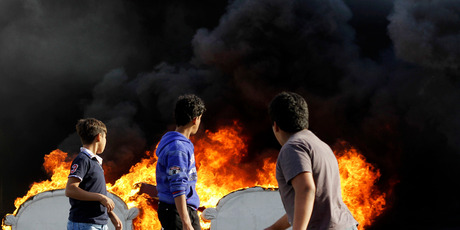 Announcing that the Bahraini authorities would intensify the repression that has prevailed since the crushing of pro-democracy demonstrations two years ago, the sheikh declared last October: "It has been decided to stop all gatherings and marches and not to allow any activity before being reassured about security and achieving the required stability in order to preserve national unity."
He's got the spirit of the thing right, but he falls short in the clarity and brevity departments. At any rate, the demonstrations, gatherings and marches have not stopped, although they have got even more dangerous for the participants.
Bahrain's brief role in the "Arab Spring" began on February 14, 2011, when demonstrators demanding a constitutional monarchy, a freely elected government and equality for all citizens took over Pearl Square in Manama, the capital of the tiny Gulf state.But one month later the protesters were driven from the square by force, and after that the repression became general.
By no coincidence, that was also when Saudi Arabian troops arrived "to help the Government of Bahrain restore order". (Bahrain is an island connected to Saudi Arabia's Eastern Province by a long causeway.) Officially the Saudi soldiers were invited in by Bahrain's ruler, King Hamad bin Isa al-Khalifa. Unofficially, he probably had no choice in the matter.
Bahrain's ruling family is Sunni Muslim, like Saudi Arabia's and those of all the other members of the Gulf Co-operation Council (Kuwait, Qatar, United Arab Emirates and Oman). However, 70 per cent of Bahrain's population is Shia, whereas the rest of the GCC countries are overwhelmingly Sunni. And the relationship between Sunnis and Shias throughout the region is coming to resemble that between Catholics and Protestants in 16th-century Europe.
The ensuing century of religious wars in Europe was not really about doctrinal differences. The wars were driven by the rulers' conviction that people who did not share their particular brand of Christianity could not be loyal to them politically.
It was nonsense, but millions of Europeans were killed in the 1500s and 1600s in wars triggered by this belief. The same disease now seems to be taking root in the Arab Gulf states. Shias, it is argued, cannot be loyal to a Sunni ruling family. And if they object to being oppressed, it can only be because Shia-majority Iran has deliberately stirred them up.
There is a real political and military rivalry between Iran, the major power on the north side of the Gulf, and the smaller Arab states to the southwest. It has become worse since the US invasion of Iraq ended centuries of Sunni rule and put a Shia regime in power there. The competition is actually geopolitical and strategic, not sectarian, but people get confused.
So Saudi Arabia worries a lot about the loyalty of the large Shia population (maybe even a majority) in its Eastern Province, where all the oil is. It was certainly not going to tolerate a democracy - which it thinks would be a "Shia" democracy, and therefore a hostile regime - in Bahrain, right next door.
And, of course, it believed that the downtrodden Shia majority in Bahrain had been stirred up by Shia-majority Iran across the Gulf. So when Bahrain's King had still not got the pro-democracy protesters under control after an entire month, it sent its troops in.
It certainly wasn't what Crown Prince Sheikh Salman bin Hamad al-Khalifa intended: he was trying to negotiate with opposition parties about giving Shias a bigger role in the kingdom's affairs. But Saudi Arabia didn't want that kind of example right next-door, and it found hardline allies in the Bahraini royal family.
The triumvirate who are now running Bahrain are Khalifa bin Salman al-Khalifa, Prime Minister for the past 40 years, and the brothers Khalid bin Ahmed bin Salman al-Khalifa, the royal Court Minister, and Khalifa bin Ahmad al-Khalifa, who commands the Bahrain Defence Forces.
With them in charge, there will be no compromise, even though more than 80 Shia protesters have already been killed.
No Western government is going to condemn the country's rulers. That would seriously annoy Saudi Arabia, and they will never do that.
Announcing that the Bahraini authorities would intensify the repression that has prevailed since the crushing of pro-democracy demonstrations two years ago, the sheikh declared last October: "It has been decided to stop all gatherings and marches and not to allow any activity before being reassured about security and achieving the required stability in order to preserve national unity."
He's got the spirit of the thing right, but he falls short in the clarity and brevity departments. At any rate, the demonstrations, gatherings and marches have not stopped, although they have got even more dangerous for the participants.
Bahrain's brief role in the "Arab Spring" began on February 14, 2011, when demonstrators demanding a constitutional monarchy, a freely elected government and equality for all citizens took over Pearl Square in Manama, the capital of the tiny Gulf state.But one month later the protesters were driven from the square by force, and after that the repression became general.
By no coincidence, that was also when Saudi Arabian troops arrived "to help the Government of Bahrain restore order". (Bahrain is an island connected to Saudi Arabia's Eastern Province by a long causeway.) Officially the Saudi soldiers were invited in by Bahrain's ruler, King Hamad bin Isa al-Khalifa. Unofficially, he probably had no choice in the matter.
Bahrain's ruling family is Sunni Muslim, like Saudi Arabia's and those of all the other members of the Gulf Co-operation Council (Kuwait, Qatar, United Arab Emirates and Oman). However, 70 per cent of Bahrain's population is Shia, whereas the rest of the GCC countries are overwhelmingly Sunni. And the relationship between Sunnis and Shias throughout the region is coming to resemble that between Catholics and Protestants in 16th-century Europe.
The ensuing century of religious wars in Europe was not really about doctrinal differences. The wars were driven by the rulers' conviction that people who did not share their particular brand of Christianity could not be loyal to them politically.
It was nonsense, but millions of Europeans were killed in the 1500s and 1600s in wars triggered by this belief. The same disease now seems to be taking root in the Arab Gulf states. Shias, it is argued, cannot be loyal to a Sunni ruling family. And if they object to being oppressed, it can only be because Shia-majority Iran has deliberately stirred them up.
There is a real political and military rivalry between Iran, the major power on the north side of the Gulf, and the smaller Arab states to the southwest. It has become worse since the US invasion of Iraq ended centuries of Sunni rule and put a Shia regime in power there. The competition is actually geopolitical and strategic, not sectarian, but people get confused.
So Saudi Arabia worries a lot about the loyalty of the large Shia population (maybe even a majority) in its Eastern Province, where all the oil is. It was certainly not going to tolerate a democracy - which it thinks would be a "Shia" democracy, and therefore a hostile regime - in Bahrain, right next door.
And, of course, it believed that the downtrodden Shia majority in Bahrain had been stirred up by Shia-majority Iran across the Gulf. So when Bahrain's King had still not got the pro-democracy protesters under control after an entire month, it sent its troops in.
It certainly wasn't what Crown Prince Sheikh Salman bin Hamad al-Khalifa intended: he was trying to negotiate with opposition parties about giving Shias a bigger role in the kingdom's affairs. But Saudi Arabia didn't want that kind of example right next-door, and it found hardline allies in the Bahraini royal family.
The triumvirate who are now running Bahrain are Khalifa bin Salman al-Khalifa, Prime Minister for the past 40 years, and the brothers Khalid bin Ahmed bin Salman al-Khalifa, the royal Court Minister, and Khalifa bin Ahmad al-Khalifa, who commands the Bahrain Defence Forces.
With them in charge, there will be no compromise, even though more than 80 Shia protesters have already been killed.
No Western government is going to condemn the country's rulers. That would seriously annoy Saudi Arabia, and they will never do that.
Saudi Arabia to witness escalation of uprisings in coming days
Saudi Arabia will soon witness an escalation of public uprisings as the protests have entered an unprecedented phase in the run-up to the US Secretary of State’s visit to the kingdom, a political analyst tells Press TV.
The protests in Saudi Arabia “in the coming few days are increasing” at the time of the visit of the new American Secretary of State John Kerry to Riyadh,” said Ali al-Ahmed, director of the Institute for [Persian] Gulf Affairs (IGA) in a Wednesday interview.
The analyst noted that the people in Saudi Arabia will use the occasion “to take advantage of the international media attention on that visit so the people of Saudi Arabia would bring their voice to the world, to the international media which has been silent and blocking their voice.”
“It is absolutely a new phase. You know, we saw both in Buraidah in the al-Qassim region and the Riyadh itself simultaneous protests today,” Ahmed said.
The IGA director pointed to the burning of the picture of the Saudi Interior Minister Mohammad bin Nayef in Buraidah during a protest by thousands of women and children and described it as “a huge development in the country.”
“For the first time in Saudi Arabia the picture of a member of the ruling family, the interior minister, has been publicly burned in front of police,” Ahmed pointed out.
Saudi protesters have staged fresh demonstrations against the Al Saud regime, calling for the release of political prisoners.
In recent days, anti-regime protesters, including female demonstrators, took to the streets in the capital Riyadh and the central province of al-Qassim to show their outrage at the Saudi regime’s illegal detention of dissidents.
Since February 2011, protesters have held demonstrations on an almost regular basis in Saudi Arabia, mainly in Qatif and the town of Awamiyah in Eastern Province, primarily calling for the release of all political prisoners, freedom of expression and assembly, and an end to widespread discrimination.
However, the demonstrations have turned into protests against the Al Saud regime, especially since November 2011, when security forces killed five protesters and injured many others in the province.
Amnesty International has called on Saudi authorities to stop using excessive force against the protesters. - See more at: http://www.presstv.ir/detail/2013/02/28/291305/ksa-to-enter-new-phase-of-unrest-soon/#sthash.TCxZ6T7H.dpuf
EGYPT:Human rights organisation blames police for mistreatment of children
 The police are using street children for political gains, said the Egyptian Foundation for Advancement of the Childhood Condition (EFACC) in a press statement on Wednesday.
The EFACC said the police were guilty of detaining children and telling the public that they had captured “armed gangs” and other agents creating unrest. The group noted that there were ongoing investigations for approximately 40 children, who had been rounded up in different parts of Cairo, mostly for homelessness and begging.
The organisation said that the Interior Ministry was doing this as supposedly preventive measures to keep the children from involvement with worse crimes, but pointed out that such measures would do nothing to curtail crime. The EFACC said that instead the ministry should instead hand the children over to institutions who could provide alternate care and reduce the chances of the children returning to a life on the streets.
The statement argued that a vast majority of cases in which children are presented to prosecution was laden with procedural errors and said that instead of exposing children to further risk, they should be provided with social protection by groups already engaging with the issue.
The EFACC also said that the forensic report for Omar Salah, the 12 year-old sweet potato vendor had still not arrived to the prosecution. Salah was killed earlier this month in the vicinity of Tahrir Square. The Armed Force claimed responsibility for the death, claiming it was accidental, and that the army personnel responsible was detained and would be subject to legal proceedings.
The police are using street children for political gains, said the Egyptian Foundation for Advancement of the Childhood Condition (EFACC) in a press statement on Wednesday.
The EFACC said the police were guilty of detaining children and telling the public that they had captured “armed gangs” and other agents creating unrest. The group noted that there were ongoing investigations for approximately 40 children, who had been rounded up in different parts of Cairo, mostly for homelessness and begging.
The organisation said that the Interior Ministry was doing this as supposedly preventive measures to keep the children from involvement with worse crimes, but pointed out that such measures would do nothing to curtail crime. The EFACC said that instead the ministry should instead hand the children over to institutions who could provide alternate care and reduce the chances of the children returning to a life on the streets.
The statement argued that a vast majority of cases in which children are presented to prosecution was laden with procedural errors and said that instead of exposing children to further risk, they should be provided with social protection by groups already engaging with the issue.
The EFACC also said that the forensic report for Omar Salah, the 12 year-old sweet potato vendor had still not arrived to the prosecution. Salah was killed earlier this month in the vicinity of Tahrir Square. The Armed Force claimed responsibility for the death, claiming it was accidental, and that the army personnel responsible was detained and would be subject to legal proceedings.
Israel gets first Ethiopian-born beauty queen

 Yityish Aynaw, a former Israeli army officer, has become the first Ethiopian-born Israeli to win the Miss Israel pageant.
A panel of judges awarded the title to Aynaw, a 21-year-old model who came to Israel about a decade ago, at the International Convention Center Haifa on Wednesday.
"It's important that a member of the Ethiopian community wins the competition for the first time," she was quoted by Israeli media as telling the judges in response to a question. "There are many different communities of many different colors in Israel, and it's important to show that to the world." Aynaw came to Israel with her family when she was 12. Acclimating to Israel was difficult at first, Aynaw said, but she picked up the language quickly with the help of a friend.
She has been working as a saleswoman at a clothing store since her army discharge.
During the competition, Aynaw cited the slain American civil rights activist Martin Luther King Jr. as one of her heroes.
"He fought for justice and equality, and that's one of the reasons I'm here: I want to show that my community has many beautiful qualities that aren't always represented in the media," she said
Yityish Aynaw, a former Israeli army officer, has become the first Ethiopian-born Israeli to win the Miss Israel pageant.
A panel of judges awarded the title to Aynaw, a 21-year-old model who came to Israel about a decade ago, at the International Convention Center Haifa on Wednesday.
"It's important that a member of the Ethiopian community wins the competition for the first time," she was quoted by Israeli media as telling the judges in response to a question. "There are many different communities of many different colors in Israel, and it's important to show that to the world." Aynaw came to Israel with her family when she was 12. Acclimating to Israel was difficult at first, Aynaw said, but she picked up the language quickly with the help of a friend.
She has been working as a saleswoman at a clothing store since her army discharge.
During the competition, Aynaw cited the slain American civil rights activist Martin Luther King Jr. as one of her heroes.
"He fought for justice and equality, and that's one of the reasons I'm here: I want to show that my community has many beautiful qualities that aren't always represented in the media," she said
Israel, Turkey row over Zionism deepens rift between ex-allies
REUTERS.COMIsrael's prime minister accused his Turkish counterpart on Thursday of making a "dark and false" statement by calling Zionism a crime against humanity - a comment likely to hit efforts to repair ties between the two former allies.
 The Turkish premier's statement, made at a U.N. meeting in Vienna a day earlier, was also condemned by the head of Europe's main rabbinical group who called it a "hateful attack" on Jews.
"Just as with Zionism, anti-Semitism and fascism, it has become impossible not to see Islamophobia as a crime against humanity," Turkish Prime Minister Tayyip Erdogan said at theCivilizationss forum, according to Turkish media reports.
Ties between Israel and mostly Muslim Turkey have been frosty since 2010, when nine Turks were killed by Israeli commandos who stormed their ship carrying aid to Palestinians in Gaza, under a naval blockade.
In recent weeks, there has been a run of reports in the Turkish and Israeli press about efforts to repair relations, including a senior diplomatic meeting earlier this month in Rome and military equipment transfers.
The reports have not been confirmed by either government. No one was immediately available from Turkey's foreign ministry to comment on the new criticism from the rabbis or from Israeli Prime Minister Benjamin Netanyahu.
A statement from the Israeli premier's office said he "strongly condemns (Erdogan's) statement about Zionism and its comparison to Nazism."
The Zionist movement was the main force behind the establishment of the state of Israel.
"This is a dark and false pronouncement the likes of which we thought had passed into history," Netanyahu was quoted as saying.
Pinchas Goldschmidt, chief rabbi of Moscow and the head of the Conference of European Rabbis, said Erdogan's criticism of Zionism amounted to anti-Semitism.
"This is an ignorant and hateful attack on the Jewish people and against a movement with peace at its core, which relegates Prime Minster Erdogan to the level of (Iranian President) Mahmoud Ahmadinejadand, to Soviet leaders who used anti-Zionism as a euphemism for anti-Semitism," Goldschmidt said in an emailed statement.
"The irony of these comments will not be lost on the families of those slaughtered during the Armenian genocide, a crime still not recognized by the Turkish government," he added.
Armenians accuse Ottoman Turks of committing an orchestrated campaign of massacres against Christian Armenians during World War One.
Turkey, which was established as a republic after the Ottoman Empire collapsed, denies those killings were genocide and says both sides lost lives in internecine fighting during the chaos of war.
The Conference of European Rabbis is an umbrella group of 700 religious leaders in Europe, where an estimated 1,7 millions Jewish people live. About 17,000 Jews live in Turkey, a country of 76 million people.
The Turkish premier's statement, made at a U.N. meeting in Vienna a day earlier, was also condemned by the head of Europe's main rabbinical group who called it a "hateful attack" on Jews.
"Just as with Zionism, anti-Semitism and fascism, it has become impossible not to see Islamophobia as a crime against humanity," Turkish Prime Minister Tayyip Erdogan said at theCivilizationss forum, according to Turkish media reports.
Ties between Israel and mostly Muslim Turkey have been frosty since 2010, when nine Turks were killed by Israeli commandos who stormed their ship carrying aid to Palestinians in Gaza, under a naval blockade.
In recent weeks, there has been a run of reports in the Turkish and Israeli press about efforts to repair relations, including a senior diplomatic meeting earlier this month in Rome and military equipment transfers.
The reports have not been confirmed by either government. No one was immediately available from Turkey's foreign ministry to comment on the new criticism from the rabbis or from Israeli Prime Minister Benjamin Netanyahu.
A statement from the Israeli premier's office said he "strongly condemns (Erdogan's) statement about Zionism and its comparison to Nazism."
The Zionist movement was the main force behind the establishment of the state of Israel.
"This is a dark and false pronouncement the likes of which we thought had passed into history," Netanyahu was quoted as saying.
Pinchas Goldschmidt, chief rabbi of Moscow and the head of the Conference of European Rabbis, said Erdogan's criticism of Zionism amounted to anti-Semitism.
"This is an ignorant and hateful attack on the Jewish people and against a movement with peace at its core, which relegates Prime Minster Erdogan to the level of (Iranian President) Mahmoud Ahmadinejadand, to Soviet leaders who used anti-Zionism as a euphemism for anti-Semitism," Goldschmidt said in an emailed statement.
"The irony of these comments will not be lost on the families of those slaughtered during the Armenian genocide, a crime still not recognized by the Turkish government," he added.
Armenians accuse Ottoman Turks of committing an orchestrated campaign of massacres against Christian Armenians during World War One.
Turkey, which was established as a republic after the Ottoman Empire collapsed, denies those killings were genocide and says both sides lost lives in internecine fighting during the chaos of war.
The Conference of European Rabbis is an umbrella group of 700 religious leaders in Europe, where an estimated 1,7 millions Jewish people live. About 17,000 Jews live in Turkey, a country of 76 million people.
Pakistan: No more a pipedream
EDITORIAL: DAILY TIMES
 With the large manufacturing sector almost shut down and the textile industry, the backbone of Pakistan’s economy, on its knees, mainly due to the energy crisis, the finalisation of the Iran-Pakistan gas pipeline as a result of president Asif Ali Zardari’s trip to Tehran is good news. That Pakistan has mustered the strength to go against the US and the UN, both having Iran on their sanctions list, finally shows maturity dawning on the leadership on the criticality of the energy crisis facing the country. It is time for the US also to understand Pakistan’s internal vulnerabilities, especially when terrorism has crippled its capacity to grow, the crisis in the energy sector has sapped its vitals and is the cause of the rising anger of citizens against the government. Unemployment and inflation, arguably fed by the energy crisis, have led to rising crime. Small businesses that are the staple of employment in any economy have been ruined because of the prevailing circumstances. The crisis and makeshift or ad hoc measures to cope with the energy shortfall are no solution. Hence the decision to ignore US pressure while not ruling out its proposals to try other energy solutions is a positive omen for Pakistan’s future. Any indigenous plan to overcome the energy shortfall, either through gas exploration or coal development, would take time to become operational. On the other hand, Pakistan is in dire need of reducing its growing dependence on imported oil, which is not only eating into the foreign reserves but also contributing to galloping inflation, impacting severely on cost of production and cost of living. In this context, the Iran-Pakistan gas pipeline appears attractive and feasible.
Iran has been gracious enough to offer finance and the construction of the remaining pipeline on our side. It has already finished its section of the pipeline up to the border. On completion the project would cost $ 7.5 billion, supplying 750 million cubic feet per day of natural gas by mid-2015. Pakistan has had multiple troubles finding financiers for the project, primarily because of the US’s stance against Iran. One important issue that could affect the maintainability and security of the project is Balochistan’s nationalist insurgency. Balochistan, whether on this side of the border or across in Iran, is a troubled area. It was security and US pressure that persuaded India to withdraw from the deal that was initially an Iran-Pakistan-India pipeline. This issue would remain thorny unless we decide to sit down and talk with the insurgents in Balochistan. However, China’s growing appetite for energy is expected to make it a partner in sharing the resource. That would give a financial breather to Pakistan in the form of transit fees that it had to lose because of India’s withdrawal.
The complexities surrounding the project have been myriad and it goes to the credit of Pakistan that it had never abandoned the project, despite the difficulties. The economic chemistry of regional cooperation has left little choice for countries within the area except to cooperate in energy and trade. For Iran, which has always been a brotherly neighbour, we should be prepared to go the extra mile, benefiting ourselves in the process.
With the large manufacturing sector almost shut down and the textile industry, the backbone of Pakistan’s economy, on its knees, mainly due to the energy crisis, the finalisation of the Iran-Pakistan gas pipeline as a result of president Asif Ali Zardari’s trip to Tehran is good news. That Pakistan has mustered the strength to go against the US and the UN, both having Iran on their sanctions list, finally shows maturity dawning on the leadership on the criticality of the energy crisis facing the country. It is time for the US also to understand Pakistan’s internal vulnerabilities, especially when terrorism has crippled its capacity to grow, the crisis in the energy sector has sapped its vitals and is the cause of the rising anger of citizens against the government. Unemployment and inflation, arguably fed by the energy crisis, have led to rising crime. Small businesses that are the staple of employment in any economy have been ruined because of the prevailing circumstances. The crisis and makeshift or ad hoc measures to cope with the energy shortfall are no solution. Hence the decision to ignore US pressure while not ruling out its proposals to try other energy solutions is a positive omen for Pakistan’s future. Any indigenous plan to overcome the energy shortfall, either through gas exploration or coal development, would take time to become operational. On the other hand, Pakistan is in dire need of reducing its growing dependence on imported oil, which is not only eating into the foreign reserves but also contributing to galloping inflation, impacting severely on cost of production and cost of living. In this context, the Iran-Pakistan gas pipeline appears attractive and feasible.
Iran has been gracious enough to offer finance and the construction of the remaining pipeline on our side. It has already finished its section of the pipeline up to the border. On completion the project would cost $ 7.5 billion, supplying 750 million cubic feet per day of natural gas by mid-2015. Pakistan has had multiple troubles finding financiers for the project, primarily because of the US’s stance against Iran. One important issue that could affect the maintainability and security of the project is Balochistan’s nationalist insurgency. Balochistan, whether on this side of the border or across in Iran, is a troubled area. It was security and US pressure that persuaded India to withdraw from the deal that was initially an Iran-Pakistan-India pipeline. This issue would remain thorny unless we decide to sit down and talk with the insurgents in Balochistan. However, China’s growing appetite for energy is expected to make it a partner in sharing the resource. That would give a financial breather to Pakistan in the form of transit fees that it had to lose because of India’s withdrawal.
The complexities surrounding the project have been myriad and it goes to the credit of Pakistan that it had never abandoned the project, despite the difficulties. The economic chemistry of regional cooperation has left little choice for countries within the area except to cooperate in energy and trade. For Iran, which has always been a brotherly neighbour, we should be prepared to go the extra mile, benefiting ourselves in the process.
The Jinnah we don’t want to know
The Express Tribune
By Aziz Akhmad
 I have a large framed photograph of M A Jinnah, our Quaid-i-Azam, on a wall of my home office here in New York. It is an old photograph in sepia tones, showing the man dressed immaculately, as always, in a dark suit, striped tie, white straight-collared shirt with double cuffs that protrude a little from underneath his coat sleeves, revealing a cufflink and wearing two-tone shoes.
Jinnah is squatting on the lawn of what appears to be an elegant red-brick house lined with shrubs and greenery. He has a cigarette between his lips, while both his hands are occupied holding a small, white, long-haired dog, a West Highland terrier, or Westie, as the breed is called. Sitting next to the Westie is a big, black Doberman, wearing a studded leather collar, his ears pricked warily. All three — the man and the dogs — are looking straight into the camera.
Jinnah has an amused expression on his face, which, it seems, would break into a grin were it not for the cigarette between his lips. He looks about 60 and dashingly handsome with fine features, a full head of hair with generous splashes of gray carefully combed back.
I have a large framed photograph of M A Jinnah, our Quaid-i-Azam, on a wall of my home office here in New York. It is an old photograph in sepia tones, showing the man dressed immaculately, as always, in a dark suit, striped tie, white straight-collared shirt with double cuffs that protrude a little from underneath his coat sleeves, revealing a cufflink and wearing two-tone shoes.
Jinnah is squatting on the lawn of what appears to be an elegant red-brick house lined with shrubs and greenery. He has a cigarette between his lips, while both his hands are occupied holding a small, white, long-haired dog, a West Highland terrier, or Westie, as the breed is called. Sitting next to the Westie is a big, black Doberman, wearing a studded leather collar, his ears pricked warily. All three — the man and the dogs — are looking straight into the camera.
Jinnah has an amused expression on his face, which, it seems, would break into a grin were it not for the cigarette between his lips. He looks about 60 and dashingly handsome with fine features, a full head of hair with generous splashes of gray carefully combed back. It’s a shame that the official Pakistan does not display pictures of Jinnah like this one more often — and there are numerous such charming pictures of him in the archives: Jinnah in a chair with his young and beautiful daughter, Dina, standing by, both with a big smile; Jinnah laughing with Gandhi; Jinnah sitting on the arm of a park bench, posing with his sister and other friends; and many more. These pictures reveal the human side of Jinnah, almost a flamboyant side.
Ironically, most Pakistanis have grown up seeing their Quaid-i-Azam, in textbooks, on the covers of their notebooks and currency notes, as an unsmiling, humourless and a somber man, clad in a sherwani and a boat-shaped karakul cap that came to be called the Jinnah cap.
True, Jinnah did start wearing a sherwani and chooridar pyjama or shalwar and a karakul cap — in the last 10 or 12 years of his life — in public gatherings. But he never gave up wearing western clothes. Nor did he give up his love for dogs, nor, unfortunately, his addiction to cigarettes.
Jinnah was a modern man, a westernised man. Whatever his personal beliefs, he never wore religion on his sleeves. No photographer has ever been able to capture him clad in an ahram performing umrah or Hajj, or at an iftar party, or visiting and praying at shrines.
Not only have we ‘doctored’ an official image of Jinnah, we even insist on misspelling his name. Jinnah would spell his first name as Mohamed, as evident in his passport, issued in November 1946. The picture in the passport shows Jinnah wearing a western jacket, a tie and a Jinnah cap. I suspect this is the same picture that appears on our currency notes, but with the tie and jacket replaced with a sherwani collar. Obviously, we have been trying to clad Jinnah in an identity we wish to assume for ourselves — an overt religious identity.
We even rearranged the famous phrase “Unity, faith and discipline” from one of his speeches to “Faith, unity and discipline” and translated faith to mean religion, which, in the context of the speech, meant confidence or conviction.
It’s a shame that the official Pakistan does not display pictures of Jinnah like this one more often — and there are numerous such charming pictures of him in the archives: Jinnah in a chair with his young and beautiful daughter, Dina, standing by, both with a big smile; Jinnah laughing with Gandhi; Jinnah sitting on the arm of a park bench, posing with his sister and other friends; and many more. These pictures reveal the human side of Jinnah, almost a flamboyant side.
Ironically, most Pakistanis have grown up seeing their Quaid-i-Azam, in textbooks, on the covers of their notebooks and currency notes, as an unsmiling, humourless and a somber man, clad in a sherwani and a boat-shaped karakul cap that came to be called the Jinnah cap.
True, Jinnah did start wearing a sherwani and chooridar pyjama or shalwar and a karakul cap — in the last 10 or 12 years of his life — in public gatherings. But he never gave up wearing western clothes. Nor did he give up his love for dogs, nor, unfortunately, his addiction to cigarettes.
Jinnah was a modern man, a westernised man. Whatever his personal beliefs, he never wore religion on his sleeves. No photographer has ever been able to capture him clad in an ahram performing umrah or Hajj, or at an iftar party, or visiting and praying at shrines.
Not only have we ‘doctored’ an official image of Jinnah, we even insist on misspelling his name. Jinnah would spell his first name as Mohamed, as evident in his passport, issued in November 1946. The picture in the passport shows Jinnah wearing a western jacket, a tie and a Jinnah cap. I suspect this is the same picture that appears on our currency notes, but with the tie and jacket replaced with a sherwani collar. Obviously, we have been trying to clad Jinnah in an identity we wish to assume for ourselves — an overt religious identity.
We even rearranged the famous phrase “Unity, faith and discipline” from one of his speeches to “Faith, unity and discipline” and translated faith to mean religion, which, in the context of the speech, meant confidence or conviction.
Pakistan textbooks raise debate about 'curriculum of hate'
By Taha Siddiqui: Christian Science Monitor
Government-sanctioned textbooks across Pakistan contain numerous examples of anti-minority and anti-Western language, prompting activists to encourage teachers to stop using them.In a public school located just outside the capital, a classroom of ninth-graders follows quietly along in their history textbooks as their teacher reads out loud about what happened shortly after the creation of Pakistan in 1947: “Caravans that were on the way to Pakistan were attacked by Hindus and Sikhs. Not a single Muslim was left alive in trains coming to Pakistan.” As the magnitude of the sentence registers with the students, the phrase “No Muslim was left alive!” echoes around the classroom from whispered lips. Students are clearly engaged with the subject and clearly disturbed with what history they have just learned. The only problem? That description in the students' books is highly misleading.Though the partition of India and Pakistan in 1947 was indeed one of massive violence, Mubarak Ali, who has written several books on India-Pakistan history, says this is a one-sided account of events and an exaggerated version of the truth. In fact, it was the Pakistani side where the communal riots started, and in reaction, Indians responded, he says, adding: "But very few trains were attacked. And many more made it alive, which is not taught." Dr. Ali says that such content should be expunged from school books, much as India has managed to do. "Instead of teaching Pakistani youth that Hindus from India are to be blamed for everything, textbooks should critically look at this communal violence, which can actually be traced to the way both Muslims and Hindus responded to British imperialism before the independence. We should not glorify this division but rather criticize it, because Muslims and Hindus coexisted peacefully for centuries before," he says. Across Pakistan, government-sanctioned school textbooks contain blatantly anti-religious-minority, anti-Western material. And many are worried the curriculum is fueling intolerance, especially among youths – leading to violent behavior and even sympathy for the Taliban. “Such textbooks try to create and define Pakistani nationalism in a very narrow sense. It tries to define it in term of an Islamic identity,” says Abdul Hameed Nayyar, a well-known historian, activist, and former physicist who is part of a Lahore-based campaign to encourage teachers around the country to raise awareness about this issue by calling it “the curriculum of hatred” and encouraging teachers to stop using the textbooks. After the teacher finishes reading, he asks another student to continue reading aloud from the next chapter, which focuses on why Pakistan came into existence: "Narrow-mindedness of the Hindus and the conspiracies of whites led to the call of this Islamic country, Pakistan.” When asked later about his opinion of Hindus and Christians, the student reiterates what his textbook said. “I think Hindus are against Pakistan, against Islam. Hindus are like that. And even the British and the non-Muslims – they still oppose Pakistan,” he adds. That type of reaction is a problem, say activists, who note that school history texts are used by impressionable children and should be based in fact, not opinion, as students form their own ideas about the world. “These books try to show Pakistan and Muslims are victims of all kinds of conspiracy, from lots of people from many countries, which results in making people very paranoid,” says Mr. Nayyar. “And they become infused with narrowmindedness,” which can lead to extremism, he adds. 'THE SUBTLE SUBVERSION' Each province has its own textbook board, which reviews and approves textbooks for use in both public and private schools. The current curriculum came into use following the end of colonial rule and bitter break with India, which was considered an enemy. Later, during the rule of Gen. Zial ul-Haq, the curriculum was further radicalized, introducing the Soviet war in Afghanistan as “a new front for jihad.” Haq’s vision was to Islamize Pakistan, inspired by Saudi Arabia’s strict interpretation of Islam. Nayyar, who co-wrote a 2003 study called “The Subtle Subversion” that points out historical faults in textbooks and how the inaccuracies affect children, has been struggling for more than a decade to change them. The National Commission for Justice and Peace (NCJP), a minority rights organization, estimates that nearly every school in Pakistan uses the textbooks. “During the early years of Musharraf [Pakistan’s last military dictator] rule, I was asked by the government to give in my recommendations to improve the curriculum, which were incorporated in the syllabus,” says Nayyar. One of the changes he suggested and that was made was to redefine the word “jihad” in textbooks. Though the textbooks have it as “waging a holy war against infidels,” the literal meaning of the word means “struggle,” or “striving,” a meaning, he says, that deserves a much broader definition. He proposed that textbooks should explain that the term should refer to “fighting evils inside oneself.” But his changes were short-lived. Pressured by religious parties from whom he was seeking political support, Musharraf restored the original curriculum a few months later. REJUVENATED EFFORTS But the NCJP approached Nayyar recently, knowing he had led the fight to modernize Pakistan’s textbooks for years. Now Nayyar and the NCJP have come up with an updated analysis of Pakistan’s curriculum in both public and private schools by detailing lessons from the books sentence by sentence, highlighting content that is biased against ethnic and religious minorities in Pakistan, as well as hypernationalism against India and the West. In many chapters outlined by NCJP, modern Hindus are referred to as “gangsters” and Christians are referred to as “violent crusaders.” According to the report, the hate content in textbooks has more than doubled since the last time they were revised. For example, some 30 Grade 5 to 10 textbooks published in Punjab, examined in 2009, were found to have 12 instances of biased material that could be considered “hate content.” In 2012, the textbooks underwent a curriculum revision. After another review, the total number of quantifiable instances of questionable or factually incorrect material went up to 33, according to Peter Jacob, the study's author. CURRICULUM AUTHORITIES RESPOND When Pakistan’s Federal Textbook Board – a government body that authorizes and reviews content published in schoolbooks – was contacted, at first they denied that there was such content. When a Monitor correspondent confronted them with the latest report by NCJP, Riaz Ahmad, head of the government curriculum committee, promised to look into it. “We try our best to check such content, but since our society belongs to religious people, it is tough to bring [such] changes,” Dr. Ahmad says, adding that the curriculum has to respect the society it is being taught in. RECOMMENDED: How much do you know about Pakistan? Take this quiz. In the meantime, some schools have begun to write their own textbooks. One such private school, Indus Valley School of Learning, based in Rawalpindi, has come up with its own curriculum. It has yet to find a publisher, which makes education here expensive, but appears to be promoting understanding among the youths studying here. Yasmeen Ashraf, the owner and principal of the school, says, “ The extremism that we have seen in Pakistan can be beaten through the school, through the education system by properly developing curriculum."
HRW highly critical of Bahrain
 Human Rights Watch said Thursday that Bahrain's promises of political reform are for naught if opposition leaders remain jailed.
Human Rights Watch staff members visited Bahrain recently and met with Interior Minister Rashid bin Abdullah al-Khalifa and other officials.
Bahrain's Sunni-led monarchy has pledged to honor proposals spelled out by an independent commission of inquiry probing a deadly uprising against the government in 2011.
Sarah Leah Whitson, director of Middle East programs at Human Rights Watch, said many of those pledges are empty.
"All the talk of national dialogue and reform mean nothing so long as the country's most prominent human rights and political activists remain unjustly imprisoned while officials responsible for torture and murder remain in their positions," she said in a statement.
Protests have continued since the 2011 uprising. One protester and a policeman were killed during mid-February demonstrations.
The government of Bahrain said any party or group with real political demands should avoid using violence to pursue their objectives. Bahrain's Justice Minister Khalid bin Ali al-Khalifa has stressed "the government's resolve to prevent using violence as a tool to pressurize decisions."
Whitson said that at the bare minimum, the rights community should expect the government to examine "the gross abuses by security forces during the 2011 uprising."
Human Rights Watch said Thursday that Bahrain's promises of political reform are for naught if opposition leaders remain jailed.
Human Rights Watch staff members visited Bahrain recently and met with Interior Minister Rashid bin Abdullah al-Khalifa and other officials.
Bahrain's Sunni-led monarchy has pledged to honor proposals spelled out by an independent commission of inquiry probing a deadly uprising against the government in 2011.
Sarah Leah Whitson, director of Middle East programs at Human Rights Watch, said many of those pledges are empty.
"All the talk of national dialogue and reform mean nothing so long as the country's most prominent human rights and political activists remain unjustly imprisoned while officials responsible for torture and murder remain in their positions," she said in a statement.
Protests have continued since the 2011 uprising. One protester and a policeman were killed during mid-February demonstrations.
The government of Bahrain said any party or group with real political demands should avoid using violence to pursue their objectives. Bahrain's Justice Minister Khalid bin Ali al-Khalifa has stressed "the government's resolve to prevent using violence as a tool to pressurize decisions."
Whitson said that at the bare minimum, the rights community should expect the government to examine "the gross abuses by security forces during the 2011 uprising."
Saudi protesters in Hejaz demand end to illegal detention
 Protesters in Saudi Arabia have held a rally in the western region of Hejaz to protests against an increase in illegal detentions.
Demonstrators took to the streets of Hejaz on Thursday, carrying placards and shouting slogans demanding the release of political prisoners.
The rally is the latest in a growing wave of protests over the detention of a group of women and children in the central province of al-Qassim.
The group was arrested by regime forces while they were staging a sit-in outside al-Safra Prison in Buraidah on Monday, demanding that authorities release their relatives.
Since February 2011, protesters have held demonstrations on an almost regular basis in Saudi Arabia, mainly in oil-rich Eastern Province. They were primarily calling for the release of political prisoners, freedom of expression and assembly, and an end to widespread discrimination.
The calls soon turned into demands for the downfall of the ruling Al Saud royal family, especially after security forces killed five protesters and injured many others in Eastern Province in November 2011.
In October 2012, Amnesty International called on the Saudi authorities to "end their repeated moves to stifle people’s attempts to protest against the widespread use of arbitrary detention in the country,” and to respect the right of people to peaceful protests.
Activists say there are over 40,000 political prisoners in jails across the kingdom. They say some of the people behind bars are being kept without charge or trial - some of them for up to 15 years.
Protesters in Saudi Arabia have held a rally in the western region of Hejaz to protests against an increase in illegal detentions.
Demonstrators took to the streets of Hejaz on Thursday, carrying placards and shouting slogans demanding the release of political prisoners.
The rally is the latest in a growing wave of protests over the detention of a group of women and children in the central province of al-Qassim.
The group was arrested by regime forces while they were staging a sit-in outside al-Safra Prison in Buraidah on Monday, demanding that authorities release their relatives.
Since February 2011, protesters have held demonstrations on an almost regular basis in Saudi Arabia, mainly in oil-rich Eastern Province. They were primarily calling for the release of political prisoners, freedom of expression and assembly, and an end to widespread discrimination.
The calls soon turned into demands for the downfall of the ruling Al Saud royal family, especially after security forces killed five protesters and injured many others in Eastern Province in November 2011.
In October 2012, Amnesty International called on the Saudi authorities to "end their repeated moves to stifle people’s attempts to protest against the widespread use of arbitrary detention in the country,” and to respect the right of people to peaceful protests.
Activists say there are over 40,000 political prisoners in jails across the kingdom. They say some of the people behind bars are being kept without charge or trial - some of them for up to 15 years.
President Zardari reiterates govt's commitment to curb militancy‚ sectarianism
Radio PakistanPresident Asif Ali Zardari has reaffirmed that the government will undertake every possible effort to bring to justice the perpetrators of Quetta carnage. Talking to a delegation of Hazara community in Quetta today (Thursday)‚ he said the federal government is providing every support to the provincial government in investigating the heinous incident. The president advised Balochistan governor to personally oversee that the bereaved families get relief. Later‚ during a meeting on law and order situation in Balochsitan‚ the President was apprised of various measures being taken to provide security to the people. The meeting was informed that the security arrangements in and around Quetta city have been beefed up and Frontier Corps has been given the powers of Police under Anti-Terrorism Act. Earlier talking to various delegations in Quetta‚ the president reiterated the government's commitment to curb militancy and sectarianism. He said fight against militant and sectarian mindset may be hard and long but will not rest till we have defeated this enemy of the state and the country. Earlier‚ the President also laid the foundation stone of Nolang Dam in Quetta to be constructed at a cost of 18 billion rupees. It is being constructed at River Mola in District Jhal Magsi. On completion‚ it will help irrigate 47‚000 acres of land. Radio Pakistan's Quetta correspondent says the work on the Dam will start next month.
‘Whole of Bangladesh is now Shahbagh’
 The organisers of ‘Ganajagaran Mancha’ of Shabagh intersection were overwhelmed by the huge crowd thronging the city’s commercial hub Motijheel to join a rally.
 This was the third rally organised in Dhaka outside Shahbagh, where the unprecedented protest against the life sentence of Jamaat leader Abdul Quader Molla, galvanised millions of Bangladeshis to take to the street.
The two other protest rallies were held at Mirpur and Rayerbazar, both witness to a spate of mass murders during the 1971 Liberation War.
The organisers said although their movement demanding death sentence to war criminals and a ban on Jamaat started at Shahbagh, it has already spread across all corners of Bangladesh.
“Our protest is not only confined to Shahbagh, it has reached everywhere across the nation,” Bangladesh Chhatra Moitree President Bappaditya Basu told the rally.
He called upon the people to set up ‘Ganajagaran Mancha’ at each school, college and locality.
Demonstrations at the iconic Shahbagh intersection, now christened as ‘Prajanma Chattar’, rolled into the 23rd day on Wednesday.
The International Crimes Tribunal-2 on Feb 5 awarded life imprisonment to Molla, sparking off a wave of anger and frustration, drawing people to Shahbagh to form mass protests.
The Islamist party which opposed Bangladesh’s birth also held a rally at Motijheel on the day prior to the start of the Shahbagh movement.
The rally by the ‘Ganajagaran Mancha’ in the business district came a day before the ICT-1 is expected to deliver a verdict on Jamaat leader Delwar Hossain Sayedee on charges of crimes during the nation’s nine-month bloody independence struggle in 1971.
People from the broad spectrum of the society started flocking to Motijheel carrying national flags and shouting slogans. Thousands of students of the city’s several schools and colleges also joined in.
The rally kicked off around 3.40pm with singing of national anthem.
The wife of Liftman Zafar Munshi, who died in an attack by the activists of Islami Chhatra Shibir – the student affiliate of the Jamaat-e-Islami – came and expressed solidarity with the movement.
”You have already shown Jamaat-Shibir that they have no place in this country by rejecting two of their strikes”, said Imran H Sarkar, spokesperson for the ‘Ganjagaran Mancha’.
“I urge you to resist tomorrow’s strike by Jamaat and Shibir and show them their places.”
Thousands of supporters roared in solidarity with the resistance call from ‘Ganjagaran Mancha’.
Talking directly to the International Crimes Tribunal, he said, “We do not impose any pressure on you. Please continue working in a neutral manner. Do not fear Jamaat -Shibir’s anarchy and terror.”
He demanded death penalty for Sayedee saying, “Support the call of the nation. Do not be confused. Do not have fear.”
The blogger also requested media outlets to not run any advertisements for institutions involved with Jamaat-e-Islami.
Speaking at the rally, Bangladesh Chhatra Union General Secretary Hassan Tarek slated the international human rights organisations for ‘questioning on-going the trial process of the war criminals’.
He alleged such organisations had indeed opposed Bangladesh’s War of Independence from Pakistan.
Bangladesh Chhatra League General Secretary Siddiqui Nazmul Alam also spoke on the occasion
There will be a continuous sit-in at Shahbagh starting from Wednesday night. People from all walks of life have been asked to join a mass procession that will be taken out from Shahbagh at 10am on Thursday amidst the shutdown
The protesters went back to Shahbagh following the end of the rally.
'Alllah’s house no political office'
A delegation of the Olama Mashayekh slated Jamaat for using mosque to further their political agenda after expressing solidarity with the protest.
“Mosque is not an office of any political party,” Maulana Abdul Momen Shiraji said in his address to the thousands in the rally.
He said the Baitul Mukarram National Mosque is the ‘house of Allah’, ‘not a party office’.
“Those who set the house of Allah on fire do not conform to Islam.”
Shiraji said: “Islam talks about humanity, peace and love towards other religions. Over 100,000 messengers of Allah talked about humanity in Islam.
He also urged everyone to stay alert against the on-going conspiracies related to Islam.
Olama Mashayekh Parishad’s Abdul Halim Shiraji said,” Islam does not suit Jamaat. Don’t pay heed to propaganda by those who had led killing, rape and loot.”
He alleged Jamaat was spreading false propaganda against the slain Shahbagh movement activist Ahmed Rajib Haider that he had defamed Islam.
He supported the demands of the youths for hanging the war criminals saying: “The law of Allah permits killing for a killing. So these killers deserve nothing other than death sentence.”
“They (war criminals) deserve several deaths. The Olama Mashayekhs will pronounce their death sentence as per the Sharia law if tribunals fail to do so,” he added. - See more at: http://bdnews24.com/bangladesh/2013/02/27/whole-of-bangladesh-is-now-shahbagh#sthash.FPT2Uasc.dpuf
This was the third rally organised in Dhaka outside Shahbagh, where the unprecedented protest against the life sentence of Jamaat leader Abdul Quader Molla, galvanised millions of Bangladeshis to take to the street.
The two other protest rallies were held at Mirpur and Rayerbazar, both witness to a spate of mass murders during the 1971 Liberation War.
The organisers said although their movement demanding death sentence to war criminals and a ban on Jamaat started at Shahbagh, it has already spread across all corners of Bangladesh.
“Our protest is not only confined to Shahbagh, it has reached everywhere across the nation,” Bangladesh Chhatra Moitree President Bappaditya Basu told the rally.
He called upon the people to set up ‘Ganajagaran Mancha’ at each school, college and locality.
Demonstrations at the iconic Shahbagh intersection, now christened as ‘Prajanma Chattar’, rolled into the 23rd day on Wednesday.
The International Crimes Tribunal-2 on Feb 5 awarded life imprisonment to Molla, sparking off a wave of anger and frustration, drawing people to Shahbagh to form mass protests.
The Islamist party which opposed Bangladesh’s birth also held a rally at Motijheel on the day prior to the start of the Shahbagh movement.
The rally by the ‘Ganajagaran Mancha’ in the business district came a day before the ICT-1 is expected to deliver a verdict on Jamaat leader Delwar Hossain Sayedee on charges of crimes during the nation’s nine-month bloody independence struggle in 1971.
People from the broad spectrum of the society started flocking to Motijheel carrying national flags and shouting slogans. Thousands of students of the city’s several schools and colleges also joined in.
The rally kicked off around 3.40pm with singing of national anthem.
The wife of Liftman Zafar Munshi, who died in an attack by the activists of Islami Chhatra Shibir – the student affiliate of the Jamaat-e-Islami – came and expressed solidarity with the movement.
”You have already shown Jamaat-Shibir that they have no place in this country by rejecting two of their strikes”, said Imran H Sarkar, spokesperson for the ‘Ganjagaran Mancha’.
“I urge you to resist tomorrow’s strike by Jamaat and Shibir and show them their places.”
Thousands of supporters roared in solidarity with the resistance call from ‘Ganjagaran Mancha’.
Talking directly to the International Crimes Tribunal, he said, “We do not impose any pressure on you. Please continue working in a neutral manner. Do not fear Jamaat -Shibir’s anarchy and terror.”
He demanded death penalty for Sayedee saying, “Support the call of the nation. Do not be confused. Do not have fear.”
The blogger also requested media outlets to not run any advertisements for institutions involved with Jamaat-e-Islami.
Speaking at the rally, Bangladesh Chhatra Union General Secretary Hassan Tarek slated the international human rights organisations for ‘questioning on-going the trial process of the war criminals’.
He alleged such organisations had indeed opposed Bangladesh’s War of Independence from Pakistan.
Bangladesh Chhatra League General Secretary Siddiqui Nazmul Alam also spoke on the occasion
There will be a continuous sit-in at Shahbagh starting from Wednesday night. People from all walks of life have been asked to join a mass procession that will be taken out from Shahbagh at 10am on Thursday amidst the shutdown
The protesters went back to Shahbagh following the end of the rally.
'Alllah’s house no political office'
A delegation of the Olama Mashayekh slated Jamaat for using mosque to further their political agenda after expressing solidarity with the protest.
“Mosque is not an office of any political party,” Maulana Abdul Momen Shiraji said in his address to the thousands in the rally.
He said the Baitul Mukarram National Mosque is the ‘house of Allah’, ‘not a party office’.
“Those who set the house of Allah on fire do not conform to Islam.”
Shiraji said: “Islam talks about humanity, peace and love towards other religions. Over 100,000 messengers of Allah talked about humanity in Islam.
He also urged everyone to stay alert against the on-going conspiracies related to Islam.
Olama Mashayekh Parishad’s Abdul Halim Shiraji said,” Islam does not suit Jamaat. Don’t pay heed to propaganda by those who had led killing, rape and loot.”
He alleged Jamaat was spreading false propaganda against the slain Shahbagh movement activist Ahmed Rajib Haider that he had defamed Islam.
He supported the demands of the youths for hanging the war criminals saying: “The law of Allah permits killing for a killing. So these killers deserve nothing other than death sentence.”
“They (war criminals) deserve several deaths. The Olama Mashayekhs will pronounce their death sentence as per the Sharia law if tribunals fail to do so,” he added. - See more at: http://bdnews24.com/bangladesh/2013/02/27/whole-of-bangladesh-is-now-shahbagh#sthash.FPT2Uasc.dpuf
BANGLADESH: ''Sayedee reaps as he sowed''
http://www.thedailystar.netWith the death sentence pronounced on Maulana Delawar Hossain Sayedee by the International Crimes Tribunal-1 yesterday, it is comeuppance for him. This has resonated with most people of the country as the Shahbagh Chattor expresses its jubilation over the verdict. Elaborate procedures have been observed with the defense and the plaintiff making out their cases based on the witness accounts as well as other evidences produced before the court. It has been a long-drawn out process after which the verdict has been delivered in pursuit of the due process of law. The defendant has already expressed its intention to appeal the tribunal's verdict. It is only after the disposal of the appeal that the legal process will have been exhausted. In the essence, the International Crimes Tribunals and their procedures have been successfully tried out with the result that the processes have been strengthened for justice to be done to the victims of the crimes against humanity in the 1971 Liberation War. It is a vindication of the long arm of law reaching the heinous perpetrators after 42 years since their diabolical acts in collusion with the Pak occupation forces. Having said that, we are shocked at the scale of violence and mayhem perpetrated by the Jamaat-Shibir elements and their supporters. The death figures reached four in Chittagong, two in Rangpur and one each in Dinajpur and Sirajganj within hours of delivering the verdict. What appalls us is the torching of a temple in Noakhali. All this can't go on, life must return to full normality. The law enforcement agencies and the BGB are doing their best to quell the disturbances and we hope the situation will be brought under control expeditiously. We urge restraint from all sides in the greater interest of our beloved country.
Terrorized Ethnic Group to Form Force in Pakistan

 Inside the ruins of a market demolished by a powerful bomb, four tiny white candles —dwarfed by the scale of the destruction — flickered gently in the freezing rain as dazed Shiite Muslim Hazaras wept for the nearly 90 people killed in the blast.
Condemning the Pakistan government for doing little to protect them, the small ethnic group has vowed to set up their own defense force to deal with Sunni extremists they blame for the bombing and a series of other ferocious attacks that have killed nearly 400 ethnic Hazaras in the past 18 months, nearly half in the first two months of this year.
The bomb earlier this month in the Pakistani city of Quetta ripped a swath of devastation that flattened a three-story building and left the ruins of scores of single-room shops exposed to the rain. Blood-soaked rugs were all that was left of a carpet store.
"The ones who did this — they are not human. They are animals," said Surha, a young woman who goes by one name, a common tradition here. She spoke as she grieved at the site, more than a week after the bombing.
Shiite leaders blame inaction by Pakistan's security service for the rising violence against them in Quetta, the capital of southwestern Baluchistan province. They told The Associated Press recently that they are petitioning the provincial administration of Baluchistan to approve a Hazara-led defense force to work with local police."Of course, I blame the government," Surha said, her voice getting louder.
Wrapped in a large beige shawl to ward off the cold, she recounted how two of her young cousins died in the bombing after returning home from school to help their father in his used clothing shop.
Her face was wracked in pain. Her voice cracked. "The government is responsible for this situation because daily it is happening to us and nothing is done to stop it."
Many Hazaras, who are mostly Shiite Muslims, migrated from neighboring Afghanistan during the past century. They are easily recognized by their distinctive Central Asian facial features, which Hazara leaders say make them easy targets for militant Sunnis.
"We can't hide who we are. You can see it in our faces. I don't see it getting better," said Allama Muhammad Juma Asadi.
His school, Jamia Imam Sadiq, is just a couple blocks from a massive bombing that killed more than 100 people on Jan. 10. Terrified students ran into the street. It was chaos, he said.
When a second explosion leveled the market on Feb. 16, Hazara leaders began to talk of self-protection and raising a security force of their own.
"Very soon we will have our own people at the checkpoints," Asadi said. "We have discussed setting up our own protection force with the administration."
Radicals have attacked non-Hazara Shiites elsewhere in the country, but some of the worst attacks have occurred in Baluchistan where most Hazaras live. A virulent anti-Shiite group, Lashkar-e-Janghvi, has taken responsibility for all the attacks. The militant organization is made up of radical Sunni Muslims and reviles Shiites as heretics.
About 20 million of Pakistan's 180 million people are Shiites, who mostly live in harmony with the majority Sunni population. But militant groups from both sides have sprung up in Pakistan over the decades, often with suspected financial links to Saudi Arabia, which is ruled by a Sunni monarchy, and Iran, a Shiite powerhouse in the region."A crumbling state has failed to stop slaughter after slaughter and to provide even basic security to its hapless citizens leaving them at the mercy of the murderers," militant expert and author Zahid Hussain recently wrote in a local newspaper.
The February explosion claimed the lives of 17 members of Bostan Kishtmand's family, which owned more than 20 small shops in the area.
"I went a little out of my mind when I went to the hospital and saw all of my relatives, all dead," Kishtmand said in broken English. "Something went wrong in my head."
After the January bombing, Baluchistan's provincial administration was fired and responsibility for the region's security came under the federal government. It ordered the paramilitary Frontier Corps to restore calm in Baluchistan, a sparsely populated province that was wracked by a bloody secessionist movement nearly two years ago. That gave way to the current round of brutal sectarian bloodletting.
In the February attack, militants loaded a water tanker with about 1,000 kilograms (2,200 pounds) of explosives. It passed undetected through two checkpoints manned by Frontier Corps.
Days after the explosion, the ground around the market was still covered in scores of muddy children's clothes, sweaters, dozens of winter jackets and tiny sandals. Several of the stores in the market had sold used children's clothes.
The explosion was timed to have the most devastating effect, Asadi said. It occurred after 7 p.m., when offices were closed and families were in the market shopping. Three schools in the area all held evening classes to teach students English and computer skills.Fifteen-year-old Inayat Hazara had been improving his computer skills at a nearby institute when the explosion occurred. He touched a dirty white bandage that covered much of his neck as he recalled the explosion, and the horror of the blood and bodies of his fellow students lying nearby.
"The noise was everywhere, my ears hurt. People were screaming and I couldn't see at first the dust in the air was so thick," he said.
Like tiny missiles, thousands of glass shards ripped through the computer lab where he was studying, he said.
"Everyone wants a good life, but I don't know how you have it here," he said.
Retired senior police officer Faqir Hussein said he supported a special protection force, but warned that a Hazara-only one could spark even more sectarian conflict.
A city of nearly 3 million people, Quetta is divided into neighborhoods that include ethnic Pashtuns and Baluch — another minority that dominates Baluchistan province. Hussein said that the other groups often live and work in Hazara-dominated areas, but that Hazaras themselves rarely go outside their own neighborhoods.
He said a mixed protection force would be preferable at checkpoints where the neighborhoods intersect.
"If a Pashtun comes to a checkpoint, he won't accept to be stopped and searched by a Hazara and that could start violence," explained Hussein, who is a Hazara.
He said there were parts of Quetta that are "no-go" areas for Hazaras because militant Sunnis are hiding among the local Baluch and Pashtun populations. While they might not support the militants, many local people are too terrified to turn them in.
Among the worst parts of Quetta is Sariab Road, a main avenue that is dominated by Pashtuns and Baluch. It has been the scene of numerous attacks and bombings.
Hussein turned down a job at the police training academy because he would have to drive along the avenue.
"Not because I am a coward, but I also don't want to commit suicide and it would have been suicide to drive everyday on Sariab Road," he explained. "Today not one Hazara drives on that road."
Inside the ruins of a market demolished by a powerful bomb, four tiny white candles —dwarfed by the scale of the destruction — flickered gently in the freezing rain as dazed Shiite Muslim Hazaras wept for the nearly 90 people killed in the blast.
Condemning the Pakistan government for doing little to protect them, the small ethnic group has vowed to set up their own defense force to deal with Sunni extremists they blame for the bombing and a series of other ferocious attacks that have killed nearly 400 ethnic Hazaras in the past 18 months, nearly half in the first two months of this year.
The bomb earlier this month in the Pakistani city of Quetta ripped a swath of devastation that flattened a three-story building and left the ruins of scores of single-room shops exposed to the rain. Blood-soaked rugs were all that was left of a carpet store.
"The ones who did this — they are not human. They are animals," said Surha, a young woman who goes by one name, a common tradition here. She spoke as she grieved at the site, more than a week after the bombing.
Shiite leaders blame inaction by Pakistan's security service for the rising violence against them in Quetta, the capital of southwestern Baluchistan province. They told The Associated Press recently that they are petitioning the provincial administration of Baluchistan to approve a Hazara-led defense force to work with local police."Of course, I blame the government," Surha said, her voice getting louder.
Wrapped in a large beige shawl to ward off the cold, she recounted how two of her young cousins died in the bombing after returning home from school to help their father in his used clothing shop.
Her face was wracked in pain. Her voice cracked. "The government is responsible for this situation because daily it is happening to us and nothing is done to stop it."
Many Hazaras, who are mostly Shiite Muslims, migrated from neighboring Afghanistan during the past century. They are easily recognized by their distinctive Central Asian facial features, which Hazara leaders say make them easy targets for militant Sunnis.
"We can't hide who we are. You can see it in our faces. I don't see it getting better," said Allama Muhammad Juma Asadi.
His school, Jamia Imam Sadiq, is just a couple blocks from a massive bombing that killed more than 100 people on Jan. 10. Terrified students ran into the street. It was chaos, he said.
When a second explosion leveled the market on Feb. 16, Hazara leaders began to talk of self-protection and raising a security force of their own.
"Very soon we will have our own people at the checkpoints," Asadi said. "We have discussed setting up our own protection force with the administration."
Radicals have attacked non-Hazara Shiites elsewhere in the country, but some of the worst attacks have occurred in Baluchistan where most Hazaras live. A virulent anti-Shiite group, Lashkar-e-Janghvi, has taken responsibility for all the attacks. The militant organization is made up of radical Sunni Muslims and reviles Shiites as heretics.
About 20 million of Pakistan's 180 million people are Shiites, who mostly live in harmony with the majority Sunni population. But militant groups from both sides have sprung up in Pakistan over the decades, often with suspected financial links to Saudi Arabia, which is ruled by a Sunni monarchy, and Iran, a Shiite powerhouse in the region."A crumbling state has failed to stop slaughter after slaughter and to provide even basic security to its hapless citizens leaving them at the mercy of the murderers," militant expert and author Zahid Hussain recently wrote in a local newspaper.
The February explosion claimed the lives of 17 members of Bostan Kishtmand's family, which owned more than 20 small shops in the area.
"I went a little out of my mind when I went to the hospital and saw all of my relatives, all dead," Kishtmand said in broken English. "Something went wrong in my head."
After the January bombing, Baluchistan's provincial administration was fired and responsibility for the region's security came under the federal government. It ordered the paramilitary Frontier Corps to restore calm in Baluchistan, a sparsely populated province that was wracked by a bloody secessionist movement nearly two years ago. That gave way to the current round of brutal sectarian bloodletting.
In the February attack, militants loaded a water tanker with about 1,000 kilograms (2,200 pounds) of explosives. It passed undetected through two checkpoints manned by Frontier Corps.
Days after the explosion, the ground around the market was still covered in scores of muddy children's clothes, sweaters, dozens of winter jackets and tiny sandals. Several of the stores in the market had sold used children's clothes.
The explosion was timed to have the most devastating effect, Asadi said. It occurred after 7 p.m., when offices were closed and families were in the market shopping. Three schools in the area all held evening classes to teach students English and computer skills.Fifteen-year-old Inayat Hazara had been improving his computer skills at a nearby institute when the explosion occurred. He touched a dirty white bandage that covered much of his neck as he recalled the explosion, and the horror of the blood and bodies of his fellow students lying nearby.
"The noise was everywhere, my ears hurt. People were screaming and I couldn't see at first the dust in the air was so thick," he said.
Like tiny missiles, thousands of glass shards ripped through the computer lab where he was studying, he said.
"Everyone wants a good life, but I don't know how you have it here," he said.
Retired senior police officer Faqir Hussein said he supported a special protection force, but warned that a Hazara-only one could spark even more sectarian conflict.
A city of nearly 3 million people, Quetta is divided into neighborhoods that include ethnic Pashtuns and Baluch — another minority that dominates Baluchistan province. Hussein said that the other groups often live and work in Hazara-dominated areas, but that Hazaras themselves rarely go outside their own neighborhoods.
He said a mixed protection force would be preferable at checkpoints where the neighborhoods intersect.
"If a Pashtun comes to a checkpoint, he won't accept to be stopped and searched by a Hazara and that could start violence," explained Hussein, who is a Hazara.
He said there were parts of Quetta that are "no-go" areas for Hazaras because militant Sunnis are hiding among the local Baluch and Pashtun populations. While they might not support the militants, many local people are too terrified to turn them in.
Among the worst parts of Quetta is Sariab Road, a main avenue that is dominated by Pashtuns and Baluch. It has been the scene of numerous attacks and bombings.
Hussein turned down a job at the police training academy because he would have to drive along the avenue.
"Not because I am a coward, but I also don't want to commit suicide and it would have been suicide to drive everyday on Sariab Road," he explained. "Today not one Hazara drives on that road."
US openly opposes Pak-Iran gas pipeline project
In its latest opposition of Pakistan-Iran gas pipeline project, the US State Department on Wednesday said it is in Pakistan’s interest to avoid any activity that can hit it with sanctions.
The State Department said that it was providing Pakistan with alternatives that would avoid any sanctions violation.
"We recognise that Pakistan has significant energy requirements but we really think there are other long-term solutions to Pakistan's energy needs," said deputy acting spokesman Patrick Ventrell.
"And so we've been assisting as a government to contribute to the alleviation of the energy crisis in Pakistan," he said.
"It's in their best interests to avoid any sanctionable activity, and we think that we provide and are providing ... a better way to meet their energy needs in some of the assistance we're providing."
Iran's supreme leader Ayatollah Ali Khamenei on Wednesday urged the visiting Pakistani president to press ahead with a much-delayed $7.5 billion gas pipeline project despite US opposition.
"The Iran-Pakistan gas pipeline is an important example of Tehran-Islamabad cooperation, and despite hostilities towards the expansion of ties we must overcome this opposition decisively," Khamenei told Asif Ali Zardari, his office reported.
The gas pipeline project is strongly opposed by Tehran's archfoe Washington.
"Accessing safe energy source is the first priority for any country including Pakistan. In this region, the Islamic republic is the only nation that has safe energy resources and we are ready to provide Pakistan its energy needs," the all-powerful Khamenei said.
Zardari, who also met with his Iranian counterpart Mahmoud Ahmadinejad, was quoted by the leader's office as saying: "We deeply believe in boosting bilateral ties.
"The international and regional players have tried in vain to prevent expansion of Iran-Pakistan ties but the people have learnt how to act against the enemy of Islam."
The pipeline project has run into repeated problems, including Pakistan's difficulty in finding funds and opposition to the project from Washington, which has slapped Iran with a raft of sanctions over its nuclear activities.
In 2010, Iran and Pakistan agreed that Tehran would supply between 750 million cubic feet (21 million cubic metres) and one billion cubic feet per day of natural gas by mid-2015.
Islamabad has said it will pursue the project regardless of US pressure, saying the gas is needed to help Pakistan overcome its energy crisis that has led to debilitating blackouts and suffocated industry.
Iran has almost completed the pipeline work in its territory, but Pakistan has not yet started construction of 780 kilometers (490 miles) of the pipeline on its side, which is said to cost some $1.5 billion.
Sanctions-hit Iran finally agreed to finance one third of the costs of laying the pipeline through Pakistani territory to Nawabshah, north of Karachi, with the work to be carried out by an Iranian company.
Pakistani officials in mid-December said Iran had promised a $500 million loan and that Islamabad would meet the rest of the cost.
- See more at: http://www.thenews.com.pk/article-90080-Pakistan-should-avoid-any-sanctionable-activity:-US-State-Dept#sthash.FnRTX5OK.dpuf
Subscribe to:
Posts (Atom)