M WAQAR..... "A man's ethical behavior should be based effectually on sympathy, education, and social ties; no religious basis is necessary.Man would indeed be in a poor way if he had to be restrained by fear of punishment and hope of reward after death." --Albert Einstein !!! NEWS,ARTICLES,EDITORIALS,MUSIC... Ze chi pe mayeen yum da agha pukhtunistan de.....(Liberal,Progressive,Secular World.)''Secularism is not against religion; it is the message of humanity.'' تل ده وی پثتونستآن
Saturday, January 12, 2013
Pakistan in throes of genocidal ideology
The ethnic cleansing in Pakistan has reached an alarming point, with over 120 Shia people killed and several severely wounded in the recent bombings across the country.
The families of the victims decline to bury the bodies of their loved ones unless they hear at least a word of condemnation from the Pakistani government.
In spite of a salvo of ethnic killings in the country, the government turns a blind eye to the tragedy and refuses to take any measures whatsoever in curtailing the inhumane trend. The reason may be tracked down to the fact that militancy has been implicitly backed by government-affiliated organizations such as ISI and the intelligence agencies for the past two decades. There is a purported claim that the ISI is not in the least affiliated to the government and that it operates out of its own volition in eliminating the Shia population which forms at least one-fourth of the population.
Human rights activists said on Thursday that the police and the security forces had failed to protect the vulnerable community. “The callousness and indifference of the authorities offers a damning indictment of the state, its military and security agencies,” said Ali Dayan Hasan, the Pakistan director at Human Rights Watch.
The assassination attempts initially included the Shia elites such as doctors, professors, engineers, and lawyers. However, in recent months, the appalling assassinations have come to encompass any Shia gathering regardless of their social ranks. Unfortunately, the Pakistani government has constantly tried to put a lid on these crimes, attribute them to sectarian violence and refuse to arrest the guilty parties. As usual, the West has chosen the ‘wise’ policy of media blackout on the inhumane issue. And if there is, the Western media tries to depict the tragedy in the light of a sectarian violence between the Sunnis and the Shias. Their choice of words in this regard well attests to their deliberate manipulation and misreporting of this horrific incident which springs from nothing but blind ignorance and prejudice. In a BBC report, the network said, “Sunni militant group Lashkar-e-Jhangvi said it carried out the deadliest of Thursday's attacks killing at least 85”, sought to attribute it to sectarianism and shrewdly avoided siding with the victims or condemning the terrorist attack.
The epicenters of these Shia killings include Quetta, Gilgit-Baltistan, Parachinar, lower Punjab and several regions in North West. Recent months however have witnessed Shia killings in large cities such as Lahore, Islamabad, Karachi and Rawalpindi.
The root causes of religious extremism in Pakistan are traceable to the time when the US government sought to oust Soviet forces from Afghanistan. In those days, the ISI was heavily mobilized by the US and funded by the Saudi Wahhabis to achieve this goal. No wonder, the only countries that recognized the Taliban with the green light of Washington were Saudi Arabia, Pakistan and United Arab Emirates.
A prominent Harvard researcher Nawaf E. Obaid says a former high-ranking Pakistani civil servant with close ties to his country's intelligence service, the Inter-Services Intelligence (ISI), told him that "the US provided the weapons and the know-how; the Saudis provided the funds; and we provided the training camps and operations bases for the mujahidin in the early 1980s, then for the Taliban." According to Obaid, the Saudi political Mogul Sheikh Mohamed bin Jubier, who is known to be the `exporter' of the Wahhabi creed in the world, was a strong advocate of aiding the Taliban."
Henry Kissinger writes that although the US and the Taliban had nothing in common, they shared a common enemy and that made them allies. Michael Semple of the Kennedy School of Government also says they shared a common enemy with the United States and both the Carter and Reagan administrations gave the Mujahadeen USD3 billion in military aid to fight the Soviets.
After the exit of the Soviet forces from Afghanistan, the US government decided to continue using these forces in a new direction, a direction which could pave the way for political inequilibrium and religious extremism in Pakistan in particular and in the region in general.
In the meantime, a large number of Shia groups reacted strongly to this new-fledged radicalism which threatened to hurl the country deeper into chaos and commotion. Instead, the US government discerned a strong necessity to curb this fighting force. Therefore, it embarked on a series of complicated and comprehensive plans: to smother this political and intellectual resistance. In the course of time, the US started strengthening radical groups such as al-Qaeda, Taliban, Lashkar-e-Jhangvi (LeJ), Sepah Sehabeh, Jundallah and other fledgling extremists in Pakistan. All this was accomplished with the help of Saudi Arabi and some Arab states in an effort to promote religious extremism and counter the burgeoning influence of Iran in the region.
The assassinations in Pakistan are in fact products of that twisted ill-defined mentality systematically promoted and funded by the US and its puppet Arab regimes.
No matter what labels we use to describe the tragedy, the fact is that what is happening in Pakistan to the Shia minority is an ugly truth, an indelible human stain and an act of genocidal ideology the bitter memory of which will rankle in the minds for many years to come.
Ruthless adulteration of milk & food in Pakistan
THE FRONTIER POSTAli Ashraf Khan The reporters of a TV programme ‘Sareyaam’ aired on ARY News have raided few secret locations in the very late hours of night in interior of Punjab exposing the methods applied by dairy business people in the adulteration process of milk provided to multinational companies which have monopolized a major portion of the milk market in Pakistan. The programme was showing how poisonous ingredients including urea, vanaspati ghee and colour removing chemicals were mixed together to formulate a dangerous liquid, filled in packets and sold as milk. Multinational milk marketing companies procure milk from different vendors who have few cows and buffalos producing 15 to 20 liter per cattle of milk daily but supplying 100 times more ‘milk’ to the procurement agents daily causing health hazards of serious nature, which can be seen in increasing number of multiple disease as a slow poisoning of the nation. What actually is happening in every village from where milk is supplied to these big companies is what I learnt few year back from reliable people knowing this game that if some one has capacity of 100 liter of milk they mix it with 2000 liter of water, add 1 to 2 bags of urea and vanaspati ghee of a particular brand that is made from animal fat, when this is mixed together a yellow coloured fluid of 2100 liter is available in which they mix some chemical that is used in nail removers locally called ‘rangkat’ which can damage human body, that helps to turn this yellow liquid into white and is supplied as milk to be further processed, packed with brand name and marketed on a highly exorbitant price to poor consumers who have no other alternate or choice. No government functionary has ever bothered to test and analyze to find out milk purity and its ingredients. I remember distinctly an incident that occurred when a Chinese company supplied one most popular brand of infant milk in large quantity to the USA, there it was tested and found that the milk for infants supplied by China had in its ingredients melamine powder, which is harmful, so the entire consignment was returned back under protest. Back home in China a high powered inquiry was initiated against this company and I had seen on Chinese media that when it was found true and the supplier company admitted mixing melamine powder in the famous infant milk brand, the Chief Executive of this company was shot point blank no second appeal or inquiry. One thing is good in China that if corruption is proved the punishment for the corrupt is instant execution of death penalty. No plea bargain that rules the roost in eradication of corruption in Pakistan by National Accountability Bureau, a term that can easily be called corruption in itself. Why this is so, the simple answer is that there is no commitment of the leadership to wage serious war against corruption. Similar reports have been shown in the years before showing the adulteration of different food items including milk but so far nothing has been done or changed. FIRs have been registered but we still have to wait for a powerful constitutional investigation authority, free from executive control that can then expose culprits to be punished which would make an improvement in food production security possible. Food adulteration is not a new issue at all. Some of us may still remember a discussion in the late1970s about ice cream. When the multinational Walls started intruding into the Pakistani market, they bought over all their competitors including Polka and others, so as to monopolize and control prices. Their ice cream was made not of milk but from vegetable oil. A court case was launched by Yummy ice cream against Walls saying that according to Pakistani specification ice cream has to contain milk and not vegetable oil while the Lahore High Court acknowledged this reasoning and gave a verdict against Wall’s ice cream and the superior court also upheld this verdict. The strange but the verdict was never implemented during last few decades and until today Wall’s is selling its products in our country as ice cream. What else can be expected in a state that has used its authority not so much to improve the living conditions of its citizens but rather to suit the whims of its ruling elite. By now the state has undermined its institutions to such an extent that it is at the verge of collapse. That has not only to do with the security situation which is of comparatively recent making but with the missing respect of the nation for laws in this country and the incapability or unwillingness of the state to implement and enforce laws or any other decision which is surely closely related to the menace of corruption also. The adulteration of food items and especially of milk is harming the health of our population in general and of our children in particular. Drinking water is another area where free for all is going on. It was in 1980s that World Health Organization reports started that water supplied to Karachi city is contaminated and random samples were taken at different points of the supply pipeline Dhabeji to Karachi by the help of plasma mass spectrometer, which abundantly found not only bacteria but pipeline itself infected with germs that were causing jaundice; so multinational companies jumped into cash this situation to promote mineral water culture, bottled water use became so popular that everywhere in Pakistan people are buying expensive water instead of government supplying tap water, but soon it turned out that even this bottled water is not safe for drinking. There are reports in the USA that the plastic bottles used in ½ and 1 liter pack are highly injurious in extreme hot weather like Pakistan has, in the USA they have discouraged it but in Pakistan people carry these bottles more as a fashion. In late the 1990s my friend used to import container loads of bottled water from the UAE to be supplied to five-star hotels meaning that our bottling plants were not up to their standard of purity. Now in the ongoing melee drama multinational companies have perhaps outsourced procurement and supply in different areas, where private individuals are filling such water in their rented premises into bottles of known companies and are selling them to consumers, which is not properly purified under reverse osmosis system. Will somebody please take care of this fraud that is spreading kidney problems to people who are forced to drink water outside their homes while on work? We also know that adulteration in drugs, imported grocery items and vegetables infected with dangerous insecticide spray has made the lives of our population already difficult and the media have not exposed these because of their own vested interest in advertisement income from these companies responsible of promoting health hazards. That is even more serious in view of the fact that a large section of our population is deprived of health-care system. But apart from the detrimental influence on public health food, milk and water adulteration is further undermining the trust of the people in the state which is a sign of its failing and alternative models such as Islamic state will gain more popularity. Though one can doubt that all the pious Pakistanis who are busy in food adulteration under this government and then go to pilgrimage for a whitewash would stop doing so if not a strict control and evenly strict punishment is introduced by state and its institutions. There is right now a hype going on with regard to the new savior who recently landed in our country and who is using the craving of Pakistani people for a better life for his career promotion. He had been an MNA under Musharraf regime through 2002 elections, when flour (ata) was 6 rupees a kg which is now 41, milk was 18 now 100, daal masor 15 kg now 120, rice 20 kg now 120 and so on and no voice was ever raised against the WTO sponsored dark horses by Dr. Qadri. There is a fear that this bad situation in the country will enable him to create anarchy and destruction in the country that would suit nobody here but only people sitting outside the country.
Obama: US war in Afghanistan winding down
With the war in Afghanistan winding down after 11 years, President Barack Obama says the time is right for U.S. forces to let Afghans do their own fighting.
In his radio and Internet address Saturday, Obama says U.S. forces will shift to a support role as Afghan soldiers take the lead in defending their country.
Obama met Friday with Afghan President Hamid Karzai at the White House and agreed that U.S. troops will go home in larger numbers starting this spring — several months ahead of schedule. He says "America's war in Afghanistan will be over" by the end of 2014.
In the Republican address, freshman Sen. Deb Fischer of Nebraska says that with the fiscal cliff averted, Congress and the president must focus on cutting "out-of-control" government spending.
US condemns 'senseless and inhumane attacks in Pakistan
The Express TribuneThe United States has condemned the “senseless and inhumane” extremist attacks in Pakistan after a day of bomb blasts that killed 126 people and sparked angry protests by the Shia. Two suicide bombers killed 92 people and wounded 121 when they targeted a crowded snooker club in Quetta Thursday, in an area dominated by Shias from the Hazara ethnic minority. US State Department spokeswoman Victoria Nuland on Friday said Washington offered “the families of those killed in these brutal attacks in Quetta, in Swat, in Karachi… our deepest condolences”. “We obviously stand with the people of Pakistan in strongly condemning these senseless and inhumane acts,” she added. “We remain concerned about extremist violence of any kind in Pakistan and remain committed to working with the government of Pakistan to combat terror.” Extremist Sunni militant group Lashkar-e-Jhangvi (LeJ) claimed responsibility for what was the worst ever sectarian attack on Shias, who account for around 20 percent of Pakistan’s 180 million population. Hundreds of Shias staged a sit-in at the devastated snooker hall on Friday, refusing to bury loved ones until the army takes responsibility for security in Quetta from paramilitary and police officers. The government in Balochistan, which is also fighting a separatist insurgency, announced three days of mourning, but the protesters squatted on the road alongside around 30 bodies draped in shrouds and placed in coffins. It was the deadliest attack in Pakistan since suicide bombers killed 98 people outside a police training centre in the northwest in 2011 – an assault claimed by the Tehreek-i-Taliban Pakistan (TTP). Meanwhile, unidentified men fired rockets on NATO containers carrying goods for international troops operating in Afghanistan, killing one person and destroying at least five vehicles in the Hazar Ganji area on the outskirts of Quetta on Friday. “A group of at least 12 unidentified men attacked the terminal and fired rockets, which triggered a massive fire and gutted five out of 10 containers parked there,” senior local police official Hamid Shakeel told AFP. He said that the attackers escaped after also shooting dead an employee at a nearby petrol pump. A local police official Noor Bukhsh Mengal also confirmed the incident. Earlier Thursday, a bomb detonated under a security force vehicle in a crowded part of Quetta, killing 11 people and wounding dozens. A bomb at a religious gathering in the northwestern Swat valley killed 22 people and wounded more than 80, the deadliest incident in the district since the army in 2009 fought off a two-year Taliban insurgency. At the snooker club, the first bomber struck inside the building then, 10 minutes later, an attacker in a car blew himself up as police, media workers and rescue teams rushed to the site, said police officer Mir Zubair Mehmood. Police official Hamid Shakeel put the death toll at 92. LeJ claimed responsibility in telephone calls to local journalists. The group has links to al Qaeda and the Taliban, and was involved in the kidnap and beheading of reporter Daniel Pearl in January 2002. The attacks, coupled with violence in the northwest, revived warnings from analysts that militancy could threaten national elections, expected some time in May. Polls would mark the first time an elected civilian government in Pakistan, for decades ruled by the military, completes a term in office and is replaced by another democratically elected government. The Human Rights Commission of Pakistan (HRCP) demanded that the government take immediate steps to clamp down on “murdering mayhem” ahead of the elections.
Pakistan has a rape problem too
http://www.salon.com
Days after a Delhi student's death, a Pakistani child was beaten and raped by three men. Where's the outrage?Days after the Delhi gang-rape victim died, a 9-year-old girl in Pakistan was allegedly abducted from her home and raped by three men. The captors are said to have beat her before dropping her bleeding body in front of her house. One of the kidnappers is then reported to have threatened her mother, saying they would kill her if she contacted the police. She did anyway. The mother then took her daughter, a second-grader, to a nearby hospital where she was treated for a loss of blood and internal injuries. Police have arrested six suspects and a court case is pending. Few Pakistani media outlets carried this story and no demonstrations have been held in support of the young victim. Such a muted response is in stark contrast to the protests that are raging in India, demanding justice for the 23-year-old medical student who is alleged to have been raped and brutalized by six men on a moving bus in Delhi. Even if rape in Pakistan received the same kind of attention, however, finding justice for crimes of sexual violence can be an exceedingly arduous task in Pakistan. “I had even more people with me, I felt like the whole world was with me,” said Mukthar Mai, whose gang-rape unleashed an outcry in Pakistan in 2002. “But still I did not receive justice.” Thirteen of the fourteen men charged with raping Mai were acquitted in a case that was appealed all the way to the Supreme Court in 2011. Many in Pakistan now point to this her trial as a missed opportunity for reform in the country. Mai was gang-raped by members of a rival clan on the orders of a jirga, or village council, for an offense that her teenaged brother had allegedly committed. The severe social stigma associated with rape in Pakistan has pressured many women to commit suicide after suffering such crimes, and Mai admits that she tried repeatedly to end her own life. It was only when the national media began to report the story — framing her as a victim — that she felt renewed strength to take her case to court. “When I saw that the media and educated people were standing beside me, I got peace of mind from them,” Mai told GlobalPost from her home in Meerwala, a small village in Punjab. “I started to think that it’s better for a person to fight than to die. If not for yourself, then for others.” As her case drew international attention, Mai’s family, who had encouraged her to be quiet for fear of reprisals, eventually began to offer their support. She drew the attention of major political actors — although they did not always support her quest for justice. Mai applied for a visa to leave Pakistan and go to the United States. But in 2005, she was denied. Pakistani President Pervez Musharraf implied at the time that Mai was just using her rape to get rich. “You must understand the environment in Pakistan,” he said on tape, but nonetheless later tried to deny. “This has become a money-making concern. A lot of people say if you want to go abroad and get a visa for Canada or citizenship and be a millionaire, get yourself raped. It’s the easiest way of doing it.” India’s ruling elite has made similar statements in response to the now infamous Delhi rape case. Indian lawmaker Abhijit Mukherjee, the son of the Indian president, told regional news networks recently that it was becoming “fashionable to land up on the streets with candle in hand” for “dented and painted women chasing two minutes of fame.” Mukherjee too later retracted his statement. Mai laughs when reminded of what Musharraf said. She said she was offered citizenship in a number of countries, including Canada, but was committed to staying and working to improve conditions for women in her hometown. “I wanted to live in Meerwala, to work for the good of people in Meerwala,” Mai said. And she is doing just that. Illiterate when she was raped, Mai recalls how hard it was to file a police report and work on her case with lawyers without being able to read. She has since completed primary school and founded the Mukhtar Mai Women’s Organization, which provides education to young girls and refuge to battered women. She started the organization with about $8,000 given to her by President Musharraf, who made the gesture once her story began to make headlines. While Mai’s case went all the way to the Supreme Court, 13 of the 14 men originally charged in connection to her rape have been acquitted. One received life in prison. “That was a case you can say was a litmus test,” says Naeem Ahmed Mirza, who heads the Aurat Foundation, a Pakistani women’s rights organization. “It gave an overview of how lower and superior [courts] function, and how much they need to be sensitized to women’s issues, especially instances of violence.” Mirza says that Mai’s case was a missed opportunity for real change, but says it’s not just the legal system that need redress. “There needs to be more awareness and mobilization among masses, victims of violence, other women, and the implementers of these laws, from the police, to jirgas, lower courts and superior courts,” Mirza said. The media and the nonprofit sector also have a role to play in highlighting cases of rape and domestic violence, since many women feel too ashamed to speak out about it, Mirza said. An annual report compiled by the Aurat Foundation found that violence against women has generally been on the rise since it began to record figures in 2008. Instances of rape have increased from 778 in 2008 to 827 in 2011, with 928 in both 2009 and 2010. But as the report states, “Rape in particular is under-reported as the victims and their families … keep the matter hidden because of the shame and disgrace attached to the crime.” On a national level, activists say there is a lack of political will to deal with sexual violence in a more robust way. A bill intended to offer greater protections for female victims of domestic violence was passed by Pakistan’s National Assembly in 2009, but was thwarted by a religious conservative group. It’s seen repeated delays since, and must now earn approval from each of the country’s four provinces to have a chance at being implemented. While Mirza fears an increasingly conservative turn in the country will keep the bill from being enacted, if it does pass in the provinces, a new battle will arise — making sure it’s actually enforced.
Pakistan: Evaluation by IMF
http://www.brecorder.comThe visiting International Monetary Fund (IMF) team in Islamabad for the purpose of carrying out Post-Programme Monitoring (PPM) has reportedly informed the Ministry of Finance that even the scaled down budgeted tax revenue collections are unrealistic and suggested that they be further revised downward to 2,231 billion rupees. The tax collection estimates were scaled down by the Federal Board of Revenue from the budgeted 2,503 billion rupees to 2,381 billion rupees. The reason, reports indicate, are a slowdown of the economy, electricity and gas shortages which continue to compromise the country's capacity to produce, escalating reliance on bank borrowings which continues to crowd out private sector borrowings, thereby disabling a powerful engine of growth, and expected failure to either realise foreign inflows from the stalled auction for 3G licences or generate the amount due from Etisalat under PTCL privatisation due to failure to ensure that all properties agreed under the sale have been handed over. The outcome would be a higher budget deficit than was envisaged. The budgeted deficit was estimated at 4.7 percent for the current fiscal year and it does not take the IMF to conclude that the deficit would be missed. Business Recorder has consistently argued that the past three years budgets are unrealistic in terms of (i) expenditure allocations, with over 300 billion rupees more disbursed than budgeted for untargeted subsidies and (ii) revenue generation capacity reflected by borrowings exceeding the budgeted amount by around 600 billion rupees in the last fiscal year alone. Thus, unfortunately, the revised budget estimates have proved the newspaper right. It has been suggested time and again that it would be in the national economic interest if the Ministry of Finance would begin a budgetary exercise that would be premised on realistic targets. The deficit, as per the IMF, would therefore be a lot higher than what was indicated in the 2012-13 budget documents. The exact deficit would of course depend on several decisions that maybe taken during the course of the current fiscal year, including major policy decisions that may be taken by the caretakers and which maybe at variance with what the present economic team is engaged in; however, a look at last year may well show by how much this government is capable of understating the deficit estimate. In last year's budget, Dr Hafeez Sheikh, the Federal Finance Minister, indicated a budget deficit of 4 percent while negative 7.4 percent was realised at the end of the year as per the budget documents. This figure included a whopping 346 billion rupees disbursed under power and food sector subsidies which, budget documents maintained would, if excluded, reduce the deficit to 5.5 percent. However, there can be no economic rationale for exclusion of unbudgeted subsidies. Gross Domestic Product (GDP) growth rate was estimated at 4.3 percent in the current year's budget documents - an amount that is unrealistic or so the IMF has indicated. It is unrealistic for two broad reasons, both known to the country's economic team. First and foremost, the GDP data does not indicate the changed sectoral priorities based on five to six years of detailed surveys that also required a changing of the base year to reflect a period other than when Pakistan was isolated by the international community after the Musharraf coup; the reason is an executive order of the Finance Minister to the Federal Bureau of Statistics to continue calculating the GDP growth within the same parameters. Secondly, the GDP estimates have in recent years been deliberately overstated to justify an unrealistic revenue collection target. It is unclear why the Ministry of Finance continues its policy of presenting unrealistic targets, and some of its data has been recently challenged by other members of the cabinet specifically the inflation figure, as it achieves no purpose and, need one add, fools no one. It doesn't even provide a reprieve to the Ministry of Finance as no one lends credence to the data released on the day of the budget. Pragmatism if not integrity would, one hopes, begin to compel the ministry to present realistic data.
Friday, January 11, 2013
KARZAI IN WASHINGTON: THE END OF THE AFFAIR
http://www.newyorker.com
BY AMY DAVIDSONThere was a stray, sad moment in the joint press conference that President Obama held with President Hamid Karzai, of Afghanistan, that made one think of valor and loss. It came when Obama said that the Medal of Honor was being given to Staff Sergeant Clinton Romesha—for his actions in an ambush in which he was wounded and kept fighting, and exposed himself to more fire to get to stranded soldiers—just after reminding the audience that “two thousand of America’s sons and daughters” have died in a war that began more than a decade ago. And, after all that time, he still struggled to explain why. Obama is the second President to stand in press conferences like that next to Karzai, who wore, as he does, a cape and karakul cap. It is strange to remember that, when we first met him, after the September 11th attacks, Tom Ford described him as “the chic-est man on the planet.” During his visit to New York in early 2002, eleven Januaries ago, the Times ran a piece explaining to readers that “the garments he had chosen, Afghan observers in America said, were a carefully assembled collection of regional political symbols, combined in a way that might look swashbuckling to the West, but could be read as something else by anyone back home.” The cape, worn “with such élan,” was “typical of clothes worn by northern tribesmen,” while the hat “is of an Uzbek style,” the pants of a type common among “village people.” Stranger still is that the deliberate way he chose his clothes once seemed so interesting—romantic, even. They don’t anymore. The Karzai who was in Washington would strike no one as swashbuckling, unless the word is meant only to invoke pirates and looting. He had the half-weary, half-stubborn look of a man whose main concern is how to preserve the position and wealth his relatives and associates have accrued through corruption and graft. Because of term limits, he is scheduled to leave office after elections in April, 2014, so it may be tricky; then again, he more or less openly stole the last election. After Obama talked about how the withdrawal of American combat troops, scheduled for next year, might be achieved even more quickly, a reporter asked Karzai, “Do you have any sense of how many troops you would be willing to have?” “Numbers are not going to make a difference to the situation in Afghanistan,” Karzai replied. “It’s the broader relationship that will make a difference to Afghanistan and beyond in the region.” Cynicism about Karzi has reached the point that one wondered, when Karzai said “the broader relationship,” if what he meant was money. (The other question that came to mind was who had the more mendacious negotiating partner: Obama, talking with Karzai; or Biden, sitting down with the N.R.A.) Obama, for his part, looked like a man who might be sorry that he had, early in his Presidency, tripled the number of troops in Afghanistan. His nomination of Chuck Hagel as Secretary of Defense certainly supports that view. “Let me say it as plainly as I can: starting this spring, our troops will have a different mission,” he said. “That is a very limited mission, and it is not one that would require the same kind of footprint, obviously, that we’ve had over the last ten years in Afghanistan.” When a reporter asked about how America’s departure would affect Afghan women, Obama, with some feeling, spoke about how “Afghanistan cannot succeed unless it gives opportunity to its women,” and Karzai appended a distracted “Indeed, indeed.” “I want us to remember why we went to Afghanistan,” Obama said. “We went into Afghanistan because three thousand Americans were viciously murdered by a terrorist organization that was operating openly and at the invitation of those who were then ruling Afghanistan.” He then spent a couple of minutes explaining why that was “absolutely the right thing to do”—and why we were done: “Have we achieved everything that some might have imagined us achieving in the best of scenarios? Probably not. This is a human enterprise and you fall short of the ideal.” Indeed.
Shaheed Bilour: immortalized, not silenced
daily times
BY: Ammara AhmadMr Bilour was the only mainstream politician who dared to take a clear position against terrorism The greatest victory of a politician and activist like Bashir Bilour is to be known for his cause during his lifetime and afterwards. Peshawar, where Shaheed Bilour was based, had been rocked by more than 400 blasts last year alone. This was an attempt to rock the provincial capital of Khyber Pakhtunkhwa, defame the ANP government and intimidate it into submission. Yet Mr Bilour visited the families of terror victims and martyrs regularly. Just before his death, he had visited the houses of the slain polio workers. He was proud that girls continued attending colleges in Peshawar despite extreme pressure from radical groups to quit. He openly condemned the attackers of the teenaged activist, Malala Yousafzai. He also criticised politicians who denied that the Taliban were behind Malala’s attack. Mr Bilour often made high-profile media appearances, criticising heinous terrorism-related crimes and affirming that he would keep on fighting this evil. He was the second most senior elected official in the terrorism-struck province of Khyber Pakhtunkhwa. Mr Bilour was the only mainstream politician who dared to take a clear position against terrorism. Couple this with the fact that his party had lost some 600 political workers and leaders to the war on terror, and there had been an attempt on his life twice. But he visited terrorism-torn sensitive areas and people without security to show solidarity with them. Unfortunately, this high-profile murder by the Taliban was committed just a few days before the former Prime Minister Benazir Bhutto’s fifth death anniversary. What has changed in Pakistan since 2007? Has security, intelligence and the rule of law improved? Not really. In fact, things have only worsened. However, despite the mayhem, bombings, kidnappings, threats and killing, is there any consensus regarding terrorism among Pakistan’s political parties? Tehrik-e-Taliban-Pakistan accepted the responsibility for Mr Bilour’s murder. At the start of this month, Fazlur Rehman, an influential religious and political leader, denied the very existence of the Taliban movement. A few years ago, when a wave of terrorist bombings started in Punjab, the PML-N’s stance was that the Taliban should not attack Punjab. One of Pakistan’s most popular leaders nowadays, Imran Khan, is a believer in having talks with the Taliban. Khan believes that these Taliban are alienated from us because of our pro-US policies. He has acknowledged the fact that they are terrorists having ideological differences with our state and that they do not recognise Pakistan’s constitution and challenge the writ of the state. Khan believes in having a dialogue with the Taliban. Yet the Taliban have already flouted many of the agreements they made with the Pakistani government. That was something Shaheed Bilour knew very well and had therefore lost hope in. Tributes, accolades and condolences poured in from across the country. Punjab Chief Minister Main Shahbaz Sharif and the former Prime Minister Syed Yousaf Raza Gilani visited Bilour’s family. President Asif Ali Zardari and Prime Minister Raja Pervez Ashraf paid tributes too. This is heartening. Mr Bilour was a towering political figure with a 40-year career behind him. But did anyone give a statement against the Taliban, lambasting religious extremism and condemning violence? Not yet. But this happened in Malala’s case too. Top-notch politicians praised her in their speeches and paid hospital visits. But are they willing to support her cause and possibly pay the price she did? Not really. Many politicians, including MNA Bushra Gohar, are now asking for an operation in Waziristan, but to a large extent, there is still silence in the political arena. Politicians do not want to shoulder such a burden during an election year. The day after Mr Bilour’s death, the headline in one of the national dailies read: “Taliban silence most vocal critic.” But to me, he seems to be the loudest in his death. Every time an unknown, brainwashed teenage bomber takes the life of an activist, the attacker is shredded into pieces, and the pieces are taken away by police for further investigation. This is a nameless death without a burial. But the martyr becomes a hero, lives on in the memory of his family, people and party. This is Mr Bilour’s greatest victory. Pashtuns are known for their bravery and Shaheed Bashir Bilour was rightly called the “Lion of Pashtuns”. The lion has been killed but his roar lives on.
Pakistan: Heart-rending carnage
THE FRONTIER POSTA black Thursday it was verily. Over 126 innocent people lay dead and many more gored on the awful day in Quetta, Mingora and Karachi in terrorist attacks. And where is the state? The country has been in the throes of terrorism over these past five years or so. The monstrosity has swallowed no less than 50,000 of our innocent civilians during the period. They include toddlers, children and women. And apart from men in uniform, at least 5,000 of them, professionals, religious scholars, academics, lawyers, doctors and civil servants in scores have fallen prey to the prowling monstrosity. Even political leaders and workers it has done in. Yet it has lost no sleep amongst the incumbents. Driven to sleepless nights they are by a Tahirul Qadri, even though he poses no threat to the state but only to the hegemony of the entrenched political entities on the nation’s all politics and the elitist state system they have engendered to serve their vested interests. But no nerves are wracked in those high places over the viciousness of this monstrosity that threatens the very existence of the state and is undeniably the biggest internal security threat to the country presently. No counter-terrorism strategy or action plan have the incumbents, both federal and provincial, evolved as yet to fight out this monstrosity, even as there has been no slowdown down whatsoever in its vileness and instead it has only been in ascendancy. Appallingly, the incumbents remain all obsessed with their petty politics, wholly unmindful of the perilous way the monstrosity is pulling down the ship of the state. No special committee of the federal cabinet has ever been formed throughout to plan and oversee a campaign to counter terrorism. Why? No exclusive task forces have been established by the provincial governments to take on terrorists. Why? And why indeed it is all cool on both the federal and the provincial official corridors? Their security apparatuses are just hibernating. Why no heads roll after a terrorist strike? The law-enforcers seem to have been assigned the task to only assess the weight of the explosives used in a thuggish assault, not to prevent its use. They seem to have been further tasked to cordon off the stricken area and search for the thugs. It doesn’t matter that that causes only inconvenience to the public. Terrorists, after all, do not go for window shopping or loitering in the area after the strike. They make their escape good instantly. But where are the intelligence agencies of the state? Where are the CIDs and spooks of the provincial governments? The terrorist outfits are not all unknown. The extremist organisations, too. Even those outlawed operate quite freely publicly under new banners. They all maintain their sleeper cells and lairs in the urban areas. Then why have the intelligence services failed so spectacularly in penetrating the terrorist and extremist outfits to reach out to their masterminds, fundraisers and arms suppliers and burst them up internally? Why have they come such a cropper in tracking down their urban sleeper cells, lairs and hideouts and dismantle them lock, stock and barrel? Is it because those services have not been tasked to carry out this job? And if they are, is it because no questions are asked and no answers are demanded? Or, what? Why indeed the task of fighting out terrorism has been left to the military alone and why has the civil power taken idly such a backseat? Isn’t fighting urban terrorism primarily the responsibility of the civilian security apparatus? Isn’t keeping the proscribed sectarian outfits out of action the job of the civilian administrations and the provincial governments? Isn’t going after the purveyors of message of hate the domain of the local administrations? Isn’t keeping an eye on the stranger and the suspect the bounden duty of the city cops? Then, why this idleness of the civil power? Why this washing hands of the civil power of a responsibility that it cannot wish off in any event to fight out a monstrosity that can be subdued and beheaded only by a combined action of the state’s military power and civil power? When indeed will the incumbents come out of their stupor and do something to face up to a monstrosity that has become a lethal existential threat to the country? Or, how many more black Thursdays is this beleaguered nation destined to see until they lay down their batons in the coming month or two?
Rights group warns Pakistan faces worsening sectarian violence
Violence against Pakistani Shia Muslims is rising and some communities are living in a state of siege, a human rights group said on Friday, warning that sectarian violence will only get worse a day after 114 people were killed in bombings.
Most of the deaths were caused by twin attacks in the western city of Quetta, near the Afghan border, the worst violence against Shias in decades.
"Last year was the bloodiest year for Shias in living memory," said Ali Dayan Hasan of Pakistan Human Rights Watch. "More than 400 were killed and if yesterday's attack is any indication, its just going to get worse."
Eighty-two 82 people were killed and 121 wounded in Quetta when a suicide bomber targeted a snooker club and a car bomb blew up nearby 10 minutes later. Nine police and 20 rescue workers were among those killed in the second blast.
"It was like doomsday. Bodies were lying everywhere," said police officer Mir Zubair Mehmood Mehmood.
The banned Sunni group Lashkar-e-Jangvi (LeJ) claimed responsibility for the attack in a predominantly Shi'ite neighborhood where the residents are ethnic Hazaras.
The bombings underscored the myriad threats Pakistani security forces face from homegrown Sunni extremist groups, the Taliban insurgency in the northwest and the less well-known Baloch insurgency in the southwest.
The LeJ wants to impose a Sunni theocracy in U.S.-allied Pakistan by stoking Sunni-Shi'ite violence. It bombs religious processions and shoots civilians in the type of attacks that pushed countries like Iraq close to civil war.
LeJ leader Malik Ishaq was released last year after spending 14 years in jail in connection with dozens of murder and terrorism cases.
The roughly 500,000-strong Shia Hazara community in Quetta are routinely hunted by extremist groups because their ethnically distinct features make them an easy target, said Dayan of Human Rights Watch.
"They live in a state of siege. Stepping out of the ghetto means risking death," said Dayan. "Everyone has failed them - the security services, the government, the judiciary."
SECURITY FORCES STRUGGLE TO COPE
Earlier in the day, a separate bomb killed 11 people in Quetta's crowded main market.
The United Baloch Army claimed responsibility for that blast. The group is one of several fighting for independence for Balochistan, an arid, impoverished region with substantial gas, copper and gold reserves.
Quetta is the capital of Balochistan, a province that constitutes just under half of Pakistan's territory and is home to about 8 million of the country's population of 180 million.
In a separate attack in Mingora, the largest city in Swat valley, at least 21 people were killed when an explosion targeted a public gathering of residents who had come to listen to a religious leader.
No one claimed responsibility for that bombing. Swat has been under army rule since a military offensive expelled the Taliban in 2009.
The Taliban insurgency in the northwest has launched a string of attacks in recent weeks, including a suicide attack on Peshawar airport, the kidnap and execution of 21 paramilitary forces and a suicide attack killing a leading politician.
Sectarian attacks in Pakistan have risen even as overall deaths from militant violence have fallen over the past two years. But Pakistan's security forces and its overburdened justice system are still struggling to cope.
Human rights groups say the government must investigate whether some of the groups have links to elements within Pakistan's security services.
The LeJ has had historically close ties to elements in the Pakistani security forces, who see the group as an ally in any potential war with neighboring India.
U.S. Drones Pound Pakistan, Which Responds by Doing Exactly Nothing
http://www.wired.comMake that seven U.S. drone strikes in Pakistan during the first 10 days of 2013. But the recent uptick in drone strikes hasn’t yet coincided with a resurgence in Pakistani outrage that marred Washington’s relationship with Islamabad in 2012. At least five people are dead in a drone strike near Mir Ali, in North Waziristan, launched on Thursday. That makes seven drone strikes in Pakistan since 2013 began, with an estimated death toll, according to Danger Room’s tally, of at least 40 people. (One of the strikes on Tuesday killed a “key al-Qaida commander” named Sheikh Yasin al-Kuwaiti, the Long War Journal reports.) By contrast, in 2012, the U.S. launched 43 drone strikes in Pakistan, with an average pause of between 7 and 8 days between them. Even beyond the drones, Thursday was a violent day in Pakistan: A pair of bombings in Baluchistan left at least 32 people dead and more than 100 wounded. Some observers are starting to think the drop off in U.S. drone strikes was a strategic pause — buying time before a ramp-up that appears to be underway, even before White House drone overseer John Brennan becomes CIA director. The reaction from Pakistan has been “noticeably muted,” as the Associated Press observes. The Pakistani government has yet to issue a condemnation of the new strikes. The Pakistani ambassador to the United States, Sherry Rehman, was said to be traveling; other Pakistani officials in Washington have yet to respond to Danger Room’s request for comment. According to Pakistani press reports, tribesman rallied on Saturday in the “thousands” to protest the killing of Taliban commander Maulvi Nazir, who had reached a truce with the Pakistani military. So far, the main Pakistani politician speaking out against the drones is Imran Khan, who condemned the new strikes on Sunday as a violation of Pakistani sovereignty. Khan led a high-profile pilgrimage last year to Taliban-controlled parts of South Waziristan to raise Pakistani awareness about the U.S.’ lethal drone campaign. Although Khan had to turn back because of the security risk, his march was part of a year of setbacks for Washington’s relationship with Pakistan. For the first half of the year, Pakistan blocked NATO logistics shipments through its territory, in protest of a chaotic November 2011 U.S. assault in eastern Afghanistan that left 24 Pakistani soldiers dead. It took a U.S. apology for Pakistan to reopen its border to trucks resupplying the Afghanistan war. The closure reflected lingering acrimony in Islamabad related to U.S. counterterrorism efforts, from the drones to the Afghanistan war, and especially the unilateral Navy SEAL raid that killed Osama bin Laden. While the Pakistani had quietly tolerated the drone campaign for years, in December 2011 it kicked the CIA out of a Pakistani airbase it had loaned the agency for years. “We will seek an end to drone strikes and there will be no compromise on that,” Amb. Rehman told the Aspen Security Forum in July. Reportedly, Pakistan’s spy chief, Lt. Gen. Zaheerul Islam, reiterated that demand in a summer meeting at Langley with then-CIA director David Petraeus. The U.S. drone strikes hardly ended in 2012, but the U.S. launched fewer of them in Pakistan than at any time since President Obama took office. It’s still very early in 2013, but some are starting to think the drone reprieve is done. The U.S. needed to slow the the drones’ roll in 2012, a former Pakistani official tells Danger Room, so that anti-U.S. anger in Islamabad could die down. At a certain, unknown point, the ex-official added, an uptick in drone strikes will prompt greater official Pakistani outrage. But until then, the U.S. has some leeway to attack (especially if the U.S. offs militants that the Pakistani army and intelligence service want killed). That outrage may not sway Washington. At the White House, Brennan has had little sympathy for the concerns of Pakistani intelligence, according to the former official, who spoke on condition of anonymity. “Brennan is do-what-we-must,” the former official added, citing the unilateral bin Laden raid as evidence. Should Pakistani officials break their silence about the drone escalation, they may soon encounter a deaf ear at Langley.
Thursday, January 10, 2013
Quetta: 81 killed‚ 121 injured in twin blasts
Radio Pakistan
The Balochistan government has announced three day mourning in the province over the tragic incidentsIn Quetta‚ eighty-one people have been killed and one hundred and twenty-one injured in two bomb attacks at Alamdar Road. Twenty-five rescue workers‚ nine police personnel including a DSP and SHO and three media men were among the dead. The first blast took place in a Snooker Club on Alamdar Road when people were busy playing the game. Police sources say it appeared to be a suicide attack. The second blast took place ten minutes after the first attack outside the Snooker Club when a large number of people‚ police‚ rescue workers and media teams gathered at the scene. Police said an explosive laden car was used in the second blast. The building of Snooker Club was completely destroyed‚ while over fifty shops and nearby houses were badly damaged. President Asif Ali Zardari and Prime Minister Raja Pervez Ashraf have condemned the Quetta blasts and directed the provincial authorities to provide best medical facilities to the injured. They expressed grief and sorrow over the loss of precious lives in the blasts. They also condoled with the family of a Cameraman of a private TV Channel Imran Sheikh who was martyred in the blast. Meanwhile‚ Chief Minister‚ Balochistan‚ Nawab Muhammad Aslam Raisani has announced a compensation of two million rupees each for the heirs of the police personnel and one million rupees each for the heirs of the civilians who were martyred in Quetta blasts. He has also announced three day mourning in the province over the tragic incidents.
Monday, January 7, 2013
US drone attack kills four in Miranshah: officials
http://www.brecorder.comAt least four militants were killed and four others wounded Tuesday when a US drone fired missiles at a militant compound in a tribal area, security officials said. The missiles struck a militant compound in Haider Khel village, some 25 kilometres (15 miles) east of Miranshah. "US drones fired four missiles at a militant compound. At least four militants have been killed," a security official in Miranshah told AFP. Another security official in Peshawar confirmed the attack and casualties. Both officials said the identity of those killed was not yet known.
Pakistan: PEPCO report unveils govt defaulters
President House, Prime Minister House, intelligence agencies and defence institutions are defaulters of making payments against use of electricity, disclosed a report issued by Pakistan Electric Power Company (PEPCO).
According to the report presented before the power crisis committee and whose copy was obtained by Geo News, Army Military Engineering Service is a defaulter of Rs824.6 million; Army personnel deployed at borders has yet to pay Rs89.5 million against power dues; military dairy farm Rs14.7 million and; Joint Staff Headquarters Rs16.7 million.
In total the Defence Services are a defaulter of Rs1.13 billion while Rs47.9 million stand outstanding against Defence Production Division.
The report says the President House is a defaulter of power dues amounting to Rs15.8 million; Prime Minister Secretariat has to pay Rs4.12 million; office and residence of Chairman Senate Rs59.9 million; residences of federal ministers Rs13.8 million; Supreme Court Rs3.67 million and; Federal Shariat Court as a defaulter of Rs3.94 million.
Election Commission of Pakistan is defaulting against electricity dues of Rs3.32 million; Federal Police Rs25.8 million; Intelligence Bureau (IB) Rs6.3 million; FIA Rs8 million; Ministry of Railways Rs263.4 million; Ministry of bordering areas Rs340 million and; Frontier Constabulary Balochistan Rs100 million.
The report further disclosed that Rs7.23 billion are outstanding against the Federal Government and departments working under it.
Pakistan Loving Fatburger as Fast Food Boom Ignores U.S. Drones
http://www.bloomberg.comOn a Saturday afternoon in Pakistan, dozens of teenagers and young families stand in line at an upmarket Karachi mall, waiting to order burgers at the latest fast-food store in town. “I’ve been coming here every alternate day for the past month to see if it’s opened yet or not,” Hana Khan, consultant for restaurant delivery website foodpanda, said at the Jan. 5 launch of Fatburger, a Beverly Hills, California-based hamburger chain that also operates in 14 countries outside the U.S. Within two hours of the doors opening, all 130 seats inside were taken and dozens of people were waiting at the ordering counter. Local and overseas business groups are queuing up to buy franchise rights in Pakistan for an array of popular food sold from Los Angeles to Kuala Lumpur, driven by rising demand from a booming middle class in South Asia’s second-biggest economy after India. Pakistanis increasingly flock to American food outlets even as ties between the two nations are strained by U.S. drone missile strikes in the northwest of the country. Johnny Rockets Group Inc., another American fast-food group based in Aliso Viejo, California, that operates or franchises 68 hamburger restaurants in 16 countries, Second Cup Ltd., a coffee shop chain based in Missisauga, Canada, with over 360 cafes and Malaysia’s MammaRoti and PappaRoti are set to open their first stores in Pakistan this year. U.S.-Pakistan Ties “Food is universal, it transcends politics,” Don Berchtold, president and chief operating officer of closely-held Fatburger North America Inc., said at the Karachi opening. “In food, people don’t look at relations between countries. They just want to eat.” The company, which was founded in 1952, plans to open four more stores in Pakistan over the next three years, including the world’s biggest in the eastern city of Lahore, with a capacity to seat as many as 175 people. Fatburger joins Hardee’s Food Systems Inc., headquartered in St. Louis, Atlanta-based cinnamon roll maker Cinnabon International Inc., The Noodle House of the United Arab Emirates, and five foreign frozen yoghurt chains that opened their first outlets in the world’s sixth-most populous nation since 2011. Consumer spending in Pakistan has increased at a 26 percent average pace the past three years, compared with 7.7 percent for Asia, according to data compiled by Euromonitor International, a consumer research firm. Taliban insurgencies along the border with Afghanistan, nationwide bombings and political unrest have plagued Pakistan’s economy, limiting growth to an average of three percent a year. Even so, Pakistan’s middle class has doubled to 70 million people in the past decade as booms in agriculture and residential property, as well as jobs in telecom and media have helped people prosper, according to Sakib Sherani, chief executive officer at Macroeconomic Insights in Islamabad. Traditional Diet As Pakistanis join the middle class, they seek international cuisines made popular by the television and internet boom of the past decade. A traditional Pakistani diet consists of curries, lentils and wheat bread. Franchising is also booming as businesses battling Pakistan’s record energy outages seek alternatives to factories that can’t run without adequate power, said Samiullah Mohabbat, chief executive officer of Fatburger Pakistan and the country representative for the World Franchise Association. Mohabbat received over 100 queries this year from entrepreneurs wanting to buy franchise rights for international food chains. “In this business, you get money in your pocket from the very first day,” he said. The number of foreign food franchises in Pakistan will “easily double” in the next two years as more coffee houses and casual dining outlets enter the country, Mohabbat said. About two dozen foreign food franchises operate in Pakistan since Louisville, Kentucky-based Yum! Brands Inc.’s Pizza Hut opened two decades ago, followed by the same company’s KFC in 1997 and Oak Brook, Illinois-based McDonald’s Corp., the world’s largest restaurant chain, the following year. More Stores KFC plans to open 40 more stores in Pakistan over the next five years to expand its network of 64 outlets in 18 cities, said Rafiq Rangoonwala, chief executive officer of Cupola, the company with the franchise rights for KFC, the biggest fast-food chain by outlets in Pakistan. “Western brands have only just scratched the surface in Pakistan,” he said. Still, street violence can hurt business. KFC stores in Karachi have been attacked five times in the 15 years the franchise has operated in Pakistan. In September, when Pakistanis protesting an anti-Islam film made in the U.S. poured onto the streets, mobs attacked banks, movie theatres and damaged a KFC store in Karachi. Western Brands “There’s not a lot to be worried about because the violence tends to be mostly in Karachi,” Rangoonwala said. “All these western brands wouldn’t be coming if violence was such a drawback.” Pakistan has the fewest fast-food stores for its population among 34 emerging markets, according to a Bloomberg Ranking from July. The nation has 0.55 outlets for every 100,000 urban residents, compared with 1.33 for India and 4.15 for Turkey, the data show. Salt Lake City-based Mrs Field’s Original Cookies Inc., that opened an outlet in Lahore in 2011, plans to start 15 more this year, said Rashed Siddiqui, franchise owner. “Pakistan is a developing market and the food business is an attractive segment,” Cozette Phifer-Koerber, a spokeswoman for Johnny Rockets, said in an e-mailed response to questions. “The presence of international American food brands has further developed the local market.” The group plans to open its first shop by the end of March in Karachi. Islamabad Outlet Second Cup will open its first outlet in Islamabad within the next six months and Red Mango Inc., a Dallas-based frozen yoghurt retailer, will enter Pakistan this year, Mohabbat said. Fullerton, California-based Tutti Frutti Frozen Yoghurt, that has 20 outlets in Pakistan since opening in late 2011, plans to start 100 more this year, said Naeem Niazi, director for international business development at Wellspring Industry Inc., owner of Tutti Frutti. Pakistanis spend 90 billion rupees ($924 million) a year on eating out at the 20,000 restaurants nationwide because of a paucity of other entertainment facilities, said Nauman Mirza, founder and chief executive officer of Food Connection Pakistan, an online restaurant guide. Luxury shopping malls in major cities have also given foreign retail and food franchises the opportunity to open stores in a modern setting, said Yasin Paracha, managing director of Team A Ventures, which introduced London-based department store Debenhams Plc and American shoe brand Timberland to Pakistan last year. Fatburger, Johnny Rockets, and Papparoti have all chosen Karachi’s seafront Dolmen Mall for their first Pakistan outlets. “Pakistan is an amazing destination for food outlets because eating out has become the nation’s biggest source of entertainment,” said Ghulam Hussain Soomro, owner of Berrylicious, a local frozen yoghurt chain that opened in 2011. “Every new place that opens up is packed because the spending power of the masses when it comes to eating out is amazing.”
Choices on Afghanistan
President Obama will soon make critical choices on Afghanistan, including how fast to withdraw 66,000 American troops and whether to keep a small residual force there once the NATO combat mission concludes at the end of 2014. His talks with the Afghan president, Hamid Karzai, this week will be an important marker in that process.
A lot has happened since the two men met in Kabul last May and signed a strategic partnership agreement. Some developments, like signs of an incipient peace process between the Taliban and the Afghan government, are promising. But many are not. The Afghan Army and police forces have taken responsibility for securing larger and larger swaths of the country, but the Pentagon has admitted that only 1 of 23 NATO-trained brigades can operate without American assistance. The recent alarming rise in fatal attacks by Afghan forces on their American military mentors has crushed whatever was left of America’s appetite for the costly conflict.
Ideally, the 66,000 American troops would already be leaving, and all of them would be out as soon as safely possible; by our estimate, that would be the end of this year. The war that started after Sept. 11, 2001, would be over and securing the country would be up to Afghanistan’s 350,000-member security force, including the army and police, which the United States has spent $39 billion to train and equip over a decade.
But there is a conflict between the ideal and the political reality. Mr. Obama has yet to decide how fast he will withdraw the remaining troops, and the longer he delays, the more he enables military commanders who inevitably want to keep the maximum number of troops in Afghanistan for the maximum amount of time.
Another matter of concern is that Mr. Obama is seriously considering keeping a residual military force for an indefinite period after 2014. He needs to think carefully about what its mission would be and make his case to the public. Gen. John Allen, the commander in Afghanistan, had provided the White House with options for an enduring presence that went as high as 20,000 troops. That was an alarmingly big number, but fortunately now seems to be a nonstarter. American officials on Saturday said the administration is considering a much smaller force of 3,000 to 9,000.
If Mr. Obama cannot find a way to go to zero troops, he should approve only the minimum number needed, of mostly Special Operations commandos, to hunt down insurgents and serve as a deterrent against the Taliban retaking Kabul and Al Qaeda re-establishing a safe haven in Afghanistan. Mr. Obama will want to discuss all these issues with Mr. Karzai. The United States cannot go forward if Afghanistan opposes a residual force or puts undue restrictions on those troops.
Mr. Karzai, a deeply flawed leader who is expected to leave office next year, has his own agenda, which includes requests for updated American aircraft, surveillance equipment and longer-range artillery to modernize his army. Those requests cannot be taken seriously when Afghan security forces are increasingly murdering Americans and the Afghan government remains so profoundly corrupt.
President Obama Names Chuck Hagel for Defense, John Brennan for CIA
President Obama today rounded out his second-term national security team, nominating former Republican Sen. Chuck Hagel to head the Department of Defense and counterterrorism adviser John Brennan to lead the CIA.
Obama heralded the credentials of both candidates during an East Room press conference, flanked by both men and their predecessors, Defense Secretary Leon Panetta and acting CIA chief Mike Morell.
"Chuck Hagel is the leader that our troops deserve," Obama said. "He is an American patriot."
Turning to Brennan, a 25-year veteran of the CIA, Obama said he was one of the "most skilled and respected" members of his national security team, contributing "strong analytic insights" and "invaluable perspective."
"I hope that the Senate will act on these confirmations promptly," Obama said. "When it comes to national security, we don't like to leave a lot of gaps between the time that one set of leaders transitions out and another transitions in, so we need to get moving quickly on this."
Afghanistan: Woman gets divorce amid threats
www.afghanistantimes.aA 20-year-old woman on Sunday got divorce from her husband through the court of appeals in eastern Nangarhar province. The court verdict came amid reports that the woman, Diwa, had invited the wrath of a judge by refusing to marry him in return for a verdict in her favour. The judge has been secretly taped by a journalist, allegedly demanding a $2,000 bribe or a marriage from Diwa seeking his help in her divorce case. The proceedings took place behind closed doors in Jalalabad, the capital of eastern Nangarhar province, where Diwa divorced from her spouse. Leaving the courtroom, Diwa told reporters she had received threats from many people, including her former husband and the judge. She claimed receiving phone calls threatening her with death. "The callers warned me they would not let me live after entering enmity with the judge. In each threatening call, I was told my days are numbered." Diwa said her ex-husband had told the jury that she had illicit relations with men, but failed to produce any proof in support of his claim. Without giving his name, the husband said her spouse had illicit ties with her colleagues in the office where she worked. The accused judge had flown to America, a reliable source in the Appellate Court told Pajhwok Afghan News. He had been dismissed by the Supreme Court and after that he did not come to the court, Judge Fazal Hadi said. About another two judges who had allegedly sough bribes from Diwa, Hadi said the pair had been transferred to other provinces.
Afghan President Hamid Karzai heads to Washington
By Kevin Sieff
KABUL — When Afghan President Hamid Karzai visits Washington this week, he’ll bring with him a list of complaints he has enumerated for months in public speeches, including accusations that the United States has fomented corruption in Afghanistan and continues to violate the country’s sovereignty.
Karzai’s top advisers say he has been forced to go public with his critique because meetings with U.S. officials here have yielded no progress on the issues he values most. Now he’ll share the list of grievances with an American president in the midst of disentangling the U.S. military from its longest war.
The prospect of a diminished U.S. presence in Afghanistan hasn’t dulled the tone of Karzai’s critique, even though he claims to want a long-term American security footprint here. That footprint would be welcomed, his advisers say, but only if it is accompanied by concessions on a number of seemingly intractable issues.
“The world needs us more than we need them,” said Abdul Karim Khurram, Karzai’s chief of staff.
Karzai wants U.S. officials to stop approving contracts “with warlords who use the money for their own gains,” according to his spokesman, Aimal Faizi. Karzai said in a speech last month that corruption is “imposed on us, and it is meant to weaken our system” — an assertion roundly rejected by U.S. officials in Afghanistan.
Karzai wants a full handover of the Parwan military prison, which U.S. officials approved last year but later rescinded, saying it appeared that Afghan officials were planning to release a slew of suspected terrorists.
Karzai also wants a stronger Afghan air force, an end to U.S. military operations in villages and a guarantee that his country will be protected from cross-border incursions, particularly by Pakistan-based insurgents. “Fighting them in Afghanistan is not defeating them. It is adding to the fire,” Karzai told Time magazine last year. Those pledges, too, will be hard to secure.
As Karzai presses those demands, he and his advisers have extended their critique to the larger legacy in Afghanistan of the United States and NATO, which they say have failed to deliver security, despite billions spent.
“The war has been fought in a very incorrect manner. . . . It didn’t improve the situation, but it worsened it,” Khurram said.
In addition to meeting with President Obama in Washington, Karzai is scheduled to give a speech at George Washington University. After narrowing down potential topics, one that remained on the table is, “The things which have gone wrong and which we could have done differently,” according to an Afghan official who spoke on the condition of anonymity because he was not authorized to discuss the possible content of the speech before the event.
Karzai has addressed the topic several times from his palace in Kabul, leading some U.S. officials to believe that the invectives it typically entails were intended to satisfy a domestic audience, not to inspire action by Afghanistan’s international partners. In Washington, a Karzai speech aimed squarely at American failings would probably be received differently.
Still, many here argue that Karzai’s leverage is limited. He could refuse to sign a bilateral security agreement that is currently being negotiated with the United States. But his closest advisers say that a U.S. military role beyond 2014 is in Afghanistan’s best interest.
Karzai could relinquish some of the demands that U.S. officials see as particularly unrealistic, such as his request for a list of all Western contracts given to Afghans with connections to the Afghan government — a list that U.S. officials say doesn’t exist.
But Karzai’s advisers say he will continue to raise the issues he feels are important, particularly when his allies ignore them.
“The reason why the president speaks out about these issues is because no one listens in private meetings,” Khurram said.
For their part, officials in Washington said they plan to consult with Karzai on the possible size and character of the U.S. mission beyond 2014. They will also press him on his commitment to improving transparency and governance — both conditions attached to $16 billion in aid approved last year at an international donors conference in Tokyo.
Bhutto family symbol of democracy
http://www.thefrontierpost.comFederal Minister for Communication Dr Arbab Alamgir Khan Khalil has said that Bhutto family is a name of ideology and a symbol of democracy. The sacrifices by the Bhutto family for the supremacy of democracy are matchless, Federal Minister said while addressing party workers at his constituency on Sunday. He said the government was utilizing all available resources to end the deprivation of masses by providing all basic amenities of life to them at their doorsteps. "We are committed to end the deprivation of masses by utilizing all available resources for their betterment. However, time is required to address the huge problems inherited by the Govt from the past," he added. He said the government was well aware of the problems being faced by people and time is required to solve the problems inherited from the past. The Minister said Quaid e Awam Zulfiqar Ali Bhutto Shaheed believed on power of people, constitutionalism, democracy and urged people to work hard to complete his mission to make Pakistan a dynamic and progressive muslim welfare state among comity of nations. He said Bhutto was the name of ideology and symbol of democratic struggle. He said Benazir Bhutto Shaheed had laid down her life for democracy and rights of people and never compromised on principles like his brave father. Dr Alamgir Khan said our leadership had given unprecedented sacrifices for rights of people and the country and PPP will continue to carry forward their mission. He said some elements again come out with catchy slogans to grab attention of people, however, he said in presence of free media people would foil their anti political designs and will support PPP. He said Constitution of 1973 was restored, BISP programme was underway and identity were given to Pakhtoons besides provincial autonomy to federating units. He said PPP was symbol of federal with strong roots in masses and will emerge victorious in upcoming elections. He said election would be held on time and urged masses to elect honest and upright leaderships. Later, the Minister openly met with people.
Shahzeb Khan murder: Jan 10 deadline given to arrest Shahrukh Jatoi
The Supreme Court has set a January 10 deadline for the arrest of Shahrukh Jatoi as it resumed hearing the murder case of 20 year old Shahzeb Khan who was gunned down in Karachi on December 25.
During today’s hearing, Inspector General of Sindh Police Fayyaz Leghari appeared in the court for hearing where the bench expressed dissatisfaction over the police report on Shahzeb's murder case.
During the hearing DIG Shahid Hayat told that the main accused in the case Shahrukh Jatoi had traveled to UAE under a different name.
He also told that a police team will leave for Dubai today after getting a tip off that Shahrukh Jatoi is in Dubai.
He further told that Interpol has been contacted to arrest the accused.
IG Sindh Fayyaz Leghari pleaded for fifteen days’ time to arrest Shahrukh Jatoi but the court rejected the request and and gave January 10 deadline (3 days) to arrest the accused and present him in the court.
Later, the court adjourned the hearing till January 10.
During the previous hearing, the apex court had directed IG Sindh to arrest the killers of Shahzeb within 24 hours else he should appear before the apex court without uniform.
The SC also ordered the Sindh Police to present a charge sheet of the alleged killers. The court also ordered to attach the property and freeze the bank accounts of the accused involved in the brutal murder.
Police sprang into action on Friday after the SC’s directives and arrested Siraj Talpur, one of the key accused in the murder, along with his three mates.
Meanwhile, another main accused Shahrukh Jatoi reportedly departed for UAE on December 27.
The chief justice had taken suo moto notice of the brutal murder on 20-year-old Shahzeb Khan, based on press clippings carrying the story regarding his killing. Shahzeb Khan was gunned down in Karachi on December 25th, while police failed to make any progress due to immense political pressure.
The killing mobilised hundreds of the people against unquestioned authority that people with political connection enjoy in the country and gathered outside Karachi Press Club carrying banners and requesting the honourable chief justice of Pakistan for taking suo moto action in the matter for arrest of the accused.
The incident has received international attention with activists protesting outside Pakistan High Commission in London on Thursday demanding justice for Shahzeb.
Sunday, January 6, 2013
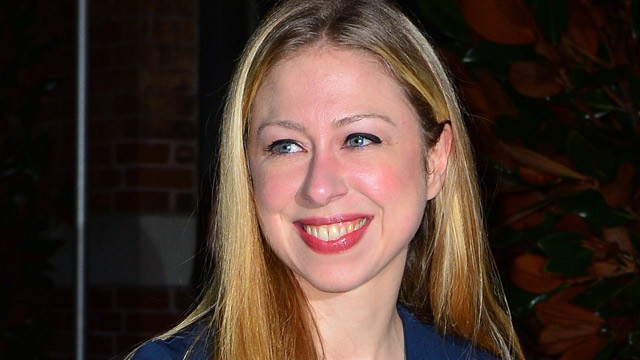
Chelsea Clinton Speaks for Family and Raises Her Profile
While Hillary Clinton was in the hospital it was daughter Chelsea -- not the secretary of state or the former president Bill Clinton -- who spoke for the family.
She, along with the State Department, doled out what little information the family wanted to share in a series of tweets and when her mother was released from the hospital, it was Chelsea who delivered the thanks on behalf of her parents, tweeting her gratitude to the doctors as well as those who kept her mother in their thoughts while she recovered from a blood clot.
When Hillary Clinton leaves office, possibly at the end of this month, it will be the first time since 1982 that a Clinton will not be holding a public office.
The watch will be on whether Hillary Clinton makes another run for the White House in 2016, but almost inevitably people will also be watching to see if Chelsea Clinton decides to run for office, too.
"Americans always look for dynasties: Bush, Kennedy, Cuomo, Clinton … it's some kind of continuity. There will always be pressure on her to run for public office," said Hank Sheinkopf, a Democratic political strategist in New York.
"She's learning from the two best politicians in recent American history and she understands when to hold them and when to fold them," Sheinkopf said.
That sense of dynasty could also present a significant hurdle."She's got to A, demonstrate that she has the charisma of her father, or B, demonstrate that she has the policy chops of her mother. And I think like most people she is somewhere in between," a former Hillary Clinton aide from her 2008 campaign said. "People are judging her through each of her parents and it's an impossible standard."
Chelsea Clinton, 32, has inched towards a possible political career in recent statements and has become more politically active.
In an interview with Vogue published in August she was more open to it than she has been in the past, telling the magazine, "Before my mom's (presidential) campaign I would have said no," but "now I don't know."
"I believe that engaging in the political process is part of being a good person. And I certainly believe that part of helping to build a better world is ensuring that we have political leaders who are committed to that premise. So if there were to be a point where it was something I felt called to do and I didn't think there was someone who was sufficiently committed to building a healthier, more just, more equitable, more productive world? Then that would be a question I'd have to ask and answer."
Clinton also spoke of a change in her private to public life:
"Historically I deliberately tried to lead a private life in the public eye," she told the magazine. "And now I am trying to lead a purposefully public life."
Besides her work as a special correspondent with NBC, Chelsea Clinton has taken on high profile roles with her father's Clinton Global Initiative. She sits on several corporate boards and has both moderated and sat on panels discussing both women in politics and childhood obesity, among other issues.
She has also worked toward making same-sex marriage legal in New York last year, as well as gay marriage referendums in Maine, Maryland, Wisconsin and Washington state, all of which were successful in November. She has also been active in superstorm Sandy recovery, most notably delivering aid to the devastated Rockaways with her father."She is incredibly busy," a current Clinton aide said. "She's doing a lot with the foundation, she's doing a lot with the Clinton Global Initiative. She's doing a lot of (teaching at) NYU. She's really busy, but I do think you can start to see there's a common thread to everything she's doing."
"She was great to work with," said Brian Ellner who worked with Chelsea Clinton on the same sex marriage issue in New York. "She is enormously enthusiastic and supportive on the issue, but in addition, she wanted to do real work. As opposed to just making appearances, she actually came in a couple of times and did phone banking, making calls all around the state urging New Yorkers to support marriage equality and to call their state representatives."
Ellner said the younger Clinton "is enormously popular and has really come to represent her generation of young Americans who feel strongly on this issue and many others.""Whether it is pursuing elected politics or increasing her role at the foundation or doing other things because she is right on all of the issues, she's working extraordinarily hard to help people," Ellner said. "I think she really represents her generation extraordinarily well."
During her mother's 2008 presidential campaign, Chelsea Clinton campaigned throughout the country stumping on her mother's behalf.
It was one of her first public roles and although she didn't answer press questions at the events she got the experience of wooing crowds, as well as taking questions in town halls, not the easiest thing for even the most seasoned politicians to do.
The 2008 Clinton staffer said Chelsea Clinton became an "active member" of the campaign, something she would likely repeat if her mother decides to run in 2016.
"It gave her a taste of what it means to be a public figure in the more traditional sense," the former aide said.
Not everyone is convinced she is bound to run for office.
"It's not a given that she will have a public life in elected politics," the former staffer said. "I would tell you, I don't think she's going to. I think she would end up being a reluctant candidate at this point in time."
President Obama signs $9.7-billion bill for Hurricane Sandy insurance claims
http://www.nydailynews.comThe bill increases the borrowing authority of the Federal Emergency Management Agency, which had warned that it was set to run out of money without additional dollars from Congress.President Barack Obama has signed into law a $9.7 billion bill to pay flood insurance claims from Superstorm Sandy. The law increases the borrowing authority of the Federal Emergency Management Agency. FEMA had warned that it was set to run out of money without additional dollars from Congress. The White House said more than 100,000 flood claim payments from Sandy would be delayed without the additional money. HOUSE OVERWHELMINGLY APPROVES $9.7 BILLION IN HURRICANE SANDY AID TO PAY FOR FLOOD INSURANCE CLAIMS IN 354-67 VOTE IN AN ABOUT FACE, BOEHNER PROMISES QUICK ACTION ON $60 BILLION IN HURICANE SANDY AID In the wake of bruising fights in their own ranks over the "fiscal cliff" and aid for victims of superstorm Sandy, Republicans in the U.S. House of Representatives open a new Congress on Thursday more divided than ever. The House has yet to act on a larger, more comprehensive Sandy aid package. Republican leaders did not bring the bill to the floor before the last session of Congress adjourned. House Speaker John Boehner has promised a vote Jan. 15 on that $51 billion package, and Senate leaders have promised a vote the following week.
Obama to nominate Hagel for defense secretary
President Barack Obama will nominate former Republican Senator Chuck Hagel to be his defense secretary and an announcement could come on Monday, sources familiar with the nomination process said.
The choice will likely set up a confirmation battle in the Senate over whether the former Nebraska senator and Vietnam veteran is a strong enough supporter of key U.S. ally Israel and over his past calls for military cuts.
The Obama administration backed down from a tough Senate confirmation battle over Susan Rice, the U.S. Ambassador to the United Nations, who was Obama's first pick to replace Hillary Clinton as secretary of state.
Rice withdrew her name from consideration after drawing heavy fire from Republicans for remarks she made in the aftermath of a September 11 attack on the U.S. mission in Benghazi, Libya. Obama then nominated Massachusetts Democratic Senator John Kerry, a former presidential candidate.
"The administration has a lot of work to do on Hagel," a Democratic Senate aide said on Sunday.
"He is in a weaker position now than Rice ever was because Rice would have rallied Democrats behind her. The administration floated Hagel's name, then neglected to defend him effectively when his critics started taking shots," the aide said.
However, the White House is confident it can weather criticism of Hagel's record and garner enough votes from both sides of the political aisle to get his nomination through committee and win confirmation in the Democratic-led Senate.
"The president wants him, because he trusts him and he's an independent voice," a second source close to the situation said.
The source said Hagel had received high-level messages of reassurance in recent days that his nomination was on track despite a campaign by his critics aimed at derailing it.
People close to Hagel have been informed of an imminent announcement, the source added.
Obama is also expected to round out his security team by unveiling his pick for CIA director to replace David Petraeus, the retired general who stepped down in November over an extramarital affair with his biographer.
NOMINATION FIGHT
In recent weeks a number of prominent Republicans have said they would oppose Hagel's nomination. On Sunday, Republican lawmakers made clear he would face a tough nomination process.
"This is an in-your-face nomination by the president to all of us who are supportive of Israel," South Carolina Republican Senator Lindsey Graham told CNN's "State of the Union."
"I don't know what his management experience is regarding the Pentagon, little, if any, so I think it's an incredibly controversial choice."
Many Republicans contend that Hagel, who left the Senate in 2008, at times opposed Israel's interests. He voted several times against U.S. sanctions on Iran, and made disparaging remarks about the influence of what he called a "Jewish lobby" in Washington.
Hagel has also been critical of the size of the American military, telling the Financial Times in 2011 that the Defense Department was "bloated" and needed "to be pared down."
An editorial in The Washington Post last month said that given the scale of the cuts Hagel seeks, he was "not the right choice" for defense secretary.
Senate minority Leader Mitch McConnell said "there would be a lot of tough questions of Senator Hagel."
"But he will be treated fairly by Republicans in the Senate," the Kentucky Republican told NBC's "Meet the Press."
Hagel has also been attacked by gay rights groups for remarks in 1998 questioning whether an "openly aggressively gay" nominee could be an effective U.S. ambassador. He apologized for the comments last month saying they were "insensitive."
If confirmed, Hagel would become the first former enlisted soldier to lead the Pentagon. He served alongside his brother Tom in Vietnam, and they earned five Purple Hearts between them.
Senator Heidi Heitkamp, a North Dakota Democrat, said the way Hagel had been targeted was not fair.
"He hasn't had a chance to speak for himself," she said on ABC's "This Week. "Why all the pre-judging, I don't know."
OBAMA'S TIES TO HAGEL
Last month Obama offered strong support for Hagel as a possible replacement for Defense Secretary Leon Panetta, who has said he wants to leave early in the second term.
"I've served with Chuck Hagel. I know him. He is a patriot. He is somebody who has done extraordinary work both in the United States Senate, somebody who served this country with valor in Vietnam," Obama told "Meet the Press" on December 30.
Obama and Hagel bonded over their shared opposition to the Iraq War. Obama rose to national prominence through his criticism of the war, while Hagel made himself an isolated figure in the Republican Party by taking a similar position. The pair traveled to Iraq together in 2008.
While Obama may hope that his choice of a Republican to lead the military would be seen as a gesture of bipartisanship, Hagel has been sharply critical of his own party since leaving the Senate in 2009. Last year, Hagel endorsed a Democratic candidate for the Senate in Nebraska.
In 2009, Republican former Vice President Dick Cheney told Newsweek: "Let's say I believe firmly in Ronald Reagan's 11th commandment: Thou shalt not speak ill of a fellow Republican. But it's very hard sometimes to adhere to that where Chuck Hagel is involved."
The top names discussed for CIA director are Counterterrorism and Homeland Security Adviser John Brennan and Michael Morell, a career intelligence officer who has served as acting CIA director after Petraeus' abrupt departure.
Saudi Monarchy Most Tyrannical Regime in World
A prominent international human rights organization described the Saudi monarchy as the most autocratic regime in the world, and blasted the western states' silence on the crimes committed by Riyadh against its own people.
"Saudi Arabia is the most autocratic country which has a record of organized genocide against certain groups," May al-Khansa, the head of Saudi Arabia's Organization of the International Coalition for Fighting Escape from Punishment, announced on Saturday.
She also said that despite Saudi Arabia's black record of violating human rights at the UN, the country still continues its violence, cruelty and discrimination amid the western states' silence, since al-Saud behaves according to Israel's will.
Khansa stressed that the Saudi regime is severely violating the rights of the Shiite minority, "but this is not just restricted to the Shiites, because the regime also kills innocent Sunni citizens and no one dares to defend them".
According to Human Rights Watch, the Saudi regime "routinely represses expression critical of the government".
Saudi Arabia has faced demonstrations on an almost regular basis in Eastern Province, mainly in Qatif and the town of Awamiyah since February 2011, calling for the release of all political prisoners, freedom of expression and assembly, and an end to widespread discrimination.
However, the demonstrations have turned into protests against the repressive al-Saud regime, especially since November 2011, when Saudi security forces killed five protesters and injured many others in the province.
Saudi forces have also arrested dozens of people including prominent Shiite cleric Sheikh Nemr al-Nemr.
Also in October, the Saudi Interior Ministry warned the public against staging demonstrations in support of the prisoners in the kingdom and pledged to deal "firmly" with those participating in such protest rallies.
Subscribe to:
Posts (Atom)