Thursday, October 25, 2012

Barack Obama warns Middle America Mitt Romney would betray them

http://www.telegraph.co.uk
A newly combative Barack Obama on Wednesday warned the struggling voters of the American Midwest, whose ballots could decide the presidential race, that Mitt Romney would betray them if elected and must not be trusted.
Opening a "48-hour, fly-around marathon extravaganza" of crucial states with his most aggressive speech of the campaign so far, the president urged Iowa not to catch "Romnesia" and forget the radical plans his Republican challenger now plays down. "We joke," he told 3,500 supporters at a soggy fairground, with the same spikiness he displayed in this week's final televised debate. "But all of this speaks to something important: trust. There's no more serious issue on a presidential campaign than trust. Trust matters." "You know me, Iowa," he told the state that propelled him to the White House with a shock party caucus win in 2008. He added that while Mr Romney flip-flopped, Mr Obama was "the same guy". Onstage the president, who leads Iowa polls by two percentage points, brandished the 20-page manifesto he has published late in the campaign to counter charges that he has no second term agenda.He was followed into the state – a vast expanse of corn fields bigger than England, with a population of just three million – by Mr Romney, who said the glossy pamphlet disclosed "no new plans". Accusing Mr Obama of ditching "change" to become the "president of status quo", he said in Cedar Rapids: "The policies of the president are a continuation of what we've seen over the last four years." Volunteers for both candidates are frantically knocking doors and treading pavements across Iowa in an effort to clinch the critical six votes it will contribute to the national electoral college of 538. While the national vote is tied, Mr Obama will win re-election if he can take Iowa, neighbouring Wisconsin and nearby Ohio, while holding states already pencilled into his column. If Mr Romney loses in Ohio, where he has consistently trailed, he must construct a patchwork of smaller states – starting with Iowa. Local residents said their televisions and radios were blaring attack advertisements around the clock, while their postboxes were stuffed full with mail-outs, such as Mr Obama's new pamphlet. Yet in a setback to the president, The Des Moines Register, a powerful regional newspaper, complained yesterday that he had insisted on being interviewed "off the record", keeping his remarks secret. "The answer to one of the most important questions the Register ever can ask a politician – "Why should you be our president?" – deserves to be shared with voters," its editors wrote. Facing claims from aides to Mr Romney, who gave a full interview, that the decision "betrayed the president's lack of confidence about his failed record and lack of a vision", Mr Obama relented. The transcript showed he pledged to overhaul US immigration laws, having failed to do so in his first term as promised. He predicted Republican leaders would co-operate having "alienated the fastest-growing demographic group", Latinos, with extreme statements during the campaign. Mr Obama also reiterated his goal to strike a "grand bargain" to reduce the $1.2 trillion budget deficit via $2.50 in spending cuts for every extra dollar in tax revenue. Republicans say taxes must not rise. Supporters in Davenport said middle America backed Mr Obama's plan. "People here are worried about how to make it to the next day, how to fill their cars," said Rodney Maiden, a 40-year-old mature student. "Obama has walked in those shoes – and he hasn't forgotten. Romney has never struggled". In a feisty speech, Mr Obama claimed Mr Romney would "turn back the clock 50 years for immigrants, gays and women" and repeatedly said the Republican had shown himself to be untrustworthy. He attacked Mr Romney for claiming to be a "car guy" after opposing the government bail-out of the US auto industry – central to the Midwestern economy – and for now saying his plan to cut income taxes by 20 per cent would not benefit top earners, after privately assuring donors that it would. Listing such symptoms of "Romnesia", he joked that the prescription was ObamaCare, his health system reform. "We can cure you, Iowa!", he said. "We can cure folks of this malady, this disease." In the crowd, Mercedes Rosing, who cares for her disabled husband full-time, said she feared Mr Romney's plan to scrap ObamaCare. "We struggle with insurance costs," she said. "We need help". Mrs Rosing, 55, said times were so hard that Mr Obama's support was not guaranteed. "I thought Romney might not be so bad, that he was a moderate," she said. "But he's shifted. I'm worried what he would do".

President Obama on Donald Trump - The Tonight Show with Jay Leno

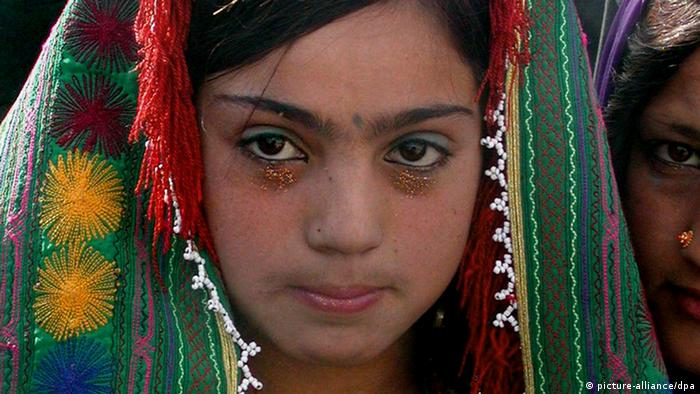
Human trafficking, prostitution thrive in Afghanistan

Thousands of Afghan girls
and boys are trafficked into neighboring countries and sold into slavery each year. Though it is taboo, prostitution is alive and thriving - at the cost of those forced to work in it. It is the oldest trade in the world and exists in probably every country in the world. Yet prostitution is not a dream job. Most female sex workers are forced to make a living through prostitution. In conservative Afghanistan, prostitution is illegal. But that doesn't mean that it doesn't exist. Human trafficking is booming - young women are being sold and sent over to neighboring countries, mostly to Pakistan.Many people are unaware of just how many women are forced to work as prostitutes, according to Heather Barr of Human Rights Watch's Asia Division. "HRW did a report that was released in March this year about women in prison for moral crimes. And one of the things that I found really surprising by doing those interviews, was how many women I met, had been forced in prostitution often by their husbands and in-laws." Women sold as commodities The reason, she explained, that women were forced into the sex trade by their families was due to poverty and drug addiction - usually of a husband or brother or both. The families often saw women as a source of money and take advantage of it. Women from Pakistan are also been bought and sold to Afghanistan. Poor or practically non-existing security at the border means criminals smuggling and trafficking goods and people can easily get away with it. When the trafficked people arrive on the other side of the border, they are fully at the mercy of their pimps. One woman from Pakistan who wished not to be named is now in Jalalabad - far away from her home in Karachi. "We are poor and helpless. What are we supposed to do? We don't have anything to eat. That's why the "big man" brought us here from Karachi. No one likes doing this work, but I don't have any other choice," she told DW. The young woman speaks neither of Afghanistan's official languages - Dari and Pashtu. She said she didn't know who to turn to and was afraid of the consequences she would face should she run away and the authority of her pimp, the "big man," as she called him. But he himself also cited poverty as a reason to force women into prostitution."I do this because I am poor and I want to be able to feed my children. I am aware that there are dangerous consequences, harsh punishments for this kind of work - for instance death or being ostracized and other things." But he insisted he did not force anyone to work - that the women who work for him prostituted themselves because they wanted to. Prostitution, whether out of one's own will or not, is illegal according to Islamic law. The cleric Nek Mohammad works for the court in the eastern Afghan province of Nangarhar and offers consultations on Islamic law. All forms of position are illegal, he told DW. "At least four people have to bear witness to the crime. And should the prostitute or the person who buys her be married, his or her spouse will have to be stoned. If there are no married people involved, then they receive lashings." Disease But punishment is not the only thing to worry about. Most of the prostitutes are unaware of sexually transmitted diseases (STDs) such as HIV and do not use condoms. The number of cases of STDs had sharply risen in the past few months, according to Dr. Baz Mohammad Sherzad, head of Nangarhar province's health ministry. "Our doctors confirm that many young men who have come to us recently have had urinary tract infections and sexually transmitted diseases. If prostitution is allowed then it is no wonder there is an increase in such problems in Nangarhar." Nonetheless, doctors should promote educational campaigns, said Sherzad. The government should tackle the problem. Yet the government had a whole set of other problems: "Think about child marriage, forced marriage, domestic violence, the sale of women for marriage and other purposes, forced prostitution, self immolation - honestly the government hasn't been dealing very effectively with any of those issues," said Heather Barr. She said it was unfortunate that there was a lack of political will to solve these issues. Progress was only made very slow. As of recently, it is now illegal to lock up women for running away from home, which is just a further symptom of the violence and forced prostitution women continue to face in Afghanistan.

Durand Line: Border Talk Crosses The Line In Afghanistan

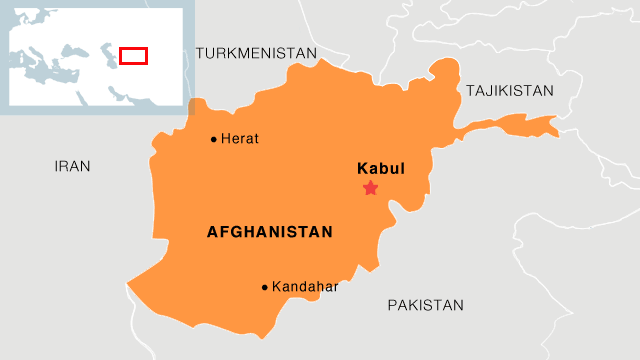
Foreign diplomats visiting Kabul tread carefully when it comes to the Durand Line, knowing full well that the colonial-era border separating British India and Afghanistan is a touchy subject. Merely affirming a long-standing policy when it comes to the contentious demarcation can be viewed by Afghans as a step too far, as the U.S. special representative for Afghanistan and Pakistan, Marc Grossman, discovered following an interview with a private Afghan television channel this week.
"Our policy is that border is the international border," Grossman said on October 21. "I think it is time to lift everybody's vision here to a regional conception of what the region could be." It was no secret that Washington considers the Durand Line -- established by British India and the Kingdom of Afghanistan in 1893 -- the modern-day border between Afghanistan and Pakistan. State Department spokeswoman Victoria Nuland offered reminders of that fact during an October 23 press briefing in which she was questioned about Grossman's comment. "Our policy on this has not changed," she said. "It was correctly stated by Ambassador Grossman that we see this as the internationally recognized boundary." But the comments have nevertheless raised hackles in Afghanistan, which has not recognized the Durand Line as its eastern border since Pakistan's partition from the British Raj in 1947.The Afghan daily "Weesa" this week quoted several Afghan lawmakers describing Grossman's statement as interference in domestic Afghan affairs. And the official reaction was curt, with the Afghan Foreign Ministry issuing a statement on October 23 saying that Kabul "rejects and considers irrelevant any statement by anyone about the legal status of this line." The status of the Durand Line, the statement added, was a matter of "historic importance for the people of Afghanistan." 'An Issue For Pashtuns, And Pashtuns Only' The Durand Line is indeed divisive. It runs directly through traditional Pashtun lands, splitting one of the world's largest tribal societies in two. Those to the west of the line are Afghan; to the east Pakistani. Abdul Ghafoor Liwal, the head of Kabul's Center for Regional Studies of Afghanistan, says the Durand Line is considered a top national issue in the country, but one that is up to the Pashtuns themselves to decide. "Recognizing the legitimacy of this line is in the hands of the masses that live on either side of the border. This is also the formal position of the Afghan government," Liwal says. "This is why the Afghan government has protested against this [Grossman's] statement." The United States is not alone on this issue, as new U.S. Ambassador to Afghanistan James Cunningham noted. "The United States, as many other countries, have long recognized the Durand Line as the boundary between Afghanistan and Pakistan," he told journalists in Kandahar on October 23. But there are those in Afghanistan who would rather not be reminded of that fact. "I think talking about such [controversial] issues will have negative consequences for relations between America and the people of Afghanistan," Aryan Yoon, a member of the foreign-relations committee of the Afghan parliament, said this week. "I think it will benefit both countries if we desist from talking about such issues." Liwal, whose government-funded think tank researches strategic and foreign-policy issues, says most Afghans still dream of a return of the much bigger and united Afghanistan that existed before the advent of European colonialism in South Asia. Modern Afghanistan emerged from the fragmentation of the Durrani dynasty, an 18th-century Pashtun empire based in the southern Afghan city of Kandahar. Internal rivalries and wars eventually weakened the dynasty's hold on regions that today constitute Pakistan and northern India. The arrival of the British in northern India in the 19th century posed a major challenge to the Afghan and Turkic powers that had dominated the subcontinent for centuries. After losing a major war to the Afghans in 1842, the British eventually captured parts of Afghanistan and formally annexed them through an arbitrary treaty in 1879. Their forces occupied Kabul at the time. The contentious 1893 treaty between Afghan King Amir Abdur Rahman and Mortimer Durand, the foreign secretary of British India, formalized the areas under the control of the two governments.

Pakistani Girls Under threat

The Taliban may be seeking to hunt down other young girls in the country who, like Malala Yousafzai, have dared to oppose the Taliban’s edicts against education for women. According to a report in this newspaper, another young woman has received threats. Hina Khan, daughter of an ANP leader – Reyatullah Khan – fled Swat with her parents and four younger siblings some years ago so that she could continue her studies and pursue her dream of becoming a doctor. But even in Islamabad, where her parents work with an NGO, it appears Hina has not been left alone. Her father reports to have received death threats against her from a Peshawar number; ominously a red mark has also appeared on the gate of her residence in Islamabad. As per her father’s account, the police have failed to offer any protection even though the matter was reported to them. Like Malala, Hina has also spoken out against the Taliban for opposing women’s right to be educated. It seems then that young, outspoken girls may be becoming the latest target of the Taliban. Pumping a bullet or two into a girl on her way to school or college is an easy task. Quite evidently it is intended to brutally underscore Maulana Fazalullah’s message against educating girls. The question for the state is how it can protect these girls against assailants who know no humanity and have learnt nothing of what their religion teaches. What happened to Malala should act as a warning, and we must prevent others from being attacked in a similar fashion. It would be foolhardy to treat the threats directed Hina’s way lightly, given that the Taliban are apparently determined to drive home their obscurantist message.

Pakistan: Farm wealth on the rise

EDITORIAL
Farm incomes have risen in recent years due to what is generally accepted as the PPP government's support price policy that makes major crops more attractive for farmers to grow relative to other crops. The major crops that have benefited from high support price are wheat, rice, sugarcane and cotton. In 2007-08, the acreage under cultivation of the four major crops was 8.5 million hectares, 2.5 million hectares, 1.24 million hectares and 3 million hectares, respectively, which by 2011-12 registered 8.9 million hectares, 2.36 million hectares (decline), 988,000 hectares (decline) and 2.68 million hectares (decline). However, barring total wheat output which rose by 4.2 million tonnes between the two years reflecting the rise in acreage under cultivation the remaining three major crops suffered a decline in output: rice by minus 740,000 tonnes, sugarcane by negative 8.6 million tonnes and cotton by negative 33,000 tonnes of cotton no doubt indicative of a decline in area under cultivation of these crops. However what should be a source of satisfaction to the government was a marked increase in the yield per hectare of wheat, sugarcane and cotton: between 2007-08 and 2011-12 wheat yield rose from 2,451 kg per hectare to 2,833 kg per hectare, sugarcane from 51,507 kg to 55,981 kg and cotton from 649 to 724 kg per hectare. Rice witnessed a decline in yield from 2,212 kg per hectare in 2007-08 to 2,039 kg per hectare in 2011-12. Farmers have complained vociferously of a rise in their input costs that surpassed the benefits accruing from a high support price. It is relevant to note that fertiliser consumption declined as price of fertilisers rose last year: urea by 81.4 percent, DAP by 38.8 percent, CAN by 75.5 percent and NP by 45.7 percent. However, in the current fiscal year, the budgeted subsidy for Fauji Fertiliser Bin Qasim Ltd is 3.4 billion rupees as opposed to 162 million rupees in the revised estimates of last year. The fact that the gas supply crisis is acute at this stage with concerns that the shortage in the coming winter is likely to be much higher than last year, it is unlikely that the federal government would be able to provide the gas required for operating the public sector fertiliser company. And in that event the subsidy may be redirected to other sectors. A subsidy of 26 billion rupees is earmarked for TCP's import of urea fertiliser. Additionally, all other major crop inputs witnessed a dramatic increase in price over the past four years particularly electricity and transport. And coupled with the floods last year, output was negatively impacted. These factors had an impact on consumer pricing and necessitated commodity operations to ensure that the price of food items remained affordable. The government has budgeted a major reduction in subsidy to Passco for wheat and paddy operations: from 14.626 billion rupees in last fiscal year to 1.1 billion rupees in the current fiscal year. However, the government cannot allow food prices to escalate at the levels that would reflect the existence of free market conditions, conditions that incidentally are allowed to control the price of farm produce in the developed countries. Thus the government would continue to provide subsidy to the end consumer through manipulating the consumer market. The actual focus of the government however must be on increasing the yield per hectare. At present, the Punjab has lower average yield than the Indian Punjab. The major difference between the two regions is that the Indian Punjab is taking full advantage of genetically-modified foods that are said to have the capacity to increase yield, discourage growth of weeds, and what should be of considerable interest to our farmers seeds have been developed which are said to be drought-resistant, requiring much smaller quantities of water to grow. The situation, therefore, underscores the need for efforts towards promoting agri research. And to achieve this objective, the government must strengthen and speed up the approval process of the National Bio-safety Committee to enable it to promptly deal with policy matters relating to agriculture.

Henry Kissinger had a role in Bhutto's execution

RADIO PAKISTAN
Former Army Chief General ® Aslam Beg expresses reservations over the SC verdict in Asghar Khan case but said he has confidence in the judiciary
Beg added that the then US Secretary of State Henry Kissinger had played a role in the hanging of Zulfikar Ali Bhutto.

Wednesday, October 24, 2012

Malala: A Tipping Point For Pakistan?

Last week’s assault on Malala Yousafzai
in her hometown Mingora in Pakistan’s Swat valley shocked the world. In Pakistan, where killings, bombings and abductions happen on an almost daily basis, the attack on Malala sparked an unusual wave of public outrage. Pakistan’s political leaders, including those of the far-right-wing Islamist parties strongly condemned the attack terming it a cowardly act. The Haleemzai tribe of the Mohmand agency in Pakistan’s tribal areas have termed Malala as Fakhar-e-Pakhtoon (‘the Pride of the Pashtuns’) and denounced the assault stating that attacks on women are not only against Islam, but also against the Pashtun culture and tradition. Pakistan’s Chief of Army Staff, General Kayani, said that “[we] will refuse to bow for terror. We will fight, regardless of the cost we will prevail.” Meanwhile, Pakistan’s federal parliament is working on a resolution to make Malala an ‘ambassador for peace and education’ and to recognize her as a ‘daughter of Pakistan.’ This rare outburst of nation-wide solidarity has tempted some commentators to claim that ‘Malala’ may well represent a tipping point in Pakistan’s struggles against terrorism.The emotions that the assault on Malala aroused remind of the shock wave that a video of a teenage girl being flogged by the Taliban in Swat in 2009 sent through Pakistan. Maulana Fazlullah is the brains behind these actions. He holds a notorious reputation that stems from 2007 to 2009 when his group, that is a part of the TTP (Tehrik-e-Taliban Pakistan, or Pakistani Taliban), was in effective control of the Swat valley. His shadow government imposed strict Islamic law by the power of the gun. Authority and loyalty were enforced by creating an atmosphere of fear and intimidation. The video was a catalyzing factor that led to a military campaign to put Swat back under government control. The campaign was both a success and a failure. It was a success because the Swat valley was indeed put back under Pakistani control, but the operations were unsuccessful in the sense that they did not fully eliminate the organization. In fact, Fazlullah managed to escape Pakistan. Recently, the Pakistani Taliban revealed that it is not only operating from the North Waziristan agency in the tribal areas, but that it has safe havens in Afghanistan too – where they are out of reach of the Pakistani army. Fazlullah is believed to be using the Afghan provinces of Kunar and Nuristan to prepare attacks on military and civilian targets in Pakistan. Even if Pakistan decided to go after the TTP, chances are that they will not succeed in defeating this organization. The TTP is part of a large conglomerate of extremist organizations that are based on both sides of the Afghan-Pakistan border. These organizations are known to collectively run training camps, provide financial and logistical support and even human resources to each other. Also connected to this network are extremist organizations, such as the Haqqani Network and the Afghan Taliban, that are covertly supported by Pakistan. Hence, the image of a hydra-headed evil appears. The problem of the TTP will not be solved by simply chopping off its head. It will grow back on, unless its body –the root problem- is targeted. Stating that the assault on Malala would constitute a tipping point in Pakistan’s struggle against terrorist organizations presupposes that organizations such as the TTP have previously received substantial support of the Pakistani population. And indeed, some news reports claim that the TTP is supported by many Pakistanis because it stands up against the US and the Pakistani government that continues to give support to NATO in Afghanistan. While the argument in itself is correct (74% of Pakistanis call the US an enemy, and President Zardari has an approval rating of only 14%) this does not automatically mean that the TTP is popular among Pakistanis. A recent report published by the Pew Research Center demonstrates that the TTP is viewed positively by only 17% of the Pakistani population – a percentage that has remained virtually unchanged over the past years. What is more, the inhabitants of Khyber Pakhtunkhwa (Mingora is the capital of Swat district which is located in the Khyber Pakhtunkhwa province) generally tend to have much more unfavorable views of extremist organizations than Pakistanis from other parts of the country, most probably because this is one of the regions that suffered most from terrorism. The claim that the attack on ‘Malala’ would represent a tipping point in Pakistan’s struggle against terrorism seems unsubstantiated. The fact that the Pakistani population speaks out so vehemently against terrorism is not new because of a supposed change of public opinion. Instead, it is remarkable for the very reason that it is a large public outcry. Back in 2009, such public protest stimulated the government and army to launch an operation to clear the Swat valley of insurgents. Today, however, it is unlikely that a military operation at a similar scale is launched, if at all. First, Fazlullah found refuge in Afghanistan. Second, they are only part of a much larger problem, which Pakistan indirectly helps to maintain through its support of organizations such as the Haqqani Network.

President Zardari directs to expedite relief activities in flood-hit areas

RADIO PAKISTAN
President Asif Ali Zardari has directed to expedite relief and rehabilitation activities for the rain affected people of Sindh and Balochistan. He said this during a briefing through video-conferencing in Islamabad on Wednesday. The President said all available sources should be used for dewatering of the inundated areas. The President also asked for urgently providing wheat and sunflower seeds and fertilizers to the farmers in flood affected areas in all provinces. Spokesperson to the President Senator Farhatullah Babar while briefing the media said that Chairman NDMA Dr. Zafar Iqbal Qadir said that 14000 tents in Sindh and 20000 tents were distributed in Balochistan to the affected families besides other parts of the country. The Chairman said that irrigation system of Desert Pat Feeder along Sindh Balochistan border was over-topped and breached at several places. Similarly Begari Sindh Feeder was also affected. To cope with the situation‚ Khirthar Branch was strengthened to serve as defence line and to divert water towards Hairdin Drain. He said that at present 69 de-watering pumps were operative to de-water rain water through various canals whereas eleven pumps were in standby in Sukkur. He said that further arrangements would be made in view of the emergent situation. The meeting was informed that 161‚245 ration packs have been distributed in Sindh‚ 17500 in Punjab and 42250 in Balochistan. The President directed that similar video conferencing facility be set up in the affected areas in Balochistan and linked with the Presidency for the briefing.

President Zardari urges US to invest in Pak power sector

President Asif Ali Zardari
has urged the US businessmen to invest in power sector in Pakistan. He was talking to a delegation of a US power company DACC Global in Islamabad on Wednesday. The delegation headed by Doug Melvin, President DACC Global, comprised of Arnd Spinger, Joseph Steinfeldt, Mark Lohoff, Adnan Hameed, Zafar Ahmed and Nasir Waseem. Spokesperson to the President Senator Farhatullah Babar, Chairman Intellectual Property Organization of Pakistan Mr. Hameedullah Jan Afridi, Secretary to President Maj (R) Haroon Rashid, Secretary Water & Power Ms. Nargis Sethi, CEO Alternative Energy Development Board Mr. Arif Allauddin and other senior officials were also present during the meeting. Spokesperson to the President Senator Farhatullah Babar while briefing about the meeting said that DACC Solar Power Generation Company (DPGC) is pursuing development of a 50 MW Solar power project in Punjab, production of bio-fuel and installation of solar water pumps in the country. He said that the President while welcoming the delegation appreciated their interest and investment in the alternate energy sector. The President highlighted huge investment opportunities available in the country in the alternate energy sector and said that abundant sunshine and wind corridors offered great opportunities to the investors for harnessing this clean and efficient source of energy. The President said that energy shortage has been one of the major challenges faced by the country at present. He said that the Government was according highest priority to facilitating the investors undertaking business ventures in this sector. He said that the Government was committed to promote the alternate means of energy production so as to reduce dependency on conventional modes and simultaneously to save the environment from further degradation due to burning of the fossil fuels. The President also recounted various incentives being offered to foreign investors in the energy sector. He said that Pakistan offered 17 percent return on Investment (ROI) for renewable energy projects which is one of the highest in the world. He said that NEPRA was working on up-front Tariff for Solar Power projects which will further incentivize setting up of solar power plants in the country. The President also mentioned special control rooms in the Ministry of Water and Power and various offices of power distribution companies for monitoring and coordination purposes. He said that all efforts were being undertaken to avoid bureaucratic delays and to address the issues related to supply and distribution of power on spot basis.

No political cell in Presidency: Ch Nisar was architect of IJI: Kaira

Federal Information Minister Qamar Zaman Kaira has said that Pakistan People’s Party’s mandate was stolen in 1990’s elections through a well–planned conspiracy devised by spy agencies in connivance of Pakistan Muslim League Nawaz (PML-N). “Fake organizations like Tehreek-e-Takhfuz-e-Pakistan, Pakistan Voter Forum, Tehreek-e-Nojawan-e-Pakistan, Tehreek-e-Intaqam-e-Paksitan etc. were created in 1990 to launch propaganda campaign against the PPP. Our opponents came into power through the support of spy agencies, while we came into power with the support of the people despite all struggle by agencies,” Kaira said while addressing a news conference here on Tuesday. “Opposition Leader Chaudhry Nisar Ali Khan says he does not accept the investigation of Federal Investigation Agency (FIA) while the Supreme Court had ordered FIA to investigate regarding the recipients of money from secret agencies,” he added. Kaira said that some leaders of the PML-N wanted investigation through a commission while others by United Nations (UN). The PPP leader claimed that Chaudhry Nisar was the architect of IJI because his party had most of the ministries at that time. He said that at that time 80 percent seats were ‘given’ to PML-N and 20 percent to other parties. He said that the formation of IJI had started prior to Benazir Bhutto’s arrival in 1986 and accused agencies of manipulating the 1988, 1996, 2002 and 2008 elections. He said that intelligence agencies had also manipulated 1988 elections and right-wing got 63 seats while PPP bagged 92 seats. “Lahore High Court Bench headed by Justice Rafiq Tarrar at that time gave judgment against Benazir Bhutto. As reward, the PML-N elected Tarar as President of Pakistan in 1997,” he said. “Today, the PML-N talks about Sadiq and Amen (truthful and honest). Now, the history has proved who is Sadiq and Amen. The PML-N leaders should feel ashamed and apologise to the nation. The government, which came into being after 1990 elections was illegitimate,” he argued. To a question, Kaira said that today there was no political cell in the presidency. “The office of the Presidency is purely political. Parliament elects a President. And Parliament is right place for politics. Politics take place in the parliament. But the office of the President is impartial. There is no wrong in meeting the President if the people belonging to any of the province or other parts of the country want to see him. The PML-N leaders can also meet the President,” he said. During the press conference, the Minister showed newspapers’ clippings of that time, wherein former Prime Minister Benazir Bhutto had categorically claimed that the 1990 elections were rigged and a political cell in the Presidency was used for this purpose. “Our party and leadership sacrificed for democracy in the country. Today, Mian Nawaz Sharif and Shahbaz Sharif are sitting in the country because of Benazir Bhutto,” he said.

Dismal Pakistan ranks 134 out of 135 countries in Gender Gap Index 2012

SOURCE:The Express Tribune/
Pakistan ranked a low 134 out of a total 135 countries in the Gender Gap Index 2012, according to The Global Gender Gap Report.
The Global Gender Gap Index, introduced by the World Economic Forum in 2006 is a measure to capture the scope and magnitude of gender disparities. The report bases itself on four major pillars to measure gender disparities within nations. These are: economic participation and opportunity, educational attainment, health and survival and political empowerment.
The work space
In the sphere of economic participation, Pakistan’s female labour participation rate is a dismal 22%. In terms of wage equality, Pakistan sits on 110 out of the 135 countries. Only seven per cent of women in Pakistan own businesses. Their access to land ownership on a scale of 0 to 1, with 0 best score and 1 worse best, is 0.5.
Education
In terms of educational attainment, Pakistan ranks at 129, with a 40 per cent female literacy rate. Enrollment in primary education is 67 per cent and drops down to 29 per cent in secondary education. One of the possible reasons for this could be that 16 per cent of the women get married between the ages of 15-19 years. The singulate mean age at marriage for women, however, is 23 years.
Health
In terms of health and survival, Pakistan stands at 123. Maternal mortality ratio, per 100,000 live births is 260 on a scale of 150 and 500. Infant mortality rate per 1,000 live births at the age of one is 70 per cent.
Politics
Women in Pakistan were allowed to vote in 1956. Ten per cent of the women hold ministerial positions. Twenty three per cent women are members of the parliament. Furthermore, Pakistan scored 0.75 out of 1 in terms of the existence of legislations punishing acts of violence against women in terms of domestic violence. On the Global Gender Gap Index the top five countries are Iceland, Finland, Norway, Sweden and Ireland. The bottom five are the Kingdom of Saudi Arabia, Syria, Chad, Pakistan and Yemen. India sits on 105 out of the 135 countries, whereas Bangladesh takes the seat at 85, Sri Lanka ranks on 39 and China on 69. India ranks 123 in terms of economic participation, 121 in educational attainment, 134 in health and survival and 17 in political empowerment.

Pakistan: Missing the point

IF Pakistani politicians have a talent, it is the ability to waste opportunities for meaningful change even when these are handed to them on a silver platter. For all its symbolic importance, the Supreme Court’s short order in the Asghar Khan case is in the news for all the wrong reasons. In no uncertain terms, the order declares that “it has been established” that former generals Aslam Beg and Asad Durrani “acted in violation of the constitution” by rigging the 1990 elections. And yet what is getting lost in the heat of the ensuing political battle is precisely this point, which is also the most important point — the role of the generals. Between the ruling party’s attempts to make political capital against the PML-N and the latter’s attempts to defend its reputation and argue about the FIA’s lack of independence, the focus has shifted to which politician received how much money. Meanwhile, those who did the real and enduring damage to Pakistani democracy are watching comfortably from the sidelines of this schoolyard brawl. In part the room for this distraction from the real issue has also been created by the SC order itself. After leaving no doubt about the generals’ guilt, it does nothing to hold them to account beyond throwing the ball in the government’s court. In a slew of high-profile cases this court has found ways to enforce accountability directly or appointed people to do so and then monitored their progress. From directly appointing investigation commissions to demanding status updates from law-enforcement agencies and government officials to bypassing the NA speaker and disqualifying the prime minister, it has not hesitated to take action itself. And yet, in this preliminary order at least, it has simply asked the government to take the “necessary steps” against the generals without specifying what these should be. This lack of urgency from both the SC and the government is worrying mostly because Pakistani democracy may not be out of the woods yet. Memories are still fresh of the ISI propping up the PML-Q in the 2002 elections. The defence secretary has said that the agency’s political cell had stopped functioning five years ago — implying it was active until very recently. Even now, there are suspicions that certain interest groups and political parties are being supported by the establishment. The military’s involvement in politics may be less blatant this election cycle, but we do not know that it is not taking place. Nor will we know so long as the SC and the government shy away from holding past manipulators to account and politicians continue to focus on fighting each other.

بیگم نصرت بھٹو,Begum Nusrat Bhutto

Malala status updates-Wed 24 October 2012

Malala remains in a stable condition and continues to make good progress at the Queen Elizabeth Hospital Birmingham, under the care of a medical team from the Queen Elizabeth and Birmingham Children’s hospitals.

Bomb attacks destroy two schools in Pakistan

Two state-run schools have been destroyed in bomb attacks in Mohammad Agency district in Pakistan’s northwestern tribal region, Press TV reports.
The incident occurred on Wednesday morning in Haleemzai Tehsil area. No human loss was reported in the attack. Security forces have arrested two watchmen of the schools and launched an investigation into the attack. No individual or group has claimed responsibility for the attack so far. However, Tehrik-e Taliban Pakistan (TTP) militants are the main suspects in the incident. They have banned female education in northwestern Pakistan in a move that has affected thousands of girls and caused the number of enrolments to drop dramatically. The group warns parents against sending their daughters to schools, describing education as ‘unnecessary’ and ‘harmful’ for girls. Over the past several years, the TTP militants have destroyed hundreds of schools, especially in Khyber Pakhtunkhwa province.

No change in US stance on Durand Line

unya TVD
US recognised the Durand Line as international border and there is no change in its stance on it. The United States endorsing the statement by US Special Representative for Afghanistan and Pakistan Ambassador Marc Grossman regarding porous Pak-Afghan border, reiterated that Durand Line is an internationally recognized boundary between Pakistan and Afghanistan. Reaffirming Washington’s position over the 2640-km-long border, State Department spokesperson Victoria Nuland said, “Our policy on this has not changed. It was correctly stated by Ambassador Grossman that we see this as the internationally recognized boundary.” It should be mentioned here that the Afghan government did not approve of a statement made by US Special Representative for Pakistan and Afghanistan Grossman during his visit to Kabul, where he reiterated Washington’s policy of international recognition of Durand Line. The US Department spokesperson, however, was not aware of Afghanistan’s protest with the US on the issue. Replying to a question if Washington received any protest from the Afghan government following Grossman’s statement, the spokesperson replied, “To my knowledge, no. But I know there has been quite a bit of press commentary out there”.

Pakistan's threat within - the Sunni-Shia divide

About 20 men dressed as Pakistani soldiers boarded a bus bound for a Muslim festival outside this mountain town and checked the identification cards of the passengers. They singled out 19 Shi'ites, drew weapons and slaughtered them, most with a bullet to the head. The shooters weren't soldiers. They were a hit squad linked to the Sunni Muslim extremist group Lashkar-e-Jhangvi, or LeJ. They had trekked in along a high Himalayan pass that hot August morning to waylay a convoy of pilgrims. Here and across Pakistan, violent Sunni radicals are on the march against the nation's Shi'ite minority. With a few hundred hard-core cadres, the highly secretive LeJ aims to trigger sectarian violence that would pave the way for a Sunni theocracy in U.S.-allied Pakistan, say Pakistan police and intelligence officials. Its immediate goal, they say, is to stoke the intense Sunni-Shi'ite violence that has pushed countries like Iraq close to civil war. More than 300 Shi'ites have been killed in Pakistan so far this year in sectarian conflict, according to human rights groups. The campaign is gathering pace in rural as well as urban areas such as Karachi, Pakistan's biggest city. The Shi'ites are a big target, accounting for up to 20 percent of this nation of 180 million. In January, LeJ claimed responsibility for a homemade bomb that exploded in a crowd of Shi'ites in Punjab province, killing 18 and wounding 30. LeJ's reach extends beyond Pakistan: Late last year, LeJ claimed responsibility for bombings in Afghanistan that killed 59 people, the worst sectarian attacks since the fall of the Taliban government in 2001. "No doubt - (LeJ) are the most dangerous group," said Chaudhry Aslam, a top counter-terrorism police commando based in Karachi, whose house was blown up by the LeJ. "We will fight them until the last drop of blood." For an outlawed group accused of fomenting such mayhem, the leader of LeJ is surprisingly easy to find. Malik Ishaq spent 14 years in jail in connection with dozens of murder and terrorism cases. He was released after the charges could not be proved - partly because of witness intimidation, officials say - and showered with rose petals by hundreds of supporters when he left prison in July 2011. Although Ishaq is one of Pakistan's most feared militants, he enjoys the protection of followers clutching AK-47 assault rifles in the narrow lane outside his home. There, in the town of Rahim Yar Khan in southern Punjab province, Reuters visited him for an interview. "The state should declare Shi'ites as non-Muslims on the basis of their beliefs," said Ishaq, calling them the "greatest infidels on earth." Young supporters with shoulder-length hair in imitation of the Prophet Mohammad hung on every word. FOLLOWING THE TRAIL To assess the LeJ threat, Reuters followed the group's trail across Pakistan - from Ishaq's compound, to Gilgit in the foothills of the Himalayas, recruiting grounds in central Punjab, and the backstreets of Karachi on the Arabian Sea coast. In interviews, police, intelligence officials, clerics and LeJ members described a group that has grown more robust and appears to be operating across a much wider area in Pakistan than just a few years ago. But it had a head start. The LeJ once enjoyed the open support of the powerful spy agency, the Directorate for Inter-Services Intelligence. The ISI used such groups as military proxies in India and Afghanistan and to counter Shi'ite militant groups. Since being outlawed after the attacks of September 11, 2001, LeJ has worked with Sunni radical groups al Qaeda and the Pakistani Taliban in several high-profile strikes. Among them were assaults in 2009 on Pakistan's military headquarters and on Sri Lanka's visiting cricket team. Washington says LeJ was involved in the killing of Wall Street Journal correspondent Daniel Pearl in 2002. Now it is gathering strength anew. The risks are heightened by Pakistan's long-standing role as a battlefield in a proxy war between Sunni Saudi Arabia and Shi'ite Iran, which have been competing for influence in Asia and the Middle East since the 1979 Iranian revolution. That competition has heated up since the United States toppled secularist dictator Saddam Hussein in Iraq and left the country under the control of an Iranian-influenced Shi'ite government. Intelligence officials say the LeJ is drawing financial support from Saudi donors and other Sunni sources. "Unfortunately, the state for strategic reasons turned a blind eye to the LeJ for a long time," said a retired army general. "Now we have a situation where it has become Pakistan's Frankenstein." Interior Minister Rehman Malik, who is in charge of internal security, told Reuters that "we always take action" against the LeJ when the group is suspected of murder or terrorism. "We track people and arrest them." When asked why those arrested are often freed, he said: "Look, my job is to arrest people, not to let them go. We all know who lets them off the hook and why," he said, referring to local politicians and elements of the military who turn a blind eye to their activities or even support them in some cases. SACRED CALLING Lashkar-e-Jhangvi, whose name means Soldiers of Jhangvi (after its founder, Haq Maulana Nawab Jhangvi), isn't the only lethal militant group that once enjoyed patronage from the spy agency. One is Lashkar-e-Taiba (Soldiers of the Pure), which fights against Indian control in disputed Kashmir. It is blamed for several deadly attacks on Indian soil, including the November 2008 attacks in Mumbai, and an audacious raid on India's parliament in December 2001 with another Kashmiri militant group, Jaishi-e-Mohammad (Army of Mohammad). That raid brought India and Pakistan to the brink of war. Another is the Pakistani Taliban. Its attack this month on 14-year-old Malala Yousafzai in Swat was only the most recent in a long list of strikes on civilian and military targets, mainly in the unruly tribal area along the Afghan border. What makes LeJ particularly dangerous, however, is that the group is based in Pakistan's Punjab heartland. And it is not just attacking targets in Pakistan's neighbors, but has also targeted the state, including the 2009 attack on Pakistan's military headquarters. LeJ was established as an offshoot of another anti-Shi'ite organization called Sipah-e-Sahaba (Soldiers of Mohammad's Companions). LeJ believes it has a sacred calling - to protect the legacy of the companions of the Prophet Mohammad - and it sees Shi'ites as the main threat. Mahmood Baber, educated in a madrassa, was drawn by LeJ's call to holy war against Shi'ite infidels. His 16-year career in the movement ended in October, when he and other LeJ members were arrested. Handcuffed and with a cloth thrown over his head at a Karachi police station, Baber described for Reuters the "great satisfaction" he felt killing 14 Shi'ite "terrorists" over the years. His voice choked with emotion when he said that for 1,400 years Shi'ites had insulted the companions of the Prophet. "Get rid of Shi'ites. That is our goal. May God help us," he said, before intelligence agents led him away for a fresh round of interrogation. The schism between Sunnis and Shi'ites developed after the Prophet Muhammad died in 632 when his followers could not agree on a successor. Sunnis recognize the first four caliphs as his rightful successors; the Shi'ites believe the prophet named his son-in-law Ali. Emotions over the issue have boiled through modern times and even pushed some countries, including Iraq five years ago, to the brink of civil war. DEMONISING IRAN The LeJ's leader, Ishaq, lives in a house whose gate bears a sign inviting residents of the town to debate whether Shi'ites are infidels. These days Ishaq calls himself a leader of Sipah-e-Sahaba, the LeJ parent group. Pakistani officials say he still runs, or at least inspires, LeJ. Ishaq denies any wrongdoing, repeatedly saying: "I've been acquitted." He has indeed been acquitted 34 times on charges of culpable homicide and terrorism. He does not hide his feelings about Shi'ites, his voice growing strident as he opened a plastic folder filled with printouts from what he describes as Shi'ite Internet sites. One contained a photo of a pig, an animal considered by Muslims to be dirty, and is accompanied by an insult to Sunnis. Another alleges the Prophet Mohammad's wife committed adultery - all proof, he says, that Shi'ites are blasphemous, and deserve punishment. "Whoever insults the companions of the Holy Prophet should be given a death sentence," Ishaq declares. Ishaq and other hardline Sunnis believe that Iran is trying to foment revolution in Pakistan to turn it into a Shi'ite state, though no evidence for that is offered. THE SAUDI CONNECTION In the Punjab town of Jhang, LeJ's birthplace, SSP leader Maulana Mohammad Ahmed Ludhianvi describes what he says are Tehran's grand designs. Iranian consular offices and cultural centers, he alleges, are actually a front for its intelligence agencies. "If Iranian interference continues it will destroy this country," said Ludhianvi in an interview in his home. The state provides him with armed guards, fearful any harm done to him could trigger sectarian bloodletting. The Iranian embassy in Islamabad, asked for a response to that allegation, issued a statement denouncing sectarian violence. "What is happening today in the name of sectarianism has nothing to do with Muslims and their ideologies," it said. Ludhianvi insisted he was just a politician. "I would like to tell you that I am not a murderer, I am not a killer, I am not a terrorist. We are a political party." After a meal of chicken, curry and spinach, Ludhianvi and his aides stood up to warmly welcome a visitor: Saudi Arabia-based cleric Malik Abdul Haq al-Meqqi. A Pakistani cleric knowledgeable about Sunni groups described Meqqi as a middleman between Saudi donors and intelligence agencies and the LeJ, the SSP and other groups. "Of course, Saudi Arabia supports these groups. They want to keep Iranian influence in check in Pakistan, so they pay," the Pakistani cleric said. His account squared with that of a Pakistani intelligence agent, who said jailed militants had confessed that LeJ received Saudi funding. Saudi cleric Meqqi denied that, and SSP leader Ludhianvi concurred: "We have not taken a penny from the Saudi government," he told Reuters. Saudi Arabia's alleged financing of Sunni militant groups has been a sore point in Washington. U.S. Secretary of State Hillary Clinton warned in a December 2009 classified diplomatic cable that charities and donors in Saudi Arabia were the "most significant source of funding to Sunni terrorist groups worldwide." In the cable, released by Wikileaks, Clinton said it was "an ongoing challenge" to persuade Saudi officials to treat such activity as a strategic priority. She said the groups funded included al-Qaeda, the Taliban and Lashkar-e-Taiba. The Saudi embassy in Islamabad and officials in Saudi Arabia were unavailable for comment. SHI'ITE REVENGE Some Shia groups do look to Iran's clerical establishment for spiritual leadership, but insist they have no aims beyond protecting members from Sunni attacks. In the offices of a Shi'ite organization in Karachi, images of the late Iranian leader Ayatollah Ruhollah Khomeini are featured on a wall clock. There, a Pakistani Shi'ite woman named Shafqat Batool described what happened to her son, a judge, when he left for work on August 30. Minutes after Sayid Zulfiqar stepped out of the family home in Quetta, she said, witnesses told the family three men on a motorcycle opened fire with Kalashnikov rifles. One of the assailants then grabbed a weapon from Zulfiqar's bleeding driver and pumped more bullets into her son. It prompted Zulfiqar's family to move to Karachi. "We are not safe anywhere in the country," his mother said. "People are horrified, people can't sleep." The fear is palpable in Quetta, the mountainous provincial capital of southwestern Baluchistan. LeJ has unleashed an escalating campaign there of suicide bombings and assassinations against ethnic Hazaras - Persian-speaking Shi'ites who mostly emigrated from Afghanistan and are a small minority of the Shi'ite population in Pakistan. At least 100 Hazaras have been killed this year, according to Human Rights Watch, leaving some 500,000 Hazaras fearful of venturing out of their enclaves. "We are under siege; we can't move anywhere," said Khaliq Hazara, chairman of the Hazara Democratic Party. "Hazaras are being killed and there is nobody to take any action. In Quetta and Karachi, Shi'ite leaders say they are urging young men to exercise restraint and buy weapons only for self-defense. "We are controlling our youth and stopping them from reacting," said Syed Sadiq Raza Taqvi, a Karachi cleric, seated beside a calendar with images of Iranian Revolutionary Guards. But with each killing, the temptation to take revenge grows. Shi'ite extremists have not adopted the kind of attacks favored by LeJ. But they have hunted down members of the SSP. One such case was an attack survived by Sohaib Nadeem, 27, son of an SSP member. Men he described as "Shi'ite terrorists backed by Iran" opened fire on the Nadeem family in their car. Nadeem survived nine gunshot wounds but his father and brothers were killed. "The Shi'ites are our enemies," Nadeem said. CONFEDERATION OF MILITANTS When the Taliban and al Qaeda want to reach targets outside their strongholds on the Afghan border, they turn to LeJ to provide intelligence, safe houses or young volunteers eager for martyrdom, police and intelligence officials said. "Lashkar-e-Jhangvi is the detonator of terrorism in Pakistan," said Karachi Police Superintendent Raja Umer Khattab, who has interrogated more than 100 members. "The Taliban needs Lashkar-e-Jhangvi. Al Qaeda needs Lashkar-e-Jhangvi. They are involved in most terrorism cases." The massacre of Shi'ite bus passengers outside Gilgit has had a profound impact on this mountaineering hub in the Himalayan foothills. Never before had Sunni extremists asked for identification to single out Shi'ites and then kill them on such a large scale. Sunnis and Shi'ites, who had lived in harmony for decades, now cope with sectarian no-go zones. "Sunnis can't go to some areas and Shi'ites can't go to others," lamented Gilgit shopkeeper Muneer Hussain Shah, a Shi'ite whose brother was killed in a grenade attack. When violence erupts, text messages circulate rallying one sect or the other. Shops and schools close. Authorities have banned motorcycles to stop drive-by shootings. Law enforcement itself is a victim of sectarianism in Gilgit, said police chief Usman Zakria. Shi'ite officers are reluctant to investigate crimes committed by Shi'ites, and the same is true of Sunnis. "They are in disarray," said Zakria. "None of this has happened before."

Over 3,000 women harrassed in Punjab in six months!

Majority of the women harrassed in the streets was married - A total of 3,153 incidents of violence against women were reported from Punjab in the period January – June, which was nearly 69 percent of the total number of such incidents reported from the country. Statistics showed that 42 percent of women who suffered from violence were unmarried. Around 1,309 unmarried women were victims of violence, while 1,262 married women faced violence in Punjab. Around 38 percent victims were divorced while 71 percent were reported to have been widowed. There was inconclusive information regarding 15 percent of the victims. Ages of most victims was uncertain, however 455 victims were below 18 years of age, 173 were 19 to 36 years old and 63 victims were over the age of 36 years. If statistics from all other provinces were combined, the number of incidents of violence in other provinces was less than the number reported in Punjab. The high number of incidents was an indication of increased access, for women, to media and law enforcement. It might however be possible that incidents of violence in Punjab were really more frequent. Abduction and kidnapping remained the most frequent forms of violence against women in Punjab, with 29 percent cases of abduction reported. Murder, rape and gang rape were the second and third most frequently reported categories of violence, with 471 murders and 366 rape and gang rape incidents reported. Suicide, honor killing, miscellaneous injuries and torture, domestic violence and suicide attempts were also frequently reported from Punjab. Around 165 incidents of honor killing were also reported from Punjab, 107 incidents of attempted rape and 13 incidents of sexual assault were also reported. FIRs had been registered for 76 percent of the reported cases from Punjab. FIRs of 4 percent of the cases did not get registered while there was no information regarding the FIR status of the remaining 20 percent cases. Nighat Khan from Asar told Pakistan today that Lahore is provincial capital of Punjab and it is also known as the city of education. Despite that, acid throwing is one of the most shameful acts which we have not seen in other provinces except Punjab. CM Punjab should take such actions to stop this violence against women, she added. Categories of VAW in Punjab Types of violence Total crimes Percentage Abduction/Kidnapping 911 29% Acid throwing 44 1% Burning 24 1% DV Injury 64 2% DV Torture 51 2% Honor Killing 165 5% Attempt to kidnap 53 2% Attempt to Murder 78 2% Attempt to Rape 107 3% Attempt to suicide 80 3% Early Marriage 6 0% Forced Marriage 4 0% Harassment 34 1% Illegal Custody 15 0% Incest 8 0% Misc Injury 200 6% Karo Kari 7 0% Trafficking 24 1% Threat to Life 31 1% Misc Torture 138 4% Vani 20 1% Watta Satta 0 0% Murder 471 15% Rape/Gang Rape 366 12% Sexual Assault 13 0% Suicide 239 8% Total 3153 100% 10 worst districts in Punjab S.No District Name Total number of crimes Percentage of Total against women 1 Lahore 272 9% 2 Okara 262 8% 3 Sargodha 223 7% 4 Faisalabad 185 6% 5 Rawalpindi 143 5% 6 Sialkot 135 4% 7 Gujrat 130 4% 8 DG Khan 125 4% 9 Pakpattan 110 3% 10 Muzaffargarh 105 3% Marital Status Total Crimes Percentage Un Married 1309 42% Married 1262 40% Divorced 38 1% Widowed 71 2% No information 473 15%

Govt rejects PML-N stance on FIA probe

Ruling PPP’s Qamar Zaman Kaira, the minister for information and broadcasting, on Tuesday called on the PML-N to apologise to the public and the President of Pakistan for the ‘ugly role’ it played in stealing the public mandate in the 1990 general elections.
“The history has divulged the truth that the people’s mandate had been stolen. But on the other side, the ‘sinners’ are branding it as propaganda,” Kaira said referring to PML-N chief Nawaz Sharif’s Monday statement in which he had said the people would not be influenced by the propaganda against his party. Addressing a press conference at the PPP Central Secretariat here, an emotional Kaira said that PPP’s opponents always came to power through conspiracies, but their efforts to erase it from the hearts of the masses proved futile altogether. According to the minister, the 1988 elections were also rigged (by the agencies), but the PPP still managed to win majority of seats. He remarked that everybody knew how General Gilani made Nawaz Sharif chief minister. Kaira tapped into the history, recalling that the Islami Jamhoori Ittehad (IJI) was founded in 1986, when Benazir Bhutto touched down in Pakistan. “It (the IJT) was an attempt to gather like-minded people by an Army-led cell and was formally launched by General Hameed Gul after the death of Ziaul Haq.” “The apex court verdict (in the Asghar Khan case) has exposed how Chaudhry Nisar’s cronies rigged elections in the past,” Kaira said. “What has been depicted from the ruling is just a small chapter of a condemnable propaganda, as various other characters and their wrongdoings are yet to be exposed.” He said, “Although the verdict has proved the robbery of people’s mandate, the status of the government formed on the basis of that rigging is yet to be decided.” The minister told the media that some people were demanding a UN investigation, while others were not ready to accept an investigation through the FIA. “It is the court, not the government, which wants to put the FIA in charge of the investigation.” “Today, the doors for poll rigging have been closed and no one can win elections on the basis of false propaganda and support from the agencies.” Kaira claimed that N-League’s historic triumph of the 1996 elections was also due to rigging, and promised to come up with proofs to expose PML-N’s mandate in 1996. He also recalled that the agencies had threatened Benazir Bhutto that her jailed husband would be killed if she refused to accept the then government. The minister said the court verdict had vindicated Benazir Bhutto in her grave as all her statements, including the formation of a government by stealing the public mandate, had proven true today. He asserted that while political adversaries came to power using propaganda and unconstitutional tactics, the PPP always banked on the people’s mandate despite all conspiracies. Kaira further said Ishaq Khan had toppled the Benazir government and his action was ratified by the then Lahore High Court chief justice Rafiq Tarrar, who in return was later made the country’s president. The minister quoted news items of the 1990s containing BB’s statements on the establishment of a cell in the Presidency to rig the polls and IJI’s victory on 105 seats, several of them with 100 per cent turnout, proved that fact. Kaira mentioned a white paper issued by Benazir Bhutto regarding the tactics used for rigging the polls, and clarified that the PPP had nothing to do with Asghar Khan’s petition as it was moved after the elections were lost. In 1990, some bogus outfits, such as Tehrik-e-Naujawanan-e-Pakistan, Tehrik-e-Islah-i-Muaashra, Pakistan Voters Forum and Tehrik-e-Istihkam-e-Pakistan, were formed to help rig the elections. The PPP, the minister said, had tendered an apology to the people for the mistakes it did not commit. “We apologised to the people of Balochistan for the mistakes of others.” The minister expressed surprise over the statement of PML-N leader Nawaz Sharif and others demanding establishment of a commission or investigations by the United Nations. To a question, he said that action against elements involved in misusing the public money would be taken according to the Constitution and law. About Younis Habib, he said that Nawaz Sharif had granted him a licence of Mehran Bank as a gift to hatch a conspiracy against the PPP. He regretted that the government, formed as a consequence of the rigged elections, instituted cases against BB and Asif Ali Zardari. Kaira, to another query, replied that the president was neutral and it was not fair to expect him to be a completely non-political entity. “The president is a part of Parliament, which is the product of political and democratic process,” he said, and advised the PML-N to respect the office of president. Kaira also said that even the PPP prime minister was also neutral in his approach, as the government released funds to opposition MPs on an equal basis, besides giving them full respect.

Adeel asks US to do needful against militant hideouts in Afghanistan

Pakistan and the United States should continue to work together for peace in the region and the world at large, said Chairman of the Senate Standing Committee on Foreign Relations, Kashmir Affairs and Gilgit-Baltistan Haji Adeel on Tuesday. Talking to acting Political consular Rick Waters and Brooks, Haji Adeel said that the reconciliation process should continue for lasting peace in Pakistan and Afghanistan. The US officials said that the US considered Pakistan a very important element and its role was critical to attain lasting stability and peace in the region and world. They condemned the attack on Malala Yousufzai and offered allout support in this regard. Senator Haji Adeel told the US officials that such attack could not deter Pakistan's resolve to root out militancy and extremism. He said that there were safe havens of militants in Afghanistan and the US and NATO forces should stop them from acting against Pakistan. He said that Pakistan was being given a meager military assistance to fight the militants whereas the US was spending billions of dollars in Afghanistan without desired results. He said that the FC personnel lacked fighting gadgets and needed helicopters to fight terrorism. The US officials invited Senator Haji Adeel to visit the United States after elections there.

Peshawar: Violence against women high

Peshawar is among 14 districts in the country with high incidence of violence against women over the first six months of the current year, according to an Aurat Foundation report. Other districts are Lahore, Okara, Sargodha, Faisalabad, Rawalpindi, Sialkot, Gujrat, DG Khan, Pakpattan, Muzaffargarh, Sahiwal, Mirpurkhas, Sheikhupura and Ghotiki, said the ‘Violence Against Women In Pakistan Monitor (Jan-June 2012) report released here on Tuesday. According to the report, women in Khyber Pakhtunkhwa are at a high risk of subjugation but culture and societal norms in the province make it harder for women to report violence against them. During January and June this year, 283 VAW cases were reported in Khyber Pakhtunkhwa but the number is six per cent of the countrywide incidence of such crimes. Around 55 per cent of VAW incidents reported in Khyber Pakhtunkhwa in six months were of murder totaling 157, while the province registered nine cases of abduction and kidnapping during the period. Overall, 32 cases of domestic violence, 23 of honour killing and 30 of suicide were reported in the province between Jan and June 2012. In Khyber Pakhtunkhwa, the prevalence of sexual violence was reportedly low as seven cases of rape or gang rape were reported in six months. The rate of the registration of first information report for VAW was reportedly high in the province as FIRs of 65 per cent of the cases were reported during the first six months of the year. According to the report, FIRs were registered for 184 VAW cases but no FIR was registered for 82 cases. There is no information about the status of FIR for 17 cases in Khyber Pakhtunkhwa. Statistics show 60 per cent of women who were subjected to violence in Khyber Pakhtunkhwa were married. “A total of 1,170 married and 62 unmarried women were victims of violence of women in the province during the Jan-June 2012 period. There is no information available about the marital status of 51 victims of violence against women,” it said. The report said there was no information about the age of 69 per cent of VAW victims from Khyber Pakhtunkhwa. It added that 47 women subjected to violence were aged below 18 years, 33 between 19 and 36 years and seven over 36 years. According to the report, during the Jan-June 2012 period, the country reported 1,086 cases of women’s abduction and kidnapping, 792 of women’s murder, 435 of women’s rape or gang rape, 349 of suicide by women, 346 of honour killings, 298 of domestic violence against women, 50 of sexual assault against women, 46 of throwing acid on women, 32 of burning women and 1,160 of other kinds of VAW. It said the VAW numbers are based on media reports and the actual incidence of VAW is much higher. “All issues related to women are still considered a very private matter and are not frequently reported. Women are either forced to or prefer to suffer in silence,” it said.

Global literacy rate: Pakistan ranks 113th among 120 nations

Pakistan ranks 113th among 120 countries regarding literacy rate, which is projected to reach 60 percent till 2015 from the existing 55 percent. United Nations Educational, Scientific and Cultural Organisation (Unesco) in collaboration with Unicef and International Labor Organization (ILO) organised an event here on Tuesday titled ‘Girls’ Right to Education’.
United Nations Resident Coordinator in Pakistan Timo Pakkala, Unesco’s Director Kozue Kay Nagata, ILO’s Country Director Francesco d’Ovidio, Unido’s Country Director Shadia Yousif Bakhait, Unicef’s National Gender Specialist Sadaf Zulfiqar and Unesco’s National Education Specialist Arshad Saeed Khan were among participants of the event. Timo Pakkala said: “Education is one of the key priority areas of the government of Pakistan, but to increase the overall literacy rate of the country, it is essential to change the mind set of the communities especially in this patriarchal society.” “Pakistan is lagging behind in the achievement of MDGs, while a lot of work is to be done in education sector to achieve MDGs especially in remote areas and Fata where the female literacy rate is just three percent,” Timo Pakkala said. He said that the devolution of Ministry of Education to the provinces is a unanimous political decision and the provinces would have to make efforts to cope with this heavy responsibility of improving and developing the education sector of Pakistan. According to him, empowering girls and women through quality education is the smartest investment for breaking the poverty cycle and achieving social justice. Arshad Saeed Khan said that the United Nations’ Girls’ Education Initiative (UNGEI) was a flagship for girls’ education. It served as a principal movement to narrow the gender gap in primary and secondary education and to ensure the right to education and gender equality for all children, girls and boys alike, he said. Arshad said that Pakistan was spending just 2.3 percent of its GNP and 9.9 percent of overall government budget on education, India 4.5 percent of GNP and 12.7 % of government budget, while Bangladesh was spending 2.1 percent of GNP and 14.1 percent of total government budget on education. Pakistan’s literacy rate was projected to reach 60 percent, India’s 71 percent, while Bangladesh was estimated to have 61 percent literacy rate by 2015. Youth (between age 15-24) female literacy rate in Pakistan is 61% against 79% for males. However, youth female literacy rate is projected to be 72% (against 82% for males) by year 2015, whereas adult female literacy rate of older age group (15+) is projected to be 47%. Other participants emphasised that economic progress was not possible when 50 percent human resources were uneducated. Armed conflicts in society and among groups could be avoided when women had equal access to education and participate in decision-making. Some key donors were not only reducing their overall aid budgets, but might also be assigning education a lower priority. Participants said that literacy was crucial for adults’ social and economic well-being and that of their children. Yet progress on this goal had been very limited, largely as a result of government and donor indifference, while there were still 775 million adults across the world who could not read or write.

Pakistan: Political football

It is so disgusting that a monumental judicial verdict like the Supreme Court’s ruling on Asghar Khan’s case should become a subject of political polemics. And what is to be decided through judicial and investigative processes is being sought to be sorted out in political forums and media talk shows. The apex court had not just handed down its judgment. It had even laid down the roadmap for its execution to carry it to its logical conclusion. All the propriety thus demanded that full respect be accorded to the honourable court’s order. Yet certain segments of the political class, opinion leaders and the commentariat are raking up one controversy or the other, with some even interpreting it self-servingly. The most queerly behaving is the PML (N), though. It says it respects the verdict. But then in the same breath it says it doesn’t accept the investigation of the politicians allegedly involved in the IJI project by the FIA, as ordered by the apex court. This hence could only be a strange kind of acceptance, which if analysed critically simply boils down to the PML (N) saying perplexingly that it accepts the verdict but that it doesn’t accept the verdict. Not irrelevantly, this very party was always very censorious of its political rivals if they would express some reservations for one reason or the other about the apex court’s judgment in cases they were involved in. It always was insistent that they should obey the court verdict as it was without any whimper or whine. The same commitment to the dignity, honour and respect to the court the PML (N) should show this time round. If it feels uncomfortable about some part of the verdict, the way out is not issuing press statements, holding press conferences and talking to the anchorpersons of the talk shows. It should seek redress to its grouse through legal means which are all available to it. The honourable court has put no curb on that option. And it is up to the PML (N) to explore that option and utilise it. Crying in the media is just no option in the instant case too. That could only be mere skullduggery of the most odious kind. The PPP too should hold its horses. The party is, of course, enjoying the discomfiture of the PML (N) as the latter would invariably be gloating over its own in the past. But this verdict of the honourable court is too serious to be a plaything. It is an epoch-making ruling to keep politics from praetorian meddling and adventurism. The PPP leadership must remember that the involvement of politicians in the IJI project is not yet a given. The facts are still to be established, responsibilities to be fixed, charges to be brought up and proved. And yet it has already pronounced the Sharif Brothers guilty. This is all politics. And this intrinsically is wrong legally, morally and ethically. It must wait until the investigative processes are complete and the wrongdoing is established beyond a shred of doubt. The media, commentariat and the chattering classes too must hold their peace. They have run away with the verdict spiritedly as if it is a piece of parchment to show up their talking and writing skills. Noisy talk shows are being held with quarreling panelists filling the studios with their shrill. Patently partisan analyses and commentaries are being penned down volubly. The ruling indeed has been made a hot subject of gossips of all sorts. All this is fundamentally wrong. This is a stupendous verdict. A hash of it should not be made with irresponsible partisanship and self-serving rhetoric. The disgruntled could knock at the doors of the court for relief. But a political football of this historic judgment should not become in any event.

UN donates 175 laptops to Peshawar University

FRONTIER POST
United Nations High Commissioner for Refugees (UNHCR) donated 175 mini-laptops to University of Peshawar which are to be distributed among various departments and two affiliated schools of UoP where Afghan students are enrolled. The Laptops were donated as a goodwill gesture and recognition of the services of University of Peshawar with regard to Afghan students over the past three decades. The handing over of laptops took place at the UNHCR site office (warehouse) in Pabbi where Program officer UNHCR Nasir Azam Sahibzada handed over the Laptops to Prof Dr Babar Shah, of Department of Regional Study, who was nominated by the vice chancellor to attend the ceremony. In his address, the program officer said that Pakistan was still host to approx. 1.7 million registered Afghan refugees and a number of Afghan students were still studying in Pakistani educational institutions. UNHCR together with government was trying to find a durable solution to the problem of Afghans refugees and their repatriation, he added. The official apprised that a number of initiatives had been taken by UNHCR, including provision of DAFI (Albert Einstein German Scholarship) to Afghan students studying in Pakistani institutions to help rebuild their country. The year 2012 marked the 20th year of DAFI scholarship worldwide, as a recognition to rebuild Afghan`s lives, he said. Prof Dr Babar Shah said that a number of Afghan students who had studied in the University of Peshawar were serving their own country ranging from government functionaries to educational experts, thereby contributing a great deal to the economy and rebuilding of Afghanistan. Vice Chancellor University of Peshawar Prof. Dr. Qibla Ayaz thanked the UNHCR office for the generous donation and lauded the efforts of Prof. Dr. Babar Shah for materializing the contribution being done by the UN agency.

Tuesday, October 23, 2012

PML-N should apologise to nation and President

Addressing a press conference in Islamabad, Information Minister Qamar Zaman Kaira Tuesday said history cannot be changed by empty rhetoric and behind lame excuses. Expressing wonder ‘over’ naïve explanations by Opposition leader Ch Nisar he said it is simple and clear that PML-N leadership indulged in political dishonesty and came to power three times through conspiracy with agencies. “You people robbed the mandate of people, history has proven it and court has established it”. He advised the PML-N leadership to tender unconditional apology to the nation and co-chairperson of PPP. “Sinners instead of answering the questions are asking questions to others,” he said. He said Rafiq Tarrar, the then chief justice Lahore High Court, endorsed the steps of Ghulam Ishaq Khan and later PML-N leadership awarded Tartar by making him president of Pakistan. Kaira said it was sheer hypocrisy that PML-N leaders are accepting to SC verdict but are not ready to follow its orders of investigation by FIA. “Now they want a probe by United Nations,” he said laughingly. Giving an historical perspective he said General retired Hamid Gul laid foundation of IJI and promoted Mian brothers. “1988 and 1990 elections were manipulated by ISI and a political cell was established at the President House after the return of BB in 1986 to keep PPP away from the power corridors. The case in Supreme Court was not filed by the PPP but by Asghar Khan, he said. “PML-N was even now planning to rob people’s mandate and grab power with the help of ‘forces’ as it has been doing in the past.” “Chaudhry Nisar is asking very naive question as to what the PML-N leadership had done, the answer is simple and plain: Your party formed government as result of rigged elections,” he said. Responding to Ch Nisar’s remarks that why all guns are directed towards PML-N, Kaira said: “Because PML-N was the main beneficiary of the conspiracy as it formed governments in the Center and provinces. He said elections of 1998, 1993 and 1997 were rigged and manipulated. “It is not a minor issue; it is a major conspiracy against people’s mandate which has been exposed”. He asked Mian Shahbaz not to incite hatred among provinces and raise slogans like “Jaag Punjabi Jaag, adding a person living in a palace has no right to sing poems of Habib Jalib. “Everybody knows that General Gilani promoted Nawaz family in politics and Nawaz was spiritual son of Ziaul Haq.” He said fake organistaions like Tehreek Tahafuz -e-Pakistan, Tehreek-e-Naojawan Pakistan and Istehkam-e-Pakistan Tehreek were used for propaganda by the vested interests. To a question Qamar Zaman Kaira said Mian Nawaz Sharif issued license of Mehran Bank to Younus Habib.

Obama fixes Romney with bayonet

http://www.smh.com.au
BARACK Obama dominated the third and final presidential debate in Florida, aggressively deploying detail and sarcasm to portray Mitt Romney as inconsistent on foreign policy. It is unclear whether his apparent victory in the debate will translate into votes in a fortnight in an election that polls show remains deadlocked. The two concentrated on terrorism and its causes and issues of concern to constituencies in the two swing states that could decide the election. Those issues include the Iranian nuclear threat, which resonates among Jewish voters in Florida, and China's alleged currency manipulation, which is crucial to employment in Ohio.Both men constantly turned to domestic policy, with Mr Romney restating his claim to have a plan to create 12 million jobs and Mr Obama accusing him of wanting to return to failed policies of previous administrations. Advertisement The Asia-Pacific region came up only in a passing reference by Mr Obama to the ''pivot'' of American attention towards the region. Though Russia was discussed, Europe was barely considered, aside from references to its failed economies. Climate change did not rate a mention.Mr Obama went in hard early, telling Mr Romney: ''I know you haven't been in a position to actually execute foreign policy - but every time you've offered an opinion, you've been wrong.'' Challenging Mr Romney's claim that he had allowed the US naval fleet to decline dangerously, Mr Obama said: ''We also have fewer horses and bayonets, because the nature of our military's changed. We have these things called aircraft carriers, where planes land on them. We have these ships that go underwater, nuclear submarines.'' When Mr Romney suggested Mr Obama had strained relations with Israel by visiting its Arab neighbours early in his presidency, the President said: ''When I went to Israel as a candidate, I didn't take donors. I didn't attend fund-raisers. I went to Yad Vashem.'' Mr Obama said Mr Romney's claim that he had been on a global ''apology'' tour was ''probably the biggest whopper that's been told during the course of this campaign''. Mr Romney presented himself as a moderate and sober alternative, often agreeing with the substance of US policy. Many of his positions were so similar to Mr Obama's that commentators used boxing metaphors to describe him not only as ducking and weaving, but of hugging the President. Some of Mr Romney's positions might startle the right of the Republican Party. He said that in the battle against Islamist extremism, ''we cannot kill our way out of this mess'', before offering his support for foreign aid. ''We have to help these nations create civil societies.'' Mr Romney also said he supported the troop ''surge'' in Afghanistan and the drawdown timetable for US troops, both policies he criticised in the past. Given the opportunity, he chose not to attack Mr Obama for the response to the murder of US diplomats in Libya. And early on, he congratulated Mr Obama for the killing of Osama bin Laden, expressing support for the use of drones. Mr Romney's key criticism was that the administration had failed to introduce a strategy to draw people away from extremism, that it had presented the US as weak and irresolute and that pending defence cuts would exacerbate that weakness. National polls had the two men in a dead heat last night, with Mr Obama enjoying a slight advantage in key states. But the polling trend remains in Mr Romney's favour. Any slight advantage carved out in the debate could prove to be crucial.

Obama Won Final Presidential Debate: CNN Poll

http://www.businessweek.com
President Barack Obama won last night’s debate on foreign policy with Republican challenger Mitt Romney, according to a CNN/ORC International poll of 448 registered voters who watched the nationally televised event. Forty-eight percent of those surveyed said Obama fared better in the final campaign encounter compared with 40 percent for Romney, according to results aired on CNN. The poll found 51 percent thought Obama seemed to be a stronger leader compared with 46 percent for Romney. Half of those surveyed by CNN said the debate wouldn’t affect how they planned to vote, while 25 percent said they planned to vote for Romney and 24 percent for Obama. The poll had an error margin of plus or minus 4.5 percentage points. Last night’s showdown at Lynn University in Boca Raton, Florida, took place amid a tightening presidential race. Romney’s performance in the candidates’ first meeting on Oct. 3 in Denver gave him a boost in national polls. Obama rebounded in their second debate on Oct. 16, though viewers surveyed afterward gave him a less-resounding victory than Romney claimed in the first encounter. A CBS News/GfK poll of uncommitted voters last night found that 53 percent thought Obama won compared with 23 percent for Romney and 24 percent who considered it a draw. Seventy-one percent said they thought Obama could be trusted to handle an international crisis compared with 49 percent for Romney. The CBS poll of 521 uncommitted voters had an error margin of plus or minus four percentage points. National Poll Nationally, Obama and Romney were tied at 47 percent in a national NBC News/Wall Street Journal poll of likely voters released Oct. 21. The survey of 816 likely voters had a margin of error of plus or minus 3.4 percentage points. Surveys over the past week have shown Romney narrowing Obama’s lead in several swing states, those with a history of supporting either party’s presidential candidate. Six of the nine most-closely contested states -- including Iowa, Ohio, Nevada and North Carolina -- had early, in-person voting under way as of yesterday. In Florida, the biggest prize among the swing states, the candidates were virtually even in an Oct. 17-18 CNN/ORC International poll of likely voters, with 49 percent backing Romney and 48 percent supporting Obama. The president’s earlier advantage on foreign policy has slipped in some recent voter surveys. An ABC News/Washington Post poll released yesterday found that 49 percent of likely voters said they trusted Obama more to handle international affairs compared with 46 percent for Romney. Obama had led on the question by seven percentage points earlier this month. Losing Edge The Obama administration’s handling of international affairs has been criticized by Romney and fellow Republicans, particularly since last month’s attack on a U.S. diplomatic compound in Benghazi, Libya, in which Ambassador Chris Stevens and three other Americans died. Last night’s debate, moderated by Bob Schieffer of CBS News, was dominated by questions about U.S. policy in the Middle East and in combatting terrorism. Romney faulted Obama for what he described as growing threats in Syria, Libya and Iran. While congratulating Obama for the May 2011 raid that killed Osama bin Laden, the former Massachusetts governor called for the U.S. to have a “comprehensive strategy” to stamp out extremism. Obama touted his credentials as commander in chief and accused Romney of lacking a coherent foreign policy vision and instead pressing strategies that are “all over the map.” First Debates After the first presidential debate almost three weeks ago in Denver, 67 percent of those surveyed by CNN said Romney fared better compared with 25 percent for Obama, according to results aired by the cable channel afterward. The CNN post-debate poll on Oct. 3 interviewed 430 Americans and had a margin of error of plus or minus 4.5 percentage points. The second debate, a town-hall style event, at Hofstra University in Hempstead, New York, featured questions from undecided voters. Forty-six percent of registered voters surveyed afterward said Obama fared better compared with 39 percent for Romney, according to a CNN poll. The poll of 457 registered voters who watched the event had an error margin of plus or minus 4.5 percentage points.

Was Obama too relentless with Romney?

The third and final Obama-Romney debate may not change many minds, but as a study in competing strategies, it is certain to ignite strong opinions all around. Although the two candidates sat side by side, like guests at a dinner party, each man was playing an entirely different game. Mitt Romney came ready to float like a butterfly, while Barack Obama came ready to sting like a bee. Romney, the less experienced contender in a debate devoted to international affairs, faced the challenge going in of establishing parity with the president of the United States. Every non-incumbent debater confronts this hurdle when appearing alongside a sitting commander-in-chief: How to demonstrate knowledge and authority in front of tens of millions of voters on issues that your opponent deals with all the time? Romney's solution, at least in part, was to project an aura of unflappability. Up until the final 10 minutes or so, the Republican nominee maintained an air of regal detachment, largely ignoring the volley of attacks being launched against him by his rival. "Attacking me is not an agenda," Romney said, reworking a line that Bill Clinton first used in a 1996 debate with Bob Dole, but that was about the extent of his counterpunching.omney's approach made a certain amount of sense, especially from the standpoint of visuals. He wanted voters to envision him as too lofty and presidential to be bothered by petty slings and arrows, and for much of the debate he accomplished his mission.
Those inclined to favor Romney will applaud their candidate for taking the high road, especially in contrast with the more belligerent Obama. To others, however, it will appear that Romney got rolled. Refusing to get down in the mud meant, among other things, that Romney forfeited his chance to press the president on the killing of America's ambassador to Libya, a point of contention that nearly every pundit had predicted would be a major theme in this debate. And Libya was not the only topic on which Romney gave the president a pass. Apparently, Obama had a few things to get off his chest left over from the town hall at Hofstra. Or he may still have felt some lingering regret over his passive performance in the first showdown back in Denver. Whatever the case, Obama strode onstage raring to grapple with the governor, which he did in his very first answer of the night. The president's attacks had two objectives: to run a yellow highlighter over Romney's lack of foreign policy chops and to undermine his credibility. On both counts Obama was relentless.Perhaps too relentless? Just as there will be division over whether Romney's studied placidity was statesmanlike or lethargic, there will be disagreement about whether Obama crossed the line into inappropriate aggression. In his worst moments Obama sounded downright condescending, as when he prefaced a criticism of Romney with the words, "I know you haven't been in a position to execute foreign policy..." Still, the president needed to assure voters that he is hungry to be re-elected and willing to put up his dukes and fight for another chance. Obama's energized performance in these past two debates has gone a long way toward healing the wounds he inflicted on himself back in the opening round. Beyond matters of tone, Obama did a couple of other things right in this debate. More effectively than Romney, he used his response time to riff on topics only tangentially connected to foreign policy, repeatedly shifting the focus back to domestic issues favorable to the Obama cause -- education, taxes, veterans' benefits, and the like. And he told stories, something that does not always come easy to this cerebral man. Of most significance, by the end of the debate Obama had made Romney lose his cool and revert to his old "I'm still talking!" persona. Which meant that the governor's carefully crafted Mount Rushmore strategy never quite reached its final destination. Whether this debate affects the trajectory of the election remains to be seen. Upon first reading, however, it appears that Obama did better for Obama than Romney did for Romney.