M WAQAR..... "A man's ethical behavior should be based effectually on sympathy, education, and social ties; no religious basis is necessary.Man would indeed be in a poor way if he had to be restrained by fear of punishment and hope of reward after death." --Albert Einstein !!! NEWS,ARTICLES,EDITORIALS,MUSIC... Ze chi pe mayeen yum da agha pukhtunistan de.....(Liberal,Progressive,Secular World.)''Secularism is not against religion; it is the message of humanity.'' تل ده وی پثتونستآن
Saturday, October 20, 2012
US envoy arrives in Islamabad for bilateral talks
The US Special representative for Afghanistan and Pakistan, Marc Grossman, Saturday arrived in Islamabad on a two-day visit for talks on variety of bilateral issues and peace process in Afghanistan, officials and diplomats said.
The Pakistani Foreign Ministry says that the visit is part of the ongoing engagements between the two countries and that the two sides will discuss all issues of mutual interest as well as concern.
The visit comes at a time when diplomatic efforts for solution of the longstanding Afghan problems are gaining momentum as the endgame approaches.
Pakistan, Afghanistan and the United States have also an exclusive group to explore ways to push for the reconciliation process in Afghanistan ahead of the 2014 withdrawal of foreign troops.
His trip builds on recent engagements, including Secretary Clinton's meetings with Foreign Minister Khar in Washington and President Zardari in New York, as well as the recent US-Pakistan Law Enforcement and Counterterrorism Working Group convened in Washington, earlier this month.
Before his arrival, Ambassador Grossman attended a meeting of the International Contact Group (ICG) for Afghanistan in Ankara on Friday, which agreed to further support Afghan progress on establishing the parameters of an inclusive and transparent election process, and noted continued strong international support for Afghan-led reconciliation.
The ICG members reiterated the international community's commitment to support inclusive, open and transparent political and security transition in Afghanistan.
Punjab PPP demands arrest, disqualification of Sharifs
PPP Punjab seeks disqualification of Sharif Brothers and inclusion of their names in ECL.
A meeting PPP Punjab parliamentary party was held Monday under the chairmanship of Opposition leader Raja Riaz.
Raja told the newsmen after the meeting that meeting had passed three resolutions.
1- Election Commission of Pakistan should disqualify all the leadership of IJI, including Nawaz Sharif and Shahbaz Sharif.
2- Former military generals and politicians involved in IJI case should be arrested and their names should be included in Exit Control List.
3- Chief Minister of Punjab Shahbaz Sharif should be suspended with immediate effect so that he may not influence the investigations.
Raja Riaz said Sharif Brothers should tender an apology to the nation for their political corruption.
He Sharif Brothers should be disqualified foe ten years for conspiring against the Constitution with the help of a military general.
Tens of thousands protest gov't austerity measures in London

Tens of thousands of people from across Britain gathered in central London on Saturday in protest of the government's austerity policy.
The protesters following a call from the Trade Union Congress (TUC), urged the Conservative-Liberal coalition government to come to realize that its austerity prescription for the recession-hit country have failed.
They argued that spending cuts are hitting jobs, services and living standards, and called for a new approach which puts focus on growth and an economy that works.
"We have a stark and united message for the government. Austerity isn't working," said TUC General Secretary Brendan Barber.
"Ministers told us that if we only accepted the pain, recovery would come," Barber said, "Instead we have been mired in a double dip recession."
British opposition Labor Party leader Ed Miliband is also due to speak at the rally in the Hyde Park.
Similar protests were also held in other parts of Britain such as Belfast and Glasgow.
Lashkar-e-Taiba claims Indian Kashmir hotel attack: Report
The Times of IndiaPakistan-based militant group Lashkar-e-Taiba (LeT) has claimed responsibility for an attack outside a popular hotel in Indian Kashmir that killed a bellboy, media reports said Saturday. The banned outfit said four of its attackers "lobbed grenades and opened fire" at an Indian army convoy as it passed through the highway where the Silver Star hotel is located, the Urdu language Kashmir Uzma newspaper said. "Four of our fidayeen (suicide attackers) attacked the army convoy in which one of the army vehicles was badly damaged," the daily quoted LeT spokesman Abdullah Gaznavi as saying over the telephone. The attackers "reached their hideouts safely", Gaznavi added. Heavily-armed gunmen stormed the Silver Star hotel on Friday after an abortive attempt to attack the army convoy, killing a bellboy and injuring two others, the Indian police said. Gaznavi, however, blamed "retaliatory firing" by the Indian armed forces for the death of the hotel staff member. The attack, the first in Srinagar since May, occurred on a day when several senior officials from the army, police, intelligence agencies and government met to review the security situation in the state. In the May attack, two motorcyclists fired on a group of army officers, injuring seven. The LeT has been blamed by India for the November 2008 Mumbai attacks that killed 166 people. It has denied any role in the attacks. Separatist violence that has wrecked the tourism industry in the Muslim-majority region has been at its lowest ebb since the insurgency began in 1989.
The gun and the press in Pakistan
Al Jazeera
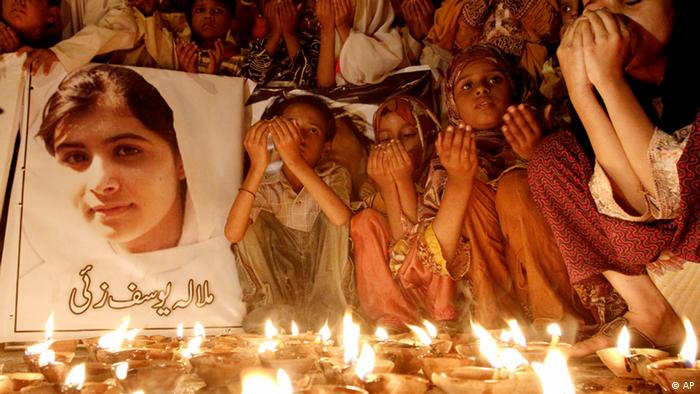
When teenager Malala Yousafzai was shot by the Taliban, Pakistan's media was warned to curb its coverage of the story.When news broke from Pakistan that a 14-year-old girl had been shot by members of the Taliban just for promoting female education on her blog, news organisations around the world jumped on the story. In Pakistan, however, they had to treat the subject with care. The Taliban warned local media to curb their reporting, or deal with the consequences. This is not just a story about one attack - it is a tale of how the journalistic environment in Pakistan has grown so dangerous. According to media watchdog groups, at least 20 journalists have been murdered since 2010 and not one of those cases has resulted in a conviction.
Brahimi arrives in Damascus to push ceasefire
UN and Arab League envoy meets Syrian officials to ask for a brief halt to hostilities over Eid al-Adha holiday.
Malala Yousafzai status updates ,11:30, Saturday 20 October 2012
Malala's condition remains unchanged since yesterday's detailed briefing on her progress. She is stable, comfortable and responding well today.
Dr Dave Rosser has explained that Malala will now need a significant period of rest and recuperation before she has reconstructive surgery.
11:00, Saturday 20 October 2012
Consent was obtained yesterday to take and release photographs of Malala.
She would like to thank all the well-wishers for their messages of support and the doctors and nurses who are treating her.
In his briefing yesterday Dr Dave Rosser, Medical Director at University Hospitals Birmingham NHS Foundation Trust, explained that Malala would now need a significant period of rest and recuperation before she has reconstructive surgery.
Lauding Obama, Clinton cites 'impatient' Americans
Former President Bill Clinton
said Friday that President Barack Obama is facing a tough re-election race because ‘‘impatient’’ Americans haven’t fully recognized an economy on the mend.
Campaigning for Obama in Green Bay, Wis., Clinton urged voters to stay the course as more signs of a recovery sink in. Clinton said voters should judge Obama on the past three years, in which private sector job growth has made up for lost ground.
‘‘This shouldn’t be a race,’’ Clinton said. ‘‘The only reason it is, is because Americans are impatient on things not made before yesterday and they don’t understand why the economy is not totally hunky-dory again.’’
The former president said Obama’s difficulty in his race with Republican challenger Mitt Romney is that ‘‘people don’t feel it yet’’ even as the unemployment rate ticks down and the manufacturing sector perks up. Clinton said Obama deserves credit for stabilizing a situation that saw the country hemorrhage jobs well into his first year.
‘‘Gov. Romney acts like from the minute the president took his hand off the Bible he was responsible for every lost job,’’ Clinton said.
Everywhere he goes, Romney argues that the tepid recovery is grounds for a change. The shape of the economy consistently tops lists of voter concerns.
A local police official said 2,200 turned out to hear Clinton at a college fieldhouse. Clinton won Wisconsin in both of his presidential campaigns.
Republicans think they can flip the state, which hasn’t gone to them since 1984. Wisconsin Rep. Paul Ryan is on Romney’s ticket and has campaigned heavily in the state in the past few months.
Obama heads to Camp David to prepare for crucial final debate

Barack Obama
is scheduled to fly to the Camp David presidential retreat near Washington later for three days of seclusion to prepare for the third and final debate with Mitt Romney on Monday as polls suggest the race remains too close to call.
Obama and Romney swapped jokes at a charity event in New York on Thursday night but there will be few jokes on Monday at the debate in Boca Raton, Florida, an encounter devoted to foreign affairs.
The president had enjoyed high approval ratings in foreign affairs until recently, mainly as a result of the killing on his watch of Osama bin Laden. But the Republicans see the president as vulnerable over the assault on the US consulate in Benghazi that left the US ambassador and three other Americans dead.
Obama's 2008 Republican presidential opponent John McCain took the president to task yesterday/Friday, over his choice of words during an interview on Jon Stewart's Daily Show on Thursday night in which he oddly referred to the deaths as "not optimal".
"The optimal line, of course, is very regrettable and makes me a little sad," McCain told Fox.
Obama used the description in response to a question from Stewart, who was the first to use the word "optimal".
Stewart said: "I would say, and even you would admit, it was not the optimal response."
Obama replied: "Here is what I will say: when four Americans get killed, it's not optimal."
Romney fumbled a question about Libya in their second debate on Tuesday in New York, but will get a chance on Monday to redeem himself. The Republicans are questioning why the Obama administration has offered conflicting accounts of what happened at the consulate, by first blaming it on a demonstration by people allegedly upset over a US-made anti-Muslim film and later on al-Qaida affiliates.
McCain said it had been obvious to him soon afterwards that it was more than just a demonstration. "You really don't have to be a CIA analyst or a station chief to know an attack with mortars and rocket-propelled grenades, and which lasted for eight hours, is not a spontaneous demonstration," he said, adding that the responses of the administration amounted either to a cover-up or gross incompetence.
Another layer of intrigue was added to the story yesterday when the Associated Press reported that the CIA station chief in Libya told Washington within 24 hours of the attack that there was evidence it was carried out by militants. However, it was unclear who, if anyone, saw the cable outside the CIA at that point and how high up in the agency the information went.
Both Obama and Romney spent Friday campaigning before heading for their respective debate preparation camps, with Romney basing himself in Boca Raton.
Obama went to George Mason University in Fairfax, Virginia, the second time in a fortnight he has spoken on campus in the crucial swing state, where students and the youth vote as the key to his winning. He ridiculed Romney for what he claimed were repeated policy switches, saying the Republican candidate had forgotten his previous positions – a condition he labelled 'Romnesia'.
As well as Libya, Obama and Romney are set to argue over Iran, Syria and the Israeli-Palestinian issue. Obama administration officials have hinted that Obama, in his second term, with no election to be fought, would be braver in tackling the Israeli-Palestinian issue, which, like Tony Blair, he views as a source of friction in the Middle East and elsewhere in the Muslim world.
On Iran and Syria, Romney and Obama are not particularly far apart in terms of policy, despite Romney sounding more bellicose than Obama on both issues.
New polls taken after Tuesday's debate, which both conservatives and Democrats gave to Obama on points, showed Obama ahead in Iowa, which has long been a swing state, and Wisconsin, which had been listed as an Obama hold but had recently been moved to a toss-up.
An NBC News/Wall Street Journal/Marist poll put Obama on 51% and Romney on 45% in Wisconsin and 51% to 43% in Iowa.
Most polls suggest the two are in a dead heat nationally. Gallup, in contrast with most of the rest, has Romney with a big lead nationally, on 52% to 45%. But Public Policy Polling has Obama on 48% to Romney's 47% and Rasmussen has the two tied at 48%.
Hillary Clinton launches tirade against 'whining' women
http://www.telegraph.co.ukDespite a lifetime advocating women's rights, the US Secretary of State showed little patience with other mothers who struggle to juggle the dual roles demanded by modern life. 'I can't stand whining," she told Marie Claire magazine. "I can't stand the kind of paralysis that some people fall into because they're not happy with the choices they've made. "You live in a time when there are endless choices ... Money certainly helps, and having that kind of financial privilege goes a long way. But you don't even have to have money for it. But you have to work on yourself ... Do something!" Her words were interpreted in some quarters as a dig at Ann Marie Slaughter, who left her post as director of policy planning under Mrs Clinton at the State Department last year for a job at Princeton University, saying that she needed to spend more time with her two teenage sons. Mrs Clinton's office however accused Marie Claire of creating a misleading impression, pointing out that her comments about whining followed a question about the habitual griping of Holden Caulfield, the boy who is the character in Catcher in the Rye.On Twitter, Ms Slaughter, 54, responded: "Hillary Clinton, for whom I have the greatest admiration and loyalty, was not talking about me when she mentioned whining." The former First Lady, who raised a teenager in the White House in the 1990s, was however not exactly laudatory about Ms Slaughter when asked a direct question about her former colleague, who wrote a widely circulated essay about her decision to quit in Atlantic magazine. Mrs Clinton conceded that "it's important for our workplaces ... to be more flexible and creative in enabling women to continue to do high-stress jobs while caring for not only children, but [also] ageing parents". But, she added, Ms Slaughter's problems were hers alone. "Some women are not comfortable working at the pace and intensity you have to work at in these jobs," she said. "Other women don't break a sweat. They have four or five, six kids. They're highly organised, they have very supportive networks.'" In response, Slaughter tweeted: "[T]hat is certainly not true of me! Pace and intensity are no problem; it's about flexibility." Mrs Clinton's remarks are likely to raise eyebrows in Washington, where the demands made on those working in key government jobs are notorious. It is not only women who have left high-powered positions to be closer to their families. Rahm Emanuel, Mr Obama's first chief of staff, decided not to move his wife and children from Chicago. After 18 months he left the White House, albeit partly because of the chance run for mayor of his home city. Raising a child in the White House has its particular pressures, but comes with the major benefit of working from home. Barack Obama, the current occupant, has remarked on how "living above the office" enables him to enjoy time with his two young daughters. Mrs Clinton's daughter Chelsea was 12 when the family entered the White House in late 1992 after Bill won the first of two four-year terms. In the early days of her marriage Mrs Clinton took a decision that would dismay some feminists, sacrificing her prospects of a glittering Washington legal career to follow her politically-ambitious husband to his home state Arkansas.
How could Japan steal Diaoyu Islands with propaganda campaign ?

Japanese Foreign Minister Koichiro Genba has recently visited France, Britain and Germany to lobby on the Diaoyu Islands issue, seeking international "understanding."
It is reported that Japan is geared up to print pamphlets on the Diaoyu Islands in 10 languages and distribute them all over the world to launch a propaganda campaign, in attempt to contain China and seize the Diaoyu Islands with the help of other countries.
Japan's so-called "evidences" are no more than broken pieces of unconfirmed documents. That Japan refuses to admit there is controversy about the sovereignty of Diaoyu Islands is to blatantly question the Cairo Declaration and the Potsdam Proclamation, challenge the international order after World War II and deny the victory of the World War against Fascism.
Facts are facts. People around the world will not be deceived by Japan's attempt to distort the truth and launch propaganda campaign.
Recently, the mainstream media outlets in Britain, France and Germany believe Japan should deeply introspect in three aspects: Firstly, "nationalization" of the Diaoyu Islands indicates the rise of rightists and extreme nationalism in Japan. Secondly, out of domestic politics, the Noda administration enflames “nationalization” of the Diaoyu Islands. Last but not least, Japan fails to self-examine its history of aggression, which leads to deterioration of current situations.
European politicians had better take public opinions on the Diaoyu Islands issue into consideration before making their decisions. Japan's rash moves aggravate the strategic instability in East Asia, which neither promotes global economic recovery nor serves Europe's interests.
The Diaoyu Islands and the affiliated islets have been an integral part of Chinese territory since ancient times. Japan's propaganda campaign on the islands spat with China is doomed to fail. No matter what tricks Japan may play in international community, the fact that the Chinese territory is illegally stolen and occupied by Japan cannot be changed.
Karzai warns on foreign troops immunity
http://www.nation.com.pkAfghan President Hamid Karzai has warned there could be problems ahead over the crucial issue of immunity from prosecution for any American or Nato soldiers deployed in the country after 2014. The US-led Nato force of more than 100,000 troops is due to end combat operations against Taliban insurgents at the end of that year, but thousands of soldiers are expected to remain in Afghanistan to train and assist Afghan forces. The immunity issue, if Karzai’s warning is meant seriously and is not simply a tactical move, could be a deal breaker. In Iraq, Washington pulled out all its troops, leaving no residual force, after failing to get Baghdad to grant its soldiers protection from prosecution in local courts. In Afghanistan, the question is likely to come down to that needs the other most. The US wants a hand in preventing the country once more becoming a haven for Al Qaeda, and Kabul needs US help in the fight against the Taliban. Karzai said in a statement that he had told visiting Nato Secretary General Anders Fogh Rasmussen during talks in Kabul Thursday that the Afghan people might “not permit their government to grant immunity”. This would happen “if the war and insecurities continue in Afghanistan, Afghan borders are not protected, and the immunity for foreign forces comes on top of these issues”, he said. Karzai knows he has a bargaining chip in this negotiation, and his statement could be seen as a bid for even more cash and support from the United States and Nato countries after 2014 than has already been pledged.
Afghanistan: Imran Khan Has No Right To Issue Fatwa
http://www.bakhtarnews.com.afAfghan Ulema or religious scholars and prayers leaders in their sermons on Friday congregations said that since Pakistani cricket-turn politician has no knowledge about Islam he has no right to issue Fatwa, saying the former cricketer had issued the Fatwa for Jihad against Afghans with the support of Pakistani intelligence agency ISI. The Ulema pointed out that Afghanistan as a sovereign state is a Mujahid nation which defeated the former Soviet Union by Jehid and paved the way for the independence of central Asian countries. The Ulema or religious leaders have also unanimously termed Imran Khan’s Fatwa as satanic, enmity and strongly condemned it.
Malala shooting shows challenge to girls education
A teenage activist recently shot and critically wounded by the Taliban risked her life to attend school, but the threat from the militant group is just one of many obstacles Pakistani girls face in getting an education.
Others include rampant poverty, harassment and the government's failure to make education spending a priority. Both sexes have suffered from the lack of funding, but girls, who have somewhat lower rates of literacy and school attendance, are in a particularly perilous position.
The Oct. 9 attack on 15-year-old Malala Yousufzai, who is hospitalized in Britain, showed that the barriers to girls' education are highest in Pakistan's northwest, where the Taliban are strongest. The militants have blown up hundreds of schools and kidnapped and shot education activists like Malala.
The need for education is stark:
— Only 40 percent of Pakistani girls 15 or younger are literate, according to the United Nations.
— Roughly 50 percent of girls are enrolled in school, according to a report by the Society for the Protection of the Rights of the Child.
— Only one in five students is female in the semiautonomous tribal region along the Afghan border, the Taliban's main sanctuary in the country, according to the U.N.
The Taliban and their allies are opposed to education that isn't rooted in their hardline interpretation of Islam and object to women working outside the home or traveling without a male escort.
Militants destroyed or damaged at least 943 schools in the tribal region and Khyber Pakhtunkhwa province from 2009 to 2011, according to Pakistani government figures.
Some were targeted because they were used by the military, but many of the attacks were motivated by the Taliban's opposition to girls' education and schooling that doesn't follow their strict interpretation of Islam.
"The Taliban have scared people," said Hamid Ullah Khan, a teacher from Lower Dir in Khyber Pakhtunkhwa. "This is also one of the main reasons that women are not studying at schools in good number."
The government has worked with the international community to rebuild some of the schools targeted by the Taliban. But the attacks dealt a blow to an education system that was already in shambles across the country, in part because of the low level of government spending.
The education crisis is apparent in the schools' infrastructure. Only 39 percent of schools have electricity, and only 62 percent have bathrooms, according to the Society for the Protection of the Rights of the Child.
Many Pakistani families are struggling to make ends meet, and if they have money for books, school uniforms or private school tuition, they often prefer to spend it on education for one of their male children.
Bismillah Jan, a teacher from Mir Ali town in the North Waziristan tribal area, said most parents were happy to send their daughters to school, but many had large families and simply couldn't afford to send everyone.
Many families in conservative areas of the northwest and elsewhere in the country worry about sending their daughters to school because they might be harassed on the way or when they arrive. Many also oppose their daughters having male teachers. The lack of bathrooms, especially separate facilities for girls, deters many parents who don't want their daughters to have to relieve themselves in a field.
Groups that have had success in educating girls say they have focused on those parental concerns.
The Karachi-based Citizens' Foundation is a non-profit institution that has built 838 private schools across Pakistan, including more than 100 in Khyber Pakhtunkhwa and southwest Baluchistan province, both conservative areas of the country with generally low female enrollment. About 50 percent of their students are women, according to statistics on their website.
A former vice president for the organization, Ahson Rabbani, said the organization builds schools close to the community so students don't have to travel far to get there and constructs separate toilets for girls, boys and teachers. The schools are surrounded by a wall with a guard out front, and all the teachers are women from the same community as the students.
Girls who get an education are more likely to send their own daughters to school when they grow up and have children, said Ghulam Zakia, principal at a government girls' school in the city of Rawalpindi, near the capital, Islamabad.
When Zakia became principal 33 years ago, she had to actively lobby parents to send their daughters to the school, which has focused on building ties with the local community and hiring good female teachers. Now the school is so popular that even parents of some boys push to send their children there, forgoing the nearby government boys' school.
Afghanistan: a cultural no man's land?
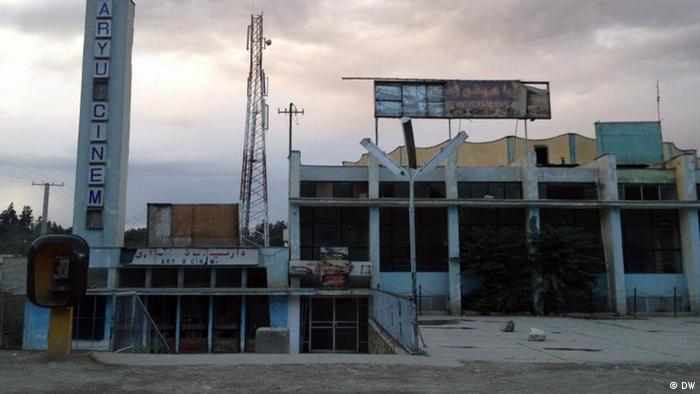
The recent attack on an actress in Afghanistan raises the question: will the country once again become one in which music and film are taboo after international forces leave the country in 2014?
It is already dark as
Sonia sets out for home. She thinks of the relaxing evening she had at Kabul's art festival that took place mid October, as the young actress walks to her car. And then something horrible happens: a man throws powder in her face as he runs past her. Sonia is blinded; she screams in pain as she covers her eyes.The unknown culprit's motive is obvious: to punish Sonia Sarwari for her so-called "un-Islamic" work as an actress on the big screen and in television. Women who manage to become public figures are villanized and condemned by many Mullahs; they are labeled as dishonorable. The 19-year-old Sonia goes to the doctor, who finds her eye is "luckily" only slightly injured. The doctor bandages up her eye; she wears dark glasses to hide it.
As bad as the attack was, Sonia told DW that it hadn't really been that much of a surprise. "I receive threats over the telephone on a daily basis. The people who threaten me say they are going to shoot me or kill me some other way. But this attack here really got to me."
Death threats
The attack on Sonia was not unprecedented. Not long ago, an 18-year-old actress was attacked. Benafsha died as a result of multiple stab wounds in a mosque in Kabul at the end of August. She had been out with colleagues when she was attacked by a group of men. Her colleagues continue to receive death threats. They have decided to keep a low profile.
One of Benafsha's close friends and colleagues, Sahar Parniyan, told DW she had gone to the police chief of Kabul for help, and explained to him that she could not go home for fear of her life.
"But he didn't do anything. He said he wasn't responsible. If the police isn't even willing to help protect us, then what am I still doing in this country?"
Up to the 1990s, Afghanistan had quite a lively cultural cinema and music scene. Poetry and literature were part of every-day life - even for those who couldn't read or write.
But today cinemas are seen as meeting points for drug addicts - they don't attract crowds. Writers censor their own writing and there are no publishing houses. The poet Kawa Gibran was of the opinion that the decades-long war had led to the decay of the country's cultural scene. He feared the withdrawal of international forces from Afghanistan in 2014 might mean the worst yet for artists.
"As of now, it seems it will be bad for us. The international community has lost the war. The Taliban are getting stronger. You can see that by the current distribution of power in government. People are interpreting the consitution however they please."
Artists disappointed in government
The Taliban completely banned music and television. After they were driven out, Afghanistan experienced a cultural rebirth. Films were produced and new songs were played on the radio. But now that the extremists are slowly gaining power again, new restrictions have returned to the country.Many artists and intellectuals have already left the country. Others, such as the well-known musician Ustad Gulzaman, will have to follow. Despite the billions of dollars that had been thrown at Afghanistan in the past few years, Gulzaman said, the intellectual and artistic elite had not received any support at all.
"I love my country and my art. But this government does not care about us. I will have no other choice than to leave so that I can feed my children."
Sonia Sarwari, on the other hand, is not ready to give up just yet. "I am an Afghan woman and I will confront my enemies head-on ... They will not keep me from acting. I will continue to do what I do."
Pakistan: Political Generals guilty, finally
The Supreme Court in a landmark judgment on Friday said it has been established that an election cell was set up to stop the PPP from winning the 1990 elections and directed the government to take action against all the civil and military characters involved in the rigging.
Only a day before, Brigadier Muhammad Amir Military Secretary to President Asif Ali Zardari, who is also co-chairman of the PPP (Pakistan Peoples Party), had informed the court that no record was found regarding the presence of a political cell at the President House since 1990.
The short verdict in Asghar Khan case, which has been lingering on for the last 16 years, is unprecedented in country’s history as it ordered legal proceedings against General (r) Aslam Beg, a former chief of the powerful Army, and General (r) Asad Durrani, a former head of ISI (Inter-Services Intelligence).
A three-member bench – headed by Chief Justice Iftikhar Muhammad Chaudhry and including Justice Jawwad S Khawaja and Justice Khilji Arif Hussain – delivered the judgement in the case wherein Air Marshal (r) Asghar Khan had alleged that the ISI created the Islami Jamhoori Ittehad (IJI) by dishing out Rs140 million to certain politicians to prevent Benazir Bhutto’s PPP from winning the 1990 general elections.
The 7-page short order, authored by the chief justice himself, also said that any election cell or political cell in the presidency or ISI, or MI, or within their formations shall be abolished immediately and any letter or notification to the extent of creating any such cell or department (by any name whatsoever) shall stand cancelled forthwith.
The order said that former president, the late Ghulam Ishaq Khan, ex-COAS General (r) Aslam Beg and ex-DG ISI General (r) Asad Durrani acted in violation of the constitution by facilitating a group of politicians and political parties to ensure their success against the rival candidates in the general election of 1990, for which they secured funds from Mr Younas Habib.
The acts of Gen Beg and Gen Durrani have brought a bad name to Pakistan, its Armed Forces as well as the secret agencies, and it demeaned them in the eyes of the nation, the court said. It directed the federal government to take necessary steps against them under the constitution and law, though they have retired from the service. “Proceedings shall also be launched against them for affecting the recovery of sums received by them with profit thereon by initiating civil proceedings, according to law.”
The court also said that legal proceedings shall be initiated against the politicians, who allegedly have received donations to spend on election campaigns in the general election of 1990, therefore, transparent investigation on the criminal side shall be initiated by the FIA against all of them and if sufficient evidence is collected, they shall be sent up to face the trial, according to law. Younas Habib should also be dealt with in accordance with law.
The judgement said that Younas A Habib, the then Chief Executive of Habib Bank Ltd, on the direction and behest of Ghulam Ishaq Khan, Aslam Beg and Asad Durrani, arranged Rs140 million, belonging to public exchequer, out of which Rs60 millions were distributed among politicians, whose incomplete details have been furnished by Asad Durrani; however, without a thorough probe no adverse order can be passed against them in these proceedings.
An amount of Rs80 million, as stated, has been deposited in Account No. 313 titled Survey and Construction Group Karachi, maintained by MI; therefore, this amount with profit shall be transferred to Habib Bank Ltd, if the liability of HBL has not been adjusted so far; otherwise, the same may be deposited in the treasury account of Government of Pakistan, the verdict said.
The court said the citizens of Pakistan as a matter of right are free to elect their representatives in an election process being conducted honestly, justly, fairly and in accordance with the law. The President of Pakistan, Chief of Army Staff, ISI DG or their subordinates certainly are not supposed to create an election cell or to support a political party or group of political parties, because if they do so, the citizens would fail to elect their representatives in an honest, fair and free process of election, and their actions would negate the constitutional mandate on the subject.
The order said that the armed forces of Pakistan, under the directions of federal government, defend the country against external aggression or threat of war and, subject to law, are to act in aid of civilian power when called upon to do so under article 245 of the constitution. Therefore, any extra-constitutional act, calls for action in accordance with the constitution and the law against the officers/officials of the armed forces without any discrimination.
The armed forces have always sacrificed their lives for the country to defend any external or internal aggression for which they, as institutions, are deeply respected by the nation. The armed forces, in discharge of their functions, seek intelligence and support from ISI, MI, etc., and on account of security threats to the country on its frontiers or to control internal situations in aid of civil power when called upon to do so.
However, ISI, MI or any other agency like IB has no role to play in the political affairs of the country such as formation or destabilisation of government, or interference in the holding of honest, free and fair elections by the Election Commission of Pakistan (ECP). The involvement of the officers/members of secret agencies i.e. ISI, MI, IB, etc. in unlawful activities, individually or collectively calls for strict action as it is in violation of oath of their offices, and if involved, they are liable to be dealt with under the constitution and the law.
The court noted that the president, in a parliamentary system of government, being head of the state represents the unity of the republic under article 41 of the constitution. And as per the oath of his office in all circumstances, he (the president) will do right to all manner of people, according to law, without fear or favour, affection or ill-will. Thus, holder of office of President of Pakistan, violates the constitution, if he fails to treat all manner of people equally and without favouring any set, according to law, and as such, creates and provides an occasion which may lead to an action against him under the constitution and the law.
The general election held in the year 1990 was subjected to corruption and corrupt practices as in view of the overwhelming material produced by the parties during hearing it has been established that an “Election Cell” had been created in the Presidency, which was functioning to provide financial assistance to the favoured candidates, or a group of political parties to achieve desired result by polluting election process and to deprive the people of Pakistan from being represented by their chosen representatives.
Asghar Khan, the petitioner, called it a great judgment and his counsel Salman Akram Raja remarked that the short order had covered all the aspects, which were raised during the proceedings. He said that it was for the first time in the country’s history that a ruling had come against retired military officials. On the occasion, Salman Raja said that it would be impossible for the government to not act on the court’s verdict.
Pakistan behind Nepal, India in girls’ education
Released in the wake of an armed attack on teenage education activist Malala Yousufzai, the Education for All Global Monitoring Report shows that Pakistan’s progress in getting poor girls into schools is less than half that of India’s and Nepal’s and a quarter of Bangladesh’s.
The report released by Unesco here on Thursday reveals that though Pakistan has the second largest number of out-of-school girls in the world, yet it has reduced the amount it spends on education to less than 2.3 per cent of GNP. Only nine low- and lower-middle-income countries spend a smaller share on education. The barriers to education faced by Pakistani girls are stark in comparison with the rest of South Asia.
These findings were issued by the World Inequalities Database of Education, a website of the EFA Global Monitoring Report team, showing how factors such as gender, poverty, location and ethnicity affect a child’s chances at education.
A two-thirds of the out-of-school children in Pakistan are girls; only 16 countries have a worse rate.
Pakistan has the second highest number of out-of-school children in the world – five million.
The country’s progress in reducing the number of poor girls being denied a chance of education has been too slow. The percentage of poorest girls out of school has fallen from 78 per cent to 62 per cent, a much smaller drop than in India (from 66 per cent to 30 per cent), Nepal (52 per cent to 22 per cent) and Bangladesh (91 per cent to 44 per cent).
EFA Global Monitoring Report Director Pauline Rose said that “since 1999 when governments around the world committed to getting all children into school, countries like Pakistan have managed to consistently fail to address” the issue.
“We must put girls first if we’re to crack this challenge. Two-thirds of girls in the poorest areas in Pakistan are still not getting the chance of an education – a rate that is not appropriate for 21st century.”
According to the report, although the number of Pakistani children denied education is surpassed only by Nigeria, the country has reduced spending on education from 2.6 per cent of GNP in 1999 to 2.3 per cent today.
“The hope is that the tragic violence against Malala will bring shame on a country which has ignored the rights of its girls to an education for too long. Pakistan spends less on education than it spends to subsidise just three of its loss-making public sector enterprises – the national airline (and the) steel and electricity companies. Pakistan also spends less on education than it does on the military. Its priorities have to change,” the UN official said.
The Global Monitoring Report 2012 shows over a third of young Pakistanis – 12 million – do not have the skills they need for work. This is the second highest number of unskilled young people in the world.
President Karzai’s timely remarks
EDITORIAL: Daily TimesAfghan President Hamid Karzai released a rather biting statement on Thursday aimed at making Pakistan realise that the monster of extremism can turn on anyone at any time. Quoting the tragic example of Malala Yousafzai who was shot in the head by the Taliban 10 days ago, President Karzai pinpointed that Pakistan’s strategy of using extremist militants to do its bidding was taking its toll. He urged his Pakistani “brothers and sisters” to learn the lesson that using extremism as a tool was bound to have ramifications for the country. He described extremism as a snake that would not hesitate to turn around and bite anyone who used it against others. This statement was issued during a joint press conference with NATO Secretary General Anders Fogh Rasmussen in Kabul. Whilst the words may be sharp, they carry a ring of truth and underlying urgency. President Karzai also took this opportunity to urge Pakistan to work together with Afghanistan to tackle the militant problem that has been devastating his country for decades and has started eating Pakistan from within over the last few years. Citing the example of Malala was very timely indeed. Maulana Fazlullah has been accused of being the mastermind of this attack. When the Pakistan Army launched its offensive in Swat in 2009, Fazlullah took refuge across the border in Afghanistan, given a safe haven by the Haqqani network. It is ironic that this is the same Haqqani group that Pakistan has given a safe haven to on Pakistani soil and allowed to operate in Afghanistan, at the risk of annoying its ally in the war on terror, the US. We supported the Haqqani group against NATO and the US forces in Afghanistan, allowing it to launch its offensives from the safety of Pakistan’s tribal regions. Now, it is the same network that is allowing the Pakistani Taliban to use Afghanistan as its base to launch terror attacks - like the one against Malala - inside Pakistan. This is the blowback of the proxy war project many predicted would come sooner or later. Now that it is here, Pakistan needs to revise its support for elements that are clearly supporting those who wish to tear this country apart. Fazlullah is a firebrand, known for his hatred for female education and extreme views against progress and equality. He is a barbarian who believes that children too are fair game in his bloodlust. Now that Malala is regaining her health, and with the world community behind her, the Tehreek-e-Taliban Pakistan (TTP) continues its threats against her life. Any civilised approach towards dealing with these monsters is going to run up against a wall. It is time to fight fire with fire - a point that Karzai touched upon in Thursday’s press conference. It is time Pakistan changed its policy towards the militants and abandoned its delusion of ‘strategic depth’ in Afghanistan via these jihadi proxies. All these militants are on the same side, joining forces to pit country against country and neighbour against neighbour. It is time to do what is needed to end this menace once and for all, with Pakistan and Afghanistan joining forces to prevent these extremist militants from using the porous border to their advantage, hopping from one country to another, mocking the very idea of sovereignty. President Karzai is spot on. It is time to end this game before it consumes both neighbouring countries
Religious intolerance: Second church attacked in Karachi in 10 days
The Express TribuneA second church was attacked in Karachi on Thursday within a space of 10 days as armed men barged into its premises during a blackout, vandalised it and fled with alms offerings. Since the beginning of the year, at least six churches in the city have been attacked, looted, fired upon or set ablaze. These churches are located in Christian slums surrounded by various ethnic communities. The latest church to fall victim to the growing intolerance was the Philadelphia Pentecostal Church of Pakistan, situated in a congested lane of Karachi’s Essa Nagri locality. On Thursday, armed men broke into the church during a power outage from a graveyard situated next to it, “The church was closed at that time. The men broke the windows, threw the Bibles on the floor and took away cash donations worth Rs40, 000,” said Rev Cornelius, the pastor of the church. This comes barely 10 days after the St Francis Church was attacked in the Old Haji Camp area by violent protesters demonstrating against electricity load-shedding. In a rare move, a blasphemy case under section 295-A was registered by the police against the mob. Past attack on churches in Essa Nagri Half of the targeted churches are situated in Essa Nagri – one of the largest Christian populated areas in the city. Bordered by ethnic groups and political activists, the locality, which is home to 30 churches, has witnessed a surge in criminal activities against minorities. A resident and a prominent leader of the Christian community, Michael Javed, said that the community had recently built five walls to separate their area from other communities. “But the police tore down one of the walls to make a gateway for people to go to their mosques. And the church got looted the very next day,” Javed said, adding that their community was being victimised because political parties wanted to take over the area to form their constituencies. The Seventh Day Adventist Church, also located in Essa Nagri was attacked in May when armed men barged into the area seeking an illegal electricity connection from a pole just before the evening mass was about to commence. A church member, Aftab Bhatti, tried to stop the men but resistance resulted in firing by the opponents at the church. “They desecrate churches on purpose knowing that it will hurt us most,” said Bhatti, who was shot in his leg. When the angered community went to the main road to protest against desecration of the church, they were treated with a shower of bullets by other community members, resulting in two more injuries. During the same month, another church in Essa Nagri, St Luke’s Church, situated opposite the house of minority parliamentarian Saleem Khokhar, was attacked. “Churches are being attacked to prevent people from practising their religion freely. We all are Pakistanis and our house of worship should be given protection and security,” Khokhar said, while adding that he too believed that political activists are creating a ruckus in Christian areas to pressure them to join their respective political parties. Earlier this year, a church was wrecked in Manghopir by a group of people praying in a mosque who were irked by schoolchildren singing hymns in the church. A representative of the Human Rights Commission of Pakistan, Abdul Hai, said that the Taliban mindset is involved in attacking minorities and their houses of worship in the city. “They are the same people who are killing Ahmadis on one hand, and attacking churches to terrorise minorities,” he said. In most cases, minorities refuse to register FIRs fearing a reprisal, while the police try to play down the incident. Despite visiting the Essa Nagri’s Philadelphia Pentecostal Church of Pakistan, SHO Asif Munawar refused to comment on the matter, saying an investigation would be carried out when a case was registered.
Pakistan:Prime Minister happy over Malala recovery reports
Radio Pakistan
Queen Elizabeth Hospital in Birmingham has released the first photograph of Malala YusufzaiPrime Minister Raja Pervez Ashraf has shown pleasure over reports that Malala Yusufzai has shown signs of recovery and regained consciousness. A spokesman of the Prime Minister House said in Islamabad that the Prime Minster expressed the hope that Malala would recover speedily and resume normal activity. He appealed to the people to continue praying for her full recovery. Meanwhile‚ the Queen Elizabeth Hospital in Birmingham has released the first photograph of Malala Yusufzai. She appears in the photograph with her eyes open and alert as she lay in a hospital bed. Hospital Medical Director Dr Dave Rosser said Malala has agreed to the release of medical information and photos‚ and she wants to thank people throughout the world for their support in difficult days. Bakhtawar Bhutto Zardari has described Malala's progress as wondrous. She tweeted that Malala is able to stand which is a miracle.
Friday, October 19, 2012
Malala able to stand: UK hospital
http://www.brecorder.comMalala Yousafzai has stood up with help for the first time since she was shot in the head by the Taliban but remains seriously ill, doctors treating her at a British hospital said Friday. Malala is unable to talk due to the breathing tube inserted into her windpipe but she can communicate by writing, said Dave Rosser, the medical director at the Queen Elizabeth Hospital in Birmingham, central England. The teenager escaped certain death by a matter of centimetres (inches), with the bullet grazing the edge of her brain, he said. The hospital released a first picture of Malala, in her hospital bed, clutching a teddy bear. "Malala is still showing some signs of infection... in the bullet track which is our key source of concern," Rosser told reporters outside the hospital. "It's clear that she is not out of the woods yet. "Having said that, she is doing very well. In fact, she was standing with some help for the first time this morning when I went in to see her." Rosser explained that Malala's airway became swollen after the bullet passed through it, so doctors inserted a tracheotomy tube to protect it. The tube means she cannot speak but there is no reason to believe she would be unable to talk once it is removed, which may happen in the coming days. She has movement in her arms and legs and is "communicating very freely -- she is writing," Rosser said. "Malala is keen that I thank people for their support," he added, after thousands of people left messages for her on the hospital's website. With the schoolgirl's permission, the hospital gave a full breakdown of her injuries, condition and the slow path to her possible recovery. Rosser explained how the bullet passed through the face of the girl, who the hospital now say is 15 although she has previously been described as 14. "The bullet grazed the edge of her brain. Certainly if you're talking a couple of inches more central, then it's almost certainly an unsurvivable injury," he said. Shot at point blank range, the bullet hit her left brow, but instead of penetrating her skull it travelled beneath the skin down the left side of her head. The shock wave shattered the thinnest bone of her skull and fragments were driven into her brain. The bullet damaged soft tissues at the base of her jaw and in her neck, which the bullet travelled through before lodging in the tissues above her left shoulder blade. The bullet was removed in Pakistan soon after the shooting, but specialists have found her left jawbone is injured at its joint, while a bone behind the ear and the base of her skull have been fractured. Her brain is still swollen, meaning doctors have not been able to do a full brain injury evaluation. Malala regained consciousness on Tuesday. She is aware of her surroundings but gets tired very easily. "She seems to have understood why she is no longer in Pakistan and what has happened to her," Rosser said. It was clearly "very difficult" for her to suddenly wake up in a foreign country, he added. It will take weeks to months for Malala to defeat the infection and recover her strength enough to face surgery. "Then her skull will need reconstructing either by reinserting the piece of bone that was removed initially or with a titanium plate," Rosser said. "Her jaw joint may need further work down the line but that remains to be assessed in a couple of weeks' time." In a separate statement, the hospital stressed that she is "still very ill". "This is a fluid situation and she sustained a very, very grave injury," it said. Former British prime minister Gordon Brown, who in his new role as a UN special envoy for global education will visit Pakistan to meet President Asif Ali Zardari next month, said he was "delighted". "I have been able to get a message through to her family that the whole world is with Malala as she fights for her health and wishes Malala the best of progress," Brown said.
ملاله د ودرېدو جوګه شوه او خپل حال په لیکلو وايي
د سوات ۱۵ کلنه ملاله يوسفزۍ چې د اکتوبر په نهمه نيټه د وسلوالو طالبانو په ډزو کې سخته ژوبل شوې ده او دا وخت يې د برمنګم کوین الزبت روغتون کې درملنه روانه ده، ډاکټران وايي چې د ملالې بې هوشه ختمه شوې او اوس د بل په مرسته د ودريدو قابله شوېده. د کیون الیزبېت روغتون برمنګم مشر ډاکتر ډېو روسر په برمنګم کې له خبرایلانو سره د ملالې د روغتیا په باب تازه مالومات شریک کړل. نوموړي وویل چې: (( ملاله لا هم تکلیفه نه ده رواتلې. خو دا درته ویلای شم چې هغه په رغېدو ده. نن چې زه د هغې لیدو ته ورغلم نو په رښتیا هم دا په لومړي ځل د بل په مرسته په پښو ولاړشوله. دا سمې خبرې کولای او لیک کولای شي.)) ډاکټر روسر د ملالې په باب زیاته کړه چې ملاله راسره په لیکلو خپله خبره راته کوي او ډېر ژر به د خبرو کولو جوګه شي: ((د هغې مو د سا نلۍ کې ټیوب لګولی دی ځکه چې د ګولۍ له لګېدو څخه د هغې د ساه غاړه پړسېدلې ده . او له دې وجې خبرې نه شي کولای. او کله چې د ساه اخیستو ټیوب ترې وباسو نو موږ ته هیڅ داسې وجه نه ښکاري چې دا به ګواکې خبرې ونه کړای شي. او دا کار په راتلونکو څو ورځو کوو.)) د ملالې یوسفزۍ لپاره دکوین الیزبېت روغتون برمنګم پر خپل وېبسایټ د هغې لپاره د بسپنې(عطییه) راټولو اشتهار هم خپور کړی چې که څوک غواړي ملالې ته بسپنه ورکړي نو پر د دې لاندیني ویبسایټ یې ورکولای شي. www.uhb.nhs.uk ددې تر څنګ پر دغه باندیني ویبسایټ په سلګونه خلکو د ملالې لپاره د خواخوږۍ پیغامونه وراستولي دي. یوې انجل کیت لیکلي ملالې ستا ننګ او مېړانه ستایو او ستا وجود مو دې ته هڅوي چې د زغم، زدکړې او مینه لاره ونیسو. اسماعیل ورته لیکلي، چې ملالې ته د پاکستان او افغانستان د پښتنو ویاړ یې. حمنا علي ورته لیکلي، چې ته د سوات او پاکستان ټولو جینکو ته یو نمونه او مثال یې. امارا انور لیکلي، چې ملالې ته د پاکستان یو مثبته څهره یې او نړۍ ته زموږ د ملک ښه بڼه ورښيې. اعجاز له هنده ورته لیکلي، چې ملالې ته د ټولو ښځو لپاره یو مثالي شخصیت یې. نوید جعفري ورته لیکلي، چې نړۍ ستا غوندې بې ساري شخصیتونو ته ضرورت لري. امین جواد ورته لیکلي، پاڅېږه ملالې نړۍ درته ضرورت لري. فرنکایز بیدوس ورته لیکي زه د فرانس یوه زړه ښځه یم خو په دې ویاړم چې په نړۍ کې ستا غوندې خلک ژوند کوي. او ملالې خپله لاره پرې نه ږدې. کانډا ساره ورته لیکلي چې ملالې ته د خپل ملک د انجونو د تعلیم لپاره زړور ږغ یې، لوی څښتن دې ژر جوړه کړه. وسله والو طالبانو ۱۵ کلنه ملاله د سوات په مینګوره کې د روانې اکتوبر میاشتې په نهمه نېټه وویشتله. ملالې د جینکو لپاره د تعلیم غوښتنه کوله چې به ۲۰۰۹م کال کې ورباندې طالبانو بندیز لګولی وو. له دې سره د هغې دوه نورې ملګرې هم په هاغه برید کې ژوبل شوي وي چې د پېښور او پنډۍ په پوځي رغتون کې له درملنې وروسته یې ډاکټرانو برتانییا ته د لېږدولو فیصله وکړه. د برتانییا پخوانی وزیر اعظم ګورډن براون هم په هافنګټن پوسټ ویب پاڼه کې لیکلي وو چې په لومړي ځل په جهان کې د ماشومانو نجونو نړیواله ورځ لمانځل کیږي، او په دغه ورځ د ګلابي رنګ انتخاب کولو سره ملاله یوسفزۍ ته دا ښودل وو، چې ټوله نړۍ له تا سره ده. براون لیکي اوس چې کله هغه په روغتون کې د خپل ژوند لپاره جنګ کوي، او له دې نه ده خبره چې د ټول جهان د ۳۵ ملیونه ماشومانو جینکو لپاره هغه یوه لارښوده جوړه شوې، چې څنګه به د خپل تعلیم په لار کې د مشکلاتو مقابله کوې. او دوی به د ۲۰۱۵م کال پورې دا خبره یقینې کوي، چې د نړۍ هره جینۍ سکول ته ولاړه شي. ګورډن براون لیکي، هغې د ماشومانو جینکو د تعلیم لپاره ډیرې هڅې کړې ، او باید هر څوک یي د خپلې لور شان وګڼي. پر ملاله یوسفزۍ د برید پر ضد د نړۍ په لروبر کې په راډیوګانو، ټیلي ویزنو، ورځپاڼو پر ټولنیزه ویبسایټونو خبرې کېږي بلکې له ملګروملتونو، امنېسټي انټرنېشنل، د بشري حقونو نړیوالې ډلې راواخلې د پاکستان، افغانستان او امریکا په ګډون ګڼو ولسمشرانو یې پر هغې د شوي برید غندنې کړې او له ملالې سره د پیوستون په موخه د پاکستان په ګڼو برخو کې لاریونونو او مظاهرې وشوې او وړمه ورځ د فرانسې په پېرس کې د یونیسکو په لوی مرکز کې د دغه نړیوالې ادارې غړیو د ملالې لپاره د یوې شېبې چوپیتا ونیوله. او هغه یې یوه ننګیاله ماشومه وبلله.
India’s soft spot economy, not military
BY: Ding GangFifty years have passed since the Sino-Indian Border War of 1962. Many young Chinese only have a vague idea of that war, but the Indians haven't forgotten. The Times of India recently published a series of articles on the 1962 conflict. One of the articles, "50 years on, China is an opportunity as well as a challenge," published on October 10, criticized Indians who "never looked at ourselves critically on that war. And, perhaps, left gaps in future strategic thought." According to the article, India remains mired in the unspoken thought that "the war stopped when China carried out a unilateral cease-fire," and the greatest challenge of India is how it "learns to live with China." Such thoughts are still haunting Indians after five decades. Some Indians still worry that sometime in the future, China, with increasing military power, may retake the land that it recovered but later gave to India five decades ago. As the article points out, "As a society, India doesn't invest in Chinese thought, language or culture and continue to train our attentions to Pakistan or the US. You would be hard-pressed to find Chinese scholars in India." As a result, some Indians do not believe China will sincerely sit down at the negotiation table and engage in peaceful talks with India so as to completely solve the problems of boundary demarcation. More importantly, India cannot understand where China's strength lies today, and thus fails to find a way through which it can really deal with China's influence or seek joint development. In the past 50 years, China has witnessed great changes in its military power. The PLA's arms and equipment are apparently better than those of the Indian army, and China has increased its spending on border defense. But China's military growth is essentially simultaneous with its economic development. The Sino-Indian gap actually lies in the economy. China's power stems from its reform and opening-up. Today China has become the second largest economy in the world. What deserves more attention from India is the spillover effect of the Chinese economy, rather than the comparison of military power between the two countries. Due to the insistently deepening cooperation between China and ASEAN, this region has a bright economic future ahead. Compared with military growth, the influence of economic development takes place in a much more indirect and implicit way. However, the latter probably has greater influence, as promoting economic growth is key to winning public support. East of India, changes are taking place. As soon as the vigor of Myanmar, which has embarked on the path of reform, is activated, the economic fever brought by prosperous development throughout East Asia will spread all the way to India's border. The Stillwell Road through Southeast Asia, once used to transport supplies to the Chinese from the Allies from 1942 to 1945, will have a greater effect than it did in World War II. As more and more ordinary Indians, especially those living in bordering regions of northeastern India, feel the benefits of rapid economic growth in China and East Asia, how will they look at New Delhi? This is probably the question that India needs to give the most consideration. Fundamentally, artillery and rockets are used to keep the public happy, which China has long recognized. In the 21st century, it is social development and better civil livelihood that best help collect public support. India has greater military strength in its northeastern regions than before. However, the Assam state remains in chaos, and a recent flood left 1.7 million people homeless. Development has remained stagnant in this region for years. The poor economy will only worsen ethnic conflict. India's soft spot is economic, not military. India has no better choice than to quickly boost its economic growth and improve people's lives in its northeastern regions. India's military strength may help defend its border with China. But China's influence, no matter how indirect it looks at the moment, cannot be avoided. Instead, it's pressing on India right now. The author is a senior editor with the People's Daily. He's now stationed in Bangkok. dinggang@globaltimes.com.cn
Obama, Romney trade punchlines instead of punches
President Obama and GOP rival Mitt Romney take a break from their tough election battle to throw some lighthearted jabs at each other - and themselves - at the annual Alfred E. Smith Dinner in New York City
Obama accuses Republican rival of suffering "Romnesia"
President Barack Obama turned his opponent's name into an ailment on Friday, accusing rival Mitt Romney of suffering from "Romnesia" for emphasizing moderate positions rather than the conservative ones he put forward in the Republican primary race.
Romney, the former governor of Massachusetts, has closed a gap in opinion polls with the Democratic incumbent after giving a strong performance in the first presidential debate on October 3, during which he sounded a moderate note on healthcare reform and the need for government regulation - highlights of Obama's platform.
After a lackluster appearance in that debate, the president has given fiery retorts since then, both in the second debate on October 16 - which many observers said Obama won - and on the campaign trail.
Obama told a crowd of some 9,000 in the battleground state of Virginia that Romney was backtracking on his conservative-leaning promises.
"He's forgetting what his own positions are, and he's betting that you will, too. I mean, he's changing up so much and backtracking and sidestepping, we've gotta ... name this condition that he's going through," Obama said.
"I think it's called Romnesia," he said to hoots and applause from the crowd.
Obama took the riff on amnesia to great length, describing "symptoms" that coincided with Romney's positions on abortion and taxes for the wealthy.
"If you say you'll protect a woman's right to choose, but you stand up at a primary debate and said that you'd be delighted to sign a law outlawing ... that right to choose in all cases - man, you've definitely got Romnesia," he said.
"If you say earlier in the year you're going to give tax cuts for the top 1 percent, and then in a debate you say, 'I don't know anything about giving tax cuts to rich folks,' you need to get a thermometer, take your temperature, because you've probably got Romnesia."
Romney's campaign shot back that Obama, who has focused a lot of attention on women voters since the debate, had promoted policies that hurt women particularly.
"Women haven't forgotten how we've suffered over the last four years in the Obama economy with higher taxes, higher unemployment, and record levels of poverty," said Virginia lawmaker Barbara Comstock in a statement sent by the campaign.
"President Obama has failed to put forward a second-term agenda - and when you don't have a plan to run on, you stoop to scare tactics," she said.
Obama has lost his large lead in polls in several swing states since the first debate, but a Wall Street Journal/NBC News/Marist poll out on Friday shows the Democrat ahead in Iowa by eight points and Wisconsin by six points.
Reuters/Ipsos polling data shows Obama ahead among likely women voters nationally by 48.5 percent to 42.1 percent, down from a lead of almost 12 percentage points in the week to September 23.
Billionaire Bahraini Prince Tossed Off Flight After Drunken Rant In Cockpit
http://www.businessinsider.comAn Arab prince was marched off a passenger jet at Heathrow by police officers armed with Taser guns after he drunkenly stormed the cockpit to complain about the poor service. Mubarak Hamad, 29, a Bahraini billionaire prince who lives in London, has been charged with being drunk on an aircraft and is due to appear in court later this month. Shortly after boarding the British Airways Boeing 777 to Doha in Qatar via Bahrain, it is understood that the prince began shouting and complaining about the service. Members of the crew were allegedly forced to call the police after he made his way into the cockpit and refused to go back to his seat. Mr Hamad was then dragged off the plane by officers armed with stun guns and taken to a police station where his DNA, mugshot and fingerprints were taken. He was bailed out, but was told he was being formally charged when he answered his bail on Wednesday. He is due to appear before magistrates in London later this month. Mr Hamad, who is believed to be a close relation of Bahrain’s King Hamad bin Isa Al Khalifa, lives in Eaton Square, Belgravia. Past and present residents of the square include Sir Sean Connery, Sir Roger Moore and José Mourinho, the former Chelsea football manager. A Scotland Yard spokesman said: “Mubarak Hamad, 29, of Eaton Square, Belgravia, was charged on October 17 with being drunk on an aircraft and has been bailed to appear at Uxbridge magistrates’ court.” Human rights campaigners have in the past criticized King Hamad, whose regime has been accused of violently repressing pro-democracy activists. This is not the first time that members of the Middle East’s elite have found themselves on the wrong side of the law in Britain. Saud Abdulaziz bin Nasser al Saud, a Saudi prince, was jailed for life in 2010 for beating and strangling his servant at a five-star hotel in London. When arrested, he at first wrongly believed he had diplomatic immunity. The son of the billionaire Emir of Ajman, part of the United Arab Emirates, had his £200,000 Ferrari FF seized by police and displayed outside Scotland Yard because it was uninsured. Sheikh Rashid Bin Humaid Al Nuaimi boasted later that officers handed back the keys as soon as they discovered who he was, writing on Facebook: “Arab money talks.” Read more: http://www.businessinsider.com/billionaire-bahraini-prince-tossed-off-flight-after-drunken-rant-in-cockpit-2012-10#ixzz29m5eEoi2
Hundreds of Saudi female activists stage protest rallies in Riyadh, Awamiyah
Hundreds of female activists have taken to the streets in Saudi Arabia’s Eastern Province to protest against the violation of women’s rights in the kingdom.
The protesters staged a gathering on Tuesday in the town of Awamiyah to protest the harassment of female students while leaving school, the Al Jazeera Magazine reported.
Also in Riyadh, people held a rally and blocked a main road in the city in protest against the arrest of Haila al-Qaseer.
Qaseer, 37, was charged over her alleged contribution to terrorist organizations, instigating armed resistance against security personnel, acquiring arms, and branding the government as infidel.
She has been sentenced to 15 years in jail.
The latest demonstrations against the Saudi regime came in the face of the monarchy's heavy-handed handling of critics and its zero tolerance for protest gatherings.
On October11, the Saudi Interior Ministry issued a statement threatening to deal “firmly” with those participating in any demonstrations in support of political prisoners, who the Saudi Civil and Political Rights Association says number to about 30,000.
Since February 2011, protesters have held numerous demonstrations in Saudi Arabia, mainly in Qatif and Awamiyah in the Eastern Province, to call for the release of all political prisoners, freedom of expression and assembly, as well as an end to widespread discrimination against Shias.
Those rigging 1990 elections would be brought to book: Ashraf
PM Raja Pervez Ashraf has termed the SC verdict in Asghar Khan case as significant.
Addressing a news conference at the PM House on Friday‚ Prime Minister Raja Pervez Ashraf said on the basis of investigations‚ action would be taken as per law and the Constitution.
FIA would carry out fair and transparent investigations and those found responsible would not be spared, the PM said.
He said findings of the investigations would be made public and every penny of the nation would be recovered.
He said both who doled out money and the beneficiaries should apologize from the nation but the law would take its own course. He said all those who planned and executed the conspiracy stand exposed and are accountable to the people.
The PM said the verdict of the apex court is significant and will have far reaching implications. He said in 1990 those hundred percent sure of their success in elections were defeated but the history has revealed the truth after twenty-two years.
He said at that time Shaheed Benazir Bhutto had remarked that they have stolen the elections and they have run a mock. He said instead of listening to her genuine grievance‚ the then Establishment tried to declare her a security risk.
The PM said it was unfortunate that elections were stolen in a fraudulent manner which amounted to dacoity on mandate of the people. He said it was ironic that some people deprived people of their mandate while sitting in drawing rooms.
He said the tactics used to defeat some candidates and ensure victory of some others amounted to murder of democracy and today stand of the PPP has been vindicated by the Supreme Court judgment.
Raja Pervez Ashraf said as the PPP has always been a victim of fraud in polls‚ it is determined to hold free‚ fair and transparent elections.
He said every effort has been made in this regard and appointment of an independent‚ credible and neutral Chief Election Commissioner is proof of that.
Replying to a question he said that no political cell was working in the Presidency.
Afghanistan feels pressure in hunt for Swat Taliban chief
More than a week since Pakistani schoolgirl Malala Yousafzai
was shot by suspected Taliban gunmen on her way to school, the pressure to bring those behind the attempted murder to justice is not just on Pakistan but also on neighbouring Afghanistan.
The Pakistani government says Mullah Fazlullah - leader of the Taliban group which has claimed responsibility for the shooting - is hiding in the mountainous Afghan border regions - and has called for him to be handed over.
Pakistan has been shelling Afghan border villages for months, in response to what it says are cross-border raids by Fazlullah's men, including an attack in which 17 Pakistani police were beheaded.
Usually, it is the other way round - with Kabul accusing Pakistan of giving sanctuary to Taliban who carry out assaults inside Afghanistan.
Military offensive
But there are suspicions that any action against Fazlullah - the leader of the Swat faction of the Pakistani Taliban - could become entangled in the bitter relationship between the two neighbours.There are even reports Afghanistan is using him as a bargaining tool against Pakistan.
Officially, the Afghan government rejects Pakistani claims that the man also known as Mullah Radio is still on its soil - three years since he fled a Pakistani military offensive that forced him out of Swat, Malala Yousufzai's home.
But in private, there is no such denial.
An Afghan security source who asked not to be named said that there were "reports that Fazlullah was in Kamdesh or Chapa Dara" - two districts in the border provinces of Nuristan and Kunar.
But the source rejected claims the Afghan intelligence service, the NDS, is backing the Pakistani Taliban leader - who is also known as the FM Mullah for the sometimes lyrical broadcasts he used to make when he was in control of Swat valley.
When asked however if any action against him was likely, the security source answered: "Fazlullah does not attack any Afghan security forces."
If he is hiding in the mountains of Kunar and Nuristan, they make a perfect hiding place.
Stretching along the ill-defined Afghanistan-Pakistan frontier, they have long been a haven for militants, who move between isolated mountain hamlets and caves that were first used by Mujahideen fighters battling Soviet troops in the 1980s.
Extremism 'as a tool'
Despite years of US and Afghan military offensives - and just two years before Nato forces are due to pull out from Afghanistan - the two provinces remain largely outside government control.
The Americans lost dozens of troops in battles with insurgents as they tried to pacify the region, before closing down their bases there two years ago.
There are also reports of Fazlullah being in Nuristan's Kamdesh district, where one US post was nearly over-run by insurgents in 2009.
At a press conference with the NATO secretary general, President Hamid Karzai was asked about Pakistani claims that Mullah Fazlullah was still in Afghanistan.
But he did not directly answer, saying instead that he hoped the shooting of the schoolgirl would convince Islamabad that using extremism as "a tool against others" was not in its interest.
One of the president's advisers, who asked not to be named, took a different line saying the Afghan government "does not have the power to use Fazlullah as a tool."
But he said it was up to the Americans to take action against him.
"They have the technology."
American special forces still make forays into the lawless north-eastern border region, and are believed to have been involved in a strike in Kunar in August which killed Mullah Dadullah, another Pakistani Taliban leader.
Asked if any action was planned against Fazlullah, the US military in Afghanistan declined to comment.
Malala Yousafzai status updates,13:50, Friday 19 October 2012 – additional update
The injury
Malala was shot at point blank range
Bullet hit left brow - instead of penetrating skull it travelled underneath the skin, the whole length of side of head and into neck
Shock wave shattered thinnest bone of skull and fragments were driven into the brain
Soft tissues at base of jaw/neck damaged
Bullet carried on through, across top of shoulder and landed above the left shoulder blade
The surgery to remove the bullet was successful and she was moved to the intensive care unit
She was then reviewed and she was transferred by the military army to specialised military facilities in Rawalpindi
She stabilised and improved
Transferred to Queen Elizabeth Hospital Birmingham (QEHB) on Monday 15 October due to their expertise in gunshot and blast injuries
Care at QEHB
Malala was not conscious on arrival; she was in a medically-induced coma
Her sedation was reduced by the clinical team in a controlled manner and she regained consciousness on Tuesday afternoon
She had some movement then and that has since strengthened
At University Hospitals Birmingham NHS Foundation Trust (UHB) she was re-evaluated fully and a number of further injuries were identified:
Injured left jawbone at its joint
Fracture of bone behind ear
Fracture of base of the skull
What is her condition now?
She is not on a ventilator; she has had a trachiostomy and is breathing through the tube in her neck
Can’t talk because of tube in throat but can communicate through writing
Understandably gets tired very easily
Aware of surroundings
Impact of brain injury, not been able to do full evaluation because brain is still swollen
She has movement of her arms and legs
She has stood with assistance from nurses
She is currently fighting an infection
Next steps in care
Needs time to recover and recuperate
She is still very ill
We need to get her strong enough to do reconstructive surgery
The skull bone will need to be replaced either with her own bone or with a titanium plate
Surgery weeks to months down the line
This is a fluid situation and she sustained a very, very grave injury. She’s not out of the woods yet, but we are hopeful she will make a good recovery
08:10, Friday 19 October 2012
Malala Yousufzai’s condition this morning is “comfortable and stable”.
The 15-year-old, who sustained her injuries 10 days ago, is being treated at the Queen Elizabeth Hospital Birmingham with a team from both the Queen Elizabeth and Birmingham Children’s hospitals looking after her.
A real 'taboo for Pakistani society'
The attack on a 14-year-old girl
in Pakistan has prompted society to take a firm stand against extremism, political scientist Andrea Fleschenberg tells DW.
DW: Ms. Fleschenberg, at the beginning of last week, the 14-year-old Malala Yousafzai was shot by the Taliban. The incident sparked uproar in the international media. How was it discussed in the Pakistani media?Andrea Fleschenberg: This incident is tied to a number of issues and conflicts within Pakistani society and politics. In order to understand the frenzy it has caused among the public, one cannot see it as an isolated event. Of course, the Pakistani public is talking about an attack on a girl who has been fighting for an equality standing for girls' education in her region for years and through that campaigning became a public figure. But there are other issues - this incident is being mixed up with a public debate about US drone attacks. The question of how Pakistan is dealing with the war on extremism in society is also being raised. And, in 2014, international troops are due to withdrawal from Afghanistan. What implications will that have? How will we get control over the threat posed by the Taliban after that? And then there's Malala - a template to discuss all that one more time. So it's not only about the assault on her, but it's also about the question: what kind of conflict are we talking about here? Is it a war lead by an international coalition? Or is it a conflict which should be dealt with more within society?
Is this societal conflict of which the Pakistani media are speaking also being brought up in politics? A number of Pakistani politicians have, after all, condemned the attack.To some extent. Many politicians have criticized the fact that Malala was attacked, but only few have concretely condemned the Taliban for the attack. That has a lot to do with the power - or perceived power - the Taliban has. Many are afraid of jeopardizing their personal security by condemning the Taliban, who have also threatened the national and also international media after the attack.
People in Pakistan have been concerned with the political debate over drone attacks which you just mentioned and also the withdrawal of the ISAF from Afghanistan for some time now. Why has the Malala incident caused people to focus so strongly on these issues just now?In Pakistan, we have seen a number of cases of violence against women - whether from society, politics or because of terrorism. These cases have always attracted a great amount of public attention. And it is quite easy for the media to then connect such topics with other important ones. On the other hand, the attack on a 14-year-old girl who is on her way to school with friends is also a real taboo - it is an attack on a child advocate of the rights guaranteed to her by the constitution - the right to an education. And then, in the Pakistani media, we have a number of people, be it scientists, politicians, journalists or bureaucrats, who are enraged over the incident.
How are ordinary people reacting?It seems as though the section of the public which is furious about the attack because it was an attack on general values - and also the people who are afraid their daughters could very well be next - are less organized than, say, the people who so vehemently demonstrated against the Muhammad video weeks ago. There are much fewer people publicly demonstrating against the attack on Malala Yousafzai. Another thing we are seeing is that there is a part of society that criticizes women for becoming public figures through fighting for causes, or becoming victims of violence.
Considering the attention the media is giving the incident, do you think anything will fundamentally change with regards to the Taliban or women's rights? Or will all the commotion eventually die down?That is the important question here and that is what is also being discussed - whether or not this is really a turning point. Was the attack on Malala such a shock for the nation that Pakistanis are now asking how they want to deal with the immense political challenge that the Taliban pose. A new president will be elected in 2013 and there are a number of different strategies: to either voice condemnation head on, to negotiate with them, or to order further military operations against them. What happened to Malala has really brought all that up. What is also important is the new debate about education that the incident triggered. Pakistani society has a problem - not only because the illiteracy rates among women and girls is very low in international comparison. It needs education to be able to handle economic and societal problems. But it is still very much up in the air whether or not anything will change. Dr. Andrea Fleschenberg is a political scientist with the German Academic Exchange Service (DAAD) at the Quaid-i-Azam University in Islamabad, Pakistan.
‘A step forward for international cricket in Pakistan’
International cricket of a sort returns to Pakistan this weekend for the first time since the Sri Lanka team were attacked in 2009, but a resumption of tours by overseas sides remains a distant prospect.
An International World XI captained by Sri Lankan legend Sanath Jayasuriya and featuring several former South African and West Indian Test players will take on a Pakistan All Stars side led by Shahid Afridi in two Twenty 20s in Karachi on Saturday and Sunday.
It is the first time top foreign cricket players are in Pakistan since a deadly attack on the Sri Lankan team bus in Lahore in March 2009, which prompted overseas sides to stop touring the cricket-mad but troubled country.
After a three-and-a-half year drought, enthusiasm for this weekend’s games is high, with fans snapping up tickets and players talking up the short tour, a personal initiative of the sports minister of Sindh province Mohammad Ali Shah.
“I took it as a challenge,” Shah, himself a club-level cricketer, told AFP.
“I don’t claim it will instantly revive international cricket in Pakistan but I am sure that these matches will change views on our country.”
The Lahore attack, which left eight Pakistanis dead and seven of the Sri Lankan contingent injured, turned the Pakistan team into cricket nomads, forced to play “home” series at neutral venues in England, New Zealand and the United Arab Emirates.
While security in much of Pakistan has improved since 2009, bombings and shootings are a near-daily occurrence as the country battles homegrown Taliban, and the chance of any high-profile tours looks very distant.
The Pakistan Cricket Board (PCB) almost convinced Bangladesh to tour in April this year, only to have their hopes dashed by the Dhaka High Court, which blocked the tour on security grounds.
Ehsan Mani, the former president of the International Cricket Council (ICC), the sport’s governing body, hailed this weekend’s matches as a step on the way to normalising Pakistan’s position.
“This is a commendable effort,” Mani told AFP. “The visiting team has some well known players and I am sure when they return they will tell people about Pakistan and it could prove a small step in a long process.”
But the PCB has done its best to keep this weekend’s matches at arm’s length, terming them “unofficial” and insisting it bears no responsibility for security, fearful that any breach would set back the rehabilitation process.
Indeed, since the Bangladesh humiliation the PCB has been very reluctant to say anything about its efforts to persuade overseas sides to visit, leading many to wonder if they are making any efforts at all in this direction.
Mani criticised the PCB for its apparent lack of a clear strategy.
“I don’t think they have gone about reviving cricket in a normal way,” he said. “It seems they are making efforts on an ad-hoc basis and not getting involved in these matches in a big way. It is disappointing.”
PCB chairman Zaka Ashraf said luring international teams back to Pakistan was not easy, but insisted the board was taking measures to restore confidence.
“We have planned to build a huge stadium (in Islamabad) along with a hotel within the premises that will allow surveillance with heavy security and teams will be carried from the airport to the stadium with the help of helicopters,” he said.
Jayasuriya, 43, the big-hitting opening batsman who helped Sri Lanka to their historic World Cup win in 1996, was optimistic as he arrived in Karachi on Thursday.
“I am happy to be part of these matches,” Jayasuriya told reporters. “It depends on country to country (whether they tour Pakistan) but in my opinion Pakistan is a safe country.”
West Indian double World Cup-winning batsman Alvin Kallicharran, who is coaching the international side, was similarly bullish.
“I think they (other countries) will have to have a look,” he said. “With the success of these matches there will go a good message.
“Pakistan is a part of world cricket and we are here to show that Pakistan is a place to play cricket.”
It is encouraging that players such as Jayasuriya, and South Africa’s Andre Nel and Nantie Hayward, are willing to come, and a successful weekend will undoubtedly send out a positive message about the country as a cricket destination.
But the top names on the International World XI team sheet are all players at least five years past their peak. Bringing a high-profile team such as England or Australia, would be a very different prospect.
While minnows such as Bangladesh balk at visiting, it is hard to see how bigger name teams will be persuaded.
Whatever the long-term chances, for now Pakistan’s tens of millions of cricket nuts are just delighted to have a couple of games on their doorstep.
“It will surely be fun,” said Usman Siddiqui, looking for tickets. “At least we have some cricket on our grounds, which have been completely unused. Let’s keep our fingers crossed, we will have big teams some day.”
Subscribe to:
Posts (Atom)