M WAQAR..... "A man's ethical behavior should be based effectually on sympathy, education, and social ties; no religious basis is necessary.Man would indeed be in a poor way if he had to be restrained by fear of punishment and hope of reward after death." --Albert Einstein !!! NEWS,ARTICLES,EDITORIALS,MUSIC... Ze chi pe mayeen yum da agha pukhtunistan de.....(Liberal,Progressive,Secular World.)''Secularism is not against religion; it is the message of humanity.'' تل ده وی پثتونستآن
Wednesday, October 17, 2012
PUNJAB:Policemen sent to jail because their father is not SHABAZ SHARIF
Asian Human Rights Commission calls for action against CM, daughter and son-in-law for torture of bakery employee
The employee, who was thrown outside the bakery after torture, received serious injuries including one that has affected his ability to pass urine
CM’s daughter is famous as the ‘lady gangster’, has also beaten up Ayesha Ahad, Hamza Shahbaz’s former wife
Asian Human Rights Commission (AHRC) on Tuesday called on the public to take action against Punjab Chief Minister Shahbaz Sharif and his daughter Rabia Imran over a video of alleged torture of a bakery worker that was leaked online several days ago.
On October 7 at around noon, Mrs Rabia Imran, the ‘lady gangster’ and the daughter of the chief minister of Punjab, visited the Sweet Tooth Bakery in T Block Market, Defence and asked for a cake. The shop was closed and a helper boy was inside cleaning it. Rabia’s driver and guard kept knocking at the door and were finally able to convince the helper to let them in. The boy named Irfan told Rabia that he could not help her since he was just a sweeper and he did not have the permission to sell cakes.
Waving her phone and her finger at him, Rabia got angry and told him that she knew ‘how to deal with’ people like him. She also told him that she was the daughter of Shahbaz Sharif, the incumbent chief minister of the province, and she could do anything.
Some employees of the shop reached the scene and asked her to visit after 3pm when the bakery opened. Rabia became angrier and asked her guard and her driver to ‘take care of them’.
The men who accompanied her came in and abused Irfan, also threatening to kill him for ‘talking too much’.
At around 6:30pm, two private guards, members of the police ‘Elite Force’ and Rabia’s husband, Imran, came to the bakery. It must be mentioned here that the Elite Force’s job is to conduct police encounters, not to escort VVIPs. The video clip then shows Imran slapping Irfan and a police guard pushing the bakery owner to a side. The private guards and the police force members also kick the boy around before finally kidnapping him and taking him to an undisclosed location. Irfan was then thrown outside the bakery in serious condition. His body showed signs of severe torture and the internal injuries that he received because of the kicks have reportedly affected his ability to pass urine.
It must be remembered Rabia Imran was also involved in beating up Ayesha Ahad, the former wife of her brother, Hamza Shahbaz. So far, no case has been filed against her or against her husband for abusing Irfan.
After the issue was raised by the social media and by Pakistan Today, cases were registered against the private guards and the members of Elite Force. The CM, in his Facebook status, said that he had taken action as soon as he was informed of the incident and since he was abroad, he did not know what had transpired. The CM’s daughter and his son-in-law, however, still roam free amongst our midst.
Sources have claimed that the electronic media was “deliberately trying to push the issue under the rug” because of the ‘untiring’ efforts of the CM Secretariat and Public Relations director general. There are also reports of crime programmes from famous TV stations suppressing interviews with Irfan and the bakery owner after receiving the cue from the CM.
Pakistan Today could not reach the bakery owner, Irfan, Defence SHO and others despite repeated attempts. Officials of the CM Secretariat said the CM had ‘taken action’ and avoided answering questions about the demands being made for the arrest of the CM’s daughter and her husband.
In a statement on their website, AHRC appealed to the public to take action against the chief minister by writing the letters to authorities calling on them to arrest and prosecute the daughter and son-in-law of the CM. The AHRC also urged the authorities to take strong action against the policemen involved in the case and also prosecute the station head officer of the Defence police station for not performing his duty according to law and refusing to file a case against the perpetrators. The AHRC also added that it is writing a separate letter to the UN Special Rapporteur on the question of torture calling for his intervention into this matter.
US freezes assets of three Pakistanis
The US Treasury said on Wednesday it had frozen the assets of three Pakistan-based individuals suspected of backing the Taleban and other militant organizations in Pakistan and Afghanistan, including one man linked to a failed attack in New York.
Treasury said it froze all US assets and prohibited any US individuals from doing business with Maulawi Adam Khan Achekzai, Aamir Ali Chaudhry and Qari Ayyub Bashir.
Adam and Chaudhry were involved in the production of bombs for the Taleban and the Tehrik-e-Taleban Pakistan (TTP), the Pakistan Taleban, Treasury said in a statement. Bashir coordinated financial support for the Islamic Movement of Uzbekistan (IMU) in Afghanistan and Pakistan, it said.
“As these designations demonstrate, we will continue to work to dismantle the terrorist support networks operating in Afghanistan and Pakistan, paying special attention to those involved in the manufacture of IEDs (improvised explosive devices),” said David Cohen, US undersecretary for terrorism and financial intelligence.
Treasury said Chaudhry was an electronics and explosives expert with the TTP who was also suspected of providing advice on what type of fertilizer to use in the failed May 2010 attempt to explode a bomb in New York’s Time Square.
Adam was a key figure for the Taliban, responsible for the production of improvised explosives and suicide vests, who had trained around 150 other bomb makers to support the Islamic group’s attacks, it said.
Bashir, whom Treasury named as head of finance for the IMU, was suspected of marshalling funds from sources in Turkey and Europe to finance IMU attacks in Afghanistan and Pakistan, as well as recruiting fighters at his school in Pakistan.
PPP Punjab restructured, Watto appointed president
Asif Ali Zardari has appointed Manzoor Watto as the president PPP Punjab.
Watto will replace the current president Imtiaz Warriach.
Meanwhile, Tanvir Ashraf Kaiara has been appointed Gen Secretary of the party.
Co-chairman of PPP Asif Ali Zardari has issued a notification in this regard.
In may be recalled that Dunya news had reported about possible restructuring of PPP Punjab two days ago.
Asif Ali Zardari was not satisfied with the performance of the current leadership.
According to sources the decision has been taken in wake of upcoming elections and falling popularity of PPP in Punjab.
Karzai writes letter to Asfandyar Wali condemning attack on Malala
The Express TribuneIn a letter written to Awami National Party’s (ANP) chief Asfandyar Wali, condemning the attack on 14-year-old child activist Malala Yousufzai, Afghan President Hamid Karzai has said that it was also an attack on Afghan girls, Express News reported Wednesday. In the letter, Karzai stated that Afghanistan feels the grief the incident has brought to Pakistan. He said that the voices against the attack should not be silenced. The Afghan president said that the attack on Malala and her class fellows was a horrible conspiracy of the enemies of humanity and Islam and that it was meant to stop girls from educating themselves. Furthermore, Karzai said that measures should be taken in order to stop such terror acts.
In Swat, a girls' school gripped by fear
Under a portrait of Sir Isaac Newton, the ninth-grade girls clasped their chemistry texts, smoothed their white head scarves and movingly voiced support for the cause of their classmate, Malala Yousafzai, shot in the head by the Taliban last week because she advocated a girl's right to attend school.
"In our hearts is the thirst for education," one 14-year-old told reporters brought to her classroom by the Pakistani military's public relations wing on Monday. "We want to show the world that we are not worried."
It was a brave but ultimately false front. "We are worried for our lives," the same girl confided later, out of earshot of the army minder. She pleaded that her name and photograph not be used because she feared retribution by the Taliban.
The powerful army, which immediately took over Yousafzai's care after she was shot in the head in Mingora, the Swat Valley's largest town, says the attack last Tuesday was an aberration, not an indication of resurgent militancy. In the main that seems true: Verdant, mountainous Swat, once a haven for foreign tourists, is peaceful except for rare violence, its residents say.
But Yousafzai's shooting spoke to a larger truth: The threat of Pakistani Taliban attacks pervades the entire nation, especially the northwestern frontier and the tribal belt bordering Afghanistan. The instability persists despite massive military operations three years ago to quash the extremist group and the continued presence of troops in all seven Federally Administered Tribal Areas.
That nagging threat seemed reinforced when the military assigned a heavily armed squad from its Rapid Reaction Force, including a mounted machine gunner, to protect a small convoy of international journalists for a six-hour trip to Mingora from Islamabad.
"There is a security alert in this area," a military official said. "That is why some precautions were taken."
Soldiers were posted at every stop along the route, including the Khushal Girls High School and College that Yousafzai attended; the final, boisterous regional match of the "Peace Cricket Tournament"; and the police station where the open-backed, canopied van that carried the schoolgirls still bore splashes of blood on its white benches.
Even so, parents here refuse to bow to terror: While 14 girls out of 31 in Yousafzai's class did not come to school the day after the assassination attempt, on Monday only six were absent.
The attack grievously wounded Yousafzai — who was flown to England on Monday for specialized treatment — and left two classmates with lesser injuries. Yousafzai's prognosis appears to be improving, but she faces long-term rehabilitation.
In the face of worldwide revulsion, the Pakistani Taliban has issued several statements attempting to justify her shooting.
The latest is a six-page disquisition emailed to journalists Monday night that twists Islamic history and scripture to reach the same murderous conclusion that has been denounced by Muslim leaders worldwide:
"Malala was using her tongue and pen against Islam and Muslims," the Taliban said, "so she was punished for her crime by the blessing of the Almighty Allah."
In the religiously conservative, ethnically Pashtun Swat Valley, residents initially embraced the imposition of Islamic law, viewing the secular government and courts as unresponsive and corrupt. But their support faded during a reign of Taliban terror from 2007 to 2009.
The militants shuttered girls' schools and blew them up. They flogged and executed people and left their bodies to rot in the town square for supposed noncompliance with the Taliban interpretation of sharia law.
The army routed the extremists led by Maulana Fazlullah, known as Mullah Radio for his sermons broadcast on pirated FM signals, and they relocated to eastern Afghanistan. The Pakistani military estimates that Fazlullah has 1,000 men under arms.
They and other militants regularly attack Pakistani security posts along the Afghan border, capturing soldiers and beheading them, but the army says the insurgents have been beaten back and are contained in a relatively small area.
Out of frustration, extremists resort to "sneak attacks" like the one on Yousafzai, a senior military officer told journalists in a briefing. "It is a one-off incident. There is no question and no room for a resurgence."
Residents generally agree. "I think terrorism will never come back in Swat as in past years," said Ahmed Shah, a member of the Swat peace jirga, a council of elders. "But we worry that the target killings will continue in the future."
Riaz Ahmed said he also considers Swat to be much safer now — even though his daughter Kainat was wounded when the pistol-wielding assailant fired inside the van full of students, about 16 of them, after classes let out.
"We are determined that we will send her back to school — and to the same school," Ahmed said in the small courtyard outside his home in Mingora's winding alleys.
Kainat Riaz was inside, propped up in bed under a fuzzy blanket as she recovers from injuries to her thumb and arm. She looked overwhelmed by the knot of reporters and TV cameramen jostling and pushing in with their lenses.
Was Kainat afraid of returning to school?
"I was scared at first, but not anymore," the 16-year-old answered.
A few moments later, she said in a quiet voice, "I can't sleep out of fear."
In early 2009, Yousafzai published a pseudonymous chronicle of life under the Taliban on a BBC blog. She later won prizes and international acclaim for fearlessly speaking out for girls' education in defiance of Taliban threats.
Photos of her meetings with Pakistani and foreign dignitaries line the walls at the private Khushal school, run by her father, Ziauddin Yousafzai. Many of Malala Yousafzai's peers, like her, are well versed in English. They come from families of educators and military officers.
On Monday, chemistry rules were on the lesson plan until the journalists barged in. "The oxidation number of all elements in the free-state is zero," said the text on the instructor's podium.
Like 14-year-old girls everywhere, the students are prone to chattering, giggling and wearing chipped nail polish. But they sense no limits, looking toward careers in medicine, science and the military.
And Yousafzai?
"She just wanted the pen to be in her hand," principal Mariam Khalique said. "She wanted to study. She wanted other girls to study."
Khalique, 28, said the school refused to close despite repeated demands by the Taliban. It finally ended classes the day before the army launched its Swat offensive.
Khalique nominated Yousafzai for an international children's peace prize for which the teen became a finalist.
Despite the growing attention on Yousafzai, the school did not add security staff. "Ziauddin would say it's in the hands of God," the principal said, referring to the girl's father, who founded the school. "I believe that, too."
She was home tending to her toddler son when the frantic call came in around noon that her star pupil and two classmates had been shot.
Within hours Khalique was on a military helicopter with Yousafzai; she also comforted her in the ICU.
At first, authorities said that a bullet had just grazed the girl. "It was to console us," Khalique said. But then she learned the bullet had crashed through Yousafzai's skull and into her neck and come to rest near her spinal cord.
"She kept touching her forehead and her shoulder," Khalique recalled. "Her throat was swollen so she couldn't talk.
"I knew she was feeling pain. She was pressing on my fingers, hard, because she could not scream."
Soon tears came to Khalique's brown eyes, the only part of her face not veiled in white.
"I can't come out of this trauma," she said. "I knew her as a baby."
She spoke of her own preschool daughter. "I think Hana will also be like Malala," Khalique said.
Later, amid the media scrum in the hallway, the principal introduced her child, who looked about 3 or 4. Hana warily extended her tiny hand to a stranger.
Khalique paused to take a call. Hana backed up against her mother's long, shielding pink dress, searching for a place to feel safe.
Chinese leader to visit Pakistan amid preparations for leadership change at home
http://timesofindia.indiatimes.comChinese president Hu Jintao sent senior leader, Li Changchun, to Islamabad and Dhaka for "official goodwill visits" starting Wednesday. The move is surprising since the Communist Party's leadership change is due on November 8. Li is among leaders who will vacate his seat in the party's political standing committee, which effectively rules the country. Seven of the nine members in this committee will be replaced during the leadership shuffle. There was no coherent explanation for the sudden move to send Li to Islamabad. Observers said China is keenly watching the groundswell of public opinion against the Taliban after the attack on the 14-year-old activist, Malala Yousufzai. Chinese foreign ministry said Li will discuss bilateraland regional issues with Pakistan President Asif Ali Zardari. He will also inaugurate an additional channel of China Radio International in Urdu.
Pakistan observes World Food Day amid worsening food shortage

Pakistan observed its 34th National Food Day on Tuesday as part of the World Food Day amid a worsening food shortage that affects a large portion of the country's population, particularly those in the rural areas.
In his message on the World Food Day, President Asif Ali Zardari said that the right to food for the people of Pakistan is enshrined in the Constitution and that the government is duty- bound to honor this fundamental right.
The theme of this year's National Food Day celebration was " Agricultural Cooperatives: Key to Feeding the World".
Pakistan is an agricultural country with 20,430,000 arable land and its agriculture sector accounts for about 21.2 percent of the country's GDP. The sector employs about 43 percent of the labor force. About 67.5 percent of Pakistan's population live in the rural areas and are directly involved in agriculture.
Despite all these facts, however, many Pakistanis suffer from malnutrition, scarcity of food, and hobbled by high price of food items. Even after 65 years of independence, the country has not achieved self-sufficiency in wheat, which is the basic food item of the people of Pakistan.
According to the latest National Nutrition Survey prepared by Pakistan Medical Research Council in January 2012, during the last six years, people with food insecurity in Pakistan has increased by 12 million while the number of those with severe food insecurity (consuming less than 1,700 kcal per day) has risen by 9. 6 million to 45.3 million, or roughly 28 percent of the country's total population.
Analysts said the government lacks proper strategy and planning to increase the per-hectare yield from the available arable land in the county. As a result, the country continues to import food items every year which are sold at high prices in the market, making it difficult for ordinary citizens to buy.
According to Muhammad Ibrahim Mughal, chairperson of Pakistan Agriculture Forum, Pakistan imported food items during the year 2011-12 worth 9.5 billion U.S. dollars. These food items included dry milk, vegetables, fruits, edible oil and other basic commodities that could have been easily produced in the country through proper government planning and support.
The main reason behind the low agricultural productivity in Pakistan is that the farmers are using old and outdated methods of agriculture.
Low quality of seeds, limited use of fertilizers and lack of irrigation facilities are the other major factors behind the low agricultural productivity in the country.
On top of this, there is the problem of over population in the country. With less food produced and plenty of mouths to feed, there is bound to be a food shortage.
In early July this year, President Zardari himself admitted that the country's population has reached 200 million and the population is likely to grow in the coming years.
According to figures released by Pakistan Agriculture Council, in year 2004-07 when Pakistan's population was around 154 million, the total available food for every individual per annum was 206 kg. From 2007-2009 when the population rose to 170 million, the food available per annum per person dropped to 194 kg. From 2010-12, it further dropped to 191 kg per annum per person when the population rose to 200 million.
Land erosion caused by flooding in the country also contributed to the food problem. Every year floods inundate large areas of arable land and destroy millions of dollars worth of crops.
For example, floods in 2010 have destroyed about 500,000 tons of wheat in Pakistan. In 2012, monsoon rains also destroyed thousands of tons of crops ready for harvest in the flood-affected areas.
Due to population explosion, the urban areas of the country are also expanding and converting agricultural lands into residential areas and industrial estates, thus reducing the areas planted to agricultural crops.
The influx of Afghan refugees in Pakistan has also aggravated the problem of food scarcity in the country. According to media reports, over 1.7 million Afghan refugees are now living in various areas of the country. They also consume food and exacerbate the already worsening food crisis.
The report by Pakistan's Agriculture Council said that total production of food crops, which include wheat, rice, maize, and barley had also reduced by 3 million tons during the last four years. All these are clear signals that if population growth rate is not controlled, Pakistan might face a serious famine in year 2018.
But Nazia Hamid, a senior researcher at Arid Agriculture University Rawalpindi, said that the government can improve agricultural production in the country by employing state-of-the- art farming technologies, reducing costs of fertilizers and other inputs, and by promoting agricultural cooperatives.
There are state-owned agricultural banks in the country which provide loans and machinery to farmers on easy installments can facilitate their work and thus contribute in solving the food scarcity.
The government, through its Lady Health Workers program, has also stepped up its family planning program in order to curb population growth, especially in the rural areas.
Khyber Pakhtunkhwa names Saidu Sharif Girls' College after Malala
Chief Minister Khyber Pakhtunkhwa Ameer Haider Khan Hoti has announced naming Government Girls Degree College Saidu after Malala Yusufzai, the bravest daughter of the nation who undertaken efforts for education and peace. He was chairing a high level meeting regarding higher education at chief minister house on Monday.
Those attended were included Provincial Minister for Higher Education Qazi Muhammad Asad, Additional Chief Secretary Atta Ullah Khan, Secretary Higher Education Farah Hamid, Secretaries Finance and C&W, Principal Secretary to chief minister and other higher ups.
Matters pertaining to progress on newly approved colleges in different districts of the province and problems confronting in this connection remained under detailed discussion on the occasion. Speaking on the occasion, the chief minister lauded role of Malala Yusufzai in peace and education for girls. He approved naming GGDC Saidu after Malala Yusufzai. He directed for removal of problems in establishing of new colleges in order people of concerned areas should benefit of the facilities, priorities and goals regarding construction of colleges were sorted out on the occasion.
Meanwhile an important meeting of vice chancellors of public sector universities in Khyber Pakhtunkhwa was held in chief minister house on Monday. Besides, Provincial Minister for Higher Education Qazi Muhammad Asad, Chief Secretary Ghulam Dastageer, the meeting was also attended by Secretaries P&D, Higher Education, and Finance and Vice Chancellors of entire universities.
The meeting reviewed the financial problems confronting the universities and presented certain recommendations in this regard. The chief minister assured full support for solution to problems confronting the universities and said that he will discuss the matters at higher level with federal government. He said that the provincial government has taken practical measures for promotion of higher education and that was why its budget has been boosted to Rs 5 billion. He said that youth of this province were studying in these universities that was why it is the responsibility of the government to resolve problems confronting the universities.
Recommendations from a meeting of vice chancellors under chief secretary few days back were also endorsed. The chief minister directed for establishment of Task Force comprising representatives of both vice chancellors and provincial government that will look on arrangement of provincial government after the shift of responsibilities of higher education to the provincial government in 2014.
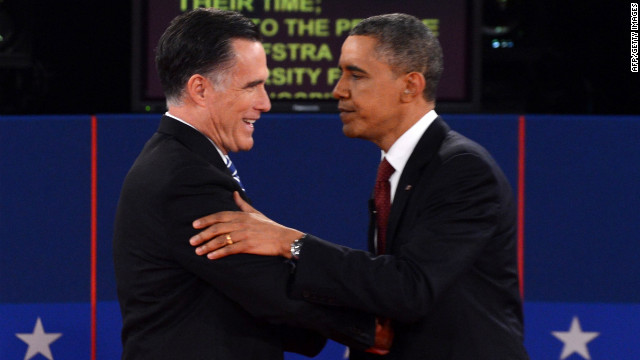
Presidential debate: polls show Obama as winner in round 2
US President Barack Obama on Wednesday scored a clear victory over Mitt Romney in the high-stake second presidential debate, putting up a combative performance as he slammed his Republican presidential rival on issues like outsourcing and Libya.
As Obama faced-off Romney in Hofstra University in Hempstead, he was under intense pressure to improve upon his lacklustre performance at the first debate in Denver on October 3 when Romney had edged past him with a more aggressive and spirited performance.
Obama did not repeat the mistakes he made in his first debate, aggressively hitting back at Romney on tax plans, outsourcing and his controversial remark that 47% of Americans did not pay income taxes.
According to a CNN/ORC nationwide poll conducted right after the debate, 46% of voters declared Obama the winner while 39% said Romney fared better.
A CBS News instant poll said Obama edged Romney for a win in the second presidential debate. About 37% of voters polled said the president won, 30% awarded the victory to Romney while 33% said Obama and Romney were tied.
During the debate, 55% of voters said Obama gave direct answers, while 49% said the same about Romney.
On who did a better job of handling the economy, 34% said the president would better handle the economy, with 65% saying Romney would. The CBS survey polled 525 voters who are undecided or who may still change their minds.
An online poll by Google Consumer Surveys gave Obama a 48% lead over Romney's 31%.
"I hope you saw exactly what's at stake in this election. This race is neck and neck. What happens in the next three weeks will determine which side wins," Obama told his supporters in an email soon after he left New York after participating in the debate.
While there was no immediate comment from Romney, his vice presidential running mate Paul Ryan claimed that the Republican presidential candidate showed to the American people the clear choice they have on November 6.
Malala Yousufzai of 'impressive strength', say British docs
Young Pakistani girl activist Malala Yousafza who was flown to Britain for better care, is responding exceptionally well to the treatment, “impressing” doctors with her strength, the doctors in UK hospital said Wednesday.
The 14-year old Malala has “good chances of recovery” because unlike adult brains, the teenagers’ brains are still growing and can adapt to trauma better, as per experts.
"Her response to treatment so far indicated that she could make a good recovery from her injuries," the Queen Elizabeth Hospital in central England's Birmingham said in a statement. The statement by Dr David Rosser, the medical director of the Queen Elizabeth Hospital in Birmingham also said that the team of specialists from hospitals had been "impressed with her strength and resilience."
Other experts said they were not sure if a complete recovery of Malala’s brain was feasible.
"You don't have a bullet go through your brain and have a full recovery," said one Dr. Jonathan Fellus, chief scientific officer at International Brain Research Foundation.
Malala, who was shot by Taliban in head in Swat valley in Pakistan, has been threatened of follow up attacks as she backs “Western thinking”. Malala has been a brave voice campaigning for girls education.
Malala’s safety continues to be a concern with reports yesterday saying that two people tried to visit Malala. Police stopped and questioned two, but hospital officials and police stressed there was no threat to the girl's safety. The two people, who claimed to be Malala's relatives, were turned away.
"We think it's probably people being over-curious," hospital spokesman Dr. Dave Rosser said.
A message board has been set up on the Trust's website to allow well-wishers to leave their messages of support.
Tuesday, October 16, 2012
Obama strong, and so is Romney in second debate

President Barack Obama fought back and Republican challenger Mitt Romney mostly stood his ground.
A forceful Obama defended his record and challenged Romney on shifting positions in the 90-minute debate, arguing his Republican rival's policies would favor the wealthy if elected.
Romney repeatedly attacked Obama's record, saying millions of unemployed people and sluggish economic recovery showed the president's policies had failed.
Obama was more animated and engaging than his understated and widely panned performance in their first debate nearly two weeks ago.He and Romney, who also aggressively made his points, walked the floor at Hofstra University in Hempstead, New York, holding microphones, raising their voices and repeatedly challenging each other's points.
"Governor Romney says he's got a five-point plan. Governor Romney doesn't have a five-point plan; he has a one-point plan. And that plan is to make sure that folks at the top play by a different set of rules," Obama said about his opponent's approach for boosting the economy.
Romney shot back that Obama was "great as a speaker, but his policies don't work."
"That's what this election is all about," Romney said, saying he would prioritize middle class growth. "It's about how we can get the middle class of this country a bright and prosperous future."However, Romney failed to provide further specifics of his tax policy, even when one audience member asked about unspecified deductions and loopholes the candidate says he will eliminate.
On a sensitive foreign policy topic, the candidates clashed at the front of the stage over the September 11 terrorist attack in Libya that killed four Americans, with Romney suggesting the Obama administration played politics by failing to immediately acknowledge what happened.
Obama shot back that the suggestion anyone in his administration would play politics on such an issue was "offensive." When Obama said he called it a terrorist attack shortly afterward, Romney challenged him, and Obama responded "check the transcript."Moderator Candy Crowley, the CNN chief political correspondent, cut in to say both men were right -- Obama called it a terrorist attack when he said he did, but the administration took longer to fully explain what occurred.
Unlike the first presidential debate, the format was town hall-style, with audience members asking the questions. Crowley was the first woman to serve as moderator of a presidential debate in 20 years.
The first question came from a 20-year-old college student, worried about whether he'd be able to support himself after graduation.
"More debt and less jobs. I'm going to change that. I know what it takes to create good jobs again," Romney said, addressing the first-time voter. "When you come out in 2014 -- I presume I'm going to be president -- I'm going to make sure you get a job."Obama needed a strong debate to try to blunt Romney's rise in the polls since their first showdown in Denver, when analysts and polls indicated the GOP challenger won a clear victory.
The most recent CNN "poll of polls" -- an aggregate of the latest major surveys -- showed Romney with a slight edge nationally at 48%-47%. In the battleground states considered up-for-grabs, polls show Romney has narrowed Obama's lead or caught the president just three weeks before the election.
The Obama campaign conceded he had a bad night in the first debate and promised a more aggressive approach in New York. A third and final debate focusing on foreign policy will take place October 22 in Florida.
Polls show voters consider the economy to be the most important election issue.Unemployment fell below 8% in September for the first time since the month Obama took office in 2009. However, millions remain out of work and U.S. economic growth is anemic.
Romney and his campaign have sought to frame the election as a referendum on Obama's presidency, citing joblessness, slow recovery from the recession and chronic federal deficits and debt as reasons to deny a second term.
For their part, Obama and Democrats have tried to make the election about competing visions for the future. They argue Republican proposals to repeal major legislation, such as health care and Wall Street reforms, while cutting government and expanding tax cuts without identifying additional revenue sources would stall a sluggish but steady recovery.
In denial over Malala
http://www.thehindu.comIf there is anything more chilling than a teenage girl being shot in the head for merely demanding that she and other girls should be allowed to attend school, it is the twisted mindset that has buried the targeted attack on Malala Yousafzai in conspiracy theories. The initial outrage across Pakistan at the targeted shooting of the 14-year-old by the Taliban has degenerated into a slanging contest between ‘us’ and ‘them’. The ‘us’ are those who, at their generous best, see her shooting as ‘collateral damage’ — an inevitable by-product of drone attacks and Pakistan’s partnership in the U.S.-led war on terror. At their cynical worst, they see it as a western conspiracy to pressure Pakistan into conducting a military operation in North Waziristan. Some even claim the shooting was staged, and portray Malala and her father as western agents. On the other side are ‘them’, Pakistanis filled with revulsion that some of their fellow countrymen could target a child. But their hope that this would be a turning point has been belied; the ‘us’ are walking away with the narrative. The past few days have seen the reactivation of propagandists of the Pakistani establishment. Ironically, they did so at a time the Tehreek-e-Taliban Pakistan, which claimed the shooting, began to feel the heat of public anger against it. Once again, an opportunity to mould opinion against terrorism in Pakistan has come and gone. Clearly, it is not easy to abandon a studiously created narrative of a citadel of Islam that is built on the denial of geographical and historical moorings and an over-eagerness to align itself with the culturally alien Arab world. The Pakistan military has tried to sound committed to fighting terrorism, but it will take more than a few speeches by the Chief of Army Staff. Indeed, no one is convinced that the security establishment has turned its back on its strategic assets. Conveniently, the Army has declared it is for the political leadership to decide on a North Waziristan operation, knowing full well the limitations of these leaders, that too, in the months before a general election. There is no gainsaying that the civilian leadership should be more assertive, but it is also no secret that the current dispensation exchanged its right to frame security policy with the military for its survival. A year ago, an all-party meeting offered an olive branch to the Taliban as part of a ‘give-peace-a-chance’ strategy but in vain. The number of terror strikes has dropped but the clock continues to tick in the form of the quiet but steadily creeping radicalisation of society that provides terrorism its ideological space. It will take more than an operation in remote North Waziristan to deal with that.
N. Waziristan operation put on hold again?
Soon after the unconscious teenage activist, Malala Yousufzai, flew out of the country for treatment in the United Kingdom, all the hype about long anticipated North Waziristan operation surreptitiously began to dissipate.
Expediencies, both on civilian and military side, emerged as the roadblock to any major operation for clearing North Waziristan — home to a variety of terrorist groups where the army had all through the decade of war on terror avoided going on one pretext or the other.
But, strikingly the military looked to be passing the buck for the crunch time dithering to the civilian leadership.
Talking to journalists on Monday, Interior Minister Rehman Malik conceded that no operation in the area was being planned.
His response followed military’s statement over the weekend that a political decision was needed to launch the offensive for dislodging Tehrik-i-Taliban Pakistan (TPP) and its local affiliates from their headquarters in the tribal agency, where they moved in 2007 after being targeted by the army in South Waziristan and elsewhere in Fata.
The army, while putting the ball in the civilian leadership’s court, had noted that its commanders had time and again reiterated their resolve to rid the country of the menace. No mention, however, was made to the longstanding stance of the army that it would enter North Waziristan at a time of its own choosing or whether the moment had arrived.
Back to back statements by Army Chief Gen Ashfaq Parvez Kayani and Joint Chiefs of Staff Committee, after Malala shooting, on carrying on the fight against terrorism were taken as a pointer to a looming operation in Waziristan.
What missed everyone’s sight while reading the army’s new found resoluteness was that beyond the rhetoric timed to match the national angst, nothing was said of the army’s assessment of the situation crossing the threshold.
Erroneous as it may be, the obvious inference drawn from the arising situation is that the government ultimately balked at the proposal for going all out against virulent militant groups holed up in North Waziristan.
Sceptics, however, say the military didn’t at any stage unequivocally indicated that North Waziristan operation was inevitable.
Had it done so everyone would have fallen in line, they observed and pointed to previous military offensives in Swat, Bajaur and elsewhere.
The government’s disclosure that it wasn’t contemplating North Waziristan operation coincided with a resolute fightback by the right wingers to regain the space lost due to sudden outpouring of sympathy for Malala after the TTP attacked her in Mingora last Tuesday.
Military-backed groups like Difa-i-Pakistan Council, which had been hibernating since the impasse over Nato supply routes was resolved in July, suddenly sprung back into action to oppose the proposed military operation. Some analysts believe that the DPC’s return itself suggested that either there were differences within the army on the issue or the army through its tough statements only meant to mollify revulsion against Taliban.
A military commander, who previously served in the region, insisted that it was only the political will that was lacking and there were no other operational obstacles.
He pointed out that despite overwhelming grief and anger over the assassination bid on Malala, a national consensus could not be achieved.
“It’s not only about the operation. There have to be large number of IDPs (internally displaced persons) and other implications for which there should be clear political backing.”
Asked what was preventing the political parties from agreeing on the military operation, he said it were only the political expediencies. “You know we are into the election year and no political party wants to hurt its prospects.”
He emphasised that once the political decision is in place other challenges could be addressed.
The army, which for long avoided taking on militants in North Waziristan because of strategic compulsions, doesn’t want to be seen as obstructing the operation in view of the world’s anti-terror resolve.
In addition to TTP, which is based in and around Mirali, and Lashkar-i-Jhangvi, North Waziristan plays host to Haqqani Network, Al Qaeda and a number of other foreign fighters mostly from Arab and Central Asian countries.
Latest Medical Report On Malala
http://www.chron.com
Shot Pakistani girl responding well to treatmentA teenage Pakistani girl shot in the head by the Taliban for promoting girls' education has responded well to treatment and impressed doctors with her strength, the British hospital where she was being treated said Tuesday. Experts are optimistic that 14-year-old Malala Yousufzai, who was airlifted Monday to Britain to receive specialized medical care, has a good chance of recovery because unlike adults, the brains of teenagers are still growing and can adapt to trauma better. "Her response to treatment so far indicated that she could make a good recovery from her injuries," the Queen Elizabeth Hospital in central England's Birmingham said in a statement. Despite the early optimism, the full extent of Malala's brain injuries has not been made public and outside experts cautioned it is extremely unlikely that a full recovery of all her brain's functions can be made. Instead, they could only hope that the bullet took a "lucky path" — going through a more "silent," or less active — part of the brain. "You don't have a bullet go through your brain and have a full recovery," said Dr. Jonathan Fellus, chief scientific officer at the New Jersey-based International Brain Research Foundation. Malala was returning home from school in Pakistan last week when she was targeted by the Taliban for promoting girls' education and criticizing the militant group's behavior when they took over the scenic Swat Valley where she lived. Two of her classmates were also wounded in the attack and are receiving treatment in Pakistan. She arrived Monday in Britain, where she can be protected from follow-up attacks threatened by the militants. The Taliban have threatened to target Malala again because she promotes "Western thinking." There was some concern for the teenager's safety Tuesday when police stopped and questioned two people who tried to visit Malala, but hospital officials and police stressed there was no threat to the girl's safety. The two people, who claimed to be Malala's relatives, were turned away. "We think it's probably people being over-curious," hospital spokesman Dr. Dave Rosser said. Pakistani doctors at a military hospital earlier removed a bullet from Malala's body that entered her head and headed toward her spine. The military has said she was able to move her legs and hands several days ago when her sedatives were reduced. They have not said whether she suffered any brain damage or other permanent damage. On Monday, the military said damaged bones in Malala's skull will need to be repaired or replaced, and she will need "intensive neuro rehabilitation." The decision to send the girl abroad was taken in consultation with her family, and the Pakistani government will pay for her treatment. Doctors say Malala has an advantage because teens are generally healthier and their bodies have a stronger ability to react to the disruption that the injury causes. "It helps to be young and resilient to weather that storm," Fellus, at the International Brain Research Foundation, said. "Because her brain is continuing to develop at that age, she may have more flexibility in the brain." There's also a psychological aspect to why youngsters have a better shot at recovery. While injured adults often mourn the loss of what they had, teens don't know what they are missing. "They have an amazing capacity for hope," Fellus said. In Malala's case, her strong personality would also help her recover, he added. Still, experts cautioned that it is impossible to say how Malala will do without knowing the path of the bullet and what damages it caused, details that have not been released. "The brain is like real estate," said Dr. Anders Cohen, chief of neurosurgery at The Brooklyn Hospital Center in New York. "Location is everything. "Based on the information we have, it appears that Malala was shot from the front down diagonally, but we don't know what part of the brain the bullet went through, whether it crossed the midline and hit any vessels, or whether the bullet passed through the right or left side of the brain." The attack on the girls horrified people in Pakistan and across the world. Pakistani President Asif Ali Zardari said Malala had become "a symbol of all that is good in us." "The work she did is far higher before God than that which is being done by terrorists in the name of religion," he said at the Economic Cooperation Organization Summit in Baku, the capital of Azerbaijan. "We will continue her bright work." Pakistani Interior Minister Rehman Malik has announced a $1 million bounty for Pakistani Taliban spokesman Ahsanullah Ahsan, saying he was the one who announced that the Taliban carried out the attack on Malala.
Angelina Jolie: We All Are Malala
On Wednesday morning, as we readied the kids for school amidst a few of the usual complaints about not wanting to go, I saw a headline on the cover of The New York Times: Taliban Gun Down a Girl Who Spoke Up for Rights. The Taliban claimed that 14-year-old Malala Yousafzai “ignored their warnings, and she left them no choice.” They approached her school bus, asking for her by name, and shot her in the head for promoting girls’ education.After reading the article, I felt compelled to share Malala’s story with my children. It was difficult for them to comprehend a world where men would try to kill a child whose only “crime” was the desire that she and others like her be allowed to go to school.
Malala’s story stayed with them throughout the day, and that night they were full of questions. We learned about Malala together, watching her interviews and reading her diaries. Malala was just 11 years old when she began blogging for the BBC. She wrote of life under the Taliban, of trading in her school uniform for colorless plain clothes, of hiding books under her shawl, and eventually having to stop going to school entirely.
Our 8-year-old suggested that the world build a statue for Malala, and fittingly create a reading nook near it. Our 6-year-old asked the practical question of whether Malala had any pets, and if so, who would take care of them? She also asked about Malala’s parents and if they were crying. We decided that they were, but not only for their daughter, also for children around the world denied this basic human right. Like Malala, her parents are icons of bravery and strength. Malala’s father, also a long time champion for girls’ education, is a school principal, teacher, and poet.The following morning, the news showed pictures of children across Pakistan holding up Malala’s picture at vigils and demonstrations, and praying in schools. My son worried that girls were going to be shot for standing up for Malala. I told him that they were aware of the danger, but publicly supporting her reflects how much Malala means to them. Malala’s courage reminded all Pakistanis how important an education is. Her bravery inspired their own.
Still trying to understand, my children asked, “Why did those men think they needed to kill Malala?” I answered, “because an education is a powerful thing.”
The shots fired on Malala struck the heart of the nation, and as the Taliban refuse to back down, so too do the people of Pakistan. This violent and hateful act seems to have accomplished the opposite of its intent, as Pakistanis rally to embrace Malala’s principles and reject the tyranny of fear. A spokesman for the Pakistani Taliban said “let this be a lesson.” Yes. Let this be a lesson—that an education is a basic human right, a right that Pakistan’s daughters will not be denied.As girls across Pakistan stand up to say “I am Malala,” they do not stand alone. Mothers and teachers around the world are telling their children and students about Malala, and encouraging them to be a part of her movement for girls’ education. Across Pakistan, a national movement has emerged to rebuild the schools and recommit to educate all children, including girls. This terrible event marks the beginning of a necessary revolution in girls’ education.
Malala is proof that it only takes the voice of one brave person to inspire countless men, women, and children. In classrooms and at kitchen tables around the world, mothers, fathers, sons, and daughters are praying for Malala’s swift recovery and committing themselves to carry her torch. As the Nobel Committee meets to determine the winner of the Nobel Peace Prize, I imagine brave Malala will be given serious consideration.
Clinton hopes Malala attackers will be brought to justice
Washington: US Secretary of State Hillary Clinton on Tuesday said Pakistan's young children had every right to go to school and hoped the militants who attacked a teenaged activist -- for promoting girls' education -- will be brought to justice.
Malala Yousufzai, 14, the Pakistani peace activist who spoke for the need for girls' education was shot in the head by Taliban militants in Swat Valley.
She was first attended to by Pakistani military doctors and was transferred to the UK for prolonged medical care.
"I think that the people of Pakistan are saying what needs to be said so eloquently now that children, boys and girls, deserve to go to school; they deserve to have the chance to make the best of their God-given potential, to make a contribution to their society," Clinton told the NBC news. "Any country that doesn't stand up against extremism in order to protect its children has to really take a hard look, and I think that's what's happening in Pakistan," she said.
"I certainly hope so because there are so many thousands of young girls who deserve to go to school, who deserve to have an education, and those who are committing these terrible acts of violence need to be brought to justice," Clinton said.
Refugees in limbo after years of Pakistan fighting
Associated PressThis sprawling complex of tents housing tens of thousands of Pakistanis is home for Miza Khan and his family. The tents provide little relief from the scorching summers and the frigid winters. It's been that way for three years now. Like the other refugees, the Khans fled fighting between Pakistani troops and militant groups including the Taliban and al-Qaida in the mountainous areas near the border with Afghanistan. "I came here thinking it would be a few months, but three years have gone by," Khan said while sitting by the side of a dirt road running through the Jalozai refugee camp. "If there were peace today, I would go back." But there is no peace. Although Pakistan has been reluctant to root out militants who carry out attacks against U.S. forces in neighboring Afghanistan, it has shown much less hesitation in going after insurgents who aim instead to topple the government in Islamabad. It is a battle that has come at great cost to Pakistan, something not always recognized by critics who say the country is not doing enough in the war on terror. Some 30,000 people have been killed by the bloody insurgency in the country's northwest, which includes the seven tribal regions and the nearby Swat Valley. Roughly 5 million people have had to flee their homes because of Taliban militants and Pakistani operations against them in both the tribal regions and the Swat Valley. Those who have returned often find destroyed homes, a lack of jobs and a militarized landscape marked by checkpoints, curfews and the threat of renewed Taliban attacks. About 1 million still cannot go back, and still more are fleeing as operations against the militants continue. About 90 percent of the displaced people rent houses or live with relatives, making it challenging for the government or aid agencies to get them often urgently needed supplies. It's unknown how many have found jobs. Roughly 65,000 refugees from the tribal regions are currently living at Jalozai, a Pakistani government camp about 30 kilometers (19 miles) southwest of Peshawar and run with the help of international aid agencies. It's one of three camps in the country for Pakistanis displaced by the fighting. Many residents complain that the food rations are not enough, especially when they have large families. Taj Ghul, from the Khyber tribal region, said he and his extended family have been supplementing their rations with food he's able to purchase only by selling the family's vehicles. "That's all gone in the stomach. There's nothing left," he said. Still, hardly anyone regrets leaving their home. Azrath Khan, 60, said he fled the embattled Khyber town of Bara about a year ago. "Even before the government started its operation (in Khyber) the main problem with the Taliban was that they were kidnapping whoever was a little wealthy — and for the poor, the Taliban were pushing them to get along with them," Khan said. Others spoke of how the Taliban tried to enforce their own brand of religious justice, often forcing men to grow beards and beheading or hanging opponents. But refugees also were critical of the Pakistani military, saying soldiers had little regard for civilians caught in the crossfire. If the militants fire one mortar shell, the army fires 50 shells in response, said Miza Khan. A Pakistani military official who has served in the tribal areas said this was an exaggeration and that the military is disciplined in its use of firepower. He spoke on condition of anonymity because he was not authorized to brief reporters on the issue. Returning home can also be fraught with difficulty. People usually get six months of food from the World Food Program and compensation from the government if their houses or property were destroyed in the fighting. But many complain that the compensation is delayed. Many report that schools and hospitals have been destroyed or that the doctors or teachers have not returned. The civilian government's presence has never been especially strong in the tribal regions, one of the country's least developed areas. Zahid Mahsud said when he returned about a year ago to his home in South Waziristan he saw that the military had built markets and was renovating damaged schools. But he's still waiting for compensation for his destroyed house. Others complained about the military's presence. Abdul Sattar, who returned with his five children to his South Waziristan home last month after three years as a refugee, said soldiers remain everywhere. "We are facing great difficulties because of army checkpoints and their checking procedures. Sometimes we cover a distance of an hour in almost four hours," he said. "Peace is in the area, but this peace is like you are in jail."
Sitara-e-Shujaat for Malala
Interior Minister Rehman Malik has announced that Sitara-e-Shujaat (medal of courage) will be awarded to 14-year-old Malala Yousafzai who was shot by the Taliban for speaking against them.
Malik was in Swat on Tuesday where he visited Malala’s school and announced the award for her. He also visited the other two girls injured in the incident. He also promised them compensation.
The minister, speaking at the school, said that Malala was a symbol of bravery.
Malala received a bullet injury in her head and is currently being treated at Queen Elizabeth Hospital in Birmingham.
Rs 100 million reward for capture of TTP spokesman Ehsanullah: Malik
GEO TV REPORTINGInterior Minister Rehman Malik has announced Rs. 100 million reward for the capture of Tehreek-e-Taliban spokesman Ehsanullah Ehsan. Ehsan is the spokesman for the TTP who claimed responsibility for the attack on Malala Yousafzai and two other girls from her school. Malik speaking to media after meeting Kianat one of the girls injured alongside Malala once again reiterated that there had been no decision regarding a military operation in North Waziristan. The Interior Minister said the attack on Malala Yousafzai had been planned in Afghanistan.
'Pakistanis love conspiracy theories'
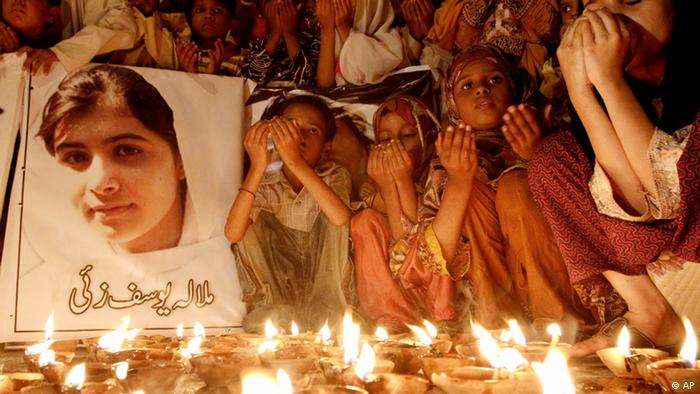
Although most Pakistanis have condemned the Taliban's shooting of 14-year-old activist Malala Yousafzai, a small section of society believes the incident was part of a 'US-Israeli conspiracy' against Islam and Pakistan.
"The CIA is behind the attack on Malala!" "Malala was a US agent!" "It is a conspiracy to defame the Taliban and Islam" - the social media websites Facebook and Twitter have been full of such posts and tweets this week. Most of the writers hail from a middle-class, educated background.
Many of Pakistan's liberal analysts have explained the phenomenon by saying that people love "conspiracy theories." They point out that in a country whose economy is in a shambles, where inflation and unemployment is higher than ever, which has a corrupt civilian government, where power shortages and suicide bombings are frequent, and which a lot of young people are desperate to leave in search of jobs and a better future, it is convenient for the people to blame the West for all their woes.Malala Yousafzai was shot by armed men last week along with three other girls in the restive northwestern Pakistani city of Swat. Taliban militants claimed responsibility for the attack and said in a statement that the 14-year-old had been attacked because she was "promoting secularism" in Swat.
Yousafzai had campaigned for the right to education for girls and was a vocal critic of the Taliban. She won international acclaim writing about the atrocities committed by Islamists in Swat in a blog for the BBC Urdu service. Last year, she received a national peace award from the Pakistani government and was nominated for the International Children's Peace Prize by the KidsRights Foundation.
"This definitely is a tactic to divert our attentions from drone strikes," read one comment to the article "We are not Malala, we may be the Taliban," published in the Express Tribune, a liberal Pakistani newspaper. The commentator went on to say that "some people are just slaves to the media and have no ideology of their own."
"The Pakistani army is preparing the ground to launch an attack on the Taliban in Waziristan," said another commentator. "Malala was shot by the CIA agents. Don't blame the Taliban."
A Facebook post suggested that Malala was attacked so that Pakistanis would stop protesting against the anti-Islam movie, "The Innocence of Muslims."
Some Internet users have posted photoshopped pictures of Malala and her father, who were shown with US government officials at a meeting. The pictures of the dead bodies of young girls, allegedly killed in US drone strikes, were posted with captions such as: "Do they not deserve our sympathy?" or "Are the victims of US drone strikes not humans?" In one Facebook post, US President Barack Obama is shown laughing with officials of his government. The caption reads: "Sir, they still believe that the Taliban attacked Malala!"
Spreading confusion
Mansoor Raza, a Karachi-based researcher, told DW that people who were sympathetic towards the Taliban and other religious groups were using "counter-tactics to spread confusion."
"It is an organized effort to belittle Malala's shooting because most Pakistanis were unanimous in their condemnation against the Taliban."
Raza added that many Muslims felt defeated in today's world and these posts reflected the mindset of those who could not face the challenges of modernity.
"In my opinion, it is an attempt to shift responsibility to others," Hameed Satti, a psychologist in Islamabad told DW. "Instead of facing up to the bitter realities and dealing with them, we continue to blame others. It is our defense."
"Pakistanis hate the US but at the same time they are in awe of it," a Pakistani student in Karachi told DW on condition of anonymity. "They think that the US has supernatural powers like god. They believe it can do anything it likes; can make people disappear, can create floods, send agents from space." He also pointed out that many of those posting hate material against the US on social media sites would do anything to get a US visa.Rights groups have condemned the attack on Malala
There are also many people in Pakistan who have condemned the Malala shooting unequivocally. Members of civil society have organized several demonstrations in support of Malala and the education of girls.
"Malala, you are like a light at the end of a dark tunnel," commented user Ankahi Baatein, in response to an article in Pakistan's English daily Dawn. "I pray that you come back more forcefully and keep raising your voice against illiteracy. May other Malalas join you in your struggle!"
Pakistani writer and activist Zahida Hina told DW that the Taliban militants were "barbarians" who did not believe in humanity.
"The 14-year-old Malala posed a threat to the Taliban in the sense that she was setting an example for other girls," she said. "The Taliban attacked her because they wanted to tell others that if they dared to stand against them, they would also meet the same fate."
Hina also criticized the governing Pakistan People's Party for failing to protect citizens but said that the main culprit was the state, which she said believes that Islamist extremists are "strategic assets" for maintaining influence in Afghanistan.
Malala is now in the UK where she was sent by the Pakistani authorities to receive further treatment and recuperate.
World Bank For Preservation of Rainwater in Balochistan
The World Bank has suggested to the Balochistan government to construct more dams to preserve rainwater in the wake of fast declining level of subsoil water.
Official sources said on Wednesday that a delegation of the World Bank, headed by Mehwash Wasaq, called on Balochistan Senior Minister for Planning and Development Maulana Abdul Wasey and presented him suggestions for resolving the water crisis in Balochistan. The delegation emphasized the need for adopting scientific methods to preserve rainwater to meet requirement of drinking and irrigation water.
The WB officials suggested that more dams should be constructed in the province to preserve rainwater besides adopting trickle irrigation system. The WB offered its all out collaboration in this regard.
ANP, MQM for deweaponising Karachi, country
The Upper House of the Parliament did not take up the Drug Regulatory Authority of Pakistan Bill 2012, six Resolutions and six Motions under Rule 218 appearing on the orders of the day.
The Senate met for an hour and three minutes while Chairman Senate Syed Nayyer Hussain Bokhari chaired the sitting. The deputy speaker and none of the parliamentary leaders attended the sitting.
Six Resolutions appearing on the agenda were also not taken up by the House.
The Drug Regulatory Authority of Pakistan Bill, 2012 was deferred.
Two Points of Order were raised which consumed six minutes of sitting time.
Information on senators' attendance was unavailable to observers and the public.
Earlier, MQM demanded deweaponisation of the whole country as merely deweaponising Karachi would not serve the purpose.
Senator Tahir Hussain Mashhadi while taking part in the debate on a resolution moved by Senator Shahi Syed "to deweaponise Karachi", he said weapons are not being manufactured in Karachi. Terrorism should be exterminated from across the country as innocent daughters of the nation are targeted.
Quaid e Azam Muhammad Ali Jinnah wanted modern liberal Pakistan, he said and alleged that all the relevant institutions have failed to perform their duties.
Dr Farough Naseem of MQM said the influx of weapons in Karachi should be stopped.
Saeed Ghani of Pakistan Peoples Party suggested the deweaponisation of cities should be initiated from Karachi.
M Hamza alleged that police in Karachi has already been politicised. Three political parties including Pakistan Peoples Party (PPP), Awami National Party (ANP) and MQM should help play their role in ensuring peace in the city, he added.
Senator Hasil Bizanjo said Interior Minister Rehman Malik has called him but he cannot come to attend the proceedings as he is not feeling well. On this the members said the resolution regarding law and order situation in Karachi and deweaponisation should be discussed on Tuesday.
Meanwhile, the House started discussion on a resolution moved by ANP leader Shahi Syed demanding of the government to deweaponize Karachi
The Senate started discussion on a resolution moved by Shahi Syed to recommend the government to take effective steps to deweaponize Karachi in view of prevailing law and order situation in the city.
Syed Tahir Hussain Mashhadi said that the incidents of killings are taking place throughout the country in different forms due to misuse of weapons. He recommended that the whole country should be deweaponized in order to stop killings and terrorist activities.
He said that there should be a complete ban on the illegal arms and not on the legal weapons. He said the police machinery should be allowed to work independently and above the political affiliation to implement the law regarding the use of illegal arms.
Khar calls for strengthening intra-regional economic cooperation
Foreign Minister Hina Rabbani Khar has stressed for strengthening intra-regional economic cooperation in important areas of trade and commerce‚ infrastructure connectivity and energy among the ECO countries.
She was speaking at the Council of Foreign Ministers meeting ahead of the ECO Summit in Baku.
The Summit provides a platform to discuss ways to promote trade and investment opportunities among the member countries. The common objective of the member countries is to establish a single market for goods and services on the pattern of European Union.
She said this was essential to come up to the hopes and aspirations of the people of the region.
She said ECO Trade and Transit Transport Framework Agreement should be translated into effective vehicles for regional economic integration.
Foreign Minister Hina Rabbani Khar also met Foreign Ministers of Afghanistan‚ Iran‚ Turkey and Azerbaijan on the sidelines of the meeting and exchanged views on recent developments in the region. Matters relating to Economic Cooperation Organization also came under discussion.
Contradictory narratives on the Taliban
EDITORIAL:Daily TimesAddressing gatherings of his supporters in Karachi and elsewhere, Muttahida Qaumi Movement chief Altaf Hussain assured the Pakistan army his party’s full support for a military operation against the Taliban. The announcement carried a reminder to the army that if it keeps musing over the options to wipe out the scourge of terrorism, the people of Pakistan would reach out to other forces to get rid of the terrorists. The gatherings were held to express solidarity with Malala Yousufzai. Altaf Hussain asked the people to take a clear stand on the Taliban and other Islamic extremist groups. Addressing the political parties, Altaf urged them to get united to save the country from terrorism. He questioned why the attack on Malala is being linked to drones or Laal Masjid. On the other hand, in a simultaneous rally by the Jamiat-e-Ulema-i-Islam (JUI) head Maulana Fazlur Rehman in Sukkur, the narrative against terrorism and the attack on Malala Yousufzai differed sharply from that of Altaf’s. He painted Malala’s attack as a ruse to gain support for a military operation in North Waziristan, which the Maulana said would not be allowed under any circumstances and surely not because the US or its western allies want it. Referring to people dying in drone attacks and in other incidents due to the poor law and order situation, the Maulana asked for condemnation of these in a similar manner as accorded to the attack on Malala. Coming down hard on Altaf Hussain, the chief of the JUI said that the MQM had no business asking for or compiling information on seminaries. Maulana Fazlur Rehman’s viewpoint hardly comes as a surprise. After all, it is his party that is considered the mother of the Taliban. How then could he fail to come to the aid and succour of his ‘offspring’, currently the target of across the board condemnation and criticism for the attempt to assassinate Malala. Ignoring the facts of the ground situation in North Waziristan, the hub of terrorism, fed by students from the womb of the seminaries spread across the country, Maulana’s attempted diversion of focus to the red herring of drone attacks or other violence failed to convince. He also failed to explain how an operation in North Waziristan would prove detrimental to the security of the country, when that is already imperilled by the terrorists. What the Maulana and all those who speak vociferously against drones, like for instance Imran Khan, fail to understand is that drone attacks are a response to terrorism and not the original cause of the terrorism that has us in its grip. Linking those who die in drone attacks with Malala’s incident will not dilute the intensity of the national consensus that is now building on flushing out the terrorists hiding in North Waziristan. By now, the truth of some seminaries producing death squads and suicide bombers is hardly a secret. Jihadi ideology can no longer, if it ever could, be used to justify the brutality of the Taliban. Either such seminaries producing actual or potential terrorists should be shut down or, if possible, reformed to impart productive knowledge. Since the attack on Malala has proved beyond any shadow of doubt that the Taliban are prepared to go to any lengths in enforcing their misconceived and bigoted notions of what the faith enjoins, perhaps the time has come to build a broad resistance against their benighted activities so as not only to nip this evil in the bud, but ensure this menace is buried once and for all.
Zardai: Malala's shooting an attack on all Pakistani girls
The Express TribunePresident Asif Ali Zardari said Tuesday that the shooting of 14-year-old Malala Yousafzai by the Taliban was an attack on all girls in the country and on civilisation itself. “The Taliban attack on the 14-year-old girl, who from the age of 11 was involved in the struggle for education for girls, is an attack on all girls in Pakistan, an attack on education, and on all civilised people,” Zardari said at an economic summit in the Azerbaijani capital Baku. Malala was attacked on her school bus in the former Taliban stronghold of the Swat valley a week ago as a punishment for campaigning for the right to an education and free expression. In some of his most poignant remarks on the incident to date, Zardari vowed not to let her shooting stop the nation’s drive to educate girls. “The work that she led was higher before God than what terrorists do in the name of religion. We will continue her shining cause,” he said. The shooting has been denounced worldwide and by Pakistan, which has said it will do everything possible to ensure Malala recovers and will meet all the costs of her treatment. She was flown to Britain for treatment on Monday where doctors said she had “a chance of making a good recovery”. The murder attempt has sickened Pakistan, where Malala came to prominence with a blog for the BBC highlighting atrocities under the Taliban, who terrorised the Swat valley from 2007 until an army offensive in 2009.
Pakistan: No compassion or mercy
Had it to be the United Nations to feel the pain of the flood-devastated of Sindh and Balochistan and cry out their grief? Not the political eminences swaggering so grandiosely on the national landscape, posing to be the people’s leaders and the masses’ voice? Not the civil society moguls, posturing to be the nation’s conscience-keepers? Not even the media, with the grand pretences of being the spokesman of the distressed and the aggrieved?
In an appeal, the world body has drawn the international community’s attention to the woeful plight of the people battered by the freak rain flooding that has left behind in its trail large-scale death and destruction in Sindh and Balochistan. And it has asked for immediate donations to the tune of $29 million for food, shelter and health services for the flood-battered. Some five million people, it says, have been affected. And in certain areas the stranded in floodwaters are still being rescued. Tens of thousands of homes have been destroyed. And hundreds of thousands of the flood-ruined are living in makeshift camps or just under the tarpaulins by the roadsides.
The UN appeal underlines that vast swathes of croplands have been washed away. And as huge acreage is still under up to 2.5 metres of floodwaters, prospects of sowing the Rabi crop are next to nil. Worse, as the floodwaters are yet so deep despite the passage of one month since the rains and submerging a huge swathe of land, no immediate end to the suffering of the flood-stricken is in sight. Still worse, the standing floodwaters could potentially end up in contamination of water sources, diseases outbreaks, infrastructure damages and livelihood losses in the affected areas.
And yet this distressful gloomy picture has not registered at all in any of the quarters of the political elites, civil society glitterati and the echelons of the media grandees. It has bypassed them all as some kind of a nonevent not worth their exalted notice. No relief convoys are moving on to the devastated areas even amid the photo-ops both the political elites and the civil society grandees are so fond of. No relief supplies collection camps have been pitched anywhere in the land for the succour of these unfortunate flood-ruined. The philanthropy in effect seems having gone wholly parched dry at the national level for these woebegone.
So much so, the 29-million-dollar UN donations appeal includes, ironically enough, $6.5 million for “milling, fortifying, transporting and distributing wheat donated by the governments of Sindh and Balochistan”. Why? Couldn’t the two governments do all this and bear all this expenditure on their own to save the lives of the people whose weal and welfare is primarily their own first and foremost responsibility? Or, have they gone broke after throwing a lot of money on the pork barrel in these election times to spruce up their wobbling electoral prospects? Or, has human compassion departed them all completely?
Why indeed no tears are being shed anywhere even over the heartrendingly tragic demise of some 400 people swept away by the stormy floodwaters? Is their death lesser grievous than the deaths of the drone victims or those slain in terrorist strikes? The political nobility and the civil society gentry could be excused, though. They cry where they see the benefit in crying and keep mum where they see no such benefit. But why for the media too have these 400 unfortunate people become just cold statistics, no human beings? Why none of them has gone beyond the statistics and not explored how many mothers has this tragedy left widowed and how many children orphaned and how many parents with lost children?
The insensitivity and apathy of the politicos in the instant case can, of course, be understood. As the victims belong to the voiceless, practically disenfranchised peasantry, they need not shed a crocodile tear on their doleful plight. After all, this peasantry is a captive electorate in the serfdom of fat-bellied land barons who predominantly make up the nation’s political elite. Since this enslaved peasantry’s vote is assured, why should they bother about its woes? And why should the civil society too? The peasantry has never been the favourite of this glitterati that cries only over the pains of its masters, not on its woes.
But if the political nobility and the civil society gentry have no compassion or mercy for the peasantry, has also the media too? If they are mere charlatans and chicaners, has it also to be. Even now, can’t it spare a few moments to speak out the grief of the flood-battered of Sindh and Balochistan? It can, if it wants. But that is a big question mark.
Monday, October 15, 2012
Obama holds slim lead over Romney before next debate
REUTERSPresident Barack Obama retained a slim lead over Republican challenger Mitt Romney in the Reuters/Ipsos daily tracking poll on Monday, as he appeared to have stemmed the bleeding from his poor first debate. Three weeks before the November 6 U.S. election, Obama leads Romney by 2 percentage points, with 47 percent support from likely voters in the national online poll, to 45 percent support for Romney. The margin was small enough to be a virtual tie, but Obama's slight edge broadened from Sunday, when he went ahead of Romney by 1 point after falling behind in the wake of Romney's decisive victory in their first presidential debate on October 3. "Romney received a bump from that first debate, but the very nature of a bump is it recedes again," Ipsos vice president Julia Clark said. "We're now seeing Obama regaining a little bit of a foothold as we go into the second debate. They go into the debate on equal footing." The two men meet again on Tuesday night at New York's Hofstra University in a debate that Obama needs to win to grab back the campaign momentum. The third debate is set for October 22 in Boca Raton, Florida. Obama's support in the new Reuters/Ipsos survey was particularly strong among the 10 percent of registered voters who have already cast their ballots. Fifty-five percent said they voted for the Democrat, compared to 43 percent for his Republican challenger. POLICY GAINS Romney and his fellow Republicans have been hitting Obama hard over his handling of diplomatic security, blaming his administration for attacks in Egypt and Libya on September 11. The U.S. ambassador and three other Americans were killed in Libya. But the poll did not find a groundswell of condemnation for the White House. Forty-five percent of registered voters approved of Obama's handling of the situation in Libya and Egypt and 40 percent disapproved. Thirty-eight percent backed Romney on the issue, compared with 36 percent who did not. The incumbent also regained ground in several policy areas since the first week after his bad debate. Forty-two percent of registered voters said they thought Obama had a better plan for healthcare, compared with 35 percent who said the same of Romney. Obama's rating was up 4 points from October 10. Obama's ratings on taxes also went up by four points, as did voters' view of his plans for Social Security and Medicare by 3 points each. Romney's scores each went up by 3 points on how he would handle the war on terrorism and gay marriage, although Obama was still ahead on both. Thirty-seven percent of registered voters picked Obama as having better policies for dealing with terrorism, compared with 32 percent for Romney. And 43 percent favored Obama on gay marriage, compared with Romney's 25 percent. Romney kept a big lead of 38 percent to 29 percent on who has a better plan for handling the deficit, and a small lead of 38-37 percent on who would better handle the U.S. economy. Obama was just ahead, at 39 percent to 38 percent, on jobs and employment. The precision of Reuters/Ipsos online polls is measured using a credibility interval. In this case, the poll has a credibility interval of plus or minus 2.4 percentage points for registered voters and 2.6 for likely voters.
Balochistan to Buy Rs1.7 bn Jet Plane
The Baloch HalIt appears that Arab princes are ruling Balochistan province instead of the people’s representatives as is proved by no other person than chief minister of the province, Nawab Aslam Raisani, who ordered the purchase of a modern and state-of-the-art jet plane for the whopping sum of Rs1.7 billion putting a huge burden on the already teetering economy of the province. According to reports, a team comprising two pilots as technical experts and two senior officials from Balochistan has recently returned home after a tour to America in this regard. It is learnt that the agreement for the purchase of the jet plane has been approved. The modern plane is being purchased from the Canadian company, Bombardier. A senior official of Balochistan revealed the details of this secret deal while talking to ‘The News’ the other day. He said that in the beginning the purchase of the jet plane was worked out at Rs1.4 billion but its cost had swelled to Rs1.7 billion. According to information, Federal Board of Revenue (FBR) has been sent a letter from the Balochistan government in which the provincial government requested the tax collection body to waive duty on the purchase of the jet plane. According to sources, the request from Balochistan regarding the duty waiver was not being accorded. The high cost jet plane is being purchased at a time when Balochistan is in the grip of lawlessness and target killing. This move endorses the remarks of the Chief Justice of Pakistan that nothing good is going on in the province. The province despite having the budget of Rs182 billion, has no MRI or CT scan machines except in Bolan Medical College. The provincial government, instead of paying heed to the people’s problems, is purchasing the luxurious plane. It is more pity to learn that the province already has two jet planes — one for the governor and the other for the chief minister — and now the agreement to purchase the third one has been approved. (
Afghan Foreign Ministry Rejects Imran Khan’s Assertions
http://www.bakhtarnews.com.afForeign Ministry spokesperson Janan Musazai rejected and condemned the recent assertions of Emran Khan Leader of Hezbi Tehrik Insaf of Pakistan with strong words and said that his assertions indicted unawareness of the roots of terrorism, violent attacks in Afghanistan. He considered these assertions indicative of his intentions towards the people of Afghanistan and added that in the past ten years the people of Afghanistan for the reason of terrorist attacks the roots of which is outside the territory of Afghanistan have sustained vast sacrifices. He added that according to the afghan foreign ministry this irresponsible and shameless suggestion cannot justified for a person who alleges as leader of a political party. He stressed so far of the 83 Afghan prisoners in Tajikistan 15 of them have been delivered to Afghanistan on the basis of the bilateral agreement on extradition of prisoners in 1385 between Afghanistan and Tajikistan. He added that the remaining prisoners will also be delivered after accomplishing the procedures and they will pass their remaining prison terms in Afghanistan. According to Musazai three Tajikistani prisoners were delivered to Tajikistan government last months. He also touched on the strategic cooperation agreement between Afghanistan and Pakistan and once again described the conditions of Afghanistan and said that so far no officials have started in respect to the signing of the security agreement between Afghanistan and the US as well.
Malala can recover, UK doctors say
A Pakistani schoolgirl shot in the head by the Taliban has every chance of making a "good recovery", British doctors said on Monday as 14-year-old Malala Yousufzai arrived at a hospital in central England for treatment of her severe wounds.
Yousufzai, who was shot for advocating education for girls, was flown from Pakistan to receive specialist treatment at Birmingham's Queen Elizabeth Hospital at a unit expert in dealing with complex trauma cases that has treated hundreds of soldiers wounded in Afghanistan.
"Doctors...believe she has a chance of making a good recovery on every level," said Dr Dave Rosser, the hospital's medical director, adding that her treatment and rehabilitation could take months.
He told reporters Yousufzai, whose shooting has drawn widespread condemnation, had not yet been assessed by British medics but said she would not have been brought to Britain at all if her prognosis was not good.
TV footage showed a patient, believed to be the schoolgirl, being rushed from an ambulance into the hospital surrounded by a large team of medical staff.
She will now undergo scans to reveal the extent of her injuries, but Rosser said they could not provide any further details without her agreement.
Pakistani surgeons removed a bullet from near her spinal cord during a three-hour operation the day after the attack last week, but she now needs intensive specialist follow-up care.
The unit at the Queen Elizabeth Hospital, a large blue and white glass-plated complex in the south of England's second city, has treated every British battle casualty for the last decade, Rossner said.
Built at a cost of 545 million pounds ($877 million), the hospital has the world's largest single-floor critical care unit for patients with gunshot wounds, burns, spinal damage and major head injuries.
Treatment for the schoolgirl is likely to include repairing damaged bones in her skull and complex follow-up neurological treatment.
"Injuries to bones in the skull can be treated very successfully by the neurosurgeons and the plastic surgeons, but it is the damage to the blood supply to the brain that will determine long-term disability," said Duncan Bew, consultant trauma surgeon at Barts Health NHS Trust in London.
Judging the best way forward in such difficult cases requires a wide range of experienced medics working as a team.
"In trauma, it is really the coordinated impact of intensive care that is critical. It's not just about keeping the patient alive but also maximizing their rehabilitation potential. With neurological injuries that is paramount," Bew said.
Doctors said youth was on her side since a young brain has more ability to recover from injury than a mature one.
"On the positive side, Malala has passed two major hurdles - the removal of the bullet and the very critical 48-hour window after surgery," said Anders Cohen, head of neurosurgery at the Brooklyn Hospital Centre in New York.
MALALA'S SECURITY A PRIORITY
Compared with some of the nation's ageing hospitals, the new National Health Service (NHS) hospital offers a spectrum of services ranging from plastic surgery to neuroscience.
They may all be needed in Malala's case.
The hospital and government officials declined to give any details about the security measures that would be put in place to protect Malala but a spokesman for the interior ministry said her security was "a priority for both Pakistan and the UK".
A hospital spokesman said no extra measures were in place but because the unit treated British military personnel it already had "fairly robust security".
Care of soldiers on the battlefield has improved dramatically in recent years, so that many now survive injuries that would have been a death sentence in the past.
As a result, Birmingham now handles extremely challenging injuries that were previously little known and has built up enormous experience in head and brain injuries, multiple fractures and amputations.
In the last five years, the Birmingham centre has treated 481 service personnel seriously injured in Afghanistan, according to the Ministry of Defence.
She did not come from Pakistan with any of her relatives but the Pakistani Consulate are proving support and her family may join her at a later date.
Yousufzai, a cheerful schoolgirl who had wanted to become a doctor before agreeing to her father's wishes that she strive to be a politician, has become a potent symbol of resistance against the Taliban's efforts to deprive girls of an education.
Pakistanis have held some protests and candlelight vigils but most government officials have refrained from publicly criticizing the Taliban by name over the attack, in what critics say is a lack of resolve against extremism.
Shame on you, Mr Khan (IMRAN Talib Fake Khan)
The Express Tribune
By Feisal H NaqviTwo days after Malala Yousufzai was attacked by the Tehreek-e-Taliban Pakistan (TTP), Imran Khan went to the hospital in which she was being treated to show his concern regarding her condition. And yet, when asked a day earlier why he didn’t directly condemn the TTP, Mr Khan had responded as follows: ‘We have local affiliates and supporters. Sure I can give big statements against the Taliban but that would make them [supporters] Taliban targets.” Shame on you, Mr Khan. Since you have chosen to present yourself as a potential leader of this country, let me make something clear to you: leaders can’t be cowards. And for you to make that statement while also purporting to sympathise with a girl injured precisely because she stood up for principles that you don’t have the courage to defend is not just cowardice but hypocrisy of the highest order. Let me break down my last statement. Malala Yousufzai was attacked by the TTP because she stood up for things like the right of girls to a fair education. You have condemned that attack. That means you think Malala was right and her attackers were wrong. At the same time, you refuse to display the same bravery as Malala by openly condemning her attackers. What does it say about you, Mr Khan, that a 14-year-old girl has more guts than you do? Had she been awake, what would you have said to her? Would you have told her not to be so stupid next time? Would you have told her to just accept the TTP’s belief that women are inferior? Would you have told her that Pakistan needs more cowards, not people like her? Shame on you, Mr Khan. Since Mr Khan dropped his clanger, the sentient part of the PTI has attempted to cloak his cowardice with a lot of doubletalk about drones, the war in Afghanistan and the root causes of evil. None of that suffices to excuse Mr Khan’s cowardice. Let’s begin with drones. So far as I understand it, his argument is that the root cause of the evil is the US war in Afghanistan and that militants like the TTP are driven into acts of hatred by the violence unleashed by the US and now perpetuated through drone attacks. This is bullshit of a high order. The fundamental fact that Mr Khan and his cohorts either fail or deliberately refuse to appreciate is that the TTP and the Afghan Talibs are two very different groups. The Afghan Talibs consist of groups indigenous to Afghanistan whose primary aim is to overthrow the US’s supported government of Afghanistan and to take over power in Afghanistan. Afghan Talibs have a beef with the state of Pakistan only to the extent that the state of Pakistan helps the US in fighting those Talibs. Many of the leaders of the Afghan Talibs have taken up residence in Fata and Balochistan, just across the Pak-Afghan border. It is these leaders in Fata who have been targeted by the US through drone attacks. If the US was to leave Afghanistan tomorrow and if the Afghan Talibs were to retake power in Afghanistan, the Afghan Talibs would have no fundamental dispute with Pakistan. The Tehreek-e-Taliban Pakistan consists of groups indigenous to Pakistan whose primary aim is to overthrow the elected government of Pakistan and to take over power in Pakistan. The TTP does not accept the legitimacy of the Pakistani state. The TTP attacks the citizens of Pakistan through suicide bombs and kills Pakistani soldiers. Even if the US leaves Afghanistan tomorrow and even if the Afghan Talibs take over Kabul, the TTP will continue to fight in Pakistan, continue to kill Pakistani soldiers and continue to attack people like Malala Yousufzai. Conflating the TTP with the Afghan Talibs into one giant amorphous mass is not just stupid, it’s criminally stupid. It is at the same order of analysis as “two legs good, four legs bad.” The distinction between the two groups is in fact made more evident by drone attacks. The state of Pakistan does not have drones and therefore does not use drones to fight the TTP. The US does have drones and it does use them to attack the Afghan Talibs but with a few very limited exceptions such as Baitullah Mehsud, there have been no drone attacks against the TTP. Trying to justify the TTP’s actions with reference to drones is therefore idiotic. One may as well justify the TTP with reference to poverty in Swaziland or Pakistan’s failure to win a World Cup match against India. Please note that distinguishing between the TTP and the Afghan Talibs is not the same as saying that drone attacks are justified: that is an entirely different debate. It probably does not behove the sovereign state of Pakistan to meekly accept the invasion of its airspace by the US. But even if Pakistan should be aggressively acting against drones, that has nothing to do with the challenge to Pakistan’s sovereignty by the TTP. And if you, Mr Khan, cannot understand that logic, then you are unfit to lead this country. Let me make another thing clear: Mr Khan says that it is a tragedy for Pakistan to be bombing its own people. Actually, no. States use violence against their own citizens their whole time. A citizen who steals is jailed for theft. A citizen who kills another person is executed for murder. And citizens who take up arms against their own country are guilty of treason and thereby liable to be shot. The same goes for the “root cause” argument. Frankly, I couldn’t care less what inspires or motivates the TTP. I know that the TTP doesn’t accept the legitimacy of my country or my elected government. I know that they kill my fellow citizens. I know that they kill the soldiers who fight for my security. I don’t need to know the “root cause” of the TTP’s beliefs any more than I need to know about the childhood traumas of a psychopath threatening my family. Pakistan doesn’t need cowards, Mr Khan. Shame on you for adding to their number.
Subscribe to:
Posts (Atom)