M WAQAR..... "A man's ethical behavior should be based effectually on sympathy, education, and social ties; no religious basis is necessary.Man would indeed be in a poor way if he had to be restrained by fear of punishment and hope of reward after death." --Albert Einstein !!! NEWS,ARTICLES,EDITORIALS,MUSIC... Ze chi pe mayeen yum da agha pukhtunistan de.....(Liberal,Progressive,Secular World.)''Secularism is not against religion; it is the message of humanity.'' تل ده وی پثتونستآن
Tuesday, September 11, 2012
Rimsha Masih : 'Scared' teen fears for life over alleged Quran burning
In a period of about three weeks she went from being a virtually unknown 14-year-old Pakistani girl to making headlines around the world as a Christian teen facing a life sentence for allegedly burning pages of the Quran.
In her first-ever public interview since being released on bail, Rimsha Masih said she's happy to be back with her family but still fears for her life.
"I'm scared," she told CNN by phone. "I'm afraid of anyone who might kill us."
Rimsha spoke in short sentences -- often answering "yes" or "no" in a shy and nervous voice. She wouldn't reveal where she was because she was speaking from her hideout.In Pakistan, suspects accused of blasphemy often face vigilante justice, with some cases even resulting in murder.When we asked Masih how she was doing, she said she was good.
We asked her if she ever burned pages of the Quran. "No, no," she replied instantly.
Were you falsely accused? "Yes," she said.
However, Rimsha wouldn't answer questions about what exactly happened on August 16 this year.
Pakistani investigators said Rimsha's neighbor accused her of burning pages of the Quran to use as cooking fuel. The young man accused the teenager of blasphemy, shouted in protest, and attracted an angry mob, police said.
But Rimsha's lawyers denied she desecrated the Muslim holy book in this way. They said the neighbor wanted to settle a personal score with Rimsha because the two didn't get along.
The lawyers told CNN this may have been because he liked her but she didn't like him back.
Within minutes hundreds of residents from this poor Islamabad neighborhood surrounded the terrified girl, witnesses said.
There are conflicting accounts about what happened next. Some neighbors said Rimsha was beaten, while others claimed she frantically raced back home and locked herself inside.
The police eventually arrived and took Rimsha into custody
Her case made international headlines and sparked outrage among rights groups who have long accused the Pakistani government of allowing the country's controversial blasphemy laws to be used to settle scores and persecute religious minorities.
According to rights groups such as the Human Rights Commission of Pakistan and Human Rights Watch, most innocent victims of Pakistan's blasphemy laws belong to minority Muslim sects like the Ahamadis, who are often viewed as non-believers by Pakistan's majority Sunnis.
Rimsha's father -- a Christian house painter who earns a few dollars a day -- said no one in his family would dare dishonor the Quran.
"We respect the Quran just like we respect the Bible," said Mizrak Mashi. "We couldn't imagine committing blasphemy let alone doing it. Our children would never do this either."
Last week, under growing pressure from rights groups who were outraged that a juvenile had spent more than three weeks in jail, a judge finally approved Rimsha's request to be released on bail.
Her case is still pending but she seemed to gain fresh support earlier this month when police arrested a Muslim cleric and accused him of planting torn pages of the Quran in Rimsha's bag in an apparent attempt to bolster evidence against her.
Meanwhile, a family spokesman said aid groups from the U.S., Italy and Canada have already offered to give Rimsha and her family a home outside Pakistan.
But Rimsha said, for now, she doesn't want to go anywhere other than back to life as she knew it, away from the spotlight.
"I love Pakistan," Masih said. "I won't ever leave my country."
Pakistan Shiites face rising militant attacks
In the Shiite Muslim graveyard of this provincial Pakistani capital, entire sections are dedicated to the hundreds killed by Sunni militants over the past two years, their portraits line the cobblestone entrance, some garlanded with wilted flowers.
There's Abid Ali Nazish, a popular movie star executed by gunmen in the summer. Nearby are the portraits of two brothers who were dragged out of a bus and shot to death on the road as they returned from pilgrimage in June. An Olympic boxer, Ibrar Hussain, has a large portrait, and then a smaller photo on his grave showing him sitting proudly next to American boxing great Mohammed Ali.
Hussain was just leaving Quetta's Ayub Stadium when a motorcyclist drove by and gunned him down last year, said Bostan Kishtmandi, a local Shiite politician, as he strolled past the graves. He "was retired and teaching our young boxers. We loved him," Kishtmandi said.
Pakistan's Shiite minority is feeling under siege as Sunni militants who view them as heretics step up a campaign of sectarian attacks, targeting them with shootings and car bombings. More than 300 Shiites have been killed so far this year, according to Human Rights Watch. The province of Baluchistan, where Quetta is the capital and which has the country's largest Shiite community, has borne the brunt, with more than 100 killed this year, on the way to surpassing the 2011 total of 118.
"I am afraid of terrorists everywhere in Quetta, except here with the dead," said Gulbar Abbas, an elderly man who spends every day in the graveyard, living off donations from visitors as he sits on a dirty quilt on a stone slab and reads the Quran from morning to night.
The sectarian bloodletting adds another layer to the turmoil in Pakistan, where the government is fighting an insurgency by the Pakistani Taliban and where many fear Sunni hardliners are gaining strength. Shiites and rights group say the government does little to protect Shiites and that militants are emboldened because they are believed to have links to Pakistan's intelligence agencies.
The powerful agencies have often been linked to the murky world of militancy, accused of using hardline Sunni Muslim militants against enemy India in the disputed Kashmir region and against U.S. and NATO soldiers next door in Afghanistan.
But the rise in the bloodshed and worries over security slipping out of control are bringing pressure for action. Fearing an all-out sectarian war, the Baluchistan government last week called in the paramilitary Frontier Corps to help the understaffed and underequipped local police.
The judiciary has also become unprecedentedly vocal in pointing the finger at the intelligence agencies. Last week, a panel of three Supreme Court judges, led by Pakistan's Chief Justice Iftikhar Chaudhry, told a packed Quetta courtroom that it had heard testimony that militants were getting weapons and unregistered vehicles from the intelligence agencies. At least two suicide attacks this year in Quetta involved unregistered vehicles, according to the police. The court ordered the government to produce a list of all weapons and ammunition permits issued on the orders of the intelligence agencies, as well as vehicles brought into Pakistan duty free by the agencies.
In a strong and rare rebuke, the judges slammed the security agencies' record against militant activities in Quetta.
"The result is zero. There has been zero accomplished, not against suicide bombings, not against target killings," Chaudhry said.
So far, the intelligence and security agencies have not responded.
Shiites make up around 15 percent of Pakistan's 190 million people. They are scattered around the country, but the southwestern province of Baluchistan has the largest community, mainly made up of ethnic Hazaras, easily identified by their facial features which resemble Central Asian features. They number some 300,000 in Quetta, a city of 1.2 million people.
Sunni extremists consider all Shiites as heretics, and militants have long carried out attacks against the community. But the sectarian campaign has stepped up in recent years, fueled mainly by the radical group Laskar-e-Jangvhi, aligned to Pakistani Taliban militants headquartered in the tribal regions. The violence has pushed Baluchistan in particular deeper into chaos. The province was already facing an armed insurgency by ethnic Baluch separatists who frequently attack security forces and government facilities. But the secessionist violence has been overtaken by increasingly bold attacks against Shiites.
Militants have packed cars with explosives and driven them into buses carrying Shiite Muslim students to universities and pilgrims returning from holy sites in Iran. Gunmen have walked into shops in Quetta's busy bazaars and slaughtered storekeepers as they tended to customers. They have picked off prominent Shiites as they left their homes for work. They have taken out newspaper ads telling Shiites to leave Quetta and Pakistan and vowing to kill any Sunni who calls a Shiite a friend.
More than 300 Shiites have been killed in Baluchistan alone the past two years, the community here says. Thirty-eight Shiites were killed in just two weeks in Quetta earlier this year, said a liberal political party representing Hazaras. When were these two weeks?
As a result, many Shiites in Quetta have pulled their children from universities, shuttered their shops and rarely step out of the two enclaves in the city where their numbers dominate. There have been a few revenge attacks killing Sunni Muslim clerics.
Lashkar-e-Janghvi, headquartered in Pakistan's Punjab province, has carried out attacks elsewhere in the country as well. On Monday, a car bomb killed 12 Shiites in the Kurram tribal region, the only tribal area where Shiites outnumber Sunnis.
"The situation is worsening day by day," Baluchistan's chief minister, Mohammed Aslam Raisani, told The Associated Press in the Pakistani capital Islamabad. "Of course I am concerned."
Last month police in the eastern Punjab province arrested a leader of Lashkar-e-Janghvi, Malik Ishaq, for inciting hate. But on Monday, he was freed on bail.
That only fueled Shiites' believe that the government has little interest in going after those who attack their community.
"From law enforcement, government or any institution we are 100 percent disappointed," Abdul Khaliq Hazara, leader of the Hazara Democratic Party, said at his home in Quetta.
"We also blame elements with the intelligence agencies that support them (Sunni militants) and give them shelter, show them the routes. It has become a policy it seems for them to bring religious extremism to this area," he said.
The Baluchistan government's move to call in the paramilitary Frontier Corps reflects their struggle with dealing with the violence.
"We decided to call them in for two months because we didn't want to take a chance on human lives," Baluchistan's top bureaucrat and Chief Secretary Babar Yaqoob Fateh Muhammed told The AP. "Right now sectarianism is our biggest threat. We have made some progress. But have we succeeded? No."
"We know it is Lashkar-e-Janghvi and we have to attack them. ... There is no reluctance to conducting a big operation or to going after them in a big way but so far we have not had very useful information," he said.
The Frontier Corps and the police have provided security to Shiite Muslims travelling in Quetta, escorting school buses and local merchants. Few arrests have been made and Hazara said his political party wants the Frontier Corps and the police "to go after everyone involved in the killings."
Biden draws on personal tragedy at 9/11 memorial
U.S. Vice President Joe Biden speaks of his own personal tragedy at a 9/11 memorial event at the United Airlines Flight 93 crash site in Pennsylvania. Deborah Lutterbeck reports
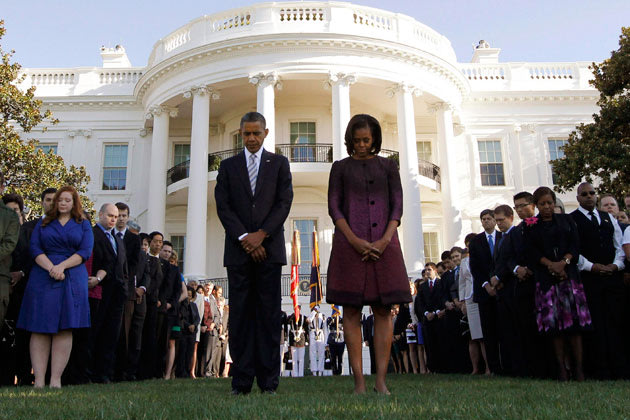
Obama marks 9/11: ‘This is never an easy day’
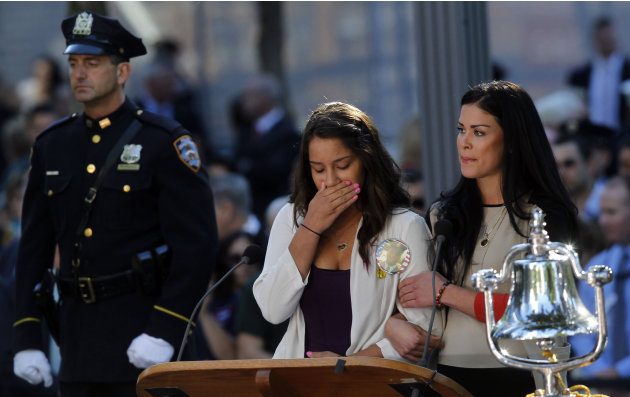
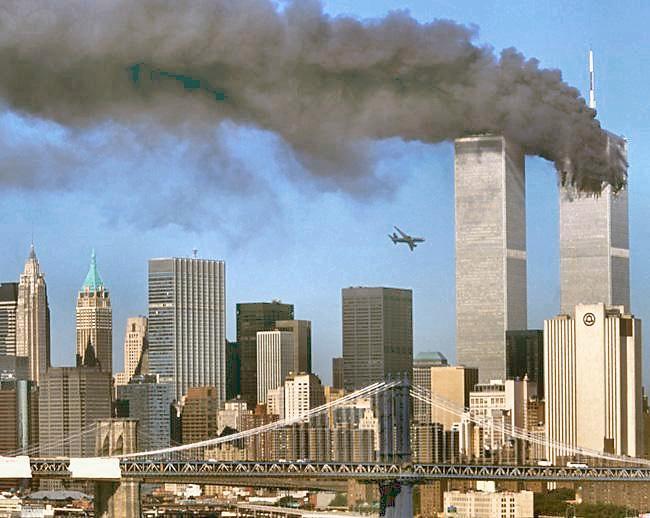
http://news.yahoo.comThe mournful tones of "Taps" fluttered over the South Lawn of the White House as President Barack Obama and first lady Michelle Obama led America in a silent tribute to the victims of the September 11, 2001, terrorist attacks. The crisp, clear day recalled the pleasant fall weather the morning of that national tragedy. The Obamas walked somberly out of the residence of the White House and, flanked by hundreds of staff, bowed their heads at 8:46 a.m.—11 years after American Airlines Flight 11 slammed into the north tower of the World Trade Center. The first couple placed their hands over their hearts as "Taps" played and a military color guard dipped its flags. Afterward, they turned, clasped hands and walked back into the presidential mansion.The Obamas then traveled to the Pentagon for a 9/11 observance ceremony. "This is never an easy day," the president told an audience of active-duty service members, families of those killed and others. "But it is especially difficult for all of you, the families of nearly 3,000 innocents who lost their lives—your mothers and fathers, your husbands and wives, your sons and your daughters. They were taken from us suddenly and far too soon," he said. "Even now, all these years later, it is easy for those of us who lived through that day to close our eyes and to find ourselves back there—and back here—back when grief crashed over us like an awful wave, when Americans everywhere held each other tight, seeking the reassurance that the world we knew wasn't crumbling under our feet," he said. "And even though we may never be able to fully lift the burden carried by those left behind, we know that somewhere, a son is growing up with his father's eyes and a daughter has her mother's laugh—living reminders that those who died are with us still. "As painful as this day is and always will be, it leaves us with a lesson that no single event can ever destroy who we are. No act of terrorism can ever change what we stand for. Instead, we recommit ourselves to the values that we believe in, holding firmly without wavering to the hope that we confess," he said. "God bless the memories of those we lost. And God bless these United States of America." The president will visit the Walter Reed National Military Medical Center in the Washington suburb of Bethesda in the afternoon. Vice President Joe Biden traveled to Somerset County, Pennsylvania, to make remarks at a ceremony honoring the passengers and crew of Flight 93, which slammed into the ground killing all aboard after an insurrection against the hijackers. Biden, who lost his first wife and baby daughter in a 1972 car crash, drew on his experience to deliver a searingly personal message to families mourning loved ones gone 11 years on. "For no matter how many anniversaries you experience, for at least an instant, the terror of that moment returns; the lingering echo of that phone call; that sense of total disbelief that envelops you, where you feel like you're being sucked into a black hole in the middle of your chest," he said. "My hope for you all is that as every year passes, the depth of your pain recedes and you find comfort, as I have, genuine comfort in recalling his smile, her laugh, their touch," Biden said. "And I hope you're as certain as I am that she can see what a wonderful man her son has turned out to be, grown up to be; that he knows everything that your daughter has achieved, and that he can hear, and she can hear how her mom still talks about her, the day he scored the winning touchdown, how bright and beautiful she was on that graduation day, and know that he knows what a beautiful child the daughter he never got to see has turned out to be, and how much she reminds you of him," Biden said. "For I know you see your wife every time you see her smile on your child's face. You remember your daughter every time you hear laughter coming from her brother's lips. And you remember your husband every time your son just touches your hand." America, Biden said, has "not forgotten the heroism of your husbands, wives, sons, daughters, mothers, fathers." In Washington, there were a few signs of some of the changes wrought by the attacks, such as a K-9 team outside a metro stop a few blocks from the White House and the dark silhouette of a military battery atop an office building overlooking the presidential mansion. And both Obama's campaign and Mitt Romney's suspended negative ads for a day. The attacks saw extremists from Osama bin Laden's al-Qaida terrorist network hijack four airliners to use as guided missiles, crashing into both towers of the World Trade Center, the Pentagon and a field in Pennsylvania. About 3,000 people were killed. America's response included the late-2001 invasion of Afghanistan, a war that is now the country's longest, and the March 2003 invasion of Iraq. Bin Laden met his end at the hands of Navy SEAL commanders in a May 2011 raid on his compound in Pakistan.
India makes history with 100th space mission
Scientists celebrate milestone mission with the launch of French and Japanese satellites via Indian space vehicle.India's national space organisation has marked its 100th mission by successfully launching two new satellites which Prime Minister Manmohan Singh has lauded as a "spectacular success". Scientists at the Indian Space Research Organisation (ISRO) celebrated the launch of the Polar Satellite Launch Vehicle PSLV-C21 on Sunday as it blasted into the sky carrying a French observation satellite and a Japanese microsatellite. India has had an active space programme since the 1960s and has launched scores of satellites for itself and other countries. Singh congratulated the team at the ISRO at Sriharikota hailing the achievement as "a milestone in our nation's space capabilities". "India is justly proud of its space scientists, who have overcome immense odds to set up world class facilities and develop advanced technologies. We owe a great deal to pioneers like Dr Vikram Sarabhai and Prof Satish Dhawan," Singh said. Future missions India is one of the few developing countries with a space programme and the government has spent billions of dollars on the project. "I would also like to congratulate European Aeronautic Defence and Space Company (EADS) Astrium of France and Osaka Institute of Technology of Japan for the successful launch of their satellites," Singh said. "The launch of these satellites on board an Indian launch vehicle is testimony to the commercial competitiveness of the Indian space industry and is a tribute to Indian innovation and ingenuity," the prime minister added. India has recently announced plans to join a small group of nations already exploring Mars by sending a satellite via an unmanned spacecraft to orbit the planet. A rocket will blast off from the south eastern coast of India, dropping the satellite into deep space, which will then travel to Mars to achieve orbit. The nation's space exploration programme has come a long way from its humble beginnings. When it was first established resources were so scarce that some scientists had to operate out of a cow shed. Four years ago, its Chandrayaan satellite found evidence of water on the moon and India is also looking at landing a wheeled rover on the Moon in 2014.
As 9/11 anniversary reminds us, national security always an issue
http://www.democratandchronicle.comAs today’s anniversary of the Sept. 11, 2001, terrorist attacks is commemorated across the nation — Defense Secretary Leon Panetta will host a remembrance at the Pentagon; Vice President Joe Biden will speak in Shanksville, Pa. — it is surprising how minor an issue national security has played in this year’s presidential campaign. On the one hand, that’s reassuring. The administrations of George W. Bush and Barack Obama have made protecting the nation — and dismantling the al-Qaeda terrorist network — among their foremost priorities, and achieved much success. As the Associated Press reported this week, Americans today feel safer from potential terrorist attacks than they did even a few years ago. Military and national security experts say that’s not just perception, but reality. On the other hand, it’s worrisome. Eclipsed by domestic concerns centered on the economy, jobs and taxes, national security has been all but nonexistent as a campaign issue. Indeed, Republican presidential candidate Mitt Romney said almost nothing about foreign policy in his speech before his party’s national convention. Democrat Obama reminded delegates of the successful mission to kill al-Qaeda leader Osama bin Laden, and the end of U.S. military operations in Iraq, but those are challenges that are behind us, rather than ahead. Fears of a repeat of the horrific events of 11 years ago today, when terrorists crashed airliners into the World Trade Center, the Pentagon and a field in Pennsylvania, have abated, thankfully. But there are plenty of other global hot spots awaiting the next U.S. president. From Syria’s civil war, to Iran’s nuclear aspirations, to Afghanistan’s post-war stability, the candidates need to explain their philosophies for future engagement. Shadowy threats including cyber-attacks and insurgent terrorist factions likewise need to be addressed. Al-Qaeda may be depleted, the economy may be decisive, but foreign policy remains a huge concern.
Performance of Punjab govt is zero
Chairman Pakistan Tehrik-i-Insaf (PTI) Imran Khan has said that the performance of the Punjab government in the current tenure is zero.
Addressing a press conference along with President PTI Makhdoom Javed Hashmi, Vice Chairman Shah Mehmood Qureshi and Central Secretary Information Shafqat Mehmood at party’s central Information Cell on Sunday, Imran Khan said that contrary to the claims of the Punjab Government regarding the 3.4 per cent growth rate in province, the statistics showed that the real growth rate was 2.5 per cent.
The deteriorating economic condition of the energy sector and other departments including agriculture, law and order situation, health and education had proved that the performance of the Punjab government was zero, Imran Khan said.
Constitution does not restrict any province to produce energy, Punjab government did not produce even a single unit of electricity, he added.
He said that the crime rate in Punjab had increased with the ratio of 12 per cent including a 37 per cent rise in dacoity incidents.
To a question about the education policy of the Punjab government,he said that the closing down of the 5700 schools in Punjab was indicating the poor education policy of the Punjab government.
The PTI Chairman said that the Punjab government wasted Rs21 billion on futile projects like rapid bus transit system while the budget of health and education was abysmal.
He said that the people of Pakistan wanted change and PTI was the only party which could bring change in the country.
He said that PTI was the first party which presented its economic agenda. He vowed to raise the tax network to build up the national economy.
Commenting on the Local Government Ordinance in Sindh, he criticised it and rejected the ordinance.
Life under burqa inspired struggle for democracy
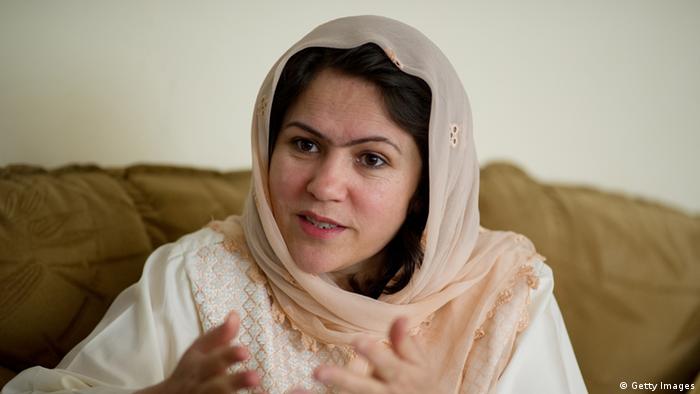
http://www.dw.deLiving conditions have improved in Afghanistan, especially for women. But many wonder what will happen when NATO troops leave in 2014. That year, Afghans also vote for their next president - who just might be a woman. Under the Taliban, she dreamed of being out in the streets of Kabul without a burqa. Life then was reduced to "looking at the huge world from the small window - that's how life was for a woman," Fawzia Koofi, a leading Afghan women's rights champion and lawmaker told Deutsche Welle. Things have changed since 2001, especially for girls and women, the presidential hopeful says: "You see women in the parliament and involved in social activities." Koofi, too, is a member of parliament. An avid advocate for women's rights, Koofi is intent on making sure her two teenage daughters have every opportunity to a better life. "My daughters are struggling to go the best school in Kabul; they have iPads and laptops, they use Facebook," Koofi says and adds that during the Taliban era, she rarely had the opportunity even to use a pen or a book. Today, about 2.7 million girls go to school across the nation, compared to just 5,000 under Taliban rule. Education is not only important for women on a social level, but also economically, the parliamentarian says, "because once you become economically independent, then you can be a main decision-maker in the family." Agents of peace and change Koofi is convinced peace and change in Afghanistan hinge on women: "The only way to bring peace to Afghanistan and to stabilize the country would be to bring forward new faces and new generations that support them."The politician, who is in her mid-30s, had a hard life. She was born in a remote village in Badakshan province, near the border with China and Tajikistan. "There was no doctor, no midwife. I was my mother's last child and my mother was exhausted," Koofi says. "She didn't want another girl to suffer as much as she suffered." Local women swaddled the newborn in some clothes and left her in the hot sun, not caring if she lived or died. After a day alone, screaming and sunburnt, the women finally brought Koofi back to her mother. It was the beginning of a close relationship. 'It doesn't stop us' Traditional and cultural barriers in Afghanistan make her work extremely challenging, Koofi says. As a member of parliament, she fights for gender equality, which has made her a target of the Taliban. She says she expects the radical militants will one day succeed in killing her. For the Taliban, it's important to kill people who have a voice and who can make a difference, Koofi says: "I have already been attacked many times by Taliban. I think I am a favorite target. But it doesn't stop us - not only me, all women activists in Afghanistan." Koofi fears a Talibanization of the country that would come about as a result of negotiating away the "democratic values" that have been gained since 2001. Reconciliation, she says, has gone "nowhere." And she exhorts international forces not to leave the country in a hurry: "You came to Afghanistan on a mission, and that mission was to make sure Afghanistan is safe and not a security threat anymore for the world. Let's work together to make sure Afghanistan is a safe country and no longer a safe haven for terrorism." Koofi says she's determined to do everything she can possible to make sure democracy survives in Afghanistan. That is also why she plans to run in the country's 2014 presidential election. Her vision for the future is an Afghanistan in which "girls happily go to school and become doctors and engineers in their country."
ISI considers US its worst enemy, says Dr Afridi
Pakistan's intelligence agency ISI considered the US its "worst enemy" and Islamabad's cooperation with Washington was just a sham to extract billions of dollars in aid, said the doctor who was jailed for helping the CIA hunt down Osama bin Laden. In an exclusive interview with Fox News, Shakil Afridi who helped track down Osama's Abbottabad compound before the May 2 raid by US commandos, described torture at the hands of the ISI. He said the agency was openly hostile to the US. "They said 'The Americans are our worst enemies, worse than the Indians'," Afridi, who spoke from inside Peshawar Central Jail, was quoted as saying. He added: "I tried to argue that America was Pakistan's biggest supporter ... but all they said was, 'These are our worst enemies. You helped our enemies'." "I tried to argue that America was Pakistan's biggest supporter - billions and billions of dollars in aid, social and military assistance -- but all they said was, 'These are our worst enemies. You helped our enemies'." Afridi helped the CIA by running a fake vaccination programme that allowed him to collect the DNA of bin Laden's children from the family compound in Abbottabad. Sample analysis confirmed the terror chief was probably there and triggered the deadly mission by US Navy SEALS in May last year. Pakistani officials felt the operation was a violation of the country's sovereignty. After the raid, Afridi was arrested for conspiring against Pakistan, and last month jailed for 33 years. The doctor also alleged that the ISI helps fund the Haqqani network and spy agency also works against the US by preventing the CIA from interrogating militants captured by Pakistan, who are routinely released to return to Afghanistan to continue attacks on NATO forces there. "It is now indisputable that militancy in Pakistan is supported by the ISI… Pakistan's fight against militancy is bogus. It's just to extract money from America," the doctor was quoted as saying, referring to the $23 billion Pakistan has received, largely in military aid, since 9/11.
Chinese, Pakistani PMs reaffirm strengthening traditional friendship
The prime ministers of China and Pakistan on Tuesday reaffirmed that they will strengthen the two countries' traditional friendship and cooperation in all areas.
"China and Pakistan's traditional friendship, which is deeply rooted among the two peoples, is our most valuable treasure," Chinese Premier Wen Jiabao said while meeting with Pakistani Prime Minister Raja Pervez Ashraf on the sidelines of the Summer Davos Forum slated for opening in north China's Tianjin Municipality Tuesday afternoon.
Wen said China firmly supports Pakistan on its efforts to safeguard its independence, sovereignty and territorial integrity, maintain national solidarity and stability, and strive for an environment featuring good relationship with neighboring countries.
He called on the two countries to maintain close communication and coordination, jointly cope with challenges, and promote cooperation in various areas, including energy, transportation and security.
Ashraf said the Pakistan-China friendship has a solid foundation, and Pakistan thanks China for its long-term support and assistance.
He also pledged to continue cooperation with China in all areas as well as to jointly safeguard regional peace and stability.
The 6th Annual Meeting of the New Champions, also known as the Summer Davos Forum, will open on Tuesday afternoon. Wen will address the opening ceremony.
Kurram people switch over to Afghan cellular service
DAWN.COMThe prolonged ban on cellular phone service and occurrence of technical fault in landlines have forced the dwellers of Kurram Agency to switch over to Afghan cellular service. The tribal people of Kurram have no other option but to use Afghan cellular companies’ service as the government has imposed ban on services of Pakistani cellular phone companies since 2008. Presently MTN, Etisalat are operating in Afghanistan and its signals are active in Kurram Agency. “Users pay five times more to Afghan companies as compared to Pakistani cellular companies,” an official told Dawn on condition of anonymity. He said that owing to road construction and sabotage activities the fibre optic cable had damaged at several points. “Presently we are using DRS system, which usually develops fault,” the official said. Asif Ali, a resident of Kurram, told Dawn that the landline in his house always remains dead. He said that they were facing difficulties in contacting their relatives. “One of my brothers is a daily wager abroad and anther is a student in Peshawar so we have no other option but to use the service of Afghan cellular companies,” he added. Political Agent Syed Shahab Ali Shah said that cellular phone service in Kurram had banned owing to its misuse in carrying out militant activities. He assured that soon the ban would be lifted and the service would be restored to facilitate tribal people.
Tourists are back in Swat valley
Starting from Eidul Fitr over 300,000 tourists from across the country have so far visited Swat Valley.
Confirming this, officials and residents said that during this time not a single act of violence took place in Swat valley, which is known for its archaeological sites of Gandhara civilisation and scenic hamlets. They said that a multitude of tourists were seen in Kalam, Bahrain, Madyan, Malam Jabba, Marghuzar, Saidu Baba, Fizaghat, Mingora and other spots of Swat. They said that restoration of people’s confidence to visit the valley was a great achievement of the local administration.
Since 2008 when Taliban militants loyal to Maulana Fazlullah gained control in the area and parts of Kohistan, Dir and Malakand protected area etc most of the tourist spots presented a deserted look.
However, owing to sacrifices rendered by people of Swat and law-enforcement agencies for restoration of peace the tourists have started reaching the valley in droves to enjoy serenity and beauty of small hamlets of Swat and cultural heritage.
People of Swat are known for their hospitality; they welcome visitors with open heart, accommodate them in their homes and hujras (guesthouses) and serve food free of cost to encourage and provide them opportunity to enjoy their tour. However, some hotel owners, tandoor walas (bakers), and petrol pump owners at the main tourist stations have been fleecing tourists on the pretext of artificial shortage of various items. During rush of tourists, Rs2,000 to Rs8,000 is charged for a single room for one night stay in hotels while the price of petrol touches as high as Rs550 per litre.
Khurshid Ahmed, a resident of Bahrian, told this scribe that about 300 motorcycles were seen stranded in different areas and over 1,600 tourists trapped in Kalam due to shortage of petrol during past few days. He said that work on Kalam-Havad road should be completed as proper communications system was vital to growth of tourism.
Kalam Hotels Association general secretary Rahmat Din Siddiqi told this correspondent that this year the number of tourists remained satisfactory despite unfavourable conditions. He said that his union would take action against those hotel owners who had been fleecing visitors by demanding high prices.
He also called upon the government to rebuild roads damaged in 2010 floods and restore telephone facilities to different spots to attract more visitors in next season. He also demanded upgradation of Kalam hospital and appointment of specialist doctors there.
Sub-divisional magistrate, Madyan, Mohammad Naeem claimed that after reports of artificial price-hike the administration checked various food outlets and petrol pumps, and imposed fines on profiteers.
A large number of tourists also visited Malam Jabba Ski Resort, but due to lack of facilities the tourists retuned half-hearted. The dilapidated condition of Malam Jabba road and damaged building of PTDC also forced the tourists to turn to other places.
DSP Madyan Naveed Iqbal said that police personnel had been deployed at various points to ensure smooth flow of traffic.
However, he said that due to dilapidated condition of Bahrian-Kalam road and rush of tourists the traffic jams were seen on some points on Kalam-Bahrian road, especially during Eid days.
Mr Iqbal said that there was complete peace in Swat and urged tourists to visit the valley without any fear. He said that that
police was vigilant and providing full security to tourists. He claimed that not a single incident of sabotage occurred during Eid days.
Monday, September 10, 2012
Australia smash Pakistan in final Twenty20
David Warner and Shane Watson smashed a century opening stand and led Australia to a commanding 94-run victory over Pakistan in the third and final Twenty20 match.
Warner hit 59 off 34 balls and Watson was equally aggressive in scoring 47 in Australia's impressive score of 168-7. Pakistan, who won the series 2-1, stumbled in their run-chase at 36-6 before being bowled out for 74 in 19.1 overs.
It was Pakistan's heaviest ever defeat in Twenty20s while consolation for Australia before World Twenty20 begins in Sri Lanka next week as it slipped to No 10 in the world rankings after losing the opening two matches against Pakistan.
Pakistan were out of reckoning once the top order crumbled, with seamers Mitchell Starc (3-11) and Patrick Cummins (3-15) taking the bowling honours.
Pakistan - famous for their nervy run-chases - never got a kick start as Cummins and Starc swung the ball appreciably under lights at the Dubai International Cricket Stadium.
Cummins got rid of skipper Mohammad Hafeez and former Pakistan captain Shoaib Malik in one over while Starc removed Imran Nazir and Kamran Akmal.
Umar Akmal was splendidly caught in the deep by a running Michael Hussey and when top scorer Nasir Jamshed (17) was caught by George Bailey Pakistan stumbled to 36-6 in the 10th over. Yasir Arafat (15) and Abdul Razzaq (13) delayed the inevitable before Starc and Cummins mopped up the tail.
Earlier, after being sent in to bat both Warner and Watson batted aggressively against Pakistan's spinners, who had caused trouble for the Australian batsmen in the previous two losses.
Warner hit six sixes and a four and Watson hammered five sixes and a boundary in an electrifying 111-run first wicket stand - the best Australian partnership for any wicket in the shortest format of the game.
Warner's best shot came against ace offspinner Saeed Ajmal when the left-hander smacked a switch hit for a big six. Watson was equally good when he lofted offspinner Shoaib Malik for three sixes in an over.
Seamer Arafat (2-30), playing his first match of the series, got rid of both openers in his successive overs and Ajmal stemmed the flow of runs with some tidy bowling.
Watson misread a slow bouncer and was caught at short fine leg and Warner gave a skier to Mohammad Hafeez.
Australia lost a flurry of wickets in order to keep up the scoring tempo, with Ajmal sneaking in two wickets for 19 runs after leaking 15 in his second over to Warner and Watson.Pakistan brought in allrounder Arafat in place of left-arm fast bowler Sohail Tanvir.
Australia also made one change after losing the second game in a one-over eliminator, with allrounder Glenn Maxwell replacing David Hussey.
Florida pizza shop owner powerlifts Obama
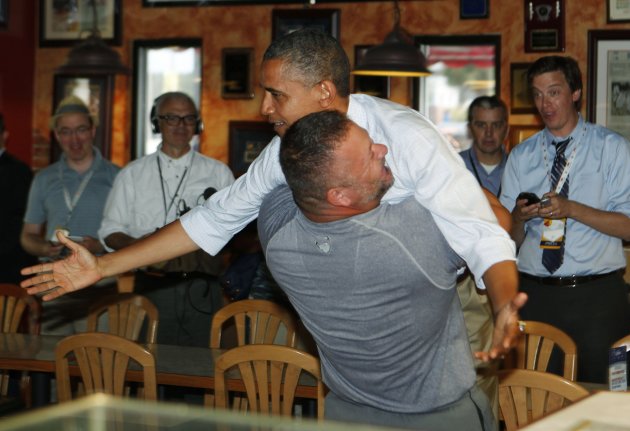
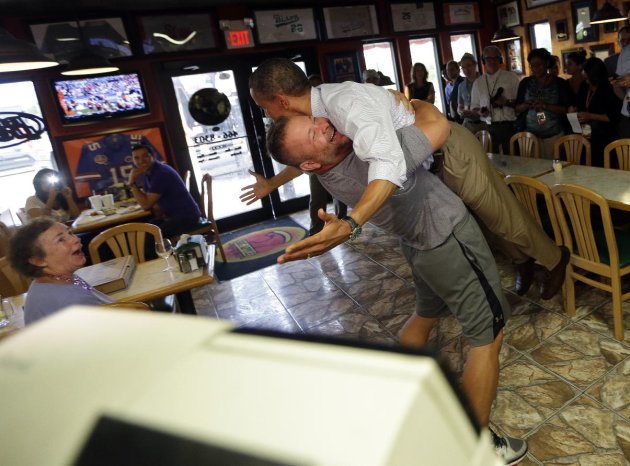
YAHOO NEWSFlorida pizza shop owner Scott Van Duzer lifted President Barack Obama a solid foot off the ground in a bear hug during an unscripted stop at his Fort Pierce, Fla., store. Literally. So what did the Secret Service think about Van Duzer — a registered Republican who says he'll vote for Obama in November — hoisting the president? "He said I was all right as long as I didn't take him away," Van Duzer told reporters. Obama, wrapping up a two-day bus tour through Florida, dropped by the Big Apple Pizza & Pasta Restaurant for the kind of unannounced visit that breathes life into sometimes dreary campaign travel. "Scott, what's going on, man," the president called as he arrived. "Let me tell you, you are like the biggest pizza shop owner I've ever seen." "Everybody, look at these guns," Obama said as he chatted with Van Duzer, who is 6'3" and weighs 260 pounds. "If I eat your pizza will I look like that?" "The two men laughed. They embraced. Van Duzer lifed Potus a good foot off the ground," according to the pool report filed by Politico's Reid Epstein (who is featured giving his best "gadzooks!" look on the far right in the picture below). "Look at that!" Obama said upon his return to terra firma. "Man, are you a powerlifter or what?" Well, yes. The pool report notes that Van Duzer later said he can bench press 350 pounds. The pizza store he founded 16 years ago is the only place he's ever worked. And he has received commendations from the surgeon general's office for his work in encouraging blood donations. (Does he "encourage" with hugs?) "I still wonder how he got these biceps," sad Obama. "But what we know is that the guy's just got a big heart along with big pecs. So we're very proud of him and we just want to say thank you for all the great work." Van Duzer said he got 40-minutes' notice that the president was coming — and raced to his shop from the driving range. He told the pool that he is a "big political person" (Big. Yes.) and was "just overcome with excitement" — which led to the hug. "I don't vote party line, I vote who I feel comfortable with, and I do feel extremely comfortable with him," said Van Duzer, who also voted for Obama in 2008.
Election campaign: President Zardari to visit provinces
President Asif Ali Zardari
will undertake visit to Khyber Pakhtoonkhwa, Balochistan and Punjab phase wise as part of his election campaign.
President Zardari would visit Khyber Pakhtoonkhwa next month in view of preparations to the forthcoming general elections in the country.
During his short stay in the Provincial Capital, President Asif Ali Zardari will meet host of party activists, MNAs in Governor House while will address party activists at various places in this regard.
President Asif Ali Zardari will also soon visit Balochistan, to address the grievances of the people in Balochistan. Strict security measures will be taken for the visit of the president.
Imran Khan must not offload the entire blame of Shia genocide on foreign conspiracies
Let Us Build PakistanSpeaking at a recent television talk show, PTI chief Imran Khan tried to draw parallels between sectarian killings of Shia Muslims in Pakistan and conflicts in Iraq, Bahrain and Syria, saying he was convinced that the sectarianism in these Muslim countries was part of an international conspiracy to pit Sunnis and Shias against each other. However, the PTI chairman did not give any evidence to back up this claim. People of this country have long heard of a ‘foreign hand’ working to destabilise this country by fanning sectarian and ethnic violence but that hand has never been exposed. It is time for us to face the reality and, instead of blaming others for our problems, admit that many of these problems stem from our own flawed policies. Sectarian violence, which in the main involves target killing of Shiites, in Pakistan started much before it erupted in other Muslim countries. The sectarian strife in Iraq started with the downfall of Saddam Hussein and infiltration of al-Qaeda fighters into that country. In Bahrain, the majority Shia population has long been struggling against the Khalifa dynasty, while in Syria numerous opposition groups have revolted against President Bashar al-Assad. With Iran and Saudi Arabia supporting rival sides in the Syrian conflict and al-Qaeda making inroads into Syria, there is now a growing fear of outbreak of an all-out civil war in the country on sectarian lines-as happened in Iraq. But the sectarian violence in Pakistan has a totally different context. In Pakistan, it was the so-called Islamisation drive of military dictator General Zia-ul-Haq that gave birth to sectarianism in the country in the 1980s. Successive governments did not dare to rein in these sectarian militant groups because of their close links with the security establishment, which nurtured these and other jihadi groups to fight in Kashmir and Afghanistan. A tug of war between Saudi Arabia and Iran for expanding their influence in the region also added fuel to the sectarian fire. After joining the war on terror, General Musharraf banned some of these groups but there was never any follow-up action by his government to fully dismantle these groups. Many of these groups resurfaced with new names and continued to fearlessly propagate their agendas. But the dangerous upsurge of sectarian violence in recent months warrants urgent and effective measures before it turns into a full-blown conflict like Iraq and Syria. Till now it has been more of a law and order problem than a sectarian issue since the members of the two Islamic sects largely live in peace with each other. The recent Fair Trial Bill is a good step but instead of dealing with the issue through piecemeal legislation, the government should thoroughly review its anti-terrorism laws and plug in loopholes. Nearly 5,000 people were reportedly killed in over 2,000 sectarian attacks in the country since 1989 but very few perpetrators were given an exemplary punishment to deter others from committing such crimes. Many suspected terrorists and criminals walk away free because of weak prosecution and lack of proper evidence. There are thousands of cases pending in the courts in which witnesses refuse to testify for fear of reprisal from terrorists. Many political parties try to appease radical groups for short-term political gains, particularly during elections. They should commit themselves against forging any alliances or seeking any support from such groups. Sectarianism cannot be brought fully under control unless the security situation in the tribal areas stabilises because some of the major sectarian groups like Lashkar-e-Jhangvi have signed up to al-Qaeda- and Taliban-inspired militancy and shifted their bases to these unruly regions.
Khyber Pakhtunkhwa government all set to satisfy UN team on missing persons
The government of Khyber Pakhtunkhwa has completed the working paper on missing persons before arrival of the UN special team to probe the matter.
The working paper would be presented to United Nations team , which would investigate the matter of missing persons. The team members would also meet all the four provincial governors and chief ministers.
The team would reach Peshawar on 15th September (Saturday)for which provincial government has completed all the arrangements. After their arrival they would attend the briefing of the high officials on the issue of missing persons.
PM Raja leaves for China to represent Pakistan at WEF
The Prime Minister Raja Pervez Ashraf left for China Monday to attend the meeting of World Economic Forum being held at Tianjin from September 10 to 13.
Talking to the media persons at Chaklala airbase before departure‚ the Prime Minister said China is our time tested friend and both the countries have stood by each other in difficult times.
He said Pakistan wants to further strengthen its relations with China. During interaction with the Chinese leadership‚ he will discuss expansion of bilateral relations in diverse fields including the energy sector. He said the Chinese companies are already making large scale investments in different sectors.
On the sideline of World Economic Forum to be held at the Chinese port city Tianjin‚ the Prime Minister will hold talks with the Chinese leadership including his Chinese counterpart Wen Jiabao on regional situation and expansion of bilateral relations in different fields.
He will also meet with other heads of the governments and the business leaders on the sideline of the summit.
The World Economic Forum is scheduled to be held at Tianjin from September 10 to 13.
Finance Minister, Dr. Abdul Hafeez Sheikh, Foreign Secretary Jalil Abbas Jilani and other officials are accompanying the Prime Minister during the visit. Talking to media persons at Chaklala Air Base, the Prime Minister who is on his first ever visit to China said the WEF is important forum to interact with world leaders, economic experts and heads of international financial institutions.
He said he will also interact with Chinese leaders especially the Premier of China and discuss all range of issues relating to cooperation in trade, economic and energy sector.
China is trust worthy friend and always supported Pakistan in all odds and difficult times, he said.
The Prime Minister said, "Pakistan is proud of its ties with China as Pak-China friendship is higher than Hamalays, deeper than oceans and sweeter than honey." He said issue of Gwadar port and more cooperation in energy sector will be especially discussed by him during his meeting with Chinese leadership.
The Prime Minister, on the sideline of WEF, will hold bilateral meeting with Wen Jiabao, the Prime Minister of China.
The Prime Minister is also scheduled to meet with other head of the governments invited to the forum. He said he will also interact with CEOs of prominent Chinese companies and business leaders besides interaction with the Chinese media during the visit.
The Prime Minister will also be discussion leader during the informal gathering of World Economic Leaders.
Pakistani Courts: Conviction & Acquittal of Militants’
Let Us Build PakistanA sessions court acquitted on Tuesday seven alleged members of the banned Tehreek-i-Taliban Pakistan in a police encounter case for want of evidence. The seven men — Saeed Anwar alias Moulvi, Hazrat Umar alias Ameer Sahib, Hamid Ali alias Hamesh alias Baatu, Khan Wali, Khan Alam, Saifur Rehman and Karamat Khan — were arrested in November 2010 after a shootout within the remit of the Gulistan-i-Jauhar police station. The accused through their counsel moved acquittal applications in court and Additional District and Sessions Judge (south) Javed Ahmed Keerio, who conducted the trial in the judicial complex (central prison), allowed the pleas after hearing both sides. The court ruled that the prosecution remained unable to place any confidence-inspiring evidence before it against the accused and there was no possibility of conviction in future. At the time of their arrest, the then city police chief, Waseem Ahmed, had claimed that the accused were active members of the banned TTP and planning to target government installations and senior officials in the city. He had alleged that a large cache of explosive materials, suicide jackets and illicit weapons were found in their possession. They were also involved in a botched attack on the Keamari oil terminal and were close aides to the Karachi chief of the TTP, he added. A number of cases were registered against them under Sections 324 (attempted murder) and 353 (criminal force to deter public servant from discharge of his duty) and 34 (common intention) of the Pakistan Penal Code, Section 4/5 of the Explosive Substance Act and 13-D of the Pakistan Arms Ordinance, 1965 at the Gulistan-i-Jauhar police station. However, the accused have already been acquitted in illicit weapons and explosive substance cases for lack of evidence.
Car bomb kills 8 Shiite Muslims in northwest
http://www.washingtonpost.comPakistani government officials say a car bomb has ripped through a crowded market in a tribal region in the country’s northwest, killing eight people. Sahibzada Anis says the Monday afternoon explosion in the town of Parachinar in the Kurram region also wounded 45.nother government official, Naseer Khan, said all of the dead were Shiite Muslims. The majority of people in Kurram are Shiites. They’re often targeted by Pakistani Taliban or its affiliated Sunni sectarian groups who don’t believe that Shiites are true Muslims.
Pakistan: ARMY WANTS TO SNATCH RIGHT OF OWNERSHIP OF BALOCHS: ASMA
Renowned Human Rights Activist and Former President Supreme Court Bar Association (SCBA) Asma Jahinger has said that Army wants to exploit the resources of Balochistan and wants to snatch the right of ownership of the Baloch people. “I receive threats that why I visit Balochistan and what relation I have with them,” She said this during a one day conference of Supreme Court Bar Association on Balochistan held here at a local hotel in Quetta on Sunday. The Conference was organized by the President of Supreme Court Bar Association Yasin Azad. Number of federal and nationalist parties and human rights organizations attended the conference including, Voice for Baloch Missing Persons, PPP, PML-N, Balochistan National Party (Mengal), National Party, JUI, JI, Pakhtunkwa Mili Awami Party, Markazi Jamiat Ahl-i-Ahdis, and Awami National Party.
Asma Jahinger further said, “I’m highly agonized whenever mutilated dead bodies appear as I’m too a mother and can feel the pain.” She said that she had file a petition in 2007 the supreme court wherein she had asked the ISI and MI that whom they were accountable and under which law they operated She said that the same questioned was raised by Farhat Ullah Babar in the senate upon which he received reply from security agencies that they were accountable to the Defence Ministry in operational sense but some other accountabilities were state secrete which could not be told to Senate.
She said that thousands of people have come up with witnesses that who picked their beloved ones but no arrests had been made in this connection.
She said that She and Zahoor Shahwani, the president of Balochistan Bar Association (BBA), had a met (late) Nawab Akbar Bugti before operation and asked him if he was ready for talks, upon which he had replied, “Talks! with language of guns? Orders have been issued for my, Balach Marri and Barhamdagh Bugti’s murder,” Asma Jahinger said that the same later proved to be true and the agencies good incentive of killing political leaders with impunity, adding that the assassination of the Benazir Bhuto was a consequence of that impunity.
She said that whenever she contacted with someone the issue of Balochistan, she got the reply that law and order situation existed in all province. Negating the notion, she said “The law and order problems were created in Balochistan by our own protectors.”
She said that Ulema had a positive role in Balochistan and they were not imported ones that’s why they could better understand the Balochistan issue and could help in bringing down the killing of Hazara, settlers and Baloch in the province which is a human rights violation. She said that nobody was born a separatist in Balochistan, but they were born as nationalists and it was not a sin, adding that they have the right to work for the welfare of the people. “They were compelled to take that course by us,” she said.
She said that the representatives of Balochistan were seen in the super-markets of Islamabad, adding that if they can not handle the situation and fear for their lives, they should resign the government.
Chalking out way-forward, she said, “It has to be decided who is going to rule in Balochistan: civilians or the Khaki, elections are to be conducted free and fair or by ISI or MI?” She demanded that a High Powered Commission should be created with fullest mandate of reaching out all the stake-holders and implementing their suggestions.
She said that the High Powered Commission should have the authority to take decisions and the army chief, “Mr. Kyani this is what we civilians want and you will do it.”
She recommended that Supreme Court should monitor the upcoming elections so that they could be transparent and genuine leadership could come to the fore. However, she expressed her fear that given the volatile situation elections may not take place in Balochistan, saying that if they don’t the blue caps (UN representatives) would be controlling the matters in Balochistan.
Addressing on the occasion former President of Supreme Court Bar Association Ali Ahmed Kurd said that target killings had turned Balochistan in general and Quetta in particular a highly volatile place, adding that those silent on acts of killing were a party to it. He said that this conference would not yield any results until the responsible were made accountable. He said, “If the people of Pakistan don’t come on the roads and oppose the cruelty, as we did for restoration of judges, nothing is going to improve.” He said that it was very true, as quoted by fourth caliph of Islam Hazrat Ali, “States could survive with pagan rule but not with cruelty and injustice,”
The Acting President of BNP (Mengal) Dr. Jahnzaib Jamaldini said that the conference had one positive thing that the invited guests from all over the country saw the appalling conditions in Balochistan and the damaged infrastructure. He said that the word, disgruntled Baloch, was a contemptuous word for Baloch as they hatred was not of a one day rather it was result of 64 years long deprivations.
He said that nobody bothered about the fate of Baloch for the last ten years when they were killed and their bodies thrown in barren place, adding that but since the day a bill was presented in Congress, everyone seemed bothered. He said that Baloch did not need the sympathy of anyone rather wanted the national identity. He said that the rivers of Punjab and their revenue went to Punjab but the under-ground resources and ground resources game was played with Balochistan and all the revenue of Reko-dic, Chamalang, coast of 780 km went to Islamabad.
The President of Balochistan Bar Association Zahoor Ahmed Shahwani said that everyone said that FC was involved in the cases of missing persons, adding that a government report on Balochistan Missing Persons also said that dozens of evidences suggested that FC was involved in all the saga of missing persons. He said that on 6th of February 2012 Sadique Umrani accepted on the floor of the assembly that he had eye-witnessed FC killing three people. He said that the Balochistan problem was not a priority of the provincial or federal governments. He said that the Naveed Qamar Committee came to Balochistan only for 3 hours so what could be expected of it without a mandate with such a short visit. He said that mine owners in Balochistan had requested him repeatedly to save them from the brutality of FC, saying that FC demanded 320 rupees on every ton of coal excavated form mines and the owners had to show their ID cards to enter into their own mines. He said that he opposed the governor rule in Balochistan but suggested that FC should be withdrawn from the province at the earliest and it was not a solution but a part of the problem itself.
The PML-N Balochistan leader General Qadir Baloch said that nobody spoke of independence before Musharraf era, adding that Balach marri had bore a oath of allegiance to the Pakistani constitution when he had been elected for National and Provincial assembly membership in 2002 and 2007. He suggested that a commission should be formed to investigate if military operation was necessary in 2005. “This will pin-point the all matters and their causes in Balochistan,” the retired general suggested.
Mr. Qadir Baloch said that FC did have a Police training and that’s why it misbehaved with the people.
The Chairman of the Voice for Baloch Missing Persons Nasarullah Baloch said that some genuine stake holders were missing in the conference whose presence he felt necessary, saying that 450 mutilated dead bodies had surfaced of the university students, doctors and political activists. “These people, the cream of Baloch nation, are killed because they talk and propagate the fact and injustices being done to them.” He said that complete army’s rule prevailed in Balochistan and it was responsibility of journalists to highlight the issue internationally.
The founding member of National Party and the veteran politician Dr. Abdul Hayee Baloch said that Balochistan was never a part of India historically and in 1948 both the houses of Kalat had unanimously decided to remain independent. However, Balochistan was forcibly merged with Pakistan and since then by various tactics they were trying to turn Balochistan into Red Indians. “More than 2 million Afghan refugees had been enlisted in voters list to turn Baloch in minority in Quetta only,” he said. “We are not going to be Red Indians at any cost. We will fight and sacrifice our lives for Baloch land,” Dr. Hayee concluded.
Pakistan: UN mission arrives to investigate “enforced disappearances”
A UN delegation has arrived in Pakistan on a 10-day mission to investigate cases of “enforced disappearances” plaguing the country at the invitation of the government, a spokeswoman said on Monday.
International and Pakistani human rights groups estimate thousands of people have been kidnapped and detained in secret prisons in the past decade, allegedly by security forces.
The Supreme Court is already investigating cases of missing people in the southwestern province of Balochistan, where the military has been accused of rights violations in its bid to put down a separatist insurgency.
“The United Nations Working Group on Enforced or Involuntary Disappearances has arrived in Pakistan at the invitation of the government,” UN spokeswoman Ishrat Rizvi told AFP.
She said the high-level delegation led by Olivier de Frouville arrived on Sunday and will stay in Pakistan until September 20.
“The UN experts will gather information on cases of enforced disappearances,” the UN said in an earlier statement.
They will also study the “measures adopted by the state to prevent and eradicate enforced disappearances, including issues related to truth, justice and reparation for the victims of enforced disappearances”.
The Supreme Court’s investigation of the missing in Balochistan is the latest effort aimed at bringing the powerful military and intelligence agencies to book over mass arrests of alleged terror suspects, many of whom are never seen again.
“The visit of the group will provide an opportunity to highlight the efforts being undertaken by the government to address this important issue and to further improve the relevant procedures”, the Pakistani foreign ministry said in a statement.
The mission will meet members of the civil society, media, jurists and officials from the foreign and interior ministries to prepare their report.
Zardari completes 4-year of his term
President Asif Ali Zardari has completed four-year of his office on Sunday.
After the resignation of the former dictator Pervez Musharraf‚ he assumed the charge of the office in a democratic way.
Under his guidance the present democratic government‚ restored the 1973 constitution to its original form through 18th‚ 19th and 20th constitutional amendments and introduce the parliamentary system in the country in its true form.
He transferred his powers to the parliament voluntarily, promoted the politics of ‘reconciliation’. Radio Pakistan is broadcasting comprehensive programmes to highlight the achievements of the PPP government under the leadership of President Asif Ali Zardari to mark completion of four year in office.
Impressions of people belonging to different walks of life‚ journalists‚ intellectuals and analysts are being broadcast during the four-day programmes. Interviews of the federal ministers‚ PPP leaders‚ members of National Assembly‚ Senate‚ and provincial assemblies are being aired by different radio stations all over the country.
The focus of the special programmes is President Zardari’s politics of reconciliation‚ restoration of judiciary and its independence‚ approval of NFC Award‚ restoration of 1973 constitution through 18th‚ 19th and 20th constitutional amendments and measures for sovereignty of the parliament.
The programmes also highlighted Aghaz Haqooq-e Balochistan poverty reduction efforts and launching of Benazir Income Support Programme‚ provincial autonomy and transfer of 17 ministries to the provinces and constitutional package for Gilgit-Baltistan.
The programme highlighted the measures taken by the Government for giving political and economic rights to people of Seraiki region to improve Pakistan’s image at world level‚ provision of employment and regularization of contract workers‚ effective measures against terrorism including operation in Swat and Waziristan and rehabilitation of IDPs‚ and effective measure to overcome the energy crisis.
Blasphemy law: Protection to Christians, law amendment demanded
The government should provide “total protection” to Pakistan Christians, including Rimsha and her family, demanded a panel of five speakers at a press conference by Centre for Legal Aid Assistance and Settlement (CLAAS).
The eight-point list of demands issued by CLAAS include provision of psycho-social trauma counselling to Rimsha and that she be tried under the Juvenile Justice System Ordinance provisions, keeping in mind that she suffers from Down’s Syndrome.
Other demands are:
1) Qari Khalid Jadoon, the prayer leader who accused Rimsha, be tried under the existing blasphemy laws.
2) the report and recommendations of a parliamentary committee on blasphemy laws chaired by MNA Nafeesha Shah be made public.
3) the blasphemy law be revised to prevent its misuse, abuse and exploitation.
4) prevent law enforcement agencies from succumbing to mob threats, pressure and allowing extra-judicial mob vigilante actions.
The speakers on the panel were CLAAS Director Joseph Francis, Raiwind Bishop Samuel Robert Azariah, rights activist Tahira Abdullah, Christian-Muslim Federation International Qazi Abdul Qadeer Khamosh and Christian Study Centre Peace & Interfaith Harmony Director Romana Bashir.
Abdullah elaborated during the Q&A session that the Urdu translation of the anti-blasphemy law in Pakistan focuses just on Islam instead of ensuring respect for all religions, like Islam commands.
She added that the problems in the blasphemy laws arose after General Ziaul Haq made a series of revisions and additions to them between 1982 and 1986. She concluded that there should be a single law ensuring respect for all religions in Pakistan.
171 Pakistani Hindus seek asylum in India
PAKISTAN TODAYA group of Pakistani national Hindus 171 has sought asylum in India due to hardships in Pakistan. According to details a batch of 171 Hindus arrived in Jodhpur from Pakistan on Monday. Talking to media persons the leader of group Chetan Ram said that they were facing problems in Pakistan therefore they don't want to go back and Indian government should give them asylum. They have been accommodated temporarily in a temple campus until proper arrangements are made, Indian media reported. President of Seemant Lok Sangthan Singh Sodha, an organisation fighting for the rehabilitation of Hindu migrants said that he has intimated the chief minister about the matter, and expect him to direct the administration to make some arrangements for them. It should be mentioned that Hindus community group left the country in disguise, not disclosing about their departure even to their relatives.
US hands over Bagram prison to Afghans
Associated PressU.S. officials handed over formal control of Afghanistan's only large-scale U.S.-run prison to Kabul on Monday, even as disagreements between the two countries over the Taliban and terror suspects held there marred the transfer. The handover ceremony took place at the prison next to a sprawling U.S. airfield in Bagram, just north of Kabul. President Hamid Karzai has hailed the transfer as a victory for Afghan sovereignty. Bagram, also known as the Parwan Detention Facility, has been the focus of controversy in the past but never had the notoriety of the prisons at Guantanamo Bay or Abu Ghraib in Iraq. Earlier this year, the image of the prison was tarnished when hundreds of Qurans and other religious materials were taken from its library and sent to a burn pit at the military base. The event triggered scores of deadly anti-American protests across Afghanistan and led to the deaths of six U.S. soldiers. "We are telling the Afghan president and the Afghan people that today is a proud day," said Afghan army Gen. Ghulam Farouk, who now heads the prison. The U.S. had already given Afghanistan authority over most of the 3,000 detainees held at the prison before March 9, when the countries signed a handover agreement. As some may have been released or others brought in, the prison's current detainee population under U.S. control is not known but is thought to number in the hundreds. The U.S. recently suspended the transfer of new detainees apparently because of disagreements with Kabul, which has questioned the long-term detention of suspects without charge after their capture. The U.S. reportedly fears that Afghan authorities may simply let some detainees go, and appears reluctant to turn over all the suspects it holds. According to Farouk, the United States had transferred 3,082 detainees but was still in the process of transferring another 600 captured after the March agreement. The U.S. will also continue to hold about 50 non-Afghan prisoners that are not covered by the agreement on a small part of the facility that they will still administer. They are thought to include Pakistanis and other foreign nationals either captured in Afghanistan or transferred to Bagram from other wars, such as Iraq. The disagreement is not expected to impact military operations around Afghanistan, but it is an indication of the tense relations between the U.S.-led NATO military coalition and Afghan President Hamid Karzai. It is also unlikely to impact the gradual handover of security responsibilities from NATO to Afghan forces. The United States and its allies are drawing down their military forces in Afghanistan and hope to fully hand over control to the Afghans by the end of 2014, when most foreign troops are to leave the country. Acting Afghan Defense Minister Enayatullah Nazary said after a ceremony that "very few prisoners" remained with the United States military and the rest are under Afghan control. He attributed the delay in handing over the rest to "technical issues." Nazary would not elaborate. ___
In Pakistan, girl freed but blasphemy debate still stuck
http://news.yahoo.com
Activists seeking to reform Pakistan's stringent blasphemy laws had hoped this case would spur change.Pakistan released from jail a Christian girl accused of burning Muslim religious texts and flew her to an undisclosed location by government helicopter. “Due to the security concerns surrounding her and the family, the girl is being kept in government’s protective custody and there are plans to settle them outside Islamabad,” says Tahir Naveed Chaudhry, one of her lawyers. The courts had approved the girl's bail on Friday at a sum of one million rupees (equivalent to $10,500), on the grounds of her being a minor. The accusations against the girl had also lost strength when it emerged that a local cleric had planted burnt pages of the Quran in the evidence, in order to evict Christians from the locality they were living in. Activists seeking to reform Pakistan's stringent blasphemy laws had hoped this case would spur public debate and government action toward amending the laws. However, that has not happened yet, say activists, and the girl's release may cause the spotlight to fade. “Even though we are happy that the child is now reunited with her parents, I am unhappy about the public face the government put on during the ordeal. The state did not come with any long term resolve to stop the abuse of blasphemy laws, and the debate does not even seem to go in that direction,” says Peter Jacob, head of one of the largest minority rights’ activist groups in Pakistan. Think you know Asia? Take our geography quiz. The blasphemy laws, which date back to the colonial times in South Asia, were carried forward in the constitution by Pakistani authorities after the country's independence in 1947. In the 1980s, draconian amendments to the laws by a military dictator were introduced, to the extent that anyone found guilty of committing blasphemy can be punished for life, and in severe cases, with a death sentence. “The text of the law has problems but even if that is changed, it is the mindset of society that needs to be changed,” says Marvi Sirmed, a social activist, who has been threatened many times over her strong secular views. “Until and unless the state divorces itself from religion, and becomes secular, persecution of minorities will continue to happen,” Ms. Sirmed adds. Religious clerics and a majority of the population in Pakistan still defend the laws, and do not tolerate any talks of reforms. Such support was underscored by the case of Salmaan Taseer, the governor of Pakistan's Punjab province. When Mr. Taseer publicly denounced the laws last year and supported a Christian woman facing a death sentence for blasphemy, he was assassinated in broad daylight by his own police guard, Mumtaz Qadri. Mr. Qadri is on death row now but enjoys popular support in the country and is considered as a hero by many in Pakistan. Although some religious clerics came out in support of the minor girl, asking for the cleric to be punished, there was no talk of changing or repealing the laws by these religious lobbies. “There should be no change in the law because otherwise people will pick up guns and resort to violence themselves. The country can become very insecure,” says Ibtisam Elahi, an Islamic scholar, who is part of a religious alliance that opposes Pakistan’s friendly relations with the United States and India. “All laws are prone to abuse – but that does not mean they should be done away with,” Elahi adds, saying the persecution of the Christian minority in Pakistan does not exist and it is just “western media and NGO propaganda.” PAKISTAN'S CHRISTIAN COMMUNITY Pakistan's roughly 2.7 million Christians make up less than 2 percent of the population. The Christianity community here, both Catholic and Protestant, traces much of its roots back to missionary efforts during British rule of the Indian subcontinent. "In rural Punjab, a substantial proportion of the discrimination against the [Christian] community has been correlated to land grabbing," reads a report from last year by the Jinnah Institute, a Pakistani NGO. "After some of the more serious mob attacks such as Gojra, Christian residents often did not return to their homes. Personal property and land, was in most cases, taken by local Muslim residents." Pakistan has registered nearly 1,000 blasphemy cases since 1986, with 180 of those against Christians and hundreds more against other religious minorities. Mr. Jacob, the minority rights activist, says that the government lost the opportunity once again to engage with elements in Pakistan that are usually unwilling to listen on blasphemy law reform. “This was the time to constitute an inquiry commission, for example, that could have sat down with those who oppose the reforms and use the girl’s case to highlight the rampant abuse of this law but that did not happen,” Jacob says. He also says the way the girl was airlifted from the jail reflects the government’s inability to stop the violence of extremists. “No one wants to talk about the reforms openly. It is just a few people who are asking for it to be repealed. And they are being killed one by one. First it was Salmaan Taseer, then the minorities’ minister - Shahbaz Bhatti. Tomorrow it will be me, and one day there will be no one left to stand up against the abuse,” says Ms. Sirmed.
Sunday, September 9, 2012
PAKISTAN: ‘Polio campaign postponed in Sindh’
Almost 2 million children across Sindh would be affected from polio after Sindh government decided to postpone polio vaccination campaign across the province due to the heavy rainfall which could affect millions across the Sindh.
According to World Health Oraganisation (WHO) sources, the polio campaign, which had to commence on Monday (today) in the province, has been postponed by the provincial government.
In 2010, the campaign was also postponed across Sindh due to the floods which affected larger part of the province.
The decision had raised concerns regarding the increase of polio cases in Sindh as the rainy season helps polio virus to spread rapidly.
“Except Gaddap and Sohrab Goth, the campaign would continue in Karachi,” they said adding that four districts of Punjab were also affected due to flood situation.
It is to be mentioned here that there increased numbers of polio cases in Pakistan, instead of regular campaigns of vaccinations across country.
Unrest threatens Bangladesh's key garment export
Bangladesh's $19 billion garments industry attracts some of the world's biggest clothing brands because of low costs, but many retailers say unrest over pay and delayed shipping schedules are eroding that advantage.
The killing of a labor activist and increasing publicity of unsanitary and unsafe working conditions at the country's 4,500 garment factories is also making some retailers worried about their reputation.
Bangladeshi factories make clothes for brands including Tesco, Wal-Mart, JC Penney, H&M, Marks & Spencer, Kohl's and Carrefour. Wages are as low as $37 a month for some workers.
In June, more than 300 factories near the capital Dhaka were shut for almost a week until the government and factory owners promised to consider pay demands and persuaded them to return to work.
"Unrest in the readymade garment sector is a major concern for us," said a country manager of a large international wholesale customer, primarily located in the United States.
"We have calculated that a two-week work disruption in factories producing 1.5 million units of garments daily would lead up to $8 million losses," the manager said, speaking on condition of anonymity because he was not authorized to speak to media.
The garments manufacturing sector earned $19 billion in the year to June 2012, one of the impoverished nation's biggest industries. Bangladesh is the world's biggest exporter of clothing after China.
Readymade garments make up 80 percent of the country's $24 billion in annual exports. Consultancy firm McKinsey & Company has said Bangladesh can double its garments exports in the next 10 years.
But conditions in the industry are below standard. Besides scanty pay, working conditions and safety standards are poor, employees and some analysts say.
Nazma Begum, a worker at a factory at Ashulia, near Dhaka, said the main cause of unrest was low pay, which barely covered family costs.
"Now I get 4,200 taka ($51) per month which should be raised to at least 6,000 taka," she said. "I spend almost one-third of my wage for hiring a one room shelter while the prices of all daily necessaries are going gone up. Unless our pay is raised accordingly, there will be more unrest."
Salma Begum, 35, added: "I have three children and my husband is a rickshaw puller. Together we earn about 6,500 taka ($80) a month but still we are in debt, often borrowing from friends."
Bangladesh's 4 million garment workers are mostly women, who work 10-15 hours a day, six days a week.
THUGS
Some factory owners employ thugs to put down protests.
In April, labor activist Aminul Islam was found murdered and his body bore signs of torture. No one has been arrested.
Human Rights Watch said the killing raised the possibility of government involvement because Islam had been detained and tortured by security officials in the past.
Officials dismissed the suggestion.
"If anyone blames the government for his death, it is unfortunate. Why should the government do it?" said Kamal Uddin Ahmed, additional secretary in the ministry of home affairs.
"However, we understand that until we could find the culprits, it might have some negative impact on readymade garment exports."
The U.S. ambassador to Bangladesh, Dan Mozena, said Islam's killing was "an issue of considerable concern".
"Many companies' representatives told me about their concerns about buying from Bangladesh," he told reporters in July, adding that their reputations were at stake because of concerns over workplace safety and a crackdown on labor activism.
"They told me they want to buy more from Bangladesh. But...these companies will not risk their reputation," the envoy said.
Swedish budget fashion firm Hennes & Mauritz, which calls Bangladesh an important purchasing market, said it was worried but would not comment directly on the likelihood of pulling out of the country.
"We take the unrest seriously and continue to work to strengthen textile workers' rights," said Helena Helmerson at H&M's corporate social responsibility department in an e-mail.
"We believe trade contributes to social and economic development and that our presence in the country is positive."
The company said chief executive Karl-Johan Persson met Prime Minister Sheikh Hasina this week and called for increasing the minimum wage and also for annual wage reviews for workers in the country's textile industry.
"We want to see a stable market in which people are treated with respect, and where the workers are properly compensated by their employers," Persson later told reporters.
NOT YET
While no major garments retailer or wholesale manufacturer has moved out of Bangladesh, some may be inclined in that direction.
"We don't like violence, we want peace to carry out our business here," said Nam Ho Cho, managing director of Bangladesh-Korea joint venture company, Hyun Apparel Limited, which sells its products to the United States.
"Every time there is violence, buyers phone me and I have to cool them down by saying 'Don't worry, we will manage. Shipment schedules will be met.'"
A country manager for an international brand added: "If we shift our order elsewhere, like China or Sri Lanka, then we have to pay 25 cents more for per unit of bottom denim (pants).
"But if we consider the ultimate consequences of such unrest in Bangladesh, then the cost is higher than 25 cents. In that case we will look for other options, instead of Bangladesh."
Wages are fixed by factory owners, the government and unions. However, many factories do not keep to stipulated wages.
Despite calls to adjust wages in line with inflation, the government has said it had no immediate plan to review the wage structure -- rather it will make available cheaper food to the workers.
Zaidi Sattar, chairman of the Policy Research Institute of Bangladesh, a leading think tank, said although garment factories had been successful in Bangladesh, there was a danger of buyers looking elsewhere.
"Wages have to rise, commensurate with productivity and inflation. There is also much to be done on improving working conditions. This is improving slowly, as more and more factories reach compliance standards," said Sattar.
Pak-India Gift diplomacy: Of shawls, carpets and mangoes
When it comes to courtesies and gifts, New Delhi wants to put Pakistan foreign minister Hina Rabbani Khar and US secretary of state Hillary Clinton on an equal footing. There is at least one reason to believe this. External affairs minister SM Krishna gifted both of them — to
Khar on this visit and to Clinton during her recent visit to India — the same kind of pashmina shawl. Pakistan President Asif Ali Zardari might not know of the 'pashmina shawl diplomacy', he lost no time in pointing out the "close" working relationship between Khar and Krishna.
On noticing a red band on Krishna's hand, the president asked Krishna if Khar had tied a rakhi to him?
The foreign minister also received several gifts.
The Pakistan president had also sent four boxes of mangoes to welcome Krishna to Pakistan and when they met, Krishna thanked the president for the gesture and two leaders agreed the two countries have a "lot of good things to share" and need to put the relationship on a strong pedestal.
Pakistan interior minister Rehman Khan presented a carpet to Krishna. He has interacted with leaders of all major political parties in Pakistan during the three-day visit.
“It is my earnest desire and the desire of Manmohan Singh, and the people of India that we would like to see a stable, peaceful, progressive Pakistan as our neighbour because that will mean quite a bit to the entire region," he said in Lahore on Sunday.
The minister also visited monuments like Minar-e-Pakistan, Dera Sahab gurdwara and Data Darbar sufi shrine.
"I am happy to visit Pakistan. I wish the people of Pakistan peace and progress. India would like to see a stable and prosperous Pakistan. I believe that the two sovereign countries — India and Pakistan — can and need to live respectfully and in peace, as good neighbours,” Krishna wrote in the visitor’s book at Minar-e-Pakistan.
Pakistan ends weeks of fighting; over 100 dead
Associated PressPakistani security forces pushed Taliban militants who came from Afghanistan back across the border after more than two weeks of fighting in a mountainous tribal region, spokesmen for both sides said Sunday. The government says over 100 people were killed in the offensive. The violence in the northwestern Bajur area highlighted the growing problem of Taliban militants using sanctuaries in Afghanistan to attack Pakistan. The frequency of the raids has increased, and this was the first instance in which Pakistani Taliban militants coming from Afghanistan seized and held territory in Pakistan for a significant amount of time. Pakistan has called on Afghan and NATO forces to do more to stop militants from crossing into the country. Kabul and the international coalition have acknowledged the problem, but also want Pakistan to do more to stop militants holed up on its territory from launching attacks into Afghanistan. Security forces finally managed to push the militants back from the Salarzai region of Bajur on Saturday, said Jehangir Azam Wazir, the top political official in the area. "Unexpectedly, the militants showed tough resistance this time, but finally our security forces along with volunteers of the Salarzai militia succeeded in eliminating them," said Wazir. The dead included at least 80 militants, 18 civilians, 12 anti-Taliban militiamen and eight soldiers, he said. An additional 13 soldiers are missing and are believed to be in the hands of the Taliban. Hundreds of people who were trapped by the fighting in a string of villages along the border were finally able to leave Saturday. They had been confined to their homes, and many were running low on food. "Those days were very difficult and passed with a lot of hardship," said Hikmat Jan, who had been stranded with his family in Gambat village. "We were unable to go out and were tense, fearing the militants would come kidnap us or we would be killed by shelling or starve to death because we were running out of food." Jan said the dead were strewn across the village. "I saw many bodies in the fields and streets," said Jan. "I don't know whether they were militants, volunteers or fellow villagers." Gul Mohammed, who was caught outside his home in Batwar village by the fighting, said he was finally able to reunite with his relatives after weeks of separation. "I had no hope I would be able to see my family and my children alive again," said Mohammed. "Nothing gives me more happiness than seeing my family back safe and alive." Thousands of others who managed to flee before the fighting ended have been provided food by the government, said the top political official in Bajur, Syed Abdul Jabbar Shah. Security forces are searching the villages that were cleared of militants to make sure they did not plant any bombs, said Wazir, the official in Salarzai. People will be allowed to return to their villages once the search is complete, he said. Pakistani Taliban spokesman Ahsanullah Ahsan confirmed the militants retreated but said they would regroup and attack again. He claimed they brought back the bodies of 14 soldiers they killed. "We will attack this area again soon with much increased strength," Ahsan told The Associated Press by telephone from an undisclosed location. The militants who attacked the Salarzai area came from the neighboring Afghan province of Kunar. They have also staged attacks from the adjacent Afghan province of Nuristan. Many Pakistani Taliban fighters fled to these areas following army operations in Pakistan's tribal region, taking advantage of the fact that the U.S. pulled out most of its forces from these Afghan provinces in recent years. The Pakistani Taliban are allied with the Afghan Taliban, but they have focused their attacks in different areas. The Pakistani Taliban have waged war on the Pakistani government, while the Afghan Taliban have battled Afghan and NATO forces inside Afghanistan. It's unclear whether the recent militant incursion into Salarzai was retaliation for the death of the head of the Pakistani Taliban in Bajur, Mullah Dadullah, in a NATO airstrike in Kunar on Aug. 24.
Subscribe to:
Posts (Atom)