Tuesday, August 14, 2012

Miranshah tribesmen demand action against no arrangement of function on Independence Day

The tribesmen in North Waziristan Agency (NWA) have demanded inquiry against the Political Administration of NWA who remained inactive on the day of independence of the country and did not arrange any event on the 14th August to signify the importance of the day. Commenting on the importance of the Independence Day of Pakistan, tribesmen complained that Political Administration officials remained silent on the eve of the important day. They did not bother to arrange any programme of national flag hoisting in the tribal area and were asleep on the Independence Day. They said that not even a single programme was arranged by the Political Administration in any school or college in Miranshah, adding that all the government had arranged colorful programmes on the Independence Day every year but this time the administration officials were asleep on the important day. They demanded of the government to take action against the Political Administration officials who remained inactive on the day of emancipation.

Afghans ‘too settled’ in Pakistan to move back

The Express Tribune
Despite announcement by the federal government, Afghan refugees in Peshawar are not willing to return to their homeland by December 31, 2012 deadline. “Our people are more comfortable here and we have established our businesses here… to leave Pakistan is impossible for us,” said Sardar Wali, who hails from Afghanistan’s Ningahar province. Working at a carpet shop in Karkhano Market, he said that while Afghanistan was their elders’ homeland, Pakistan is the homeland for his generation, adding that he was not ready to leave it. Sardar’s family migrated to Khyber-Pakhtunkhwa (K-P) in 1980 during the Russian invasion of Afghanistan and settled at the Shamshato Camp. “I was born and brought up in K-P, this is my hometown,” he maintained. Sardar claimed he felt like an alien when he visited Afghanistan. “No one knew me,” he said. Afghan carpet merchant Yousaf said a large number of shopkeepers and businessmen started their business in very difficult conditions. UNHCR Pakistan spokesperson Dunya Aslam Khan told The Express Tribune that currently 1.7 million registered Afghan refugees lived in Pakistan and estimated over a million more were living here unregistered. One million registered refugees live in K-P. She said that so far around seven million had willingly returned to Afghanistan. Talking about the December 31 deadline, she said that according to Foreign Minister Hina Rabbani Khar, the repatriation of refugees would only be voluntary. “Afghan refugees that take part in the voluntary repatriation programme are given $150 per person in order to cover transportation costs and initial costs of settling back home.” Each family will also be given a card that guarantees them financial aid in Afghanistan. Afghan Refugees Commissioner Syed Zaheerul Islam, however, said that after December 31 every Afghan national living in Pakistan would be doing so illegally. He said that voluntary repatriation began on May 25 this year and a large number of Afghans returned to their country. District Coordination Officer Javed Marwat said police have begun searching for illegal foreigners. He also said that the government, Afghan Commissionerate and UNCHR would hold a meeting soon to decide the future of the refugees. The DCO hoped the government would find a mutually beneficial way to return the Afghans to their country.

Pakistan's Swiss letter: Middle way seems impossible

Aitzaz Ahsan said that SC is bound to declare every PM disqualified after verdict against Gilani. Middle way is seldom seen, said PPP leader and member of the Senate. While addressing an Aftar dinner at his residence in Lahore, he suggested that all the institutions should work while remaining within their limits for stability of system and continuity of democracy. He made it clear that if the current prime minister is ousted, he would be replaced by next one. He retrieved that the Supreme Court is bound to declare every prime minister incompetent over refusal on writing letter to Swiss government, adding that middle way seems to be hard and impossible to come into existence, said Aitzaz.

Pakistani President Wants Self-Government In Tribal Regions
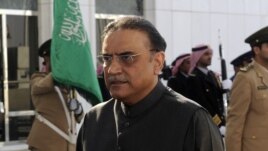
President Asif Ali Zardari
has announced the introduction of local self governments in tribal areas of northwestern Pakistan. In a speech on the eve of the country's independence day celebrations, Zardari said that the coming year will see the implementation of the new self-government plan in the Federally Administered Tribal Areas (FATA). "The coming year will be the year of the beginning of self-governance in the tribal areas in accordance with their wishes and their customs and traditions," Zardari said. "We owe this to the people and to the peace and stability of the country and the region to bring these areas into the mainstream of national life." Zardari said his administration initiated unprecedented reforms in the region last year by amending the century-old, colonial-era laws and allowing mainstream political parties to campaign in the tribal areas. Amendments in the region's Frontier Crimes Regulation laws promised some accountability and bringing them on par with modern human rights standards. Violence Persists FATA has been embroiled in conflict during the past decade. Parts of the region are still controlled by Islamist extremists allied with the Taliban and Al-Qaeda. T Tens of thousands of Pakistani soldiers continue to be deployed in the region, where many large-scale operations have failed to cleanse Pakistani and international jihadists. Nearly 1 million FATA residents remain displaced by the conflict. The government has done little to address the grievances of thousands of victims of violence in the region. The region's tribes are under immense strain from militants and the security forces. Hundreds of traditional tribal leaders have been either assassinated or chased from their home areas. None of their killers were punished. FATA's status as Pakistan's backwater persists, with health, education, and other human-development indicators among the lowest in Asia.

At 65, it's democracy that separates India from Pakistan

Pakistan completes 65 years of independence and with each passing year, the country looks to be getting more and more enmeshed in the intricacies of deadly politics. India, which will complete its 65 years of independence tomorrow, has experienced a better voyage although that does not conclude that it is a perfect picture.

Pakistan at 65

As the nation celebrates 66th Pakistan's independence day, political instability remains an unrelenting concern. Over the last six-and-a-half decades the country has lurched from one crisis to another mainly due to military adventurists' repeated interruptions in civilian rule. Constitutions were abrogated, draconian laws introduced to suppress the people, and distortions created in the system to suit the purposes of dictators. But the people never stopped aspiring for freedom and democracy. Unlike most other Muslim countries, where until the eruption of the recent wave of pro-democracy movements, authoritarian rule generally remained unchallenged, Pakistanis did not tolerate dictators for long. Of the four military dictators the one most brutal, General Ziaul Haq, lasted 11 years. That though is not to say that the Muslims in the Arab world have less interest in democracy than Pakistanis, only that South Asian traditions are different. While Pakistan is struggling to establish democracy, India with which it shares both its birth date and a large part of history, has gained the distinction of being the world's largest democracy and an emerging economic power. Thanks to the long and hard struggle waged by the people, Pakistan is being run by an elected government, which has almost completed its term. Unfortunately, however, democracy in this country is yet to attain maturity. The ruling classes have continually disappointed the people. At present, the nation faces a serious crisis as the Executive and Parliament are embroiled in a confrontation with the Judiciary. The apex court has sent one prime minister packing on contempt charges for his refusal to comply with its order pertaining to the revival of a money-laundering case involving the President. The incumbent faces the threat of a similar fate triggering fears of a showdown between state institutions. Talking to reporters on Sunday, former prime minister Yousuf Raza Gilani confirmed those fears as he warned that if, like him, Raja Pervez Ashraf, too, is disqualified as member of Parliament and hence prime minister the ruling party would not take the verdict "lying down." Then there is also a perception in some circles that the apex court is overstepping its jurisdiction, and creating unnecessary problems which may harm the entire political edifice. These people have been using the argument of parliamentary supremacy to defend the government's case, and to insist that the President enjoys immunity under the Constitution, therefore the court's orders to write the letter to the Swiss authorities is violative of the Constitution. There are others who point out that as per democratic principles the Constitution rather than Parliament is supreme; and that the apex court has the sole prerogative to interpret the Constitution. Given the country's chequered political history, people are worried that the fight between state institutions might encourage anti-democracy forces to take advantage of the situation. There may be no real basis to such worries. Yet a seemingly hurried or controversial manner in which the proceedings of certain cases are being carried out arguably lends a measure of strength to perceptions - real or perceived, or both. Indeed, perceptions normally are irrelevant to judicial decisions; the courts must decide cases in the light of the law and the Constitution only. However, rigidity is not the rule either; sometimes circumstances of a case are also taken into account to reach a particular decision. In fact, in its own January 9 verdict on the present case, a five-member bench of the Supreme Court had mentioned six options. These were: I) initiating contempt of court proceeding against the chief executive and other officials concerned for not implementing the NRO verdict; II) declaring the chief executive ineligible as member of Parliament; III) formation of a commission by the court to get the verdict implemented; IV) referring to the people to decide the issue; V) initiating contempt proceedings against NAB Chairman; VI) taking action against the President for violating the Constitution. Later, the larger bench hearing the case went for the first and second options. But that has not helped achieve the desired objective. Instead antagonism has exacerbated. Both sides need to act with a greater sense of responsibility and refrain from ratcheting up tensions. The court's directions to the Attorney General for Pakistan (AGP) to find a middle way have not yielded, nor are likely to yield, positive outcome for the simple reason that from the government's standpoint even a halfway solution is unfeasible. Instead of getting bogged down in constitutional technicalities, the court needs to reconsider its own five-member bench's recommended course of action, and apply the third option that called for setting up a commission to write the letter as part of NRO verdict implementation - the root cause of the government-judiciary stand-off. What should matter at this point in time is the end not the means to achieve it. As long as the objective is attainable through a commission, a literal application of the law should be avoidable. This country's turbulent political history calls for calm and calculated decisions aimed at strengthening the democratic system. At 65, Pakistan may be a very young country, but it is old enough to run a strong and stable democracy.

K-Pakhtunkhwa CM hoists national flag to mark independence day

Chief Minister Khyber Pakhtunkhwa Amir Haider Khan Hoti hoisted the national flag in a colorful gathering organized by City District Government on the occasion of 66th Independence Day at Malik Saad Police-line on Tuesday. Senior Provincial Minister Bashir Ahmad Bilour, Provincial Ministers Mian Iftikhar Hussain, and Haji Hidayatullah, Special Assistant to Chief Minister Syed Masoom Shah Bacha, Chief Secretary Ghulam Dastgeer, IGP, Secretary Administration, Sectary Local Government, Commissioner Peshawar, CCPO, Police Officers and other notables were also present on the occasion. Students’ infused with patriotic sprits, from Municipal College presented the national and patriotic songs and vibrant contingent of police presented the guard of honor. The CM talked intimately to the students and encouraged them. Later he distributed cash prizes among the students and Jwans of police band. Prayers for protection, development and prosperity of the country and peace were offered on the occasion. The CM also laid floral wreath on monuments of police martyrs and offered prayers.

At least 25 killed in northwestern Pakistan clash: military

At least 20 militants and five soldiers were killed when Pakistani forces and a group of militants clashed in northwestern Pakistan on Tuesday, military officials said. The skirmish, which took place in the Ghaljo area of the northwestern Orakzai tribal region, began when militants ambushed a Pakistani military patrol. Officials said 18 soldiers were wounded in the ambush. The death toll could not be independently verified, and militants often dispute official figures. The Pakistan military has been conducting operations against militants in Orakzai for months. Several militant groups are active in Pakistan's northwestern semi-autonomous tribal regions, near the border with Afghanistan, including the Pakistan Taliban, responsible for many of the bombings across the country in recent years.

Kandahar Women Obtain Driving License

http://www.bakhtarnews.com.af
In Kandahar province, for the first time 7 women obtained driving license. Kandahar traffic department chief, Mohammadullah told BNA that the women after attending 6 month training course on driving and successfully passing the exam, received the license.
According to that source, this is the first time, the women in Kandahar province, received this official documents from that province traffic office. He added, if the women’s demand for learning the skills of driving increase, Kandahar traffic office would be ready to establish a driving center with the cooperation of education department in one of high schools, in order the women be trained on safe driving skills by trained, trainers.

Cellphone services blocked in Quetta

Keeping in view the law and order situation on Independence day the provincial government of Balochistan has decided to block all cellphone services in Quetta and its surrounding areas, DawnNews reported. Residents of Quetta and its surrounding areas were facing hardships as services of all cellphone companies remained suspended since early Tuesday. According to security sources the cellphone services had been blocked keeping in view the law and order situation of the province, as it cuts off the communication capabilities of miscreants and terrorists. On the other hand the provincial government has taken strict security measures for the maintenance of law and order, and troops of the Balochistan constabulary in addition to the Frontier Corps personnel were deployed at sensitive and government buildings throughout the city.

66th Independence Day of Pakistan: Challenges

BY:
On the 65th anniversary of Pakistan's independence, the best homage to the Muslims of the subcontinent who sacrificed all they had for the creation of a separate homeland under the dynamic leadership of Quaid-i-Azam Mohammed Ali Jinnah would be to sincerely rededicate ourselves as a nation to the ideals of the founding fathers. Pakistan was established as a nation-state with democracy as its polity in which people of Pakistan were to be the sole arbiters of power to be exercised through an elected sovereign parliament. All other institutions were to be subservient to the dictates of parliament. None could over-ride the general will of the people as manifested in the sovereignty of the parliament. Today, Pakistan stands at crossroads of history once again after having established an electoral democracy and supremacy of the parliament. It is a defining moment in its chequered history. The sovereignty of the parliament is being challenged by forces that have been in cahoots in the past in derailing democracy whenever they found it taking firmer roots. Any independent student of Pakistan's history would bear witness to the fact that what is happening in the country is much more of the same that it has suffered since its inception - an unending conspiracy not to allow Pakistan to become a progressive liberal democracy ensuring empowerment of the masses as sole arbiter of power expressed through an elected sovereign parliament not subservient to any other state institution. Our history has been a catalogue of intrigues, conspiracies and extra-constitutional interventions sanctified by the judiciary to convert Pakistan into a security state rather than allow it to get established as a social welfare nation-state. Pakistan was pushed into a roller-coaster existence by the dismissal of the mother parliament by dementia-afflicted Governor General Ghulam Mohammad upheld as legal by the then Chief Justice of Pakistan late Justice Munir when Sindh High Court had declared it illegal and unconstitutional. Same was repeated by Chief Justice Munir when he sanctified first Martial Law under General Ayub Khan. Successive dictators were supported by the Supreme Court for their acts of treason in subversion of the Constitution. The overthrow of the elected government of Zulfikar Ali Bhutto by General Ziaul Haq in July 1977 was once again endorsed by the Supreme Court of Pakistan with Justice Anwarul Haq as Chief Justice. While democracy was in the blood of our people, the Praetorian conspirators receded some what following the awakening of the masses to fight for their democratic rights. As such a new approach was adopted for elimination of popular leaders through judicial support. Its first victim was ZAB who was judicially murdered through a Supreme Court conviction on the basis of 4-3 judgement-four judges from Punjab upholding the conviction while three from the smaller provinces rejecting it. The abuse of judiciary continued ever after. The most popular leader spearheading the movement for the restoration of democracy-Benazir Bhutto and her husband--were embroiled in fabricated cases of corruption and twice PPP government was dismissed through judicial-establishment staged coups against Bhutto. Strangely for the first time the Supreme Court-in the absence of substantive evidence-- accepted as admissible plethora of allegations unleashed by the media at the behest of its invisible wire-pullers and upheld her unconstitutional dismissal by the then President. As a consequence of this orchestrated campaigning against her, rigorous persecution and long incarceration of her husband on unproven charges-she had to spend long years in exile including the long dictatorship of General Musharraf once again sanctified and supported by the apex judiciary. Only civilian exception was former Prime Minister Mian Nawaz Sharif who was declared guilty for hijacking and given life imprisonment by the court. He was pardoned by President General Musharraf on foreign intervention and released on ten-year agreement that he would not return to Pakistan. The Supreme Court remained a silent witness to it and did not question General Musharraf's action. His Presidential power to pardon a convicted person was recognised by the Supreme Court on the age-old concept of "King can do no wrong". Despite odds and threats to her life by the dictator, Benazir Bhutto returned to lead the democratic movement. She made a historical return home welcomed by millions of people only to be assassinated by the perpetrators of dictatorship. Benazir's assassination set the entire country on fire. It was saved from sure disintegration by President Zardari when he defused the violent masses by telling them that Benazir Bhutto had laid down her life for saving Pakistan and not destroying it. It was in most challenging circumstances that President Zardari was elected and entrusted with the responsibility of saving Pakistan. He brought the emotionally charged nation back onto a course that was to culminate in the achievement of the cherished destiny of democracy as envisioned by Shaheed Benazir Bhutto. President Zardari translated into action the essence of the Charter of Democracy by adopting a policy of national reconciliation and sharing power with all the stakeholders so that there was no room for discontent that provided opportunities for extra-constitutional forces to intervene. This was Bhutto legacy which had spelled that Pakistan could only survive as a democracy ensuring just resolution of the thorny issue of provincial autonomy that had been responsible for the division of the subcontinent in 1947 and break up of Pakistan in 1971. Ever since return of democracy, anti-people forces got into action to derail it. It had a unanimously elected prime minister who had survived a rollercoaster existence with parliament reposing confidence in him on several occasions, including the passage of five budgets as well as standing by him through thick and thin only made to exit what was described by the Wall Street Journal as a "judicial coup". The President, his party PPP and his coalition partners -in order to sustain democracy under threat-accepted the decision of the apex court. In UK and abroad there has been mixed reaction to all that has been happening since. Some leading lawyers and experts have described it as an ominous development not good for the country. The Wall Street Journal called disqualification of Syed Yusuf Raza Gilani "unnatural death of another civilian government. While less dramatic than the military variety, this judicial coup...perpetuates the cycle of unelected institutions "rescuing" Pakistanis from their own chosen leaders." The Wall Street Journal's conclusion should serve as food for thought for the democratic forces to act above self interests. It says: "Having stepped in to overthrow so many civilian Presidents, the judiciary and military view coups as their prerogative and even duty. If there's a silver lining, it's that this time democratically elected leaders managed to stay in power for an impressive four years..." with "coup-makers felt constrained by public revulsion at a return to military rule." All through since 2008 all machinations to derail the electoral system were countered effectively by democratic forces who have made it clear that they would not be a party to any extra-constitutional intervention nor would they accept a judicial coup. After all Pakistan had suffered an irreparable loss by the judicial murder of a prime minister and Praetorian coups in the past. They were opposed tooth and nail to repetition of the previous mistakes to avoid being condemned by history. At this defining moment the existing Parliament-having to its credit 18th, 19th and 20th amendments-should not allow to go in vain untold sacrifices in blood in thousands at the hands of dictatorial forces. It must pass yet another amendment prohibiting criticising democracy as a failed system much in the manner constitution protects the armed forces and judiciary. The nation has had enough of extra-constitutional interventions initiated by the Praetorian, civilian and judicial bureaucratic troika that had constantly played foul with the Quaid's vision of a democratic and egalitarian Pakistan. The best tribute to martyrs of freedom movement would be for all the democratic forces to unite and oppose all ongoing conspiracies to derail democracy, challenging the supremacy and sovereignty of parliament.

Pak Hindu family arrives in Attari, to seek asylum

A six-member Hindu family from Sibi in Pakistan's Baluchistan district arrived in Attari near Amritsar to seek asylum in India on Monday. A teary-eyed Mukesh Kumar, the family head, said they were forced to leave due to the harassment meted out to the community. "AK-47 wielding motorcyclists often come to shops of Hindus and demand huge money and often plunder our houses," he said. Mukesh sold off his house and other belongings before leaving Pakistan. "We have no problem with Pakistan but with people," Mukesh said at the Attari international railway station. He said his relatives in Pakistan may follow suit. "My relatives are there and could be harassed but I had to save my family. My relatives might also leave Pakistan one day." Mukesh said hundreds of Hindu families are looking to emigrate. He said he would go to Indore, where his cousin lives, and seek his help. Mukesh, who used to run a grocery shop in Sibi, said Pakistani immigration officials were suspicious about their visit and made them sign an undertaking, saying they were not harassed in Pakistan and would return. Mukesh's wife, Suman Devi, said they decided to leave Pakistan after kidnappers killed one of their relatives after the family failed to pay ransom for his release. "The police did not even register a case. I am not going back to Pakistan." Mukesh's daughter Pranjal Pari (8) is unaware that the family has left its home forever but does not want to go back to her school. "I am never allowed to play with other girls. I am always alone in school."

Afghanistan-Pakistan border fighting erupts in Kunar

There is heavy fighting between Afghan and Pakistani forces in the eastern Afghan province of Kunar, which borders Pakistan, Afghan officials say. Fighting started at around 0400 (0030 GMT) following an attack on a border police commander's convoy, according to border police sources. According to Afghan officials in Kunar, one border policeman was killed and five were injured. The Afghan authorities have since sent hundreds of troops to the area. The attack was from the Pakistani side of the border in the area of Binshay, Dangam District, Afghan police say. Afghan officials in Kunar province have told the BBC that both sides have been using heavy and small weapons and a Dangam District tribal elder said the fighting was ongoing. The border district of Dangam lies 40km (25 miles) east of the provincial capital. Afghan officials have in the past accused Pakistan's military of firing the rockets across the border - a claim Pakistan denies. The Governor of Kunar Province, Fazullah Waheedi, says that in the past three months there have been 3,160 cross border attacks in five districts, killing eight people and wounding 25. Earlier this month, the Afghan parliament dismissed the country's defence and interior ministers over alleged security failures, including the shelling of Afghan territory from Pakistan.

Pakistan: Call to protect minorities as per Jinnah’s vision

The Hindu community organisations and civil society have resolved that on the eve of 65th day of independence there is a need that government should respect the rights of minorities
and their lives and properties should be protected as promised by Quaid-e-Azam Muhammad Ali Jinnah in his speech on August 11, 1947 in which he clearly mentioned that political affairs shall be separated from religious matters. In a letter addressed to President Asif Ali Zardari, the Hindu Panchiat handed over it to the members of parliamentary committee formed by the President. Hindus representative organisations disclosed that in the last couple of months, more than two dozen minor children, traders, shopkeepers and businessmen were reportedly kidnapped for ransom and more than 700 families have reportedly migrated to India and Southeast Asian countries. The three-member committee comprising Federal Minister Senator Maula Bux Chandio and Senator Hari Ram met with the representative organisations of Hindus. The Hindu Panchiat, Young Hindu Association and other Hindu Community organisations and members of civil society and human rights organisations including Sindh Democratic Forum (SDF), Human Rights Commission of Pakistan (HRCP), Pakistan Peace Coalition (PPC), Sindh Human Rights Council (SHRC) and MRER in their letter to the President have appreciated his strict notice of the concerns and disbelief faced by the Hindus residing in Sindh and welcomed the move of the formation of a three-member committee in order to address the issues and grievances faced by the minority. The letter of Hindus’ representative organisations, a copy of which is available with TheNation, called for an ethno-religious harmony and demanded that it was more than a committee that was required to protect. The community and civil society called for the establishment of committee as a move of displaying solidarity and looking forward to ensuring the best possible protection. They said that unfortunately the level of threats that include non-safety of life and property, forced conversion of minor girls, kidnapping for ransom are too high and show disappointment on insufficient steps taken the federal and provincial governments to address the above mentioned threats and grievances faced by the minorities at large. Community representatives and civil society further said that in the last couple of months, more than two dozen minor children, traders, shopkeepers and businessmen were reportedly kidnapped for ransom and over 700 families have reportedly migrated to India and Southeast Asian countries in a few months due to insecure and unsafe future of their families and businesses. Registration of fake cases and pressure of local influential people are a routine threat to them. Extortion is another crime happening and the Hindus are bound to pay this amount in different parts of the province. Community representatives and civil society leaders appealed to the president that the Hindu community had done a lot to develop the socio-economic landscape of Sindh and Pakistan, and all their hopes are attached with the land and this hope should not be shattered and it is government’s fundamental responsibility to protect its citizens from all kinds of exploitation and discrimination. Today, hundreds of thousands from this patriotic community feel alienated and feel like strangers in their homeland. No religion has allowed its followers to convert others by force. Then how can its followers indulge in such wrong conduct? They said that if PPP is serious to resolve this issue, it first should ask their legislators to stop harassing Hindus and stop their forced conversion of Hindu girls. The PPP should promise to the community that in the coming elections, party tickets would not be issued to anti-minority and especially anti-Hindu people. And severe actions should be taken against those who are directly involved in the crimes against Hindu community. Community representatives and civil society leaders’ showed concern over unfair trial of Rinkle Kumari in the Supreme Court of Pakistan. It was resolved that as per the spirit of 18th Amendment, evacuate property trusts should be immediately handed over to the respective provincial governments and all the historic and religious sites and places of Hindu community should be protected like other religious places. They said decades of religious extremism; collapse of judiciary and law enforcement agencies; commercialisation of political parties in the country especially in Sindh has created an environment where various religious, gender, and ethnic minority groups are thrown under serious vulnerability.

PUNJAB OBSTRUCTS CREATION OF NEW SERAIKI PROVINCE

Both the National Assembly and the Punjab Assembly passed resolutions for creation of provinces of Junobi Punjab and Bahawalpur bifurcating Punjab into three Provinces. The President of Pakistan sent a directive to the Speaker of the National Assembly and the Senate to appoint a 14 members committee for demarcation of boundaries of Junobi Punjab and distribution of assets and liabilities. Almost every thing is set but the PML-N and the Punjab Assembly Speaker had not sent their nominees to the Committee. PML-N is supposed to three MNAs and the Punjab Assembly Speaker two nominees for the committee. Now a senior leader of the PML-N is demanding that separate Hazara province should also be created. PML-N is committing a blunder by obstructing the creation of Seraiki Province on the eve of fresh general elections. The Seraiki people will be offended besides those in Central Punjab supporting the demand. It means it will be a walk over to the PPP in the Seraiki belt if elections are held soon. Secondly, top leaders from Dera Ghazi Khan are also deserting the party. They may join the PPP or any other party denying a huge vote bank to the PML-N in Southern Punjab. Thus the PML-N is committing a blunder and giving a walk over to the PPP in the next general elections. In any case, the vote bank of PML-N in the Central Punjab is divided with the PPP, PTI and other smaller parties ending the prospects that the PML-N will form the next provincial Government in Lahore.

Pakistan: Backlash against the judiciary

EDITORIAL: DAILY TIMES
Ousted Prime Minister (PM) Yousaf Raza Gilani has delivered a strongly worded message to our overactive judiciary. He says if another PM is ousted in similar fashion, the PPP will not take it lying down and will resist, since it considers the repetition of such a move would be tantamount to destabilising, dividing, and arguably disintegrating the country. He went on to sarcastically remark that if the judiciary wants to take all the decisions, we should dissolve parliament, send all the elected representatives home, and let the judiciary take charge of the government. He said he had appeared before the judiciary as a mark of respect, but this was not reciprocated. He accepted the court’s decision for the sake of democracy and the country, he added. He left the question of appearance before the Supreme Court on its summons to his successor, Raja Pervez Ashraf’s judgement. It was time, Gilani argued, for the judiciary to correct past mistakes such as the ‘doctrine of necessity’, which contributed to the disintegration of Pakistan in 1971. The judiciary was not a political party, he continued, and therefore should not have (or be seen to have) any political agenda. The judiciary’s activism could trigger an intervention by a ‘third force’, he warned. The contempt law was only being used against politicians who respected the verdicts of the judiciary, and not against those elements or forces that didn’t give two hoots for its orders. He said further that he would suggest to the PPP a train march from Lahore to Karachi in support of the supremacy of parliament, and implied that if even that did not work, the party would resort to street protests and take the matter to the people. The MQM chief Altaf Hussain has added his voice to those troubled by the present scenario of confrontation between the government and the judiciary. Addressing a rally of his party in Karachi, Altaf Hussain appealed to both sides to ‘accept’ each other and reconcile for the sake of democracy and the country. And in an interesting aside, the country that gave the contempt of court law to the world, dating from the 14th century, the UK, is contemplating repealing it and modifying it to match modern day requirements. Unlike Chief Justice Iftikhar Mohammad Chaudhry’s contention that the concept of the supremacy of parliament inherited from Britain was ‘out of date’, the country that is considered the mother of all parliaments finds the ancient contempt law actually out of date. The reasoning behind the proposal is both conceptual as well as based on the experience gained from practice. The contempt law as it stands in the UK has not been used since the 1930s. And yet the judiciary in the UK is held in the highest esteem. That is because the prudence and restraint within the parameters of the law practiced by it has helped over time to accord it the respect and dignity it deserves. Our judiciary too could take a leaf or two out of the book of the British judiciary. Unfortunately, as former PM Gilani also pointed out, our judiciary has a great deal to rectify on the basis of its track record. Endorsing military coups and justifying usurpers of power, taking oaths under PCOs and allowing military dictators to amend the constitution at their whim and will are all wrongs that need to be relegated to a closed chapter. The defiance of the will of a military dictator by Chief Justice Chaudhry galvanised the country in a movement that finally led to the ushering in of democracy (albeit with the tragic loss of Benazir Bhutto along the way) and the exit of General Musharraf. The restored and increasingly independent judiciary has high hopes of the people riding on it. This is a great responsibility, but it must and can only be fulfilled by adhering not only to the letter of the law, but also its spirit and élan. Unfortunately, the perception is growing of partisanship by the present restored judiciary. This is not only bad for the incumbents, it could cause permanent damage to the respect and dignity of the judicial institution. The best course under the circumstances, before the growing backlash against the judiciary assumes critical mass, would be to exercise judicial restraint and try to find solutions to the impasse with the government that best suits the interests of the country and the fraught circumstances in which it finds itself at present.

Pakistan: Not a lost cause

EDITORIAL
It is so saddening when on this day of immense rejoicings and gaieties, one has to mix joy with a sense of gloom every year over the past so many years. The gloom is what our founding fathers had visualised of us and what has actually become of us. Jinnah’s Pakistan was to be a place of mutual tolerance, accommodation, understanding and harmony. It was to be the abode of a moderate, forward-looking, egalitarian polity. Instead what has it become needs no elaboration; it is not even a poor parody of the founding fathers’ dream. But not all black it was, always. When Pakistan was in infancy, its citizenry with tremendous fervour and zeal collectively embarked on the gigantic task of nation-building and gave a lie to the doomsayers. From a scratch, state institutions were built into vibrant entities. The public sector and private enterprise teamed up to raise a strong industrial base to a land that had known no manufacturing existence worth the name. Its entrepreneurial class founded a booming services sector. Its hardworking peasantry with its toil and sweat rid the new nation of chronic food shortages and took it to autarky in food and surpluses in food grains and cash crops for exports to earn the country valuable foreign exchange. Not just that. Human development saw remarkable progress, with increased educational and health facilities and social services. And infrastructure saw a massive development in every segment and every field. In short, Pakistan was well on its way to becoming what the founding fathers had dreamt of it. It had gained a name in the world community. It commanded respect in the comity of nations. Globally, it was recognised as a dignified nation. But then in the midstream the nation somehow lost its way and fell on bad times. And the regret is that it is still to recoup its lost gains and reverse the downward slide it is entangled in over the past so many years. The political class blames the praetorian generals. It is their not-infrequent interventions that have brought the nation to such a sorry pass, assert the politicos. The generals blame the political tribe. It is inherent incapability of the political class for which the country is in the throes of difficulties, insist the generals. But the bland fact is that both are responsible in equal measure. Both the praetorian generals and the political clans have betrayed the citizens and let the nation down. And the dismay is that no leader is in sight to pull the nation out of the morass it has slipped into so irretrievably. The nation at this point in time needs imperatively leaders of great vision, wisdom and statesmanship to lead and guide it to the destiny the founding fathers had envisioned for Pakistan. But to its utter misfortune it has the eminences swaggering on the national political landscape that are no tall figures but mere pygmies. They are just chicaners and professional operators who on their tongues have, not the nation’s economic progress or its security, stability and solidarity, but just petty politics. But Pakistan is definitely not at all a lost cause. Its guarantors and the guarantee are those predominantly impoverished, downtrodden and deprived 180 million people, whom the political elites have reduced into mere irrelevancies and redundancies. Yet they have an abiding faith in the destiny of Pakistan. It may have fallen on difficult times. But they have full trust that it will rebound one day and regain its place of dignity and honour in the comity of nations. It is their trust that is sustaining the country in its dire tribulations. It is their trust that is scoffing at the doomsday predictions of this country’s inveterate enemies and the compulsive cynics at home and abroad. And the miracles have not ceased happening, either, even in these times. It is not unimaginable if a real leader with vision does surface from some obscure niche one day to take the rudderless polity to its destined greatness and glory. Gloom, after all, cannot be eternal. It can only be transient and just fleeting. It cannot be darkness for the nation for ever. Sunshine will certainly come to Pakistan, sooner or later. And with this abiding faith in Pakistan’s destiny, we wish our valued readers a very, very happy Independence Day

'Democracy best type of government to resolve issues'

Associated Press of Pakistan
Prime Minister Raja Pervez Ashraf
on Tuesday said democracy is the best type of government and a strong democratic set up could resolve all the issues and ensure progress and prosperity in the country, Addressing a flag hoisting ceremony here at Convention Centre, in connection with 66th independence day the Prime Minister said, "The freedom movement is a best example of democratic and constitutional struggle which proved to nations of the world that democracy is embedded in blood of Muslims." He said democracy is the best type of government and all issues of Pakistan and existence of Pakistan are associated with it. Congratulating the Pakistanis living inside the country and abroad on the occasion of 66th Independence Day, the Prime Minister said on this day when Muslims of sub-continent under the leadership of Quaid-e-Azam succeeded in achieving freedom and Pakistan emerged on map of the world as an independent and sovereign country. He said leaders like Shaheed Zulfikar Ali Bhutto and Mohtarma Benazir Bhutto Shaheed undertook an exemplary struggle for restoration of democracy in Pakistan and to ensure rights of people and lighted the beacon of democracy by laying down their lives. "We are proud that in the last four years we made prominent achievements and with the grace and benevolence of Allah today roots of democracy are strong in Pakistan," he said. The Prime Minister said it will be not undue to give credit of the success to visionary leadership of President Asif Ali Zardari. He said this is a matter of satisfaction that the present democratic government achieved important milestones in political, social and economic progress of the dear country, which propped the national economy. Extending an offer of dialogue to all political parties for reconciliation and hold fair, free and impartial elections, the Prime Minister hoped that the political leaders by realizing national responsibility would cooperate with the government. He said opposition has an important role in any democratic system and the government has given importance to the positive role of opposition. The Prime Minister said for holding an impartial and transparent next general election, "we are taking the opposition into confidence, and for this we have taken a start from the consensus appointment of Chief Election Commissioner." He said, "We want an impartial and transparent election, so that transfer of power takes place in a democratic way, which would be a big success for the continuity of democracy in the country." He expressed the hope that all the political parties will fully participate in the next general elections and will play their role for the continuity of democracy. He said the government has accepted all the criticism with patience, because it does not believe in confrontation. "We are following the policy of reconciliation according to the vision of Mohtarma Benazir Bhutto Shaheed and our objective is to promote the environment of understanding and harmony in the country," he said. The Prime Minister said, "We want that the opposition, instead of criticizing the government, come up with positive suggestions through constructive approach, so that the process of development can continue in the country." He said the government believes in useful dialogue with the opposition on all issues of national importance including the formation of a care-taker government, so that important national issues are resolved through consensus, democratic values and mutual understanding are promoted in the country, and the supremacy of democracy is ensured.

Pakistan’s future lies in continuation of democracy

Prime Minister Raja Pervez Ashraf
on Tuesday said that democracy was the most effective system and that the future of Pakistan depended on it, DawnNews reported. Addressing the August 14 flag hoisting ceremony at the Convention Centre Islamabad, Prime Minister Ashraf said that the Pakistan movement was a perfect example of a democratic and constitutional struggle for independence. He said that Zulfikar Ali Bhutto and Benazir Bhutto had sacrificed their lives for their democratic ideas. The prime minister said that the democratically-elected government of the Pakistan People’s Party (PPP) had achieved several financial and political targets. Prime Minister Ashraf said that “although, I come from a humble background and was an ordinary worker of the PPP, my party chose me for the top most public office of the country…I am proud of it and thankful to the party.” He moreover said that the problem in Balochistan was that the province’s issues had not been addressed properly by the previous governments. “Balochistan domicile holders can now work in the federal government…we have taken steps to negotiate with the Baloch leadership and we hope that all parties in the province would take part in the next elections,” the premier said. “Baloch people are patriotic people…but the government would sternly deal with those who with the help of foreign agencies are involved in acts of terrorism,” the prime minister reiterated. He said that devolution of powers to the provinces through the passage of the 18th Amendment was a significant step taken by the government. Prime Minister Ashraf said that for the first time in the country’s history and under the PPP-led coalition government, elected representatives had been included in the formulation of the country’s foreign policy. He said that the government wanted the resolutions to the issues of Afghanistan and Kashmir in accordance with the United Nations’ resolutions. Speaking on minority rights in the country, the prime minister said that the government had taken various steps to socially and financially facilitate religious minorities. The prime minister concluded his speech by congratulating the people on the country’s 66th Independence Day.

PPP-led government achieves all vital targets

Prime Minister Raja Pervez Ashraf said democracy took firm footing in the country during the last four years of the incumbent government, as it achieved significant targets in economic and social sectors. Addressing the flag-hoisting ceremony at Jinnah Convention Centre held here in connection with the Independence Day, here, he detailed on the success story of the current government, saying the foreign remittances exceeded 13 billion dollars. Elaborating on the government’s stance over terrorism, the Prime Minister noted the terrorism is a menace and the government is resolved to eradicate it from the country before long. Apprising the nation of the government’s handling of Balochistan issue, the PM Raja stressed youths of the province are being given thousands of jobs and full-fledged efforts have been made to bring the offended leaders of the province towards table-talk.

Monday, August 13, 2012

Pakistan: Nation celebrates 65th Independence Day

Nation is celebrating the 65th Independence Day with zeal, enthusiasm.
The day will dawn with special prayers in mosques for the progress and prosperity of the country. Celebrations will begin with a 31-gun salute in the Federal Capital and 21-gun salute in all the four provincial capitals. A change of the guard ceremony at the mausoleum of Quaid-e-Mohammed Ali Jinnah, Pakistan’s founder, in Karachi would also take place. A number of events have been chalked out to celebrate the Independence Day in a befitting manner and pay homage to those, who laid down their lives to create an independent motherland for the coming generations. People from various walks of life have decorated their houses with national flags and the buildings, city shopping centers, bazaars and all the main roads are also being adorned with flags and fancy lights. National songs are in the air, which gives the message that whole the nation is united and tidy. The national flag will be hoisted at the important buildings to celebrate the day with befitting manners. Sweets will be distributed among the poor. Special prizes will be awarded to those who decorate and illuminate their building at best. Meanwhile prices of flags, pictures of national heroes and other stuff like badges are out of reach of common man, however some will buy and some will pray that prices go down in this regard. Printers and makers of bindings, flags, banners and badges are fully engaged in their business. They are also making arrangements to dispatch these items to other areas of the country to meet demand of people. The most enthusiastic are children who are busy collecting stickers, badges and also beautifying their bicycles with special stickers inscribed with messages of Independence Day.

Pakistan Civilian awards: Presidency issues list of 192 recipients

President Asif Ali Zardari announced on Monday a list of 192 recipients for the country’s top civilian awards, including Pakistanis and foreign nationals. The investiture ceremony will take place on Pakistan Day on March 23, 2013. Among those to be decorated with civilian awards include foreigners hailing from China, United Kingdom, France, Spain and Malaysia. Some of the prominent Pakistani recipients include cricket umpire Aleem Dar, prominent Pakistan Television newscaster Shaista Zaid and Pakistan Peoples Party (PPP) leader, late Fauzia Wahab. According to details, the president has conferred seven Nishan-i-Imtiaz, one Hilal-i-Pakistan, 17 Hilal-i-Imtiaz, one Sitara-i-Pakistan, three Sitara-i-Shujaat, 45 Sitara-i-Imtiaz, 24 President’s Award for Pride of Performance, one Tamgha-i-Pakistan, 15 Tamgha-i-Shujaat, 76 Tamgha-i-Imtiaz and two Tamgha-i-Quaid-i-Azam. The Hilal-i-Pakistan has been conferred upon foreign nationals, including Yang Jiechi (China), Sitara-i-Pakistan to Dr Rowan Douglas Williams Archbishop of Canterbury (British) and Tamgha-i-Pakistan to Li Xiaolin (China). Some of the prominent recipients in their respective categories are: Nishan-i-Imtiaz The following have been awarded for public service: - Social activist Abdul Sattar Edhi - Governor Sindh Dr Ishrat-ul-Ebad Khan - Leiutenent General (retd) Khalid Ahmed Kidwai, Director Genral Strategic Plans Division Mehdi Hassan and Saadat Hassan Manto have been awarded posthumous awards in the fields of Art (Music) and Literature respectively, while Dr Muhammad Irfan Burney, Chairman, NESCOM and Dr Munir Ahmed Khan (posthumous) have been awarded in the field of science. Hilal-i-Imtiaz - The late Fauzia Wahab, former PPP leader/Member of National Assembly - Social activist Ansar Burney - Actor/compere Zia Mohyeddin - Singer Abida Parveen - Writer Anwar Maqsood - Writer Fatima Suriya Bajia - Cricketers, the late Hafeez Kardar and Fazal Mehmood - Hamid Mir, journalist - Azhar Abbas, journalist - Actor Khalid Abbas Dar Sitara-i-Imtaiz -Aleem Sarwar Dar, ICC award winning cricket umpire - Shaista Zaid, former Pakistan Television newscaster - Syed Ghulam Mohiyuddin Noor, film producer - Syed Noor, filmmaker - Senator Haji Ghulam Ali, former FPCCI president, - Dr Attiya Inayatullah, Member of National Assembly - Taj Haider, Pakistan Peoples Party senior leader - Ghazal maestro Ustad Ghulam Ali - Jugnoo Mohsin , journalist - Qazi Aslam, journalist - Hashim Khan, former squash player Tamgha-I-Imtiaz In the field of literature and journalism, the recipients include Sikandar H. Lodhi, Shaukat Pervaiz, Mohammad Aslam Khan, Syed Mir Mehdi Shah Mehdi and Dr Irfan Ahmad Baig. Tamgha-i-Quaid-i-Azam Sister Mary Lagan and Catherine Nicol were being awarded for their services in the field of education.

US shares Jinnah's goal of vibrant, self-reliant Pak

US shares Jinnah's goal of a vibrant and self-reliant Pakistan, Secretary of State Hillary Clinton said while conveying Washington's Independence Day greetings to the government and people of the country. "Muhammad Ali Jinnah dreamt of a vibrant, self-reliant Pakistan, a goal we all share," Clinton said in her Independence Day greetings to the people of Pakistan."On behalf of President Obama and the people of the United States, I am delighted to send best wishes to the government and people of Pakistan as you celebrate the anniversary of your independence this August 14," she said. "Since 1947, Pakistan has persevered in the face of immense challenges to build upon the democratic ideals of your country’s founders," she said. "Today, we take time to honour your sacrifices and renew our support for a stable and secure Pakistan for generations to come," Clinton said. "As Muslims around the world reflect upon the meaning of community and sacrifice during this holy month of Ramadan, the United States celebrates the hardworking Pakistanis who strive to fulfill Jinnah's vision of a stable, secure, and prosperous Pakistan," the Secretary of State said in her statement.

Democracy is binding force, provides solution: Ashraf

Prime Minister Raja Pervez Ashraf said only democracy and no other system provides solution to problems faced by Pakistan and its people. Addressing seminar on “Pakistan: My Identity” in connection with Independence Day celebrations on Monday, he said democracy is the only binding force and the country cannot be governed through dictatorship. Future of the country lies in strong democracy and it is moral obligation of everyone to work with dedication to achieve this goal. Democracy is only time tested system that keeps aspirations of people supreme, he observed. Pakistan movement was vividly a democratic force and provided guidance which was unique example to follow, he stressed. All major targets in the world were achieved through democratic forces. There is no role of dictatorship anywhere in the world in development of any country, he added. Ashraf said so-called systems introduced by dictators could not run as these were not public oriented nor participatory in their chemistry. “As Pakistanis we should join hands to make the country progressive, developed welfare state. Pakistan is our identity and we have an unshakeable relationship with it,” said the premier. He urged media to act as neutral institution and avoid spreading despondency among masses. Media has right to criticise government policies but within certain parameters and portray good things about Pakistan to improve its image in comity of nations, he emphasised. He said Pakistan is blessed with talent like Shafah Khubani who is youngest Microsoft certified IT expert. Media should promote such people. He announced Rs 1 million for Shafah Khubani. Information Minister Qamar Zaman Kaira spoke of challenges facing the country said government taken several steps – 18th amendment, NFC award to strengthen participatory Federation, identity to Khyber Pakhtunkhwa and greater share to provinces through NFC. He regretted democratic governments were never allowed to complete their mandated term that plunged the country into many crises. “By following vision of founding leaders we can put Pakistan on right course,” said the information minister.

President Zardari: People must guard against assault on Constitution

The Pakistani people and Parliament must be watchful against "new forms of assaults" on the Constitution, President Asif Ali Zardari said against the backdrop of a standoff between the government and the judiciary. Zardari made the remarks in a message issued to mark Pakistan's Independence Day days before the Supreme Court takes up a contempt charge against Prime Minister Raja Pervez Ashraf for refusing to revive graft cases against the President. The restoration of the Constitution of 1973 by all political forces had raised hopes that the people would "revert to our true bearings and restore to Pakistan the values and ideals for which it was created", he said. "However, the people and the Parliament must also be watchful against new forms of assaults on the Constitution and the Parliament," he added. The Supreme Court has summoned Prime Minister Ashraf to personally appear on August 27 to face the contempt of court charge against him. Experts have said Ashraf could be disqualified like his predecessor Yousuf Raza Gilani for refusing to reopen the graft cases against Zardari. The Independence Day is an occasion to "pause and ponder over whether we have moved towards or away from the ideals for which Pakistan was created", the President said. Without referring to the ongoing tensions with the judiciary, Zardari said: "Our founding fathers envisioned Pakistan as a country where democracy, constitutionalism and rule of law would reign supreme. It was envisaged to be a country where the power of the ballot, and not bullet, will determine the political choices of the people." He said that for most of Pakistan's independent existence, the people were "often denied right to rule and the Constitution repeatedly abrogated". It was reassuring that the current parliament unanimously restored to a large extent the democratic Constitution of 1973, he added. Zardari asked the people to rededicate themselves to the democratic ideals and principles of Muhammad Ali Jinnah, the founder of Pakistan. "Adherence to the principle that political choices must be made by ballot, and not imposed through bullet, demands that we banish from our midst all forms of bigotry, extremism and militancy," he said. Everyone should work together for strengthening democracy, empowering the people and creating a progressive, tolerant, moderate and modern Pakistan, he said. In a separate message, Prime Minister Ashraf said the Pakistan Peoples Party-led coalition government had undertaken various initiatives and pursued a policy of reconciliation. "We have also refashioned our country's foreign policy in accord with parliamentary guidelines and national interest," he said. Ashraf reminded people of Jinnah's speech to the Constituent Assembly on August 11,1947 in which he had said: "You are free; you are free to go to your temples, you are free to go to your mosques or to any other place of worship in this state of Pakistan. You may belong to any religion or caste or creed, that has nothing to do with the business of the state." In conformity with the guidelines laid out by Jinnah, Ashraf said his government is committed to "an equal status for minorities as citizens of the state". The premier acknowledged that challenges like an energy crisis, law and order problems, economic difficulties and terrorism, and extremism had "slowed down the pace of socio-economic development". Despite these difficulties, Pakistan is a "vibrant polity where judiciary is independent, parliament is functioning, media is vibrant and civil society is active," he said. "We are a resolute and determined nation and can overcome these daunting challenges if we demonstrate tolerance, unity, solidarity and understanding," Ashraf said.

Zardari stresses political choices be made through ballot, not bullet

President Asif Ali Zardari
while calling for elimination of all forms of bigotry, extremism and militancy stressed strengthening of democratic system and urged that political choices be made by ballot, and not imposed through bullet. In a message on the Independence Day the President urged the nation to rededicate itself to the democratic ideals and principles of Quaid-e-Azam Mohammad Ali Jinnah. “On this day I wish to call upon everyone to work together for strengthening of democracy, empowerment of the people and for a progressive, tolerant, moderate and modern Pakistan as envisioned by our great leaders,” the President said. The President regretted that unfortunately, for most part of the independent existence the people were often denied right to rule and the Constitution was repeatedly abrogated. “It is reassuring that the present Parliament unanimously restored to a large extent the democratic Constitution of 1973.” the President said. He said the restoration of the Constitution by all political forces and provinces raises hope that despite setbacks the nation would revert to its true bearings and restore the values and ideals for which Pakistan was created. “However, the people and the Parliament must also be watchful against new forms of assaults on the Constitution and the Parliament,” the President pointed. He said the founding fathers envisioned Pakistan as a country where democracy, constitutionalism and rule of law would reign supreme. The President said it was envisaged to be a country where the power of the ballot, and not bullet, would determine the political choices of the people. Countless lives were sacrificed for the achievement of these ideals including that of the country’s first directly elected Prime Minister Shaheed Zulfikar Ali Bhutto and Muslim world’s first elected woman Prime Minister Shaheed Mohtarma Benazir Bhutto. The President extended heartiest felicitations to all Pakistanis within the country and abroad and said the day falling in the holy month of Ramzan, was the most important date in national calendar. “On this day in 1947, our long and hard struggle for independence against foreign domination was crowned with success and a new state was born wherein we could fashion our lives and destiny in accordance with our culture, values and aspirations.” The President said “our heads bow in gratitude before Allah and we express gratitude to our founding fathers who under the leadership of the Quaid achieved a separate homeland for us.” The President said while it was natural to rejoice the independence celebrations, it was also an occasion to pause and ponder whether the nation has moved towards, or away from the ideals for which Pakistan was created.

Kashmir women ordered to cover up or risk acid attack

http://www.telegraph.co.uk
A pro-al-Qaeda group in Kashmir has warned women it will kill them or disfigure their faces with acid if they are seen unveiled or using their mobile phones in public.
The threat has sown fear throughout India’s Jammu and Kashmir state where it revives memories of a similar campaign in 2001 when several women were attacked with acid. The warning comes amid growing concern in India about the number of acid attacks on women and fears in Kashmir that the practice, which is prevalent in neighbouring Pakistan, is being exported across the border. In both India and neighbouring Muslim countries it has been used in assaults against women who have refused marriage proposals or been accused of slighting the ‘honour’ of relatives or rejected suitors. Police and women’s groups in Kashmir were alarmed after notices were pinned to mosques in Shopian district, claiming to be posted on behalf of two previously unknown militant groups. “We appeal to the public that they ensure that their women observe purdah [cover their heads and faces] in public places. If we spot any woman without purdah we will sprinkle acid on her face. If we spot any girl using mobile phone, she will be shot dead,” said the note, which was signed by al-Qaeda Mujahideen and referred to another group, Lashkar e al-Qaeda.Another group, the Lashkar e Jabbar claimed responsibility for acid attacks and shootings of girls in 2001 as part of a campaign to enforce conservative Muslim values in the relatively liberal state and terrify young women it regarded as wearing “immodest” clothes, such as jeans and t-shirts. Professor Noor Ahmad Baba, a Kashmiri commentator, said women in Kashmir had been targeted before but had generally enjoyed greater freedom than women in other Muslim states. “In the last 23 years of the war, women have been targeted by fringe elements,” he said. “Generally, women in Kashmir are more empowered than women from other conflict zones. There have been campaigns to force women to wear veil but it didn’t sustain for long.” S M Sahai, Kashmir’s Inspector General of Police, said an investigation was under way and said it may be a part of a campaign by local militants to radicalise the state because militant infiltration into Kashmir from Pakistan has been substantially reduced. “The militants are trying to recruit locals as the infiltration has been brought to minimum. We have cases of militants trying to engaging boys of 12,” he said.

Imran cannot bring any change

Aitzaz says Imran cannot bring any change with the kind leaders he has around him. Addressing a ceremony held in connection with Independence Day in Lahore PPP leader Ch Etizaz Ahsan said that it was because of Chief Justice Ch Iftikhar Ahmad that we have democracy in Pakistan today; otherwise Musharraf would still have been ruling the country. He said elections would take place on due time as per provisions of the constitution. He said all institutions of the state should work within the limits earmarked in the constitution and there should be no clash. “It is unfortunate that judges have started sending people to jail just for starring at them,” he said. Aitzaz said he always raised his voice in the support of judiciary even violating the party discipline, and took part in two long marches for the cause of judiciary. “But this is the beauty of PPP that I am still in the party,” he said. Criticizing Imran Khan and Pakistan Tehrik-e-Insaf Aitzaz said no one can bring any change in the country with ‘fake coins’ in his pocket. Most of the leaders who have joined PPP, PML-N and Tehrik-e-Insaf would have joined Musharraf had he been in power now.

Tensions again rising between Afghanistan, Pakistan

http://www.mcclatchydc.com
The continuing rocket attacks from Pakistan on eastern provinces of the country have cost two high-ranking officials their jobs and threaten to further destabilize the country's fragile central government. Early last month, Abdul Rahim Wardak, the country's defense minister, was forced to step down after members of parliament called for his removal because of the ongoing shelling. Interior Minister Bismillah Khan Mohammadi, who controls the Afghan National Police, was also forced to step down. President Hamid Karzai said he would respect parliament's views and remove the two ministers, but he asked the two to stay on until replacements could be found. Wardak refused the president's request. Meanwhile, there is growing anger in Kabul as rockets continue to fall on the eastern Kunar province. Senior Afghan officials say that the Pakistani military, rather than Taliban militants, is responsible for the attacks, claiming that only Islamabad has access to the type of munitions being used. Pakistan has denied the allegation. U.S. defense officials and members of the international security force continue to suspect that insurgent forces may be behind the rocket attacks. Whoever is to blame, tempers are growing short among the country's leaders. Kabul previously threatened to go to the U.N. Security Council with its complaint against Pakistan if the bombardments, which began in May, do not stop. Kunar provincial governor Fazlullah Wahedi said nearly 2,000 rockets had landed in recent months. In addition to killing numerous civilians, the attacks have displaced hundreds of families. "The central government should address this issue seriously. The bombardment has made the public very anxious," he said. Army Chief of Staff Sher Mohammad Karimi recently told the upper house of parliament that he is convinced the Pakistani military is responsible for the attacks. He said he believes the assault was intended to pressure Kabul into accepting the Durand Line, a poorly defined border dividing the two countries that was imposed by the British in 1893. Kabul does not recognize the line; Islamabad would like to see it formalized. Lawmakers asked Karimi why the United States has not done more to address the situation. "I don't know why the Americans are ignoring this issue," he responded. "Maybe the Americans are afraid because Pakistan has nuclear weapons, or maybe they are old friends and (America) doesn't want to clash with them." In Washington, Pentagon spokesman George Little said America was working closely with Afghanistan and Pakistan to try and limit violence along the border. "We have obviously been in constant contact with the Afghan government to work on these issues and we have put pressure on the enemy that operates along the border," Little said at a recent conference. Kunar province is mountainous and heavily forested, and borders Pakistan's federally administered tribal areas, over which Islamabad has limited control. Officials in Islamabad have accused insurgents of staging attacks into Pakistan from Kunar. They say the Pakistani Taliban have found refuge in parts of eastern Afghanistan from which most Afghan and American forces have withdrawn in recent years. Pakistan's Dawn newspaper reported on July 24 that "terrorists" had launched 15 attacks from Kunar and Nuristan provinces against Pakistani border posts and villages over the last year. The newspaper claimed that 105 soldiers and civilians had been killed in the attacks. In a country rife with conspiracy theories, many see a dark purpose behind Washington's reluctance to become directly involved in the dispute between the two countries. They note that the United States and Pakistan in July signed a new agreement allowing the shipment of war materials from Pakistan to Afghanistan. Such shipments had been blocked since November 2011 following a U.S. airstrike inside Pakistan that left 24 Pakistani soldiers dead. As part of the agreement, Washington agreed to release $1 billion in frozen military aid to Pakistan's military. Wahid Mozhda, an Afghan political analyst, said that even if Washington knew Islamabad was implicated in the shelling, American officials might be reluctant to address the situation given the importance of the transit route through Pakistan. "The ... least expensive transit route for American troops here in the region goes through Pakistan. The U.S. needs Pakistan to achieve its long-term goals in the region," Mozhda said. "I am confident that with the technology at their disposal, the Americans know where the rockets coming into Afghanistan are being fired from, but they don't want to upset Pakistan." ABOUT THE WRITERS Hafizullah Gardesh and Mina Habib are reporters in Afghanistan who write for The Institute for War & Peace Reporting, a nonprofit organization that trains journalists in areas of conflict. Readers may write to the authors at the Institute for War & Peace Reporting, 48 Grays Inn Road, London WC1X 8LT, U.K.; Web site: www.iwpr.net. For information about IWPR's funding, please go to http://www.iwpr.net/index.pl?top-supporters.html. This essay is available to McClatchy-Tribune News Service subscribers. McClatchy-Tribune did not subsidize the writing of this column; the opinions are those of the writers and do not necessarily represent the views of McClatchy-Tribune or its editors. Read more here: http://www.mcclatchydc.com/2012/08/13/162068/tensions-again-rising-between.html#storylink=cpy

US to crack down on Fazlullah’s Taliban militia

The United States has assured Pakistan that NATO troops based in Afghanistan would take effective measures against Maulvi Fazlullah-led Pakistani Taliban, who are involved in cross-border militant attacks on Pakistani posts from the Afghan provinces of Kunar and Nuristan and their hideouts, if found, would be eliminated. Inter-Services Intelligence (ISI) Director General Lt General Zaheerul Islam, who visited Washington in the beginning of this month, had focused talks with Central Intelligence Agency (CIA) Director David Petraeus and other senior American officials on the repeated attacks by Afghanistan based Pakistani Taliban (Fazlullah group) in Dir, Chitral and Bajaur border regions. Pakistani officials said on condition of anonymity that the ISI chief had also given “concrete evidence” to the CIA director and other officials in Washington about the hideouts of Fazlullah-led militants in Kunar and Nuristan, telling them that according to intelligence information, these terrorists had also been provided arms and ammunition from the other side of the border. Fazlullah and dozens of his followers crossed over to Afghanistan after they were defeated by the Pakistan Army in a major military operation in Swat in 2009. The group kept a low profile there, but began attacking Pakistani forces some months later, killing several soldiers deployed in the border regions. There has been a renewed surge in these militant attacks in recent months. “The ISI chief asked for immediate measures by US and NATO forces against Fazlullah’s group, telling CIA officials that as a friendly state and major partner in the war on terror, it was Washington’s responsibility to eliminate threats to the security of allies like Pakistan,” said an official seeking anonymity. He said the US officials in response came up with assurance that they would take all possible measures against the militants and their alleged hideouts in Kunar and Nuristan. However, he said the US once again asked for a full-fledged military operation against the ‘Haqqani network’ allegedly based in North Waziristan. Another official confirmed that the ISI chief had shared evidence with the American authorities against Maulvi Fazlullah-led Taliban, but it would be wrong to suggest that US had linked any action against the group with an offensive in North Waziristan. He said the operation in North Waziristan was an old American demand and they raised the issue with the ISI chief again. The official said Pakistan could go for a ‘selected’ and ‘targeted’ military action in North Waziristan without any discrimination against the militants there, but a major and full-fledged army operation in the near future couldn’t be carried out. “They (Americans) shall understand Pakistan’s constraints. Our security forces are engaged in anti-terrorist efforts in several areas across the country and they are overstretched, so it would be asking for too much to involve them in another full-fledged military operation,” the official said.

Veena Malik: Entertainers have the right to discuss religion

Veena Malik, responding to criticism of her Ramazan show ‘Astaghfar’ on Hero TV, has said that entertainers have the right to talk about their religion and has rejected the perception that entertainment and religion should be kept separate. She was speaking during an exclusive interview on Express News with Munizae Jahangir in New Delhi. On being told that entertainers talking about religion was akin to a ‘maulvi’ wanting to be a hero in the entertainment industry, she lashed out at the ‘maulvis’, saying that they do portray themselves as some sort of heroes on television, wearing gaudy clothes and makeup, entertaining viewers. She added that religion is a very beautiful thing and everyone, no matter anywhere in the world, has the right to learn about their religion. Flirting with the camera “No man can look at me the way the camera looks at me because the camera makes me look really pretty. The way I flirt with the camera, I can never flirt with anyone,” said Malik. Reflecting back upon her career as a once shy girl when she joined the entertainment industry, the bold actress said that the ‘shy girl’ will always be in her and that her first love will always be the camera. Talking about her struggle in India’s entertainment industry, particularly the film industry, Malik said that the struggle was the same as in Pakistan but she had never shied away from hard work, although she did face opposition from certain quarters here, including the Hindu extremist lobby and Muslim community as well. “If you talk about India, a lot of people do love me, but the fact is that being a Pakistani does offend the sentiments of a particular Hindu extremist lobby,” narrating an incident that took place while she was shooting for a Kannada film in Bangalore, adding that during the shoot of ‘The Dirty Picture’ remake, a Hindu extremist group protested against her being cast in the movie instead of an Indian. Malik, however, said that she had also received a lot of love in India, adding that on both sides of the border, there were people who were liberal and welcomed change, while at the same time there were those who equate patriotism with anti-India or anti-Pakistan sentiments. ‘No plans to settle in India’ Answering a question on whether she would settle down like many Pakistani celebrities had in the past, including singer Adnan Sami, or whether did she intend to return back to Pakistan, Malik said that she had never ‘set boundaries’ for herself and would continue to work in Pakistan and India, as long as she was offered beautiful and interesting projects. She had no plans to permanently settle in India. On her Kannada version of the film ‘The Dirty Picture’, she said that working in a Kannada film was a very different experience for her as she was not familiar with the language, and that she would also be singing in the film on the director’s request, for which she would start recording soon. When asked to sing a Kannada song, she was reluctant, but instead sang a popular song of Pakistan’s legendary singer Madam Noor Jehan, ‘Mujhse pehli si mohabbat…’ ‘Parents cannot be upset for long’ On her estranged ties with her father who was upset with his daughter’s exploits in India, also allegedly disowning her, the confident actress said that as of now he was upset but then parents can never be upset with their child for long. Speaking about living alone in India despite threats from Hindu extremists and the Muslim community, who had also issued an edict (fatwa) against her in Bhopal, Malik said that she had faced the same challenges in Pakistan too, reiterating that she had critics and lovers alike all over the world. Although, she misses her family, Malik said that she had been living out of a suitcase since she was 14 years old, and hence didn’t miss being at home, and was instead enjoying her life’s beautiful journey and looked forward to achieving a lot more. She said that everything comes at a cost in life. On threats from Taliban member Ahmed Masood, the defiant actress said that she had received threats in past but none lately and would most probably spend Eidul Fitr in Pakistan. ‘Politicians are the biggest comedians’ Responding to a question, with reference to an interview wherein she had called TV anchors as the biggest comedians, an amused Malik said that she had never said that, instead she had called politicians the aforementioned. According to Malik, veteran politician Sheikh Rasheed Ahmed was the biggest comedian amongst politicians. ‘Veena ka Vivah’ On talking about her show for an Indian channel, ‘Veena ka Vivah’, for which she received much flak from the local Muslim community with an edict issued against her, Malik said that everyone should be happy now since the show had been cancelled and she was enjoying her single status for now. She however defended the show’s concept calling it beautiful, saying that every religion encouraged the woman to choose her life partner. The edict had accused her for making a mockery of the institution of marriage in Islam and that the Muslim community would socially boycott her and the show, so as to avoid the actress from influencing women and girls of the community. Talking further about the show, Malik said that she had received over 75,000 entries from all over the world and was looking forward to meeting her Mr Right on the show. She quashed criticism that choosing a life partner on a television show were risky, adding that she was a public figure and wanted to share this joy of her life with everyone and that eventually when she does marry, ‘it will become national news anyways’. On being questioned whether there was someone in her life she wanted to get married to, Malik said not as of now, however during the interview she did mention that she was in a relationship but did not want to divulge much information about it since she did not want to jinx it. “I always need a lover,” added a shy Malik. FHM shoot On talking about her controversial shoot for an Indian edition of an international men’s magazine, FHM, and allegations that she insisted on a revealing shoot and posing semi-nude, Malik said that she had taken legal action against the magazine for allegedly morphing pictures over a semi-nude body and questioned why the magazine had not been able to prove to date the authenticity of the pictures. She refuted the magazine’s claims that she had approached them, adding that in India, she only worked with people who approached her. Questioning the magazine’s claims that there was a video of the shoot, she asked why was it not released yet. “Is it being cooked up?” ‘Shock Queen’ Addressing allegations on her being labelled as ”Shock Queen” and “Controversy Queen” , Malik said that whatever she was doing as an actress, is no different than what other Indian actresses or her peers across the border were doing, adding that had the FHM incident occurred with another actress, then she would have been considered a ‘victim’ but since this happened with Veena Malik, then it was considered that ‘she must have done it.’ Malik clarified that she had never posed topless or nude in her life. On whether she expected justice from the Indian courts here, she said that one always gets justice when one is right. Item number Talking about her item number ‘Channo’ in a Hindi film, she said that it was a beautiful song and concept, questioning what was wrong with the clothes. “Who will determine whether what is vulgar and entertainment? The same thing another actress does, is entertainment, but if Veena Malik does it, it is ‘something else’?” She said that people need to end their double standards and that they just liked talking about her. ‘Aphrodisiac endorsement’ Even Malik’s endorsement of an aphrodisiac product for men was not off limits in the interview. Defending her decision to endorse the brand ‘Power Prash’, she rejected the notion amongst people that she had done this because ‘times were tough’ for her in Bollywood. She said, “If Bollywood superstar Shahrukh Khan could sell a pressure cooker, why could not I sell Power Prash?” adding that celebrities endorsed everything from ointments (balm) to utensils. Malik said that she was not having trouble finding work in India and was on the contrary shooting for five films, adding that shes working both sides of the border and that critics should ‘just chill and relax’. “I have a bright future ahead of me. I am an actress and I am going to give my 100% in promoting my endorsed products.” Malik further said that she did not fear her image as a serious actor being affected by this endorsement. Alleged relationships Responding to a question about her alleged affair with Indian filmmaker Hemant Madhurkar and the leaked pictures pictures of them both at a party, Malik dismissed the whole affair as a rumor, saying that Madhukar was just a friend and a very talented director, with whom she had shot a 3D film, adding that one develops a personal relationship with people while working on a film and they become a part of one’s social life. She said it wasn’t her fault if people wanted to give the wrong impression by cropping out other people in the picture, leaving out only her and Madhukar. When asked whether had she seen the pictures, she admitted she had , adding that everyone has their own way of perceiving things, “a dirty mind sees dirty things while a beautiful mind sees beautiful things.” On her alleged affair with actor Ashmit Patel, whom she met on the Indian reality show Bigg Boss, she refuted the allegation that it was just an act, Veena said that she found it surprising that people actually believed that she would fake her affection for someone on national television. Malik also raised questions over an interview of Patel’s friend to Mumbai Mirror, wherein he had said that it was a one-sided affair and that Patel actually used to get upset on reading stories about his alleged affair with her, asking whether Patel had said any of this. She said that she and the Indian actor will always have mutual respect and regard for each other, however they were not together anymore. ‘Love me for who I am’ On talking about working after marriage, Malik said that she was not a piece of furniture, a sofa, which can be replaced any time just because one loses interest in her, terming marriage as a long term friendship and that one who loves her would never stop her [from achieving her dreams and goals in life]. She said that the definition of love had changed a lot over the years and that being protective did not mean that one ruins the life partner’s life and lose trust in the person. Admitting that she was a flirt, when not in a relationship to someone, she clarified it in the same breathe that she was very loyal when committed. She refused to stop working after marriage and would never accept such conditions from her future life partner, adding that relationships could not survive on ‘conditions’. “Today he might object to my work, tomorrow I might lose my hair or beauty!… so the person should love me for who I am.” On being asked about match-fixing in cricket and former boyfriend cricketer Mohammed Asif’s alleged involvement in it, Malik admitted that she had never witnessed a deal wherein a match was being fixed. She however said that the house in Lahore where Asif and she lived had a basement, where the cricketer usually met his friends but she was never allowed to meet them. Answering a question about whether her parents ever objected about her relationship with Asif, Malik said that being an independent adult, was a matter of concern for parents, however she narrated a conversation with her mother wherein she had strongly forbade Malik from marrying Asif. Malik added that she had no regrets about the failed relationship and that everything happened for a reason. Return to Pakistan? On responding to a question asking whether Pakistani society will accept her after her exploits in India, Malik said that she has kept her roots intact and had not ended her relation with Pakistan. “When you are a celebrity, there is propaganda and controversies related to you which are often exaggerated, but I have never crossed my boundaries. Pakistan is my country and I will go back.” Malik said that whenever she took on a project or any step, she always remembered that she was a Pakistani [woman] and will have to return back to her country. She said the image of the Pakistani women was misconstrued, since despite being shunned from voicing their opinion, they were politicians and professionals too, who wore both a burqa and jeans. Paying homage to her late grandmother, Malik said that she owed her self-belief and confidence to the latter, saying that her grandmother was a liberal, who always supported her.