http://www.shiitenews.comAt least 13 pilgrims were martyred and several others injured in a rocket attack on zaireen’s bus in Hazar Ganji, Quetta on Thursday. Initial reports say that a police cop was also killed in the attack. Police was investigating if it was a rocket attack or suicidal bombing attack. The bus carrying at least 40 Maumineen was coming from Taftan, Pakistan’s border city with Iran. The pilgrims had gone to Iran on a pilgrimage tour. The bus was on its way to Alamdar Road. Casualties could rise because of serious condition of the injured victims. The victims are reported to be Hazara Shia Muslims. It is relevant to add here that terrorists of banned Sipah-e-Sahaba/banned Lashkar-e-Jhangvi have been massacring Shia Muslims in Quetta, Balochistan province like other parts of Pakistan. Shia organisations and religious scholars have condemned the terrorism in Hazar Ganji and demanded that these terrorists must be arrested forthwith and be awarded capital punishment.
M WAQAR..... "A man's ethical behavior should be based effectually on sympathy, education, and social ties; no religious basis is necessary.Man would indeed be in a poor way if he had to be restrained by fear of punishment and hope of reward after death." --Albert Einstein !!! NEWS,ARTICLES,EDITORIALS,MUSIC... Ze chi pe mayeen yum da agha pukhtunistan de.....(Liberal,Progressive,Secular World.)''Secularism is not against religion; it is the message of humanity.'' تل ده وی پثتونستآن
Thursday, June 28, 2012
Pakistan: Shia pilgrims martyred, several injured in a rocket attack
14 Shiites killed in attack in Pakistan
About 14 people including a police man were killed when a bus was hit by rocket at Hazar Ganji. According to sources, a bus was carrying pilgrims from Iran’s city Tuftan to Quetta. When it reached the western bybass near Hazar Ganji, miscreants fired a rocket on bus, overturning it. As a result, the bus caught fire and fourteen people died on the spot while many others sustained injuries. The people from area started rescue services at their own while corpses and injured were shifted to hospital. Before this, numbers of such mishaps also have occurred due to lack of security measures in the area. This time, the caravan was accompanied by a policeman who also fell victim to terrorists’ barbarism.
U.S. Supreme Court upholds Obamacare 5-4; White House 'elated'

In a landmark ruling that will impact the November election and the lives of every American, the U.S. Supreme Court on Thursday upheld the controversial health care law championed by President Barack Obama.
The narrow 5-4 ruling was a victory for Obama but also will serve as a rallying issue for Republicans calling for repeal of the Affordable Care Act passed by Democrats in 2010.
An administration official described the White House reaction as elation, while GOP opponents criticized the high court's reasoning and promised an immediate repeal effort. Certain Republican presidential nominee Mitt Romney's campaign reported an immediate fund-raising spike of $300,000.
The decision impacts how Americans get medicine and health care, and also provides new court guidelines on federal power.The most anticipated Supreme Court ruling in years allows the government to continue implementing the health care law, which doesn't take full effect until 2014. That means popular provisions that prohibit insurers from denying coverage for pre-existing medical conditions and allow parents to keep their children on family policies to the age of 26 will continue.In the ruling, the high court decided the most controversial provision -- the individual mandate requiring people to have health insurance -- is valid as a tax, even though it is impermissible under the Constitution's commerce clause.
"In this case, however, it is reasonable to construe what Congress has done as increasing taxes on those who have a certain amount of income, but choose to go without health insurance," Chief Justice John Roberts wrote in the majority opinion. "Such legislation is within Congress's power to tax."
He later added: "The federal government does not have the power to order people to buy health insurance. ... The federal government does have the power to impose a tax on those without health insurance."Roberts joined the high court's liberal wing -- Justices Stephen Breyer, Ruth Bader Ginsburg, Sonia Sotomayor and Elena Kagan -- in upholding the law. Four conservative justices -- Samuel Alito, Antonin Scalia, Anthony Kennedy and Clarence Thomas -- dissented.
"To say that the Individual Mandate merely imposes a tax is not to interpret the statute but to rewrite it," Scalia said in dissent. "Imposing a tax through judicial legislation inverts the constitutional scheme, and places the power to tax in the branch of government least accountable to the citizenry."
The polarizing law, dubbed "Obamacare" by many, is the signature legislation of Obama's time in office.
It helped spur the creation of the conservative tea party movement and will be a centerpiece of the presidential election campaign.
Romney called Obamacare bad policy and a bad law, adding that defeating Obama in November is the only way to get rid of it.
"What the court did not do in its last session, I will do on the first day if elected president of the United States, and that's to repeal Obamacare," he said Thursday after the court's decision was announced.
Democrats, meanwhile, celebrated the policy victory.
Chicago Mayor Rahm Emanuel, Obama's former White House chief of staff, called it a "historic day."
"The president had the courage to bend the needle of history and did something presidents have tried to do for 60 years," Emanuel said of broadening health care accessibility.
In his opinion, Roberts appeared to note the political divisions of the health care law, writing that "we do not consider whether the act embodies sound policies."
"That judgment is entrusted to the nation's elected leaders," the opinion said. "We ask only whether Congress has the power under the Constitution to enact the challenged provisions."
The narrow focus of the ruling on key issues such as the individual mandate -- limiting it to taxing powers rather than general commerce -- represented the court's effort to limit the government's authority.
"The framers created a federal government of limited powers and assigned to this court the duty of enforcing those limits," Roberts wrote. "The court does so today."On the individual mandate, the opinion said that "the Affordable Care Act's requirement that certain individuals pay a financial penalty for not obtaining health insurance may reasonably be characterized as a tax."
"Because the Constitution permits such a tax, it is not our role to forbid it, or to pass upon its wisdom or fairness," Roberts wrote.
Republicans immediately seized on the ruling to accuse Obama of lying to the American people when he said during the protracted political debate on the bill in 2009 that it wasn't a tax.
In an interview with ABC, Obama said then that the various provisions of the health care law were intended to create an all-inclusive system, so that penalizing people who refused to join was not a tax.
"For us to say that you've got to take a responsibility to get health insurance is absolutely not a tax increase," Obama said, noting that "right now everybody in America, just about, has to get auto insurance. Nobody considers that a tax increase. People say to themselves, that is a fair way to make sure that if you hit my car, that I'm not covering all the costs."
Republican Rep. Michele Bachmann of Minnesota, a leading tea party voice against the health care law, complained that the ruling "means now for the first time in the history of the country, Congress can force Americans to purchase any product, any service."
"This is truly a turning point in American history. We'll never be the same way again," Bachmann said, adding that "this is a more far-reaching decision than anyone had expected or imagined."
Roberts, however, wrote in the majority opinion that Congress exercised an authority it held to assess a tax, rather than create any new taxing authority.
According to a poll released Tuesday, 37% of Americans said they would be pleased if the health care law were deemed unconstitutional by the Supreme Court.
Twenty-eight percent said they would be pleased if the Affordable Care Act were ruled constitutional, the NBC News/Wall Street Journal survey showed, compared with 35% who said they would be disappointed if the court came back with that outcome.
But nearly four in 10 Americans surveyed said they would have "mixed feelings" if the justices struck down the whole law. The survey of 1,000 adults was conducted June 20-24.
Previous surveys have indicated that some who oppose the law do so because they think it doesn't go far enough.
The Supreme Court heard three days of politically charged hearings in March on the law formally known as the Patient Protection and Affordable Care Act. The landmark but controversial measure was passed by congressional Democrats despite pitched Republican opposition.
The challenge focused primarily on the law's requirement that most Americans have health insurance or pay a fine.
Supporters of the plan argued the "individual mandate" is necessary for the system to work, while critics argued it is an unconstitutional intrusion on individual freedom.
Four federal appeals courts heard challenges to parts of the law before the Supreme Court ruling, and came up with three different results.
Courts in Cincinnati and Washington voted to uphold the law, while the appeals court in Atlanta struck down the individual mandate.
A fourth panel, in Richmond, Virginia, put its decision off until penalties for failing to have health insurance take effect in 2014.
The act passed Congress along strictly partisan lines in March 2010, after a lengthy and heated debate marked by intense opposition from the health insurance industry and conservative groups.
When Obama signed the legislation later that month, he called it historic and said it marked a "new season in America."
While it was not the comprehensive national health care system liberals initially sought, supporters said the law would reduce health care costs, expand coverage and protect consumers.
In place of creating a national health system, the law bans insurance companies from denying coverage to people with pre-existing medical conditions, bars insurers from setting a dollar limit on health coverage payouts, and requires them to cover preventative care at no additional cost to consumers.
It also requires individuals to have health insurance, either through their employers or a state-sponsored exchange, or face a fine beginning in 2014. There are, however, a number of exemptions. For instance, the penalty will be waived for people with very low incomes who are members of certain religious groups, or who face insurance premiums that would exceed 8% of family income even after including employer contributions and federal subsidies.
Supporters argued the individual mandate is critical to the success of the legislation, because it expands the pool of people paying for insurance and ensures that healthy people do not opt out of having insurance until they need it.
Critics say the provision gives the government too much power over what they say should be a personal economic decision.
Twenty-six states, led by Florida, went to court to say individuals cannot be forced to have insurance, a "product" they may neither want nor need. And they argued that if that provision is unconstitutional, the entire law must go.
The Justice Department countered that since every American will need medical care at some point in their lives, individuals do not "choose" whether to participate in the health care market.
The partisan debate around such a sweeping piece of legislation has encompassed almost every traditional hot-button topic: abortion and contraception funding, state and individual rights, federal deficits, end-of-life care, and the overall economy.
During arguments on March 27, Justice Anthony Kennedy said the law appeared to "change the relationship between the government and the individual in a profound way."
Roberts argued that "all bets are off" when it comes to federal government authority if Congress was found to have the authority to regulate health care in the name of commerce.
Liberal justices, however, argued people who don't pay into the health system by purchasing insurance make care more expensive for everyone. "It is not your free choice" to stay out of the market for life, Justice Ruth Bader Ginsburg said during arguments.
"I think the justices probably came into the argument with their minds made up. They had hundreds of briefs and months to study them," said Thomas Goldstein, publisher of SCOTUSblog.com and a prominent Washington attorney, though he conceded that "the oral arguments (in March) might have changed their minds around the margin."
The legislation signed by Obama stretched to 2,700 pages, nine major sections and some 450 provisions.
The first lawsuits challenging the health care overhaul began just hours after the president signed the measure.
Against the odds, Pakistan woos Washington
RADIO Deutsche WelleSince US elite forces killed Osama bin Laden deep inside Pakistan, relations between the two countries have been frosty. But that's not preventing Pakistan from lobbying hard for its interests in Washington. The list of bilateral grievances has only grown since US troops, without informing Islamabad, raided Osama bin Laden's compound in the military garrison town of Abbottabad on May 2, 2011 and killed the al-Qaeda leader who apparently had been living there for at least five years. A serious blow to US-Pakistani relations came in November of last year when NATO airstrikes killed 24 Pakistani troops, and Washington, citing miscommunication on both sides as one reason for the incident, offered only condolences, but not the official apology demanded by Islamabad. As a reaction, Pakistan closed NATO's important supply routes into Afghanistan, making it much more difficult and costly to supply troops based there. Failed talks, presidential snub Last week, the Pentagon announced that after weeks of talks, negotiations with Pakistan to reopen the routes had failed. That these talks weren't going well was already apparent at the NATO summit in Chicago when Pakistani President Asif Ali Zardari who was invited to attend didn't get a personal meeting with US President Barack Obama. Last month, the sentencing of a Pakistani doctor to 33 years in prison by a Pakistani court for treason added further fuel to the fire. Washington had urged Islamabad to release the surgeon who had helped the CIA to track down bin Laden. In response, the US Senate's Appropriations Committee voted to cut $33 million (26 million euros) for Pakistan, or $1 million for each year of the sentence given to the doctor and voted to block $250 million in military aid until Islamabad reopens the NATO supply routes. The US House of Representatives also slated cuts for aid to Pakistan which is the third-largest recipient of US assistance. "These are all very strong signs that Pakistan is in deep trouble on Capitol Hill," Howard B. Schaffer, a former US diplomat who co-wrote "How Pakistan negotiates with the United States: Riding the roller coaster," told DW. Frozen aid Last year the US had already suspended hundreds of millions of aid payments to Pakistan. Since 2002 Islamabad has received some $18 billion in economic and military aid from Washington. But these days, it seems, hardly a day goes by without news about some bilateral kerfuffle. Recently, the US, in a move sure to stir up more anti-US sentiment in Pakistan, not only killed another top al Queda leader with a drone strike inside Pakistan, but Obama administration officials also pointed out that the CIA had been given the green light to resume an aggressive drone campaign inside the country. That campaign began in 2004, reached its peak in 2010 and was halted briefly after the bin Laden raid. It has killed approximately between 1,800 and 2,800 people, according to the New America Foundation which tracks all reported strikes. In Pakistan anger and resentment about the US drone strikes has grown over the years leading to repeated demands for an end to the campaign. Sustained drone campaign Just how frayed US-Pakistani ties really have become, was evidenced last week when in unusually stern language, Pentagon chief Leon Panetta said that the US was "reaching the limits of our patience" with Islamabad for not cracking down on militants inside the country. "It is difficult to achieve peace in Afghanistan as long as there is safe haven for terrorists in Pakistan," Panetta added and reiterated that the drone strike campaign would continue. "I think relations are very bad," says Schaffer. His colleague Marvin Weinbaum, a Pakistan expert and currently a scholar-in-residence at the Middle East Institute in Washington agrees: "I don't think they have been as bad as they are now over the course of the relationship." Schaffer added that Pakistan "miscalculated things very badly" and "misread the mood in the United States." Many Pakistanis still hold on to the flawed assumption that the US needs Pakistan more than the other way around, says Schaffer. Still, despite or because of what Pakistan observers call a low point in bilateral relations, Islamabad continues to try to influence Washington policy makers by spending hundreds of thousands of dollars on lobbying. The reason is obvious: Without continued US financial support, Pakistan - the third-largest recipient of US foreign assistance - would have a hard time to finance its large military apparatus, but also numerous other economic and development programs. "I think Pakistan is enormously needful of US assistance," notes Schaffer, who doesn't believe China would be interested in providing the same kind of assistance, should Washington decide to slash its aid, as Islamabad has suggested. Fighter jets and duty-free products And so Pakistan continues with what both experts consider a very professional - but given the growing anti-Pakistan sentiment - increasingly hopeless task of lobbying political Washington for its cause. In the first quarter of this year alone, Pakistan paid $440,000 to Locke Lord Strategies for lobbying on its behalf, publicly filed records reviewed by DW show. According to the Center for Responsive Politics, Locke Lord retains seven lobbyists for its work on Pakistan. The firm lobbies on the full range of bilateral relations from duty-free classification of certain products to economic, social and security assistance to Pakistan to upgrades of Islamabad's F-16 fighter jets. But of course the major issue for Pakistan is continued US military aid. To press this point, Locke Lord lobbyists between October last year and March this year had dozens of meetings or phone calls with US legislators including such power brokers as Senate Foreign Relations Committee Chairman John Kerry and Senate Armed Services Committee Chairmen Carl Levin. Fewer friends The problem is, while US lawmakers and officials may still talk or meet with Islamabad's lobbyists, the political tide in official Washington has turned strongly against Pakistan. "The key point is that Pakistan is seen now as more of an enemy than a friend," argues Schaffer, who says the days are over when the country had strong friends on Capitol Hill like the famous Charlie Wilson depicted in the movie bearing his name. "I think what you have found there as in the Pentagon is an erosion of support." Weinbaum points out that "there are a growing number of people, especially in the military, but also in the public and certainly in Congress kind of fed up with Pakistan." In this difficult environment, Locke Lord, Islamabad's lobbying shop and an old Pakistan hand in Washington, faces an uphill struggle to push for the its clients interests. The firm has represented Pakistan since 2008. Last year the lobbyists received $600,000, the year before the firm was paid $1 million for its services by the Pakistani embassy. In an interesting twist, Locke Lord not only lobbies for the Pakistani government, but according to documents filed by the firm also does pro bono lobbying work for the Pakistani People's Party (PPP) of President Zardari which is part of the government. "It is odd," notes Weinbaum. "But the firm that handles this has over the years been very close to the Bhutto family and it has to be understood that way." Locke Lord and Pakistan's embassy in Washington did not respond to a request for comment on its lobbying activities. But it's not just the Pakistani government and the PPP who are trying to influence Washington politics. Musharraf makes political comeback Former Pakistani President Pervez Musharraf is also actively lobbying US officials. Since announcing his political comeback and plans to return to Pakistan late last year, he wasted no time and quickly stepped up his lobbying efforts in the US. As reported by the Washington Post last year, Musharraf retained Advantage Associates International, a lobbying firm founded by former US legislators, for $25,000 per month from Sept 2011 through March 2012. The lobbying effort according to the Post won Musharraf meetings with six US senators including Armed Services Committee Chairman Carl Levin and former presidential candidate John McCain. The bill for Advantage Associates was footed by Raza Bokhari, a Pakistani-American entrepreneur and Musharraf supporter. Besides managing the Advantage Associates account, Bokhari himself registered as a lobbyist for Musharraf in February 2011, official records show. Since then he has had met or phoned US officials or legislators dozens of times on behalf of Musharraf or arranged meetings for him. US urged to support fair elections Between the end of December 2011 and the end of February, Bokhari met twice with US Special Representative for Afghanistan & Pakistan, Marc Grossman, documents filed by Bokhari show. At the meeting, Bokhari discussed not just US-Pakistani relations and the political plans of Musharraf, but according to the files he also "urged the United States to support free, fair and transparent elections." That's a curious demand, given that it is expressed on behalf of a man, who came to power through a coup against an elected government in 1999 and who during his tenure suspended the constitution and imposed emergency rule in 2007. Besides acting as interlocutor for Musharraf, Bokhari also spent $27,000 of his own money on political contributions between March and September 2011, records show. All the money went to Republican causes, including two donations to the campaigns of conservative presidential hopefuls Rick Perry and Rick Santorum. Bokhari told DW via e-mail that Musharraf wasn't his client, but a personal friend. "I firmly believe that under President Musharraf, US-Pakistan relations, while not perfect, were dependable and reliable and President Musharraf's proven track record and vision for a way forward is presently the best course of action not just for Pakistan but also for United States," said Bokhari who declined to elaborate further on his activities on behalf of the former president. Damage control Lobbying for the current Pakistani government in Washington government may be difficult, but lobbying for Musharraf in Washington is futile, say the experts. "I think that it's generally recognized in Washington now that he is indeed yesterday's man and that all his talk about a comeback is really baseless," says Schaffer. "I see no way in which there is a future for him in Pakistan's politics," says Weinbaum. As for the damage done to Pakistan's general image in the US, that can't be repaired by lobbying alone, but only through a change in the country's politics, note the experts. All that Islamabad's lobbying activities in Washington had managed to achieve recently was keeping things from getting even worse, says Weinbaum.
Pakistan's Fazlullah re-emerges as a security threat

Shortly after sneaking across the Afghan border this week, more than 100 militants loyal to Pakistani Taliban leader Fazlullah waited patiently on a mountain for Pakistani troops to approach.
Several days later, the fighters released a video of what they said were the heads of 17 ambushed soldiers, along with their identification cards.
Laid across a white sheet, they were a chilling reminder of the major security threat the man once known as FM Mullah still poses to U.S. ally Pakistan, three years after the army pushed him out of the Swat Valley, a former tourist spot he terrorized.
"He is a very big problem for Pakistan," said a Western diplomat.
During his heyday, Fazlullah, who like many senior Taliban members is known as a mullah, or preacher, organized thousands of fighters who roamed picturesque Swat, imposing his radical version of Islam.
Opponents, and those deemed immoral, were publicly flogged, or even beheaded and hung in squares and at intersections. Girls' schools and government buildings were burned down.
Nowadays, Fazlullah's men control a 20-km (12-mile) stretch of the rugged and largely unpatrolled border with Pakistan from areas in Afghanistan's forbidding Nuristan province, described by nearby U.S. troops as "the dark side of the moon".
From there, Fazlullah, a burly man in his thirties with a heavy black beard, plots cross-border raids that don't kill many soldiers but agitate Pakistan's military, which thought it had defeated him during a Swat offensive in 2009.
His activities in the border area, described by U.S. President Barack Obama as the world's most dangerous place, could complicate efforts to stabilize the region before most foreign combat troops leave Afghanistan by the end of 2014.
BIG AMBITIONS
Fazlullah is a distraction for Pakistan's military, which is also fighting Hakimullah Mehsud, the leader of the Pakistan Taliban umbrella group blamed for many of the suicide bombings across the South Asian country.
Sirajuddin Ahmad, Fazlullah's spokesman and cousin, said the group's aim was to recapture Swat, and take control of Pakistan.
"The establishment of sharia (Islamic law) is our goal, and we will not rest until we achieve it. We will fight whoever stands in our way," he told Reuters by telephone from an undisclosed location in Afghanistan.
Fazlullah has slowly rebuilt his militia by securing shelter and support from Afghan militants in an area where groups form loose alliances against the United States, Afghanistan and Pakistan.
"He is extremely dangerous," said a Pakistani security official. "Fazlullah has 150 men, rocket-propelled grenades and light machine guns. You just need a small amount of men to carry out effective operations. This is a big number."
Fazlullah, once known for fiery radio sermons, was the first Taliban leader that took control of an area in Pakistan outside the unruly ethnic Pashtun tribal belt along the Afghan border.
There are no signs that he will be able to penetrate deep inside towns or cities. His men usually arrive in a big wave, attack and retreat back into Afghanistan.
But his operations have prompted Pakistan's military - one of the world's largest - to repeatedly urge the Afghan government and NATO forces to go after the militant leader.
On Monday, Pakistan protested to NATO and the Afghan military, accusing them of failing to act against militant havens in Afghanistan after the cross-border attack in which the Pakistani soldiers were killed.
Nuristan police chief Ghulamullah Nooristani says there are no signs that anyone intends to eliminate Fazlullah, even though he was creating havoc for people there, charging illegal taxes, stealing supplies from trucks and sometimes killing drivers.
"We can't attack them because they are armed with light and heavy weapons which are much better than ours," he said. "If we get support from the central government or coalition forces we will be able to destroy their strongholds."
Fazlullah's fighters usually slip across the border into Pakistan at night and take positions on high ground.
"We have patrols and vehicles moving in the area to guard the border, so they wait and try to ambush them," said a Pakistani intelligence official.
Intelligence officials say Fazlullah's men operate in the Afghan provinces of Nuristan and Kunar, and enjoy the support of hundreds of militants there.
Support goes both ways when it comes to fighting the U.S.-backed governments in Afghanistan and Pakistan.
Some militants have long-standing bonds.
"Many of us know each other from before, as we studied in the same madrassas (religious seminaries)," said a commander of a militant group in Kunar.
"When we need to conduct an operation in Afghanistan, we request help and they give us fighters. When they need to conduct an operation, we provide them with assistance as well."
Few experts expect Fazlullah to make the kind of gains he seems determined to achieve. But he is making a big impact.
"Their aim is to carry out these cross-border attacks which don't just take a toll in terms of casualties, but also have a psychological impact," said Mansur Mehsud, a director at the FATA Research Centre, an independent think tank in Islamabad.
"They reinforce the fear of the Taliban in the local population there. The people that help the government and the army would be very worried because of this, fearing revenge."
Bahraini activist Zainab al-Khawaja injured during protest
Senior female Bahraini human rights activist Zainab al-Khawaja has been injured during a protest when she was hit by a teargas canister fired by regime forces, Press TV reports.
Bahrain has experienced almost daily demonstrations since mid-February 2011, through which the protesters demand political reforms and a constitutional monarchy.
The popular demand, however, gradually changed into an outright call for the ouster of the ruling Al Khalifa family following its brutal crackdown on popular protests.
Scores of people have also been killed and many others have been injured in the Saudi-backed crackdown on peaceful protesters in Bahrain.
Khyber Agency blast,2 killed.
Two persons were killed in a blast that occurred in Zakha Khel area of Khyber Agency Thursday, Geo News reported. Security sources said the explosion was remote-controlled that killed two volunteers belonging to Aman Lashkar (peace militia). The volunteers were on their way on a motorbike when they were ambushed by the blast.
A tribute to Ghazala Javed and her beautiful voice
Ghazala Javed a famous singer of the North coming out of Peshawar in Khyber Pakhtunkhwa, was shot dead in a targeted killing incident on 18 June.
Ghazala was a renowned artist with a massive fan base of Pakhtun origin, mainly because her songs were in Pashtoo language.
She started her career around 2004 and at a considerably short time reached stardom.Women in Khyber Pakhtunkhwa (KPK) are not known for their artistry and expressionism as almost all women in KPK stay behind the veil and attend to domestic activities and home-making.
Considering this vile and blind male dominance, Ghazala Javed was a voice to set all these women free and became a hope for every one who wished to pursue their desires.
Scores of music videos and songs of Ghazala Javed are adored and listened to by millions all over Pakistan.
She has worked in collaboration with the famous Pashtoo singer Rahim Shah. She was also nominated for a Filmfare Award in 2010 and received a Khyber Award in 2011.
Ghazala Javed was married to a business man in 2009 but had filed for a divorce just six months ago after discovering that her husband was married to another woman.
Afghan locals take up arms against Taliban
A group of fighters in eastern Afghanistan have taken up arms against the Taliban.
Afghans from four villages have joined forces to create the National Uprising Movement.
They say they are simply protecting their people, at a time when neither the Afghan government nor the Taliban have
their interests at heart.
Al Jazeera's Jennifer Glasse and Qais Azimy report.
Gilani terms himself a 'winner'
Ex-PM Gilani
said that he had been disqualified by Supreme Court and not parliament.
He was addressing the media at Lahore airport.
Referring to his disqualification, ex-PM Gilani said he wished parliament had disqualified him. He maintained that he believed in the supremacy of parliament, adding that he served all his life for it.
Calling Supreme Court’s judgment not that of parliament, Gilani said he still accepted the verdict of superior court and termed himself a winner.
He said he is contended that assembly is completing its tenure, adding that prime ministers keep on changing.
Expressing his self satisfaction, former PM Gilani said it was the first time when an ex-PM attended the oath taking ceremony of a new prime minister. He said he is the only prime minister who had been given farewell dinner.
Pakistan: Attack on media
THE attack on the premises of Aaj News this week for lack of coverage of the Taliban is a worrying assault on media freedom and moderate points of view. It is unclear how strong the links are between the attackers and the Tehrik-i-Taliban Pakistan, and it is possible the attack was carried out by local elements. But the TTP’s claim that it was behind the incident and that another television channel will be targeted for the same reason are an indication of the threats the media faces in trying to report responsibly in Pakistan today.
These threats stem from the vital role the media has to play at a time when extremist views are eating into the country’s social fabric and leading to violence against civilians and the state. Reporting terrorist incidents is important, and should continue. But by refraining from airing extremist views the media can help limit the spread of these, and therefore also the loss of life that can result when people carry out attacks based on these views or support those who do. Second, by not giving airtime to violent extremists, or by speaking out against their methods, it takes a stand against their ideology. This is critically important at a time when such groups are trying to portray themselves as legitimate organisations that deserve to be covered on an equal footing with the state or political parties. Restricting their coverage is therefore entirely justified, and broadcasters should not need to provide apologies or explanations for doing so. More and improved security provided by the state would help. But ultimately, the media will have to continue to take a stand based on the principle that by refusing to propagate violent extremism it is doing the country a necessary service.
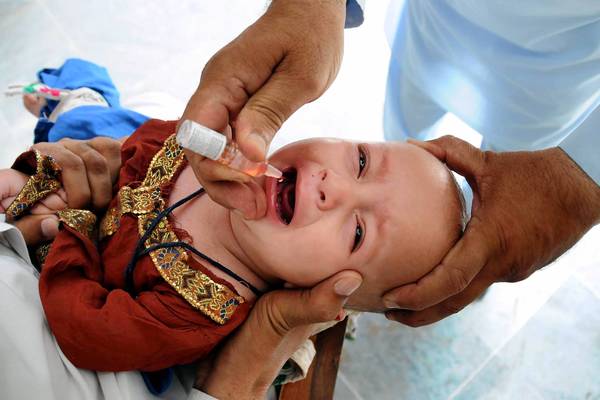
POLIO: Pakistan militants' war raise children's polio risk
A phony CIA vaccination program used to help track down Osama bin Laden leads militant leaders to ban a polio vaccination campaign in Pakistan's Waziristan regions.The war between the CIA and Pakistani militant groups threatens to produce an unlikely casualty: thousands of children who are being denied polio vaccinations in one of the few places on Earth where the disease is still a menace. A phony inoculation program orchestrated by the CIA last year to help it track down Osama bin Laden bolstered long-standing claims by hard-line clerics that vaccination campaigns are a Western plot against Pakistanis. The complaints turned serious this month when the Pakistani Taliban said it would not allow a planned polio vaccination campaign to proceed in the North Waziristan tribal region along the Afghan border. The Taliban said the move was in retaliation for the parade of U.S. drone attacks on militant strongholds, and because it believes such campaigns are used as a cover for Western espionage. On Monday, a top Taliban leader in neighboring South Waziristan announced a ban on polio vaccinations there. Maulvi Nazir, the Taliban commander, also cited the drone program and the use of a vaccination program to hunt for Bin Laden as justification for barring medical teams from inoculating children. The ban in North Waziristan has forced U.N. and Pakistani vaccination teams to halt efforts to reach about 160,000 children in that expanse of rugged badlands, which serves as sanctuary for an array of Islamic militant groups. They include Al Qaeda; factions of the Afghan and Pakistani Taliban; and the Haqqani network, the Afghan militant group responsible for some of the deadliest attacks in Kabul and eastern Afghanistan in recent years. The initial decree was issued by Hafiz Gul Bahadur, a North Waziristan Taliban leader, after a council of militant groups was reported to have endorsed the plan. "There will be a ban on polio vaccinations until the drone attacks are stopped," Bahadur said in pamphlets distributed throughout North Waziristan. "Almost every person in Waziristan is becoming mentally sick because of day-and-night flights of drones. This is more dangerous than polio." The pamphlet also refers to Shakeel Afridi, the Pakistani doctor who led a phony vaccination campaign against hepatitis B to help pinpoint the whereabouts of Bin Laden in the city of Abbottabad, where a team of Navy SEALs killed him in May 2011. Afridi is viewed as a hero by many Americans, but in Pakistan he has been vilified as a traitor and sentenced to 33 years in prison. "There is the chance that these anti-polio campaigns will be used by the U.S. to spy against the mujahedin fighters," Bahadur said in the pamphlets. "One example of this is Dr. Shakeel Afridi." Like the Haqqani network, Bahadur's fighters direct their attacks at U.S. and Afghan security forces on the other side of the border. Bahadur continues to abide by an accord with Pakistan that keeps his fighters from attacking Pakistani military and civilian targets, in return giving him free rein over sections of North Waziristan. Polio cases are on the rise in hard-to-reach villages and towns in conflict zones near the border with Afghanistan. Pakistani officials say the halt to vaccinations in the Waziristan tribal regions is worrisome because people from the regions routinely travel — and may spread the disease — to other cities and towns in northwestern Pakistan, to Afghanistan and to Pakistan's largest city, Karachi. Polio, which is caused by a virus that attacks the nervous system, is highly communicable and can result in irreversible paralysis within hours of infection. Found more often in countries that lack proper sanitation and hygiene, it mostly affects children younger than 5. The virus typically enters the body through the mouth and then is spread through fecal contamination of food or beverages. "It's the first time that such a ban has been imposed on" North Waziristan, said Muhammad Sadiq, the chief doctor for the region. "It's very serious. Such a ban puts the entire region at risk." Pakistan is one of just three countries where polio is deemed endemic; the other two are Afghanistan and Nigeria. As of June 23, 22 cases of polio had been recorded in Pakistan this year. Last year, the country logged 198 cases, according to the World Health Organization. Officials say the lower figure so far this year is because local authorities are doing a better job of preventing the disease in vulnerable neighborhoods. Pakistani officials say there are nearly 320,000 children under 5 in North and South Waziristan who need regular polio vaccinations. Most of those children were vaccinated during the last visit by anti-polio teams, but children who are at risk are not considered fully immunized until they have received repeated dosages. The U.S. has no plans to end its drone campaign, which it says has been highly effective in undermining the capabilities of Al Qaeda and its allied militant groups. Given how entrenched the Taliban is in North Warizistan, Pakistani officials see negotiations with Bahadur as their only option to get him to rescind the ban. In a letter sent to a regional governor, the federal government urged local and provincial officials to begin talks with Bahadur. "Setbacks like this will limit our efforts to reach every child in Pakistan," wrote Shahnaz Wazir Ali, who heads the federal government's polio eradication efforts. "Using the polio campaign as a negotiating tactic is very unfortunate, as it is the families and the children in North Waziristan who will suffer." alex.rodriguez@latimes.com
Afghan Rape Case Turns Focus on Local Police
The policeman spoke with calm and assurance as he insisted that he could not have raped the teenage daughter of a local shepherd, because a mullah had married them just before intercourse.
“Once the marriage contract is done, any sexual intercourse is not considered rape,” said Khodaidad, 42, who until he was detained in the case had worked for the American-trained Afghan Local Police.
His brother Ghulam Sakhi, accused by the young woman of participating in her abduction, sat beside Khodaidad on the floor of a small traditional reception room at the provincial jail here. He chimed in: “In Pashtun culture, the girls do not have the right to say who they marry and who they don’t want to marry. Whomever their parents choose for them, they should marry.”
Neither man has been formally charged, and both deny the abduction and rape allegations.
Prosecutors, family members and human rights advocates vehemently disagree with the suspects’ description of what happened to Lal Bibi, the young woman. They say there is little doubt that she was abducted and raped and that there was no marriage. They also challenge the idea that any marriage in such circumstances could be legitimate or exonerate the rape. Forced marriage is illegal under Afghan law, said Gen. Mohammed Sharif Safi, the military prosecutor in Kunduz.
However, for many people here, including the Kunduz police chief and the spokesman for the Interior Ministry — both of whom insisted that the case involved forced marriage, not rape — the former appeared to be less objectionable, although others would regard the line between the two as thin.
Interviews with more than a dozen people connected to the case suggest that much more is at stake than the fate of an 18-year-old shepherd’s daughter. Her plight illuminates the persistence of tribal custom, the fragility of newly legislated protections for women, and the power of armed men.
What constitutes rape is only one of the contentious issues in this case, which first came to light about a month ago, when Lal Bibi and her family took the rare step of going public with their accusations. The case galvanized President Hamid Karzai, who ordered that the culprits be brought to justice and that the police unit involved be disarmed.
However, some members of Afghanistan’s National Security Council argued that pursuing the allegations could tarnish the image of the Afghan Local Police, a network of American-trained militias they view as essential to maintaining security and keeping the Taliban at bay.
While sharing the goal of security, prosecutors and human rights advocates want to show that this is a new Afghanistan, where the rule of the gun should not trump the rule of law.
“The problem is that these people are illiterate and uneducated,” said General Safi, the military prosecutor, speaking of the police, particularly the unit involved in the case. “They haven’t been told their job description, they don’t have a code of conduct, most are former militia members who still have the mentality they had 15 years ago — they still think they can kill with impunity, rape with impunity.”
“I am very supportive of the Afghan Local Police program,” he added, “It’s a very good program, but I am very critical of the recruitment and selection process.”
Still, General Safi said, despite the program’s flaws, as a prosecutor he would much prefer to deal with the local police, which falls under the jurisdiction of the Interior Ministry, giving him greater authority to act than is the case with other armed groups.
Amid all the shouting, Lal Bibi and her family are very unsure whether justice will be done or whether they will be forever humiliated in their community for having a daughter who, by Pashtun tribal traditions, has been tarnished. Families in similar circumstances sometimes kill the victims because of the perceived dishonor.
Last week, the family, which had never visited the sprawling Afghan capital, made the 10-hour journey by taxi from the city of Kunduz, where they had taken refuge, to Kabul and paid for hotel rooms so that the girl’s father and grandfather could try to persuade government officials to hear their story.
“We had never been here before, and you know, it is very difficult to get officials to meet with you,” said Lal Bibi’s grandfather, Hajji Rustam, looking down at his shoes, which he had polished for his visits to the ministries.
Lal Bibi and her mother had come as well, because as women they could not stay home alone in Kunduz. But they were in another room and were not in a condition to see visitors, Lal Bibi’s father said.
Two more suspects were detained last weekend, including the man who is alleged to be the ringleader in the crime, Cmdr. Muhammad Ishaq Nezaami, who commanded the local police unit and is accused of ordering Lal Bibi’s abduction. Previously, the Kunduz police chief and others said that Commander Nezaami and the other man had left the area, but the two were apprehended in the outpost where they previously worked.
Mr. Karzai’s order to disarm the police unit involved in the episode seems to have been largely overtaken by events, now that four of the five unit members have been detained.
In the meantime, Gen. Samiullah Qatra, the Kunduz provincial police chief, and Col. Mohammed Shokur, the head of the local police program in Kunduz, have brought in a new unit. It is led by the brother of Commander Nezaami, a move that has angered local people who view it as a deliberate taunt.
“Nezaami’s brother was driving Nezaami’s truck, so people think he is back and that scares them,” said Hajji Balkhi, an elder from Lal Bibi’s village. “It is an insult, not just to Hajji Rustam, but to all of us.”
Kunduz Province, where the events occurred, is perhaps the most turbulent in northern Afghanistan. While a tenuous security has been achieved recently, barely 18 months ago the Taliban were a direct threat to the provincial capital of the same name; they assassinated the previous governor and the previous police chief , Gen. Daoud Daoud. Like General Qatra, the previous chief had once served as a commander with the Northern Alliance that supported American forces in overthrowing Taliban rule in 2001.
General Qatra, like his boss, Interior Minister Bismullah Khan, was enthusiastic when the Americans proposed forming the Afghan Local Police, groups of lightly armed local men trained by Special Operations forces to help fight the Taliban. Some informal armed groups with links to the Northern Alliance, as well as some Taliban who renounced the insurgency, were folded into these new local units, Colonel Shokur said.
For his part, General Qatra would rather view Lal Bibi’s case as a family affair than as a serious crime.
“There hasn’t been any rape involved; it was a forced marriage,” he said briskly. “And in this case, the family has claimed their daughter was given as ‘baad.’ ” Baad is the practice of trading women as a payment to resolve disputes between families, clans or tribes. Typically, when a girl is given in baad, it is the result of a meeting of elders in which both families have representatives.
General Qatra did not deny that Commander Nezaami’s brother now led the unit, but said it was irrelevant. “A crime is a personal thing, whoever does a crime should be punished,” he said. “You cannot punish my brother for the crime I have committed.”
He brushed off the idea that he might be trying to intimidate the family, saying that he had no choice but to replace the unit with another one. “We need that outpost to prevent that village from falling into the hands of the Taliban,” he said.
That is small comfort to Lal Bibi and her family, since they feel they cannot return to their tents and sheep. They say they are under threat because they spoke out against the armed men who are supposed to keep them safe.
General Safi, the prosecutor, said that he had dealt with a lot of cases, but that this one “reaffirmed my stance against the mistreatment of women.”
Referring to the many women’s projects financed by the international community, he added, “I realized — all this money they spent to improve the situation of women, and there are still a lot of women who are mistreated every day and whose life condition has not changed much.”
Afghan official urges Taliban to join peace talks

A senior Afghan government official asked the Taliban to join peace talks during a meeting in Kyoto, western Japan, but a Taliban official at the meeting refused the offer, local media reported on Thursday.
At the Wednesday meeting, organized by Doshisha University in Kyoto, Mohammad Masoon Stanekzai, security advisor to Afghan President Hamid Karzai, said both sides need to be committed to preventing Afghanistan from sliding back into civil war.
He also stressed the need for a peace process that includes all parties, Japan's public broadcaster Nippon Hoso Kyokai (NHK) reported.
But Taliban senior official Din Mohammad said his group will not sit down for talks until U.S. and other foreign troops withdraw from Afghanistan first.
The Taliban suspended secret peace talks with the United States in March. It also refuses talks with the Afghan government.
The meeting was the first of its kind to include a senior Taliban official. It came ahead of an international conference in support of Afghanistan scheduled for July 8 in Tokyo, NHK quoted university officials as saying.
Pakistan: Validation Ordinance 2012
That an ordinance had to be promulgated by President Zardari to prevent actions taken by former Prime Minister Gilani during the period of his 'conviction' and 'disqualification' from being challenged in court is a development which was highly and widely expected. That his opponents would challenge him it was also expected. And in fact it has already happened as the Supreme Court has received a petition challenging the actions and decisions during that fateful interregnum requesting the court to hold them void ab initio. How will this showdown play out? Is it in the realm of the unknown? These are profoundly profound questions.
The court's verdict, on the face of it, doesn't militate against the age-old constitutional practice of 'de-facto government doctrine'. During the time between conviction and disqualification - which was almost two months - the government had taken quite a few important decisions including adoption of federal budget. Also, in normal course it had made new appointments, postings and transfers and even signed some protocols with foreign governments. Obviously, reversal of those actions and decisions is neither contemplated, nor is it possible. But that said one cannot be unmindful of the fact that quite a few things done during that period cannot be justified under this doctrine. If the court is asked to deal with the latter category of actions and decisions, it should not offend anyone.
There can be no two opinions on the president's right to issue an ordinance if and when warranted by the circumstances and with parliament being out of session require immediate legal cover. Since the Supreme Court's verdict on Gilani tends to breed uncertainty, irrespective of it being right or wrong, the Validation Ordinance 2012 is a very much positive move. That as head of state he has inherited the right for concurrent legislative power is a fact which can always be debated in order to ascertain its exact and legal propriety. The framers of the 18th Constitutional Amendment did not find anything wrong with this power being kept with the president though they did deprive him of all the potent roles by abrogating Article 58 2(b). But if the president has the unchallengeable power to issue ordinances, the Supreme Court has the unquestionable right to interpret constitution. Paradoxically, both have legal, constitutional positions.
Wednesday, June 27, 2012
Imran Khan: engaging delusion
The Express TribuneThere was a moment last December when the mirage shimmered and briefly dissipated for many Imran Khan supporters. Amidst a tsunami of Sipah-e-Sahaba (SSP) and Lashkar-e-Tayyaba/Jamaat-ud-Dawa (JuD) flags, Pakistan Tehreek-e-Insaaf (PTI) Vice President Ijaz Chaudhry thundered on stage at the Difa-e-Pakistan Council (DPC) rally in Lahore. The special message that he delivered from his quaid, Imran Khan, touched the usual conspiracies and clichés about India, America and the Pakistani government. Yet, many PTI supporters were taken aback by their party rubbing shoulders with sectarian murderers and terrorists. Khan himself was questioned on sharing a platform with the likes of JuD and SSP. Unfazed, Khan simply said it was his duty to “engage” with everyone no matter how extreme. The mirage reconstructed itself. PTI acolytes parroted the party line. The PTI was not associating with terrorists. It was “engaging” fringe elements to wean them into the mainstream. This rhetoric is attractive without being accurate. Consider. In May 2011, PTI leaders attended a rally with JuD that condemned the killing of Osama bin Laden, and pronounced him –– a man who had declared war on Pakistan –– a “Martyr of Islam.” PTI leaders also attended rallies with JuD and other extremist organisations on January 30, 2011 and October 29, in favour of Pakistan’s controversial blasphemy laws, and to express admiration for Salman Taseer’s assassin. Khan’s message, delivered by Ijaz Chaudhry, was one of endorsement. He called Pakistan’s blasphemy laws “divine,” foreclosing any reform. Further, in April, 2011 Khan personally visited the Darul-Uloom Haqqania to seek support for his anti-drone dharnas – the campaign many see as a watershed in his rise. Popularly known as “the University of Jihad,” the Dar-ul-Uloom is accused by the Federal Investigation Agency of being the launching pad for former Prime Minister Benazir Bhutto’s assassination. It has schooled the Taliban’s top leadership, including the Afghan warlord Jalaluddin Haqqani, who derives his name from his proud affiliation with his alma mater. And Khan’s “engagement” there? Extolling the virtues jihad as a mandatory obligation – the very ideology the would-be jihadis are indoctrinated with. The DPC’s anti-Ahmadi activities are well-documented. Less so are the PTI’s, which has attended events arranged by the Aalmi Majlis Tahaffuz Khatm-e-Nubuwwat to discuss “increasing anti-social activities by Qadianis [Ahmadis] destroying the country’s peace”. Little surprise, then, that PTI leaders were behind the bigoted boycott of Ahmadi-made products by the Lahore Bar Association. At DPC rallies PTI leaders are seen erupting in wild applause, encouraging the militancy, xenophobia and misogyny spouted by the likes of Ahmed Ludhianvi of the SSP and Hafiz Saeed of the JuD. In fact, PTI president Javed Hashmi recently named the UN-declared terrorist Hafiz Saeed to be a “preacher of peace” on the same day that Saeed was publicly calling for “holy war”. In this light, who is engaging whom? And where does engagement drift into naked endorsement? It appears that the PTI, instead of peeling away extremists, is pandering to the hateful agendas of Pakistan’s Islamist and hyper-nationalist lunatic fringe. Moreover, as these organisations gain a mainstream podium to disseminate their extreme views, they are gaining a veneer of legitimacy with mainstream voters and PTI supporters. Indeed, the terrorist SSP has undergone a resurgence since its outings with the DPC and PTI. Can one reasonably expect the nature of PTI’s “engagement” with the far-right to be substantially different when Imran Khan does not believe jihadist radicalisation to be a concern? Having opposed military operations against the Taliban and terrorist organisations, Khan has stated that in power he would cease any action against the Taliban and al-Qaeda. Recently he went so far as to state that “there is not a threat to Pakistan from Taliban ideology.” This is stunning given the backdrop of the spiralling persecution and slaughter of Pakistan’s beleaguered minorities, including Shias, Ahmadis, Hindus and Christians, by the Taliban and groups sharing their sectarian ideology –– among them PTI’s DPC partners. Khan’s position becomes positively morbid considering that a staggering 40,000 Pakistanis have been killed in militant and terrorist attacks since 2001. Whatever routine of blame-the-imperialist one engages in to explain the existence of these terrorists, the fact is their ideology –– unthreatening to Khan –– accommodates mass murder. Here, then, is the rub. Politics is about nurturing electoral constituencies and ensuring survival. If far-right politics and appeasing extremists successfully paves the way to power, then after years in the political wilderness Khan will have found his electoral niche. Those making excuses for this political opportunism are engaging only delusion. Published in The Express Tribune, April 12th, 2012.
Pakistan: 'To follow constituion on Swiss letter'
Federal Minister for Information and Broadcasting Qamar Zaman Kaira on Wednesday said that the Constitution would be followed on the issue of writing a letter to the Swiss courts.
Talking to media persons at Shaheed Zulfikar Ali Bhutto Institute of Science and Technology here, Kaira said that Prime Minister Raja Pervez Ashraf had already given the government’s stance on the issue.
He the parliament is supreme, as it has the power to formulate new constitution as well as institutions.
"It was agreed in Charter of Democracy that a new constitutional court would be established but Nawaz Sharif, who had signed the CoD, is now backing off," Kaira said.
He said the Parliament was not formed by the Constitution but the former formulated the latter, and it is up to the Parliament to chalk out even a new constitution.
The Parliament enjoys unquestionable supremacy because it also has the power to dissolve the existence institutions and establish new ones.
To a question the Information Minister said: "We had responded to the NRO implementation case in light of the Constitution in the past and our reply will once again be in accordance with the Constitution."
He said Raja Pervaiz Ashraf was Benazir Bhutto's choice whereas in Rental Power Projects he was given misleading figures and briefings by the bureaucracy. "He (Raja Pervaiz Ashraf) did not do anything on his own," he added.
Kaira brushed aside as wrong the impression that millions of rupess were spent on ministers.
Replying to another question, he said that Bilawal Bhutto Zardari was the Chairman of the Pakistan Peoples Party (PPP) and President Asif Ali Zardari had become the party co-chairman in extra-ordinary circumstances.
Munter lauds Pak female entrepreneurs
US Ambassador Cameron Munter Tuesday lauded the successes of female entrepreneurs in Pakistan during a visit to the Islamabad Women’s Chamber of Commerce and Industry (IWCCI). During his visit, Ambassador Munter and Dr Marilyn Wyatt met more than 100 successful women entrepreneurs, including Samina Fazil, founder and president of the IWCCI and owner of Misha’s Collection, which was founded in 1989 with start-up funding of about $1,100 and now exports goods to international markets.
“The American Mission is committed to helping women-led businesses and women entrepreneurs, because Pakistan’s prosperity is closely linked to not only the success of its men, but also that of its women entrepreneurs,” said Ambassador Munter. He encouraged the members of IWCCI to work with other chambers of commerce across Pakistan to present a unified voice to lobby the Government of Pakistan for necessary reforms to remove obstacles that hinder economic growth.
“A sustainable future for Pakistan will require significant participation of the private sector and significant reforms on the part of the government to enable the private sector to flourish. It will require a common vision and the participation of the people of Pakistan and the visible commitment of the government to the people.”
He said the United States is committed to the development of the next generation of women entrepreneurs and business leaders in Pakistan.
The U.S. Agency for International Development (USAID) in Pakistan has trained more than 70,000 women micro-entrepreneurs in Punjab and Sindh in financial literacy. Through its Gender Equity Program, FIRMS project, and trade project, among others, USAID is helping create a socially just, democratic, and gender responsive society. These programs have helped Pakistani women-owned enterprises enhance their competitiveness and increase their sales, while also working on developing a regional trade portal for women entrepreneurs to facilitate trade among SAARC countries.
Viagra : Afghan Authorities Stop Going Soft On Viagra
http://www.rferl.orgAfghanistan's reputation as a haven for drug smugglers is well known. But while it is normally opium and its derivative substances that grab all the headlines, it seems that a little blue pill is now causing the authorities serious concern. Viagra, a well-known erectile dysfunction drug, has long been in demand in the country. Such is its popularity the CIA has in the past been known to use the medicament as an enticement for tribal leaders to pass on information about Taliban movements. Now, however, it seems the little love philter is so prevalent it has become a major headache for the government in Kabul. The Afghan Health Ministry has recently issued warnings about the potentially dangerous nonprescription use of Viagra. According to the BBC, up to 2 million pills can be legally imported into Afghanistan each year, but ministry officials believe at least 4 million pills are being consumed nationwide. Indeed, given the notoriously porous nature of Afghanistan's borders, some believe that the number of tablets that are flooding into the country could be even higher. As Afghanistan only has an estimated adult male population of 9 million, it seems that demand for Viagra is exceedingly high. Why Afghan men appear to have such a pressing need for the aphrodisiac has been the source of some speculation. One BBC correspondent suggested that 34 years of almost continuous war in the country could be one of the causes. It's well known that residing in conflict zones can give rise to a whole host of psychological problems, which can have a concomitant impact on sexual performance. Some have also pointed to the fact that Afghan men can have as many as four, often younger, wives at any given time. It's little wonder, therefore, that the little blue diamonds might help maintain domestic harmony in many households. Whatever the reasons for its popularity, it seems the Afghan Health Ministry's warnings about Viagra have so far fallen on deaf ears. When a reporter from the BBC's Dari Service visited an open-air market in Kabul, he found that merchants were still doing a very brisk trade in the tablets.
Improving Balochistan situation top priority
Prime Minister Raja Pervez Ashraf has said that improving the situation in Balochistan and solving its provinces is one of his top priorities.
He stated this while talking to a delegation led by Chief Minister Balochistan Aslam Raisani which called on him at the PM House.
The PM said that he would visit Balochistan next month to personally see the implementation of ongoing development projects there. I would also
CM Raisani briefed the PM about the situation in Balochistan.
The PM directed the ministry of finance to call the meeting of ECNEC to make providing of funds for development projects in Balochistan possible.
Pakistani, US generals in border talks
The US commander in Afghanistan discussed border coordination with Pakistan's army chief on Wednesday as the Taliban released a video showing the remains of 17 beheaded Pakistani soldiers.
General John Allen, who commands 130,000 NATO troops fighting the Taliban in Afghanistan, flew into Chaklala air base and went straight into the talks with General Ashraf Kayani at his Rawalpindi headquarters, before jetting out of the country, officials said.
There was no immediate comment from NATO's International Security Assistance Force (ISAF), but a Pakistani official said Kayani demanded greater efforts from the Americans on stopping cross-border incursions.
"It was a routine meeting to discuss the border coordination," a senior Pakistani military official told AFP.
"We also raised the issue of cross-border attacks on the Pakistan military from Afghanistan. We demanded that ISAF take action against the militant sanctuaries in Afghanistan and eliminate the militant groups involved in cross-border attacks inside Pakistan," he added.
Pakistan said around 100 Afghan-based militants crossed the border into the northwestern district of Upper Dir on Sunday. Six soldiers were killed and 11 went missing. Pakistani officials said Tuesday that seven of them were beheaded.
On Wednesday, a senior security official in the northwest admitted that all 17 had in fact been beheaded after the Pakistani Taliban released a video showing the slaughtered heads.
Pakistan's main umbrella Taliban faction claimed responsibility for the attack.
Intelligence officials said the perpetrators were loyalists of Maulana Fazlullah, a Pakistani cleric who led a two-year Taliban insurgency in the northwestern Swat valley before fleeing into Afghanistan to escape an army offensive in 2009.
But both the Afghans and the Americans repeatedly blame Pakistan for not doing more to eliminate havens on its soil, which are used as launch pads for attacks across the border.
Last Friday, Allen blamed the Pakistan-based Haqqani network for a siege on a lakeside hotel in Kabul that killed 18 people. Earlier this month, US Defense Secretary Leon Panetta said Washington was running out of patience with Pakistan over militant havens.
On Tuesday, officials and witnesses in Afghanistan's eastern province of Kunar also said that thousands of villagers have been forced to flee their homes to escape a barrage of cross-border artillery and rocket attacks from Pakistan.
It was also likely that Allen and Kayani discussed Pakistan's seven-month blockade on overland NATO supplies into Afghanistan after US air strikes killed 24 Pakistani soldiers along the Afghan border on November 26.
Talks to reopen the border have reached stalemate over Pakistani demands for a formal apology.
Veena Malik : My marriage plans are jinxed
Pakistani model-turned-actress Veena Malik
was expected to find her prince charming on ‘Veena Ka Swayamvar’, but the reality show was aborted after the channel decided to shut down its operations. Veena says she is not upset as she knows that her marriage plans are doomed. “You know, my wedding dates have been getting ready ever since I was 14. My dad wanted me to get married since then. My parents tried to get me settled down four times and every time I backed out,” Veena said in an interview. She added, “But when ‘Swayamvar’ happened, my abu and my friends supported me a lot. When I was ready for it (marriage), it didn’t happen. I think my marriage plans are jinxed. It has been cancelled many a times.” After her stint on reality show ‘Bigg Boss’, ‘Veena Ka Swayamvar’ would have been her second Indian show. She was not shocked when she came to know that the show has been cancelled. “I was not surprised when I heard that the channel had shut down. I believe it happens in our lives. I am a very positive person,” said Veena who is said to be dating director Hemant Madhukar. She is working in his film ‘Mumbai 125 kms’. However, she admits her father was upset when the show didn’t happen. “If ‘Swayamvar’ would have happened, maybe I would have even gotten married. When it got cancelled, my dad was very upset. Something is wrong with my wedding. I don’t think I will ever get married,” she added. Veena came to limelight after her link-up with tainted Pakistani bowler Mohammad Asif. She rose to fame in India after appearing in the fourth season of controversial reality show ‘Bigg Boss’. During her stay in the Bigg Boss house, Veena was linked to Bollywood actor Ashmit Patel.
Pakistan's Supreme Court sets collision course with new prime minister
Pakistan’s Supreme Court on Wednesday demanded that the nation’s brand-new prime minister follow an order to reopen a long-dormant corruption case against President Asif Ali Zardari, setting up the likelihood of a continuing constitutional crisis.
The court last week disqualified from office Yousuf Raza Gilani, Pakistan’s longest-serving prime minister, whom it convicted of contempt in April because Gilani refused to follow the same order.
The ruling party replaced Gilani with a former federal energy chief, Raja Pervez Ashraf, who has already indicated he will not comply with the order and faces his own set of corruption charges in a separate case before the high court.
Some political and legal observers have accused the court, headed by populist, corruption-battling Chief Justice Iftikhar Chaudhry, of working to destabilize an already-shaky civilian government. Ashraf and his predecessor maintain that Pakistan’s constitution grants the president immunity from prosecution, but the court has consistently ruled otherwise, saying no one is above the law.
The legal and political upheaval has complicated U.S. efforts to broker a compromise with Pakistan to reopen vital NATO supply routes that pass into landlocked Afghanistan through Pakistani territory. The routes have been shuttered for more than seven months, creating a logistical headache not only for the Pentagon but other forces, including France’s, which need access to Pakistan’s southern port to withdraw vast quantities of materiel.
Zardari has denied the corruption allegations, which date to the 1990s and involve Swiss bank accounts held by the president and his late wife, Benazir Bhutto, a former prime minister who was assassinated in 2007. Gilani for months refused to write a letter to Swiss authorities asking them to reopen graft and money-laundering cases against Zardari.
The court on Wednesday gave the new prime minister until July 12 to respond to its directive and offer any arguments as to why he might not have to pursue the corruption charges.
Some analysts predict that Ashraf will only be in the job for a matter of weeks — the time the court will take to consider his response and hand down a ruling that, observers say, will almost certainly declare that Ashraf must write the so-called “Swiss letter.”
“The new prime minister is facing the same situation” as Gilani, said S.M. Zafar, a longtime lawyer in Islamabad. “He could write the letter or he could take some middle ground that is acceptable to the court as well.
"But if that doesn’t happen then I see a disaster in the coming days,” Zafar said. “The crisis would worsen further.”
Other analysts said the court's respect for rule of law is admirable but also can go too far.
“There is a place for judicial activism in almost every country, particularly one in which the rule of law has all too often been conspicuous by its absence,” Mahir Ali, a columnist for the English-language newspaper Dawn wrote in Wednesday’s editions, before the latest court ruling.
“But the rule of law does not mean rule by the Supreme Court, which has no right to be a substitute for parliament.”
Salute to Swat's Gul-e-Khandana: Brave woman who stood up to the Taliban
Pakistan rebuilds its education network after Taliban are driven out of Swat A government operation to drive out militants has seen a gradual return to the classrooms in a district where more than 400 schools were destroyed, 70% of them girls' schoolsIn a rundown building in the mountain village of Sijban, girls sit at their desks, hair loosely covered in white or black scarves, staring raptly at their teacher. They say they want to become either doctors or teachers when they grow up. This is the one government primary school for girls in the Swat valley that was spared destruction by the Taliban. Their headteacher, Gul-e-Khandana, is no ordinary teacher – she stood up to the Taliban and managed to save the school where she had taught for more than 20 years. She still shudders as she recalls what happened: "A group of Taliban arrived with Kalashnikovs at the school building just before the school holidays in June 2008. I ran out and told them: 'You will have to kill me first before you torch my school'. They called me a kaffir [non-believer] and said they would be back." The Taliban had already destroyed the nearby girls' middle school so, fearing the worst, Gul-e-Khandana removed the furniture and school records to her home. The girls had already stopped coming to school. But Gul-e-Khandana was determined. She was denounced on the radio, which was controlled by the militants. Her neighbours stopped talking to her and her extended family broke off all ties. When the military operation began to flush out the Taliban from Swat later that year, Gul-e-Khandana fled, smuggling the school records under her burka. "Everyone thought I was crazy but I thought one day the Taliban will leave and we will re-open the school and the girls will come back. I wanted to keep the certificates and records." With the army operation completed, Gul-e-Khandana returned to Sijban in July 2009 and went straight to her school. "It was still standing! I was so delighted. I had feared the worst but out of the six classrooms only one room had been destroyed by mortar shells." With the building more or less intact, she re-opened the school. "Many of the girls were still too terrified to come back to school and I started a committee with the help of the army that went from one household to another to convince the parents to send their daughters back to school." Today there are 262 pupils enrolled in her school, more than before the Taliban came to Swat. Other schools in the area, such as the middle school for girls in Shinkat, a village near the capital of Swat, were not so lucky. The school was completely destroyed by the Taliban in 2009. Salma, 17, recalls the day it was attacked. "It happened around 1 o'clock in the morning. I heard the blast. It made me very sad and I cried." Today, Salma is back at her newly constructed school in Shinkat and says she wants to be a doctor. Her teacher, Shanaz, says that now the Taliban have left the valley, enrolment is increasing. "More girls are coming back and many want to go on to college. There is a change; parents are willing to encourage their daughters. As for the girls, you can see the happiness on their faces, they are so happy to be back in a proper school again. Many lost almost two years of their studies." The Taliban destroyed more than 400 of the 1,576 schools in Swat. "Seventy percent of them were girls' schools," recalls Ensaullah Khan, who serves on the board of the Sarhad rural support programme, an NGO that is helping to rebuild schools. "Then as the conflict with the government intensified they started destroying both boys' schools as well as girls' schools. It was a terrible time. How can you build a nation without education?" This is a question many people are asking in Pakistan, after the Annual Status of Education report, published in February this year, revealed that nearly 60% of school-age children can't read. Girls fare the worst. Another report, by the Pakistan Education Task Force in 2011, showed that Pakistan is second in the global ranking of out-of-school children. One in three rural women have never attended school. Education in Pakistan is chronically underfunded. And the Taliban continues to strike in other parts of Khyber Pakhtunkhwa province. There are no official figures but estimates suggest more than 800 schools have been destroyed in north-west Pakistan. Maryam Bibi, founder of the NGO Khwendo Kor, which has been working for girls' education in Khyber Pakhtunkhwa province since 1993, is one of several who see the importance of educating girls. "We talk about equality and women's rights and welfare at the policy level, but what is the strategy, especially for poor girls living in remote areas? We must educate these girls – then you are automatically ensuring that their health improves and that later on they have fewer unplanned pregnancies." Her organisation focuses on remote areas where no schools exist yet. "The villagers themselves have given us space to run these schools for the young girls in the community and we try to involve the mothers as well by offering them short courses to improve their literacy levels. We are only working in remote areas where there are very few schools and opportunities. We try to find an educated girl in the village and then give her training and funding to run the school. So far, we are running around 150 schools on our own, but our funding is decreasing. We want the government to eventually take over these schools." Gul-e-Khandana believes that girls are the future for Pakistan. "Above all, girls must be educated," she says. "When one girl is educated, she educates her entire household. The role of women is very important in our society – it is they who can change our way of life for the better." Khan agrees that schooling is the answer. "With education, we can change our future. We can save the people from falling into the hands of extremists. We can empower them."
Balochistan: GWADAR WITHOUT WATER
The Chief Minister had declared Gwadar as the winter capital of Balochistan with a view to increase its importance and attract foreign and domestic investment and also by making the Deep Water Port functional, at least partial functional by diverting part of the state trading from Karachi to Gwadar Port. However, Gwadar is without drinking water. Local residents staged a noisy demonstration by blocking the main Airport Road in protest against non availability of water for people of Gwadar. The Ankara Dam reservoir had gone dry in absence of substantial rains in its catchment area or in the whole region for the past many months or a year. The Ankara Kaur Dam was designed by the NESPAK engineers and it was supposed to silt up in 50 years. The NESPAK design was so defective and faulty that the reservoir of the dam had silted up in less than 25 years leaving minimum storage capacity in rains and floods. NESPAK engineers had failed in proper planning and designing projects for Balochistan. In most of the cases, NESPAK had dispatched inexperienced and low grade functionaries for preparing the design. In some case, sub-engineers were asked to supervise the project, including the Ankara Kaur Dam. It was natural that the design of the dam will be defective, below specification work had been carried out and sub-standard material used in connecting dam reservoir with the city. Pipes used were defective and NAB caught the NESPAK engineers and they were convicted in court of law for committing crime against the state and the people.
Now the only solution for the water problem is that the Government should carry out desilting of the dam reservoir before the rains in the region so that water is again stored for future use. Besides desilting, the Government should raise the level of Dam Reservoir on the patter of Mangla Dam so that storage capacity is increased and the demand of the local people should be met for two years.
Secondly, the Government should construct another dam in the downstream of Dasht River near Sunt Sar before the seasonal river falls into the Baloch Gulf. It will be the second dam on Dasht River storing water released from the spill way of the Mirani Dam. It can be a huge dam meeting the needs of growers of the area and develop a green belt around the port city of Gwadar.
Thirdly, the Government should build a dam on Sawar River for which the Chief Minister had already allocated funds for early planning and execution of the project. Dams on Shadi Kaur and other rivers flowing close to Ormara be built catering the water needs of the entire coastal belt, including commercial needs of the huge projects planned for the Mekran Coast.
The Government should allocate funds from its provincial sources as the Federal Government is reluctant to make significant investment for development of Balochistan for strategic reasons. The Provincial Government should seek international assistance from development finance institutions and friendly countries to augment water resources for the entire coastal region, from Karachi to Jiwani. Friendly country like Iran, UAE and other states in the gulf region will definitely help Balochistan in augmenting water resources, meeting the basic human needs and also for commercial and agriculture uses in the whole Mekran and Lasbela region. Vindar Dam had been planned and its foundation stone had been laid by the President of Pakistan last year and hopefully the work on the Vindar Dam will gain reasonable pace so that it is complete within the stipulated period. There are big scope for building more dams in Lasbela and Mekran Division meeting the water needs of the people. However, the Government will have to speed up the work to provide water to the residents of Gwadar before the start migrating from the port city for want of water.
Quetta’s Carnage Spells Trouble For Balochistan
http://www.thebalochhal.comA remote-controlled bomb blast on Monday, June 18 targeted a university bus in Quetta, the capital city of the southwestern Pakistani province of Balochistan, killing five students and injuring more than 60 civilians. All the students killed belonged to the Shiite-Hazara ethno-religious minority group. An underground Sunni militant organization, the Lashkar-e-Jhangvi (LeJ), which is thought to have close ties with the intelligence agencies of the Pakistani military, claimed responsibility for the unprecedented attack. While ceremonies and mosques of Shia Muslims are often the target of deadly attacks, a university bus has never before come under such a robust attack. The LeJ, which was formed in 1996 as a breakaway faction of another banned militant Sunni organization, the Sipa-e-Sahaba, has pledged to carry out more of such attacks on Pakistan’s Shia in the future. With Shia making up a quarter of the population, Pakistan has the world’s second largest Shia population after Iran. The majority of Shia Muslims in the Balochistan region are also of the Hazara ethnic origins. Theoretically, the Pakistani authorities have banned the LeJ and declared it a terrorist organization, but practically it operates with absolute impunity because of its deep contacts with some sections of the armed forces. The LeJ treats Shias as apostates and vehemently advocates for their killing if they do not convert to the Sunni version of Islam or leave Pakistan. Monday’s incident comes less than two weeks after another deadly terrorist bombing at a Sunni religious school (a madrassa) in Quetta on June 7, which killed 14 people including several students, and injured at least 40 people. Abu-Bakar Siddiq, a spokesman for the LeJ, told the local media that the killings on June 18 were actually meant to avenge the earlier madrassa bombing. Attacks and counter-attacks by fanatic religious groups serve as the harbinger of renewed confrontation in Pakistan’s less-known sectarian battle. Washington believes the top leadership of the Taliban, headed by Mullah Mohammad Omar, is hiding in Quetta, allegedly with the covert support of some sections of Pakistan’s intelligence agency, the Inter-Services Intelligence (ISI). The Quetta Shura, according to an American diplomat, is comprised of people who devise policies for the Taliban while living in Quetta. In March 2009, the New York Times reported that the Obama administration intended to extend the chain of drone strikes to Quetta, where they believe the Taliban are masterminding attacks on American troops in southern Afghanistan. Pro-Taliban members of the Balochistan Assembly immediately passed a parliamentary resolution to warn the United States of the “dire consequences” of expanding drone operations to Quetta. The postponement of action against radical Islamic elements only provided them an opportunity to further consolidate their grip on the gas-rich mountainous region. The June 7 attack was also unique since schools run by Sunni clerics rarely come under attack. According to a senior police officer, seminaries had not received any threats. Sunni organizations and schools do not normally ask for security assistance from the government, either because they do not foresee any attacks, or because they suspect the official security apparatus because of the covert ties these religious parties keep with jihadist organizations (the security apparatus in this case refers to the local police, who don’t have the same Jihadist-supporting policies and powers of the army or intelligence agencies). The Jamiat Ulema e Islam (JUI), a pro-Taliban political party which runs most of the seminaries across Balochistan, is also a coalition partner of the ruling Pakistan People’s Party (PPP) in the regional government. The JUI rallied against the U.S. invasion of Afghanistan, and also provided manpower to the Taliban for attacks against coalition forces. Anti-American campaigns led to its overwhelming electoral victories in Balochistan and the North Western Frontier Province in the general elections of 2002 and 2008. JUI’s alignment with the ruling PPP enables it to protect and promote its Islamist interests and vast network of religious schools. Hundreds of students who are enrolled in these seminaries traditionally make arrangements for and provide security to JUI’s mammoth public gatherings and anti-U.S. protest rallies. Pakistan’s secret services support the JUI and their Taliban proxies in an effort to counter the left-wing Baloch nationalist movement inside Pakistan. The ethnic Baloch, who represent a majority in Balochistan, Pakistan’s largest province, also live in Iran’s largest province of Sistan and Baluchistan, as well as southern parts of Afghanistan. In Iran and Pakistan, the Balochs complain about maltreatment and exclusion from the mainstream by the majority Persian and Punjabi populations, but the two states have traditionally responded differently to the Balochs’ discontent. While Pakistan has allowed radical elements to fight sections of the Baloch nationalists who seek a separate homeland, Iran has treated the Sunni radical movement led by Balochi speakers in the Jundullah organization as an enemy. Local sources in Balochistan say funding for Sunni and Shiite groups mainly originates from Saudi Arabia and Iran respectively, two ideological rivals, and sections of the intelligence wing of the Pakistani military are also known to support Sunni organizations. Against the backdrop of violent religious politics, there has been a dramatic increase in targeted killings of Sunni scholars of Baloch ethnic origin, allegedly by Shia groups. On October 30, 2011 Hafiz Itesham-ul-Haq, the secretary general of a district chapter of JUI, was shot dead in the Pakistan-Iran border town of Panjgur, an incident which was followed on March 24, 2012 by the killing of Qari Abdul Basit, the son of a noted Sunni scholar Maulvi Abdul Samad. On April 6, 2012 Maulana Muhammad Qasim, the prayer leader of a Quetta mosque, was murdered while Hafiz Imdadullah, the son of a JUI district leader, was assassinated in Quetta on June 1. On March 24, 2012 Hafiz Hamdullah, president of JUI’s Quetta chapter, was quoted by the Karachi-based Express Tribune as saying that over ten religious scholars belonging to the Sunni sect have been killed in the past few months. He blamed a “powerful group” for targeted killings and incidents of kidnapping for ransom in Quetta. In Pakistan, “powerful group” is often used to allude to foreign countries as well as Pakistan’s own intelligence agencies. On June 2, 2012, Major General Obaidullah Khan, the Inspector General of the Frontier Corps (FC), a paramilitary organization responsible for guarding Pakistan’s borders with Iran and Afghanistan, said, without providing any evidence, that the intelligence agencies of at least 20 countries were involved in a number of activities in Balochistan. Insiders in the government say they have arrested a member of the Shia community in Quetta in connection with his alleged involvement in the June 1 killing of a prominent Sunni leader’s son. However, they refrain from publicizing such information, fearing worse communal and sectarian backlash and unrest. In the 1980s, Pakistan patronized Sunni militant groups across the country with Saudi funding in order to contain the Iranian Revolution. Since then, some of these homegrown sectarian groups have slipped out of Pakistan’s official control. While these organizations originated from the most populated Punjab province, they have now spread throughout Pakistan. The LeJ regularly attacks police officers and installations to intimidate the law enforcement agencies. To overcome such attacks, authorities secretly cooperate with the groups in hopes of appeasing them to stop attacks on their personnel. Civil society groups blame the Pakistani state for cultivating the roots of religious intolerance in the country. For its part, the government has merely offered lip-service, instead of punishing the masterminds behind religiously-motivated attacks, despite the enormous cost of civilian lives. (Courtesy: Foreign Policy)
Subscribe to:
Posts (Atom)