M WAQAR..... "A man's ethical behavior should be based effectually on sympathy, education, and social ties; no religious basis is necessary.Man would indeed be in a poor way if he had to be restrained by fear of punishment and hope of reward after death." --Albert Einstein !!! NEWS,ARTICLES,EDITORIALS,MUSIC... Ze chi pe mayeen yum da agha pukhtunistan de.....(Liberal,Progressive,Secular World.)''Secularism is not against religion; it is the message of humanity.'' تل ده وی پثتونستآن
Friday, June 22, 2012
PAKISTAN'S NEW PRIME MINISTER...Raja Pervez Ashraf
Pakistan's ruinous political farce
PPP picks Raja Pervaiz Ashraf for premiership
Thursday, June 21, 2012
Five killed, 24 injured in Peshawar blast
At least five persons were killed and 24 others including seven children and 11 women were injured when a power bomb exploded in Hazar Khawani area of Peshawar on Thursday.
Rescue sources said the pressure cooker bomb was planted in a handcart which was parked near Panj Pirano Ziarat.
At the time of blast, a large numbers of male and female devotees were present near the graves of old Sufi saints.
The blast resulted in killing of five persons and injuring 24 others.
The powerful blast also damaged the boundary wall of the graveyard.
The blast caused fear and panic among the residents as its sound was echoed in the surrounding localities.
Soon after the blast Edhi ambulances and rescue 1122 squad rushed to the blast site and shifted the injured persons to Lady Reading Hospital Peshawar for emergency medical treatment. Some of the injured were stated to be in critical condition.
Those who were killed were identified as Zahir Shah, Muzammil Shah and Kamil Shah and two others while those who were injured included Basit Haider, Tofail,Syed Shah Bahar Shah, Fatima, Azmat Shah, Farooq, Rani, Naila, Ajmal, Zeeshan, Kashif, Atiq, Haider Ali, Sombal Noman and Mukhtiar.
Police and Bomb Disposal Squad rushed to the blast site and cordoned off the area. SSP Operations Tahir Ayub said that that main target of the blast was the gathering of people.
According to Bomb Disposal Squad around 10 kilograms of explosives materials were used in the attack.
They said that the bomb was placed in pressure cooker which blew up with a huge blast.
It is worth mentioning here that earlier to this Rahman Baba mausoleum was targeted in the same graveyard when unknown persons planted explosives material.
Asif Ali Zardari targeted, Yousuf Raza Gilani exits: Who'll be the next to go?
International Pashto Language . د پښتو ژبی نړیواله ورځ
Pakistan: Looming judicial tyranny
EDITORIAL:Daily TimesYousaf Raza Gilani is gone. The incumbent PPP is discussing his replacement. Whoever succeeds Gilani still runs the risk of being subjected to the same pressures from the judiciary as Gilani faced, and which eventually ended in his ignominious departure, not at the hands of the people or their elected representatives, which is the norm in all parliamentary democracies, but at the hands of an activist judiciary that has opened itself up in the process to grave criticism. For the benefit of our readers, let us retrace some of the steps and developments that led to this denouement. The National Reconciliation Ordinance (NRO) was essentially a political deal between Musharraf and the PPP led at that time by the late Benazir Bhutto. It gave relief to over 8,000 people affected by charges of corruption and other misdemeanours, of whom only about 80 were politicians. While the Supreme Court (SC) struck it down on the strict constitutional/legal criterion of being discriminatory, and ordered all closed cases of the beneficiaries to be reopened, its subsequent focus seemed to be on just one of those beneficiaries: President Asif Ali Zardari. Gilani took his stand on the basis of Article 248 of the constitution, which lays down that the president enjoys immunity so long as he is in office. This is a principle that is the bedrock of every constitution known to man. Take the example of French former president Sarkozy. After losing the presidential election, his immunity extended one month after leaving office, according to the French constitution. As soon as that grace period expired, Sarkozy is being hauled over the coals in various cases, including the murky Agosta submarine affair that involves a Pakistan angle. The SC saw fit in its wisdom to ignore all this constitutional edifice despite the argument being presented that President Zardari could be acted against in the Cotecna case after he leaves office. Instead, the SC suggested that if ‘someone’ claimed immunity, he must apply for it to the court (while Article 248 leaves no or little room for ambiguity). The government appeared reluctant to subject itself to an ‘interpretation’ of Article 248 that could open new cans of worms for it, hence its reluctance to pursue the immunity matter in all the proceedings. The SC ordered the chief executive, then Prime Minister Gilani, to reopen the Swiss case despite presidential immunity and the reluctance of the Swiss judicial authorities themselves to reopen the case in the absence of fresh substantive evidence, those being their judicial rules. The insistence despite all these facts by the SC indicated to some circles that some extraneous factor may have crept into these judicial proceedings. Be that as it may, the first casualty of this jurisprudence is a unanimously elected prime minister at the hands of the judiciary. And there is no telling whether he will be the last. It may be noticed in passing that the reluctance of Gilani to file an appeal against his contempt conviction suggests a lack of confidence in the impartiality of the court. This is a serious development with implications for the future. The separation of powers enshrined in the constitution is a reflection of the best practice and constitutional structure from world experience. The framers of the US constitution were clear that individuals or groups could not be relied upon to exercise restraint on the basis of good intentions, therefore checks and balances and the separation of powers was necessary. Every institution therefore is enjoined by this schema to remain within its boundaries and not encroach on other institutions’ turf. Unfortunately, the restored superior judiciary’s activism, unrestrained in some instances by the time honoured principle of judicial restraint, is deleterious for the respect and dignity of the judiciary itself since it opens up the judiciary to debate and controversy. The SC’s overruling the Speaker of the National Assembly can be considered a weakening of the principle that parliament is supreme. In fact, the essence of the verdict against the Speaker’s finding is to declare, at least in the sphere of the issues raised by the case, that parliament’s supremacy is subject to the will, not of the people, but of the judiciary. This is a dangerous chink in the wall of separation of powers construct. Since there is no higher judicial forum than the SC, its verdicts acquire permanence (we may recall the shelf life of the doctrine of necessity to illustrate the point). The US Supreme Court declared: “We are not final because we are infallible. We are infallible because we are final.” Hidden in that message is the thought that if the judiciary does not judiciously impose restraint on itself, the direction in which things may head would alarmingly resemble judicial tyranny.
Karachi home to 71,000 registered Afghan refugees, says UNHCR
Benazir Bhutto's 59th birthday today
Wednesday, June 20, 2012
Ghazala Javed: A nightingale plunged into silence
Ghazala Javed: Police conducting raids to arrest killers
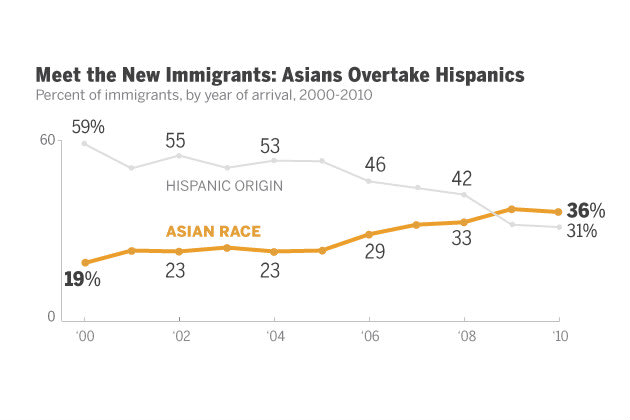
Asian immigrants to U.S. surpass Hispanics for first time
http://news.yahoo.com
Pakistan ranks 13th in failed states index
THE NATIONPakistan has been ranked 13th in the latest ranking of failed states. The unique ranking compiled by the prestigious Foreign Policy magazine is topped by African countries Somalia , Congo, Sudan, Chad and Zimbabwe. Afghanistan with 106 points is ranked at number 6, followed by Haiti, Yemen, Iraq and Central African Republic. Pakistan with 101.6 points, the magazine said, is ranked 13, a slight improvement from the previous two years. In 2011 it was ranked 12th in the list of failed states, while in 2010 and 2009 it was ranked 10th. “The absence of the state makes for 20-hour daily electricity blackouts and an almost non-existent education system in many areas”.
LAHORE:PIC tragedy: Four months on, spurious drugs case remains in cold storage
The Express TribuneFour months have passed since spurious medicines at the Punjab Institute of Cardiology (PIC) claimed the lives of 165 patients and affected another 700 in Lahore – yet not a single person has been indicted in what was arguably the greatest medical tragedy in the country’s history. Data available with The Express Tribune shows that the compensation process is still pending. While compensation cheques for Rs500,000 were distributed to the relatives of 116 deceased patients, cases of 38 patients are still being verified, and the addresses of the remaining 11 are said to be incomplete. The unofficial death toll is said to be around 200; and more than 1,500 patients are said to have been affected by the faulty medicines distributed free of cost by PIC to poor patients. In January 2012, heart patients approached different hospitals with similar symptoms of low platelet count, darkening complexion and bleeding. Health authorities tried to downplay the matter at first, but the issue later escalated to a major health crisis. Preliminary investigations showed that a drug named Isotab, contaminated with anti-malarial chemical Pyrimethamine, had caused the deaths. However, authorities have little to show in way of preventive measures taken to avert any such crisis in the future. A senior doctor at the PIC admits that “it seems everybody has forgotten about the PIC drug-related deaths.” Of efforts taken in wake of the incident, the doctor, requesting anonymity, says: “A lot has changed since then, but only on paper. The on-ground situation remains the same. The judicial inquiry report is yet to be released and no mechanism has been put in place to check that medicines are not contaminated with hazardous chemicals.” PIC’s chief executive Dr Bilal Zakaria, who was appointed after the drug fiasco, claims to have taken some precautionary steps. “It is now mandatory for PIC to purchase medicines only from pharmacies that have at least three branches in a city. We have also asked the companies to submit a report of all the non-active ingredients in the medicines.” Dr Zakaria maintains that a Drug Regulatory Authority (DRA) has a major role to play in keeping a check on pharmaceutical companies. However, though the president has issued an ordinance in this regard, a regulatory authority is yet to be established. PIC’s former head Dr Muhammad Azhar, who was removed from his post after the tragedy, differs in opinion from Dr Zakaria. Dr Azhar feels the conditions at PIC have deteriorated further. “If the government cannot make a unique system, it should copy the mechanisms put in place by the USA and the UK.” “In Pakistan, there are above 55,000 registered medicines while in the USA there are just 5,000 and in the UK only 2,200. The government should just copy their lists to avoid any such catastrophe in the future.” Pakistan Pharmaceutical Manufacturer’s Association (PPMA) Chairman Dr Riaz Ahmad said the issue of giving licenses to manufacturers will now be decided by the DRA after the passage of the 18th Amendment. The Punjab chief minister’s special assistant on health Khwaja Salman Rafique is quick to evade the blame. He says the provincial administration has given its consent and it is now up to the federal government to make the DRA functional. A senior official at the health department expressed his dissatisfaction over the inaction against Efroze Chemical Industries, the company that manufactured Isotab. “The company has been sealed but hasn’t paid any damages to the families of those who died due to the faulty drug.” Advocate Azhar Siddiq, who filed a petition in the Lahore High Court regarding the case, said: “The report of the judicial inquiry is expected soon. I am hopeful that the inquiry, headed by Justice Ijazul Ahsan, will hold the perpetrators responsible.” A young boy who lost his father due to the faulty medicine doesn’t know who to blame. “If the culprits in this case are not brought to justice, I will believe the government killed my father.”
Punjab govt instigating violent protests
Shahbaz should be booked for loss of life, property
PAKISTAN TODAYPakistan Muslim League Quaid (PML-Q) President Chaudhry Shujaat Hussain has said that PML-N and Shahbaz Sharif were engaged in politics in the name of load shedding protests and a FIR should be lodged against them for the loss of human life and property during demonstrations. He was talking to reporters after meeting former Khanewal nazim Ahmad Yar Heraj and his brother Muhammad Yar Heraj following an attack on their house in Khanewal on Tuesday. Shujaat said the attacks on the houses of Ahmad Yar Heraj and Riaz Fatiana had been carried out at the instance of the provincial government and Shahbaz Sharif and it did not suit the chief minister to “supervise” such destructive activities in the province. The PML president said whatever Shahbaz Sharif was doing under the garb of load shedding protests in Punjab did not merit his office and position. He said the registration of an FIR against Chief Minister Shahbaz Sharif, the provincial government and local administration was essential for the loss of human lives and public properties. Shujaat said the chief minister was issuing instructions to the administration and police that people indulging in violence and destructive activities should not be stopped, adding that if any officer tried to control the protest and riots locally, he was admonished by the chief minister. Shujaat said arson of trains, looting and attacks on petrol stations indicated that all these activities were the result of connivance between the government and local administration. He said the PML-Q would expose the “achievements” of PML-N in the provincial assembly. Meanwhile, PML-Q senior leader and Senior Minister Parvaiz Elahi had a telephonic conversation from London with Ahmad Yar Heraj and condemned the attack on his house. He said an FIR for looting and plundering, setting ablaze of public property and loss of precious life in Punjab would be gotten registered against the so-called chief of the province Shahbaz Sharif.
Pakistan: A judicial coup?
Editorial:The Express TribuneThe Supreme Court, in claiming to represent the will of the people, has removed from power the people’s representative, saying that he stood disqualified from being a member of parliament and hence the office of the prime minister since April 26 — the day he was found guilty of contempt. Support for the decision may not be unanimous mainly because of recent developments, especially where the Honourable Court was dragged into the Arsalan Iftikhar matter and how it chose to — itself — remove it from the allegations citing that Malik Riaz had himself admitted that he had never received any favours from the court. The procedure to remove a prime minister from office is clear: he can be voted out by parliament or the speaker of the National Assembly can send a reference to the Election Commission. So the view, that with this verdict, the apex court has played the role of judiciary, legislature and executive, may find some takers. Also, one must wonder why didn’t the seven-member bench that ruled in the contempt case in April not make matters clear, and that if the intention was to leave the matter to parliament then why wasn’t the speaker’s ruling left unscrutinised. The passage of almost two months since that verdict and Tuesday’s decision may well give ammunition to some people who may claim that the Honourable Court is perhaps trying to deflect attention from the Arsalan Iftikhar case. Furthermore, there will be people, and not entirely from within the PPP, who may consider whether yesterday’s verdict is, in effect, a judicial coup. Of course, all of this is not to say that Yousaf Raza Gilani or the PPP is without blame. The crisis could have been avoided by simply writing to the Swiss authorities or he could have resigned on April 26. Of course, the other view is that the apex court could have let the matter rest after being told by the government that under the Constitution, the president enjoyed immunity. Of course, it has to be said, with the utmost of deference and respect, that often times, the apex court has not shown the same assertiveness to military dictators that it has shown to elected civilians/governments. Perhaps this is now changing, with the court’s renewed interest in the missing persons’ case and Asghar Khan’s petition. But one would like this interest to be sustained in order to show tangible results.
'Gilani's disqualification linked to CJ's son case'
Prime Minister's disqualification
EDITORIALIN disqualifying a sitting, democratically elected prime minister, the Supreme Court has taken an extraordinary — and unfortunate — step. This whole story could have played out very differently, in ways much less disruptive to the nascent democracy this country is trying to build, if the SC had steered clear of a course of action that has now brought the judiciary, parliament and the executive in direct confrontation with each other. At a number of junctures the court could have avoided pursuing the contempt of court case as doggedly as it did, especially considering that the larger issue — corruption — was a matter involving the president, not the prime minister. Legally there might have been a case against the prime minister, but it was best for the supreme judiciary not to have waded so deep into such obviously political waters. Even at a later stage, it could have let the speaker’s ruling — which has the backing of a parliamentary resolution — stand. If that was not possible, it could have declared her ruling unacceptable and referred the matter to the Election Commission rather than simply asking that body to issue a denotification. Even if the outcome had ultimately been the same, at least the court would not have taken on the role of directly disqualifying an elected prime minister. By doing so, it has both disrupted an existing democratic set-up and set a worrying precedent for the future. But the damage has been done. And the PPP has an important choice to make. The party should now take the high moral ground and focus on the system rather than the individual. There are disruptive options: refusing to accept the order, for example, or delaying the matter by using the constitution to argue that the president can ask the prime minister to continue in office until a new one is appointed. For the sake of preserving the system, if the party has reservations against the judgment it should express these, perhaps even through a strongly worded parliamentary resolution, have Mr Yousuf Raza Gilani step aside and parliament elect a new prime minister as soon as possible. Indications are that the ruling coalition has already embarked on this course. But it is still deeply unfortunate that matters have come to this stage; completing the five-year tenure of both an elected government and its chief executive would have been a much-needed win for Pakistan. What is critical now is that elections are held, whether early or on time and as free and fair as possible, so that the final judgment can be left to the people’s court.
Pakistan media link 'judicial coup' to CJ's son's case
Tuesday, June 19, 2012
Pakistan: Virtual judicial coup
EDITORIAL:DAILY TIMESThe Supreme Court’s (SC’s) verdict on the petitions challenging the ruling of the Speaker of the National Assembly (NA) that rejected the argument that Prime Minister (PM) Yousaf Raza Gilani stood disqualified after being convicted and sentenced for contempt of court has pronounced that he does stand disqualified, not only from the premiership, but from membership of parliament as well. Not just that, the SC in its short order has laid down that he cannot stand for election for five years. To that end, the SC has sent instructions to the Election Commission (EC) to issue a notification to that effect. Meantime the PPP’s Central Executive Committee (CEC), which happened to be meeting when the verdict was announced, revealed its decisions on the crisis through a press conference by PPP leaders. The gist of the CEC’s decisions was that despite having reservations about the SC’s verdict, they had accepted the court’s finding that the conviction and sentencing till the rising of the court of Gilani for contempt on April 26 meant that he was no longer the PM, and with retrospective effect, had been removed on and since that date. The PPP has appealed to its workers and supporters to remain calm and restrained, despite the fact that the verdict is bound to inflame opinion in the PPP and allied camp. The CEC has empowered party Co-chairperson President Asif Ali Zardari to take whatever decisions he thinks fit regarding a replacement for Gilani. The intriguing question of course is whether the new PM will suffer the same pressure from the SC to write the letter to the Swiss authorities regarding President Asif Ali Zardari that the court was insisting on Gilani writing, and refusal to comply with which had attracted the contempt conviction for the former PM. In that case, the looming confrontation between state institutions, which began as a confrontation between the judiciary and the executive, could expand to now a confrontation between the judiciary and parliament as well. After all, the SC’s verdict overruling the Speaker of the NA too has set an unprecedented example, one that will reverberate in our jurisprudence for a long time to come. Questions have also been raised whether all the decisions and acts of the former PM since April 26 to date stand. The most important of these acts was the passing of the budget. It is possible that the detailed judgement may throw more light on this matter. Normally, courts are mindful that retrospective judgements should not disrupt things done and transactions closed to an extent that causes greater difficulties. Yousaf Raza Gilani was unanimously elected PM after the 2008 elections, arguably in the context of the assassination of Benazir Bhutto in end 2007, a tragedy that led to widespread unrest and riots, especially in Sindh. The sympathy factor had a great deal to do with the results of the 2008 elections in which, despite garnering only a plurality, the PPP was the only party in a position to form a coalition government. The other factor that worked in favour of the consensus that surrounded Gilani’s election as PM was the relatively good relations at the time between the PPP and the main opposition party the PML-N. By 2009, those relations had already soured to the point where the coalition saw the departure of the PML-N and its open opposition to the seeming reluctance of the PPP to restore Chief Justice of Pakistan Iftikhar Mohammad Chaudhry and the deposed superior judiciary. Since then, the impression has been unmistakable that the SC has tilted more against the incumbent PPP than in any other direction, even resorting to picking and choosing which cases to hear on a priority or fast track basis. This has invited criticism of the judiciary for alleged bias. True or not, such criticism may well find a fresh lease of life after the SC, in an unprecedented verdict, has deposed a sitting PM. Such ‘treatment’ at the hands of the judiciary is likely to resurrect the party’s memory of past injustices at the hands of the judiciary, the most poignant example being the case of Z A Bhutto. This verdict will have legal as well as political implications. Whether our nascent democratic system will survive these fresh storms can only be left to the imagination at this point
Afghanistan:Students treated in latest Afghan fainting incident
Coalition partners entrust Zardari to nominate next PM
The Express TribuneAll coalition partners of the ruling Pakistan Peoples Party (PPP) met under the chairmanship of President Asif Ali Zardari and handed him the mandate to decide on a candidate for election as the new Prime Minister of Pakistan, Express News reported. The emergency meeting was called after the Supreme Court of Pakistan declared Prime Minister Yousaf Raza Gilani ineligible to hold office. Gilani will not be a member of parliament following the verdict, and his name was also removed from the Press Information Department website. “The Election Commission shall issue a notice of disqualification and the president is required to take necessary steps to ensure continuation of democratic process,” said Chief Justice Iftikhar Muhammad Chaudhry. The election commission subsequently issued a notification declaring Gilani’s membership of the National Assembly as null and void. The coalition partners said that since the previous Prime Minister belonged to the PPP, the next one too should be from the PPP. Disqualified Prime Minsiter Gilani too attended the meeting. Earlier, Express News reported that Senior PPP leader Ahmed Mukhtar said that he heard the party may be nominate him for the post of prime minister. “I’m not sure about the party’s decision but if the party considers me for the position of prime minister, I would duly serve the country,” he said.
Babar Awan criticizes PM's advisers
Pakistan People’s Party (PPP) Senator Babar Awan said on Tuesday that the people responsible for advising Prime Minister Gilani to not appeal against the conviction in the contempt of court case would be soon unveiled, Geo News reported.
He was speaking to the media after a case hearing outside the Islamabad High Court.
Babar Awan said after the chief executive case ruling, no client would forget the lawyer who charged Rs100. He said that in this amount, it is only possible to purchase petrol to reach the Adiala Jail.
He further said that it appears as if there would be a huge upset in the Supreme Court Bar elections this time around.
The Senator added that he is more interested in advocacy rather than politics.
President Zardari cancels Russia visit to consult allies
Britain: 7mn working adults struggle to survive
A recent study has revealed that almost seven million adults of working age in Britain “face money woes” finding it difficult to feed themselves and their families.
An Experian study for The Guardian has revealed that about 3.6 million households are not able to live on their income and are struggling to feed themselves because they have no assets or savings to fall back on.
“What's shocking about this is that these are people who want to work and are working but who, despite putting their faith in the politicians' mantra, find themselves in another cul-de-sac. Recent welfare cuts and policy changes make it difficult to advise these people where they should turn to get out of it - it really is genuinely shocking”, said Frank Field, Britain’s former welfare minister.
The research study revealed that 2.2 million children live in families which are financially struggling while one or both parents work in a low or middle-income job.
“What is clear and this research shows, is that the existing system doesn't help those families who strive to do the right thing”, said a spokesperson for the Department for Work and Pensions.
This comes as the research only investigated those who fell outside the most deprived. Moreover, another study by the Trades Union Congress (TUC) showed that long-term youth unemployment in Britain increased by 78 percent over the past decade.
Obama immigration shift a hit with voters
http://news.yahoo.com
Gilani no more Prime Minister
Kabul accuses Pakistan over suicide attack
Afghan authorities on Tuesday said “regional spy agencies” were behind a rare suicide attack targeting Shia Muslims that killed more than 80 people in a veiled reference to Pakistani intelligence.
Attorney General Eshaq Aloko said two men had been arrested over the December attack, which struck a crowd of worshippers on Ashura in Kabul.
President Hamid Karzai blamed Pakistani sectarian extremist outfit Lashkar-e-Jhangvi for the atrocity, which was unprecedented on such a holy day, and urged Islamabad to act.
Aloko said the attack was planned in Pakistan’s northwestern city of Peshawar, by “regional spy agencies” aimed at “provoking sectarian violence”.
“Although the Jhangvi group claimed responsibility, it was masterminded by some spy agencies in our neighbouring countries,” Aloko said.
Afghans blame Pakistan for fuelling much of the violence in their country, where the Taliban are leading a 10-year insurgency against the government and 130,000 Western troops.
The prosecutor said one of those arrested came from Afghanistan’s Nangarhar province, which borders Pakistan’s militant-infested tribal belt, and was paid 10,000 Pakistani rupees ($100) to bring two suicide attackers to Kabul.
“One attacker blew himself up, the second fled the area,” Aloko said.
He said the two arrested men both confessed over the plot and the case was now closed.
The explosion happened at the entrance to a riverside shrine, where hundreds of Shias had gathered.
The Taliban denied responsibility for the attack, the deadliest in the Afghan capital in three years.
“The case is closed for us now. We have completed our investigation, and the case will be sent to the court,” Aloko said.
Polio vaccination ban: Militants put thousands of children at risk
The Express TribuneOver 16,000
President Zardari invites Presidents of Russia, Afghanistan, Tajikistan for summit
MASSIVE KILLING IN KARACHI
Punjab rulers responsible for loss of life, says Kaira
Frontier PostMinister for Information and Broadcasting Qamar Zaman Kaira said on Monday that the Punjab rulers were instigating the people against the federation and they were personally responsible for the loss of life and damage to the public and Pakistan People's Party leaders and workers' property. He was talking to media persons at Faisal Mosque after attending funeral prayers in absentia for Saudi Crown Prince Nayef bin Abdulaziz Al Saud, who died on Saturday. While replying to a question, he said no doubt that loadshedding during past couple of days had increased, but that was no justification for attacking the public property and property of the PPP leaders. "Loadshedding is being done in all four provinces, but violent protest demonstrations are being held only in the Punjab. The Punjab police has become silent spectator, and the provincial rulers and the administration are not only part of the protest but they are instigating the people". Kaira said that the PPP through the 18th Amendment has tried to end the sense of deprivation among the smaller provinces but the rulers in the Punjab are fanning hatred to get petty political gains. He said that there was 800 mw low head hydro power potential in the Punjab but not a single mega watt has been produced so far. The minister said that 200 mega watt electricity will be added in the system from wind sector and 600 mw will be added from the same sector next year. He said that some Independent Power Plants (IPPs) are commissioned only on gas and their closure due to shortage of gas has added to loadshedding problem. He said that the incumbent govern was paying the price of the decisions of its predecessors which could not prepare proper energy policy and diverted gas towards CNG sector. Replying questions about the deceased Saudi crown prince he said the entire nation was praying for his soul. Kaira said that Saudi Arabia is brotherly country of Pakistan which has always supported Pakistan on all forums of the world. The minister said that the Saudi Arabia and Pakistan enjoy historic relations and the place where we have offered the funeral prayer is also a gift of the Saudi government to the people of Pakistan. To a question, he said that Fauzia Wahab was central leader of the PPP whose services would be remembered for long. He said that the PPP has lost a hard working parliamentarian and the National Assembly has lost a dedicated member. He said that the deceased PPP leader fought the case of the party and the poor masses in a very efficient manner. Replying to a question, Kaira said that the doctors belong to noble profession and work in unusually difficult conditions, however, if their negligence proved in the death of Fauzia Wahab, action will be taken against the responsible.
Pashto singer Ghazala Javed gunned down in Peshawar
Dawn.ComProminent Pashto singer Ghazala Javed and her father were gunned down by unidentified persons at Dabgari area here on Monday night. Family members of the deceased told police that Ms Javed had gone to a beauty parlour along with her father Mohammad Javed. Unidentified motorcyclists sprayed them with bullets when they came out of the parlour, they said. The bodies were shifted to mortuary for autopsy from where they were taken to a police station by police and Farhat Bibi, a sister of Ms Javed. An official of Shah Qabool police station told Dawn that they were collecting details of the occurrence and could not say anything with accuracy as to who was behind the crime. He said that Farhat Bibi might be complainant in the case and it was not known as to who she would charge. Hailing from the scenic Swat valley, Ms Javed married around two years ago Jehangir Khan, a native of Peshawar. However, last year, differences emerged between the couple following which she left residence of her husband and started living with her father. The singer had also filed a suit for dissolution of her marriage in Swat. She got fame few years ago and her audio and video CDs and cassettes were selling like hot cake not only in Khyber Pakhtunkhwa but also in Middle East where Pashtuns work in large number. Following her marriage, Ms Javed had stopped singing, but recently she resumed attending private functions.
Monday, June 18, 2012
NATO supply routes: K-P governor warns of isolation
The Express TribuneA top government functionary dropped the clearest hint yet on Sunday that Pakistan may reopen Nato supply routes for US-led foreign forces stationed in Afghanistan. “We cannot oppose Nato nor can we live a secluded life in this world,” Khyber-Pakhtunkhwa Governor Barrister Masood Kausar told reporters in Peshawar. The governor was speaking to the media during a visit to the Hayatabad Medical Complex to enquire after the health of Saturday’s Landi Kotal blast victims. He added that the government would have to take a decision over the Nato supply lines. Governor Kausar’s statement came against the backdrop of reports that the United States is getting increasingly impatient over the delay in the resumption of supply lines. A diplomatic source disclosed that the United States is pushing the embattled government to reopen the land routes at the earliest, as it fears that uncertainty hanging over the rule of Prime Minister Yousaf Raza Gilani might delay the process for months. “This is certainly an issue of concern for us,” said a source referring to the ongoing legal battle over the fate of Premier Gilani. The apex court is currently examining multiple petitions that challenge the ruling of National Assembly Speaker Dr Fehmida Mirza, who refused to disqualify the prime minister after he was found guilty of contempt of court. Legal experts believe that this week is crucial, as the three-member bench, headed by Chief Justice Iftikhar Muhammad Chaudhry, asked the premier’s lawyer Aitzaz Ahsan to complete his arguments soon. In what appears to be anticipation of a possibly adverse decision, Premier Gilani has called off his trip to Brazil for an international environmental conference. Foreign Minister Hina Rabbani Khar will represent Pakistan at the conference instead. Gilani’s move to opt out of the conference is attributed to ongoing cases in the apex court. The US urgency stems from the fact that Nato supplies may remain blocked for months if the prime minister is disqualified by the Supreme Court. A Pakistani official familiar with the development has confirmed that there had been intense efforts in recent weeks by Islamabad and Washington to break the deadlock in ties. The official, speaking on condition of anonymity, told The Express Tribune that Washington wanted to see the government take a decision before any judgment by the Supreme Court. He said the agreement on technical details related to taxes and transit fees Pakistan intends to impose on Nato trucks passing through the country had already been reached. “The matter rests with the political leadership of the two countries,” said the official. However, an American official pointed out that it was up to the Pakistani government to take the decision. “We have conveyed what we wanted to,” the official added. A crucial meeting of the Defense Committee of the Cabinet (DCC) is expected to review the situation this week to take a final decision. But officials from the two sides, though hopeful of a breakthrough, are not sure if the decision on the resumption of Nato supplies is imminent.
Zardari to visit Russia to attend Int’l Economic Forum
Sunday, June 17, 2012
KHYBER-PAKHTUNKHWA:34 dead in two KP bomb attacks
Bahrain police shoot 5-year-old in chest, eye
http://bikyamasr.comBahrain police have shot a five-year-old boy in the left eye and chest, reports said. The shooting occurred last Wednesday evening in the Dair village, a suburb of Muharraq, during a police crackdown on protesters. The boy was hit by birdshot, activists said. The young boy was then transferred to the Salmaniya Hospital for treatment, and doctors are still waiting to see whether the boy will lose his eyesight in the eye. The ABNA news agency reported the father said his son was conscious, but could not see out of his injured eye. Activists who were with the child in the hospital said that they were banned from speaking to the child’s father about the incident after the instructions of officer Yousef Mulla Bkheit “who is renowned for his torturing of the prisoners and assaulting them sexually,” the report said. The activists said that the family wanted to take the child to a private hospital, however, officer Bkheit refused. They said that the father’s body was full of bird shots pellets as well. They reported that police told him to move otherwise they would fire at him, when he turned to carry his child they fired on both of them. The man who was still in shock said: “It didn’t occur to me they would fire at an old man and his little child, we were only selling fish.” He confirmed that they fired on them on purpose. They fired twice at them. The activists said that the father’s and child’s blood covered their fish box where they were selling fish at the side of the road. The activists said the boy Ahmed Nahham was the youngest citizen whose eyes were fired at. Wefaq society, a leading opposition group, called on human rights organizations and groups to save Ahmed Nahham five-year old boy who was targeted by Bahrain police by bird gunshots along with his injured father who was with him during the incident. Wefaq statement explained that Ahmed was from Dair village that suffered the savage barbaric attack waged by the police. It added that police carried Ahmed away with them, nobody knew about his injury.
Subscribe to:
Posts (Atom)