Wednesday, May 9, 2012

Saudis hold anti-regime demo in Qatif

Saudi Arabia's Eastern province has been hit by yet another anti-government protest rally in which demonstrators have condemned the long-time rule of Al Saud for its suppression of protests. The protest erupted in the Qatif region on Wednesday following the beating of two women by Saudi forces. The protesters also called for an end to Riyadh’s military intervention in neighboring Bahrain and the regime’s violation of people’s privacy in their homes. The demonstration was staged despite a strict ban on all public gatherings. Since February 2011, Saudi protesters have held demonstrations on an almost regular basis in the oil-rich Eastern Province, mainly in Qatif and the town of Awamiyah, calling for the release of all political prisoners, freedom of expression and assembly, and an end to widespread discrimination. However, the demonstrations have turned into protest rallies against the Al Saud regime, especially since November 2011, when Saudi security forces killed five protesters and injured many others in Eastern Province. The Saudi interior ministry issued a statement on March 5, 2011, prohibiting “all forms of demonstrations, marches or protests, and calls for them, because that contradicts the principles of the Islamic Sharia, the values and traditions of Saudi society, and results in disturbing public order and harming public and private interests.” Saudi Arabia is a state party to the Arab Charter on Human Rights. Article 24 of the charter states that “every citizen has the right… to freely pursue a political activity [and] to freedom of association and peaceful assembly.” Amnesty International and Human Rights Watch have also criticized the Al Saud regime for silencing dissent through intimidation and violation of the basic rights of citizens. (Source: Press TV)

UN says one million Yemeni children suffering acute malnutrition

The UN Office for the Coordination of Humanitarian Affairs has warned that nearly one million children in Yemen are suffering from poor nutrition, many of them struggling with death. "An estimated 967,000 children under five are suffering from acute malnutrition," United Nations spokesman Martin Nesirky said at a press briefing on Wednesday, Xinhua reported. Meanwhile, the world body has appealed to the international community to assist millions of vulnerable people in Yemen who are in need of healthcare, clean water, basic sanitation, and nutrition. In response to the crisis, aid organizations in the impoverished Arab country are asking for nearly $40 million to help 267,000 children who are at risk of dying if proper treatment is not administered. Children in Yemen also face the threat of unexploded ordnance and land mines, which have reportedly claimed the lives of 13 children and left another dozen injured in the first quarter of 2012.

PML(N)MAFIA : Not asking for laptops but for teachers!

Punjab government is closing the doors of education on us
To punish the historic Government Muhammadan Anglo Oriental College’s administration for being politically active against the Pakistan Muslim League-Nawaz, the Punjab government has apparently decided not to provide any financial support to the college for faculty development, infrastructure and other needs, Pakistan Today learnt on Wednesday. The college’s Mass Communication Department, especially, is being made to face the brunt and no regular faculty has been hired to impart education to the students. The department has also received a warning from the Punjab University that said that the department’s affiliation with the university would be cancelled if faculty is not arranged soon enough. Sources in the administration said the Education Department had been requested again and again to provide the required faculty but a PML-N mafia was not allowing this. “MAO College has always been anti-Sharifs and now since they are in power, they are doing all they can to suppress any anti-PML-N activities in the future,” sources said, adding “the CM has time and again claimed that he has taken many initiatives to promote education in the province but on the other hand, his government is punishing the students of MAO College for expressing their opinion.” “We have received many requests from MAO Principal Dr Farhan Abadat Yar Khan over the issue of lack of staff but there is nothing we can do about it because the education minister and the Higher Education Department are not interested,” an official in the HED, asking not to be named, said while talking to Pakistan Today. “Boys belonging to the middle class study at the MAO College and come from far flung areas of the province but the CM is not giving the college its due respect,” he said. “Our college’s student union sided with the PML-Q and now PML-N is taking its revenge. The Mass Communication Department gets the top position in the university examinations and it would be unfair to them if Punjab government remains obstinate on the issue,” a faculty member of the college said. “We are not asking for laptops but for teachers to teach us,” a student said, adding that their future was being compromised over a political issue. “The Punjab government is closing the doors of education on us,” he said. Lahore Director Colleges Rana Naseem said he was not aware of the actual status of MAO College’s Mass Communication Department and added that he would enquire the matter. He said however in the beginning of this session, Punjab government had permitted all colleges’ administrations to hire visiting faculty and it was the administration’s fault if they had not hired anyone.

UK visit: Gilani stresses enhanced cooperation on fighting terror, trade

Prime Minister Yousaf Raza Gilani while addressing a reception at the House of Commons said that Pakistan and the United Kingdom were partners in the fight against terrorism and extremism and that Pakistan remains committed to fight the scourge till its elimination. Gilani, who is in England on a five day trip following the invitation of British Prime Minister David Cameron to attend a summit to review Enhanced Strategic Dialogue (ECD). He also attended a joint session of the British Parliament on Wednesday, which was also addressed by the Queen. Addressing a reception here at the House of Commons to meet with British Parliamentarians, on the invitation of High Commissioner Wajid Shamsul Hasan, “We are also together in the common fight against terrorism and extremism. The democratic government has created national ownership to this campaign and has brought all stakeholders on board. Our Parliament has recently reaffirmed Pakistan’s commitment to the elimination of terrorism and combating extremism in pursuance of our national interest,” he said. With Pakistan under the spotlight for being a haven where terrorists can plan attacks on other countries, Gilani reasserted that “we have also repeatedly said that we would not allow our territory to be used for any kind of attacks on other countries and we expect that the soil of other countries would not be used against Pakistan.” He said the sacrifices made by Pakistan in its campaign against militancy, terrorism and extremism were unparalleled, and the resolve of the two countries in this regard remains unshakeable. Gilani also had an extensive interaction with British parliamentarians and shared experiences of the nascent democracy in Pakistan and the challenges it faced. Gilani had travelled with Minister for Commerce Makhdoom Amin Fahim, Minister for Information Qamar Zaman Kaira, Minister for Foreign Affairs Hina Rabbani Khar, Minister for Finance Dr Abdul Hafeez Shaikh, Minister for Interior Rehman Malik, Minister for Political Affairs Moula Bukhsh Chandio and Minister of State for Housing Raza Hayat Hiraj, Special Assistant to Prime Minister on Social Sector Shahnaz Wazir Ali and Chairman Board of Investment Saleem H Mandviwala. He was joined by the Pakistan High Commissioner to UK Wajid Shamsul Hasan. Commonwealth a beacon for democracy The Premier said the forum of Commonwealth has been proudly espousing the cause of democracy and the human rights among the member countries. He recalled how Pakistan became the member of the Commonwealth in 1947 soon after independence, but it was suspended during the military dictatorship of General Ziaul Haq during the eighty’s. However, it was restored once Benazir Bhutto became the Prime Minister. He said the membership of Pakistan was suspended once more during General Musharraf’s military rule and restored after when a democratically elected government came to power. “I am happy to state that there is not a single political prisoner in Pakistan today. [The] Media is completely free and the civil society is robust and human rights organisations’ assertions are making qualitative difference as far as the human rights are concerned. Judiciary is free by any stretch of imagination,” Gilani added. He said at the last Summit of Commonwealth in Perth, Australia, the forum was unanimous in supporting the democratic governments of member states and pledged to foil the designs of those who intend to usurp the rights of the people. Pakistan, UK for enhancing bilateral trade Gilani said the governments of Pakistan and UK have also decided to jointly launch a trade and investment promotion roadmap that envisages increased bilateral trade to £2.5 billion by 2015 and to enhance investment opportunities. He said the United Kingdom has been a consistent advocate for Pakistan to gain enhanced trade access to the European Union. “We are appreciative of the UK support for EU trade concessions for Pakistan and we hope that the United Kingdom would continue supporting Pakistan’s request for GSP Plus,” the Premier said. He said the ESD covers a wide spectrum of bilateral, regional and international issues of mutual interest. “I am satisfied that we have made good progress under the ESD framework, and I look forward to holding detailed and wide ranging discussions with Prime Minister Cameron and other members of his cabinet to further intensify this cooperation.” The Prime Minister expressed his sincere gratitude to the British government and its people for having stood by the people of Pakistan in their difficult times – particularly in the aftermath of unprecedented floods that devastated the country. Pakistan keen to normalise ties with neighbours The Prime Minister said Pakistan believes that its agenda for prosperity and development can only be achieved in an environment of peace and security. He said it was in this context that Pakistan was keen to normalise its relations with all neighbours, particularly India and Afghanistan. Gilani said Pakistan strongly believes that a peaceful and stable Afghanistan is an absolute prerequisite for stability and peace in Pakistan. He reminded the audience that Pakistan was the first to suffer at the hands of strife in Afghanistan and would be the first to benefit from peace in Afghanistan. However, the solution to Afghanistan’s problem lay inside Afghanistan. “It has to come from Afghans and has to be led by Afghans themselves.” Referring to the improvements made in ties with India, a fellow Commonwealth country, Gilani said Pakistan has made tremendous strides in building a constructive relationship with India. “We have made significant progress on trade and economic cooperation and are in the process of granting MFN status to India despite hurdles. We have started the dialogue process with India,” Gilani said, before adding that Pakistan wanted to resolve all outstanding issues with India, including that of “Jammu and Kashmir, through an uninterrupted, meaningful and result-oriented dialogue.” British Member of Parliament Julian Brazier said the presence of many British parliamentarians at the reception spoke of the high value that his country attaches to relations with Pakistan. He said Britain is serious in strengthening relations with Pakistan. Pakistan’s High Commissioner to UK Wajid Shamsul Hassan said Pakistan-UK relations were time tested and have grown from strength to strength. He expressed the hope that under the guidance of Prime Minister Gilani, Pakistan could overcome all challenges.

Nawaz, Mumtaz for using ‘Sindh card’

Adviser to Sindh Chief Minister Syed Qaim Ali Shah on media Sharmila Faruqi on Wednesday criticised Pakistan Muslim League-Nawaz (PML-N) chief Nawaz Sharif and Sindh National Front (SNF) chief Mumtaz Bhutto for using the ‘Sindh card.’ In a statement, she asked them not to try to become the ‘champion of the interests of the people of Sindh.’ Faruqi was of the view that Nawaz Sharif and Mumtaz Bhutto were not sincere with the people of Sindh yet these two were shedding “crocodile’s tears” and that they would not be in a position to deceive the people anymore. She said that the 180 million people of Pakistan are with the present democratic government. Faruqi further stated that the government ensured equal distribution of resources to the provinces through the National Finance Commission (NFC) Award and that it also brought to an end the anti-Sindh Kalabagh Dam project. She also flayed those who were criticising President Asif Ali Zardari and Prime Minister Yousuf Raza Gilani without any justification. Faruqi was of the view that such elements were targeting the present democratic government just to hide their own corruption.

Ajmal Khattak : cherta che baran de Khday..Gulzar Alam

Five injured after two bombs go off at Ajmal Khattak’s under-construction mausoleum

The Express Tribune
Two successive blasts at the under construction mausoleum of former Awami National Party chief Ajmal Khattak on Grand Trunk Road, Akora Khattak, in Nowshera left five people injured, officials said on Wednesday evening. According to details, Nowshera police were trying to clear people gathered at the site of a bomb explosion at the under construction mausoleum of Ajmal Khattak. As the people, and journalists were being asked to leave, another improvised explosive device (IED) exploded in the same graveyard. Five people including three journalists were injured. “Chaos broke after the second explosion took place,” Siddique, an eyewitness told The Express Tribune. “Neither the police nor journalists went close to the area after the explosion.” An official of the bomb disposal unit said that around four kilograms of explosives were used to carry out the first attack while approximately a two kilogram IED caused the second explosion. Nowshera police said that investigations were still underway into the incident. Condemnations from various factions and sectors poured in. The injured were rushed to District Headquarters Nowshera hospital. Earlier, a bomb went off at the under-construction mausoleum of famous Pushto poet and a former Member National Assembly, late Ajmal Khattak on Grand Trunk (GT) road, Akora Khattak area of Nowshera, badly damaging the structure. No loss of life was reported in the incident, and no group has claimed responsibility for the attack thus far. Police have arrested the guard of the building and are currently interrogating him. Police said that initially five armed people approached the under construction building of the mausoleum and over-powered the guard. He was tied with a rope before the armed men placed explosive devices inside the building which went off with a big bang. Up to 80 per cent of the mausoleum was damaged. “They were five people who came to the area and planted bombs there and fled the area after the explosion,” said a police official of the local police station while talking to The Express Tribune. The provincial government had provided a Rs10 million grant for the construction of building at the grave of late Ajmal Khattak. The grave is situated along the main Grand Trunk (GT) road in a graveyard. They said that the move was aimed at creating unrest among the local people. Ajmal Khattak was the former president of Awami National Party (ANP) and a former MNA. He died of illness on February 7, 2010 in Peshawar. Last month, an anonymous threatening letter was found at the shrine of Sakhi Sarwar in Dera Ghazi Khan which warned of ‘dire consequences’ if some rituals were not abolished. Security was beefed up after the letter was received. Similarly, a letter was received last year followed by two terrorist attacks at the shrine that killed more than 55 people and injured over 150. Tehrik-i-Taliban Pakistan had claimed responsibility for the attacks.

Tuesday, May 8, 2012

Smuggled pills contain human remains

Either scripts and active content are not permitted to run or Adobe Flash Player version10.0.0 or greater is not installed.

Get Adobe Flash Player

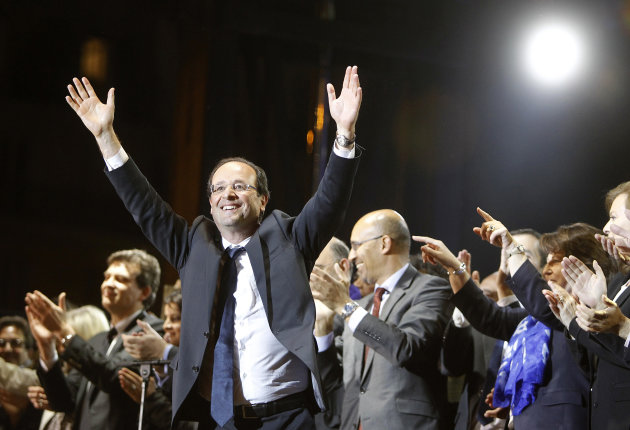
France: A new political era

Greek leftist leader rules out austerity measures

Greece’s left-wing coalition leader has ruled out austerity measures, receiving a mandate to form a new government as elections produced a stalemate in parliament. Greece’s leader of the leftist SYRIZA coalition, Alexis Tsipras,
has ruled out budget-cutting austerity measures, opting to meet President Karolos Papaoulias in talks to form a new government on Tuesday. "The politics of austerity was rejected by the majority of Greece's people, and is being rejected by all European peoples," says Tsipras, calling for an end to the "plunder" of salaries and pensions. Referring to the EU-IMF bailout plan, Tsipras said that "we asked for a mandate to form a coalition government of left-wing forces in order to disengage ourselves from the memorandum of bankruptcy." This comes as Greek conservative leader Antonis Samaras has failed in talks to form a unity government after being shunned by anti-austerity parties that made strong gains in Sunday’s parliamentary election. President Papoulia had given Samaras a three-day mandate to put together a coalition after his New Democracy party received the largest share of the vote in the election. The task of forming a government will now pass to Tsipras, whose party won the second highest number of votes. Greek voters, angry about the high unemployment rate and severe cuts to pension and pay, punished the pro-austerity parties, New Democracy and socialist PASOK, for imposing harsh austerity measures to address the country's debt crisis. The outcome of the Greek parliamentary election combined with the electoral defeat of the ruling party in France has caused alarm among EU leaders. European Commission spokeswoman Pia Ahrenkilde Hansen said Brussels expects the future government of Greece to respect Greece's prior agreements with the EU and the IMF. Greece is the epicenter of the eurozone debt crisis. One in five workers is unemployed and banks are in a shaky situation, while pensions and salaries have been slashed by up to 40 percent.

Amnesty urges Bahrain to free tweeting activist

Amnesty International urged Bahrain on Tuesday to "immediately" release prominent rights activist Nabeel Rajab who was arrested over tweets deemed insulting to the government. "Nabeel Rajab
is a prisoner of conscience and he must be immediately and unconditionally released," said Philip Luther, head of the Middle East and North Africa programme at the London-based watchdog. "This is the Bahraini authorities' latest attempt to clamp down on dissenting voices in the country," he said in a statement. Rajab, who heads the Bahrain Centre for Human Rights, was arrested on Saturday at Manama airport after returning from a trip to Denmark, Sweden and Lebanon. On Sunday, the prosecutor ordered his detention for seven days pending investigation for "insulting a statutory body via Twitter," his lawyer Mohamed al-Jishi said at the time. The lawyer said Rajab denied the charges, saying it "aims at hindering my rights work and my right of expression." The public prosecutor summoned Rajab for questioning after the interior ministry accused him of sending "insulting" tweets, Amnesty International said, adding that he did not attend because of his travel plans. On Sunday also, Rajab appeared in court over charges of calling for participation in illegal gatherings during which some demonstrators acted violently. The hearing was adjourned to May 22 while Rajab denied all charges. Luther said that Rajab "has publically stated he is against the use of violence in protests, so the authorities have no grounds to punish him." The activist, a member of Bahrain's Shiite majority, has had various standoffs with police as he led protests in Manama calling for democratic change in the Sunni-ruled kingdom. Rajab has insisted on demonstrating inside the capital, unlike the main Shiite opposition which now stages its protests in Shiite villages, after last year's crackdown on protesters who occupied central Manama's Pearl Square for a month. Amnesty International says 60 people have been killed since protests erupted in Bahrain in February 2011.

Obama leads Romney, helped by independents

President Barack Obama extended his lead over Republican challenger Mitt Romney to 7 percentage points because of increased support from independent voters and some optimism over the economy, a Reuters/Ipsos poll showed on Tuesday.
With six months to go before Election Day on November 6, Obama
was backed by 49 percent of registered voters in the telephone poll, compared to 42 percent who supported Romney. In April, the poll showed Obama leading Romney 47 percent to 43 percent. The numbers suggest Romney's general election campaign has not yet taken off, although he has effectively clinched the Republican nomination in recent weeks when Rick Santorum and Newt Gingrich dropped out of the race. Obama's overall approval rating among the 1,131 adults surveyed was 50 percent, up 1 point from last month as the anniversary of the killing of Osama bin Laden gave Obama a chance to tout his national security credentials and stage a high-profile visit to Afghanistan. Forty-seven percent of people in the poll disapproved of how Obama handles his presidency. "The economy continues to chug along. Presidential ratings are correlated fairly closely with economic optimism and when the public sees things like unemployment going down and other signs of economic recovery, they are more inclined towards voting for the status quo - which in this case is to keep the incumbent in office," said Ipsos pollster Julia Clark. The U.S. jobless rate fell to 8.1 percent in April, the lowest since Obama took office in January 2009, although employers cut back on hiring as the economy struggles to pick up growth. INDEPENDENTS HOLD POWER Independents swung behind Obama. Forty eight percent approved and 40 percent disapproved of his performance in May compared to 37 percent who approved and 57 percent who disapproved in April. "Independents obviously are going to be critical in this election," said Clark. "That independent approval jump is absolutely significant. It contributes to his jump in approval month on month. We're talking increments here, but where Obama is right now, the increments matter a lot." The poll, conducted from May 3-7, showed voters from the two parties are falling in behind their candidates, which makes the independent vote more important, Clark said. "In the broader picture, this month Obama does really appear to be making that slow but steady progress he will need to continue to make to seal the deal," said Clark. The poll showed voters think Obama is just slightly stronger than Romney, a former business executive who has touted his economic experience during the campaign, on the issues of jobs and the economy. When asked which of the two was stronger on the topic, 45 percent of registered voters surveyed picked Obama while 43 percent chose Romney. Among the 959 registered voters surveyed, a majority said Obama was stronger than Romney on healthcare, Afghanistan and the global fight against terror. Romney had a 1-point advantage over Obama on immigration. The poll was conducted just after Obama made a surprise trip to Afghanistan to mark the first anniversary of the killing of bin Laden. While in Afghanistan, Obama signed a strategic pact with Kabul and told Americans the war was winding down. Romney, who has criticized Obama's handling of Afghanistan and for setting a timeline for a troop withdrawal, accused the president of politicizing bin Laden's death. But the poll showed that 51 percent of registered voters thought Obama was stronger on Afghanistan and on terrorism while 28 percent said Romney had a stronger position on Afghanistan. The Reuters/Ipsos survey, conducted over landlines and cell phones, is considered accurate within 2.9 percentage points for the total sample. Among registered voters it has a margin of error of 3.2 percentage points.

NATO To Discuss French Role In Afghanistan

www.bakhtarnews.com
France’s future commitment to Afghanistan after the just concluded presidential vote would be discussed at NATO’s Chicago Summit later this month, an official of the alliance said on Monday. France, a key NATO member, on Sunday voted into power Socialist President Francois Hollande , who hinted last week at pulling out French soldiers by end of 2012 two years ahead of complete NATO exit from Afghanistan. “France has made clear its commitment to Afghanistan. France has made clear its commitment to supporting the training of the Afghan National Security Forces after 2014. And it’s those issues that will be discussed with the new president of France at the NATO Summit in Chicago in two weeks time,” said Dominic Medley, NATO senior civilian representative’s spokesman. Hollande, who takes oath on Monday, is expected to hold high levels talks with NATO leaders and US President Barack Obama in Chicago on France’s future role in Afghanistan. About 3,300 French troops are currently deployed to Afghanistan mainly in southern Kandahar province - as part of the 130,000-strong NATO – led International Security Assistance Force. Over 80 French soldiers have been killed in the country since 2001. Nearly 60 world leaders and international organizations are expected to converge on Chicago to attend the summit, slated for May 20-21. Dominic Medley told journalists in Kabul the summit would mainly focus on three main themes-the alliances commitment to Afghanistan through transition and beyond, ensuring NATO has the capabilities to defend its population and territory and strengthening NATO’s network across the globe. NATO was clearly committed to supporting Afghanistan beyond 2014, when the gradual transition of responsibility for the country’s security would be fully implemented, he added.

IMRAN & NAWAZ VS REVOLUTION!!!!

by: M WAQAR
For the last few years Nawaz and Imran are talking about revolution in their Country but seems like either both are confused with the word ‘’REVOLUTION’’ or don’t have any revolutionary thinking, but their goal is to get to the PM house in Islamabad, may be that is their revolution. I think both of em not only need to study the constitution of Pakistan but also needs to know the definition of revolution, although Nawaz with the help of ISI was ‘’selected’’ twice as PM and he could fulfill his thrust for revolution; he had a chance to bring revolution in Pakistani agriculture, education, society and could develop Pakistan like Malaysia or Indonesia, but unfortunately during his tenure poor were selling kids and kidneys and only development, and progress was made in RAIWIND. According to his latest statement,’’ 'My team will bring revolution in the country', To me its funny when NAWAZ SHARIF talks about revolution, His revolution is for himself not for Pakistani people, he wants a revolution so he can become Prime Minister and lets not forget that Nawaz was PM not once but twice, so what happen then?,he had all the power and he could change Pakistan , he could get rid of what he is talking about now . It is obvious that Nawaz Sharif is playing a dangerous game using Punjabi ethnicity for his political gains in Pakistan and he is not alone, Imran Khan even wants to use Taliban for revolution,If anyone thinks Mr Sharif’s idea of “revolution” goes beyond this, he/she should get the Nobel Prize for Misplaced Optimism. Nawaz Sharif is once again trying to revive Pujabi chauvinism in Pakistan,’’ Jaag Punjabi Jaag Teri Pag Noon Lag Gaya Daagh. “” Obviously what Nawaz Sharif promised the nation, was not a revolution in the real sense but merely a regime-change to his liking. Nawaz Sharif talks about NRO but he forgets about his agreement with dictator Musharaf, he talks about judiciary but forgets his attack on supreme court, he talks about media but forgets what he did to Rehmat Shah Afridi of FP,Jang Group and others, he forgets what he did to Junejo. He talks about democracy but he forgot it while making forward block .Nawaz Sharif needs power and his style of revolution for power and money. Where was his revolution when Nawaz Sharif spent his time at Surror Palace in Jeddah and then in England and poor Pakistanis were selling kids and kidneys. Shahbaz Sharif and Mian Nawaz Sharif both are convicted criminals, in a unconstitutional deal with the military dictator General Pervez Musharaf, both of them went into exile with a promise to stop participating in politics . I am sure Nawaz and Imran can't be Mao, Lenin, Washington, Ataturk because both don’t have those qualities, both belong to the old elite club of Pakistani bourgeois feudal system. Although Imran is a new kid on the block in political arena, but his problem is he is following footsteps of his mentor QAZI Hussain and loves politics of agitation, slogans and tall claims to defeat his opponents, of curse politics is different than cricket game, obviously he does not have any agenda, he never condemned Taliban, if he wants to be a revolutionary leader, he should challenge blasphemy law, talk about minority's sufferings, women rights, etc., which are hot and sensitive issues in Pakistan besides poverty, corruption and millions of other problems citizens of Pakistan are facing for the last 65 years. In politics you don’t have to be a good looking guy or gal, Democracy is a greatest form of Govt,but Pakistan is a very different and complex society where you are dealing with over fifty million people who are illiterate, Clearing away the feudal influence left from thousands of years and clearly framing democratic boundaries are both important to Pakistan’s political structure. There are few countries today that can survive with authoritarian governments.I might sound anti-democracy but let’s face the fact in Pakistani case, Educated citizens are the most important group for Democracy. In Europe and America democracy is successful cause their citizens are well educated and well aware of their rights and duties, where politicians can’t make their voters chump all the time, in case of political and constitutional issues, Mr. Imran Khan had to first understand what the people want and what the Government can give or deliver within the framework of Pakistan as he is interested to make his Tehrik-i-Insaf as majority party in the Parliament and become the Prime Minister. If Imran want to be the ATATURK OR MAO of Pakistan then he needs to change his mentality and should gain some political maturity. A revolutionary guy for Pakistan can’t play as westernized boy in his drawing room and then try to placate mullah and placate Army while presenting himself as the acceptable face of Pakistan. Revolutionary leaders don’t have mentors, they are born naturally as revolutionary, If it is true that General Gul is Imran Khan’s political mentor, influencing his sympathies for religious extremism, it is not a good omen for Pakistan, which is already in a vortex of terrorist violence , Imran’s politics is not so straightforward. A man of his background living in both Islamic and western cultures, and now leaning towards religious conservatism, is a contradiction. Such metamorphism can only be described as political opportunism. His sympathies are more with the religious right, earning him, in some quarters, the title of ‘Taliban Khan’. He believes that the country’s militants can be won over through talks. He is pushing the popular anti-US line, advocates freeing Pakistan of US and western aid. But he is sketchy on how all this will solve the country’s myriad problems. There is a certain political naivety about the man. There are no detailed policy prescriptions to take the country ahead. To take one important aspect: has he got a policy framework to conduct dialog with the Taliban? How will they be accommodated? Will ‘Prime Minister’ Imran Khan agree to run the country on the Taliban’s interpretation of Islam? There is no clarity about the path Pakistan will tread under him. Imran runs the biggest charitable institute, But one cannot run a country like a charitable institute. One thing that will keep popping up from time to time is the contradiction in Imran Khan’s personal life, which will increasingly become public as he gets closer to the top office. That is: his increasing reliance on Islamic politics while straddling both sides of the cultural divide. Amanda Hodge puts it cryptically in her article in The Australian. She writes: “Despite his best efforts, his previous reputation [as a playboy] has not forsaken him. Rumors abound of Khan — still slick from a home gym workout — greeting one female [western] journalist in only a pair of brief running shorts, and of conducting an interview with another in his bedroom.” She adds, “The philandering reputation continues to dog Khan — and has led some to call into question his attitude towards women.” Be that as it may, Khan’s Tehreek-e-Insaf is no revolution — soft or otherwise. The rising support for Imran Khan, especially among the youth, might be a good thing but the way Imran Khan has been supporting the Taliban and tribal justice is dangerous for future politics in Pakistan. This all seems like Imran will disappoint the people ,the youth and there will be no change in Pakistan, may be under PRIME MINISTER IMRAN Pakistan will become one isolated Country in the World,but then the question is if you refuse to take aid from U.S.A and other countries(which is fine) then are you able to improve your agriculture, build factories, industries, create jobs, provide free health care to your citizens,curtail child labor and a million dollar question how Prime Minister Imran will refuse aid for his military, who has been dependent on US aid for many years, nearly $ 20 billion in the past 10 years alone, also half of all Pakistanis live below the poverty line and 75 percent live on $ 2 or less a day. There is unprecedented inflation, lawlessness, unemployment, gas shortages,plush how to deal with bureaucracy?. There are target killings in Karachi and Baluchistan, all along the tribal belt there’s an insurgency and a total collapse of state institutions, so if he thinks that he is the Savior of Pakistan, and that’s what people believe too, he needs to come out clean and instead of calling Zardari thief day N night, he needs to show his agenda, policies of PRIME MINISTER IMRAN KHAN.Revolutionary Imran Khan should not be a typical Pakistani politician.The problem with Pakistani politicians is, when they are in opposition they blame current Govt, when they get power they waist time in blaming previous regime but they do nothing for the nation except for themselves, If Imran is thinking that he will behave like Gaddafi of Libya or Iran’s Ahmadinejad then he is living in fool’s paradise, IRAN and Libya got power of oil and more developed then Pakistan who could live without foreign aid and can afford challenging big global powers and players, let’s face reality, Pakistan is a failed state, depends on IMF ,U.S.,WEST etc. Revolutionary leaders don’t jump on gravy trains and the problem with Pakistani politician is they are all on the bandwagon of others. They just make tall claims to get elected and then forget the miseries of the people. Revolutionary leaders are not born in the palaces of bourgeois’ but are born in the homes of peasants, factory workers. Nawaz and Imran are both just interested in changing the guard, taking over the reins of power then just play ''Mr. PRIME MINISTER.'' So will that change Pakistan, ’’NO’’. Pakistan needs new generation of politicians who are not family members of past hypocrites, dictators and traitors, Pakistani political parties never developed into viable institutions capable of generating leadership. There are talented emerging politicians in some political parties of Pakistan but they stand no chance of occupying their party top slots. Only the educated people can help break the choking grip of wealthy, autocratic feudal politicians. In Pakistan the military has been part of the problem because it has been encouraging the monopoly of a handful of politicians in the country, perpetuating a troubled system and never encouraging its replacement with a better one. The prevalent feudal system of Pakistan is the main obstacle in the progress of the country and the prosperity of the people. Since the creation of Pakistan the Pakistani people are left at distant from the corridor of power so that the ruling elite can do what they wanted to do in favor of their interest, leaving the Pakistani people at the mercy of circumstances. As this policy is denial of right of Pakistani people to rule their country according to their aspiration and desire to build this country, which can provide equal opportunity to all without any discrimination for the establishment of welfare society. It would be wrong to blame Pakistan army alone for having usurped power for more than half of its life. It was in fact feudal corrupt politicians that facilitated first martial law in Pakistan and again in 1999. How long shall we suffer? How long the future of our coming generation will be at stake. With a population of over 160 million, Pakistan is the sixth most populous country in the world and the second most populous country with a Muslim majority. However, the country faces significant development challenges, with one in 10 children dying before their fifth birthday, and 50% of adults classed as illiterate, no clean drinking water, load shedding and so many other countless problems Pakistanis face every day. Pakistani politicians failed to develop stability in Pakistan, because they lack an all-Pakistan vision. The entire Pakistani political class is composed of thieves waiting to stab each other in the back given the slightest opportunity, in order to feed like pigs at the trough, looting the public coffers instead of working for Pakistan's betterment. What hope can the common Pakistani have? Democracy can not work in Pakistan unless and until the country gets rid itself from the culture of dynastic rulers, feudal lords, capricious, greedy rich politicians and military generals who have monopolized and manipulated Pakistan for the last sixty one years for their personal interests. These corrupt politicians have now the last chance to save Pakistan from collapsing if their intentions are honest and patriotic but if as always in the past, they are only interested in the thickness of their wallets; the country is doomed as it is surrounded by enemies within and around its borders. Pakistan is sinking into a deep hole dug by the corrupt politicians who quarrel incessantly about anything and everything and can never agree on anything, and that is the biggest tragedy of Pakistan. The Pakistanis are sick and tired of politicians’ never ending squabbling, reminiscing their past, each other failures and never discussing what they could do for the country in the future. They are stuck in the past and if you were watch them on TV; all they would do is to discuss the present, past, and ignoring the fact that each one of them is responsible for the gradual fragmentation of their country. Pakistan does not need to be told by the foreigners what to do with their internal and external affairs and all they need is to resolve their disputes, petty squabbles and to stand united to faces internal and external threats. Pakistani politicians must grow up to be men if they wished to save their country from breaking up into many pieces. They must look at Iraq and learn a lesson that their kitchen politics will lead them into a quagmire and sink their country with them. Pakistanis do not need buttery words, false promises, false direction, false hopes and dreams from these inept perennial squabbling politicians. It is imperative to put in place a system that would require end of dynastic, elitist, feudal and generals ruling the country. Democracy is a delicate system of governance that can be sustained only if the political class fully subscribes to and implements its basic norms in letter and spirit. The use of violence in the name of exercising the democratic right to protest shows a lack of understanding of the spirit of democracy. Where is the discussion about the higher education in Pakistan? How are the top notch scientists, engineers and doctors going to be trained? When will govt start pouring funds into these fields? There is also EDUCATIONAL FAILURE in Pakistan, a country with over 40 million illiterate people can’t progress and develop. The lack of modern schools and scientific education shows no potential for Pakistan to develop economically or politically in the future. Pakistani elite betraying the better educated parts of its population and turn itself into a backward nation, and they are doing it so they can rule and no one can question them .Pakistan as a nation is failing miserably and corrupt and opportunist politicians and power hungry Generals are responsible for that. If Pakistan is bankrupt ,even all the loans from IMF, World Bank, Paris Club, London Club, overt and covert aid from US, and repeated refinancing of the debt have not worked because all that aid was stolen by Pakistani elite, politicians and Army Generals. Today we see POLITICAL FAILURE in Pakistan because of The military coups, suspension of constitutional law, murders of Bhuttos , reveal no evidence of a modern political culture or democracy and none of the politicians of this country were sincere to help growing that political culture in Pakistan, Pakistani politicians have no agenda for growth or development; no plans for health and education meaningful. Most of the Politicians lack qualifications, experience and even commitment to tackle the problems of the Country. Politics and power dominates their agenda and real issues of poverty, illiteracy and disease do not fare in their book. Anyone who expects them to lead the country to peace and prosperity must be dreaming. The representatives of the people need to pass certain tests of eligibility. Character, ability, a sense of responsibility and experience are necessary ingredients of that eligibility, but in Pakistani Politics we don’t see that PMLN leaders think that democracy is relevant only to the extent that it facilitates the achievement of their partisan political agenda. If Nawaz Sharif is so sincere then why he never talks about women rights, but PML(N) opposed bill against domestic violence. If Nawaz believes he is a revolutionary then what is view point on so called blasphemy law, Taliban destroying schools etc. PMLN leaders think that democracy is relevant only to the extent that it facilitates the achievement of their partisan political agenda. By the age of 65, a COUNTRY - like a man - should have achieved a certain maturity. After decades of existence we know, for good and for bad, which we are, what we have done and how we appear to others, warts and all. But unfortunately, Pakistan remains curiously immature; a Country with less than 50% rate of literacy can’t bring political wisdom that usually accompanies age. Therefore, Pakistanis needs to wake up, stand up for their rights and reject these corrupt and failed politicians. If IMRAN KHAN can handle all these challenges and is able to solve these problems Pakistan facing then I wish him a good luck, otherwise Please don’t use word ‘’REVOLUTION’’ if you(IK) JUST WANT TO RAISE SLOGANS TO GET POPULAR AND BECOME PRIME MINISTER.

Pakistan: Difference between hug and a bear hug

Federal Minister for Petroleum and Natural Resources Dr Asim Hussain has said that the Russian Federation
has shown interest in oil exploration in Pakistan as well as laying of pipelines. However, he was of the view that bilateral trade between the two countries could only be promoted if there was rail and road linkage between the two countries via Afghanistan. The minister seems to be lacking worldly experience and understanding because his statement is caracterised by a lack of sophistication and critical judgement. This is only possible if there is peace in Afghanistan and the Western powers with forces in that country, agree to reduce Pakistan's economic dependence on them and also allow closer regional relations. The Nato alliance, led by the US, does recognise that Afghanistan's neighbours can play a positive role in promoting economic development, peace and harmony in the landlocked country. However, these neighbours need to also recognise the security concerns of the Western alliance. Peace in Afghanistan is a far cry. But Pakistan needs to look within to improve its energy supply situation which is increasingly getting messier. The load management plan in the natural gas sector is increasingly becoming irrelevant on account of growing political interference. All and sundry want natural gas for themselves and that too at a cheaper price than other competing fuels. Both electricity and natural gas transmission and distribution are now facing a negative cash flow due to higher cost of production and lower receipts in collection exacerbated by line losses due to a very high incidence of theft and as well as an old leaky T&D system needing replacement and upgradation. Similarly, both sectors are being subjected to political considerations consistently overriding business aspects of the state-managed entities. The expansion of electricity and gas T&D into rural Pakistan is desirable, but the cost of doing so must be borne by the federal budget and not paid by the urban consumers. Tariff in both sectors is beset with cross-subsidies - wherein industrial and commercial users are subjected to higher tariff - to compensate for losses on account of life-line and residential consumers. Further, consumers in Balochistan and Fata are on minimal fixed tariff, whose subsidy is also borne by the industry and commercial users. The ever-rising tariff of energy is now making Pakistani businesses increasingly non-competitive in the international market. Unless we put our own house in order - no fresh investment, whether from a government-owned entity or a major private sector conglomerate, can be enticed to bridge the supply-demand gap. The decision to invest in the KESC was an emotional decision by a Karachiite (Arif Naqvi of Abraj). The labour problems and the failure of the government agencies to fulfil the guaranteed assurances to the investor is indeed a very poor reflection for any future foreign investment. President Vladimir Putin was persuaded by the Musharraf/Shaukat Aziz government, to order the oil and gas giant Gazprom and Megnatagorski Metallurgical Kembles (MMK) to invest in Pakistan. MMK was the machinery supplier to the Pakistan Steel Mills. MMK committed 40 percent shareholding in the consortium, led by Arif Habib's $550 million bid for Pakistan Steel. MMK therefore invested time and money to prepare the bid for privatisation of the Pakistan Steel. However, the manner in which the Supreme Court cancelled the process (on legal grounds) would have certainly confused the Russians, wondering about how this country really ticks. The way this country treated the MMK must have created a negative impression on Gazprom as well. We really wonder why Gazprom would waste their energies once again on us. The world is open for investors and countries are competing for investment dollars. Pakistan may be God's gift to its citizens, but it's certainly not to the outside world. We need to create a climate where businesses can plan with certainty and rule of law prevails. Continuity of policy instead of adhocism needs to prevail. No one is a better ambassador for seeking foreign investment than the foreign investor already present in Pakistan. Listen to them. Treat them well and urge them to speak to the world investors that Pakistan is a friendly country for foreign investment. Russia must be willing to sell its machinery and other goods. Investment requires a bear hug which does not seem to be on the horizon.

Khyber Pakhtunkhwa industrial growth sharply declined

President, Sarhad Chamber of Commerce & Industry (SCCI), Afan Aziz said on Monday that the industrial growth has sharply declined due to the growing electricity and gas shortage in the province. He said that Khyber Pakhtunkhwa being a cheapest electricity and gas producer, the government should ensure uninterrupted power and gas supply to industrial units in the province. He said that industries could be only flourished, if provide smooth supply of electricity and gas, he added. Addressing the participants of Inland Study Tour visited here SCCI under supervision of Faculty Advisor, National Management College, Lahore Intesaar Ahmad Khan, the SCCI president said that the lending ratio of commercial banks had totally negligible with gradual deceasing from 11 percent to 1.5 percent in the province. Aziz said that the government should provide facilities to local industries and businessmen of Khyber Pakhtunkhwa to play its role in development of national economy. He stressed the need for promotion of economic activities at regional level. He further said that reforms should be introduced through public-private partnership to get business community full benefits from such initiatives. He criticized that government policies have also responsible for current economic instability in the country. He called upon the policy makers and government to take real stakeholders on board in this regard. Aziz also informed the participants regarding Sarhad Chamber of Commerce & Industry steps for provision of facilities to business community of Khyber Pakhunkhwa and role in economic stability of the country. On the occasion, the participants of National Management College, Lahore highlighted the issues and obstacles before the economic development of Khyber Pakhtunkhwa and suggested different remedial proposal in this regard.

SERAIKI PROVINCE, A SHOCK TO PML-N POLITICS

PML-N and its leadership ruled the Punjab for the fifth time and it faced no major challenges as the leadership was in the good book of the Establishment. It was a comfortable rule over the Punjab and the N-League leaders facing minor and insignificant challenges. For the first time, the PPP put the PML-N in a very defensive position by floating the idea of Seraiki Province that is too from carving out of the present boundaries of Punjab province. The PPP leaders, in a calculated manner, first floated the idea and gathered mass support and also support from the coalition parties and other political forces outside the Government to the disadvantage of the PML-N. Recently, the PPP succeeded in passing through a resolution from the National Assembly at a time when the PML-Members were busy in agitating their political points against the Government. It was a big score by the PPP against the PML-N, to say the least. It is a fact that the PPP had picked up solid political issues like Seraiki Province, a relief to more than 80 million people of Southern Punjab while the PML-N is engaged in abstract politics whipping up the old slogan of independent judiciary or implementing the SC court verdicts which had different interpretation for every politician and political activists. On abstract judicial issue, the PML-N is unlikely to gather support from the people in order to put necessary pressure on the PPP Government at the Centre or in other provinces. PPP is consolidating its position in Southern Punjab and poised to form the Provincial Government in Multan/ Bahawalpur if the province is created before the General elections. It will win absolute majority seats for the National Assembly confining the PML-N to G.T. Road Constituencies where Imran Khan is another contender for power. It seems that politics of PML-N is doomed and Mian Nawaz Sharif is fighting the war of survival in the present phase to organize a long march to Islamabad. It is a fact that the PML-N public meeting at Taxila, the constituency of Chaudhary Nisar Ali Khan, Leader of the Opposition in the National Assembly, was a total flop. According to independent observers a few thousands people were occupying the chairs at the venue of public meeting addressed by the top PML-N leaders explaining their policies for coming days.

Khyber Agency: Another polio case surfaces in tribal areas

The Express Tribune
Another polio case was reported in the tribal areas, where polio vaccination teams have been denied access due to the ongoing military operation. According to the Prime Minister’s Monitoring and Coordination Cell for Polio Eradication report, the new case has been reported from Sara Dand village of Tehsil Bara in Khyber Agency. Khyber is one of the high-risk areas where vaccination teams have been prohibited access since September 2009, when the military operation began. This time, the victim is one year-old Iqra, who has been paralysed since April 1 this year. Task Force meeting Special Assistant to the Prime Minister Shahnaz Wazir Ali expressed her concern over the failure of the Pakistan Polio Eradication programme to achieve goals envisaged in the National Polio Emergency Plan. At the third National Task Force meeting held at the PM Secretariat on Monday, Ali said that the results of the campaign were certainly not encouraging. Officials familiar with the matter told The Express Tribune that the only goal accomplished by the PM’s Polio Monitoring and Coordination Cell since the last meeting was the appointment of Ali as the PM’s focal person on polio eradication. Other than that, no other directives have been fully implemented. One of the prime minister’s earlier orders was that the governor and chief minister of Khyber-Pakhtunkhwa ensure that plans to eradicate polio are prepared for all union councils. However, this could not be implemented in any tribal agency due to inaccessibility. It had also been decided in the last meeting that lawmakers, both on the federal and provincial level, were to be made part of polio campaigns. “However, the response from parliamentarians has not been encouraging,” an official quoted Ali as saying in Monday’s meeting. The prime minister was also told that funds for polio eradication have not been mobilised, but a new ‘media strategy’ is in the pipeline to counter negative reporting on polio.

'Gilani faces prospect of being disqualified for 5 yrs'

Prime Minister Yousuf Raza Gilani faces the prospect of being disqualified as a MP for five years after Pakistan's Supreme Court ruled on Tuesday that he "wilfully, deliberately and persistently" defied the highest court and brought the judiciary into "ridicule". A seven-judge bench headed by Justice Nasir-ul-Mulk issued a 77-page detailed order regarding the conviction of the premier for refusing to act on directives to revive cases of alleged money laundering against President Asif Ali Zardari in Switzerland. Earlier, the same bench had issued a short order when it convicted Gilani of contempt and gave him a symbolic sentence of less than a minute on April 26. Even in the short order, the bench had hinted that Gilani faced possible disqualification. The apex court referred to an earlier order it had issued on January 10, which had said that under provisions of Articles 63(1) and 113 of the Constitution, a conviction of contempt "may entail a disqualification from being elected or chosen as, and from being, a member of Majlis-e-Shoora (parliament) or a Provincial Assembly for at least a period of five years". The seven-judge bench enumerated reasons for the conviction of the 56-year-old premier and analysed the evidence that was presented during his trial in the detailed order. The detailed order said "the highest executive functionary of the state of Pakistan" had "wilfully, deliberately and persistently defied a clear direction of the highest court of the country". Such "clear and persistent defiance at such a high level constitutes contempt which is substantially detrimental to the administration of justice" and brings the judiciary into ridicule, it said. "After all, if orders or directions of the highest court of the country are defied by the highest executive of the country, then others in the country may also feel tempted to follow the example, leading to a collapse or paralysis of administration of justice, besides creating an atmosphere wherein judicial authority and verdicts are laughed at and ridiculed," the detailed order said. Former law minister Wasi Zafar told the media that Gilani's case would now go to the speaker of the National Assembly or lower house of parliament. The speaker will decide whether the matter should be referred to the Chief Election Commissioner, he said. If the speaker decides to send the matter to the CEC, then the Election Commission will decide on the issue of disqualification, Zafar said. Gilani, who on Tuesday embarked on a five-day official visit to Britain, has rejected demands from the opposition for his resignation after his conviction. He has said that only the speaker of the National Assembly can decide on his disqualification. Under the existing rules, the Speaker has 30 days to consider the issue of disqualification, following which the Election Commission has a further 90 days to decide the issue if it is referred to the panel. The Supreme Court has been pressuring the government to revive the cases against Zardari since December 2009, when it struck down a graft amnesty issued by former military ruler Pervez Musharraf. The government has refused to act, saying the President enjoys complete immunity in Pakistan and abroad. The apex court's detailed order could exacerbate the ongoing standoff between the Pakistan People's Party-led government and the judiciary, which some commentators have accused of acting in an impartial manner against Zardari and Gilani.

Prime Minsiter Gilani: SC issues detailed verdict

The Supreme Court has issued detailed verdict on Prime Minsiter Gilani's contempt case. The Supreme Court issued a detailed verdict against Prime Minister Yousuf Raza Gilani in contempt of court case on Tuesday. The detailed verdict was written by Justice Nasir ul Mulk comprising 77 pages while an additional note of 6 pages was also composed by by Justice Asif Saeed Khosa. The Prime Minister was sentenced for less than 30 seconds imprisonment in short order on April, 26. Gilani was convicted by the country’s top court for not implementing its orders of writing letter to Swiss authorities to reopen graft cases against Asif Ali Zardari. The detailed verdict of the SC says that the PM intentionally ridiculed the court and did not follow the verdicts made by the court. The likely result of the contempt of the court is incompetency for five years. “If the highest official of the state doesn’t act upon the court verdict, the judicial system would perish and the masses would be bound to follow their leaders.” It was also said in the detailed verdict that the judge who issued suo motu notice is authorized to conduct hearing of the case. The reservations of counsel for the prime minister are not valid. The member of the seven-member bench Justice Asif Saeed Khosa wrote in his additional note that he rulers should have a pity on the nation which came into being in the name of democracy. The reality is that the masses are bound to stand in long queues in order to cast their vote but later they are degraded by the rulers. It was also written in the verdict that pitiable is the country where the poor are penalized while lords and upper class is being declared above of rule of law. He wrote that the trial of elected prime minister is shame for us, adding that the decision taken by Justice Nasirul Mulk is a right step in right direction. Justice Asif Ali Khosa has shown ray of hope in his historical decision which would pave the way for establishment of society based on justice. A seven-member bench of the Supreme Court of Pakistan headed by Justice Nasir ul Mulk heard the National Reconciliation Ordinance (NRO) implementation case and convicted the premier of contempt for not pursuing corruption cases against President Asif Ali Zardari. Following the detailed judgment, the government will face renewed pressure from the opposition parties demanding National Assembly Speaker’s action against the Prime Minister after his conviction in contempt case by the Supreme Court.

Monday, May 7, 2012

Putin sworn in as Russian president

Russia’s newly sworn-in President Vladimir Putin on Monday proposed his Kremlin predecessor Dmitry Medvedev as the country’s new prime minister under a job swap agreement that sparked protests last year. The lower house of parliament’s speaker Sergei Naryshkin said Putin submitted Medvedev’s name for confirmation shortly after taking the oath of office for a third Kremlin term. Putin was expected to personally present Medvedev’s candidacy when the State Duma holds a special session that may include an official vote on Tuesday. The Duma is all but certain to approve the candidacy after both the ruling United Russia party and the LDPR group of the veteran populist Vladimir Zhirinovsky promised to support Putin’s choice. Medvedev now has the support of about 290 lawmakers in the 450-seat chamber while needing only a simply 226 vote majority to become Putin’s premier. Putin had served as Medvedev’s prime minister after ceding his Kremlin seat to his close ally upon completing his constitutionally-mandated first two terms as president between 2000 and 2008.

Attack on education: Two more schools destroyed in FATA

The Express Tribune
Two more schools were destroyed in Mohmand and South Waziristan agencies on Sunday, bringing the number of destroyed schools in Mohmand Agency alone to 95. The blast took place in the early hours of Sunday. According to an official, militants had planted the explosives near a middle school for boys in Nasapai area of Haleemzai tehsil. “The education department intends to rebuild all the destroyed schools in the Mohmand Agency,” he added. At present, due to lack of resources, classes were being conducted in makeshift tents. Meanwhile, in another incident, a middle school for girls was blown up in Kari Kot village of Wana in South Waziristan. There were no casualties. According to the owner of the school, Malik Noor Muhammad, there are around 300 pupils enrolled in the school.

Conference in Khyber-Pakhtunkhwa : Int’l moot discusses intolerance in society

The Express Tribune
Intolerance is a universal phenomenon that exists even in western countries, said Clive Straford Smith, Director Charity Reprieve. He was speaking at a 10 day international conference on intolerance in society titled “Face Off”, jointly organised by Directorate of Culture, Khyber-Pakhtunkhwa (K-P) and Hunarkada College of Visual and Performing Arts. The conference, attended by prominent artists representing literature, visual and performing mediums of art as well as media and journalism is aimed at sensitising society to the growing intolerance. Rejecting western portrayal of Pakhtun society as extremist and terrorist, Clive Smith said “Guantanamo Bay, where 51 per cent detainees were declared innocent, demonstrates how a so-called civilized society can also be intolerant as detainees are still struggling through life every day.” Smith emphasised that he felt no fear in Peshawar and proposed building a fully funded memorial for all innocent victims of US drone strikes. Expressing his anguish at the negative image of the province, K-P Provincial Minister for Information Mian Iftikhar Hussain noted that Pakhtun’s were a peace loving people who have been demonized by foreign elements as extremists. “Unless the world awakens to our plight and hears our point of view, situation in the region will not normalise,” Hussain added. Other prominent participants at the workshop were US Consul General in Peshawar Marie Richards, Rahimullah Yusafzai, Jamal Shah, Zeba Bakhtiar, Saad Muhammad, and Prathab Chatterjee.

Bahrain king opposes reforms, people demands

Bahraini security forces have arrested a human rights activist in the country
Nabeel Rajab with the interior ministry giving no particular reason for the act. Rajab is head of Bahrain’s Human Rights Organization which the government has already announced as illegal and is currently restricting its activities. He was arrested immediately after his return from Beirut and two hours after a joint televised interview with the WikiLeaks editor Julian Assange. Abdulhadi al-Khawaja,
another human rights activist, has been on a hunger strike for three months in protest at his life sentence. Bahraini King was obliged to order a retrial for al-Khawaja and a number of other convicts. They had previously been convicted by a military court and this time they are supposed to be given trial at a civil court. Al-Khawaja’s daughter has also been arrested several times. Al-Khawaja’s supporters say his retrial would not be acceptable and call for his release as well as the country’s other political prisoners’ freedom. Al-Khawaja is also a citizen of Denmark but the Bahraini government does not agree with his transfer to this country. The Bahraini government’s pressure on human rights activists is among its weak points in confronting the popular uprising in the country which has claimed the lives of more than 60 people over the past 14 months. The government in Manama hopes to establish order in cooperation with Saudi soldiers and the United Arab Emirates police.
The Bahraini King has recently changed certain articles of the country’s constitution to control the situation and put an end to protests. Demonstrations staged immediately after the King’s decision in Bahrain showed that such amendments failed to win the public opinion. According to these changes, the Council of Representatives is given greater authority to impeach and withdraw its vote of confidence in the government. But ultimately, it is the king which has the right to retain or remove the prime minister. The king should also consult the heads of the Council of Representatives and the Shura Council before dissolving the parliament. Thus, the Bahraini king is still at the center of power and he has only granted permission that the representatives be consulted to a limited extent in cases related to the government. The chief demand of the Bahraini people is the establishment of a conditional kingdom where the king has no responsibilities and all the power is vested in the representatives of the people and the government. The head of the board of government should also be elected by the majority in the parliament and not be appointed by the king.
There are two councils in Bahrain, each of which has 40 members. The members of the Council of the Representatives are chosen by the people in elections and the members of the Shura Council are appointed by the king. Every law should be ratified by both councils. If only a small number of the members of the Council of Representatives were allies of the king, then he could pass any law that he wanted. Despite the new changes to the constitution, the prime minister is still appointed by the king and not the Council of Representatives. Bahrain has only had one prime minister, the king’s uncle, since it separated from Iran and he intends to remain in the post as long as he lives. In the 14 months that has passed since the start of the uprising in Bahrain, the opposition has called for free elections that are based on the correct delineation of the constituencies. The opposition says the election laws in Bahrain do not allow for a just ratio between the constitution and the number of representatives. New changes in Bahrain’s constitutions ignore all these demands. In order for new changes to be legitimate, the lower and upper houses of Bahraini parliament have passed them. The opposition, however, says neither houses of the parliament are legitimate, and none of them represent the people, especially after all opposition representatives resigned and were replaced by new ones close to the royal court. Aided by the Western companies, the government of Bahrain held the fourth stage of the Formula 1 car races in late April to show that the situation in the country is normal. International attention to this sports event, however, increased focus on developments in Bahrain and added more heat to street protests. Bahrain’s popular uprising has not received due attention from foreign news agencies as well as regional news networks. This is partly a result of the Bahraini government’s decision to prevent entry of foreign correspondents and their free movement in the country. To a larger part, however, it is due to reluctance of powerful regional news networks owned by Saudi Arabia and Qatar for reflecting the situation in Bahrain. The United States and the West do not care about Bahrain either. The US Fifth Fleet is stationed in Bahrain. The West is concerned that any change in Manama may get it close to Tehran and help Iran find another ally in the Arab world and the Persian Gulf after Iraq. If the West had given to Bahrain only one-hundredth of the attention it is paying to Syria, the Bahraini king would have had to give more concessions to people. Comparing double standards applied by Western states and the US to crises in Syria and Bahrain will show that their main priority is to protect their own interests, not to help people, promote democracy, and protect the human rights in the Arab world.

Austerity now dirty word in Europe, but what next?

Political upheaval across Europe highlights rising voter discontent with budget tightening. France's new president Francois Hollande
won by denouncing austerity, while weary Greek voters practically shouted "no more" after two years of cutbacks demanded in return for bailout loans. Austerity, however, isn't going anywhere just yet. Strained government financies mean even Hollande lacks money to spend on stimulus. He and other European leaders might finally seek more ways to soften its deadening impact on growth and jobs. But there aren't many obvious options. More ominously, Greece faces turbulent and uncertain days. The prospect that voter rejection of the tough terms of its bailout by a deeply polarized electorate could lead to another debt default — or even abandoning the euro. Uncertainty over how Europe will handle its government debt crisis in the weeks and months ahead left stock markets volatile on Monday. They fell sharply in the morning but recovered in some countries by the close. The sharpest selloff was in Greece, where the main stock index plunged almost 7 percent. The euro briefly spiraled to a three-month low against the dollar, hitting $1.2972. More turmoil in the eurozone would affect markets and the global economy. A financial disaster such as a government default or bank failure could spread quickly to banks around the world, while American exporters would face headwinds if sagging confidence in Europe shrinks the value of the euro against the dollar. Exports have been one of the U.S. economy's few strengths since the recession ended three years ago. Hollande, France's first Socialist president in more than a decade, campaigned for "change now" and promised higher taxes on the rich and more government spending to stimulate the economy. "Austerity can no longer be inevitable!" he shouted in his first speech after Nicolas Sarkozy conceded Sunday night. The question remains whether Germany — which is Europe's powerhouse driving the austerity agenda — will allow at least some countries in the eurozone to spend more freely in the face of a recession that is spreading across the continent. And any loosening of spending risks provoking trouble from bond markets and ratings agencies. One agency has already stripped France of its coveted AAA rating. The most nerve-wracking development occurred in Greece, where political parties that backed two bailouts lost their majority in Parliament. That opens up the possibility that Greece's new leaders could renege on commitments made to secure the country's massive rescue loans — or even decide to leave the euro. The conservatives got the first try but failed — leaving a new left-wing, party to take its turn to try. If no party can assemble a majority coalition, that would usher in another month of financial chaos before new elections, probably in June. Merkel pressed Greek leaders to stay the course. "Of course the most important thing is that the programs we agreed with Greece are continued," she said Monday. The European commission called for the "full and timely" implementation of agreed cuts. Those include €11.5 billion in new cutbacks that must be found in June in order for Greece to keep getting money under the terms of its second, €130 billion bailout. Economist Christoph Weil at Commerzbank said that if aid is cut off Greece would be unable to pay its debts by autumn, leading to a second default following a writedown of €107 billion in March. European leaders may cut a bit more slack on the terms — as they have in the past. "There is certainly room for negotations that could save face for both sides," said Weill. But "patience is wearing thin" with Greece and that "if I were Greek I would not count on this happening." Greece isn't the only problem. The 17 countries that use the euro — and 9 other European countries — agreed in March to a fiscal compact that seeks to make countries balance their budgets. But as Europe's economy gets weaker, the public and politicians are growing weary of the budget-cutting that is required to make this fiscal compact work. Eight of the 17 eurozone nations are already in recession and unemployment across the bloc rose to 10.9 percent in March — its highest ever. Over the past two years, France and Germany have steered Europe through the debt crisis — though not always well — and declared an end to the flouting of deficit limits that led Europe into the debt crisis. But the crackdown could not have come at a worse time — with the world economy slowing — and propelled Europe into a vicious austerity spiral. Cutting spending — which meant laying off state employees and ending stimulus programs — further slowed nations' economies and produced less tax revenue, which meant more cuts were needed to meet deficit targets. Now a backlash has begun and for many, Hollande is its leader. The new French leader has promised to end the negative loop, demanding that the fiscal compact that targeted spending be re-negotiated to include measures to promote growth. Many economists have long advocated for a greater emphasis on growth, but that idea seemed to gather steam among European policymakers only as Hollande promoted it. "At the moment that the (French vote) result was proclaimed, I am sure that in many European countries, there was relief, hope," he told supporters in his central hometown of Tulle. Other officials have been taking notice. European Central Bank President Mario Draghi called for a "growth compact," while not relenting on his calls for balancing budgets. The Dutch government, long a supporter of such discipline, fell over the issue of too much austerity and too little growth. And even Germany, the primary architect of austerity, has said a growth pact should be drawn up. Still, concrete proposals for stimulating short-term growth have been few. European officials have talked about boosting funding for the European Investment Bank, and economists have urged making more targeted and aggressive use of EU structural funds for infrastructure projects such as roads. Yet with a budget only around 1 percent of EU gross domestic product, the EU's prospects for large-scale spending are limited. Merkel and Sarkozy were so close they were known as "Merkozy" — and the big question now is if there will be a "Merkollande" in Europe's future. "There can be some short-term friction when they have to adjust to each other," said Laurence Boone, chief European economist at Bank of America Merrill Lynch. "But it doesn't seem to me that there is an alternative, because Spain and Italy are not strong enough." Hollande's plans to jump-start the French economy by investing in infrastructure and buoying small businesses will determine how bumpy the road ahead is. He has promised to keep the deficit in check by also raising taxes on the wealthy and closing some corporate loopholes — but some investors say that will kill the very growth he hopes to foster. If he does start wildly increasing spending, France will no doubt see its borrowing costs rise — which could make his policies untenable and prompt a shift back to austerity. It was those rising borrowing costs that eventually forced fellow eurozone nations Greece, Ireland and Portugal to seek bailouts. Some are hoping that Hollande will turn out to be more pragmatic.

Afghan president: Civilian deaths threaten US pact

Afghan President Hamid Karzai
summoned the NATO commander and the US ambassador on Monday to warn that civilian casualties in military operations threatened a strategic pact he has signed with the US. Tens of civilians -- including women and children -- had been killed in NATO bombardments in four provinces since Saturday, a statement from Karzai's office charged. The president warned that if Afghan lives were not protected the Strategic Partnership Agreement he signed with US President Barack Obama last week would "lose its meaning", the statement said. "The Afghan president this evening summoned NATO Commander General John Allen and US Ambassador Ryan Crocker for an emergency meeting at the Presidential Palace," the president's office said. He "expressed his concerns about the civilian casualties incurred by our people in four provinces" -- Logar and Helmand in the south, Kapisa in the east and Badghis in the northwest. The president said civilian casualties always hurt Afghan-American relations, adding that Afghanistan had signed the strategic pact with the US to prevent such incidents and safeguard the lives of Afghans. "If the lives of Afghans are not protected, the strategic partnership will lose its meaning," the statement quoted the president as saying. The pact covers relations between the two countries when US-led NATO forces helping Karzai's government fight a Taliban insurgency pull out in 2014. Allen said after the meeting that he assumed personal responsibility for incidents in which civilians were killed and expressed condolences to the families involved, a spokesman for NATO's International Security Assistance Force (ISAF) told AFP. "He said he will fully investigate these incidents and report back to President Karzai," the spokesman said. "We don't have all the facts right now." A NATO airstrike targeting militants in Badghis province on Saturday night killed fifteen civilians, including women and children in Joikar village, Bala Murghab district, provincial member of parliament Qazi Abdul Rahim told AFP. An ISAF spokesman said earlier, ahead of the meeting with Karzai, that an airstrike killed three insurgents in an attack in the area, but reports indicated no civilians were involved. In a separate incident, in the volatile Helmand province in southern Afghanistan on Friday, six civilians were killed in a NATO airstrike, an Afghan official said. "Six people -- a woman, two boys and three girls -- were killed in a foreign forces airstrike on Friday in Sangin district," provincial spokesman Daud Ahmadi told AFP. ISAF said they were aware of the allegation and "an investigation is under way". Civilian casualties have always been a sensitive issue in the US-led war against a Taliban insurgency and have often been the cause of tense relations between Kabul and Washington. The number of civilians killed has risen steadily each year for the past five years, reaching a record of 3,021 in 2011, the great majority caused by militants, according to UN statistics.

Afghan government slams Taliban spring offensive

The Afghan government on Monday condemned the recent Taliban announcement of the start of their annual "spring offensive," calling it cowardly and un-Islamic and pledging the country's forces would thwart any attacks. The offensive begins every year as snows melt and the weather warms across Afghanistan, making both travel and fighting easier. It normally leads to a surge of militant attacks throughout the country as the Taliban attempt to retake lost territory and intimidate the government. Meanwhile, the U.S. Embassy in Kabul acknowledged a two-year, rarely used program to release detainees from a military prison run by the American military near the capital, saying it was meant to bolster reconciliation between the Afghan government and the Taliban. The Taliban announcement last week was another sign of the difficulty of reconciling with a group that has been fighting the U.S.-led coalition and Afghan forces for more than a decade. The Taliban said they would target anyone — from government workers to tribal leaders — who works against them and helps foreigners in their "occupation" of Afghanistan. On Monday, the Interior Ministry said that "while again declaring war against the Afghan people, their government and constitution, the Taliban insurgents also abuse their religious values in the name of a cause opposed to the basic Islamic principles of peace, education and kindness." The ministry statement said the Taliban use propaganda and "twist holy religious values to justify their criminal activities," which have killed thousands of innocent people. Last year was the deadliest on record for civilians in the Afghan war, with 3,021 killed, according to the United Nations. Taliban-affiliated militants were responsible for more than three-quarters of those deaths. The Taliban have launched several large-scale attacks in recent weeks, including coordinated attacks on Kabul and three other cities that left 47 people dead, including 36 insurgents, and a strike on a compound used by foreigners in the Afghan capital that killed seven. The uptick in violence comes as NATO gears up to hand over security to local forces ahead of a 2014 deadline for the withdrawal of foreign combat troops. Some have questioned if local forces will be up to the task. The U.S.-led coalition has also started its own campaign aimed at insurgents and is thought to have launched a number of operations in the eastern part of Afghanistan near the Pakistani border. The operations, in provinces such as Ghazni, are also aimed at chocking the insurgents' ability to reach Kabul. On Monday, a bomb killed three NATO service members in the east, the coalition said. It did not provide details about the attack nor the nationality of those killed. NATO usually waits for member nations to provide details about troop deaths. So far this year, 142 coalition members have died in Afghanistan. The Washington Post reported Monday that the U.S. military has been secretly releasing high-level detainees from the Parwan detention center near Kabul to help with the reconciliation process. Many high-level Taliban detainees are held at the facility, which is run by the U.S. military but will be handed over to the Afghans within six months under a recently signed agreement. U.S. Ambassador Ryan Crocker told the newspaper that many times the United States had acted on information that "might strengthen the reconciliation process." "Ambassador Crocker was referencing a two-year old, rarely used program in which senior military officials, together with their Afghan counterparts, weigh the benefits of releasing certain individuals who are being detained at the Parwan Detention Facility and who are willing to denounce violence and engage in the process of reconciliation," U.S. Embassy spokesman Gavin Sundwall told The Associated Press. Sundwall said fewer than 20 detainees have ever been released under the program and that the decision takes into account whether they pose any further security threat. In the latest violence, four gunmen took over a tall building in the eastern province of Paktika late Sunday and started shooting down into surrounding government compounds, wounding one civilian. A spokesman for the governor, Mokhlis Afghan, said police surrounded the building in the provincial capital and killed the attackers after several hours. NATO and Afghan soldiers provided support. Also Monday, the governor of southern Helmand province condemned a NATO airstrike last week that he said killed six civilians — a woman, three girls and two boys. Gulab Mangal said Friday's strike was aimed at insurgents attacking NATO and Afghan forces in the province's Sangin district. He said "a civilian house was also targeted by the airstrike unintentionally." Mangal said U.S.-led NATO forces confirmed the recent event and apologized, saying it would help the remaining members of the family. In the north, a large roadside bomb killed three people Monday in Kunduz province's Imam Sahib district — including a high-ranking national border police commander, said Amanullah Qurishi, the district chief.