Monday, May 7, 2012

Putin sworn in as Russian president

Russia’s newly sworn-in President Vladimir Putin on Monday proposed his Kremlin predecessor Dmitry Medvedev as the country’s new prime minister under a job swap agreement that sparked protests last year. The lower house of parliament’s speaker Sergei Naryshkin said Putin submitted Medvedev’s name for confirmation shortly after taking the oath of office for a third Kremlin term. Putin was expected to personally present Medvedev’s candidacy when the State Duma holds a special session that may include an official vote on Tuesday. The Duma is all but certain to approve the candidacy after both the ruling United Russia party and the LDPR group of the veteran populist Vladimir Zhirinovsky promised to support Putin’s choice. Medvedev now has the support of about 290 lawmakers in the 450-seat chamber while needing only a simply 226 vote majority to become Putin’s premier. Putin had served as Medvedev’s prime minister after ceding his Kremlin seat to his close ally upon completing his constitutionally-mandated first two terms as president between 2000 and 2008.

Attack on education: Two more schools destroyed in FATA

The Express Tribune
Two more schools were destroyed in Mohmand and South Waziristan agencies on Sunday, bringing the number of destroyed schools in Mohmand Agency alone to 95. The blast took place in the early hours of Sunday. According to an official, militants had planted the explosives near a middle school for boys in Nasapai area of Haleemzai tehsil. “The education department intends to rebuild all the destroyed schools in the Mohmand Agency,” he added. At present, due to lack of resources, classes were being conducted in makeshift tents. Meanwhile, in another incident, a middle school for girls was blown up in Kari Kot village of Wana in South Waziristan. There were no casualties. According to the owner of the school, Malik Noor Muhammad, there are around 300 pupils enrolled in the school.

Conference in Khyber-Pakhtunkhwa : Int’l moot discusses intolerance in society

The Express Tribune
Intolerance is a universal phenomenon that exists even in western countries, said Clive Straford Smith, Director Charity Reprieve. He was speaking at a 10 day international conference on intolerance in society titled “Face Off”, jointly organised by Directorate of Culture, Khyber-Pakhtunkhwa (K-P) and Hunarkada College of Visual and Performing Arts. The conference, attended by prominent artists representing literature, visual and performing mediums of art as well as media and journalism is aimed at sensitising society to the growing intolerance. Rejecting western portrayal of Pakhtun society as extremist and terrorist, Clive Smith said “Guantanamo Bay, where 51 per cent detainees were declared innocent, demonstrates how a so-called civilized society can also be intolerant as detainees are still struggling through life every day.” Smith emphasised that he felt no fear in Peshawar and proposed building a fully funded memorial for all innocent victims of US drone strikes. Expressing his anguish at the negative image of the province, K-P Provincial Minister for Information Mian Iftikhar Hussain noted that Pakhtun’s were a peace loving people who have been demonized by foreign elements as extremists. “Unless the world awakens to our plight and hears our point of view, situation in the region will not normalise,” Hussain added. Other prominent participants at the workshop were US Consul General in Peshawar Marie Richards, Rahimullah Yusafzai, Jamal Shah, Zeba Bakhtiar, Saad Muhammad, and Prathab Chatterjee.

Bahrain king opposes reforms, people demands

Bahraini security forces have arrested a human rights activist in the country
Nabeel Rajab with the interior ministry giving no particular reason for the act. Rajab is head of Bahrain’s Human Rights Organization which the government has already announced as illegal and is currently restricting its activities. He was arrested immediately after his return from Beirut and two hours after a joint televised interview with the WikiLeaks editor Julian Assange. Abdulhadi al-Khawaja,
another human rights activist, has been on a hunger strike for three months in protest at his life sentence. Bahraini King was obliged to order a retrial for al-Khawaja and a number of other convicts. They had previously been convicted by a military court and this time they are supposed to be given trial at a civil court. Al-Khawaja’s daughter has also been arrested several times. Al-Khawaja’s supporters say his retrial would not be acceptable and call for his release as well as the country’s other political prisoners’ freedom. Al-Khawaja is also a citizen of Denmark but the Bahraini government does not agree with his transfer to this country. The Bahraini government’s pressure on human rights activists is among its weak points in confronting the popular uprising in the country which has claimed the lives of more than 60 people over the past 14 months. The government in Manama hopes to establish order in cooperation with Saudi soldiers and the United Arab Emirates police.
The Bahraini King has recently changed certain articles of the country’s constitution to control the situation and put an end to protests. Demonstrations staged immediately after the King’s decision in Bahrain showed that such amendments failed to win the public opinion. According to these changes, the Council of Representatives is given greater authority to impeach and withdraw its vote of confidence in the government. But ultimately, it is the king which has the right to retain or remove the prime minister. The king should also consult the heads of the Council of Representatives and the Shura Council before dissolving the parliament. Thus, the Bahraini king is still at the center of power and he has only granted permission that the representatives be consulted to a limited extent in cases related to the government. The chief demand of the Bahraini people is the establishment of a conditional kingdom where the king has no responsibilities and all the power is vested in the representatives of the people and the government. The head of the board of government should also be elected by the majority in the parliament and not be appointed by the king.
There are two councils in Bahrain, each of which has 40 members. The members of the Council of the Representatives are chosen by the people in elections and the members of the Shura Council are appointed by the king. Every law should be ratified by both councils. If only a small number of the members of the Council of Representatives were allies of the king, then he could pass any law that he wanted. Despite the new changes to the constitution, the prime minister is still appointed by the king and not the Council of Representatives. Bahrain has only had one prime minister, the king’s uncle, since it separated from Iran and he intends to remain in the post as long as he lives. In the 14 months that has passed since the start of the uprising in Bahrain, the opposition has called for free elections that are based on the correct delineation of the constituencies. The opposition says the election laws in Bahrain do not allow for a just ratio between the constitution and the number of representatives. New changes in Bahrain’s constitutions ignore all these demands. In order for new changes to be legitimate, the lower and upper houses of Bahraini parliament have passed them. The opposition, however, says neither houses of the parliament are legitimate, and none of them represent the people, especially after all opposition representatives resigned and were replaced by new ones close to the royal court. Aided by the Western companies, the government of Bahrain held the fourth stage of the Formula 1 car races in late April to show that the situation in the country is normal. International attention to this sports event, however, increased focus on developments in Bahrain and added more heat to street protests. Bahrain’s popular uprising has not received due attention from foreign news agencies as well as regional news networks. This is partly a result of the Bahraini government’s decision to prevent entry of foreign correspondents and their free movement in the country. To a larger part, however, it is due to reluctance of powerful regional news networks owned by Saudi Arabia and Qatar for reflecting the situation in Bahrain. The United States and the West do not care about Bahrain either. The US Fifth Fleet is stationed in Bahrain. The West is concerned that any change in Manama may get it close to Tehran and help Iran find another ally in the Arab world and the Persian Gulf after Iraq. If the West had given to Bahrain only one-hundredth of the attention it is paying to Syria, the Bahraini king would have had to give more concessions to people. Comparing double standards applied by Western states and the US to crises in Syria and Bahrain will show that their main priority is to protect their own interests, not to help people, promote democracy, and protect the human rights in the Arab world.

Austerity now dirty word in Europe, but what next?

Political upheaval across Europe highlights rising voter discontent with budget tightening. France's new president Francois Hollande
won by denouncing austerity, while weary Greek voters practically shouted "no more" after two years of cutbacks demanded in return for bailout loans. Austerity, however, isn't going anywhere just yet. Strained government financies mean even Hollande lacks money to spend on stimulus. He and other European leaders might finally seek more ways to soften its deadening impact on growth and jobs. But there aren't many obvious options. More ominously, Greece faces turbulent and uncertain days. The prospect that voter rejection of the tough terms of its bailout by a deeply polarized electorate could lead to another debt default — or even abandoning the euro. Uncertainty over how Europe will handle its government debt crisis in the weeks and months ahead left stock markets volatile on Monday. They fell sharply in the morning but recovered in some countries by the close. The sharpest selloff was in Greece, where the main stock index plunged almost 7 percent. The euro briefly spiraled to a three-month low against the dollar, hitting $1.2972. More turmoil in the eurozone would affect markets and the global economy. A financial disaster such as a government default or bank failure could spread quickly to banks around the world, while American exporters would face headwinds if sagging confidence in Europe shrinks the value of the euro against the dollar. Exports have been one of the U.S. economy's few strengths since the recession ended three years ago. Hollande, France's first Socialist president in more than a decade, campaigned for "change now" and promised higher taxes on the rich and more government spending to stimulate the economy. "Austerity can no longer be inevitable!" he shouted in his first speech after Nicolas Sarkozy conceded Sunday night. The question remains whether Germany — which is Europe's powerhouse driving the austerity agenda — will allow at least some countries in the eurozone to spend more freely in the face of a recession that is spreading across the continent. And any loosening of spending risks provoking trouble from bond markets and ratings agencies. One agency has already stripped France of its coveted AAA rating. The most nerve-wracking development occurred in Greece, where political parties that backed two bailouts lost their majority in Parliament. That opens up the possibility that Greece's new leaders could renege on commitments made to secure the country's massive rescue loans — or even decide to leave the euro. The conservatives got the first try but failed — leaving a new left-wing, party to take its turn to try. If no party can assemble a majority coalition, that would usher in another month of financial chaos before new elections, probably in June. Merkel pressed Greek leaders to stay the course. "Of course the most important thing is that the programs we agreed with Greece are continued," she said Monday. The European commission called for the "full and timely" implementation of agreed cuts. Those include €11.5 billion in new cutbacks that must be found in June in order for Greece to keep getting money under the terms of its second, €130 billion bailout. Economist Christoph Weil at Commerzbank said that if aid is cut off Greece would be unable to pay its debts by autumn, leading to a second default following a writedown of €107 billion in March. European leaders may cut a bit more slack on the terms — as they have in the past. "There is certainly room for negotations that could save face for both sides," said Weill. But "patience is wearing thin" with Greece and that "if I were Greek I would not count on this happening." Greece isn't the only problem. The 17 countries that use the euro — and 9 other European countries — agreed in March to a fiscal compact that seeks to make countries balance their budgets. But as Europe's economy gets weaker, the public and politicians are growing weary of the budget-cutting that is required to make this fiscal compact work. Eight of the 17 eurozone nations are already in recession and unemployment across the bloc rose to 10.9 percent in March — its highest ever. Over the past two years, France and Germany have steered Europe through the debt crisis — though not always well — and declared an end to the flouting of deficit limits that led Europe into the debt crisis. But the crackdown could not have come at a worse time — with the world economy slowing — and propelled Europe into a vicious austerity spiral. Cutting spending — which meant laying off state employees and ending stimulus programs — further slowed nations' economies and produced less tax revenue, which meant more cuts were needed to meet deficit targets. Now a backlash has begun and for many, Hollande is its leader. The new French leader has promised to end the negative loop, demanding that the fiscal compact that targeted spending be re-negotiated to include measures to promote growth. Many economists have long advocated for a greater emphasis on growth, but that idea seemed to gather steam among European policymakers only as Hollande promoted it. "At the moment that the (French vote) result was proclaimed, I am sure that in many European countries, there was relief, hope," he told supporters in his central hometown of Tulle. Other officials have been taking notice. European Central Bank President Mario Draghi called for a "growth compact," while not relenting on his calls for balancing budgets. The Dutch government, long a supporter of such discipline, fell over the issue of too much austerity and too little growth. And even Germany, the primary architect of austerity, has said a growth pact should be drawn up. Still, concrete proposals for stimulating short-term growth have been few. European officials have talked about boosting funding for the European Investment Bank, and economists have urged making more targeted and aggressive use of EU structural funds for infrastructure projects such as roads. Yet with a budget only around 1 percent of EU gross domestic product, the EU's prospects for large-scale spending are limited. Merkel and Sarkozy were so close they were known as "Merkozy" — and the big question now is if there will be a "Merkollande" in Europe's future. "There can be some short-term friction when they have to adjust to each other," said Laurence Boone, chief European economist at Bank of America Merrill Lynch. "But it doesn't seem to me that there is an alternative, because Spain and Italy are not strong enough." Hollande's plans to jump-start the French economy by investing in infrastructure and buoying small businesses will determine how bumpy the road ahead is. He has promised to keep the deficit in check by also raising taxes on the wealthy and closing some corporate loopholes — but some investors say that will kill the very growth he hopes to foster. If he does start wildly increasing spending, France will no doubt see its borrowing costs rise — which could make his policies untenable and prompt a shift back to austerity. It was those rising borrowing costs that eventually forced fellow eurozone nations Greece, Ireland and Portugal to seek bailouts. Some are hoping that Hollande will turn out to be more pragmatic.

Afghan president: Civilian deaths threaten US pact

Afghan President Hamid Karzai
summoned the NATO commander and the US ambassador on Monday to warn that civilian casualties in military operations threatened a strategic pact he has signed with the US. Tens of civilians -- including women and children -- had been killed in NATO bombardments in four provinces since Saturday, a statement from Karzai's office charged. The president warned that if Afghan lives were not protected the Strategic Partnership Agreement he signed with US President Barack Obama last week would "lose its meaning", the statement said. "The Afghan president this evening summoned NATO Commander General John Allen and US Ambassador Ryan Crocker for an emergency meeting at the Presidential Palace," the president's office said. He "expressed his concerns about the civilian casualties incurred by our people in four provinces" -- Logar and Helmand in the south, Kapisa in the east and Badghis in the northwest. The president said civilian casualties always hurt Afghan-American relations, adding that Afghanistan had signed the strategic pact with the US to prevent such incidents and safeguard the lives of Afghans. "If the lives of Afghans are not protected, the strategic partnership will lose its meaning," the statement quoted the president as saying. The pact covers relations between the two countries when US-led NATO forces helping Karzai's government fight a Taliban insurgency pull out in 2014. Allen said after the meeting that he assumed personal responsibility for incidents in which civilians were killed and expressed condolences to the families involved, a spokesman for NATO's International Security Assistance Force (ISAF) told AFP. "He said he will fully investigate these incidents and report back to President Karzai," the spokesman said. "We don't have all the facts right now." A NATO airstrike targeting militants in Badghis province on Saturday night killed fifteen civilians, including women and children in Joikar village, Bala Murghab district, provincial member of parliament Qazi Abdul Rahim told AFP. An ISAF spokesman said earlier, ahead of the meeting with Karzai, that an airstrike killed three insurgents in an attack in the area, but reports indicated no civilians were involved. In a separate incident, in the volatile Helmand province in southern Afghanistan on Friday, six civilians were killed in a NATO airstrike, an Afghan official said. "Six people -- a woman, two boys and three girls -- were killed in a foreign forces airstrike on Friday in Sangin district," provincial spokesman Daud Ahmadi told AFP. ISAF said they were aware of the allegation and "an investigation is under way". Civilian casualties have always been a sensitive issue in the US-led war against a Taliban insurgency and have often been the cause of tense relations between Kabul and Washington. The number of civilians killed has risen steadily each year for the past five years, reaching a record of 3,021 in 2011, the great majority caused by militants, according to UN statistics.

Afghan government slams Taliban spring offensive

The Afghan government on Monday condemned the recent Taliban announcement of the start of their annual "spring offensive," calling it cowardly and un-Islamic and pledging the country's forces would thwart any attacks. The offensive begins every year as snows melt and the weather warms across Afghanistan, making both travel and fighting easier. It normally leads to a surge of militant attacks throughout the country as the Taliban attempt to retake lost territory and intimidate the government. Meanwhile, the U.S. Embassy in Kabul acknowledged a two-year, rarely used program to release detainees from a military prison run by the American military near the capital, saying it was meant to bolster reconciliation between the Afghan government and the Taliban. The Taliban announcement last week was another sign of the difficulty of reconciling with a group that has been fighting the U.S.-led coalition and Afghan forces for more than a decade. The Taliban said they would target anyone — from government workers to tribal leaders — who works against them and helps foreigners in their "occupation" of Afghanistan. On Monday, the Interior Ministry said that "while again declaring war against the Afghan people, their government and constitution, the Taliban insurgents also abuse their religious values in the name of a cause opposed to the basic Islamic principles of peace, education and kindness." The ministry statement said the Taliban use propaganda and "twist holy religious values to justify their criminal activities," which have killed thousands of innocent people. Last year was the deadliest on record for civilians in the Afghan war, with 3,021 killed, according to the United Nations. Taliban-affiliated militants were responsible for more than three-quarters of those deaths. The Taliban have launched several large-scale attacks in recent weeks, including coordinated attacks on Kabul and three other cities that left 47 people dead, including 36 insurgents, and a strike on a compound used by foreigners in the Afghan capital that killed seven. The uptick in violence comes as NATO gears up to hand over security to local forces ahead of a 2014 deadline for the withdrawal of foreign combat troops. Some have questioned if local forces will be up to the task. The U.S.-led coalition has also started its own campaign aimed at insurgents and is thought to have launched a number of operations in the eastern part of Afghanistan near the Pakistani border. The operations, in provinces such as Ghazni, are also aimed at chocking the insurgents' ability to reach Kabul. On Monday, a bomb killed three NATO service members in the east, the coalition said. It did not provide details about the attack nor the nationality of those killed. NATO usually waits for member nations to provide details about troop deaths. So far this year, 142 coalition members have died in Afghanistan. The Washington Post reported Monday that the U.S. military has been secretly releasing high-level detainees from the Parwan detention center near Kabul to help with the reconciliation process. Many high-level Taliban detainees are held at the facility, which is run by the U.S. military but will be handed over to the Afghans within six months under a recently signed agreement. U.S. Ambassador Ryan Crocker told the newspaper that many times the United States had acted on information that "might strengthen the reconciliation process." "Ambassador Crocker was referencing a two-year old, rarely used program in which senior military officials, together with their Afghan counterparts, weigh the benefits of releasing certain individuals who are being detained at the Parwan Detention Facility and who are willing to denounce violence and engage in the process of reconciliation," U.S. Embassy spokesman Gavin Sundwall told The Associated Press. Sundwall said fewer than 20 detainees have ever been released under the program and that the decision takes into account whether they pose any further security threat. In the latest violence, four gunmen took over a tall building in the eastern province of Paktika late Sunday and started shooting down into surrounding government compounds, wounding one civilian. A spokesman for the governor, Mokhlis Afghan, said police surrounded the building in the provincial capital and killed the attackers after several hours. NATO and Afghan soldiers provided support. Also Monday, the governor of southern Helmand province condemned a NATO airstrike last week that he said killed six civilians — a woman, three girls and two boys. Gulab Mangal said Friday's strike was aimed at insurgents attacking NATO and Afghan forces in the province's Sangin district. He said "a civilian house was also targeted by the airstrike unintentionally." Mangal said U.S.-led NATO forces confirmed the recent event and apologized, saying it would help the remaining members of the family. In the north, a large roadside bomb killed three people Monday in Kunduz province's Imam Sahib district — including a high-ranking national border police commander, said Amanullah Qurishi, the district chief.

Khyber Pukhtunkhwa's National level tennis event after 15 years

Khyber Pukhtunkhwa is to organise a national level tennis tournament
after more than 15 years, from May 14-20 with a prize money of Rs0.5 million, which will make it another ‘alive’ unit of the Pakistan Tennis Federation (PTF). President Khyber Pukhtunkhwa Tennis Association (KPTA) Dr Mohammad Tahir, who is a plastic surgeon by profession, told ‘The News’ that they would make it a regular event from. Asked why this unit of PTF had suddenly risen from slumber after decades, he said it had happened because of strong support from the Chief Minister of the province and their sports directorate. “Besides the CM, we are getting full support from Aqil Shah of our provincial sports directorate, and support means total financial commitment,” he added. He further said that this tournament would have competitions of singles, U14 and U18 doubles, and veterans. However, there will be no women events because of the conservative culture in KP. “We have requested the Pakistan Air Force (PAF) to send their girls team because we have not received direct entries from girls of our province,” said Mohammad Tahir. “We are focusing on grooming our players of under-14 and under-18 categories, and we have been providing them with playing opportunities besides arranging regular camps the whole year,” said the president who got elected in December 2010. He further said that his association would build six courts (three hard and three grass) at Pakistan Tennis Club, which is the only club in Pakistan that was inaugurated by the founder of the country Mohammad Ali Jinnah in 1948. “This is again to be done with the help of the provincial sports directorate because it involves huge finances, above Rs 10 million. This will be completed in different phases,” he added. The president KPTA said that they would erect a covered court for ladies there, and since it was a public place they would also build 30 rooms. “The construction work will be started before June this year,” he said. It may be noted here that out of 14 units of PTF some 10 have been dormant for a long time, so this initiative of KPTA is highly encouraging as this will not only provide their players with national exposure but also help them represent the country at international levels in near future.

Khyber Pakhtunkhwa artists ,performers are our valued assets

Frontier Post
The Khyber Pakhtunkhwa Government will allocate 4 percent of GDP for education sector in the next budget which in the past, has never exceeded two percent. This was stated by Khyber Pakhtunkhwa Minister for Culture and Information, Mian Iftikhar Hussain while addressing the cheque distribution ceremony amongst the local artists at Nishtar Hall Peshawar, the other day. Secretary Culture Azmat Hanif Orakzai was also present on the occasion. Those who received cheques of Rs. One lac each was Abdul Wahab Dasti, Mumtaz Ali Shah, Salahuddin, and Widow of Rafiqe Shanwari Safia Rani, Noshaba and Maazullah Nigar. The minister said that all our artists were highly respectable for us and they were our precious assets. The government would do all its best to ameliorate their lot, he added. He said that they love their artists from the core of their heart and the money so provided to them was nothing but a token of recognition of their service. He regretted, in the past, our artists were humiliated and they were compelled to flee the country adding that even some decided to abandon their jobs. Mian Iftikhar continued, after coming into power, the government not only revived cultural activities but also give Rs. One million to Pushto legend singer Khial Muhammad with a view to convey a message that we love our artists and no one could harm our culture. He furthered that they have arranged special programs in honour of their living, passed and legendary people of this region. He said that they were conducting cultural programs to encourage the people and discourage the terrorists. The minister mainted that Islam is the only relgion of the world that accept modernism and not a hurdle in the way of the culture. That is why it rapidly spread and continue to spread in the world, he concluded.

PML-N’s impatience

EDITORIAL:Daily Times
At a rally in Taxila the other day, PML-N chief Nawaz Sharif announced the launch of his party’s movement to topple the government of the PPP-led coalition. He issued a call to the people to get ready for a long march for the purpose. There then followed the litany of usual criticisms of the government for its faults and failures, spiced up by rude remarks about Prime Minister Yousaf Raza Gilani being a “puppet” and “pawn” of President Asif Ali Zardari. He went on to raise the accusation once again of the president’s alleged ill-gotten money stashed in Swiss banks, which Nawaz vowed would be returned to their rightful owners, the people of Pakistan. By raising this bogey once again, Nawaz Sharif risks, and is in fact being accosted with, tit-for-tat accusations and allegations by the PPP, Interior Minister Rehman Malik in particular, about his own past transgressions of various types. Whether this kind of exchange will lead anywhere is anyone’s guess. Nawaz Sharif also exposed his frustration with the president, accusing him of misusing the agreement he had made with the late Benazir Bhutto (the reference is to the Charter of Democracy). Although he did not explicate the broken promises he accused the president of, one can surmise that the breach in trust between the two began over the issue of the restoration of the judiciary, which the president agreed to early in the life of the government when the PML-N was still a coalition partner of the PPP, but which did not get implemented until Nawaz Sharif launched his long march for the purpose, with some help, it is reported, from COAS General Kayani. It has been downhill ever since in the relationship between the two erstwhile partners. Meanwhile the PPP’s coalition partners, the PML-Q, the MQM and the ANP have called upon Nawaz Sharif to behave responsibly and not contemplate destabilising the democratic system. Instead, they advised him to adopt a democratic and constitutional path even if he wanted to see the back of the government. What is intriguing is why Nawaz Sharif has abandoned his policy of restraint vis-à-vis the PPP-led government, a restraint informed by the bitter experience of the military taking advantage of the politicians’ falling out to intervene and pack up the democratic system altogether. The restraint shown by Nawaz Sharif over the past four years may have earned him the sarcastic jibe of acting like a ‘friendly’ opposition, but it now appears he has allowed himself to be persuaded by the hawks in his party (led by Chaudhry Nisar and backed up by younger brother Shahbaz Sharif) to go all out against the government. The timing of the change is also intriguing, given that the country is in the run up to general elections. The opportunity for the turn has been presented by the contempt conviction of the prime minister by the Supreme Court but the PML-N has displayed its impatience with the legal and political process to be gone through before the verdict can take effect. Nevertheless, the argument that a street agitation may destabilise democracy, if not provide once again an opportunity to anti-democratic forces to wrap up the system per se has not lost its validity, historically or at the present conjuncture. The other, more practical argument against the launching of such a move at this point is that the PML-N seems to be embarking on a solo flight, given that none of the opposition parties, inside or outside parliament, have come on board. This reluctance permeates the stance of the PTI, JUI, JI, et al. Certainly there is much ammunition available to pillory the incumbents, but it must be clarified that the problems facing the country are grave and complex, even if it is conceded that the government has failed to tackle them effectively and may therefore have to answer to the charge of ineptness. The PML-N and its leadership needs to remind itself of the risks and dangers of an all out confrontation between the two mainstream parties on the streets, especially since the aggressive stance of the PML-N has invoked an equally aggressive reaction from the PPP. Mutual criticism within the parameters of a democratic system are inherent in the process of politics, but taking such differences to the level of a confrontation between the workers and supporters of each side is playing with fire. All sides must realise that it in their own mutual interests not to let politics descend once more to the level of an irredeemable enmity, whose advantage can only go to the anti-democratic camp. Democracy has its discontents, but dictatorship is far worse, as Pakistan’s history has witnessed.

Sunday, May 6, 2012

Short honeymoon for Hollande after French election win

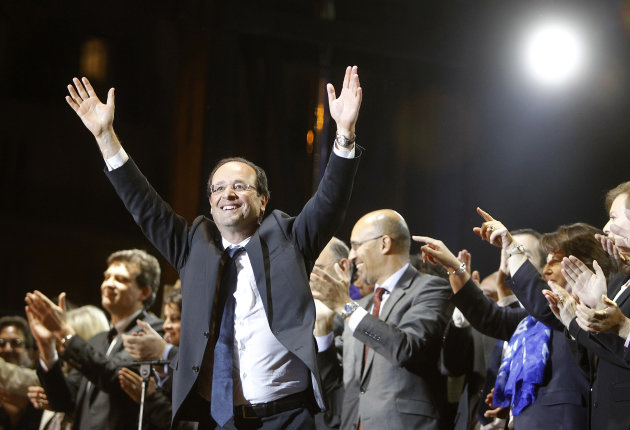
A victorious Francois Hollande
faces a short honeymoon after his election as France's first left-wing president in 17 years, with financial markets eager for clear signals on his policies and how hard he plans to push back against German-led austerity. The moderate Socialist beat conservative Nicolas Sarkozy with 51.7 percent of Sunday's runoff vote after a bruising campaign dominated by the same anger over economic crisis that has felled 10 other European leaders since late 2009. While jubilant left-wing voters partied into the early hours of Monday in central Paris, Hollande admitted that for him, the festivities would have to be short-lived. "There is a lot of joy and pride but also apprehension at taking on this responsibility at a difficult time for the country and for Europe," he said.
After delivering a victory speech in his rural base of Tulle in central France, he flew to Paris and addressed tens of thousands of supporters in historic Bastille square. The new president is expected to be sworn in on May 15. As fears about the euro zone's debt crisis resurface following an inconclusive election in Greece, Hollande will travel to Berlin shortly thereafter to challenge Germany's focus on austerity policies and press new ideas for stimulating growth.
"In every capital, beyond the heads of state and government, there are people who have found hope thanks to us, who are looking to us and want to put an end to austerity," he declared. The left reclaimed Bastille square where revelers danced the night away in 1981 when Francois Mitterrand became the Socialist Party's first directly elected president. Three decades later, a new generation of left-wing voters waved red flags and some carried roses, the party emblem. Hollande is expected to include some trusted old hands in his government like Mitterrand's former prime minister Laurent Fabius but add many young politicians and women. His economic team, led by center-left former finance minister Michel Sapin, includes politicians, industry leaders and public officials seen as market-friendly. Hollande must quickly outline his domestic plans, likely to center around a major tax reform, and revise over-optimistic growth targets which threaten France's deficit-cutting goals. His plans to tweak a reform that raised the retirement age to 62 and increase the minimum wage are also rattling investors who fear France could drift away from the club of sound northern European borrowers and towards the debt-laden periphery. "Hollande's victory has already been priced in by markets, however his promises made during the campaign have not been priced in, so there is risk on the downside if he stands his ground when he announces a first set of measures," said fund manager Christian Jimenez at Diamant Bleu Gestion in Paris. "There's a clear need to boost economic growth across Europe, but the debate is on how to achieve that without spooking investors." LEFT WELL PLACED FOR PARLIAMENT Sarkozy, punished for his failure to rein in 10-percent unemployment and for his brash personal style, conceded defeat within 20 minutes of polls closing on Sunday, telling supporters he had wished Hollande good luck in such trying times. "I bear the full responsibility for this defeat," Sarkozy said, indicating he would withdraw from frontline politics. In Greece, mainstream parties were hammered in a parliamentary election that seemed set to leave supporters of an IMF/EU bailout without a majority, raising doubts about Athens' future in the euro zone. The euro fell in early trading in Asia on the Greek shock, with anti-austerity parties of the radical left and right winning almost half the votes. Hollande's clear win should give the self-styled "Mr Normal" the momentum to press German Chancellor Angela Merkel to accept a policy shift towards fostering growth in Europe to balance the austerity that has fueled anger across southern Europe. Merkel, who had openly favored fellow conservative Sarkozy, telephoned to congratulate Hollande and invited him to Berlin after his inauguration. The vote ended the "Merkozy" duo that led Europe through crisis and ushers in an untested partnership. German Foreign Minister Guido Westerwelle said: "We will now work together on a growth pact for Europe, that delivers more growth through more competitiveness." Opinion polls taken on Sunday showed the left strongly placed to win a majority in parliamentary elections next month, especially since the anti-immigration National Front is set to split the right-wing vote and hurt Sarkozy's UMP party. If they win that two-round election on June 10 and 17, the Socialists would hold more levers of power than ever before, with the presidency, both houses of parliament, nearly all regions, and two-thirds of French towns in their hands. Hollande led the presidential race from start to finish, outlining a comprehensive program in January based on raising taxes, especially on high earners, to finance spending priorities and rein in the public deficit to zero by 2017. He benefited from public distaste for the incumbent's abrasive style as well as anger about economic gloom that has swept aside leaders from Dublin to Lisbon. Sarkozy launched his campaign late and swerved hard to the right between the two rounds of voting as he tried to win back low-income voters who ditched him for the radical left and the far right on the first ballot. He barely dented Hollande's lead, however, and also failed to land a knockout punch in their only television debate. In two further blows in the last days of the race, far-right leader Marine Le Pen, who won 17.9 percent in the first round, and centrist Francois Bayrou, who polled 9.1 percent, refused to endorse the conservative president. Sarkozy allies consoled themselves that the margin of defeat could have been worse, preserving their parliamentary election hopes. "People were talking about an anti-Sarkozy tsunami," Foreign Minister Alain Juppe said. "That's not what happened."

Obama tells Americans not to take chance on Romney

Nawaz Lohar: Now a long march

EDITORIAL:Now a long march
PML-N President Mian Nawaz Sharif upped the ante during his address at Taxila, at the first rally of his party’s campaign to oust the Gilani government, by calling on the populace to be ready for a long march. Mian Nawaz wants Mr Gilani toppled primarily because he has been convicted for contempt of the Supreme Court, but also because the government’s record in office is poor. Mian Nawaz’s demands may be right or wrong, but the strong language he used, went beyond the parliamentary. While it might be said that the flow of feelings was such that he could only express himself by saying that the rulers only understood the language of force, this is to denigrate democracy itself, in which it does not suit the leader of the main opposition to use such language. More germane to the issue is his asking what the President and Prime Minister had done during their tenure. This is the question that all will be asking themselves as the elections, due in less than a year’s time, come closer. It might seem that the opposition is holding this series of rallies with the elections in mind, but Mian Nawaz has his attention focused on the $60 million in the impugned Swiss account, about which the Prime Minister was so adamant in refusing to write a letter to the Swiss, that he preferred to be convicted by the Supreme Court. By promising to get this money back, Mian Nawaz focused on the issue at the heart of this campaign. If only elections were the motive, the Swiss accounts might not have figured so prominently. Mian Nawaz related this to the Constitution. However, there is a need to carry out some self-accountability. The opposition has also to ask itself if it has done anything to help solve the common man’s problems, which range from price inflation to loadshedding, the latter becoming a pressing problem now that summer has started. The problems facing the average citizen also include deteriorating law and order, as well as a foreign policy that involves constant violations of sovereignty, shown by how the USA felt free to launch another drone attack in North Waziristan, both after its previous attack which killed schoolgirls and destroyed their school, and the supposed reset of relations after the Salalah massacre as well as the parliamentary joint sitting which was supposed to review them. Without a solution to these problems, neither government nor opposition might find it easy to interest people in the debate on democracy and constitutionalism. The issue has got to be seen by people as relevant to their concerns before they will come off the fence and join any movement trying to force the Prime Minister to obey the courts. The people have to see the government solving their problems or the government-in-waiting as having those solutions, if they are to move.

Tortured Afghan Bride Defies The Odds, Embarks On New Life

by Frud Bezhan, Fareba Wahidi
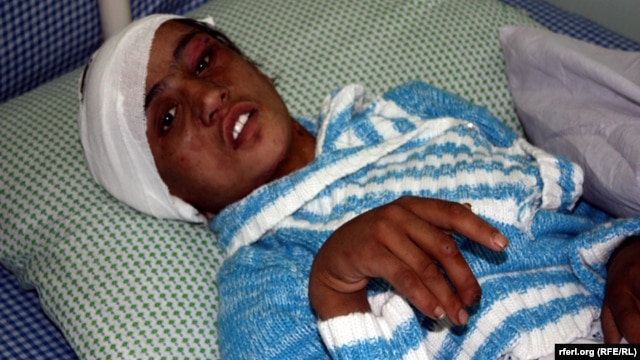
Sahar Gul,
the young Afghan bride whose harrowing ordeal at the hands of her in-laws attracted international media attention, has received some solace after authorities handed down lengthy prison sentences against her tormentors. The Kabul Sessions Court on May 1 delivered 10-year sentences against Gul's father-in-law, mother-in-law, and sister-in-law, who had been accused of imprisoning and brutally abusing the 15-year-old newlywed. Police are still looking for Gul's husband and brother, both of whom are suspects in the case. When police in northern Baghlan Province followed a tip and rescued Gul in December, she was lying unconscious on the floor of a dark basement. Her fingers were broken, some of her nails had been torn out, patches of hair were missing, and her frail body was covered with bruises and scars. She was so feeble and traumatized that for weeks she could barely speak.
"I wanted them to be punished," Gul said after hearing the verdicts from the court. "I want them to have their nails ripped off and for them to receive burns like they gave me. I wanted to get my divorce." Doctors are still closely monitoring her fragile psychological condition as the teenager battles acute trauma and depression. But after enduring months of hell after being sold into marriage to a man twice her age, most of Gul's physical scars have healed and she now looks forward to achieving the big goals she has set for herself. Resumed Her Education Speaking from her new home in Kabul, at a shelter run by Women For Afghan Women, a nongovernmental organization that supports abused women, she is full of optimism. ​​​​She has been inspired by her newfound freedom and has resumed her education, which she was forced to abandon at the fourth grade after she was forced into marriage. "I study and pray. When I feel like it, I go outside and sit with my friends. Then when I'm tired, I go to sleep. I sometimes play with my doll," she says. "If I can, I sit down and write and read my schoolbooks. I go to school in the afternoons." Suriya Sobrang, head of women's affairs at Afghanistan's Independent Human Rights Commission, hopes Gul's case will set a precedent for violent crimes against women. Sobrang admits that many Afghan women who have endured violence do not receive justice. She says the majority of such cases result in the acquittal of the perpetrators, the dropping of charges to less serious crimes, convictions with shorter sentences, and female victims themselves being accused of "moral crimes" for making private matters public. "In relation to the case of Sahar Gul, I have to say that in the 21st century this is a crime against humanity. All the people included are criminals," Sobrang says. "Afghans should see the consequences and learn a lesson. I hope this will prevent the continuation of such violent crimes in Afghanistan." Chilling Account Her rescuers did not expect her to live, but against all odds she survived.
After receiving life-saving treatment at a local hospital in Baghlan, Gul was flown to Kabul, where after months of medical procedures and rehabilitation she can now move, eat, and speak freely. ​​​​Gul provides a chilling account of the six months she spent at her husband's home. ​​She explains how her older brother sold her into a marriage to a 35-year-old man already married with 10 children. With her father dead and mother remarried, Gul says she was powerless to stop her brother, who received several hundred dollars in exchange. She says her husband and in-laws forced her to become a servant and prostitute. When she resisted, Gul says, she was abused with pincers, lashed with cables, beaten with hot irons, and tortured with electric shock. "They wanted me to do bad things with men. They told me if I didn't, then they would kill me," Gul says. "They would bring men there [to their home] and tell me to sleep with them. I said I didn't want to do it and that I was only a child. I said all these men were like my brothers and fathers." Gul has big plans. She dreams of completing school and even becoming involved in the country's political affairs.
She says she is determined to stop the culture of violence against women in Afghanistan, a country where domestic abuse is routine, forced marriages are the norm, and female suicide rates are among the highest in the world. For now, though, Gul must go back to basics. For the past few weeks, she has been taking private school lessons and has been learning the Dari (Persian) alphabet. "In the future, I want to become a doctor and a female leader," she says. "Now I'm learning the alphabet. I've learned to write auntie, uncle, brother and these kinds of words."

French election not likely to bring change

The French presidential election runoff was held Sunday, with the media predicting that only a miracle can save Sarkozy. His fate will have been decided this morning. Looking back at what Sarkozy has done in the past five years, there seems to be little left except for gossip about him and his high-profile wife, plus his emotional speeches. In fact, politicians in Western countries seem to share this tendency toward celebrity-style performances. It is difficult to say whether this is good or bad. The Western world lacks a clear goal for moving their countries forward. It is stuck in a mixed feeling of superiority and anxiety before emerging nations. Few politicians are seriously pondering the solution to this puzzle, instead offering only sweet promises to woo voters. Elections have given rise to more bad practices, and their ability to solve the problems is declining. An administration change cannot generate the strong will needed to kick-start public debt reform in France. The change has to come from reflection of a wider scope. But protests against austerity measures from Greece to France have suggested that this much-needed reflection is far from coming. Statesmen are busy pleasing voters, not leading reflection. The idea of democracy is spreading wider. There are few countries today that can survive with authoritarian governments. Meanwhile, the democratic system is creating an increasing number of problems in Western countries. From neighboring Japan to faraway France, China has witnessed the power of democracy, and also the damage it can do if it goes to extremes. A late starter in democratic reform, China needs political wisdom to understand the complexity of this era, and its own different historical and social context. Clearing away the feudal influence left from thousands of years and clearly framing democratic boundaries are both important to China's political structure. What is worrying is that democratic rights enjoy much higher political acclaim in China's sphere of public opinion. In cyberspace, ideas such as necessary restriction of democratic rights have few takers. The real world cannot be ruled by a few simple slogans that are popular online. The French election saga, eye-catching as it is, looks like a waste of the French people's political passion. In countries with a weaker social governance base, political games can incur broad social disaster. Democracy and ability to lead are both crucial to any country, as has been proved by China's reform and the twisting roads of Western countries. China has plenty of room to make major political decisions. It should not drive itself into a blind alley.

Long march will be a grave error by Sharifs

Pakistan People’s Party (PPP) Secretary General Jahangir Badar said on Sunday that some people were trying to politicise the court’s verdict and wanted to crush the “people’s mandate” by force. Speaking at Lahore Press Club, Badar said that Pakistan Muslim League-Nawaz (PML-N) chief Nawaz Sharif was committing a great mistake by launching the long march. “Everyone is waiting for a detailed verdict by the court and the verdict will be accepted whatever it is,” Badar said, adding that the PPP had no quarrel with the judiciary and the party would in no way attack the apex court. He said the judiciary was facing dangers not from the PPP, but from those who were politicising its verdicts. The PPP leader said there would be no confrontation if the parliament and the judiciary would remain within their constitutionally mandated role. He said that Sharif brothers had been brought up by military dictator Ziaul Haq and they fled away after signing an agreement with another dictator. He said the PPP could not understand what the Sharif brothers wanted to achieve through their anti-government movement. He said their anti-federation politics would damage the federation. He said the need of the hour was to strengthen democracy and resolve people’s problems. Badr said that by conspiring against the government, the PML-N president was violating the “charter of democracy” signed with the PPP. Answering a question about the situation in Lyari, Badar said that the operation was being conducted in the area against drug peddlers and criminals. “The PPP has always won from Lyari and will be winning from there in future as well,” he said.

Prime Minister Gilani laughs off street agitation

The Express Tribune
Prime Minister Yousaf Raza Gilani
delivered a scathing riposte to the Pakistan Muslim League-Nawaz and Pakistan Tehreek-e-Insaf on Sunday over their back-to-back public rallies in support of the superior judiciary. Even if Nawaz Sharif
and Imran Khan
join hands, the ruling Pakistan Peoples Party (PPP) is “popular enough to defeat their alliance”, Gilani told office-bearers of the Lahore Press Club at his residence. The prime minister also accused the two parties of inciting street agitation through their actions and reminded the PML-N chief that his party was violating the Charter of Democracy. Nawaz had invited the PTI to join his movement to oust Premier Gilani following his conviction by the apex court. But Imran says his party would join hands with the PML-N only if its lawmakers resign en masse from parliament and the provincial legislatures – both unacceptable preconditions for the Sharif brothers. The two parties are now leading street protests separately. Premier Gilani said it was he and President Asif Ali Zardari who faced former military ruler Pervez Musharraf with courage while the Sharif brothers “fled the country after signing a deal with the dictator”. The PPP leadership would do the same, whenever needed, and the Sharif brothers would again escape from the country, he added. He called upon the Sharif brothers to apologise to the nation for “concealing their agreement with Musharraf and telling lies for ten years”. The premier laughed off Sunday’s public rally of the PML-N in Taxila, saying that “my son can stage bigger rallies for them”. Describing the PML-N’s street protests as realpolitik, Gilani challenged them to resign from the assemblies and he would announce snap polls. “If the PML-N leadership has courage, they should ask their lawmakers to resign from the assemblies en bloc and I will announce by-polls the same day,” he said. The prime minister said that if the opposition wanted to unseat him, they ought to table a no-confidence motion in parliament. He insisted that he could not be forced to relinquish his post. “Nobody can remove me from my office through any undemocratic or unconstitutional method as there is a constitutional procedure for the removal of a prime minister,” he added. He also reminded Nawaz of the Charter of Democracy he had signed with slain PPP chairperson Benazir Bhutto. The two leaders had agreed to uphold the cause of democracy in the country. “The PML-N is a signatory to the Charter of Democracy, so why is it staging a long march (against a democratic government?” he asked. He vowed not to relent to the opposition pressure and step down voluntarily. He said that only parliament could de-notify him. If the apex court disqualifies me in its detailed judgment, even then the National Assembly speaker will decide my fate, he added. Referring to the Pakistan Bar Council’s statement, the premier said that all bar councils of the country have endorsed the PPP’s stance on this matter.

Shia passenger coach attacked in Kurram

Daily Times
Several passengers, including three women and some children, were injured on Sunday when unidentified terrorists ambushed their coach on Tal-Parachinar Road near Urwala Frontier Corps (FC) Fort in Lower Kurram. The van carrying Shia passengers was on its way from Parachinar to Peshawar when the terrorists attacked it with automatic weapons. The incident sparked panic among the locals, who said the unabated acts of terrorism had raised serious questions about the efficiency of the FC and other security agencies. Toori and Bangash tribes summoned an emergency meeting after the incident, declaring it an attempt of genocide against the tribes. The elders of the tribes declared that the attack was part of a series of such incidents being carried out in the presence of FC troops, who merely stood as silent spectators. People of Lower Kurram had been left unprotected, they said. They expressed disappointment that the checkposts the government had promised to establish at the Tal Road in Lower Kurram were instead being established in less-threatened areas of Upper Kurram. The elders urged the government to deploy troops in Lower Kurram, saying terrorists had been carrying out their criminal activities in the area because of government’s failure to ensure proper security arrangements. They said if the government faced a shortage of troops, it could re-locate those in Bahrain area.
Hazara man among 3 killed in Balochistan
A Hazara man was among three people killed in separate incidents of shooting in Quetta, Mastung and Hub areas of Balochistan on Sunday. In the first incident, unidentified armed men gunned down a man in Dasht area of Mastung. According to levies, the man identified as Muhammad Ali was sitting at his tyre shop when the armed men, riding a motorcycle, opened fire on him. Resultantly, he received multiple bullet wounds and died on the spot. Levies officials rushed to the spot and cordoned off the area. A levies official said the man belonged to the Hazara community and that it was a sectarian killing. The Hazara Democratic Party has strongly condemned the killing of Muhammad Ali, saying that the government had failed to provide security to Hazaras. Separately, a man was killed in Hub, an industrial township of Balochistan. According to sources, unidentified armed men shot dead Kuda Baksh in Goth Haji Murad area of Hub. Police rushed to the spot and body was taken to a nearby hospital. A man was also gunned down in the Sariab Road area of the provincial capital. Police said gunmen, riding a motorbike, opened fire on the man near Faizabad area while he was on his way home. He died on the spot. The body was moved to the civil hospital. The attackers managed to escape.

Zardari, Gilani faced dictatorship while Sharif brothers fled

Prime Minister Syed Yousuf Raza Gilani
said on Sunday that President Asif Zardari and himself faced dictatorship with courage while PML-N president Mian Nawaz Sharif flew away after signing an agreement with Pervez Musharraf. He said in a meeting with the office bearers of Lahore Press Club at his residence, while commenting on a statement of PML-N Chief Nawaz Sharif. The prime minister said the PPP leadership would face dictatorship whenever it is needed, whereas the Sharif brothers would again flee from the country. He said the PML-N leadership wanted to enjoy the benefits of being in opposition and in the Punjab government at the same time. “ If PML-N leadership has courage then they should resign from the assemblies and I will announce by-polls on the same day,” he challenged.

PPP workers hold pro-Gilani, Zardari rallies

The PPP workers on Sunday held pro-Gilani and pro-Zardari rallies in different cities.
Pakistan People’s Party (women wing) took out a rally in Peshawar in favour of Prime Minister Yusuf Raza Gilani.The rally led by PPP leader and member Khyber-Pakhtunkhawa Assembly Dr Faiza Rasheed started from Hasht Nagri Chowk.The participants of the rally staged sit-in on GT Road and shouted slogans in favour of Prime Minister Yusuf Raza Gilani and President Asif Ali Zardari. The workers said that they turned to the streets for the sake of justice.Meanwhile, the PPP workers also held a rally in Dera Ghazi Khan to express their solidarity with the resolution passed by the National Assembly for the formation of Saraiki province. The rally started from DG khan Press Club and concluded at traffic chowk.On this occasion, the speakers said that Pakistan People’s Party has kept its promise by passing a resolution to create new province in South Punjab while the PML-N leaders were proving themselves as public enemy by opposing the formation of new province.

HOLLANDE ADDRESSES SUPPORTERS

France's 'Mr Normal' Hollande to move into Elysee

He dubbed himself "Mr Normal"
during France's presidential election campaign, a modest scooter-riding everyman in touch with the concerns of ordinary voters. But, after winning France's presidential vote, Socialist Francois Hollande faces some far-from-ordinary challenges as the leader of the eurozone's second-largest economy, a nuclear-armed UN Security Council member. Derided by critics as inexperienced and soft -- and nicknamed "Flanby" after a brand of wobbly pudding -- Hollande is set for a crash course in governing after his victory over incumbent Nicolas Sarkozy.
"I am what you see, there is no artifice. I don't need a disguise. I am who I am. Simple, direct, free," Hollande said in the campaign, during which he contrasted his humble style with that of the flashy and aggressive Sarkozy.
Even a year ago, few would have expected to see the 57-year-old Hollande packing his bags for a move into the Elysee Palace. The then IMF chief Dominique Strauss-Kahn was seen as all but certain to be the Socialist candidate in Sunday's vote, until his stunning fall from grace in May after sexual assault charges in New York. At the time Hollande, a backroom deal-maker who led the Socialists for 11 years, was perhaps best known as the former partner of the party's telegenic 2007 candidate, Segolene Royal. But he surged ahead during a US-style primary to beat rival Martine Aubry, appealing to the centre-left with with vows to be a consensus-builder, despite his only experience being as a local official in his adopted Correze region. He has held an opinion poll lead over Sarkozy from the moment of his nomination and -- notwithstanding a few late surges in support for the incumbent -- never fell behind. A protege of modernising former European Commission chairman Jacques Delors, Hollande is of the generation groomed under the only previous Socialist president, Francois Mitterrand, who left office in 1995. Born in 1954 in the northern city of Rouen, Hollande
was the son of a doctor with far-right sympathies and of a social worker. His father later moved the family to Neuilly-sur-Seine, the posh Paris suburb where Sarkozy was also raised. He was educated at the elite Ecole National d'Administration (ENA), where in 1978 he met Royal and the couple started a three-decade relationship. In 1981, after Mitterrand swept to power, Hollande challenged Jacques Chirac -- who later became French president -- in his parliamentary fiefdom in the rural region of Correze, but lost. Chirac, who once mocked Hollande as "less well-known than Mitterrand's Labrador", retains affection for his old rival and even said he would vote for the Socialist, though he later passed off his remark as a joke. Hollande eventually won the seat in 1988 and was re-elected in 1997, 2002 and 2007. In 1997 he took over the Socialist Party leadership, a post he held until 2008 when he was replaced by former labour minister Aubry, also the daughter of his former mentor Delors. Some had pushed for Hollande to take on Sarkozy in the 2007 race but Royal had already emerged as the leading Socialist nominee. The couple, who by then had four children, split before the vote but news of the break-up did not emerge until after Royal's defeat. Hollande is now in a relationship with political journalist Valerie Trierweiler. She reportedly encouraged him to lose 10 kilogrammes (22 pounds) of unpresidential body fat and adopt thinner-framed glasses for the campaign. Concerns that Hollande was too mild-mannered and academic to take on Sarkozy disappeared as the race went on and he emerged as a tough campaigner, his speeches sprinkled with dry humour. His performance during the campaign's only face-to-face debate -- when he fended off an increasingly aggressive Sarkozy accusing him of "lies" and "slander" -- was particularly lauded. "He has changed. It's as if he started wearing this suit as the days went on," Trierweiler said. "He is completely ready to take office."

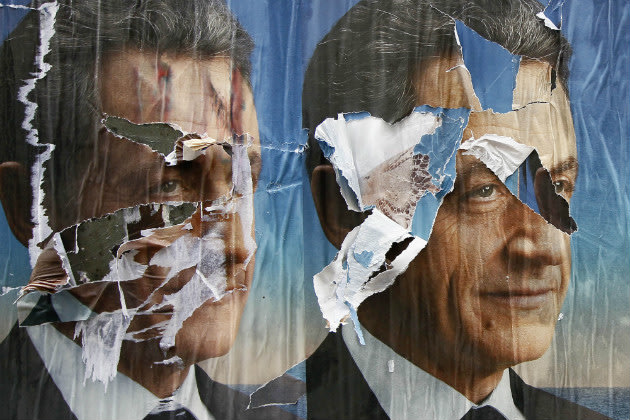
Sarkozy, the hyperactive president who disappointed France

Nicolas Sarkozy's defeat on Sunday marked the end of a five-year presidency during which he divided a France that had put its hopes in him to break with a history of timid government complacency. Never has a French president been so disliked, as much for his personal style as for his austere deficit-busting policies, and the right-wing leader vowed months ago to quit politics if defeated. "You'll see a big surprise," an optimistic Sarkozy declared on Friday at the end of a ferocious campaign that saw him repeatedly apologise for his perceived flashy presidential style. A one-on-one televised debate on Wednesday was seen by many as his last chance to catch up with Hollande, when the Socialist impressed by remaining calm while Sarkozy surprised no one by lashing out at his rival as a "liar". When he was first elected in 2007, after 12 years of president Jacques Chirac's dithering, many were ready to forgive Sarkozy's brutal side, in the hope his relentless energy would serve France well in an age of globalisation. Five years later, after promises of wealth and job creation proved a mirage, Sarkozy's aggression grated too much and his relationship with the electorate irreparably broke down. At 57, Nicolas Sarkozy de Nagy-Bosca retained the boundless ambition that drove the son of a Hungarian immigrant, with no ties to the Paris elite or the provincial bourgeoisie that dominate politics, to the presidency. An activist at 19, a town mayor at 28, lawmaker at 34 and minister at 38, Sarkozy won the presidency at 52, and his time in office remained as busy in his personal life as it was in politics. He divorced his second wife after a tumultuous struggle to woo her back from her lover, then married supermodel and singer Carla Bruni and had a daughter with her. At the height of his powers, he was the most popular president since General Charles de Gaulle. "I have no right to disappoint," he said. But disappoint he did. First with his overbearing manner and then through his actions. The first faux pas came on the very evening of his election, when he feted his victory in fine style in the glitzy Paris eatery Fouquet's with some of France's richest people, setting the seal on an image of tasteless excess. One of his worst decisions was to allow his son Jean, a 23-year-old local councillor who had not yet graduated college, to try to take charge of the powerful public development agency in the La Defense business district. He also struggled with the 2008 credit crunch and the subsequent financial crises. Sarkozy tried to rise to the occasion as a global statesman, staging crisis summit after crisis summit, but his high-rolling Rolex and Ray-Ban image sat ill with an age of austerity, and French voters turned their backs on him. "The most important factor is the way in which he vulgarised politics and lowered the status of the presidential office for his own ends," said political scientist Stephane Rozes of the Cap Institute. Chirac was never happier than when greeting farmers, tasting food and admiring prize cattle at the Paris agricultural show. Sarkozy was famously filmed there telling a grumpy bystander: "Get stuffed, you stupid bastard." His supporters point to the reforms that he managed to push past a dubious parliament and public -- an unpopular increase in the retirement age from 60 to 62 and a measure to ensure the independence of universities. He had an impact on the international stage, helping negotiate an end to Russia's drive into Georgia and leading the NATO intervention that helped Libyan rebels topple Moamer Kadhafi. Those most disappointed are those who believed in his slogan "work more to earn more" -- unemployment is approaching 10 percent and he did not live up to his promises to tackle tax loopholes and discrimination. He shocked some by pushing far-right themes, increasingly so between the April 22 first round presidential election and the run-off as he sought to claw back votes from the National Front. He linked crime to immigration, expelled EU citizens of Roma descent and launched a debate on the threat Islam supposedly poses to French national identity.

Nawaz wants to do politics on judiciary

dunya tv
Information Minister Qamar Zaman Kaira said Nawaz Sharif has insulted the Charter of Democracy.In a statement in Islamabad on Sunday‚ he said the democratic government is only answerable to the people. The information minister said Nawaz Sharif wants to do politics on judiciary. Kaira said Seraiki province is eye sour for Nawaz Sharif. He said Nawaz Sharif should seek apology for his attitude towards judiciary in the past. He said gimmicks in politics will not work in 2012. He said wrong interpretation of constitution by the followers of dictators is not acceptable.

Socialist Hollande triumphs in French presidential poll

Left-wing candidate François Hollande
has defeated incumbent Nicolas Sarkozy
in Sunday's runoff, exit polls say, becoming the first Socialist to win a presidential election since François Mitterrand in 1988.
François Hollande has won France’s presidential election, giving the country its first Socialist president in almost two decades, exit polls showed Sunday. According to Ipsos polling institute, the left-wing candidate took 51.9% of the vote to incumbent Nicolas Sarkozy’s 48.1%. Celebrations are underway at the iconic Place de la Bastille in central Paris, the same spot where the last Socialist to win a presidential election, François Mitterrand, celebrated his victory back in 1981. Hollande, who voted on Sunday in the central Corrèze region, which he represents in the French parliament, was considered the frontrunner throughout the campaign, at times leading his rival by as much as 10% in opinion polls. He finished ahead in the first round on April 22, claiming 28.63% of votes cast against Sarkozy's 27.18%. In a twin blow to Sarkozy between the two rounds, far-right candidate Marine Le Pen and centrist François Bayrou, who gathered around 18% and 9% respectively, both denied the incumbent an endorsement. Bayrou told supporters his personal vote would go to Hollande, while Le Pen said she would cast a blank vote. At 79.9%, according to Ipsos, voter turnout was strong, though slightly lower than the figure reached in 2007. Hollande will be sworn in as France’s president on May 14 or 15. Winning platform Sunday's election capped a stunning comeback for Hollande, whose career appeared to be all but over after he left the leadership of the Socialist Party in 2008. It also marked the end of a year-long campaign for the veteran politician, who won his party’s internal primaries in October of last year, establishing himself from the start as a moderate left-winger with the best chances of appealing to centrists and beating Sarkozy. Hollande has promised to boost France’s public education system by 60,000 employees and reduce the retirement age from 62 to 60 for people who have completed a minimum 41 years of work. He also campaigned on a pledge to give all foreigners the right to vote in local elections in line with laws already in place for EU citizens living in France. The Socialist has said he will balance the country’s budget by 2017. Socialists return to power Sarkozy became the only the second French president to fail to claim a second mandate since Valéry Giscard d'Estaing was swept out of office in 1981. It was also the first time the Socialist Party triumphed in a presidential election since Mitterrand's re-election in 1988. France's Socialists will be hoping to use the vote’s momentum to win back a majority in parliament in elections this June. Europe’s ongoing debt crisis was likely to take priority in the first weeks of Hollande’s mandate, and his camp showed it would not loose much time celebrating. Hollande was planning to call German Chancellor Angela Merkel on Sunday evening, Socialist MP Jean-Marc Ayrault told the media earlier in the day. Ayrault, who is also a close advisor and aspiring prime minister to the presumed president-elect added that Hollande would quickly organize a trip to Berlin. Merkel, who has championed strict austerity in Europe, backed Sarkozy in the elections. “He will talk with the German chancellor because in that exchange lies the key to Europe’s recovery, redirecting Europe towards growth, competitiveness and protection,” Ayrault said. A meeting of the so-called Group of Eight leading world economies on May 18 in the United States, could be the first opportunity to shake hands with President Barack Obama and other heads of state.

Socialist Hollande beats Sarkozy to win French presidency

Socialist Party challenger François Hollande has beaten incumbent Nicolas Sarkozy in a tight run-off election to win the French presidency with 51.9% of the vote to Sarkozy’s 48.1%, Ipsos exit polls show.

Leaders fall in Europe crisis: Sarkozy next?

French President Nicolas Sarkozy is widely expected to be kicked out of office in elections Sunday. If he goes, he'll be in good company: Almost every crisis-hit European country that has held an election since disaster struck in 2009 has thrown out its leader. Here's a look at countries where political cadavers litter the landscape. — SPAIN: A burst real estate bubble also deflates faith in a Socialist government, which is nonetheless reluctant to admit Spain has problems. Blips of good economic news are seized upon as "green shoots" pointing to recovery. Wrong. Stimulus measures are enacted, then crushing austerity. Unemployment soars. The Socialists of Jose Luis Rodriguez Zapatero are wiped off the map in November 2011 elections; Mariano Rajoy's conservatives take over. — ITALY: Silvio Berlusconi, the long-serving leader accused of everything from bedding escorts to serial corruption, finally bites the dust in November 2011. He resigns to cheers and jeers as investors lose confidence in his ability to spur economic growth and rein in debt. It's the end of a political era. Mario Monti, a former European Commissioner, is named to replace him and lead a technical government until elections in 2013. — BRITAIN: Gordon Brown leads the Labour Party to defeat in the May 2010 election; Conservative Party leader David Cameron becomes leader of a coalition government. Brown had been finance chief for a decade before succeeding Tony Blair in 2007. Brown had boasted endlessly of ending the cycle of boom and bust — but as prime minister he presided mostly over bust. — IRELAND: Brian Cowen, promoted to prime minister in 2008 after being finance minister, doesn't even get to run. He resigns as leader of the Fianna Fail Party weeks before the February, 2011 election. It doesn't help his party, which suffers its worst ever defeat. Cowen was finance minister during Ireland's banking crisis and the collapse of its housing bubble. — GREECE: Greek Socialist leader George Papandreou swept to power in October 2009 over conservative opponents, pledging to spend his way out of a deteriorating economic situation. Two years later, at the height of Greece's worst financial crisis since World War II, Papandreou's own deputies force him out after he endangers a hard-won bailout by announcing he would put it to a referendum. He's replaced by caretaker Prime Minister Lucas Papademos. — PORTUGAL: A month after Portugal requests a 78 billion-euro bailout, the center-left Socialist government of Jose Socrates is voted out of power in June, 2011. Portugal's woes stemmed from a decade of feeble growth as it failed to modernize amid increasing global competition and dug itself deeper into debt. — DENMARK: A center-right government in Denmark loses power in September in part due to discontent over austerity measures introduced amid the debt crisis. It is replaced by a center-left coalition. — FINLAND: Finland's government is reconfigured after June elections following a sharp surge in support for nationalists who oppose bailouts for debt-stricken eurozone countries. A conservative-led coalition spanning left and right is formed to keep the nationalist True Finns out of power. Bucking the Trend: — ROMANIA: Romanian President Traian Basescu wins re-election in 2009, the year Romania's economy shrinks by 7 percent and Romania takes a 20 billion-euro bailout loan from the International Monetary Fund, the World Bank and the European Union. Basescu, a former ship captain, prevails because he is seen as a strong leader in a time of crisis. — POLAND: This has been a rare European success story: It's the only European Union country that did not to slip into recession during the global crisis of 2008-2009. Last fall the center-right party of Prime Minister Donald Tusk wins a second straight term in parliamentary elections, making history by becoming the first government since the fall of communism in Poland in 1989 to be re-elected. — ALSO: Sweden's prime minister is re-elected in 2010 and the prime ministers of Latvia and Estonia are re-elected in 2011.

French voter participation at 71.96% at 5pm

BREAKING NEWS
France's interior ministry says voter participation reached 71.96% at 5pm Paris time on Sunday as Socialist favourite François Hollande challenges President Nicolas Sarkozy in a tight run-off vote.

PM Gilani dares PML-N to resign from assemblies

Prime Minister Yousuf Raza Gilani said Sunday that Imran Khan and Nawaz Sharif should read the constitution before chanting slogans in support of the judiciary. The prime minister met with officials from the Lahore Press Club and said that it was clearly stated in the constitution how decisions would be implemented. “There is no need of opposition or support from the provincial governments to implement Supreme Court orders.” Gilani also called on the PML-N to resign from the assemblies and if Imran Khan supported them then by-elections would be held immediately. Prime Minister Gilani further said that Nawaz Sharif fled the country after striking a deal with a dictator. “Nawaz Sharif was in Jeddah when Zardari and Gilani were facing a dictator.” Gilani added that they would continue to face dictators while the PML-N would be on the sidelines.