Legendary pop singer Whitney Houston was found dead Saturday at a Beverly Hills, California, hotel, officials said. She was 48.
The entertainer, whose incredible talent was discovered at an early age, was pronounced dead at 3:55 p.m. (6:55 p.m. ET) at the Beverly Hilton hotel despite resuscitation efforts, a police spokesman said.
Beverly Hills Police Lt. Mark Rosen said there were "no obvious signs of criminal intent" and that the cause of her death is being investigated.
Houston's bodyguard found her body, said Courtney Barnes, publicist for hip-hop artist Ray J, who was dating the pop diva.
According to her official website, Houston sold more than 170 million albums, singles and videos. But she also struggled with addiction problems over the years.
Houston, whose hits included "The Greatest Love of All," died on the eve of the 54th annual Grammy Awards at the Staples Center in Los Angeles. She had performed as late as Thursday night at a pre-Grammy event in the area. A pre-Grammy party was scheduled Saturday night at the Beverly Hilton.
Saturday, February 11, 2012
Shahbaz Sharif's Laptop Scheme and Nargis 'Mujra'
Guess what was on educational CDs given in Multan under Youth Laptop Scheme?
Dances of stage actress Nagris!
This shocking mix-up has left many a recipient reeling in disgust as no one could expect such delinquency in an educational scheme.
Some 5,443 students of Bahauddin Zakriya University were given free laptops by the Punjab government. However, the CDs which were meant to have educational software instead had the stage actress’ dances.
The students said that CM Shahbaz Sharif should direct the officials concerned to check the CDs being given under the scheme.
Dances of stage actress Nagris!
This shocking mix-up has left many a recipient reeling in disgust as no one could expect such delinquency in an educational scheme.
Some 5,443 students of Bahauddin Zakriya University were given free laptops by the Punjab government. However, the CDs which were meant to have educational software instead had the stage actress’ dances.
The students said that CM Shahbaz Sharif should direct the officials concerned to check the CDs being given under the scheme.
The Lahore Bar Association (LBA) has banned Shezan drinks
The Express Tribune
The Lahore Bar Association (LBA) has banned Shezan drinks from subordinate court complexes and vowed tough action against those found buying or selling Qadiani-owned products on court premises.
The decision was reached on Thursday at the LBA’s bar room in the LDA plaza following a motion by Advocate Ghulam Mustafa Chaudhry, president of Khatme Nabuwat Lawyers Forum (KNLF).
LBA president Chaudhry Zulfiqar Ali told The Express Tribune said that more than 100 lawyers unanimously voted for the ban on Shezan drinks for being the product of Ahmadis. The house also vowed to ban other products at a later stage.
Zulfiqar said that the association had launched a campaign to ensure a complete ban on Shezan drinks in subordinate court canteens etc. He said that he had constituted a team to enforce this decision. He added that strict action would be taken against canteen owners found selling Shezan drinks in subordinate courts.
KNLF President Advocate Choudhary said the LBA president had directed LBA Vice President Rana Javed Bashir Khan to coordinate enforcement of the ban in sessions courts, district courts, banking court, special court, Aiwan-i-Adl, in Model Town and Cantonment courts.
Several canteen owners, speaking on the condition of anonymity, said the decision would hurt Ahmadi lawyers. They said it was far from clear how such initiatives will promote the welfare of the lawyers’ community.
Speaking with The Express Tribune Advocate Asma Jahangir said the resolution was condemnable. She said that it was also against the law. All lawyers are equal members in the LBA irrespective of their religion, she added.
She said if some lawyers did not like the product they could stop using it but not enforce bans.
Some Ahmadi lawyers, also speaking on the condition of anonymity, said that the decision was condemnable and would hurt Ahmadi lawyers. They said that they had participated in LBA elections and even supported LBA leaders irrespective of religious differences.
They said the decision had disappointed them. They added that they would speak with the LBA executives and request that they take back the decision.
The Lahore Bar Association (LBA) has banned Shezan drinks from subordinate court complexes and vowed tough action against those found buying or selling Qadiani-owned products on court premises.
The decision was reached on Thursday at the LBA’s bar room in the LDA plaza following a motion by Advocate Ghulam Mustafa Chaudhry, president of Khatme Nabuwat Lawyers Forum (KNLF).
LBA president Chaudhry Zulfiqar Ali told The Express Tribune said that more than 100 lawyers unanimously voted for the ban on Shezan drinks for being the product of Ahmadis. The house also vowed to ban other products at a later stage.
Zulfiqar said that the association had launched a campaign to ensure a complete ban on Shezan drinks in subordinate court canteens etc. He said that he had constituted a team to enforce this decision. He added that strict action would be taken against canteen owners found selling Shezan drinks in subordinate courts.
KNLF President Advocate Choudhary said the LBA president had directed LBA Vice President Rana Javed Bashir Khan to coordinate enforcement of the ban in sessions courts, district courts, banking court, special court, Aiwan-i-Adl, in Model Town and Cantonment courts.
Several canteen owners, speaking on the condition of anonymity, said the decision would hurt Ahmadi lawyers. They said it was far from clear how such initiatives will promote the welfare of the lawyers’ community.
Speaking with The Express Tribune Advocate Asma Jahangir said the resolution was condemnable. She said that it was also against the law. All lawyers are equal members in the LBA irrespective of their religion, she added.
She said if some lawyers did not like the product they could stop using it but not enforce bans.
Some Ahmadi lawyers, also speaking on the condition of anonymity, said that the decision was condemnable and would hurt Ahmadi lawyers. They said that they had participated in LBA elections and even supported LBA leaders irrespective of religious differences.
They said the decision had disappointed them. They added that they would speak with the LBA executives and request that they take back the decision.
Michelle Obama: Helpings of Energy and Cheer for the Trail

At a time when President Obama and his opponents are blamed for shrinking from painful remedies for a sluggish nation, Michelle Obama

is back on the road as a tireless, cheerful dispenser of them.
“You’ve got a lot of energy because you’re all eating your vegetables and exercising,” the first lady proclaimed to a crowd of 14,000 screaming children in Des Moines on Thursday.
“Thank you for eating your vegetables,” she told airmen at a mess hall in Little Rock, Ark., as several stared guiltily into half-eaten plates of broccoli. “We need you strong.”
And sitting down with parents for dinner at an Olive Garden restaurant in Fort Worth, she exclaimed, “I hope you’re hungry; I’m starving,” and then passed around a salad bowl.
Serving up leafy greens is easier, of course, than slicing $1 trillion out of the federal budget. But Mrs. Obama has managed to make her “eat your peas” message painless and even occasionally joyful, hamming it up through a three-day, four-state tour to mark the second anniversary of her childhood anti-obesity campaign, “Let’s Move!” The trip is a timely reminder of why the Obama campaign views her as such a potent weapon.
“This is a bit of a twofer,” Mrs. Obama said of the tour in an interview with reporters here on Friday. “It’s an issue that I care about, but it’s an issue that’s important to the country. And because it’s an issue that’s important to the country, it helps my husband.”
Mrs. Obama had just finished judging a “Top Chef” competition to pick the best school lunch. She and her co-judges — the celebrity chef Tom Colicchio and the Obamas’ personal cook and food policy adviser, Sam Kass — declared it a tie among the three entries. The first lady told the children at the taping that when it comes to healthy school lunches, “everybody wins.”
That’s certainly not true in politics, which is why Mrs. Obama is shouldering an increasingly busy schedule of appearances at fund-raisers — often in out-of-the-way destinations like Burlington, Vt., or Aspen, Colo. — where she delivers a fervent stump speech about why Mr. Obama deserves to beat his challenger in November.
She also visited the campaign headquarters in Chicago, which electrified the staff “because it was so clear how invested she was in this,” said David Axelrod, a senior strategist.
With poll ratings that consistently surpass those of her husband, Mrs. Obama can be deployed before virtually any audience, according to the president’s campaign advisers. Some conservatives criticize the first lady for trying to make Americans eat “cardboard and tofu,” in the words of Rush Limbaugh. But her message has resonated with many other people, including those she met this week.
“We may look back and say, ‘She saved more lives than anybody else in the administration,’ ” Mr. Axelrod said. “It’s obviously something she feels passionately about, and not just because she is beating the bejesus out of everybody in push-ups.”
Not just push-ups: she crushed the late-night television host Jimmy Fallon in dodge ball and a potato-sack race during a fitness contest filmed in the East Room of the White House. She also talked Jay Leno, an avowed vegetable-phobe, into eating an apple dipped in honey.
At the rally in Iowa, Mrs. Obama expertly led the crowd in the “Interlude,” an aerobic-style dance from the University of Northern Iowa that has become a YouTube sensation. Gov. Terry Branstad, a Republican, tried manfully to keep in step.
All the goofing around is in furtherance of a serious goal, Mrs. Obama said, and her willingness to act silly is not just a stunt. People know when “you’re not as passionate about it or you’re just doing it for political reasons,” she said. “People smell that out so easily.”
Mrs. Obama’s image of a happy warrior is miles from the frustration she expressed, in response to a new biography by a New York Times reporter, Jodi Kantor, that she could be perceived as an “angry black woman.” In the interview Friday, Mrs. Obama acknowledged she has struggled at times with pessimism, watching her husband grapple with a faltering economy and the trials of Washington.
“When times get tough, we all get worried,” she said. “We are Eeyore,” she said, referring to the downcast donkey in the Winnie the Pooh stories, and then offering an imitation of him: “ ‘We’ll never make it; we’ll never get out of here; it is horrible; we’re losing; it’s over.’ ”
But Mrs. Obama jokingly referred to her husband as “Mr. Happy Guy, seeing the glass half full,” which she said sustained her confidence in the future.
On this trip, the first lady has most come to life when discussing the work-life stresses faced by ordinary families. At the Olive Garden, she carried on an earnest conversation with eight parents about how to improve the eating habits and fitness of their families.
The first lady drew on her own family, telling stories about her daughters, Malia and Sasha, that hinted at their rarefied existence but stuck a common chord with her guests.
Sasha, she said, came home from an after-school cooking class, marveling about tomatoes they had grown. “They were ‘hair-something,’ ” Sasha said, according to her mother. “And I was like, ‘You mean heirloom,’ ” Mrs. Obama replied, noting that heirlooms also grow in the White House garden. “She’s like, ‘No, but these were different.’ ”
The first lady listened as Cassandra Leach, a teacher, spoke about growing up with a morbidly obese mother, who could not participate in any outdoor activities with her. Mrs. Obama replied that she sympathized because her father, Fraser Robinson, suffered from multiple sclerosis, which had robbed him of the ability to play sports with his children.
While she talked, she picked at a plate of Venetian apricot chicken with broccoli, asparagus and tomatoes. Afterward, she noted approvingly that the dish contained fewer than 500 calories.
The president’s campaign advisers said that they were well aware that Mrs. Obama drew strict limits on how much she would do for the campaign because of family obligations. Her message, she said, is “This is the time I have to give to the campaign, and whatever you do with that time is up to you, but when it’s over, don’t even look at me.”
“I’m absolutely fired up,” she insisted, “but I always have to have balance, because I’m a mother. When I’m out there, I’m fired up, but when I’m not, I have to be Malia and Sasha’s mom, and that can’t be as a fired-up campaigner. They’re like, ‘Where were you?’ ”
Obama Budget Bets Other Concerns Will Trump the Deficit

President Obama will lay out a budget blueprint on Monday that amounts to an election-year bet that a plan for higher taxes on the rich and more spending on popular programs like infrastructure and manufacturing will trump concerns over the deficit.
The new budget proposal contrasts with the deficit-cutting promises that attended the budget rollout last year and the debates that followed. Figures released on Friday indicate that the White House foresees a slightly higher deficit in the current fiscal year than the $1.3 trillion deficit of the 2011 fiscal year, even after the budget battles that dominated Washington last year.
The deficit is projected to fall to $901 billion in the fiscal year that starts in October, the first time since 2008 that the red ink would be below the $1 trillion mark. But last year, the White House had projected the 2013 deficit dropping further, to $768 billion.
Under White House projections, the deficit would reach $575 billion in 2018, or 2.7 percent of the economy, before rising again to $704 billion in 2022, or 2.8 percent.
The highlights of the plan for the 2013 fiscal year may not be those bottom-line figures but the spending inside.
A senior administration official on Friday evening framed the budget as the third act in a three-act play, which started with the fiery populism of Mr. Obama’s December speech in Osawatomie, Kan., continued with his State of the Union address and ends with a politically freighted budget rollout on Monday at a community college in the electoral battleground of Northern Virginia. Budget unveilings are usually handled in Washington by White House staff and cabinet members, with a brief message from the president.
The budget document distributed on Friday on Capitol Hill was permeated by the language of Mr. Obama’s State of the Union address and his call “to construct an economy that is built to last.” But the words and the policies hark back to the first year of Mr. Obama’s presidency and his call for a “New Foundation.”
In essence, Mr. Obama will campaign on a vow to stay the course.
“We must transform our economy from one focused on speculating, spending and borrowing to one constructed on the solid foundation of educating, innovating, and building,” the document states.
As Democrats promote the revival of manufacturing, the president will call for an additional $2.2 billion for advanced manufacturing research and development, a 19 percent leap over the current year. In all, Mr. Obama will seek a 5 percent increase in nonmilitary research spending.
For more immediate job programs, the White House will urge $350 billion in short-term job spending, as well as a six-year transportation and infrastructure program that would cost $476 billion. He will ask for $60 billion to refurbish at least 35,000 schools and help state and local governments hire and retain teachers, firefighters and police officers.
Tens of billions of dollars have already been spent on such efforts through the stimulus program passed in 2009, and Republicans in Congress — intent on calling the first effort a failure — are not about to embark on a new round.
But the latest budget document can be seen as more a platform for the president’s re-election campaign than a legislative proposal for budget debates that will begin next week. The budget will call for a 10-year, $61 billion “financial crisis responsibility fee” to hit the largest financial companies and a tax overhaul referred to as “everyone pays their fair share.”
Congressional leaders of both parties have vowed to pursue an overhaul of the tax code to make it simpler and fairer. But Mr. Obama’s version includes proposals that have been partisan flashpoints. His version pushes for the elimination of “unfair tax breaks for millionaires.” The current alternative minimum tax — which hits some middle-class families — would be scrapped in favor the president’s “Buffett rule,” named after the billionaire investor Warren E. Buffett and devised to ensure that households earning more than $1 million a year pay no less than 30 percent of their income in taxes.
The budget document calls for a simpler tax code with lower rates, but the president also wants a tax overhaul to cut the deficit by $1.5 trillion through 2022 and allow President George W. Bush’s tax cuts to expire for families earning more than $250,000 a year.
New spending and targeted tax increases seem far more gaudy than the $638 billion in spending cuts the White House is claiming over 10 years from health programs like Medicare and Medicaid, agriculture subsidies, federal worker retirement funds and other programs.
In all, the White House is boasting of more than $4 trillion in “balanced deficit reduction” in the package over 10 years, a figure that includes $1 trillion in spending cuts agreed to last year after a series of confrontations with Congressional Republicans.
But the document’s numbers will show Mr. Obama has failed to meet his pledge to cut the deficit in half by the end of his term, and for Republicans, that will be the bottom line.
“President Obama pledged to cut the deficit in half by the end of his term,” said Stephen Miller, spokesman for the Republicans on the Senate Budget Committee. “Their optimistic projection is that next year’s deficit will be almost a trillion dollars — after four straight trillion-dollar deficits. So the White House is bragging about a broken promise?”
But deficit reduction may be beside the point. Mr. Obama appears to be laying out a campaign document that pits jobs programs paid for with tax increases on the rich against the deep spending cuts that will be the heart of the Republican Party’s economic program, rebuilding versus austerity.
House Republican leaders have already promised to follow the president’s plan with a budget document of their own that is largely based on last year’s blueprint drafted by Representative Paul D. Ryan, Republican of Wisconsin and the chairman of the House Budget Committee.
The new Ryan plan may temper his proposal to replace guaranteed, government-paid Medicare with vouchers that would be used to purchase private health insurance plans. Instead, Mr. Ryan is likely to propose a new version that offers traditional Medicare as an alternative to vouchers, mirroring the Republican presidential candidate Mitt Romney’s plan as well as the one Mr. Ryan drafted with Senator Ron Wyden, Democrat of Oregon.
As Republicans drive toward deeper spending cuts without tax increases, the president’s budget plan appears to have been drafted to maximize the contrast between the two parties, and to raise the stakes of the November election.
Judges’ restoration through executive order challenged


A petition has been filled in the IHC, challenging restoration of judges through an executive order.
A writ petition has been filed in the Islamabad High Court, challenging the restoration of judges including Chief Justice of Pakistan Iftikhar Muhammad Chaudhry through an executive order.
The restoration has been challenged under Article 199.
PIC spurious drugs issue: YDA demands CM Shahbaz resignation
YDA has announced to hold protest from Monday against the removal of PIC management.Addressing a press conference in Lahore, representatives of Young Doctors’ Association (YDA) announced that protest would be staged outside Punjab Institute of Cardiology on Monday and in front of all hospital of Lahore on Tuesday, while OPDs of all hospitals will be closed on Wednesday.
The young doctors demanded that the legislative assemblies should make laws according to which the politicians and bureaucrats get medical treatment only in government hospitals and they should also be provided only those medicines purchased at government level.
The YDA has also demanded resignation from the Punjab chief minister and his appearance before the inquiry commission.
‘Foreign military presence in Syria raises ghost of Libya’
http://rt.com/
Russian lawmakers declared their unanimous support for Moscow's official position on Syria, which one Duma member says may have been infiltrated by foreign military.Chairman of the State Duma International Affairs Committee Alexei Pushkov spoke out following reports that a “foreign special task force” has been dispatched to Syria in an effort to provide assistance to the political opposition."According to the latest reports that are now being verified, a foreign special task force has been deployed in Syria,” Pushkov told reporters on Friday. “If these reports are proved to be true, the scenario will be absolutely the same as it was in Libya.”According to Pushkov, "they [the alleged foreign task force on the ground in Syria] are supporting the opposition and supplying them with arms; they propose an unbalanced resolution that places rigid conditions on Syria's ruling regime, while giving in to the demands of the opposition."Meanwhile, the four factions of the State Duma unanimously declared their support for Russia’s official position in Syria.The statement, proposed by the International Affairs Committee, says the State Duma "deems it extremely important for the UN, specifically the Security Council, not to side with any party in the conflict."The State Duma deputies support Russia’s official position…to facilitate the settlement of the conflict inside Syria," the statement reads. “Such an unbalanced approach…would undermine the chances for an equitable and constructive dialogue."The statement went on to criticize the “ultimatums issued to only one side of the conflict,” while, at the same time, calling for “regime change” as a mandatory precondition for settling the unrest.The Russian deputies say they condemn military intervention in the affairs of foreign countries and the imposition of solutions from outside.Russia will not support a single document that implies or allows such intervention without the UN Security Council's direct approval," the lawmakers said.Pushkov warned against using unsubstantiated “humanitarian reasons” for justifying military intervention in foreign countries, and turning the United Nations and the Security Council “into an ally for one side of a civil conflict."
These activities are advanced by the help of western media, Pushkov believes, which promote a particular set of 'facts' that are usually impossible to prove. He called for a bigger presence of Russian media in the international arena in order to create greater transparency in news coverage.
"This is a serious matter for our information policy," the deputy said.
Russia has expressed alarm over the increasing tendency of foreign powers – notably NATO countries – to resolve internal conflicts in foreign countries through military force. The latest such intervention happened in Libya, which recently experienced a full-blown civil war.
Following the passage of a UN resolution on Libya that called for the protection of innocent civilians, NATO countries launched a massive aerial offensive that inflicted heavy casualties. Russia and other countries say NATO “overstepped its mandate” by apparently taking the side of the militant opposition.
The NATO mission attracted further condemnation when video footage showed Libyan leader Muammar Gaddafi being taken alive by the National Liberation Army in Sirte, moments before being summarily executed by his captors.
Russian lawmakers declared their unanimous support for Moscow's official position on Syria, which one Duma member says may have been infiltrated by foreign military.Chairman of the State Duma International Affairs Committee Alexei Pushkov spoke out following reports that a “foreign special task force” has been dispatched to Syria in an effort to provide assistance to the political opposition."According to the latest reports that are now being verified, a foreign special task force has been deployed in Syria,” Pushkov told reporters on Friday. “If these reports are proved to be true, the scenario will be absolutely the same as it was in Libya.”According to Pushkov, "they [the alleged foreign task force on the ground in Syria] are supporting the opposition and supplying them with arms; they propose an unbalanced resolution that places rigid conditions on Syria's ruling regime, while giving in to the demands of the opposition."Meanwhile, the four factions of the State Duma unanimously declared their support for Russia’s official position in Syria.The statement, proposed by the International Affairs Committee, says the State Duma "deems it extremely important for the UN, specifically the Security Council, not to side with any party in the conflict."The State Duma deputies support Russia’s official position…to facilitate the settlement of the conflict inside Syria," the statement reads. “Such an unbalanced approach…would undermine the chances for an equitable and constructive dialogue."The statement went on to criticize the “ultimatums issued to only one side of the conflict,” while, at the same time, calling for “regime change” as a mandatory precondition for settling the unrest.The Russian deputies say they condemn military intervention in the affairs of foreign countries and the imposition of solutions from outside.Russia will not support a single document that implies or allows such intervention without the UN Security Council's direct approval," the lawmakers said.Pushkov warned against using unsubstantiated “humanitarian reasons” for justifying military intervention in foreign countries, and turning the United Nations and the Security Council “into an ally for one side of a civil conflict."
These activities are advanced by the help of western media, Pushkov believes, which promote a particular set of 'facts' that are usually impossible to prove. He called for a bigger presence of Russian media in the international arena in order to create greater transparency in news coverage.
"This is a serious matter for our information policy," the deputy said.
Russia has expressed alarm over the increasing tendency of foreign powers – notably NATO countries – to resolve internal conflicts in foreign countries through military force. The latest such intervention happened in Libya, which recently experienced a full-blown civil war.
Following the passage of a UN resolution on Libya that called for the protection of innocent civilians, NATO countries launched a massive aerial offensive that inflicted heavy casualties. Russia and other countries say NATO “overstepped its mandate” by apparently taking the side of the militant opposition.
The NATO mission attracted further condemnation when video footage showed Libyan leader Muammar Gaddafi being taken alive by the National Liberation Army in Sirte, moments before being summarily executed by his captors.
Second protester shot dead in Saudi Arabia
Al Jazeera

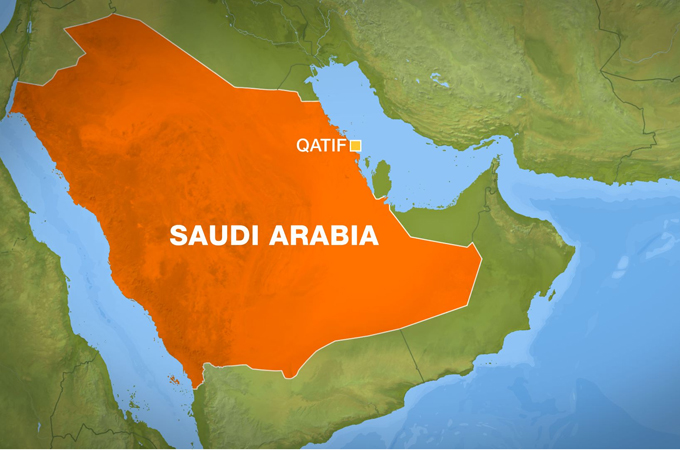
Second death in as many days comes amid ongoing anti-government protest by Shias in country's oil-rich Eastern Province.
Saudi security forces shot one person dead and injured three others during what the country's state news agency described as "clashes" in the oil-producing Eastern Province.
Activists and witnesses said Friday's casualties came when security forces opened fire on an anti-government demonstration in the Qatif district.
"While security men were following up on an illegal gathering in the town of Awwamiya in Qatif on Friday they were attacked by gunfire," a police statement on the Saudi Press Agency (SPA) said on Friday.
"They dealt with the situation by firing back, which resulted with the death of one."
The SPA also said a protester was killed and three others were wounded in clashes on Thursday.
Activists and witnesses said that security forces opened fire when a Shia procession marking the birthday of the Prophet Mohammad - a celebration forbidden in ultra-conservative Sunni Muslim Saudi Arabia - turned into a demonstration for reform and the release of detainees.
"Munir al-Medani, 21, was wounded by a live bullet to his chest," one activist told the AFP news agency, requesting anonymity. "He was taken to hospital where he later died of his wounds."
Medani's death raises to six the number of protesters killed since demonstrations erupted in the Eastern Province last March against the Saudi-led military intervention to help crush Shia-led pro-democracy protests in neighbouring Bahrain.
Most of Saudi Arabia's estimated two million Shias live in the province, where the vast majority of the kingdom's huge oil reserves lie. They complain of marginalisation in the Sunni-dominated country.
Activists say that Saudi authorities have arrested nearly 500 people since the protests started.
Many have been released but dozens remain in custody, among them human rights activist Fadel al-Munasif and writer Nazir al-Majid.
Second death in as many days comes amid ongoing anti-government protest by Shias in country's oil-rich Eastern Province.
Saudi security forces shot one person dead and injured three others during what the country's state news agency described as "clashes" in the oil-producing Eastern Province.
Activists and witnesses said Friday's casualties came when security forces opened fire on an anti-government demonstration in the Qatif district.
"While security men were following up on an illegal gathering in the town of Awwamiya in Qatif on Friday they were attacked by gunfire," a police statement on the Saudi Press Agency (SPA) said on Friday.
"They dealt with the situation by firing back, which resulted with the death of one."
The SPA also said a protester was killed and three others were wounded in clashes on Thursday.
Activists and witnesses said that security forces opened fire when a Shia procession marking the birthday of the Prophet Mohammad - a celebration forbidden in ultra-conservative Sunni Muslim Saudi Arabia - turned into a demonstration for reform and the release of detainees.
"Munir al-Medani, 21, was wounded by a live bullet to his chest," one activist told the AFP news agency, requesting anonymity. "He was taken to hospital where he later died of his wounds."
Medani's death raises to six the number of protesters killed since demonstrations erupted in the Eastern Province last March against the Saudi-led military intervention to help crush Shia-led pro-democracy protests in neighbouring Bahrain.
Most of Saudi Arabia's estimated two million Shias live in the province, where the vast majority of the kingdom's huge oil reserves lie. They complain of marginalisation in the Sunni-dominated country.
Activists say that Saudi authorities have arrested nearly 500 people since the protests started.
Many have been released but dozens remain in custody, among them human rights activist Fadel al-Munasif and writer Nazir al-Majid.
Malaysia: Don’t Send Saudi Back
The Malaysian authorities should not send a Saudi citizen back to Saudi Arabia to face almost certain conviction and a death sentence on charges of apostasy, Human Rights Watch said today.
Hamza Kashgari fled Saudi Arabia to Malaysia on February 7, 2012, after a storm of outrage erupted over a fictitious conversation between him and the Prophet Muhammad that Kashgari published on his Twitter account. On February 8, an official Saudi religious body declared him to be an apostate for his writings. The body sets out authoritative Islamic law interpretations and although the clerics called for his trial, they also predetermined its outcome.
“Saudi clerics have already made up their up mind that Kashgari is an apostate who must face punishment,” said Christoph Wilcke, senior Middle East researcher at Human Rights Watch. “The Malaysian government should not be complicit in sealing Kashgari’s fate by sending him back.”
Kashgari was on his way to another country when security officials arrested him at Kuala Lumpur airport on February 9, his lawyer, Muhammad Afiq Muhammad Noor, told Human Rights Watch. A friend of Kashgari said he is being held at the Travel Control section in the Bukit Amin neighborhood.
The lawyer said that the police inspector general and the Home Affairs Ministry acknowledged receiving his documents seeking access to his client, but that they had not yet granted permission. The home affairs minister, Hishamuddin Hussein, on February 10, acknowledged that the authorities were holding Kashgari. The friend also said that officials for the United Nations refugee agency, UNHCR, have sought access to Kashgari but so far without success.
Malaysia does not have criminal apostasy laws and Kashgari has not violated Malaysian law, the lawyer said. He questioned the legality of Kashgari’s detention and any attempt to extradite him to Saudi Arabia. Malaysia and Saudi Arabia do not have an extradition treaty, Malaysian lawyers said, but it appears that Kashgari is being held based on a request from Saudi Arabia, which issued an arrest warrant for him.
Saudi Arabia does not have written criminal laws. Apostasy is not a clearly defined criminal offense, but it is one of about six so-called crimes against God (hadd, plural hudud) for which the Quran sets out specified punishments, including the death penalty. Saudi Arabia has sentenced and executed people for this offense.
In a separate case, on February 7, the government released Hadi Al Mutif, a member of the Ismaili religious minority in Najran, a southern province bordering Yemen, after he expressed remorse to chief mufti Abd al-‘Aziz Al al-Shaikh over alleged insults to the Prophet Muhammad.
Al Mutif was arrested in late 1993 and sentenced to death for apostasy in 1996 after a patently unfair trial and remained under the death sentence until his release. Al Mutif told Human Rights Watch in 2006 that secret police beat him and deprived him of sleep during interrogation and that at trial, a witness physically assaulted him.
“If Kashgari is not presumed innocent, he can hardly expect a fair trial if returned to Saudi Arabia,” Wilcke said. “Malaysia should save him from any travesties of justice and allow him to seek safety in a country of his choice.”
Hamza Kashgari fled Saudi Arabia to Malaysia on February 7, 2012, after a storm of outrage erupted over a fictitious conversation between him and the Prophet Muhammad that Kashgari published on his Twitter account. On February 8, an official Saudi religious body declared him to be an apostate for his writings. The body sets out authoritative Islamic law interpretations and although the clerics called for his trial, they also predetermined its outcome.
“Saudi clerics have already made up their up mind that Kashgari is an apostate who must face punishment,” said Christoph Wilcke, senior Middle East researcher at Human Rights Watch. “The Malaysian government should not be complicit in sealing Kashgari’s fate by sending him back.”
Kashgari was on his way to another country when security officials arrested him at Kuala Lumpur airport on February 9, his lawyer, Muhammad Afiq Muhammad Noor, told Human Rights Watch. A friend of Kashgari said he is being held at the Travel Control section in the Bukit Amin neighborhood.
The lawyer said that the police inspector general and the Home Affairs Ministry acknowledged receiving his documents seeking access to his client, but that they had not yet granted permission. The home affairs minister, Hishamuddin Hussein, on February 10, acknowledged that the authorities were holding Kashgari. The friend also said that officials for the United Nations refugee agency, UNHCR, have sought access to Kashgari but so far without success.
Malaysia does not have criminal apostasy laws and Kashgari has not violated Malaysian law, the lawyer said. He questioned the legality of Kashgari’s detention and any attempt to extradite him to Saudi Arabia. Malaysia and Saudi Arabia do not have an extradition treaty, Malaysian lawyers said, but it appears that Kashgari is being held based on a request from Saudi Arabia, which issued an arrest warrant for him.
Saudi Arabia does not have written criminal laws. Apostasy is not a clearly defined criminal offense, but it is one of about six so-called crimes against God (hadd, plural hudud) for which the Quran sets out specified punishments, including the death penalty. Saudi Arabia has sentenced and executed people for this offense.
In a separate case, on February 7, the government released Hadi Al Mutif, a member of the Ismaili religious minority in Najran, a southern province bordering Yemen, after he expressed remorse to chief mufti Abd al-‘Aziz Al al-Shaikh over alleged insults to the Prophet Muhammad.
Al Mutif was arrested in late 1993 and sentenced to death for apostasy in 1996 after a patently unfair trial and remained under the death sentence until his release. Al Mutif told Human Rights Watch in 2006 that secret police beat him and deprived him of sleep during interrogation and that at trial, a witness physically assaulted him.
“If Kashgari is not presumed innocent, he can hardly expect a fair trial if returned to Saudi Arabia,” Wilcke said. “Malaysia should save him from any travesties of justice and allow him to seek safety in a country of his choice.”
US launches world’s largest 2013 fulbright programme for Pakistanis
The United States Educational Foundation in Pakistan (USEFP) on Friday announced the world's largest Fulbright Programme in Pakistan for the year 2013.
The US government's flagship scholarship programme awards deserving Pakistani students full scholarships covering tuition, textbooks, airfare, a stipend, and health insurance to complete their Master's or Ph.D. degrees in a field of their choice in universities across the United States.
Kicking off the 2013 Fulbright season, Deputy Chief of Mission Ambassador Richard Hoagland stated, "We are proud that Pakistan has the largest Fulbright programme in the world, and also one of the oldest. Our agreement initiating the programme was signed on September 23, 1950 - and the first Pakistanis and Americans traveled each way in the same year. It was one of the very first agreements of its kind and has since been extended to 155 countries around the world."
USEFP Executive Director Ms. Rita Akhtar echoed Ambassador Hoagland's sentiments and encouraged students from all over Pakistan to take advantage of the Fulbright Programme in 2013, according to a press release issued by the US Embassy here on Friday.
In addition to the approximately 200 who will depart in the fall of 2012, 369 students currently study in the United States on Fulbright awards.
This is one example of the U.S. government's long-term commitment to the education of Pakistanis and to increasing mutual understanding between both countries.
Since USEFP's inception more than 61 years ago, nearly 4,000 Pakistanis and more than 800 Americans have participated in USEFP-administered exchange programmes.
The Fulbright Programme is just one of many U.S.-government funded educational, professional, and cultural exchange programmes that build people to people ties among Americans and Pakistanis.
Women, minorities, people with disabilities, and students from FATA, Balochistan, and all of Pakistan's provinces are strongly encouraged to apply. All disciplines are eligible, with the exception of the field of clinical medicine.
Applicants studying energy, water, and agricultural disciplines are strongly encouraged to apply. More information about this programme, as well as standardised testing and free educational advising services can be found on the USEFP website at www.usefpakistan.org. - APP
The US government's flagship scholarship programme awards deserving Pakistani students full scholarships covering tuition, textbooks, airfare, a stipend, and health insurance to complete their Master's or Ph.D. degrees in a field of their choice in universities across the United States.
Kicking off the 2013 Fulbright season, Deputy Chief of Mission Ambassador Richard Hoagland stated, "We are proud that Pakistan has the largest Fulbright programme in the world, and also one of the oldest. Our agreement initiating the programme was signed on September 23, 1950 - and the first Pakistanis and Americans traveled each way in the same year. It was one of the very first agreements of its kind and has since been extended to 155 countries around the world."
USEFP Executive Director Ms. Rita Akhtar echoed Ambassador Hoagland's sentiments and encouraged students from all over Pakistan to take advantage of the Fulbright Programme in 2013, according to a press release issued by the US Embassy here on Friday.
In addition to the approximately 200 who will depart in the fall of 2012, 369 students currently study in the United States on Fulbright awards.
This is one example of the U.S. government's long-term commitment to the education of Pakistanis and to increasing mutual understanding between both countries.
Since USEFP's inception more than 61 years ago, nearly 4,000 Pakistanis and more than 800 Americans have participated in USEFP-administered exchange programmes.
The Fulbright Programme is just one of many U.S.-government funded educational, professional, and cultural exchange programmes that build people to people ties among Americans and Pakistanis.
Women, minorities, people with disabilities, and students from FATA, Balochistan, and all of Pakistan's provinces are strongly encouraged to apply. All disciplines are eligible, with the exception of the field of clinical medicine.
Applicants studying energy, water, and agricultural disciplines are strongly encouraged to apply. More information about this programme, as well as standardised testing and free educational advising services can be found on the USEFP website at www.usefpakistan.org. - APP
Khyber Pakhtunkhwa eyes untapped water share
DAWN.COM
Construction of Chashma Right Bank Canal (Gravity-cum-Lift-1) will let Khyber Pakhtunkhwa benefit from the unused part of its 8.78 million acres feet share in the waters of Indus river system.
That part totalling 1.187maf water is currently used by Punjab for irrigation purposes, according to the relevant officials in Peshawar.
Officials said the Indus River System Authority (Irsa) had declared in the April 4, 2005 meeting that Khyber Pakhtunkhwa could use 1.187maf water required for operating CRBC-Lift-1.
They said water diversion to Khyber Pakhtunkhwa from the Indus river system would reduce water supplies to Punjab.
“Punjab has been using our share of water for which it should compensate us,” Senator Haji Adeel, Khyber Pakhtunkhwa`s member in the National Finance Commission, told Dawn.
According to an irrigation development planner, Khyber Pakhtunkhwa`s water share under the 1991 inter-provincial accord is 8.78maf but it is unable to use it a hundred per cent due to insufficient irrigation infrastructure.
“Our actual average annual water use stands at around 6.5maf, leaving the remaining quantity unutilised,” he said, adding that the untapped water flowed to Punjab to help it meet its irrigation needs.
Senator Adeel said an exercise carried out by the Khyber Pakhtunkhwa government led it into knowing that the Punjab government had been the sole beneficiary due to his province`s insufficient irrigation infrastructure.
He said as calculated by the Khyber Pakhtunkhwa government, the Punjab government raised Rs42 billion on account of water charges.
Around two maf water of Khyber Pakhtunkhwa`s annual share, according to Irsa calculations, remain unused because, said the irrigation official, the province did not have sufficient canal network to be able to utilise the allocated quantity of water.
An official, however, said the province won`t be able to use its water share a hundred per cent even after construction of CRBC Lift-1.
“Some 1.103maf of Khyber Pakhtunkhwa`s water share will still remain unused even after the completion of the Chashma Right Bank Canal (Lift-1) project,” he said.
Khyber Pakhtunkhwa Chief Minister Ameer Haider Hoti on Monday last said his government would execute the Lift-1 project on cost sharing basis, seeking loans from international lending institutions in addition to the federal government`s financial assistance.
Officials said the project would bring 286,000 cultivable barren acres under irrigation in Dera Ismail Khan, making use of Khyber Pakhtunkhwa`s unspent water to the benefit of thousands of farm families in an area where a sense of economic deprivation is deep rooted due to non-availability of irrigation water. Dawn
Israrullah Gandapur, a DI Khan MPA, told that the provincial bureaucracy had told the government that the province might lose a part of its water share if the water accord was renegotiated in an event of the likely creation of a new province.
He said the provincial government had been told that it might get the province`s share curtailed on the pretext that it had not improved its irrigation network since 1991, failing to make use of its untapped water against its share.
Senator Adeel, however, said: “Khyber Pakhtunkhwa has asked the centre to give it some money so it could build a small dam at Munda or at another place on the Indus River. Water for operating the CRBC Lift-1 scheme will be pumped into it from the existing CRBC by powerful electric powered pumps.”
Construction of Chashma Right Bank Canal (Gravity-cum-Lift-1) will let Khyber Pakhtunkhwa benefit from the unused part of its 8.78 million acres feet share in the waters of Indus river system.
That part totalling 1.187maf water is currently used by Punjab for irrigation purposes, according to the relevant officials in Peshawar.
Officials said the Indus River System Authority (Irsa) had declared in the April 4, 2005 meeting that Khyber Pakhtunkhwa could use 1.187maf water required for operating CRBC-Lift-1.
They said water diversion to Khyber Pakhtunkhwa from the Indus river system would reduce water supplies to Punjab.
“Punjab has been using our share of water for which it should compensate us,” Senator Haji Adeel, Khyber Pakhtunkhwa`s member in the National Finance Commission, told Dawn.
According to an irrigation development planner, Khyber Pakhtunkhwa`s water share under the 1991 inter-provincial accord is 8.78maf but it is unable to use it a hundred per cent due to insufficient irrigation infrastructure.
“Our actual average annual water use stands at around 6.5maf, leaving the remaining quantity unutilised,” he said, adding that the untapped water flowed to Punjab to help it meet its irrigation needs.
Senator Adeel said an exercise carried out by the Khyber Pakhtunkhwa government led it into knowing that the Punjab government had been the sole beneficiary due to his province`s insufficient irrigation infrastructure.
He said as calculated by the Khyber Pakhtunkhwa government, the Punjab government raised Rs42 billion on account of water charges.
Around two maf water of Khyber Pakhtunkhwa`s annual share, according to Irsa calculations, remain unused because, said the irrigation official, the province did not have sufficient canal network to be able to utilise the allocated quantity of water.
An official, however, said the province won`t be able to use its water share a hundred per cent even after construction of CRBC Lift-1.
“Some 1.103maf of Khyber Pakhtunkhwa`s water share will still remain unused even after the completion of the Chashma Right Bank Canal (Lift-1) project,” he said.
Khyber Pakhtunkhwa Chief Minister Ameer Haider Hoti on Monday last said his government would execute the Lift-1 project on cost sharing basis, seeking loans from international lending institutions in addition to the federal government`s financial assistance.
Officials said the project would bring 286,000 cultivable barren acres under irrigation in Dera Ismail Khan, making use of Khyber Pakhtunkhwa`s unspent water to the benefit of thousands of farm families in an area where a sense of economic deprivation is deep rooted due to non-availability of irrigation water. Dawn
Israrullah Gandapur, a DI Khan MPA, told that the provincial bureaucracy had told the government that the province might lose a part of its water share if the water accord was renegotiated in an event of the likely creation of a new province.
He said the provincial government had been told that it might get the province`s share curtailed on the pretext that it had not improved its irrigation network since 1991, failing to make use of its untapped water against its share.
Senator Adeel, however, said: “Khyber Pakhtunkhwa has asked the centre to give it some money so it could build a small dam at Munda or at another place on the Indus River. Water for operating the CRBC Lift-1 scheme will be pumped into it from the existing CRBC by powerful electric powered pumps.”
Murder of Rabbani: two held in Quetta

Two Afghan officials say Pakistan has arrested two people in connection with last year's assassination of a former Afghan president who was trying to broker peace with the Taliban.The officials told The Associated Press in Kabul the two were recently detained in Quetta.There was no word in Pakistan on the arrests.
The Quetta police chief and the spokesman for Frontier Corps said they had not heard of the alleged arrests.
All officials spoke on condition of anonymity to discuss the case.
Relations between Afghanistan and Pakistan soured after Afghan officials blamed Burhanuddin Rabbani's death on insurgents based in Pakistan.
Pakistan-Russia relations
Pakistani Foreign Minister Hina Rabbani Khar and her Russian counterpart Sergei Victorovich Lavrov

agreed to promote bilateral relations in diverse fields including trade, energy, and people-to-people contacts.
The suddenness of Khar's departure for Moscow has led many to argue that the visit has a one-point agenda namely to generate the balance of the finances required for the construction of the 7.5 billion dollar Iran-Pakistan (IP) gas pipeline stretching for 2,775 kilometres supplying gas to fuel-starved Pakistan from the South Pars field.
It is fairly evident that neither Pakistan nor Iran has the required finances to undertake this project.
Pakistan is currently grappling with a budget deficit that is expected to surpass what was inherited by the PPP-led government in 2008 and which compelled the country to go on the International Monetary Fund programme.
With reforms stalled on all fronts, it is unlikely that any bilateral or multilateral assistance will be forthcoming to Pakistan for budgetary support leave alone for a project that has consistently been opposed by the United States, a critical member of all multilateral boards of directors as well as having considerable influence over Western donors.
Iran is facing sanctions from the US and Europe and in this context, it is relevant to note that Europe was second in terms of foreign investment in Iran with 10.9 billion dollars of investment compared to the cumulative total of 11.6 billion dollars from UAE, Singapore, Indonesia and Oman.
In short Iran is expected to lose the entire amount of investment funds from Europe and with Italy and some other European countries expected to stop oil imports from Iran in the aftermath of the sanctions, it is likely that Iran's foreign exchange reserves would shrink.
Thus it is critical for both Iran and Pakistan to seek financing for the IP pipeline from external sources on an emergent basis: Pakistan to meet its massive energy shortfall and Iran to generate foreign exchange to balance what it would lose as a consequence of the sanctions.
At one time several Western companies had expressed an interest in the project and these companies include BHP Billiton, headquartered in Australia, Petronas of Malaysia, Total SA of France, Royal Dutch Shell and BG Group plc from the UK.
Sanctions against Iran would preclude their participation in the project.
Gazprom of Russia had also expressed an interest in the IP gas pipeline project and may well emerge as a major viable contender.
However, Pakistan has requested China, the other country opposed to United Nations-sponsored sanctions against Iran, to provide financing for the project.
Federal Finance Minister Dr Hafeez Sheikh gave approval to the appointment of an Industrial and Commercial Bank of China (ICBC) led-consortium as financial advisor for the IP project.
The consensus is that the Pakistani Foreign Minister was dispatched to Russia to seek the balance of the finances required for the commencement of the project.
Bilateral trade was also discussed during Khar's recent visit to Russia.
At present Russia does not even feature as a country of note in terms of our exports or imports.
The countries that formerly constituted a Soviet bloc of nations and referred to as Council for Mutual Economic Assistance accounted for 1.4 percent of our total exports in 2010-11 and 1 percent of our imports.
This figure is unlikely to be increased anytime soon especially given that India continues to enjoy very close ties with Russia and provides complementary goods to ours.
Discussions on enhancing people-to-people contact must be supported as that would form the basis of any future bilateral economic relations, especially with respect to enhancing private business contacts.
To conclude if Gazprom does become a party to an international consortium that would include Chinese, Iranian as well as Sui Northern and Southern Gas Pipeline companies for the construction of the Iran-Pakistan gas pipeline project and it would certainly establish economically fruitful relations between Russia and Pakistan.
Pakistan Supreme Court throws out PM’s appeal

Barrister Aitzaz Ahsan failed to convince the Supreme Court with his argument in favour of Prime Minister Yousuf Raza Gilani and the eight-member larger bench of the court dismissed on Friday his appeal against the summoning of the premier in a contempt case.
Now the prime minister will have to appear in the court on Monday for framing of contempt charge against him for not pursuing corruption cases abroad.
“The seven-judge bench order (of summoning the prime minister for framing of contempt charge) has been passed in accordance with the provisions of Section 17(3) of the Contempt of the Court Ordinance, 2003, by following the settled principles of criminal justice, therefore, no interference is called for, consequently the intra-court appeal (ICA) is dismissed,” Chief Justice Iftikhar Mohammad Chaudhry, heading the bench, announced after hearing the prime minister’s counsel for two days.
“Sorry, Aitzaz,” were the last words of the chief justice as the bench rose. And Aitzaz did look disappointed.
“Our appeal has been dismissed by the Supreme Court and the prime minister will have to appear before the court on Feb 13,” he told reporters waiting outside.
Before rejecting the appeal, the court gave Barrister Ahsan another chance to persuade the prime minister to write a letter to the Swiss authorities to reopen graft cases ‘in deference to its order and in the interest of the nation’. “How long will we keep going around in circles,” the chief justice observed.
“The prime minister feels hurt by the kind of observations made without being heard in an earlier order in which he was depicted as not honest,” the barrister said.
“I was expecting that you would give us good news against the backdrop of Thursday’s observations of the court,” Justice Saqib Nisar said.
“Nobody likes to see unrest in the country,” the chief justice said. “Bring the country out of uncertainty,” the court observed, adding that sometimes the nation had to suffer through a momentary folly for generations to come.
Barrister Ahsan simply responded that he did not have any mandate to assure the bench and concluded his arguments by saying the prime minister had no intention of disobeying any order of the court.
“The last part of your statement is very heartening. Kindly tell him to enforce the judgment,” Justice Nisar quipped.
“Is that a directive?” asked Barrister Ahsan. “Please, please no direction,” Justice Jawwad S. Khawaja said.
Political and legal minds immediately started dissecting and interpreting the court’s pronouncement.
This case has two facets, one legal and the other political, Advocate Chaudhry Faisal Hussain said while talking to Dawn.
“When the court will ask the prime minister if he pleads guilty for not complying with its directives, the PPP will gain politically. The party’s leadership may use these proceedings to its advantage by gearing up the workers for the general elections. The leadership is willing to lose its prime minister on this issue,” he said.
Whosoever would be the next prime minister, he too would seek time to get acquainted with the situation and by then the Senate elections would be over and the party leadership would have lost interest to cling to the government,” he added.
Senator S.M. Zafar said Mr Gilani would be the first prime minister in the country against whom contempt charges would be framed.
“Contempt cases are always different from ordinary cases and are usually wrapped up after summary proceedings,” he said, adding that he thought the court would give another opportunity to the prime minister to write the letter or face conviction.
“There was no need to file such an appeal because the case was weak,” Advocate Ahmad Raza Qasuri said. He said even if the president pardoned the prime minister in case of punishment, he could not wash away the conviction.
DNA of Khyber Pakhtunkhwa, FATA people
A recent study conducted on “Pushtun Ethnogenesis” revealed that the deoxyribonucleic acids (DNAs) of people from Federally Administrated Tribal Areas (FATA) and Khyber Pakhtunkhwa province are similar to the inhabitants of Central and South Asia and Eastern Europe.Addressing a seminar on “Pushtun Ethnogenesis” Professor Muhammad Naeem of Peshawar University said that different studies conducted in Afghanistan and Pakistan’s Khyber Pakhtunkhwa province and FATA and Florida state of America have concluded that the DNAs of people of North and South Afghanistan are similar to people of South West Russian states.He said that a recent Ethnogenesis study conducted by South Korea in KP and FATA divulged that the DNAs of masses of these areas are also similar to Western European and Asian people. He further informed that the DNA of Kandhar (Afghanistan) people have a match with people of Peshawar.DNA deoxyribonucleic acid is the hereditary material in humans and almost all other organisms. Nearly every cell in a person’s body has the same DNA.
Students shying away from Peshawar varsity Fewer students in 1st shifts, some depts have no students in 2nd shifts
Frontier Post
The number of students in the University of Peshawar has dwindled because of the high increase in fees and other expenditure which have to be incurred by boys and girls when studying in this ancient institution. And while just a few years ago, evening shifts were started to cater to the growing number of students, some of these have no or very few students because of the self-finance system which is very costly for the students. While many in the past and even now want to get admission in this famous university, the issue of high charges hold them back. Another issue is the NTS test which students are now required to pass before they can gain admission here. The test according to students is not appropriate as students coming to get admission in Arts subjects have to answer Maths, computer and other science related subjects which most often then not these students are unable to pass. The same is the case with those wanting admission in Science subjects as they have to answer question related to art subjects. They also fail to secure impressing marks in this test. There seem no reason that the University authorities, who are themselves experts in education, should look for expertise in Science subjects instudents who want to study in Humanities and vice versa. Iin Anthropology department there were 50 students in evening shift two year ago but after self finance scheme and steeply raised fees; there is not one student in the evening shift in this department. Other departments with empty seats are social work at least 15 seats are empty in evening, Islamiyat Department has no student in evening shift, Archeology presently 17 student are in final class in morning shift against facilities for 50 students and 29 student in previous morning shift in the same subject against facilities for 50 students. While evening shift for this department has no student at all.Journalism and Mass Communication has 29 student in final (evening) against facilities for 54 student; 33 in pervious (evening shift) against 54 available seats. Many other other departments also have unoccupied seats. .This was not the case when there were no NTS and self-finance scheme The university normally charged Rs14,000 which was at least affordable for middle class students but now with self finance-fees increased up to 52,000 which is too expensive for middle class, a large number of student have been deprived of education. On this regarded teachers said that our high authorities are responsible for decreasing of the number of students in this university and student are getting admission in private universities because of low fees there. The said that if the fees are lowered and the NTS is either totally abolished or made rational, there were will be no dearth of students here. They also said that the university needs to raise its standard of education to attract students. Most student said that self-finance was a conspiracy against poor student. Due to this system poor students have given up hope of high education another An MBA student Ihtisham told this scribe that self-finance system provided an opportunity only for moneyed students and deprived talented poor students from education, adding that, it directly affected our literacy rate which is already very low. Many students said that the cost of education in Peshawar university is very high and is twice that of many private universities. Students of deferent departments strongly condemn self-finance scheme and demand that it should be abolished so that students of poor background can come here to learn and excel which was the case a few years ago.
The number of students in the University of Peshawar has dwindled because of the high increase in fees and other expenditure which have to be incurred by boys and girls when studying in this ancient institution. And while just a few years ago, evening shifts were started to cater to the growing number of students, some of these have no or very few students because of the self-finance system which is very costly for the students. While many in the past and even now want to get admission in this famous university, the issue of high charges hold them back. Another issue is the NTS test which students are now required to pass before they can gain admission here. The test according to students is not appropriate as students coming to get admission in Arts subjects have to answer Maths, computer and other science related subjects which most often then not these students are unable to pass. The same is the case with those wanting admission in Science subjects as they have to answer question related to art subjects. They also fail to secure impressing marks in this test. There seem no reason that the University authorities, who are themselves experts in education, should look for expertise in Science subjects instudents who want to study in Humanities and vice versa. Iin Anthropology department there were 50 students in evening shift two year ago but after self finance scheme and steeply raised fees; there is not one student in the evening shift in this department. Other departments with empty seats are social work at least 15 seats are empty in evening, Islamiyat Department has no student in evening shift, Archeology presently 17 student are in final class in morning shift against facilities for 50 students and 29 student in previous morning shift in the same subject against facilities for 50 students. While evening shift for this department has no student at all.Journalism and Mass Communication has 29 student in final (evening) against facilities for 54 student; 33 in pervious (evening shift) against 54 available seats. Many other other departments also have unoccupied seats. .This was not the case when there were no NTS and self-finance scheme The university normally charged Rs14,000 which was at least affordable for middle class students but now with self finance-fees increased up to 52,000 which is too expensive for middle class, a large number of student have been deprived of education. On this regarded teachers said that our high authorities are responsible for decreasing of the number of students in this university and student are getting admission in private universities because of low fees there. The said that if the fees are lowered and the NTS is either totally abolished or made rational, there were will be no dearth of students here. They also said that the university needs to raise its standard of education to attract students. Most student said that self-finance was a conspiracy against poor student. Due to this system poor students have given up hope of high education another An MBA student Ihtisham told this scribe that self-finance system provided an opportunity only for moneyed students and deprived talented poor students from education, adding that, it directly affected our literacy rate which is already very low. Many students said that the cost of education in Peshawar university is very high and is twice that of many private universities. Students of deferent departments strongly condemn self-finance scheme and demand that it should be abolished so that students of poor background can come here to learn and excel which was the case a few years ago.
LAHORE: PIC drug reaction takes one more life, toll reaches 142
Death toll has reached 142 due to reaction of spurious medicines at PIC.
The PIC spurious drugs continue to take lives and one more heart patient died at Mayo Hospital Lahore.
60-year-old Bashiran Bibi was shifted to Mayo Hospital four days ago and remained under treatment but she could not survive.Death toll has reached 142 while more than 150 patients are under treatment in different hospitals of Lahore
Egyptians hold anti-junta demos
Tens of thousands of Egyptians have taken to the streets to protest against the military rulers who took power after former dictator Hosni Mubarak was toppled in February 2011.
On Friday, demonstrators in the capital Cairo, the coastal city of Alexandria, the northeastern seaport city of Suez, and many other towns called for the ruling junta to hand over power to civilian leaders.
“The people want the overthrow of the marshal,” activists chanted during the protest march towards the Defense Ministry in Cairo, referring to Field Marshal Mohamed Hussein Tantawi, who heads the Supreme Council of the Armed Forces.
Army units obstructed demonstrators marching to the Defense Ministry.
Demonstrators in Alexandria chanted slogans against the generals.
In Suez, protesters burned a US flag.
The demonstrations were staged a day before a strike called by activists to commemorate the first anniversary of Mubarak's downfall. The ruling council has deployed extra troops and tanks to guard state buildings and public property ahead of the strike.
On Thursday, the Muslim Brotherhood called on the junta to dismiss the military-appointed government for failing to deal with the worsening security and economic situation in the country.
Brotherhood spokesman Mahmoud Ghozlan said the military council should provide an opportunity for the Muslim Brotherhood to put forward a nominee for prime minister who could form a new government.
The demand for dismissal of Prime Minister Kamal el-Ganzouri and his cabinet came after deadly clashes in the northern city of Port Said between opposing football fans on February 1 that left 74 people dead. In the following days, 15 more people died in the ensuing mayhem.

On Friday, demonstrators in the capital Cairo, the coastal city of Alexandria, the northeastern seaport city of Suez, and many other towns called for the ruling junta to hand over power to civilian leaders.
“The people want the overthrow of the marshal,” activists chanted during the protest march towards the Defense Ministry in Cairo, referring to Field Marshal Mohamed Hussein Tantawi, who heads the Supreme Council of the Armed Forces.
Army units obstructed demonstrators marching to the Defense Ministry.
Demonstrators in Alexandria chanted slogans against the generals.
In Suez, protesters burned a US flag.
The demonstrations were staged a day before a strike called by activists to commemorate the first anniversary of Mubarak's downfall. The ruling council has deployed extra troops and tanks to guard state buildings and public property ahead of the strike.
On Thursday, the Muslim Brotherhood called on the junta to dismiss the military-appointed government for failing to deal with the worsening security and economic situation in the country.
Brotherhood spokesman Mahmoud Ghozlan said the military council should provide an opportunity for the Muslim Brotherhood to put forward a nominee for prime minister who could form a new government.
The demand for dismissal of Prime Minister Kamal el-Ganzouri and his cabinet came after deadly clashes in the northern city of Port Said between opposing football fans on February 1 that left 74 people dead. In the following days, 15 more people died in the ensuing mayhem.
Saudi Arabian protester, second in two days, reportedly shot dead by security forces
The Washington Post
For the second day in a row, a protester in Saudi Arabia has been shot dead by security forces during demonstrations, the Lede blog reports, citing activists.Protester Zohair al-Saad died of gunshot wounds after security forces opened fire in a tiny town north of Qatif, according to an activist Facebook page for videographers, Revolution East.
Video of the protester from that page shows Saad just before he died, as a group of men attempt to stop the bleeding.Three others were injured in the gunfire, Ahmed Hamad Al Rebh, 46, who maintains the Revolution East page, told the Lede.
On Thursday in Qatif, another man, identified as Muneer al-Meedani, was reportedly killed in clashes with the police. Three others were injured. Graphic video shows protesters trying to stop the bleeding from Meedani’s wounds, too.
A number of disturbing videos have emerged out of Saudi Arabia in recent weeks, including footage purporting to show the abuses happening inside Bremain prison, and protesters running for cover as gunfire sounds,Saudi police confirmed that a man was killed Thursday, but said security forces had been attacked by masked men and were simply returning fire, the state-run Saudi Press Agency reported.
Saudi blogger Ahmed Al-Omran didn’t buy this statement.While Saudi Arabia has managed to squelch protests over political rights from spreading in the country, largely by spending billions on welfare, there are indications those efforts may no longer be working.
On the Revolution East page, activists said protests were planned for Qatif Saturday.
For the second day in a row, a protester in Saudi Arabia has been shot dead by security forces during demonstrations, the Lede blog reports, citing activists.Protester Zohair al-Saad died of gunshot wounds after security forces opened fire in a tiny town north of Qatif, according to an activist Facebook page for videographers, Revolution East.
Video of the protester from that page shows Saad just before he died, as a group of men attempt to stop the bleeding.Three others were injured in the gunfire, Ahmed Hamad Al Rebh, 46, who maintains the Revolution East page, told the Lede.
On Thursday in Qatif, another man, identified as Muneer al-Meedani, was reportedly killed in clashes with the police. Three others were injured. Graphic video shows protesters trying to stop the bleeding from Meedani’s wounds, too.
A number of disturbing videos have emerged out of Saudi Arabia in recent weeks, including footage purporting to show the abuses happening inside Bremain prison, and protesters running for cover as gunfire sounds,Saudi police confirmed that a man was killed Thursday, but said security forces had been attacked by masked men and were simply returning fire, the state-run Saudi Press Agency reported.
Saudi blogger Ahmed Al-Omran didn’t buy this statement.While Saudi Arabia has managed to squelch protests over political rights from spreading in the country, largely by spending billions on welfare, there are indications those efforts may no longer be working.
On the Revolution East page, activists said protests were planned for Qatif Saturday.
Friday, February 10, 2012
A hearing on Balochistan
Editorial 
There is reason to be both optimistic and cynical about hearings by the US Congress’s Foreign Affairs committee on the situation in Balochistan. The hope is derived from the fact that the state’s violations of human rights in the province, including alleged killings, abductions and torture, have generally been ignored by the international community and so, any publicity given to the issue can be seen as a net positive since it opens the prospect of a much-needed change in policy. At the same time, however, the sudden concern by some members of the US Congress about Balochistan could be part of larger strategic concerns that may have little to do with human rights and international law. The Americans have always been suspicious of Chinese investment in the region, including their involvement in the port of Gwadar and in the country’s energy sector. The proposed gas pipeline from Iran is also supposed to run through Balochistan. This, apart from the embarrassment caused to the federal government by the hearing having taken place, may explain the Foreign Office’s denunciation. Even the US State Department, acutely aware of how sensitive this issue is, distanced itself saying that the hearing did not reflect the policy of the US government and that the issue of Balochistan should be solved through internal negotiations.
Having said that, the mere fact that the US Congress saw fit to conduct these hearings shows just how dire the situation in the province really is. Human rights activists and experts apprised the committee of the violations taking place in Balochistan. A representative of Amnesty International even called for the Leahy Amendment to be applied to all military units operating in Balochistan. The said amendment is commonly applied to security assistance programmes to prevent foreign aid from being used to further human rights abuses. While one can understand why the Pakistan government is upset about the hearing, a better response may be to change in existing policy on Balochistan in a manner that the wishes of the local population are factored in. This is the best way of ensuring that the situation improves and that separatist feeling is quelled. That, clearly, is an end that should not even require prodding by a committee of American lawmakers.

There is reason to be both optimistic and cynical about hearings by the US Congress’s Foreign Affairs committee on the situation in Balochistan. The hope is derived from the fact that the state’s violations of human rights in the province, including alleged killings, abductions and torture, have generally been ignored by the international community and so, any publicity given to the issue can be seen as a net positive since it opens the prospect of a much-needed change in policy. At the same time, however, the sudden concern by some members of the US Congress about Balochistan could be part of larger strategic concerns that may have little to do with human rights and international law. The Americans have always been suspicious of Chinese investment in the region, including their involvement in the port of Gwadar and in the country’s energy sector. The proposed gas pipeline from Iran is also supposed to run through Balochistan. This, apart from the embarrassment caused to the federal government by the hearing having taken place, may explain the Foreign Office’s denunciation. Even the US State Department, acutely aware of how sensitive this issue is, distanced itself saying that the hearing did not reflect the policy of the US government and that the issue of Balochistan should be solved through internal negotiations.
Having said that, the mere fact that the US Congress saw fit to conduct these hearings shows just how dire the situation in the province really is. Human rights activists and experts apprised the committee of the violations taking place in Balochistan. A representative of Amnesty International even called for the Leahy Amendment to be applied to all military units operating in Balochistan. The said amendment is commonly applied to security assistance programmes to prevent foreign aid from being used to further human rights abuses. While one can understand why the Pakistan government is upset about the hearing, a better response may be to change in existing policy on Balochistan in a manner that the wishes of the local population are factored in. This is the best way of ensuring that the situation improves and that separatist feeling is quelled. That, clearly, is an end that should not even require prodding by a committee of American lawmakers.
Alarming figures: 12 women killed, two raped in Hazara division this year
The Express Tribune
As the struggle to fight violence against women gains momentum, 12 women have been killed and five cases of violence against women were reported in Hazara division this year, according to the police. However, human rights activists believe the number of cases is much higher since murders of women are often presented as accidental death or suicide, while violence against women is not recognised as a crime.
Police record suggests that five women and three men have been killed in the name of honour in Kohistan, Torghar, Battagram and Mansehra this year.
Another person accused of illicit relations survived bullet wounds after assailants opened fire in Kohistan.
In addition to that, four women are said to have committed suicide in unexplained circumstances this year, while a married woman was set ablaze and allegedly killed by her in-laws in Haripur over a domestic dispute,
A woman was also shot dead by her relatives, reportedly over a property dispute and a 40-year old woman died when she accidentally touched a barbed electric wire while crossing through fields.
Of the four women who committed suicide, one of them hanged herself from a ceiling fan after she failed to convince a boy to stop harassing her on her cell phone near Abbottabad. According to her letter written before her death, she was afraid to spark an enmity if her family found out that the boy was threatening her.
Apart from that, two married women were gang-raped in Haripur, while two women, including a teenaged girl, attempted suicide. A newly-wed woman from Abbottabad district was battered and had to be hospitalised for failing to bring dowry.
A married woman was disrobed when she resisted an attempt by two intruders to rape her.
Another woman reportedly set herself on fire because she could not bear her in-laws’ taunts for giving birth to four girls in Haripur. She was, however, rescued and hospitalised for burn injuries.
The highest number of murders allegedly to ‘protect’ honour were committed in Kohistan, where four persons; two women and two men, were gunned down in the last week of December 2011.
There was just one case of violence perpetrated by a wife in Hazara. Sehrish Bibi from Haripur was booked for setting her husband on fire after he refused to grant her divorce. The injured died in the hospital the same day, said the police.
As the struggle to fight violence against women gains momentum, 12 women have been killed and five cases of violence against women were reported in Hazara division this year, according to the police.

Police record suggests that five women and three men have been killed in the name of honour in Kohistan, Torghar, Battagram and Mansehra this year.
Another person accused of illicit relations survived bullet wounds after assailants opened fire in Kohistan.
In addition to that, four women are said to have committed suicide in unexplained circumstances this year, while a married woman was set ablaze and allegedly killed by her in-laws in Haripur over a domestic dispute,
A woman was also shot dead by her relatives, reportedly over a property dispute and a 40-year old woman died when she accidentally touched a barbed electric wire while crossing through fields.
Of the four women who committed suicide, one of them hanged herself from a ceiling fan after she failed to convince a boy to stop harassing her on her cell phone near Abbottabad. According to her letter written before her death, she was afraid to spark an enmity if her family found out that the boy was threatening her.
Apart from that, two married women were gang-raped in Haripur, while two women, including a teenaged girl, attempted suicide. A newly-wed woman from Abbottabad district was battered and had to be hospitalised for failing to bring dowry.
A married woman was disrobed when she resisted an attempt by two intruders to rape her.
Another woman reportedly set herself on fire because she could not bear her in-laws’ taunts for giving birth to four girls in Haripur. She was, however, rescued and hospitalised for burn injuries.
The highest number of murders allegedly to ‘protect’ honour were committed in Kohistan, where four persons; two women and two men, were gunned down in the last week of December 2011.
There was just one case of violence perpetrated by a wife in Hazara. Sehrish Bibi from Haripur was booked for setting her husband on fire after he refused to grant her divorce. The injured died in the hospital the same day, said the police.
Prime Minister Gilani not afraid of jail
Chaudhry Ahmad Mukhtar has said that Gilani will present before the court on February 13.
Talking to the media at Lahore Airport, Defence Minister Chaudhry Ahmad Mukhtar said that Prime Minister Yousaf Raza Gilani respected the judiciary and was not afraid of jail as he had spent many years in prison.
The defence minister blamed the Pakistan Muslim League-N chief Nawaz Sharif for not taking any more interest in the memo case and left for London after raising the issue.
Talking to the media at Lahore Airport, Defence Minister Chaudhry Ahmad Mukhtar said that Prime Minister Yousaf Raza Gilani respected the judiciary and was not afraid of jail as he had spent many years in prison.
The defence minister blamed the Pakistan Muslim League-N chief Nawaz Sharif for not taking any more interest in the memo case and left for London after raising the issue.
Yemenis rally ahead of presidential vote

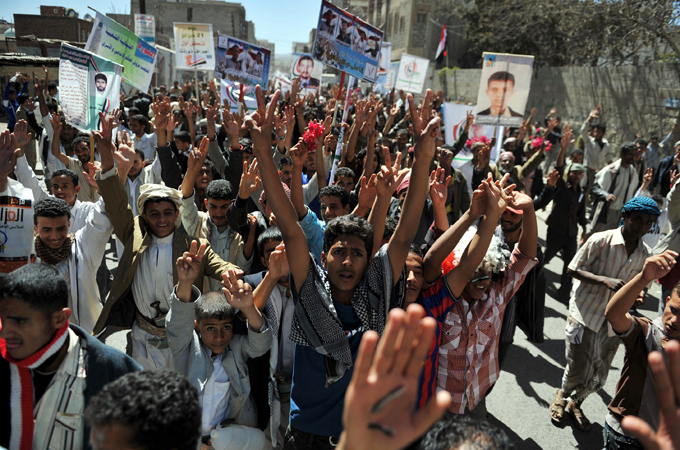
Thousands of Yemenis have rallied in the capital Sanaa to back a single-candidate presidential election planned for later this month, an AFP correspondent reported.
The demonstrators gathered in Sanaa's Change Square on Friday, chanting slogans in support of the election in which Abdrabuh Mansur Hadi, the vice president, will be the sole candidate.
The planned vote has sparked protests in the country's south.
"February 21 is the day on which Yemen will be reborn," read a slogan printed on a large picture of Hadi brandished by the demonstrators.
"We have all agreed that Hadi will rule for our country's independence," they chanted.
"Hadi, take the key, the slaughterer's rule has ended," they shouted, referring to the hundreds of people killed in clashes with the security forces since nationwide protests erupted in January last year opposing President Ali Abdullah Saleh's rule.
Change Square has been the epicentre of the protests against Saleh who left the country for the US in January for treatment following a June 2011 attack that left him seriously wounded. He had been in hospital in neighbouring Saudi Arabia for months.
The poll is one of the centrepieces of a deal sponsored by the six-nation Gulf Co-operation Council (GCC) which Saleh signed with the parliamentary opposition last November.
Immunity pledge controversial
Under the deal, Saleh is to hand power to Hadi after the vote in return for a promise of immunity from prosecution.
Unlike the poll, the immunity pledge remains deeply controversial with the Change Square protesters.
"Our demand will not change, we will not accept anything but a trial," they chanted.
Hadi himself hails from the formerly independent south of Yemen but the single-candidate election has proved controversial in the restive region.
On Thursday, security forces shot dead two protesters against the vote in the southern town of Daleh, witnesses said.
Activists of the Southern Movement say the election fails to meet their aspirations for autonomy or renewed independence for the region.
Some factions of the movement have been campaigning for a boycott. Its hardline pro-independence wing, led by former southern leader Ali Salem al-Baidh, has called on supporters to disrupt the poll.
The south was independent from the end of British colonial rule in 1967 until union with the north in 1990.
It broke away again in 1994, sparking a brief civil war that ended with the region being overrun by northern troops.
Southerners have since complained of discrimination by the Sanaa government in the allocation of resources and there have been repeated protests in favour of self-rule for the region.
Bahrain protests seek new 'Freedom Square'

Tens of thousands of anti-government protesters in Bahrain are streaming toward a site they seek to occupy for the one-year anniversary of their uprising in the Gulf kingdom.
Riot police did not immediately intervene as crowds headed to an empty lot dubbed 'Freedom Square' in the village of Miqsha outside the capital Manama. Miqsha has been a site of ongoing clashes between Shiite-led protesters and police.
Bahrain's Sunni monarchy permitted limited sit-ins ahead of the Feb. 14 anniversary.
But Friday's march appears aimed at creating a new round-the-clock hub of the protest movement similar to Manana's Pearl Square, which was stormed by security forces last year.
Bahrain's majority Shiites want Sunni rulers to give up their near-monopoly on power.
Saudi troops attack Awamiyah protest kill 1, injure 2

Saudi security forces have opened fire on anti-government protesters in the eastern part of the country, injuring at least two demonstrators and killing one in Awamiyah.
Witnesses say hundreds of Saudis took to the streets in the oil-rich east on Friday, one day after regime forces opened fire on protesters in Qatif, killing a demonstrator and injuring more than 14 others.
Some of the injured are reported to be in critical condition.
Protesters also chanted slogans against the ruling Al Saud family.
Protest rallies were reported in the cities of Qatif, Tarut, Rabi'iyah and Awamiyah.
At least one protester was killed amd two others were injured after Saudi security forces opened fire on demonstrators in Awamiyah, where the Friday Prayers leader demanded an end to Al Saud rule.
Saudis have held peaceful demonstrations since February last year on an almost regular basis in the eastern region, demanding reforms, freedom of expression and the release of political prisoners.
Protesters also want an end to economic and religious discrimination against the oil-rich region. Several demonstrators have been killed and dozens of activists have been arrested since the beginning of protests in the region.
Riyadh has intensified its crackdown on protesters since the beginning of 2012.
‘Third path’ for Syria
Editorial:Global Times
A delegation from the Syrian opposition concluded a four-day visit to Beijing earlier this week. As Western countries, one after another, opt to sever contact with al-Assad's government, China's capacity to maintain communication with both Damascus as well as the opposition becomes vital. It may propel Beijing into a special position in the Syria issue.
China has always been committed to a peaceful solution to end the deadlocked Syrian conflict. The realization of Beijing's proposal, a "third path" for Syria, requires capability and neutrality.
Chinese officials neither advocate a regime change through military intervention, nor would offer an umbrella for inaction by Syrian authorities. The "third path" should be a compromised and tangible reform roadmap created by all sides within Syria.
A handshake between the two sides in Syria will not come easy. Coalition governments around the world have poor records. That is especially true in this circumstance as the West has already made up its mind to get rid of Bashar-al-Assad. It is logical for the Syrian opposition to expect Western assistance. Even repeating the dramatic scenario of their Libyan counterparts may be what the Syrian opposition yearns for.
For those obsessed with such wishful thinking, it will not be the case. Unlike the beleaguered Gaddafi, al-Assad is backed by the Russians. If a war between Western and Russian "agents" occurs in Syria, as is speculated to happen by some in the European media, it would be an arduous and prolonged battle.
History shows regime changes in restive regions mean endless turmoil and uncertainty. Therefore the Syrian opposition does not need to be that ambitious. Threats against al-Assad will persist as they always have. Compromises on critical issues in exchange for a "soft landing" of his country seem to be a good deal for him.
Voices backing a political resolution have been loud in China, but Beijing may have to settle at least a handful of thorny issues so as to make it a doctrine that a greater number of people would seriously consult as a choice.
China is obviously seeking to assume an active role. The busiest mediators on the world stage are not necessarily stronger than China.
Russia can be an ally in advocating a "third path." China's ties with most of the Arab League members were not hurt by its veto decision. Western governments resolve could waver given embarrassing economic performances and domestic pressures, despite their determination on Syria.
China will not lose much as Beijing looks to score diplomatically on the Syria issue. An advocate of peace should not be ashamed even if the audience is small.
A delegation from the Syrian opposition concluded a four-day visit to Beijing earlier this week. As Western countries, one after another, opt to sever contact with al-Assad's government, China's capacity to maintain communication with both Damascus as well as the opposition becomes vital. It may propel Beijing into a special position in the Syria issue.
China has always been committed to a peaceful solution to end the deadlocked Syrian conflict. The realization of Beijing's proposal, a "third path" for Syria, requires capability and neutrality.
Chinese officials neither advocate a regime change through military intervention, nor would offer an umbrella for inaction by Syrian authorities. The "third path" should be a compromised and tangible reform roadmap created by all sides within Syria.
A handshake between the two sides in Syria will not come easy. Coalition governments around the world have poor records. That is especially true in this circumstance as the West has already made up its mind to get rid of Bashar-al-Assad. It is logical for the Syrian opposition to expect Western assistance. Even repeating the dramatic scenario of their Libyan counterparts may be what the Syrian opposition yearns for.
For those obsessed with such wishful thinking, it will not be the case. Unlike the beleaguered Gaddafi, al-Assad is backed by the Russians. If a war between Western and Russian "agents" occurs in Syria, as is speculated to happen by some in the European media, it would be an arduous and prolonged battle.
History shows regime changes in restive regions mean endless turmoil and uncertainty. Therefore the Syrian opposition does not need to be that ambitious. Threats against al-Assad will persist as they always have. Compromises on critical issues in exchange for a "soft landing" of his country seem to be a good deal for him.
Voices backing a political resolution have been loud in China, but Beijing may have to settle at least a handful of thorny issues so as to make it a doctrine that a greater number of people would seriously consult as a choice.
China is obviously seeking to assume an active role. The busiest mediators on the world stage are not necessarily stronger than China.
Russia can be an ally in advocating a "third path." China's ties with most of the Arab League members were not hurt by its veto decision. Western governments resolve could waver given embarrassing economic performances and domestic pressures, despite their determination on Syria.
China will not lose much as Beijing looks to score diplomatically on the Syria issue. An advocate of peace should not be ashamed even if the audience is small.
Lahore's Hira Mandi: a love affair


Hira Mandi, the traditional red light quarter of Lahore, lives in the popular mindscape through its stories of longing, loss and 'mujras' after the Pakistan government clamped down on prostitution in the 1970s, says noted French writer Claudine Le Tourneur d'lson.
Her fictional biography, 'Hira Mandi', based on the life story of Iqbal Husain, the son of a Hira Mandi courtesan, has connected to the English-speaking world with its first-ever translation by the capital-based Roli Books.
The novel, originally written in French in 2006, went on sale in India this week after an informal launch at the Alliance Francaise in the capital Monday. It will debut in Pakistan at the Karachi Literature Festival starting Saturday.Claudine describes the book "as her love affair with the people of Hira Mandi, with whom she had spent weeks in Lahore as if she was a part of them".
"The book has been inspired by Iqbal Hussain, son of a Hira Mandi prostitute, whom I had met in 1988. Iqbal is an artist - perhaps the only one of his kind - and a restaurateur. He owns an eatery, Cuckoo's Den, in Hira Mandi where he serves traditional Lahori food," Claudine told IANS here.
Iqbal is a misfit of an artist in Pakistan, where "even talking about prostitutes is a taboo", the writer said.
"Iqbal is not very comfortable among people though he has been drawing Lahore and the world to Hira Mandi with his food," Claudine said. Cuckoo's Den is a mandatory stopover for tourists in Lahore.
Iqbal uses the dancing girls of Hira Mandi as models for his impressionistic paintings "of figures and landscapes without expressions of sex", the writer said.
"In his leisure, Iqbal spends his time helping the dancing girls. He is very human... Iqbal says, 'I am a man before a Muslim,'" Claudine recalled.
Iqbal in Claudine's novel is the hero Shanwaz Nadeem, who narrates his life story in first person.
Shanwaz's earliest memories of Hira Mandi are of his beautiful 20-year-old mother Naseem, who lives in her Mughal-style "haveli" with her aunts, cousins and her five-year-old son in the narrow crowded bylanes in the old walled city of Lahore.
Naseem's quarters are partitioned and Shanwaz wakes up every night to the "cries, moans and sighs of his mother in the bedroom on the other side".
Shanwaz's life charts Pakistan's turbulent history from partition to the Bhutto years, Zia-ul Haq's repressive regime, fundamentalist violence and the years of "The Satanic Verses".
Hira Mandi gradually disintegrates around Shanwaz, leaving him with memories of its once-forbidden grandeur - and unrequited desires - amid aging courtesans and confused novices.
"The residents of Hira Mandi had hoped that the 'Bhuttos' would bring in democracy and free them of repression and blind police atrocities...But Benazir Bhutto had failed to do much for women. I suppose they were disappointed in the end..." the writer said.
The Hira Mandi of the courtesans does not exist any more.
"The dancing girls (the prettier ones) have either moved to Dubai where the business is good while the others are spread across hotels in Lahore," Claudine said.
Segregated as a red light area during the British Raj for "the benefit of the soldiers" in the old Anarkali Bazar overlooking the Badshahi mosque, Hira Mandi was known for its "refined courtesans with impeccable manners, accomplished in performing arts, music and traditional gastronomy".
However, the tradition of dancing girls in the old Lahore city - a walled settlement - dates back to the reign of emperor Akbar whose son, prince Salim, once fell in love with Anarkali, a dancing girl from Lahore.
The government is trying to remove the "taboos" associated with Hira Mandi with a heritage tourism project, the writer said.
"The government has decided to turn the four streets of Hira Mandi into a touristy place with Mughal facades, restaurants and art galleries. The government is planning to set up a dance school to perpetuate the dancing traditions. I was in Lahore last August. The transformation was yet to be completed...," Claudine said.
U.S. Congress’s Landmark Balochistan Hearing
The Baloch Hal

Wednesday’s hearing on Balochistan of the US House Committee on Foreign Affairs was a spectacular success under every standard for the Baloch nationalist movement. Chaired by Dana Rohrabacher, a Republican congressman from California, the hearing was attended by four more congressmen, bringing together members of America’s two most important political parties, the Democrats and the Republicans, to discuss the important issue of Balochistan. A very learned audience, comprising of policymakers, lobbyists, diplomats, intellectuals, defenders of human rights, journalists, and researchers of leading think-tanks attentively heard the proceedings.
The hearing was convened at a very critical juncture not only because of the volatile situation that exists in Balochsitan but also because of increasing breach of trust between the United States of America and Pakistan. It has assured the Baloch that members of the US Congress, who have spent all their lives guarding and promoting democratic values, stand with the people of Balochistan. Given the ideas shared by members of the Congress, it was very clear that they already had an implicit sense of Balochistan’s history, geo-strategic significance, federal government’s discriminatory and exploitative policies toward Balochistan but they had been kept in dark about the current state of affairs.
It was the highest democratic institution in the world where the issue of Balochistan was discussed at length. Members of the Baloch diaspora, who had traveled from all over North America to attend the event, said the program exceeded their expectations. They were jubilant as they left the hearing hall. In their remarks, Congressmen gave the impression that they cared for the people of Balochistan and were disturbed by human rights violations being committed by the Pakistan army in Balochistan. One analyst rightly observed that it was not only concern over human rights issues. Some Congressmen also proposed redrawing maps which were once drawn by the British but had eventually caused major wars in the world during the 20th century.
In spite of failed attempts by the government of Pakistan to hinder the debate on Balochistan, the US lawmakers did the right job by conveying to Islamabad, through Wednesday’s proceedings, that people’s right to self-determination and human rights cannot be overlooked by just describing them as one country’s “‘internal matter”. When states employ torture and abuse to their citizens then the international community does have an obligation to intervene in the greater interest of human lives. Many Americans who previously did not know much about Balochistan said they were startled about the tragedy of the Baloch region.
Some US legislators were absolutely perturbed to learn from Mr. T. Kumar, Amnesty International’s Director for International Advocacy that Balochistan’s former governor Awais Ahmed Ghani had confirmed to him that American weapons, which were supplied to Pakistan to fight the war on terrorism, were actually used against the Baloch. Also, Ali Dayan Hassan, the Pakistan Director of the Human Rights Watch, also traced the origin of enforced disappearances. According to him, the Pakistani military exploited the context of the war on terrorism to subject Baloch political opponents to enforced disappearance. Many of these facts were not fully known to some educated Americans because Islamabad has endeavored its level best to kill every Balochistan-related important news story which concerns American and global interest in order to keep the world in oblivion.
In what can now be expected from lawmakers of the United States, a country known as the engine of democracy and freedom, is further debating the issue of disappearances, torture, murder and misuse of American weapons on the floor of the US House of Representatives. The US government should take an interest in resolving Balochistan’s political dispute. In this regard, the US should facilitate an international conference on Balochistan at a neutral venue to chalk out a road map for peace. Dr. C. Christine Fair of Georgetown University, who also testified on Wednesday at the Congressional hearing, is underestimating the seriousness of the conflict by calling it Pakistan’s internal matter. The debate at this point should not revolve around the argument whether or not Balochistan is an internal or external matter. What is merits attention is the fact that no Baloch leader is today prepared to trust the Pakistani army, which is the real center of real political and of course military power, and to negotiate with it on gunpoint.
Thus, in the midst of a deadlock like this, human rights will continue to be violated and political space will further shrink and get replaced by violence and madness. Amid these odds, we highly congratulate all five members of the US Congress for convening such a historic event, whose success could easily be judged by the overwhelming number of people who showed up to learn more about Balochistan. Also, the panel of five witnesses also deserve plaudits for their highly professional and insightful testimonies.
We truly hope that Dana Rohrabacher’s caravan of friends of Balochistan will be joined by more Congressmen and lead to the formation of a Baloch-America congressional caucus.

Wednesday’s hearing on Balochistan of the US House Committee on Foreign Affairs was a spectacular success under every standard for the Baloch nationalist movement. Chaired by Dana Rohrabacher, a Republican congressman from California, the hearing was attended by four more congressmen, bringing together members of America’s two most important political parties, the Democrats and the Republicans, to discuss the important issue of Balochistan. A very learned audience, comprising of policymakers, lobbyists, diplomats, intellectuals, defenders of human rights, journalists, and researchers of leading think-tanks attentively heard the proceedings.
The hearing was convened at a very critical juncture not only because of the volatile situation that exists in Balochsitan but also because of increasing breach of trust between the United States of America and Pakistan. It has assured the Baloch that members of the US Congress, who have spent all their lives guarding and promoting democratic values, stand with the people of Balochistan. Given the ideas shared by members of the Congress, it was very clear that they already had an implicit sense of Balochistan’s history, geo-strategic significance, federal government’s discriminatory and exploitative policies toward Balochistan but they had been kept in dark about the current state of affairs.
It was the highest democratic institution in the world where the issue of Balochistan was discussed at length. Members of the Baloch diaspora, who had traveled from all over North America to attend the event, said the program exceeded their expectations. They were jubilant as they left the hearing hall. In their remarks, Congressmen gave the impression that they cared for the people of Balochistan and were disturbed by human rights violations being committed by the Pakistan army in Balochistan. One analyst rightly observed that it was not only concern over human rights issues. Some Congressmen also proposed redrawing maps which were once drawn by the British but had eventually caused major wars in the world during the 20th century.
In spite of failed attempts by the government of Pakistan to hinder the debate on Balochistan, the US lawmakers did the right job by conveying to Islamabad, through Wednesday’s proceedings, that people’s right to self-determination and human rights cannot be overlooked by just describing them as one country’s “‘internal matter”. When states employ torture and abuse to their citizens then the international community does have an obligation to intervene in the greater interest of human lives. Many Americans who previously did not know much about Balochistan said they were startled about the tragedy of the Baloch region.
Some US legislators were absolutely perturbed to learn from Mr. T. Kumar, Amnesty International’s Director for International Advocacy that Balochistan’s former governor Awais Ahmed Ghani had confirmed to him that American weapons, which were supplied to Pakistan to fight the war on terrorism, were actually used against the Baloch. Also, Ali Dayan Hassan, the Pakistan Director of the Human Rights Watch, also traced the origin of enforced disappearances. According to him, the Pakistani military exploited the context of the war on terrorism to subject Baloch political opponents to enforced disappearance. Many of these facts were not fully known to some educated Americans because Islamabad has endeavored its level best to kill every Balochistan-related important news story which concerns American and global interest in order to keep the world in oblivion.
In what can now be expected from lawmakers of the United States, a country known as the engine of democracy and freedom, is further debating the issue of disappearances, torture, murder and misuse of American weapons on the floor of the US House of Representatives. The US government should take an interest in resolving Balochistan’s political dispute. In this regard, the US should facilitate an international conference on Balochistan at a neutral venue to chalk out a road map for peace. Dr. C. Christine Fair of Georgetown University, who also testified on Wednesday at the Congressional hearing, is underestimating the seriousness of the conflict by calling it Pakistan’s internal matter. The debate at this point should not revolve around the argument whether or not Balochistan is an internal or external matter. What is merits attention is the fact that no Baloch leader is today prepared to trust the Pakistani army, which is the real center of real political and of course military power, and to negotiate with it on gunpoint.
Thus, in the midst of a deadlock like this, human rights will continue to be violated and political space will further shrink and get replaced by violence and madness. Amid these odds, we highly congratulate all five members of the US Congress for convening such a historic event, whose success could easily be judged by the overwhelming number of people who showed up to learn more about Balochistan. Also, the panel of five witnesses also deserve plaudits for their highly professional and insightful testimonies.
We truly hope that Dana Rohrabacher’s caravan of friends of Balochistan will be joined by more Congressmen and lead to the formation of a Baloch-America congressional caucus.
Egypt activists march ahead of strikes

Hundreds of protesters marched to Egypt's defence ministry Friday demanding the military rulers' ouster, on the eve of a planned civil disobedience campaign to mark Hosni Mubarak's overthrow a year ago.
The activists have planned marches in Cairo that will converge on the defence ministry as a prelude to strikes and sit-ins on Saturday, exactly a year after Mubarak's overthrow left the military in charge.
At the Fateh mosque in central Cairo, the protesters began chanting, "Down with military rule," at the end of the weekly Muslim prayer before setting off in the direction of the ministry.
"We are marching to the defence ministry, we want to remove the military," said prominent activist Asmaa Mahfuz, who taped an influential video more than a year ago calling on Egyptians to rise against Mubarak.
Young activists such as Mahfuz, whom the military had threatened to put on trial after she attacked the ruling generals in Internet postings, have turned their sights on the army a year after toppling Mubarak in an 18-day uprising.
The military, which promises to hand over power after a president is elected later this year, said it will deploy troops across the country after the activists called the civil disobedience campaign, state media reported.
The call has divided the country's political forces, with the Muslim Brotherhood -- the big winner in recent parliamentary elections -- coming out against the activists as they demand an immediate transition to civilian rule.
Students in several universities have called for strikes on Saturday, with secular youth groups who spearheaded the revolt against Mubarak joining in.
Tareq al-Khouly, an organiser with the April 6 youth group, said the plan was for a one-day strike, which could be extended.
In a joint statement on Friday, the groups called on Egyptians "to support these strikes in order to end the unjust rule and build a nation in which justice, freedom and dignity prevail."
The military was initially idolised for not siding with Mubarak during the uprising, but it has since faced growing protests against its continued rule and has several times used deadly force to disperse demonstrations.
Saudis protest Riyadh crackdown

Saudi protesters have taken to the streets in the Eastern Province to express their anger about Riyadh’s brutal crackdown on anti-government demonstrations.
Domestic violence plagues Iraq
Al Jazeera
Rights group says cases of violence against women are increasing, and the abused have few places to turn.
The UN estimates that one in five women in Iraq suffer from domestic abuse, in a society where a woman leaving her husband for any reason is considered grounds for punishment.
One rights group says cases of abuse appear to be on the rise since the fall of former Iraqi leader Saddam Hussein nearly nine years ago.
But even for women who do manage to escape their abuse, there are few places in the country they can go to seek refugee.
Al Jazeera's Jane Arraf has this exclusive report from the capital, Baghdad.
Rights group says cases of violence against women are increasing, and the abused have few places to turn.
The UN estimates that one in five women in Iraq suffer from domestic abuse, in a society where a woman leaving her husband for any reason is considered grounds for punishment.
One rights group says cases of abuse appear to be on the rise since the fall of former Iraqi leader Saddam Hussein nearly nine years ago.
But even for women who do manage to escape their abuse, there are few places in the country they can go to seek refugee.
Al Jazeera's Jane Arraf has this exclusive report from the capital, Baghdad.
Fresh debate over US mission in Afghanistan
www.aljazeera.com
A US army officer has accused the American military of painting a misleading picture of progress in the war in Afghanistan while glossing over the Afghan government's many failings.
Lieutenant-Colonel Daniel Davis's accusations have sparked fresh debate about the US mission in Afghanistan.
"What I saw bore no resemblance to rosy official statements by US military leaders about conditions on the ground," he wrote in an article published in Armed Forces Journal, a private newspaper not affiliated with the Pentagon.
"Instead, I witnessed the absence of success on virtually every level," he wrote under the headline, "Truth, Lies And Afghanistan: How military leaders have let us down".
"How many more men must die in support of a mission that is not succeeding ...?"
Troop commanders and politicians say the handover to Afghan troops is going well, but Lieutenant-Colonel Daniel Davis, who has just returned from the country, is challenging those statements in congress.
He says that conditions on the ground are ruinous - a conclusion deeply at odds with the picture of progress put forth by the top US military brass.
It is a rare instance of a US officer openly contradicting his superiors, and Davis’ insights, first published in a military journal on Sunday, have been picked up by several members of congress.
At a Pentagon briefing on Wednesday, the US military’s number-two commander in Afghanistan, Lieutenant General Curtis Scaparrotti, answered Davis’ criticism, saying it was only one person’s opinion of the general situation.
“I am confident, in my personal view, that our outlook is accurate,” he said.
Scaparrotti says he does not doubt some of what Davis wrote, and he believes US forces have work to do in training Afghan forces.
Last week Leon Panetta, the US defence secretary, said US forces would transition next year from a combat role to training Afghan soldiers and police.
A US army officer has accused the American military of painting a misleading picture of progress in the war in Afghanistan while glossing over the Afghan government's many failings.
Lieutenant-Colonel Daniel Davis's accusations have sparked fresh debate about the US mission in Afghanistan.
"What I saw bore no resemblance to rosy official statements by US military leaders about conditions on the ground," he wrote in an article published in Armed Forces Journal, a private newspaper not affiliated with the Pentagon.
"Instead, I witnessed the absence of success on virtually every level," he wrote under the headline, "Truth, Lies And Afghanistan: How military leaders have let us down".
"How many more men must die in support of a mission that is not succeeding ...?"
Troop commanders and politicians say the handover to Afghan troops is going well, but Lieutenant-Colonel Daniel Davis, who has just returned from the country, is challenging those statements in congress.
He says that conditions on the ground are ruinous - a conclusion deeply at odds with the picture of progress put forth by the top US military brass.
It is a rare instance of a US officer openly contradicting his superiors, and Davis’ insights, first published in a military journal on Sunday, have been picked up by several members of congress.
At a Pentagon briefing on Wednesday, the US military’s number-two commander in Afghanistan, Lieutenant General Curtis Scaparrotti, answered Davis’ criticism, saying it was only one person’s opinion of the general situation.
“I am confident, in my personal view, that our outlook is accurate,” he said.
Scaparrotti says he does not doubt some of what Davis wrote, and he believes US forces have work to do in training Afghan forces.
Last week Leon Panetta, the US defence secretary, said US forces would transition next year from a combat role to training Afghan soldiers and police.
Top photo award for Arab Spring portrait


A portrait of a veiled woman cradling a wounded relative in her arms, taken in Yemen by Spanish photographer Samuel Aranda for The New York Times, won the top World Press Photo prize Friday.
The photograph captured a moment in the conflict in Yemen, when demonstrators against outgoing president Ali Abdullah Saleh used a mosque in Sanaa as a field hospital to treat the wounded. But judges said it also spoke more broadly for the Arab Spring."The winning photo shows a poignant, compassionate moment, the human consequence of an enormous event, an event that is still going on," Aidan Sullivan, chair of the jury, said of Aranda's photograph, which won World Press Photo of the Year 2011.
"We might never know who this woman is, cradling an injured relative, but together they become a living image of the courage of ordinary people that helped create an important chapter in the history of the Middle East."
Reuters photographer Damir Sagolj won first prize in the Daily Life Singles category with his photograph of North Korea's founder, Kim Il-sung on a wall in Pyongyang.
Economy and regional politics
EDITORIAL:Daily Times
In the run up to the withdrawal of US/NATO forces from Afghanistan, the meeting between the foreign ministers (FMs) of Pakistan and Russia gains significance as the two regional players through enhanced bilateral relations are seeking to expand and diversify their cooperation in the fields of trade, investment, energy and agriculture. Their efforts aim at their increased role in the region full of great economic prospects considering the richness of the largely untapped resources of this region. For this purpose, Pakistan is striving hard to get full membership of the Shanghai Cooperation Organisation (SCO) comprising China, Russia and Central Asian countries. During the visit, the two leaders discussed several concrete proposals including oil exploration, hydropower production/distribution and coal-based power generation projects. Russia also expressed its willingness to participate in trans-regional energy projects, namely TAPI and CASA-1000 and its interest in Thar coal exploitation. The finalisation process of the proposed memorandum of understanding (MoU) on Expansion and Modernisation of Pakistan Steel Mills (PSM) also came under discussion.
The opportunity opening up is promising as Pakistan being an energy-starved country is in dire need of such help and if they come from within the region, nothing seems more feasible. The Russian offers need to be taken seriously as the IP gas project is threatened by growing US economic sanctions and military pressure on Iran. However, the materialisation of Pak-Russia cooperation is related to the establishment of peace and stability in Afghanistan as the future gas project of TAPI and electricity transmission project of CASA-1000 is dependent on a secure Afghanistan. However, Russian investment interest in the Thar Coal Project seems feasible given Pakistan’s dire energy needs amid a funds shortage crisis. Russia’s cooperation in building the PSM has been an exemplary venture the two countries took on decades ago. It is heartening that the much-needed expansion and modernisation in the PSM with the help of Russia has finally been given serious thought. Due to the mismanagement of its affairs and criminal delay in its upgrading, the facility is now literally in the doldrums, proving a burden on the national exchequer as a white elephant.
The two leaders also deliberated on the region’s security situation. Pakistan’s FM Ms Hina Rabbani Khar reiterated her country’s policy to fully support an Afghan-driven peace initiative, which is appreciable but requires fair play in this regard. If the security situation degrades in Afghanistan post-2014, efforts to amplify economic cooperation among regional powers would massively suffer, efforts that are the best approach to fill the power vacuum that is going to be created soon by the pullout of the US from Afghanistan. A stronger and more closely knit region of South Asia and Central Asia with China and Russia on economic grounds is important for the region’s stability and prosperity. Such economic partnerships would not only change Pakistan’s image of a US client state but also serve Russia’s interests, which is keen on having an improved security situation in the region to create a powerful regional bloc against the US, already eying the benefits of exploiting the resources of the Central Asian states by offering huge investment in the TAPI gas project and proposing building of a New Silk Route. Russia’s focus on enhancing economic partnership with Pakistan is due to Pakistan’s geostrategic location, which promises further economic prospects to Russia through ports in Karachi and Gwadar. It is time that Pakistan focuses more on increasing the economic benefits from Russian’s offers to help overcome its energy crisis, a prerequisite for improving our sliding economy.
In the run up to the withdrawal of US/NATO forces from Afghanistan, the meeting between the foreign ministers (FMs) of Pakistan and Russia gains significance as the two regional players through enhanced bilateral relations are seeking to expand and diversify their cooperation in the fields of trade, investment, energy and agriculture. Their efforts aim at their increased role in the region full of great economic prospects considering the richness of the largely untapped resources of this region. For this purpose, Pakistan is striving hard to get full membership of the Shanghai Cooperation Organisation (SCO) comprising China, Russia and Central Asian countries. During the visit, the two leaders discussed several concrete proposals including oil exploration, hydropower production/distribution and coal-based power generation projects. Russia also expressed its willingness to participate in trans-regional energy projects, namely TAPI and CASA-1000 and its interest in Thar coal exploitation. The finalisation process of the proposed memorandum of understanding (MoU) on Expansion and Modernisation of Pakistan Steel Mills (PSM) also came under discussion.
The opportunity opening up is promising as Pakistan being an energy-starved country is in dire need of such help and if they come from within the region, nothing seems more feasible. The Russian offers need to be taken seriously as the IP gas project is threatened by growing US economic sanctions and military pressure on Iran. However, the materialisation of Pak-Russia cooperation is related to the establishment of peace and stability in Afghanistan as the future gas project of TAPI and electricity transmission project of CASA-1000 is dependent on a secure Afghanistan. However, Russian investment interest in the Thar Coal Project seems feasible given Pakistan’s dire energy needs amid a funds shortage crisis. Russia’s cooperation in building the PSM has been an exemplary venture the two countries took on decades ago. It is heartening that the much-needed expansion and modernisation in the PSM with the help of Russia has finally been given serious thought. Due to the mismanagement of its affairs and criminal delay in its upgrading, the facility is now literally in the doldrums, proving a burden on the national exchequer as a white elephant.
The two leaders also deliberated on the region’s security situation. Pakistan’s FM Ms Hina Rabbani Khar reiterated her country’s policy to fully support an Afghan-driven peace initiative, which is appreciable but requires fair play in this regard. If the security situation degrades in Afghanistan post-2014, efforts to amplify economic cooperation among regional powers would massively suffer, efforts that are the best approach to fill the power vacuum that is going to be created soon by the pullout of the US from Afghanistan. A stronger and more closely knit region of South Asia and Central Asia with China and Russia on economic grounds is important for the region’s stability and prosperity. Such economic partnerships would not only change Pakistan’s image of a US client state but also serve Russia’s interests, which is keen on having an improved security situation in the region to create a powerful regional bloc against the US, already eying the benefits of exploiting the resources of the Central Asian states by offering huge investment in the TAPI gas project and proposing building of a New Silk Route. Russia’s focus on enhancing economic partnership with Pakistan is due to Pakistan’s geostrategic location, which promises further economic prospects to Russia through ports in Karachi and Gwadar. It is time that Pakistan focuses more on increasing the economic benefits from Russian’s offers to help overcome its energy crisis, a prerequisite for improving our sliding economy.
Teenage girl from Afghanistan to box at Olympics

Besides going after a medal in the boxing ring at the London Olympics, Sadaf Rahimi will be taking a few punches in the fight for equal rights for Afghan women.
There are female Afghan success stories, yet most women in Afghanistan remain second-class citizens, cloaked from head-to-toe in blue burqas, abused or hidden in their homes.
Rahimi, a determined 17-year-old student, wants to become the new face of Afghan women, gaining honor and dignity for herself and other women in here war-torn country and improving their image worldwide.
She will get her chance this summer in London, where women's boxing makes its Olympic debut.
"When we participate in the outside competitions, there is pressure on us," Rahimi said while training in a makeshift gym in the Afghan capital. "But I will try to show that an Afghan girl can enter the ring and achieve a position for Afghanistan."
In line with conservative norms for women in Afghanistan, Rahimi is expecting to wear black tights under her boxing gear at the Olympics to cover her knees. She trains for hours three days a week, punching heavy bags and sparring with her teammates and trainers.
They throw punches on faded pink and green mats covering a concrete floor of a room in an Afghan sports stadium where the hardline Taliban regime used to stage public executions. The female boxers still don't have a real boxing ring to hone their skills.
After the Taliban banned women from participating in sporting events, the International Olympic Committee suspended Afghanistan from the games. Afghanistan missed the 2000 Olympics in Sydney as a result. The Taliban were toppled in 2001 and the suspension was lifted the following year. Afghanistan sent female athletes — for the first time in its history — to the 2004 Olympics in Athens.
Rahimi, who has the support of her family in Kabul, is following in the footsteps of Robina Muqimyar, the female Afghan runner who competed in Athens. Another woman, Mehboda Ahdyar, was scheduled to go to the 2008 Beijing Games but couldn't compete because of injuries.
"I am well aware that my opponents in the London 2012 Olympics are more powerful and even twice as good as me, but I have prepared myself to participate and win a medal," said Rahimi, who started boxing four years ago and won a silver medal during a boxing competition in Tajikistan.
Female boxing is an unusual sport in a country like Afghanistan, where most of the women are still struggling for their rights and get little respect in the male-dominated society.
Recently in Baghlan province in the north, 15-year-old Sahar Gul was locked up, beaten with cables and tortured by her husband and in-laws after she refused to work as a prostitute. They deny any wrongdoing. She became the bruised and bloodied face of women's rights in Afghanistan after being rescued in late December when an uncle called police.
Her story shocked Afghanistan and prompted calls to end underage marriage. The legal marriage age in Afghanistan is 16, but the United Nations estimates that half of all girls are forced to marry before their 16th birthday.
In Kunduz province, also in the north, a 30-year-old woman named Storay was killed last month because she gave birth to a third baby girl, instead of a boy. Storay, who used only one name, was slain, allegedly by her husband, when her third child was 3 months old. Her husband has left the family.
Despite such atrocities, there are increasing opportunities for Afghan women who want to participate in sports, said Mohammad Saber Sharifi, the coach of the Afghan female boxing team.
The team was established by the Afghan Olympic Committee in 2007 and so far has registered more than two dozen female boxers.
Rahimi, who fights in the 54-kilogram (118.8 pounds) weight class, will get into the Olympics through a wild card berth. She plans to travel to London on Feb. 19 to train for several weeks. In May she will fight in a competition in China, but win or lose there, she will be at the Olympics in London.
"Sadaf Rahimi is the only girl who will participate in these games," Sharifi said. "She will represent all Afghan women, which makes her the biggest female personality in Afghanistan."
Things have been much easier for male athletes in Afghanistan.
Afghanistan's first Olympic medal winner was Rohullah Nikpai, who won a bronze medal in men's taekwondo in 2008, defeating rivals from Germany, England and Spanish world champion Juan Antonio Ramos at the Beijing Games.
Because of insecurity in Afghanistan, his family fled to Iran where he grew up. He returned to Afghanistan in 2004 — four years after the Taliban government collapsed. After participating in Beijing, he became a symbol of national pride.
"In the 2008 Olympics, I won a bronze medal and I am hopeful to win a gold medal in the Olympic 2012 in London," Nikpai said.
Two other male athletes will round out the foursome who will represent Afghanistan in this year's games. Massoud Azizi, a 25-year-old, 100-meter sprinter who competed in 2008 in Beijing, and Nasar Ahmad Bahawi, another taekwondo fighter.
"The people are expecting a lot from us. We know we will face the hardest opponents," said Bahawi, who practices inside a newly built gym at the sports stadium under the supervision of a foreign coach and Afghan trainer. "We have the prayers of our people, and God willing, we will do well."
Subscribe to:
Posts (Atom)