Friday, February 3, 2012

Shahbaz Sharif Luhar: ''The smell of conspiracies?''


No, CM saab, the smell of mismanagement

Anyone looking for conspiracies lurking anywhere around should call Shahbaz Sharif. He will reach the spot, expand his nostrils and sniff right, left, back and forth and, rest assured, he will locate the conspiracy even if it lies hidden in the bowels of the of the earth, the darkest depths of the sea or anywhere near the ozone layer.

Recently, Shahbaz has made two award winning discoveries. Don’t blame me, he says, for hundreds of deaths during the dengue epidemic in Punjab and the subsequent more than five score mortalities caused by the contaminated Isotab. Both health disasters were in fact the outcome of a deep conspiracy against Punjab and its hard working chief minister.

His opponents might reject the claim on grounds of his inability to produce proofs. What is the need for proofs, he can say? Effroze Chemical Industries which produced the deadly Isotab is situated in Karachi, the capital of Sindh. Isn’t this a sufficient clue to the riddle? Can anyone in his senses doubt that Zardari is behind the deaths of all these heart patients?

His tormentors might accuse him of fanning parochialism and promoting misunderstanding between the provinces. But Shahbaz doesn’t care. He is convinced of there being a conspiracy and he has the courage of conviction which forces him to speak out the truth.

I have enemies, he contends. The bravery of a man in Punjab is measured by the number of enemies he has. As if Zardari, Gilani, Latif Khosa were not enough, the Chaudhrys of Gujrat have joined the battle with their tokas and kulharis to make mincemeat of him. “Those in Islamabad needed dead bodies in Lahore,” he is reported to have told NNI as quoted by the daily Express Lahore.

Suddenly, it has dawned upon Shahbaz that the dengue disaster which is widely understood to be the outcome of his neglect to give proper time to the health ministry was in fact another conspiracy hatched against Punjab and its Khadim-e-Aala by wily Zardari.

According to SANA News, Shahbaz said that “a most important person in Islamabad was involved in spreading dengue in Lahore. The patrons of the (Punjab Assembly’s) opposition leaders sitting in Islamabad wanted large scale destruction in Punjab so that people may drag Shahbaz Sharif on the streets.”

On Wednesday, Shahbaz sent home ten top doctors and officials from Lahore’s Jinnah Hospital. The charge was that they had failed to make use of thousands of costly injections. We should be ready to hear one day that this was in fact an American conspiracy as the injections were produced by an American firm.

The conspiracy theory might satisfy some of the die hard PML(N) fans. It cannot, however, stop the recurrence of the type of human tragedies that have already taken toll of hundreds of lives in Punjab. Whatever happened was the direct outcome of Mian Shahbaz Sharif’s exceptionally shoddy management of the health ministry. With Shahbaz wearing 18 ministerial crowns on his head, he has little time to prepare a comprehensive health policy for the most populous province of the country. The Health Ministry has been left at the mercy of to visionless officials.

Anyone can easily buy medicines that can only be sold on a doctor’s prescription. Most pharmaceutical store owners lack the qualifications required under the law. Spurious drugs and outdated medicines continue to be sold all over the province. Unsuspecting patients from rural areas are at the mercy of medical stores owners who act as self appointed doctors.

There is no machinery for taking preventive measures to block the spread of epidemics. The chemicals needed to destroy the dengue mosquitoes were not available when people started falling ill. Emergency imports were made only after the number of deaths reached alarming proportions. Had the chemicals been acquired on time and sprayed weeks before, the disease would not have gone out of control. There was no one to pay total attention to the health ministry.

The provincial health department requires a full time minister. What it has got is Shahbaz Sharif who has chosen to look after 17 other ministries also. Only after his negligence has caused scores of deaths does Shahbaz spring into action. In almost a knee jerk reaction, he looks for a scapegoat, say a doctor, an administrator or a drug producer. Without holding proper enquiry, the person is suspended, transferred, dismissed or arrested. In most cases, he is rehabilitated when the doctors go on strike or the courts declare him to be innocent.

What was discovered on Wednesday at Jinnah Hospital was just a tip of the iceberg which has accumulated over years of neglect by the health ministry. It was found that 1,900 Omniscan injections, each costing the public exchequer Rs 1,735, stored in the hospital had expired in April 2011. This led to the suspension of 10 senior doctors and administrators. Nobody knows how many injections of the type are being sold all over the province to unsuspecting patients.


The writer is a former academic and a political analyst.

Three killed in Peshawar blast

www.nation.com


At least three people were killed as a result of an explosion in the Ring Road area of Peshawar. The police said that the blast occurred in the office of a property dealer on Ring Road. Provincial Minister for Information, Mian Iftikhar had reached the scene just after the blast and confirmed that at least three people have been died in the incident. Talking to media, he vowed to defeat an ambitions of terrorists and said the US should be involved Pakistan in the negotiations with Taliban.

PIC scam: 6 countries ban import of Pakistani medicine

dunyanews.tv

Following the deaths caused by faulty PIC drugs, six countries have banned the import of medicines from Pakistan, a move that would badly affect the export of locally-manufactured medicines.
According to sources, the countries include Sri Lanka, Afghanistan, Kenya and three other African nations.
Export of locally-manufactured medicines adds over $193 million annually to country’s foreign exchange.
Amid lingering spurious drugs issue, an emergency meeting has been called in Karachi to devise a strategy to counter production of fake medicines.
So far 128 cardiac patients have died due to adulterated drugs provided by Punjab Institute of Cardiology.

No justification for CM Punjab to continue after massive lives losses over medicines reaction

Leader of the Opposition in Punjab Assembly Raja Riaz has said that after the massive lives losses due to dengue virus and spurious medicines reaction, Chief Minister Mian Shahbaz Sharif has no justification to continue holding office.

Talking to media persons here in Lahore on Friday, Raja Riaz said that people of Punjab were in the grip of multifaceted crises due to poor governance and least interest of PML-N led provincial government to resolve them.

He said that Shahbaz Sharif admitting his failure to satisfy the people of Punjab should quit his offices.

Raja Riaz said that resignation of Chief Minister Shahbaz Sharif has become public demand after repeated emergence of health sector scams.

He said Pakistan People Party (PPP) leadership always stood by masses in hard time and on the other hand PML-N leaders fled to Jeddah when masses needed them.

We would continue to serve the masses of all provinces on equality basis and PPP would not leave the people of Punjab alone, he maintained.

The Opposition leader in Punjab Assembly said that it was our right to talk about the miseries of poor people and we will not give up this right.

He urged the chief minister to disclose the persons involved in drugs and dengue fever scams.

Balochistan shuts down for second consecutive day

A shutter-down strike was observed in Quetta and different parts of Balochistan for the second consecutive day on Friday to condemn the killings of lawmaker Nawabzada Bakhtiar Khan Domki’s wife and daughter.

The deceased, who were also the sister and niece of Baloch Republican Party (BRP) Chief Bramdagh Bugti, were shot dead in Karachi on January 31.

Balochistan National Party-Awami (BNP-A) General Secretary Asad Baloch and Pakistan Muslim League-Quaid’s (PML-Q) Nasreen Khetran walked out during the proceedings of Balochistan Assembly to protest the killings of the great granddaughter and the granddaughter of Nawab Bugti.

The provincial ministers said that it was “ruthless and inhumane” that even Baloch women are not spared.

Girls’ school blown up by Ignorant Taliban

A girls’ middle school was blown up by militants on Dera-Sherani road area here on Friday.The militants tortured and tied up peon of the school and kept explosives and fled.The area where the school was blown up is populated by the Shia community. In an earlier incident, the police diffused two bombs weighing almost 43kg in another school opposite this girls’ school.
The Dera Ismail Khan area has a history of sectarian violence and has also been in the limelight for terrorist attacks since the start of this year.

Probe into fake drug case initiated


Talking to the media outside the parliament house, Interior Minister Rehman Malik said that a case has been registered with the Federal Investigation Agency and enquiry has started in this regard. Malik revealed that foreign hand is involved in deteriorating the situation of Balochistan however he is unable to name anyone.
The interior minister said that he was asked to be the head of committee probing into the murder of Balochistan Assembly MPA Mir Bakhtiar Domke, his wife and daughter but he refused because he wanted to make an impartial person as head of the committee.
Earlier, Rehman Malik said that all the segments of society must show unity for establishment of sustainable peace and stability.
Rehman Malik said the situation in Karachi will also improve. He said the credit goes to President‚ Prime Minister and the political parties especially MQM and ANP.

Harsh winter kills scores in eastern Europe

Al Jazeera

The death toll from the week-long freezing weather across eastern Europe has risen to 123, while at least 11,000 villagers remain trapped under heavy snow and blizzards in the Serbian mountains.

Many of the dead from the harshest European winter in decades are homeless.

In some regions, temperatures have dropped to minus 30C and below, causing power outages, traffic chaos and the widespread closure of schools and airports.

Those stranded in Serbia are stuck in 6,500 homes in remote areas cut off by icy, snowy roads as banks reached up to five meters.

Emergency crews were pressing hard to try to clear the snow to deliver badly needed supplies. Helicopters were dispatched to some particularly remote areas in Serbia and neighbouring Bosnia.

On Bosnia's Mt Romanija, near Sarajevo, a chopper thumped down in the small town of Ozerkovici, where a single nun lives in a Serbian Christian Orthodox monastery surrounded by just a few village residents.

Wrapped tight in a black jacket and a scarf, Sister Justina greeted aid workers at her monastery: "I live alone here," she said, but noted "God will help me".

In Serbia, relief efforts are concentrated on evacuating the sick, food delivery and gasoline distribution.

"We are trying everything to unblock the roads since more snow and blizzards are expected in the coming days," Serbian emergency police official Predrag Maric told The Associated Press news agency.

New deaths

Newly reported deaths on Thursday due to the cold included 20 in Ukraine, nine in Poland, eight in Romania, and one more each in Serbia and the Czech Republic.

In Western Europe, one person was reported dead in Germany and one in Italy.

Polish government spokeswoman Malgorzata Wozniak said her country's victims were mostly homeless people under the influence of alcohol who had sought shelter in unheated buildings.

Officials appealed to the public to quickly aid anyone they saw in need, as homeless shelters were full.

In Warsaw, where the temperature on Wednesday night was minus 22C, the narrow corridors of the Monar homeless shelter were filled with drying washing, and the residents crammed into a small dining room with bowls of soup

Two Egyptian protesters shot dead in Suez demonstration

Egyptian security forces have shot dead at least two protesters during an anti-junta demonstration in the northeastern city of Suez.


Police used live ammunition early hours of Friday to disperse demonstrators trying to break into a police station in the city of Suez, leaving two people dead, a medical source and witnesses said.

"We received two corpses of protesters shot dead by live ammunition," said a doctor at a morgue where the bodies were kept.

On Thursday, thousands of people protested in Cairo, accusing the ruling Supreme Council of the Armed Forces (SCAF), which took power after Hosni Mubarak's downfall a year ago, of mismanaging the country during a transition period.

Egyptian state television said 628 people were wounded in Cairo clashes that continued into Friday.

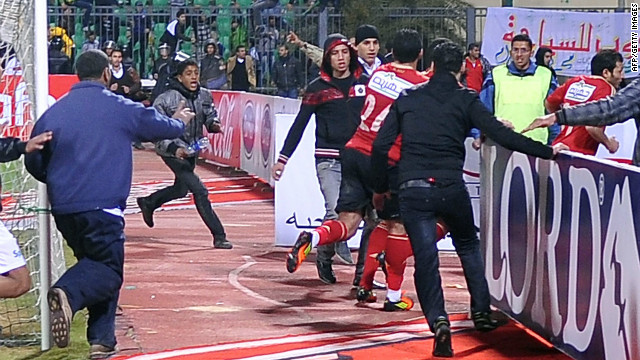
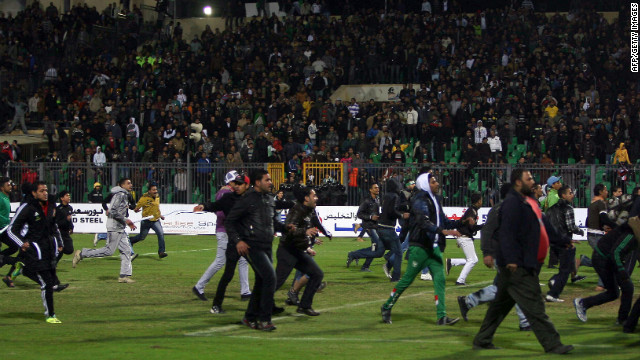
The protests come amid mounting anger over violence after a football match on Wednesday in which scores of people were left dead and hundreds were injured.

Deadly clashes in the northern city of Port Said between fans of home team al-Masry and Cairo's leading club al-Ahly broke out after the visitors were beaten, 3-1.

Fans stormed the pitch after the game and clashed with each other. At least 74 people died and more than a thousand were injured in the mayhem.

"This was not a sports accident, this was a military massacre," protesters chanted on Thursday, blaming the ruling military council for the violence.

Wednesday's violence is one of the deadliest incidents in football history and sent shares on the Cairo stock exchange tumbling down in Thursday trade.

Many Egyptians, including some lawmakers, have blamed police and the country's ruling junta for failing to prevent the violence.

Saudi protesters condemn Riyadh's suppressive rule

Protesters

in Saudi Arabia have taken to the streets in the kingdom's oil-rich Eastern Province to condemn the killing of demonstrators by Riyadh regime forces.


Demonstrators held protest rallies in the eastern towns of Qatif and Awamiyah, demanding prosecution for the police officers responsible for shooting protesters.

The protesters also called on the government to release thousands of political prisoners.

Riyadh has intensified its crackdown on protesters since the beginning of 2012.

On January 24th, Saudi security forces opened fire on demonstrators in Qatif, injuring many people. Some of the wounded are reportedly in critical condition.

Amnesty International and the Human Rights Watch have accused the Al Saud regime of silencing dissent through intimidation and violation of the basic rights of citizens.

Jolie, Pitt to visit Croatia, Bosnia to release her movie


Hollywood star Angelina Jolie and her partner Brad Pitt will visit Croatia and Bosnia this month for the launch of her directorial debut, a Bosnian wartime love story, a distributor has said.

The movie "In the Land of Blood and Honey" will have its official debut in Sarajevo on February 14 and in the Croatian capital Zagreb three days later, the local distributor, Blitz Film, said in a statement.

The film has already had a preview screening in Bosnia in late December, as a number of victims' organisations in Bosnia had expressed concern that the film would not correctly present their plight.

Most of them eventually hailed the movie as objective and sincere.

President Obama: I needed a Mustang in high school


Nation is totally consumed by Super Bowl Sunday

White House hits back at Afghan war critics


The White House Thursday rebuked critics it implied favored an Afghan war "without end" after Republican candidate Mitt Romney said plans to end the US combat mission next year betrayed "naivety."

Mounting political debate over future Afghan strategy foreshadows what is likely to be a sharp clash between President Barack Obama and his eventual Republican opponent in November's presidential election over the war.

US Defense Secretary Leon Panetta effectively injected the war in Afghanistan back into the heat of the campaign on Wednesday, unveiling the updated strategy as he flew to Brussels for a NATO meeting.

He told reporters aboard his plane that Washington hopes to end its combat mission in Afghanistan in 2013 and to shift to a training role with the Afghan National Army, one year before most US troops are due to withdraw.

Romney, who accuses Obama of "appeasing" US enemies, said at a campaign event Wednesday that the troop decision would hand an important advantage to US foes in Afghanistan and faulted the ideal of any set withdrawal date.

"Why in the world would you go to the people you are fighting with and tell them the day you are pulling out your troops," Romney said.

"It makes absolutely no sense, it is naivety, it is putting in jeopardy the mission of the United States of America and our commitment to freedom."

White House spokesman Jay Carney declined to directly rebut Romney's comments but hit out at critics of Obama's approach on Afghanistan, and accused the previous Bush administration of neglecting the war.

"The president has a very clear, focused, achievable policy with a lot of muscle behind it," Carney said. "What he does not support is war without end."

Carney accused some Obama critics of ignoring the president's focused strategy and clinging to support for a previous Bush administration plan that "no two people involved in it could explain."

"Let's be clear that the policy (Obama) inherited was one of, you know, neglect in Afghanistan because of the focus on the war in Iraq," he said.

"He made clear that he would heighten the focus on the real enemy, which was Al-Qaeda. He has done that."

The idea of moving towards an advisory mission had previously been mooted, but Panetta's comments marked the first time the administration had posited an exact target date for the transfer of mission.

"Hopefully by the mid-to-latter part of 2013, we'll be able to make a transition from a combat role to a train, advise and assist role," Panetta said.

The comments were the strongest sign yet that Obama, who carried out a 2008 campaign pledge to bring all US troops home from Iraq, wants to go into the next election arguing he is well on the way to ending the 10-year Afghan war.

U.S. Justice Department indicts Swiss bank Wegelin


The United States indicted Wegelin, the oldest Swiss private bank, on charges that it enabled wealthy Americans to evade taxes on at least $1.2 billion hidden in offshore bank accounts, the U.S. Justice Department said on Thursday.

The announcement, by federal prosecutors in Manhattan, represents the first time an overseas bank has been indicted by the United States for enabling tax fraud by U.S. taxpayers.

The indictment said the U.S. government had seized more than $16 million from Wegelin's correspondent bank, the Swiss giant UBS AG, in Stamford, Connecticut, via a separate civil forfeiture complaint. Because Wegelin has no branches outside Switzerland, it used correspondent banking services, a standard industry practice, to handle money for U.S.-based clients.

UBS could not be reached for immediate comment.

The charges against Wegelin, of fraud and conspiracy, provide a rare glimpse into the world of Swiss private banking in the wake of a crackdown on UBS AG. In 2009, UBS paid $780 million and entered into a deferred prosecution agreement with the Justice Department over charges it engaged in fraud and conspiracy by enabling scores of Americans to evade taxes through its private bank. The bank later turned over the names of more than 4,500 clients, a watershed in Swiss bank secrecy, which protects the confidentiality of clients and their data.

The indictment signals a ramping up of pressure on 10 other Swiss banks under investigation by the Justice Department, including Credit Suisse, Julius Baer and Basler Kantonalbank.

Six days ago, Wegelin -- founded in 1741 -- effectively broke itself up by selling the non-U.S. portion of its business. The indictment represents the latest blow to the tradition of Swiss bank secrecy in a long-running U.S. crackdown on tax dodgers.

Switzerland is seeking a global solution for its entire banking industry, not just the 11 banks under criminal scrutiny.

On Tuesday, the Swiss finance ministry handed U.S. authorities encrypted data on bank employees who served U.S. clients suspected of dodging taxes, and said it would only provide the key to decipher the data once the row was settled.

ACCOUNTS FOR FORMER UBS CLIENTS?

The U.S. Justice Department said Wegelin "affirmatively decided to capture for Wegelin the illegal U.S. cross-border banking business lost by UBS and deliberately set out to open new undeclared accounts for US taxpayer-clients leaving UBS," the indictment said. U.S. clients were told that Wegelin presented less risk amid the crackdown because it had no branches outside Switzerland and "had a long tradition of bank secrecy."

The indictment also accused Wegelin of helping two unnamed Swiss banks "repatriate undeclared funds to their own U.S. taxpayer-clients by issuing checks drawn on Wegelin's Stamford correspondent account." The transfers were separated into chunks below the $10,000 threshold at which such transfers are reported to the IRS. Wegelin, the indictment said, "co-mingled" the repatriated funds with other, unrelated funds, to better conceal their origin and nature.

The charges against Wegelin were filed as a superseding indictment of three previously charged Wegelin bankers: Michael Berlinka, Urs Frei and Roger Keller. The three men were charged on January 4 with fraud and conspiracy. The superseding indictment named several unindicted co-conspirators, including one who served as a team leader for the three men at the Zurich branch.

The charges provided new details on how the bank worked to solicit new U.S. clients fleeing UBS. According to the indictment:

* Wegelin, one of the last "pure" private banks, is principally owned by eight managing partners and run by an executive committee that included partners. One unindicted co-conspirator, named as Executive A at the bank, was a member of Wegelin's executive committee and worked in Zurich.

* Wegelin used a special code, "BNQ," on around 70 new U.S. undeclared accounts that were opened over 2008 and 2009. It also sometimes opened accounts for U.S. citizens who held passports from other countries, and opened the accounts through the non-U.S. passports.

* Wegelin recruited U.S. clients through a website, www.SwissPrivateBank.com, that was run by an unidentified third party. The website boasted there that "Swiss bank secrecy is not lifted for tax evasion ... Neither the Swiss government nor any other government can obtain information about your bank account." Unlike the United States, Switzerland generally does not consider tax evasion to be a crime.

* Wegelin gave accounts special names, including "Elvis" and "Limpopo Foundation." The charges detailed the bank's work for nearly three dozen American clients, known only as clients A through JJ.

* Wegelin encouraged clients not to come forward to the U.S. Internal Revenue Service and disclose their names in exchange for reduced penalties. Clients who did so in recent years helped provide the Justice Department with a roadmap to the inner workings of Wegelin - a map that led to the bank's indictment.

U.S. Job growth seen slower in January


U.S. employment growth probably slowed in January as messengers hired during the busy holiday shopping season were laid off, but the improving labor market trend should remain intact.

Nonfarm payrolls rose 150,000 after increasing 200,000 in December, according to a Reuters survey. The unemployment rate is seen holding steady at a near three year low of 8.5 percent.

The Labor Department will release the U.S. jobs figures, which set the tone for financial markets worldwide, on Friday at 8:30 a.m. (1330 GMT).

A 42,000 jump in courier jobs lifted employment in December. The government pinned the gain on strong online shopping.

"The 200,000 print last month perhaps overstated the genuine health of the labor market, but that's not to say the labor market isn't continuing to recover," said Tim Quinlan, an economist at Wells Fargo Securities in Charlotte, North Carolina.

Economists will scour the data for any signs the improving trend has been broken, given an expected slowdown in economic growth that was flagged last week by fourth-quarter gross domestic product data.

The state of the U.S. labor market could help determine whether President Barack Obama gets a second term in office. It was one of the key factors that prompted the U.S. Federal Reserve to say it would probably hold interest rates near zero at least through 2014.

"Any evidence of slippage in progress towards full-employment could perhaps push the Fed closer to taking additional action"" said Millan Mulraine, senior macro strategist at TD Securities in New York.

The U.S. economy grew at a 2.8 percent annual rate in the final three months of 2011, quickening from 1.8 percent in the third quarter. However, the rebuilding of stocks by businesses accounted for two-thirds of the rise.

"If payrolls drop to 100,000, you now go to a situation where there is not enough on average to allow the labor market to improve," said Christopher Probyn, chief economist at State Street Global Advisors in Boston.

LONG WAY TO GO

While job growth has quickened, employment remains about 6.1 million below its pre-recession level. There are no jobs for three out of every four unemployed people and 23.7 million Americans are either out of work or underemployed.

The unemployment rate has declined for four straight months, falling a cumulative 0.6 percentage point. Part of the drop is due to unemployed workers giving up the hunt for a job, but the decrease also reflects genuine improvement.

Economists expect this improvement may have persuaded some discouraged jobseekers to return to the labor market in January, and some think this may actually drive the unemployment rate higher in January.

"It is likely that the number of jobseekers rose in January - which will partially reverse the recent decline in unemployment," said Patrick O'Keefe, head of economic research at J.H. Cohn in Roseland, New Jersey.

It may be hard at first blush to determine exactly what is behind any move in the unemployment rate. The January household survey data will incorporate new population controls that will make month-to-month comparisons between the size of the labor force or number of employed or unemployed impossible.

Along with the new population controls, the department will release annual revisions to the payrolls data from the survey of employers and introduce new factors to adjust for seasonal fluctuations.

In an early benchmark estimate last year, it said the level of employment in March of last year was likely 192,000 higher than it had reported. The final figure comes on Friday.

In January, construction employment probably received a boost from the mild winter weather.

Manufacturing is also expected to have added more jobs, but retail employment probably slipped.

Government employment is forecast to have dropped by 20,000 jobs, with most of the losses concentrated at the local level.

Despite the anticipated slowdown in hiring, hourly earnings likely increased 0.2 percent, the same as in December.

Peshawar: IRNUM society demands machinery, funds

Daily Statesman


Institute of Radiotherapy and Nuclear Medicines (Irnum) Patients' Welfare Society has demanded the provision of modern machinery, special funds and facilities to ensure timely and better treatment of cancer patients in the facility.

The demand was made by president of the society, Ghulam Sarwar Khan Mohmand and general secretary, Dr. Safoora Shahid while addressing a press conference here in Peshawar Press Club (PPC) on Thursday.

They said that the hospital requires two modern machines priced Rs200 million to provide better and timely treatment to patients of cancer from Khyber Pakhtunkhwa, FATA and Afghanistan.

They called on FATA Secretariat, Commissionerate for Afghan refugees and philanthropists of Khyber Pakhtunkhwa for extending financial assistance to the hospital for provision of better and timely treatment to the patients.

On this occasion, Dr. Safoora Shahid said that the hospital was established by Zulfikar Ali Bhutto with 75 beds with capacity of provision of treatment to 1000 patients.

However, he said the deadly disease is increasing with each passing day and now the number of registered patients with the hospital had surpassed the figure of 5000.

She said that out of ten kinds of cancer, breast cancer is top fatal disease, which required research. But, they are lacking modern laboratory and funds in this regard. She said that due to increase in the number of patients, they are providing treatment in two shifts.

She said that on February 4, like other countries, World Cancer Day will be observed in Pakistan, whose basic objective is prevention and creation of awareness regarding the disease among the people.

PAKISTAN: 109 boys’ secondary schools lack basic educational facilities


109 boys’ secondary schools lack basic educational facilities


Libraries, playgrounds and apparatus for laboratories were found lacking in some of the 109 boys' secondary schools monitored nationwide in November, according to a monitoring report of Free and Fair Election Network (FAFEN).

The report said nearly two-fifths of the monitored schools did not have libraries, adding that it is important to encourage students to read books other than those prescribed by the syllabus to broaden their horizons.

FAFEN Governance Monitors visited 109 boys' secondary schools in 68 districts across the country. Forty-six schools were monitored in 27 Punjab districts, 32 in 22 KP districts, 26 in 14 Sindh districts, two in as many districts in both Balochistan and Federally Administered Tribal Areas (FATA), while one school was monitored in Islamabad Capital Territory (ICT).

More than a fifth (22%) schools did not have apparatus for science experiments meaning that students are unable to see evidence of the scientific theories taught in classes. It is highly probable that comprehension of these subjects is compromised because of such shortcomings.

A third of the monitored schools did not have playgrounds and nearly a quarter of them did not have serving Physical Training Instructors (PTIs).

However the report added that conditions of physical infrastructure were well met as at least 85% of 109 boys secondary schools were housed in buildings, had boundary walls, electricity, and fans, were well lit, and had chairs and tables for teachers as well as black/white boards. A similar proportion was found to be clean.

However, there were no sanitary workers in 27% schools, hinting at the possibility of students sharing cleaning duties.

Good student-to-teacher ratios were observed in the monitored schools where on average, a class of not more than 28 students was assigned to one teacher.

Attendance levels were also good with teachers' attendance falling between 76% and 100% in 101 schools.

The same level of attendance was maintained by students in 94 schools.

The report said 334 teaching posts and 136 non-teaching positions were lying vacant nationwide. All schools provided information on teaching posts, while 108 did so for non-teaching positions.

New regional approach to Afghan refugees agreed

Daily Statesman
The United Nations High Commissioner for Refugees has thanked Pakistan for its hospitality towards Afghan refugees while praising its continued commitment to finding lasting solutions to the situation.

Antonio Guterres was speaking at the end of a two-day visit organized at the invitation of the Minister for States and Frontier Regions, Engineer Shaukatullah, said a press release issued here.

Guterres called for additional international solidarity with Pakistan and Iran which continue to host large numbers of Afghan refugees after more than 30 years.

“At a time when many countries are closing their doors to those fleeing violence and persecution, the generosity of the people and the Government of Pakistan towards Afghan refugees deserves greater recognition and support on the part of the international community,” he said.

During his visit Guterres also met with Prime Minister Yousuf Raza Gillani and Foreign Minister Hina Rabbani Khar.

Central to their talks was an agreement reached in Dubai earlier this week between Pakistan, Iran, Afghanistan and UNHCR to pursue a regional strategy aimed at finding durable solutions to the Afghan refugee situation.

The new strategy will be presented at an international conference to be held in Switzerland in early May.

The conference will seek international support for programmes inside Afghanistan that will increase the attractiveness and sustainability of returns while providing additional support to communities that continue to host Afghan refugees.

In 2011 just over 50,000 Afghan refugees returned home from Pakistan, down from nearly 110,000 thousand in 2010. Despite the decline, the number of Afghan returns last year still represented the largest refugee repatriation programme in the world.

“The priority now,” said the UNHCR chief, “is to create conditions inside Afghanistan that will allow for large scale voluntary repatriation.”

Afghan refugees will be more ready to go home once the right conditions are in place inside Afghanistan, he added.

Guterres also commended the government for reaffirming its commitment to the voluntary and gradual return of Afghan refugees.

There are currently 1.7 million registered Afghan refugees in Pakistan. Since 2002, more than five million Afghan refugees have already left to return home, the majority with assistance from UNHCR.

US warns citizens travelling to Pakistan

The Express Tribune

Spokesperson for United States (US) Department of State Victoria Nuland on Thursday indicated security concerns for US citizens travelling in Pakistan and said that the after effects of the November 26 Nato attack still prevail.

Speaking at a press briefing, Nuland said the attack on Salala check post has raised tensions between the countries.

The US Department of State issued a Travel Warning to Pakistan which highlighted incidents that that have happened in Pakistan or with American citizens in the last six months.

According to the Travel Warning released by the US Department of State, the attacks included one on May 20, 2011, when a US Consulate General vehicle in Peshawar was attacked, killing one person and injuring a dozen, including two US employees of the mission.

Another attack on April 5, 2010 on the US Consulate General in Peshawar killed several security and military personnel. And on February 3, 2010, 10 persons, including three US military personnel, were killed and 70 injured in a suicide bombing at a new girls’ school in Khyber Pakhtunkhwa province.

The warning also alerted the US citizens who are currently in Pakistan and advised them to avoid going to demonstrations and protests “condemning drone strikes and Pakistan’s ongoing energy crisis”.

Nuland also commented on Pakistan’s Ambassador to US Sherry Rehman’s statement regarding Pakistan being the ”first casualty” after withdrawal of US troops from Afghanistan, saying that it underscores the fact that the region is interconnected and that everyone should work together in order to drive out terrorism from the region.

Nuland also said that the Afghanistan, Pakistan, the Nato-Isaf family was required to concert efforts and go after terrorists wherever they are.

The hypothesis of ‘contempt of court’ against Gilani


The Supreme Court of Pakistan has said that it will indict Yousuf Raza Gilani on charges pertaining to contempt of court. The premier has been summoned to appear before the court on February 13, 2012.

According to former senator and Senior Advocate of the Supreme Court Syed Iqbal Haider the probability of February 13, 2012 “never coming” is extremely high and he believes that the appellate bench might suspend February 2, 2012’s decision.

He reminisced regarding the previous contempt of court hearings against the former prime minister Nawaz Sharif, which took a strange turn when the court was invaded by Sharif’s party workers during the course of the hearing and the proceedings were suspended.

Later on, chief justice Sajjad Ali Shah, who summoned the former PM to appear before the court, was asked to step down on charges of misconduct.

Haider alleges that no such situation will develop in the current case.

He claims that the likelihood of this particular case meeting the same fate as the Supreme Court’s NRO decision of 2009 is extremely high.

“The government will drag the proceedings of this case as long as possible, by proposing that they will write the letter but will delay the correspondence until the elections of the senate take place,” claimed Haider.

The second scenario, which Haider claims and proposes, entails the filing of a review petition in the case of possible indictment and conviction.

“If the prime minister is charge sheeted, it is not mandatory that he has to resign. He can file a petition for review which will be heard in the Supreme Court of Pakistan and will take time,” he added.

Moreover, Haider alleges that, “The speaker and leaders of the opposition party can file a petition in the election commission regarding the disqualification of the prime minister. Considering the judicial system of Pakistan it is obvious that the hearing and verdict will also take much time and will remain pending until the elections.”

The last possibility which Haider proposes might occur is that the president will remain unaffected even if Gilani steps down.

“Even if the prime minister is made a scapegoat and is asked to resign, the decision will not affect the president of Pakistan and he will remain in his position,” Haider added.

In short, it is wise to say that the letter which needs to be written to the Swiss authorities, to reopen the cases against President Asif Ali zardari, will remain pending. Moreover, the main cause for framing charges against the prime minister will not serve any purpose, signifying that the whole exercise will turn out to be quite futile.

Thursday, February 2, 2012

Strike in parts of Balochistan against killing of Mir Domki's family

A partial strike was observed in different parts of Balochistan on Thursday against the killing of wife and daughter of MPA from Balochistan Mir Bakhtiar Khan Domki and their driver by unknown armed men in Karachi on Monday night.

Balochistan nationalist parties including National Party, BRP and Balochistan National Party had given the strike call in protest against the killing of tribal women in Gizri area of Karachi.

Responding the strike call trade centers in areas including Khuzdar, Hub, Naseerabad, Jaffarabad, Sibi, Lehri, Bakhtiarabad Domki, Bhag and Bolan remained closed with thin traffic plying on the road.

The social and political circles flayed the attack terming it coward act to further deteriorate situation in Balochistan.

They called upon Sindh government to immediately arrest the culprits involved in this heinous crime.

Heavy contingent of police and other law enforcement agencies personnel were deployed in these areas to avoid eventuality.

Will appear before SC again on Feb 13: PM Gilani

DAWN.COM

Prime Minister Syed Yousuf Raza Gilani said that he respected the Supreme Court’s decision and would appear in court on Feb 13.

He said this while addressing the parliament on Thursday.

“I have appeared before the court earlier, and I would respect its decision and appear before it again,” said Gilani.

But the prime minister in his statement said he would “refrain from making comments” on the judiciary, adding that he firmly believed that “every body should follow the constitution”.

“All institutions need to work in their constitutional domains; they are all answerable to the parliament,” he said.

Earlier during the court hearing on Thursday, a seven-member bench of the SC had summoned the prime minister to appear on Feb 13 to be indicted with contempt over his refusal to pursue corruption cases against the president.

Justice Nasir-ul-Mulk told the court that there were grounds to proceed against Gilani over the government’s refusal to follow a court order to re-open corruption cases against President Asif Ali Zardari.

The government argued that Zardari had immunity from prosecution while head of state.

“We are satisfied that prima facie there is a case for further proceeding into the matter. Adjourned for February 13, for framing charges. Prime minister is required to remain present in the court,” Justice Nasir-ul-Mulk said in English.

Review appeal

Gilani’s lawyer Aitzaz Ahsan said it was possible to appeal.

“There is a possibility for an appeal in this matter. It is up to the court whether to suspend this order or not. This will be decided after getting a copy of the order,” Ahsan added.

Legal experts told AFP that Gilani could avoid being charged by appealing against Thursday’s order, apologising or promising to write to the Swiss.

“On February 13, the charges will be read out to him. He will have to admit or deny. If he admits and apologises, the court can dispose of the case,”former Supreme Court judge Tariq Mahmood told AFP.

“The court does not unnecessarily punish people in contempt cases. It wants its dignity and decorum maintained. It all depends on how the judges proceed.”

The premier was previously summoned to appear in court on January 19.

Egypt film star sentenced for 'defaming Islam'


A Cairo court has sentenced the Arab world's most famous actor, Adel Imam, to three months in jail for "defaming Islam" in several roles on stage and screen, the Egyptian comic said on Thursday.

Imam, a UN goodwill ambassador who has been described as the Arab world's Charlie Chaplin, was sentenced to hard labour in absentia, he told AFP after being sued by Asran Mansur, a lawyer with Islamist ties.

"I will appeal the ruling," Imam said.

"Some people seeking fame filed a suit against me over works I have done which they consider insulting to Islam, and this is of course not true," he said.

The 71-year-old celebrity has a long history of legal tangles with Islamists who regard the actor's work as blasphemous.

In the latest case, the actor said the works criticised are the 1994 movie "Al-Irhabi" (The Terrorist), in which he portrays an Islamic fundamentalist and the play "Al-Zaeem" (The Leader), a comedy in which Imam pokes fun at the region's autocratic leaders.

"All the works in which I have starred went through the censors. Had they been found to be defamatory, the censors would have banned them," Imam said.

Imam has acted in more than 100 films and 10 plays that are highly appreciated by the Arab public for their irreverence towards both the powerful and the religious.

In a 1998 TV debate, called "Star on a Hot Tin Roof", Imam squared off with three Islamists from the Muslim Brotherhood, the movement whose members now hold a strong majority in Egypt's parliament.

Since 2000, Imam has served as a goodwill ambassador for the UN refugee agency, alongside likes of film star Angelina Jolie and Italian fashion designer Giorgio Armani.

"In the course of his rich career, he has mixed humour with sadness to portray ordinary people who are victims of injustice and poverty," the agency says in a biography of imam on its website.

"For all these reasons, Imam became a symbol for people promoting tolerance and human rights in the Arab world," it said.

Biggest Holders of US Government Debt


As the U.S. government spends an unprecedented amount of money to fix the economy, there is an equally great need to raise the cash to pay for it. This is accomplished through borrowing, whereby Uncle Sam sells Treasury securities of varying maturity.

For investors, government bills, notes and bonds are considered safe because they have a guaranteed rate of return, based on faith in future U.S. tax revenues. The government has been partially funding operations via Treasury securities for decades.

This borrowing adds to the national debt, which has recently surpassed $15 trillion and is rising every second. The amount of debt is quickly approaching the federal debt ceiling, a legal limit to borrowing that currently stands at $16.4 trillion.

Much of that debt is held by private sector, but about 40 percent is held by public entities, including parts of the government. Here's who owns the most. Foreign countries listed include private and public investors, according to monthly U.S. Treasury data.

1. Federal Reserve and Intragovernmental Holdings

U.S. debt holdings: $6.328 trillion

That’s right, the biggest single holder of U.S. government debt is the Federal Reserve system. The Fed's system of banks and other U.S. intragovernmental holdings accounted for a stunning $6.328 trillion in U.S. Treasury debt in Spetember 2011 (the most recent number available). The amount is an all-time high as the Federal Reserve continues to expand its balance sheet, partially to purchase U.S. government debt securities.

About a decade ago, the total government holdings were "only" $2.5 trillion.

2. China
U.S. debt holdings: $1.132 trillion

The largest foreign holder of U.S. Treasury securities, China currently has $1.132 trillion in American debt, although it is down from all time highs of $1.173 trillion in July 2011. For more on China and currency, see CNBC Explains.


3. Other Investors/Savings Bonds

U.S. debt holdings $1.107 trillion

With the most recent numbers from June 2011, this extremely diverse group includes individuals, government-sponsored enterprises, brokers and dealers, bank personal trusts, estates, savings bonds, corporate and noncorporate businesses for a total of $1.107 trillion.

Although the level of debt held in U.S. savings bonds has remained basically constant since 2000, the broad category of "other" investors has nearly quadrupled since reaching a four-year low in December 2007.
4. Japan
U.S. debt holdings: $1.038 trillion

One of the U.S.'s largest trade partners, Japan is also one of the U.S.'s largest debt holders, currently owning $1.038 trillion in Treasury securities.


5. Pension Funds

U.S. debt holdings: $842.2 billion

Pension funds control large amounts of money, reserved for personal retirements, and thus are obligated to make relatively safe investments. This group, which includes private and local government pension funds, holds $842.2 billion in U.S. debt. The private pension fund category also includes U.S. Treasury securities held by the Federal Employees Retirement System Thrift Savings Plan G Fund.

6. Mutual Funds
U.S. debt holdings: $653.5 billion

According to the Federal Reserve, mutual funds hold the sixth-largest amount of U.S. debt compared to any other group, although mutual fund holdings have diminished by more than $105 billion since December 2008. Including money market funds, mutual funds and closed-end funds, this group of investments managed about $653.5 billion in U.S. Treasury securities as of June 2011, which are the most recent numbers available.

7. State and Local Governments

U.S. debt holdings: $484.4 billion

U.S. state and local governments have nearly a half-trillion dollars invested in American debt, according to the Federal Reserve. The level of investment has remained stable since 2006, moving within the range of $484 billion and $576 billion. The current debt holdings, however, represent the lowest aggregate level for state and local governments since December 2005, when they stood at $481.4 billion.
8. The United Kingdom
U.S. debt holdings: $429.4 billion

The U.K. currently holds $429.4 billion in U.S. debt, but the country's investment has fluctuated dramatically during the past two years. Now at its all-time high (and rapidly increasing), British holdings were as low as $55 billion in June 2008.


9. Depository Institutions

U.S. debt holdings: $284.5 billion

As of June 2011 (the most recent numbers available), the Federal Reserve Board of Governors lists depository institutions as holding about $284.5 billion in U.S. debt.

This group includes commercial banks, savings banks and credit unions. In 2011, its holdings more than tripled from the 2008 low of $105 billion. Between June and September 2011, holdings for depository institutions fell by nearly $44 billion.

10. Insurance Companies
U.S. debt holdings: $250.1 billion

According to the Federal Reserve Board of Governors, insurance companies hold $250.1 billion in Treasury securities. This group includes property-casualty and life insurance firms.

Bahrain stage anti-regime rally to mourn latest victims

Bahrainis have taken to the streets to mourn the deaths of two people killed by Saudi-backed regime forces during attacks on protesters on Wednesday, Press TV reports.
People from all walks of life were heading on Thursday afternoon to the funeral site in the town of Ma'ameer about 15 kilometers (9.5 miles) south of the capital, Manama.Earlier on Thursday, activists and opposition groups confirmed the deaths of two people during a crackdown on an anti-regime protest the day before.
On Wednesday, an elderly Bahraini man died after the Saudi-backed regime forces attacked his home in Ma'ameer with tear gas.
The other victim was an elderly woman who also died after inhaling toxic tear gas in a similar attack by regime forces in the capital's Naim neighborhood.
The two were part of a mass protest calling for the downfall of the ruling Al Khalifa family.
Dozens of people have been killed and hundreds more arrested or fired from their jobs since the beginning of the popular uprising in Bahrain in February 2011.

In late January, Amnesty International called on Bahraini authorities to “investigate and account for the reports of more than a dozen deaths following tear gas use.”
Amnesty also called on the US government to “suspend transfers of tear gas and other riot control equipment to the Bahraini authorities.”
Bahraini protesters have vowed to continue their anti-regime protests despite the violent crackdown by security forces.

Anger flares in Egypt after 79 die in soccer riot


Egyptians began three days of mourning Thursday for the 79 people who perished at a violent soccer riot, as the nation's fledgling parliament erupted in anger over the national tragedy.

The speaker of the parliament ordered an end to a live broadcast of Thursday's parliament session, so heated was the debate. But the order was retracted after angry lawmakers made their objections known.

A deputy of the Muslim Brotherhood's Freedom and Justice Party demanded the resignation of the interior minister, holding him responsible for the loss of lives. Another deputy accused security guards of allowing fans to bring weapons into the stadium in Port Said.

A committee will investigate the circumstances that caused the deadly riot Wednesday at the match pitting Cairo's Al-Ahly team against Al-Masry of Port Said.It remained unclear whether the riots were ignited by intense sporting rivalry or political strife. Egyptians just marked the one-year anniversary of their revolution that toppled the longtime dictatorship of Hosni Mubarak.


In Cairo's Tahrir Square, somber protesters, many dressed in popular Al-Ahly club attire, decried Egypt's Supreme Council of the Armed Forces even though Field Marshall Mohamed Tantawi had tried to allay their fears.

"This period, I assure you, will be peaceful. Egypt will be stable again," Tantawi said in a statement released to Egyptian media. "The military council is executing a road map to transfer the authority to an elected civilian entity. ... Whoever has any plot against Egypt will not succeed."

Prime Minster Kamal Ganzouri suspended Port Said's security chief and the head of police investigation. The two men will face a probe. Ganzouri also accepted the resignation of the Port Said governor.

When the referee blew the final whistle, the score was Al-Masry 3, Al-Ahly 1. Thousands of Al-Masry fans stormed the pitch despite their home team's hard-fought victory.

Rival fans attacked one another with rocks and chairs. Many of those who died fell from bleachers inside the stadium, said Ahmed Saeed, an official from the Port Said governor's office. Others suffocated.

"The police did nothing to stop it," Al-Ahly supporter Amr Khamis told CNN at the train station in Cairo after returning from the match. His head was bandaged after an Al-Masry fan beat him with a stick, he said.Authorities contributed to escalating the violence, said Mamdouh Eid, executive manager of the Al-Ahly fans committee.

"The police stood there watching, and the ambulances arrived late. I carried several dead fans in my arms," he said.

The violence is one of the world's worst sporting disasters and prompted officials to suspend indefinitely Egypt's football premier league.An interior ministry official said, however, that the fans stoked tensions during the entire match.

"There were organized groups in the crowds that purposely provoked the police all through the match and escalated the violence and stormed onto the field after the final whistle," said Gen. Marwan Mustapha of Egypt's interior ministry. "Our policemen tried to contain them, but not engage."

At least 47 people were arrested after the clashes, he said.

Gen. Ismail Osman, a member of Egypt's military council, told Mehwar TV Thursday that the military and police were not responsible for what happened.

LAHORE: Death toll reaches 128 ,PIC drug reaction


The death toll due to medicines reaction in Punjab Institute of Cardiology has reached 128.
At least 128 people have died by Wednesday while over 400 others are being treated in various hospitals of Lahore following the consumption of substandard heart drugs on the prescription of Punjab Institute of Cardiology.
Five people died at Services Hospital today. The deceased include 55-year-old Syed Abbas of Shadbagh and 74-year old Syed Zafar of Sodiwal.
According to hospital management, the treatment has been started in the light of guideline issued by the health department however; the results of this guideline have still to be matured.
Currently, 3500 patients affected by the reaction of these medicines are under treatment while 35 of them are reportedly in critical condition. They have been kept in ICU and CCU.

Tense Bahrain under spotlight again over uprisings


The academic who investigated abuses during Bahrain's crackdown on pro-democracy protests last year returns this week to a Gulf Arab country still racked by violence, to assess how far the government has followed through on reforms he recommended.Cherif Bassiouni, an Egyptian-American professor at DePaul University in Chicago, surprised many with his withering assessment of abuses committed under martial law imposed after protests inspired by uprisings in Egypt and Tunisia.

Riot police still fight daily with young, mainly Shi'ite, protesters, who complain they continue to be marginalised by Bahrain's Sunni rulers. Clashes are becoming more violent in the run-up to the February 14 anniversary of the start of the protests.

The strategically located island state is a key ally for Washington in its stand-off with Shi'ite Iran.

Last November, in front of King Hamad and senior officials, Bassiouni detailed incidents of torture including sexual abuse, electric shocks and threats with dogs used to extract confessions and as punishment for protesting.

This time, Bassiouni and his team will assess whether Bahrain has reformed policing, reinstated sacked employees, and investigated torture claims and military trials in line with recommendations by his independent commission.

Bassiouni told DePaul students before he left that Bahrain was not moving fast enough to calm street protests.

"I think the public is going to come at the end and say 'you know what, you're holding all of these investigations behind closed doors - this is a whitewash' and I think they would be perfectly justified in saying so," he said.

Keen to demonstrate that it is acting on the report, the Bahrain government has chronicled the steps it has implemented on a dedicated website. (http://www.govactions.bh)

FAMILY STRUGGLE

Bassiouni told Reuters his mission - at King Hamad's invitation - would be finished by early March.

"I will be issuing a report on the status of implementation of the BICI (independent commission) recommendations at that point," he said.

He suggested to his DePaul students that disputes within the ruling Al Khalifa family were holding up political and economic reforms. "You have to choose between maintaining the unity of the family or the regime, or the unity of the country," he said.

The BICI report said that 35 people had died in the unrest up to June, when martial law was lifted, but activists say the ongoing violence has taken the total to over 60, including 14 since Bassiouni was last in the country in November. The government disputes the causes of death.

Sunni-ruled states nearby are uneasy that reforms giving Bahrain's lawmakers more powers would not only raise questions about a lack of democracy in their own countries, but may also empower the Shi'ite majority in Bahrain and other Gulf states.

That may embolden Iran, an issue of particular concern to the United States whose Fifth Fleet is based in Manama.

The Shia-dominated opposition want the power of the appointed upper chamber cut, a prime minister who has been in power for more than 40 years removed and an elected government. Opposition parties said they would meet Bassiouni on Friday.

One Western diplomat said the government needed time to implement reforms.

"There is a will at the top but the challenge is to ensure that the bureaucracy is as serious and to follow up with mechanisms," the diplomat said. "You have this gaping wound, especially among the Shia community, that has to be addressed."

Russia says will veto "unacceptable" Syria resolution


Russia said on Wednesday it would veto any U.N. resolution on Syria that it finds unacceptable, after demanding any measure rule out military intervention to halt the bloodshed touched off by protests against President Bashar al-Assad's rule.


The political violence in Syria has killed at least 5,000 people in the past 10 months and activists say Assad's forces have stepped up operations this week on opposition strongholds, from Damascus suburbs to the cities of Hama, Homs and the border provinces of Deraa and Idlib.

Arab and Western states urged the U.N. Security Council on Tuesday to act swiftly on a resolution backing an Arab League plan calling for Assad to hand powers to his deputy and defuse the 11-month-old uprising against his family's dynastic rule.

"If the text will be unacceptable for us we will vote against it, of course," Russian U.N. envoy Vitaly Churkin told reporters in Moscow via a videolink from New York.

"If it is a text that we consider erroneous, that will lead to a worsening of the crisis, we will not allow it to be passed. That is unequivocal," he said.

His remarks came hours after Russia's envoy to the European Union, Vladimir Chizhov, said there was no chance the Western-Arab draft text could be accepted unless it expressly rejected armed intervention.

Russia and China, both veto-wielding Security Council members, have resisted a Western push for a resolution condemning the Syrian government's crackdown on unrest.

U.N. Security Council ambassadors met in New York on Wednesday to discuss ways to overcome their disagreements on the wording of the European-Arab draft resolution that Morocco submitted to council members on Friday.

The closed-door negotiations ended without a final agreement and will resume on Thursday, Germany's U.N. mission said. The draft will be updated to reflect Wednesday's discussions, which the mission said were "rather constructive."

A council diplomat at the meeting told Reuters, however, that Churkin reiterated to council members that the expression of full support for the Arab League plan in the current draft was "unacceptable." He also made clear Moscow could not accept the expression of concern in the draft about arms sales to Syria unless there was a waver for weapons transfers to the Syrian government, the diplomat said.

"It's way too soon in my judgment to know whether ultimately there will be agreement," U.S. Ambassador to the United Nations Susan Rice told reporters, adding, "It's long past time for this council to take meaningful action."

Despite the Russian comments, French Foreign Minister Alain Juppe said a "window of hope" had opened. "We will work furiously in the next few days to try and get a resolution that will allow the Arab League to forge ahead in finding a solution," he told parliament in Paris.

Russia says the West exploited fuzzy wording in a March 2011 U.N. Security Council resolution on Libya to turn a mandate to protect civilians in the North African country's uprising into a push to remove the government, backed by NATO air strikes, that led to the overthrow of Muammar Gaddafi.

Russia has also expressed concern that the draft's threat of further measures against Syria could lead to sanctions, which it opposes.

'WHOSE SIDE?'

Western envoys in New York said the main sticking point was likely to be not military intervention, on which they said a diplomatic fix was possible, but the resolution's support for the Arab League plan demanding that Assad give up power. That is seen by Moscow as tantamount to regime change.

The envoys said their biggest challenge would be to reword the draft so that it still endorses the plan but in a way that is weaker than the current version.

In Washington, Secretary of State Hillary Clinton told reporters: "Every member of the council has to make a decision: Whose side are you on? Are you on the side of the Syrian people? ... Or are you on the side of a brutal, dictatorial regime?"

An activist group said Syrian troops killed eight people in the central city of Homs and that 15 government soldiers were killed in a clash with a defector unit. Syria's state news agency, SANA, said a general, Rajeh Mahmoud, was killed along with three soldiers on the outskirts of Damascus on Wednesday.

Syrian insurgents said Assad's forces extended a military sweep overnight to counter a rebel threat that had reached the gates of the capital, sending armor into eastern and northern suburbs that Assad's forces took over this week. An activist group said at least 25 people had been killed in that sweep.

In Wadi Barada on the edge of the capital, four people were killed in a tank bombardment on Wednesday to flush out rebel Free Syrian Army units operating near the capital, activists said. A rebel spokesman put the death toll at 15.

SANA said troops killed 11 members of an "armed terrorist group" outside the southern city of Deraa, and that government forces discovered bomb factories and field hospitals in a raid on armed cells in Irbin and Sabqa, Damascus suburbs where insurgents had appeared recently.

It was not possible to verify the reports as Syria restricts access for independent media.

Russian Foreign Minister Sergei Lavrov said the policy of isolation and trying to remove the government risked igniting a "much bigger drama" in the Middle East.

"The people who are obsessed with removing regimes in the region, they should be really thinking about the broader picture," he told the Australian Broadcasting Corporation.

"And I'm afraid that if this vigor to change regimes persists, we are going to witness a very bad situation much, much, much broader than just Syria, Libya, Egypt or any other single country."

Shahbaz Sharif's 18 portfolios case

THE NEWS


The Lahore High Court (LHC) on Wednesday sought reply from the Punjab chief secretary on a petition challenging holding of 18 portfolios by the chief minister.

Justice Umar Ata Bandial directed the chief secretary to file the reply with in three weeks. The petition, filed by Noshab A Khan advocate, made the Punjab chief minister, the principal secretary to the CM and the chief secretary party in the case.

He stated that chief minister was holding portfolios of 18 ministries, including the health ministry, in violation of the Punjab Government Rules of Business 1974. He contended that the chief minister, as head of the cabinet, could not perform the work of ministers because he had only responsibility of coordination of the all the policy matters and chairing meetings of the cabinet minister.

The petitioner held the chief minister responsible for failure of the health ministry in coping with menace of specious drugs reaction in which more than 100 patients had expired. He said the government had failed even to control dengue epidemic, requesting the court to order the CM to quit the charge of the ministries and give away portfolios to ministers as defined by the law.

Secy summoned: The Lahore High Court on Wednesday sought personal appearance of Punjab Secretary Transport Muhammad Yousaf on a contempt petition. Justice Muhammad Khalid Mehmood Khan issued the orders on a contempt petition filed by Riffat Nazir who pleaded that her husband was employee of department but after his death, the administration was not releasing his pension and other emoluments of last eight years despite orders of the LHC and the services tribunal.

She requested the court to initiate contempt proceedings against respondents, including the secretary transport. After hearing initial arguments, the judge ordered the secretary transport to appear before the court on February 06.

Inquiry report: Report of the inquiry commission formed to fix responsibility for the deaths during the 37 days long doctors strike will be presented in the court of the Lahore High Court Chief Justice Sheikh Azmat Saeed by the Punjab government on Thursday (today).

According to a press release on Wednesday, journalist Manzoor Qadir, through his lawyer Gul Zaman, had filed a writ petition, praying to the court that the Punjab government was neither making the report public and nor was it taking action on the report while it was trying to cover up things. They had prayed to the court to get the findings of the report of the judicial commission implemented.

sales tax: The Lahore High Court on Wednesday disposed of a plea, challenging recovery of sales tax from restaurants. The court ordered Inland Revenue Department and the chief commissioner RTO to decide the matter within one month.

Justice Ijaz-ul-Ahsan was hearing the petition filed by a local restaurant owner, Muhammad Ishaq, impleading the federal law secretary, federal board of revenue and others. The petitioner submitted that he was running a restaurant and it was registered with Inland Revenue Department, Lahore.

He contended that the restaurant business fell within scope and domain of service whereas federal legislative list and constitution did not grant authority for any levy, charge or payment of sales tax on rendering services.

He submitted that the respondent officers of revenue department illegally initiated proceedings against him for recovery of sales tax. He said that an officer of Inland Revenue Department had been deputed on his business premises.

The petitioner also pointed out that the Punjab government was also collecting illegally sales tax under Punjab Sales Tax Ordinance 2000 whereas services were exempted in the Ordinance.

Plea against Shahbaz Sharif over PIC deaths

The Lahore High Court on Wednesday directed a petitioner to extend his arguments on the maintainability of a petition seeking disqualification of and high treason proceedings against Punjab Chief Minister Shahbaz Sharif and his son MNA Hamza Shahbaz for being responsible for the deaths of cardiac patients due to supply of spurious medicines.

Justice Umar Ata Bandial issued the order on a petition field by advocate Fakhar Razzaq through his counsel Sardar Khurram Latif Khosa.

As proceedings started on Wednesday, Justice Bandial asked the petitioner’s counsel to convince the court whether the instant petition was maintainable and adjourned hearing for three weeks. He pleaded that Shahbaz Sharif had not proved himself a trustworthy (Ameen) according to the Article 62 of the Constitution. It was the hard luck of the province that the chief minister had appointed himself as a minister for Health, despite the facts he had no adequate knowledge of the department. He submitted that Shahbaz Sharif was playing with the lives of the masses at large and it had resulted into the death of a huge number of people due to dengue and drugs reaction.

Khurram Khosa alleged that MNA Hamza Shahbaz was the supervisor of a pharmaceutical company that supplied a defective 75mg tablet – named Alfagirl (Clopidogirl) – to the PIC.

The petitioner requested the court to disqualify Shahbaz Sharif and his son Hamza Shahbaz Sharif from being elected and restrain Shahbaz from holding the office of Punjab chief minister.

He also requested the LHC to declare all the respondents as guilty of the ‘clinical murderer’ of cardiac patients, some of whom had lost their lives while others were still at risk due to the use of low standard drugs. He contended the respondents should also be charged with the offence of high treason according to the Article 6 of the constitution by placing their names on the exit control list (ECL).

PHC moved against sale of ‘killer’ drugs in Khyber Pakhtunkhwa

The Pakistan Medical Association (PMA) on Wednesday petitioned the Peshawar High Court (PHC) against the use and open sale of the drugs in Khyber Pakhtunkhwa that had killed more than 120 patients in Lahore and other parts of Punjab.

PMA Provincial President Dr Hussain Ahmad Haroon filed the writ petition in the high court through his lawyer Mian Mohibullah Kakakhel. The Khyber Pakhtunkhwa government, secretary health, chairman of the Health Regulatory Authority, drug inspector, director general health services, director health services Fata, and chief executives of Khyber Teaching Hospital, Lady Reading Hospital and Hayatabad Medical Complex were made respondents in the petition.

The petitioner submitted that the drug manufacturers and suppliers were the same and the drugs manufactured in Karachi or Lahore were being supplied to all the hospitals in the country. He claimed the drugs that killed hundreds of patients in Punjab were also a potential threat to the lives of cardiac patients with pulmonary infections and other cardiovascular diseases.

Dr Haroon said these drugs are also a potential threat to the lives of thousands of patients of hypertension, diabetes mellitus and diseases relating to the nervous system. The petitioner submitted that he and his co-doctors felt the drugs stored in the hospitals of Khyber Pakhtunkhwa and the suppliers of the drugs and pharmaceutical companies might be subjected to laboratory analysis by the PCSIR and Aga Khan Laboratories or may be sent abroad for sampling. He said the heads of hospitals in the province might be asked to immediately stop the supply and use of the lethal drugs. He argued that the secretary health in Khyber Pakhtunkhwa was not a doctor and knew nothing about the drugs.

Two more fall prey to spurious drug

Two more patients died due to the spurious drug here on Thursday, taking the death toll due to Isotab drug reaction to 131.
According to the media reports, Syed Abbas, 55, of Shad Bagh Lahore and 74-year-old Syed Zafar of Sodiwal were the fresh victims of Isotab drug reaction. Both the victims were under treatment in Services Hospital Lahore.

Aitzaz says Appeal can be filed in contempt case

Barrister Aitzaz Ahsan, counsel for Prime Minister Youuf Raza Gilani said the government can file an intra-court appeal, our sources reported.

I will suggest to my client to file an appeal against this order, Aitzaz said.

"The court has decided to frame charges against Prime Minister Yousuf Raza Gilani. He has been asked to be present in person on February 13 when he will be indicted," Aitzaz told reporters.

"There is a possibility for an appeal in this matter. It is up to the court whether to suspend this order or not. This will be decided after getting a copy of the order," Ahsan added.

Balochistan: a self-fulfilling prophecy

EDITORIAL: Daily Times

The Balochistan Assembly passed a resolution against the brutal murder of MPA Nawabzada Bakhtiar Khan Domki’s wife and daughter in Karachi. A complete shutter-down strike was observed all over Balochistan to condemn their murders. The Baloch Liberation Army (BLA) claimed responsibility for a retaliatory attack on four Frontier Corps (FC) checkposts near Margat coalmine area in which at least 15 FC personnel were killed and a dozen sustained injuries. This attack, according to the BLA spokesman, was in reaction to the murders of the Domki women. Karachi is no stranger to target killings and it seems that this horrible trend along with bhatta (extortion) activities have started again after a brief lull. But the murder of Balochistan Republican Party (BRP) chief Brahamdagh Bugti’s sister and niece in Karachi was unlike any other target killing. The claim by the Karachi police that this could be the result of a ‘tribal feud’ could not be further from the truth. It is highly unlikely that women and children would be targeted even in a feud between the Baloch tribes. This is completely against the culture of the Baloch. Reasonable suspicion thus arises that this was not the work of any Baloch tribe but our own intelligence agencies that are busy harassing and assaulting the Baloch.

The murder of Mr Domki’s wife, daughter and driver is political, and there are genuine reasons to speculate that it is related to Brahamdagh Bugti, who is one of the leaders of the Baloch resistance movement and has often been hounded by our military and its operatives. So far, they have not been successful in extraditing him from Switzerland, where he has obtained political asylum. Killing his sister and niece could be one way of sending him a chilling message. It also points to the military’s callous attitude towards all norms of humanity. Women, children and old people are not deliberately targeted in wars. What kind of a despicable regime is this that would kill women and children in cold blood just to make a point? The police are still clueless about the murderers but they must investigate properly and get to the bottom of this horrific incident. No words can do justice to the sense of outrage at this atrocious crime.

It seems that there is now a sinister plot to hunt the Baloch outside Balochistan too. In December 2011, Faisal Mengal — a Baloch activist — was killed in Karachi. The death of two Baloch females along with their driver in Karachi also points to this new ‘trend’. The military’s ‘kill and dump’ policy in Balochistan has wreaked havoc in the lives of the Baloch. The Asian Human Rights Commission (AHRC) recently pointed out that “...the [Pakistan] military and its spy agencies have supra-constitutional authority to deal with the Baloch people, who are struggling for their constitutional rights of self-rule in the province”. The policy of eliminating members of the Baloch resistance movement, moderate nationalists, intellectuals and youth has led to more hatred and more alienation in the province. Now this policy is seemingly being extended to women and children. Independence from Pakistan is now being demanded openly all over Balochistan. The death of two Baloch women will certainly stoke the fire even more. Nobody can blame the Baloch for this demand given the atrocities being committed against them every single day by our military. Even the veteran Baloch leadership has nothing to offer the disgruntled Baloch youth fighting in the mountains because of the criminal military operation. The military’s highhanded policies have hardly left any space for a political solution now. The federation is definitely in trouble.

Pakistan Court to Charge Prime Minister With Contempt


Pakistan’s highest court said on Thursday it would charge Prime Minister Yousaf Raza Gilani with contempt of court for refusing to reopen a corruption case against his boss, President Asif Ali Zardari.

The Supreme Court said it would start the contempt trial on Feb. 13. If convicted, Mr. Gilani would face up to six months in jail and possible disqualification from public office.

The court order was a significant escalation of long-simmering tensions between the judiciary and the government and threatened to plunge the country into fresh political turmoil as its leaders debate the contours of a new strategic relationship with the United States.

Since 2009, the Supreme Court, headed by Chief Justice Iftikhar Muhammad Chaudhry, has insisted that the government should write a letter to Switzerland, reopening a longstanding corruption case against President Zardari.

The government stalled, employing a variety of legal maneuvers to dodge the legal order in court, while in public it argued that Mr. Zardari enjoys immunity from prosecution while in office.

But the court’s patience ran out last month, when it ordered Mr. Gilani to appear before the court under threat of contempt charges. Amid dramatic scenes Mr. Gilani turned appeared, flanked by supporters, and was represented by Aitzaz Ahsan, one of the country’s most famous lawyers.

But despite Mr. Ahsan’s arguments, the court made good on its threats on Thursday, when it initiated the contempt charges, in the process reviving a perilous clash of powerful institutions involving the government, military and judiciary.

It comes just days after another major judicial crisis facing the government, involving accusations of treason and popularly known as Memogate, started to recede from the front pages.

The central witness in that crisis, an American businessman of Pakistani origin named Mansoor Ijaz, failed to turn up in Pakistan to testify. On Monday, a panel of judges allowed Husain Haqqani, the former ambassador to Washington who faces the most grave charges, to leave the country.

Mr. Ijaz claimed in a newspaper article in October that he had sent a secret memo to the Obama administration in May on behalf of the Zardari government, seeking American help in warding off a possible coup after the Pakistani military was humiliated by the American commando operation in which Osama bin Laden was killed. Mr. Ijaz later said that Mr. Haqqani was behind the memo. Mr. Haqqani denied the accusation but was forced to step down.

U.S. plans to halt Afghan combat role early


The United States appears to have taken Kabul by surprise by announcing plans to end its Afghan combat role earlier than expected, and coinciding with a secret report that the Taliban is confident it can grab back control of the ravaged country.

U.S. Defense Secretary Leon Panetta, speaking on Wednesday, said the United States would stop combat operations before the end of 2013 as it winds down its longest war.

"A decision to push this a year earlier throws out the whole transition plan. The transition has been planned against a timetable and this makes us rush all our preparations," a senior Afghan security official, who could not be named because he was not authorized to speak on the matter, told Reuters on Thursday.

"If the Americans withdraw from combat, it will certainly have an effect on our readiness and training, and on equipping the police force," the official said, adding that his government had not been informed of the change in plans.

The United States, which led the NATO invasion of Afghanistan in 2001, has previously said it would withdraw most combat troops by the end of 2014.

Panetta said the U.S. troops would shift next year to a supporting role, training and advising Afghan troops who would take charge of a country that has been at war for more than three decades.

A faster end to U.S. combat in Afghanistan could give President Barack Obama an election-year lift.

It may also demoralize Afghans who fear a return to the austere rule of the Taliban and hope that reconciliation between all parties would deliver a better alternative.

People like hotel waiter Yama, 19, expressed alarm at the prospect that U.S. troops will cease combat sooner.

"Everything Afghanistan has built during the past years would be destroyed, robbed and sold to neighboring countries," he said.

Many Afghans have long been suspicious of neighboring Pakistan's intentions, and would like to see it tame Afghan militant groups it is accused of supporting.

Ties between the countries have been strained in recent months, but Pakistani Foreign Minister Hina Rabbani Khar said on Thursday after her trip to Kabul a day earlier that "a lot of ill will had faded."

She said Pakistan had played no substantial role in reconciliation efforts but would encourage insurgent groups like the Haqqani network and the Taliban to lay down their arms and pursue peace if asked by Afghanistan.

"We would be able to do whatever we have, whatever tools we have, we would want to exploit to be able to assist the Afghan people," she told a small group of reporters in a briefing on her trip to Kabul this week.

"We are willing to do whatever the Afghans expect or want us to do."

MILTANT GROUPS AS PROXIES

Pakistan has long been accused of using militant groups as proxies in Afghanistan to counter the influence of its rival India there, allegations it denies.

Despite her enthusiasm over ties with Kabul, Khar cautioned the nascent peace process is far from producing breakthroughs.

The United States believes Afghanistan cannot be pacified without strong cooperation with Pakistan.

But ties have been damaged by a series of events including the unilateral U.S. raid that killed Osama bid Laden on Pakistani soil in May last year, and a NATO cross-border raid that killed 24 Pakistani soldiers in November.

Islamabad is currently reviewing ties with the United States and parliament is expected to soon make recommendations on a new direction for the relationship.

Panetta's announcement immediately drew criticism from Obama's most likely opponent in this year's race for the White House, Republican presidential candidate Mitt Romney.

"Why (in) the world do you go to the people that you're fighting with and tell them the day you're pulling out your troops? It makes absolutely no sense," Romney told a rally.

Panetta has also been criticized by some lawmakers for moving too swiftly to extract U.S. troops.

"Our goal is to complete all of that transition in 2013 and then hopefully by mid- to the latter part of 2013 we'll be able to make a transition from a combat role to a training, advise-and-assist role," Panetta told reporters on his plane to Brussels for a NATO defense ministers' meeting.

The announcement came as allies like France are themselves looking for a quick exit from Afghanistan. French President Nicolas Sarkozy, facing a tough re-election campaign of his own, announced he would pull out French troops by the end of next year.

He urged other members of the North Atlantic alliance to do the same, threatening to upend a well-settled strategy approved at a summit in Lisbon two years ago that calls for the transition to Afghan security leadership by the end of 2014.

The United States has been trying to draw the Taliban into reconciliation talks with the Afghan government of President Hamid Karzai. But a key part of its strategy has been to increase military pressure on the Taliban to persuade it to join peace talks.

TALIBAN CONFIDENT ON CONTROL

In a classified report obtained by British media, NATO said that the Taliban, backed by Pakistan, remained confident despite a decade of NATO efforts that it would retake control of Afghanistan.

"Taliban commanders, along with rank and file members, increasingly believe their control of Afghanistan is inevitable. Though the Taliban suffered severely in 2011, its strength, motivation, funding and tactical proficiency remains intact," according to an excerpt of the report, published by the Times of London and the BBC.

Panetta insisted that the new timetable was in line with a previous NATO strategy agreed in Lisbon.

"In the Lisbon discussions, it was always clear that there would come a point which we would make that transition and then be able to hopefully consolidate those gains in 2014," he said.

"So the bottom line is: No, this isn't a new strategy. It's basically implementing what Lisbon is all about."

He said his key message to the NATO allies as they meet on Thursday and Friday to prepare for a Chicago summit in May was that the coalition in Afghanistan needed to unite behind the goals agreed on in Lisbon.