Former law minister Senator Babar Awan on Friday claimed that the people had elected Pakistan Peoples Party co-chairman Asif Ali Zardari as president, who will complete his five-year tenure as head of state till September 2013.
PPP central leader Babar Awan avoided answering a question regarding a date for the return of President Zardari from Dubai, where he has undergone treatment.
Talking to newsmen along with PPP leader Raja Riaz in Lahore, the former law minister said that the noose was being tightened around the neck of an elected Parliament.
“We are not afraid. We will neither move an inch beyond the Constitution nor move an inch backward,” he replied to questions about the controversial Memogate issue. He refused to comment on Memogate, saying the matter was subjudice before the law.
However, he strongly criticized the PML-N leadership for its stance on Memogate.
“The nation is being scattered at a time when it needs unity. The power does not matter, but sovereignty and solemnity of the country comes first,” said Awan.
He said that Nawaz Sharif only likes the Parliaments of his own party’s government.
The former law minister vowed that all the attacks being made on the Parliament would be foiled with the power of the public. Musharraf’s hands were strengthened by those, who signed an agreement and fled the country after tendering an apology.
He said his party had been criticized more than any other party. “PPP had always rendered sacrifices for the sake of democracy and would do the same even now,” said Awan.
Saturday, December 17, 2011
Mohamed Bouazizi: A fruit seller's legacy to the Arab people

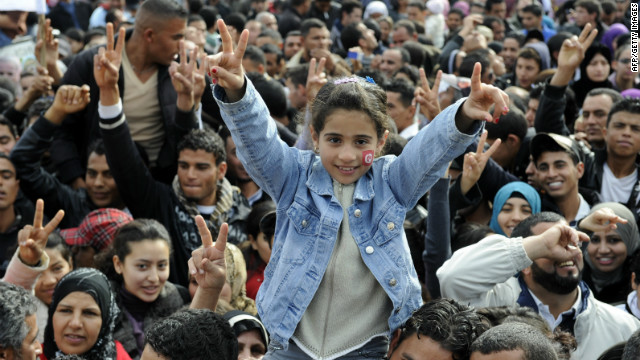
Mohamed Bouazizi's self-immolation one year ago was an act which symbolized the frustration and desperation of millions in the Arab world, setting into motion a series of revolutions across the Middle East and North Africa.
His was a cry for dignity, justice, and opportunity, which continues to be heard around a region undergoing tumultuous change. In today's Middle East, people matter. Many are now engaged in what could be a life-long struggle to fight long-standing grievances and take greater control of their lives. This process must involve the creation of new democratic political systems, which ensure greater accountability of leaders, and level the playing field of opportunity for all, not just a select few.It has been a remarkable year. Three dictators have been toppled and one has transferred power to a deputy. Nonetheless, analysts and policy-makers continue to speak about the slow pace of change in the region and warn of the onset of an "Arab Winter." Such distinctions -- spring and winter -- are misleading. Many seasons will come and go in the transformative years that lie ahead for the Arab world. Revolutions take time to settle. The transformation of societies takes even longer. The colored revolutions of Eastern Europe, two decades on, are still developing. It took centuries for democratic systems to be refined in Europe. We cannot expect democracy in the Middle East to be solidified in only one year.
Still, across the region, there is cause for concern. Egypt's transition to civilian rule carries major worries, even as Egyptians continue to go to the polls. The concern remains that the ruling military council will relinquish power only under heavy pressure; and Egypt's economy and confidence are in nosedive as the populace awaits civil rule. Syrians meanwhile face a regime intent on killing and torturing its citizens to end their uprising. All this as a largely impotent international community argues over how to stop the increasing violence.
In Yemen, many are not convinced by a regionally brokered transition deal, which allows Saleh and his family immunity from prosecution as well as continued political influence. Bahrain continues to reel from the absence of a genuine national dialogue between its rulers and the underrepresented and relatively impoverished majority Shia community. Libya's revolutionaries now face the immediate challenge of building a state from scratch, based on the rule of law and democratic principles. To do so, they are learning, they will first have to put down their guns.While events elsewhere in the region have been less dramatic, the desire for change is still palpable. Under popular pressure, Morocco now has an elected prime minister under a revised constitution; Jordan's king has been forced to change the government twice this year; Oman's Sultan has devolved some powers to his consultative council. Only time will tell if people accept these changes as going far enough to meet their rising expectations.
As the respected Arab commentator Rami Khouri somewhat prophetically predicted last year, we are witnessing the "birth of Arab politics." For the first time, people have a voice and the opportunity to launch new parties and institutions, independent of the autocratic rulers and external interference that long stifled political development. Civil society organizations, the "software" of any democratic system, have mushroomed in transitional states such as Egypt and Tunisia. A truly democratic and accountable political culture is finally developing in the region.
Undoubtedly, the biggest political winners over the past year have been Islamist parties, particularly the Muslim Brotherhood movement. As real Arab politics emerges, this is not surprising. One should accept that today, the center of gravity of the region's societies' is religiously pious, socially conservative, and economically liberal. The rise of the Brotherhood and the more fundamentalist Salafi parties is a natural legacy of years of political exclusion, and economic corruption and stagnation. As the West looks on, it should be remembered that a faith-inspired vision led to the establishment of the American state itself.
The challenge for the Brotherhood will be to maintain their popularity and their discipline while meeting the demands of not just their supporters but of an entire nation. The wiser leaders among them may be realizing that winning at the ballot box, even exercising majority rule, does not entitle them to ignore their responsibilities to the minorities that may fear them. Mohammad Bouzazi's cry for the rights and responsibilities of all citizens provides a lesson that these new political actors and leaders would do well to heed.In this changed environment, international actors need to tread wisely. As regional and international participants in a recent Brookings seminar in Doha concluded, Western governments must embrace a wholesale reassessment of their foreign policies towards the region. This reassessment should reflect a "paradigm shift" towards genuinely inclusive and equal partnerships with the Middle East that do not seek to dictate democratic outcomes. Above all, people speaking for the first time must not be met with deaf ears. Western countries' engagement with newly emerging Islamist actors, then, should be based on the principles of mutual respect and establishing two-way communication.
Such a dialogue should also acknowledge the sorry legacy of past regimes that were considered key allies. Under the reign of such rulers, there was a mass campaign of victimization, torture, and marginalization against liberals and Islamists alike who posed a threat. While affected societies have established their own judicial processes to take their former leaders to task, it is also time for Western countries to acknowledge the pain and dislocation of those who suffered at the hands of these regimes. As certain dictators in the region continue to hound their people, the international community must not make the same mistakes again. When acts of brutality -- tantamount even to crimes against humanity -- are being perpetrated, as in Syria, the international community must act based on its responsibility to protect innocent civilians, and face down this evil.
Ultimately, the region needs to find its own state-builders and create new states that reflect the will of their people. What has become clear over the past year is that the people of the Middle East and North Africa are in no mood to give up their search for justice and dignity. It is fitting that one-year after Bouzaizi's desperate act, Tunisia will see the election and appointment of a president and prime minister -- one liberal, the other Islamist - both human rights activists imprisoned by the previous regime. Mohammed Bouazizi's true legacy may be the birth of a new democratic Tunisia where a wholly unique model of governance is emerging -- one in which Islamists and secularists govern and where political activists who have been imprisoned for their views now sit in government. The new Tunisia, not Turkey, Eastern Europe, or even Indonesia, will be the real model for the newly emerging Arab world.
Karzai: Freed rape victim has choice to marry attacker
Afghan President Hamid Karzai has said that a rape victim freed from prison after he intervened on her behalf has the right to make her own choice about whether to marry her attacker.
In an exclusive interview from Kabul, Karzai told CNN's Fareed Zakaria that the woman's case appeared to be a "misjudgment" that had to be resolved.
The woman, identified only as Gulnaz for her own protection, was sentenced to 12 years in prison after she reported that her cousin's husband had raped her.
COAS telephoned President Zardari
Chief of Army Staff General Ashfaq Parvez Kayani has called President Asif Ali Zardari up and inquired about his health, Geo News reported.
Presidential spokesman Farhatullah Babar said that the Army Chief telephone President Zardari last night. During conversation the COAS inquired about the health of the President.
Presidential spokesman Farhatullah Babar said that the Army Chief telephone President Zardari last night. During conversation the COAS inquired about the health of the President.
Britney Spears ENGAGED to former agent Jason Trawick
Britney Spears is reportedly ready to walk down the aisle for a third time: the pop star is engaged to her longtime boyfriend Jason Trawick.
The Pakistanis Have a Point

Bill Keller

As an American visitor in the power precincts of Pakistan, from the gated enclaves of Islamabad to the manicured lawns of the military garrison in Peshawar, from the luxury fortress of the Serena Hotel to the exclusive apartments of the parliamentary housing blocks, you can expect three time-honored traditions: black tea with milk, obsequious servants and a profound sense of grievance.
Talk to Pakistani politicians, scholars, generals, businessmen, spies and journalists — as I did in October — and before long, you are beyond the realm of politics and diplomacy and into the realm of hurt feelings. Words like “ditch” and “jilt” and “betray” recur. With Americans, they complain, it’s never a commitment, it’s always a transaction. This theme is played to the hilt, for effect, but it is also heartfelt.
“The thing about us,” a Pakistani official told me, “is that we are half emotional and half irrational.”
For a relationship that has oscillated for decades between collaboration and breakdown, this has been an extraordinarily bad year, at an especially inconvenient time. As America settles onto the long path toward withdrawal from Afghanistan, Pakistan has considerable power to determine whether the end of our longest war is seen as a plausible success or a calamitous failure.
There are, of course, other reasons that Pakistan deserves our attention. It has a fast-growing population approaching 190 million, and it hosts a loose conglomerate of terrorist franchises that offer young Pakistanis employment and purpose unavailable in the suffering feudal economy. It has 100-plus nuclear weapons (Americans who monitor the program don’t know the exact number or the exact location) and a tense, heavily armed border with nuclear India. And its president, Asif Ali Zardari, oversees a ruinous kleptocracy that is spiraling deeper into economic crisis.
But it is the scramble to disengage from Afghanistan that has focused minds in Washington. Pakistan’s rough western frontier with Afghanistan is a sanctuary for militant extremists and criminal ventures, including the Afghan Taliban, the Pakistani Taliban, the notorious Haqqani clan and important remnants of the original horror story, Al Qaeda. The mistrust between Islamabad and Kabul is deep, nasty — Afghanistan was the only country to vote against letting Pakistan into the United Nations — and tribal. And to complicate matters further, Pakistan is the main military supply route for the American-led international forces and the Afghan National Army.
On Thanksgiving weekend, a month after I returned from Pakistan, the relationship veered precipitously — typically — off course again. NATO aircraft covering an operation by Afghan soldiers and American Special Forces pounded two border posts, inadvertently killing 24 Pakistani soldiers, including two officers. The Americans said that they were fired on first and that Pakistan approved the airstrikes; the Pakistanis say the Americans did not wait for clearance to fire and then bombed the wrong targets.
The fallout was painfully familiar: outrage, suspicion and recrimination, petulance and political posturing. Gen. Ashfaq Parvez Kayani, the chief of the army and by all accounts the most powerful man in Pakistan, retaliated by shutting (for now and not for the first time) the NATO supply corridor through his country. The Pakistanis abruptly dropped out of a Bonn conference on the future of Afghanistan and announced they would not cooperate with an American investigation of the airstrikes. President Obama sent condolences but balked at the suggestion of an apology; possibly the president did not want to set off another chorus of Mitt Romney’s refrain that Obama is always apologizing for America. At this writing, American officials were trying to gauge whether the errant airstrike would have, as one worried official put it, “a long half-life.”
If you survey informed Americans, you will hear Pakistanis described as duplicitous, paranoid, self-pitying and generally infuriating. In turn, Pakistanis describe us as fickle, arrogant, shortsighted and chronically unreliable.
Neither country’s caricature of the other is entirely wrong, and it makes for a relationship that is less in need of diplomacy than couples therapy, which customarily starts by trying to see things from the other point of view. While the Pakistanis have hardly been innocent, they have a point when they say America has not been the easiest of partners.
One good place to mark the beginning of this very, very bad year in U.S.-Pakistani relations is Dec. 13, 2010, when Richard C. Holbrooke died of a torn aorta. Holbrooke, the veteran of the Balkan peace, had for two years held the thankless, newly invented role of the administration’s special representative for Afghanistan and Pakistan. The antithesis of mellow, Holbrooke did not hit it off with our no-drama president, and his bluster didn’t always play well in Kabul or Islamabad either.
But Holbrooke paid aggressive attention to Pakistan. While he was characteristically blunt about the divergent U.S. and Pakistani views, he understood that they were a result of different, calculated national interests, not malevolence or mere orneriness. He was convinced that the outlooks could be, if not exactly synchronized, made more compatible. He made a concentrated effort to persuade the Pakistanis that this time the United States would not be a fair-weather friend.
“You need a Holbrooke,” says Maleeha Lodhi, a well-connected former ambassador to Washington. “Not necessarily the person but the role.” In the absence of full-on engagement, she says, “it’s become a very accident-prone relationship.”
On Jan. 27, a trigger-happy C.I.A. contractor named Raymond Davis was stuck in Lahore traffic and shot dead two motorcyclists who approached him. A backup vehicle he summoned ran over and killed a bystander. The U.S. spent heavily from its meager stock of good will to persuade the Pakistanis to set Davis free — pleading with a straight face that he was entitled to diplomatic immunity.
On May 2, a U.S. Navy Seals team caught Osama bin Laden in the military town Abbottabad and killed him. Before long, American officials were quoted questioning whether their Pakistani allies were just incompetent or actually complicit. (The Americans who deal with Pakistan believe that General Kayani and the director of the Inter-Services Intelligence agency, Gen. Ahmed Shuja Pasha, were genuinely surprised and embarrassed that Bin Laden was so close by, though the Americans fault the Pakistanis for not looking very hard.) In Pakistan, Kayani faced rumbles of insurrection for letting Americans violate Pakistani sovereignty; a defining victory for President Obama was a humiliation for Kayani and Pasha.
In September, members of the Haqqani clan (a criminal syndicate and jihadi cult that’s avowedly subservient to the Taliban leader Mullah Omar) marked the 10th anniversary of 9/11 with two theatrical attacks in Afghanistan. First a truck bomb injured 77 American soldiers in Wardak Province. Then militants rained rocket-propelled grenades on the U.S. Embassy in Kabul, forcing our ambassador to spend 20 hours locked down in a bunker.
A few days later the former Afghan president, Burhanuddin Rabbani, spread his arms to welcome an emissary from the Taliban to discuss the possibility of peace talks. As they embraced, the visitor detonated a bomb in his turban, killing himself, Rabbani and the talks. President Hamid Karzai of Afghanistan, without any evidence that American officials are aware of, accused Pakistan of masterminding the grotesque killing in order to scuttle peace talks it couldn’t control.
And two days after that, Adm. Mike Mullen, the outgoing chairman of the Joint Chiefs of Staff, took to Capitol Hill to suggest that Pakistani intelligence had blessed the truck bomb and embassy attack.
His testimony came as a particular shock, because if the turbulent affair between the United States and Pakistan had a solid center in recent years, it was the rapport between Mullen and his Pakistani counterpart, General Kayani. Over the four years from Kayani’s promotion as chief of the army staff until Mullen’s retirement in September, scarcely a month went by when the two didn’t meet. Mullen would often drop by Kayani’s home at the military enclave in Rawalpindi, arriving for dinner and staying into the early morning, discussing the pressures of command while the sullen-visaged general chain-smoked Dunhills. One time, Kayani took his American friend to the Himalayas for a flyby of the world’s second-highest peak, K2. On another occasion, Mullen hosted Kayani on the golf course at the Naval Academy. The two men seemed to have developed a genuine trust and respect for each other.
But Mullen’s faith in an underlying common purpose was rattled by the truck bombing and the embassy attack, both of which opened Mullen to the charge that his courtship of Kayani had been a failure. So — over the objection of the State Department — the admiral set out to demonstrate that he had no illusions.
The Haqqani network “acts as a veritable arm of Pakistan’s Inter-Services Intelligence agency,” he declared. “With ISI support, Haqqani operatives planned and conducted that truck-bomb attack as well as the assault on our embassy.”
Several officials with access to the intelligence told me that while the Haqqanis were implicated in both attacks, there was no evidence of direct ISI involvement. A Mullen aide said later that the admiral was referring to ISI’s ongoing sponsorship of the Haqqanis and did not mean to say Pakistan authorized those specific attacks.
No matter. In Pakistan, Mullen’s denunciation led to a ripple of alarm that U.S. military “hardliners” were contemplating an invasion. The press had hysterics. Kayani made a show of putting the Pakistani Army on alert. The Pakistani rupee fell in value.
In Washington, Mullen’s remarks captured — and fed — a vengeful mood and a rising sense of fatalism about Pakistan. Bruce O. Riedel, an influential former C.I.A. officer who led a 2009 policy review for President Obama on Pakistan and Afghanistan, captured the prevailing sentiment in an Op-Ed in The Times, in which he called for a new policy of “containment,” meaning “a more hostile relationship” toward the army and intelligence services.
“I can see how this gets worse,” Riedel told me. “And I can see how this gets catastrophically worse. . . . I don’t see how it gets a whole lot better.”
When Gen. David H. Petraeus took over the U.S. military’s Central Command in 2008, he commissioned expert briefing papers on his new domain, which sprawled from Egypt, across the Persian Gulf, to Central Asia. The paper on Afghanistan and Pakistan began, according to an American who has read it, roughly this way: “The United States has no vital national interests in Afghanistan. Our vital national interests are in Pakistan,” notably the security of those nuclear weapons and the infiltration by Al Qaeda. The paper then went on for the remaining pages to discuss Afghanistan. Pakistan hardly got a mention. “That’s typical,” my source said. Pakistan tends to be an afterthought.
The Pakistani version of modern history is one of American betrayal, going back at least to the Kennedy administration’s arming of Pakistan’s archrival, India, in the wake of its 1962 border war with China.
The most consequential feat of American opportunism came when we enlisted Pakistan to bedevil the Soviet occupiers of Afghanistan in the 1980s. The intelligence agencies of the U.S. and Pakistan — with help from Saudi Arabia — created the perfect thorn in the Soviet underbelly: young Muslim “freedom fighters,” schooled in jihad at Pakistani madrassas, laden with American surface-to-air missiles and led by charismatic warriors who set aside tribal rivalries to war against foreign occupation.
After the Soviets admitted defeat in 1989, the U.S. — mission accomplished! — pulled out, leaving Pakistan holding the bag: several million refugees, an Afghanistan torn by civil war and a population of jihadists who would find new targets for their American-supplied arms. In the ensuing struggle for control of Afghanistan, Pakistan eventually sided with the Taliban, who were dominated by the Pashtun tribe that populates the Pakistan-Afghanistan frontier. The rival Northern Alliance was run by Tajiks and Uzbeks and backed by India; and the one thing you can never underestimate is Pakistan’s obsession with bigger, richer, better-armed India.
As long as Pakistan was our partner in tormenting the Soviet Union, the U.S. winked at Pakistan’s nuclear-weapons program. After all, India was developing a nuclear arsenal, and it was inevitable that Pakistan would follow suit. But after the Soviets retreated, Pakistan was ostracized under a Congressional antiproliferation measure called the Pressler Amendment, stripped of military aid (some of it budgeted to bring Pakistani officers to the U.S. for exposure to American military values and discipline) and civilian assistance (most of it used to promote civil society and buy good will).
Our relationship with Pakistan sometimes seems like a case study in unintended consequences. The spawning of the mujahadeen is, of course, Exhibit A. The Pressler Amendment is Exhibit B. And Exhibit C might be America’s protectionist tariffs on Pakistan’s most important export, textiles. For years, experts, including a series of American ambassadors in Islamabad, have said that the single best thing the U.S. could do to pull Pakistan into the modern world is to ease trade barriers, as it has done with many other countries. Instead of sending foreign aid and hoping it trickles down, we could make it easier for Americans to buy Pakistani shirts, towels and denims, thus lifting an industry that is an incubator of the middle class and employs many women. Congress, answerable to domestic textile interests, has had none of it.
“Pakistan the afterthought” was the theme very late one night when I visited the home of Pakistan’s finance minister, Abdul Hafeez Shaikh. After showing me his impressive art collection, Shaikh flopped on a sofa and ran through the roll call of American infidelity. He worked his way, decade by decade, to the war on terror. Now, he said, Pakistan is tasked by the Americans with simultaneously helping to kill terrorists and — the newest twist — using its influence to bring them to the bargaining table. Congress, meanwhile, angry about terrorist sanctuaries, is squeezing off much of the financial aid that is supposed to be the lubricant in our alliance.
“Pakistan was the cold-war friend, the Soviet-Afghan-war friend, the terror-war friend,” the minister said. “As soon as the wars ended, so did the assistance. The sense of being discarded is so recent.”
A Boston University-educated economist who made his money in private equity investing — in other words, a cosmopolitan man — Shaikh seemed slightly abashed by his own bitterness.
“I’m not saying that this style of Pakistani thinking is analytically correct,” he said. “I’m just telling you how people feel.”
He waved an arm toward his dining room, where he hung a Warhol of Muhammad Ali. “We’re just supposed to be like Ali — take the beating for seven rounds from Foreman,” he said. “But this time the Pakistanis have wised up. We are playing the game, but we know you can’t take these people at their word.”
With a timetable that has the United States out of Afghanistan, or mostly out, by the end of 2014, Pakistan has leverage it did not have when the war began.
One day after 9/11, Richard Armitage, the deputy secretary of state, summoned the head of Pakistani intelligence for a talking to. “We are asking all of our friends: Do they stand with us or against us?” he said. The following day, Armitage handed over a list of seven demands, which included stopping Al Qaeda operations on the Pakistani border, giving American invaders access to Pakistani bases and airspace and breaking all ties with the Taliban regime.
The Pakistanis believed from the beginning that Afghanistan had “American quagmire” written all over it. Moreover, what America had in mind for Afghanistan was antithetical to Pakistan’s self-interest.
“The only time period between 1947 and the American invasion of Afghanistan that Pakistanis have felt secure about Afghanistan is during the Taliban period,” from 1996 to 2001, says Vali Nasr, an American scholar of the region who is listened to in both academia and government. Now the Bush administration would attempt to supplant the Taliban with a strong independent government in Kabul and a muscular military. “Everything about this vision is dangerous to Pakistan,” Nasr says.
Pakistan’s military ruler at the time, Pervez Musharraf, saw the folly of defying an American ultimatum. He quickly agreed to the American demands and delivered on many of them. In practice, though, the accommodation with the Taliban was never fully curtailed. Pakistan knew America’s mission in Afghanistan would end, and it spread its bets.
The Bush-Musharraf relationship, Vali Nasr says, “was sort of a Hollywood suspension of disbelief. Musharraf was a convenient person who created a myth that we subscribed to — basically that Pakistan was on the same page with us, it was an ally in the war on terror and it subscribed to our agenda for Afghanistan.”
But the longer the war in Afghanistan dragged on, the harder it was to sustain the illusion.
In October, I took the highway west from Islamabad to Peshawar, headquarters of the Pakistan Army corps responsible for the frontier with Afghanistan. Over tea and cookies, Lt. Gen. Asif Yasin Malik, the three-star who commanded the frontier (he retired this month) talked about how the Afghan war looked from his side of the border.
The official American version of the current situation in Afghanistan goes like this: By applying the counterinsurgency strategy that worked in Iraq and relying on a surge of troops and the increasingly sophisticated use of drones, the United States has been beating the insurgency into submission, while at the same time standing up an indigenous Afghan Army that could take over the mission. If only Pakistan would police its side of the border — where the bad guys find safe haven, fresh recruits and financing — we’d be on track for an exit in 2014.
The Pakistanis have a different narrative. First, a central government has never successfully ruled Afghanistan. Second, Karzai is an unreliable neighbor — a reputation that has not been dispelled by his recent, manic declarations of brotherhood. And third, they believe that despite substantial investment by the United States, the Afghan Army and the police are a long way from being ready to hold the country. In other words, America is preparing to leave behind an Afghanistan that looks like incipient chaos to Pakistan.
In Peshawar, General Malik talked with polite disdain about his neighbor to the west. His biggest fear — one I’m told Kayani stresses in every meeting with his American counterparts — is the capability of the Afghan National Security Forces, an army of 170,000 and another 135,000 police, responsible for preventing Afghanistan from disintegrating back into failed-state status. If the U.S. succeeds in creating such a potent fighting force, that makes Pakistanis nervous, because they see it (rightly) as potentially unfriendly and (probably wrongly) as a potential agent of Indian influence. The more likely and equally unsettling outcome, Pakistanis believe, is that the Afghan military — immature, fractious and dependent on the U.S. Treasury — will disintegrate into heavily armed tribal claques and bandit syndicates. And America, as always, will be gone when hell breaks loose.
General Malik studied on an exchange at Fort McNair, in Washington, D.C., and has visited 23 American states. He likes to think he is not clueless about how things work in our country.
“Come 2015, which senator would be ready to vote $9 billion, or $7 billion, to be spent on this army?” he asked. “Even $5 billion a year. O.K., maybe one year, maybe two years. But with the economy going downhill, how does the future afford this? Very challenging.”
American officials will tell you, not for attribution, that Malik’s concerns are quite reasonable.
So I asked the general if that was why his forces have not been more aggressive about mopping up terrorist sanctuaries along the border. Still hedging their bets? His answer was elaborate and not entirely facile.
First of all, the general pointed out that Pakistan has done some serious fighting in terrorist strongholds and shed a lot of blood. Over the past two years, Malik’s forces have been enlarged to 147,000 soldiers, mainly by relocating more than 50,000 from the Indian border. They have largely controlled militant activities in the Swat Valley, for example, which entailed two hard offensives with major casualties. But they have steadfastly declined to mount a major assault against North Waziristan — a mountainous region of terrorist Deadwoods populated by battle-toughened outlaws.
Yes, Malik said, North Waziristan is a terrible situation, but his forces are responsible for roughly 1,500 miles of border, they police an archipelago of rough towns in the so-called Federally Administered Tribal Areas, or FATA, and by the way, they had a devastating flood to handle last year.
“If you are not able to close the Mexican border, when you have the technology at your call, when there is no war,” he said, “how can you expect us to close our border, especially if you are not locking the doors on your side?”
Americans who know the area well concede that, for all our complaints, Pakistan doesn’t push harder in large part because it can’t. The Pakistan Army has been trained to patrol the Indian border, not to battle hardened insurgents. They have comparatively crude weaponry. When they go up against a ruthless outfit like the Haqqanis, they tend to get killed. Roughly 4,000 Pakistani troops have died in these border wars — more than the number of all the allied soldiers killed in Afghanistan.
“They’re obviously reluctant to go against the Haqqanis, but reluctant for a couple of reasons,” an American official told me. “Not just the reason that they see them as a potential proxy force if Afghanistan doesn’t go well, but also because they just literally lack the capability to take them on. They’ve got enough wars on their hands. They’ve not been able to consolidate their gains up in the northern part of the FATA, they have continued problems in other areas and they just can’t deal with another campaign, which is what North Waziristan would be.”
And there is another, fundamental problem, Malik said. There is simply no popular support for stepping up the fight in what is seen as America’s war. Ordinary Pakistanis feel they have paid a high price in collateral damage, between the civilian casualties from unmanned drone attacks and the blowback from terror groups within Pakistan.
“When you go into North Waziristan and carry out some major operation, there is going to be a terrorist backlash in the rest of the country,” Malik told me. “The political mood, or the public mood, is ‘no more operations.’ ”
In late October, Hillary Clinton arrived in Islamabad, leading a delegation that included Petraeus, recently confirmed as C.I.A. director, and Gen. Martin E. Dempsey, Mullen’s successor as chairman of the Joint Chiefs. Petraeus used to refer to Holbrooke as “my diplomatic wingman,” a bit of condescension he apparently intended as a tribute. This time, the security contingent served as diplomacy’s wingmen.
The trip was intended as a show of unity and resolve by an administration that has spoken with conflicting voices when it has focused on Pakistan at all. For more than four hours, the Americans and a potent lineup of Pakistani counterparts talked over a dinner table.
Perhaps the most revealing thing about the dinner was the guest list. The nine participants included Kayani and Pasha, but not President Zardari or Prime Minister Yousuf Raza Gilani, who provided the dining room at his own residence and made himself scarce. The only representative of the civilian government was Clinton’s counterpart, the new foreign minister, Hina Rabbani Khar, a 34-year-old rising star with the dark-haired beauty of a Bollywood leading lady, a degree in hospitality management from the University of Massachusetts and, most important, close ties to the Pakistani military.
For a country that cherishes civilian democracy, we have a surprising affinity for strong men in uniform. Based on my conversations with American officials across the government, the U.S. has developed a grudging respect for Kayani, whom they regard as astute, straightforward, respectful of the idea of democratic government but genuinely disgusted by the current regime’s thievery and ineptitude. (We know from the secret diplomatic cables disclosed by WikiLeaks that Kayani has confided to American officials his utter contempt for his president and “hinted that he might, however reluctantly, have to persuade President Zardari to resign.”) Zardari, whose principal claim to office is that he is the widower of the assassinated and virtually canonized Benazir Bhutto, has been mainly preoccupied with building up his patronage machine for elections in 2013. The Americans expect little from him and don’t see a likely savior among his would-be political challengers. (As this article goes to press, Zardari is recovering from chest pains in a hospital in Dubai; there are rumors he won’t return.) So, Kayani it is. The official American consensus is less enamored of Kayani’s loyal intelligence underling, General Pasha, whose agency consorts with terrorists and is suspected of torturing and killing troublemakers, including journalists, but Pasha is too powerful to ignore.
The day after the marathon dinner, Clinton’s entourage took over the Serena Hotel for a festival of public diplomacy — a press conference with the foreign minister, followed by a town meeting with young Pakistanis and then a hardball round-table interview with a circle of top editors and anchors.
Clinton’s visit was generally portrayed, not least in the Pakistani press, as a familiar ritual of America talking tough to Pakistan. In the town meeting, a woman asked why America always played the role of bossy mother-in-law, and that theme delighted editorial cartoonists for days.
But the private message to the Pakistanis — and a more careful reading of Clinton’s public performance — reflected a serious effort to reboot a troubled relationship. Clinton took care to pay tribute to Pakistani losses in the war against terror in the past decade — in addition to the military, an estimated 30,000 civilian dead, the equivalent of a 9/11 every year. She ruled out sending American ground troops into Pakistani territory. She endorsed a Pakistani plea that U.S. forces in Afghanistan do a better job of cleaning up militant sanctuaries on their own side of the border.
Questioned by a prominent television anchor, she repudiated Mullen’s testimony, not only disavowing any evidence of ISI complicity in the attack on America’s embassy in Kabul but also soft-peddling the spy agency’s coziness with terrorists.
“Now, every intelligence agency has contacts with unsavory characters,” she said. “I don’t think you would get any denial from either the ISI or the C.I.A. that people in their respective organizations have contacts with members of groups that have different agendas than the governments’. But that doesn’t mean that they are being directed or being approved or otherwise given a seal of approval.”
That particular riff may have caused jaws to clench at the C.I.A. compound in Langley, Va. The truth is, according to half a dozen senior officials with access to the intelligence, the evidence of Pakistan’s affinity for terrorists is often circumstantial and ambiguous, a matter of intercepted conversations in coded language, and their dealings are thought to be more pragmatic than ideological, more a matter of tolerating than directing, but the relationship goes way beyond “contacts with unsavory characters.”
“They’re facilitating,” one official told me. “They provide information to the Haqqanis, they let them cross back and forth across the border, they let this L.E.T. guy (the leader of the dangerous Lashkar-e-Taiba faction of Kashmiri terrorists) be in prison and not be in prison at the same time.”
And yet the Pakistanis have been helpful — Abbottabad aside — against Al Qaeda, which is America’s first priority and which the Pakistanis recognize as a menace to everyone. They have shared intelligence, provided access to interrogations and coordinated operations. Before the fatal border mishap Thanksgiving weekend, one U.S. official told me, anti-terror cooperation between the C.I.A. and Pakistani intelligence had been “very much on the upswing.”
The most striking aspect of Clinton’s trip, however, was her enthusiastic embrace of what is now called “reconciliation” — which is the polite word for negotiating with the Taliban.
Pakistan has long argued that the way to keep Afghanistan from coming to grief is to cut a deal with at least some of the Taliban. That would also mean Afghanistan could get by with a smaller, cheaper army. The notion has been anathema to the Americans tasked with killing Taliban; a principled stand against negotiating with terrorists is also a political meme that acquires particular potency in election seasons, as viewers of the Republican debates can attest.
Almost unnoticed, though, reconciliation has moved to a central place in America’s strategy and has become the principal assignment for U.S. officials in the region. Clinton first signaled this in a speech to the Asia Society last February, when she refocused Afghanistan strategy on its original purpose, isolating the terrorists at war with America, meaning Al Qaeda.
The speech was buried beneath other news at the time, but in early October, Tom Donilon, Obama’s national security adviser, met Kayani in Abu Dhabi to stress to skeptical Pakistani leaders that she was serious. Clinton’s visit to Islamabad with her generals in tow was designed to put the full weight of the U.S. behind it.
Clinton publicly acknowledged that the ISI (in fact, it was General Pasha in person) had already brokered a preliminary meeting between a top American diplomat and a member of the Haqqani clan. Nothing much came of the meeting, news of which promptly leaked, but Clinton said America was willing to sit down with the Taliban. She said that what had once been preconditions for negotiations — renouncing violence, shunning Al Qaeda and accepting Afghanistan’s constitution, including freedoms for women — were now “goals.”
In diplomacy, no process is fully initiated until it has been named. A meeting of Pakistani political parties in Islamabad had adopted a rubric for peace talks with the Taliban, a slogan the Pakistanis repeated at every opportunity: “Give peace a chance.” If having this project boiled down to a John Lennon lyric diminished the gravitas of the occasion, Clinton didn’t let on.
Within the American policy conglomerate, not everyone is terribly upbeat about the prospect of reconciling with the Taliban. The Taliban have so far publicly rejected talks, and the turban-bomb killing of Rabbani was a serious reversal. There is still some suspicion — encouraged by Afghanistan and India — about Pakistan’s real agenda. One theory is that Pakistan secretly wants the Taliban restored to power in Afghanistan, believing the Pashtun Islamists would be more susceptible to Pakistani influence. A more cynical theory, which I heard quite a bit in New Delhi, is that the Pakistani Army actually wants chaos on its various borders to justify its large payroll. Most Americans I met who are immersed in this problem put little stock in either of those notions. The Pakistanis may not be the most trustworthy partners in Asia, but they aren’t idiots. They know, at least at the senior levels, that a resurgent Taliban means not just perpetual mayhem on the border but also an emboldening of indigenous jihadists whose aim is nothing less than a takeover of nuclear Pakistan. But agreeing on the principle of a “stable Afghanistan” is easier than defining it, or getting there.
After Clinton left Islamabad, a senior Pakistani intelligence official I wanted to meet arrived for breakfast with me and a colleague at Islamabad’s finest hotel. With a genial air of command, he ordered eggs Benedict for the table, declined my request to turn on a tape recorder, (“Just keep my name out of it,” he instructed later) and settled into an hour of polished spin.
“The Taliban learned its lesson in the madrassas and applied them ruthlessly,” he said, as the Hollandaise congealed. “Now the older ones have seen 10 years of war, and reconciliation is possible. Their outlook has been tempered by reason and contact with the modern world. They have relatives and friends in Kabul. They have money from the opium trade. They watch satellite TV. They are on the Internet.”
On the other hand, he continued, “if you kill off the midtier Taliban, the ones who are going to replace them — and there are many waiting in line, sadly — are younger, more aggressive and eager to prove themselves.”
So what would it take to bring the Taliban into a settlement? First, he said, stop killing them. Second, an end to foreign military presence, the one thing that always mobilizes the occupied in that part of the world. Third, an Afghan constitution framed to give more local autonomy, so that Pashtun regions could be run by Pashtuns.
On the face of it, as my breakfast companion surely knows, those sound like three nonstarters, and taken together they sound rather like surrender. Even Clinton is not calling for a break in hostilities, which the Americans see as the way to drive the Taliban to the bargaining table. As for foreign presence, both the Americans and the Afghans expect some long-term residual force to stay in Afghanistan, to backstop the Afghan Army and carry out drone attacks against Al Qaeda. And while it is not hard to imagine a decentralized Afghanistan — in which Islamic traditionalists hold sway in the rural areas but cede the urban areas, where modern notions like educating girls have already made considerable headway — that would be hard for Americans to swallow.
Clinton herself sounded pretty categorical on that last point when she told Pakistani interviewers: “I cannot in good faith participate in any process that I think would lead the women of Afghanistan back to the dark ages. I will not participate in that.”
To questions of how these seemingly insurmountable differences might be surmounted, Marc Grossman, who replaced Holbrooke as Clinton’s special representative, replies simply: “I don’t know whether these people are reconcilable or not. But the job we’ve been given is to find out.”
If you look at reconciliation as a route to peace, it requires a huge leap of faith. Surely the Taliban have marked our withdrawal date on their calendars. The idea that they are so deeply weary of war — – let alone watching YouTube and yearning to join the world they see on their laptops — feels like wishful thinking.
But if you look at reconciliation as a step in couples therapy — a shared project in managing a highly problematic, ultimately critical relationship — it makes more sense. It gives Pakistan something it craves: a seat at the table where the future of Afghanistan is plotted. It gets Pakistan and Afghanistan talking to each other. It offers a supporting role to other players in the region — notably Turkey, which has taken on a more active part as an Islamic peace broker. It could drain some of the acrimony and paranoia from the U.S.-Pakistan rhetoric.
It might not save Afghanistan, but it could be a helpful start to saving Pakistan.
What Clinton and company are seeking is a course of patient commitment that America, frankly, is not usually so good at. The relationship has given off some glimmers of hope — with U.S. encouragement, Pakistan and India have agreed to normalize trade relations; the ISI has given American interrogators access to Osama bin Laden’s wives — but the funerals of those Pakistani troops last month remind us that the country is still a graveyard of optimism.
At least the U.S. seems, for now, to be paying attention to the right problem.
“If you stand back,” said one American who is in the thick of the American strategy-making, “and say, by the year 2020, you’ve got two countries — 30 million people in this country, 200 million people with nuclear weapons in this country, American troops in neither. Which matters? It’s not Afghanistan.”
Bill Keller, a former executive editor of The Times, writes a column for the Op-Ed page.
Editor: Greg Veis
Jones believes memo written by Ijaz Mansoor himself
Former US National Security Adviser Gen James Jones has declared the controversial memo as unreliable, saying he thought it had been written by Mansoor Ijaz, instead of Hussain Haqqani. General Jones said that he had known Mansoor Ijaz since 2006 and was contacted by him a few days prior to May 9, a private channel reported on Friday. It is pertinent to mention here that Ijaz claims he was first contacted by Haqqani on May 9. Jones said he was informed by Ijaz that he had a message from the top leadership of Pakistan and that he wanted to send it to Admiral Mike Mullen. Jones added that Ijaz never used the name of Haqqani during their conversation and that he informed Ijaz that he could not pass on a verbal message. He claims that in his opinion Haqqani had no knowledge about the memo. On May 9, Jones said he received an email from Ijaz, and he thought the memo was written by Ijaz himself. According to Jones, the type of language used in the memo was similar to how Ijaz would speak. The three-page testimony of the former senior US official, covering 11 points, informs that the memo flaunted an exclusive style typical of Mansoor Ijaz, and would be presented to the Supreme Court by Asma Jehangir on Monday.
Is sun freezing on Pakistan’s democracy again?
By Muhammad Akram
Daily Times
LAHORE: Is sun freezing on Pakistan’s democracy again? Or will it spurn out of the hovering black and chilly clouds of another military coup? Rests largely on how the democratic forces correct the move they made in haste over ‘memogate’ matter by shifting weight behind parliament that can offer a sea of solutions to a political problem instead of relying on the ‘independent lordships’ who are confined in the hallowed halls of the courtroom and laws and procedures of operational domain.
A rather late development, yet more significant and treasonous from the mouth of same Mansoor Ijaz on whose testimony the military establishment is seeking numerous heads on plate, can be of some help to be rational at least for one more year than staying aloof and pursuing an advice that would lead the nascent democracy nowhere.
The reported reaching out to Arab world by ISI Director General Gen Ahmed Shuja Pasha, whose satisfaction about the evidence on offer from Mansoor Ijaz had brought the country to the current impasse, requires to be looked into rather more urgently since the person in this case still holding the all-powerful office and the person implicated has already relinquished the charge.
The demand that ISI DG be made to resign on the similar grounds on which Husain Haqqani was forced to resign is not out of place. It would rather help defuse the persisting tension between the elected government and power military establishment besides allowing the extended bench of Supreme Court to reach a just decision, if it sees the petitions are maintainable and required to look deep into a matter parliament had already taken cognisance of.
The mainstream opposition PML-N, the petitioner in the memogate case and whose parliamentary party leader in the National Assembly Chaudhry Nisar Ali Khan has endorsed rather reluctantly the call of ISI DG’s resignation required to agitate this matter too as ferociously as it was pursuing the memogate case. Any selection on its part as to which matter should be pressed with how much intensity and which should be avoided would further make its political credentials doubtful. Coming out clean from the farce it has indulged in would be important for its left out political credential largely been tainted in the face of the allegation that the party approached the SC on memogate on the behest of the establishment for the sake of a working relationship with establishment whom it had abandoned and vice-versa since 1999 Gen Musharraf-led coup.
The PML-N is reportedly under a lot of stress following the emergence of Imran Khan’s PTI in its bastion, Punjab. Hence, the memogate petition in the Supreme Court to let the military establishment off the hook it was seeing itself over the May 2 Abbottabad fiasco, the following PNS Mehran shame and more recently the NATO attack on Salala border post which added another 24 numbers to the casualties the military faced at the hand of its ally in the war on terror.
However, the PML-N leadership had miscalculated the gains it was eyeing out of memogate case against the blunder it committed by letting the military off the hook and putting in place the PPP-led coalition government. Unfortunately, and this to the belated understanding in certain political circles of the PML-N, is allowing to sit on the driving seat those who had time and again proven themselves not just incapable but dangerous too for the job of proverbial repeated mantra of steering the country out of dangers.
For the PML-N, the party has already pulled the trigger by moving the court and it cannot take back the bullet it has fired so enthusiastically yet childishly without looking into the consequences the matter bore not just for the PPP but for itself too apparently in the run-up to appease the establishment.
The resilience the PPP-led coalition government is showing in the face of a manoeuvered ‘memogate’ scandal, with establishment pulling the strings from behind, suggests that it believes it can win the battle yet again. The steadfastness of its allies, particularly the PML-Q and the MQM, was remarkable so far since both were largely been dubbed as establishment embedded parties. They had to choose between the PPP and the establishment the time has already approached with the filing of replies to the apex court but their staying on the other side of the fence and not crossing it over yet suggests that either a defeat to their friend’s (PPP’s) enemy or perhaps the situation has not reached the boiling point where there need is felt by their real old mentors.
The knowledgeable political observers, however, see not so dark a scenario for the PPP believing the threat it can pose to the polity in case not allowed to come clean out of the fiasco would be disastrous for its detractors too. The PPP does not have the option to bow down before the might of the establishment this time round as its ranks and files are intact and contain the potential to wreck a matching blow to the foe since the memogate scandal could turn the tables on the conspirators who stand isolated on the war on terror against the regional as well as international diplomatic and security blocks.
Any effort to introduce the Bangladesh model of governance or a government of technocrats would fail as the establishment, the real forces behind such scheme of things, lacks resources and credibility to face the wrath of a PPP-PML-N combine besides the rest of political forces it has to left at bay to appease the political orphans it has to bring forth to run the state of affairs.
The Supreme Court too might sound uncertain to buy the argument of the establishment keeping in view of the pledges made by Chief Justice Iftikhar Muhammad Chaudhry from time to time in recent past and the agony he and his brother judges faced at the hands of a military dictator.
The observers believe that the forces hell bent to destroy what the country had in shape of a struggling democracy had to see reasons sooner than later or they will be inviting more trouble for the institution they jealously guarding despite the act of omissions and commissions by their leaders since the day they decide to put their hand on the political system developed on lines of democracy and democracy alone.
Daily Times
LAHORE: Is sun freezing on Pakistan’s democracy again? Or will it spurn out of the hovering black and chilly clouds of another military coup? Rests largely on how the democratic forces correct the move they made in haste over ‘memogate’ matter by shifting weight behind parliament that can offer a sea of solutions to a political problem instead of relying on the ‘independent lordships’ who are confined in the hallowed halls of the courtroom and laws and procedures of operational domain.
A rather late development, yet more significant and treasonous from the mouth of same Mansoor Ijaz on whose testimony the military establishment is seeking numerous heads on plate, can be of some help to be rational at least for one more year than staying aloof and pursuing an advice that would lead the nascent democracy nowhere.
The reported reaching out to Arab world by ISI Director General Gen Ahmed Shuja Pasha, whose satisfaction about the evidence on offer from Mansoor Ijaz had brought the country to the current impasse, requires to be looked into rather more urgently since the person in this case still holding the all-powerful office and the person implicated has already relinquished the charge.
The demand that ISI DG be made to resign on the similar grounds on which Husain Haqqani was forced to resign is not out of place. It would rather help defuse the persisting tension between the elected government and power military establishment besides allowing the extended bench of Supreme Court to reach a just decision, if it sees the petitions are maintainable and required to look deep into a matter parliament had already taken cognisance of.
The mainstream opposition PML-N, the petitioner in the memogate case and whose parliamentary party leader in the National Assembly Chaudhry Nisar Ali Khan has endorsed rather reluctantly the call of ISI DG’s resignation required to agitate this matter too as ferociously as it was pursuing the memogate case. Any selection on its part as to which matter should be pressed with how much intensity and which should be avoided would further make its political credentials doubtful. Coming out clean from the farce it has indulged in would be important for its left out political credential largely been tainted in the face of the allegation that the party approached the SC on memogate on the behest of the establishment for the sake of a working relationship with establishment whom it had abandoned and vice-versa since 1999 Gen Musharraf-led coup.
The PML-N is reportedly under a lot of stress following the emergence of Imran Khan’s PTI in its bastion, Punjab. Hence, the memogate petition in the Supreme Court to let the military establishment off the hook it was seeing itself over the May 2 Abbottabad fiasco, the following PNS Mehran shame and more recently the NATO attack on Salala border post which added another 24 numbers to the casualties the military faced at the hand of its ally in the war on terror.
However, the PML-N leadership had miscalculated the gains it was eyeing out of memogate case against the blunder it committed by letting the military off the hook and putting in place the PPP-led coalition government. Unfortunately, and this to the belated understanding in certain political circles of the PML-N, is allowing to sit on the driving seat those who had time and again proven themselves not just incapable but dangerous too for the job of proverbial repeated mantra of steering the country out of dangers.
For the PML-N, the party has already pulled the trigger by moving the court and it cannot take back the bullet it has fired so enthusiastically yet childishly without looking into the consequences the matter bore not just for the PPP but for itself too apparently in the run-up to appease the establishment.
The resilience the PPP-led coalition government is showing in the face of a manoeuvered ‘memogate’ scandal, with establishment pulling the strings from behind, suggests that it believes it can win the battle yet again. The steadfastness of its allies, particularly the PML-Q and the MQM, was remarkable so far since both were largely been dubbed as establishment embedded parties. They had to choose between the PPP and the establishment the time has already approached with the filing of replies to the apex court but their staying on the other side of the fence and not crossing it over yet suggests that either a defeat to their friend’s (PPP’s) enemy or perhaps the situation has not reached the boiling point where there need is felt by their real old mentors.
The knowledgeable political observers, however, see not so dark a scenario for the PPP believing the threat it can pose to the polity in case not allowed to come clean out of the fiasco would be disastrous for its detractors too. The PPP does not have the option to bow down before the might of the establishment this time round as its ranks and files are intact and contain the potential to wreck a matching blow to the foe since the memogate scandal could turn the tables on the conspirators who stand isolated on the war on terror against the regional as well as international diplomatic and security blocks.
Any effort to introduce the Bangladesh model of governance or a government of technocrats would fail as the establishment, the real forces behind such scheme of things, lacks resources and credibility to face the wrath of a PPP-PML-N combine besides the rest of political forces it has to left at bay to appease the political orphans it has to bring forth to run the state of affairs.
The Supreme Court too might sound uncertain to buy the argument of the establishment keeping in view of the pledges made by Chief Justice Iftikhar Muhammad Chaudhry from time to time in recent past and the agony he and his brother judges faced at the hands of a military dictator.
The observers believe that the forces hell bent to destroy what the country had in shape of a struggling democracy had to see reasons sooner than later or they will be inviting more trouble for the institution they jealously guarding despite the act of omissions and commissions by their leaders since the day they decide to put their hand on the political system developed on lines of democracy and democracy alone.
All will go if system derails
Calling PML-N Chief Nawaz Sharif a Tara Masih, PPP leader Senator Dr Babar Awan on Friday said a conspiracy was being hatched against the Parliament and he (Nawaz) had been tasked to “tighten noose around the Parliament”.
Addressing a news conference at the residence of Opposition Leader Raja Riaz along with other PPP leaders, Dr. Awan also took jibes at the Army and the judiciary, though in an indirect speech, for their alleged anti-democracy posture.
He alleged that Mian Nawaz Sharif did not want to become part of the Parliament and was conspiring against it. He said Nawaz Sharif had also conspired against two elected governments of Mohtarma Benazir Bhutto in 1990s. He said those conspiring against democracy should listen that decision regarding change of government would be made by ballot and not by bullet. Awan said it was collective responsibility of all stakeholders to restore people’s trust in the ballot.
Babar also accused Nawaz Sharif of using backdoors to come to power. He warned that if the present set up is rolled back, all will go home. “It is a whole package not confined to a single person”, he remarked.
Without going into details, the PPP Senator disclosed that son of a former chairman of Majlis-e-Shoora of General Zia had also become active to de-rail democracy. He, however, said that government will foil this conspiracy with people’s support.
Awan made mention of successive martial laws and said 1973 Constitution, which was 37 years old, had been held in abeyance for 21 years. The PPP leader said Fall of Dhaka should be celebrated as a day of resistance against dictatorship.
To a question, he said President Zardari will come back when doctors allow him. “He would definitely return to the country unlike Sharifs who left for Jeddah after signing agreement with a dictator.”
On a new PML-N petition filed in the Supreme Court on memo controversy, he said another conspiracy had been hatched on the day of fall of Dhaka.
On Mansoor Ejaz’ statement about General Pasha touring Arab countries to seek support for Zardari’s removal, Babar said either all of his statements were true or all were wrong.
“This is not possible that one day he speaks the truth while on some day he tells a lie.”
Replying to a question, he said that he had not uttered a single word on the memo case pending in the court. He said PPP will stick to the Constitution in any case.
Babar Awan said that credit went to the present democratic government for launching Swat operation when it was said that the militants were just 50 miles away from Islamabad. He said present government had written new history by confronting the world superpower unlike a dictator who surrendered to one call from a US military officer. But this time, around, he added, it was the Parliament and not a single person, which took the landmark decisions of closing supplies to NATO, vacating Shamsi Airbase and boycott of Bonn conference.
Awan said some political people were in the habit of issuing fatwas formurder and some came up with threats of courting arrests. “But we are not the ones who can be frightened. The PPP has already rendered sacrifices for democracy and would continue to do so in future as well”, he averred, adding that his party was a caravan of martyrs led by Shaheed Bhutto and Shaheed Mohtarma Benazir Bhutto.
Addressing a news conference at the residence of Opposition Leader Raja Riaz along with other PPP leaders, Dr. Awan also took jibes at the Army and the judiciary, though in an indirect speech, for their alleged anti-democracy posture.
He alleged that Mian Nawaz Sharif did not want to become part of the Parliament and was conspiring against it. He said Nawaz Sharif had also conspired against two elected governments of Mohtarma Benazir Bhutto in 1990s. He said those conspiring against democracy should listen that decision regarding change of government would be made by ballot and not by bullet. Awan said it was collective responsibility of all stakeholders to restore people’s trust in the ballot.
Babar also accused Nawaz Sharif of using backdoors to come to power. He warned that if the present set up is rolled back, all will go home. “It is a whole package not confined to a single person”, he remarked.
Without going into details, the PPP Senator disclosed that son of a former chairman of Majlis-e-Shoora of General Zia had also become active to de-rail democracy. He, however, said that government will foil this conspiracy with people’s support.
Awan made mention of successive martial laws and said 1973 Constitution, which was 37 years old, had been held in abeyance for 21 years. The PPP leader said Fall of Dhaka should be celebrated as a day of resistance against dictatorship.
To a question, he said President Zardari will come back when doctors allow him. “He would definitely return to the country unlike Sharifs who left for Jeddah after signing agreement with a dictator.”
On a new PML-N petition filed in the Supreme Court on memo controversy, he said another conspiracy had been hatched on the day of fall of Dhaka.
On Mansoor Ejaz’ statement about General Pasha touring Arab countries to seek support for Zardari’s removal, Babar said either all of his statements were true or all were wrong.
“This is not possible that one day he speaks the truth while on some day he tells a lie.”
Replying to a question, he said that he had not uttered a single word on the memo case pending in the court. He said PPP will stick to the Constitution in any case.
Babar Awan said that credit went to the present democratic government for launching Swat operation when it was said that the militants were just 50 miles away from Islamabad. He said present government had written new history by confronting the world superpower unlike a dictator who surrendered to one call from a US military officer. But this time, around, he added, it was the Parliament and not a single person, which took the landmark decisions of closing supplies to NATO, vacating Shamsi Airbase and boycott of Bonn conference.
Awan said some political people were in the habit of issuing fatwas formurder and some came up with threats of courting arrests. “But we are not the ones who can be frightened. The PPP has already rendered sacrifices for democracy and would continue to do so in future as well”, he averred, adding that his party was a caravan of martyrs led by Shaheed Bhutto and Shaheed Mohtarma Benazir Bhutto.
Has Veena Malik gone missing?
When Mahesh Bhatt received a call on Saturday morning about the news of Veena Malik going missing, he was in two minds. Is this a truly tragic story of a Pakistani girl being victimized because of her daredevil attitude or is it a case of yet another ploy of gaining publicity?
Says Bhatt, "I was told that she has gone missing for 24 hours and hadn't reported to her shoot yesterday. The cops were being informed about her absence. I really don't know what to make of it. The last time I spoke to her was when I was asked to comment on her "nude" shoot. I spoke to both Veena and the editor of the FHM magazine who had commissioned the controversial shoot. I had advised Veena to report to the cops if she indeed felt victimized and also provide correct information to be circulated in the media by her PR.
Subsequently, as the story unfolded, I was told by my well-wishers in Pakistan not to involve myself in this issue. My friends told my wife, Soni, that Mr Bhatt is too precious a person in the Indo-Pak cultural bridge to be commenting on Veena's issue." When the filmmaker heard the news of Veena going missing, Bhatt had two different reactions. "We are living in dangerous times.
Veena has already earned the stigma of abusing the media to serve her personal interests and any information regarding her is now being met with cynicism. People today fear to give her the benefit of doubt since they believe she has engineered a lot to fit things into her landscape of profit. If she is doing this to keep the excitement alive about her, this will turn into a farce. But it would indeed be sad if nobody responds to her even if her missing tale is true. Veena's tale could become a wolf wolf story. It will be tragic if people take her story with a pinch of salt even if she were in some kind of serious trouble."
Says Bhatt, "I was told that she has gone missing for 24 hours and hadn't reported to her shoot yesterday. The cops were being informed about her absence. I really don't know what to make of it. The last time I spoke to her was when I was asked to comment on her "nude" shoot. I spoke to both Veena and the editor of the FHM magazine who had commissioned the controversial shoot. I had advised Veena to report to the cops if she indeed felt victimized and also provide correct information to be circulated in the media by her PR.
Subsequently, as the story unfolded, I was told by my well-wishers in Pakistan not to involve myself in this issue. My friends told my wife, Soni, that Mr Bhatt is too precious a person in the Indo-Pak cultural bridge to be commenting on Veena's issue." When the filmmaker heard the news of Veena going missing, Bhatt had two different reactions. "We are living in dangerous times.
Veena has already earned the stigma of abusing the media to serve her personal interests and any information regarding her is now being met with cynicism. People today fear to give her the benefit of doubt since they believe she has engineered a lot to fit things into her landscape of profit. If she is doing this to keep the excitement alive about her, this will turn into a farce. But it would indeed be sad if nobody responds to her even if her missing tale is true. Veena's tale could become a wolf wolf story. It will be tragic if people take her story with a pinch of salt even if she were in some kind of serious trouble."
Pakistan’s prime minister denies rift with army over ‘memogate’
alarabiya.net
Pakistan Prime Minister Yousuf Raza Gilani has dismissed rumors of a rift with the country’s powerful army over a secret memo that sought U.S. intervention to prevent a feared military coup.
Tensions between the army and government appeared to have soared in recent days as intelligence chiefs demanded an inquiry into the scandal that threatens to implicate President Asif Ali Zardari, who is abroad following an illness.
The demand came after the political opposition asked the Supreme Court to find out who was behind the memo that sought U.S. help to prevent a coup and curb the power of the military after Osama bin Laden was killed in May.
But Gilani in a late Friday meeting at his residence with army chief Ashfaq Kayani “strongly rejected the notion”, his office said in a statement.
Gilani “reiterated that the Government of Pakistan and its institutions remained committed to their constitutional roles and obligations to a democratic and prosperous future for Pakistan,” it said.
“The Prime Minister and army chief underscored the significance of national unity to address the challenges faced by the nation.”
In separate responses submitted to the court late Thursday, the attorney general said the petition should be dropped, but Kayani said the memo impacted “national security”.
“Therefore, there may be a need to fully examine the facts and circumstances leading to the conception and issuance of the memo,” the army chief said in his response, a copy of which was obtained by AFP.
The move is significant in a country where the military has staged four coups and remains the chief power broker. It may also increase uncertainty over how long Zardari remains in office.
The existence of the document came to light when American-Pakistani businessman Mansoor Ijaz wrote in the Financial Times that Zardari feared the military might overthrow his government.
Ijaz accused Husain Haqqani, the president’s close aide and ambassador to Washington, of crafting the memo with Zardari’s support.
Opposition leader Nawaz Sharif then filed a petition in the Supreme Court on December 1, demanding to know who was responsible for the document delivered to the then U.S. Joint Chiefs of Staff, Amiral Mike Mullen, on May 10.
Pakistan Prime Minister Yousuf Raza Gilani has dismissed rumors of a rift with the country’s powerful army over a secret memo that sought U.S. intervention to prevent a feared military coup.
Tensions between the army and government appeared to have soared in recent days as intelligence chiefs demanded an inquiry into the scandal that threatens to implicate President Asif Ali Zardari, who is abroad following an illness.
The demand came after the political opposition asked the Supreme Court to find out who was behind the memo that sought U.S. help to prevent a coup and curb the power of the military after Osama bin Laden was killed in May.
But Gilani in a late Friday meeting at his residence with army chief Ashfaq Kayani “strongly rejected the notion”, his office said in a statement.
Gilani “reiterated that the Government of Pakistan and its institutions remained committed to their constitutional roles and obligations to a democratic and prosperous future for Pakistan,” it said.
“The Prime Minister and army chief underscored the significance of national unity to address the challenges faced by the nation.”
In separate responses submitted to the court late Thursday, the attorney general said the petition should be dropped, but Kayani said the memo impacted “national security”.
“Therefore, there may be a need to fully examine the facts and circumstances leading to the conception and issuance of the memo,” the army chief said in his response, a copy of which was obtained by AFP.
The move is significant in a country where the military has staged four coups and remains the chief power broker. It may also increase uncertainty over how long Zardari remains in office.
The existence of the document came to light when American-Pakistani businessman Mansoor Ijaz wrote in the Financial Times that Zardari feared the military might overthrow his government.
Ijaz accused Husain Haqqani, the president’s close aide and ambassador to Washington, of crafting the memo with Zardari’s support.
Opposition leader Nawaz Sharif then filed a petition in the Supreme Court on December 1, demanding to know who was responsible for the document delivered to the then U.S. Joint Chiefs of Staff, Amiral Mike Mullen, on May 10.
Friday, December 16, 2011
PPP gives authority to Gilani for taking extraordinary decisions during prevailing situation

Pakistan People’s party has given the authority of taking any extraordinary step during the prevailing situation of the country; meanwhile Prime Minister Yousuf Raza Gilani has said that that PPP government would not surrender before any unconstitutional and undemocratic force in the country.
This was decided during the PPP parliamentary party meeting which was jointly chaired by Prime Minister Gilani and Chairman Bilawal Bhutto Zardari.
Prime minister said that the PPP parliamentarian should not scare from any one, adding that we would make decisions after deep thinking.
Prime minister said that PPP would succeed in Senate elections, adding that we will start preparations of the general elections after the senate elections.
According to sources, Bilawal Bhutto Zardari told the meeting that whenever the PPP came into power there were always conspiracies against them and that even his mother’s government faced false accusations.
Prime Minister Gilani informed the meeting that memogate was a conspiracy against the government and democracy and there is no truth to the memo issue.
Gilani said that the PPP government has completed four years with 128 votes, adding that the leaders of PPP should take the masses into confidence regarding the present situation.
Sources further added that it was decided in the meeting that a strong answer would be given to the developments which were talking place in the country.
According to the sources the prime minister asked the PPP leaders to organize big public gathering after March.
Article 47 inapplicable, says Zardari
pakistantoday.com
President
Asif Ali Zardari, while talking to media by telephone, said that he is in good health now however; doctors prohibited him from traveling, therefore, article 47 cannot be applied at him.
The clause (1) of article 47 of constitution says “Notwithstanding anything contained in the Constitution, that the President may, in accordance with the provisions of this Article, be removed from office on the ground of physical or mental incapacity or impeached on a charge of violating the Constitution or gross misconduct”.
President Zardari said that he will not accept the forcible imposition of the said article. How this article could be applied at me as I am absolutely fine, the president asked.
President

Asif Ali Zardari, while talking to media by telephone, said that he is in good health now however; doctors prohibited him from traveling, therefore, article 47 cannot be applied at him.
The clause (1) of article 47 of constitution says “Notwithstanding anything contained in the Constitution, that the President may, in accordance with the provisions of this Article, be removed from office on the ground of physical or mental incapacity or impeached on a charge of violating the Constitution or gross misconduct”.
President Zardari said that he will not accept the forcible imposition of the said article. How this article could be applied at me as I am absolutely fine, the president asked.
U.S. military acknowledges abuse by Afghan militias it trains
washingtonpost.com
Members of local police forces that the United States sees as vital to ending the Afghan war have committed human rights abuses, the U.S. military acknowledged in a report issued late Thursday.
The report summarized the findings of an investigation carried out in response to a Human Rights Watch probe that implicated members of Afghan Local Police, or ALP, units in killings, rapes, arbitrary detentions and land grabs.
U.S. military officials recently announced plans to triple the ranks of the village paramilitary groups, which are trained by U.S. Special Forces, from their current strength of nearly 10,000. American commanders say the groups are uniquely qualified to secure areas that would otherwise be run by insurgents. But their creation has raised concerns about the empowerment of armed militias in a country with a long history of tribal feuds and weak government institutions.
Air Force Brig. Gen. James R. Marrs’s investigation substantiated some of the 32 allegations detailed in the human rights group’s report, although not the most serious of them.
Marrs said his team was unable to corroborate several of the allegations in the rights group’s report because of a lack of evidence and witnesses.
One case deemed credible involved an ALP member who was stabbed by two members of a separate ALP unit in May. In another case, ALP members detained Afghan police officers.
“The suspects were roughed up by the ALP, but not to the point where they required medical attention,” the military report said, referring to the detained officers.
Human Rights Watch on Thursday called on the Obama administration to abandon its plan to expand the paramilitary groups until the military takes significant steps to enhance oversight.
“The Afghan Local Police needs to be fixed before it can be expanded,” Brad Adams, the group’s Asia director, said in a statement.
The military’s report, which is dated Dec. 6, recommends improving training and discouraging rights abuses. Four days later, the commander of U.S. Special Forces, Adm. William McRaven, told reporters in Kabul that the military is expanding the local forces to 30,000. U.S. commanders view the groups as a cornerstone of the plan to delegate more responsibility for security to Afghans as foreign troops start to withdraw.
Marrs said in his report that Human Rights Watch’s cooperation with the military’s review of the allegations was “an enc uraging sign for future cooperation.” But he charged that the human rights group “ignores the vital service” local police forces “are providing every day to give Afghans a chance to end 30 years of conflict and to live secure and peaceful lives.”
Meanwhile, Afghanistan’s president said Thursday that peace talks with the Taliban ought to take place in his country, an apparent rebuke to Qatar, which Afghan officials say was planning to allow the Taliban to open a political office in the Gulf emirate without coordinating with Afghan officials.
If peace talks with the Taliban must be held abroad because of the logistical challenges of holding them in Afghanistan, President Hamid Karzai said, they should take place in Saudi Arabia or Turkey and only in coordination with Kabul.
Karzai’s announcement came a day after he recalled his ambassador to Qatar for consultations in response to reports that the tiny emirate would soon allow representatives of the Taliban to hold peace talks there with the United States. News reports about the imminent establishment of a Taliban office were attributed to anonymous diplomats.
“No country can interfere in the political process without the Afghan government’s permission,” Karzai said in a statement.
U.S. officials held preliminary talks with a Taliban envoy in Qatar earlier this year, but those discussions appear to have gone nowhere. U.S. Ambassador Ryan Crocker said recently that the United States does not have an open line of dialogue with the extremist group that has been battling U.S. and Afghan troops for years.
Karzai issued the statement after a round of meetings with members of the peace council he empaneled more than a year ago in an effort to negotiate a peace settlement.
Karzai suspended his effort after the September assassination of Burhanuddin Rabbani, a former Afghan president who led the peace council. A suicide bomber who pretended to be a Taliban envoy delivering an important message killed the Afghan elder with explosives hidden in a turban.
The Taliban’s leaders have said they will not negotiate until the U.S.-led international military force in Afghanistan agrees to withdraw.
Members of local police forces that the United States sees as vital to ending the Afghan war have committed human rights abuses, the U.S. military acknowledged in a report issued late Thursday.
The report summarized the findings of an investigation carried out in response to a Human Rights Watch probe that implicated members of Afghan Local Police, or ALP, units in killings, rapes, arbitrary detentions and land grabs.
U.S. military officials recently announced plans to triple the ranks of the village paramilitary groups, which are trained by U.S. Special Forces, from their current strength of nearly 10,000. American commanders say the groups are uniquely qualified to secure areas that would otherwise be run by insurgents. But their creation has raised concerns about the empowerment of armed militias in a country with a long history of tribal feuds and weak government institutions.
Air Force Brig. Gen. James R. Marrs’s investigation substantiated some of the 32 allegations detailed in the human rights group’s report, although not the most serious of them.
Marrs said his team was unable to corroborate several of the allegations in the rights group’s report because of a lack of evidence and witnesses.
One case deemed credible involved an ALP member who was stabbed by two members of a separate ALP unit in May. In another case, ALP members detained Afghan police officers.
“The suspects were roughed up by the ALP, but not to the point where they required medical attention,” the military report said, referring to the detained officers.
Human Rights Watch on Thursday called on the Obama administration to abandon its plan to expand the paramilitary groups until the military takes significant steps to enhance oversight.
“The Afghan Local Police needs to be fixed before it can be expanded,” Brad Adams, the group’s Asia director, said in a statement.
The military’s report, which is dated Dec. 6, recommends improving training and discouraging rights abuses. Four days later, the commander of U.S. Special Forces, Adm. William McRaven, told reporters in Kabul that the military is expanding the local forces to 30,000. U.S. commanders view the groups as a cornerstone of the plan to delegate more responsibility for security to Afghans as foreign troops start to withdraw.
Marrs said in his report that Human Rights Watch’s cooperation with the military’s review of the allegations was “an enc uraging sign for future cooperation.” But he charged that the human rights group “ignores the vital service” local police forces “are providing every day to give Afghans a chance to end 30 years of conflict and to live secure and peaceful lives.”
Meanwhile, Afghanistan’s president said Thursday that peace talks with the Taliban ought to take place in his country, an apparent rebuke to Qatar, which Afghan officials say was planning to allow the Taliban to open a political office in the Gulf emirate without coordinating with Afghan officials.
If peace talks with the Taliban must be held abroad because of the logistical challenges of holding them in Afghanistan, President Hamid Karzai said, they should take place in Saudi Arabia or Turkey and only in coordination with Kabul.
Karzai’s announcement came a day after he recalled his ambassador to Qatar for consultations in response to reports that the tiny emirate would soon allow representatives of the Taliban to hold peace talks there with the United States. News reports about the imminent establishment of a Taliban office were attributed to anonymous diplomats.
“No country can interfere in the political process without the Afghan government’s permission,” Karzai said in a statement.
U.S. officials held preliminary talks with a Taliban envoy in Qatar earlier this year, but those discussions appear to have gone nowhere. U.S. Ambassador Ryan Crocker said recently that the United States does not have an open line of dialogue with the extremist group that has been battling U.S. and Afghan troops for years.
Karzai issued the statement after a round of meetings with members of the peace council he empaneled more than a year ago in an effort to negotiate a peace settlement.
Karzai suspended his effort after the September assassination of Burhanuddin Rabbani, a former Afghan president who led the peace council. A suicide bomber who pretended to be a Taliban envoy delivering an important message killed the Afghan elder with explosives hidden in a turban.
The Taliban’s leaders have said they will not negotiate until the U.S.-led international military force in Afghanistan agrees to withdraw.
IRAQ WAR: History will not fondly remember war-makers

U.S. President Barack Obama announced the end of the U.S. war in Iraq together with the visiting Iraqi Prime Minister Nouri al-Maliki on Dec. 12, saying the remaining troops in Iraq will come home by the end of the year. Barack Obama, who consistently criticized the Iraq War, said history will judge the original decision to go into Iraq.
The war in Iraq is undoubtedly a major event in the 21st century. The American people and media are reflecting. Nearly 4,500 U.S. soldiers lie died, more than 30,000 wounded, and 3 trillion U.S. dollars was spent in this nine-year war. Furthermore, the fiscal deficit of the United States is closely related to the huge war expenses. However, the large cost paid by the United States did not see an equal return. Iran, its old enemy in the Middle East, has more influence than it in Iraq.
The Americans' reflection on the Iraq War, just as how they reflected on the Vietnam War years ago, mostly focuses on their own interests but rarely reviews the long-term impact of the war on Iraq. In the view of Americans, today's Iraq is "an Iraq that is self-governing, inclusive and has enormous potential.”
But the fact is that over the past eight years, hundreds of thousands of Iraqi civilians were killed, millions became refugees, and a large portion of the social elite immigrated abroad. Agonies left by the war continue in Fallujah, where two fierce battles recently broke out.
Many newborns are malformed as the U.S. troops used white phosphorous bombs and other chemical weapons during the war. A local hospital doctor said, "As many as 12 babies born on Oct. 11 are malformed." The local water purification and sewage treatment systems have not yet been completed due to the shortage of reconstruction funds.
The locals are worried that terrorist organizations and anti-U.S. insurgent groups may stage a comeback. There is no adequate personal security, and the so-called political development and economic prosperity is nothing but empty talk.
The largest political legacy of the Iraq war is the so-called democracy. The United States claimed that it has made Iraq a model of democracy in the Middle East, but the fact is that Iraq is still facing a grim security situation and a bitter religious rivalry, with a weak foundation for democracy. More alarmingly, the country’s Kurdish and Sunni minorities are joining hands to seek greater autonomy, and terrorism has not been rooted out in the country. Is such a “model of democracy” really attractive?
The United States previously twice announced the end of the Iraq war and did not start withdrawing its troops from Iraq until nearly three years after its commitment on troop withdrawal, showing the great difficulty in ending a war. The superpower announced the end of the war once again, while Iraq remains a war-ravaged country with weak mobilization and action capabilities as well as long-term internal political and security risks.
The Iraq war has exerted considerable impact on Iraq and the United States as well as the system of international relations. At the beginning, the war had two purposes: to remove the possible threat posed by the Saddam Hussein regime’s weapons of mass destruction and to overthrow the Iraqi dictatorship supporting terrorism. However, no weapons of mass destruction were found even after the U.S. troops entered Baghdad, the capital of Iraq.
The then U.S. Secretary of State Colin Powell, who claimed at a United Nations conference that Iraq did have weapons of mass destruction, later said angrily that he was misled. The second purpose produced the opposite result.
Iraq used to have no relations with terrorist organizations but became a hotbed of terrorism after the U.S. invasion. The United States declared war on another sovereign nation without the support of the international community, so even the U.S. media have naturally used the word “invasion” when mentioning the Iraq war. The United States has set a bad example for other countries through this unjustifiable war.
Report alleges Victoria's Secret linked to child labor
CNN.COM

The company that owns Victoria's Secret vowed a full investigation Thursday after a report said cotton used in some of its products is grown using child labor.
"We are very concerned," parent company Limited Brands said in a statement, noting that the cotton in question, which comes from the West African nation of Burkina Faso, is "used in a small portion of our Victoria's Secret panty styles."
"If this allegation is true, it describes behavior that is contrary to our company's values and the code of labor and sourcing standards that we require all of our suppliers to meet," the statement said. "These standards expressly prohibit child labor."
The company said it immediately "began working with key stakeholders internally and externally to fully investigate this matter. Depending on the findings, we are prepared to take swift action to prevent the illegal use of child labor in the fields where we source Fairtrade-certified organic cotton in Burkina Faso."

Victoria's Secret, known for its underwear and lingerie, describes itself as "one of the most powerful, sexy and glamorous stores in the world." Its fashion show recently aired in more than 90 countries.
The statement from Ohio-based Limited Brands on Thursday followed an extensive report from Bloomberg that describes the life of a 13-year-old-girl who is beaten by the farmer she works for on a cotton field in Burkina Faso. The cotton picked by the girl went to factories in other countries, "where it was fashioned into Victoria's Secret underwear," the report said.
While forced labor and child labor are not new to African farms, Bloomberg noted, the girl works on a farm certified as organic and fair trade. Such farms "should be free of such practices," the report said.
"Perversely," the article said, the lucrative premiums paid for organic and fair-trade cotton have "created fresh incentives for exploitation. The program has attracted subsistence farmers who say they don't have the resources to grow fair-trade cotton without violating a central principle of the movement: forcing other people's children into their fields. "
The report cited the leader of Burkina Faso's organic and fair-trade program and the head of fair-trade organization Helvetas Swiss Intercooperation as saying that Victoria's Secret purchased all of Burkina Faso's organic crop from last season.
A report earlier this year from the U.S. Labor Department found that child labor is used in cotton production in more than a dozen countries, including Burkina Faso.
A press attache for the Burkina Faso Embassy in the United States had no immediate comment Thursday.
In its statement Thursday, Limited Brands said that in 2007, it "established a pilot program to purchase Fairtrade-certified organic cotton from primarily women farmers in Burkina Faso, a landlocked country in West Africa that struggles with endemic poverty. We were committed to this initiative because of its potential to generate life-changing opportunities for some of the world's poorest women."
The "Charter of Fair Trade Principles," published in 2009 by the World Fair Trade Organization and Fairtrade International, states that the rights of children are to be respected. "The importance of children's involvement in the work of family-based production units, and the learning of skills required for their working life is recognized, but any involvement must be disclosed and monitored and must not adversely affect the child's well-being, security, educational opportunities and need for play," it says.

The company that owns Victoria's Secret vowed a full investigation Thursday after a report said cotton used in some of its products is grown using child labor.
"We are very concerned," parent company Limited Brands said in a statement, noting that the cotton in question, which comes from the West African nation of Burkina Faso, is "used in a small portion of our Victoria's Secret panty styles."
"If this allegation is true, it describes behavior that is contrary to our company's values and the code of labor and sourcing standards that we require all of our suppliers to meet," the statement said. "These standards expressly prohibit child labor."
The company said it immediately "began working with key stakeholders internally and externally to fully investigate this matter. Depending on the findings, we are prepared to take swift action to prevent the illegal use of child labor in the fields where we source Fairtrade-certified organic cotton in Burkina Faso."
Victoria's Secret, known for its underwear and lingerie, describes itself as "one of the most powerful, sexy and glamorous stores in the world." Its fashion show recently aired in more than 90 countries.
The statement from Ohio-based Limited Brands on Thursday followed an extensive report from Bloomberg that describes the life of a 13-year-old-girl who is beaten by the farmer she works for on a cotton field in Burkina Faso. The cotton picked by the girl went to factories in other countries, "where it was fashioned into Victoria's Secret underwear," the report said.
While forced labor and child labor are not new to African farms, Bloomberg noted, the girl works on a farm certified as organic and fair trade. Such farms "should be free of such practices," the report said.
"Perversely," the article said, the lucrative premiums paid for organic and fair-trade cotton have "created fresh incentives for exploitation. The program has attracted subsistence farmers who say they don't have the resources to grow fair-trade cotton without violating a central principle of the movement: forcing other people's children into their fields. "
The report cited the leader of Burkina Faso's organic and fair-trade program and the head of fair-trade organization Helvetas Swiss Intercooperation as saying that Victoria's Secret purchased all of Burkina Faso's organic crop from last season.
A report earlier this year from the U.S. Labor Department found that child labor is used in cotton production in more than a dozen countries, including Burkina Faso.
A press attache for the Burkina Faso Embassy in the United States had no immediate comment Thursday.
In its statement Thursday, Limited Brands said that in 2007, it "established a pilot program to purchase Fairtrade-certified organic cotton from primarily women farmers in Burkina Faso, a landlocked country in West Africa that struggles with endemic poverty. We were committed to this initiative because of its potential to generate life-changing opportunities for some of the world's poorest women."
The "Charter of Fair Trade Principles," published in 2009 by the World Fair Trade Organization and Fairtrade International, states that the rights of children are to be respected. "The importance of children's involvement in the work of family-based production units, and the learning of skills required for their working life is recognized, but any involvement must be disclosed and monitored and must not adversely affect the child's well-being, security, educational opportunities and need for play," it says.
Record 173 polio cases reported in 2011
The number of polio cases in Pakistan has risen to 173 in 2011 breaking a five-year record, Geo News reported Friday.
During the current week, six new cases have been reported from Balochistan and two from Khyber Pakhtunkhwa.
As per date provided by the National Institute of Health (NIH), the highest number of polio cases have been registered in Balochistan (68), 50 from Fata, 30 from Sindh, 19 from KPK, 5 from the Punjab and one from Gilgit-Baltistan.
In 2010, 144 polio cases were reported while 2009 witnessed 116 polio cases.
An anti-polio countrywide campaign is planned to start from December 19th.
During the current week, six new cases have been reported from Balochistan and two from Khyber Pakhtunkhwa.
As per date provided by the National Institute of Health (NIH), the highest number of polio cases have been registered in Balochistan (68), 50 from Fata, 30 from Sindh, 19 from KPK, 5 from the Punjab and one from Gilgit-Baltistan.
In 2010, 144 polio cases were reported while 2009 witnessed 116 polio cases.
An anti-polio countrywide campaign is planned to start from December 19th.
Imprisoned activist's daughter detained in Bahrain

A rights group says a daughter of a prominent Bahraini activist has been detained during an anti-government demonstration in the Gulf kingdom, roiled by months of protests and crackdowns.
Nabeel Rajab, the president of the Bahrain Center for Human Rights, says Zainab al-Khawaja was detained early on Friday during the rally outside the capital Manama.
She is a daughter of Bahrain's most prominent political activist, Abdulhadi al-Khawaja, who was imprisoned for life in June. A special security tribunal, set up under emergency rule, convicted him of anti-state crimes.
Bahrain's Shiite majority has been campaigning for greater rights from the Sunni monarchy since February. At least 35 people have been killed since the uprising erupted.
Veena Malik scandal
By:Malik Tariq Ali

I fail to understand the unnecessary furor over the acts of
Veena Malik, a women who is working in entertainment industry. In every country, there are such women, who use their bodies to earn money by playing upon the fantasies of men and what she has done has been happening for centuries. Venna Malik exposed her body to create a controversy and get the publicity which she has successfully got. Such individual acts do not reflect upon the women of Pakistan, nor in my opinion has Pakistan’s image been tarnished.
The image of Pakistan is damaged when its elected or paid public servants chose to sell their conscience to benefit themselves financially even compromising vital national interests that they were supposed to protect. Those who robbed and fleeced Hajjis, violated their oaths of office, or pilfered state exchequer, be it the missing containers scam, or NICL, or even Pak Steel Mills, Railways, PIA etc have harmed Pakistan more. When people in power utilize state funds to indulge in their sexual fantasies, it is our national image which suffers. Those who hired services of escorts during their official tours to Turkey, or who stated that Pakistani women plan their rape to get visas, damaged our national image. I see no difference between the acts of men and women who form part of our ruling elite when they sell their conscience and the acts of women in the pleasure industry who sell their body for financial profits. Each sells what is there to be sold for their individual benefit. The only difference is that people in authority do more harm to their countries and the people who elect them than these women. The Pakistani media and our so called clergy would serve the people better if they were to concentrate on moral and financial corruption that deprives us of millions of funds that would have been spent on education health, security, provision of basic necessities, rather than on individual acts of people like Veena, who represent nobody but themselves.

I fail to understand the unnecessary furor over the acts of

Veena Malik, a women who is working in entertainment industry. In every country, there are such women, who use their bodies to earn money by playing upon the fantasies of men and what she has done has been happening for centuries. Venna Malik exposed her body to create a controversy and get the publicity which she has successfully got. Such individual acts do not reflect upon the women of Pakistan, nor in my opinion has Pakistan’s image been tarnished.
The image of Pakistan is damaged when its elected or paid public servants chose to sell their conscience to benefit themselves financially even compromising vital national interests that they were supposed to protect. Those who robbed and fleeced Hajjis, violated their oaths of office, or pilfered state exchequer, be it the missing containers scam, or NICL, or even Pak Steel Mills, Railways, PIA etc have harmed Pakistan more. When people in power utilize state funds to indulge in their sexual fantasies, it is our national image which suffers. Those who hired services of escorts during their official tours to Turkey, or who stated that Pakistani women plan their rape to get visas, damaged our national image. I see no difference between the acts of men and women who form part of our ruling elite when they sell their conscience and the acts of women in the pleasure industry who sell their body for financial profits. Each sells what is there to be sold for their individual benefit. The only difference is that people in authority do more harm to their countries and the people who elect them than these women. The Pakistani media and our so called clergy would serve the people better if they were to concentrate on moral and financial corruption that deprives us of millions of funds that would have been spent on education health, security, provision of basic necessities, rather than on individual acts of people like Veena, who represent nobody but themselves.
ANP’s Bushra Gohar demands ISI chief’s resignation
Pakistan-Today
Amid exchange of allegations between the Pakistan People’s Party (PPP) and the Pakistan Muslim League-Nawaz (PML-N) over President Asif Ali Zardari’s health and the memo scandal in the National Assembly on Thursday, Awami National Party (ANP) legislator Bushra Gohar took the lead and demanded the resignation of Inter-Services Intelligence (ISI) Director General Ahmed Shuja Pasha for having been accused by Mansoor Ijaz for seeking Arab rulers’ support to remove Zardari.
Gohar’s demand was supported by Opposition Leader Chaudhry Nisar Ali Khan which was a complete U-turn from his earlier stance in which he had defended Pasha, saying that Ijaz’s allegations against the ISI chief were part of a conspiracy to malign the national spy agency.
“When a foreigner (Mansoor Ijaz) levelled allegations against Hussain Haqqani, he (the ambassador) was asked to resign to make investigations transparent … now Ijaz has accused the ISI DG of seeking support of Arab countries for Zardari’s ouster but he (Pasha) is investigating the ‘memo’ issue … General Pasha should also resign to make the memo investigations impartial,” she said while criticising Nisar’s speech in which he had defended the ISI DG in the memo case and had termed Ijaz’s allegation against Pasha a lie. However, ANP Information Secretary Senator Zahid Khan distanced himself from Gohar’s demand, saying it was her personal opinion and not the party’s policy.
Earlier, speaking on a point of order, Chaudhry Nisar criticised the government for its delay in rebutting news report in which Ijaz claimed that the ISI DG had sought support of Arab countries after the Abbotabad incident to remove Zardari. “I know he (Pasha) is not a fool that he would seek approval from Arab countries for Zardari’s ouster … this is a conspiracy to malign the ISI in the world … the report is a lie and should be rebutted by the government but I do not know why the government is keeping mum over the issue,” he said.
Later on when Gohar challenged the PML-N’s double standard on the memo case, Nisar backtracked from his stance, saying that he endorsed Gohar’s demand. “Bushra Gohar represents the treasury benches, therefore the ANP should ask the PPP government to get resignation from the ISI DG … I was the man who repeatedly talked about General Pasha’s resignation in front of him during the joint sitting of the parliament,” Nisar said.
Severely criticising the government over the Shamsi Airbase issue, Nisar said giving the base to foreigners without any written agreement was tantamount to treason. “Who authorised former president Pervez Musharraf to hand over Shamsi Airbase to the United States for launching aerial attacks inside Pakistan ... the governments (previous and incumbent) have been denying the presence of NATO forces on the base for the last ten years which turned out to be a complete lie,” he said.
On Zardari’s health, the opposition leader said that contradictory statements by top government officials had created confusion about the president’s health, indicating that the ruling party had no competence to run the affairs of the country.
Expressing disappointment over the prime minister’s speech in the Senate on Wednesday, Nisar asked him to expose the conspiracy which was haunting him. “Had the PML-N intended to hatch a conspiracy against the government, it would have succeeded three years ago in toppling the government,” he said without elaborating the nature and timing of the conspiracy which could be hatched three years ago against the government. Nisar further assailed the government for a reported expenditure of Rs 260 million on the renovation of the presidency’s kitchen.
Responding to Nisar’s tirade, PPP leader Qamar Zaman Kaira said his party was not concealing anything from the nation. “Our government did not handed over Shamsi or any other airbase to NATO … we are releasing a daily health bulletin on the president’s health to the media,” he said. Kaira said that Ijaz’s charges against the ISI DG were as baseless as his allegations against Hussain Haqqani and others. On the reported renovation of the presidency’s kitchen, Kaira said the president himself had rejected the proposal and the government would soon issue a rebuttal against such news.
Amid exchange of allegations between the Pakistan People’s Party (PPP) and the Pakistan Muslim League-Nawaz (PML-N) over President Asif Ali Zardari’s health and the memo scandal in the National Assembly on Thursday, Awami National Party (ANP) legislator Bushra Gohar took the lead and demanded the resignation of Inter-Services Intelligence (ISI) Director General Ahmed Shuja Pasha for having been accused by Mansoor Ijaz for seeking Arab rulers’ support to remove Zardari.
Gohar’s demand was supported by Opposition Leader Chaudhry Nisar Ali Khan which was a complete U-turn from his earlier stance in which he had defended Pasha, saying that Ijaz’s allegations against the ISI chief were part of a conspiracy to malign the national spy agency.
“When a foreigner (Mansoor Ijaz) levelled allegations against Hussain Haqqani, he (the ambassador) was asked to resign to make investigations transparent … now Ijaz has accused the ISI DG of seeking support of Arab countries for Zardari’s ouster but he (Pasha) is investigating the ‘memo’ issue … General Pasha should also resign to make the memo investigations impartial,” she said while criticising Nisar’s speech in which he had defended the ISI DG in the memo case and had termed Ijaz’s allegation against Pasha a lie. However, ANP Information Secretary Senator Zahid Khan distanced himself from Gohar’s demand, saying it was her personal opinion and not the party’s policy.
Earlier, speaking on a point of order, Chaudhry Nisar criticised the government for its delay in rebutting news report in which Ijaz claimed that the ISI DG had sought support of Arab countries after the Abbotabad incident to remove Zardari. “I know he (Pasha) is not a fool that he would seek approval from Arab countries for Zardari’s ouster … this is a conspiracy to malign the ISI in the world … the report is a lie and should be rebutted by the government but I do not know why the government is keeping mum over the issue,” he said.
Later on when Gohar challenged the PML-N’s double standard on the memo case, Nisar backtracked from his stance, saying that he endorsed Gohar’s demand. “Bushra Gohar represents the treasury benches, therefore the ANP should ask the PPP government to get resignation from the ISI DG … I was the man who repeatedly talked about General Pasha’s resignation in front of him during the joint sitting of the parliament,” Nisar said.
Severely criticising the government over the Shamsi Airbase issue, Nisar said giving the base to foreigners without any written agreement was tantamount to treason. “Who authorised former president Pervez Musharraf to hand over Shamsi Airbase to the United States for launching aerial attacks inside Pakistan ... the governments (previous and incumbent) have been denying the presence of NATO forces on the base for the last ten years which turned out to be a complete lie,” he said.
On Zardari’s health, the opposition leader said that contradictory statements by top government officials had created confusion about the president’s health, indicating that the ruling party had no competence to run the affairs of the country.
Expressing disappointment over the prime minister’s speech in the Senate on Wednesday, Nisar asked him to expose the conspiracy which was haunting him. “Had the PML-N intended to hatch a conspiracy against the government, it would have succeeded three years ago in toppling the government,” he said without elaborating the nature and timing of the conspiracy which could be hatched three years ago against the government. Nisar further assailed the government for a reported expenditure of Rs 260 million on the renovation of the presidency’s kitchen.
Responding to Nisar’s tirade, PPP leader Qamar Zaman Kaira said his party was not concealing anything from the nation. “Our government did not handed over Shamsi or any other airbase to NATO … we are releasing a daily health bulletin on the president’s health to the media,” he said. Kaira said that Ijaz’s charges against the ISI DG were as baseless as his allegations against Hussain Haqqani and others. On the reported renovation of the presidency’s kitchen, Kaira said the president himself had rejected the proposal and the government would soon issue a rebuttal against such news.
3,663,626 children to be vaccinated in Khyber Pakthunkhwa

As many as 3,663,626

children under five-year of age would be vaccinated in three days polio eradication campaign, which will kick off simultaneously in 17 districts of Khyber Pakthunkhwa from Monday.
In Fata, anti-polio drops would be provided to 937,029 children during the period for which all arrangements have been completed by the Government.
Dr Jan Baz Afridi, Deputy Director, Extended Programme Immunization (EPI), Khyber Pakthunkhwa told APP here on Thursday as many as 9575 mobile, 1007 fixed and 560 transit teams have been constituted for vaccination in selected districts of Khyber Paktunkhwa.
To administer anti-polio drops to children in Fata, he said, 2778 mobile, 252 fixed and 86 transit teams have been formed that will visit far flung and vulnerable areas of Fata to vaccinate children at their doorstep. He said the Health Department has given task to these teams to ensure 100 per cent target.
According to World Health Organization, as many as 167 cases have been reported from the country this year including 49 from Fata, 18 in KP, 5 in Punjab, 30 in Sindh and 64 in Balochistan. As many as 19 cases had been reported in 2001, 90 cases in 2002, 103 (2003), 53 (2004), 28 (2005), 40 (2006), 32 (2007), 117 (2009), 89 (2009) and 144 (2010) in the country.
To a question about variation in reported cases, Dr Jan Baz said security situation, refusal cases, cross border movement and religious factor etc are the major reasons that hamper efforts to completely eradicate the crippling disease from the country.
He said the President and Prime Minister were taking keen interests in polio eradication programmes keeping in view its paramount importance.
Under the Prime Minister's Action Plan against polio, the campaign would be monitored at the grassroots level. He assured foolproof security to the staff and field workers for extensive vaccination in Fata and KP.
Underling the need for active role of media, Ulema and other segment of the society in making the programme a success, he said refusal cases could be tackled effectively by educating masses on constant basis, saying polio-free Pakistan was the dream of Mohtarma Benazir Bhutto Shaheed and the government would realize her dream at every cost.
For a polio-free Pakistan, he said, the government was actively engaged with world partners and international donor agencies and time was not far away when this crippling disease would completely be wiped out.
He said refusal cases are one of the major hurdles for increase in polio cases in KP and sought the role of media and Ulema for education of masses to discourage this tendency. Special emphasis is being made on advocacy campaigns for education of parents in far flung and remote areas, capacity building of staff and involvement of religious scholars and elected representative to achieve desired results.
The necessary logistics including vaccines, finger-markers, social mobilization materials and recording forms have been provided to the districts, he added.
He urged parents and guardians to bring their kids to the nearest Basic Health Units (BHUs) and hospitals in case mobile teams did not reach their homes.
Dr Jan Baz said it was our collective responsibility and religious obligation to work and support Government's endeavors by vaccinating their kids against polio so that no child in future could become crippled.
Khyber Pakhtunkhwa top recipient of remittances: Study
The Khyber Pakhtunkhwa (KPK) province is top amongst all the four provinces in terms of per capita expenditures on household as it is the biggest recipient of remittances from abroad as well as within the country.
It was the finding of research paper titled “Is Consumption Pattern Homogenous in Pakistan? Evidence from Pakistan Social Living Measurement (PSLM) survey” presented by Dr Ashfaque Hasan Khan, Dean NUST Business School and economist Umer Khalid during a PIDE conference on Wednesday.
The research study revealed that the proportion of total households receiving remittances is highest in KPK where nearly 31 percent of all households received remittances in 2007-08, with this proportion higher for rural sector of the province at 36 percent.
In Punjab, over 19 percent of the households were getting remittances, with this proportion being 16 percent and 22 percent in urban and rural areas respectively. The share of households receiving remittances is lowest in Balochistan and Sindh at around 2 percent.
In terms of the marginal expenditures shares, households getting remittances have a lower spending at the margin on food and drinks in all the provinces.
In case of fuel and lighting, marginal expenditure shares of remittances recipient households in all provinces except KPK are lower than those for their counterparts not receiving remittances. On the other hand, households receiving remittances spend more on education in all four provinces, especially Balochistan, in comparison to non recipient households.
In another presentation on economic, political and institutional determinants for budget deficit, the experts stated that the rampant corruption led to more exposure to the budget deficit.
In another session on Economic Reforms and Competitiveness, former chairman Competition Commission of Pakistan Khalid Mirza said that the poorly conceived and poorly implemented regulations became worst than having no regulations and the same was the case related to enforcement of competition law.
While referring to recent observations of the Supreme Court, he said that the regulations were quite crucial to run the economy on smooth basis.
He said that the government’s dominant role was problematic but whatever space was available to market forces it should act fairly and judiciously.
The regulators like SBP, CCP and SECP must observe three ‘As’ by ensuring putting in place autonomy, appropriate and accountability. The regulators should be accountable not to the government but to the Parliament and the civil society, he concluded.
It was the finding of research paper titled “Is Consumption Pattern Homogenous in Pakistan? Evidence from Pakistan Social Living Measurement (PSLM) survey” presented by Dr Ashfaque Hasan Khan, Dean NUST Business School and economist Umer Khalid during a PIDE conference on Wednesday.
The research study revealed that the proportion of total households receiving remittances is highest in KPK where nearly 31 percent of all households received remittances in 2007-08, with this proportion higher for rural sector of the province at 36 percent.
In Punjab, over 19 percent of the households were getting remittances, with this proportion being 16 percent and 22 percent in urban and rural areas respectively. The share of households receiving remittances is lowest in Balochistan and Sindh at around 2 percent.
In terms of the marginal expenditures shares, households getting remittances have a lower spending at the margin on food and drinks in all the provinces.
In case of fuel and lighting, marginal expenditure shares of remittances recipient households in all provinces except KPK are lower than those for their counterparts not receiving remittances. On the other hand, households receiving remittances spend more on education in all four provinces, especially Balochistan, in comparison to non recipient households.
In another presentation on economic, political and institutional determinants for budget deficit, the experts stated that the rampant corruption led to more exposure to the budget deficit.
In another session on Economic Reforms and Competitiveness, former chairman Competition Commission of Pakistan Khalid Mirza said that the poorly conceived and poorly implemented regulations became worst than having no regulations and the same was the case related to enforcement of competition law.
While referring to recent observations of the Supreme Court, he said that the regulations were quite crucial to run the economy on smooth basis.
He said that the government’s dominant role was problematic but whatever space was available to market forces it should act fairly and judiciously.
The regulators like SBP, CCP and SECP must observe three ‘As’ by ensuring putting in place autonomy, appropriate and accountability. The regulators should be accountable not to the government but to the Parliament and the civil society, he concluded.
Bangladesh celebrating 40th year of Victory

Editorial:The Victory Day
www.thebangladeshtoday.com

The independence of the country is the result of united struggle of the whole nation, heroic fight of the brave sons of the soil and supreme sacrifice of three million people as well as unbearable abuse and humiliation of two lakh women of the country. The dreams that prompted the people to fight a life and death battle for liberation were that independence would bring about freedom from subjugation and also peace, democracy and economic emancipation. But those dreams have only partially been materialised.
No, doubt we have been liberated from colonial rule in 1971, but our economic emancipation is still a distant goal. A lot of changes have taken place in the country over the last 40 years in different fields, but the lot of the common people still remains unchanged. The blood earned independence has paved the way for the rich being richer. But the poor people continue to become poorer. The rich-poor gap is widening rapidly. Thus the main objective of independence remains yet to be accomplished, because political freedom without economic emancipation is almost meaningless. So, all out efforts must be made to attain economic emancipation to make the independence meaningful for all.
Every one knows, one of the main objectives of independence was to establish a peaceful democratic society in the country. But it is a matter of great regret that even after so many years of achieving independence democracy is fragile in the country and peace continues to be disrupted by widespread violence and terrorism plunging the people into a state of insecurity. And no doubt, people are unhappy over this situation. Now, we all hope, those who run the country and decide the fate of the people must deliver goods to fulfill the aspiration of the nation. We can not but remind all concerned that the nation has earned freedom at the cost of blood not for the power and pomp of some leaders, but for a social order in which the people can leave peacefully with democratic right, human dignity and economic security.
Those who are in the helm of affairs, must respond positively to the call of the time by placing the interests of the people above that of the parties and individuals to make Bangladesh a real welfare state ensuing basic needs of life as well as peace, security and justice for all. If it can not be done the sacrifice of the nation for liberation may go in vain and the hopes and dreams generated by the liberation of the country may fade into history turning the blood-earned freedom into only a myth of independence.
Subscribe to:
Posts (Atom)