Friday, December 16, 2011

PPP gives authority to Gilani for taking extraordinary decisions during prevailing situation


Pakistan People’s party has given the authority of taking any extraordinary step during the prevailing situation of the country; meanwhile Prime Minister Yousuf Raza Gilani has said that that PPP government would not surrender before any unconstitutional and undemocratic force in the country.

This was decided during the PPP parliamentary party meeting which was jointly chaired by Prime Minister Gilani and Chairman Bilawal Bhutto Zardari.

Prime minister said that the PPP parliamentarian should not scare from any one, adding that we would make decisions after deep thinking.

Prime minister said that PPP would succeed in Senate elections, adding that we will start preparations of the general elections after the senate elections.

According to sources, Bilawal Bhutto Zardari told the meeting that whenever the PPP came into power there were always conspiracies against them and that even his mother’s government faced false accusations.

Prime Minister Gilani informed the meeting that memogate was a conspiracy against the government and democracy and there is no truth to the memo issue.

Gilani said that the PPP government has completed four years with 128 votes, adding that the leaders of PPP should take the masses into confidence regarding the present situation.

Sources further added that it was decided in the meeting that a strong answer would be given to the developments which were talking place in the country.

According to the sources the prime minister asked the PPP leaders to organize big public gathering after March.

Article 47 inapplicable, says Zardari

pakistantoday.com

President

Asif Ali Zardari, while talking to media by telephone, said that he is in good health now however; doctors prohibited him from traveling, therefore, article 47 cannot be applied at him.
The clause (1) of article 47 of constitution says “Notwithstanding anything contained in the Constitution, that the President may, in accordance with the provisions of this Article, be removed from office on the ground of physical or mental incapacity or impeached on a charge of violating the Constitution or gross misconduct”.
President Zardari said that he will not accept the forcible imposition of the said article. How this article could be applied at me as I am absolutely fine, the president asked.

U.S. military acknowledges abuse by Afghan militias it trains

washingtonpost.com

Members of local police forces that the United States sees as vital to ending the Afghan war have committed human rights abuses, the U.S. military acknowledged in a report issued late Thursday.

The report summarized the findings of an investigation carried out in response to a Human Rights Watch probe that implicated members of Afghan Local Police, or ALP, units in killings, rapes, arbitrary detentions and land grabs.

U.S. military officials recently announced plans to triple the ranks of the village paramilitary groups, which are trained by U.S. Special Forces, from their current strength of nearly 10,000. American commanders say the groups are uniquely qualified to secure areas that would otherwise be run by insurgents. But their creation has raised concerns about the empowerment of armed militias in a country with a long history of tribal feuds and weak government institutions.

Air Force Brig. Gen. James R. Marrs’s investigation substantiated some of the 32 allegations detailed in the human rights group’s report, although not the most serious of them.

Marrs said his team was unable to corroborate several of the allegations in the rights group’s report because of a lack of evidence and witnesses.

One case deemed credible involved an ALP member who was stabbed by two members of a separate ALP unit in May. In another case, ALP members detained Afghan police officers.

“The suspects were roughed up by the ALP, but not to the point where they required medical attention,” the military report said, referring to the detained officers.

Human Rights Watch on Thursday called on the Obama administration to abandon its plan to expand the paramilitary groups until the military takes significant steps to enhance oversight.

“The Afghan Local Police needs to be fixed before it can be expanded,” Brad Adams, the group’s Asia director, said in a statement.

The military’s report, which is dated Dec. 6, recommends improving training and discouraging rights abuses. Four days later, the commander of U.S. Special Forces, Adm. William McRaven, told reporters in Kabul that the military is expanding the local forces to 30,000. U.S. commanders view the groups as a cornerstone of the plan to delegate more responsibility for security to Afghans as foreign troops start to withdraw.

Marrs said in his report that Human Rights Watch’s cooperation with the military’s review of the allegations was “an enc uraging sign for future cooperation.” But he charged that the human rights group “ignores the vital service” local police forces “are providing every day to give Afghans a chance to end 30 years of conflict and to live secure and peaceful lives.”

Meanwhile, Afghanistan’s president said Thursday that peace talks with the Taliban ought to take place in his country, an apparent rebuke to Qatar, which Afghan officials say was planning to allow the Taliban to open a political office in the Gulf emirate without coordinating with Afghan officials.

If peace talks with the Taliban must be held abroad because of the logistical challenges of holding them in Afghanistan, President Hamid Karzai said, they should take place in Saudi Arabia or Turkey and only in coordination with Kabul.

Karzai’s announcement came a day after he recalled his ambassador to Qatar for consultations in response to reports that the tiny emirate would soon allow representatives of the Taliban to hold peace talks there with the United States. News reports about the imminent establishment of a Taliban office were attributed to anonymous diplomats.

“No country can interfere in the political process without the Afghan government’s permission,” Karzai said in a statement.

U.S. officials held preliminary talks with a Taliban envoy in Qatar earlier this year, but those discussions appear to have gone nowhere. U.S. Ambassador Ryan Crocker said recently that the United States does not have an open line of dialogue with the extremist group that has been battling U.S. and Afghan troops for years.

Karzai issued the statement after a round of meetings with members of the peace council he empaneled more than a year ago in an effort to negotiate a peace settlement.

Karzai suspended his effort after the September assassination of Burhanuddin Rabbani, a former Afghan president who led the peace council. A suicide bomber who pretended to be a Taliban envoy delivering an important message killed the Afghan elder with explosives hidden in a turban.

The Taliban’s leaders have said they will not negotiate until the U.S.-led international military force in Afghanistan agrees to withdraw.

IRAQ WAR: History will not fondly remember war-makers


U.S. President Barack Obama announced the end of the U.S. war in Iraq together with the visiting Iraqi Prime Minister Nouri al-Maliki on Dec. 12, saying the remaining troops in Iraq will come home by the end of the year. Barack Obama, who consistently criticized the Iraq War, said history will judge the original decision to go into Iraq.

The war in Iraq is undoubtedly a major event in the 21st century. The American people and media are reflecting. Nearly 4,500 U.S. soldiers lie died, more than 30,000 wounded, and 3 trillion U.S. dollars was spent in this nine-year war. Furthermore, the fiscal deficit of the United States is closely related to the huge war expenses. However, the large cost paid by the United States did not see an equal return. Iran, its old enemy in the Middle East, has more influence than it in Iraq.

The Americans' reflection on the Iraq War, just as how they reflected on the Vietnam War years ago, mostly focuses on their own interests but rarely reviews the long-term impact of the war on Iraq. In the view of Americans, today's Iraq is "an Iraq that is self-governing, inclusive and has enormous potential.”

But the fact is that over the past eight years, hundreds of thousands of Iraqi civilians were killed, millions became refugees, and a large portion of the social elite immigrated abroad. Agonies left by the war continue in Fallujah, where two fierce battles recently broke out.

Many newborns are malformed as the U.S. troops used white phosphorous bombs and other chemical weapons during the war. A local hospital doctor said, "As many as 12 babies born on Oct. 11 are malformed." The local water purification and sewage treatment systems have not yet been completed due to the shortage of reconstruction funds.
The locals are worried that terrorist organizations and anti-U.S. insurgent groups may stage a comeback. There is no adequate personal security, and the so-called political development and economic prosperity is nothing but empty talk.

The largest political legacy of the Iraq war is the so-called democracy. The United States claimed that it has made Iraq a model of democracy in the Middle East, but the fact is that Iraq is still facing a grim security situation and a bitter religious rivalry, with a weak foundation for democracy. More alarmingly, the country’s Kurdish and Sunni minorities are joining hands to seek greater autonomy, and terrorism has not been rooted out in the country. Is such a “model of democracy” really attractive?

The United States previously twice announced the end of the Iraq war and did not start withdrawing its troops from Iraq until nearly three years after its commitment on troop withdrawal, showing the great difficulty in ending a war. The superpower announced the end of the war once again, while Iraq remains a war-ravaged country with weak mobilization and action capabilities as well as long-term internal political and security risks.

The Iraq war has exerted considerable impact on Iraq and the United States as well as the system of international relations. At the beginning, the war had two purposes: to remove the possible threat posed by the Saddam Hussein regime’s weapons of mass destruction and to overthrow the Iraqi dictatorship supporting terrorism. However, no weapons of mass destruction were found even after the U.S. troops entered Baghdad, the capital of Iraq.

The then U.S. Secretary of State Colin Powell, who claimed at a United Nations conference that Iraq did have weapons of mass destruction, later said angrily that he was misled. The second purpose produced the opposite result.

Iraq used to have no relations with terrorist organizations but became a hotbed of terrorism after the U.S. invasion. The United States declared war on another sovereign nation without the support of the international community, so even the U.S. media have naturally used the word “invasion” when mentioning the Iraq war. The United States has set a bad example for other countries through this unjustifiable war.

Report alleges Victoria's Secret linked to child labor

CNN.COM


The company that owns Victoria's Secret vowed a full investigation Thursday after a report said cotton used in some of its products is grown using child labor.

"We are very concerned," parent company Limited Brands said in a statement, noting that the cotton in question, which comes from the West African nation of Burkina Faso, is "used in a small portion of our Victoria's Secret panty styles."

"If this allegation is true, it describes behavior that is contrary to our company's values and the code of labor and sourcing standards that we require all of our suppliers to meet," the statement said. "These standards expressly prohibit child labor."

The company said it immediately "began working with key stakeholders internally and externally to fully investigate this matter. Depending on the findings, we are prepared to take swift action to prevent the illegal use of child labor in the fields where we source Fairtrade-certified organic cotton in Burkina Faso."


Victoria's Secret, known for its underwear and lingerie, describes itself as "one of the most powerful, sexy and glamorous stores in the world." Its fashion show recently aired in more than 90 countries.

The statement from Ohio-based Limited Brands on Thursday followed an extensive report from Bloomberg that describes the life of a 13-year-old-girl who is beaten by the farmer she works for on a cotton field in Burkina Faso. The cotton picked by the girl went to factories in other countries, "where it was fashioned into Victoria's Secret underwear," the report said.

While forced labor and child labor are not new to African farms, Bloomberg noted, the girl works on a farm certified as organic and fair trade. Such farms "should be free of such practices," the report said.

"Perversely," the article said, the lucrative premiums paid for organic and fair-trade cotton have "created fresh incentives for exploitation. The program has attracted subsistence farmers who say they don't have the resources to grow fair-trade cotton without violating a central principle of the movement: forcing other people's children into their fields. "

The report cited the leader of Burkina Faso's organic and fair-trade program and the head of fair-trade organization Helvetas Swiss Intercooperation as saying that Victoria's Secret purchased all of Burkina Faso's organic crop from last season.

A report earlier this year from the U.S. Labor Department found that child labor is used in cotton production in more than a dozen countries, including Burkina Faso.

A press attache for the Burkina Faso Embassy in the United States had no immediate comment Thursday.

In its statement Thursday, Limited Brands said that in 2007, it "established a pilot program to purchase Fairtrade-certified organic cotton from primarily women farmers in Burkina Faso, a landlocked country in West Africa that struggles with endemic poverty. We were committed to this initiative because of its potential to generate life-changing opportunities for some of the world's poorest women."

The "Charter of Fair Trade Principles," published in 2009 by the World Fair Trade Organization and Fairtrade International, states that the rights of children are to be respected. "The importance of children's involvement in the work of family-based production units, and the learning of skills required for their working life is recognized, but any involvement must be disclosed and monitored and must not adversely affect the child's well-being, security, educational opportunities and need for play," it says.

Record 173 polio cases reported in 2011

The number of polio cases in Pakistan has risen to 173 in 2011 breaking a five-year record, Geo News reported Friday.

During the current week, six new cases have been reported from Balochistan and two from Khyber Pakhtunkhwa.

As per date provided by the National Institute of Health (NIH), the highest number of polio cases have been registered in Balochistan (68), 50 from Fata, 30 from Sindh, 19 from KPK, 5 from the Punjab and one from Gilgit-Baltistan.

In 2010, 144 polio cases were reported while 2009 witnessed 116 polio cases.

An anti-polio countrywide campaign is planned to start from December 19th.

Imprisoned activist's daughter detained in Bahrain


A rights group says a daughter of a prominent Bahraini activist has been detained during an anti-government demonstration in the Gulf kingdom, roiled by months of protests and crackdowns.

Nabeel Rajab, the president of the Bahrain Center for Human Rights, says Zainab al-Khawaja was detained early on Friday during the rally outside the capital Manama.

She is a daughter of Bahrain's most prominent political activist, Abdulhadi al-Khawaja, who was imprisoned for life in June. A special security tribunal, set up under emergency rule, convicted him of anti-state crimes.

Bahrain's Shiite majority has been campaigning for greater rights from the Sunni monarchy since February. At least 35 people have been killed since the uprising erupted.

Veena Malik scandal

By:Malik Tariq Ali


I fail to understand the unnecessary furor over the acts of

Veena Malik, a women who is working in entertainment industry. In every country, there are such women, who use their bodies to earn money by playing upon the fantasies of men and what she has done has been happening for centuries. Venna Malik exposed her body to create a controversy and get the publicity which she has successfully got. Such individual acts do not reflect upon the women of Pakistan, nor in my opinion has Pakistan’s image been tarnished.

The image of Pakistan is damaged when its elected or paid public servants chose to sell their conscience to benefit themselves financially even compromising vital national interests that they were supposed to protect. Those who robbed and fleeced Hajjis, violated their oaths of office, or pilfered state exchequer, be it the missing containers scam, or NICL, or even Pak Steel Mills, Railways, PIA etc have harmed Pakistan more. When people in power utilize state funds to indulge in their sexual fantasies, it is our national image which suffers. Those who hired services of escorts during their official tours to Turkey, or who stated that Pakistani women plan their rape to get visas, damaged our national image. I see no difference between the acts of men and women who form part of our ruling elite when they sell their conscience and the acts of women in the pleasure industry who sell their body for financial profits. Each sells what is there to be sold for their individual benefit. The only difference is that people in authority do more harm to their countries and the people who elect them than these women. The Pakistani media and our so called clergy would serve the people better if they were to concentrate on moral and financial corruption that deprives us of millions of funds that would have been spent on education health, security, provision of basic necessities, rather than on individual acts of people like Veena, who represent nobody but themselves.

ANP’s Bushra Gohar demands ISI chief’s resignation

Pakistan-Today

Amid exchange of allegations between the Pakistan People’s Party (PPP) and the Pakistan Muslim League-Nawaz (PML-N) over President Asif Ali Zardari’s health and the memo scandal in the National Assembly on Thursday, Awami National Party (ANP) legislator Bushra Gohar took the lead and demanded the resignation of Inter-Services Intelligence (ISI) Director General Ahmed Shuja Pasha for having been accused by Mansoor Ijaz for seeking Arab rulers’ support to remove Zardari.
Gohar’s demand was supported by Opposition Leader Chaudhry Nisar Ali Khan which was a complete U-turn from his earlier stance in which he had defended Pasha, saying that Ijaz’s allegations against the ISI chief were part of a conspiracy to malign the national spy agency.
“When a foreigner (Mansoor Ijaz) levelled allegations against Hussain Haqqani, he (the ambassador) was asked to resign to make investigations transparent … now Ijaz has accused the ISI DG of seeking support of Arab countries for Zardari’s ouster but he (Pasha) is investigating the ‘memo’ issue … General Pasha should also resign to make the memo investigations impartial,” she said while criticising Nisar’s speech in which he had defended the ISI DG in the memo case and had termed Ijaz’s allegation against Pasha a lie. However, ANP Information Secretary Senator Zahid Khan distanced himself from Gohar’s demand, saying it was her personal opinion and not the party’s policy.
Earlier, speaking on a point of order, Chaudhry Nisar criticised the government for its delay in rebutting news report in which Ijaz claimed that the ISI DG had sought support of Arab countries after the Abbotabad incident to remove Zardari. “I know he (Pasha) is not a fool that he would seek approval from Arab countries for Zardari’s ouster … this is a conspiracy to malign the ISI in the world … the report is a lie and should be rebutted by the government but I do not know why the government is keeping mum over the issue,” he said.
Later on when Gohar challenged the PML-N’s double standard on the memo case, Nisar backtracked from his stance, saying that he endorsed Gohar’s demand. “Bushra Gohar represents the treasury benches, therefore the ANP should ask the PPP government to get resignation from the ISI DG … I was the man who repeatedly talked about General Pasha’s resignation in front of him during the joint sitting of the parliament,” Nisar said.
Severely criticising the government over the Shamsi Airbase issue, Nisar said giving the base to foreigners without any written agreement was tantamount to treason. “Who authorised former president Pervez Musharraf to hand over Shamsi Airbase to the United States for launching aerial attacks inside Pakistan ... the governments (previous and incumbent) have been denying the presence of NATO forces on the base for the last ten years which turned out to be a complete lie,” he said.
On Zardari’s health, the opposition leader said that contradictory statements by top government officials had created confusion about the president’s health, indicating that the ruling party had no competence to run the affairs of the country.
Expressing disappointment over the prime minister’s speech in the Senate on Wednesday, Nisar asked him to expose the conspiracy which was haunting him. “Had the PML-N intended to hatch a conspiracy against the government, it would have succeeded three years ago in toppling the government,” he said without elaborating the nature and timing of the conspiracy which could be hatched three years ago against the government. Nisar further assailed the government for a reported expenditure of Rs 260 million on the renovation of the presidency’s kitchen.
Responding to Nisar’s tirade, PPP leader Qamar Zaman Kaira said his party was not concealing anything from the nation. “Our government did not handed over Shamsi or any other airbase to NATO … we are releasing a daily health bulletin on the president’s health to the media,” he said. Kaira said that Ijaz’s charges against the ISI DG were as baseless as his allegations against Hussain Haqqani and others. On the reported renovation of the presidency’s kitchen, Kaira said the president himself had rejected the proposal and the government would soon issue a rebuttal against such news.

3,663,626 children to be vaccinated in Khyber Pakthunkhwa


As many as 3,663,626

children under five-year of age would be vaccinated in three days polio eradication campaign, which will kick off simultaneously in 17 districts of Khyber Pakthunkhwa from Monday.

In Fata, anti-polio drops would be provided to 937,029 children during the period for which all arrangements have been completed by the Government.

Dr Jan Baz Afridi, Deputy Director, Extended Programme Immunization (EPI), Khyber Pakthunkhwa told APP here on Thursday as many as 9575 mobile, 1007 fixed and 560 transit teams have been constituted for vaccination in selected districts of Khyber Paktunkhwa.

To administer anti-polio drops to children in Fata, he said, 2778 mobile, 252 fixed and 86 transit teams have been formed that will visit far flung and vulnerable areas of Fata to vaccinate children at their doorstep. He said the Health Department has given task to these teams to ensure 100 per cent target.

According to World Health Organization, as many as 167 cases have been reported from the country this year including 49 from Fata, 18 in KP, 5 in Punjab, 30 in Sindh and 64 in Balochistan. As many as 19 cases had been reported in 2001, 90 cases in 2002, 103 (2003), 53 (2004), 28 (2005), 40 (2006), 32 (2007), 117 (2009), 89 (2009) and 144 (2010) in the country.

To a question about variation in reported cases, Dr Jan Baz said security situation, refusal cases, cross border movement and religious factor etc are the major reasons that hamper efforts to completely eradicate the crippling disease from the country.

He said the President and Prime Minister were taking keen interests in polio eradication programmes keeping in view its paramount importance.

Under the Prime Minister's Action Plan against polio, the campaign would be monitored at the grassroots level. He assured foolproof security to the staff and field workers for extensive vaccination in Fata and KP.

Underling the need for active role of media, Ulema and other segment of the society in making the programme a success, he said refusal cases could be tackled effectively by educating masses on constant basis, saying polio-free Pakistan was the dream of Mohtarma Benazir Bhutto Shaheed and the government would realize her dream at every cost.

For a polio-free Pakistan, he said, the government was actively engaged with world partners and international donor agencies and time was not far away when this crippling disease would completely be wiped out.

He said refusal cases are one of the major hurdles for increase in polio cases in KP and sought the role of media and Ulema for education of masses to discourage this tendency. Special emphasis is being made on advocacy campaigns for education of parents in far flung and remote areas, capacity building of staff and involvement of religious scholars and elected representative to achieve desired results.

The necessary logistics including vaccines, finger-markers, social mobilization materials and recording forms have been provided to the districts, he added.

He urged parents and guardians to bring their kids to the nearest Basic Health Units (BHUs) and hospitals in case mobile teams did not reach their homes.

Dr Jan Baz said it was our collective responsibility and religious obligation to work and support Government's endeavors by vaccinating their kids against polio so that no child in future could become crippled.

Khyber Pakhtunkhwa top recipient of remittances: Study

The Khyber Pakhtunkhwa (KPK) province is top amongst all the four provinces in terms of per capita expenditures on household as it is the biggest recipient of remittances from abroad as well as within the country.

It was the finding of research paper titled “Is Consumption Pattern Homogenous in Pakistan? Evidence from Pakistan Social Living Measurement (PSLM) survey” presented by Dr Ashfaque Hasan Khan, Dean NUST Business School and economist Umer Khalid during a PIDE conference on Wednesday.

The research study revealed that the proportion of total households receiving remittances is highest in KPK where nearly 31 percent of all households received remittances in 2007-08, with this proportion higher for rural sector of the province at 36 percent.

In Punjab, over 19 percent of the households were getting remittances, with this proportion being 16 percent and 22 percent in urban and rural areas respectively. The share of households receiving remittances is lowest in Balochistan and Sindh at around 2 percent.

In terms of the marginal expenditures shares, households getting remittances have a lower spending at the margin on food and drinks in all the provinces.

In case of fuel and lighting, marginal expenditure shares of remittances recipient households in all provinces except KPK are lower than those for their counterparts not receiving remittances. On the other hand, households receiving remittances spend more on education in all four provinces, especially Balochistan, in comparison to non recipient households.

In another presentation on economic, political and institutional determinants for budget deficit, the experts stated that the rampant corruption led to more exposure to the budget deficit.

In another session on Economic Reforms and Competitiveness, former chairman Competition Commission of Pakistan Khalid Mirza said that the poorly conceived and poorly implemented regulations became worst than having no regulations and the same was the case related to enforcement of competition law.

While referring to recent observations of the Supreme Court, he said that the regulations were quite crucial to run the economy on smooth basis.

He said that the government’s dominant role was problematic but whatever space was available to market forces it should act fairly and judiciously.

The regulators like SBP, CCP and SECP must observe three ‘As’ by ensuring putting in place autonomy, appropriate and accountability. The regulators should be accountable not to the government but to the Parliament and the civil society, he concluded.

Bangladesh celebrating 40th year of Victory

On this day in 1971, the Pakistani occupation forces had surrendered to the allied forces, ending the nine-month Liberation War.

Editorial:The Victory Day
www.thebangladeshtoday.com

December 16 is a red-letter day in our national history. The nation celebrates the Victory Day on this day every year with a renewed pledge to safeguard national sovereignty, strengthen democracy and attain economic emancipation. There is a lot of enthusiasm and festivity all around on this occasion. This year is also no exception and the people are celebrating the historic Victory Day today amid festivity and jubilation. But it can not be denied that the day is set to pass off leaving many hearts filled with despair as the dreams of the independence movement and the great victory in the liberation war are yet to be fulfilled.
The independence of the country is the result of united struggle of the whole nation, heroic fight of the brave sons of the soil and supreme sacrifice of three million people as well as unbearable abuse and humiliation of two lakh women of the country. The dreams that prompted the people to fight a life and death battle for liberation were that independence would bring about freedom from subjugation and also peace, democracy and economic emancipation. But those dreams have only partially been materialised.
No, doubt we have been liberated from colonial rule in 1971, but our economic emancipation is still a distant goal. A lot of changes have taken place in the country over the last 40 years in different fields, but the lot of the common people still remains unchanged. The blood earned independence has paved the way for the rich being richer. But the poor people continue to become poorer. The rich-poor gap is widening rapidly. Thus the main objective of independence remains yet to be accomplished, because political freedom without economic emancipation is almost meaningless. So, all out efforts must be made to attain economic emancipation to make the independence meaningful for all.
Every one knows, one of the main objectives of independence was to establish a peaceful democratic society in the country. But it is a matter of great regret that even after so many years of achieving independence democracy is fragile in the country and peace continues to be disrupted by widespread violence and terrorism plunging the people into a state of insecurity. And no doubt, people are unhappy over this situation. Now, we all hope, those who run the country and decide the fate of the people must deliver goods to fulfill the aspiration of the nation. We can not but remind all concerned that the nation has earned freedom at the cost of blood not for the power and pomp of some leaders, but for a social order in which the people can leave peacefully with democratic right, human dignity and economic security.
Those who are in the helm of affairs, must respond positively to the call of the time by placing the interests of the people above that of the parties and individuals to make Bangladesh a real welfare state ensuing basic needs of life as well as peace, security and justice for all. If it can not be done the sacrifice of the nation for liberation may go in vain and the hopes and dreams generated by the liberation of the country may fade into history turning the blood-earned freedom into only a myth of independence.

Thursday, December 15, 2011

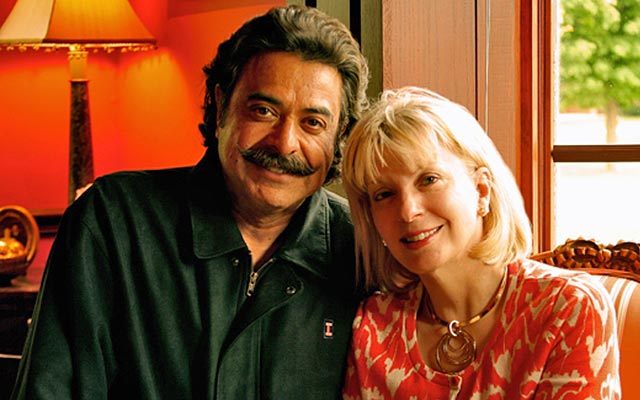
Pakistani Businessman Buys NFL Team

How do you spend that extra 760 million dollars you have laying around? If you’re

Shahid Khan, you buy an NFL team. The 61-year-old Pakistani entrepreneur purchased the Jacksonville Jaguars professional football team based out of Jacksonville, Fla. After Khan’s unsuccessful bid to own the St. Louis Rams last year, he can finally say he has a team of his own.

Khan came to the United States from Pakistan when he was sixteen with dreams of one day owning a business. While he studied at the University of Illinois, he worked for Flex-N-Gate, a company that sold automobile parts. After graduation, Khan started his own company called Bumper Works, and later bought Flex-N-Gate.Khan currently resides in Urbana, Illinois with his wife, Ann. The couple is known in their community as prominent philanthropists due to their donations to the University of Illinois at Urbana-Champaign.

Though the Jacksonville Jaguars are currently at the bottom of the list of lucrative football teams, (the Dallas Cowboys, currently at the top, will cost you around 1.1 billion dollars) Khan tells the International Business Times owning the team is his dream come true.

Swat's Malala runner-up for International Children's Peace Prize

http://tribune.com.pk

A promising Khyber Pakhtunkhwa student who boldly stood up for girls education in face of threats from the Taliban has been awarded a runner-up prize by the Dutch organisation ‘KidsRights.’


Malala Yousafzai, a 13-year-old student of the Swat Valley, has earned herself ‘International Children’s Peace Prize’ instituted by the Dutch organisation.


Yousufzai was one of only five children chosen from a pool of 98 originally put forward by organisations and individuals from 42 different countries. She participated in Open Minds project initiated in Swat by the Institute for War and Peace Reporting (IWPR).


She used the lessons she had learned in the programme to write a series of articles for the BBC News Urdu website during her family’s displacement from the Swat valley in the summer of 2009. KidsRights said that Yousufzai was nominated for this award because her writing was focused on girls’ right to education, which were restricted by the Taliban in the Swat Valley.

Yousufzai dared to stand up for herself and other girls and used national and international media to let the world know that girls should also have the right to go to school.

‘Open Minds’ Pakistan was IWPR’s first youth-focused project. It provided journalism training to young people aged 10 to 19 in Pakistan, giving them opportunities to discuss, debate and publish reports on current affairs.

The project worked in as many as 42 schools in a mixture of seminaries, public and low fee charity schools and in rural and urban schools. The project’s three-stage training course broadened students’ horizons, introducing them to national and global issues.

In addition to the classroom training, internet access was provided to the participant schools, enabling students to interact via the project’s website.

The winner of International Children’s Peace Prize was 17-year-old Michaela Mycroft from South Africa.

Yousufzai is also the first Pakistani to be nominated for the prize.

Zardari to return to Pakistan before Benazir Bhutto's death anniversary

President Asif Ali Zardari, currently being treated for a heart condition in Dubai, will return to Pakistan in time for events marking the death anniversary of his late wife, former premier Benazir Bhutto."The President will return before December 27. The date will be set by his doctors, it is up to them to allow him (to return)," religious affairs minister Syed Khursheed Shah told a TV news channel.

He said Zardari would return to Pakistan and address a meeting to be held at Garhi Khuda Baksh in Sindh province on December 27.

The Bhutto family's mausoleum is located at Garhi Khuda Baksh, which is part of the ruling Pakistan People's Party's stronghold of Larkana.

Zardari's abrupt departure to Dubai last week to seek treatment for what officials said was a previously diagnosed cardiovascular condition sparked speculation that he could be on the verge of resigning due to growing pressure on him from the powerful military.

PPP leaders have denied reports that Zardari had suffered a minor stroke and that he would step down.

Former premier Benazir Bhutto was killed by a suicide bomber after addressing an election rally in Rawalpindi on December 27, 2007.

Her death anniversary is usually commemorated by the PPP's top leadership at Garhi Khuda Baksh.

In a related development, Jamiat Ulema-e-Islam chief Maulana Fazlur Rehman told the media that he had held a long meeting with Zardari two days before he left for Dubai and that the President appeared to have been ill at the time.

"I got the impression that he was unwell," he said.

US slams Putin on Gaddafi comment

Washington said today it was "ludicrous" to accuse it of a role in the killing of Libya's Muammar Gaddafi after Russian Prime Minister Vladimir Putin said US special forces were involved.

"The assertion that US special operations forces were involved in the killing of Colonel Gaddafi is ludicrous," US defence secretary Leon Panetta's spokesman, Captain John Kirby, told AFP.

"The killing of Gaddafi has been very well documented publicly -- the circumstances surrounding it and whom in fact was responsible for it," he said in Baghdad where he was accompanying the Pentagon chief for a flag-lowering ceremony marking the end of the war in Iraq.

"The circumstances speak for themselves on how Colonel Gaddafi met his fate," added Kirby.

"We did not have American boots on the ground in the Libya operation. All our support was done through the air and on the seas."

Speaking in his annual televised phone-in with Russians, Putin had accused the US special forces of being involved in Gaddafi's killing, the first time Moscow has pointed the finger at Washington.

"Who did this?" Putin asked. "Drones, including American ones. They attacked his column. Then using the radio -- through the special forces, who should not have been there -- they brought in the so-called opposition and fighters, and killed him without court or investigation."

Obama: I will veto effort to undo automatic cuts

In Obama house, "Modern Family," not Facebook

www.cbsnews.com

Despite the growing global domination of Facebook - which claims more than 800 million users worldwide - the social networking site isn't coming to the White House any time soon.

According to a People Magazine interview with

President Obama and the First Lady Michelle Obama, first daughters Sasha and Malia aren't allowed on Facebook. Nor do they want to be, according to Mr. Obama.

To them, the question is, "Why would we want to have a whole bunch of people who we don't know knowing our business?" said Mr. Obama in the interview. "That doesn't make much sense."

"We'll see how they feel in four years," Mr. Obama laughed, when the first lady pointed out that Sasha and Malia, at ages 10 and 13 respectively, may change their minds on the matter. (Technically, Facebook bans those under 13 from joining anyway, due to regulations outlined under the Children's Online Privacy Protection Act.)

The family does, however, watch TV - even if they did only recently acquire a DVR.

Read more: http://www.cbsnews.com/8300-503544_162-503544.html?categoryId=10332&tag=cnav#ixzz1gc5udwDx

Health reform: A winner or loser in 2012?

www.cbsnews.com

Because of President Obama's health care overhaul, 2.5 million more young adults have health insurance coverage, according to a new analysis the administration released today.

Much of the president's health care overhaul, passed in 2010, won't go into effect until 2014. Still, the law is sure to be a hot topic in the 2012 election, and Mr. Obama is likely to use specific data like this to make the case he deserves re-election. Polls continue to show that the health care law is controversial, but reports like this could help the president make his case.

Since September of last year, young adults under the age of 26 have been able to stay on their parents' insurance plans because of the reforms. The measure has benefited more young people than expected, according to the Department of Health and Human Services. The Department said the change could be attributed to the health care overhaul by showing that coverage among adults ages 26 to 35 remained relatively steady. Furthermore, there were no changes in Medicaid coverage among young people.

"More young adults in this country can now go on and live their lives with less worry about visiting their doctor when they get sick, or incurring catastrophic medical bills if they are in an accident," HHS Secretary Kathleen Sebelius said in a White House blog post. "And for us parents, this lets us breathe a sigh of relief."

A new NBC/ Wall Street Journal poll shows reveals how strongly the nation feels about the president's health care overhaul -- and how divided they are. Eleven percent called the health care law Mr. Obama's biggest accomplishment, but another 13 percent named the health care law as his biggest failure.

A CBS News poll conducted earlier this month showed that as many as 51 percent disapprove of the law, while just 35 percent approve.

However, polls about individual provisions of the bill show that many elements of the law are popular -- including the measure allowing young adults to stay on their parents' insurance. In a June 2010 poll from the nonprofit Kaiser Family Foundation, 71 percent said they had a favorable opinion of that provision, with 47 percent saying they had a "very favorable" opinion of it.

Liberal supporters of the health care overhaul point out that Republicans have been reluctant to criticize the provision allowing young adults to keep their parents' coverage even as they call for the repeal of the health care overhaul.

Jonathan Cohn of the New Republic previewed how support for this provision could be used to defend the president's health care policies, asking, "Are young adults more deserving of coverage than older ones? Why are the Republicans so willing to jettison other provisions - like, say, the tax credits for working-class Americans who can't afford coverage on their own, the prohibitions against denying insurance to people with pre-existing conditions, and so forth?"

Mr. Obama's re-election campaign will surely seek to focus on good news like today's data, but the course of the debate may be out of their hands. The Supreme Court's decision to hear arguments over the health law next spring means the focus next year could fall mostly on the mandate requiring all Americans to purchase health insurance -- which, according to the 2010 Kaiser poll, is one of the law's most unpopular provisions.

Pakistan criticises US aid freeze


Pakistan on Thursday angrily criticised US moves to freeze $700 million in aid, the latest sign of the fraying alliance that has been in deep crisis since NATO fire killed 24 Pakistani soldiers.

"We believe that the move in the US Congress is not based on facts and takes narrow vision of overall situation hence wrong conclusions are unavoidable," foreign ministry spokesman Abdul Basit told reporters.

The US House of Representatives on Wednesday passed the legislation, which the Senate is expected to vote on as early as Thursday.

The bill would freeze the aid, pending assurances that Islamabad has taken steps to thwart militants who use improvised explosive devices (IEDs) against US-led forces in Afghanistan.

"If this legislation becomes law, we'll work with the government of Pakistan on how we can fulfill the requirements. But, this requires us to maintain a strategic perspective," US State Department spokeswoman Victoria Nuland said.

Pakistan shut down the vital US supply line into neighbouring Afghanistan and ordered US personnel to leave the Shamsi air base, reportedly used as a hub by CIA drones, after attacks killed 24 soldiers on November 26.

Pakistan says it is reviewing terms of engagements with the United States and NATO, but parliament has so far stopped short of announcing any specific measures pending a joint session for which no date has been called.

A parliamentary committee is considering a proposal to scrap tax exemptions on NATO goods shipped to Pakistan and trucked to the Afghan border.

The powerful military, anyway, is considered the final arbiter of policy. It has bolstered its air defence systems on the Afghan border, where officials say 160,000 troops are deployed.

US Defense Secretary Leon Panetta visited American troops in Afghanistan close to the Pakistani border on Wednesday, calling on Islamabad to secure its side of the border, by cracking down on Taliban havens on its territory.

"I think the real question has to be what has been done on the Afghan side of the border," the Pakistani foreign ministry spokesman told reporters.

"Pakistan cannot be held responsible for weaknesses and loopholes on the other side of the border," he added.

Saudi Arabia-ISI: Let’s burn a Shia mosque!

Here is a documentary proof of how Shia Muslims in Pakistan are routinely harassed, persecuted and killed by the Saudi-ISI supported Jihado-sectarian monsters.

In the following exclusive video, dozens of Lashkar-e-Jhangvi (LeJ aka Sipah-e-Sahaba Pakistan SSP) extremists are seen attacking a Shia mosque (imambargah), putting the mosque on fire, chanting slogans against Shia Muslims, declaring them kafir, i.e. infidel, and cursing them.

The above desecration of the Shia mosque and black-paint on Imam Hussain’s name by LeJ-SSP terrorists under police protection reminds us of a similar desecration of an Ahmadi mosque in Punjab a few years ago in which the police used black-paint to hide the Kalma Tayyaba (most sacred text in Islam) under the influence of Saudi-Wahhabi-LeJ mullahs.

Afghan women and the dangers of childbirth


Three times Hasrat Bibi gave birth. Each time her baby died before reaching the outside world. After the third, she was left a social outcast and unable to have more children, but in Afghanistan her story is all too familiar.

Bibi first fell pregnant as a teenager 22 years ago. Her body may have been too young to cope with nine months carrying a child, but she was living in a society where motherhood is considered a woman’s primary, if not sole purpose.

Yet having a baby can be treacherous in Afghanistan, where new figures show that one woman dies every two hours from pregnancy-related causes and nearly three per cent of babies are stillborn.

In Bibi’s case, her experience of childbirth left her with a complicated fistula – a hole next to her urinary tract – that has left her incontinent and unable to bear more children.

Although the national survey, carried out last year, reveals that maternal mortality rates in Afghanistan have fallen with the provision of foreign aid-funded healthcare, 500 out of 100,000 live births still end in death.

And health professionals in Kabul now fear that improvements paid for by Western donors through 10 years of war could stagnate as Nato combat troops carry out a staggered departure, leaving more would-be mothers at risk.

Bibi’s face, dotted with traditional rough blue tattoos, crinkles into tears as she tells how her condition has left her shunned, even by her husband.

“Because I’m always wet and the urine smells, other women won’t speak to me. Even my husband,” she says, wiping tears from her pierced nose with her scarf.

“He says ‘you smell’, and he leaves.”

A plethora of problems endemic to Afghanistan delay proper treatment, say medical experts.

Families living in remote, impoverished communities rarely understand the seriousness of medical issues, and local provision is scant. Transportation to the nearest health facilities can take several hours on foot or by donkey.

And most women live in purdah – unseen by men outside their families – and may be house-bound and unable to see a doctor.

Bibi, who comes from a rural village in the eastern province of Ghazni and doesn’t know how old she is, said she had no proper help for 10 years.

With UN funding, she has now been sent to Pakistan for treatment, and an operation there to mend her fistula has a 60 per cent chance of success.

Although there is a fistula centre at Kabul’s Malalai maternity hospital, it was unable to help her because of a lack of trained staff and medical supplies.

The centre recently received another patient, a mother of six, who does not want to be named for security fears, but who is now recovering after an operation on a fistula she developed three years ago following a stillbirth.

Doctors say her husband threw her out of their home because of her condition – taking three of her children away from her, selling off the eldest daughter, and arranging to marry another woman.

The 35-year-old has been living in a tent, her remaining children forced to beg to survive.

On average, Afghan women each give birth to five children. Two of every three births happen in the home without trained help because of social customs and a severe shortage of midwives, the new national report showed.

The figures come from the Afghanistan Mortality Survey 2010, which was carried out by the Afghan Public Health Institute, Ministry of Public Health and Central Statistics Organisation, across 87 per cent of the country.

It did not include rural parts of the southern provinces of Kandahar, Helmand and Zabul, where the Taliban-led insurgency is rife.

Despite the dire conditions, aid-funded improvements now mean that fewer women die during pregnancy and childbirth, and more children are living past their fifth birthday than at any time before, the report shows.

The US State department welcomed the report’s “encouraging trends”, which partly resulted from a US, UN and World Bank-funded education programme that has bumped the number of midwives up threefold since 2003.

Each midwife’s training costs $12-18,000. The women spend two years studying in one of 34 provincial centres before returning to work in communities.

The training focuses on preventing post-birth haemorrhage, which is responsible for most deaths.

But plans to move responsibility for the programme from foreign donors to the ministry of public health next October have left medical experts fearful.

Instead of money flowing from aid donors directly, the central bank and health ministry will be charged with routing funds.

“This is a very big concern because it’s not just money but a technical issue,” said the UN’s Dr Mohammad Tahir Ghaznavi, voicing concern that the increased bureaucracy would sap funds and cause delays to payments.

Jobs would also need to move to the public sector, with ministries unlikely to match foreign wages which have so far been paid to recruited midwives.

“If it’s decentralised, is the government willing to hire all these people?” Ghaznavi added.

A recent World Bank report showed that Afghanistan, one of the poorest countries in the world, is likely to need around $7 billion a year from foreign aid after the scheduled departure of all international troops in 2014.

While Nato is urging foreign donors to continue giving money to Afghanistan after combat troops depart in 2014, the economic crisis in the West and corruption in the war-torn country make a downturn in financing likely.

“Transport and health are highly vulnerable,” the report said.

Taliban death stadium reborn as Afghan sporting hope

Reuters
Its pitch, they said, was so bloodsoaked that grass would not grow. For years, the only spectacles on offer at the Ghazi Stadium in the Afghan capital were executions, stonings and mutilations by the Taliban, rulers of the country from 1996 to 2001.

On Thursday, thousands of young Afghan athletes wearing soccer strips, boxing and running warmup gear, and the belted white suits of martial artists, came to the stadium to celebrate its official re-opening.

This time, the grass has been ripped up and replaced with bright green artificial turf, part of a U.S.-funded stadium refurbishment.

"Of all the international projects implemented in Afghanistan, this is one of the most popular, it enjoys the support of all Afghans," said Lieutenant General Mohammad Zaher Aghbar, president of Afghanistan's National Olympic Committee, and a goalkeeper with the army's soccer team for five years.

"The place that once was used to execute people during the Taliban, and then football played on their blood, is now turned into a peaceful place," he said.

"Sport helps societies get together, it will strengthen our national solidarity," Aghbar said, adding that he was trying to line up foreign boxing and soccer teams to come to Ghazi Stadium in early 2012.

Ghazi, a title normally used to describe Muslim warriors who slay non-believers in battle, is a title also bestowed by many Afghans on those who fought the British army to win independence for Afghanistan in the early 20th century.

During the opening ceremony, the commander of the NATO-led International Security Assistance Force (ISAF) and U.S. troops in Afghanistan, U.S. General John Allen, and other military officials were presented with medals.

The new artificial pitch will be certified by world soccer governing body FIFA, allowing matches in the Kabul stadium to be internationally recognized.

"It's very important because the stadium has been renovated, it's now ready for use by athletes. During the Taliban days it was used for terrible things, and today its renaissance has begun. It's a really positive day for Afghanistan," said a U.S. embassy spokesperson.

As athletes began to parade around the stadium, Zabiullah, a 58-year old Afghan journalist who witnessed the Taliban executions, pointed at what is now the corner of a penalty area, marked by neat white lines.

"There was thief who stole something from his village ... they cut his hand, right here," he said. "A man and a woman were having illegal sexual relations. They were caught, brought here, given 100 lashes each and told to marry each other ... I also saw people beheaded and shot. Afghans will never forget these bad memories.

"Now, men and women, girls and boys, can watch a peaceful match together."

Putin rules out new election in marathon show


Russian Prime Minister Vladimir Putin on Thursday dismissed opposition allegations that fraud had helped his ruling party win a parliamentary election and signaled he would not bow to calls at mass protests for the poll to be rerun.

In his annual televised call-in question-and-answer session he brushed off the importance of the biggest opposition protests of his 12-year rule and, while holding out the prospect of relaxing his tight control on the political system, ignored most of the protesters' demands.

Reaction on the social network Twitter suggested Putin came across as out of touch and, dressed in a suit and tie at a large desk as he took questions by phone and from a studio audience, he looked less at ease than in previous years.

"From my point of view, the result of the (parliamentary) election undoubtedly reflects public opinion in the country," Putin said in the show, which was broadcast live to the nation and was still going after more than three hours.

"As for the fact that the ruling force, United Russia, lost some ground, there is also nothing unusual about this. Listen, we have gone through a very difficult period of crisis, and look at what is happening in other countries."

The former KGB spy presented himself as a reasonable, even-handed national leader during the call-in, which was intended to boost his popularity from a low ebb since he announced plans to reclaim the presidency in an election next March.

The organizers of rallies which brought tens of thousands of people onto the streets on Saturday over the allegations of electoral fraud want the December 4 poll rerun, the election commission head dismissed, opposition parties registered and "political prisoners" freed.

Putin hinted at liberalizing the political system by letting regional governors be popularly elected -- through only after approval by the president -- and suggested legislation might be changed to allow small opposition parties to be registered.

"We can move in this direction," Putin said in response to a question about a liberal opposition party, whose leaders include former Prime Minister Mikhail Kasyanov, which was barred from the election.

But he gave no indication he would respond to any of their other main demands and appears to be intent on riding out the protests and hoping they fade, even though another day of protest is planned by the opposition for on December 24.

He said demonstrations were "absolutely normal as long as everyone acts within the framework of the law."

"I saw on people on the TV screens ... mostly young people, active and with positions that they expressed clearly," Putin said. "This makes me happy, and if that is the result of the Putin regime, that's good -- there's nothing bad about it."

But at another point, he turned to the journalist hosting the call-in and said: "I've had enough of these questions about the elections."

Putin said that at first he thought that the white ribbons which were worn by the protesters a sign of dissent were a sign of an anti-AIDS campaign, and he had mistaken them for condoms.

He also alleged students were paid to go to the opposition demonstrations, adding: "They will at least make some money."

OUT OF TOUCH?

The protest organizers had already accused Putin this week of ignoring their demands and his comments went down badly among many people on Twitter.

"That's it. It's the end. Putin is completely out of touch. And this is becoming more obvious to everyone. You had to think hard to insult the people like this," wrote one person who identified himself as Oleg Kozyrev.

Russia-based economists said Putin was clearly having to work harder than in previous years to maintain his credibility but doubted he had won any new support in his performance.

"He's not winning any fresh votes. He didn't say anything to win the votes of the other crowd (of opponents) - he could have used this big event to push forward his rating," said Alexey Bachurin, of Renaissance Capital investment bank.

Putin, 59, has used the annual call-in to burnish his image as a strong leader with a detailed knowledge of the country and an interest in all its people. Questions have usually focused on social issues such as healthcare, pensions and housing.

Defending his economic record, he said: "We have many unresolved issues, but nevertheless some remarkable and meaningful things have been done in recent years."

"Over 10 years we have cut the number of people who live below the poverty line twofold."

He hinted that former Finance Minister Alexei Kudrin, who is held in high regard by foreign investors, could return to high office by saying: "Such people were needed and will be needed in past and future governments."

But Putin was under much more pressure at this year's call-in following the large protests over the election, which international monitors said was slanted to favor United Russia, although it won only a slim majority in the lower house.

Many protesters have also called for an end to Putin's rule and are wary of his plans to return to the presidency, a post he held from 2000 until 2008, fearing it would mean a new era of political and economic stagnation.

GROWING DISCONTENT

Many Russians saw the announcement on September 24 that he planned to swap jobs with Medvedev as a signal that everything had been cooked up between them with no respect for democracy.

Many dislike the tightly controlled political system he has created around himself, and the protesters, many of whom are relatively well-off and well-educated city dwellers, want a mainstream liberal party created to reflect their views.

Putin, who built up a rugged image with stunts such as riding a horse bare-chested, is still expected to win the presidential election next year but he now faces much more resistance than expected.

The protests have been organized on social networking sites, and state television has shown some footage of the protests but has not included criticism of the former KGB spy.

"I saw on people on the TV screens ... mostly young people, active and with positions that they expressed clearly," Putin said. "This makes me happy, and if that is the result of the Putin regime, that's good -- there's nothing bad about it."

Putin says US involved in Kadhafi killing


Russian Prime Minister Vladimir Putin on Thursday accused the US special forces of being involved in the killing of deposed Libyan dictator Moamer Kadhafi.

"Who did this?" Putin said in his annual televised phone-in with Russians.

"Drones, including American ones. They attacked his column. Then using the radio -- through the special forces, who should not have been there -- they brought in the so-called opposition and fighters, and killed him without court or investigation."

Russia had initially allowed NATO's air campaign in Libya to go ahead by abstaining in a UN Security Council vote. But it then vehemently criticised the campaign which Putin at one stage compared to a "crusade".

His comments mark the first time that Russia has implicated the US administration in Kadhafi death.

Putin also lashed out at US Senator John McCain, a former presidential candidate and frequent Putin critic who warned in a message on Twitter this month that an "Arab Spring" may soon be coming to Russia.

"I know Mr McCain," said Putin, adding that he would prefer not to refer to him as a "friend".

"This was not addressed in my direction. This was said about Russia. Some people want to move Russia aside somewhere in a corner, so it does not intervene -- so that it does not intervene in the ruling of the world," said Putin.

"They still fear our nuclear capabilities," he said in reference to the West.

"That is why we are such an irritant. We have our own opinion and are conducting our own independent foreign policy ... And it clearly bothers someone."

'Pakistan spy chief had got nod to sack Zardari'


Pakistan's powerful spy agency chief General Shuja Pasha, had sought and got permission from senior Arab leaders to oust President Asif Ali Zardari,

said Pakistani-American businessman Mansoor Ijaz while confirming the claim in a blog in a British daily.

Omar Waraich in his blog on The Independent claimed that Inter-Services Intelligence (ISI) chief Gen Shuja Pasha had sought and "received permission from senior Arab leaders to sack Z" (President Zardari), reported Geo News.

The blog said: "'I was just informed by senior US intel,' Ijaz writes in a message on May 10, 'that GD-SII Mr P asked for, and received permission, from senior Arab leaders a few days ago to sack Z. For what its worth'." GD-SII was an anagram for DG-ISI.

`Pakistan spy chief had got nod to sack Zardari`
Mansoor Ijaz, who had revealed the secret memo to Washington that said Zardari had feared a military coup after US commandos killed Al Qaeda leader Osama bin Laden in Abbottabad May 2, told Geo News: "This information has been on the record now for the better part of six weeks."

Ijaz said Pakistan's then envoy to US Hussain Haqqani had approached him May 9 and he then decided to check the veracity of what Haqqani told him.

Mansoor Ijaz claimed that General Pasha had travelled throughout the Arab world and other countries after the May 2 raid.

`Pakistan spy chief had got nod to sack Zardari`
"In many places he (ISI chief), in fact, explained that there was a lot of stress in the system because people could not understand who the blame should be pinned on for the fact that (Osama) bin Laden was on their soil," said Mansoor Ijaz.

The secret memo to Washington had stunned Pakistan. The abrupt departure of President Zardari over a heart condition to Dubai Dec 6 had sparked coup rumours. There have been conflicting reports of his health, with one saying he suffered a minor attack and another that he had a stroke that caused bleeding in the brain and facial paralysis.

`Pakistan spy chief had got nod to sack Zardari` The president has been discharged from the Dubai hospital and shifted to his residence, authorities said Wednesday night.

US responsible if Pak fails in war on terror

Foreign Minister Hina Rabbani Khar

said that US would be responsible if Pakistan failed in war on terror (WOT). She was briefing the Parliamentary Committee on National Security (PCNS).

The minister told the committee that the US Senate has stopped $700 million aid to Pakistan. 'We are talking to other countries for the release of US aid.'

'Relations with US are on hold and would proceed further if Parliament allows. Pakistan has two written agreements regarding allied forces in Afghanistan, one is about Nato supply line and the other is about Ministry of Defence,' she added.

Hina noted that Defence Committee has clearly stated that relations with US, Isaf and Nato would be reviewed.

Wednesday, December 14, 2011

Punjab government using public money to promote Nawaz Sharif's daughter

Pakistan Peoples Party (PPP) MPA Azma Bukhari accused the Punjab government on Wednesday of forcing various education institutes to organise seminars for Maryam Nawaz, daughter of Pakistan Muslim League (PML-N) chief Nawaz Sharif and wife of MNA Capt (Retd) Safdar.

“The Punjab education department is forcing various prestigious public educational institutions to arrange functions for Maryam in their auditoriums, where she can present her political thoughts to the young students,” alleged Bukhari while speaking on a point of order during the Punjab Assembly (PA) session.

Maryam has so far addressed two public gatherings in Lahore. She made her political debut while addressing a women’s convention at Alhamra and then later spoke at the Fatima Jinnah Medical College.

“Students are forced to skip classes and attend these gatherings” Bukhari said.

The PPP MPA also said that the PML-N was frightened of Pakistan Tehreek-i-Insaf’s (PTI) growing popularity and that they have brought Maryam in just to attract the youth of Pakistan.

Leader of the Opposition in the PA Raja Riaz said that instead of going to educational institutes and addressing students, Maryam should have addressed the recent political gatherings arranged by the PML-N in Lahore and Faisalabad.

Riaz also termed Maryam’s political ventures in public institutions as “illegal”.

Saudi Woman Beheaded for 'Witchcraft'

abcnews.go.com

A Saudi woman was beheaded after being convicted of practicing "witchcraft and sorcery," according to the Saudi Interior Ministry, at least the second such execution for sorcery this year.

The woman, Amina bint Abdulhalim Nassar, was executed in the northern Saudi province of al-Jawf on Monday.

A source close to the Saudi religious police told Arab newspaper al Hayat that authorities who searched Nassar's home found a book about witchcraft, 35 veils and glass bottles full of "an unknown liquid used for sorcery" among her possessions. According to reports, authorities said Nassar claimed to be a healer and would sell a veil and three bottles for 1500 riyals, or about $400.

According to the ministry, Nassar's death sentence was upheld by an appeals court and the Saudi Supreme Judicial Council.

Philip Luther, the interim direct of Amnesty International's Middle East and North Africa program, condemned Nassar's killing, calling it "deeply shocking."

Muslim women make their way to throw cast stones at a pillar in a ritual called "Jamarat," in Mina near the Saudi holy city of Mecca, Saudi Arabia, Nov. 6, 2011.

"The charges of 'witchcraft and sorcery' are not defined as crimes in Saudi Arabia and to use them to subject someone to the cruel and extreme penalty of execution is truly appalling," Luther said. Luther said that a charge of sorcery is often used by the Saudi government as a smokescreen under which they punish people for exercising freedom of speech.

Nassar was not the first person to be executed for alleged witchcraft by the Saudi government this year. In September, a Sudanese man was publicly decapitated with a sword in the city of Medina after he was found guilty of the same crime.

According to Amnesty International, at least 79 people have been executed in Saudi Arabia so far in 2011, more than three times as many as in 2010. The human rights group condemned the kingdom's reliance on capital punishment. "Where the death penalty is used, under international law it should only be applied to the most serious crimes," Luther said.

The Saudi embassy in Washington did not immediately respond to a request for comment.

Obama and the politics of disappointment


All politicians disappoint their supporters. It is a relentless truth in D.C.

They make pledges they can't keep, say things they don't mean, and encounter stiff headwinds in office that were just distant breezes on the campaign trail. The bigger their failed promises, the bigger the disappointment.

And just a few hours north of Washington, in the battleground state of Pennsylvania, it is easy to see that President Obama has a lot of disappointment standing between him and re-election.

"I believed in him 100%," says Andy Heller in Scranton. "I thought it was going to be a big turnaround from President Bush. But now you have to wonder."

Heller, 56, is a registered Democrat who runs Steamtown Blueprint and Copy Center, a small construction-related firm. In 2008, he placed yard signs for Obama, attended fundraisers and eagerly awaited a first term that he thought would bring more cooperation, more innovation, or at least a better economy. Since then, business has grown worse, the atmosphere in Washington has become more toxic and his faith in Barack Obama has steadily dwindled. "I'm not sure it was entirely his fault, but he made promises he couldn't keep."

Across town, Mark Dennebaum Jr., 31, is one of those young voters who created the wave Obama rode into office. At his place, 25/8 Productions, a video production shop, business is good, but the feeling among his friends about Obama is much the same as it is elsewhere. "When he spoke it was truly inspiring. I loved him in 2008, and right now if this were in a relationship, I'd be talking to a divorce attorney. When you mention Obama, there is a giant, collective sigh."

The depth of the turnaround is massive. Three years ago this month, 77% of voters polled told CNN they believed Obama would unite the country, 68% said they were either "thrilled" or "happy" he'd been elected, 79% thought he'd do a good job and 74% were confident he would improve the economy.

Today his approval rating wallows in the mid 40% range; disapproval is over 50%. And a dismal 35% of the voters like the way he is handling the economy.mong the chief complaints of many voters: Obama has been too quick to compromise, too weak in taking on opponents and too much like just another politician intent on triangulating re-election, rather than being the transformative, bold leader they thought they were electing. "You don't get a do over," Dennebaum says. "If you have four years to make a difference that should be your focus."

White House going on offense

Sharply aware of such sentiment, the White House is now clearly launching an offensive aimed at shifting voter disappointment from their man to the opposition. Although Obama long gave up much of his talk about bipartisanship, now he is tearing into the Republicans regularly, suggesting they are doing nothing to help the economy, because they are sure it will cost him the White House.

In his headline-making interview with Steve Kroft on "60 Minutes," the president boiled his version of the Republican philosophy down to a phrase. " 'Anything Obama is for, we're against.' And so," Obama adds, "we haven't gotten the kind of engagement from them that I would have liked."

The tactic has caught the attention of some of the nation's most astute political watchers, including Paul Beck, who studies and teaches political psychology at The Ohio State University. "He is willing to take it to the Republicans," Beck says of the president. "That is the course he is taking, (although) I'm not sure it is the course I would suggest."

Why? Beck argues that taking a hard line, partisan stance now, could turn off many of the moderate voters the president needs, because one of the primary messages of his first run was just the opposite. "One of the things he campaigned on in 2008 was that politics has become too polarized."

Others, however, wonder if any other options exist. Political analysts widely agree President Obama cannot merely resurrect the "hope and change" mantra, because voters could well respond with a dismissive "been there, done that, it didn't work."

Jon Krosnick is a professor of communication, political science, and psychology at Stanford University. "Can he be convincing in discrediting Republicans? I don't know. But I don't see how he has any other choice."Still, Krosnick points out an important nuance in the president's makeover: "It's not actually clear to me that he needs to be someone else." Rather, Krosnick suggests, Obama's sales pitch to voters can be, in effect, "I'm the same man you believed in, conditions were just tougher than any of us expected. Getting the job done is going to take longer and involve new strategies. And although I still believe in bipartisanship, it doesn't work unless the other side is also on board."

The state of the economy may be the difference

That certainly seems to be the tack the White House is taking in its attempt to escape the sea of disappointment, and it will undeniably be a tricky, long journey. Scranton's Heller does not think he'll vote for a Republican, but ask if he'll vote for Barack Obama again and his response is straightforward. "I'd have to see the economy make a serious change."

Video producer Dennebaum is more pointed. "He seemed like a man with integrity and a very strong desire to make a difference. Now he's president in name only. That's what it seems like." Will Dennebaum vote for him next fall? "I don't know."

And there is the president's challenge.

Somehow he must not only run against his Republican challenger, but also against his past image, the one that so many voters believed in, and the one that let them down so hard. In critical states like Pennsylvania, he must persuade them to move beyond their disappointment, or he may risk a great and grave disappointment of his own.

Afghan rape victim freed


An Afghan woman imprisoned for adultery after a relative raped her has been freed after President Hamid Karzai intervened on her behalf.

The woman, identified only as Gulnaz for her own protection, had been sentenced to prison for 12 years after she reported that her cousin's husband had raped her two years ago. Wednesday, she was free, at a women's shelter in Kabul, with her daughter.

Her plight gained international attention when the European Union blocked the broadcast of a documentary about her ordeal, saying it would further jeopardize her safety.

Afghan Justice Minister Habibullah Ghaleb and a judiciary committee both proposed a pardon. Karzai then ordered authorities to decree Gulnaz's release.

After the attack two years ago, Gulnaz hid what happened as long as she could. She was afraid of reprisals. But soon she began vomiting in the mornings and showing signs of pregnancy. It was her attacker's child.n Afghanistan, this brought her not sympathy, but prosecution. She was found guilty by the courts of sex outside of marriage -- adultery -- and sentenced to 12 years in jail. She was only 19.In conservative Afghan society, Gulnaz faces considerable pressure to marry her attacker, thereby soothing the rift between the two families, restoring her honor and also legitimizing her daughter.

She was willing to do so in order to end her incarceration, she told CNN last month from Kabul's Badam Bagh jail, though she does not want that option. She would like to marry an educated man, according to U.S. attorney Kimberly Motley in Kabul.

How Gulnaz will be able to re-assimilate into the life she once had remains a confusing question.

Her choices are stark. Women in her situation are often killed for the shame their ordeal has brought the community. She could still be at risk, some say, from her attacker's family.

New laws protect women from abuse in Pakistan


Azim Mai's husband allegedly threw acid in her face last year after she refused to sell their two boys to a man in Dubai to use as camel racers. The 35-year-old mother of five can no longer find work as a maid because her deeply scarred face scares potential employers.

Acid burnings are among the most horrific crimes against women in Pakistan that are now criminalized in a landmark set of laws passed by the parliament. They stand to protect millions of women from common forms of abuse in a conservative, Muslim country with a terrible history of gender inequality.

Rights activists praised the laws Tuesday while stressing their passage was just the first step, and likely not the hardest one. It could be even more difficult to get Pakistan's corrupt and inefficient legal system to protect women's rights that many men in this patriarchal society likely oppose.

"This is a big achievement for the women of Pakistan, civil society and the organizations that have been working for more than 30 years to get women friendly bills passed," said Nayyar Shabana Kiyani, who has lobbied for the legislation as part of The Aurat Foundation, a women's rights group.

"We can't really get good results until the laws are implemented at the grassroots level," she added.

The two bills containing the new laws, which received final approval from the Senate on Monday, stiffened the punishment for acid attacks and criminalized practices such as marrying off young girls to settle tribal disputes and preventing women from inheriting property.

Mistreatment of women is widespread in Pakistan, a nation of some 175 million where most people are poor, only half the adults can read and extremist ideologies, including the Taliban's, are gaining traction.

In 2010, at least 8,000 acid attacks, forced marriages and other forms of violence against women were reported, according to The Aurat Foundation. Because the group relied mostly on media reports, the figure is likely an undercount.

Women are discriminated against in other ways as well. Pakistan ranked third to last in 2011 in the World Economic Forum's Global Gender Gap Report, only beating Chad and Yemen. The report captures the magnitude of gender-based disparities in things like health and education.

The new laws explicitly criminalized acid attacks and mandated that convicted attackers would serve a minimum sentence of 14 years that could extend to life, and pay a minimum fine of about $11,200.

Other new laws mandate a minimum prison sentence of three years for forcing a woman to marry, including to settle tribal disputes; five years for preventing a woman from inheriting property; and three years for a practice known as "marriage to the Holy Quran."

Feudal families in rural areas of Pakistan engage in this practice so that women won't receive marriage proposals and their share of the inheritance will stay in the family, said Farzana Bari, head of the gender studies department at Quaid-e-Azam University in Islamabad.

"This legislation addresses the patriarchal traditions that have been used against women to violate their rights," said Bari. "People have been doing these kinds of things for so long that they don't even think it's unjust.

Past bills aimed at protecting women have met resistance from Islamists and other conservatives in parliament. But the latest measures were passed unanimously by both the Senate and the National Assembly and will go into effect once the president signs them.

Mai, the acid attack victim who also has three daughters, was happy with the passage of the laws but favored even harsher punishment, including for her husband, who she said was in jail awaiting trial. It was unclear whether the new laws would affect her husband's case, since the alleged crime occurred before their passage.

The couple was living in Rahim Yar Khan, a very conservative city in Punjab province, when he attacked her for refusing to sell their children, she said. Many South Asian children have been trafficked to the Gulf to work as camel racers.

"I lost my job, I lost my face, and I have been facing hunger and poverty," Mai said during an interview at the offices of the Acid Survivors Foundation, a charity in Islamabad treating acid attack victims. "I am happy over the passage of this bill, but I will only be satisfied when authorities throw acid in the face of my husband."

Previously, victims had to prosecute attacks as attempted murder or disfigurement and were largely unsuccessful, said Valerie Khan, head of the Acid Survivors Foundation.

"This is a clear message that impunity will not exist anymore," said Khan. "It's a strong deterrent message."

Activists said it will take more work to change people's attitudes and get the laws implemented, but they were prepared.

"It might take another 10 to 20 years to change society's mindset and public will," said Kiyani from The Aurat Foundation. "That's a challenge for both the government and civil society."

President Zardari will be discharged on Thursday

www.geo.tv
Pakistan President Asif Ali Zardari will be discharged on Thursday from a Dubai hospital where he has spent more than a week but will remain in the Gulf emirate to rest, his spokesman said Wednesday.

"All tests are clear and the doctors plan to discharge the president from hospital tomorrow to take rest at home and continue the heart medication," Farhatullah Babar said.

"The president is recovering and the doctors have advised him complete
rest," Babar said, adding that Zardari would remain at his house in Dubai.

The 56-year-old Zardari flew to the United Arab Emirates last Tuesday after falling ill in the midst of a major scandal over alleged attempts by a close aide to seek US help to limit the power of Pakistan's military.

Babar declined to comment when Zardari would be returning to Pakistan.

Tuesday, December 13, 2011

Panetta in Kabul as US ties with Pakistan erode

www.dawn.com

US Defense Secretary Leon Panetta arrived in Afghanistan Tuesday to meet with commanders, as the US grapples with an eroding relationship with Pakistan that has complicated supply routes and helped fuel insurgents in the east.

While he was upbeat about security progress in Afghanistan, Panetta was also likely to hear some somber news from commanders as they wrestle with the withdrawal of 23,000 more troops in the coming year, the transition of security to Afghan forces and the near collapse of coordination with Islamabad along critical portions of the border.

His visit here is the second stop on a holiday tour that began in Africa and will also take him to Iraq, Libya and Turkey. He will be the first US defense chief to visit Libya, which is emerging from an eight-month civil war. In Iraq, he will participate in a ceremony that will shut down the US military mission there after nearly nine years of war.

Panetta’s arrival in Kabul comes on the heels of Pakistan’s decision to move air defense systems to the border with Afghanistan, part of its response to the Nato airstrikes last month that killed two dozen Pakistani forces. Pakistan has also closed two border crossings that are part of key supply routes into Afghanistan and recalled its troops from two border coordination posts.

The supply routes carry roughly 30 per cent of the fuel, food and other items needed for troops in Afghanistan. While Panetta said US troops in Afghanistan will get the supplies they need, the plummeting relationship with Pakistan complicates an already difficult war just as the Obama administration is trying to boast of security gains across broad swaths of the country.

”I think 2011 will make a turning point with regards to the effort in Afghanistan,” Panetta told reporters traveling with him to Kabul. He cited lower levels of violence and the successful turnover of portions of the country to Afghan control. ”Clearly I think Afghanistan is on a much better track in terms of our ability to eventually transition to an Afghanistan that can govern and secure itself.”

Panetta said he has been reassured by Marine Gen. John Allen, the top overall commander of US and Nato forces in Afghanistan, that military operations are continuing along the Afghanistan-Pakistan border. He said Allen has reached out to Pakistani commanders to try to rebuild relations and cross-border communications that are vital in the rugged, mountainous region.

”I think it’s been said a number of times,” said Panetta. ”Ultimately we can’t win the war in Afghanistan without being able to win in our relationship with Pakistan as well.”

Panetta was also likely to hear more about Allen’s plans to take forces from the south, where the US hopes Afghan forces can cling to security gains made in the past year, and send them to the east to try and reverse gains by insurgents who have been launching high-profile attacks in Kabul.

Allen was ordered by Obama last summer to pull out 10,000 US forces by the end of this year and 23,000 more by the end of September 2012. There have been some rumblings that the administration may want to accelerate that drawdown, with an eye toward handing more control to the Afghans and shifting US troops into more of an advise-and-assist role.

The battlefield decisions are also complicated by the budget showdown in Washington. The Pentagon could face as much as $1 trillion in cuts over the next 10 years if lawmakers can’t come to an agreement on the budget.

For Allen, however, the most immediate challenge will be getting fuel and other supplies to the troops now that Pakistan has closed two Afghan crossings in Chaman and Torkham, in the northwest Khyber tribal area. Bringing supplies in across the northern routes is more costly and time-consuming, but officials have not said how much more money it may cost, particularly if the Pakistan crossings are closed for months.

During previous cross-border incidents, Pakistan has closed border crossings for about a week or two. This time, however, US officials are worried the closings could drag on for months.

Right now, said Panetta, the troops have the supplies they need, and he said he is confident that as the US continues to work with Pakistan, the other routes will be restored.

On his historic Libya trip, Panetta said the US wants to help Libyans move in the right direction as the people take back their country. With military assistance from the US and Nato, Libyans ousted and later killed longtime leader Moammar Gadhafi earlier this year.

Panetta’s plan to visit Libya comes amid ongoing violence there, including recent clashes between revolutionary fighters and national army troops near Tripoli’s airport.