US Secretary of State Hillary Clinton said on Thursday that she expects ailing Pakistani President Asif Ali Zardari to return to work after treatment as she refused to respond to the rumours that he may be forced to resign.
"We have no reason to speculate about that," Clinton told reporters after NATO talks in Brussels.
"The information that we have is that he has sought medical treatment for a number of medical challenges and we wish him a speedy recovery,” she said.
"And certainly we expect that he will receive the treatment he is seeking and then be able to return in full health to his duties," she added.
Zardari was expected to undergo further tests in a Dubai hospital on Thursday after suffering a minor heart attack that forced allies to deny frenzied resignation rumours.
He is facing a major scandal over to what extent he was involved in attempts to seek US help to limit the power of Pakistan's military.
Thursday, December 8, 2011
Putin slams Clinton for encouraging protesters
Prime Minister Vladimir Putin
strongly criticized U.S. Secretary of State Hillary Rodham Clinton on Thursday for encouraging and supporting Russians protesting election fraud, and warned of a wider Russian crackdown on dissent.
By describing Russia's parliamentary election as rigged, Putin said Clinton "gave a signal" to his opponents.
"They heard this signal and with the support of the U.S. State Department began their active work," Putin said in televised remarks.
Clinton has repeatedly criticized Sunday's parliamentary vote in Russia, saying "Russian voters deserve a full investigation of electoral fraud and manipulation."
Russian protesters have taken to the streets in Moscow and St. Petersburg for three straight nights despite a heavy police presence, outraged over observers' reports of widespread ballot box stuffing and manipulations of the vote count. This week has seen some of the biggest and most sustained protests Russia has faced in years, and police have detained hundreds of protesters.
Thousands were expected to join protests in Moscow and other cities on Saturday.
Putin's United Russia party barely held onto its majority in parliament, with official results giving it about 50 percent of the vote, down from 64 percent four years ago. But the fraud allegations indicate that support for United Russia was even lower than that, and Russians appear to be growing weary of Putin and his party after nearly 12 years in office.
Moscow has already put about 50,000 police and 2,000 paramilitary troops on the streets, backed by water cannon.
Putin warned that the government might take an even harder line.
"We need to think about strengthening the law and holding more responsible those who carry out the task of a foreign government to influence our internal political process," he said.
Russia's only independent election monitoring group, which is supported by grants from the United States and European governments, has come under heavy official pressure in recent weeks. The Golos website documenting violations was hacked and the group was fined the equivalent of $1,000 after prosecutors accused it of violating election law.
Also Thursday, Russia's top election official urged prosecutors to study photographs and video clips circulating on social networking sites that purport to show election fraud, and signaled that those who posted the materials could be punished.
If the images show genuine violations, they will be investigated, Central Election Commission chief Vladimir Churov said. But if evidence is found that the photographs and videos were "provocations" or faked, "those who created, commissioned or sponsored them will be held to account, he said.
Opposition groups have called for a mass protest near the Kremlin on Saturday. More than 26,000 people have signed up to a Facebook page on the protest.
A map circulating on the Internet shows protests planned for Saturday in more than 75 cities around Russia, while a page on LiveJournal lists more planned anti-vote fraud protests in 15 countries around the world.

strongly criticized U.S. Secretary of State Hillary Rodham Clinton on Thursday for encouraging and supporting Russians protesting election fraud, and warned of a wider Russian crackdown on dissent.
By describing Russia's parliamentary election as rigged, Putin said Clinton "gave a signal" to his opponents.
"They heard this signal and with the support of the U.S. State Department began their active work," Putin said in televised remarks.
Clinton has repeatedly criticized Sunday's parliamentary vote in Russia, saying "Russian voters deserve a full investigation of electoral fraud and manipulation."
Russian protesters have taken to the streets in Moscow and St. Petersburg for three straight nights despite a heavy police presence, outraged over observers' reports of widespread ballot box stuffing and manipulations of the vote count. This week has seen some of the biggest and most sustained protests Russia has faced in years, and police have detained hundreds of protesters.
Thousands were expected to join protests in Moscow and other cities on Saturday.
Putin's United Russia party barely held onto its majority in parliament, with official results giving it about 50 percent of the vote, down from 64 percent four years ago. But the fraud allegations indicate that support for United Russia was even lower than that, and Russians appear to be growing weary of Putin and his party after nearly 12 years in office.
Moscow has already put about 50,000 police and 2,000 paramilitary troops on the streets, backed by water cannon.
Putin warned that the government might take an even harder line.
"We need to think about strengthening the law and holding more responsible those who carry out the task of a foreign government to influence our internal political process," he said.
Russia's only independent election monitoring group, which is supported by grants from the United States and European governments, has come under heavy official pressure in recent weeks. The Golos website documenting violations was hacked and the group was fined the equivalent of $1,000 after prosecutors accused it of violating election law.
Also Thursday, Russia's top election official urged prosecutors to study photographs and video clips circulating on social networking sites that purport to show election fraud, and signaled that those who posted the materials could be punished.
If the images show genuine violations, they will be investigated, Central Election Commission chief Vladimir Churov said. But if evidence is found that the photographs and videos were "provocations" or faked, "those who created, commissioned or sponsored them will be held to account, he said.
Opposition groups have called for a mass protest near the Kremlin on Saturday. More than 26,000 people have signed up to a Facebook page on the protest.
A map circulating on the Internet shows protests planned for Saturday in more than 75 cities around Russia, while a page on LiveJournal lists more planned anti-vote fraud protests in 15 countries around the world.
Rumourgate’ not worth a response: Babar Awan
Senior Pakistan People’s Party (PPP) leader and former law minister Babar Awan said on Thursday that nefarious rumour mills were operating against the government which did not merit any discussion or response, DawnNews reported.
Speaking to media representatives in Islamabad, Awan said a media-trial of one individual was being done, the example of which could not be found in the country’s history.
The former law minister said there was ‘no other gate in the country except ‘rumourgate’’ and stressed that the government would complete its tenure.
Awan said those talking about the ‘Bangladesh model’ should keep in mind the Constitution’s Article 6 and its sub-clauses in that regard.
The senior leader further said that President Asif Ali Zardari would hold a joint session of the parliament on the recommendation of the national security council.
Awan assured that no collision would occur among the state’s institutions and no compromise would be made with regard to Pakistan’s security.
Speaking to media representatives in Islamabad, Awan said a media-trial of one individual was being done, the example of which could not be found in the country’s history.
The former law minister said there was ‘no other gate in the country except ‘rumourgate’’ and stressed that the government would complete its tenure.
Awan said those talking about the ‘Bangladesh model’ should keep in mind the Constitution’s Article 6 and its sub-clauses in that regard.
The senior leader further said that President Asif Ali Zardari would hold a joint session of the parliament on the recommendation of the national security council.
Awan assured that no collision would occur among the state’s institutions and no compromise would be made with regard to Pakistan’s security.
President Asif Ali Zardari : Ethics and responsibility
EDITORIAL: Daily Times

President Asif Ali Zardari’s sudden ailment led to a plethora of rumours. Instead of wishing the president a speedy recovery, rumourmongers had a field day with the news of his illness. From social networking sites to local and international media, everyone was off and running about the ouster of President Zardari and a ‘soft coup’ as he had left the country for medical treatment. In all this media frenzy, confusion ensued. Putting an end to speculations, the Prime Minister House released a statement that said, “The president went to Dubai following symptoms related to his pre-existing heart condition. The president will remain under observation and return to resume his normal functions as advised by the doctors.” President Zardari’s condition is said to be stable now and he will hopefully be discharged from hospital in the next few days. What remains unstable, though, is the condition of all those who are in the habit of churning out rumours in this land of the pure. What people fail to realise is that the implications of every rumour and purported news can be serious in some cases. Experienced media practitioners know that disseminating news based on mere speculation is not just unethical but a speculative rumour can sometimes become a self-fulfilling prophecy. Thus, honest and credible journalists/analysts do not give credence to conspiracy theories. Responsible media personnel are also aware that believing the worst of everything is not good. But what we saw in Pakistan was the exact opposite of anything ‘responsible’. Irresponsibility, immaturity and speculation were rife left, right and centre. New means of communication such as Twitter and Facebook were feeding into this. Social media is a great tool for raising awareness and sharing information, but only if used in a constructive manner. Gossip and scandal mongering discredits those who indulge in such practices. In a country like Pakistan, such things are common practice but it is time to change this attitude and adopt responsibility and ethics.
It was also disgusting to see a section of the media and society salivating at the thought of the president’s illness and consequent ‘developments’ in case something went wrong. It seems that humanity has taken leave of this country and there is no respect for human life. President Zardari is a democratically elected president; neither is he someone who came to power via the backdoor nor is he a military dictator. Dragging down the dignity of the office of the president just because some people do not like the individual at the helm of affairs is rather unfortunate. A speculative story about Mr Zardari on his way out was published in Foreign Policy magazine and was endorsed by the local media as gospel truth. Moves to somehow bring the whole edifice crashing down based on personal likes/dislikes and ‘wishful thinking’ will only benefit the undemocratic forces. In order to strengthen our institutions, the democratic system in Pakistan needs continuity. Talk of following the ‘Bangladesh Model’ is rife, yet we remain oblivious to the fact that it has failed spectacularly in that country and is therefore likely to fail here as well. If some people are unhappy with the incumbents, they should wait for the next general elections and vote them out through the ballot box. Relying on unconstitutional moves is dangerous. More than three decades of direct military rule should have served as a bitter lesson for our political class and citizens. Unfortunately, it looks like we are hell bent on repeating the same mistakes over and over again.

President Asif Ali Zardari’s sudden ailment led to a plethora of rumours. Instead of wishing the president a speedy recovery, rumourmongers had a field day with the news of his illness. From social networking sites to local and international media, everyone was off and running about the ouster of President Zardari and a ‘soft coup’ as he had left the country for medical treatment. In all this media frenzy, confusion ensued. Putting an end to speculations, the Prime Minister House released a statement that said, “The president went to Dubai following symptoms related to his pre-existing heart condition. The president will remain under observation and return to resume his normal functions as advised by the doctors.” President Zardari’s condition is said to be stable now and he will hopefully be discharged from hospital in the next few days. What remains unstable, though, is the condition of all those who are in the habit of churning out rumours in this land of the pure. What people fail to realise is that the implications of every rumour and purported news can be serious in some cases. Experienced media practitioners know that disseminating news based on mere speculation is not just unethical but a speculative rumour can sometimes become a self-fulfilling prophecy. Thus, honest and credible journalists/analysts do not give credence to conspiracy theories. Responsible media personnel are also aware that believing the worst of everything is not good. But what we saw in Pakistan was the exact opposite of anything ‘responsible’. Irresponsibility, immaturity and speculation were rife left, right and centre. New means of communication such as Twitter and Facebook were feeding into this. Social media is a great tool for raising awareness and sharing information, but only if used in a constructive manner. Gossip and scandal mongering discredits those who indulge in such practices. In a country like Pakistan, such things are common practice but it is time to change this attitude and adopt responsibility and ethics.
It was also disgusting to see a section of the media and society salivating at the thought of the president’s illness and consequent ‘developments’ in case something went wrong. It seems that humanity has taken leave of this country and there is no respect for human life. President Zardari is a democratically elected president; neither is he someone who came to power via the backdoor nor is he a military dictator. Dragging down the dignity of the office of the president just because some people do not like the individual at the helm of affairs is rather unfortunate. A speculative story about Mr Zardari on his way out was published in Foreign Policy magazine and was endorsed by the local media as gospel truth. Moves to somehow bring the whole edifice crashing down based on personal likes/dislikes and ‘wishful thinking’ will only benefit the undemocratic forces. In order to strengthen our institutions, the democratic system in Pakistan needs continuity. Talk of following the ‘Bangladesh Model’ is rife, yet we remain oblivious to the fact that it has failed spectacularly in that country and is therefore likely to fail here as well. If some people are unhappy with the incumbents, they should wait for the next general elections and vote them out through the ballot box. Relying on unconstitutional moves is dangerous. More than three decades of direct military rule should have served as a bitter lesson for our political class and citizens. Unfortunately, it looks like we are hell bent on repeating the same mistakes over and over again.
Khyber Pakhtunkhwa renews demand for commissionerate system
Reiterating the demand for revival of the commissionerate system in the province, the Khyber Pakhtun-khwa government on Wednesday asked the federal government to review amendments to the Criminal Procedure Code (CrPC) or else it would take up the issue at the upcoming meeting of the Council of Common Interests (CCI).
Briefing journalists after the provincial cabinet meeting here, Provincial Minister for Information Mian Iftikhar Hussain said the Khyber Pakhtunkhwa government had approved certain amendments to CrPC for the revival of magistracy system on December 20, 2008 and sent it to the federal government for implementation but it didn’t get any response till date.
“The cabinet meeting discussed one-point agenda in order to remind the federal government our plea for the revival of commissionerate system in the province,” Mian Iftikhar said, adding that the system was unfortunately withheld in Sindh and Balochistan after its revival in the recent past.
In reply to a question, Mian Iftikhar Hussain said the provincial government had agreed to the creation of new divisions for improving the administrative structure once the ongoing census results were made available.
“Chief Minister Ameer Haider Hoti has already announced the establishment of Abaseen division. The Malakand division will be divided into two divisions according to the wishes of the people,” he added.
Mian Iftikhar said the secretary home presented the proposed draft of administrative structure at divisional and district levels in which the deputy commissioner would have the same powers as was the case prior to 2001. He said a new post of development officer to oversee uplift works in the district had also been proposed in the draft.
“However, the cabinet members disagreed with the proposed draft and demanded the revival of the old magistracy system,” he said. The cabinet members also condemned the Nato air strikes in Mohmand Agency and termed it an open blow to the sovereignty and integrity of the country. It demanded of the federal government to reassess the policy regarding the US-led Nato forces in Afghanistan.
Mian Iftikhar also appreciated the role of respective district administrations and security forces for maintaining law and order during Muharram. He ridiculed the remarks of Interior Minister Rehman Malik thanking the Taliban for not attacking Ashura events and reminded that the terrorists had made desperate attempts to strike in Kohat and Hangu districts by firing rockets at the mourning procession during Muharram.
Briefing journalists after the provincial cabinet meeting here, Provincial Minister for Information Mian Iftikhar Hussain said the Khyber Pakhtunkhwa government had approved certain amendments to CrPC for the revival of magistracy system on December 20, 2008 and sent it to the federal government for implementation but it didn’t get any response till date.
“The cabinet meeting discussed one-point agenda in order to remind the federal government our plea for the revival of commissionerate system in the province,” Mian Iftikhar said, adding that the system was unfortunately withheld in Sindh and Balochistan after its revival in the recent past.
In reply to a question, Mian Iftikhar Hussain said the provincial government had agreed to the creation of new divisions for improving the administrative structure once the ongoing census results were made available.
“Chief Minister Ameer Haider Hoti has already announced the establishment of Abaseen division. The Malakand division will be divided into two divisions according to the wishes of the people,” he added.
Mian Iftikhar said the secretary home presented the proposed draft of administrative structure at divisional and district levels in which the deputy commissioner would have the same powers as was the case prior to 2001. He said a new post of development officer to oversee uplift works in the district had also been proposed in the draft.
“However, the cabinet members disagreed with the proposed draft and demanded the revival of the old magistracy system,” he said. The cabinet members also condemned the Nato air strikes in Mohmand Agency and termed it an open blow to the sovereignty and integrity of the country. It demanded of the federal government to reassess the policy regarding the US-led Nato forces in Afghanistan.
Mian Iftikhar also appreciated the role of respective district administrations and security forces for maintaining law and order during Muharram. He ridiculed the remarks of Interior Minister Rehman Malik thanking the Taliban for not attacking Ashura events and reminded that the terrorists had made desperate attempts to strike in Kohat and Hangu districts by firing rockets at the mourning procession during Muharram.
The Islamabad High Court rejects plea against Veena Malik

The Islamabad High Court (IHC) has rejected the plea filed against actress Veena Malik saying the pictures were published in another country so she cannot be tried here in Pakistan, Geo news reported.


Zardari stable, no army coup in Pakistan: US
Asif Ali Zardari, who is undergoing treatment in Dubai following heart complications, is in stable condition but would remain in hospital for few more days, authorities said, amid assertion by the US that the embattled Pakistan President's UAE trip was not political and there was no sign of a 'silent military coup'.
Downplaying Zardari's sudden departure from home, State Department spokesman Mark Toner, said that the US had no reason to believe that his trip to Dubai was political.
"Our belief is that it's completely health-related," Toner said at a regular daily briefing in Washington. Asked about reports in Pakistan and a section of the US media that Zardari was on his way out, he said: "No concerns, and no reason to believe" that a silent military coup was in the offing in Islamabad.
Zardari's sudden departure to Dubai triggered intense speculation, with The Cable - a blog of US magazine 'Foreign Policy' - saying that there is "growing expectations inside the US government that Zardari may be on the way out".
56-year-old Zardari was admitted to a Dubai hospital following heart complications and Pakistan's Ambassador to the UAE Jamil Ahmed Khan said investigations done so far are essentially within normal limits and his condition is stable.
Khan told Khaleej Times that Zardari's medical tests are satisfactory, but he would remain in hospital under observation.
"A routine evaluation of the President's health is being carried out at the hospital and he is being checked for an existing heart condition. He will remain in hospital until investigations are complete," the Ambassador said.
Gulf News quoted officials as denying reports that Zardari underwent angioplasty. "Actually the President underwent an MRI (Magnetic Resonance Imaging) to check if he has a blood clot in the brain."
Downplaying Zardari's sudden departure from home, State Department spokesman Mark Toner, said that the US had no reason to believe that his trip to Dubai was political.
"Our belief is that it's completely health-related," Toner said at a regular daily briefing in Washington. Asked about reports in Pakistan and a section of the US media that Zardari was on his way out, he said: "No concerns, and no reason to believe" that a silent military coup was in the offing in Islamabad.
Zardari's sudden departure to Dubai triggered intense speculation, with The Cable - a blog of US magazine 'Foreign Policy' - saying that there is "growing expectations inside the US government that Zardari may be on the way out".
56-year-old Zardari was admitted to a Dubai hospital following heart complications and Pakistan's Ambassador to the UAE Jamil Ahmed Khan said investigations done so far are essentially within normal limits and his condition is stable.
Khan told Khaleej Times that Zardari's medical tests are satisfactory, but he would remain in hospital under observation.
"A routine evaluation of the President's health is being carried out at the hospital and he is being checked for an existing heart condition. He will remain in hospital until investigations are complete," the Ambassador said.
Gulf News quoted officials as denying reports that Zardari underwent angioplasty. "Actually the President underwent an MRI (Magnetic Resonance Imaging) to check if he has a blood clot in the brain."
Wednesday, December 7, 2011
Pakistani president's medical trip fuels rumors

Pakistan President Asif Ali Zardari was being treated in a Dubai hospital Wednesday after complaining of chest and arm pains, officials said, denying rumors that the embattled and unpopular leader may be stepping down.
Some reports said Zardari, who in September underwent medical tests for his heart in Britain, may have suffered a mild heart attack.
In London, Pakistan's High Commissioner to Britain, Wajid Shamsul Hasan said he spoke over the telephone to the 56-year-old leader on Tuesday night in Dubai and to his family members at the hospital on Wednesday.
Hasan told The Associated Press the doctors in the UAE confirmed Zardari has a heart condition, known as angina, but it wasn't clear yet whether he had suffered a heart attack.
"Whatever the case, he has no immediate plans to step down," Hasan said.
News that he had traveled to Dubai provoked speculation in Pakistan's febrile media and political world that Zardari may use ill health as a pretext for stepping down under pressure from the country's powerful military.
An article published Tuesday on the website of Foreign Policy magazine appeared to be the main source of the rumor that was spread via Twitter and Pakistani television news channels.
The president has been under fresh pressure recently since the Pakistani ambassador to the U.S., a key ally, was forced to resign after allegations he sent a memo to Washington asking for its help in reigning in the military. Military coups, and rumors of them, have long been a regular feature of political life in Pakistan.
Zardari, a canny political operator with many enemies in the media and political elite, has survived several predictions of his downfall since he became president in 2008.
The Foreign Policy magazine quoted an unnamed former U.S. government official as saying Zardari was "incoherent" when he spoke with President Barack Obama by telephone over the weekend. Parts of the U.S. government were informed that Zardari had a "minor heart attack" on Monday night and may resign on account of "ill health" amid the uproar over the memo scandal, said the official.
"All these reports are untrue, imaginary and speculative," said his spokesman, Farhatullah Babar, adding the president's condition was "not serious, not dangerous" and he would return to Pakistan soon.
Hasan said that Zardari also suffered from diabetes and ulcers and that doctors were consulting on whether he may need follow-up care.
Zardari traveled to Dubai on Tuesday following symptoms "related to his pre-existing heart condition" after his children insisted he do so, Pakistani Prime Minister Yousuf Raza Gilani's office said in a statement. The statement said Zardari was "stable" and would "remain under observation and return to resume his normal functions as advised by the doctors."
In September, Zardari underwent an angiography — a medical imaging technique used to visualize the blood vessels of the heart — and some routine medical tests at London's Royal Brompton Hospital and was reported to have received a clean bill of health.
Defiant Assad Denies Ordering Bloody Syrian Crackdown

Syrian President Bashar al-Assad defiantly denied any suggestion that he has ordered a bloody crackdown against protesters who are demanding that he resign, and claims instead that most of the people who died in the unrest were his supporters and troops.
Assad, whose regime has been condemned by the West, the Arab League and former allies, dismissed suggestions that he step down and scoffed at sanctions being imposed on Syria.
His defiant stance was on display in an exclusive interview with ABC News' Barbara Walters who confronted the Syrian dictator in Damascus with stories and evidence of civilians being tortured and killed, some of them children.
"People went from house to house. Children were arrested. I saw those pictures," Walters said to Assad.
"To be frank with you, Barbara, I don't believe you," Assad said.
Walters asked Assad about the case of Hamza al-Khateeb, a 13-year-old boy detained by Syrian forces after a protest whose lifeless body was returned to his parents shot, burned and castrated. The boy's death galvanized protesters, and photos on the internet inflamed world opinion. Assad denied the boy had been tortured. "No, no, no. It's not news," he insisted. "I met with his father, the father of that child and he said that he wasn't tortured as he appeared in the media."
The tide of pro-democracy protests sweeping the Arab world reached Syria in mid-March and news of violent clashes between protesters and government agents have leaked out of this tightly controlled dictatorship and on to the Internet. The bodies of the dead, some of them children, have been found bearing the marks of torture.
According to a United Nations report released last week, more than 4,000 people have been killed and the country is embroiled in an undeclared civil war, an assessment Assad dismissed with the question, "Who said that the United Nations is a credible institution?"
In an unprecedented condemnation of a fellow Muslim nation, the Arab League recently threatened sanctions, and last month one-time ally Turkey called on Assad to resign the presidency, an office he's held since 2000.
In his interview with Walters, his first sit down with an American journalist since the protests began, Assad denied he ordered a crackdown and blamed the violence on criminals, religious extremists and terrorists sympathetic to al Qaeda he claims are mixed in with peaceful demonstrators.
He said the victims of the street violence were not civilians protesters battling decades of one-party rule, he insisted.
"Most of the people that have been killed are supporters of the government, not the vice versa," he said. The dead have included 1,100 soldiers and police, he said.
Assad conceded only that some members of his armed forces went too far, but claims they were punished for their actions.
"Every 'brute reaction' was by an individual, not by an institution, that's what you have to know," he said. "There is a difference between having a policy to crackdown and between having some mistakes committed by some officials. There is a big difference," said Assad.
"But you have to give the order," countered Walters.
"We don't kill our people… no government in the world kills its people, unless it's led by a crazy person," Assad said.
At another point he said, "There was no command to kill or be brutal."
Syria's Assad Scoff as Threat of Sanctions
In an echo of recently deposed Arab strongmen, Assad said he was introducing reforms and elections, starting with local elections this year. The vote on his presidency isn't scheduled until 2014, a wait that may be too long for Syrian dissidents. But the elections can't be rushed, Assad said.
"We never said we are democratic country… We are moving forward in reforms, especially in the last nine months… It takes a long time, it takes a lot of maturity to be full fledged democracy."
Assad said the threat of sanctions did not worry him. "We've been under sanctions for the last 30, 35 years. It's not something new."
Despite the decades of economic sanctions, "We're not isolated. You have people coming and going, you have trade, you have everything," he said.
Walters asked Assad if he regretted the violence that has wracked his country, left thousands dead and make Syria a pariah state.
"I did my best to protect the people," he said. "I cannot feel guilty when you do your best. You feel sorry for the lives that have been lost. But you don't feel guilty when you don't kill people. So it's not about guilty."
Pearl Harbor attack remembered at 70th anniversary
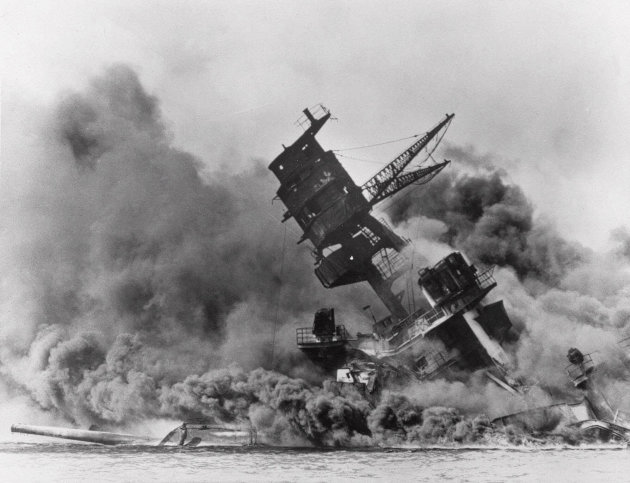
The Dec. 7, 1941, bombing of Pearl Harbor and those who lost their lives that day are being remembered Wednesday on the 70th anniversary of the Japanese attack that brought the U.S. into World War II.
About 120 survivors will join Navy Secretary Ray Mabus, military leaders and civilians to observe a moment of silence in Pearl Harbor at 7:55 a.m. Hawaii time — the moment the attack began seven decades ago.
About 3,000 people are expected to attend the event held each year at a site overlooking the sunken USS Arizona and the white memorial that straddles the battleship.
The Pearl Harbor-based guided missile destroyer USS Chung-Hoon will render honors to the Arizona and blow its whistle at the start of a moment of silence at 7:55 a.m. — the same time 70 years ago the first Japanese planes began to attack.
F-22 jets flown by the Hawaii National Guard are due to soar overhead in a missing man formation to finish the moment of silence.
Mal Middlesworth, a Marine veteran who was on the USS San Francisco during the bombing, will deliver the keynote address.
President Barack Obama hailed veterans of the bombing in a statement proclaiming Wednesday "National Pearl Harbor Remembrance Day."
"Their tenacity helped define the Greatest Generation and their valor fortified all who served during World War II. As a nation, we look to December 7, 1941, to draw strength from the example set by these patriots and to honor all who have sacrificed for our freedoms," he said.
Also this week, five ash scattering and interment ceremonies are being held for five survivors whose cremated remains are returning to Pearl Harbor after their deaths.
On Tuesday, an urn containing the ashes of Lee Soucy was placed on his battleship, the USS Utah, which is lying on its side near the place where it sank 70 years ago. The ashes of Vernon Olsen, who was on the Arizona during the attack, will be placed on his ship late Wednesday.
The U.S. lost 12 vessels that day, but the Arizona and the Utah are the only ones still sitting in the harbor. The ashes of three others are being scattered in the water in separate ceremonies this week.
President Zardari is not resigning: close aides
Sources close to President Asif Zardari
have denied media reports about him resigning on account of ill health and said he is expected to return after routine medical checkup.
A US magazine claimed that President Zardari is under extreme pressure over the Memogate scandal and has been hospitalized in Dubai for medical checkups, complaining of heartache.
The sources term magazine news baseless and fabricated.

have denied media reports about him resigning on account of ill health and said he is expected to return after routine medical checkup.
A US magazine claimed that President Zardari is under extreme pressure over the Memogate scandal and has been hospitalized in Dubai for medical checkups, complaining of heartache.
The sources term magazine news baseless and fabricated.
Tuesday, December 6, 2011
Zardari may resign over 'ill health', claims FP
US magazine claimed that President Asif Ali Zardari had been feeling increased pressure over the Memogate scandal.
On Tuesday, President Asif Ali Zardari was hospitalised in Dubai for medical checkups, complaining of heart pains.
Citing former US official, American magazine Foreign Policy reported US government were informed that Zardari had a 'minor heart attack' on Monday night and flew to Dubai via air ambulance on Tuesday.
According to the US magazine, Zardari may have angioplasty on Wednesday and may also resign on account of 'ill health.'
Former US government official said that President barrack Obama spoke with Zardari over the weekend regarding Nato's killing of 24 Pakistani soldiers, Zardari was 'incoherent.'
"The noose was getting tighter -- it was only a matter of time," the former official said, expressing the growing expectation inside the U.S. government that Zardari may be on the way out.
US magazine quoted its source that over a dozen of Zardari's ambassadors in foreign countries were in the process of being recalled in what might be a precursor to Zardari stepping down as president.
On Tuesday, President Asif Ali Zardari was hospitalised in Dubai for medical checkups, complaining of heart pains.
Citing former US official, American magazine Foreign Policy reported US government were informed that Zardari had a 'minor heart attack' on Monday night and flew to Dubai via air ambulance on Tuesday.
According to the US magazine, Zardari may have angioplasty on Wednesday and may also resign on account of 'ill health.'
Former US government official said that President barrack Obama spoke with Zardari over the weekend regarding Nato's killing of 24 Pakistani soldiers, Zardari was 'incoherent.'
"The noose was getting tighter -- it was only a matter of time," the former official said, expressing the growing expectation inside the U.S. government that Zardari may be on the way out.
US magazine quoted its source that over a dozen of Zardari's ambassadors in foreign countries were in the process of being recalled in what might be a precursor to Zardari stepping down as president.
Obama sets campaign theme: Middle class at stake
Declaring the American middle class in jeopardy, President Barack Obama
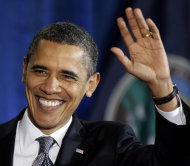
on Tuesday outlined a populist economic vision that will drive his re-election bid, insisting the United States must reclaim its standing as a country in which everyone can prosper if provided "a fair shot and a fair share."
While never making an overt plea for a second term, Obama's offered his most comprehensive lines of attack against the candidates seeking to take his job, only a month before Republican voters begin choosing a presidential nominee. He also sought to inject some of the long-overshadowed hope that energized his 2008 campaign, saying: "I believe America is on its way up."
In small-town Osawatomie, in a high school gym where patriotic bunting lined the bleachers, Obama presented himself as the one fighting for shared sacrifice and success against those who would gut government and let people fend for themselves. He did so knowing the nation is riven over the question of whether economic opportunity for all is evaporating.
"Throughout the country, it's sparked protests and political movements, from the tea party to the people who've been occupying the streets of New York and other cities," Obama said.
"This is the defining issue of our time," he said in echoing President Theodore Roosevelt's famous speech here in 1910.
"This is a make-or-break moment for the middle class and all those who are fighting to get into the middle class," Obama said. "At stake is whether this will be a country where working people can earn enough to raise a family, build a modest savings, own a home and secure their retirement."
For Obama, saddled with a weak national economic recovery, the speech was a chance to break away from Washington's incremental battles and his own small-scale executive actions. He offered a sweeping indictment of economic inequality and unleashed his own brand of prairie populism.
He spoke for nearly an hour to a supportive audience, reselling his ideas under the framework of "building a nation where we're all better off."
Billed as an important address that would put today's economic debates in context, Obama's speech seemed a bit like two packaged into one.
The first was that of the campaigner, full of loft and reclamation of American values. The second was the governing Obama, who recited his familiar jobs agenda, his feud with Congress over extending a Social Security tax cut, even his fight to get his consumer watchdog confirmed.
Obama tied himself to Roosevelt, the president and reformer who came to this town in eastern Kansas and called for a "square deal" for regular Americans. Roosevelt said then the fight for progress was a conflict "between the men who possess more than they have earned and the men who have earned more than they possess."
It is a theme Obama is embracing in a mounting fight for re-election against Republicans who, regardless of the nominee, will attack his stewardship of the economy.
One of the leading contenders for the GOP nomination, Mitt Romney, ridiculed Obama for comparing himself to Roosevelt.
Obama "said that he is like Teddy Roosevelt," Romney said at a campaign event in Paradise Valley, Ariz. "And I thought, 'In what way is he like Teddy Roosevelt?' Teddy Roosevelt of course founded the Bull Moose Party. One of those words applies."
Kirsten Kukowski, spokeswoman for the Republican National Committee, said, "Maybe instead of trying to be like other presidents, Obama should try being president."
Obama took aim at the Republicans, saying they would only return the same structures that led to America's economic downturn. "Their philosophy is simple: We are better off when everyone is left to fend for themselves and play by their own rules," Obama said. "I'm here to say they are wrong."
The president conceded that the country is in the midst of a consuming re-examination on his watch, prompting national movements against both government spending and an economy that many feel disproportionately favors the elite. Obama went on the offensive about income inequality, saying it distorts democracy and derails the American dream.
Responding to those who want to cut taxes and regulation in the belief success will trickle down, Obama said: "Here's the problem: It doesn't work. It's never worked."
Obama noted that Theodore Roosevelt was called a "radical, a socialist, even a communist" for putting forth ideas in his last campaign such as an eight-hour work day, a minimum wage for women, unemployment insurance and a progressive income tax.
Left unsaid: Roosevelt's Bull Moose campaign in 1912 failed to return him to the White House.
Obama attempted to sum up the pain and peril for a society where the middle class is struggling. But he also called for individual responsibility.
"In the end," he said, "rebuilding this economy based on fair play, a fair shot and a fair share will require all of us to see the stake we have in each other's success."
Obama also challenged the big banks that took bailouts from American taxpayers, pointing to "a deficit of trust between Main Street and Wall Street." He said banks that were bailed out had an obligation to work to close that trust deficit and should be doing more to help remedy past mortgage abuses and assist middle-class taxpayers.
Homelessness plagues UK youths' lives
At least 400 British 'lost generation' of youths are made homeless every day triggering a new homelessness crisis across the country, a new study has revealed.

The study carried out by charity Homeless Link found that 13,000 youngsters declared themselves homeless or sought advice on how to deal with the status quo by going to local authorities in October, the Sunday Mirror reported.
According to the study the number of people sleeping rough in London alone since April is already up by 32 percent on the whole of last year.
The study also found that the coalition government's savage cuts and the worsening economic crisis have created a “perfect storm” for soaring homelessness.
Large and populated families across the UK are asking teenagers to leave amid the soaring living costs and the swinging benefits cuts, which are having a direct impact on the living standards.
The report found family breakdown, often linked to financial pressures, is the main cause of young people leaving home and having to sleep rough.
Young homeless people said that the problem often starts because of their difficulty in finding regular work in the economic downturn.
Last month unemployment in the 16-24 age group increased to over one million and the number of NEETs (not in education, employment or training) reached 1.16million.
“We have seen a rise in rough sleeping among young people. We expect this to continue as more families buckle under the pressure of the current climate”, said Paul Marriott, chief executive of Depaul, the UK's largest youth homelessness charity.

The study carried out by charity Homeless Link found that 13,000 youngsters declared themselves homeless or sought advice on how to deal with the status quo by going to local authorities in October, the Sunday Mirror reported.
According to the study the number of people sleeping rough in London alone since April is already up by 32 percent on the whole of last year.
The study also found that the coalition government's savage cuts and the worsening economic crisis have created a “perfect storm” for soaring homelessness.
Large and populated families across the UK are asking teenagers to leave amid the soaring living costs and the swinging benefits cuts, which are having a direct impact on the living standards.
The report found family breakdown, often linked to financial pressures, is the main cause of young people leaving home and having to sleep rough.
Young homeless people said that the problem often starts because of their difficulty in finding regular work in the economic downturn.
Last month unemployment in the 16-24 age group increased to over one million and the number of NEETs (not in education, employment or training) reached 1.16million.
“We have seen a rise in rough sleeping among young people. We expect this to continue as more families buckle under the pressure of the current climate”, said Paul Marriott, chief executive of Depaul, the UK's largest youth homelessness charity.
The fuss over Veena Malik's 'nude' FHM cover

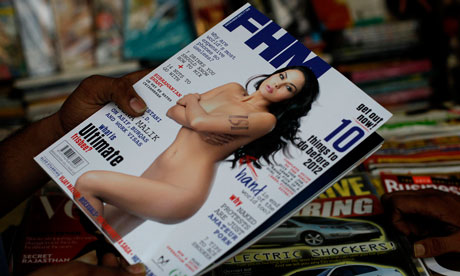
BY:Nosheen Iqbal
Did she? Didn't she? Does it make the slightest bit of difference at this point? At the time of writing, Veena Malik, the Pakistani actress, model and reality TV star, is suing Indian FHM for £1.2m. She claims the lads' mag doctored a photoshoot to make her appear naked on their December cover. Save for a crude "ISI" tattoo slapped across her arm – an audacious (and, well, pretty funny) two fingers up to Pakistan's notorious intelligence services, complete with a strapline suggesting the agency has a "hand in the end of the world" – the image shows Malik completely bare, with only a careful pose keeping her nipples and pubes from actual view. Editor Kabeer Sharma insists the photo is real, hasn't been "morphed" (Malik's words), and that FHM has the video evidence to prove it. The response of Malik's lawyers? Their client never agreed to or partook in a fully nude shoot; she'd worn a thong and later on, an ammunition belt. Well, quite.
Irrespective of whether the bum floss did or didn't exist, Malik is astute enough to have anticipated the inevitable ruckus her allegedly "nearly nude" photos have provoked. No stranger to the wrath of Pakistan's conservative, religious right, she was vilified earlier in the year for her appearance on Bigg Boss, the Indian Big Brother. Her crime? According to Mufti Abdul Qavi, whom she memorably slaughtered on a live TV debate, she shamed all Pakistan and Islam by dint of appearing on the show at all. As Malik passionately pointed out, national disgrace has little do with a female entertainer appearing on TV. "What about the politicians? What of the corruption, robbery, murder and terrorism committed in the name of Islam?" she asked. "Why are you picking on Veena Malik? Because she's a girl? Because she's a soft target?" Yes, and sadly as the case proved, yes.
For all its unsubtle attention-seeking, though, you've got to admire Malik's chutzpah on that cover. As perverse as it seems for her to risk her life for a pay cheque, make no mistake: hers is also a subversively political position. Already in receipt of death threats, there are now predictably angry calls for Malik to be stripped (sorry) of her Pakistani nationality for betraying her country, embarrassing dishonourment – which, if you believe her critics – rests entirely, fatuously, on female sexuality.
And yet, while I fully defend her right to make it, that's not to say I entirely agree with Malik's choice. From my privileged western perspective as a British Pakistani Muslim, a woman using her body as the battleground to make an empowered feminist statement is redundant and cliched: whichever way you cut it, there's little intellectually liberating about getting your rack out for the lads. By the same token – and this one often stings – nor does, in my view, donning a burqa mean you've solved the problem of being sexually objectified. Quite the opposite, really.
Admittedly, in south Asia – because let's face it, these photos have the power to shock across the myriad cultures of the subcontinent, not just in Pakistan – that representation is a touch less commonplace. But while that makes the images more provocative, does it necessarily mean they are any more powerful? In terms of advancing women's rights or pointing out the un-Islamic hypocrisies endured under the banner of national "culture" – both of which Malik has articulated on perfectly well in the past – I'd hazard not.
Desensitising the public capacity to be offended is one thing, having your opinions disregarded by the mainstream is quite another. Malik has been repeatedly called out for her besharam behaviour across Facebook, Twitter and in the vox pops of Pakistan's national media. Members of my own family in the country denounce her as nothing more than a kunjari – or, quite literally, a whore. Ugly chauvinism already denies too many women a public voice; who in Pakistan (apart from its minority of cheering progressives, who've already made her something of a liberal mascot) will take on board Malik's critiques now? She has plenty to say worth hearing. That her impact to make people think, rather than be outraged, has fallen away with each bit of her wardrobe is just depressing.
To wit, Malik's own father has reportedly called for her arrest, while the country's interior minister Rehman Malik (no relation) has promised that once "the investigations are complete, we [the government] will be able to tell what action we will take against her". All because Veena Malik refuses to conform to the homogenous view – both in the east and west – of what a Pakistani and/or Muslim woman should look like and how she should behave. A flash of skin causing more frenzied controversy than jihadists posting beheading videos online. That, by a long measure, has to be the real national shame.
Hamid Karzai 'to stay in control of Afghanistan after 2014'

President Hamid Karzai of Afghanistan is exploring options to extend his time in power beyond 2014 when his second and final term is due to end, according to an intelligence report.
As a major international conference opened in Bonn aiming to set a course for the country's future, Germany's BND foreign intelligence service has claimed that Mr Karzai is working on a "new organisation of the Afghan central government".
"The reason is believed to be Karzai's wish not to step down, although he has indicated publicly he does not plan to extend his term in office," the daily newspaper Bild quoted the report as saying.
The Bild report said that the BND believed Karzai was seeking a "creative solution" to get around the two-term limit imposed by the Afghan constitution.
Mr Karzai told Monday's issue of the German news weekly Der Spiegel that he planned to live in Kabul after 2014 as "a pensioner and happy citizen".
Speaking on the sidelines of the conference, Jawed Ludin, the deputy foreign minister, described the report as "nonsense".
"Mr Karzai is on the record about this, he is very clear. I know him well and I am convinced that he means what has said that he is looking forward to a credible transition through Afghan-led elections."
The Afghan president is chairing the Bonn conference, which he proposed, ten years after another meeting here established an interim government with Mr Karzai at the helm in the wake of the Taliban's removal.
He told around 1,000 delegates gathered in the western German city of Bonn for the one-day meeting that his government would battle corruption and work toward national reconciliation but needed firm international backing.
"We will need your steadfast support for at least another decade" after the troops pullout, he said.However, Pakistan and the Taliban – both seen as pivotal to any end to the bloody strife in Afghanistan a decade on – have bowed out of Bonn, dampening already modest hopes for real progress.
There are around 140,000 international troops in Afghanistan and all Nato-led combat forces are due to leave by the end of 2014, when Kabul will assume responsibility for the country's security.
The event's host, Guido Westerwelle, the German foreign minister, insisted there would be no rush to the exit.
"We send a clear message to the people of Afghanistan: we will not leave you alone, you will not be abandoned," he said.
"Afghanistan and its people need a clear and reliable commitment to a long-term engagement for the next decade beyond 2014."
60 killed in rare attacks on Afghan Shiites
A suicide bomber struck a crowd of Shiite worshippers at a mosque in Kabul on Tuesday, killing at least 55 people in the deadliest of two attacks on a Shiite holy day — the first major sectarian assaults since the fall of the Taliban a decade ago.
Four other Shiites were killed in the northern city of Mazar-i-Sharif when a bomb strapped to a bicycle exploded as a convoy of Afghan Shiites was driving down the road, shouting slogans for the festival known as Ashoura. Health Ministry spokesman Sakhi Kargar gave the death toll and said 21 people also were wounded in that attack.
The Kabul bomber blew himself up in the midst of a crowd of men, women and children gathered outside the Abul Fazl shrine to commemorate the seventh century death of the Prophet Muhammad's grandson Imam Hussein. Some men were beating themselves in mourning and food was being distributed.
The shrine, which is near the presidential palace, was packed with worshippers and dozens more were crammed into the courtyard. One witness said the bomber was at the end of a line and detonated his explosives near one of the gates to the shrine.
Bodies of the dead lay on top of one another where they fell to their deaths. Survivors with blood-smeared faces cried amid the chaos.
The Ministry of Interior said 55 were killed — including two women and four children. Sayed Kabir Amiri, who is in charge of Kabul hospitals said more than 160 wounded in the blast.
That made it the single deadliest attack in the Afghan capital in more than three years. A suicide car bomber detonated his explosives at the gates of the Indian Embassy in Kabul on July 7, 2008, killing more than 60 people.
Religiously motivated attacks on Shiites are rare in Afghanistan although they are common in neighboring Pakistan. No group claimed responsibility for Tuesday's blasts, reminiscent of the wave of sectarian attacks that shook Iraq during the height of the war there.
The Ministry of Interior in a statement blamed the Taliban and "terrorists," for the attack. It provided no other details but added that police defused another bomb that had been planted in Mazar-i-Sharif near the one that blew up.
The Taliban strongly condemned the two attacks and said in a statement to news organizations that they deeply regretted that innocent Afghans were killed and wounded.
Afghan President Hamid Karzai, speaking at a news conference after meeting German Chancellor Angela Merkel in Berlin, said the attack was unprecedented in scope and the first time ever that one has been carried out during a religious event.
He said it was "the first time that on such an important religious day in Afghanistan terrorism of that horrible nature is taking place."
Mohammad Bakir Shaikzada, the top Shiite cleric in Kabul, said he could not remember a similar attack having taken place on such a scale.
"This is a crime against Muslims during the holy day of Ashoura. We Muslims will never forget these attacks. It is the enemy of the Muslims who are carrying them out," he said, declining to place blame.
Shiites make up about 20 percent of Afghanistan's 30 million people, most of them ethnic Hazaras. Although thousands of Hazaras were massacred by the Taliban during fighting in the 1990s, Afghan insurgents — nearly all of them Sunnis — in recent years have focused their attacks primarily on U.S.-led NATO troops and Afghan security forces.
It was unclear whether Tuesday's attacks mark a change in Afghan Taliban strategy or were carried out by al-Qaida or another group based in Pakistan, where Sunni attacks on Shiites are common. Hard-line Sunnis consider Shiites nonbelievers because their customs and traditions differ from the majority sect.
In neighboring Pakistan, Sunni militants with links to al-Qaida and the Taliban have carried out scores of bombings and shootings across Pakistan against minority Shiites. One of the deadliest groups has been the Punjab-based Lashkar-e-Jhangvi, which claimed responsibility for gunning down 26 Shiites this summer riding in a bus through southwestern Baluchistan province.
Pakistan is a majority Sunni state, with Shiites making up about 15 percent of the 180 million population. Most Sunnis and Shiites live together peacefully, but tensions have existed for decades.
The last incident of violence between Shiites and Sunnis following the U.S. invasion 10 years ago occurred in early 2006, during Ashoura commemorations in the western city of Herat. During those riots, blamed on Islamic extremists, five people were killed and more than 50 injured.
Mahood Khan, who is in charge of the Abul Fazl shrine, said the explosion occurred just outside a courtyard where dozens of worshippers were lined up as they filed in and out of the packed building.
A few minutes after the blast, bodies could be seen loaded into the trunks of cars while wounded were led away by friends and relatives. Survivors wept in the streets.
"It was a very powerful blast," Khan said. "The food was everywhere. It was out of control. Everyone was crying, shouting. It is a disaster."
Mustafa, a shopkeeper, said he and his mother were delivering food to the worshippers when the blast occurred. Two groups of 150 to 200 people from Kabul had just prayed at the shrine and left.
Another group of more than 100 from Logar province was entering when the explosion occurred. He said the suicide bomber was at the end of the line of worshippers from Logar when he blew himself up near one of the gates to the shrine.
"It was very loud. My ears went deaf and I was blown 3 meters (yards)," said Mustafa, who uses only one name. "There was smoke and red blood on the floor of the shrine. There were people lying everywhere."
The shrine's loudspeaker continued to blast a recitation of the Quran as ambulances carried bodies and wounded away. Women stood outside the shrine wailing and holding crying children.
The shrine is close to the palace where Karzai lives and who is in Europe to attend an international conference on Afghanistan. It is named after Abul Fazl, who was an adviser to a 14th century Mogul emperor. The shrine and its blue minaret is one of Kabul's better known shrines. It is located in Murad Khane area near the Kabul river, a district that has been listed by the World Monuments Fund as one of its 100 most endangered sites of cultural heritage.
Saudi Woman to Be Lashed for Driving, Despite Royal Pardon
theatlantic.com
BY:Nivien Saleh - Nivien Saleh is an assistant professor at the Center for International Studies, University of St. Thomas, in Houston, Texas, where she teaches Middle East politics. She is the author of Third World Citizens and the Information Technology Revolution.
Remember Shaima Jastaniah, the Saudi woman who made international headlines in September by being condemned to ten lashes for driving a car through the coastal city of Jeddah? King Abdallah pardoned her personally. But it now turns out that she may be lashed after all.
On Saturday, November 12, she was served with an official notice that, notwithstanding the royal pardon, she will be flogged unless she wins a legal appeal in mid-December. She has kept this private, hoping to resolve it quietly, until now. Her quiet options seemingly exhausted, Shaima called me and asked me to help tell her story. "I want to be able to drive, just like I did back in the States," she told me. "And I want other women to be able to do the same. It's a basic human right."
Her only offense was driving while female. In the Kingdom of Saudi Arabia, where women are not allowed behind the steering wheel, this is a serious breach of public order.
Although Shaima now lives in Jeddah, she had spent many years in Houston, Texas, where she became my student and friend. In 2000, at age 23, she arrived with her husband, who worked towards a license in accounting, and two young children. In 2007, she enrolled in the Master of Liberal Arts program at the University of St. Thomas in Houston, concentrating in international studies, because she wanted to understand the values, dynamics, and contradictions of Middle Eastern countries. I taught her in four courses and came to know her well.Shaima fit right into Houston society. Texans are larger than life, and so is she. Discard your images of the veiled female Arab: Her dedication to Islam is sincere -- she recently completed the hajj to Mecca -- but she is not demure and does not attempt to fade into the background. When she enters a room, you notice.
Though she is not one to seek the limelight, Shaima freely speaks up in front of others when an issue matters to her. And she has strong ideas of what is just and fair.
There is no doubt that her time in Houston changed her. I saw her grow intellectually and come to recognize that, deep inside, she was a passionate individualist who saw life as full of possibilities.
Her marriage, which had been arranged, did not survive her personal development. In 2010, when she returned to Saudi Arabia, diploma in hand, she was on her own. As is customary in situations like hers, she moved back in with her parents.
In Houston, Shaima drove a luxurious black BMW X5, which she shipped back to the Kingdom upon her return. But even with her international driver's license, she is not allowed to drive the SUV there. Instead, she has to employ a male chauffeur, who is a stranger to her. As she is now gainfully employed, her parents leave it up to her to pay the driver's salary. That renders her inability to steer the vehicle doubly galling, she says. In her view, the prohibition against female driving has nothing to do with Islam and everything with the maintenance of patriarchal rule. After all, did Aysha, the favorite wife of the Prophet Muhammad, not ride her own camel into the Battle of Basrah in 656?
On a sweltering summer day at noon, the Texan in Shaima came out. Longing for some time alone, she grabbed her keys, fired up her BMW, and drove off. Three hours later, the authorities stopped her.
In Saudi Arabia, when a woman is caught driving, the typical police response is to extract a signed pledge not to "misbehave" a second time and let her go. There are a few women who broke the prohibition against driving several times and pledged betterment again and again. Shaima's case, however, never went through that stage. The matter was immediately referred to the country's conservative shariah court system, which is controlled by the Kingdom's religious establishment.
The judge happened to pass his verdict on the heels of a government announcement that, five years from now, women will receive the right to vote and run for public office. Possibly to register his disapproval, possibly to discourage the other women who had recently taken to the road, or maybe for some other reason, the judge assigned the unusually harsh sentence of flogging. Shaima was shocked. "What I did was a misdemeanor. The court could have fined me, and I would have been happy to pay up," she told me. "Instead, they decided to criminalize me. I am not a criminal!"
In keeping with judicial protocol, the judge asked if she planned to appeal. She said yes. He explained that upon receiving a copy of the verdict, she would have 30 days to register her appeal with the Court of Cassation.
Then came the tweet. On September 28, Princess Ameerah al-Taweel, wife of King Abdallah's billionaire nephew Al-Waleed Ibn Talal and a longstanding champion of women's right to drive, declared, "#women2drive Thank God, the lashing of Shaima is cancelled. Thanks to our beloved King. I'm sure all Saudi women will be so happy, I know I am." Her husband had spoken to the King on Shaima's behalf. In Saudi Arabia's tribal society, where wasta -- which loosely translates to "connections" -- is everything, this should have been enough to close the case. But it wasn't.
As Shaima told me, this tweet was the most official statement of royal pardon that she received. Whether the Kingdom's clerics are consciously snubbing King Abdallah's second-hand declaration or whether they lack the digital awareness to appreciate Twitter as a means of policymaking is unclear. But the tweet left them unfazed.
Shaima received a copy of the verdict in November, and unless she successfully appeals the sentence by December 12, it will be administered. Not only is the punishment painful, it is also humiliating to her and to all Saudi women who believe that a right to education should go hand in hand with freedom of movement.
But her options are limited. She might submit and take her lashing, hire local counsel who could quietly attempt to both appeal and obtain another royal pardon, or hire an international human rights counsel who could take the case to a foreign tribunal under international law. A small circle of local feminists is encouraging her to spearhead their movement, however fledgling it may be, by alerting the media. But that would mean becoming the center of attention in a country where hierarchy is respected and opposition regarded with suspicion.
When she asked for my advice, I turned to a friend with knowledge of the country, who said: "Her options boil down to two strategies: She can either hire a local lawyer and bow and scrape; or she can go nuclear by dishing this to the international press."
Shaima Jastaniah is no scraper.
BY:Nivien Saleh - Nivien Saleh is an assistant professor at the Center for International Studies, University of St. Thomas, in Houston, Texas, where she teaches Middle East politics. She is the author of Third World Citizens and the Information Technology Revolution.
Remember Shaima Jastaniah, the Saudi woman who made international headlines in September by being condemned to ten lashes for driving a car through the coastal city of Jeddah? King Abdallah pardoned her personally. But it now turns out that she may be lashed after all.
On Saturday, November 12, she was served with an official notice that, notwithstanding the royal pardon, she will be flogged unless she wins a legal appeal in mid-December. She has kept this private, hoping to resolve it quietly, until now. Her quiet options seemingly exhausted, Shaima called me and asked me to help tell her story. "I want to be able to drive, just like I did back in the States," she told me. "And I want other women to be able to do the same. It's a basic human right."
Her only offense was driving while female. In the Kingdom of Saudi Arabia, where women are not allowed behind the steering wheel, this is a serious breach of public order.
Although Shaima now lives in Jeddah, she had spent many years in Houston, Texas, where she became my student and friend. In 2000, at age 23, she arrived with her husband, who worked towards a license in accounting, and two young children. In 2007, she enrolled in the Master of Liberal Arts program at the University of St. Thomas in Houston, concentrating in international studies, because she wanted to understand the values, dynamics, and contradictions of Middle Eastern countries. I taught her in four courses and came to know her well.Shaima fit right into Houston society. Texans are larger than life, and so is she. Discard your images of the veiled female Arab: Her dedication to Islam is sincere -- she recently completed the hajj to Mecca -- but she is not demure and does not attempt to fade into the background. When she enters a room, you notice.
Though she is not one to seek the limelight, Shaima freely speaks up in front of others when an issue matters to her. And she has strong ideas of what is just and fair.
There is no doubt that her time in Houston changed her. I saw her grow intellectually and come to recognize that, deep inside, she was a passionate individualist who saw life as full of possibilities.
Her marriage, which had been arranged, did not survive her personal development. In 2010, when she returned to Saudi Arabia, diploma in hand, she was on her own. As is customary in situations like hers, she moved back in with her parents.
In Houston, Shaima drove a luxurious black BMW X5, which she shipped back to the Kingdom upon her return. But even with her international driver's license, she is not allowed to drive the SUV there. Instead, she has to employ a male chauffeur, who is a stranger to her. As she is now gainfully employed, her parents leave it up to her to pay the driver's salary. That renders her inability to steer the vehicle doubly galling, she says. In her view, the prohibition against female driving has nothing to do with Islam and everything with the maintenance of patriarchal rule. After all, did Aysha, the favorite wife of the Prophet Muhammad, not ride her own camel into the Battle of Basrah in 656?
On a sweltering summer day at noon, the Texan in Shaima came out. Longing for some time alone, she grabbed her keys, fired up her BMW, and drove off. Three hours later, the authorities stopped her.
In Saudi Arabia, when a woman is caught driving, the typical police response is to extract a signed pledge not to "misbehave" a second time and let her go. There are a few women who broke the prohibition against driving several times and pledged betterment again and again. Shaima's case, however, never went through that stage. The matter was immediately referred to the country's conservative shariah court system, which is controlled by the Kingdom's religious establishment.
The judge happened to pass his verdict on the heels of a government announcement that, five years from now, women will receive the right to vote and run for public office. Possibly to register his disapproval, possibly to discourage the other women who had recently taken to the road, or maybe for some other reason, the judge assigned the unusually harsh sentence of flogging. Shaima was shocked. "What I did was a misdemeanor. The court could have fined me, and I would have been happy to pay up," she told me. "Instead, they decided to criminalize me. I am not a criminal!"
In keeping with judicial protocol, the judge asked if she planned to appeal. She said yes. He explained that upon receiving a copy of the verdict, she would have 30 days to register her appeal with the Court of Cassation.
Then came the tweet. On September 28, Princess Ameerah al-Taweel, wife of King Abdallah's billionaire nephew Al-Waleed Ibn Talal and a longstanding champion of women's right to drive, declared, "#women2drive Thank God, the lashing of Shaima is cancelled. Thanks to our beloved King. I'm sure all Saudi women will be so happy, I know I am." Her husband had spoken to the King on Shaima's behalf. In Saudi Arabia's tribal society, where wasta -- which loosely translates to "connections" -- is everything, this should have been enough to close the case. But it wasn't.
As Shaima told me, this tweet was the most official statement of royal pardon that she received. Whether the Kingdom's clerics are consciously snubbing King Abdallah's second-hand declaration or whether they lack the digital awareness to appreciate Twitter as a means of policymaking is unclear. But the tweet left them unfazed.
Shaima received a copy of the verdict in November, and unless she successfully appeals the sentence by December 12, it will be administered. Not only is the punishment painful, it is also humiliating to her and to all Saudi women who believe that a right to education should go hand in hand with freedom of movement.
But her options are limited. She might submit and take her lashing, hire local counsel who could quietly attempt to both appeal and obtain another royal pardon, or hire an international human rights counsel who could take the case to a foreign tribunal under international law. A small circle of local feminists is encouraging her to spearhead their movement, however fledgling it may be, by alerting the media. But that would mean becoming the center of attention in a country where hierarchy is respected and opposition regarded with suspicion.
When she asked for my advice, I turned to a friend with knowledge of the country, who said: "Her options boil down to two strategies: She can either hire a local lawyer and bow and scrape; or she can go nuclear by dishing this to the international press."
Shaima Jastaniah is no scraper.
In Pakistan, the US continues to make errors

ONE CAN only watch in horror as relations between the United States and Pakistan continue to deteriorate, for there will be no chaos-free exit from Afghanistan without Pakistan. We have become accustomed to the loud accusations of perfidy leveled at Islamabad — it is playing a double game, Americans say, protecting terrorists who are attacking our troops in Afghanistan. But to make an enemy out of Pakistan is to lose sight of the fact that Pakistan is far more important to US interests than Afghanistan ever was.
Republican contenders for Barack Obama’s job fall over each other suggesting ways to be tough on Pakistan. But it was Jon Huntsman who put his finger on the problem.
“I would recognize exactly what the US-Pakistani relationship has become, which is merely a transactional relationship,’’ Huntsman said. American aid should be contingent on Pakistan’s keeping up the fight on terrorism and on keeping American supply lines to Afghanistan open, he said. nd that’s the trouble. For although the Obama administration still talks about a strategic relationship with Pakistan, it has long since become a transactional one. Here’s your money, the United States seems to say, so now do what we say and do it now!
Pakistan, on the other hand, would have liked a true strategic relationship in which the United States would take cognizance of Pakistan’s strategic fears, needs, and national interests. Instead, US officials keep scolding Pakistan for not subordinating its strategic interests to America’s.
For example, is it reasonable to demand that Pakistan attack the militant Haqqani network within its borders while at the same time Americans have been trying to negotiate with Haqqani leaders? Since the United States is planning to leave Afghanistan, Pakistan sees a need to maintain relationships with some of the players, especially among the ethnic Pashtuns, who will continue to be involved in the Afghan drama long after the United States has left the stage.
And what a curious doctrine is this “fight, talk, and build’’ that Secretary of State Hillary Clinton keeps talking about. Wasn’t that what we tried to do in Vietnam - bomb Hanoi to make the North Vietnamese come to their senses and do what we wanted? From Pakistan’s point of view, what would Americans say if a Pakistani intelligence officer stepped out of his car in an American city and shot two Americans dead; took their photographs and sped away, as CIA contractor Raymond Davis did to two Pakistanis did in Lahore in January?
Obama was correct to go after Osama bin Laden without telling the Pakistanis, because someone in the Pakistani hierarchy might have tipped off the world’s most wanted man. But we could have included some Pakistani commandos in the attack. We could have asked Pakistan to send us some soldiers to train with ours, and then put a few in the helicopters without them even knowing where they were headed, which would have preserved security. Hypocrisy? Yes, but a little hypocrisy to get bin Laden and still save Pakistan face would have been worth it in order to soften Pakistan’s humiliation about an obvious violation of Pakistani sovereignty.
And now NATO has killed 24 Pakistani soldiers along the Afghanistan border. What actually happened last week is in dispute. Both sides may have thought they were being attacked by the Taliban. But one thing is clear. Pakistani soldiers were killed inside Pakistan by American planes and helicopters inside Pakistani airspace.
What was the US-led coalition doing so close to Pakistan? It would have made more sense not to operate so close to the frontier, even if it meant that some Taliban might escape. After all, they can find sanctuary deeper in Pakistan. Limited wars always include restraints. America’s war in Afghanistan is not going to end with a Taliban surrender on the deck of a battleship, as World War II ended. There will be compromises, and one of them needs to be that the United States doesn’t violate Pakistani sovereignty.
America seems oblivious to how unpopular its drone strikes are, or that Pakistan has lost many more soldiers fighting Islamist extremists than has NATO. The average Pakistani views the whole Afghan campaign as America’s war that has brought them only misfortune and death.
It is said that Pakistan has a weak civilian government and that its military and intelligence services are running the show. But can something similar be said of the United States? The US military out-maneuvered an inexperienced president into a deeper Afghanistan commitment than even the Bush administration was willing to make. Is the military-intelligence complex striving to keep the United States involved in Afghanistan longer than it might otherwise be, and getting into heedless and unnecessary confrontations with Pakistan?
US urged to change Pakistan strategy

The United States must shift to a strategy of engaging Pakistan while containing the worst “excesses” of its army, an expert who helped develop the current US approach to Islamabad said Monday.
After coming to power in January 2009, President Barack Obama tasked Bruce Riedel, a former CIA officer, to chair an interagency review of policy toward Afghanistan and Pakistan for the White House.
The review urged close dialogue with Pakistan and an intensification of drone attacks against extremist militants in the lawless tribal frontier in northwestern Pakistan.
“That strategy made sense at the time but I think in the light of developments, it’s time to shift to a policy of engagement and containment,” said Riedel, now a senior fellow at The Brookings Institution think-tank.
“That is to say to continue to engage Pakistan to try to support the development of civilian democracy, to try to help Pakistani economic development but at the same time trying to contain the worst ambitions and excesses of the Pakistani army.”
Speaking at a panel discussion, he said that for now, Washington was “not doing enough on the containment part. We’re slipping and sliding into it, but I think without a coherent framework.”
US officials, speaking on condition of anonymity, said the Obama administration had no plans to adopt such a policy at this time.
Ties between Washington and Islamabad took a turn for the worse after a US special operations raid killed al Qaeda leader Osama bin Laden in the sleepy Pakistani garrison town of Abbottabad in May.
Relations slid to a new low last month when Nato air strikes killed 24 Pakistani soldiers on the Afghan border, prompting Pakistan to boycott the Bonn Conference on Afghanistan’s future.
According to Riedel, the Pakistani army is gradually installing a new military dictatorship, without even needing to resort to a coup.
“The new military dictatorship that is emerging in Pakistan will be very different from its predecessors,” he said.
“The facade of civilian government is likely to continue to go on … with very little real power. The media will continue to be very active and alive, except when they criticize the military.”
Comments Share this article Print this page Email a friend
Related Stories
Afghanistan's allies pledge to stay for long haul

Foreign governments pledged on Monday to support Afghanistan long after allied troops go home, with or without a political settlement with insurgents once seen as the best way to prevent a new civil war.
At a conference of more than 80 countries but boycotted by Pakistan, they said even after most foreign combat troops leave in 2014, the Afghan government will not be allowed to meet the fate of its Soviet-era predecessor, which collapsed in 1992.
"The United States intends to stay the course with our friends in Afghanistan," U.S. Secretary of State Hillary Clinton said. "We will be there with you as you make the hard decisions that are necessary for your future."
Hosts Germany sought to signal Western staying power in the country, where al Qaeda sheltered under Taliban protection before the September 11 attacks, at the gathering in Bonn.
"We send a clear message to the people of Afghanistan: We will not leave you on your own. We will not leave you in the lurch," said German Foreign Minister Guido Westerwelle.
Ten years after a similar conference held to rebuild Afghanistan, the Afghan war is becoming increasingly unpopular in Western public opinion -- especially since U.S. forces found and killed al Qaeda leader Osama bin Laden in Pakistan on May 2 in a raid that removed a central pretext of the 2001 invasion.
Western countries are under pressure to spend money reviving flagging economies at home rather than propping up a government in Kabul widely criticised for being corrupt and ineffective.
And as expected, delegates at the Bonn conference steered clear of making specific pledges to make up a shortfall in funding for Afghanistan estimated by the World Bank at some $7 billion a year from the end of 2014.
For now, nobody wants to show their hand too clearly in the hope that someone else -- from the United States to Europe, the Gulf to Asia -- will come forward to foot a share of the bill.
Brewing confrontations pitting Washington against Pakistan and Iran, two of Afghanistan's most influential neighbours, have also added to despondency over the outlook for the war.
Pakistan boycotted the meeting after NATO aircraft killed 24 of its soldiers on the border with Afghanistan in a November 26 attack the alliance called a "tragic" accident.
But delegates from Russia to Iran to China, all uneasy about the U.S. military presence in their neighbourhood, were nonetheless able to agree with Western powers "the main threat to Afghanistan's security and stability is terrorism."
"In this regard, we recognise the regional dimensions of terrorism and extremism, including terrorist safe havens, and emphasise the need for sincere and result-oriented regional cooperation..." a conference statement.
Pakistan is accused by Washington and Kabul of providing "safe havens" to insurgents to use to counter the influence of rival India. Pakistan says it being used as a scapegoat for the U.S. failure to bring stability to Afghanistan.
SCALING BACK OBJECTIVES
The mood at the Bonn conference was a far cry from the early days of the Afghan war when, fresh from toppling the Taliban, Western powers hoped to bring permanent peace to a country which has now been at war for more than three decades.
But with problems of insecurity, governance, corruption and narcotics inside Afghanistan, compounded by insurgent sanctuaries in Pakistan, objectives have been scaled back.
By the time of a conference in London on Afghanistan in January 2010, Western governments had agreed insurgents could be brought into peace talks if they were willing to cut ties with al Qaeda, give up violence and respect the Afghan constitution.
But even that goal has proved elusive. Embroynic contacts with the Taliban have yielded little, and foreign governments have been preparing increasingly for a scenario in which there is no peace settlement with the Taliban even before the before most foreign combat troops leave in 2014.
The aim now is to leave behind a government which is just about good enough to survive, even if fighting persists in parts of the country and the Taliban insurgency remains active.
Some are still hoping Pakistan will use its influence to deliver the Afghan Taliban into a political settlement.
Afghan President Hamid Karzai told reporters Pakistan had missed a good opportunity to discuss its own issues and the future of Afghanistan by not attending the Bonn conference. "But it will not stop us from cooperating together," he said.
Asked what he wanted Pakistan to do to help bring peace in Afghanistan, he said: "Close the sanctuaries, arrange a purposeful dialogue with those Taliban who are in Pakistan."
Clinton said she expected Pakistan to play a constructive role in Afghanistan, even as she voiced disappointment that Islamabad chose not to attend the conference.
But British Foreign Secretary William Hague said that Afghanistan could still have a bright future even if the Taliban were not brought into a political settlement.
"It may take a longer time to bring about our objectives but we should not be deterred at all by Taliban reluctance to come to the table..." he told the BBC.
Foreign governments were also determined to try to dispel at least some of the pessimism seeping into the Afghan project.
Indian Foreign Minister S.M. Krishna, whose country became the first to sign a strategic partnership agreement with Afghanistan -- much to the irritation of Pakistan -- pledged India would keep up its heavy investment in a country whose mineral wealth and trade routes made it "a land of opportunity."
In a rare positive development, Clinton said the United States would resume paying into a World Bank-administered Reconstruction Trust Fund for Afghanistan, a decision that U.S. officials said would allow for the disbursement of roughly $650 million to $700 million in suspended U.S. aid.
The United States and other big donors stopped paying into the fund in June, when the International Monetary Fund suspended its programme with Afghanistan because of concerns about Afghanistan's troubled Kabul Bank.
IRAN ROW OVERSHADOWS CONFERENCE
In a sign of quite how difficult it will be to bring peace to Afghanistan, the conference was nearly overshadowed before it started by a row with Iran -- increasingly at odds with the United States and European powers over its nuclear programme.
Tehran said on Sunday it shot down a U.S. spy drone in its airspace and threatened to respond. International forces in Kabul said the drone may have been one lost last week while flying over western Afghanistan.
Iran has been accused in the past of providing low-level backing to the Taliban insurgency, and diplomats and analysts have suggested Tehran could ratchet up this support if it wanted to put serious pressure on U.S. forces in Afghanistan.
Foreign Minister Ali Akbar Salehi on Monday also reiterated Iran's opposition to the United States keeping some forces in Afghanistan after 2014.
Simon Gass, NATO's senior civilian representative in Kabul and former British ambassador to Tehran, downplayed the prospect of Tehran acting as a spoiler in any Afghan settlement.
He recalled Iran was a historic foe of the Taliban, which has a record of hostility to Afghan Shi'ites, Iran's co-religionists.
Despite its dislike of the Taliban "Iran has a history in Afghanistan of supporting some Taliban groups in different ways. That could continue. We shall have to see," he said.
"But what I would say is that my quite long experience of Iran is that Iranians are realists, and once the international agreements are in place which define the security architecture for Afghanistan after 2014, my belief is that Iran will begin to adjust to those new realities," he told Reuters.
Monday, December 5, 2011
Russian communists win support as Putin party fades

Just 20 years ago, they seemed consigned to the dustbin of history. At Sunday's parliamentary polls, Russia's communists drew students, intellectuals, even some businessmen in forging an opposition to Vladimir Putin's wounded United Russia party.


The Communist Party for most Russians evokes images of bemedalled war veterans and the elderly poor deprived of pensions and left behind in a "New Russia" of glitzy indulgence. Large swathes of society have appeared beyond the reach of the red flag and hammer and sickle.
Until Sunday.
Not that the Communist Party's doubling of its vote to about 20 percent presages any imminent assault on power. The memories of repression in the old communist Soviet Union, the labour camps and the "Red Terror" are still too fresh for many. But vote they did, if perhaps with gritted teeth.
"With sadness I remember how I passionately vowed to my grandfather I would never vote for the Communists," Yulia Serpikova, 27, a freelance location manager in the film industry, told Reuters. "It's sad that with the ballot in hand I had to tick the box for them to vote against it all."
For many Russians disillusioned by rampant corruption and a widening gap between rich and poor, the communists represented the only credible opposition to Putin's United Russia.
Through all the turmoil of the early 1990s when the Soviet Union collapsed, the party retained a strong national organisation based on regions and workplace.
With access to official media limited for the opposition, this has been a huge advantage.
"The Communists are the only real party out there," said one Western banker in Moscow. "United Russia is a joke, Just Russia is a joke and the LDPR is a joke and many people know it. So they vote communist because they realize it is a real vote for the opposition and against United Russia.
"This is as ironic as you get."
ANGER AT THE RULING PARTY
United Russia was founded largely as a vehicle for Putin, whose authority suffered a blow with the party's fall in support from 64 percent in 2007 around 50 percent, according to exit polls and early official results.
The nationalist LDPR is built around one man, the colourful and somewhat eccentric Vladimir Zhirinovsky. Other parties lack national structure.
"United Russia has angered everybody, so people are looking for an alternative," said Alexander Kurov, 19, one of a long line of students in slippers and T-shirts queuing to vote inside the marble halls of Moscow's mammoth Soviet-built state university dormitory.
"I don't particularly like the communists but there is no one else (to vote for) and I don't want my vote to be stolen," Kurov, a student of physics, told Reuters.
At the Communist Party headquarters hung with portraits of Lenin and heavy gold-on-red velvet hammer-and-sickle banners, party leader Gennady Zyuganov complained of fraud and described the election as "theft on an especially grand scale".
"Despite their efforts to break public opinion, the country has refused to support United Russia," he said.
He said police had barred Communist monitors from several polling stations across the country, adding that "some ended up in hospital with broken bones". Some ballot boxes, he said, had been stuffed with ballots before voting began.
In a bizarre flip, today's communists have benefited from satire on Russia's vibrant blogosphere comparing Putin's party to the all powerful Communist Party of Soviet times.
One popular image shows Putin's face aged and superimposed on a portrait of doddering Soviet leader Leonid Brezhnev, mocking the prime minister's plan to return to the presidency in March for two possible terms until 2024.
Voters wary of United Russia said their decision was purely a matter of cold electoral arithmetic, backing the party most likely to cross a seven percent threshold and win enough seats to act as a counterweight to Putin's party.
"I am voting against Putin, to weaken his party, so it makes sense to vote for a party that will make it in," Sergei Yemilianov, 46, a mathematics professor, said.
Analyst Masha Lipman of the Moscow Carnegie Center described votes gained by the Communist Party as "similar to writing a four letter word on the ballot."
"It's a sign of defiance," she told Reuters. "The government has turned this election into a farce and in response people are turning their electoral choice into a travesty."
A NEW REALITY
Preceptions among some Russians that the nationalist LDPR party and Just Russia are in the Kremlin's pocket and will vote with United Russia in parliament also helped the communists.
"We are losing votes to the Communist Party, who people think of as more of an opposition party because it doesn't have a history of cooperation with the authorities like we sadly do," Gennady Gudkov, a senior lawmaker with Just Russia, said.
Russia's lower house is largely considered a rubber stamp body for the Kremlin, but if United Russia loses its majority experts say the new balance of power may see the return of some real political debate.
One communist lawmaker hailed the victory as "a new political reality" on Sunday evening.
"They are a different party than in Soviet times," Anna, 21, a student of mechanics at the Moscow State University, said. "I have a lot of friends who are activists for the Communists Party. It's become popular."
Young Communist Party deputy Yuri Afonov, 34, told Reuters by telephone from Tambov that people were upset with the political order and many saw the Internet as the only place in which real opinions were voiced.
The Communist Party may be a long way from fundamentally changing its image. Its success may reflect disenchantment with Putin and his party far more than a new yen for communist order.
But one contributor to the Communist Party's chat forum offered a new genre of 'communist cool' with a rap composition.
"Want to get back what they took from me
Free schooling ain't no free lunch
Free medicine is my right, you see
What matters to you? Whose side you on?
Want to help your country
So it's our choice and it's our rap
So we go vote for the CPRF"
Putin's party suffers losses
CNN
While Russian police arrested 170 opposition protesters in two cities, voters in the country's parliamentary election appeared to eat away at Prime Minister Vladimir Putin's support in Sunday's elections, slimming down his party's parliamentary majority.
With more than 70% of the total vote counted, Putin's United Russia party is far and away the winner of Sunday's elections with 49.9%, followed by 19.4% for the runner-up Communist Party, according to the All-Russia Center for Public Opinion. The Fair Russia party has 12.9% and the Liberal Democratic party has 11.9%.
But the poll numbers add up to a significant loss. If they are an accurate reflection of the election results, United Russia stands to lose many of the 300 seats it currently holds in the 450-seat Duma -- Russia's parliament.
President Dmitry Medvedev, who headed the United Russia ticket, said the party made a "decent showing," and that "the result of these parliament elections reflects people's attitudes"
"United Russia remains the leader and the largest political force elected to the parliament," Medvedev said in remarks at his party's headquarters. "The party has proven it has a moral right to continue the chosen course."
Putin, who spoke after Medvedev, thanked those who voted for his party "despite the difficulties, despite the economic crisis."
"Based on this result, we will manage to ensure the stable development of our state," Putin said. "I would like to thank everybody who facilitated this result."
Analysts had anticipated Putin's party would win less support than four years ago -- but would maintain a majority. With three parties not receiving enough votes to take a seat in parliament, as the opinion poll indicates, then United Russia could still hold on to majority.
Around 100 opposition protesters were arrested in Moscow according to official news agency RIA Novosti, which sourced police. Authorities detained 70 more in St. Petersburg. Police had warned protesters earlier in the day not to hold "unsanctioned rallies" in Moscow, the Interfax news agency reported.
Opposition websites, radio stations and an election monitoring group claimed they had come under online attack.
The Golos election watchdog organization said callers reported about 1,000 elections violations on a telephone hotline while its website was under cyber attack. Russia's Interfax news agency reported that several other radio and newspaper websites had reported attacks.
The allegations came as voters cast their ballots in polls for the State Duma, the lower house of Russia's parliament.
"It's a very important test for the ruling party," Dmitry Babich, a political analyst with RIA Novosti, told CNN.
Prime Minister Vladimir Putin, recently tapped by his United Russia Party to be its presidential candidate next year, has accused the West of trying to influence the elections.
In campaigning ahead of the vote, opponents accused the ruling party of corruption and nepotism, RIA Novosti reported.
Putin said last week that his party had earned the support of "every thoughtful, objective, serious person who wants a better lot for himself, for his children and for Russia," the news agency said.
Russia's Interior Ministry opened three criminal cases and reported hundreds of other "electoral breaches," RIA Novosti said, citing the ministry's press office.
Moscow police said they detained about 12 people who were distributing political leaflets -- a practice banned on election day.
Golos said there was increasing pressure at the local level to block observers from accessing polls.
"It is clear that these actions are taken by authorities to undermine the achievement of our long-term goal -- to make the elections in Russia free and fair by impartial and independent monitoring," the organization said in a statement.
Maria Lipman, an analyst at the Carnegie Moscow Center, told CNN Sunday that elections had become "increasingly farcical during Putin's leadership."
"The last time we had an election at the federal level without a pre-ordained result was '99," she said. "Since then all elections have pre-ordained results and were to maintain the political monopoly of the ruling elite."
In a taped interview with Russia's national TV networks in September, President Medvedev criticized allegations that Russia's elections had a predetermined outcome.
"I consider such statements absolutely irresponsible, deceitful, and even provocative," he said.
In September Medvedev called on the United Russia party to endorse Putin for president in 2012. Putin in turn suggested that Medvedev should take over the role of prime minister if the party wins elections, in what would be a straight swap of their roles.
The announcement ended more than two years of speculation about whether Putin or Medvedev -- Putin's hand-picked successor -- would seek to run for a second term.
Putin stepped down as president in 2008 because the Russian constitution at that time limited the office to two consecutive four-year terms.
Under amendments to the constitution that came into force on December 31, 2008, the presidential term was extended to six years.
This means that if Putin is elected in March 2012 for six years, he would be eligible to run for another six-year term after that, potentially keeping him in charge until 2024.
While Russian police arrested 170 opposition protesters in two cities, voters in the country's parliamentary election appeared to eat away at Prime Minister Vladimir Putin's support in Sunday's elections, slimming down his party's parliamentary majority.
With more than 70% of the total vote counted, Putin's United Russia party is far and away the winner of Sunday's elections with 49.9%, followed by 19.4% for the runner-up Communist Party, according to the All-Russia Center for Public Opinion. The Fair Russia party has 12.9% and the Liberal Democratic party has 11.9%.
But the poll numbers add up to a significant loss. If they are an accurate reflection of the election results, United Russia stands to lose many of the 300 seats it currently holds in the 450-seat Duma -- Russia's parliament.
President Dmitry Medvedev, who headed the United Russia ticket, said the party made a "decent showing," and that "the result of these parliament elections reflects people's attitudes"
"United Russia remains the leader and the largest political force elected to the parliament," Medvedev said in remarks at his party's headquarters. "The party has proven it has a moral right to continue the chosen course."
Putin, who spoke after Medvedev, thanked those who voted for his party "despite the difficulties, despite the economic crisis."
"Based on this result, we will manage to ensure the stable development of our state," Putin said. "I would like to thank everybody who facilitated this result."
Analysts had anticipated Putin's party would win less support than four years ago -- but would maintain a majority. With three parties not receiving enough votes to take a seat in parliament, as the opinion poll indicates, then United Russia could still hold on to majority.
Around 100 opposition protesters were arrested in Moscow according to official news agency RIA Novosti, which sourced police. Authorities detained 70 more in St. Petersburg. Police had warned protesters earlier in the day not to hold "unsanctioned rallies" in Moscow, the Interfax news agency reported.
Opposition websites, radio stations and an election monitoring group claimed they had come under online attack.
The Golos election watchdog organization said callers reported about 1,000 elections violations on a telephone hotline while its website was under cyber attack. Russia's Interfax news agency reported that several other radio and newspaper websites had reported attacks.
The allegations came as voters cast their ballots in polls for the State Duma, the lower house of Russia's parliament.
"It's a very important test for the ruling party," Dmitry Babich, a political analyst with RIA Novosti, told CNN.
Prime Minister Vladimir Putin, recently tapped by his United Russia Party to be its presidential candidate next year, has accused the West of trying to influence the elections.
In campaigning ahead of the vote, opponents accused the ruling party of corruption and nepotism, RIA Novosti reported.
Putin said last week that his party had earned the support of "every thoughtful, objective, serious person who wants a better lot for himself, for his children and for Russia," the news agency said.
Russia's Interior Ministry opened three criminal cases and reported hundreds of other "electoral breaches," RIA Novosti said, citing the ministry's press office.
Moscow police said they detained about 12 people who were distributing political leaflets -- a practice banned on election day.
Golos said there was increasing pressure at the local level to block observers from accessing polls.
"It is clear that these actions are taken by authorities to undermine the achievement of our long-term goal -- to make the elections in Russia free and fair by impartial and independent monitoring," the organization said in a statement.
Maria Lipman, an analyst at the Carnegie Moscow Center, told CNN Sunday that elections had become "increasingly farcical during Putin's leadership."
"The last time we had an election at the federal level without a pre-ordained result was '99," she said. "Since then all elections have pre-ordained results and were to maintain the political monopoly of the ruling elite."
In a taped interview with Russia's national TV networks in September, President Medvedev criticized allegations that Russia's elections had a predetermined outcome.
"I consider such statements absolutely irresponsible, deceitful, and even provocative," he said.
In September Medvedev called on the United Russia party to endorse Putin for president in 2012. Putin in turn suggested that Medvedev should take over the role of prime minister if the party wins elections, in what would be a straight swap of their roles.
The announcement ended more than two years of speculation about whether Putin or Medvedev -- Putin's hand-picked successor -- would seek to run for a second term.
Putin stepped down as president in 2008 because the Russian constitution at that time limited the office to two consecutive four-year terms.
Under amendments to the constitution that came into force on December 31, 2008, the presidential term was extended to six years.
This means that if Putin is elected in March 2012 for six years, he would be eligible to run for another six-year term after that, potentially keeping him in charge until 2024.
Madonna to headline Super Bowl halftime show

The NFL announced Sunday night, in a press release, that the Michigan-born singer would headline the halftime show on February 5, 2012, at Lucas Oil Stadium in Indianapolis.
She follows other high-profile acts in recent years, including the Black Eyed Peas and Usher during the most recent edition of pro football's championship game at Cowboys Stadium in Texas.
Other past performers including Bruce Springsteen, Prince, The Rolling Stones and Paul McCartney. The halftime show has also been the subject of controversy, specifically in 2004 during Janet Jackson's infamous "wardrobe malfunction" while singing alongside Justin Timberlake.
The league calls the show "the most-watched musical event of the year," with more than 162 million people tuning in last year in the United States alone.
A 2008 Rock and Roll Hall of Fame inductee, Madonna is ranked by the Guinness Book of World Records as the top-selling female recording artist of all time.
She erupted on the scene in the '80s, selling 60 million records that decade and scoring several No. 1 hits including "Like a Virgin," "Papa Don't Preach" and "Crazy for You."
She continued her momentum in the 1990s with her Blonde Ambition Tour and also made headlines as a provocateur for her album "Erotica" and X-rated picture book "Sex."
Even with a growing family, Madonna has continued working -- including releasing several more albums and books. She has also acted in several films over the course of her career such as "Evita," "Desperately Seeking Susan" and "Dick Tracy."
Khan Academy:Online Learning, Personalized

Jesse Roe, a ninth-grade math teacher at a charter school here called Summit, has a peephole into the brains of each of his 38 students.
He can see that a girl sitting against the wall is zipping through geometry exercises; that a boy with long curls over his eyes is stuck on a lesson on long equations; and that another boy in the front row is getting a handle on probability.
Each student’s math journey shows up instantly on the laptop Mr. Roe carries as he wanders the room. He stops at each desk, cajoles, offers tips, reassures. For an hour, this crowded, dimly lighted classroom in the hardscrabble shadow of Silicon Valley hums with the sound of fingers clicking on keyboards, pencils scratching on paper and an occasional whoop when a student scores a streak of right answers.
The software program unleashed in this classroom is the brainchild of Salman Khan

, an Ivy League-trained math whiz and the son of an immigrant single mother. Mr. Khan, 35, has become something of an online sensation with his Khan Academy math and science lessons on YouTube, which has attracted up to 3.5 million viewers a month.
Now he wants to weave those digital lessons into the fabric of the school curriculum — a more ambitious and as yet untested proposition.
This semester, at least 36 schools nationwide are trying out Mr. Khan’s experiment: splitting up the work of teaching between man and machine, and combining teacher-led lessons with computer-based lectures and exercises.
As schools try to sort out confusing claims about the benefits of using technology in the classroom, and companies ponder the profits from big education contracts, Khan Academy may seem like just another product vying for attention.
But what makes Mr. Khan’s venture stand out is that the lessons and software tools are entirely free — available to anyone with access to a reasonably fast Internet connection.
“The core of our mission is to give material to people who need it,” Mr. Khan said. “You could ask, ‘Why should it be free?’ But why shouldn’t it be free?”
For now, Mr. Khan’s small team is subsidized by more than $16.5 million from technology donors, including Bill Gates, Google, the Silicon Valley Community Foundation and the O’Sullivan Foundation. He intends to raise an endowment. And this summer, starting in the Bay Area, where he is based, he plans to hold an educational summer camp.
It is too early to know whether the Khan Academy software makes a real difference in learning. A limited study with students in Oakland, Calif., this year found that children who had fallen behind in math caught up equally well if they used the software or were tutored in small groups. The research firm SRI International is working on an evaluation of the software in the classroom.
Mr. Khan’s critics say that his model is really a return to rote learning under a high-tech facade, and that it would be far better to help children puzzle through a concept than drill it into their heads.
“Instead of showing our students a better lecture, let’s get them doing something better than lecture,” Frank Noschese, a high school physics teacher in Cross River, N.Y., wrote on his blog in June.
But in education circles, Mr. Khan’s efforts have captured imaginations and spawned imitators. Two Stanford professors have drawn on his model to offer a free online artificial intelligence class. Thirty-four thousand people are now taking the course, and many more have signed up. Stanford Medical School, which allows its students to take lectures online if they want, summoned Mr. Khan to help its faculty spice up their presentations.
And a New York-based luxury real estate company credited Mr. Khan with inspiring its profit-making venture: the Floating University, a set of online courses taught by academic superstars, repackaged and sold to Ivy League colleges and eventually to anyone who wants to pay for them.
“What Khan represents is a model that’s tapped into the desire that everyone has to personalize the learning experience and get it cheap and quick,” said Jim Shelton, assistant deputy secretary for innovation and improvement at the Education Department.
Mr. Shelton predicted that there would be “a bunch of knockoffs” that would take the Khan approach and try to expand on it. “This is going to spread like wildfire,” he said.
Mr. Khan grew up in a suburb of New Orleans, where his mother, who is from Bangladesh, raised him on her own by cobbling together a series of jobs and businesses. He went to public schools, where, as he recalls, a few classmates were fresh out of jail and others were bound for top universities.
Math became his passion. He pored over textbooks and joined the math club. He came to see math as storytelling. “Math is a language for thinking,” he said, “as opposed to voodoo magical incantations where you have no idea where they’re coming from.”
The YouTube lectures got their start six years ago when Mr. Khan needed a way to help a cousin catch up on high school math. They are startlingly simple. Each one covers a single topic, like long division or the debt crisis, usually in a bite-size 10-minute segment. The viewer hears Mr. Khan talking, in his typically chatty, older brother sort of way. But his face is never seen, just his scribbles on the screen. More recently he has included two outside specialists to give lectures on art history topics like the Rosetta Stone and Caravaggio.
Today, the Khan Academy site offers 2,700 instructional videos and a constellation of practice exercises. Master one concept, move on to the next. Earn rewards for a streak of correct answers. For teachers, there is an analytics dashboard that shows both an aggregate picture of how the class is doing and a detailed map of each student’s math comprehension. In other words, a peephole.
Diane Tavenner, chief of the Summit chain of four charter schools, said that at first she was ambivalent about using Mr. Khan’s software. It would require buying laptops for every student and investing in more Internet capacity. And she found the Khan Academy model of instructor and blackboard — albeit a digital one — to be a bit too traditional.
In the past, math class at the Summit schools was always hands-on: the class worked on a problem, usually in small groups, sometimes for days at a time. But getting an entire class of ninth graders to master the fundamentals of math was never easy. Without those, the higher-level conceptual exercises were impossible.
That is where the machine came in handy. The Khan software offered students a new, engaging way to learn the basics.
Ms. Tavenner says she believes that computers cannot replace teachers. But the computer, she recognizes, can do some things a teacher cannot. It can offer personal feedback to a whole room of students as they work. And it can give the teacher additional class time to do more creative and customized teaching.
“Combining Khan with that kind of teaching will produce the best kind of math,” she argued. “Teachers are more effective because they have a window into the student’s mind.”
Ms. Tavenner’s students here inhabit a world that seems distant from the dazzle and wealth of adjacent Silicon Valley. Nearly half come from families where English is a second language. Forty percent qualify for free lunches. So pervasive is gang violence in the area that school uniforms have been mandated as a safeguard against the display of gang colors. Not all students have a computer at home, or parents who can help with homework.
Math class at Summit on one afternoon this fall began like many around the country. Mr. Roe was at the whiteboard at the head of the room, explaining order of operations — the math concept that dictates the sequence in which calculations should be performed in a long equation. Handouts were passed out, and there was a series of questions and answers.
In the second hour, the students were huddled over laptops, each working on a different set of exercises. Nicole Bermudez, 14, was on geometry. She had trouble with math in middle school. Her teacher, she said, had no time to help her, and her mother did not have the patience. “She would just yell at me. She would say, ‘You can’t get it? This is simple math.’ ”
The Khan Academy software, she pointed out, offers hints and instructional videos to nudge her ahead. It waits until she has mastered one concept before she can move on to the next. She can ask Mr. Roe when she is really stuck.
In the back of the class, two girls wearing headphones watched one of Mr. Khan’s videos. Moses Rodriguez plodded slowly through some exercises, his attention occasionally wandering until Mr. Roe came around and prodded him. The classroom was quiet, apart from the occasional eruptions of victory.
“Is your brain hurting yet?” one girl asked her neighbor.
Subscribe to:
Posts (Atom)