President Barack Obama signed the budget agreement covering federal spending for the remainder of the current fiscal year on Friday, an administration official said, bringing an end to any remaining fears of a government shutdown.
The bipartisan deal, which won approval Thursday from both the House and Senate, cuts $38.5 billion in spending while funding the government through September 30.
With its passage, White House and congressional leaders now turn their attention to what are expected to be more rancorous battles over the budget for the next fiscal year and the upcoming need to raise the federal debt limit.
The deal covering the current year was announced by key leaders shortly before midnight last Friday, a mere hour before what would have been the start of a partial shutdown. Spokesmen on both sides of the aisle portrayed it as a step toward controlling America's skyrocketing debt.
The measure passed the Republican-controlled House on a 260-167 vote. The bill would not have passed, however, without support from members of both parties. Fifty-nine members of the GOP majority opposed it, showing the challenge faced by House Speaker John Boehner, R-Ohio, in keeping his conservative Tea Party-infused caucus unified amid politically perilous tax and spending negotiations with the Democrats.
The House vote also reflected growing liberal angst and anger over the impending spending reductions. Only 81 Democrats backed the measure; House Minority Leader Nancy Pelosi, D-California, voted no.
In the Democratic-controlled Senate, the final vote was 81-19.
Under the deal, $38.5 billion will be cut from the budget, including funding from a wide range of domestic programs and services such as high-speed rail, emergency first responders and the National Endowment for the Arts.
As part of the agreement, Congress also voted Thursday on measures to de-fund Planned Parenthood and Obama's health care overhaul. As expected, both passed the House and were defeated in the Democratic-controlled Senate.
One point of concern for conservatives was a report released Wednesday by the nonpartisan Congressional Budget Office showing that of the $38.5 billion in savings, only $352 million will actually be realized this fiscal year. Boehner insisted Thursday that all of the cuts will take effect eventually, but conceded that the analysis caused a degree of "confusion" among House members.
"I'm disappointed," said freshman Rep. Joe Walsh, R-Illinois. "I just think we could have gotten more."
Friday, April 15, 2011
Pakistan: Christians seek justice for women raped and forced into Islam
In Pakistan, forced conversions to Islam, rape and forced marriages are on the rise. The victims are mostly Hindu and Christian girls and women.
Christians in Pakistan have been struggling to address the problem for some time, seeking cooperation with the Muslim majority and the government with poor results.
A nun is reported to have told the FIDES news service, “The Christian girls are the weakest and most vulnerable, because their communities are poor, defenseless and marginalized, therefore easily exposed to harassment and threats. Often they do not even have the courage to denounce the violence.” The nun hides and assists girls who have managed to escape. She said: “The trend is worrying: There are hundreds of cases a year registered and those that come to light are only a fraction."
In a society that tolerates discrimination of religious minorities, especially of women, Islam is used to impose tyranny.
A report by the Centre for Legal Assistance and Settlement (CLAAS), which provides legal assistance to Christians who are discriminated against and persecuted in Pakistan, confirms this issue, while reporting some terrible cases that occur mainly in province of Punjab.
Sidra Bibi, 14 year old Christian girl in the district of Sheikhupura in Punjab, is the daughter of a worker in the cotton industry. A Muslim man sought her out and eventually abducted and raped her before threatening her with death. Physically and psychologically abused, the girl became pregnant. She managed to escape from her tormentor and is now back, in a state of exhaustion, with her family. Police have refused to accept her complaint and now the CLAAS lawyers are handling the case.
Tina Barkat, 28 year old Christian, was approached by a Muslim friend who asked her to convert to Islam. Her family began to read her verses of the Koran, kidnapped and threatened her, and then gave her in marriage to a Muslim family member. The lawyers have a current action to dissolve the marriage.
The same fate has befallen Samina Ayub, a 17 year-old Christian girl, who lives with her family near Lahore. Kidnapped by a Muslim, she was forcibly converted to Islam, and renamed Fatima Bibi and was forced to marry in the Muslim rite. Her family reported the abduction, but police have not prosecuted those responsible. The case remains unsolved and the family calls for the mobilization of civil society to save Samina.
Shazia Bibi, a 19 year-old Christian from Gujranwala, in Punjab, was a domestic worker in the home of a Muslim woman, the owner of a grocery store. A Muslim boy from the shop fell in love with Shazia. Conspiring with the owner of the shop, they forced Shazia into marriage. Shazia's family has taken the case to court.
Also, two other Christian girls, Uzma Bibi, 15 years old, from Gulberg, and Saira Bibi, 20, a nurse from Lahore, were abducted by Muslim neighbours, and forced to convert to Islam and then forced to marry in the Islamic rite. The terrified families of the girls managed to reclaim their daughters and the cases are currently before the High Court of Lahore, represented by lawyers provided by CLAAS.
Christians in Pakistan have been struggling to address the problem for some time, seeking cooperation with the Muslim majority and the government with poor results.
A nun is reported to have told the FIDES news service, “The Christian girls are the weakest and most vulnerable, because their communities are poor, defenseless and marginalized, therefore easily exposed to harassment and threats. Often they do not even have the courage to denounce the violence.” The nun hides and assists girls who have managed to escape. She said: “The trend is worrying: There are hundreds of cases a year registered and those that come to light are only a fraction."
In a society that tolerates discrimination of religious minorities, especially of women, Islam is used to impose tyranny.
A report by the Centre for Legal Assistance and Settlement (CLAAS), which provides legal assistance to Christians who are discriminated against and persecuted in Pakistan, confirms this issue, while reporting some terrible cases that occur mainly in province of Punjab.
Sidra Bibi, 14 year old Christian girl in the district of Sheikhupura in Punjab, is the daughter of a worker in the cotton industry. A Muslim man sought her out and eventually abducted and raped her before threatening her with death. Physically and psychologically abused, the girl became pregnant. She managed to escape from her tormentor and is now back, in a state of exhaustion, with her family. Police have refused to accept her complaint and now the CLAAS lawyers are handling the case.
Tina Barkat, 28 year old Christian, was approached by a Muslim friend who asked her to convert to Islam. Her family began to read her verses of the Koran, kidnapped and threatened her, and then gave her in marriage to a Muslim family member. The lawyers have a current action to dissolve the marriage.
The same fate has befallen Samina Ayub, a 17 year-old Christian girl, who lives with her family near Lahore. Kidnapped by a Muslim, she was forcibly converted to Islam, and renamed Fatima Bibi and was forced to marry in the Muslim rite. Her family reported the abduction, but police have not prosecuted those responsible. The case remains unsolved and the family calls for the mobilization of civil society to save Samina.
Shazia Bibi, a 19 year-old Christian from Gujranwala, in Punjab, was a domestic worker in the home of a Muslim woman, the owner of a grocery store. A Muslim boy from the shop fell in love with Shazia. Conspiring with the owner of the shop, they forced Shazia into marriage. Shazia's family has taken the case to court.
Also, two other Christian girls, Uzma Bibi, 15 years old, from Gulberg, and Saira Bibi, 20, a nurse from Lahore, were abducted by Muslim neighbours, and forced to convert to Islam and then forced to marry in the Islamic rite. The terrified families of the girls managed to reclaim their daughters and the cases are currently before the High Court of Lahore, represented by lawyers provided by CLAAS.
Debunking 'birther' claims about Obama
CNN's Shannon Travis breaks down the facts and the myths behind the 'Birthers" claims and shows why Obama was indeed born in America.
http://www.rferl.org/
A proposed law requiring that Afghans observe Shari'a standards of modest dress at weddings is causing outrage in Kabul.
Some say it sounds like the Taliban is returning.
"How you dress up is a personal matter. I think that interfering in such personal issues is like interference into people's family life," said Abdul Samie Safi, a young law graduate of Kabul University. "I am against monitoring weddings. It is inadmissible to interfere into either the personal or family affairs of people.”
He and several other young people spoke out against the proposed law when a talk show aired by RFE/RL's Radio Free Afghanistan addressed the subject recently. "Fekre Naw" (New Thinking) invites young Afghans to air their opinions on government policies and is one of few such programs in the country.
At first glance, the new law might not appear particularly contentious. The Justice Ministry says it wants to put restrictions on weddings because the amounts of money being spent on lavish celebrations and competitive gowns and dresses is so great that many Afghans cannot afford to marry or, if they do, are driven into debt.
But the law also proposes setting up committees to monitor weddings to ensure that ladies are modestly attired and that male and female guests do not mix in the same room. And that takes direct aim at how much freedom young Afghans have and, more broadly, at the growing influence of Western values upon modern Afghan society.
Lighting Up The Night
That the wedding halls are Western-style symbols -- and big ones -- no one can dispute. The four- and five-story cement-and-glass structures rise up like monuments to post-Taliban Afghanistan in almost every large city, lighting up the night with neon facades. Just one of the many in Kabul, the towering Sham-e Paris, or Evening in Paris, is crowned with miniature Eiffel Towers and neon fruit trees and offers bridal parties a pick-up service with stretch limousines.
Inside, the largest wedding palaces have halls that can seat as many as 1,200 people and cost thousands of dollars to rent for an evening, in a country where the average annual income is less than $400. What the groom's family gets for that money is a public place that, over time, has come to be regarded as a private space where guests can have a degree of freedom traditionally only enjoyed in homes.
That includes Western dress codes that, sometimes, see brides appearing in Hollywood-style wedding gowns with bare shoulders or low necklines. And it can include abandoned dancing on both the men's and ladies' sides of the partitioned hall, plus some visiting between the two sides.
Given the size and costs of the weddings, some hosts might welcome the ministry's proposal to limit their scale. The proposal, which is now being considered by President Hamid Karzai's cabinet, calls for restricting the number of guests to 300 and spending no more than about $5 per person.
But the Justice Ministry's proposal for policing committees, whose members would include representatives of the Religious Affairs Ministry and enforce Shari'a-compliant dress, raises questions of whether the law's real purpose is more far-reaching.
Memories Of The Taliban
Habiba Danish, a young Afghan member of parliament who took part in the talk show, spoke out forcefully against the proposed legislation. "I personally won't vote for this, because the [mullahs] will take advantage of it," he said.
For many, the committees recall the way the Taliban used to police weddings to ensure they observed the hard-line militia's ban on music and dancing, both of which it considered against Shari'a.
During the Taliban era, members of the vice-and-virtue department patrolled the streets, beating and arresting men if their beards were too short and women if they were out without a male relative.
Some critics of the Justice Ministry's proposed new law believe it could be an effort by the government to reach out to the Taliban as it tries to bring the militia into peace and reconciliation talks.
"I think that the government is bringing up this issue for a political purpose, to make the Taliban happy, as well as to show that it is taking the initiative in trying to safeguard family budgets," said Siar Anwari, a young activist. "In my opinion, the proposed law is not practicable. The government only wants to attain its purpose and the result will be to leave behind a social problem for us. Frankly, it is insulting that the government wants to interfere in people's weddings.”
The proposed law not only would limit wedding spending and set up committees for policing weddings, it also would bar fashion shops from selling wedding clothes considered too revealing. Shopkeepers who continued to sell clothes that did not comply with Shari'a dress codes would be fined and, if they persisted, closed down.
The proposal does not spell out exactly what Shari'a standards would be applied but bans selling of "outfits that are semi-naked, naked, transparent, or tight in a way that reveals part of the woman's body."
It is not yet clear when the cabinet will take up consideration of the proposed law or, if it does, whether it would be approved. If approved by the cabinet, it would have to also be approved by the parliament to become law. It would then be up to the Justice Ministry to define how it would interpret and define the law in practice.
A proposed law requiring that Afghans observe Shari'a standards of modest dress at weddings is causing outrage in Kabul.
Some say it sounds like the Taliban is returning.
"How you dress up is a personal matter. I think that interfering in such personal issues is like interference into people's family life," said Abdul Samie Safi, a young law graduate of Kabul University. "I am against monitoring weddings. It is inadmissible to interfere into either the personal or family affairs of people.”
He and several other young people spoke out against the proposed law when a talk show aired by RFE/RL's Radio Free Afghanistan addressed the subject recently. "Fekre Naw" (New Thinking) invites young Afghans to air their opinions on government policies and is one of few such programs in the country.
At first glance, the new law might not appear particularly contentious. The Justice Ministry says it wants to put restrictions on weddings because the amounts of money being spent on lavish celebrations and competitive gowns and dresses is so great that many Afghans cannot afford to marry or, if they do, are driven into debt.
But the law also proposes setting up committees to monitor weddings to ensure that ladies are modestly attired and that male and female guests do not mix in the same room. And that takes direct aim at how much freedom young Afghans have and, more broadly, at the growing influence of Western values upon modern Afghan society.
Lighting Up The Night
That the wedding halls are Western-style symbols -- and big ones -- no one can dispute. The four- and five-story cement-and-glass structures rise up like monuments to post-Taliban Afghanistan in almost every large city, lighting up the night with neon facades. Just one of the many in Kabul, the towering Sham-e Paris, or Evening in Paris, is crowned with miniature Eiffel Towers and neon fruit trees and offers bridal parties a pick-up service with stretch limousines.
Inside, the largest wedding palaces have halls that can seat as many as 1,200 people and cost thousands of dollars to rent for an evening, in a country where the average annual income is less than $400. What the groom's family gets for that money is a public place that, over time, has come to be regarded as a private space where guests can have a degree of freedom traditionally only enjoyed in homes.
That includes Western dress codes that, sometimes, see brides appearing in Hollywood-style wedding gowns with bare shoulders or low necklines. And it can include abandoned dancing on both the men's and ladies' sides of the partitioned hall, plus some visiting between the two sides.
Given the size and costs of the weddings, some hosts might welcome the ministry's proposal to limit their scale. The proposal, which is now being considered by President Hamid Karzai's cabinet, calls for restricting the number of guests to 300 and spending no more than about $5 per person.
But the Justice Ministry's proposal for policing committees, whose members would include representatives of the Religious Affairs Ministry and enforce Shari'a-compliant dress, raises questions of whether the law's real purpose is more far-reaching.
Memories Of The Taliban
Habiba Danish, a young Afghan member of parliament who took part in the talk show, spoke out forcefully against the proposed legislation. "I personally won't vote for this, because the [mullahs] will take advantage of it," he said.
For many, the committees recall the way the Taliban used to police weddings to ensure they observed the hard-line militia's ban on music and dancing, both of which it considered against Shari'a.
During the Taliban era, members of the vice-and-virtue department patrolled the streets, beating and arresting men if their beards were too short and women if they were out without a male relative.
Some critics of the Justice Ministry's proposed new law believe it could be an effort by the government to reach out to the Taliban as it tries to bring the militia into peace and reconciliation talks.
"I think that the government is bringing up this issue for a political purpose, to make the Taliban happy, as well as to show that it is taking the initiative in trying to safeguard family budgets," said Siar Anwari, a young activist. "In my opinion, the proposed law is not practicable. The government only wants to attain its purpose and the result will be to leave behind a social problem for us. Frankly, it is insulting that the government wants to interfere in people's weddings.”
The proposed law not only would limit wedding spending and set up committees for policing weddings, it also would bar fashion shops from selling wedding clothes considered too revealing. Shopkeepers who continued to sell clothes that did not comply with Shari'a dress codes would be fined and, if they persisted, closed down.
The proposal does not spell out exactly what Shari'a standards would be applied but bans selling of "outfits that are semi-naked, naked, transparent, or tight in a way that reveals part of the woman's body."
It is not yet clear when the cabinet will take up consideration of the proposed law or, if it does, whether it would be approved. If approved by the cabinet, it would have to also be approved by the parliament to become law. It would then be up to the Justice Ministry to define how it would interpret and define the law in practice.
Saudi-backed troops shoot Bahrainis
Bahraini forces backed by Saudi troops have opened fire on anti-government protesters in the northwestern village of Bani Jamrah, dispersing the protesters by force.
Witnesses say Bani Jamrah is now surrounded by military tanks and all entrances to the village are closed. There were no immediate reports of injuries.
Bahraini security forces have also attacked a crowd of anti-government protesters in Karzakan as they were heading to the village's cemetery following the Friday Prayers.
Anti-government protest rallies were also held in Diraz village and the town of A'ali where hundreds of protesters attended the funeral procession of Allama Sayyad Alawi al-Ghureifi.
Since the beginning of anti-government protests in Bahrain in mid-February, scores of protesters have been killed and many others have gone missing. Their bodies are frequently found days after.
According to the opposition, over 800 opposition activists have been arrested.
The protesters are demanding an end to the rule of the Al Khalifa dynasty.
Bahraini security forces with the assistance of Saudi and UAE troops are brutally cracking down on demonstrators.
Protesters, however, say they will continue their street demonstrations until their demands for freedom, constitutional monarchy as well as a proportional voice in the government are met.
Witnesses say Bani Jamrah is now surrounded by military tanks and all entrances to the village are closed. There were no immediate reports of injuries.
Bahraini security forces have also attacked a crowd of anti-government protesters in Karzakan as they were heading to the village's cemetery following the Friday Prayers.
Anti-government protest rallies were also held in Diraz village and the town of A'ali where hundreds of protesters attended the funeral procession of Allama Sayyad Alawi al-Ghureifi.
Since the beginning of anti-government protests in Bahrain in mid-February, scores of protesters have been killed and many others have gone missing. Their bodies are frequently found days after.
According to the opposition, over 800 opposition activists have been arrested.
The protesters are demanding an end to the rule of the Al Khalifa dynasty.
Bahraini security forces with the assistance of Saudi and UAE troops are brutally cracking down on demonstrators.
Protesters, however, say they will continue their street demonstrations until their demands for freedom, constitutional monarchy as well as a proportional voice in the government are met.
Tear gas fired as thousands march in Syria
ecurity forces fired tear gas and beat protesters with batons Friday as tens of thousands of people marched toward the Syrian capital demanding far greater reforms than the limited concessions offered by President Bashar Assad over the past four weeks, witnesses said.
The violence in the Damascus suburb of Douma was the only major unrest reported during protests in several Syrian cities on Friday, the main day for demonstrations across the Arab world. But the attempt to reach the capital was a bold action by a protest movement that has mostly stayed outside Damascus so far.
The protesters in Douma held up yellow cards, which they said was a soccer-inspired warning to the regime.
"This is our first warning, next time we will come with the red cards," said one protester who spoke to The Associated Press by telephone. He asked that his name not be used because of fears for his personal safety.
The monthlong protest movement in Syria has steadily gathered momentum as tens of thousands of people demand sweeping reforms in Assad's authoritarian regime. More than 200 people have been killed during the government crackdown on protesters, according to Syria's main pro-democracy group.
On Friday, crowds gathered in several Syrian cities chanting Freedom!" and demanding an end to the decades-old emergency laws, which allow the regime a free hand to arrest people without charge. Lifting the state of emergency has been a key demand of the protesters.
The largest protests were in Douma and in the southern city of Daraa, which has become the epicenter of the protest movement. Witnesses said there were up to 100,000 people outside the capital and at least 20,000 in Daraa.
It was impossible to independently verify the witness accounts because Syria has placed tight restrictions on media coverage, preventing access to trouble spots and expelling journalists.
There was no immediate sign of army and security services in Daraa — a stark change from previous weeks, when Syrian forces fired tear gas and live bullets at the protesters.
Syria has facing growing international condemnation as the unrest continues. The French Foreign Ministry said Friday that the French, German, Italian, Spanish and British ambassadors met Friday with the Syrian foreign minister to discuss the deteriorating situation in Syria.
"The ambassadors expressed the very serious concern of their authorities about the continued violence and deaths across the country," the statement said. It added that ambassadors called on Syrian authorities to respond to the legitimate demands of the Syrian people.
For the first time, Syrian television showed footage of protests in several cities — a sign that state-run television cannot simply ignore the growing protests. It also offered the regime a chance to offer its own version of events.
The Syrian TV reports presented a far less dire picture, saying about 300 people protested in the port city of Latakia, calling for freedoms. It said the march in Douma attracted more than 300 people marched carrying white flags and calling for freedoms and reforms. There was no mention of an attack by security forces.
It also said about 30 people protested in the central city of Homs and in the city of Deir ez-Zor.
In central Damascus, hundred of regime supporters marched near the historic Umayyad mosque, carrying pictures of Assad and chanting "Our souls, our blood we sacrifice for you Bashar."
Last Friday was the deadliest day since protests began with 37 people killed, most of them in Daraa.
Human Rights Watch issued a report Friday saying Syrian security and intelligence agencies have detained and tortured hundreds of protesters during a month of demonstrations.
"There can be no real reforms in Syria while security forces abuse people with impunity," said Joe Stork, deputy Middle East director at Human Rights Watch. "President Assad needs to rein in his security services and hold them to account for arbitrary arrests and torture."
Syria's government and its state-run media have sought to cast the unrest as a foreign conspiracy perpetrated by armed gangs targeting security forces and civilians. Reform activists, however, say their movement is peaceful.
Assad has tried to calm the protests with promises of reform, such as forming committees to look into replacing the emergency laws and freeing detainees. But the protesters say the gestures are not nearly enough.
Also Friday, a Syrian journalist told The Associated Press he was set free after 16-day detention during which he was whipped and beaten. The journalist said he was set free shortly before midnight Thursday.
The journalist, who asked that his name not be made public, said he saw some 200 detainees being freed from the detention center where he was held.
The unrest in Syria could have ripple effects across the region, given the country's role as Iran's top Arab ally and as a front line state against Israel.
The Obama administration said Thursday that Iran appears to be helping Syria crack down on protesters, calling it a troubling example of Iranian meddling in the region and an indication that Assad isn't interested in real reform.
Syria's Foreign Ministry denied the U.S. claims saying they are saying it is untrue.
"If the State Department has evidence why aren't they made public," an unnamed foreign ministry official was quoted by state-run news agency SANA as saying.
___
Associated Press
The violence in the Damascus suburb of Douma was the only major unrest reported during protests in several Syrian cities on Friday, the main day for demonstrations across the Arab world. But the attempt to reach the capital was a bold action by a protest movement that has mostly stayed outside Damascus so far.
The protesters in Douma held up yellow cards, which they said was a soccer-inspired warning to the regime.
"This is our first warning, next time we will come with the red cards," said one protester who spoke to The Associated Press by telephone. He asked that his name not be used because of fears for his personal safety.
The monthlong protest movement in Syria has steadily gathered momentum as tens of thousands of people demand sweeping reforms in Assad's authoritarian regime. More than 200 people have been killed during the government crackdown on protesters, according to Syria's main pro-democracy group.
On Friday, crowds gathered in several Syrian cities chanting Freedom!" and demanding an end to the decades-old emergency laws, which allow the regime a free hand to arrest people without charge. Lifting the state of emergency has been a key demand of the protesters.
The largest protests were in Douma and in the southern city of Daraa, which has become the epicenter of the protest movement. Witnesses said there were up to 100,000 people outside the capital and at least 20,000 in Daraa.
It was impossible to independently verify the witness accounts because Syria has placed tight restrictions on media coverage, preventing access to trouble spots and expelling journalists.
There was no immediate sign of army and security services in Daraa — a stark change from previous weeks, when Syrian forces fired tear gas and live bullets at the protesters.
Syria has facing growing international condemnation as the unrest continues. The French Foreign Ministry said Friday that the French, German, Italian, Spanish and British ambassadors met Friday with the Syrian foreign minister to discuss the deteriorating situation in Syria.
"The ambassadors expressed the very serious concern of their authorities about the continued violence and deaths across the country," the statement said. It added that ambassadors called on Syrian authorities to respond to the legitimate demands of the Syrian people.
For the first time, Syrian television showed footage of protests in several cities — a sign that state-run television cannot simply ignore the growing protests. It also offered the regime a chance to offer its own version of events.
The Syrian TV reports presented a far less dire picture, saying about 300 people protested in the port city of Latakia, calling for freedoms. It said the march in Douma attracted more than 300 people marched carrying white flags and calling for freedoms and reforms. There was no mention of an attack by security forces.
It also said about 30 people protested in the central city of Homs and in the city of Deir ez-Zor.
In central Damascus, hundred of regime supporters marched near the historic Umayyad mosque, carrying pictures of Assad and chanting "Our souls, our blood we sacrifice for you Bashar."
Last Friday was the deadliest day since protests began with 37 people killed, most of them in Daraa.
Human Rights Watch issued a report Friday saying Syrian security and intelligence agencies have detained and tortured hundreds of protesters during a month of demonstrations.
"There can be no real reforms in Syria while security forces abuse people with impunity," said Joe Stork, deputy Middle East director at Human Rights Watch. "President Assad needs to rein in his security services and hold them to account for arbitrary arrests and torture."
Syria's government and its state-run media have sought to cast the unrest as a foreign conspiracy perpetrated by armed gangs targeting security forces and civilians. Reform activists, however, say their movement is peaceful.
Assad has tried to calm the protests with promises of reform, such as forming committees to look into replacing the emergency laws and freeing detainees. But the protesters say the gestures are not nearly enough.
Also Friday, a Syrian journalist told The Associated Press he was set free after 16-day detention during which he was whipped and beaten. The journalist said he was set free shortly before midnight Thursday.
The journalist, who asked that his name not be made public, said he saw some 200 detainees being freed from the detention center where he was held.
The unrest in Syria could have ripple effects across the region, given the country's role as Iran's top Arab ally and as a front line state against Israel.
The Obama administration said Thursday that Iran appears to be helping Syria crack down on protesters, calling it a troubling example of Iranian meddling in the region and an indication that Assad isn't interested in real reform.
Syria's Foreign Ministry denied the U.S. claims saying they are saying it is untrue.
"If the State Department has evidence why aren't they made public," an unnamed foreign ministry official was quoted by state-run news agency SANA as saying.
___
Associated Press
Yemen's largest tribes press president to leave
Dozens of chiefs from Yemen's two largest and most powerful tribes called on the president to immediately step down and strip his son of control over security forces, as rival crowds of protesters took to the streets Friday.
The abandonment of President Ali Abdullah Saleh by the two tribes, including one that is linked to his own, is part of a larger crumbling of support for the autocratic leader after weeks of protests against his rule. Several army commanders, university professors and religious leaders have also defected to the opposition calling for his ouster in near daily protests since mid-February.
Saleh has, nonetheless, held on, refusing to end his 32 years in power and waging a crackdown that has killed more than 120 people, according to Yemeni rights groups.
The United States is among world powers watching the unrest with concern, in particular, because of the uncertainty over who would replace Saleh and whether a new Yemeni leader would be willing or able to continue cooperating with Washington in battling al-Qaida's most active offshoot, which operates out of Yemen.
President Saleh has warned that al-Qaida in the Arabian Peninsula, which the U.S. estimates numbers about 300 fighters, would take control of the country if he stepped down.
The tribal chiefs who have joined Saleh's political opponents sought to reassure the world Friday that leaders from the opposition movement would "combat terrorism and dry the sources of its flow."
The 100 chiefs from the Hashid and Bakeel tribes released the statement after two days of meetings with religious leaders, university professors and rights activists to discuss the crisis. Saleh's Sanhan clan is affiliated with the larger Hashid tribe.
Leaders of both tribes had already announced their support for the opposition, part of a wave of defections triggered by the single bloodiest day of the government's crackdown, when snipers killed more than 40 protesters in the capital, Sanaa, on March 18.
In their statement Friday, they called on Saleh to step down "immediately and sack his sons and relatives from their influential posts at the security apparatuses and the army."
Hundreds of thousands of people held protests against Saleh's government after Friday's Muslim prayer services outside Sanaa University. There were also massive protests in the southern city of Taiz, the port of Aden and in eastern Hadramawt province.
Saleh rallied tens of thousands of his own supporters near his office, telling the gathering that their numbers demonstrated his legitimacy and signaled a "rejection of chaos."
Yemen is the poorest country in the Arab world, and protesters are calling for steps to improve livelihoods and open up the country's restricted political life. The protests are the biggest direct challenge to Saleh's three-decades in power. His weak government has little control beyond the capital and has struggled to confront an armed rebellion in the north and a secessionist movement in the south.
Neighboring Saudi Arabia, whose leaders have also been targeted by al-Qaida in the Arabian Peninsula, has been among six Gulf nations trying to broker a solution to the crisis.
It has proposed that Saleh hand power to his deputy in exchange for immunity from prosecution for any crimes committed under his leadership. It specified no timeframe for his departure.
Both sides rejected the proposal. The opposition wants him to go immediately and to face a legal reckoning, and Saleh refused to leave before the end of his term in 2013.
The Gulf nations urged the two sides to meet Saturday in the Saudi capital, Riyadh.
Opposition spokesman Mohammed al-Sabri said Friday that "the president should first step down and hand over his authorities to his deputy and then the opposition will go any place in the world" for talks.
The abandonment of President Ali Abdullah Saleh by the two tribes, including one that is linked to his own, is part of a larger crumbling of support for the autocratic leader after weeks of protests against his rule. Several army commanders, university professors and religious leaders have also defected to the opposition calling for his ouster in near daily protests since mid-February.
Saleh has, nonetheless, held on, refusing to end his 32 years in power and waging a crackdown that has killed more than 120 people, according to Yemeni rights groups.
The United States is among world powers watching the unrest with concern, in particular, because of the uncertainty over who would replace Saleh and whether a new Yemeni leader would be willing or able to continue cooperating with Washington in battling al-Qaida's most active offshoot, which operates out of Yemen.
President Saleh has warned that al-Qaida in the Arabian Peninsula, which the U.S. estimates numbers about 300 fighters, would take control of the country if he stepped down.
The tribal chiefs who have joined Saleh's political opponents sought to reassure the world Friday that leaders from the opposition movement would "combat terrorism and dry the sources of its flow."
The 100 chiefs from the Hashid and Bakeel tribes released the statement after two days of meetings with religious leaders, university professors and rights activists to discuss the crisis. Saleh's Sanhan clan is affiliated with the larger Hashid tribe.
Leaders of both tribes had already announced their support for the opposition, part of a wave of defections triggered by the single bloodiest day of the government's crackdown, when snipers killed more than 40 protesters in the capital, Sanaa, on March 18.
In their statement Friday, they called on Saleh to step down "immediately and sack his sons and relatives from their influential posts at the security apparatuses and the army."
Hundreds of thousands of people held protests against Saleh's government after Friday's Muslim prayer services outside Sanaa University. There were also massive protests in the southern city of Taiz, the port of Aden and in eastern Hadramawt province.
Saleh rallied tens of thousands of his own supporters near his office, telling the gathering that their numbers demonstrated his legitimacy and signaled a "rejection of chaos."
Yemen is the poorest country in the Arab world, and protesters are calling for steps to improve livelihoods and open up the country's restricted political life. The protests are the biggest direct challenge to Saleh's three-decades in power. His weak government has little control beyond the capital and has struggled to confront an armed rebellion in the north and a secessionist movement in the south.
Neighboring Saudi Arabia, whose leaders have also been targeted by al-Qaida in the Arabian Peninsula, has been among six Gulf nations trying to broker a solution to the crisis.
It has proposed that Saleh hand power to his deputy in exchange for immunity from prosecution for any crimes committed under his leadership. It specified no timeframe for his departure.
Both sides rejected the proposal. The opposition wants him to go immediately and to face a legal reckoning, and Saleh refused to leave before the end of his term in 2013.
The Gulf nations urged the two sides to meet Saturday in the Saudi capital, Riyadh.
Opposition spokesman Mohammed al-Sabri said Friday that "the president should first step down and hand over his authorities to his deputy and then the opposition will go any place in the world" for talks.
Dozens wounded as protesters clash in Jordan
Hundreds of protesting Islamic hard-liners clashed with supporters of Jordan's king on Friday, wounding dozens, in the latest move by the extremist movement to assert itself amid the country's wave of anti-government demonstrations.
A crowd of about 350 extremist Salafi Muslims faced off with a slightly smaller group of king loyalists in the town of Zarqa. Salafis beat the government supporters with clubs and fists, and the two sides hurled stones at each other, leaving people bloodied on the ground.
The Salafi movement — an ultraconservative version of Islam with an ideology similar to al-Qaida's — is banned in Jordan, but it has grown in strength in recent years and Salafis have held a series of rallies in various parts of the country in recent weeks.
Their demonstrations are separate from the 14-week-old wave of anti-government protests by lefitsts and more moderate Islamists demanding democratic reforms in the Arab U.S. ally.
More than 2,000 Jordanians took to the streets throughout the country Friday to press their demands for a greater political voice. About half of them demonstrated outside Amman's municipal building after Muslim prayers.
They held a huge Jordanian flag and chanted, "We sacrifice our blood and soul for Jordan. Reform the system now."
Police separated them from a small group of government loyalists who shouted threats: "Those who fight us, beware! Our rocks will smash your heads."
Unlike protests elsewhere in the region, Jordanians do not want their ruler, King Abdullah II, to step down. Activists are asking for some of his powers to be curbed.
The violence in Zarqa began when a crowd of Salafis rallied in front of the town's Omar ibn Khattab Mosque, listening to speeches by Salafi leaders denouncing Jordan's ties to the United States and calling for rule by Islamic Shariah law in Jordan. A crowd of government supporters gathered nearby to watch.
One of the government loyalists waved a framed portrait of Abdullah in the air and marched toward the Salafi crowd. The Salafis started to push him back, then beat him and he fell to the ground, his face bloodied. Other Salafis rushed to nearby cars, pulled out clubs and cables and attacked the rival group, an Associated Press reporter at the scene said.
Stone throwing and fistfights erupted, leaving many bloodied, until police intervened and convinced the government supporters to move farther away from the mosque.
Eighty-three policemen were wounded, including four who were stabbed by Salafis and are in critical condition, said police chief Lt. Gen. Hussein Majali.
He said the attacking Salafis were armed with barbed wire, swords, knives and clubs. The police were unarmed, he said, but used tear gas to disperse crowds. Officers arrested 17 Salafi protesters.
Zarqa, an industrial city north of the capital, Amman, is the birthplace of slain al-Qaida in Iraq leader Abu Musab al-Zarqawi.
The pro-reform demonstrators in Jordan have been pressing for a series of changes to loosen the control of the king over the government, including popular elections for the prime minister, who is currently appointed by the king. Unlike in other Arab countries where protesters have sought the ouster of the leader, they have not demanded the removal of King Abdullah.
New laws on elections and political parties — key demands of the protesters — are expected to be presented to the government by month's end, said Musa Barhouma, a national dialogue member, during the Amman demonstration.
"The road to reform is long," said Muath Khawaldeh, spokesman for the youth movement demanding reform. "So far we have not seen serious steps taken by government. But this won't stop us protesting until our demands are met," he said.
The government has taken a relatively hands-off stance toward the protests, though some clashes have erupted in recent weeks. The Salafis have taken advantage of the lenient approach to hold rallies pressing their own agenda, including demands for the release of a 300 members of their movement serving prison terms for plotting al-Qaida-linked terror attacks in Jordan.
At the rally in Zarqa on Friday, one senior Salafi figure, Abed Shihadeh al-Tahawi, lashed out at the Jordanian government for its ties with the United States and for its crackdowns on the Salafis, as the crowd chanted, "down down with America, down down with democracy."
"The Jordanian government has been chasing us everywhere for Americans' sake. We're not going anywhere. One day all the Arab world will be ours," al-Tahawi said. "We will have Shariah law rule in Jordan. It's only a matter of time, and all America and Israel's efforts will go away."
A crowd of about 350 extremist Salafi Muslims faced off with a slightly smaller group of king loyalists in the town of Zarqa. Salafis beat the government supporters with clubs and fists, and the two sides hurled stones at each other, leaving people bloodied on the ground.
The Salafi movement — an ultraconservative version of Islam with an ideology similar to al-Qaida's — is banned in Jordan, but it has grown in strength in recent years and Salafis have held a series of rallies in various parts of the country in recent weeks.
Their demonstrations are separate from the 14-week-old wave of anti-government protests by lefitsts and more moderate Islamists demanding democratic reforms in the Arab U.S. ally.
More than 2,000 Jordanians took to the streets throughout the country Friday to press their demands for a greater political voice. About half of them demonstrated outside Amman's municipal building after Muslim prayers.
They held a huge Jordanian flag and chanted, "We sacrifice our blood and soul for Jordan. Reform the system now."
Police separated them from a small group of government loyalists who shouted threats: "Those who fight us, beware! Our rocks will smash your heads."
Unlike protests elsewhere in the region, Jordanians do not want their ruler, King Abdullah II, to step down. Activists are asking for some of his powers to be curbed.
The violence in Zarqa began when a crowd of Salafis rallied in front of the town's Omar ibn Khattab Mosque, listening to speeches by Salafi leaders denouncing Jordan's ties to the United States and calling for rule by Islamic Shariah law in Jordan. A crowd of government supporters gathered nearby to watch.
One of the government loyalists waved a framed portrait of Abdullah in the air and marched toward the Salafi crowd. The Salafis started to push him back, then beat him and he fell to the ground, his face bloodied. Other Salafis rushed to nearby cars, pulled out clubs and cables and attacked the rival group, an Associated Press reporter at the scene said.
Stone throwing and fistfights erupted, leaving many bloodied, until police intervened and convinced the government supporters to move farther away from the mosque.
Eighty-three policemen were wounded, including four who were stabbed by Salafis and are in critical condition, said police chief Lt. Gen. Hussein Majali.
He said the attacking Salafis were armed with barbed wire, swords, knives and clubs. The police were unarmed, he said, but used tear gas to disperse crowds. Officers arrested 17 Salafi protesters.
Zarqa, an industrial city north of the capital, Amman, is the birthplace of slain al-Qaida in Iraq leader Abu Musab al-Zarqawi.
The pro-reform demonstrators in Jordan have been pressing for a series of changes to loosen the control of the king over the government, including popular elections for the prime minister, who is currently appointed by the king. Unlike in other Arab countries where protesters have sought the ouster of the leader, they have not demanded the removal of King Abdullah.
New laws on elections and political parties — key demands of the protesters — are expected to be presented to the government by month's end, said Musa Barhouma, a national dialogue member, during the Amman demonstration.
"The road to reform is long," said Muath Khawaldeh, spokesman for the youth movement demanding reform. "So far we have not seen serious steps taken by government. But this won't stop us protesting until our demands are met," he said.
The government has taken a relatively hands-off stance toward the protests, though some clashes have erupted in recent weeks. The Salafis have taken advantage of the lenient approach to hold rallies pressing their own agenda, including demands for the release of a 300 members of their movement serving prison terms for plotting al-Qaida-linked terror attacks in Jordan.
At the rally in Zarqa on Friday, one senior Salafi figure, Abed Shihadeh al-Tahawi, lashed out at the Jordanian government for its ties with the United States and for its crackdowns on the Salafis, as the crowd chanted, "down down with America, down down with democracy."
"The Jordanian government has been chasing us everywhere for Americans' sake. We're not going anywhere. One day all the Arab world will be ours," al-Tahawi said. "We will have Shariah law rule in Jordan. It's only a matter of time, and all America and Israel's efforts will go away."
Choking off Pakistan-U.S. relations?

As U.S.-Pakistan relations continue to deteriorate, Pakistan is in the process of redefining its relationship with the United States. The official statement from Pakistan's foreign ministry on Wednesday in response to a drone strike in Pakistan's tribal areas, just two days after a meeting in which Pakistani intelligence chief Lt. Gen. Ahmed Shuja Pasha reportedly asked for a curtailing of the strikes (among other requests), called the CIA-run attacks on the militants in the Pakistani tribal belt the "core irritant" in counter-terrorism cooperation between the two countries. Public statements by the Pakistani officials asking the United States to scale down the drone strikes and intelligence operations show that Pakistan wants to reset the relationship with the United States on its own terms.
As the scheduled American withdrawal from Afghanistan in 2014 nears, there is a growing feeling among the Pakistani military establishment that Pakistan should get ready to play a bigger role in the post-U.S. Afghanistan, in order to secure its own interests and prevent or curtail an Indian presence in the country. In spite of U.S. officials' statements to the contrary, the Pakistani military establishment feels the U.S. will once again abandon Afghanistan and the region. As they do not expect the flow of U.S. aid to Pakistan to continue, members of the Pakistani leadership want the U.S., to use an official's words to me, to "bleed a little like the Soviets."
The Pakistani military establishment also believes that they control the lifeline to the U.S. and NATO forces in Afghanistan, one which they feel they can choke off at will. The experience of "bringing the United States to its heels," as one Pakistani official put it to me, by blocking the NATO supplies through the Torkham border crossing in September 2010, only reinforced their belief. After blocking the route to protest the deaths of three Pakistani Frontier Corps members after a U.S. cross-border helicopter strike, the crossing was only reopened 11 days later, after several American and NATO officials publicly apologized to Pakistan. The closure of the border crossing clearly showed that the supplies to the U.S. and NATO are the Americans' Achilles Heel. However, it also proved that at that time it was not possible for Pakistani military to withstand the U.S. pressure and keep it closed for very long in the given situation.
However, according to credible sources in the Pakistani government, a group of former Pakistani servicemen are currently preparing an unofficial "plan B" to once again halt the flow of supplies to U.S. troops in Afghanistan, with the knowledge of the Pakistani military. According to this plan, if the Americans do not agree to the new terms of cooperation from Pakistan, various civilian and political groups will block the highways leading to Afghanistan at some date in the not-so-distant future. Sources tell me that the legendary former Pakistani intelligence chief Lt. Gen. Hamid Gul, one of the key coordinators of weapons and money to the anti-Soviet mujahideen and a vocal supporter of the Taliban and Osama bin Laden, is playing a key role in the preparation of this plan. Gen. Gul enjoys the support of thousands of ex-servicemen who are organized as part of the Pakistan Ex-Servicemen Association (PESA). In a recent TV talk show appearance, Gul asked the government and the military to adopt this plan, and said that this blockage would turn Afghanistan into a graveyard for the American troops after 15 days, the time he estimated it would take for them to run out of fuel. In addition to ex-servicemen, Gul can also mobilize members of several jihadi-linked groups, including the Lashkar-e-Taiba-affiliated Jamaat-ud-Dawa.
The plan also has a role for pro-military political parties, such as cricket star-turned politician Imran Khan's Pakistan Tehreek-e-Insaf (PTI). Khan has repeatedly threatened to block the highways leading to Afghanistan in recent public statements. He is also trying to unite pro-military political parties in a united front against the governing Pakistan Peoples Party (PPP), in an apparent attempt to earn favor with the military.
Support from the opposition Pakistan Muslim League-Nawaz (PML-N), headed by former Prime Minister Nawaz Sharif, will also be crucial for any major action. PML-N is one of the two most popular parties and is in power in Punjab province. The PML-N seems ready to play its part to oust the PPP in the next elections, which are scheduled for 2013, if not earlier. Additionally, A number of PML-N leaders have publicly supported a halt to the drone strikes; Punjab chief minister Shahbaz Sharif, who represents the pro-military hawks in the party, vowed to lead a long march to stop the drone attacks. Another PML-N lawmaker, Mian Javed Latif, pledged to start a civil disobedience movement if the drone attacks were not halted. Several PML-N leaders seem to believe that military's support in 2013 would be crucial to their victory, and could gain support from the military for supporting the blockade while also undercutting their main rivals, the PPP.
Additionally, several other groups are already campaigning against the United States and drone strikes in the Pakistani street. They include the Labor Party of Pakistan, the Awami Party, the Workers Party Pakistan, the Revolutionary Socialist Movement, the National Students Federation and National trade Union Federation.
Imran Khan's PTI has already called for a sit-in in Peshawar on April 23-24 on the highway leading to Afghanistan. This experimental blockade would be repeated from time to time, potentially drawing more people with each new protest, until the U.S. accepts Pakistani terms and agrees to revamp the relationship. Whenever such a blockade takes place, the U.S. government would have nobody to talk to, as the PPP would be isolated and the military back in control of Pakistan's relationship with the United States.
Arif Jamal is the author of "Shadow War -- The Untold Story of Jihad in Kashmir."
UN Says Urgent Food Aid Needed for Afghanistan
The United Nations World Food Program says it urgently needs $257 million to continue to provide critical food assistance to millions of people in Afghanistan.
WFP said Friday it has only half of the money it needs to provide food to more than 7 million Afghans, mainly women and children.
Without more funding, the aid agency says critical supplies of wheat, vegetable oil and other staples will run short by August.
WFP says it will also be forced to scale back feeding more than 500,000 school children by June. The number of children under five who receive specialized nutrition products has already been reduced due to a funding shortfall.
WFP says without immediate support from the international community, it will have exhausted all remaining commodities by August and be forced to suspend some parts of its operation in Afghanistan.
WFP said Friday it has only half of the money it needs to provide food to more than 7 million Afghans, mainly women and children.
Without more funding, the aid agency says critical supplies of wheat, vegetable oil and other staples will run short by August.
WFP says it will also be forced to scale back feeding more than 500,000 school children by June. The number of children under five who receive specialized nutrition products has already been reduced due to a funding shortfall.
WFP says without immediate support from the international community, it will have exhausted all remaining commodities by August and be forced to suspend some parts of its operation in Afghanistan.
Indian Supreme Court Grants Bail to Activist
India's Supreme Court has granted bail to a doctor and activist who is serving a life sentence, for what prosecutors say is his support of terrorist insurgents. The decision is raising hopes among his many supporters worldwide that his conviction may eventually be overturned.
Family members of Binayak Sen expressed relief and joy Friday, as word reached them that he would soon be free on bail. The 61-year-old pediatrician is serving a life sentence in a case that has rallied human rights groups and Nobel laureates to his side.
Prosecutors convinced a local court in the central Indian state of Chhattisgarh that Sen provided support to members of the outlawed Maoist insurgent movement, including arranging financial accounts and rental contracts. He was found guilty of sedition last December, based mainly on pro-Maoist documents police say they found in his possession when they arrested him in 2007.
The Indian Supreme Court threw out the sedition charges Friday, saying the possession of such material may make him a "sympathizer" with insurgents, but does not deem him guilty of sedition.
Sen's wife, Ilena, says she was struck by one particular line of reasoning judges gave for their dismissal of the sedition charge. Judges asked rhetorically whether someone who happened to own a copy of Mahatma Gandhi's autobiography should be considered a Gandhian.
"And the answer is of course no. And it requires a remark like that to understand the ridiculousness of the charges that they are putting on my husband. I mean, just having the document does not make you a party member or even a sympathizer," Sen said.
Sen's lawyer, Ram Jethmalani, welcomed the court's decision, saying it is consistent with Sen's peaceful humanitarian work.
"In a democracy everybody has a right to exercise his right of freedom of speech. And Binayak Sen has not indulged in any kind of violence, nor has he ever pleaded with anybody that you must resort to violence," Jethmalani explained.
The group Binayak Sen is accused of assisting, known here in India as Maoists or Naxals, became an organized movement in 1967 and is concentrated in central and eastern India. The rebel group claims its fighting for land and jobs for the poor. However, Maoists are blamed for the deaths of thousands of Indian civilians, soldiers, and police. Indian Prime Minister Manmohan Singh has called the insurgency the single biggest threat to India's security.
Sen spent more than two decades working as a doctor in tribal areas of India, and his work treating tuberculosis among children earned him the prestigious Jonathan Mann award from the Global Health Council in 2008.
Amnesty International calls him a "prisoner of conscience," and his life sentence has been derided as a political move to intimidate Naxal sympathizers.
Sen is expected to be free on bail in a matter of days, pending the formalities of his bail arrangement. He is likely to be forbidden to travel to Chhattisgarh, where an appeal of his case is pending in the state's high court. His family says they will take his appeal all the way to the Supreme Court. The eventual possibility of overturning Sen's conviction is seen by many as more likely, following Friday's Supreme Court session.
Family members of Binayak Sen expressed relief and joy Friday, as word reached them that he would soon be free on bail. The 61-year-old pediatrician is serving a life sentence in a case that has rallied human rights groups and Nobel laureates to his side.
Prosecutors convinced a local court in the central Indian state of Chhattisgarh that Sen provided support to members of the outlawed Maoist insurgent movement, including arranging financial accounts and rental contracts. He was found guilty of sedition last December, based mainly on pro-Maoist documents police say they found in his possession when they arrested him in 2007.
The Indian Supreme Court threw out the sedition charges Friday, saying the possession of such material may make him a "sympathizer" with insurgents, but does not deem him guilty of sedition.
Sen's wife, Ilena, says she was struck by one particular line of reasoning judges gave for their dismissal of the sedition charge. Judges asked rhetorically whether someone who happened to own a copy of Mahatma Gandhi's autobiography should be considered a Gandhian.
"And the answer is of course no. And it requires a remark like that to understand the ridiculousness of the charges that they are putting on my husband. I mean, just having the document does not make you a party member or even a sympathizer," Sen said.
Sen's lawyer, Ram Jethmalani, welcomed the court's decision, saying it is consistent with Sen's peaceful humanitarian work.
"In a democracy everybody has a right to exercise his right of freedom of speech. And Binayak Sen has not indulged in any kind of violence, nor has he ever pleaded with anybody that you must resort to violence," Jethmalani explained.
The group Binayak Sen is accused of assisting, known here in India as Maoists or Naxals, became an organized movement in 1967 and is concentrated in central and eastern India. The rebel group claims its fighting for land and jobs for the poor. However, Maoists are blamed for the deaths of thousands of Indian civilians, soldiers, and police. Indian Prime Minister Manmohan Singh has called the insurgency the single biggest threat to India's security.
Sen spent more than two decades working as a doctor in tribal areas of India, and his work treating tuberculosis among children earned him the prestigious Jonathan Mann award from the Global Health Council in 2008.
Amnesty International calls him a "prisoner of conscience," and his life sentence has been derided as a political move to intimidate Naxal sympathizers.
Sen is expected to be free on bail in a matter of days, pending the formalities of his bail arrangement. He is likely to be forbidden to travel to Chhattisgarh, where an appeal of his case is pending in the state's high court. His family says they will take his appeal all the way to the Supreme Court. The eventual possibility of overturning Sen's conviction is seen by many as more likely, following Friday's Supreme Court session.
Congress Passes 2011 Budget. Now What?

After weeks of bickering over the 2011 budget, when it finally came time to cast ballots nobody seemed quite sure what to do. Majority Whip Kevin McCarthy, the man tasked with coaxing his party into backing a bill neither side much liked, leaned against a table on the House floor, nervously jiggling a slip of paper. Freshman Rep. Allen West, a firm "no," thumbed his Blackberry in the corner. Democratic Whip Steny Hoyer, who moments before had cited Henry Clay - "If you can't compromise, you can't govern" - to urge the bill's passage, circulated through the crowd, smiling and patting backs. Members squinted up at the voting board as it slowly lit with results.
Both sides can breathe a sigh of relief. HR 1473, which will keep the government open through Sept. 30 while trimming $38 billion from the federal budget, cleared the House this afternoon with bipartisan support, 260-167. Fifty-nine Republicans spurned their party to vote against the bill, while 81 of the House's 193 Democrats supported it. Without them the bill, which later passed the Senate 81-19, would have failed. It wasn't an easy hurdle to clear. Even after Congressional leaders agreed to a framework Friday night, House Republican leaders had to sweat out rumors of a Republican revolt. In the last 24 hours, an unfavorable CBO estimate of the bill's fiscal impact, criticism from both party's flanks and fusillades from Tea Party groups and conservative commentators threatened to splinter the agreement's supporters, forcing House Speaker John Boehner to appeal to members who might be suffering a case of buyer's remorse. "Is it perfect? No. I'd be the first to admit that it's flawed. Well, welcome to divided government," Boehner said before the vote. "I'll tell you that this is the best we could get."
It took a patchwork coalition to nudge the measure across the finish line. By the Washington Post's count, 79 Tea Party-endorsed members voted yes; 32 voted no. The majority of the GOP freshmen supported the bill. Republican defectors split into three distinct camps: the cost-cutting purists, among them many freshmen, who refused to accept a dollar less than the $61 billion they had sought; social conservatives unwilling to back the bill without policy riders that would have de-funded Planned Parenthood and "Obamacare"; and potential higher-office aspirants, who likely believed a "no" vote would burnish their conservative bona fides. "It's just not good enough," says Indiana's Mike Pence, who was joined in this last group by conservatives like Michelle Bachmann and Jason Chaffetz. In a snapshot of how the party is grappling with how to handle its turn in the minority, House Democratic leadership split over the measure. Hoyer, Chris Van Hollen and Debbie Wasserman-Schultz backed the bill. Democratic leader Nancy Pelosi - who was cut out of the negotiations and said she felt "no ownership" over the bill - voted against it, as did caucus chairman John Larson.
The landmark measure comes as Congress gears up for further spending fights over the 2012 budget and the federal debt ceiling. Its bipartisan passage provides a glimmer of hope that amid their endless mudslinging, the two parties will be able to find common ground in the fights ahead. At the same time, some Republicans were willing to bend on the 2011 budget largely because they were eager to move on to those battles, where they may be less willing to compromise on core principles. It would be a mistake, several members said, to assume that the resolution suggests similar ones can be reached in the coming months. But by the same token, "Just because I was a 'no' today doesn't mean I'm going to be a 'no' on the [2012] budget, and it doesn't mean I'm going to be a 'no' on the debt limit," says freshmen Republican Bill Huizenga of Michigan, who said he needed to "put my vote where my mouth has been."
After strolling off the House floor, freshmen Republican Mike Kelly, who supported the bill, called it "the first stop on a long journey." Both sides were clearly eager to press ahead with that journey. "I just want this bill over with," sighed a weary Hal Rogers, the House Appropriations Chair, in his closing statement before the vote. When it was gaveled to a close 20 minutes later, hardly anyone clapped. Within moments, they were arguing again.
Experts finally reveal the secret of fresher beer
BEER drinkers raise your pint glasses and rejoice - experts have figured out how to keep our amber ale fresher for longer.

In good news to drinkers everywhere, scientists have discovered the main substances that cause beer’s bitter, harsh after-taste, and say that simply preventing them forming will keep our drinks fresher for longer.
Unlike wines and spirits, beer doesn’t age well which means it is best drunk fresh.
But scientists have found that preventing what’s known as prenylated polyketides from forming during fermentation can keep beer tasting fresh for longer.
A study in the American Chemical Society's Journal of Agricultural and Food Chemistry reveals how beer develops an unpleasant, bitter after-taste as it ages.Researcher Thomas Hofmann and his team had the not so painful task of analysing a range of commercial beers before and after storage.
The team identified 56 substances which can cause beer to have a bitter unpleasant taste, including five that can lead to its harsh flavour after ageing.
The team’s study also concludes that keeping the temperature as low as possible during storage will also extend the alcohol’s shelf life.
In good news to drinkers everywhere, scientists have discovered the main substances that cause beer’s bitter, harsh after-taste, and say that simply preventing them forming will keep our drinks fresher for longer.
Unlike wines and spirits, beer doesn’t age well which means it is best drunk fresh.
But scientists have found that preventing what’s known as prenylated polyketides from forming during fermentation can keep beer tasting fresh for longer.
A study in the American Chemical Society's Journal of Agricultural and Food Chemistry reveals how beer develops an unpleasant, bitter after-taste as it ages.Researcher Thomas Hofmann and his team had the not so painful task of analysing a range of commercial beers before and after storage.
The team identified 56 substances which can cause beer to have a bitter unpleasant taste, including five that can lead to its harsh flavour after ageing.
The team’s study also concludes that keeping the temperature as low as possible during storage will also extend the alcohol’s shelf life.
Muslim beauty queen faces abuse from all sides, she says
Shanna Bukhari gets some pretty nasty messages through Facebook, she says. They call her a "dirty Muslim." They say England is a "white nationality country" and she shouldn't be allowed to represent it.
But that's just what she hopes to do at the Miss Universe beauty contest this year. If the Manchester, England-based fashion model wins the British contest next month, Bukhari will become the first Muslim to represent Britain at the international contest.
The idea isn't going down well with everyone - Bukhari says she has gotten hate mail from across the board.

"I've had racists, I've had a minority from Muslim community, I've had it from all religions and all communities that dislike what I'm doing," she said.
The most upsetting messages, she said, are video links suggesting she should be murdered.
Since she started getting threats, she has made a point of never being alone, and a private security firm guards her when she appears at charity events, she said.
Some of the abuse she gets is based on a misunderstanding, she said.
"I am not representing Islam and I am not the one that brought my religion into this," Bukhari said. "The minority out there should not use my religion to attack me."
She's not planning to wear a bikini, she said, explaining that her swimsuit will be a one-piece topped with a sarong.
"I don't think I would be comfortable wearing a bikini," she said.
Bukhari says she's a good Muslim.
"This competition does not define me as a person. It doesn't make me any less of a Muslim being in a pageant like this," she said. "Pageants like this are happening in Muslim countries as well."
And a British woman shouldn't have to defend herself from the sort of criticism she's getting from a few Muslims, she argued.
"We live in a Western society and there is a minority out there who is trying to dictate and control others... they need to start accepting England as a whole and treat it as their country."
One of her critics agrees with her on that point.
"As much as I may oppose the way a certain person dresses, I think it's important that people should have the right to dress the way they want to dress," said Mohammed Shafiq, the chief executive of the Ramadhan Foundation, a Manchester-based Muslim youth organization working to build cross-community understanding.
But, although he says Shanna Bukhari may have a right to enter a beauty contest he says she should not.
"Islam is very clear that women should dress in a modest way and guard their modesty, and certainly as a liberal Muslim myself, I do believe that she should do just that."
He objects to pageants "where women have to be paraded and idolized as sexual objects," and dismisses the argument that pageant winners do a lot of charity work.
"You can promote peace without having the title Mrs Universe or Mrs UK for that matter," he said.
Despite his objections to beauty contests, Shafiq says he bears Bukhari no ill will.
"I totally condemn the death threats she may have received and the hate mail she may have received," he said. "I've opposed her but it doesn't mean I'm full of hatred and I wish her well."
More people back Shanna Bukhari's quest to be Miss Universe than oppose it, she said.
"I've had so much support from all over, not just the United Kingdom ... Hong Kong, China, Pakistan, India, many Muslim countries - it's way more than the hate that I've received," she said.
On the streets of Manchester, where she lives, not a single person who spoke to CNN objected to what Bukhari was doing.
"Whether you're Muslim or whatever your religion is, you should be entitled to do what you like. You should be allowed to do it regardless of your religion," said David Yates.
"Why not?" asked Priya Baghani, who is not Muslim. "In Manchester there are a lot of Muslims, so that might be representative of this community, so why not?"
Several women wearing headscarves declined to answer CNN's questions about Bukhari.
But one of the world's best-known Muslim beauty queens is backing her.
Miss USA 2010 Rima Fakih is both the first Arab-American and the first Muslim to win that title. She sought out Bukhari after hearing her story to offer advice and a gift.
"Be fearless, be proud of who you are and no matter what anyone tells you by using religion as a tool against you, don't let that affect you," she said.
"I sent Shanna a bracelet just like mine," Fakih said, jangling a wrist covered with good luck charms, "and I hope it's going to keep her safe."
But that's just what she hopes to do at the Miss Universe beauty contest this year. If the Manchester, England-based fashion model wins the British contest next month, Bukhari will become the first Muslim to represent Britain at the international contest.
The idea isn't going down well with everyone - Bukhari says she has gotten hate mail from across the board.

"I've had racists, I've had a minority from Muslim community, I've had it from all religions and all communities that dislike what I'm doing," she said.
The most upsetting messages, she said, are video links suggesting she should be murdered.
Since she started getting threats, she has made a point of never being alone, and a private security firm guards her when she appears at charity events, she said.
Some of the abuse she gets is based on a misunderstanding, she said.
"I am not representing Islam and I am not the one that brought my religion into this," Bukhari said. "The minority out there should not use my religion to attack me."
She's not planning to wear a bikini, she said, explaining that her swimsuit will be a one-piece topped with a sarong.
"I don't think I would be comfortable wearing a bikini," she said.
Bukhari says she's a good Muslim.
"This competition does not define me as a person. It doesn't make me any less of a Muslim being in a pageant like this," she said. "Pageants like this are happening in Muslim countries as well."
And a British woman shouldn't have to defend herself from the sort of criticism she's getting from a few Muslims, she argued.
"We live in a Western society and there is a minority out there who is trying to dictate and control others... they need to start accepting England as a whole and treat it as their country."
One of her critics agrees with her on that point.
"As much as I may oppose the way a certain person dresses, I think it's important that people should have the right to dress the way they want to dress," said Mohammed Shafiq, the chief executive of the Ramadhan Foundation, a Manchester-based Muslim youth organization working to build cross-community understanding.
But, although he says Shanna Bukhari may have a right to enter a beauty contest he says she should not.
"Islam is very clear that women should dress in a modest way and guard their modesty, and certainly as a liberal Muslim myself, I do believe that she should do just that."
He objects to pageants "where women have to be paraded and idolized as sexual objects," and dismisses the argument that pageant winners do a lot of charity work.
"You can promote peace without having the title Mrs Universe or Mrs UK for that matter," he said.
Despite his objections to beauty contests, Shafiq says he bears Bukhari no ill will.
"I totally condemn the death threats she may have received and the hate mail she may have received," he said. "I've opposed her but it doesn't mean I'm full of hatred and I wish her well."
More people back Shanna Bukhari's quest to be Miss Universe than oppose it, she said.
"I've had so much support from all over, not just the United Kingdom ... Hong Kong, China, Pakistan, India, many Muslim countries - it's way more than the hate that I've received," she said.
On the streets of Manchester, where she lives, not a single person who spoke to CNN objected to what Bukhari was doing.
"Whether you're Muslim or whatever your religion is, you should be entitled to do what you like. You should be allowed to do it regardless of your religion," said David Yates.
"Why not?" asked Priya Baghani, who is not Muslim. "In Manchester there are a lot of Muslims, so that might be representative of this community, so why not?"
Several women wearing headscarves declined to answer CNN's questions about Bukhari.
But one of the world's best-known Muslim beauty queens is backing her.
Miss USA 2010 Rima Fakih is both the first Arab-American and the first Muslim to win that title. She sought out Bukhari after hearing her story to offer advice and a gift.
"Be fearless, be proud of who you are and no matter what anyone tells you by using religion as a tool against you, don't let that affect you," she said.
"I sent Shanna a bracelet just like mine," Fakih said, jangling a wrist covered with good luck charms, "and I hope it's going to keep her safe."
Thursday, April 14, 2011
Pakistan home to 50mln illiterate people: UNESCO

Pakistan tops the list of 21 developing countries as being one where budget allocation for defence exceeds spending on primary education, according to a UN agency UNESCO.
A local representative of UNESCO, Arshad Khan, revealed this during an address to media forum on the topic of ‘Education in Pakistan’.
“The number of uneducated people in Pakistan has mounted to over 55 million and counting, ” he feared.
The Millennium Development Goals (DMG)s’ education-related targets seem difficult to have been achieved by 2015 given the incompetence and non-seriousness of the prevailing government, he informed attendees.
Over 41 per cent people have never attended school while over two-third female population have no idea about education, he said.
On the occasion, Secretary Education Lateef Tahir vowed that the education ratio in capital city of Islamabad would be raised up to 100 per cent.
'We'll Fight Until Gaddafi Is Gone'
The leaders of Britain, the US and France have written a joint article saying Libyan leader Muammar Gaddafi must go - and go for good.
US condemns Bahrain for crackdown on Shiite groups
The Obama administration condemned Bahrain's moves Thursday to disband two Shiite opposition groups, urging the ruling Sunni minority to favor pluralism instead.
"We're concerned by it. These were legitimate political societies that were recognized by the government of Bahrain," said State Department spokesman Mark Toner.
"We call on the government of Bahrain to support freedom of association and expression, and to foster an environment that encourages political pluralism and participation."
Bahrain's Ministry of Justice and Islamic Affairs earlier filed a lawsuit to dissolve the Islamic Action Association and the powerful Al-Wefaq party a month after a bloody government crackdown on protesters crushed an opposition movement that called for democratic reforms, state news agency BNA reported.
The decision comes "due to the breaches of the kingdom's laws and constitution committed by both associations and for their activities that have negatively affected the civil peace and national unity," according to the statement.
"We would welcome them reversing this particular action," said Toner. "It is of concern to us that this is a registered, legitimate political society that has before now been recognized by the government of Bahrain."
Jeffrey Feltman, President Barack Obama's assistant secretary of state for Near Eastern affairs, is due to visit Bahrain next week during which he hopes to speak with the different parties, Toner said.
The United States voiced concern Wednesday over prison deaths in Bahrain after the Shiite Muslim opposition said a fourth detainee, Karim Fakhrawi, had died in custody.
Saudi-led forces entered Bahrain last month, sparking a war of words between various Gulf Arab states and Iran, and freeing up Bahraini security forces to crush the protests that had erupted February 14.
Al-Wefaq was the main opposition group in parliament, controlling almost half of the 40 seats before its MPs resigned.
The group has called for political reforms and for transforming Bahrain to a constitutional monarchy.
But its leaders, have never publicly called for the departure of the pro-Western Al-Khalifa dynasty, which has ruled Shiite-majority Bahrain since 1783, as radical Shiite groups and protesters have done.
The Islamic Action Association has also joined the protests in which Bahraini authorities said that 24 people were killed in the only Shiite-majority Gulf Arab state.
"We're concerned by it. These were legitimate political societies that were recognized by the government of Bahrain," said State Department spokesman Mark Toner.
"We call on the government of Bahrain to support freedom of association and expression, and to foster an environment that encourages political pluralism and participation."
Bahrain's Ministry of Justice and Islamic Affairs earlier filed a lawsuit to dissolve the Islamic Action Association and the powerful Al-Wefaq party a month after a bloody government crackdown on protesters crushed an opposition movement that called for democratic reforms, state news agency BNA reported.
The decision comes "due to the breaches of the kingdom's laws and constitution committed by both associations and for their activities that have negatively affected the civil peace and national unity," according to the statement.
"We would welcome them reversing this particular action," said Toner. "It is of concern to us that this is a registered, legitimate political society that has before now been recognized by the government of Bahrain."
Jeffrey Feltman, President Barack Obama's assistant secretary of state for Near Eastern affairs, is due to visit Bahrain next week during which he hopes to speak with the different parties, Toner said.
The United States voiced concern Wednesday over prison deaths in Bahrain after the Shiite Muslim opposition said a fourth detainee, Karim Fakhrawi, had died in custody.
Saudi-led forces entered Bahrain last month, sparking a war of words between various Gulf Arab states and Iran, and freeing up Bahraini security forces to crush the protests that had erupted February 14.
Al-Wefaq was the main opposition group in parliament, controlling almost half of the 40 seats before its MPs resigned.
The group has called for political reforms and for transforming Bahrain to a constitutional monarchy.
But its leaders, have never publicly called for the departure of the pro-Western Al-Khalifa dynasty, which has ruled Shiite-majority Bahrain since 1783, as radical Shiite groups and protesters have done.
The Islamic Action Association has also joined the protests in which Bahraini authorities said that 24 people were killed in the only Shiite-majority Gulf Arab state.
Govt personnel involved in rights abuse: HRCP

Describing 2010 as a particularly bad year for minorities, the Human Rights Commission of Pakistan (HRCP) has said the government did not even extend sympathies to the victims of faith-related killings.
The HRCP’s ‘State of Human Rights in 2010’ report released on Thursday noted that there had been few positive developments in the country with regard to freedom of thought, conscience and religion.
The country witnessed a series of faith-based attacks in which not only were minorities targeted but 418 Muslims belonging to various sects were killed. Suicide attacks on Muslims injured 628 people, mainly Shia and Barelvi.
“All indications suggest that there are even worse times ahead,” the report said.
“Extremist views grew more vociferous as voices for basic human rights and tolerance became more isolated in face of violence and intimidation.”
It said the police were not only not doing enough to protect the minorities from attacks but had also been accused of harassing or being complicit in framing false charges against their members.
Presenting the report, HRCP chairman Dr Mehdi Hassan said most of the human rights violations were being conducted by government functionaries, including police.
“Under such conditions, who will ensure that the laws are being implemented?”
The report said prejudices of law-enforcement personnel were believed to be a hurdle in effective protection of religious minorities in serious danger from Taliban or sectarian militant groups.
HRCP secretary-general I.A. Rehman said that in most of the religious-based killings the federal and the provincial government concerned even failed to express sympathy with the victims. He referred to faith-based killing of 99 Ahmedis across the country.
The report highlighted a growing spread of hate literature and said it had been monitored that in the mainstream Urdu newspapers 1,468 news articles and editorials promoted hate, intolerance and discrimination against Ahmedis.
“A student in Lahore was denied admission to MSc in zoology in a sate-run college because of his faith.”
The report said little progress had been made in bringing to justice those involved in violence and arson against a Christian locality in Gojra in 2009.
About 25 per cent of the 102 Sikh families in Orakzai Agency were forced to leave their generations-old homeland after Taliban asked them to pay Jaziya or leave the area. They were able to return after a military operation.
According to the Balochistan director of the federal human rights ministry, at least 27 Hindu families from the province sought asylum in India because of security threats.
Mr Rehman said the political parties had failed to contribute towards improving the human rights conditions.
“They cannot even speak clearly on the issue because they are not true political parties, these are just brokers and rubber-stamps,” he said.
The reports said at least 64 people were charged under the blasphemy law in 2010 and many of them were imprisoned.
A Muslim and two Christian men accused of blasphemy were killed in police custody.
The report highlighted a bleak picture of the official state of affairs regarding the blasphemy law and said 2010 saw the government’s flip–flopping on reform of the controversial law and also showed how it lost nerve in the face of intimidation by extremists after the idea of reform was floated.
On the law and order front, about 12,580 people were murdered and 581 kidnapped for ransom. At least 16,977 cases of kidnapping were reported.
US drones strikes were responsible for 957 extra-legal killings and 338 people were killed in police encounters. Only 28 suspects were injured and captured.
At least 1,159 people, included 1,041 civilians, were killed in 67 suicide attacks.
During the year, 2,542 people were killed and 5,062 injured in terrorist attacks.
Target killings in Karachi claimed the lives of 237 political activists and 301 other civilians and 81 people were killed in the Lyari gang wars, the report said.
Another 118 people were killed and 40 injured in 117 incidents of target killing in Balochistan, including 29 non-Baloch settlers and 17 members of the Shia Hazara community.
The bodies of 59 missing persons were found in Balochistan.
The report lauded parliament for adopting the 18th Amendment through consensus and then responding quickly to the Supreme Court’s reservations on the procedure for appointment of judges by passing the 19th Amendment.
Clinton warns against hasty Afghan withdrawal
Secretary of State Hillary Clinton on Thursday backed further away from a US timeline to start pulling troops from Afghanistan in July, warning "political expediency" would benefit the Taliban.
Speaking at a NATO foreign ministers meeting in Berlin, Clinton also warned of a "violent spring fighting season" in Afghanistan as the Taliban try to exert themselves in areas where Afghan forces are due to assume control.
"We have to steel ourselves and our publics for the possibility that the Taliban will resort to the most destructive and sensational attacks we have seen," she said.
Clinton hailed the "heroic sacrifices" by nations in the International Security Assistance Force in Afghanistan, and insisted there has been progress in fighting the insurgents.
"We need to ensure that these sacrifices are not overtaken by political expediency and short-term thinking," Clinton told the NATO meeting in Berlin.
"We need to worry less about how fast we can leave and more about how we can help the Afghan people build on the gains of the past 15 months," she said.
President Barack Obama has tripled US troops in Afghanistan to 100,000 since taking office in 2009 but had promised to begin a drawdown in July. The nearly 10-year-old war has become unpopular in the United States and allied nations.
Foreign ministers of nations involved in Afghanistan met for three hours, hearing on-the-ground assessments from General David Petraeus, the top US commander in Afghanistan, along with Afghan Foreign Minister Zalmai Rassoul, according to a US official.
Clinton said that Afghanistan was seeing real, but reversible, progress and pointed to President Hamid Karzai's March announcement that Afghan forces would assume security in key areas including the southern province of Helmand.
"For the transition to be sustainable and irreversible, and for reconciliation and diplomacy to bear fruit, we must sustain our efforts," Clinton said, according to her prepared remarks.
"We need to underscore that we are transitioning, not leaving," she said.
Despite public opposition, Obama's Republican political foes have attacked him over the July deadline, saying it would be the wrong signal to the Taliban and discourage neighbouring Pakistan from acting against insurgents.
The Obama administration has gradually de-emphasised the timeframe, instead saying that most US forces would leave in 2014 -- the date set by last year's NATO summit for putting Afghans in charge of their own country's security.
Clinton appeared to de-emphasise that date as well, saying that the United States was committed to "building an enduring partnership with Afghanistan that will last well beyond 2014."
"The Taliban need to know that they cannot wait us out," Clinton said.
Critics of the war, including lawmakers in Obama's Democratic Party, scoff at assessments of progress, pointing out that last year was the deadliest in Afghanistan for both Afghan civilians and the US military.
Support for the Afghanistan war, launched in pursuit of Al-Qaeda after the September 11, 2001 attacks in the United States, has also dwindled among US allies.
But Clinton renewed a US call for NATO nations to drum up $1 billion to help sustain the Afghan National Army.
While keeping up the military effort, the Obama administration has also embraced efforts for reconciliation in Afghanistan, concluding that there is ultimately no political solution to the conflict.
Clinton's robust call on Afghanistan came at a NATO meeting dominated by Libya, where France and Britain have taken the lead and sought greater support from NATO allies.
Speaking at a NATO foreign ministers meeting in Berlin, Clinton also warned of a "violent spring fighting season" in Afghanistan as the Taliban try to exert themselves in areas where Afghan forces are due to assume control.
"We have to steel ourselves and our publics for the possibility that the Taliban will resort to the most destructive and sensational attacks we have seen," she said.
Clinton hailed the "heroic sacrifices" by nations in the International Security Assistance Force in Afghanistan, and insisted there has been progress in fighting the insurgents.
"We need to ensure that these sacrifices are not overtaken by political expediency and short-term thinking," Clinton told the NATO meeting in Berlin.
"We need to worry less about how fast we can leave and more about how we can help the Afghan people build on the gains of the past 15 months," she said.
President Barack Obama has tripled US troops in Afghanistan to 100,000 since taking office in 2009 but had promised to begin a drawdown in July. The nearly 10-year-old war has become unpopular in the United States and allied nations.
Foreign ministers of nations involved in Afghanistan met for three hours, hearing on-the-ground assessments from General David Petraeus, the top US commander in Afghanistan, along with Afghan Foreign Minister Zalmai Rassoul, according to a US official.
Clinton said that Afghanistan was seeing real, but reversible, progress and pointed to President Hamid Karzai's March announcement that Afghan forces would assume security in key areas including the southern province of Helmand.
"For the transition to be sustainable and irreversible, and for reconciliation and diplomacy to bear fruit, we must sustain our efforts," Clinton said, according to her prepared remarks.
"We need to underscore that we are transitioning, not leaving," she said.
Despite public opposition, Obama's Republican political foes have attacked him over the July deadline, saying it would be the wrong signal to the Taliban and discourage neighbouring Pakistan from acting against insurgents.
The Obama administration has gradually de-emphasised the timeframe, instead saying that most US forces would leave in 2014 -- the date set by last year's NATO summit for putting Afghans in charge of their own country's security.
Clinton appeared to de-emphasise that date as well, saying that the United States was committed to "building an enduring partnership with Afghanistan that will last well beyond 2014."
"The Taliban need to know that they cannot wait us out," Clinton said.
Critics of the war, including lawmakers in Obama's Democratic Party, scoff at assessments of progress, pointing out that last year was the deadliest in Afghanistan for both Afghan civilians and the US military.
Support for the Afghanistan war, launched in pursuit of Al-Qaeda after the September 11, 2001 attacks in the United States, has also dwindled among US allies.
But Clinton renewed a US call for NATO nations to drum up $1 billion to help sustain the Afghan National Army.
While keeping up the military effort, the Obama administration has also embraced efforts for reconciliation in Afghanistan, concluding that there is ultimately no political solution to the conflict.
Clinton's robust call on Afghanistan came at a NATO meeting dominated by Libya, where France and Britain have taken the lead and sought greater support from NATO allies.
CIA will not halt operations in Pakistan
The Central Intelligence Agency has no plans to suspend "operations" in Pakistan against terror suspects despite objections from leaders in Islamabad, a US official said Thursday.
Pakistan has criticized missile strikes by US drone aircraft against Islamist militants in the country but CIA Director Leon Panetta has told intelligence officials that he has a duty to prevent attacks on the United States, the senior official, who spoke on condition of anonymity, told AFP.
"Panetta has been clear with his Pakistani counterparts that his fundamental responsibility is to protect the American people, and he will not halt operations that support that objective," the official said.
The CIA chief on Monday held several hours of talks at the agency's headquarters outside Washington with Lieutenant General Ahmad Shuja Pasha, the head of Pakistan's Inter-Services Intelligence agency.
US media had reported that Pasha and other officials told the United States to rein in drone strikes and slash the number of CIA agents and special forces operating in the nuclear-armed Muslim country.
[ For complete coverage of politics and policy, go to Yahoo! Politics ]
Apparently reflecting the CIA chief's stance, American drones resumed missile attacks in Pakistan on Wednesday for the first time in a month, targeting fighters from the Al-Qaeda-linked Haqqani network near the Afghan border.
The unmanned aircraft fired four missiles at a vehicle in the South Waziristan district, striking a route used by Taliban and Al-Qaeda-allied militants who cross into Afghanistan to attack NATO-led troops, Pakistani officials said.
It was the first missile strike since March 17, when Pakistan's civilian and military leaders strongly protested over a US drone attack that killed 39 people, including civilians and police, in North Waziristan.
Pakistan's foreign ministry and Prime Minister Yousuf Raza Gilani both sharply criticised the latest bombing raid.
But analysts and former US intelligence officers say there is little chance the CIA would abandon the drone bombing campaign despite a series of diplomatic rows, and even if Pakistani leaders, for domestic political purposes, publicly criticized the strikes.
Pakistan has criticized missile strikes by US drone aircraft against Islamist militants in the country but CIA Director Leon Panetta has told intelligence officials that he has a duty to prevent attacks on the United States, the senior official, who spoke on condition of anonymity, told AFP.
"Panetta has been clear with his Pakistani counterparts that his fundamental responsibility is to protect the American people, and he will not halt operations that support that objective," the official said.
The CIA chief on Monday held several hours of talks at the agency's headquarters outside Washington with Lieutenant General Ahmad Shuja Pasha, the head of Pakistan's Inter-Services Intelligence agency.
US media had reported that Pasha and other officials told the United States to rein in drone strikes and slash the number of CIA agents and special forces operating in the nuclear-armed Muslim country.
[ For complete coverage of politics and policy, go to Yahoo! Politics ]
Apparently reflecting the CIA chief's stance, American drones resumed missile attacks in Pakistan on Wednesday for the first time in a month, targeting fighters from the Al-Qaeda-linked Haqqani network near the Afghan border.
The unmanned aircraft fired four missiles at a vehicle in the South Waziristan district, striking a route used by Taliban and Al-Qaeda-allied militants who cross into Afghanistan to attack NATO-led troops, Pakistani officials said.
It was the first missile strike since March 17, when Pakistan's civilian and military leaders strongly protested over a US drone attack that killed 39 people, including civilians and police, in North Waziristan.
Pakistan's foreign ministry and Prime Minister Yousuf Raza Gilani both sharply criticised the latest bombing raid.
But analysts and former US intelligence officers say there is little chance the CIA would abandon the drone bombing campaign despite a series of diplomatic rows, and even if Pakistani leaders, for domestic political purposes, publicly criticized the strikes.
Western calls for reforms in S.Arabia only empty words:German expert
Western calls for democratic reforms in Saudi Arabia and a number of other Arab Persian Gulf states are only empty words, according to a prominent German expert on the Middle East.
Talking to the Deutschland radio station on Wednesday, Guido Steinberg of the Berlin-based German Institute for International Politics and Security (SWP) said that the western demands for democratic reforms in some of the Arab Persian Gulf countries were 'only rhetoric.'
This applies especially to the energy-rich states in the Persian Gulf region, he added.
Steinberg made clear that the US and Europeans would continue to strive for stability rather than democratic changes in those Persian Gulf countries.
'No one wants Saudi Arabia to take a similar way like Egypt, Tunisia or Libya, especially because of the dangers linked to the oil and gas supply of the world economy,' said Steinberg who was a top anti-terror advisor to former chancellor Gerhard Schroeder.
He predicted the West would continue its policy of 'cronyism' involving Arab Persian Gulf 'dictators.'
Steinberg highlighted especially American double standards when dealing with dictatorial Arab regimes.
The US dropped its support for the Mubarak government very quickly but is continuing 'to back the regime in Bahrain and also in Saudi Arabia,' he added.
Talking to the Deutschland radio station on Wednesday, Guido Steinberg of the Berlin-based German Institute for International Politics and Security (SWP) said that the western demands for democratic reforms in some of the Arab Persian Gulf countries were 'only rhetoric.'
This applies especially to the energy-rich states in the Persian Gulf region, he added.
Steinberg made clear that the US and Europeans would continue to strive for stability rather than democratic changes in those Persian Gulf countries.
'No one wants Saudi Arabia to take a similar way like Egypt, Tunisia or Libya, especially because of the dangers linked to the oil and gas supply of the world economy,' said Steinberg who was a top anti-terror advisor to former chancellor Gerhard Schroeder.
He predicted the West would continue its policy of 'cronyism' involving Arab Persian Gulf 'dictators.'
Steinberg highlighted especially American double standards when dealing with dictatorial Arab regimes.
The US dropped its support for the Mubarak government very quickly but is continuing 'to back the regime in Bahrain and also in Saudi Arabia,' he added.
Health of Bahrain hunger striker slumps as regime comes under pressure
Britain and the European Union have heaped diplomatic pressure on Bahrain over the alleged killing of pro-democracy activists in custody, while the health of a hunger striker protesting at the beating and arrest of her dissident father has deteriorated markedly.
In a meeting with Interior Minister Shaikh Rashid bin Abdulla Al Khalifa, the British ambassador to Bahrain, Jamie Bowden, raised concerns over the deaths of four dissident prisoners in the last week. Catherine Ashton, the EU's high representative for foreign affairs, speaking through a spokesman also called on the Bahrain regime to immediately release all those who have been detained for peacefully expressing themselves. Ashton announced she is to visit Bahrain next week and her spokesman called on the authorities to "investigate all recent events which have resulted in loss of life and injuries".
The high-level interventions follow what pro-democracy activists in Bahrain complain has been a period of minimal censure from Europe and the US of the renewed crackdown. They came as Zainab al-Khawaja, a 27-year-old mother on hunger strike following the beating and arrest of her father, Abdulhadi al-Khawaja – a prominent human rights activist – along with her husband and brother-in-law, saw her health slump. She had been speaking out against the government's treatment of her family through the media and her Twitter blog but she struggled to stand up, vomited and could no longer breastfeed her 18-month-old daughter, according to her mother.
"I asked if I could put some sugar in her water because I can see her suffering and her daughter is crying for milk because she can't breastfeed her. She said no," said Khadija al-Khawaja, 52. "She is just sleeping. I go and wake her up, she opens her eyes and speaks to me and says she is OK. I told her you have a little girl whose father is not here and if anything happens to you … but she feels she needs to do something. She is very angry and very upset about what is happening."
The family has received no information about the fate of Abdulhadi, Zainab's husband Wafu Almajed or her brother-in-law Hussein Ahmed. But there was hope for her uncle who was arrested three weeks earlier, when his wife was called to bring clothes for him to the military court building, though she was not allowed to see him. Abdulhadi was beaten and arrested after he denounced the King of Bahrain and called for him to be put on trial. It is thought the two other men were arrested because they were with him at the time, but were not the targets.
The Bahraini government has widened its crackdown on dissent by preparing a case to dissolve Al Wefaq, a registered political society that previously held 18 of the 40 seats in the chamber of deputies before it withdrew in protest at the government's handling of demonstrations in February. It is also trying to shut down the Islamic Action Society, another registered society. A spokesman for the British foreign office denounced the move as "a backward step for reform" and said "the best way out of the situation is through inclusive dialogue".
Kareem Fakhwiri, a member of Al Wefaq, was buried on Wednesday after he died in police custody and suffered extensive bruising.
"We are deeply concerned by the many reports of human rights abuses in Bahrain," said a foreign office spokesman. "We are particularly worried by the deaths of four prisoners in the past week. Our ambassador raised these deaths with the minister of interior on 14 April. We call on the government to investigate them fully and transparently and we continue to urge the Bahraini authorities to act in accordance with the law and to meet international standards for the treatment of detainees."
Khadija al-Khawaja said she was increasingly afraid the authorities would call to announce her husband's death, after she visited Kobra Fakhwiri, the widow of Kareem Fakhwiri.
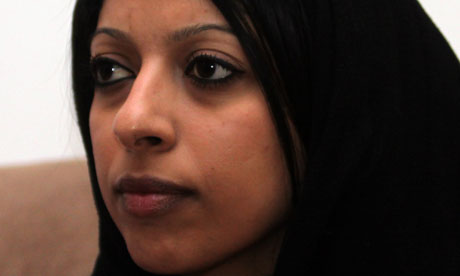
In a meeting with Interior Minister Shaikh Rashid bin Abdulla Al Khalifa, the British ambassador to Bahrain, Jamie Bowden, raised concerns over the deaths of four dissident prisoners in the last week. Catherine Ashton, the EU's high representative for foreign affairs, speaking through a spokesman also called on the Bahrain regime to immediately release all those who have been detained for peacefully expressing themselves. Ashton announced she is to visit Bahrain next week and her spokesman called on the authorities to "investigate all recent events which have resulted in loss of life and injuries".
The high-level interventions follow what pro-democracy activists in Bahrain complain has been a period of minimal censure from Europe and the US of the renewed crackdown. They came as Zainab al-Khawaja, a 27-year-old mother on hunger strike following the beating and arrest of her father, Abdulhadi al-Khawaja – a prominent human rights activist – along with her husband and brother-in-law, saw her health slump. She had been speaking out against the government's treatment of her family through the media and her Twitter blog but she struggled to stand up, vomited and could no longer breastfeed her 18-month-old daughter, according to her mother.
"I asked if I could put some sugar in her water because I can see her suffering and her daughter is crying for milk because she can't breastfeed her. She said no," said Khadija al-Khawaja, 52. "She is just sleeping. I go and wake her up, she opens her eyes and speaks to me and says she is OK. I told her you have a little girl whose father is not here and if anything happens to you … but she feels she needs to do something. She is very angry and very upset about what is happening."
The family has received no information about the fate of Abdulhadi, Zainab's husband Wafu Almajed or her brother-in-law Hussein Ahmed. But there was hope for her uncle who was arrested three weeks earlier, when his wife was called to bring clothes for him to the military court building, though she was not allowed to see him. Abdulhadi was beaten and arrested after he denounced the King of Bahrain and called for him to be put on trial. It is thought the two other men were arrested because they were with him at the time, but were not the targets.
The Bahraini government has widened its crackdown on dissent by preparing a case to dissolve Al Wefaq, a registered political society that previously held 18 of the 40 seats in the chamber of deputies before it withdrew in protest at the government's handling of demonstrations in February. It is also trying to shut down the Islamic Action Society, another registered society. A spokesman for the British foreign office denounced the move as "a backward step for reform" and said "the best way out of the situation is through inclusive dialogue".
Kareem Fakhwiri, a member of Al Wefaq, was buried on Wednesday after he died in police custody and suffered extensive bruising.
"We are deeply concerned by the many reports of human rights abuses in Bahrain," said a foreign office spokesman. "We are particularly worried by the deaths of four prisoners in the past week. Our ambassador raised these deaths with the minister of interior on 14 April. We call on the government to investigate them fully and transparently and we continue to urge the Bahraini authorities to act in accordance with the law and to meet international standards for the treatment of detainees."
Khadija al-Khawaja said she was increasingly afraid the authorities would call to announce her husband's death, after she visited Kobra Fakhwiri, the widow of Kareem Fakhwiri.
Canada to help build Peshawar-Torkham Highway

Canadian High Commissioner Ross Hynes said that the government of Canada will assist in the construction of the Peshawar-Torkham Highway to mitigate the problems of the masses. He stated this while speaking in a high level meeting here on the Pak-Afghan border.
Phased construction on the road will start next week and is expected to be completed within three years. A team of engineers, he said would arrive next week.
The meeting discussed the Liaison Office on the Peshawar-Torkham Highway at Torkham, noting that it will help resolve problems faced by traders and travellers. During the briefing it was stated that the office would promote coordination between the two neighbours.
Concrete steps for development of FATA
Prime Minister Syed Yusuf Raza Gilani has said that Government is taking concrete measures for the development of Federal Administrated Tribal Areas (FATA). The Government, he maintained, is determined to address the sense of deprivation among the people of these areas by bringing them into mainstream politics.
The Prime Minister was talking to Haji Muneer Ahmad Khan Orakzai, MNA from FATA, who called on him at Prime Minister’s House here on Thursday.
The Prime Minister said that the Government is according to priority to provide education and health facilities in all agencies. He asked that the Tribal elders and local administration from FATA should be taken onboard to implement these policies.
Referring to the drone attacks in the tribal areas, the Prime Minister said that the Government has strongly condemned the attacks and termed it violation of the sovereignty of Pakistan territory. He maintained that the issue is being raised at all the forums and with the NATO Forces to convey them the concerns of Pakistan. These attacks, he added, are counter productive in war against terror.
Haji Muneer thanked the Prime Minister for his personal interest for the development of FATA. He apprised him of the progress of various gas supply schemes initiated by Federal Government in all the agencies.
The Prime Minister was talking to Haji Muneer Ahmad Khan Orakzai, MNA from FATA, who called on him at Prime Minister’s House here on Thursday.
The Prime Minister said that the Government is according to priority to provide education and health facilities in all agencies. He asked that the Tribal elders and local administration from FATA should be taken onboard to implement these policies.
Referring to the drone attacks in the tribal areas, the Prime Minister said that the Government has strongly condemned the attacks and termed it violation of the sovereignty of Pakistan territory. He maintained that the issue is being raised at all the forums and with the NATO Forces to convey them the concerns of Pakistan. These attacks, he added, are counter productive in war against terror.
Haji Muneer thanked the Prime Minister for his personal interest for the development of FATA. He apprised him of the progress of various gas supply schemes initiated by Federal Government in all the agencies.
Wednesday, April 13, 2011
Anti-state protests persist in S Arabia
Saudi anti-government protesters have once again taken to the streets east of the country, condemning the kingdom's military intervention in Bahrain.
Expressing solidarity with anti-government protesters in Bahrain, demonstrators in the city of Qatif called for the immediate withdrawal of Saudi troops from the neighboring country.
Saudi Arabia deployed 1,000 troops to Bahrain in efforts to help the ruling despotic family in its brutal crackdown on anti-regime protesters.
Muslims around the world have denounced the Saudi-led crackdown on anti-government protesters in Bahrain.
Saudi Arabia's military intervention in Bahrain comes despite the conventions of the (Persian) Gulf Cooperation Council that ban any interference in the internal affairs of a regional country.
Saudi Arabia's oil-producing east has been the scene of anti-government protests over the past weeks.
Last month, a Saudi-based human rights group said that authorities have arrested 100 protesters for taking part in or organizing anti-government demonstrations.
Human Rights First Society (HRFS) also revealed that some of the detainees were subject to torture both physically and mentally.
Saudi Arabia's Interior Ministry spokesman Mansour al-Turki refused to comment on the report.
Saudi Arabia's large but minority Shia population complain of wide discrimination against them, insisting that they are treated as second-class citizens and have to struggle to obtain senior-level jobs as well as benefits commonly available to other citizens.
The government of Saudi Arabia denies such charges.
In Saudi Arabia, protest rallies and any public displays of dissent are considered illegal. Senior Wahhabi clerics in the kingdom have also censured opposition demonstrations as "un-Islamic."
Expressing solidarity with anti-government protesters in Bahrain, demonstrators in the city of Qatif called for the immediate withdrawal of Saudi troops from the neighboring country.
Saudi Arabia deployed 1,000 troops to Bahrain in efforts to help the ruling despotic family in its brutal crackdown on anti-regime protesters.
Muslims around the world have denounced the Saudi-led crackdown on anti-government protesters in Bahrain.
Saudi Arabia's military intervention in Bahrain comes despite the conventions of the (Persian) Gulf Cooperation Council that ban any interference in the internal affairs of a regional country.
Saudi Arabia's oil-producing east has been the scene of anti-government protests over the past weeks.
Last month, a Saudi-based human rights group said that authorities have arrested 100 protesters for taking part in or organizing anti-government demonstrations.
Human Rights First Society (HRFS) also revealed that some of the detainees were subject to torture both physically and mentally.
Saudi Arabia's Interior Ministry spokesman Mansour al-Turki refused to comment on the report.
Saudi Arabia's large but minority Shia population complain of wide discrimination against them, insisting that they are treated as second-class citizens and have to struggle to obtain senior-level jobs as well as benefits commonly available to other citizens.
The government of Saudi Arabia denies such charges.
In Saudi Arabia, protest rallies and any public displays of dissent are considered illegal. Senior Wahhabi clerics in the kingdom have also censured opposition demonstrations as "un-Islamic."
U.S. Missiles Strike in Northern Pakistan as Relations Sour Over CIA Role
U.S. missiles struck near a Pakistani village on the border with Afghanistan, days after Pakistan’s army leadership reportedly pressed the Obama administration to reduce attacks by remotely piloted aircraft.
“Missiles were fired by a U.S. drone at Baghar China,” a hamlet in Pakistan’s South Waziristan district, Tariq Hayat Khan, the secretary of law and order for Pakistan’s tribal zone, said by phone from the territory’s headquarters in Peshawar. A local resident, Ilyas Khan Wazir, confirmed an attack in a phone interview, saying he heard explosions.
The strike was the first since Pakistan’s intelligence chief, army Lieutenant General Ahmed Shuja Pasha, pressed the U.S. for changes in drone attacks and other Central Intelligence Agency activities in Pakistan during meetings April 11 in Washington, according to unidentified U.S. and Pakistani officials cited by the New York Times.
Tensions between the CIA and Pakistan’s Inter-Services Intelligence Directorate, or ISI, have risen since Jan. 27, when a security contractor for the CIA shot and killed two armed Pakistanis he said were trying to rob him. Raymond Davis, released March 16 after the payment of compensation to the dead men’s families and threats by U.S. legislators to halt American aid, was one of an unconfirmed number of CIA contractors in the country.
Pakistan’s ISI has seen an increased CIA network in the country as a threat, said Talat Masood, a political and security analyst in the capital, Islamabad.
CIA Acting ‘Independently’
For the first time in the relationship between the two intelligence agencies involved in the fight against Islamic militant groups, the CIA “is trying to penetrate into Pakistan and influence events independently of ISI,” said Masood, a retired army lieutenant general who maintains contact with senior Pakistani officers. “This, for ISI, is a break of partnership and breach of Pakistan sovereignty and breach of confidence,” Masood said in a phone interview.
On Monday, Pasha met with CIA director Leon Panetta and Admiral Mike Mullen, the chairman of the Joint Chiefs of Staff, to demand that the CIA give ISI more information about intelligence operations it has been conducting in Pakistan on its own, the Times said citing unidentified Pakistani and U.S. officials.
“ISI wants CIA to go back to fundamentals and readjust their strategy,” Masood said of the Pakistani demands. “I think that will happen because they both need each other. I see fewer drone attacks right now,” he said.
U.S. government officials refuse to confirm or discuss the six-year-old program of drone attacks in Pakistan, which have targeted the Taliban, al-Qaeda and allied militants, while also killing civilians.
Calls by Pakistani politicians to restrict the attacks intensified after a March 17 attack that Pakistani officials said killed between 26 and 35 people in the district of North Waziristan, which the U.S. says is a haven for Taliban and al- Qaeda militants.
“Missiles were fired by a U.S. drone at Baghar China,” a hamlet in Pakistan’s South Waziristan district, Tariq Hayat Khan, the secretary of law and order for Pakistan’s tribal zone, said by phone from the territory’s headquarters in Peshawar. A local resident, Ilyas Khan Wazir, confirmed an attack in a phone interview, saying he heard explosions.
The strike was the first since Pakistan’s intelligence chief, army Lieutenant General Ahmed Shuja Pasha, pressed the U.S. for changes in drone attacks and other Central Intelligence Agency activities in Pakistan during meetings April 11 in Washington, according to unidentified U.S. and Pakistani officials cited by the New York Times.
Tensions between the CIA and Pakistan’s Inter-Services Intelligence Directorate, or ISI, have risen since Jan. 27, when a security contractor for the CIA shot and killed two armed Pakistanis he said were trying to rob him. Raymond Davis, released March 16 after the payment of compensation to the dead men’s families and threats by U.S. legislators to halt American aid, was one of an unconfirmed number of CIA contractors in the country.
Pakistan’s ISI has seen an increased CIA network in the country as a threat, said Talat Masood, a political and security analyst in the capital, Islamabad.
CIA Acting ‘Independently’
For the first time in the relationship between the two intelligence agencies involved in the fight against Islamic militant groups, the CIA “is trying to penetrate into Pakistan and influence events independently of ISI,” said Masood, a retired army lieutenant general who maintains contact with senior Pakistani officers. “This, for ISI, is a break of partnership and breach of Pakistan sovereignty and breach of confidence,” Masood said in a phone interview.
On Monday, Pasha met with CIA director Leon Panetta and Admiral Mike Mullen, the chairman of the Joint Chiefs of Staff, to demand that the CIA give ISI more information about intelligence operations it has been conducting in Pakistan on its own, the Times said citing unidentified Pakistani and U.S. officials.
“ISI wants CIA to go back to fundamentals and readjust their strategy,” Masood said of the Pakistani demands. “I think that will happen because they both need each other. I see fewer drone attacks right now,” he said.
U.S. government officials refuse to confirm or discuss the six-year-old program of drone attacks in Pakistan, which have targeted the Taliban, al-Qaeda and allied militants, while also killing civilians.
Calls by Pakistani politicians to restrict the attacks intensified after a March 17 attack that Pakistani officials said killed between 26 and 35 people in the district of North Waziristan, which the U.S. says is a haven for Taliban and al- Qaeda militants.
Karzai part of the problem, says Afghan opposition leader
Surghar Daily
Afghanistan President Hamid Karzai has become a problem rather than part of the solution, the country’s top opposition leader says.
“In terms of Karzai government in itself it has turned into a problem rather than being part of the solution. That's I think the main challenge for the people of Afghanistan as well as friends of Afghanistan, the international community through the United States,” Abdullah Abdullah told the Charlie Rose show on PBS Monday night.
Chairman of the Coalition for Hope and Change, Abdullah is currently on a 10-day visit to Washington during which he is scheduled to address a number of think tanks, meet top Congressional leaders and officials of the Obama administration.
Defeated by Karzai in the 2009 Afghan presidential elections, Abdullah says the purpose of his trip is to familiarize the opinion builders and policy makers in Washington about the ground realities in Afghanistan. He is also scheduled to address the World Islamic Forum Conference being held in Washington.
In his first television appearance Monday night, Abdullah warned that it would be difficult to meet the much anticipated transition deadline. This he attributed mainly to the alleged failure of the current government.
Abdullah urged the Obama administration to revisit its Afghan policies so that to the people of Afghanistan it is proved that the support is not just one person or one group of people but rather the people of Afghanistan.
“In today's situation the people are thinking, the Afghans are thinking that whatever happens, the United States will be supportive of Mr. Karzai and his government and the parliament of the people of Afghanistan. I'm not saying that this is the actual case but this is the perception of the people of Afghanistan. And that needs to be changed,” he said.
“I would say that rather than jumping into the idea of reconciling with the Taliban on the idea of helping Afghanistan to establish a democratic system in a functioning government, try to stand by the process and also regain the trust of the people of Afghanistan, because in today's situation, the lack of trust between the people and the government of Afghanistan, between the government of Afghanistan and the international community, the international community and the people of Afghanistan has created a confusing situation that the enemies of all of us, the enemies of the people of Afghanistan as well as the international community are the capitalizing on this and Taliban are gaining strength,” he observed.
Abdullah alleged that Karzai would try some unconstitutional means to stay in power after the expiration of his current term in 2014. As Karzai's main opponent during the 2009 Afghan presidential elections, Abdullah won 31 percent of legitimate votes in the first round, choosing not to stand in the second round, citing fraud.
A former member of Karzai's cabinet before being discharged, Abdullah has come out as a strong critic of Karzai, highlighting the chasm between Karzai and the Afghan public due to widespread corruption in Karzai's administration and the ongoing insurgency.
In his address to the Asia Society on Monday, his first speaking assignment in Washington, Abdullah shared his knowledge of the current situation including challenges and developments towards the potential for engagement with vested elements. He also underlined how the political process can be impelled to move forward towards a solution.
Afghanistan President Hamid Karzai has become a problem rather than part of the solution, the country’s top opposition leader says.

“In terms of Karzai government in itself it has turned into a problem rather than being part of the solution. That's I think the main challenge for the people of Afghanistan as well as friends of Afghanistan, the international community through the United States,” Abdullah Abdullah told the Charlie Rose show on PBS Monday night.
Chairman of the Coalition for Hope and Change, Abdullah is currently on a 10-day visit to Washington during which he is scheduled to address a number of think tanks, meet top Congressional leaders and officials of the Obama administration.
Defeated by Karzai in the 2009 Afghan presidential elections, Abdullah says the purpose of his trip is to familiarize the opinion builders and policy makers in Washington about the ground realities in Afghanistan. He is also scheduled to address the World Islamic Forum Conference being held in Washington.
In his first television appearance Monday night, Abdullah warned that it would be difficult to meet the much anticipated transition deadline. This he attributed mainly to the alleged failure of the current government.
Abdullah urged the Obama administration to revisit its Afghan policies so that to the people of Afghanistan it is proved that the support is not just one person or one group of people but rather the people of Afghanistan.
“In today's situation the people are thinking, the Afghans are thinking that whatever happens, the United States will be supportive of Mr. Karzai and his government and the parliament of the people of Afghanistan. I'm not saying that this is the actual case but this is the perception of the people of Afghanistan. And that needs to be changed,” he said.
“I would say that rather than jumping into the idea of reconciling with the Taliban on the idea of helping Afghanistan to establish a democratic system in a functioning government, try to stand by the process and also regain the trust of the people of Afghanistan, because in today's situation, the lack of trust between the people and the government of Afghanistan, between the government of Afghanistan and the international community, the international community and the people of Afghanistan has created a confusing situation that the enemies of all of us, the enemies of the people of Afghanistan as well as the international community are the capitalizing on this and Taliban are gaining strength,” he observed.
Abdullah alleged that Karzai would try some unconstitutional means to stay in power after the expiration of his current term in 2014. As Karzai's main opponent during the 2009 Afghan presidential elections, Abdullah won 31 percent of legitimate votes in the first round, choosing not to stand in the second round, citing fraud.
A former member of Karzai's cabinet before being discharged, Abdullah has come out as a strong critic of Karzai, highlighting the chasm between Karzai and the Afghan public due to widespread corruption in Karzai's administration and the ongoing insurgency.
In his address to the Asia Society on Monday, his first speaking assignment in Washington, Abdullah shared his knowledge of the current situation including challenges and developments towards the potential for engagement with vested elements. He also underlined how the political process can be impelled to move forward towards a solution.
Ashley Judd apologizes for hip-hop remarks
cnn.com
After being criticized for attacking rap and hip-hop in her memoir, “All That Is Bitter and Sweet,” Ashley Judd
is extending an olive branch along with a few points of clarification.
The backlash began after an excerpt from her book depicted the actress lobbing harsh words at the rap and hip-hop genres as well as artists Snoop Dogg and P. Diddy. While speaking about an AIDS awareness program she works with, Judd writes, "Along with other performers, YouthAIDS was supported by rap and hip-hop artists like Snoop Dogg and P. Diddy to spread the message...um, who? Those names were a red flag.”
Judd continued, “As far as I'm concerned, most rap and hip-hop music - with its rape culture and insanely abusive lyrics and depictions of girls and women as 'ho's' - is the contemporary soundtrack of misogyny.”
She concludes, "I believe that the social construction of gender - the cultural beliefs and practices that divide the sexes and institutionalize and normalize the unequal treatment of girls and women, privilege the interests of boys and men, and, most nefariously, incessantly sexualize girls and women - is the root cause of poverty and suffering around the world."
Now the 42-year-old says that in light of the many responses around the Web, she believes she should’ve framed her opinion a bit differently.
"The outcry regarding my remarks, 2 paragraphs of my 400+ page book, regarding hip hop and rap, has been as astounding as it is out of context...I have looked closely at the feedback I have received about those two paragraphs, and absolutely see your points, and I fully capitulate to your rightness, and again humbly offer my heartfelt amends for not having been able to see the fault in my writing, and not having anticipated it would be painful for so many. Crucial words are missing that could have made a giant difference,” she says in a post on GlobalGrind.com.
Judd asserts that those paragraphs should read: “Some hip hop, and some rap, is abusive. Some of it is part of the contemporary soundtrack [of] misogyny (which, of course, is multi-sonic). Some of it promotes the rape culture so pervasive in our world...I should have been clear...that I include hip-hop and rap as part of a much larger problem. It is beyond unfortunate that I am talking about some, for example, of Snoop Dogs’ lyrics, an assumption has been spread I was talking about every single artist in both genres."
She explains that if someone were to make generalizations about the music genres she grew up with, she too would feel slighted.
"My equivalent genres, as an Appalachian, an oppressed and ridiculed people, would be mountain music and bluegrass. Those genres tell the history, struggles, grief, soul, faith, and culture of my people. In imagining how I would feel if someone made negative generalizations about that music, I am deeply remorseful that anything I may have said in 'All That Is Bitter & Sweet' would hurt adherents of genres that represent their culture," Judd says.
The actress also clarifies that she was by no means trying to blame rap and hip-hop for "poverty, AIDS, and the whole of rape culture."
"Please, people. Seriously," she writes. "I am white, yes, but in spite of some allegations to the contrary, I am not an idiot. Gender inequality and rape culture were here a long before the birth of the genres and rage everywhere. "
But there's one thing Judd won't apologize for, and that's speaking out against hate and violence towards women and girls.
"Hatred of girls and women, I will oppose with spiritual and non-violent principles every day," she concludes, adding that the Twitter responses to her remarks included death threats. "Abuse and violence in any form, at any time, in any expression, are never okay. Period. I, and other girls and women, are not afraid of you. You can keep on hating, but I am going to keep on loving."
After being criticized for attacking rap and hip-hop in her memoir, “All That Is Bitter and Sweet,” Ashley Judd
is extending an olive branch along with a few points of clarification.
The backlash began after an excerpt from her book depicted the actress lobbing harsh words at the rap and hip-hop genres as well as artists Snoop Dogg and P. Diddy. While speaking about an AIDS awareness program she works with, Judd writes, "Along with other performers, YouthAIDS was supported by rap and hip-hop artists like Snoop Dogg and P. Diddy to spread the message...um, who? Those names were a red flag.”
Judd continued, “As far as I'm concerned, most rap and hip-hop music - with its rape culture and insanely abusive lyrics and depictions of girls and women as 'ho's' - is the contemporary soundtrack of misogyny.”
She concludes, "I believe that the social construction of gender - the cultural beliefs and practices that divide the sexes and institutionalize and normalize the unequal treatment of girls and women, privilege the interests of boys and men, and, most nefariously, incessantly sexualize girls and women - is the root cause of poverty and suffering around the world."
Now the 42-year-old says that in light of the many responses around the Web, she believes she should’ve framed her opinion a bit differently.
"The outcry regarding my remarks, 2 paragraphs of my 400+ page book, regarding hip hop and rap, has been as astounding as it is out of context...I have looked closely at the feedback I have received about those two paragraphs, and absolutely see your points, and I fully capitulate to your rightness, and again humbly offer my heartfelt amends for not having been able to see the fault in my writing, and not having anticipated it would be painful for so many. Crucial words are missing that could have made a giant difference,” she says in a post on GlobalGrind.com.
Judd asserts that those paragraphs should read: “Some hip hop, and some rap, is abusive. Some of it is part of the contemporary soundtrack [of] misogyny (which, of course, is multi-sonic). Some of it promotes the rape culture so pervasive in our world...I should have been clear...that I include hip-hop and rap as part of a much larger problem. It is beyond unfortunate that I am talking about some, for example, of Snoop Dogs’ lyrics, an assumption has been spread I was talking about every single artist in both genres."
She explains that if someone were to make generalizations about the music genres she grew up with, she too would feel slighted.
"My equivalent genres, as an Appalachian, an oppressed and ridiculed people, would be mountain music and bluegrass. Those genres tell the history, struggles, grief, soul, faith, and culture of my people. In imagining how I would feel if someone made negative generalizations about that music, I am deeply remorseful that anything I may have said in 'All That Is Bitter & Sweet' would hurt adherents of genres that represent their culture," Judd says.
The actress also clarifies that she was by no means trying to blame rap and hip-hop for "poverty, AIDS, and the whole of rape culture."
"Please, people. Seriously," she writes. "I am white, yes, but in spite of some allegations to the contrary, I am not an idiot. Gender inequality and rape culture were here a long before the birth of the genres and rage everywhere. "
But there's one thing Judd won't apologize for, and that's speaking out against hate and violence towards women and girls.
"Hatred of girls and women, I will oppose with spiritual and non-violent principles every day," she concludes, adding that the Twitter responses to her remarks included death threats. "Abuse and violence in any form, at any time, in any expression, are never okay. Period. I, and other girls and women, are not afraid of you. You can keep on hating, but I am going to keep on loving."
Tuesday, April 12, 2011
Daughter of jailed Bahraini goes on hunger strike

A daughter of a prominent Bahraini human rights activist went on hunger strike on Tuesday to protest the arrest of several family members — including her father and her husband — for their connection to anti-government protests.
Zainab al-Khawaja

told The Associated Press that she will refuse food until her father, Abdulhadi al-Khawaja, is released, along with her husband, brother-in-law and uncle.
The 27-year-old mother of a baby girl first announced her hunger strike in a letter addressed to President Barack Obama that she posted on her blog on Monday.
The uncle was arrested in a different police sweep while the other three men were taken into custody in a raid on Zainab's house in a Shiite village outside the capital Manama on Saturday. Zainab said her father was beaten unconscious before he was taken away by armed masked men
"My father's only crime is that he has documented human rights abuses in Bahrain," Zainab al-Khawaja told the AP in a phone interview. "I demand he and all men of my family are released."
State Department spokesman Mark Toner said the U.S. was aware of the case and was calling on Bahraini authorities to "allow these individuals to freely express themselves and uphold their universal rights."
Authorities in Bahrain have cracked down heavily on dissent since martial law was declared last month to quell protests by the country's Shiite majority against the Sunni royal family that has ruled the tiny Gulf island nation for more than 200 years.
The Shiites are agitating for greater political freedoms and equal rights.
Bahrain holds particular importance to Washington as the host of U.S. Navy's 5th Fleet, the main American counterweight to Iran's efforts to expand its military influence into the Gulf.
The United States has urged the monarchy to respect human rights but says little about allegations of repression against Bahrain's Shiites.
Abdulhadi al-Khawaja, 50, is a former Middle East and North Africa director of Frontline Defenders rights organization. He also documented human rights abuses in Bahrain for Amnesty International and Human Rights Watch.
At least 29 people have been killed since the protests began on Feb. 14, including three opposition supporters who died in custody. Hundreds of Shiite activists, anti-government protesters and opposition leaders have been detained in the crackdown.
None of those in custody have been publicly charged with a crime or brought to trial.
On Monday, authorities said three former top editors of Bahrain's main opposition newspaper will face trial for "unethical" coverage of the political unrest in the Gulf kingdom.
Bahrain's official news agency said the top editors of Al Wasat newspaper have been charged with "publishing fabricated news," "harming public safety" and "damaging national interests."
No date has been set for the beginning of the trial.
Bahrain's Interior Ministry said in a statement late Monday that 86 prisoners were released. The statement did not say if anti-government protesters and opposition supporters were among them.
Pakistan-based militant group expanding: U.S. general

A top U.S. general expressed concern to Congress on Tuesday about the expanding reach of the Pakistan-based Lashkar-e-Taiba militant group, warning it was no longer solely focused on India or even South Asia.
LeT, one of the largest and best-funded Islamic militant organizations in the region, is blamed for the November 2008 attacks on Mumbai, which killed 166 people in India's commercial capital.
The group was nurtured by Pakistan's Inter-Services Intelligence spy agency to fight India in Kashmir, and analysts say it is still unofficially tolerated even though Islamabad banned the group nearly a decade ago.
Admiral Robert Willard, head of the U.S. military's Pacific Command, told a Senate hearing the United States was actively working with South Asian governments including Nepal, Bangladesh, Sri Lanka, the Maldives and India to contain LeT.
But he cautioned that the group was active elsewhere.
"Unquestionably they have spread their influence internationally and are no longer solely focused in South Asia and on India," Willard told the Senate Armed Services Committee.
The United States has evidence of LeT's presence in Europe and the broader Asia-Pacific region, he said.
In the past, LeT has fielded militants in Canada and in the United States.
India continues to be LeT's main target. But Willard noted that the group has declared holy war against the United States and renewed longstanding concerns in Washington about attacks by LeT militants against U.S. forces in Afghanistan.
"The discussion regarding the government of Pakistan's relationship to LeT is a very sensitive one," Willard said.
The comments come at a sensitive time in U.S.-Pakistan relations. Pakistan is demanding the United States scale back CIA activities and reduce the number U.S. Special Forces trainers in the latest example of strained security ties.
Although the U.S. focus in Pakistan remains on al Qaeda and militant groups more deeply involved in Afghanistan, there has been increasing attention in Washington on LeT, particularly since the arrest of Pakistani-American David Headley in 2009.
Headley had joined LeT hoping to fight in Kashmir but ended up scouting out targets for the Mumbai attackers and helping al Qaeda plan a strike in Denmark.
"It's important that this particular discussion continue to take place and that we continue to work with the government of Pakistan to root out terrorism that exists within their borders," Willard said.
The White House last week warned that despite unprecedented efforts by Pakistan to go after militants within its borders, it lacked a clear path to defeat them.
US will not leave Afghanistan, says Munter
Surghar Daily

The United States on Monday called for a policy of ‘renewal’ with Pakistan, in the aftermath of ‘acute problems,’ saying that now it was time to look into “opportunities in the future, not problems of the past”.
US Ambassador Cameron Munter, who just returned after a two-week visit to the US, delivered his first major policy speech after January 27, when CIA contractor Raymond Davis shot dead two Pakistanis, plummeting civil and military relations with the US to an all time low.
Munter spoke at the Institute of Strategic Studies, Islamabad (ISSI), after introductory remarks by ISSI DG, Ambassador Ashraf Jehangir Qazi.Munter’s remarks appearing as a ‘band-aid’, come immediately after a scathing State Department annual survey on human rights and a White House report to the Congress, criticising Pakistan’s will to fight the militants.
“The Pak-US relations are not in the intensive care unit. They are very healthy, and I am more optimistic about our relations today than when I came to Pakistan,” Munter responded to a question. He rejected the notion that the US was dictating with money. “We do things in partnership. We have been too slow. There is a lot of red tape,” he said.
After a rather bland speech, which revealed nothing new, and predictable questions, Munter was game for criticism and appreciated the ‘blunt’ and ‘frank’ questions thrown at him from the audience. He spoke at a time when DG ISI Gen Ahmed Shuja Pasha was on his way to Washington, and Foreign Secretary Salman Bashir prepared to follow later this month. Finance Minister Hafeez Sheikh will be another visitor to Washington this month.
“We’ve had some difficult days in the recent past. But I’m here today to speak of opportunities in the future, not of problems of the past. Those problems have been acute in recent months, symbolised by the case of Raymond Davis. We must not let this very regrettable incident stop us as we work together. Instead, let us look for renewal,” Munter remarked.
When reminded about some very revealing remarks made by Richard Armitage while in New Delhi, Munter replied, “I do not agree with Richard Armitage’s assessment that relations with Pakistan are based on our needs while India is a natural ally. We are natural friends and are doing our best and not afraid to choose.”
The US ambassador spoke on the presence his country’s presence inside Afghanistan, saying that 2014 was not the year of the US withdrawal, rather the state of commitment may change, and the focus would be more on the civil side rather than military.
“We will not leave Afghanistan. Pakistan must be stable for the region’s success,” he added while promising to take a message from a participant about the US drones to Washington. “It is on the agenda,” he reassured the audience.
Munter spoke on a day when President Asif Ali Zardari, in an interview to Guardian, pointed out that the war in Afghanistan is destabilising Pakistan and seriously undermining efforts to restore its democratic institutions while expressing concern about the slow pace of efforts to end the Afghan conflict and said some US politicians showed limited understanding of the impact of American policies.
“The US appreciates the Pakistan military, specially its operation in the northeast and in Mohmand Agency. These are tough battles. Admiral Mike Mullen, General David Petaerus and General James Mattis are all very, very impressed by these significant efforts. We admire the military,” he pointed out when asked about the tough line coming from Washington that Pakistan was not doing enough.
He agreed that the term “war on terror” should not be used as “coverall”. “We need to be more careful. A number of issues are used under this. A more fruitful way would be to call them intolerant, paid by foreign agents”, he advised.
The ambassador was unaware that no student in the last 10 years from the American Studies Department at the QAU has ever got a visa for the US. He blamed it on red tape and lack of rapport with Pakistanis because of security concerns.
When asked about the lack of justice to Attaur Rehman, who was crushed to death by a US Consulate vehicle with the driver escaping, Munter replied, “Our regret about the Lahore incident is sincere. We will do our best to redress this. We share the concern.” This after nearly three months of Rehman’s death.
Munter appeared fascinated by Pakistan’s media saying, “I have never encountered a media like that of Pakistan. I spend several hours reading. There are too many ideas to keep track of. The media is divided into fashion and deep thoughts. Some follow the question of the day, others follow issues which are exciting rather than deep.”
The United States on Monday called for a policy of ‘renewal’ with Pakistan, in the aftermath of ‘acute problems,’ saying that now it was time to look into “opportunities in the future, not problems of the past”.
US Ambassador Cameron Munter, who just returned after a two-week visit to the US, delivered his first major policy speech after January 27, when CIA contractor Raymond Davis shot dead two Pakistanis, plummeting civil and military relations with the US to an all time low.
Munter spoke at the Institute of Strategic Studies, Islamabad (ISSI), after introductory remarks by ISSI DG, Ambassador Ashraf Jehangir Qazi.Munter’s remarks appearing as a ‘band-aid’, come immediately after a scathing State Department annual survey on human rights and a White House report to the Congress, criticising Pakistan’s will to fight the militants.
“The Pak-US relations are not in the intensive care unit. They are very healthy, and I am more optimistic about our relations today than when I came to Pakistan,” Munter responded to a question. He rejected the notion that the US was dictating with money. “We do things in partnership. We have been too slow. There is a lot of red tape,” he said.
After a rather bland speech, which revealed nothing new, and predictable questions, Munter was game for criticism and appreciated the ‘blunt’ and ‘frank’ questions thrown at him from the audience. He spoke at a time when DG ISI Gen Ahmed Shuja Pasha was on his way to Washington, and Foreign Secretary Salman Bashir prepared to follow later this month. Finance Minister Hafeez Sheikh will be another visitor to Washington this month.
“We’ve had some difficult days in the recent past. But I’m here today to speak of opportunities in the future, not of problems of the past. Those problems have been acute in recent months, symbolised by the case of Raymond Davis. We must not let this very regrettable incident stop us as we work together. Instead, let us look for renewal,” Munter remarked.
When reminded about some very revealing remarks made by Richard Armitage while in New Delhi, Munter replied, “I do not agree with Richard Armitage’s assessment that relations with Pakistan are based on our needs while India is a natural ally. We are natural friends and are doing our best and not afraid to choose.”
The US ambassador spoke on the presence his country’s presence inside Afghanistan, saying that 2014 was not the year of the US withdrawal, rather the state of commitment may change, and the focus would be more on the civil side rather than military.
“We will not leave Afghanistan. Pakistan must be stable for the region’s success,” he added while promising to take a message from a participant about the US drones to Washington. “It is on the agenda,” he reassured the audience.
Munter spoke on a day when President Asif Ali Zardari, in an interview to Guardian, pointed out that the war in Afghanistan is destabilising Pakistan and seriously undermining efforts to restore its democratic institutions while expressing concern about the slow pace of efforts to end the Afghan conflict and said some US politicians showed limited understanding of the impact of American policies.
“The US appreciates the Pakistan military, specially its operation in the northeast and in Mohmand Agency. These are tough battles. Admiral Mike Mullen, General David Petaerus and General James Mattis are all very, very impressed by these significant efforts. We admire the military,” he pointed out when asked about the tough line coming from Washington that Pakistan was not doing enough.
He agreed that the term “war on terror” should not be used as “coverall”. “We need to be more careful. A number of issues are used under this. A more fruitful way would be to call them intolerant, paid by foreign agents”, he advised.
The ambassador was unaware that no student in the last 10 years from the American Studies Department at the QAU has ever got a visa for the US. He blamed it on red tape and lack of rapport with Pakistanis because of security concerns.
When asked about the lack of justice to Attaur Rehman, who was crushed to death by a US Consulate vehicle with the driver escaping, Munter replied, “Our regret about the Lahore incident is sincere. We will do our best to redress this. We share the concern.” This after nearly three months of Rehman’s death.
Munter appeared fascinated by Pakistan’s media saying, “I have never encountered a media like that of Pakistan. I spend several hours reading. There are too many ideas to keep track of. The media is divided into fashion and deep thoughts. Some follow the question of the day, others follow issues which are exciting rather than deep.”
Subscribe to:
Posts (Atom)