Tuesday, May 25, 2010

Billions needed to end US child hunger


US Agriculture Secretary Tom Vilsack on Monday urged Congress to plow billions more dollars into programs to end the twin scourges of child obesity and hunger, which impact children, the economy and national security.With some 17 million children living in households that have to sometimes skip meals to make ends meet, and with a third of US children obese or on the road to becoming so, Vilsack called on lawmakers to "appropriate one billion dollars a year more into programs" aimed at ending the two crises.President Barack Obama in his budget proposal for 2011 set aside an additional one billion dollars a year over 10 years for the child nutrition bill, which Congress is set to re-authorize this year.Childhood hunger and obesity should be made national priorities, said Vilsack, speaking at the launch of a report on child hunger at the Center for American Progress.Not only was it morally wrong for so many children to be going hungry in the world's richest nation, but hunger and obesity also impact the economy, US competitivity and even national security, Vilsack argued."Research shows that youngsters who are either obese or who are hungry simply do not learn as well as they ought to," said Vilsack."Youngsters who are obese take chronic disease into adulthood which substantially reduces their productivity as individuals and causes our health care costs to escalate," he said.
And with so many American children obese, military leaders have voiced concerns that not enough youngsters are fit to serve in the army, marine, navy and air force, which could impact US national security, he said.
The report says that child hunger costs the US economy at least 28 billion dollars per year "because poorly nourished children perform less well in school and require far more long-term health care spending."Further, food insufficiency severely hampers children?s emotional, intellectual, and physical development, and it strongly hinders the upward mobility of their parents," it says.

China drives world wine market


The fourth Asian Vinexpo featuring 840 exhibitors from 32 countries opened Tuesday in Hong Kong as the global economic crisis pushed exporters to focus on the world's most promising market: China.
"A little like 2009 vintage Bordeaux, this Vinexpo is exceptional. There are more exhibitors and we expect more than 10,000 professionals, including a large number from China," said chief executive Robert Beynat.The annual wine and spirits fair is key to Hong Kong's bid to turn itself into a wine trading centre that sits on the doorstep of the vast Asian market with Chinese consumers showing a growing demand for foreign products.French wines occupy almost half the 8,500 square metre site, confirming their place as a favourite among Chinese consumers."China and Hong Kong are the most dynamic Asian markets with per capita consumption rising and strong import growth (8.7 million cases in 2008)," Beynat said."European and US producers are turning towards these markets to recover from the (economic) crisis."Italian, Spanish and German wines round out Europe's offering at the fair, with the US doubling the number of its exhibitors and Australian and New Zealand vintners boosting their presence by 30 percent.Asia-Pacific accounts for 50.6 percent of world spirits consumption with an expected 4.7 percent increase between 2009 and 2013.Although Japan remains the region's biggest wine importer, China will have nearly caught up in the next three years, according to Vinexpo.China is expected to be the world's seventh-largest wine consumer by 2013, it said."There are 100 to 150 million people in China who can afford to drink wine. It is these people, and not only millionaires, that we must reach," said Alain Vironneau, president of the Bordeaux Wine Council.Added Beynat: "Our challenge is to explain to Chinese consumers that there are good wines at all prices and they're not reserved just for the elite".

Clinton and Geithner Face Hurdles in China Talks

New York Times
China and the United States opened three days of high-level meetings here on Monday meant to broaden and deepen the ties between the world’s largest developed and developing economies. But the opening session instead laid bare a recurring theme between Beijing and Washington: the United States came with a long wish list for China on both economic and security issues, while China mostly wants to be left alone to pursue policies that are turning it into an economic superpower.

President Hu Jintao, welcoming the 200-strong American delegation in the Great Hall of the People, praised the “mutually beneficial and win-win cooperation” between the United States and China. Such coordination, he said, had helped speed the recovery from the 2008 financial crisis.

On the crucial issue of China revaluing its currency — something the Obama administration had pushed for — Mr. Hu repeated China’s past promises to make its effectively fixed exchange rate respond more to the market, but the fact that the country’s top leader mentioned reform at all suggested it is on the leadership’s agenda.

Still, Mr. Hu also repeated that Beijing would move “under the principle of independent decision-making, controllability, and gradual progress.” Translation: China alone will determine the timing of any such move.

Economists said the deepening debt crisis in Greece, which came up immediately in the discussions on Monday, would make Beijing more reluctant to allow its currency to appreciate in value in the immediate future.

Treasury Secretary Timothy F. Geithner did not mention China’s currency in his opening remarks, though he did allude to it in subsequent sessions. The administration has decided not to prod Beijing at this meeting, officials said, concluding that it would resist outside pressure.

The United States is hitting similar hurdles on security issues. Secretary of State Hillary Rodham Clinton pressed China to support measures against North Korea following the strong evidence that it torpedoed a South Korean warship in March. But China has been skeptical of North Korea’s role and is reluctant to punish the North, with which it has close ties.

And while China agreed to a watered-down United Nations resolution on Iran’s nuclear program, it has not signed off on amendments against specific Iranian citizens and companies. With big planned investments in Iran’s oil and gas industry, China may well be in business with some of them.

In her speech to the opening session, Mrs. Clinton cited Iran and North Korea as issues in which Beijing and Washington must find common cause. “Today, we face another serious challenge provoked by the sinking of the South Korean ship,” she said. “So we must work together, again, to address this challenge and advance our shared objectives of peace and stability.”

A spokesman for the Foreign Ministry, Ma Zhaoxu, was noncommittal, saying of the Korea crisis, “We hope all the relevant parties will exercise restraint and remain cool-headed.”

Some of this is cultural, to be sure. Chinese officials tend to speak far less directly than Americans. Mr. Hu did not mention Iran and North Korea, referring to regional “hot spots.” The fact that he frankly addressed the exchange rate of China’s currency, the renminbi, surprised some observers, and lent itself to varying interpretations.

For some experts, Mr. Hu’s pledge to “steadily advance the reform mechanism of the RMB exchange rate,” without repeating his previous references to the rate being “basically stable,” was a sign of conciliation. “It’s important, the fact they haven’t mentioned it,” said Ben Simpfendorfer, the China economist for the Royal Bank of Scotland.

But others interpreted it as a pre-emptive move to take the issue off the table. Eswar Prasad, an economist at Cornell University, noted that the crisis in Greece had rattled the Chinese on two levels. It was likely to curb their exports to Europe, and it had strengthened the renminbi relative to the swooning euro, which makes Chinese goods more costly in foreign markets.

“That double hit on China’s exports almost certainly means that they’re not going to move forward unless there is evidence of stabilization in the euro and stabilization in Europe’s recovery,” Mr. Prasad said.

A senior Chinese official said that Beijing would keep a “high alert and attention on the euro zone sovereign debt crisis.” He noted that it could affect not only Europe’s economic recovery but also Chinese exports. China exports more to the European Union than to the United States.

The United States needed a 48-vehicle motorcade to ferry its delegation to this second round of the so-called strategic and economic dialogue. Among the prominent names: the chairman of the Federal Reserve, Ben S. Bernanke, the commander of the military’s Pacific Command, Adm. Robert F. Willard, and the secretary of health and human services, Kathleen Sebelius.

Some of the topics under discussion veered far from economics and security. Mrs. Clinton singled out Melanne Verveer, the State Department’s ambassador at large for women’s issues, who is meeting with Chinese women’s groups to discuss their progress in women’s rights.

Mr. Geithner lobbied against Chinese government procurement rules giving preference to products with intellectual property developed in China. American businesses, particularly in technology, say this handicaps them and deprives China of state-of-the-art products. “Innovation flourishes best when markets are open, competition is fair, and strong protections exist for ideas and inventions,” he said.

The Chinese have their pet issues as well: Beijing is pushing Washington to loosen controls on exports of high-technology equipment with potential military applications. A raft of questions from reporters for state-run Chinese media organizations suggested a coordinated campaign.

If American officials seemed likely to leave China with many of their wishes unfulfilled, there was one notable difference in this year’s meeting compared to the one last year in Washington: the American economy is growing again, which gave Mr. Geithner a rare chance to crow a bit.

Rather than identify the United States with the troubled economies of Europe, Mr. Geithner said the United States was holding its own with emerging economies like Brazil, India, and China.

“Economic growth in the U.S. and China is broader and stronger than many had anticipated, even a few months ago,” he said.

Peshawar fears influx of Taliban militants


PESHAWAR: There is growing concern by residents and tribal lashkars that militants have reached the suburbs of the provincial capital.
The concerns heightened after attacks on a girls school and a security checkpoint in Sherakera village, on the outskirts of Peshawar, close to the border of semi-tribal Darra Adam Khel region. The attack came following reports that militants fleeing security operations in tribal regions have started patrolling some villages in Frontier Regions (FR) Peshawar. “The movement of Taliban militants has increased in the region over the past few weeks,” a member of a tribal lashkar told The Express Tribune on conditions of anonymity.
He added that the operation in February in Frontier Regions Peshawar was not successful because most of the militants had fled the area before paramilitary troops had moved in. The elders said that militants had also warned tribal lashkars not to confront them. “We cannot challenge the powerful Taliban militants in the absence of support from the government,” he added. Dilawar Khan, head of the Adezai Qaumi Lashkar, told The Express Tribune that militants had come to the FR Peshawar areas of Bora and Pastowana from Tirah Valley of Khyber Agency, Orakzai and Darra Adamkhel.
He added that local residents have shifted to safer places. Khan said that their lashkars had controlled the movement of militants till Adezai village. Peshawar’s Superintendent Police Syed Abdul Kalam said that policemen have been deployed in all areas and they are continuously monitoring the situation. “Tribal lashkars are also cooperating with the police and we will not allow militants to enter Peshawar,” he added.
On February 24, the paramilitary Frontier Constabulary (FC) had launched an operation, codenamed “Spring Cleaning”, in the remote FR Peshawar area. Until March 4, when the operation was wrapped up, 38 suspected militants had been killed. The FR region has a strategic location from where it is easy to approach Nowshera, Kohat, Peshawar and Darra Adamkhel.

Pashto Cultural Museum inaugurated

PESHAWAR: Vice-chancellor of the University of Peshawar Prof Dr Azmat Hayat Khan on Monday formally inaugurated the Pashto Cultural and Heritage Museum at the university.
The remaining part of the museum would be established at an estimated cost of Rs24 million in three years. Funds for the project have been provided by the Higher Education Commission, said Prof Dr Salma Shaheen, project director of the museum.
The writer said that the museum was aimed at preserving the Pakhtun culture and heritage so that people from abroad as well as locals and students could understand the way of life of Pakhtuns in the region. “We are on our way to gather the best material for the museum. For the purpose a special committee has been formed,” she said.
Speaking on the occasion, Dr Azmat Hayat said it was a matter of pride for the university to have a museum that was the first of its kind in the country. “This museum is also aimed at providing the visitors a platform to understand our culture and way of life,” the vice-chancellor said. He appealed to the literati, poets and intellectuals of Pashto language to contribute their ideas for the betterment of the museum.

A leader of the ruling Awami National Party, Hashim Babar in his speech said it was dilemma that the world knows very little about Pakhtuns. He said the main reason behind this was that the Pakhtuns had not been able to project their true image.

He said the heroes of this region were not mentioned in history because the Pakhtuns had not been able to project them in different eras. “Pashto Museum is a very good initiative and the building needs to be transformed into a world class structure with brilliant collection so that we can inspire those who visit it,” he remarked, announcing Rs0.5 million for the museum.

Sunday, May 23, 2010

Clinton Sees U.S. Pavilion at China Expo

nytimes.com
By all accounts, the United States would have been a no-show at the Shanghai Expo had Secretary of State Hillary Rodham Clinton not opened her Rolodex and raised about $60 million in private cash to finance a pavilion here. So it seemed fair that Mrs. Clinton got a rousing cheer from a group of Chinese children when she visited the building on Saturday.
But the house that Hillary built is unmistakably the house that corporate America paid for.
After touring the pavilion — with its Citibank- and Pfizer-sponsored theaters, gauzy eight-minute videos featuring representatives from Chevron, General Electric, and Johnson & Johnson, environmentally friendly features sponsored by Alcoa, and a gift shop with licensed merchandise from Disney — Mrs. Clinton seemed less inspired than relieved that the project was done.
“It’s fine,” she said to a reporter asking her what she thought of the pavilion. “Can you imagine if we had not been here?”
With its gunmetal-gray walls and convention-center aesthetics, the pavilion hardly stands out in a fairground studded by beguiling structures like Britain’s Seed Cathedral, a cube with 60,000 sprouting transparent rods that make it look like a dandelion ready to be scattered to the winds.
Still, the American organizers say the pavilion has drawn long lines and 700,000 visitors since the Expo opened May 1, which attests either to the enduring attraction of the United States or the wisdom of Woody Allen’s observation that 80 percent of success is showing up.
For Mrs. Clinton, scratching together the money for the project was a simple matter of avoiding a diplomatic snub. The Chinese government spent $45 billion buffing up this glamorous but gritty metropolis to play host to a world’s fair, and it is treating the six-month-long event with almost the same importance it attached to the Beijing Olympics in 2008.
America’s participation was in jeopardy because Congress restricts the spending of public money on world’s fairs, and under the Bush administration, the project had virtually no private financing. On Mrs. Clinton’s first visit as secretary of state last year, Chinese officials implored her to do something.
“It’s like a coming-out party for countries and cities,” Mrs. Clinton said, referring to world’s fairs of the last century in Chicago and St. Louis. “There’s a real historical significance to this.”
To avoid violating federal rules, Mrs. Clinton assigned most of the one-on-one fund-raising to two longtime Clinton fund-raisers: Elizabeth F. Bagley and Jose H. Villarreal, both of whom were on hand.As she walked in this morning, Mrs. Clinton greeted Indra K. Nooyi, the chief executive of PepsiCo, and senior executives from Chevron, Johnson & Johnson, and General Electric, each of which kicked in $5 million. She met major sponsors again at a dinner on Saturday night.Mrs. Clinton also toured China’s pavilion, a monumental deep-red building with a traditional Chinese inverted roof. “It would have to be very big to fit all the provinces of China in it,” she told Shanghai’s mayor, Han Zheng, who thanked her for making sure the United States had a presence.
Nearly 200 countries are represented at the Expo, which stretches along both banks of the Huangpu River. Two countries branded as rogue nations, Iran and North Korea, are conveniently located next to each other.
Among the North Korean attractions is a video of a rocket launching intercut with pictures of children in a classroom.Iran has gathered examples of its technology, including a primitive satellite and a stuffed goat, which was identified as the country’s first cloned goat. “Only a few countries such as the U.S., U.K., Canada, and China have a cloned goat in their list of achievements,” a placard said.Neither country made any mention of its nuclear program, which in both cases is fueling tension with their neighbors and the United States. But then, the U.S.A. Pavilion does not mention the American political system, the Constitution or the founding fathers.Instead, visitors are treated to a video of Americans struggling to speak Chinese, testimonials about sustainable energy, water conservation, and family values — each presented by a corporate sponsor with interest in those areas — followed by a video about a young girl planting a garden in a garbage-strewn lot. At one point, the seats shake and the audience is sprayed with mist.The highlight at the pavilion is 70 student ambassadors, drawn from universities around the United States, who speak fluent Mandarin, and entertain the long lines of visitors.
Franklin L. Lavin, a former American ambassador to Singapore who is the chairman of the pavilion’s steering committee, said the organizers stayed clear of messages about free speech or democratic institutions in favor of the simple virtues of civic-mindedness.
“We wanted to talk about what works in American society, not what doesn’t work in other societies,” Mr. Lavin said.

Pakhtuns killings a conspiracy

MARDAN: Khyber Pakhtunkhwa Chief Minister Ameer Haider Hoti Saturday condemned target killing of Pakhtuns in Karachi and termed it a conspiracy to widen the gulf of differences between Hazarawals and Pakhtuns.
“Hazarawals are our brothers, we are living in one province and there is no issue between Hazarawals and Pakhtuns that could pit them in an armed action against each other,” said the chief minister while talking to journalists during inaugural ceremony of several projects and a function arranged by Malik Saad Sports Trust at Mardan Sports Complex.
The chief minister distributed sports prizes among players and also announced Rs50 million fund for the sports complex.
Haider Hoti said some people declared the Karachi killings an issue of Hazarwals and Pakhtuns, but said it was a wrong notion.
He said that on the one hand target killings of Pakhtuns continued in Karachi, while on the other some elements were defaming Pakhtuns through various tactics.
Haider Hoti said police played a key role by maintaining peace in province as they rendered sacrifices, which would be written in the Pakistani history in golden words.
Strict security measures were taken in Mardan city during the chief minister’s visit. Vehicles were banned on some roads being used by the chief minister’s cavalcade. During his visit, he inaugurated several schemes including Bank Road.

Egypt and Pakistan to boost trade

Pakistani Foreign Minister Shah Mehmood Qureshi said on Sunday that his country plans to boost trade with Egypt, during a visit to Cairo where he met with President Hosni Mubarak.Qureshi, who was accompanied on his trip by several ministers and a large delegation of businessmen, praised the "excellent" relations between Pakistan and Egypt, the official MENA news agency reported.During talks with his Egyptian counterpart Ahmed Abul Gheit on Saturday, the two diplomats agreed to set up a ministerial level committee to oversee bilateral trade that would meet every two years, Qureshi told MENA.
The two countries would also hold political consultations once a year, Qureshi said.
The talks focused on "exploring new trade opportunities between the two countries, including exporting Pakistani wheat as well as medical and surgical equipment to Egypt," MENA said.
The two sides also looked into exporting Egyptian goods to Pakistan, including fertilizers," it said.
The annual volume of trade between Egypt and Pakistan currently stands at four million dollars, according to MENA.

Germany's Birth Rate Hits Historic Low


Germany is shrinking - and fast. New figures released on May 17 show the birth rate in Europe's biggest economy has plummeted to a historic low, dropping to a level not seen since 1946. As demographers warn of the consequences of not making enough babies to replace and support an ageing population, the latest figures have triggered a bout of national soul-searching and cast a harsh light on Chancellor Angela Merkel's family policies.

According to a preliminary analysis by the Federal Statistics Office, 651,000 children were born in Germany in 2009 - 30,000 fewer than in 2008, a dip of 3.6%. In 1990, German mothers were having on average 1.5 children each; today that average is down to 1.38 children per mother. With a shortfall of 190,000 between the number of people who died and the number of children who were born, Germany's birth rate is well below the level required to keep the population stable.
"The German birth rate has remained remarkably flat over the past few years while it has increased in other low fertility countries, like Italy and the Czech Republic," Joshua Goldstein, executive director of the Max Planck Institute for Demographic Research, tells TIME. "Women are continuing to postpone motherhood to an older age and this process of postponement is temporarily lowering the birth rate." According to Goldstein's research, Germany has the longest history of low fertility in Europe.
To explain Germany's low reproduction rate, Steffen KrÖhnert, a social scientist at the Berlin Institute for Population Development, points to a number of factors. Many German women decide not to have children because of poor state-run childcare facilities. Most schools in Germany finish earlier than in other parts of Europe - some as early as 1pm - leaving parents struggling to find and afford sufficient day care. And often women who take up part-time jobs to try to juggle work and family life end up paying a high financial price. "Many German women have to stop work and end their careers if they want to have kids," says KrÖhnert. It doesn't help that German mothers are still often branded RabenmÜtter - "raven mothers" - a pejorative label that accuses them of being bad mothers if they decide to put their children in nurseries and continue working.
As Germany feels the demographic crunch, the country's plummeting birth rate has become a contentious political issue. Over the past few years, Chancellor Merkel has introduced a number of family-boosting incentives, including a new parental allowance for couples which pays a parent who chooses to stay home 67% of his or her income for the first year after their child is born (with a cap of $2,300 per month). The measure is aimed at encouraging fathers to take a more active role in raising their children and, in that respect, it appears to have paid off. One-in-five fathers now stays home to look after the kids.
Merkel's new center-right government has also pledged to expand the number of nursery school places, setting itself the ambitious goal of providing one-in-three children under 3 with state-funded childcare by 2013. But it remains to be seen whether that new initiative will motivate Germans to make more babies. "There are many reasons why couples don't have children," said Family Minister Kristina SchrÖder in a statement. "The economic crisis and job fears play a role. We have to help people combine work and family, especially in these difficult economic times."

And that help has to come soon; the predictions of Germany's demographic future make for uncomfortable reading. The Federal Statistics Office says Germany's population of 82 million could drop by up to 17 million over the next 50 years. Demographers fear a shrinking workforce will stymie growth and struggle to foot the bill for a rapidly ageing population. "Germany's working age population is likely to decrease by 30% over the next few decades," says KrÖhnert of the Berlin Institute for Population Development. "Rural areas will see a massive population decline and some villages will simply disappear - Germany will become a weak economic power in the future."
KrÖhnert says that while society has become more modern and more women are choosing both career and kids, German politicians have reacted too slowly to the country's falling birth rate. With the recent multi-billion dollar bailout for Greece and the euro-zone rescue package straining Germany's already stretched public finances, Merkel is coming under increasing pressure from within her own conservative party to make cuts. The powerful governor of the state of Hesse, Roland Koch, recently suggested the government could save on education and childcare, although Merkel quickly distanced herself from his remarks, insisting that those areas would be spared the axe. But the Chancellor was elected last September on her promise to reduce taxes, a pledge she has been forced to put on ice for the next few years. As Germany battles to bring its spiralling budget deficit under control, it may have trouble convincing its citizens to add to the family for the good of the country.

Moscow furious, says US not pushing drug war in Afghanistan


Moscow's new drug czar, Viktor Ivanov, claims Russia is being flooded with cheap heroin and charges that the US and its NATO allies in Afghanistan are reluctant to pursue a drug war that could drive poppy farmers into the arms of the Taliban.
A gruff and graying veteran of the Soviet Union's disastrous military intervention in Afghanistan, he recently made his first return visit to that country. When he came back to Moscow, he had harsh words for the Western alliance, charging that it is enabling a drug-fueled hurricane of destabilization that is now sweeping across former Soviet Central Asia and Russia.
He wants the war in Afghanistan to be a proper drug war. Why?
Mr. Ivanov says the flow of narcotics from the fields of Afghanistan into Russia has increased by 16 percent in the past three years alone, spiking urban drug addiction. He alleged in a March press conference that drug barons are uniting with Islamist militants to seize power in vulnerable Central Asian states – and that the North Atlan­tic Treaty Org­ani­zation's (NATO) failure to deal with Afghan­istan's burgeoning drug production threatens to create a security nightmare for Russia and its regional allies.
"We do not believe the principal aims of the NATO security operation in Afghanistan have been achieved," Ivanov said at a press conference. "Of course the struggle against terrorism should take precedence, but what about liquidating drug production? How does it happen that almost 10 years after NATO occupied this country, Afghanistan is not only the world's largest producer of opium, but also of hashish, surpassing the traditional global leader, Morocco?"
In recent years, Russia and NATO have run a school for Afghan antidrug police in the Moscow-region town of Domodedovo, turning out hundreds of graduates. But despite that cooperation, experts say Moscow is increasingly dubious about NATO's ability to impose order in Afghanistan, and may be seeking ways to expand its influence in Central Asia against the day the United States decides to leave. Some analysts suggest that the Kremlin's recent backing of a coup in Kyrgyzstan could be a sign of more assertive behavior to come.
"The former Soviet states of central Asia are our own backyard," says Tatiana Parkhalina, director of the independent Center for European Security in Moscow. "Moscow doesn't want to stand by while the Taliban and terrorist networks convert the financial resources from drug trafficking into arms and political influence... There is a practical alliance taking shape between drug traffickers and terrorists, and it is a very big threat."
More heroin addicts?
Ivanov says there are now at least 2 million heroin addicts in Russia, but other experts claim the number is higher. "The inflow of drugs from Afghanistan via Central Asia into Russia is increasing exponentially, as is consumption," says Stanislav Belkovsky, president of the Kremlin-connected Institute of National Strategy. "The only thing Ivanov exaggerates is the will and ability of the state to struggle against this threat."Yevgeny Roizman, a former Duma deputy who founded an independent drug treatment center in his Ural hometown of Yekaterinburg, claims Russia has as many as 6 million drug addicts. "Drugs are coming into the country in huge bulk, from Afghanistan via the gateway states of Tajikistan and Kyrgyzstan which, to this day, have no visa regime with Russia. I have the deepest sympathy for the US and its goals in Afghanistan, but there is no doubt this problem for us has multiplied ... since they arrived" in the region, he says.Russian analysts allege that NATO turns a blind eye to Afghan poppy production as part of a strategy to keep the loyalty of local warlords and win over peasants who depend on the crop for income.US destroys coca, not poppies?
"We have sent requests to the US, asking them to intensify the struggle against drug production, but they respond that they are still analyzing their options and worry about driving the peasants into the arms of the Taliban," says Viktor Ilyukhin, deputy chair of the State Duma's security commission. "Their excuses are very slim indeed."
Ivanov told journalists that he can't understand why the US advocates destruction of coca plantations in Colombia, but seems reluctant to take the same measures in Afghanistan.
"OK, we differ over whether to destroy poppy plantations," Ivanov says, "but why doesn't NATO target the laboratories? There are more than 200 giant laboratories in the Afghan mountains, which produce more and more concentrated drugs, and they are not touched. Our conclusion is that there is no struggle against drug production going on at all."
The issue could portend trouble for the fledgling "reset" in US-Russia relations, say some analysts. "There is a suspicion in Moscow that the lack of interest in fighting drugs in Afghanistan is connected with the US strategy of creating safe conditions for withdrawal from the country before the next US presidential elections in 2012, and not in permanently resolving the problems," says Dmitry Suslov, who is with the Council on Foreign and Defense Policies, an independent Moscow think tank. "This naturally creates anxiety over what kind of Afghanistan NATO will leave behind, and how big a problem it is going to be for Russia."
But a few Russian experts say the Kremlin is hyping the drug issue as a pretext for becoming more assertive in Central Asia.
"The Russian state drug service tends to overestimate drug consumption in Russia; there is no independent confirmation," says Andrei Sol­da­tov, editor of Agentura.ru, an on­line journal about security issues. "All of a sudden we hear a lot of declarations about how the threat is dire, and growing, and something has to be done. But it looks to me like conven­ient political theater, and I find it very difficult to trust all these claims."

Obama says diplomacy, military go hand in hand


The U.S. must shape a world order as reliant on the force of diplomacy as on the might of its military to lead, President Barack Obama said Saturday as he outlined a foreign policy vision that repudiated the go-it-alone approach forged by his predecessor, George W. Bush.Addressing nearly 1,000 graduating cadets at the U.S. Military Academy, many of whom will likely head to war in Iraq and Afghanistan under his command, Obama said all hands are required to solve the world's newest threats: terrorism, the spread of nuclear weapons, climate change and feeding and caring for a growing population.The U.S. military is the "cornerstone of our national defense," but Obama said the men and women who wear America's uniform cannot bear that responsibility by themselves. "The rest of us must do our part," he said."The burdens of this century cannot fall on our soldiers alone. It also cannot fall on American shoulders alone," the commander in chief told graduates in gray and white uniforms seated on the field at Michie Stadium.Diplomacy and muscle must work together, he said in calling for "renewed engagement" from diplomats, along with development experts, intelligence and law enforcement agencies, and first responders.
Obama acknowledged that the U.S. is "clear-eyed" about the shortcoming of the international system, but he said America had not ever been successful by "stepping out of the currents of cooperation."
"We have succeeded by steering those currents in the direction of liberty and justice, so nations thrive by meeting their responsibilities and face the consequences when they don't," the president said.
Bush's "my way or the highway" approach alienated some allies and damaged U.S. standing around the world. Obama has promised to restore America's reputation, and he said Saturday that he aimed to do that by forging new alliances, maintaining old ones and helping to shape stronger international standards and institutions.
At the same time, Obama said the U.S. will fight to protect "those universal rights that formed the creed of our founding" and will lead by example by staying true to the rule of law and the Constitution, "even when it's hard, even when we're being attacked, even when we're in the midst of war."
"We should not discard our freedoms because extremists try to exploit them," he said in an apparent reference to policies sanctioning torture and domestic spying that Bush adopted after the terrorist attacks of Sept. 11, 2001.
Nearly the entire graduating class of 2010 became second lieutenants in the Army, with most expecting to serve eventually in Iraq or Afghanistan, a fact that Obama said "humbled" him.
"I assure you, you will go with the full support of a proud and grateful nation," he said.
Noting that he came to West Point in December to announce his military policy in Afghanistan, Obama told the cadets "a long and hard road awaits you. ... Your service is fundamental to our security back home."
Despite that warning, the newly commissioned officers said they were ready to serve.
"This is the reason I came here," said Bradley Marren of Charlotte, N.C.
Annie Odom, of Ware Shoals, S.C., said she was following in her father's footsteps. She said he was sent to Iraq in 2003, and now it was her turn.
"My father did it ... and I want to do my service for my country," Odom said. "When that day comes, when I have to go to combat, I'll be ready and God will be on my side. That's all I have to know."

N.Y. bomb plot probe shows radicalism might be on the rise among Pakistani elite


ISLAMABAD, PAKISTAN -- A crescendo of violence has steadily cramped the lifestyles of well-heeled Pakistanis and expatriates in this tidy city by targeting elite hotels and eateries. Now militancy may have infiltrated one remaining social reserve of those groups: private, canapé-laden parties in manicured compounds.
A Pakistani intelligence official said Saturday that the U.S.-educated co-owner of a catering firm to swanky events, including American Embassy functions, might have given money to the suspect in the Times Square bomb plot and been asked to aid attacks on diplomats' gatherings. Salman Ashraf Khan, 35, is among several detained in a widening Pakistani probe into the attempted bombing in New York that has netted a former army major, a computer salesman and other professionals.
Khan's suspected involvement prompted the U.S. Embassy to warn Americans to avoid the catering company. The arrests added to evidence that the terrorism threat in Pakistan emanates not just from cave-dwelling radicals but also from the Western-oriented upper crust -- and that those groups might overlap.
"It's not just an individual pulling strings," a Western official said on the condition of anonymity because of the sensitivity of the issue. "There are an awful lot of people connected."
The precise ties between those recently detained in Pakistan and Faisal Shahzad, the Pakistani American accused of the New York bomb attempt, have not been established, and the intelligence official said none had confessed to roles in the bomb plot. But Khan and at least two of them knew Shahzad -- a product of Pakistan's urban elite -- and all had lambasted "anti-Muslim" U.S. policies during interrogations, the official said.
In the United States, investigations of Shahzad, an American citizen, and other terrorism suspects have prompted concern about extremism among "assimilated" middle-class Muslims. Muhammad Amir Rana, a terrorism researcher in Islamabad, said his recent surveys indicate that radicalization is rising among privileged Pakistani youth, who relate neither to the West nor to Pakistan's impoverished masses.
"They feel alienated," said Rana, director of the Pak Institute for Peace Studies, who added that such feelings have rarely led to violence. "So they try to identify themselves through religion."
Combating Islamist radicalization is a focus of a new surge in U.S. aid money to Pakistan, where polls repeatedly reveal deep anti-Americanism.
The Pakistani intelligence official said Khan and Shahzad were friends and probably met during Shahzad's trip to Pakistan earlier this year. Another man detained, Shoaib Mughal, owns a small computer-sales firm in Islamabad and is suspected of linking Shahzad with the Pakistani Taliban in the tribal areas. A third is Khan's business partner; the two provided food to the cafeteria of the headquarters of Mobilink, a cellphone company, according to Khan's father.
The official said a former army major was also arrested on suspicions of links to the plot. But another senior intelligence officer, echoing military statements, said that arrest was unrelated to the Shahzad probe. The senior officer played down the Islamabad detentions, saying investigators were questioning and releasing many people.
But the rare U.S. alert on Friday about terrorists' ties to Hanif Rajput Catering Services, Khan's firm, indicated that investigators were looking at him more seriously. The family business caters more than 200 events a month for military, government and diplomatic circles in the Islamabad area, and the intelligence official said militant organizations might have sought to "use" Khan for access to them.
In an interview Saturday, Khan's father, Rana Ashraf Khan, called that idea "absurd." He said it was possible that his son, who graduated from the University of Houston in 2001, met Shahzad in the course of business. The elder Khan said his son was religious but displayed no extremist tendencies, nor did he have any connections to the Western regions populated by militants.
He said his son, who lived at his parents' home with his wife, also had no relationship with Mughal, the computer shop owner whom the Pakistani intelligence official said was the key focus of investigators. Merchants near the shop, Infinix Quality Services, described Mughal as devout but gentlemanly.
"He is a regular prayer-offering guy," said one business owner, who said he feared being quoted by name. "To me that doesn't suggest he is a militant."
Salman Khan vanished on the morning of May 10, and his father said the embassy alert confirmed the family's suspicions that he had been picked up by security agencies. The father said Khan's business partner "disappeared" the same day.
Rana Ashraf Khan said his son occasionally expressed a belief that American policies in Pakistan caused "suffering," but that he was "full of praise" about his five years in the United States and enjoyed Western movies.
"We are educated people. Not extremists. Not fanatics," the elder Khan said of his five children, who include two physicians living in the United States. "There was nothing in Salman that could have tempted him to even be sympathetic to people bent on the destruction of the United States."

Kandahar offensive may affect future U.S. moves

www.washingtonpost.com
The Obama administration's campaign to drive the Taliban out of Afghanistan's second-largest city is a go-for-broke move that even its authors are unsure will succeed.
The bet is that the Kandahar operation, backed by thousands of U.S. troops and billions of dollars, will break the mystique and morale of the insurgents, turn the tide of the war and validate the administration's Afghanistan strategy.
There is no Plan B.
The deadline for results is short: Administration officials anticipate that the operation will form the centerpiece of a major strategy assessment due in December and will justify the first withdrawals of U.S. troops from elsewhere in Afghanistan in July 2011. Although operations initiated last winter in southwestern Helmand province will continue, and new troop deployments are scheduled this year for northern and eastern Afghanistan, little else will matter if the news from Kandahar is not good.
The urgency and the difficulty of the task were illustrated Saturday when the Taliban launched an unprecedented rocket and ground attack against the Kandahar air field, NATO's largest installation in southern Afghanistan and the headquarters of the upcoming offensive. Several coalition troops and civilian employees were wounded when rockets sailed over perimeter fortifications, but gunmen who tried to fire their way inside through a gate were unsuccessful, the U.S. military said.
Officials have described the offensive's blend of civilian and military operations as the first true test of the counterinsurgency doctrine adopted five years ago on the eve of the 2007 surge in Iraq, but since only imperfectly applied. As troops battle insurgent forces entrenched among the population on the outskirts of the city, the birthplace of the Taliban movement, U.S.-mentored Afghan police will establish a presence in the relatively secure center.
There will be no "tanks rolling into the city," Secretary of State Hillary Rodham Clinton said May 13, adding that care will be taken so that the effort "doesn't destroy Kandahar in the effort to save Kandahar."
A delicate balance
"Shaping" operations for the offensive began late last winter as Special Operations forces began killing or capturing insurgent leaders. The Taliban has also begun an assassination campaign against people working for foreigners or the Afghan government. U.S. civilian officials are simultaneously trying to wrest control from local power brokers and to correct imbalances that favor one tribal group. They plan to set up 10 administrative districts, each with a representative council and money to spend.
Success has been only vaguely defined, and progress will be monitored through what the military calls "atmospherics reporting," including public opinion polls and levels of commerce in the streets. A senior military official said the central question, which the administration will pose and answer for itself, is: "Are we moving toward a solution in Kandahar that the people support?"
Public descriptions of the balance between the offensive's military and civilian aspects have fluctuated in response to Afghan sensibilities in a region that is arguably more hostile to foreign intervention and the government in Kabul than to the Taliban.
Senior U.S. military officials briefing American reporters in Kabul early last month described extensive "clearing operations" planned in the outlying Kandahar districts of Zhari, Argandab and Panjwai, where the Taliban is entrenched.
But Afghan President Hamid Karzai said last week that military force would be used only "if and when and where needed . . . in consultation with the community." Although the administration has pledged to consult with Karzai every step of the way, and Karzai with Kandaharis, it remains unclear whether consultation equals a veto. "It's not a military operation in the normal sense of the word," an administration official said. "Maybe they just should have done it," and not talked about it first, "but you couldn't . . . bring so many troops in" without an explanation, he said, referring to the 10,000 additional U.S. troops that have begun to flow into the Kandahar area.
The name of the offensive -- Hamkari Baraye Kandahar, or Cooperation for Kandahar -- was carefully chosen to avoid the word "operation," which suggests violence. The administration official described it benignly as a "military presence" and Karzai has defined it as a "process." Last week, Gen. Stanley A. McChrystal, the top U.S. commander in Afghanistan, called the offensive "a unique challenge."
"I actually think the U.S. military would love to find an enemy that was dug in on a piece of terrain, that we could establish a D-Day and we could attack with no civilians around," McChrystal said, "because that would play to every strength that the coalition has."
Instead, the Kandahar operation might highlight areas of traditional U.S. and Afghan government weakness. Avoiding the civilian casualties that have plagued U.S. operations elsewhere will be particularly difficult in and around Kandahar, an urban and farming area of 2 million people.
The offensive requires Afghan police to demonstrate, arguably for the first time, competence and integrity. It assumes that Americans, both military and civilian, can sort through complex tribal politics to ensure that power and funding go to the right people, and that Kandahar's chieftains will relinquish some control and support U.S. aims.
The perils underlying all these assumptions, and the pitfalls of getting it wrong, were outlined in an 80-page, unclassified analysis prepared this spring by McChrystal's command as a sociological primer on Kandahar.
"Of all the districts and cities in Afghanistan," the March 30 analysis said, "none is more important to the future of the Afghan government or the Taliban insurgency than Kandahar City."
'Significant risks'
Despite initial indications that the Taliban would not challenge the U.S. troop buildup and would lie low until the withdrawal begins, the analysis said, "There are signs the Taliban leadership believes it cannot afford to remain idle as a surge of foreign troops and the largest influx of development aid in modern Afghan history are focused on establishing governance in the Taliban's birthplace and former capital."
Military and civilian momentum in Kandahar, it concluded, "will probably compel the Taliban to make a political compromise with the Afghan government or to wage a climactic campaign of violence in Kandahar City (or perhaps even both)."
Statistics in the analysis are grim. Of 784 uniformed police in Kandahar city and the surrounding area, only 25 percent to 30 percent have been trained, although new forces are scheduled to arrive for the offensive. Of 87 slots for local judges, nine are filled. Saraposa prison, the main detention facility in Kandahar, is overpopulated and is considered less than secure, and the offensive is expected to produce "far more" prisoners than it can handle.
Among the "significant risks" the strategy poses, the analysis said, huge U.S. expenditures in Kandahar -- including 80 percent of U.S. Agency for International Development resources designated for Afghanistan this year -- could "undermine, rather than create, stability." Citing the "unsettling" results of research being conducted at Tufts University, it noted that little link has been established between aid and stability, and that most Afghans think more aid would simply contribute to the corruption seen as the primary fuel for insurgency.
The strategy envisions quickly "wrap[ping] Kandahar City in a circle of assistance and development projects," some of them up and running by June 1, "followed by an influx of new projects in the city itself," the analysis said. But, it said, "There is a risk that ISAF [International Security Assistance Force] will exacerbate the popular perception that powerbrokers are the only real beneficiaries."
Finding Afghans to run new development projects, it said, is problematic: "An ironic side-effect of the U.S. civilian surge in Kandahar is that, because we have hired many of the best educated and motivated Afghans to support us, fewer talented Afghans are available to work for the Afghan government itself in Kandahar City."
The influence of Kandahar's chief power brokers, presidential brother Ahmed Wali Karzai and former governor Gul Agha Sherzai, far exceeds the portion of the region's tribal makeup they represent, yet their competition is the dominant fact of political life there. Early this year, the two separately approached the Kandahar Provincial Reconstruction Team, the U.S. civilian headquarters, "to promote themselves as the preferred figure to bring the Taliban to the table to strike peace deals," the analysis said.
Rather than directly challenge them, U.S. planners will try to boost more representative alternatives appointed to district councils. That, too, presents a significant risk of failure, the analysis said. "The problem is that the Afghan central government . . . wants to nominate the district positions and staff from Kabul," the report said.
"Experience suggests this will not work," it said.

Friday, May 21, 2010

Peshawar's Youths Plot Their Future Amid Violence

In an area of Pakistan that has become synonymous with Islamist militants, a mural on a wall speaks of the other side of ethnic Pashtun culture: "Welcome to the Northwest Frontier Province, the home of hospitality."The mural is out of date -- the province was just renamed Khyber-Pakhtoonkhwa. And while the snarl of traffic at the entrance of Peshawar gives the impression of life humming normally, this thousand-year-old city is under siege.It is the capital of the restive province and gateway to Pakistan's lawless tribal belt. Suicide bombers have attacked the city nearly 40 times in the past 14 months. The famous market of the Old City is a favorite target -- and is considered too dangerous to visit.Talk of terrorism now dominates conversations in the city.

At the University of Peshawar, Qassim Kahn, 23, says because of the violence, "we can only dream about our plans, but we can't give them shape."Some of this region's young people are pessimistic that their lives will improve anytime soon.
Annan Saeed, 21, is studying economics at the Institute of Management Sciences in Hayatabad, an affluent suburb of Peshawar. She doesn't see things getting better.
"You might see that in Islamabad or Lahore," she says, "but Peshawar, basically it's not. It's not getting better at all."
Asked what effect the threat of violence has had on her daily life, Saeed says, "Totally ruined actually. ... Because you're fearful about your life the whole time. You're going out, you're not so sure you're going to come back home or not."
Music offers a means of expression for two young men in Peshawar who are rebelling against the claustrophobic atmosphere. They've formed a band that blends Western music with traditional Pashtun songs -- a risky thing to do here.

One of the defiant musicians, Mohammad Ameer Khan, taught himself to play guitar over the Internet and by mimicking what he saw on MTV. The other, Dilawar Qazi, 21, is a rapper.
"I remember people saying, 'Oh, Pashtun music and rock -- Oh my God, are you sure you're going to be taking that risk?' So I was like, yeah, why not?" Khan says.
Kazi says he wants to get his college degree and get out of Pakistan.
But other young people manage to maintain their optimism. Instead of letting their situation make them depressed, they insist that their country can have a bright future.
"Good pictures are developed in dark," says Fatima Khan, 20, a student at the Institute of Management Sciences. "Similarly, I'm optimistic about one day I'm going to get my prosperous country back."
Another student, Jawad Zeb, says the turmoil has made his generation's members strong enough to improve their lives.
"We are still carrying on our fight," says Zeb, 22. "We know that we can come out of it as a strong nation.""We're no different from the youth" anywhere in the world, Zeb says. "We've just evolved our lives according to the situation."

Russian president adds enduringly sinister Soviet-era ZiL limo to wish list


They were the ultimate symbols of Soviet power, used to whiz politburo members through snowy Moscow streets to the forbidding walls of the Kremlin. The ZiL limousine was the favoured mode of transport for a succession of leaders. Khrushchev, Brezhnev and Gorbachev all had one. After communism collapsed, however, Boris Yeltsin got himself a Mercedes.

Now, President Dmitry Medvedev has decided to trade in his Mercedes and bring back the ZiL, in what appears to be the latest attempt by Russia's nostalgic leadership to turn the country into a Soviet theme park. Medvedev has asked aides to examine whether the austere and enduringly sinister limousine can be brought back into production.

"There is a presidential order to explore this … We are currently discussing this with factories," Vladimir Kozhin, the head of the presidential property department, told Ekho Moskvy radio station. He added: "I do not exclude that in the medium term we will again see old but modern ZiLs."

Until now, the prime minister, Vladimir Putin, has expressed a preference for German vehicles – a love affair that may have begun when he was a KGB spy in east Germany. He has been keen to restore the emblems of superpower status, including the Soviet national anthem and showing off tanks and intercontinental missiles at the annual Red Square parade.

Today Dmitry Lomakov, who runs a classic car museum in Moscow, welcomed the ZiL's comeback, two decades after the Soviet Union's demise. "If it depended on me our leaders would already be driving them," he said. "The car of a leader is a symbol of the state, a bit like the tsar's orb and sceptre. We are a great power. We have a great history of automobile industry. We are not Botswana or Uganda."

The ZiL was one of the best cars in the world, Lomakov added, superior in every respect to the Rolls Royce. "I've driven a ZiL. It's a much more contemporary vehicle," he said. "We are capable of producing a real presidential vehicle as we have done in the past."

The gas-guzzling ZiL was modelled on the sleek American Packard. The Moscow automobile factory that built the limousine was founded in 1916 and is Russia's oldest. It initially churned out ZiSs, named after Josef Stalin. After Stalin's death, Khrushchev renamed the plant the Zavod imeni Likhachova – the Likhachev factory, after its director – with the cars given the distinctive ZiL initials.

Although production virtually halted after 1991, the Kremlin appears to have ordered at least two cabriolets for Red Square troop reviews. Earlier this month the defence minister, Anatoly Serdyukov, managed not to fall out of the back as his ZiL rolled across the cobbles.

The parade – which also featured British and US troops – was an unashamedly theatrical event that included Russian soldiers in historical uniforms carrying red communist banners. Although the Kremlin scrapped an earlier proposal to display portraits of Stalin, Lenin made several guest appearances. The Bolshevik leader and his mausoleum were tactfully hidden by a VIP tribune, however.

Today ZiL produces trucks and armoured fighting vehicles, though two luxury cars – a ZiL 41047 limousine and ZiL 41041 sedan – appear on its website.

A spokesman told the Moscow Times yesterday it was ready to restart production, if the investment was there. "We are always ready for new work," the spokesman said.

Obama Hails Breakthrough on Wall Street Reform


The Wall Street reform bill - the biggest shakeup since the 1930s - was passed late last night. Here are some of the key measures:
What we know
• There will be a new consumer financial protection bureau set up within the Federal Reserve, but independent from the central bank. It will tackle "abusive" mis-selling of mortgages, credit cards and other loan products. Banks and other financial institutions worry that reporting standards will become a burden, and that certain credit products could be banned.

• Most of the $600 trillion derivatives market will be forced through central clearing houses to increase oversight and to reduce the risk of one counterparty going bankrupt. There will be exemptions for non-financial companies using the contracts to hedge risk. Banks will be forced to spin off their derivatives dealing businesses.

• Government will be able to seize and wind up a large financial institution if it runs into difficulties and poses a risk to the wider financial system. It will be able to wipe out shareholders and fire executives. Creditors will be paid by the government upfront but those payments would be recouped later from levies on the industry.

• There will be a new multi-authority oversight body to identify risks in the financial system – the financial stability oversight council of regulators chaired by the treasury secretary. Companies considered systemically significant will face stricter capital, leverage and liquidity requirements and will have to draw up a "living will" to ensure an orderly wind-down should they fail.

And what we don't

• Will deposit-taking banks have to to spin off their proprietary trading arms and sell stakes in hedge funds and private equity firms? This is the Volcker rule, named after former Fed chairman Paul Volcker, who has argued for a complete separation of banks' risky "casino" activities from their commercial operations. Obama wants the Volcker rule implemented, but the Senate bill states that regulators will write the precise detail of the rule in the future.

This suggests that it could be watered down, although Democrats are still pushing for stricter controls.

Social dynamics in Balochistan


Akbar Mayo
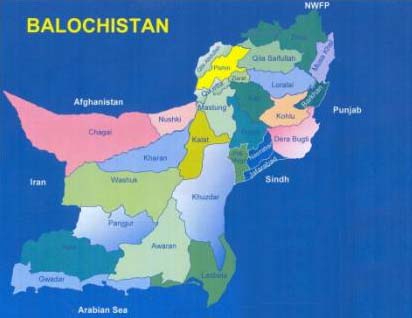
Ongoing clashes between Pakhtun and Baloch students in several educational institutions do not signal good. This is the symptom of the problem. Balochistan is the only province of Pakistan that shares boundaries with the two most strategically important countries of the world: Afghanistan and Iran. At the same time, besides Punjab, it is also the only province that has direct inland connection with all of the provinces of Pakistan. Therefore, the status of Balochistan as a prime strategic location is axiomatic. Representing the five per cent of total population, Balochistan constitutes the 42 per cent of total area of Pakistan. Furthermore, it is also the only federating unit where two significant ethnicities, the Baloch and the Pakhtuns, reside in almost equal proportions. This article aims at highlighting the critical dimensions of relations between both the communities. Though, at the moment both communities are at relative peace, there can be no speculations about peace in future. Each group has a history of wars and feuds, and there exists a visible crack in the socio-economic outlooks of both societies. Before delineating Pakhtun-Baloch relations, it will be pertinent to have a glimpse of the comparative view of their social build-up. The Baloch is a loosely interconnected ethnic group, majority of which is residing in Balochistan. It is divided into two major sub-groups; Sulaimani and Makrani. Contrary to this, the Pakhtuns are more interconnected and divided into hundreds of larger sub-groups. The majority of Pukhtuns resides in NWFP. They are proud of their rich cultural identity. Except few tribes, Pakhtuns speak Pakhto. However, from lingual perspective, the Balochs are divided into several lingual groups in Pakistan: Seraiki speaking Baloch, Sindhi speaking Baloch, Balochi speaking Baloch, Makrani speaking Baloch and etc. In Balochistan, the Pakhtuns are more educated and developed than the Baloch people. Overall, both populations have different socio-economic outlooks. Though, the Pakhtuns have not asserted their presence on the landscape of Balochistan so far, however, the chances of their likely dominance are understandable to anyone interested in the affairs of the province. Up till now, the Pakhtuns have proved to be tolerant towards other ethnicities in Balochistan. They have never resented for Baloch-dominated governance of the province. At the moment, the highest officials of the province, the Governor and the Chief Ministers, belong to the Baloch tribes. Interestingly, since the creation of the office of chief minister in Balochistan, only one Pakhtun held the office only for one year. Currently, out of 38 ministries, 13 are held by the Pakhtuns. And these do not include key portfolios. Despite being comparatively ignored in political terms, the Pakhtun people are happy and want to live in peace. Contrary to this, certain Baloch militant groups have manifested violent resentment to the Pakhtun people. Time and again, the Baloch student federations have created mess at campuses particularly for demanding fixation of quota for the Pakhtun students in all public sector universities and medical colleges in the province. Responding to this, the Pakhtun student federations have stressed for open merit. On the issue of education, two decades ago, the relations between both ethnic groups saw a period of extreme stiffness when an agriculture university was shifted from Kalat to the Pakhtun dominated Pishin. Decision was taken in view of the suitability of land for agriculture experiments and research. However, the move was withdrawn later. Even today, Pakhtun belt has not a single public sector university to name although the Pakhtun students constitute majority of the university students in the province. Similarly, in business sector, the Pakhtuns are restricted to conduct their activities in the areas where it is not possible for the Baloch people to bar them whereas the Baloch businessmen can carry on their businesses freely in Pakhtun areas. Karachi-Quetta highway is the only road that passes through the Baloch areas and on which the Pakhtun transporters can move. However, visiting Yousaf Goth bus stand in Karachi, one finds that not even a single Pakhtun transport company exists to provide travel facilities from Karachi to Gawader. Likewise, whenever ships are unloaded at Gawader Port, one can feel the absence of Pakhtun transport companies carrying goods across country. Last year, education minister of Balochistan was assassinated by a certain Baloch militant group. Though, the event went unnoticed, however the Pakhtuns gravely felt the brutal disappearance of their leader at the hands of the Baloch militant group. Inaction aside, there exist a thinking among the Pakhtuns of being targeted by the Balochs far unjust reasons. While the names of Pakhtun parties suggest that they only breathe for Pakhtuns on this planet, however, their leadership has been silent so far and has compromised the freedom and equality of Pakhtuns. Now two student groups each representing its respective community have started attacking each other. Dozens of students from both sides suffered injuries. Though for the time being FC has been employed to maintain status quo however, no word for the removal of root cause of this prolonging problem has been uttered by leadership of both communities. To conclude, in certain aspects the Pakhtun tolerance towards the Baloch response is a positive sign. However, the perennial compromise of the interests of Pakhtun community may evolve into a volcano of rage and rack the already messy province. Therefore, the leadership of both communities should gauge the underpinnings of contemporary relations between the Pakhtuns and the Balochs and should establish durable basis for lasting peace and harmony between them. Whoever supports anti-Pakhtun attitude must bear in mind that the word Balochistan does not mean that Pakhtuns deserve a secondary status in the province.

UN agencies to stay in Kandahar: Staffan


Special Representative of the United Nations Secretary-General for Afghanistan, Staffan de Mistura, has reassured presence of UN agencies in Kandahar despites insecurity. Staffan de Mistura who is also chief of United Nations Mission For Afghanistan (UNAMA) visited Kandahar today (May 20) to assess the situation on the ground and meet with local leaders and authorities and UN staff members, UNAMA said in a press statement. The UNAMA chief visit to Kandahar came at a time when UN temporarily withdrew its foreign staff from Kandahar a few weeks ago on security concerns and asked local staffers to say at home. During his day-long trip, Mr de Mistura reassured the people of Kandahar of the commitment and intention of UNAMA and UN agencies to be actively present in this region despite the insecurity, the statements said. Mr de Mistura stressed: "The UN has been here in this country and, particularly in the southern region, for a long time, and will continue to be there in support and by the side of the people of Kandahar even when times get difficult." Earlier in the day, the Special Representative had constructive discussions with Governor Tooryalai Wesa and the Chairman of Kandahar's Provincial Council Ahmad Wali Karzai. The Special Representative also met with tribal elders and heard their concerns on the security situation and access to humanitarian relief.

Miss USA to Behar: Pole-dancing pictures were all in fun


cnn.com
Miss USA Rima Fakih is a Muslim with Lebanese heritage, but her family is "not defined by religion," Fakih said.
"I'm an American girl," Fakih said. "And just to be clear, my family comes from many different backgrounds and religions."


The newest Miss USA, crowned last weekend, was interviewed Wednesday for HLN's "The Joy Behar Show."Fakih downplayed the significance of photographs that emerged online this week showing her dancing against a stripper's pole.
"Everyone took them as if I was stripping, which to be honest with you was just a competition," she said. "It was more of an event held by a radio station."
The Detroit, Michigan, radio station promotion held three years ago was like a class to help women "learn how to dance and feel sexy," she told Behar.
"To be extra funny, because I'm known to be silly, I put money in my bra," she said.
The controversy, however, has made her name a top search term on the internet, she said.
"Yeah, I'm the number one person on Yahoo or Google, I heard," she said.
Cheesecake photos helped last year's Miss USA runner-up, Carrie Prejean, become well known, but she was eventually stripped of her Miss California crown when racier images emerged.
Behar asked Fakih if there were any such photos of her that might eventually surface.
"Nothing at all," she said. "I've always been known to be very respectful to my family and my reputation."
The stripper pole photos did not upset her family, she said.
"They're very proud of me," she said. "They take it as if I'm not up there for beauty, or to pose in a bathing suit, but for something more significant -- for being beautiful on the inside, for being wise."
Fakih was born in Lebanon, but her family moved to New York when she was young. She moved to Michigan in 2003, where she attended the University of Michigan.
"My family comes from a Muslim background, and we're not defined by religion," she said. "I would like to say we're a spiritual liberal family."
Fakih will represent the United States in the Miss Universe pageant to take place in Las Vegas, Nevada, in August.

Thursday, May 20, 2010

Michelle Obama Caught in Immigration Debate

First lady Michelle Obama faced a tough, personal immigration question from a Maryland second-grader Wednesday when she visited an elementary school with her Mexican counterpart, Margarita Zavala.
The girl told Obama that her mother said President Barack Obama was "taking everybody away that doesn't have papers."

Mrs. Obama responded: "Yeah, well, that's something that we have to work on, right? To make sure that people can be here with the right kind of papers, right? That's exactly right."

The girl then said, "But my mom doesn't have papers."

"Well," Mrs. Obama said, "we have to work on that. We have to fix that. And everybody's got to work together in Congress to make sure that that happens."

New Hampshire Estates Elementary School principal Jane Litchko wouldn't identify the student but said a parent signed a release allowing the child to participate and be filmed. Litchko said the school doesn't inquire about the immigration status of families.

"We serve every child who comes through the door," Litchko said. "We don't ask that kind of question. If they want to share with us, fine. If they don't, we don't ask."

Litchko said roughly 65 percent of her students speak a language other than English, and she employs seven English teachers to help them get up to speed.

The school recently won the Agriculture Department's Healthier US School Challenge Silver Award, which rewards schools that promote nutrition and physical activity.

The first ladies' school visit came shortly after the Obamas welcomed Mexican President Felipe Calderon and his wife to the White House, where immigration also was a hot topic.

Obama condemned Arizona's crackdown on illegal immigration and called again for the nation to overhaul immigration. Calderon called Arizona's new law discriminatory and warned that Mexico would reject any effort to "criminalize migration."
pluginspage="http://www.macromedia.com/go/getflashplayer">

Mrs. Obama is leading a public awareness campaign against childhood obesity and has said she wants to help solve the problem in a generation so that babies born today will come of age at a healthy weight.

The first ladies ran, jumped, skipped and even played with a parachute in a physical education class. They also sat down with students in a free lunch program and passed bowls of broccoli around the cafeteria tables.

British Afghan mission to come under US control

www.independent.co.uk
British troops in Helmand province will move under American control as part of a radical restructuring plan being drawn up in preparation for what is being described as a defining time in the war against the Taliban.
The Independent has learnt that command in southern Afghanistan will be split in half, with the UK troops answering to a US general.
The transfer will include key towns like Sangin, which has seen the highest number of British deaths in the conflict, mostly due to lethal roadside bombs, and Kajaki, where UK forces installed a turbine engine in an operation in 2008.
The new strategy is expected to be publicly announced by Nato later this week after prolonged negotiations between the US, Britain and the other main contributors to Isaf (International Security Assistance Force) in Afghanistan.
It comes as the traditional Afghan fighting season gets under way with General Stanley McChrystal, the US commander of Nato forces in the country, warning that "nobody was winning" a conflict that has reached a "stalemate", although the Taliban has "lost momentum".
Yesterday saw another suicide bombing in the Afghan capital with 18 people, including five American soldiers, killed. More than a thousand members of the US forces have died so far in the Afghan war.
According to senior American sources, the switch will officially take place on 1 June, when the UK's Task Force Helmand will start reporting to Maj-Gen Richard Mills of the US Marine Corps, who will command the newly formed Regional Command South-West. Until now, the UK troops answered to the British Maj-Gen Nick Carter who was in charge of the whole of southern Afghanistan. He will head another newly created command, Regional Command South, comprising the provinces of Kandahar, Oruzgan and Zabul.General Carter's immediate focus, in the next few months, would be the forthcoming operation in Kandahar, the birthplace of the Taliban, and its hinterland. The move is expected to lead to criticism that "blood and treasure" (meaning lives and finance) expended by the British in Helmand is being given away to American control.Critics of the plan have drawn analogies with Basra, from which British forces pulled out, ending involvement in the Iraq conflict, forcing the US Marines to take over. But UK military commanders and diplomats hold that the situation in Afghanistan is very different and that the new chain of command reflects the reality on the ground, with more than twice as many American troops than British already in Helmand.
The course of action in the near future, the "final drive" against the insurgents, will be helped, they say, by the command being split, as it will allow the generals to concentrate on their respective areas.
There is also the possibility that in the future that Maj-Gen Mills will be replaced by a British officer, although no plans have been drawn up for that, as yet. A spokesman for the Ministry of Defence told The Independent last night "We have always said that given the significant and welcome increase of ISAF forces in Helmand and across southern Afghanistan, from 35,000 in October 2009 to over 50,000 by this summer, it is absolutely right that ISAF commanders should be considering changes to command and control structures.
"To do so makes complete military sense and will ensure that ISAF and Afghan forces are put to best use in the interest of the wider mission. The UK has been fully involved in the decision-making process," he said.
The new command structure will mean that British troops will concentrate on guarding population centres, while US forces, who took the lead in the recent Marjah offensive, will take over some of the outlying bases.
British troops, who have lost almost half of their members killed this year in Sangin, will remain in that town, under overall US command, and may see the arrival of some reinforcements. At Kajaki, where a hydroelectric project was supposed to provide power for a huge swathe of southern Afghanistan, the UK forces are expected to be replaced by Americans.

Obama strategy: tout rising economy, hit Republicans


President Barack Obama's strategy for helping Democrats limit losses in November congressional elections boils down to this: tout the improving U.S. economy and pound Republicans for opposing his policies.
Administration officials recognize a difficult political environment for Democrats with a U.S. jobless rate of 9.9 percent and Americans in an anti-incumbent mood. And Democrats, who hold large majorities in the Senate and the House of Representatives, are braced for some losses in November.The party in power typically loses seats in Congress in the first election after a new president takes office. This year is expected to follow the historic trend.
Democrats believe they can stave off some of the nightmare scenarios being spelled out by political prognosticators. Some analysts believe they could lose control of Congress to the Republicans.
Jobs are being created again and key indicators point to an economy on the mend.
"Things are getting better. Our policies are working," said a senior White House official, speaking on condition of anonymity. "There's a little more optimism out there, and that will help mitigate our losses and make this a traditional mid-term environment for the party in power."
Mindful that the elections are to some extent a referendum on his presidency, Obama is defending his actions.
On the road, Obama is telling crowds that policies he promoted that have proven unpopular with some Americans, such as a $787 billion economic stimulus measure and bailouts for banks and auto companies, are starting to pay off.
'ALL THE NAYSAYERS'
"Despite all the naysayers in Washington, who are always looking for the cloud in every silver lining, the fact is our economy is growing again," Obama said on Tuesday in Youngstown, Ohio.
He points to the creation in April of 290,000 jobs and the expectation that more are on the way.
And Obama is launching frequent attacks on Republicans. To vote for them, he says, would risk more political gridlock in Washington and make it harder to advance his agenda.
The idea is to make independent voters who voted for Obama in the 2008 presidential election but are now straying think twice about bringing Republicans back to power.
"They've done their best to gum up the works, to make things look broken, to say 'no' to every single thing," Obama told a Democratic fund-raising event in New York last week.
Democrats face a political headwind this year not just over the economy.
Some voters are upset by many aspects of the Obama agenda, such as a U.S. healthcare overhaul that they worry will increase costs but not care, higher government spending, rising deficits and the prospect of higher taxes.
Republicans see an opportunity to make big gains in Congress. They believe the Democrats were diverted from the main American concern -- jobs -- in favor of healthcare and other issues.
"The common thread in all of this is that the Democratic Party has lost the confidence of the American people who will, in turn, hold them accountable for their reckless spending and government takeovers in November," said Katie Wright, a spokeswoman for the Republican National Committee.
Obama and Vice President Joe Biden are expected to travel steadily in the months leading up to the election, appearing at rallies and raising money.
The White House will have to look carefully at the political map to determine where Obama's message will resonate best.
For instance, Democrat Mark Critz won a House seat in a special election in Pennsylvania on Tuesday over Republican Tim Burns in part by voicing opposition to the Democrats' healthcare overhaul and energy legislation.
"There's no question that they're going to use the president where he's more popular," said Steve Elmendorf, a Democratic strategist.

Illiteracy, corruption hamper Afghan police: NATO

reuters.com
An 80 percent illiteracy rate, corruption and a lack of trained personnel are hampering Afghan police, the NATO commander overseeing the training of Afghan security forces said on Wednesday.
NATO has stepped up training of Afghan police in an effort to reform a force that inspires little confidence among locals, struggles with high dropout rates and is frequently accused of incompetence and drug use.
But only 45 percent of Afghan police have had any formal preparation, said U.S. Lieutenant-General William Caldwell, who heads the training mission as the alliance prepares to boost the size of the Afghan army and police to over 300,000 by 2011.
The training is also central to NATO's strategy to eventually transfer control of security to Afghan forces so that Western troops can start withdrawing next year.
Professionalizing the police force will not happen overnight, Caldwell said.
"That is a real challenge, you've got a lot of policemen out there who're trying to do their job that have never had any kind of professional training," Caldwell told reporters in Rome.
"They've haven't been taught human rights, they haven't been instilled with this idea that they serve the people."
Taking on a literacy rate of 20 percent among police recruits, NATO has introduced mandatory reading and writing courses for the army and police, Caldwell said.
NATO's ambitions are modest on the literacy front -- with the focus on giving cadets third-grade level reading and writing skills rather than a high school education, Caldwell said.
"We saw that very early on as a problem," he said.
"If you're a policeman you need to be able to take some notes, write down the license plate number, take a statement from a person or something like that, and if they can't read or write they're going to be very challenged in performing their duties as a police officer or patrolman."
He also acknowledged that corruption remained a significant problem within the police force, something NATO hopes to counter through higher pay and improving transparency.
"Corruption is a challenge, there's no question. And I think everybody recognizes that. So we need to help set conditions that don't lead them to corrupt practices."

Obama, Calderon push for immigration law changes


Reuters.com
President Barack Obama pushed for sweeping changes in U.S. immigration policy on Wednesday, as Mexican President Felipe Calderon complained that a harsh new Arizona law discriminates against foreign-born workers.

Immigration, a traditional sticking point in the neighboring countries' relationship, became the focus of Calderon's Washington visit when the border state passed the law requiring police to check the immigration status of anyone they suspect is in the United States illegally.
The Arizona law has been criticized as discriminatory and Calderon, who had promised to bring it up in Washington, jumped into the controversy in his first formal remarks of the two-day state visit.
Despite their "significant contribution to the economy and society of the United States," Calderon said, many immigrant workers "live in the shadows, and at times, as in Arizona, confront patterns of discrimination."
Obama said the Arizona law underscored the need for comprehensive immigration reform and reflects U.S. frustrations, which he shares, with current law.
"In the United States of America, no law-abiding person -- be they an American citizen, a legal immigrant, or a visitor or tourist from Mexico -- should ever be subject to suspicion simply because of what they look like," Obama told reporters with Calderon at his side.
There are millions of Mexican-Americans and Mexicans living in the United States, and many Americans travel to and live in Mexico.
The United States needs a new law that secures the border, targets businesses that hire illegal workers and punishes illegals, but gives them a path to citizenship, Obama said. He asked for support from opposition Republicans to pass one.
Obama and first lady Michelle Obama hosted Calderon and his wife, Margarita Zavala, at a state dinner later on Wednesday, with a menu blending U.S. and Mexican cuisine and performances by U.S. pop star Beyonce Knowles and Mexican guitar duo Rodrigo Sanchez and Gabriela Quintero. Calderon will address a joint session of the U.S. Congress on Thursday.
SEEKING U.S. SUPPORT
The two countries broadly agree on issues like the global economy and climate change, despite tensions over immigration, border security, drug violence and trade. Their trade surpasses $1 billion a day, and Mexico sends 80 percent of its exports to the United States.
The presidents affirmed their commitment to mutual economic growth, securing the border, protecting the environment, and fighting crime, and ordered their cabinets to create a joint steering committee to come up with an action plan for creating a "21st century border." But they otherwise offered no major new initiatives.
Analysts said the main outcome of the visit for Calderon would be strong expressions of support for his policies, particularly in fighting the international drug trade, from Obama, who is hugely popular in Mexico.
Calderon is "a leader who is guiding his country through very difficult times with vision and with courage, and he has been an outstanding partner to me and an outstanding partner to the United States," Obama said.
The two presidents said they would cooperate to crush drug gangs. The joint statement said the United States would speed delivery of helicopters and other aircraft for the drug fight. The traffickers' turf wars and battles with federal forces in Mexico have killed 23,000 people since Calderon took office in December 2006 and launched an army-backed offensive.
The spiraling violence worries foreign investors and makes some tourists nervous about visiting Mexico. Drug-related abductions have spilled across the U.S. border.

The countries are more closely aligned on the issue than they have been in years, and Mexico is pleased Washington acknowledges that U.S.-made weapons and U.S. demand for drugs are big parts of the problem.

Miss USA Rima Fakih: My victory means anyone can make it in America


Praising America as a land of opportunity, the new Miss USA, Rima Fakih of Dearborn, told the Free Press today her victory shows that anyone can make it in the U.S. — regardless of background. And she hopes it will inspire Michiganders to rebuild the struggling state.
Touching upon the fact that she is the first open Arab American to win Miss USA, Fakih said she hopes her win will dispel anxieties.
“The fear that people had implanted since 9/11, maybe what I did can show people that, you know what, who cares what ethnicity you are,” Fakih said from an SUV driving her through Manhattan. “This is America. Everyone has been through hardships. Everyone has been through something. And that does not mean you should be afraid or should be shy to say who you really are, what your ethnicity is, and what your background is. Because America is the land of opportunity and the land of the free.”
Fakih said she broke down in tears when she heard that Arab Americans in Dearborn were cheering at parties and on the streets after her victory Sunday in Las Vegas.
“That right there made me cry when I heard such great news, that they were all so proud of me,” Fakih said. “Everyone should be proud of who they are and where they come from because America is a big melting pot of diverse ethnicities. It’s great to be part of this wonderful country.”
Born in Lebanon, Fakih grew up in New York City and moved to Dearborn, which has the highest concentration of Arab Americans in the U.S.
Since her victory, some have complained about the fact she is Arab-American and from Dearborn.
But Fakih said, “Dearborn and my community is part of me.”
Fakih also hoped her triumph can help “give Michigan hope that it is on the way up.”
“When you hit rock bottom, the only way is up,” she said. “And I want Michigan to know that my title should be a significant symbol that Michigan is going to go right back to where it was.”
Fakih said she was inspired by her parents and older brother to go for her dreams.
“There is nothing … worse than saying, I never tried,” Fakih said. “When you want something done, you got to do it yourself. … Nothing is impossible.”
Fakih said she is now on a media tour and will have an upcoming photo shoot. She also has plans to travel across the U.S., and to Africa and China. The president of Lebanon said this week he wanted to meet with her, which she hopes to do.
Fakih said she also would like to meet President Barack Obama. Since her victory, some have compared Fakih with Obama in that they are seen as historic firsts.