Punjab Chief Minister Shahbaz Sharif is the richest member of the Punjab Assembly, with multi-million pounds of foreign assets mentioned in his declared assets to the Election Commission of Pakistan.
The question arises, why are foreign assets mentioned in this declaration, not part of the previous declarations made by the CM? If we go through his declaration before going into exile, we cannot find these foreign assets.
No authority, including the Federal Board of Revenue, has raised any questions as to how these assets were acquired. Which source of income has helped him add these assets to his kitty? If any ordinary person had made such a declaration, the agencies concerned would have pounced on him and his family. But no one has questioned our politicians about the sources of these overnight rises in their assets. These are ours institutions’ double standards, which grill the common man and facilitate the rich ones.
In the recent past, Nawaz Sharif, with his signatures, had declared his assets in NA-123 by-elections. Nawaz was shown having not paid any income tax, still no authority or media quarter raised the issue as to how one of the country’s key political leaders was shown living such a miserable life.
Ahsan Iqbal later defended his boss with the argument that the assets declared by Nawaz were indeed accurate. A statement that was later made all the more suspicious when Siddiqul Farooq said Nawaz’s daily expense was Rs 3.2 million. You can multiply the figures by 365 days, but be assured, no action will be taken against the Pakistan Muslim League-Nawaz (PML-N) chief.
Even if we were to buy into Ahsan’s theory, Nawaz’s living style would completely negate that claim. Comparing Nawaz’s asset with living style indicates that he is living beyond his means, which is a crime.
But alas, rules were made for lesser men.
If any rules are actually applicable on politicians, then the only example that comes to mind is the non-Punjabi Pakistan People’s Party. In the eyes of our laws, Punjabi leaders are more revered than sacred cows.
An application was filed with the National Accountability Bureau (NAB) two years back, pleading to probe the Sharif brothers’ assets, including a steel mill in Saudi Arabia and property in London. But, predictably, NAB did not act.
In January a news agency reported that the Sharifs’ owned properties in London worth millions of pounds, but PML-N hawks were quick to deny the claim and declared it a “character assassination campaign” against the PML-N leadership.
Appearing on a TV show, Ahsan Iqbal declared the news item the “brain child of the cronies of Musharraf”. However, we now see that Shahbaz Sharif has declared his foreign assets. I am sure Ahsan Iqbal will avoid speaking on the issue now. The FBR, or any other government agency, will probably not bother to hold any inquiry into the source of these declared assets, because such an act would of course be tantamount to “political victimisation”, an allegation that the PPP avoids at all costs.
The recent power theft at a PML-N election rally and another case of power theft involving Prisons Minister Chaudhry Gafoor was brushed under the carpet. WAPDA authorities have given the PML-N a clean sheet. Although, we all know that if an ordinary person had committed such a crime, he would have been served a severe punishment.
The PML-N leadership has admitted that the district administration had been assisting in the arrangements of the rally. PML-N MNA Khawaja Saad Rafique, during a TV show, threatened the correspondent and asked him to tender an apology for claiming that the rally had stolen electricity. The power theft was shown live on almost every TV channel, but Mr Khawaja still claims electricity was not stolen.
The real question is why DCO Lahore Sajjad Bhutta and town municipal officers had come to the PML-N’s rescue. Rafique’s sole objective was to declare that the PML-N was the party of innocents. It would be interesting to see how he defends the electricity stolen by the prisons minister.
Just recently, an SHO stripped some suspects and publicly tortured. Is the incident – which speaks of a mindset — one of the tenants of good governance?
The “model” Punjab government did not take any action against the police officers involved in this torture until the media pointed it out and raised the issue.
If rulers ignore thefts and keep each other free from accountability, then such incidents will become routine. If the rulers will not abide by the law, how can they expect the rest not to follow suite? Good governance should start from one’s own home. The same goes for accountability.
A PML-N stalwart was right when he said, “If the party starts unmasking the so-called virtuous and ‘valet de chamber’ class, what will it be left with?”
Saturday, March 6, 2010
Nawaz Sharif Power wielders in theft and selective accountability
The son of a Muslim Leaguer, who was forced to quit the party back in 1998 on power-theft charges, is contesting election against the PML-N hopeful from NA-123. And, ironically, the party is found to be involved in power theft during an election rally in the same constituency.
Mian Miraj Din, father of Tehrik-i-Insaaf nominee for NA-123 by-poll Hamid Miraj, was excise and taxation minister in Shahbaz Sharif’s Punjab cabinet back in 1997. Mian Miraj was forced to resign when an army team, detecting power theft for Wapda on directions of then prime minister Nawaz Sharif, found the minister, besides some other party bigwigs, involved in stealing electricity.
The minister was forced to resign as Nawaz Sharif, also the party chief, rejected all the ‘review’ petitions.
What may be termed irony of fate, Nawaz was found the other day addressing an election rally the venue for which was being illuminated with stolen electricity. The blame for the offence has, however, been shifted to the town administration and the power utility’s employees as a Lesco line superintendent has been suspended and the town has been billed Rs3,000.
Though PML-N nominee Pervaiz Malik is set to win the bout for NA-123 against PTI’s Hamid Miraj, Jamaat-i-Islami’s Hafiz Salman Butt and around 50 others, the incident has underscored selective accountability in the party presently ruling Punjab.
Back in late 90’s, when Mian Miraj and MNA Begum Abida Husain were forced to resign on power-theft charges, there were over a dozen other PML-N leaders, like Naeem Chathha, Birjees Tahir and Raja Iqbal Mehdi, who were also found guilty of the theft by the army monitoring teams but were let go off the hook by the party leadership although the names of the accused were mentioned in a report submitted to Senate in this respect.
Similarly, MPA Shumaila Rana was caught in CCTV footage using a ‘stolen’ credit card and was made to resign her seat.
But, prisons minister Chaudhry Abdul Ghafoor and adviser to chief minister Munawwar Iqbal escaped punishment—the former was found disputing with customs staff during an alleged bid by one of his friends to smuggle in precious items at Lahore airport and the latter was accused by a women activist of the party of molesting her.
Thursday, March 4, 2010
Afghan Militias Take on Taliban

www.spiegel.com
By Susanne Koelbl
In some parts of Afghanistan, neither the Afghan security forces nor the international ISAF troops have been able to protect ordinary people. Now the Americans are arming local militias so they can take on the Taliban. But some observers worry the move could lead to rivalries between different armed groups.
Abdul Gafar can't bear it when the sun rises in the morning and all he has to look forward to is working in the heavy dirt of his fields and coming home to the women in his house -- peace, in other words. Gafar, a militia commander in his early 40s, grew up with a Kalashnikov in his hand the way other children grow up with Lego sets.
The quiet years here in Kunduz weren't his best years: eight insignificant winters without anything to do. There were, of course, plenty of disarmament programs, monitored by representatives of the government in the faraway capital and by international experts. Now his old AK-47 is leaning against a wall in the living room again, out in the open, and Gafar, who is Pashtun, feels strong once again.
The 60 men under his command patrol the villages around Kanam-i-Kalan, a town surrounded by fields and pastures, 18 kilometers (11 miles) northeast of the city of Kunduz. Gafar stretches and smiles: "I'm a good shot, and I even hit my mark at night. I have rocket launchers and mortar shells."
The Taliban Come to Town
Last year, at the end of March, the Taliban came to Kanam-i-Kalan for the first time. The men, in their black turbans, roared through the town on motorcycles at night, in groups of up to 20 fighters at a time. They knocked on doors, holding their Kalashnikovs in their hands, expecting the residents to prepare dinner for them.
Most of the residents of Kanam-i-Kalan are Pashtuns, like the Taliban. They remember all too well how harsh and grim life was under the strict regime of the religious zealots, before the Americans drove them out in November 2001. Most never want to live under the heel of the radical Islamists again.
The Taliban specifically targeted former comrades, recruited spies (at least two in each village) and enlisted young fighters. They levied a religious tax known as ushr, demanding 10 percent of all agricultural earnings. They eventually set up checkpoints along the roads and began checking vehicles.
The Afghan government never showed up to put an end to these activities. It was simply absent. When the situation became too dangerous, the few police officers left the town, the Afghan army was unavailable and the German military stationed in Kunduz, the Bundeswehr, was busy coping with its own problems. There was no one left to protect the local population.
Then the Taliban murdered Abdullah i-Sabaz from Khan Abad, hanging him from a tree for protesting against them. They also shot Mohammed Ismail, a policeman from the neighboring village. The noted attached to his body read: "We will kill anyone who supports the government."
"That was the turning point," says Gafar. It was also the day he opened his secret weapons depot. He had concealed it from the United Nations inspectors and the International Security Assistance Force (ISAF) for years. Now he expanded it by buying a few automatic rifles. The elders from 14 surrounding villages, representing close to 50,000 people, held a meeting. They elected commanders and gave themselves a command structure, and they trained their fighters. That was in the summer, and in late November they made their move. They told the Taliban that they could either leave or be shot. The Islamists left.
Filling the Vacuum of Power
The arbakis, or civilian militias, are as much a part of Afghan history as the wars that have been raging for more than 30 years. Since 2002, the international community has been trying to systematically disarm the Afghan militias. With the help of costly programs, the men were to return to a normal life as farmers, market vendors or craftsmen. A UN report from last year proudly concludes: "Excellent progress was (...) seen in disbanding illegal armed groups (IAGs)."
The disarmament of Afghanistan is a noble objective, but the reality is a different story. Last year, more than 2,400 civilians were shot, hung, beheaded or blown up. Two-thirds of these victims were murdered by the insurgents.
Militiamen are a rough bunch. They make their own laws, steal, drink and take girls and little boys, say the people in Kunduz. Nevertheless, many villages are now seeking to provide their own security with local militias. Men with Kalashnikovs thrown casually over their shoulders and bazookas strapped to their backs are suddenly welcome again in Kunduz, as well as in the country's south and southeast -- everywhere there is heavy fighting.
Militias fill the vacuum that the weak state allows to develop and that 100,000-odd Western soldiers are not filling. It is a precarious development that could be tolerable as a temporary solution, provided a strong Afghan state really develops in the foreseeable future. If it doesn't, the militias will quickly lead to armed rivalries between individual villages and a bloody gang culture. In that case, the arbakis would only be the forerunners of a civil war.
Learning from Experiences in Iraq
In the Kunduz district of Khan Abad, the militias that were jointly fighting the Taliban in November are already at odds. "It'll be every man for himself soon," predicts Abdul Mohammed from the village of Aqtash, who sells pots and plastic jugs in the local bazaar.
The Americans, however, also see opportunities in the new developments. Local government representatives are even outfitting the militias with weapons and ammunition, as part of a program the US military calls the "Community Defense Initiative." General Stanley McChrystal, the American commander of ISAF, sees the village militias as potentially strong allies in the fight against the Taliban.
Before coming to Kabul, McChrystal carefully analyzed what went wrong in the invasion of Iraq and what tools eventually brought about a fragile peace. They included the "Sons of Iraq," Sunni militias that began, after three years of war, to rise up against al-Qaida terrorists in August 2006, eventually driving them from their stronghold in Anbar province. These men knew every corner of their neighborhood, a quality that, when combined with the technical superiority of the Americans, produced the desired results.
In Afghanistan, the plan is to incorporate the arbakis into the Western alliance as a kind of loosely organized band of foot soldiers. Thousands of these armed men will then defend their own villages. "The idea is to convince people to take responsibility for their security," says an American colonel on McChrystal's staff in Kabul. His special forces are now working closely with the militia commanders, and in Kunduz the two forces are already hunting down the Taliban together.
Locals' Fears
In Kunduz, the regional intelligence chief is kneeling in front of a giant map, so detailed that it includes even the tiniest streams and villages. General Mohammed Daud Ibrahimi, 43, is a powerful-looking man with bristly hair and darting eyes. He runs his fingers across the map and points to where the Taliban insurgents are located: in the center, in Gor Tapa, farther to the south, in Aliabad, and in the "cleared areas" to the northeast. The Afghan intelligence service, NDS, has become something of a coordinating office for militias in the north.
Today, when hundreds of armed men lie on the lookout in the troubled surrounding areas and report unusual activity to NDS headquarters in Kunduz, it is partly General Daud's achievement. "In places where they weren't active yet, I convinced residents at the end of last year, village by village. I provide the ammunition, and I say: Fight against the Taliban yourselves. That's how I made Kunduz safer again."
But there is still a clear discrepancy between the words of Afghan security officials who claim, after every operation, that the region in question is free of terrorists, and the fears of the local population. It senses that the Taliban has only withdrawn and could possibly return in greater force, even after the arrest of the key Taliban commander in Kunduz, Mullah Salam, in Pakistan a few weeks ago.
Militias have taken control of the northern part of the country once before. At the time, they also promised to protect the population and, at the time, the real issues revolved around who had power and influence in Kunduz, and who was collecting road tolls and fees from drug shipments. That was in the early 1990s, after the withdrawal of Soviet troops.
The Return of the Good Old Days
The Western coalition's new friends are the same militia leaders from those days, minor commanders like Abdul Gafar from Kanam-i-Kalan, who celebrated his first victories during the Soviet invasion and loves fighting more than peace. They also include men like Mir Alam, a notorious warlord.
Alam is sitting in his living room, patting his two-year-old daughter on the back and smiling. The veteran fighter is one of the most feared men in Kunduz. He was once one of the commanders serving under Ahmed Shah Massoud, the great strategist of the Northern Alliance which fought the Taliban. He also supported former Afghan President Burhanuddin Rabbani, whose marauding troops crisscrossed the country, stealing, kidnapping and raping. Many Kunduz residents remember this period as the worst years of their lives. And now they are expected to see the same men as their new protectors?
After the campaign conducted by the Americans and their allies, Mir Alam was deprived of power for a time. US soldiers searched his house for drugs and weapons, and German Bundeswehr commanders avoided all official contact. Mir Alam surrendered 2,000 weapons but, according to residents, he kept 3,000 more hidden away.
Then, a few months ago, intelligence chief General Daud personally reactivated the veteran fighter. The two men are bound together by close family ties -- the general's sister is married to Mir Alam. The old and new militia chief was General Daud's best choice for organizing the militias' defensive campaign in the region last year. Mir Alam is also in close contact with the US armed forces, and he has even been mentioned as the future chief of police in Kunduz.
At the end of our meeting, Mir Alam poses in the courtyard with his fellow soldiers from days gone by, all of them smiling, as they did in the past. The good old days, which were everything but good for the residents of Kunduz, have apparently returned.
Afghan army needs more time
Afghanistan needs at least four years to build up its capacity to shoulder its full-wing defense responsibility, although the US is planning to withdraw its marines from the war-torn country, according to the Afghan defense ministry.
Asked whether the Afghan National Army is able to shoulder the security responsibilities next summer, Mohammad Zahir Azimi, spokesperson for the Afghan Defense Ministry, said in an exclusive interview with the Global Times that the Afghan army still needs at least four years to build up its muscle and maybe even longer.
US President Barack Obama announced December 1 that the US would send 30,000 more troops to Afghanistan and start its withdrawal from July 2011.
"You can judge from what the other top US officials have claimed," Azimi said. "Capacity building of the Afghan army is a crucial element to decide when the American forces will withdraw."
US Defense Secretary Robert Gates, Secretary of State Hillary Clinton and Admiral Mike Mullen, the chairman of the Joint Chiefs of Staff, have said any troop pullout beginning in July 2011 would be slow and that the Americans would only then be starting to transfer security responsibilities to Afghan forces.
British Army General David Richard also said the military would stay to provide training and support for Afghan troops in the "next five years," according to The Times.
Azimi revealed that Afghanistan is focusing on Air Force building at the present stage. "We have now 75 qualified pilots and more than 500 are receiving training from NATO," he said. "At the same time, the Afghan Air Force will receive 20 C-27 military transportation aircraft before August 2012."
"The 13-day Operation Mushtarak is a test of the Afghan National Army's ability," Azimi said. "The first group of airborne soldiers entering into Marjah is from our troops.
"Our soldiers performed very bravely during the fighting, with only three dead and 15 wounded."
The US-led International Security Assistance Forces, together with Afghan government troops, launched Operation Mushtarak against the Taliban strongholds in Helmand on February 13.
At least 12 service members of the NATO force, including eight Americans, have been killed during the campaign, according to The New York Times.
However, Operation Mushtarak is just the "prolusion" of a much larger and comprehensive operation codenamed Homid (Hope), which is designed to last 18 months and strike Taliban militants in southern Afghanistan, Azimi told the Global Times.
"Kandahar is only a part of the coalition forces' next major offensive," Azimi said, but he declined to give the exact date for the launch of the battle and which provinces are included in the following offensive because of the sensitivity of the issue.
The battle for Kandahar, the second-largest city in Afghanistan and the homebase of the Taliban movement, still needs several weeks to prepare before clearing Marjah and surrounding areas, according to US.
Pakistan bureaucratic hurdles preventing bullet-proof jackets from reaching the NWFP police

Dawn.com
It is unfortunate that matters have come to such a pass that the lackadaisical attitude displayed by Pakistani officialdom does not take anyone by surprise. But when this approach puts lives at risk then those guilty of inaction must be taken to task.
The NWFP police force has been among those at the forefront of the battle against militancy. From suicide attacks to bombings of schools to assaults on convoys and check-posts, the men of the Frontier police are either directly targeted or killed and injured as they strive to protect civilians. Estimates put the number of policemen killed in the NWFP between 2004 and 2009 at over 500. More than twice that number are said to have sustained injuries. When all this is considered, the fact that bureaucratic hurdles are preventing more than 3,000 bullet-proof jackets from reaching the NWFP police is condemnable.
The jackets — worth more than $2m and gifted by the US government — have been sitting in a warehouse in Islamabad airport for the last two months. The gear was initially held up because the necessary clearance from the relevant ministries was not obtained. Though the federal interior ministry issued an NOC on Feb 13, the commerce ministry only completed the required paperwork last week. However, it appears that the release of the jackets is now delayed by PIA that wants its warehouse charges paid. PIA, meanwhile, has cited bureaucratic hurdles which indicate that the government is clueless about what to do to get the jackets released. The relevant federal and provincial government departments must speed up their efforts to have the jackets released and delivered. NWFP policemen are targeted on a regular basis, and it is lamentable that the authorities should not be delivering safety gear to them.
Anti-opium strategy going in the right direction
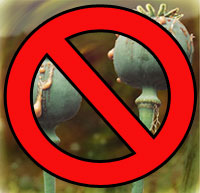
The Afghan government with help from the United Nations, and other countries such as the United States and the United Kingdom is trying to greatly lessen or completely remove Afghanistan’s dependence on opium farming. To achieve this goal, the players involved are shifting the anti-opium strategy. Before the focus was heavily dependent on eradication, now the strategy will also involve interdiction and alternative agriculture. There will be much more effort in assisting Afghan farmers with planting alternative crops, including cereals. According to a report published by the United Nations Office on Drugs and Crime (UNODC), opium production in Afghanistan has fallen from 8,200 tonnes in 2007 to 6,900 tonnes in 2009.
NATO and Pakistan sharing tactical plans
NATO commanders in Afghanistan have begun traveling to Pakistan to share plans for military operations for the first time, a senior U.S. official said Friday.
The apparent aim is to make sure that militants don't slip back and forth in the unmarked, mountainous border region to escape coalition or Pakistani forces.
According to the official, who briefed reporters on condition that he not be named, the sharing of tactical information represents a new level of cooperation for the military forces battling the Taliban, al-Qaida and other militants.
The official said it had not happened before.
But at the same time, said the official and another senior administration official, it is not yet clear if a spate of recent major arrests of Taliban commanders amounts to a major shift from Pakistan's long reluctance to go hard after militants entrenched in its border provinces.
The officials also said that the administration plans a new strategic review next December to determine whether its stepped-up war in Afghanistan is working. President Barack Obama spent much of last year reviewing U.S. war aims with top officials before agreeing last December to send 30,000 more troops to Afghanistan.
Both officials said the capture of about 15 senior and midlevel Taliban figures in Pakistan in recent weeks, coupled with those killed in suspected CIA missile strikes, has raised pressure on the militants.
The first official said Taliban leaders can no longer be certain of finding "safe haven" in Pakistan after battling coalition forces in Afghanistan.
Missiles launched from U.S. drones have reportedly killed dozens of militants in Pakistan in recent months, but American officials do not confirm the existence of the covert CIA program.
The first official praised the recent captures, which included the Taliban's No. 2 leader Mullah Abdul Ghani Baradar. Baradar, the operational leader for the faction's war against coalition forces in Afghanistan, has been portrayed by both U.S., Pakistani and Afghan officials as a major blow to the Taliban.
But the U.S. official cautioned that the arrests did not necessarily signal that Pakistan is adopting a harder line against the militants, who have long enjoyed relative sanctuary in that country.
The official also told reporters he had seen no evidence Pakistan played any role in Friday's suicide bombings in Kabul, which Afghan President Hamid Karzai said were aimed at Indians working in Afghanistan.
Six Indians were among the 16 people killed in the attacks, which wounded 36. The Taliban has long opposed India's involvement in the country. In particular, Pakistan opposes India's ties to the Northern Alliance, which helped the U.S. oust the Taliban regime in 2001 and formed the backbone of Karzai's government.
Tuesday, March 2, 2010
Nawaz Sharif PML-N power theft
LAHORE: A five-member committee of Lahore Electric Supply Company (LESCO) will take detailed review of power stealth in a public gathering of Pakistan Muslim League (PML-N) addressed by party chief Mian Nawaz Sharif, Geo News reported Tuesday.
According to the Lesco sources, Lesco Chief Azhar Iqbal has formed a high-level committee with General Manager Operation Rana Muhammed Ajmal as its head to determine the people responsible for the incident.The committee will prepare a detailed report by today’s evening and send it to the MD Pepco. The report will comprise the details as to who is behind the action and who was benefited from it.
Chief Executive of Lesco is expected to hold a press conference in this connection in the evening.
Pakistan Muslim League-Nawaz found itself entangled in a controversy on Monday that threatened to undermine its claim of occupying the high moral ground, according to a report by DawnNews.
As Nawaz Sharif addressed supporters in the run-up to a Lahore by-election, his large rally was lit up by extensive use of illegal connections using ‘kunda’ (hooks that are attached to live power cables to secure supply without having to pay for it).
Power utility officials told DawnNews that they would estimate the number of units consumed and bill the user based on that, while Punjab Law Minister Rana Sanaullah tried to distance his party and government from this outrage by blaming an unnamed contractor.
PML-N spokesman Siddiqul Farooq told DawnNews that an inquiry would be held to fix responsibility for what was “clearly” a crime.
In a damage-limitation exercise well past midnight, PML-N leader Saad Rafique told a news conference his party was not at fault and that ‘kunda’ connections had been made by the administration to provide security lighting.
Just when we thought that the Politicians and political parties can’t get any more dishonorable and shameless, another incident happened live on Pakistani channels. Yes Folks PML (N) Rally was powered by illegal electricity connection. Isnt it funny! how the bearers of the poor are caught red handed trying to be too smart.
Pictures on Geo tv clearly showed hooks were used to steal power from the main electricity lines. PML (N) at the time was doing a campagin for the upcoming NA -123 by-elections. The stolen electricity was used to power flood lights and speakers for the rally. Knowing the sensitivity of the issue and the fact that they were caught red handed , PML hastily arranged a press conferernce to clear the issue out.
Again it just goes on to show the level of fraud and that is present in our society - Even a political party that at the time is scoring political points by raising power issues is stealing electricity on live television. I am feeling the pain , are you feeling the same ! how can we get rid of these fools, third raters, frauds, thugs - No we can’t - cause this is the family party that is going to run Pakistan after this curse (present Govt.) is over. Ae Allah Inn Ko Akal Aur Hidayat de.
*************************************************************************************
Double standards of the Sharifs
By Shafiq Awan
Punjab Chief Minister Shahbaz Sharif is considered “Mr Neat and Clean” and wants the same kind of people around him, especially in the cabinet. That is why he has chosen his team very carefully without relying on any references or recommendations. Moreover, the moment he finds out about a corrupt member in his “team”, he kicks him/her out instantly.
Unfortunately, he has often had unpleasant experiences and has had to welcome some uninvited guests in his party. Nominations from elder brother Nawaz Sharif have always caused a series of scandals for him and his government.
During his last tenure, Mian Mairaj Din (late) was forced to resign as the provincial minister in an alleged power theft case while the same charges were levelled against Prisons Minister Chaudhry Ghafoor in the current cabinet. Although no action was taken against Ghafoor. Only shaking hands with a clenched fist with Chaudhry Ghafoor will not serve the purpose Mr CM.
Mian Mairaj Din was not Shahbaz’s choice but was recommended by Mian Nawaz Sharif. He was charged with electricity theft from his own cinema and eventually told to quit the cabinet gently and asked to resign. Though he had claimed that he had rented out the cinema – which was true – and said the tenant was responsible for the power theft, it wasn’t convincing enough for Shahbaz.
Currently, Punjab Prisons Minister Chaudhry Ghafoor was not Shahbaz’s choice but was from his elder brother’s “quota”. The result was obvious: Ghafoor created scandal after scandal.
His first case happened at the Lahore airport when he was caught scuffling with the Customs authorities to get some of his friends out of the airport without being checked. The second was in the Punjab Assembly where he ‘jumped’ at a female assembly member and snatched a placard. Now he has been charged for electricity theft at his farmhouse.
Ghafoor has denied the charges saying he was unable to pay the bill but kept utilising the service for a year. Technically, this is considered power theft.
Nevertheless, no action was taken against him, as Shahbaz is helpless against his brother who had favoured Ghafoor to take care of their Raiwind palaces while they were in exile.
The facts behind the alleged power theft can be checked by visiting the website of the Lahore Electricity Supply Company and by entering reference number 03122101267056 in the category of rural consumers. You’ll find billing details of Chaudhry Surjan Khan of the Madni Farmhouse, Raiwind, revealing that he has not paid the bill since February 2009. Chaudhry Surjan Khan is Chaudhry Ghafoor’s father.
WAPDA authorities are equally responsible for not taking action. They say Ghafoor always threatened them with his position and got away by saying that he was close to the Sharifs and the power minister.
When the LESCO management was changed, they directed the SDO of the area to cut power supply to the minister’s house. However, the authorities contacted the minister and requested him to pay the bill, who said he could not pay the dues as he was on a visit to the Faisalabad jail. He requested them to not cut power supply to his farmhouse and assured them of paying the bill soon. But the supply was cut off and restored only after he managed to pay the bill.
In November 1998, WAPDA had issued a notice to the late Mian Mairaj Din to pay his electricity bill, to which he complied. But he was not restored to the cabinet. He was forced to resign after a month at the age of 70 and after serving the Muslim League for 50 years.
Those who criticised Rana Sanaullah’s recent visit to the office of the banned Lashkar-e-Jhangvi should know that he did it with the permission of his bosses – the Sharifs – and every wrong done with the bosses’ permission is always right.
MPA Shumaila Rana was ousted in an alleged credit card scam and MNA Haji Pervez lost his seat in an examination fraud case. Another MPA from Gujrat, Haji Nasir, was kicked out by the court for having a fake degree. But the party did not take any action, instead he claimed party ticket in PP-111 by-polls. However, the election tribunal intervened and barred him from contesting the elections.
Education Minister Mujtaba Shujaur Rahman’s late night visits to a farmhouse – in the same lane as that of Chaudhry Ghafoor’s – are also being monitored and he is being warned to avoid them. MNA Abid Sher Ali should also be careful about his late night activities.
PML-N activists question why Chaudhry Ghafoor is immune to any action. If the party can take serious action against its MNAs and MPAs, then why can’t it take action against a cabinet member? Only because he is close to the Sharifs? What is the principled stance of the Sharifs?
Public Accounts Committee Chairman Chaudhry Nisar Ali Khan can add another feather to his cap by taking suo motu notice of the minister’s involvement in power theft or the same option is open to PAC Punjab Chairman Chaudhry Zaheeruddin Khan.
Friday, February 26, 2010
Buried in snow, Northeast to get more
A major winter storm will continue to wallop the Northeast on Friday, a day after heavy snow closed schools, roads and caused dangerous conditions.
Parts of New York could get as much as a foot of snow Friday. The storm is the third blizzard to hit the area in a month.
"The heavy wet snow will be sufficient to bring down trees and power lines and could also cause roof collapses," the National Weather Service said.
A snow-covered tree limb fell in Central Park on Thursday, killing a 46-year-old man. New York City's Parks Department warned residents to stay out of city parks after the incident.
Parts of New York had received from 22 to 30 inches by Thursday evening, the Weather Service said. Massachusetts was averaging 22 inches across the state. Parts of Pennsylvania had as much as 12 inches. Areas in Vermont received as much as 38 inches of snow.
The storm canceled more than 1,000 flights at New York area airports Thursday, said John Kelly, a spokesman for the Port Authority of New York and New Jersey. Most cancellations were at Newark Liberty International Airport, with LaGuardia Airport and John F. Kennedy Airport also scrapping flights.
More cancellations were expected Friday, airport officials said.
The latest wintery blast hasn't yet wreaked as much havoc as did February's two earlier blizzards. Power companies in the New York area were reporting few outages.
But for some, any more snow was just too much.
"I've just been shoveling," a weary man told CNN-affiliate WBRE. "And it looks like I'll be doing so more shoveling."
More girls among child labourers than boys

Girls outstrip boys in the child workforce and the number of children working in villages is more than twice that in cities and towns, according to a survey conducted by a non-governmental organisation.More than three million children are working as labourers in different industries with the majority linked to bangle manufacturing, carpet weaving and surgical industry.
Leaders of the Global Compact Pakistan Faseehul Karim Siddiki and Zaheer Arif, addressing a press conference at the press club on Thursday, said that though the number of child labourers was more than 3.3 million but authorities have failed in protecting their rights due to the lack of will to implement international laws. They regretted the government attitude in following comprehensive policy in this regard.
The prevalence of child labour practice is because of poverty, which, if can’t be abolished altogether should at least be curtailed by reducing their working hours so that they could pursue their education as well, they said.
They said that the football industry in Sialkot has been purged of this practice but girls in agriculture and as domestics outnumber boys and the ratio of child labour in rural and urban areas is 70:30.
They called on media and anti-child labour organisations to join hands for fending off this evil, for ever.
Syed Jawed Shah, president of the Indus Development Society said that in Larkana alone there were some 24,000 children engaged in carpet and newspaper industries, besides working in different arenas. These helpless souls, he said, more often face physical, sexual and mental harassment.
The leaders proposed of forming coalition groups at district level to effectively address the issue of child labour.
They also announced of establishing a branch of Global Compact Pakistan in Larkana.
Hillary urges rich Pakistanis to pay more tax

WASHINGTON: US Secretary of State Hillary Clinton has urged wealthy Pakistanis to pay a larger share of taxes to reduce their country’s dependence on foreign aid.
In a testimony before the Senate Foreign Relations Committee, the top US diplomat reminded rich Pakistanis that they had a duty to enable their government to fund schools and hospitals and to spend more on other social projects by paying taxes.
“The very well-off” in Pakistan “do not pay their fair share for the services that are needed, in health and education primarily,” she observed.
Secretary Clinton said the US, along with the International Monetary Fund and the World Bank, was looking for ways to pressure nations that received loans and grants to broaden their tax base.
US spending on Pakistan, she said, were designed to promote political stability, weaken terrorist elements and help the war effort in neighbouring Afghanistan.
Mrs Clinton said the US, which last year approved a non-military annual aid package of $1.5 billion for Pakistan for five years, was also trying to boost trade and other investment opportunities in that country.
She appreciated the recent steps taken by the Pakistani government to help revive the ailing economy and noted that the Obama administration had committed to some large energy projects in Pakistan.
Such projects, she said, would enable Pakistan to overcome some of its major economic challenges by “keeping the power on and keeping those factories humming”.
The Obama administration, she noted, had “ordered a redirection of our aid so that we produce results that are in line with the needs and aspirations of the Pakistani people”. Meanwhile, documents produced before the US Congress show that since Sept 11, 2001, Pakistan has received nearly $18 billion of aid from the United States, including $11.5 billion in military assistance.
A Congressional compilation of the US aid to Pakistan showed that Islamabad received $6 billion in civilian aid after the Sept 11 attacks.
The Obama administration, in its latest annual budget, has proposed $1.6 billion in military assistance and about $1.4 billion as civilian assistance to Pakistan. This takes the total US aid to Pakistan to more than $20.7 billion post 9/11.
Of the military assistance, the maximum amount of $7.345 billion has come from the Coalition Support Fund, which Islamabad does not consider foreign assistance as this is reimbursement for its efforts to combat militants along the Afghan border.
This is followed by $2.164 billion in foreign military assistance. After coming to power, the Obama administration has so far provided $1.1 billion ($400 million in 2009 and $700 million in 2010) for Pakistan from the Counter-Insurgency Fund/Counter-Insurgency Capability Fund.
For the year 2011, the Obama administration has proposed $1.2 billion for Pakistan under this category.
Non-military assistance to Pakistan has increased considerably since last year, mainly because of the Kerry-Lugar-Berman bill.
Post 9/11, Pakistan has received $6 billion as civilian assistance, most of which — $4.7 billion — comes from the Economic Support Fund. For the year 2011, the US administration has proposed $1.322 billion as economic support to Pakistan.
CIA extends war on terror to Peshawar, Quetta in Pak
America's CIA has taken its war against Taliban and al-Qaeda from the mountainous Af-Pak border region to the bases in Pakistan's Peshawar and Quetta cities, a media report said today.
The report by New York Times said that the agencies that have previously shared a "tormented relationship" are now working on the several reconnaissance missions together but their long-term strategies when it comes to the Taliban and Pakistan's role in Afghanistan's future are different.
"Successful missions sometimes end with American and Pakistani spies toasting one another with Johnnie Walker Blue Label whisky, a gift from the CIA," the report said.
The Pakistani government, however, has downplayed the relationship between the ISI and CIA to avoid a backlash from the public, which disapproves of the strong American presence in their country especially when it costs civilian lives in the fighting.
Afghans Plant Flag and Their Hopes

New York Times
MARJA, Afghanistan — The black, red and green flag of Afghanistan was hoisted over the center of this onetime Taliban stronghold on Thursday, as Afghan officials symbolically claimed control after a major American-led military offensive.
While this city has emerged from the worst of the fighting, there were reports of scattered battles to the north of Marja, and American and Afghan troops continued to pursue Taliban militants. The militaries now face formidable challenges in securing the city enough for the government to begin to provide the services that it hopes will win people’s loyalty.
Residents who fled began to return, and some markets reopened Thursday. But there is little food because the major road into Marja is still mined, and the city remains a dangerous labyrinth of buried bombs, booby traps and pockets of insurgents.
With Afghan soldiers, tribal elders and residents of Marja looking on at the flag raising, the governor of Helmand Province, which includes Marja, and a top Afghan Army officer promised to restore security and stability to the city and to transform it from a bastion of the Taliban into a “symbol of peace.”
The officer, Gen. Sher Muhammad Zazai, the Afghan Army’s top commander in the Marja campaign, said the operation’s military goals were “almost achieved,” and he promised residents that the Taliban would no longer pose a threat to the area. Marja, a city of about 80,000 near the Pakistani border, had been a Taliban enclave for nearly three years.
But Gen. Zahir Azimi, a spokesman for the Afghan Ministry of Defense, said at a news conference in Kabul that it could take up to a month for troops to defuse bombs and rout the remaining fighters. Sporadic fighting and resistance could last even longer, adding to the difficulties of setting up a fully functional local government. American military officials have described the battle for Marja as part of a larger campaign, political as much as military, to weaken the Taliban.
The governor of Helmand, Gulab Mangal, who attended the ceremony here, said that troops from the NATO-led International Security Assistance Force would remain in the area until security was restored and that they would not allow Marja to fall again to the Taliban. He promised that reconstruction projects would begin soon and that President Hamid Karzai and the Afghan government would run the city better than the Taliban had.
“What did they do for you people?” Mr. Mangal said at the ceremony, which took place near the site of the new government offices. “Are there any schools, clinics being built by the Taliban? Are they helping you?”
Coalition officials, trying to quickly restore government services, have begun to set up schools and hire employees to fill jobs in the district government.
Afghan officials also expressed their condolences over the civilians who were killed or wounded in the offensive, which began on Feb. 12 and was the largest military campaign since the invasion in 2001. But Mr. Mangal said it was a “great achievement” that so few civilians had been killed.
The military warned of the offensive for weeks in an effort to drive away Taliban militants and keep civilian casualties to a minimum. But the Afghan human rights commission said that 28 civilians had nonetheless been killed in the fighting. At least 12 service members in the NATO force, including 8 Americans, have been killed during the campaign.
On Thursday, some shop owners complained that their goods had been stolen while they were away, and they said that they wanted compensation.
As residents watched the flag raising on Thursday, some expressed mixed feelings about the change of power. They said that the Taliban had provided order and security and that the Afghan Army now needed to prove that it could open schools, clear mines and explosives from the roads and fields, and keep the population safe.
One shopkeeper, Baz Muhammad, 25, said he had returned to Marja after fleeing and staying away for 10 days during the fighting. He said that he welcomed the arrival of Afghan forces but that he was leery of foreign troops. He said he would support the return of the Taliban if NATO troops overstepped their bounds.
“People are saying they will raid our houses at night and they will kill us or detain us,” Mr. Muhammad said.
Juma Gul, 20, said his family had remained in the city even after his grandfather was shot and killed in front of his home.
“The operation was painful and full of miseries for our family,” Mr. Gul said, adding that he wanted to see the troops leave as soon as possible. “For us, they are not useful. We don’t want them to stay in Marja. We want them to leave. For us, both the Taliban and Marines are the same. They are fighting and killing us. We don’t want either.”
NATO said Thursday that two service members had died in southern Afghanistan — one on Wednesday when an improvised explosive device blew up, and the other on Thursday from small arms fire. A statement from NATO said neither service member died as part of the Marja campaign.
Thursday, February 25, 2010
Dubai real estate deals for Afghans connected to Karzai

surgar.net
KABUL -- Afghanistan's biggest private bank -- founded by the Islamic nation's only world-class poker player -- celebrated its fifth year in business last summer with a lottery for depositors at Paris Palace, a Kabul wedding hall.
Prizes awarded by Kabul Bank included nine apartments in the Afghan capital and cash gifts totaling more than $1 million. The bank trumpeted the event as the biggest prize drawing of its kind in Central Asia.
Less publicly, Kabul Bank's boss has been handing out far bigger prizes to his country's U.S.-backed ruling elite: multimillion-dollar loans for the purchase of luxury villas in Dubai by members of President Hamid Karzai's family, his government and his supporters. The close ties between Kabul Bank and Karzai's circle reflect a defining feature of the shaky post-Taliban order in which Washington has invested more than $40 billion and the lives of more than 900 U.S. service members: a crony capitalism that enriches politically connected insiders and dismays the Afghan populace. "What I'm doing is not proper, not exactly what I should do. But this is Afghanistan," Kabul Bank's founder and chairman, Sherkhan Farnood, said in an interview when asked about the Dubai purchases and why, according to data from the Persian Gulf emirate's Land Department, many of the villas have been registered in his name. "These people don't want to reveal their names."
Afghan laws prohibit hidden overseas lending and require strict accounting of all transactions. But those involved in the Dubai loans, including Kabul Bank's owners, said the cozy flow of cash is not unusual or illegal in a deeply traditional system underpinned more by relationships than laws.
The curious role played by the bank and its unorthodox owners has not previously been reported and was documented by land registration data; public records; and interviews in Kabul, Dubai, Abu Dhabi and Moscow.
Many of those involved appear to have gone to considerable lengths to conceal the benefits they have received from Kabul Bank or its owners. Karzai's older brother and his former vice president, for example, both have Dubai villas registered under Farnood's name. Kabul Bank's executives said their books record no loans for these or other Dubai deals financed at least in part by Farnood, including home purchases by Karzai's cousin and the brother of Mohammed Qasim Fahim, his current first vice president and a much-feared warlord who worked closely with U.S. forces to topple the Taliban in 2001. At a time when Washington is ramping up military pressure on the Taliban, the off-balance-sheet activities of Afghan bankers raise the risk of financial instability that could offset progress on the battlefield. Fewer than 5 percent of Afghans have bank accounts, but among those who do are many soldiers and policemen whose salaries are paid through Kabul Bank.
A U.S. official who monitors Afghan finances, who spoke on the condition of anonymity because he was not authorized to comment publicly, said banks appear to have plenty of money but noted that in a crisis, Afghan depositors "won't wait in line holding cups of latte" but would be "waving AK-47s."
Kabul Bank executives, in separate interviews, gave different accounts of what the bank is up to with Dubai home buyers. "They are borrowers. They have an account at Kabul Bank," said the bank's chairman, Farnood, a boisterous 46-year-old with a gift for math and money -- and the winner of $120,000 at the 2008 World Series of Poker Europe, held in a London casino. The bank's chief audit officer, Raja Gopalakrishnan, however, insisted that the loan money didn't come directly from Kabul Bank. He said it was from affiliated but separate entities, notably a money-transfer agency called Shaheen Exchange, which is owned by Farnood, is run by one of Kabul Bank's 16 shareholders and operates in Kabul out of the bank's headquarters.
The audit officer said Farnood "thinks it is one big pot," but the entities are "legally definitely separate."
In some ways, Kabul Bank is a symbol of how much has changed in Afghanistan since 2001, when the country had no private banks and no economy to speak of. Kabul Bank has opened more than 60 branches and recently announced that it will open 250 more, and it claims to have more than $1 billion in deposits from more than a million Afghan customers.
Kabul Bank prospers because Afghanistan, though extremely poor, is in places awash with cash, a result of huge infusions of foreign aid, opium revenue and a legal economy that, against the odds, is growing at about 15 percent a year. The vast majority of this money flows into the hands of a tiny minority -- some of it through legitimate profits, some of it through kickbacks and insider deals that bind the country's political, security and business elites.
The result is that, while anchoring a free-market order as Washington had hoped, financial institutions here sometimes serve as piggy banks for their owners and their political friends. Kabul Bank, for example, helps bankroll a money-losing airline owned by Farnood and fellow bank shareholders that flies three times a day between Kabul and Dubai.
Kabul Bank's executives helped finance President Hamid Karzai's fraud-blighted reelection campaign last year, and the bank is partly owned by Mahmoud Karzai, the Afghan president's older brother, and by Haseen Fahim, the brother of Karzai's vice presidential running mate.
Farnood, who now spends most of his time in Dubai, said he wants to do business in a "normal way" and does not receive favors as a result of his official contacts. He said that putting properties in his name means his bank's money is safe despite a slump in the Dubai property market: He can easily repossess if borrowers run short on cash. A review of Dubai property data and interviews with current and former executives of Kabul Bank indicate that Farnood and his bank partners have at least $150 million invested in Dubai real estate. Most of their property is on Palm Jumeirah, a man-made island in the shape of a palm tree where the cheapest house costs more than $2 million.
Mirwais Azizi, an estranged business associate of Farnood and the founder of the rival Azizi Bank in Kabul, has also poured money into Dubai real estate, with even more uncertain results. A Dubai company he heads, Azizi Investments, has invested heavily in plots of land on Palm Jebel Ali, a stalled property development. Azizi did not respond to interview requests. His son, Farhad, said Mirwais was busy.
Responsibility for bank supervision in Afghanistan lies with the Afghan central bank, whose duties include preventing foreign property speculation. The United States has spent millions of dollars trying to shore up the central bank. But Afghan and U.S. officials say the bank, though increasingly professional, lacks political clout. The central bank's governor, Abdul Qadir Fitrat, said his staff had "vigorously investigated" what he called "rumors" of Dubai property deals, but "unfortunately, up until now they have not found anything." Fitrat, who used to live in Washington, last month sent a team of inspectors to Kabul Bank as part of a regular review of the bank's accounts. He acknowledged that Afghan loans are "very difficult to verify" because "we don't know who owns what."
Kabul Bank's dealings with Mahmoud Karzai, the president's brother, help explain why this is so. In interviews, Karzai, who has an Afghan restaurant in Baltimore, initially said he rented a $5.5 million Palm Jumeirah mansion, where he now lives with his family. But later he said he had an informal home-loan agreement with Kabul Bank and pays $7,000 a month in interest.
"It is a very peculiar situation. It is hard to comprehend because this is not the usual way of doing business," said Karzai, whose home is in Farnood's name.
Karzai also said he bought a 7.4 percent stake in the bank with $5 million he borrowed from the bank. But Gopalakrishnan, the chief audit officer, said Kabul Bank's books include no loans to the president's brother.
Also in a Palm Jumeirah villa registered in Farnood's name is the family of Ahmad Zia Massoud, Afghanistan's first vice president from 2004 until last November. The house, bought in December 2007 for $2.3 million, was first put in the name of Massoud's wife but was later re-registered to give Farnood formal ownership, property records indicate.
Massoud, brother of the legendary anti-Soviet guerrilla leader Ahmad Shah Massoud, said that Farnood had always been the owner but let his family use it rent-free for the past two years because he is "my close friend." Massoud added: "We have played football together. We have played chess together." Farnood, however, said that though the "villa is in my name," it belongs to Massoud "in reality."
Haseen Fahim, the brother of Afghanistan's current first vice president, has been another beneficiary of Kabul Bank's largesse. He got money from Farnood to help buy a $6 million villa in Dubai, which, unusually, is under his own name. He borrowed millions more from the bank, which he partly owns, to fund companies he owns in Afghanistan.
In an interview at Kabul Bank's headquarters, Khalilullah Fruzi, who as chief executive heads the bank's day-to-day operations, said he didn't know how much bank money has ended up in Dubai. If Karzai's relatives and others buy homes "in Dubai, or Germany or America . . . that is their own affair," Fruzi said, adding that the bank "doesn't give loans directly for Dubai."
Fruzi, a former gem trader, said Kabul Bank is in robust health, makes a profit and has about $400 million in liquid assets deposited with the Afghan central bank and other institutions. Kabul Bank is so flush, he added, that it is building a $30 million headquarters, a cluster of shimmering towers of bulletproof glass.
The bank is also spending millions to hire gunmen from a company called Khurasan Security Services, which, according to registration documents, used to be controlled by Fruzi and is now run by his brother. The roots of Kabul Bank stretch back to the Soviet Union. Both Fruzi and Farnood got their education and their start in business there after Moscow invaded Afghanistan in 1979.
While in Moscow, Farnood set up a successful hawala money-transfer outfit to move funds between Russia and Kabul. Russian court documents show that 10 of Farnood's employees were arrested in 1998 and later convicted of illegal banking activity. Fearful of arrest in Russia and also in Taliban-ruled Afghanistan, Farnood shifted his focus to Dubai.
In 2004, three years after the fall of the Taliban regime, he got a license to open Kabul Bank. His Dubai-registered hawala, Shaheen Exchange, moved in upstairs and started moving cash for bank clients. It last year shifted $250 million to $300 million to Dubai, said the chief audit officer.
The bank began to take in new, politically connected shareholders, among them the president's brother, Mahmoud, and Fahim, brother of the vice president, who registered his stake in the name of his teenage son. Fahim said two of his companies have borrowed $70 million from Kabul Bank. Insider borrowing, he said, is unavoidable and even desirable in Afghanistan because, in the absence of a solid legal system, business revolves around trust, not formal contracts. "Afghanistan is not America or Europe. Afghanistan is starting from zero," he said.
Fahim's business has boomed, thanks largely to subcontracting work on foreign-funded projects, including a new U.S. Embassy annex and various buildings at CIA sites across the country, among them a remote base in Khost where seven Americans were killed in a December suicide attack by a Jordanian jihadiist. "I have good opportunities to get profit," Fahim said.
Kabul Bank also plunged into the airline business, providing loans to Pamir Airways, an Afghan carrier now owned by Farnood, Fruzi and Fahim. Pamir spent $46 million on four used Boeing 737-400s and hired Hashim Karzai, the president's cousin, formerly of Silver Spring, as a "senior adviser."
Farnood said he also provided a "little bit" of money to help Hashim Karzai buy a house on Palm Jumeirah in Dubai. Karzai, in brief telephone interviews, said that the property was an investment and that he had borrowed some money from Farnood. He said he couldn't recall details and would "have to check with my accountant."
Noor Delawari, governor of the central bank during Kabul Bank's rise, said Farnood and his lieutenants "were like wild horses" and "never paid attention to the rules and regulations." Delawari said he didn't know about any property deals by Kabul Bank in Dubai. He said that he, too, bought a home in the emirate, for about $200,000.
Fitrat, the current central bank governor, has tried to take a tougher line against Kabul Bank and its rivals, with little luck. Before last year's presidential election, the central bank sent a stern letter to bankers, complaining that they squander too much money on "security guards and bulletproof vehicles" and "expend large-scale monetary assistance to politicians." The letter ordered them to remain "politically neutral."
Kabul Bank did the opposite: Fruzi, its chief executive, joined Karzai's campaign in Kabul while Farnood, its poker-playing chairman, organized fundraising events for Karzai in Dubai. One of these was held at the Palm Jumeirah house of Karzai's brother.
The government has returned the favor. The ministries of defense, interior and education now pay many soldiers, police and teachers through Kabul Bank. This means that tens of millions of dollars' worth of public money sloshes through the bank, an unusual arrangement, as governments generally don't pump so much through a single private bank.
Soon after his November inauguration for a second term, President Karzai spoke at an anti-corruption conference in Kabul, criticizing officials who "after one or two years work for the government get rich and buy houses in Dubai." Last month, he flew to London for a conference on Afghanistan, attended by Secretary of State Hillary Rodham Clinton and other leaders, and again promised an end to the murky deals that have so tarnished his rule.
Also in London for the conference were Farnood, who now has an Afghan diplomatic passport, and Fruzi, who served as a financial adviser to Karzai's reelection campaign and also owns a house in Dubai. "If there is no Kabul Bank, there will be no Karzai, no government," Fruzi said
US, Pakistani Fight Against Taliban
Pakistan army soldiers cordon off a siteafter a blast that was apparently aimed at security forces at a busy market in Mingora, capital of Pakistan's troubled Swat Valley, 22 Feb 2010
As the U.S.-led coalition in Afghanistan increases its military pressure against insurgents, the fight against the Afghan Taliban in Pakistan has also been intensifying. Top U.S. military commanders are describing the recent arrests of fugitive Afghan Taliban leaders as important breakthroughs in the fight against terrorism.
In recent weeks, U.S. and Pakistani officials have reported a number of high level Taliban arrests and deaths in Pakistan. Analysts cite these developments as evidence of increased coordination.
Tasneem Noorani was Pakistan's Interior Secretary when Washington and Islamabad began pursuing an anti-terror strategy in the aftermath of the September 11, 2001, terrorist attacks in the United States.
He says what started out as a strong relationship between the two countries gradually eroded as U.S. officials continually called for Pakistani authorities to "do more" to target Taliban members who fled from Afghanistan to Pakistan.
But Noorani says the United States now appears to be pleased with Pakistan's focus on defeating its local Taliban movement.
"Over the years, I think what has happened is that now the cooperation, the quid pro quo by the U.S., there seems to be more realization since then in terms of winning the hearts and minds of [the] people of Pakistan, which wasn't there I think in the first few years," he said.
On his recent trip to Islamabad, U.S. General David Petraeus, who oversees the war in Afghanistan, expressed support for the Pakistani military's strategy of securing its recent gains against the Pakistani Taliban before taking the offensive against Afghan Taliban strongholds in the tribal regions.
General Petraeus also said the arrests of Afghan Taliban leaders in the cities of Karachi and Quetta are the result of intelligence breakthroughs between the United States and Pakistan.
The director of Pakistan's government-funded Institute of Strategic Studies Tanveer Khan agrees.
"The differences on the Pakistani attitude toward the Pakistani Taliban and the Afghan Taliban, I think it has narrowed. And that I'm sure provides the basis for greater ability of cooperation, better coordination [and] better sharing of the actionable intelligence," said Khan.
He also says NATO's large-scale military operation in southern Afghanistan and U.S. President Barack Obama's announcement of a possible troop pullout starting next year has convinced Pakistan it is time to act.
"Pakistan is acting on the assumption, by and large, that some kind of end game in Afghanistan is beginning to shape up and Pakistan is deeply concerned that it should figure in the end game," he added.
But despite the apparent improvements in coordination between the two countries' fight against the Taliban, former Interior Secretary Tasneem Noorani says Pakistan has been disappointed in U.S. efforts on its behalf to broker peace with India.
"There was a big segment of Pakistanis who thought [the] U.S. would pressurize India into some kind of an arrangement whereby the problems between India and Pakistan would be resolved so that Pakistan would be left with unstinted attention to attend to the western border, but unfortunately that hasn't happened," said Noorani.
Top Pakistani and Indian diplomats are meeting for the first high-level talks between the two countries since the Mumbai terrorist attacks in late 2008.
Regional analysts believe the diplomatic contact will help reduce bi-lateral tensions, which could allow Pakistan to intensify its military efforts to secure its northwestern areas bordering Afghanistan.
Tuesday, February 23, 2010
No more Schools in Mohmand Agency
The News.com
There is now no remaining high school in the Safi subdivision of Mohmand Agency. On February 21, the militants blew up the last two that remained intact. As a result, some 20,000 pupils now have no means to learn. It means that they have less opportunity to better their prospects in life or escape the hold of militants. Reports from various parts of the tribal areas tell us how young men with no way to occupy their time are recruited by the Taliban. It is not entirely far-fetched to believe that this could be one purpose behind their onslaught on schools.
So far, according to media reports, some 30 schools have been destroyed in Mohmand Agency. These include 12 schools for girls. Primary, secondary and institutions of higher learning have all been targeted. The pattern of attack suggests a uniform strategy and a single line of action. Indeed, despite the fierce operation against militants we hear regularly of continuing bombardment aimed at destroying schools. The Taliban thus continue their bid to push us all back into the age of darkness and deprive the people even of what limited access they have to basic amenities. We have seen this process continue for too long. The burnt, blackened ruins of schools stand in many places across the tribal areas. The time has come to ask how this destruction can be stopped. Perhaps communities, who seek education for their children, can be involved in the effort. But what is essential is that schools be protected so that even the limited chance to learn available to the children of these areas is not snatched away from them
Monday, February 22, 2010
Marjah Just the Start of Afghan Campaign
VOA.COM
The U.S. general who oversees the war in Afghanistan says the fight for the southern town of Marjah is just the first operation in a long campaign.
Petraeus says the battle of Marjah is just the beginning. "This is just the initial operation of what will be a 12- to 18-month campaign, as General McChrystal and his team have mapped it out," he said.
During an appearance on NBC's Meet the Press, Petraeus said the enemy is formidable.
He did not predict how long the operation in Marjah - a traditional Taliban stronghold - would continue. He said only that the fighting is tough. "When we go on the offensive, when we take away sanctuaries and safe havens from the Taliban and the other extremist elements that we and our Afghan and coalition partners are fighting in that country, they are going to fight back. And we are seeing that in Marjah. We will see that in other areas," he said.
The general spoke from Tampa, Florida, where he heads the U.S. Central Command, which is responsible for military operations in both Afghanistan and Iraq.
He noted the difficulties encountered in Iraq when former President George W. Bush sent in additional troops in what was called a "surge." Petraeus was asked if, once again, Americans should prepare for significant losses. "They will be tough. They were tough in Iraq. Look, I have repeatedly said these types of efforts are hard and they are hard all the time. I do not use words like optimistic or pessimist. I use realist. And the reality is it is hard, but we are there for a very important reason and we cannot forget that," he said.
The Obama administration's Afghanistan strategy got a vote of confidence Sunday from retired General Colin Powell, who served as President Bush's secretary of state during his first term in office.
He said it is a good, comprehensive plan. But at the same time, he acknowledged he has concerns about whether or not the Afghan government can follow-up once the NATO operation pushes the Taliban out. "I hope their capability will increase. The Afghan national army is improved but clearly not up to U.S. standards yet. And the police force - they have a lot to prove, they do not yet have the confidence of the people," he said.
Powell was interviewed on the CBS television program Face the Nation.
Afghans Voice Their Fears Amid Marja Campaign
MARJA, Afghanistan — Since the American-led offensive into the last large Taliban enclave in Helmand Province began nine days ago, local Afghans have faced a dangerous and uncertain world.
Their homes are now in a region where the Marines have established a presence, the Taliban have moved into the shadows as a potent guerrilla force, and the Afghan government insists it will soon provide services and bring Marja into the national fold.
All the while, in northern Marja, the fighting grinds on at a pace of several firefights a day — a climate that has displaced many civilians and kept others hiding inside. Abdul Ajahn, an elder here, voiced a lingering fear.
“If the Taliban shoots from that side, and you are on this side, and I am in between?” he said to the Marines at a meeting arranged by a commander and local elders over the weekend. “Then I am sure you will shoot me.”
One by one at the meeting, attended by the elders of several rural villages and the leaders of Company K, Third Battalion, Sixth Marines, the elders asked questions and expressed worries, summarizing local reactions to an offensive that so far had frightened and disoriented them.
How can farmers water and feed their livestock or work on crops without risking being shot? When will it be safe enough to visit the bazaar, which has been all but closed? When will searches of their homes stop? Can the mullah move through the village before dawn to open his mosque for morning prayer?
If the meeting was any indication, the Marines face local Afghans deeply worried for their safety and suspicious of American actions, even as the elders expressed an interest in collaborating with development projects once security conditions improve.
But first things first.
One elder, Yamatullah, a man with a long, fine goatee, asked the Marines to respect the people’s possessions. On many days since the Marines landed by helicopter, firefights have led to Marines chasing Taliban gunmen, often into the mud-walled compounds that ring local homes. The Marines have also conducted deliberate sweeps. “We are innocent people,” Mr. Yamatullah said. “We have a lot of expensive things in our homes. Please do not break our things or take them.”
The Marines said they would try not to disturb anyone’s homes or goods. They also told the elders that once the fighting subsided, Marja would enjoy many services and development opportunities it had lacked: police protection, mosque repair, school and medical care.
About an hour into the meeting, long bursts of rifle fire and the thump of a machine gun could be heard a few kilometers away. A Marine reconnaissance unit was in a fight.
The shura, as the meeting was called, continued nonetheless. The Marines said they wanted to keep hearing from the elders.
One man, Izmarai, vented at the Marines for setting up an outpost at a home he said he owned. He demanded they leave.
“If you want to arrest me, arrest me,” he said. “If you want to shoot me, shoot me now. You say you want to make peace and security. Then why did you make your compound in my home, and between my home and my field? Did you ask me? No.”
Mr. Izmarai was so angry that at one point he tossed stones at First Lt. Cory J. Colistra, the company’s executive officer. The Marines promised the man they would not stay on his property long. They offered to pay rent.
Mr. Izmarai was unimpressed. After the shura ended, he at first refused to shake the Marines’ hands. But later he returned, saying his presentation had been a performance. There were Taliban members at the meeting, he said, and he spoke as he did to impress them. The Marines said they were not sure what to believe. Was he telling the truth? Or playing both sides?
By this time, midday Saturday, the company had returned to the current day-to-day fight. Third Platoon set out to set up an overnight patrol base. The Taliban were waiting. A firefight ensued. A Marine was struck by a bullet in the leg; he was evacuated and in good condition.
On Sunday, the fighting was more intense. Second Platoon left its patrol base to clear an area north of a bridge that the company seized last week. It came under machine-gun fire. A Marine was shot in the hip. (The names of both Marines have been withheld pending notification of their families.)
The Marine’s bleeding was difficult to stop. The corpsman who tried to save him lost the man’s pulse, then managed to resuscitate him. He kept the man alive until a helicopter could land and carry him to a military hospital. The platoon continued its sweep. Company K felt a surge a relief.
About an hour later the radio brought grim news. The wounded Marine had died.
In all but one of the nine days Company K has been clearing a small portion of Marja, there have been multiple skirmishes. And at times two or more fights have occurred simultaneously, as patrols in different places have clashed with separate groups of Taliban. Most have not resulted in American casualties. The Taliban have often bounded away as the Marines massed supporting fire or brought in air support.
But eight members of Company K and two Afghan Army soldiers have been struck by bullets in six different engagements. Two Marines and one Afghan soldier have died. The Taliban have suffered much heavier losses. Yet they continued through the weekend to fire at most of the company’s patrols.
The civilians, meanwhile, sought cues as to what to do. So far, the small number of Afghans tending crops in the fields or looking after livestock, or even walking along roads and trails, suggested that local Afghans were not convinced that it was safe enough here to resume their routines.
Pashto as official language
PESHAWAR: Different organizations working for promotion of Pashto language, culture and literature staged a rally on Sunday to commemorate the World Mother Tongue Day and urged the government to declare Pashto as the official language in the NWFP.
The rally was jointly organised by World Pashto Congress, World Pashto Conference and Pashto Jamhoori Taroon. Led by member of the NWFP Assembly Sikandar Hayat Sherpao, known Pashto literatus and columnist Salim Raz, Afzal Shah Khamosh and others, the procession started from Soekarno Chowk and after passing through Khyber Bazaar, it reached Qissa Khwani Bazaar where a public meeting was held.
The participants were holding banners and placards inscribed with their demands. They demanded of the NWFP government to declare Pashto as the official language in the province, make Pashto the medium of instruction and introduce it as a compulsory subject at school and college level.
The participants said it was a matter of satisfaction that books in the province at the primary level were in Pashto in the public sector schools but students at the private educational institutions were unaware of their mother tongue. It is due to the flawed and class-based educational system that the educated lot of the Pakhtuns is unable to write or read Pashto, said one of the speakers.
The speakers urged the provincial government to take measures for promoting Pashto language and literature. They said private organizations were trying their best for promotion of Pashto language and literature, but concrete steps were needed on part of the government towards that end. They also stressed fair treatment to other regional languages spoken in the province, saying steps should be made for promotion of other languages like Hindko, Khowar and others.
Friday, December 11, 2009
Accepting Peace Prize, Obama Offers ‘Hard Truth’
NYT.COM
OSLO — President Obama used his acceptance of the Nobel Peace Prize on Thursday to defend the idea that some wars were necessary and just, remind the world of the burden the United States had borne in the fight against oppression and appeal for greater international efforts for peace.
“We must begin by acknowledging the hard truth: we will not eradicate violent conflicts in our lifetimes,” Mr. Obama said, addressing the paradox of receiving an award for peace as commander in chief of a nation that is escalating the war in Afghanistan as it continues to fight in Iraq. “There will be times when nations — acting individually or in concert — will find the use of force not only necessary but morally justified.”
He delivered a mix of realism and idealism, implicitly criticizing both the Rev. Dr. Martin Luther King Jr. as inadequately appreciating the dangers of the world, and President George W. Bush as too quick to set aside fundamental American values in pursuit of security. And he embraced the concept of American exceptionalism, the idea that the United States has a special role as a defender of liberty, even as he promoted multilateralism.
In that way, he continued a pattern evident throughout his public career of favoring pragmatism over absolutes.
The address — delivered at once to a European audience that has grown skeptical about American power and to a domestic audience watching closely to see how he would handle the acceptance of an award that even he acknowledged he did not yet deserve — represented one of the broadest declarations of his foreign policy doctrine. He said that others deserved the award more, noting that his “accomplishments are slight,” but he accepted the prize with a strong endorsement of America’s place in the world.
“Whatever mistakes we have made, the plain fact is this,” Mr. Obama said. “The United States of America has helped underwrite global security for more than six decades with the blood of our citizens and the strength of our arms.”
The Nobel lecture, a 36-minute address that the president and his aides completed on an overnight flight from Washington, carried echoes of several American presidents, from Jimmy Carter to Mr. Bush, but Mr. Obama singled out one above all: John F. Kennedy.
Mr. Obama cited Mr. Kennedy’s focus on “not a sudden revolution in human nature but on a gradual evolution in human institutions.”
Mr. Obama called for more robust international sanctions against nations like Iran and North Korea that defy demands for them to curtail their nuclear programs.
Weeks after being criticized for not speaking out more publicly in defense of human rights while in China, he suggested that quiet diplomacy was sometimes the most productive path, even if it “lacks the satisfying purity of indignation.”
The ceremony was the focal point of a series of events celebrating Mr. Obama’s entry into the ranks of Nobel laureates. On Thursday night, the president and his wife, Michelle, appeared in a window of the Grand Hotel, waving to thousands of people below who had gathered for a torch-light parade.
Trumpets sounded when Mr. Obama walked down the long aisle of a soaring auditorium to deliver his address. He escorted his wife, who took her seat in the front row, before he assumed his position on the stage and faced the king and queen of Norway.
The Nobel chairman, Thorbjorn Jagland, opened the ceremony by explaining how the committee came to its decision two months ago. He said Mr. Obama’s leadership had been a “call to action for all of us.” As he invoked the story of Dr. King, the winner of the prize in 1964, he turned to Mr. Obama, saying, “Dr. King’s dream has come true.”
Mr. Obama pursed his lips and nodded gently as the audience applauded loudly. When he was presented his gold medal and Nobel diploma, he received a standing ovation that stretched for more than a minute. The crowd did not rise again until the conclusion of his remarks.
Mr. Obama’s speech was sober, with his remarks only sparingly interrupted by applause. He was applauded when he renewed his pledge to ban torture and close the prison at the American base at Guantánamo Bay, Cuba.
“We lose ourselves when we compromise the very ideals that we fight to defend,” Mr. Obama said. “And we honor those ideals by upholding them not when it is easy, but when it is hard.”
To a European audience of academics, diplomats and Nobel laureates, he said there was “a deep ambivalence about military action today,” which he said he suspected was rooted in “a reflexive suspicion of America.” But he offered a forceful defense of the United States, saying the lessons of history should ease those suspicions. And he urged his audience to envision a hopeful future.
“Let us reach for the world that ought to be,” he said, “that spark of the divine that still stirs within each of our souls.”
He did not dwell on the specifics of his announcement last week that he would send 30,000 more American troops to Afghanistan. But that decision, which attracted scores of peaceful demonstrators here, set the framework that Mr. Obama returned to again and again as he sought to explain his policy as an extension of the post-World War II system that contained the cold war.
“A decade into a new century, this old architecture is buckling under the weight of new threats,” Mr. Obama said. “The world may no longer shudder at the prospect of war between two nuclear superpowers, but proliferation may increase the risk of catastrophe. Terrorism has long been a tactic, but modern technology allows a few small men with outsize rage to murder innocents on a horrific scale.”
Mr. Obama, who is scheduled to stay in Oslo for about 26 hours, miffed some Norwegians by not participating in some of the traditional events surrounding the peace prize ceremony, including a luncheon and a concert.
Mr. Obama, sensitive to the criticism, explained the brevity of his visit. “I only wish that my family could stay longer in this wonderful country,” he told reporters, “but I still have a lot of work to do back in Washington, D.C., before the year is done.”
The president is scheduled to return to Washington on Friday.
Japan, UN sign agreement on NWFP development
ISLAMABAD: The Government of Japan signed an agreement today with the United Nations Development Programme (UNDP) to provide $12 million for peace building, governance and economic recovery for the conflict-affected areas of NWFP and parts of FATA.
Official Exchange of Notes to this effect were signed and exchanged between His Excellency Chihiro ATSUMI, Ambassador of Japan to Pakistan, and Toshihiro TANAKA, Country Director, UNDP, Pakistan.
Sibtain Fazal Halim, Secretary of the Economics Affairs Division, the Government of Pakistan, and Shakeel Qadir Khan, Director General of the Provincial Relief, Rehabilitation and Settlement Authority (PaRRSA), NWFP were also present.
Speaking on the occasion the Japanese Ambassador Chihiro Atsumi stated, 'This development programme by the UNDP will support the rehabilitation and resettlement of the persons wishing to return to a peaceful and secure community. As Pakistan strives to rebuild infrastructure, empower women and bring smiles and hope on the faces of the youth, I hope the region will soon regain the strength that it deserves to have.'
Appreciating UNDP’s effort in this regard, he further stated 'We appreciate the role that the UNDP has been playing in the development of Pakistan, and trust that the ongoing efforts by Pakistan and the UNDP will be a step to bring peace and stability in the area.'
The three-year programme will help IDPs reconstruct their lives as they return home. The conflict in NWFP and FATA resulted in the displacement of 2.7 million people. As peace was restored, 1.6 million people have returned so far.
Many of these return to a life of uncertainty. 53-year-old Khanum Bibi from Malakand is one of them. ‘prior to the conflict, I had managed to support my eight grand children and their widowed mother through some livestock farming and by selling embroidery. The money I saved has been spent on the displacement, my husband and son are dead, I need help to restart my business’. The much-needed and generous support of the Japanese Government will help many like Khanum Bibi.
Early recovery activities will be undertaken. These are essential to bridge the gap between relief which is immediate and rebuilding and rehabilitation which is long term.
Specifically, these early recovery activities include restoring livelihoods through cash for work on rubble removal (estimated at 2,282,500 tons) and involving the community in micro infrastructure projects such as water pumps, water pipelines, footpaths, culverts etc., which have been destroyed.
People will also be trained in different skills and supported financially to undertake small projects or businesses in the farm (agriculture, horticulture) and non-farm sectors (marble quarrying, gem and jewelry, carpentry, tourism) sectors.
This programme will also help the provincial and local authorities to have a coordinated response to the needs of the returnees.
At a more strategic level, UNDP will also work towards gaining a better understating of its structural causes of the conflict while addressing them in a comprehensive manner. For this purpose, peace committees and alternate dispute resolution mechanisms will be established.
The programme will focus on the conflict affected population with a special emphasis on the vulnerable, especially women-headed households; families with disabled members; families that have 10 members and an income of Rs. 7000.
Commenting on the commitment of the Japanese Government towards supporting key early recovery interventions at the time of crisis, Toshihiro Tanaka, Country Director, UNDP stated, 'UNDP and Japan have had a fruitful partnership through which Japan provided support to the national elections in 2008 and made a substantial contribution after the 2005 earthquake in Pakistan.
'We were able to provide the critically needed transitional housing for the affectees and undertake rubble removal that lead the way to reconstruction in the affected areas.
'Japan’s timely contribution to help the IDPs will contribute significantly not only towards restoring livelihoods and micro community infrastructure but towards governance support for long-term peace and development of the conflict-affected communities'
Pakistanis mark rights day as abuses reach peak

The International Human Rights Day of 2009 falls amidst the cruel realities being faced by Pakistanis.
The Human Rights Commission of Pakistan (HRCP) is perturbed at the suffering of people in Pakistan owing to the brutality unleashed by militants as well as the destruction caused by internal conflicts in many parts of the country.
A series of bomb attacks carried out by militants killing thousands of civilians as well as members of the security forces has been devastating. Children and women have been most vulnerable to the accesses of militants. Schools have not been spared and women living in the conflict zones are totally immobilised. Pakistan is facing one of its worst challenges to protect the rights of its citizens.
HRCP recognises that it is the primary obligation of the government to protect the lives of civilians against the inhuman accesses of militant groups, yet, it calls for respect for human dignity during any armed operation carried out by government forces. Regrettably, credible reports indicate that the security forces too have committed human rights violations during operations.
The so-called counter-insurgency operations carried out by the military and paramilitary forces have used heavy artillery, killing an unknown number of civilians. Access to independent observers and the press is denied by the security forces. According to government sources, several hundred people have involuntarily disappeared and a large number of families of the missing individuals accuse the security forces and intelligence agencies of perpetrating the crime.
Torture is used by the security forces as a matter of routine. Reports received by HRCP reveal inhuman methods of torture employed by the security establishment in Balochistan. People are blindfolded, hung upside down,
burnt, given electric shocks, whipped, beaten with iron rods, kept under extreme glare of lights and their heads doused in water. Despite, several reports issued by the press, accounts by the victims in courts and to the media and incidents reported by national and international human rights bodies, the government has never responded to these allegations in any constructive or coherent manner. A bland denial is no response – on the contrary it only adds salt to the wounds of the victims.
HRCP is equally concerned about army operations carried out in areas of Fata and Malakand Division. Independent sources have complained about reprisals from armed militias operating under the patronage of security forces. There are verified reports of extrajudicial killings of suspected militants and their family members and arbitrary arrests of several individuals. Mass graves have been identified but the government has failed to investigate these allegations and has not been able to establish the identity of the dead.
It is imperative that in these trying days human rights concerns be expressed in an unambiguous and impartial manner and watchdog bodies orient themselves with the international humanitarian and human rights law during armed conflicts. It is essential that everyone remains entitled to the enjoyment of human rights, whether in time of peace or armed conflicts.
It is important to give particular attention to the education of all members of security and other armed forces, and of all law enforcement agencies, in the international law of human rights and international humanitarian law applicable to armed conflicts. There are limitations on the use of force even during conflict and on opposing forces too. It is prohibited to launch attacks on civilian populations and the use of weapons which cause unnecessary suffering to combatants or which endanger civilian populations in the area of conflict is restricted and in some cases even prohibited.
Finally, HRCP would like to draw the attention of the government that they are obliged, as soon as circumstances permit, to report the number of those killed, injured or missing owing to the conflict. It is essential that the International Committee of the Red Cross (ICRC) be given access to prisoners of the conflict, the UNHCR and relief workers get free and unimpeded access to those in need of humanitarian assistance and that independent journalists be allowed to visit areas of conflict without being followed or directed by government agents.
Thursday, December 10, 2009
General amnesty for Baloch leaders
ISLAMABAD: Baloch leaders are “true patriots” and the government is considering granting general amnesty to aggrieved elements in Balochistan, Prime Minister Yousaf Raza Gilani said on Thursday.
Addressing a gathering in connection with World Human Rights Day, Gilani said all “Baloch leaders are patriots and no one can doubt their patriotism. We have offered Baloch leaders an opportunity for negotiations to resolve all outstanding issues and expect a positive reply”.
The prime minister said the government was ready to talk to all Baloch leaders to bring them into the national mainstream. He said the government had released 93 detained Baloch leaders and if the need arose, the government would grant a general amnesty to Baloch leaders to normalise the province’s situation.
Progress: Gilani said the government had made progress in recovering the missing Baloch persons, a number of whom had returned home.
Gilani said Pakistan was against drone attacks as they had proved counterproductive in curbing terrorism.
Pakistan hopes: The prime minister said the country has taken up the issue with the US through all possible channels, and hoped that the government’s efforts to convince Washington to halt drone attacks would bear fruit.
To a question regarding India’s involvement in Balochistan via Afghanistan, Gilani said the issue had been brought up during his meeting with the Indian prime minister in Sharm El Sheikh.
He said the joint statement issued after the meeting clearly mentioned that all issues would be taken up in bilateral dialogues.
“Therefore, it proves that Indians themselves have agreed to talk about their involvement in Afghanistan,” he said.
The prime minister said the democratic government was stable and “there is no danger to democratic system”.
“The political leadership is very mature ... some have remained in exile and others have been behind bars for years,” he said, adding the government would complete its five-year tenure.
Gilani said the government was committed to creating a society free of exploitation and deprivation. He said the Pakistan People’s Party had an unflinching commitment to the cause of human rights. “To translate this commitment into reality, the party had established the Ministry of Human Rights in its previous tenure to provide an institutional framework for the implementation of the policies enshrined in the party’s manifesto,” Gilani said
Wednesday, December 9, 2009
Growing number of IDPs
PESHAWAR: Authorities acquired 7,800 kanals of land to expand the Jalozai camp for the internally displaced persons (IDPs) to cope with the continuing influx of uprooted families from the troubled tribal agencies.
The existing camp is full to capacity forcing the authorities to suspend registration for the time being. Besides acquiring more land for the expansion of the camp, officials are exploring other avenues to accommodate the displaced people.
In-charge Jalozai IDP camp, Zahir Shah, told The News they had capped registration at the facility due to lack of space. He said 119,000 individuals of 17,000 families from Khyber, Bajaur and Mohmand tribal agencies had been registered in 15 phases of Jalozai camp. An additional 7,000 families, he added, had been registered as host families. “These families are not willing to stay here due to several reasons,” he said and added they were being provided with relief items.
The camp has 10,900 families from Bajaur, 2,400 from Mohmand and 3,700 from Khyber Agency. Zahir Shah said IDPs from Khyber and Bajaur agencies were still streaming into the camp to take shelter, but they were cramped for space. The military continues operation in parts of Bajaur Agency where warplanes were reported to have pounded suspected positions of militants in Mamond area during the last several days.
People uprooted from Bajaur are also being registered in a camp in Wali Kandao area of Lower Dir district. Another 2,000 displaced families are living in Katcha Garhi camp in Peshawar. The security forces are also engaged in an operation codenamed “Khwakh Ba De Sham” (I will fix you!) in Khyber Agency to clobber fugitive non-Taliban militant commander Mangal Bagh and his supporters.
Military action is also in progress in South Waziristan from where around 59,000 families have been displaced. However, Nadra verified some 36,000 families to have been affected by operation Rah-e-Nijat against the leadership of banned Tehrik-e-Taliban Pakistan. No camp has been established for the IDPs from Waziristan and they are living with host families or in rented homes.
Camp in-charge Zahir Shah said they had acquired 6,000 kanals of land in Jalozai but most of it was unusable because it is uneven and full of ditches. He said they could make use of only 1,900 kanal of land where tents could be pitched. Work for levelling the area was underway, he added. He said they had obtained 1,800 kanals of land in addition to 6,000 kanals and also received orders from the district coordination officer to billet IDPs in Industrial Estate. It was learnt the authorities would resume registration only after finding out as to how many families could be accommodated in the new portion.
Zahir Shah said the IDPs in Jalozai were being provided with food and non-food relief items and all other facilities. The United Nations refugee agency, UNHCR, has been giving tents, quilts, blankets, mats, buckets and jerry cans as non-food items and atta, biscuits, sugar, pulses and ghee as food items. However, he said due to winter cold they needed more blankets to protect the IDPs, particularly elderly persons, from cold.
Six schools have also been established in the camp in which double shift was being run. “Twelve hundred students read in a single shift,” Shah said. Moreover, the Pakistan Army has set up a 50-bedded hospital with different specialist doctors and all other facilities. “The treatment here is free of cost. Patients are admitted to it and kept for several days but serious ones are referred to LRH and Pabbi hospital,” he said. This facility, he claimed, was in addition to six basic health units established at the camp.
Subscribe to:
Posts (Atom)